The 1,342.52-square-kilometre (518.35sqmi) municipality is the 71st largest by area out of the 357 municipalities in Norway (with over half of this area consisting of mountains). Lærdal Municipality is the 272nd most populous municipality in Norway with a population of 2,188. The municipality's population density is 1.6 inhabitants per square kilometre (4.1/sqmi) and its population has decreased by 0.5% over the previous 10-year period.[5][6]
The Lærdal river valley is long, running from Hemsedal Municipality (Høgeloft mountain) and the Filefjell mountains in the east to the Sognefjorden in the west. About half of the municipal residents live in the main village of Lærdalsøyri; the rest in the small villages in the surrounding valleys such as Borgund, Ljøsne, Tønjum, Erdal, Vindedalen, Frønningen, and Strendene. The Old Lærdalsøyri village has 161 protected buildings. Some of the houses there date back to the mid-18th century. On the night of 18–19 January 2014, a major fire destroyed at least 30 buildings.[7]
In 1863, the northeastern parish of Aardal (population: 1,791) was separated from Lærdal Municipality to form the new Aardal Municipality. In 1864, the eastern parish of Borgund (population: 963) was separated from Lærdal Municipality to form the new Borgund Municipality. These changes left Lærdal Municipality with 2,777 residents, and a much smaller size.[9]
During the 1960s, there were many municipal mergers across Norway due to the work of the Schei Committee. On 1 January 1964, the following areas were merged to create a much larger Lærdal Municipality (population after the merger: 2,258):[9]
Historically, this municipality was part of the old Sogn og Fjordane county. On 1 January 2020, the municipality became a part of the newly-formed Vestland county (after Hordaland and Sogn og Fjordane counties were merged).[10]
Name
The municipality (originally the parish) is named after the old village of Lærdal (Old Norse: Lærardalr). The first element is the genitive case of the old name of the local river Lærr. The meaning of the river name is unknown. The last element is dalr which means "valley" or "dale".[11]
Coat of arms
The coat of arms was granted on 18 December 1987. The official blazon is "Gules, two dragon heads bendwiseOr" (Norwegian: På raud grunn to gull drakehovud i skrå rekkje). This means the arms have a red field (background) and the charge is two dragon heads aligned diagonally. The charge has a tincture of Or which means it is commonly colored yellow, but if it is made out of metal, then gold is used. The dragon heads are based on the wooden dragons seen on the gables of the historic Borgund Stave Church that was built around 1150 in Lærdal. The arms were designed by Inge Rotevatn. The municipal flag has the same design as the coat of arms.[12][13][14]
The municipal council(Kommunestyre) of Lærdal Municipality is made up of 17 representatives that are elected to four year terms. The tables below show the current and historical composition of the council by political party.
The mayor (Nynorsk: ordførar) of Lærdal Municipality is the political leader of the municipality and the chairperson of the municipal council. Here is a list of people who have held this position:[35][36]
Lærdal Municipality is situated near the head of Sognefjorden. The very long fjord snakes past mountain ranges on its way from the sea inland to Lærdal, and the mountains create a rain shadow effect for the innermost part of the fjord, making Lærdal much drier than the coast, with just 20% of Bergen's precipitation. The mountains also sometimes gives a föhn effect in winter for Lærdal. The climate of Lærdal is a thus a mix of oceanic and continental features. Lærdal has a humid continental climate, or a temperate oceanic climate (Cfb), depending on winter threshold (0°C (32°F) as used in US or −3°C (27°F) as in the original Köppen climate classification). The record high 33.4°C (92.1°F) was recorded both July 2018 and July 2019. The all-time low −21.8°C (−7.2°F) is from January 1942.
Climate data for Lærdal 1991-2020 (2 m, Lærdal IV, extremes 1871-2020 includes earlier stations)
The River Lærdalselvi was traditionally one of the most exclusive salmon and sea trout rivers in Norway. Known by the Norwegian King HaraldV as his second Queen, the river has established Lærdal Municipality as one of the meccas of salmon and sea trout fly fishing, among others for the unusual fact that the river offers daylight fishing and dry fly fishing for sea trout. The salmon population was drastically depleted after an infestation with the salmon parasite Gyrodactylus salaris in the fall of 1996. After several treatments with aluminium sulfate, there are still problems with the parasite. In fall 2007, a smolt was again found infected by the parasite, and new treatments started in late March 2008. Because of this parasite, the river was closed to angling for the 2008 season.
The river has formed a large delta at Lærdalsøyri, where huge amounts of silt and sand have been deposited by the river. Although the area has been modified by some man-made landfills, it is still a sight worth seeing.
Economy
Lærdal Municipality has long traditions in farming, with the lower region of the valley being great for vegetable crops. Because of its dry climate it was one of the first places in Norway to begin the use of artificial irrigation. Despite having an inland climate, the water in the fjord keeps the winters from getting too cold.
The local Western Norway Regional Health Authority hospital provides medical care for Lærdal itself and seven of the surrounding municipalities. The hospital, together with Opplysningen 1881 (directory assistance company), Østfold Energiproduksjon A/S and Norsk Hydro Aluminium Production Facilities in Årdal Municipality, are the major employers in Lærdal Municipality. The local government and health authority is trying to close this hospital due to cost cutting, which may have negative effects on the area.
↑"Godkjenning av våpen og flagg". Lovdata.no (in Norwegian). Norges kommunal- og arbeidsdepartementet. 18 December 1987. Retrieved 13 May 2023.
↑Hansen, Tore; Vabo, Signy Irene, eds. (25 November 2024). "kommunestyre". Store norske leksikon (in Norwegian). Foreningen Store norske leksikon. Retrieved 31 December 2024.



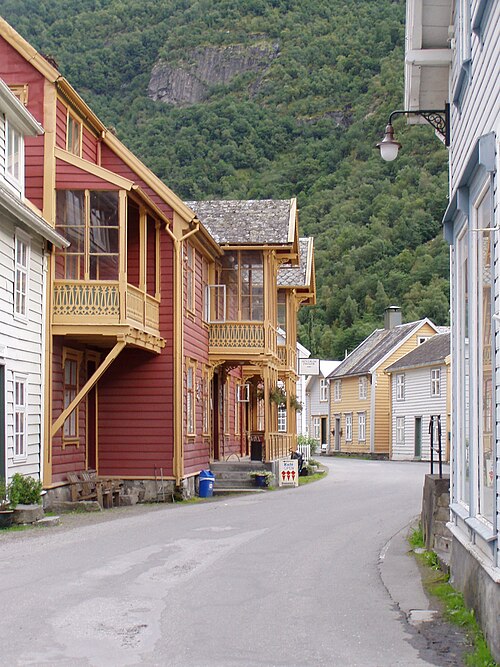 Lærdalsøyri
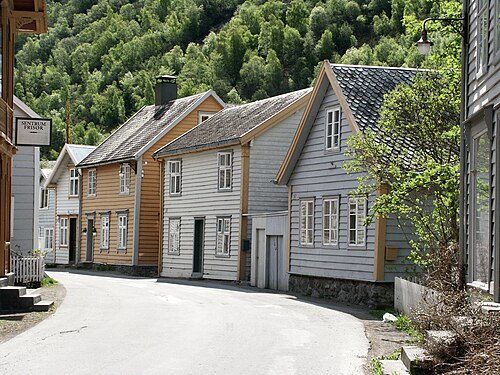 Lærdalsøyri
 Old mountain pass from Aurland to Lærdal (above the Lærdalstunnelen)
 Old mountain pass from Aurland to Lærdal (above the Lærdalstunnelen)
 Lærdal
 Lærdal tunnel
 Lærdal tunnel cave
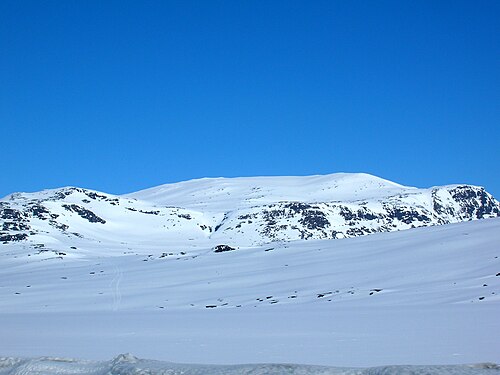 Store Jukleeggi – Mountain in Lærdal