
هوغو دي فريس
هوغو ماري دي فريس ( بالهولندية: [ ˈɦyɣoː də ˈvris ] ؛ 16 فبراير 1848 - 21 مايو 1935) [ 2 ] كان عالم نباتات هولنديًا وأحد أوائل علماء الوراثة . اشتهر بشكل رئيسي باقتراحه مفهوم الجينات ، وإعادة اكتشافه لقوانين الوراثة في تسعينيات القرن التاسع عشر بينما كان على ما يبدو غير مدرك لعمل غريغور مندل ، ولتقديمه مصطلح " الطفرة "، ولتطويره نظرية الطفرة في التطور.
وقت مبكر من الحياة
وُلد دي فريس عام 1848، وهو الابن الأكبر لجيريت دي فريس (1818-1900)، المحامي والشماس في جماعة المينونايت في هارلم، والذي أصبح لاحقًا رئيس وزراء هولندا من عام 1872 حتى عام 1874، [ 3 ] وماريا إيفيراردينا رويفينز (1823-1914)، ابنة أستاذ علم الآثار في جامعة ليدن . أصبح والده عضوًا في مجلس الدولة الهولندي عام 1862، وانتقلت عائلته إلى لاهاي . منذ صغره، أبدى هوغو اهتمامًا كبيرًا بعلم النبات، وفاز بالعديد من الجوائز عن مجموعاته النباتية أثناء دراسته في المدرسة الثانوية في هارلم ولاهاي.
في عام ١٨٦٦، التحق بجامعة لايدن لدراسة علم النبات. شارك بحماس في دروس ورحلات دبليو إف آر سورينجار ، لكنه انجذب بشكل خاص إلى علم النبات التجريبي الموضح في كتاب يوليوس فون زاكس "Lehrbuch der Botanik" الصادر عام ١٨٦٨. كما تأثر بشدة بنظرية التطور لتشارلز داروين ، على الرغم من تشكيك سورينجار فيها. كتب أطروحة حول تأثير الحرارة على جذور النباتات، متضمنةً عدة أقوال لداروين لاستفزاز أستاذه، وتخرج عام ١٨٧٠.
بداية المسيرة المهنية
بعد فترة وجيزة من التدريس، غادر دي فريس في سبتمبر 1870 للالتحاق بدورات في الكيمياء والفيزياء بجامعة هايدلبرغ والعمل في مختبر فيلهلم هوفمايستر . وفي الفصل الدراسي الثاني من ذلك العام الدراسي، انضم إلى مختبر العالم المرموق يوليوس زاكس في فورتسبورغ لدراسة نمو النبات. ومن سبتمبر 1871 حتى عام 1875، درّس علم النبات وعلم الحيوان والجيولوجيا في مدارس أمستردام . وخلال كل عطلة، كان يعود إلى مختبر هايدلبرغ لمواصلة أبحاثه.
في عام ١٨٧٥، عرضت وزارة الزراعة البروسية على دي فريس منصب أستاذ في كلية الزراعة الملكية ( Landwirtschaftliche Hochschule ) التي كانت قيد الإنشاء آنذاك في برلين . تحسبًا لذلك، عاد إلى فورتسبورغ، حيث درس المحاصيل الزراعية وتعاون مع ساكس. وبحلول عام ١٨٧٧، كانت كلية برلين لا تزال مجرد خطة، فتولى لفترة وجيزة التدريس في جامعة هاله-فيتنبرغ . وفي العام نفسه، عُرض عليه منصب محاضر في فسيولوجيا النبات في جامعة أمستردام حديثة التأسيس . رُقّي إلى أستاذ مساعد عام ١٨٧٨، ثم إلى أستاذ كامل في عيد ميلاده عام ١٨٨١، جزئيًا لمنعه من الانتقال إلى كلية برلين، التي افتُتحت أخيرًا في ذلك العام. كما شغل دي فريس منصب أستاذ ومدير معهد وحديقة أمستردام النباتية من عام ١٨٨٥ إلى عام ١٩١٨.
تعريف الجين
في عام 1889، نشر دي فريس كتابه "التكوين الخلوي الشامل " [ 4 ] ، حيث افترض، استنادًا إلى نسخة معدلة من نظرية تشارلز داروين عن التكوين الخلوي الشامل لعام 1868، أن الصفات المختلفة لها حوامل وراثية مختلفة. وافترض تحديدًا أن وراثة سمات معينة في الكائنات الحية تتم على شكل جزيئات. أطلق على هذه الوحدات اسم "الجينات الشاملة" ، وهو مصطلح اختُصر بعد 20 عامًا إلى " جينات" على يد ويلهلم يوهانسن .
إعادة اكتشاف علم الوراثة
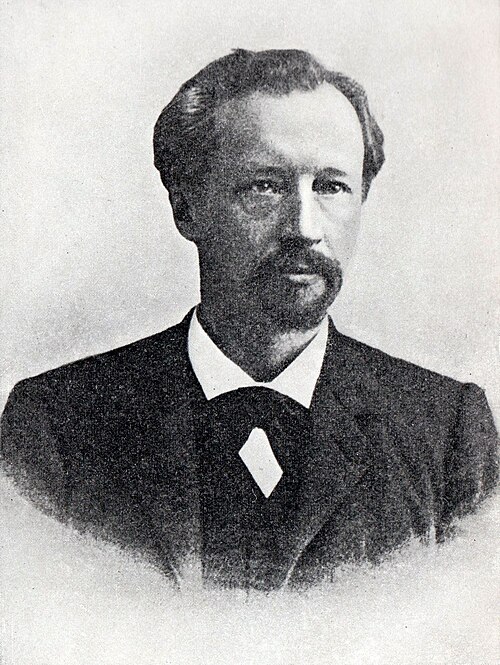
لدعم نظريته حول الجينات الشاملة، التي لم تحظَ باهتمام واسع آنذاك، أجرى دي فريس سلسلة من التجارب في تسعينيات القرن التاسع عشر، حيث قام بتهجين أصناف من أنواع نباتية متعددة. وبدون علمه بأعمال مندل، استخدم دي فريس قوانين السيادة والتنحي ، والانفصال ، والتوزيع المستقل لتفسير نسبة 3:1 للأنماط الظاهرية في الجيل الثاني. [ 5 ] كما أكدت ملاحظاته فرضيته القائلة بأن وراثة سمات محددة في الكائنات الحية تتم على شكل جزيئات.
وتكهن أيضًا بأن الجينات قد تتجاوز حاجز الأنواع، حيث يكون الجين نفسه مسؤولًا عن وجود الشعر في نوعين مختلفين من الزهور. ورغم صحة هذا القول عمومًا ( فالجينات المتماثلة ، الموروثة من سلف مشترك لكلا النوعين، تميل إلى البقاء مسؤولة عن أنماط ظاهرية متشابهة)، إلا أن دي فريس كان يقصد التزاوج الفيزيائي بين الأنواع. وهذا يحدث بالفعل، وإن كان نادرًا جدًا، في الكائنات الحية العليا (انظر: النقل الأفقي للجينات ). وقد ألهمت أعمال دي فريس في علم الوراثة أبحاث جانتينا تاميس ، التي عملت معه لفترة في عام ١٨٩٨.
In the late 1890s, de Vries became aware of Mendel's obscure paper of thirty years earlier and he altered some of his terminology to match. When he published the results of his experiments in the French journal Comptes rendus de l'Académie des Sciences in 1900, he neglected to mention Mendel's work, but after criticism by Carl Correns he conceded Mendel's priority.
Correns and Erich von Tschermak now share credit for the rediscovery of Mendel's laws. Correns was a student of Nägeli, a renowned botanist with whom Mendel corresponded about his work with peas but who failed to understand its significance, while, coincidentally, Tschermak's grandfather taught Mendel botany during his student days in Vienna.
Mutation theory
In his own time, de Vries was best known for his mutation theory. In 1886, he had discovered new forms among a group of Oenothera lamarckiana, a species of evening primrose, growing wild in an abandoned potato field near Hilversum, having escaped a nearby garden.[6] Taking seeds from these, he found that they produced many new varieties in his experimental gardens; he introduced the term mutations for these suddenly appearing variations. In his two-volume publication The Mutation Theory (1900–1903) he postulated that evolution, especially the origin of species, might occur more frequently with such large-scale changes than via Darwinian gradualism, basically suggesting a form of saltationism. De Vries's theory was one of the chief contenders for the explanation of how evolution worked, leading, for example, Thomas Hunt Morgan to study mutations in the fruit fly, until the modern evolutionary synthesis became the dominant model in the 1930s. During the early decades of the twentieth century, de Vries' theory was enormously influential and continued to fascinate non-biologists long after the scientific community had abandoned much of it[7] (while retaining the idea of mutations as a crucial source of natural variation). The large-scale primrose variations turned out to be the result of various chromosomal abnormalities, including ring chromosomes, balanced lethals and chromosome duplications (polyploidy), while the term mutation now generally is restricted to discrete changes in the DNA sequence. However, the popular understanding of "mutation" as a sudden leap to a new species has remained a staple theme of science fiction, e.g. the X-Men movies (and the comic books that preceded them).[8]
In a published lecture of 1903 (Befruchtung und Bastardierung, Veit, Leipzig), de Vries was also the first to suggest the occurrence of recombinations between homologous chromosomes, now known as chromosomal crossovers, within a year after chromosomes were implicated in Mendelian inheritance by Walter Sutton.[9]
Botanist Daniel Trembly MacDougal attended the lectures of de Vries on Mutation Theory,[10] which de Vries delivered at the University of California in 1904.[11] In 1905 he helped published these lectures into a book Species and Varieties: Their Origin by Mutation.[12]
Honors and retirement

In 1878 de Vries became member of the Royal Netherlands Academy of Arts and Sciences.[13] He was elected to the American Philosophical Society in 1903 and the United States National Academy of Sciences in 1904.[14][15] In May 1905, de Vries was elected Foreign Member of the Royal Society. In 1910, he was elected a member of the Royal Swedish Academy of Sciences. In 1921, he was elected to the American Academy of Arts and Sciences.[16] He was awarded the Darwin Medal in 1906 and the Linnean Medal in 1929.
He retired in 1918 from the University of Amsterdam and withdrew to his estate De Boeckhorst in Lunteren where he had large experimental gardens. He continued his studies with new forms until his death in 1935.
Books
His best known works are:
- Intracellular Pangenesis (1889)
- The Mutation TheoryGerman edition Bd. 1-2 (1901–03), English edition Volume 2 (1909–10) Retrieved 2009-08-20
- Species and Varieties: Their Origin by Mutation (1905)
- Plant Breeding (1907),[17] German translation (1908)
References
- ↑Hall, A. D. (1935). "Hugo de Vries. 1848-1935". Obituary Notices of Fellows of the Royal Society. 1 (4): 371–373. doi:10.1098/rsbm.1935.0002.
- ↑ رالف إي. كليلاند (1936). "هوغو دي فريس". وقائع الجمعية الفلسفية الأمريكية . 76 (2): 248-250 . JSTOR 984672 .
- ↑ نان فان دير زيجب، "دي فريس". موسوعة مينونايت، سكوتديل، بنسلفانيا: مطبعة هيرالد، 1955-59: المجلد. الرابع، ص. 862-863.
- ↑ "كتب ESP الرقمية: التكوين الخلوي الشامل" .
- ↑ ستامهاوس، آي إتش؛ ماير، أو جي؛ زيفنهاوزن، إي جي (1999). "هوغو دي فريس والوراثة، 1889-1903. الإحصاءات، قوانين مندل، الجينات الشاملة، الطفرات". مجلة إيزيس؛ مجلة دولية مخصصة لتاريخ العلوم وتأثيراتها الثقافية . 90 (2): 238-267 . doi : 10.1086/384323 . PMID 10439561. S2CID 20200394 .
- ↑ دي فريس، هوغو. نظرية الطفرات. Versoche und Beobachtungen über die Entstehung von Arten im Pflanzenreich , Leipzig, Veit & Comp., 1901-03.
- ↑ إندرسبي، جيم (سبتمبر 2013). "يوتوبيا متحولة: زهور الربيع المسائية ومستقبلات متخيلة في أمريكا أوائل القرن العشرين" ( ملف PDF) . مجلة إيزيس . 104 (3): 471-503 . doi : 10.1086/673270 . PMID 24341261. S2CID 12125667 .
- ↑ ستابلفورد، برايان م.؛ لانغفورد، ديفيد (12 أغسطس 2018). "المتحولون" . موسوعة الخيال العلمي . تم الاسترجاع في 8 سبتمبر 2018 .
- ↑ كرو، إي دبليو؛ كرو، جيمس إف. (2002). "قبل مئة عام: والتر ساتون ونظرية الكروموسومات في الوراثة" . علم الوراثة . 160 (1): 1-4 . doi : 10.1093/genetics/160.1.1 . PMC 1461948. PMID 11805039 .
- ↑ "دانيال ت. ماكدوغال (1865-1958)" . dpb.carnegiescience.edu . 2019. ص 1. تاريخ الاسترجاع : 12 يوليو 2022 .
- ↑Moore, John A. (November 1983). "Thomas Hunt Morgan—The Geneticist". American Zoologist. 23 (4): 855–865. doi:10.1093/icb/23.4.855. ISSN 0003-1569. Retrieved 28 February 2026– via Oxford Academic.
- ↑de Vries, Hugo; MacDougal, Daniel Trembly (1905). Species and Varieties: Their Origin by Mutation. The Open Court Publishing Company. Retrieved 2022-07-13.
- ↑Blakeslee, Albert F.; Conklin, E. G. (1935). "Hugo de Vries (1848 - 1935)". Science. 81 (2111): 581–584. Bibcode:1935Sci....81..581B. doi:10.1126/science.81.2111.581. Retrieved 20 July 2015.
- ↑"APS Member History". search.amphilsoc.org. Retrieved 2024-01-29.
- ↑"Hugo de Vries". www.nasonline.org. Retrieved 2024-01-29.
- ↑"Hugo de Vries". American Academy of Arts & Sciences. 9 February 2023. Retrieved 29 January 2024.
- ↑"Review of Plant - Breeding by Hugo de Vries". The Athenaeum (4166): 242–243. 31 August 1907.
- ↑International Plant Names Index. de Vries.
Further reading
- Everdell, William R. "Hugo de Vries and Max Planck: The Gene and the Quantum," in The First Moderns, Profiles in the Origins of Twentieth Century Thought (Chicago: University of Chicago Press, 1997), 159-176.
- "Hugo de Vries; commemoration". Revue médicale de Liège. 5 (23): 816. 1950. PMID 14809033.
- Andrews, F. M. (1930). "Hugo de Vries". Plant Physiology. 5 (1): 174.172–180. doi:10.1104/pp.5.1.175. PMC 440205. PMID 16652643.
- بولر، بي جيه (1978). "هوغو دي فريس وتوماس هانت مورغان: نظرية الطفرة وروح الداروينية". حوليات العلوم . 35 (1): 53-73 . doi : 10.1080/00033797800200141 . PMID 11615685 .
- داردن، ل. (1976). "الاستدلال في التغير العلمي: تشارلز داروين، هوغو دي فريس، واكتشاف الفصل العنصري". دراسات في تاريخ وفلسفة العلوم، الجزء أ . 7 (2): 127-169 . Bibcode : 1976SHPSA...7..127D . doi : 10.1016/0039-3681(76)90014-5 . PMID 11615593 .
- إندرسبي، جيم (سبتمبر 2013)، "يوتوبيا متحولة: زهور الربيع المسائية والمستقبلات المتخيلة في أوائل القرن العشرين في أمريكا" (ملف PDF) ، مجلة إيزيس ، 104 (3): 471-503 ، doi : 10.1086/673270 ، PMID 24341261 ، S2CID 12125667
- غينيارد، جيه إل (2005). "حول رسالة هوغو دي فريس إلى ليون غينيارد بتاريخ 12 نوفمبر 1899، والتي يثني فيها عليه لاكتشافه الإخصاب المزدوج". مجلة تاريخ الصيدلة . 53 (345): 85-93 . doi : 10.3406/pharm.2005.5762 . PMID 16021760 .
- ليناي، سي. (2000). “هوغو دي فريس: من نظرية شمولية الخلايا داخل الخلايا إلى إعادة اكتشاف مندل”. Comptes Rendus de l'Académie des Sciences، Série III . 323 (12): 1053–1060 . بيب كود : 2000CRASG.323.1053L . دوى : 10.1016/s0764-4469(00)01250-6 . بميد 11147091 .
- فان دير باس، بي دبليو (1970). “مراسلات هوغو دي فريس وتشارلز داروين”. يانوس . 57 : 173 – 213. بميد 11609703 .
- ستامهاوس، آي إتش (2007). "اكتشاف مراسلات هوغو دي فريس مع صديقه وزميله جان ويليم مول". نشرة مندل؛ الموارد الأرشيفية لتاريخ علم الوراثة والعلوم ذات الصلة (16): 7-12 . PMID 19069204 .
- ثيونيسن، ب. (1993). “دراسة الطبيعة والسعادة في الحياة: هوغو دي فريس، إيلي هيمانز وجاك. ب. ثيسي”. جوينا . 16 (4): 287-307 . بميد 11630205 .
- ثيونيسن، ب. (1994). "إغلاق الباب أمام مندلية هوغو دي فريس". حوليات العلوم . 51 (3): 225-248 . doi : 10.1080/00033799400200231 . PMID 11639916 .
- ثيونيسن، ب. (1994). "المعرفة قوة: هوغو دي فريس يتحدث عن العلم والوراثة والتقدم الاجتماعي". المجلة البريطانية لتاريخ العلوم . 27 (94 الجزء 3): 291-311 . doi : 10.1017/s0007087400032192 . PMID 11639948. S2CID 21162433 .
- فوغان، ت. و. (1906). "أعمال هوغو دي فريس وأهميتها في دراسة مسائل التطور" . مجلة ساينس . 23 (592): 681-691 . Bibcode : 1906Sci....23..681W . doi : 10.1126/science.23.592.681 . PMID 17754450 .
- إريك زيفينهويزن (1998) - "هوغو دي فريس : الحياة والعمل". في: اكتا بوتانيكا نيرلانديكا 47(4)، ديسمبر 1998، ص. 409-417. متاح عبر الإنترنت عبر "natuurtijdschriften.nl".
روابط خارجية
- سيرة ذاتية (باللغة الهولندية)
- ريدلي، مات ، جين المرونة ، 2003، رقم ISBN 0-06-000679-X، الصفحات 231-232.
- تاريخ البستنة
- أعمال هوغو دي فريس في مشروع غوتنبرغ
- أعمال من تأليف أو عن هوغو دي فريس في أرشيف الإنترنت
- أعمال هوغو دي فريس على موقع LibriVox (كتب صوتية متاحة للجميع)

- تتوفر أعمال هوغو دي فريس على الإنترنت في مكتبة التراث البيولوجي.
- نبذة تعريفية عن هوغو دي فريس مع صورة. مؤرشفة بتاريخ 9 ديسمبر 2006 في أرشيف الإنترنت (Wayback Machine).
- مقال يتناول أعمال غريغور مندل
- بشأن قانون فصل الهجائن
- بانجينيس
- 1848 مولودًا
- 1935 حالة وفاة
- علماء الوراثة الهولنديون
- تاريخ علم الوراثة
- الحائزون على ميدالية لينيان
- أعضاء الأكاديمية الملكية الهولندية للفنون والعلوم
- أعضاء الأكاديمية الملكية السويدية للعلوم
- أعضاء Teylers Tweede Genootschap
- الطفرات
- الأعضاء الأجانب في الجمعية الملكية
- الأعضاء الدوليون في الأكاديمية الوطنية للعلوم
- خريجو جامعة لايدن
- أعضاء الهيئة التدريسية بجامعة أمستردام
- علماء من هارلم
- علماء النبات الهولنديون في القرن التاسع عشر
- علماء النبات الهولنديون في القرن العشرين
- أعضاء الجمعية الملكية للعلوم في أوبسالا
- أعضاء الجمعية الفلسفية الأمريكية