
موديكا


موديكا ( بالإيطالية: [ ˈmɔːdika ] ؛ بالصقلية : Muòrica ) هي مدينة وبلدية ( كوموني ) في مقاطعة راغوزا ، صقلية ، جنوب إيطاليا . تقع المدينة في جبال هيبليان . ويبلغ عدد سكانها 53,413 نسمة. [ 2 ]
تتمتع موديكا بأصول تعود إلى العصر الحجري الحديث، وهي تمثل العاصمة التاريخية للمنطقة التي تُطابق اليوم تقريبًا مقاطعة راغوزا . وحتى القرن التاسع عشر، كانت عاصمة مقاطعة مارست نفوذًا سياسيًا واقتصاديًا وثقافيًا واسعًا، ما جعلها تُصنف ضمن أقوى الإقطاعيات في جنوب إيطاليا .
بعد إعادة بنائها عقب الزلزال المدمر الذي ضربها عام 1693، تم الاعتراف بأن هندستها المعمارية تقدم شهادة رائعة على العبقرية المتألقة والازدهار الأخير لفن الباروك في أوروبا، وهي، إلى جانب مدن أخرى في وادي نوتو ، جزء من مواقع التراث العالمي لليونسكو في إيطاليا .
تاريخ
بحسب ثوسيديدس ، تأسست المدينة عام 1360 أو 1031 قبل الميلاد، وسكنها السيكل في القرن السابع قبل الميلاد. ويُرجح أنها كانت تابعة لسيراكوزا . احتل الرومان موديكا بعد معركة جزر إيغادي ضد القرطاجيين في الحروب البونية عام 241 قبل الميلاد، إلى جانب سيراكوزا وصقلية بأكملها. أصبحت موديكا إحدى المدن الخمس والثلاثين التي خضعت طواعيةً في الجزيرة، وخضعت لسيطرة البريتور فيريس . [ 3 ] ثم أصبحت بلدية مستقلة ، ويبدو أنها كانت ذات شأن. ذُكرت المدينة أيضًا بين مدن الجزيرة الداخلية من قِبل كلٍ من بليني وبطليموس ؛ ورغم أن اسمها لم يُذكر في كتاب "الرحلات"، إلا أنه ذُكر مرة أخرى من قِبل جغرافي رافينا . [ 4 ] أدرجها سيليوس إيتاليكوس أيضًا في قائمة مدن صقلية، وربطها مباشرةً بنيتوم (نوتو أنتيكا حاليًا)، التي كانت تقع في نفس المنطقة. [ 5 ] شهد جنوب شرق صقلية وموديكا (بحسب المؤرخ الألماني ل. هيرتلينغ) تنصيرًا سريعًا، إذ تفتخر أبرشية سيراكوزا بتأسيسها الرسولي على يد القديس بولس عام 61 ميلادي. [ 6 ] في عام 535، طرد القائد البيزنطي بيليساريوس القوط الشرقيين ، وأسس للإمبراطور جستنيان الأول حكومة الإمبراطورية الرومانية الشرقية (المعروفة أيضًا بالإمبراطورية البيزنطية )، وحافظ السكان الناطقون باليونانية على ثقافتهم حتى وصول النورمان إلى اللاتينية في القرن الحادي عشر.
في عام 845، استولى العرب على موديكا خلال الفتح الإسلامي لصقلية . [ 7 ] وأطلقوا عليها اسم موديقة . [ 8 ] وفي العام التالي لفتحها، حصّن العرب قلاعها، وازدهرت المدينة تحت حكمهم. [ 9 ] [ 10 ] وفي عام 1091، أنهى فتح موديكا ووادي نوتو بأكمله الحرب الطويلة التي شنّها النورمان بقيادة روجر دي هوتفيل ضد العرب.
In 1296, Modica became the capital of an important county, which under the Chiaramonte family became a flourishing semi-independent state controlling the whole southern third of the island, with the right of a mint of its own and other privileges (see County of Modica).
On August 15, 1474, in the city of Modica, a violent attack took place against the Jewish population living in the Cartellone neighborhood, an area inhabited almost exclusively by Jews. A group of armed individuals entered the quarter, shouting "Long Live Mary and Death to the Jews". The attack resulted in the deaths of approximately 360 Jews.[11]
Later, the earthquake of 1693 destroyed the entire Val di Noto, and to a slightly lesser extent in Modica. Annexed to Italy in 1860, Modica remained district capital until 1926, when it was included in the province of Ragusa.
Landmarks
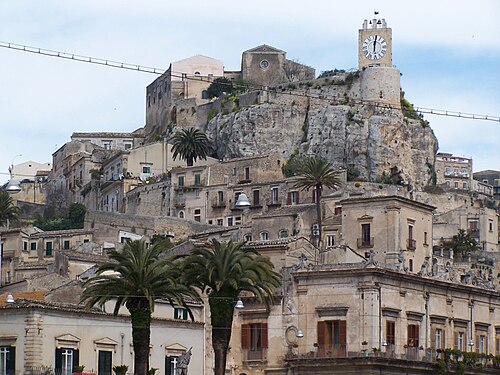
Modica consists of two urban centres, "Modica Alta" (Upper Modica) and "Modica Bassa" (Lower Modica). The older upper part is perched on the rocky top of the southern Ibeli hill, the lower part is built on the lower slopes and valley below. The walk down from Modica Alta to Modica Bassa reveals vistas of the lower town and involves many steps; not many attempt the reverse journey on foot.
During the last century the city has extended and developed new suburbs which include Sacro Cuore (or "Sorda"), Monserrato, Idria, these are often referred to as Modern Modica; both old and modern quarters of the city are today joined by one of Europe's highest bridge, the Guerrieri bridge, 300 metres (980 ft) long.
Despite being ravaged by earthquakes in 1613 and 1693, and floods in 1833 and 1902, Modica has retained some of the most beautiful architecture in Sicily. Much of the city was rebuilt after the 1693 earthquake with imposing and conspicuous urban monuments in the Sicilian Baroque style.
San Giorgio is the cathedral, dedicated to St George. While the cathedral was rebuilt in a Baroque-style following the earthquake of 1693, like many other parts of the city its roots are in the Middle Ages. From the front of the cathedral a staircase of 300 steps leads down towards Modica Bassa.
San Pietro is another church, dedicated to St Peter, in Modica Bassa, featuring a principal façade crowned by a typical Sicilian Baroque belltower, 49 metres (161 ft) high.
Other sights include:
- Castello dei Conti (Castle)
- Chiesa del Carmine
- Church of St. Mary of Betlehem
- Garibaldi Theater
- Mercedari Palace -contains a museum and library
Demographics
Historical population | |||||||||||||||||||||||||||||||||||||||||||||||||||||||
|
| ||||||||||||||||||||||||||||||||||||||||||||||||||||||
| Source: ISTAT[12][13] | |||||||||||||||||||||||||||||||||||||||||||||||||||||||
Economy
The economy of the area was once principally agricultural, producing olives, carobs, legumes, cereals, and cattle. Modica is known for its unique chocolate, the cioccolato di Modica, produced with an ancient and original Aztec recipe. The city has now been joined by factories producing textiles, furniture and cars. Tourism is also an important industry to the area, since Modica became a UNESCO World Heritage Site in 2002.
Culture
The eighteenth century saw Modica in the role of art and culture town, counting philosophers (Tommaso Campailla), poets (Girolama Grimaldi Lorefice), a school of medicine (Campailla, Gaspare Cannata, Michele Gallo, the Polara family) and literary academies among its inhabitants. In the nineteenth century, feudalism was abolished and Modica became a "bourgeois" town peopled by notables such as the writer and anthropologistSerafino Amabile Guastella, the agronomist Clemente Grimaldi, the musician Pietro Floridia and many painters, historians and other intellectuals.
Modica was also the birthplace of writer Salvatore Quasimodo, recipient of the Nobel Prize for Literature in 1959.
See also
References
- ↑"Superficie di Comuni Province e Regioni italiane al 9 ottobre 2011". Italian National Institute of Statistics. Retrieved 16 March 2019.
- 12"Monthly Demographic Balance". ISTAT.
- ↑Cicero, In Verrem, 1, III, 51
- ↑Plin. iii. 8. § 14; Ptol. iii. 4. § 14; Geogr. Rav. v. 23.
- ↑Sil. Ital. xiv. 268.
- ↑Acts of the Apostles 28:12
- ↑ كينيث ماير سيتون (1969). تاريخ الحروب الصليبية: المئة عام الأولى، حرره إم دبليو بالدوين ( طبعة مصورة). مطبعة جامعة ويسكونسن. ص 45. ISBN 9780299048341.
- ↑ جيرارد-شارب ، ليزا، محررة. (1993). صقلية ( طبعة مصورة). منشورات الجمعية الأمريكية لعلم النفس. ص 259. ISBN 9780395657782.
- ↑ جيرارد-شارب ، ليزا، محررة. (1993). صقلية ( طبعة مصورة). منشورات الجمعية الأمريكية لعلم النفس. ص 259. ISBN 9780395657782.
- ↑ الجزء الحديث من تاريخ شامل: من أقدم رواية للزمن. جُمِعَ من كتابات أصلية. بقلم مؤلفي الجزء القديم : س. ريتشاردسون، ت. أوزبورن، س. هيتش، أ. ميلار، جون ريفينجتون، س. كراودر، ب. ديفي، ب. لو، ت. لونجمان، و س. وير. ١٧٥٩. ص ٤٢٦.
- ^ "Itinerario 'I Quartieri' - Modica.it" .
- ^ "Popolazione Residente e Presente dei comuni. Censimenti dal 1861 al 1971" [ السكان المقيمون والحاليون في البلديات. التعدادات من 1861 إلى 1971 ] (PDF) (باللغة الإيطالية). إستات . 24/10/1971.
- ↑ "لوحة معلومات: تعداد دائم للسكان والمساكن" . المعهد الوطني للإحصاء .
مصادر
 تتضمن هذه المقالة نصًا من منشور أصبح الآن ملكًا عامًا : سميث، ويليام ، محرر (1854-1857). قاموس الجغرافيا اليونانية والرومانية . لندن: جون موراي.
روابط خارجية
- زيارة موديكا: بوابة سياحية لزوار مدينة موديكا
- قم بزيارة موديكا: Tourismusportal für Be sucher der Modica (باللغة الألمانية)
- موديكا أونلاين (باللغة الإيطالية)
- موتيكا سميث، ويليام (محرر)، قاموس القواميس اليونانية والرومانية. لندن: جون موراي.
- المدن والبلدات في صقلية
- بلديات مقاطعة راغوزا
- موديكا
- المدن الجبلية في صقلية
- الباروك الصقلي
- القلاع في إيطاليا
- الأماكن المأهولة التي تأسست في الألفية الثانية قبل الميلاد
- مواقع التراث العالمي في إيطاليا