
صوفياتاون
سوفياتاون ( تُلفظ : / soʊˈfaɪətaʊn / ) ، والمعروفة أيضًا باسم سوفتاون أو كوفيفي ، هي ضاحية من ضواحي جوهانسبرج ، جنوب أفريقيا. كانت سوفياتاون منطقة فقيرة متعددة الأعراق ومركزًا ثقافيًا للسود ، دُمِّرت في ظل نظام الفصل العنصري . وقد أنجبت بعضًا من أشهر كُتّاب وموسيقيي وسياسيي وفناني جنوب أفريقيا، مثل فادر هودلستون ، وكان ثيمبا ، وبلوك موديسان ، وإسكيا مفاهليلي ، وآرثر مايمان ، وتود ماتشيكيزا ، ونات ناكاسا ، وكيسي موتسيسي ، ودوغمور بوتي ، وميريام ماكيبا ، ولويس نكوسي .
أُعيد بناء سوبياتاون كمنطقة مخصصة للبيض فقط تحت اسم تريومف ("النصر") في ستينيات القرن العشرين، وفي عام 2006 أُعيدت رسميًا إلى اسمها الأصلي. كانت سوبياتاون واحدة من أقدم المناطق السوداء في جوهانسبرج، ويمثل تدميرها انتهاكات حقوق الإنسان في جنوب إفريقيا في ظل نظام الفصل العنصري. [ 2 ]
تاريخ
كانت سوبياتاون في الأصل جزءًا من مزرعة ووترفول. ومع مرور الوقت، امتدت لتشمل منطقتي مارتينديل ونيوكلير المجاورتين. اشتراها المضارب هيرمان توبيانسكي عام 1897، حيث استحوذ على 237 فدانًا (96 هكتارًا) على بُعد حوالي 6.4 كيلومترات (4 أميال ) غرب مركز جوهانسبرج. [ 3 ] خضعت البلدة، التي كانت تُدار بنظام الإيجار الخاص، للمسح عام 1903، وقُسّمت إلى ما يقرب من 1700 قطعة أرض صغيرة. سُمّيت البلدة على اسم زوجة توبيانسكي، صوفيا، وسُمّيت بعض شوارعها بأسماء أبنائه: توبي، وجيرتي، وبرثا، وفيكتوريا. [ 4 ] قبل سنّ قانون أراضي السكان الأصليين عام 1913 ، كان للسود في جنوب إفريقيا أيضًا حقوق ملكية حرة في المنطقة، واشتروا عقارات في الضاحية. كان يُنظر إلى بُعدها عن مركز المدينة على أنه عيب، وبعد أن أنشأت مدينة جوهانسبرج محطة لمعالجة مياه الصرف الصحي بالقرب منها، بدت المنطقة أقل جاذبية. [ 5 ] بحلول عام 1920، كان معظم الأثرياء قد غادروا المنطقة. وبحلول أواخر الأربعينيات، بلغ عدد سكان سوبياتاون حوالي 54,000 أفريقي، و3,000 من الملونين ، و1,500 هندي ، و686 صينيًا ، من ملاك ومستأجرين. [ 4 ] ولأن الأرض لم تكن تابعة لبلدية جوهانسبرج، لم تُطوَّر قط من خلال مشاريع الإسكان البلدية، التي كانت في المناطق السوداء عادةً ما تتضمن صفوفًا متراصة من المنازل المتشابهة، والتي تميزت بالتماثل وانعدام الطابع المميز.
عمليات الإبعاد القسري
كانت المنطقة مجاورة لمناطق الطبقة العاملة البيضاء، مثل ويستدين ونيولاندز، واشتهرت بارتفاع معدلات الجريمة والفقر. اعتبرتها الدولة العنصرية حيًا فقيرًا، ورأت أنها قريبة جدًا من المناطق البيضاء. منذ عام 1944، أي حتى قبل نظام الفصل العنصري ، خطط مجلس مدينة جوهانسبرج لنقل السكان غير البيض من المناطق الغربية لجوهانسبرج، بما في ذلك سوبياتاون. بعد فوز الحزب الوطني في انتخابات عام 1948، نوقشت خطط النقل على المستوى السياسي الوطني. [ 4 ] بموجب قانون المناطق الجماعية وقانون تعديل الأخلاق، وكلاهما صدر عام 1950، بالإضافة إلى قانون إعادة توطين السكان الأصليين لعام 1954 ، مُنحت الدولة سلطة منع سكن الأشخاص من أعراق مختلفة معًا. سمح هذا بالفصل الحضري المنهجي وتدمير المناطق المختلطة. [ 6 ]
عندما طُبّق مخطط تهجير سكان سوبياتاون، توحّدوا للاحتجاج على عمليات التهجير القسري، مُبتكرين شعار "لن نرحل". وكان لشخصيات مثل نيلسون مانديلا دورٌ محوري في المقاومة. كما لعب بعض البيض، مثل الأب تريفور هودلستون وهيلين جوزيف وروث فيرست ، دورًا هامًا. [ 7 ] في 9 فبراير 1955، قام ألفا شرطي، مُسلّحين بمسدسات وبنادق وهراوات ، بنقل أول دفعة من العائلات السوداء قسرًا من سوبياتاون إلى ميدولاندز في سويتو . وفي السنوات اللاحقة، تم تهجير المزيد من السود، وطُرد الملونون إلى إلدورادو بارك خارج جوهانسبرغ، بالإضافة إلى ويستبري ونورجيسيج وغيرها من الأحياء المخصصة للملونين؛ ونُقل الهنود إلى لينسيا ؛ ونُقل الصينيون إلى وسط جوهانسبرغ. [ 6 ] على مدى ثماني سنوات، تم تسوية حي سوبياتاون بالأرض وإزالته من خرائط جوهانسبرج. [ 7 ]
خلال عمليات الإخلاء القسري، وجد بعض الأفراد النازحين مأوى ودعماً مؤقتاً في كنيسة ألبرت ستريت الميثودية في جوهانسبرج ، والتي أصبحت ملاذاً بارزاً للناشطين المناهضين للفصل العنصري والمشردين.
انتصار
بعد عمليات الإخلاء القسري والهدم، أعادت الحكومة بناء المنطقة وأطلقت عليها اسم "تريومف" (Triomf)، وهي كلمة أفريكانية تعني " النصر ". [ 8 ] سعى مهندسو نظام الفصل العنصري إلى إنشاء ضاحية للطبقة العاملة البيضاء، وكانت تريومف مأهولة في الغالب بالأفريكانر الفقراء من الطبقة العاملة. [ 9 ] تركز رواية مارلين فان نيكيرك الحائزة على جوائز ، "تريومف"، على الحياة اليومية لعائلة من البيض الفقراء في تلك الحقبة. [ 9 ]
استعادة اسم سوبياتاون
اتخذ مجلس مدينة جوهانسبرغ قرارًا عام 1997 بإعادة تسمية الضاحية باسمها القديم "سوبياتاون". وفي 11 فبراير 2006، اكتملت العملية أخيرًا عندما أعاد رئيس البلدية آموس ماسوندو تسمية تريومف إلى "سوبياتاون". [ 10 ] واليوم، تضم سوبياتاون مجددًا سكانًا من أعراق مختلطة.
الجغرافيا والجيولوجيا

تقع سوبياتاون على إحدى تلال جوهانسبرغ المعروفة باسم ميلفيل كوبيز . تقع ميلفيل كوبيز على درع كابفال ، الذي يعود تاريخه إلى ثلاثة مليارات سنة. تقع كوبيز عند قاعدة رواسب متحجرة على شكل كونغلوميرات ، وكوارتزيت ، وطفل ، وحجر طيني . تمثل هذه التلال أولى شواطئ البحار وقيعانها الضحلة لبحر قديم. كما أنها تشكل جزءًا من أدنى مستوى لواحدة من أشهر المعالم الجيولوجية في العالم، وهي مجموعة ويتواترسراند الفائقة. اكتسبت مجموعة ويتواترسراند الفائقة شهرتها بفضل عدة طبقات ضيقة نسبيًا من الحصى، ترسبت في وقت متأخر من التسلسل الجيولوجي، وتحتوي على عناصر ثقيلة. هذه هي كونغلوميرات الذهب الموجودة في الشعاب المرجانية الرئيسية. تمثل ميلفيل كوبيز، بشكل مصغر، معظم خصائص مجموعة ويتواترسراند الفائقة، باستثناء الصخور الحاملة للذهب. يظهر الذهب بعد ملايين السنين، وعلى ارتفاع عدة كيلومترات، ضمن التسلسل الطبقي. [ 11 ] في الألف سنة الماضية، وصل مهاجرون سود من العصر الحديدي ، ويمكن العثور على بقايا جدران حظائرهم في المنطقة. [ 12 ]
تُعد محمية ميلفيل كوبيز الطبيعية موقعًا تراثيًا لمدينة جوهانسبرج.
ثقافة
الحياة المبكرة في سوبياتاون
كانت سوبياتاون، على عكس غيرها من الأحياء الفقيرة في جنوب أفريقيا، حيًا سكنيًا بنظام التملك الحر، ما يعني أنها كانت من الأماكن النادرة في المناطق الحضرية بجنوب أفريقيا التي سُمح فيها للسود بامتلاك الأراضي. لم تكن هذه الأراضي تابعة لبلدية جوهانسبرغ، وبالتالي لم تشهد أي تطوير من خلال مشاريع الإسكان البلدية. [ 13 ] بُنيت المنازل وفقًا لقدرة الناس على الدفع، وأذواقهم، وخلفياتهم الثقافية. بعض المنازل كانت مبنية من الطوب وتضم أربع غرف أو أكثر، بينما كان بعضها الآخر أصغر بكثير. بُنيت منازل أخرى على غرار منازل المناطق الريفية، بينما كانت منازل أخرى عبارة عن أكواخ من غرفة واحدة مُجمّعة من الصفيح المموج وصفائح معدنية خردة. كانت غالبية العائلات التي تعيش في سوبياتاون من المستأجرين والمستأجرين من الباطن. كان ثمانية أو تسعة أشخاص يعيشون في غرفة واحدة، وكانت المنازل تخفي ساحات خلفية مليئة بأكواخ مبنية من الكرتون وعلب الكيروسين المُسطّحة، [ 14 ] نظرًا لفقر العديد من مالكي العقارات السود في سوبياتاون. ولتسديد قروض الرهن العقاري على ممتلكاتهم، كان عليهم تأجيرها لمستأجرين يدفعون الإيجار. [ 13 ]
كان لدى سكان سوبياتاون تصميم على بناء نمط حياة محترم في ظل دولة معادية بشدة لمثل هذه الطموحات. وقد استند نمط الحياة المحترم على ثلاثة أركان أساسية: التدين، واحترام التعليم النظامي، والرغبة في سيادة القانون والنظام. [ 15 ]
كافح الناس من أجل البقاء معًا، وكان الجوع مشكلة خطيرة، ونشأت ثقافة غنية قائمة على الحانات الشعبية (الحانات غير الرسمية، ومعظمها غير قانونية)، وموسيقى المباكانغا ، وصناعة البيرة. كانت الحانات الشعبية إحدى أهم وسائل الترفيه. لم يكن الناس يرتادونها فقط لتناول السكوكيان أو البابرتون (مشروبات كحولية محلية الصنع غير قانونية)، بل أيضًا للتحدث عن همومهم اليومية، وأفكارهم السياسية، ومخاوفهم وآمالهم. في هذه الحانات، حاول السياسيون التأثير على الآخرين وحملهم على تبني أفكارهم. فإذا خالفهم الرأي، أصبح موضع شبهة، وصُنِّف كمخبر للشرطة. [ 16 ]
تتجاور هاتان الصورتان المتناقضتان لمدينة سوبياتاون – الرؤية الرومانسية لمجتمع فريد من نوعه في مقابل بلدة بائسة وعنيفة تتربص فيها المخاطر في كل زاوية. [ 13 ]
الفنون والأدب

شهدت منطقة سوبياتاون نشاطاً ثقافياً مكثفاً، كما هو الحال في سوهو ، وغرينتش فيليدج ، والحي اللاتيني ، وكروزبرغ . وكان هذا النشاط أشبه بما كانت عليه هارلم بالنسبة لنيويورك خلال عصر نهضة هارلم في عشرينيات القرن العشرين [ 3 ] ، ويُشار إليها أحياناً باسم نهضة سوبياتاون .
تُعتبر المسرحية الموسيقية "كينغ كونغ" ، التي رعتها نقابة الفنانين الجنوب أفريقيين، ذروة الإنجازات الثقافية المتعددة الأعراق في حي سوبياتاون خلال خمسينيات القرن العشرين. وتستند المسرحية إلى قصة حياة إيزيكيل دلاميني، أسطورة سوبياتاون، الذي اشتهر كملاكم بارع، وشخصية اجتماعية بارزة، ومتشرد، ومقاتل عنيف. [ 17 ] صوّرت المسرحية حياة الشوارع، والحانات غير المرخصة، والعنف، وموسيقى الحي التي كانت رائجة آنذاك: موسيقى الجاز، وآلات النفخ النحاسية ، وأغاني عمال المناجم السود. عندما عُرضت "كينغ كونغ " لأول مرة في جوهانسبرغ، لعبت ميريام ماكيبا، مغنية فرقة مانهاتن براذرز ، دور البطولة النسائية. ثم عُرضت المسرحية لاحقًا في مسارح ويست إند بلندن لمدة عامين. [ 3 ]
One of the boys, Hugh Masekela at St Peter's School, told Father Huddleston of his discovery of the music of Louis Armstrong. Huddleston found a trumpet for him and as the interest in making music caught on among the other boys, the Huddleston Jazz Band was formed. Masekela did not stay very long in Sophiatown. He was in the orchestra of King Kong and then made his own international reputation.[16]
Images of Sophiatown were initially built up in literature by a generation of South African writers: Can Themba, Bloke Modisane, Es'kia Mphahlele, Arthur Maimane, Todd Matshikiza, Nat Nakasa, Casey Motsisi, Dugmore Boetie, and Lewis Nkosi who all lived in Sophiatown at various stages during the 1950s. They all shared certain elements of a common experience: education at St Peter's School and Fort Hare University, living in Sophiatown, working for Drum magazine, exile, banning under the Suppression of Communism Act and for many the writing of an autobiography.[18]
Later, images of Sophiatown could be found in Nadine Gordimer's novels, Miriam Makeba's ghostwritten autobiography and Trevor Huddleston'sNaught for your comfort.[19]Alan Paton also details the social, cultural and political trajectory of Sophiatown in his 1983 novel, Ah, but Your Land Is Beautiful.[20]
Marlene van Niekerk's novel Triomf focuses on the suburb Triomf and recounts the daily lives of a family of poor white Afrikaners.[9] The book has been turned into a movie called Triomf, which won the Best South African Movie award in 2008.[21]
Crime and gangsterism
Crime and violence were a reality of urban life and culture in Sophiatown. The poverty, misery, violence and lawlessness of the city led to the growth of many gangs. Sections of society frowned on gangsterism as anti-social behaviour and gangsters like Kortboy and Don Mattera were despised by many as "anti social", but were also sometimes perceived as “social bandits” that were part of the resistance to apartheid.[22]
After the Second World War, there was a large increase in the number of gangs in Sophiatown. Part of the reason for this was that there were about 20,000 African teenagers in the city who were not at school and did not have jobs. Township youths were unable to find jobs easily. Employers were reluctant to employ teenagers as they did not have any work experience, and many of them were not able to read or write. They also considered them to be undisciplined and weak.[22]
In Johannesburg in the 1950s, crime was a day-to-day reality, and Sophiatown was the nucleus of all reef crimes. Gangsters were city-bred and spoke a mixture of Afrikaans and English, known as tsotsitaal. Some of the more well-known gangs in Sophiatown were the Russians, the Americans, the Gestapo, the Berliners and the Vultures. The names the Gestapo and the Berliners reflect their admiration for Hitler, whom they saw as some kind of hero, for taking on the whites of Europe.[22] The best known gang from this period, and also best studied, was the Russians. They were a group of Basotho migrant workers who banded together in the absence of any effective law enforcement by either mine owners or the state. The primary goal of this gang was to protect members from the tsotsis and from other gangs of migrant workers, and to acquire and defend resources they found desirable - most notably women, jobs and the urban space necessary for the parties and staged fights that formed the bulk of their weekend entertainment.[23]
One of the more successful community campaigns emerged in the early 1950s when informal policing initiatives known as the Civic Guards were mobilized to combat rising crime. This attempt to restore law and order attracted widespread support prior to a series of bloody clashes with the migrant criminal society from the poorer enclave of Newclare. This provided the state with an excuse to ban the Guard groups which they eyed with suspicion because of their ANC and Communist Party connections. These supposed arbiters of law and order engaged in a series of brutal street battles with members of the "Russians" gang in the early 1950s.[24]
The representation of gangsters in the literature (Drum magazine) went through very different stages during the 1950s and early 1960s. The first representation is characterized by consistent condemnations of crime as an urban phenomenon that threatens the rural identity of tribal blacks. The second is almost a complete turn-around from the first, as gangsters are portrayed as urban survivors who are able to achieve a standard of living normally denied to blacks. The final period is an extended period of nostalgia for the shebeen culture that all but disappeared with the destruction of Sophiatown.[25]
Landmarks
The Church of Christ the King

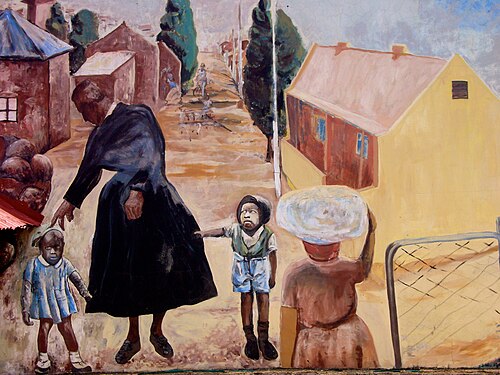
One of the few tangible reminders of the old Sophiatown is the Anglican Church of Christ the King in Ray Street. The architect was Frank Flemming, who designed 85 churches throughout South Africa.[26] The church was constructed in 1933. The bell tower was added in 1936. So little money was made available for the construction that the architect called it a "Holy Barn".[27] The church's distinctive feature was a mural that is no longer visible. It was painted between 1939 and 1941 by Sister Margaret.[26] The church was an icon of the liberation struggle in South Africa. In 1940 Trevor Huddleston was appointed Rector. He was an outspoken opponent of apartheid. In 1955 during the forced removals, Huddleston was recalled to England. His ashes reside next to his former church. On the north-eastern side of the church there is a mural depicting Huddleston walking the dusty streets of Sophiatown. This mural was painted by 12 apprentice students under patronage of the Gerard Sekoto Foundation. It shows two children tugging at his cassock as well as Sekoto's famous yellow houses.[28] The entire Sophiatown community was removed by the end of 1963; the church was deconsecrated in 1964 and sold to the Department of Community Development in 1967. In the 1970s it was bought by the Nederduitsch Hervormde Kerk, which used it for Sunday School. The church changed hands again and the Pinkster Protestantse Kerk bought the building and altered it significantly. The nave was enclosed, a large font was built and wooden panelling and false organ pipes changed the look of the interior. In 1997 the Anglicans bought the church back and it was reconsecrated; the changes were reversed and the building was largely restored to its former self. However, the hall and gallery the Pinkster Protestantse Kerk had built were retained.[29]
Dr A. B. Xuma's house

Dr A. B. Xuma was a medical doctor who had trained in the United States and the United Kingdom. He was a local celebrity, President of the African National Congress and Chairperson of the Western Areas Anti-Expropriation and Proper Housing Committee. His house was a landmark in Sophiatown (73 Toby Street) and was declared a National Heritage Monument on 11 February 2006. Currently, the house is the location of the Sophiatown Heritage and Cultural Centre.[30] This is one of two houses to escape the destruction of Sophiatown by the government in the late 1950s. It was built in 1935 and named Empilweni. Xuma and his second wife Madie Hall Xuma lived there until 1959.[27] The writer, actor and journalist Bloke Modisane reminisces that among all those modest, run-down buildings, could stand the palatial home of Dr A. B. Xuma with its two garages. Modisane remembers how he and his widowed mother, who ran a shebeen, had looked to Xuma and his house for a model of the good life, i.e. separate bedrooms, a room for sitting, another for eating, and a room to be alone, for reading or thinking, to shut out South Africa and not be black.[31]
Good Street
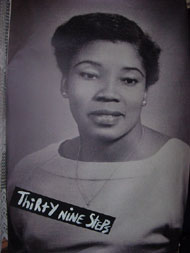
Good Street was significant in the life of Sophiatown. It was described as a "Street of Shebeens". The writer Can Themba's house, called the House of Truth, was on Good Street, as well as Fatty Phyllis Peterson's 39 Steps. To get to the 39 Steps, one had to walk up a flight of steps, which looked by all accounts very dingy. One was then met by Fatty, who sold about every type of drink: whisky, brandy, gin, beer, wine, etc. Sometimes she even supplied cigars.[32] Good Street was also renowned for its Indian, Chinese and Jewish shops, and for being a street of criminals and gangsters.[30]
St Joseph's Home for Children
The Home opened its doors in 1923. It was built as a diocesan memorial to the Coloured men who paid the ultimate sacrifice for their country. It was run by the Anglican nuns, the Order of St Margaret, East Grinstead, who remained in charge until 1978, when they left South Africa in protest against apartheid. The Main Block, Boys' House and Priests' House were designed by the diocesan architect F. L. H. Flemming. The Church successfully opposed removal of the Home because the property was on farm land and not part of a proclaimed township.[27]
The Odin Cinema
There were two cinemas in Sophiatown. The larger was the Odin, which at the time was also the largest in Africa and could seat 1,200 people. The other cinema, Balansky's, was a lower-class, rougher movie-house, while the Odin Cinema was more up-market. The Odin was the pride of Sophiatown. It was owned by a white couple, the Egnoses, who were known as Mr and Mrs Odin. Not only did they provide much loved entertainment, but also made the Odin available for political meetings, parties and stage performances. Some international acts played to multi-racial audiences at the Odin.[33] It was also the site of a series of "Jazz at the Odin" jam sessions featuring white and black musicians. Also at a meeting at the Odin, the ultimately unsuccessful resistance to the destruction of Sophiatown began to coalesce.[16]
Freedom Square
Freedom Square was located on the corner of Victoria and Morris Streets. It was famous in the 1950s for the political meetings held there. It was utilised by the African National Congress (ANC) and the Transvaal Congress Party. Many of the meetings were chaired by Trevor Huddleston. Freedom Square facilitated the cooperation between the aforementioned political parties. Here parties worked together against the apartheid regime.[30] Freedom Square in Sophiatown should not be confused with Freedom Square in Kliptown, Soweto, where the Freedom Charter was adopted by the ANC in 1955. It was in this Freedom Square in Sophiatown that Nelson Mandela made his first public allusion to violence and armed resistance as a legitimate tool for change. This earned him a reprimand from Albert Luthuli who by then replaced Dr A.B. Xuma as president of the ANC.[34] Current remnants of Freedom Square may be found beneath a school playing field alongside the Christ the King Church.[35]
St Cyprian's Missions School
This primary school was the site of religious and educational significance in Sophiatown. It was an Anglican Mission school located in Meyer Street and was established in 1928. St Cyprian's was the largest primary school in Sophiatown.[30]Oliver Tambo and Trevor Huddleston taught here, as both were passionate about education.[36] It was also the St Cyprian's School boys who a dug out the pool behind the house of the Community of the Resurrection in order to have a swimming pool. The school boys of St Cyprian's later went to Father Ross or Father Raynes or Father Huddleston who tried to get them bursaries to go to St Peter's School, then Fort Hare University and later even the University of the Witwatersrand. The idea was that they should come back as doctors.[37]
Oak tree in Bertha Street
The tree gained a sinister reputation as the "Hanging Tree" when two people hanged themselves from its branches, both due to being subjected to the forced removals.[30] The tree was designated as of the first Champion Tree of South Africa. Champion trees are trees in South Africa that are of exceptional importance, and deserve national protection.[38]
Notable residents
See also
- Sophiatown, a 2003 film about Sophiatown
- Drum, a 2004 film about Sophiatown
- Come Back, Africa, a film shot underground in Sophiatown in the 1950s by Lionel Rogosin with writing credits by Bloke Modisane, Lewis Nkosi, and Lionel Rogosin.
- "The Suit", a short story by Sophiatown-resident Can Themba, set in 1950s Sophiatown.
- The Suit (2016 film), a short film adaptation of the Can Themba short story set in Sophiatown, written and directed by Jarryd Coetsee.
References
- 1234"Sub Place Sophiatown". Census 2011.
- ↑Otzen, Ellen (11 February 2015). "The town destroyed to stop black and white people mixing". BBC News. Retrieved 1 December 2017.
- 123Hannerz, Ulf (June 1994). "Sophiatown: The view from afar". Journal of Southern African Studies. 20 (2): 184. doi:10.1080/03057079408708395.
- 123Brink, Elzabe (2010). University of Johannesburg: The University for a new Generation. Johannesburg: Division of Institutional Advancement, University of Johannesburg. p. 91. ISBN 978-0-86970-689-3.
- ↑Hannerz, Ulf (June 1994). "Sophiatown: The view from afar". Journal of Southern African Studies. 20 (2): 185. doi:10.1080/03057079408708395.
- 12"1955 Sophiatown Forced Removals". National Digital Repository. National Digital Repository. Archived from the original on 6 April 2012. Retrieved 16 November 2011.
- 12Sindane, Lucky; Davie, Lucille (9 February 2005). "Remembering Sophiatown". Joburg.org.za. City of Johannesburg. Archived from the original on 24 September 2006. Retrieved 1 December 2017.
{{cite web}}: CS1 maint: bot: original URL status unknown (link) - ↑Giliomee, Herman (2003). The Afrikaners. Cape Town: Tafelberg. p. 507. ISBN 0-624-03884-X.
- 123Viljoen, Louise (Winter 1996). "Postcolonialism and recent woman's writing in Afrikaans"(PDF). World Literature Today. 70 (1): 63–72. doi:10.2307/40151854. JSTOR 40151854. Archived from the original(PDF) on 9 May 2012. Retrieved 20 November 2011.
- ↑Davie, Lucille (14 February 2006). "Sophiatown again, 50 years on". City of Johannesburg. Archived from the original on 7 December 2008. Retrieved 1 December 2017.
{{cite web}}: CS1 maint: bot: original URL status unknown (link) - ↑"Melville Koppies Geology". Friends of Melville Koppies. Retrieved 6 December 2011.
- ↑"Melville Koppies". Friends of Melville Koppies. Retrieved 6 December 2011.
- 123"Life in Sophiatown". South African History Online. Retrieved 4 December 2011.
- ↑Martin, Peter Bird (26 November 1955). "Cities of the World No. 14: Johannesburg". The Saturday Evening Post.
- ↑Kynoch, Gary (2005). "Book Review of: Respectability and Resistance: A History of Sophiatown by David Goodhew". The International Journal of African Historical Studies. 38 (1). Boston University African Studies Center: 135. JSTOR 40036478.
- 123Hannerz, Ulf (June 1994). "Sophiatown: The view from afar". Journal of Southern African Studies. 20 (2): 187. doi:10.1080/03057079408708395.
- ↑Gready, Paul (March 1990). "The Sophiatown writers of the fifties: The unreal reality of their world". Journal of Southern African Studies. 16 (1): 9. doi:10.1080/03057079008708227.
- ↑Gready, Paul (March 1990). "The Sophiatown writers of the fifties: The unreal reality of their world". Journal of Southern African Studies. 16 (1): 4. doi:10.1080/03057079008708227.
- ↑Hannerz, Ulf (June 1994). "Sophiatown: The view from afar". Journal of Southern African Studies. 20 (2): 181. doi:10.1080/03057079408708395.
- ↑Paton, Alan. Ah, but Your Land is Beautiful. Penguin Books. 1983. pp. 111-116.
- ↑Raeburn, Michael. "Triomf". Archived from the original on 7 December 2011. Retrieved 16 December 2011.
- 123"Gangsterism in Sophiatown". South African History Online. Retrieved 12 August 2018.
- ↑Fenwick, Mac (1996). "'Tough guy, eh?': The gangster-figure in Drum". Journal of Southern African Studies. 22 (4): 623. doi:10.1080/03057079608708515. JSTOR 2637160.
- ↑Kynoch, Gary (2005). "Book Review of: Respectability and Resistance: A History of Sophiatown by David Goodhew". The International Journal of African Historical Studies. 38 (1). Boston University African Studies Center: 135–136. JSTOR 40036478.
- ↑Fenwick, Mac (1996). "'Tough guy, eh?': The gangster-figure in Drum". Journal of Southern African Studies. 22 (4): 618. doi:10.1080/03057079608708515. JSTOR 2637160.
- 12Davie, Lucille (10 February 2005). "Sophiatown: recalling the loss". City of Johannesburg. IMC. Archived from the original on 28 May 2009. Retrieved 1 December 2017.
{{cite news}}: CS1 maint: bot: original URL status unknown (link) - 123"Joburg Heritage: Plaques". Johannesburg Heritage. 3 December 2011. Archived from the original on 30 December 2008.
- ↑Davie, Lucille (1 November 2004). "Sophiatown unveils Sekoto mural". SouthAfrica.info. Originally published by the City of Johannesburg. Archived from the original on 29 August 2008. Retrieved 1 December 2017.
{{cite web}}: CS1 maint: bot: original URL status unknown (link) - ↑"Great churches and temples of Joburg". City of Johannesburg. 13 November 2011.
- 12345Sophiatown Heritage and Cultural Centre. Posters at the Sophiatown Heritage and Cultural Centre.
- ↑Modisane, Bloke (1986). Blame me on history. Ad. Donker. pp. 27, 36. ISBN 0-86852-098-5.
- ↑Themba, Can (2006). Requiem for Sophiatown(PDF). Penguin Books. p. 50. ISBN 0-14-318548-9. Archived from the original(PDF) on 5 March 2016. Retrieved 4 December 2011.
- ↑"Music and culture as forms of resistance". South African History Online. 3 December 2011. Archived from the original on 12 March 2012. Retrieved 3 December 2011.
- ↑Harrison, Philip (2012). South Africa's Top Sites: The Struggle. p. 48.
- ↑ ديفي، لوسيل (17 سبتمبر 2004). "خطة تهدف إلى استحضار ذكريات سوبياتاون" . وكالة أنباء جوهانسبرج (www.joburg.org.za) . تاريخ الاطلاع: 3 مارس 2012 .
- ↑ "مرحباً" . مركز تريفور هودلستون التذكاري. مؤرشف من الأصل في 5 أكتوبر 2011. تم الاطلاع عليه في 4 ديسمبر 2011 .
- ↑ ثيمبا، كان (2006). مرثية لسوفياتاون (ملف PDF) . دار بنجوين للنشر. ص 51. ISBN 0-14-318548-9أُرشف من النسخة الأصلية (PDF) بتاريخ 5 مارس 2016. تم الاطلاع عليه بتاريخ 4 ديسمبر 2011 .
- ↑ ديفي، لوسيل (8 سبتمبر 2004). "إعلان أول شجرة بطلة في جنوب أفريقيا في سوبياتاون" . وكالة أنباء جوهانسبرج (www.joburg.org.za) . تاريخ الاسترجاع: 4 ديسمبر 2011 .
روابط خارجية
- تاريخ جنوب أفريقيا على الإنترنت: سوبياتاون
- تاريخ جنوب أفريقيا على الإنترنت: تدمير سوبياتاون
- أغنية "Come Back, Africa" لليونيل روجوسين على يوتيوب
- الموقع الرسمي لليونيل روجوسين
- عد، أفريقيا ، ليونيل روجوسين وبيتر ديفيس، STE Publishers، ISBN 1-919855-17-3(كتاب الفيلم)
- مقال في مجلة تايم عام 1955 بعنوان " أحزان شارع توبي" يتناول عمليات الإخلاء القسري.
- السكن في جنوب أفريقيا
- منطقة جوهانسبرج ب