
Mem
Mem (also spelled Meem, Meme, or Mim) is the thirteenth letter of the Semitic abjads, including Hebrewmēmמ, Aramaicmem 𐡌, Syriacmīm ܡ, Arabicmīmم, and Phoenicianmēm 𐤌. Its sound value is [m]. It is also related to the Ancient North Arabian 𐪃, South Arabian𐩣, and Ge'ezመ. The Phoenician letter gave rise to the Greekmu (Μ), Etruscan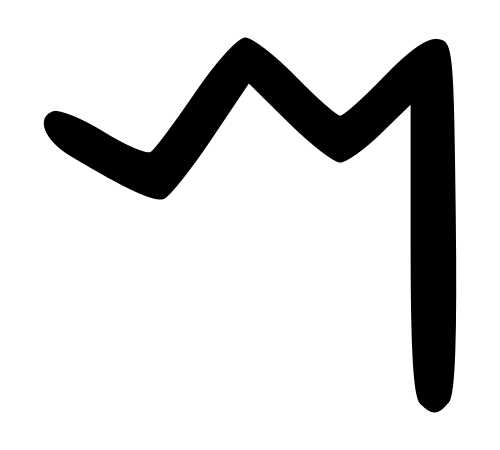 , LatinM, and CyrillicМ.
Origins
Mem is believed to derive from the Egyptianhieroglyphic symbol for water,
|

which had been simplified in the Proto-Sinaitic script and named after the West Semitic word for "water", mem ( ), as in Biblical Hebrew maym (מַיִם) 'water',[1] ultimately coming from Proto-Semitic*may-.
Arabic mīm
The letter is named mīm, and is written in several ways depending on its position in the word:
| Position in word: | Isolated | Final | Medial | Initial |
|---|---|---|---|---|
| Glyph form:(Help) | م | ـم | ـمـ | مـ |
Some examples on its uses in Modern Standard Arabic:
Mīm is used in the creation of ism words (i.e. nouns and adjectives; they are treated fundamentally the same in Arabic grammar). Specifically, mīm is used in the creation of the masdar (verbal noun) of Stem III verbs (the masdar of verbs on the pattern fāʿala is mufāʿala), of subject and object nouns for verbs of Stems II-X (using the example of Stem II, subject nouns—called fāʿil words because of their form in Stem I—are mufaʿʿil for verbs of Stems II-X, and object nouns—called mafʿūl also because of their Stem I form—take the form mufaʿʿal for verbs of Stems II-X). Place-nouns are also created with mīm; the pattern mafʿal is used to create maktab "office" from the triliteralk-t-b (to write) and maṣnaʿ "factory" from ṣ-n-ʿ (to make).

Hebrew mem
| Orthographic variants of non-final form | ||||
|---|---|---|---|---|
| Various print fonts | CursiveHebrew | Rashiscript | ||
| Serif | Sans-serif | Monospaced | ||
| מ | מ | מ |  |  |
Hebrew spelling: מֵם
Hebrew pronunciation
Mem represents a bilabial nasal [m].
Variations on written form/pronunciation
| Orthographic variants of final form | ||||
|---|---|---|---|---|
| Various Print Fonts | CursiveHebrew | RashiScript | ||
| Serif | Sans-serif | Monospaced | ||
| ם | ם | ם | 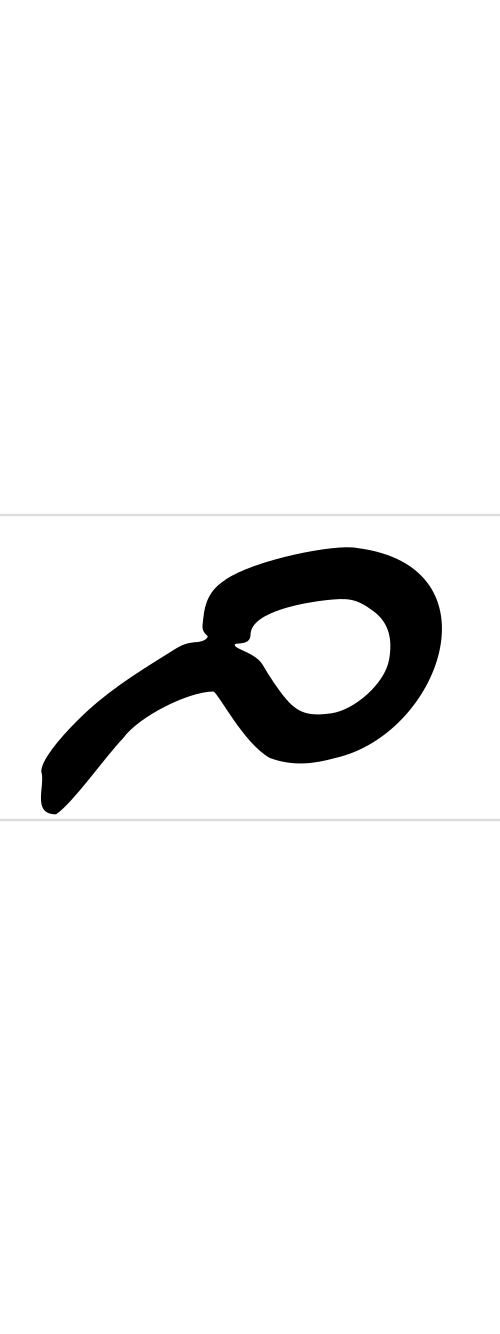 |  |
In Hebrew, Mem, like Kaph, Nun, Pe, and Tzadi, has a final form, used at the end of words: its shape changes from מ to ם.
Significance
In gematria, Mem represents the number 40 in both the Standard and Mispar Gadol Methods of Gematriea; However, (mem sofit) final mem's value is 40 in the Standard Method and 600 in the Mispar Gadol method. The Standard Method adds the values of Tav and Resh (400+200) to denote the value of mem sofit.
In the Sefer Yetzirah, the letter Mem is King over Water, Formed Earth in the Universe, Cold in the Year, and the Belly in the Soul.
As an abbreviation, it stands for metre. In the Israeli army it can also stand for mefaked, commander. In Hebrew religious texts, it can stand for the name of GodMakom, the Place.
Mem and Tarot
Mem is associated with The Hanged Man (Atu XII), the element of water and the path between Geburah and Hod on the Tree of Life.
Syriac mim
| Position in word: | Isolated | Final | Medial | Initial |
|---|---|---|---|---|
| Glyph form:(Help) | ܡ | ـܡ | ـܡـ | ܡـ |
Character encodings
| Preview | מ | ם | م | ܡ | ࠌ | ﬦ | מּ | |||||||
|---|---|---|---|---|---|---|---|---|---|---|---|---|---|---|
| Unicode name | HEBREW LETTER MEM | HEBREW LETTER FINAL MEM | ARABIC LETTER MEEM | SYRIAC LETTER MIM | SAMARITAN LETTER MIM | HEBREW LETTER WIDE FINAL MEM | HEBREW LETTER MEM WITH DAGESH | |||||||
| Encodings | decimal | hex | dec | hex | dec | hex | dec | hex | dec | hex | dec | hex | dec | hex |
| Unicode | 1502 | U+05DE | 1501 | U+05DD | 1605 | U+0645 | 1825 | U+0721 | 2060 | U+080C | 64294 | U+FB26 | 64318 | U+FB3E |
| UTF-8 | 215 158 | D7 9E | 215 157 | D7 9D | 217 133 | D9 85 | 220 161 | DC A1 | 224 160 140 | E0 A0 8C | 239 172 166 | EF AC A6 | 239 172 190 | EF AC BE |
| Numeric character reference | מ | מ | ם | ם | م | م | ܡ | ܡ | ࠌ | ࠌ | ﬦ | ﬦ | מּ | מּ |
| Preview | 𐎎 | 𐡌 | 𐤌 | |||
|---|---|---|---|---|---|---|
| Unicode name | UGARITIC LETTER MEM | IMPERIAL ARAMAIC LETTER MEM | PHOENICIAN LETTER MEM | |||
| Encodings | decimal | hex | dec | hex | dec | hex |
| Unicode | 66446 | U+1038E | 67660 | U+1084C | 67852 | U+1090C |
| UTF-8 | 240 144 142 142 | F0 90 8E 8E | 240 144 161 140 | F0 90 A1 8C | 240 144 164 140 | F0 90 A4 8C |
| UTF-16 | 55296 57230 | D800 DF8E | 55298 56396 | D802 DC4C | 55298 56588 | D802 DD0C |
| Numeric character reference | 𐎎 | 𐎎 | 𐡌 | 𐡌 | 𐤌 | 𐤌 |
See also
References
- ↑"Strong's Hebrew: 4325. מָ֫יִם (mayim) -- Water". biblehub.com. Retrieved 2026-01-06.
External links
- Phoenician alphabet
- Arabic letters
- Hebrew letters
- Urdu letters
- Letters with final form