
الأدبيات العلمية

تشمل الأدبيات العلمية مجموعة واسعة من الأبحاث الأكاديمية التي تغطي مختلف التخصصات في العلوم الطبيعية والاجتماعية . وتتألف في المقام الأول من أبحاث أكاديمية تقدم دراسات تجريبية أصلية ومساهمات نظرية . وتُعد هذه الأبحاث مصادر أساسية للمعرفة، ويُشار إليها عادةً ببساطة باسم " الأدبيات " في مجالات بحثية محددة.
تتضمن عملية النشر الأكاديمي نشر نتائج البحوث لجمهور أوسع. يقدم الباحثون أعمالهم إلى مجلات أو مؤتمرات مرموقة، حيث تخضع لتقييم دقيق من قبل خبراء في المجال. يضمن هذا التقييم، المعروف بمراجعة الأقران ، جودة البحث وصحته وموثوقيته قبل أن يصبح جزءًا من الأدبيات العلمية. تساهم المنشورات التي تخضع لمراجعة الأقران بشكل كبير في تعزيز فهمنا للعالم وتشكيل مسارات البحث المستقبلية.
تُعتبر الأبحاث العلمية الأصلية المنشورة لأول مرة في المجلات العلمية من الأدبيات الأولية . كما تُصنف براءات الاختراع والتقارير الفنية ، التي تغطي نتائج الأبحاث الثانوية وجهود الهندسة والتصميم، بما في ذلك برامج الحاسوب ، ضمن الأدبيات الأولية.
تشمل المصادر الثانوية مقالات مراجعة تلخص نتائج الدراسات المنشورة للتأكيد على التقدم والاتجاهات البحثية الجديدة، بالإضافة إلى الكتب التي تتناول مشاريع واسعة النطاق أو حجج شاملة، بما في ذلك مجموعات المقالات.
تشمل المصادر الثانوية الموسوعات والأعمال المماثلة المصممة للاستهلاك العام على نطاق واسع.
أنواع المنشورات العلمية
يمكن أن تشمل الأدبيات العلمية الأنواع التالية من المنشورات: [ 1 ]
- المقالات العلمية المنشورة في المجلات العلمية .
- براءات الاختراع في الموضوع ذي الصلة (على سبيل المثال، براءات الاختراع البيولوجية وبراءات الاختراع الكيميائية ).
- الكتب التي كتبها مؤلف واحد بالكامل أو عدد قليل من المؤلفين المشاركين.
- المجلدات المحررة ، حيث يكون كل فصل من مسؤولية مؤلف مختلف أو مجموعة من المؤلفين، بينما يكون المحرر مسؤولاً عن تحديد نطاق المشروع، والحفاظ على العمل في الموعد المحدد، وضمان اتساق الأسلوب والمحتوى.
- العروض التقديمية في المؤتمرات الأكاديمية ، وخاصة تلك التي تنظمها الجمعيات العلمية .
- التقارير الحكومية مثل التحقيقات الجنائية التي تجريها وكالة حكومية مثل المجلس الوطني لسلامة النقل .
- المنشورات العلمية على شبكة الإنترنت العالمية (على الرغم من أن المجلات العلمية، على سبيل المثال، تُنشر الآن بشكل شائع على الإنترنت).
- الكتب والتقارير الفنية والكتيبات وأوراق العمل التي يصدرها باحثون أفراد أو منظمات بحثية بمبادرة منهم؛ ويتم تنظيمها أحيانًا في سلسلة.
قد تُنشر المؤلفات أيضًا في مجالات تُعتبر " رمادية "، لأنها تُنشر خارج القنوات التقليدية. [ 1 ] لا تُفهرس هذه المواد عادةً في قواعد البيانات الرئيسية، وقد تشمل الكتيبات والرسائل والأطروحات، أو النشرات الإخبارية والتقارير. [ 1 ]
تختلف أهمية أنواع المنشورات العلمية باختلاف التخصصات، وتتغير بمرور الوقت. ووفقًا لجيمس ج. سبيت وراسل فوت ، تُعدّ المجلات المحكّمة الشكل الأبرز والأكثر شهرةً للنشر. [ 2 ] وتتمتع دور النشر الجامعية بمكانةٍ أرفع من دور النشر التجارية. [ 3 ] أما مكانة أوراق العمل ومحاضر المؤتمرات فتعتمد على التخصص؛ إذ تزداد أهميتها عادةً في العلوم التطبيقية . وكانت قيمة النشر كنسخة أولية أو تقرير علمي على الإنترنت منخفضة في الماضي، لكنها أصبحت الآن بديلاً مقبولاً في بعض المجالات، كالرياضيات وفيزياء الطاقة العالية .
الأوراق والمقالات العلمية
تم تصنيف الأوراق العلمية إلى عشرة أنواع. ثمانية منها تحمل أهدافًا محددة، بينما يمكن أن يختلف النوعان الآخران تبعًا للأسلوب والهدف المنشود. [ 4 ]
الأوراق التي تحمل أهدافًا محددة هي: [ 4 ]
- تقدم المقالة الأصلية معلومات جديدة من بحث أصلي مدعوم بالأدلة وتجسد المنهج العلمي . [ 5 ]
- تُعدّ تقارير الحالات أحداثًا فريدة يقرأها الباحثون للحصول على معلومات حول الموضوع. بينما قد تركز دراسة الحالة على حالة واحدة فقط، إلا أنها تُراعي السياق بشكل أفضل من المقالة البحثية الأصلية. [ 6 ]
- المذكرة الفنية هي وصف لتقنية أو قطعة من المعدات تم تعديلها من قطعة موجودة لتكون جديدة وأكثر فعالية.
- A pictorial essay is a series of high-quality images published for teaching purposes.
- A review is a detailed analysis of recent developments on a topic. Three essential elements of performing a review article are the study's purpose, the selection of documents, and the data assessment method. They are interconnected and shape several categories of literature reviews, including a "narrative review", "descriptive review", "scoping review", "meta-analysis", and so on.[7]
- A commentary is a short summary of an author's personal experience.
- Editorials are short reviews or critiques of original articles.
- Letters to the editor are communications directed to the editor of an article to ask questions and provide constructive criticism.
The following two categories are variable, including for example historical articles and speeches:[4]
- Nonscientific material: This type of material comes from the result of an article being published. It does not advance an article scientifically but instead contributes to its reputation as a scientific article.
- Other: Other types of papers not listed under non-scientific material or in any of the above eight categories. They can vary depending on the objective and style of the article.
Scientific article
Preparation
The actual day-to-day records of scientific information are kept in research notebooks or logbooks. These are usually kept indefinitely as the basic evidence of the work, and are often kept in duplicate, signed, notarized, and archived. The purpose is to preserve the evidence for scientific priority, and in particular for priority for obtaining patents. They have also been used in scientific disputes. Since the availability of computers, the notebooks in some data-intensive fields have been kept as database records, and appropriate software is commercially available.[8]
The work on a project is typically published as one or more technical reports, or articles. In some fields both are used, with preliminary reports, working papers, or preprints followed by a formal article. Articles are usually prepared at the end of a project, or at the end of components of a particularly large one. In preparing such an article vigorous rules for scientific writing have to be followed.
Language
غالبًا ما يعتمد التقدم الوظيفي على النشر في المجلات العلمية المرموقة، والتي تُنشر عادةً باللغة الإنجليزية، لا سيما في العلوم التطبيقية والأساسية. [ 9 ] ونتيجةً لذلك، يواجه العلماء ذوو مهارات الكتابة الإنجليزية الضعيفة صعوبةً في النشر في هذه المجلات، بغض النظر عن جودة الدراسة العلمية نفسها. [ 10 ] ومع ذلك، تشترط العديد من الجامعات الدولية النشر في هذه المجلات المرموقة من قِبل طلابها وأعضاء هيئة التدريس على حدٍ سواء. ومن الطرق التي بدأ بعض المؤلفين الدوليين في اتباعها للتغلب على هذه المشكلة، التعاقد مع مدققين لغويين مستقلين من الناطقين الأصليين باللغة الإنجليزية، والمتخصصين في تحرير اللغة الإنجليزية كلغة ثانية، لتحسين لغة مخطوطاتهم إلى مستوى مقبول في المجلات المرموقة.
الهيكل والأسلوب
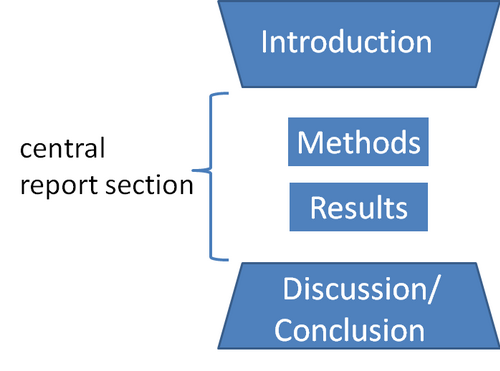
على الرغم من أن محتوى المقالة أهم من شكلها، إلا أنه من المعتاد أن تتبع المقالات العلمية بنية قياسية، لا تختلف إلا قليلاً باختلاف المواضيع. وبالرغم من أن بنية IMRAD تُركز على تنظيم المحتوى، إلا أن لكل قسم من أقسام المقالات العلمية (المقدمة، والأساليب، والنتائج، والمناقشة) قواعده الخاصة في الكتابة العلمية. [ 11 ]
فيما يلي إرشادات أساسية للتنسيق، على الرغم من أن كل مجلة وما شابهها سيكون لها إلى حد ما أسلوبها الخاص:
- يجذب العنوان انتباه القراء ويُعرّفهم بمحتوى المقالة. [ 12 ] تُصنّف العناوين إلى ثلاثة أنواع رئيسية: العناوين التقريرية (التي تُبيّن الاستنتاج الرئيسي)، والعناوين الوصفية (التي تصف محتوى البحث)، والعناوين الاستفهامية (التي تطرح سؤالاً على القراء وتُجيب عنه في النص). [ 13 ] تُشير بعض المجلات، في تعليماتها للمؤلفين، إلى نوع (وطول) العناوين المسموح بها.
- تم ذكر أسماء جميع المؤلفين وانتماءاتهم . في أعقاب بعض حالات سوء السلوك العلمي ، غالباً ما يشترط الناشرون أن يكون جميع المؤلفين المشاركين على دراية بمحتوى المقالة وأن يوافقوا عليه. [ 14 ]
- يلخص الملخص العمل (في فقرة واحدة أو في عدة فقرات قصيرة) ويهدف إلى تمثيل المقالة في قواعد البيانات الببليوغرافية وتوفير البيانات الوصفية للموضوع لخدمات الفهرسة.
- ينبغي عرض سياق التحقيقات العلمية السابقة، من خلال الاستشهاد بالوثائق ذات الصلة في الأدبيات الموجودة، وعادة ما يكون ذلك في قسم يسمى "المقدمة".
- Empirical techniques, laid out in a section usually called "Materials and Methods", should be described in such a way that a subsequent scientist, with appropriate knowledge of and experience in the relevant field, should be able to repeat the observations and know whether he or she has obtained the same result. This naturally varies between subjects, and does not apply to mathematics and related subjects.
- Similarly, the results of the investigation, in a section usually called "Results", should be presented in tabular or graphic form (image, chart, schematic, diagram or drawing). These display elements should be accompanied by a caption and should be discussed in the text of the article.
- Interpretation of the meaning of the results is usually addressed in a "Discussion" or "Conclusions" section. The conclusions drawn should be based on the new empirical results while taking established knowledge into consideration, in such a way that any reader with knowledge of the field can follow the argument and confirm that the conclusions are sound. That is, acceptance of the conclusions must not depend on personal authority, rhetorical skill, or faith.
- Finally, a "References" or "Literature Cited" section lists the sources cited by the authors.
Peer review
Increasing reliance on digital abstracting services and academic search engines means that the de facto acceptance in the academic discourse is predicted by the inclusion in such selective sources. Commercial providers of proprietary data include Chemical Abstracts Service, Web of Science and Scopus, while open data (and often open source, non-profit and library-led) services include DOAB, DOAJ and (for open access works) Unpaywall (based on CrossRef and Microsoft Academic records enriched with OAI-PMH data from open archives).[15]
Ethics
The transfer of copyright from author to publisher, used by some journals, can be controversial because many authors want to propagate their ideas more widely and re-use their material elsewhere without the need for permission. Usually an author or authors circumvent that problem by rewriting an article and using other pictures. Some publishers may also want publicity for their journal so will approve facsimilereproduction unconditionally; other publishers are more resistant.
In scientific publishing, a number of key issues include and are not restricted to:[16]
- Honesty and integrity is a duty of each author and person, expert-reviewer and member of journal editorial boards.
- The peer review process contributes to quality control and it is an essential step to ascertain the standing and originality of the research.[17]
- Redundant publications: Publications generally should contain new unpublished material.[18]
- Data fabrication is the process of purposefully changing data to make the information more in the favor of the author.[18]
- Ethical standards: Recent journal editorials presented some experience of unscrupulous activities.[19][20]
- Human welfare concerns: The guidelines for human experimentation started during WWII with the Nuremberg Code. It has evolved into three main principles from The Belmont Report. The subject must be able to make their own choices to protect themselves, benefits must outweigh the risks, and subjects must be evaluated for their selection and benefits must go to all of society.[18]
- Animal welfare concerns: Is the ethical care of animals in scientific experiments. The APS has set strict guidelines and regulations to stop animals from being unnecessarily harmed in experiments. These are being updated regularly by the APS and is a federal law in the United States enforced by DHHS.[18]
- Authorship: Who may claim a right to authorship?[16] In which order should the authors be listed?
- Conflicts of interest: This refers to biases due to private interest. It can be done knowingly or not. This is unethical because it makes data inaccurate.[18]
- Authorship disputes: The authorship of an article is simply the author of the article. The ethical issue with this is when there are two people that believe to be the author, but there is only one true author. There are guidelines to help pick which get authorship of the writing. The one that does not get authorship is put in the acknowledgments. The guidelines come from NIH and The Council of Science Editors.[18]
History
In 1620, Francis Bacon was the first to describe the experimental method in his book Novum Organum.[21] René Descartes was one of the key figures in the Scientific Revolution. He was probably the first to send his texts to colleagues asking their opinions, which became the prototype of peer review. The increased attention to epistemology in the 17th century is also linked to Cartesian views.[22] The first recorded editorial pre-publication peer-review occurred in 1665 by the founding editor of Philosophical Transactions of the Royal Society, Henry Oldenburg.[23][24] The term "peer review" was first used in the early 1970s.[25] Technical and scientific books were a specialty of David Van Nostrand, and his Engineering Magazine re-published contemporary scientific articles.
See also
References
- Robert G. Bartle (1990) "A brief history of the mathematical literature"Archived 2007-02-07 at the Wayback Machine from American Mathematical Society.
Footnotes
- 123Öchsner, Andreas (2013), "Types of Scientific Publications", Introduction to Scientific Publishing, SpringerBriefs in Applied Sciences and Technology, Springer Berlin Heidelberg, pp. 9–21, doi:10.1007/978-3-642-38646-6_3, ISBN 9783642386459
- ↑Speight, James G.; Foote, Russell (2011-04-27). Ethics in Science and Engineering. John Wiley & Sons. p. 241. ISBN 9781118104842.
- ↑"Evaluation based on scientific publishing: Evaluating books". University of Oulu. Archived from the original on November 4, 2019. Retrieved November 4, 2019.
- 1 2 3 بيه، ويلفريد (2008). "البنية الأساسية وأنواع الأوراق العلمية". الكتابة الطبية الفعالة . 49 (7): 522-525 . PMID 18695858 – عبر مجلة سنغافورة الطبية.
- ↑ بولوك، نيل و. (ديسمبر 2017). "الكتابة العلمية". طب البرية والبيئة . 28 (4): 283-284. doi :10.1016/j.wem.2017.09.007
- ↑ يوهانسون ر (2007)، "حول منهجية دراسة الحالة". أوبن هاوس إنترناشونال، المجلد 32، العدد 3، الصفحات 48-54، doi: https://doi.org/10.1108/OHI-03-2007-B0006
- ↑ أزاريان م، يو هـ، شيفيراو أ ت، ستيفيك ت ك. (2023) "هل نجري مراجعة منهجية للأدبيات بشكل صحيح؟ رسم خرائط علمية وتقييم منهجي". اللوجستيات . 2023؛ 7(4):89. https://doi.org/10.3390/logistics7040089
- ↑ تالبوت، ت.؛ م. بيترسون؛ ج. شويدر؛ ج. د. مايرز (2005). "تكييف دفتر المختبر الإلكتروني للعصر الدلالي". الندوة الدولية حول التقنيات والأنظمة التعاونية . لوس ألاميتوس، كاليفورنيا، الولايات المتحدة الأمريكية: جمعية مهندسي الكهرباء والإلكترونيات (IEEE). الصفحات 136-143 . doi : 10.1109/ISCST.2005.1553305 . ISBN 0-7695-2387-0.
- ↑ "صحيفة حقائق ميدلاين" . واشنطن العاصمة: المكتبة الوطنية الأمريكية للطب . مؤرشفة من الأصل في 16 أكتوبر 2011. تم الاطلاع عليها في 15 أكتوبر 2011 .
- ↑ بان، ز؛ غاو، ج (2006). "تجاوز قيود اللغة" . مجلة PLOS Medicine . 3 (9): E410. doi : 10.1371/journal.pmed.0030410 . PMC 1576334. PMID 17002510 .
- ↑ موغول، سكوت أ. (2017). التواصل العلمي والطبي: دليل للممارسة الفعالة . نيويورك: روتليدج. ISBN 9781138842557أُرشف من المصدر الأصلي بتاريخ 23 يونيو 2023. تم الاطلاع عليه بتاريخ 23 أكتوبر 2018 .
- ↑ لانغدون-نونر، إليز (2007). "العناوين في المقالات الطبية: ماذا نعرف عنها؟" . مجلة الكتابة . 16 (4): 158-160 . تاريخ الاسترجاع: 25 فبراير 2013 .
- ↑ فاسيليف، مارتن. "كيفية كتابة عنوان جيد للمقالات العلمية" . نشرة JEPS . الاتحاد الأوروبي لجمعيات طلاب علم النفس. مؤرشف من الأصل في 28 ديسمبر 2012. تم الاطلاع عليه في 25 فبراير 2013 .
- ↑ الاحتيال العلمي# مسؤولية المؤلفين والمؤلفين المشاركين
- ↑ ميغيل، ساندرا؛ تشينشيلا-رودريغيز، زايدا؛ دي مويا-أنيغون، فيليكس (2011). "الوصول المفتوح وسكوبس: منهج جديد للظهور العلمي من منظور الوصول" (ملف PDF) . مجلة الجمعية الأمريكية لعلوم وتكنولوجيا المعلومات . 62 (6): 1130-1145 . doi : 10.1002/asi.21532 . hdl : 10760/16100 . S2CID 5924132 .
- ١ ٢ هوبير شانسون (٢٠٠٨). النشر الرقمي، والأخلاقيات، والهندسة الهيدروليكية: الملل المراوغ أم "الممل"؟ . في: ستيفانو باجليارا، ورشة العمل الدولية الثانية للباحثين والمهندسين الشباب حول المنشآت الهيدروليكية (IJREW'08)، بيزا، إيطاليا، الكلمة الرئيسية، الصفحات ٣-١٣، ٣٠ يوليو - ١ أغسطس ٢٠٠٨. ISBN 978-88-8492-568-8.
- ↑ هوبرت شانسون (2007). "جودة البحث والنشر وتأثيره في الهندسة المدنية في القرن الحادي والعشرين: النشر أو الفناء، التجاري مقابل الوصول المفتوح، الإنترنت مقابل المكتبات ؟" . المجلة الكندية للهندسة المدنية . 34 (8): 946-951 . Bibcode : 2007CaJCE..34..946C . doi : 10.1139/l07-027 .
- 1 2 3 4 5 6 بينوس، ديل جيه؛ فابريس، خورخي؛ فارمر، جون؛ غوتيريز، جيسيكا ب؛ هينيسي، كريستين؛ كوسيك، ديفيد؛ لي، جو هيونغ؛ أولتيانو، دراغوس؛ راسل، تارا (2005-2006). "الأخلاقيات والنشر العلمي". التقدم في تعليم علم وظائف الأعضاء . 29 (2): 59-74 . doi : 10.1152/advan.00056.2004 . ISSN 1043-4046 . PMID 15905149. S2CID 27019082 .
- ↑ د. مافينيك (2006). "فن الانتحال". المجلة الكندية للهندسة المدنية . 33 (3): iii– vi. doi : 10.1139/l06-901 .
- ↑"Publication Ethical Standards: Guidelines and Procedures". AIAA Journal. 45 (8): 1794. 2007. Bibcode:2007AIAAJ..45.1794.. doi:10.2514/1.32639.
- ↑ Durant, Will. (1926). The Story of Philosophy. Page 101 Simon & Schuster Paperbacks. 1926. ISBN 978-0-671-69500-2
- ↑Bertrand Russell (2004) History of western philosophyArchived 2021-08-16 at the Wayback Machine pp. 511, 516–17.
- ↑Wagner (2006) p. 220-1
- ↑Select Committee on Science and Technology. "The Origin of the Scientific Journal and the Process of Peer Review". Parliament of the United Kingdom. Retrieved 5 December 2014.
- ↑Wills, Matthew (2024-07-21). "The History of Peer Review Is More Interesting Than You Think". JSTOR Daily. Retrieved 2025-11-23.
- Academic literature
- Academic works about science
- Information science
- Technical communication