
Benediction of the Blessed Sacrament
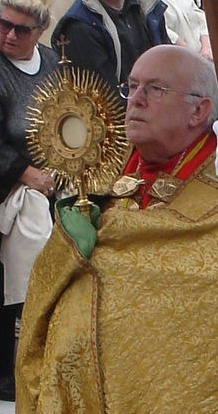
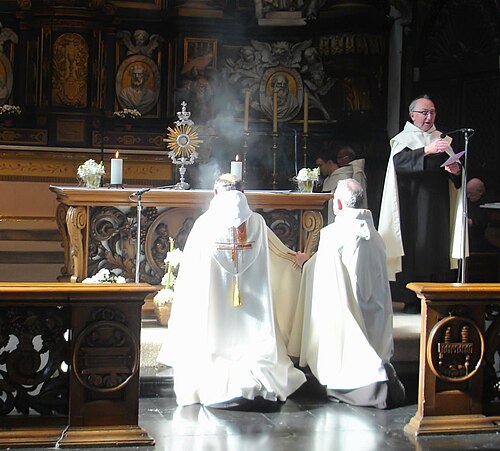
Benediction of the Blessed Sacrament, also called Benediction with the Blessed Sacrament or the Rite of Eucharistic Exposition and Benediction, is a devotional ceremony, celebrated especially in the Roman Catholic Church, but also in some other Christian traditions such as Anglo-Catholicism,[1][2] whereby a bishop, a priest, or a deacon blesses the congregation with the Eucharist at the end of a period of adoration.[3]
Exposition before the blessing
The actual benediction or blessing follows exposition of the Blessed Sacrament, i.e., the placing of the consecratedHost in a monstrance set upon the altar or at least exposition of a ciborium containing the Blessed Sacrament.[4] Thus "the blessing with the Eucharist is preceded by a reasonable time for readings of the word of God, songs, prayers, and a period for silent prayer", while "exposition merely for the purpose of giving benediction is prohibited".[5]
The readings, songs and prayers are meant to direct attention to worship of Christ in the Eucharist. A prayerful spirit is encouraged also by periods of silence and by a homily or brief exhortations aimed at developing a better understanding of the mystery of the Eucharist.[6]
Latin hymns traditionally sung during the exposition are "O Salutaris Hostia", "Tantum Ergo", "Laudate Dominum" (Psalm 117) and "Ave verum corpus". The Divine Praises are a prayer traditionally recited but no specific hymn or prayer is required, except that, immediately before the blessing, one or other of seven prayers given in the Rite of Eucharistic Exposition and Benediction, 98 and 224-229 is to be recited.[6]
Roman Catholic Church

قبل نشر طقوس عرض القربان المقدس والبركة عام 1973 ، لم يكن هناك تقنين لهذه الطقوس. ومع ذلك، فقد تم اعتماد المبادئ التوجيهية لأبرشية روما الصادرة في عهد البابا كليمنت الثاني عشر (والتي تُعرف باسم " التعليمات الكليمنتية ") والتي وضعها الكاردينال النائب بروسبيرو لامبرتيني (الذي أصبح لاحقًا البابا بنديكت الرابع عشر ) على نطاق واسع.
يتطلب الطقس المعمول به حاليًا في الكنيسة اللاتينية استخدام البخور في بداية عرض القربان المقدس وقبل التبريك، إذا كان القربان معروضًا في حامل القربان، ولكن ليس إذا كان معروضًا في كأس القربان [ 7 ] (مع أنه يُستثنى من ذلك أحيانًا). وبالمثل، ينبغي على الكاهن أو الشماس، مرتديًا رداءً أبيض أو رداءً أبيضًا مائلًا للأعلى ، أن يرتدي رداءً كهنوتيًا وأن يستخدم غطاءً للكتفين عند التبريك والقربان المقدس معروض في حامل القربان، ولكن لا يُشترط ارتداء الرداء الكهنوتي عند استخدام كأس القربان. [ 8 ]
لا يجوز لأي شخص غير الكاهن أو الشماس المخول بعرض القربان المقدس للعبادة أن يمنح البركة معه. [ 3 ]
مباشرةً بعد البركة، يُعاد القربان المقدس إلى بيت القربان في الكنيسة ، مع ترديد ترنيمة مثل "يا أيها القربان الأقدس" [ 9 ] أو ترنيمة " يا الله القدوس، نسبح اسمك" . (يُستثنى من ذلك الترانيم الإلهية التي تُتلى للتكفير عن التجديف، مثل "مبارك الله"؛ ففي هذه الحالة، يُعاد القربان المقدس إلى المذبح، وتُتلى الترانيم الإلهية بينما يقوم خادم المذبح بإزالة الحجاب الكتفي عن الكاهن وإعادته جانبًا، عادةً إلى طاولة القرابين. ثم يُعيد الكاهن القربان المقدس إلى مكانه بعد انتهاء الترانيم الإلهية).
يجب خلع الزوكيتي أثناء البركة (والعبادة السابقة) - ولا يجوز ارتداؤها مرة أخرى إلا بعد إعادة القربان المقدس.
المسيحية الشرقية
من بين الكنائس الكاثوليكية الشرقية ، الكنيسة الكاثوليكية الأوكرانية ، والكنيسة الكاثوليكية الروثينية ، والكنيسة الكاثوليكية الملكية ، [ 10 ] والكنيسة الكاثوليكية المارونية ، لديها طقوس البركة.
While Benediction with the Blessed Sacrament is not a practice of most Eastern Orthodox or Oriental Orthodox churches, or of the Assyrian Church of the East, these churches do believe in the Real Presence. As a sign of this, in many Eastern Orthodox churches, the Eucharist is venerated during the Divine Liturgy; however, this is part of the liturgy and not a distinct form of benediction. When the deacon brings the chalice out before the Communion of the Faithful, all either make a full prostration or bow. Also, at the Liturgy of the Presanctified Gifts, during the Great Entrance, as the priest carries the chalice and diskos (paten) to the Holy Doors, everyone prostrates themselves in veneration before the Eucharist.[11] The Ukrainian Orthodox Church of the USA has had a rite of Benediction.[12]
See also
References
- ↑Petiprin, Andrew (September 5, 2016). "Benediction is Good for the (Anglican) Soul". The Living Church.
- ↑"Benediction of the Blessed Sacrament". The Anglican Service Book.
- 12Congregation for Divine Worship, Holy Communion and Worship of the Eucharist outside Mass, 91
- ↑Hardon, John A. "Eucharist, Worship and Custody". The Real Presence Association.
- ↑"Holy Communion and Worship of the Eucharist outside Mass". Sacred Congregation for Divine Worship. Archived from the original on September 24, 2015 – via EWTN.
- 12"Rite of Eucharistic Exposition and Benediction"(PDF). Diocese of San Diego. Archived from the original(PDF) on December 21, 2011.
- ↑Congregation for Divine Worship, Holy Communion and Worship of the Eucharist outside Mass, 93 and 97
- ↑Congregation for Divine Worship, Holy Communion and Worship of the Eucharist outside Mass, 92
- ↑Congregation for Divine Worship, Holy Communion and Worship of the Eucharist outside Mass, 100
- ↑Melkite Greek Catholic Rite of Benediction
- ↑ "القداس الإلهي للقديس يوحنا فم الذهب" . مؤرشف من الأصل بتاريخ 31 أغسطس 2019. تم الاطلاع عليه بتاريخ 17 أبريل 2013 .
- ↑ «بركة الطقوس البيزنطية لسرّ جسد المسيح ودمه - الكنيسة الأرثوذكسية الأوكرانية في أمريكا» . مؤرشف من الأصل في 11 مارس 2013. تم الاطلاع عليه في 13 مارس 2016 .
- الأسرار المقدسة
- الطقوس الكاثوليكية
- عبادات القربان المقدس
- المواكب المسيحية
- الأسرار المقدسة
- بارك الله فيكم