
فاطمة بنت موسى
فاطمة بنت موسى ( عربى : فَاطِمَة بِنْت مُوسىٰ ، بالحروف اللاتينية : فاطمة بنت موسى )، حوالي 790-816 م ، والمعروفة باسم فاطمة المعصومة ( عربى: فَاطِمَة ٱلْمَعْصُومَة ، بالحروف اللاتينية: فاطمة المعصومة ، أشعل .' فاطمة، الطاهرة ' )، كانت ابنة موسى الكاظم ( ت 799 ) وأخت علي الرضا ( ت 818 )، الإمام السابع والثامن في الشيعة الاثني عشرية . غادرت فاطمة الشابة مسقط رأسها المدينة المنورة في حوالي عام 816 لزيارة شقيقها الرضا في مرو ، لكنها مرضت على طول الطريق وتوفيت في قم ، الواقعة في العصر الحديث إيران . تحظى بالتبجيل لتقواها في المذهب الشيعي الاثني عشري، ويُعد ضريحها في قم وجهة رئيسية للحج.
سيرة
Fatima was born circa 790 CE in Medina to Musa al-Kazim, the seventh Imam in Twelver Shia.[1] When Musa died in 799 in the prison of the Abbasid caliph Harun al-Rashid (r.786–809), possibly poisoned,[2] a significant group of his followers accepted the imamate of his son Ali al-Rida, brother of Fatima.[3] In 816, al-Rida was summoned to Khorasan by the Abbasid caliph al-Ma'mun (r.813–833), who designated him as the heir apparent in 817, possibly to mitigate the frequent Shia revolts.[4] Fatima then set out to join her brother in Merv but fell ill along the way in the Sunni town of Saveh. There she asked to be taken to the nearby Shia town of Qom, where she died a few days later,[1] possibly after seventeen days.[5] Another account states that a local Shia figure by the name of Musa ibn Khazraj al-Ash'ari brought Fatima to Qom and hosted her during her final days.[5] There are also some reports that Fatima was poisoned,[5][6] though they are not mentioned in Tarikh-e Qom, a history of Qom written in 988 by Hasan ibn Muhammad Qomi.[5] Fatima thus died in 816,[1][5] or in 817.[7] Her age at the time is not known with certainty but she must have been at least twenty-one years old, considering that her father Musa was last imprisoned in 795 until his death in 799.[5]
Place in Twelver Shia
Fatima is known by the title al-Ma'suma (Arabic: ٱلْمَعْصُومَة, lit.'the immaculate, the infallible').[1] It is uncertain when and how she received this title but she was already referred to as such in an order issued by Jahan Shah (r.c. 1438 – 1467), the Qara Qoyunlu king of Iran.[5] Fatima is revered as the "embodiment of the feminine virtues" in Twelver Shia,[8] where she is recognized for piety and religious scholarship, and often compared to Fatima bint Muhammad (d.632), daughter of the Islamic prophetMuhammad (d.632). She is revered by Twelvers as a saint who would intercede on the Judgement Day and performs miracles, such as healing those with incurable diseases. [1]
Shrine
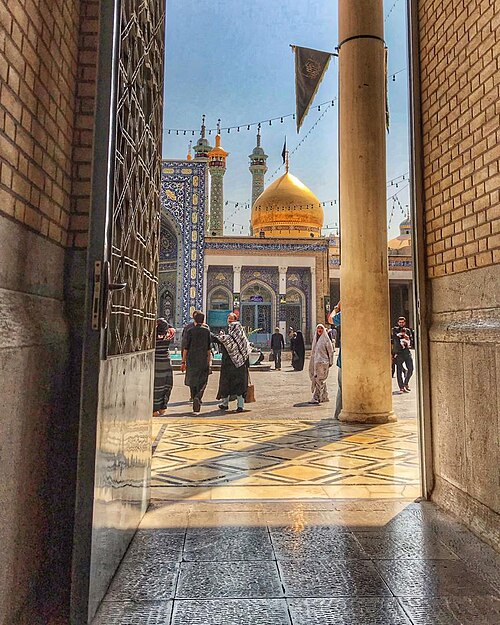
Fatima was buried outside of Qom in a plot of land owned by Musa al-Ash'ari, which became a public endowment later. The house where she stayed, the site of her prayers, became a mosque outside of Qom.[5] Her shrine has been developed by successive generations,[9][10] patronized by the Buyids (r.934–1062) and the Seljuks (r.1037–1194),[11] as well as the Qara Qoyunlus (r.1374–1468) and the Aq Qoyunlus (r.1378–1503).[12] The current imposing complex, however, largely dates to the Safavid (r.1501–1736) and Qajar (r.1789–1925) eras.[12]
يعود الفضل في مكانة قم كوجهة للحج إلى مرقد فاطمة المعصومة، [ 12 ] ويُشجع على زيارة مرقدها في روايات تُنسب إلى أخيها الرضا وابنه محمد الجواد ( توفي عام 835 )، الإمام التاسع عند الشيعة الإثني عشرية. [ 13 ] وهكذا أصبحت المدينة مركزًا هامًا للنشاط والعلم الشيعي منذ القرن الثامن فصاعدًا، [ 14 ] وبلغت ذروتها في القرن العاشر، إلى أن دُمرت عام 1224 خلال الغزو المغولي الأول لبلاد فارس . [ 15 ] وقد وجد المؤرخ الفارسي حمد الله المستوفي المدينة أطلالًا خلال زيارته في القرن الرابع عشر، [ 6 ] لكنها عادت للظهور خلال العصر الصفوي. [ 15 ] على وجه الخصوص، جرى تطوير الضريح بشكل أكبر عام 1519 على يد شاه بيغم، ابنة الملك الصفوي إسماعيل الأول ( حكم من 1501 إلى 1524 )، [ 1 ] بينما دعم الملك الصفوي عباس الأول ( حكم من 1588 إلى 1629 ) الضريح ماليًا وبنى فيه مدرسة ونُزُلًا للحجاج. [ 15 ] [ 16 ] [ 1 ] وقد فعل ذلك جزئيًا لتشجيع الحج إلى الأضرحة الشيعية داخل أراضيه قبيل قيام العثمانيين السنة عام 1638 بتأسيس حكمهم على العراق ، حيث تقع أضرحة معظم أئمة الشيعة. [ 15 ] تأسست مدرسة الفقه هناك عام 1533، [ 15 ] والمعروفة باسم الفيضية نسبةً إلى الفيلسوف الصفوي محسن فيض كاشاني ( توفي عام 1680 ). [ 15 ] [ 12 ] استفادت قم لاحقًا من قربها من طهران ، المقر الملكي للقاجاريين، الذين طوروا الضريح ودفنوا موتاهم في المدينة. [ 15 ] ساهم الفقيه القاجاري ميرزا قمي ( توفي عام 1815 ) بشكل خاص في رفع المستوى الأكاديمي للمدرسة الدينية. [ 12 ] بدأت مرحلة أخرى من النمو مع وصول عبد الكريم حائري يزدي ( توفي عام 1937) .) في عام 1921، الذي أسس المركز اللاهوتي الحالي ( الحوزة العلمية ). [ 12 ] [ 17 ] وكان من بين تلاميذه روح الله الخميني ( توفي عام 1989 ) الذي قاد الثورة الإيرانية عام 1979. [ 12 ]



 المزار عام 1955
انظر أيضاً
الحواشي
- 1 2 3 4 5 6 7 Ruffle 2004 .
- ↑ دفتري 2013 ، ص 59.
- ↑ دفتري 2013 ، ص 60.
- ^ دفتري 2013 ، ص 60-1.
- 1 2 3 4 5 6 7 8 سجادي 2019 .
- 1 2 دونالدسون 1933 ، ص. 258.
- ↑ هالم 1997 ، ص 27.
- ↑ ستاركي 2008 ، ص 532.
- ↑ هولمز 2008 .
- ↑ دريكسلر 2009 .
- ↑ ستاركي 2008 .
- 1 2 3 4 5 6 7 الجعفريان 2004 .
- ↑ دونالدسون 1933 ، ص 258-259.
- ↑ دفتري 2013 ، ص 61.
- 1 2 3 4 5 6 7 هالم 1997 ، ص. 128.
- ↑ دونالدسون 1933 ، ص 259-260.
- ↑ هالم 1997 ، ص 129-30.
مراجع
- دفتري، فرهاد (2013). تاريخ الإسلام الشيعي . آي بي توريس. رقم ISBN 9781780768410.
- دريشسلر، أندرياس (2005). "طارق قم" . موسوعة إيرانيكا ( الطبعة على الانترنت).
- دريشسلر، أندرياس (2009). "قم ط. التاريخ إلى العصر الصفوي" . موسوعة إيرانيكا ( الطبعة على الانترنت).
- دونالدسون، دوايت م. (1933). المذهب الشيعي: تاريخ الإسلام في بلاد فارس والعراق . دار نشر AMS. رقم ISBN 9780598503787.
{{cite book}}عدم توافق رقم ISBN / التاريخ ( مساعدة ) - هالم، هاينز (1997). الإسلام الشيعي: من الدين إلى الثورة . ماركوس وينر للنشر. رقم ISBN 1558761349.
- هولمز، إدوارد د.أ. (2008). "«علي الرضا» . في: نيتون، إيان ريتشارد (محرر). موسوعة الحضارة والدين الإسلاميين . روتليدج. ص 43. ISBN 9780700715886.
- جعفريان، رسول (2004). "قم" . في مارتن، ريتشارد سي. (محرر). موسوعة الإسلام والعالم الإسلامي . المجلد 2. ماكميلان ريفرنس يو إس إيه. الصفحات 561-562 . ISBN 0028656059.
- كشكش ، كارين ج. (2004). "فاطمة معصومة" . في جيتيسيس، فيليس ج. (محرر). شعب العالم المقدس: موسوعة متعددة الثقافات . المجلد. 3. ABC-CLIO. ص. 273. ردمك 9781576073551.
- سجادي، صادق (2019). "آستانه حضرت معصومه" [ ضريح السيدة المعصومة ] . الموسوعة الإسلامية الكبرى (بالفارسية). المجلد. 1. مركز الدراسات الإيرانية والإسلامية .
- ستاركي، جانيت (2008). "قم" . في نيتون، إيان ريتشارد (محرر). موسوعة الحضارة والدين الإسلامي . روتليدج. ص 531-532 . ISBN 9780700715886.
للمزيد من القراءة
- صادقي، زهرة (1996). فاطمة قم : ein Beispiel für die Verehrung heiliger Frauen im Volksglauben der Zwölfer-Schia [ فاطمة قم: مثال على تبجيل المرأة المقدسة في المعتقدات الشعبية للشيعة الإثني عشرية ] . K.Schwarz Verlag. رقم ISBN 9783879972555.
- عائلة محمد
- قم
- محافظة قم
- نساء من القرن التاسع من الخلافة العباسية
- شعوب القرن التاسع من الخلافة العباسية
- العرب في القرن التاسع
- مواليد سبعينيات القرن الثامن عشر
- 816 حالة وفاة
- مراسم الدفن في مزار فاطمة المعصومة
- نساء عربيات من القرن التاسع
- الإمام زاده