
527th Space Aggressor Squadron
The 527th Space Aggressor Squadron is a United States Space Force unit assigned to the Space Training and Readiness Command. The unit traces its lineage to the 312th Bombardment Squadron (Light) constituted in 1942. It presents realistic adversary threats to US and allied military forces to improve their training for space-associated operations. It is stationed at Schriever Space Force Base, Colorado. Its present form dates from its activation as part of the United States Air Force in 2000. That year it was activated as part of the Space Warfare Centre, but it was then transferred to the 57th Adversary Tactics Group in 2006. The mission was augmented with the activation of a United States Air Force Reserve associate unit, the 26th Space Aggressor Squadron, on 1 October 2003.[3] With the formation of the Space Force in 2019, the squadron was part of the second wave of transfers and reorganizations which took place in mid-2020. It was realigned under Space Delta 11 upon that organizations activation in 2021.[4]
Mission
Its mission is to train US, joint and allied military forces for combat with space-capable adversaries; preparing USAF, Joint and Allied Forces for combat through realistic threat replication, training, and feedback through specialized and certified space-capable aggressors. It operates adversary space systems, develops new tactics, techniques and procedures to counter threats, and improves the US military space posture.
The squadron attempts to replicate enemy threats to space-based and space-enabled systems during tests and training exercises. By using Global Positioning System (GPS) and satellite communications jamming techniques, it provides Space Force, joint and coalition military personnel with an understanding of how to recognize, mitigate, counter and defeat these threats.
The 527th serves to know, teach and replicate a wide array of terrestrial and space threats to the U.S. Department of Defense's space enablers. The squadron trains the modern warfighter to operate in an environment where critical systems like GPS and SATCOM are interfered with or denied—preparing them for the current and future fights, and guaranteeing U.S. battlefield dominance well into the 21st century.
History
World War II
تم تفعيلها في البداية كسرب القصف 312، وهو سرب قاذفات خفيفة من طراز دوغلاس إيه-20 هافوك في الجنوب الشرقي، وتدرب تحت قيادة القوات الجوية الثالثة. أعيد تجهيزها كسرب مقاتلات قاذفة من طراز دوغلاس إيه-24 بانشي وأعيد تسميتها إلى سرب المقاتلات القاذفة 527 في أغسطس 1943.
تمّ نشرها في سلاح الجو الثاني عشر في شمال أفريقيا في مايو 1943، حيث تمركزت في البداية في الجزائر. بدأت عمليات الطيران في 15 مايو من مطار المديونة ، بالقرب من الدار البيضاء ، في المغرب الفرنسي . اتجهت شرقًا لدعم الجيش الخامس بمهام الدعم الجوي القريب. خلال حملة شمال أفريقيا ، اشتبكت السرب مع المواقع الألمانية في تونس.
في يوليو، انتقلت العناصر الأولية للسرب إلى صقلية. ومن مطار جيلا ، بدأت بتنفيذ مهام قتالية لدعم الفرقة الأولى من الفيلق الثاني . وفي 27 أغسطس، قدم السرب الدعم الجوي لأولى عمليات إنزال قوات الحلفاء على البر الأوروبي في ساليرنو بإيطاليا. وفي 10 سبتمبر، بعد ثلاثة أيام من غزو ساليرنو، انتقلت طلائع السرب إلى مطار سيلي ، بالقرب من رأس الشاطئ. وقد تسبب قصف العدو للشواطئ في صعوبة بالغة أثناء الانتقال، ولم ينفذ السرب 5527 أولى مهامه حتى 15 سبتمبر.
تحركت الوحدة شمالاً عبر إيطاليا خلال الحملة الإيطالية ، وقدمت الدعم لقوات الحلفاء من خلال مهاجمة خطوط إمداد العدو وتجمعات القوات ومناطق التموين. وفي أبريل 1944، هاجمت الوحدة خط غوستاف الألماني . كما هاجمت أهدافاً على السكك الحديدية والطرق، وقصفت أرتال القوات والإمدادات الألمانية خلال أواخر الربيع.
شاركت الكتيبة 527 بفعالية في عملية سترانجل ، وهي محاولة لقطع خطوط الإمداد الألمانية قبل الهجوم الحليف الذي استهدف شبكات السكك الحديدية والطرق، بالإضافة إلى مهاجمة القوات الألمانية وقوافل الإمداد. ورغم أن عملية سترانجل لم تُلحق ضرراً كبيراً بالإمدادات الألمانية، إلا أنها عرقلت قدرة العدو على المناورة التكتيكية، وكانت عاملاً رئيسياً في اختراق الحلفاء للحدود في نهاية المطاف. خلال هذه الفترة، تسلّمت الكتيبة 527 طائرات كورتيس P-40 وارهوك لتعزيز أسطولها من طائرات A-36 القديمة، إلا أن طائرات P-40 المتقادمة لم تكن سوى حل مؤقت. وبعد أسابيع قليلة، في 23 يونيو، استقبلت الكتيبة 527 أولى طائراتها من طراز ريبابليك P-47 ثندربولت .
Moved to Corsica in July 1944. From Poretta Airfield, the squadron flew bombing missions against coastal defenses in direct support of Operation Dragoon, the Allied invasion of southern France 15 Aug. 1944. Allied forces met little resistance as they moved inland twenty miles in the first twenty-four hours. Once the invasion was completed, the squadron moved back to northern Italy and continued its coastal basing by attacking enemy road and rail networks in northern Italy and, for the first time, flying regular escort missions with heavy bombers. The 527th also conducted armed reconnaissance against the enemy in the Po Valley region.
The 527th continued combat in northern Italy until February 1945, when it left the Mediterranean Theater and moved to Tantonville Airfield, France, in the Lorraine region, and operations shifted from targets in the Po Valley to those in southern Germany. The 527th's first mission to Germany – a cause of some excitement – was on 25 Feb. 1945, and by March most missions were flown into Germany against rail lines, roads, supply dumps, enemy installations and airfields. The squadron transferred from Tantonville to Braunshardt Airfield, near Darmstadt, Germany,
The 527th Fighter Squadron flew its final combat mission on 8 May 1945.
Just after the war, the squadron performed military occupation duty in Germany, with personnel demobilizing throughout the summer. The squadron's last personnel were sent back to the United States from AAF Station Schweinfurt, Germany, on 15 February 1946, with the squadron inactivated as an administrative unit in March.
Cold War
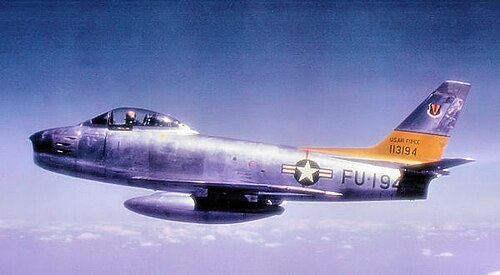
The squadron was reactivated in the postwar era 20 August 1946 at AAF Station Nordholz, Germany equipped with surplus P-47 Thunderbolts from storage depots in Europe. Over the next several years, the squadron underwent several redesignations and several station assignments in occupied Germany. In June 1948, the squadron was moved to Neubiberg Air Base, near Munich when tensions with the Soviet Union culminated in the Berlin Blockade. By 1948, it was obvious that the piston-engine Thunderbolts would be no match for Soviet jet fighters, and in early 1950 the squadron was re-equipped with Republic F-84E Thunderjets for air defense of the Munich area.
مع دخول عصر الطائرات النفاثة إلى أوروبا، رغبت قيادة القوات الجوية الأمريكية في أوروبا (USAFE) بنقل وحداتها غرب نهر الراين ، نظرًا لقرب قواعدها في منطقة ميونيخ من قواعد طائرات ميغ-15 السوفيتية في تشيكوسلوفاكيا، حيث لا يفصلها عنها سوى دقائق معدودة بالطائرة. وفي عام 1952، نُقل السرب إلى قاعدة جديدة تقع غرب نهر الراين بالقرب من كايزرسلاوترن ، في ألمانيا الغربية. وافتُتحت قاعدة لاندشتول الجوية للعمليات في 5 أغسطس 1952، ووصل إليها السرب 527 المقاتل القاذف في 21 أغسطس.
في أبريل 1953، أكملت الوحدة 527 انتقالها إلى لاندشتول، وسرعان ما أُعيد تجهيزها بطائرات نورث أمريكان إف-86 إف سابر النفاثة ، لتكون بذلك أول وحدة في القوات الجوية الأمريكية في أوروبا تُشغّل أحدث طائرة مقاتلة أمريكية. وقد حققت طائرة إف-86 إف نجاحًا باهرًا كمقاتلة وقاذفة مقاتلة في الحرب الكورية، مما شكّل نقلة نوعية في قدرات الجناح.
بعد عام، أُعيد تسمية السرب ليصبح السرب 527 للمقاتلات الاعتراضية ، وتولى مهمة جديدة تتمثل في الدفاع الجوي عن منطقة وسط أوروبا. ولإنجاز هذه المهمة، أُعيد تجهيز السرب بطائرات نورث أمريكان إف-86 دي سابر الاعتراضية المسلحة بالصواريخ، والتي توفر قدرة على العمل في جميع الأحوال الجوية.
تم تعطيل الوحدة 527 في 8 فبراير 1956 في إطار إعادة تنظيم قوات الدفاع الجوي في ألمانيا الغربية من قبل قيادة القوات الجوية الأمريكية في أوروبا، حيث تم نقل الأفراد والمعدات إلى السرب 461 المقاتل النهاري .
سرب المقاتلات المهاجمة

في أبريل 1976، أُعيد تفعيل السرب في قاعدة سلاح الجو الملكي البريطاني ألكونبري بإنجلترا تحت اسم السرب 527 للتدريب على المقاتلات التكتيكية والهجومية ، ليصبح بذلك السرب الهجومي الوحيد التابع للقوات الجوية الأمريكية في أوروبا . وبدأ السرب 527 بتقديم الدعم الهجومي للوحدات القتالية المتمركزة في أوروبا في سبتمبر. تمثلت مهمته في تدريب طياري المقاتلات التابعين للقوات الجوية الأمريكية في أوروبا على القتال الجوي مع خصوم الكتلة الشرقية باستخدام التدريب على القتال الجوي غير المتماثل .
كان السرب مجهزًا بطائرات نورثروب إف-5إي تايجر 2 ، والتي كانت في الأصل جزءًا من طلبية طائرات مخصصة لجنوب فيتنام . نُقلت الدفعة الأولى المكونة من ثماني طائرات جوًا إلى ألكونبري في 21 مايو 1976 على متن طائرة لوكهيد سي-5إيه جالاكسي مباشرة من مصنع الإنتاج في بالمدايل ، كاليفورنيا . وصلت ثماني طائرات تايجر أخرى في 14 يونيو، تلتها الدفعة الأخيرة المكونة من أربع طائرات بعد عشرة أيام، في 24 يونيو. نُقلت هذه الطائرات أيضًا جوًا على متن طائرة سي-5إيه. أصبح السرب 527 جاهزًا للعمليات بالكامل بعد بضعة أشهر، مع بدء أول دورة تدريبية في أكتوبر 1976.
طُليت طائرات إف-5إي المهاجمة بألوان تمويه متنوعة مصممة لمحاكاة تلك المستخدمة من قبل طائرات حلف وارسو . ووُضعت رموز أنف مكونة من رقمين على الطراز السوفيتي على معظم الطائرات المهاجمة، تتطابق مع آخر رقمين من الرقم التسلسلي. وفي حال وجود تكرار، استُخدمت ثلاثة أرقام.
فرضت الاتفاقيات الدولية على الطائرات العسكرية حمل شعاراتها الوطنية ، ولكن تم تقليص حجم شعار النجمة والشريط الوطني ونقله إلى موضع أقل وضوحًا على الجزء الخلفي من جسم الطائرة. وكانت طائرات "المهاجم" التابعة للسرب 527 من أوائل الطائرات التي استخدمت شعار النجمة والشريط بشكل مخفف أو مطبوع، وهو الآن الشعار القياسي على طائرات القوات الجوية الأمريكية.
نفّذت فرقة "المهاجمون 527" مناورات جوية مكثفة، شملت تدريبات قتالية مكثفة، تضمنت في كثير من الأحيان مناورات عالية السرعة بسرعات تفوق سرعة الصوت . درّبت هذه الفرقة أسراب القوات الجوية الأمريكية على تكتيكات المقاتلات السوفيتية، لكنها انتشرت بشكل متكرر في قواعد جوية أخرى تابعة لحلف الناتو ، حيث درّبت طيارين من النرويج إلى اليونان وتركيا وفرنسا وألمانيا الغربية ودول البنلوكس على التكتيكات القتالية.
بعد 12 عامًا من الطيران المكثف، في عام 1988، بدأت أساطيل طائرات إف-5إي المُهاجمة تُعاني من التآكل نتيجة التعرض المُستمر لظروف المناورات القتالية الجوية القاسية . فُرضت قيود على العمليات، حيث حُذّر الطيارون من تجاوز حد معين من قوة التسارع. كان لا بد من ابتكار بعض أدوات الإصلاح للتغلب على هذه المشاكل، وبدأت التكلفة التقديرية لإصلاح الأسطول بأكمله تتجاوز مليار دولار. إضافةً إلى ذلك، مع ظهور جيل جديد من المقاتلات السوفيتية، بات من الواضح أن طائرات إف-5إي لم تعد قادرة على مُحاكاة تهديدات حلف وارسو بشكل كافٍ.
تقرر إعادة تجهيز السرب بطائرات جنرال دايناميكس إف-16 سي فايتينغ فالكون ونقله إلى قاعدة سلاح الجو الملكي البريطاني في بينتووترز . في المقابل، ستنتقل طائرات فيرتشايلد ريبابليك إيه-10 ثندربولت 2 الموجودة في بينتووترز إلى ألكونبري، مما يمنح الجناح العاشر للمقاتلات التكتيكية مهمة جديدة للدعم الجوي القريب .
After the 527th was reassigned, eight of the lowest-hour F-5E's were transferred to the United States Navy for TOPGUN aggressor training at Naval Air Station Miramar, California in July 1988. The remainder were sent to storage at RAF Kemble for refurbishing. From there they were sold under the foreign military assistance program to Morocco and Tunisia in October 1989. One F-5E was thought to be retained at Alconbury for static display as a gate guard. In reality this is a plastic/fiberglass model with an authentic windscreen and canopy.
The 527th flew its last F-5E sortie from Alconbury on 22 June 1988 and personnel and equipment was moved to RAF Bentwaters. The first two of an intended complement of eighteen F-16Cs arrived at Bentwaters on 14 June 1988. These were single examples taken from the 52d Tactical Fighter Wing at Spangdahlem Air Base, West Germany and the 86th Tactical Fighter Wing at Ramstein Air Base. The first four months at Bentwaters were dedicated to pilot conversion for the new aircraft.
The 527th AS resumed their aggressor role in November 1988 when six McDonnell Douglas F-15C Eagles from the 36th Tactical Fighter Wing at Bitburg Air Base, Germany arrived at Bentwaters for the start of a three-week DACT course. The 527th's complement of aircraft had reached twelve on 16 January 1989 when one more F-16C was delivered from Spangdahlem.
In 1989 with the Fall of the Berlin Wall and the subsequent collapse of the Warsaw Pact and a reduction of defense spending, the decision was made to terminate the entire USAF aggressor program. In November 1989 the squadron began disposing of its F-16Cs in preparation for inactivation the following year. The first two aircraft to leave were flown to Spangdahlem on 29 November 1989. The 527th had reassigned its entire fleet of 12 aircraft by mid-1990 and was inactivated on 30 September 1990. It was to be the only F-16 unit ever to be based in the United Kingdom.
Space Aggressor Squadron
The 527th was not activated again until 29 September 2000 when it became the 527th Space Aggressor Squadron. On 14 April 2006 the squadron moved from under Air Force Space Command to Air Combat Command. In 2006 it began reporting to the 57th Adversary Tactics Group of the 57th Wing.[5]
On 24 July 2020 the 527th Aggressor Squadron was transferred to the United States Space Force.[6]
Lineage
- Constituted as the 312th Bombardment Squadron (Light) on 13 January 1942
- Activated on 10 February 1942
- Redesignated 312th Bombardment Squadron (Dive) on 3 September 1942
- Redesignated 527th Fighter-Bomber Squadron on 23 August 1943
- Redesignated 527th Fighter Squadron, Single Engine on 30 May 1944
- Inactivated on 31 March 1946
- Activated on 20 August 1946
- Redesignated: 527th Fighter-Bomber Squadron on 20 January 1950
- Redesignated: 527th Fighter-Day Squadron on 8 October 1954
- Inactivated on 8 February 1956
- Redesignated 527th Tactical Fighter Training Aggressor Squadron on 29 September 1975
- Activated on 1 April 1976
- Redesignated 527th Aggressor Squadron on 15 April 1983
- Inactivated on 30 September 1990
- Redesignated 527th Space Aggressor Squadron on 29 September 2000
- Activated on 23 October 2000[1]
Assignments
- 86th Bombardment Group (later 86th Fighter-Bomber Group, 86th Fighter Group), 10 February 1942 – 31 March 1946
- 86th Fighter Group, 20 August 1946
- United States Air Forces in Europe, 15 May 1947
- Tactical Air Command, 25 June 1947
- United States Air Forces in Europe, 30 December 1947
- 86th Fighter Group (later 86th Fighter-Bomber Group, 86th Fighter-Interceptor Group), 25 January 1948 – 8 February 1956
- 10th Tactical Reconnaissance Wing (later 10th Tactical Fighter Wing), 1 April 1976
- 81st Tactical Fighter Wing, 14 July 1988 – 30 September 1990
- Space Warfare Center, 23 October 2000[1]
- 57th Adversary Tactics Group, 14 April 2006 – 24 July 2020
- Space Training and Readiness Delta (Provisional), 24 July 2020 – 22 August 2021
- Space Delta 11, 23 August 2021 – present[4]
Stations
|
|
Aircraft
|
|
List of commanders
- Lt Col Conrad "Rad" Widman, 23 October 2000 – July 2002
- Lt Col Scott Bonzer, 22 June 2012 – 6 June 2014[9]
- Lt Col Kyle J. Pumroy, 6 June 2014 – 2 June 2016[10]
- Lt Col Anibal Rodriguez, 2 June 2016[11]
- Lt Col Jason Adams, ~2018[12]
- Lt Col Jennifer Hodges, July 2020 - July 2022[13][14]
- Lt Col Christopher Adams, 15 July 2022 - 1 July 2024 [15]
- Lt Col Shawn "Happy" Green, 1 July 2024 - 15 June 2026 [16]
- Lt Col Keturah "KT" Onukwuli, 15 June 2026 - present
References
Notes
- Explanatory notes
- ↑Aircraft is General Dynamics F-16C Block 30A Fighting Falcon, serial 85-1479 at RAF Bentwaters, England in 1988. This was the first European based aggressor aircraft and it is shown parked in front of a hardened aircraft shelter adorned with a Russian bear and star. The 527th was the only USAFE squadron in the United Kingdom to be assigned the F-16.
- Citations
- 12345Haulman, Daniel L. (20 February 2015). "527 Space Aggressor Squadron (ACC)". Air Force Historical Research Agency. Archived from the original on 27 September 2015. Retrieved 6 November 2018.
- ↑Maurer, Combat Squadrons, pp. 633–634
- ↑"Air Force "bad guys" revel in 20-year milestone". Space Training and Readiness Command (STARCOM). 7 January 2024. Retrieved 28 March 2024.
- 12"Space Force activates Space Training and Readiness Command". United States Space Force. 23 August 2021. Retrieved 28 March 2024.
- ↑"Space Aggressor Squadron moves to Air Combat Command". Secretary of the Air Force Public Affairs. 19 April 2006. Archived from the original on 14 July 2007. Retrieved 18 February 2018.
- ↑"US Space Force stands up STAR Delta Provisional".
- 123Station number in Johnson.
- ↑Station information in Haulman, except as noted.
- ↑"Agressor's welcome new CC".
- ↑"527 SAS welcomes new commander > Schriever Space Force Base > Article Display".
- ↑"527 SAS welcomes new commander > Schriever Space Force Base > Article Display".
- ↑"DVIDS - News - 527th Space Aggressor Squadron bids farewell to Army counterpart".
- ↑"DVIDS - News - 527th SAS crosses over to the USSF".
- ↑Profile LinkedIn
- ↑"220715-F-No007-0009". 15 July 2022.
- ↑"220715-F-No007-0009". 1 July 2024.
Bibliography
 This article incorporates public domain material from theAir Force Historical Research Agency
- جونسون، الملازم أول ديفيد سي. (1988). قواعد القوات الجوية للجيش الأمريكي في الأراضي القارية (المسرح الأوروبي للعمليات) من يوم الإنزال إلى يوم النصر في أوروبا (ملف PDF) . قاعدة ماكسويل الجوية، ألاباما: قسم البحوث، مركز البحوث التاريخية التابع للقوات الجوية الأمريكية. مؤرشف من الأصل (ملف PDF) في 29 سبتمبر 2015. تم الاطلاع عليه في 26 يونيو 2017 .
{{cite book}}: صيانة CS1: الأسماء الرقمية: قائمة المؤلفين ( رابط ) - لوس، ستيف. المجموعة المقاتلة 86 في الحرب العالمية الثانية . هاميلتون، مونتانا: دار إيجل إيديشنز المحدودة، 2007. ISBN 978-0-9721060-8-5.
- ماورر، ماورر، محرر. (1983) [1961]. وحدات القتال التابعة لسلاح الجو في الحرب العالمية الثانية (ملف PDF) (طبعة مُعاد طباعتها ). واشنطن العاصمة: مكتب تاريخ سلاح الجو. ISBN 0-912799-02-1LCCN 61060979. مؤرشف من الأصل (PDF) بتاريخ 20 ديسمبر 2016. تم الاطلاع عليه بتاريخ 17 ديسمبر 2016 .
- ماورر، ماورر، محرر. (1982) [1969]. أسراب القتال التابعة لسلاح الجو، الحرب العالمية الثانية (ملف PDF) (طبعة معاد طباعتها ). واشنطن العاصمة: مكتب تاريخ القوات الجوية. ISBN 0-405-12194-6LCCN 70605402. OCLC 72556. مؤرشف من الأصل (PDF) بتاريخ 20 ديسمبر 2016. تم الاطلاع عليه بتاريخ 17 ديسمبر 2016 .
- رافينشتاين، تشارلز أ. (1984). أجنحة القتال التابعة للقوات الجوية، تاريخ النسب والتكريمات 1947-1977 . واشنطن العاصمة: مكتب تاريخ القوات الجوية. ISBN 0-912799-12-9تم الاطلاع عليه بتاريخ 17 ديسمبر 2016 .
روابط خارجية
 الوسائط المتعلقة بسرب المهاجمين الفضائيين 527 على ويكيميديا كومنز
- صحيفة حقائق الجناح 57
- انتشار السرب الجوي 527 عام 1986، قاعدة ديسيمومانو الجوية، إيطاليا
- عندما تجولت الدببة في سوفولك
- أسراب القوات الفضائية الأمريكية