
Culture of Suriname
Surinamese culture has strong Asian, African and European influences. The population is mainly composed of the contribution of people from India, Africa, China, Europe, and Indonesia, as well as indigenous peoples who lived in the area, before the arrival of European settlers.
Cultural events
Music
Suriname is known for its kaseko music and Baithak Gana as well as other Indo-Caribbean music traditions.
The term kaseko is probably derived from the French expression casser le corps ('break the body'), which was used during slavery to indicate a very swift dance. Kaseko is a fusion of numerous popular and folk styles derived from Africa, Europe and the Americas. It is rhythmically complex, with percussion instruments including skratji (a very large bass drum) and snare drums, as well as saxophone, trumpet and occasionally trombone. Singing can be both solo and choir. Songs are typically call-and-response, as are Creole folk styles from the area, such as kawina.
Kaseko emerged from the traditional Afro-Surinamese kawina music, which was played since the beginning of 1900 by street musicians in Paramaribo. It evolved in the 1930s during festivities that used large bands, especially brass bands, and was called Bigi Poku (big drum music). In the late 1940s, jazz, calypso and other importations became popular, while rock and roll soon left its own influence in the form of electrified instruments.[1]
The biennial music festival SuriPop is the country's largest music event.[2]
Cuisine


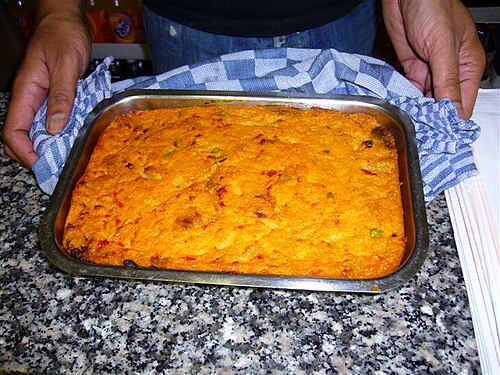
يتميز المطبخ السورينامي بتنوعه الكبير، نظراً لأصول سكان سورينام المتعددة. فهو مزيج من مطابخ عالمية عديدة، تشمل المطبخ الهندي / جنوب آسيوي ، وغرب أفريقي ، وكريولي ، وإندونيسي ( جاوِي )، وصيني ، وهولندي ، وبريطاني ، وفرنسي ، ويهودي ، وبرتغالي ، وأمريكي أصلي . وقد أدى هذا التنوع إلى ظهور العديد من الأطباق في المطبخ السورينامي، حيث تأثرت المجموعات المختلفة بأطباق ومكونات بعضها البعض. ومن بين هذه الأطباق الجديدة: الروتي ، والناسي غورينغ ، والبامي ، والبوم ، والسنسي فوروي ، والموكسي ميتي ، واللوسي فوروي . وتشمل الأطعمة الأساسية الأرز ، والنباتات مثل التاير والكسافا ، والروتي. وعادةً ما يُقدم الدجاج في العديد من الأطباق ، منها السنسي فوروي الصيني ، وكاري الدجاج الهندي ، والبوم ، وهو طبق كريولي شهير يُقدم في الحفلات. كما يُستخدم اللحم المملح والسمك المجفف ( باكيلجاو ) على نطاق واسع. ومن أمثلة الخضراوات في المطبخ السورينامي: الفاصوليا الطويلة ، والبامية ، والباذنجان . ولإضفاء نكهة حارة، يُستخدم فلفل مدام جانيت .
إلى جانب طاجن البوم ، يُقدّم الروتي (غالباً محشواً بالكاري والدجاج والبطاطا والخضراوات) في المناسبات الاحتفالية التي تضمّ العديد من الضيوف. ومن الأطباق الشهيرة الأخرى: موكسي أليسي (أرز مسلوق مخلوط مع لحم مملح أو روبيان أو سمك ، وأي نوع من الخضراوات)، والأرز والفاصوليا ، وحساء الفول السوداني ، والموز المقلي ، والبارا ، بالإضافة إلى طبقَي ناسي غورينغ ومي غورينغ الجاويين الأصليين .
تشمل الحلويات "بويو" ، وهي كعكة حلوة مصنوعة من جوز الهند والكاسافا، و "فيادو" ، وهي كعكة تحتوي على الزبيب والكشمش واللوز والسكر البني . أما "مايزينا كويك" فهي عبارة عن بسكويت مصنوع من نشا الذرة والفانيليا .
انظر أيضاً
مراجع
- ↑Weltak, Marcel (29 July 2021). Surinamese Music in the Netherlands and Suriname. Univ. Press of Mississippi. ISBN 978-1-4968-3489-8.
- ↑"Terugblik SuriPop: Suriname Populair Song Festival deel 1". Dagblad Suriname (in Dutch). 2020-08-27. Retrieved 2021-05-16.
Literature
- Bakker, Eveline, et al., eds. Geschiedenis van Suriname: Van stam tot staat, 2nd ed., 1998.
- Binnendijk, Chandra van, and Paul Faber, eds. Sranan: Cultuur in Suriname, 1992.
- Bruijning, C. F. A., and J. Voorhoeve, eds. Encyclopedie van Suriname, 1978.
- Buddingh', Hans. Geschiedenis van Suriname, 2nd ed., 1995.
- Colchester, Marcus. Forest Politics in Suriname, 1995.
- Dew, Edward M. The Difficult Flowering of Surinam: Ethnicity and Politics in a Plural Society, 1978.
- Economist Intelligence Unit. Country Profile Suriname 1998–99, 1999.
- Hoefte, Rosemarijn. Suriname, 1990.
- Lier, R. A. J. van. Frontier Society: A Social Analysis of the History of Surinam, 1971.
- Meel, Peter. "Towards a Typology of Suriname Nationalism." New West Indian Guide 72 (3/4): 257–281, 1998.
- Oostindie, Gert. Het paradijs overzee: De 'Nederlandse' Caraiben en Nederland, 1997.
- Plotkin, Mark. J. Tales of a Shaman's Apprentice: An Ethnobotanist Searches for New Medicines in the Amazon Rain Forest, 1993.
- Price, Richard. First-Time: The Historical Vision of an Afro-American People, 1983.
- Sedoc-Dahlberg, Betty, ed. The Dutch Caribbean: Prospects for Democracy, 1990.
- Szulc-Krzyzanowski, Michel, and Michiel van Kempen. Deep-Rooted Words: Ten Storytellers and Writers from Surinam (South America), 1992.
External links
- Culture of Suriname