
Dvin (ancient city)
Dvin (Classical Armenian: ԴուինDuin or ԴվինDvin; Greek: Δούβιος, Doúbios or Τίβιον, Tíbion;[1]Kurdish: دوین Diwîn ) was a large commercial city and the capital of early medieval Armenia. It was situated north of the previous ancient capital of Armenia, the city of Artaxata, along the banks of the Metsamor River, 35 kilometres (22 mi) to the south of modern Yerevan. It is claimed it was one of the largest cities east of Constantinople prior to its destruction by the Mongols in the 13th century, but with an overall area of approximately 1 km2, it was far smaller than many of the great cities of Asia.[2][3] It had an estimated population of 45,000 in 361, 47,000 in 622, and around 100,000 at its height in the 8th-9th centuries.[4] Nyura Hakobyan proposed a peak population of 100,000 to 150,000.[5]
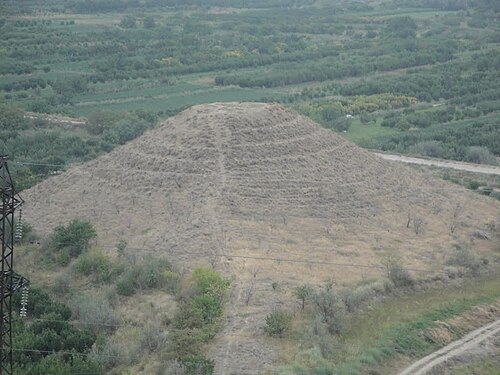
The site of the ancient city is currently not much more than a large hill located between modern Hnaberd (just off the main road through Hnaberd) and Verin Dvin, Armenia. Excavations at Dvin since 1937 have produced an abundance of materials, which have shed light on the Armenian culture of the 5th to the 13th centuries.
Name
يذكر المؤلفون الأرمن الأوائل اسم المدينة دائمًا تقريبًا بصيغة دوين ( Դուին )، بينما يكتبها مؤلفون لاحقون، مثل صموئيل الأنّي، بصيغة دفين ( Դվին )، وهي الصيغة الشائعة في الأدبيات الأكاديمية. [ 6 ] [ أ ] يفسر المؤرخ الأرمني في أوائل العصور الوسطى، موفسيس خوريناتسي ، اسم دفين بأنه مشتق من كلمة فارسية (الوسطى) ( *duwīn ) تعني "تلة". [ 7 ] [ 8 ] [ 6 ] في التاريخ الأرمني الذي يعود إلى القرن الخامس الميلادي، والمنسوب إلى فاوستوس البيزنطي ، يُطلق على الموقع اسم "التلة [ غير واضح ] في سهل ميكامور المسماة دوين" دون الإشارة إلى معنى الاسم. [ 9 ] ووفقًا لإريك كيتنهوفن، فإن تفسير خوريناتسي للاسم ناتج عن تفسير خاطئ للفقرة المذكورة في تاريخ فاوستوس. [ 6 ] تكتب ماري لويز شومون أن أصل كلمة خوريناتسي أصبح أكثر قبولاً بعد أن أشار فلاديمير مينورسكي إلى استخدام كلمة دوفين بمعنى "تل" في أسماء الأماكن الفارسية. [ 7 ]
تاريخ

شُيِّدت مدينة دڤين القديمة على يد خوسروف الثالث كوتاك عام 335 قبل الميلاد على موقع مستوطنة وحصن قديمين يعودان إلى الألفية الثالثة قبل الميلاد. ومنذ ذلك الحين، استُخدمت المدينة كمقر إقامة رئيسي لملوك أرمينيا من السلالة الأرساسيدية . بلغ عدد سكان دڤين حوالي 100,000 نسمة يعملون في مهن متنوعة، تشمل الفنون والحرف والتجارة وصيد الأسماك، وغيرها. [ 10 ] [ 11 ] [ 12 ] [ 4 ] [ 5 ]
After the fall of the Armenian Kingdom in 428, Dvin became the residence of Sassanid appointed marzpans (governors), Byzantine kouropalates and later Umayyad- and Abbasid-appointed ostikans (governors). Under Arsacid rule, Dvin prospered as one of the most populous and wealthiest cities east of Constantinople. Its prosperity continued even after the partition of Armenia between Romans and Sasanids, when it became the provincial capital of Persian Armenia,[13] and eventually it became a target during the height of the Early Muslim conquests. The palace at Dvin contained a Zoroastrian fire-temple.[14] According to Sebeos and Catholicos John V the Historian, Dvin was captured by the Arabs in 640 during the reign of Constans II and Catholicos Ezra. During the Arab conquest of Armenia, Dvin was captured and pillaged in 640, in the first raids. On January 6, 642 the Arabs stormed and took the city, with many deaths.[15] Dvin became the center of the Muslim province of Arminiya, the Arabs called the city Dabil.
Although Armenia was a battleground between Arabs and Byzantine forces for the next two centuries, in the 9th century it still flourished. Frequent earthquakes and continued warfare led to the decline of the city from the beginning of the 10th century. During a major earthquake in 893, the city was destroyed, along with most of its 70,000 inhabitants.[16]

بعد غارة بوييدية مدمرة عام 1021، نهبت المدينة، سقطت دفين في أيدي الشداديين الأكراد من غنجة ، وحكمها أبو الأسوار شافور بن فضل ، [ 17 ] الذي دافع عنها بنجاح ضد ثلاث هجمات بيزنطية في النصف الثاني من أربعينيات القرن الحادي عشر. [ 18 ] [ 19 ] في عام 1046، هاجمت القوات البيزنطية بقيادة قسطنطين التاسع مونوماتشوس مدينة دفين. [ 20 ] حشد البيزنطيون قوة كبيرة بقيادة ميخائيل ياسيتس وقسطنطين الألان ، وتحالفوا مع الأرمن بقيادة فاهرام بهلافوني وليباريت أوربيليان. وللدفاع عن المدينة، أغرق حاكم الشداديين أبو الأسوار الحقول المحيطة، مما حد من حركة الجيش المهاجم وجعله عرضة لسهام المدافعين. وقد مُني المهاجمون بهزيمة ساحقة على يد الأكراد ، وقُتل فاهرام. [ 21 ]
في عام 1064، احتل السلاجقة الأتراك المدينة. واستمر الشداديون في حكمها كحلفاء للسلاجقة حتى غزاها الملك الجورجي جورج الثالث عام 1173. وفي الفترة ما بين 1201 و1203، خلال عهد الملكة تامار ، عادت المدينة إلى الحكم الجورجي. واستولى عليها جلال الدين مانجبورني عام 1225. [ 22 ] واستمر حكم الإمبراطورية الخوارزمية حتى معركة ياسيجمان عام 1230، وبعدها استعادها الجورجيون. وفي عام 1236، غزا المغول المدينة ودمروها تدميراً كاملاً . [ 23 ]
كانت مدينة دڤين مسقط رأس نجم الدين أيوب وأسد الدين شيركوه بن شادي ، وهما قائدا جيش كرديان في خدمة السلاجقة الزنكيين ؛ [ 24 ] وكان صلاح الدين ، ابن نجم الدين أيوب ، مؤسس الدولة الأيوبية . وُلد صلاح الدين في تكريت ، العراق الحديث، لكن أصول عائلته تعود إلى مدينة دڤين القديمة.
كاتدرائية القديس غريغور
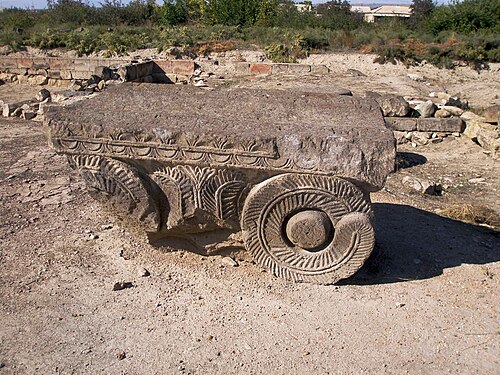
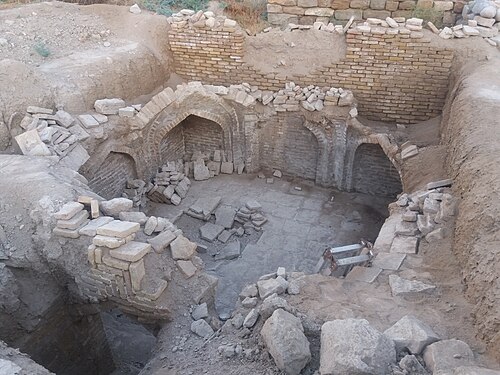
Situated in the central square of the ancient city was the Cathedral of Saint Grigor which may be on the site of originally constructed triple-nave pagan temple with seven pairs of interior structural supports. In the 5th century (ca. 450–485) it was rebuilt as a Christian church, with a pentahedral apse that protruded sharply on its eastern side. In the late 5th or early 6th century there was a second phase of construction: an exterior arched gallery was added to the existing structure. At the time that the cathedral was built, it was the largest in Armenia and measured 30.41 meters by 58.17 meters.[25]
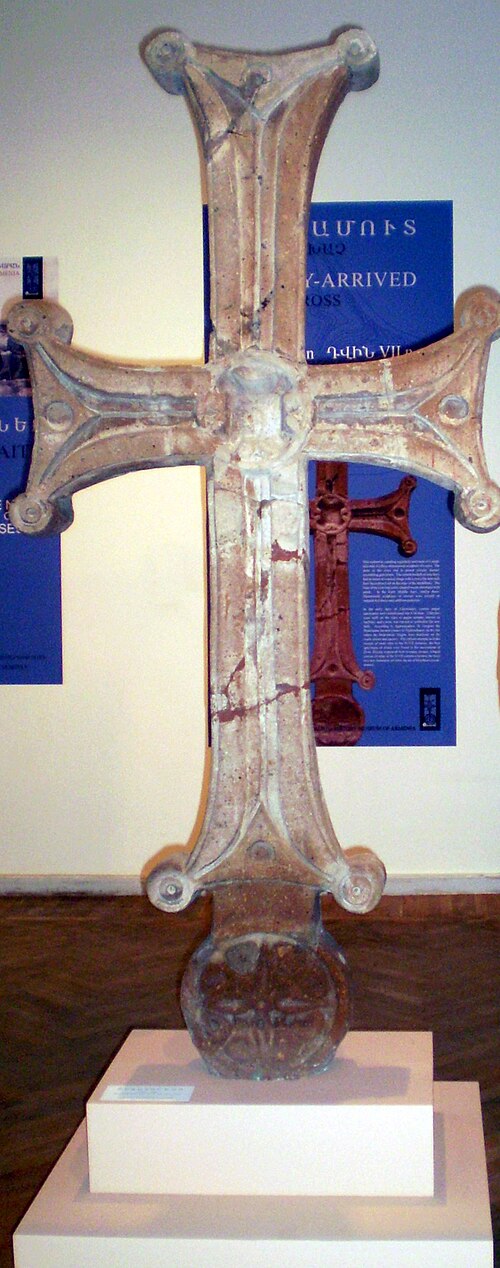
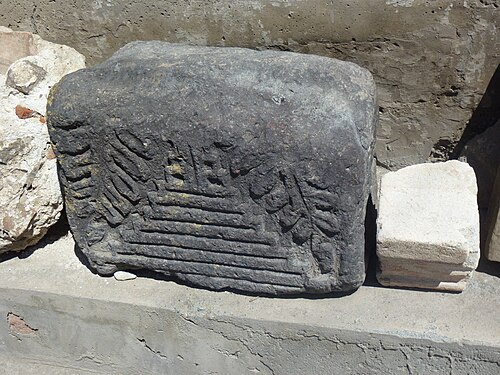
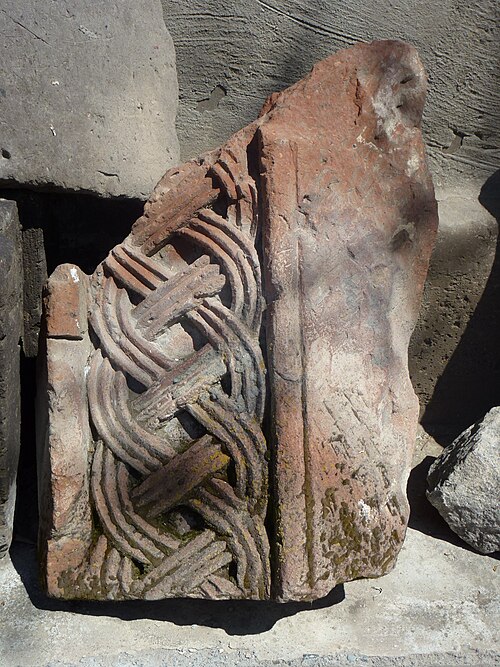
Ornate decorations adorned the interior and the exterior of the building. The capitals of the columns were decorated with fern-like relief, while the cornices were carved in the design of three interlaced strands. The interior floor of the structure was made up of mosaic multi-colored soft-toned slabs in a geometric pattern, while the floor of the apse was decorated in the 7th century with a mosaic of smaller stone tiles representing the Holy Virgin. It is the most ancient mosaic depiction of her in Armenia. By the middle of the 7th century, the cathedral was rebuilt into a cruciform domed church with apses that protruded off of its lateral facades. All that remains of the cathedral today are the stone foundations uncovered during archaeological excavations in the 20th century.
Gallery






See also
Notes
- ↑In reformed Armenian orthography, both forms are rendered ԴվինDvin.
References
Citations
- ↑Garsoïan, Nina G. (1991). "Duin". In Kazhdan, Alexander (ed.). The Oxford Dictionary of Byzantium. New York and Oxford: Oxford University Press. pp. 665–666. ISBN 9780195046526.
- ↑Evans 2018, p. 31.
- ↑"3D model of ancient capital city of Armenia - Dvin". November 2015.
- 12Karakhanyan, Arkadi; Arakelyan, A.; Avagyan, A.; Sadoyan, T. (2017). "Aspects of the seismotectonics of Armenia: New data and reanalysis". In Sorkhabi, Rasoul (ed.). Tectonic Evolution, Collision, and Seismicity of Southwest Asia: In Honor of Manuel Berberian's Forty-Five Years of Research Contributions. Geological Society of America. p. 450. doi:10.1130/2016.2525(14). ISBN 978-0-8137-2525-3.
According to Chandler (1987), the population of Dvin was 45,000 in 361 CE, while in 622 CE, before the conquest by the Arabs, it was estimated at 47,000. By the time Dvin was flourishing (the eight-ninth centuries), its population was on the order of 100,000 people.
- 12Hakobyan, Nyura (8 May 2019). "Դվին [Dvin]" (in Armenian). Institute of Archaeology and Ethnography, National Academy of Sciences of Armenia. Archived from the original on 18 February 2024.
Ամենածաղկուն շրջանում բնակչությունը կազմել է 100.000-150.000:
- 123Kettenhofen, Erich (1995). "Dvin". In Yarshater, Ehsan (ed.). Encyclopædia Iranica. Vol. VII/6: Drugs–Ebn al-Aṯir. London and New York: Routledge & Kegan Paul. pp. 616–619. ISBN 978-1-56859-024-0.
- 12Chaumont, M. L. (1986). "Armenia and Iran ii. The pre-Islamic period". In Yarshater, Ehsan (ed.). Encyclopædia Iranica. Vol. II/4: Architecture IV–Armenia and Iran IV. London and New York: Routledge & Kegan Paul. pp. 418–438. ISBN 978-0-71009-104-8.
- ↑Van Lint, Theo (2018). "Dvin". In Nicholson, Oliver (ed.). The Oxford Dictionary of Late Antiquity. Oxford: Oxford University Press. ISBN 978-0-19-866277-8.
- ↑Garsoïan 1989, pp. 75, 460.
- ↑Kirakosyan, Jon (1992). The Armenian Genocide: The Young Turks Before the Judgment of History. Sphinx Press. ISBN 978-0-943071-14-5.
- ↑Sorkhabi, Rasoul (2017-12-21). Tectonic Evolution, Collision, and Seismicity of Southwest Asia: In Honor of Manuel Berberian's Forty-Five Years of Research Contributions. Geological Society of America. ISBN 978-0-8137-2525-3.
- ↑Cartwright, Mark. "Ancient Dvin". World History Encyclopedia. Retrieved 2024-12-04.
- ↑Canepa 2009, p. 24.
- ↑Russell 1987, p. 488.
- ↑Walker 1990, p. 28.
- ↑Ambraseys & Melville 2005, p. 38.
- ↑Ter-Ghewondyan 1976, p. 120.
- ↑Ter-Ghewondyan 1976, p. 122.
- ↑Minorsky 1977, pp. 53–56, 59–64.
- ↑Baumer 2021, p. 283.
- ↑Tournebize 1900, p. 129.
- ↑Büyükçınar 2018, p. 272.
- ↑Adalian 2010, p. 288.
- ↑Lyons & Jackson 1982, p. 2.
- ↑Edwards, Robert (2017). "Duin". In Corby Finney, Paul (ed.). The Eerdmans Encyclopedia of Early Christian Art and Archaeology. Grand Rapids: William B. Eerdmans Publishing. p. 446. ISBN 9780802890160.
Bibliography
- Adalian, Rouben Paul (2010). Historical Dictionary of Armenia (2nd ed.). Lanham, Maryland: Scarecrow Press. ISBN 9780810874503.
- Ambraseys, Nicholas; Melville, Charles Peter (2005). A History of Persian Earthquakes. Cambridge Earth Science Series. Cambridge University Press. ISBN 9780521021876.
- Baumer, Christoph (2021). History of the Caucasus. Vol. 1: At the Crossroads of Empires. Bloomsbury Publishing. ISBN 9780755639694.283
- Büyükçınar, Ayşe Beyza (2018). "Gürcü-Moğol İlişkilerinin İlk Evresi: 1220-1247" [The First Phase of Georgia and Mongolia Relationship: 1220-1247]. The Journal of Institute of Black Sea Studies (in Turkish). 4 (6): 267–282. ISSN 2458-9705.
- Canepa, Matthew P. (2009). The Two Eyes of the Earth: Art and Ritual of Kingship between Rome and Sasanian Iran. University of California Press.
- Evans, Helen, ed. (2018). Armenia: Art, Religion, and Trade in the Middle Ages. Metropolitan Museum of Art; Yale University Press. ISBN 9781588396600.
- The Epic Histories Attributed to Pʻawstos Buzand (Buzandaran Patmutʻiwnkʻ). Translated by Garsoïan, Nina. Harvard University Press. 1989. ISBN 9780674258655.
- Lyons, Malcolm Cameron; Jackson, D. E. P. (1982). Saladin: The Politics of the Holy War. Cambridge University Press. ISBN 9780521223584.
- Minorsky, Vladimir (1977) [1953]. Studies in Caucasian History. Cambridge University Press. ISBN 0521057353. OCLC 1158649935.
- Russell, James R. (1987). Zoroastrianism in Armenia. Harvard University Press. ISBN 9780674968509.
- Ter-Ghewondyan, Aram (1976) [1965]. The Arab Emirates in Bagratid Armenia. Translated by Garsoïan, Nina. Lisbon: Livraria Bertrand.
- Tournebize, François (1900). Histoire politique et religieuse de l'Arménie (in French). Vol. 1. Alphonse Picard et fils.
- Walker, Christopher (1990). Armenia: The Survival of a Nation (2nd ed.). Routledge. ISBN 9780415046848.
Further reading
- Vardanyan, Sergey (1995). Hayastani mayrakʻaghakʻnerěՀայաստանի մայրաքաղաքները[The Capitals of Armenia]. Yerevan: Apolon. pp. 109–121. ISBN 5807907787. OCLC 645903865.
- Harutyunyan, V. (1947). Architectural Landmarks of Dvin. Academy of Sciences of Armenian SSR.
External links
- Former capitals of Armenia
- History of Dvin
- Populated places in Ararat Province
- Sasanian cities
- Populated places destroyed during wars