
Korean noodles
Korean noodles are noodles or noodle dishes in Korean cuisine, and are collectively referred to as guksu in native Korean or myeon in hanja character. The earliest noodles in Asia originate from China, and date back 4,000 years ago.[1] In Korea, traditional noodle dishes are onmyeon (beef broth-based noodle soup), called guksu jangguk (noodles with a hot clear broth), naengmyeon (cold buckwheat noodles), bibim guksu (cold noodle dish mixed with vegetables), kalguksu (knife-cut noodles), kongguksu (noodles with a cold soybean broth) among others. In royal court, baekmyeon (literally "white noodles") consisting of buckwheat noodles and pheasant broth, was regarded as the top quality noodle dish. Naengmyeon, with a cold soup mixed with dongchimi (watery radish kimchi) and beef brisk broth, was eaten in court during summer.[2]
Noodles by ingredients

- Dangmyeon (당면; cellophane noodles) – made from sweet potatostarch
- Memil guksu (메밀국수) – buckwheat noodles similar to Japanese soba noodles
- Gogi-guksu (고기국수) – Noodle soup of Jeju Province made with sliced pork
- Olchaengi guksu (올챙이국수) – noodles made from dried corn flour which are eaten in mountainous places such as Gangwon Province[3]
- Gamja guksu (감자국수) – noodles made from a mixture of potato starch, rice flour, and glutinous rice flour[4]

- Gamjanongma guksu (감자농마국수) – noodles made from potato starch that have a very chewy texture. It is a local specialty of Hwanghae Province[5]
- Milguksu (밀국수) – wheat flour noodles. While noodles were eaten in Korea from ancient times, productions of wheat was less than that of other crops, so wheat noodles did not become a daily food until 1945.[2][6]
- Dotori guksu (도토리 국수)– noodles made from acorn flour[7]
- تشيلك جوكسو ( 칡국수 ) – نودلز مصنوعة من الكودزو والحنطة السوداء [ 8 ]
- Ssuk kalguksu ( 쑥칼국수 ) – نودلز مصنوعة من Artemisia princeps ودقيق القمح [ 9 ]
- هوباك كوكسو ( 호박국수 ) - المعكرونة المصنوعة من دقيق اليقطين والقمح [ 10 ]
- Kkolttu guksu ( 꼴뚜국수 ) – نودلز مصنوعة من دقيق الحنطة السوداء ودقيق القمح [ 11 ]
- تشونساتشاي ( 천사채 ) - نودلز شبه شفافة مصنوعة من مستخلص هلامي متبقٍ بعد تبخير عشب البحر ، دون إضافة دقيق الحبوب أو النشا. طعمها خفيف، لذا تُؤكل عادةً كسلطة خفيفة بعد تتبيلها أو تُقدم كزينة أسفل شرائح السمك النيء (سانغسيون هو). تتميز تشونساتشاي بقوامها المطاطي وانخفاض سعراتها الحرارية. [ 12 ]

أطباق النودلز
- جابتشاي – نودلز البطاطا الحلوة ( نودلز شفافة ) مقلية مع شرائح رقيقة من اللحم البقري والخضراوات؛ ويمكن تقديمها ساخنة أو باردة. [ 13 ]
شوربة النودلز الدافئة

- جانشي غوكسو - نودلز مصنوعة من دقيق القمح في مرق خفيف مع الأنشوجة ، ويمكن إضافة مرق الأعشاب البحرية أو مرق اللحم البقري حسب الرغبة. يُقدم مع صلصة مصنوعة من زيت السمسم ، وصلصة الصويا ، والبصل الأخضر، وقليل من مسحوق الفلفل الحار. تُزين الطبق بشرائح رقيقة من الجيدان ( 지단 )، أو البيض المقلي، والجيم ، والكوسا . يُشتق اسم الطبق من كلمة جانشي (잔치، وتعني وليمة أو مأدبة) في اللغة الكورية ، حيث كان يُعتبر من الأطباق الخاصة بأعياد الميلاد، وحفلات الزفاف، والمناسبات السعيدة، إذ كان يُعتقد أن شكله الطويل المتصل يرمز إلى السعادة وطول العمر والزواج الدائم. [ 2 ] [ 14 ]
- كالغوكسو - نودلز مصنوعة من دقيق القمح مقطعة بالسكين تقدم في وعاء كبير مع مرق مصنوع من المأكولات البحرية ومكونات أخرى.
- غومغوكسو ( 곰국수 ) - نودلز دقيق القمح في مرق غومغوك أو غومتانغ المصنوع من غلي عظام أو غضاريف لحم البقر .
- جامبونغ ( 짬뽕 ) – نودلز مصنوعة من دقيق القمح في مرق حار يحتوي على الخضار والمأكولات البحرية.
- جاباجوري (رام-دون)
- راميون – نودلز سريعة التحضير تشبه الرامن
أطباق النودلز الباردة

- Bibim guksu – thin wheat flour noodles served with a spicy sauce made from gochujang and vinegar. Half a hard-boiled egg, thinly sliced cucumber, and sometimes chopped kimchi are added as garnishes.
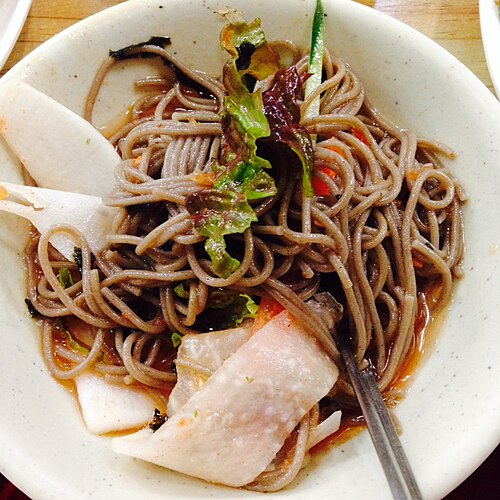
- Makguksu – buckwheat noodle soup, especially popular in Gangwon Province and its capital city, Chuncheon
- Naengmyeon – thin buckwheat noodles either served in a cold soup or served with a gochujang-based sauce; the noodles and other vegetable ingredients are stirred together by the diner. It is originally a winter dish, and a local specialty of the Ibuk region (이북지방, nowadays the area of North Korea).
- Mul naengmyeon – literally "water cold noodles". It is served in a bowl of a tangy cold to tepid soup, not typically served as cold as its South Korean counterparts, made with beef broth or dongchimi. Vinegar or mustard sauce can be added to taste.
- Bibim naengmyeon – literally "mixed cold noodles". It is served with no broth, but mixed with the spicy, tangy sauce called chogochujang, made from gochujang, vinegar, and sugar.
- Jjolmyeon (쫄면) – similar to bibim naengmyeon, but the noodles are more chewy. It is a representative dish of Incheon
- Milmyeon (밀면) – A dish unique to Busan, derived from naengmyeon
- Kongguksu (콩국수) – wheat flour noodles in a bowl of cold soy milk broth
- Jatguksu (잣국수) – wheat flour or buckwheat noodles in a bowl of cold broth made from ground pine nuts and water. It is a local specialty of Gapyeong, Gyeonggi Province. The recipe is quite similar to kongguksu, but the dish has cleaner and more savory taste.[15]
- Dongchimi guksu (동치미국수) – wheat or buckwheat noodles in a bowl of cold dongchimi.
See also
References
- ↑Lu, Houyuan; Yang, Xiaoyan; Ye, Maolin; Liu, Kam-Biu; Xia, Zhengkai; Ren, Xiaoyan; Cai, Linhai; Wu, Naiqin; Liu, Tung-Sheng. "Millet noodles in Late Neolithic China". Nature. 437 (7061): 967–968. doi:10.1038/437967a. ISSN 1476-4687.
- 1 2 3هذا هو[ نودلز (غوكسو) ] (باللغة الكورية). موسوعة دوسان .
- ↑شكرا جزيلا(باللغة الكورية). موسوعة دوسان .
- ↑هذا هو(باللغة الكورية). موسوعة دوسان .
- ↑هذا هو(باللغة الكورية). موسوعة دوسان .
- ↑هذا هو[ نودلز (غوكسو) ] (باللغة الكورية). نيت / موسوعة الثقافة الكورية . مؤرشف من الأصل في 10 يونيو 2011.
- ↑شكرا جزيلا(باللغة الكورية). موسوعة دوسان .
- ↑شكرا(باللغة الكورية). موسوعة دوسان .
- ↑شكرا(باللغة الكورية). موسوعة دوسان . مؤرشفة من الأصل في 16 نوفمبر 2006.
- ↑شكرا(باللغة الكورية). موسوعة دوسان . مؤرشفة من الأصل في 16 نوفمبر 2006.
- ↑هذا هو(باللغة الكورية). موسوعة دوسان . مؤرشفة من الأصل في 16 نوفمبر 2006.
- ↑천사채(باللغة الكورية). موسوعة دوسان .
- ↑ اطلع على الوصفة على الرابط التالي: http://www.eatdangerously.com/newfood/recipe_jap_chae.htm
- ^ لي سيونج هوي (이성희). "جانشي غوكسو، نعمة لطول العمر (장수를 기원하는 '잔치국수)" (في الكورية). dtnews24.
- ↑شكرا(باللغة الكورية). موسوعة دوسان .
روابط خارجية
 وسائط متعلقة بالنودلز الكورية على ويكيميديا كومنز
- نودلز كورية