
Arab conquest of Sindh
Between 711 and 713, the Umayyad Caliphate defeated the Chach dynasty, the last Hindu dynasty to rule over Sindh, and incorporated Sindh (including a portion of southern Punjab and Makran) as a province of the empire, officially establishing the first Islamic entity in South Asia.[7]
Early conflicts
Early Muslim presence
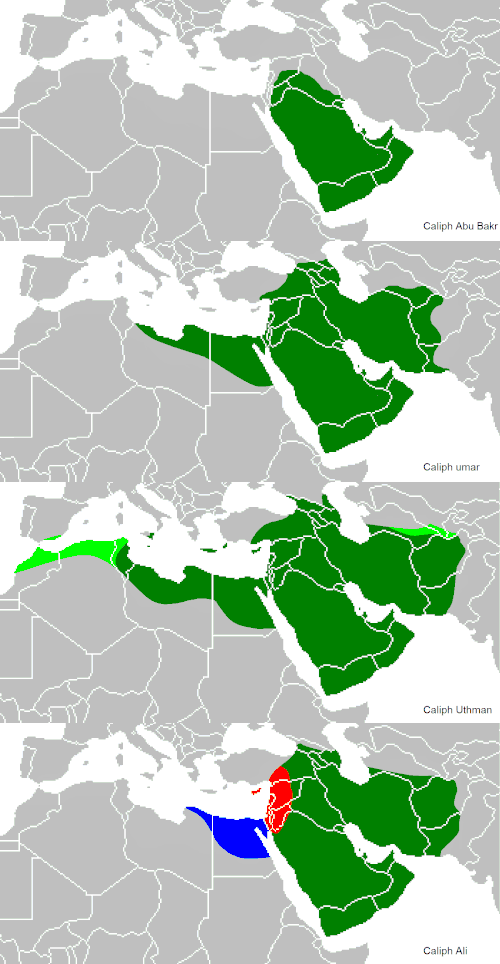
The connection between the Hindu Sindh and Islam was established by initial Muslim expeditions during the Rashidun Caliphate. Hakim ibn Jabala al-Abdi, who attacked Makran in the year 649 AD, was an early partisan of Ali ibn Abi Talib.[8] During the Caliphate of Ali, many Jats of Sindh had come under influence of Islam[9] and some even participated in the Battle of Camel and died fighting for Ali.[8] Harith ibn Murrah al-Abdi and Sayfi ibn Fasayl' al-Shaybani, both officers of Ali's army, attacked Makran in the year 658.[8] Sayfi was one of the seven Shias who were beheaded alongside Hujr ibn Adi al-Kindi in 660 AD near Damascus.[8] Under the Umayyads (661–750 AD), many Shias sought asylum in the region of Sindh, to live in relative peace in the remote area. Ziyad Hindi was one of those refugees.[10] The only solid gain at that time was the conquest of Makran.[11]
Background
Preceding campaigns
Although there was no connection between Arabia and Sindh, the war began due to piracy which plagued the Arabian Sea. The UmayyadcaliphAl-Walid I offered Raja Dahir of Sindh protection and sovereignty if he would help him in quelling the piracy. But Raja Dahir refused to return Arab rebels from Sindh,[12]Meds and others.[13] Med pirates disrupted shipping from their bases at Kutch, Debal and Kathiawar.[13] Hostilities resumed between Sindh and Umayyads in 708 AD, when one of the pirate raids had kidnapped Muslim women traveling from Sri Lanka to Arabia near the port of Debal,[14] thus providing a casus belli[13][15] against the Sindhi King Dahir.[16] The Umayyad governor of Iraq, Al-Hajjaj ibn Yusuf wrote to Raja Dahir to set the women free. But Dahir expressed his inability to help retrieve the hostages. This gave Al-Hajjaj the justification he needed to send a military expedition to Sindh.[17]
Local population dynamics
The majority of the population of Sindh at the time of the Umayyad conquests was Hindu, but a significant minority adhered to Buddhism,[18] and tensions between this minority and the BrahminChach dynasty led to sympathy and at times support from Buddhist populations towards the Arab invaders.[19][20]
Burjor Avari writes that it's likely that Buddhists collaborated and sided[21][22] with the Arabs before the invasion even began,[20][23] something that the primary sources describe as well.[24][25][23] Soviet historian Yu Gankovsky wrote that the Arab invasions were made easier by the opposition of Buddhist community leaders towards the Hindu leaders of Sindh, resulting in them sympathizing with the Arab invaders and even helping them at times.[19]
On the other hand, the Brahmin-led Hindu resistance against the Arabs continued on for much longer, in upper Sindh and Multan.[26] The eastern Hindu Jats supported the Chach dynasty king, Raja Dahir, against the Arab invaders, whereas the western Jats aligned with Muhammad bin Qasim against Dahir.[27] Having settled the question of the freedom of religion and the social status of the Brahmins, Muhammad bin al-Qasim turned against the Jats and Lohanas. Chronicles such as the Chach Nama, Zainul-Akhbar and Tarikh-i Bayhaqi have recorded battles between Hindu Jats and forces of Muhammad ibn Qasim.[27]
Invasion
Raids on Debal
Al-Hajjaj first dispatched ‘Ubaidullah to raid across Debal but he was defeated and killed. Next an army was sent under Budail by way of the Gulf of Oman. Budail received reinforcements and marched towards Debal where he was checked by Jaisimha, son of Dahir. A pitched battle ensued, lasting a whole day. At the end, the Muslim army was routed and Budail was killed.[5]
Muhammad ibn al-Qasim's expedition
Prelude
Finally Hajjaj appointed his seventeen year old nephew Muhammad ibn al-Qasim to conquer Sindh with the approval of the Caliph al-Walid I (r.705–715).[28][29] Al-Hajjaj equipped an army built around 6,000 Syrian cavalry and detachments of mawali from Iraq,[30] six thousand camelry, and a baggage train of 3,000 Bactrian camels under his nephew Muhammad bin Qasim to Sindh. More reinforcements arrived from the governor of Makran with five catapults (manj'neeqs) were sent to Debal by sea.[30]
Siege of Debal
Muhammad bin Qasim laid siege and successfully conquered Debal leaving 4,000 Muslims behind and built a mosque in the city.[5] The captive Muslim women were also released, and many prisoners were made while one-fifth of booty and slaves were sent to Al-Hajjaj. The chief of the Hindus of Debal converted to Islam and appointed as advisor of revenue officials.[2] Next Muhammad bin Qasim proceeded to Nerun (Hyderabad) and Siwistan (Sehwan) where the local Buddhist priets aligned with Muhammad bin Qasim against the local the governors who were routed and defeated. They also aided Umayyads with provisions and entered into friendly relation.[31] Mosques were built replacing idol-houses here too.[2]
Battle of Aror
Muhammad bin Qasim proceeded on the western bank of Indus River where some of the chiefs offered alliance. Mokah Basayah 'the king of Island of Bet'[2] deserted Dahir and promised to supply Muhammad with boats for crossing the Indus on receiving as reward a large stretch of the conquered territory.[5] The Thakurs of Bhatta and the ‘western Jats’ all paid homage (bay'ah) to the Arabs, joined them, and were posted on the island.[2] Muhammad bin Qasim was re-inforced by 2000 select horse sent by Hajjaj and 4000 warlike Jats from Siwistan. After two months of camping the Umayyads crossed the eastern bank of Indus and was joined by the brother of Mokah who helped him to cross the lake between the two armies. Dahir, supported by the chiefs of Sindh and 'eastern Jats' met the Umayyads at near Aror.[32] Dahir who was boarding his elephant was struck by an arrow and killed. His son Jaisimha retreated to Brahmanabad in Sind leaving the queen behind at the fort of Aror. Muhammad promptly laid siege on the fort. The queen committed Jauhar along with the other females at the fort. Muhammad bin Qasim next marched to Brahmanabad.[4] Dahir’s head and the heads of ‘the chiefs of Hind’ were sent to Al-Hajjaj, with the fifth of the booty and 'thirty thousand' slaves, including ‘those who were daughters of princes’, including Hasna, a niece of Dahir, who was given in marriage to Abdullah ibn Abbas, a nephew of the caliph.[33] Dahir's son Fufi and grandson Chach, son of another of his sons Dharsiya, managed to flee the capital.[34] Al-Hajjaj delivered a sermon in the Great Mosque of Kufa declaring the conquest of Sindh.[35]
Conquest of Brahmanabad, Alor and Multan
Jaisimha fortified Brahmanabad as well as the capital city Alor. He led an army to disrupt Muhammad's supply lines. Jaisimha's chiefs minister joined Muhammad. After six-months' defense, Brahmanabad fell after some citizens entered a secret pact with the invading army. Muhammad then subdued other regions before capturing Alor after brief resistance. He then besieged Multan, which resisted for two months but surrendered due to treachery.[36]
Casualties
Where resistance was strong, prolonged, and intensive, often resulting in considerable Arab casualties, Muhammad ibn al-Qasim's response was dramatic, inflicting 6,000 deaths at Aror (Rohri), between 6,000 and 26,000 at Brahmanabad, 4,000 at Iskalandah (Uch), and 6,000 at Multan.[37] Conversely, in areas taken by sulh, such as Armabil, Nirun, and Aror, resistance was light and few casualties occurred.[37] Sulh appeared to be Muhammad ibn al-Qasim's preferred mode of conquest, the method used for more than 60% of the towns and tribes recorded by al-Baladhuri and the Chach Nama.[37] At one point, he was actually berated by Al-Hajjaj for being too lenient.[37] Meanwhile, the common folk were often pardoned and encouraged to continue working;[38] Al-Hajjaj ordered that this option not be granted to any inhabitant of Debal, yet Muhammad ibn al-Qasim still bestowed it upon certain groups and individuals.[37]
Reasons for success
Muhammad ibn al-Qasim's success has been partly ascribed to Dahir being an unpopular Hindu king ruling over a Buddhist majority who saw Chach of Alor and his kin as usurpers of the Rai dynasty.[15] This is attributed to having resulted in support being provided by Buddhists and inclusion of rebel soldiers serving as valuable infantry in his cavalry-heavy force from the Jat and Meds.[39] Brahman, Buddhist, Greek, and Arab testimony however can be found that attests towards amicable relations between the adherents of the two religions up to the 7th century.[40]
Along with this were:
- Superior military equipment; such as siege engines and the Mongol bow.[15][41]
- Troop discipline and leadership.[15]
- The concept of Jihad as a morale booster.[15]
- Religion, i.e. the widespread belief in the prophecy of Muslim success.[15][40]
- The Samanis being persuaded to submit and not take up arms because the majority of the population was Buddhist who were dissatisfied with their rulers, who were Hindu.[40]
- The labouring under disabilities of the Lohana Jats.[40]
- انشقاقات من بين رؤساء ونبلاء داهر. [ 40 ]
التداعيات
لم يكن الدافع وراء الحملة هو نشر الإسلام، بل تحرير النساء المسلمات اللواتي تم أسرهن قبالة ديبال. [ 42 ]
بعد فتح براهمان آباد ، استقطب محمد نخبة البراهمة المحليين، الذين كان يكنّ لهم احترامًا كبيرًا، فأعاد تعيينهم في مناصبهم في ظل سلالة البراهمة ، ومنح الأوسمة والجوائز لقادتهم الدينيين وعلمائهم. [ 43 ] وقد أدى هذا الترتيب مع نخبة البراهمة المحليين إلى استمرار اضطهاد البوذيين ، حيث أكد ابن قاسم على النظام البراهمي القائم الذي يمنعهم من ارتداء أي شيء سوى الملابس الخشنة، ويُلزمهم بالسير حفاةً برفقة الكلاب. [ 43 ]
بعد نجاحه في السند، كتب محمد بن قاسم إلى ملوك الهند، داعيًا إياهم إلى الاستسلام واعتناق الإسلام. [ 44 ] وأرسل جيشًا إلى البيلمان ( بينمال )، التي يُقال إنها استسلمت. كما عقد أهل ميد في سورست ( سلالة ميتراكا في فالابي ) صلحًا. [ 45 ] ثم أرسل بن قاسم جيشًا قوامه 10,000 فارس إلى كانوج ، مصحوبًا بمرسوم من الخليفة. وتوجه بجيش إلى حدود كشمير آنذاك، المعروفة باسم بانج ماهيات (في غرب البنجاب ). [ 46 ] ولا يُعرف شيء عن حملة كانوج. ويُحتمل أن تكون حدود كشمير هي ما يُشار إليه في السجلات اللاحقة باسم الكيراج (مملكة كيرا في وادي كانجرا الحالي ، هيماشال براديش )، [ 47 ] والتي تم إخضاعها. [ 48 ]
استُدعي ابن قاسم عام 715م، وتوفي في الطريق . يذكر البلاذري أنه عند رحيله، عاد ملوك الهند إلى ممالكهم. اتسم عهد الخليفة عمر بن الخطاب (حكم من 717 إلى 720م) بالسلام النسبي. دعا عمر ملوك الهند إلى اعتناق الإسلام والخضوع له، مقابل استمرار حكمهم. قبل حليشة السند وملوك آخرون العرض واتخذوا أسماءً عربية. [ 49 ]
أدخل الفتح الأموي المنطقة في شبكة العالم الإسلامي. ولعب العديد من المسلمين السنديين دورًا هامًا خلال العصر الذهبي الإسلامي ، بمن فيهم أبو مبشر السندي وأبو رجاء السندي . كما ذكر الذهبي أن الفقيه الشهير عبد الرحمن الأوزاعي كان من السند أصلاً . [ 50 ]
انظر أيضاً
مراجع
- ↑ ( وينك 2002أ ، ص 9) "أضيفت السند إلى الفتح في الفترة 711-713،..."
- 1 2 3 4 5 6 وينك 2002 أ، ص 204
- ↑ تشاتشناماه: تاريخ قديم للسند || المكتبة الإسلامية الأسترالية .
- 1 2 ماجومدار 1962 ، ص 170
- 1 2 3 4 5 ماجومدار 1962 ، ص. 170
- 1 2 كاليتشبيغ (1900). "تشاتشناماه: تاريخ قديم للسند" . ص 71.
- ↑ أحمد آصف، منان (19-09-2016). كتاب الفتح: الشاتشنامة والأصول الإسلامية في جنوب آسيا . مطبعة جامعة هارفارد . ISBN 9780674660113.
- 1 2 3 4 ماكلين 1989 ، ص 126
- ↑ ساا رضوي، "التاريخ الاجتماعي والفكري للشيعة الإسنا الأشعريين في الهند"، فولو. 1، ص 138، دار معرفة للنشر، كانبيرا (1986).
- ↑ سان رضوي، "المسلمين الشيعة"، في تاريخ العلوم والفلسفة والثقافة في الحضارة الهندية، المجلد 2، الجزء 2: "الحركات والمؤسسات الدينية في الهند في العصور الوسطى"، الفصل 13، مطبعة جامعة أكسفورد (2006).
- ↑ ماجومدار 1962 ، ص 169
- ^ الحرير ومباي 2011 ، ص 604-605
- 1 2 3 وينك 2002ب ، ص 164
- ^ ماجومدار 1962 ، ص 169 – 170
- 1 2 3 4 5 6 جير، نيكولاس ف. (مايو 2006). من المغول إلى المغول: العنف الديني في الهند من القرن التاسع إلى القرن الثامن عشر . الاجتماع الإقليمي لمنطقة شمال غرب المحيط الهادئ، الأكاديمية الأمريكية للدين. جامعة غونزاغا. مؤرشف من الأصل في 8 نوفمبر 2012.
- ↑ بيرزين، ألكسندر. "التفاعل التاريخي بين الثقافتين البوذية والإسلامية قبل الإمبراطورية المغولية: أول توغل إسلامي في شبه القارة الهندية" . دراسة البوذية . تاريخ الاسترجاع: 21 يونيو 2016 .
- ^ ماجومدار 1962 ، ص. 169-170 ؛ البلاذري 1924 ، ص. 216
- ↑ مالك، جمال (31 أكتوبر 2008). الإسلام في جنوب آسيا: تاريخ موجز . بريل . ص 40. ISBN 9789047441816تم الاطلاع عليه في 8 سبتمبر 2023. كانت غالبية سكان السند يتبعون التقاليد الهندوسية ،
لكن أقلية كبيرة منهم كانت بوذية.
- 1 2 غانكوفسكي، يو. في.؛ غافريلوف، إيغور (1973). "شعوب باكستان: تاريخ عرقي" . مجلة الدراسات الآسيوية . 32 (2). دار نشر ناوكا : 116-117 . doi : 10.2307/2052387 . JSTOR 2052387. تم الاسترجاع في 8 سبتمبر 2023. ...
كان غزو السند أسهل بكثير لأن قادة المجتمع البوذي كانوا يعارضون الحكام الهندوس ويتعاطفون مع الغزاة العرب، بل ويساعدونهم أحيانًا.
- 1 2 أفاري، بورجور (2013). الحضارة الإسلامية في جنوب آسيا: تاريخ القوة والوجود الإسلامي في شبه القارة الهندية . روتليدج . ص 22. ISBN 9780415580618تم الاطلاع عليه في 8 سبتمبر 2023.
لذلك من المحتمل جدًا أن يكون شكل من أشكال التعاون البوذي مع العرب قد بدأ حتى قبل الغزو العربي.
- ↑ نظام، محمد حذيفة (15 يناير 2023). "كيف غذّى وادي السند العصر الذهبي للإسلام" . صحيفة داون . تاريخ الاسترجاع: 8 سبتمبر 2023.
تعاون البوذيون السنديون التجار بشكل كبير مع المسلمين أثناء الفتح وبعده
.{{cite web}}: CS1 maint: deprecated archiveal service ( link ) - ↑ جابوال، جاغجيت سينغ (1 نوفمبر 2004). "الغزو العربي للسند والعمل التبشيري الإسماعيلي" . جريدة ميلي غازيت . تاريخ الاطلاع: 8 سبتمبر 2023.
ثمة أدلة دامغة تشير إلى تواطؤ البوذيين في الغزو العربي للسند. لم يكونوا معارضين للغزو العربي، بل تعاونوا مع الغزاة.
{{cite web}}: CS1 maint: deprecated archiveal service ( link ) - 12Maclean, Derryl N. (December 1, 1989). Religion And Society In Arab Sind. E.J. Brill. pp. 121–122. ISBN 9789004085510. Retrieved September 9, 2023.
Buddhists tended to collaborate to a significantly greater extent and at an earlier date than did Hindus.... Where the primary sources refer to religious affiliation, Buddhist communities (as opposed to individuals) are always (there is no exception) mentioned in terms of collaboration.... Furthermore, Buddhists generally collaborated early in the campaign before the major conquest of Sind had been achieved and even before the conquest of towns in which they were resident and which were held by strong garrisons.
Alt URL - ↑Sarao, K.T.S. (October 2017). "Buddhist-Muslim Encounter in Sind During the Eighth Century". Bulletin of the Deccan College Post-Graduate and Research Institute. 77. JSTOR: 77. JSTOR 26609161. Retrieved September 8, 2023.
The primary sources indicate that the Buddhists tended to collaborate with the invading Arabs at an early date
- ↑Siddiqi, Iqtidar Husain (2010). Indo-Persian Historiography Up to the Thirteenth Century. Primus Books. p. 34. ISBN 9788190891806. Retrieved September 8, 2023.
At the time of the Arab invasion, the Buddhists repudiated their allegiance to Dahir and decided to cooperate with his enemy.
- ↑Hiltebeitel, Alf (May 1999). Rethinking India's Oral and Classical Epics: Draupadi Among Rajputs, Muslims, and Dalits. University of Chicago Press. p. 281. ISBN 9780226340500. Retrieved September 8, 2023.
While the results of Buddhist collaboration in Sind were short-lived, the history of Hinduism there continued in multiple forms, first with Brahman-led resistance continuing in upper Sind around Multan...
- 12Vijaya Ramaswamy, ed. (2017). Migrations in Medieval and Early Colonial India. Routledge. ISBN 9781351558242. Retrieved 17 January 2022.
- ↑"Page:HMElliotHistVol1.djvu/152 - Wikisource, the free online library". en.wikisource.org. p. 118. Retrieved 2024-06-19.
- ↑Wink 2002a, p. 202
- 12Wink 2002a, p. 203
- ↑Majumdar 1962, p. 170 "From Debal, Muhammad proceeded to Nerun which is represented by modern Haidarabad. The Buddhist priests there were already carrying on treasonable correspondence with Hajjaj, and now openly helped Muhammad with provisions. Muhammad then conquered many cities without any opposition and advanced to Siwistan (Sehwan). Here, too, the Buddhist fifth-columnists welcomed the Arabs and entered into a pact with them against their own governor, who was defeated and fled."
- ↑Wink 2002a, p. 204 "Al- Qasim succeeded in crossing over to the eastern side of the Mihran by means of a bridge, in co-operation with Mokah Basayah, ‘the king of the island (stronghold) of Bet’, the Thakurs of Bhatta and the ‘western Jats’ who all paid homage (bay'a) to the Arabs, joined them, and were posted on the island. Dahir, at the decisive moment, was abandoned by the Arabs in his service. The king of Sind, joined by the chiefs and warriors of Sind and the ‘eastern Jats’, met the army of Islam near Ar-Rur,"
- ↑Dowson, E. H.; Elliot, Sir H. M. The History Of India As Told By Its Own Historians Vol. 1. Kitab Mahal Pvt Ltd, Delhi. p. 205.
{{cite book}}: CS1 maint: multiple names: authors list (link) - ↑Dowson, E. H.; Elliot, Sir H. M. The History Of India As Told By Its Own Historians Vol. 1. Kitab Mahal Pvt Ltd, Delhi. p. 205.
{{cite book}}: CS1 maint: multiple names: authors list (link) - ↑Wink 2002a, p. 205
- ↑Majumdar 1962, pp. 170–171
- 12345MacLean 1989, pp. 22–29.
- ↑Wink 2002a, pp. 204–206
- ↑"The fall of Multan laid the Indus valley at the feet of the conqueror. The tribes came in, 'ringing bells and beating drums and dancing,' in token of welcome. The Hindu rulers had oppressed them heavily, and the Jats and Meds and other tribes were on the side of the invaders. The work of conquest, as often happened in India, was thus aided by the disunion of the inhabitants, and jealousies of race and creed conspired to help the Muslims. To such suppliants, Mohammad Qasim gave the liberal terms that the Arabs usually offered to all but inveterate foes. He imposed the customary poll tax, took hostages for good conduct, and spared the people's lands and lives. He even left their shrines undesecrated: 'The temples,' he proclaimed, 'shall be inviolate, like the churches of the Christians, the synagogues of the Jews, and the altars of the Magians.'" Stanley Lane-Poole, Medieval India under Mohammedan Rule, 712-1764, G.P. Putnam's Sons. New York, 1970. p. 9-10
- ١ ٢ ٣ ٤ ٥ كتاب "تشاتشنامه"، تاريخ قديم للسند، يمتد من العصر الهندوسي حتى الفتح العربي . (١٩٠٠). ترجمة ميرزا كاليتشبيك فريدونبيك عن الفارسية. كراتشي: مطبعة المفوضين.
- ↑ بوتاليا، روميش سي. (30 يوليو 1998). تطور المدفعية في الهند: من معركة بلاسي (1757) إلى ثورة 1857. دار النشر المتحالفة. ISBN 9788170238720تم الاطلاع عليه بتاريخ 30 يوليو 2020 – عبر كتب جوجل.
- ↑ وينك 2002أ ، ص 202-203 "لم يكن هدف الحملة نشر الإسلام، بل القضاء على القرصنة وحماية التجارة، وهو دافع تم تبريره بأنه محاولة لإطلاق سراح النساء المسلمات اللواتي تم أسرهن قبالة ديبال".
- 1 2 موسوي، شيرين (2011). "الدولة والطبقة في العصور الوسطى". عالم الاجتماع . 39 (7/8): 3-8 . JSTOR 41289417 .
- ↑ وينك 2002ب ، ص 206 : "وكتب القاسم رسائل إلى ملوك الهنديدعوهم فيها جميعًا إلى الاستسلام وقبول الإسلام. وأُرسلت عشرة آلاف فارس إلى كانوج من ملتان، بأمر من الخليفة يدعو الناس إلى المشاركة في بركات الإسلام، والخضوع له، وتقديم الجزية . "
- ↑ البلاذري 1924 ، ص. 223.
- ↑ وينك 2002ب ، ص 206.
- ↑ تريباثي 1989 ، ص 218.
- ↑ بلانكينشيب 1994 ، ص 132.
- ↑ وينك 2002ب ، ص 207.
- ↑ صوت الإسلام . جمعية الفلاح. 1967. ص 96.
يُنسب أصل الأوزاعي إلى السند، ومنها قدم هو أو والداه إلى الشام...
مصادر
- البلاذري (1924). أصول الدولة الإسلامية . المجلد. الجزء الثاني. ترجمة مورجوتن، فرانسيس كلارك . نيويورك: جامعة كولومبيا. او سي ال سي 6396175 .
- البلاذوري (1924). أصول الدولة الإسلامية . المجلد. الجزء الثاني. ترجمة مورجوتن، فرانسيس كلارك. نيويورك: جامعة كولومبيا. او سي ال سي 6396175 .
- بلانكينشيب، خالد يحيى (1994). نهاية دولة الجهاد: عهد هشام بن عبد الملك وانهيار الأمويين . ألباني، نيويورك: مطبعة جامعة ولاية نيويورك . ISBN 978-0-7914-1827-7.
- الحرير، إدريس؛ مباي، رافين، محرران. (2011). انتشار الإسلام في أنحاء العالم (ملف PDF) . الجوانب المختلفة للثقافة الإسلامية. المجلد الثالث. منشورات اليونسكو. ISBN 978-92-3-104153-2.
- تريباثي ، راما شانكار (1989)، تاريخ كانوج: إلى الفتح الإسلامي ، موتيلال بانارسيداس، ISBN 978-81-208-0404-3
- وينك، أندريه (2002أ) [1996]. الهند، المجلد 1: نشأة العالم الهندي الإسلامي: الهند في العصور الوسطى المبكرة وتوسع الإسلام من القرن السابع إلى الحادي عشر . المجلد الأول ( الطبعة الثالثة). بريل. ISBN 978-0-391-04173-8.
- وينك، أندريه (2002ب) [1996]، الهند: نشأة العالم الهندي الإسلامي، ملوك الرقيق والفتح الإسلامي، القرون 11-13 ، المجلد الثاني ( الطبعة الثالثة)، بريل، ISBN 978-0391041738
- ماجومدار، آر سي ، محرر. (1962) [1954]. تاريخ وثقافة الشعب الهندي - 3 العصر الكلاسيكي ( الطبعة الثانية). بومباي: بهاراتيا فيديا بهافان.
- ماكلين، ديريل ن. (1989)، الدين والمجتمع في السند العربي ، بريل، ISBN 90-04-08551-3
- فريدمان، ي. (1993). "محمد بن القاسم" . في بوسورث, م ; فان دونزيل، إي . هاينريشس، دبليو بي وبيلات ، تش. (محرران). موسوعة الإسلام، الطبعة الثانية . المجلد السابع: ميف-ناز . ليدن: إي جيه بريل. ص 405 – 406. ISBN 978-90-04-09419-2.
- التاريخ العسكري للسند
- السند (إقليم الخلافة)
- غزوات الخلافة الأموية
- صراعات القرن الثامن
- القرن الثامن في الخلافة الأموية
- معارك شارك فيها الجات
- الفتوحات الإسلامية المبكرة