
مخلفات النباتات

تُعرف مخلفات النباتات (وتُسمى أيضًا مخلفات الأوراق ، أو مخلفات الأشجار ، أو مخلفات التربة ، أو تساقط الأوراق، أو الدبال ) بأنها مواد نباتية ميتة (مثل الأوراق ، واللحاء ، والإبر ، والأغصان ، والألواح ) تتساقط على الأرض. تُضاف هذه المخلفات ، أو المواد العضوية الميتة، ومكوناتها من العناصر الغذائية إلى الطبقة العليا من التربة، والمعروفة باسم طبقة المخلفات أو الأفق العضوي (O). تُعدّ المخلفات عاملًا مهمًا في ديناميكيات النظام البيئي ، إذ إنها مؤشر على الإنتاجية البيئية ، وقد تكون مفيدة في التنبؤ بدورة العناصر الغذائية الإقليمية وخصوبة التربة . [ 1 ]
الخصائص والتباين
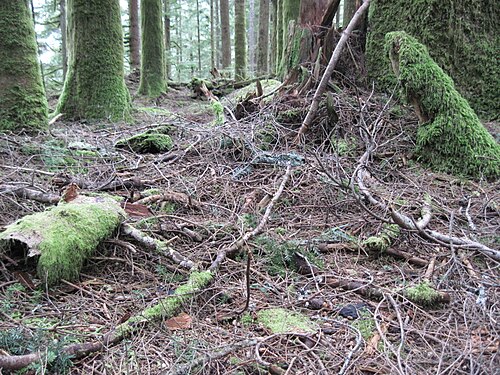
تُعرَّف مخلفات الأوراق بأنها بقايا نباتية طازجة وغير متحللة، يسهل تمييزها (من حيث النوع والصنف). قد تشمل هذه المخلفات أي شيء من الأوراق، والمخاريط، والإبر، والأغصان، واللحاء، والبذور/المكسرات، وجذوع الأشجار، أو الأعضاء التناسلية (مثل أسدية النباتات المزهرة). تُسمى القطع التي يزيد قطرها عن 2 سم بالمخلفات الخشنة ، بينما تُسمى القطع الأصغر بالمخلفات الناعمة. يتأثر نوع مخلفات الأوراق بشكل مباشر بنوع النظام البيئي . على سبيل المثال، تُشكل أنسجة الأوراق حوالي 70% من مخلفات الأوراق في الغابات، ولكن تميل مخلفات الأخشاب إلى الزيادة مع تقدم عمر الغابة. [ 2 ] في المراعي، يوجد القليل جدًا من الأنسجة المعمرة فوق سطح الأرض ، لذا فإن مخلفات الأوراق السنوية منخفضة جدًا، وتكاد تساوي صافي الإنتاج الأولي. [ 3 ]
في علم التربة ، تُصنف مخلفات التربة إلى ثلاث طبقات تتشكل على سطح الأفق O. وهذه هي الطبقات L و F و H: [ 4 ]
- L - الأفق العضوي الذي يتميز بمواد نباتية غير متحللة نسبياً (كما هو موضح أعلاه).
- F - الأفق العضوي الموجود أسفل L والذي يتميز بتراكم المواد العضوية المتحللة جزئياً.
- H - الأفق العضوي أسفل F يتميز بتراكم المواد العضوية المتحللة بالكامل والتي يصعب تمييزها في الغالب
The litter layer is quite variable in its thickness, decomposition rate and nutrient content and is affected in part by seasonality, plant species, climate, soil fertility, elevation, and latitude,[1] as well as water retention of the soil. The most extreme variability of litterfall is seen as a function of seasonality; each individual species of plant has seasonal losses of certain parts of its body, which can be determined by the collection and classification of plant litterfall throughout the year, and in turn affects the thickness of the litter layer. In tropical environments, the largest amount of debris falls in the latter part of dry seasons and early during wet season.[5] As a result of this variability due to seasons, the decomposition rate for any given area will also be variable.
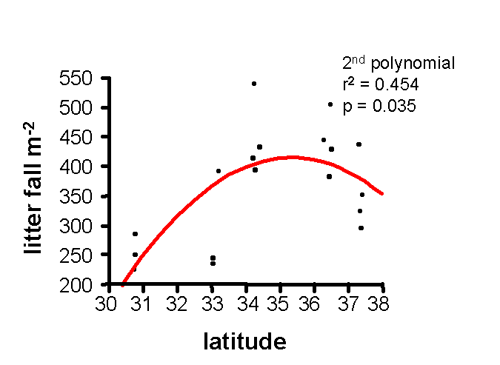
Latitude also has a strong effect on litterfall rates and thickness. Specifically, litterfall declines with increasing latitude. In tropical rainforests, there is a thin litter layer due to the rapid decomposition,[7] while in boreal forests, the rate of decomposition is slower and leads to the accumulation of a thick litter layer, also known as a mor.[3] Net primary production works inversely to this trend, suggesting that the accumulation of organic matter is mainly a result of decomposition rate.
Surface detritus facilitates the capture and infiltration of rainwater into lower soil layers. The surface detritus also protects soil from excess drying and warming.[8] Soil litter protects soil aggregates from raindrop impact, preventing the release of clay and silt particles from plugging soil pores.[9] Releasing clay and silt particles reduces the capacity for soil to absorb water and increases cross surface flow, accelerating soil erosion. In addition soil litter reduces wind erosion by preventing soil from losing moisture and providing cover preventing soil transportation.
Organic matter accumulation also helps protect soils from wildfire damage. Soil litter can be completely removed depending on intensity and severity of wildfires and season.[10] Regions with high frequency wildfires have reduced vegetation density and reduced soil litter accumulation. Climate also influences the depth of plant litter. Typically humid tropical and sub-tropical climates have reduced organic matter layers and horizons due to year-round decomposition and high vegetation density and growth. In temperate and cold climates, litter tends to accumulate and decompose slower due to a shorter growing season as decomposers work faster in environments with a stable temperature.
Net primary productivity
Net primary production and litterfall are intimately connected. In every terrestrial ecosystem, the largest fraction of all net primary production is lost to herbivores and litter fall. Due to their interconnectedness, global patterns of litterfall are similar to global patterns of net primary productivity.[3] Plant litter, which can be made up of fallen leaves, twigs, seeds, flowers, and other woody debris, makes up a large portion of above ground net primary production of all terrestrial ecosystems. Fungus plays a large role in cycling the nutrients from the plant litter back into the ecosystem.[11]
Habitat and food
Litter provides habitat for a variety of organisms.
Plants

Certain plants are specially adapted for germinating and thriving in the litter layers.[12] For example, bluebell (Hyacinthoides non-scripta) shoots puncture the layer to emerge in spring. Some plants with rhizomes, such as common wood sorrel (Oxalis acetosella) do well in this habitat.[7]
Detritivores and other decomposers

العديد من الكائنات الحية التي تعيش على أرضية الغابة هي كائنات محللة ، مثل الفطريات . تُسمى الكائنات التي يتكون غذاؤها من بقايا النباتات، مثل ديدان الأرض ، بالكائنات المتغذية على الفتات . يشمل مجتمع الكائنات المحللة في طبقة المخلفات النباتية أيضًا البكتيريا ، والأميبا ، والديدان الأسطوانية ، والروتيفيرات ، والبطيئات ، وذيل الربيع، والكريبتوستيغماتا ، وديدان الأصيص ، ويرقات الحشرات ، والرخويات ، وعث الأوريباتيد ، وقمل الخشب ، وأم أربعة وأربعين . [ 7 ] حتى بعض أنواع القشريات الدقيقة، وخاصة مجدافيات الأرجل (على سبيل المثال Bryocyclops spp .، Graeteriella spp. ، Olmeccyclops hondo ، Moraria spp .، Bryocamptus spp .، Atheyella spp . ) [ 13 ] تعيش في بيئات رطبة من فضلات الأوراق وتلعب دورًا مهمًا كمفترسات ومحللات. [ 14 ]
يؤدي استهلاك الكائنات المحللة للأوراق المتساقطة إلى تحلل مركبات الكربون البسيطة إلى ثاني أكسيد الكربون (CO₂ ) والماء ( H₂O ) ، وإطلاق أيونات غير عضوية (مثل النيتروجين والفوسفور ) في التربة، حيث تستطيع النباتات المحيطة إعادة امتصاص العناصر الغذائية التي تساقطت مع الأوراق. وبهذه الطريقة، تُصبح الأوراق المتساقطة جزءًا هامًا من دورة العناصر الغذائية التي تُحافظ على البيئة الحرجية .
مع تحلل المخلفات العضوية، تُطلق العناصر الغذائية في البيئة. يُعرف الجزء غير القابل للتحلل بسهولة من هذه المخلفات باسم الدبال . تُساعد المخلفات العضوية في الحفاظ على رطوبة التربة عن طريق تبريد سطح الأرض والاحتفاظ بالرطوبة في المواد العضوية المتحللة. كما تُساهم الكائنات الحية، من نباتات وحيوانات، التي تعمل على تحلل المخلفات العضوية في عملية تنفس التربة . تُوفر طبقة المخلفات العضوية المتحللة مصدرًا مستمرًا للطاقة للكائنات الحية الكبيرة والصغيرة. [ 15 ] [ 8 ]
الحيوانات الأكبر حجماً

تعتمد العديد من الزواحف والبرمائيات والطيور ، وحتى بعض الثدييات ، على الأوراق المتساقطة كمأوى وغذاء. تعيش البرمائيات ، كالسلمندر والديدان الأسطوانية، في المناخ الرطب الدقيق تحت الأوراق المتساقطة لجزء من دورة حياتها أو كلها، مما يجعل مراقبتها صعبة. وقد وثّق فريق تصوير تابع لهيئة الإذاعة البريطانية (BBC) لأول مرة لقطات لأنثى من الديدان الأسطوانية مع صغارها في فيلم وثائقي عُرض عام 2008. [ 16 ] وتحتاج بعض أنواع الطيور، كطائر الفرن في شرق أمريكا الشمالية على سبيل المثال، إلى الأوراق المتساقطة للتغذية وبناء الأعشاش . [ 17 ] بل إن الأوراق المتساقطة توفر أحيانًا الطاقة لثدييات أكبر حجمًا، كما هو الحال في الغابات الشمالية حيث تُعدّ الأشنات المتساقطة أحد المكونات الرئيسية لغذاء الأيائل والغزلان الشتوية . [ 18 ] في الغابات المطيرة الداخلية في كولومبيا البريطانية ، يؤدي تساقط كميات كبيرة من الأشنات الشعرية، مثل بريوريا وأليكتوريا ، دورًا مشابهًا لحيوان الرنة الجبلي الذي يعيش في الثلوج الكثيفة. ففي كل شتاء، تتساقط كميات كبيرة من أجزاء الأشنات المتفتتة من مظلة الغابة وتتراكم على سطح الثلج، حيث تبقى متاحة كعلف لعدة أشهر. وقد وصف الباحثون هذا التجدد المستمر للأجزاء الصالحة للأكل بـ" تأثير المن "، وهي عملية تساعد على إعالة الرنة خلال الفترات التي تكون فيها مصادر الغذاء الأخرى مدفونة تحت الثلوج الكثيفة. [ 19 ]
دورة المغذيات
أثناء تساقط الأوراق ، يُعاد امتصاص جزء من العناصر الغذائية من النبات. وتختلف تركيزات العناصر الغذائية في الأوراق المتساقطة عن تركيزاتها في الأوراق الناضجة نتيجةً لإعادة امتصاص هذه العناصر خلال فترة التساقط. [ 3 ] تميل النباتات التي تنمو في مناطق قليلة العناصر الغذائية إلى إنتاج أوراق متساقطة ذات تركيزات منخفضة من العناصر الغذائية، حيث يُعاد امتصاص نسبة أكبر من العناصر الغذائية المتاحة. بعد التساقط، تتحول الأوراق الغنية بالعناصر الغذائية إلى أوراق متساقطة وتستقر على التربة.
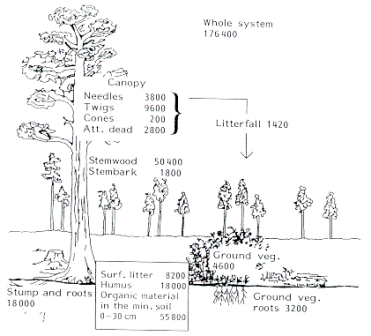
Litterfall is the dominant pathway for nutrient return to the soil, especially for nitrogen (N) and phosphorus (P). The accumulation of these nutrients in the top layer of soil is known as soil immobilization. Once the litterfall has settled, decomposition of the litter layer, accomplished through the leaching of nutrients by rainfall and throughfall and by the efforts of detritivores, releases the breakdown products into the soil below and therefore contributes to the cation exchange capacity of the soil. This holds especially true for highly weathered tropical soils.[21] Decomposition rate is tied to the type of litterfall present.[12]
Leaching is the process by which cations such as iron (Fe) and aluminum (Al), as well as organic matter are removed from the litterfall and transported downward into the soil below. This process is known as podzolization and is particularly intense in boreal and cool temperate forests that are mainly constituted by coniferous pines whose litterfall is rich in phenolic compounds and fulvic acid.[3]
By the process of biological decomposition by microfauna, bacteria, and fungi, CO2 and H2O, nutrient elements, and a decomposition-resistant organic substance called humus are released. Humus composes the bulk of organic matter in the lower soil profile.[3]
The decline of nutrient ratios is also a function of decomposition of litterfall (i.e. as litterfall decomposes, more nutrients enter the soil below and the litter will have a lower nutrient ratio). Litterfall containing high nutrient concentrations will decompose more rapidly and asymptote as those nutrients decrease.[22] Knowing this, ecologists have been able to use nutrient concentrations as measured by remote sensing as an index of a potential rate of decomposition for any given area.[23] Globally, data from various forest ecosystems shows an inverse relationship in the decline in nutrient ratios to the apparent nutrition availability of the forest.[3]
بمجرد عودة العناصر الغذائية إلى التربة، تستطيع النباتات امتصاصها مجددًا عبر جذورها . لذا، تُتيح إعادة امتصاص العناصر الغذائية خلال مرحلة الشيخوخة فرصةً لاستخدامها في الإنتاج الأولي الصافي للنبات في المستقبل. ويمكن تعريف العلاقة بين مخزون العناصر الغذائية أيضًا على النحو التالي:
- التخزين السنوي للعناصر الغذائية في أنسجة النبات + تعويض الفاقد من تساقط الأوراق والترشيح = كمية الامتصاص في النظام البيئي
تساقط الأوراق غير الأرضية
تسلك عملية تساقط الأوراق غير الأرضية مسارًا مختلفًا تمامًا. تُنتج هذه الأوراق في المناطق الداخلية بواسطة النباتات الأرضية ، وتُنقل إلى الساحل عبر العمليات النهرية ، وكذلك بواسطة النظم البيئية لأشجار المانغروف . [ 24 ] وجد روبرتسون ودانيال (1989) أن هذه الأوراق تُزال من الساحل بفعل المد والجزر ، وسرطانات البحر ، والكائنات الدقيقة . كما لاحظا أن أيًا من هذه العوامل الثلاثة هو الأكثر أهمية يعتمد على نظام المد والجزر . ووجد نوردهاوس وآخرون (2011) أن سرطانات البحر تتغذى على الأوراق عند انخفاض المد ، وإذا كان تغذيها على الفتات هو المسار الرئيسي للتخلص من هذه الأوراق، فإنها قد تستهلك 80% منها. درس بكار وآخرون (2017) المساهمة الكيميائية لفضلات سرطانات البحر الناتجة، ووجدوا أنها تُفرز كمية ملحوظة من اللجنين غير المتحلل في كل من الرواسب وتكوين المياه. كما وجدوا أنه يمكن تتبع المساهمة الكربونية الدقيقة لكل نوع نباتي من النبات، مروراً بالسرطان، وصولاً إلى ترسباته أو مياهه. عادةً ما تكون السرطانات هي الكائنات الحية الكبيرة الوحيدة المهمة في هذه العملية، إلا أن راو وآخرون (2017) وجدوا أن سرطان البحر Terebralia palustris ينافس السرطانات بقوة غير عادية في جنوب شرق آسيا . [ 25 ]
جمع وتحليل البيانات
تتمثل الأهداف الرئيسية لأخذ عينات وتحليل مخلفات الأوراق في تحديد كمية إنتاج مخلفات الأوراق وتركيبها الكيميائي بمرور الوقت من أجل تقييم التباين في كميات مخلفات الأوراق، وبالتالي دورها في دورة المغذيات عبر تدرج بيئي للمناخ ( الرطوبة ودرجة الحرارة) وظروف التربة. [ 26 ]
يستخدم علماء البيئة أسلوبًا بسيطًا لجمع مخلفات النباتات، ويرتكز معظمه على أداة واحدة تُعرف باسم كيس جمع المخلفات . وكيس جمع المخلفات هو ببساطة أي نوع من الحاويات التي يمكن وضعها في أي منطقة محددة لفترة زمنية معينة لجمع مخلفات النباتات المتساقطة من أعلى الأشجار .
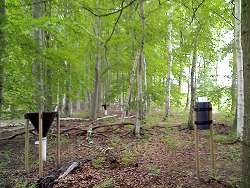
تُوضع أكياس النفايات عادةً في مواقع عشوائية ضمن منطقة محددة، وتُعلّم بإحداثيات GPS أو إحداثيات محلية، ثم تُراقَب على فترات زمنية محددة. بعد جمع العينات، تُصنَّف عادةً حسب النوع والحجم والفصيلة ( إن أمكن)، وتُسجَّل في جدول بيانات. [ 28 ] عند قياس كمية النفايات المتساقطة في منطقة ما، يقوم علماء البيئة بوزن المحتويات الجافة لكيس النفايات. وبهذه الطريقة، يُمكن تعريف تدفق النفايات المتساقطة على النحو التالي:
- تساقط الأوراق (كجم م −2 سنة −1 ) = إجمالي كتلة المخلفات (كجم) / مساحة كيس المخلفات (م 2 ) [ 29 ]
يمكن أيضًا استخدام أكياس النفايات لدراسة تحلل طبقة النفايات. فمن خلال وضع النفايات الطازجة في أكياس شبكية ووضعها على الأرض، يستطيع عالم البيئة مراقبة وجمع قياسات تحلل تلك النفايات. [ 7 ] وقد أظهر هذا النوع من التجارب نمط تحلل أُسّي .، أينهي طبقة الأوراق المتساقطة الأولية و[ 3 ] وهي نسبة ثابتة من كتلة الفتات.


كما يتم استخدام نهج توازن الكتلة في هذه التجارب ويشير إلى أن التحلل لفترة زمنية معينة يجب أن يساوي مدخلات تساقط الأوراق لنفس الفترة الزمنية.
- تساقط الأوراق = k (كتلة الفتات) [ 3 ]
لدراسة مجموعات مختلفة من الحيوانات التي تعيش في التربة، تحتاج إلى أحجام شبكية مختلفة في أكياس القمامة [ 30 ].
مشاكل
التغيير الناتج عن ديدان الأرض الغازية
في بعض مناطق أمريكا الشمالية الجليدية، تم إدخال ديدان الأرض إلى بيئات غير موطنها الأصلي. وقد أدت هذه الديدان غير الأصلية إلى تغييرات بيئية من خلال تسريع معدل تحلل المخلفات العضوية. وتجري دراسة هذه التغييرات، ولكن قد يكون لها آثار سلبية على بعض الكائنات الحية مثل السلمندر. [ 31 ]
جمع مخلفات الغابات
Leaf litter accumulation depends on factors like wind, decomposition rate and species composition of the forest. The quantity, depth and humidity of leaf litter varies in different habitats. The leaf litter found in primary forests is more abundant, deeper and holds more humidity than in secondary forests. This condition also allows for a more stable leaf litter quantity throughout the year.[32] This thin, delicate layer of organic material can be easily affected by humans. For instance, forest litter raking as a replacement for straw in husbandry is an old non-timber practice in forest management that has been widespread in Europe since the seventeenth century.[33][34] In 1853, an estimated 50 Tg of dry litter per year was raked in European forests, when the practice reached its peak.[35] This human disturbance, if not combined with other degradation factors, could promote podzolisation; if managed properly (for example, by burying litter removed after its use in animal husbandry), even the repeated removal of forest biomass may not have negative effects on pedogenesis.[36]
See also
References
- 12Ochoa-Hueso, R; Delgado-Baquerizo, M; King, PTA; Benham, M; Arca, V; Power, SA (February 2019). "Ecosystem type and resource quality are more important than global change drivers in regulating early stages of litter decomposition". Soil Biology and Biochemistry. 129: 144–152. Bibcode:2019SBiBi.129..144O. doi:10.1016/j.soilbio.2018.11.009. hdl:10261/336676. S2CID 92606851.
- ↑W. M. Lonsdale (1988). "Predicting the amount of litterfall in forests of the world". Annals of Botany. 61 (3): 319–324. doi:10.1093/oxfordjournals.aob.a087560.
- 123456789Schlesinger, William H. Biogeochemistry: An Analysis of Global Change. 2nd Edition. Academic Press. 108, 135, 152–158, 180–183, 191–194. (1997).
- ↑"Soil Classification". Faculty of Land and Food Systems. The University of British Columbia. Retrieved March 20, 2012.
- ↑A. V. Spain (1984). "Litterfall and the standing crop of litter in three tropical Australian rainforests". Journal of Ecology. 72 (3): 947–961. Bibcode:1984JEcol..72..947S. doi:10.2307/2259543. JSTOR 2259543.
- ↑"Litter Fall in the North American Baldcypress Swamp Network, Illinois to Louisiana, 2003". Nwrc.usgs.gov. 2013-08-19. Retrieved 2014-04-09.
- 1234Packham, J.R.; Harding, D.J.L.; Hilton, G.M.; Stuttard, R.A. (1992). Functional Ecology of Woodlands and Forests. London: Chapman & Hall. pp. 133–134, 246–247, 265. ISBN 0-412-43950-6.
- 12Wang, Jing; Zhao, Mengli; Willms, Walter D.; Han, Guodong; Wang, Zhongwu; Bai, Yongfei (April 2011). "Can plant litter affect net primary production of a typical steppe in Inner Mongolia?: Can plant litter affect net primary production". Journal of Vegetation Science. 22 (2): 367–376. doi:10.1111/j.1654-1103.2011.01257.x. PMC 7166792. PMID 32336913.
- ↑Chanasyk, D.S.; Whitson, I.R.; Mapfumo, E.; Burke, J.M.; Prepas, E.E. (2003). "The Impacts of Forest Harvest and Wildfire on Soils and Hydrology in Temperate Forests: A Baseline to Develop Hypotheses for the Boreal Plain". Journal of Environmental Engineering and Science. 2: S51–S62. Bibcode:2003JEES....2S..51C. doi:10.1139/S03-034.
- ↑Ice, George G.; Neary, D.G.; Adams, P.W. (2004). "Effects of Wildfire on Soils and Watershed Processes"(PDF). Journal of Forestry. 102 (6): 16–20(5). doi:10.1093/jof/102.6.16. Retrieved March 20, 2012.
- ↑Tennakoon, DS; Gentekaki, E; Jeewon, R; Kuo, CH; Promputtha, I; Hyde, KD (2021). "Life in leaf litter: Fungal community succession during decomposition". Mycosphere. 12: 406–429. doi:10.5943/mycosphere/12/1/5. S2CID 232767453.
- 1 2 شيونغ، شاوجون؛ نيلسون ، كريستر (ديسمبر 1999). "آثار فضلات النباتات على الغطاء النباتي: التحليل التلوي" . مجلة علم البيئة . 87 (6): 984– 994. بيب كود : 1999JEcol..87..984X . دوى : 10.1046/j.1365-2745.1999.00414.x . ISSN 0022-0477 . S2CID 84516249 .
- ↑ فيرز، فرانك؛ جوك، ميرلين (2013-03-20). "مجدافيات الأرجل في طبقة الأوراق المتساقطة من قمة جبل في غابة سحابية في هندوراس (مجدافيات الأرجل: سيكلوبيدي، كانثوكامبتيدي)" . زوتاكسا . 3630 (2): 270-290 . doi : 10.11646/zootaxa.3630.2.4 . ISSN 1175-5334 . PMID 26131511 .
- ↑ فيرز، فرانك فيرز؛ غين، فيرونيك (يناير 2000). "مجدافيات الأرجل الخفية من بلجيكا: التنوع والآثار الجغرافية الحيوية" . المجلة البلجيكية لعلم الحيوان . 130 (1): 11-19 .
- ↑ بوت، ألكسندرا (2005). أهمية المادة العضوية في التربة . روما: منظمة الأغذية والزراعة للأمم المتحدة. ص. الفصل 3. ISBN 92-5-105366-9.
- ↑ الكاتب ديفيد أتينبورو، المخرج سكوت ألكسندر، المنتجة هيلاري جيفكينز (11 فبراير 2008). "غزاة الأرض". الحياة بدم بارد . بي بي سي. بي بي سي وان.
- ↑ دان، جون؛ غاريت، كيمبال (1997). طيور المغردات . نيويورك: أدلة بيترسون الميدانية . ص 451. ISBN 0-395-78321-6.
- ↑ ريتشارد ل. وارد وسي. ليس ماركوم (2005). "استهلاك مخلفات الأشنات من قبل الغزلان والأيائل الشتوية في غرب مونتانا". مجلة إدارة الحياة البرية . 69 (3): 1081-1089 . doi : 10.2193/0022-541X(2005)069 [ 1081:LLCBWD ] 2.0.CO ; 2. JSTOR 3803347 .
- ↑ غوارد، تريفور؛ كوكسون، داروين؛ غاوسلا، ينجفار (2024). "تأثير المنّ - مراجعة للعوامل المؤثرة على وفرة الأشنات الشعرية لدى حيوان الرنة الجبلي المهدد بالانقراض في كندا ( Rangifer arcticus montanus )" . مجلة علم الأشنات . 56 (4): 121-135 . doi : 10.1017/S0024282924000161 .
- ↑Breymeyer, A.I., B. Berg, S.T. Gower, & D. Johnson. “Temperate Coniferous Forests” Scientific Committee on Problems of the Environment (SCOPE). Vol. 56: Global Change: Effects on Coniferous Forests and Grasslands Carbon Budget, Ch. 3. (1996).
- ↑J. Chave, D. Navarrete, S. Almeida, E. Álvarez, L. E. O. C. Aragão, D. Bonal, P. Châtelet, J. E. Silva-Espejo, J.-Y. Goret, P. von Hildebrand, E. Jiménez, S. Patiño, M. C. Peñuela, O. L. Phillips, P. Stevenson & Y. Malhi (2009). "Regional and seasonal patterns of litterfall in tropical South America"(PDF). Biogeosciences. 7 (1): 43–55. doi:10.5194/bg-7-43-2010. S2CID 18041426.
{{cite journal}}: CS1 maint: multiple names: authors list (link) - ↑Scott D. Bridgham; John Pastor; Charles A. McClaugherty & Curtis J. Richardson (1995). "Nutrient-use efficiency: a litterfall index, a model, and a test along a nutrient-availability gradient in North Carolina peatlands"(PDF). The American Naturalist. 145 (1): 1–21. Bibcode:1995ANat..145....1B. doi:10.1086/285725. S2CID 84467103. Archived from the original(PDF) on 2011-08-13.
- ↑Melillo, J.M., & J.R. Gosz. “Interactions of Biogeochemical Cycles in Forest Ecosystems” Scientific Committee on Problems of the Environment (SCOPE). Vol. 21: The Major Biogeochemical Cycles and Their Interactions, Ch. 6. (1983).
- ↑Stoler, Aaron B.; Relyea, Rick A. (May 2020). "Reviewing the role of plant litter inputs to forested wetland ecosystems: leafing through the literature". Ecological Monographs. 90 (2). Bibcode:2020EcoM...90E1400S. doi:10.1002/ecm.1400. ISSN 0012-9615. S2CID 214580288.
- ↑Cragg, Simon M.; Friess, Daniel A.; Gillis, Lucy G.; Trevathan-Tackett, Stacey M.; Terrett, Oliver M.; Watts, Joy E.M.; Distel, Daniel L.; Dupree, Paul (2020-01-03). "Vascular Plants Are Globally Significant Contributors to Marine Carbon Fluxes and Sinks". Annual Review of Marine Science. 12 (1). Annual Reviews: 469–497. Bibcode:2020ARMS...12..469C. doi:10.1146/annurev-marine-010318-095333. ISSN 1941-1405. PMID 31505131. S2CID 202555776.
- ↑Simmons, Jeffrey A. “Measuring Litterfall Flux.” West Virginia Wesleyan College (2003).
- ↑"Spatial variations of nitrogen deposition and its effect on forest biochemical processes". Forest Research. Retrieved March 27, 2011.
- ↑Estrella, Stephanie. “Standard Operating Procedures for Litterfall Collection, Processing, and Analysis: Version 2.0.” Washington State Department of Ecology. (2008).
- ↑Bastrup-Birk, A., & Nathalie Bréda. “Report on Sampling and Analysis of Litterfall” United Nations Economic Commission for Europe Convention on Long-Range Transboundary Air Pollution: International Co-operative Programme on Assessment and Monitoring of Air Pollution Effects on Forests. (2004).
- ↑Castro-Huerta, R., Falco, L., Sandler, R., Coviella, C. (2015). "Differential contribution of soil biota groups to plant litter decomposition as mediated by soil use". PeerJ. 3: e826. doi:10.7717/peerj.826. PMC 4359044. PMID 25780777.
{{cite journal}}: CS1 maint: multiple names: authors list (link) - ↑Maerz, John C.; Nuzzo, Victoria A.; Blossey, Bernd (2009). "Declines in Woodland Salamander Abundance Associated with Non-Native Earthworm and Plant Invasions"(PDF). Conservation Biology. 23 (4): 975–981. doi:10.1111/j.1523-1739.2009.01167.x. PMID 19236449. S2CID 24139505. Retrieved 28 April 2012.
- ↑Barrientos, Zaidett (2012). "Dynamics of leaf litter humidity, depth and quantity: two restoration strategies failed to mimic ground microhabitat conditions of a low montane and premontane forest in Costa Rica"(PDF). Revista de Biología Tropical. 60 (3): 1041–1053. doi:10.15517/rbt.v60i3.1756. PMID 23025078.
- ↑Bürgi, M., Gimmi, U. (2007). "Three objectives of historical ecology: the case of litter collecting in Central European forests". Landscape Ecology. 22: 77–87. doi:10.1007/s10980-007-9128-0. hdl:20.500.11850/58945. S2CID 21130814.
{{cite journal}}: CS1 maint: multiple names: authors list (link) - ↑Gimmi, U., Poulter, B., Wolf, A., Portner, H., Weber, P., Bürgi, M. (2013). "Soil carbon pools in Swiss forests show legacy effects from historic forest litter raking"(PDF). Landscape Ecology. 28 (5): 385–846. Bibcode:2013LaEco..28..835G. doi:10.1007/s10980-012-9778-4. hdl:20.500.11850/66782. S2CID 16930894.
{{cite journal}}: CS1 maint: multiple names: authors list (link) - ↑McGrath, M.J.; et al. (2015). "Reconstructing European forest management from 1600 to 2010". Biogeosciences. 12 (14): 4291–4316. Bibcode:2015BGeo...12.4291M. doi:10.5194/bg-12-4291-2015. hdl:1871.1/74e6252b-da25-418d-8b59-f786ea36fa70.
- ↑Scalenghe, R, Minoja, A.P., Zimmermann, S., Bertini, S. (2016). "Consequence of litter removal on pedogenesis: A case study in Bachs and Irchel (Switzerland)". Geoderma. 271: 191–201. Bibcode:2016Geode.271..191S. doi:10.1016/j.geoderma.2016.02.024.
{{cite journal}}: CS1 maint: multiple names: authors list (link)
External links
- Biology terminology
- Ecological restoration
- Ecology terminology
- Ecology
- Environmental terminology
- Habitat
- Soil improvers