
أحمر الشفاه


أحمر الشفاه منتج تجميلي يُستخدم لإضفاء اللون والملمس على الشفاه ، وغالبًا ما يُصنع من الشمع والزيت . تُستخدم أصباغ مختلفة لإنتاج اللون، وقد تُستخدم معادن مثل السيليكا لإضفاء الملمس. يعود استخدام أحمر الشفاه إلى حضارات قديمة مثل حضارة سومر وحضارة وادي السند ، وانتشر استخدامه في العالم الغربي في القرن السادس عشر. تحتوي بعض أنواع أحمر الشفاه على آثار مواد سامة، مثل الرصاص ومركبات PFAS ، مما أثار مخاوف صحية وفرض قوانين تنظم استخدامه .
لطالما كان أحمر الشفاه عنصراً بارزاً في العديد من صيحات الموضة النسائية ، وغالباً ما يرتبط بالأنوثة . يحمل لون أحمر الشفاه دلالات جمالية وثقافية، إذ تتباين معاني الألوان المختلفة. ارتبط أحمر الشفاه الأحمر تاريخياً بالجاذبية أو استقلالية المرأة، بينما يُستخدم أحمر الشفاه الأسود من قِبل الرجال والنساء على حد سواء في الثقافات الفرعية البديلة، وخاصةً ثقافة البانك والقوطية . وقد ساهمت شخصيات مشهورة مثل مارلين مونرو ، وإليزابيث تايلور ، ومادونا ، وتايلور سويفت في انتشار أحمر الشفاه وصورته المميزة في عالم الموضة والإعلام .
تاريخ

التاريخ المبكر
Ancient Sumerian and Indus Valley men and women were possibly the first to invent and wear lipstick, about 5,000 years ago.[1] Sumerians crushed gemstones and used them to decorate their faces, mainly on the lips and around the eyes. Women in the ancient Indus Valley civilization have used rectangular pieces of ochre with beveled ends as lipstick.[2] The Kama Sutra describes lip coloring made of red lac and beeswax and the method how it was used.[3]Ancient Egyptians wore lipstick to show social status rather than gender.[4][5] They extracted the red dye from fucus-algin, 0.01 % iodine, and some bromine mannite, but this dye resulted in serious illness. Lipsticks with shimmering effects were initially made using a pearlescent substance found in fish scales.[6]
The Chinese made lipsticks that were made from beeswax more than 1,000 years ago to protect the delicate skin of the lips. During the Tang dynasty (618–907 CE), scented oils were added to them, which gave the mouth an enticing factor.
In Australia, Aboriginal girls would paint their mouths red with ochre for puberty rituals.[7]
United Kingdom and France
Lip colouring started to gain some popularity in 16th-century England. During the time of Queen Elizabeth I bright red lips and a stark white face became fashionable. At that time, lipstick was made from a blend of beeswax and red stains from plants. Only upper-class women and male actors wore makeup. Throughout most of the 19th century, the obvious use of cosmetics was not considered acceptable in Britain for respectable women, and it was associated with marginalised groups such as actors and prostitutes. It was considered brazen and uncouth to wear makeup.[8] In the 1850s, reports were being published warning women of the dangers of using lead and vermilion in cosmetics applied to the face. The first lipstick was created by Parisian Maison Guerlain in 1870.[9] The invention of waxy lip cosmetics as sticks was inspired by candlemaking techniques, leading Guerlain to manufacture lipstick on a wider scale by the late 19th century. An employee of Aime and Gabriel Guerlain was walking in a street and happened upon the store of a candlemaker, whose wax and colored pigments gave him a eureka moment. Seeing the candlemaker's tools gave the Guerlain employee the “mad” idea of creating a waxy lip cosmetic as a stick. By the end of the 19th century, Guerlain began to manufacture lipstick on a wider scale. The first commercial lipstick was invented in 1884, by them in Paris, France. It was covered in silk paper and made from deertallow, castor oil, and beeswax.[10] Before this, lipstick had been created at home.[11]
Complete acceptance of the undisguised use of cosmetics in England appears to have arrived for the fashionable Londoner at least by 1921.[12]

United States
In the 19th century, lipstick was colored with carmine dye. Carmine dye was extracted from cochineal, scale insects native to Mexico and Central America which live on cactus plants. Cochineal insects produce carminic acid to deter predation by other insects. Carminic acid, which forms 17% to 24% of the weight of the dried insects, can be extracted from the insects' bodies and eggs. Mixed with aluminum or calcium salts, it makes carmine dye (also known as cochineal).[13]:36
لم يكن أحمر الشفاه هذا يأتي في أنبوب، بل كان يُوضع بفرشاة. كان صبغ الكارمين باهظ الثمن، وكان مظهر أحمر الشفاه بلون الكارمين يُعتبر غير طبيعي ومُبالغًا فيه، لذا كان يُنظر إلى أحمر الشفاه نظرة استهجان في الاستخدام اليومي. لم يكن يُسمح إلا للممثلين والممثلات بوضع أحمر الشفاه. في عام ١٨٨٠، كان عدد قليل من ممثلات المسرح يضعن أحمر الشفاه في الأماكن العامة. [ ١٤ ] بدأت الممثلة الشهيرة، سارة برنارد ، بوضع أحمر الشفاه وأحمر الخدود في الأماكن العامة. قبل أواخر القرن التاسع عشر، كانت النساء يضعن المكياج في المنزل فقط. كانت برنارد تضع صبغ الكارمين على شفتيها في كثير من الأحيان في الأماكن العامة. [ ١٣ ] : ٣٦
في أوائل تسعينيات القرن التاسع عشر، كان يُخلط الكارمين بقاعدة من الزيت والشمع. أعطى هذا المزيج مظهرًا طبيعيًا وكان أكثر قبولًا لدى النساء. في ذلك الوقت، لم يكن أحمر الشفاه يُباع في أنابيب معدنية قابلة للفك، بل في أنابيب ورقية أو أوراق ملونة أو في عبوات صغيرة. وفي أواخر تسعينيات القرن التاسع عشر، بدأ كتالوج سيرز روبوك بعرض أحمر الخدود والشفاه.
بحلول عام 1912، أصبحت النساء الأمريكيات الأنيقات يعتبرن أحمر الشفاه مقبولاً، على الرغم من أن مقالاً في صحيفة نيويورك تايمز نصح بضرورة استخدامه بحذر. [ 15 ]
بحلول عام ١٩١٥، كان أحمر الشفاه يُباع في عبوات أسطوانية معدنية. وكان على النساء تحريك رافعة صغيرة على جانب الأنبوب بطرف ظفرهن لرفع أحمر الشفاه إلى أعلى العبوة، [ ١٦ ] على الرغم من أن أحمر الشفاه في عبوات معدنية قابلة للدفع كان متوفرًا في أوروبا منذ عام ١٩١١. وفي عام ١٩٢٣، حصل جيمس بروس ماسون الابن على براءة اختراع أول أنبوب قابل للدوران في ناشفيل، تينيسي . ومع بدء النساء في وضع أحمر الشفاه لالتقاط الصور، ساهم التصوير الفوتوغرافي في جعل أحمر الشفاه مقبولًا بين النساء. وبدأت إليزابيث أردن وإستي لودر في بيع أحمر الشفاه في صالوناتهما. [ ١٤ ]
خلال الحرب العالمية الثانية ، استُبدلت أنابيب أحمر الشفاه المعدنية بأنابيب بلاستيكية وورقية. كان أحمر الشفاه نادرًا آنذاك لعدم توفر بعض مكوناته الأساسية، كالبترول وزيت الخروع . أتاحت الحرب العالمية الثانية للنساء العمل في مجالات الهندسة والبحث العلمي، وفي أواخر الأربعينيات، ابتكرت هيزل بيشوب ، الكيميائية العضوية في نيويورك ونيوجيرسي، أول أحمر شفاه يدوم طويلًا، أطلق عليه اسم "أحمر شفاه لا يلطخ". [ 17 ] وبمساعدة ريموند سبيكتر، المعلن، ازدهرت تجارة بيشوب في أحمر الشفاه.
أحدث صيحات أحمر الشفاه
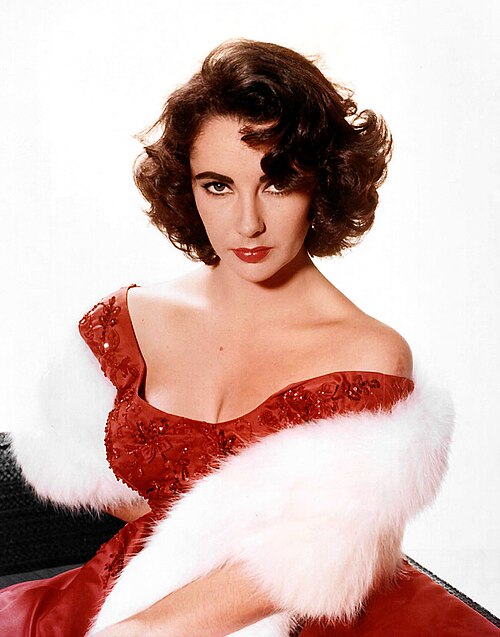
Throughout the early 20th century, lipstick came in a limited number of shades. Dark red lipstick was one of the most popular shades throughout the 19th and 20th centuries, especially in the 1920s. Flappers wore lipstick to symbolize their independence. Lipstick was worn around the lips to form a "Cupid's bow," inspired by actress Clara Bow.[18] At that time, it was acceptable to apply lipstick in public and during lunch, but never at dinner.[16][19]
In the early 1930s, Elizabeth Arden began to introduce different lipstick colors. She inspired other companies to create a variety of lipstick shades.[20][21] In the 1930s, lipstick was seen as a symbol of adult sexuality. Teenage girls believed that lipstick was a symbol of womanhood, yet adults saw it as an act of rebellion. Many Americans, especially immigrants, did not accept teenage girls wearing lipstick. A 1937 survey revealed that over 50% of teenage girls fought with their parents over lipstick.[22]
In the mid-1940s, several teen books and magazines stressed that men prefer a natural look over a made-up look. Books and magazines also warned girls that wearing cosmetics could ruin their chances of popularity and a career. The implication of these articles was that lipstick and rouge were for teen girls who acted very provocatively with men.[22] Teen girls were discouraged from wearing cosmetics for fear that they would be mistaken for "loose" girls or prostitutes.[23]
By the 1950s, movie actresses Marilyn Monroe and Elizabeth Taylor helped bring back dark red lips. A 1951 survey revealed that two-thirds of teenage girls wore lipstick.
In 1950, a chemist named Hazel Bishop formed a company, Hazel Bishop Inc., to promote her invention of long-lasting, non-smearing 'kissproof' lipstick ("stays on you... not on him"), which quickly gained acceptance.[24] At the end of the 1950s, a cosmetic company named Gala introduced pale shimmery lipstick. Later, Max Factor created a popular lipstick color called Strawberry Meringue. Lipstick manufacturers began creating lipsticks in lavender, pale pink, white, and peach. Since parents generally frowned on teen girls wearing red lipstick, some teen girls began wearing pink and peach lipsticks, which became a trend.[25] White or nearly white lipstick was popular in the 1960s.[22] Rock groups such as the Ronettes and The Shirelles popularized white lipstick. Girls would apply white lipstick over pink lipstick or place under-eye concealer on their lips. During that time, many lipsticks were either matte, sheer, or slightly shiny. In the 1960s, lipstick was associated with femininity. Women who did not wear lipstick were suspected of mental illness or lesbianism.[22]
In the 1970s, a number of cosmetic companies introduced lipsticks in more unusual colors such as iridescent light blue (Kanebo), frosted lime green (Conga Lime by Revlon), and silver sparkled navy blue (Metallic Grandma by Biba). M•A•C cosmetics continues to release limited edition and highly collectible lipsticks in a wide range of colors and finishes, including unusual hues of violets, blues, and greens.
Black lipstick became popular in the late 1970s and into the 1990s. In the 1950s, black lipstick was worn by actresses starring in horror films. It became popular again due in part to punk and goth subcultures.

In the mid-1980s, so-called mood lipstick, akin to mood rings, was sold to adults by mainstream cosmetic companies. This type of lipstick changes colors after it is applied, based on changes in the skin's pH that supposedly reflect the wearer's mood.[26] Previously these had been available as little girls' play makeup. They had another resurgence in the very early 21st century, offered by inexpensive as well as more exclusive cosmetic lines, and color changing chemicals also appeared in lip gloss, such as Smashbox O-Gloss, and blush, such as Stila Custom Color Blush.
In the 1990s, lipstick colors became semi-matte. Shades of brown were very popular. These shades were inspired by several shows, such as Friends. In the late 1990s and into the 21st century, pearl shades became very popular. Lipsticks were no longer matte or semi-matte but were shiny.
In the 1990s, Laura Mercier ("M") and MAC Cosmetics ("Russian Red") created red lipsticks for Madonna.[27][28][29] Author Poppy King believes that Madonna "ushered red lipstick back in as a symbol of strength" and of "glamorous rebellion".[30] Upon its release the "Russian Red" became a bestseller,[31] and still one of the best-selling lipsticks of MAC according to an article published in 2020 by Vogue Spain.[32] In 2012, Make Up For Ever created the "Aqua Rouge/Iconic Red" (shade #8) for Madonna to wear on her the MDNA Tour,[33] and celebrities like Taylor Swift used it according to fashion-targeted magazines such as Elle.[34]
Another form of lip color, a wax-free, semi-permanent liquid formula, was invented in the 1990s by the Lip-Ink International company. Other companies have imitated the idea, putting out their own versions of long-lasting lip stain or "liquid lip color", usually in form of a liquid or gel.[35] It generally stays on longer than lipstick by leaving a stain of color on the lips.[36]

In 2012, bright, bold lip colors became trendy again with saturated colors such as hot pink, neon, and orange.[37] American singer-songwriter Taylor Swift boosted the popularity of red lipsticks, especially with the release of her fourth studio album, Red (2012), whose cover artwork prominently features red lips. Swift has since worn red lipstick consistently. Media outlets consider red lips as one of her signature looks,[38][39][40][41] coupled with the "desirable" cupid's bow and "voluptuous" pout of her lips.[42][43][44]
In 2014 and early 2015, nude lipsticks became popular. These lipsticks follow the general trend where "less is more". Examples of celebrities promoting this trend are Paris Hilton and Gigi Gorgeous. In late 2015 and 2016, liquid lipstick, which applies like a gloss but dries matte, became popularized with brands such as Anastasia Beverly Hills, Sephora, Huda Beauty, Kylie Cosmetics, NYX Cosmetics. Its most common form comes in a tube, applied with an applicator wand. Liquid lipstick tends to have more staying power and is more opaque than traditional lipstick. However, it dries out more and cracks more readily over time, depending upon the product quality.
In early 2019, before the COVID-19 pandemic, the trend of liquid lipstick was changed from the liquid matte lipstick to semi-matte or glossy finish. However, the COVID-19 pandemic markedly reduced the popularity of lipsticks since people usually do not apply lipstick under a facial mask.
Lipstick also has many variations, including liquid, lip balms, glosses, crayons, pencils, liners, palettes, and stains. Balms and glosses tend to be more translucent and not as dark or vibrant as regular lipsticks. Some individuals buy lip balms and glosses rather than lipstick, as they get a more hydrating feeling from these.
Significance in sexuality

A "lipstick lesbian" is a female who is attracted to other females, but remains stereotypically feminine and has a “girly” identity, sometimes known as a "femme". The term "lipstick lesbian" became popular when used by writer Deborah Bergman, a reporter for the Los Angeles Times.[45]
Ingredients
Lipstick contains wax, oils, antioxidants, and emollients.[46] Wax provides structure to solid lipstick. Lipsticks may be made from several waxes such as beeswax, ozokerite, and candelilla wax. Because of its high melting point, carnauba wax is a key ingredient in terms of strengthening the lipstick. Various oils and fats are used in lipsticks, such as olive oil, mineral oil, cocoa butter, lanolin, and petrolatum.
Lipsticks get their colors from a variety of pigments and lake dyes including, but not limited to bromo acid, D&C Red No. 21, Calcium Lake such as D&C Red 7 and D&C Red 34, and D&C Orange No. 17. Pink lipsticks are made by mixing white titanium dioxide and red shades. Both organic and inorganic pigments are employed.
Matte lipsticks contain more filling agents like silica but do not have many emollients. Creme lipsticks contain more waxes than oils. Sheer and long lasting lipsticks contain more oil, while long lasting lipsticks also contain silicone oil, which seals the colors to the wearer's lips. Glossy lipstick contains more oil to give a shiny finish to the lips.
Shimmery or frost lipstick may contain mica, silica, and synthetic pearl particles, such as bismuth oxychloride, to give them a glittery or shimmering shine.[6]
Lipstick is made from grinding and heating ingredients. Then heated waxes are added to the mix for texture. Oils and lanolin are added for specific formula requirements. Afterwards, the hot liquid is poured into a metal mold. The mixture is then chilled. Once they have hardened, they are heated in flame for half a second to create a shiny finish and to remove imperfections.[6]
Safety
Lead traces
Lead and other trace metals may be found in many lipsticks; these occur naturally and can accidentally contaminate other ingredients during production. As contaminants are not added intentionally they will not be listed as ingredients.
في عام ٢٠٠٧، نشرت حملة مستحضرات التجميل الآمنة [ ٤٧ ] تقريرًا بعنوان "قبلة مسمومة" [ ٤٨ ] ، اختبرت فيه ٣٣ علامة تجارية شهيرة من أحمر الشفاه للكشف عن محتواها من الرصاص. وخلصت الدراسة إلى أن ٦١٪ من أحمر الشفاه يحتوي على الرصاص بمستويات تصل إلى ٠.٦٥ جزء في المليون (ppm). [ ٤٩ ] وقد ساهمت هذه الدراسة في رفع مستوى الوعي العام بهذه المشكلة، ما ضغط على إدارة الغذاء والدواء الأمريكية لإجراء المزيد من الدراسات باستخدام أساليب اختبار متخصصة. [ ٥٠ ] [ ٥١ ] وفي عام ٢٠٠٩، نشرت إدارة الغذاء والدواء الأمريكية دراسة متابعة [ ٥٢ ] لتقرير حملة مستحضرات التجميل الآمنة، والتي وجدت أن الرصاص موجود في جميع العينات العشرين التي تم اختبارها. وتراوحت مستويات الرصاص من ٠.٠٩ إلى ٣.٠٦ جزء في المليون، [ ٥٣ ] وسُجلت أعلى المستويات في أحمر الشفاه من إنتاج شركات كفر جيرل، ولوريال، وريفلون. [ ٤٩ ]
في عام 2011، أجرت إدارة الغذاء والدواء الأمريكية مسحًا موسعًا [ 54 ] لدراستها السابقة، حيث شمل الاختبار 400 نوع من أحمر الشفاه المتوفرة في السوق الأمريكية آنذاك. أُجريت هذه الدراسة بواسطة شركة فرونتير غلوبال ساينسز باستخدام نفس منهجية الاختبار المستخدمة في عام 2009. ووجدت الدراسة متوسطًا قدره 1.11 جزء في المليون مقارنةً بمتوسط 1.07 جزء في المليون في دراسة عام 2009، بينما سُجلت أعلى نسبة بلغت 7.19 جزء في المليون في أحمر شفاه مايبيلين كولور سنسيشنال 125 - بينك بيتال. [ 53 ] وهذا يزيد عن ضعف أعلى نسبة تم رصدها في دراسة عام 2009.
يمكن أن تلوث كميات ضئيلة من الرصاص المكونات الخام، وخاصة الإضافات المعدنية، حيث يوجد هذا العنصر بشكل طبيعي في التربة والماء والهواء. [ 55 ] وقد أعدت حملة مستحضرات التجميل الآمنة قائمة بالمواد الكيميائية المثيرة للقلق [ 56 ] والتي قد تحتوي على مواد كيميائية سامة مثل الرصاص.
على الرغم من أن كميات ضئيلة فقط من الرصاص تُبتلع من أحمر الشفاه، إلا أن الرصاص يتراكم في الجسم مع مرور الوقت، مما قد يؤدي في النهاية إلى التسمم بالرصاص . أكثر مستخدمي أحمر الشفاه شيوعاً هنّ المراهقات والنساء البالغات، وقد وجدت دراسة أجرتها جامعة كاليفورنيا في بيركلي أن النساء يستخدمن أحمر الشفاه من مرتين إلى أربع عشرة مرة يومياً. وهذا يعني ابتلاع ما يصل إلى 87 ملليغراماً من المنتج يومياً. [ 51 ] يُعدّ ابتلاع الرصاص مصدر قلق خاص للنساء الحوامل، لأن الرصاص قد ينتقل إلى الجنين من الأم. [ 57 ]
The FDA is the regulating body[58] of cosmetic safety under the U.S. FD&C Act.[59] Cosmetics regulated by the FD&C Act do not need to be approved for pre-market sale, but pre-market approval is required for any color additives used in lipsticks. Currently, the FDA has not set an acceptable lead limit level for lipsticks specifically, but it has set specifications for lead in the color additives[60] used in lipstick. The FDA's maximum lead limit level is 20 parts per million in cosmetics; however, since lipstick is absorbed through the skin and only ingested in very small quantities, the FDA does not "consider the lead levels we found in the lipsticks to be a safety concern".[53] The CDC, on the other hand, reports that there is no safe blood level for lead and that its presence, even at low levels, can affect IQ, the ability to pay attention, and academic achievement. Once present, the effects of lead exposure on the body cannot be reversed.[61]
Per- and polyfluoroalkyl substances (PFAS)
A 2021 study tested 231 makeup and personal care products and found organic fluorine, an indicator of PFAS, in more than half of the samples. High levels of fluorine were most commonly identified in waterproof mascara (82% of brands tested), foundations (63%), and liquid lipstick (62%).[62][63] As many as 13 types of individual PFAS compounds were found in each product.[62] Since PFAS compounds are highly mobile, they are readily absorbed through human skin and through tear ducts, and such products on lips are often unwittingly ingested. Manufacturers often fail to label their products as containing PFAS, which makes it difficult for cosmetics consumers to avoid products containing PFAS.[64]
In forensic science
Traces of lipstick, cosmetics, nail polish, or other "smears" could be found left on drinking cups, glasses, cigarette butts, and tissue papers and may all be significant forensic evidence in the investigation of a crime, especially in cases such as sexual assault, homicide, and in government- or corporate-related corruption and controversies.
يمكن العثور على أحمر الشفاه، كدليل مادي، على الملابس ، أو أجزاء من جسد الضحية أو الجاني، أو منديل ورقي، أو سيجارة، وما إلى ذلك. وبمقارنة تركيبة لطخة أحمر الشفاه مع تركيبة لطخة الضحية أو الشاهد، يستطيع خبراء الطب الشرعي تقديم دليل مباشر أو غير مباشر على وجود اتصال أو علاقة بين المدعي والمدعى عليه. كما يُمكن أحيانًا استخلاص الحمض النووي من لعاب الضحية من بصمة أحمر الشفاه، مما قد يربط المشتبه به بوجوده في مسرح الجريمة. [ 65 ]
تُستخدم طرق أخرى متنوعة لتحليل أحمر الشفاه في الطب الشرعي، مثل كروماتوغرافيا الطبقة الرقيقة أو كروماتوغرافيا الغاز، والتحليل الطيفي والكيمياء القياسية.
انظر أيضاً
- تكبير الشفاه
- مرهم الشفة
- ملمع شفاه
- محدد الشفاه
- مُكبِّر الشفاه
- تأثير أحمر الشفاه – النظرية الاقتصادية
- النسوية التي تُحافظ على أنوثة المرأة وجنسانيتها –
- مثلية ذات أحمر شفاه – مصطلح عامي يُطلق على المثلية الأنثوية النمطية
ملحوظات
- ↑ شافير، سارة (2006)، "قراءة شفاهنا: تاريخ تنظيم أحمر الشفاه في مراكز القوة الغربية"، مجلة قانون الغذاء والدواء ، 62 (1)، الوصول الرقمي إلى المنح الدراسية في جامعة هارفارد: 165-225 ، PMID 17444030
- ↑ ماكاي، إي جيه إيه (1937). "الحفريات في تشان هو دارو". مجلة الجمعية الملكية للفنون . 85 (4405): 527-545 .
- ↑ ماكوناتشي، جيمس (2007). كتاب الحب: بحثًا عن الكاماسوترا . لندن: أتلانتيك بوكس . ISBN 978-1-84354-373-2.
- ↑ شافر، سارة (16 مايو 2006). "تاريخ تنظيم أحمر الشفاه في مراكز القوة الغربية" . Harvard.edu . جامعة هارفارد . تم الاطلاع عليه بتاريخ 8 فبراير 2016 .
- ↑ "تاريخ أحمر الشفاه الأحمر، من مصر القديمة إلى تايلور سويفت وكل ما بينهما" . بازل . ١٣ نوفمبر ٢٠١٦. تم الاطلاع عليه في ١ سبتمبر ٢٠٢١ .
- 1 2 3 "ما هذه المادة؟" . أخبار الهندسة الكيميائية . تم الاطلاع عليه في 2 سبتمبر 2010 .
- ↑ ريتشاردز، بيث (1994). "دم القمر". آفاق : 28.
- ↑Vidal Claramonte, María del Carmen África (1990). "Greil Marcus. Lipstick Traces: A Secret History of the Twentieth Century. Cambridge, Mass.: Harvard University Press, 1989, 496 pp". Revista Alicantina de Estudios Ingleses (3): 143–144. doi:10.14198/raei.1990.3.15-2. hdl:10045/58929. ISSN 0214-4808.
- ↑"AP Exclusive: Guerlain preserves cosmetics history in new 'warehouse of wonders'". APnews.com. 9 June 2023. Retrieved 9 June 2023.
- ↑"A Complete History And Evolution Of Lipsticks: Interesting Facts". Stylecraze. 19 June 2012. Retrieved 24 January 2020.
- ↑Conway, Susannah (3 January 1999). "Fashion: The History of... Lipstick – Lip-Smackers Good". The Independent. London. Archived from the original on 14 June 2022. Retrieved 9 February 2010.
- ↑The Times, Dec 12, 1921; p. 7; Issue 42901; col C, Shops At Their Best: "Vanity cases are in endless variety, large enough to hold mirror, powder-puff, lip-stick, and other necessaries of feminine social life."
- 12Riordan, Theresa (2004). Inventing Beauty: A History of the Innovations that Have Made Us Beautiful. New York: Crown Publishing Group. pp. 36–60. ISBN 978-0-7679-1451-2.
- 12"How Lipstick Works". Discovery Health. Retrieved 2 September 2010.
- ↑New York Times, March 17, 1912, "The Art of Making Up":"There was a time when to confess to make up was to place one's self beyond the pale...We flaunt the vanity box these days as frankly as our ancestors did in the eighteenth century.... Touch the lips slightly with a lip-stick, but do not make your mouth look like raw beef."
- 12"Clara Bow Lips – 1920s Beauty". About.com. Archived from the original on 5 March 2006. Retrieved 2 September 2010.
- ↑Berg, Rona (1 January 2001). Beauty: The New Basics. New York: Workman Publishing. pp. 144. ISBN 978-0-7611-0186-4.
- ↑ "العشرينات الصاخبة - مراجعة الصورة" . جامعة ولاية إلينوي. مؤرشف من الأصل في 23 يوليو 2011. تم الاطلاع عليه في 2 سبتمبر 2010 .
- ↑ ماكفي، تريسي (17 يناير 2010). "أحمر الشفاه يتبع الاقتصاد إلى الخسارة" . صحيفة الغارديان . لندن . تم الاطلاع عليه في 2 سبتمبر 2010 .
- ↑ "ألوان أحمر الشفاه" . يوتيوب . ١٨ نوفمبر ٢٠١٤. مؤرشف من الأصل في ٢٢ نوفمبر ٢٠١٩. تم الاطلاع عليه في ٢٨ أغسطس ٢٠١٨ .
- ↑ شيرو، فيكتوريا (2001). من أجل المظهر: الموسوعة التاريخية للجمال والأناقة والعناية الشخصية . كونيتيكت: دار غرينوود للنشر. 180 صفحة . ISBN 978-1-57356-204-1.
- 1 2 3 4 ميتشل، كلوديا؛ جاكلين ريد-والش (2007). ثقافة الفتيات: موسوعة . كونيتيكت: دار غرينوود للنشر. الصفحات 396-397 . ISBN 978-0-313-33908-0.
- ^ فورمان-برونيل، ميريام (2001). البنوتة في أمريكا: موسوعة . سانتا باربرا، كاليفورنيا: ABC-CLIO. ص 159 . رقم ISBN 978-1-57607-206-6.
- ↑ صحيفة نيويورك تايمز، 10 ديسمبر 1998، نعي: "هازل بيشوب، 92 عامًا، مبتكرة صنعت أحمر شفاه مقاوم للتقبيل"
- ↑ "تاريخ الجمال والمكياج والموضة بعد عام 1950" . عصر الموضة . تم الاطلاع عليه بتاريخ 2 سبتمبر 2010 .
- ↑ منصور، ديفيد (2005). من آبا إلى زووم: موسوعة الثقافة الشعبية في أواخر القرن العشرين . كانساس سيتي، ميزوري: دار نشر أندروز مكميل. ص 319. ISBN 978-0-7407-5118-9.
- ↑ بالينغستون 1999 ، ص 109
- ↑ روبين، سيلفيا (12 ديسمبر 1996). "عيون بيت ديفيس؟ الآن شفاه مادونا" . صحيفة سان فرانسيسكو كرونيكل . تم الاطلاع عليه في 1 يوليو 2022 .
- ↑ بلومنتال 1995 ، ص 23
- ↑ كينغ 2016 ، ص. على الإنترنت
- ↑ لاد، كارا (3 مارس 2018). "30 من أكثر لحظات أحمر الشفاه شهرة على مر العصور" . ماري كلير . تم الاطلاع عليه في 1 يوليو 2022 .
- ^ أباد ، بالوما (7 مارس 2020). "مادونا، جيرا Blond Ambition، والأحمر الشفهي هو الأكثر شهرة في العالم" . فوغ (بالإسبانية) . تم الاسترجاع في 5 يوليو 2022 .
- ↑Houssay, Victoria (13 July 2022). "Lipstick for Madonna". Vogue France. Retrieved 4 December 2022.
- ↑"5 MÀU SON ĐẸP NÓNG BỎNG CỦA TAYLOR SWIFT". Elle (in Vietnamese). 19 May 2016. Retrieved 4 December 2022.
- ↑Carmindy (2008). Get Positively Beautiful. Center Street. p. 107. ISBN 978-1599951935.
- ↑Deanna Nickel (2012). How to Start a Home-based Makeup Artist Business. Rowman & Littlefield. p. 41. ISBN 978-0762786299.
- ↑Macrae, Sarah. "2012 Critics' Choice Awards Beauty Trend: Bold Lipstick". POPSUGAR Beauty Australia. Archived from the original on 6 June 2012. Retrieved 24 January 2013.
- ↑Yaptangco, Ariana (15 November 2021). "Taylor Swift's Favorite Red Lipsticks: An Investigation". Glamour. Retrieved 28 December 2021.
- ↑"What Color Red Lipstick Does Taylor Swift Wear?". Hollywood Life. 19 November 2021. Retrieved 28 December 2021.
- ↑Webster, Emma Sarran (13 December 2016). "Taylor Swift's Perfect Red Lipstick Lessons". Teen Vogue. Retrieved 28 December 2021.
- ↑Flanagan, Hanna (23 November 2021). "Taylor Swift's Red (Taylor's Version) Causes Google Searches for Red Lipstick and Red Scarves to Spike". People.com. Retrieved 28 December 2021.
- ↑"The Most Desired Lip Shapes, According to a Plastic Surgeon". Byrdie. Retrieved 29 January 2022.
- ↑"Get the Look: Taylor Swift's Perfectly Precise Lips". More. Retrieved 29 January 2022.
- ↑Khoo, Jean (28 December 2016). "Taylor Swift's Lips Are The Most Desirable, Here's Why". Pamper. Retrieved 29 January 2022.
- ↑Faderman, Lillian; Simmons, Stuart (2006). Gay L.A.: A History of Sexual Outlaws, Power Politics, and Lipstick Lesbians. New York.
{{cite book}}: CS1 maint: location missing publisher (link) - ↑Günther Schneider, Sven Gohla, Jörg Schreiber, Waltraud Kaden, Uwe Schönrock, Hartmut Schmidt-Lewerkühne, Annegret Kuschel, Xenia Petsitis, Wolfgang Pape, Hellmut Ippen and Walter Diembeck, "Skin Cosmetics" in Ullmann's Encyclopedia of Industrial Chemistry 2005, Wiley-VCH, Weinheim doi:10.1002/14356007.a24_219
- ↑"Campaign for Safe Cosmetics". Archived from the original on 27 October 2016. Retrieved 27 October 2016.
- ↑""A Poison Kiss"". Archived from the original on 27 October 2016. Retrieved 27 October 2016.
- 12"Lead In Lipstick". Safe Cosmetics. Archived from the original on 27 October 2016. Retrieved 27 October 2016.
- ↑"testing method"(PDF). Archived from the original(PDF) on 10 October 2016.
- 12Hammond, Lui S.; Rojas-Cheatham, A. (2013). "Concentrations and Potential Health Risks of Metals in Lip Products"(PDF). Environmental Health Perspectives. 2013 (6): 705–710. doi:10.1289/ehp.1205518. PMC 3672908. PMID 23674482. Archived from the original(PDF) on 20 October 2016. Retrieved 27 October 2016.
- ↑"follow-up study". Food and Drug Administration. Archived from the original on 22 April 2019. Retrieved 16 December 2019.
- 123"Products – Lipstick & Lead: Questions & Answers". www.fda.gov. Center for Food Safety and Applied Nutrition. Retrieved 27 October 2016.
- ↑"expanded survey". Food and Drug Administration. Archived from the original on 22 April 2019. Retrieved 16 December 2019.
- ↑Al-Saleh, Iman; Al-Enazi, Sami (1 July 2011). "Trace metals in lipsticks". Toxicological & Environmental Chemistry. 93 (6): 1149–1165. Bibcode:2011TxEC...93.1149A. doi:10.1080/02772248.2011.582040. ISSN 0277-2248. S2CID 94903710.
- ↑"chemicals for concern". Archived from the original on 27 October 2016. Retrieved 27 October 2016.
- ↑Gondal, M. A.; Seddigi, Z. S.; Nasr, M. M.; Gondal, B. (2010). "Spectroscopic detection of health hazardous contaminants in lipstick using Laser Induced Breakdown Spectroscopy". Journal of Hazardous Materials. 175 (1–3): 726–732. doi:10.1016/j.jhazmat.2009.10.069. PMID 19926220.
- ↑"regulating body". Food and Drug Administration. Archived from the original on 22 April 2019. Retrieved 16 December 2019.
- ↑"FD&C Act". Food and Drug Administration. Archived from the original on 18 March 2017. Retrieved 16 December 2019.
- ↑"color additives". Food and Drug Administration. Archived from the original on 28 May 2017. Retrieved 16 December 2019.
- ↑"CDC – Lead – New Blood Lead Level Information". www.cdc.gov. National Center for Environmental Health. Retrieved 27 October 2016.
- 12"Toxic 'forever chemicals' widespread in top makeup brands, study finds". The Guardian. 15 June 2021. Archived from the original on 7 July 2021. Retrieved 7 July 2021.
- ↑Whitehead, Heather D.; Venier, Marta; Wu, Yan; Eastman, Emi; Urbanik, Shannon; Diamond, Miriam L.; Shalin, Anna; Schwartz-Narbonne, Heather; Bruton, Thomas A.; Blum, Arlene; Wang, Zhanyun; Green, Megan; Tighe, Meghanne; Wilkinson, John T.; McGuinness, Sean; Peaslee, Graham F. (15 June 2021). "Fluorinated Compounds in North American Cosmetics". Environmental Science & Technology Letters. 8 (7): 538–544. Bibcode:2021EnSTL...8..538W. doi:10.1021/acs.estlett.1c00240. hdl:20.500.11850/495857. S2CID 236284279. Archived from the original on 22 July 2021. Retrieved 11 July 2021.
- ↑The Guardian (UK), 15 June 2021, "Toxic ‘Forever Chemicals’ Widespread in Top Makeup Brands, Study Finds; Researchers Find Signs of PFAS in over Half of 231 Samples of Products Including Lipstick, Mascara and Foundation"Archived June 26, 2021, at the Wayback Machine
- ↑"Hartnell College Technical Note"(PDF).
References
- Berg, Rona. Beauty: The New Basics. New York: Workman Publishing, 2001. ISBN 978-0-7611-0186-4.
- Blumenthal, Deborah (1995). The New York Book of Beauty. City & Company. ISBN 1885492235.
- Forman-Brunell, Miriam. Girlhood in America: An Encyclopedia. Santa Barbara, California: ABC-CLIO, 2001. ISBN 1-57607-206-1.
- King, Poppy (2016). The A to Z of Lipstick. Simon and Schuster. ISBN 978-1501141683.
- Mansour, David. From Abba to Zoom: A Pop Culture Encyclopedia of the Late 20th Century. Kansas City, Missouri:Andrews McMeel Publishing, 2005. ISBN 978-0-7407-5118-9
- Mitchell, Claudia, and Jacqueline Reid-Walsh. Girl Culture: An EncyclopedBeauty: The New Basics. New York: Workman Publishing, 2001. ISBN 978-0-7611-0186-4.
- Forman-Brunell, Miriam. Girlhood in America: An Encyclopedia. Santa Barbara, California: ABC-CLIO, 2001. ISBN 1-57607-206-1.
- Mansour, David. From Abba to Zoom: A Pop Culture Encyclopedia of the Late 20th Century. Kansas City, Missouri:Andrews McMeel Publishing, 2005. ISBN 978-0-7407-5118-9
- Mitchell, Claudia, and Jacqueline Reid-Walsh. Girl Culture: An Encyclopedia. Connecticut: Greenwood Publishing, 2007. ISBN 0-313-33908-2
- Pallingston, Jessica (1999). Lipstick: A Celebration of a Girl's Best Friend. Simon and Schuster. ISBN 0684858703.
- Riordan, Theresa. Inventing Beauty: A History of the Innovations that Have Made Us Beautiful. New York: Crown Publishing Group, 2004. ISBN 0-7679-1451-1.
- Sherrow, Victoria. For Appearance' Sake: The Historical Encyclopedia of Good Looks, Beauty, and Grooming. Connecticut: Greenwood Publishing, 2001. ISBN 1-57356-204-1.
External links
 Media related to Lipstick at Wikimedia Commons
- Lipstick
- Cosmetics
- History of cosmetics
- Lips
- Toiletry
- Makeup