
These Foolish Things (Remind Me of You)
"These Foolish Things (Remind Me of You)" is a standard with lyrics by Eric Maschwitz, writing under the pseudonym Holt Marvell,[1] and music by Jack Strachey, both Englishmen. Harry Link, an American, sometimes appears as a co-writer; his input was probably limited to an alternative "middle eight" (bridge) which many performers prefer.[2]
It is one of a group of "Mayfair songs", like "A Nightingale Sang in Berkeley Square".[3] Maschwitz wrote the song under his pen name, Holt Marvell, at the behest of Joan Carr for a late-evening revue broadcast by the BBC.[4] The copyright was lodged in 1936.[5] British cabaret singer Jean Ross,[6][7] with whom Maschwitz had a youthful liaison, is often credited as the muse for the song.[6][7][8]
Creation
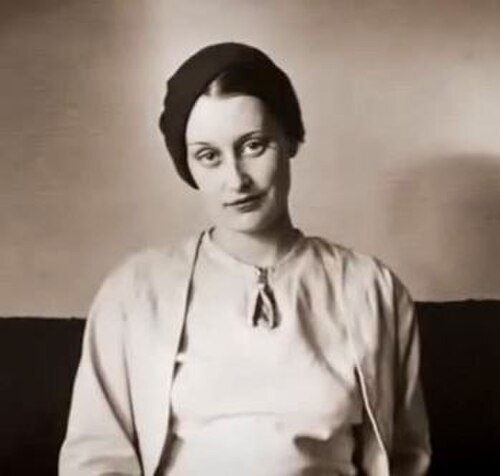
Although Maschwitz's wife Hermione Gingold speculated in her autobiography that the haunting jazz standard was written for either her or actress Anna May Wong,[9] Maschwitz himself contradicted such claims.[4] Maschwitz instead cited "fleeting memories of [a] young love" as inspiring the song.[4] Most sources, including the Oxford Dictionary of National Biography, posit cabaret singer Jean Ross,[6][7] with whom Maschwitz had a youthful romantic liaison, as the muse for the song.[6][7][8]
When the song was written, Maschwitz was Head of Variety at the BBC.[10] It is a list song (Maschwitz calls it a "catalogue song" in his autobiography), in this case delineating the various things that remind the singer of a lost love. The lyrics—the verse and three choruses—were written by Maschwitz during the course of one Sunday morning at his flat in London between sips of coffee and vodka.[4] Within hours of crafting the lyrics, he dictated them over the phone to Jack Strachey, and they arranged to meet the same evening to discuss the next step.[4]
Rise to popularity
The song was not an immediate success, and Keith Prowse, Maschwitz's agent, refused to publish it, releasing the copyright to Maschwitz himself –a stroke of luck for the lyricist. Writing in 1957, he claimed to have made £40,000 from the song.[11] Despite being featured in Spread it Abroad, a London revue of 1936,[12] it aroused no interest until the famous West Indian pianist and singer Leslie "Hutch" Hutchinson discovered it on top of a piano in Maschwitz's office at the BBC. Hutch liked it and recorded it, whereupon it became a global hit.[11] This first recording by Hutch was on His Master's Voice label in 1936. Popular versions in the USA in 1936 alone were recorded by Benny Goodman, Teddy Wilson with Billie Holiday, Nat Brandywynne, Carroll Gibbons, and Joe Sanders.[13] (Billie Holiday's rendering of the song with Teddy Wilson's orchestra was a favorite of the poet Philip Larkin, who said "I have always thought the words were a little pseudo-poetic, but Billie sings them with such passionate conviction that I think they really become poetry.")[14] Holiday's version of the song peaked at No. 5 on the Billboard Pop Songs chart.[15]
French version
The song was translated into French under the title Ces petites choses ("These little things") and recorded by Jean Sablon in 1936 and by Ann Savoy in 2007, respectively.
Cover versions
تم تسجيل العديد من النسخ الأخرى بترتيبات صوتية متنوعة، بما في ذلك على سبيل المثال لا الحصر:
- نات كينغ كول (في أغنية Just One of Those Things عام 1957)
- بينغ كروسبي (تم التسجيل في 15 ديسمبر 1944)، [ 17 ]
- في عام 1953، سجل بيلي وارد وفرقته "دومينوز" نسختهم التي وصلت إلى المركز الخامس في قائمة أفضل المبيعات الوطنية . [ 18 ]
- ديف بروبيك (تسجيلات عديدة، حيث كانت من الأغاني المفضلة لدى بول ديزموند ؛ أقدمها في عام 1953)
- ميل تورمي (في برنامج تورمي يلتقي بالبريطانيين عام 1957)
- أدرجت كوني فرانسيس الأغنية في ألبومها الذي صدر عام 1959 بعنوان " شكراً لك" .
- جوني هارتمان
- فرانكي لين
- سام كوك
- سارة فوغان
- فرانكي ليمون
- بيلي هوليداي
- إيتا جيمس
- جوني جيمس
- روزماري كلوني ، ( من أجل المدة ، 1991)
- أندريا ماركوفيتشي ، ( ما هو الحب؟، 1992)
- آرون نيفيل
- فرانك سيناترا ، ( نقطة اللاعودة ، 1961)
- سامي ديفيس جونيور (" عندما يصيبك الشعور! "، 1965)،
- تيني تيم
- إيف مونتان
- في عام 2005، قام ريك أستلي بتغطية هذه الأغنية لألبومه الاستوديو السادس " Portrait" .
- في عام 2015، تحدثت كاساندرا ويلسون عن كتابها " الخروج إلى النور في النهار" . [ 19 ]
- رود ستيوارت (الولايات المتحدة الأمريكية AC #13، 2002)
- سجل جيمس براون الأغنية ثلاث مرات، بما في ذلك تسجيل عام 1963 مع آلات وترية والذي وصل إلى المرتبة 25 في قائمة أغاني R&B والمرتبة 50 في قائمة أغاني البوب . [ 20 ]
- قام برايان فيري بتغطية نسخة دوروثي ديكسون من الأغنية لتكون الأغنية الرئيسية لألبومه المنفرد الأول These Foolish Things الذي أصدرته شركة Island Records في عام 1973. [ 21 ]
- غنى بوب ديلان في ألبوم تريبليكيت (2017).
- قام سيث ماكفارلين بتغطية هذه الأغنية لألبومه الذي صدر عام 2015 بعنوان " لا أحد يخبرك أبداً" .
في الثقافة الشعبية
- غنت فلورنس مارلي هذه الأغنية في فيلم همفري بوغارت "طوكيو جو" (1949).
- في فيلم " قطار الأحداث" الذي صدر عام 1949 ، يتم تشغيل الأغنية على جهاز غراموفون بينما يقوم بيتر فينش ، الذي يؤدي دوره، بخنق زوجته المنفصلة عنه.
- في حلقة "بيانو في المنزل" من مسلسل "منطقة الشفق" عام 1959 ، يتم تشغيل الأغنية على بيانو آلي مما يلهم أحد ضيوف الحفلة للاعتراف.
- The version sung by Lew Stone and his Band, plays in the background, in two episodes of Strangers and Brothers (1984).
- Bertrand Tavernier's 1990 film Daddy Nostalgie features this song as its theme, and it was released in the UK under the title These Foolish Things. The song is featured several times throughout the film, and the soundtrack includes three versions: a duet performed by lead actress Jane Birkin and Jimmy Rowles, a piano solo by Jimmy Rowles, and a vocal performance by Jimmy Rowles accompanied by his own piano playing.[22]
References
- ↑"These Foolish Things". Music Notes. 22 March 2010. Retrieved 23 December 2018.
- ↑De Lisle, Tim (1994). Lives of the Great Songs. London: Pavilion Books. p. 40. ISBN 1-85793-051-7.
- ↑De Lisle, p. 41
- 12345Maschwitz 1957, pp. 77–79.
- ↑250 All Time Hits (Book 3). London: Wise Publications. 1990. p. 250. ISBN 0-7119-2346-9.
- 12345Parker 2004.
- 1234Frost 2013.
- 12Brown 2016.
- ↑Gingold 1989, p. 54.
- ↑Took, Barry (2004). "Maschwitz, (Albert) Eric (1901-1969)". Oxford Dictionary of National Biography. Oxford: Oxford University Press. doi:10.1093/ref:odnb/38408. Retrieved 18 February 2010.
- 12Maschwitz 1957, p. 79.
- ↑De Lisle p. 40
- ↑Whitburn, Joel (1986). Joel Whitburn's Pop Memories 1890-1954. Wisconsin, USA: Record Research Inc. p. 594. ISBN 0-89820-083-0.
- ↑Desert Island Discs, BBC Radio Four, 17 July 1976
- ↑De Lisle p.42
- ↑"These Foolish Things / (Can You) Feel It Part 1 - King - USA". 45cat.com. Retrieved 27 June 2026.
- ↑"A Bing Crosby Discography". BING magazine. International Club Crosby. Retrieved 9 September 2017.
- ↑Whitburn, Joel (2004). Top R&B/Hip-Hop Singles: 1942-2004. Record Research. p. 168.
- ↑"Coming Forth by Day". Allmusic. allmusic.com. Retrieved 15 January 2019.
- ↑White, Cliff (1991). "Discography". In Star Time (pp. 54–59) [CD booklet]. New York: PolyGram Records.
- ↑De Lisle p. 43
- ↑Iwanami, Yozo (1990). Bande Originale Daddy Nostalgie (pp. 5–6) [soundtrack CD booklet]. Tokyo: Epic/Sony Records.
Bibliography
- Brown, Helen (18 February 2016). "Muse, The Witham, Barnard Castle". The Northern Echo. Retrieved 18 November 2018.
- Frost, Peter (31 December 2013). "Jean Ross". Morning Star. Retrieved 18 June 2018.
- Gingold, Hermione (1989). How to Grow Old Disgracefully. New York: St. Martin's Press. p. 54. ISBN 9780575044777.
- Maschwitz, Eric (1957). No Chip on My Shoulder. London: Herbert Jenkins. pp. 77–79.
- Parker, Peter (September 2004). "Ross, Jean Iris (1911–1973)". Oxford Dictionary of National Biography (online ed.). Oxford University Press. doi:10.1093/ref:odnb/74425. Retrieved 18 June 2017.(Subscription, Wikipedia Library access or UK public library membership required.)
- 1930s jazz standards
- 1936 songs
- Pop standards
- Torch songs
- Songs with lyrics by Eric Maschwitz
- Songs with music by Jack Strachey
- Frank Sinatra songs
- Billie Holiday songs
- Carmen McRae songs
- Mildred Bailey songs
- James Brown songs
- Billy Ward and his Dominoes songs
- Jazz compositions in E-flat major
- Song recordings arranged by Quincy Jones