
Note (typography)
In publishing, a note is a brief text in which the author comments on the subject and themes of the book and names supporting citations. In the editorial production of books and documents, typographically, a note is usually several lines of text at the bottom of the page, at the end of a chapter, at the end of a volume, or a house-style typographic usage throughout the text. Notes are usually identified with superscript numbers or a symbol.[1]
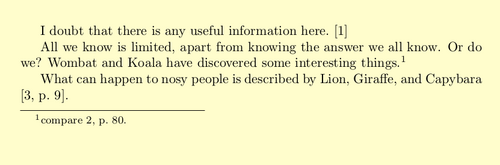
Footnotes are informational notes located at the foot of the thematically relevant page, whilst endnotes are informational notes published at the end of a chapter, the end of a volume, or the conclusion of a multi-volume book. Unlike footnotes, which require manipulating the page design (text-block and page layouts) to accommodate the additional text, endnotes are advantageous to editorial production because the textual inclusion does not alter the design of the publication.[1] However, graphic designers of contemporary editions of the Bible often place the notes in a narrow column in the page centre, between two columns of biblical text.
Numbering and symbols

In English-language typesetting, footnotes and endnotes are usually indicated with a superscript number appended to the pertinent block of text. Typographic symbols are sometimes used instead of numbers, with their traditional ordering being:
- Asterisk (*)
- Dagger (†)
- Double dagger (‡)
- Section sign (§)
- Double vertical bar (‖)
- Pilcrow (¶)[3]
Additional typographic characters used to identify notes include the number sign (#), the Greek letter delta (Δ), the diamond-shaped lozenge (◊), the downward arrow (↓), and the manicule (☞), a hand with an extended index finger.[4][7]
Custom or themed symbols are also possible. For example, Shift Happens: A book about keyboards by Marcin Wichary[8] features "footnote symbols [...] custom designed for the book, inspired by keyboard symbols throughout the ages"[9] On page 813, a ⌘ is used.[10] On page 688, a ⎈ is used.[11]
Location
Footnote reference numbers ("cues") in the body text of a page should be placed at the end of a sentence if possible, after the final punctuation. This minimizes the interruption of the flow of reading and allows the reader to absorb a complete sentence-idea before having their attention redirected to the content of the note.[12]
The cue is placed after any punctuation (normally after the closing point of a sentence). ... Notes cued in the middle of a sentence are a distraction to the reader, and cues are best located at the end of sentences.[13]
Academic usage
Notes are most often used as an alternative to long explanations, citations, comments, or annotations that can be distracting to readers. Most literary style guidelines (including the Modern Language Association and the American Psychological Association) recommend limited use of foot- and endnotes. However, publishers often encourage note references instead of parenthetical references. Aside from use as a bibliographic element, notes are used for additional information, qualification, or explanation that might be too digressive for the main text. Footnotes are heavily utilized in academic institutions to support claims made in academic essays covering myriad topics.
In particular, footnotes are the normal form of citation in historical journals. This is due, firstly, to the fact that the most important references are often to archive sources or interviews that do not readily fit standard formats, and secondly, to the fact that historians expect to see the exact nature of the evidence that is being used at each stage.
The MLA (Modern Language Association) requires the superscript numbers in the main text to be placed following the punctuation in the phrase or clause the note is about. The exception to this rule occurs when a sentence contains a dash, in which case the superscript would precede it.[14] However, MLA is not known for endnote or footnote citations, and APA and Chicago styles use them more regularly. Historians are known to use Chicago style citations.
Aside from their technical use, authors use notes for a variety of reasons:
- كعلامات إرشادية لتوجيه القارئ إلى المعلومات التي قدمها المؤلف أو حيث توجد معلومات مفيدة أخرى تتعلق بالموضوع في النص الرئيسي.
- نسبة اقتباس أو وجهة نظر إلى شخص ما.
- كبديل للمراجع بين قوسين؛ إنها طريقة أبسط للاعتراف بالمعلومات المكتسبة من مصدر آخر.
- للتغلب على القيود المفروضة على عدد الكلمات في مختلف النصوص الأكاديمية والقانونية التي لا تأخذ الحواشي بعين الاعتبار. قد يؤدي الإفراط في استخدام هذه الاستراتيجية إلى نص يعاني من "داء الحواشي" (وهو مصطلح ازدرائي صاغه جون بيتجمان ). [ 15 ] [ 16 ]
وثائق حكومية
يُخصّص دليل أسلوب مكتب الطباعة الحكومي الأمريكي أكثر من 660 كلمة لموضوع الحواشي السفلية. [ 17 ] ولدى وكالة ناسا إرشادات لاستخدام الحواشي السفلية في وثائقها التاريخية. [ 18 ] كما نشرت إدارة معلومات الطاقة دليلاً، يُشير بدوره إلى العديد من الأمثلة والمصادر الأخرى. [ 19 ]
الكتابة القانونية
يشتهر القاضي ستيفن براير، العضو السابق في المحكمة العليا للولايات المتحدة، في الأوساط القانونية الأمريكية بأسلوبه الكتابي الفريد، حيث لا يستخدم الحواشي مطلقًا. فهو يفضل إدراج جميع المراجع ضمن النص (وهو أمر مسموح به في نظام التوثيق القانوني الأمريكي). [ 20 ] وقد كتب ريتشارد أ. بوسنر أيضًا معارضًا لاستخدام الحواشي في الآراء القضائية. [ 21 ] في المقابل، يدعو برايان أ. غارنر إلى استخدام الحواشي بدلًا من التوثيق المباشر. [ 22 ]
HTML

لغة HTML ، وهي لغة الترميز السائدة لصفحات الويب، لا تملك آلية لإضافة ملاحظات. وعلى الرغم من تقديم العديد من المقترحات المختلفة على مر السنين، لم يتمكن فريق العمل من التوصل إلى توافق في الآراء بشأنها. [ 23 ] ولهذا السبب، اضطرت منصة ميدياويكي<ref></ref> ، على سبيل المثال، إلى استحداث وسم خاص بها للاستشهاد بالمراجع في الملاحظات.
قد يُجادل البعض بأن الارتباط التشعبي يُغني جزئيًا عن الحاجة إلى الحواشي، كونه وسيلة الويب للإشارة إلى مستند آخر. مع ذلك، فهو لا يسمح بالاستشهاد بمصادر غير متصلة بالإنترنت، وإذا تغيرت وجهة الرابط، فقد يصبح الرابط غير فعال أو غير ذي صلة. [ 24 ] أحد الحلول هو استخدام مُعرّف الكائن الرقمي . اعتبارًا من عام 2024، قدّم معيار HTML الحيّ عدة حلول بديلة لإدراج الحواشي السفلية بناءً على طولها أو نوع التعليق. [ 25 ]
في حال احتاج المستخدم إلى إضافة حاشية ختامية أو سفلية باستخدام لغة HTML، يمكنه إضافة الرقم المرتفع باستخدام <sup></sup>، ثم ربط النص المرتفع بقسم المراجع باستخدام رابط . أنشئ رابطًا باستخدام <a name="ref1"></a>، ثم اربط النص المرتفع بـ "ref1".
تاريخ
يشير تشاك زيربي إلى طبعة ريتشارد جاج لعام 1568 من الكتاب المقدس للأساقفة كمثال مبكر على الحواشي السفلية، حيث تشير علامات المرجع "(f)" و "(g)" في سفر أيوب إلى ملاحظات موضوعة في أسفل الصفحة. [ 26 ]
استخدمت الطبعات الأولى من إنجيل دويه-رايمز علامة ترقيم مكونة من أربع نقاط (ممثلة في يونيكود بـ U+2E2C ⸬ SQUARED FOUR DOT PUNCTUATION ) للإشارة إلى هامش. ويمكن الخلط بينها وبين نقطتين رأسيتين متقاربتين .
أداة أدبية
في بعض الأحيان، تم استخدام الملاحظات لتأثيرها الفكاهي، أو كأداة أدبية.
- يستخدم جيمس جويس في روايته " يقظة فينيغان " (1939) الحواشي السفلية إلى جانب الهوامش اليسرى واليمنى في الكتاب الثاني الفصل الثاني. تمثل الأنواع الثلاثة من الملاحظات تعليقات من الأشقاء الثلاثة الذين يقومون بواجباتهم المدرسية: شيم، وشون، وإيسي.
- إن قصة "ملاحظات نحو انهيار عقلي" لـ جي جي بالارد (1967) هي جملة واحدة ("مريض برودمور تم تسريحه يجمع "ملاحظات نحو انهيار عقلي"، يستذكر فيها مقتل زوجته ومحاكمته وتبرئته.") وسلسلة من الحواشي المفصلة لكل كلمة من الكلمات.
- تستخدم رواية "بيت الأوراق " (2000) للكاتب مارك زد. دانيليفسكي ما يُمكن اعتباره من أكثر الحواشي تفصيلاً وتعقيداً في الأدب. فعلى امتداد الرواية، تُستخدم الحواشي لسرد قصص متعددة خارج نطاق القصة الرئيسية. كما يُساهم الترتيب المكاني للحواشي على الصفحة في عكس الطابع المُلتوي للحبكة (إذ غالباً ما تشغل عدة صفحات، وتظهر معكوسة من صفحة إلى أخرى، أو عمودية على جانبي الصفحة، أو في مربعات في وسط الصفحة، في قلب السرد الرئيسي).
- تستخدم رواية "الشرطي الثالث " لفلان أوبراين ( 1967) هوامش مطولة وواسعة النطاق لمناقشة شخصية الفيلسوف الخيالي دي سيلبي . تمتد هذه الهوامش على عدة صفحات، وغالبًا ما تطغى على الحبكة الرئيسية، مما يضفي على الرواية طابعًا عبثيًا.
- تتضمن رواية "المزحة اللانهائية" لديفيد فوستر والاس أكثر من 400 حاشية، بعضها يتجاوز اثنتي عشرة صفحة. وقد اقترح العديد من النقاد الأدبيين قراءة الرواية مع وضع فاصلين للصفحات. كما يستخدم والاس الحواشي السفلية والحواشي الختامية والملاحظات داخل النص في معظم كتاباته الأخرى.
- كما تستخدم رواية مانويل بويغ " قبلة المرأة العنكبوت" (التي نُشرت أصلاً باللغة الإسبانية بعنوان El beso de la mujer araña ) الحواشي السفلية على نطاق واسع.
- يتضمن كتاب غاريسون كيلور " أيام بحيرة ووبيجون" حواشي مطولة وسردًا موازيًا.
- كتاب مارك دان " Ibid: A Life" مكتوب بالكامل في الحواشي الختامية.
- يحتوي كتاب "كلمات الساعة: أوزة، قصائد" للويس دانتين فان روتن (عنوانه بالفرنسية ، لكن نطقه يُشبه نطق أغنية "أغاني الأم غوس" الإنجليزية )، والذي يُزعم فيه أنه محرر مخطوطة لشخصية خيالية تُدعى فرانسوا شارل فرناند دانتين، على هوامش كثيرة تدّعي شرح النص الفرنسي غير المنطقي. وتكمن فكرة الكتاب في أن كل قصيدة فرنسية مكتوبة فيه تُشبه أغنية أطفال إنجليزية .
- استخدم تيري براتشيت الحواشي السفلية بكثرة في رواياته، حيث غالباً ما تُمهّد هذه الحواشي لسلسلة من النكات المتكررة في بقية الرواية.
- تستخدم رواية "الأتمتة" (The Automation) للكاتبين BLA وGB Gabbler الحواشي لكسر الجدار الرابع . يروي الراوي، المعروف باسم "BLA"، القصة الخيالية كما لو كانت حقيقية، بينما يقوم المحرر، Gabbler، بتدوين ملاحظاته على القصة من خلال الحواشي، معتقدًا أن المخطوطة ليست سوى قصيدة نثرية تحاول أن تكون تحفة أدبية.
- تحتوي رواية سوزانا كلارك لعام 2004 بعنوان "جوناثان سترينج والسيد نوريل" على 185 حاشية، [ 27 ] تُشير إلى أحداث خيالية قبل وبعد أحداث النص الرئيسي، بنفس أسلوب السرد القديم، وتستشهد بمصادر علمية وسحرية خيالية. [ 28 ]
- تستخدم ثلاثية بارتيماوس لجوناثان سترود الحواشي لإدراج ملاحظات وتفسيرات فكاهية من قبل أحد أبطال الرواية، بارتيماوس.
- استخدمت سلسلة محاكاة باري تروتر لمايكل جيربر الحواشي السفلية لتوسيع النكات المكونة من سطر واحد في النص إلى مونولوجات كوميدية طويلة من شأنها أن تقطع تدفق السرد.
- يستخدم جون غرين في كتابه "وفرة من كاثرين" الحواشي، التي يقول عنها: "[إنها] يمكن أن تسمح لك بإنشاء نوع من السرد الثاني السري، وهو أمر مهم إذا كنت، على سبيل المثال، تكتب كتابًا عن ماهية القصة وما إذا كانت القصص ذات أهمية." [ 29 ]
- تستخدم الدكتورة كارول بولتون حواشي سفلية مطولة لتزويد القارئ المعاصر بشفرة لرواية تدور حول رحلات المسافر الإسباني الخيالي دون مانويل ألفاريز إسبريلا ، وهو شخصية ابتكرها روبرت ساوثي في أوائل القرن التاسع عشر، بهدف تزويده بأداة لانتقاد العادات الاجتماعية في ذلك الوقت.
- تستغل سلسلة "الخميس التالي" لجاسبر فورد استخدام الحواشي السفلية كأداة اتصال ( هاتف الحواشي السفلية ) مما يسمح بالتواصل بين عالم الشخصية الرئيسية وعالم الكتب الخيالي.
- يستخدم كتاب إرنست همنغواي " التاريخ الطبيعي للموتى" حاشية سفلية للسخرية من أسلوب كتابة التاريخ، مع الإدلاء بتصريح ساخر حول انقراض "الإنسانيين" في المجتمع الحديث.
- يُتبع قاموس بيير بايل التاريخي والنقدي كل مدخل موجز بحاشية (غالباً ما تكون أطول بخمس أو ست مرات من النص الرئيسي) تُستخدم فيها القديسون والشخصيات التاريخية ومواضيع أخرى كأمثلة للاستطراد الفلسفي. صُممت هذه الحواشي المنفصلة لتتناقض فيما بينها، ولا يتضح جوهر حجة بايل في التشكيك الإيماني إلا عند قراءتها معاً . وقد استُخدمت هذه التقنية جزئياً للتحايل على الرقابة الصارمة في فرنسا خلال القرن السابع عشر.
- تستخدم رواية موردخاي ريتشلر " نسخة بارني" الحواشي كأداة سردية تُبرز المقاطع غير الموثوقة في الرواية. وبصفته محررًا لسيرة والده الذاتية، يقع على عاتق ابن الراوي تصحيح أي معلومات خاطئة وردت في سيرة والده. ويتزايد عدد هذه التصحيحات مع ازدياد غرور الأب وإصابته بمرض الزهايمر . ورغم أن معظم هذه التغييرات طفيفة، إلا أن بعضها ضروري لتطور الحبكة والشخصيات.
- في رواية " النار الشاحبة " لفلاديمير نابوكوف ، تُروى الحبكة الرئيسية من خلال التعليقات التوضيحية التي كتبها محرر خيالي.
- رواية "بارتلبي وشركاه" للكاتب إنريكي فيلا ماتاس ، مصممة على شكل حواشي لرواية غير موجودة.
- غالباً ما تحتوي أعمال جاك فانس على حواشي سفلية، توضح وتخبر القارئ بخلفية العالم في الرواية.
- يستخدم برنامج ستيفن كولبير " أنا أمريكا (وأنت كذلك!)" كلاً من الحواشي السفلية والهوامش لتقديم تعليقات إضافية وروح الدعابة.
- تستخدم رواية دوغ دورست " S." الحواشي لاستكشاف قصة وعلاقة شخصيتي VM Straka و FX Caldeira.
- يستخدم العمل المشترك بين تيري براتشيت ونيل غيمان ، بعنوان "بشائر الخير "، الحواشي السفلية بشكل متكرر لإضافة تعليقات جانبية فكاهية.
- تستخدم القصة القصيرة "الخوف الخامس" في مجموعة تيرينا إليزابيث بيل " أخبرني بما تراه" الحواشي لجعل قصة الخيال العلمي تبدو وكأنها وثيقة تاريخية. [ 30 ] [ 31 ]
- استخدم دوغلاس آدامز الحواشي السفلية بكثرة في سلسلة رواياته " دليل المسافر إلى المجرة" .
انظر أيضاً
- شرح
- الاستشهاد
- هايبركينو
- المرجع نفسه.
- ملاحظة جيدة
- دليل أسلوب ويكيبيديا للمراجع
مراجع
- 1 2 The Oxford Companion to the English Language (1992) ص. 709.
- ↑ ديونيسيوس، ثراكس (1874). قواعد ديونيسيوس ثراكس . سانت لويس، ميزوري : ستودلي . تم الاطلاع عليه بتاريخ 28 مايو 2026 .
- ↑ برينغهيرست، روبرت (2005). عناصر أسلوب الطباعة (الطبعة 3.1 ). بوينت روبرتس، واشنطن: هارتلي آند ماركس. الصفحات 68-69 .
4.3.2
تحقق من سُمك الأحرف المرتفعة والتباعد بينها.
إذا لم تكن متكررة جدًا، فيمكن وضع الحواشي الجانبية بدون أحرف مرتفعة على الإطلاق (كما هو الحال في هذا الكتاب)، أو باستخدام الرمز نفسه (عادةً نجمة) بشكل متكرر، حتى عند ظهور عدة حواشي في صفحة واحدة. بالنسبة للحواشي الختامية، تُعد الأرقام المرتفعة هي المعيار. بالنسبة للحواشي السفلية، يمكن استخدام الرموز إذا كانت الحواشي قليلة. (الترتيب التقليدي هو * † ‡ § ‖ ❡، ولكن باستثناء النجمة والخنجر والخنجر المزدوج، فإن هذا الترتيب غير مألوف لمعظم القراء، ولم يكن كذلك أبدًا). الأرقام أكثر وضوحًا، وترتيبها أقل عرضة للالتباس.
- ↑ شيرمان، ويليام هـ. (1 أبريل 2005). "نحو تاريخ المانيكول" (ملف PDF) . مركز تحرير السير والرسائل . ص 18. مؤرشف من الأصل (ملف PDF) بتاريخ 8 أكتوبر 2013. تاريخ الاطلاع: 28 يونيو 2013 .
في مقال كلاسيكي بعنوان "تمييز
الأحكام
" في الأدب الإليزابيثي،
يقتبس جي كي هنتر
[...] ما قد يكون أوضح اعتراف بهذه الممارسة في تلك الفترة، وهو كتاب
تشارلز بتلر
المدرسي عن فن الخطابة الصادر عام 1633: "يمكن ملاحظة أنه من المفيد الإشارة إلى أهم الأحكام أو
المبادئ
، لا سيما تلك التي يُضاف إليها شيء في نهاية العمل، بعلامة ما، مثل النجمة * أو اليد ☛، تبرز في الهامش." وقد ورد ذكره في الحاشية 44 في ورقة شيرمان على النحو التالي: "تشارلز بتلر،
كتابان في فن الخطابة
(أكسفورد: ويليام تيرنر، 1633)، A4v. وقد استندتُ إلى ترجمة فريد شورينك في أطروحته للدكتوراه، "التعليم والقراءة في إنجلترا الإليزابيثية واليعقوبية" (أكسفورد، 2004)، 62."
- ↑ ماكماستر، جون باخ (1888). تاريخ شعب الولايات المتحدة : من الثورة إلى الحرب الأهلية . نيويورك ؛ لندن : دي. أبليتون وشركاه. ص 39. تاريخ الاطلاع: 28 مايو 2026 .
- ↑ على سبيل المثال، توضح الصفحة 39 أن ترتيب الرموز لديه يبدأ بـ *، †، ‡، # ، ‖. [ 5 ]
- ↑ يتم استخدام العديد من هذه الرموز، على سبيل المثال، في كتاب جون باخ ماكماستر ، تاريخ شعب الولايات المتحدة [ 6 ]
- ↑ "Shift Happens: A book about keyboards" . shifthappens.site . تم الاطلاع عليه بتاريخ 28 مايو 2026 .
- ↑ "ملاحظة حول الطباعة - التغيير يحدث" . shifthappens.site . تم الاطلاع عليه بتاريخ 28 مايو 2026 .
- ↑ "book-open-1.jpg" . shifthappens.site . تم الاطلاع عليه بتاريخ 28 مايو 2026 .
- ↑ "book-open-5.jpg" . shifthappens.site . تم الاطلاع عليه بتاريخ 28 مايو 2026 .
- ↑ "كيفية كتابة الحواشي السفلية: القواعد والأمثلة" . كيفية كتابة الحواشي السفلية: القواعد والأمثلة | مدونة Grammarly . ١٩ ديسمبر ٢٠٢٢. تاريخ الاطلاع: ١٠ يونيو ٢٠٢٣ .
- ↑Waddingham, Anne (2014). New Hart's rules: the Oxford style guide (2nd ed.). Oxford: Oxford university press. pp. 332–334. ISBN 978-0-19-957002-7.
- ↑Lab, Purdue Writing. "MLA Endnotes and Footnotes // Purdue Writing Lab". Purdue Writing Lab. Retrieved 2022-01-11.
- ↑Rogers, Timothy (1968). "Rupert Brooke: Man and Monument". English. 17 (99): 79–84. doi:10.1093/english/17.99.79.
- ↑ Candida Lycett Green (Betjeman's daughter), quoted in "Passed/Failed: An education in the life of Candida Lycett Green, writer", interview by Jonathan Sale. The Independent, Thursday 27 April 2006.
- ↑"Chapter 15: Footnotes, indexes, contents, and outlines". U.S. Government Printing Office Style Manual. Retrieved October 26, 2015.
- ↑"A Guide to Footnotes and Endnotes for NASA History Authors". NASA History Style Guide. Retrieved July 10, 2024.
- ↑"EIA Publishing Style Guide, Fifth Edition". Eia.doe.gov. Archived from the original on 2003-02-21. Retrieved July 16, 2026.
- ↑"In Justice Breyer's Opinion, A Footnote Has No Place". The New York Times. 1995-07-28. Retrieved 2008-04-30.
- ↑Posner, Richard A. (Summer 2001). "Against Footnotes"(PDF). Court Review. American Judges Association. Retrieved 2014-10-13.
- ↑Oddi, Marcia (2005-01-07). "Indiana Courts - Footnotes in Judicial Opinions". The Indiana Law Blog. Retrieved 2015-11-04.
- ↑"[whatwg] Footnotes, end notes, side notes". lists.whatwg.org. Retrieved 2024-09-03.
- ↑Jill Lepore. "The Cobweb", The New Yorker, 26 January 2015 issue. Retrieved 25 January 2015. Archived from the original.
- ↑"4.14 Common idioms without dedicated elements". html.spec.whatwg.org. Retrieved 2024-09-03.
- ↑ زيربي، تشاك (2002). تفاصيل الشيطان: تاريخ الحواشي . دار نشر المدن الخفية. الصفحات 19، 28، 34، الحاشية 23. ISBN 1931229058.
- ↑ جرادي هندريكس، "هل تؤمن بالسحر؟" ، ذا فيليدج فويس (24 أغسطس 2004). تم الاطلاع عليه في 5 يناير 2009.
- ↑ مايكل ديردا، "جوناثان سترينج والسيد نوريل" ، مؤرشف في 2 فبراير 2016 على موقع Wayback Machine ، صحيفة واشنطن بوست (5 سبتمبر 2004). تم الاطلاع عليه في 5 يناير 2009.
- ↑ غرين، جون (7 أغسطس/آب 2006). "الحواشي" . مؤرشف من الأصل بتاريخ 25 نوفمبر/تشرين الثاني 2006. تم الاطلاع عليه بتاريخ 28 مايو/أيار 2024 .
- ↑ لوتويك-دينر، راشيل (2023-01-20). ""أخبرني بما ترى" مجموعة خالدة عن أزمنة غير مسبوقة . مراجعة كتب الجنوب . تم الاطلاع بتاريخ 13 أبريل 2023 .
- ↑ ريشة ثقيلة (16 يناير 2023). "ديف فيتزجيرالد يستعرض مجموعة قصص تيرينا إليزابيث بيل "أخبرني بما تراه" . مراجعة ريشة ثقيلة . تم الاطلاع بتاريخ 13 أبريل 2023 .


للمزيد من القراءة
- دينتون، ويليام (2014). الحواشي والفهارس الخيالية . مطبعة جامعة ميسكاتونيك.
- غرافتون، أنتوني (1997). الحاشية: تاريخ غريب . كامبريدج، ماساتشوستس: مطبعة جامعة هارفارد . ISBN 0-674-90215-7.
- ريس، بيتر (1984). نحو نظرية الحاشية السفلية . برلين: دي جرويتر. او سي ال سي 717030605 .
- زيربي، تشاك (2002). تفاصيل الشيطان: تاريخ الحواشي . مونتبيليه، فيرمونت: دار نشر المدن الخفية. ISBN 1931229058.
- فهرس
- مرجع
- البيانات الوصفية