
قائمة طيور الهند

هذه قائمة بأنواع الطيور في الهند، وتشمل الأنواع الموجودة والأنواع التي انقرضت مؤخرًا والمسجلة ضمن الحدود السياسية لجمهورية الهند كما حددتها الحكومة الهندية. بلغ عدد الأنواع المسجلة 1396 نوعًا [ 1 ] حتى عام 2025، منها 84 نوعًا مستوطنًا في البلاد. [ 1 ] 98 نوعًا مهددًا عالميًا. [ 2 ] الطاووس الهندي ( Pavo cristatus ) هو الطائر الوطني للهند. [ 3 ] لا تشمل هذه القائمة الأنواع الموجودة في المناطق الخاضعة للولاية القضائية الهندية، مثل داكشين غانغوتري ، كما تم تحديد الأنواع البحرية بمسافة فاصلة اعتباطية. لا تتضمن القائمة أنواع الطيور الأحفورية أو الطيور الهاربة من الأسر.
يتبع هذا التصنيف (تحديد وتسلسل الرتب والفصائل والأنواع) والتسمية (الأسماء الشائعة والعلمية) في هذه القائمة معايير قائمة الطيور العالمية الصادرة عن اللجنة الأولمبية الدولية، الإصدار 13.1. كما تستخدم هذه القائمة اللغة الإنجليزية البريطانية في جميع أجزائها. وتخضع جميع أسماء الطيور أو الصياغة الأخرى لهذا المعيار.
استُخدمت الوسوم التالية لتسليط الضوء على عدة فئات. ولا تندرج الأنواع المحلية الشائعة ضمن أي من هذه الفئات.
- (V) المهاجر - المعروف أيضًا باسم النادر، ويشير إلى نوع نادر الحدوث أو يحدث عرضيًا في الهند - عادة ما يكون أقل من عشرة سجلات مؤكدة.
- (هـ) مستوطن - نوع مستوطن في الهند
- (مثال) الانقراض المحلي - نوع لم يعد موجودًا في الهند على الرغم من وجود مجموعات منه في أماكن أخرى
البط والإوز والطيور المائية
الرتبة: الإوزيات، العائلة: البطيات
تضم فصيلة البطيات البط ومعظم الطيور المائية الشبيهة بالبط ، مثل الإوز والبجع . تتكيف هذه الطيور مع الحياة المائية بفضل أقدامها المكففة ومناقيرها المسطحة وريشها الذي يتميز بقدرة فائقة على طرد الماء بفضل طبقة زيتية. وقد سُجل وجود 45 نوعًا منها في الهند.


| الاسم الشائع | ذات الحدين | تعليقات |
|---|---|---|
| البطة الصفراء | Dendrocygna bicolor | |
| البطة الصفراء الصغيرة | Dendrocygna javanica | |
| الإوزة ذات الصدر الأحمر | برانتا روفيكوليس | (V)؛ [ 4 ] معرض للخطر |
| إوزة البرنقيل | برانتا ليوكوبس | |
| الإوزة ذات الرأس المخطط | أنسر إنديكوس | |
| الوز الرمادي | أنسر أنسر | |
| إوزة الفاصوليا التايغا | Anser fabalis | (V) |
| إوزة الفاصوليا التندرا | أنسر سيريروستريس | (V)؛ [ 5 ] تعتبرها بعض السلطات نوعًا من أنواع Anser fabalis |
| الإوزة ذات الجبهة البيضاء الكبيرة | أنسر أبيض الجبهة | |
| الإوزة ذات الجبهة البيضاء الصغيرة | أنسر إريثروبوس | (V)؛ [ 6 ] [ 7 ] عرضة للخطر |
| البجعة الأخرس | سيغنوس أولور | (V) |
| بجعة التندرا | Cygnus columbianus | (V)؛ يتم التعامل مع سلالة bewickii أحيانًا كنوع [ 8 ] |
| البجعة الصاخبة | سيغنوس سيغنوس | (V) |
| البط ذو المنقار العقدي | ساركيديورنيس ميلانوتوس | |
| بطة الشهرمان الشائعة | تادورنا تادورنا | |
| بطة رودي شيلدك | تادورنا فيروجينيا | |
| البط ذو الأجنحة البيضاء | Asarcornis scutulata | مهدد بالانقراض بشدة |
| بطة الماندرين | أيكس جاليريكولاتا | (V) |
| إوزة قزمية قطنية | نيتابوس كورومانديليانوس | |
| لون بحيرة بايكال الفيروزي | سيبيريونيتا فورموزا | (V) |
| غارغاني | ملعقة querquedula | |
| أبو مجرفة شمالي | سباتولا كليبياتا | |
| جادوال | ماريكا ستريبيرا | |
| بطة متطاولة | ماريكا فالكاتا | |
| بطة أوراسية | ماريكا بينيلوبي | |
| البط الهندي ذو المنقار المرقط | Anas poecilorhyncha | |
| البط ذو المنقار المرقط الشرقي | Anas zonorhyncha | (V) |
| البط البري | Anas platyrhynchos | |
| البط الشمالي | أنس أكوتا | |
| البط البري الأوراسي | Anas crecca | |
| لون أندامان الفيروزي | الأناصية البيضاء | (شرق)؛ مهددة بالخطر |
| بطة رخامية | مارمارونيتا أنغوستيروستريس | مهددة بالانقراض |
| البطة ذات الرأس الوردي | رودونيسا كاريوفيلاسيا | (هـ)؛ مهدد بالانقراض بشدة (ربما منقرض) |
| البط ذو العرف الأحمر | نيتا روفينا | |
| البط الشائع | أيثيا فيرينا | مُعَرَّض |
| بطة باير | أيثيا بايري | مهدد بالانقراض بشدة |
| بطة حديدية | أيثيا نيروكا | مهددة بالانقراض |
| بطة ذات خصلة | أيثيا فوليجولا | |
| البط الغواص الكبير | أيثيا ماريلا | |
| البط طويل الذيل | Clangula hyemalis | (V)؛ عرضة للخطر |
| الغولدنبل الشائع | Bucephala clangula | |
| رائحة كريهة | ميرجيلوس ألبيلوس | |
| الغواص الشائع | Mergus merganser | |
| البط الغواص أحمر الصدر | Mergus serrator | (V) |
| البط ذو الرأس الأبيض | أوكسيورا ليوكوسيفالا | مهدد بالانقراض |
ميغابود
الرتبة: الدجاجيات، العائلة: ميغابوديات
طيور الميغابودييدي طيورٌ مكتنزة الجسم، متوسطة إلى كبيرة الحجم، تشبه الدجاج، ذات رؤوس صغيرة وأقدام كبيرة. جميعها، باستثناء دجاج المالي، تسكن بيئات الغابات، ومعظمها ذو لون بني أو أسود. يوجد نوع واحد منها في الهند.
| الاسم الشائع | ذات الحدين | حالة |
|---|---|---|
| نيكوبار ميجابود | ميجابوديوس نيكوبارينسيس | (هـ)؛ معرض للخطر |
طيور التدرج وحلفاؤها


الرتبة: الدجاجيات، العائلة: التدرجية


تُعدّ فصيلة التدرجيات عائلة من الطيور البرية، وتضم السمان ، والحجل ، ودجاج الثلج ، والفرنكولين ، والدجاج البري ، والتراجوبان ، والمونال ، والدراج ، والطاووس، ودجاج الأدغال . وهي عموماً طيور ممتلئة الجسم (مع اختلاف أحجامها) ولها أجنحة عريضة وقصيرة نسبياً.
| الاسم الشائع | ذات الحدين | تعليقات |
|---|---|---|
| طائر الحجل الثلجي | ليروا ليروا | |
| دجاجة الثلج الهيمالايا | Tetraogallus himalayensis | |
| طائر الثلج التبتي | Tetraogallus tibetanus | |
| طائر الحجل | أليكتوريس تشوكار | |
| طائر الفرانكولين الأسود | فرانكولينوس فرانكولينوس | |
| طائر الفرانكولين المرسوم | فرانكولينوس بيكتوس | |
| فرانكولين صيني | فرانكولينوس بينتاديانوس | |
| طائر الفرانكولين الرمادي | أورتيغورنيس بونديسيريانوس | |
| طائر التدرج المستنقعي | Ortygornis gularis | مهددة بالانقراض |
| طائر الحجل التبتي | بيرديكس هودجسونيا | |
| السمان الشائع | سمن سمن | |
| السمان الياباني | كوتورنيكس جابونيكا | مهددة بالانقراض |
| طائر السمان المطري | كوتورنيكس كورومانديلكا | |
| طائر السمان الملكي | Synoicus chinensis | |
| سمان الأدغال | بيرديكولا آسياتيكا | |
| طائر السمان الصخري | بيرديكولا أرجوندا | (هـ) |
| طائر السمان الملون | بيرديكولا إريثرورينكا | (هـ) |
| سمان مانيبور | بيرديكولا مانيبيورينسيس | (هـ)؛ مهدد بالانقراض |
| سمان الهيمالايا | أوفريزيا سوبرسيليوسا | (E)؛ مهدد بالانقراض بشكل خطير (ربما منقرض) [ 9 ] |
| طائر الحجل الجبلي | أربوروفيلا توركيولا | |
| الحجل ذو الحلق الأحمر | أربوروفيلا روفوجولاريس | |
| طائر الحجل ذو الخدين الأبيضين | أربوروفيلا أتروغولاريس | |
| طائر الحجل ذو الصدر الكستنائي | أربوروفيلا مانديلي | مهددة بالانقراض |
| طائر الحجل الجبلي المصنوع من الخيزران | بامبوسيكولا فيتشي | |
| دجاجة حمراء | Galloperdix spadicea | (هـ) |
| دجاجة ذات مخالب ملونة | Galloperdix lunulata | (هـ) |
| طائر التدرج الدموي | إيثاجينيس كروينتوس | |
| تراجوبان غربي | تراجوبان ميلانوسيفالوس | مُعَرَّض |
| طائر التراجوبان الساتيري | تراجوبان ساتيرا | |
| تراجوبان بليث | تراجوبان بليثي | مُعَرَّض |
| تراجوبان تيمينك | تراجوبان تيمينكي | |
| طائر التدرج كوكلاس | بوكراسيا ماكرولوفا | |
| مونال الهيمالايا | لوفوفوروس إمبيجانوس | |
| مونال سكلاتر | لوفوفوروس سكلاتري | |
| دجاج الأدغال الأحمر | Gallus gallus | |
| دجاج الأدغال الرمادي | Gallus sonneratii | (هـ) |
| طائر الدراج كاليج | لوفورا ليوكوميلانوس | |
| هتاف طائر التدرج | كاتريوس واليشي | مُعَرَّض |
| طائر التدرج الخاص بالسيدة هيوم | سيرماكوس هيوميا | مُعَرَّض |
| طائر التدرج ذو الأذنين التبتية | كروسوبتيلون هارماني | |
| طائر التدرج الرمادي | بوليبليكترون بيكالكاراتوم | |
| الطاووس الهندي | بافو كريستاتوس | |
| الطاووس الأخضر | بافو موتيكوس | (مثال)؛ مهدد بالانقراض [ 10 ] |
أفعى فم الضفدع

الرتبة: بودارجيفورميس، العائلة: بودارجيداي
طيور فم الضفدع هي مجموعة من الطيور الليلية التي تنتمي إلى فصيلة طيور السبد . سُميت بهذا الاسم نسبةً إلى منقارها الكبير المسطح المعقوف وفتحة فمها الواسعة الشبيهة بفتحة فم الضفدع، والتي تستخدمها لاصطياد الحشرات. وقد سُجل وجود نوعين منها في الهند.
| الاسم الشائع | ذات الحدين | تعليقات |
|---|---|---|
| فم الضفدع السريلانكي | باتراكوستوموس مونيلجر | سلالة رونوالي في الهند |
| فم الضفدع لهودجسون | باتراشوستوموس هودجسوني |
طائر الليل
الرتبة: كابريمولجيفورميس، العائلة: كابريمولجيداي
طيور السبد هي طيور ليلية متوسطة الحجم، تعشش عادةً على الأرض. تتميز بأجنحة طويلة، وأرجل قصيرة، ومناقير قصيرة جدًا. معظمها ذو أقدام صغيرة، لا تُفيد كثيرًا في المشي، وأجنحة طويلة مدببة. ريشها الناعم مموه ليُشبه لحاء الشجر أو أوراق الشجر.

| الاسم الشائع | ذات الحدين | تعليقات |
|---|---|---|
| طائر الليل ذو الأذنين الكبيرتين | Lyncornis macrotis | |
| طائر الليل الأدغالي | Caprimulgus indicus | |
| طائر الليل الرمادي | كابريمولجوس جوتاكا | |
| طائر السبد الأوروبي | Caprimulgus europaeus | |
| طائر الليل سايكس | كابريمولجوس ماراتينسيس | |
| طائر الليل جيردون | Caprimulgus atripennis | |
| طائر الليل ذو الذيل الطويل | Caprimulgus macrurus | |
| طائر الليل الأنداماني | Caprimulgus andamanicus | (هـ) |
| طائر الليل الهندي | Caprimulgus asiaticus | |
| طائر الليل السافانا | Caprimulgus affinis |
طيور السنونو الشجرية
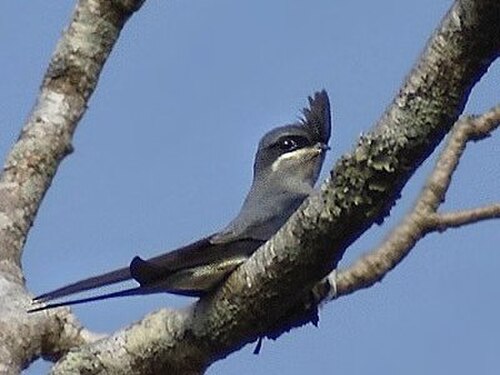
الرتبة: أبوديفورميس، العائلة: هيميبروكنيداي
طيور السنونو الشجرية، أو السنونو المتوجة، وثيقة الصلة بطيور السنونو الحقيقية . وهي تختلف عنها في وجود عرف، وذيل طويل متشعب، وريش أكثر نعومة. يوجد نوع واحد منها في الهند.
| الاسم الشائع | ذات الحدين | تعليقات |
|---|---|---|
| طائر السنونو الشجري المتوج | هيميبروكني كوروناتا |
طيور السنونو
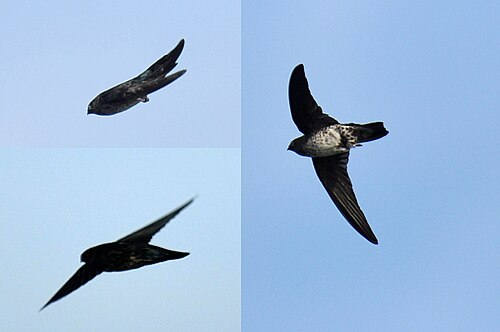
الرتبة: أبوديفوميرات، العائلة: أبوديداي
طيور السنونو طيور صغيرة تقضي معظم حياتها في الطيران. تتميز هذه الطيور بأرجلها القصيرة جدًا، ولا تستقر على الأرض طواعيةً، بل تجثم فقط على الأسطح العمودية. تمتلك العديد من طيور السنونو أجنحة طويلة مائلة للخلف تشبه الهلال أو البوميرانج. وقد سُجِّل وجود 17 نوعًا منها في الهند.

| الاسم الشائع | ذات الحدين | تعليقات |
|---|---|---|
| طائر السنونو ذو الأصابع الريشية | Collocalia affinis | |
| طائر السنونو الهندي | أيرودراموس أحادي اللون | |
| طائر السنونو الهيمالاي | أيرودراموس بريفيروستريس | |
| طائر السنونو ذو العش الصالح للأكل | أيرودراموس فوسيفاجوس | |
| ذيل الشوكة ذو الردف الأبيض | زونافينا سيلفاتيكا | |
| ذيل الإبرة أبيض الحنجرة | هيروندابوس كوداكوتوس | |
| ذيل إبرة فضي الظهر | Hirundapus cochinchinensis | |
| ذيل الإبرة ذو الظهر البني | هيروندابوس جيجانتوس | |
| الكف الآسيوي | Cypsiurus balasiensis | |
| سريع جبال الألب | تاكي ماربتس ميلبا | |
| طائر السنونو الشائع | Apus apus | |
| طائر السنونو الشاحب | أبوس باليدوس | (V) |
| سنونو المحيط الهادئ | Apus pacificus ssp. kurodae | |
| سرعة بليث | أبوس ليوكونيكس | |
| طائر السنونو ذو الردف الداكن | Apus acuticauda | مهددة بالانقراض |
| طائر السنونو الصغير | Apus affinis | |
| طائر الهاوس سويفت | أبوس نيبالينسيس |
طيور الحبارى
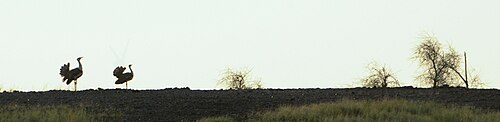
الرتبة: أوتيديفورميس، العائلة: أوتيديداي
طيور الحبارى طيور برية كبيرة الحجم، ترتبط بشكل رئيسي بالأراضي الجافة المفتوحة والسهوب في العالم القديم. وهي طيور قارتة، تعشش على الأرض. تمشي بثبات على أرجلها القوية وأصابعها الكبيرة، وتلتقط الطعام أثناء سيرها. تتميز بأجنحة طويلة عريضة ذات أطراف تشبه الأصابع، وأنماط مميزة أثناء الطيران. ولدى العديد منها عروض تزاوج مثيرة للاهتمام.
| الاسم الشائع | ذات الحدين | تعليقات |
|---|---|---|
| الحبارى الهندية الكبرى | أرديوتيس نيغريسيبس | (هـ)؛ مهدد بالانقراض بشدة |
| الحبارى الآسيوية | الكلاميدوتيس ماكويني | معرضة للخطر؛ كانت تُصنف سابقًا كنوع فرعي من طائر الحبارى ، Chlamydotis undulata |
| طائر البنغال فلوريكان | هوباروبسيس البنغالي | مهدد بالانقراض بشدة |
| فلوريكان صغير | Sypheotides indicus | مهدد بالانقراض بشدة |
| الحبارى الصغيرة | تتراكس تتراكس | (V)؛ مهددة بشكل قريب |
طيور الوقواق
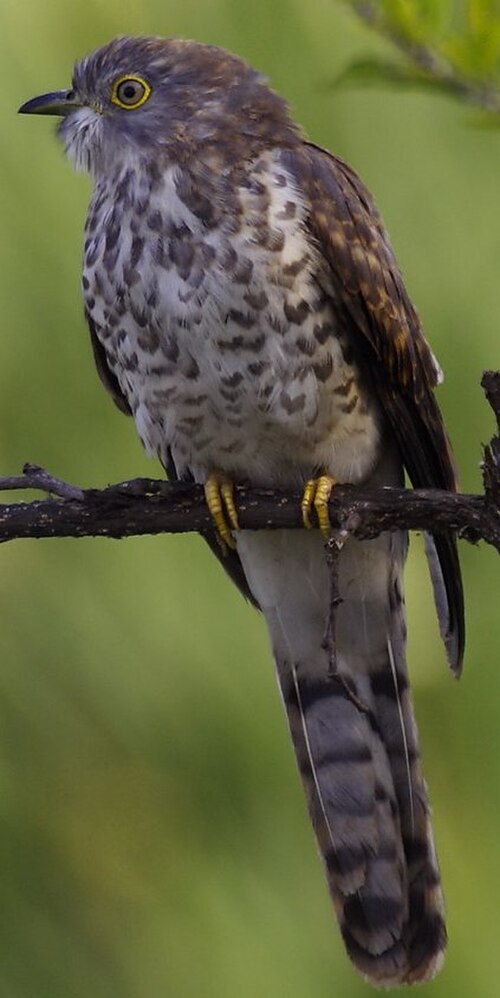
الرتبة: الوقواقيات الشكل، العائلة: الوقواقيات
تضم عائلة الوقواق (Cuculidae) طيور الوقواق ، وطيور العداء، وطيور الأني . تتميز هذه الطيور بأحجامها المتفاوتة، وأجسامها النحيلة، وذيولها الطويلة، وأرجلها القوية. العديد منها طفيلي على أعشاش الطيور الأخرى . وقد سُجِّل وجود 24 نوعًا منها في الهند.

| الاسم الشائع | ذات الحدين | تعليقات |
|---|---|---|
| مجلس أكبر | سينتروبوس سينينسيس | |
| كوكال صغير | سينتروبوس بنغالينسيس | |
| مجلس جزر أندامان | سينتروبوس أندامانينسيس | |
| سيركير مالكوها | تاكوكوا ليشينولتي | |
| مالكوها ذو الوجه الأزرق | فينيكوفايوس فيريديروستريس | |
| مالكوها ذو المنقار الأخضر | فينيكوفايوس تريستيس | |
| الوقواق ذو الأجنحة الكستنائية | كلاماتور كوروماندوس | |
| طائر الوقواق اليعقوبي | كلاماتور جاكوبينوس | |
| طائر الوقواق الآسيوي | Eudynamys scolopaceus | |
| طائر الوقواق الزمردي الآسيوي | Chrysococcyx maculatus | |
| طائر الوقواق البنفسجي | Chrysococcyx xanthorhynchus | |
| طائر الوقواق البرونزي من هورسفيلد | كريسوكوكس باساليس | (V) |
| طائر الوقواق المخطط | Cacomantis sonneratii | |
| طائر الوقواق الحزين | Cacomantis merulinus | |
| طائر الوقواق ذو البطن الرمادي | Cacomantis passerinus | |
| طائر الوقواق ذو الذيل المربع | Surniculus lugubris | |
| طائر الوقواق ذو الذيل المتشعب | Surniculus dicruroides | |
| صقر الوقواق الكبير | Hierococcyx sparverioides | |
| الوقواق الصقري الشائع | Hierocuccyx varius | |
| طائر الوقواق الصقري لهودجسون | هيروكوكس نيسيكولور | |
| الوقواق الصغير | Cuculus poliocephalus | |
| طائر الوقواق الهندي | Cuculus micropterus | |
| طائر الوقواق الهيمالاي | Cuculus saturatus | |
| الوقواق الشائع | Cuculus canorus |
طائر القطا الرملي
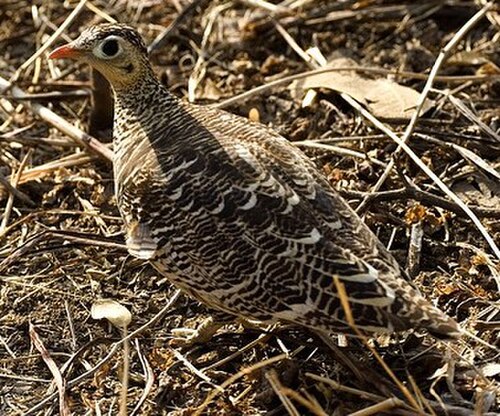
الرتبة: بتيروكليفورميس، العائلة: بتيروكليداي
يتميز طائر القطا برأس ورقبة صغيرين يشبهان رأس ورقبة الحمام، لكن جسمه قوي ومتماسك. وله أجنحة طويلة مدببة، وأحيانًا ذيل، ويطير بسرعة وبشكل مباشر. تتجمع أسرابه عند موارد المياه عند الفجر والغسق. سيقانه مغطاة بالريش حتى أصابع القدم. سُجلت سبعة أنواع منه في الهند، التي تضم أكبر عدد من طيور القطا بين جميع دول العالم.
| الاسم الشائع | ذات الحدين | تعليقات |
|---|---|---|
| طائر الحبار التبتي | Syrrhaptes tibetanus | |
| قطا بالاس | Syrrhaptes paradoxus | (V) |
| طائر القطا ذو الذيل المدبب | بتيروكليس ألشاتا | (V) |
| طائر القطا ذو البطن الكستنائي | بتروكليس إكسوستوس | |
| طائر القطا المرقط | بتروكليس السنغالي | |
| قطا أسود البطن | بتروكليس أورينتاليس | |
| طائر القطا الملون | بتيروسليس إنديكوس |
الحمام واليمام
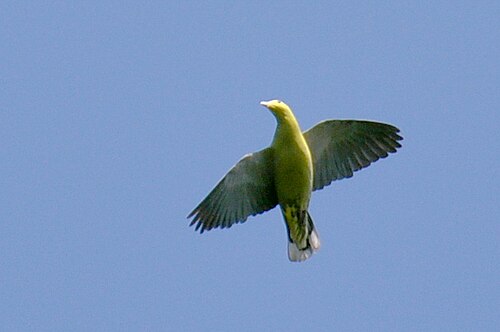
الرتبة: الحماميات الشكل، العائلة: الحماميات
الحمام واليمام طيور ذات أجسام ممتلئة وأعناق قصيرة ومناقير قصيرة ونحيلة ذات غشاء لحمي . يوجد 34 نوعًا منها في الهند


| الاسم الشائع | ذات الحدين | تعليقات |
|---|---|---|
| حمامة صخرية | كولومبا ليفيا | |
| حمامة التلال | كولومبا روبستريس | |
| حمامة الثلج | كولومبا ليوكونوتا | |
| حمامة صفراء العينين | كولومبا إيفرسماني | مُعَرَّض |
| حمامة الخشب الشائعة | كولومبا بالومبوس | |
| حمامة الخشب المرقطة | كولومبا هودجسوني | |
| حمامة خشبية رمادية | كولومبا بولكريكوليس | |
| حمامة نيلجيري الخشبية | كولومبا إلفينستوني | (هـ)؛ معرض للخطر |
| حمامة ذات قبعة شاحبة | كولومبا بونيسيا | مُعَرَّض |
| حمامة أندامان الخشبية | كولومبا بالومبويدس | (شرق)؛ مهددة بالخطر |
| حمامة أوروبية | Streptopelia turtur | (V)؛ [ 11 ] معرض للخطر |
| حمامة شرقية | Streptopelia orientalis | |
| حمامة أوراسية مطوقة | Streptopelia decaocto | |
| حمامة ذات طوق أحمر | ستريبتوبيليا ترانكيباريكا | |
| حمامة مرقطة | Spilopelia chinensis | |
| حمامة ضاحكة | Spilopelia senegalensis | |
| حمامة الوقواق المخططة | ماكروبيجيا أنشل | |
| حمامة الوقواق الأندامانية | Macropygia rufipennis | (هـ) |
| حمامة ناماكوا | أوينا كابينسيس | (V) |
| حمامة الزمرد الشائعة | تشالكوفابس إنديكا | |
| حمامة نيكوبار | كالويناس نيكوباريكا | مهددة بالانقراض |
| حمامة خضراء ذات صدر برتقالي | تريرون بيسينكتوس | |
| حمامة خضراء ذات جبهة رمادية | Treron affinis | (هـ) |
| حمامة خضراء ذات رأس رمادي | تريرون فايري | مهددة بالانقراض |
| حمامة أندامان الخضراء | تريرون كلوروبتروس | (شرق)؛ مهددة بالخطر |
| حمامة خضراء سميكة المنقار | تريرون كيرفيروسترا | |
| حمامة خضراء صفراء القدمين | تريرون فينيكوبترس | |
| حمامة خضراء ذات ذيل مدبب | تريرون أبيكودا | |
| حمامة خضراء ذات ذيل إسفيني | تريرون سفينوروس | |
| حمامة إمبراطورية خضراء | Ducula aenea | مهددة بالانقراض |
| حمامة نيكوبار الإمبراطورية | Ducula nicobarica | (شرق)؛ مهددة بالخطر |
| حمامة جبلية إمبراطورية | Ducula badia | |
| حمامة مالابار الإمبراطورية | Ducula cuprea | (هـ) |
| حمامة إمبراطورية مرقطة | Ducula bicolor |
فينفوتس
الرتبة: الكركيات، العائلة: الكركيات
فصيلة الهيليورنيثيداي هي فصيلة صغيرة من الطيور الاستوائية ذات فصوص مكففة على أقدامها تشبه تلك الموجودة لدى الغطاسات والغرات. يوجد نوع واحد منها في الهند.
| الاسم الشائع | ذات الحدين | تعليقات |
|---|---|---|
| طائر الغطاس المقنع | Heliopais personatus | مهدد بالانقراض بشدة |
طيور السكة الحديدية، وطيور الكركي، وطيور الغرة
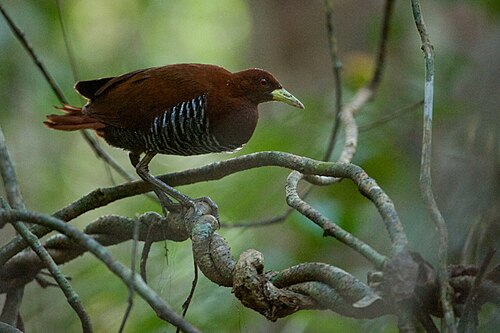

الرتبة: Gruiformes العائلة: Rallidae
الرّاليات عائلة كبيرة من الطيور الصغيرة والمتوسطة الحجم، تشمل طيور المرعى ، والكركي ، والغطاس، والدجاجة المائية . تسكن هذه الطيور عادةً في المناطق ذات الغطاء النباتي الكثيف في البيئات الرطبة قرب البحيرات والمستنقعات والأنهار. وهي عمومًا طيور خجولة ومنطوية، مما يجعل رصدها صعبًا، مع أن بعضها جريء ولافت للنظر. تمتلك معظم أنواعها أرجلًا قوية وأصابع طويلة تتكيف جيدًا مع الأسطح الناعمة غير المستوية. كما تميل إلى امتلاك أجنحة قصيرة مستديرة، وتكون ضعيفة الطيران. يوجد في الهند عشرون نوعًا منها.

| الاسم الشائع | ذات الحدين | تعليقات |
|---|---|---|
| سكة حديدية مائية | Rallus aquaticus | |
| طائر السكة ذو الخدين البنيين | رالوس إنديكوس | |
| كورن كريك | كريكس كريكس | (V) [ 11 ] |
| سكة حديدية ذات صدر رمادي | Lewinia striata | |
| طائر الكركي المرقط | بورزانا بورزانا | |
| دجاجة الماء الشائعة | دجاجة الماء الخضراء | |
| غرّة أوراسية | فوليكا أترا | |
| دجاجة الماء ذات الرأس الرمادي | بورفيريو بوليوسيفالوس | |
| طائر الكركي أحمر الصدر | زابورنيا فوسكا | |
| طائر الكركي ذو البطن المخطط | زابورنيا بايكولي | (V)؛ مهددة بشكل قريب |
| طائر الكركي أسود الذيل | زابورنيا ثنائية اللون | |
| طائر الكركي البني | زابورنيا أكول | |
| طائر بايلون | زابورنيا بوسيللا | |
| طائر الكركي الصغير | زابورنيا بارفا | (V) |
| طائر الكركي ذو الأرجل الرمادية | رالينا يوريزونويدس | |
| صقر أندامان | رالينا كانينجي | (هـ) |
| طائر الكركي أحمر الأرجل | رالينا فاسياتا | (V) |
| طائر الكركي ذو الحاجب الأبيض | بوليوليمناس سينيريوس | (V) [ 12 ] |
| صنبور الماء | Gallicrex cinerea | |
| دجاجة الماء ذات الصدر الأبيض | أماورنيس فينيكوروس |
الرافعات
الرتبة: الكركيات، العائلة: الكركيات

الكركي طيور كبيرة الحجم، طويلة الأرجل والأعناق. وعلى عكس طيور البلشون التي تشبهها في الشكل ولكنها لا تربطها بها صلة قرابة، فإن الكركي يطير وأعناقه ممدودة، لا مشدودة للخلف. ولدى معظمها عروض تزاوج صاخبة ومتقنة، أو ما يُعرف بـ"الرقصات". وقد سُجِّل وجود خمسة أنواع منها في الهند.
| الاسم الشائع | ذات الحدين | تعليقات |
|---|---|---|
| كركي سيبيري | Leucogeranus leucogeranus | مهددة بالانقراض بشدة، وقد انقرضت الآن في الهند؛ [ 13 ] آخر مرة شوهدت فيها وهي تقضي فصل الشتاء في الهند كانت في عام 2002 [ 14 ] |
| رافعة ساروس | أنتيجون أنتيجون | مُعَرَّض |
| ديموازيل كرين | برج العذراء | |
| رافعة شائعة | Grus grus | |
| الكركي أسود الرقبة | غروس نيغريكوليس | مهددة بالانقراض |
تم إدراج الكركي المقنع ، Grus monacha ، في العديد من القوائم القديمة ولكن يعتبر افتراضيا (Rasmussen and Anderton, 2005) أو منقرضا في الهند [ 15 ] وفقًا لأعمال أحدث.
طيور الغطاس

الرتبة: Podicipedidae العائلة: Podicipedidae
الغطاسات طيور غوص صغيرة إلى متوسطة الحجم تعيش في المياه العذبة. تتميز بأصابع قدم مفصصة، وهي سباحة وغواصة ماهرة. مع ذلك، تقع أقدامها في الجزء الخلفي من الجسم، مما يجعلها غير رشيقة على اليابسة. سُجلت خمسة أنواع منها في الهند.
| الاسم الشائع | ذات الحدين | تعليقات |
|---|---|---|
| غطاس صغير | تاكيبابتوس روفيكوليس | |
| غطاس أحمر الرقبة | بوديسيبس غريزيجينا | (V) |
| غطاس متوج كبير | بوديسيبس كريستاتوس | |
| غطاس مقرن | Podiceps auritus | (V)؛ عرضة للخطر |
| غطاس أسود الرقبة | Podiceps nigricollis |
طيور الفلامنجو

الرتبة: طيور الفينيقيات، العائلة: طيور الفينيقيات
طيور الفلامنجو طيور خوض اجتماعية، يتراوح طولها عادةً بين متر ومتر ونصف (3 إلى 5 أقدام) ، وتوجد في نصفي الكرة الأرضية الغربي والشرقي. تتغذى طيور الفلامنجو عن طريق ترشيح المحار والطحالب. تتميز مناقيرها ذات الشكل الغريب بتكيفها الخاص لفصل الطين والطمي عن الطعام الذي تتناوله، وتستخدمها بشكل فريد وهي مقلوبة. سُجّل نوعان منها في الهند.
| الاسم الشائع | ذات الحدين | تعليقات |
|---|---|---|
| طائر الفلامنجو الكبير | فينيكوبتروس روزيوس | |
| طائر الفلامنجو الصغير | فينيقونية صغيرة | مهددة بالانقراض |
طيور السمان الصغيرة
الرتبة: الزقزاقيات الشكل، العائلة: الزقزاقيات
طيور السمان الزرية طيور صغيرة باهتة اللون، سريعة الجري، تشبه طيور السمان الحقيقية. الأنثى هي الأكثر إشراقًا بين الجنسين، وهي التي تبدأ المغازلة. أما الذكر فيحضن البيض ويرعى الصغار. وقد سُجِّل وجود ثلاثة أنواع منها في الهند.

| الاسم الشائع | ذات الحدين | تعليقات |
|---|---|---|
| طائر السمان الشائع | Turnix sylvaticus | |
| طائر السمان ذو الأرجل الصفراء | خزان تيرنيكس | |
| طائر السمان المخطط | Turnix suscitator |
طيور الكروان الحجري وطيور الركبة السميكة
الرتبة: الزقزاقيات الشكل، العائلة: البورينيداي
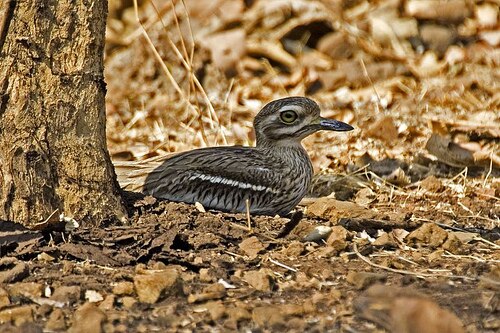
طيور الكروان الحجري هي مجموعة من الطيور الخواضة، معظمها استوائية، تنتمي إلى فصيلة الكروانيات. تنتشر هذه الطيور في جميع أنحاء العالم ضمن المناطق الاستوائية، وتتكاثر بعض أنواعها أيضًا في المناطق المعتدلة في أوروبا وأستراليا. وهي طيور خواضة متوسطة إلى كبيرة الحجم، تتميز بمنقار قوي أسود أو أصفر داكن، وعيون صفراء كبيرة، وريش مموه . وعلى الرغم من تصنيفها ضمن الطيور الخواضة، إلا أن معظم أنواعها تفضل الموائل القاحلة أو شبه القاحلة.
| الاسم الشائع | ذات الحدين | تعليقات |
|---|---|---|
| كروان الحجر الهندي | بورينوس إنديكوس | لم يتم إثبات وجود طائر الكروان الحجري الأوراسي ، Burhinus oedicnemus ، في الهند [ 16 ]. |
| طائر الكروان الحجري الكبير | إيساكوس ريكورفيروستريس | مهددة بالانقراض |
| طائر الكروان الحجري الشاطئي | إيساكوس ماغنيروستريس | مهددة بالانقراض |
طيور المحار

الرتبة: الزقزاقيات الشكل، العائلة: الزقزاقيات ذات الأقدام الحمراء
طيور صائد المحار هي طيور كبيرة وصاخبة تشبه طيور الزقزاق ، ولها مناقير قوية تستخدمها لسحق أو فتح الرخويات . يوجد نوع واحد منها في الهند.
| الاسم الشائع | ذات الحدين | تعليقات |
|---|---|---|
| طائر المحار الأوراسي | Haematopus ostralegus | مهددة بالانقراض |
إيبيسبيل
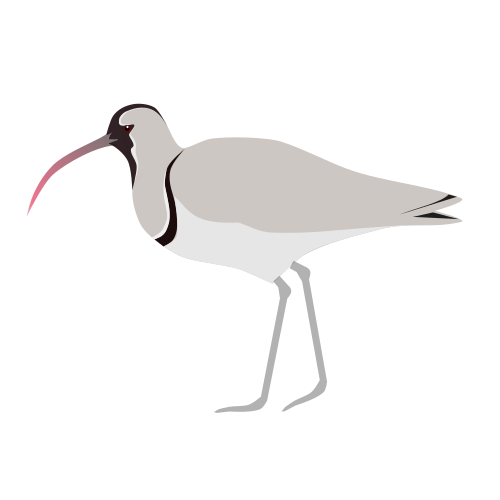
الرتبة: الزقزاقيات الشكل، العائلة: الإيبيدورينشيداي
ينتمي طائر أبو منجل إلى فصيلة الطيور الخواضة ، ولكنه يتميز بخصائص فريدة تجعله فصيلة مستقلة. الطائر البالغ رمادي اللون، وبطنه أبيض، وساقاه حمراوان، ومنقاره طويل مقوس، ووجهه وصدره أسودان.
| الاسم الشائع | ذات الحدين | تعليقات |
|---|---|---|
| إيبيسبيل | Ibidorhyncha struthersii |
ركائز خشبية وطيور أبو المغازل
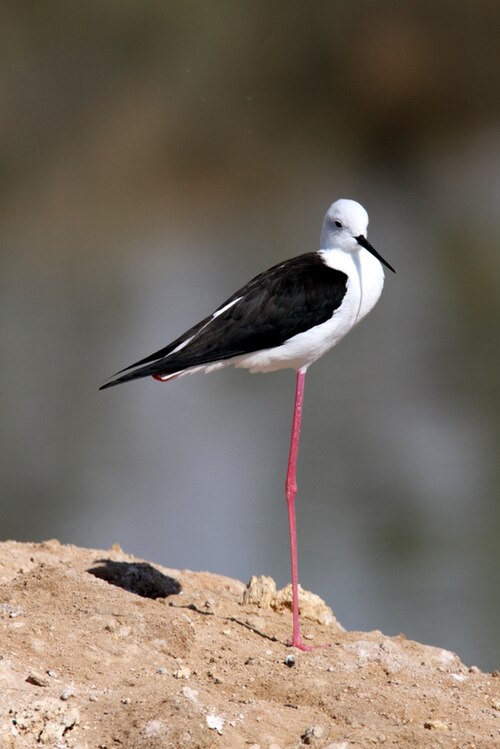
الرتبة: الزقزاقيات الشكل، العائلة: الزقزاقيات المنتصبة
فصيلة طيور الخوض الكبيرة (Recurvirostridae) تضم طيور الزقزاق والزقزاق الصغير . يتميز الزقزاق بأرجله الطويلة ومنقاره الطويل المنحني للأعلى، بينما يتميز الزقزاق الصغير بأرجله الطويلة للغاية ومنقاره الطويل الرفيع المستقيم. وقد سُجّل وجود نوعين منه في الهند.
| الاسم الشائع | ذات الحدين | تعليقات |
|---|---|---|
| زقزاق أسود الجناح | هيمانتوبوس هيمانتوبوس | |
| أبو منجل | Recurvirostra avosetta |
طيور الزقزاق


الرتبة: الزقزاقيات الشكل، العائلة: الزقزاقيات
تضم عائلة الزقزاق (Charadriidae) طيور الزقزاق ، والزقزاق المرقط، والزقزاق المطوق . وهي طيور صغيرة إلى متوسطة الحجم، ذات أجسام مدمجة، وأعناق قصيرة سميكة، وأجنحة طويلة مدببة عادةً. وتوجد في المناطق المفتوحة حول العالم، وخاصةً في الموائل القريبة من الماء. وقد سُجِّل وجود 22 نوعًا منها في الهند.
| الاسم الشائع | ذات الحدين | تعليقات |
|---|---|---|
| زقزاق شمالي | فانيلوس فانيلوس | مهددة بالانقراض |
| زقزاق ذو جناح مهمز | فانيلس سبينوسوس | (V) |
| زقزاق النهر | فانيلوس دوفوسيلي | مهددة بالانقراض |
| زقزاق أصفر اللغد | فانيلس مالاباريكوس | |
| زقزاق رمادي الرأس | فانيلوس سينيريوس | |
| زقزاق أحمر اللغد | فانيلوس إنديكوس | |
| زقزاق اجتماعي | فانيلوس غريغاريوس | مهدد بالانقراض بشدة |
| زقزاق أبيض الذيل | فانيلوس ليوكوروس | |
| الزقزاق الذهبي الأوروبي | Pluvialis apricaria | (V) [ 17 ] |
| زقزاق ذهبي المحيط الهادئ | Pluvialis fulva | |
| الزقزاق الذهبي الأمريكي | Pluvialis dominica | (V) |
| زقزاق رمادي | Pluvialis squatarola | |
| زقزاق مطوق شائع | Charadrius hiaticula | (V) |
| زقزاق طويل المنقار | Charadrius placidus | |
| زقزاق صغير مطوق | Charadrius dubius | |
| زقزاق كينتيش | Charadrius alexandrinus | |
| زقزاق أبيض الوجه | Charadrius dealbatus | (V) [ 18 ] |
| زقزاق الرمال السيبيري | Charadrius mongolus | |
| زقزاق الرمال التبتي | Charadrius atrifrons | |
| زقزاق رملي كبير | Charadrius leschenaultii | |
| زقزاق قزويني | Charadrius asiaticus | (V) |
| الزقزاق الشرقي | Charadrius veredus | (V) |
القناص المطلي

الرتبة: الزقزاقيات الشكل، العائلة: روستراتوليداي
طيور الشنقب الملونة هي طيور قصيرة الأرجل وطويلة المنقار، تشبه في شكلها طيور الشنقب الحقيقية، لكنها أكثر إشراقاً في الألوان. يوجد نوع واحد منها في الهند.
| الاسم الشائع | ذات الحدين | تعليقات |
|---|---|---|
| طائر الشنقب الملون الكبير | Rostratula benghalensis |
جاكاناس

الرتبة: الزقزاقيات الشكل، العائلة: الجاكانيات
الجاكانا مجموعة من الطيور الخواضة الاستوائية من فصيلة الجاكانيات. تنتشر في جميع أنحاء المناطق الاستوائية. ويمكن تمييزها بأقدامها ومخالبها الضخمة التي تمكنها من المشي على النباتات الطافية في البحيرات الضحلة التي تُعد موطنها المفضل. وقد سُجل وجود نوعين منها في الهند.
| الاسم الشائع | ذات الحدين | تعليقات |
|---|---|---|
| جاكانا ذيل الدراج | Hydrophasianus chirurgus | |
| جاكانا برونزية الجناح | ميتوبيديوس إنديكوس |
طيور الزقزاق والشنقب
الرتبة: الزقزاقيات الشكل، العائلة: الزقزاقيات
تُعدّ طيور السكولوباسيداي عائلة كبيرة ومتنوعة من الطيور الشاطئية الصغيرة والمتوسطة الحجم، وتشمل أنواعًا مثل الزقزاق الرملي ، والكركي ، والقطقاط ، والشنقب ، والزقزاق الخشبي، والشنقب ، والزقزاق ، والزقزاق ذي المنقار الطويل . تتغذى معظم هذه الأنواع على اللافقاريات الصغيرة التي تلتقطها من الطين أو التربة. ويُمكّن التباين في طول الأرجل والمناقير أنواعًا متعددة من التغذية في الموطن نفسه، لا سيما على الساحل، دون منافسة مباشرة على الغذاء. وقد سُجّل وجود 43 نوعًا منها في الهند.


| الاسم الشائع | ذات الحدين | تعليقات |
|---|---|---|
| الكروان الأوراسي | نومينيوس فايوبوس | |
| طائر الكروان الأوراسي | Numenius arquata | مهددة بالانقراض |
| طائر الغودويت ذو الذيل المخطط | ليموسا لابونيكا | مهددة بالانقراض |
| طائر الغودويت أسود الذيل | ليموزا ليموزا | مهددة بالانقراض |
| حجر الزقزاق الأحمر | تفسيرات أريناريا | مهددة بالانقراض |
| العقدة الكبرى | Calidris tenuirostris | مهدد بالانقراض |
| طائر الزقزاق الأحمر | Calidris canutus | (V)؛ مهددة بشكل قريب |
| راف | كاليدريس بوغناكس | |
| طائر الزقزاق عريض المنقار | كاليدريس فالسينيلوس | مُعَرَّض |
| طائر الزقزاق ذو الذيل الحاد | Calidris acuminata | (V)؛ عرضة للخطر |
| طائر الزقزاق ذو الأرجل الطويلة | Calidris himantopus | (V)؛ مهددة بشكل قريب |
| طائر الزقزاق الكروان | Calidris ferruginea | مُعَرَّض |
| فترة تيمينك | كاليدريس تيمينكي | |
| فترة طويلة الأصابع | Calidris subminuta | |
| طائر الزقزاق ذو المنقار الملعقي | كاليدريس بيغميا | (V)؛ مهدد بالانقراض بشدة |
| فترة عمل ذات رقبة حمراء | كاليدريس روفيكوليس | مهددة بالانقراض |
| ساندرلينج | كاليدريس ألبا | |
| دنلين | Calidris alpina | مهددة بالانقراض |
| فترة قصيرة | Calidris minuta | |
| طائر الزقزاق ذو الصدر البني | Calidris subruficollis | (V)؛ عرضة للخطر |
| زقزاق الصدر | Calidris melanotos | (V) |
| آسيوية دويتشير | Limnodromus semipalmatus | مهددة بالانقراض |
| طائر الدويتشير ذو المنقار الطويل | Limnodromus scolopaceus | (V)؛ مهددة بشكل قريب [ 19 ] |
| طائر الشنقب الأوراسي | سكولوباكس روستيكولا | |
| جاكنايب | Lymnocryptes minimus | |
| قناص منفرد | دجاجة وحيدة | |
| طائر الشنقب الخشبي | Gallinago nemoricola | مُعَرَّض |
| طائر الشنقب ذو الذيل المدبب | Gallinago stenura | |
| قنص سوينهو | جالينجو ميجالا | |
| قنص رائع | غاليناغو ميديا | (V)؛ مهددة بشكل قريب |
| القناص الشائع | جالينجو جالينجو | |
| طائر الزقزاق تيريك | زينوس سينيريوس | |
| طائر الفالاروب أحمر الرقبة | فالاروبوس لوباتوس | |
| الفالاروب الأحمر | فالاروبوس فوليكاريوس | (V) |
| طائر الزقزاق الشائع | Actitis hypoleucos | |
| طائر الزقزاق الأخضر | ترينجا أوكروبوس | |
| النمام ذو الذيل الرمادي | ترينجا بريفيبس | (V) |
| طائر الشنقب الأحمر الشائع | ترينجا توتانوس | |
| طائر الزقزاق المستنقعي | ترينجا ستاغناتيليس | |
| طائر الزقزاق الخشبي | ترينجا غلاريولا | |
| طائر الشنقب المرقط | ترينجا إريثروبوس | |
| طائر الشنقب الأخضر الشائع | ترينجا نيبولاريا | |
| طائر الشنقب الأخضر النوردماني | ترينجا غوتيفير | (V)؛ مهدد بالانقراض |
زقزاق السرطان

الرتبة: الزقزاقيات الشكل، العائلة: الغزلانيات
ينتمي طائر الزقزاق السرطاني إلى فصيلة الطيور الخواضة. وهو يشبه الزقزاق العادي، لكن بساقين رماديتين طويلتين ومنقار أسود قوي وثقيل يشبه منقار الخرشنة. يتميز بريش أسود وأبيض، وعنق طويل، وأقدام مكففة جزئياً، ومنقار مصمم لاصطياد السرطانات.
| الاسم الشائع | ذات الحدين | تعليقات |
|---|---|---|
| زقزاق السرطان | دروماس أرديولا |
العداءات والطيور
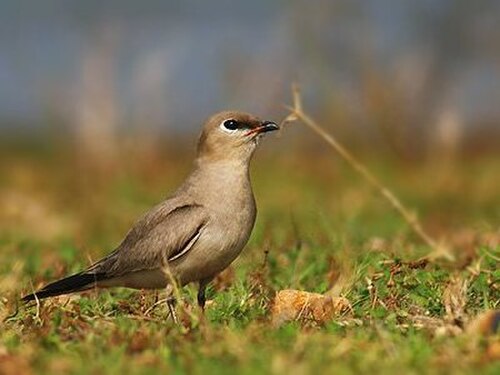
الرتبة: الزقزاقيات الشكل، العائلة: الزقزاقيات
تُعدّ فصيلة Glareolidae من الطيور الخواضة، وتضمّ طيور الزقزاق ، التي تتميّز بأرجلها القصيرة وأجنحتها الطويلة المدببة وذيولها الطويلة المتشعبة، وطيور العدّاء ، التي تتميّز بأرجلها الطويلة وأجنحتها القصيرة ومناقيرها الطويلة المدببة المنحنية إلى الأسفل. وقد سُجّلت ستة أنواع منها في الهند.
| الاسم الشائع | ذات الحدين | تعليقات |
|---|---|---|
| خيول ذات لون كريمي | مؤشر كورسوريوس | |
| الموسوعة الهندية | Cursorius coromandelicus | |
| حصان جيردون | Rhinoptilus bitorquatus | (هـ)؛ مهدد بالانقراض بشدة |
| طائر الزقزاق ذو الياقة | Glareola pratincola | |
| أورينتال براتينكول | Glareola maldivarum | |
| طائر صغير | Glareola lactea |
طيور النورس، والخرشنة، والزقزاق

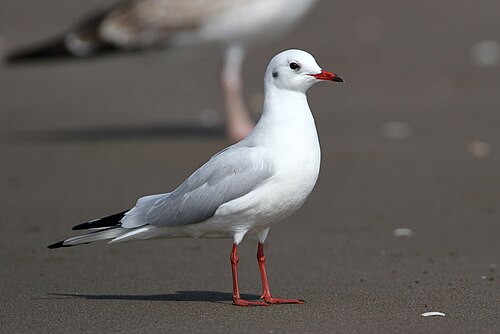
الرتبة: الزقزاقيات الشكل، العائلة: النورسيات
النورسيات (Laridae ) هي فصيلة من الطيور البحرية متوسطة إلى كبيرة الحجم ، وتضم النوارس والخرشنة والسكيمر . عادةً ما يكون لون النوارس رماديًا أو أبيض، وغالبًا ما تحمل علامات سوداء على الرأس أو الأجنحة. تتميز بمناقيرها القوية والطويلة وأقدامها المكففة. أما الخرشنات، فهي مجموعة من الطيور البحرية متوسطة إلى كبيرة الحجم، وعادةً ما يكون ريشها رماديًا أو أبيض، وغالبًا ما تحمل علامات سوداء على الرأس. تصطاد معظم الخرشنات الأسماك بالغوص، بينما يلتقط بعضها الحشرات من سطح المياه العذبة. تُعرف الخرشنات عمومًا بطول عمرها، حيث يعيش العديد من أنواعها لأكثر من 30 عامًا. أما السكيمر، فهي فصيلة صغيرة من الطيور الاستوائية الشبيهة بالخرشنات. تتميز بفك سفلي طويل تستخدمه للتغذية عن طريق التحليق المنخفض فوق سطح الماء والتقاط الأسماك الصغيرة.

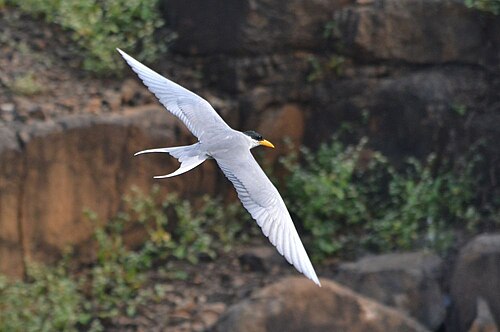
| الاسم الشائع | ذات الحدين | تعليقات |
|---|---|---|
| براون نودي | الفتحة الشرجية | |
| نودي الصغير | فتحة الشرج الضيقة | (V) [ 20 ] |
| نودي الأسود | الشرج الصغير | (V) [ 20 ] |
| الخرشنة البيضاء ذات المنقار الأزرق | داء المبيضات الجيجيس | (V) [ 20 ] [ 21 ] |
| قنديل البحر الهندي | نبات الرنجة البيضاء | مهدد بالانقراض |
| طائر النورس ذو الأرجل السوداء | ريسا ثلاثية الأصابع | (V)؛ [ 20 ] معرض للخطر |
| نورس سابين | Xema sabini | (V) [ 20 ] [ 22 ] |
| نورس ذو منقار نحيل | Chroicocephalus genei | |
| نورس ذو رأس بني | Chroicocephalus brunnicephalus | |
| نورس أسود الرأس | Chroicocephalus ridibundus | |
| نورس صغير | هيدروكوليوس مينوتوس | (V) [ 20 ] [ 11 ] |
| نورس فرانكلين | Leucophaeus pipixcan | (V) [ 20 ] [ 23 ] |
| نورس ضاحك | Leucophaeus atricilla | (V) |
| نورس بالاس | Ichthyaetus ichthyaetus | |
| نورس أبيض العينين | Ichthyaetus leucophthalmus | (V) [ 24 ] |
| نورس أسود | Ichthyaetus hemprichii | (V) [ 20 ] |
| النورس الشائع | لاروس كانوس | (V) [ 20 ] |
| نورس منغولي | لاروس منغوليكوس | (V) |
| نورس بحر قزوين | Larus cachinnans | |
| نورس أسود الظهر صغير | لاروس فوسكوس | |
| خرشنة ذات منقار النورس | Gelochelidon nilotica | |
| خرشنة قزوينية | هيدروبرون كاسبيا | |
| الخرشنة المتوجة الكبيرة | Thalasseus bergii | |
| الخرشنة المتوجة الصغيرة | ثالاسيوس البنغالي | |
| طائر الخرشنة الساندويتش | Thalasseus sandvicensis | |
| الخرشنة الصغيرة | Sternula albifrons | |
| خرشنة سوندرز | ستيرنيولا سوندرسي | |
| الخرشنة المقنعة | Onychoprion anaethetus | |
| الخرشنة السوداء | Onychoprion fuscatus | |
| خرشنة النهر | ستيرنا أورانتيا | مُعَرَّض |
| الخرشنة الوردية | ستيرنا دوغالي | |
| الخرشنة سوداء القفا | ستيرنا سومطرة | |
| طائر الخرشنة الشائع | Sterna hirundo | |
| الخرشنة ذات الخدين الأبيضين | Sterna repressa | |
| الخرشنة القطبية | ستيرنا باراديسيا | (V) [ 20 ] |
| الخرشنة سوداء البطن | Sterna acuticauda | مهدد بالانقراض |
| الخرشنة الملتحية | Chlidonias hybrida | |
| الخرشنة ذات الأجنحة البيضاء | Chlidonias leucopterus | |
| الخرشنة السوداء | Chlidonias niger | (V) [ 20 ] |
طيور الكركر

الرتبة: الزقزاقيات الشكل، العائلة: ستيركوراريداي
تُعدّ فصيلة طيور الخرشنة (Stercorariidae) عمومًا طيورًا متوسطة إلى كبيرة الحجم، ذات ريش رمادي أو بني في الغالب، وغالبًا ما تحمل علامات بيضاء على أجنحتها. تعشش هذه الطيور على الأرض في المناطق المعتدلة الباردة والقطبية الشمالية والجنوبية، والعديد منها مهاجر لمسافات طويلة. سُجّلت خمسة أنواع منها في الهند. أما الأنواع الثلاثة الأصغر حجمًا فتُعرف باسم "الخرشنة" في أمريكا الشمالية.
| الاسم الشائع | ذات الحدين | تعليقات |
|---|---|---|
| طائر الكركر القطبي الجنوبي | ستيركوراريوس ماكورميكي | (V) [ 25 ] |
| طائر الكركر البني | ستيركوراريوس أنتاركتيكوس | (V) [ 25 ] |
| طائر الكركر البوماريني | ستيركوراريوس بومارينوس | |
| طائر الكركر القطبي | ستيركوراريوس باراسيتيكوس | |
| طائر الكركر طويل الذيل | ستيركوراريوس لونجيكودوس | (V) [ 26 ] |
طيور استوائية

الرتبة: Phaethontiformes العائلة: Phaethontidae
طيور المناطق الاستوائية هي طيور بيضاء نحيلة تعيش في المحيطات الاستوائية، ولها ريش ذيل مركزي طويل بشكل استثنائي. رؤوسها وأجنحتها الطويلة عليها علامات سوداء.
| الاسم الشائع | ذات الحدين | تعليقات |
|---|---|---|
| طائر استوائي أحمر المنقار | فايثون إيثيريوس | (V) |
| طائر استوائي أحمر الذيل | فايثون روبيريكودا | |
| طائر استوائي أبيض الذيل | فايثون ليبتوروس | (V) |
غواصون
الرتبة: غافيفورميس، العائلة: غافيداي
الغواصات، المعروفة باسم "الغطاسات" في أمريكا الشمالية، هي مجموعة من الطيور المائية التي توجد في شمال أوراسيا وأمريكا الشمالية. وهي بحجم بطة كبيرة أو إوزة صغيرة، وتشبههما إلى حد ما أثناء السباحة، لكنها لا تمت لهما بصلة. وقد سُجّل نوعان منها في الهند.
| الاسم الشائع | ذات الحدين | تعليقات |
|---|---|---|
| غواص أحمر الحلق | غافيا ستيلاتا | (V) |
| غواص أسود الحلق | غافيا أركتيكا | (V) |
طيور النوء العاصفة الأسترالية

الرتبة: Procellariiformes العائلة: Oceanitidae
طيور النوء العاصفة هي من أقارب طيور النوء ، وهي أصغر الطيور البحرية. تتغذى على القشريات العوالقية والأسماك الصغيرة التي تلتقطها من السطح، وعادةً ما تفعل ذلك أثناء تحليقها. طيرانها متقطع، وأحيانًا يشبه طيران الخفافيش .
| الاسم الشائع | ذات الحدين | تعليقات |
|---|---|---|
| طائر النوء ويلسون | أوشينيتس أوشيانيكوس | |
| طائر النوء ذو الوجه الأبيض | بيلاجودروما مارينا | (V) |
| طائر النوء ذو البطن الأبيض | فريجيتا غرالاريا | (V) |
| طائر النوء ذو البطن الأسود | فريجيتا تروبيكا | (V) |
طيور القطرس
الرتبة: Procellariiformes العائلة: Diomedeidae
تُعد طيور القطرس من بين أكبر الطيور الطائرة، وتمتلك طيور القطرس الكبيرة من جنس ديوميديا أكبر امتداد للأجنحة بين جميع الطيور الموجودة حاليًا.
| الاسم الشائع | ذات الحدين | تعليقات |
|---|---|---|
| قطرس ذو عباءة فاتحة | فيبيتريا بالبيبراتا | (V)؛ مهددة بشكل قريب |
طيور النوء الشمالية
الرتبة: Procellariiformes ، العائلة: Hydrobatidae
طيور النوء الشمالية هي من أقارب طيور النوء، وتُعدّ أصغر الطيور البحرية. تتغذى على القشريات العوالقية والأسماك الصغيرة التي تلتقطها من السطح، وعادةً ما تفعل ذلك أثناء تحليقها. طيرانها متقطع، وأحيانًا يشبه طيران الخفافيش .
| الاسم الشائع | ذات الحدين | تعليقات |
|---|---|---|
| طائر النوء سوينهو | هيدروباتس مونوريس | مهددة بالانقراض |
طيور النوء، وطيور القطرس، وطيور النوء الغاطسة
الرتبة: Procellariiformes العائلة: Procellariidae
تُعدّ طيور النوء المجموعة الرئيسية من طيور القطرس متوسطة الحجم، وتتميز بفتحات أنف ملتحمة وحاجز أنفي متوسط الطول وريشة طيران خارجية طويلة. وقد سُجّل وجود عشرة أنواع منها في الهند.
| الاسم الشائع | ذات الحدين | تعليقات |
|---|---|---|
| طائر النوء باراو | بترودروما باراوي | مهدد بالانقراض |
| قطرس مخطط | Calonectris leucomelas | مهددة بالانقراض |
| قطرس كوري | Calonectris borealis | (V)؛ مهددة بشكل قريب [ 27 ] |
| قطرس ذو ذيل إسفيني | أردينا باسيفيكا | |
| طائر القطرس السخامي | أردينا غريسيا | (V) |
| قطرس قصير الذيل | أردينا تينويروستريس | (V) |
| قطرس ذو قدم لحمية | أردينا كارنيبس | مهددة بالانقراض |
| قطرس فارسي | بوفينوس بيرسيكوس | |
| قطرس استوائي | بوفينوس بايلوني | |
| طائر النوء جوانين | بولويريا فالاكس | مهددة بالانقراض |
اللقلق


الرتبة: اللقلقيات الشكل، العائلة: اللقلقيات
اللقلق طائر كبير الحجم، طويل الأرجل والأعناق، يعيش في المياه الضحلة، وله منقار طويل وقوي. اللقلق طائر صامت، لكن صوت نقر منقاره يُعد وسيلة تواصل مهمة في العش. قد تكون أعشاشه كبيرة الحجم، ويمكن إعادة استخدامها لسنوات عديدة. العديد من أنواعه مهاجرة.
| الاسم الشائع | ذات الحدين | تعليقات |
|---|---|---|
| اللقلق المطلي | فطريات ليوكوسيفالا | مهددة بالانقراض |
| برنامج المزايدة المفتوحة الآسيوي | Anastomus oscitans | |
| عرض أبواق أفريقي | أناستوموس لاميليجيروس | (V) |
| اللقلق الأسود | سيكونيا نيجرا | |
| اللقلق الآسيوي ذو العنق الصوفي | سيكونيا إبيسكوبوس | |
| اللقلق الأبيض | سيكونيا سيكونيا | |
| اللقلق أسود الرقبة | إيفيبيورينشوس آسياتيكوس | مهددة بالانقراض |
| مساعد صغير | ليبتوبتيلوس جافانيكوس | مهددة بالانقراض |
| اللقلق الكبير | ليبتوبتيلوس دوبيوس | مهددة بالانقراض |
طيور الفرقاطة
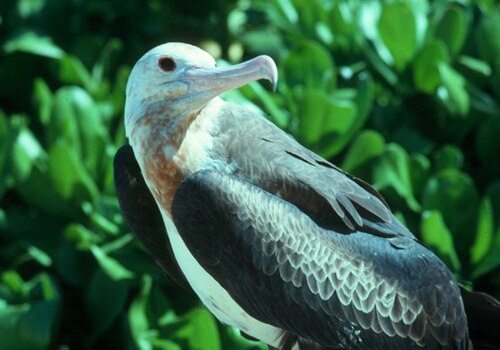
الرتبة: السوليفورميس، العائلة: الفريجاتيداي
طيور الفرقاطة طيور بحرية كبيرة توجد عادةً فوق المحيطات الاستوائية. وهي طيور كبيرة الحجم، سوداء وبيضاء أو سوداء بالكامل، ذات أجنحة طويلة وذيول متشعبة بعمق. يمتلك الذكور أكياسًا حمراء قابلة للنفخ في الحلق. لا تسبح ولا تمشي، ولا تستطيع الإقلاع من سطح مستوٍ. وبفضل امتلاكها لأكبر نسبة بين طول جناحيها ووزن جسمها بين جميع الطيور، فهي طيور جوية بامتياز، قادرة على البقاء محلقة في الجو لأكثر من أسبوع. [ 25 ]
| الاسم الشائع | ذات الحدين | تعليقات |
|---|---|---|
| طائر الفرقاطة في عيد الميلاد | فريجاتا أندروزي | (V)؛ عرضة للخطر |
| طائر الفرقاطة الكبير | فريجاتا مينور | (V) |
| طائر الفرقاطة الصغير | فريجاتا أرييل | (V) |
طيور الغاق والطيور الصغيرة
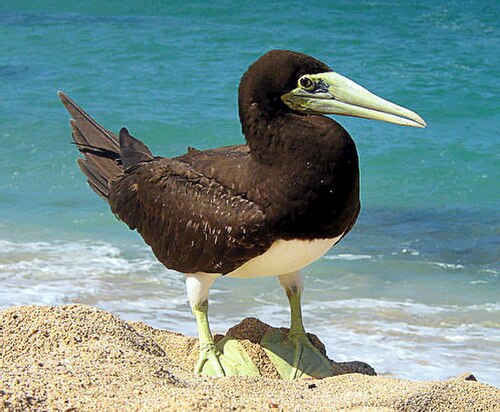
الرتبة: السوليفورميس، العائلة: السوليداي
تضم طيور السوليد طيور الغاق وطيور الأطيش . وكلا المجموعتين من الطيور البحرية الساحلية متوسطة إلى كبيرة الحجم التي تغوص بحثاً عن الأسماك.
| الاسم الشائع | ذات الحدين | تعليقات |
|---|---|---|
| الأطيش المقنع | سولا داكتيلاترا | (V) |
| طائر الأطيش أحمر القدمين | سولا سولا | (V) |
| طائر الأطيش البني | سولا ليوكوغاستر |
طيور الأنهينغا وطيور الرماح

الرتبة: Suliformes العائلة: Anhingidae
يُطلق على طيور الغطاس غالبًا اسم "طيور الأفعى" نظرًا لعنقها الطويل النحيل، الذي يُضفي عليها مظهرًا شبيهًا بالأفعى عند السباحة تحت الماء. يتميز الذكور بريش أسود وبني داكن، وعُرف منتصب على مؤخرة العنق، ومنقار أكبر من الإناث. أما الإناث، فيتميز ريشها بلون أفتح بكثير، خاصةً على العنق والبطن. تمتلك طيور الغطاس أقدامًا مكففة بالكامل، وأرجلها قصيرة ومثبتة في الجزء الخلفي من الجسم. يتميز ريشها بنفاذية معينة، كريش الغاق، وتفرد أجنحتها لتجف بعد الغوص.
| الاسم الشائع | ذات الحدين | تعليقات |
|---|---|---|
| سمكة الرماح الشرقية | ذبابة الفاكهة (Anhinga melanogaster) |
الغاق والزقزاق

الرتبة: السوليفورميس، العائلة: الفالاكروكوراسيداي
تُعدّ فصيلة الغاقيات (Phalacrocoracidae) عائلة من الطيور البحرية الساحلية متوسطة إلى كبيرة الحجم، تتغذى على الأسماك، وتضم الغاقيات والطيور المغردة. يتفاوت لون ريشها، حيث يتميز معظمها بريش داكن اللون، بينما يكون لون بعض الأنواع أسود وأبيض؛ كما يتميز العديد منها بعيون وأكياس حلقية زاهية الألوان.
| الاسم الشائع | ذات الحدين | تعليقات |
|---|---|---|
| الغاق الصغير | ميكروكاربو نيجر | |
| الغاق الهندي | Phalacrocorax fuscicollis | |
| الغاق الكبير | Phalacrocorax carbo |
أبو منجل والملعقة


الرتبة: البجعيات الشكل، العائلة: ثريسكيورنيثيداي
فصيلة طيور أبو منجل (Threskiornithidae) هي فصيلة من الطيور البرية والخواضة الكبيرة، وتضم طيور أبو منجل والملعقة . تتميز هذه الطيور بأجنحة طويلة وعريضة، تتكون من 11 ريشة أساسية وحوالي 20 ريشة ثانوية. وهي طيور قوية في الطيران، وعلى الرغم من حجمها ووزنها، إلا أنها بارعة في التحليق.
| الاسم الشائع | ذات الحدين | تعليقات |
|---|---|---|
| أبو منجل أسود الرأس | ثريسكيورنيس ميلانوسيفالوس | |
| أبو منجل أحمر القفا | Pseudibis papillosa | |
| أبو منجل اللامع | Plegadis falcinellus | |
| أبو ملعقة أوراسي | بلاتاليا ليوكوروديا |
مالك الحزين والبلشون

الرتبة: البجعيات (Pelecaniformes) العائلة: Ardeidae
تضم عائلة البلشونيات طيور البلشون والبلشون الأبيض والبلشون المرقط . البلشون الأبيض والبلشون المرقط طيور خوض متوسطة إلى كبيرة الحجم ذات أعناق وأرجل طويلة. أما البلشون المرقط، فيميل إلى أن يكون أقصر عنقاً وأكثر حذراً. تطير طيور البلشونيات وأعناقها مطوية، على عكس الطيور الأخرى طويلة العنق مثل اللقلق وأبو منجل والملعقة.
| الاسم الشائع | ذات الحدين | تعليقات |
|---|---|---|
| طائر البجع الأوراسي | برج النجم | |
| طائر البجع الصغير | بوتوروس مينوتوس | |
| طائر المرارة الأصفر | بوتوروس سينينسيس | |
| القرفة المرّة | بوتوروس سيناموميوس | |
| طائر البجع الأسود | بوتوروس فلافيكوليس | |
| مالك الحزين ذو الأذن البيضاء | غورساتشيوس ماغنيفيكوس | (V)؛ مهدد بالانقراض |
| مالك الحزين الليلي الماليزي | غورساتشيوس ميلانولوفوس | |
| مالك الحزين الليلي ذو التاج الأسود | نيكتوراكس نيكتوراكس | |
| مالك الحزين الصغير | بوتوريدس أتريكابيلا | |
| مالك الحزين الهندي | أرديولا غراي | |
| مالك الحزين الصيني | أرديولا باخوس | |
| مالك الحزين الجاوي | أرديولا سبيسيوزا | (V) |
| بلشون الماشية الشرقي | أرديا كوروماندا | |
| مالك الحزين الرمادي | أرديا سينيريا | |
| مالك الحزين ذو البطن الأبيض | أرديا إنسيغنيس | مهدد بالانقراض بشدة |
| مالك الحزين جليات | أرديا جولياس | (V) |
| مالك الحزين الأرجواني | أرديا بوربوريا | |
| البلشون الأبيض الكبير | أرديا ألبا | |
| البلشون المتوسط | أرديا إنترمديا | |
| البلشون الأبيض الصغير | إيغريتا غارزيتا | |
| مالك الحزين الغربي | إيغريتا غولاريس | |
| مالك الحزين الشعاب المرجانية في المحيط الهادئ | إيغريتا ساكرا | |
| طائر البلشون الصيني | إيغريتا إيلوفوتس | (V)؛ عرضة للخطر |
البجع

الرتبة: البجعيات الشكل، العائلة: البجعيات
البجع طيور مائية كبيرة الحجم، تتميز بوجود جراب مميز أسفل منقارها. وكما هو الحال مع باقي أفراد رتبة البجعيات، فإن أقدامها مكففة بأربعة أصابع. وقد سُجل وجود ثلاثة أنواع منها في الهند.
| الاسم الشائع | ذات الحدين | تعليقات |
|---|---|---|
| البجع الأبيض الكبير | Pelecanus onocrotalus | |
| البجع ذو المنقار المرقط | بيليكانوس فيليبينسيس | مهددة بالانقراض |
| بجع دالميشن | Pelecanus crispus | مهددة بالانقراض |
أوسبري

الرتبة: Accipitriformes العائلة: Pandionidae
تضم عائلة Pandionidae عادةً نوعًا واحدًا فقط، وهو طائر العقاب النسري. يُعدّ العقاب النسري طائرًا جارحًا متوسط الحجم ، وهو متخصص في التغذي على الأسماك، وتعتبره معظم السلطات التصنيفية منتشرًا في جميع أنحاء العالم.
| الاسم الشائع | ذات الحدين | تعليقات |
|---|---|---|
| أوسبري | بانديون هاليايتوس |
الطائرات الورقية والصقور والنسور


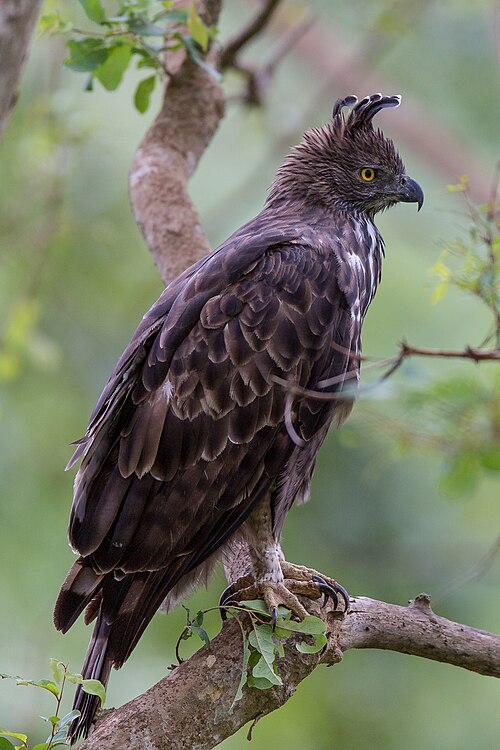

الرتبة: Accipitriformes العائلة: Accipitridae
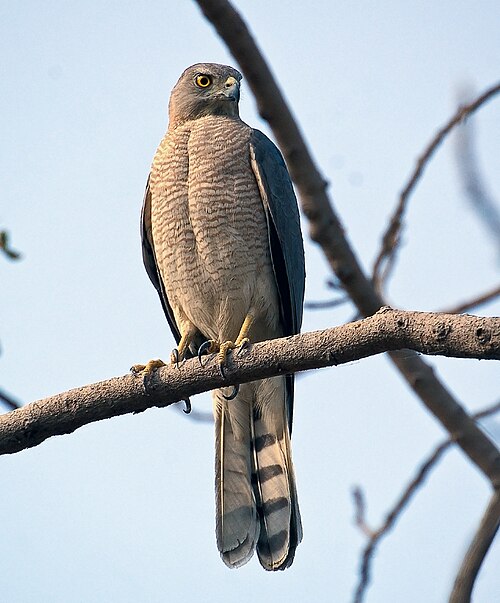
البازيات هي فصيلة من الطيور الجارحة، تشمل الصقور والنسور والحدأة والهارير والنسور القديمة . تتميز هذه الطيور بمناقير معقوفة قوية لتمزيق لحم فرائسها، وأرجل قوية، ومخالب حادة، وبصر حاد .
| الاسم الشائع | ذات الحدين | تعليقات |
|---|---|---|
| الحدأة سوداء الجناح | Elanus caeruleus | |
| النسر الملتحي | جيبايتوس بارباتوس | مهددة بالانقراض |
| النسر المصري | نيوفرون بيركنوبتيروس | مهدد بالانقراض |
| عقاب العسل الأوروبي | بيرنيس أبيفوروس | (V) |
| عقاب العسل المتوج | بيرنيس بتيلورينكوس | |
| بازا جيردون | Aviceda jerdoni | |
| بلاك بازا | أفيسيدا ليوبوتس | |
| نسر أبيض الردف | الجيبس البنغالي | مهدد بالانقراض بشدة |
| النسر الهندي | الجيبس الهندي | مهدد بالانقراض بشدة |
| نسر ذو منقار نحيل | الجيبس الرقيق | مهدد بالانقراض بشدة |
| نسر الهيمالايا | الجيبس الهيمالايينسيس | مهددة بالانقراض |
| نسر غريفون | الجيبس فولفوس | |
| النسر أحمر الرأس | ساركوجيبس كالفس | مهدد بالانقراض بشدة |
| النسر الأسود الأوراسي | إيجيبيوس موناخوس | مهددة بالانقراض |
| نسر الأفعى المتوج | Spilornis cheela | |
| نسر الأفعى العظيم في نيكوبار | Spilornis klossi | (هـ)؛ مهدد بالانقراض |
| نسر الأفعى في جزر أندامان | Spilornis elgini | (هـ)؛ معرض للخطر |
| نسر الأفعى قصير الأصابع | سيركاتوس غاليكوس | |
| نسر الصقر المتغير | Nisaetus cirrhatus | ( Spizaetus يقتصر على المناطق الاستوائية الجديدة بواسطة Gjershaug et al.، 2008) [ 28 ] |
| نسر الجبل | Nisaetus nipalensis | |
| نسر ليج الصقري | Nisaetus kelaarti [ 29 ] | |
| نسر ذو بطن أحمر | لوفوتريورتشيس كينيري | مهددة بالانقراض |
| النسر الأسود | إكتينايتوس مالاياينسيس | |
| النسر المرقط الهندي | كلانجا هاستاتا | (كانت تُعامل سابقًا على أنها C. pomarina hastata )؛ معرضة للخطر |
| النسر المرقط الكبير | كلانجا كلانجا | مُعَرَّض |
| النسر ذو الحذاء | Hieraaetus pennatus[30] | |
| Tawny eagle | Aquila rapax | Vulnerable |
| Steppe eagle | Aquila nipalensis | Endangered |
| Eastern imperial eagle | Aquila heliaca | Vulnerable |
| Golden eagle | Aquila chrysaetos | |
| Bonelli's eagle | Aquila fasciata | |
| Crested goshawk | Accipiter trivirgatus | |
| Shikra | Tachyspiza badia | |
| Nicobar sparrowhawk | Tachyspiza butleri | (E); vulnerable |
| Levant sparrowhawk | Tachyspiza brevipes | (V) |
| Chinese sparrowhawk | Tachyspiza soloensis | (V) |
| Japanese sparrowhawk | Tachyspiza gularis | |
| Besra | Tachyspiza virgatus | |
| Eurasian sparrowhawk | Accipiter nisus | |
| Eurasian goshawk | Astur gentilis | |
| Western marsh harrier | Circus aeruginosus | |
| Eastern marsh harrier | Circus spilonotus | (V) |
| Hen harrier | Circus cyaneus | |
| Pallid harrier | Circus macrourus | Near threatened |
| Pied harrier | Circus melanoleucos | |
| Montagu's harrier | Circus pygargus | |
| Red kite | Milvus milvus | (V)[31] |
| Black kite | Milvus migrans | |
| Brahminy kite | Haliastur indus | |
| White-bellied sea eagle | Icthyophaga leucogaster | |
| Pallas's fish eagle | Haliaeetus leucoryphus | Endangered |
| White-tailed eagle | Haliaeetus albicilla | |
| Lesser fish eagle | Icthyophaga humilis | Near threatened |
| Grey-headed fish eagle | Icthyophaga ichthyaetus | Near threatened |
| White-eyed buzzard | Butastur teesa | |
| Rufous-winged buzzard | Butastur liventer | (V) |
| Grey-faced buzzard | Butastur indicus | (V) |
| Rough-legged buzzard | Buteo lagopus | (V) |
| Upland buzzard | Buteo hemilasius | |
| Himalayan buzzard | Buteo refectus | |
| Long-legged buzzard | Buteo rufinus | |
| Common buzzard | Buteo buteo | (race vulpinus) |
Barn owls

Order: Strigiformes Family: Tytonidae
Barn owls are medium to large owls with large heads and characteristic heart-shaped faces. They have long strong legs with powerful talons.
| Common name | Binomial | Comments |
|---|---|---|
| Eastern barn owl | Tyto javanica | |
| Andaman masked owl | Tyto deroepstorffi | (E) |
| Eastern grass owl | Tyto longimembris | |
| Oriental bay owl | Phodilus badius | |
| Sri Lanka bay owl | Phodilus assimilis | Western Ghats subspecies ripleyi in India with nominate form in Sri Lanka |
Owls
Order: Strigiformes Family: Strigidae
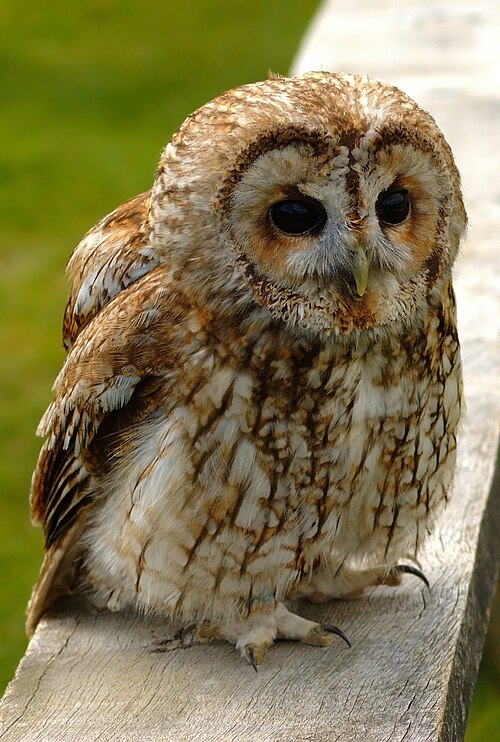
The typical owls are small to large solitary nocturnal birds of prey. They have large forward-facing eyes and ears, a hawk-like beak and a conspicuous circle of feathers around each eye called a facial disk.

| Common name | Binomial | Comments |
|---|---|---|
| Andaman scops owl | Otus balli | (E) |
| Mountain scops owl | Otus spilocephalus | |
| Indian scops owl | Otus bakkamoena | |
| Collared scops owl | Otus lettia | |
| Pallid scops owl | Otus brucei | (V) |
| Eurasian scops owl | Otus scops | |
| Oriental scops owl | Otus sunia | |
| Nicobar scops owl | Otus alius | (E); near threatened |
| Eurasian eagle-owl | Bubo bubo | |
| Indian eagle-owl | Bubo bengalensis | |
| Spot-bellied eagle-owl | Bubo nipalensis | |
| Dusky eagle-owl | Bubo coromandus | |
| Brown fish owl | Ketupa zeylonensis | |
| Tawny fish owl | Ketupa flavipes | |
| Buffy fish owl | Ketupa ketupu | |
| Mottled wood owl | Strix ocellata | |
| Brown wood owl | Strix leptogrammica | |
| Tawny owl | Strix aluco | |
| Himalayan owl | Strix nivicolum | |
| Collared owlet | Taenioptynx brodiei | |
| Asian barred owlet | Glaucidium cuculoides | |
| Jungle owlet | Glaucidium radiatum | |
| Little owl | Athene noctua | |
| Spotted owlet | Athene brama | |
| Forest owlet | Athene blewitti | (E); endangered |
| Boreal owl | Aegolius funereus | (V) |
| Brown boobook | Ninox scutulata | |
| Hume's boobook | Ninox obscura | (E) |
| Andaman boobook | Ninox affinis | (E) |
| Long-eared owl | Asio otus | |
| Short-eared owl | Asio flammeus |
Trogons
Order: Trogoniformes Family: Trogonidae
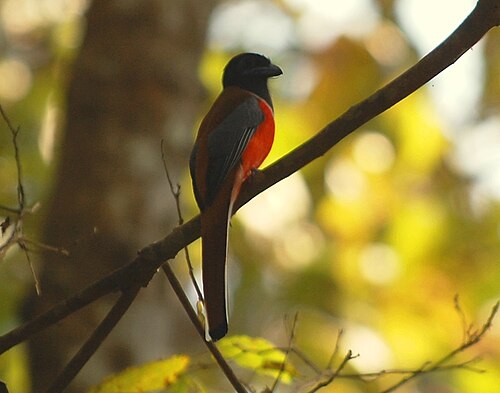
The family Trogonidae includes trogons and quetzals. Found in tropical woodlands worldwide, they feed on insects and fruit, and their broad bills and weak legs reflect their diet and arboreal habits. Although their flight is fast, they are reluctant to fly any distance. Trogons have soft, often colourful, feathers with distinctive male and female plumage. There are three species which have been recorded in India.
| Common name | Binomial | Comments |
|---|---|---|
| Malabar trogon | Harpactes fasciatus | |
| Red-headed trogon | Harpactes erythrocephalus | |
| Ward's trogon | Harpactes wardi |
Hoopoes
Order: Bucerotiformes Family: Upupidae
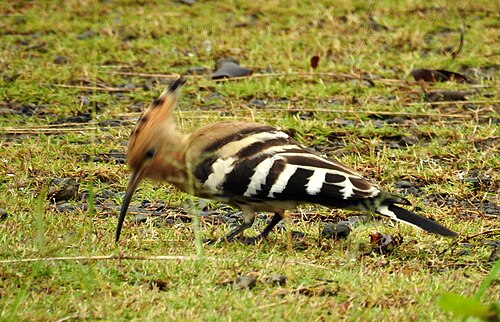
Hoopoes have black, white and orangey-pink colouring with a large erectile crest on their head. There is one species which occurs in India.
| Common name | Binomial | Comments |
|---|---|---|
| Eurasian hoopoe | Upupa epops |
Hornbills


Order: Bucerotiformes Family: Bucerotidae
Hornbills are a group of birds whose bill is shaped like a cow's horn, but without a twist, sometimes with a casque on the upper mandible. Frequently, the bill is brightly coloured.
| Common name | Binomial | Comments |
|---|---|---|
| Great hornbill | Buceros bicornis | Vulnerable |
| Oriental pied hornbill | Anthracoceros albirostris | |
| Malabar pied hornbill | Anthracoceros coronatus | Near threatened |
| Malabar grey hornbill | Ocyceros griseus | (E); vulnerable |
| Indian grey hornbill | Ocyceros birostris | |
| Austen's brown hornbill | Anorrhinus austeni | Near threatened |
| Rufous-necked hornbill | Aceros nipalensis | Vulnerable |
| Narcondam hornbill | Rhyticeros narcondami | (E); endangered |
| Wreathed hornbill | Rhyticeros undulatus | Vulnerable |

Rollers

Order: Coraciiformes Family: Coraciidae
Rollers resemble crows in size and build, but are more closely related to the kingfishers and bee-eaters. They share the colourful appearance of those groups with blues and browns predominating. The two inner front toes are connected at the base, but the outer toe is not. There are three or four species (depending on taxonomy followed) which have been recorded in India.
| Common name | Binomial | Comments |
|---|---|---|
| Indian roller | Coracias benghalensis | |
| Indochinese roller | Coracias affinis | Said to intergrade with above but distinctive in plumage in core range[32] |
| European roller | Coracias garrulus | |
| Oriental dollarbird | Eurystomus orientalis |
Kingfishers


Order: Coraciiformes Family: Alcedinidae
Kingfishers are medium-sized birds with large heads, long, pointed bills, short legs and stubby tails. There are 13 species which have been recorded in India.
| Common name | Binomial | Comments |
|---|---|---|
| Stork-billed kingfisher | Pelargopsis capensis | |
| Brown-winged kingfisher | Pelargopsis amauroptera | Near threatened |
| Ruddy kingfisher | Halcyon coromanda | |
| White-throated kingfisher | Halcyon smyrnensis | |
| Black-capped kingfisher | Halcyon pileata | Vulnerable |
| Collared kingfisher | Todiramphus chloris | |
| Blue-eared kingfisher | Alcedo meninting | |
| Common kingfisher | Alcedo atthis | |
| Blyth's kingfisher | Alcedo hercules | Near threatened |
| Black-backed dwarf kingfisher | Ceyx erithaca | Near threatened |
| Rufous-backed dwarf kingfisher | Ceyx rufidorsa | (V) |
| Crested kingfisher | Megaceryle lugubris | |
| Pied kingfisher | Ceryle rudis |
Bee-eaters
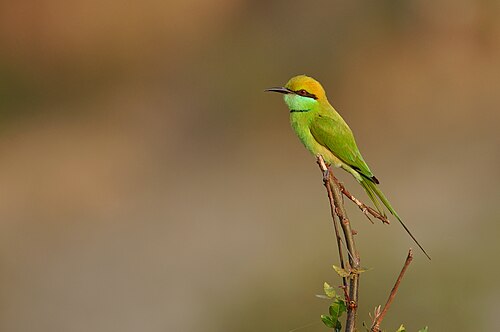
Order: Coraciiformes Family: Meropidae

The bee-eaters are a group of near passerine birds in the family Meropidae. Most species are found in Africa but others occur in southern Europe, Madagascar, Australia and New Guinea. They are characterised by richly coloured plumage, slender bodies and usually elongated central tail feathers. All are colourful and have long downturned bills and pointed wings, which give them a swallow-like appearance when seen from afar. There are 7 species which have been recorded in India.
| Common name | Binomial | Comments |
|---|---|---|
| Blue-bearded bee-eater | Nyctyornis athertoni | |
| Asian green bee-eater | Merops orientalis | |
| Blue-cheeked bee-eater | Merops persicus | |
| Blue-tailed bee-eater | Merops philippinus | |
| Blue-throated bee-eater | Merops viridis | (V) |
| Chestnut-headed bee-eater | Merops leschenaulti | |
| European bee-eater | Merops apiaster |

Asian barbets

Order: Piciformes Family: Megalaimidae
The Asian barbets are plump birds, with short necks and large heads. They get their name from the bristles which fringe their heavy bills. Most species are brightly coloured.
| Common name | Binomial | Comments |
|---|---|---|
| Great barbet | Psilopogon virens | |
| Brown-headed barbet | Psilopogon zeylanicus | |
| Lineated barbet | Psilopogon lineatus | |
| White-cheeked barbet | Psilopogon viridis | (E) |
| Golden-throated barbet | Psilopogon franklinii | |
| Blue-throated barbet | Psilopogon asiaticus | |
| Blue-eared barbet | Psilopogon duvaucelii | |
| Malabar barbet | Psilopogon malabaricus | (E) |
| Coppersmith barbet | Psilopogon haemacephalus |
Honeyguides
Order: Piciformes Family: Indicatoridae
Honeyguides are among the few birds that feed on wax. They are named for the greater honeyguide which leads traditional honey-hunters to bees' nests and, after the hunters have harvested the honey, feeds on the remaining contents of the hive. There is one species which occurs in India.
| Common name | Binomial | Comments |
|---|---|---|
| Yellow-rumped honeyguide | Indicator xanthonotus |
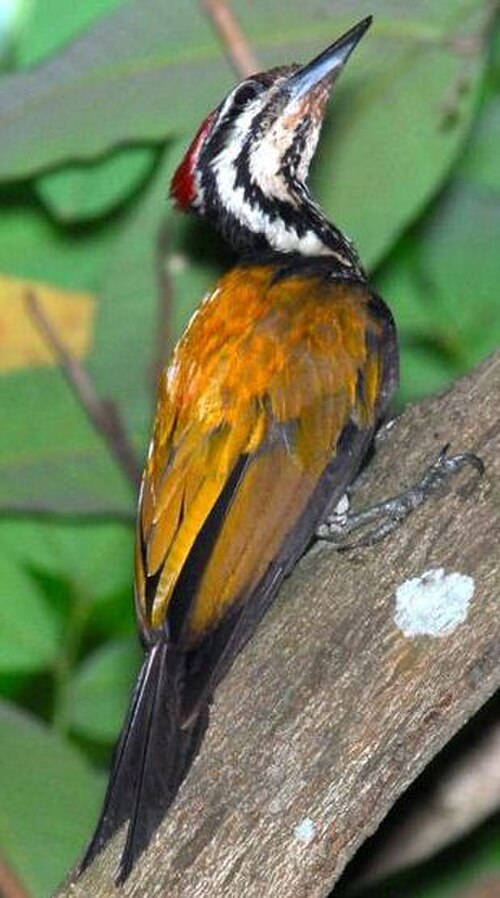
Woodpeckers

Order: Piciformes Family: Picidae
Woodpeckers are small to medium-sized birds with chisel-like beaks, short legs, stiff tails and long tongues used for capturing insects. Some species have feet with two toes pointing forward and two backward, while several species have only three toes. Many woodpeckers have the habit of tapping noisily on tree trunks with their beaks.

Caracaras and falcons

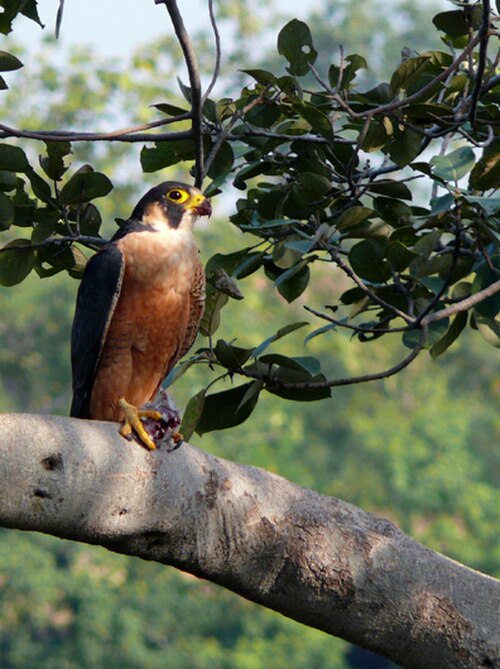
Order: Falconiformes Family: Falconidae
Falconidae is a family of diurnal birds of prey. They differ from hawks, eagles and kites in that they kill with their beaks instead of their talons. There are thirteen species which have been recorded in India.
| Common name | Binomial | Comments |
|---|---|---|
| Collared falconet | Microhierax caerulescens | |
| Pied falconet | Microhierax melanoleucos | |
| Lesser kestrel | Falco naumanni | |
| Common kestrel | Falco tinnunculus | |
| Red-necked falcon | Falco chicquera | |
| Red-footed falcon | Falco vespertinus | (V); vulnerable |
| Amur falcon | Falco amurensis | |
| Merlin | Falco columbarius | |
| Eurasian hobby | Falco subbuteo | |
| Oriental hobby | Falco severus | |
| Laggar falcon | Falco jugger | Near threatened |
| Saker falcon | Falco cherrug | Endangered |
| Peregrine falcon | Falco peregrinus |
Old World parrots

Order: Psittaciformes Family: Psittaculidae
Characteristic features of parrots include a strong curved bill, an upright stance, strong legs, and clawed zygodactyl feet. Many parrots are vividly coloured, and some are multi-coloured. In size they range from 8 cm (3.1 in) to 1 m (3.3 ft) in length. Old World parrots are found from Africa east across south and southeast Asia and Oceania to Australia and New Zealand.
| Common name | Binomial | Comments |
|---|---|---|
| Grey-headed parakeet | Psittacula finschii | Near threatened |
| Slaty-headed parakeet | Psittacula himalayana | |
| Blossom-headed parakeet | Psittacula roseata | Near threatened |
| Plum-headed parakeet | Psittacula cyanocephala | |
| Red-breasted parakeet | Psittacula alexandri | Near threatened |
| Lord Derby's parakeet | Psittacula derbiana | Near threatened[33] |
| Long-tailed parakeet | Psittacula longicauda | Vulnerable |
| Blue-winged parakeet | Psittacula columboides | (E) |
| Alexandrine parakeet | Psittacula eupatria | Near threatened |
| Rose-ringed parakeet | Psittacula krameri | |
| Nicobar parakeet | Psittacula caniceps | (E); near threatened |
| Vernal hanging parrot | Loriculus vernalis |
Typical broadbills
Order: Passeriformes Family: Eurylaimidae
The broadbills are small, brightly coloured birds, which feed on fruit and also take insects in flycatcher fashion, snapping their broad bills. Their habitat is canopies of wet forests. There are two species which have been recorded in India.
| Common name | Binomial | Comments |
|---|---|---|
| Long-tailed broadbill | Psarisomus dalhousiae | |
| Grey-lored broadbill | Serilophus rubropygius |
Pittas

Order: Passeriformes Family: Pittidae
Pittas are medium-sized by passerine standards and are stocky, with fairly long, strong legs, short tails and stout bills. Many are brightly coloured. They spend the majority of their time on wet forest floors, eating snails, insects and similar invertebrates.
| Common name | Binomial | Comments |
|---|---|---|
| Blue-naped pitta | Hydrornis nipalensis | |
| Blue pitta | Hydrornis cyanea | |
| Indian pitta | Pitta brachyura | |
| Blue-winged pitta | Pitta moluccensis | [34](V) |
| Mangrove pitta | Pitta megarhyncha | [35][36]near threatened |
| Western hooded pitta | Pitta sordida | |
| Nicobar hooded pitta | Pitta abbotti | (E) |
Vangas, helmetshrikes, woodshrikes, and shrike-flycatchers

Order: Passeriformes Family: Vangidae
The woodshrikes are similar in build to the shrikes.
| Common name | Binomial | Comments |
|---|---|---|
| Bar-winged flycatcher-shrike | Hemipus picatus | |
| Large woodshrike | Tephrodornis virgatus | |
| Malabar woodshrike | Tephrodornis sylvicola | (E) |
| Common woodshrike | Tephrodornis pondicerianus |
Woodswallows, butcherbirds, and peltops

Order: Passeriformes Family: Artamidae
The woodswallows are soft-plumaged, somber-coloured passerine birds. They are smooth, agile flyers with moderately large, semi-triangular wings. There are two species which have been recorded in India.
| Common name | Binomial | Comments |
|---|---|---|
| Ashy woodswallow | Artamus fuscus | |
| White-breasted woodswallow | Artamus leucorynchus |
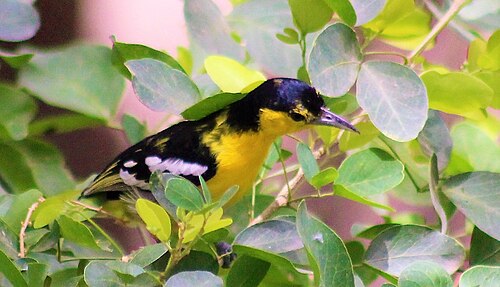
Ioras

Order: Passeriformes Family: Aegithinidae
The ioras are bulbul-like birds of open forest or thorn scrub, but whereas that group tends to be drab in colouration, ioras are sexually dimorphic, with the males being brightly plumaged in yellows and greens. There are two species which have been recorded in India.
| Common name | Binomial | Comments |
|---|---|---|
| Common iora | Aegithina tiphia | |
| Marshall's iora | Aegithina nigrolutea |
Cuckooshrikes

Order: Passeriformes Family: Campephagidae
The cuckooshrikes are small to medium-sized passerine birds. They are predominantly greyish with white and black, although some species are brightly coloured. There are 16 species which have been recorded in India.
| Common name | Binomial | Comments |
|---|---|---|
| White-bellied minivet | Pericrocotus erythropygius | (E) |
| Small minivet | Pericrocotus cinnamomeus | |
| Grey-chinned minivet | Pericrocotus solaris | |
| Short-billed minivet | Pericrocotus brevirostris | |
| Long-tailed minivet | Pericrocotus ethologus | |
| Orange minivet | Pericrocotus flammeus | |
| Scarlet minivet | Pericrocotus speciosus | |
| Ashy minivet | Pericrocotus divaricatus | (V) |
| Swinhoe's minivet | Pericrocotus cantonensis | (V) |
| Rosy minivet | Pericrocotus roseus | |
| Indian cuckooshrike | Coracina macei | |
| Oriental cuckooshrike | Coracina javensis | |
| Andaman cuckooshrike | Coracina dobsoni | (E); near threatened |
| Pied triller | Lalage nigra | |
| Black-winged cuckooshrike | Lalage melaschistos | |
| Black-headed cuckooshrike | Lalage melanoptera |
Whistlers and allies

Order: Passeriformes Family: Pachycephalidae
The family Pachycephalidae includes the whistlers, shrikethrushes, and some of the pitohuis. There is one species which occurs in India.
| Common name | Binomial | Comments |
|---|---|---|
| Mangrove whistler | Pachycephala cinerea |
Shrikes

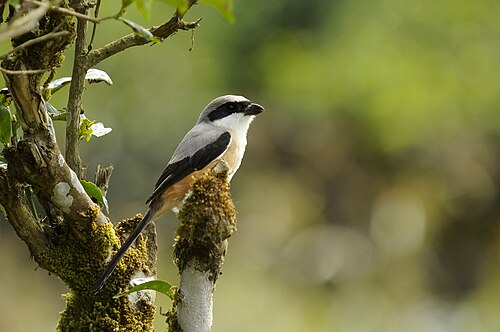
Order: Passeriformes Family: Laniidae
Shrikes are passerine birds known for their habit of catching other birds and small animals and impaling the uneaten portions of their bodies on thorns. A typical shrike's beak is hooked, like a bird of prey.
| Common name | Binomial | Comments |
|---|---|---|
| Brown shrike | Lanius cristatus | |
| Giant grey shrike | Larus giganteus | (V) |
| Tiger shrike | Larus tigrinus | (V) |
| Red-backed shrike | Lanius collurio | |
| Isabelline shrike | Lanius isabellinus | |
| Red-tailed shrike | Lanius phoenicuroides | |
| Burmese shrike | Lanius collurioides | |
| Bay-backed shrike | Lanius vittatus | |
| Long-tailed shrike | Lanius schach | |
| Grey-backed shrike | Lanius tephronotus | |
| Lesser grey shrike | Lanius minor | (V)[11] |
| Great grey shrike | Lanius excubitor | |
| Woodchat shrike | Lanius senator | [37](V); near threatened |
| Masked shrike | Lanius nubicus | (V) |
Vireos, greenlets, and shrike-babblers

Order: Passeriformes Family: Vireonidae
Most of the members of this family are found in the New World. However, the shrike-babblers and erpornis, which only slightly resemble the "true" vireos and greenlets, are found in South East Asia.
| Common name | Binomial | Comments |
|---|---|---|
| White-bellied erpornis | Erpornis zantholeuca | |
| Black-headed shrike-babbler | Pteruthius rufiventer | |
| White-browed shrike-babbler | Pteruthius aeralatus | |
| Green shrike-babbler | Pteruthius xanthochlorus | |
| Black-eared shrike-babbler | Pteruthius melanotis | |
| Clicking shrike-babbler | Pteruthius intermedius |
Figbirds, orioles, and turnagra

Order: Passeriformes Family: Oriolidae
The Old World orioles are colourful passerine birds. They are not related to the New World orioles. There are six species which have been recorded in India.
| Common name | Binomial | Comments |
|---|---|---|
| Maroon oriole | Oriolus traillii | |
| Black-hooded oriole | Oriolus xanthornus | |
| Indian golden oriole | Oriolus kundoo | [38] |
| Eurasian golden oriole | Oriolus oriolus | |
| Black-naped oriole | Oriolus chinensis | |
| Slender-billed oriole | Oriolus tenuirostris |
Drongos

Order: Passeriformes Family: Dicruridae
The drongos are mostly black or dark grey in colour, sometimes with metallic tints. They have long forked tails, and some Asian species have elaborate tail decorations. They have short legs and sit very upright when perched, like a shrike. They flycatch or take prey from the ground. There are ten species which have been recorded in India.
| Common name | Binomial | Comments |
|---|---|---|
| Bronzed drongo | Dicrurus aeneus | |
| Lesser racket-tailed drongo | Dicrurus remifer | |
| Crow-billed drongo | Dicrurus annectens | |
| Greater racket-tailed drongo | Dicrurus paradiseus | |
| Andaman drongo | Dicrurus andamanensis | |
| Hair-crested drongo | Dicrurus hottentottus | |
| Ashy drongo | Dicrurus leucophaeus | |
| White-bellied drongo | Dicrurus caerulescens | |
| Black drongo | Dicrurus macrocercus |
Fantails and silktails

Order: Passeriformes Family: Rhipiduridae
The fantails are small insectivorous birds which are specialist aerial feeders. There are three species which occur in India.
| Common name | Binomial | Comments |
|---|---|---|
| White-throated fantail | Rhipidura albicollis | |
| White-spotted fantail | Rhipidura albogularis | (E) |
| White-browed fantail | Rhipidura aureola |
Monarchs

Order: Passeriformes Family: Monarchidae
The monarch flycatchers are small to medium-sized insectivorous passerines which hunt by flycatching. There are four species which have been recorded in India.
| Common name | Binomial | Comments |
|---|---|---|
| Black-naped monarch | Hypothymis azurea | |
| Indian paradise flycatcher | Terpsiphone paradisi | |
| Blyth's paradise flycatcher | Terpsiphone affinis | |
| Amur paradise flycatcher | Terpsiphone incei | (V) |
Crows and jays
Order: Passeriformes Family: Corvidae
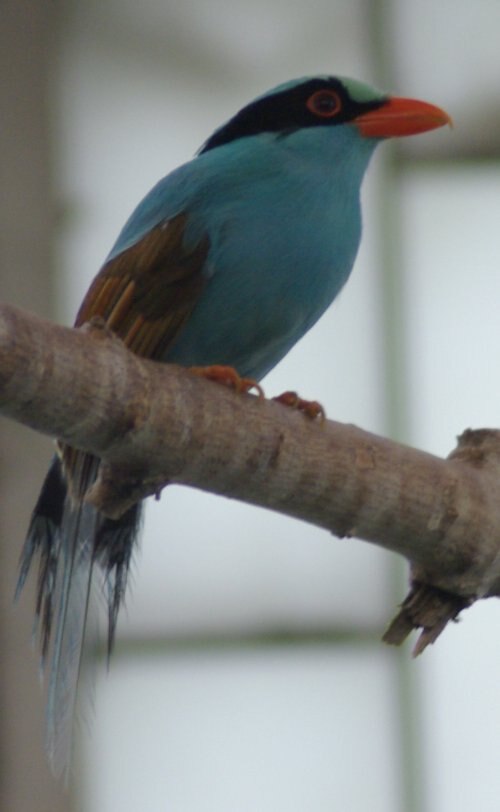
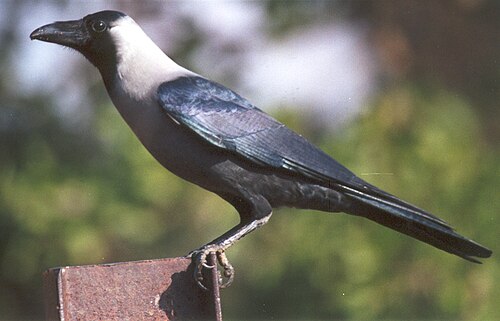
The family Corvidae includes crows, ravens, jays, choughs, magpies, treepies, nutcrackers and ground jays. Corvids are above average in size among the Passeriformes, and some of the larger species show high levels of intelligence.

| Common name | Binomial | Comments |
|---|---|---|
| Eurasian jay | Garrulus glandarius | |
| Black-headed jay | Garrulus lanceolatus | |
| Yellow-billed blue magpie | Urocissa flavirostris | |
| Red-billed blue magpie | Urocissa erythroryncha | |
| Common green magpie | Cissa chinensis | |
| Rufous treepie | Dendrocitta vagabunda | |
| Grey treepie | Dendrocitta formosae | |
| White-bellied treepie | Dendrocitta leucogastra | (E) |
| Collared treepie | Dendrocitta frontalis | |
| Andaman treepie | Dendrocitta bayleii | (E); vulnerable |
| Eurasian magpie | Pica pica | |
| Black-rumped magpie | Pica bottanensis | (V) |
| Northern nutcracker | Nucifraga caryocatactes | |
| Southern nutcracker | Nucifraga hemispila | |
| Kashmir nutcracker | Nucifraga multipunctata | |
| Red-billed chough | Pyrrhocorax pyrrhocorax | |
| Alpine chough | Pyrrhocorax graculus | |
| Western jackdaw | Coloeus monedula | |
| House crow | Corvus splendens | |
| Rook | Corvus frugilegus | |
| Carrion crow | Corvus corone | |
| Hooded crow | Corvus cornix | (V) |
| Large-billed crow | Corvus macrorhynchos | |
| Pied crow | Corvus albus | (V) |
| Common raven | Corvus corax |
Waxwings

Order: Passeriformes Family: Bombycillidae
The waxwings are a group of birds with soft silky plumage and unique red tips to some of the wing feathers. In the Bohemian and cedar waxwings, these tips look like sealing wax and give the group its name. These are arboreal birds of northern forests. They live on insects in summer and berries in winter. There is one species which occurs in India.
| Common name | Binomial | Comments |
|---|---|---|
| Bohemian waxwing | Bombycilla garrulus | (V) |
Hypocolius
Order: Passeriformes Family: Hypocoliidae
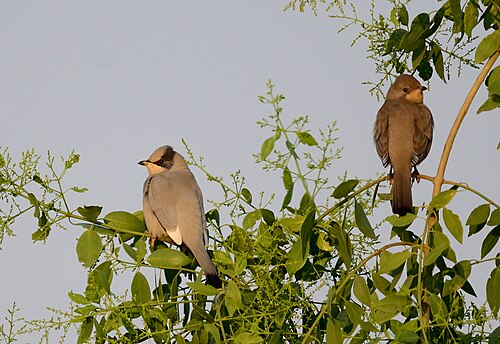
The grey hypocolius is a small Middle Eastern bird with the shape and soft plumage of a waxwing. They are mainly a uniform grey colour except the males have a black triangular mask around their eyes.
| Common name | Binomial | Comments |
|---|---|---|
| Grey hypocolius | Hypocolius ampelinus |
Fairy flycatchers

Order: Passeriformes Family: Stenostiridae
Most of the species of this small family are found in Africa, though a few inhabit tropical Asia. They are not closely related to other birds called "flycatchers".
| Common name | Binomial | Comments |
|---|---|---|
| Yellow-bellied fantail | Chelidorhynx hypoxanthus | |
| Grey-headed canary-flycatcher | Culicicapa ceylonensis |
Tits and chickadees


Order: Passeriformes Family: Paridae
The Paridae are mainly small stocky woodland species with short stout bills. Some have crests. They are adaptable birds, with a mixed diet including seeds and insects.
| Common name | Binomial | Comments |
|---|---|---|
| Fire-capped tit | Cephalopyrus flammiceps | |
| Yellow-browed tit | Sylviparus modestus | |
| Sultan tit | Melanochlora sultanea | |
| Rufous-naped tit | Periparus rufonuchalis | |
| Rufous-vented tit | Periparus rubidiventris | |
| Coal tit | Periparus ater | |
| Grey-crested tit | Lophophanes dichrous | |
| Azure tit | Cyanistes cyanus | |
| Ground tit | Pseudopodoces humilis | |
| Cinereous tit | Parus cinereus | [39] |
| Green-backed tit | Parus monticolus | |
| White-naped tit | Machlolophus nuchalis | (E); vulnerable |
| Himalayan black-lored tit | Machlolophus xanthogenys | |
| Indian black-lored tit | Machlolophus aplonotus | (E)[40] |
| Yellow-cheeked tit | Machlolophus spilonotus |
Penduline tits
Order: Passeriformes Family: Remizidae
The penduline tits are a group of small passerine birds related to the true tits. They are insectivores. There is one species which has been recorded in India.
| Common name | Binomial | Comments |
|---|---|---|
| White-crowned penduline tit | Remiz coronatus | (V) |
Larks

Order: Passeriformes Family: Alaudidae
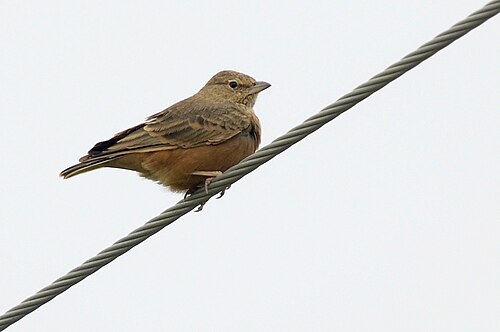
Larks are small terrestrial birds with often extravagant songs and display flights. Most larks are fairly dull in appearance. Their food is insects and seeds.

| Common name | Binomial | Comments |
|---|---|---|
| Greater hoopoe-lark | Alaemon alaudipes | |
| Desert lark | Ammomanes deserti | |
| Rufous-tailed lark | Ammomanes phoenicura | (E) |
| Black-crowned sparrow-lark | Eremopterix nigriceps | |
| Ashy-crowned sparrow-lark | Eremopterix griseus | |
| Singing bush lark | Mirafra javanica cantillans | |
| Bengal bush lark | Plocealauda assamica | |
| Indian bush lark | Plocealauda erythroptera | |
| Jerdon's bush lark | Plocealauda affinis | |
| Oriental skylark | Alauda gulgula | |
| Eurasian skylark | Alauda arvensis | |
| Sykes's lark | Galerida deva | (E) |
| Crested lark | Galerida cristata | |
| Malabar lark | Galerida malabarica | (E) |
| Horned lark | Eremophila alpestris | |
| Hume's short-toed lark | Calandrella acutirostris | |
| Mongolian short-toed lark | Calandrella dukhunensis | |
| Greater short-toed lark | Calandrella brachydactyla | |
| Bimaculated lark | Melanocorypha bimaculata | |
| Tibetan lark | Melanocorypha maxima | |
| Turkestan short-toed lark | Alaudala heinei | |
| Sand lark | Alaudala raytal |
Bulbuls

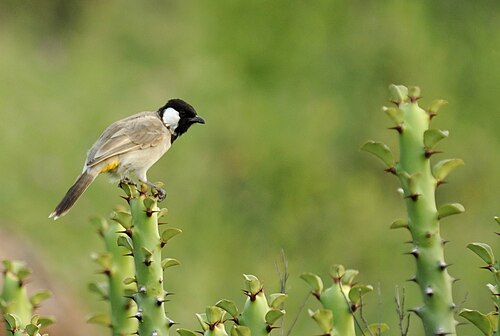
Order: Passeriformes Family: Pycnonotidae

Bulbuls are medium-sized songbirds. Some are colourful with yellow, red or orange vents, cheeks, throats or supercilia, but most are drab, with uniform olive-brown to black plumage. Some species have distinct crests.
| Common name | Binomial | Comments |
|---|---|---|
| White-throated bulbul | Alophoixus flaveolus | |
| Striated bulbul | Alcurus striatus | |
| Cachar bulbul | Iole cacharensis | (E) |
| Grey-eyed bulbul | Iole propinqua | (V) |
| Ashy bulbul | Hemixos flavala | |
| Yellow-browed bulbul | Acritillas indica | |
| Mountain bulbul | Ixos mcclellandii | |
| Nicobar bulbul | Ixos nicobariensis | (E); near threatened |
| Black bulbul | Hypsipetes leucocephalus | |
| Square-tailed bulbul | Hypsipetes ganeesa | |
| Grey-headed bulbul | Brachypodius priocephalus | (E); near threatened |
| Black-headed bulbul | Brachypodius melanocephalos | |
| Andaman bulbul | Brachypodius fuscoflavescens | (E) |
| Black-crested bulbul | Rubigula flaviventris | |
| Flame-throated bulbul | Rubigula gularis | (E) |
| Crested finchbill | Spizixos canifrons | |
| White-browed bulbul | Pycnonotus luteolus | |
| Flavescent bulbul | Pycnonotus flavescens | |
| Yellow-throated bulbul | Pycnonotus xantholaemus | (E) |
| Red-whiskered bulbul | Pycnonotus jocosus | |
| Red-vented bulbul | Pycnonotus cafer | |
| White-eared bulbul | Pycnonotus leucotis | |
| Himalayan bulbul | Pycnonotus leucogenys |

Swallows and martins
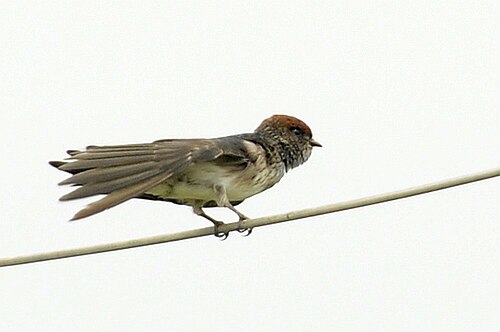
Order: Passeriformes Family: Hirundinidae
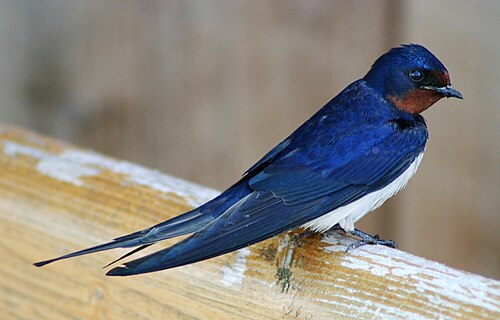
The family Hirundinidae is adapted to aerial feeding. They have a slender streamlined body, long pointed wings and a short bill with a wide gape. The feet are adapted to perching rather than walking, and the front toes are partially joined at the base.
| Common name | Binomial | Comments |
|---|---|---|
| Grey-throated martin | Riparia chinensis | |
| Sand martin | Riparia riparia | |
| Pale martin | Riparia diluta | |
| Barn swallow | Hirundo rustica | |
| Pacific swallow | Hirundo tahitica | |
| Hill swallow | Hirundo domicola | |
| Wire-tailed swallow | Hirundo smithii | |
| Eurasian crag martin | Ptyonoprogne rupestris | |
| Dusky crag martin | Ptyonoprogne concolor | |
| Common house martin | Delichon urbicum | |
| Asian house martin | Delichon dasypus | |
| Nepal house martin | Delichon nipalense | |
| Red-rumped swallow | Cecropis daurica | |
| Striated swallow | Cecropis striolata | |
| Streak-throated swallow | Petrochelidon fluvicola |
Cupwings

Order: Passeriformes Family: Pnoepygidae
The members of this small family are found in mountainous parts of South and South East Asia.
| Common name | Binomial | Comments |
|---|---|---|
| Scaly-breasted cupwing | Pnoepyga albiventer | |
| Nepal cupwing | Pnoepyga immaculata | |
| Pygmy cupwing | Pnoepyga pusilla |
Cettia bush warblers and allies
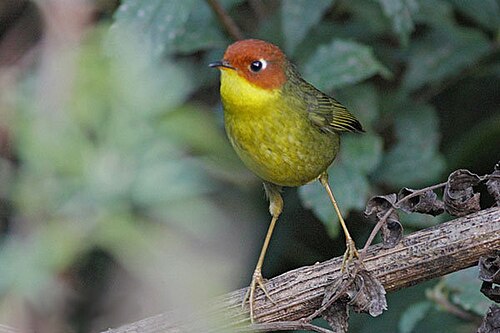
Order: Passeriformes Family: Cettiidae
Cettiidae is a family of small insectivorous songbirds. It contains the typical bush warblers (Cettia) and their relatives. Its members occur mainly in Asia and Africa, ranging into Oceania and Europe.
| Common name | Binomial | Comments |
|---|---|---|
| Yellow-bellied warbler | Abroscopus superciliaris | |
| Rufous-faced warbler | Abroscopus albogularis | |
| Black-faced warbler | Abroscopus schisticeps | |
| Mountain tailorbird | Phyllergates cucullatus | |
| Broad-billed warbler | Tickellia hodgsoni | |
| Manchurian bush warbler | Horornis canturians | |
| Brown-flanked bush warbler | Horornis fortipes | |
| Hume's bush warbler | Horornis brunnescens | |
| Aberrant bush warbler | Horornis flavolivaceus | |
| Grey-bellied tesia | Tesia cyaniventer | |
| Slaty-bellied tesia | Tesia olivea | |
| Cetti's warbler | Cettia cetti | |
| Chestnut-crowned bush warbler | Cettia major | |
| Grey-sided bush warbler | Cettia brunnifrons | |
| Chestnut-headed tesia | Cettia castaneocoronata | |
| Asian stubtail | Urosphena squameiceps | (V)[41] |
| Pale-footed bush warbler | Hemitesia pallidipes |
Bushtits

Order: Passeriformes Family: Aegithalidae
Long-tailed tits are a group of small passerine birds with medium to long tails. They make woven bag nests in trees. Most eat a mixed diet which includes insects.
| Common name | Binomial | Comments |
|---|---|---|
| White-cheeked bushtit | Aegithalos leucogenys | |
| Black-throated bushtit | Aegithalos concinnus | |
| White-throated bushtit | Aegithalos niveogularis | |
| Rufous-fronted bushtit | Aegithalos iouschistos | |
| Black-browed bushtit | Aegithalos bonvaloti | [42] |
| White-browed tit-warbler | Leptopoecile sophiae | |
| Crested tit-warbler | Leptopoecile elegans | (V)[43] |
Leaf warblers and allies

Order: Passeriformes Family: Phylloscopidae


Leaf warblers are a family of small insectivorous birds found mostly in Eurasia and ranging into Wallacea and Africa. The species are of various sizes, often green-plumaged above and yellow below, or more subdued with greyish-green to greyish-brown colours.
| Common name | Binomial | Comments |
|---|---|---|
| Wood warbler | Phylloscopus sibilatrix | (V) |
| Buff-barred warbler | Phylloscopus pulcher | |
| Ashy-throated warbler | Phylloscopus maculipennis | |
| Hume's leaf warbler | Phylloscopus humei | |
| Yellow-browed warbler | Phylloscopus inornatus | |
| Brooks's leaf warbler | Phylloscopus subviridis | |
| Chinese leaf warbler | Phylloscopus yunnanensis | (V) |
| Lemon-rumped warbler | Phylloscopus chloronotus | |
| Sichuan leaf warbler | Phylloscopus forresti | (V) |
| Pallas's leaf warbler | Phylloscopus proregulus | (V) |
| Tytler's leaf warbler | Phylloscopus tytleri | |
| Sulphur-bellied warbler | Phylloscopus griseolus | |
| Tickell's leaf warbler | Phylloscopus affinis | |
| Smoky warbler | Phylloscopus fuligiventer | |
| Dusky warbler | Phylloscopus fuscatus | |
| Plain leaf warbler | Phylloscopus neglectus | |
| Buff-throated warbler | Phylloscopus subaffinis | (V) |
| Willow warbler | Phylloscopus trochilus | (V) |
| Mountain chiffchaff | Phylloscopus sindianus | |
| Common chiffchaff | Phylloscopus collybita | |
| White-spectacled warbler | Phylloscopus intermedius | |
| Grey-cheeked warbler | Phylloscopus poliogenys | |
| Green-crowned warbler | Phylloscopus burkii | |
| Grey-crowned warbler | Phylloscopus tephrocephalus | |
| Whistler's warbler | Phylloscopus whistleri | |
| Bianchi's warbler | Phylloscopus valentini | (V) |
| Green warbler | Phylloscopus nitidus | |
| Two-barred warbler | Phylloscopus plumbeitarsus | (V) |
| Greenish warbler | Phylloscopus trochiloides | |
| Large-billed leaf warbler | Phylloscopus magnirostris | |
| Pale-legged leaf warbler | Phylloscopus tenellipes | (V) |
| Sakhalin leaf warbler | Phylloscopus borealoides | (V) |
| Arctic warbler | Phylloscopus borealis | (V) |
| Chestnut-crowned warbler | Phylloscopus castaniceps | |
| Yellow-vented warbler | Phylloscopus cantator | |
| Western crowned warbler | Phylloscopus occipitalis | |
| Blyth's leaf warbler | Phylloscopus reguloides | |
| Claudia's leaf warbler | Phylloscopus claudiae | |
| Grey-hooded warbler | Phylloscopus xanthoschistos |
Reed warblers, Grauer's warbler, and allies

Order: Passeriformes Family: Acrocephalidae

The members of this family are usually rather large for "warblers". Most are rather plain olivaceous brown above with much yellow to beige below. They are usually found in open woodland, reedbeds, or tall grass. The family occurs mostly in southern to western Eurasia and surroundings, but it also ranges far into the Pacific, with some species in Africa.
| Common name | Binomial | Comments |
|---|---|---|
| Great reed warbler | Acrocephalus arundinaceus | [11](V) |
| Oriental reed warbler | Acrocephalus orientalis | |
| Clamorous reed warbler | Acrocephalus stentoreus | |
| Black-browed reed warbler | Acrocephalus bistrigiceps | [11] |
| Moustached warbler | Acrocephalus melanopogon | |
| Sedge warbler | Acrocephalus schoenobaenus | [11](V) |
| Blunt-winged warbler | Acrocephalus concinens | |
| Large-billed reed warbler | Acrocephalus orinus | (V) |
| Paddyfield warbler | Acrocephalus agricola | |
| Blyth's reed warbler | Acrocephalus dumetorum | |
| Thick-billed warbler | Arundinax aedon | |
| Booted warbler | Iduna caligata | |
| Sykes's warbler | Iduna rama |
Grassbirds and allies

Order: Passeriformes Family: Locustellidae

Locustellidae are a family of small insectivorous songbirds found mainly in Eurasia, Africa, and the Australian region. They are smallish birds with tails that are usually long and pointed, and tend to be drab brownish or buffy all over.
| Common name | Binomial | Comments |
|---|---|---|
| Pallas's grasshopper warbler | Helopsaltes certhiola | |
| Lanceolated warbler | Locustella lanceolata | |
| Long-billed bush warbler | Locustella major | Near threatened |
| Brown bush warbler | Locustella luteoventris | |
| Common grasshopper warbler | Locustella naevia | |
| Chinese bush warbler | Locustella tacsanowskia | (V) |
| Baikal bush warbler | Locustella davidi | (V)[44] |
| West Himalayan bush warbler | Locustella kashmirensis | |
| Spotted bush warbler | Locustella thoracica | |
| Russet bush warbler | Locustella mandelli | |
| Striated grassbird | Megalurus palustris | |
| Broad-tailed grassbird | Schoenicola platyurus | (E); near threatened |
| Bristled grassbird | Schoenicola striatus | Vulnerable |
Cisticolas and allies

Order: Passeriformes Family: Cisticolidae
The Cisticolidae are warblers found mainly in warmer southern regions of the Old World. They are generally very small birds of drab brown or grey appearance found in open country such as grassland or scrub.

| Common name | Binomial | Comments |
|---|---|---|
| Zitting cisticola | Cisticola juncidis | |
| Golden-headed cisticola | Cisticola exilis | |
| Himalayan prinia | Prinia crinigera | Circumscription changed in 2020[45] |
| Rufous-crowned prinia | Prinia khasiana | |
| Hill prinia | Prinia superciliaris | |
| Grey-crowned prinia | Prinia cinereocapilla | Vulnerable |
| Black-throated prinia | Prinia atrogularis | |
| Rufous-fronted prinia | Prinia buchanani | |
| Rufescent prinia | Prinia rufescens | |
| Grey-breasted prinia | Prinia hodgsonii | |
| Delicate prinia | Prinia lepida | |
| Jungle prinia | Prinia sylvatica | |
| Yellow-bellied prinia | Prinia flaviventris | |
| Ashy prinia | Prinia socialis | |
| Plain prinia | Prinia inornata | |
| Common tailorbird | Orthotomus sutorius | |
| Dark-necked tailorbird | Orthotomus atrogularis |
Sylviid warblers

Order: Passeriformes Family: Sylviidae
The family Sylviidae is a group of small insectivorous passerine birds. They mainly occur as breeding species in Europe, Asia and, to a lesser extent, Africa. Many species are difficult to identify by appearance, but many have distinctive songs.
| Common name | Binomial | Comments |
|---|---|---|
| Eurasian blackcap | Sylvia atricapilla | (V) |
| Garden warbler | Sylvia borin | [11](V) |
| Barred warbler | Curruca nisoria | [11](V) |
| Desert whitethroat | Curruca minula | |
| Lesser whitethroat | Curruca curruca | |
| Hume's whitethroat | Curruca althaea | |
| Eastern Orphean warbler | Curruca crassirostris | |
| Asian desert warbler | Curruca nana | |
| Common whitethroat | Curruca communis |
Parrotbills and allies
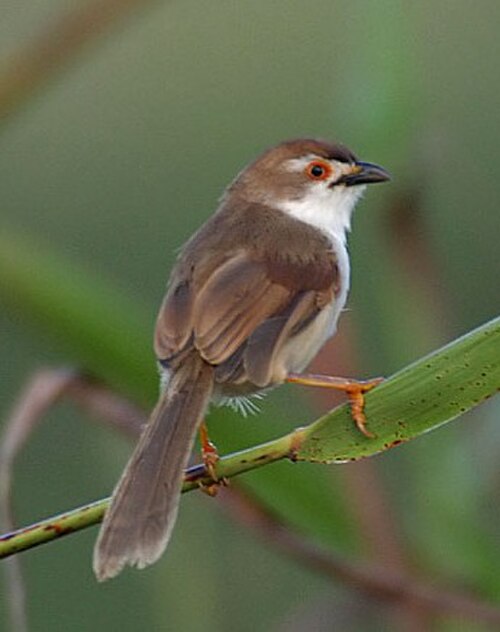
Order: Passeriformes Family: Paradoxornithidae
The parrotbills are a group of peculiar birds which are diverse along the Himalayas east into Southeast Asia, though feral populations exist elsewhere. They are generally small, long-tailed birds which inhabit reedbeds and similar habitat. They feed mainly on seeds of grasses (particularly bamboos), to which their bill is well-adapted.
| Common name | Binomial | Comments |
|---|---|---|
| Fire-tailed myzornis | Myzornis pyrrhoura | |
| Golden-breasted fulvetta | Lioparus chrysotis | |
| Yellow-eyed babbler | Chrysomma sinense | |
| Jerdon's babbler | Chrysomma altirostre | Vulnerable |
| White-browed fulvetta | Fulvetta vinipectus | |
| Brown-throated fulvetta | Fulvetta ludlowi | |
| Manipur fulvetta | Fulvetta manipurensis | |
| Black-breasted parrotbill | Paradoxornis flavirostris | Vulnerable |
| Spot-breasted parrotbill | Paradoxornis guttaticollis | |
| Great parrotbill | Conostoma aemodium | |
| Brown parrotbill | Cholornis unicolor | |
| Grey-headed parrotbill | Psittiparus gularis | |
| White-breasted parrotbill | Psittiparus ruficeps | |
| Rufous-headed parrotbill | Psittiparus bakeri | |
| Fulvous parrotbill | Suthora fulvifrons | |
| Black-throated parrotbill | Suthora nipalensis | |
| Pale-billed parrotbill | Chleuasicus atrosuperciliaris |
White-eyes

Order: Passeriformes Family: Zosteropidae
The white-eyes are small and mostly undistinguished, their plumage above being generally some dull colour like greenish-olive, but some species have a white or bright yellow throat, breast or lower parts, and several have buff flanks. As their name suggests, many species have a white ring around each eye.
| Common name | Binomial | Comments |
|---|---|---|
| Striated yuhina | Staphida castaniceps | |
| Black-chinned yuhina | Yuhina nigrimenta | |
| Whiskered yuhina | Yuhina flavicollis | |
| White-naped yuhina | Yuhina bakeri | |
| Stripe-throated yuhina | Yuhina gularis | |
| Rufous-vented yuhina | Yuhina occipitalis | |
| Chestnut-flanked white-eye | Zosterops erythropleurus | (V) |
| Indian white-eye | Zosterops palpebrosus |
Babblers and scimitar babblers
Order: Passeriformes Family: Timaliidae

The babblers, or timaliids, are somewhat diverse in size and colour, but are characterised by soft fluffy plumage.


| Common name | Binomial | Comments |
|---|---|---|
| Chestnut-capped babbler | Timalia pileata | |
| Tawny-bellied babbler | Dumetia hyperythra | |
| Dark-fronted babbler | Dumetia atriceps | |
| Pin-striped tit-babbler | Mixornis gularis | |
| Golden babbler | Cyanoderma chrysaeum | |
| Black-chinned babbler | Cyanoderma pyrrhops | |
| Rufous-capped babbler | Cyanoderma ruficeps | |
| Buff-chested babbler | Cyanoderma ambiguum | |
| Rufous-throated wren-babbler | Spelaeornis caudatus | |
| Mishmi wren-babbler | Spelaeornis badeigularis | (E); near threatened |
| Bar-winged wren-babbler | Spelaeornis troglodytoides | |
| Naga wren-babbler | Spelaeornis chocolatinus | Vulnerable |
| Chin Hills wren-babbler | Spelaeornis oatesi | |
| Tawny-breasted wren-babbler | Spelaeornis longicaudatus | (E); near threatened |
| Grey-bellied wren-babbler | Spelaeornis reptatus | (V) |
| Brown-crowned scimitar babbler | Pomatorhinus phayrei | |
| Coral-billed scimitar babbler | Pomatorhinus ferruginosus | |
| Red-billed scimitar babbler | Pomatorhinus ochraceiceps | |
| Slender-billed scimitar babbler | Pomatorhinus superciliaris | |
| Streak-breasted scimitar babbler | Pomatorhinus ruficollis | |
| White-browed scimitar babbler | Pomatorhinus schisticeps | |
| Indian scimitar babbler | Pomatorhinus horsfieldii | |
| Large scimitar babbler | Erythrogenys hypoleucos | |
| Rusty-cheeked scimitar babbler | Erythrogenys erythrogenys | |
| Spot-breasted scimitar babbler | Erythrogenys mcclellandi | |
| Grey-throated babbler | Stachyris nigriceps | |
| Sikkim wedge-billed babbler | Stachyris humei | Near threatened |
| Cachar wedge-billed babbler | Stachyris roberti | Near threatened |
| Snowy-throated babbler | Stachyris oglei | (E); near threatened |
Ground babblers
Order: Passeriformes Family: Pellorneidae
These small to medium-sized songbirds have soft fluffy plumage but are otherwise rather diverse. Members of the genus Illadopsis are found in forests, but some other genera are birds of scrublands.
| Common name | Binomial | Comments |
|---|---|---|
| Indian grassbird | Graminicola bengalensis | Near threatened |
| White-hooded babbler | Gampsorhynchus rufulus | |
| Yellow-throated fulvetta | Schoeniparus cinereus | |
| Rufous-winged fulvetta | Schoeniparus castaneceps | |
| Rufous-throated fulvetta | Schoeniparus rufogularis | |
| Rusty-capped fulvetta | Schoeniparus dubius | |
| Puff-throated babbler | Pellorneum ruficeps | |
| Marsh babbler | Pellorneum palustre | (E); vulnerable |
| Spot-throated babbler | Pellorneum albiventre | |
| Buff-breasted babbler | Pellorneum tickelli | |
| Rufous-vented grass babbler | Laticilla burnesii | Near threatened |
| Swamp grass babbler | Laticilla cinerascens | Endangered |
| Abbott's babbler | Malacocincla abbotti | |
| Streaked wren-babbler | Gypsophila brevicaudata | |
| Eyebrowed wren-babbler | Napothera epilepidota | |
| Long-billed wren-babbler | Napothera malacoptila |
Alcippe fulvettas

Order: Passeriformes Family: Alcippeidae
The genus once included many other fulvettas and was previously placed in families Pellorneidae or Timaliidae.
| Common name | Binomial | Comments |
|---|---|---|
| Brown-cheeked fulvetta | Alcippe poioicephala | |
| Nepal fulvetta | Alcippe nipalensis |
Laughingthrushes and allies

Order: Passeriformes Family: Leiothrichidae


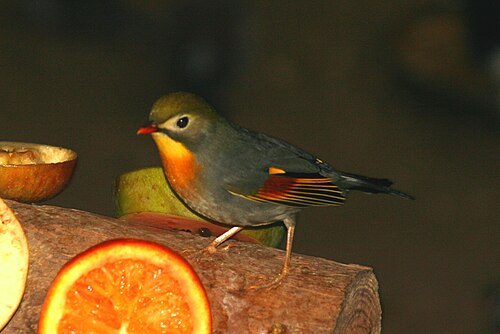


The members of this family are diverse in size and colour, though those of the genera Argya and Turdoides tend to be brown or greyish. The family is found in Africa, India, and southeast Asia.
| Common name | Binomial | Comments |
|---|---|---|
| Striated laughingthrush | Grammatoptila striata | |
| Himalayan cutia | Cutia nipalensis | |
| Scaly laughingthrush | Trochalopteron subunicolor | |
| Brown-capped laughingthrush | Trochalopteron austeni | |
| Blue-winged laughingthrush | Trochalopteron squamatum | |
| Streaked laughingthrush | Trochalopteron lineatum | |
| Bhutan laughingthrush | Trochalopteron imbricatum | |
| Striped laughingthrush | Trochalopteron virgatum | |
| Variegated laughingthrush | Trochalopteron variegatum | |
| Black-faced laughingthrush | Trochalopteron affine | |
| Elliot's laughingthrush | Trochalopteron elliotii | [46] |
| Chestnut-crowned laughingthrush | Trochalopteron erythrocephalum | |
| Assam laughingthrush | Trochalopteron chrysopterum | |
| Banasura laughingthrush | Montecincla jerdoni | (E); endangered |
| Nilgiri laughingthrush | Montecincla cachinnans | (E); near threatened |
| Palani laughingthrush | Montecincla fairbanki | (E); near threatened |
| Ashambu laughingthrush | Montecincla meridionalis | (E); vulnerable |
| Long-tailed sibia | Heterophasia picaoides | |
| Rufous sibia | Heterophasia capistrata | |
| Beautiful sibia | Heterophasia pulchella | |
| Grey sibia | Heterophasia gracilis | |
| Hoary-throated barwing | Actinodura nipalensis | |
| Streak-throated barwing | Actinodura waldeni | |
| Blue-winged minla | Actinodura cyanouroptera | |
| Bar-throated minla | Actinodura strigula | |
| Rusty-fronted barwing | Actinodura egertoni | |
| Red-billed leiothrix | Leiothrix lutea | |
| Silver-eared mesia | Leiothrix argentauris | |
| Red-tailed minla | Minla ignotincta | |
| Rufous-backed sibia | Leioptila annectens | |
| Bugun liocichla | Liocichla bugunorum | (E);[47] critically endangered |
| Red-faced liocichla | Liocichla phoenicea | |
| Large grey babbler | Argya malcolmi | |
| Slender-billed babbler | Argya longirostris | Vulnerable |
| Rufous babbler | Argya subrufa | (E) |
| Jungle babbler | Argya striata | |
| Yellow-billed babbler | Argya affinis | |
| Common babbler | Argya caudata | |
| Striated babbler | Argya earlei | |
| Spot-breasted laughingthrush | Garrulax merulinus | |
| Lesser necklaced laughingthrush | Garrulax monileger | |
| White-crested laughingthrush | Garrulax leucolophus | |
| Rufous-chinned laughingthrush | Ianthocincla rufogularis | |
| Moustached laughingthrush | Ianthocincla cineracea | |
| Spotted laughingthrush | Ianthocincla ocellata | |
| Wynaad laughingthrush | Pterorhinus delesserti | (E) |
| Rufous-vented laughingthrush | Pterorhinus gularis | |
| Yellow-throated laughingthrush | Pterorhinus galbanus | |
| Rufous-necked laughingthrush | Pterorhinus ruficollis | |
| Chestnut-backed laughingthrush | Pterorhinus nuchalis | Near threatened |
| White-browed laughingthrush | Pterorhinus sannio | |
| Greater necklaced laughingthrush | Pterorhinus pectoralis | |
| Mount Victoria babax | Pterorhinus woodi | (V) |
| White-throated laughingthrush | Pterorhinus albogularis | |
| Grey-sided laughingthrush | Pterorhinus caerulatus |
Fairy-bluebirds
Order: Passeriformes Family: Irenidae

The fairy-bluebirds are bulbul-like birds of open forest or thorn scrub. The males are dark blue and the females a duller green. There is one species which occurs in India.
| Common name | Binomial | Comments |
|---|---|---|
| Asian fairy-bluebird | Irena puella |
Goldcrests and kinglets
Order: Passeriformes Family: Regulidae
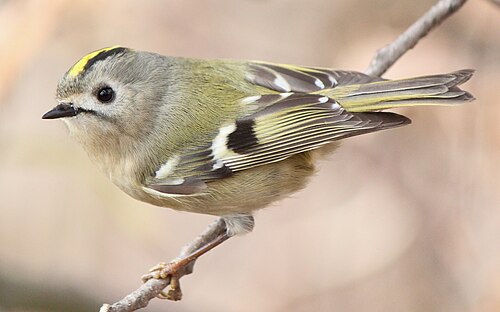
The crests, also called kinglets in North America, are a small group of birds formerly sometimes included in the Old World warblers, but now given family status because they are genetically distinct from them. There is one species which occurs in India.
| Common name | Binomial | Comments |
|---|---|---|
| Goldcrest | Regulus regulus |
Elachura
Order: Passeriformes Family: Elachuridae

This species, the only one in its family, inhabits forest undergrowth throughout Southeast Asia.
| Common name | Binomial | Comments |
|---|---|---|
| Spotted elachura | Elachura formosa |
Wrens
Order: Passeriformes Family: Troglodytidae

The wrens are mainly small and inconspicuous except for their loud songs. These birds have short wings and thin down-turned bills. Several species often hold their tails upright. All are insectivorous. There is one species which occurs in India.
| Common name | Binomial | Comments |
|---|---|---|
| Eurasian wren | Troglodytes troglodytes |
Nuthatches
Order: Passeriformes Family: Sittidae

Nuthatches are small woodland birds. They have the unusual ability to climb down trees head first, unlike other birds which can only go upwards. Nuthatches have big heads, short tails and powerful bills and feet.
| Common name | Binomial | Comments |
|---|---|---|
| White-cheeked nuthatch | Sitta leucopsis | |
| Beautiful nuthatch | Sitta formosa | Vulnerable |
| Velvet-fronted nuthatch | Sitta frontalis | |
| Yunnan nuthatch | Sitta yunnanensis | (V)[48] |
| White-tailed nuthatch | Sitta himalayensis | |
| Chestnut-vented nuthatch | Sitta nagaensis | |
| Kashmir nuthatch | Sitta cashmirensis | |
| Indian nuthatch | Sitta castanea | |
| Chestnut-bellied nuthatch | Sitta cinnamoventris |
Wallcreeper
Order: Passeriformes Family: Tichodromidae

The wallcreeper is a small bird related to the nuthatch family, which has stunning crimson, grey and black plumage.
| Common name | Binomial | Comments |
|---|---|---|
| Wallcreeper | Tichodroma muraria |
Treecreepers
Order: Passeriformes Family: Certhiidae

Treecreepers are small woodland birds, brown above and white below. They have thin pointed down-curved bills, which they use to extricate insects from bark. They have stiff tail feathers, like woodpeckers, which they use to support themselves on vertical trees.
| Common name | Binomial | Comments |
|---|---|---|
| Hodgson's treecreeper | Certhia hodgsoni | |
| Bar-tailed treecreeper | Certhia himalayana | |
| Rusty-flanked treecreeper | Certhia nipalensis | |
| Sikkim treecreeper | Certhia discolor | |
| Hume's treecreeper | Certhia manipurensis | [49][50] |
Spotted creepers
Order: Passeriformes Family: Salpornithidae

Spotted creepers are similar to the treecreepers of Certhiidae but lack the characteristic stiffened tail feathers. They build cup nests joined together with spider webs and decorated with lichen.
| Common name | Binomial | Comments |
|---|---|---|
| Indian spotted creeper | Salpornis spilonota |
Starlings and rhabdornis
Order: Passeriformes Family: Sturnidae
Starlings are small to medium-sized passerine birds. Their flight is strong and direct and they are very gregarious. Their preferred habitat is fairly open country. They eat insects and fruit. Plumage is typically dark with a metallic sheen.

| Common name | Binomial | Comments |
|---|---|---|
| Asian glossy starling | Aplonis panayensis | |
| Spot-winged starling | Saroglossa spilopterus | |
| Golden-crested myna | Ampeliceps coronatus | |
| Common hill myna | Gracula religiosa | |
| Southern hill myna | Gracula indica | |
| Great myna | Acridotheres grandis | |
| Jungle myna | Acridotheres fuscus | |
| Collared myna | Acridotheres albocinctus | |
| Bank myna | Acridotheres ginginianus | |
| Common myna | Acridotheres tristis | |
| Red-billed starling | Spodiopsar sericeus | (V) |
| White-cheeked starling | Spodiopsar cineraceus | (V) |
| Indian pied myna | Gracupica contra | |
| Daurian starling | Agropsar sturninus | |
| Chestnut-cheeked starling | Agropsar philippensis | (V)[51] |
| White-shouldered starling | Sturnia sinensis | (V) |
| Chestnut-tailed starling | Sturnia malabarica | [52] |
| White-headed starling | Sturnia erythropygia | (E)[52] |
| Malabar starling | Sturnia blythii | (E)[52] |
| Brahminy starling | Sturnia pagodarum | [52] |
| Rosy starling | Pastor roseus | |
| Common starling | Sturnus vulgaris |
Thrushes


Order: Passeriformes Family: Turdidae
The thrushes are a group of passerine birds that occur mainly in the Old World. They are plump, soft plumaged, small to medium-sized insectivores or sometimes omnivores, often feeding on the ground. Many have attractive songs.
| Common name | Binomial | Comments |
|---|---|---|
| Pied thrush | Geokichla wardii | |
| Orange-headed thrush | Geokichla citrina | |
| Siberian thrush | Geokichla sibirica | |
| Alpine thrush | Zoothera mollissima | |
| Himalayan thrush | Zoothera salimalii | [53] |
| Long-tailed thrush | Zoothera dixoni | |
| Scaly thrush | Zoothera dauma | |
| White's thrush | Zoothera aurea | (V) |
| Nilgiri thrush | Zoothera neilgherriensis | (E) |
| Long-billed thrush | Zoothera monticola | |
| Dark-sided thrush | Zoothera marginata | |
| Grandala | Grandala coelicolor | |
| Tickell's thrush | Turdus unicolor | |
| Black-breasted thrush | Turdus dissimilis | |
| Japanese thrush | Turdus cardis | (V) |
| White-collared blackbird | Turdus albocinctus | |
| Grey-winged blackbird | Turdus boulboul | |
| Tibetan blackbird | Turdus maximus | |
| Indian blackbird | Turdus simillimus | |
| Chinese blackbird | Turdus mandarinus | (V) |
| Chestnut thrush | Turdus rubrocanus | |
| White-backed thrush | Turdus kessleri | (V) |
| Grey-sided thrush | Turdus feae | |
| Eyebrowed thrush | Turdus obscurus | |
| Japanese thrush | Turdus cardis | (V) |
| Black-throated thrush | Turdus atrogularis | |
| Red-throated thrush | Turdus ruficollis | |
| Naumann's thrush | Turdus naumanni | (V) |
| Dusky thrush | Turdus eunomus | |
| Fieldfare | Turdus pilaris | (V) |
| Song thrush | Turdus philomelos | (V)[11] |
| Chinese thrush | Turdus mupinensis | (V)[54] |
| Mistle thrush | Turdus viscivorus | |
| Purple cochoa | Cochoa purpurea | |
| Green cochoa | Cochoa viridis |
Chats and Old World flycatchers


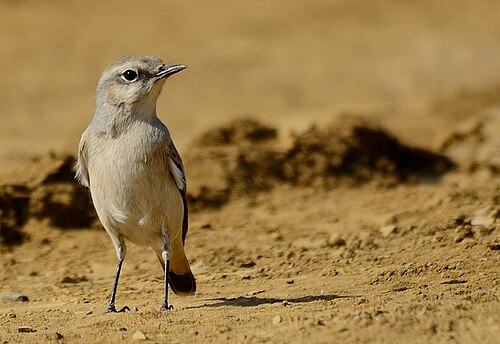
Order: Passeriformes Family: Muscicapidae
Old World flycatchers are a large group of small passerine birds native to the Old World. They are mainly small arboreal insectivores. The appearance of these birds is highly varied; some have weak songs and harsh calls, but others have among the most famous of all songbird songs.
| Common name | Binomial | Comments |
|---|---|---|
| Rufous-tailed scrub robin | Cercotrichas galactotes | |
| Indian robin | Copsychus fulicatus | |
| Oriental magpie-robin | Copsychus saularis | |
| White-rumped shama | Copsychus malabaricus | |
| Andaman shama | Copsychus albiventris | (E) |
| Spotted flycatcher | Muscicapa striata | |
| Dark-sided flycatcher | Muscicapa sibirica | |
| Asian brown flycatcher | Muscicapa dauurica | |
| Brown-breasted flycatcher | Muscicapa muttui | |
| Grey-streaked flycatcher | Muscicapa griseisticta | (V) |
| Ferruginous flycatcher | Muscicapa ferruginea | |
| White-gorgeted flycatcher | Anthipes monileger | |
| Pale blue flycatcher | Cyornis unicolor | |
| White-bellied blue flycatcher | Cyornis pallidipes | (E) |
| Pale-chinned blue flycatcher | Cyornis poliogenys | |
| Hill blue flycatcher | Cyornis whitei | Split from C. banyumas[55] |
| Large blue flycatcher | Cyornis magnirostris | Near threatened |
| Tickell's blue flycatcher | Cyornis tickelliae | |
| Blue-throated blue flycatcher | Cyornis rubeculoides | |
| White-tailed flycatcher | Cyornis concretus | |
| Nicobar jungle flycatcher | Cyornis nicobaricus | (E); near threatened |
| Rufous-bellied niltava | Niltava sundara | |
| Chinese vivid niltava | Niltava oatesi | |
| Large niltava | Niltava grandis | |
| Small niltava | Niltava macgrigoriae | |
| Blue-and-white flycatcher | Cyanoptila cyanomelana | (V)[56] |
| Zappey's flycatcher | Cyanoptila cumatilis | (V); near threatened |
| Verditer flycatcher | Eumyias thalassinus | |
| Nilgiri flycatcher | Eumyias albicaudatus | (E) |
| Gould's shortwing | Heteroxenicus stellatus | |
| Rusty-bellied shortwing | Brachypteryx hyperythra | |
| Lesser shortwing | Brachypteryx leucophris | |
| Himalayan shortwing | Brachypteryx cruralis | |
| Indian blue robin | Larvivora brunnea | |
| Siberian blue robin | Larvivora cyane | (V) |
| Bluethroat | Luscinia svecica | |
| White-bellied redstart | Luscinia phaenicuroides | |
| Himalayan rubythroat | Calliope pectoralis | |
| Chinese rubythroat | Calliope tschebaiewi | |
| Siberian rubythroat | Calliope calliope | |
| Firethroat | Calliope pectardens | (V); near threatened |
| White-tailed robin | Myiomela leucura | |
| Nilgiri blue robin | Sholicola major | (E); near threatened |
| White-bellied blue robin | Sholicola albiventris | (E); near threatened |
| White-browed bush robin | Tarsiger indicus | |
| Rufous-breasted bush robin | Tarsiger hyperythrus | |
| Red-flanked bluetail | Tarsiger cyanurus | (V) |
| Himalayan bluetail | Tarsiger rufilatus | |
| Golden bush robin | Tarsiger chrysaeus | |
| Little forktail | Enicurus scouleri | |
| Black-backed forktail | Enicurus immaculatus | |
| Slaty-backed forktail | Enicurus schistaceus | |
| White-crowned forktail | Enicurus leschenaulti | |
| Spotted forktail | Enicurus maculatus | |
| Malabar whistling thrush | Myophonus horsfieldii | (E) |
| Blue whistling thrush | Myophonus caeruleus | |
| Blue-fronted robin | Cinclidium frontale | |
| Yellow-rumped flycatcher | Ficedula zanthopygia | (V) |
| Slaty-backed flycatcher | Ficedula erithacus | |
| Mugimaki flycatcher | Ficedula mugimaki | (V)[57] |
| Pygmy flycatcher | Ficedula hodgsoni | |
| Rufous-gorgeted flycatcher | Ficedula strophiata | |
| Sapphire flycatcher | Ficedula sapphira | |
| Ultramarine flycatcher | Ficedula superciliaris | |
| Little pied flycatcher | Ficedula westermanni | |
| Slaty-blue flycatcher | Ficedula tricolor | |
| Snowy-browed flycatcher | Ficedula hyperythra | |
| Rusty-tailed flycatcher | Ficedula ruficauda | |
| Taiga flycatcher | Ficedula albicilla | |
| Red-breasted flycatcher | Ficedula parva | |
| Kashmir flycatcher | Ficedula subrubra | Vulnerable |
| Black-and-orange flycatcher | Ficedula nigrorufa | (E) |
| Eversmann's redstart | Phoenicurus erythronotus | |
| Blue-capped redstart | Phoenicurus coeruleocephala | |
| Black redstart | Phoenicurus ochruros | |
| Common redstart | Phoenicurus phoenicurus | (V)[11] |
| Hodgson's redstart | Phoenicurus hodgsoni | |
| White-throated redstart | Phoenicurus schisticeps | |
| Daurian redstart | Phoenicurus auroreus | |
| Güldenstädt's redstart | Phoenicurus erythrogastrus | |
| Blue-fronted redstart | Phoenicurus frontalis | |
| Plumbeous water redstart | Phoenicurus fuliginosus | |
| White-capped redstart | Phoenicurus leucocephalus | [58] |
| White-throated rock thrush | Monticola gularis | |
| Common rock thrush | Monticola saxatilis | |
| Blue rock thrush | Monticola solitarius | |
| Chestnut-bellied rock thrush | Monticola rufiventris | |
| Blue-capped rock thrush | Monticola cinclorhyncha | |
| Whinchat | Saxicola rubetra | (V) |
| White-browed bush chat | Saxicola macrorhynchus | Vulnerable |
| White-throated bush chat | Saxicola insignis | |
| Siberian stonechat | Saxicola maurus | |
| Amur stonechat | Saxicola stejnegeri | |
| White-tailed stonechat | Saxicola leucurus | |
| Pied bush chat | Saxicola caprata | |
| Jerdon's bush chat | Saxicola jerdoni | |
| Grey bush chat | Saxicola ferreus | |
| Northern wheatear | Oenanthe oenanthe | (V)[59] |
| Isabelline wheatear | Oenanthe isabellina | |
| Desert wheatear | Oenanthe deserti | |
| Pied wheatear | Oenanthe pleschanka | |
| Brown rock chat | Oenanthe fusca | |
| Variable wheatear | Oenanthe picata | |
| Hume's wheatear | Oenanthe albonigra | |
| Finsch's wheatear | Oenanthe finschii | (V) |
| Red-tailed wheatear | Oenanthe chrysopygia |
Dippers
Order: Passeriformes Family: Cinclidae
Dippers are a group of perching birds whose habitat includes aquatic environments in the Americas, Europe and Asia. They are named for their bobbing or dipping movements. Two species have been recorded in India.
| Common name | Binomial | Comments |
|---|---|---|
| White-throated dipper | Cinclus cinclus | |
| Brown dipper | Cinclus pallasii |
Leafbirds

Order: Passeriformes Family: Chloropseidae
The leafbirds are small, bulbul-like birds. The males are brightly plumaged, usually in greens and yellows.
| Common name | Binomial | Comments |
|---|---|---|
| Blue-winged leafbird | Chloropsis cochinchinensis | |
| Jerdon's leafbird | Chloropsis jerdoni | |
| Golden-fronted leafbird | Chloropsis aurifrons | |
| Orange-bellied leafbird | Chloropsis hardwickii |
Flowerpeckers

Order: Passeriformes Family: Dicaeidae

The flowerpeckers are very small, stout, often brightly coloured birds, with short tails, short thick curved bills and tubular tongues.
| Common name | Binomial | Comments |
|---|---|---|
| Thick-billed flowerpecker | Dicaeum agile | |
| Yellow-vented flowerpecker | Dicaeum chrysorrheum | |
| Yellow-bellied flowerpecker | Dicaeum melanozanthum | |
| Pale-billed flowerpecker | Dicaeum erythrorhynchos | |
| Nilgiri flowerpecker | Dicaeum concolor | |
| Plain flowerpecker | Dicaeum minullum | |
| Andaman flowerpecker | Dicaeum virescens | (E) |
| Fire-breasted flowerpecker | Dicaeum ignipectus | |
| Scarlet-backed flowerpecker | Dicaeum cruentatum |
Sunbirds
Order: Passeriformes Family: Nectariniidae


The sunbirds and spiderhunters are very small passerine birds which feed largely on nectar, although they will also take insects, especially when feeding young. Flight is fast and direct on their short wings. Most species can take nectar by hovering like a hummingbird, but usually perch to feed.
| Common name | Binomial | Comments |
|---|---|---|
| Ruby-cheeked sunbird | Chalcoparia singalensis | |
| Purple-rumped sunbird | Leptocoma zeylonica | |
| Crimson-backed sunbird | Leptocoma minima | (E) |
| Van Hasselt's sunbird | Leptocoma brasiliana | |
| Purple sunbird | Cinnyris asiaticus | |
| Ornate sunbird | Cinnyris ornatus | |
| Loten's sunbird | Cinnyris lotenius | |
| Mrs. Gould's sunbird | Aethopyga gouldiae | |
| Green-tailed sunbird | Aethopyga nipalensis | |
| Black-throated sunbird | Aethopyga saturata | |
| Crimson sunbird | Aethopyga siparaja | |
| Vigors's sunbird | Aethopyga vigorsii | (E) |
| Fire-tailed sunbird | Aethopyga ignicauda | |
| Little spiderhunter | Arachnothera longirostra | |
| Streaked spiderhunter | Arachnothera magna |
Old World sparrows and snowfinches
Order: Passeriformes Family: Passeridae
Sparrows are small passerine birds. In general, sparrows tend to be small, plump, brown or grey birds with short tails and short powerful beaks. Sparrows are seed eaters, but they also consume small insects.

| Common name | Binomial | Comments |
|---|---|---|
| House sparrow | Passer domesticus | |
| Spanish sparrow | Passer hispaniolensis | |
| Sind sparrow | Passer pyrrhonotus | |
| Russet sparrow | Passer cinnamomeus | |
| Eurasian tree sparrow | Passer montanus | |
| Pale rockfinch | Carpospiza brachydactyla | (V)[60][61] |
| Rock sparrow | Petronia petronia | [62] |
| Yellow-throated sparrow | Gymnoris xanthocollis | |
| Black-winged snowfinch | Montifringilla adamsi | |
| White-rumped snowfinch | Onychostruthus taczanowskii | (V) |
| Rufous-necked snowfinch | Pyrgilauda ruficollis | |
| Blanford's snowfinch | Pyrgilauda blanfordi |
Weavers and widowbirds

Order: Passeriformes Family: Ploceidae
The weavers are small passerine birds related to sparrows and finches. They are seed-eating birds with rounded conical bills. The males of many species are brightly coloured, usually in red or yellow and black, some species show variation in colour only in the breeding season. There are four species which have been recorded in India.
| Common name | Binomial | Comments |
|---|---|---|
| Black-breasted weaver | Ploceus benghalensis | |
| Streaked weaver | Ploceus manyar | |
| Baya weaver | Ploceus philippinus | |
| Finn's weaver | Ploceus megarhynchus | Endangered |
Waxbills, munias, and allies

Order: Passeriformes Family: Estrildidae

The munias and allies are small passerine birds of the Old World tropics and Australasia. They are gregarious and often colonial seed eaters with short thick but pointed bills. They are all similar in structure and habits, but have wide variation in plumage colours and patterns.
| Common name | Binomial | Comments |
|---|---|---|
| Indian silverbill | Euodice malabarica | |
| Scaly-breasted munia | Lonchura punctulata | |
| Black-throated munia | Lonchura kelaarti | |
| White-rumped munia | Lonchura striata | |
| Tricoloured munia | Lonchura malacca | |
| Chestnut munia | Lonchura atricapilla | |
| Green avadavat | Amandava formosa | (E); vulnerable |
| Red avadavat | Amandava amandava |
Accentors
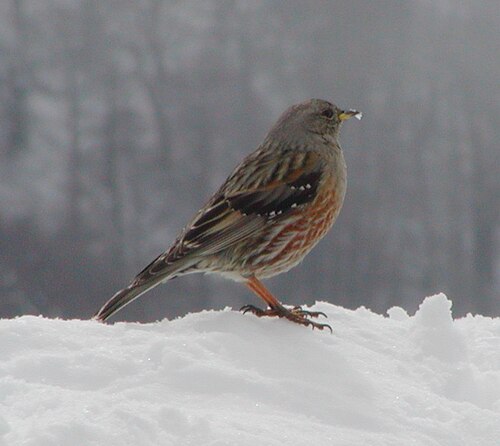
Order: Passeriformes Family: Prunellidae
The accentors are in the only bird family, Prunellidae, which is completely endemic to the Palearctic. They are small, fairly drab species superficially similar to sparrows. There are seven species which have been recorded in India.
| Common name | Binomial | Comments |
|---|---|---|
| Alpine accentor | Prunella collaris | |
| Altai accentor | Prunella himalayana | |
| Robin accentor | Prunella rubeculoides | |
| Rufous-breasted accentor | Prunella strophiata | |
| Brown accentor | Prunella fulvescens | |
| Black-throated accentor | Prunella atrogularis | |
| Maroon-backed accentor | Prunella immaculata |
Wagtails and pipits

Order: Passeriformes Family: Motacillidae

Motacillidae is a family of small passerine birds with medium to long tails. They include the wagtails, longclaws and pipits. They are slender, ground feeding insectivores of open country. There are 21 species which have been recorded in India.

| Common name | Binomial | Comments |
|---|---|---|
| Forest wagtail | Dendronanthus indicus | |
| Western yellow wagtail | Motacilla flava | |
| Eastern yellow wagtail | Motacilla tschutschensis | (V) |
| Citrine wagtail | Motacilla citreola | |
| Grey wagtail | Motacilla cinerea | |
| White wagtail | Motacilla alba | |
| White-browed wagtail | Motacilla maderaspatensis | |
| Richard's pipit | Anthus richardi | |
| Paddyfield pipit | Anthus rufulus | |
| Blyth's pipit | Anthus godlewskii | |
| Tawny pipit | Anthus campestris | |
| Long-billed pipit | Anthus similis | |
| Tree pipit | Anthus trivialis | |
| Olive-backed pipit | Anthus hodgsoni | |
| Rosy pipit | Anthus roseatus | |
| Red-throated pipit | Anthus cervinus | |
| Siberian pipit | Anthus japonicus | (V) |
| Water pipit | Anthus spinoletta | |
| Nilgiri pipit | Anthus nilghiriensis | (E); vulnerable |
| Upland pipit | Anthus sylvanus | |
| Meadow pipit | Anthus pratensis | (V) |
Finches and euphonias

Order: Passeriformes Family: Fringillidae
Finches are seed-eating passerine birds, that are small to moderately large and have a strong beak, usually conical and in some species very large. All have twelve tail feathers and nine primaries. These birds have a bouncing flight with alternating bouts of flapping and gliding on closed wings, and most sing well. There are 44 species which have been recorded in India.

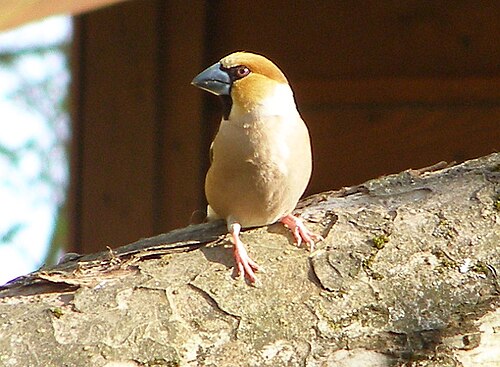
| Common name | Binomial | Comments |
|---|---|---|
| Eurasian chaffinch | Fringilla coelebs | |
| Brambling | Fringilla montifringilla | |
| Black-and-yellow grosbeak | Mycerobas icterioides | |
| Collared grosbeak | Mycerobas affinis | |
| Spot-winged grosbeak | Mycerobas melanozanthos | |
| White-winged grosbeak | Mycerobas carnipes | |
| Hawfinch | Coccothraustes coccothraustes | |
| Chinese grosbeak | Eophona migratoria | |
| Brown bullfinch | Pyrrhula nipalensis | |
| Orange bullfinch | Pyrrhula aurantiaca | |
| Red-headed bullfinch | Pyrrhula erythrocephala | |
| Grey-headed bullfinch | Pyrrhula erythaca | |
| Asian crimson-winged finch | Rhodopechys sanguineus | (V) |
| Trumpeter finch | Bucanetes githagineus | |
| Mongolian finch | Bucanetes mongolicus | |
| Blanford's rosefinch | Agraphospiza rubescens | |
| Spectacled finch | Callacanthis burtoni | |
| Golden-naped finch | Pyrrhoplectes epauletta | |
| Dark-breasted rosefinch | Procarduelis nipalensis | |
| Plain mountain finch | Leucosticte nemoricola | |
| Brandt's mountain finch | Leucosticte brandti | |
| Common rosefinch | Carpodacus erythrinus | |
| Scarlet finch | Carpodacus sipahi | |
| Streaked rosefinch | Carpodacus rubicilloides | |
| Great rosefinch | Carpodacus rubicilla | |
| Blyth's rosefinch | Carpodacus grandis | |
| Himalayan beautiful rosefinch | Carpodacus pulcherrimus | |
| Pink-rumped rosefinch | Carpodacus waltoni | (V) |
| Pink-browed rosefinch | Carpodacus rodochroa | |
| Dark-rumped rosefinch | Carpodacus edwardsii | |
| Spot-winged rosefinch | Carpodacus rodopeplus | |
| Vinaceous rosefinch | Carpodacus vinaceus | |
| Pale rosefinch | Carpodacus stoliczkae | (V) |
| Sillem's rosefinch | Carpodacus sillemi | Data deficient |
| Himalayan white-browed rosefinch | Carpodacus thura | |
| Chinese white-browed rosefinch | Carpodacus dubius | (V)[63] |
| Red-fronted rosefinch | Carpodacus puniceus | |
| Crimson-browed finch | Carpodacus subhimachalus | |
| Three-banded rosefinch | Carpodacus trifasciatus | [64] |
| Yellow-breasted greenfinch | Chloris spinoides | |
| European greenfinch | Chloris chloris | |
| Black-headed greenfinch | Chloris ambigua | [33][46][65] |
| Desert finch | Rhodospiza obsoleta | (V) |
| Twite | Linaria flavirostris | |
| Common linnet | Linaria cannabina | [11] |
| Red crossbill | Loxia curvirostra | |
| Grey-crowned goldfinch | Carduelis caniceps | |
| Red-fronted serin | Serinus pusillus | |
| Tibetan serin | Spinus thibetanus | |
| Eurasian siskin | Spinus spinus | (V) |
Longspurs
Order: Passeriformes Family: Calcariidae

The longspurs are a small family of passerines with six species of bird. They are similar to buntings, and were formerly included in that family.
| Common name | Binomial | Comments |
|---|---|---|
| Lapland longspur | Calcarius lapponicus | (V) |
Buntings

Order: Passeriformes Family: Emberizidae
The buntings are a large family of passerine birds. They are seed-eating birds with distinctively shaped bills. Many buntings have distinctive head patterns.

| Common name | Binomial | Comments |
|---|---|---|
| Crested bunting | Emberiza lathami | |
| Yellowhammer | Emberiza citrinella | (V)[11][66] |
| Pine bunting | Emberiza leucocephalos | |
| Rock bunting | Emberiza cia | |
| Godlewski's bunting | Emberiza godlewskii | [65] |
| Meadow bunting | Emberiza cioides | (V) |
| White-capped bunting | Emberiza stewarti | |
| Grey-necked bunting | Emberiza buchanani | |
| Ortolan bunting | Emberiza hortulana | (V) |
| Striolated bunting | Emberiza striolata | |
| Tristram's bunting | Emberiza tristrami | (V)[67] |
| Chestnut-eared bunting | Emberiza fucata | |
| Little bunting | Emberiza pusilla | |
| Yellow-browed bunting | Emberiza chrysophrys | (V) |
| Rustic bunting | Emberiza rustica | (V); vulnerable |
| Yellow-breasted bunting | Emberiza aureola | Critically endangered |
| Chestnut bunting | Emberiza rutila | |
| Black-headed bunting | Emberiza melanocephala | |
| Red-headed bunting | Emberiza bruniceps | |
| Black-faced bunting | Emberiza spodocephala | |
| Common reed bunting | Emberiza schoeniclus |
See also
References
- 12"India bird checklist - Avibase - Bird Checklists of the World". avibase.bsc-eoc.org. Retrieved 2 March 2025.
- ↑Manakadan, Ranjit; Khan, Asif N. (March 2020). "Birds of the Indian Subcontinent—In a Nutshell". Buceros. 24 (2 & 3). BNHS-ENVIS.
- ↑"National bird of India". Know India. Govt. of India. Archived from the original on 19 August 2017. Retrieved 2 December 2007.
- ↑Baker, E. C. S. (1904). "The occurrence of the Red-breasted Goose Branta ruficollis in India". Journal of the Bombay Natural History Society. 16 (1): 155–156.
- ↑Sangha, H. S. (2015). "'Tundra' Bean Goose Anser fabalis rossicus/serrirostris at Tahla Lake, Alwar district, Rajasthan"(PDF). Indian Birds. 10 (3&4): 94–98.
- ↑Baker, E. C. S. (1904). "Occurrence of the Dwarf Goose Anser erythropus in Assam". Journal of the Bombay Natural History Society. 15 (3): 524.
- ↑Khan, Asif N. (1 December 2013). "First Record of Lesser White-Fronted Goose Anser erythropus from Gujarat, India". Journal of the Bombay Natural History Society. 110 (3): 224. doi:10.17087/jbnhs/2013/v110i3/94037 (inactive 12 July 2025). ISSN 2454-1095. Archived from the original on 15 September 2017. Retrieved 15 September 2017.
{{cite journal}}: CS1 maint: DOI inactive as of July 2025 (link) - ↑Lewis, E. S. (1938). "Bewick's Swan (Cygnus bewickii Yarrell) near Delhi". Journal of the Bombay Natural History Society. 40 (2): 333.
- ↑Dunn, J. C.; Buchanan, G. M.; Cuthbert, R. J.; Whittingham, M. J. & McGowan, P. J. K. (2015). "Mapping the potential distribution of the Critically Endangered Himalayan Quail Ophrysia superciliosa using proxy species and species distribution modelling". Bird Conservation International. 25 (4): 1–13. doi:10.1017/S095927091400046X.
- ↑BirdLife International. (2018). "Pavo muticus". IUCN Red List of Threatened Species. 2018 e.T22679440A131749282. doi:10.2305/IUCN.UK.2018-2.RLTS.T22679440A131749282.en. Retrieved 2 December 2022.
- 12345678910111213Delany, S.; Garbutt, D.; Williams, C.; Sulston, C.; Norton, J. & Denby, C. (2014). "The Southampton University Ladakh Expeditions 1976–1982: Full details of nine species previously unrecorded in India and four second records". Indian Birds. 9 (1): 1–13.
- ↑Gogoi, Deborshee & Phukan, Porag Jyoti (2016). "White-browed Crake Amaurornis cinerea in maguri-Motapung Beel, Assam, India: A new species for South Asia". Indian Birds. 11 (3): 79–80.
- ↑BirdLife International. (2018). "Leucogeranus leucogeranus". IUCN Red List of Threatened Species. 2018 e.T22692053A134180990. doi:10.2305/IUCN.UK.2018-2.RLTS.T22692053A134180990.en. Retrieved 3 April 2021.
- ↑International Crane Foundation - Siberian CraneArchived 14 November 2008 at the Wayback Machine
- ↑BirdLife International. (2016). "Grus monacha". IUCN Red List of Threatened Species. 2016 e.T22692151A93337861. doi:10.2305/IUCN.UK.2016-3.RLTS.T22692151A93337861.en. Retrieved 3 April 2021.
- ↑Praveen, J; Jayapal, Rajah & Pittie, Aasheesh. (2016). A checklist of the birds of India. Indian Birds. 11 (5&6): 113–172
- ↑Abhinav, C. & Dhadwal, D. S. (2014). "European Golden Plover Pluvialis apricaria at Pong Lake, Himachal Pradesh, India". Indian Birds. 9 (5&6): 149–151.
- ↑Bhopale, Nikhil (2010). "Additions to the avifauna of the Indian Subcontinent — 'White-faced' Plover Charadrius dealbatus from Andaman and Nicobar Islands, India". Journal of the Bombay Natural History Society. 107 (1): 60–61.
- ↑Holt, P. (1999). "Long-billed Dowitcher Limnodromus scolopaceus at Bharatpur, Rajasthan, India: a new species for the Indian subcontinent". Forktail 15:95. Archived 11 October 2008 at the Wayback Machine
- 1234567891011Praveen, J.; Jayapal, R. & Pittie, A. (2014). "Notes on Indian rarities—2: Waterfowl, diving waterbirds, and gulls and terns". Indian Birds. 9 (5&6): 113–136.
- ↑Jayson E. A.; Babu S. & Govind, S. K. (2013). "Recovery of White Tern Gygis alba at Athirapilly, Kerala, India". Indian Birds. 8 (6): 163.
- ↑Sreenivasan, P. P.; Praveen J.; Prince, M. & Karuthedathu, D. (2013). "Sabine's Gull Xema sabini from Puthankadapuram, Kerala, India: a first record for South Asia". Indian Birds. 8 (4): 99–100.
- ↑Holt, Paul I.; England, A. Sidney; Beaton, Randy E. & Bloss, Juliet (2013). "Franklin's Gull Leucophaeus pipixcan in Goa: a new species for India". BirdingASIA. 20: 119–120.
- ↑Jamalabad, A. (2016). "Records of a White-eyed Gull Ichthyaetus leucophthalmus and a Black Tern Chlidonias niger from the Karwar coast, Karnataka, India". Indian Birds. 12 (1): 12–14.
- 123Praveen J.; Jayapal, R. & Pittie, A. (2013). "Notes on Indian rarities—1: Seabirds". Indian Birds. 8 (5): 113–125.
- ↑Karuthedathu, D. (2014). "Long-tailed Jaeger Stercorarius longicaudus from the western coast of India: Identification in retrospect". Indian Birds. 9 (3): 69–72.
- ↑Praveen, J.; Palot, M. J. & Karuthedathu, D. (2013). "Recovery of a Cory's Shearwater Calonectris borealis from Thaikadapuram beach, Kasaragod district, Kerala". Indian Birds. 8 (8): 152–153.
- ↑E. Haring; K. Kvaløy; J.-O. Gjershaug; N. Røv & A. Gamauf (2007). "Convergent evolution and paraphyly of the hawk-eagles of the genus Spizaetus (Aves, Accipitridae) – phylogenetic analyses based on mitochondrial markers". Journal of Zoological Systematics and Evolutionary Research. 45 (4): 353–365. doi:10.1111/j.1439-0469.2007.00410.x.
- ↑Gjershaug, J. O.; Diserud, O. H.; Rasmussen, P. C. & Warakagoda, D. (2008). "An overlooked threatened species of eagle: Legge's Hawk Eagle Nisaetus kelaarti (Aves: Accipitriformes)"(PDF). Zootaxa. 1792: 54–66. doi:10.11646/zootaxa.1792.1.4. S2CID 1395119.
- ↑Lerner, Heather; Christidis, Les; Gamauf, Anita; Griffiths, Carole; Haring, Elisabeth; Huddleston, Christopher J.; Kabra, Sonia; Kocum, Annett; Krosby, Meade; Kvaløy, Kirsti; Mindell, David; Rasmussen, Pamela; Røv, Nils; Wadleigh, Rachel; Wink, Michael & Gjershaug, Jan Ove (2017). "Phylogeny and new taxonomy of the Booted Eagles (Accipitriformes: Aquilinae)". Zootaxa. 4216 (4): 301. doi:10.11646/zootaxa.4216.4.1. hdl:11250/2443953. PMID 28183111.
- ↑Naoroji, Rishad & D'Silva, Carl (1998). "Sighting of Red Kite Milvus milvus at Ranikhet". Journal of the Bombay Natural History Society. 95 (2): 339–340.
- ↑Johansson, Ulf S.; Irestedt, Martin; Qu, Yanhua & Ericson, Per G.P. (2018). "Phylogenetic relationships of rollers (Coraciidae) based on complete mitochondrial genomes and fifteen nuclear genes". Molecular Phylogenetics and Evolution. 126: 17–22. Bibcode:2018MolPE.126...17J. doi:10.1016/j.ympev.2018.03.030. PMID 29631051. S2CID 5011292.
- 12Singh, A. P. (2013). "Lord Derby's Parakeet Psittacula derbiana, and Black-headed Greenfinch Carduelis ambigua in Arunachal Pradesh, India". Indian Birds. 8 (5): 133.
- ↑Manchi, S. S. & Kumar, J. S. (2014). "Sighting of the Blue-winged Pitta Pitta moluccensis on Narcondam Island, India". Indian Birds. 9 (1): 23–24.
- ↑Chatterjee, S. (2013). "Mangrove Pitta Pitta megarhyncha from Sundarbans, West Bengal, India". Indian Birds. 8 (6): 160–161.
- ↑Karuthedathu, D.; Das, V.; Praveen, J.; Ramachandran, V.; Shurpali, S. & Nair, M. V. (2014). "Some significant avian records from Odisha". Indian Birds. 9 (1): 14–18.
- ↑Nandgaonkar, P. S. (2013). "Woodchat Shrike Lanius senator from Alibaug, Maharashtra: A first record for India". Indian Birds. 8 (6): 164.
- ↑Jønsson, K. A.; Bowie, R. C. K.; Moyle, R. G.; Irestedt, M.; Christidis, L.; Norman, J. A. & Fjeldså, J. (2010). "Phylogeny and biogeography of Oriolidae (Aves: Passeriformes)"(PDF). Ecography. 33 (2): 232–241. Bibcode:2010Ecogr..33..232J. doi:10.1111/j.1600-0587.2010.06167.x.
- ↑Packert, Martin; Martens, Jochen; Eck, Siegfried; Nazarenko, Alexander A.; Valchuk, Olga P.; Petri, Bernd & Veith, Michael (2005). "The great tit (Parus major) – a misclassified ring species". Biological Journal of the Linnean Society. 86 (2): 153–174. doi:10.1111/j.1095-8312.2005.00529.x.
- ↑Rasmussen, P. C. & Anderton, J. C. 2005 introduce this split
- ↑Das, S. (2014). "Asian Stubtail Urosphena squameiceps in Rabindrasarobar, Kolkata: A first record for India". Indian Birds. 9 (1): 26–27.
- ↑Sangha, H. S.; Sharma, M. & Jain, A. (2013). "The Black-browed Tit Aegithalos bonvaloti in Arunachal Pradesh: A new species for the Indian Subcontinent". Indian Birds. 8 (5): 137–139.
- ↑Sangha, H. S.; Naoroji, R. & Sharma, M. (2007). "The Crested Tit-warbler Leptopoecile elegans in north-west Arunachal Pradesh. An addition to the Indian avifauna". Indian Birds. 3 (1): 23–25.
- ↑Eaton, J. A. & Das, R. K. (2014). "Baikal Bush-warbler Locustella davidi from Dibru-Saikhowa National Park and Biosphere Reserve, Assam, India: A new species for India"(PDF). Indian Birds. 9 (3): 80–81.
- ↑Alström, Per; Rasmussen, Pamela C.; Sangster, George; Dalvi, Shashank; Round, Philip D.; Zhang, Ruiying; Yao, Cheng-Te; Irestedt, Martin; Le Manh, Hung; Lei, Fumin; Olsson, Urban (2020). "Multiple species within the Striated Prinia Prinia crinigera– Brown Prinia P. Polychroa complex revealed through an integrative taxonomic approach". Ibis. 162 (3): 936–967. doi:10.1111/ibi.12759. S2CID 196653037.
- 12Dalvi, S. (2013). "Elliot's Laughingthrush Trochalopteron elliotii and Black-headed Greenfinch Chloris ambigua from Anini, Arunachal Pradesh, India". Indian Birds. 8 (5): 130.
- ↑Athreya, R. (2006). "A new species of Liocichla (Aves: Timaliidae) from Eaglenest Wildlife Sanctuary, Arunachal Pradesh, India"(PDF). Indian Birds. 2 (4): 82–94.
- ↑Bonpo, C. R. & Kuriakose, J. (2014). "Yunnan Nuthatch Sitta yunnanensis from Walong, Arunachal Pradesh: A new species for South Asia"(PDF). Indian Birds. 9 (4): 105–106.
- ↑Tietze, Dieter Thomas; Martens, Jochen & Sun, Yue-Hua (2006). "Molecular phylogeny of treecreepers (Certhia) detects hidden diversity". Ibis. 148 (3): 477–488. doi:10.1111/j.1474-919X.2006.00547.x.
- ↑Tietze, Dieter Thomas; Martens, Jochen; Sun, Yue-Hua & Paeckert, Martin (2008). "Evolutionary history of treecreeper vocalisations (Aves: Certhia)". Organisms, Diversity & Evolution. 8 (4): 305–324. Bibcode:2008ODivE...8..305T. doi:10.1016/j.ode.2008.05.001.
- ↑Wielen, Pierre van der (2007). "Chestnut-cheeked Starling Sturnus philippensis: new for the Indian subcontinent". Forktail. 23: 173–174.
- 1234Lovette, I.; McCleery, B.; Talaba, A. & Rubenstein, D. (2008). "A complete species-level molecular phylogeny for the 'Eurasian' starlings (Sturnidae: Sturnus, Acridotheres, and allies): Recent diversification in a highly social and dispersive avian group". Molecular Phylogenetics & Evolution. 47 (1): 251–260. doi:10.1016/j.ympev.2008.01.020. PMID 18321732.
- ↑Alström, Per; Rasmussen, Pamela C.; Zhao, Chao; Xu, Jingzi; Dalvi, Shashank; Cai, Tianlong; Guan, Yuyan; Zhang, Ruiying; Kalyakin, Mikhail V.; Lei, Fumin & Olsson, Urban (2016). "Integrative taxonomy of the Plain-backed Thrush (Zoothera mollissima) complex (Aves, Turdidae) reveals cryptic species, including a new species". Avian Research. 7 1. doi:10.1186/s40657-016-0037-2. S2CID 9017949.
- ↑Rajagopal, R. & Inskipp, T. (2014). "First record of the Chinese Thrush Turdus mupinensis from the Indian Subcontinent". Indian Birds. 9 (5&6): 155–157.
- ↑Zhang, Zhen; Wang, Xiaoyang; Huang, Yuan; Olsson, Urban; Martinez, Jonathan; Alström, Per; Lei, Fumin (2016). "Unexpected divergence and lack of divergence revealed in continental Asian Cyornis flycatchers (Aves: Muscicapidae)". Molecular Phylogenetics and Evolution. 94 (Pt A): 232–241. Bibcode:2016MolPE..94..232Z. doi:10.1016/j.ympev.2015.08.024. PMID 26358612.
- ↑Rajeshkumar, S.; Raghunathan, C. & Maheswaran, G. (2014). "Blue-and-white Flycatcher Cyanoptila cyanomelana: First record for Andaman & Nicobar Islands, India". Indian Birds. 9 (4): 104–105.
- ↑Das, S. (2014). "Mugimaki Flycatcher Ficedula mugimaki from Neil Island, Andaman & Nicobar Islands, India". Indian Birds. 9 (2): 56.
- ↑Khan, Asif N. & Khot, Rahul (1 December 2015). "White-Capped River-Chat Phoenicurus leucocephalus in Odisha: First Record from Peninsular India". Journal of the Bombay Natural History Society. 112 (3): 170–171. doi:10.17087/jbnhs/2015/v112i3/114426. ISSN 2454-1095.
- ↑Damle, S. & Inskipp, T. (2014). "Sighting of Northern Wheatear Oenanthe oenanthe from the Nubra Valley, Ladakh, Jammu and Kashmir, and a review of previous records from the Indian Subcontinent". Indian Birds. 9 (5&6): 139–141.
- ↑Poonia, S. S.; Sharma, M. & Sangha, H. S. (2012). "Pale Rock Sparrow Carpospiza brachydactyla in Gopalpura Hills, Tal Chhapar (Churu district, Rajasthan): a new species for the Indian Subcontinent". Indian Birds. 7 (6): 159–160.
- ↑Tiwari, J. K. (2012). "Pale Rock Sparrow Carpospiza brachydactyla: a new species for India". Birding Asia. 17.
- ↑Kelsey, M. (2013). "Rock Sparrow Petronia petronia: A first record for Ladakh". Indian Birds. 8 (5): 136–137.
- ↑Praveen, J.; Shurpali, S.; Ramachandran, V.; Prince, M.; Bowden, C. G. R.; Das, V. & Dalvi, S. (2016). "Chinese White-browed Rosefinch Carpodacus dubius in Mishmi Hills: A confirmation record for India". Indian Birds. 12 (1): 22–23.
- ↑Singh, A.; Mondal, H.S.; Jathar, G. (2021). "Occurrence of the Three-banded Rosefinch Carpodacus trifasciatus in Arunachal Pradesh, India"(PDF). Indian Birds. 17 (1): 17–18.
- 12Gode, N. (2013). "Birding in Lohit Valley, Arunachal Pradesh". Indian Birds. 8 (5): 126–127.
- ↑Sharma, M.; Abhinav, C. & Dhadwal, D. S. (2013). "Chaffinch Fringilla coelebs, Brambling F. montifringilla, and Yellowhammer Emberiza citrinella in Himachal Pradesh, India". Indian Birds. 8 (6): 156–157.
- ^ نانيواديكار، ر. فيسواناثان، أ. كومار، ر. ودالفي، س. (2013). “أول تسجيل لـ Tristram’s Bunting Emberiza tristrami من الهند”. الطيور الهندية . 8 (5): 134- 135.
مصادر أخرى
- قوائم طيور آسيا
- قوائم طيور الهند
- قوائم حيوانات الهند
- قوائم الطيور حسب البلد