
Ziggy Stardust (character)
Ziggy Stardust is a fictional character created by the English musician David Bowie, and was Bowie's stage persona during 1972 and 1973. The eponymous character of the song "Ziggy Stardust" and its parent album The Rise and Fall of Ziggy Stardust and the Spiders from Mars (1972), Ziggy Stardust was retained for Bowie's subsequent concert tour through the United Kingdom, Japan and North America, during which Bowie performed as the character backed by his band the Spiders from Mars. Bowie continued with a similar character in his next album Aladdin Sane (1973), which he described as "Ziggy goes to America". Bowie retired the character in October 1973 after one final show at The Marquee in London.[1]
As conveyed in the title song and album, Ziggy Stardust is an androgynous, alien rock star who came to Earth before an impending apocalyptic disaster to deliver a message of hope. After accumulating a large following of fans and being worshipped as a messiah, Ziggy eventually dies as a victim of his own fame and excess. The character was meant to symbolise an over-the-top, sexually liberated rock star and serve as a commentary on a society in which celebrities are worshipped. Influences for the character included English singer Vince Taylor, Texan musician the Legendary Stardust Cowboy, and Japanese kabuki theatre.
Ziggy Stardust's exuberant fashion made the character, and Bowie himself, staples in the glam rock repertoire well into the 1970s, defining what the genre would become. The success of the character and its iconic look propelled Bowie into international superstardom. Rolling Stone wrote that Bowie's Ziggy Stardust was "the alter ego that changed music forever and sent his career into orbit".[2]
Ziggy Stardust's look and message of youth liberation are now representative of one of Bowie's most memorable eras. The Rise and Fall of Ziggy Stardust and the Spiders from Mars became Bowie's second most popular album in terms of record sales.[3]
Fictional narrative
"'Ziggy' was my Martian messiah who twanged a guitar. He was a simplistic character. I saw him as very simple ... fairly like the character Newton I was to do in the film [The Man Who Fell to Earth] later on. Someone who dropped down here, got brought down to our way of thinking, and ended up destroying his own self. Which is a pretty archetype story line."
Bowie explained that the character of Ziggy Stardust was conceived as an alien rock star who arrives on an alternate Earth that is dying due to a lack of natural resources. Around the world, older people have lost touch with reality, while children have adopted a hedonistic way of life and no longer want rock music, as there is no electricity to play it. Ziggy is advised in a dream by the infinites ("black-hole jumpers") to write about the coming of a starman who will save the earth. Ziggy's tale of the starman is the first news of hope that the people have heard, so they latch onto it immediately. Ziggy soon gathers a large following and is worshipped as a prophet. According to Bowie, "He takes himself up to incredible spiritual heights and is kept alive by his disciples." The infinites eventually arrive and tear Ziggy apart onstage.[5]
Much of the Ziggy Stardust story is told in the album The Rise and Fall of Ziggy Stardust and the Spiders from Mars, or appears in Bowie's writings as plans for a never-realised theatrical performance of the narrative.[6] Various songs on the album are written from the viewpoints of different characters.[7] On the album, the Ziggy Stardust character is introduced directly on the third track, "Moonage Daydream".[8] However, the song "Ziggy Stardust" is the central piece of the narrative of the album, presenting a complete "birth-to-death chronology" of the character.[9] "Starman" is Ziggy's song prophesying the coming starman who will save the earth.[5] According to author Michael Luckman, the song "Lady Stardust" presents Ziggy meeting his disciples, playing before a crowd of worshippers, followed by "Star", in which he "reveal[s] his plan for intergalactic superstardom".[10] Ziggy is torn apart onstage during the song "Rock 'n' Roll Suicide".[5] The song "Sweet Head", recorded during the Ziggy/Hunky Dory sessions, reference Ziggy directly as well, but the song was left off the album and went unreleased until 1989.[11]
The character was revisited by Bowie in his next album Aladdin Sane (1973), which topped the UK chart, and was his first number-one album. Described by Bowie as "Ziggy goes to America", it contained songs he wrote while travelling to and across the US during the earlier part of the Ziggy Stardust Tour.[12][13]
Origins
The character was inspired by English rock 'n' roll singer Vince Taylor, whom Bowie met after Taylor had a breakdown and believed himself to be a cross between a god and an alien.[14][15] Bowie's lyrical allusions to Taylor include identifying Ziggy as a "leper messiah".[16] Taylor was only part of the character's blueprint.[17] In the 1960s Bowie had seen Gene Vincent performing live wearing a leg-brace after a car accident, and observed: "It meant that to crouch at the mike, as was his habit, [Vincent] had to shove his injured leg out behind him to, what I thought, great theatrical effect. This rock stance became position number one for the embryonic Ziggy."[18][19]
Bowie biographers also propose that Bowie developed the concept of Ziggy as a melding of the persona of Iggy Pop with the music of Lou Reed during a visit to the US in 1971.[20][21] A girlfriend recalled his "scrawling notes on a cocktail napkin about a crazy rock star named Iggy or Ziggy", and on his return to England he declared his intention to create a character "who looks like he's landed from Mars".[22]
Bowie stated that with Ziggy Stardust, "I wanted to define the archetype messiah rockstar. That's all I wanted to do. I used the trappings of kabuki theatre, mime technique, fringe New York music." One of his primary references was the Velvet Underground.[7] Bowie stated that Ziggy is meant to be an alien of some kind,[23] possibly a Martian,[4] and was based "very much on a Japanese concept". The character's Japanese influences provided a human connection, Bowie explained, as in Britain during the early 1970s Japan "still seemed like an alien society, but it was a human alien society."[23] Bowie also stated that Ziggy Stardust was a product of his career-long ambition to combine rock music and theatre,[24][25] and that at the time of creating the character he had viewed Ziggy as "a very positive artistic statement ... a grand kitsch painting. The whole guy."[26]
Bowie asserted elsewhere that Ziggy Stardust was born out of a desire to move away from the denim and hippies of the 1960s.[27] Along these lines, some critics assert that Bowie's artificial concoction of a rock star persona was a symbolic critique of the artificiality seen in the rock world of the time.[28] Bowie had previously created artificial stage personas in 1970 with his backing band Hype. Over a small series of shows which, while poorly received at the time, are now credited as the origin of glam rock,[29] the band performed in flamboyant costumes, each with an accompanying persona of a spoof superhero. Bowie, dressed in a blue cape, lurex tights, thigh boots and a leotard with colourful scarves sewn onto his shirt, was "Rainbowman".[29][30] Describing his costume as "very spacey", he later explained that his idea for the outfits was to counter the popular image of rock acts at the time, which was "all jeans and long hair".[30] The concept behind Rainbowman was recycled and reinvented as Ziggy Stardust.[31]
Name
Bowie told Rolling Stone that the name "Ziggy" was "one of the few Christian names [he] could find beginning with the letter 'Z'".[32] He later explained in a 1990 interview for Q magazine that the Ziggy part came from a tailor's shop called Ziggy's that he passed on a train, and he liked it because it had "that Iggy [Pop] connotation but it was a tailor's shop, and I thought, Well, this whole thing is gonna be about clothes, so it was my own little joke calling him Ziggy. So Ziggy Stardust was a real compilation of things."[33][34] "Stardust" came from the Legendary Stardust Cowboy, the stage name of singer Norman Carl Odam,[33][35] whose music intrigued Bowie.[36][37]
Appearance

Hair
عندما كان ديفيد بوي يُعرف باسم زيغي ستاردست، كان لديه قصة شعر حمراء زاهية . [ 40 ] استوحى بوي هذه التسريحة من عارضة أزياء للمصمم الياباني كانساي ياماموتو، والتي رآها في مجلة هوني ، [ 41 ] كما استوحى تصميمها من ثلاث صور مختلفة من مجلة فوغ - حيث استوحى مقدمة الشعر من عدد فرنسي، بينما استوحى الجانبين والخلف من نسختين ألمانيتين مختلفتين. [ 42 ] قامت مصففة الشعر سوزي فوسي، التي رافقت جولة زيغي ستاردست حتى عام 1973، بقص وصبغ شعر بوي. [ 43 ] قصت فوسي شعر بوي بهذه الطريقة لأول مرة في يناير 1972، [ 44 ] وبعد تجربة ألوان مختلفة على خصلات من شعره، صبغته بلون أحمر ناري؛ [ 43 ] ويتذكر بوي أن لون الصبغة كان "أحمر شوارتزكوف". [ 44 ] احتوى الصبغ على بيروكسيد بتركيز 30، مما أعطى شعر باوي كثافةً، لكن فوسي استخدم بعد ذلك علاجًا مضادًا للقشرة يُسمى جارد للمساعدة في تثبيته وجعله منتصبًا. [ 45 ] حققت قصة الشعر نجاحًا جماهيريًا واسعًا، كما صرّح باوي نفسه عام 1993: "أصبحت [قصة زيغي] في عالم تصفيف الشعر في أوائل السبعينيات، بمثابة قصة ليدي دي في أوائل الثمانينيات. ولكن بجاذبية مضاعفة، لأنها كانت مناسبة لكلا الجنسين." [ 46 ]
ملابس


كانت زيغي طويلة ونحيلة، وكانت ترتدي ملابس براقة، غالباً ما تكون ذات أرجل وأكتاف واسعة، وصدر مكشوف. [ 40 ]
On the cover of The Rise and Fall of Ziggy Stardust and the Spiders from Mars, Bowie appeared in a green suit of his own design, made by his tailor friend Freddie Burretti and seamstress Sue Frost. Produced in a geometric-patterned fabric, representing an integrated circuit, the bomber jacket and matching cuffed trousers were worn with knee-high, lace-up boots designed by Stan Miller. Similar outfits were made for Bowie's backing band the Spiders From Mars;[41] these costumes, worn in early live performances, were based on those sported by the Droogs in Stanley Kubrick's 1971 film A Clockwork Orange. Bowie explained, "I wanted to take the hardness and violence of those Clockwork Orange outfits—the trousers tucked into big boots and the codpiece things—and soften them up by using the most ridiculous fabrics. It was a Dada thing—this extreme ultraviolence in Liberty fabrics." In addition to his green suit, Bowie's costumes for early concerts were white satin trousers with a flock-patterned jacket, and a multi-coloured jumpsuit that he also wore on Top of the Pops.[47]
By August 1972, Bowie was introducing Kansai Yamamoto's designs as stage wear for the Ziggy character,[41] lent to him by Yamamoto's stylist friend, Yasuko Hayashi.[38][48] Bowie commissioned Yamamoto to design his 1973 U.K. tour costuming, and subsequently the U.S. tour costuming for the Aladdin Sane shows.[39] In total, seven costumes were designed for Ziggy Stardust by Yamamoto.[49] The collection he provided Bowie in April 1973 included a white robe with "David Bowie" written in Japanese, a silver leotard hung with a floor-length fringe of glass beads, a striped spandex bodystocking, and a multi-coloured kimono that could be torn away to reveal a red loincloth.[50] Many of Yamamoto's stage wear designs for Bowie were "tear-away" outfits, influenced by hikinuki, the method of changing costumes quickly in kabuki theatre.[39][48]
Makeup
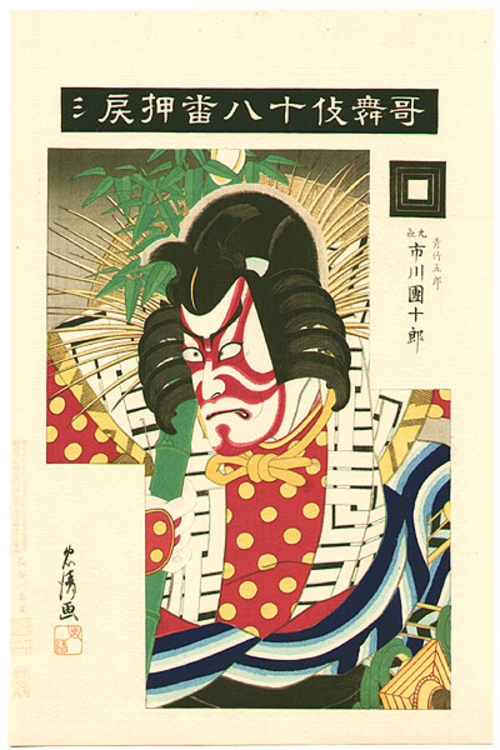
كانت بشرة الشخصية شاحبة، وصفها باوي بأنها "سمراء بيضاء كالثلج". [ 51 ] وبناءً على تعليمات ياماموتو لعارضيه، [ 41 ] حلق باوي حاجبيه في أواخر عام 1972، مما زاد من مظهر زيغي الغريب. [ 52 ] وعلى جبين زيغي كانت هناك "كرة نجمية" ذهبية اقترحها خبير التجميل بيير لاروش (الذي وضع أيضًا وميض البرق على وجه باوي لغلاف ألبوم علاء الدين سان ). [ 42 ] عندما وصلت جولة زيغي ستاردست إلى اليابان في أبريل 1973، التقى باوي بنجم مسرح الكابوكي باندو تاماسابورو الخامس ، الذي علّمه تقنيات المكياج اليابانية التقليدية. [ 50 ] في مقال نُشر في مجلة ميرابيل عام 1973 ، أوضح لاروش أن باوي اشترى معظم مستحضرات التجميل الخاصة به من متجر في روما، لكنه حصل على "مسحوق الأرز الأبيض" من "متجر مماثل لمتجر وولورث في طوكيو ". استخدم باوي "قاعدة ذهبية ألمانية على شكل كعكة" للكرة، وكان أحيانًا "يحدد تلك الدائرة الذهبية بأحجار الراين الذهبية الصغيرة، ويلصقها بغراء الرموش". [ 42 ]
مع نهاية فترة زيغي ستاردست عام 1973، كان باوي يقضي ساعتين على الأقل قبل كل حفلة موسيقية لوضع مكياجه. [ 42 ] ووفقًا لـ لاروش، فقد رسم باوي في حفلاته الأخيرة في إنجلترا خطوطًا صغيرة تشبه البرق على خده وفخذه. [ 53 ]
التأثير الثقافي
"لم أتفاجأ على الإطلاق بأن شخصية 'زيغي ستاردست' صنعت مسيرتي المهنية. لقد قدمتُ شخصية نجم روك بلاستيكي مقنع تماماً." [ 54 ]
عندما عاد ديفيد بوي إلى بريطانيا في مايو 1973 لإحياء الجولة الأخيرة من جولة زيغي ستاردست، عقب إصدار ألبوم علاء الدين سان ، كان قد أصبح أشهر نجم روك إنجليزي منذ فرقة البيتلز قبل نحو عقد من الزمن، [ 55 ] من حيث مبيعات الحفلات والألبومات. [ 56 ] [ 57 ] وقد شُبّهت ردود فعل الجماهير تجاه بوي خلال فترة زيغي ستاردست بهوس البيتلز ، [ 58 ] ووُصفت ذروة شهرة الشخصية بأنها "زيغي مانيا". [ 59 ] [ 2 ] وصفت مجلة رولينغ ستون زيغي ستاردست بأنه "نجم الروك الأمثل": "إنه شخصية جامحة ومحبة للمتعة ... لكنه في جوهره ينشر السلام والمحبة". [ 2 ]
أثّر ديفيد بوي، بشخصية زيغي ستاردست، على موسيقى الغلام روك وموجة الموضة، [ 60 ] ليصبح أحد أكثر الصور شهرةً في تاريخ موسيقى الروك [ 61 ] وثقافة البوب. [ 62 ] وكتبت صحيفة واشنطن بوست : "لم يكن فقط المهندس الرئيسي لموسيقى الغلام، بل كان أجمل تجسيد لها." [ 61 ] ساهم زيغي ستاردست في نشر قصة الشعر "الموليت" في سبعينيات القرن الماضي، على الرغم من أن هذه التسريحة لم تكن تحمل اسمًا آنذاك. [ 63 ] مثّلت قصة "زيغي" "تغييرًا جذريًا في عالم العناية الشخصية" إذ خالفت الموضة السائدة آنذاك والمتمثلة في قصات الشعر الطويلة الطبيعية للرجال، كما أنها كانت مناسبة لكلا الجنسين. وكتبت مجلة GQ أن قصة "زيغي" "لا تزال واحدة من أكثر قصات الشعر جرأةً وأناقةً في التاريخ، بدءًا من شكلها المدبب من الأعلى وانتهاءً بقصة تشبه الموليت - ولكنها أكثر أناقةً بكثير." [ 45 ]
قال آندي ماكلوسكي، المغني الرئيسي لفرقة OMD، عن تأثير الشخصية على الجمهور البريطاني: "لقد رأينا موسيقى الغلام، لكن موسيقى الغلام البريطانية - مثل فرقتي سليد وسويت - كانت أشبه بعمال بناء يرتدون ملابس مرصعة بالترتر. وكان هناك ديفيد بوي بمظهره الذي يشبه سحلية ذات ملامح أنثوية وذكورية، وكان ذلك عامل إبهار حقيقي." [ 64 ]
التقاعد
By July 1973, Bowie had been touring as Ziggy for 18 months.[50] Due to the intense nature of his touring life, Bowie felt as though maintaining the Ziggy persona was affecting his own personality and sanity too much; acting the same role over an extended period, it became difficult for him to separate Ziggy Stardust from his own character offstage.[a] Bowie was also beginning to reach a point of creative boredom and felt that he could no longer perform Ziggy with the same enthusiasm.[b] There were also practical reasons behind his decision to retire the character: Bowie's record company RCA refused to finance a third large US tour due to Bowie's management overspending in excess of $300,000 during the 1972 and 1973 tours, as well as disappointing record sales in the US.[50]
Bowie retired Ziggy Stardust during a live concert on 3 July 1973, at London's Hammersmith Odeon in front of 3,500 fans. The concert featured an 18-song set, with Jeff Beck joining the band for a medley of "The Jean Genie" and The Beatles' "Love Me Do".[68] Just before the final song of the concert, "Rock 'n' Roll Suicide",[69] Bowie announced, "Of all the shows on this tour, this particular show will remain with us the longest, because not only is it the last show of the tour, but it's the last show that we'll ever do." The fans and press took this to mean that Bowie was retiring entirely, causing much media attention. However, it only referred to the Ziggy Stardust persona and the Spiders from Mars backing band.[68][70]
The final Ziggy concert was filmed by D. A. Pennebaker and released in 1979 as the documentary Ziggy Stardust and the Spiders from Mars[69] and the audio on the live album Ziggy Stardust: The Motion Picture (released in 1983).[71]
Legacy

Ziggy Stardust is widely considered Bowie's greatest creation.[61][72]
In 2012, a plaque was unveiled by the Crown Estate at the site at which the iconic Ziggy Stardust album cover photograph was taken by Brian Ward on Heddon Street, London.[73] The unveiling was attended by original Spiders from Mars band members Woody Woodmansey and Trevor Bolder, and was unveiled by Gary Kemp.[74] The plaque was the first to be installed by the Crown Estate and is one of the few plaques in the country devoted to fictional characters.[73] In 2018, a statue depicting a mature Bowie looking at his younger self as Ziggy Stardust was unveiled in Aylesbury, the town where Bowie debuted the character in 1972.[75][76] The statue stands in Aylesbury's Market Square,[76] which Bowie referenced in "Five Years", the opening song of The Rise and Fall of Ziggy Stardust and The Spiders from Mars album.[77]
In 2015, the African butterfly species Bicyclus sigiussidorum was named after the character due to its "glammy" appearance.[78] (Sigiussidorum is a Latin rendering of "Ziggy Stardust".)[79]
In popular culture
Music
- The 1978 cyberpunkrock operaStarmania features a character called Ziggy.
- The British rock band Def Leppard referenced the character in their song Rocket on their 1987 album Hysteria.
- The Swedish band Gyllene Tider recorded a song called "Åh Ziggy Stardust (var blev du av?)" ("Ah Ziggy Stardust, what became of you?"),[80] included on the 1990 re-release of their album Gyllene Tider.
- Ziggy Stardust was one of several pop icons Marc Almond dressed up as in the video for his 1995 single "Adored and Explored" and the cover of its follow-up single, "The Idol".[80]
- The Omēga character, featured on the cover of Marilyn Manson's 1998 album Mechanical Animals was based on Ziggy Stardust, aesthetically and story-wise.[81]
- A cartoon version of Ziggy featured in the video for Boy George's 2008 single "Yes We Can".[80]
- Matt Sorum referred to the character in the song "What Ziggy Says" on his 2014 album Stratosphere.[80]
- Bauhaus covered the song Ziggy Stardust on their 1982 album The Sky's Gone Out.
Film and television
- Fictional pop star Brian Slade and his space-age alter ego Maxwell Demon in the 1998 film Velvet Goldmine were based on Bowie in his Ziggy Stardust period,[82]. However, Bowie would dissociate himself from the film.[83]
- In the 1999 comedy special Golden Years, Ricky Gervais plays a Bowie impersonator named Clive Meadows who arrives at a business meeting as Ziggy Stardust.[84]
- In the sixth episode of the 2007 sitcom Flight of the Conchords, the character Brett (Bret McKenzie) is visited by a dream version of Ziggy Stardust, among several other of Bowie's personas.[85]
- The character of "Ziggy Stardust" in full costume appears in Zack Snyder's Watchmen.[86]
- "Artie" (played by John McCrea) in the 2021 film Cruella was inspired by the character.[87]
- In season 2 episode 4 of Big Little Lies, the character of Ziggy dresses up as Ziggy Stardust. Ziggy Stardust is also mentioned by name in the season 1 premiere.[88][89]
See also
Notes
- ↑Bowie: "It was quite easy to become obsessed night and day with the character. I became Ziggy Stardust. David Bowie went totally out the window. Everybody was convincing me that I was a messiah ... I got hopelessly lost in the fantasy."[65] "My whole personality was affected ... I thought I might as well take Ziggy to interviews as well. Why leave him on stage? Looking back it was very absurd. It became very dangerous. I really did have doubts about my sanity."[26][66]
- ↑Bowie: "I had an awful lot of fun doing [Ziggy] ... but my performance on stage reached a peak. I felt I couldn't go on stage in the same context again ... if I'm tired with what I'm doing wouldn't it be long before the audience realised."[67]
References
- 12Taylor, Trey (2017-11-20). "See Terry O'Neill's rare images of David Bowie's last show as Ziggy Stardust". Interview Magazine. Retrieved 2024-02-20.
- 123Light, Alan (2016). "'Ziggy Stardust': How Bowie Created the Alter Ego That Changed Rock". Rolling Stone. Archived from the original on 24 May 2021. Retrieved 29 May 2020.
- ↑Dee, Johnny (7 January 2012). "David Bowie: Infomania". The Guardian. Archived from the original on 8 January 2014. Retrieved 3 February 2020.
- 12Morse (1998), p. 100
- 123Copetas, Craig (28 February 1974). "Beat Godfather Meets Glitter Mainman: William Burroughs Interviews David Bowie". Rolling Stone. Archived from the original on 25 December 2019. Retrieved 19 April 2020.
- ↑Archived from "Frequently Asked Questions". The Ziggy Stardust Companion. 2007. Archived from the original on 25 October 2010. Retrieved 29 May 2009.
- 12David Bowie Explains Ziggy Stardust(YouTube). CBC News: The National. 12 January 2016.
- ↑Pegg (2016), p. 327
- ↑Doggett (2012), p. 121
- ↑Luckman (2010), p. 83
- ↑Pegg (2016), p. 275
- ↑Buckley (2005), p. 157
- ↑Sandford (1997), pp. 108
- ↑"BBC Radio 4 Programmes – Ziggy Stardust Came from Isleworth". BBC. Archived from the original on 30 September 2010. Retrieved 5 November 2010.
- ↑ "المسيح الأبرص: فينس تايلور" . الموقع الرسمي لديفيد باوي. مؤرشف من الأصل بتاريخ 27 يوليو 2011. تم الاطلاع عليه بتاريخ 5 نوفمبر 2010 .
- ↑ بيج (2016) ، ص 573
- ↑ ماهوني، إليزابيث (20 أغسطس 2010). "زيغي ستاردست جاء من آيلزوورث - مراجعة" . صحيفة الغارديان . لندن. مؤرشف من الأصل في 16 يناير 2014. تم الاطلاع عليه في 5 نوفمبر 2010 .
- ↑ بيج (2016) ، "تمسك بنفسك" في الفصل. الأغاني من الألف إلى الياء .
- ↑ "فينسنت، جين" . موسوعة.كوم . تم الاطلاع عليه بتاريخ 29-10-2020 .
- ↑ ساندفورد (1997) ، الصفحات 73-74
- ↑ بيج (2016) ، ص 619
- ↑ ساندفورد 1997 ، ص 73-74.
- 1 2 كيري أوبراين (16 فبراير 2004). "ديفيد باوي يتحدث عن مسيرته الفنية". برنامج "تقرير الساعة 7:30 " . تلفزيون ABC .
- ↑ فيرا كفال (1990). "ديفيد باوي - من وجهة نظره" . من وجهة نظرك . هيئة الإذاعة النرويجية (NRK ).
- ↑ ديفيد باوي يتحدث عن السريالية والأحلام والتمثيل: مقابلة كاملة مع إم تي في عام 1987 (يوتيوب) . أخبار إم تي في . 11 يناير 2017.
- 1 2 جونز، آلان (29 أكتوبر 1977). "وداعًا لزيغي وكل ذلك" . ميلودي ميكر . تم الاسترجاع في 13 سبتمبر 2020 - عبر سنوات باوي الذهبية.
- ↑ "ديفيد باوي يتحدث عن سنوات زيغي ستاردست: 'كنا نصنع القرن الحادي والعشرين في عام 1971'"" . NPR . 19 سبتمبر 2003. مؤرشف من الأصل في 20 يوليو 2017. تم الاطلاع عليه في 21 مايو 2018 .
- ↑ ماكلويد، كين. "غرائب الفضاء: الكائنات الفضائية، والمستقبلية، والمعنى في الموسيقى الشعبية". الموسيقى الشعبية . المجلد 22. JSTOR 3877579 .
- 1 2 هيوز، روب (20 ديسمبر 2014). "ديفيد باوي: الحفل الذي ابتكر موسيقى الغلام" . لاودر ساوند . تم الاسترجاع في 5 سبتمبر 2020 .
- 1 2 تشابمان (2020) ، ص 129
- ↑ تشابمان (2020) ، ص 179
- ↑"11–14". The Observer. 20 June 2004. Archived from the original on 21 September 2017. Retrieved 20 September 2017.
- 12Campbell (2005), p. 294
- ↑Du Noyer, Paul (25 August 2009). "David Bowie interview by Paul Du Noyer 1990". Paul Du Noyer. Archived from the original on 15 July 2011. Retrieved 26 April 2011.
- ↑Kot, Greg (12 January 2016). "Space oddities: David Bowie's hidden influences". BBC. Retrieved 6 September 2020.
- ↑Buckley (2005), pp. 110–111
- ↑Philo (2018), p. 59
- 12Ferrier, Morwenna (11 January 2016). "David Bowie: five defining looks – in pictures". The Guardian. Retrieved 2 June 2021.
- 123Thian, Helene M. (2013). "For David Bowie, Japanese style was more than just fashion". The Japan Times. Retrieved 29 May 2020.
- 12Zanetta & Edwards (1986), p. 112
- 1234Gorman, Paul (4 August 2015). "David Bowie: his style story, 1972-1973". The Guardian. Retrieved 8 September 2020.
- 1234Harris (2010), pp. 194-195
- 12Zara, Christopher (17 January 2016). "The Story Behind David Bowie's Ziggy Stardust Haircut, A Radical Red Revolution". International Business Times. Archived from the original on 21 January 2016. Retrieved 8 September 2020.
- 12"Celebrating David Bowie And The Beckenham Arts Lab". davidbowie.com. 26 November 2001. Archived from the original on 2 June 2021. Retrieved 2 June 2021.
Bowie: 'Schwartzkopf red was the colour. I had [Fussey] cut my hair short in early January 1972. No dye. Layed flatish. I believe that it went red and stood up between the 20th and 25th of January 1972.'
- 12Fearon, Faye (21 March 2020). "In praise of David Bowie's iconic Ziggy Stardust haircut". GQ. Archived from the original on 24 March 2020. Retrieved 18 June 2021.
- ↑"The Ziggy Stardust Haircut". The Ziggy Stardust Companion. 2018. Retrieved 29 May 2020.
- ↑Pegg (2016), "The Ziggy Stardust Tour (UK)" in chapt. Live
- 12Panisch, Alex (2016). "5 Things We Learned From Kansai Yamamoto, David Bowie's Costume Designer". Out. Pride Media. Retrieved 29 May 2020.
- ↑Dellas, Mary (2018). "Dressing David Bowie As 'Ziggy Stardust'". The Cut. Vox Media, Inc. Retrieved 29 May 2020.
- 1234Pegg (2016), "The 1973 Ziggy Stardust Tour (aka The Aladdin Sane Tour)" in chapt. Live
- ↑Pegg (2016), p. 573
- ↑Pegg (2016), "The Ziggy Stardust Tour (US)" in chapt. Live
- ↑Archived from "David Bowie, Ziggy Stardust Style". The Blitz Kids. 2009. Retrieved 29 May 2020.
- ↑"500 Greatest Songs of All Time". Rolling Stone. 7 April 2011. Archived from the original on 11 August 2019. Retrieved 28 March 2020.
- ↑James Hale (director) (2012). David Bowie and the Story of Ziggy Stardust (Documentary). BBC.
- ↑Zanetta & Edwards (1986), p. 208
- ↑Hendler (2020), pp. 11-12
- ↑Howard, Tom (11 January 2016). "Starman! – The Story Of Bowie's Ziggy Stardust". NME. Archived from the original on 2 December 2016. Retrieved 18 June 2021.
- ↑Savage, Jon (9 March 2013). "When Bowie met Burroughs". The Guardian. Archived from the original on 10 May 2021. Retrieved 22 June 2021.
- ↑Bowie (1980), p. 31
- 123Harrington, Richard (9 June 2009). "30 Years On, 'Ziggy Stardust' Rises Again". The Washington Post. Retrieved 10 September 2020.
- ↑Donoughue, Paul (11 January 2016). "David Bowie: The many faces of the glam rock icon". ABC News. Retrieved 18 June 2021.
- ↑Lunn, Oliver (17 June 2019). "A Brief History of the Mullet". Dazed. Archived from the original on 18 June 2019. Retrieved 18 June 2021.
- ↑Beaumont, Mark (15 September 2023). "Soundtrack of My Life: OMD's Andy McCluskey". NME. Retrieved 14 July 2026.
- ↑Greene, Andy (2016). "David Bowie: 7 Wild Quotes From the 'Station to Station' Era". Rolling Stone. Retrieved 29 May 2020.
- ↑Jones (2012), p. 171
- ↑Miles (1980), p. 54
- 12Gallucci, Michael (2016). "When David Bowie Abruptly Retired Ziggy Stardust". Ultimate Classic Rock. Townsquare Media, Inc. Retrieved 29 May 2020.
- 12James, David E. (13 February 2016). "The many deaths of David Bowie". OUPBlog. Oxford University Press. Retrieved 13 September 2020.
- ↑Greene, Andy (22 November 2012). "Flashback: Ziggy Stardust Commits 'Rock and Roll Suicide' at Final Gig". Rolling Stone. Retrieved 14 September 2020.
- ↑Pegg (2016), "Ziggy Stardust: The Motion Picture" in chapt. The Albums.
- ↑"David Bowie". Ultimate Classic Rock. Retrieved 10 September 2020.
- 12Sillito, David (2012). "Site of Ziggy Stardust album cover shoot marked with plaque". BBC News Online. Retrieved 29 May 2020.
- ↑Press Association (27 March 2012). "David Bowie's Ziggy Stardust album marked with blue plaque". The Guardian. Archived from the original on 22 September 2017. Retrieved 18 September 2017.
- ↑Gaca, Anna (27 March 2018). "David Bowie Statue Unveiled in English Town Where Ziggy Stardust Debuted". Billboard. Retrieved 2 June 2021.
- 12"Musical David Bowie statue unveiled in Aylesbury". BBC News. 25 March 2018. Retrieved 2 June 2021.
- ↑"Aylesbury's David Bowie statue 'will sing on the hour'". BBC News. 27 October 2016. Retrieved 2 June 2021.
- ↑Brattström, Oskar; Aduse-Poku, Kwaku; Collins, Steve C.; Di Micco De Santo, Teresa; Brakefield, Paul M. (2016). "Revision of theBicyclus sciathisspecies group (Lepidoptera: Nymphalidae) with descriptions of four new species and corrected distributional records". Systematic Entomology. 41 (1): 207–228. Bibcode:2016SysEn..41..207B. doi:10.1111/syen.12150. ISSN 0307-6970. PMC 4810357. PMID 27076698.
- ↑Pegg (2016), "And Many Other Last Names" in chapt. Aprocrypha and Miscellany.
- 1234Pegg (2016), "Don't Think You Knew You Were In This Song" in chapt. Aprocrypha and Miscellany.
- ↑Wiederhorn, John (2018). "'Mechanical Animals': 10 Things You Didn't Know Marilyn [sic] Manson's Great Glam Album". Revolver Mag. Project M Group LLC. Retrieved 29 May 2020.
- ↑Harrington, Richard (6 November 1998). "Gone Glam Digging". Washington Post. Archived from the original on 9 September 2020. Retrieved 9 September 2020.
- ↑Pegg (2016), "Watch That Man" in chapt. Aprocrypha and Miscellany.
- ↑Ess, Ramsey (29 May 2019). "Before The Office, There Was Golden Years". Vulture. Retrieved 9 September 2020.
- ↑Cobb, Kayla (11 January 2016). "'Flight Of The Conchords' Gave One Of The Greatest Celebrations Of David Bowie's Life". Decider. Retrieved 9 September 2020.
- ↑Pegg, Nicholas. The Complete David Bowie. p. 620.
- ↑"Artie In Cruella: David Bowie Homage Explained". Screen Rant. Retrieved September 18, 2021.
- ↑"OVERNIGHTS FEB. 19, 2017 Big Little Lies Season-Premiere Recap: Murder, Mean Girls, and Monterey". vulture.com.
- ↑"Big Little Lies Season 2 Episode 4 Review: She Knows". Den of Geek.
Sources
- Bowie, David (1980). Bowie In His Own Words. Compiled by Barry Miles. London: Omnibus Press. ISBN 0860016455.
- Buckley, David (2005) [First published 1999]. Strange Fascination – David Bowie: The Definitive Story. London: Virgin Books. ISBN 978-0-7535-1002-5.
- Campbell, Michael (2005). Popular music in America: The Beat Goes On. Wadsworth/Thomson Learning. ISBN 0-534-55534-9.
- Chapman, Ian (2020). David Bowie FAQ: All That's Left to Know About Rock's Finest Actor. Rowman & Littlefield. ISBN 978-1493051403.
- Doggett, Peter (2012). The Man Who Sold the World: David Bowie and the 1970s. New York: HarperCollins. ISBN 978-0-06-202466-4.
- Harris, John (2010). Hail! Hail! Rock 'n' Roll: The Ultimate Guide to the Music, the Myths and the Madness. Hachette UK. ISBN 978-0748114863.
- Hendler, Glenn (2020). David Bowie's Diamond Dogs. New York: Bloomsbury. ISBN 978-1501336591.
- Jones, Dylan (2012). When Ziggy Played Guitar: David Bowie, The Man Who Changed The World. Random House. ISBN 978-1409052135.
- Luckman, Michael (2010). Alien Rock: The Rock 'n' Roll Extraterrestrial Connection. Simon and Schuster. ISBN 978-1-4516-0432-0.
- Miles, Barry (1980). David Bowie Black Book. London, New York: Omnibus Press. ISBN 0860018083.
- مورس، تيم (1998). قصص موسيقى الروك الكلاسيكية: القصص وراء أعظم الأغاني على مر العصور . مجموعة سانت مارتن للنشر . ISBN 978-1-4299-3750-4.
- بيج، نيكولاس (2016). أعمال ديفيد باوي الكاملة ( الطبعة السابعة). لندن: دار تايتان للنشر . رقم ISBN 978-1-78565-365-0.
- فيلو، سيمون (2018). موسيقى جلام روك: الموسيقى في الصوت والصورة . روومان وليتلفيلد . ISBN 978-1442271487.
- ساندفورد، كريستوفر (1997) [1996]. باوي: حب الغريب . لندن: دار دا كابو للنشر. ISBN 0-306-80854-4.
- سيمز، جوش (1999). أزياء الروك . دار أومنيبوس للنشر. رقم ISBN 071197733X.
- زانيتا، توني؛ إدواردز، هنري (1986). ستارداست: قصة ديفيد باوي . لندن: مايكل جوزيف. ISBN 0718125959.
روابط خارجية
- رفيق زيغي ستاردست
- حلم اليقظة في عصر القمر: حياة وأزمنة زيغي ستاردست بقلم ديفيد بوي وميك روك
- تم توثيق جلسة تصوير غلاف ألبوم زيغي ستاردست بلوحة تذكارية في بي بي سي نيوز
- شخصيات ديفيد باوي
- الأنا البديلة
- موسيقى جلام روك
- شخصيات خيالية تم تقديمها عام 1972
- شخصيات خيالية ثنائية الجنس
- رجال ثنائيي الجنس خياليون
- موسيقيون روك خياليون
- رواة القصص الخيالية
- شخصيات خيالية من خارج كوكب الأرض
- شخصيات خيالية تم ابتكارها للموسيقى المسجلة