
Fugitive slave laws in the United States
The fugitive slave laws were laws passed by the United States Congress in 1793 and 1850 to provide for the return of slaves who escaped from one state into another state or territory. The idea of the fugitive slave law was derived from the Fugitive Slave Clause which is in the United States Constitution (Article IV, Section 2, Paragraph 3). It was thought that forcing states to return fugitive slaves to their masters violated states' rights due to state sovereignty, and that seizing state property should not be left up to the states. The Fugitive Slave Clause states that fugitive slaves "shall be delivered up on Claim of the Party to whom such Service or Labour may be due", which abridged state rights because apprehending runaway slaves was a form of retrieving private property.[1] The Compromise of 1850 entailed a series of laws that allowed slavery in the new territories and forced officials in free states to give a hearing to slave-owners without a jury.[2]
Pre-colonial and colonial eras

The New England Articles of Confederation of 1643 contained a clause that provided for the return of fugitive slaves. However, this only referred to the confederation of colonies of Massachusetts, Plymouth, Connecticut, and New Haven, and was unrelated to the Articles of Confederation of the United States formed after the Declaration of Independence. There were African and Native American slaves in New England beginning in the 17th century.[4] The Articles for the New England Confederation provided for the return of slaves in Section 8:
It is also agreed that if any servant ran away from his master into any other of these confederated Jurisdictions, that in such case, upon the certificate of one magistrate in the Jurisdiction out of which the said servant fled, or upon other due proof; the said servant shall be delivered, either to his master, or any other that pursues and brings such certificate or proof.[5]
As the colonies expanded with waves of settlers pushing westward, slavery continued in the English territories and in former Dutch territories like New Amsterdam, prompting further legislation of a similar nature.[6] Serious attempts at formulating a uniform policy for the capture of escaped slaves began under the Articles of Confederation of the United States in 1785.[7]
1785 attempt
There were two attempts at implementing a fugitive slave law in the Congress of the Confederation.
The Ordinance of 1784 was drafted by a Congressional committee headed by Thomas Jefferson, and its provisions applied to all United States territory west of the original 13 states. The original version was read to Congress on March 1, 1784, and it contained a clause stating:[8]
That after the year 1800 of the Christian Era, there shall be neither slavery nor involuntary servitude in any of the said states, otherwise than in punishment of crimes, whereof the party shall have been duly convicted to have been personally guilty.
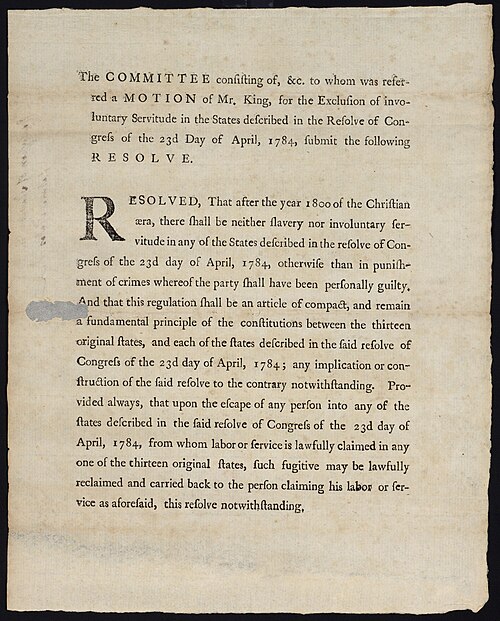
This was removed prior to final enactment of the ordinance on 23 April 1784. However, the issue did not die there, and on 6 April 1785 Rufus King introduced a resolution to re-implement the slavery prohibition in the 1784 ordinance, containing a fugitive slave provision in the hope that this would reduce opposition to the objective of the resolution. The resolution contained the phrase:[9]
Provided always, that upon the escape of any person into any of the states described in the said resolve of Congress of the 23d day of April, 1784, from whom labor or service is lawfully claimed in any one of the thirteen original states, such fugitive may be lawfully reclaimed and carried back to the person claiming his labor or service as aforesaid, this resolve notwithstanding.
While the original 1784 ordinance applied to all U.S. territory that was not a part of any existing state (and thus, to all future states), the 1787 ordinance applied only to the Northwest Territory.
Northwest Ordinance of 1787
Congress made a further attempt to address the concerns of slave owners in 1787 by passing the Northwest Ordinance of 1787.[10] The law appeared to outlaw slavery, which would have reduced the votes of slave states in Congress, but southern representatives were concerned with economic competition from potential slaveholders in the new territory, and the effects that would have on the prices of staple crops such as tobacco. They correctly predicted that slavery would be permitted south of the Ohio River under the Southwest Ordinance of 1790, and therefore did not view this as a threat.[11] In terms of the actual law, it did not ban slavery in practice, and it continued almost until the start of the Civil War.[12]
King's phrasing from the 1785 attempt was incorporated in the Northwest Ordinance of 1787 when it was enacted on 13 July 1787.[8] Article 6 has the provision for fugitive slaves:
Art. 6. There shall be neither slavery nor involuntary servitude in the said territory, otherwise than in the punishment of crimes whereof the party shall have been duly convicted: Provided, always, That any person escaping into the same, from whom labor or service is lawfully claimed in any one of the original States, such fugitive may be lawfully reclaimed and conveyed to the person claiming his or her labor or service as aforesaid.[13]
Fugitive Slave Act of 1793
In 1793, Congress passed "An Act respecting fugitives from justice, and persons escaping from the service of their masters", or more commonly known as the Fugitive Slave Act, to fulfill the Article IV requirement to return escaped slaves.[14][15]
Section 3 mandates the return of fugitives:
SEC. 3. ... That when a person held to labor in any of the United States, or of the Territories on the Northwest or South of the river Ohio ... shall escape into any other part of the said States or Territory, the person to whom such labor or service may be due ... is hereby empowered to seize or arrest such fugitive from labor ... and upon proof ... before any Judge ... it shall be the duty of such Judge ... [to remove] the said fugitive from labor to the State or Territory from which he or she fled.
Section 4 makes assisting runaways and fugitives a crime and outlines the punishment for those who assisted runaway slaves:
SEC. 4. ... That any person who shall knowingly and willingly obstruct or hinder such claimant ... shall ... forfeit and pay the sum of five hundred dollars.[16]
An unintended result of the hunt for fugitives was that some free blacks were illegally kidnapped and sold into slavery, despite having "free" papers due to high demand for slaves in the Deep South. Many people, who were legally free and had never been slaves, were captured and brought south to be sold into slavery. The historian Carol Wilson documented 300 such cases in Freedom at Risk (1994) and estimated there were likely thousands of others.[17]
In the early 19th century, personal liberty laws were passed to hamper officials in the execution of the law, but this was mostly after the abolition of the Slave Trade, as there had been very little support for abolition prior; Indiana in 1824 and Connecticut in 1828 provided jury trial for fugitives who appealed from an original decision against them. In 1840, New York and Vermont extended the right of trial by jury to fugitives and provided them with attorneys. As early as the first decade of the 19th century, individual dissatisfaction with the law of 1793 had taken the form of systematic assistance rendered to African Americans escaping from the South to Canada or New England: the so-called Underground Railroad.[18]
The decision of the Supreme Court in the case of Prigg v. Pennsylvania in 1842 (16 Peters 539)—that state authorities could not be forced to act in fugitive slave cases, but that national authorities must carry out the national law—was followed by legislation in Massachusetts (1843), Vermont (1843), Pennsylvania (1847) and Rhode Island (1848), forbidding state officials from aiding in enforcing the law and refusing the use of state jails for fugitive slaves.[18]
Fugitive Slave Act of 1850

أدى طلب الجنوب تشريعات فيدرالية أكثر فعالية إلى سنّ قانون العبيد الهاربين الثاني، الذي صاغه السيناتور جيمس موراي ماسون من ولاية فرجينيا ، حفيد جورج ماسون ، ودخل حيز التنفيذ في 18 سبتمبر 1850، كجزء من تسوية عام 1850. وكان من المقرر أن يتمتع مفوضون خاصون باختصاص قضائي متزامن مع محاكم الدوائر والمحاكم الجزئية الأمريكية والمحاكم الأدنى في الأقاليم في إنفاذ القانون؛ ولم يكن يُسمح للهاربين بالإدلاء بشهادتهم لصالح أنفسهم؛ ولم يُنص على محاكمة أمام هيئة محلفين. [ 18 ] وكان بإمكان الشخص الذي يدّعي ملكية العبيد تحديد مدى مصداقية العبد، وفي معظم الأحيان كان يُعاد إلى العبودية. [ 19 ]
فُرضت عقوبات على المارشالات الذين رفضوا إنفاذ القانون أو الذين هرب منهم هارب، وعلى الأفراد الذين ساعدوا السود على الهرب؛ وكان بإمكان المارشال تشكيل فرقة مطاردة . ودُفع للمفوض مبلغ 10 دولارات (ما يعادل 387 دولارًا في عام 2025 ) [ 20 ] عندما كان قراره لصالح المدعي، و5 دولارات فقط (ما يعادل 194 دولارًا في عام 2025 ) [ 20 ] عندما كان لصالح الهارب. [ 18 ] وكان المبرر المزعوم لهذا التفاوت في التعويض هو أنه إذا كان القرار لصالح المدعي، فسيتطلب الأمر جهدًا إضافيًا من جانب المفوض لإكمال الأوراق اللازمة لإعادة العبد إلى الجنوب. [ 21 ] وقد تم تحديد كل من واقعة الهروب وهوية الهارب بناءً على شهادة من طرف واحد فقط. إذا تم إحضار عبد وإعادته إلى سيده، فإن الشخص الذي أحضر العبد سيحصل على مبلغ 10 دولارات (ما يعادل 387 دولارًا في عام 2025 ) [ 20 ] لكل عبد.
أدت قسوة هذا الإجراء إلى انتهاكات جسيمة وأفشلت غايته؛ إذ ازداد عدد دعاة إلغاء العبودية ، وتحسنت عمليات "السكك الحديدية السرية"، وسُنّت قوانين جديدة للحريات الشخصية في فيرمونت (1850)، وكونيتيكت (1854)، ورود آيلاند (1854)، وماساتشوستس (1855)، وميشيغان (1855)، ومين (1855 و1857)، وكانساس (1858) ، وويسكونسن (1858). منعت هذه القوانين القضاة من النظر في الدعاوى، ووسّعت نطاق حق المثول أمام القضاء وحق المحاكمة أمام هيئة محلفين ليشمل الهاربين، وعاقبت بشدة على الشهادة الزور. وفي عام 1854، ذهبت المحكمة العليا في ويسكونسن إلى حد إعلان عدم دستورية قانون العبيد الهاربين. [ 18 ] [ 22 ]
كانت هذه القوانين الولائية إحدى المظالم التي استخدمتها كارولاينا الجنوبية لاحقًا لتبرير انفصالها عن الاتحاد. وقد أثارت محاولات تطبيق قانون عام 1850 استياءً شديدًا. ولعل اعتقال توماس سيمز وشادراك مينكينز في بوسطن عام 1851، وجيري إم. هنري في سيراكيوز، نيويورك ، في العام نفسه، وأنتوني بيرنز عام 1854 في بوسطن، وعائلة غارنر عام 1856 في سينسيناتي ، إلى جانب قضايا أخرى نشأت بموجب قانون العبيد الهاربين لعام 1850، كان له دورٌ كبير في اندلاع الحرب الأهلية ، تمامًا كما كان للجدل الدائر حول العبودية في الأقاليم. [ 18 ]
الوضع القانوني للعبيد الهاربين خلال الحرب الأهلية

مع اندلاع الحرب الأهلية، تغير الوضع القانوني للعديد من العبيد بسبب انضمام أسيادهم إلى الجيش. ففي مايو 1861، أعلن اللواء بنجامين فرانكلين بتلر أن عبيد الكونفدرالية الذين استُخدموا لأغراض عسكرية، كبناء التحصينات، يُعتبرون من غنائم الحرب. [ 23 ] وفي أغسطس من العام نفسه، صدر قانون المصادرة لعام 1861 ، الذي نصّ على تسريح أي عبدٍ استُخدم في مساعدة أو ترويج أي تمرد ضد حكومة الولايات المتحدة. [ 18 ]
بموجب قانون الكونغرس الصادر في 13 مارس 1862، والذي يحظر إعادة العبيد ، أُعلن أن أي عبدٍ لسيدٍ غير موالٍ موجود في الأراضي التي تحتلها قوات الشمال قد أصبح حرًا بحكم القانون . ولكن لفترة من الزمن، اعتُبر قانون العبيد الهاربين ساريًا في حالة الهاربين من أسيادهم في الولايات الحدودية الموالين لحكومة الاتحاد، ولم يُلغَ قانون عام 1850 بالكامل إلا في 28 يونيو 1864. [ 18 ] [ 24 ]
انظر أيضاً
ملحوظات
- ↑ بيكر، روبرت (2014). "قصة أفضل في قضية بريغ ضد بنسلفانيا؟". مجلة تاريخ المحكمة العليا . 39 (2): 171. doi : 10.1111/j.1540-5818.2014.12040.x . S2CID 143259317 .
- ↑ فينكلمان، بول (2012). "حقوق الولايات، نفاق الجنوب، وأزمة الاتحاد". مجلة أكرون للقانون : 453.
- ↑ ادّعت نيويورك ونيو هامبشاير ملكية ما سيصبح لاحقًا ولاية فيرمونت. وكانت كنتاكي مقاطعة تابعة لولاية فرجينيا. وكانت تينيسي مقاطعة تابعة لولاية كارولاينا الشمالية. وبشكل أقل وضوحًا، حضر مندوبون مجلس النواب في فرجينيا الاستعمارية من شمال نهر أوهايو، في المنطقة التي ستصبح لاحقًا ولايتي أوهايو وإلينوي.
- ^ راوش ، ديفيد أ. شليب، بلير (1994). أصوات الأمريكيين الأصليين . في إن آر إيه جي. رقم ISBN 978-0801077739.
- ↑ "مشروع أفالون - مواد الاتحاد الكونفدرالي للمستعمرات المتحدة في نيو إنجلاند؛ 19 مايو 1643" .
- ↑ جاكسون، إل بي (1924). " بحارة العصر الإليزابيثي وتجارة الرقيق الأفريقية". مجلة تاريخ الزنوج . 9 (1): 1-17 . doi : 10.2307/2713432 . JSTOR 2713432. S2CID 150232893 .
- ↑ بيرنشتاين، آر بي (1999). "المبادئ البرلمانية، والواقع الأمريكي: مؤتمرا الكونفدرالية والقارة، 1774-1789". في: بولينغ، كينيث آر. وكينون، دونالد آر. (محرران). ابتكار الكونغرس: أصول وتأسيس أول كونغرس فيدرالي . ص 76-108 .
- 1 2 Merriam 1888 :308–310 , Leg. Hist. Ord. of 1787 .
- ↑ ميريام 1888 : 314 ، المرسوم التاريخي التشريعي لعام 1787
- ↑ "مشروع أفالون - قانون الشمال الغربي؛ 13 يوليو 1787" . avalon.law.yale.edu . تم الاطلاع عليه بتاريخ 12 أكتوبر 2016 .
- ↑ بولمان، ماركوس د.؛ ويسنهانت، ليندا فالار (2002). دليل الطالب لقوانين الكونغرس التاريخية المتعلقة بالحقوق المدنية . مجموعة غرينوود للنشر. ص 14. ISBN 0-313-31385-7.
قانون شمال غرب التبغ .
- ↑ فينكلمان، بول (1989). "التهرب من القانون: استمرار العبودية في إنديانا وإلينوي". مجلة الجمهورية المبكرة . 9 (1): 21-51 . doi : 10.2307/3123523 . JSTOR 3123523 .
- ↑ "مشروع أفالون - قانون الشمال الغربي؛ 13 يوليو 1787" . avalon.law.yale.edu . تم الاطلاع عليه بتاريخ 12 أكتوبر 2016 .
- ↑ "المادة الرابعة" . معهد المعلومات القانونية . 12 نوفمبر 2009. تم الاطلاع عليه في 12 أكتوبر 2016 .
- ↑ بولمان ، ماركوس؛ ليندا ويسنهانت (2002). دليل الطالب لقوانين الكونغرس التاريخية المتعلقة بالحقوق المدنية . ويستبورت، كونيتيكت: مجموعة غرينوود للنشر. ص 22. ISBN 0-313-31385-7.
- ↑ "إعادة توجيه من: منزل الرئيس" . www.ushistory.org . مؤرشف من الأصل في 23 سبتمبر 2009. تم الاطلاع عليه في 12 أكتوبر 2016 .
- ↑ كارول ويلسون، الحرية في خطر: اختطاف السود الأحرار في أمريكا، 1780-1865 ، مطبعة جامعة كنتاكي، 1994
- 1 2 3 4 5 6 7 8 Chisholm 1911 ، ص 289.
- ↑ فونر، إريك. "مؤرخ يشرح أهمية قانون العبيد الهاربين" . shec.ashp.cuny.edu . تم الاطلاع عليه بتاريخ 27 يناير 2026 .
- ١ ٢ ٣ ١٦٣٤–١٦٩٩: مكوسكر، جيه جيه (١٩٩٧). كم يساوي ذلك بالمال الحقيقي؟ مؤشر أسعار تاريخي لاستخدامه كمُعامل لانكماش قيم النقود في اقتصاد الولايات المتحدة: إضافات وتصويبات (ملف PDF) . الجمعية الأمريكية للآثار .1700–1799: مكوسكر، جيه جيه (1992). كم يساوي ذلك بالمال الحقيقي؟ مؤشر أسعار تاريخي لاستخدامه كمُعامل لانكماش قيمة النقود في اقتصاد الولايات المتحدة (ملف PDF) . الجمعية الأمريكية للآثار .من عام 1800 حتى الآن: بنك الاحتياطي الفيدرالي في مينيابوليس. "مؤشر أسعار المستهلك (تقديري) 1800–" . تم الاطلاع عليه بتاريخ 29 فبراير 2024 .
- ↑ جيمس م. ماكفرسون ، صرخة معركة الحرية: حقبة الحرب الأهلية ، ص 80 (أكسفورد، نيويورك: مطبعة جامعة أكسفورد، طبعة ورقية 2003).
- ↑ المحكمة العليا في ولاية ويسكونسن (1855). عدم دستورية قانون العبيد الهاربين . ميلووكي.
{{cite book}}: CS1 maint: موقع الناشر مفقود ( رابط ) - ↑ مانينغ، تشاندرا (2016). ملجأ مضطرب: النضال من أجل الحرية في الحرب الأهلية ( الطبعة الأولى). نيويورك: ألفريد أ. كنوبف. ISBN 978-1-101-94779-1.
- ↑ 12 Stat. 200, c.166.
مراجع
- كامبل، ستانلي و. (1970). صائدو العبيد: تطبيق قانون العبيد الهاربين، 1850-1860 . مطبعة جامعة نورث كارولينا. ISBN 0-8078-1141-6أُرشف من الأصل في 26 يونيو 2012. تم الاطلاع عليه في 28 أغسطس 2017 .
- فيرينباخر، دون إي. (2002). جمهورية العبودية: سرد لعلاقات حكومة الولايات المتحدة بالعبودية . مطبعة جامعة أكسفورد. ISBN 0-19-515805-9.
- فرانكلين، جون هوب ؛ شوينينجر، لورين (1999). العبيد الهاربون: متمردون في المزرعة . مطبعة جامعة أكسفورد. ISBN 0-19-508451-9.
- ميريام، جون م. (1888). "التاريخ التشريعي لمرسوم 1787" (ملف PDF) . وقائع الجمعية الأمريكية للآثار . السلسلة الجديدة، المجلد الخامس . ووستر: الجمعية الأمريكية للآثار (نُشر عام 1889): 303-342 .
الإسناد:
- تتضمن هذه المقالة نصًا من منشور أصبح الآن ملكًا عامًا : تشيشولم، هيو ، محرر (1911). " قوانين العبيد الهاربين ". الموسوعة البريطانية . المجلد 11 ( الطبعة الحادية عشرة). مطبعة جامعة كامبريدج. الصفحات 288-289 .
للمزيد من القراءة
- . . 1914.
- . الموسوعة الدولية الجديدة . 1906.
- . الموسوعة الأمريكية . 1879.
- مكارثي، ب. يوجين؛ دوتون، توماس ل. (2007). من العبودية إلى الانتماء: روايات العبيد في ووستر . مطبعة جامعة ماساتشوستس .
- العبيد الأمريكيون الهاربون
- التاريخ القانوني للولايات المتحدة
- قانون العبودية في الولايات المتحدة
- توسع العبودية في الولايات المتحدة