
قائمة الديناصورات الآسيوية
هذه قائمة بالديناصورات التي عُثر على بقاياها في آسيا ، باستثناء الهند التي كانت جزءًا من كتلة أرضية منفصلة خلال معظم حقبة الحياة الوسطى (انظر قائمة ديناصورات الهند ومدغشقر للاطلاع على قائمة ديناصورات الهند). لا تشمل هذه القائمة الديناصورات التي عاشت أو عاشت بعد حقبة الحياة الوسطى، مثل الطيور.
معايير الإدراج
- يجب أن يظهر الجنس في قائمة أجناس الديناصورات .
- لا بد من العثور على نوع واحد على الأقل من هذا المخلوق في آسيا .
قائمة الديناصورات الآسيوية
الأجناس الصالحة
| اسم | سنة | تشكيل | موقع | ملحوظات | صور |
|---|---|---|---|---|---|
| عبداراينوروس | 2020 | تكوين ألاغتيج ( العصر الطباشيري المتأخر ، الكامباني ) |  منغوليا منغوليا | غير متسق في موقعه التطوري. قد يمثل سلالة غير معروفة من الماكروناريات [ 1 ] | 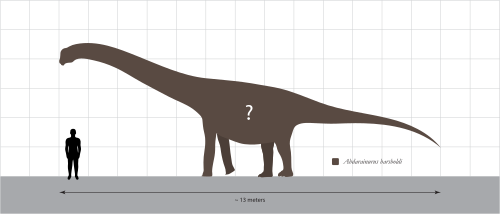 |
| أبروصور | 1989 | تكوين شاكسيمياو ( العصر الجوراسي الأوسط ، من الباثوني إلى الكالوفي ) |  الصين الصين | كانت تحتوي على نوافذ كبيرة بشكل غير عادي | 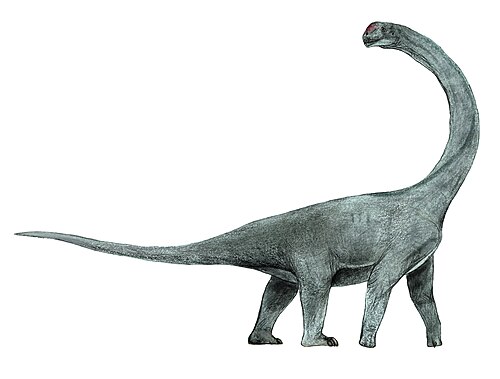 |
| أكيلوباتور | 1999 | تكوين بايانشاير ( العصر الطباشيري المتأخر ، من السينوماني إلى السانتوني ) | منغوليا | يشير هيكله القوي إلى أنه لم يكن حيوانًا سريع الجري [ 2 ] | 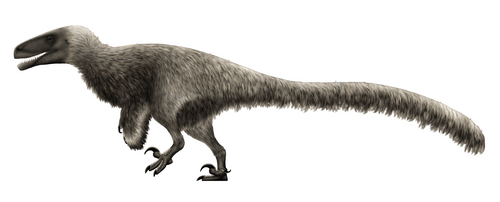 |
| أداسورس | 1983 | تكوين نيميجت ( العصر الطباشيري المتأخر ، الماستريختي ) | منغوليا | كان مخلبه المنجلي أصغر بشكل ملحوظ مقارنة بالدرومايوصورات الأخرى | 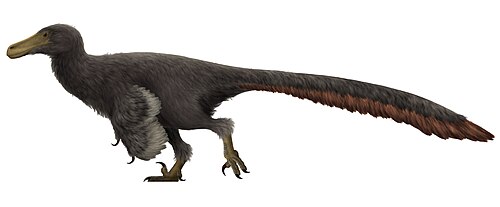 |
| إيبورنيثوميموس | 2017 | تكوين دجادوختا ( العصر الطباشيري المتأخر ، الكامباني ) | منغوليا | أول أورنيثوميموصور تم تسميته نسبةً إلى بيئة صحراوية جافة |  |
| أجيليسورس | 1990 | تكوين شاكسيمياو ( العصر الجوراسي الأوسط ، من الباثوني إلى الكالوفي ) | الصين | تم اكتشاف العينة الأصلية أثناء بناء المتحف الذي تُعرض فيه الآن. |  |
| ألبالوفوصور | 2009 | تكوين كواجما ( العصر الطباشيري المبكر ، من الفالانجيني إلى الهوتريفي ؟) |  اليابان اليابان | لا يُعرف إلا من شظايا جمجمة |  |
| ألبينيكوس | 2011 | تكوين جافخلانت ( العصر الطباشيري المتأخر ، السانتوني ) | منغوليا | محفوظ في وضعية جلوس لا تختلف كثيراً عن وضعية الطيور الحديثة | 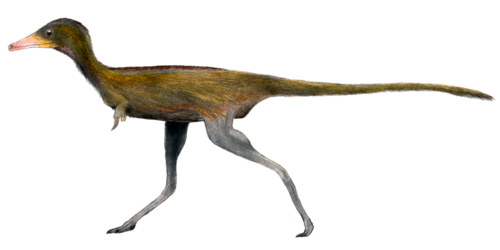 |
| أليكتروصور | 1933 | تكوين إيرين داباسو ( العصر الطباشيري المتأخر ، السينوماني ) | الصين | كانت لها أرجل طويلة قد تكون تكيفًا للمطاردة والافتراس [ 3 ] | 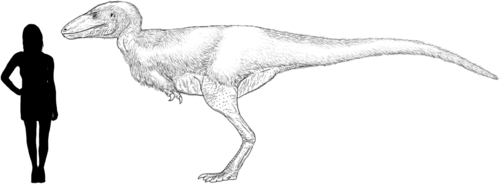 |
| أليوراموس | 1976 | تكوين نيميجت ( العصر الطباشيري المتأخر ، الماستريختي ) | منغوليا | كان يمتلك خطمًا مستطيلًا مع صف من العرف القصير |  |
| ألماس | 2017 | تكوين دجادوختا ( العصر الطباشيري المتأخر ، الكامباني ) | منغوليا | تم حفظها بجانب قشور البيض التي ربما تكون قد أتت من حيوان التروودونتيد [ 4 ] | 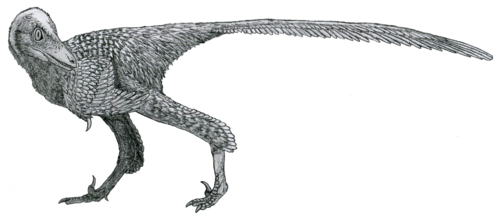 |
| ألبكاراكوش | 2024 | تكوين بالابانساي ( العصر الجوراسي الأوسط ، الكالوفي ) |  قيرغيزستان قيرغيزستان | يمكن تمييزها من خلال حاجبها المداري المتجعد والظاهر بشكل فريد [ 5 ] |  |
| ألتيرينوس | 1998 | تكوين خورين دوخ ( العصر الطباشيري المبكر ، من الباريمي إلى الألبي ) | منغوليا | كان لديه عظم أنفي مرتفع بشكل ملحوظ يدعم تجويفًا أنفيًا كبيرًا | 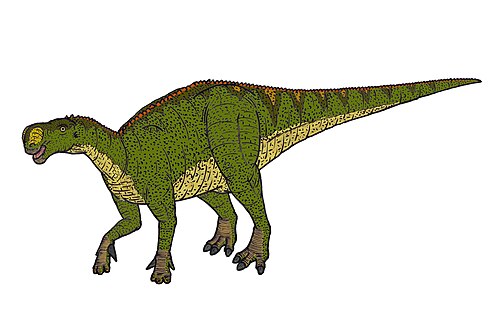 |
| ألكساسورس | 1993 | تكوين باين-غوبي ( العصر الطباشيري المبكر ، الألبي ) | الصين | معظم الهيكل العظمي معروف، مما سمح للباحثين بربط الثيريزينوصورات بالثيروبودات الأخرى | 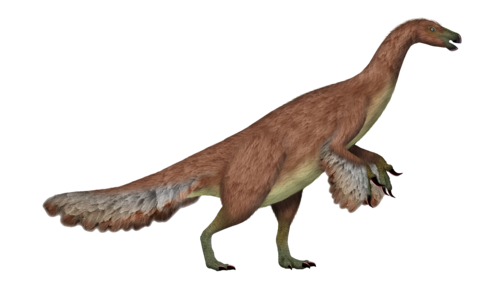 |
| أمبوبتريكس | 2019 | تكوين غير مسمى ( العصر الجوراسي المتأخر ، الأكسفوردي ) | الصين | يحفظ محتويات المعدة التي تحتوي على حصى المعدة وشظايا العظام، مما يشير إلى نظام غذائي متنوع. |  |
| أمتوسيفا | 2011 | تكوين بايانشاير ( العصر الطباشيري المتأخر ، من التوروني إلى السانتوني ) | منغوليا | أحد أقدم أنواع الباكيسيفالوصورات المعروفة | 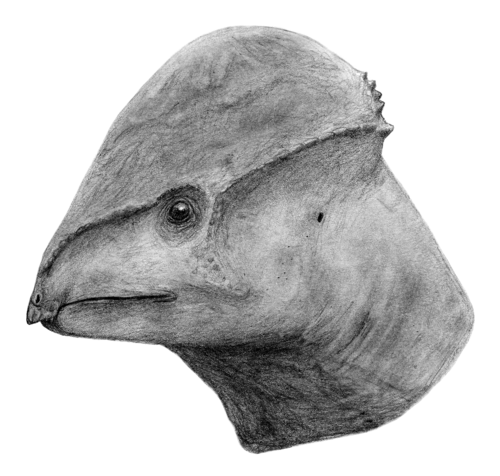 |
| أموروصور | 1991 | تكوين أودورتشوكان ، ( العصر الطباشيري المتأخر ، الماستريختي ) |  روسيا روسيا | قد تكون إحدى العينات قد أتت من فرد يعاني من العرج [ 6 ] |  |
| التناظري | 2020 | تكوين تشوانجي ( العصر الجوراسي الأوسط ، الباجوسيان ) | الصين | وُصفت في الأصل بأنها عينة من جنس تشوانجيصور، ولكن تم تصنيفها ضمن جنس جديد بسبب العديد من الاختلافات المورفولوجية. | 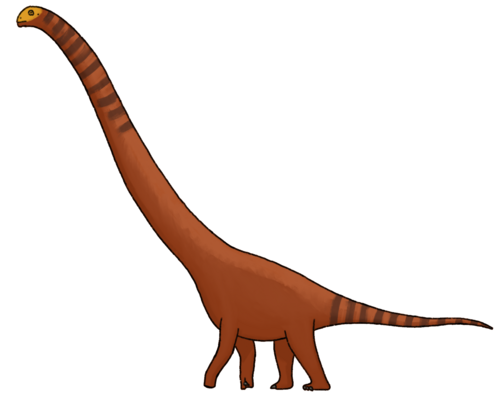 |
| أنكيورنيس | 2009 | تكوين تياوجيشان ( العصر الجوراسي المتأخر ، الأكسفوردي ) | الصين | يشير تحليل الميلانوسومات المتحجرة إلى جسم رمادي أو أسود في الغالب، وأنماط بيضاء وسوداء على أجنحته وعرف أحمر على رأسه [ 7 ]. |  |
| انهويلونج | 2020 | تكوين هونغتشين ( العصر الجوراسي الأوسط ، من العصر الأيليني إلى العصر الكالوفي ) | الصين | ترتبط ارتباطًا وثيقًا بكل من هوانغشانلونغ وأوميسورس ، وتشكل جميعها فرعًا حصريًا من المامينشيسوريدات . |  |
| الشذوذ | 2018 | مجموعة وانغشي ( العصر الطباشيري المتأخر ، الكامباني ) | الصين | ربما كان مرتبطًا ارتباطًا وثيقًا بـ Gigantoraptor على الرغم من حجمه الأصغر بكثير [ 8 ] | 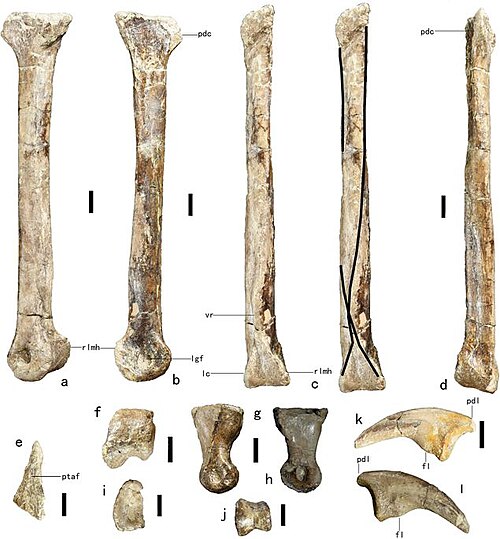 |
| أنسيريميموس | 1988 | تكوين نيميجت ( العصر الطباشيري المتأخر ، الماستريختي ) | منغوليا | كانت تمتلك أطرافاً أمامية قوية بمخالب مستقيمة ومسطحة بشكل فريد. |  |
| أورون | 2013 | تكوين شيشوجو ( العصر الجوراسي المتأخر ، الأكسفوردي ) | الصين | من المحتمل أن يكون عضوًا أساسيًا في سلالة ألفاريزسوريان [ 9 ] | 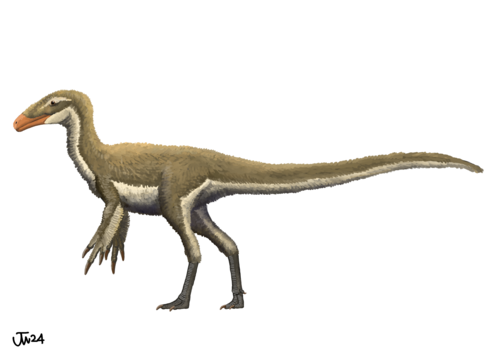 |
| أرالوصور | 1968 | تكوين بوستوب ، ( العصر الطباشيري المتأخر ، من السانتوني إلى الكامباني ) |  كازاخستان كازاخستان | تم تفسير عرفها على أنه مقوس الشكل كما هو الحال في الهادروصورات الكريتوصورية، ولكن لا يمكن تأكيد ذلك. | 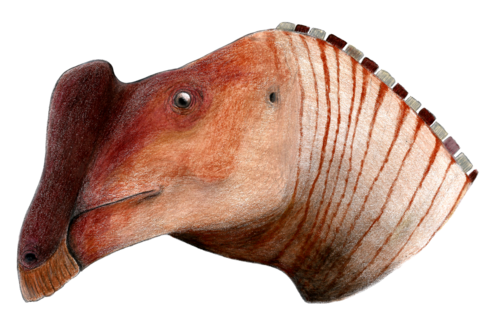 |
| أركيوسيراتوبس | 1997 | مجموعة شينمينباو ( العصر الطباشيري المبكر ، الأبتي ) | الصين | لم يكن لها قرون، ولم يكن بها سوى بدايات الزخرفة. |  |
| أركيوكورسر | 2025 | تكوين زيليوجينج ( العصر الجوراسي المبكر ، من السينيموريان إلى البلينسباخيان ) | الصين | أقدم وأقدم أنواع طيور الورك في آسيا | 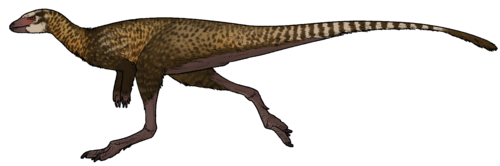 |
| أركيورنيثويدس | 1992 | تكوين دجادوختا ( العصر الطباشيري المتأخر ، الكامباني ) | منغوليا | معروف فقط من جمجمة جزئية بها خدوش ربما تكون قد حدثت بواسطة حيوان ثديي صغير [ 10 ] | 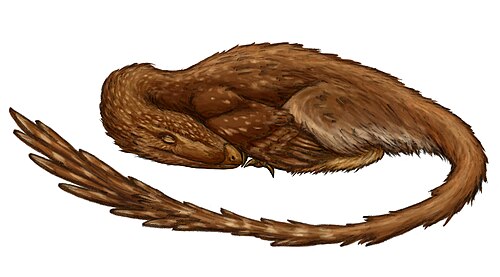 |
| أركيورنيثوميموس | 1972 | تكوين إيرين داباسو ( العصر الطباشيري المتأخر ، السينوماني ) | الصين | على عكس أنواع الأورنيثوميموصورات الأخرى، لم تكن أقدامها من نوع أركتوميتاتارساليا. | 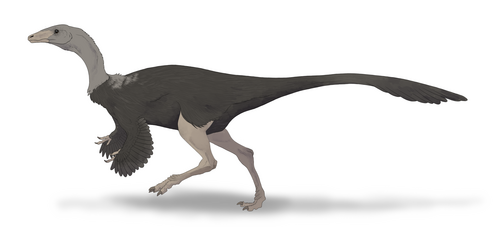 |
| أرخارافيا | 2010 | تكوين أودورتشوكان ( العصر الطباشيري المتأخر ، الماستريختي ) | روسيا | تم وصفها من خلال سلسلة من الفقرات، وقد تبين أن العديد منها لا ينتمي إلى هذا التصنيف [ 11 ] | 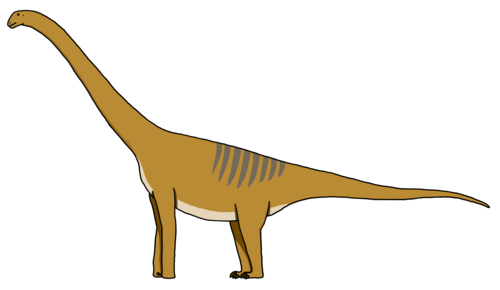 |
| أرستانوصور | 1982 | تكوين بوستوب ( العصر الطباشيري المتأخر ، من السانتوني إلى الكامباني ) | كازاخستان | غير معروف بشكل جيد | 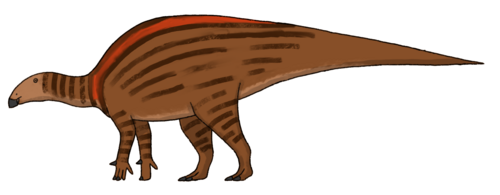 |
| آسياسيراتوبس | 1989 | تكوين خوجاكول ، مجموعة شينمينباو ؟ ( العصر الطباشيري المبكر ؟ إلى العصر الطباشيري المتأخر ، الأبتيان ؟ إلى السينوماني ) | الصين ؟ أوزبكستان | من المحتمل أن يكون من فصيلة الليبتوسيراتوبسيد [ 12 ] |  |
| أسياتوسورس | 1924 | تكوين أوش ، تكوين شينلونغ ( العصر الطباشيري المبكر ، من الباريمي إلى الألبي ) | الصين منغوليا | تم تسمية نوعين، لكن كلاهما لا يُعرف إلا من بقايا نادرة للغاية. |  |
| آسياتيرانوس | 2024 | تكوين نانشيونغ ( العصر الطباشيري المتأخر ، الماستريختي ) | الصين | وقد تم اعتباره عينة محتملة من تاربوصور صغير السن [ 13 ] |  |
| أوروراسيراتوبس | 2005 | مجموعة شينمينباو ( العصر الطباشيري المبكر ، الألبي ) | الصين | معروف من خلال أكثر من ثمانين عينة، بما في ذلك هياكل عظمية كاملة |  |
| أورورنيس | 2013 | تكوين تياوجيشان ( العصر الجوراسي المتأخر ، الأكسفوردي ) | الصين | إذا كان طائرًا كما وُصف في الأصل، فسيكون أحد أقدم أعضاء المجموعة. |  |
| أفيميموس | 1981 | تكوين بارونغويوت ، تكوين نيميجت ( العصر الطباشيري المتأخر ، من الكامباني إلى الماستريختي ) | منغوليا | تشير بقايا العظام إلى نمط حياة اجتماعي. ربما شكلت قطعاناً منفصلة حسب العمر لأغراض التزاوج أو التجمع [ 14 ] |  |
| باكتروصور | 1933 | تكوين إيرين داباسو ، تكوين ماجياكون ؟ ( العصر الطباشيري المتأخر ، من السينوماني إلى السانتوني ؟) | الصين | تم العثور على رفات ستة أفراد على الأقل، تشكل جزءًا كبيرًا من الهيكل العظمي | 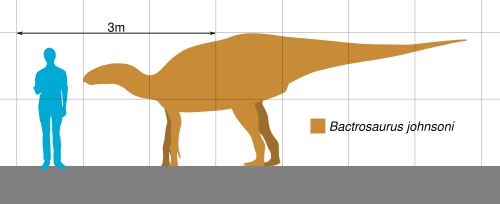 |
| باغاسيراتوبس | 1975 | تكوين بارونغويوت ، تكوين بيان مانداهو ، تكوين دجادوختا ؟ ( العصر الطباشيري المتأخر ، الكامباني ) | الصين منغوليا | ربما كان سليلًا مباشرًا لـ Protoceratops الذي يشبهه جسديًا [ 15 ] |  |
| باجاراتان | 1996 | تكوين نيميجت ( العصر الطباشيري المتأخر ، الماستريختي ) | منغوليا | تم اكتشاف مؤخرًا أنها هجينة حيث أن بعض العظام تأتي في الواقع من نوع من أنواع الكايناغناثيد [ 16 ]. | 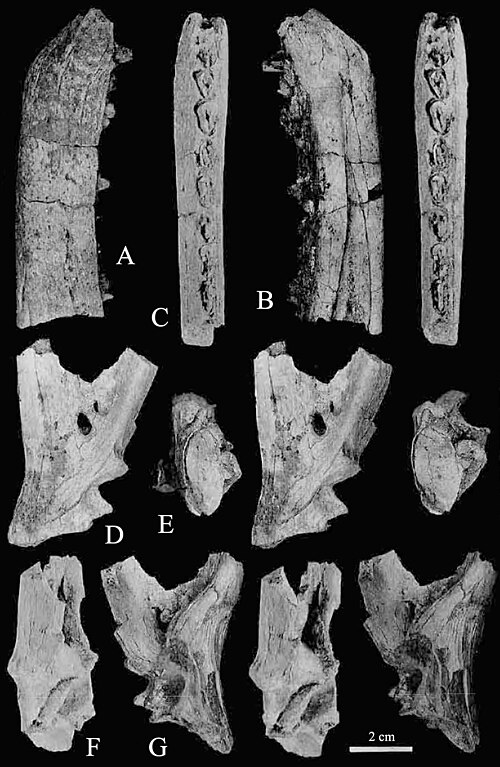 |
| باينوسيراتوبس | 2003 | تكوين دجادوختا ( العصر الطباشيري المتأخر ، الكامباني ) | منغوليا | قد تندرج سماته التشخيصية المفترضة ضمن تنوع بروتوسيراتوبس [ 17 ] | 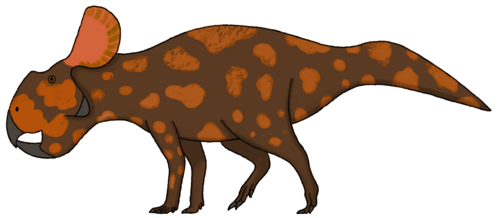 |
| بايينوصور | 2024 | تكوين وانغجياشان ( العصر الجوراسي الأوسط ، الباثوني ) | الصين | يُظهر خصائص تشريحية انتقالية بين الثيروفوران القاعدي والستيغوصورات المتطورة |  |
| بانجي | 2010 | تكوين نانشيونغ ( العصر الطباشيري المتأخر ، الماستريختي ) | الصين | زينت الخطوط العمودية جانبي قمته | 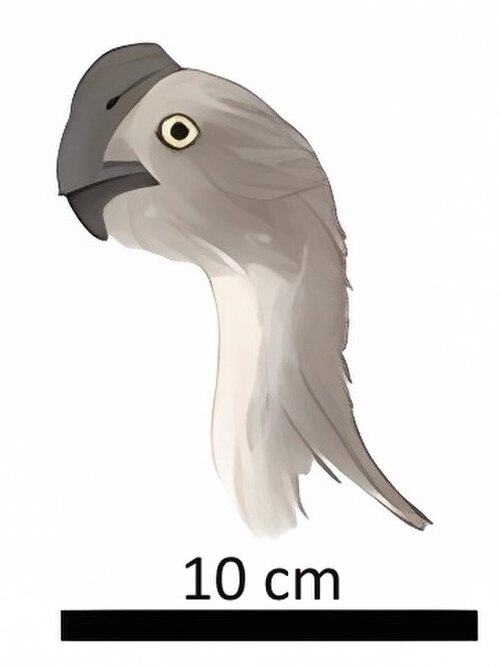 |
| بانيكوس | 2018 | تكوين باين-غوبي ( العصر الطباشيري المبكر ، من الباريمي إلى الأبتي ) | الصين | أظهر شكلاً انتقالياً لليد بالنسبة للألفاريزصور، حيث كان لديه ثلاثة أصابع متساوية الطول تقريباً، وكان الإصبع الأول قوياً. |  |
| باوتيانمانصور | 2009 | تكوين غاوغو ( العصر الطباشيري المتأخر ، من السينوماني إلى التوروني ) | الصين | كبير الحجم، لكن لا يُعرف عنه إلا من خلال عدد قليل من العظام. |  |
| بارسبولديا | 1981 | تكوين نيميجت ( العصر الطباشيري المتأخر ، الماستريختي ) | منغوليا | يمتلكون نتوءات عصبية طويلة، خاصة فوق الوركين |  |
| باشانوصور | 2022 | تكوين شاكسيمياو ( العصر الجوراسي الأوسط ، الباثوني ) | الصين | يجمع هيكله العظمي بين سمات الستيغوصورات والثيروفورات الأكثر بدائية |  |
| باشونوصور | 2004 | تكوين شاكسيمياو ( العصر الجوراسي الأوسط ، من الباثوني إلى الكالوفي ) | الصين | على الرغم من وصفه بأنه ماكروناري، إلا أنه لم يتم اختباره بدقة بعد [ 18 ] | 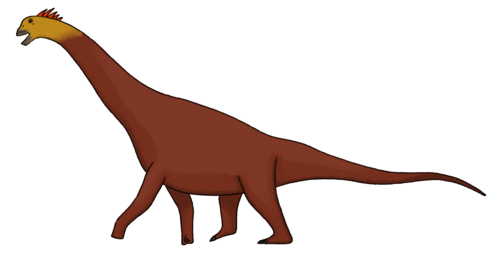 |
| باتيروصور | 2012 | تكوين بوستوب ( العصر الطباشيري المتأخر ، من السانتوني إلى الكامباني ) | كازاخستان | تم تحديد البقايا في الأصل على أنها أرستانوصور | 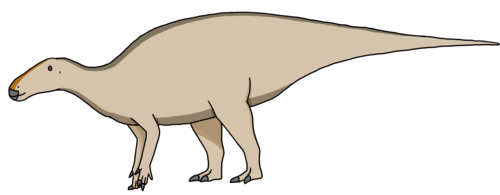 |
| بايانوروصور | 2018 | تكوين باين-غوبي ( العصر الطباشيري المبكر ، الأبتي ) | الصين | معروف من خلال هيكل عظمي محفوظ جيدًا وشبه كامل | 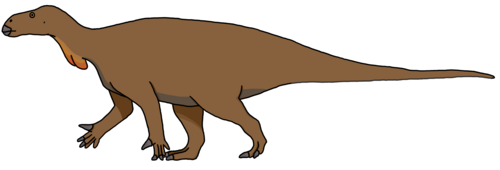 |
| توسل | 2020 | تكوين أولاانوش ( من العصر الطباشيري المبكر إلى العصر الطباشيري المتأخر ، من الألبي إلى السينوماني ) | منغوليا | تتميز جمجمتها المحفوظة بنسيج خشن | 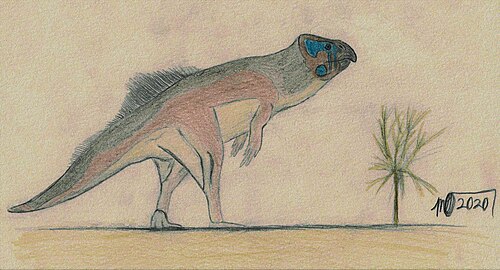 |
| بيبيلونج | 2017 | تكوين غاوغو ( العصر الطباشيري المتأخر ، من السينوماني إلى الكونياكي ) | الصين | يشبه الجيجانتورابتور ولكنه أكثر بدائية منه . [ 19 ] معروف من جنين واحد فقط لا يزال في بيضته |  |
| بيبيوصور | 1999 | تكوين ييشيان ( العصر الطباشيري المبكر ، الأبتي ) | الصين | يحافظ على دليل على وجود ريش ناعم بالإضافة إلى طبقة ثانوية من "الريش الخيطي العريض الممدود" أو EBFFs [ 20 ] |  |
| بيشانلونج | 2010 | مجموعة شينمينباو ( العصر الطباشيري المبكر ، الأبتي ) | الصين | كانت تفتقر إلى المخالب الطويلة الموجودة لدى الأورنيثوميموصورات الأكثر تطوراً |  |
| بيلوسورس | 1990 | تكوين شيشوجو ( العصر الجوراسي المتأخر ، الأكسفوردي ) | الصين | عُرفت هذه العينة من خلال طبقة عظمية تحتوي على بقايا سبعة عشر عينة صغيرة. | 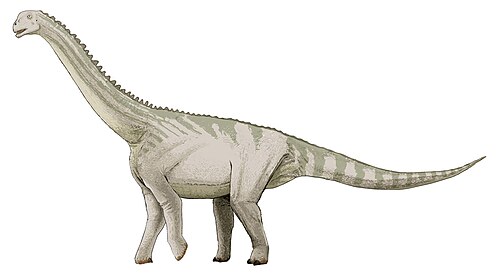 |
| بينوصور | 2001 | تكوين لوفينغ ( العصر الجوراسي المبكر ، السينيموري ) | الصين | قد يكون مرادفًا لـ Tatisaurus [ 21 ] |  |
| بيسيكتيبيلتا | 2004 | تكوين بيسيكتي ( العصر الطباشيري المتأخر ، من التوروني إلى الكونياكي ) | أوزبكستان | تشير تحليلات جمجمته إلى ضعف السمع والبصر، لكن حاسة الشم والتذوق لديه جيدة. وقد أشير إلى أنه يتغذى بالترشيح [ 22 ]. |  |
| بولونج | 2010 | تكوين ييشيان ( العصر الطباشيري المبكر ، الأبتي ) | الصين | كانت معروفة في الأصل من جمجمة فقط. تم وصف هيكل عظمي شبه كامل في عام 2013 [ 23 ] |  |
| بوريلوصور | 2004 | تكوين سونجياوان ( العصر الطباشيري المتأخر ، من العصر السينوماني إلى العصر التوروني ) | الصين | كانت فقراته الذيلية مقعرة للخلف بشكل مميز |  |
| بوروجوفيا | 1987 | تكوين نيميجت ( العصر الطباشيري المتأخر ، الماستريختي ) | منغوليا | كان له مخلب منجل مستقيم ومسطح بشكل فريد، والذي ربما كان له وظيفة تحمل الوزن |  |
| بريفيسيراتوبس | 1990 | تكوين بارونغويوت ( العصر الطباشيري المتأخر ، الكامباني ) | منغوليا | لا يُعرف إلا من خلال بقايا صغاره، ولكن يمكن تمييزه عن أنواع البروتوسيراتوبسيدات الأخرى |  |
| بروهيسورس | 2003 | تكوين سيمبار ( العصر الجوراسي المتأخر ، الكيمريدجي ) |  باكستان باكستان | كان يُعتقد في الأصل أنه من فصيلة الصوروبود، ولكن العديد من العظام الجلدية التي يُحتمل أن تُنسب إلى هذا الجنس تشير إلى أنه ربما كان في الواقع من فصيلة الأنكيلوصور. | |
| بايرونوصور | 2000 | تكوين دجادوختا ( العصر الطباشيري المتأخر ، الكامباني ) | منغوليا | تم العثور على جمجمتين صغيرتين في عش من نوع أوفيرابتوريد، وزُعم أنهما دليل على التطفل على الأعشاش في هذا النوع، ولكن تم التشكيك في كل من هويتهما وعلم الحفريات [ 4 ] [ 24 ]. | 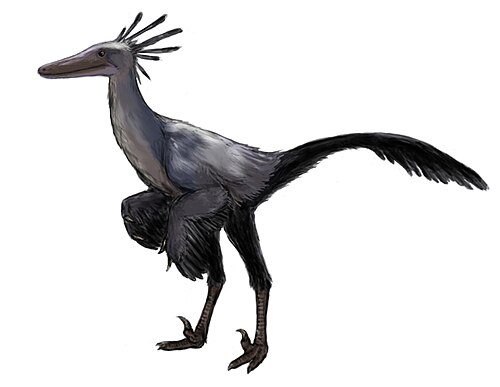 |
| Caenagnathasia | 1994 | تكوين بيسيكتي ( العصر الطباشيري المتأخر ، من التوروني إلى الكونياكي ) | أوزبكستان | أحد أقدم وأصغر أنواع الكايناغناثويدات المعروفة |  |
| كايهونج | 2018 | تكوين تياوجيشان ( العصر الجوراسي المتأخر ، الأكسفوردي ) | الصين | تمتلك جسيمات ميلانينية على شكل صفائح دموية تُنتج بريقًا قزحيًا كما هو الحال في عازفي البوق الحديثين |  |
| كوديبتريكس | 1998 | تكوين ييشيان ( العصر الطباشيري المبكر ، الأبتي ) | الصين | يُعرف نوعان. على الأقل، لم يكن لدى C. zoui ريش ثانوي متصل بالذراع السفلي. |  |
| سيراتونيكوس | 2009 | تكوين بارونغويوت ( العصر الطباشيري المتأخر ، الكامباني ) | منغوليا | تم وصف العديد من السمات العظمية بأنها مشابهة للطيور ذات الوركين [ 25 ] |  |
| تشانغتشونصور | 2005 | تكوين كوانتو ( من العصر الطباشيري المبكر إلى العصر الطباشيري المتأخر ، من الأبتيان إلى السينوماني ) | الصين | كانت أسنانها ذات الشكل الورقي مغطاة بطبقة مينا متموجة، مما جعلها أكثر مقاومة للتآكل. وتوجد هذه السمة أيضاً في الهادروصورات [ 26 ]. | 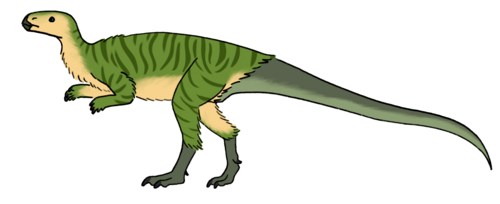 |
| تشانغميانيا | 2020 | تكوين ييشيان ( العصر الطباشيري المبكر ، الباريمي ) | الصين | حُفظت في وضعية ملتفة كما لو كانت نائمة في جحر محتمل | 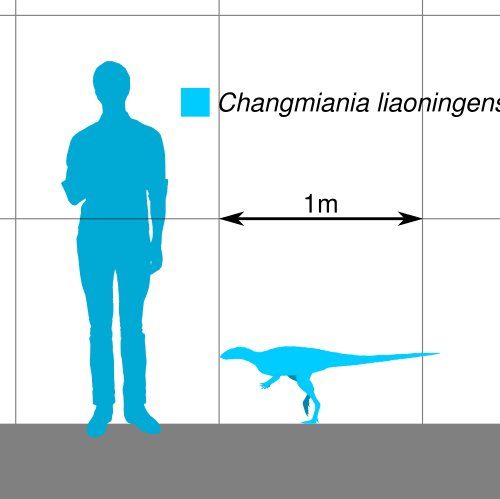 |
| تشانغيورابتور | 2014 | تكوين ييشيان ( العصر الطباشيري المبكر ، الباريمي ) | الصين | أكبر ديناصور درومايوصوري من فصيلة الميكرورابتوري المعروفة. كان لديه ريش ذيل يبلغ طوله حوالي قدم [ 27 ] |  |
| تشانغتشوسورس | 2026 | تكوين جيوفوتانغ ( العصر الطباشيري المبكر ، الأبتي ) | الصين | يحتوي هيكله العظمي على مزيج من سمات مجموعات مختلفة من البينرابتوران. كما عُثر أيضاً على آثار ريش. | 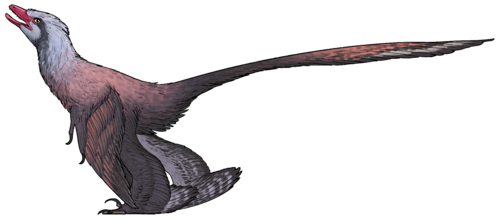 |
| تشاويانغسورس | 1999 | تكوين توتشنغزي ( العصر الجوراسي المتأخر ، والتيتوني ) | الصين | كان يُعرف بعدد من التهجئات البديلة (مثل Chaoyangosaurus و Chaoyoungosaurus ) قبل وصفه الرسمي | 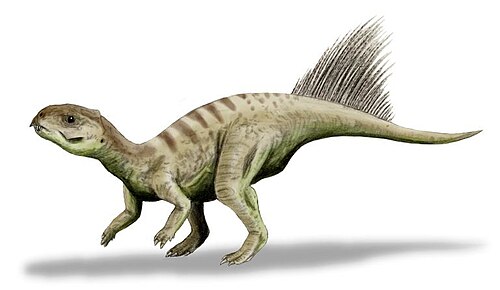 |
| شارونوصور | 2000 | تكوين يوليانغزي ( العصر الطباشيري المتأخر ، الماستريختي ) | الصين | ربما كان لديه عرف طويل منحني للخلف يشبه عرف الباراسورولوفوس |  |
| شيالينغوصور | 1959 | تكوين شاكسيمياو ( العصر الجوراسي المتأخر ، من الأكسفوردي إلى الكيمريدجي ) | الصين | كان يمتلك أشواكًا كبيرة وصفائح أصغر، على غرار الكينتروصور. |  |
| تشيايوسورس | 1953 | تكوين هاساندونغ ؟، مجموعة شينمينباو ( العصر الطباشيري المبكر ، الباريمي إلى الألبي ؟) | الصين كوريا الجنوبية ؟ | تم تسمية نوعين، وكلاهما من الأسنان. ويبدو أن أسنان C. lacustris لا يمكن تمييزها عن أسنان Euhelopus [ 28 ] أو Mamenchisaurus [ 29 ]. | |
| تشيلانتايسورس | 1964 | تكوين أولانسوهاي ( العصر الطباشيري المتأخر ، التوروني ) | الصين | كان لديه مخلب معقوف بشكل خاص في إصبعه الأول | 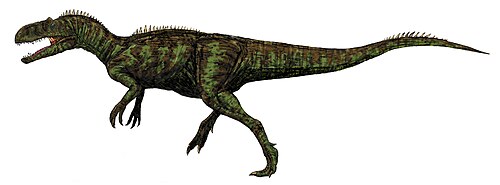 |
| تشينغكانكوسورس | 1958 | مجموعة وانغشي ( العصر الطباشيري المتأخر ، الكامباني ) | الصين | معروف من عظمة الكتف فقط . ربما يكون من فصيلة التيرانوصورات [ 30 ] | |
| تشينشاكيانغوصور | 1992 | تكوين فينغجياخه ( العصر الجوراسي المبكر ، الهيتانجي ) | الصين | كان لديه خطم على شكل حرف U ربما كان يدعم الخدين الممتلئين، وهو تكيف للتغذية بكميات كبيرة | |
| تشويرودون | 2018 | تكوين خورين دوخ ( العصر الطباشيري المبكر ، الألبي ) | منغوليا | كان لديه أنف متضخم يشبه أنف Altirhinus المعاصر له ، ولكنه على الأرجح تصنيف منفصل [ 31 ]. |  |
| Chuandongocoelurus | 1984 | تكوين شاكسيمياو ( العصر الجوراسي الأوسط ، من الباثوني إلى الكالوفي ) | الصين | تيتانوران ذو علاقات غير مؤكدة |  |
| تشوانجيصور | 2000 | تكوين تشوانجي ( العصر الجوراسي الأوسط ، الباثوني ) | الصين | أحد أكثر أنواع المامينشيصورات تطوراً [ 32 ] |  |
| تشوانكي لونج | 2014 | تكوين جيوفوتانغ ( العصر الطباشيري المبكر ، من الباريمي إلى الأبتي ) | الصين | ربما كان هذا هو الشكل البالغ للياونينغوصور المعاصر [ 33 ] |  |
| تشونغكينغوسورس | 1983 | Shaximiao Formation (Late Jurassic, Oxfordian) | China | May have possessed at least six thagomizer spikes. The rearmost pair was mounted horizontally, directed outwards and backwards |  |
| Chuxiongosaurus | 2010 | Lufeng Formation (Early Jurassic, Hettangian to Pliensbachian) | China | Potentially a synonym of Jingshanosaurus[34] | |
| Citipati | 2001 | Djadochta Formation (Late Cretaceous, Campanian) | Mongolia | Had a distinctive triangular crest. A referred specimen known as the Zamyn Khondt oviraptorid possessed the familiar rectangular domed crest in most depictions of Oviraptor, but likely does not belong to that genus or Citipati[35] |  |
| Conchoraptor | 1986 | Baruungoyot Formation, Nemegt Formation (Late Cretaceous, Maastrichtian) | Mongolia | Named for a hypothesized diet of shellfish, but this cannot be confirmed |  |
| Corythoraptor | 2017 | Nanxiong Formation (Late Cretaceous, Maastrichtian) | China | Its crest was vertical and rectangular, not unlike that of a cassowary. May be a junior synonym of Huanansaurus[36] |  |
| Crichtonpelta | 2015 | Sunjiawan Formation (Late Cretaceous, Cenomanian) | China | Originally named as a second species of Crichtonsaurus | |
| Crichtonsaurus | 2002 | Sunjiawan Formation (Late Cretaceous, Cenomanian to Turonian) | China | Sometimes reconstructed with semicircular osteoderms vaguely similar to the plates of stegosaurs | 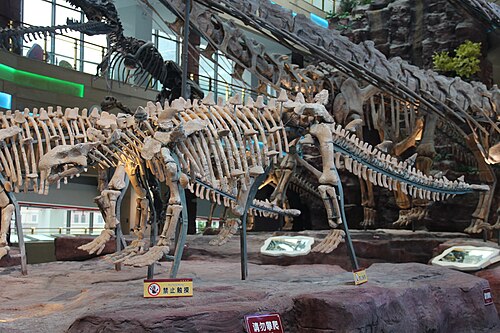 |
| Daanosaurus | 2005 | Shaximiao Formation (Late Jurassic, Oxfordian to Tithonian) | China | Its phylogenetic position is uncertain as it is only known from the remains of a juvenile | |
| Daliansaurus | 2017 | Yixian Formation (Early Cretaceous, Barremian) | China | Had an enlarged claw on the fourth toe comparable in size to the sickle claw on its second toe | 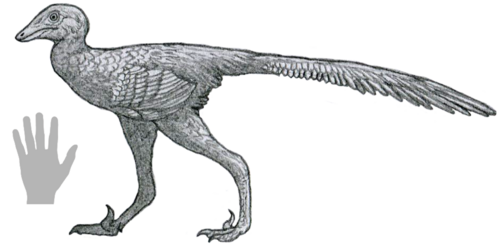 |
| Dashanpusaurus | 2005 | Shaximiao Formation (Middle Jurassic, Callovian) | China | One of the basalmost and earliest known macronarians[37] | |
| Datai | 2024 | Zhoutian Formation (Late Cretaceous, Turonian to Coniacian) | China | Known from two associated specimens, including their skulls | 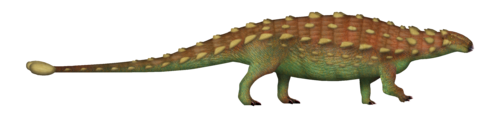 |
| Datanglong | 2014 | تكوين شينلونغ ( العصر الطباشيري المبكر ، من الباريمي إلى الألبي ) | الصين | كان لديه عظم حرقفي ذو تجويف هوائي فريد يشبه الميغارابتوران | |
| داتونج لونج | 2016 | تكوين هويكوانبو ( العصر الطباشيري المتأخر ، من العصر السينوماني إلى العصر الكامباني ) | الصين | لا يزال تحديد تاريخ رفاته بدقة غير مؤكد | |
| داتوصور | 1984 | تكوين شاكسيمياو ( العصر الجوراسي الأوسط ، من الباثوني إلى الكالوفي ) | الصين | يُعدّ هذا الديناصور من أندر أنواع الصوروبودات في تكوين شاكسيمياو، وهو معروف من هيكلين عظميين فقط وجمجمة كبيرة وعميقة. | 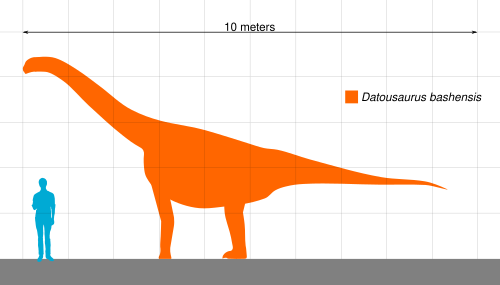 |
| دورلونج | 2022 | تكوين لونغجيانغ ( العصر الطباشيري المبكر ، الأبتي ) | الصين | يحفظ بقايا الجهاز الهضمي |  |
| داكسياتيتان | 2008 | مجموعة هيكو ( العصر الطباشيري المبكر ، الباريمي ) | الصين | كبير الحجم وذو رقبة طويلة نسبياً | 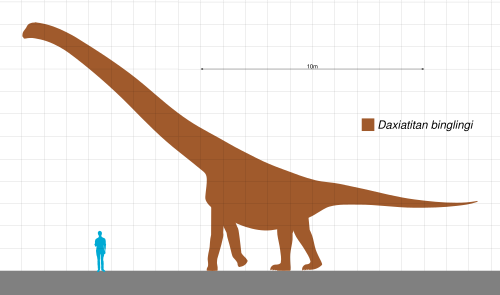 |
| دينوشيروس | 1970 | تكوين نيميجت ( العصر الطباشيري المتأخر ، الماستريختي ) | منغوليا | كان يمتلك مجموعة من السمات الفريدة، أبرزها حدبة مدعومة بأشواك عصبية ممدودة |  |
| ديلونج | 2004 | تكوين ييشيان ( العصر الطباشيري المبكر ، الباريمي ) | الصين | يحفظ دليلاً على وجود طبقة من الريش البسيط | 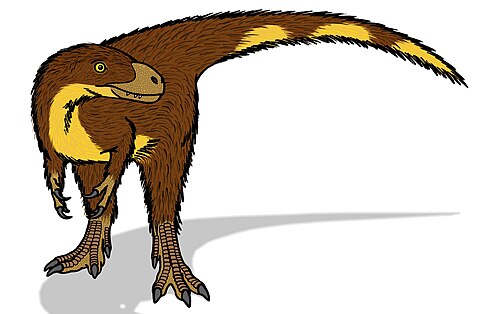 |
| دونغبيتيتان | 2007 | تكوين ييشيان ( العصر الطباشيري المبكر ، الباريمي ) | الصين | تم العثور على سن من أسنان الديناصورات اللاحمة، من المحتمل أن يكون من نوع سينوكاليوبتركس ، مغطى بطبقة من القشرة في أحد أضلاعه [ 38 ]. |  |
| دونجيانغوبيلتا | 2013 | تكوين تشاوتشوان ( من العصر الطباشيري المبكر إلى العصر الطباشيري المتأخر ، من الألبي إلى السينوماني ) | الصين | تعايش مع Zhejiangosaurus ولكن يمكن تمييزه بناءً على السمات العظمية الدقيقة [ 39 ] | |
| دونغيانغوصور | 2008 | تكوين جينهوا ( العصر الطباشيري المتأخر ، من التوروني إلى الكونياكي ) | الصين | موقعها التطوري غير مؤكد | 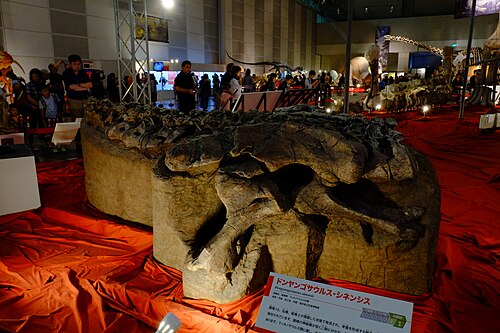 |
| دوليسورس | 2026 | تكوين إيلسونغسان ( من العصر الطباشيري المبكر إلى العصر الطباشيري المتأخر ، من الألبي إلى السينوماني ) | كوريا الجنوبية | ربما كان حيوانًا قارتًا بسبب شكل حصياته المعدية [ 40 ] |  |
| دونيكوس | 2025 | تكوين بايانشاير ( العصر الطباشيري المتأخر ، من السينوماني إلى الكونياكي ) | منغوليا | كان يمتلك مخلبين فقط، وهو ما يتوافق مع مجموعات أخرى من الثيروبودات. |  |
| دزهاراكورسور | 2025 | تكوين بيسيكتي ( العصر الطباشيري المتأخر ، التوروني ) | أوزبكستان | كان يُطلق عليه في الأصل اسم نوع من أنواع Archaeornithomimus |  |
| دزاراونيكس | 2022 | تكوين بيسيكتي ( العصر الطباشيري المتأخر ، التوروني ) | أوزبكستان | أحد أقدم أنواع البارفيكورسورين المعروفة |  |
| دزهاراتيتانيس | 2021 | تكوين بيسيكتي ( العصر الطباشيري المتأخر ، التوروني ) | أوزبكستان | تم وصفه في الأصل بأنه من فصيلة ريباتشيصوريد [ 41 ] ولكن أعيد تفسيره لاحقًا على أنه من فصيلة تيتانوصور مع احتمالية وجود صلات مع فصيلة لوغنكوصوريان [ 42 ]. |  |
| إلميسورس | 1981 | تكوين نيميجت ( العصر الطباشيري المتأخر ، الماستريختي ) | منغوليا | واحدة من أكثر أنواع الكايناغناثيد اكتمالاً المعروفة | 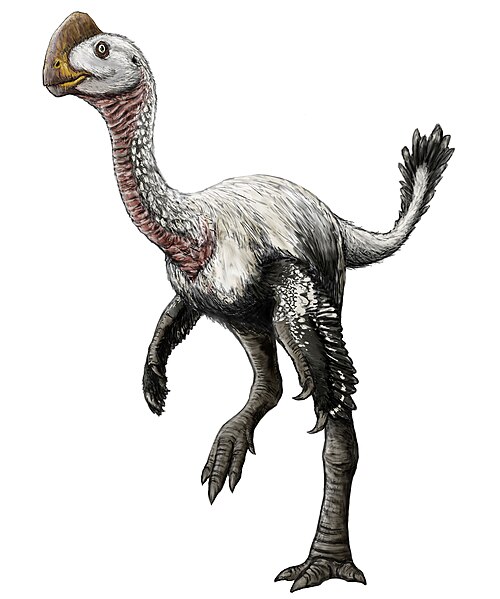 |
| إمباسورس | 1931 | رمال نيوكوميان ( العصر الطباشيري المبكر ، البرياسي ) | كازاخستان | لا يُعرف إلا من فقرتين فقط | 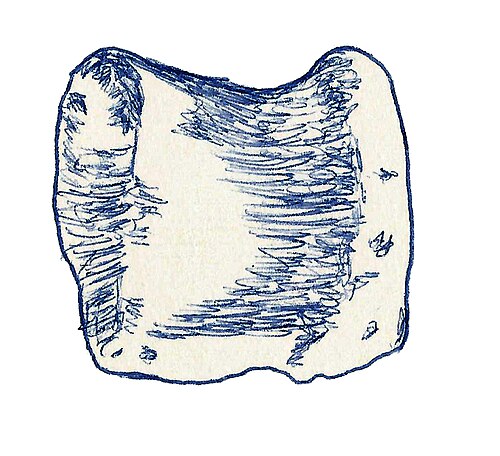 |
| إنيغموسورس | 1983 | تكوين بايانشاير ( العصر الطباشيري المتأخر ، من السينوماني إلى السانتوني ) | منغوليا | كان لديه حوض كبير متجه للخلف | 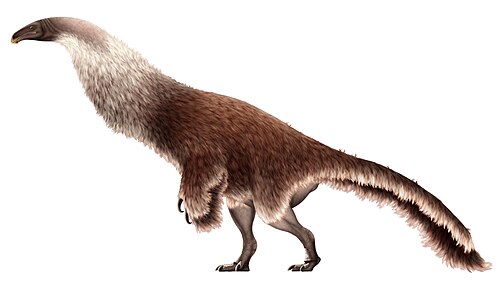 |
| إيومينشيسورس | 2008 | تكوين تشانغهي ( من العصر الجوراسي الأوسط إلى العصر الجوراسي المتأخر ، من العصر الأيليني إلى العصر الأكسفوردي ) | الصين | أحد أقدم أنواع المامينشيصوريات | |
| إيوبيناكوصور | 2026 | تكوين بيان مانداهو ، تكوين دجادوختا ( العصر الطباشيري المتأخر ، الكامباني ) | الصين منغوليا | كان يُعتقد سابقًا أنه نوع من أنواع Pinacosaurus ، [ 43 ] ولكن سماته القحفية تجعله مميزًا بما يكفي ليتم التعرف عليه كجنس خاص به [ 44 ]. |  |
| إيوسينوبتريكس | 2013 | تكوين تياوجيشان ( العصر الجوراسي المتأخر ، الأكسفوردي ) | الصين | وُصفت بأنها تفتقر إلى ريش الذيل المتقدم و"الأجنحة الخلفية" الطويلة، على عكس الطيور الأخرى، ولكن قد يكون هذا أثرًا من آثار الحفظ [ 45 ]. |  |
| إيبيدكسيبتريكس | 2008 | تكوين هايفانغقو ( العصر الجوراسي الأوسط ، الكالوفي ) | الصين | مدعومة بأربع ريشات طويلة تخرج من ذيل قصير |  |
| إيكويجوبوس | 2003 | مجموعة شينمينباو ( العصر الطباشيري المبكر ، الألبي ) | الصين | حيوان راعي يحافظ على أقدم دليل معروف على أكل العشب [ 46 ] |  |
| إركيتو | 2006 | تكوين بايانشاير ( العصر الطباشيري المتأخر ، من السينوماني إلى السانتوني ) | منغوليا | ربما كان لديه أطول رقبة بين جميع الديناصورات نسبة إلى جسمه | 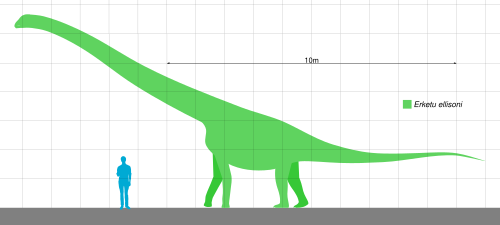 |
| إرليانصور | 2002 | تكوين إيرين داباسو ( العصر الطباشيري المتأخر ، السينوماني ) | الصين | كانت أصابعه مزودة بمخالب طويلة ومنحنية |  |
| إرليكوصور | 1980 | تكوين بايانشاير ( العصر الطباشيري المتأخر ، من السينوماني إلى السانتوني ) | منغوليا | يحتفظ بأكثر جمجمة كاملة معروفة من أي ثيريزينوصور |  |
| إيشانوصور | 2001 | تكوين لوفينغ ( العصر الجوراسي المبكر ، الهيتانجي ) | الصين | يُعتقد أنه أقدم ثيريزينوصور معروف |  |
| يوهيلوبوس | 1956 | تكوين مينغ يين ( العصر الطباشيري المبكر ، من البرياسي إلى الفالانجيني ) | الصين | كان يُعتقد في الأصل أنهم عاشوا في بيئة مستنقعية |  |
| يورونيتشودون | 1991 | تكوين بيسيكتي ( العصر الطباشيري المتأخر ، التوروني ) | أوزبكستان | تم العثور على النوع النمطي في البرتغال. قد يمثل النوع الآسيوي شكلاً تصنيفياً للأسنان غير المتطورة بشكل صحيح [ 47 ] | |
| فيرغاناصوروس | 2003 | تكوين بالابانساي ( العصر الجوراسي الأوسط ، الكالوفي ) | قيرغيزستان | يُزعم أن لديه مخلبين لليد، ولكن تم الطعن في هذا [ 48 ] | |
| فيرغانوسيفال | 2005 | تكوين بالابانساي ( العصر الجوراسي الأوسط ، الكالوفي ) | قيرغيزستان | على غير العادة، لم تكن أسنانه مسننة. | |
| فوجيانفيناتور | 2023 | تكوين نانيوان ( العصر الجوراسي المتأخر ، التيثوني ) | الصين | تمتلك أرجلاً طويلة نسبياً، وهو ما قد يكون تكيفاً مع الخوض في الماء. |  |
| فوكويرابتور | 2000 | تكوين كيتاداني ، تكوين سيباياشي ؟ ( العصر الطباشيري المبكر ، من الباريمي إلى الأبتي ) | اليابان | على غرار ميغارابتور ، أعيد بناؤه في الأصل على أنه درومايوصور بمخلب يده على قدمه |  |
| فوكويسورس | 2003 | تكوين كيتاداني ( العصر الطباشيري المبكر ، البريمي ) | اليابان | كانت عناصر جمجمته ملتحمة بشدة لدرجة أنه لم يكن قادراً على المضغ [ 49 ] | 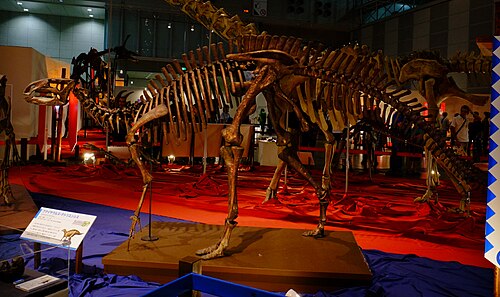 |
| فوكويتيتان | 2010 | تكوين كيتاداني ( العصر الطباشيري المبكر ، من البريمي إلى الأبتيان ) | اليابان | أول ديناصور من فصيلة الصوروبودات يُطلق عليه اسم من اليابان |  |
| فوكويفيناتور | 2016 | تكوين كيتاداني ( العصر الطباشيري المبكر ، من البريمي إلى الأبتيان ) | اليابان | يمتلك سمات مجموعات مختلفة من السيلوروصورات، على الرغم من أنه قد يكون على الأرجح ثيريزينوصورًا. [ 50 ] ربما كان عاشبًا أو قارتًا نظرًا لأسنانه غير المتجانسة |  |
| فولينجيا | 1977 | تكوين لوفينغ ( العصر الجوراسي المبكر ، من الهيتانجي إلى التورسي ) | الصين | ربما كان ديناصور لوفينغوصور صغيرًا | |
| فوشانوصور | 2019 | تكوين شيشوجو ( العصر الجوراسي المتأخر ، الأكسفوردي ) | الصين | معروفة من عظمة فخذ واحدة ذات حجم هائل | |
| فوسويسورس | 2006 | تكوين شينلونغ ( العصر الطباشيري المبكر ، من الأبتيان إلى الألبيان ) | الصين | قد يدعم عظم العضد المشار إليه حجمًا كبيرًا للغاية بالنسبة لهذا التصنيف [ 51 ]. | |
| جاليميموس | 1972 | تكوين نيميجت ( العصر الطباشيري المتأخر ، الماستريختي ) | منغوليا | كان له منقار طويل نسبياً ذو طرف مستدير |  |
| غانديتان | 2024 | تكوين تشوتيان ( العصر الطباشيري المتأخر ، من العصر السينوماني إلى العصر التوروني ) | الصين | ربما يكون قريبًا من المنغولي عبداراينوروس [ 52 ] | 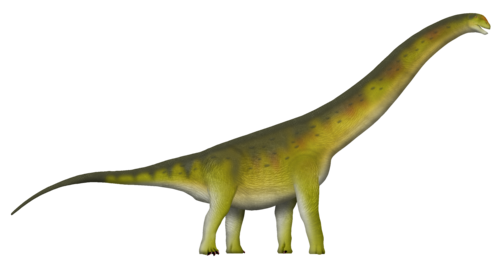 |
| غانانصور | 2013 | تكوين نانشيونغ ( العصر الطباشيري المتأخر ، الماستريختي ) | الصين | كانت فقراته أكثر شبهاً بفقرات يوهيلوبوس منها بفقرات السوروبودات الأخرى | 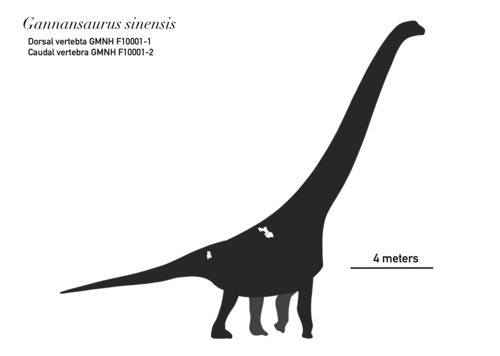 |
| غانزوصور | 2013 | تكوين نانشيونغ ( العصر الطباشيري المتأخر ، الماستريختي ) | الصين | تعايش مع سبعة أنواع أخرى على الأقل من الأوفيرابتوروصورات، والتي ربما تكون قد قسمت نفسها إلى مناطق بيئية محددة . ومن المرجح أنه كان يتغذى بشكل أساسي على النباتات [ 53 ]. | 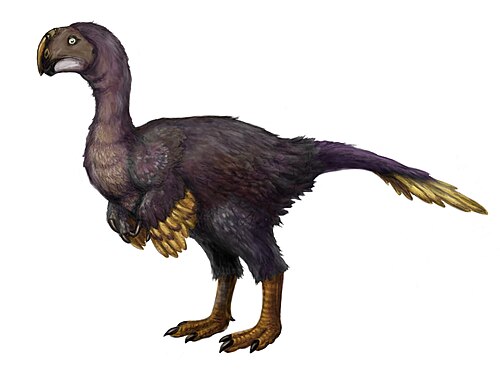 |
| جاروديموس | 1981 | تكوين بايانشاير ( العصر الطباشيري المتأخر ، من السينوماني إلى السانتوني ) | منغوليا | لم يكن متكيفًا مع الجري مثل الأورنيثوميموصورات اللاحقة |  |
| غاسوصور | 1985 | تكوين شاكسيمياو ( العصر الجوراسي الأوسط ، من الباثوني إلى الكالوفي ) | الصين | تم اكتشافه كمنتج ثانوي لأعمال البناء | 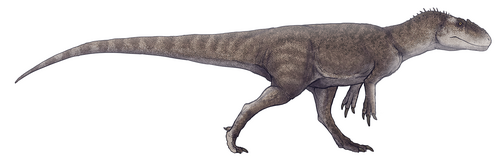 |
| جيجانتورابتور | 2007 | تكوين إيرين داباسو ( العصر الطباشيري المتأخر ، السينوماني ) | الصين | أكبر أوفيرابتوروصور معروف، وهو بحجم مماثل لألبرتوصور |  |
| جيجانتسبينوصور | 1992 | تكوين شاكسيمياو ( العصر الجوراسي المتأخر ، الأكسفوردي ) | الصين | كانت تمتلك شوكات كتف عريضة ومتضخمة للغاية |  |
| جيلموروصور | 1979 | تكوين بيسيكتي ؟، تكوين إيرين داباسو ، تكوين خودجاكول ؟ ( العصر الطباشيري المتأخر ، السينوماني ) | الصين وأوزبكستان ؟ | تحتفظ العديد من الأحافير بأدلة على الأورام الناجمة عن السرطان [ 54 ] | 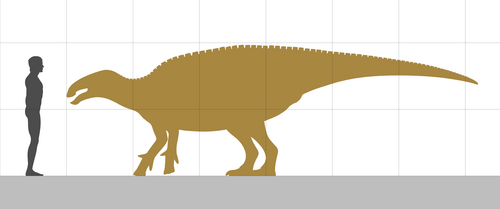 |
| غوبيهادروس | 2019 | تكوين بايانشاير ( العصر الطباشيري المتأخر ، من السينوماني إلى السانتوني ) | منغوليا | معروفة من خلال عينات متعددة تمثل مراحل نمو مختلفة |  |
| غوبيرابتور | 2019 | تكوين نيميجت ( العصر الطباشيري المتأخر ، الماستريختي ) | منغوليا | يمتلك فكًا عميقًا قد يكون تكيفًا لسحق ذوات الصدفتين أو البذور [ 55 ] | 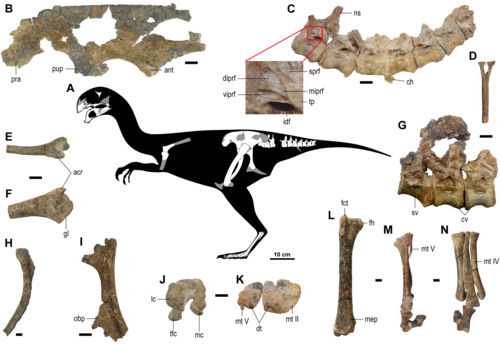 |
| غوبيصور | 2001 | تكوين مياوغو ( العصر الطباشيري المبكر ، من الباريمي إلى الألبي ) | الصين | لم يكن لديه ذيل مدبب ولكنه كان يمتلك بالفعل الذيل الصلب للأنكيلوصوريات المشتقة [ 56 ] | 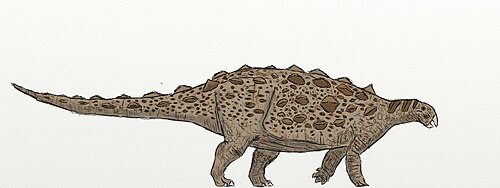 |
| غوبيتان | 2003 | مجموعة شينمينباو ( العصر الطباشيري المبكر ، الأبتي ) | الصين | احتفظت بالإصبع الخامس من القدم، وهي سمة أساسية | |
| غوبيفيناتور | 2014 | تكوين دجادوختا ( العصر الطباشيري المتأخر ، الكامباني ) | منغوليا | أكثر أنواع التروودونتيدات المعروفة بشكل كامل من العصر الطباشيري |  |
| غونغبوسورس | 1983 | تكوين شاكسيمياو ( العصر الجوراسي المتأخر ، الأكسفوردي ) | الصين | لا يُعرف عنه إلا من خلال زوج من الأسنان. قد يكون من فصيلة الأنكيلوصوريات [ 57 ] | |
| غونغبوكوانصور | 2014 | مجموعة شينمينباو ( العصر الطباشيري المبكر ، الألبي ) | الصين | بقايا سُميت في الأصل بنوع من أنواع البروباكتروصور |  |
| جونغشويلونج | 2026 | تكوين ليانهي ( العصر الطباشيري المتأخر ، الماستريختي ) | الصين | كانت تمتلك أشواكًا مستطيلة على فقراتها الذيلية تشكل بنية تشبه الشراع |  |
| غونغشيانوصور | 1998 | تكوين زيليوجينج ( العصر الجوراسي المبكر ، التورسي ) | الصين | السوروبود الوحيد الذي يمتلك عظام رسغية طرفية متعظمة ، مما يشير إلى موقعه القاعدي | |
| غويوسيفالي | 1982 | تكوين غير مسمى ( العصر الطباشيري المتأخر ، الكامباني ) | منغوليا | كان رأسه مائلاً وسقف جمجمته مسطحاً |  |
| جراسيلسيراتوبس | 2000 | تكوين بايانشاير ( العصر الطباشيري المتأخر ، من السينوماني إلى السانتوني ) | منغوليا | كانت تحتوي على كشكشة قصيرة ذات نوافذ كبيرة |  |
| جراسيليرابتور | 2004 | تكوين ييشيان ( العصر الطباشيري المبكر ، الباريمي ) | الصين | قريب من الميكرورابتور يتميز بعظامه النحيلة |  |
| قوان لونغ | 2006 | تكوين شيشوجو ( العصر الجوراسي المتأخر ، الأكسفوردي ) | الصين | تم اكتشاف عينتين، إحداهما فوق الأخرى |  |
| هالسكارابتور | 2017 | تكوين دجادوختا ( العصر الطباشيري المتأخر ، الكامباني ) | منغوليا | تم تفسيرها في الأصل على أنها صياد أسماك شبه مائي يشبه طائر الغواص [ 58 ] ولكن تم انتقاد هذه الفرضية [ 59 ]. | 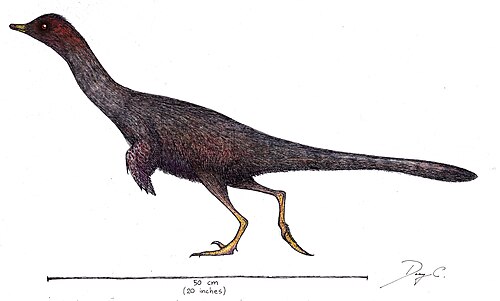 |
| حميتان | 2021 | تكوين شينغجينكو ( العصر الطباشيري المبكر ، الفالانجيني ) | الصين | معروف من سبع فقرات ذيلية والعناصر المرتبطة بها | 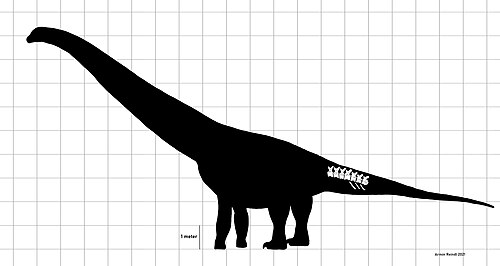 |
| هولونج | 2026 | تكوين ييشيان ( العصر الطباشيري المبكر ، الباريمي ) | الصين | على الأقل، امتلكت صغارها غطاءً من أشواك مجوفة من الكيراتين تشبه تلك الموجودة لدى النيص. |  |
| هابلوشيروس | 2010 | تكوين شيشوجو ( العصر الجوراسي المتأخر ، الأكسفوردي ) | الصين | كان يمتلك ثلاثة أصابع طويلة بمخالب قصيرة. وُصف في الأصل بأنه ألفاريزصورويد قاعدي، ولكن لوحظت أوجه تشابه مع أنواع أخرى من السيلوروصورات [ 60 ] [ 61 ] | 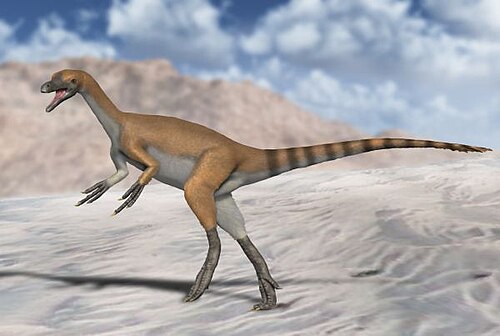 |
| هاريندراكو | 2024 | تكوين بارونغويوت ( العصر الطباشيري المتأخر ، الكامباني ؟) | منغوليا | أول ترودونتيد تم وصفه من تكوين بارونغويوت [ 62 ] |  |
| هاربيميموس | 1984 | تكوين خورين دوخ ؟ / تكوين شينيخوداغ ؟ ( العصر الطباشيري المبكر ، الألبي ) | منغوليا | معظمها بلا أسنان ولكنها تحتفظ ببعض الأسنان في الفك السفلي |  |
| هيا | 2011 | تكوين جافخلانت ( العصر الطباشيري المتأخر ، من السانتوني إلى الكامباني ) | منغوليا | إحدى العينات تحتفظ بكتلة كبيرة من حصى المعدة. |  |
| هيشانصور | 1953 | تكوين مينخه ( العصر الطباشيري المتأخر ، من الكامباني إلى الماستريختي ) | الصين | قد يكون مرادفًا ثانويًا لـ Pinacosaurus [ 63 ] | |
| هيليوسيراتوبس | 2009 | تكوين كوانتو ( من العصر الطباشيري المبكر إلى العصر الطباشيري المتأخر ، من الألبي إلى السينوماني ) | الصين | كان لديه فك سفلي قصير بشكل ملحوظ | 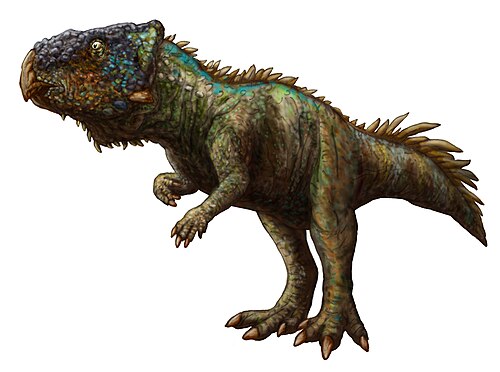 |
| هيكسينغ | 2012 | تكوين ييشيان ( العصر الطباشيري المبكر ، من الفالانجيني إلى الباريمي ) | الصين | تم التعرف على ثلاثة أو أربعة أسنان، لكنها ليست محفوظة بشكل جيد. | 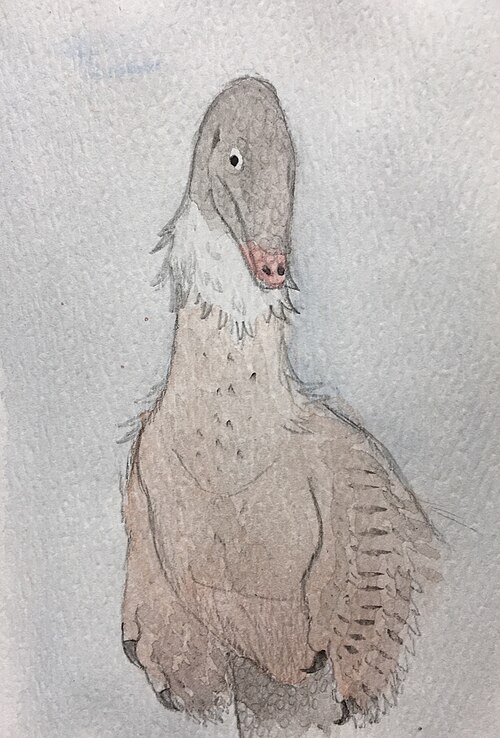 |
| هيكسينلوصور | 2005 | تكوين شاكسيمياو ( العصر الجوراسي الأوسط ، الباجوسي ؟) | الصين | كان يُطلق عليه في الأصل اسم نوع من أنواع الياندوصور | 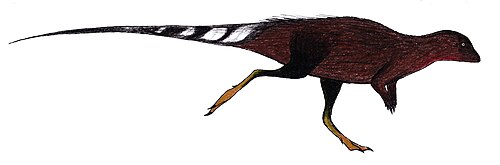 |
| هييوانانيا | 2002 | تكوين بارونجويوت ، تكوين دالانجشان ( العصر الطباشيري المتأخر ، العصر الماستريخيتي ) | الصين منغوليا | تشير الأصباغ المتحجرة في قشور البيض المشار إليها إلى أنها كانت زرقاء مخضرة [ 64 ]. |  |
| هومالوسيفال | 1974 | تكوين نيميجت ( العصر الطباشيري المتأخر ، الماستريختي ) | منغوليا | وقد تم اقتراح أنه من نوع Prenocephale اليافع بسبب رأسه المسطح، [ 65 ] ولكن لم يعد يُعتقد أن هذا هو الحال [ 66 ]. |  |
| هوابيسورس | 2000 | تكوين هويكوانبو ( العصر الطباشيري المتأخر ، من السينوماني إلى الماستريختي ) | الصين | قد يكون مرتبطًا ارتباطًا وثيقًا بـ Tangvayosaurus [ 67 ] | 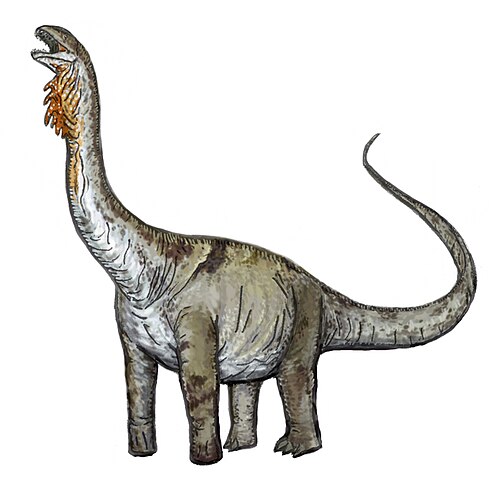 |
| هوادانوصور | 2025 | تكوين ييشيان ( العصر الطباشيري المبكر ، الباريمي ) | الصين | يشبه سينوسوروبتريكس، لكن شكل جمجمته يشير إلى استراتيجية صيد مختلفة [ 68 ]. |  |
| هواليانسيراتوبس | 2015 | تكوين شيشوجو ( العصر الجوراسي المتأخر ، الأكسفوردي ) | الصين | كانت هناك سلسلة من النتوءات حول حافة المنقار |  |
| هوانانصور | 2015 | تكوين نانشيونغ ، تكوين تانغبيان ؟ ( العصر الطباشيري المتأخر ، من الكامباني إلى الماستريختي ) | الصين | كان يمتلك عرفًا قصيرًا مميزًا على شكل شبه منحرف | 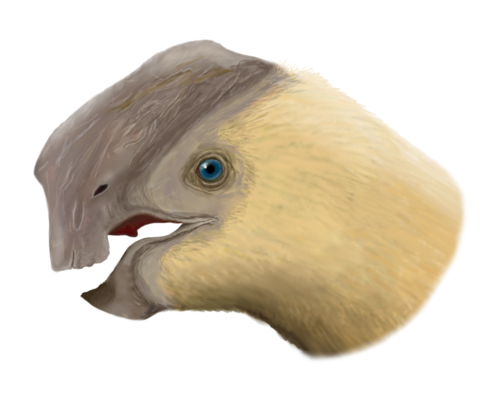 |
| هوانغيتيتان | 2006 | تكوين هاولينغ ، مجموعة هيكو ( العصر الطباشيري المبكر ، من الأبتيان إلى الألبيان ) | الصين | كان لديه أضلاع تقدر بطول 3 أمتار (9.8 قدم) ، والتي دعمت واحدة من أعمق تجاويف الجسم لأي ديناصور [ 69 ]. |  |
| هوانغشان لونغ | 2014 | تكوين هونغتشين ( من العصر الجوراسي الأوسط إلى العصر الجوراسي المتأخر ، من العصر الأيليني إلى العصر الأكسفوردي ) | الصين | معروف من بعض عظام الطرف الأمامي الأيمن |  |
| هواشانوصور | 2025 | تكوين وانغمن ( من العصر الجوراسي المبكر إلى العصر الجوراسي الأوسط ؟، من الهيتانجي إلى الكالوفي ؟) | الصين | عثر أحد المعلمين على أحافيرها أثناء بحثه عن الحجارة في النهر |  |
| هواكسياغناثوس | 2004 | تكوين ييشيان ( العصر الطباشيري المبكر ، الأبتي ) | الصين | أكبر قليلاً من سينوسوروبتريكس المعاصر له | 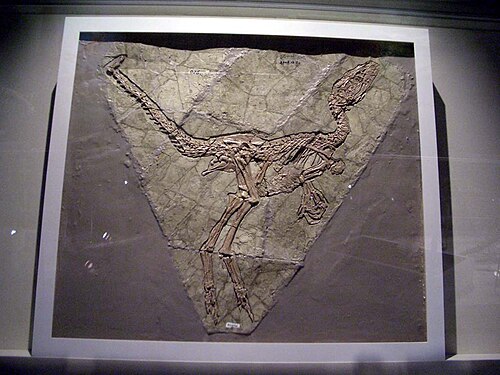 |
| هواشياتشولونج | 2024 | تكوين تانغبيان ( العصر الطباشيري المتأخر ، الكامباني ) | الصين | معروف من هيكل عظمي شبه كامل ومحفوظ جيداً |  |
| هوايانغوصور | 1982 | تكوين شاكسيمياو ( العصر الجوراسي الأوسط ، من الباثوني إلى الكالوفي ) | الصين | امتلكت صفائح عظمية جانبية وذيلًا صغيرًا بالإضافة إلى صفائح وأشواك |  |
| هوديصور | 1997 | تكوين كالازا ( العصر الجوراسي المتأخر ، التيثوني ) | الصين | كان لديه نتوء على شكل فراشة على فقراته | 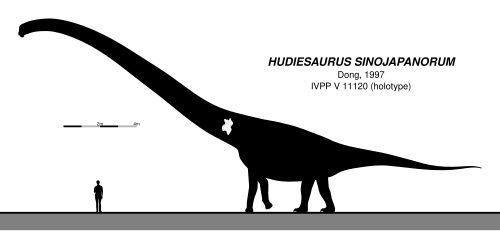 |
| هولسانبيس | 1982 | تكوين بارونغويوت ( العصر الطباشيري المتأخر ، الكامباني ) | منغوليا | يرتبط ارتباطًا وثيقًا بـ Halszkaraptor ولكنه يبدو أكثر قدرة على الجري [ 70 ] | 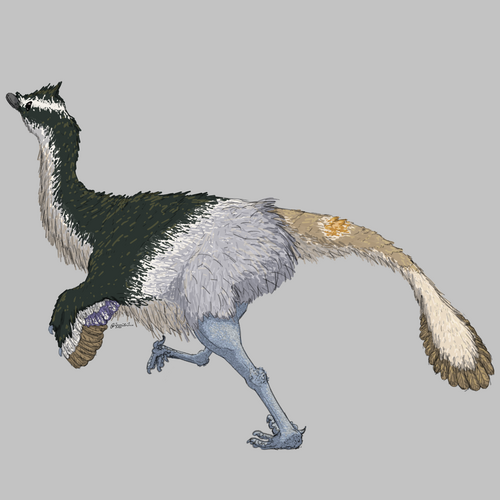 |
| هيبنوفيناتور | 2024 | تكوين أوهياماشيمو ( العصر الطباشيري المبكر ، الألبي ) | اليابان | أول ترودونتيد تم تسميته من اليابان |  |
| إيكثيوفيناتور | 2012 | تكوين اليونان العليا ( العصر الطباشيري المبكر ، الأبتيان ) |  لاوس لاوس | كانت إحدى فقرات عجزه صغيرة للغاية، مما أعطى انطباعاً بوجود تمزق في شراعها أو وجود شراعين منفصلين. |  |
| إنسيسيفوصور | 2002 | تكوين ييشيان ( العصر الطباشيري المبكر ، الباريمي ) | الصين | تم التعرف على عينتين من مراحل نمو مختلفة، وكلاهما بأنواع مختلفة من الريش [ 71 ]. |  |
| إيريسوصور | 2020 | تكوين فينغجياخه ( العصر الجوراسي المبكر ، الهيتانجي ) | الصين | يرتبط ارتباطًا وثيقًا بجنس Mussaurus [ 72 ] |  |
| إيسانوصور | 2000 | تكوين نام فونغ (عمر غير مؤكد) |  تايلاند تايلاند | كان يُعتقد في الأصل أنها تعود إلى العصر الترياسي المتأخر، ولكن ربما تكون قد أتت بالفعل من العصر الجوراسي المبكر [ 73 ] أو حتى العصر الجوراسي المتأخر [ 74 ]. |  |
| إيشيوسيراتوبس | 2015 | مجموعة وانغشي ( العصر الطباشيري المتأخر ، من الكامباني إلى الماستريختي ) | الصين | تشتهر بعظم الإسك ذي الشكل المميز | 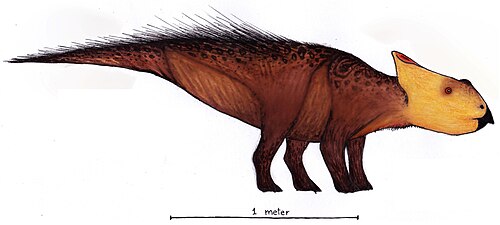 |
| إيسيصور | 2003 | تكوين باب ( العصر الطباشيري المتأخر ، الماستريختي ) | باكستان | الديناصور الوحيد غير الطائر المعروف من كل من الهند والبر الرئيسي لآسيا | 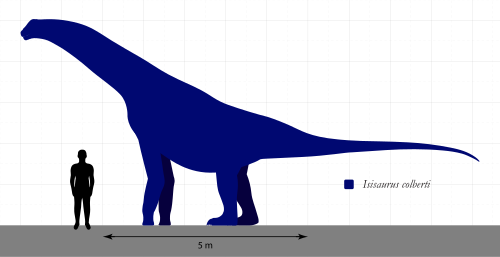 |
| إيتيروس | 1976 | تكوين بيسيكتي ( العصر الطباشيري المتأخر ، التوروني ) | أوزبكستان | كانت معروفة في الأصل من علبة الدماغ ولكن تم وصف بقايا جديدة وفيرة في عام 2014 [ 75 ]. | 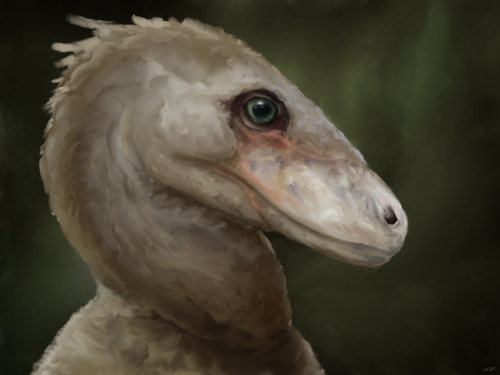 |
| جاكولينيكوس | 2023 | تكوين بارونجويوت ( العصر الطباشيري المتأخر ، العصر الماستريخيتي ) | منغوليا | كان لديه إصبعان، بإصبع أول كبير وإصبع ثانٍ صغير |  |
| جاكسارتوصور | 1937 | تكوين دابرازين ( العصر الطباشيري المتأخر ، السانتوني ) | كازاخستان | غير معروف من العديد من البقايا ولكنها كافية للقول بأنه كان لامبيوصورًا قاعديًا [ 76 ]. |  |
| جيهولوصور | 2000 | تكوين ييشيان ( العصر الطباشيري المبكر ، الأبتي ) | الصين | تم حفظ إحدى العينات في وضعية ملتفة. | 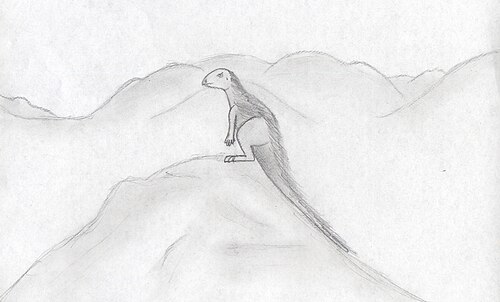 |
| جيان | 2026 | مجموعة شينمينباو ( العصر الطباشيري المبكر ، الأبتي ) | الصين | تم وصفها من خلال تكوين جيولوجي يحفظ في الغالب أحافير الطيور |  |
| جيانشانغوسورس | 2013 | تكوين ييشيان ( العصر الطباشيري المبكر ، الباريمي ) | الصين | تتشابه العديد من خصائص أسنانها وفكيها بشكل متقارب مع خصائص طيور الأورنيثيسكيا [ 77 ]. |  |
| جيانغجونوصور | 2007 | تكوين شيشوجو ( العصر الجوراسي المتأخر ، الأكسفوردي ) | الصين | كان يحتوي على صفين من الأطباق الدائرية أو المعينية الشكل |  |
| جيانغشانوصور | 2001 | تكوين جينهوا ( العصر الطباشيري المتأخر ، من التوروني إلى الكونياكي ) | الصين | عضو محتمل في عائلة Euhelopodidae [ 78 ] |  |
| جيانغشيسورس | 2013 | تكوين نانشيونغ ( العصر الطباشيري المتأخر ، الماستريختي ) | الصين | بشكل عام، يشبه هيوانيا، لكن بفك سفلي أرق وأكثر هشاشة. | 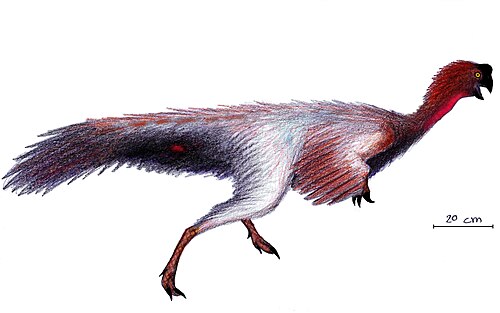 |
| جيانغكسيتان | 2023 | تكوين نانشيونغ ( العصر الطباشيري المتأخر ، الماستريختي ) | الصين | على الرغم من وصفه في الأصل بأنه تيتانوصور، إلا أن التحليل اللاحق يستعيده على أنه سومفوسبونديليان تم وضعه خارج تلك المجموعة [ 52 ]. | 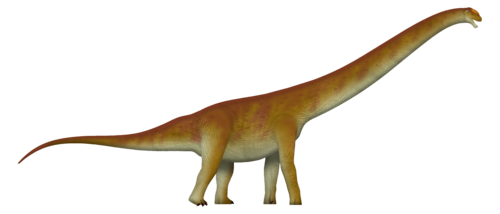 |
| جيانيانهوالونج | 2017 | تكوين ييشيان ( العصر الطباشيري المبكر ، الأبتي ) | الصين | كان يمتلك ذيلًا شبه مثلث الشكل مصنوعًا من ريش غير متماثل، على الرغم من أنه كان على الأرجح غير قادر على الطيران. |  |
| جينبيسورس | 2020 | تكوين هويكوانبو ( العصر الطباشيري المتأخر ، من السينوماني إلى الماستريختي ) | الصين | فسرها واصفوها الأصليون على أنها تيرانوصور بالغ متوسط الحجم، ولكن في الآونة الأخيرة أعيد تفسيرها على أنها تيرانوصور صغير، ربما من تيرانوصور مشتق [ 79 ] . | |
| جينتشوانلونج | 2025 | تكوين شينهي ( العصر الجوراسي الأوسط ، الباثوني ) | الصين | يبدو أن جمجمته كانت تحتوي على خطم أعرض في المنظر الظهري مقارنة بـ Mamenchisaurus youngi و Shunosaurus ، ولكن ربما يكون هذا قد حدث بسبب التشوهات التافونومية [ 80 ]. |  |
| جينفينجوبتريكس | 2005 | تكوين هواجيينغ ( العصر الطباشيري المبكر ، الباريمي ) | الصين | ربما كان قادراً على نوع من الطيران [ 81 ] |  |
| جينجيلا | 2024 | تكوين دونغشينغ ( العصر الجوراسي المتأخر ، الكيمريدجي ؟) | الصين | أطلق عليها في البداية اسم جينجيا، لكن هذا الاسم مستخدم بالفعل من قبل نوع من العث [ 82 ] |  |
| جينغشانوصور | 1995 | تكوين لوفينغ ( العصر الجوراسي المبكر ، الهيتانجي ) | الصين | أحد أحدث أنواع السوروبودومورف غير السوروبودية الباقية على قيد الحياة |  |
| جينتاسورس | 2009 | مجموعة شينمينباو ( العصر الطباشيري المبكر ، الألبي ) | الصين | لا يُعرف إلا من النصف الخلفي للجمجمة، بما في ذلك علبة الدماغ الكاملة |  |
| جينيونبيلتا | 2018 | تكوين ليانغتوتانغ ( من العصر الطباشيري المبكر إلى العصر الطباشيري المتأخر ، من الألبي إلى السينوماني ) | الصين | أقدم أنواع الأنكيلوصورات المعروفة بامتلاكها ذيلًا يشبه الهراوة |  |
| جينزوصور | 2001 | تكوين ييشيان ( العصر الطباشيري المبكر ، الأبتي ) | الصين | نموذجها الأصلي شبه مكتمل، محفوظ كاملاً على لوح واحد | 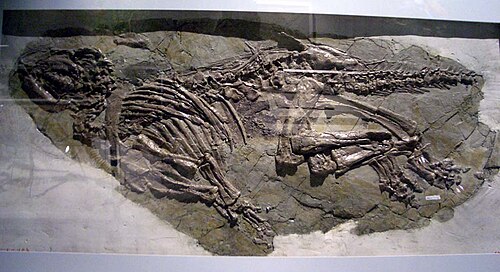 |
| جيوتايسورس | 2006 | تكوين كوانتو ( من العصر الطباشيري المبكر إلى العصر الطباشيري المتأخر ، من الباريمي إلى السينوماني ) | الصين | تمت تسميتها بناءً على ثمانية عشر فقرة | |
| كايجيانغوسورس | 1984 | تكوين شاكسيمياو ( العصر الجوراسي الأوسط ، من الباثوني إلى الكالوفي ) | الصين | قد يكون مرادفًا لأنواع أخرى من الديناصورات متوسطة الحجم من جنس شاكسيمياو. | 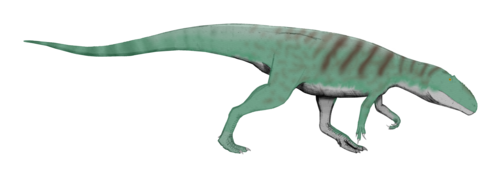 |
| كامويسورس | 2019 | مجموعة ييزو ( العصر الطباشيري المتأخر ، الماستريختي ) | اليابان | كان يُشار إليه بشكل غير رسمي باسم "موكاواريو" قبل وصفه الرسمي | 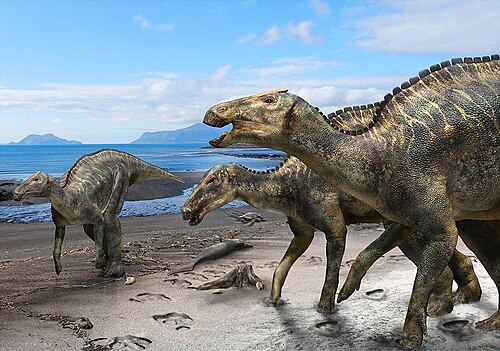 |
| كانسايغناثوس | 2021 | تكوين إيالوفاتشسك ( العصر الطباشيري المتأخر ، السانتوني ) |  طاجيكستان طاجيكستان | أول ديناصور غير طائر تم وصفه من طاجيكستان | 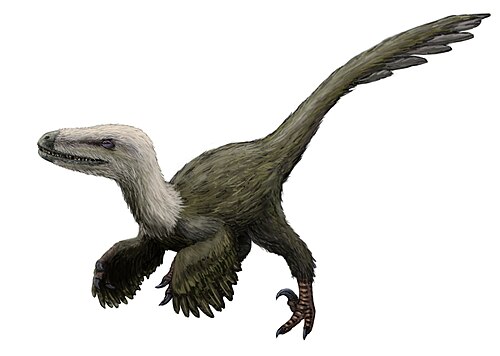 |
| كازاخستان | 2013 | تكوين دابرازين ( العصر الطباشيري المتأخر ، السانتوني ) | كازاخستان | يختلف شكليًا عن أنواع اللامبيوصورين الأخرى في أوراسيا [ 83 ] |  |
| كيلمايسورس | 1973 | مجموعة توغولو ( العصر الطباشيري المبكر ، من الفالانجيني إلى الألبي ) | الصين | يذكر أحد الكتب الشائعة نوعًا عملاقًا ينتمي إلى هذا الجنس، [ 84 ] ولكن قد يكون هذا المرجع غير صحيح | 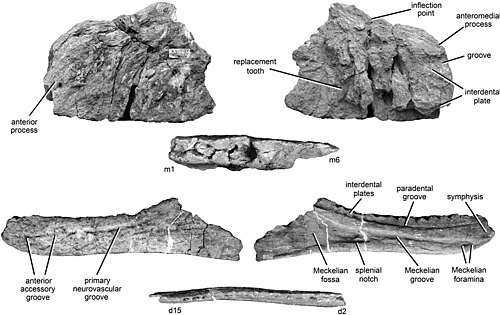 |
| كيربيروصور | 2004 | تكوين تسغايان ( العصر الطباشيري المتأخر ، الماستريختي ) | روسيا | من المحتمل أن يكون قريبًا من إدمونتوصور [ 85 ] |  |
| خان | 2001 | تكوين دجادوختا ( العصر الطباشيري المتأخر ، الكامباني ) | منغوليا | من المعروف وجود نمطين شكليين للعلامات على شكل حرف V ، والتي قد تكون سمة ثنائية الشكل الجنسي [ 86 ]. |  |
| خانخولو | 2025 | تكوين بايانشاير ( العصر الطباشيري المتأخر ، من التوروني إلى السانتوني ) | منغوليا | بقايا نُسبت في الأصل إلى أليكتروصور |  |
| خولسانوروس | 2021 | تكوين بارونغويوت ( العصر الطباشيري المتأخر ، الكامباني ) | منغوليا | معاصر لـ Parvicursor ولكن يمكن تمييزه من خلال خصائص فقراته الذيلية [ 87 ] | |
| كيليسكوس | 2010 | تكوين إيتات ( العصر الجوراسي الأوسط ، الباثوني ) | روسيا | من غير المؤكد ما إذا كان يمتلك عرف الرأس كما هو الحال في أنواع البروسيراتوصورات الأخرى |  |
| كينارييميموس | 2009 | تكوين ساو خوا ( العصر الطباشيري المبكر ، الباريمي ) | تايلاند | يُحتمل أن يكون أحد أقدم أنواع الأورنيثوميموصورات |  |
| كياكورسور | 2024 | تكوين إيليك ( العصر الطباشيري المبكر ، الأبتي ) | روسيا | يمثل هذا النوع مجموعة متبقية من النواصوريات الجوراسية. | 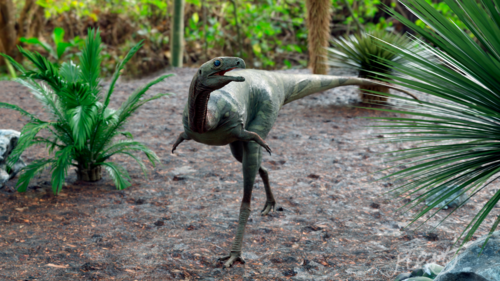 |
| كلاميليسورس | 1993 | تكوين شيشوجو ( العصر الجوراسي الأوسط ، الكالوفي ) | الصين | وشملت الأنواع القريبة العديد من الأنواع المشار إليها من Mamenchisaurus [ 88 ] | 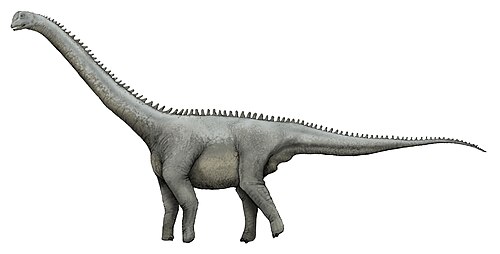 |
| كول | 2009 | تكوين دجادوختا ( العصر الطباشيري المتأخر ، الكامباني ) | منغوليا | كان لديه عظم مشط القدم المقوس بشكل مفرط، أكثر انضغاطًا من غيره من أنواع عظام مشط القدم المقوسة. وُصف بأنه من فصيلة ألفاريزصوريد [ 89 ] ، ولكن يُعتقد أنه مرتبط بفصيلة أفيميموس [ 90 ]. | |
| كورياسيراتوبس | 2011 | طبقات تاندو ( العصر الطباشيري المبكر ، الألبي ) | كوريا الجنوبية | كان يمتلك نتوءات عصبية طويلة على فقراته الذيلية. ويشير واصفوه إلى أنه كان يستخدم كعضو للسباحة، [ 91 ] لكن دراسة لاحقة وجدت أنه يعيش في بيئة شبه قاحلة، مما يجعل هذا الأمر غير مرجح [ 92 ]. | 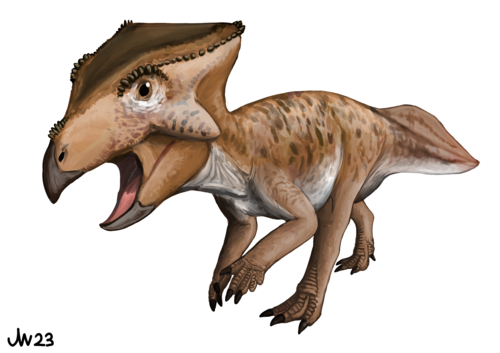 |
| الكوريانوصور | 2011 | تكتل سيونسو ( العصر الطباشيري المتأخر ، الكامباني ) | كوريا الجنوبية | كانت له أطراف أمامية قصيرة لكنها قوية، مما يشير إلى أنه ربما كان حيوانًا رباعي الأرجل [ 93 ] |  |
| كوشيسورس | 2015 | تكوين كيتاداني ( العصر الطباشيري المبكر ، من البريمي إلى الأبتيان ) | اليابان | يتميز عن غيره من الهادروصورات بوجود حفرة أمام الحجاج | 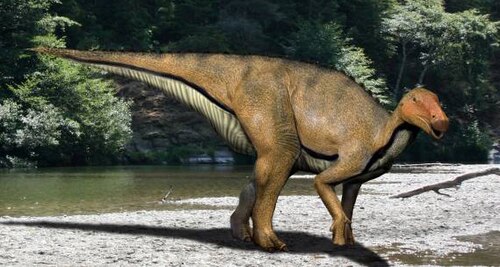 |
| كولسيراتوبس | 1995 | تكوين خوجاكول ( العصر الطباشيري المبكر ، الألبي ) | أوزبكستان | لا يُعرف عنه إلا من شظايا الفك والأسنان | 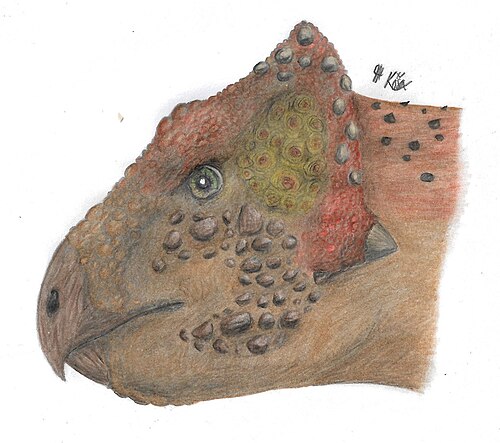 |
| كوليندادروميوس | 2014 | تكوين أوكوريسكايا ( العصر الجوراسي الأوسط ، الباثوني ) | روسيا | أورنيثيسكي يحتفظ بأدلة على وجود خيوط، مما يشير إلى أن الريش البدائي كان أساسيًا للديناصورات ككل |  |
| كوندوروصور | 2012 | تكوين أودورتشوكان ( العصر الطباشيري المتأخر ، الماستريختي ) | روسيا | قد يكون مرادفًا لـ Kerberosaurus [ 94 ] |  |
| كورو | 2021 | تكوين بارونجويوت ( العصر الطباشيري المتأخر ، العصر الماستريخيتي ) | منغوليا | كان يُشار إليه بشكل غير رسمي باسم "Airakoraptor" قبل وصفه الرسمي | 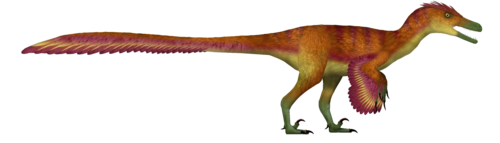 |
| لايانغوسورس | 2019 | مجموعة وانغشي ( العصر الطباشيري المتأخر ، الماستريختي ) | الصين | بعض العينات المشار إليها في هذا الجنس تنتمي في الواقع إلى الكريتوصورين واللامبيوصورين [ 95 ] | 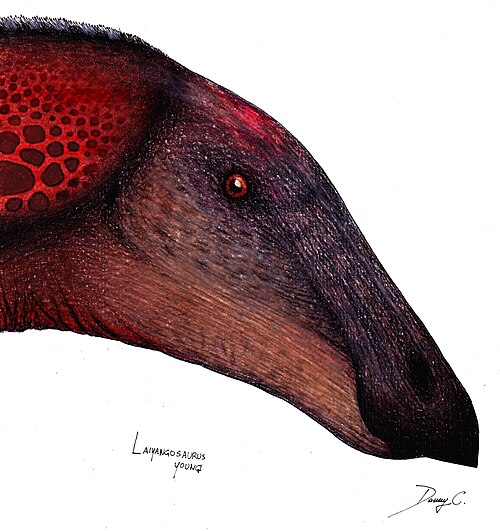 |
| لانزوصور | 2005 | مجموعة هيكو ( العصر الطباشيري المبكر ، الباريمي ) | الصين | امتلك أكبر أسنان معروفة بين جميع الديناصورات | 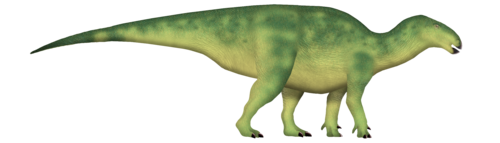 |
| ليشانصور | 2009 | تكوين شاكسيمياو ( العصر الجوراسي المتأخر ، من الأكسفوردي إلى الكيمريدجي ) | الصين | علبة دماغه مطابقة تقريبًا لعلبة دماغ Piveteausaurus [ 96 ] | 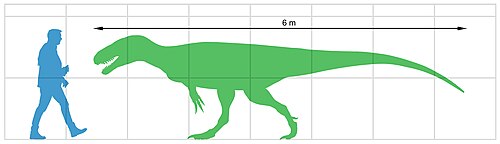 |
| ليفنيسوفيا | 2009 | تكوين بيسيكتي ( العصر الطباشيري المتأخر ، التوروني ) | أوزبكستان | أحد أصغر أنواع الهادروصورات المعروفة [ 48 ] | |
| لياوسيراتوبس | 2002 | تكوين ييشيان ( العصر الطباشيري المبكر ، الباريمي ) | الصين | تم العثور على عينة واحدة بدون سقف جمجمة، ربما أزاحها حيوان مفترس ليأكل دماغها [ 97 ]. |  |
| لياونينغوصور | 2001 | تكوين جيوفوتانغ ، تكوين ييشيان ( العصر الطباشيري المبكر ، من الباريمي إلى الأبتي ) | الصين | تم تفسير إحدى العينات على أنها تمتلك أسنانًا تشبه الشوكة ومخالب حادة ومحتويات معدة تشمل الأسماك، وقد زُعم أن ذلك دليل على نمط حياة شبه مائي يشبه السلاحف [ 98 ] . |  |
| لياونينغوتيتان | 2018 | تكوين ييشيان ( العصر الطباشيري المبكر ، الباريمي ) | الصين | ثاني ديناصور من فصيلة الصوروبودات تم تسميته نسبة إلى تكوين ييشيان. |  |
| لياونينغفيناتور | 2017 | تكوين ييشيان ( العصر الطباشيري المبكر ، الباريمي ) | الصين | تم الحفاظ عليها بشكل فريد مع انحناء الرأس إلى الأمام، وهو ما يختلف عن "وضع الموت" الكلاسيكي للثيروبودات ووضع النوم لدى التروودونتيدات الأخرى |  |
| ليموسورس | 2009 | تكوين شيشوجو ( العصر الجوراسي المتأخر ، الأكسفوردي ) | الصين | تم العثور على عينات متعددة من مراحل نمو مختلفة. امتلكت الصغار أسنانًا فقدتها واستبدلتها بمنقار عندما أصبحت بالغة، مما يشير إلى تغيير في النظام الغذائي [ 99 ]. | 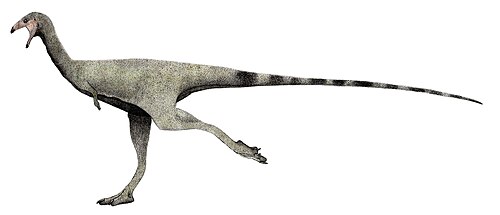 |
| لينغوولونغ | 2018 | تكوين يانان ؟ / تكوين زيلو ؟ ( من العصر الجوراسي الأوسط إلى العصر الجوراسي المتأخر ، من العصر الأيليني إلى العصر الأكسفوردي ) | الصين | أول ديبلودوكويد مؤكد من آسيا. كان يُعتقد في الأصل أنه يعود إلى العصر الجوراسي المبكر، مما يجعله أقدم نيوسوروبود معروف، ولكن هذا العمر محل خلاف [ 100 ] [ 101 ] |  |
| لينغيوانوصور | 2019 | تكوين جيوفوتانغ ؟ / تكوين ييشيان ؟ ( العصر الطباشيري المبكر ، من الفالانجيني إلى الأبتي ) | الصين | امتلك مزيجًا من سمات الثيريزينوصورات الأساسية والمشتقة |  |
| لينهينيكوس | 2011 | تكوين بيان مانداهو ( العصر الطباشيري المتأخر ، من الكامباني إلى الماستريختي ) | الصين | أحادي الأصابع تمامًا بسبب افتقاره إلى الإصبعين الثاني والثالث الضامرين الموجودين لدى أنواع أخرى من الألفاريزصوريات. | 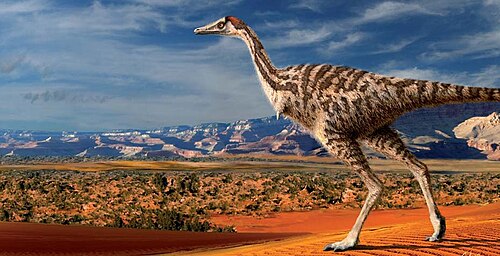 |
| لينهرابتور | 2010 | تكوين بيان مانداهو ( العصر الطباشيري المتأخر ، الكامباني ) | الصين | ربما يكون مرادفًا لكلمة تساجان [ 102 ] |  |
| لينهيفيناتور | 2011 | تكوين بيان مانداهو ( العصر الطباشيري المتأخر ، الكامباني ) | الصين | كان يمتلك مخلبًا منجليًا متضخمًا للغاية، مماثلًا في الحجم لتلك الموجودة لدى الدروميوصورات. | 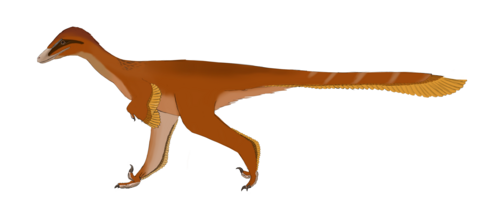 |
| ليشولونج | 2024 | تكوين لوفينغ ( العصر الجوراسي المبكر ، من السينيموريان إلى التورسيان ) | الصين | كان يمتلك أكبر جمجمة بين جميع السوروبودومورف الصينية القاعدية |  |
| ليوبانغوصور | 2010 | تكوين شينلونغ ( العصر الطباشيري المبكر ، من الباريمي إلى الأبتي ) | الصين | تم وصفه فقط على أنه من نوع eusauropod [ 103 ] ولكن تمت إعادة تفسيره منذ ذلك الحين على أنه من نوع somphospondylian [ 104 ]. | |
| لوانشوانرابتور | 2007 | تكوين كيوبا ( العصر الطباشيري المتأخر ، الماستريختي ) | الصين | أول درومايوصور آسيوي يُكتشف خارج صحراء غوبي وشمال شرق الصين. ربما كان وثيق الصلة بالأداصور [ 60 ] |  |
| لوفينغوصور | 1940 | تكوين لوفينغ ( العصر الجوراسي المبكر ، من الهيتانجي إلى السينيموريان ) | الصين | يحتفظ ضلع إحدى العينات بأقدم دليل معروف على بروتينات الكولاجين [ 105 ] | 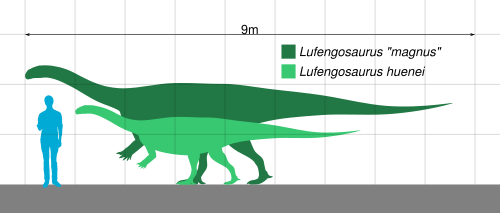 |
| لويانغيا | 2009 | تكوين هاولينغ ( العصر الطباشيري المبكر ، من الأبتيان إلى الألبيان ) | الصين | كان يُعتقد في الأصل أن تاريخها يعود إلى أواخر العصر الطباشيري | |
| ماكيراسورس | 2010 | تكوين بيان مانداهو ( العصر الطباشيري المتأخر ، الكامباني ) | الصين | مخالبها اليدوية طويلة وشبيهة بالشفرات عند النظر إليها من الجانب | 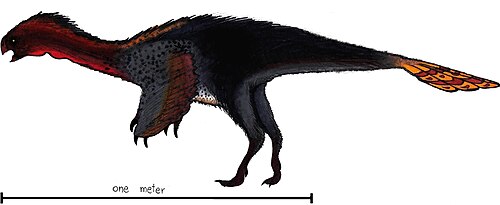 |
| ماهاكالا | 2007 | تكوين دجادوختا ( العصر الطباشيري المتأخر ، الكامباني ) | منغوليا | امتلك سمات أساسية للدرومايوصورات. قد يكون قريبًا من هالسكارابتور [ 106 ] |  |
| ماليفوس | 1987 | تكوين بايانشاير ( العصر الطباشيري المتأخر ، من السينوماني إلى السانتوني ) | منغوليا | السمة المميزة الوحيدة المزعومة له هي أيضاً مشتركة مع بيناكوصور [ 39 ] | |
| مامينشيسورس | 1954 | تكوين بينجلايزين ، تكوين شاكسيمياو ، تكوين شيشوجو ، تكوين سوينينغ ( من أواخر العصر الجوراسي إلى أوائل العصر الطباشيري ، من الأكسفوردي إلى الأبتي ) | الصين | تم تسمية العديد من الأنواع، ولكن قد لا ينتمي معظمها إلى هذا الجنس [ 88 ] |  |
| ماندشوروصور | 1930 | تكوين اليونان العليا ؟، تكوين يوليانجزي ( العصر الطباشيري المتأخر ، ماستريخت ) | الصين ولاوس ؟ | أحد أوائل الديناصورات غير الطائرة التي سُميت من بقايا صينية |  |
| مانيبولونيكس | 2025 | تكوين نيميجت ( العصر الطباشيري المتأخر ، الماستريختي ) | منغوليا | ربما استخدم مخالبه لكسر البيض |  |
| مي | 2004 | تكوين ييشيان ( العصر الطباشيري المبكر ، الأبتي ) | الصين | تم حفظ عينتين في وضعيات نوم تشبه وضعيات الطيور [ 107 ] |  |
| ميكروسيراتوس | 2008 | تكوين غير مسمى ( العصر الطباشيري المتأخر ، التوروني ) | منغوليا | كان يُطلق عليه في الأصل اسم Microceratops ، على الرغم من أن اسم الجنس هذا مستخدم بالفعل من قبل نوع من الدبابير | 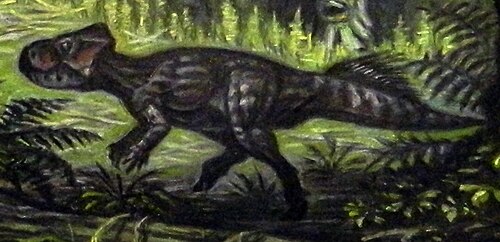 |
| ميكروهادروسورس | 1979 | تكوين نانشيونغ ( العصر الطباشيري المتأخر ، من الكامباني إلى الماستريختي ) | الصين | وبحسب ما ورد، فهو نوع صغير بشكل غير عادي من الهادروصوريات | |
| ميكروباتشيسيفالوصور | 1978 | مجموعة وانغشي ( العصر الطباشيري المتأخر ، الكامباني ) | الصين | كان يحمل أطول اسم بين جميع الديناصورات المعروفة |  |
| ميكرورابتور | 2000 | تكوين جيوفوتانغ ( العصر الطباشيري المبكر ، الأبتي ) | الصين | معروف من أكثر من ثلاثمائة حفرية. [ 108 ] العديد منها محفوظ بشكل جيد بما يكفي للكشف عن تفاصيل دقيقة مثل غطاء الريش واللون الأسود اللامع [ 109 ] |  |
| ميغمانيشيون | 2023 | تكوين لونغجيانغ ( العصر الطباشيري المبكر ، الأبتي ) | الصين | تجمع يدها بين سمات مجموعات متعددة من السيلوروصورات |  |
| المؤشر المصغر | 2023 | تكوين فو كرادونغ ( العصر الجوراسي المتأخر ، التيثوني ) | تايلاند | أول نوع من أنواع النيورنيثيسكيا القاعدية المعروفة من جنوب شرق آسيا | 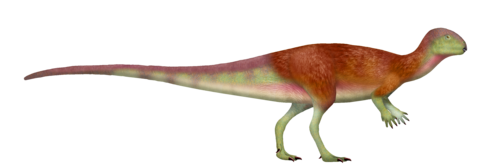 |
| مينوتوراصور | 2009 | تكوين دجادوختا ( العصر الطباشيري المتأخر ، الكامباني ) | منغوليا | تم استخراج الجمجمة الأصلية بطريقة غير قانونية، مما أخفى مصدرها الحقيقي حتى وقت قريب. | 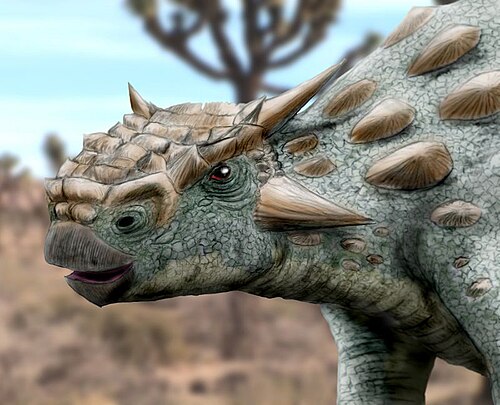 |
| مونغولوصور | 1933 | تكوين غونغ ( العصر الطباشيري المبكر ، من الأبتيان إلى الألبيان ) | الصين | معروف من بقايا قليلة فقط ولكن تم نسبه بثقة إلى Somphospondyli في السنوات الأخيرة [ 104 ] |  |
| مونغولوستيغوس | 2018 | تكوين دزونباين ( العصر الطباشيري المبكر ، من الأبتيان إلى الألبيان ) | منغوليا | على الرغم من أنه تم تصنيفه بشكل غير رسمي ضمن جنس Wuerhosaurus قبل وصفه الرسمي، إلا أنه ربما كان إما قريبًا من Huayangosaurus أو من الستيغوصوريات المبكرة التفرع [ 110 ] . |  |
| مونكونوصور | 1986 | تكوين لو-إين ؟ / تكوين لورا ؟ ( العصر الجوراسي المتأخر ، الأكسفوردي إلى الكيمريدجي ؟ / العصر الطباشيري المبكر ، الألبي ؟) | الصين | غير معروف بشكل جيد | |
| مونولوفوصور | 1993 | تكوين شيشوجو ( العصر الجوراسي الأوسط ، من الباثوني إلى الكالوفي ) | الصين | كان يمتلك عرفًا قصيرًا مستطيل الشكل يمتد على طول الخط المتوسط للجمجمة |  |
| مونونيكوس | 1993 | تكوين نيميجت ( العصر الطباشيري المتأخر ، الماستريختي ) | منغوليا | يُقترح أن يكون لها نمط حياة يشبه آكل النمل، حيث تستخدم ساعديها الفريدين لاقتحام تلال النمل الأبيض [ 111 ]. |  |
| موزايسيراتوبس | 2015 | تكوين شياغوان ( العصر الطباشيري المتأخر ، من التوروني إلى الكامباني ) | الصين | السمات المشتركة لمجموعات مختلفة من السيراتوبسيات القاعدية | 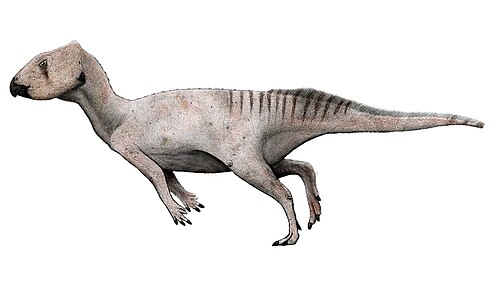 |
| ناغاتيتان | 2026 | تكوين خوك كروات ( العصر الطباشيري المبكر ، من الأبتيان إلى الألبيان ) | تايلاند | Its discovery suggests a greater diversity of Southeast Asian titanosauriform sauropods than previously thought[112] |  |
| Nankangia | 2013 | Nanxiong Formation (Late Cretaceous, Maastrichtian) | China | May have been specialized in soft foods such as leaves and seeds[113] |  |
| Nanningosaurus | 2007 | Unnamed formation (Late Cretaceous, Maastrichtian) | China | Potentially a basal lambeosaurine | |
| Nanshiungosaurus | 1979 | Nanxiong Formation (Late Cretaceous, Maastrichtian) | China | Originally misidentified as a sauropod on account of its unusual pelvis |  |
| Nanyangosaurus | 2000 | Xiaguan Formation (Late Cretaceous, Turonian to Campanian) | China | Completely lost the first digit of its hands |  |
| Napaisaurus | 2022 | Xinlong Formation (Early Cretaceous, Aptian to Albian) | China | May be closely related to contemporary Thai iguanodonts | |
| Natovenator | 2022 | Baruungoyot Formation (Late Cretaceous, Campanian) | Mongolia | Possessed a streamlined body and a long, toothed snout, convergently similar to several groups of aquatic vertebrates |  |
| Nebulasaurus | 2015 | Zhanghe Formation (Middle Jurassic, Aalenian to Bajocian) | China | Only known from a single braincase, but it is enough to tell that it was related to Spinophorosaurus | 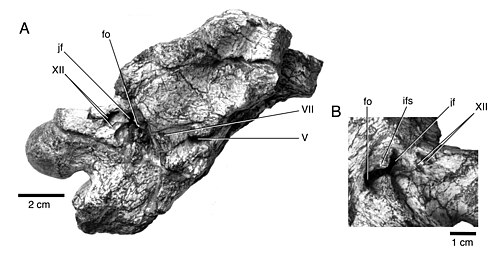 |
| Neimongosaurus | 2001 | Iren Dabasu Formation (Late Cretaceous, Cenomanian) | China | Could extend its arms considerably forwards due to the structure of its shoulder joints[114] |  |
| Nemegtomaia | 2005 | Baruungoyot Formation, Nemegt Formation (Late Cretaceous, Campanian to Maastrichtian) | Mongolia | One specimen preserves traces of damage by skin beetles[115] |  |
| Nemegtonykus | 2019 | Nemegt Formation (Late Cretaceous, Campanian to Maastrichtian) | Mongolia | The second alvarezsaurid named from the Nemegt Formation |  |
| Nemegtosaurus | 1971 | Nemegt Formation, Subashi Formation? (Late Cretaceous, Maastrichtian) | China?Mongolia | Had a long, low skull similar in proportions to those of diplodocoids |  |
| Ningyuansaurus | 2012 | Yixian Formation (Early Cretaceous, Aptian) | China | Preserves small oval-shaped structures in its stomach region which may be seeds | |
| Nipponosaurus | 1936 | Yezo Group (Late Cretaceous, Santonian to Campanian) | Russia | Discovered on the island of Sakhalin, which was owned by Japan in 1936 but later annexed by Russia | 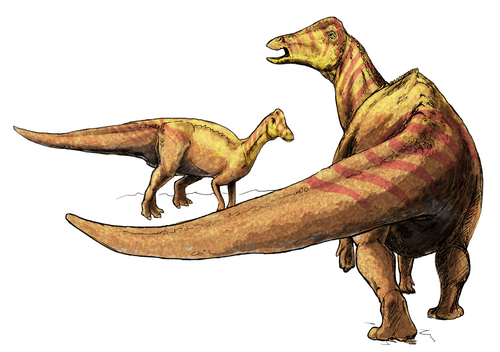 |
| Oksoko | 2020 | Nemegt Formation (Late Cretaceous, Maastrichtian) | Mongolia | Its third finger was so greatly reduced that it was functionally didactyl |  |
| Olorotitan | 2003 | Udurchukan Formation (Late Cretaceous, Maastrichtian) | Russia | Had a broad, hatchet-shaped crest | 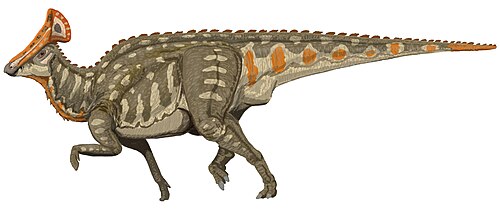 |
| Omeisaurus | 1939 | Shaximiao Formation (Middle Jurassic, Bathonian to Callovian) | China | Members of this genus are characterized by extremely elongated necks |  |
| Ondogurvel | 2022 | Baruungoyot Formation (Late Cretaceous, Campanian) | Mongolia | Known from well-preserved remains of the hands and feet |  |
| Opisthocoelicaudia | 1977 | Nemegt Formation (Late Cretaceous, Campanian to Maastrichtian) | Mongolia | Walked on its metacarpals due to its complete lack of phalanges | 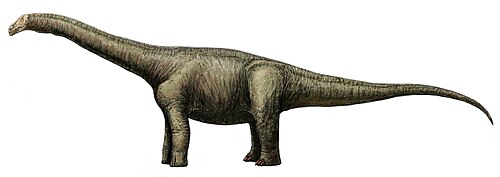 |
| Oviraptor | 1924 | Djadochta Formation (Late Cretaceous, Campanian) | Mongolia | Originally mistakenly thought to be an egg-eater |  |
| Pachysuchus | 1951 | Lufeng Formation (Early Jurassic, Sinemurian to Pliensbachian) | China | Considered a phytosaur from its original naming until a redescription in 2012[116] | |
| Panguraptor | 2014 | Lufeng Formation (Early Jurassic, Hettangian to Sinemurian) | China | The first definitive coelophysoid known from Asia |  |
| Papiliovenator | 2022 | Bayan Mandahu Formation (Late Cretaceous, Campanian) | China | Had a short, subtriangular skull similar to those of Early Cretaceous troodontids |  |
| Paralitherizinosaurus | 2022 | Yezo Group (Late Cretaceous, Campanian) | Japan | Had stiffened claws that may have been used to pull vegetation to the mouth[117] |  |
| Parvicursor | 1996 | Baruungoyot Formation (Late Cretaceous, Campanian) | Mongolia | Originally believed to represent a diminutive adult dinosaur, although it was recently reinterpreted as a juvenile[118] | 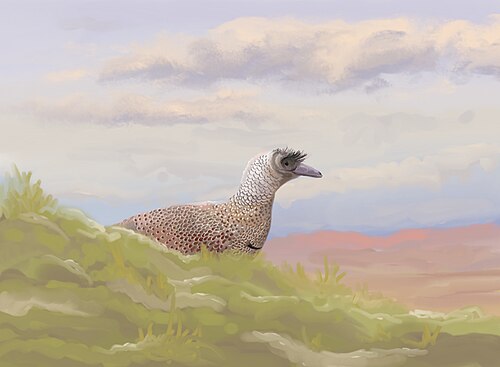 |
| Pedopenna | 2005 | Haifanggou Formation (Middle Jurassic to Late Jurassic, Callovian to Oxfordian) | China | Known from a single leg with the impressions of long, symmetrical feathers | 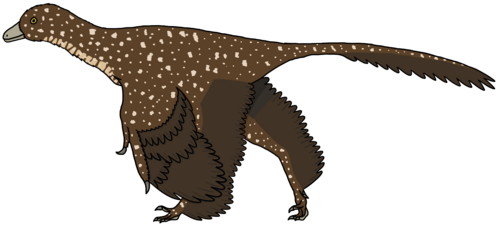 |
| Peishansaurus | 1953 | Minhe Formation (Late Cretaceous, Santonian to Campanian) | China | Has been compared to thyreophorans and marginocephalians, but it is impossible to determine which assignment is correct | |
| Penelopognathus | 2005 | Bayin-Gobi Formation (Early Cretaceous, Albian) | China | Named from a single dentary | |
| Phaedrolosaurus | 1973 | Tugulu Group (Early Cretaceous, Valanginian to Albian) | China | May have been a dromaeosaurid[119] | 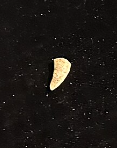 |
| Philovenator | 2012 | Bayan Mandahu Formation (Late Cretaceous, Campanian) | China | Closely related to the contemporary Linhevenator[107] but likely represents a separate taxon[120] |  |
| Phuwiangosaurus | 1994 | Sao Khua Formation (Early Cretaceous, Valanginian to Hauterivian) | Thailand | A large member of the Euhelopodidae[104] | 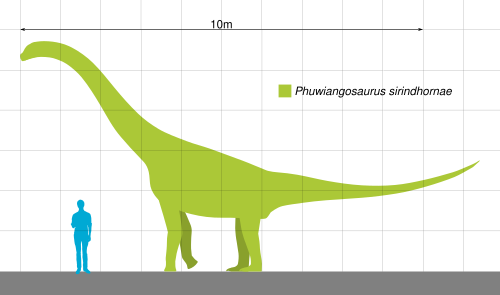 |
| Phuwiangvenator | 2019 | Sao Khua Formation (Early Cretaceous, Barremian) | Thailand | Combines features of both allosauroids and coelurosaurs[121] |  |
| Pinacosaurus | 1933 | Bayan Mandahu Formation, Djadochta Formation (Late Cretaceous, Campanian) | ChinaMongolia | May have been capable of producing bird-like vocalizations[122] |  |
| Plesiohadros | 2014 | Alagteeg Formation (Late Cretaceous, Campanian) | Mongolia | The first hadrosauroid known from the Alagteeg Formation | |
| Prenocephale | 1974 | Nemegt Formation (Late Cretaceous, Maastrichtian) | Mongolia | Had a distinctively conical dome | 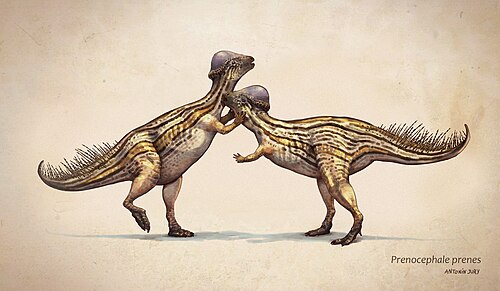 |
| Probactrosaurus | 1966 | Miaogou Formation (Early Cretaceous, Barremian to Albian) | China | The closest relative to the Hadrosauromorpha based on the definition of the group[123] | 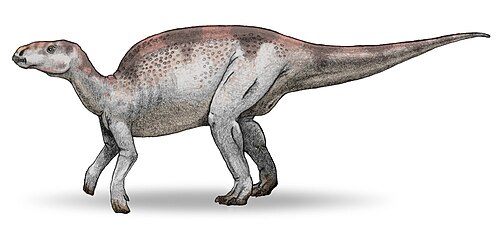 |
| Prodeinodon | 1924 | Öösh Formation, Xinlong Formation (Early Cretaceous, Barremian to Aptian) | ChinaMongolia | Potentially a carnosaur[124] | |
| Protarchaeopteryx | 1997 | Yixian Formation (Early Cretaceous, Aptian) | China | Usually thought to be a basal oviraptorosaur but one study suggests a basal position within Pennaraptora[60] |  |
| Protoceratops | 1923 | Bayan Mandahu Formation, Djadochta Formation (Late Cretaceous, Campanian) | ChinaMongolia | Its remains are so abundant that it has been nicknamed the "sheep of the Cretaceous" |  |
| Protognathosaurus | 1991 | Shaximiao Formation (Middle Jurassic, Bathonian to Callovian) | China | Originally named Protognathus, but that name is preoccupied by a beetle[125] | |
| Psittacosaurus | 1923 | Andakhuduk Formation, Bayin-Gobi Formation, Dushihin Formation, Ejinhoro Formation, Ilek Formation, Jiufotang Formation, Khok Kruat Formation?, Öösh Formation, Qingshan Formation, Tugulu Group, Xinminbao Group, Yixian Formation (Early Cretaceous, Barremian to Albian) | ChinaMongoliaRussiaThailand? | Known from hundreds of specimens, many of them well-preserved. Lived in a broad range | 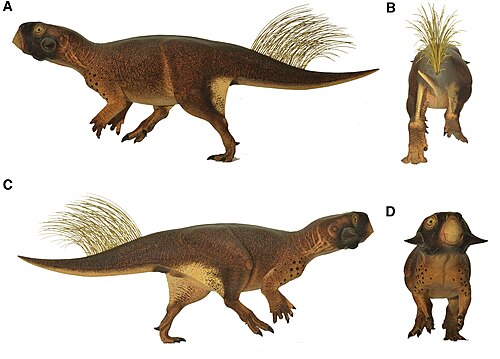 |
| Pukyongosaurus | 2001 | Hasandong Formation (Early Cretaceous, Aptian to Albian) | South Korea | One of its caudal vertebrae has bite marks caused by theropod teeth |  |
| Pulaosaurus | 2025 | Tiaojishan Formation (Middle Jurassic to Late Jurassic, Callovian to Oxfordian) | China | May have made bird-like vocalizations as suggested by its preserved hyoid[126] | 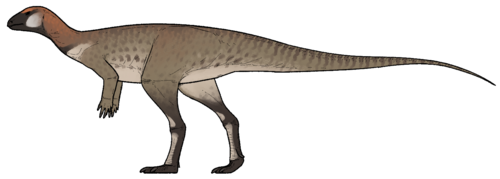 |
| Qianjiangsaurus | 2025 | Zhengyang Formation (Late Cretaceous, Cenomanian to Maastrichtian) | China | This taxon and Nanningosaurus are the only known hadrosauroids from southern China |  |
| Qianlong | 2023 | Ziliujing Formation (Early Jurassic, Sinemurian) | China | Associated with fossils of leathery eggs, the oldest of their kind in the world |  |
| Qianzhousaurus | 2014 | Nanxiong Formation (Late Cretaceous, Maastrichtian) | China | Has been nicknamed "Pinocchio rex" on account of its elongated snout |  |
| Qiaowanlong | 2009 | Xinminbao Group (Early Cretaceous, Aptian) | China | Originally described as a brachiosaurid[127] but has since been reinterpreted as a euhelopodid[128] |  |
| Qijianglong | 2015 | Suining Formation (Early Cretaceous, Aptian) | China | Once believed to date from the Late Jurassic | |
| Qingxiusaurus | 2008 | Unnamed formation (Late Cretaceous, Maastrichtian) | China | Known from very limited remains | |
| Qinlingosaurus | 1996 | Hongtuling Formation?/Shanyang Formation? (Late Cretaceous, Maastrichtian) | China | Potentially a titanosaur given its age, but this cannot be confirmed | 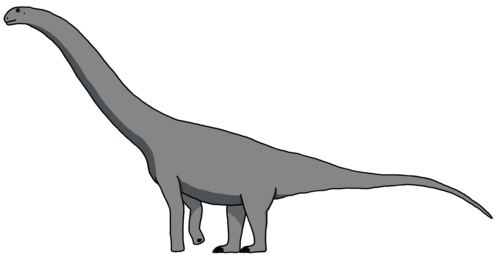 |
| Qiupalong | 2011 | Qiupa Formation (Late Cretaceous, Maastrichtian) | China | Referred specimens were found in Canada[129] and Russia,[130] making it one of the few Late Cretaceous non-avian dinosaur taxa known from both Asia and Laramidia |  |
| Qiupanykus | 2018 | Qiupa Formation (Late Cretaceous, Maastrichtian) | China | May have used its robust thumb claws to crack open oviraptorid eggshells[131] | |
| Quaesitosaurus | 1983 | Baruungoyot Formation (Late Cretaceous, Maastrichtian) | Mongolia | Potentially a close relative of Nemegtosaurus | 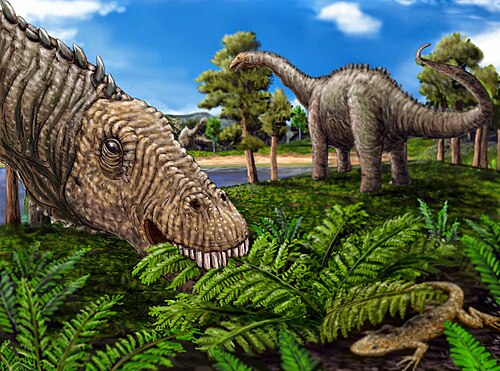 |
| Ratchasimasaurus | 2011 | Khok Kruat Formation (Early Cretaceous, Aptian) | Thailand | Only known from a single toothless dentary | 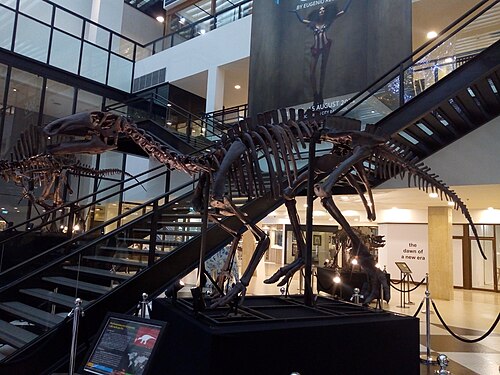 |
| Rhomaleopakhus | 2021 | Kalaza Formation (Late Jurassic, Tithonian) | China | Possessed a robust forelimb that may be a locomotory adaptation |  |
| Rinchenia | 1997 | Nemegt Formation (Late Cretaceous, Maastrichtian) | Mongolia | Had a tall, domed crest | 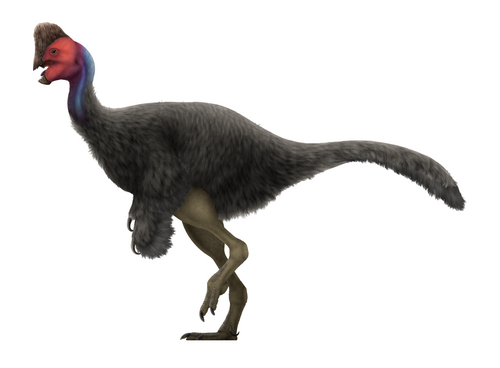 |
| Ruixinia | 2022 | Yixian Formation (Early Cretaceous, Barremian) | China | Its last few caudal vertebrae were fused into a rod-like structure | |
| Ruyangosaurus | 2009 | Haoling Formation (Early Cretaceous, Aptian to Albian) | China | Only known from scant remains but it was one of the largest dinosaurs known from Asia | 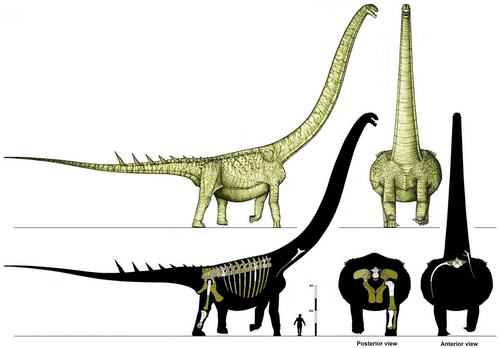 |
| Saichania | 1977 | Baruungoyot Formation, Nemegt Formation (Late Cretaceous, Campanian to Maastrichtian) | Mongolia | Possessed complicated nasal passages that may have cooled the air it breathed |  |
| Sanpasaurus | 1944 | Ziliujing Formation (Early Jurassic, Toarcian) | China | Historically conflated with the remains of an ornithischian | 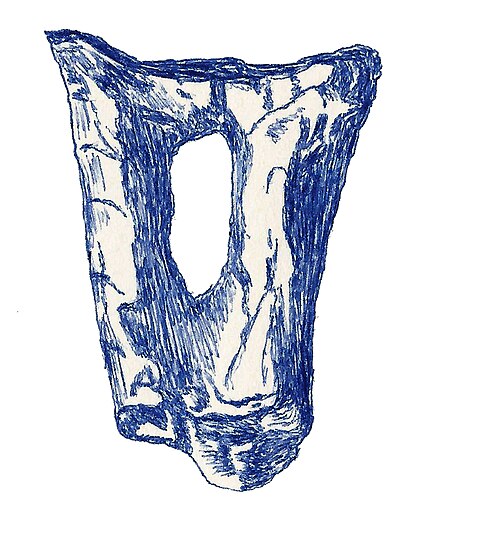 |
| Sanxiasaurus | 2019 | Xintiangou Formation (Middle Jurassic, Bajocian) | China | The oldest neornithischian known from Asia |  |
| Sasayamagnomus | 2024 | Ohyamashimo Formation (Early Cretaceous, Albian) | Japan | At least two individuals are known as indicated by the presence of two right nasal bones among the fossil material |  |
| Saurolophus | 1912 | Nemegt Formation (Late Cretaceous, Maastrichtian) | Mongolia | The type species was found in Canada. The Asian species is distinguished by its larger size and backwards-pointing diagonal crest |  |
| Sauroplites | 1953 | Zhidan Group (Early Cretaceous, Barremian to Aptian) | China | Preserved lying on its back with parts of its armor in an articulated position | |
| Saurornithoides | 1924 | Djadochta Formation (Late Cretaceous, Campanian) | Mongolia | Its hindlimbs were well-developed even as juveniles, suggesting it needed little to no parental care |  |
| Scansoriopteryx | 2002 | Tiaojishan Formation (Middle Jurassic to Late Jurassic, Callovian to Oxfordian) | China | Was well-adapted for climbing due to the structure of its hands and feet | 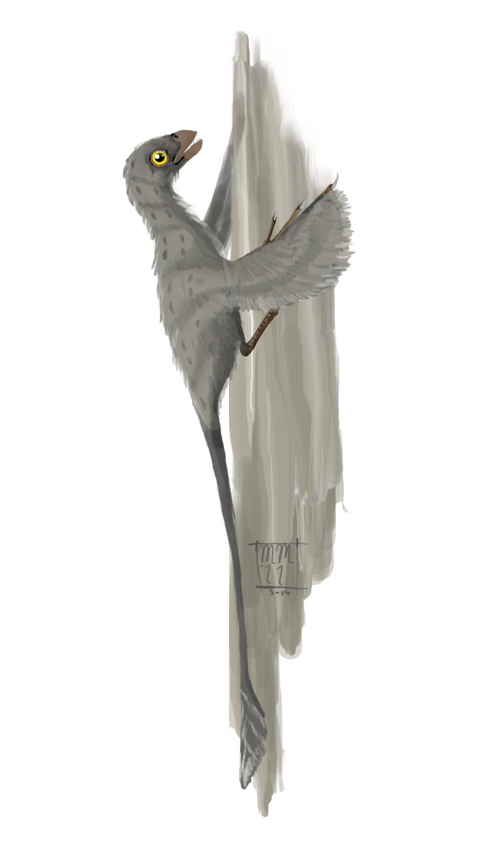 |
| Segnosaurus | 1979 | Bayanshiree Formation (Late Cretaceous, Cenomanian to Turonian) | Mongolia | One of the first known therizinosaurs. Its relationships were originally obscure | 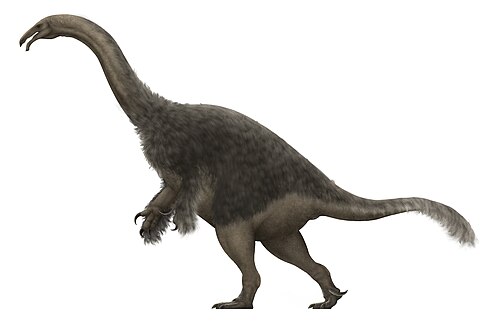 |
| Serikornis | 2017 | Tiaojishan Formation (Late Jurassic, Oxfordian) | China | Possessed simple, wispy feathers similar to those of a Silkie chicken |  |
| Shamosaurus | 1983 | Dzunbain Formation (Early Cretaceous, Aptian to Albian) | Mongolia | The osteoderms on its head were not separated into obvious tiles as with later ankylosaurids | |
| Shanag | 2007 | Öösh Formation (Early Cretaceous, Berriasian to Barremian) | Mongolia | Shows a mixture of traits of various paravian groups | 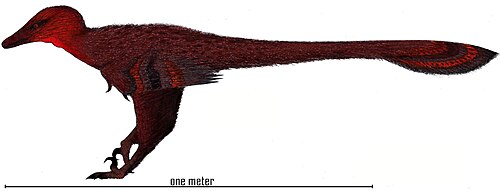 |
| Shantungosaurus | 1973 | Wangshi Group (Late Cretaceous, Campanian) | China | The largest known hadrosaurid |  |
| Shanxia | 1998 | Huiquanpu Formation (Late Cretaceous, Cenomanian to Campanian) | China | May be synonymous with Tianzhenosaurus[132] and/or Saichania[39] | |
| Shanyangosaurus | 1996 | Shanyang Formation (Late Cretaceous, Maastrichtian) | China | Indeterminate but its hollow bones are a synapomorphy for the Coelurosauria. One study suggests an oviraptorosaurian position[60] | |
| Shaochilong | 2009 | Miaogou Formation (Early Cretaceous, Barremian to Albian) | China | Originally interpreted as a carcharodontosaurid, but more recent analyses recover it as a potential tyrannosauroid[5][133] | 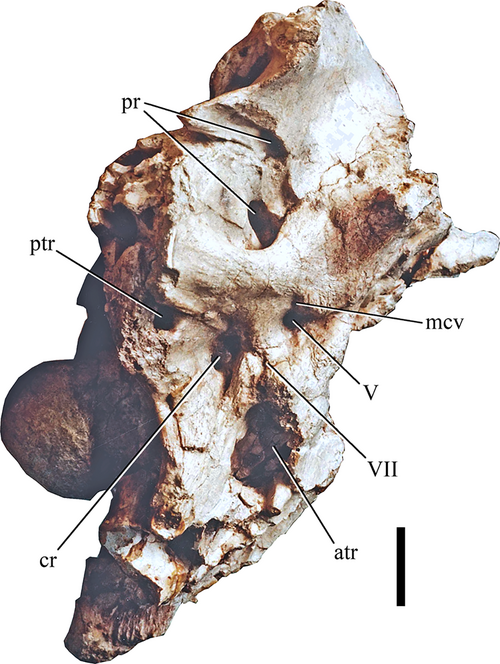 |
| Shenzhousaurus | 2003 | Yixian Formation (Early Cretaceous, Aptian) | China | Preserves pebbles in its thoracic cavity which may be gastroliths | 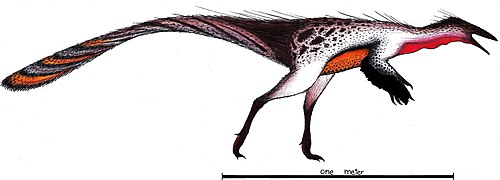 |
| Shidaisaurus | 2009 | Chuanjie Formation (Middle Jurassic, Aalenian) | China | Potentially one of the oldest known allosauroids | 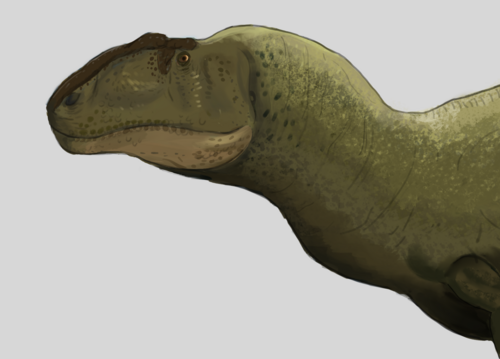 |
| Shishugounykus | 2019 | Shishugou Formation (Late Jurassic, Oxfordian) | China | Its manus combines features of both alvarezsaurians and more basal coelurosaurs |  |
| Shixinggia | 2005 | Nanxiong Formation (Late Cretaceous, Maastrichtian) | China | Known from a fair amount of postcranial material | |
| Shri | 2021 | Baruungoyot Formation, Djadochta Formation (Late Cretaceous, Campanian to Maastrichtian) | Mongolia | Before its formal description, S. devi was nicknamed "Ichabodcraniosaurus" because its holotype lacked a skull. The second species, S. rapax, can be distinguished from the type by the enlarged, sickle-shaped claw on its first finger[134] | 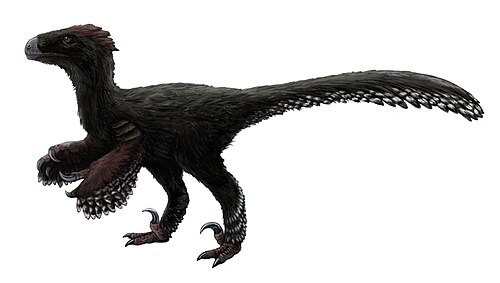 |
| Shuangmiaosaurus | 2003 | Sunjiawan Formation (Late Cretaceous, Cenomanian) | China | Only known from some parts of a skull | |
| Shunosaurus | 1983 | Shaximiao Formation (Late Jurassic, Oxfordian) | China | Possessed a small tail club topped by two short spikes |  |
| Shuvuuia | 1998 | Djadochta Formation (Late Cretaceous, Campanian) | Mongolia | Displays several adaptations that may point to a nocturnal, owl-like lifestyle[135] | 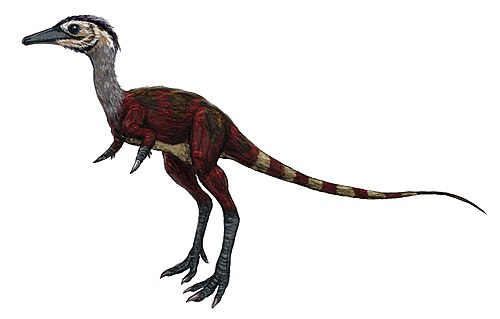 |
| Siamodon | 2011 | Khok Kruat Formation (Early Cretaceous, Aptian) | Thailand | May have been closely related to Probactrosaurus[136] | 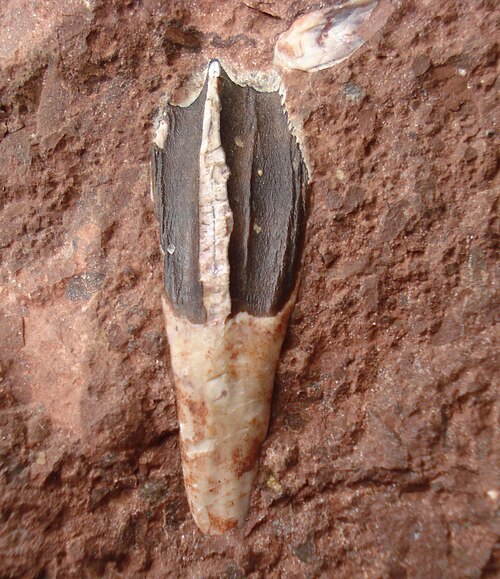 |
| Siamosaurus | 1986 | Khok Kruat Formation, Sao Khua Formation (Early Cretaceous, Barremian to Aptian) | Thailand | Only known from teeth. Some spinosaurid postcrania from the same area may be referrable to this genus[137] |  |
| Siamotyrannus | 1996 | Sao Khua Formation (Early Cretaceous, Berriasian to Barremian) | Thailand | Has been recovered in a variety of positions within Avetheropoda |  |
| Siamraptor | 2019 | Khok Kruat Formation (Early Cretaceous, Aptian) | Thailand | Possibly the first carcharodontosaurian known from Southeast Asia |  |
| Sibirotitan | 2018 | Ilek Formation (Early Cretaceous, Barremian) | Russia | Its sacral ribs are star-shaped in dorsal view | 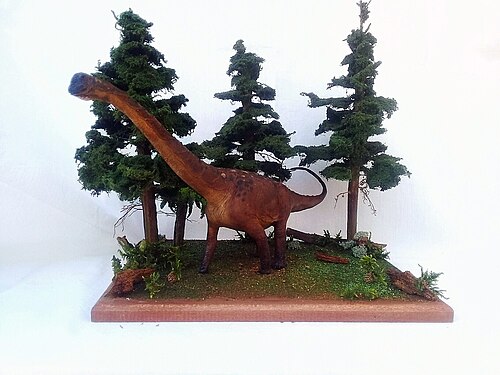 |
| Siluosaurus | 1997 | Xinminbao Group (Early Cretaceous, Barremian to Albian) | China | Has been suggested to be an indeterminate member of the Cerapoda | |
| Silutitan | 2021 | Shengjinkou Formation (Early Cretaceous, Valanginian) | China | Known from six cervical vertebrae associated with a pterosaur jaw |  |
| Similicaudipteryx | 2008 | Jiufotang Formation (Early Cretaceous, Aptian to Albian) | China | Had a short tail ending with a dagger-shaped pygostyle | 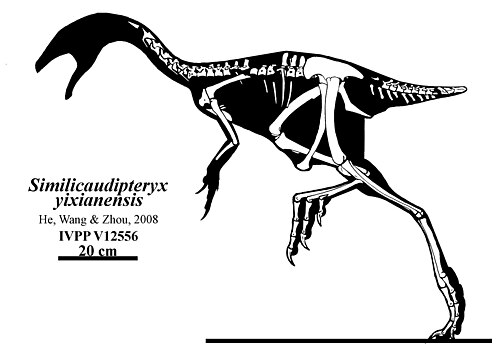 |
| Sinankylosaurus | 2020 | Wangshi Group (Late Cretaceous, Campanian) | China | Only known from an ilium. Described as an ankylosaur but a recent study doubts this interpretation[138] | |
| Sinocalliopteryx | 2007 | Yixian Formation (Early Cretaceous, Barremian to Aptian) | China | Stomach contents indicate a possible preference for volant prey such as dromaeosaurids and early birds[139] |  |
| Sinocephale | 2021 | Ulansuhai Formation (Late Cretaceous, Turonian) | China | Originally named as a species of Troodon when that genus was thought to be a pachycephalosaur | |
| Sinoceratops | 2010 | Wangshi Group (Late Cretaceous, Campanian) | China | Possessed forward-curving hornlets and a series of low knobs on the top of the frill |  |
| Sinocoelurus | 1942 | Kuangyuan Series (Late Jurassic, Oxfordian to Tithonian?) | China | One study considered it to be a potential plesiosaur[140] | 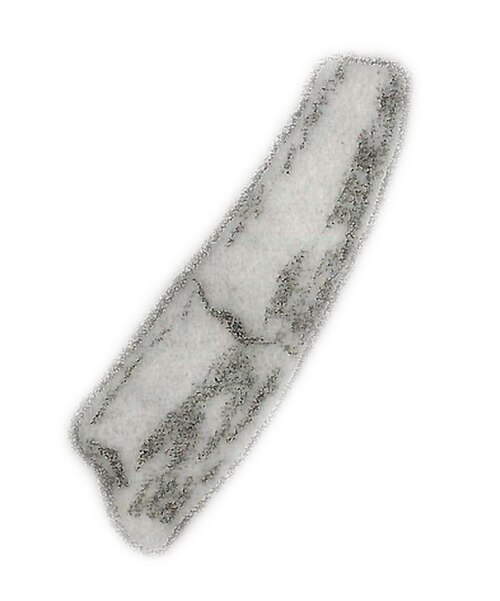 |
| Sinornithoides | 1993 | Ejinhoro Formation (Early Cretaceous, Aptian to Albian) | China | Preserved in a roosting position, with its head tucked underneath its left wing |  |
| Sinornithomimus | 2003 | Ulansuhai Formation (Late Cretaceous, Turonian) | China | Formed age-segregated herds as evidenced by a concentration of juvenile skeletons[141] |  |
| Sinornithosaurus | 1999 | Yixian Formation (Early Cretaceous, Barremian) | China | One specimen has grooved teeth, suggesting it was venomous[142] | 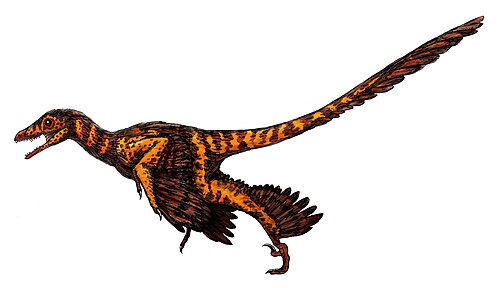 |
| Sinosauropteryx | 1996 | Yixian Formation (Early Cretaceous, Aptian) | China | The first non-avian dinosaur found with direct evidence of feathers. Analysis of melanosomes suggests it had a countershading pattern with a striped tail and a "bandit mask" around its eyes[143] |  |
| Sinosaurus | 1940 | Lufeng Formation (Early Jurassic, Hettangian to Sinemurian) | China | Had a pair of midline crests similar to Dilophosaurus | 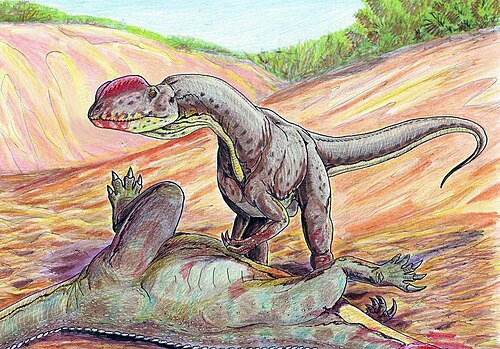 |
| Sinotyrannus | 2009 | Jiufotang Formation (Early Cretaceous, Aptian) | China | Usually seen as a large proceratosaurid, but one study suggests it may represent a fully grown stage of the slightly older Huaxiagnathus[144] |  |
| Sinovenator | 2002 | Yixian Formation (Early Cretaceous, Barremian) | China | Some specimens are preserved three-dimensionally |  |
| Sinraptor | 1994 | Shishugou Formation (Late Jurassic, Oxfordian) | China | May have used its teeth like blades to inflict deep wounds in prey |  |
| Sinusonasus | 2004 | Yixian Formation (Early Cretaceous, Hauterivian) | China | Had distinctive sinusoid nasal bones | 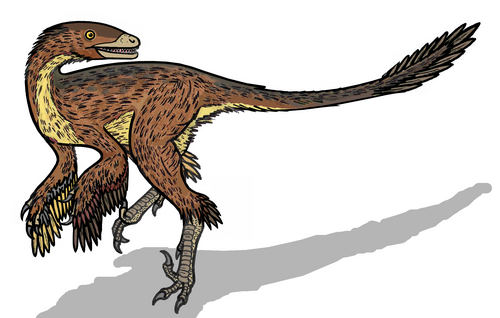 |
| Sirindhorna | 2015 | Khok Kruat Formation (Early Cretaceous, Aptian) | Thailand | Its fossils were discovered by corn farmers while digging a reservoir |  |
| Sonidosaurus | 2006 | Iren Dabasu Formation (Late Cretaceous, Turonian to Santonian) | China | One of the smallest known titanosaurs |  |
| Stegosaurides | 1953 | Xinminbao Group (Early Cretaceous, Hauterivian to Albian) | China | A thyreophoran of uncertain phylogenetic position | |
| Suzhousaurus | 2007 | Xinminbao Group (Early Cretaceous, Aptian to Albian) | China | One of the largest Early Cretaceous therizinosaurs | 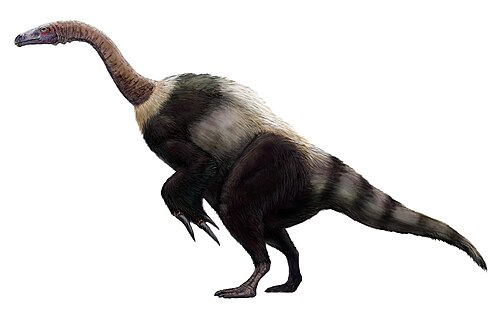 |
| Szechuanosaurus | 1942 | Kuangyuan Series (Late Jurassic, Oxfordian to Tithonian?) | China | Only known from teeth and possibly a very fragmentary skeleton |  |
| Talarurus | 1952 | Bayanshiree Formation (Late Cretaceous, Cenomanian to Santonian) | Mongolia | Its tail club has been compared to a wicker basket | 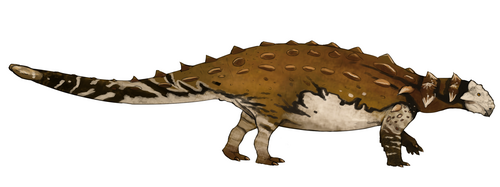 |
| Tambatitanis | 2014 | Ohyamashimo Formation (Early Cretaceous, Albian) | Japan | Possessed disproportionately large chevrons |  |
| Tangvayosaurus | 1999 | Grès supérieurs Formation (Early Cretaceous, Aptian to Albian) | Laos | Closely related to Phuwiangosaurus | 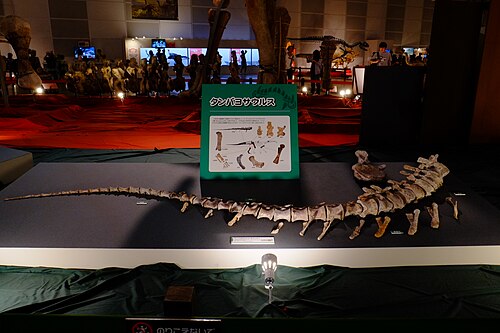 |
| Tanius | 1929 | Wangshi Group (Late Cretaceous, Campanian to Maastrichtian) | China | Today known from only a few bones. More fossils were once present but were not collected | 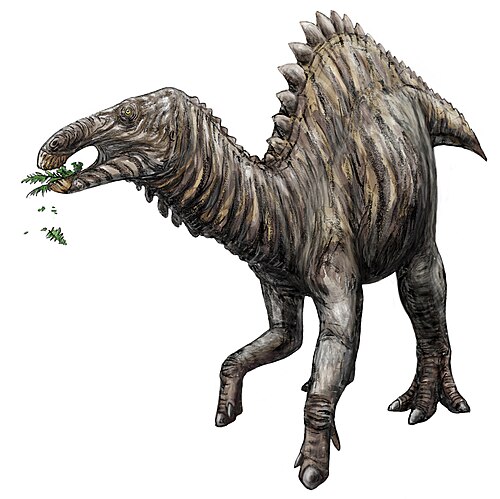 |
| Taohelong | 2013 | Hekou Group (Early Cretaceous, Albian) | China | Possessed a sacral shield similar to that of Polacanthus | |
| Tarbosaurus | 1955 | Nemegt Formation, Subashi Formation (Late Cretaceous, Maastrichtian) | ChinaMongolia | An apex predator that hunted large prey. Very similar to Tyrannosaurus |  |
| Tarchia | 1977 | Baruungoyot Formation, Nemegt Formation (Late Cretaceous, Campanian to Maastrichtian) | Mongolia | One specimen preserves injuries on its ribs and tail, possibly from a fight with a member of its own kind[145] |  |
| Tatisaurus | 1965 | Lufeng Formation (Early Jurassic, Sinemurian) | China | Potentially a basal thyreophoran | 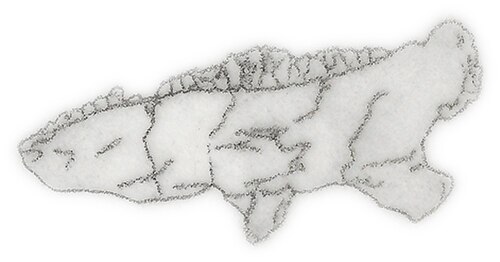 |
| Tengrisaurus | 2017 | Murtoi Formation (Early Cretaceous, Valanginian to Hauterivian) | Russia | Closely related to South American titanosaurs | |
| Therizinosaurus | 1954 | Nemegt Formation (Late Cretaceous, Maastrichtian) | Mongolia | Possessed extremely elongated and stiffened hand claws |  |
| Tianchisaurus | 1993 | Toutunhe Formation (Late Jurassic, Oxfordian to Kimmeridgian) | China | Its description uses the spellings Tianchisaurus and Tianchiasaurus interchangeably, but the former is correct[146] | |
| Tianyulong | 2009 | Tiaojishan Formation (Late Jurassic, Oxfordian) | China | Preserves impressions of long bristles down its back, tail and neck |  |
| Tianyuraptor | 2009 | Yixian Formation (Early Cretaceous, Barremian to Aptian) | China | Combines features of both northern and southern dromaeosaurids. Had unusual proportions |  |
| Tianzhenosaurus | 1998 | Huiquanpu Formation (Late Cretaceous, Cenomanian to Campanian) | China | May be synonymous with Saichania[39] but the discovery of the second species, T. chengi, casts doubt on this interpretation |  |
| Tienshanosaurus | 1937 | Shishugou Formation (Late Jurassic, Oxfordian) | China | Large but basal for a mamenchisaurid[88] |  |
| Timurlengia | 2016 | Bissekty Formation (Late Cretaceous, Turonian) | Uzbekistan | Its inner ear was specialized for detecting low-frequency sounds[147] | 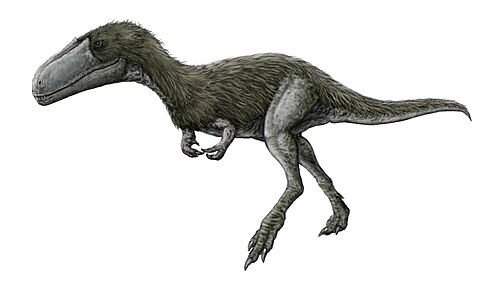 |
| Tochisaurus | 1991 | Nemegt Formation (Late Cretaceous, Maastrichtian) | Mongolia | Known from only a single metatarsus | 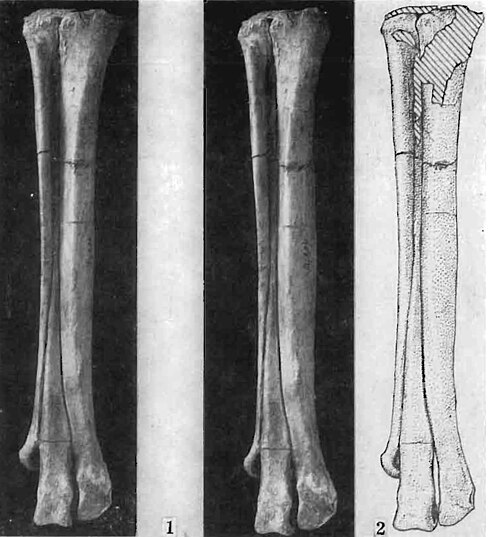 |
| Tonganosaurus | 2010 | Yimen Formation (Early Jurassic, Pliensbachian) | China | Potentially the oldest known mamenchisaurid | |
| Tongnanlong | 2025 | Suining Formation (Late Jurassic?, Tithonian?) | China | One of the largest mamenchisaurids |  |
| Tongtianlong | 2016 | Nanxiong Formation (Late Cretaceous, Maastrichtian) | China | The pose of the holotype suggests it died while trying to free itself from mud |  |
| Tsaagan | 2006 | Djadochta Formation (Late Cretaceous, Campanian) | Mongolia | Very similar to Velociraptor but differs in some features of the skull[148] | 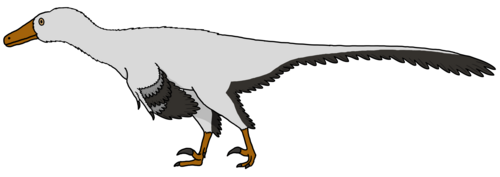 |
| Tsagantegia | 1993 | Bayanshiree Formation (Late Cretaceous, Cenomanian to Santonian) | Mongolia | Had a long, shovel-shaped snout which may indicate a browsing lifestyle[149] | 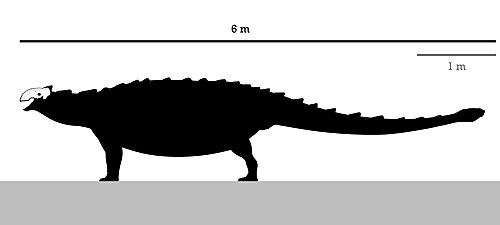 |
| Tsintaosaurus | 1958 | Wangshi Group (Late Cretaceous, Campanian) | China | Originally mistakenly believed to have possessed a unicorn horn-like crest |  |
| Tugulusaurus | 1973 | Tugulu Group (Early Cretaceous, Barremian to Albian) | China | Potentially an early, Xiyunykus-grade alvarezsaurian[150] | |
| Tuojiangosaurus | 1977 | Shaximiao Formation (Late Jurassic, Oxfordian to Kimmeridgian) | China | Possessed two rows of tall, pointed plates, thickened in the center as if they were modified spikes |  |
| Turanoceratops | 1989 | Bissekty Formation (Late Cretaceous, Turonian) | Uzbekistan | Had a pair of brow horns like ceratopsids but was likely not a member of that family |  |
| Tylocephale | 1974 | Baruungoyot Formation (Late Cretaceous, Campanian) | Mongolia | Only known from a partial skull but it is enough to tell that it had a remarkably tall dome | 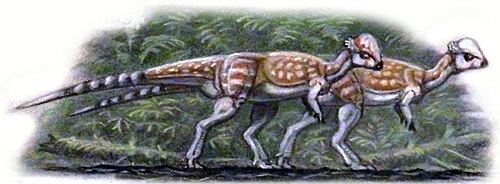 |
| Tyrannomimus | 2023 | Kitadani Formation (Early Cretaceous, Aptian) | Japan | Its ilium is remarkably similar to that of the supposed tyrannosauroid Aviatyrannis |  |
| Udanoceratops | 1992 | Djadochta Formation (Late Cretaceous, Campanian) | Mongolia | The largest known leptoceratopsid | 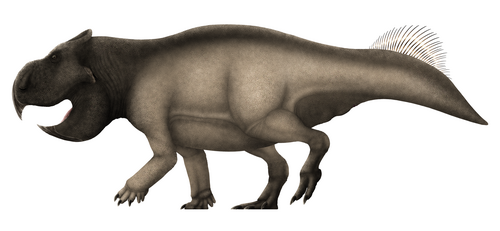 |
| Ultrasaurus | 1983 | Gugyedong Formation (Early Cretaceous, Aptian to Albian) | South Korea | Described as very large but this may be due to misidentification of a bone | |
| Ulughbegsaurus | 2021 | Bissekty Formation, Khodzhakul Formation (Late Cretaceous, Cenomanian to Turonian) | Uzbekistan | A 2022 study suggested this taxon could be a large-bodied dromaeosaurid,[151] although the discovery of a fragmentary right maxilla assigned to the genus suggests it is very likely a member of the family Carcharodontosauridae[152] | 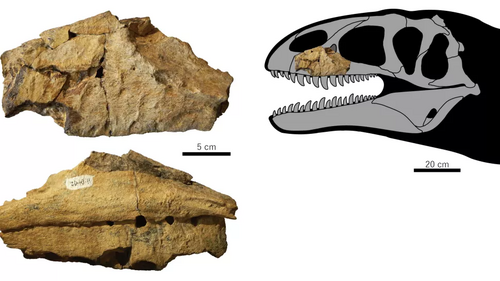 |
| Uragasaurus | 2026 | Phu Kradung Formation (Late Jurassic, Oxfordian to Tithonian) | Thailand | The first mamenchisaurid formally named from Thailand. Only one dorsal vertebra is known |  |
| Urbacodon | 2007 | Bissekty Formation, Dzharakuduk Formation, Iren Dabasu Formation (Late Cretaceous, Cenomanian to Turonian) | ChinaUzbekistan | The U. itemirensis holotype preserves a gap separating the eight rear teeth from the rest of its teeth | 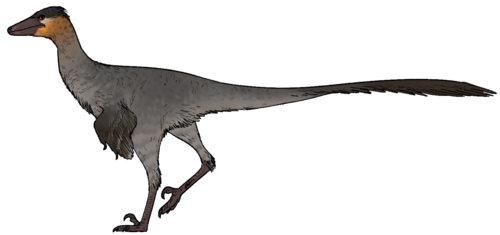 |
| Vayuraptor | 2019 | Sao Khua Formation (Early Cretaceous, Barremian) | Thailand | Potentially ancestral to megaraptorans[153] or an early member of the group[154] | |
| Velociraptor | 1924 | Bayan Mandahu Formation, Djadochta Formation (Late Cretaceous, Campanian) | ChinaMongolia | One potential specimen preserves quill knobs[155] |  |
| Wakinosaurus | 1992 | Sengoku Formation (Early Cretaceous, Valanginian to Barremian) | Japan | May be a close relative of Acrocanthosaurus[124] | |
| Wannanosaurus | 1977 | Xiaoyan Formation (Late Cretaceous, Maastrichtian) | China | Basal for a pachycephalosaur as indicated by its flat skull with large openings |  |
| Wudingloong | 2025 | Yubacun Formation (Early Jurassic, Hettangian to Sinemurian) | China | The oldest and basalmost sauropodomorph named from eastern Asia[156] |  |
| Wuerhosaurus | 1973 | Ejinhoro Formation, Tugulu Group (Early Cretaceous, Hauterivian to Barremian) | China | One of the last and largest known stegosaurs. Preserved with low rectangular plates but these may be broken |  |
| Wulagasaurus | 2008 | Yuliangze Formation (Late Cretaceous, Maastrichtian) | China | A rare hadrosaurid known from far less remains than the contemporary Sahaliyania | 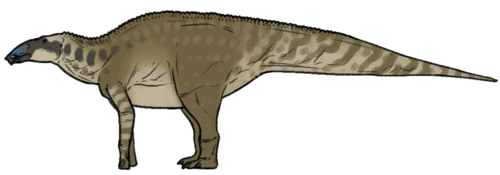 |
| Wulatelong | 2013 | Bayan Mandahu Formation (Late Cretaceous, Campanian) | China | Known from a partial skeleton including some parts of the skull | 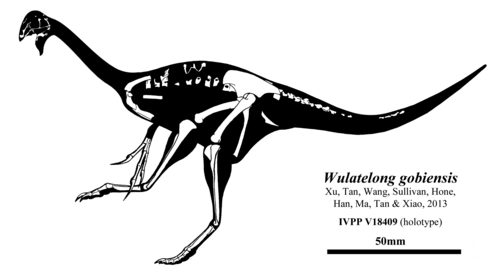 |
| Wulong | 2020 | Jiufotang Formation (Early Cretaceous, Aptian) | China | Analysis of preserved melanosomes suggests it was mostly gray with iridescent wings[157] | 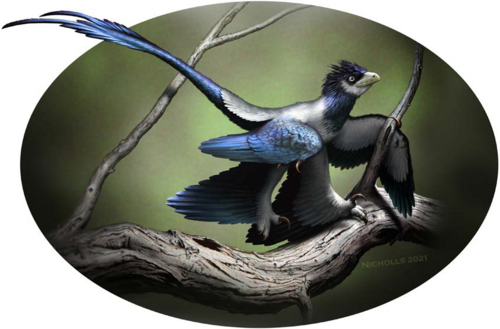 |
| Xiangyunloong | 2026 | Fengjiahe Formation (Early Jurassic, Hettangian) | China | One of the largest Early Jurassic Asian sauropodomorphs |  |
| Xianshanosaurus | 2009 | Haoling Formation (Early Cretaceous, Aptian to Albian) | China | May have been closely related to Daxiatitan[104] |  |
| Xiaosaurus | 1983 | Shaximiao Formation (Middle Jurassic, Bajocian to Callovian) | China | An ornithischian of uncertain affinities | |
| Xiaotingia | 2011 | Tiaojishan Formation (Middle Jurassic to Late Jurassic, Bathonian to Oxfordian) | China | Well-preserved but inconsistent in phylogenetic placement. Some studies suggest a position as an early avialan[158] |  |
| Xingtianosaurus | 2019 | Yixian Formation (Early Cretaceous, Barremian) | China | Retained the large third finger that was lost in other caudipterids |  |
| Xingxiulong | 2017 | Lufeng Formation (Early Jurassic, Hettangian) | China | Two species are known, with the recently described X. yueorum being considerably larger than the type species X. chengi |  |
| Xinjiangovenator | 2005 | Tugulu Group (Early Cretaceous, Valanginian to Albian) | China | Remains originally identified as Phaedrolosaurus |  |
| Xinjiangtitan | 2013 | Qiketai Formation (Middle Jurassic, Callovian) | China | Had an extremely long neck |  |
| Xiongguanlong | 2009 | Xinminbao Group, (Early Cretaceous, Aptian) | China | More robust than other early tyrannosauroids, possibly to support its elongated skull |  |
| Xixianykus | 2010 | Majiacun Formation (Late Cretaceous, Coniacian to Santonian) | China | One of the smallest known non-avian dinosaurs | 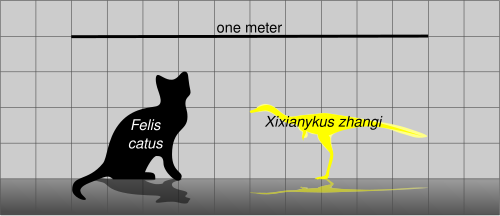 |
| Xixiasaurus | 2010 | Majiacun Formation (Late Cretaceous, Coniacian to Campanian) | China | Distinguished from other troodontids by its possession of exactly twenty-two teeth in each maxilla | 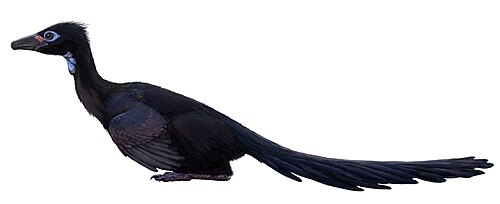 |
| Xixiposaurus | 2010 | Lufeng Formation (Early Jurassic, Hettangian to Toarcian) | China | Poorly known | |
| Xiyunykus | 2018 | Tugulu Group (Early Cretaceous, Barremian to Aptian) | China | Had an unspecialized hand morphology for an alvarezsaur, having three fingers of roughly equal length and construction |  |
| Xuanhanosaurus | 1984 | Shaximiao Formation (Middle Jurassic, Bathonian) | China | Originally mistakenly believed to have been capable of quadrupedal locomotion |  |
| Xuanhuaceratops | 2006 | Houcheng Formation (Late Jurassic, Tithonian) | China | Possessed a large premaxillary tooth right behind its beak |  |
| Xunmenglong | 2019 | Huajiying Formation (Early Cretaceous, Hauterivian) | China | The holotype was originally presented as part of a chimera involving three different animals[159] | 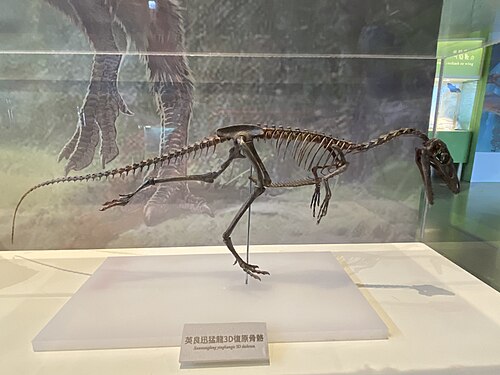 |
| Xuwulong | 2011 | Xinminbao Group (Early Cretaceous, Aptian to Albian) | China | The tip of its dentary was V-shaped when viewed from the side |  |
| Yamaceratops | 2006 | Javkhlant Formation (Late Cretaceous, Santonian) | Mongolia | Possessed a short, stubby frill |  |
| Yamatosaurus | 2021 | Kita-Ama Formation (Late Cretaceous, Maastrichtian) | Japan | Basal yet survived late enough to be contemporaneous with more advanced hadrosaurids | 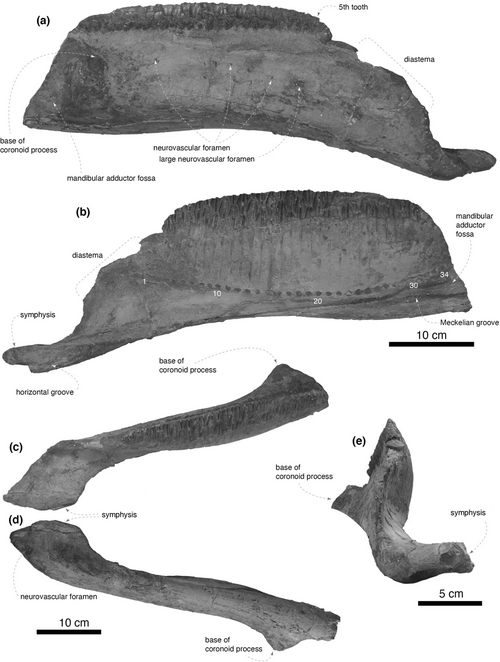 |
| Yanbeilong | 2024 | Zuoyun Formation (Early Cretaceous, Albian) | China | One of the youngest known stegosaurs[160] |  |
| Yandusaurus | 1979 | Shaximiao Formation (Middle Jurassic, Bathonian) | China | Some fossils were destroyed by a composter before they could be studied[161] | 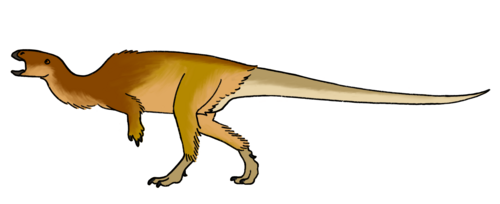 |
| Yangchuanosaurus | 1978 | Shaximiao Formation (Middle Jurassic to Late Jurassic, Bathonian to Tithonian) | China | The largest theropod known from the Shaximiao Formation |  |
| Yantaloong | 2026 | Zhanghe Formation (Middle Jurassic, Aalenian to Callovian) | China | Possibly the first turiasaur known from Asia[162] |  |
| Yi | 2015 | Tiaojishan Formation (Middle Jurassic to Late Jurassic, Callovian to Oxfordian) | China | Possessed a "styliform element" jutting out from its wrist that supported a bat-like membranous wing |  |
| Yimenosaurus | 1990 | Fengjiahe Formation (Early Jurassic, Pliensbachian) | China | Much of its skeleton is known, including the entirety of the skull | 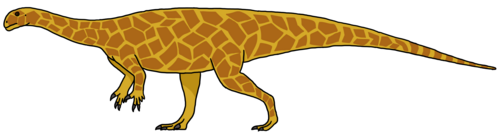 |
| Yingshanosaurus | 1994 | Shaximiao Formation (Middle Jurassic, Bathonian) | China | Possessed greatly enlarged shoulder spines |  |
| Yinlong | 2006 | Shishugou Formation (Late Jurassic, Oxfordian) | China | Its skull displays features of ceratopsians, pachycephalosaurs and heterodontosaurids |  |
| Yixianosaurus | 2003 | Yixian Formation (Early Cretaceous, Aptian) | China | Inconsistent in phylogenetic placement. Had extremely elongated manual elements | 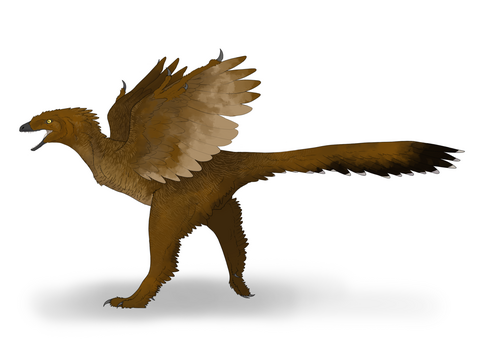 |
| Yizhousaurus | 2018 | Lufeng Formation (Early Jurassic, Sinemurian) | China | Its skull was very similar to those of sauropods despite being more primitive | 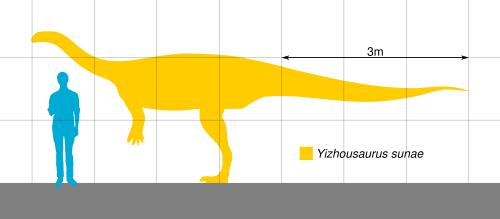 |
| Yongjinglong | 2014 | Hekou Group (Early Cretaceous, Albian) | China | Possessed an extremely long, broad scapula |  |
| Yuanmouraptor | 2025 | Zhanghe Formation (Middle Jurassic, Aalenian to Bajocian) | China | Known from a nearly complete skull |  |
| Yuanmousaurus | 2006 | Zhanghe Formation (Middle Jurassic, Aalenian to Callovian) | China | Shares features of its vertebrae with Patagosaurus | 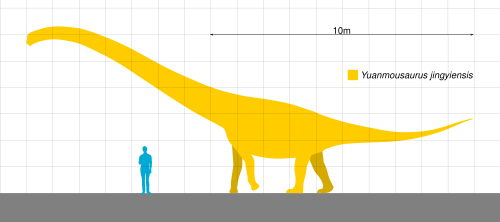 |
| Yuanyanglong | 2025 | Miaogou Formation (Early Cretaceous, Aptian to Albian) | China | The only Early Cretaceous oviraptorosaur known from the Gobi Desert |  |
| Yueosaurus | 2012 | Liangtoutang Formation (Early Cretaceous to Late Cretaceous, Albian to Cenomanian) | China | Probably closely related to Jeholosaurus[163] |  |
| Yulong | 2013 | Qiupa Formation (Late Cretaceous, Maastrichtian) | China | Known from multiple specimens, most of which are juveniles |  |
| Yunganglong | 2013 | Zhumapu Formation (Late Cretaceous, Cenomanian) | China | Discovered 50 kilometres (31 mi) away from a World Heritage Site | 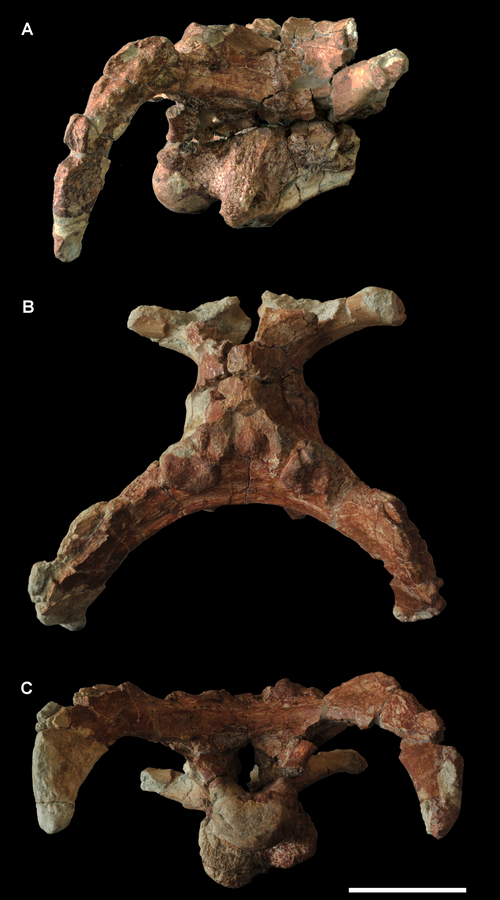 |
| Yunmenglong | 2013 | Haoling Formation (Early Cretaceous, Barremian to Albian) | China | May have been exceptionally large | |
| Yunnanosaurus | 1942 | Fengjiahe Formation, Lufeng Formation (Early Jurassic, Sinemurian to Pliensbachian) | China | Its teeth were self-sharpening similar to those of sauropods, likely through convergent evolution[164] | 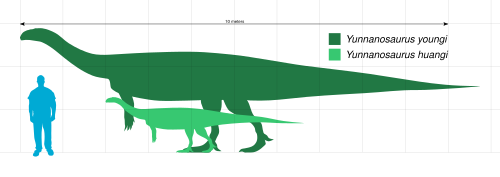 |
| Yunyangosaurus | 2020 | Xintiangou Formation (Middle Jurassic, Aalenian to Callovian) | China | Potentially an early megalosauroid | |
| Yutyrannus | 2012 | Yixian Formation (Early Cretaceous, Aptian) | China | The largest known dinosaur to preserve direct evidence of feathers |  |
| Yuxisaurus | 2022 | Fengjiahe Formation (Early Jurassic, Sinemurian to Toarcian) | China | Had more than one hundred osteoderms |  |
| Yuzhoulong | 2022 | Shaximiao Formation (Middle Jurassic, Bathonian) | China | One of the oldest known macronarians |  |
| Zanabazar | 2009 | Nemegt Formation (Late Cretaceous, Maastrichtian) | Mongolia | Originally named as a species of Saurornithoides. Relatively large for a troodontid |  |
| Zaraapelta | 2014 | Baruungoyot Formation (Late Cretaceous, Campanian) | Mongolia | Had an intricate pattern of osteoderms on its skull | |
| Zavacephale | 2025 | Khuren Dukh Formation (Early Cretaceous, Aptian to Albian) | Mongolia | The earliest known and most complete pachycephalosaur[165] | 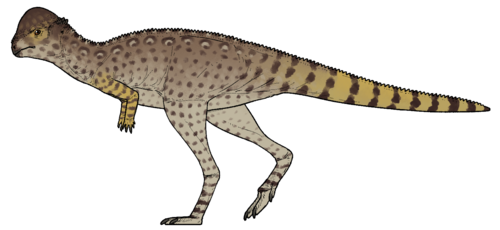 |
| Zhanghenglong | 2014 | Majiacun Formation (Late Cretaceous, Santonian) | China | Reconstructed by its describers with a straight, rectangular back, although no complete neural spines are known[166] |  |
| Zhejiangosaurus | 2007 | Chaochuan Formation (Late Cretaceous, Cenomanian) | China | Has no diagnostic features[39] |  |
| Zhenyuanlong | 2015 | Yixian Formation (Early Cretaceous, Aptian) | China | Possessed large wings with long feathers, but was most likely flightless |  |
| Zhongjianosaurus | 2017 | Yixian Formation (Early Cretaceous, Barremian to Aptian) | China | Distinguishable by its characteristically elongated legs. Described as a microraptorian[167] but it has been noted that some features of its skeleton are similar to avialans[45] |  |
| Zhuchengceratops | 2010 | Wangshi Group (Late Cretaceous, Campanian) | China | Had a particularly deep mandible |  |
| Zhuchengtitan | 2017 | Wangshi Group (Late Cretaceous, Campanian) | China | The proportions of its humerus suggest a close relationship with Opisthocoelicaudia[168] |  |
| Zhuchengtyrannus | 2011 | Wangshi Group (Late Cretaceous, Campanian) | China | Closely related to Tarbosaurus and Tyrannosaurus |  |
| Zigongosaurus | 1976 | Shaximiao Formation (Middle Jurassic to Late Jurassic, Bathonian to Tithonian) | China | May be a species of Mamenchisaurus[169] | |
| Zizhongosaurus | 1983 | Ziliujing Formation (Early Jurassic, Toarcian) | China | Poorly known but was most likely basal for a sauropod | |
| Zuolong | 2010 | Shishugou Formation (Late Jurassic, Oxfordian) | China | Known from both cranial and postcranial remains |  |
| Zuoyunlong | 2017 | Zhumapu Formation (Late Cretaceous, Cenomanian) | China | May have been close to the separation between North American and Asian hadrosauroids[170] | 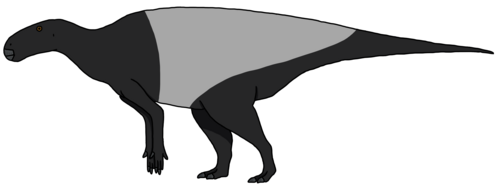 |
Invalid and potentially valid genera
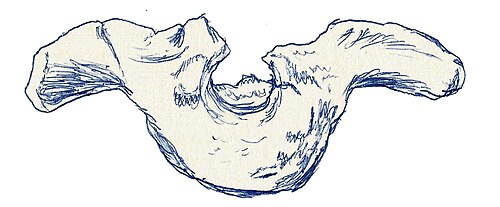
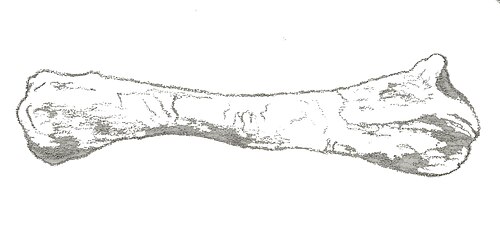

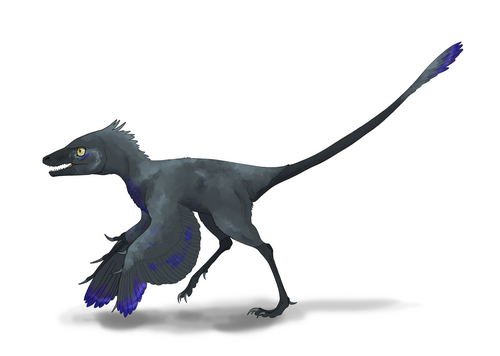


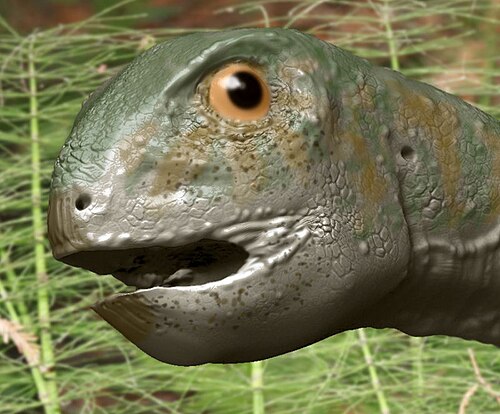

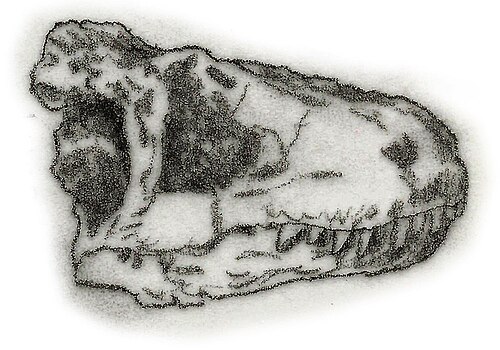


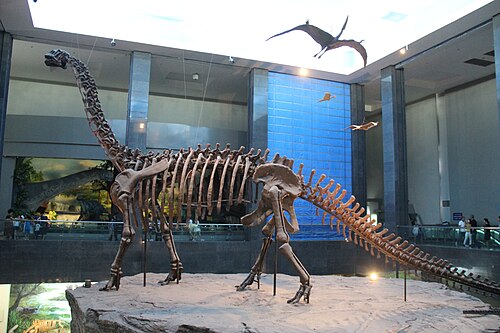
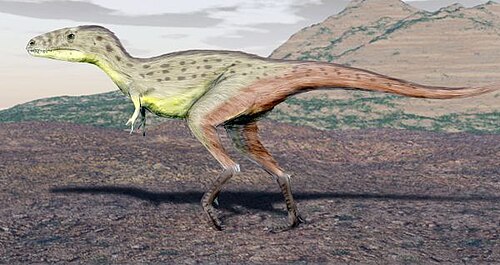


- Amtosaurus magnus: An indeterminate ornithischian that may be either a hadrosaurid or an ankylosaurid.
- Antarctosaurus: A. jaxarticus from Kazakhstan has been referred to this genus, but such an assignment is probably incorrect.
- Asiamericana asiatica: Known only from teeth. It has been suggested to be a fish, a spinosaurid, or a species of Richardoestesia.
- "Bakesaurus": Often included in lists of dinosaurs as a nomen nudum, but may simply be a junior synonym or misspelling of Bactrosaurus
- "Balochisaurus malkani": A supposed saltasaurid titanosaur from Pakistan. A paper published in 2021 could make this, as well as other informal Pakistani dinosaurs, valid.
- Beipiaognathus jii: Described based on a chimeric holotype including compsognathid elements.
- "Changdusaurus laminoplacodus": A potential stegosaur. Its remains are now thought to be lost.
- Chienkosaurus ceratosauroides: A possible junior synonym of Szechuanosaurus.
- "Dachongosaurus yunnanensis": Reportedly a Cetiosaurus-like sauropod.
- "Damalasaurus". An indeterminate sauropod. Two species have been named, albeit informally.
- "EK troodontid": The informal name for specimen SPS 100/44, a troodontid discovered in Early Cretaceous sediments from Mongolia.
- Epidendrosaurus ninchengensis: Generally agreed to be the same taxon as Scansoriopteryx. There is debate as to which name has priority. Different researchers use either name to refer to the same animal.
- "Eugongbusaurus" wucaiwanensis: Coined for a referred species of Gongbusaurus. This name is said to have been leaked accidentally.
- "Futabasaurus": A supposed tyrannosaur from Japan. If formally described, it would require a new name as Futabasaurus has already been used for a plesiosaur.
- "Gadolosaurus": The name is an incorrect romanization of the Russian word gadrosavr, meaning hadrosaur, and was not meant to be a new generic name. It may have been a synonym of Arstanosaurus.
- Gobiceratops minutus: May be a growth stage of Bagaceratops.
- "Gspsaurus pakistani": One of several informally-named titanosaurs from Pakistan.
- Gyposaurus: The type species was found in South Africa and may be a synonym of Massospondylus. The Asian species may be identical to Lufengosaurus.
- "Hanwulosaurus": Possibly the most complete ankylosaur known from Asia. Said to belong to its own subgroup within the Ankylosauria.
- "Heilongjiangosaurus jiayinensis": May be a synonym of Charonosaurus and/or "Mandschurosaurus" jiayinensis.
- "Khetranisaurus barkhani": Also spelled "Khateranisaurus". Both spellings remain informal.
- "Koreanosaurus": No relationship to the formally-named ornithischian of the same name (see above). Later renamed "Deinonychus" "koreanensis", but this generic assignment is likely incorrect.
- "Kunmingosaurus wudingensis": Although sometimes presented as a valid taxon, it is in fact a nomen nudum.
- Lamaceratops tereschenkoi: May be a junior synonym of Bagaceratops.
- "Lancanjiangosaurus cachuensis": An informally-named sauropod. Has also been spelled "Lancangosaurus".
- Lukousaurus yini: Sometimes thought to be either a theropod or a pseudosuchian.
- Magnirostris dodsoni: Supposedly distinguishable from other basal ceratopsians by its incipient horn cores, but it may actually be a Bagaceratops with a preservation artifact.
- "Marisaurus jeffi": Potentially closely related to "Balochisaurus" and "Sulaimanisaurus".
- "Megacervixosaurus tibetensis": A sauropod. Its classification is uncertain, but it may be a titanosaur.
- "Microdontosaurus dayensis": May have been formally described as a different genus, but this cannot be proven.
- "Ngexisaurus dapukaensis": Sometimes known as Megalosaurus "dapukaensis", but it is unlikely to belong to this genus.
- Nomingia gobiensis: Notable as one of the first non-avian dinosaurs found with a pygostyle. It may, however, be a synonym of Elmisaurus.
- "Nurosaurus qaganensis": Noteworthy for preserving the first stress fracture found on a sauropod foot. Presented as "soon to be described" in 1992 but remains a nomen nudum to this day.
- "Oshanosaurus youngi": An early sauropod. Has been confused with heterodontosaurids and Eshanosaurus.
- "Otogosaurus sarulai". Very little is known about it. Although it often appears on lists of dinosaurs as a valid taxon, there is no proof it was ever validly named.
- "Pakisaurus balochistani": A titanosaur. It has been referred to the similarly informal titanosaurian family "Pakisauridae".
- Platyceratops tatarinovi: May be a junior synonym of Bagaceratops.
- Raptorex kriegsteini: Described as a small adult tyrannosaur from the Early Cretaceous of China. However, restudy of the sediments it was buried in suggested it was from the Late Cretaceous of Mongolia, and thus more likely a juvenile Tarbosaurus.
- "Ronaldoraptor": An oviraptorosaur with a tall, rectangular crest. Named in a book described as a field guide for time travelers.
- "Sanchusaurus": Said to be potentially synonymous with Gallimimus.
- Sahaliyania elunchunorum: Possibly a synonym of Amurosaurus.
- "Sangonghesaurus": Possibly a synonym of Tianchisaurus if it is not a basal ornithischian.
- Shuangbaisaurus anlongbaoensis: May be an individual variation of Sinosaurus.
- "Sinopliosaurus" fusuiensis: Originally thought to be a plesiosaur but is actually a spinosaurid. It may be synonymous with Siamosaurus.
- "Sugiyamasaurus": Known only from teeth that may belong to Fukuititan.
- "Sulaimanisaurus gingerichi": An informally-named Pakistani titanosaur.
- "Szechuanoraptor dongi": Coined for a referred specimen of Szechuanosaurus. It may belong to Yangchuanosaurus zigongensis.
- "Tonouchisaurus mongoliensis": A theropod reported to have a completely didactyl manus.
- "Vitakridrinda sulaimani": Supposedly an abelisaurid. It is sometimes treated as valid in mainstream literature, such as in a book by Thomas Holtz.
- "Vitakrisaurus saraiki": A noasaurid from the same layers as "Vitakridrinda".
- "Yibinosaurus zhoui": May in fact be a second species of Gongxianosaurus.
- "Yunxianosaurus hubeinensis": Mentioned in a scientific paper as a temporary placeholder name. Further work is needed to determine whether it deserves a formal name.
- Zhongornis haoae: Known from a juvenile skeleton. It is usually thought to be a basal avialan but one hypothesis is that it is a non-avian scansoriopterygid.
- Zhongyuansaurus: Potentially a synonym of Gobisaurus, although the describers of the second species, Z. junchangi, noted various features that could distinguish it from the former taxon.
Timeline
This is a timeline of selected dinosaurs from the list above. Time is measured in Ma, megaannum, along the x-axis.
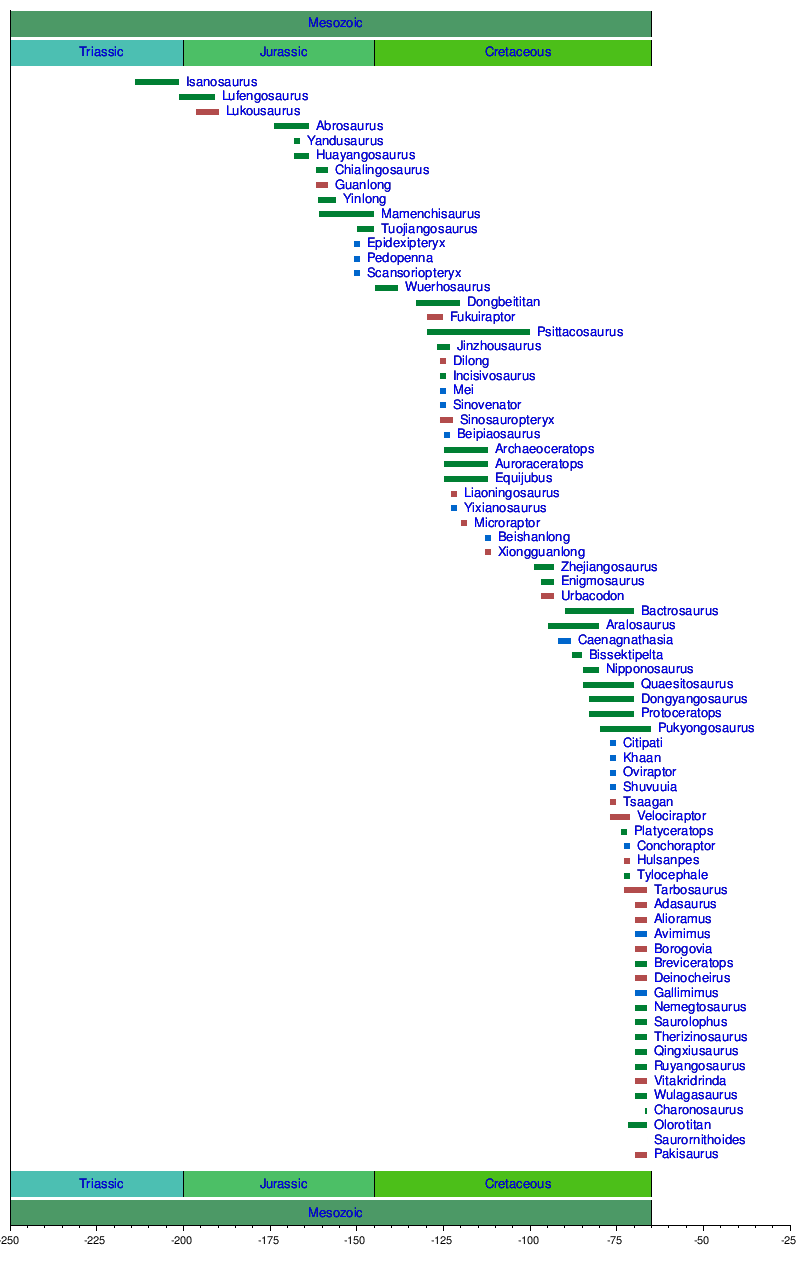
See also
References
- ↑Alexander Averianov; Alexey Lopatin (2020). "An unusual new sauropod dinosaur from the Late Cretaceous of Mongolia". Journal of Systematic Palaeontology. 18 (12): 1009–1032. doi:10.1080/14772019.2020.1716402.
- ↑Scott Persons IV, W.; Currie, P. J. (2016). "An approach to scoring cursorial limb proportions in carnivorous dinosaurs and an attempt to account for allometry". Scientific Reports. 6 19828. Bibcode:2016NatSR...619828P. doi:10.1038/srep19828. PMC 4728391. PMID 26813782.
- ↑Carr, T. D.; Williamson, T. E. (2005). "A reappraisal of tyrannosauroids from Iren Dabasu, Inner Mongolia, People's Republic of China". Journal of Vertebrate Paleontology. 25 (3).
- 12Pei, R.; Norell, M.A.; Barta, D.E.; Bever, G.S.; Pittman, M.; Xu, Xing (2017). "Osteology of a New Late Cretaceous Troodontid Specimen from Ukhaa Tolgod, Ömnögovi Aimag, Mongolia". American Museum Novitates (3889): 1–47. doi:10.1206/3889.1. S2CID 90883541.
- 12Rauhut, Oliver W M; Bakirov, Aizek A; Wings, Oliver; Fernandes, Alexandra E; Hübner, Tom R (1 August 2024). "A new theropod dinosaur from the Callovian Balabansai Formation of Kyrgyzstan". Zoological Journal of the Linnean Society. 201 (4). doi:10.1093/zoolinnean/zlae090. ISSN 0024-4082.
- ↑Bertozzo F, Bolotsky I, Bolotsky YL, Poberezhskiy A, Ruffell A, Godefroit P, Murphy E (2023). "A pathological ulna of Amurosaurus riabinini from the Upper Cretaceous of Far Eastern Russia". Historical Biology: An International Journal of Paleobiology. 35 (2): 268–275. doi:10.1080/08912963.2022.2034805. S2CID 247003496.
- ↑Li, Q.; Gao, K.-Q.; Vinther, J.; Shawkey, M. D.; Clarke, J. A.; d'Alba, L.; Meng, Q.; Briggs, D. E. G.; Prum, R. O. (2010). "Plumage color patterns of an extinct dinosaur"(PDF). Science. 327 (5971): 1369–1372. Bibcode:2010Sci...327.1369L. doi:10.1126/science.1186290. PMID 20133521. S2CID 206525132.
- ↑Yilun Yu; Kebai Wang; Shuqing Chen; Corwin Sullivan; Shuo Wang; Peiye Wang; Xing Xu (2018). "A new caenagnathid dinosaur from the Upper Cretaceous Wangshi Group of Shandong, China, with comments on size variation among oviraptorosaurs". Scientific Reports. 8 (1) 5030. Bibcode:2018NatSR...8.5030Y. doi:10.1038/s41598-018-23252-2. PMC 5864915. PMID 29567954.
- ↑Xing Xu; Jonah Choiniere; Qingwei Tan; Roger B.J. Benson; James Clark; Corwin Sullivan; Qi Zhao; Fenglu Han; Qingyu Ma; Yiming He; Shuo Wang; Hai Xing; Lin Tan (2018). "Two Early Cretaceous fossils document transitional stages in alvarezsaurian dinosaur evolution". Current Biology. Online edition. doi:10.1016/j.cub.2018.07.057.
- ↑Elżanowski, Andrzej; Wellnhofer, Peter (1993). "Skull of Archaeornithoides from the Upper Cretaceous of Mongolia"(PDF). American Journal of Science. 293: 235–252. Bibcode:1993AmJS..293..235E. doi:10.2475/ajs.293.A.235.
- ↑Godefroit, P.; Bolotsky, Y.L. & Bolotsky, I.Y. (2011). "Osteology and relationships of Olorotitan arharensis, a hollowcrested hadrosaurid dinosaur from the latest Cretaceous of Far Eastern Russia". Acta Palaeontologica Polonica. 57 (3): 527. doi:10.4202/app.2011.0051.
- ↑Yiming He; Peter J. Makovicky; Kebai Wang; Shuqing Chen; Corwin Sullivan; Fenglu Han; Xing XuMichael J. Ryan; David C. Evans; Philip J. Currie; Caleb M. Brown; Don Brinkman (2015). "A New Leptoceratopsid (Ornithischia, Ceratopsia) with a Unique Ischium from the Upper Cretaceous of Shandong Province, China". PLOS ONE. 10 (12) e0144148. Bibcode:2015PLoSO..1044148H. doi:10.1371/journal.pone.0144148. PMC 4689537. PMID 26701114.
- ↑Raun, Gorm Skouboe; Coppock, Colton Chase; Badamgarav, Demchig; Tsogtbaatar, Khishigjav; Currie, Philip John (April 2026). "Taxonomic reassessment of juvenile tyrannosaurine specimens from Asia reveal large biogeographic ranges in tyrannosaurids". Cretaceous Research 106412. doi:10.1016/j.cretres.2026.106412.
- ↑Funston, G.F.; Currie, P.J.; Eberth, D.A.; Ryan, M.J.; Chinzorig, T.; Badamgarav, D.; Longrich, N.R. (2016). "The first oviraptorosaur (Dinosauria: Theropoda) bonebed: evidence of gregarious behaviour in a maniraptoran theropod". Scientific Reports. 6 35782. Bibcode:2016NatSR...635782F. doi:10.1038/srep35782. PMC 5073311. PMID 27767062.
- ↑Czepiński, Ł. (2019). "Ontogeny and variation of a protoceratopsid dinosaur Bagaceratops rozhdestvenskyi from the Late Cretaceous of the Gobi Desert"(PDF). Historical Biology. 32 (10): 1394–1421. doi:10.1080/08912963.2019.1593404. S2CID 132780322. Archived from the original(PDF) on 8 July 2021. Retrieved 11 January 2022.
- ↑Słowiak, Justyna; Brusatte, Stephen L; Szczygielski, Tomasz (16 February 2024). "Reassessment of the enigmatic Late Cretaceous theropod dinosaur, Bagaraatan ostromi". Zoological Journal of the Linnean Society. 202 (3). doi:10.1093/zoolinnean/zlad169. hdl:20.500.11820/58086411-7c29-4e3b-bb5c-fb1d144a5c5b. ISSN 0024-4082.
- ↑Makovicky, Peter J.; Norell, Mark A. (2006). "Yamaceratops dorngobiensis, a new primitive ceratopsian (Dinosauria: Ornithischia) from the Cretaceous of Mongolia"(PDF). American Museum Novitates (3530): 1–42. doi:10.1206/0003-0082(2006)3530[1:YDANPC]2.0.CO;2. Archived from the original(PDF) on 25 July 2008. Retrieved 11 January 2022.
- ↑Dai H, Tan C, Xiong C, Ma Q, Li N, Yu H, Wei Z, Wang P, Yi J, Wei G, You H, Ren X (2022). "New macronarian from the Middle Jurassic of Chongqing, China: phylogenetic and biogeographic implications for neosauropod dinosaur evolution". Royal Society Open Science. 9 (11). 220794. Bibcode:2022RSOS....920794D. doi:10.1098/rsos.220794. PMC 9627447. PMID 36340515.
- ↑Pu, H.; Zelenitsky, D.K.; Lü, J.; Currie, P.J.; Carpenter, K.; Xu, L.; Koppelhus, E.B.; Jia, S.; Xiao, L.; Chuang, H.; Li, T.; Kundrát, M.; Shen, C. (2017). "Perinate and eggs of a giant caenagnathid dinosaur from the Late Cretaceous of central China". Nature Communications. 8 14952. Bibcode:2017NatCo...814952P. doi:10.1038/ncomms14952. PMC 5477524. PMID 28486442.
- ↑Xu, X.; Zheng, X.; You, H. (2009). "A new feather type in a nonavian theropod and the early evolution of feathers". Proceedings of the National Academy of Sciences. 106 (3): 832–834. doi:10.1073/pnas.0810055106. PMC 2630069. PMID 19139401.
- ↑Raven, T.J., Barrett, P.M., Xu, X., and Maidment, S.C.R. 2019. "A reassessment of the purported ankylosaurian dinosaur Bienosaurus lufengensis from the Lower Lufeng Formation of Yunnan, China". Acta Palaeontologica Polonica64
- ↑Alifanov, V. R.; Saveliev, S. V. (2019). "The Brain Morphology and Neurobiology in Armored Dinosaur Bissekipelta archibaldi (Ankylosauridae) from the Late Cretaceous of Uzbekistan". Paleontological Journal. 53 (3): 315–321. doi:10.1134/S003103011903002X. ISSN 0031-0301. S2CID 195299630.
- ↑Zheng; Wenjie; Jin; Xingsheng; Shibata; Masteru; Azuma & Yoichi (2013). "An early juvenile specimen of Bolong yixianensis (Ornithopoda:Iguanodontia) from the Lower Cretaceous of Ningcheng County, Nei Mongol, China". Historical Biology. 26 (2): 236–251. doi:10.1080/08912963.2013.809347. S2CID 129081459.
- ↑Grellet-Tinner, G. (2005). "Chapter VII – An Egg Clutch of the Troodontid Byronosaurus jaffei from the Gobi Desert: Novel Perspectives on the Origin of the Avian Reproductive Physiology". A Phylogenetic Analysis of Oological Characters: A Case Study of Saurischian Dinosaur Relationships and Avian Evolution. pp. 105–117.
- ↑Alifanova, V. R.; Barsboldb, R. (2009). "Ceratonykus oculatus gen. et sp. nov., a New Dinosaur (?Theropoda, Alvarezsauria) from the Late Cretaceous of Mongolia". Paleontological Journal. 43 (1): 94–106. doi:10.1134/S0031030109010109. S2CID 129589208.
- ↑Jun Chen, Aaron R. H. LeBlanc, Liyong Jin, Timothy Huang, Robert R. Reisz. Tooth development, histology, and enamel microstructure in Changchunsaurus parvus: Implications for dental evolution in ornithopod dinosaurs. PLOS ONE, 2018; 13 (11): e0205206 DOI: 10.1371/journal.pone.0205206
- ↑Gang Han; Luis M. Chiappe; Shu-An Ji; Michael Habib; Alan H. Turner; Anusuya Chinsamy; Xueling Liu & Lizhuo Han (15 July 2014). "A new raptorial dinosaur with exceptionally long feathering provides insights into dromaeosaurid flight performance". Nature Communications. 5 4382. Bibcode:2014NatCo...5.4382H. doi:10.1038/ncomms5382. PMID 25025742.
- ↑Barrett, Paul M.; Yoshikazu Hasegawa; Makoto Manabe; Shinji Isaji; Hiroshige Matsuoka (2002). "Sauropod dinosaurs from the Lower Cretaceous of eastern Asia: taxonomic and biogeographical implications". Palaeontology. 45 (6): 1197–1217. Bibcode:2002Palgy..45.1197B. doi:10.1111/1475-4983.00282.
- ↑Russell, Dale A.; Z. Zheng (1993). "A large mamenchisaurid from the Junggar Basin, Xinjiang, People's Republic of China". Canadian Journal of Earth Sciences. 30 (10–11): 2082–2095. Bibcode:1993CaJES..30.2082R. doi:10.1139/e93-180.
- ↑Brusatte, S. L., Hone, D. W. E., and Xu, X. 2013. "Phylogenetic revision of Chingkankousaurus fragilis, a forgotten tyrannosauroid specimen from the Late Cretaceous of China." In: J.M. Parrish, R.E. Molnar, P.J. Currie, and E.B. Koppelhus (eds.), Tyrannosaur! Studies in Tyrannosaurid Paleobiology. Indiana University Press, Bloomington, IN.
- ↑Terry A. Gates; Khishigjav Tsogtbaatar; Lindsay E. Zanno; Tsogtbaatar Chinzorig; Mahito Watabe (2018). "A new iguanodontian (Dinosauria: Ornithopoda) from the Early Cretaceous of Mongolia". PeerJ. 6 e5300. doi:10.7717/peerj.5300. PMC 6078070. PMID 30083450.
- ↑Xin-Xin Ren; Toru Sekiya; Tao Wang; Zhi-Wen Yang; Hai-Lu You (2020). "A revision of the referred specimen of Chuanjiesaurus anaensis Fang et al., 2000: a new early branching mamenchisaurid sauropod from the Middle Jurassic of China". Historical Biology: An International Journal of Paleobiology. 33 (9): 1872–1887. doi:10.1080/08912963.2020.1747450. S2CID 216283529.
- ↑Xiaobo, Li; Reisz, Robert R. (2019). The early Cretaceous ankylosaur Liaoningosaurus from Western Liaoning, China: Progress and problems. 7th Annual Meeting Canadian Society of Vertebrate Palaeontology, 10–13 May 2019. Grande Prairie, Alberta, Canada. pp. 31–32. doi:10.18435/vamp29349.
- ↑Qian-Nan Zhang; Tao Wang; Zhi-Wen Yang; Hai-Lu You (2019). "Redescription of the cranium of Jingshanosaurus xinwaensis (Dinosauria: Sauropodomorpha) from the Lower Jurassic Lufeng Formation of Yunnan Province, China". The Anatomical Record. 303 (4): 759–771. doi:10.1002/ar.24113. PMID 30860663. S2CID 75140305.
- ↑Funston, G. F.; Tsogtbaatar, C.; Tsogtbaatar, K.; Kobayashi, Y.; Sullivan, C.; Currie, P. J. (2020). "A new two-fingered dinosaur sheds light on the radiation of Oviraptorosauria". Royal Society Open Science. 7 (10) 201184. Bibcode:2020RSOS....701184F. doi:10.1098/rsos.201184. PMC 7657903. PMID 33204472.
- ↑Hao, M.; Xu, X. (2026). "A new oviraptorid theropod fossil from the Upper Cretaceous of Southern China with implications for oviraptorosaurian systematics and palaeobiogeography". Zoological Journal of the Linnean Society. 206 (4) zlag049. doi:10.1093/zoolinnean/zlag049.
- ↑Ren XX, Jiang S, Wang XR, Peng GZ, Ye Y, Jia L, You HL (2022). "Re-examination of Dashanpusaurus dongi (Sauropoda: Macronaria) supports an early Middle Jurassic global distribution of neosauropod dinosaurs". Palaeogeography, Palaeoclimatology, Palaeoecology. 610 111318. 111318. doi:10.1016/j.palaeo.2022.111318.
- ↑Xing L.; Bell, P.R.; Currie, P.J.; Shibata M.; Tseng K.; Dong Z. (2012). "A sauropod rib with an embedded theropod tooth: direct evidence for feeding behaviour in the Jehol group, China". Lethaia. 45 (4): 500–506. doi:10.1111/j.1502-3931.2012.00310.x.
- 12345Arbour, Victoria M.; Currie, Philip J. (2015). "Systematics, phylogeny and palaeobiogeography of the ankylosaurid dinosaurs". Journal of Systematic Palaeontology. 14 (5): 385–444. doi:10.1080/14772019.2015.1059985. S2CID 214625754.
- ↑Jung, Jongyun; Kim, Minguk; Jo, Hyemin; Clarke, Julia A. (19 March 2026). "A new dinosaur species from Korea and its implications for early-diverging neornithischian diversity". Fossil Record. 29 (1): 87–113. doi:10.3897/fr.29.178152. ISSN 2193-0074.
- ↑Averianov, A.; Sues, H.-D. (2021). "First rebbachisaurid sauropod dinosaur from Asia". PLOS ONE. 16 (2) e0246620. Bibcode:2021PLoSO..1646620A. doi:10.1371/journal.pone.0246620. PMC 7904184. PMID 33626060.
- ↑Lerzo, Lucas; Carballido, José; Gallina, Pablo (2022). "e Cretaceous ofUzbekistan". Publicación Electrónica de la Asociación Paleontológica Argentina. 21 (1): 18–27. doi:10.5710/PEAPA.24.03.2021.389. hdl:11336/165212.
- ↑Godefroit, P.; Pereda-Suberbiola, X.; Li, H.; Dong, Z. M. (1999). "A new species of the ankylosaurid dinosaur Pinacosaurus from the Late Cretaceous of Inner Mongolia (P.R. China)"(PDF). Bulletin de l'Institut Royal des Sciences Naturelles de Belgique, Sciences de la Terre. 69 (supp. B): 17–36.
- ↑Penkalski, Paul (12 May 2026). "The morphology and systematics of Pinacosaurus". Historical Biology: 1–42. doi:10.1080/08912963.2026.2633178. ISSN 0891-2963.
- 12Agnolin, Federico L.; Motta, Matias J.; Brissón Egli, Federico; Lo Coco, Gastón; Novas, Fernando E. (2019). "Paravian Phylogeny and the Dinosaur-Bird Transition: An Overview". Frontiers in Earth Science. 6: 252. Bibcode:2018FrEaS...6..252A. doi:10.3389/feart.2018.00252. hdl:11336/130197. ISSN 2296-6463.
- ↑Yan Wu; Hai-Lu You; Xiao-Qiang Li (2018). "Dinosaur-associated Poaceae epidermis and phytoliths from the Early Cretaceous of China". National Science Review. 5 (5): 721–727. doi:10.1093/nsr/nwx145.
- ↑Nesov, L.A., 1995, "Dinozavri severnoi Yevrasii: Novye dannye o sostave kompleksov, ekologii i paleobiogeografii", Scientific Research Institute of the Earth's Crust, St. Petersburg State University, St. Petersburg, Russia: pp 156
- 12Paul, G.S., 2010, The Princeton Field Guide to Dinosaurs, Princeton University Press
- ↑Kobayashi, Y. and Azuma, Y. (2003). "A new iguanodontian (Dinosauria; Ornithopoda), form the lower Cretaceous Kitadani Formation of Fukui Prefecture, Japan". Journal of Vertebrate Paleontology 23(1): 166–175
- ↑Hattori, S.; Kawabe, S.; Imai, T.; Shibata, M.; Miyata, K.; Xu, X.; Azuma, Y. (2021). "OSTEOLOGY OF FUKUIVENATOR PARADOXUS: A BIZARRE MANIRAPTORAN THEROPOD FROM THE EARLY CRETACEOUS OF FUKUI, JAPAN"(PDF). Memoir of the Fukui Prefectural Dinosaur Museum. 20: 1–82.
- ↑Jinyou Mo, Jincheng Li, Yunchuan Ling, Eric Buffetaut, Suravech Suteethorn Varavud, Suteethorne Haiyan Tong, Gilles Cuny, Romain Amiot & Xing Xu (2020). New fossil remain of Fusuisaurus zhaoi (Sauropoda: Titanosauriformes) from the Lower Cretaceous of Guangxi, southern China.Cretaceous Research: 104379 (advance online publication). doi: https://doi.org/10.1016/j.cretres.2020.104379
- 12Han, F.; Yang, L.; Lou, F.; Sullivan, C.; Xu, X.; Qiu, W.; Liu, H.; Yu, J.; Wu, R.; Ke, Y.; Xu, M.; Hu, J.; Lu, P. (2024). "A new titanosaurian sauropod, Gandititan cavocaudatus gen. et sp. nov., from the Late Cretaceous of southern China". Journal of Systematic Palaeontology. 22 (1). 2293038. Bibcode:2024JSPal..2293038H. doi:10.1080/14772019.2023.2293038.
- ↑Lü, J.; Yi, L.; Zhong, H.; Wei, X. (2013). Dodson, Peter (ed.). "A New Oviraptorosaur (Dinosauria: Oviraptorosauria) from the Late Cretaceous of Southern China and Its Paleoecological Implications". PLOS ONE. 8 (11) e80557. Bibcode:2013PLoSO...880557L. doi:10.1371/journal.pone.0080557. PMC 3842309. PMID 24312233.
- ↑Rothschild, B. M.; Tanke, D. H.; Helbling II, M.; Martin, L. D. (2003). "Epidemiologic study of tumors in dinosaurs"(PDF). Naturwissenschaften. 90 (11): 495–500. Bibcode:2003NW.....90..495R. doi:10.1007/s00114-003-0473-9. PMID 14610645. S2CID 13247222.
- ↑Lee, Sungjin; Lee, Yuong-Nam; Chinsamy, Anusuya; Lü, Junchang; Barsbold, Rinchen; Tsogtbaatar, Khishigjav (2019). "A new baby oviraptorid dinosaur (Dinosauria: Theropoda) from the Upper Cretaceous Nemegt Formation of Mongolia". PLOS ONE. 14 (2) e0210867. Bibcode:2019PLoSO..1410867L. doi:10.1371/journal.pone.0210867. PMC 6364893. PMID 30726228.
- ↑Arbour, Victoria M.; Currie, Philip J. (1 October 2015). "Ankylosaurid dinosaur tail clubs evolved through stepwise acquisition of key features". Journal of Anatomy. 227 (4): 514–523. doi:10.1111/joa.12363. ISSN 1469-7580. PMC 4580109. PMID 26332595.
- ↑Galton, Peter M. (2006). "Teeth of ornithischian dinosaurs (mostly Ornithopoda) from the Morrison Formation (Upper Jurassic) of the western United States". In Carpenter Kenneth (ed.). Horns and Beaks: Ceratopsian and Ornithopod Dinosaurs. Bloomington and Indianapolis: Indiana University Press. pp. 17–47. ISBN 978-0-253-34817-3.
- ↑Cau, A. (2020). "The body plan of Halszkaraptor escuilliei (Dinosauria, Theropoda) is not a transitional form along the evolution of dromaeosaurid hypercarnivory". PeerJ. 8 e8672. doi:10.7717/peerj.8672. PMC 7047864. PMID 32140312.
- ↑Fabbri, Matteo; Navalón, Guillermo; Benson, Roger B. J.; Pol, Diego; O'Connor, Jingmai; Bhullar, Bhart-Anjan S.; Erickson, Gregory M.; Norell, Mark A.; Orkney, Andrew; Lamanna, Matthew C.; Zouhri, Samir; Becker, Justine; Emke, Amanda; Dal Sasso, Cristiano; Bindellini, Gabriele; Maganuco, Simone; Auditore, Marco; Ibrahim, Nizar (23 March 2022). "Subaqueous foraging among carnivorous dinosaurs". Nature. 603 (7903): 852–857. Bibcode:2022Natur.603..852F. doi:10.1038/s41586-022-04528-0. PMID 35322229. S2CID 247630374.
- 1234Hartman, S.; Mortimer, M.; Wahl, W. R.; Lomax, D. R.; Lippincott, J.; Lovelace, D. M. (2019). "A new paravian dinosaur from the Late Jurassic of North America supports a late acquisition of avian flight". PeerJ. 7 e7247. doi:10.7717/peerj.7247. PMC 6626525. PMID 31333906.
- ↑Agnolín, Federico L.; Lu, Jun-Chang; Kundrát, Martin; Xu, Li (4 March 2022). "Alvarezsaurid osteology: new data on cranial anatomy". Historical Biology. 34 (3): 443–452. doi:10.1080/08912963.2021.1929203. hdl:11336/153137. ISSN 0891-2963. S2CID 236221732.
- ↑Lee, S.; Lee, Y.-N.; Park, J.-Y.; Kim, S.-H.; Badamkhatan, Z.; Idersaikhan, D.; Tsogtbaatar, K. (2024). "The first troodontid (Dinosauria: Theropoda) from the Upper Cretaceous Baruungoyot Formation of Mongolia". Journal of Vertebrate Paleontology. 43 (6). e2364746. doi:10.1080/02724634.2024.2364746.
- ↑Arbour, V. M.; Burns, M. E.; Sissons, R. L. (2009). "A redescription of the ankylosaurid dinosaur Dyoplosaurus acutosquameus Parks, 1924 (Ornithischia: Ankylosauria) and a revision of the genus". Journal of Vertebrate Paleontology. 29 (4): 1117. Bibcode:2009JVPal..29.1117A. doi:10.1671/039.029.0405. S2CID 85665879.
- ↑Wiemann, J.; Yang, T.-R.; Sander, P.N.; Schneider, M.; Engeser, M.; Kath-Schorr, S.; Müller, C.E.; Sander, P.M. (2017). "Dinosaur origin of egg color: oviraptors laid blue-green eggs". PeerJ. 5 e3706. doi:10.7717/peerj.3706. PMC 5580385. PMID 28875070.
- ↑Longrich, N.R., Sankey, J. and Tanke, D. (2010). "Texacephale langstoni, a new genus of pachycephalosaurid (Dinosauria: Ornithischia) from the upper Campanian Aguja Formation, southern Texas, USA." Cretaceous Research, . doi:10.1016/j.cretres.2009.12.002
- ↑Evans, D. C.; Hayashi, S.; Chiba, K.; Watabe, M.; Ryan, M. J.; Lee, Y.-N.; Currie, P. J.; Tsogtbaatar, K.; Barsbold, R. (2018). "Morphology and histology of new cranial specimens of Pachycephalosauridae (Dinosauria: Ornithischia) from the Nemegt Formation, Mongolia". Palaeogeography, Palaeoclimatology, Palaeoecology. 494: 121–134. Bibcode:2018PPP...494..121E. doi:10.1016/j.palaeo.2017.11.029.
- ↑D'Emic, M.D.; Mannion, P.D.; Upchurch, P.; Bensos, R.B.J.; Pang, Q.; Cheng, Z. (2013). "Osteology of Huabeisaurus allocotus (Sauropoda: Titanosauriformes) from the Upper Cretaceous of China". PLOS ONE. 8 (8) e69375. Bibcode:2013PLoSO...869375D. doi:10.1371/journal.pone.0069375. PMC 3732233. PMID 23936326.
- ↑Qiu, Rui; Wang, Xiaolin; Jiang, Shunxing; Meng, Jin; Zhou, Zhonghe (22 February 2025). "Two new compsognathid-like theropods show diversified predation strategies in theropod dinosaurs". National Science Review. 12 (5) nwaf068. doi:10.1093/nsr/nwaf068. ISSN 2095-5138. PMC 11970238. PMID 40191255.
- ↑Lu J., Xu; L., Zhang; X., Hu; W., Wu; Y., Jia, S. & Ji, Q. (2007). "A New Gigantic Sauropod Dinosaur with the Deepest Known Body Cavity from the Cretaceous of Asia". Acta Geologica Sinica. 81 (2): 167. doi:10.1111/j.1755-6724.2007.tb00941.x. S2CID 128462121.
{{cite journal}}: CS1 maint: multiple names: authors list (link) - ↑Cau, A.; Madzia, D. (2018). "Redescription and affinities of Hulsanpes perlei (Dinosauria, Theropoda) from the Upper Cretaceous of Mongolia". PeerJ. 6 e4868. doi:10.7717/peerj.4868. PMC 5978397. PMID 29868277.
- ↑Xu, X. 2020. Filamentous Integuments in Nonavialan Theropods and Their Kin: Advances and Future Perspectives for Understanding the Evolution of Feathers. In: Foth C., Rauhut O. (eds) The Evolution of Feathers: 67–78. https://link.springer.com/book/10.1007/978-3-030-27223-4
- ↑Claire Peyre de Fabrègues; Shundong Bi; Hongqing Li; Gang Li; Lei Yang; Xing Xu (2020). "A new species of early-diverging Sauropodiformes from the Lower Jurassic Fengjiahe Formation of Yunnan Province, China". Scientific Reports. 10 (1) 10961. Bibcode:2020NatSR..1010961P. doi:10.1038/s41598-020-67754-4. PMC 7335049. PMID 32620800.
- ↑Rauhut, O. W. M.; Holwerda, F. M.; Furrer, H. (2020). "A derived sauropodiform dinosaur and other sauropodomorph material from the Late Triassic of Canton Schaffhausen, Switzerland". Swiss Journal of Geosciences. 113 (1): 8. doi:10.1186/s00015-020-00360-8. S2CID 220294939.
- ↑Peyre de Fabrègues, C. & Allain, R. 2020. Kholumolumo ellenbergerorum, gen. et sp. nov., a new early sauropodomorph from the lower Elliot Formation (Upper Triassic) of Maphutseng, Lesotho. Journal of Vertebrate Paleontology e1732996. DOI: 10.1080/02724634.2019.1732996
- ↑Sues, H.-D.; Averianov, A. (2014). "Dromaeosauridae (Dinosauria: Theropoda) from the Bissekty Formation (Upper Cretaceous: Turonian) of Uzbekistan and the phylogenetic position of Itemirus medullaris Kurzanov, 1976". Cretaceous Research. 51: 225–240. Bibcode:2014CrRes..51..225S. doi:10.1016/j.cretres.2014.06.007.
- ↑Longrich, Nicholas R.; Suberbiola, Xabier Pereda; Pyron, R. Alexander; Jalil, Nour-Eddine (2020). "The first duckbill dinosaur (Hadrosauridae: Lambeosaurinae) from Africa and the role of oceanic dispersal in dinosaur biogeography". Cretaceous Research. 120 104678. doi:10.1016/j.cretres.2020.104678. S2CID 228807024.
- ↑Pu, H.; Kobayashi, Y.; Lü, J.; Xu, L.; Wu, Y.; Chang, H.; Zhang, J.; Jia, S. (2013). Claessens, Leon (ed.). "An Unusual Basal Therizinosaur Dinosaur with an Ornithischian Dental Arrangement from Northeastern China". PLOS ONE. 8 (5) e63423. Bibcode:2013PLoSO...863423P. doi:10.1371/journal.pone.0063423. PMC 3667168. PMID 23734177.
- ↑Philip D. Mannion; Paul Upchurch; Xingsheng Jin; Wenjie Zheng. 2019. "New information on the Cretaceous sauropod dinosaurs of Zhejiang Province, China: impact on Laurasian titanosauriform phylogeny and biogeography". Royal Society Open Science. 6(8): Article ID 191057
- ↑Voris, Jared T.; Zelenitsky, Darla K.; Kobayashi, Yoshitsugu; Modesto, Sean P.; Therrien, François; Tsutsumi, Hiroki; Chinzorig, Tsogtbaatar; Tsogtbaatar, Khishigjav (11 June 2025). "A new Mongolian tyrannosauroid and the evolution of Eutyrannosauria". Nature. 642 (8069): 973–979. doi:10.1038/s41586-025-08964-6. ISSN 0028-0836.
- ↑Li, Ning; Zhang, Xiaoqin; Ren, Xinxin; Li, Daqing; You, Hailu (23 May 2025). "A new eusauropod (Dinosauria, Sauropodomorpha) from the Middle Jurassic of Gansu, China". Scientific Reports. 15 (1) 17936. doi:10.1038/s41598-025-03210-5. ISSN 2045-2322. PMC 12102329. PMID 40410409.
- ↑Pei R, Pittman M, Goloboff PA, Dececchi TA, Habib MB, Kaye TG, et al. (October 2020). "Potential for Powered Flight Neared by Most Close Avialan Relatives, but Few Crossed Its Thresholds". Current Biology. 30 (20): 4033–4046.e8. doi:10.1016/j.cub.2020.06.105. hdl:11336/143103. PMID 32763170. S2CID 221015472.
- ↑"Jingia".
- ↑Bell, P. R.; Brink, K. S. (2013). "Kazaklambia convincens comb. nov., a primitive juvenile lambeosaurine from the Santonian of Kazakhstan". Cretaceous Research. 45: 265–274. Bibcode:2013CrRes..45..265B. doi:10.1016/j.cretres.2013.05.003.
- ↑Grady, W. (1993). The Dinosaur Project: The Story of the Greatest Dinosaur Expedition Ever Mounted. Edmonton: The Ex Terra Foundation. p. 90. ISBN 0-921912-46-3.
- ↑Godefroit, P.; Bolotsky, Y. L.; Lauters, P. (2012). "A New Saurolophine Dinosaur from the Latest Cretaceous of Far Eastern Russia". PLOS ONE. 7 (5) e36849. Bibcode:2012PLoSO...736849G. doi:10.1371/journal.pone.0036849. PMC 3364265. PMID 22666331.
- ↑Iv, W. S. P.; Funston, G. F.; Currie, P. J.; Norell, M. A. (2015). "A possible instance of sexual dimorphism in the tails of two oviraptorosaur dinosaurs". Scientific Reports. 5 9472. Bibcode:2015NatSR...5E9472P. doi:10.1038/srep09472. PMC 4379468. PMID 25824625.
- ↑Averianov AO, Lopatin AV (2022). "The second taxon of alvarezsaurid theropod dinosaurs from the Late Cretaceous Khulsan locality in Gobi Desert, Mongolia". Historical Biology: An International Journal of Paleobiology. 34 (11): 2125–2136. doi:10.1080/08912963.2021.2000976. S2CID 244421277.
- 123Moore, A.J.; Upchurch, P.; Barrett, P.M.; Clark, J.M.; Xing, X. (2020). "Osteology of Klamelisaurus gobiensis (Dinosauria, Eusauropoda) and the evolutionary history of Middle–Late Jurassic Chinese sauropods". Journal of Systematic Palaeontology. 18 (16): 1299–1393. doi:10.1080/14772019.2020.1759706. S2CID 219749618.
- ↑Turner, A.H.; Nesbitt, S.J.; Norell, M.A. (2009). "A Large Alvarezsaurid from the Cretaceous of Mongolia". American Museum Novitates (3648): 1–14. doi:10.1206/639.1. hdl:2246/5967. S2CID 59459861.
- ↑Federico L. Agnolin; Jaime E. Powell; Fernando E. Novas & Martin Kundrát (June 2012). "New alvarezsaurid (Dinosauria, Theropoda) from uppermost Cretaceous of north-western Patagonia with associated eggs". Cretaceous Research. 35: 33–56. Bibcode:2012CrRes..35...33A. doi:10.1016/j.cretres.2011.11.014.
- ↑Lee, Yuong-Nam; Ryan, Michael J.; Kobayashi, Yoshitsugu (2011). "The first ceratopsian dinosaur from South Korea"(PDF). Naturwissenschaften. 98 (1): 39–49. Bibcode:2011NW.....98...39L. doi:10.1007/s00114-010-0739-y. PMID 21085924. S2CID 23743082.
- ↑Baag, Sung Jun; Lee, Yuong-Nam (1 June 2022). "Bone histology on Koreaceratops hwaseongensis (Dinosauria: Ceratopsia) from the Lower Cretaceous of South Korea". Cretaceous Research. 134 105150. Bibcode:2022CrRes.13405150B. doi:10.1016/j.cretres.2022.105150. S2CID 246340350.
- ↑Fearon, J.L.; Varricchio, D.J. (2015). "Morphometric analysis of the forelimb and pectoral girdle of the Cretaceous ornithopod dinosaur Oryctodromeus cubicularis and implications for digging". Journal of Vertebrate Paleontology. 35 (4) e936555. Bibcode:2015JVPal..35E6555F. doi:10.1080/02724634.2014.936555. S2CID 83578094.
- ↑Xing, Hai; Zhao, Xijin; Wang, Kebai; Li, Dunjing; Chen, Shuqing; Mallon, Jordan C; Zhang, Yanxia; Xu, Xing (2014). "Comparative osteology and phylogenetic relationship of Edmontosaurus and Shantungosaurus (Dinosauria: Hadrosauridae) from the Upper Cretaceous of North America and East Asia". Acta Geologica Sinica - English Edition. 88 (6): 1623–1652. doi:10.1111/1755-6724.12334. S2CID 84026961.
- ↑Zhang, Yu-Guang; Wang, Ke-Bai; Chen, Shu-Qing; Liu, Di; Xing, Hai (2019). "Osteological Re‐assessment and Taxonomic Revision of "Tanius laiyangensis" (Ornithischia: Hadrosauroidea) from the Upper Cretaceous of Shandong, China". The Anatomical Record. doi:10.1002/ar.24097.
- ↑Carrano, M. T.; Benson, R. B. J.; Sampson, S. D. (2012). "The phylogeny of Tetanurae (Dinosauria: Theropoda)". Journal of Systematic Palaeontology. 10 (2): 211–300. doi:10.1080/14772019.2011.630927. S2CID 85354215.
- ↑You, H., Tanoue, K., and Dodson, P., 2007, "A new specimen of Liaoceratops yanzigouensis (Dinosauria: Neoceratopsia) from the Early Cretaceous of Liaoning Province, China", Acta Geologica Sinica81(6): 898–904
- ↑Ji Q., Wu X., Cheng Y., Ten F., Wang X., and Ji Y. 2016. Fish-hunting ankylosaurs (Dinosauria, Ornithischia) from the Cretaceous of ChinaArchived 5 February 2023 at the Wayback Machine. Journal of Geology, 40(2) .
- ↑Wang, S.; Stiegler, J.; Amiot, R.; Wang, X.; Du, G.-H.; Clark, J.M.; Xu, X. (2017). "Extreme ontogenetic changes in a ceratosaurian theropod"(PDF). Current Biology. 27 (1): 144–148. doi:10.1016/j.cub.2016.10.043. PMID 28017609. S2CID 441498.
- ↑Zhang, Zhihui; Wang, Tiantian; Ramezani, Jahandar; Lv, Dawei; Wang, Chengshan (1 July 2021). "Climate forcing of terrestrial carbon sink during the Middle Jurassic greenhouse climate: Chronostratigraphic analysis of the Yan'an Formation, Ordos Basin, North China". GSA Bulletin. 133 (7–8): 1723–1733. Bibcode:2021GSAB..133.1723Z. doi:10.1130/B35765.1. eISSN 1943-2674. ISSN 0016-7606. S2CID 234560774.
- ↑Dai, Hui; Tan, Chao; Xiong, Can; Ma, Qingyu; Li, Ning; Yu, Haidong; Wei, Zhaoying; Wang, Ping; Yi, Jian; Wei, Guangbiao; You, Hailu; Ren, Xinxin (2 November 2022). "New macronarian from the Middle Jurassic of Chongqing, China: phylogenetic and biogeographic implications for neosauropod dinosaur evolution". Royal Society Open Science. 9 (11) 220794. Bibcode:2022RSOS....920794D. doi:10.1098/rsos.220794. ISSN 2054-5703. PMC 9627447. PMID 36340515.
- ↑Alan H. Turner, Peter J. Makovicky and Mark Norell (2012). "A review of dromaeosaurid systematics and paravian phylogeny". Bulletin of the American Museum of Natural History. 371: 1–206. doi:10.1206/748.1. hdl:2246/6352. S2CID 83572446.
- ↑Mo Jinyou, Xu Xing and Eric Buffetaut (2010). "A New Eusauropod Dinosaur from the Lower Cretaceous of Guangxi Province, Southern China". Acta Geologica Sinica (English Edition). 84 (6): 1328–1335. doi:10.1111/j.1755-6724.2010.00331.x. S2CID 140687733.
- 1234Mannion, Philip D.; Upchurch, Paul; Barnes, Rosie N.; Mateus, Octávio (2013). "Osteology of the Late Jurassic Portuguese sauropod dinosaur Lusotitan atalaiensis (Macronaria) and the evolutionary history of basal titanosauriforms". Zoological Journal of the Linnean Society. 168 (1): 98–206. doi:10.1111/zoj.12029. ISSN 1096-3642.
- ↑Lee, Yao-Chang; Chiang, Cheng-Cheng; Huang, Pei-Yu; Chung, Chao-Yu; Huang, Timothy D.; Wang, Chun-Chieh; Chen, Ching-Iue; Chang, Rong-Seng; Liao, Cheng-Hao; Reisz, Robert R. (31 January 2017). "Evidence of preserved collagen in an Early Jurassic sauropodomorph dinosaur revealed by synchrotron FTIR microspectroscopy". Nature Communications. 8 (1) 14220. Bibcode:2017NatCo...814220L. doi:10.1038/ncomms14220. PMC 5290320. PMID 28140389.
- ↑Cau, A.; Beyrand, V.; Voeten, D. F. A. E.; Fernandez, V.; Tafforeau, P.; Stein, K.; Barsbold, R.; Tsogtbaatar, K.; Currie, P. J.; Godefroit, P. (2017). "Synchrotron scanning reveals amphibious ecomorphology in a new clade of bird-like dinosaurs". Nature. 552 (7685): 395–399. Bibcode:2017Natur.552..395C. doi:10.1038/nature24679. PMID 29211712. S2CID 4471941.
- 12Gao, C.; Morschhauser, E. M.; Varricchio, D. J.; Liu, J.; Zhao, B. (2012). Farke, Andrew A (ed.). "A Second Soundly Sleeping Dragon: New Anatomical Details of the Chinese Troodontid Mei long with Implications for Phylogeny and Taphonomy". PLOS ONE. 7 (9) e45203. Bibcode:2012PLoSO...745203G. doi:10.1371/journal.pone.0045203. PMC 3459897. PMID 23028847.
- ↑Alexander, D.E.; Gong, E.; Martin, L.D.; Burnham, D.A.; Falk, A.R. (2010). "Model tests of gliding with different hindwing configurations in the four-winged dromaeosaurid Microraptor gui". Proceedings of the National Academy of Sciences, USA. 107 (7): 2972–2976. Bibcode:2010PNAS..107.2972A. doi:10.1073/pnas.0911852107. PMC 2840342. PMID 20133792.
- ↑Li, Q.; Gao, K.-Q.; Meng, Q.; Clarke, J.A.; Shawkey, M.D.; D'Alba, L.; Pei, R.; Ellision, M.; Norell, M.A.; Vinther, J. (2012). "Reconstruction of Microraptor and the Evolution of Iridescent Plumage". Science. 335 (6073): 1215–1219. Bibcode:2012Sci...335.1215L. doi:10.1126/science.1213780. PMID 22403389. S2CID 206537426.
- ↑Sánchez-Fenollosa, Sergio; Cobos, Alberto (2025). "New insights into the phylogeny and skull evolution of stegosaurian dinosaurs: An extraordinary cranium from the European Late Jurassic (Dinosauria: Stegosauria)". Vertebrate Zoology. 75: 147–171. doi:10.3897/vz.75.e146618.
- ↑Senter, P. (2005). "Function in the stunted forelimbs of Mononykus olecranus (Theropoda), a dinosaurian anteater". Paleobiology Vol. 31, No. 3 pp. 373–381.
- ↑Sethapanichsakul, Thitiwoot; Khansubha, Sasa-On; Manitkoon, Sita; Hanta, Rattanaphorn; Mannion, Philip D.; Upchurch, Paul (14 May 2026). "The first sauropod dinosaur from the Lower Cretaceous Khok Kruat Formation of Thailand enriches the diversity of somphospondylan titanosauriforms in southeast Asia". Scientific Reports. 16 (1) 12467. doi:10.1038/s41598-026-47482-x. ISSN 2045-2322.
- ↑Lü, J.; Yi, L.; Zhong, H.; Wei, X. (2013). Dodson, Peter (ed.). "A New Oviraptorosaur (Dinosauria: Oviraptorosauria) from the Late Cretaceous of Southern China and Its Paleoecological Implications". PLOS ONE. 8 (11) e80557. Bibcode:2013PLoSO...880557L. doi:10.1371/journal.pone.0080557. PMC 3842309. PMID 24312233.
- ↑Burch, S. H. (2006). "The range of motion of the glenohumeral joint of the therizinosaur Neimongosaurus yangi (Dinosauria: Theropoda)". Journal of Vertebrate Paleontology. 26 (supp. 3): 46A. doi:10.1080/02724634.2006.10010069. S2CID 220413406.
- ↑Fanti, F.; Currie, P. J.; Badamgarav, D.; Lalueza-Fox, C. (2012). "New specimens of Nemegtomaia from the Baruungoyot and Nemegt Formations (Late Cretaceous) of Mongolia". PLOS ONE. 7 (2) e31330. Bibcode:2012PLoSO...731330F. doi:10.1371/journal.pone.0031330. PMC 3275628. PMID 22347465.
- ↑Paul M. Barrett and Xu Xing (2012). "The enigmatic reptile Pachysuchus imperfectus Young, 1951 from the Lower Lufeng Formation (Lower Jurassic) of Yunnan, China"(PDF). Vertebrata PalAsiatica. 50 (2): 151–159.
- ↑Kobayashi, Yoshitsugu; Takasaki, Ryuji; Fiorillo, Anthony R.; Chinzorig, Tsogtbaatar; Hikida, Yoshinori (2022). "New therizinosaurid dinosaur from the marine Osoushinai Formation (Upper Cretaceous, Japan) provides insight for function and evolution of therizinosaur claws". Scientific Reports. 12 (7207): 7207. Bibcode:2022NatSR..12.7207K. doi:10.1038/s41598-022-11063-5. ISSN 2045-2322. PMC 9065154. PMID 35504901.
- ↑Averianov AO, Lopatin AV (2022). "A re-appraisal of Parvicursor remotus from the Late Cretaceous of Mongolia: implications for the phylogeny and taxonomy of alvarezsaurid theropod dinosaurs". Journal of Systematic Palaeontology. 19 (16): 1097–1128. doi:10.1080/14772019.2021.2013965. S2CID 247222017.
- ↑Z.-M. Dong. (1973). [Dinosaurs from Wuerho]. Memoirs of the Institute of Vertebrate Paleontology and Paleoanthropology, Academic Sinica11:45–52. [Chinese]
- ↑Xu Xing; Zhao Ji; Corwin Sullivan; Tan Qing-Wei; Martin Sander; Ma Qing-Yu (2012). "The taxonomy of the troodontid IVPP V 10597 reconsidered"(PDF). Vertebrata PalAsiatica. 50 (2): 140–150.
- ↑Samathi, Adun; Suteethorn, Suravech; Pradit, Nakorn; Suteethorn, Varavudh (1 March 2022). "New material of Phuwiangvenator yaemniyomi (Dinosauria: Theropoda) from the type locality: Implications for the early evolution of Megaraptora". Cretaceous Research. 131 105093. Bibcode:2022CrRes.13105093S. doi:10.1016/j.cretres.2021.105093. ISSN 0195-6671. S2CID 244363244.
- ↑Yoshida, Junki; Kobayashi, Yoshitsugu; Norell, Mark A. (15 February 2023). "An ankylosaur larynx provides insights for bird-like vocalization in non-avian dinosaurs". Communications Biology. 6 (1): 152. doi:10.1038/s42003-023-04513-x. ISSN 2399-3642. PMC 9932143. PMID 36792659.
- ↑Norman, D.B. (2014). "On the history, osteology, and systematic position of the Wealden (Hastings group) dinosaur Hypselospinus fittoni (Iguanodontia: Styracosterna)". Zoological Journal of the Linnean Society. 2014: 1–98. doi:10.1111/zoj.12193.
- 12Chan-gyu Yun (2020). "A Carcharodontosaurid tooth from the Hasandong Formation (Lower Cretaceous) of South Korea". Mongolian Geoscientist. 50: 2–10. doi:10.5564/mgs.v50i0.1325.
- ↑Rees, Tony (2021). "Pseudognathaphanus Schauberger, 1932 – IRMNG taxon details". Interim Register of Marine and Nonmarine Genera (IRMNG). LifeWatch Belgium. Retrieved 10 October 2022.
- ↑Yang, Y.; King, J. L.; Xu, X. (2025). "A new neornithischian dinosaur from the Upper Jurassic Tiaojishan Formation of northern China". PeerJ. 13 e19664. doi:10.7717/peerj.19664. PMC 12258161.
- ↑You, Hai-Lu; Li, Da-Qing (22 November 2009). "The first well-preserved Early Cretaceous brachiosaurid dinosaur in Asia". Proceedings of the Royal Society B: Biological Sciences. 276 (1695): 4077–4082. doi:10.1098/rspb.2009.1278. PMC 2825791. PMID 19734188.
- ↑Ksepka, Daniel T.; Norel, Mark A. (22 October 2010). "The Illusory Evidence for Asian Brachiosauridae: New Material of Erketu ellisoni and a Phylogenetic Reappraisal of Basal Titanosauriformes"(PDF). American Museum Novitates (3700): 1–27. doi:10.1206/3700.2. S2CID 86254470.
- ↑McFeeters, B.; Ryan, M.J.; Schröder-Adams, C.; Currie, P.J. (2017). "First North American occurrences of Qiupalong (Theropoda: Ornithomimidae) and the palaeobiogeography of derived ornithomimids". FACETS. 2: 355–373. doi:10.1139/facets-2016-0074.
- ↑Averianov, Alexander; Skutschas, Pavel; Bolotsky, Yuriy; Bolotsky, Ivan (31 December 2023). "First find of an ornithomimid theropod dinosaur in the Upper Cretaceous of the Russian Far East". Biological Communications. 68 (4). doi:10.21638/spbu03.2023.405. ISSN 2587-5779.
- ↑Lü, JC; Xu, L; Chang, HL; Jia, SH; Zhang, JM; Gao, DS; Zhang, YY; Zhang, CJ; Ding, F (2018). "A new alvarezsaurid dinosaur from the Late Cretaceous Qiupa Formation of Luanchuan, Henan Province, central China". China Geology. 1 (1): 28–35. Bibcode:2018CGeo....1...28L. doi:10.31035/cg2018005.
- ↑Sullivan, R. (1999). "Nodocephalosaurus kirtlandensis, gen et sp nov., a new ankylosaurid dinosaur (Ornithischia; Ankylosauria) from the Upper Cretaceous Kirtland Formation (Upper Campanian), San Juan Basin, New Mexico". Journal of Vertebrate Paleontology. 19 (1): 126–139. Bibcode:1999JVPal..19..126S. doi:10.1080/02724634.1999.10011128.
- ↑Kellermann, Maximilian; Cuesta, Elena; Rauhut, Oliver W. M. (14 January 2025). "Re-evaluation of the Bahariya Formation carcharodontosaurid (Dinosauria: Theropoda) and its implications for allosauroid phylogeny". PLOS One. 20 (1) e0311096. doi:10.1371/journal.pone.0311096. ISSN 1932-6203. PMC 11731741. PMID 39808629.
- ↑Moutrille, Léa; Cau, Andrea; Chinzorig, Tsogtbaatar; Escuillié, François; Tsogtbaatar, Khishigjav; Ganzorig, Bayasgaa; Mallet, Christophe; Godefroit, Pascal (13 July 2025). "A new bird-like dinosaur from the Upper Cretaceous of Mongolia with extremely robust hands supports niche partitioning among velociraptorines". Historical Biology: 1–32. doi:10.1080/08912963.2025.2530148. ISSN 0891-2963.
- ↑Choiniere, Jonah N.; Neenan, James M.; Schmitz, Lars; Ford, David P.; Chapelle, Kimberley E. J.; Balanoff, Amy M.; Sipla, Justin S.; Georgi, Justin A.; Walsh, Stig A.; Norell, Mark A.; Xu, Xing; Clark, James M.; Benson, Roger B. J. (7 May 2021). "Evolution of vision and hearing modalities in theropod dinosaurs". Science. 372 (6542): 610–613. Bibcode:2021Sci...372..610C. doi:10.1126/science.abe7941. ISSN 0036-8075. PMID 33958472. S2CID 233872840.
- ↑Eric Buffetaut; Varavudh Suteethorn (2011). "A new iguanodontian dinosaur from the Khok Kruat Formation (Early Cretaceous, Aptian) of northeastern Thailand". Annales de Paléontologie. 97 (1–2): 51–62. Bibcode:2011AnPal..97...51B. doi:10.1016/j.annpal.2011.08.001.
- ↑Milner, Angela; Buffetaut, Eric; Suteethorn, Varavudh (2007). "A tall-spined spinosaurid theropod from Thailand and the biogeography of spinosaurs". Journal of Vertebrate Paleontology. 27: 118A. Archived from the original on 23 September 2019. Retrieved 11 January 2022.
- ↑Wenjie Zheng; Masateru Shibata; Chun-Chi Lao; Soki Hattori; Dongchun Jin; Changzhu Jin; Xing Xu (2021). "First definitive ankylosaurian dinosaur from the Cretaceous of Jilin Province, northeastern China". Cretaceous Research. 127 104953. Bibcode:2021CrRes.12704953Z. doi:10.1016/j.cretres.2021.104953.
- ↑Lida Xing, Phil R. Bell, W. Scott Persons IV, Shuan Ji, Tetsuto Miyashita, Michael E. Burns, Qiang Ji, Philip J. Currie, 2012, "Abdominal Contents from Two Large Early Cretaceous Compsognathids (Dinosauria: Theropoda) Demonstrate Feeding on Confuciusornithids and Dromaeosaurids", PLoS ONE7(8): e44012. doi:10.1371/journal.pone.0044012
- ↑X.-C. Wu, P. J. Currie, Z. Dong, S. Pan, and T. Wang. 2009. A new theropod dinosaur from the Middle Jurassic of Lufeng, Yunnan, China. Acta Geologica Sinica 83(1):9–24
- ↑Varricchio, D. J.; Sereno, P. C.; Xijin, Z.; Lin, T.; Wilson, J. A.; Lyon, G. H. (2008). "Mud-Trapped Herd Captures Evidence of Distinctive Dinosaur Sociality". Acta Palaeontologica Polonica. 53 (4): 567–578. doi:10.4202/app.2008.0402. ISSN 0567-7920.
- ↑Gong, E., L.D. Martin, D.E. Burnham, and A.R. Falk. (2009). "The birdlike raptor Sinornithosaurus was venomous." Proceedings of the National Academy of Sciences
- ↑Smithwick, F.M.; Nicholls, R.; Cuthill, I.C.; Vinther, J. (2017). "Countershading and Stripes in the Theropod Dinosaur Sinosauropteryx Reveal Heterogeneous Habitats in the Early Cretaceous Jehol Biota". Current Biology. 27 (21): 3337–3343.e2. doi:10.1016/j.cub.2017.09.032. hdl:1983/8ee95b15-5793-42ad-8e57-da6524635349. PMID 29107548.
- ↑Cau, Andrea; Paterna, Alessandro (May 2025). "Beyond the Stromer's Riddle: the impact of lumping and splitting hypotheses on the systematics of the giant predatory dinosaurs from northern Africa". Italian Journal of Geosciences. 144 (2): 162–185. doi:10.3301/IJG.2025.10.
- ↑Park JY, Lee YN, Kobayashi Y, Jacobs LL, Barsbold R, Lee HJ, Kim N, Song KY, Polcyn MJ (2021). "A new ankylosaurid from the Upper Cretaceous Nemegt Formation of Mongolia and implications for paleoecology of armoured dinosaurs". Scientific Reports. 11 (1) 22928. Bibcode:2021NatSR..1122928P. doi:10.1038/s41598-021-02273-4. PMC 8616956. PMID 34824329.
- ↑Dong Zhiming (1994). "Erratum". Vertebrata PalAsiatica. 32: 142.
- ↑Stephen L. Brusatte, Alexander Averianov, Hans-Dieter Sues, Amy Muir and Ian B. Butler (2016). "New tyrannosaur from the mid-Cretaceous of Uzbekistan clarifies evolution of giant body sizes and advanced senses in tyrant dinosaurs". Proceedings of the National Academy of Sciences of the United States of America. 113 (13): 3447–3452. Bibcode:2016PNAS..113.3447B. doi:10.1073/pnas.1600140113. PMC 4822578. PMID 26976562.
{{cite journal}}: CS1 maint: multiple names: authors list (link) - ↑Norell, M.A.; Clark, J.M.; Turner, A.H.; Makovicky, P.J.; Barsbold, R.; Rowe, T. (2006). "A new dromaeosaurid theropod from Ukhaa Tolgod (Ömnögov, Mongolia)". American Museum Novitates (3545): 1–51. doi:10.1206/0003-0082(2006)3545[1:ANDTFU]2.0.CO;2. hdl:2246/5823.
- ↑Park, J. Y.; Lee, Y. N.; Currie, P. J.; Kobayashi, Y.; Koppelhus, E.; Barsbold, R.; Mateus, O.; Lee, S.; Kim, S. H. (2019). "Additional skulls of Talarurus plicatospineus (Dinosauria: Ankylosauridae) and implications for paleobiogeography and paleoecology of armored dinosaurs". Cretaceous Research. 108 104340. Bibcode:2020CrRes.10804340P. doi:10.1016/j.cretres.2019.104340. S2CID 212423361.
- ↑ Qin, Z., Clark, J., Choiniere, J., & Xu, X. (2019). A new alvarezsaurian theropod from the Upper Jurassic Shishugou Formation of western China. Scientific Reports, 9: 11727. doi:10.1038/s41598-019-48148-7
- ↑Sues, Hans-Dieter; Averianov, Alexander; Britt, Brooks B. (22 December 2022). "A giant dromaeosaurid theropod from the Upper Cretaceous (Turonian) Bissekty Formation of Uzbekistan and the status of Ulughbegsaurus uzbekistanensis". Geological Magazine. 160 (2): 355–360. doi:10.1017/S0016756822000954. ISSN 0016-7568. S2CID 255025983.
- ↑Averianov, Alexander O.; Kuzmin, Ivan T.; Skutschas, Pavel P.; Sues, Hans-Dieter (21 April 2025). "First record of Carcharodontosauridae (Dinosauria, Theropoda) in the Upper Cretaceous Khodzhakul Formation of Uzbekistan". Journal of Paleontology: 1–13. doi:10.1017/jpa.2025.1. ISSN 0022-3360.
- ↑Samathi, A.; Chanthasit, P.; Martin Sander, P. (May 2019). "Two new basal coelurosaurian theropod dinosaurs from the Lower Cretaceous Sao Khua Formation of Thailand". Acta Palaeontologica Polonica. 64 (2): 239–260. doi:10.4202/app.00540.2018.
- ↑Rolando, Alexis M. A.; Motta, Matias J.; Agnolín, Federico L.; Manabe, Makoto; Tsuihiji, Takanobu; Novas, Fernando E. (26 April 2022). "A large Megaraptoridae (Theropoda: Coelurosauria) from Upper Cretaceous (Maastrichtian) of Patagonia, Argentina". Scientific Reports. 12 (1) 6318. Bibcode:2022NatSR..12.6318A. doi:10.1038/s41598-022-09272-z. PMC 9042913. PMID 35474310.
- ↑Turner, A.H.; Makovicky, P.J.; Norell, M.A. (2007). "Feather quill knobs in the dinosaur Velociraptor". Science. 317 (5845): 1721. Bibcode:2007Sci...317.1721T. doi:10.1126/science.1145076. PMID 17885130.
- ↑Wang, Y.-M.; Zhang, Q.-N.; Wang, Y.-C.; Xu, H.; Chen, J.; Feng, Z.; Xu, X.; Wang, T.; You, H.-L. (2025). "A new Early Jurassic dinosaur represents the earliest-diverging and oldest sauropodomorph of East Asia". Scientific Reports. 15 26749. doi:10.1038/s41598-025-12185-2. PMC 12287354.
- ↑Croudace, A.D.; Shen, C.; Lü, J.; Brusatte, S.L.; Vinther, J. (2023). "Iridescent plumage in a juvenile dromaeosaurid theropod dinosaur". Acta Palaeontologica Polonica. 68. doi:10.4202/app.01004.2022. hdl:20.500.11820/6f4df584-274a-45d9-a09b-487425ff9569.
- ↑Rauhut, O.; Tischlinger, H.; Foth, C. (14 May 2019). "A non-archaeopterygid avialan theropod from the Late Jurassic of southern Germany". eLife. 8 e43789. doi:10.7554/eLife.43789. ISSN 2050-084X. PMC 6516837. PMID 31084702.
- ↑Xing, Lida; Miyashita, Tetsuto; Wang, Donghao; Niu, Kechung; Currie, Philip J. (2019). "A new compsognathid theropod dinosaur from the oldest assemblage of the Jehol Biota in the Lower Cretaceous Huajiying Formation, northeastern China". Cretaceous Research. 107 104285. Bibcode:2020CrRes.10704285X. doi:10.1016/j.cretres.2019.104285. ISSN 0195-6671. S2CID 210615455.
- ↑Jia, Lei; Li, Ning; Dong, Liyang; Shi, Jianru; Kang, Zhishuai; Wang, Suozhu; Xu, Shichao; You, Hailu (31 January 2024). "A new stegosaur from the late Early Cretaceous of Zuoyun, Shanxi Province, China". Historical Biology. 37 (2): 420–429. doi:10.1080/08912963.2024.2308214. ISSN 0891-2963.
- ↑He, X. & Cai, K., 1984, The Middle Jurassic dinosaurian fauna from Dashampu, Zigong, Sichuan. Vol. 1: The ornitopod dinosaurs. Sichuan Scientific and Technological Publishing House, Chengdu, Sichuan, pp. 1–71
- ↑Zhang, Xiao-Qin; Wang, Ya-Ming; Wang, Zhen-Ji; Wang, Yan-Chao; Wang, Tao; Wang, Guo-Fu; Zou, Yi; Dong, Qi-Xing; Su, Xing; Jiang, Hua; Wang, Yan-Jun; You, Hai-Lu (3 February 2026). "The first turiasaurian sauropod (Dinosauria: Eusauropoda) from East Asia". Zoological Journal of the Linnean Society. 206 (2) zlaf201. doi:10.1093/zoolinnean/zlaf201. ISSN 0024-4082.
- ↑Han, Feng-Lu; Paul M. Barrett; Richard J. Butler; Xing Xu (2012). "Postcranial anatomy of Jeholosaurus shangyuanensis (Dinosauria, Ornithischia) from the Lower Cretaceous Yixian Formation of China". Journal of Vertebrate Paleontology. 32 (6): 1370–1395. Bibcode:2012JVPal..32.1370H. doi:10.1080/02724634.2012.694385. S2CID 86754247.
- ↑"Yunnanosaurus." In: Dodson, Peter & Britt, Brooks & Carpenter, Kenneth & Forster, Catherine A. & Gillette, David D. & Norell, Mark A. & Olshevsky, George & Parrish, J. Michael & Weishampel, David B. The Age of Dinosaurs. Publications International, LTD. p. 47. ISBN 0-7853-0443-6.
- ↑Chinzorig, Tsogtbaatar; Takasaki, Ryuji; Yoshida, Junki; Tucker, Ryan T.; Buyantegsh, Batsaikhan; Mainbayar, Buuvei; Tsogtbaatar, Khishigjav; Zanno, Lindsay E. (17 September 2025). "A domed pachycephalosaur from the early Cretaceous of Mongolia". Nature: 1–8. doi:10.1038/s41586-025-09213-6. ISSN 1476-4687.
- ↑Xing, H.; Wang, D.; Han, F.; Sullivan, C.; Ma, Q.; He, Y.; Hone, D. W. E.; Yan, R.; Du, F.; Xu, X. (2014). "A New Basal Hadrosauroid Dinosaur (Dinosauria: Ornithopoda) with Transitional Features from the Late Cretaceous of Henan Province, China". PLOS ONE. 9 (6) e98821. Bibcode:2014PLoSO...998821X. doi:10.1371/journal.pone.0098821. PMC 4047018. PMID 24901454.
- ↑Xu, Xing; Qin, Zi-Chuan (2017). "A new tiny dromaeosaurid dinosaur from the Lower Cretaceous Jehol Group of western Liaoning and niche differentiation among the Jehol dromaeosaurids"(PDF). Vertebrata PalAsiatica. In press. Archived from the original(PDF) on 13 April 2017. Retrieved 11 January 2022.
- ↑Mo, J.; Wang, K.; Chen, S.; Wang, P.; Xu, X. (2017). "A new titanosaurian sauropod from the Late Cretaceous strata of Shandong Province". Geological Bulletin of China. 36 (9): 1501–1505. Archived from the original on 7 November 2017. Retrieved 11 January 2022.
- ↑Zhang, Y.; W. Chen (1996). "Preliminary research on the classification of sauropods from Sichuan Basin, China". In Morales, M. (ed.). The Continental Jurassic. Museum of Northern Arizona Bulletin, 60. Museum of Northern Arizona. pp. 97–107.
- ^ وانغ، رن فو؛ أنت، هاي لو؛ وانغ، سو تشو؛ شو، شي تشاو؛ يي، جيان؛ شيه، لي جوان؛ جيا، لي؛ شينغ، هاي (2017). “ديناصور هادروصورويد ثانٍ من أوائل العصر الطباشيري المتأخر في زويون، مقاطعة شانشي، الصين”. علم الأحياء التاريخي . 29 (1): 17– 24. دوى : 10.1080/08912963.2015.1118688 . ISSN 0891-2963 . S2CID 130536621 .
فئات :
- ديناصورات آسيا
- قوائم الديناصورات حسب اليابسة
- قوائم حيوانات آسيا