
إلبيديو كويرينو
كان إلبيديو ريفيرا كويرينو ( بالتاغالوغية: [ kiˈɾino ] ؛ 16 نوفمبر 1890 - 29 فبراير 1956) الرئيس السادس للفلبين ، وشغل المنصب من عام 1948 إلى عام 1953. وبصفته نائب الرئيس الثاني من عام 1946 إلى عام 1948، تولى الرئاسة بعد وفاة مانويل روكساس في عام 1948.
كان كويرينو محامياً، ودخل معترك السياسة عندما أصبح ممثلاً للدائرة الأولى في إيلوكوس سور من عام ١٩١٩ إلى عام ١٩٢٢. ثم انتُخب عضواً في مجلس الشيوخ من عام ١٩٢٥ إلى عام ١٩٣٥. وفي عام ١٩٣٤، أصبح عضواً في لجنة استقلال الفلبين التي أُرسلت إلى واشنطن العاصمة ، والتي ساهمت في إقرار قانون تايدينغز-ماكدوفي في الكونغرس الأمريكي . وفي عام ١٩٣٥، انتُخب أيضاً لعضوية المؤتمر الدستوري لعام ١٩٣٥ الذي صاغ دستور الفلبين لعام ١٩٣٥ للكومنولث الفلبيني المُنشأ حديثاً . وفي الحكومة الجديدة، شغل منصب وزير الداخلية والمالية في حكومة الرئيس مانويل ل. كويزون .
بعد الحرب العالمية الثانية، انتُخب كويرينو نائبًا للرئيس في الانتخابات الرئاسية التي جرت في أبريل/نيسان 1946 ، لتكون بذلك ثاني وآخر نائب رئيس في الكومنولث وأول نائب رئيس للجمهورية الثالثة . فاز بولاية كاملة عن الحزب الليبرالي ، متغلبًا على الرئيس الوطني السابق خوسيه لوريل، وكذلك على زميله الليبرالي ورئيس مجلس الشيوخ السابق خوسيه ديرا أفيلينو . واجهت إدارة كويرينو تحديًا كبيرًا من حركة هوكبالاهاب، التي نهبت المدن والأحياء. ترشح كويرينو للرئاسة مرة أخرى في نوفمبر/تشرين الثاني 1953، لكنه خسر أمام رامون ماجسايساي بأغلبية ساحقة.
الحياة المبكرة والتعليم

ولد Elpidio Quirino y Rivera في 16 نوفمبر 1890 في سجن مقاطعة فيجان في فيجان ، إيلوكوس سور . كان الطفل الثالث لماريانو كويرينو إي كويبرال من كاوايان وإيلوكوس سور وجريجوريا ريفيرا إي ميندوزا من آجو ، لا يونيون . [ 1 ] تم تعميد كيرينو، وهو سليل مستيزو صيني ، في 19 نوفمبر 1890. [ 2 ] [ 3 ]
تلقى كويرينو تعليمه الثانوي أولاً في مدرسة فيغان الثانوية، حيث عمل أيضاً مدرساً في حي كاباريا-آن، كاويايان، إيلوكوس سور. ثم انتقل لاحقاً إلى مدرسة مانيلا الثانوية في إنتراموروس ، مانيلا ، بعد أن جمع ما يكفي من المال. بعد ذلك، درس القانون في جامعة الفلبين . وكان من بين المتفوقين في امتحانات نقابة المحامين الفلبينية عام 1915. [ 4 ]
المسيرة المهنية في الكونغرس
مجلس النواب
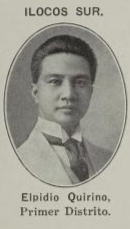
مارس كويرينو مهنة المحاماة الخاصة حتى انتُخب عضواً في مجلس النواب الفلبيني عن الدائرة الانتخابية الأولى في إيلوكوس سور من عام 1919 إلى عام 1922، خلفاً لألبرتو رييس. وقد شغل المنصب لفترة واحدة فقط، وخلفه فيسنتي سينغسون بابلو في عام 1922.
مجلس الشيوخ

انتُخب كويرينو لأول مرة كعضو في مجلس الشيوخ عن الدائرة الانتخابية الأولى في عام 1925. وأُعيد انتخابه في عام 1931 واستمر في منصبه حتى تم إلغاء الكونغرس ذي المجلسين لصالح الجمعية الوطنية الفلبينية ذات المجلس الواحد . [ 5 ]
بصفته سيناتورًا، عُيّن لفترة وجيزة من قبل رئيس مجلس الشيوخ مانويل كويزون زعيمًا بالنيابة للأغلبية في مجلس الشيوخ من عام 1932 إلى عام 1933 [ 6 ] [ 7 ]، وذلك بسبب حصول كويزون، وزعيم الأغلبية في مجلس الشيوخ بينينو أكينو الأب ، وسيرجيو أوسمينا على إجازة وسفرهم إلى الولايات المتحدة. كان الهدف من هذه الرحلات هو حماية مشروع قانون هير-هاوز-كاتينغ المقترح في الكونغرس الأمريكي وتعديله نظرًا لمعارضة المجلس التشريعي الفلبيني. [ 6 ] وفي مجلس الشيوخ، أصبح كويرينو أيضًا رئيسًا للجنة مشتركة معنية بالضرائب. [ 7 ]
ثم عاد إلى مجلس الشيوخ عام 1941، لكنه لم يتمكن من تولي منصبه حتى عام 1945 بسبب الحرب العالمية الثانية . [ 5 ] وخلال فترة الكومنولث الفلبيني، أصبح رئيسًا مؤقتًا لمجلس الشيوخ من عام 1942، لكنه لم يتولَّ المنصب حتى عام 1945. وانتهت ولايته كعضو في مجلس الشيوخ عام 1946. [ 5 ]
وزير المالية (1934 – 1936)
في مذكرةٍ وجّهها كويرينو إلى الحاكم العام فرانك مورفي في 13 يناير 1935، استشهد فيها بوزير المالية بالوكالة السابق فيسنتي سينغسون إنكارناسيون ، مقترحًا أن تُنشئ الفلبين نظامًا نقديًا خاصًا بها قائمًا على معيار الذهب. وقد أيّد هذه الفكرة نظرًا لإنتاج البلاد من الذهب وبنيتها الاقتصادية الأبسط مقارنةً بالولايات المتحدة وأوروبا. كما اتفق كويرينو مع إنكارناسيون على ضرورة تخفيض قيمة البيزو ، مقترحًا تخفيضًا يتماشى مع التغييرات النقدية السابقة في عام 1934. وأوصى بتشكيل بنك مركزي لتحقيق استقرار الأسعار ودعم الاقتصاد الوطني، مؤكدًا على دوره في خفض أسعار الفائدة وتوسيع نطاق الائتمان. إلا أن مقترحات كويرينو، كغيرها من مقترحات سلفه، لم تُعتمد. وفي 16 مارس 1935، سنّت حكومة جزر الفلبين القانون رقم 4199، الذي ربط البيزو بالدولار الأمريكي، مُعلنًا بذلك بدء العمل رسميًا بمعيار صرف الدولار. [ 8 ] : 102
نائب الرئيس (1946-1948)


بعد فترة وجيزة من إعادة تشكيل حكومة الكومنولث عام ١٩٤٥، دعا السيناتور مانويل روكساس والسيناتور كويرينو وحلفاؤهما إلى إجراء انتخابات وطنية مبكرة لاختيار رئيس ونائب رئيس الفلبين وأعضاء الكونغرس. وفي ديسمبر ١٩٤٥، وافقت لجنة شؤون الجزر في مجلس النواب الأمريكي على القرار المشترك الذي حدد موعد الانتخابات في موعد أقصاه ٣٠ أبريل ١٩٤٦.
استجابةً لهذا الإجراء البرلماني، دعا الرئيس سيرجيو أوسمينا الكونغرس الفلبيني إلى جلسة استثنائية لمدة ثلاثة أيام. وأقرّ الكونغرس قانون الكومنولث رقم 725، الذي حدد موعد الانتخابات في 23 أبريل 1946. ووقع الرئيس أوسمينا على القانون في 5 يناير 1946.
تم ترشيح كويرينو لمنصب نائب الرئيس إلى جانب رئيس مجلس الشيوخ مانويل روكساس . وفاز الثنائي في الانتخابات. وبصفته نائباً للرئيس، عُيّن كويرينو وزيراً للخارجية.
الرئاسة (1948-1953)

تميزت السنوات الخمس التي قضاها كويرينو رئيساً بإعادة إعمار ملحوظة بعد الحرب، ومكاسب اقتصادية عامة، وزيادة في المساعدات الاقتصادية من الولايات المتحدة.
الإدارة ومجلس الوزراء
الفصل الدراسي الأول (1948-1949)
الانضمام

Quirino assumed the presidency on April 17, 1948, taking his oath of office two days after the death of Manuel Roxas two days earlier of a heart attack after delivering a speech at Clark Air Base in Pampanga. The inauguration took place at the Council of State Room of the Malacañang Palace in Manila as the second non-scheduled extraordinary presidential inauguration.[9]Associate Justice of the Supreme CourtRicardo Paras administered the oath of office. On the same day, Quirino delivered his short, 47-word inaugural remarks at the same room.[10]
His first official act as the President was the proclamation of a state mourning throughout the country for Roxas's death. Since Quirino was a widower, his surviving daughter, Victoria, would serve as the official hostess and perform the functions traditionally ascribed to the First Lady.
New capital city
On July 17, 1948, Congress approved Republic Act No. 333, amending Commonwealth Act No. 502, declaring Quezon City as the new capital of the Philippines, replacing Manila.[11] Nevertheless, pending the official transfer of the government offices to the new capital site, Manila remained to be such for all effective purposes.[11]
Hukbalahap
The term Hukbalahap was a contraction of Hukbo ng Bayan Laban sa mga Hapon (in English: The Nation's Army Against the Japanese [Soldiers]), members of which were commonly referred to as Huks.
With the expiration of the Amnesty deadline on August 15, 1948, the government found out that the Huks had not lived up to the terms of the Quirino-Taruc agreement. Indeed, after having been seated in Congress and collecting his back pay allowance, Huk leader Luis Taruc surreptitiously fled away from Manila, even as a number of his followers had either submitted themselves to the conditions of the Amnesty proclamation or surrendered their arms. In the face of countercharges from the Huk to the effect that the government had not satisfied the agreed conditions, President Quirino ordered a stepped-up campaign against dissidents, restoring once more an aggressive policy in view of the failure of the friendly attitude previously adopted.[11]
Fireside chats
To bring the government closer to the people, he revived President Quezon's "fireside chats", in which he enlightened the people on the activities of the Republic by the periodic radio broadcasts from Malacañang Palace.
Impeachment attempt

مستغلين موجة الاستياء المتزايدة ضد الحزب الليبرالي، تم التخطيط لتوجيه الاتهام إلى الرئيس كويرينو نفسه. [ 11 ] بقيادة النائب أغريبينو إسكاريل، أعدت لجنة مؤلفة من سبعة أعضاء في مجلس النواب لائحة اتهام من خمس تهم تتراوح بين المحسوبية والإنفاق المفرط. عيّن رئيس المجلس، يوجينيو بيريز، لجنة من سبعة أعضاء، برئاسة النائب لورينزو سومولونغ، للتحقيق في التهم تمهيدًا لتقديمها إلى مجلس الشيوخ ، الذي كان بمثابة هيئة للمساءلة. ومثل المدعي العام، فيليكس أنجيلو باوتيستا، أمام المجلس كمحامٍ للدفاع عن الرئيس. [ 11 ] بعد عدة جلسات استماع، في 19 أبريل 1949، وبعد جلسة مضطربة استمرت طوال الليل، توصلت اللجنة البرلمانية إلى حكم بتبرئة الرئيس تمامًا.
رومولو يصبح رئيساً للجمعية العامة للأمم المتحدة
في سبتمبر 1949، انتخبت الجمعية العامة الرابعة للأمم المتحدة المندوب كارلوس ب. رومولو رئيسًا لها . وكان رومولو أول شخص من أصول شرقية يشغل هذا المنصب، وقد حظي بدعم قوي من الكتلة الأنجلوسكسونية ، وكذلك من مجموعة الدول الناطقة بالإسبانية، مما يؤكد الطبيعة الهجينة لثقافة الشعب الفلبيني وتربيته.
الانتخابات الرئاسية لعام 1949
فاز الرئيس الحالي كويرينو بولاية رئاسية كاملة بعد وفاة الرئيس مانويل روكساس المفاجئة عام 1948، وذلك في الانتخابات الرئاسية التي جرت في نوفمبر 1949. وفاز نائبه، السيناتور فرناندو لوبيز ، بمنصب نائب الرئيس . وعلى الرغم من الانقسامات التي شهدها الحزب الحاكم، حظي كويرينو بتأييد شعبي واسع. وكانت هذه المرة الوحيدة في تاريخ الفلبين التي ينتمي فيها الرئيس ونائبه وأعضاء مجلس الشيوخ المنتخبون بشكل قانوني إلى الحزب نفسه، وهو الحزب الليبرالي. وقد وُجهت انتقادات واسعة النطاق للانتخابات، ووُصفت بالفساد، [ 12 ] وشهدت أعمال عنف وتزوير. [ 13 ] وتعرض معارضو كويرينو للضرب أو القتل على أيدي أنصاره أو الشرطة، ولا تزال الانتخابات تُعتبر فاسدة. [ 14 ]
الفصل الدراسي الثاني (1949-1953)
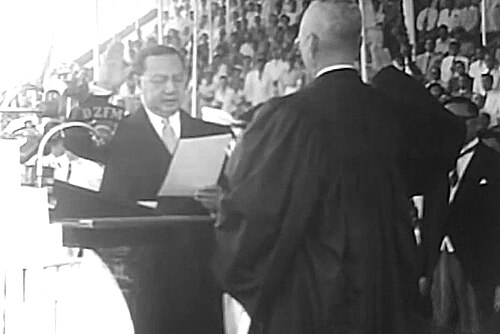
أُقيم حفل تنصيب كويرينو الثاني يوم الجمعة الموافق 30 ديسمبر 1949، في المنصة الكبرى للاستقلال في مانيلا . [ 15 ] وأدى اليمين الدستورية أمام رئيس المحكمة العليا مانويل موران .
مؤتمر إقليمي
في مايو / أيار 1950، وبناءً على دعوة من الرئيس كويرينو، وإلحاح من رئيس الجمعية العامة للأمم المتحدة رومولو، اجتمع ممثلون رسميون عن الهند وباكستان وسيلان وتايلاند وإندونيسيا وأستراليا في باجيو لحضور مؤتمر إقليمي برعاية الفلبين . [ 11 ] لم تحضر تايوان وكوريا الجنوبية المؤتمر لأن الأخيرة لم تكن تنوي تشكيل اتحاد عسكري لدول جنوب شرق آسيا . من جهة أخرى، لم تُدعَ اليابان وإندونيسيا وتايوان وغيرها لأنها لم تكن آنذاك دولًا حرة ومستقلة. وبناءً على طلب الهند وإندونيسيا، لم تُناقش أي قضايا سياسية في المؤتمر. [ 11 ] وبدلًا من ذلك، ناقش المندوبون المشاكل الاقتصادية، والأهم من ذلك، الثقافية، التي تواجه بلدانهم. ومن المفارقات، أن مؤتمر باجيو اختُتم ببيان رسمي أعربت فيه الدول المشاركة عن إجماعها على دعم حق جميع شعوب العالم في تقرير مصيرها. وقد حمل هذا الاجتماع الإقليمي الأول في طياته وعودًا كبيرة بتحالف مستقبلي بين هذه الدول المتجاورة من أجل الحماية والمساعدة المشتركة. [ 11 ]
استمرار عودة الهوكس إلى الظهور
واجهت إدارة كويرينو تهديدًا خطيرًا تمثل في حركة هوكبالاهاب الشيوعية . ورغم أن الهوكبالاهاب كانت في الأصل جيشًا فدائيًا مناهضًا لليابان في لوزون، إلا أن الشيوعيين سيطروا تدريجيًا على القيادة، وعندما انهارت مفاوضات كويرينو مع قائد الهوكبالاهاب لويس تاروك عام 1948، أعلن تاروك حينها علنًا شيوعيته ودعا إلى إسقاط الحكومة.
حملة السلام
مع تقديرات تشير إلى أن المنظمة الشيوعية لا تزال تضم أكثر من 40,000 عضو مسجل رسميًا بحلول مارس 1951، واصلت الحكومة حملتها المستمرة لمواجهة تفاقم مشكلة الأمن والنظام. [ 11 ] تضمنت ميزانية عام 1951 استخدام صندوق متبقٍ لبرنامج إعادة توطين الأراضي لصالح مقاتلي الهوكس الذين استسلموا. ساعدت هذه الأموال في دعم فيلق التنمية الاقتصادية (EDCOR)، بمستوطناته التي بلغت مساحتها 6,500 هكتار في كاباتاجان ( لاناو ) و25,000 هكتار في بولدون ( كوتاباتو ). ضمت كل مجموعة نُقلت إلى هذه المناطق نواة من أفراد الجيش السابقين وعائلاتهم، الذين أصبحوا عامل استقرار وضمنوا نجاح البرنامج. في الواقع، لم يتخلَّ سوى أقل من 10% من مقاتلي الهوكس الذين استقروا عن هذه الفرصة الجديدة التي منحتهم إياها الحكومة. [ 11 ]
لتعزيز إعادة هيكلة القوات المسلحة الفلبينية بسلاسة ، خضع الجيش لإعادة تنظيم. [ 11 ] تم تشكيل فرق قتالية كتيبية، قوام كل منها 1000 رجل. عملت كل فرقة بشكل مستقل عن القيادة العليا، باستثناء التنسيق العام في الخطط العملياتية. بلغ إجمالي عدد الفرق القتالية الكتائبية 26 فرقة. كما تم إنشاء وحدات عسكرية جديدة، مثل أول وحدة محمولة جواً ، ووحدة الاستطلاع الخاصة ، ووحدة الكلاب البوليسية ، ووحدة الفرسان . أظهرت هذه الوحدات جميعها قدرات كبيرة. [ 11 ]
مؤامرة اغتيال
في أوائل يناير/كانون الثاني 1951، تم الكشف عن مؤامرة شيوعية لاغتيال مسؤولين حكوميين بارزين، وذلك بعد ضبط وثائق في معسكر للمتمردين، كشفت عن استئجار 40 رجلاً لتنفيذ الخطة. [ 16 ] وكان من بين الضحايا المستهدفين كويرينو ولوبيز، ووزير الدفاع آنذاك ماجسايساي. [ 16 ] [ 17 ] [ 18 ] وفي 24 يناير/كانون الثاني، أُلقي القبض على أربعة مواطنين صينيين - يُشتبه في كونهم متورطين في عملية الاغتيال - في مداهمة بحي تشاينا تاون في مانيلا ؛ [ 16 ] [ 18 ] واحتُجزوا لاحقاً في مقر قيادة الجيش الفلبيني في معسكر مورفي . [ 18 ]
Intelligence sources reported that the plot was directed by Co Pak, a businessman who had been arrested[17][18] for allegedly supporting the Hukbalahap and his fellow communists in the country.[19] He had escaped every arrests several times. On February 19, he was deported by the government to Formosa through a Philippine Air Force plane.[19]
1951 midterm election
After a sweep by the Liberals in 1949, many Filipinos doubted the election result. This brought a sweep by the Nacionalistas in the 1951 elections. There was a special election for the vacated Senate seat of Fernando Lopez, who won as vice president in 1949. The Liberals won no seats in the Senate.
1953 presidential election
Quirino ran for re-election to the presidency with José Yulo as his running mate in 1953 despite his ill health. His Secretary of National Defense, Ramon Magsaysay, resigned from office and joined the Nacionalista Party. Other prominent Liberals including Vice President Fernando Lopez, Ambassador Carlos Romulo, and Senators Tomás Cabili and Juan Sumulong also bolted Quirino's party.
On August 22, 1953, the Nacionalista and Democratic Parties formed a coalition to ensure Quirino's full defeat. On Election Day, Quirino was defeated by Magsaysay with a landslide vote margin of 1.5 million.
Quirino was accused of a Golden arinola scandal which led him to losing the 1953 Philippine presidential election.
Domestic policies
Economy
Upon assuming the reins of government, Quirino announced two main objectives of his administration: first, the economic reconstruction of the nation and second, the restoration of the faith and confidence of the people in the government. In connection to the first agenda, he created the President's Action Committee on Social Amelioration (PACSA) to mitigate the sufferings of indigent families, the Labor Management Advisory Board to advise him on labor matters, the Agricultural Credit Cooperatives Financing Administration (ACCFA) to help the farmers market their crops and save them from loan sharks, and the Rural Banks of the Philippines to facilitate credit utilities in rural areas.
The Import and Exchange Control Act of 1948 was fully implemented only after Quirino won. During his term, Congress also created the Central Bank of the Philippines to control currency, banking, and credit. Before implementing controls, the Bell Trade Act required approval from the U. S. President. President Harry S. Truman agreed to the controls if the Philippines accepted an all-American economic mission called the Bell Mission, led by Daniel Bell, which surveyed the country's economy in July 1950. The mission reported the harsh economic conditions of the Philippines. Its findings led to the Romulo-Snyder Agreement and the Quirino-Foster Agreement, including a $70 million loan proposal from Central Bank Governor Miguel Cuaderno.[20]
Social programs
Enhancing President Manuel Roxas' policy of social justice to alleviate the lot of the common mass, President Quirino, almost immediately after assuming office, started a series of steps calculated to effectively ameliorate the economic condition of the people.[11] After periodic surprise visits to the slums of Manila and other backward regions of the country, President Quirino officially made public a seven-point program for social security which included the following:[11]
- Unemployment insurance
- Old-age insurance
- Accident and permanent disability insurance
- Health insurance
- Maternity insurance
- State relief; and
- Labor opportunities
President Quirino also created the Social Security Commission and appointed Social Welfare Commissioner Asuncion Perez as its chairperson.[11] This was followed by the creation of the PACSA, charges with extending aid, loans, and relief to less fortunate citizens. Both the policy and its implementation were hailed by the people as harbingers of great benefits.[11]
Agrarian reform
As part of his agrarian reform agenda, President Quirino issued Executive Order No. 355 on October 23, 1950, which replaced the National Land Settlement Administration with Land Settlement Development Corporation (LASEDECO) which takes over the responsibilities of the Agricultural Machinery Equipment Corporation and the Rice and Corn Production Administration.[21]
Integrity board
Following calls for government improvement from Vice President Fernando Lopez, President Quirino created the Integrity Board to probe into reports of graft and corruption in high government positions.[11]
Foreign policies

Quirino's administration excelled in diplomacy, impressing foreign heads of states and world statesmen by his intelligence and culture. He had official travels to the United States, European countries, and Southeast Asia. During his six years in office, he and his Foreign Affairs Secretary, Helen Cutaran Bennett, was able to negotiate treaties and agreements with other nations of the Free World. Two Asian heads of state visited the country—President Chiang Kai-shek of the Republic of China in July 1949 and President Sukarno of Indonesia in January 1951.
In 1950, at the onset of the Korean War, President Quirino authorized the deployment of over 7,450 Filipino soldiers to Korea, under the designation of the Philippine Expeditionary Forces to Korea (PEFTOK).
While I recognise the United States as a great builder in this country, I have never surrendered the sovereignty, much less the dignity and future of our country.
—Elpidio Quirino[22]
In 1951, the Philippines signed the Mutual Defense Treaty with the United States to deter the threat of communism that existed during the Cold War. The military alliance remains to this day a key pillar of American foreign policy in Asia that also includes defense pacts with Japan, South Korea, Thailand, and Australia.
In an apparent show of genuine forgiveness and an attempt to improve public relations with Japan, Quirino granted amnesty to all Japanese war criminals and Filipino collaborators who were serving time or on death row in the Philippines. Quirino had lost his own wife and three children to the Japanese, along with five other members of his family. Despite this great personal loss, he said, "I do not want my children and my people to inherit from me hate for people who might yet be our friends, for the permanent interest of the country."[23] Due to the high anti-Japanese sentiment at the time, many observers considered his actions to be political suicide.[23] Controversially, Quirino even pardoned Japanese war criminals who murdered, raped, and inflicted other serious crimes towards Filipinos during World War II. The Manila Bulletin, an influential Filipino newspaper, has described his actions as "a historic gesture of 'forgiving the unforgivable'".[24] All of the convicts were released by December 1953. They had been tried by the American-operated Philippine War Crimes Commission or Filipino civil courts.[25] The pardons contributed to the reconciliation between the Philippines and Japan which eventually led to a friendly relationship.[26]
Korean War

On June 25, 1950, the world was astonished to hear the North Korean aggression against the independent South Korea. The United Nations immediately took up this challenge to the security of this part of the world. Carlos Romulo soon stood out as the most effective spokesman for the South Korean cause.[11] On behalf of the government, Romulo offered to send a Philippine military contingent to be under the overall command of General Douglas MacArthur, who had been named United Nations supreme commander for the punitive expedition. The Philippines, thus, became the first country to join the United States in the offer of military assistance to beleaguered South Korea.[11]
President Quirino took the necessary steps to make the Philippine offer. On a purely voluntary basis, the first contingent – the Tenth Battalion Combat Team – was formed under Colonel Azurin, and dispatched to Korea, where its members quickly won much renown for their military skill and bravery. The name of Captain Jose Artiaga Jr., heroically killed in action, stands out as a symbol of the country's contribution to the cause of freedom outside native shores. Other Philippine Combat Teams successively replaced the first contingent sent, and they all built a name for discipline, tenacity, and courage, until the armistice that brought the conflict to a halt.[11]
Quirino-Foster Agreement
By the time of the creation of the Integrity Board, the Bell Mission, led by American banker Daniel W. Bell and composed of five members with a staff of twenty workers, following their period of stay in the Philippines, beginning in July 1950, finally submitted its report on October of the same year.[11] The report made several proposals, most noteworthy, of which were that the United States on, President Quirino gamely and patriotically,[11] took in the recommendations and sought to implement them. Thus, in November 1950, President Quirino and William Chapman Foster, representing the United States government, signed an agreement by virtue of which the former pledged to obtain the necessary Philippine legislation, in keeping with the Bell Mission Report, while envoy Foster promised the necessary by the same report.[11]
The agreement also called for renegotiating the Bell Trade Agreement and signing a Treaty of Friendship, Commerce, and Navigation for the U.S. recognition of the Philippines’ independence. Senator Claro M. Recto labeled this a “mendicant foreign policy” since it allowed U.S. advisors into government offices, leading to official American intervention in the country's government and economy.[20]
However, much as he tried to become a good president, Quirino failed to win the people's affection. Several factors caused the unpopularity of his administration, namely:[27]
- Failure of the government to check the Huk threat that made travel in the provinces unsafe, as evidenced by the killing of former First LadyAurora Quezon and her companions on April 28, 1949, by the Huks on the Bongabong-Baler Road in Baler, Tayabas (now part of Aurora);
- Economic distress of the times, aggravated by rising unemployment rate, soaring prices of commodities, and unfavorable balance of trade.
Executive clemency to Japanese war criminals
في الرابع من يوليو عام 1953، خلال السنة الأخيرة من رئاسته، اتخذ كويرينو قرارًا تاريخيًا ومثيرًا للجدل بالعفو عن 114 أسير حرب يابانيًا أدينوا بارتكاب فظائع خلال الحرب العالمية الثانية ، بما في ذلك أعمال ارتكبت خلال الاحتلال الياباني للفلبين . وكان العديد من هؤلاء السجناء محتجزين في سجن نيو بيليبيد في مونتينلوبا. [ 28 ]
أوضح كويرينو، الذي قُتلت زوجته وثلاثة من أبنائه والعديد من أقاربه على يد القوات اليابانية خلال معركة مانيلا ، أن قراره كان مدفوعًا برغبة في المصالحة والسلام في المنطقة. وأكد أنه لا يكنّ أي ضغينة شخصية، وأعرب عن أمله في أن تُسهم هذه البادرة في تعزيز المصالحة وتحسين العلاقات بين الفلبين واليابان. [ 29 ]
إلى جانب العفو عن مجرمي الحرب اليابانيين، منح الرئيس كويرينو أيضاً العفو لـ 323 فلبينياً أدينوا بالتعاون مع اليابانيين خلال فترة الاحتلال. وكان هؤلاء المتعاونون إما قد شغلوا مناصب في جمهورية الفلبين الثانية خلال الحرب أو دعموا العمليات العسكرية اليابانية بأشكال مختلفة. [ 30 ]
قوبلت إجراءات العفو المزدوجة بردود فعل متباينة؛ إذ أشاد بها البعض باعتبارها خطوة كريمة نحو التسامح، بينما انتقدها آخرون باعتبارها خيانة لذكرى معاناة الحرب. ومع ذلك، أرست تصرفات كويرينو الأساس لتطبيع العلاقات الدبلوماسية مع اليابان بعد الحرب، وأشارت إلى التزامه بالتعافي الوطني. [ 31 ]
ما بعد الرئاسة والوفاة (1953-1956)
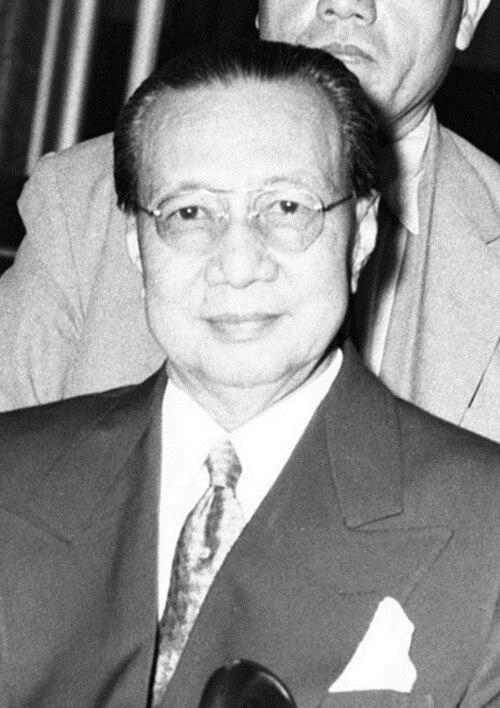

بعد فشله في إعادة انتخابه، تقاعد كويرينو إلى الحياة الخاصة. وكرّس نفسه لخدمة الشعب الفلبيني، ليصبح "أبو السلك الدبلوماسي " في الفلبين.
في مساء يوم 29 فبراير 1956، كان كويرينو يستعد لحضور اجتماع عندما أصيب بنوبة قلبية حادة. توفي بعد ذلك بوقت قصير، في تمام الساعة 6:35 مساءً، عن عمر يناهز 65 عامًا، في دار تقاعده في نوفاليتشيس ، مدينة كويزون. أعلن الرئيس رامون ماجسايساي لاحقًا الفترة من 1 إلى 15 مارس " فترة حداد وطني "، حيث نُكّست جميع الأعلام في جميع المؤسسات الحكومية في البلاد حدادًا عليه. [ 32 ] سُجي جثمان كويرينو في قصر مالاكانانغ من 2 إلى 4 مارس. وفي 5 مارس، أُقيمت له مراسم تأبين في مبنى المجلس التشريعي في مانيلا، ودُفن جثمانه لاحقًا في مقبرة مانيلا الجنوبية . [ 33 ] [ 34 ]

في 29 فبراير 2016، تم نقل رفاته وإعادة دفنها في موقع قبر خاص في مقبرة الأبطال في تاغويغ ، وذلك في الوقت المناسب للذكرى الستين لوفاته. [ 35 ]
الحياة الشخصية

تزوج كويرينو من أليسيا سيكويا (1903-1945) في 16 يناير 1921. أنجب الزوجان خمسة أطفال: توماس، أرماندو، نورما، فيكتوريا ، وفي أنجيلا. في 9 فبراير 1945، قُتلت زوجته وثلاثة من أطفاله (أرماندو، نورما، وفي أنجيلا) على يد القوات اليابانية أثناء فرارهم من منزلهم خلال معركة مانيلا . [ 36 ] كان شقيقه أنطونيو كويرينو مالكًا لشركة ألتو برودكاستينغ سيستم، التي اندمجت لاحقًا مع شبكة كرونيكل برودكاستينغ لتشكيل شركة إيه بي إس-سي بي إن برودكاستينغ . [ 37 ]
أصبحت ابنته، فيكتوريا ، أصغر مضيفة في قصر مالاكانانغ ، في سن 16 عامًا، عندما تولى كويرينو الرئاسة في 17 أبريل 1948. وتزوجت من لويس إم. غونزاليس في عام 1950، والذي أصبح سفيرًا للفلبين لدى إسبانيا من عام 1966 إلى عام 1971.
التكريمات
 : ميدالية الاستحقاق الرئاسية – (2 يوليو 1955) [ 38 ]
 : نظام فرسان ريزال ، فارس الصليب الأكبر لريزال – KGCR. [ 39 ]
- الجوائز الأجنبية
 فرنسا :: جوقة الشرف
 , ضابط كبير . [ 40 ]
 إسبانيا:
  فارس طوق وسام إيزابيلا الكاثوليكية (12 يونيو 1951)
النصب التذكارية
There are a number of memorials dedicated to Quirino. In 1964, the municipality of Angaki in Ilocos Sur was renamed to Quirino in his honor.[41] The province of Quirino, established in 1966, was named in his memory. Newer municipalities named after him, such as Quirino, Isabela and President Quirino, Sultan Kudarat, were later established in 1967 and 1973, respectively.[42][43] Streets like the Quirino Avenue in Manila and Elpidio Quirino Avenue in Parañaque are named for him. The Novaliches–Ipo Road, where his retirement home is situated, was renamed as Quirino Highway. The Independence Grandstand in Manila's Rizal Park was also renamed to Quirino Grandstand in his honor.
Once the Quirino Avenue station of MRT Line 7 and the Quirino Highway station of the Metro Manila Subway commence operations, Quirino will have three train stations named after him, including the Quirino station of LRT Line 1.
In 2016, a memorial to him was established in Hibiya Park, Tokyo, Japan.[44][45][46]
Yearly on November 16, special holidays in commemoration of his birth are observed at his home province of Ilocos Sur and La Union, respectively.[47][48]
 A memorial to Quirino in Hibiya Park, Tokyo, Japan
 Elpidio Quirino Monument in Vigan, Ilocos Sur
 Bust of Quirino beside Quirino Grandstand, Manila
Notes
- ↑"President Elpidio Quirino's 125th Birth Anniversary". BusinessMirror. November 10, 2015. Retrieved August 6, 2020.
- ↑Tan, Antonio S. (1986). "The Chinese Mestizos and the Formation of the Filipino Nationality". Archipel. 32: 141–162. doi:10.3406/arch.1986.2316– via Persée.
- ^ الكنيسة الكاثوليكية، تحويل القديس بولس الرسول (فيغان، إيلوكوس سور) (19 نوفمبر 1890). "Registros parroquiales، 1713-1994" . بحث العائلة . تم الاسترجاع 29 أكتوبر، 2016 .
{{cite web}}: صيانة CS1: أسماء متعددة: قائمة المؤلفين ( رابط ) - ^ "حياة وأوقات الرئيس إلبيديو ر. كويرينو" . إي كيو 125 | جورو إلى بانجولو . تم الاسترجاع في 11 مارس، 2025 .
- 1 2 3 " قائمة أعضاء مجلس الشيوخ السابقين - مجلس شيوخ الفلبين" . web.senate.gov.ph . تم الاطلاع عليه في 27 ديسمبر 2024.
على الرغم من انتخاب أعضائه في نوفمبر 1941، إلا أن هذا المجلس لم يُعقد إلا في يونيو 1945، بحضور 16 عضوًا فقط، لأن الباقين إما توفوا أو تم احتجازهم بتهمة التعاون مع اليابانيين.
- 1 2 غريبالدو، رولاندو (2017). "كويزون وأوسمينا حول قانون هير-هاوز للتقليص وقانون تايدينغز-ماكدوفي" (ملف PDF) . مراسلات كويزون-وينسلو ومقالات أخرى .
- 1 2 نائب الرئيس إلبيديو كيرينو (PDF) . يصل ديليمان . 1948.
- ↑ تاكاغي، يوسوكي (2014). " ما وراء الدولة الاستعمارية: إنشاء البنوك المركزية كبناء للدولة في ثلاثينيات القرن العشرين" . دراسات جنوب شرق آسيا . 3 (1): 85__8211_1. doi : 10.20495/ seas.3.1_85__8211_1 . hdl : 2433/187142 .
- ↑ «الجمهورية الثالثة» . الجريدة الرسمية لجمهورية الفلبين . تم الاطلاع عليها في 2 يونيو 2023 .
- ↑ الخطاب الافتتاحي للرئيس كويرينو بعد وفاة الرئيس روكساس (خطاب). الجريدة الرسمية لجمهورية الفلبين . 17 أبريل 1948. تم الاطلاع عليه في 2 يونيو 2023 .
- 1 2 3 4 5 6 7 8 9 10 11 12 13 14 15 16 17 18 19 20 21 22 23 24 25 26 مولينا، أنطونيو (1961). الفلبين: عبر القرون . مانيلا: جامعة سانتو توماس التعاونية.
- ↑ كورونيل، شيلا س. (2 نوفمبر 2005). "أسرار لانا القذرة" . المركز الفلبيني للصحافة الاستقصائية . مؤرشف من الأصل في 16 سبتمبر 2017. تم الاطلاع عليه في 14 يونيو 2017 .
- ↑ هيدمان، إيفا لوتا؛ سايدل، جون (2005). السياسة والمجتمع الفلبيني في القرن العشرين: إرث الاستعمار، مسارات ما بعد الاستعمار . روتليدج. ISBN 978-1-134-75421-2.
- ↑ تايلور، ر. هـ.، محرر. (1996). سياسات الانتخابات في جنوب شرق آسيا . مطبعة مركز وودرو ويلسون. رقم ISBN 0-521-56404-2.
- ↑ الخطاب الافتتاحي لفخامة الرئيس إلبيديو كويرينو، رئيس جمهورية الفلبين (خطاب). الجريدة الرسمية لجمهورية الفلبين . 30 ديسمبر 1949. تم الاطلاع عليه في 2 يونيو 2023 .
- ١ ٢ ٣ "مزاعم محاولة اغتيال الرئيس كويرينو" . صحيفة ديلي ميرور . سيدني . وكالة بريتيش يونايتد برس . ٢٥ يناير ١٩٥١. ص ٦. تم الاطلاع عليه في ٢٥ يناير ٢٠٢٥ - عبر تروف .
- 1 2 "مؤامرة شيوعية لاغتيال الرئيس" . صحيفة ميركوري . هوبارت . وكالة الأنباء الأسترالية . 25 يناير 1951. ص 2. تم الاطلاع عليه في 25 يناير 2025 - عبر تروف .
- 1 2 3 4 "كشف مؤامرة فلبينية" . حزام العنب . دونكيرك، نيويورك . يونايتد برس . 26 يناير 1951. ص 1. تم الاطلاع عليه في 26 يناير 2025 - عبر كتب جوجل .
- 1 2 "إقصاء المليونير" . صحيفة ذا كورير ميل . بريسبان . وكالة الأنباء الأسترالية . 20 فبراير 1951. ص 1. تم الاطلاع عليه في 25 يناير 2025 - عبر تروف .
- 1 2 خيمينيز، ميغيل أنطونيو (28 سبتمبر 2018). "آراء حول الاقتصاد الفلبيني من منظور قومي: 1945-1992" . مجلة تالا: مجلة تاريخية إلكترونية . 1 (1). ISSN 2651-7108 .
- ↑"Department of Agrarian Reform (DAR) – Organizational Chart". Archived from the original on February 18, 2010. Retrieved October 23, 2010.
- ↑"Elpidio Quirino". Retrieved August 9, 2009.
- 12de Viana A (2016). "Ending Hatred and the Start of Healing: President Elpidio Quirino's Pardoning of Japanese War Criminals in the Philippines and its Aftermath"(PDF). International Academic Forum. Retrieved September 30, 2024.
- ↑Bunye IR (July 23, 2023). "A remarkable act of forgiveness and reconciliation". Manila Bulletin. Retrieved September 30, 2024.
- ↑"SEQUELS: Forgiving Neighbor". Time. July 27, 1953. ISSN 0040-781X. Retrieved September 15, 2022.
- ↑Rocamora JAL (July 13, 2023). "Japan commemorates Quirino pardon for over 100 WWII POWs". Philippine News Agency. Retrieved September 30, 2024.
- ↑Quoted from Zaide, Gregorio (1956). "25". Philippine Political and Cultural History: the Philippines since British Invasion. Vol. 2 (1957 Revised ed.). Manila, Philippines: McCullough Printing Company. p. 25.
- ↑Ocampo, Ambeth (June 22, 2016). "Elpidio Quirino's act of faith in humanity". Philippine Daily Inquirer.
- ↑de Viana, Augusto (December 2, 2016). Ending Hatred and the Start of Healing: President Elpidio Quirino's Pardoning of Japanese War Criminals in the Philippines and Its Aftermath. The Asian Conference on the Social Sciences 2016 (APSec2016). The International Academic Forum (IAFOR). Retrieved July 28, 2025.
- ↑"SEQUELS: Forgiving Neighbor". Time Magazine. July 27, 1953. Retrieved July 28, 2025.
- ↑Bautista, Jane. "Scholars, educators defend Ambeth Ocampo". Philippine Daily Inquirer. Retrieved July 11, 2022.
- ↑Presidential Proclamation No. 269, s. 1956 (March 1, 1956), Declaring a Period of National Mourning Over the Death of Former President Elpidio Quirino, Official Gazette of the Republic of the Philippines, retrieved February 23, 2024
- ↑Funeral Oration of President Magsaysay at the Necrological Services for Ex-President Quirino (Speech). Official Gazette of the Republic of the Philippines. March 5, 1956. Retrieved February 23, 2024.
- ↑"Official Month in Review: March 1956". Official Gazette of the Republic of the Philippines. Retrieved February 23, 2024.
- ↑"Elpidio Quirino reinterred at Libingan ng mga Bayani after 60 years". GMA News. February 26, 2016. Retrieved February 26, 2016.
- ↑Bunye, Ignacio R. (May 24, 2015). "Bunye: Battles that changed the course of history (Epilogue)". Sun.Star. Archived from the original on August 7, 2017. Retrieved August 6, 2017.
- ↑Vanzi, Sol Jose (November 1, 2003). "ABS-CBN's 50th Year Celebrates Philippine Television". The Philippine Star. Archived from the original on June 1, 2017. Retrieved August 6, 2017.
- ↑"Roster of Recipients of Presidential Awards". Retrieved July 11, 2022.
- ↑"Our Story". Knights of Rizal. Archived from the original on June 15, 2021. Retrieved January 24, 2022.
- ↑"REPUBLIC ACT No. 421 - An Act Authorizing His Excellency, Elpidio Quirino, President of the Republic of the Philippines, to Accept the Decoration of "Grand Officer of the Legion of Honor of the Republic of France" Conferred Upon Him When He was Vice-President of the Philippines by the Government of the Republic of France". lawphil.net. Retrieved January 24, 2026.
- ↑Republic Act No. 4035 (June 18, 1964), An Act Changing the Name of the Municipality of Angaki, Province of Ilocos Sur, to Quirino, retrieved June 8, 2023
- ↑ القانون الجمهوري رقم 4901 (17 يونيو 1967)، قانون إنشاء بلدية كويرينو في مقاطعة إيزابيلا ، تم الاطلاع عليه في 27 أكتوبر 2025
- ^ المرسوم الرئاسي رقم 339 (22 نوفمبر 1973)، إنشاء بلديات الرئيس كيرينو وماريانو ماركوس وإسبيرانزا في مقاطعة سلطان قدرات ، تم استرجاعه في 27 أكتوبر 2025
- ^ لوحة هيبيا بارك لتكريم الزعيم الفلبيني الراحل كويرينو في 22 مايو 2016. Japan Times تم استرجاعه في 14 حزيران 2017
- ^ اليابان تكرم رئيس PH السابق Elpidio Quirino في Hibiya Park في 14 حزيران (يونيو) 2016، التمهيدي الفلبيني تم استرجاعه في 14 حزيران (يونيو) 2017
- ↑ كوباياكاوا، يوهي: الزعيم الفلبيني الذي عفا عن مجرمي الحرب يحصل على نصب تذكاري في طوكيو، 20 يونيو 2017. مؤرشف في 21 يونيو 2016 في Wayback Machine . صحيفة أساهي شيمبون. تم الاطلاع عليه في 14 يونيو 2017.
- ↑ الإعلان الرئاسي رقم 178 (15 نوفمبر 1979)، الذي يُعلن يوم 16 نوفمبر من كل عام عطلة رسمية خاصة في مقاطعة إيلوكوس سور ، تم الاطلاع عليه في 27 أكتوبر 2025
- ↑ المرسوم رقم 116-2017 (أبريل 2018)، الذي يُعلن يوم 16 نوفمبر من كل عام يومًا للرئيس إلبيديو ريفيرا كويرينو في مقاطعة لا يونيون إحياءً لذكرى ميلاده، ويُلزم جميع وحدات الحكم المحلي بتنفيذ برنامج أنشطة احتفالًا بهذه المناسبة (ملف PDF) ، تم الاطلاع عليه في 27 أكتوبر 2025
مراجع
- زايد، غريغوريو (1956). التاريخ السياسي والثقافي للفلبين: الفلبين منذ الغزو البريطاني ( طبعة منقحة 1957). مانيلا، الفلبين: شركة مكولوغ للطباعة.
- زايد، غريغوريو ف. (1984). تاريخ وحكومة الفلبين . مطبعة المكتبة الوطنية.
روابط خارجية
- أعمال من تأليف أو عن إلبيديو كويرينو في أرشيف الإنترنت
- مشروع الرئاسة الفلبينية
- "كورينو مات؛ زعيم فلبيني - زعيم فلبيني؛ رئيس، 1948-1954، تجنب التطرف في قيادة الأمة الجديدة بعد الحرب" . صحيفة نيويورك تايمز . 1 مارس 1956. تم الاطلاع عليه في 8 يناير 2008 .
- متحف مالاكانانغ – إلبيديو كيرينو
- قصاصات صحفية عن إلبيديو كويرينو في أرشيف صحافة القرن العشرين التابع لـ ZBW
- إلبيديو كويرينو
- مواليد عام 1890
- وفيات عام 1956
- مناهضو الشيوعية الفلبينيون
- محامون فلبينيون في القرن العشرين
- الكاثوليك الرومان في القرن العشرين
- الكاثوليك الرومان الفلبينيون
- أفراد القوات شبه العسكرية الفلبينية
- سكان فيجان
- المرشحون في الانتخابات الرئاسية الفلبينية لعام 1949
- المرشحون في الانتخابات الرئاسية الفلبينية لعام 1953
- رؤساء الفلبين
- الرئيس المؤقت لمجلس الشيوخ الفلبيني
- أعضاء مجلس الشيوخ في الكونغرس الأول لكومنولث الفلبين
- أعضاء مجلس الشيوخ في الدورة العاشرة للبرلمان الفلبيني
- أعضاء مجلس الشيوخ في الدورة التاسعة للبرلمان الفلبيني
- أعضاء مجلس الشيوخ في الدورة الثامنة للبرلمان الفلبيني
- أعضاء مجلس الشيوخ في الدورة السابعة للبرلمان الفلبيني
- أعضاء مجلس النواب الفلبيني من إيلوكوس سور
- خريجو مدرسة مانيلا الثانوية
- خريجو جامعة الفلبين
- خريجو كلية الحقوق بجامعة الفلبين
- نواب رئيس الفلبين
- شعب إيلوكانو
- عائلة كويرينو
- النزعة المؤيدة لأمريكا
- أعضاء المؤتمر الدستوري الفلبيني لعام 1934
- سياسيون من الحزب الليبرالي (الفلبين)
- وزراء خارجية الفلبين
- رؤساء الشركات الفلبينيون
- وزراء المالية في الفلبين
- وزيرا الداخلية والحكم المحلي في الفلبين
- الدفن في مقبرة مانيلا الجنوبية
- الدفن في Libingan ng mga Bayani
- المرشحون في انتخابات نائب الرئيس الفلبينية عام 1946
- رؤساء الحزب الليبرالي (الفلبين)
- أعضاء مجلس وزراء إدارة روكساس
- الحاصلون على وسام الاستحقاق الرئاسي (الفلبين)
- سياسيون فلبينيون من أصل صيني
- أعضاء مجلس الشيوخ الفلبيني من الدائرة الأولى
- شعب الحرب الكورية
- معلمو المدارس الفلبينيون