
فهرنهايت 451
رواية "فهرنهايت 451" هي رواية ديستوبية صدرت عام 1953 للكاتب الأمريكي راي برادبري . [ 4 ] تصور الرواية مجتمعًا أمريكيًا مستقبليًا حيث مُنعت الكتب، ويقوم رجال الإطفاء بحرق أي كتاب يُعثر عليه . [ 5 ] تروي الرواية قصة جاي مونتاج ، رجل إطفاء يصاب بخيبة أمل من دوره في فرض الرقابة على الأدب وتدمير المعرفة، فيترك وظيفته في نهاية المطاف ويكرس نفسه لحفظ الكتابات الأدبية والثقافية.
كتب برادبري رواية "فهرنهايت 451" خلال فترة الهلع الأحمر الثاني وعصر مكارثي ، مستلهماً ذلك من حرق الكتب في ألمانيا النازية والقمع الأيديولوجي في الاتحاد السوفيتي . [ 6 ] صرّح برادبري بأن دوافعه لكتابة الرواية قد تغيرت عدة مرات. ففي مقابلة إذاعية عام 1956، قال إنه كتب الرواية بسبب مخاوفه من خطر حرق الكتب في الولايات المتحدة . [ 7 ] وفي سنوات لاحقة، وصف الرواية بأنها تعليق على كيفية تقليل وسائل الإعلام الجماهيرية للاهتمام بقراءة الأدب. [ 8 ] وفي مقابلة عام 1994، أشار برادبري إلى " الصوابية السياسية" كاستعارة للرقابة في الرواية، واصفاً إياها بأنها "العدو الحقيقي هذه الأيام" ومُصنّفاً إياها على أنها " سيطرة على الفكر وحرية التعبير ". [ 9 ]
استكشف برادبري أسلوب الكتابة والموضوع في رواية "فهرنهايت 451" في بعض قصصه القصيرة السابقة. فبين عامي 1947 و1948، كتب برادبري قصة "العنقاء المشرقة"، وهي قصة قصيرة تدور حول أمين مكتبة يواجه "رئيس الرقابة" الذي يحرق الكتب. وفي عام 1949، ألهمه لقاءٌ مع الشرطة لكتابة قصة " المشاة " القصيرة عام 1951. في هذه القصة، يتعرض رجلٌ كان يتمشى ليلاً في حيه للمضايقة والاعتقال من قبل الشرطة. وفي مجتمع "المشاة"، يُتوقع من المواطنين مشاهدة التلفاز كنشاط ترفيهي، وهو تفصيلٌ سيُدرج لاحقًا في رواية " فهرنهايت 451" . جُمِعت عناصر من قصتي "العنقاء المشرقة" و"المشاة" في رواية " رجل الإطفاء " ، وهي رواية قصيرة نُشرت في مجلة "غالاكسي ساينس فيكشن" عام 1951. وقد حثّه ستانلي كوفمان ، المحرر في دار نشر "بالانتين بوكس" ، على تحويل "رجل الإطفاء " إلى رواية كاملة. أنهى برادبري مخطوطة "فهرنهايت 451" عام 1953، ونُشرت الرواية في وقت لاحق من ذلك العام.
Upon its release, Fahrenheit 451 was a critical success, albeit with notable dissenters; the novel's subject matter led to its censorship in apartheid South Africa and various schools in the United States. [ 10 ] In 1954, Fahrenheit 451 won the American Academy of Arts and Letters Award in Literature and the Commonwealth Club of California Gold Medal. [ 11 ] [ 12 ] [ 13 ] It later won the Prometheus "Hall of Fame" Award in 1984 [ 14 ] and a "Retro" Hugo Award in 2004. [ 15 ] Bradbury was honored with a Spoken Word Grammy nomination for his 1976 audiobook version. [ 16 ] The novel has been adapted into films, stage plays , and video games . تشمل الاقتباسات السينمائية للرواية فيلمًا من إخراج فرانسوا تروفو عام 1966 وبطولة أوسكار فيرنر في دور غاي مونتاغ، وفيلمًا تلفزيونيًا من إخراج رامين بحراني عام 2018 وبطولة مايكل بي. جوردان في دور مونتاغ، وقد لاقى كلا الفيلمين آراءً نقدية متباينة. نشر برادبري نفسه مسرحيةً مقتبسةً من الرواية عام 1979، وساهم في تطوير لعبة فيديو تفاعلية تحمل الاسم نفسه عام 1984 ، بالإضافة إلى مجموعة قصصية قصيرة بعنوان "متعة الحرق" . [ 17 ] كما تم إنتاج عملين دراميين إذاعيين من إنتاج بي بي سي .
السياق التاريخي والسير الذاتية
The House Un-American Activities Committee (HUAC), formed in 1938 to investigate American citizens and organizations suspected of having communist ties, held hearings in 1947 to investigate alleged communist influence in Hollywood movie-making.[18] The government's interference in the affairs of artists and creative types infuriated Bradbury;[19] he was concerned about the workings of his government, and a late 1949 nighttime encounter with an overzealous police officer would inspire Bradbury to write "The Pedestrian", a short story which would go on to become "The Fireman" and then Fahrenheit 451. The rise of Senator Joseph McCarthy's McCarthyism persecution of accused communists, beginning in 1950, deepened Bradbury's contempt for government overreach.[20][21]
The Golden Age of Radio occurred between the early 1920s to the late 1950s, during Bradbury's early life, while the transition to the Golden Age of Television began right around the time he started to work on the stories that would eventually lead to Fahrenheit 451. Bradbury saw these forms of media as a threat to the reading of books, indeed as a threat to society, as he believed they could act as a distraction from important affairs. This contempt for mass media and technology would express itself through Mildred and her friends and is an important theme in the book.[22]
Bradbury's lifelong passion for books began at an early age. After he graduated from high school, his family could not afford for him to attend college, so Bradbury began spending time at the Los Angeles Public Library where he educated himself.[23] As a frequent visitor to his local libraries in the 1920s and 1930s, he recalls being disappointed because they did not stock popular science fiction novels, like those of H. G. Wells, because, at the time, they were not deemed literary enough. Between this and learning about the destruction of the Library of Alexandria,[24] a great impression was made on Bradbury about the vulnerability of books to censure and destruction.
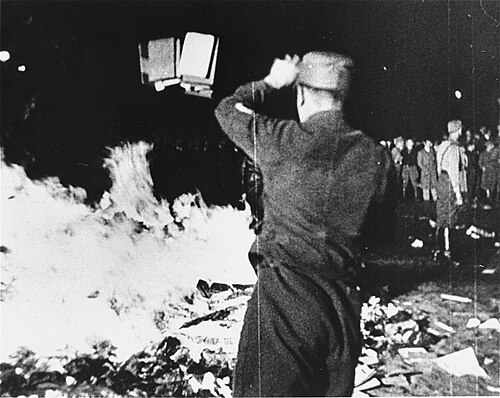
لاحقًا، في سن المراهقة، شعر برادبري بالرعب من حرق الكتب على يد النازيين ، مصرحًا: "عندما كنت في الخامسة عشرة من عمري، أحرق هتلر الكتب في شوارع برلين. وقد أرعبني ذلك". [ 25 ] كما تأثر برادبري بحملة جوزيف ستالين للقمع السياسي، المعروفة باسم التطهير الكبير ، والتي اعتُقل خلالها كتّاب وشعراء، من بين كثيرين غيرهم، وأُعدموا في كثير من الأحيان، مصرحًا: "لقد أحرقوا المؤلفين بدلًا من الكتب". [ 6 ]
ملخص الحبكة
"الموقد والسمندل"
In a distant future, [ note 1 ] [ 26 ] Guy Montag is a fireman employed to burn outlawed books, along with the houses they are hidden in. One fall night while returning from work, he meets his new neighbor Clarisse McClellan, whose free-thinking ideals and liberating spirit cause him to question his life and perceived happiness. Montag returns home to find that his wife Mildred has overdosed on the sleeping pills she takes every night, and he calls for medical attention. Two EMTs pump her stomach and change her blood. After they leave to rescue another overdose victim, Montag overhears Clarisse and her family talking about their illiterate society. Shortly afterward, Montag's mind is bombarded with Clarisse's subversive thoughts and the memory of Mildred's near-death. Over the next few days, Clarisse meets Montag each night as he walks home. إنّ متع كلاريس البسيطة واهتماماتها تجعلها منبوذة بين أقرانها، وتُجبر على الخضوع للعلاج النفسي بسبب سلوكها. يتطلع مونتاج إلى هذه الجلسات، ولكن في أحد الأيام، تختفي كلاريس. [ 27 ]
في الأيام التالية، بينما كان هو وزملاؤه من رجال الإطفاء يفتشون منزل امرأة عجوز مليء بالكتب ويغرقونه بالكيروسين، سرق مونتاج كتابًا. رفضت المرأة مغادرة منزلها وكتبها، واختارت بدلًا من ذلك إشعال عود ثقاب وحرق نفسها حية . تأثر مونتاج بشدة بالانتحار، فعاد إلى منزله وأخفى الكتاب تحت وسادته. سأل مونتاج ميلدريد إن كانت قد سمعت شيئًا عن كلاريس. فأخبرته أن عائلة كلاريس انتقلت من المكان بعد أن صدمتها سيارة مسرعة وتوفيت قبل أربعة أيام. شعر مونتاج بالضيق لعدم ذكرها هذا الأمر سابقًا، فحاول النوم وهو قلق. في الخارج، اشتبه بوجود "الكلب الآلي"، وهو مخلوق آلي يشبه الكلب ذو ثمانية أرجل [ 28 ] يسكن في مركز الإطفاء ويساعد رجال الإطفاء في مطاردة جامعي الكتب.
يستيقظ مونتاج مريضًا في صباح اليوم التالي. تحاول ميلدريد الاعتناء بزوجها، لكنها تجد نفسها منغمسة أكثر في وسائل الترفيه المعروضة على جدران غرفة المعيشة - أجهزة تلفزيون كبيرة تملأ الجدران. يقترح مونتاج أن يأخذ استراحة من عمله كرجل إطفاء، فتشعر ميلدريد بالذعر من فكرة فقدان المنزل و"عائلتها" التي كانت تجلس على جدران غرفة المعيشة. يزور الكابتن بيتي، رئيس قسم الإطفاء، مونتاج للاطمئنان عليه. ولما شعر بيتي بقلقه، يروي له تاريخ فقدان الكتب لقيمتها وكيف تكيف رجال الإطفاء مع دورهم الحالي: فعلى مر العقود، بدأ الناس في تبني وسائل الإعلام الجديدة (مثل الأفلام والتلفزيون) والرياضة ووتيرة الحياة المتسارعة باستمرار. تم اختصار الكتب أو تبسيطها لتناسب فترات الانتباه الأقصر . في الوقت نفسه، أدى التقدم التكنولوجي إلى بناء جميع المباني تقريبًا بمواد مقاومة للحريق، ولم يعد رجال الإطفاء ضروريين لمنع الحرائق. ثم حوّلت الحكومة رجال الإطفاء إلى مسؤولين عن سلامة المجتمع النفسية: فبدلاً من إخماد الحرائق، كُلِّفوا بإشعالها، وتحديداً لحرق الكتب، التي اعتُبرت مصادر للأفكار المُربكة والمُحبطة التي تُعقّد حياة الناس. بعد نقاش مُحرج بين ميلدريد ومونتاج حول الكتاب المُخبأ تحت وسادته، شكّ بيتي في الأمر، وأضاف تهديداً عابراً قبل أن يغادر؛ قال إنه إذا كان لدى أي رجل إطفاء كتاب، فسيُطلب منه حرقه خلال الأربع والعشرين ساعة القادمة. وإذا رفض، سيأتي رجال الإطفاء الآخرون ويحرقونه بدلاً منه. ترك هذا اللقاء مونتاج مُرتبكاً.
يكشف مونتاج لميلدريد أنه جمع خلال العام الماضي كتبًا مخبأة في سقف المنزل. فتصاب ميلدريد بالذعر، وتمسك بكتابٍ وتندفع لإلقائه في محرقة المطبخ، لكن مونتاج يهدئها ويقول إنهما سيقرآن الكتب ليروا إن كانت ذات قيمة. وإن لم تكن كذلك، يعدها بأنه سيحرقها وستعود حياتهما إلى طبيعتها.
"المنخل والرمل"
ترفض ميلدريد الانصياع لخطة مونتاج، متسائلةً عن سبب اهتمامها أو اهتمام أي شخص آخر بالكتب. ينفجر مونتاج في حديثه عن محاولة ميلدريد الانتحار، واختفاء كلاريس وموتها، والمرأة التي أحرقت نفسها، والحرب الوشيكة التي يتجاهلها عامة الناس. ويلمح إلى أن كتب الماضي ربما تحمل رسائل قادرة على إنقاذ المجتمع من دماره. لكن ميلدريد تبقى غير مقتنعة.
Conceding that Mildred is a lost cause, Montag needs help to understand the books. He remembers an old man named Faber, an English professor before books were banned, whom he once met in a park. Montag visits Faber's home carrying a copy of the Bible, the book he stole at the woman's house. Once there, after multiple attempts to ask, Montag forces the scared and reluctant Faber into helping him by methodically ripping pages from the Bible. Faber concedes and gives Montag a homemade earpiece communicator so that he can offer constant guidance.
At home, Mildred's friends, Mrs. Bowles and Mrs. Phelps, arrive to watch the "parlor walls". Not interested in this entertainment, Montag turns off the walls and tries to engage the women in meaningful conversation, only for them to reveal just how indifferent, ignorant, and callous they truly are. Enraged, Montag shows them a book of poetry. This confuses the women and alarms Faber, who is listening remotely. Mildred tries to dismiss Montag's actions as a tradition firemen act out once a year: they find an old book and read it as a way to make fun of how silly the past is. Montag proceeds to recite a poem,[note 2] causing Mrs. Phelps to cry. The two women leave.
Montag hides his books in the backyard before returning to the firehouse late at night. There, Montag hands Beatty a book to cover for the one he believes Beatty knows he stole the night before, which is tossed into the trash. Beatty reveals that, despite his disillusionment, he was once an enthusiastic reader. A fire alarm sounds and Beatty picks up the address from the dispatcher system. They drive in the fire truck to the unexpected destination: Montag's house.
"Burning Bright"
Beatty orders Montag to destroy his house with a flamethrower, rather than the more powerful "salamander" that is usually used by the fire team, and tells him that his wife and her friends reported him. Montag watches as Mildred walks out of the house, too traumatized about losing her parlor wall "family" to even acknowledge her husband's existence or the situation going on around her, and catches a taxi. Montag complies, destroying the home piece by piece, but Beatty discovers his earpiece and plans to hunt down Faber. Montag threatens Beatty with the flamethrower and, after Beatty taunts him, Montag burns Beatty alive. As Montag tries to escape the scene, the Mechanical Hound attacks him, managing to inject his leg with an anesthetic. He destroys the Hound with the flamethrower and limps away. While escaping, Montag concludes that Beatty wanted to die a long time ago, having goaded him and provided him with a weapon.
Montag runs towards Faber's house. En route, he crosses a road as a car attempts to run him over, but he manages to evade the vehicle, almost suffering the same fate as Clarisse and losing his knee. Faber urges him to make his way to the countryside and contact a group of exiled book-lovers who live there. Faber plans to leave on a bus heading to St. Louis, Missouri, where he and Montag can rendezvous later. Meanwhile, another Mechanical Hound is released to track down and kill Montag, with news helicopters following it to create a public spectacle. After wiping his scent from around the house in hopes of thwarting the Hound, Montag leaves. He escapes the manhunt by wading into a river and floating downstream, where he meets the book-lovers. They predicted Montag's arrival while watching the TV.
The drifters are all former intellectuals. They have each memorized books should the day arrive that society comes to an end, with the survivors learning to embrace the literature of the past. Wanting to contribute to the group, Montag finds that he partially memorized the Book of Ecclesiastes, discovering that the group has a special way of unlocking photographic memory. While discussing their learnings, Montag and the group watch helplessly as bombers fly overhead and annihilate the city with nuclear weapons: the war has begun and ended in the same night. While Faber would have left on the early bus, everyone else (possibly including Mildred) is killed. Injured and dirtied, Montag and the group manage to survive the shockwave.
When the war is over, the exiles return to the city to rebuild society.
Characters
- Guy Montag is the protagonist and a fireman who presents the dystopian world in which he lives first through the eyes of a worker loyal to it, then as a man in conflict about it, and eventually as someone resolved to be free of it. Throughout most of the book, Montag lacks knowledge and believes only what he hears. Clarisse McClellan inspires Montag's change, even though they do not know each other for very long.
- Clarisse McClellan is a teenage girl one month short of her 17th birthday[note 3] who is Montag's neighbor.[29] She walks with Montag on his trips home from work. A modern critic has described her as an example of the Manic Pixie Dream Girl,[30] as Clarisse is an unusual sort of person compared to the others inhabiting the bookless, hedonistic society: outgoing, naturally cheerful, unorthodox, and intuitive. She is unpopular among peers and disliked by teachers for asking "why" instead of "how" and focusing on nature rather than on technology. A few days after her first meeting with Montag, she disappears without any explanation; Mildred tells Montag (and Captain Beatty confirms) that Clarisse was hit by a speeding car and that her family moved away following her death. It is implied that Beatty may have assassinated Clarisse. In the afterword of a later edition, Bradbury notes that the 1966 film adaptation changed the ending so that Clarisse (who, in the film, is now a 20-year-old schoolteacher who was fired for being unorthodox) was living with the exiles. Bradbury, far from being displeased by this, was so happy with the new ending that he wrote it into his later stage edition.
- Mildred "Millie" Montag is Guy Montag's wife. She is addicted to sleeping pills, absorbed in the shallow dramas played on her "parlor walls" (large, flat-panel televisions), and indifferent to the oppressive society around her. She is described in the book as "thin as a praying mantis from dieting, her hair burnt by chemicals to a brittle straw, and her flesh like white bacon." Despite her husband's attempts to break her from the spell society has on her, Mildred continues to be shallow and indifferent. After Montag scares her friends away by reading Dover Beach, and finding herself unable to live with someone who has been hoarding books, Mildred betrays Montag by reporting him to the firemen and abandoning him, and presumably dies when the city is bombed.
- Captain Beatty is Montag's boss and the book's main antagonist. Once an avid reader, he has come to hate books due to their unpleasant content and contradicting facts and opinions. After he forces Montag to burn his own house, Montag kills him with a flamethrower. In a scene written years later by Bradbury for the Fahrenheit 451 play, Beatty invites Montag to his house where he shows him walls of books left to molder on their shelves.
- ستونمان وبلاك زميلان لمونتاج في مركز الإطفاء. لا يُؤثران بشكل كبير على القصة، ووظيفتهما تقتصر على إظهار التباين بين رجال الإطفاء الذين يُنفذون الأوامر طاعةً عمياء، وشخص مثل مونتاج الذي كان يفخر بعمله سابقًا، ولكنه أدرك لاحقًا مدى ضرره على المجتمع. وفي وقت لاحق، يُلفق مونتاج تهمة حيازة كتب لبلاك.
- فابر أستاذ لغة إنجليزية سابق. أمضى سنوات يندم على عدم دفاعه عن الكتب حين رأى محاولات حظرها. يلجأ إليه مونتاج طلبًا للمشورة، متذكرًا لقاءً عابرًا في حديقة قبل فترة. يرفض فابر في البداية مساعدة مونتاج، ثم يدرك لاحقًا أن مونتاج يحاول فقط التعرّف على الكتب، لا تدميرها. يتواصل معه سرًا عبر سماعة أذن إلكترونية، ويساعده على الهروب من المدينة، ثم يستقل حافلة إلى سانت لويس ويهرب من المدينة بنفسه قبل قصفها. يشير برادبري في خاتمته إلى أن فابر جزء من اسم شركة ألمانية لتصنيع أقلام الرصاص، فابر-كاستل ؛ وهو أيضًا اسم دار نشر، فابر آند فابر .
- السيدة آن بولز والسيدة كلارا فيلبس صديقتان لميلدريد، وهما تمثلان المجتمع السائد في الرواية، الذي يتسم بالنزعة الاستهلاكية والنزعة الاستهلاكية، والذي ينفر من الفكر. خلال زيارة اجتماعية لمنزل مونتاج، تتباهيان بتجاهلهما للمشاكل في حياتهما، وتتعاملان باستهتار مع الحرب الوشيكة، وأزواجهما، وأطفالهما، والسياسة. استُدعي زوج السيدة فيلبس، بيت، للقتال في الحرب الوشيكة (ويعتقد أنه سيعود في غضون أسبوع نظرًا لسرعة انتهاء الحرب)، ويرى أن إنجاب الأطفال لا فائدة منه سوى تدمير الحياة. أما السيدة بولز، فهي أم عزباء تزوجت ثلاث مرات. طلقها زوجها الأول، وتوفي زوجها الثاني في حادث تحطم طائرة، وانتحر زوجها الثالث بإطلاق النار على رأسه. لديها طفلان لا يحبانها ولا يحترمانها بسبب أسلوب تربيتها المتساهل، والذي غالبًا ما يتسم بالإهمال والإساءة؛ تتباهى السيدة بولز بأن أطفالها يضربونها، وهي سعيدة بقدرتها على الرد بالمثل. عندما يقرأ مونتاج قصة شاطئ دوفر لهما، يلامس كلماته وتراً حساساً لدى السيدة فيلبس، التي تنفجر بالبكاء لشعورها بالفراغ في حياتها. أما السيدة بولز فتوبخ مونتاج لقراءته "كلمات سخيفة ومؤلمة".
- غرانجر هو قائد مجموعة من المنفيين المثقفين المتجولين الذين يحفظون الكتب عن ظهر قلب من أجل الحفاظ على محتوياتها.
عنوان
The title page of the book explains the title as follows: Fahrenheit 451—The temperature at which book paper catches fire and burns.... On inquiring about the temperature at which paper would catch fire, Bradbury had been told that 451 °F (233 °C) was the autoignition temperature of paper.[31][32] In various studies, scientists have placed the autoignition temperature at a range of temperatures between 424 and 475 °F (218 and 246 °C), depending on the type of paper.[33]
Writing and development
Fahrenheit 451 developed out of a series of ideas Bradbury had visited in previously written stories. For many years, he tended to single out "The Pedestrian" in interviews and lectures as sort of a proto-Fahrenheit 451. In the preface of his 2006 anthology Match to Flame: The Fictional Paths to Fahrenheit 451 he states that this is an oversimplification.[34] The full genealogy of Fahrenheit 451 given in Match to Flame is involved. The following covers the most salient aspects.[35]
Between 1947 and 1948,[36] Bradbury wrote the short story "Bright Phoenix" (not published until the May 1963 issue of The Magazine of Fantasy & Science Fiction[37][38]) about a librarian who confronts a book-burning "Chief Censor" named Jonathan Barnes.
In late 1949,[39] Bradbury was stopped and questioned by a police officer while walking late one night.[40][41] When asked "What are you doing?", Bradbury wisecracked, "Putting one foot in front of another".[40][41] This incident inspired Bradbury to write the 1951 short story "The Pedestrian".[note 4][40][41]
In "The Pedestrian", Leonard Mead is harassed and detained by the city's only remotely operated police cruiser for taking nighttime walks, something that has become extremely rare in this future-based setting, as everybody else stays inside and watches television ("viewing screens"). Alone and without an alibi, Mead is taken to the "Psychiatric Center for Research on Regressive Tendencies" for his peculiar habit. Fahrenheit 451 echoed this theme of an authoritarian society distracted by broadcast media.
Bradbury expanded the book-burning premise of "Bright Phoenix"[42] and the totalitarian future of "The Pedestrian"[43] into "The Fireman", a novella published in the February 1951 issue of Galaxy Science Fiction.[44][45] "The Fireman" was written in the basement of UCLA's Powell Library on a typewriter that he rented for a fee of ten cents per half hour.[46] The first draft was 25,000 words long and was completed in nine days.[47]
Urged by a publisher at Ballantine Books to double the length of his story to make a novel, Bradbury returned to the same typing room and made the story 25,000 words longer, again taking nine days.[46] The title "Fahrenheit 451" came to him on January 22. The final manuscript was ready in mid-August, 1953.[48] The resulting novel, which some considered as a fix-up[49] (despite being an expanded rewrite of one single novella), was published by Ballantine in 1953.[50]
Supplementary material
Bradbury has supplemented the novel with various front and back matter, including a 1979 coda,[51] a 1982 afterword,[52] a 1993 foreword, and several introductions.
Publication history
صدرت الطبعة الأمريكية الأولى من الرواية بغلاف ورقي في أكتوبر 1953 عن دار نشر بالانتين. وبعد فترة وجيزة، صدرت طبعة بغلاف مقوى تضمنت إصدارًا خاصًا من 200 نسخة موقعة ومرقمة، مُجلّدة بالأسبستوس . [ 53 ] [ 54 ] [ 55 ] وتُعتبر هذه الطبعات، من الناحية الفنية، مجموعات قصصية لأن الرواية نُشرت مع قصتين قصيرتين، هما "الملعب" و"وصرخت الصخرة"، واللتان حُذفتا من الطبعات اللاحقة. [ 1 ] [ 56 ] وبعد بضعة أشهر، نُشرت الرواية مسلسلة في أعداد مارس وأبريل ومايو 1954 من مجلة بلاي بوي الوليدة . [ 11 ] [ 57 ]
التطهير
ابتداءً من يناير 1967، خضعت رواية فهرنهايت 451 للتنقيح من قِبل دار النشر بالانتاين بوكس، مع إصدار "طبعة بال-هاي" الموجهة لطلاب المرحلة الثانوية. [ 58 ] [ 59 ] ومن بين التغييرات التي أجرتها دار النشر: حذف كلمات مثل "الجحيم" و"اللعنة" و"الإجهاض"، وتعديل خمسة وسبعين مقطعًا، وتغيير حادثتين. [ 59 ] [ 60 ]
في الحادثة الأولى، يُستبدل الرجل السكران بـ"الرجل المريض"، بينما تتضمن الثانية تنظيف وبر من سرة الإنسان ، والذي يتحول في الحالة الأخرى إلى "تنظيف الأذنين". [ 59 ] [ 61 ] لفترة من الزمن، كانت النسختان، الخاضعة للرقابة وغير الخاضعة لها، متاحتين في آن واحد، ولكن بحلول عام 1973، كانت دار بالانتين تنشر النسخة الخاضعة للرقابة فقط. [ 61 ] [ 62 ] استمر ذلك حتى عام 1979، عندما لفت انتباه برادبري: [ 61 ] [ 62 ]
في عام ١٩٧٩، أطلع أحد أصدقاء برادبري على نسخة منقحة من الكتاب. طالب برادبري دار نشر بالانتين بسحب تلك النسخة واستبدالها بالنسخة الأصلية، وفي عام ١٩٨٠، أُتيحت النسخة الأصلية مجددًا. في هذا العمل المُعاد نشره، وفي خاتمة المؤلف، يوضح برادبري للقارئ أن حذف بعض النصوص من أعمال المؤلفين ليس بالأمر النادر، لكنه يؤكد أنه شخصيًا لن يتسامح مع ممارسة "تشويه" المخطوطات.
تُشير دار النشر الآن إلى طبعات "بال-هاي" باسم طبعات "بال-هاي المنقحة". [ 63 ]
المنشورات غير المطبوعة
An audiobook version read by Bradbury himself was released in 1976 and received a Spoken WordGrammy nomination.[16] Another audiobook was released in 2005 narrated by Christopher Hurt.[64] The e-book version was released in December 2011.[65][66]
Reception
In 1954, Galaxy Science Fiction reviewer Groff Conklin placed the novel "among the great works of the imagination written in English in the last decade or more."[67] The Chicago Sunday Tribune's August Derleth described the book as "a savage and shockingly prophetic view of one possible future way of life", calling it "compelling" and praising Bradbury for his "brilliant imagination".[68] Over half a century later, Sam Weller wrote, "upon its publication, Fahrenheit 451 was hailed as a visionary work of social commentary."[69] Today, Fahrenheit 451 is still viewed as an important cautionary tale about conformity and the evils of government censorship.[70]
When the novel was first published, there were those who did not find merit in the tale. Anthony Boucher and J. Francis McComas were less enthusiastic, faulting the book for being "simply padded, occasionally with startlingly ingenious gimmickry, ... often with coruscating cascades of verbal brilliance [but] too often merely with words."[71] Reviewing the book for Astounding Science Fiction, P. Schuyler Miller characterized the title piece as "one of Bradbury's bitter, almost hysterical diatribes," while praising its "emotional drive and compelling, nagging detail."[72] Similarly, The New York Times was unimpressed with the novel and further accused Bradbury of developing a "virulent hatred for many aspects of present-day culture, namely, such monstrosities as radio, TV, most movies, amateur and professional sports, automobiles, and other similar aberrations which he feels debase the bright simplicity of the thinking man's existence."[73]
احتلت رواية فهرنهايت 451 المرتبة السابعة في قائمة "أفضل الكتب المستعارة على الإطلاق" التي نشرتها مكتبة نيويورك العامة . [ 74 ]
حوادث الرقابة/الحظر
في السنوات التي تلت نشرها، مُنعت رواية "فهرنهايت 451" أو خضعت للرقابة أو حُذفت منها أجزاء في بعض المدارس بناءً على طلب أولياء الأمور أو أعضاء هيئة التدريس، إما لجهلهم أو لامبالاتهم بالمفارقة الكامنة في هذه الرقابة. ومن أبرز هذه الحوادث:
- في جنوب أفريقيا في ظل نظام الفصل العنصري ، تم حرق الكتاب مع آلاف المنشورات المحظورة بين الخمسينيات والسبعينيات من القرن العشرين. [ 75 ]
- في عام ١٩٨٧، صنّف مجلس إدارة مدارس مقاطعة باي في مدينة بنما سيتي بولاية فلوريدا رواية " فهرنهايت ٤٥١ " ضمن "المستوى الثالث" ، وذلك بموجب نظام التصنيف الثلاثي الجديد الذي وضعه المشرف ليونارد هول. كان الهدف من المستوى الثالث هو سحب الكتب من الفصول الدراسية بسبب "كثرة الألفاظ البذيئة". بعد دعوى قضائية جماعية رفعها السكان ، وتغطية إعلامية واسعة، واحتجاجات طلابية، تخلى مجلس إدارة المدارس عن نظام الرقابة القائم على المستويات، وأقرّ جميع الكتب المستخدمة آنذاك. [ ٧٦ ]
- في عام ١٩٩٢، وزّعت مدرسة فينادو المتوسطة في إرفاين، كاليفورنيا ، نسخًا من رواية فهرنهايت ٤٥١ على الطلاب بعد حجب جميع الكلمات "البذيئة". [ ٧٧ ] تواصل أولياء الأمور مع وسائل الإعلام المحلية ونجحوا في إعادة تثبيت النسخ الأصلية غير الخاضعة للرقابة. [ ٧٧ ]
- في عام ٢٠٠٦، طالب والدا طالبة في الصف العاشر بمدرسة ثانوية في مقاطعة مونتغمري بولاية تكساس ، بحظر كتاب من قائمة قراءة ابنتهما في حصة اللغة الإنجليزية. [ ٧٨ ] كانت ابنتهما قد كُلفت بقراءة الكتاب خلال أسبوع الكتب الممنوعة ، لكنها توقفت عن القراءة بعد عدة صفحات بسبب ما اعتبرته لغة مسيئة ووصفًا لحرق الإنجيل . إضافةً إلى ذلك، احتج الوالدان على العنف، وتصوير المسيحيين، وتصوير رجال الإطفاء في الرواية. [ ٧٨ ]
المواضيع
غالبًا ما تتمحور النقاشات حول رواية "فهرنهايت 451" حول قصتها في المقام الأول كتحذير من الرقابة الحكومية. في الواقع، عندما كتب برادبري الرواية خلال حقبة مكارثي، كان قلقًا بشأن الرقابة في الولايات المتحدة . خلال مقابلة إذاعية عام 1956، [ 79 ] [ 80 ] قال برادبري
كتبتُ هذا الكتاب قبل أربع سنوات، حين كنتُ قلقًا بشأن الأوضاع في هذا البلد. كان الكثيرون يخشون حتى ظلالهم، وكان هناك خطر حرق الكتب. في ذلك الوقت، سُحبت العديد من الكتب من الرفوف. وبالطبع، تغيرت الأمور كثيرًا خلال هذه السنوات الأربع، وعادت إلى مسارها الصحيح. لكنني في ذلك الوقت أردتُ كتابة قصة أعلق فيها على ما قد يحدث لبلدٍ إذا ما انغمسنا في هذا المسار، حيث يتوقف التفكير تمامًا، ويغرقنا اليأس، ونختفي في غياهب النسيان، وندمر أنفسنا بهذا السلوك.
مع مرور الوقت، مال برادبري إلى استبعاد الرقابة كعامل محفز رئيسي لكتابة القصة. وبدلاً من ذلك، كان يدّعي عادةً أن الرسائل الحقيقية لرواية فهرنهايت 451 تتمحور حول مخاطر مجتمع أمي مفتون بوسائل الإعلام الجماهيرية، وتهديد الأقليات وجماعات المصالح الخاصة للكتب. في أواخر الخمسينيات، روى برادبري
أثناء كتابتي لروايتي القصيرة "فهرنهايت 451" ، ظننت أنني أصف عالماً قد يتطور خلال أربعة أو خمسة عقود. ولكن قبل أسابيع قليلة فقط، في بيفرلي هيلز ذات ليلة، مرّ بي زوجان يمشيان مع كلبهما. وقفتُ أحدق بهما في ذهول تام. كانت المرأة تحمل في يدها راديو صغيراً بحجم علبة سجائر، يرتجف هوائيه. ومنه تخرج أسلاك نحاسية دقيقة تنتهي بمخروط صغير موصول بأذنها اليمنى. كانت هناك، غافلة عن الرجل والكلب، تستمع إلى هدير الرياح البعيدة والهمسات وصراخ المسلسلات، تسير نائمة، يساعدها زوجها في صعود ونزول الأرصفة، وكأنه لم يكن موجوداً أصلاً. لم يكن هذا خيالاً. [ 81 ]
تُذكّر هذه القصة بـ"أقراط الأذن الصدفية" التي استخدمتها ميلدريد (أي نوع من سماعات الأذن الداخلية) والتي شكّلت حاجزًا عاطفيًا بينها وبين مونتاج. في مقابلة أجريت عام 2007، أكّد برادبري أن الناس يسيئون فهم كتابه، وأن رواية "فهرنهايت 451" هي في الواقع بيانٌ حول كيفية تهميش وسائل الإعلام الجماهيرية، كالتلفزيون، لقراءة الأدب. [ 8 ] وفيما يتعلق بالأقليات، كتب في خاتمته عام 1979.
هناك أكثر من طريقة لحرق كتاب. والعالم مليء بأناس يتجولون حاملين أعواد ثقاب مشتعلة. كل أقلية، سواء كانت معمدانية/وحدوية، أو أيرلندية/إيطالية/ثمانينية/بوذية زن، أو صهيونية/سبتية، أو مناصرة لحقوق المرأة/جمهورية، أو من أتباع حركة ماتاشين / إنجيل المربعات الأربعة، تشعر بأن لديها الإرادة والحق والواجب لإخماد النار وإشعال الفتيل. [...] وصف قائد الإطفاء بيتي، في روايتي "فهرنهايت 451" ، كيف أُحرقت الكتب أولًا على يد الأقليات، حيث مزق كل منهم صفحة أو فقرة من هذا الكتاب، ثم ذاك، حتى جاء اليوم الذي أصبحت فيه الكتب فارغة والعقول مغلقة والمكتبات مغلقة إلى الأبد. [...] قبل ستة أسابيع فقط، اكتشفت أنه على مر السنين، قام بعض المحررين في دار نشر بالانتين، خوفًا من تلويث الشباب، بحذف حوالي خمسة وسبعين مقطعًا منفصلًا من الرواية تدريجيًا. كتب إليّ طلابٌ يقرؤون الرواية، التي تتناول في نهاية المطاف الرقابة وحرق الكتب في المستقبل، ليخبروني عن هذه المفارقة الرائعة. جودي-لين ديل ري ، إحدى محررات دار بالانتين الجديدات، ستعيد طباعة الكتاب بالكامل ونشره هذا الصيف مع إعادة جميع الكلمات البذيئة والشتائم إلى مكانها. [ 82 ]
يرى برادبري أن الرقابة التي شملت حرق الكتب كانت نتيجة ثانوية لهذين العاملين الرئيسيين؛ وهذا يتوافق مع خطاب الكابتن بيتي لمونتاج حول تاريخ رجال الإطفاء. ووفقًا لبرادبري، فإن الشعب، وليس الدولة، هو المتسبب في أحداث رواية فهرنهايت 451. [ 8 ] فالرقابة في فهرنهايت ليست نتاج برنامج استبدادي للحفاظ على السلطة، بل هي نتيجة مجتمع مُجزأ يسعى إلى مواجهة تحدياته من خلال توظيف قوة الترفيه والتكنولوجيا. كما يوضح الكابتن بيتي (ص 55) .
...كلما اتسع نطاق سوقك يا مونتاج، قلّت قدرتك على التعامل مع الجدل، تذكر هذا! كل تلك الأقليات الصغيرة التي يجب الحفاظ على خصوصيتها. [...] لم يأتِ الأمر من الحكومة. لم يكن هناك أي توجيه، ولا إعلان، ولا رقابة، في البداية، لا! التكنولوجيا، والاستغلال الجماعي، وضغط الأقليات هي التي حققت الغاية، الحمد لله.
A variety of other themes in the novel besides censorship have been suggested. Two major themes are resistance to conformity and control of individuals via technology and mass media. Bradbury explores how the government is able to use mass media to influence society and suppress individualism through book burning. The characters Beatty and Faber point out that the American population is to blame. Due to their constant desire for a simplistic, positive image, books must be suppressed. Beatty blames the minority groups, who would take offense to published works that displayed them in an unfavorable light. Faber went further to state that, rather than the government banning books, the American population simply stopped reading on their own. He notes that the book burnings themselves became a form of entertainment for the general public.[83]
In a 1994 interview, Bradbury stated that Fahrenheit 451 was more relevant during this time than in any other, stating that, "it works even better because we have political correctness now. Political correctness is the real enemy these days. The black groups want to control our thinking and you can't say certain things. The homosexual groups don't want you to criticize them. It's thought control and freedom of speech control."[9]
Predictions for the future
Fahrenheit 451 is set in an unspecified city and time, though it is written as if set in a distant future.[note 1][26] The earliest editions make clear that it takes place no earlier than the year 2022 due to a reference to an atomic war taking place during that year.[note 5][84]
Bradbury described himself as "a preventer of futures, not a predictor of them."[85] He did not believe that book burning was an inevitable part of the future; he wanted to warn against its development.[85] In a later interview, when asked if he believes that teaching Fahrenheit 451 in schools will prevent his totalitarian[2] vision of the future, Bradbury replied in the negative. Rather, he states that education must be at the kindergarten and first-grade level. If students are unable to read then, they will be unable to read Fahrenheit 451.[86]
As to technology, Sam Weller notes that Bradbury "predicted everything from flat-panel televisions to earbud headphones and twenty-four-hour banking machines."[87]
Adaptations
Television
Playhouse 90 broadcast "A Sound of Different Drummers" on CBS in 1957, written by Robert Alan Aurthur. The play combined plot ideas from Fahrenheit 451 and Nineteen Eighty-Four. Bradbury sued and eventually won on appeal.[88][89]
Film
A film adaptation written and directed by François Truffaut and starring Oskar Werner and Julie Christie was released in 1966.[90]
A film adaptation directed by Ramin Bahrani and starring Michael B. Jordan, Michael Shannon, Sofia Boutella, and Lilly Singh was released in 2018 for HBO.[91][92]
Theater

In the late 1970s Bradbury adapted his book into a play. At least part of it was performed at the Colony Theatre in Los Angeles in 1979, but it was not in print until 1986 and the official world premiere was only in November 1988 by the Fort Wayne, Indiana Civic Theatre. The stage adaptation diverges considerably from the book and seems influenced by Truffaut's movie. For example, fire chief Beatty's character is fleshed out and is the wordiest role in the play. As in the movie, Clarisse does not simply disappear but in the finale meets up with Montag as a book character (she as Robert Louis Stevenson, he as Edgar Allan Poe).[93]
The UK premiere of Bradbury's stage adaptation was not until 2003 in Nottingham,[93] while it took until 2006 before the Godlight Theatre Company produced and performed its New York City premiere at 59E59 Theaters.[94] After the completion of the New York run, the production then transferred to the Edinburgh Festival where it was a 2006 Edinburgh Festival Pick of the Fringe.[95]
The Off-Broadway theatre The American Place Theatre presented a one man show adaptation of Fahrenheit 451 as a part of their 2008–2009 Literature to Life season.[96]
Bradbury's Pandemonium Theatre Company[97] staged a production at the Fremont Centre Theatre in South Pasadena from April[98] through December 2008,[99][100][101] which was led by resident director Alan Neal Hubbs, produced by Bradbury and Racquel Lehrman, and starred David Polcyn (alternated with David Mauer and Lee Holmes) as Montag,[102]Mageina Tovah alternating with Tanya Mounsey as Montag's wife, Jessica D. Stone as Clarisse, and Michael Prichard as Captain Beatty.[103] The play was extended multiple times during its run for its reported popularity with audiences.[99]
Fahrenheit 451 inspired the Birmingham Repertory Theatre production Time Has Fallen Asleep in the Afternoon Sunshine, which was performed at the Birmingham Central Library in April 2012.[104]
Radio
In 1982, Gregory Evans' radio dramatization of the novel was broadcast on BBC Radio 4 starring Michael Pennington as Montag.[105][106][107] It was broadcast eight more times on BBC Radio 4 Extra, twice each in 2010, 2012, 2013, and 2015.[108]
BBC Radio's second dramatization, by David Calcutt, was broadcast on BBC Radio 4 in 2003, starring Stephen Tomlin in the same role.[109]
Music
In 1984 the new wave band Scortilla released the song Fahrenheit 451 inspired by the book by R. Bradbury and the film by F. Truffaut.
In 2025, one composition on the instrumental concept album The Ray Bradbury Chronicles[110] was based on the book, with three sections (City, Escape, Exile) inspired by the key stages of the novel's plotline.
Computer games
In 1984, the novel was adapted into a computer text adventuregame of the same name by the software company Trillium,[111] serving as a sequel to the events of the novel, and co-written by Len Neufeld and Bradbury himself.
Comics
In June 2009, a graphic novel edition of the book was published. Entitled Ray Bradbury's Fahrenheit 451: The Authorized Adaptation,[112] the paperback graphic adaptation was illustrated by Tim Hamilton.[113][114] The introduction in the novel is written by Bradbury himself.[115]
Cultural references

Michael Moore's 2004 documentary Fahrenheit 9/11 refers to Bradbury's novel and the September 11 attacks, emphasized by the film's tagline "The temperature where freedom burns". The film takes a critical look at the presidency of George W. Bush, the war on terror, and its coverage in the news media, and became the highest grossing documentary of all time.[116] Bradbury was upset by what he considered the appropriation of his title, and wanted the film renamed. He really didn't want to be associated in any way.[117][118] Moore filmed a subsequent documentary about the 2016 election of Donald Trump called Fahrenheit 11/9 in 2018, but compared to the earlier documentary, there was a complete shift in interest by the general audience.[119]
In 2015, the Internet Engineering Steering Group approved the publication of An HTTP Status Code to Report Legal Obstacles, now RFC 7725, which specifies that websites forced to block resources for legal reasons should return a status code of 451 when users request those resources.[120][121][122][123]
Guy Montag (as Gui Montag) is used in the 1998 real-time strategy game StarCraft as a terran firebat hero.[124]
The numbers "451", and sometimes "0451", are often included as the first security code a player encounters in immersive sim video games as a reference to the System Shock series of games which first included the code as their own reference to Bradbury's novel.[125]
See also
Notes
- 12During Captain Beatty's recounting of the history of the firemen to Montag, he says, "Out of the nursery into the college and back to the nursery; where there's your intellectual pattern for the past five centuries or more." The text is ambiguous regarding which century he is claiming began this pattern. One interpretation is that he means the 20th century, which would place the novel in at least the 24th century. "The Fireman" novella, which was expanded to become Fahrenheit 451, is set in October 2052.
- ↑Specifically Dover Beach.
- ↑Clarisse tells Montag she is "seventeen and crazy", later admitting that she will actually be seventeen "next month".
- ↑"The Pedestrian" would go on to be published in The Reporter magazine on August 7, 1951, that is, after the publication in February 1951 of its inspired work "The Fireman".
- ↑In early editions of the book, Montag says, "We've started and won two atomic wars since 1960", in the first pages of The Sieve and the Sand. This sets a lower bound on the time setting. In later decades, some editions have changed this year to 1990 or 2022.
References
- Jerrin, Neil Beeto; Bhuvaneswari, G. (2022). "Distortion of 'Self-Image': Effects of Mental Delirium in Fahrenheit 451 by Ray Bradbury". Theory and Practice in Language Studies. 12 (8): 1634–1640. doi:10.17507/tpls.1208.21.
- 12Crider, Bill (Fall 1980). Laughlin, Charlotte; Lee, Billy C. (eds.). "Ray Bradbury's FAHRENHEIT 451". Paperback Quarterly. III (3): 22. ISBN 978-1-4344-0633-0.
The first paperback edition featured illustrations by Joe Mugnaini and contained two stories in addition to the title tale: 'The Playground' and 'And The Rock Cried Out'.
- 1 2 جيرال، ألينا؛ هوبي، بليك (2010). "فهرنهايت 451" . في بلوم، هارولد ؛ هوبي، بليك (محرران). العصيان المدني . دار إنفوبيس للنشر. ص 148. ISBN 978-1-60413-439-1بينما تبدأ رواية
فهرنهايت 451
كرواية ديستوبية عن حكومة شمولية تحظر القراءة، تنتهي الرواية بمونتاج وهو يستمتع بالكتاب الذي حفظه عن ظهر قلب.
- ↑ "الكتب المنشورة اليوم". صحيفة نيويورك تايمز : 19. 19 أكتوبر 1953.
- ↑ ريد، روبن آن (2000). راي برادبري: دليل نقدي . سلسلة الأدلة النقدية للكتاب المعاصرين المشهورين. ويستبورت، كونيتيكت: دار غرينوود للنشر. ص 53. ISBN 0-313-30901-9
تُعتبر
رواية فهرنهايت 451
واحدة من أفضل أعمال برادبري . - ↑ سيد، ديفيد (12 سبتمبر 2005). دليلٌ للخيال العلمي . سلسلة بلاكويل للأدب والثقافة. المجلد 34. مالدن، ماساتشوستس: منشورات بلاكويل. الصفحات 491-498 . ISBN 978-1-4051-1218-5.
- 1 2 الدليل الصوتي لرواية فهرنهايت 451 لراي برادبري . موقع The Big Read . مؤرشف من الأصل في 24 مايو 2017. تم الاطلاع عليه في 18 أغسطس 2013.
حسنًا، علينا أن نتعلم من التاريخ عن تدمير الكتب. عندما كنت في الخامسة عشرة من عمري، أحرق هتلر الكتب في شوارع برلين. وقد أرعبني ذلك لأنني كنت أمينة مكتبة، وكان تأثيره ملموسًا في حياتي: كل تلك المسرحيات العظيمة، كل تلك القصائد الرائعة، كل تلك المقالات الرائعة، كل أولئك الفلاسفة العظام. لذا، أصبح الأمر شخصيًا للغاية، أليس كذلك؟ ثم اكتشفت أن روسيا كانت تحرق الكتب سرًا. لكنهم فعلوا ذلك بطريقة لم يعلم بها الناس. لقد قتلوا المؤلفين سرًا. أحرقوا المؤلفين بدلًا من الكتب. وهكذا أدركت حينها مدى
خطورة
كل
ذلك
.
- ↑ راي برادبري (4 ديسمبر 1956). "تذكرة إلى القمر (تكريمًا للخيال العلمي)" . سيرة ذاتية صوتية . بصوت نورمان روز. أخبار راديو إن بي سي. 27:10–27:30. مؤرشف من الأصل (mp3) في 9 فبراير 2021. تم الاطلاع عليه في 2 فبراير 2017. كتبتُ هذا الكتاب قبل أربع سنوات، حين كنتُ قلقًا بشأن الأوضاع في هذا البلد .
كان الكثيرون يخشون حتى ظلالهم؛ وكان هناك خطر حرق الكتب. في ذلك الوقت، كانت تُسحب العديد من الكتب من الرفوف.
- 123Johnston, Amy E. Boyle (May 30, 2007). "Ray Bradbury: Fahrenheit 451 Misinterpreted". LA Weekly website. Archived from the original on July 9, 2019. Retrieved July 9, 2019.
Bradbury still has a lot to say, especially about how people do not understand his most famous literary work, Fahrenheit 451, published in 1953 ... Bradbury, a man living in the creative and industrial center of reality TV and one-hour dramas, says it is, in fact, a story about how television destroys interest in reading literature.
- 12Bradbury Talk Likely to Feature the UnexpectedArchived July 10, 2019, at the Wayback Machine, Dayton Daily News, 1 October 1994, City Edition, Lifestyle/Weekendlife Section, p. 1C.
- ↑Spivey, William (February 23, 2023). "Fahrenheit 451: Book Burning Is Suddenly Relevant". The Polis. Retrieved September 17, 2025.
- 12Aggelis, Steven L., ed. (2004). Conversations with Ray Bradbury. Jackson, MS: University Press of Mississippi. p. xxix. ISBN 1-57806-640-9.
...[in 1954 Bradbury received] two other awards—National Institute of Arts and Letters Award in Literature and Commonwealth Club of California Literature Gold Medal Award—for Fahrenheit 451, which is published in three installments in Playboy.
- ↑Davis, Scott A. "The California Book Awards Winners 1931-2012"(PDF). Commonwealth Club of California. Archived(PDF) from the original on February 28, 2021. Retrieved March 5, 2014.
- ↑Nolan, William F. (May 1963). "BRADBURY: Prose Poet In The Age Of Space". The Magazine of Fantasy and Science Fiction. 24 (5). Mercury: 20.
Then there was the afternoon at Huston's Irish manor when a telegram arrived to inform Bradbury that his first novel, Fahrenheit 451, a bitterly-satirical story of the book-burning future, had been awarded a grant of $1,000 from the National Institute of Arts and Letters.
- ↑"Libertarian Futurist Society: Prometheus Awards, A Short History". Archived from the original on April 19, 2021. Retrieved August 9, 2013.
- ↑ "جوائز هوغو الكلاسيكية لعام 1954" . 26 يوليو 2007. مؤرشف من الأصل في 30 يوليو 2013. تم الاطلاع عليه في 9 أغسطس 2013 .
- ١ ٢ "الترشيحات النهائية لجوائز غرامي السنوية التاسعة عشرة" . بيلبورد . المجلد ٨٩، العدد ٣. نيلسن بزنس ميديا إنك. ٢٢ يناير ١٩٧٦. ص ١١٠. الرقم الدولي الموحد للدوريات ٠٠٠٦-٢٥١٠ .
- ↑ جينزلينجر، نيل (25 مارس 2006). "مسرحية 'فهرنهايت 451' لفرقة غودلايت تقدم أفكارًا مبتكرة لعصر المعلومات" . صحيفة نيويورك تايمز . مؤرشف من الأصل في 17 نوفمبر 2021. تم الاطلاع عليه في 10 أغسطس 2013 .
- ↑ كيلي، كين (مايو 1996). "مقابلة بلاي بوي: راي برادبري" . بلاي بوي . raybradbury.com. مؤرشف من الأصل في 17 أغسطس 2019. تم الاطلاع عليه في 24 أغسطس 2013.
في صناعة السينما،
سُجن أعضاء"هوليوود تين"
لرفضهم الإدلاء بشهادتهم أمام
لجنة الأنشطة غير الأمريكية التابعة لمجلس النواب
، وفي
نقابة كتاب السيناريو،
كان برادبري أحد الأصوات القليلة المعارضة لقسم الولاء المفروض على أعضائها.
- ↑ بيلي، جين (2007). راي برادبري بدون رقابة! . لينكولن، نبراسكا: آي يونيفرس. رقم ISBN 978-0-595-37364-2.
قال برادبري لجوديث غرين، ناقدة المسرح في صحيفة سان جو ميركوري نيوز ، في عدد 30 أكتوبر 1993: "كنت غاضباً من السيناتور جوزيف مكارثي ومن سبقوه، مثل بارنيل توماس ولجنة الأنشطة غير الأمريكية التابعة لمجلس النواب وبوبي كينيدي ، الذي كان جزءاً من تلك المجموعة . كنت غاضباً من القائمة السوداء وقائمة هوليوود العشرة. كنت كاتب سيناريو أتقاضى 100 دولار أسبوعياً، لكنني لم أكن خائفاً، بل كنت غاضباً".
- ↑ بيلي، جين (2006). راي برادبري بدون رقابة!: السيرة الذاتية غير المصرح بها . آي يونيفرس. الصفحات 130-140 . ISBN 9780595373642.
- ↑ إيلر، جوناثان ر.؛ توبونس، ويليام ف. (2004). راي برادبري: حياة الخيال . مطبعة جامعة ولاية كينت. ص 164-165 . ISBN 9780873387798.
- ↑ ريد، روبن آن (2000). راي برادبري: دليل نقدي . سلسلة الأدلة النقدية للكتاب المعاصرين المشهورين. ويستبورت، كونيتيكت: دار غرينوود للنشر. ص 59. ISBN 0-313-30901-9.
- ↑Orlean, Susan (2018). The Library Book. New York: Simon & Schuster. p. 103. ISBN 978-1-4767-4018-8.
- ↑Cusatis, John (2010). Research Guide to American Literature: Postwar Literature 1945–1970. Facts on File Library of American Literature. Vol. 6 (New ed.). New York, NY: Infobase Publishing. ISBN 978-1-4381-3405-5.
He 'wept' when he learned at the age of nine that the ancient library of Alexandria had been burned.
- ↑Westfahl, Gary (2005). The Greenwood Encyclopedia of Science Fiction and Fantasy: Themes, Works, and Wonders. Vol. 3. Greenwood Publishing Group. p. 1029. ISBN 9780313329531. Archived from the original on November 17, 2021. Retrieved November 11, 2020.
Inspired by images of book burning by the Nazis and written at the height of Army-McCarthy 'Red Scare' hearings in America, Fahrenheit 451...
- 12Society for the Study of Midwestern Literature (2001). Greasley, Philip A. (ed.). Dictionary of Midwestern Literature. Vol. 1, The Authors. Indiana University Press. p. 78. ISBN 9780253336095. Archived from the original on September 30, 2021. Retrieved March 5, 2014.
Fahrenheit 451 is not set in any specific locale...
- ↑De Koster, Katie, ed. (2000). Readings on Fahrenheit 451. Literary Companion Series. San Diego, CA: Greenhaven Press. p. 35. ISBN 1-56510-857-4.
Montag does not realize at first that she is gone, or that he misses her; he simply feels that something is the matter.
- ↑De Koster, Katie, ed. (2000). Readings on Fahrenheit 451. Literary Companion Series. San Diego, CA: Greenhaven Press. p. 32. ISBN 1-56510-857-4.
The Mechanical Hound is an eight-legged glass and metal contraption that serves as a surveillance tool and programmable killing machine for the firemen, to track down suspected book hoarders and readers.
- ↑De Koster, Katie, ed. (2000). Readings on Fahrenheit 451. Literary Companion Series. San Diego, CA: Greenhaven Press. p. 31. ISBN 1-56510-857-4.
Montag's new neighbor, the sixteen-year-old Clarisse, appears in only a few scenes at the beginning of the novel.
- ↑Maher, Jimmy (September 23, 2013). "Fahrenheit 451: The Book". The Digital Antiquarian. Archived from the original on April 24, 2019. Retrieved July 10, 2014.
- ↑Rogers, John (June 6, 2012). "Author of 'Fahrenheit 451', Ray Bradbury, Dies at 91". U.S. News & World Report. Associated Press. Archived from the original on August 17, 2013. Retrieved August 3, 2013.
(451 degrees Fahrenheit, Bradbury had been told, was the temperature at which texts went up in flames)
- ↑Gaiman, Neil (May 31, 2016). "Ray Bradbury, Fahrenheit 451, and what science fiction is and does". The View from the Cheap Seats. HarperCollins. p. 180. ISBN 978-0-06-226226-4.
He called the Los Angeles fire department and asked them at what temperature paper burned. Fahrenheit 451, somebody told him. He had his title. It didn't matter if it was true or not.
- ↑Cafe, Tony. "PHYSICAL CONSTANTS FOR INVESTIGATORS". tcforensic.com.au. TC Forensic P/L. Archived from the original on January 27, 2015. Retrieved February 11, 2015.
- ↑Bradbury, Ray (2006). "Preface". In Albright, Donn; Eller, Jon (eds.). Match to Flame: The Fictional Paths to Fahrenheit 451 (1st ed.). Colorado Springs, CO: Gauntlet Publications. p. 9. ISBN 1-887368-86-8.
For many years I've told people that Fahrenheit 451 was the result of my story 'The Pedestrian' continuing itself in my life. It turns out that this is a misunderstanding of my own past. Long before 'The Pedestrian' I did all the stories that you'll find in this book and forgot about them.
- ↑Bradbury, Ray (2007). Match to Flame: The Fictional Paths to Fahrenheit 451. USA: Gauntlet Pr. ISBN 978-1887368865.
- ↑ "فهرنهايت 451". مجلة الخيال العلمي والفانتازيا . 24 (5). ميركوري: 23 مايو 1963.
يصف راي برادبري هذه القصة، وهي الأولى في سلسلة قصصية، بأنها "قصة غريبة". يقول: "كتبتها في عامي 1947-1948، وبقيت في ملفاتي على مر السنين، ولم تُنشر إلا مرات قليلة في مجلات مرموقة مثل
هاربر بازار
أو
ذا أتلانتيك مونثلي
،
حيث رُفضت. بقيت في ملفاتي، وتجمعت حولها أفكار كثيرة. نمت هذه الأفكار وتطورت
..."
- ↑ برادبري، راي (مايو 1963). "العنقاء المشرقة". مجلة الخيال العلمي والفانتازيا . 24 (5). ميركوري: 23-29 .
- ↑ "نبذة عن الكتاب: فهرنهايت 451" . موقع "ذا بيغ ريد " . الصندوق الوطني للفنون . مؤرشف من الأصل في 11 مايو 2012.
- ↑ إيلر، جون (2006). "الكتابة بالتدرج: شجرة عائلة فهرنهايت 451". في: ألبرايت، دون؛ إيلر، جون (محرران). من عود الثقاب إلى اللهب: المسارات الروائية إلى فهرنهايت 451 ( الطبعة الأولى). كولورادو سبرينغز، كولورادو: منشورات غونتليت. ص 68. ISBN 1-887368-86-8.
الحادثة المحددة التي أشعلت شرارة "المشاة" تضمنت نزهة ليلية مماثلة مع صديق على طول شارع ويلشاير بالقرب من شارع ويسترن في وقت ما في أواخر عام 1949.
- ١ ٢ ٣ الدليل الصوتي لرواية فهرنهايت ٤٥١ لراي برادبري . القراءة المتعمقة .
عندما خرجتُ من مطعمٍ في الثلاثين من عمري، وكنتُ أسير مع صديقٍ لي على طول
شارع ويلشاير
، توقفت سيارة شرطة، ونزل الشرطي منها، وتوجه إلينا وسألنا: "ماذا تفعلان؟". أجبتُ: "أضع قدمًا أمام الأخرى"، وكانت تلك إجابة خاطئة، لكنه ظل يُكرر: "انظرا في هذا الاتجاه وذاك: لا يوجد مشاة". لكن هذا ما أوحى لي بفكرة "المشاة"، وتحولت "المشاة" إلى مونتاج! إذن، فإن ضابط الشرطة هو المسؤول عن كتابة رواية
فهرنهايت ٤٥١
.
- 1 2 3 دي كوستر ، كاتي، محررة. (2000). قراءات في رواية فهرنهايت 451. سلسلة الرفيق الأدبي. سان دييغو، كاليفورنيا: دار غرينهافن للنشر. ص 26. ISBN 1-56510-857-4.
- ↑ دي كوستر ، كاتي، محررة. (2000). قراءات في رواية فهرنهايت 451. سلسلة الرفيق الأدبي. سان دييغو، كاليفورنيا: دار غرينهافن للنشر. ص 158. ISBN 1-56510-857-4.
He writes 'The Phoenix[sic],' which he will later develop into the short story 'The Fireman,' which will eventually become Fahrenheit 451.
- ↑Eller, Jon (2006). "Writing by Degrees: The Family Tree of Fahrenheit 451". In Albright, Donn; Eller, Jon (eds.). Match to Flame: The Fictional Paths to Fahrenheit 451 (1st ed.). Colorado Springs, CO: Gauntlet Publications. p. 68. ISBN 1-887368-86-8.
As Bradbury has often noted, 'The Pedestrian' marks the true flashpoint that exploded into 'The Fireman' and Fahrenheit 451.
- ↑Bradbury, Ray (February 1951). "The Fireman". Galaxy Science Fiction. 5. 15 (1): 4–61.
- ↑De Koster, Katie, ed. (2000). Readings on Fahrenheit 451. Literary Companion Series. San Diego, CA: Greenhaven Press. p. 164. ISBN 1-56510-857-4.
The short story which Bradbury later expanded into the novel Fahrenheit 451, was originally published in Galaxy Science Fiction, vol. 1, no. 5 (February 1951), under the title 'The Fireman.'
- 12Eller, Jon (2006). "Writing by Degrees: The Family Tree of Fahrenheit 451". In Albright, Donn; Eller, Jon (eds.). Match to Flame: The Fictional Paths to Fahrenheit 451 (1st ed.). Colorado Springs, CO: Gauntlet Publications. p. 57. ISBN 1-887368-86-8.
In 1950 Ray Bradbury composed his 25,000-word novella 'The Fireman' in just this way, and three years later he returned to the same subterranean typing room for another nine-day stint to expand this cautionary tale into the 50,000-word novel Fahrenheit 451.
- ↑Bradbury, Ray (2003). Fahrenheit 451 (50th anniversary ed.). New York, NY: Ballantine Books. pp. 167–68. ISBN 0-345-34296-8.
- ↑Weller, Sam. Bradbury Chronicles.
- ↑Liptak, Andrew (August 5, 2013). "A.E. van Vogt and the Fix-Up Novel". Kirkus Reviews. Archived from the original on January 12, 2018. Retrieved January 12, 2018.
- ↑Baxter, John (2005). A Pound of Paper: Confessions of a Book Addict. Macmillan. p. 393. ISBN 9781466839892
عندما نشرت دار بالانتين الطبعة الأولى في عام 1953، أنتجت أيضًا 200 نسخة موقعة ومرقمة مجلدة بمادة جونز مانفيل كوينتيرا، وهي نوع من الأسبستوس
. - ↑ بريير، إيفان (2011). سوق روائي: الثقافة الجماهيرية، وتجارة الكتب، والرواية الأمريكية ما بعد الحرب . مطبعة جامعة بنسلفانيا. ص 65. ISBN 9780812201444أُرشف من الأصل في ١٧ نوفمبر ٢٠٢١. تم الاطلاع عليه في ١١ نوفمبر ٢٠٢٠.
يختتم برادبري روايته "كودا" التي نُشرت
عام ١٩٧٩
،وهي واحدة من تعليقاته العديدة على الرواية التي نشرها منذ عام ١٩٥٣، ...
- ↑ ريد، روبن آن (2000). راي برادبري: دليل نقدي . سلسلة الأدلة النقدية للكتاب المعاصرين المشهورين. ويستبورت، كونيتيكت: دار غرينوود للنشر. ص 53. ISBN 0-313-30901-9أُرشف من الأصل في ١٧ نوفمبر ٢٠٢١. تم الاطلاع عليه في ١١ نوفمبر ٢٠٢٠.
في خاتمة عام ١٩٨٢
... - ↑ تاك، دونالد هـ. (مارس 1974). موسوعة الخيال العلمي والفانتازيا . المجلد 1: الشخصيات، من الألف إلى اللام. شيكاغو، إلينوي: أدڤنت. ص 62. ISBN 0-911682-20-1LCCN 73091828.
طبعة خاصة مجلدة بالأسبستوس - 200 نسخة
حوالي عام
1954، 4.00 دولار [ربما نص بالانتاين
] - ↑ "فهرنهايت 451" . راي برادبري أونلاين . spaceagecity.com. مؤرشف من الأصل في 16 مايو 2017. تم الاطلاع عليه في 4 سبتمبر 2013.
تم توقيع 200 نسخة وترقيمها وتجليدها بمادة "جونز مانفيل كوينتيرا"، وهي مادة تحتوي على الأسبستوس.
- ↑ دي كوستر ، كاتي، محررة. (2000). قراءات في رواية فهرنهايت 451. سلسلة الرفيق الأدبي. سان دييغو، كاليفورنيا: دار غرينهافن للنشر. ص 164. ISBN 1-56510-857-4.
طُبعت نسخة خاصة محدودة الإصدار من الكتاب بغلاف من الأسبستوس في عام 1953.
- ↑ ويلر، سام (2006). سجلات برادبري: حياة راي برادبري . هاربر كولينز. ص 208. ISBN 978-0-06-054584-0. Archived from the original on November 17, 2021. Retrieved November 11, 2020.
To fulfill his agreement with Doubleday that the book be a collection rather than a novel, the first edition of Fahrenheit 451 included two additional short stories—'The Playground' and 'And the Rock Cried Out.' (The original plan was to include eight stories plus Fahrenheit 451, but Ray didn't have time to revise all the tales.) 'The Playground' and 'And the Rock Cried Out' were removed in much later printings; in the meantime, Ray had met his contractual obligation with the first edition. Fahrenheit 451 was a short novel, but it was also a part of a collection.
- ↑De Koster, Katie, ed. (2000). Readings on Fahrenheit 451. Literary Companion Series. San Diego, CA: Greenhaven Press. p. 159. ISBN 1-56510-857-4.
A serialized version of Fahrenheit 451 appears in the March, April, and May 1954 issues of Playboy magazine.
- ↑Crider, Bill (Fall 1980). Lee, Billy C.; Laughlin, Charlotte (eds.). "Reprints/Reprints: Ray Bradbury's FAHRENHEIT 451". Paperback Quarterly. III (3): 25. ISBN 9781434406330. Archived from the original on May 4, 2021. Retrieved November 11, 2020.
The censorship began with a special 'Bal-Hi' edition in 1967, an edition designed for high school students...
- 123Karolides, Nicholas J.; Bald, Margaret; Sova, Dawn B. (2011). 120 Banned Books: Censorship Histories of World Literature (Second ed.). Checkmark Books. p. 488. ISBN 978-0-8160-8232-2.
In 1967, Ballantine Books published a special edition of the novel to be sold in high schools. Over 75 passages were modified to eliminate such words as hell, damn, and abortion, and two incidents were eliminated. The original first incident described a drunk man who was changed to a sick man in the expurgated edition. In the second incident, reference is made to cleaning fluff out of the human navel, but the expurgated edition changed the reference to cleaning ears.
- ↑Burress, Lee (1989). Battle of the Books: Literary Censorship in the Public Schools, 1950–1985. Scarecrow Press. p. 104. ISBN 0-8108-2151-6.
- 1 2 3 غرين، بيل (فبراير 2007). "تشويه وإعادة إحياء عمل كلاسيكي: فهرنهايت 451" . كومباس: اتجاهات جديدة في فالفي . المجلد الثالث (3). جامعة فيلانوفا. مؤرشف من الأصل في 11 فبراير 2021. تم الاطلاع عليه في 3 أغسطس 2013 .
- كاروليدس ، نيكولاس جيه؛ بالد، مارغريت؛ سوفا، دون بي. (2011). 120 كتابًا ممنوعًا: تاريخ الرقابة على الأدب العالمي ( الطبعة الثانية). تشيك مارك بوكس. ص 488. ISBN 978-0-8160-8232-2بعد ست سنوات من الإصدارات المتزامنة ،
توقف الناشر عن نشر نسخة البالغين، تاركًا النسخة المنقحة فقط للبيع من عام 1973 حتى عام 1979، وخلال هذه الفترة لم يشك برادبري ولا أي شخص آخر في الحقيقة.
- ↑ كريدر، بيل (خريف 1980). لي، بيلي سي؛ لافلين، شارلوت (محرران). "إعادة طبع/إعادة طبع: رواية فهرنهايت 451 لراي برادبري " . مجلة الكتب الورقية الفصلية . المجلد الثالث (3): 25. رقم ISBN 9781434406330أُرشف من الأصل في 17 نوفمبر 2021. تم الاطلاع عليه في 11 نوفمبر 2020.
لا يوجد أي ذكر في طبعة بال-هاي بأنها مختصرة، لكن سجلات الطباعة في طبعات بالانتاين اللاحقة تشير إلى "طبعات بال-هاي المنقحة"
. - ↑ برادبري، راي (2005). فهرنهايت 451. بصوت كريستوفر هيرت ( الطبعة الكاملة). آشلاند، أوريغون: بلاكستون للكتب الصوتية. ISBN 0-7861-7627-X.
- ↑ «رواية فهرنهايت 451 تتحول إلى كتاب إلكتروني رغم مشاعر المؤلف» . بي بي سي نيوز . 30 نوفمبر 2011. مؤرشف من الأصل في 6 يناير 2013. تم الاطلاع عليه في 24 أغسطس 2013 .
- ↑ فلود، أليسون (30 نوفمبر 2011). "نشر كتاب إلكتروني لرواية فهرنهايت 451 مع استسلام راي برادبري للعصر الرقمي" . صحيفة الغارديان . مؤرشف من الأصل في 2 أكتوبر 2013. تم الاطلاع عليه في 6 أكتوبر 2013 .
- ↑ كونكلين، غروف (فبراير 1954). "رف النجوم الخمسة في المجرة". مجلة الخيال العلمي المجرة : 108.
- ↑ ديرليث، أغسطس (25 أكتوبر 1953). "نبوءة واضحة عن حرق الكتب". شيكاغو صنداي تريبيون .
- ↑ ويلر، سام (2010). استمع إلى الأصداء: مقابلات راي برادبري . بروكلين، نيويورك: دار ميلفيل هاوس. ص 124.
- ↑ ماكنامي، غريغوري (15 سبتمبر 2010). "تقديرات: فهرنهايت 451". كيركوس ريفيوز . 78 (18): 882.
- ↑ "القراءة الموصى بها"، مجلة الخيال العلمي والفانتازيا ، ديسمبر 1953، ص 105.
- ↑ "المكتبة المرجعية"، مجلة الخيال العلمي المذهل ، أبريل 1954، الصفحات 145-146
- ↑ "لا شيء سوى التلفزيون". صحيفة نيويورك تايمز . 14 نوفمبر 1953.
- ↑ "هذه هي أكثر الكتب استعارةً من مكتبة نيويورك العامة على مرّ التاريخ" . ١٣ يناير ٢٠٢٠. مؤرشف من الأصل في ١٣ يناير ٢٠٢٠. تم الاطلاع عليه في ١٣ يناير ٢٠٢٠ .
- ↑ ديك، آرتشي (24 أكتوبر 2018). ليونارد، تشارلز (محرر). "كيف أحرق نظام الفصل العنصري الكتب - بعشرات الآلاف منها" . doi : 10.64628/AAJ.vh5vy6r3a .
- ↑ كاروليدس، نيكولاس جيه؛ بالد، مارغريت؛ سوفا، دون بي. (2011). 120 كتابًا ممنوعًا: تاريخ الرقابة على الأدب العالمي ( الطبعة الثانية). تشيك مارك بوكس. ص 501-502 . ISBN 978-0-8160-8232-2.
- كاروليدس ، نيكولاس جيه؛ بالد، مارغريت؛ سوفا، دون بي. (2011). 120 كتابًا ممنوعًا: تاريخ الرقابة على الأدب العالمي ( الطبعة الثانية). تشيك مارك بوكس. ص 489. ISBN 978-0-8160-8232-2في عام ١٩٩٢ ،
وُزِّعت نسخ من رواية على طلاب مدرسة فينادو المتوسطة في إرفاين، كاليفورنيا، وقد شُطبت منها كلمات كثيرة. إذ أمر مسؤولو المدرسة المعلمين باستخدام أقلام تحديد سوداء لمحو جميع الكلمات البذيئة، مثل "الجحيم" و"اللعنة"، قبل توزيعها على الطلاب كقراءة إلزامية. اشتكى أولياء الأمور للمدرسة وتواصلوا مع الصحف المحلية، التي أرسلت بدورها مراسلين لكتابة تقارير عن المفارقة في حذف كلمات من كتاب يدين حرق الكتب والرقابة. وأمام هذا الاستنكار، أعلن مسؤولو المدرسة أن النسخ المحذوفة لن تُستخدم بعد الآن.
- 1 2 ريجلي، ديبورا (3 أكتوبر 2006). "ولي أمر يتقدم بشكوى بشأن كتاب مُحدد للقراءة للطالب" . أخبار ABC . مؤرشف من الأصل في 27 سبتمبر 2013. تم الاطلاع عليه في 2 مارس 2013 .
- ↑ راي برادبري (4 ديسمبر 1956). "تذكرة إلى القمر (إهداء للخيال العلمي)" (ملف صوتي بصيغة mp3) . سيرة ذاتية صوتية . بصوت نورمان روز. أخبار راديو إن بي سي. 27:10–27:57. مؤرشف من الأصل في 9 فبراير 2021. تم الاطلاع عليه في 2 فبراير 2017 .
- ↑"The Definitive Biography in Sound Radio Log". Archived from the original on March 21, 2021. Retrieved March 1, 2013.
- ↑Quoted by Kingsley Amis in New Maps of Hell: A Survey of Science Fiction (1960). Bradbury directly foretells this incident early in the work: "And in her ears the little Seashells, the thimble radios tamped tight, and an electronic ocean of sound, of music and talk and music and talking coming in." p.12
- ↑Bradbury, Ray (2003). Fahrenheit 451 (50th anniversary ed.). New York, NY: Ballantine Books. pp. 175–79. ISBN 0-345-34296-8.
- ↑Reid, Robin Anne (2000). Ray Bradbury: A Critical Companion. Critical Companions to Popular Contemporary Writers. Westport, CT: Greenwood Press. pp. 59–60. ISBN 0-313-30901-9.
- ↑Reid, Robin Anne (2000). Ray Bradbury: A Critical Companion. Critical Companions to Popular Contemporary Writers. Westport, CT: Greenwood Press. p. 53. ISBN 0-313-30901-9.
Fahrenheit 451 is set in an unnamed city in the United States, possibly in the Midwest, in some undated future.
- 12Aggelis, Steven L., ed. (2004). Conversations with Ray Bradbury. Interview by Shel Dorf. Jackson, MS: University Press of Mississippi. p. 99. ISBN 1-57806-640-9.
I am a preventor of futures, not a predictor of them. I wrote Fahrenheit 451 to prevent book-burnings, not to induce that future into happening, or even to say that it was inevitable.
- ↑Aggelis, Steven L., ed. (2004). Conversations with Ray Bradbury. Jackson, MS: University Press of Mississippi. p. 189. ISBN 1-57806-640-9.
- ↑Weller, Sam (2010). Listen to the Echoes: The Ray Bradbury Interviews. Brooklyn, NY: Melville House. p. 263. ISBN 978-1935554035.
- ↑Nolan, William F. (May 1963). "Bradbury: Prose Poet in the Age of Space". The Magazine of Fantasy and Science Fiction: 7–21.
- ↑Bowie, Stephen (August 17, 2010). "The Sound of a Single Drummer". The Classic TV History Blog. wordpress.com. Archived from the original on August 31, 2013. Retrieved August 29, 2013.
- ↑ فراي، جيمس ن. (2010). كيف تكتب رواية إثارة رائعة: دليل خطوة بخطوة للروائيين وكتاب السيناريو ( الطبعة الأولى). ماكميلان. ص 255. ISBN 978-0-312-57507-6أُرشف من الأصل في 17 نوفمبر 2021. تم الاسترجاع في 5 مارس 2014.
فهرنهايت 451* (1966)؛ من تأليف فرانسوا تروفو عن رواية راي برادبري؛ بطولة أوسكار فيرنر وجولي كريستي؛ إخراج فرانسوا تروفو.
- ↑ هايبس، باتريك (19 أبريل 2017). "فيلم HBO المقتبس من رواية 'فهرنهايت 451': مايكل بي. جوردان ومايكل شانون في دور البطولة" . ديدلاين . مؤرشف من الأصل في 21 يناير 2020. تم الاطلاع عليه في 8 مايو 2017 .
- ↑ فورد، ريبيكا (6 يونيو 2017). "انضمت نجمة فيلم "المومياء" صوفيا بوتيلا إلى مايكل بي. جوردان في فيلم "فهرنهايت 451"." ذا هوليوود ريبورتر ". مؤرشف من الأصل في 12 نوفمبر 2020. تم الاطلاع عليه في 16 أبريل 2020 .
- 1 2 فهرنهايت 451 (مسرحية) مؤرشفة في 20 أبريل 2017، في Wayback Machine ، BradburyMedia؛ تم الوصول إليها في 17 سبتمبر 2016.
- ↑ جينزلينجر، نيل (25 مارس 2006). "مسرحية 'فهرنهايت 451' لفرقة غودلايت تقدم أفكارًا مبتكرة لعصر المعلومات" . صحيفة نيويورك تايمز . مؤرشف من الأصل في 17 نوفمبر 2021. تم الاطلاع عليه في 2 مارس 2013 .
- ↑ "مهرجان إدنبرة 2006 - مراجعات - المسرح 'F' - 8 من 156" . Edinburghguide.com. مؤرشف من الأصل في 23 سبتمبر 2012. تم الاطلاع عليه في 15 يونيو 2013 .
- ↑ "من الأدب إلى الحياة - المواطنة والرقابة: ارفع صوتك المدني في 2008-2009" . مسرح المكان الأمريكي. مؤرشف من الأصل في 10 نوفمبر 2009.
- ↑ كالو الابن، كريستوس؛ بولد، مارك؛ بتلر، أندرو م.؛ فينت، شيريل (13 يونيو 2024). "مسرح الخيال العلمي" . دليل روتليدج الجديد للخيال العلمي (سلسلة روتليدج للأدب) الطبعة الثانية . المملكة المتحدة: روتليدج . ص 157. ISBN 978-0367690533.
- ↑ سوكولوف، فيليب (12 مارس 2008). "عرض مسرحية راي برادبري 'فهرنهايت 451' يُفتتح في مسرح مركز فريمونت في 19 أبريل" . OnStage 411. تاريخ الاسترجاع: 14 مايو 2025.
- 12"The legendary Ray Bradbury - Ray Bradbury's 'Fahrenheit 451' Returns To Fremont Centre Theatre Starting October 18". The Monrovia Weekly. 11 September 2008. Retrieved 14 May 2025 – via NewsBank.
- ↑"LA Stage Times: Returning 10/17 By Demand! Ray Bradbury's FAHRENHEIT 451 - Fremont Centre Theatre, So., Pasadena". Los Angeles Times: 61. 11 October 2008.
- ↑"Ray Bradbury's FAHRENHEIT 451 Directed by ALAN NEAL HUBBS - EXTENDED by Demand through 12/20!"Los Angeles Times: 97. 13 November 2008.
- ↑Stoudt, Charlotte; Nichols, David C. (4 July 2008). " 'Fahrenheit 451' burns in flashes". Los Angeles Times. Retrieved 14 May 2025.
- ↑"Opened October 2008: Ray Bradbury's Fahrenheit 451. Written by Ray Bradbury, directed by Alan Neal Hubbs. Presented by Ray Bradbury's Pandemonium Theatre Company". Fremonet Centre Theatre. Retrieved 26 April 2025.
- ↑Edvardsen, Mette. "Time Has Fallen Asleep In The Afternoon Sunshine Presented at Birmingham Central Library". Archived from the original on May 31, 2012. Retrieved March 22, 2013.
- ↑Nichols, Phil (October 17, 2007). "A sympathy with sounds: Ray Bradbury and BBC Radio, 1951–1970". The Radio Journal: International Studies in Broadcast and Audio Media. 4 (1, 2, 3): 111–123. doi:10.1386/rajo.4.1,2,3.111_1 (inactive July 1, 2025). hdl:2436/622705. ISSN 1476-4504. Archived from the original on November 16, 2021. Retrieved November 16, 2021– via ResearchGate.
{{cite journal}}: CS1 maint: DOI inactive as of July 2025 (link) - ↑Nigel Deacon. "Ray Bradbury Radio Plays & Readings". Diversity Website. Archived from the original on June 13, 2012. Retrieved June 7, 2012.
- ↑Bradbury, Ray (November 13, 1982). Ray Bradbury: Fahrenheit 451 (Radio broadcast). BBC Radio 4. Retrieved November 16, 2021– via Internet Archive.
- ↑ "إذاعة بي بي سي 4 إكسترا - راي برادبري - فهرنهايت 451" . بي بي سي . مؤرشف من الأصل في 16 نوفمبر 2021. تم الاطلاع عليه في 16 نوفمبر 2021 .
- ↑ "مسرحية السبت: فهرنهايت 451" . فهرس برامج بي بي سي . 5 يوليو 2003. مؤرشف من الأصل في 11 مارس 2021. تم الاطلاع عليه في 23 يوليو 2021 .
- ↑ نادي الكهرباء (3 فبراير 2025). "ليفينتي - سجلات راي برادبري" . ELECTRICITYCLUB.CO.UK . تم الاطلاع عليه في 17 أبريل 2025 .
- ↑ ميرسييز، جيل (مايو 1985). "فهرنهايت 451". أنتيك أميغا بلس . 5 (1): 81.
- ↑ "ماكميلان: فهرنهايت 451 لراي برادبري: النسخة المرخصة، راي برادبري، تيم هاميلتون: كتب" . Us.macmillan.com. مؤرشف من الأصل في 27 سبتمبر 2009. تم الاطلاع عليه في 21 سبتمبر 2009 .
- ↑ نيري، لين (30 يوليو/تموز 2009). "إعادة تصور رواية 'فهرنهايت 451' كرواية مصورة" . برنامج " كل شيء يؤخذ في الاعتبار " . الإذاعة الوطنية العامة. مؤرشف من الأصل في 17 مارس/آذار 2014. تم الاطلاع عليه في 17 مارس/آذار 2014 .
- ↑ موري، لوريل (30 يوليو 2009). "رواية برادبري الكلاسيكية في شكل رسومي حيوي و"ضروري"" . NPR . مؤرشف من الأصل في 17 مارس 2014. تم الاسترجاع في 17 مارس 2014 .
- ↑ مينزهايمر، بوب (2 أغسطس/آب 2009). "رواية مصورة لرواية 'فهرنهايت 451' تنال استحسان برادبري" . يو إس إيه توداي . مؤرشف من الأصل في 19 أكتوبر/تشرين الأول 2015. تم الاطلاع عليه في 18 ديسمبر/كانون الأول 2017 .
- ↑ "فهرنهايت 9/11" . بوكس أوفيس موجو . مؤرشف من الأصل في 15 أكتوبر 2011. تم الاطلاع عليه في 2 أكتوبر 2011 .
- ↑ "مؤلف رواية "فهرنهايت 451" يطالب باستعادة حقوق الملكية الفكرية . برنامج "هاردبول" مع كريس ماثيوز . قناة إن بي سي نيوز . 29 يونيو 2004. مؤرشف من الأصل في 24 فبراير 2020. تم الاطلاع عليه في 16 أبريل 2020 .
- ↑ "يمكن تسميتها قصة "فهرنهايت" مزدوجة"" . MSNBC . 29 يونيو 2004. مؤرشف من الأصل في 5 نوفمبر 2012. تم الاطلاع عليه في 15 أغسطس 2016 .
- ↑ فرانس، ليزا ريسبيرز (17 مايو 2017). "فيلم مايكل مور الوثائقي المفاجئ عن ترامب: ما نعرفه" . cnn.com . سي إن إن . مؤرشف من الأصل في 8 مارس 2021. تم الاطلاع عليه في 5 سبتمبر 2018 .
- ↑ نوتنغهام، مارك (21 ديسمبر 2015). "مدونة mnot: لماذا 451؟" . مارك نوتنغهام . مؤرشف من الأصل في 29 ديسمبر 2015. تم الاطلاع عليه في 21 ديسمبر 2015 .
- ↑ "رمز حالة HTTP للإبلاغ عن العوائق القانونية" . مجموعة توجيه هندسة الإنترنت . 21 ديسمبر 2015. مؤرشف من الأصل في 29 فبراير 2016. تم الاطلاع عليه في 21 ديسمبر 2015 .
- ↑ تي. براي (فبراير 2016). رمز حالة HTTP للإبلاغ عن العوائق القانونية . فريق عمل هندسة الإنترنت . doi : 10.17487/RFC7725 . ISSN 2070-1721 . RFC 7725 . المعيار المقترح.
شكرًا أيضًا لراي برادبري .
- ↑ "ما هو الخطأ 451؟" . مجموعة الحقوق المفتوحة . مؤرشف من الأصل في 17 نوفمبر 2021. تم الاطلاع عليه في 21 ديسمبر 2015 .
- ↑ شركة بليزارد إنترتينمنت. "ستاركرافت" (ملف PDF) . مؤرشف (ملف PDF) من النسخة الأصلية بتاريخ 22 مارس 2014.
- ↑ ليبلانك، مارك (يونيو 2023). "مطور لعبة System Shock الأصلية يلعب النسخة المُعاد تصميمها 1" . يوتيوب . تم الاطلاع عليه في 18 أغسطس 2023 .
للمزيد من القراءة
- ماكجيفيرون، ر.و. (1996). "ما الذي 'نفّذ الخدعة'؟ الاستغلال الجماهيري وتراجع الفكر في رواية فهرنهايت 451 لراي برادبري ". الاستقراء . 37 (3). مطبعة جامعة ليفربول: 245-256 . doi : 10.3828/extr.1996.37.3.245 . ISSN 0014-5483 .
- ماكجيفيرون، آر أو (1996). " فهرنهايت 451 لبرادبري ". إكسبليكاتور . 54 (3): 177-180 . doi : 10.1080/00144940.1996.9934107 . ISSN 0014-4940 .
- سمولا، رودني أ. (أبريل 2009). "حياة العقل وحياة ذات معنى: تأملات في رواية فهرنهايت 451 " (ملف PDF) . مجلة ميشيغان للقانون . 107 (6): 895-912 . ISSN 0026-2234 .
روابط خارجية
 اقتباسات متعلقة برواية فهرنهايت 451 على موقع ويكي الاقتباسات
 الوسائط المتعلقة برواية فهرنهايت 451 على ويكيميديا كومنز
- قائمة عناوين رواية فهرنهايت 451 في قاعدة بيانات الخيال التأملي على الإنترنت
- جدل الخمسينيات
- روايات أمريكية صدرت عام 1953
- روايات الخيال العلمي لعام 1953
- روايات الخيال العلمي الأمريكية
- الروايات الفلسفية الأمريكية
- روايات ما وراء الخيال
- روايات ديستوبية
- الخيال العلمي الاجتماعي
- روايات تدور أحداثها في المستقبل
- روايات عن حرية التعبير
- روايات عن النزعة الاستهلاكية
- روايات عن الشمولية
- روايات خيالية عن الشمولية
- قصص خيالية عن الحرق العمد
- كتب عن الكتب
- كتب عن حب الكتب
- كتب عن التلفزيون
- كتب عن الرقابة
- أعمال عن القراءة
- الأعمال قابلة للحذف
- أعمال نُشرت أصلاً في مجلة غالاكسي ساينس فيكشن
- الجدل حول الفحش في الأدب
- روايات أمريكية تم تحويلها إلى أفلام
- روايات الخيال العلمي التي تم تحويلها إلى أفلام
- روايات أمريكية تم تحويلها إلى مسلسلات تلفزيونية
- روايات أمريكية تم تحويلها إلى مسرحيات
- روايات أمريكية تم تحويلها إلى برامج إذاعية
- روايات أمريكية تم تحويلها إلى قصص مصورة
- روايات تم تحويلها إلى ألعاب فيديو
- جائزة هوغو لأفضل رواية - الأعمال الفائزة
- روايات راي برادبري
- كتب بالانتين
- قصص خيالية عن الامتثال
- أدب الديستوبيا
- جائزة ريترو-هوغو لأفضل رواية
- روايات باللغة الإنجليزية صدرت عام 1953
- روايات أعيد نشرها في مكتبة أمريكا