
مسرد مصطلحات الشطرنج
يشرح معجم الشطرنج المصطلحات الشائعة الاستخدام في الشطرنج ، مرتبة أبجديًا. بعض هذه المصطلحات لها صفحات خاصة بها، مثل "الشوكة".ودبوس.
للاطلاع على قائمة بـ:
- قطع الشطرنج غير التقليدية، انظر قطعة الشطرنج الخيالية ؛
- للاطلاع على المصطلحات الخاصة بمسائل الشطرنج ، انظر مسرد مسائل الشطرنج ؛
- سطور مفتوحة مسماةانظر قائمة افتتاحيات الشطرنج ؛
- للاطلاع على الألعاب المتعلقة بالشطرنج، انظر قائمة أنواع الشطرنج ؛
- المصطلحات المتعلقة بألعاب الطاولة بشكل عام، انظر مسرد ألعاب الطاولة .
أ
- دبوس مطلق
- يُطلق على التثبيت ضد الملك اسم التثبيت المطلق ، لأن القطعة المثبتة لا يمكنها قانونًا الخروج من خط الهجوم (لأن تحريكها سيعرض الملك للتهديد ). [ 1 ] انظر التثبيت النسبي .
- نشيط
- يصف هذا المصطلح قطعةً تُهدد عددًا من المربعات، أو قطعةً لديها عدد من المربعات المتاحة لحركتها التالية. وقد يصف أيضًا أسلوب لعب هجومي. [ 2 ] عكسه: سلبي
- تأجيل
- تعليق لعبة الشطرنج بنية استكمالها لاحقاً. كان هذا شائعاً جداً في المنافسات رفيعة المستوى، وغالباً ما كان يحدث بعد فترة وجيزة من انتهاء الوقت المحدد ، ولكنه تم التخلي عنه في الغالب بسبب ظهور التحليل الحاسوبي. [ 3 ]
- الفصل في النزاع
- طريقة لتحديد نتيجة مباراة لم تُحسم بعد. يقوم مدير البطولة ، أو لاعب محايد وقوي، بتقييم الوضع النهائي وتحديد الفوز أو التعادل أو الخسارة بافتراض أفضل أداء من كلا اللاعبين. [ 4 ]
- يُعدِّل
- انظر قاعدة اللمس والتحريك . تعديل موضع قطعة على مربعها دون الحاجة إلى تحريكها. لا يجوز للاعب القيام بذلك إلا في دوره، ويجب عليه أولاً أن يقول "أقوم بالتعديل"، أو ما يعادلها بالفرنسية "J'adoube". [ 5 ]
- بيدق متقدم
- البيدق الموجود في نصف رقعة الشطرنج الخاص بالخصم ( الصف الخامس أو أعلى للأبيض؛ والصف الرابع أو أدنى للأسود). قد يكون البيدق المتقدم ضعيفًا إذا كان منتشرًا بشكل مفرط ، ويفتقر إلى الدعم ويصعب الدفاع عنه، أو قويًا إذا ضيّق الخناق على الخصم بتقييد حركته . ويمكن أن يكون البيدق المتقدم الذي تجاوز موقعه ويهدد بالترقية قويًا بشكل خاص. [ 6 ]
- ميزة
- وضع أفضل مع فرصة للفوز بالمباراة. يمكن أن تشمل عوامل التقييم المساحة والوقت والموارد والتهديدات . [ 2 ]
- بندقية أليخين
- شكل خاص من أشكال المدفعية حيث تدعم الملكة قلعتين على نفس العمود . [ 7 ]
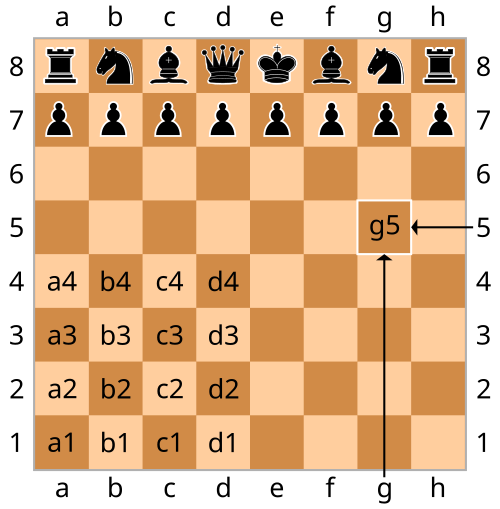
- الترميز الجبري "AN"
- الطريقة القياسية لتسجيل حركات لعبة الشطرنج، باستخدام إحداثيات أبجدية رقمية للمربعات. [ 8 ] وتُسمى أيضًا بالتدوين القياسي . [ 9 ]
- هاوٍ
- أي لاعب لا يمارس الشطرنج كمهنة أساسية. [ 10 ] لا يُعدّ التمييز بين المحترف والهاوي ذا أهمية كبيرة في الشطرنج، إذ يُمكن للهواة الفوز بجوائز، وتقاضي أجور مقابل الظهور، والحصول على أي لقب، بما في ذلك لقب بطل العالم . [ 10 ] [ 11 ] في القرن التاسع عشر، كان يُستخدم مصطلح "هاوٍ" أحيانًا في نتائج المباريات المنشورة لإخفاء اسم اللاعب الخاسر في مباراة بين أستاذ وهاوٍ. كان يُعتقد أنه من قلة الأدب استخدام اسم لاعب دون إذنه، ولم يكن المحترف يرغب في المخاطرة بفقدان زبون. [ 9 ]
- تحليل
- دراسة لعبة أو وضعية ما، بهدف تقييم جودة النقلات وجوانب أخرى مختلفة من اللعبة أو الوضعية. في نهاية اللعبة، يقوم اللاعبون عادةً بتحليلها. [ 2 ]
- شرح
- التعليق الكتابي على لعبة أو موقف باستخدام الكلمات أو رموز الشطرنج أو التدوين . [ 2 ]
- أعلن يا صديقي
- ممارسة شائعة في القرن التاسع عشر، حيث كان اللاعب يعلن عن سلسلة من النقلات، يعتقد أنها تشكل أفضل لعب لكلا الجانبين، والتي تؤدي إلى كش ملك إجباري للاعب المعلن في عدد محدد من النقلات (على سبيل المثال، "كش ملك في خمس"). [ 12 ]
- مضاد الوضعية
- حركة أو خطة لا تتوافق مع مبادئ اللعب الموضعي . [ 13 ] يُستخدم مصطلح "مضاد للموضع" لوصف الحركات التي تُعد جزءًا من خطة خاطئة، وليست خطأً يُرتكب عند محاولة اتباع خطة صحيحة. غالبًا ما تكون الحركات المضادة للموضع حركات بيادق ؛ ولأن البيادق لا تستطيع التراجع للعودة إلى المربعات التي غادرتها، فإن تقدمها قد يُحدث نقاط ضعف لا يُمكن إصلاحها. [ 14 ]
- معادٍ للصقلية
- يُعدّ هذا أحد التفرعات الافتتاحية التي يستخدمها الأبيض ضد الدفاع الصقلي (1.e4 c5) بخلاف الخطة الأكثر شيوعًا وهي 2.Nf3 متبوعة بـ 3.d4 cxd4 4.Nxd4 (الصقلي المفتوح). وتشمل بعض التفرعات المضادة للصقلية: تفرع ألاپين (2.c3)، وتفرع موسكو (2.Nf3 d6 3.Bb5+)، وتفرع روسوليمو (2.Nf3 Nc6 3.Bb5)، وهجوم الجائزة الكبرى (2.Nc3 Nc6 3.f4 g6 4.Nf3 Bg7، والآن 5.Bc4 أو 5.Bb5)، والصقلي المغلق (2.Nc3 متبوعة بـ g3 وBg2)، ومناورة سميث-مورا (2.d4 cxd4 3.c3)، ومناورة الجناح (2.b4). [ 15 ]
- رفيق عربي
- كش ملك يحدث عندما يحاصر الحصان والقلعة ملك الخصم في الزاوية. [ 16 ]
- محكّم
- مسؤول مسؤول عن الإشراف على بطولات الشطرنج وضمان الالتزام بقواعد الشطرنج.
- الساحة
- نوع من البطولات بدون عدد محدد من الجولات. [ 17 ]
- لعبة أرمجدون
- مباراةٌ مضمونةُ الحسم، فإذا انتهت بالتعادل، يُعتبر فوزًا للأسود. وتعويضًا عن ذلك، يُمنح الأبيض وقتًا إضافيًا. غالبًا ما يُمنح الأبيض خمس دقائق، والأسود أربع. يُستخدم هذا النظام عادةً في مباريات كسر التعادل في الأدوار الإقصائية عندما لا تُحسم التعادلات في مباريات الشطرنج الخاطف القصيرة. [ 18 ]
- القلاع الاصطناعية
- يُعرف أيضًا باسم التبييت اليدوي . ويشير إلى مناورة تتضمن عدة حركات منفصلة يقوم بها الملك والرخ حيث ينتهي بهما الأمر كما لو أنهما قاما بالتبييت . [ 19 ]
- هجوم
- عمل عدواني على جزء من رقعة الشطرنج، أو التهديد بأسر قطعة أو بيدق. [ 20 ] عكس: دفاع .
- معلم سياحي
- نوع من أنواع التمويه يتضمن التضحية بقطعة صغيرة أو كبيرة في مربع مجاور لملك الخصم، مما يجبر الملك على التخلي عن الدفاع عن مربع آخر. على سبيل المثال ( انظر الرسم التوضيحي )، تدخلت الملكة السوداء لمنع كش من الملكة البيضاء، ويمكن للأبيض أن يكش الملك من الاتجاه المعاكس للفوز بالملكة. [ 21 ]
- آلة
- الآلة ذاتية التشغيل هي آلة تعمل بذاتها. في الشطرنج، يُشير المصطلح إلى آلات لعب الشطرنج التي كانت في الواقع خدعًا تحت سيطرة لاعبين بشريين متخفين. أثارت الآلات ذاتية التشغيل اهتمامًا كبيرًا في القرنين الثامن عشر والتاسع عشر، وألهمت الأفكار المبكرة حول إمكانية الذكاء الاصطناعي . كانت أشهر آلة لعب شطرنج ذاتية التشغيل هي " التركي " ، الذي ظل سر التحكم البشري به محفوظًا لفترة طويلة. أما أول آلة ذاتية التشغيل حقيقية، "إل أجدريسيستا"، فقد ابتكرها ليوناردو توريس إي كيفيدو .
| أ | ب | ج | د | هـ | و | ز | ح | ||
| 8 |             | 8 | |||||||
| 7 | 7 | ||||||||
| 6 | 6 | ||||||||
| 5 | 5 | ||||||||
| 4 | 4 | ||||||||
| 3 | 3 | ||||||||
| 2 | 2 | ||||||||
| 1 | 1 | ||||||||
| أ | ب | ج | د | هـ | و | ز | ح | ||
بندقية أليخين ، أليخين ضد نيمزوفيتش، 1930
| أ | ب | ج | د | هـ | و | ز | ح | ||
| 8 | | 8 | |||||||
| 7 | 7 | ||||||||
| 6 | 6 | ||||||||
| 5 | 5 | ||||||||
| 4 | 4 | ||||||||
| 3 | 3 | ||||||||
| 2 | 2 | ||||||||
| 1 | 1 | ||||||||
| أ | ب | ج | د | هـ | و | ز | ح | ||
رفيق عربي
| أ | ب | ج | د | هـ | و | ز | ح | ||
| 8 | | 8 | |||||||
| 7 | 7 | ||||||||
| 6 | 6 | ||||||||
| 5 | 5 | ||||||||
| 4 | 4 | ||||||||
| 3 | 3 | ||||||||
| 2 | 2 | ||||||||
| 1 | 1 | ||||||||
| أ | ب | ج | د | هـ | و | ز | ح | ||
يفوز الأبيض بالنقلة 1.Rd7+! يتم إبعاد ملك الأسود عن دفاع وزيرة الأسود بواسطة سيخ .
ب
- ب
- الرمز المستخدم للأسقف عند تسجيل حركات الشطرنج باللغة الإنجليزية. [ 22 ]
- الصف الخلفي
- الصف الأول للاعب (الصف الذي تقف عليه القطع في وضع البداية ). الصف الخلفي للأبيض هو الصف الثامن للأسود؛ والصف الخلفي للأسود هو الصف الثامن للأبيض. [ 23 ] يُسمى أيضًا الصف الأساسي والصف الأول .
- زميل الصف الخلفي
- كش ملك يُنفذه الرخ أو الوزير على طول الصف الخلفي ، حيث لا يستطيع الملك المُكشَف التحرك منه لأنه محجوب بقطع صديقة (عادةً بيادق) أو مربعات مُهاجمة على الصف الثاني للاعب. [ 23 ] يُسمى أيضًا كش ملك الصف الخلفي .
- ضعف الصف الخلفي
- موقف يكون فيه اللاعب مهدداً بتهديد الملك بالقتل في الصف الخلفي ، ولا يملك الوقت أو الخيار لخلق مخرج له، فيضطر إلى المراقبة والدفاع باستمرار ضد هذا التهديد، على سبيل المثال عن طريق إبقاء الرخ في الصف الخلفي. [ 23 ]
- بيدق خلفي
- بيدق يقع خلف بيدق من نفس اللون على عمود مجاور ولا يمكن تحريكه بمساعدة بيدق آخر. [ 24 ]
- أسقف سيء
- أسقف محاصر ببيادق اللاعب نفسه . [ 25 ] انظر: أسقف جيد .
- الملك العاري
- وضع يكون فيه الملك هو الرجل الوحيد من لونه على رقعة الشطرنج. [ 26 ]
- الشطرنج الباسكي
- أو نظام الباسك . وهو نظام شطرنج يلعب فيه اللاعبون مباراتين متزامنتين على رقعتين، حيث يلعب كل لاعب بالقطع البيضاء على إحداهما وبالقطع السوداء على الأخرى. ويوجد مؤقت على كلتا الرقعتين. يلغي هذا النظام ميزة اللعب بالقطع البيضاء أولاً في المباريات المصغرة. لُعب الشطرنج الباسكي لأول مرة في مهرجان دونستيا للشطرنج عام 2012 في إقليم الباسك بإسبانيا. [ 27 ]
- بطارية
- تتجمع القطع على طول خط الحركة في تشكيلات متنوعة نوعًا ما. في الألعاب، يعني ذلك عادةً وضع القلاع أو الملكة على عمود، أو وضع الفيل والملكة على قطر. [ 20 ] في مسائل الشطرنج، تُعرف البطارية بأنها ترتيب قطعتين على خط واحد مع ملك الخصم على صف أو عمود أو قطر، بحيث إذا تحركت القطعة الوسطى، يتم توجيه كش مكشوف (أو تهديد آخر غير الكش). [ 28 ] [ 29 ] [ 30 ]
- بي سي إف
- الاتحاد البريطاني للشطرنج، وهو الاسم السابق للاتحاد الإنجليزي للشطرنج . [ 31 ]
- وحدة التحكم الإلكترونية للجسم
- اختصار لمجلة الشطرنج البريطانية . [ 32 ]
- بي سي أو
- اختصار لكتاب "Batsford Chess Openings" ، وهو مرجع افتتاحيات الشطرنج الصادر عام 1982 من تأليف ريموند كين وغاري كاسباروف . ويُشار إلى الطبعة الثانية (1989) غالبًا باسم BCO-2 . [ 33 ] انظر أيضًا ECO و MCO .
- أفضل أداء
- أفضل التحركات النظرية المطلقة والمثالية من أي وضع معين. [ 34 ]
- بيدق كبير
- أسقف سيئ يقف خلف بيادقه ويدافع عنها - يقوم فعلياً بعمل بيدق. [ 35 ]
- ربط
- إحكام قبضته على وضعية يصعب على الخصم كسرها. عادةً ما يُمثل التقييد ميزة في المساحة التي تُتيحها البيادق المتقدمة . يُعد تقييد ماروتسي مثالًا معروفًا على ذلك. [ 36 ]
- الأسقف
- قطعة يمكنها التحرك على طول الأقطار دون القفز.
- زوج من الأساقفة
- يُقال إن اللاعب الذي يمتلك فيلين لديه زوج من الفيلة . يستطيع الفيلان السيطرة على أقطار كلا اللونين. في الوضعيات المفتوحة ، يُعتبر الفيلان أفضل من حصانين ، أو من حصان وفيل. [ 20 ] ويُطلق عليهما أيضًا اسم "الفيلان" .
- بيدق الأسقف
- أو بيدق الفيل . بيدق على عمود الفيل ، أي العمود ج أو العمود ف. يُختصر أحيانًا إلى "BP". [ 37 ]
- الأساقفة بألوان متقابلة
- أو فيلان من لونين متعاكسين . وهي حالة لا يتبقى فيها لدى أحد اللاعبين سوى فيل ذي مربع فاتح ، بينما لا يتبقى لدى الآخر سوى فيل ذي مربع داكن. في نهايات اللعب ، غالبًا ما يؤدي هذا إلى التعادل إذا لم تكن هناك قطع أخرى غير البيادق، حتى لو كان لدى أحد الجانبين أفضلية مادية ببيدق واحد أو اثنين أو حتى ثلاثة، لأن الفيلين يتحكمان في مربعات مختلفة (انظر نهاية اللعب بفيلين من لونين متعاكسين ). أما في منتصف اللعب ، فإن وجود فيلين من لونين متعاكسين يُخل بتوازن اللعبة، وقد يؤدي إلى هجمات إماتة ، لأن كل فيل يهاجم مربعات لا يستطيع الآخر تغطيتها. [ 38 ]
- أسود
- غالباً ما يُشار إلى المربعات الداكنة اللون على رقعة الشطرنج باسم "المربعات السوداء"، على الرغم من أنها في الغالب ذات لون داكن آخر. وبالمثل، فإن "القطع السوداء" تكون أحياناً في الواقع ذات لون آخر (عادةً ما يكون داكناً). [ 39 ]
- أسود
- يُطلق هذا المصطلح على اللاعب الذي يتحرك ثانياً، على الرغم من أن القطع ("القطع السوداء") تكون في بعض الأحيان بلون آخر (عادةً ما يكون داكناً). [ 40 ]
- الشطرنج الأعمى
- انظر Kriegspiel .
- الشطرنج معصوب العينين
- شكل من أشكال الشطرنج لا يُسمح فيه لأحد اللاعبين أو كليهما برؤية رقعة الشطرنج. [ 41 ]
- الخنازير العمياء
- يُطلق على زوج من الرخين الموجودين في الصف الثاني للخصم اسم "الخنازير" لأنهما يميلان إلى التهام البيادق والقطع، و"الخنازير العمياء" إذا لم يتمكنا من العثور على كش ملك. [ 42 ]
- الشطرنج الخاطف
- [من الألمانية : Blitz ، وتعني "البرق"] شكل سريع من الشطرنج ذو وقت قصير جدًا ، عادةً ما يكون ثلاث أو خمس دقائق لكل لاعب طوال المباراة. مع ظهور ساعات الشطرنج الإلكترونية ، غالبًا ما يتم زيادة الوقت المتبقي بمقدار ثانية أو ثانيتين لكل نقلة. [ 43 ]
- الحرب الخاطفة
- يُستخدم مصطلح "الهجوم الخاطف" أحيانًا لوصف هجوم سريع على المربع f7 أو f2 في بداية اللعبة. [ 44 ] [ 45 ]
- حصار
- وضع قطعة مباشرةً أمام بيدق الخصم، بحيث تعيق تقدمه وتعيق حركة قطع الخصم الأخرى. يوفر بيدق الخصم بعض الحماية للقطعة التي تعيقه، وبالتالي يحميها من هجمات قطع الخصم. يكون الحصار أكثر فعالية ضد البيادق المتقدمة أو المعزولة. يُعد الحصان القطعة المثالية لاستخدامها في الحصار. وقد صاغ هذه الاستراتيجية آرون نيمزوفيتش عام 1924. [ 46 ] [ 47 ]
- موقف محظور
- وضعٌ يُقيّد فيه كلا الجانبين من إحراز تقدم، عادةً من خلال سلسلة (سلاسل) بيادق متشابكة تقسم المساحة المتاحة إلى معسكرين. [ 48 ]
- خطأ
- خطوة سيئة للغاية، إغفال (يشار إليه بـ "؟؟" في شرح الشطرنج ). [ 20 ]
- سبورة
- 1. انظر إلى رقعة الشطرنج .
- 2. مهمة في لعبة الشطرنج الجماعية، على سبيل المثال اللوحة الأولى ، اللوحة الثانية، إلخ.
- اللوح الأول
- انظر اللوحة الأولى .
- رفيق بودين
- كش مات بودين، نسبةً إلى صموئيل بودين ، هو نمط كش مات حيث يُحاصر الملك، الذي عادةً ما يكون قد حصّن جناح الوزير، بواسطة فيلين متقاطعين. وقبل تنفيذ الكش مات مباشرةً، يُضحّي الجانب الفائز عادةً بالوزير على المربع c3 أو c6 لتهيئة وضعية الكش مات. [ 49 ]
- سحب كتاب
- وضعية نهاية اللعبة المعروفة بأنها تعادل مع اللعب الأمثل . تاريخيًا، تم إثبات ذلك بالرجوع إلى أدبيات نهايات الشطرنج ، ولكن في الوضعيات المبسطة، يمكن استخدام التحليل الحاسوبي في قاعدة بيانات نهايات اللعبة . [ 50 ] تُسمى أيضًا بالتعادل النظري .
- حجز نقل
- حركة افتتاحية موجودة في كتب المراجع القياسية لنظرية الافتتاح . يُقال إن المباراة "متوافقة مع الكتاب" عندما يلعب كلا اللاعبين حركات موجودة في مراجع الافتتاح. ويُقال إن المباراة "خارجة عن الكتاب" عندما يصل اللاعبان إلى نهاية التفرعات المُحللة في كتب الافتتاح، أو إذا انحرف أحد اللاعبين بحركة جديدة (أو ارتكب خطأً فادحًا ). [ 51 ]
- فوز كتاب
- وضعية نهاية اللعبة المعروفة بأنها فوزٌ في حال اللعب المثالي . تاريخياً، تم تحديد ذلك بالرجوع إلى أدبيات نهايات لعبة الشطرنج ، ولكن في الوضعيات المبسطة (حالياً سبع قطع أو أقل) يمكن استخدام التحليل الحاسوبي في قاعدة بيانات نهايات اللعبة . [ 52 ]
- استراحة
- نقلة تكسب مساحة وبالتالي حرية الحركة، أو فتح وضعية مسدودة من خلال تقدم أو أسر بيدق. [ 53 ]
- اختراق
- اختراق موقع الخصم، أو تدمير الدفاع، غالباً عن طريق التضحية . [ 20 ]
- الإيجاز
- [بريطاني في الغالب] انظر مصغر .
- تألق
- لعبة تحتوي على فكرة استراتيجية مذهلة وعميقة وجميلة، أو توليفة أو خطة أصلية. [ 53 ]
- جائزة التألق
- جائزة تُمنح في بعض البطولات لأفضل أداء متميز في البطولة. [ 54 ]
- تأخير برونشتاين
- طريقة للتحكم بالوقت مع تأخير زمني ، ابتكرها ديفيد برونشتاين . عندما يحين دور اللاعب في التحرك، ينتظر المؤقت فترة التأخير قبل أن يبدأ في خصم الوقت المتبقي من وقت اللاعب. [ 55 ]
- شطرنج جنوني
- لعبة شطرنج شائعة تُلعب بفرق مكونة من شخصين أو أكثر. [ 56 ]
- بناء جسر
- يُمهّد هذا الوضع الطريق أمام الملك في نهاية اللعبة من خلال توفير غطاء وقائي ضد الكشات من قطع الخط . ومن الأمثلة المعروفة وضعية لوسينا . [ 57 ]
- شطرنج الرصاصة
- أمام كل جانب دقيقة واحدة لإتمام جميع تحركاته. [ 58 ]
- اعتقال
- [عامية] دحض افتتاحية ، أو خط افتتاحي، أو تكتيك، أو تحليل منشور سابقًا. [ 59 ] [ 60 ]
- الوداع
- جولة في البطولة لا يخوض فيها اللاعب مباراة، عادةً بسبب وجود عدد فردي من اللاعبين. تُحتسب هذه الجولة عادةً كفوز ( نقطة واحدة)، مع أنه في بعض البطولات يُسمح للاعب باختيار الحصول على جولة فاصلة (عادةً في الجولة الأولى أو الأخيرة) واحتسابها كتعادل (نصف نقطة). [ 60 ]
| أ | ب | ج | د | هـ | و | ز | ح | ||
| 8 |  | 8 | |||||||
| 7 | 7 | ||||||||
| 6 | 6 | ||||||||
| 5 | 5 | ||||||||
| 4 | 4 | ||||||||
| 3 | 3 | ||||||||
| 2 | 2 | ||||||||
| 1 | 1 | ||||||||
| أ | ب | ج | د | هـ | و | ز | ح | ||
الأبيض لديه أسقف سيئ ، والأسود لديه أسقف جيد ( إيفانز 1967 : 66).
| أ | ب | ج | د | هـ | و | ز | ح | ||
| 8 | | 8 | |||||||
| 7 | 7 | ||||||||
| 6 | 6 | ||||||||
| 5 | 5 | ||||||||
| 4 | 4 | ||||||||
| 3 | 3 | ||||||||
| 2 | 2 | ||||||||
| 1 | 1 | ||||||||
| أ | ب | ج | د | هـ | و | ز | ح | ||
زوج من الرخ الأبيض، مصطفان ليشكلا بطارية ، على أهبة الاستعداد للتحرك
| أ | ب | ج | د | هـ | و | ز | ح | ||
| 8 | | 8 | |||||||
| 7 | 7 | ||||||||
| 6 | 6 | ||||||||
| 5 | 5 | ||||||||
| 4 | 4 | ||||||||
| 3 | 3 | ||||||||
| 2 | 2 | ||||||||
| 1 | 1 | ||||||||
| أ | ب | ج | د | هـ | و | ز | ح | ||
مثال على بيدق كبير : يقوم الفيل الأبيض بعمل بيدق وليس لديه آفاق أكبر. شاروسيك ضد ماروتشي، 1895
| أ | ب | ج | د | هـ | و | ز | ح | ||
| 8 | | 8 | |||||||
| 7 | 7 | ||||||||
| 6 | 6 | ||||||||
| 5 | 5 | ||||||||
| 4 | 4 | ||||||||
| 3 | 3 | ||||||||
| 2 | 2 | ||||||||
| 1 | 1 | ||||||||
| أ | ب | ج | د | هـ | و | ز | ح | ||
يمتلك الأسود حصارًا قويًا على المربعات البيضاء . لا يستطيع فيل الأبيض تحدي قطع الأسود الصغيرة.
| أ | ب | ج | د | هـ | و | ز | ح | ||
| 8 | | 8 | |||||||
| 7 | 7 | ||||||||
| 6 | 6 | ||||||||
| 5 | 5 | ||||||||
| 4 | 4 | ||||||||
| 3 | 3 | ||||||||
| 2 | 2 | ||||||||
| 1 | 1 | ||||||||
| أ | ب | ج | د | هـ | و | ز | ح | ||
رفيق بودن شولدر ضد بودن، لندن 1853
ج
- كايسا
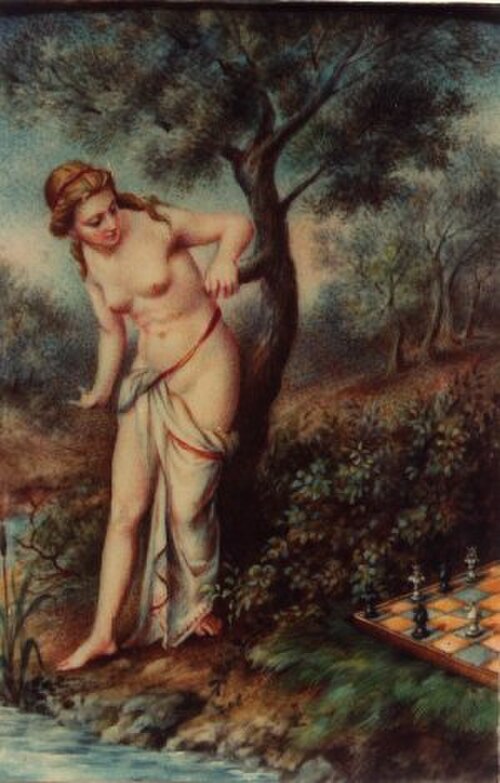
- تُعرف باسم إلهة أو ملهمة الشطرنج، وقد اشتق اسمها من حورية في قصيدة عام 1763 بعنوان Caïssa أو The Game at Chess ، بقلم ويليام جونز . [ 61 ]
- حساب
- التخطيط ذهنياً لسلسلة من التحركات والنظر في الردود المحتملة، دون تحريك القطع فعلياً. [ 20 ]
- ماجستير مرشح ("CM")
- تصنيف لقب الشطرنج أدنى من أستاذ الاتحاد الدولي للشطرنج . [ 62 ]
- انتقال المرشح
- خطوة تبدو جيدة عند الملاحظة الأولية للموقف، وتستحق مزيداً من التحليل. [ 63 ]
- مطابقة المرشحين
- مباراة إقصائية في بطولة المرشحين . [ 64 ]
- بطولة المرشحين
- بطولة ينظمها الاتحاد الدولي للشطرنج (FIDE) ، وهي الجولة التأهيلية الثالثة والأخيرة لبطولة العالم للشطرنج . يشارك فيها أفضل لاعبي البطولة الإقليمية، بالإضافة إلى لاعبين آخرين يتم اختيارهم بناءً على تصنيفهم أو أدائهم في بطولة المرشحين السابقة. ويتأهل اللاعب (أو اللاعبون) الأعلى تصنيفًا لبطولة العالم. [ 65 ]
- فتاحة علب
- [عامية] خطة مهاجمة موقع على جناح الملك (أحيانًا موقع محمي ) عن طريق تحريك بيدق h بهدف فتح عمود بالقرب من ملك المدافع. [ 66 ]
- قطعة مغطاة
- قطعة معينة يحاول أحد اللاعبين من خلالها تحقيق كش ملك. ويُعدّ شرط تحقيق كش ملك بهذه القطعة المُغطاة عائقًا . عندما تكون القطعة المُغطاة بيدقًا ، تُسمى " بيون كوافيه " (من الفرنسية، وتعني "بيدق مُغطى"). [ 67 ]
- يأسر
- حركة يقوم بها بيدق أو قطعة لإزالة بيدق أو قطعة الخصم من رقعة الشطرنج. ثم تشغل القطعة الآسرة مربع القطعة المأسورة، باستثناء حالة الأسر الذي يتم بالمرور . [ 68 ]
- تحصين القلعة
- نقلة يتم فيها تحريك الملك والرخ معًا. تنقل الملك من الوسط إلى أحد الأجنحة حيث يكون عادةً أكثر أمانًا، وتُطوّر الرخ . وهي الحالة الوحيدة التي يتم فيها تحريك قطعتين في دور واحد. يمكن إجراء التبييت إما على جناح الملك (يرمز له بـ 0-0) أو جناح الوزير (0-0-0). لا يمكن إجراء التبييت ردًا على كش ملك ، ولا إذا عبر الملك أو هبط على مربع يتعرض لهجوم من الخصم، ولا إذا كان الملك أو الرخ المعني قد تحرك بالفعل. [ 69 ] [ 70 ]
- تحويلها إلى قلعة
- [ 71 ] حالة يقوم فيها أحد الجانبين بالتبييت ، وتكون النتيجة أن الملك يكون في خطر أكبر في المربع المستهدف منه في المربع الأولي، إما بشكل مباشر أو لأن الخطوط والأقطار يمكن فتحها بسهولة أكبر ضده.
- حصن طويل
- التبييت على جناح الوزير ؛ في تدوين الشطرنج : 0-0-0. [ 69 ] ويسمى أيضاً التبييت الطويل . [ 72 ]
- حقوق التبييت
- القدرة على التبييت وفقًا لقوانين الشطرنج .
- التبييت القصير
- التبييت على جناح الملك ؛ في تدوين الشطرنج : 0-0. [ 69 ] ويسمى أيضاً التبييت القصير . [ 72 ]
- لعبة عادية
- شاهد لعبة ودية .
- فئة
- تُحدد فئة البطولة بناءً على متوسط تصنيف الاتحاد الدولي للشطرنج (FIDE) للمشاركين، وذلك بتقريب الرقم لأعلى: (متوسط التصنيف - 2250) ÷ 25. وبالتالي، تغطي كل فئة نطاقًا من 25 نقطة، بدءًا من الفئة 1 التي تتراوح تصنيفاتها بين 2251 و2275. أما بطولة الفئة 18، فيتراوح متوسط تصنيفها بين 2676 و2700. [ 73 ]
- نسخة
- اختصار لـ "الشطرنج بالمراسلة" أو " نادي الشطرنج" .
- مركز
- أو الوسط . المربعات الأربعة في منتصف رقعة الشطرنج . [ 74 ] أحيانًا اختصار لمركز البيدق . قد يشير مصطلح "الملك في الوسط" إلى ملك غير محصّن على عمود الوسط .
- ملف المركز
- أو الملف المركزي . ملف الملك (الملف الإلكتروني) أو ملف الملكة (الملف الرقمي).
- بيدق الوسط
- أو بيدق الوسط . بيدق على عمود الملك (عمود هـ) أو عمود الوزير (عمود د). [ 75 ]
- سنتيباون
- وحدة تقييم تستخدمها محركات الشطرنج ، على سبيل المثال، التقييم +1.32 يساوي 20 سنتيباونًا أكثر من التقييم +1.12. تاريخيًا، كان السنتيباون يعادل قيمة مادية قدرها 0.01 من قيمة البيدق؛ ومع ذلك، فإن أقوى المحركات الحديثة لم تعد تقيّم البيادق على أنها تساوي 1. [ 76 ]
- ملف مركزي
- انظر الملف المركزي .
- المركزية
- تحريك قطعة أو قطع نحو مركز الرقعة، حيث لا تسيطر على المركز فحسب ، بل تمتد نفوذها إلى مناطق أخرى. يُفضل وضع القطع بالقرب من مركز الرقعة، لأن ذلك يزيد من قوتها وقدرتها على المناورة. وتستفيد الخيول بشكل خاص من التمركز. [ 77 ] عكس ذلك: اللامركزية . [ 78 ]
- بيدق مركزي
- انظر إلى بيدق الوسط .
- رخيص
- مصطلح عامي يُطلق على فخ بدائي ، يُنصب غالبًا على أمل تحقيق فوز أو تعادل من وضع خاسر. [ 79 ] ويُسمى أيضًا ضربة رخيصة .
- يفحص
- هجوم مباشر على الملك من قِبل قطعة الخصم . يُقال إن الملك المُهاجَم في حالة كش ملك . لا توجد سوى ثلاثة ردود ممكنة على الكش: أسر القطعة المهاجمة، أو نقل الملك إلى مربع غير مُهاجَم، أو وضع قطعة بين المهاجم والملك. في المباريات الودية، يُعلن اللاعب عادةً "كش ملك"؛ ومع ذلك، هذا ليس شرطًا في مباريات البطولات. [ 80 ]
- مات
- يُختصر غالبًا إلى كش مات . وضع يكون فيه ملك اللاعب مُهددًا ولا يملك اللاعب أي حركة قانونية (أي لا يستطيع الخروج من التهديد أو الهروب منه). يخسر اللاعب الذي يكون ملكه مُهددًا المباراة. [ 81 ]
- شرح الشطرنج
- انظر إلى التعليق .
- عمى الشطرنج
- عدم قدرة اللاعب على رؤية نقلة جيدة أو خطر يُفترض أن يكون واضحًا. صاغ هذا المصطلح سيغبرت تاراش . وهو مشابه لمتلازمة كوتوف . [ 82 ]
- رقعة الشطرنج
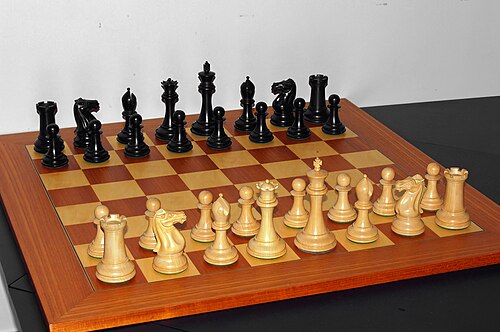
- رقعة الشطرنج ذات المربعات المستخدمة في لعبة الشطرنج، تتكون من 64 مربعًا (ثمانية صفوف وثمانية أعمدة) مرتبة بلونين متناوبين، فاتح وداكن. [ 83 ]
- ساعة الشطرنج
- جهاز يتكون من ساعتين متجاورتين وأزرار، يُستخدم لتتبع إجمالي الوقت الذي يستغرقه كل لاعب في حركاته. مباشرةً بعد الحركة، يضغط اللاعب على زره، مما يؤدي في الوقت نفسه إلى إيقاف ساعته وتشغيل ساعة خصمه. تُظهر الصورة ساعة تناظرية، ومنها اشتق مصطلح " سقوط العلم" . الساعات الحديثة رقمية. [ 84 ]
- نادي الشطرنج
- منظمة محلية للعب الشطرنج وجهاً لوجه.
- قطع الشطرنج
- القطع المتحركة الموضوعة على رقعة الشطرنج. تشمل القطع والبيادق . [ 85 ] المفرد : لاعب الشطرنج .
- تدوين الشطرنج
- انظر إلى التدوين .
- افتتاحية الشطرنج
- انظر إلى الافتتاحية .
- مسألة شطرنج
- يُطلق عليه أيضًا اسم التكوين . وضعية شطرنج أنشأها المؤلف والتي تقدم للحل مهمة معينة؛ على سبيل المثال، "الأبيض يُنهي المباراة في حركتين" (أي أن الأبيض يتحرك ويُنهي المباراة في حركتين ضد أي دفاع محتمل).
- طقم شطرنج
- القطع الـ 32 المطلوبة للعبة، بالإضافة إلى رقعة الشطرنج .
- نوع من أنواع الشطرنج
- لعبة تشبه الشطرنج تُلعب باستخدام لوحة أو قطع أو قواعد مختلفة عن الشطرنج القياسي. [ 86 ]
- Chess960
- يُعرف أيضًا باسم شطرنج فيشر العشوائي . وهو نوع من الشطرنج ابتكره ودعا إليه بوبي فيشر . تتحرك القطع والبيادق بشكل طبيعي، لكن ترتيب القطع في الصف الأول عشوائي، باستثناء قاعدتين يجب اتباعهما: يجب وضع الملك في مربع بين القلعتين، ويجب وضع الفيلين في مربعات من اللون المقابل. توضع قطع الأسود مقابل قطع الأبيض. يُسمح بالتبييت؛ وتتضمن قواعد التبييت الخاصة التبييت العادي في الشطرنج الكلاسيكي. [ 87 ] [ 88 ]
- قطع الحطب
- مصطلح عامي يعني الاستيلاء على القطع أو تبادلها . [ 89 ]
- كلاسيكي
- 1. نظام افتتاحي يهدف إلى تشكيل مركز بيادق كامل . وقد تم تحدي الأفكار الكلاسيكية من قبل الأفكار الحديثة للغاية . [ 74 ]
- 2. لعبة تستخدم نظام تحكم زمني أطول مثل 40/2؛ عكس فئات الشطرنج السريع مثل السريع أو الخاطف أو الرصاصة . [ 90 ]
- التضحية الأسقفية الكلاسيكية
- انظر إلى التضحية بالهدايا اليونانية .
- الإزالة
- إزالة قطعة من مربع أو صف أو عمود أو قطر لإتاحة الفرصة لقطعة أخرى لاستخدامها. غالبًا ما تتضمن هذه العملية التضحية بالقطعة التي كانت تحجب الموقع. [ 91 ] انظر: التضحية بالتخليص .
- حركة الساعة
- في لعبة الشطرنج التي تعتمد على حركة الساعة ، لا تُعتبر الحركة مكتملة إلا بعد الضغط على زر الساعة. على سبيل المثال، يمكن للاعب لمس قطعة ثم تحريك قطعة أخرى، طالما لم يضغط على زر الساعة. هذه الطريقة في اللعب غير شائعة، ولكنها تُلاحظ في المباريات الودية أو مباريات الشطرنج الخاطف . [ 92 ]
- الوقت
- الوقت (المستهلك أو المتبقي) على ساعة الشطرنج ، في مباراة بطولة . [ 93 ]
- ملف مغلق
- عمود يحتوي على بيدق لكل من الأبيض والأسود . [ 94 ]
- لعبة مغلقة
- أو لعبة مغلقة ، أو وضعية مغلقة . تتميز اللعبة المغلقة بقلة الخطوط المفتوحة ( الأعمدة أو الأقطار ). وتتسم عمومًا بسلاسل بيادق متشابكة ، ووضعيات ضيقة مع فرص قليلة للتبادل ، ومناورات واسعة خلف الخطوط. قد تتطور هذه اللعبة لاحقًا لتصبح لعبة مفتوحة . [ 95 ]
- لعبة مغلقة
- اللعبة المغلقة هي افتتاحية خاصة تبدأ بالنقلات 1.d4 d5. وتُعرف أيضاً بافتتاحية بيدق الملكة المزدوج أو لعبة بيدق الملكة المزدوج . [ 96 ] انظر أيضاً: اللعبة المفتوحة .
- بطولة مغلقة
- بطولة لا يُسمح بالمشاركة فيها إلا للاعبين المدعوين أو المؤهلين. تُسمى أيضاً بطولة دعوة . انظر: البطولة المفتوحة .
- سي إم
- اختصار لـ " مرشح ماجستير" .
- مقهى
- صفة تُستخدم لوصف حركة أو لاعب أو أسلوب لعب يتسم بالمخاطرة واللعب غير الموفق من الناحية الاستراتيجية، والذي ينصب فخاخًا للخصم. يأتي الاسم من الاعتقاد السائد بأن هذا النوع من اللعب يُتوقع رؤيته في ألعاب البولينج التي تُلعب في المقاهي أو أماكن مشابهة، وخاصة في الألعاب التي تُقام على رهان أو الشطرنج الخاطف . تُعدّ مناورة بلاكبيرن شيلينغ مثالًا نموذجيًا على أسلوب اللعب في المقاهي. [ 97 ]
- حركة خطية
- حركة يتقابل فيها قطعتان متقابلتان، وتنزلق إحداهما على طول خط الهجوم دون أسر قطعة الخصم. [ 99 ]
- لون
- أو اللون . القطع البيضاء أو السوداء ، والمربعات البيضاء أو السوداء. قد تكون القطع والمربعات الفعلية بألوان أخرى، عادةً فاتحة وداكنة، ولكن يُشار إليها بالأبيض والأسود. [ 85 ] انظر الأبيض والأسود في الشطرنج .
- غلاف ملون
- أو مُقيدة بلون واحد . خاصية قطعة الشطرنج التي تسمح لها بالوصول إلى مربعات لون واحد فقط. في الشطرنج القياسي، يكون كل فيل مُقيدًا بلون إما المربعات البيضاء أو السوداء .
- الألوان معكوسة
- أو عكس الألوان . يشير مصطلح "عكس الألوان" إلى حركات افتتاحية يقوم بها الأبيض عادةً ما يلعبها الأسود، أو العكس. مثال على ذلك هو هجوم الملك الهندي ، حيث يعكس إعداد الأبيض الافتتاحي إعداد الأسود في دفاع الملك الهندي . في مثل هذه الافتتاحيات، يمتلك الأبيض بالضرورة نقلة إضافية مقارنةً بالأسود. يُطلق عليه أيضًا اسم الافتتاح العكسي . [ 100 ]
- مزيج
- سلسلة من الحركات، بما في ذلك الحركات الإجبارية ، وغالباً ما تتضمن تضحية ، لتحقيق ميزة. [ 74 ]
- تعويض
- ما يُكتسب مقابل خسارة - غالبًا ما يكون تحسنًا في الوضع مقابل خسارة في القطع . فإذا ضُحّي بالقطع، فقد يكون هناك مكسب في التطوير ، أو إذا استُبدلت قطعة صغيرة ببيدقين أو ثلاثة، فإن البيدقين هما التعويض. [ 101 ]
- نقل الكمبيوتر
- حركة تبدو وكأنها نُفِّذت بواسطة الحاسوب لا الإنسان، إما لأنها تبدو غير بديهية، أو غير منطقية في البداية، أو أنها ستصبح منطقية لاحقًا ولكن بعد مراحل متقدمة من اللعبة. تبدو حركات الحاسوب كما هي: حركات مبنية على ملايين العمليات الحسابية المُرهِقة، لا على الحدس أو الجماليات أو العاطفة. قد تتجاهل حركة الحاسوب فرصةً حاسمةً للاستيلاء على قطعةٍ ما قد تدفع الخصم للاستسلام فورًا ، لصالح حركةٍ غامضة قد لا تكون أفضل منها إلا قليلًا. في الماضي، كان يُستخدم هذا المصطلح بازدراء، لكن معناه تطور مع تطور الحواسيب. ويُستخدم أحيانًا للإشارة إلى أن الحاسوب قد ساعد اللاعب. [ 102 ] [ 103 ]
- البيادق المتصلة التي تم تمريرها
- البيادق المتقدمة على الأعمدة المتجاورة . تُعتبر هذه البيادق قوية بشكل غير عادي (غالباً ما تساوي قطعة صغيرة أو رخ إذا كانت في الصف السادس أو أعلى ولم تكن محاصرة بشكل صحيح) لأنها تستطيع التقدم معاً. [ 74 ]
- البيادق المتصلة
- يشير إلى بيدقين أو أكثر من نفس اللون على أعمدة متجاورة . [ 77 ] انظر البيادق المعزولة .
- الرخّات المتصلة
- قلعتان من نفس اللون على نفس الصف أو العمود دون وجود بيادق أو قطع بينهما. عادةً ما يكون ربط القلعتين مرغوبًا فيه. غالبًا ما يربط اللاعبون القلعتين على صفهما الأول أو على طول عمود مفتوح . [ 104 ]
- توحيد
- تحسين وضع اللاعب عن طريق إعادة تموضع قطعة واحدة أو أكثر إلى مربع (مربعات) أفضل، عادةً بعد أن يترك هجوم اللاعب أو مجموعته قطعه في أوضاع سيئة أو غير منسقة . [ 105 ]
- لعبة الاستشارة
- لعبة يتشاور فيها لاعبان أو أكثر مع بعضهم البعض لتحديد تحركات أحد الجانبين بشكل مشترك. وقد تشمل ألعاب التشاور أيضًا فرقًا من لاعبين أو أكثر يلعبون على كلا الجانبين. [ 106 ]
- استمرار
- انظر إلى التباين .
- يتحكم
- عندما يحمي بيدق أو قطعة أو قطع اللاعب مربعًا أو مربعات أو عمودًا أو صفًا بطريقة تُمكّنه من استغلال المنطقة بشكل مفيد، ويُمنع الخصم من استخدامها. [ 107 ] كما أن اللاعب الذي يملك زمام المبادرة يكون له السيطرة.
- السيطرة على المركز
- امتلاك قطعة واحدة أو أكثر تهاجم أيًا من المربعات المركزية الأربعة؛ استراتيجية مهمة، وأحد الأهداف الرئيسية للافتتاحيات . [ 108 ]
- يتحول
- الفوز بمباراة بعد الحصول على ميزة؛ انظر أيضًا التوطيد .
- يطبخ
- في مسائل الشطرنج ، حل بديل غير مقصود، أو دحض . [ 109 ]
- تنسيق
- جودة عمل أجزاء متعددة معًا، تدعم بعضها بعضًا وتكمل بعضها بعضًا. [ 110 ]
- تصحيح.
- اختصار للعبة المراسلة .
- الشطرنج بالمراسلة
- تُمارس لعبة الشطرنج عبر المراسلة لمسافات طويلة، حيث يتم التحكم في وقت اللعب . تقليديًا، كانت تُمارس لعبة الشطرنج بالمراسلة عبر البريد؛ أما اليوم، فتُمارس عادةً عبر خادم مخصص أو عبر البريد الإلكتروني . في العادة، يتم إرسال نقلة واحدة في كل رسالة. [ 111 ]
- المربعات المتناظرة
- المربعات المتناظرة هي أزواج من المربعات بحيث عندما يتحرك الملك إلى أحدها، يُجبر ملك الخصم على شغل المربع الآخر للحفاظ على موقعه. تظهر المربعات المتناظرة عادةً في نهايات اللعب بالبيادق . وقد تطورت نظرية المربعات المتناظرة لتشمل حسابات معقدة تستند إلى معادلات رياضية. [ 112 ] تُسمى أيضًا المربعات المرتبطة . انظر: التضاد .
- هجوم مضاد
- هجوم يرد على هجوم الخصم بطريقة أخرى غير الدفاع المباشر . [ 113 ]
- مناورة مضادة
- يُعرف أيضًا باسم "المناورة المضادة". وهي مناورة افتتاحية يقدمها الأسود . [ 114 ] يُعرّف بعض الكُتّاب المصطلح بشكل أضيق على أنه مناورة افتتاحية يقدمها الأسود ردًا على مناورة افتتاحية يقدمها الأبيض [ 115 ] مثل مناورة ألبين المضادة (1.d4 d5 2.c4 e5) أو مناورة فالكبير المضادة (1.e4 e5 2.f4 d5).
- رد الفعل
- [ 116 ] العمل الهجومي للجانب المدافع نفسه.
- الانتقال إلى بلد آخر
- مصطلح ازدرائي يُطلق على حركة تُعتبر غير متقنة، وخاصةً التقدم غير الضروري لخطوة واحدة لبيدق الرخ في الافتتاح . كان هذا المصطلح شائعًا في لندن في أواخر القرن التاسع عشر. [ 114 ]
- غطاء
- لحماية قطعة أو التحكم في مربع.
- ضيق
- محدودية الحركة في وضعية معينة. [ 117 ]
- موقع حرج
- اللحظة التي يُظهر فيها التقييم في اللعبة أو الافتتاحية أن الأمور على وشك التغيير، إما لصالح أحد اللاعبين، أو نحو المساواة؛ قد تكون الخطوة الخاطئة كارثية. [ 116 ]
- المربع الحرج
- انظر إلى المربع الرئيسي .
- شيك مسطر
- الكش المتقاطع هو كش يُلعب ردًا على كش، خاصةً عندما يكون الكش الأصلي محجوبًا بقطعة تقوم بدورها إما بكش أو تكشف عن كش مكتشف من قطعة أخرى. [ 118 ]
- جدول متقاطع
- جدولٌ يُرتب نتائج جميع مباريات البطولة . تُكتب أسماء اللاعبين على الجانب الأيسر من الجدول في صفوف مرقمة. يمكن ترتيب الأسماء حسب النتائج، أو أبجديًا، أو حسب ترتيب المواجهات، ولكن الترتيب حسب النتائج هو الأكثر شيوعًا. قد يكون هناك عمود لكل جولة متتالية، أو في بطولة الدوري ، قد يكون هناك عمود لكل لاعب، مع ترتيب اللاعبين في الأعمدة كما في الصفوف. بالنسبة لكل لاعب، تُسجل خلايا الجدول في صفه نتائج مبارياته، باستخدام 1 للفوز، و0 للخسارة ، و½ للتعادل. (في بطولة الدوري المزدوج، تحتوي كل خلية على مدخلين، حيث يلعب كل زوج من اللاعبين مباراتين بالتناوب بين الأبيض والأسود ) . [ 119 ] للاطلاع على أمثلة، انظر بطولة هاستينغز للشطرنج 1895 ، وبطولة نوتنغهام للشطرنج 1936 ، وبطولة AVRO .
- معجب
- يُستخدم هذا المصطلح عاميًا للدلالة على الفوز السريع، وخاصةً الهجوم الكاسح على حساب الدفاع الضعيف. وتُعتبر الحركة الساحقة حركةً حاسمة.
| أ | ب | ج | د | هـ | و | ز | ح | ||
| 8 |  | 8 | |||||||
| 7 | 7 | ||||||||
| 6 | 6 | ||||||||
| 5 | 5 | ||||||||
| 4 | 4 | ||||||||
| 3 | 3 | ||||||||
| 2 | 2 | ||||||||
| 1 | 1 | ||||||||
| أ | ب | ج | د | هـ | و | ز | ح | ||
المربعات المركزية مُعلَّمة بعلامة " × ".

| أ | ب | ج | د | هـ | و | ز | ح | ||
| 8 | | 8 | |||||||
| 7 | 7 | ||||||||
| 6 | 6 | ||||||||
| 5 | 5 | ||||||||
| 4 | 4 | ||||||||
| 3 | 3 | ||||||||
| 2 | 2 | ||||||||
| 1 | 1 | ||||||||
| أ | ب | ج | د | هـ | و | ز | ح | ||
مناورة بلاكبيرن شيلينغ (1.e4 e5 2.Nf3 Nc6 3.Bc4 Nd4?!)، مثال على أسلوب لعب المقاهي
| أ | ب | ج | د | هـ | و | ز | ح | ||
| 8 | | 8 | |||||||
| 7 | 7 | ||||||||
| 6 | 6 | ||||||||
| 5 | 5 | ||||||||
| 4 | 4 | ||||||||
| 3 | 3 | ||||||||
| 2 | 2 | ||||||||
| 1 | 1 | ||||||||
| أ | ب | ج | د | هـ | و | ز | ح | ||
د
- أسقف المربع الداكن
- يُختصر غالبًا إلى الفيل الأسود [ 78 ] أو يُرمز له اختصارًا بـ DSB . وهو أحد الفيلين اللذين يتحركان فقط على المربعات السوداء . في الوضع الابتدائي ، يكون فيل الأبيض ذو المربعات السوداء على المربع c1، وفيل الأسود على المربع f8. [ 40 ] انظر أيضًا: فيل المربعات البيضاء .
- مربعات داكنة
- المربعات الـ 32 ذات اللون الداكن على رقعة الشطرنج، مثل a1 و h8. يقع المربع الداكن دائمًا في الزاوية اليسرى للاعب. [ 40 ] انظر المربعات الفاتحة .
- سحب ميت
- التعادل هو وضع لا يملك فيه أي من اللاعبين فرصة واقعية للفوز. بالمعنى الدقيق، قد يشير التعادل الميت إلى وضع يستحيل فيه على أي من اللاعبين الفوز (مثل عدم كفاية القطع ). أما بالمعنى الأوسع، فقد يشير إلى وضع بسيط لا حياة فيه، يتطلب خطأً فادحًا قبل أن تتاح لأي من الجانبين فرصة الفوز. [ 120 ]
- وضع ميت
- وضع لا يستطيع فيه أي من اللاعبين إجبار ملك الخصم على الإماتة بأي سلسلة من النقلات القانونية (مثل الحصان والملك ضد ملك مكشوف ). هذا الوضع ينتهي بالتعادل . [ 121 ]
- شرك
- هذه تكتيكة تُستخدم لاستدراج جندي العدو بعيدًا عن موقعه الدفاعي. [ 122 ] [ 123 ]
- الدفاع
- 1. خطوة أو خطة لمواجهة هجوم الخصم . [ 116 ]
- 2. جزء من اسم الافتتاحيات التي يلعبها الأسود؛ على سبيل المثال الدفاع الإسكندنافي ، والدفاع الهندي للملك ، والدفاع الإنجليزي ، إلخ. [ 116 ]
- انحراف
- تكتيك تمويهي يتضمن استدراج قطعة العدو بعيدًا عن مربع جيد؛ عادةً، بعيدًا عن مربع تدافع فيه عن قطعة أخرى أو تهديد. وبالتالي، يرتبط التشتيت ارتباطًا وثيقًا بالهجوم الكاسح . [ 124 ]
- لوحة العرض التوضيحي
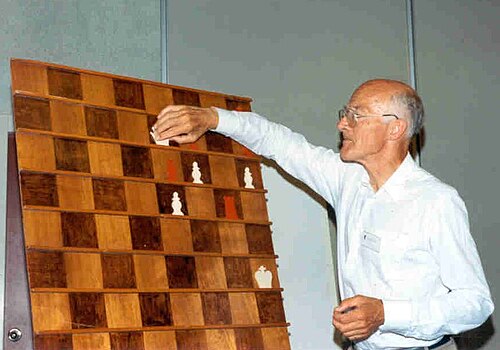
- رقعة شطرنج كبيرة قائمة تستخدم لتحليل لعبة أو عرض لعبة جارية. اخترع يوهان لوفنثال رقعة العرض التوضيحي في عام 1857. [ 125 ]
- الترميز الوصفي
- نظام لتسجيل حركات الشطرنج، كان يُستخدم بشكل أساسي في البلدان الناطقة بالإنجليزية والإسبانية حتى ثمانينيات القرن العشرين. يعتمد التدوين الوصفي على أوصاف اللغة الطبيعية لحركات الشطرنج، مُصاغة بشكل مختصر، على سبيل المثال، يُكتب "بيدق إلى المربع الرابع لفيل الملكة" على النحو التالي: "P-QB4". وقد استُبدل الآن بالتدوين الجبري القياسي . [ 126 ]
- يائس
- قطعة تبدو مصممة على التضحية بنفسها، عادةً لتحقيق التعادل أو الكش الدائم . وهي أيضاً قطعة محاصرة أو محاصرة تضحي بنفسها للحصول على أقصى تعويض ممكن. [ 127 ] [ 128 ]
- تطوير
- حركة القطع غير البيدق في الافتتاح من مربعاتها الأصلية إلى مربعات أخرى حيث يمكنها أن تكون أكثر نشاطًا . يُعد تطوير القطع أحد أهداف مرحلة الافتتاح في اللعبة. [ 122 ]
- قطري
- خط من المربعات من نفس اللون متلامسة من الزاوية إلى الزاوية، تتحرك فيه الملكة أو الفيل. [ 129 ]
- العلم القذر
- سيناريو يفوز فيه لاعبٌ في وضعٍ خاسرٍ على رقعة الشطرنج بفضل تجاوز خصمه للوقت المحدد . يحدث هذا عادةً في أنماط اللعب السريعة، مثل البليتز أو البوليت ، حيث يُعطي اللاعب الأولوية للقيام بتحركات سريعة (غالباً ما تكون غير مثالية) لاستنزاف الثواني المتبقية لخصمه بدلاً من السعي وراء ميزة تكتيكية أو موضعية. [ 130 ]
- اكتشاف الهجوم
- هجوم تقوم به الملكة أو الرخ أو الفيل عندما تتحرك قطعة أخرى أو بيدق بعيدًا عن طريقه. [ 122 ]
- تم اكتشاف الشيك
- هجوم مُكتشف على الملك. يحدث هذا عندما يُحرّك اللاعب قطعةً، مما يؤدي إلى قيام قطعة أخرى بوضع ملك الخصم في وضعية كش ملك. [ 131 ] [ 132 ] [ 133 ]
- تضحية تضليلية
- وخاصة في منتصف اللعبة ، التضحية بقطعة تمويه . [ 134 ]
- هيمنة
- من دراسات نهاية اللعبة ، السيطرة على جميع مربعات حركة قطعة العدو. [ 135 ]
- هجوم مزدوج
- هجومان يتمان بنقلة واحدة: قد يتم تنفيذ هذين الهجومين بواسطة نفس القطعة (وفي هذه الحالة يكون هجومًا شوكيًا )؛ أو بواسطة قطع مختلفة، على سبيل المثال في هجوم مكتشف عندما تشكل القطعة التي تم تحريكها تهديدًا أيضًا. [ 122 ]
- تأكد مرة أخرى
- كشٌّ مزدوج يُنفَّذ بقطعتين في آنٍ واحد. يستلزم الكش المزدوج بالضرورة كشفَ الكش . بطبيعته، لا يُمكن مواجهة الكش المزدوج بوضع قطعة دفاعية في خط الهجوم، أو بأسر قطعة مهاجمة؛ فعند التعرّض للكش المزدوج، يجب على الملك المُهاجَم أن يتحرّك. هذا ما يجعل الكش المزدوج تكتيكًا هجوميًا قويًا للغاية. [ 136 ]
- بيادق مضاعفة
- بيدقان من نفس اللون على نفس العمود ؛ يعتبران عموماً نقطة ضعف بسبب عدم قدرتهما على الدفاع عن بعضهما البعض. [ 129 ]
- رخان مزدوجان
- تشكيل قوي يضع فيه اللاعب قلعتيه على نفس العمود أو الصف دون وجود أي قطع أخرى بينهما. يدافعان عن بعضهما البعض ويهاجمان على طول العمود أو الصف المشترك، بالإضافة إلى صفين أو عمودين إضافيين. يمكن أن يكون هذا التشكيل حاسمًا بشكل خاص في نهاية اللعبة . [ 137 ]
- فيانشيتو مزدوج
- تم نقل كل من فيل الملك وفيل الملكة للاعب إلى وضعية فيانشيتو . [ 138 ]
- يرسم
- لعبة تنتهي دون فوز لأي من اللاعبين. معظم المباريات التي تنتهي بالتعادل تكون بالاتفاق . أما الطرق الأخرى التي يمكن أن تنتهي بها اللعبة بالتعادل فهي: الوصول إلى طريق مسدود ، أو الوصول إلى وضعية ميتة ، أو تطبيق قاعدة التكرار الثلاثي ، أو قاعدة الخمسين نقلة ، أو قاعدة التكرار الخماسي ، أو قاعدة الخمسة والسبعين نقلة . يُقال إن الوضعية متعادلة (أو "وضعية متعادلة" أو "تعادل نظري") إذا تمكن أي من اللاعبين، من خلال اللعب الصحيح، من إجبار اللعبة في النهاية على الوصول إلى وضعية تنتهي بالتعادل، بغض النظر عن النقلات التي يقوم بها اللاعب الآخر. عادةً ما يُحتسب التعادل بنصف نقطة، على الرغم من أنه في بعض المباريات تُحتسب الانتصارات فقط ويتم تجاهل التعادلات. [ 122 ]
- يتم السحب بالاتفاق
- لعبة تنتهي بقبول كلا اللاعبين بالتعادل. [ 139 ]
- الموت بالضربة القاضية
- سيناريو افتراضي يصبح فيه لاعبو الشطرنج من النخبة، بمساعدة التحليل الحاسوبي الحديث، بارعين لدرجة أنهم لا يرتكبون أخطاءً أبدًا، مما يؤدي إلى مباريات تعادل لا نهاية لها (حيث يُعتقد على نطاق واسع أن الشطرنج ينتهي بالتعادل مع أفضل أداء من كلا الجانبين). [ 140 ]
- رسم الخط
- أحد أنواع الافتتاح التي تنتهي عادةً بالتعادل . [ 141 ]
- سحب السلاح
- [ 142 ]
- رسم
- صفة تصف وضعاً أو لعبة من المرجح أن تنتهي بالتعادل . [ 143 ]
- احتمالات التعادل
- نوع من أنواع التكافؤ في الشطرنج حيث يتعين على أحد اللاعبين (الأسود في مباراة هرمجدون ) التعادل فقط للفوز بالمباراة. [ 144 ]
- عرض السحب
- اقتراح من أحد اللاعبين إلى خصمه بأن تنتهي المباراة بالتعادل عن طريق الاتفاق . [ 145 ]
- الديناميكية
- أسلوب لعب يُفضّل فيه نشاط القطع على الاعتبارات الموضعية، حتى أنه يقبل بنقاط ضعف هيكلية أو مكانية دائمة . انبثقت الديناميكية من تعاليم المدرسة ما بعد الحداثية ، وتحدّت المسلّمات الموجودة في التعاليم الكلاسيكية، كتلك التي طرحها فيلهلم شتاينيتز وسيغبرت تاراش . [ 146 ]
| أ | ب | ج | د | هـ | و | ز | ح | ||
| 8 | | 8 | |||||||
| 7 | 7 | ||||||||
| 6 | 6 | ||||||||
| 5 | 5 | ||||||||
| 4 | 4 | ||||||||
| 3 | 3 | ||||||||
| 2 | 2 | ||||||||
| 1 | 1 | ||||||||
| أ | ب | ج | د | هـ | و | ز | ح | ||
تعادلٌ لا طائل منه بسبب نقص القطع. فالملك في مواجهة ملك وفيل لن يؤدي أبدًا إلى كش ملك. إذا أضاف الأسود حصانًا أو فيلًا من المربعات البيضاء إلى الوضع (مثلًا Nf3 أو Bf3)، فسيكون كش ملك ممكنًا نظريًا لكلا الجانبين، لكن ليس باللعب المنطقي، مما يجعله "تعادلًا لا طائل منه" بالمعنى الأوسع.
| أ | ب | ج | د | هـ | و | ز | ح | ||
| 8 | | 8 | |||||||
| 7 | 7 | ||||||||
| 6 | 6 | ||||||||
| 5 | 5 | ||||||||
| 4 | 4 | ||||||||
| 3 | 3 | ||||||||
| 2 | 2 | ||||||||
| 1 | 1 | ||||||||
| أ | ب | ج | د | هـ | و | ز | ح | ||
بمجرد أن يتحرك الفيل إلى المربع e4، يتم اكتشافه ككش من قبل الرخ.
هـ
- يأكل
- [عامية] إخراج قطعة أو بيدق الخصم من رقعة الشطرنج بأخذها بقطعة أو بيدق اللاعب. [ 147 ] [ 148 ] مرادف: أسر .
- ECF
- الاتحاد الإنجليزي للشطرنج (ECF) هو الهيئة الإدارية للشطرنج في إنجلترا، وهو أحد الاتحادات التابعة للاتحاد الدولي للشطرنج (FIDE ). كان يُعرف باسم الاتحاد البريطاني للشطرنج (BCF) حتى عام 2005، حين تم تغيير اسمه.
- سابقة بمعنى البِيْئَة
- اختصارٌ لموسوعة افتتاحيات الشطرنج ، وهي مرجعٌ قياسيٌّ لافتتاحيات الشطرنج يتألف من خمسة مجلدات . يُعرف أيضًا باسم رمز ECO ، وهو نظام تصنيفٍ للافتتاحيات يُخصِّص رمزًا أبجديًا رقميًا من A00 إلى E99 لكل افتتاحية.
- وحدة التحكم الإلكترونية
- الاتحاد الأوروبي للشطرنج (ECU) هو الرابطة القارية للشطرنج في أوروبا.
- حافة
- ميزة صغيرة لكنها ذات مغزى في الموقع ضد الخصم. يُقال غالبًا أن الأبيض يتمتع بأفضلية في وضع البداية ، لأنه يتحرك أولًا (انظر ميزة النقلة الأولى في الشطرنج ). [ 149 ] قارن بالمبادرة .
- المرتبة الثامنة
- الرتبة التي يترقى إليها البيادق (الرتبة الثامنة للأبيض؛ الرتبة الأولى للأسود). وتسمى أيضاً الرتبة الأخيرة .
- نظام تصنيف إيلو
- نظام تصنيف إيلو، نسبةً إلى الإحصائي ولاعب الشطرنج المجري الأمريكي أرباد إيلو ، هو طريقة لحساب مستويات مهارة لاعبي الشطرنج بناءً على نتائجهم في المنافسات. اعتمد الاتحاد الدولي للشطرنج (FIDE) هذا النظام عام 1970، وكان ينشر التصنيفات سنويًا في البداية. ومع مرور السنوات، ازدادت وتيرة نشر القائمة، ومنذ عام 2012 أصبحت تُنشر شهريًا. تمتلك معظم اتحادات الشطرنج الوطنية أنظمة تصنيف خاصة بها تُستخدم في المنافسات المحلية، وتعتمد عادةً على نظام إيلو. [ 150 ]
- نهاية اللعبة
- المرحلة الثالثة والأخيرة من اللعبة، عندما يتبقى عدد قليل من القطع على الرقعة. تلي مرحلة نهاية اللعبة مرحلة منتصف اللعبة . [ 150 ]
- قاعدة بيانات نهاية اللعبة
- قاعدة بيانات محوسبة لنهايات اللعب التي تحتوي على عدد قليل من القطع، توفر لعبًا مثاليًا لكلا اللاعبين، وبالتالي تحل تلك النهايات بشكل كامل. اعتبارًا من عام 2012، تم حساب قواعد البيانات لجميع المواقف التي تحتوي على ما يصل إلى سبع قطع. [ 151 ]
- en passant ("ep")
- [من الفرنسية، "في حالة المرور"] قاعدة تسمح بأسر بيدقٍ تقدّم مربعين للتوّ بواسطة بيدقٍ معادٍ موجودٍ في نفس الصفّ وعلى العمود المجاور . يُمكن أخذ البيدق كما لو كان قد تقدّم مربعًا واحدًا فقط. لا يُمكن الأسر بالمرور إلا في النقلة التالية. [ 152 ]
- en prise
- [من الفرنسية، "في وضع يسمح بالاستيلاء عليه"، [ 153 ] [ 154 ] غالبًا ما تُكتب بخط مائل] يُشير مصطلح "En prise " إلى قطعة أو بيدق مُعرَّض للاستيلاء عليه من قِبل الخصم. قد تكون هذه القطعة مُعرَّضة للخطر ، أو بيدقًا غير مُدافع عنه ، أو قطعة مُهاجَمة من قِبل مُهاجم أقل قيمة، أو قطعة أو بيدق غير مُدافع عنه بشكل كافٍ. على سبيل المثال، النقلة 1.e4 Nf6 2.Nf3? تُبقي بيدق e الخاص بالأبيض في وضع " en prise" . [ 22 ] [ 155 ]
- ep
- اختصار لـ en passant .
- رفيق الكتف
- وضعية كش ملك حيث يكون الملك محاصراً من كلا الجانبين بواسطة قلعتيه. [ 156 ]
- EPD
- اختصار لوصف الوظيفة الموسع .
- معادلة
- أو تحقيق التوازن . الوصول إلى وضعية يكون فيها لدى اللاعبين فرص متساوية للفوز، ويُشار إلى ذلك بالمساواة ، أو الوضع المتكافئ ، أو الوضع المتوازن . في الافتتاح ، ولأن الأبيض يتمتع بميزة النقلة الأولى ، فإن الهدف المباشر للأسود هو تحقيق المساواة. [ 157 ]
- ساحة الهروب
- انظر إلى مربع الرحلة .
- تقييم
- أو ببساطة التقييم . تحليل الوضعية. يُعدّ تقييم الحاسوب أو المحرك وسيلةً لتخصيص قيمة عددية للوضعية، لا بناءً على الذكاء، بل على خوارزميات تختلف من محرك لآخر وتعتمد على قوة المحرك. تحتوي تقييمات المحركات على نقاط ضعف ونقائص حتى عند عملها كما هو مصمم لها. إذا وصف المحرك وضعيةً ما بأنها +2.50، فإن علامة الجمع ("+") تشير إلى أن الوضعية مواتية للأبيض؛ وعلامة الطرح ("−") تشير إلى أن الوضعية مواتية للأسود. يمكن أن يتوافق الرقم مع القيمة التقريبية للقطع، على الرغم من أن المحركات تستخدم عوامل أخرى إلى جانب القطع . تشير الصيغة +2.50 إلى أن الأبيض متقدم ببيدقين ونصف. تشير الصيغة +M4 (أو أحيانًا #4) إلى أن الأبيض يستطيع فرض كش ملك في أربع نقلات. [ 158 ] [ 159 ] [ 160 ] انظر التحليل .
- تبادل
- تبادل القطع عن طريق الأسر . عادةً ما تكون القطع متساوية القيمة (مثلًا، رخ مقابل رخ، حصان مقابل حصان، إلخ)، أو فيل مقابل حصان (قطعتان تُعتبران متساويتين تقريبًا في القيمة). مع أن بعض الكتّاب [ 161 ] [ 162 ] يُعرّفون التبادل بأنه دائمًا ذو قيمة متساوية، إلا أن معظم الكتّاب [ 163 ] [ 164 ] لا يفعلون ذلك. [ 165 ] [ 166 ]
- البورصة،
- ميزة الرخ على القطع الصغيرة (كالحصان أو الفيل). يُقال إن اللاعب الذي يأسر الرخ مقابل قطعة صغيرة قد "ربح المقايضة"، بينما يُقال إن اللاعب الذي يخسر الرخ قد "خسر المقايضة". وتُعرف المقايضة بالتضحية بالرخ مقابل قطعة صغيرة. [ 22 ]
- تغير سعر الصرف
- هذا نوع من الافتتاحيات التي يتم فيها تبادل البيادق أو القطع بشكل مبكر وطوعي. [ 167 ]
- معرض
- مباريات الشطرنج تُقام للجمهور بأشكال وأهداف متنوعة، غالبًا للترويج للعبة، أو لمباراة أو لاعب معين، أو لجمع التبرعات. قد تجمع مباراة استعراضية بين اثنين من الأساتذة، وتُستخدم فيها عادةً ساعات الشطرنج . في المباراة الاستعراضية المتزامنة ، يواجه لاعب واحد عددًا من الخصوم في وقت واحد، وغالبًا ما تكون غير محددة بوقت . أما المباراة الاستعراضية المعصوب العينين فهي مماثلة ولكنها أكثر تحديًا، حيث يلعب اللاعب دون رؤية رقعة الشطرنج. [ 168 ]
- مركز موسع
- المربعات الستة عشر المركزية لرقعة الشطرنج . [ 169 ]
- الملك المكشوف
- ملك يفتقر إلى البيادق لحمايته من هجوم العدو. [ 170 ]
- فيانشيتو ممتد
- انظر fianchetto .
- وصف الوظيفة الموسع ("EPD")
- صيغة مشتقة من تدوين فورسيث -إدواردز تحتوي على الوضع على رقعة الشطرنج، ولكن ليس على اللعبة. تُستخدم بشكل أساسي لاختبار محركات الشطرنج . [ 171 ]
| أ | ب | ج | د | هـ | و | ز | ح | ||
| 8 | | 8 | |||||||
| 7 | 7 | ||||||||
| 6 | 6 | ||||||||
| 5 | 5 | ||||||||
| 4 | 4 | ||||||||
| 3 | 3 | ||||||||
| 2 | 2 | ||||||||
| 1 | 1 | ||||||||
| أ | ب | ج | د | هـ | و | ز | ح | ||
بعد النقلات 1.d4 c5 2.d5 e5، يستطيع الأبيض أن يلعب 3.dxe6، فيأسر بيدق e بالتجاوز في النقلة التالية. يُوضع بيدق الأبيض على e6، ويُزال بيدق الأسود من e5 من الرقعة.
| أ | ب | ج | د | هـ | و | ز | ح | ||
| 8 | | 8 | |||||||
| 7 | 7 | ||||||||
| 6 | 6 | ||||||||
| 5 | 5 | ||||||||
| 4 | 4 | ||||||||
| 3 | 3 | ||||||||
| 2 | 2 | ||||||||
| 1 | 1 | ||||||||
| أ | ب | ج | د | هـ | و | ز | ح | ||
البيدق الموجود على المربع e4 في وضعية النصب .
F
- شوكة عائلية
- شوكة الفارس التي تهاجم ملك الخصم (مسببةً كش ملك )، ووزيرته، وربما قطعًا أخرى في آن واحد. تُعرف أيضًا باسم كش العائلة . [ 172 ]
- معجب
- اختصار للتدوين الجبري الشكلي ، والذي يستبدل الرموز بالأحرف لتمثيل أسماء القطع (مثل ♘f3 بدلاً من Nf3). [ 173 ]
- الشطرنج السريع
- شكل من أشكال الشطرنج يُمنح فيه كلا الجانبين وقتًا أقل للقيام بتحركاتهما مقارنةً بضوابط الوقت العادية للبطولة .
- فين
- اختصار لـ Forsyth–Edwards Notation .
- ختان الإناث
- اختصار لـ FICGS Grandmaster .
- فيانشيتو
- تطوير الفيل إلى أطول قطر على رقعة الشطرنج على عمود الحصان المجاور (b2 أو g2 للأبيض؛ b7 أو g7 للأسود). يُطلق على نقلة الفيلين معًا اسم " الفيانشيتو المزدوج " . أما تطوير الفيل إلى عمود الرخ (a3 أو h3 للأبيض؛ a6 أو h6 للأسود ) فهو أقل شيوعًا ، ويُسمى " الفيانشيتو الممتد " . [ 138 ] تُنطق الكلمة الإيطالية ( " الجناح الصغير " ) بالإنجليزية /ˌfi.ən.ˈkɛ.toʊ/ أو /ˌfi.ən.ˈtʃɛ.toʊ/ ، بينما يُنطق اسمها بالإيطالية [ fjaŋ.ˈket.to ] . [ 174 ] [ 175 ]
- أستاذ كبير معتمد من الاتحاد الدولي لخبراء جمع التحف (FICGS)
- لقب الشطرنج بالمراسلة الذي يتم حسابه بواسطة منظمة FICGS (خادم ألعاب المراسلة المجانية عبر الإنترنت). [ 176 ]
- الاتحاد الدولي للشطرنج
- الاتحاد الدولي للشطرنج (Fédération Internationale des Échecs)، الهيئة الدولية الرئيسية المنظمة والمشرفة على رياضة الشطرنج. ويُستخدم الاسم المختصر FIDE دائمًا تقريبًا بدلاً من الاسم الكامل في اللغة الفرنسية. [ 177 ]
- أستاذ الاتحاد الدولي للشطرنج (FM)
- تصنيف لقب الشطرنج أدنى من أستاذ دولي . [ 178 ]
- تصنيف الاتحاد الدولي للشطرنج
- انظر إلى نظام تصنيف إيلو .
- قاعدة الخمسين حركة
- يجوز المطالبة بالتعادل إذا لم يحدث أسر أو تحريك بيدق في آخر خمسين نقلة من قبل أي من الجانبين. [ 179 ] ويرتبط هذا بقاعدة الخمس والسبعين نقلة ، التي تنص على التعادل بعد خمس وسبعين نقلة من هذا القبيل.
- ملف
- عمود من مربعات رقعة الشطرنج . يمكن تسمية عمود معين إما باستخدام موقعه في الترميز الجبري ، من أ إلى ح، أو باستخدام موقعه في الترميز الوصفي . على سبيل المثال، يشير كل من "عمود و"عمود الملك والأسقف" إلى المربعات من و1 إلى و8 (أو من ك ب1 إلى ك ب8 في الترميز الوصفي). [ 177 ]
- خطأ في الأصابع
- [من الألمانية، "خطأ الإصبع"] خطأ ناتج عن لمس القطعة الخاطئة دون تفكير أو ترك قطعة على المربع الخاطئ، مما يجبر اللاعب على تحريك تلك القطعة وفقًا لقاعدة اللمس والتحريك . [ 180 ]
- المجلس الأول
- في الشطرنج الجماعي، يُطلق على اللاعب المُكلّف بمواجهة أقوى الخصوم اسم " اللوحة الأولى ". وتُسمى اللوحة الثانية " اللوحة الأولى" . أما اللوحة الثانية فتواجه اللاعبين الأقوى التاليين، تليها اللوحة الثالثة، وهكذا. وعمومًا، يجب تحديد اللوحات قبل بدء المنافسة. ولا يُسمح للاعبين بتغيير لوحاتهم، مع أنه يُسمح غالبًا للاعبين الاحتياطيين بالمشاركة كبدلاء.
- ميزة الحركة الأولى
- الميزة الطفيفة (بحسب معظم الآراء) التي يتمتع بها الأبيض بحكم تحركه أولاً. [ 177 ]
- اللاعب الأول
- يُستخدم مصطلح "اللاعب الأول" أحيانًا للإشارة إلى الأبيض .
- المرتبة الأولى
- انظر إلى الترتيب المحلي .
- تأخير فيشر
- طريقة للتحكم بالوقت مع تأخير زمني ، ابتكرها بوبي فيشر . عندما يحين دور اللاعب في التحرك، يُضاف التأخير إلى الوقت المتبقي له. [ 181 ]
- فيشر دوم
- الاسم الذي أطلقه بوبي فيشر على نوع الشطرنج الذي ابتكره. انظر Chess960 .
- شطرنج فيشر العشوائي
- انظر Chess960 .
- سمكة
- [مصطلح عامي مهين] لاعب ضعيف أو لاعبون يسهل هزيمتهم.
- التكرار خمس مرات
- تُعتبر المباراة تعادلًا إذا تكرر نفس الوضع خمس مرات مع نفس اللاعب الذي يحين دوره، ولكل لاعب الحق في اختيار نفس مجموعة النقلات في كل مرة، بما في ذلك حق الأخذ بالمرور وحق التبييت. وتعمل قاعدة التكرار الثلاثي على مبدأ مشابه، ولكنها تُفعّل بناءً على اختيار اللاعب بدلًا من تفعيلها تلقائيًا. [ 182 ]
- لعبة شطرنج لمدة خمس دقائق
- انظر الشطرنج الخاطف .
- علَم
- جزء من ساعة الشطرنج التناظرية ، وعادةً ما يكون لونه أحمر، ويشير إلى مرور عقرب الدقائق بالساعة. و"الفوز" على الخصم يعني الفوز بالمباراة بناءً على تجاوز الخصم للوقت المحدد . [ 177 ]
- سقوط العلم
- الحدث الذي ينتهي فيه الوقت المخصص للاعب؛ أي أن وقت اللاعب قد نفد. [ 183 ]
- الجناح
- الأعمدة a و b و c على جانب الملكة ؛ أو الأعمدة f و g و h على جانب الملك . وتختلف عن العمودين d و e في الوسط . [ 184 ] [ 185 ] وتسمى أيضًا الجناح .
- فتحة الجناح
- افتتاحية يلعبها الأبيض وتتميز باللعب على أحد الجناحين أو كليهما . [ 186 ]
- ميدان الطيران
- مربع يمكن للقطعة أن تتحرك إليه، مما يسمح لها بالإفلات من الهجوم. [ 172 ] ويسمى أيضًا مربع الهروب .
- إف إم
- اختصار لـ FIDE Master .
- FOA
- اختصار لـ FIDE Online Arena .
- يا صاحب الأحمق
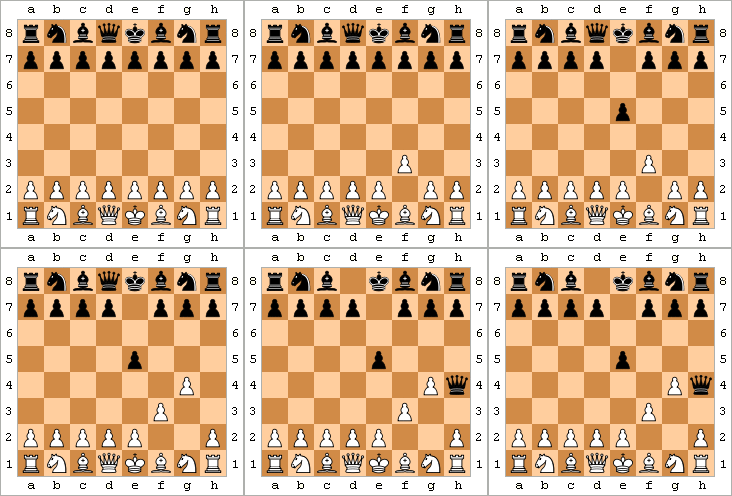
- أقصر مباراة شطرنج ممكنة تنتهي بكش مات : 1.f3 e5 2.g4 Qh4# (أو اختلافات طفيفة على هذا). [ 187 ]
- التزاوج القسري
- سلسلة من حركتين أو أكثر تنتهي بكش ملك لا يستطيع الخصم منعه. [ 188 ]
- نقل قسري
- الخطوة القانونية الوحيدة في موقف معين، أو الخطوة الوحيدة التي لا تؤدي إلى خسارة فورية أو ضرر جسيم. [ 187 ] انظر: خطوة الإجبار .
- فوز قسري
- فوز مضمون من خلال سلسلة من التحركات القسرية .
- خطوة قسرية
- حركة تشكل تهديداً وتحد من ردود فعل الخصم. [ 189 ] انظر: حركة قسرية .
- التنازل
- يشير هذا المصطلح إلى خسارة المباراة بسبب مخالفة القواعد، أو الغياب، أو تجاوز الوقت المحدد (الانسحاب بسبب الوقت). [ 190 ]
- شوكة
- هجوم متزامن بقطعة واحدة على قطعتين (أو أكثر) من قطع الخصم (أو هدف مباشر آخر، مثل تهديد الإماتة ). عندما يكون المهاجم حصانًا، يُطلق على هذه التكتيكة غالبًا اسم " شوكة الحصان" . تشير بعض المصادر إلى أن الحصان فقط هو من يستطيع شنّ الشوكة، وأن مصطلح " الهجوم المزدوج" صحيح عند مشاركة قطعة أخرى، لكن هذا الاستخدام نادر. [ 5 ]
- تدوين فورسيث-إدواردز ("FEN")
- تدوين معياري لوصف وضعية معينة على رقعة الشطرنج. يهدف تدوين FEN إلى توفير جميع المعلومات اللازمة لإعادة بدء اللعبة من وضعية معينة. [ 191 ] [ 192 ]
- قلعة
- في نظرية نهاية اللعبة ، تُعتبر القلعة موقعًا منيعًا، وإذا حصل عليه الجانب الذي يعاني من نقص في الموارد، فقد يؤدي ذلك إلى التعادل بسبب عجز الجانب الأقوى عن إحراز تقدم. [ 193 ]
- إطار
- منطقة مربعة على رقعة الشطرنج تُحيط بمنطقة أخرى ليست جزءًا من الإطار المُعطى، تُشبه إطار الصورة . تُعرف أيضًا باسم الحلقة . [ 194 ] يتكون الإطار الخارجي من 28 مربعًا على طول حافة الرقعة، ويتكون الإطار الأوسط من 20 مربعًا داخل الإطار الخارجي مباشرةً، ويتكون الإطار الداخلي من 12 مربعًا داخل الإطار الأوسط مباشرةً. [ 195 ] يمكن توسيع مفهوم الإطار ليشمل المركز نفسه باعتباره الإطار الأعمق. ترتبط حركة القطع ارتباطًا وثيقًا بالإطار الذي تستقر عليه. بشكل عام، تتمتع القطعة الأقرب إلى المركز بحرية حركة أكبر من القطعة الأقرب إلى حافة الرقعة.
- مباراة ودية
- لعبة لا تُمارس ضمن مباراة رسمية أو بطولة أو عرض . غالبًا ما تكون غير محددة بوقت ، ولكن في حال استخدام ساعة الشطرنج ، تُصبح ضوابط الوقت السريعة شائعة. يشير المصطلح فقط إلى ظروف اللعب، وليس إلى العلاقة بين اللاعبين أو شدة المنافسة. [ 196 ] تُسمى أيضًا باللعبة العفوية أو اللعبة غير الرسمية .
- خط الحدود
- خط وهمي يقسم رقعة الشطرنج إلى نصفين، ويمر بين الصفين الرابع والخامس . [ 197 ] [ 198 ] يفصل خط الحدود جانب الأبيض من الرقعة عن جانب الأسود. صاغه آرون نيمزوفيتش . [ 199 ] [ 200 ]
| أ | ب | ج | د | هـ | و | ز | ح | ||
| 8 |  | 8 | |||||||
| 7 | 7 | ||||||||
| 6 | 6 | ||||||||
| 5 | 5 | ||||||||
| 4 | 4 | ||||||||
| 3 | 3 | ||||||||
| 2 | 2 | ||||||||
| 1 | 1 | ||||||||
| أ | ب | ج | د | هـ | و | ز | ح | ||
ملف f
جي
- غامبيت
- تضحية (عادةً بيدق) تُستخدم للحصول على ميزة مبكرة في المساحة أو الوقت في الافتتاح . [ 5 ]
- ساعة المباراة
- انظر إلى ساعة الشطرنج .
- نتيجة المباراة
- يُختصر غالبًا إلى "النتيجة" . وهي سجلٌّ لمباراةٍ ما بصيغةٍ من التدوين ، وعادةً ما يكون تدوينًا جبريًا . في البطولات التي تُقام على رقعة الشطرنج ، تُسجَّل نتيجة المباراة على ورقة تسجيل النتائج . [ 201 ]
- غارديز
- [من الفرنسية : gardez la reine!، "احموا الملكة!"] إعلانٌ للخصم بأن ملكته تتعرض لهجوم مباشر، على غرار إعلان "كش ملك". كان هذا التحذير شائعًا حتى أوائل القرن العشرين. [ 202 ]
- جنرال موتورز
- اختصار لكلمة Grandmaster . [ 203 ]
- إله
- مجازي؛ لاعب افتراضي يلعب دائمًا بشكل مثالي. [ 204 ]
- أسقف صالح
- الفيل الذي يتمتع بقدرة أكبر على الحركة، لأن بيادق اللاعب موجودة على مربعات ذات لون معاكس للون الفيل. [ 205 ] انظر: الفيل السيئ .
- أستاذ كبير ("GM")
- أعلى لقب يمكن أن يحصل عليه لاعب الشطرنج (إلى جانب بطل العالم ). يُمنح هذا اللقب من قبل الاتحاد الدولي للشطرنج (FIDE )، وهو صالح مدى الحياة ما لم تحدث ظروف استثنائية (مثل الغش ). [ 206 ]
- قرعة الأستاذ الكبير
- لعبة يتفق فيها اللاعبون على التعادل السريع. في الأصل، كان المصطلح يشير إلى مثل هذه المباريات بين كبار الأساتذة ، ولكن يمكن أن يشير الآن إلى أي لعبة من هذا القبيل. [ 206 ]
- القرابين اليونانية
- تضحية نموذجية بالفيل من قبل الأبيض الذي يلعب Bxh7+ أو من قبل الأسود الذي يلعب ...Bxh2+ ضد ملك محصن لبدء هجوم إماتة . تُعرف أيضًا باسم تضحية الفيل الكلاسيكية . [ 207 ]
ح
- ملف نصف مفتوح
- عمود لا يملك عليه سوى لاعب واحد بيادق. [ 208 ] ويسمى أيضاً عمود شبه مفتوح .
- عائق
- انظر إلى الاحتمالات .
- شنقاً
- غير محمية وعرضة للأسر. ويمكن القول أيضاً إن القطعة المعلقة معرضة للأسر . [ 206 ]
- بيادق معلقة
- بيدقان من نفس اللون على عمودين متجاورين ، مع عدم وجود بيادق من نفس اللون على العمودين على جانبيهما . [ 206 ]
- انسجام
- انظر التنسيق .
- أساقفة هارويتز
- انظر أساقفة هورويتز .
- هاري
- لقب يُطلق على بيدق h، ويظهر أحيانًا في التعبير "هاري بيدق h". [ 209 ] [ 210 ]
- هاوبتورنييه
- كلمة ألمانية تُترجم حرفيًا إلى "البطولة الأولى". في أوائل القرن العشرين، كان على اللاعب الأوروبي الهاوي الطموح الفوز بسلسلة من الجوائز في البطولات الصغيرة للارتقاء إلى مستوى أعلى من المنافسة. وقد ساهم استحداث بطولة " هاوبتورنييه" في إضفاء طابع رسمي على هذه العملية، وأصبحت هذه البطولات جزءًا أساسيًا من مؤتمرات الشطرنج الألمانية الكبرى. وكان الفوز بمثل هذه البطولة يمنح لقب "أستاذ الاتحاد الألماني للشطرنج"، والذي بدوره كان يُتيح المشاركة في البطولات الدولية المرموقة. وقد حصل بعض أفضل لاعبي الشطرنج في التاريخ، مثل إيمانويل لاسكر وسيغبرت تاراش ، على ألقابهم كأستاذ وارتقوا بمسيرتهم المهنية في الشطرنج بهذه الطريقة. [ 211 ]
- قطعة ثقيلة
- انظر إلى المقال الرئيسي .
- فتحة
- المربع الموجود داخل أو بالقرب من منطقة اللاعب والذي لا يمكن السيطرة عليه بواسطة بيدق. إنه ثغرة في تشكيل بيادق اللاعب، ويكون خطيرًا بشكل خاص عندما يكون قريبًا من المركز أو بالقرب من الملك. قد يكون هبوط الحصان على هذه الثغرة جزءًا من هجوم. مثال على الثغرة هو المربع e4 في هجوم ستونوول . [ 213 ]
- الترتيب المحلي
- الصف الذي تقف عليه القطع في الوضع الابتدائي (الصف الأول للأبيض؛ الصف الثامن للأسود). [ 214 ] ويُسمى أيضًا الصف الخلفي والصف الأول .
- خط أفقي
- انظر إلى الرتبة .
- أساقفة هورويتز
- يُوضع فيل اللاعب ذو المربعات الفاتحة وفيله ذو المربعات الداكنة بحيث يشغلان أقطارًا متجاورة ، مما يُتيح هجومًا قويًا. يُطلق عليهما أيضًا اسم "أساقفة التكسير" ، وأحيانًا "أساقفة هارويتز" . [ 217 ] [ 218 ]
- حركة بشرية
- حركة يقوم بها الإنسان، على عكس نوع الحركة التي يقوم بها الحاسوب فقط. [ 219 ]
- ثنائي هاتون
- تقنية لتكوين الفرق، ابتكرها جورج ديكسون هاتون عام 1921، لمطابقة فرق اللاعبين بحيث لا يتطلب الأمر سوى مباراة واحدة لكل لاعب. وقد استُخدمت بانتظام في فعاليات فرق المراسلة وفي المباريات التي تُقام بين فرق متعددة في يوم واحد. [ 220 ] تُعرف أيضًا باسم "مباريات المطابقة في المخيمات الرياضية" .
- الحداثة المفرطة
- مدرسة فكرية تُفضّل السيطرة على الوسط بالقطع من الأجنحة بدلاً من احتلاله مباشرةً بالبيادق. كان ريتشارد ريتي وآرون نيمزوفيتش من أبرز مؤيدي الحداثة المفرطة . [ 221 ]
| أ | ب | ج | د | هـ | و | ز | ح | ||
| 8 |  | 8 | |||||||
| 7 | 7 | ||||||||
| 6 | 6 | ||||||||
| 5 | 5 | ||||||||
| 4 | 4 | ||||||||
| 3 | 3 | ||||||||
| 2 | 2 | ||||||||
| 1 | 1 | ||||||||
| أ | ب | ج | د | هـ | و | ز | ح | ||
تشير النقاط إلى الثقوب . [ 212 ]
أنا
- IA
- اختصار لـ "المحكم الدولي" .
- ICCA
- انظر الاتحاد الدولي للشطرنج بالمراسلة .
- الاتحاد الدولي للرعاية الاجتماعية للأطفال
- اختصار لاتحاد الشطرنج بالمراسلة الدولي . [ 222 ]
- نظام التحكم الصناعي
- اختصار لـ "خادم الشطرنج عبر الإنترنت" .
- IGM
- اختصار للمصطلح القديم International Grandmaster . الاستخدام الحديث هو Grandmaster (GM).
- خطوة غير قانونية
- نقلة غير مسموح بها وفقًا لقواعد الشطرنج . يجب تصحيح أي نقلة غير قانونية يتم اكتشافها أثناء المباراة. [ 223 ]
- وضع غير قانوني
- 1. وضع في لعبة ينتج عن حركة غير قانونية أو وضع بداية غير صحيح
- 2. وضع يستحيل الوصول إليه بأي سلسلة من التحركات القانونية.
- [ 223 ]
- أنا
- اختصار لـ "الماجستير الدولي" . [ 224 ]
- عدم التوازن
- أي فرق بين وضعيات الأبيض والأسود. الوضع غير المتوازن هو الذي يتمتع فيه كل من الأبيض والأسود بمزايا فريدة. في المقابل، قد يكون الوضع المتوازن مؤدياً إلى التعادل . [ 221 ]
- عدم دقة
- خطوة ليست الأفضل، ولكنها ليست سيئة مثل الخطأ أو الهفوة . [ 224 ]
- غير نشط
- انظر إلى المبني للمجهول .
- تحت المراقبة
- انظر الشيك .
- زيادة
- يشير هذا إلى مقدار الوقت المضاف إلى وقت كل لاعب قبل كل نقلة. على سبيل المثال، قد تُلعب الشطرنج السريع بـ "25 دقيقة بالإضافة إلى 10 ثوانٍ لكل نقلة"، مما يعني أن كل لاعب يبدأ بـ 25 دقيقة على ساعته، وتزداد هذه المدة بمقدار 10 ثوانٍ بعد (أو قبل) كل نقلة، وعادةً ما يتم ذلك باستخدام طريقة تأخير فيشر. [ 43 ]
- أسقف هندي
- أسقف ذو درع مزخرف ، وهو سمة مميزة للدفاع الهندي ، والدفاع الهندي للملك ، والدفاع الهندي للملكة . [ 225 ]
- الدفاع الهندي
- افتتاحية تبدأ بالنقلة 1.d4 Nf6. كانت تُستخدم في الأصل لوصف دفاعات بيدق الملكة التي تتضمن فيانشيتو أحد أو كلا فيلي الأسود؛ وتُستخدم الآن لوصف جميع دفاعات الأسود بعد النقلة 1.d4 Nf6 التي لا تتحول إلى افتتاحية غامبيت الملكة . [ 226 ]
- ألعاب غير رسمية
- شاهد لعبة ودية .
- مبادرة
- القدرة على شنّ هجمات وفرض مجريات اللعب. إنها جانب من جوانب الوقت . يمتلك اللاعب المهاجم زمام المبادرة، ويحاول اللاعب المدافع انتزاعها. [ 227 ]
- ابتكار
- مرادف للحداثة النظرية .
- مواد غير كافية
- سيناريو نهاية اللعبة الذي تُؤسر فيه جميع البيادق، ويتبقى لدى أحد الجانبين ملكه فقط، بينما لدى الجانب الآخر ملكه فقط، أو ملك وحصان، أو ملك وفيل. كما أن مواجهة ملك وفيل ضد ملك وفيل آخرين، مع كون الفيلين من نفس اللون، تُعتبر تعادلًا، إذ لا يستطيع أي من الجانبين تحقيق كش ملك، بغض النظر عن طريقة اللعب. أما الحالات التي يكون فيها كش ملك ممكنًا فقط في حال ارتكاب الجانب الأضعف أخطاءً، فتُغطى بقاعدة الخمسين نقلة . [ 228 ]
- تدخل
- [ 227 ] قطع الخط أو القطر بين القطعة المهاجمة ومدافعها عن طريق وضع قطعة أخرى بينهما.
- حركة وسيطة
- انظر zwischenzug .
- فاصل موسيقي
- انظر zwischenzug .
- المحكم الدولي (IA)
- مسؤول البطولة الذي يتولى التحكيم في النزاعات ويؤدي واجبات أخرى مثل تسجيل النقاط عندما يكون اللاعبون تحت ضغط الوقت .
- الاتحاد الدولي للشطرنج بالمراسلة
- تأسست المنظمة عام 1951 لتحل محل الرابطة الدولية للشطرنج بالمراسلة (ICCA). [ 222 ]
- أستاذ دولي كبير ("IGM")
- الاسم الأصلي للقب الاتحاد الدولي للشطرنج (FIDE ) ، والذي يُطلق عليه الآن ببساطة اسم الأستاذ الكبير (GM).
- ماجستير دولي ("IM")
- لقب شطرنج يأتي في مرتبة أدنى من لقب الأستاذ الكبير ولكنه أعلى من لقب أستاذ الاتحاد الدولي للشطرنج (FIDE) .
- سيدات العالم الدوليات
- اسم قديم لشهادة الماجستير الدولية للسيدات .
- خادم الشطرنج عبر الإنترنت (ICS)
- خادم خارجي يوفر إمكانية لعب الشطرنج ومناقشته ومشاهدته عبر الإنترنت .
- مداخلة
- تحريك قطعة بين قطعة مهاجمة وهدفها، لحجب خط الهجوم أو قطره. لا يمكن القيام بذلك إذا كان المهاجم حصانًا أو ملكًا أو بيدقًا؛ وإنما فقط إذا كان المهاجم رخًا أو فيلًا أو وزيرًا. يُعدّ تحريك قطعة أحد الردود الثلاثة الممكنة على الكش . [ 5 ]
- بطولة بين المناطق
- بطولة ينظمها الاتحاد الدولي للشطرنج (FIDE) منذ خمسينيات القرن العشرين وحتى عام ١٩٩٣. كانت هذه البطولة بمثابة الدورة التأهيلية الثانية لبطولة العالم للشطرنج . تم اختيار المشاركين من بين أفضل لاعبي البطولات الإقليمية . تأهل اللاعبون الحاصلون على أعلى التصنيفات إلى بطولة المرشحين . منذ عام ١٩٩٨، يخوض الفائزون في البطولات الإقليمية مباريات قصيرة فيما بينهم على مدار عدة أسابيع بنظام خروج المغلوب لتحديد المتأهلين لبطولة المرشحين.
- IQP
- اختصار لبيدق الملكة المعزولة. شاهد ايزولاني .
- افتتاح غير منتظم
- صنّفت أدبيات الشطرنج في أوائل القرن التاسع عشر جميع الافتتاحيات التي لا تبدأ إما بالنقلة 1.e4 e5 أو 1.d4 d5 على أنها "غير منتظمة". ومع تطور نظرية الافتتاحيات ، وتحوّل العديد من الافتتاحيات التي كانت تُعتبر سابقًا "غير منتظمة" إلى افتتاحيات قياسية (مثل الدفاع الصقلي )، أصبح هذا المصطلح أقل شيوعًا تدريجيًا. وتميل كتب الافتتاحيات اليوم إلى وصف بدايات مثل 1.b4 ( افتتاحية سوكولسكي ) بأنها "غير شائعة" أو "غير تقليدية". [ 229 ]
- إيزولاني
- يشير هذا المصطلح إلى بيدق على عمود d لا يوجد عليه بيادق من نفس اللون على العمودين c و e المجاورين، وهو مرادف لبيدق الملكة المعزول . اعتبر آرون نيمزوفيتش ، الذي صاغ هذا المصطلح، البيدق المعزول سلاحًا هجوميًا في منتصف اللعبة ولكنه نقطة ضعف في نهاية اللعبة ؛ ورأى أن مشكلة البيادق المعلقة مرتبطة به. [ 230 ]
- بيدق معزول
- بيدق لا يوجد بيدق من نفس اللون على عمود مجاور . [ 231 ]
- بيدق الملكة المعزول (IQP)
- أو بيدق الملكة المعزول .
- أسقف إيطالي
- A white bishop developed to c4 or a black bishop developed to c5. A bishop so developed is characteristic of the Italian Game. In the Giuoco Piano both players have Italian bishops. The Italian bishop stands in contrast to the Spanish bishop on b5 characteristic of the Ruy Lopez. "Italian" may be used as an adjective for an opening where one or both players have Italian bishops.[232]
| أ | ب | ج | د | هـ | و | ز | ح | ||
| 8 | | 8 | |||||||
| 7 | 7 | ||||||||
| 6 | 6 | ||||||||
| 5 | 5 | ||||||||
| 4 | 4 | ||||||||
| 3 | 3 | ||||||||
| 2 | 2 | ||||||||
| 1 | 1 | ||||||||
| أ | ب | ج | د | هـ | و | ز | ح | ||
في تنويعة فيانشيتو للدفاع الهندي الملكي (1.d4 Nf6 2.c4 g6 3.Nf3 Bg7 4.g3 0-0 5.Bg2 d6 6.0-0)، يمتلك كلا الجانبين أساقفة هنود .
| أ | ب | ج | د | هـ | و | ز | ح | ||
| 8 | | 8 | |||||||
| 7 | 7 | ||||||||
| 6 | 6 | ||||||||
| 5 | 5 | ||||||||
| 4 | 4 | ||||||||
| 3 | 3 | ||||||||
| 2 | 2 | ||||||||
| 1 | 1 | ||||||||
| أ | ب | ج | د | هـ | و | ز | ح | ||
الأساقفة الإيطاليون في جيوكو بيانو
J
- j'adoube
- (from French, "I adjust", pronounced[ʒa.dub]) The international signal of the intention to adjust the position of a piece on the board. When playing with the touch-move rule, a player must say this in order to be able to touch a piece without being subject to the touched piece rule. The verb adouber, literally "to dub" (raise to the knighthood), is rarely used in contemporary French outside of this context. A local language equivalent, e.g. "I am adjusting", is generally also acceptable.[5]
K
- K
- Symbol used for the king when recording chess moves in English.[22]
- key square
- 1. An important square.
- 2. In pawn endings, a square whose occupation by one side's king guarantees the achievement of a certain goal, such as the promotion of a pawn or the win of a pawn.[228] Also called critical square.
- KGA
- The King's Gambit Accepted opening.
- KGD
- The King's Gambit Declined opening.
- KIA
- The King's Indian Attack opening.
- kibitz
- As a spectator, making comments on a chess game that can be heard by the players. Kibitzing on a serious game while it is in progress (rather than during a post-mortem) is a serious breach of chess etiquette.[233]
- kick
- Attacking a piece, often a knight, with a pawn, so that it will move. Kicking a piece may lead to gaining a tempo, or may force the opponent to concede control of key squares.[233]
- KID
- The King's Indian Defense opening.
- king
- The most important piece in chess. It may move to any adjacent square, and it may castle. A king threatened with capture is in check; a player cannot end their move with their king in check. If a player's king is in check and there is no escape, then the king is in checkmate, and the player loses. If the player whose turn it is has no legal moves and their king is not in check, then it is stalemate, and the game is drawn.
- king bishop
- Or king's bishop. The bishop that is on the kingside at the start of the game. Sometimes abbreviated "KB".[85]
- king hunt
- A sustained attack on the enemy king that results in the king being driven a far distance from its initial position, typically resulting in its checkmate. Some of the most famous games featuring king hunts are Edward Lasker–Thomas, Polugaevsky–Nezhmetdinov, and Kasparov–Topalov.[234] Also called king chase.
- king knight
- Or king's knight. The knight that is on the kingside at the start of the game. Sometimes abbreviated "KN".[85]
- king pawn
- Or king's pawn. A pawn on the king's file, i.e. the e-file. Sometimes abbreviated "KP". Also king bishop pawn (KBP), king knight pawn (KNP), and king rook pawn (KRP) for a pawn on the f-, g-, or h-file, respectively.[85]
- king pawn opening
- Or king's pawn opening. An opening that begins 1.e4.
- king rook
- Or king's rook. The rook that is on the kingside at the start of the game. Sometimes abbreviated "KR".[85]
- kingside
- Or king's side. The side of the board (half-board) the kings are on at the start of the game (the e- through h-file), as opposed to the queenside.[37] Also called king's wing.
- king walk
- A consecutive series of king moves designed to bring the king to a safer square. For example, if a player has castled kingside but the opponent has sacrificed a piece to destroy the kingside pawn cover, they may choose to walk the king over to the queenside to shelter behind the queenside pawns.[235]
- knight
- A piece that may move to any nearest square not on a rank, file, or diagonal on which it stands. In other words, it may move two squares horizontally or vertically and then one square perpendicular to that (forming an L shape), jumping over any pieces in the way.
- knight pawn
- Or knight's pawn. A pawn on the knight's file, i.e. the b-file or g-file. Sometimes abbreviated "NP".[85]
- knight's tour
- A puzzle that challenges a person to set a knight on an empty chessboard, and make the piece move around (as it moves in a chess game), but to visit every square only once. The knight's tour is the best known of a variety of tours and puzzles based on chess pieces. A closed tour (also known as a re-entrant tour) ends on the same square on which it began and needs 64 moves. An open tour ends on a different square and needs only 63 moves.[236]
- knockout tournament
- See Single-elimination tournament. A tournament conducted as a series of matches in which the winner of each match advances to the next round and the loser is eliminated. Well-known chess tournaments held in the knockout format include London 1851 and the 2007 Chess World Cup. Cf.round-robin tournament and Swiss tournament.
- Kotov syndrome
- This phenomenon, described by Alexander Kotov in his 1971 book Think Like a Grandmaster, can occur when a player does not find a good plan after thinking long and hard on a position. The player, under time pressure, then suddenly decides to make a move that they have hardly thought about at all, and it may not be a good move for that reason.[237]
- Kriegspiel
- [from German, "war game"] Kriegspiel is a chess variant played by two opponents who can see only their own board, and one monitoring umpire who makes the moves of both players on a neutral board. It requires three chess sets and boards. The players make their moves based on limited information from the umpire. It was introduced in 1898. It is sometimes referred to as blind chess, not to be confused with blindfold chess.[238]
- Kt
- The symbol sometimes used for the knight when recording chess moves in descriptive notation, mainly in older literature. An N is used instead in algebraic notation and in later descriptive notation to avoid confusion with K, the symbol for the king.[22]

L
- last rank
- See eighth rank.
- laws of chess
- The rules of chess.[183]
- lightning chess
- A form of chess with an extremely short time limit, either blitz chess or bullet chess.[239]
- light-square bishop
- Often shortened to light bishop.[240] One of the two bishops that moves only on the light squares. In the starting position, White's light-square bishop is on f1; Black's is on c8.[228] Cf.dark-square bishop.
- light squares
- The 32 light-colored squares on the chessboard, such as h1 and a8.[241] Cf.dark squares.
- line
- 1. A sequence of moves, usually in the opening or in analyzing a position.
- 2. An open path for a piece (queen, rook, or bishop) to move or control squares.[239]
- line piece
- A piece whose movement is defined to be along straight lines of squares (i.e. the rook, bishop, and queen).[242]
- liquidation
- See simplification.
- long castling
- See castling long.
- long diagonal
- One of the two diagonals with eight squares (a1–h8 or h1–a8).[243]
- long fianchetto
- A fianchetto whereby the knight's pawn has advanced two squares (b4 or g4 for White; b5 or g5 for Black) instead of one.[138]
- long-range piece
- A bishop, rook, or queen.
- loose piece
- A piece vulnerable to opponent attacks because it is undefended and cannot easily be withdrawn or supported.[244]
- loose position
- A position vulnerable to opponent attacks because it is overextended or its pieces are uncoordinated.
- losing a tempo
- See tempo.
- loss
- A defeat for one of the two players, which may occur due to that player being checkmated by the other player, resigning, exceeding the time control, or being forfeited by the tournament director. In chess, a zero-sum game, this results in a win for the other player.[245]
- Lucena position
- A well-known rook and pawn versus rook endgame position in which the player with the extra pawn can force a win by cutting off the opponent's king and placing a rook on the 4th rank in order to block the opponent's rook checks, thereby allowing the pawn to queen.[57]
- luft
- [from German, "air"] Space made for a castled king to give it a flight square to prevent a back-rank mate. Usually luft is made by moving a pawn on the second rank in front of the king.[246]
| a | b | c | d | e | f | g | h | ||
| 8 | | 8 | |||||||
| 7 | 7 | ||||||||
| 6 | 6 | ||||||||
| 5 | 5 | ||||||||
| 4 | 4 | ||||||||
| 3 | 3 | ||||||||
| 2 | 2 | ||||||||
| 1 | 1 | ||||||||
| a | b | c | d | e | f | g | h | ||
Lucena position: White wins by 1.Rd1+ Ke7 2.Rd4! Ra1 3.Kc7 Rc1+ 4.Kb6 Rb1+ 5.Kc6 Rc1+ 6.Kb5 Rb1+ 7.Rb4 and the pawn queens.
M
- main line
- The principal, most important, or most often played variation of an opening.[247]
- majority
- A larger number of pawns on one flank opposed by a smaller number of the opponent's; often a player with a majority on one flank has a minority on the other.[248] A central pawn majority is a larger number of pawns on the center files.
- major piece
- A queen or rook, also known as a heavy piece.[249] The primary distinction of major pieces versus minor pieces is that major pieces are capable of checkmate with only their own king for support, as the enemy king is unable to step across the ranks and files they control. On an otherwise empty board, a major piece can move from any square to any other square in at most two moves.
- man
- A piece or a pawn, when the term "piece" is used as exclusive of pawns.[250]
- Maróczy Bind
- A bind on the light squares in the center, particularly d5, obtained by White by placing pawns on c4 and e4. Named for Géza Maróczy, it originally referred to formations arising in some variations of the Sicilian Defense, but the name is now also applied to similar setups in the English Opening and the Queen's Indian Defense. It was once greatly feared by Black but means of countering it have been developed since the 1980s and earlier.[251]
- master
- Loosely, a strong chess player who would be expected to beat most amateurs. It may also refer to a formal title such as International Master or National Master. Standards vary, but a master will usually have an Elo rating of over 2200.[252]
- match
- The term "match" does not refer to an individual game of chess, but to either a competition between two teams or a series of games between two individuals. A match may be the entire competition, or it may be a round in a knockout tournament or team tournament. A match between individuals usually consists of several games, continuing until one of the players has achieved either a set score or a set number of wins.[252]
- mate
- Short for checkmate.[253]
- material
- A player's pieces and pawns on the board. The player with pieces and pawns of total greater value is said to have a material advantage. Gaining a material advantage is called winning material.[254] See Chess piece relative value.
- materialism
- Playstyle characterized by a willingness to win material at the expense of positional considerations. Chess engines historically were often materialistic.[255]
- mating attack
- An attack aimed at checkmating the enemy king.[256]
- mating net
- A position or series of moves that leads to forced mate.[256]
- MCO
- An abbreviation for Modern Chess Openings, a popular chess opening reference. Often the edition is also given, as in MCO-14, the 14th edition. Cf.ECO.
- middlegame
- The part of a chess game that follows the opening and comes before the endgame, beginning after the pieces are developed in the opening. This is usually roughly moves 20 through 40.[254]
- miniature
- A short game (usually no more than 20 to 25 moves), for example: 1.e3 e5 2.Qf3 d5 3.Nc3 e4 4.Qf4?? Bd6! and White resigned in Spiel–Künzel, Europe 1900,[257] because the queen is trapped. However, some authors include games up to 30 moves.[258] Usually only decisive games (not draws) are considered miniatures. Ideally, a miniature should not be spoiled by an obvious blunder by the losing side. A miniature may also qualify as a brilliancy. The Opera Game is a famous example. Sometimes called a brevity [chiefly British].[54]
- minor exchange
- The exchange of a bishop for a knight.[259]
- minority
- A smaller number of pawns on one flank opposed by a larger number of the opponent's; often a player with a minority on one flank has a majority on the other.[248]
- minority attack
- An advance of pawns on the side of the board where one has fewer pawns than the opponent, an attack strategy usually carried out to provoke a weakness.[254]
- minor piece
- A bishop or knight.[254] Unlike major pieces, minor pieces are unable to contain the enemy king or block his advance alone, as he can simply pass through the holes in their line of attack. Compared to major pieces, minor pieces also find it difficult to navigate the entire board; a knight may require four moves to reach a square two squares away, while a bishop can only ever control half of all squares.
- mobile pawn center
- Pawns on central squares able to advance without becoming weak.[260]
- mobility
- The ability of a piece(s) to move around the board. Having space.[254]
- move
- 1. A turn taken by one of the players, moving a piece to a new square (sometimes with the capture of an opponent's piece or the promotion of a pawn) or castling.[261]
- 2. A turn by both players, White and Black: for example, in the context of the 50-move rule, or when referring to the duration or stage of a game (as in "the position after move 15" or "the game ended after 27 moves"). A turn by either White or Black may then be called a half-move, or (in computer contexts) one ply.[261]
- move order
- The sequence of moves one chooses to play an opening or execute a plan. Different move orders often have different advantages and disadvantages. A plan that uses certain moves can sometimes be improved by making the identical moves but in a different sequence.[262]
- mysterious rook move
- Coined by Nimzowitsch to refer to the placing of a rook on a closed file in anticipation that the opponent is going to open the file. This move may either achieve a position with a rook on an open file, or it may alternatively hinder the opponent's intentions (prophylaxis). The meaning of the word has since expanded to refer to any rook move that appears to have a hidden purpose.[263][264]
| a | b | c | d | e | f | g | h | ||
| 8 | | 8 | |||||||
| 7 | 7 | ||||||||
| 6 | 6 | ||||||||
| 5 | 5 | ||||||||
| 4 | 4 | ||||||||
| 3 | 3 | ||||||||
| 2 | 2 | ||||||||
| 1 | 1 | ||||||||
| a | b | c | d | e | f | g | h | ||
A typical Maróczy Bind position
| a | b | c | d | e | f | g | h | ||
| 8 | | 8 | |||||||
| 7 | 7 | ||||||||
| 6 | 6 | ||||||||
| 5 | 5 | ||||||||
| 4 | 4 | ||||||||
| 3 | 3 | ||||||||
| 2 | 2 | ||||||||
| 1 | 1 | ||||||||
| a | b | c | d | e | f | g | h | ||
White might initiate a minority attack by advancing the a- and b-pawns.
N
- N
- 1. Symbol used for the knight when recording chess moves in English.
- 2. An abbreviation for novelty.
- NCO
- An abbreviation for Nunn's Chess Openings, a chess openings reference. Cf.ECO and MCO.
- NN
- Traditionally used in game scores to indicate a player whose name is not known, or whose name the editor chooses not to publish (usually the loser). The origin is uncertain. It may be an abbreviation of the Latin nomina ("names"), or it may be short for the Latin phrase nomen nescio ("name unknown").[265] Sometimes N.N.
- norm
- A step toward earning a chess title, such as Grandmaster or International Master. To qualify for the award of norms, a tournament must be rated by FIDE, must be sufficiently strong, must include a mix of nationalities, must include a specified number of titled players, and must meet certain other requirements regarding time control and playing conditions. The score necessary to qualify for a norm depends on the strength of the tournament. In practice, three norms are usually required for a title, though regulations have varied over the years.[62][266]
- notation
- Any method of recording chess moves, allowing games to be later published, replayed and analyzed. The most common notation today is algebraic notation, which is used internationally. Formerly descriptive notation was standard in English language publications. There are also systems of notation for recording chess positions without the use of diagrams, the most common of which is Forsyth–Edwards Notation (FEN).[267] Cf.annotation.
- novelty
- See theoretical novelty.
O
- occupation
- Occupation of a rank or file means a rook or queen controls it; occupation of a square means a piece or pawn sits on it.[268]
- octopus
- A strongly positioned knight in enemy territory. A knight not near the edge reaches out in eight directions, like the eight tentacles of an octopus.[269]
- odds
- This refers to the stronger player giving the weaker player some sort of advantage in order to make the game more competitive. It may be an advantage in material, in extra moves, in time on the clock, or some combination of those elements. Since the advent of the chess clock, time odds have become more common than material odds.[270]
- offhand game
- See skittles.
- Olympiad
- An international team chess tournament organized biennially by FIDE. Each team represents a FIDE member country.
- open file
- A file on which there are no pawns.[5] Cf.half-open file.
- open game
- Or open position. A game in which exchanges have opened files and diagonals, and there are few pawns in the center, as opposed to a closed game.[271]
- Open Game
- Any opening that begins with the moves 1.e4 e5. Examples of Open Games include the Ruy Lopez, the Giuoco Piano, the Danish Gambit, and many others. The Open Game is also referred to as a Double King's Pawn Opening or Double King's Pawn Game. Cf.Closed Game.
- opening
- The beginning phase of the game, roughly the first dozen moves, but it can extend much farther. In the opening players set up their pawn structures, develop their pieces, and usually castle. The opening precedes the middlegame.[271]
- opening innovation
- A synonym for theoretical novelty.
- opening preparation
- Home study and analysis of openings and defenses that one expects to play, or meet, in later tournament or match games. In high-level play, an important part of this is the search for theoretical novelties that improve upon previous play or previously published analysis.[272]
- opening repertoire
- The set of openings played by a particular player. The breadth of different players' repertoires varies from very narrow to very broad.[273]
- opening system
- An opening that is defined by a series of moves by one player, where the moves can be made independently (to some extent) of the moves chosen by the opponent, and are usually not required to be made in a fixed move order, with the goal of reaching a certain type of middlegame position.[274] One example is the Colle System,[274] characterized by an early e3 from White, intending to place the queen's bishop on b2; the London System is another frequently played opening system. Openings for Black can also be described as opening systems, such as the King's Indian Defense.[274]
- open lines
- 1. n. Unobstructed files and diagonals.
- 2. v. To move or exchange pawns to bring about unobstructed files and diagonals.
- open tournament
- A tournament where anyone can enter, regardless of rating or invitation.[275] Cf.closed tournament.
- opposite castling
- Or opposite-side castling. Describes when one player has castled kingside and the opponent has castled queenside.
- opposite-colored bishops
- See bishops on opposite colors.
- opposition
- A position in which two kings stand on the same rank, file, or diagonal with one empty square between them. The player to move may be forced to move the king to a less advantageous square. Opposition is a particularly important concept in endgames.[276] One orthogonal square separation is direct opposition; one diagonal square is diagonal opposition; multiple squares separation is distant opposition. Cf.corresponding squares.
- optimal play
- See Best response. Both sides playing their best move at each turn, or one of equally good alternatives. One side tries to win as quickly as possible while the other side tries to delay it as long as possible, or optimal play may result in a draw. Cf.Solved game#Perfect play
- OTB
- An abbreviation for over the board.[277]
- outpost
- An outpost is a square protected by a pawn that is in or near the enemy's stronghold. Outposts are a favorable position from which one can launch an attack, particularly using a knight.[278]
- outside passed pawn
- A passed pawn near the edge of the board and not in the path of threats from the opponent's pawns. In the endgame, such a pawn can constitute a strong advantage, because it threatens to promote, and it also diverts the opponent's forces to restrain its advance.[279]
- overextended
- An overextended position results when a player has advanced pawns too far into the opponent's side without sufficient support. The premature advance can leave weaknesses in the player's camp or the advanced pawns themselves may be weak ("overextended pawns").[280][281]
- overloaded
- A piece that has too many defensive duties. An overloaded piece can sometimes be deflected, or required to abandon one of its defensive duties.[282]
- overprotection
- The strategy of protecting an important pawn or square more than is apparently necessary. This serves to dissuade the opponent from attacking that point, and the latent power of the "over protectors" assembled around an important point is a significant threat that can bear fruit at a small tactical change in the position. Aron Nimzowitsch coined the term and was a proponent of overprotection.[283]
- over the board
- 1. An over-the-board game is played face to face with the opponent, as opposed to a remote opponent as in online chess or correspondence chess.
- 2. Analysis carried out during a game in real time (not necessarily a face-to-face game) as opposed to during preparation. Finding accurate moves over the board is harder than finding them with computer assistance in one's own time. "I looked up the gambit Smith played and there's a line that refutes it, but I couldn't find it over the board."[277]
- Abbr. OTB.
- overworked
- See overloaded.[280][284][281]
| a | b | c | d | e | f | g | h | ||
| 8 | | 8 | |||||||
| 7 | 7 | ||||||||
| 6 | 6 | ||||||||
| 5 | 5 | ||||||||
| 4 | 4 | ||||||||
| 3 | 3 | ||||||||
| 2 | 2 | ||||||||
| 1 | 1 | ||||||||
| a | b | c | d | e | f | g | h | ||
The e-file is open in the French Defense, Exchange Variation after 3.exd5 exd5.
P
- P
- Symbol used for the pawn when recording chess positions in English; a lowercase p is typically used for a Black pawn. Also used for the pawn when recording chess moves in descriptive notation, e.g. P-K4.
- paired bishops
- See bishop pair.
- pairing
- The assignment of opponents in a tournament. The most common pairing methods used in chess tournaments are round-robin and the Swiss system.[285]
- passar battaglia
- [from Italian, "to dodge the fight"] The former rule that a pawn could evade capture by an opposing pawn by its initial two-square advance, in contrast to the en passant rule. Passar battaglia remained the practice in several parts of Europe long after en passant was introduced, and it was not completely abandoned until 1880 when Italy adopted the en passant rule.[286]
- passed pawn
- A pawn that has no pawn of the opposite color on its file or on an adjacent file to challenge or threaten its potential for queening.[231]
- passer
- A passed pawn.[287]
- passive
- Describes a piece or pawn that is inactive and able to move to or control relatively few squares, or a position without possibilities for attack or counterplay.[283] Antonym: active.
- passive sacrifice
- The sacrifice of a piece, by moving a different piece, leaving the sacrificed piece under attack.
- pattern recognition
- A part of chess thinking that involves remembering and recognizing certain recurring positional aspects large and small, visual and dynamic. It is a kind of thinking that gives an advantage to a player with great experience. It is distinct from the intellectual activity of calculation. It uses intuitive thinking that is familiar to humans, but is foreign to computers. It can be developed by studying chess puzzles. It has been studied by Adriaan de Groot, and other scientists, who have attempted to discover how chess players think.[288][289]
- patzer
- A weak chess player (from German: patzen, "to bungle").[290]
- pawn
- A piece that can move one square directly forward, or on its first move, can move two squares directly forward. It can also move one square diagonally forward when capturing. It may capture en passant. Upon reaching its eighth rank, it is promoted to a same-colored queen, rook, bishop, or knight.
- pawn and move
- A type of odds game, common in the 18th and 19th centuries, in which the superior player plays Black and begins the game with one of their pawns, usually the king bishop pawn, removed from the board; plus White gets an extra move at the start.[291]
- pawn break
- A pawn move that attacks an enemy pawn in order to open up lines or challenge the opponent's pawn structure.
- pawn center
- Or pawn centre. A player's pawns in the center of the board. Pawns on the squares adjacent to the center may also be considered part of the pawn center. Having a strong pawn center was considered absolutely essential until the hypermodernist school introduced some new ideas.[292] Often shortened to center. See King's Indian Defense, Four Pawns Attack for an example of an opening leading to an extended pawn center.
- pawn chain
- Two or more pawns of the same color diagonally linked. A pawn chain's weakest point is the base because it is not protected by another pawn.[283]
- pawn island
- A group of pawns of one color on consecutive files with no other pawns of the same color on an adjacent file. A pawn island consisting of one pawn is an isolated pawn.[293]
- pawn majority
- See majority.
- pawn minority
- See minority.
- pawn race
- A situation where both opponents are pushing a passed pawn in effort to be first to promote.
- pawn roller
- Two connectedpassed pawns. "Roller" refers to their ability to defend one another as they advance toward promotion.
- pawn skeleton
- See pawn structure.
- pawn storm
- An attacking technique where a group of pawns on one wing is advanced to break up the defense.[294]
- pawn structure
- The placement of the pawns during the course of a game. As pawns are the least mobile of the pieces and the only pieces unable to move backwards, the position of the pawns greatly influences the character of the game.[295] Also called pawn skeleton.
- PCA
- An abbreviation for Professional Chess Association.
- PCO
- An abbreviation for Practical Chess Openings, the 1948 openings reference book by Reuben Fine.[296] In 2025, another openings reference book of the same name, written by Martyn Kravtsiv, was published.[297] Cf.ECO and MCO.
- performance rating ("PR")
- A number reflecting the approximate rating level at which a player performed in a particular tournament or match. It is often calculated by adding together the player's performances in each individual game, using the opponent's rating for a draw, adding 400 points to the opponent's rating for a win, and subtracting 400 points from the opponent's rating for a loss, then dividing by the total number of games. For example, a player who beat a 2400-rated player, lost to a 2600, drew a 2500, and beat a 2300, would have a performance rating of 2550 (i.e. 2800 + 2200 + 2500 + 2700, divided by 4).[298]
- perpetual check
- Often shortened to perpetual. When a player puts the opponent in check and the check could be repeated endlessly, the game will be declared a draw by repetition. This tactic can be resorted to as a form of insurance in a losing position.[299]
- PGN
- An abbreviation for Portable Game Notation.[300]
- Philidor position
- Usually refers to an important chess endgame that illustrates a drawing technique when the defender has a king and rook versus a king, rook, and pawn. It is also known as the third rank defense, because of the importance of the rook on the third rank cutting off the opposing king. It was analyzed by Philidor in 1777.[301]
- Philidor sacrifice
- The sacrifice of a minor piece for one or two pawns for greater pawn mobility as compensation.[302]
- piece
- 1. One of the chessmen or figures used to play the game – that is, a king, queen, rook, bishop, knight or pawn. Each piece type has its own rules of movement on the board and of capturing enemy pieces. This is the definition used in the context of rules of chess – for example, the touched piece rule.
- 2. When annotating or discussing chess games, the term "piece" usually excludes pawns. It may be used collectively for all "non-pawns" – for example, "White's pieces are well-posted." In some contexts, it may refer specifically to a minor piece – for example, "White is up two pieces for a rook."[303]
- pin
- When a piece is attacked but cannot legally move, because doing so would expose the player's own king to the attack ("absolute pin"); or when a piece is attacked and can legally move out of the line of attack, but such a move would expose a more valuable piece (or an unprotected piece) to capture ("relative pin").[261]
- playable
- Said of an opening, a position, or move that affords the person playing it a tenable position.[304]
- play by hand
- To make a move intuitively and without analyzing the move.[305]
- ply
- Term mainly used in computer chess to denote one play of either White or Black. Thus equal to half a move.
- poisoned pawn
- An unprotected pawn that, if captured, causes positional problems or material loss.[293]
- Poisoned Pawn Variation
- Any of several opening variations, the best-known of these being in the Najdorf Variation of the Sicilian Defense, in which there is a poisoned pawn.[306]
- Portable Game Notation ("PGN")
- This is a popular computer-processible ASCII format for recording chess games (both the moves and related data).[300] There are import and export versions: the import version is lax, while the export version is not.
- position
- "The disposition of pieces and pawns, of one or both colours, at any stage of the game or as set in a composition."[307] If one side has an overall advantage in strength, that side is said to have "the better position". If neither side has an overall advantage, the position might be called level or equal or balanced. The position of chessmen at the beginning of a game is called an array.[308]
- positional play
- Play based on strategy, on gaining and exploiting small advantages, and on analyzing the larger position, rather than calculating the more immediate tactics.[293] Cf.antipositional.
- positional player
- A player who specializes in positional play, as distinguished from a tactician.
- positional sacrifice
- A sacrifice in which the lost material is not regained via a combination, but instead gains positional compensation. These typically require deep positional understanding and are often overlooked by computers. Also known as a true sacrifice, as opposed to a pseudo sacrifice or sham sacrifice.
- postal chess
- See correspondence chess.
- post mortem
- Analysis of a game after it has concluded, typically by one or both players and sometimes with spectators (kibitzers) contributing as well. A player who has just lost the game thanks to a dubious move has the chance to "win the post-mortem" by finding a better one.[293]
- PR
- An abbreviation for performance rating.
- premove
- In online chess, a move input that is made during the opponent's turn, to take effect only after the opponent has moved. Premoving, the act of making premoves, is a popular way of saving time in blitz and bullet formats.[309]
- preparation
- See opening preparation.
- prepared variation
- A well-analyzed novelty in the opening that is not published but first used against an opponent in competitive play.[310]
- Principle of two weaknesses
- A technique of increasing one's advantage by causing the opponent, who has one weakness, to have a second weakness. Even if both weaknesses are minor, the fact of having two, in practice, becomes a major weakness.[311]
- priyome
- A Russian term for particular tactics that depend on pawn structure.[312]
- problem-like
- An elegant and counterintuitive tactical shot, of the type generally found in chess problems rather than in actual play, can be termed problem-like.
- promotion
- Advancing a pawn to the eighth rank, converting it to a queen, rook, bishop, or knight. Promotion to a piece other than a queen is called underpromotion.[261]
- prophylaxis
- A strategy that frustrates and protects against an opponent's plan or tactic for fear of the consequences.[293]
- protected passed pawn
- A passed pawn that is supported by another pawn.[313]
- protection
- A piece is protected when another friendly piece controls its square. This somewhat protects the first piece from capture, as there is the option to recapture. This is especially effective if the attacking piece is of greater value than the threatened piece.
- pruning
- Chess engines usually include an algorithm to eliminate certain moves from consideration, assuming that they are blunders and therefore irrelevant to the final move selection. Forward pruning runs the risk of overlooking the best move; this risk may be slight to moderate depending on how aggressively the pruning algorithm is set. Alpha–beta pruning is considered a form of backward pruning, which does not risk overlooking the best move.
- pseudo sacrifice
- See sham sacrifice.
- push
- 1. v. To move a pawn forward.
- 2. n. A pawn move forward.
| a | b | c | d | e | f | g | h | ||
| 8 | | 8 | |||||||
| 7 | 7 | ||||||||
| 6 | 6 | ||||||||
| 5 | 5 | ||||||||
| 4 | 4 | ||||||||
| 3 | 3 | ||||||||
| 2 | 2 | ||||||||
| 1 | 1 | ||||||||
| a | b | c | d | e | f | g | h | ||
White with a passed pawn on b7. Black has a passed pawn on g6. The black pawn on f7 is not passed because the white pawn on e4 is adjacent and can threaten it.
White has a large pawn center in the King's Indian Defense, Four Pawns Attack. |
Pawn chains in the French Defense, Advance Variation | ||||||||||||||||||||||||||||||||||||||||||||||||||||||||||||||||||||||||||||||||||||||||
| a | b | c | d | e | f | g | h | ||
| 8 | | 8 | |||||||
| 7 | 7 | ||||||||
| 6 | 6 | ||||||||
| 5 | 5 | ||||||||
| 4 | 4 | ||||||||
| 3 | 3 | ||||||||
| 2 | 2 | ||||||||
| 1 | 1 | ||||||||
| a | b | c | d | e | f | g | h | ||
Black has three pawn islands and White has two. The pawn on e5 is not isolated because it is adjacent to a file that has a white pawn. Lichtenhein vs. Morphy, 1857
| a | b | c | d | e | f | g | h | ||
| 8 | | 8 | |||||||
| 7 | 7 | ||||||||
| 6 | 6 | ||||||||
| 5 | 5 | ||||||||
| 4 | 4 | ||||||||
| 3 | 3 | ||||||||
| 2 | 2 | ||||||||
| 1 | 1 | ||||||||
| a | b | c | d | e | f | g | h | ||
Black has accepted the poisoned b2-pawn with 8...Qxb2 in the Sicilian Defense, Najdorf Variation.
Q
- Q
- Symbol used for the queen when recording chess moves in English.[22]
- QGA
- The Queen's Gambit Accepted opening.[314]
- QGD
- The Queen's Gambit Declined opening.[315]
- QID
- The Queen's Indian Defense opening.[316]
- quad
- A round-robin style tournament between four players, where each participant plays every other participant once.
- queen
- 1. n. A piece that may move along ranks, files, and diagonals without jumping.
- 2. v. To promote a pawn.
- queen bishop
- Or queen's bishop. The bishop that is on the queenside at the start of the game. Sometimes abbreviated "QB".[317]
- queening
- Promotion to a queen.[85] Also called promoting. Rarely used to indicate promotion to a knight, rook, or bishop (i.e. underpromotion) as well.[231]
- queen knight
- Or queen's knight. The knight that is on the queenside at the start of the game. Sometimes abbreviated "QN".[85]
- queen pawn
- Or queen's pawn. A pawn on the queen's file, i.e. the d-file. Sometimes abbreviated "QP". Also queen rook pawn (QRP), queen knight pawn (QNP), and queen bishop pawn (QBP) for a pawn on the a-, b-, or c-file, respectively.[85]
- queen pawn opening
- Or queen's pawn opening. An opening that begins 1.d4.
- queen rook
- Or queen's rook. The rook that is on the queenside at the start of the game. Sometimes abbreviated "QR".[85]
- queenside
- Or queen's side. The side of the board (board-half) the queens are on at the start of the game (the a- through d-file), as opposed to the kingside.[37] Also called queen's wing.
- question
- Usually in the form "put the question to [a piece]", to force the opponent to commit to a strategic decision regarding the future of a piece. Most commonly used to refer to a one-square advance of a rook's pawn to attack a bishop that is pinning or pressuring a knight, forcing the opponent to decide whether to retreat the bishop or exchange it for the knight. "Putting the question to the bishop" may resolve the pin, but can also weaken the player's pawn structure. This usage originates in Aron Nimzowitsch's My System (1925).[318]
- quickplay finish
- The same as sudden death.[319]
- quiet move
- A move that does not attack or capture an enemy piece.[320]
R
- R
- Symbol used for the rook when recording chess moves in English.[22]
- Rabar Classification
- A system of opening classification codes introduced by Braslav Rabar for Chess Informant. The system was used by Informant publications from 1966 to 1981 but has since been replaced by ECO codes.[321]
- raking bishops
- Another term for Horwitz bishops.[322]
- randomized chess
- "A form of unorthodox chess designed to discount knowledge of the openings. The pawns are placed as in the array and behind them the pieces are placed in unorthodox fashion."[323]
- rank
- A row of squares of the chessboard. In algebraic notation, ranks are numbered 1–8 starting from White's side of the board; however, players customarily refer to ranks from their own perspectives. For example: White's king and other pieces start on their first (or "back" or "home") rank, whereas Black calls the same rank the "eighth" (or last) rank; White's seventh rank is Black's second; and so on. If neither perspective is given, White's view is assumed. This relative reference to ranks was formalized in the older descriptive notation.[324]
- rapid chess
- A form of chess with reduced time limit, usually 30 minutes per player. Also called active chess and action chess.[325]
- rating
- See Elo rating system.
- recapture
- The capture of an opponent's piece that previously made a capture, and usually played immediately following the opponent's capture move. The capture and recapture occur on the same square, and usually the pieces captured and recaptured have the same value.
- refute
- To demonstrate that a strategy, move, or opening is not as good as previously thought (often, that it leads to a loss), or that previously published analysis is unsound. A refutation is sometimes colloquially referred to as a bust. A refutation in the context of chess problems or endgame studies is often called a cook.[326]
- See corresponding squares.
- relative pin
- A pin where it is legal to move the pinned piece out of the line of attack. The piece is not pinned therefore to the king, but instead to some other piece. Contrast with absolute pin where the pinned piece is not permitted to move, because the piece it is pinned to is the king.
- remis
- [from French] A draw. It literally means "reset" and is somewhat archaic (the usual word for a draw in modern French is nulle), but is internationally understood and may be used between players without a common language.
- repertoire
- See opening repertoire.
- reply
- Any move by Black after a move by White, or vice versa.
- reserve tempo
- A move a player has available. Such a move may not be crucial to the position on the board, but being able to force the opponent to move by making a reserve move can on occasion result in a significant advantage.[327]
- resign
- To concede loss of the game. A resignation is usually indicated by stopping the clocks, sometimes by offering a handshake, or by saying "I resign". A traditional way to resign is by tipping over one's king. It is common for a game to be resigned, rather than for it to end with checkmate, because experienced players can foresee the checkmate.[328][329] However, under FIDE Laws, a player's resignation results in a draw if there is no sequence of legal moves that could lead to their opponent checkmating them.[330]
- resign on time
- A player who intentionally runs out of time to avoid having to resign in a hopeless position can be said to have resigned on time. This is usually performed in a more subtle manner than that of Curt von Bardeleben walking out of the tournament hall against Wilhelm Steinitz. A player low on time and in a losing position may simply "forget" to pay any attention to the clock. Resigning on time when a considerable amount of time was left beforehand is called "stalling" and is considered bad sportsmanship.
- reverse opening
- See colors reversed.
- roll
- To move a passed pawn forward, especially to promotion; see also pawn roller.
- Romantic chess
- Romantic chess was the style of chess prevalent in the 19th century. It is characterized by bold attacks and sacrifices.[331]
- rook
- A piece that may move along ranks and files without jumping.
- rook lift
- A maneuver that places a rook in front of its own pawns, often on the third or fourth rank. This can allow the rook to treat a half-open file as if it were an open file, or a closed file as if it were half-open.[332]
- rook pawn
- Or rook's pawn. A pawn on the rook's file, i.e. the a-file or h-file. Sometimes abbreviated "RP".[85]
- round-robin tournament
- This is a tournament in which each participant plays every other participant an equal number of times. In a double round-robin tournament the participants play each other exactly twice, once with white and once with black. A round robin tournament is commonly used if the number of participants is relatively small.[333]
- royal fork
- A fork threatening the king and queen, typically performed with a knight.[334]
- royal piece
- A king or queen.[85] In chess variants, the term refers to any piece that must be protected from capture; under this definition, only the king is royal in orthodox chess.
| a | b | c | d | e | f | g | h | ||
| 8 |         | 8 | |||||||
| 7 | 7 | ||||||||
| 6 | 6 | ||||||||
| 5 | 5 | ||||||||
| 4 | 4 | ||||||||
| 3 | 3 | ||||||||
| 2 | 2 | ||||||||
| 1 | 1 | ||||||||
| a | b | c | d | e | f | g | h | ||
White's ranks are indicated on the left (a-file); Black's relative reference to ranks are indicated on the right (h-file).
S
- S
- [from German: Springer, "jumper"] Alternative notation for the knight. Used rather than K, which means king.
- sac
- Short for sacrifice, usually used to describe a sacrifice for a mating attack.[333]
- sacrifice
- A move or capture that voluntarily gives up material in return for an advantage such as space, development, or an attack. A sacrifice in the opening is called a gambit, especially when applied to a pawn.[328]
- SAN
- An abbreviation for standard algebraic notation or short algebraic notation (e.g. 1.Nf3), as opposed to long algebraic notation (e.g. 1.Ng1-f3).
- sans voir
- [from French] See blindfold chess.
- scalp
- [slang] To defeat a much higher-ranked player, especially a titled player.
- Scholar's mate
- A four-move checkmate (common among novices) in which White plays 1.e4, follows with Qh5 (or Qf3) and Bc4, and finishes with 4.Qxf7#.[187]
- score
- 1. The recorded moves in a game. See game score.
- 2. A player's score in a match or tournament, which is almost always 1 point for each win and ½ point for each draw. See Chess scoring.
- score sheet
- The sheet of paper used to record a game in progress. During formal games, it is usual for both players to record the game using a score sheet. A completed score sheet contains the game score.[201]
- sealed move
- To prevent unfair advantage when an OTB game is adjourned, the player whose turn it is to move is required to write down their next move and put it in a sealed envelope. Upon resumption, the arbiter opens the sealed envelope, makes the move and the game continues. The player may be disqualified if the sealed move is illegal, ambiguous or unclear. Adjournments and sealed moves are no longer standard practice.
- second
- An assistant hired to help a player in preparation for and during a major match or tournament. The second assists in areas such as opening preparation. The second also used to assist with adjournment analysis before the practice of adjournments was largely abandoned in the 1990s.[335]
- second player
- The expression "the second player" is sometimes used to refer to Black.
- seesaw
- See windmill.
- Semi-Closed Game
- An opening that begins with White playing 1.d4 and Black replying with a move other than 1...d5.[336] Also called half-closed game.[337]
- semi-open file
- See half-open file.
- Semi-Open Game
- An opening that begins with White playing 1.e4 and Black replying with a move other than 1...e5.[338] Also called half-open game.[337]
- seventy-five-move rule
- The game is drawn if no capture or pawn move has occurred in the last seventy-five moves by either side. The fifty-move rule operates on a similar principle but is invoked at a player's discretion instead of automatically.[339]
- sham sacrifice
- An offer of material that is made at no risk, as acceptance would lead to the gain of equal or greater material or checkmate. This is in contrast to a true sacrifice in which the compensation is less tangible. Also called pseudo sacrifice.[340]
- Highly tactical, risky, double-edged, few available accurate moves. Sharp can be used to describe moves, maneuvers, positions, opening lines, and styles of play.[341]
- short castling
- See castling short.
- shot
- Colloquial for an unexpected or sharp move that typically makes a tactical threat or technical challenge for the opponent.
- silent move
- A move that has a dynamic tactical effect on a position, but that does not capture or attack an enemy piece.[342][343]
- simplification
- A strategy of exchanging pieces, often with one of the following goals: as a defensive measure to reduce the size of an attacking force; when having the advantage to reduce the opponent's counterplay; to try to obtain a draw; or as an attempt to gain an advantage by players who are strong in endgame play with simplified positions.[344][328] Also called liquidation.
- simul
- Short for simultaneous exhibition.
- simultaneous chess
- A form of chess in which one player plays against several players simultaneously. It is usually an exhibition.[345]
- sitzfleisch
- [from German, "sitting flesh"] The ability to sit still.[346]
- skewer
- An attack on a valuable piece, compelling it to move to avoid capture and thus expose a less valuable piece which can then be taken.[347][348]
- skittles
- A casual or "pickup" game, usually played without a chess clock. At chess tournaments, a skittles room is where one goes to play for fun while waiting for the next formal game.[345]
- slow
- Describes a strategy that requires too many tempi to complete, allowing the opponent time to consolidate.
- smothered mate
- A checkmate delivered by a knight in which the mated king is unable to escape because it is surrounded (or "smothered") by its own pieces.[349]
- Sofia rules
- In the tournament played by Sofia rules, players are not allowed to draw by agreement. They could have draws by stalemate, threefold repetition, fifty-move rule, or insufficient material. Other draws are allowed only if the arbiter declares the game reached a drawn position.[350]
- solid
- An adjective used to describe a move, opening, or manner of play that is characterized by minimal risk-taking and emphasis on quietpositional play rather than wild tactics.
- sortie
- A queen development in front of its own pawns, often early in the opening, usually for the purpose of exploiting an advantage in space or punishing an error by the opponent. So called because the queen is usually developed behind its own pawns for its protection.
- sound
- A correct move or plan. A sound sacrifice has sufficient compensation, a sound opening or variation has no known refutation, and a sound puzzle or composition has no known cooks.[328] Antonym: unsound.
- space
- The squares controlled by each player. A player controlling more squares than the other is said to have a spatial advantage.[328]
- Spanish bishop
- A white king bishop developed to b5. This is characteristic of the Ruy Lopez, also known as the Spanish Opening.
- speed chess
- See blitz chess.
- spite check
- A harmless check given by a player who is about to lose the game, that serves no purpose other than to momentarily delay the defeat.[351]
- squeeze
- Making pawn moves that limit mobility, freedom and options for the opponent, typically causing a zugzwang.[352]
- staircase maneuver
- A tactic by which a queen, rook, or king progresses along a diagonal by making a series of lateral steps using a series of checks or alternating with pins and checks. Also called staircase movement.[353]
- stalemate
- A position in which the player whose turn it is to move has no legal move and their king is not in check. A stalemate results in an immediate draw.[81]
- standard notation
- See algebraic notation.
- starting square
- A piece's starting square is the square it occupies at the beginning of the game.
- Staunton chess set
- The standard design of chess pieces, required for use in competition.[354]
- stem game
- A stem game is the chess game featuring the first use of a particular openingvariation. Sometimes, the player or the venue of the stem game is then used to refer to that opening.
- strategic crush
- Win characterized by gradual accumulation of advantages and complete prevention of counterplay.
- strategy
- The basis of a player's moves. The evaluation of positions and ways to achieve goals. Strategy is often contrasted with tactics, which are the calculations of more immediate plans and combinations.[355]
- strong
- An effective and well-placed piece or pawn; a potential outpost; a forceful or good move; a position having good winning chances; a highly rated player or one successful in tournaments; or a tournament having a sizable number of strong players competing, such as grandmasters. A "strong showing" refers to a player's high win ratio in a tournament. Antonym: weak, e.g. a weak square.
- stronger side
- The side with a material or positional advantage.[356]
- strongpoint
- 1. A "strongpoint defense" means an opening that defends and retains a central pawn (White: e4 or d4; Black: e5 or d5), as opposed to exchanging the pawn and relinquishing occupation of that central square.
- 2. More generically, a strongpoint can be any square heavily defended.
- strong square
- A square on a player's 4th or greater rank on which the player can post a piece that cannot or will not be driven away by enemy pawns.[357] Cf.weak square.
- sudden death
- The most straightforward time control for a chess game: each player has a fixed amount of time available to make all moves.
- support point
- A square that cannot be attacked by a pawn, and that can be occupied as a home base for a piece, usually a knight.[355]
- swap
- See exchange.
- swindle
- A ruse or trick played from a position that is inferior.[355]
- Swiss tournament
- A system used in tournaments to determine pairings. In every round each player is paired with an opponent with the same or similar score.[358]
- symmetry
- A symmetrical position on the chessboard means the positions of one's pieces are exactly mirrored by the opponent's pieces. This most often occurs when Black mimics White's opening moves. Black is said to break symmetry when making a move that no longer imitates White's move.[355]
- system
- See opening system.
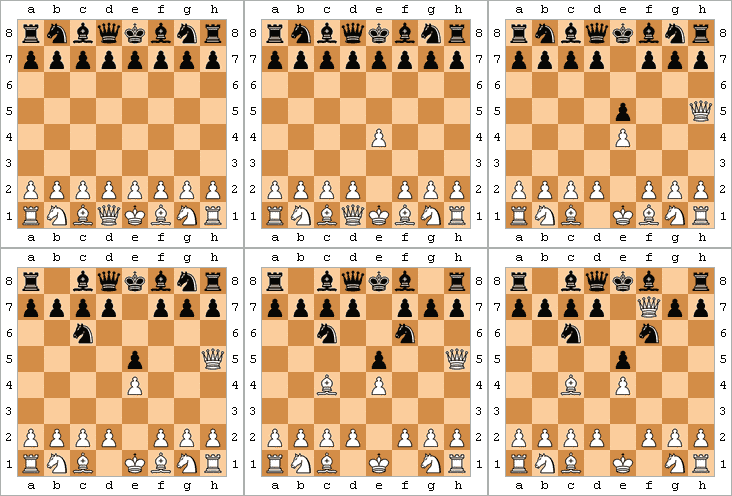


| a | b | c | d | e | f | g | h | ||
| 8 | | 8 | |||||||
| 7 | 7 | ||||||||
| 6 | 6 | ||||||||
| 5 | 5 | ||||||||
| 4 | 4 | ||||||||
| 3 | 3 | ||||||||
| 2 | 2 | ||||||||
| 1 | 1 | ||||||||
| a | b | c | d | e | f | g | h | ||
The Spanish bishop on b5 in the Ruy Lopez
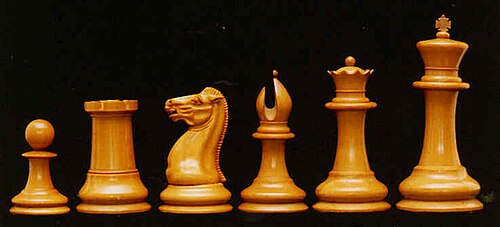
| a | b | c | d | e | f | g | h | ||
| 8 | | 8 | |||||||
| 7 | 7 | ||||||||
| 6 | 6 | ||||||||
| 5 | 5 | ||||||||
| 4 | 4 | ||||||||
| 3 | 3 | ||||||||
| 2 | 2 | ||||||||
| 1 | 1 | ||||||||
| a | b | c | d | e | f | g | h | ||
Example of symmetry: 1.e4 e6 2.d4 d5 3.exd5 exd5 4.Bd3 Bd6 5.Nf3 Nf6 6.0-0 0-0 7.Bg5 Bg4 8.Re1 Nbd7 9.Nbd2 c6 10.c3 Qc7 11.Qc2 Rfe8 12.Bh4 Bh5 13.Bg3 Bxg3 14.hxg3 Bg6 15.Rxe8+ Rxe8 16.Bxg6 hxg6 17.Re1 (diagram). The game continued 17...Rxe1+ 18.Nxe1 Ne8 19.Nd3 Nd6 20.Qb3 a6 21.Kf1 ½–½Capablanca vs. Maróczy, 1926.[359]
T
- tabia
- [from Arabic: طبيعة ṭabīʕa, "essence"] Also tabiya. In chess openings a tabia is a key point. It may be a well-known "point of departure" where variations branch off, it may be a position that is reached so often that the real game begins after this initial series of book moves.[360][361]
- tablebase
- See endgame tablebase.
- tactician
- A player who specializes in tactical play, as distinguished from a positional player.
- tactics
- Combinations, traps, and threats. Play characterized by short-term attacks, requiring calculation by the players, as distinguished from positional play.[355]
- takeback
- Used in casual games whereby both players agree to undo one or more moves.
- tall pawn
- [colloq.] An ineffective bishop, usually a bad bishop hemmed in by its own pawns.
- Tarrasch rule
- The general principle that rooks usually should be placed behind passed pawns, either one's own or one's opponent's. Named after Siegbert Tarrasch.[362]
- TC
- An abbreviation for time control.
- TD
- An abbreviation for tournament director.[358]
- technique
- The manner in which a player converts an advantageous position into a win.
- tempo
- A unit of time considered as one move. A player may gain a tempo in the opening when the opponent moves the same piece twice. In the endgame, one may wish to lose a tempo by triangulation in order to gain the opposition.[355] Plural: tempos or tempi.
- tension
- A position in which one or more exchanges are possible, such as a pair of pawns facing each other on a diagonal where either can capture the other, is said to contain tension. Such a situation differs from a threat in that it does not need to be immediately resolved – for example, if both pawns are defended. The consequences of resolving the tension must be constantly considered by both players, in case there is a possibility of winning or losing material. This makes calculating the best move more complicated, and so there is a natural temptation to "release the tension" by making a like-for-like exchange (see simplification) or by moving the attacked piece. To "keep the tension" is to avoid resolving it, which can be good advice depending on the position.
- text move
- This term is used in written analysis of chess games to refer to a move actually played in the game as opposed to other possible moves. Often shortened to text, for example "The text is inferior as it allows ...f5." Text moves are usually in bold whereas analysis moves are not.
- thematic
- Suited to the demands of the position. The term "thematic move" is often applied to the key move of a thematic plan.[363]
- theme tournament
- A chess tournament in which every game must begin with a particular opening specified by the organizers, for example the Budapest Gambit (1.d4 Nf6 2.c4 e5).
- theoretical draw
- See book draw.
- theoretical novelty ("TN" or "N")
- Or simply novelty. A move in the opening that has not been played before.[364]
- theory
- See book move.
- threat
- A plan or move that carries an intention to damage the opponent's position. A threat is a tactical weapon that must be defended against.[365]
- threefold repetition
- A draw may be claimed if the same position occurs three times with the same player to move and with each player having the choice of the same set of moves each time, including the right to capture en passant and the right to castle.[366] For the same position occurring five times, see fivefold repetition.
- tiebreaks
- See Tie-breaking in Swiss-system tournaments. This refers to a number of different systems that are used to break ties, and thus designate a single winner, where multiple players or teams tie for the same place in a Swiss system chess tournament.
- time
- 1. The amount of time each player has to think and calculate as measured by a chess clock.
- 2. The number of moves to complete an objective; for example, if a king is racing to stop a pawn from queening, and the king has too few moves, that may be referred to as "not enough time".[355]
- time control
- The allowed time to play a game, usually measured by a chess clock. A time control can require either a certain number of moves be made per time period (e.g. 40 moves in 2+1⁄2 hours) or it can limit the length of the entire game (e.g. five minutes per game for blitz). Hybrid schemes are used, and time delay controls have become popular since the widespread use of digital clocks.[90]
- time delay
- A time control that makes it possible for a player to avoid having an ever-decreasing amount of time remaining (as is the case with sudden death). The most important time delays in chess are Bronstein delay and Fischer delay.
- time pressure
- Or time trouble. Having very little time on one's clock (especially less than five minutes) to complete one's remaining moves. Also called zeitnot.
- TN
- An abbreviation for theoretical novelty.
- top board
- See first board.
- touch-move rule
- Or touched piece rule. The rule that requires a player who touches a piece to move that piece unless the piece has no legal moves. If a player moves a piece to a particular square and takes their hand off it, the move must be to that square if it is a legal move. Castling must be initiated by moving the king first, so a player who touches their rook may be required to move the rook, without castling. The rule also requires a player who touches an opponent's piece to capture it if possible. In order to adjust the position of a piece within its square without being required to move it, the player should say "J'adoube" or "I adjust".[365]
- tournament
- A competition involving more than two players or teams, generally played at a single venue (or series of venues) in a relatively short period of time. A tournament is divided into rounds, with each round consisting either of individual games or matches in the case of knockout tournaments and team tournaments. The assignment of opponents is called pairing, with the most popular systems being round-robin and Swiss. A tournament is usually referred to by the city in which it was played and the year, such as "London 1851", although there are well-known exceptions, such as "AVRO 1938".
- tournament book
- A book recording the scores of all the games in a tournament, usually with analysis of the best or most important games and some background on the event and its participants. One well-known example is Bronstein'sZurich International Chess Tournament 1953. The less comprehensive tournament bulletin is usually issued between the rounds of a prestigious event, giving the players and world media an instant record of the games of the previous round. Individual copies may be bundled together at the conclusion of the event to provide an inexpensive alternative to the tournament book.[367]
- tournament director ("TD")
- Also tournament controller [chiefly British]. Organizer and arbiter of a tournament, responsible for enforcing the tournament rules and the laws of chess.
- tournament performance rating ("TPR")
- The performance rating over the course of a tournament.
- trade
- See exchange.
- transposition
- Arriving at a position using a different sequence of moves than usual.[174]
- trap
- A move that may tempt the opponent to play a losing move.[368]
- trapped piece
- A piece is said to be "trapped" when it is en prise and cannot escape its capture in any way (i.e by capturing a piece, moving the piece, or blocking the attacking piece). Any piece—including the queen—can become "trapped" if a player is careless. A trapped king is said to be checkmated.
- trébuchet
- [from French, a type of siege engine] A theoretical position of mutual zugzwang in which either player would lose if it were their turn to move.[369]
- triangulation
- A technique of moving a king along the vertices of a triangle to renter the same position but inverting the player to move, often used in king and pawn endgames (less commonly seen with other pieces) to lose a tempo and gain the opposition.[370]
- tripled pawns
- Three pawns of the same color on the same file; considered a weakness due to their inability to defend each other.[371]
- Troitsky line
- Also Troitzky line. Endgame analysis by Alexey Troitsky of two knights versus a pawn found certain pawn positions that result in win, draw or loss. The resulting pawn positions on each file form what is known as the Troitsky line or Troitsky position.[372]
- two bishops
- Or the two bishops. A synonym for bishop pair.[373]
| a | b | c | d | e | f | g | h | ||
| 8 | | 8 | |||||||
| 7 | 7 | ||||||||
| 6 | 6 | ||||||||
| 5 | 5 | ||||||||
| 4 | 4 | ||||||||
| 3 | 3 | ||||||||
| 2 | 2 | ||||||||
| 1 | 1 | ||||||||
| a | b | c | d | e | f | g | h | ||
This Scotch Opening position contains tension due to the knights on c6 and d4. Both knights are currently adequately defended, so neither player is forced to release the tension.
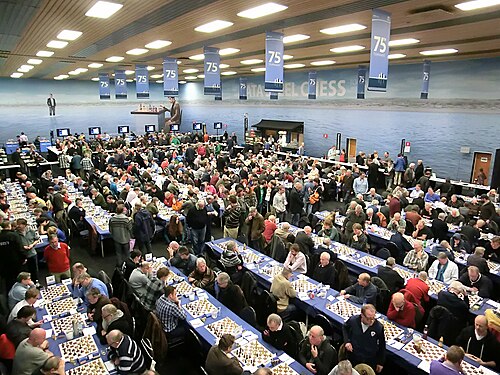
| a | b | c | d | e | f | g | h | ||
| 8 | | 8 | |||||||
| 7 | 7 | ||||||||
| 6 | 6 | ||||||||
| 5 | 5 | ||||||||
| 4 | 4 | ||||||||
| 3 | 3 | ||||||||
| 2 | 2 | ||||||||
| 1 | 1 | ||||||||
| a | b | c | d | e | f | g | h | ||
With 4...Nbd7 Black sets a trap in the QGD (1.d4 d5 2.c4 e6 3.Nc3 Nf6 4.Bg5). White cannot win the pawn on d5 due to the Elephant Trap.
| a | b | c | d | e | f | g | h | ||
| 8 | | 8 | |||||||
| 7 | 7 | ||||||||
| 6 | 6 | ||||||||
| 5 | 5 | ||||||||
| 4 | 4 | ||||||||
| 3 | 3 | ||||||||
| 2 | 2 | ||||||||
| 1 | 1 | ||||||||
| a | b | c | d | e | f | g | h | ||
Trébuchet: whoever has the move loses. 1.Kg4 Kxe4 2.Kg3 Ke3 3.Kg2 Ke2 4.Kg3 e4 5.Kf4 e3 6.Ke4 Kf2 and the black pawn will queen.
U
- unclear
- A position where it is unclear who (if anyone) has an advantage.[374]
- undermining
- A tactic (also known as "removal of the guard") in which a defensive piece is captured, leaving one of the opponent's pieces undefended or underdefended.[375]
- underpromotion
- Promoting a pawn to a rook, bishop, or knight instead of a queen. Rarely seen unless the knight can deliver a crucial check, or when promotion to a rook or a bishop instead of a queen is necessary to avoid stalemate.[261]
- United States Chess Federation
- This is a nonprofit organization, the governing chess organization within the United States, and one of the federations of the FIDE.
- unorthodox opening
- See irregular opening.
- unpinning
- The act of breaking a pin by interposing a second piece between the attacker and the target. This allows the piece that was formerly pinned to move.
- unsound
- Antonym of sound.
- USCF
- An abbreviation for United States Chess Federation.
| a | b | c | d | e | f | g | h | ||
| 8 | | 8 | |||||||
| 7 | 7 | ||||||||
| 6 | 6 | ||||||||
| 5 | 5 | ||||||||
| 4 | 4 | ||||||||
| 3 | 3 | ||||||||
| 2 | 2 | ||||||||
| 1 | 1 | ||||||||
| a | b | c | d | e | f | g | h | ||
White to move should underpromote the c7-pawn to a rook; promoting to a queen gives stalemate.
V
- vacating sacrifice
- A sacrifice made for the purpose of clearing a square for a different piece of the same color.
- valve
- A move that opens one line and closes another.
- vanished center
- Or vanished centre. A position with no white or black center pawns.[376]
- variant
- See chess variant.
- variation
- 1. A sequence of moves or an alternative line of play, often applied to the opening. A variation does not have to have been played in a game; it may also be a possibility that occurs only in analysis.[368] Also called continuation.
- 2. The word "Variation" is also used to name specific sequences of moves within an opening. For an example, the Dragon Variation is part of the Sicilian Defense.[86]
- vertical line
- See file.
W
- waiting move
- A move whose sole purpose is to oblige the opponent to move. A waiting move is effective when the opponent has nothing but bad moves available (i.e. is in zugzwang).[377]
- WCC
- An abbreviation for World Chess Championship.[378]
- WCM
- An abbreviation for Woman Candidate Master.
- weakness
- A pawn or square that can be attacked and is hard to defend.[379]
- weak square
- A square that cannot be easily defended from attack by an opponent. Often a weak square is unable to be defended by pawns (a hole) and can be theoretically occupied by a piece. Exchange or loss of a bishop may make all squares of that bishop's color weak resulting in a "weak square complex" on the light squares or the dark squares.[380]
- WFM
- An abbreviation for Woman FIDE Master.[381]
- WGM
- An abbreviation for Woman Grandmaster.[381]
- white
- The light-colored squares on the chessboard are often referred to as "the white squares" even though they often are some other light color. Similarly, "the white pieces" are sometimes actually some other (usually light) color.[39]
- White
- The designation for the player who moves first, even though the corresponding pieces, referred to as "the white pieces", are sometimes actually some other (usually light) color.
- WIM
- An abbreviation for Woman International Master.[382]
- win
- A victory for one of the two players in a game, which may occur due to checkmate, resignation by the other player, the other player exceeding the time control, or the other player being forfeited by the tournament director. Chess being a zero-sum game, this results in a loss for the other player. In a tournament a bye may be scored as a win.[383]
- windmill
- A combination in which two pieces work together to deliver an alternating series of checks and discovered checks in such a way that the opposing king is required to move on each turn. It is a potent technique, since, on every other move, the discovered check may allow the non-checking piece to capture an enemy piece without losing a tempo. The most famous example is Torre–Lasker, Moscow 1925.[384] Also called seesaw.
- wing
- The queenside a-, b-, and c-files; or the kingside f-, g-, and h-files.[385] Also called flank.
- Wing Gambit
- The name given to variations of several openings in which one player gambits a wing pawn, usually the b-pawn.[386]
- winning percentage
- A number calculated by adding together the number of games won and half of the number of games drawn (i.e. ignoring the losses), then dividing that total by the total number of games that were played. Another way of calculating the winning percentage is by taking the percentage of games won by a player plus half the percentage of drawn games. Thus, if out of 100 games a player wins 40 percent, draws 32 percent, and loses 28 percent, the winning percentage is 40 plus half of 32, i.e. 56 percent.[387]
- winning position
- A position is said to be a winning one if one specified side, with correct play, can eventually force a checkmate against any defense (i.e. perfect defense).[388] Also called won game.
- Woman Candidate Master ("WCM")
- A women-only chess title ranking below Woman FIDE Master.[62]
- Woman FIDE Master ("WFM")
- A women-only chess title ranking below Woman International Master.[381]
- Woman Grandmaster ("WGM")
- The highest ranking gender-restricted chess title except for Women's World Champion.[381]
- Woman International Master ("WIM")
- A women-only chess title ranking below Woman Grandmaster and above Woman FIDE Master.[381]
- won game
- See winning position.
- wood
- Slang for pieces. "A lot of wood came off the board" conveys that several piece exchanges occurred.[89]
- woodpusher
- [colloq., typically derogatory] A weak chess player, also referred to as a patzer or duffer.[389]
- World Champion
- A winner of the World Chess Championship.[378]
- wrong bishop
- Or wrong-colored bishop. A bishop that, because of the color squares it is restricted to, suffers critical loss of utility in the game position.[390]
- wrong rook pawn
- With a bishop, a rook pawn may be the wrong rook pawn, depending on whether or not the bishop controls its promotion square.[391]
| a | b | c | d | e | f | g | h | ||
| 8 | | 8 | |||||||
| 7 | 7 | ||||||||
| 6 | 6 | ||||||||
| 5 | 5 | ||||||||
| 4 | 4 | ||||||||
| 3 | 3 | ||||||||
| 2 | 2 | ||||||||
| 1 | 1 | ||||||||
| a | b | c | d | e | f | g | h | ||
Wing Gambit in the Sicilian Defense
| a | b | c | d | e | f | g | h | ||
| 8 | | 8 | |||||||
| 7 | 7 | ||||||||
| 6 | 6 | ||||||||
| 5 | 5 | ||||||||
| 4 | 4 | ||||||||
| 3 | 3 | ||||||||
| 2 | 2 | ||||||||
| 1 | 1 | ||||||||
| a | b | c | d | e | f | g | h | ||
A wrong rook pawn at a5 with a wrong-colored bishop. In this position, White cannot force promotion and Black can force a draw.
X
- X-ray
- When the power of a piece, either to attack or to defend, seems to pass through an intervening enemy piece. An X-ray attack, also known as a skewer, occurs when two pieces of the same color are caught in the same line of attack along a diagonal, rank, or file. The attacking piece forces the first and more valuable piece to move out of the way, which allows the second piece to be captured. An X-ray defense occurs when one piece is defended by another piece through an attacking enemy piece standing between the two.[392]
| a | b | c | d | e | f | g | h | ||
| 8 | | 8 | |||||||
| 7 | 7 | ||||||||
| 6 | 6 | ||||||||
| 5 | 5 | ||||||||
| 4 | 4 | ||||||||
| 3 | 3 | ||||||||
| 2 | 2 | ||||||||
| 1 | 1 | ||||||||
| a | b | c | d | e | f | g | h | ||
Example of X-ray: The white queen has just put the king in check, and the white rook provides an X-ray defense of the white queen.
Z
- zeitnot
- [from German, "time need"] Having very little time on the clock to complete the remaining moves of a timed game.[393] Also called time pressure and time trouble.
- Zonal tournaments
- Tournaments organized by FIDE, the first qualifying cycle of the World Chess Championship. Each zonal tournament features top players of a certain geographical zone. Up until 1993 the winners went on to Interzonal tournaments. This was replaced by a system where the winners now play each other in knockout-style competitions to determine who goes on to the Candidates Tournament.[394]
- zugzwang
- [from German, "compulsion to move"] When a player is put at a disadvantage by having to make a move; where any legal move weakens the position. Zugzwang usually occurs in the endgame, and rarely in the middlegame.[395]
- zwischenschach
- [from German, "in-between check"] Playing a surprising check that the opponent did not consider when plotting a sequence of moves; a zwischenzug that is a check.[396]
- zwischenzug
- [from German, "in-between move"] An "in-between" move, or an intermezzo, played before an expected reply. Often, but not always, this involves responding to a threat by posing an even greater threat, forcing the opponent to respond to the threat first.[397]
See also
References
- ↑Wilkinson 2008, p. 128.
- 1234Seirawan & Silman 1994, p. 237.
- ↑United States Chess Federation 2003, p. 72.
- ↑United States Chess Federation 2003, pp. 84, 282.
- 123456Staunton 2009, p. 59.
- ↑Pandolfini 1995, pp. 22–23.
- ↑van de Oudeweetering 2014, p. 25.
- ↑Hochberg 2005, p. 14.
- 12Hooper & Whyld 1996, p. 389.
- 12Brace 1977, p. 17.
- ↑Hooper & Whyld 1996, p. 13.
- ↑Pandolfini 1995, p. 28.
- ↑Brace 1977, p. 22.
- ↑Hooper & Whyld 1996, p. 18.
- ↑Hoffman 1996, p. 12.
- ↑Renaud & Kahn 2015, p. 182.
- ↑"What are arena tournaments?". Chess.com.
- ↑"Chess grandmasters on track for possible 'Armageddon' at world championship" Payne, Marissa. Washington Post. 26 November 2016.
- ↑Kaufman 2014, p. 151.
- 123456Seirawan & Silman 1994, p. 238.
- ↑Pandolfini 1995, p. 34.
- 1234567Staunton 2009, p. 57.
- 123Fischer, Margulies & Mosenfelder 1982, p. 103.
- ↑Silman 1998, p. 236.
- ↑Grooten 2017, p. 199.
- ↑Pritchard 2012, p. 75.
- ↑"CHESS Magazine: Basque Chess – does it work for you?!". ChessBase. 29 February 2012.
- ↑Horton 1973, pp. 12–13.
- ↑Brace 1977, p. 29.
- ↑Hooper & Whyld 1996, p. 32.
- ↑Harding 2015, p. 424.
- ↑Hilbert 2013, p. 104.
- ↑Pandolfini 1989, p. 233.
- ↑Roycroft, A. J. (1981). The Chess Endgame Study: A Comprehensive Introduction. Courier Dover. p. 346. ISBN 9780486241869.
- ↑Soltis 2012, p. 11.
- ↑Pandolfini 2013, p. 42.
- 123Staunton 2009, p. 3.
- ↑Pandolfini 1995, p. 46.
- 12Staunton 2009, p. 1.
- 123Pandolfini 1995, p. 47.
- ↑Hooper & Whyld 1996, p. 45.
- ↑MacEnulty, David (2004). The Chess Kid's Book of Checkmate. Random House Puzzles & Games. p. 129. ISBN 9780812935943.
- 12Schiller 2003, p. 398.
- ↑Kidder, Harvey (1970). Illustrated Chess for Children. Doubleday. ISBN 0-385-05764-4.
- ↑"Chess: A Fortissimo Zuckertort? It's a Kevitz Blitzkrieg", New York Times, Dec. 7, 1964
- ↑Nimzowitsch 2016, p. 5.
- ↑Pandolfini 2013, p. 47.
- ↑Seirawan & Silman 1994, p. 100.
- ↑Schiller 2003, p. 299.
- ↑Haworth, G. M. (2005). "6-man chess solved". ICGA Journal. 28 (3): 153. doi:10.3233/ICG-2005-28304. ISSN 1389-6911.
- ↑Silman 1999, p. 428.
- ↑Hooper & Whyld 1996, p. 53.
- 12Silman 1999, p. 429.
- 12Pandolfini 1995, p. 55.
- ↑Kasparov 2017, pp. 52–54.
- ↑Pandolfini 1995, p. 56.
- 12Pandolfini 1992, p. 154.
- ↑Pandolfini 2005, p. 162.
- ↑de Firmian 1999, p. 3.
- 12Pandolfini 1995, p. 57.
- ↑Judovitz & Duchamp 2010, p. 137.
- 123"FIDE Handbook". B. Permanent Commissions / 01. International Title Regulations (Qualification Commission) / FIDE Title Regulations effective from 1 January 2024 / Article 0 Introduction / Section 0.6: "The Award of Titles". Retrieved 26 September 2025– via International Chess Federation.
- ↑Johnson 2010, p. 12.
- ↑Ólafsson 2014, p. 32.
- ↑Higgins, Andrew (30 March 2016). "Masters of Chess, Not Self-Promotion". The New York Times.
- ↑Souleidis 2017, p. 176.
- ↑Staunton 1875, p. 384.
- ↑Keene 1989, p. 178.
- 123Staunton 2009, p. 55.
- ↑"Chess Corner – Chess Tutorial – Castling". Archived from the original on 2019-07-05. Retrieved 2019-06-25.
- ↑Pandolfini 1989, p. 64.
- 12Hooper & Whyld 1996, p. 71.
- ↑Hooper & Whyld 1996, p. 426.
- 1234Seirawan & Silman 1994, p. 239.
- ↑Hooper & Whyld 1996, p. 72.
- ↑Stockfish source code .
- 12Silman 1999, p. 430.
- 12Hooper & Whyld 1996, p. 102.
- ↑Snyder 2007, p. 22.
- ↑Staunton 2014, p. 48.
- 12Staunton 2009, p. 53.
- ↑Hooper & Whyld 1996, p. 210.
- ↑Staunton 2014, p. 30.
- ↑Pandolfini 1995, p. 66.
- 12345678910111213Staunton 2009, pp. 2–7.
- 12Hochberg 2005, p. 13.
- ↑FIDE Laws of Chess 2023, Article II.3 "Chess960 castling rules".
- ↑Gligorić, Svetozar (2002). Shall We Play Fischerandom Chess?. B.T. Batsford Ltd. p. 40. ISBN 0-7134-8764-X.
- 12Shibut, Macon (2012). Paul Morphy and the Evolution of Chess Theory. Courier. p. 68. ISBN 9780486149875.
- 12United States Chess Federation 2003, p. 8.
- ↑Hertan 2014, p. 373.
- ↑Lawson 1992, pp. 25–26.
- ↑Pandolfini 1992, p. 181.
- ↑Seirawan & Silman 1994, p. 42.
- ↑Pandolfini 1995, p. 70.
- ↑de Firmian 1999, p. 389.
- ↑Avni 2014, pp. 35–37.
- ↑Przewoznik, Jan; Soszynski, Marek (2001). How to Think in Chess. Russell Enterprises. p. 234. ISBN 9781888690101.
- ↑Nunn 1998, pp. 55–57.
- ↑Hooper & Whyld 1996, p. 339.
- ↑Pandolfini 1995, p. 72.
- ↑Rasskin-Gutman, Diego (2009). Chess Metaphors: Artificial Intelligence and the Human Mind. MIT Press. p. 99. ISBN 9780262182676.
- ↑Hertan 2014, p. 7.
- ↑Pandolfini 1989, p. 223.
- ↑Pandolfini 1995, p. 76.
- ↑Hooper & Whyld 1996, p. 92.
- ↑Borders 2007, p. 102.
- ↑Seirawan & Silman 1994, pp. 44, 149.
- ↑Hochberg 2005, p. 20.
- ↑Yusupov, Artur (2010). Boost Your Chess 1: The Fundamentals. Quality Chess. p. 218. ISBN 9781906552404.
- ↑Dunne 1991, p. 1.
- ↑Dvoretsky 2006, p. 15.
- ↑Pandolfini 2005, p. 125.
- 12Hooper & Whyld 1996, p. 96.
- ↑Pandolfini 1995, p. 78.
- 1234Silman 1999, p. 431.
- ↑Pandolfini 1995, p. 79.
- ↑Pandolfini 1995, p. 81.
- ↑Lawson 1992, pp. 31–32, 53.
- ↑Webb 2006, p. 49.
- ↑FIDE Laws of Chess 2023, Article 5: "The Completion of the Game" / Section 5.2.2.
- 12345Seirawan & Silman 1994, p. 240.
- ↑Hooper & Whyld 1996, pp. 102–103.
- ↑Pandolfini 1988, p. 274.
- ↑Pandolfini 2005, p. 64.
- ↑Wilson 1994, p. 60.
- ↑Hooper & Whyld 1996, p. 106.
- ↑Pandolfini 1995, p. 89.
- 12Staunton 2009, p. 56.
- ↑Aronow, Isaac (2022-06-13). "The Words You Need to Know to Play Chess". The New York Times. ISSN 0362-4331. Retrieved 2026-02-10.
- ↑Staunton, Howard (1876). Chess: Theory and Practice. pp. 48–49.
When the King is directly attacked by an adverse man, the move is called simply check; when the Piece or Pawn moved does not itself attack the King, but unmasks another which does, it is called a discovered check; and when both the man moved and the one unmasked attack the King, they are said to give double check.
- ↑Reinfeld 2014, p. 74, Discovered check is really a kind of discovered attack, with this important difference: the 'discovering' piece moves away to allow its colleague to give check along the vacated line.
- ↑Staunton 2014, p. 50.
- ↑Hooper & Whyld 1996, p. 110.
- ↑Hooper & Whyld 1996, p. 111.
- ↑Staunton 2014, p. 51.
- ↑Pandolfini 2013, p. 75.
- 123Hooper & Whyld 1996, p. 133.
- ↑Pandolfini 1995, p. 96.
- ↑Grooten 2017, p. 289.
- ↑Soltis 2002, p. 146.
- ↑Desjarlais 2011, p. 99.
- ↑Edwards 2007, p. 258.
- ↑Capablanca 2002, p. 79.
- ↑Schiller 2003, p. 376.
- ↑Suba 2014, p. 104.
- ↑Nimzowitsch 2016, p. 281.
- ↑Silman 1998, p. 10.
- ↑Pandolfini 2009, p. 301.
- 12Seirawan & Silman 1994, p. 241.
- ↑Moore & Mertens 2011, p. 14.
- ↑Alburt & Parr 2003, pp. 22–23.
- ↑Brace 1977.
- ↑New Oxford American Dictionary
- ↑"En prise (Chess Term)" by Edward Winter
- ↑Pandolfini 1995, p. 102.
- ↑Wilson 1994, p. 55.
- ↑David, Netanyahu & Wolf 2016, pp. 88–96.
- ↑ChessMN16. "How to Read Engine Evaluations". Chess.com. April 29, 2015
- ↑Newborn 2013, pp. 1–14.
- ↑Golombek 1977, p. 113.
- ↑Silman 1999, p. 432.
- ↑Horton 1973, p. 63.
- ↑Brace 1977, p. 97.
- ↑Hooper & Whyld 1996, p. 130.
- ↑Seirawan & Silman 1994, p. 188.
- ↑Schiller 2003, p. 113.
- ↑Soltis 2002, p. 102.
- ↑Lawrence & Alburt 2010, p. 88.
- ↑Pandolfini 1992, pp. 56, 94, 118.
- ↑Pawlak, Robert (November 2001). "Your Computer as Opponent, Coach, and Training Assistant". Chess Life. 56 (11): 22–25.
- 12Pandolfini 1989, p. 225.
- ↑Soltis 2002, p. 71.
- 12Silman 1999, p. 433.
- ↑"Fianchetto". Dizionario Italiano. Retrieved 2 March 2022.
- ↑"FICGS correspondence chess titles".
- 1234Pandolfini 1995, p. 108.
- ↑Ashley 2007, p. 232.
- ↑Pandolfini 1988, p. 16.
- ↑Byrne, Robert (4 November 1990). "Pastimes; Chess". The New York Times.
- ↑Ólafsson 2014, p. 80.
- ↑FIDE Laws of Chess 2023, Article 9: The Drawn Game / Section 9.6.1.
- 12FIDE Laws of Chess 2023.
- ↑Seirawan & Silman 1994, p. 189.
- ↑Hooper & Whyld 1996, p. 141.
- ↑Pandolfini 1992, p. 234.
- 123Staunton 2009, p. 58.
- ↑Pandolfini 1988, p. 47.
- ↑Hendriks 2014, pp. 161–162.
- ↑United States Chess Federation 2003, pp. xxvii, 29, 34, 64, 69.
- ↑Brown 2012, p. 241.
- ↑Moore 2015, p. 77.
- ↑Soltis 2014, p. 31.
- ↑Ashley, Maurice (2009). The Most Valuable Skills in Chess. Gambit. pp. 15–16. ISBN 9781904600879.
- ↑Hooper & Whyld 1996, p. 144.
- ↑Hooper & Whyld 1996, p. 145.
- ↑Evans 1967, p. 121.
- ↑Horton 1973, pp. 76–77.
- ↑Nimzowitsch 2016, p. 15.
- ↑Pandolfini 1995, pp. 30, 114–115, 168.
- 12Pandolfini 1995, p. 134.
- ↑Murray 2012, pp. 390–391.
- ↑Ashley 2007, p. 233.
- ↑Kvanvig 2008, p. 229.
- ↑Schiller 2003, p. 165.
- 1234Silman 1999, p. 434.
- ↑Clarke 2000, p. 1.
- ↑Seirawan & Silman 1994, p. 242.
- ↑Barden 2017.
- ↑Cranston 2017, p. 1.
- ↑Lombardy & Daniels 1977, pp. 10, 11.
- ↑Evans 1967.
- ↑Znosko-Borovsky 2012, p. 39.
- ↑Pandolfini 2005, p. 69.
- ↑Hertan 2013, p. 109.
- ↑"London m4 Games". 365Chess.com.
- ↑Nimzowitsch 2016, p. 466.
- ↑Timman 2014, p. 71.
- ↑Lee 2016, p. 158.
- ↑Hooper & Whyld 1996, p. 178.
- 12Silman 1999, p. 435.
- 12Dunne 1991, p. 99
- 12Pandolfini 1995, p. 124.
- 12Pandolfini 1995, p. 125.
- ↑Lemos 2014, pp. 30–32.
- ↑Pandolfini 1995, p. 126.
- 12Pandolfini 1995, p. 128.
- 123Pandolfini 2009, p. 302.
- ↑Schiller 2003, p. 91.
- ↑Pandolfini 1989, p. 227.
- 123Staunton 2009, p. 61.
- ↑Hooper & Whyld 1996, p. 183.
- 12Pandolfini 1995, p. 136.
- ↑"Kasparov vs. Topalov, Wijk aan Zee 1999". Chessgames.com.
- ↑van de Oudeweetering 2014, p. 220.
- ↑Petković, Miodrag (1997). Mathematics and Chess: 110 Entertaining Problems and Solutions. Courier. pp. 50–55. ISBN 9780486294322.
- ↑Kotov 2012, p. 12.
- ↑Hochberg 2005, p. 73.
- 12Pandolfini 1995, p. 146.
- ↑Hooper & Whyld 1996, p. 226.
- ↑Staunton 2009, p. 46.
- ↑Pandolfini 1995, p. 147.
- ↑Pandolfini 1995, p. 148.
- ↑Euwe & Meiden 2013, p. 19.
- ↑Pandolfini 1995, p. 150.
- ↑Seirawan & Silman 1994, p. 243.
- ↑Pandolfini 1995, p. 152.
- 12Pandolfini 1992, p. 109.
- ↑Pandolfini 2009, p. 303.
- ↑Hooper & Whyld 1996, p. 244.
- ↑Kmoch 2013, p. 143.
- 12Ashley 2007, p. 234.
- ↑Pandolfini 2008, p. 351.
- 12345Silman 1999, p. 436.
- ↑Hartston 1997, p. 118.
- 12Waitzkin & Waitzkin 1995, p. 187.
- ↑"Chandler Cornered · 200 Miniatures Games part 2". Chess Edinburgh and Lothians. Archived from the original on 2011-09-16. Retrieved 2012-05-02.
- ↑Nunn 1999, p. 6.
- ↑Pandolfini 1992, p. 63.
- ↑Keene 1989, p. 73.
- 12345Hochberg 2005, p. 12.
- ↑Pandolfini 2005, p. 185.
- ↑Nimzowitsch 2014, p. 182.
- ↑Hallman 2013, p. 154.
- ↑Hooper & Whyld 1996, p. 274.
- ↑Agdestein 2013, p. 141.
- ↑Wilson 1994, p. 4.
- ↑Komarov & Djuric 2016, p. 10.
- ↑van de Oudeweetering 2014, p. 13.
- ↑Keene 1989, p. 182.
- 12Silman 1999, p. 437.
- ↑Schiller 2003, p. 19.
- ↑Pandolfini 1995, p. 166.
- 123Hooper & Whyld 1996, p. 405.
- ↑Pandolfini 1995, p. 167.
- ↑Staunton 2014, p. 60.
- 12Webb 2006, p. 72.
- ↑Pandolfini 1992, p. 113.
- ↑Pandolfini 2009, p. 305.
- 12Seirawan & Silman 1994, p. 246.
- 12Horton 1973, p. 147.
- ↑Pandolfini 1992, p. 237.
- 123Silman 1999, p. 438.
- ↑Brace 1977, p. 208.
- ↑Pandolfini 1995, p. 172.
- ↑Hooper & Whyld 1996, p. 291.
- ↑Kmoch 2013, p. 18.
- ↑de Groot 2008, pp. 189–203.
- ↑van de Oudeweetering 2014, p. 7.
- ↑Kaan 2016, p. 19.
- ↑Staunton 1875, p. 41.
- ↑Keene 1989, p. 183.
- 12345Silman 1999, p. 439.
- ↑Waitzkin & Waitzkin 1995, p. 83.
- ↑Pandolfini 1992, p. 238.
- ↑Fine 1948.
- ↑Kravtsiv 2025.
- ↑United States Chess Federation 2003, p. 202.
- ↑Seirawan & Silman 1994, p. 245.
- 12Hurst, John (2007). Professional SlickEdit. John Wiley & Sons. p. 365. ISBN 9780470251706.
- ↑Fine 1976, p. 4.
- ↑Hooper & Whyld 1996, p. 305.
- ↑Hochberg 2005, p. 11.
- ↑Kaan 2016, p. 16.
- ↑Kavalek, Lubomir. "Chess".The Washington Post. 16 July 2007
- ↑Watson 1998, p. 18.
- ↑Hooper & Whyld 1996, p. 316.
- ↑Hooper & Whyld 1996, p. 20.
- ↑"What are premoves and how do they work?". Chess.com. Retrieved 15 May 2022.
- ↑Pandolfini 1995, p. 188.
- ↑Dvoretsky 2006, p. 53.
- ↑Soltis 2013, p. 1.
- ↑Silman 1999, p. 440.
- ↑Staunton 2009, p. 355.
- ↑Staunton 2009, p. 360.
- ↑Kaan 2016, pp. 161–162.
- ↑Pandolfini 2009, p. 306.
- ↑Nimzowitsch 2016, pp. 116–120.
- ↑United States Chess Federation 2003, p. 337.
- ↑Hertan 2014, p. 193.
- ↑Hooper & Whyld 1996, p. 330.
- ↑Alburt & Parr 2003, p. 113.
- ↑Hooper & Whyld 1996, p. 331.
- ↑Hooper & Whyld 1996, pp. 331–332.
- ↑Seirawan & Stefanovic 1992, p. 312.
- ↑Soltis 2008, p. 210.
- ↑Pandolfini 2009, p. 96.
- 12345Silman 1999, p. 441.
- ↑Burgess 2000, p. 481.
- ↑FIDE Laws of Chess 2023, Article 5.1.2.
- ↑Grooten 2017, p. 51.
- ↑Pandolfini 1992, p. 102.
- 12Ashley 2007, p. 238.
- ↑Seirawan & Silman 1994, p. 247.
- ↑All The King's MenArchived 24 October 2009 at the Wayback Machine, Outlook Business, 31 October 2009
- ↑Hooper & Whyld 1996, p. 365, semi-close game.
- 12Hooper & Whyld 1996, p. 165, half-close game.
- ↑Hooper & Whyld 1996, p. 365, semi-open game.
- ↑FIDE Laws of Chess 2023, Article 9: The Drawn Game / Section 9.6.2.
- ↑Brace 1977, p. 257.
- ↑Kaan 2016, p. 244.
- ↑Rasskin-Gutman 2009, p. 136.
- ↑Timman 2014, p. 166.
- ↑Hooper & Whyld 1996, p. 373.
- 12Ashley 2007, p. 239.
- ↑Fine 2015, p. 87.
- ↑Reinfeld 2014, p. 151, The X-ray attack, or skewer attack, is the opposite of the pin. In the X-ray attack, a piece attacks a hostile piece which is situated on a line with another piece of lesser value. When the attacked piece moves off the line, it exposes the second piece to capture.
- ↑Pandolfini 1988, p. 267.
- ↑Staunton 2009, p. 25.
- ↑Giddins 2017, pp. 169–170.
- ↑Reinfeld 2016, p. 151.
- ↑Pandolfini 1988, p. 78.
- ↑Hooper & Whyld 1996, p. 387.
- ↑Stamp, Jimmy (3 April 2013). "How the Chess Set Got Its Look and Feel". Smithsonian.com.
- 1234567Silman 1999, p. 442.
- ↑Averbakh, Yuri. Comprehensive Chess Endings. Pergamon Press. p. viii.
- ↑Hooper & Whyld 1996, p. 400.
- 12Ashley 2007, p. 240.
- ↑"Capablanca vs. Maróczy, Lake Hopatcong 1926". Chessgames.com.
- ↑Steingass 1884, p. 752.
- ↑van de Oudeweetering 2014, p. 193.
- ↑Kotov 2012, p. 42.
- ↑Pandolfini 1995, p. 241.
- ↑Hooper & Whyld 1996, p. 418.
- 12Pandolfini 1992, p. 240.
- ↑Pandolfini 2009, p. 307.
- ↑Bronstein 2013, p. vii.
- 12Silman 1999, p. 443.
- ↑Soltis 2013, p. 33.
- ↑Soltis 2013, p. 22.
- ↑Pandolfini 1995, pp. 249–250.
- ↑de la Villa 2014, p. 246.
- ↑Pandolfini 2009, p. 310.
- ↑Matanović, Aleksander, ed. (1973). Šahovski Informator[Chess Informant]. Vol. 14. Belgrade: Šahovski Informator. pp. 8–9.
- ↑Pandolfini 1992, p. 241.
- ↑Hooper & Whyld 1996, p. 439.
- ↑Tarrasch 2012, p. 5.
- 12Schiller, Eric (2009). World Champion Openings. Cardoza. pp. 1–10. ISBN 9781580425612.
- ↑Seirawan & Silman 1994, p. 127.
- ↑Seirawan & Silman 1994, p. 250.
- 12345Goichberg, Bill; Jarecki, Carol; Riddle, Ira Lee (1993). U.S. Chess Federation's Official Rules of Chess. David McKay Chess Library. p. 329. ISBN 9780812922172.
- ↑Evans, Silman & Roberts 1991, p. 91.
- ↑Hertan 2016, p. 43.
- ↑Schiller 2003, p. 287.
- ↑Young & Howell 1894, p. 46.
- ↑Reinfeld 2016, p. 585.
- ↑Silver 2012, p. 270.
- ↑Capablanca 2002, p. 116.
- ↑Evans 2009, p. 92.
- ↑Soltis 2002, p. 87.
- ↑Benjamin 2015, pp. 215–216.
- ↑Pandolfini 1993, p. 46.
- ↑Galperin 2012, p. 64.
- ↑Williams 1997, p. 120.
- ↑Pandolfini 1992, p. 76.
- ↑Wilson & Alberston 2012, p. 10.
- ↑Waitzkin & Waitzkin 1995, p. 159.
Sources
- Agdestein, Simen (2013). How Magnus Carlsen Became the Youngest Chess Grandmaster in the World: The Story and the Games. New In Chess. ISBN 9789056914424.
- Alburt, Lev; Parr, Larry (2003). The Secrets of the Russian Chess Masters: Fundamentals of the Game. W. W. Norton & Company. ISBN 9780393324525.
- Ashley, Maurice (2007). Chess for Success: Using an Old Game to Build New Strengths in Children and Teens. Harmony/Rodale. ISBN 9780307418883.
- Avni, Amatzia (2014). Devious Chess: How to Bend the Rules and Win. Pavilion Books. ISBN 9781849941822.
- Barden, Leonard (20 January 2017). "Wesley So at top of Wijk standings going into weekend rounds". The Guardian.
- Benjamin, Joel (2015). Liquidation on the Chess Board: Mastering the Transition into the Pawn Ending. New In Chess. ISBN 9789056915544.
- Borders, Mark (2007). The Self-Improvement of Chess. Lulu. ISBN 9781430327646.
- Brace, Edward R. (1977). An Illustrated Dictionary of Chess. Hamlyn. ISBN 0-600-32920-8. (1989 reprint by Chartwell Books, ISBN 978-1555213947)
- Bronstein, David (2013). Zurich International Chess Tournament, 1953. Courier. ISBN 9780486319063.
- Brown, Isaac M. (2012). The British Chess Magazine, Volume 15. Nabu Press. ISBN 9781276679046.
- Burgess, Graham (2000). The Mammoth Book of Chess. Carroll & Graf. ISBN 0-7867-0725-9.
- Capablanca, Jose R. (2002). A Primer of Chess. Houghton Mifflin Harcourt. ISBN 9780156028073.
- Clarke, P. H. (2000) [1963]. 100 Soviet Chess Miniatures. Courier. ISBN 9780486408446.
- Cranston, Adam. (2017). "Heatwave Chess". Hammersmith Chess Club Newsletter.
- David, Omid E.; Netanyahu, Nathan S.; Wolf, Lior (2016). DeepChess: End-to-End Deep Neural Network for Automatic Learning in Chess. International Conference on Artificial Neural Networks (ICANN) Vol. 9887. Springer. ISBN 9783319447810.
- de Firmian, Nick (1999). Modern Chess Openings: MCO-14. Random House Puzzles & Games. ISBN 0-8129-3084-3.
- de Groot, Adriaan D. (2008). Thought and Choice in Chess. Amsterdam University Press. ISBN 9789053569986.
- de la Villa, Jesús (2014). 100 Endgames You Must Know: Vital Lessons for Every Chess Player Improved and Expanded. New In Chess. ISBN 9789056914547.
- Desjarlais, Robert R. (2011). Counterplay: An Anthropologist at the Chessboard. University of California Press. ISBN 9780520948204.
- Dunne, Alex (1991). Complete Guide to Correspondence Chess. Thinkers' Press. ISBN 9780938650522.
- Dvoretsky, Mark (2006). Dvoretsky's Endgame Manual (2nd ed.). Russell Enterprises. ISBN 1-888690-28-3.
- Edwards, Jon (2007). Teach Yourself VISUALLY Chess. John Wiley & Sons. ISBN 9780470121320.
- Euwe, Max; Meiden, Walter (2013). Chess Master vs. Chess Amateur. Courier. ISBN 9780486319896.
- Evans, Larry (1967). New Ideas in Chess (Dover 1984 ed.). Cornerstone Library. ISBN 0-486-28305-4.
- Evans, Larry; Silman, Jeremy; Roberts, Betty (1991). How to Get Better at Chess: Chess Masters on Their Art. Summit. ISBN 9780945806059.
- Evans, Larry (2009). This Crazy World of Chess. Cardoza. ISBN 9781580422376.
- "FIDE Handbook". E. MISCELLANEOUS / 01. Laws of Chess / FIDE Laws of Chess taking effect from 1 January 2023. Retrieved 26 September 2025– via International Chess Federation.
- Fine, Gary Alan (2015). Players and Pawns: How Chess Builds Community and Culture. University of Chicago Press. ISBN 9780226265032.
- Fine, Reuben (1948). Practical Chess Openings. David McKay. ISBN 9780812901696.
{{cite book}}: ISBN / Date incompatibility (help) - Fine, Reuben (1976). The World's Great Chess Games. Courier. ISBN 9780486245126.
- Fischer, Bobby; Margulies, Stuart; Mosenfelder, Donn (1982). Bobby Fischer Teaches Chess. Random House. ISBN 9780553263152.
- Galperin, Misha (2012). Reimagining Leadership in Jewish Organizations: Ten Practical Lessons to Help You Implement Change and Achieve Your Goals. Jewish Lights. ISBN 9781580234924.
- Giddins, Steve (2017). The New In Chess Book of Chess Improvement: Lessons From the Best Players in the World's Leading Chess Magazine. New In Chess. ISBN 9789056916954.
- Golombek, Harry, ed. (1977). Golombek's Encyclopedia of Chess. Batsford. ISBN 0-517-53146-1.
- Grooten, Herman (2017). Chess Strategy for Club Players: The Road to Positional Advantage. Siles Press. ISBN 9789056916947.
- Hallman, J.C. (2013). The Chess Artist: Genius, Obsession, and the World's Oldest Game. Macmillan. ISBN 9781466852235.
- Harding, Tim (2015). Joseph Henry Blackburne: A Chess Biography. McFarland. ISBN 9781476620282.
- Hartston, William (1997). Teach Yourself Better Chess. Hodder & Stoughton. ISBN 9780844239330.
- Hendriks, Willy (2014). Move First, Think Later: Sense and Nonsense in Improving Your Chess. New In Chess. ISBN 9789056915407.
- Hertan, Charles (2013). Power Chess for Kids: Learn How to Think Ahead and Become One of the Best Players in Your School. New In Chess. ISBN 9789056914448.
- Hertan, Charles (2014). Forcing Chess Moves: The Key to Better Calculation. New In Chess. ISBN 9789056914653.
- Hertan, Charles (2016). Start Playing Chess!: Learn the Rules of the Royal Game. New In Chess. ISBN 9789056916879.
- Hilbert, John S. (2013). Emil Kemeny: A Life in Chess. McFarland. ISBN 9780786473595.
- Hochberg, Burt (2005). Outrageous Chess Problems. Sterling. ISBN 9781402719097.
- Hoffman, Asa (1996). Chess Gladiator. International Chess Enterprises. ISBN 9781879479319.
- Hooper, David; Whyld, Kenneth (1996) [first pub. 1992]. The Oxford Companion to Chess (second ed.). Oxford: Oxford University Press. ISBN 0-19-280049-3.
- Horton, Byrne Joseph (1973) [1959]. Dictionary of Modern Chess. Owen. ISBN 0-8022-0746-4.
- Johnson, Joel (2010). Formation Attacks. Lulu. ISBN 9780557522699.
- Judovitz, Dalia; Duchamp, Marcel (2010). Drawing on Art: Duchamp and Company. University of Minnesota Press. ISBN 9780816665297.
- Kaan, Jef (2016). Better Chess Openings. Lulu. ISBN 9781326180775.
- Kasparov, Garry (2017). Deep Thinking: Where Machine Intelligence Ends and Human Creativity Begins. PublicAffairs. ISBN 9781610397872.
- Kaufman, Larry (2014). Sabotage the Grunfeld!: A Cutting-edge Repertoire for White based on 3.f3. New In Chess. ISBN 9789056915391.
- Keene, Raymond (1989). The Simon & Schuster Pocket Book of Chess. Simon and Schuster. ISBN 9780671679248.
- Kmoch, Hans (2013). Pawn Power in Chess. Courier. ISBN 9780486319698.
- Komarov, Dimitri; Djuric, Stefan (2016). Chess Opening Essentials: 1.d4 d5 / 1.d4 Various / Queen's Gambits. Microsoft Press. ISBN 9789056917289.
- Kotov, A. A. (2012). Think Like a Grandmaster. Pavilion Books. ISBN 9781849940535.
- Kravtsiv, Martyn (2025). PCO: Practical Chess Openings. Gambit Publications. ISBN 9781805041269.
- Kvanvig, Jonathan (2008). Oxford Studies in Philosophy of Religion, Volume 1 =Oxford University Press. Oxford University Press Oxford. ISBN 9780191562204.
- Lawrence, Al; Alburt, Lev (2010). Knack Chess for Everyone: A Step-by-Step Guide to Rules, Moves & Winning Strategies. Rowman & Littlefield. ISBN 9780762762712.
- Lawson, Kristan (1992). The Rules of Speed Chess. Jolly Roger Press. ISBN 9780963420572.
- Lee, Newton (2016). Google It: Total Information Awareness. Springer. ISBN 9781493964154.
- Lemos, Damien (2014). Opening Repertoire: The Fianchetto System. Everyman Chess. ISBN 9781781941621.
- Lombardy, William; Daniels, David (1977). Chess Panorama. Stein & Day. ISBN 0-8019-6078-9.
- Moore, Cristopher; Mertens, Stephan (2011). The Nature of Computation. Oxford University Press. ISBN 9780199233212.
- Moore, Ethan (2015). How To Beat Anyone At Chess: The Best Chess Tips, Moves, and Tactics. Simon and Schuster. ISBN 9781440592157.
- Murray, Harold James Ruthven (2012). A History of Chess. Skyhorse. ISBN 978-1620870624.
- Newborn, Monty (2013). Deep Blue: An Artificial Intelligence Milestone. Springer Science & Business Media. ISBN 9780387217901.
- Nimzowitsch, Aron (2014). Aron Nimzowitsch 1928-1935: Annotated Games & Essays. New In Chess. ISBN 9789056915162.
- Nimzowitsch, Aron (2016). My System & Chess Praxis: His Landmark Classics in One Edition. New In Chess. ISBN 9789056916602.
- Nunn, John (1999). 101 Brilliant Chess Miniatures. Gambit. ISBN 1-901983-16-1.
- Nunn, John (1998). Secrets of Practical Chess. B H B Distribution. ISBN 1901983013.
- Ólafsson, Helgi (2014). Bobby Fischer Comes Home: The Final Years in Iceland, a Saga of Friendship and Lost Illusions. New In Chess. ISBN 9789056914363.
- Pandolfini, Bruce (1988). Pandolfini's Endgame Course: Basic Endgame Concepts Explained. Simon and Schuster. ISBN 9780671656881.
- Pandolfini, Bruce (1989). Chess Openings: Traps And Zaps. Touchstone. ISBN 978-0671656904.
- Pandolfini, Bruce (1992). Pandolfini's Chess Complete: The Most Comprehensive Guide to the Game, from History to Strategy. Simon and Schuster. ISBN 9780671701864.
- Pandolfini, Bruce (1993). Beginning Chess: Over 300 Elementary Problems for Players New to the Game. Simon and Schuster. ISBN 9780671795016.
- Pandolfini, Bruce (1995). Chess Thinking: The Visual Dictionary of Chess Moves, Rules, Strategies and Concepts (Fireside Chess Library). Everyman Chess. ISBN 9780671795023.
- Pandolfini, Bruce (2005). The Q&A Way in Chess. Random House. ISBN 9780812936582.
- Pandolfini, Bruce (2008). Pandolfini's Ultimate Guide to Chess. Simon and Schuster. ISBN 9780743260985.
- Pandolfini, Bruce (2009). Pandolfini's Endgame Course. Simon and Schuster. ISBN 9780671656881.
- Pandolfini, Bruce (2013). Weapons of Chess: An Omnibus of Chess Strategies. Simon and Schuster. ISBN 9781476739700.
- Pritchard, David (2012). The Right Way to Play Chess. Little, Brown. ISBN 9780716023326.
- Reinfeld, Fred (2014) [1955]. 1001 Winning Chess Sacrifices and Combinations. Wilshire Book Company. ISBN 978-0-87980-111-3.
- Reinfeld, Fred (2016). The Complete Chess Course. Russell Enterprises. ISBN 9781941270240.
- Renaud, Georges; Kahn, Victor (2015). The Art of Checkmate. Batsford. ISBN 978-1849942706.
- Schiller, Eric (2003). Encyclopedia of Chess Wisdom. Simon and Schuster. ISBN 9781580420884.
- Seirawan, Yasser; Stefanovic, George (1992). No Regrets • Fischer–Spassky 1992. International Chess Enterprises. ISBN 1-879479-09-5.
- Seirawan, Yasser; Silman, Jeremy (1994). Winning Chess Strategies: Proven Principles from One of the U.S.A.'s Top Chess Players. Microsoft Press. ISBN 9781556156632.
- Silman, Jeremy (1998). The Complete Book of Chess Strategy: Grandmaster Techniques from A to Z. Siles Press. ISBN 9781890085018.
- Silman, Jeremy (1999). The Amateur's Mind: Turning Chess Misconceptions Into Chess Mastery. Siles Press. ISBN 978-1890085025.
- Silver, Nate (2012). The Signal and the Noise: Why So Many Predictions Fail-but Some Don't. Penguin. ISBN 9781101595954.
- Snyder, Robert M. (2007). Winning Chess Traps: Opening Tactics for the Advanced Beginner and Intermediate Player. iUniverse. ISBN 9780595453450.
- Soltis, Andrew (2002). Chess Lists, 2d ed. McFarland. ISBN 9780786412969.
- Soltis, Andrew (2008). The Wisest Things Ever Said About Chess. Pavilion Books. ISBN 9781849941020.
- Soltis, Andrew (2012). What It Takes to Become a Chess Master. Pavilion Books. ISBN 9781849940887.
- Soltis, Andrew (2013). 100 Chess Master Trade Secrets: From Sacrifices to Endgames. Pavilion Books. ISBN 9781849941556.
- Soltis, Andrew (2014). New Art of Defence in Chess: chess defence tactics classic. Batsford. ISBN 978-1849941600.
- Souleidis, Georgios (2017). Winning with the Slow (but Venomous!) Italian: An Easy-to-Grasp Chess Opening for White. New In Chess. ISBN 9789056916756.
- Staunton, Howard (1875). The Chess-Player's Companion: comprising a new Treatise on Odds, and a Collection of Games. George Bell and Sons.
- Staunton, Howard (2009). Staunton's Chess-Player's Handbook. Siles Press. ISBN 9784871878210.
- Staunton, Howard (2014). Chess: theory & practice; containing the laws & history of the game, together with an analysis of the openings, & a treatise of end games. Nabu Press. ISBN 978-1294776635.
- Steingass, Francis Joseph (1884). The Student's Arabic–English Dictionary. Crosby Lockwood and Son.
- Suba, Mihai (2014). Dynamic Chess Strategy: Extended & Updated Edition. New In Chess. ISBN 9789056914592.
- Tarrasch, Siegbert (2012). The Game of Chess. Courier. ISBN 9780486144559.
- Timman, Jan (2014). On The Attack: The Art of Attacking Chess According to the Modern Masters. MIT Press. ISBN 9789056914905.
- United States Chess Federation (2003). United States Chess Federation's Official Rules of Chess, Fifth Edition. Random House Puzzles & Games. ISBN 9780812935592.
- van de Oudeweetering, Arthur (2014). Improve Your Chess Pattern Recognition: Key Moves and Motifs in the Middlegame. New In Chess. ISBN 9789056915421.
- Waitzkin, Josh; Waitzkin, Fred (1995). Attacking Chess: Aggressive Strategies and Inside Moves from the U.S. Junior Chess Champion. Simon and Schuster. ISBN 9780684802503.
- Watson, John L. (1998). Secrets of Modern Chess Strategy: Advances Since Nimzowitsch. Gambit. ISBN 9781901983074.
- Webb, Simon (2006). Chess for Tigers. Batsford. ISBN 978-0713489880.
- Williams, Gareth (1997). Introduction to Chess: Learn to Play the World's Most Popular Game of Skill. Barnes & Noble Books. ISBN 9780760705339.
- Wilkinson, Sinclair L. (2008). Chess!: A Fun Game to Learn and Play. Xlibris. ISBN 9781453550397.
- Wilson, Fred (1994). 101 Questions on How to Play Chess. Dover. ISBN 9780486282732.
- Wilson, Fred; Alberston, Bruce (2012). 303 Tricky Chess Puzzles. Cardoza. ISBN 9781580425247.
- Young, Franklin Knowles; Howell, Edwin C. (1894). The Minor Tactics of Chess: A Treatise on the Deployment of the Forces in Obedience to the Strategic Principle. Roberts brothers.
- Znosko-Borovsky, Eugene A. (2012) [1959]. Reinfeld, Fred (ed.). How Not to Play Chess. Dover. ISBN 9780486158372.
Further reading
- Evans, Larry (2011). 10 Most Common Chess Mistakes. Cardoza. ISBN 978-1580422895.
- ليفيت، جيرالد م. (2006). تورك، أتمتة الشطرنج . ماكفارلاند وشركاه. ISBN 978-0786429035.
- نيمزوفيتش، آرون (1980). الحصار . شركات الشطرنج. رقم ISBN 9781476739700.
- سولتيس، آندي (2019). "على حافة الهاوية؛ ما هو مستوى اليقين الذي تحتاجه للعب نقلة بثقة؟". مجلة تشيس لايف . الاتحاد الأمريكي للشطرنج .
- ستاندج، توم (2004). الميكانيكي التركي: القصة الحقيقية لآلة لعب الشطرنج التي خدعت العالم . دار بنغوين يو إس إيه للنشر. رقم ISBN 978-0140299199.
- فان دي أودويترينغ، آرثر (2016). درّب مهاراتك في تمييز أنماط الشطرنج: المزيد من النقلات والدوافع الرئيسية في مرحلة وسط اللعبة . جديد في الشطرنج. ISBN 9789056916145.
- زيليبوخين، ن.ب. (1982). قاموس الشطرنج . منشورات فرنسية وأوروبية. رقم ISBN 0-8288-2350-2.
- زنوسكو-بوروفسكي، يوجين أ. (1971) [1935]. كيفية لعب افتتاحيات الشطرنج . نيويورك: دوفر. ISBN 9780486158396.
فئات :
- مصطلحات الشطرنج
- معاجم مصطلحات الشطرنج
- قواميس المصطلحات الرياضية