
Stanley Cup
The Stanley Cup (French: La Coupe Stanley) is the championship trophy awarded annually to the National Hockey League (NHL) playoff champion. It is the oldest existing trophy to be awarded to a professional sports franchise in North America, and the International Ice Hockey Federation (IIHF) considers it to be one of the "most important championships available to the sport".[1] The trophy was commissioned in 1892 as the Dominion Hockey Challenge Cup and is named after Lord Stanley of Preston, the governor general of Canada, who donated it as an award to Canada's top-ranking amateur ice hockey club. The entire Stanley family supported the sport, the sons and daughters all playing and promoting the game.[2] The first Cup was awarded in 1893 to the Montreal Hockey Club, and winners from 1893 to 1914 were determined by challenge games and league play. Professional teams first became eligible to challenge for the Stanley Cup in 1906. In 1915, the National Hockey Association (NHA) and the Pacific Coast Hockey Association (PCHA), the two main professional ice hockey organizations, reached an agreement in which their respective champions would face each other annually for the Stanley Cup. It was established as the de facto championship trophy of the NHL in 1926 and then the de jure NHL championship prize in 1947.
There are actually three Stanley Cups: the original bowl of the "Dominion Hockey Challenge Cup", the authenticated "Presentation Cup", and the spelling-corrected "Permanent Cup" on display at the Hockey Hall of Fame whenever the Presentation Cup is not available. While the NHL has maintained control over the trophy itself and its associated trademarks, the NHL does not actually own the trophy but uses it by agreement with the two Canadian trustees of the Cup.[3] The NHL has registered trademarks associated with the name and likeness of the Stanley Cup, although there has been dispute as to whether the league has the right to own trademarks associated with a trophy that it does not own.[4]
The original bowl was made of silver and is 18.5 centimetres (7+5⁄16 in) high and 29 centimetres (11+7⁄16 in) in diameter. The current Stanley Cup is topped with a copy of the original bowl, made of a silver and nickel alloy. It has a height of 89.5 centimetres (35+1⁄4 in) and weighs 15.6 kilograms (34+1⁄2 lb).[5] Like the Grey Cup, and unlike the trophies awarded by the other major professional sports leagues of North America, a new Stanley Cup is not made every year. The winners originally kept it until a new champion was crowned, but winning teams currently get the Stanley Cup during the summer and a limited number of days during the season. Every year since 1924, a select portion of the winning players, coaches, management, and club staff names are engraved on its bands, which is unusual among trophies. However, there is not enough room to include all the players and non-players, so some names must be omitted. Between 1924 and 1940, a new band was added almost every year that the trophy was awarded, earning the nickname "Stovepipe Cup" due to the unnatural height of all the bands. In 1947, the cup size was reduced, but not all the large rings were the same size. In 1958, the modern one-piece Cup was designed with a five-band barrel which could contain 13 winning teams per band. Every 13 years when the bottom band of the Stanley Cup is filled with names of champions, the top band is removed and retired to be displayed in the vault of the Hockey Hall of Fame in Toronto. The four bands below it are slid up one place and a new blank band added to the bottom. The first winning team engraved on the newest band is thus, in theory (see Engraving section below), displayed on the trophy for the next 65 years.[6] It has been referred to as The Cup, Lord Stanley's Cup, The Holy Grail, or facetiously as Lord Stanley's Mug.[7] The Stanley Cup is surrounded by numerous legends and traditions, the oldest of which is the winning team drinking champagne from it.
Since the 1914–15 season, the Cup has been won a combined 106 times by 21 current NHL teams and five teams no longer in existence. It was not awarded in 1919 because of the Spanish flu epidemic and in 2005 because of the 2004–05 NHL lockout. It was held by nine different teams between 1893 and 1914. The Montreal Canadiens have won it a record 24[A] times and are the most recent Canadian-based team to win it, doing so in 1993; the Detroit Red Wings have won it 11 times, the most of any United States–based NHL team, most recently in 2008. The current holders of the Cup are the Carolina Hurricanes after their victory in 2026, their second in franchise history.
History
Origins
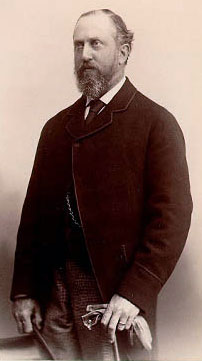
After Frederick Stanley, 1st Baron Stanley of Preston (later the 16th Earl of Derby) was appointed by Queen Victoria as governor general of Canada on June 11, 1888, he and his family became highly enthusiastic about ice hockey.[8] Stanley was first exposed to the game at Montreal's 1889 Winter Carnival, where he saw the Montreal Victorias play the Montreal Hockey Club.[9][10] The Montreal Gazette reported that he "expressed his great delight with the game of hockey and the expertise of the players".[8] During that time, organized ice hockey in Canada was still in its infancy and only Montreal and Ottawa had anything resembling leagues.[8]
انخرطت عائلة ستانلي بأكملها في رياضة هوكي الجليد. شكّل اثنان من أبنائه، آرثر وألجيرنون، فريقًا جديدًا أطلقوا عليه اسم " متمردو أوتاوا ريدو هول" . [ 11 ] كما لعب آرثر دورًا محوريًا في تأسيس ما عُرف لاحقًا باسم " رابطة هوكي أونتاريو " (OHA)، وأصبح مؤسس رياضة هوكي الجليد في بريطانيا العظمى. [ 12 ] أقنع آرثر وألجيرنون والدهما بالتبرع بكأس ليكون "علامة ظاهرة وواضحة على بطولة الهوكي". [ 11 ] أرسل ستانلي الرسالة التالية إلى احتفال النصر الذي أُقيم في 18 مارس 1892 في فندق راسل هاوس في أوتاوا، تكريمًا لنادي أوتاوا للهوكي، بطل البطولة ثلاث مرات : [ 8 ] [ 13 ] [ 14 ]
لقد كنت أفكر منذ فترة أنه سيكون من الجيد لو كانت هناك بطولة كأس التحدي التي يجب أن يقام كل عام من قبل فريق الهوكي البطل في دومينيون [كندا].
لا يبدو أن هناك أي علامة خارجية على وجود بطولة في الوقت الحالي، وبالنظر إلى الاهتمام العام الذي تثيره المباريات الآن، وأهمية لعب اللعبة بنزاهة ووفقًا لقواعد معترف بها عمومًا، فأنا على استعداد لمنح كأس يحتفظ بها الفريق الفائز عامًا بعد عام.
لست متأكدًا تمامًا من أن اللوائح الحالية التي تحكم ترتيب المباريات تحقق الرضا الكامل، وسيكون من الجدير بالبحث ما إذا كان من الممكن ترتيبها بحيث يلعب كل فريق مرة واحدة على أرضه ومرة واحدة في المكان الذي ينتمي إليه خصومه. [ 13 ]
بعد ذلك بوقت قصير، اشترى ستانلي ما يُوصف غالبًا بأنه وعاء زينة للمشروبات ، لكن خبير الفضة جون كولم عرّفه بأنه وعاء للورود، [ 15 ] صُنع في شيفيلد ، إنجلترا، وباعه صائغ الفضة اللندني جي آر كوليس وشركاه (الذي يُعرف الآن باسم بودل ودونثورن للمجوهرات)، مقابل عشرة جنيهات ، أي ما يعادل عشرة جنيهات ونصف من الجنيه الإسترليني، أو 48.67 دولارًا أمريكيًا، وهو ما يعادل 1744 دولارًا أمريكيًا في عام 2025. [ 8 ] [ 16 ] وقد نقش عبارة "كأس تحدي دومينيون للهوكي" على أحد جانبي الحافة الخارجية، وعبارة "من ستانلي من بريستون" على الجانب الآخر. [ 17 ] أُطلق عليه اسم "كأس ستانلي" في وقت مبكر من 1 مايو 1893، عندما استخدمت مقالة في صحيفة أوتاوا جورنال الاسم كعنوان. [ 18 ]
في الأصل، كان ستانلي ينوي منح الكأس لأفضل فريق هوكي للهواة في كندا، على أن يتم تحديد الفائز بقبول تحدٍ من فريق آخر. وقد وضع خمسة لوائح تمهيدية: [ 8 ] [ 14 ]
- يتعين على الفائزين إعادة الكأس بحالة جيدة عندما يطلب ذلك الأمناء حتى يتم تسليمها إلى أي فريق آخر قد يفوز بها.
- يحق لكل فريق فائز، وعلى نفقته الخاصة، نقش اسم النادي والسنة على حلقة فضية مثبتة على الكأس.
- ستبقى الكأس كأسًا للتحدي، ولا ينبغي أن تصبح ملكًا لفريق واحد، حتى لو فاز بها أكثر من مرة.
- يحتفظ الأمناء بسلطة مطلقة في جميع الحالات أو النزاعات المتعلقة بالفائز بالكأس.
- إذا استقال أحد الأمناء الحاليين أو انسحب، فعلى الأمين المتبقي ترشيح بديل.
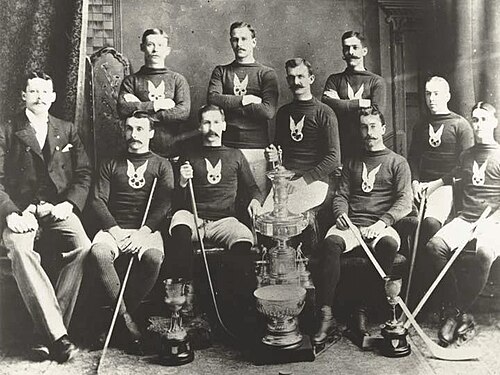
عيّن ستانلي الشريف جون سويتلاند وفيليب د. روس (الذي خدم لمدة 56 عامًا، وهي مدة غير مسبوقة) كأمينين على الكأس. وقدّم سويتلاند وروس الكأس لأول مرة عام 1893 إلى جمعية مونتريال الرياضية للهواة نيابةً عن نادي مونتريال للهوكي التابع لها، بطل رابطة هوكي الهواة الكندية (AHAC)، نظرًا لتفوقهم على جميع المنافسين في أواخر الموسم، بما في ذلك أبطال رابطة أونتاريو (أوتاوا). [ 19 ] كما اعتقد سويتلاند وروس أن رابطة هوكي الهواة الكندية هي الدوري الأفضل، وباعتبار مونتريال الفريق الفائز بالمركز الأول فيها، فقد كان أفضل فريق في كندا. [ 20 ] وبطبيعة الحال، استاء فريق أوتاوا من هذا القرار لعدم وجود مباريات فاصلة مقررة، ولأن الأمينين لم يوضحا قواعد منح الكأس قبل بداية الموسم. [ 20 ]
ونتيجة لذلك، أصدر أمناء الكأس قواعد أكثر تحديدًا حول كيفية الدفاع عن الكأس ومنحها: [ 21 ] [ 22 ]
- يتم منح الكأس تلقائيًا للفريق الذي يفوز بلقب دوري أبطال الكأس السابق، دون الحاجة إلى أي مسابقة إضافية خاصة أخرى.
- يجب أن يكون المتنافسون على الكأس من اتحادات الهوكي للكبار، وأن يكونوا قد فازوا ببطولة الدوري. سيتم تكريم المتنافسين حسب ترتيب استلام طلباتهم.
- تُحسم مباريات التحدي (التي قد ينتقل فيها الفائز بالكأس بين الدوريات) إما بمباراة واحدة، أو مباراتين بنظام مجموع الأهداف، أو سلسلة من ثلاث مباريات، بما يعود بالفائدة على كلا الفريقين. تُقام جميع المباريات على أرض الفريق البطل، مع ضرورة موافقة مجلس الأمناء على التواريخ والأوقات المحددة.
- Ticket receipts from the challenge games are to be split equally between both teams.
- If the two competing clubs cannot agree to a referee, the trustees will appoint one, and the two teams shall cover the expenses equally.
- A league could not challenge for the Cup twice in one season.
Lord Stanley never saw a Stanley Cup championship game, nor did he ever present the Cup. Although his term as Governor General ended in September 1893, he was forced to return to England on July 15. In April of that year, his older brother Edward Stanley, 15th Earl of Derby died without issue, and Stanley succeeded him as the 16th Earl of Derby.[12]
Challenge Cup era
During the challenge cup period, none of the leagues that played for the trophy had a formal playoff system to decide their respective champions; whichever team finished in first place after the regular season won the league title. However, in 1894, four teams out of the five-team AHAC tied for the championship with records of 5–3–0. The AHAC had no tie-breaking system. After extensive negotiations and Quebec's withdrawal from the championship competition, it was decided that a three-team tournament would take place in Montreal, with the Ottawa team receiving a bye to the final because they were the only road team. On March 17, in the first Stanley Cup playoff game, the Montreal Hockey Club (Montreal HC) defeated the Montreal Victorias, 3–2. Five days later, in the first Stanley Cup Final game, Montreal HC beat the Ottawa Hockey Club 3–1.[23][24]

In 1895, Queen's University was the first official challenger for the Cup, although it was controversial. The Montreal Victorias had won the league title and thus the Stanley Cup, but the challenge match was between the previous year's champion, Montreal HC, and the university squad. The trustees decided that if the Montreal HC won the challenge match, the Victorias would become the Stanley Cup champions. The Montreal HC won the match 5–1 and their cross-town rivals were crowned the champions.[25] The first successful challenge to the Cup came the next year by the Winnipeg Victorias, the champions of the Manitoba Hockey League. On February 14, 1896, the Winnipeg squad defeated the champions 2–0 and became the first team outside the AHAC to win the Cup.[26]
مع ازدياد هيبة الفوز بالكأس، ازدادت الحاجة إلى استقطاب أفضل اللاعبين. بعد تسعة أشهر فقط من الفوز بالكأس، في مارس 1906، مرر فريق مونتريال واندررز قرارًا في الاجتماع السنوي لرابطة هوكي شرق كندا للهواة (ECAHA) يسمح للاعبين المحترفين باللعب جنبًا إلى جنب مع الهواة. وافق أمناء الكأس على فتح باب المنافسة أمام الفرق المحترفة، لأن رابطة هوكي شرق كندا للهواة كانت آنذاك أقوى دوري هوكي في كندا. [ 27 ] وجاءت أول منافسة احترافية بعد شهر واحد خلال سلسلة تحدي الأهداف المكونة من مباراتين لفريق واندررز، والتي فازوا بها بنتيجة 17 هدفًا مقابل 5. [ 28 ]
أصغر بلدية تُنجب فريقًا فائزًا بكأس ستانلي هي كينورا ، أونتاريو؛ كان عدد سكانها حوالي 4000 نسمة عندما فاز فريق كينورا ثيستلز بالكأس في يناير 1907. [ 29 ] بقيادة آرت روس و"باد" جو هول ، اللذين انضما لاحقًا إلى قاعة مشاهير الهوكي، هزم فريق ثيستلز فريق مونتريال واندررز في سلسلة من مباراتين، حُسمت بفارق الأهداف. نجح فريق ثيستلز في الدفاع عن الكأس مرة واحدة، ضد فريق من براندون، مانيتوبا . في مارس 1907، تحدى فريق واندررز فريق ثيستلز لمباراة إعادة. على الرغم من تحسن تشكيلة فريق ثيستلز، إلا أنهم خسروا الكأس لصالح مونتريال.
في عام ١٩٠٨، تم تقديم كأس آلان كجائزة للهواة في كندا، وبدأ كأس ستانلي يكتسب رمزًا لتفوق رياضة الهوكي الاحترافية. [ ٢٧ ] في العام نفسه، تنافس أول فريق محترف بالكامل، وهو فريق تورنتو ترولي ليغرز من دوري أونتاريو للهوكي الاحترافي (OPHL) الذي تم إنشاؤه حديثًا، على الكأس. [ ٣٠ ] بعد عام واحد، انسحب فريقا مونتريال إتش سي ومونتريال فيكتورياز، وهما الفريقان الهواة المتبقيان، من رابطة هوكي شرق كندا (ECAHA)، وقامت الرابطة بحذف كلمة "هواة" من اسمها لتصبح دوريًا احترافيًا. [ ٢٧ ] في عام ١٩١٠، تم تأسيس الرابطة الوطنية للهوكي (NHA). وسرعان ما أثبتت الرابطة الوطنية للهوكي أنها الأفضل في كندا، حيث احتفظت بالكأس للأربع سنوات التالية. [ ٣١ ]
قبل عام 1912، كان من الممكن إقامة التحديات في أي وقت أو مكان، شريطة توفر الظروف المناسبة لحلبة التزلج، وكان من الشائع أن تدافع الفرق عن الكأس عدة مرات خلال العام. في عام 1912، أعلن أمناء الكأس أنه لا يجوز الدفاع عنها إلا في نهاية الموسم العادي للفريق البطل. [ 32 ]
منافسة منظمة بين الدوريات
في عام ١٩١٤، تحدّى فريق فيكتوريا أريستوكراتس، التابع لرابطة هوكي ساحل المحيط الهادئ (PCHA)، فريق تورنتو بلوزشيرتس، بطل كأس ستانلي ورابطة هوكي الساحل الشمالي (NHA) . واندلعت ضجةٌ عندما وصلت رسالةٌ من أمناء كأس ستانلي في ١٧ مارس، تفيد بأنهم لن يسمحوا بنقل الكأس غربًا، لأنهم لا يعتبرون فيكتوريا منافسًا مناسبًا لعدم إخطارهم الأمناء رسميًا. [ ٣٣ ] إلا أنه في ١٨ مارس، صرّح الأمين ويليام فوران بأن الأمر كان سوء فهم. لم يقدّم رئيس رابطة هوكي ساحل المحيط الهادئ، فرانك باتريك، التحدي، لأنه كان يتوقع أن يتولى إيميت كوين، من رابطة هوكي الساحل الشمالي، جميع الترتيبات بصفته مفوضًا للهوكي، بينما اعتقد الأمناء أنهم يُتجاهلون عمدًا. على أي حال، تمّت تسوية جميع الترتيبات وقُبل تحدّي فيكتوريا. [ ٣٤ ] [ ٣٥ ]
بعد عدة أيام، كتب فوران، أحد أمناء الاتحاد، إلى كوين، رئيس اتحاد هوكي المحترفين الوطني (NHA)، أن الأمناء "راضون تمامًا عن السماح لممثلي الدوريات الاحترافية الثلاثة (NHA وPCHA و Maritime ) بوضع جميع الترتيبات المتعلقة بسلسلة المباريات التي ستُلعب على الكأس في كل موسم". [ 36 ] بعد عام، عندما انهار دوري Maritime، أبرم اتحاد هوكي المحترفين الوطني (NHA) ودوري هوكي المحترفين في المحيط الهادئ (PCHA) اتفاقًا شفهيًا يقضي بمواجهة أبطال كل منهما على الكأس، على غرار بطولة العالم للبيسبول ، التي تُقام بين بطل الدوري الأمريكي وبطل الدوري الوطني . وبموجب الاقتراح الجديد، تناوبت سلسلة نهائيات كأس ستانلي بين الشرق والغرب كل عام، مع لعب المباريات بالتناوب وفقًا لقواعد اتحاد هوكي المحترفين الوطني (NHA) ودوري هوكي المحترفين في المحيط الهادئ (PCHA). [ 37 ] فاز فريق فانكوفر مليونيرز التابع لدوري هوكي المحترفين في المحيط الهادئ (PCHA) بسلسلة عام 1915 بثلاث مباريات مقابل لا شيء في سلسلة من خمس مباريات. [ 38 ]
Prior to organized ice hockey expanding to any serious extent outside Canada, the concept that the Stanley Cup champion ought to be recognized as the world champion was already firmly established – Stanley Cup winners were claiming the title of world champions by no later than the turn of the century. After the Portland Rosebuds, an American-based team, joined the PCHA in 1914, the trustees promptly issued a formal statement that the Cup was no longer for the best team in Canada, but now for the best team in the world.[37] Ice hockey in Europe was still in its infancy at this time, so it was without much controversy that winners of the Stanley Cup continued styling themselves as the world champions just like in baseball. Two years later, the Rosebuds became the first American-based team to play in the Stanley Cup Final, although all its players were Canadian.[39] In 1917, the Seattle Metropolitans became the first American-based team to win the Cup.[40] After that season, the NHA dissolved, and the National Hockey League (NHL) took its place.[37]
The Spanish influenza epidemic forced the Montreal Canadiens and the Seattle Metropolitans to cancel the 1919 Stanley Cup Final after game five, marking the first time the Stanley Cup was not awarded.[41] The series was tied at 2–2–1, but the final game was never played because Montreal Manager George Kennedy and players Joe Hall, Billy Coutu, Jack McDonald, and Newsy Lalonde were hospitalized with influenza. Hall died four days after the cancelled game, and the series was abandoned.[42]
The format for the Stanley Cup Final changed in 1922, with the creation of the Western Canada Hockey League (WCHL). Three leagues competed for the Cup: two league champions faced each other for the right to challenge the third champion in the final series.[43] This lasted three seasons as the PCHA and the WCHL later merged to form the Western Hockey League (WHL) in 1925.[44] In 1924–25 the Victoria Cougars won the Cup, the last team outside the NHL to do so.[45]
NHL takes over
The WHL folded in 1926 and was quickly replaced by the Prairie Hockey League. However, in the meantime, the NHL (which had entered the U.S. only two years before) bought up the contracts of most of the WHL's players and largely used them to stock the rosters of three new U.S. teams. In what would turn out to be its most significant expansion of its pre-Original Six era, the Chicago Black Hawks, Detroit Cougars (now called the Detroit Red Wings), and New York Rangers joined the NHL. With the NHL now firmly established in the largest markets of the northeastern United States, and with the western teams having been stripped of their best players, the PHL was deemed to be a "minor league" unworthy of challenging the NHL for hockey supremacy.
The PHL lasted only two seasons. Over the next two decades other leagues and clubs occasionally issued challenges, but none were accepted by the Cup's trustees. Since 1926, no non-NHL team has played for the Cup, leading it to become the de facto championship trophy of the NHL.[44][46] In addition, with no major professional hockey league left to challenge it, the NHL began calling its league champions the world champions, notwithstanding the lack of any interleague championship. In doing so, the NHL copied a policy that had been adopted by the then still-fledgling National Football League from its start in 1920 (and which the National Basketball Association also asserted upon its founding in 1946).
Finally in 1947, the NHL reached an agreement with trustee and former NHL referee J. Cooper Smeaton to grant control of the Cup to the NHL, allowing the league to reject challenges from other leagues that may have wished to play for the Cup:[46][47][48]
- The Trustees hereby delegate to the League full authority to determine and amend from time to time the conditions for competition of the Stanley Cup, including the qualifications of challengers, the appointment of officials, the apportionment and distribution of all gate receipts, provided always that the winners of this trophy shall be the acknowledged World's Professional Hockey Champions.
- يوافق الأمناء على أنهم خلال فترة سريان هذا الاتفاق لن يعترفوا أو يقبلوا أي تحدٍ لكأس ستانلي ما لم يكن هذا التحدي متوافقًا مع الشرط المحدد في الفقرة الأولى (1) منه.
- تتولى الرابطة مسؤولية رعاية وحفظ كأس ستانلي بشكل آمن، بما في ذلك جميع الإصلاحات والتعديلات اللازمة للكأس والهيكل الفرعي حسب الحاجة من وقت لآخر، كما تتعهد بتأمين كأس ستانلي بقيمته التأمينية الكاملة.
- تقر الرابطة بموجب هذا بأنها ملزمة للأمناء بمبلغ ألف دولار، ويشترط هذا السند إعادة كأس ستانلي سالمة إلى الأمناء وفقًا لشروط هذا الاتفاق، ويتفق على أن يكون للرابطة الحق في إعادة الكأس إلى الأمناء في أي وقت.
- يظل هذا الاتفاق ساري المفعول طالما استمر الدوري في كونه دوري الهوكي المحترف الرائد في العالم وفقًا لمستوى أدائه، وفي حالة حل أو إنهاء دوري الهوكي الوطني بأي شكل آخر، تعود كأس ستانلي إلى عهدة الأمناء.
- في حالة التخلف عن تعيين وصي جديد من قبل الوصي الباقي على قيد الحياة، يقوم "الأمناء" بموجب هذا بتفويض وتعيين حكام قاعة مشاهير الهوكي الدولية في كينغستون، أونتاريو، لتسمية اثنين من الأمناء الكنديين لمواصلة العمل بموجب شروط الوصية الأصلية، وبما يتوافق مع هذه الاتفاقية.
- واتفق الطرفان كذلك على أن أي نزاعات تنشأ بشأن تفسير هذا الاتفاق أو الوقائع التي يستند إليها هذا التفسير، تُحل بواسطة هيئة تحكيم مكونة من ثلاثة أعضاء، يعين كل طرف عضواً واحداً، ويختار العضو الثالث العضوان المعينان. ويكون قرار هيئة التحكيم نهائياً. [ 22 ]

كانت تُمنح الكأس سنويًا حتى عام 2005، حين أدى نزاع عمالي بين مالكي دوري الهوكي الوطني (NHL) ورابطة لاعبي NHL ( النقابة التي تمثل اللاعبين) إلى إلغاء موسم 2004-2005 . ونتيجةً لذلك، لم يُتوّج بطل للكأس لأول مرة منذ جائحة الإنفلونزا عام 1919. أثار الإغلاق جدلًا واسعًا بين العديد من المشجعين، الذين تساءلوا عما إذا كان دوري الهوكي الوطني يمتلك السيطرة الحصرية على الكأس. أُطلق موقع إلكتروني باسم freestanley.com (أُغلق لاحقًا)، يدعو المشجعين إلى مراسلة أمناء الكأس وحثّهم على العودة إلى نظام كأس التحدي الأصلي. [ 49 ] اقترحت أدريان كلاركسون ، الحاكمة العامة لكندا آنذاك، بديلًا عن ذلك، تقديم الكأس لأفضل فريق هوكي نسائي بدلًا من موسم دوري الهوكي الوطني. لم يلقَ هذا الاقتراح استحسانًا، ما دفع إلى استحداث كأس كلاركسون . في غضون ذلك، قدمت مجموعة في أونتاريو، تُعرف أيضًا باسم "مشجعي ليالي الأربعاء"، طلبًا إلى المحكمة العليا في أونتاريو، زاعمةً أن أمناء كأس ستانلي قد تجاوزوا صلاحياتهم بتوقيع اتفاقية عام 1947 مع دوري الهوكي الوطني، وبالتالي يجب عليهم منح الكأس بغض النظر عن الإضراب. [ 50 ]
في 7 فبراير 2006، تم التوصل إلى تسوية تسمح بمنح الكأس لفرق من خارج دوري الهوكي الوطني (NHL) في حال توقف الدوري لموسم كامل. استمر النزاع لفترة طويلة، حتى أنه بحلول وقت التسوية، كان دوري الهوكي الوطني قد استأنف نشاطه لموسم 2005-2006 ، ولم يُطالب أحد بكأس ستانلي لموسم 2004-2005. [ 48 ] علاوة على ذلك، عندما بدأ إضراب آخر لدوري الهوكي الوطني في عام 2012، صرّح الأمناء بأن اتفاقية 2006 لا تُلزمهم بمنح الكأس في حال إلغاء الموسم، وأنهم سيرفضون على الأرجح أي مطالبات من فرق من خارج دوري الهوكي الوطني بالكأس في حال إلغاء موسم 2012-2013، وهو ما لم يحدث. [ 4 ]
في عام 2007، أقرّ الاتحاد الدولي لهوكي الجليد (IIHF) رسميًا " نادي الثلاثية الذهبية "، وهو مجموعة من اللاعبين والمدربين الذين فازوا بميدالية ذهبية في الألعاب الأولمبية ، وميدالية ذهبية في بطولة العالم ، وكأس ستانلي. [ 51 ] [ 52 ] [ 53 ] وقد شاع استخدام هذا المصطلح لأول مرة بعد دورة الألعاب الأولمبية الشتوية لعام 2002 ، والتي شهدت انضمام أول الأعضاء الكنديين. [ 54 ] [ 55 ] [ 56 ]
Since the NHL took over the Cup, the latest in the calendar year the Cup has been awarded was in late June. However, due to the COVID-19 pandemic, the 2019–20 season was paused with less than a month in the regular season.[57] In July, 2020, the NHL implemented their Return to Play plan with an expanded playoffs, having 24 teams play instead of the usual 16.[58] The Cup was awarded to the Tampa Bay Lightning on September 28.[59] The next season, the Cup was awarded July 7, 2021, leaving only August, October, and November as the only months the Cup that have not been awarded.[60]
125th anniversary
In March 2017, to commemorate the Stanley Cup's 125th anniversary, the original Cup and the current Stanley Cup were the focus of a four-day tour of Ottawa, including a stop at Rideau Hall.[61] The Royal Canadian Mint produced two commemorative coins to mark the anniversary.[62] The first is a roll of Canadian quarters with an image of the Stanley Cup, the word Stanley Cup in English and Coupe Stanley in French with two ice hockey players and "125 years/ans" on the reverse and an effigy of Queen Elizabeth II on the obverse using plated steel. The second coin was designed with the Stanley Cup on the reverse and an effigy of Elizabeth II, "Stanley Cup" in English and "Coupe Stanley" in French and "50 dollars" above the effigy. It was made using 99.9% silver.
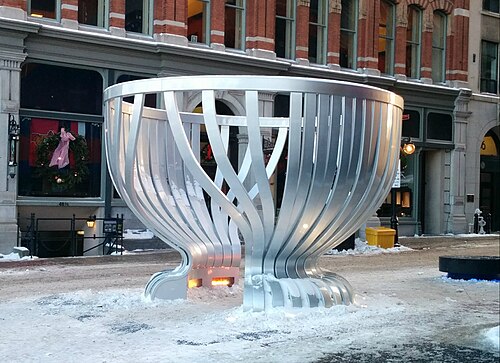
In October 2017, the Lord Stanley's Gift Monument, commemorating the donation of the Stanley Cup, was erected in Ottawa at Sparks Street and Elgin Street, near the location of the dinner party announcing the Cup at the Russell House, which has since been demolished.[63]
Engraving
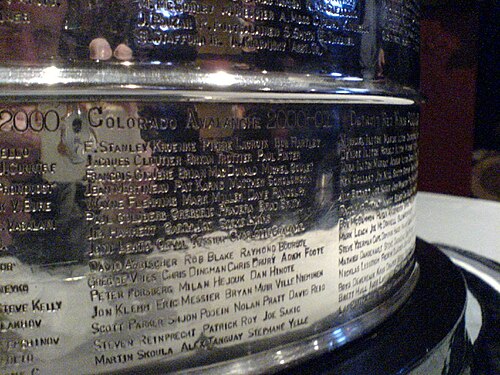
Like the Grey Cup, awarded to the winner of the Canadian Football League, the Stanley Cup is engraved with the names of the winning players, coaches, management, and club staff. However, this was not always the case: one of Lord Stanley's original conditions was that each team could, at their own expense, add a ring to the Cup to commemorate their victory.[8][14] Initially, there was only one base ring, which was attached to the bottom of the original bowl by the Montreal Hockey Club. Clubs engraved their team names, usually in the form "TEAM NAME" "YEAR WON", on that one ring until it was full in 1902. With no more room to engrave their names (and unwilling to pay for a second band), teams left their mark on the bowl itself. The 1907 Montreal Wanderers became the first club to record their name on the bowl's interior surface, and the first champion to record the names of 20 members of their team.[64]
In 1908, for reasons unknown, the Wanderers, despite having turned aside four challengers, did not record their names on the Cup. The next year, the Ottawa Senators added a second band onto the Cup. Despite the new room, the 1910 Wanderers and the 1911 Senators did not put their names on the Cup. The 1915 Vancouver Millionaires became the second team to engrave players' names, this time inside the bowl along its sides.[64]
The 1918 Millionaires eventually filled the band added by the 1909 Senators.[64] The 1915 Ottawa Senators, the 1916 Portland Rosebuds and the 1918 Vancouver Millionaires all engraved their names on the trophy even though they did not officially win it under the new PCHA-NHA system. They had won the title of only the previous champion's league and would have been crowned as Cup champions under the old challenge rules. The winners in 1918 and 1920 to 1923 did not put their winning team name on it.[65]
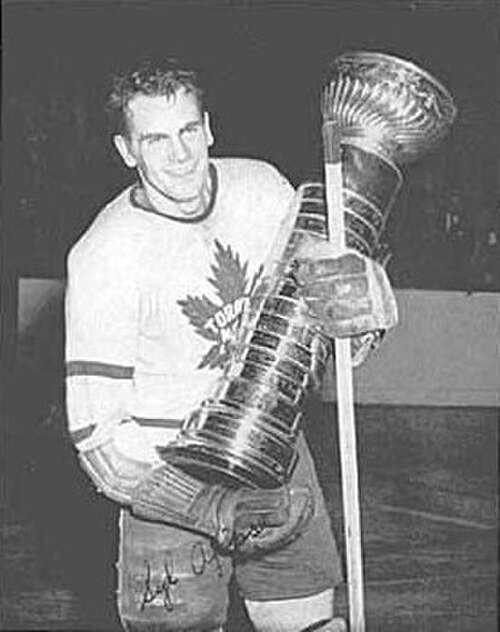

لم تُضَف أي نقوش أخرى حتى عام ١٩٢٤، عندما أضاف فريق مونتريال كانيديينز شريطًا جديدًا إلى الكأس. [ ٦٤ ] ومنذ ذلك الحين، أصبح نقش اسم الفريق ولاعبيه تقليدًا سنويًا ثابتًا. في البداية، كان يُضاف شريط جديد كل عام، مما أدى إلى زيادة حجم الكأس. أصبحت "كأس المدخنة"، كما لُقّبت لتشابهها مع أنبوب عادم الموقد، ضخمة جدًا، لذا أُعيد تصميمها في عام ١٩٤٨ لتصبح كأسًا من قطعتين على شكل سيجار مع وعاء وطوق قابلين للإزالة. كرّمت هذه الكأس أيضًا الفرق التي لم تنقش أسماءها عليها. كما تضمنت الكأس مباراة موسم ١٩١٨-١٩١٩ التي لم تُحسم نتيجتها بين فريقي مونتريال كانيديينز وسياتل ميتروبوليتانز. [ ٦٦ ]
منذ عام 1958، خضعت الكأس لعدة تعديلات طفيفة. كان الطوق والوعاء الأصليان هشين للغاية، فتم استبدالهما في عامي 1963 و1969 على التوالي. تم تقديم تصميم الكأس الحديث المكون من قطعة واحدة في عام 1958، عندما استُبدل البرميل القديم ببرميل ذي خمسة أشرطة، يمكن لكل منها أن يحمل أسماء 13 فريقًا فائزًا. [ 67 ] على الرغم من أن الأشرطة صُممت في الأصل لتمتلئ خلال احتفال الكأس بمرور مئة عام على تأسيسها في عام 1992، إلا أن أسماء فريق مونتريال كانيديينز لعام 1965 نُقشت على مساحة أكبر من المخصصة، وبالتالي يوجد 12 فريقًا على ذلك الشريط بدلًا من 13. [ 68 ] عندما امتلأت جميع الأشرطة في عام 1991، حُفظ الشريط العلوي من البرميل الكبير في قاعة مشاهير الهوكي، وأُضيف شريط فارغ جديد إلى الأسفل حتى لا يزداد حجم كأس ستانلي. [ 68 ]
كان من المقرر إضافة حلقة جديدة إلى أسفل الكأس بعد موسم 2004-2005، ولكن لم تُضَف بسبب إضراب لاعبي دوري الهوكي الوطني في ذلك الموسم. بعد تتويج فريق كارولينا هوريكانز بطلاً لموسم 2005-2006 ، وإضافة الحلقة السفلية الجديدة أخيرًا (مع إلغاء الحلقة التي تحمل أسماء أبطال المواسم من 1940-1941 إلى 1952-1953)، تم الإعلان عن إلغاء الموسم بعبارة "لم يُلعب موسم 2004-2005". [ 69 ]
بعد تتويج فريق واشنطن كابيتالز بطلاً لموسم 2017-2018 ، أُزيل الشريط الذي يحمل أسماء الفائزين من مواسم 1953-1954 إلى 1964-1965 في سبتمبر 2018، وأُضيف شريط جديد لأبطال المواسم من 2017-2018 إلى 2029-2030 إلى أسفل الكأس. [ 70 ] [ 71 ] منذ اعتماد الكأس ذي الأشرطة الخمسة، يُعرض اسم كل فريق محفور على الكأس بين عامي 52 و65 (مع أن هذه المدة خُفِّضت عملياً بسنة واحدة لأن شريط 1953-1965 كان يضم 12 فريقاً فقط قبل إزالته)، وذلك بحسب ترتيب نقش أسماء الفرق على الشريط المخصص لها. [ 6 ]
There have only been four official Stanley Cup engravers. The fourth and current one, Montreal silversmith Louise St. Jacques, has held the position since 1988.[72][73]
Currently, the Cup stands at 89.5 centimetres (35+1⁄4 inches) tall and weighs 15+1⁄2 kilograms (34+1⁄2 lb).[5] By its 125th anniversary in 2017, the Stanley Cup had had 3,177 names engraved on it; of those, 1,331 belong to players.[74]
Name inscriptions
Currently, to qualify for automatic engraving, a player must have played, or have dressed as the backup goaltender, for at least half of the championship team's regular season games, or have played, or have dressed as the backup goaltender, for at least one game of the Stanley Cup Final for the championship team.[75] However, since 1994, teams have been permitted to petition the NHL Commissioner, to be considered on a case-by-case basis, to engrave a player's name on the cup if the player was unavailable to play due to "extenuating circumstances".[76] For example, the Chicago Blackhawks received special permission from the NHL to inscribe the names of Daniel Carcillo and Joakim Nordström in 2015 despite not meeting the automatic qualifications.[77]
With the Montreal Canadiens winning by far the most Cup championships of any team, the list of the players who have been engraved on the Cup the most often is dominated by Montreal players. Henri Richard of the Canadiens, with his name engraved eleven times, played on more Stanley Cup champions than any other player. He is followed by Jean Béliveau and Yvan Cournoyer of the Canadiens with ten championships, Claude Provost of the Canadiens with nine, and three players tied with eight: Red Kelly (four with the Red Wings, four with the Leafs, the most for any player who was not a member of the Canadiens) and Canadiens players Jacques Lemaire, Maurice Richard. Beliveau's name appears on the Cup more than any other individual, ten times as a player and seven times as management for a total of seventeen times.[78]
Twenty women have had their names engraved on the Stanley Cup. The first woman to have her name engraved on the Stanley Cup is Marguerite Norris, who won the Cup as the president of the Detroit Red Wings in 1954 and 1955.[79] The only Canadian woman to have her name engraved on the Stanley Cup is Sonia Scurfield who won the Cup as a co-owner of the Calgary Flames in 1989.[80][5]
Engraving errors
There are several misspellings on the Cup. Many of them have never been corrected. Examples include:[5][76][81]
- Pat McReavy's name is misspelled "McCeavy" as a member of the 1941 Boston Bruins on the second cup created during the 1957–58 season. McReavy's name was often misspelled as "McCreavy" on team pictures of the Boston Bruins. When the Replica Cup was created in 1992–93, the misspelling was not corrected.
- Dickie Moore, who won the Cup six times, had his name spelled differently five times (D. Moore, Richard Moore, R. Moore, Dickie Moore, Rich Moore).
- Similarly, Jacques Plante won the Cup five times in a row, and his name was spelled differently each time.
- Glenn Hall's name was misspelled as "Glin" in 1951–52.
- Alex Delvecchio's name was misspelled as "Belvecchio" in 1954.
- Bob Gainey was spelled "Gainy" when he was a player for Montreal in the 1970s.
- Ted Kennedy was spelled "Kennedyy" in the 1940s.
- Toronto Maple Leafs was spelled "Leaes" in 1963.
- Boston Bruins was spelled "BQSTQN" in 1972.
- New York Islanders was spelled "Ilanders" in 1981.
- In 1996, Colorado Avalanche winger Adam Deadmarsh had his surname misspelled as "Deadmarch". It was later corrected, marking the first correction on the Cup. Similar corrections were made in 2002, 2006 and 2010 for the names of Detroit Red Wings goalie Manny Legace ("Lagace"), Carolina Hurricanes forward Eric Staal ("Staaal") and Chicago Blackhawks forward Kris Versteeg ("Vertseeg").[82]
Scratched-out names

The following names were later scratched out with a series of "X"s:
- Peter Pocklington, then-owner of the Edmonton Oilers, put his father's name, Basil, on the Stanley Cup in 1984. Because Basil had no affiliation with the Oilers or the NHL at all, the league had his name stricken.[83]
- Brad Aldrich, the Chicago Blackhawks video review coach during their Stanley Cup run in 2010, was stricken from the Stanley Cup at the team's request in 2021, following the conclusion of an investigation that revealed he had sexually abused former Blackhawks prospect Kyle Beach, among others.[84]
Traditions and anecdotes


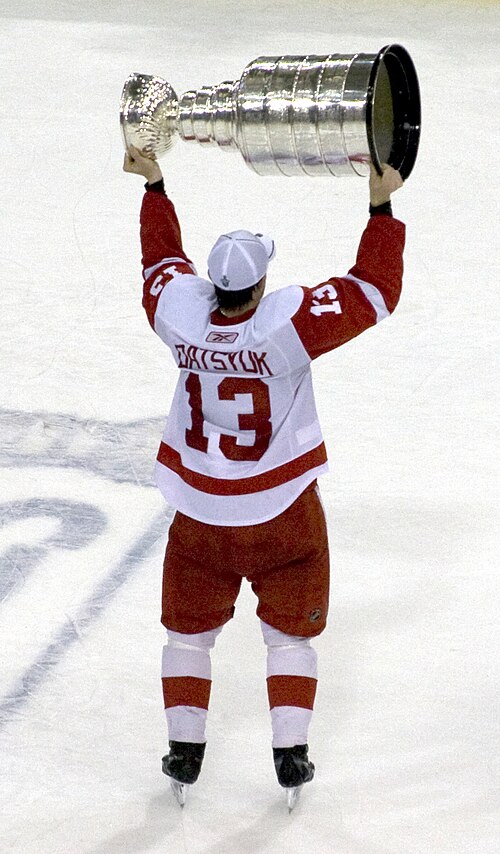
There are many traditions associated with the Stanley Cup. One of the oldest, started by the 1896 Winnipeg Victorias, dictates that the winning team drink champagne from the top bowl after their victory.[85] The Cup is also traditionally presented on the ice by the NHL commissioner to the captain of the winning team after the series-winning game; each member of the victorious club carries the trophy around the rink. However, this has not always been the case; prior to the 1930s, the Cup was not awarded immediately after the victory. The first time that the Cup was awarded on the ice may have been to the 1932 Toronto Maple Leafs, but the practice did not become a tradition until the 1950s.[85]Ted Lindsay of the 1950 Cup champion Detroit Red Wings became the first captain, upon receiving the Cup, to hoist it overhead and skate around the rink. According to Lindsay, he did so to allow the fans to have a better view of the Cup. Since then, it has been a tradition for each member of the winning team, beginning with the captain, to take a lap around the ice with the trophy hoisted above his head.[85]
The tradition of the captain first hoisting the Cup has been "breached" a few times. In 1987 after the Edmonton Oilers defeated the Philadelphia Flyers, Wayne Gretzky handed the Cup to Steve Smith, a year after Smith made a costly gaffe that cost the Oilers the chance of making their fourth consecutive Stanley Cup Final appearance.[86] The second occurred in 1993 after the Montreal Canadiens defeated the Los Angeles Kings, Guy Carbonneau handed the Cup to Denis Savard, as Savard had been the player that many fans had urged the Canadiens to draft back in 1980.[87] The third was in 2001 involving Joe Sakic and Ray Bourque when the Colorado Avalanche won the Cup in 2001, as the seventh and deciding game of the Final was the last of Bourque's 22-year NHL career, having never been on a cup-winning team until that time (until being traded to the Avalanche on March 6, 2000, Bourque had played only for the Boston Bruins). When Sakic received the trophy, he did not hoist it, but instead immediately handed it to Bourque; Sakic then became the second player on the team to hoist the trophy.[88]
The Stanley Cup championship team is allotted 100 days during off-season to pass around the Cup. It is always accompanied by at least one representative from the Hockey Hall of Fame.[89] Although many players have unofficially spent a day in personal possession of the Cup, in 1995 the New Jersey Devils started a tradition wherein each member of the Cup-winning team is allowed to retain the Cup for a day.[90] After the 1994–95 season, the NHL made it mandatory that one of the official Cup handlers always be present while the Cup is passed around among players in the off-season.[91] This may have been related to Eddie Olczyk's handling of the Cup after the New York Rangers' 1994 win; Olczyk brought the Cup to the Meadowlands Racetrack, where Kentucky Derby winner Go for Gin stuck his head in it.[91][92][93]
On August 22, 2001, Colorado Avalanche Director of Finance Mark Waggoner carried the Stanley Cup to the summit of Mount Elbert, the highest point of Colorado.[94][95]
Victors of the Cup have used it to baptize their children. Three players (the New York Islanders' Clark Gillies, the Anaheim Ducks' Sean O'Donnell, and the Pittsburgh Penguins' Nick Bonino) even allowed their dogs to eat out of the Cup.[96][97]
Original, authenticated, and replica versions

There are technically three versions of the "Stanley Cup": the original 1892 bowl or Dominion Hockey Challenge Cup, 1963 authenticated "Presentation Cup", and the 1993 "Permanent Cup" at the Hall of Fame.
The original 1892 Dominion Hockey Challenge Cup, purchased and donated by Lord Stanley, was physically awarded to the Champions until 1970,[98] and is now displayed in the Vault Room at the Hockey Hall of Fame in Toronto, Ontario.[98]
The authenticated version or "Presentation Cup" was created in 1963 by Montreal silversmith Carl Petersen. NHL president Clarence Campbell felt that the original bowl was becoming too thin and fragile, and thus requested a duplicate trophy as a replacement.[99] The Presentation Cup is authenticated by the seal of the Hockey Hall of Fame on the bottom, which can be seen when winning players lift the Cup over their heads, and it is the one currently awarded to the champions of the playoffs and used for promotions.[67] This version was made in secret, and first awarded in 1964.[99]
The replica "Permanent Cup", was created in 1993 by Montreal silversmith Louise St. Jacques to be used as a stand-in at the Hockey Hall of Fame whenever the Presentation Cup is not available for display.[99]
As a morale booster
The Stanley Cup has been brought to military bases for both American and Canadian troops, as well as their NATO allies. In 2004, the Cup was displayed at MacDill Air Force Base, near Tampa, Florida. The event was later touted by officials at MacDill as "a huge morale booster for our troops".[100] In 2006, the Cup toured Marine Corps Base Camp Lejeune, North Carolina, where wounded Marines were given the opportunity to view and be photographed with the Cup.
In 2007, the Stanley Cup made its first trip into a combat zone. During the trip to Kandahar, Afghanistan from May 2 to 6, organized by the NHL, the Hockey Hall of Fame, the NHL Alumni and the Canadian Department of National Defence, the Cup was put on display for Canadian and other NATO troops. The Cup was not damaged when its host base sustained a rocket attack on May 3.[101][102]
The Stanley Cup was returned to Afghanistan as part of a "Team Canada visit" in March 2008.[103][104] In the spring of 2010 the Stanley Cup made its fourth trip to Afghanistan, accompanied by ex-players.[105]
On June 27, 2010, Chicago Blackhawks defencemanBrent Sopel paid tribute to his friend, former Toronto Maple Leafs general manager Brian Burke and Burke's late son, Brendan, by accompanying the Cup to the 2010 Chicago Gay Pride Parade.[106]
In 2018, the Cup was used to improve the spirits of those who were affected by either of two significant events which claimed the lives of multiple individuals: the Humboldt Broncos' bus crash on April 6, and the Capital Gazette shooting on June 28. For the former, the Stanley Cup was brought to the hospital where the crash survivors were recuperating on April 15,[107] and for the latter, it was presented to Capital Gazette employees at their temporary office on July 3.[108][109]Chandler Stephenson of the 2018 Washington Capitals also spent his day with the Stanley Cup with the Broncos that August.[110]
Trustees
The regulations set down by Lord Stanley call for two trustees, who had the sole, joint right to govern the Cup and the conditions of its awarding until 1947 when they ceded control to the NHL. While the original regulations allow for a trustee to resign, to date, only Ian "Scotty" Morrison retired as trustee in 2023. All other trustees have served until their deaths. In the event of a vacancy, the remaining trustee names the replacement for the deceased or resigned trustee.[111]
See also
- Avco World Trophy, awarded to the champion of the defunct World Hockey Association
- List of awards named after governors general of Canada
- List of awards presented by the governor general of Canada
- قائمة بسلاسل مشاركات فرق دوري الهوكي الوطني في الأدوار الإقصائية
- قائمة فرق دوري الهوكي الوطني التي لم تتأهل للأدوار الإقصائية.
- قائمة مباريات تحدي كأس ستانلي
- قائمة أبطال كأس ستانلي
- كأس اللورد ديربي ، شعار بطولة دوري الرجبي الفرنسي الأولى بنظام خروج المغلوب، والتي سميت على اسم إدوارد ، نجل فريدريك ستانلي
ملحوظات
- 1 2 فاز فريق مونتريال كانيديينز بكأس ستانلي للمرة الأولى كعضو في الرابطة الوطنية للهوكي ، وفي المرات الـ 23 الأخيرة كعضو في دوري الهوكي الوطني .
مراجع
الحواشي
- ↑ بودنيكس، أندرو (25 مارس 2008). "حراس مرمى حائزون على ثلاث ميداليات ذهبية... لا" . الاتحاد الدولي لهوكي الجليد . مؤرشف من الأصل في 25 أغسطس 2017. تم الاطلاع عليه في 12 يونيو 2017 .
- ↑ "اللورد ستانلي (من بريستون)" . قاعة مشاهير ومتحف الهوكي . تم الاطلاع عليه في 10 يونيو 2015 .
- ↑ «ستبقى كأس ستانلي في مكانها، حتى لو تم إلغاء موسم دوري الهوكي الوطني» . صحيفة ناشيونال بوست . تم الاطلاع عليه بتاريخ 20 سبتمبر 2012 .
{{cite web}}: CS1 maint: deprecated archiveal service ( link ) - ١ ٢ "إذا لم تستخدمها رابطة الهوكي الوطنية، فهل يمكن لكندا استعادة كأس ستانلي؟" . Ctvnews.ca. ١٤ سبتمبر ٢٠١٢. تم الاطلاع عليه في ٢٠ سبتمبر ٢٠١٢ .
- 1 2 3 4 "حقائق وحقائق وأخطاء نقش كأس ستانلي" . قاعة مشاهير الهوكي . مؤرشف من الأصل في 26 أكتوبر 2011. تم الاطلاع عليه في 25 مايو 2008 .
- 1 2 "NHL.com - كأس ستانلي يتطور مجدداً مع استبعاد 12 بطلاً" . دوري الهوكي الوطني . تم الاطلاع عليه بتاريخ 23 فبراير 2021 .
- ↑ "هل ستُعرض بطولة كأس ستانلي قريبًا في غرفة معيشتك؟" . مجموعة سي إن دبليو. 2007. مؤرشف من الأصل في 7 مايو 2007. تم الاطلاع عليه في 8 أبريل 2007 .
- 1 2 3 4 5 6 7 بودنيكس 2004 ، ص. 3.
- ↑ "قاعة مشاهير الهوكي: يوميات كأس ستانلي 01" . مؤرشف من الأصل في 17 ديسمبر 2018. تم الاطلاع عليه في 13 مايو 2008 .
- ↑ "22 معلومة قد لا تعرفها عن كأس ستانلي" . 29 مايو 2017. تم الاطلاع عليه في 23 يوليو 2018 .
- 12Diamond 1992, p. 10.
- 12Diamond, Zweig & Duplacey 2003, p. 11.
- 12"Ottawa Journal article of dinner at Backcheck web site". Library and Archives Canada. Archived from the original on March 21, 2016. Retrieved November 3, 2007.
- 123"The Stanley Cup". National Hockey League. Archived from the original on July 2, 2009. Retrieved July 11, 2006.
- ↑Potter, Mitch (May 24, 2008). "Cup runneth over with cousins". Toronto Star. Retrieved June 10, 2015.
- ↑"Unraveling the mystery of Stanley". National Hockey League. Archived from the original on June 18, 2009. Retrieved July 11, 2006.
- ↑Zweig 2012, p. 15.
- ↑Ross 2015, p. 20.
- ↑Diamond 1992, p. 14.
- 12Podnieks 2004, p. 4.
- ↑Diamond, Zweig & Duplacey 2003, pp. 17–18.
- 12Podnieks 2004, p. 5.
- ↑Podnieks 2004, p. 20.
- ↑"Stanley Cup Winners: Montreal AAA 1893–94". Hockey Hall of Fame. Archived from the original on September 30, 2007. Retrieved July 11, 2006.
- ↑"Stanley Cup Winners: Montreal Victorias 1894–95". Hockey Hall of Fame. Archived from the original on March 7, 2008. Retrieved July 11, 2006.
- ↑"Stanley Cup Winners: Winnipeg Victorias 1895–96Feb". Hockey Hall of Fame. Archived from the original on September 30, 2007. Retrieved July 11, 2006.
- 123Diamond, Zweig & Duplacey 2003, p. 19.
- ↑Podnieks 2004, p. 37.
- ↑"Stanley Cup Winners: Kenora Thistles 1906–07Jan". Hockey Hall of Fame. Archived from the original on November 23, 2005. Retrieved July 24, 2006.
- ↑Diamond 1992, p. 38.
- ↑Diamond, Zweig & Duplacey 2003, p. 24.
- ↑"Stanley Cup Winners: Quebec Bulldogs 1911–12". Hockey Hall of Fame. Archived from the original on June 10, 2008. Retrieved July 11, 2006.
- ↑"Stanley Cup Contest May Not Be for the Mug, After All is Said". Saskatoon Phoenix. March 18, 1914. p. 8.
- ↑"A Tempest in a Teapot". Montreal Daily Mail. March 19, 1914. p. 9.
- ↑"Stanley Cup Muddle Cleared Up". The Globe and Mail. March 19, 1914.
- ↑"Three Pro Leagues as to Stanley Cup". Toronto World. March 25, 1914. p. 8.
- 123Diamond, Zweig & Duplacey 2003, p. 20.
- ↑"Stanley Cup Winners: Vancouver Millionaires 1914–15". Hockey Hall of Fame. Archived from the original on April 9, 2006. Retrieved July 11, 2006.
- ↑Diamond 1992, p. 46.
- ↑"Stanley Cup Winners: Seattle Metropolitans 1916–17". Hockey Hall of Fame. Archived from the original on September 30, 2007. Retrieved July 11, 2006.
- ↑Podnieks 2004, p. 51.
- ↑Diamond 1992, pp. 51–52.
- ↑Diamond, Zweig & Duplacey 2003, pp. 20–21.
- 12Diamond, Zweig & Duplacey 2003, p. 21.
- ↑"Stanley Cup Winners: Victoria Cougars 1924–25". Hockey Hall of Fame. Archived from the original on September 30, 2007. Retrieved July 11, 2006.
- 1 2 كريزر، جون (18 مارس 2013). "الجدول الزمني لكأس ستانلي، من عام 1892 إلى اليوم" . دوري الهوكي الوطني . مؤرشف من الأصل في 9 مارس 2016. تم الاسترجاع في 21 يونيو 2016 .
- ↑ دايموند، زويج ودوبلاسي 2003 ، ص 40.
- ١ ٢ "المحكمة: فرق من خارج دوري الهوكي الوطني قد تتنافس على الكأس" . TSN . ٧ فبراير ٢٠٠٦. مؤرشف من الأصل في ١٦ ديسمبر ٢٠٠٧. تم الاطلاع عليه في ١٥ يوليو ٢٠٠٦ .
- ↑ "الإغلاق يُذكّر لوي بصفقة غريتسكي" . TSN . 16 فبراير 2005. مؤرشف من الأصل في 29 سبتمبر 2007. تم الاطلاع عليه في 15 يوليو 2006 .
- ↑ "هواة يقاضون دوري الهوكي الوطني للمنافسة على الكأس" . إي إس بي إن . 13 أبريل 2005. تم الاطلاع عليه في 13 أكتوبر 2007 .
- ↑ "الفائز ببطولة الفرق الثلاثة سيحصل على كأس فيكتوريا" . إي إس بي إن . أسوشيتد برس. 8 مايو 2007. تم الاطلاع عليه في 9 فبراير 2009 .
- ↑ "نادي الذهب الثلاثي يتوسع إلى 22" . الاتحاد الدولي لهوكي الجليد . 5 يونيو 2008. مؤرشف من الأصل في 18 فبراير 2009. تم الاطلاع عليه في 8 فبراير 2009 .
- ↑ "الأنشطة الإعلامية والعلاقات العامة" . الاتحاد الدولي لهوكي الجليد . تم الاطلاع عليه بتاريخ 8 فبراير 2009 .
- ↑ بارنز، دون (25 فبراير 2002). "مرحباً بكم في نادي الثلاثية الذهبية: بليك، ساكيك، شاناهان: أعضاء جدد في النادي النخبوي: الألعاب الأولمبية، بطولة العالم، كأس ستانلي". ناشيونال بوست .
- ↑ سكانلان، واين (24 فبراير 2002). "نادي الذهب الثلاثي ينتظر الثلاثي الكندي". صحيفة إدمونتون جورنال .
- ↑ بوفري، ستيف (26 ديسمبر 2001). "التزلج على حافة الهاوية" . صحيفة تورنتو صن . مؤرشف من الأصل في 10 مارس 2016. تم الاطلاع عليه في 9 فبراير 2009 .
- ↑ كابلان، إميلي (12 مارس 2020). "دوري الهوكي الوطني يعلق اللعب فورًا بسبب فيروس كورونا" . ESPN.com . تم الاطلاع عليه في 1 يوليو 2026 .
- ↑Kaplan, Emily; Wyshnyski, Greg (July 6, 2020). "NHL return-to-play plans: Latest timeline, testing plans, bubble life details". ESPN.com. Retrieved July 1, 2026.
- ↑Whyno, Stephen (September 28, 2020). "Lightning take Stanley Cup with 2-0 Game 6 win over Dallas Stars". Fox13News.com. Retrieved July 1, 2026.
- ↑Whyno, Stephen (July 8, 2021). "Lightning strikes twice: Tampa Bay repeats as Cup champion". APNews.com. Retrieved July 1, 2026.
- ↑"Stanley Cup returns to Rideau Hall for 125th anniversary celebration". CBC News. March 16, 2017. Retrieved July 25, 2018.
- ↑"Royal Canadian Mint Helps Canadians Celebrate the 125th Anniversary of the Stanley Cup® with a New 25-Cent Circulation Coin". mint.ca. March 16, 2017. Archived from the original on November 15, 2018. Retrieved May 11, 2025.
- ↑"Invitation: Monument Unveiling". lordstanleysgift.com. October 18, 2017. Retrieved November 13, 2017.
- 1234Podnieks 2004, p. 12.
- ↑Diamond, Zweig & Duplacey 2003, p. 8.
- ↑Podnieks 2004, p. 13.
- 12Podnieks 2004, p. 9.
- 12Podnieks 2004, p. 14.
- ↑"Strike Up The Bands: The Stanley Cup is Stripped of a Ring; Cancelled 2004–05 Season Recognized". Hockey Hall of Fame. Archived from the original on August 20, 2007. Retrieved February 19, 2007.
- ↑Golen, Jimmy (April 4, 2018). "Stanley Cup saying goodbye to names of some of NHL's legends to make room for more players". Toronto Star. Associated Press. Retrieved April 4, 2018.
- ↑Oland, Ian (October 1, 2018). "A first look at the Washington Capitals' engraving on the Stanley Cup". RMNB. Retrieved June 13, 2019.
- ↑"Stanley Cup Journals: 10". Hockey Hall of Fame. June 30, 2003. Archived from the original on July 13, 2021. Retrieved July 13, 2021.
- ↑"The Stanley Cup: A sports trophy like no other". Los Angeles Times. September 23, 2012.
- ↑"Stanley Cup by the numbers". NHL.com. March 13, 2020. Retrieved September 16, 2020.
- ↑"Did You Know?". Records.NHL.com. Retrieved May 19, 2026.
- 12"NHL.com— Stanley Cup Fun Facts". National Hockey League. Archived from the original on August 10, 2010. Retrieved June 21, 2011.
- ↑"Blackhawks elect against engraving Raanta's name on Stanley Cup". FoxSports.com. September 30, 2015. Retrieved May 19, 2026.
- ↑Conner 2002, pp. 113–114.
- ↑St. James, Helene (December 8, 2024). "Book excerpt: In brief reign, Marguerite Norris proved her mettle to Detroit Red Wings". Detroit Free Press. Retrieved May 19, 2026.
- ↑"Only Canadian woman with name on Stanley Cup, ex-Flames co-owner Sonia Scurfield, dies at 89". CBC.ca. June 15, 2018. Retrieved May 19, 2026– via The Canadian Press.
- ↑Jonathon Jackson (May 16, 2008). "Europe no place for a small-town hockey player in 1938". Owen Sound Sun-Times. Retrieved May 18, 2008.
{{cite web}}: CS1 maint: deprecated archival service (link) - ↑Jahns, Adam L. (September 28, 2010). "Versteeg or Vertseeg? Blackhawks have names engraved on Stanley Cup". Chicago Sun-Times. Archived from the original on October 1, 2010. Retrieved September 29, 2010.
- ↑"Why is Boston spelled wrong on the Stanley Cup?". WCVB.com. May 16, 2019. Retrieved May 19, 2026.
- ↑Cohen, Jay (November 3, 2021). "Hall of Fame covers Brad Aldrich's name on Stanley Cup". Associated Press. Retrieved November 3, 2021.
- 123Podnieks 2004, p. 8.
- ↑Shand, Tom (June 1, 1987). "For the second straight season, Steve Smith's year ended..."UPI.com. Retrieved May 19, 2026.
- ↑Melnick, Mitch (June 9, 2023). "Rearview Mirror 1993: Stanley Cup Memories". TSN.ca. Retrieved May 19, 2026.
- ↑"Ray, meet Stanley: Finally! Bourque gets hands on the Cup". Sports Illustrated. June 10, 2001. Archived from the original on June 4, 2011. Retrieved July 25, 2006.
- ↑Kendra Stanley-Mills (August 11, 2009). "Pritchard, Stanley Cup have spanned the globe". MLive.com. Retrieved May 19, 2026.
- ↑McGourty, John. "One awesome job ..."NHL.com. Archived from the original on April 25, 2006. Retrieved April 28, 2020.
In 1995, a new tradition was started: Making sure every Stanley Cup-winning player has a chance to have the Cup for a day.
- 12Bodner, Brett (June 13, 2016). "A look at some of the wild, weird and wacky ways NHL champs have spent their days with the Stanley Cup". NY Daily News. Retrieved May 15, 2020.
- ↑"Did Ed Olczyk Feed a Kentucky Derby-Winning Horse Oats Out of the Stanley Cup?". legendsrevealed.com. September 19, 2013. Retrieved June 11, 2026.
- ↑Bonesteel, Matt (May 11, 2015). "That time when the 1994 Rangers forgot the Stanley Cup at a strip club". The Washington Post. ISSN 0190-8286. Retrieved June 11, 2026.
- ↑"Denver Post Photo". Retrieved September 3, 2021.
- ↑CBC/Radio-Canada (August 22, 2001). "Avs take Stanley Cup mountain climbing". Retrieved September 3, 2021.
- ↑Wolf, Buck (2002). "Strange Misadventures of the Stanley Cup". ABC. Retrieved April 16, 2007.
- ↑Shea, Kevin (2007). "Stanley Cup Journal". Hockey Hall of Fame. Retrieved June 23, 2007.
- 12Podnieks 2003, p. 33.
- 123Adami, Hugh (July 1, 2006). "Stanley's secret leaks out 43 years later". Ottawa Citizen. Archived from the original on October 14, 2007. Retrieved November 3, 2007.
- ↑Yorio, Kara (June 7, 2004). "Seeing is believing". The Sporting News.
- ↑Shea, Kevin (2007). "Stanley Cup Journal, 2007". The Hockey Hall of Fame. Retrieved March 19, 2008.
- ↑"Hillier takes Stanley Cup, former NHLers to Afghanistan". CBC News. Canadian Broadcasting Corporation. May 2, 2007. Retrieved March 19, 2008.
- ↑"Stanley Cup arrives in Kandahar as MacKay wraps low-profile visit". CBC News. Canadian Broadcasting Corporation. March 19, 2008. Retrieved March 19, 2008.
- ↑Fisher, Matthew (March 19, 2008). "Stanley Cup, former NHLers visit troops in Afghanistan". CanWest News Service. Archived from the original on May 27, 2008. Retrieved March 19, 2008.
- ↑"Stanley Cup Headed To Afghanistan". WPXI. March 12, 2010. Retrieved June 29, 2013.
- ↑Littke, Jim (June 25, 2010). "Sports' most macho trophy shows new kind of pride". National Hockey League. Associated Press. Archived from the original on April 24, 2017. Retrieved April 24, 2017.
- ↑Zwirz, Elizabeth (April 15, 2018). "Injured Humboldt Broncos get visit from Stanley Cup". Fox News Channel. Archived from the original on April 17, 2018. Retrieved April 17, 2018.
- ↑Wagner, Bill (July 3, 2018). "Stanley Cup visits the temporary Capital Gazette office". Capital Gazette. Retrieved July 6, 2018.
- ↑Allen, Scott (July 3, 2018). "The Stanley Cup visited the Capital Gazette's temporary office in Annapolis". The Washington Post. Retrieved July 6, 2018.
- ↑Chiappelli, Kirstie (August 26, 2018). "Capitals' Chandler Stephenson takes Stanley Cup to Humboldt". SportingNews Canada. Archived from the original on August 31, 2018. Retrieved August 31, 2018.
- ↑"The Terms of the Trust & Its Violations". StanleyCup.DavidQHarris.com. April 30, 2021. Retrieved May 31, 2026.
Bibliography
- Conner, Floyd (2002). Hockey's Most Wanted: The Top 10 Book of Wicked Slapshots, Bruising Goons, and on Ice Oddities. United States: Potomac Books Inc. ISBN 978-1-57488-364-0.
- Diamond, Dan, ed. (1992). The Official National Hockey League Stanley Cup Centennial Book. Firefly Books. ISBN 1-895565-15-4.
- Diamond, Dan; Zweig, Eric; Duplacey, James (2003). The Ultimate Prize: The Stanley Cup. Andrews McMeel Publishing. ISBN 0-7407-3830-5.
- Podnieks, Andrew (2003). The goal: Bobby Orr and the most famous goal in Stanley Cup history. Triumph Books. ISBN 1-57243-570-4.
- Podnieks, Andrew; Hockey Hall of Fame (2004). Lord Stanley's Cup. Triumph Books. ISBN 1-55168-261-3.
- Ross, J. Andrew (2015). Joining the Clubs: The Business of the National Hockey League to 1945. Syracuse, New York: Syracuse University Press. ISBN 978-0-8156-3383-9.
- Zweig, Eric (2012). Stanley Cup: 120 years of hockey supremacy. Firefly Books. ISBN 978-1-77085-104-7.
Further reading
- Batten, Jack (2004). The Leafs. Key Porter Books. ISBN 1-55263-205-9.
- Coleman, Charles (1966). Trail of the Stanley Cup. National Hockey League. ISBN 0-8403-2941-5.
- Mole, Rich (2004). Great Stanley Cup Victories: Glorious Moments in Hockey. Altitude Pub. Canada. ISBN 1-55153-797-4.
- Shea, Kevin; Wilson, John Jason (2006). Lord Stanley: The Man Behind the Cup. Fenn Publishing. ISBN 978-1-55168-281-5.
External links
- Stanley Cup
- Awards established in 1893
- Canadian ice hockey trophies and awards
- American ice hockey trophies and awards
- National Hockey League trophies and awards
- Stanley family
- 1893 establishments in Canada