
Law enforcement in Germany

Law enforcement in Germany is constitutionally vested primarily with the states—one of the main features of German federalism. Additionally to those 16 state police forces (Landespolizei), there exists a federal police (Bundespolizei), as well as a federal investigative bureau (Bundeskriminalamt), the customs service (Zoll), and a small police force at the German parliament (Bundestagspolizei).
History
Policing remained a responsibility of the German states even after 1871 when the country was unified. The 1919 constitution of the Weimar Republic did provide for the possibility of creating a national police force, should the necessity arise, but it was only in the Nazi era that the regular police (Ordnungspolizei) and the political policeGestapo (short for Secret State Police) were unified under central control and a national police authority was created (the Reich Security Main Office—Reichssicherheitshauptamt, or RSHA). The police, together with SD, SS and SA, became a tool of the centralized state terror and the Nazi party. Following its defeat of 1945, Germany was divided; in 1949 the three western zones were turned into the new West Germany, while the Sovietzone became East Germany. Each country pursued a different path concerning law enforcement.

في ضوء إساءة استخدام السلطة الفادحة من قبل الدولة النازية المركزية، نصّ دستور ألمانيا الغربية الجديد على فصل صارم للسلطات، واضعًا إنفاذ القانون في أيدي الولايات . وكانت أجهزة الشرطة الوحيدة المسموح بها على المستوى الاتحادي هي حماية الحدود الاتحادية شبه العسكرية (بالألمانية: Bundesgrenzschutz )، المسؤولة أيضًا عن خدمات خفر السواحل ، والمكتب الاتحادي للتحقيقات الجنائية ، وكلاهما تحت إشراف وزارة الداخلية الاتحادية . أما ألمانيا الشرقية، فقد أنشأت قوة شرطة مركزية تابعة لوزارة الداخلية، وهي شرطة الشعب شبه العسكرية ( Volkspolizei ). كما أنشأت قوة شرطة حدودية (بالألمانية: Grenztruppen der DDR )، كانت في البداية قوة مستقلة، ثم دُمجت في الجيش، ثم أُعيد تنظيمها كمنظمة عسكرية مستقلة.
بسبب فتح حدود ألمانيا إلى حد كبير في عام 2005، نتيجة لتطور الاتحاد الأوروبي وانتشار اتفاقية شنغن إلى جميع الدول المجاورة، تم تغيير اسم حماية الحدود الفيدرالية ( Bundesgrenzschutz) إلى الشرطة الفيدرالية (بالألمانية: Bundespolizei ).
الوكالات الفيدرالية
الشرطة الفيدرالية

تأسست الشرطة الاتحادية (Bundespolizei) عام 1951، وهي قوة الشرطة الاتحادية النظامية . وتتبع لوزارة الداخلية الاتحادية ( Bundesministerium des Innern (BMI) ). [ 1 ] كانت الشرطة الاتحادية تُعرف سابقًا باسم حماية الحدود الاتحادية ( Bundesgrenzschutz (BGS))، وكان دورها محدودًا حتى 1 يوليو/تموز 2005، حين سُنّ قانونٌ يُغيّر اسمها إلى الشرطة الاتحادية. ومع ذلك، لا تزال مهام الشرطة الاتحادية تقتصر على تأمين خطوط السكك الحديدية ، ومحطات القطارات الرئيسية ، والمطارات ، والموانئ البحرية، بالإضافة إلى بعض المهام الخاصة الأخرى، والتي تتعلق أساسًا بمراقبة الحدود .
يحمل جميع الأفراد المناوبين أسلحة شخصية. تمتلك بعض الوحدات طائرات خفيفة ومروحيات لتسهيل الوصول السريع إلى المناطق الحدودية النائية ولأداء مهام الدوريات والإنقاذ. تشكل قوة خفر السواحل جزءًا من قوة الشرطة الحدودية، وهي مجهزة بـ 14 زورق دورية كبير وعدة مروحيات.
إضافةً إلى مراقبة حدود ألمانيا، تعمل شرطة الحدود الألمانية (BPOL) كقوة احتياطية اتحادية للتعامل مع الاضطرابات الكبرى وحالات الطوارئ الأخرى التي تتجاوز اختصاص شرطة الولايات. تتولى شرطة الحدود الألمانية حراسة المطارات، وتتوفر لديها عدة وحدات مدربة تدريباً عالياً للتعامل مع حالات الأزمات الخاصة التي تتطلب معدات هدم أو طائرات هليكوبتر أو مركبات قتالية. بعد أن كشف الهجوم الإرهابي على الرياضيين الإسرائيليين في دورة الألعاب الأولمبية عام 1972 عن أوجه قصور في إجراءات الشرطة وتدريبها ، تم تشكيل قوة خاصة تُعرف باسم مجموعة حماية الحدود التاسعة ( GSG-9 ) للتعامل مع الحوادث الإرهابية، وخاصة حالات احتجاز الرهائن. حظيت مجموعة حماية الحدود التاسعة باهتمام عالمي عندما أنقذت 86 راكباً على متن طائرة تابعة لشركة لوفتهانزا اختُطفت إلى مقديشو، الصومال ، عام 1977.
استُبدل نظام الرتب العسكرية المشابه لنظام الجيش الألماني (البوندسفير) في منتصف سبعينيات القرن الماضي بنظام رتب الموظفين المدنيين. وكان الزي الرسمي أخضر اللون، لكنه أصبح أزرق.
تمت إعادة هيكلة شرطة السكك الحديدية في ألمانيا الغربية ( Bahnpolizei )، التي كانت في السابق قوة مستقلة، وشرطة النقل في ألمانيا الشرقية (Transportpolizei ) تحت إدارة BGS لتشكيل الشرطة الاتحادية (Bundespolizei) في عام 1990.
مكتب الشرطة الجنائية الفيدرالية
هناك وكالة شرطة مركزية أخرى، هي المكتب الاتحادي للشرطة الجنائية (بالألمانية: Bundeskriminalamt / BKA )، الذي يضم حوالي 7100 عنصر، ويعمل على مستوى البلاد من مقره الرئيسي في فيسبادن . [ 2 ] ويُعد المكتب الاتحادي للشرطة الجنائية مركزًا لتبادل سجلات المعلومات الجنائية.
يقدم المكتب الاتحادي للشرطة الجنائية ( BKA) المساعدة لمكاتب الشرطة الجنائية في الولايات (LKA ) في المسائل الجنائية والبحوث والتحقيقات الجنائية. كما أنه نقطة الاتصال الوطنية مع منظمة الشرطة الجنائية الدولية ( الإنتربول ). ولا يُجري المكتب الاتحادي للشرطة الجنائية تحقيقاته الجنائية الخاصة أو يتدخل في القضايا القائمة إلا بناءً على طلب من سلطات الدولة، أو في القضايا التي تشمل دولتين أو أكثر. [ 3 ] وقد شارك المكتب الاتحادي للشرطة الجنائية في تحقيقات ضد جماعات إرهابية مختلفة منذ ستينيات القرن الماضي.

مصلحة الجمارك الفيدرالية
The Federal Customs Service (German: Bundeszollverwaltung) is the executive and fiscal administrative agency of the Federal Ministry of Finance. It was founded in 1949 in West Germany. The purpose of the Customs Service is to administer federal taxes, execute demands for payment on behalf of the federal government and federal statutory corporations, monitor the cross border movements of goods with regard to compliance with bans and restrictions, and prevent illicit work. Uniformed federal agents are used for the execution of the financial legislation. Subordinated to the federal customs service, the Customs Investigation Bureau in Cologne (German: Zollkriminalamt / ZKA) coordinates customs investigations nationwide in particular monitoring foreign trade, uncovering violations of EU market regulations, illegal technology exports, subsidy fraud in the agricultural sector, drug trafficking and money laundering. In response to the increasing violence against law enforcement officers, the customs SWAT team, the Central Customs Support Group (German: Zentrale Unterstützungsgruppe Zoll / ZUZ) was implemented in 1997 as the customs tactical unit for dangerous missions.
Parliamentary Police
The German parliament, the Bundestag, has its own small police force (German: Polizei beim Deutschen Bundestag, or simply Bundestagspolizei) of approximately 200 active officers.
Military police

The Feldjäger are responsible for carrying out military law in Germany. It was re-established in October 1955. They have no power over civilians.
Intelligence Services
The two main federal intelligence services—the Federal Intelligence Service (German: Bundesnachrichtendienst / BND) for foreign intelligence and the Federal Office for the Protection of the Constitution (German: Bundesamt für Verfassungsschutz / BfV) for domestic intelligence—are no police forces and are constitutionally barred from having any respective powers (e.g., the authority to arrest) or equipment.
State agencies
State Police Forces


The German states are responsible for managing the bulk of Germany's police forces.[4] Each state has its own police force known as the State Police (German: Landespolizei). Each state promulgates a law which lays down the organisation and duties of its police (Landespolizeigesetz or Sicherheits- und Ordnungsgesetz).
Although the state police forces are regulated by sixteen different legislatures and are, in fact, different police forces, there has been an increasing tendency toward standardization of police activities nationwide. Concerns about terrorism and the growth of organized crime have strengthened the movement to centralize police procedures and operations. The idea of creating one single police code for the whole of Germany (allgemeines Polizeigesetz) came up in the 1960s but never passed.
These forces are organized by cities, towns, or rural communities, but all are integral components of the police forces of the state in which they are located. The respective state minister of interior supervises police operations in his or her jurisdiction. Although the internal organizations differ somewhat, all state police are divided into the Protective Police (German: Schutzpolizei / SchuPo), a uniformed service carrying out routine law and order duties, and Criminal Police Office (German: Kriminalpolizei / almost always abbreviated with KriPo, see below), who carry out criminal investigations. The separate Administrative Police formerly had duties that included the registration of residents and the issuance of passports, identity cards, and various permits. These functions have been transferred to civil state government departments (Einwohnermeldeamt—Resident registration office) in all states.
The uniforms and vehicle colour schemes of the state police forces show slight differences, but are today all held in blue. The idea of using the same colour for police uniforms and vehicles throughout the European Union has been realized in all German state police forces and the federal police. All vehicle liveries and uniforms changed from white/green to silver/blue by 2018. The basic silver colour for vehicles in the most states, is actually increasing the resale value and thus lowers leasing costs. The uniforms already have been changed by all state police forces and the federal police from the green/beige version introduced in 1979 to blue ones. Hamburg was the first state to make the transition, Bavaria the last state, finishing the replacement of the green/beige uniforms in 2018.
Auxiliary State Police Forces
Some German states maintain auxiliary police forces under different denominations, depending on the state's legislation. In most auxiliary forces, the officers are armed with pepper spray, in some forces with the regular equipment of professional police officers. Some states maintain a "Voluntary Police Service" (German: Freiwilliger Polizeidienst) like Baden-Württemberg and Hesse, some a "Security Watch" (German: Sicherheitswacht), like Bavaria and Saxony, and only Brandenburg offers a "Security Partner" (German: Sicherheitspartner) program.
Their main duty is crime prevention by:
- conducting walking patrols to deter street crime
- patrolling near schools and kindergartens
- maintaining contact with potential victims of crime and juvenile delinquents.
Bavaria has instituted a system of citizen patrols (Sicherheitswacht) in which unarmed teams of two volunteers patrol assigned areas to improve subjective security. These teams carry a radio to call for help if necessary and a pepper spray for protection. A white armband with black letters identifying them as a "Security Watch" patrol.
Citizens in Baden-Württemberg can participate in the volunteer police programme, where roughly 1,200 citizens voluntarily assist their local police in 20 towns. These volunteers are specially trained, wear regular uniforms and are sworn and armed with normal police gear.
Citizens in Hesse and Saxony can also participate in a Volunteer Police program, where some citizens voluntarily assist their local police. The volunteers are trained for 50 hours in Hesse and 60 hours in Saxony, receive uniforms, pepper spray and a mobile phone in Hesse and a radio in Saxony.
In Brandenburg there were established about 200 security partners along the Polish border as well as around Greater Berlin. The legal basis is a decree of the State Minister of the Interior of 11 October 1995.
People can also join on a full-time basis the Wachpolizei, which has less authority (and less pay) than regular police officers to perform basic police tasks, like the guarding of premisses like an embassy, to release regular officers for patrol work.
State Criminal Investigation Office

مكتب الشرطة الجنائية بالولاية ( بالألمانية: Landeskriminalamt / LKA ) هو وكالة مستقلة لإنفاذ القانون في معظم الولايات الألمانية، ويتبع مباشرةً لوزارة الداخلية في الولاية المعنية. يشرف المكتب على العمليات الشرطية الرامية إلى منع الجرائم والتحقيق فيها، وينسق التحقيقات في الجرائم الخطيرة، بمشاركة أكثر من مقر إقليمي. ويحق له تولي مسؤولية التحقيق في قضايا الجرائم الخطيرة، مثل تهريب المخدرات، والجريمة المنظمة، والجرائم البيئية، وجرائم ذوي الياقات البيضاء، أو الجرائم المتطرفة والإرهابية. كما يُعد كل مكتب من مكاتب الشرطة الجنائية بالولاية مركزًا حديثًا للمعلومات، حيث يحلل المعلومات الاستخباراتية الشرطية الواردة من الداخل والخارج، وينقلها إلى مراكز الشرطة. ويقوم المكتب بتجميع البيانات المتعلقة بالجرائم والمجرمين في إحصاءات الجريمة التي تُستخدم كأساس لوضع استراتيجيات جديدة، واتخاذ قرارات سياسية، ومبادرات تشريعية. كما يحلل المكتب مجالات جرائم محددة، ويقيّم الإجراءات الشرطية المنفذة في كل حالة، ويتوقع الاتجاهات المستقبلية، ويصف الأحداث في تقارير سنوية.
مكاتب الدولة لحماية الدستور
يُعدّ مكتب حماية الدستور (بالألمانية: Landesamt für Verfassungsschutz / lfV ) في كل ولاية جهاز الاستخبارات الداخلية، وهو معنيٌّ بالتجسس والخيانة والتحريض. ونظرًا للتجارب السلبية التي شهدتها ألمانيا النازية في إساءة استخدام السلطة، فإنّ مهام الاستخبارات الداخلية غير مركزية، وبالتالي فهي مُوزّعة بين الولايات. وكما هو الحال مع المكتب الاتحادي لحماية الدستور (BfV)، لا يملك مكتب حماية الدستور (LfV) صلاحيات التوقيف ولا يُمكنه استخدام القوة، ولكنه يُجري عمليات مراقبة ويُزوّد أجهزة الشرطة بمعلومات حول الأحزاب المتطرفة والجريمة الدولية وتهريب المخدرات والإرهاب والأنشطة غير القانونية الأخرى.
الوكالات المحلية
وكالات إنفاذ النظام البلدي

في ألمانيا، يختلف تنظيم إنفاذ القوانين البلدية اختلافًا كبيرًا، تبعًا للوائح الولاية والمقاطعة والبلدية. حاليًا، تحتفظ العديد من المدن الألمانية بوكالات محلية لإنفاذ النظام، ذات مهام محدودة تشبه مهام الشرطة. هؤلاء الموظفون، في الغالب، هم موظفون حكوميون. وبحسب الوحدة المعنية، يرتدي الموظفون زيًا رسميًا - عادةً ما يكون مشابهًا لزي الشرطة - أو ملابس مدنية مع شارة أو سترة تحمل شعارًا، وقد يكونون مسلحين أو غير مسلحين. يُعدّ موظفو إنفاذ النظام بمثابة "عيون وآذان" الإدارة البلدية في الشارع. يُكلّفون في الغالب بمراقبة القوانين واللوائح البلدية التي تقع ضمن مسؤولية البلديات، والتي تشمل مراقبة سلوك أصحاب المحلات، وعمليات التفتيش الصحي، والفحوصات البيطرية، والمخالفات البسيطة مثل الوقوف غير القانوني، وإلقاء النفايات، ولوائح الكلاب المحلية والولائية، وما إلى ذلك. عادةً ما يقتصر دورهم على إصدار الإنذارات وفرض الغرامات، ولا يملكون سوى صلاحية القبض على المواطنين كأي مواطن آخر. في حال رصدهم أي جرائم خطيرة، يُطلب منهم استدعاء شرطة الولاية لإجراء تحقيق جنائي، بينما يمكنهم التدخل بأنفسهم في الجرائم الجارية.
حتى الفئات النقدية متعددة، وتعتمد أيضاً على اللوائح المحلية، وفي معظم الأحيان تكون الفئات النقدية كالتالي:
- خدمة إنفاذ قانون البلدية ( Gemeindevollzugsdienst / GVD )
- خدمة إنفاذ القانون المجتمعية ( Kommunaler Ordnungsdienst / KOD )
- مكتب تنفيذ الأوامر ( Ordnungsamt / OA )، وهي التسمية الأكثر شيوعًا
- خدمة إنفاذ القانون البلدية ( Städtischer Ordnungsdienst )
- الحرس البلدي / الحراسة البلدية ( Stadtwacht )
قوات الشرطة البلدية
في ولاية بادن-فورتمبيرغ، يتمتع ضباط الشرطة البلدية بنفس الحقوق والصلاحيات والالتزامات التي يتمتع بها نظرائهم في شرطة الولاية. وتعتمد مهام قوة الشرطة البلدية على مساحة أراضي البلدية وعدد سكانها. ولا يجوز لسلطة الشرطة في أي مدينة أو بلدة تفويض المزيد من المهام والمسؤوليات إلى قوات الشرطة التابعة لها إلا بموافقة الحكومة الإقليمية للولاية .

في ولاية هيسن، تتولى قوات الشرطة المحلية مسؤولية حفظ النظام العام. يرتدي الضباط الزي الرسمي للشرطة ويحملون السلاح. وعلى غرار وحدات حفظ النظام العام البلدية، توجد تصنيفات مختلفة لهذه القوات.
- شرطة المدينة ( Stadtpolizei )
- الشرطة المجتمعية ( Kommunalpolizei )
تمرين
Police training is primarily the responsibility of the individual states, although the federal government provides assistance and coordination. The high level of police professionalism is attributed in large degree to the length and thoroughness of training. The situation is different in the five new states of eastern Germany. Long accustomed to a society made compliant by eliminating opposing opinions, police forces of the eastern states have to adapt to the growing numbers of opposing right-wing groups and factions.
Most police recruits spend about two and a half years in the regular police academy training (Mittlerer Polizeivollzugsdienst). The auxiliary police forces, with fewer powers and often not equipped with a duty-weapon, are trained in just 12 weeks. In case of higher education (Abitur), recruits can also start off at a higher rank, comparable to Lieutenant (Rank: Polizei-/Kriminalkommissar), which they have to attend police college for and acquire a bachelor's degree.
After about six years of duty as a patrol officer, an individual with an outstanding record who does well on a highly competitive examination and started off in the regular police academy (mittlerer Polizeivollzugsdienst) can go on to two or three years at a higher police school or a college of public administration to qualify for a bachelor's degree (Aufstieg in den gehobenen Polizeivollzugsdienst). The very few candidates who qualify for the highest ranks of the police study for one year at the Federal Police Leadership Academy in Münster-Hiltrup.
Off duty carry
Depending on the certain state police regulation, German police officers may be authorized to carry their department-issued firearms while off duty. Some states allow their officers to apply for the approval to purchase a private firearm, that can be carried off-duty.[5] Further restrictions that forbid off-duty carry exist (i.e. when drinking alcohol, at public events). In their private properties, the officers are required to have a safe to store their gun while not carrying it.[6]
Women in the Police
The state police forces have had female members since the implementation of the several police forces after World War II. Initially, female officers were assigned to cases involving juveniles and women, working in plainclothes without weapons. Since the mid-1970s, female police officers have performed general police patrol duties and their proportion of total police officers is steadily rising. However, their representation in leadership positions is still relatively low.
Alert Police
تتواجد شرطة التأهب (بالألمانية: Bereitschaftspolizei / BePo)، والتي تعني حرفيًا "شرطة الاستعداد أو التأهب"، في كل ولاية للسيطرة على أعمال الشغب، على الرغم من أن وظيفتها الأساسية هي تدريب مجندي الشرطة. وفي هذه المهمة، تُضاهي قواتها قوات مكافحة الشغب في دول أخرى . إلى جانب ذلك، تحتفظ الشرطة الاتحادية أيضًا بقوات تأهب لمساعدة قوات شرطة الولايات عند الضرورة. وبينما تتمتع الولايات بحرية اختيار المعدات وتنظيم قوات شرطتها بشكل مستقل، فإن وحدات شرطة التأهب التابعة للولايات والحكومة الاتحادية تشترك في شراء أسلحة ومركبات ومعدات مكافحة الشغب وأجهزة اتصالات موحدة من خلال الحكومة الاتحادية. وبموجب عقد بين الولايات والحكومة الاتحادية، يتولى مكتب في وزارة الداخلية الاتحادية مراقبة وتنسيق نشر وحدات شرطة التأهب ، والتي يمكن استدعاؤها لمساعدة شرطة الولايات الأخرى في حالة وقوع أعمال شغب أو اضطرابات مدنية أخرى.
تُلحق شرطة الإنذار بالثكنات حيث تُنظم وفقًا للأسس العسكرية في فرق وفصائل وسرايا تدريب أو احتياط يتراوح عدد أفرادها بين 120 و150 فردًا. في معظم الولايات، تتألف وحدات شرطة الإنذار من كتيبة واحدة يتراوح عدد أفرادها بين 600 و800 فرد، بينما في ست من الولايات الكبرى تُنظم في أفواج.
تختلف مهامهم تبعًا للاحتياجات المحلية. ففي هامبورغ، على سبيل المثال، تقوم شرطة الأمن الداخلي (BePo) بدوريات في مترو الأنفاق، وتساعد في مداهمات الشرطة في منطقة الضوء الأحمر، وتتواجد في المظاهرات الكبيرة ومباريات كرة القدم. وحداتهم مجهزة بوسائل نقل وخيام ومؤن خاصة بها، مما يُمكّنها من الانتقال بسرعة إلى ولايات أخرى دون الحاجة إلى دعم خارجي. تمتلك شرطة الاستعداد مدافع مياه ومركبات مدرعة، لكنها مُسلحة بأسلحة أخف من أسلحة الشرطة الفيدرالية.
تحتفظ جميع قوات الشرطة التابعة للولايات وقوات الشرطة الفيدرالية بوحدات متخصصة، تُعرف باسم وحدات الاعتقال ( بالألمانية : Beweissicherungs- und Festnahmeeinheiten ، وتعني حرفيًا "وحدات الاعتقال وتأمين الأدلة"، ويُختصر اسمها إلى BFE). وقد أُنشئت وحدات BFE في عام 1987 بعد مقتل ضابطي شرطة خلال مظاهرات ضد توسيع مطار فرانكفورت .
كرد فعل على العديد من الهجمات الإرهابية في أوروبا منذ عام 2015، تم إنشاء وحدة إضافية، وهي BFE+، في صيف عام 2015. ومن المفترض أن توفر BFE+ مشغلين متخصصين لعمليات البحث طويلة الأمد، على سبيل المثال بعد وقوع هجوم إرهابي.
مسارات مهنية
تضمّ سلطات إنفاذ القانون الألمانية ثلاثة مستويات وظيفية، أدنى منها " الخدمة المتوسطة"، تليها " الخدمة المرتفعة"، ثم "الخدمة العليا". [ 7 ] ولا تزال الإدارة الفيدرالية للجمارك ( Bundeszollverwaltung ) ووزارات العدل والإصلاح في الولايات ( Justizvollzugsdienst - دائرة إنفاذ العدالة) تحتفظان بموظفين من أدنى مستوى وظيفي " الخدمة البسيطة ". ولفهم هذا الهيكل، قد يكون من المفيد مقارنته بالهياكل الرتبية العسكرية، إذ كان مشابهاً لها إلى حد كبير قبل عقود.
تطوير المسار الوظيفي
اليوم، تسع من أصل ست عشرة قوة شرطة حكومية لا تقوم بالتجنيد إلا للفئة الوظيفية " gehobener Dienst ".
يتطلب الالتحاق بـ" الخدمة المتوسطة " إتمام عشر سنوات دراسية بنجاح، أو اجتياز تدريب ناجح في أي وظيفة أخرى مع سنوات من العمل فيها. مدة التدريب سنتان في أكاديمية الشرطة، تبدأ برتبة "مساعد شرطة" . أعلى رتبة ممكنة في هذه الفئة هي " رئيس شرطة برتبة ملازم " . في منتصف إلى أواخر السبعينيات، تم إلغاء " الخدمة المتوسطة " لصالح فرع المباحث الجنائية ، لكنها لا تزال موجودة في بعض ولايات ألمانيا الشرقية السابقة. في هذه الحالة، يُشار إلى الرتبة بـ "رئيس شرطة" .
يتطلب الالتحاق بـ" الدائرة القضائية " شهادة الثانوية العامة، وفترة تدريب مدتها ثلاث سنوات في كلية الإدارة والعدالة. أعلى رتبة ممكنة في هذا المجال هي رتبة مفوض الشرطة الأول/مفوض الشؤون الجنائية .
الفئة الوظيفية الثالثة هي ما يُعرف بـ" الخدمة العليا ". يُمكن الالتحاق بهذه الفئة مباشرةً، ويتطلب ذلك الحصول على شهادة في القانون من إحدى الجامعات، إلا أن غالبية هؤلاء الضباط بدأوا مسيرتهم المهنية في " الخدمة المتوسطة " أو " الخدمة العامة ". تستغرق فترة التدريب سنتين في الجامعة الألمانية للشرطة ، وهي المؤسسة التعليمية المركزية الرسمية الوحيدة للشرطة الألمانية. يبدأ التعيين من رتبة " مستشار الشرطة " أو " مستشار المباحث " وصولاً إلى رتبة " رئيس الشرطة"، وهي رتبة تُعادل (في معظم الولايات الألمانية) رتبة رئيس الشرطة في الولايات المتحدة الأمريكية .
السلطة القضائية
يُعد النظام القانوني الألماني نظامًا مدنيًا قائمًا في معظمه على مجموعة شاملة من القوانين ، مقارنةً بأنظمة القانون العام . وتُعتبر المحكمة الدستورية الاتحادية ( Bundesverfassungsgericht )، ومقرها مدينة كارلسروه، أعلى محكمة في ألمانيا، وهي المسؤولة عن المسائل الدستورية، وتتمتع بسلطة المراجعة القضائية . [ 8 ] [ 9 ] ويتسم نظام المحاكم العليا في ألمانيا، المسمى "المحاكم الاتحادية العليا" ( Oberste Gerichtshöfe des Bundes )، بالتخصص: ففي القضايا المدنية والجنائية، تُعد المحكمة الاتحادية العليا ( Bundesgerichtshof ) في كارلسروه أعلى محكمة استئناف ، أما في الشؤون الأخرى، فتُعتبر المحكمة الاتحادية للعمل ( Bundesarbeitsgericht ) في إرفورت، والمحكمة الاتحادية للشؤون الاجتماعية (Bundessozialgericht) في كاسل، والمحكمة الاتحادية للضرائب ( Bundesfinanzhof ) في ميونيخ، والمحكمة الاتحادية للإدارة ( Bundesverwaltungsgericht ) في لايبزيغ. ينظم قانون العقوبات الدولي (Völkerstrafgesetzbuch ) عواقب الجرائم ضد الإنسانية والإبادة الجماعية وجرائم الحرب ، ويمنح المحاكم الألمانية اختصاصاً عالمياً في ظل ظروف محددة. [ 10 ]
Criminal and private laws are codified on the national level in the Strafgesetzbuch (literally Penal Law Book) and the Bürgerliches Gesetzbuch (literally Civil Law Book) respectively. The German penal system is aimed towards rehabilitation of the criminal and the protection of the general public.[11] Except for petty crimes, which are tried before a single professional judge, and serious political crimes, all charges are tried before mixed tribunals on which lay judges (Schöffen or assessors) sit side by side with professional judges.[12][13]
Equipment
Vehicles


German police typically use cars from German manufacturers. Mercedes-Benz, Volkswagen, Audi, Opel and BMW are commonly used as patrol cars (Streifenwagen). States used to prefer vehicles built in or close to the respective state. However, with most states now leasing instead of buying their vehicles and in light of European Union rules on contract bidding, states have less latitude in choosing which manufacturer will provide their patrol cars than they did.
In the Saarland which is historically closely tied to neighboring France, vehicles from French companies as well as European Fords are used as police cars. The Bavarian State Police uses mainly BMW and Audi vehicles, as both companies are based in Bavaria (BMW in Munich and Audi in Ingolstadt). In the eastern states of Germany, mostly Volkswagens are in use (Volkswagen is based in Wolfsburg, close to the eastern states). The Hessian police prefer Opel cars (the Opel brand formerly belonged to General Motors, currently it is owned by PSA, which is a part of Stellantis) is based in Rüsselsheim near Frankfurt am Main in Hesse). Baden-Württemberg mostly uses Mercedes-Benz and Volkswagen cars for their police force.
Before the police reform in the mid-1970s, Germany had many city police forces and each had its own police car livery. Dark blue, dark green and white were popular colours. However, the dark colours were perceived as a disadvantage as many accidents occurred at night during high-speed chases. Therefore, the conference of interior ministers decided on standardising police car liveries so that the cars appeared non-threatening and could be easily visible at night. Bright green and white became the colours associated with police vehicles in Germany beginning in the 1970s. More recently, police forces changed to silver cars and vans instead of white ones as they were easier to sell than the white ones when their police service was over. In an effort to harmonize the coloring of police in Europe, Germany has adopted a blue-silver livery[14] with the addition of neon reflective surfaces to increase visibility.
Today, German police forces generally lease patrol cars from a manufacturer, usually for a period of three years. The leasing company marks the patrol cars using plastic foils with reflecting strips as borders instead of painting them. The foils are removed when the cars are sold to the public as standard silver used cars when the lease runs out.
Unlike in other countries like the United States, police cars in Germany rarely come with any special equipment (apart from the obvious, like flashing lights or sirens) not available to other users of the same model, as the cars on sale in European markets are generally considered to be fit for police duty without any further alteration.
Type of vehicles
These vehicles are used by law enforcement agencies in Germany:
|
|
Uniforms

History
ابتداءً من عام ١٩٤٥، ونظرًا للتنظيم متعدد المستويات في أجهزة إنفاذ القانون التابعة للبلديات والمناطق الريفية، ارتدت قوات الشرطة النازية زيًا موحدًا بألوان مختلفة تمامًا. في منتصف السبعينيات، وفي أعقاب مذبحة ميونيخ، أُعيد تنظيم قوات الشرطة في الولايات. استُغلت هذه الفرصة لتطبيق زي شرطة موحد لجميع ولايات ألمانيا الغربية وبرلين الغربية. اعتمدت جميع قوات الشرطة في الولايات الزي الأخضر والبيج نفسه، الذي صمم معظم أجزائه هاينز أوسترجارد . يتألف الزي الموحد من سترة، ومعطف باركا، وكنزة بدون غطاء، ومعطف، وقبعة واقية، وربطة عنق باللون الأخضر الطحلبي، وبنطال، وكنزة، وسترة صوفية باللون البني البيج، وقميص (بأكمام طويلة وقصيرة) باللون الأصفر الخيزراني. كانت الأحذية، والجزمات، وحافظات المسدسات، والسترات الجلدية، وغيرها من المعدات الجلدية سوداء اللون. أما القفازات الجلدية فكانت بلون الزيتوني. مع ذلك، كانت هناك بعض الاستثناءات، حيث ارتدى رجال شرطة المرور وقوات الأمن (شوتزبوليتساي) قبعات واقية ذات قمة بيضاء أثناء قيامهم بمهام تنظيم المرور.

كانت قوات شرطة الأنهار أو المياه التابعة للولاية (بالألمانية: Wasserschutzpolizei ) ترتدي زيًا بتصميم مختلف تمامًا. كان الزي الأساسي أزرق داكنًا، والقميص أبيض، وقبعة ذات حافة بيضاء. أما شرطة الأنهار الألمانية (BGS) فكانت ترتدي زيًا أخضر غامقًا بالكامل مع قميص أصفر باهت. بعد إعادة توحيد ألمانيا، تم تقسيم شرطة فولكسبولتساي إلى شرطة لاندسبوليتساي، وتحولت إلى الزي الموحد. خلال فترة الانتقال، استمر أفرادها في ارتداء زيهم القديم، ولكن مع شارات على الأكمام والقبعة على الطراز الغربي.
الانتقال إلى الزي الأزرق لوحدات الشرطة التابعة للولاية والشرطة الفيدرالية
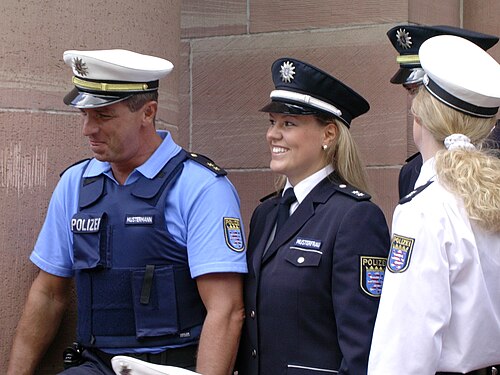
على غرار معظم الدول الأوروبية التي تعتمد الزي الأزرق للشرطة، اعتمدت جميع قوات شرطة الولايات الألمانية ( Landespolizei ) والشرطة الاتحادية ( Bundespolizei ) الزي الأزرق تماشياً مع الصورة النمطية السائدة لقوات الشرطة في أوروبا. وتماشياً مع الزي، تم تغيير لون مركبات الشرطة ومختلف المعدات إلى الأزرق أيضاً. وعلى الرغم من وجود 16 ولاية ، إلا أنه لا يُستخدم حالياً سوى ستة أنواع من زي الشرطة، وذلك لأن العديد من الولايات تتعاون في تصميم وتوفير الزي.
- على مستوى الولاية
| قوة شرطة الولاية | نوع الزي الرسمي للشرطة | تم إطلاقه في | تم الانتهاء من عملية التحويل في | تحويل سيارات الدورية الزرقاء |
|---|---|---|---|---|
| شرطة ولاية بادن فورتمبيرغ | بادن-فورتمبيرغ | 2010 | 2011 | 2008 |
| شرطة ولاية بافاريا | بافاريا : نسخة معدلة من زي الشرطة الفيدرالية النمساوية | 2016 | 2018 | 2016 |
| شرطة ولاية برلين | براندنبورغ | 2010 | 2013 | 2010 |
| شرطة ولاية براندنبورغ | براندنبورغ | 2008 | 2010 | 2005 |
| شرطة ولاية بريمن | هامبورغ | 2006 | 2010 | 2006 |
| شرطة ولاية هامبورغ | هامبورغ | 2005 | 2005 | 2002 |
| شرطة ولاية هيسن | هيس | 2008 | 2008 | 2005 |
| شرطة ولاية ساكسونيا السفلى | هامبورغ | 2006 | 2008 | 2004 |
| شرطة ولاية مكلنبورغ فوربومرن | هامبورغ | 2009 | 2011 | 2009 |
| شرطة ولاية شمال الراين وستفاليا | North Rhine-Westphalia | 2007 | 2012 | 2007 |
| Rhineland-Palatinate State Police | Hesse | 2008 | 2012 | 2006 |
| Saarland State Police | Hesse | 2015 | 2016 | 2015 |
| Saxony State Police | Brandenburg | 2009 | 2012 | 2008 |
| Saxony-Anhalt State Police | mixed uniform type of Brandenburg and Hesse uniform types | 2009 | 2012 | 2006 |
| Schleswig-Holstein State Police | Hamburg | 2006 | 2008 | 2005 |
| Thuringia State Police (until 2020) | Hesse (until 2020) | 2009 | 2011 | 2006 |
| Thüringen State Police (since 2020) | Hamburg (since 2020) | 2020 | ongoing | 2006 |
- Federal level
| Federal Police Force | Police uniform type | Launched in | Conversion finished in | Conversion to blue patrol cars |
|---|---|---|---|---|
| Federal Parliament Police | Federal Police | 2018 | 2018 | - |
| Federal Police | Federal Police | 2005 | 2012 | 2005 |
See also
- List of law enforcement agencies in Germany
- Police forces of Nazi Germany
- Police of Germany
- Zollkriminalamt (German Customs Investigation Bureau)
- Staatsanwaltschaft (public prosecutor's office)
- Crime in Germany
- Prisons in Germany
- List of killings by law enforcement officers in Germany
- Legal aid in Germany
References
 This article incorporates text from this source, which is in the public domain.Country Studies. Federal Research Division.
- ↑OSCE Entry on BPOL http://polis.osce.org/countries/details.php?item_id=17#Country_Profile_Section_211Archived 2009-05-24 at the Wayback Machine
- ↑"BKA - Fakten und Zahlen".
- ↑"BKA - Aufgabenbereiche des BKA".
- ↑OSCE entry http://polis.osce.org/countries/details.php?item_id=17#Country_Profile_Section_212Archived 2009-05-24 at the Wayback Machine
- ↑Waffengesetz (WaffG) § 55 Ausnahmen für oberste Bundes- und Landesbehörden, Bundeswehr, Polizei und Zollverwaltung, erheblich gefährdete Hoheitsträger sowie Bedienstete anderer Staaten[Weapons Act §55 Exceptions for higher federal and state authorities, military, police and customs, extensive dangered public authorities as well as servants other countries] (in German). Bundestag (Federal parliament) with approval by Bundesrat (State representatives). October 11, 2002.
- ↑Personal Knowledge
- ↑"Ausbildung und Studium" (in German). Bundespolizei. Retrieved 2025-08-20.
- ↑"Germany". U.S. Department of State. 10 November 2010. Retrieved 26 March 2011.
- ↑ "المحكمة الدستورية الاتحادية" . Bundesverfassungsgericht. مؤرشف من الأصل في 29 أبريل 2011. تم الاطلاع عليه في 26 مارس 2011 .
- ^ “Völkerstrafgesetz Teil 1 Allgemeine Regelungen” (في المانيا). Bundesministerium der Justiz . تم الاسترجاع 19 أبريل 2011 .
- ^ “§ 2 Strafvollzugsgesetz” (في المانيا). Bundesministerium der Justiz . تم الاسترجاع 26 مارس 2011 .
- ^ جيلي ، يورج مارتن. وزارة العدل الاتحادية الألمانية (2009). العدالة الجنائية في ألمانيا . منتدى دار النشر. ص. 23. رقم ISBN 978-3-936999-51-8.
- ↑ كاسبر، جيرهارد ؛ زايزل، هانز [بالألمانية] (يناير 1972). " القضاة غير المتخصصين في المحاكم الجنائية الألمانية". مجلة الدراسات القانونية . 1 (1): 141. doi : 10.1086/467481 . JSTOR 724014. S2CID 144941508 .
- ^ "NRW-Polizei komplett in blauer الموحدة / الوزير جاغر: Wechsel Schneller als geplant | Land.NRW" . www.land.nrw . تم الاسترجاع 2022-01-01 .
- إنفاذ القانون في ألمانيا