
Twentieth Air Force
The Twentieth Air Force (Air Forces Strategic) (20th AF) is a numbered air force of the United States Air Force Global Strike Command (AFGSC). It is headquartered at Francis E. Warren Air Force Base, Wyoming.
20 AF's primary mission is intercontinental ballistic missile (ICBM) operations. The Twentieth Air Force commander is also the Commander, Task Force 214 (TF 214), which provides alert ICBMs to the United States Strategic Command (USSTRATCOM).
Established on 4 April 1944 at Washington D.C, 20 AF was a United States Army Air Forces combat air force deployed to the Pacific Theater of World War II. Operating initially from bases in India and staging through bases in China, 20 AF conducted strategic bombardment of the Japanese Home Islands. It relocated to the Mariana Islands in late 1944, and continued the strategic bombardment campaign against Japan until the Japanese capitulation in August 1945. The 20 AF 509th Composite Group conducted the atomic attacks on Hiroshima and Nagasaki in August 1945, and remains as the only air force organization to have used a nuclear weapon in combat.
Inactivated on 1 March 1955, the command was reactivated 1 September 1991, as a component of the Strategic Air Command (SAC) and became operationally responsible for all land-based Intercontinental Ballistic Missiles.
History


The Twentieth Air Force was brought into existence on 4 April 1944 specifically to perform strategic bombardment missions against Japan. This was done at the insistence of General Henry H. (Hap) Arnold, commander of the USAAF, mainly to avoid having the new B-29 Superfortress being diverted to tactical missions under pressure from the China Burma India Theater commanders. Twentieth Air Force was to be commanded by General Arnold himself at Joint Chiefs of Staff level. Twentieth Air Force was completely autonomous and its B-29s were to be completely independent of other command structures and would be dedicated exclusively against strategic targets in Japan.
In addition Twentieth Air Force was chosen (secretly) to be the operational component of the Manhattan Project in 1944, and performed the atomic attacks on Japan in August 1945. However, in early 1944, the B-29 was not yet operationally ready. The aircraft had been in development at Boeing since the late 1930s and the first XB-29 (41-0002) flew on 21 September 1942. However, the aircraft suffered from an overwhelming number of development issues, and with engine problems (fires). As a result, most of the first production B-29s were still held up at Air Technical Service Command modification centers, awaiting modifications and conversion to full combat readiness. By March 1944, the B-29 modification program had fallen into complete chaos, with absolutely no bombers being considered as combat ready. The program was seriously hampered by the need to work in the open air in inclement weather, as many hangars were simply too small to house the aircraft indoors; by delays in acquiring the necessary tools and support equipment, and by the USAAF's general lack of experience with the B-29.
General Arnold became alarmed at the situation and directed that his assistant, Major General B. E. Meyer, personally take charge of the entire modification program. The resulting burst of activity that took place between 10 March and 15 April 1944 came to be known as the "Battle of Kansas". Beginning in mid-March, technicians and specialists from the Boeing Wichita and Seattle factories were drafted into the modification centers to work around the clock to get the B-29s ready for combat. The mechanics often had to work outdoors in freezing weather. As a result of superhuman efforts on the part of all concerned, 150 B-29s had been handed over to the XX Bomber Command by 15 April 1944.
World War II operations
Operations from CBI Theater
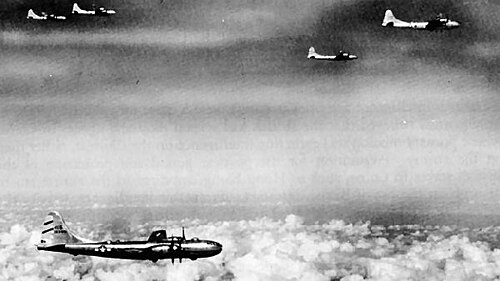
Operation Matterhorn was the name for the B-29 Superfortress offensive against the Empire of Japan from airfields in China. On 10 April 1944, the Joint Chiefs of Staff (JCS) informally approved Operation Matterhorn. The operational vehicle was to be the 58th Bombardment Wing (Very Heavy) of the XX Bomber Command.[3]
The headquarters of the XX Bomber Command had been established at Kharagpur India on 28 March 1944. The commander was General Kenneth B. Wolfe. The first B-29 reached its base in India on 2 April 1944. In India, existing airfields at Kharagpur, Chakulia, Piardoba and Dudkhundi had been converted for B-29 use. All of these bases were located in southern Bengal and were not far from port facilities at Calcutta.[3]
The first B-29 bombing raid from India took place on 5 June 1944. Ninety-eight B-29s took off from bases in eastern India to attack the Makasan railroad yards at Bangkok, Thailand. Bombardment operations against Japan were planned to be carried out from bases in China. There were four sites in the Chengtu area of China that were assigned to the B-29 operation—at Kwanghan, Kuinglai, Hsinching, and Pengshan. The primary flaw in the Operation Matterhorn plan was that all the supplies of fuel, bombs, and spares needed to support the forward bases in China had to be flown in from India over the Hump, since Japanese control of the seas around the Chinese coast made seaborne supply of China impossible.[3]
By mid-June, enough supplies had been stockpiled at Chinese forward bases to permit the launching of a single attack against targets in Japan. It was a nighttime raid to be carried out on the night of 14/15 June 1944 against the Imperial Iron and Steel Works at Yawata on Kyūshū. Unfortunately, the Japanese had been warned of the approaching raid and the city of Yawata was blacked out and haze and/or smoke helped to obscure the target. Only 15 aircraft bombed visually while 32 bombed by radar. Only one bomb actually hit anywhere near the intended target, and the steel industry was essentially untouched. Although very little damage was actually done, the Yawata raid was hailed as a great victory in the American press, since it was the first time since the Doolittle Raid of April 1942 that American aircraft had hit the Japanese home islands.[3]
On the night 10–11 August, 56 B-29s staged through British air bases in Ceylon attacked the Plajdoe oil storage facilities at Palembang on Sumatra in Indonesia. This involved a 4030-mile, 19-hour mission from Ceylon to Sumatra, the longest American air raid of the war. Other B-29s laid mines in the Moesi River. At the same time, a third batch of B-29s attacked targets in Nagasaki. These raids all showed a lack of operational control and inadequate combat techniques, drifting from target to target without a central plan and were largely ineffective.[3]
In Washington, it was decided that new leadership was needed for Twentieth Air Force. General Wolfe's replacement was Major General Curtis LeMay, who arrived in India on 29 August. Supply problems and aircraft accidents were still preventing a fully effective concentration of force and effort. In addition, Japanese defensive efforts were becoming more effective.[3]
By late 1944, it was becoming apparent that B-29 operations against Japan staged out of bases in China and India were far too expensive in men and materials and would have to be stopped. In December 1944, the Joint Chiefs of Staff made the decision that Operation Matterhorn would be phased out, and the 58th Bombardment Wing's B-29s would be moved to newly captured bases in the Marianas in the central Pacific. The last raid out of China was flown on 15 January 1945, which was an attack on targets in Formosa (Taiwan). The 58th Bombardment Wing then redeployed to new bases in the Marianas in February.[3]
Attacks on Japan from the Marianas
- See: XXI Bomber Command for expanded history

The Marianas chain of islands, consisting primarily of Saipan, Tinian, and Guam, were considered as being ideal bases from which to launch B-29 Superfortress operations against Japan. The islands were about 1500 miles from Tokyo, a range which the B-29s could just about manage. Most important of all, they could be put on a direct supply line from the United States by ship. The XXI Bombardment Command had been assigned the overall responsibility of the B-29 operations out of the Marianas bases.[4][5]
The first B-29 arrived on Saipan on 12 October 1944. It was piloted by General Hansell himself. By 22 November, over 100 B-29s were on Saipan. The XXI Bomber Command was assigned the task of destroying the aircraft industry of Japan in a series of high-altitude, daylight precision attacks.[4][5]
The first raid against Japan took place on 24 November 1944. The target was the Nakajima Aircraft Company's Musashi engine plant just outside Tokyo. 111 B-29s took off, Seventeen of them had to abort due to the usual spate of engine failures. The remainder approached the target at altitudes of 27–32,000 feet. For the first time, the B-29 encountered the jet stream, which was a high-speed wind coming out of the west at speeds as high as 200 mph at precisely the altitudes at which the bombers were operating. This caused the bomber formations to be disrupted and made accurate bombing impossible.[4][5]
Concerned about the relative failure of the B-29 offensive to deal any crippling blows to Japan, General LeMay issued a new directive on 19 February. General LeMay had analyzed the structure of the Japanese economy, which depended heavily on cottage industries housed in cities close to major industrial areas. By destroying these feeder industries, the flow of vital components to the central plants could be slowed, disorganizing production of weapons vital to Japan. He decided to do this by using incendiary bombs rather than purely high-explosive bombs, which would, it was hoped, cause general conflagrations in large cities like Tokyo or Nagoya, spreading to some of the priority targets.[4][5]
The first raid to use these new techniques was on the night of 9–10 March against Tokyo. Another wing—the 314th Bombardment Wing (19th, 29th, 39th, and 330th BG) commanded by Brig. Gen. Thomas S. Power—had arrived in the Marianas and was stationed at North Field on Guam. A total of 302 B-29s participated in the raid, with 279 arriving over the target. The raid was led by special pathfinder crews who marked central aiming points. It lasted for two hours. The raid was a success beyond General LeMay's wildest expectations. The individual fires caused by the bombs joined to create a general conflagration due to strong winds of some 17 to 28 mph (27 to 45 km/h) at ground level, that prevented a more specific firestorm event. When it was over, sixteen square miles (41 km2.) of the center of Tokyo had gone up in flames and nearly 84,000 people had been killed. Fourteen B-29s were lost. The B-29 was finally beginning to have an effect.[4][5]
بحلول منتصف يونيو، كانت معظم المدن اليابانية الكبرى قد دُمرت بالكامل، فأمر ليماي بشن غارات حارقة جديدة على 58 مدينة يابانية أصغر. في ذلك الوقت، لم تكن غارات قاذفات بي-29 تواجه مقاومة تُذكر من المقاتلات اليابانية. وفي أواخر يونيو، شعر طاقم بي-29 بثقة كافية دفعتهم إلى البدء بإلقاء منشورات تحذيرية للسكان من الهجمات الوشيكة، أعقبها بعد ثلاثة أيام غارة دمرت المنطقة الحضرية المستهدفة تدميراً كاملاً. وبحلول نهاية يونيو، بدأت تظهر على السكان المدنيين علامات الذعر، وبدأ مجلس الوزراء الإمبراطوري لأول مرة في التفكير في التفاوض لإنهاء الحرب. ومع ذلك، في ذلك الوقت، كان الجيش الياباني مصراً على مواصلة القتال حتى النهاية المريرة. [ 4 ] [ 5 ]
في يونيو 1945، جُمعت قيادتا القصف XX وXXI تحت قيادة القوات الجوية الاستراتيجية الأمريكية في المحيط الهادئ (USASTAF)، بقيادة الجنرال كارل أ. سباتز . انتهى تاريخ قيادة القصف XXI في 16 يوليو 1945، حيث أُعيد تسميتها في ذلك التاريخ إلى مقر وسرب المقر، التابع للقوات الجوية العشرين . أنهى هذا التغيير وجود قيادة القصف XXI ككيان مستقل، إذ دُمجت في الهيكل التنظيمي الداخلي للقوات الجوية العشرين، ووُضعت تحت قيادة القوات الجوية الاستراتيجية الأمريكية في المحيط الهادئ. [ 4 ] [ 5 ]
عمليات القوات الجوية الاستراتيجية في المحيط الهادئ

- للاطلاع على تاريخ موسع ، انظر: القوات الجوية الاستراتيجية الأمريكية في المحيط الهادئ والقصف الذري لهيروشيما وناغازاكي
في 16 يوليو 1945، أُعيد تنظيم القيادات العسكرية الأمريكية، حيث وُضعت القوات الجوية العشرين تحت قيادة وسيطرة القوات الجوية الاستراتيجية الأمريكية الجديدة في المحيط الهادئ . وتولت القوات الجوية العشرين قيادة أسراب قاذفات بي-29 المتمركزة مباشرة في جزر ماريانا، بينما تولت القوات الجوية الثامنة، التي أُعيد نشرها حديثًا ، قيادة أسراب قاذفات بي-29 المتمركزة في أوكيناوا. وجاء هذا التغيير تمهيدًا للغزو المخطط لليابان ( عملية داونفول ) المقرر انطلاقه في أكتوبر 1945. وتم حلّ قيادة القاذفات الحادية والعشرين، وأصبحت تحت السيطرة المباشرة للقوات الجوية العشرين. [ 4 ]
By mid-July 1945, the combat missions over Japan were essentially un-opposed, with VII Fighter Command long range P-51 Mustangs operating from captured Iwo Jima airfields flying escort to the Marianas-based B-29s. Missions primarily consisted of low-level incendiary raids on smaller Japanese cities, both at night as well as daylight on a daily basis. The 315th Bombardment Wing, which became operational at the beginning of July, carried out a series of strikes against oil production facilities which essentially shut down the Japanese oil industry.[4]
509th Composite Group
- See: 509th Composite Group for expanded history


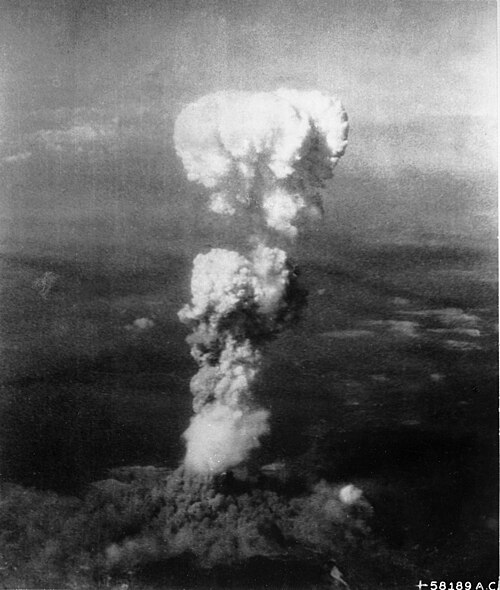
The 509th Composite Group was deployed overseas in the spring of 1945. The 509th was initially a part of XXI Bombardment Command based in the Marianas. By July, the bombers were established at North Field on Tinian, which had just been completed for the 313th Bombardment Wing. It was, however, under the direct operational control of the commander, Twentieth Air Force. The mission of the unit was the operational use of the Atomic Bomb.[6]
It had only one Bombardment Squadron—the 393rd, commanded by Major Charles W. Sweeney. The 509th Composite Group was a completely self-sufficient unit, with its own engineer, material, and troop squadrons as well as its own military police unit. Since the Manhattan Project was carried out in an atmosphere of high secrecy, the vast majority of the officers and men of the 509th Composite Group were completely ignorant of its intended mission.[6]
With the testing of the Atomic Bomb completed in the United States, the two other bombs (Little Boy, Fat Man) had arrived on Tinian on 26 July, being delivered by the USS Indianapolis (CA-35). On 24 July, a directive was sent to General Carl A. Spaatz ordering the 509th to deliver its first atomic bomb as soon as weather would permit. The Japanese cities of Hiroshima, Kokura, Niigata and Nagasaki were potential targets. President Harry S. Truman gave his final go-ahead from the Potsdam Conference on 31 July.[6]
On 6 August the atomic attack began with a flight of three special reconnaissance F-13As (RB-29s) which took off to report the weather over the primary and secondary targets. Col. Tibbets followed in his B-29 aircraft, Enola Gay, an hour later, accompanied by two other B-29s which would observe the drop. While on the way to Japan, Major Claude Eatherly, flying Straight Flush, radioed that Hiroshima was clear for a visual bomb drop. Navy weapons expert Captain William Parsons armed the bomb while in flight, as it was deemed too dangerous to do this on the ground at North Field, lest an accident happen and the bomb go off, wiping out the entire base. At 8:15 am, the Enola Gay released Little Boy from an altitude of 31,500 feet (9,600 m). The radar fuse on the bomb had been preset to go off at an altitude of 2,000 feet (610 m) above the ground. In the ensuing explosion, yielding about 12 kilotons of TNT in explosive power, about 75,000 people were killed and 48,000 buildings were destroyed.[6]
With no official statement from the Japanese government, there was no let-up with the conventional B-29 raids. B-29s from the 58th, 73rd, and 313th Bombardment Wings hit the Toyokawa Arsenal the next day. On the night of 7 August, the 525th Bombardment Group dropped 189 tons of mines on several different sea targets. On 8 August, the 58th, 73rd, and 313th Bomb Wings dropped incendiary bombs on targets at Yawata in the southern island of Kyūshū. At the same time, the 314th BW hit an industrial area of Tokyo. The Japanese defenses were still effective enough to down four B-29s during the Yawata raid and three at Tokyo.[4]
Since there was still no official reaction from Japan, the Americans felt that there was no alternative but to prepare a second atomic attack. The plutonium bomb called "Fat Man" was loaded into a B-29 known as Bockscar (Martin-Omaha built B-29-35-MO serial number 44-27297, the name often spelled Bock's Car), named after its usual commander, Captain Frederick C. Bock. However, on this mission, the aircraft was flown by Major Sweeney, with Capt. Bock flying one of the observation planes. The primary target was to be the Kokura Arsenal, with the seaport city of Nagasaki as the alternative.[6]
Bockscar took off on 9 August, with Fat Man on board. This time, the primary target of Kokura was obscured by dense smoke left over from the earlier B-29 raid on nearby Yawata, and the bombardier could not pinpoint the specified aiming point despite three separate runs. So Sweeney turned to the secondary target, Nagasaki. There were clouds over Nagasaki as well, and a couple of runs over the target had to be made before the bombardier could find an opening in the clouds. At 11:00 am, Fat Man was released from the aircraft and after a long descent, the bomb exploded. The yield was estimated at 22 kilotons of TNT. Approximately 35,000 people died at Nagasaki from the immediate blast and fire.[6]
After releasing the bomb, Sweeney was forced to divert to Okinawa because of a problem with a fuel transfer pump, and because of the long flight with multiple bomb runs and circling for better weather. There was not even enough fuel left to fly to Iwo Jima. After refueling on Okinawa, the B-29 returned to Tinian. The Japanese Emperor ordered that the government accept the Allied terms of surrender at once. It took time for the full details to be worked out, and there was a very real danger that some elements of the Japanese military would still not accept surrender, and might attempt a military coup d'état, even against their Emperor.[6]
In the meantime, conventional bombing of Japanese targets still continued, with a record number of 804 B-29s hitting targets in Japan on 14 August. On the morning of 15 August, the Emperor broadcast by radio his command of Japan's surrender in an address to his nation. Practically none of his subjects had never heard his voice before. All further offensive operations against Japan ceased after the Emperor's broadcast.[4]
After that time, most of the B-29s in the Pacific were diverted to missions of mercy, dropping food and clothing to thousands of Allied prisoners of war held in Japan, China, Manchuria, and Korea. 1066 B-29s participated in 900 missions to 154 camps. Some 63,500 prisoners were provided with 4470 tons of supplies. These flights cost eight B-29s lost by accidents, with 77 crew members aboard.[4]
The Japanese surrender was formally signed on 2 September 1945, aboard the huge battleship USS Missouri in Tokyo Bay, bringing the Pacific War to an end.
Postwar era

بعد انتهاء الحرب العالمية الثانية، بقيت القوات الجوية العشرون في المحيط الهادئ، واتخذت من غوام مقرًا لها. وقد أُعيدت الغالبية العظمى من أسطولها من قاذفات بي-29 سوبرفورتريس إلى الولايات المتحدة في إطار "عملية الغروب". وفي 6 ديسمبر 1945، تم حلّ القوات الجوية الاستراتيجية الأمريكية في المحيط الهادئ ، ووضعت القوات الجوية العشرون تحت قيادة القوات الجوية للمحيط الهادئ التابعة للجيش الأمريكي .
عاد آخر أجنحة القتال في الحرب العالمية الثانية، وهو الجناح 315 للقصف، إلى الولايات المتحدة في 30 مايو 1946. وبقيت مجموعة القصف 19 في نورث فيلد ، غوام، بصفتها المجموعة العملياتية الوحيدة. في عام 1949، أجبرت تخفيضات الميزانية على إعادة تنظيم وتوحيد وحدات القوات الجوية في المحيط الهادئ، وأصبحت مهمة القوات الجوية العشرين هي الدفاع عن جزر ريوكيو، وأُعيد تعيينها في قاعدة كادينا الجوية ، أوكيناوا . وكانت تقود الوحدات التالية:
- قاعدة ناها الجوية ، أوكيناوا، الجناح/المجموعة 51 للمقاتلات الاعتراضية (F-80، F-82)
- قاعدة كادينا الجوية ، أوكيناوا، السرب 31 للاستطلاع الاستراتيجي ، (RB-29)
- قاعدة أندرسون الجوية ، غوام، الجناح/المجموعة التاسعة عشرة للقصف (B-29)
الحرب الكورية

في 27 يونيو/حزيران 1950، صوّت مجلس الأمن التابع للأمم المتحدة لصالح مساعدة الكوريين الجنوبيين في مقاومة غزو كوريا الشمالية لبلادهم. فوّض الرئيس هاري إس. ترومان الجنرال دوغلاس ماك آرثر (قائد القوات الأمريكية المحتلة في اليابان) بإرسال وحدات للمشاركة في المعركة. أمر ماك آرثر الجنرال جورج إي. ستراتيمير ، قائد العمليات الجوية في الشرق الأقصى ، بمهاجمة القوات الكورية الشمالية المهاجمة بين خطوط الجبهة وخط العرض 38. في ذلك الوقت، كانت طائرات بي-29 التابعة لمجموعة القصف التاسعة عشرة، والبالغ عددها 22 طائرة، والمتمركزة في قاعدة أندرسن الجوية في غوام، هي الطائرات الوحيدة القادرة على ضرب شبه الجزيرة الكورية، وقد صدرت الأوامر لهذه الوحدة بالانتقال إلى قاعدة كادينا الجوية في أوكيناوا وبدء الهجمات على كوريا الشمالية . بدأت هذه الغارات في 28 يونيو/حزيران. وفي 29 يونيو/حزيران، صدر الإذن لشنّ هجمات بطائرات بي-29 على المطارات في كوريا الشمالية. وكثيراً ما تم تحويل مسار طائرات بي-29 لتنفيذ هجمات تكتيكية ضد القوات الكورية الشمالية المتقدمة.
في 8 يوليو، تم إنشاء قيادة قاذفات خاصة تابعة للقوات الجوية لشرق أوروبا تحت قيادة اللواء إيميت أودونيل. وفي 13 يوليو، تولت قيادة قاذفات القوات الجوية لشرق أوروبا قيادة المجموعة التاسعة عشرة للقصف، والمجموعتين الثانية والعشرين والثانية والتسعين للقصف، واللتين تم نقلهما من قواعد القيادة الجوية الاستراتيجية في الولايات المتحدة.
أُعيد تكليف المكونات الرئيسية الأخرى للقوات الجوية العشرين، وهي الجناح 51 للمقاتلات الاعتراضية، إلى القوات الجوية الخامسة في قاعدة إيتازوكي الجوية باليابان في سبتمبر 1950، حيث استُخدمت طائراتها من طراز إف-82 توين موستانج وإف -80 شوتينغ ستار في القتال فوق كوريا. كما أُعيد تكليف طائرات آر بي-29 بعيدة المدى التابعة للسرب 31 للاستطلاع الاستراتيجي (وهي طائرات بي-29 غير مسلحة مزودة بخزانات وقود داخلية إضافية في حجرات القنابل وكاميرات تصوير خرائطي متنوعة) إلى القوات الجوية الخامسة في قاعدة جونسون الجوية باليابان، حيث دُمجت مع وحدات استطلاع جوي أخرى.
مع انتهاء الحرب الكورية عام ١٩٥٣، أعادت القوات الجوية للشرق الأقصى تنظيم قواتها، وأُعيد توزيع وحدات القوات الجوية العشرين. نُقلت وحدات القصف إلى قيادة القوات الجوية الاستراتيجية عام ١٩٥٤، ووحدات المقاتلات إلى القوات الجوية الخامسة عام ١٩٥٥، حيث استُخدمت للدفاع الجوي. وتم حلّها في الأول من مارس عام ١٩٥٥.
إعادة التنشيط منذ التسعينيات

أُعيد تفعيل القوات الجوية العشرين في الأول من سبتمبر عام ١٩٩١ كجزء من قيادة القوات الجوية الاستراتيجية، واتخذت من قاعدة فاندنبرغ الجوية في كاليفورنيا مقرًا لها. وكانت مهمتها الإشراف على جميع الصواريخ الباليستية العابرة للقارات الأرضية. وجاءت إعادة إحياء القوات الجوية العشرين في وقت كانت فيه القوات النووية الأمريكية تدخل عقدًا من التخفيضات والتغييرات غير المسبوقة في قوتها. وقد أدت هذه التغييرات، التي نتجت عن نهاية الحرب الباردة وتفكك الاتحاد السوفيتي ، إلى إعادة تشكيل البنية الأساسية لقوات الردع النووي للبلاد. [ ٧ ]
في العقود التي تلت إعادة تفعيلها، شهدت القوات الجوية العشرون أربع قيادات رئيسية. فبعد عامٍ واحدٍ تحت قيادة القوات الجوية الاستراتيجية، وعامٍ آخر تحت قيادة القتال الجوي ، نُقلت القوات الجوية العشرون إلى قيادة الفضاء الجوي عام ١٩٩٣. وشهد ديسمبر ٢٠٠٩ الانتقال النهائي للقوات الجوية العشرون إلى قيادة الضربات العالمية الجوية المُنشأة حديثًا . وفي عام ١٩٩٣، غيّر مقر قيادة القوات الجوية العشرون موقعه، من قاعدة فاندنبرغ الجوية في كاليفورنيا، إلى مقره الحالي في قاعدة إف إي وارين الجوية في وايومنغ. [ ٧ ] واليوم، لا تزال ٤٥٠ صاروخًا من طراز مينيوتمان ٣ في حالة تأهب. [ ٨ ]
الوضع في العقد الثاني من القرن الحادي والعشرين
تتميز قيادة القوات الجوية العشرين بمسؤولياتها المزدوجة تجاه قيادة الضربات العالمية للقوات الجوية والقيادة الاستراتيجية الأمريكية . وبصفتها القوة الجوية الصاروخية التابعة لقيادة الضربات العالمية للقوات الجوية، تتولى القوات الجوية العشرين مسؤولية صيانة وتشغيل أسطول الصواريخ الباليستية العابرة للقارات التابع للقوات الجوية. وتُعرف هذه القوات باسم فرقة العمل 214 التابعة للقيادة الاستراتيجية الأمريكية، حيث توفر صواريخ باليستية عابرة للقارات جاهزة للقتال وفي حالة تأهب قصوى للرئيس. [ 7 ]
أجنحة:
- المقر الرئيسي، قاعدة فرانسيس إي. وارين الجوية ، وايومنغ
- الجناح الصاروخي التسعون ، قاعدة فرانسيس إي. وارين الجوية ، وايومنغ
- الجناح الصاروخي 91 ، قاعدة مينوت الجوية ، مينوت ، داكوتا الشمالية
- الجناح الصاروخي 341 ، قاعدة مالمستروم الجوية ، مونتانا
- المجموعة 582 للمروحيات ، قاعدة فرانسيس إي. وارين الجوية ، وايومنغ
- السرب 582 لدعم العمليات
- السرب السابع والثلاثون للمروحيات
- السرب الأربعون للمروحيات
- السرب 54 للمروحيات
- الجناح الجوي رقم 377 - قاعدة كيرتلاند الجوية ، نيو مكسيكو
- السرب 625 للعمليات الاستراتيجية - قاعدة أوفوت الجوية ، نبراسكا
السلالة
- تأسست باسم القوات الجوية العشرين وتم تفعيلها في 4 أبريل 1944
- تم تعطيلها في 1 مارس 1955
- تم تفعيلها في 1 سبتمبر 1991.
- تمت إعادة تسميتها إلى: القوات الجوية العشرين (القوات الجوية الاستراتيجية) في 1 ديسمبر 2009.
الواجبات
- القوات الجوية لجيش الولايات المتحدة ، 4 أبريل 1944
- ملحقة بالقوات الجوية الاستراتيجية الأمريكية في المحيط الهادئ ، من 16 يوليو إلى 6 ديسمبر 1945
- قيادة القوات الجوية في المحيط الهادئ ، الجيش الأمريكي، (لاحقًا القوات الجوية في الشرق الأقصى)، 6 ديسمبر 1945 - 1 مارس 1955
- قيادة القوات الجوية الاستراتيجية ، 1 سبتمبر 1991
- قيادة القتال الجوي ، 1 يونيو 1992
- قيادة الفضاء التابعة للقوات الجوية ، 1 يوليو 1993
- قيادة الضربات العالمية التابعة للقوات الجوية ، 7 أغسطس 2009
عناصر
الحرب العالمية الثانية
|
|
القوات الجوية الأمريكية
أجنحة القصف
أجنحة المقاتلة
| أجنحة الصواريخ
Other Wings and Groups
|
Stations
- Washington, D.C., 4 April 1944
- Harmon Field, Guam, Mariana Islands, July 1945
- Kadena Air Base, Okinawa, 16 May 1949 – 1 March 1955
- Vandenberg Air Force Base, California, 1 September 1991 – 1993
- Francis E. Warren Air Force Base, Wyoming, 1993 – present
List of commanders
1944 to 1955
| No. | Commander | Term | |||
|---|---|---|---|---|---|
| Portrait | Name | Took office | Left office | Term length | |
| 1 |  | General of the ArmyHenry H. Arnold | 6 April 1944 | 15 July 1945 | 1 year, 100 days |
| 2 | 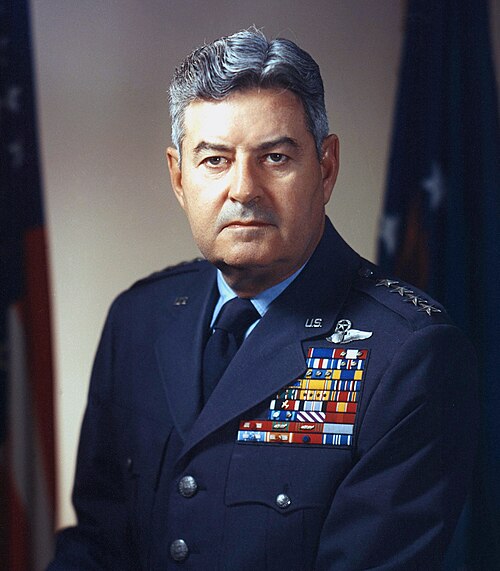 | Major GeneralCurtis LeMay | 16 July 1945 | 1 August 1945 | 16 days |
| 3 | 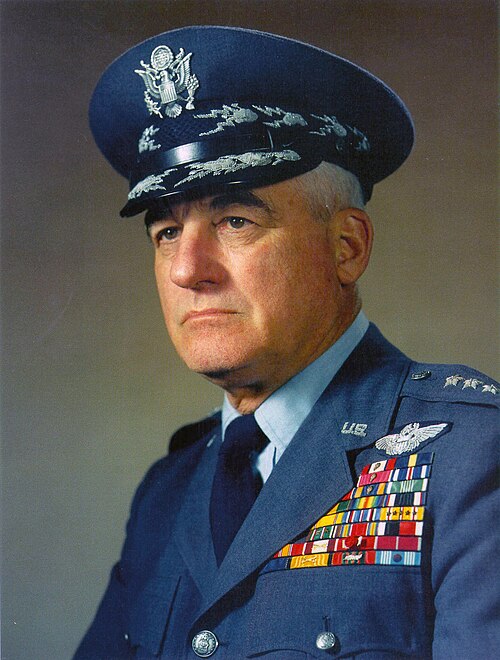 | Lieutenant GeneralNathan F. Twining | 2 August 1945 | 14 October 1945 | 73 days |
| 4 |  | Major GeneralJames E. Parker | 15 October 1945 | 18 March 1946 | 154 days |
| 5 | | Brigadier GeneralFrederick M. Hopkins Jr. | 19 March 1946 | 9 September 1946 | 174 days |
| 6 |  | Major GeneralFrancis H. Griswold | 10 September 1946 | 7 September 1948 | 1 year, 363 days |
| 7 | | Major GeneralAlvin C. Kincaid | 8 September 1948 | 30 July 1950 | 1 year, 325 days |
| 8 | 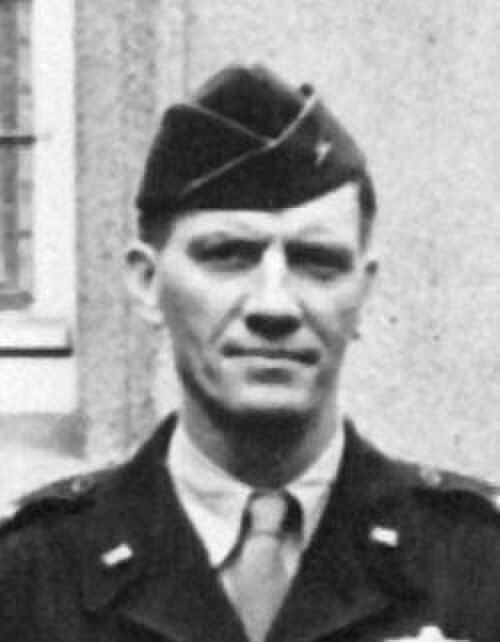 | Major GeneralRalph Francis Stearley | 31 July 1950 | 7 February 1953 | 2 years, 191 days |
| 9 | | Major GeneralFay R. Upthegrove | 8 February 1953 | 1 March 1955 | 2 years, 21 days |
1992 to present
| No. | Commander | Term | |||
|---|---|---|---|---|---|
| Portrait | Name | Took office | Left office | Term length | |
| 1 |  | Lieutenant GeneralArlen D. Jameson | 1 July 1992 | 22 June 1994 | 1 year, 356 days |
| 2 |  | Major GeneralRobert W. Parker | 22 June 1994 | 17 June 1996 | 1 year, 361 days |
| 3 | 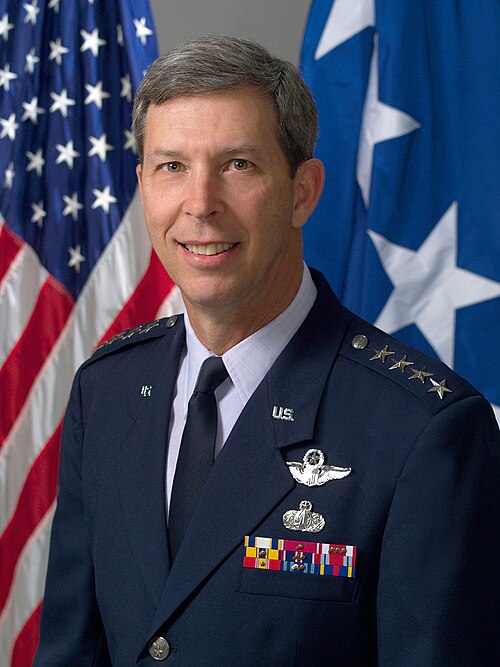 | Major GeneralDonald G. Cook | 17 June 1996 | 4 September 1998 | 2 years, 79 days |
| 4 |  | Major GeneralThomas H. Neary | 4 September 1998 | 19 July 2000 | 1 year, 319 days |
| 5 |  | Major GeneralTimothy J. McMahon | 19 July 2000 | 30 May 2003 | 2 years, 315 days |
| 6 |  | Major GeneralFrank Klotz | 30 May 2003 | 14 October 2005 | 2 years, 137 days |
| 7 |  | Major GeneralThomas F. Deppe | 14 October 2005 | 10 August 2007 | 1 year, 300 days |
| 8 |  | Major GeneralRoger W. Burg | 10 August 2007 | 1 July 2010 | 2 years, 325 days |
| 9 |  | اللواء سي. دونالد ألستون | 1 يوليو 2010 | يونيو 2012 | ~سنة واحدة و336 يوماً |
| 10 |  | اللواء مايكل ج. كاري [ 9 ] [ 10 ] [ 12 ] | يونيو 2012 | أكتوبر 2013 | ~سنة واحدة و122 يومًا |
| 11 | 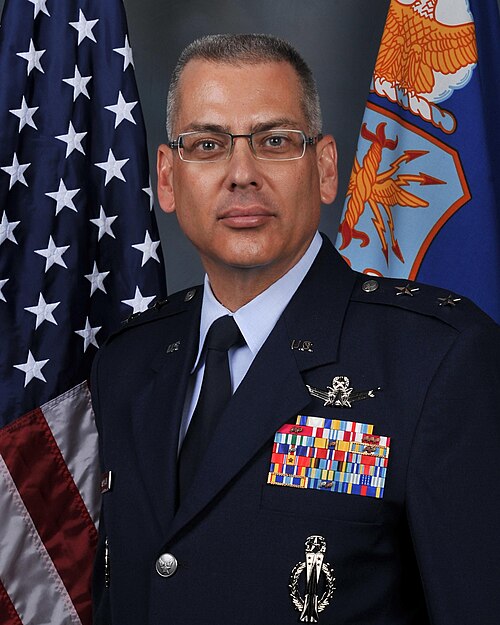 | اللواء جاك واينشتاين [ 13 ] | أكتوبر 2013 | 16 نوفمبر 2015 | ~سنتان و46 يوماً |
| 12 |  | اللواء أنتوني ج. كوتون [ 14 ] | 16 نوفمبر 2015 | 26 يناير 2018 | سنتان و71 يوماً |
| 13 |  | اللواء فرديناند ستوس | 26 يناير 2018 | 8 يوليو 2020 | سنتان و164 يوماً |
| 14 |  | اللواء مايكل لوتون | 8 يوليو 2020 | 5 يناير 2024 | 3 سنوات و181 يومًا |
| 15 |  | اللواء ستايسي جو هوسر | 5 يناير 2024 | شاغل المنصب | سنتان و196 يومًا |
انظر أيضاً
- حرب المحيط الهادئ
- الجدول الزمني للحرب العالمية الثانية - مسرح المحيط الهادئ
- مسرح عمليات جنوب شرق آسيا في الحرب العالمية الثانية
- القيادة الاستراتيجية للولايات المتحدة
- قصف طوكيو في الحرب العالمية الثانية
- القصف الاستراتيجي الأمريكي لليابان
- قصف كوبي في الحرب العالمية الثانية
- قصف بالقنابل الحارقة
مراجع
 تتضمن هذه المقالة مواداً متاحة للعموم من وكالة البحوث التاريخية التابعة للقوات الجوية.
- تتضمن هذه المقالة مواد متاحة للعموم من موقع القوات الجوية العشرين . القوات الجوية الأمريكية .
ملحوظات
- 1 2 "القوات الجوية العشرون (القوات الجوية الاستراتيجية) (AFGSC)" . af.mil . مؤرشف من الأصل في 29 ديسمبر 2017. تم الاطلاع عليه في 2 مايو 2018 .
- ↑ af.mil
- ١ ٢ ٣ ٤ ٥ ٦ ٧ "تاريخ القوات الجوية العشرين (AAFRH-12)، المكتب التاريخي للقوات الجوية للجيش، أكتوبر ١٩٤٥" ( ملف PDF) . ibiblio.org . مؤرشف (ملف PDF) من الأصل في ١٧ سبتمبر ٢٠١٧. تم الاطلاع عليه في ٢ مايو ٢٠١٨ .
- 1 2 3 4 5 6 7 8 9 10 11 12 مارشال، تشيستر (1996)، تاريخ الطائرات الحربية - بي-29 سوبرفورتريس، موتوربوكس إنترناشونال، رقم ISBN 0-87938-785-8
- 1 2 3 4 5 6 7 مان، روبرت أ. قاذفة القنابل بي-29 سوبرفورتريس: سجل شامل للطائرات ومهامها. جيفرسون، كارولاينا الشمالية: ماكفارلاند وشركاه، 2004. ISBN 0-7864-1787-0.
- 1234567History of the 509th Composite Group Activation to 15 August 1945Archived 27 January 2012 at the Wayback Machine
- 123"20th Air Force Factsheet". af.mil. Archived from the original on 1 October 2015. Retrieved 2 May 2018.
- ↑Norris, R. S. and H. M. Kristensen, Nuclear Notebook: U.S. nuclear forces, 2009, Bulletin of the Atomic ScientistsArchived 28 January 2018 at the Wayback Machine, March/April 2009, p. 62 doi:10.2968/065002008.
- ↑"20th Air Force commander relieved of command" (Press release). Air Force Global Strike Command Public Affairs. 11 October 2013. Archived from the original on 20 December 2013. Retrieved 19 December 2013.
- ↑Whitlock, Craig (19 December 2013). "Report: U.S. Air Force general drank too much, fraternized with foreign women in Moscow". The Washington Post. Archived from the original on 20 December 2013. Retrieved 19 December 2013.
- Burns, Robert (11 October 2013). "Michael Carey, Air Force General in Charge of Nuclear Missiles, To Be Fired Over 'Loss of Trust'". Huffington Post. Archived from the original on 24 October 2013. Retrieved 19 December 2013.
- ↑Burns, Robert (11 October 2013). "Michael Carey, Air Force General in Charge of Nuclear Missiles, To Be Fired Over 'Loss of Trust'". Huffington Post. Archived from the original on 24 October 2013. Retrieved 19 December 2013.
- ↑"Major General Jack Weinstein". United States Air Force. Archived from the original on 20 December 2013. Retrieved 19 December 2013.
- ↑"Major General Anthony Cotton". United States Air Force. Archived from the original on 10 December 2015. Retrieved 19 December 2013.
Bibliography
- Birdsall, Steve. Saga of the Superfortress: The Dramatic Story of the B-29 and the twentieth Air Force. London: Sidgwick & Jackson, 1981. ISBN 0-283-98786-3.
- Dorr, Robert F. B-29 Superfortress Units of the Korean War. Botley, Oxford, UK: Osprey Publishing, 2003. ISBN 1-84176-654-2.
- Dorr, Robert F. B-29 Units of World War II. Botley, Oxford, UK: Osprey Publishing, 2002. ISBN 1-84176-285-7.
- Freeman, Roger A. Boeing B-29 Superfortress U.S.A.A.F. 1942–1945 (Camouflage & Markings No. 19). London: Ducimus Books, 1970.
- Marshall, Chester. Warbird History: B-29 Superfortress. Osceola, Wisconsin: Motorbooks International, 1993. ISBN 0-87938-785-8.
- Maurer, Maurer. Air Force Combat Units of World War II. Maxwell Air Force Base, Alabama: Office of Air Force History, 1983. ISBN 0-89201-092-4.
- Rhodes, Richard. The Making of the Atomic Bomb. Simon and Schuster, 1986. ISBN 0-684-81378-5.
- Rust, Kenn C. Twentieth Air Force Story...in World War II. Temple City, California: Historical Aviation Album, 1979. ISBN 0-911852-85-9.
External links
- Twentieth Air Force FactsheetArchived 1 October 2015 at the Wayback Machine
- 2008 Space Almanac, Air Force Magazine, Journal of the Air Force Assoc., August 2008.
- US ARMY History: Control of Army Air Operations OverseasArchived 10 October 2012 at the Wayback Machine in Washington Command Post:The Operations Division. United States Army Center of Military History. CMH Pub 1-2.
- US ARMY History: QUADRANT Conference
- HistoryNET: Operation MatterhornArchived 26 May 2006 at the Wayback Machine
- USAAF: Operation Matterhorn
- Numbered air forces of the United States Air Force
- Air Forces of the United States Army Air Forces
- Military units and formations established in 1944
- 1944 establishments in Washington, D.C.
- Military units and formations in Wyoming
- Units and formations of Strategic Air Command
- United States Air Force units and formations in the Korean War
- Strategic bombing units and formations of the United States Army Air Forces in the Japan campaign
- Nuclear warfare