
Pop music
Pop music, or simply pop, is a genre of popular music that originated in its modern form during the mid-1950s in the United States and the United Kingdom.[5] During the 1950s and 1960s, pop music encompassed rock and roll and the youth-oriented styles it influenced. Rock and pop music remained roughly synonymous until the late 1960s, after which pop became associated with music that was more commercial, ephemeral, and accessible.
Identifying factors of pop music usually include repeated choruses and hooks, short to medium-length songs written in a basic format (often the verse–chorus structure), and rhythms or tempos that can be easily danced to. Much of pop music also borrows elements from other styles such as rock, hip-hop, urban, dance, Latin, and country.
The terms popular music and pop music are often used interchangeably, as the former also describes all music that is targeted for mass appeal (compare art music) and includes many disparate styles.
Definitions and etymology
David Hatch and Stephen Millward describe pop music as "a body of music which is distinguishable from popular, jazz, and folk music".[6] David Boyle, a music researcher, states pop music as any type of music that a person has been exposed to by the mass media.[7] Most individuals think that pop music is just the singles charts and not the sum of all chart music. The music charts contain songs from a variety of sources, including classical, jazz, rock, and novelty songs. As a genre, pop music is seen to exist and develop separately.[8] Therefore, the term "pop music" may be used to describe a distinct genre, designed to appeal to all, often characterized as "instant singles-based music aimed at teenagers" in contrast to rock music as "album-based music for adults".[5][10]
تتطور موسيقى البوب بالتوازي مع تطور تعريف المصطلح. فبحسب الكاتب الموسيقي بيل لامب، تُعرَّف موسيقى البوب بأنها "الموسيقى التي ظهرت منذ الثورة الصناعية في القرن التاسع عشر والتي تتوافق إلى حد كبير مع أذواق واهتمامات الطبقة الوسطى الحضرية". [ 11 ] وقد استُخدم مصطلح "أغنية البوب" لأول مرة عام 1926، بمعنى مقطوعة موسيقية "تحظى بشعبية واسعة". [ 12 ] ويشير هاتش وميلوارد إلى أن العديد من الأحداث في تاريخ التسجيلات الموسيقية في عشرينيات القرن العشرين يمكن اعتبارها بمثابة ميلاد صناعة موسيقى البوب الحديثة، بما في ذلك موسيقى الريف والبلوز وموسيقى الهيلبيلي . [ 13 ]

بحسب موقع قاموس غروف الجديد للموسيقى والموسيقيين ، فإن مصطلح "موسيقى البوب" نشأ في بريطانيا في منتصف خمسينيات القرن العشرين لوصف موسيقى الروك أند رول وأنماط موسيقى الشباب الجديدة التي تأثرت بها. [ 14 ] ويذكر قاموس أكسفورد للموسيقى أنه بينما كان المعنى السابق لكلمة "بوب" يشير إلى الحفلات الموسيقية التي تجذب جمهورًا واسعًا [...] إلا أنه منذ أواخر خمسينيات القرن العشرين، أصبح لكلمة "بوب" معنى خاص هو الموسيقى غير الكلاسيكية، وعادةً ما تكون على شكل أغاني، يؤديها فنانون مثل فرقة البيتلز ، وفرقة رولينغ ستونز ، وفرقة آبا ، وغيرهم. [ 15 ] ويذكر موقع غروف ميوزيك أونلاين أيضًا أنه في أوائل ستينيات القرن العشرين، تنافس مصطلح "موسيقى البوب" مصطلحيًا مع مصطلح " موسيقى البيتلز " [في إنجلترا]، بينما في الولايات المتحدة تداخل نطاقه (كما هو الحال الآن) مع نطاق مصطلح "الروك أند رول " . [ 14 ]
From about 1967, the term "pop music" was increasingly used in opposition to the term rock music, a division that gave generic significance to both terms.[16] While rock aspired to authenticity and an expansion of the possibilities of popular music,[16] pop was more commercial, ephemeral, and accessible.[17] According to British musicologist Simon Frith, pop music is produced "as a matter of enterprise not art", and is "designed to appeal to everyone" but "doesn't come from any particular place or mark off any particular taste". Frith adds that it is "not driven by any significant ambition except profit and commercial reward ... and, in musical terms, it is essentially conservative". It is "provided from on high (by record companies, radio programmers, and concert promoters) rather than being made from below. ... Pop is not a do-it-yourself music but is professionally produced and packaged".[5]
Characteristics
According to Frith, characteristics of pop music include an aim of appealing to a general audience, rather than to a particular sub-culture or ideology, and an emphasis on craftsmanship rather than formal "artistic" qualities.[5] Besides, Frith also offers three identifying characteristics of pop music: light entertainment, commercial imperatives, and personal identification. Pop music grew out of a light entertainment and easy listening tradition.[20] Pop music is more conservative than other music genres such as folk, blues, country, and tradition. Many pop songs do not contain themes of resistance, opposition, or politics, rather focusing more on love and relationships. Therefore, pop music does not challenge its audiences socially, and does not cause political activism. Frith also said the main purpose of pop music is to create revenue. It is not a medium of free articulation of the people. Instead, pop music seeks to achieve the instant empathy with cliche personalities, stereotypes, and melodrama that appeals to listeners.[20] Music scholar Timothy Warner said pop music typically has an emphasis on recording, production, and technology, rather than live performance; a tendency to reflect existing trends rather than progressive developments; and seeks to encourage dancing or uses dance-oriented rhythms.[17]

الوسيلة الرئيسية لموسيقى البوب هي الأغنية، التي يتراوح طولها عادةً بين دقيقتين ونصف وثلاث دقائق ونصف، وتتميز عمومًا بإيقاع ثابت وواضح ، وأسلوب سائد، وبنية تقليدية بسيطة . [ 23 ] تتكون بنية العديد من الأغاني الشعبية من مقطع وجوقة، حيث تُصمم الجوقة لتكون عالقة في الأذن من خلال التكرار البسيط موسيقيًا وكلماتيًا. غالبًا ما تكون الجوقة هي المرحلة التي تتصاعد فيها الموسيقى، ويسبقها عادةً "الانخفاض" حيث تتوقف أجزاء الباس والطبول. [ 24 ] تشمل الأشكال الشائعة شكل المقطع-الجوقة وشكل 32 مقياسًا ، مع التركيز على الألحان والعبارات الجذابة ، وجوقة تتناقض لحنيًا وإيقاعيًا وتوافقيًا مع المقطع . [ 25 ] يميل الإيقاع والألحان إلى البساطة، مع مصاحبة توافقية محدودة . [ 26 ] تركز كلمات أغاني البوب الحديثة عادةً على مواضيع بسيطة - غالباً الحب والعلاقات الرومانسية - على الرغم من وجود استثناءات ملحوظة. [ 5 ]
غالبًا ما تكون التناغمات وتتابعات الأوتار في موسيقى البوب "مستوحاة من التناغم الكلاسيكي الأوروبي ، ولكن بشكل أبسط". [ 27 ] ومن الأمثلة الشائعة على ذلك التناغم على نمط الرباعيات الغنائية (أي ii – V – I) والتناغم المتأثر بسلم موسيقى البلوز . [ 28 ] وقد تراجع تأثير النظرة التقليدية لدائرة الخمسات بين منتصف الخمسينيات وأواخر السبعينيات، بما في ذلك تراجع هيمنة وظيفة النغمة المهيمنة . [ 29 ]
في أكتوبر 2023، جمعت مجلة بيلبورد قائمة تضم "أفضل 500 أغنية بوب". وأشارت المجلة في ذلك إلى صعوبة تعريف "أغاني البوب".
One of the reasons pop can be hard to summarize is because there's no real sonic or musical definition to it. There are common elements to a lot of the biggest pop songs, but at the end of the day, "pop" means "popular" first and foremost, and just about any song that becomes popular enough...can be considered a pop song.[30]
Development and influence
Technology and media

In the 1940s, improved microphone design allowed a more intimate singing style and, ten or twenty years later, inexpensive and more durable 45 rpm records for singles "revolutionized the manner in which pop has been disseminated", which helped to move pop music to "a record/radio/film star system".[32] Another technological change was the widespread availability of television in the 1950s with televised performances, which meant that "pop stars had to have a visual presence".[32] In the 1960s, the introduction of inexpensive, portable transistor radios meant that teenagers in the developed world could listen to music outside of the home.[32] By the early 1980s, the promotion of pop music had been greatly affected by the rise of music television channels including MTV, which "favoured those artists such as Michael Jackson and Madonna who had a strong visual appeal".[32]
Multi-track recording (from the 1960s) and digital sampling (from the 1980s) have also been used as methods for the creation and elaboration of pop music.[5] During the mid-1960s, pop music made repeated forays into new sounds, styles, and techniques that inspired public discourse among its listeners. The word "progressive" was frequently used, and it was thought that every song and single was to be a "progression" from the last.[33] Music critic Simon Reynolds writes that beginning with 1967, a divide would exist between "progressive" pop and "mass/chart" pop, a separation which was "also, broadly, one between boys and girls, middle-class and working-class."[34]
The latter half of the 20th century included a large-scale trend in American culture in which the boundaries between art and pop music were increasingly blurred.[35] Between 1950 and 1970, there was a debate of pop versus art.[36] Since then, certain music publications have embraced the music's legitimacy, a trend referred to as "poptimism".[36]
Stylistic evolution

Throughout its development, pop music has absorbed influences from other genres of popular music. Early pop music drew on traditional pop, an American counterpart to German Schlager and French Chanson, however compared to the pop of European countries, traditional pop originally emphasized influences ranging from Tin Pan Alley songwriting, Broadway theatre, and show tunes. As the genre evolved more influences ranging from classical, folk, rock, country, electronic music, and other popular genres became more prominent. In 2016, a Scientific Reports study that examined over 464,000 recordings of popular music recorded between 1955 and 2010 found that, compared to 1960s pop music, contemporary pop music uses a smaller variety of pitch progressions, greater average volume,[37] less diverse instrumentation and recording techniques, and less timbral variety.[38]Scientific American's John Matson reported that this "seems to support the popular anecdotal observation that pop music of yore was "better", or at least more varied, than today's top-40 stuff". However, he also noted that the study may not have been entirely representative of pop in each generation.[38]

في ستينيات القرن العشرين، انقسمت غالبية موسيقى البوب السائدة إلى فئتين رئيسيتين: فرق موسيقية تعتمد على الغيتار والطبول والبيس، أو مغنون مصحوبون بأوركسترا تقليدية. [ 39 ] منذ مطلع ذلك العقد، شاع بين منتجي موسيقى البوب وكتاب الأغاني والمهندسين الصوتيين التجريب بحرية في الأشكال الموسيقية والتوزيع الأوركسترالي والصدى غير الطبيعي والمؤثرات الصوتية الأخرى. ومن أبرز الأمثلة على ذلك أسلوب "جدار الصوت" الذي ابتكره فيل سبيكتور ، واستخدام جو ميك للمؤثرات الصوتية الإلكترونية محلية الصنع لفرق مثل " تورنيدوز" . [ 40 ] في الوقت نفسه، ابتعدت موسيقى البوب في الإذاعة وفي الأفلام الأمريكية والبريطانية عن أسلوب "تين بان آلي" الراقي، واتجهت نحو كتابة أغاني أكثر غرابة، ودمجت فيها غيتارًا كهربائيًا غنيًا بالصدى، وآلات وترية سيمفونية، وآلات نفخ نحاسية، عزفتها فرق من موسيقيي الاستوديو المدربين تدريبًا جيدًا. [ 41 ] في دراسة أجرتها جامعة نيويورك عام 2019 ، طُلب من 643 مشاركًا ترتيب مدى معرفتهم بأغنية بوب، تبين أن أغاني الستينيات هي الأكثر رسوخًا في الذاكرة، أكثر بكثير من أغاني السنوات الأخيرة من 2000 إلى 2015. [ 42 ]
قبل ظهور موسيقى البوب التقدمية في أواخر الستينيات، كان الفنانون عادةً غير قادرين على تحديد المحتوى الفني لموسيقاهم. [ 43 ] وبفضل الازدهار الاقتصادي في منتصف الستينيات، بدأت شركات الإنتاج الموسيقي بالاستثمار في الفنانين، ومنحهم حرية التجريب، مع توفير قدر محدود من التحكم في محتواهم وتسويق أعمالهم. [ 44 ] تراجع هذا الوضع بعد أواخر السبعينيات، ولم يعد للظهور إلا مع صعود نجوم الإنترنت . [ 44 ] مثّلت موسيقى الإندي بوب ، التي تطورت في أواخر السبعينيات، تحولاً آخر عن بريق موسيقى البوب المعاصرة، حيث تشكلت فرق موسيقية تعتمد على الغيتار انطلاقاً من فكرة جديدة آنذاك، وهي إمكانية تسجيل وإصدار الموسيقى بشكل مستقل دون الحاجة إلى عقد تسجيل مع شركة إنتاج كبرى. [ 45 ]
The 1980s are commonly remembered for an increase in the use of digital recording, associated with the usage of synthesizers, with synth-pop music and other electronic genres featuring non-traditional instruments increasing in popularity.[46] By 2014, pop music worldwide had been permeated by electronic dance music.[47] In 2018, researchers at the University of California, Irvine, concluded that pop music has become 'sadder' since the 1980s. The elements of happiness and brightness have eventually been replaced with electronic beats making pop music more 'sad yet danceable'.[48]
International spread and crosspollination

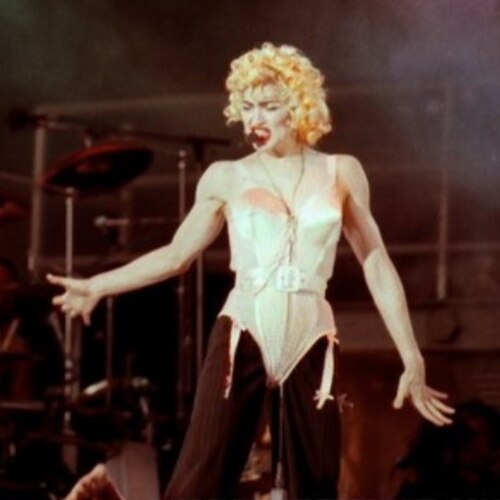
Pop music has been dominated by the American and (from the mid-1960s) British music industries, whose influence has made pop music something of an international monoculture, but most regions and countries have their own form of pop music, sometimes producing local versions of wider trends, and lending them local characteristics.[50] Some of these trends (for example Europop) have had a significant impact on the development of the genre.[51]
The story of pop music is largely the story of the intertwining pop culture of the United States and the United Kingdom in the postwar era.
According to Grove Music Online, "Western-derived pop styles, whether coexisting with or marginalizing distinctively local genres, have spread throughout the world and have come to constitute stylistic common denominators in global commercial music cultures".[52] Some non-Western countries, such as Japan, have developed a thriving pop music industry, most of which is devoted to Western-style pop. Japan has for several years produced a greater quantity of music than everywhere except the US.[53] The spread of Western-style pop music has been interpreted variously as representing processes of Americanization, homogenization, modernization, creative appropriation, cultural imperialism, or a more general process of globalization.[52]
يُعدّ البوب اللاتيني أحد أنماط موسيقى البوب التي تطورت جنبًا إلى جنب مع أنماط موسيقية أخرى ، وقد لاقى رواجًا كبيرًا في الولايات المتحدة خلال خمسينيات القرن العشرين مع النجاح المبكر لريتشي فالينز في موسيقى الروك أند رول . [ 54 ] لاحقًا، اكتسبت فرقتا لوس لوبوس وشيكانو روك شعبية واسعة خلال سبعينيات وثمانينيات القرن العشرين، وشهدت الفنانة سيلينا شهرةً واسعة النطاق في ثمانينيات وتسعينيات القرن العشرين، إلى جانب جاذبيتها لدى جمهور موسيقيي تيجانو مثل ليديا ميندوزا وليتل جو . ومع نجاح الأمريكيين من أصول إسبانية ولاتينية في قوائم موسيقى البوب، حافظت أغاني البوب الناجحة في تسعينيات القرن العشرين على شعبيتها في كلٍ من أنواعها الأصلية وفي موسيقى البوب بشكل عام. [ 55 ] حققت أغاني البوب اللاتيني المنفردة الناجحة، مثل " ماكارينا " لفرقة لوس ديل ريو و" ديسباسيتو " للويس فونسي ، نجاحًا قياسيًا في قوائم موسيقى البوب العالمية. [ 56 ]
ومن أبرز فناني البوب في أواخر القرن العشرين الذين أصبحوا نجوماً عالميين: ويتني هيوستن ، ومايكل جاكسون ، ومادونا ، وجورج مايكل ، وبرينس .
القرن الحادي والعشرون

في مطلع الألفية الجديدة، استمرت الاتجاهات التي سادت أواخر التسعينيات، لكن صناعة الموسيقى بدأت تتغير مع ازدياد تحميل الموسيقى من الإنترنت. تمكن الناس من اكتشاف أنواع موسيقية وفنانين خارج التيار السائد، ودفعهم نحو الشهرة، لكن في الوقت نفسه، واجه الفنانون الصاعدون صعوبة أكبر في كسب عيشهم بسبب قرصنة موسيقاهم. [ 58 ] من بين الفنانين المشهورين: أفريل لافين ، وجاستن تيمبرليك ، وفرقة إن سينك ، وكريستينا أغيليرا ، وفرقة ديستنيز تشايلد ، وبريتني سبيرز . غالبًا ما كانت موسيقى البوب تنحدر من أنواع موسيقية متعددة، حيث يؤثر كل نوع بدوره على النوع الذي يليه، مما يطمس الحدود بينها ويجعلها أقل تميزًا. تجسد هذا التغيير في ألبوم سبيرز المؤثر للغاية " بلاك آوت " عام 2007 ، والذي مزج، تحت تأثير المنتج دانجا ، أصوات موسيقى الرقص الإلكترونية ، والفانك الطليعي ، والآر أند بي ، وموسيقى الرقص ، والهيب هوب . [ 59 ]
By 2010, pop music impacted by dance music came to be dominant on the charts. Instead of radio setting the trends, it was now the club. At the beginning of the 2010s, Will.i.am stated, "The new bubble is all the collective clubs around the world. Radio is just doing its best to keep up."[60] Songs that talked of escapism through partying became the most popular, influenced by the impulse to forget the economic troubles during the Great Recession; this style of pop music is now known as recession pop.[61] Throughout the 2010s, a lot of pop music also began to take cues from alternative pop. Popularized by artists such as Lana Del Rey[62], Justin Bieber, Adele, Ariana Grande, and Lorde[63] in the early 2010s and later inspiring other highly influential artists including Billie Eilish and Taylor Swift,[64] it gave space to a more sad and moody tone within pop music.
In the 2020s, Canadian pop singer the Weeknd's song "Blinding Lights", became a staple hit of the decade, reaching the top spot of Billboard's greatest Hot 100 songs of all time, surpassing "The Twist" by Chubby Checker. It also broke the record for the first song to reach five billion streams on the Spotify streaming platform, becoming the most-streamed song of all time in the platform's history. This further led to a success from pop music dominating other streaming platforms including Spotify, Apple Music and YouTube Music, alongside other artists, which include Taylor Swift, Drake, Ariana Grande and Olivia Rodrigo.
See also
References
- ↑"Pop/Rock » Punk/New Wave » New Wave". allmusic.com. Archived from the original on 8 March 2021. Retrieved 9 December 2021.
- ↑"The 50 Best New Wave Albums". Paste. 13 October 2020. Archived from the original on 1 October 2017. Retrieved 9 December 2021.
- ↑"Q&A with Theo Cateforis, author of Are We Not New Wave? Modern Pop at the Turn of the 1980s"(PDF). University of Michigan. Archived(PDF) from the original on 25 November 2021. Retrieved 9 December 2021.
- ↑"Hyperpop or overhyped? The rise of 2020's most maximalist sound". The Independent. 27 December 2020. Retrieved 21 July 2023.
- 123456S. Frith, W. Straw, and J. Street, eds, The Cambridge Companion to Pop and Rock (Cambridge: Cambridge University Press), ISBN 0-521-55660-0, pp. 95–105.
- ↑D. Hatch and S. Millward, From Blues to Rock: an Analytical History of Pop Music (Manchester: Manchester University Press, 1987), ISBN 0-7190-1489-1, p. 1.
- ↑Boyle, J. David; Hosterman, Glenn L.; Ramsey, Darhyl S. (1 April 1981). "Factors Influencing Pop Music Preferences of Young People". Journal of Research in Music Education. 29 (1): 47–55. doi:10.2307/3344679. ISSN 0022-4294. JSTOR 3344679. S2CID 145122624.
- ↑R. Serge Denisoff and William L. Schurk, Tarnished Gold: the Record Industry Revisited (New Brunswick, NJ: Transaction Publishers, 3rd edn., 1986), ISBN 0-88738-618-0, pp. 2–3.
- ↑Moore, Allan F. (2016). Song Means: Analysing and Interpreting Recorded Popular Song. Routledge. ISBN 978-1-317-05265-4.
- ↑Musicologist Allan Moore surmises that the term "pop music" itself may have been popularized by pop art.[9]
- ↑Lamb, Bill (29 September 2018). "What Is Pop Music?". ThoughtCo. Archived from the original on 17 April 2019. Retrieved 4 November 2018.
- ↑J. Simpson and E. Weiner, Oxford English Dictionary (Oxford: Oxford University Press, 1989). ISBN 0-19-861186-2, cf. pop.
- ↑D. Hatch and S. Millward, From Blues to Rock: an Analytical History of Pop Music, ISBN 0-7190-1489-1, p. 49.
- 12R. Middleton, et al., "Pop", Grove music online, retrieved 14 March 2010. (subscription required)Archived 13 January 2011 at the Wayback Machine
- ↑"Pop", The Oxford Dictionary of Music, retrieved 9 March 2010.(subscription required)Archived 12 November 2017 at the Wayback Machine
- 12Kenneth Gloag in The Oxford Companion to Music (Oxford: Oxford University Press, 2001), ISBN 0-19-866212-2, p. 983.
- 12T. Warner, Pop Music: Technology and Creativity: Trevor Horn and the Digital Revolution (Aldershot: Ashgate, 2003), ISBN 0-7546-3132-X, pp. 3–4.
- ↑"Van's Brown Eyed Girl hits the 10 million mark in US". BBC. 5 October 2011. Archived from the original on 27 October 2018. Retrieved 21 July 2018.
- ↑Sullivan, Steve (2013). Encyclopedia of Great Popular Song Recordings, Volume 2. Scarecrow Press. pp. 101–103. ISBN 978-0-8108-8296-6.
- 12Rojek, Chris (2011). Pop music, pop culture. Polity; 1st edition (June 13, 2011). pp. 2–3. ISBN 978-0745642642.
- ↑Maisey, Sarah (27 June 2023). "Amr Diab to perform in Beirut for the first time in 12 years". The National. Retrieved 26 November 2023.
- ↑"Egypt's megastar Amr Diab releases 'Katar Men Orbak' song". EgyptToday. 27 December 2021. Retrieved 26 November 2023.
- ↑W. Everett, Expression in Pop-rock Music: A Collection of Critical and Analytical Essays (London: Taylor & Francis, 2000), p. 272.
- ↑"Characteristics of Pop Music: An Introduction". Cmuse.org. 9 December 2019. Archived from the original on 8 July 2020. Retrieved 7 July 2020.
- ↑J. Shepherd, Continuum Encyclopedia of Popular Music of the World: Performance and production (Continuum, 2003), p. 508.
- ↑V. Kramarz, The Pop Formulas: Harmonic Tools of the Hit Makers (Mel Bay Publications, 2007), p. 61.
- ↑Winkler, Peter (1978). "Toward a theory of pop harmony", In Theory Only, 4, pp. 3–26.
- ↑Sargeant, p. 198. cited in Winkler (1978), p. 4.
- ↑Winkler (1978), p. 22.
- ↑Aniftos, Rania; Atkinson, Katie; Bain, Katie; Renner Brown, Eric; Chan, Anna; et al. (19 October 2023). "The 500 Best Pop Songs: Staff List". Billboard.
- ↑Rushin, Don. "The Magic of Magnetic Tape". Standard Handbook of Broadcast Engineering. McGraw-Hill. Archived from the original on 3 June 2004.
- 1234D. Buckley, "Pop" "II. Implications of technology", Grove Music Online, retrieved 15 March 2010.
- ↑Hewitt, Paolo; Hellier, John (2015). Steve Marriott: All Too Beautiful. Dean Street Press. p. 162. ISBN 978-1-910570-69-2.
- ↑Reynolds, Simon (2006). "New Pop and its Aftermath". On Record: Rock, Pop and the Written Word. Routledge. p. 398. ISBN 978-1-134-93951-0.
- ↑Edmondson, Jacqueline, ed. (2013). Music in American Life: An Encyclopedia of the Songs, Styles, Stars, and Stories that Shaped our Culture. ABC-CLIO. pp. 317, 1233. ISBN 978-0-313-39348-8. Archived from the original on 12 April 2023. Retrieved 25 October 2016.
- 12Loss, Robert (10 August 2015). "No Apologies: A Critique of the Rockist v. Poptimist Paradigm". PopMatters. Archived from the original on 16 April 2022. Retrieved 16 April 2022.
- ↑Serrà, Joan; Corral, Álvaro; Boguñá, Marián; Haro, Martín; Arcos, Josep Ll. (2012). "Measuring the Evolution of Contemporary Western Popular Music". Scientific Reports. 2 521. arXiv:1205.5651. Bibcode:2012NatSR...2..521S. doi:10.1038/srep00521. ISSN 2045-2322. PMC 3405292. PMID 22837813.
- 12John Matson, "Is Pop Music Evolving, or Is It Just Getting Louder?", Scientific American, 26 July 2012Archived 23 March 2016 at the Wayback Machine. Retrieved 30 March 2016
- ↑"Making Arrangements—A Rough Guide To Song Construction & Arrangement, Part 1". Sound on Sound. October 1997. Archived from the original on 8 May 2014. Retrieved 8 May 2014.
- ↑Blake, Andrew (2009). "Recording practices and the role of the producer". In Cook, Nicholas; Clarke, Eric; Leech-Wilkinson, Daniel (eds.). The Cambridge Companion to Recorded Music. Cambridge University Press. p. 45. ISBN 978-1-139-82796-6.
- ↑Pareles, Jon (31 October 2008). "Orchestral Pop, the Way It Was (More or Less)". The New York Times. Archived from the original on 4 July 2022. Retrieved 4 July 2013.
- ↑"The greatest decade for pop music has been revealed (according to science)". Smooth. Archived from the original on 31 March 2019. Retrieved 31 March 2019.
- ↑Willis, Paul E. (2014). Profane Culture. Princeton University Press. p. 217. ISBN 978-1-4008-6514-7.
- 12Moore 2016, p. 202.
- ↑Abebe, Nitsuh (24 October 2005), "Twee as Fuck: The Story of Indie Pop", Pitchfork Media, archived from the original on 24 February 2011
- ↑Collins, Glenn (29 August 1988). "Rap Music, Brash And Swaggering, Enters Mainstream". The New York Times. Archived from the original on 1 May 2019. Retrieved 10 July 2019.
- 12Christgau, Robert (2014). "Anti-Rockism's Hall of Fame". The Barnes & Noble Review. Archived from the original on 20 December 2019. Retrieved 18 August 2015.
- ↑"New study finds pop music has gotten extremely depressing but also more fun to dance to". The Fader. Archived from the original on 21 May 2018. Retrieved 21 May 2018.
- ↑McGee, Alan (20 August 2008). "Madonna Pop Art". The Guardian. Archived from the original on 26 June 2015. Retrieved 17 April 2013.
- ↑J. Kun, Audiotopia: Music, Race, and America (Berkeley, CA: University of California Press, 2005), ISBN 0-520-24424-9, p. 201.
- ↑"Star profiles" in S. Frith, W. Stray and J. Street, The Cambridge Companion to Pop and Rock (Cambridge University Press, 2001), ISBN 0-521-55660-0, pp. 199–200.
- 12P. Manuel, "Pop. Non-Western cultures 1. Global dissemination", Grove Music Online, retrieved 14 March 2010.
- ↑Condry, Ian (2006). Hip-hop Japan: Rap and the Paths of Cultural Globalization. Durham: Duke University Press. p. 249. ISBN 0822338769. Retrieved 7 September 2025.
- ↑"Los Lobos, Ritchie Valens, and the Day the Music Died". Strachwitz Frontera Collection. 16 February 2017. Archived from the original on 30 November 2020. Retrieved 18 November 2020.
- ↑Aldama, A.J.; Sandoval, C.; García, P.J. (2012). Performing the US Latina and Latino Borderlands. Indiana University Press. p. 224. ISBN 978-0-253-00295-2. Retrieved 14 February 2020.
- ↑Villafañe, Veronica (14 August 2017). "Still No.1, Record-Breaking 'Despacito' Ties 'Macarena' Streak On Hot 100, But Is Snubbed By MTV". Forbes. Archived from the original on 22 May 2020. Retrieved 14 February 2020.
- ↑Often referred to in interviews, cover stories and promotional material as the new 'princess of pop'Hopkins, Susan (2002), Girl heroes: The New Force In Popular Culture, University of Michigan Press, p. 60
- ↑Ghoshal, Abhimanyu (28 December 2018). "A nostalgic look back at digital music piracy in the 2000s". TNW. Archived from the original on 27 July 2022. Retrieved 27 July 2022.
- ↑Hova, Tray (7 February 2011). "Studio Stories: Danja [Pg. 2]". VIBE.com. Archived from the original on 27 July 2022. Retrieved 27 July 2022.
- ↑Herrera, Monica (10 December 2010). "2010 in Music: The Year That Went Pop". Billboard. Retrieved 27 July 2022.
- ↑"Bopping Through the Bailouts: Why the Great Recession Led to Great Music". afterglow. 14 February 2019. Archived from the original on 8 July 2022. Retrieved 27 July 2022.
- ↑"For The Record: Why Lana Del Rey's 'Born To Die' Is One Of Pop's Most Influential Albums In The Past Decade". 26 April 2024.
- ↑"5 Ways Lorde's 'Pure Heroine' Helped Pave The Way For The Unconventional Modern Superstar". 26 April 2024.
- ↑"Taylor Swift Believes Lana Del Rey Is 'The Most Influential Artist In Pop'". 26 April 2024.
Further reading
- Adorno, Theodor W., (1942) "On Popular Music", Institute of Social Research.
- Bell, John L., (2000) The Singing Thing: A Case for Congregational Song, GIA Publications, ISBN 1-57999-100-9
- Bindas, Kenneth J., (1992) America's Musical Pulse: Popular Music in Twentieth-Century Society, Praeger.
- Clarke, Donald, (1995) The Rise and Fall of Popular Music, St Martin's Press.
- Dolfsma, Wilfred, (1999) Valuing Pop Music: Institutions, Values and Economics, Eburon.
- Dolfsma, Wilfred, (2004) Institutional Economics and the Formation of Preferences: The Advent of Pop Music, Edward Elgar Publishing.
- Frith, Simon, Straw, Will, Street, John, eds, (2001), The Cambridge Companion to Pop and Rock, Cambridge University Press,
- Frith, Simon (2004) Popular Music: Critical Concepts in Media and Cultural Studies, Routledge.
- Gillett, Charlie, (1970) The Sound of the City. The Rise of Rock and Roll, Outerbridge & Dienstfrey.
- Hatch, David and Stephen Millward, (1987), From Blues to Rock: an Analytical History of Pop Music, Manchester University Press, ISBN 0-7190-1489-1
- Johnson, Julian, (2002) Who Needs Classical Music?: Cultural Choice and Musical Value, Oxford University Press, ISBN 0-19-514681-6.
- Kent, Jeff, (1983) The Rise and Fall of Rock, Witan Books, ISBN 0-9508981-0-4.
- Lonergan, David F., (2004) Hit Records, 1950–1975, Scarecrow Press, ISBN 0-8108-5129-6.
- Maultsby, Portia K., (7907) Intra- and International Identities in American Popular Music, Trading Culture.
- Middleton, Richard, (1990) Studying Popular Music, Open University Press.
- Negus, Bob, (1999) Music Genres and Corporate Cultures, Routledge, ISBN 0-415-17399-X.
- Pleasants, Henry (1969) Serious Music and All That Jazz, Simon & Schuster.
- Roxon, Lillian, (1969) Rock Encyclopedia, Grosset & Dunlap.
- Shuker, Roy, (2002) Popular Music: The Key Concepts, Routledge, (2nd edn.) ISBN 0-415-28425-2.
- Starr, Larry & Waterman, Christopher, (2002) American Popular Music: From Minstrelsy to MTV, Oxford University Press.
- Watkins, S. Craig, (2005) Hip Hop Matters: Politics, Pop Culture, and the Struggle for the Soul of a Movement, Beacon Press, ISBN 0-8070-0982-2.
External links
- The Consumption of Music and the Expression of Values: A Social Economic Explanation for the Advent of Pop Music, Wilfred Dolfsma, American Journal of Economics and Sociology, October 1999.
- Pop music
- Western culture
- 1920s neologisms
- 1950s in music
- 1960s in music
- Music genres