تُعدّ أنواع الطيور الجزرية عمومًا، والأنواع الجزرية غير القادرة على الطيران خصوصًا، الأكثر عرضةً للخطر. ويتجلى هذا الوضع في هاواي ، حيث عاش 30% من جميع أنواع الطيور المنقرضة حديثًا ، [ 5 ] وغوام ، التي فقدت أكثر من 60% من أنواع طيورها الأصلية في العقود التي تلت إدخال ثعبان الشجر البني ( Boiga irregularis ). [ 6 ] [ 7 ] ويعكس العدد غير المتناسب من حالات الانقراض في طيور المرعى ميل هذه الفصيلة إلى فقدان القدرة على الطيران عند عزلها جغرافيًا. [ 8 ] بل إن عددًا أكبر من طيور المرعى انقرض قبل أن يتمكن العلماء من وصفها. [ 9 ] [ 10 ]
عادةً ما تكون تواريخ الانقراض المذكورة أدناه هي تواريخ آخر سجل موثق (ملاحظة موثوقة أو عينة مأخوذة)، وهي تقديرات تقريبية لتاريخ الانقراض الفعلي. مع ذلك، بالنسبة للعديد من طيور المحيط الهادئ التي انقرضت بعد فترة وجيزة من الاستعمار الأوروبي ، فإن هذا يترك فترة عدم يقين تزيد عن 100 عام، لأن الجزر التي عاشت عليها لم يزرها العلماء إلا نادرًا. [ 10 ] في بعض الحالات الاستثنائية، من الممكن تحديد تاريخ الانقراض بدقة في سنة معينة أو حتى يوم محدد؛ ويُعد طائر سان بينيديكتو الصخري مثالًا متطرفًا حيث أمكن تحديد توقيت انقراضه بدقة تصل إلى نصف ساعة تقريبًا، متزامنًا مع ثوران بركان بارسينا . [ 11 ]
يُعتبر عام 1875 عمومًا آخر رصد موثق لهذا النوع، على الرغم من قبول بعض التقارير التي تفيد بإطلاق النار على فرد منه في إلميتا، نيويورك عام 1878. [ 30 ] [ 31 ] أسباب الانقراض غير معروفة جيدًا، ولكنها تُعزى جزئيًا على الأقل إلى الصيد. [ 32 ]
البط ذو الرأس الوردي ، Rhodonessa caryophyllacea (شرق الهند، بنغلاديش، شمال ميانمار، حوالي عام 1945)
يُصنّف أحيانًا ضمن جنس نيتا ، لكن هذا التصنيف غير مقبول عمومًا. [ 39 ] [ 40 ] انخفضت أعداده بشكل حاد في أوائل القرن العشرين بسبب فقدان الموائل والصيد. [ 39 ] يُصنّف رسميًا على أنه مُهدد بالانقراض بشدة نظرًا لاحتمالية وجود أفراد متبقية في مناطق نائية من شمال ميانمار، حيث استمرت التقارير غير المؤكدة حتى القرن الحادي والعشرين. [ 40 ]
"الإوزة التاهيتية"، ربما نيسوشين (الآن برانتا ) sp. (تاهيتي، جزر المجتمع، جنوب المحيط الهادئ، شوهدت آخر مرة حوالي عام 1790)
ذكر الرحالة الأوائل إلى تاهيتي وجود "إوزة" في الجبال. وخلص جان ماري ديرشيد، بعد إعادة فحص ملاحظات هؤلاء المستكشفين، إلى أنها ربما كانت نوعًا غير موصوف من إوز نيسوشين . [ 48 ]
أُفيد أن طيور الميغابود كانت تسكن جزيرة راؤول حتى انقرضت في ثوران بركاني عام 1876. [ 49 ] ليس من الواضح ما إذا كانت هذه الطيور تمثل تصنيفًا متميزًا، ولكن بالنظر إلى تاريخ الجزيرة الحافل بالثورات البركانية الكبرى، فمن غير المرجح أن يكون نوع مستوطن قد نشأ هناك. [ 50 ]
آخر مشاهدة مؤكدة كانت عام 1876. [ 54 ] مصنفة رسمياً ضمن الأنواع المهددة بالانقراض بشدة بسبب استمرار المشاهدات غير المؤكدة وقلة التغطية المسحية في نطاقها التاريخي. أسباب انخفاض أعدادها واحتمالية انقراضها غير معروفة جيداً، ولكنها قد تشمل الصيد وتدمير الموائل. [ 52 ] [ 55 ]
آخر مشاهدة موثقة لهذا النوع تعود إلى عام 1860. يُصنف هذا النوع رسميًا على أنه مهدد بالانقراض بشدة، وربما منقرض ، نظرًا لاستمرار التقارير غير المؤكدة وصعوبة إجراء المسوحات للأنواع الخفية. [ 56 ]
عُرف هذا الطائر من عينة واحدة من شينجيانغ ، الصين، جُمعت عام ١٩٢٩، ووُصفت في البداية بأنها طائر السبد المصري ( Caprimulgus aegyptius ). [ ٥٧ ] وصفه تشارلز فوري لاحقًا كنوع جديد ، حيث كان صغر حجمه مقارنةً بأنواع السبد الأخرى سمةً مميزةً له. [ ٥٨ ] لا يزال تصنيف هذا النوع محل جدل؛ إذ تشير التحليلات الجينية إلى تشابهه مع طائر السبد الأوروبي ( Caprimulgus europaeus )، لكن صغر حجمه "يصعب تفسيره". [ ٥٩ ]
لا يُعرف هذا الطائر إلا من خلال العينة الأصلية التي جُمعت عام 1939 ووُصفت في البداية بأنها نوع فرعي من طائر السبد أبيض الحنجرة ؛ [ 60 ] وهو مصنف حاليًا على أنه مُهدد بالانقراض بشدة، ولكن عمليات البحث التي أُجريت عام 1998 وبشكل سنوي منذ عام 2010 لم تسفر عن العثور على أي دليل على وجود مجموعات حية منه. [ 61 ]
لا ينبغي الخلط بينه وبين طائر السبد الكاليدوني الجديد . يُصنّف هذا النوع حاليًا ضمن الأنواع المهددة بالانقراض بشدة. جُمعت العينة الأصلية بعد أن دخل الطائر غرفة نوم في قرية تونغوي. يُعرف هذا الطائر الكبير الشبيه بالسبد من عينتين أُخذتا عامي 1880 و1913، على الرغم من ورود تقارير غير مؤكدة عنه حتى عام 1998. [ 62 ]
يُصنف هذا النوع على أنه مُهدد بالانقراض بشدة، وربما يكون قد انقرض . لم تُسجل أي مشاهدات موثقة له منذ القرن التاسع عشر، ولكن يوجد سجل واحد غير مؤكد يعود إلى عام 1976. وقد فشلت المسوحات التي أُجريت في عامي 1980 و2005 في العثور على هذا النوع. [ 69 ]
مصنفة ضمن الأنواع المهددة بالانقراض بشدة؛ ولم تُبذل أي جهود بحثية مُستهدفة لإعادة تحديد موقع هذا النوع. لا يُعرف عنها إلا من خلال العينة الأصلية التي جُمعت عام 1895. [ 70 ]
حمامة ركاب ، Ectopistes migratorius (شرق أمريكا الشمالية، 1914)
كان الحمام الزاجل في يوم من الأيام من بين أكثر أنواع الطيور البرية وفرةً في العالم، حيث بلغ عدد أسرابه الواحدة 2.2 مليار طائر. وقد تعرض للصيد الجائر حتى كاد ينقرض، وذلك للحصول على الغذاء ولأغراض الصيد في أواخر القرن التاسع عشر. ونفقت آخر أنثى منه، وهي أنثى عزباء سُميت مارثا تيمناً بمارثا واشنطن ، في حديقة حيوان سينسيناتي عام 1914.
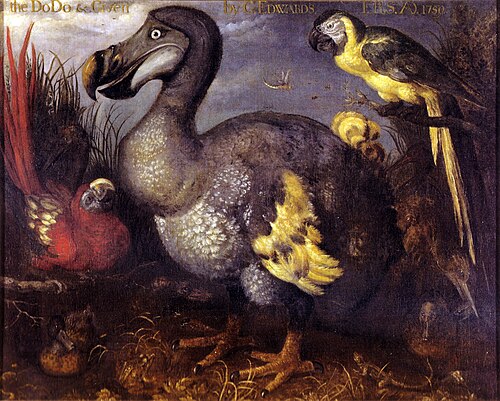
طائر الدودو ، Raphus cucullatus (موريشيوس، ماسكارين، أواخر القرن السابع عشر)
أطلق عليه لينيوس اسم Didus ineptus . وهو طائر لا يطير، يبلغ طوله مترًا واحدًا، ويعيش في موريشيوس . دُمّر موطنه الطبيعي في الغابات عندما استقر الهولنديون في الجزيرة، ودُمّرت أعشاشه وبيضه على يد الخنازير والقطط والقرود التي جلبها الهولنديون معهم. قُتل آخر طائر من هذا النوع عام 1681، بعد 80 عامًا فقط من وصول الحيوانات المفترسة الجديدة.
حمامة خشب البونين ، كولومبا المبرقشة (ناكودو-جيما وتشيتشي-جيما، جزر أوغاساوارا، حوالي 1890)
حمامة ريوكيو الخشبية ، Columba jouyi (جزر أوكيناوا ودايتو، شمال غرب المحيط الهادئ، أواخر ثلاثينيات القرن العشرين)
حمامة موريشيوس الخشبية ، Columba thiriouxi (موريشيوس، جزر ماسكارين، ثلاثينيات القرن الثامن عشر)
وُصِفَ هذا النوع من خلال بقايا أحفورية جزئية، ويُعتقد أنه انقرض بحلول عام 1730 بسبب الصيد، وافتراس الجرذان السوداء الدخيلة ، وإزالة الغابات. وقد أُثيرت تساؤلات حول هذا النوع نظرًا لندرة المواد التي عُثر عليها وعدم إمكانية تمييزها تمامًا عن حمام الصخور الذي أُدخل إلى الجزيرة عام 1639. ومع ذلك، تشير الروايات التاريخية المبكرة إلى وجود حمام كان يُصطاد بسهولة.
حمامة رودريغز ، Nesoenas rodericanus (رودريغز، ماسكارين، قبل عام 1690؟)
كانت تُصنف سابقًا ضمن جنس ستريبتوبيليا . يُحتمل أن يكون هذا الطائر نوعًا فرعيًا من حمامة مدغشقر ( Nesoenas picturatus )، ويبدو أنه الطائر الذي رصده ليغوات . ربما تكون الجرذان المُدخَلة قد تسببت في انقراضه في أواخر القرن السابع عشر.
قلب سولو النازف ، جاليكولومبا ميناجي (تاويتاوي، الفلبين، أواخر التسعينيات؟)
يُصنّف هذا الطائر رسميًا ضمن الأنواع المهددة بالانقراض بشدة . ولا يُعرف عنه سوى عينتين تم جمعهما عام ١٨٩١. وقد وردت عدة تقارير غير مؤكدة من مختلف أنحاء أرخبيل سولو عام ١٩٩٥؛ إلا أن هذه التقارير أشارت إلى انخفاض حاد ومفاجئ في أعداد الطائر، وأن تدمير موطنه الطبيعي بات شبه كامل. وإن لم يكن هذا الطائر قد انقرض، فهو بالتأكيد نادر جدًا، إلا أن الحرب الأهلية الدائرة تحول دون إجراء مسوحات شاملة.
نوعان فرعيان، النوع الفرعي الاسمي غير المعروف P. m. mercierii من نوكو هيفا (انقرض في منتصف إلى أواخر القرن التاسع عشر) و P. m. tristrami من هيفا أوا (1922).
حمامة فاكهة نيغروس ، Ptilinopus arcanus (نيغروس، الفلبين، أواخر القرن العشرين؟)
لا يُعرف هذا النوع إلا من عينة واحدة جُمعت في المشاهدة الموثقة الوحيدة عام ١٩٥٣؛ وقد أُثيرت تساؤلات حول صحة تصنيفه كنوع مستقل، ولكن لم يُقترح بديلٌ مُقنعٌ لتصنيفه كنوع مستقل. يُصنف رسميًا ضمن الأنواع المُهددة بالانقراض بشدة ، وقد يكون لا يزال موجودًا في جزيرة باناي، ولكن لم يُعثر عليه في أي مسح. ويبدو أن إحدى التسجيلات المُحتملة عام ٢٠٠٢ لم تتكرر منذ ذلك الحين.
لا يُعرف إلا من التقارير المبكرة؛ ربما يكون نوعًا فرعيًا إما من حمامة جزر القمر الزرقاء ( Alectroenas sganzini ) أو حمامة سيشل الزرقاء ( Alectroenas pulcherrimus ).
حمامة موريشيوس ، Nesoenas cicur (موريشيوس، ماسكارينيس، ثلاثينيات القرن الثامن عشر)
يشبه هذا النوع حمامة مدغشقر، ولكنه أكثر ميلاً للعيش على الأرض، وله أرجل أقوى وأجنحة أصغر. وقد انقرض بحلول عام 1730 بسبب الصيد، والافتراس من قبل الثدييات الدخيلة، وإزالة الغابات.
يُعرف هذا الطائر من خلال عظام تعود لما قبل كولومبوس في بورتوريكو وجزر العذراء الأمريكية. وقد تشير القصص التي سمعها ألكسندر ويتمور عام 1912 في بورتوريكو عن طائر سهل الصيد يُدعى كاراو إلى هذا الطائر.
طائر المرعة في جزر تشاتام ، Gallirallus modestus (جزر تشاتام، جنوب غرب المحيط الهادئ، حوالي عام 1900)
مرعة كاليدونيا الجديدة ، Gallirallus lafresnayanus (كاليدونيا الجديدة، ميلانيزيا، حوالي عام 1900؟)
تم تصنيفها رسمياً على أنها مهددة بالانقراض بشكل خطير ، وكانت آخر السجلات في عام 1984، ويبدو أن جميع الموائل المتاحة قد اجتاحتها الآن الخنازير البرية والكلاب البرية التي افترست هذا الطائر.
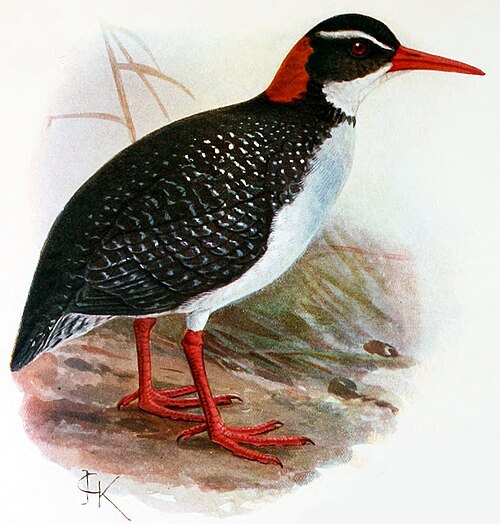
طائر شارب ، Gallirallus sharpei أو Gallirallus philippensis اللون المورفولوجي (تاريخ الانقراض غير معروف، ربما من جزر سوندا الكبرى ، إندونيسيا) [ 73 ]
لا يُعرف عنه إلا من عينة نموذجية ذات أصل غير مؤكد. افترض ستورز أولسون أن هذا الطائر نوع مستقل، Gallirallus sharpei ، ومن المرجح أنه من إندونيسيا، نظرًا لكونه غير قادر على الطيران (مما يعني أنه جاء من منطقة بها مفترسات طبيعية) وتشابهه المورفولوجي مع G. philippensis . [ 73 ] يُصنف حاليًا على أنه شكل لوني أسود من طائر المرعة ذي الشريط البني المصفر بعد التحليلات الجينية. [ 74 ] [ 75 ]
Vava ʻ u Rail ، Hypotaenidia vavauensis (Vava ʻ u، تونغا، جنوب غرب المحيط الهادئ، أوائل القرن التاسع عشر؟)
لم يكن هذا الطائر معروفًا سابقًا إلا من خلال رسم من رحلة مالاسبينا الاستكشافية عام 1793 ، والذي كان يصور على ما يبدو نوعًا من أنواع طيور الغاليرالوس . وقد تم العثور على بقايا أحفورية فرعية تنتمي إلى هذا النوع في عام 2020. [ 77 ]
سكة حديد هاوايسكة هاواي ، زابورنيا ساندويتشينسيس (الجزيرة الكبيرة، جزر هاواي، حوالي عام 1890)
خور كوسراي ، زابورنيا مونسا (كوسراي، كارولين، حوالي منتصف وأواخر القرن التاسع عشر)
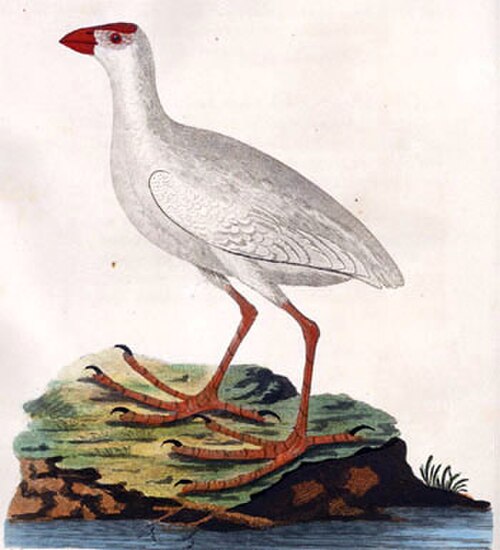
كريك تاهيتي ، زابورنيا نيغرا (تاهيتي، جزر المجتمع، جنوب المحيط الهادئ، حوالي 1800)
لا يُعرف إلا من خلال اللوحات والأوصاف؛ وحالته التصنيفية غير مؤكدة، حيث يُعتقد غالبًا أن المادة تشير إلى طائر الكركي عديم البقع الموجود ( Zapornia tabuensis ).
ربما نجا حتى حوالي عام 1900. في الزاوية اليمنى السفلى من لوحة بول غوغان لعام 1902 بعنوان "ساحر هيفا أو أو الماركيزي ذو الرأس الأحمر" ، يوجد طائر يشبه الأوصاف المحلية لـ P. paepae .
تاكاهاي الجزيرة الشمالية ، بورفيريو مانتيلي (الجزيرة الشمالية، نيوزيلندا، أواخر القرن التاسع عشر)
معروف من عظام متحجرة جزئياً تم العثور عليها في الجزيرة الشمالية لنيوزيلندا؛ ربما يكون قد نجا حتى عام 1894 أو بعد ذلك.
ربما يكون تصنيفها الأنسب ضمن جنس بارودياستس . تشير تقارير غير مؤكدة من أواخر القرن العشرين إلى أنها لا تزال موجودة بأعداد قليلة، ولذلك فهي مصنفة رسمياً على أنها مهددة بالانقراض بشدة .
ماكيرا وودهن ، جالينولا سيلفستريس (ماكيرا، جزر سليمان، منتصف القرن العشرين؟)
لا يُعرف هذا النوع من طيور المرعة إلا من عينة واحدة، ومن المرجح أنه يُصنف ضمن جنسه الخاص، إديثورنيس . وتشير سجلات حديثة غير مؤكدة إلى أنه لا يزال موجودًا، ولذلك يُصنف رسميًا على أنه مُهدد بالانقراض بشدة .
دجاجة الماء تريستان ، Gallinula nesiotis (تريستان دا كونا، جنوب المحيط الأطلسي، أواخر القرن التاسع عشر)
طائر الغرة الماسكارينية ، Fulica newtonii (موريشيوس وريونيون، جزر الماسكارين، حوالي عام 1700)
أنواع أخرى
بوكاك "حبارى" الجنرال. وآخرون س. indet. "بوكاك" ( بوكاك أتول ، جزر مارشال، حوالي 1895)
ذُكر طائر بري غير مُحدد في تقرير لجورج إيمر من بوكاك في جزر مارشال عام 1895. ووُصف بأنه " حبارى " (بالألمانية: Trappe )، ولكنه كان على الأرجح مرعة أو طائرًا ضخم الأرجل . [ 79 ]
Alaotra grebe , Tachybaptus rufolatus (بحيرة ألاوترا والبحيرات المحيطة بها، مدغشقر، 1985)
أُعلن رسمياً عن انقراضه في عام 2010، بعد 25 عاماً من آخر مشاهدة رسمية له في عام 1985. [ 80 ] ويعود انقراضه في المقام الأول إلى تدمير موطنه ، وإدخال أنواع غازية، والتهجين مع الغطاس الصغير ( Tachybaptus ruficollis ). [ 81 ]
انخفضت أعدادها بسرعة بدءًا من خمسينيات القرن العشرين نتيجة عوامل شملت تدمير الموائل، وإدخال سمك السلمون المرقط اللاحم ، والصيد، وتلوث المياه. ولم تسفر المسوحات المكثفة التي أُجريت في ثمانينيات القرن العشرين عن رصد أي أفراد. [ 84 ] [ 85 ] [ 86 ]
لا يزال هذا النوع مدرجًا على أنه مهدد بالانقراض بشدة ، ولكن آخر مشاهدة مؤكدة له كانت في عام 1911. وقد باءت محاولات نقل هذا النوع في القرن العشرين بالفشل. [ 87 ]
طائر المحار في جزر الكناري ، Haematopus meadewaldoi (جزر الكناري الشرقية، شرق المحيط الأطلسي، حوالي عام 1940) [ 88 ]
آخر مشاهدة مؤكدة كانت عام 1913، وأُبلغ عن انقراضها في أربعينيات القرن العشرين. [ 88 ] فشلت المسوحات المتكررة في القرن العشرين في العثور على أي دليل على وجود هذا النوع. [ 89 ] يُرجح أن يكون الانقراض ناتجًا عن الإفراط في الصيد من قِبل البشر في منطقة المد والجزر، وتدمير الموائل، وانتشار الحيوانات المفترسة الدخيلة. [ 89 ] [ 90 ]
زقزاق جاوة ، Vanellus macropterus (جاوة، إندونيسيا، منتصف القرن العشرين) [ 91 ] آخر تسجيل له كان في عام 1940. [ 91 ]
صُنِّفَت رسميًا على أنها مُهدَّدة بالانقراض بشدة نظرًا لعدم اكتمال تغطية المسح في الموائل المناسبة واستمرار المشاهدات غير المؤكدة حتى أوائل القرن الحادي والعشرين. [ 91 ] [ 92 ] ويُعزى انخفاض أعدادها واحتمال انقراضها إلى الصيد وتدمير الموائل. [ 92 ]
أُعلن انقراض هذا الطائر من قبل الاتحاد الدولي لحفظ الطبيعة عام 2025. [ 95 ] سُجِّلت مشاهدات قليلة له عام 2004 بعد عقود من ندرته المتزايدة. كما سُجِّلت مشاهدة غير مؤكدة له في ألبانيا عام 2007. وتُجري الجمعية الملكية لحماية الطيور ( بيردلايف في المملكة المتحدة ) حاليًا مسحًا لمعرفة ما إذا كان هذا الطائر لا يزال موجودًا.
لا يُعرف هذا النوع إلا من خلال عظام متحجرة جزئياً، ومن المرجح جداً أنه انقرض قبل وصول الأوروبيين إلى الجزر. [ 99 ] من الناحية النظرية، يمكن أن يُشير طائرٌ كان محتجزاً بين عامي 1867 و1872 إلى هذا النوع، [ 100 ] ولكن من المرجح أن هذا الطائر الأسير كان فرداً عابراً من أحد أنواع جنس Eudyptes الأخرى الموجودة في جزر تشاتام. [ 98 ]
وُصِفَ هذا الطائر من عظامٍ شبه متحجرة. [ 103 ] لم يتضح متى حدث انقراضه، لكن المؤلفين الذين وصفوا هذا النوع حددوا نطاقًا زمنيًا بين وصول أول إنسان إلى الجزر (منذ حوالي 700 عام) وحتى حوالي عام 1872، عندما وثّق هنري ترافرز جميع الطيور الموجودة في الجزيرة ولم يصف هذا الطائر. [ 103 ] [ 100 ]
Pterodroma cf. leucoptera ( مانغاريفا ، جزر غامبير ، جنوب المحيط الهادئ، القرن العشرين؟)
عُثر على جناح جثة طائر نوء يشبه في مظهره نوء غولد ( Pterodroma leucoptera ) في جزيرة مانغاريفا عام 1922، حيث يُحتمل أنه كان يتكاثر. ولا يُعرف وجود أي طيور من هذا النوع هناك اليوم.
ماسكارين مفخخة، Papasula sp. (موريشيوس ورودريغز، ماسكارين، منتصف القرن التاسع عشر)
نوع غير موصوف من طيور الأطيش، كان يُعتقد سابقًا أنه ينتمي إلى مجموعة من طيور الأطيش أبوت ( Papasula abbotti ). لا يُعرف عنه سوى عظام متحجرة جزئيًا، ولكن يُرجح أنه الطائر الذي أطلق عليه المستوطنون الأوائل اسم "بويف" (boeuf)؛ وقد سُجل وجود طائر "بويف" آخر مرة في رودريغز عام 1832، ومن المرجح أنه انقرض بعد إزالة الغابات من الجزيرة.
من المرجح أن هذا النوع كان أساسًا لوصف " طائر الدودو الأبيض " (" Raphus solitarius ") الذي ذكره ويليم بونتكوي عام 1619، و"طائر سوليتير ريونيون" الذي وصفه مستكشفون فرنسيون لاحقون، وهو قريب مفترض لطائر الدودو وطائر سوليتير رودريغز . لم يُعثر على أي أحافير من فصيلة رافيد في ريونيون، وتتشابه الأوصاف اللاحقة لـ"طائر سوليتير" مع سلوك طائر أبو منجل. [ 107 ] [ 108 ]
"النسر الملون"، Sarcoramphus [ Vultur ] sacra ( فلوريدا ، الولايات المتحدة، 1774 - 1775) [ 113 ]
طائر يُفترض أنه يشبه في مظهره نسر الملك ( Sarcoramphus papa ). تم التعرف عليه من قبل ويليام بارترام خلال رحلاته بين عامي 1774 و1775. وقد افترض المشككون أن هذا الطائر كان على الأرجح خطأ في تحديد هوية الكاراكارا المتوجة ( Caracara plancus ) أو نسر ملك مهاجر. [ 114 ]
عائلة الصقور – الصقور، والنسور، والحدأة، ونسور العالم القديم
عُرفت هذه البومة من عظام تعود إلى عصور ما قبل التاريخ عُثر عليها في كهوف بورتوريكو؛ وربما كانت لا تزال موجودة حتى عام 1912، نظرًا لتقارير وجود بومة تتخذ من الكهوف مأوى لها. ومن المرجح أنها نوع فرعي من بومة الوجه الرمادي ( Tyto glaucops ) التي لا تزال موجودة، أو أنها مرادفة لها.
يُصنف هذا النوع رسمياً على أنه مُهدد بالانقراض بشدة ، ولكنه قد لا يزال موجوداً. وقد أوصت دراسة أجرتها منظمة بيردلايف عام 2018 ، استناداً إلى أنماط الانقراض، بإعادة تصنيف هذا النوع على أنه من المحتمل انقراضه.
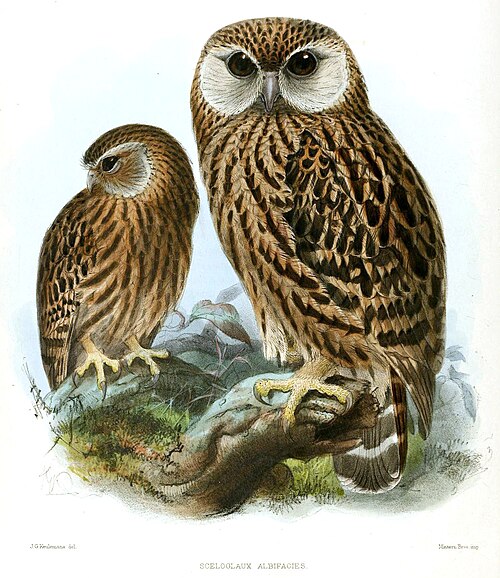
نوعان فرعيان: النوع الفرعي الاسمي N. a. albifacies (الجزيرة الجنوبية وجزيرة ستيوارت، انقرضت عام 1914؟) و N. a. rufifacies (الجزيرة الشمالية، انقرضت حوالي سبعينيات القرن التاسع عشر؟)؛ تشير الأدلة الظرفية إلى أن بقايا صغيرة نجت حتى أوائل أو منتصف القرن العشرين.
انقرض هذا النوع في البرية بحلول عام 1988؛ وبين عامي 1984 و1986، تم أخذ 29 طائرًا لبرنامج إكثار في الأسر، وهو برنامج مستمر. أُطلق سراح مجموعة تجريبية مُعاد توطينها في جزيرة بالميرا المرجانية عام 2024. [ 119 ]
ببغاء كارولينا ، Conuropsis carolinensis (جنوب شرق أمريكا الشمالية، حوالي عام 1930؟)
على الرغم من أن تاريخ نفوق آخر طائر أسير في حديقة حيوان سينسيناتي، عام 1918، يُعتبر عمومًا تاريخ انقراض هذا النوع، إلا أن هناك تقارير موثوقة تُشير إلى استمرار وجود بعض المجموعات البرية حتى وقت لاحق. يوجد نوعان فرعيان: C. c. carolinensis (ببغاء كارولينا، شرق وجنوب جبال الأبلاش - انقرض إما عام 1918 أو حوالي عام 1930) و C. c. ludovicianus (ببغاء لويزيانا، غرب جبال الأبلاش - انقرض حوالي عام 1912).
ببغاء سينو ، بيرهورا سوباندينا (كولومبيا، منتصف القرن العشرين؟)
هذا الطائر له توزيع محدود للغاية، وقد تم تسجيله آخر مرة بشكل موثوق في عام 1949. لم يتم العثور عليه خلال عمليات البحث في عامي 2004 و2006 ويبدو أنه قد انقرض؛ وتستمر الجهود للعثور عليه مرة أخرى، ولكنها تتعثر بسبب خطر النزاع المسلح.
وُصفت عدة أنواع من الببغاوات ذات الصلة في جزر الهند الغربية، لكن ذلك لا يستند إلى أدلة قوية. ومع ذلك، من المعروف الآن أن العديد من الأشكال التي تعود إلى عصور ما قبل التاريخ كانت موجودة في المنطقة.
ببغاء غوادلوب ، Psittacara labati (غوادلوب، جزر الهند الغربية، أواخر القرن الثامن عشر)
لا يُعرف إلا من خلال الأوصاف؛ ومن المرجح أن يكون وجود هذا الطائر سابقًا لأسباب جغرافية حيوية ولأن التفاصيل المتعلقة به كما هو موصوف لا يمكن ربطها بأي نوع معروف.
ببغاء بورتوريكي ، Psittacara maugei (جزيرة مونا وربما بورتوريكو، جزر الهند الغربية، تسعينيات القرن التاسع عشر)
كان يعتبر سابقًا نوعًا فرعيًا ضعيف التمايز من ببغاء هيسبانيولا الذي لا يزال موجودًا ( Psittacara chloropterus ).
ربما يكون هذا النوع، المعروف من عظام متحجرة عُثر عليها في تونغا وفانواتو، وربما فيجي، قد نجا حتى القرن الثامن عشر أو حتى لفترة أطول: فقد رُسم طائر يبدو أنه ببغاء إكليكتوس ذكر في تقرير عن جزيرة فافاو التونغية من قِبل بعثة مالاسبينا . كما وُثِّق اسم تونغي من القرن التاسع عشر، وهو ʻāʻā ( "ببغاء") ، يُشير إلى "طائر جميل لا يوجد إلا في إيوا " (انظر هنا [ 124 ] تحت "كاكا"). ويبدو أن هذا الاسم يُشير إما إلى E. infectus ، المعروف في تونغا فقط من فافاو وإيوا ، أو إلى سلالة طائر اللوري المطوق ( Vini solitaria ) المنقرضة، والتي كانت موجودة هناك أيضًا. من الممكن، وإن كان مستبعدًا، أن يكون هذا النوع قد نجا في إيوا حتى القرن التاسع عشر.
يُصنف هذا النوع رسمياً ضمن الأنواع المهددة بالانقراض بشدة ، ولم ترد أي تقارير عنه منذ منتصف القرن العشرين. ومع ذلك، فهو صغير الحجم وغير ملفت للنظر، ومن المرجح أنه لم يُلاحظ.
ببغاء نيوتن ، Psittacula exsul (رودريغيز، ماسكارين، حوالي 1875)
الببغاء الرمادي الماسكاريني ، Psittacula bensoni (موريشيوس، وربما ريونيون باسم Psittacula cf. bensoni ، 1760).
كان يُعرف سابقًا باسم ببغاء موريشيوس الرمادي ( Lophopsittacus bensoni ). عُرف من خلال رسم تخطيطي للكابتن ويليم فان ويستزانين عام 1602 ومن خلال عظام متحجرة جزئيًا وصفها ديفيد توماس هوليوك عام 1973. ربما يكون قد نجا حتى منتصف القرن الثامن عشر.
ثلاثة أنواع فرعية، X. l. stokesi (الجزيرة الشمالية، انقرضت عام 1955)؛ والأنواع الفرعية الأصلية X. l. longipes (الجزيرة الجنوبية، انقرضت عام 1968) و X. l. variabilis (جزيرة ستيوارت، انقرضت عام 1972).
آخر تسجيل له كان في عام 1906. [ 125 ] كان يُعتبر سابقًا نوعًا فرعيًا من طائر الجرس النيوزيلندي ( Anthornis melanera )، ولكنه يُعامل الآن بشكل موحد على أنه نوع مستقل. [ 126 ]
لا تزال هوية نوع " Strigiceps leucopogon " ( اسم غير صالح ) [ 52 ] الذي وصفه ليسون عام 1840 غير واضحة. فإلى جانب العينة الأصلية التي يُفترض أنها من " هولندا الجديدة "، ربما وُجدت عينة ثانية من " جبال الهيمالايا "، أو ربما لا تزال موجودة. وقد ربط ليسون هذا النوع مبدئيًا بفصيلة Meliphagidae، وشعر روتشيلد بتشابهه مع نوع kioea .
صفير مانجاريفان ، ؟ Pachycephala gambierana (مانجاريفا، جزر غامبير، جنوب المحيط الهادئ، أواخر القرن التاسع عشر؟)
تم وضعه هنا بشكل مؤقت. طائر غامض لم يتم العثور على أي عينات منه اليوم. تم وصفه في البداية على أنه طائر القيق، ثم تم تصنيفه على أنه طائر أبو الحناء من جنس Eopsalteria ، وقد يكون في الواقع طائرًا مغردًا من جنس Acrocephalus .
بيوبيو الجزيرة الجنوبية ، تورناغرا كابينسيس (الجزيرة الجنوبية، نيوزيلندا، ستينيات القرن العشرين؟)
نوعان فرعيان، T. c. minor من جزيرة ستيفنز (انقرض حوالي عام 1897) والنوع الفرعي الأصلي T. c. capensis من البر الرئيسي للجزيرة الجنوبية (تم أخذ آخر عينة في عام 1902، وآخر سجل غير مؤكد في عام 1963).
ملك ماوبيتي ، بوماريا بوماريا (ماوبيتي، جزر سوسايتي، جنوب المحيط الهادئ، منتصف القرن التاسع عشر)
إياو مونارك ، بوماريا فلوكسا (إياو، ماركيساس، أواخر السبعينيات)
كان يعتبر سابقًا نوعًا فرعيًا من فراشة الملك ( Pomarea iphis )، وهو نسل مبكر من سلالة ماركيزان.
نوكو هيفا العاهل ، بوماريا نوكوهيفاي (نوكو هيفا، ماركيساس، من منتصف إلى أواخر القرن العشرين)
كان يعتبر سابقًا نوعًا فرعيًا من فراشات ماركيساس الملكية ( Pomarea mendozae )، وهو نسل مبكر آخر من سلالة ماركيساس.
Ua Pou Monarch ، Pomarea mira (Ua Pou، ماركيساس، ج. 1986)
كما كان يعتبر سابقًا نوعًا فرعيًا من طائر الملك ماركيساس، إلا أنه كان نوعًا متميزًا يرتبط ارتباطًا وثيقًا بذلك الطائر وطائر الملك فاتوهيفا ( بوماريا ويتني ).
يُصنّف هذا النوع الغامض رسميًا ضمن الأنواع المهددة بالانقراض بشدة ، ولا يُعرف عنه سوى الطيور المهاجرة، وقد شوهد آخر مرة عام 1986 في موقع مبيته السابق. وتشير تقارير حديثة غير مؤكدة إلى أنه قد لا يزال موجودًا في كمبوديا .
سنونو جرف البحر الأحمر ، Petrochelidon perdita (منطقة البحر الأحمر، أواخر القرن العشرين؟)
عُرف هذا الطائر الغامض من عينة واحدة عُثر عليها عام ١٩٨٤؛ وقد يكون لا يزال موجودًا، لكن قلة السجلات الحديثة عنه أمرٌ مُحير. كما يُصنف أيضًا ضمن جنس السنونو (Hirundo) .
عائلة طيور الزقزاق الأكروسيفاليدي – طيور الزقزاق الأكروسيفاليدي أو طيور الزقزاق المستنقعية، وطيور الزقزاق الشجرية، وطيور الزقزاق القصبية
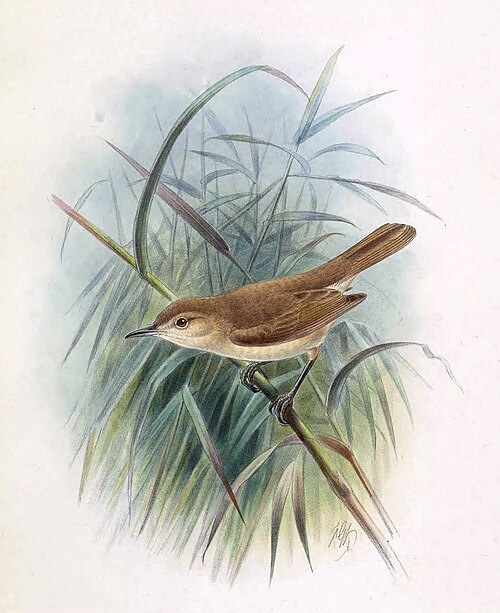
طائر القصب العندليب ، Acrocephalus luscinius (غوام، غرب المحيط الهادئ، حوالي سبعينيات القرن العشرين)
طائر القصب الوثني ، Acrocephalus yamashinae (باغان، جزر ماريانا، غرب المحيط الهادئ، سبعينيات القرن العشرين)
كان يُعتبر سابقاً نوعاً فرعياً من طائر القصب العندليب.
طائر القصب أغويغوان ، Acrocephalus nijoi (أغويغوان، جزر ماريانا، غرب المحيط الهادئ، حوالي عام 1997)
كما كان يُعتبر سابقاً نوعاً فرعياً من طائر القصب العندليب.
هازجة القصب مانغاريفا ، Acrocephalus astrolabii (ماريانا؟، غرب المحيط الهادئ، منتصف القرن التاسع عشر؟)
لا يُعرف عنها سوى عينتين تم العثور عليهما في جزيرة مانغاريفا .
هازجة القصب غاريت ، Acrocephalus musae (راياتي وهواهين، جزر المجتمع، جنوب المحيط الهادئ، القرن التاسع عشر؟)
نوعان فرعيان، أ.م. غاريتي من هواهين وأ.م. موسى من راياتيا. كان يُنظر إليه سابقًا على أنه نوع فرعي من نقشارة القصب التاهيتي ( Acrocephalus caffer ).
طائر القصب الموري ، Acrocephalus longirostris (موريا، جزر سوسايتي، جنوب المحيط الهادئ، ثمانينيات القرن العشرين؟)
آخر مشاهدة موثوقة لهذا الطائر كانت عام ١٩٨١. ولم تُسفر عملية مسح أُجريت عامي ١٩٨٦ و١٩٨٧ عن العثور عليه. ولا تزال صورة التقطها فيليب باتشيه لطائر مغرد من جزيرة موريا عام ١٩٩٨ أو ١٩٩٩ غير مؤكدة، وكذلك التقارير الواردة من عامي ٢٠٠٣ و٢٠١٠. وكان يُعتقد سابقًا أنه نوع فرعي من طائر مغرد القصب التاهيتي.
نوع غامض وُجد بأعداد قليلة في حوض نهر تانا في تواريخ متفرقة، لكن لم يُرَ منذ عام ١٩٧٢. يُرجّح أن يكون هذا النوع غير صحيح؛ وإن كان كذلك، فقد يكون مبنيًا على عينات شاذة أو هجينة. وقد أُبلغ عن مشاهدة غير مؤكدة له في عام ٢٠٠٧ في دلتا نهر تانا.
انخفض عدد السكان بشكل حاد بين عامي 1926 و1962، حيث لم يتبق سوى أقل من 50 فرداً. وكانت آخر مشاهدات مؤكدة في عام 1979، على الرغم من الجهود المكثفة المبذولة منذ ذلك الحين لإعادة توطين هذا النوع. [ 127 ]
طائر العين البيضاء المقنع، Zosterops conspicillatus ( غوام ، حوالي عام 1983)
ملاحظة: بينما يعتبر الاتحاد الدولي لحفظ الطبيعة هذا التجمع المنقرض نوعًا كاملًا ضمن طائر العين البيضاء المقنعة (Z. conspicillatus) ، تعتبره هيئات تصنيفية أخرى، مثل اللجنة الأولمبية الدولية ، نوعًا فرعيًا ( Z. c. conspicillatus ) لطائر لا يزال موجودًا، يُسمى أيضًا العين البيضاء المقنعة . [ 129 ] أما منظمة بيردلايف الدولية/الاتحاد الدولي لحفظ الطبيعة فتعتبر هذا التجمع الموجود نوعًا منفصلًا، وهو العين البيضاء السايبانية ( Z. saypani )، وتصنفه ضمن الأنواع القريبة من التهديد . [ 130 ]
سمكة كوزوميل ثراشر ، توكسوستوما غوتاتوم (كوزوميل، جزر الهند الغربية، أوائل العقد الأول من القرن الحادي والعشرين؟)
لا يزال من غير المعروف ما إذا كان السكان الضئيلون الذين أعيد اكتشافهم في عام 2004 قد نجوا من إعصاري إميلي وويلما في عام 2005. كما كانت هناك سجلات غير مؤكدة في أبريل 2006 وأكتوبر وديسمبر 2007.
زرزور كوسراي ، Aplonis corvina (كوسراي، جزر كارولين، غرب المحيط الهادئ، منتصف القرن التاسع عشر)
زرزور موك ، Aplonis mavornata (موكي، جزر كوك، منتصف القرن التاسع عشر)
زرزور تسمان ، Aplonis fusca (جزيرة نورفولك وجزيرة لورد هاو، جنوب غرب المحيط الهادئ، حوالي عام 1923)
نوعان فرعيان، النوع الفرعي الاسمي A. f. fusca – زرزور نورفولك (انقرض حوالي عام 1923) و A. fusca hulliana – زرزور لورد هاو (انقرض حوالي عام 1919).
زرزور بونبي ، Aplonis pelzelni (بونبي، ميكرونيزيا، حوالي عام 2000)
إن وجود سجل موثوق واحد فقط منذ عام 1956، في عام 1995، يجعل بقاء هذا النوع موضع شك كبير.
زرزور راياتيا ، أبلونيس ؟ أوليتنس (راياتيا، جزر سوسايتي، جنوب المحيط الهادئ، بين عامي 1774 و 1850)
كان يُعرف سابقًا باسم طائر السمنة الخليجية ( Turdus ulietensis )؛ وهو طائر غامض من جزيرة راياتيا، لا يُعرف عنه اليوم إلا من خلال لوحة وبعض الأوصاف لعينة مفقودة. ولذلك، فإن تصنيفه غير محسوم في الوقت الراهن، على الرغم من أنه، لأسباب جغرافية حيوية وبسبب الوصف المتبقي، يُرجّح أنه كان من آكلات العسل . ومع ذلك، مع اكتشاف أحافير زرزور هواهين المنقرض في عصور ما قبل التاريخ ( Aplonis diluvialis ) في جزيرة هواهين المجاورة ، يبدو من المرجح أن هذا الطائر كان ينتمي أيضًا إلى هذا الجنس.
زرزور الهدهد ، Fregilupus varius (ريونيون، ماسكارين، خمسينيات القرن التاسع عشر)
زرزور رودريغز ، Necropsar rodericanus (رودريغز، ماسكارين، منتصف القرن الثامن عشر؟)
تم تصنيفه مبدئياً ضمن عائلة Sturnidae. وقد تبين أن الطائر الذي تم وصفه بشكل مختلف باسم Necropsar leguati أو Orphanopsar leguati والذي كان يُعتقد أنه مطابق لـ N. rodericanus (المعروف فقط من عظام الأحافير الفرعية) يعتمد على عينة مهقاء تم تحديدها بشكل خاطئ من طائر الرعاش الرمادي ( Cinclocerthia gutturalis ).
دج جراند كايمان ، Turdus ravidus (جراند كايمان، جزر الهند الغربية، أواخر الأربعينيات)
طائر السمنة بونين ، زوثيرا تيريستريس (تشيتشي جيما، جزر أوغاساوارا، حوالي ثلاثينيات القرن التاسع عشر)
كاماوKāmaʻo ، Myadestes myadestinus (Kaua ʻ i، جزر هاواي، التسعينيات)
Olomaʻo , Myadestes lanaiensis (جزر هاواي، ثمانينيات القرن العشرين؟)
يُصنف هذا النوع رسميًا على أنه مُهدد بالانقراض بشدة نظرًا لعدم وجود مسح لموقعه المحتمل في مولوكاي . توجد ثلاثة أنواع فرعية معروفة من أواهو ( M. l. woahensis ، انقرض في خمسينيات القرن التاسع عشر)، ولاناي ( النوع الفرعي الأصلي M. l. lanaiensis ، انقرض في أوائل ثلاثينيات القرن العشرين)، ومولوكاي ( M. l. rutha ، انقرض في ثمانينيات القرن العشرين؟)، وقد يكون هناك نوع فرعي رابع محتمل من ماوي (انقرض قبل أواخر القرن التاسع عشر).
عائلة الذبابيات - طيور العالم القديم من فصيلة صائدات الذباب والثرثار
نوع غامض لا يُعرف إلا من عينتين أو أربع عينات يُحتمل أنها مهاجرة، وقد سُجّل آخر وجود له في عام 1918. وربما لا يزال موجودًا في شمال شرق الهند الصينية. وربما يكون نوعًا فرعيًا من خاطف الذباب الأزرق في هاينان ( Cyornis hainanus ).
ربما يكون هذا النوع الفرعي من الطيور منقرضًا أو أن حالته غير معروفة
يُعدّ انقراض الأنواع الفرعية موضوعًا يعتمد بشكل كبير على التخمين. عادةً ما تركز مشاريع الحفاظ على البيئة الوطنية والدولية، والمنشورات البحثية كالقوائم الحمراء ، على الأنواع ككل. أما المعلومات الموثوقة حول حالة الأنواع الفرعية المعرضة للخطر أو المهددة بالانقراض أو المهددة بالانقراض بشدة، فتُجمع عادةً بشكل تدريجي من الملاحظات المنشورة، مثل قوائم المراجعة الإقليمية. لذلك، تحتوي القائمة التالية على نسبة عالية من أنواع الطيور التي قد لا تزال موجودة، ولكنها مُدرجة هنا بسبب واحد أو أكثر من هذه العوامل الثلاثة، أو مزيج منها: غياب سجلات حديثة، أو وجود تهديد معروف كتدمير الموائل، أو انخفاض ملحوظ في أعدادها.
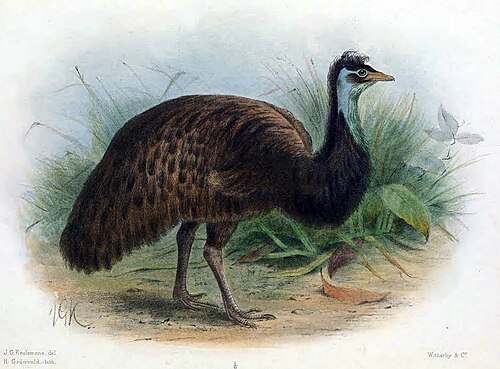
سلالة فرعية أخرى قزمة من طائر الإيمو تعيش في الجزر؛ تم جمع آخر طائر بري منها في عام 1845، ولكن ربما يكون قد نجا في الأسر حتى عام 1884. قد يكون هذا التصنيف غير صالح.
إوزة بيرينغ الضاحكة ، Branta hutchinsii asiatica (جزر القائد والكوريل، شمال المحيط الهادئ، حوالي عام 1914 أو 1929)
نوع فرعي معترف به سابقًا من الإوزة الضاحكة (يسمى سابقًا إوزة بيرينغ الكندية ( Branta canadensis asiatica )) والذي لم يكن متميزًا عن إوزة ألوشيان الضاحكة ذات المظهر المماثل والتي لا تزال موجودة ( B. h. leucopareia ) ويعتبر الآن غير صالح.
البط البري في جزيرة رينيل، Anas gibberifrons remissa (جزيرة رينيل، جزر سليمان، حوالي عام 1959)
نوع فرعي مشكوك في تميزه من البط السوندي الذي اختفى بسبب افتراسه لصغار البط من قبل أسماك البلطي الموزمبيقية التي تم إدخالها ( Oreochromis mossambicus ).
نوع فرعي من البط البري القرفي، لا يُعرف إلا من منطقة محدودة في سلسلة جبال كورديليرا أوكسيدنتال في كولومبيا، مع وجود سجلين فقط من الإكوادور. اكتُشف هذا النوع عام 1946، وكان يُعتقد أنه انقرض بحلول عام 1956.
تم اكتشاف هذا النوع الفرعي من طائر الغادوال في الجزيرة وتسميته في عام 1874 بعد إطلاق النار على طائرين ولم يتم تسجيله منذ ذلك الحين، حيث لم يتم العثور على أي منها من قبل بعثة عام 1924 من متحف بيشوب في هونولولو.
دجاج غينيا ذو الخوذة المغربي، Numida meleagris sabyi (المغرب، من منتصف إلى أواخر القرن العشرين؟)
نوع فرعي من دجاج غينيا ذي الخوذة . يُقال إنه كان لا يزال يُربى في الأسر في المغرب في أواخر التسعينيات. ربما انقرض في البرية بحلول عام 1950؛ قد تشير ثلاثة سجلات من السبعينيات إلى هجائن برية-مستأنسة.
طائر المرعة المخططة في جزيرة راؤول، Hypotaenidia philippensis ssp. (راؤول، جزر كرماديك، جنوب غرب المحيط الهادئ، أواخر القرن التاسع عشر؟)
يبدو أن التقارير التي تتحدث عن وجود هذا النوع سابقاً في راؤول معقولة بما فيه الكفاية، لكنها قد تشير إلى أفراد متجولين من نوع فرعي آخر من طائر المرعة ذي الشريط البني.
طائر المرعة البيروفي، Rallus semiplumbeus peruvianus (بيرو، القرن العشرين؟)
نوع فرعي من طائر المرعة البوجوتا ، معروف من عينة واحدة تم جمعها في ثمانينيات القرن التاسع عشر. وقد لا يزال موجوداً.
مرعة ليوين الغربية ، Lewinia pectoralis clelandi (جنوب غرب أستراليا، أواخر الثلاثينيات؟)
نوع فرعي من طائر المرعة ليوين لم يتم تسجيله منذ عام 1932 على الرغم من إجراء العديد من الدراسات الاستقصائية في أواخر القرن العشرين.
طائر المرعة أبيض الحنجرة من أسومبشن، Dryolimnas cuvieri abbotti (أسومبشن، أستوف وكوزموليدو، ألدابرا، أوائل القرن العشرين)
سكة سليمة، Gymnocrex plumbeiventris intactus (ميلانيزيا، القرن العشرين؟)
نوع فرعي مشكوك في تميزه من طائر المرعة ذي العيون العارية، معروف من عينة واحدة، تعود إلى منتصف القرن التاسع عشر تقريباً، إما من جزر سليمان أو أيرلندا الجديدة. وقد يكون لا يزال موجوداً.
كريك بورنيو بايون، Zapornia pusilla mira (بورنيو، القرن العشرين؟)
نوع فرعي من طائر الكركي بايلون معروف من عينة واحدة تعود لعام 1912 ولم يتم العثور عليه منذ ذلك الحين؛ قد يكون منقرضًا، لكن من الصعب العثور على هذا النوع.
الحبارى المغربية، Ardeotis arabs lynesi (المغرب، أواخر القرن العشرين؟)
نوع فرعي من الحبارى العربية . شوهد آخر مرة في عام 1993 في بحيرة مرزوقة / بحيرة تامزكيدات.
نوع فرعي من طائر الكركي الساروس لا يتم قبوله دائمًا على أنه صالح من قبل جميع السلطات، ربما لأن العينات الموجودة لم تتم دراستها بدقة منذ وصفها لأول مرة.
حمامة اللورد هاو ، Columba vitiensis godmanae (جزيرة اللورد هاو، جنوب غرب المحيط الهادئ، 1853)
تم تسجيل هذا النوع الفرعي من الحمام المعدني آخر مرة في عام 1853، ومن المؤكد تقريبًا أنه انقرض بحلول عام 1869.
حمامة تونغا المعدنية، Columba vitiensis ssp. (Vava ʻ u، تونغا، أواخر القرن الثامن عشر؟)
لا يُعرف هذا النوع الفرعي من الحمام المعدني إلا من خلال حاشية في كتاب جون لاثام " التاريخ العام للطيور" ، ويبدو أنه انقرض في وقت ما قبل عام 1800؛ ومع ذلك، فمن المحتمل أن يكون الموقع خاطئًا وأن الحاشية تشير في الواقع إلى المجموعة السكانية التي لا تزال موجودة في فيجي.
نوع فرعي من الحمام الوردي ، كان يُصنف سابقًا ضمن جنس ستريبتوبيليا . ويبدو أنه كان هناك نوع آخر على الأقل من الحمام في جزيرة ريونيون (ربما نوع من الحمام الأزرق )، ولكن لم يتم العثور على عظام له حتى الآن. وقد انقرض هذا النوع في نفس الوقت الذي انقرض فيه هذا النوع الفرعي.
حمامة سلحفاة أميرانتي، Nesoenas picturatus aldabrana (جزر أميرانتي، سيشيل، أواخر القرن العشرين)
لقد نجا هذا النوع الفرعي من حمامة مدغشقر حتى عام 1974 على الأقل، وبعد ذلك تم تهجينه حتى انقرض من خلال التهجين مع النوع الفرعي الأصلي المُدخل ( N. p. picturatus ).
قلب كاتاندوانيس النازف، جاليكولومبا لوزونيكا روبيفينتريس (كاتاندوانيس، الفلبين، أواخر القرن العشرين؟)
نوع فرعي من طائر القلب النازف في لوزون معروف من عينة واحدة تم جمعها في عام 1971. وقد وردت تقارير حديثة عن هذا الطائر، وبما أن جزءًا كبيرًا من موطنه في الغابات لا يزال موجودًا، فمن المحتمل أنه لا يزال موجودًا.
القلب النازف باسيلان، Gallicolumba crinigera bartletti (باسيلان، الفلبين، منتصف القرن العشرين؟)
تم الإبلاغ عن نوع فرعي من نبات القلب النازف في مينداناو آخر مرة في عام 1925، ومن المرجح أنه قد انقرض نظراً للتدمير الهائل لموائله.
حمامة فيلا لافيلا الأرضية، Pampusana jobiensis chalconota (فيلا لافيلا، ماكيرا وجوادالكانال، جزر سليمان، أواخر القرن العشرين؟)
نوع فرعي من حمامة الأرض ذات الصدر الأبيض، أو ربما نوع مستقل. لا يُعرف عنه سوى أربع عينات فقط؛ ولا توجد سجلات حديثة، ويفيد السكان المحليون بأنه قد اختفى.
انقرضت هذه السلالة الفرعية من حمامة الأرض البولينيزية ، والتي يُشار إليها غالبًا باسم P. e. pectoralis ، في تاريخ غير محدد، ولكن يُحتمل أنها لا تزال موجودة في بعض الجزر المرجانية غير المستكشفة. أما هوية مجموعة شمال تواموتو، التي يُحتمل أيضًا أنها لا تزال موجودة، فلم تُحدد حتى الآن.
حمامة الفاكهة ذات التاج القرمزي الأبنوسي، Ptilinopus porphyraceus marshallianus (أبنوسي؟، جزر مارشال، أواخر القرن التاسع عشر؟)
نوع فرعي من حمامة الفاكهة ذات التاج القرمزي، مشكوك في صحته، معروف من عينة واحدة جُمعت عام ١٨٥٩؛ وليس من المؤكد ما إذا كان هذا الطائر قد وُجد بالفعل في جزيرة إيبون أم لا. كل ما يمكن قوله هو أن هذا النوع الفرعي لم يعد موجودًا في أي مكان.
حمامة الفاكهة ذات التاج الأرجواني من ماوكي، Ptilinopus rarotongensis "byronensis" (ماوكي، جزر كوك، منتصف أو أواخر القرن التاسع عشر)
نوع فرعي من حمامة الفاكهة ذات التاج الأرجواني، لا يُعرف إلا من وصف عينة مفقودة الآن. من المرجح أن ينتمي هذا النوع المنقرض في عصور ما قبل التاريخ في مانغايا إلى نوع فرعي آخر متميز أيضًا.
الحمام الإمبراطوري المرقط Negros، Ducula carola nigrorum (Negros وربما Siquijor، أواخر القرن العشرين؟)
حمامة نورفولك ، Hemiphaga novaeseelandiae spadicea (جزيرة نورفولك، جنوب غرب المحيط الهادئ، أوائل القرن العشرين)
نوع فرعي من حمامة الكيريرو أو حمامة نيوزيلندا لم يتم تسجيله منذ عام 1900. تم الإبلاغ عن طيور مماثلة من جزيرة لورد هاو؛ ويبدو أن هذه تمثل نوعًا فرعيًا منقرضًا آخر، لكنها لم يتم وصفها حتى الآن.
جزيرة راؤول كيريرو، Hemiphaga novaeseelandiae ssp. نوفمبر. (راؤول، جزر كرماديك، القرن التاسع عشر)
نوع فرعي آخر غير موصوف من حمامة الكيريرو أو حمامة نيوزيلندا، أو ربما نوع متميز؛ معروف من العظام وتقرير موجز. [ 136 ]
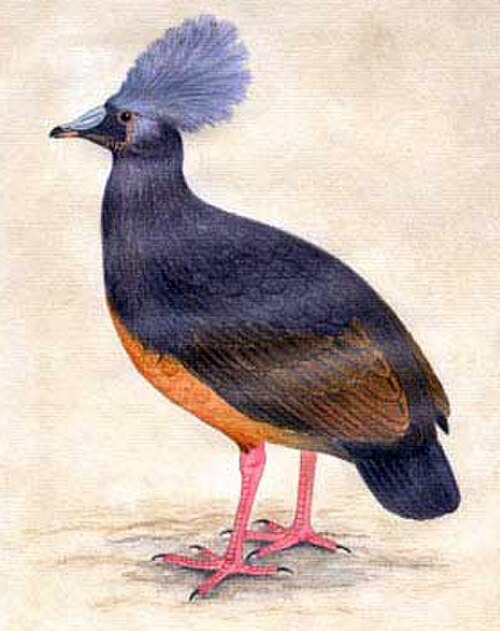
الكوا المتوجة الكبرى، Coua cristata maxima (جنوب شرق مدغشقر، أواخر القرن العشرين؟)
نوع فرعي من طائر الكوا المتوج ، معروف فقط من عينة واحدة تم أخذها في عام 1950. قد يكون هجينًا ولكن إذا لم يكن كذلك، فمن المحتمل أنه انقرض.
طائر الكوكال في جزيرة أسومبشن، Centropus toulousumptionis (جزيرة أسومبشن، سيشيل، أوائل القرن العشرين)
تم تسجيل نوع فرعي من طائر الكوكال الملغاشي آخر مرة في عام 1906. ويعتبر أحيانًا مرادفًا للنوع الفرعي ألدابرا ( C. t. insularis ) الذي أعاد استعمار جزيرة أسومبشن منذ ذلك الحين.
طائر الأني ذو المنقار المحزز في كابو سان لوكاس، Crotophaga sulcirostris pallidula (المكسيك، حوالي عام 1940)
بومة سولو المحمرّة، Otus rufescens burbidgei (سولو، الفلبين، منتصف القرن العشرين)
نوع فرعي من بومة السكوبس الحمراء لا يُعرف إلا من عينة واحدة مشكوك في صحتها. قد يكون هذا التصنيف غير صحيح.
بومة جزر العذراء، Gymnasio nudipes newtoni (جزر العذراء، جزر الهند الغربية، القرن العشرين؟)
نوع فرعي من بومة بورتوريكو، مشكوك في صحته إلى حد ما، وقد وُجد في العديد من جزر العذراء. تعود آخر السجلات الموثوقة إلى عام 1860؛ وظهرت عدة تقارير غير مؤكدة خلال القرن العشرين، لكن لم يتم العثور عليه في مسوحات شاملة أُجريت عام 1995.
بومة سوكورو قزم، ميكراثين ويتني غرايسوني (سوكورو، جزر ريفيلاجيجيدو، منتصف القرن العشرين؟)
نوع فرعي من بومة الجان مصنف رسميًا على أنه مهدد بالانقراض بشدة . تم أخذ آخر عينة في عام 1932، ولكن يبدو أنه كان لا يزال هناك عدد كبير منها في عام 1958؛ لم يتم العثور عليها في عمليات البحث اللاحقة ويبدو أنها انقرضت.
بومة أنتيغوا الجحرية، Athene cunicularia amaura (أنتيغوا، سانت كيتس ونيفيس، جزر الهند الغربية، حوالي عام 1900)
نوع فرعي من بومة الجحور ، تم جمع آخر عينة منه في عام 1890 وانقرض بحلول عام 1903.
بومة غوادلوب الجحرية، Athene cunicularia guadeloupensis (غوادلوب وماري غالانت، جزر الهند الغربية، حوالي عام 1890)
نوع فرعي آخر من بومة الجحور ، انقرض بحلول عام 1890.
Lord Howe boobook , Ninox novaeseelandiae albaria (جزيرة لورد هاو، جنوب غرب المحيط الهادئ، خمسينيات القرن العشرين)
نوع فرعي من حيوان الموربورك تم تسجيله آخر مرة في الخمسينيات من القرن العشرين.
كتاب نورفولكنورفولك بوك ، نينوكس نوفايسيلانديا أوندولاتا (جزيرة نورفولك، جنوب غرب المحيط الهادئ، التسعينيات)
أُدخلت أفراد من السلالة الأصلية لبومة موربورك في محاولة أخيرة لإنقاذ أعداد البوم المحلية. يوجد الآن تجمع هجين يضم بضع عشرات من الطيور؛ آخر فرد متميز من سلالة N. n. undulata ، وهي أنثى تُدعى مياميتي، نفقت عام 1996، على الرغم من بقاء أفراد من نسلها.
بومة مقنعة تعشش في الكهوف، Tyto novaehollandiae troothoni (سهل نولاربور، أستراليا، ستينيات القرن العشرين)
من المشكوك فيه أنها تختلف عن النوع الفرعي الأصلي للبومة المقنعة الأسترالية ، ولكنها تختلف عنها سلوكياً.
بومة بورو المقنعة، Tyto sororcula cayelii (بورو، إندونيسيا، منتصف القرن العشرين؟)
نوع فرعي من بومة مولوكا المقنعة، سُجّل آخر ظهور له عام ١٩٢١؛ ولا تزال هوية طائر مشابه عُثر عليه في سيرام غير معروفة. وقد يكون هذا النوع لا يزال موجودًا، إذ عُثر على بومة مطابقة لمواصفات هذا الطائر في أغسطس ٢٠٠٦.
بومة بيلينج المقنعة، Tyto rosenbergii pelengensis (بيلينج، جزر بانجاي، منتصف القرن العشرين)
قد يكون هذا النوع فرعياً من بومة سولاويزي المقنعة أو نوعاً مستقلاً. وربما لا يزال موجوداً، لكن العينة الوحيدة المعروفة أُخذت عام ١٩٣٨ ولم تُسجل أي حالات أخرى منذ ذلك الحين.
بومة خليج سمر، Phodilus badius Riverae (سمر، الفلبين، منتصف القرن العشرين)
نوع فرعي من بومة الخليج الشرقية أو ربما نوع مستقل. تصنيفه محل شك، لكن العينة الوحيدة المعروفة فُقدت في غارة جوية عام 1945، لذا لا يمكن التحقق من صحته؛ ولا يوجد أي تجمع سكاني له في سامار اليوم.
شوهد هذا النوع الفرعي من طائر الرفراف القزم في سولاويزي آخر مرة عام ١٩٩٧، ولكن لم يُرصد خلال مسح شامل أُجري بعد عام واحد؛ وهو إما على وشك الانقراض أو منقرض بالفعل. ويُقال أحيانًا إنه موجود في جزر تالود أيضًا، لكن هذا غير صحيح.
Guadalcanal little kingfisher, Ceyx pusillus aolae (Guadalcanal, Solomon Islands,?)
There exist reports of locals that kingfishers–probably a subspecies of the chattering kingfisher (Todiramphus tutus) which is found on neighboring islands, but possibly vagrants from there–were found until around 1979 and there is a last record from 1984. Presently, no kingfishers are known to exist on Rarotonga.
Previously considered as a distinct species, then reclassified as a subspecies of the Guam kingfisher. Only seen once by scientists in 1887; the specimen taken is somewhat damaged, making identification by anything other than molecular analysis difficult. It is now thought likely that the specimen came from Guam, where the aforementioned species was distributed, rather than Miyako, which would make this subspecies invalid (it was declared invalid by the International Ornithological Congress in 2022).
This subspecies of the Madagascar pygmy kingfisher is only known from one specimen taken in 1974 in an area where most of its habitat had already been destroyed. However, there have been records of the species (or an uncertain subspecies) from near the type locality, suggesting it is likely that it may still exist.
A subspecies of the Visayan hornbill of somewhat uncertain taxonomic status (it was possibly either a distinct species or a color morph); the last confirmed report was in 1971 and it became extinct shortly thereafter.
Javan buff-rumped woodpecker, Meiglyptes tristis tristis (Java, Indonesia, c.1920?)
The nominate subspecies of the buff-rumped woodpecker became rare during the 19th century due to habitat destruction. The last confirmed record was in 1880, and it is now considered to be at least very rare.
Guadalupe red-shafted flicker, Colaptes auratus rufipileus (Guadalupe Island, East Pacific, c.1906)
A subspecies of the northern flicker (formerly considered to be a subspecies of the red-shafted flicker, as C. cafer rufipileus), it was last recorded in 1906 and not found again in both 1911 and 1922. It may be invalid. Recently, vagrant birds of a mainland red-shafted northern flicker subspecies (which one is unknown) have begun recolonizing the island as the habitat improved after the extirpation of feral goats.
Another subspecies of the white-mantled barbet, also considered extinct by some sources, but confirmed extant by researchers in Colombia.
Todd's jacamar, Brachygalba lugubris phaeonota (Brazil, late 20th century?)
A subspecies of the brown jacamar, or possibly a hybrid, a color morph or a distinct species. It may still exist, as it is only known from a remote and seldom-visited area.
Considered either a subspecies of the red kite, a distinct species, or a hybrid between the red and black kite (Milvus migrans), the validity of this taxon has recently been questioned on the basis of molecular analysis; however, hybridization and a confusing molecular phylogeny of red kite populations, coupled with the distinct phenotype of the Cape Verde birds, suggest that the taxonomic status of this form is far from resolved.
The nominate subspecies of the Nicobar sparrowhawk–a species which is itself currently classified as vulnerable–is possibly extinct. It was last reliably recorded in 1901 and, despite searches, has not been sighted after an unconfirmed record in 1977; however, the species is known for being very shy and a population may persist unrecorded.
Sangir red-and-blue lory, Eos histrio histrio (Sangir Archipelago, Indonesia, 1990s?)
The nominate subspecies of the red-and-blue lory was hybridised out of existence through crossbreeding with escaped captive individuals of its other still-existing subspecies, Challenger's red-and-blue lory (E. h. challengeri), with the last certainly distinct individuals disappearing in the 1990s or even much earlier than that.
Known only from a painting and descriptions; the nominate subspecies of the echo parakeet, with the other one being the still-existing Mauritius parakeet (P. e. echo).
Another subspecies of the black-faced pitta. Not found during recent searches; doubtful records from nearby islands, but it is also likely to have been overlooked.
A subspecies of the scale-throated earthcreeper; it is known only from two specimens taken in the early 1950s at Puno, Peru and has not been seen or found since. It may still exist, as there is no obvious reason why it should have become extinct.
A subspecies of the stripe-crowned spinetail known only from a few specimens and not recorded since the 1950s; it may be endangered or possibly extinct.
A subspecies of the giant antpitta (or possibly of the great antpitta, in which case it would be G. excelsa lehmanni) apparently not recorded since the 1940s. It may still exist in Puracé National Natural Park, where there is plentiful habitat remaining.
A subspecies of the brown-banded antpitta recently described from a specimen collected in 1878. It has not been recorded since, despite surveys at a number of likely locations.
A subspecies of the rufous bristlebird not recorded since 1940 despite a number of surveys since then, beginning in the 1970s.
King Island brown thornbill, Acanthiza pusilla archibaldi (King Island, Australia, likely extant)
A subspecies of the brown thornbill which has only been recorded about 10 times since its discovery and is considered extinct by some authorities. The latest record comes from 2002, suggesting a population is likely to still exist, but it is very rare.
Western pied currawong, Strepera graculina ashbyi (Victoria, Australia, 1927)
This subspecies of the pied currawong has been hybridised out of existence by crossbreeding with other subspecies, which probably came into contact with it following habitat destruction in the 1830s. The last certainly distinct individuals were recorded in 1927.
Negros celestial monarch, Hypothymis coelestis rabori (Negros and possibly Sibuyan, Philippines, late 20th century?)
A subspecies of the celestial monarch; not uncommon on Negros in 1959, but not recorded since then. A single Sibuyan specimen from an unspecified locality taken in the 19th century is the only record for this island.
Hiva Oa monarch, Pomarea mendozae mendozae (Hiva Oa and Tahuata, Marquesas, late 20th century)
The nominate subspecies of the Marquesas monarch which was very rare by 1974 and not found during multiple surveys in the 1990s.
Maros cicadabird, Edolisoma tenuirostre edithae (Sulawesi, mid-20th century)
A subspecies of the common cicadabird known from a single specimen collected in 1931; quite possibly just a vagrant individual.
Cebu blackish cuckooshrike, Edolisoma coerulescens altera (Cebu, Philippines, 20th century?)
A subspecies of the blackish cuckooshrike; it may still exist, as this bird is rather unmistakable, and a 1999 record is therefore likely to be valid, though surveys since then have failed to record it.
Another subspecies of the blackish cuckooshrike; described from specimens collected in 1971, but apparently not seen since then. As few ornithologists have visited Marinduque and forest remains on the island, it is likely that it may still exist.
A subspecies of the dark-throated oriole not confirmed since 1906, though there were unconfirmed reports c. 2001, suggesting a possibility that it may still exist.
A distinct local white-with-black-markings and light brown-billed color morph of the North Atlantic raven, a subspecies of the common raven, found only on the Faroe Islands and not seen since 1902. Birds currently living on the Faroe Islands and on Iceland (the only other area in this subspecies' range) are all-black and black-billed; this still-existing color morph is named Corvus corax varius morpha typicus.
Jamaican golden swallow, Tachycineta euchrysea euchrysea (Jamaica, West Indies, c.1990?)
The nominate subspecies of the golden swallow; endemic to Jamaica. The last major roost site was destroyed in 1987 and the last confirmed sighting was in 1989. It may still exist in the Cockpit Country.
Cettiidae–cettiid warblers or typical bush warblers
Babar stubtail, Urosphena subulata advena (Babar, Indonesia, extant)
A subspecies of the Timor stubtail that has been considered extinct, but was recorded as common on Babar in 2009 and 2011.
Western Turner's eremomela, Eremomela turneri kalindei (Congo Basin, Africa, late 20th century?)
The West African subspecies of Turner's eremomela has not been recorded since the end of the 1970s, but there is unsurveyed habitat in its range where it is likely that it may still exist. Its placement in Cettiidae requires confirmation.
Acrocephalidae–acrocephalid warblers or marsh warblers, tree warblers and reed warblers
Oral tradition and some early reports mention a bird called the annañ which inhabited some of the Marshall Islands. The best match is the Nauru reed warbler; the annañ might have been an undescribed subspecies of that species or a distinct but related species of reed warbler.[79]
A subspecies of the long-legged thicketbird; it was found only once, but there was an unconfirmed sighting in 1990, suggesting that it may still exist. Its placement in Sylviidae is doubtful.
The nominate subspecies of Jerdon's babbler was last confirmed in 1941, but as there has been little fieldwork in its range and a possible sighting occurred in 1994, it is considered likely that it may still exist.
A subspecies of the white-browed crombec or possibly a distinct species. Restricted to the Lendu Plateau; it is probably rare, though unsurveyed forest remains where it is likely that it may still exist.
San Benedicto rock wren, Salpinctes obsoletus exsul (San Benedicto, Revillagigedo Islands, 1952)
A subspecies of the rock wren which became extinct c. 9:00 AM, August 1, 1952, when its island habitat was destroyed by a massive volcanic eruption.
Guadalupe Bewick's wren, Thryomanes bewickii brevicauda (Guadalupe Island, East Pacific, late 1890s?)
A subspecies of Bewick's wren. An extinction date of "1903" seems to be in error;[138] the last unquestionable record dates from 1897 and a thorough search in 1901 failed to record it.
A disputed subspecies of the Eurasian wren; it is known from a single specimen that may have been a vagrant individual and, therefore, it is possibly invalid.
Guadeloupe house wren, Troglodytes aedon guadeloupensis (Guadeloupe, West Indies, late 20th century?)
Found in 1914, 1969 and the 1970s; now very rare or already extinct. Its taxonomy is unresolved. A part of the house wren complex; other scientific names for it include T. musculus guadeloupensis and T. guadeloupensis.
Martinique house wren, Troglodytes aedon martinicensis (Martinique, West Indies, c.1890)
Last found in 1886. Its taxonomy is also unresolved. Another part of the house wren complex; other scientific names for it include T. musculus martinicensis and T. martinicensis.
A subspecies of the black-eared ground thrush or possibly a distinct species; known only from two specimens, both from 1966. It is likely that it still exists in suitable habitat, but it could already be extinct.
A subspecies of the russet-tailed thrush known from a single specimen found in 1924. It could have been wiped out by introduced feral cats, but the island is poorly known and so it should not be presumed extinct yet.
Isle of Pines solitaire, Myadestes elisabeth retrusus (Isla de la Juventud, West Indies, 20th century)
A subspecies of the Cuban solitaire. The last confirmed records were in the 1930s, with unconfirmed reports in the early 1970s.
Southern star finch, Bathilda ruficauda ruficauda (Australia, 1995)
The nominate subspecies of the star finch last recorded in 1995 and not found during later searches in the 1990s. It is not known to survive in captivity.
Fringillidae–true finches and Hawaiian honeycreepers
San Benito house finch, Haemorhous mexicanus mcgregori (San Benito, East Pacific, c.1940s)
The nominate subspecies of the Maui ʻalauahio (or, more properly, the Maui Nui ʻalauahio), it was last recorded in 1937 and was certainly extinct by 1960.
Gonâve western chat-tanager, Calyptophilus tertius abbotti (Gonâve, West Indies, c.1980?)
A subspecies of the western chat-tanager last recorded in 1977 and probably extinct.
Samaná eastern chat-tanager, Calyptophilus frugivorus frugivorus (eastern Hispaniola, West Indies, late 20th century)
The nominate subspecies of the eastern chat-tanager; the last (unconfirmed?) record was in 1982 and concerted efforts to record it ever since have failed.
The (possibly invalid) nominate subspecies of the large ground finch collected by Charles Darwin in 1835; he gave no precise location for it. A similar bird was found in 1957, but no others have been seen since then.
Saint Kitts bullfinch, Melopyrrha portoricensis grandis (St. Kitts and (prehistorically) Barbuda, West Indies, 1930)
Todos Santos rufous-crowned sparrow, Aimophila ruficeps sanctorum (Islas Todos Santos, East Pacific, 1970s?)
A subspecies of the rufous-crowned sparrow once common but not recorded during surveys in the 1970s or since then.
Santa Barbara song sparrow, Melospiza melodia graminea (Santa Barbara Island, North America, late 1960s)
A subspecies of the song sparrow last seen in 1967; it became extinct due to a severe wildfire in 1959 and subsequent predation by feral cats. Officially declared extinct by the United States Fish and Wildlife Service in 1983.
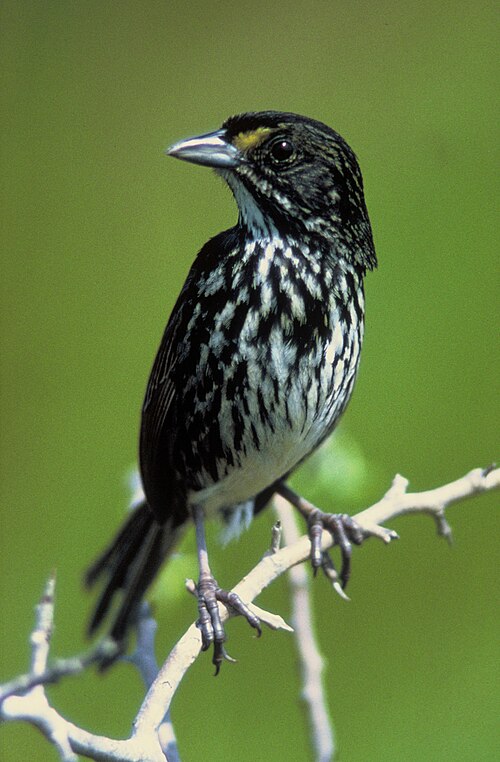
Dusky seaside sparrow, Ammospiza maritima nigrescens (Florida, North America, late 1980s)
A subspecies of the seaside sparrow last recorded in the wild in 1987.
Guadalupe spotted towhee, Pipilo maculatus consobrinus (Guadalupe Island, East Pacific, c.1900)
↑del Hoyo, Josep; Collar, Nigel; Kirwan, Guy M. (4 March 2020), Billerman, Shawn M.; Keeney, Brooke K.; Rodewald, Paul G.; Schulenberg, Thomas S. (eds.), "Crested Shelduck (Tadorna cristata)", Birds of the World, Cornell Lab of Ornithology, doi:10.2173/bow.creshe1.01, retrieved 15 February 2025
↑Tyrberg, Tommy (2009). "4. Holocene avian extinctions". In Turvey, Samuel (ed.). Holocene extinctions. Oxford biology. Oxford; New York: Oxford University Press. ISBN978-0-19-953509-5. OCLC310154634.
↑Miskelly, Colin & Forsdick, Natalie & Gill, Brian & Palma, Ricardo & Rawlence, Nicolas & Tennyson, Alan. (2022). Checklist of the Birds of New Zealand.
↑Williams, G. R.; Weller, M. W. (1974). "Unsuccessful search for the Auckland Island Merganser (Mergus australis)"(PDF). Notornis. 21 (3): 247. doi:10.63172/029994wccggz. Archived from the original(PDF) on 30 October 2007.
↑Russell, James C.; Horn, Stephen R.; Miskelly, Colin M.; Sagar, Rachael L.; Taylor, Rowley H. (2020). "Introduced land mammals and their impacts on the birds of the subantarctic Auckland Islands". Notornis. 67 (1): 247. doi:10.63172/799422ksenzu.
↑Worthy, Trevor H.; Holdaway, Richard N.; Morris, Rod (2002). The lost world of the moa: prehistoric life of New Zealand. Life of the past. Bloomington, Ind.: Indiana University Press. ISBN978-0-253-34034-4.
↑Billerman, Shawn M.; Keeney, Brooke K.; Rodewald, Paul G.; Schulenberg, Thomas S., eds. (4 March 2020), "Amsterdam Duck (Mareca marecula)", Birds of the World, Cornell Lab of Ornithology, doi:10.2173/bow.amsduc1.01, retrieved 15 February 2025
↑Cheke, Anthony; Hume, Julian P. (2020). Lost Land of the Dodo: The Ecological History of Mauritius, Réunion and Rodrigues. T & AD Poyser. ISBN978-1-4729-8080-9.
12Reichel, James D.; Lemke, Thomas O. (1994). "Ecology and Extinction of the Mariana Mallard". The Journal of Wildlife Management. 58 (2): 199. doi:10.2307/3809380. JSTOR3809380.
↑Weller, Milton W. (1980). The island waterfowl (1ed.). Ames, Io: Iowa State Univ. Pr. ISBN978-0-8138-1310-3.
↑McGowan, Philip J.K.; Kirwan, Guy M.; Sharpe, Chris (4 March 2020), Billerman, Shawn M.; Keeney, Brooke K.; Rodewald, Paul G.; Schulenberg, Thomas S. (eds.), "Himalayan Quail (Ophrysia superciliosa)", Birds of the World, Cornell Lab of Ornithology, doi:10.2173/bow.himqua1.01, retrieved 17 February 2025
↑Ludlow, F.; Kinnear, B. (1933). "A Contribution to the Ornithology of Chinese Turkestan — Part III". Ibis. 75 (4): 687. doi:10.1111/j.1474-919X.1933.tb03358.x.
↑Schweizer, Manuel; Etzbauer, Claudia; Shirihai, Hadoram; Töpfer, Till; Kirwan, Guy M. (2020). "A molecular analysis of the mysterious Vaurie's Nightjar Caprimulgus centralasicus yields fresh insight into its taxonomic status". Journal of Ornithology. 161 (3): 635–650. Bibcode:2020JOrni.161..635S. doi:10.1007/s10336-020-01767-8.
↑Graves, G.R.; Olson, S.L. (1987). "Chlorostilbon bracei Lawrence, an Extinct Species of Hummingbird from New Providence Island, Bahamas". The Auk. 104 (2): 296–302. doi:10.1093/auk/104.2.296.
↑Kirchman, Jeremy J.; Steadman, David W. (2007). "New Species of Extinct Rails (Aves: Rallidae) from Archaeological Sites in the Marquesas Islands, French Polynesia". Pacific Science. 61 (1): 145–163. doi:10.1353/psc.2007.0008. hdl:10125/22605.
↑Llimona, Francesc; del Hoyo, Josep; Christie, David; Jutglar, Francesc; Kirwan, Guy M. (4 March 2020), Billerman, Shawn M.; Keeney, Brooke K.; Rodewald, Paul G.; Schulenberg, Thomas S. (eds.), "Alaotra Grebe (Tachybaptus rufolavatus)", Birds of the World, Cornell Lab of Ornithology, doi:10.2173/bow.alagre1.01, retrieved 14 February 2025
↑Llimona, Francesc; del Hoyo, Josep; Christie, David; Jutglar, Francesc; Kirwan, Guy M. (4 March 2020), Billerman, Shawn M.; Keeney, Brooke K.; Rodewald, Paul G.; Schulenberg, Thomas S. (eds.), "Atitlan Grebe (Podilymbus gigas)", Birds of the World, Cornell Lab of Ornithology, doi:10.2173/bow.atigre1.01, retrieved 14 February 2025
↑LaBastille, Anne (1991). Mama Poc: An Ecologist's Account of the Extinction of a Species. W. W. Norton & Company. ISBN978-0-393-30800-6.
↑Llimona, Francesc; del Hoyo, Josep; Christie, David; Jutglar, Francesc; Kirwan, Guy M. (4 March 2020), Billerman, Shawn M.; Keeney, Brooke K.; Rodewald, Paul G.; Schulenberg, Thomas S. (eds.), "Colombian Grebe (Podiceps andinus)", Birds of the World, Cornell Lab of Ornithology, doi:10.2173/bow.colgre1.01, retrieved 14 February 2025
123Wiersma, Popko; Kirwan, Guy M. (4 March 2020), Billerman, Shawn M.; Keeney, Brooke K.; Rodewald, Paul G.; Schulenberg, Thomas S. (eds.), "Javan Lapwing (Vanellus macropterus)", Birds of the World, Cornell Lab of Ornithology, doi:10.2173/bow.sunlap1.01, retrieved 17 February 2025
12Miskelly, Colin M.; Bell, Mike (2004). "An unusual influx of Snares crested penguins (Eudyptes robustus) on the Chatham Islands, with a review of other crested penguin records from the islands". Notornis. 51 (4): 235–237. doi:10.63172/271369qrepvu.
↑Olson, Storrs L. (2013). "Fossil woodpeckers from Bermuda with the description of a new species of Colaptes (Aves: Picidae)". Proceedings of the Biological Society of Washington. 126 (1): 17–24. doi:10.2988/0006-324X-126.1.17.
↑Worthy, Trevor (2000). "New Zealand pigeon (Hemiphaga novaeseelandiae) on Raoul Island, Kermadec Group". Notornis. 47 (1): 36–38. doi:10.63172/383560hgaaii. Archived from the original on 14 September 2018. Retrieved 14 September 2018.