
Cross
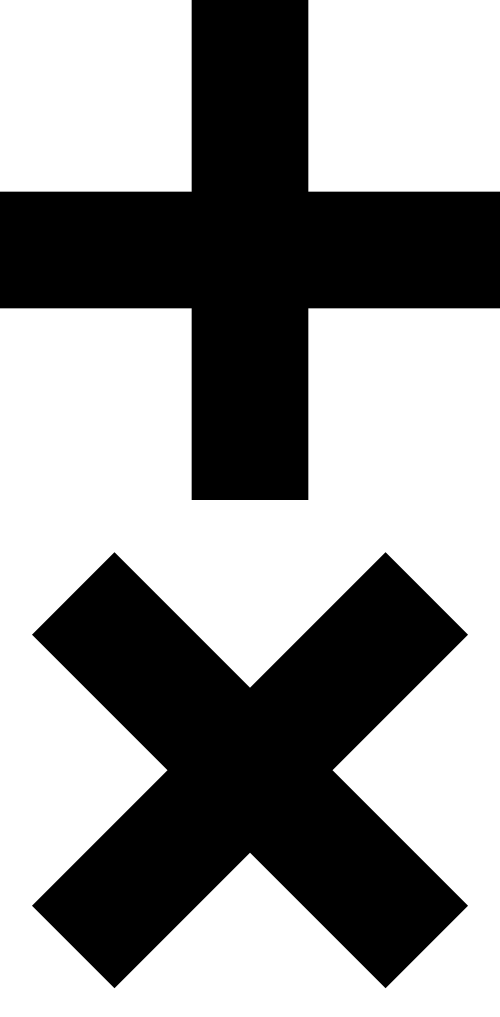
The cross is a geometrical figure consisting of two intersecting lines or bars, usually perpendicular to each other. The lines usually run vertically and horizontally. A cross of oblique lines, in the shape of the Latin letter X, is also termed a saltire in heraldic terminology. Throughout centuries the cross in its various shapes and forms was a symbol of various beliefs.
The cross has been widely taken as an official symbol of the Christian faith exclusively from an early period in that religion's history to present.[1][2][3] In pre-Christian times, it was used as a religious or cultural symbol throughout Europe, in west and south Asia (the latter, in the form of the original swastika); and in Ancient Egypt, where the Ankh was a hieroglyph that represented "life" and was used in the worship of the god Aten. It often appeared in conjunction with the female-genital circle or oval to signify the sacred marriage, as in the Egyptian amulet Nefer,[4] which features the male cross and female orb, considered an amulet of blessedness and a charm of sexual harmony.[5]
Name
The word cross is recorded in 11th-century Old English as cros, exclusively for the instrument of Christ's crucifixion, replacing the native Old English word rood. The word's history is complicated; it appears to have entered English from Old Irish, possibly via Old Norse, ultimately from the Latin crux (or its accusative crucem and its genitive crucis), "stake, cross". The English verb to cross arises from the noun c.1200, first in the sense "to make the sign of the cross"; the generic meaning "to intersect" develops in the 15th century. The Latin word was influenced by popular etymology by a native Germanic word reconstructed as *krukjo (English crook, Old English crycce, Old Norse krokr, Old High German krucka). This word, by conflation with Latin crux, gave rise to Old French crocier (modern French crosse), the term for a shepherd's crook, adopted in English as crosier.
Latin crux referred to the gibbet where criminals were executed, a stake or pole, with or without transom, on which the condemned were impaled or hanged, but more particularly a cross or the pole of a carriage.[6] The derived verb cruciāre means "to put to death on the cross" or, more frequently, "to put to the rack, to torture, torment", especially in reference to mental troubles.[7] In the Roman world, furca replaced crux as the name of some cross-like instruments for lethal and temporary punishment,[8][9] ranging from a forked cross to a gibbet or gallows.[10]
The field of etymology is of no help in any effort to trace a supposed original meaning of crux.[11] A crux can be of various shapes: from a single beam used for impaling or suspending (crux simplex) to the various composite kinds of cross (crux compacta) made from more beams than one. The latter shapes include not only the traditional †-shaped cross (the crux immissa), but also the T-shaped cross (the crux commissa or tau cross), which the descriptions in antiquity of the execution cross indicate as the normal form in use at that time, and the X-shaped cross (the crux decussata or saltire).
The Greek equivalent of Latin crux "stake, gibbet" is stauros, found in texts of four centuries or more before the gospels and always in the plural number to indicate a stake or pole. From the first century BC, it is used to indicate an instrument used in executions. The Greek word is used in descriptions in antiquity of the execution cross, which indicate that its normal shape was similar to the Greek letter tau (Τ).[12][13][14][15]
History
Pre-Christian
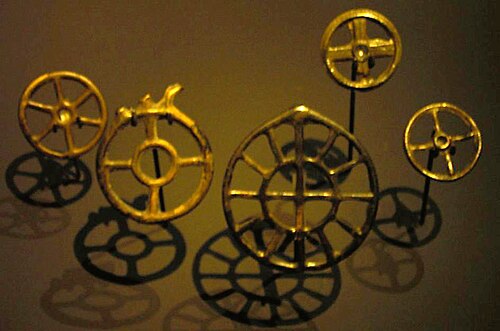
Due to the simplicity of the design (two intersecting lines), cross-shaped incisions make their appearance from deep prehistory; as petroglyphs in European cult caves, dating back to the beginning of the Upper Paleolithic, and throughout prehistory to the Iron Age.[16] Also of prehistoric age are numerous variants of the simple cross mark, including the crux gammata with curving or angular lines, and the Egyptian crux ansata with a loop.
ربطت بعض الدراسات رمز الصليب - حتى في عصور ما قبل التاريخ - برموز فلكية أو كونية تتضمن " العناصر الأربعة " (شيفالييه، 1997) أو الجهات الأصلية ، أو وحدة محور العالم الرأسي أو القطب السماوي مع العالم الأفقي (كوش، 1955). وقد شاعت هذه الدراسات بشكل خاص في منتصف القرن التاسع عشر وأواخره، في سياق علم الأساطير المقارن الذي سعى إلى ربط الأساطير المسيحية بالأساطير الكونية القديمة . ومن بين الأعمال المؤثرة في هذا المجال: جي. دي مورتيليه (1866)، [ 17 ] إل. مولر (1865)، [ 18 ] دبليو. دبليو. بليك (1888)، [ 19 ] أنسو (1891)، [ 20 ] وغيرهم.
يظهر رمز الصليب بشكل تافه في علامات العد ، ويتطور إلى رمز رقمي بشكل مستقل في الأرقام الرومانية (X "عشرة")، والأرقام الصينية (十"عشرة")، وأرقام براهمي ("أربعة"، ومن ثم الرقم 4 ).
في الأبجدية الفينيقية والكتابات المشتقة منها ، كان رمز الصليب يمثل الصوت /ت/، أي حرف تاو ، وهو السلف التاريخي لحرف ت اللاتيني . اسم الحرف تاو يعني "علامة"، ويُفترض أنه استمرار للهيروغليفية المصرية "عصاتان متقاطعتان" ( غاردينر Z9 ). [ 21 ]
ما بعد المسيحية

أصبح شكل الصليب ( crux ، stauros "وتد، مشنقة ")، كما يمثله الحرف اللاتيني T ، رمزًا جديدًا (ختمًا) أو شعارًا للمسيحية منذ القرن الثاني الميلادي خلفًا لإكثيس في أعقاب انفصال هذه الديانة الجديدة عن اليهودية . [ 22 ] أطلق عليه كليمنت الإسكندري في أوائل القرن الثالث اسم τὸ κυριακὸν σημεῖον ("علامة الرب")، وكرر الفكرة، الشائعة منذ رسالة برنابا ، بأن الرقم 318 ( بالأرقام اليونانية ، ΤΙΗ) في سفر التكوين 14:14 كان بمثابة إشارة (نموذج) للصليب (الحرف تاو) وللسيد المسيح (الحرفان يوتا وإيتا ). [ 23 ] يرفض ترتليان، المعاصر لكليمنت ، اتهام المسيحيين بأنهم "عابدون للصليب "، ويردّ على هذا الاتهام بتشبيه عبادة الأصنام الوثنية بعبادة الأعمدة أو الأوتاد. [ 24 ] في كتابه "دي كورونا" (De Corona) ، الذي كتبه عام 204، يذكر ترتليان كيف كان من التقاليد المسيحية آنذاك رسم إشارة الصليب مرارًا وتكرارًا على جباه المسيحيين . [ 25 ]
بينما استخدم المسيحيون الأوائل شكل حرف T لتمثيل الصليب في الكتابة والإيماءات، ظهر استخدام الصليب اليوناني والصليب اللاتيني ، أي الصلبان ذات العوارض المتقاطعة، في الفن المسيحي قرب نهاية العصور القديمة المتأخرة . ويُعدّ فسيفساء " معجزات الخبز والسمك " في كنيسة سانت أبوليناري نوفو ، رافينا (القرن السادس) مثالًا مبكرًا على الهالة الصليبية ، المستخدمة لتمييز المسيح في اللوحات. أما الصليب البطريركي ، وهو صليب لاتيني ذو عارضة أفقية إضافية، فقد ظهر لأول مرة في القرن العاشر. وبدأ استخدام مجموعة واسعة من رموز الصليب لأغراض علم الشعارات في عصر الحروب الصليبية . [ 26 ]
العلامات والرسومات
تُستخدم علامة التقاطع لتحديد موضع، أو كعلامة صح ، وأيضًا للدلالة على الحذف . الحرف اللاتيني X ، والحرف السيريلي Kha ، وربما الحرف الروني Gyfu ، مشتقة من الحرف اليوناني Chi .
تتضمن الهيروغليفية المصرية التي تتضمن أشكال الصليب كلمة عنخ "الحياة"، وكلمة ندج "الحماية"، وكلمة نفر "جيد؛ ممتع، جميل".
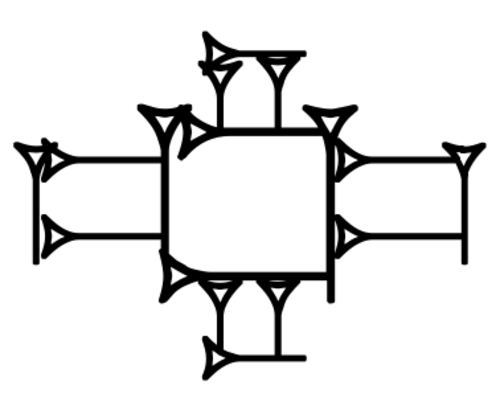
كان للكتابة المسمارية السومرية حرف بسيط على شكل صليب، يتألف من إسفين أفقي وآخر رأسي ( 𒈦 )، يُقرأ maš بمعنى "ضريبة، عائد، فائدة"؛ وينتج عن تراكب إسفينين قطريين صليب متقاطع ( 𒉽 )، يُقرأ pap بمعنى "الأول، المتفوق" (وينتج عن تراكب هذين النوعين من الصلبان النجمة الثمانية التي تُستخدم كرمز "للسماء" أو "للإله" ( 𒀭 )، DINGIR ). وتحتوي الكتابة المسمارية على حروف أخرى أكثر تعقيدًا على شكل صليب، تتألف من ترتيب مربعات أو ترتيب رباعي لحروف أخرى، بما في ذلك الحروف المسمارية القديمة LAK -210، وLAK-276، وLAK-278، وLAK-617، والرمز الكلاسيكي EZEN (𒂡). [ 27 ]
لا يزال حرف التاء الفينيقي على شكل صليب في الأبجدية العبرية القديمة وفي بعض الكتابات الإيطالية القديمة ( الرايتيكية والليبونتيكية )، ويصبح حرف التاء المشتق منه على شكل صليب مرة أخرى في الحرف اللاتيني الصغير ت . أما علامة الجمع (+) فهي مشتقة من الحرف اللاتيني ت عبر تبسيط لوصلة حرف العطف "و" (التي أدخلها يوهانس ويدمان في أواخر القرن الخامس عشر).
حرف الألف على شكل صليب في اللغة الآرامية والعبرية القديمة .
تشمل الهيروغليفية المصرية ذات الأشكال الصليبية غاردينر Z9 – Z11 ("عصي متقاطعة"، "ألواح متقاطعة").
تشمل الحروف المتقاطعة الأخرى غير ذات الصلة Brahmi ka (سلف الحرف الديفاناغاري क) والتركية القديمة (Orkhon) d² والمجرية القديمة b ، و Katakanaナna وメme .
يبدو أن علامة الضرب (×)، التي تُنسب غالبًا إلى ويليام أوتريد (الذي استخدمها لأول مرة في ملحق طبعة 1618 من كتاب جون نابيير Descriptio )، كانت قيد الاستخدام العرضي منذ منتصف القرن السادس عشر. [ 28 ]
Other typographical symbols resembling crosses include the dagger or obelus (†), the Chinese (十, Kangxi radical 24) and Roman (X ten).
Unicode has a variety of cross symbols in the "Dingbat" block (U+2700–U+27BF):
- ✕ ✖ ✗ ✘ ✙ ✚ ✛ ✜ ✝ ✞ ✟ ✠ ✢ ✣ ✤ ✥
The Miscellaneous Symbols block (U+2626 to U+262F) adds three specific Christian cross variants, viz. the Patriarchal cross (☦), Cross of Lorraine (☨) and Cross potent (☩, mistakenly labeled a "Cross of Jerusalem").
Emblems
The following is a list of cross symbols, except for variants of the Christian cross and Heraldic crosses, for which see the dedicated lists at Christian cross variants and Crosses in heraldry, respectively.
| Picture | Cross name | Description |
|---|---|---|
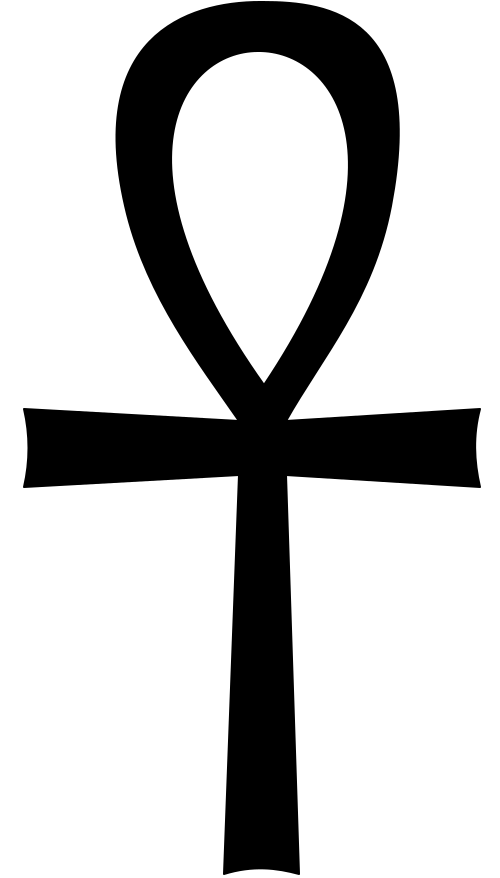 | Ankh | The ankh or crux ansata, an Egyptian hieroglyph representing "life". |
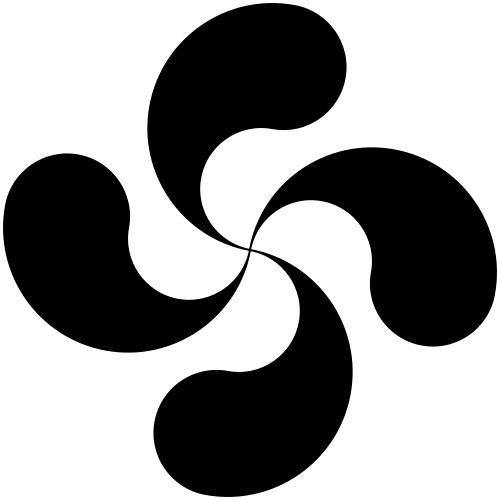 | Basque cross | The Basque cross or lauburu. |
 | the Sun cross | The "sun cross" or "wheel cross" appears with some regularity in prehistoric European artefacts, usually interpreted as a solar symbol, perhaps representing the spoked wheel of the Sun chariot. |
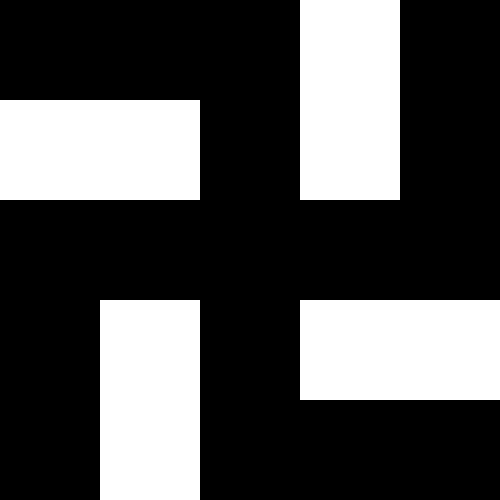 | Swastika | The swastika or crux gammata (in heraldry fylfot), historically used as a symbol in Buddhism, Jainism and Hinduism, and widely popular in the early 20th century as a symbol of good luck or prosperity before adopted as a symbol of Nazism in the 1920s and 30s. |
- As a design element
| Picture | Cross name | Description |
|---|---|---|
 | Crossed keys | Symbol of the Papacy used in various emblems representing the keys to heaven. |
 | Crossed swords | The crossed swords symbol (⚔ at Unicode U+2694) is used to represent battlegrounds on maps. It is also used to show that person died in battle or that a war machine was lost in action. Two crossed swords also look like a Christian cross and the mixed symbolism has been used in military decorations. It is also a popular way to display swords on a wall often with a shield in the center |
 | Four-leaf clover | Used as a symbol for luck as well as a stand in for a cross in various works. |
 | Skull and crossbones | Traditionally used to mark Spanish cemeteries; the symbol evolved to represent death/danger, poison, and pirates. |
Physical gestures
Cross shapes are made by a variety of physical gestures. Crossing the fingers of one hand is a common invocation of the symbol. The sign of the cross associated with Christian genuflection is made with one hand: in Eastern Orthodox tradition the sequence is head-heart-right shoulder-left shoulder, while in Oriental Orthodox, Catholic and Anglican tradition the sequence is head-heart-left-right.
Crossing the index fingers of both hands represents and a charm against evil in European folklore. Other gestures involving more than one hand include the "cross my heart" movement associated with making a promise and the Tau shape of the referee's "time out" hand signal.
Crossed index fingers represent the number 10 (十) in Chinese number gestures.
Unicode
Unicode provides various cross symbols:[29]
| Symbol | Name | Code point |
|---|---|---|
| ✚ | Heavy Greek Cross | U+271A |
| ✠ | Maltese Cross | U+2720 |
| ♱ | East Syriac Cross | U+2671 |
| ♰ | West Syriac Cross | U+2670 |
| ☨ | Cross of Lorraine | U+2628 |
| ☩ | Cross of Jerusalem | U+2629 |
| ✟ | Latin Cross outline | U+271F |
| ✞ | Shadowed White Latin Cross | U+271E |
| ✝ | Latin Roman Cross | U+271D |
| † | Dagger | U+2020 |
| ✛ | Open Centre Cross | U+271B |
| ✙ | Outlined Greek Cross | U+2719 |
| ✘ | Heavy Ballot X | U+2718 |
| ✜ | Heavy Open Centre Cross | U+271C |
| ✖ | Heavy Multiplication X | U+2716 |
| ❌ | Cross Mark | U+274C |
| ✗ | Ballot X | U+2717 |
| ✢ | Four Teardrop-Spoked Asterisk | U+2722 |
| ✤ | Heavy Four Balloon-Spoked Asterisk | U+2724 |
References
- ↑Rebecca Stein, Philip L. Stein. The Anthropology of Religion, Magic, and Witchcraft. Taylor & Francis. p. 62.
The cross is a symbol most clearly associated with Christianity.
- ↑Christianity: an introduction by Alister E. McGrath 2006 ISBN 1-4051-0901-7 pages 321-323
- ↑George Willard Benson. The Cross: Its History and Symbolism. p. 11.
- ↑"Nefer". Metropolitan Museum of Art.
- ↑Walker, Barbara G. (1983). The Woman's Encyclopedia of Myths and Secrets. San Francisco: Harper & Row, Publishers. p. 188.
- ↑Lewis and Short, A Latin Dictionary: crux
- ↑Lewis and Short, A Latin Dictionary: crucio
- ↑Jensen, Steffen; Rønsbo, Henrik (2014). Histories of Victimhood. University of Pennsylvania Press. p. 32. ISBN 978-0-8122-0931-0.
The jurist Julius Paulus, for example, "gives crucifixion (furca = gallows, the word that replaced the 'holy' word cross in legal literature after Constantine)" as one punishment for deserters and for betrayers of secrets (Hengel 1977:39; Bauman 1996:151)
- ↑Pickering, F. P. (1980). Essays on Medieval German Literature and Iconography. Cambridge University Press. p. 73. ISBN 978-0-521-22627-1.
According to the article "crux" in Pauly-Wissowa, the old term furca may have been revived under Justinian to shield the sacred term from misuse; its shape, the conventional 'gallows', may have been evolved in such a way as to avoid any association with the Christian cross.
- ↑Rees, Abraham (1824). The Cyclopædia. Samuel F. Bradford. p. 148.
- ↑Gunnar Samuelsson, Crucifixion in Antiquity (Mohr Siebeck 2011), p. 203
- ↑"The Epistle of Barnabas, IX".
- ↑"Clement of Alexandria, The Stromata, book VI, chapter 11".
- ↑"Adversus Marcionem, liber III, cap. XXII".
- ↑"Lucian, Trial in the Court of Vowels".
- ↑Bailey, Douglass W. (2005). Prehistoric figurines : representation and corporeality in the Neolithic. London: Routledge. ISBN 0-203-39245-0. OCLC 252740876.
- ↑G. de Mortillet, "Le signe de la croix avant le christianisme", Paris, 1866
- ↑L. Müller, "Ueber Sterne, Kreuze und Kränze als religiöse Symbole der alten Kulturvölker", Copenhagen, 1865
- ↑W. W. Blake, "The Cross, Ancient and Modern" New York, 1888
- ↑Ansault, "Mémoire sur le culte de la croix avant Jésus-Christ", Paris, 1891.
- ↑Benner, Jeff A. "Taw (Tav)". The Ancient Hebrew Letters. Ancient Hebrew Research Center. Archived from the original on 17 June 2015. Retrieved 17 June 2015.
- ^ كوهلر، كوفمان. "يعبر" . الموسوعة اليهودية . مؤرشفة من الأصلي في 7 أكتوبر 2011.
دخل الصليب كرمز مسيحي أو "ختم" حيز الاستخدام على الأقل منذ القرن الثاني الميلادي (انظر "Apost. Const." iii. 17؛ رسالة بولس الرسول من برنابا، الحادي عشر - الثاني عشر.؛ جاستن، "Apologia،" i. 55-60؛ "Dial. cum Tryph." 85-97)؛ ووسم الصليب على الجبهة والصدر كان يعتبر بمثابة تعويذة ضد قوى الشياطين (ترتليان، "دي كورونا،" الثالث؛ قبرصي، "الشهادات،" الحادي عشر 21-22؛ اكتانتيوس، "مؤسسات Divinæ،" الرابع 27، وأماكن أخرى). وبناءً على ذلك، اضطر الآباء المسيحيون للدفاع عن أنفسهم، منذ القرن الثاني، ضد تهمة عبادة الصليب، كما يتضح من كتابات ترتليان، "الدفاع عن المسيح"، الفصلين الثاني عشر والسابع عشر، ومينوسيوس فيليكس، "أوكتافيوس"، الفصل التاسع والعشرين. وكان المسيحيون يقسمون بقوة الصليب.
- ↑ "كليمنت الإسكندري: ستروماتا، الكتاب السادس" . كتابات مسيحية مبكرة . تم الاطلاع عليه بتاريخ 18 يونيو 2016 .
- ↑ روبرتس، ألكسندر؛ دونالدسون، جيمس؛ كوكس، أ. كليفلاند؛ نايت، كيفن، محرران (1885). "آباء الكنيسة: الدفاع (ترتليان) - الفصل 16" . نيو أدڤنت . ترجمة ثيلوال، س. مؤرشف من الأصل في 12 مارس 2024.
إذن، إذا كان أي منكم يعتقد أننا نقدم عبادة خرافية للصليب، فهو في تلك العبادة شريك لنا. إذا قدمتم الولاء لقطعة من الخشب، فلا يهم كثيرًا شكلها عندما يكون الجوهر هو نفسه: لا أهمية للشكل، إذا كان لديكم جسد الإله نفسه. ومع ذلك، ما مدى اختلاف بالاس الأثينية عن مادة الصليب، أو سيريس الفارية كما تُعرض للبيع غير منحوتة، مجرد وتد خشن وقطعة من الخشب عديم الشكل؟ كل وتد مثبت في وضع مستقيم هو جزء من الصليب؛ نُقدّم عبادتنا، إن شئتم، لإلهٍ كاملٍ تامّ. وقد بيّنا سابقاً أن آلهتكم مُستمدّة من أشكالٍ مُستوحاةٍ من الصليب.
Sed et qui Crucis nos Religiosos putat، consecraneus noster erit. بما في ذلك الخشب الذي يحتوي على خصائص، طبيعة جيدة، مواد ذات جودة عالية أيضًا؛ صيغة viderit، dum id ipsum dei corpus sit. وكم يميز الصليب عن بالاس أتيكا وسيريس فاريا، ما الذي يجب أن تكون عليه دمية رودي بالو وإعلام خط البروستات؟ Pars Crucis est omne robur، quod erecta statione defigitur؛ nos، si forte، integrum et totum deum colimus. Diximus Originem deorum vestrorum وplastis de Cruce induci. - ↑ "في كل خطوة للأمام وحركة، في كل دخول وخروج، عندما نرتدي ملابسنا وأحذيتنا، عندما نستحم، عندما نجلس على المائدة، عندما نضيء المصابيح، على الأريكة، على المقعد، في جميع الأعمال العادية للحياة اليومية، نرسم على الجبين العلامة" ( دي كورونا ، الفصل 3 )
- ↑ ويليام وود سيمور، "الصليب في علم الشعارات" ، الصليب في التقاليد والتاريخ والفن (1898).
- ↑ مثال على الترتيب الصليبي لحرف هو نفسه صليبي هو الربط "EZEN x KASKAL squared"، المشفر بواسطة Unicode في U+120AD (𒂭).
- ↑ فلوريان كاجوري، تاريخ الرموز الرياضية . كتب دوفر في الرياضيات (1929)، 251 وما بعدها.
- ↑ "رمز الصليب" .
- شيڤالييه، جان (1997). قاموس بنغوين للرموز . بنغوين. ISBN 0-14-051254-3.
- دروري، نيفيل (1985). قاموس التصوف والعلوم الخفية . هاربر آند رو. ISBN 0-06-062093-5.
- كوخ، رودولف (1955). كتاب الإشارات . دوفر، نيويورك. ISBN 0-486-20162-7.
- ويبر، ف. ر. (1927، طبعة منقحة 1938). رمزية الكنيسة: شرح لأهم رموز العهد القديم والعهد الجديد، والكنيسة البدائية، وكنيسة العصور الوسطى، والكنيسة الحديثة ( التسجيل مطلوب ) . كليفلاند، أوهايو. OCLC 236708 .
روابط خارجية
- أشكال الصلبان المختلفة - الصور والمعاني
- الصليب والمصلوب - مسرد المصطلحات: الأشكال والمواضيع
- موقع نصراني.نت ، الصليب الهندي
- الصليب المسيحي ليسوع المسيح: رموز المسيحية، صوره، تصاميمه، وتصويره كأشياء للتعبد
- رموز الصليب
- النقوش الصخرية
- الرموز الدينية
- الهياكل الخشبية
- الرموز المسيحية
- أشكال هندسية
- التقاطع الهندسي