
قائمة طيور أمريكا الشمالية

تُقسّم قوائم الطيور في المربع الأزرق الفاتح أدناه حسب العائلة البيولوجية . وتستند هذه القوائم إلى قائمة طيور أمريكا الشمالية الصادرة عن الجمعية الأمريكية لعلم الطيور [ 1 ] وقائمة كليمنتس لطيور العالم [ 2 ] ، مع إضافة قوائم من بنما وغرينلاند وبرمودا. وتشمل طيور غرينلاند وكندا والولايات المتحدة (باستثناء هاواي ) والمكسيك وأمريكا الوسطى وبرمودا وجزر الهند الغربية .
التصنيف
يلتزم التصنيف [ 3 ] (تحديد وتسلسل الرتب والفصائل والأنواع) والتسمية (الأسماء الشائعة والعلمية) المستخدمة في قوائم الطيور المرفقة بمعايير قائمة مراجعة طيور أمريكا الشمالية الصادرة عن جمعية علم الطيور الأمريكية (2019) ، وهي المرجع العلمي المعتمد في تصنيف وتسمية طيور أمريكا الشمالية. وتؤكد لجنة التصنيف والتسمية التابعة لجمعية علم الطيور الأمريكية، وهي الجهة المسؤولة عن صيانة وتحديث قائمة المراجعة ، "بقوة وإجماع على استمرار تأييد مفهوم الأنواع البيولوجية، الذي تُعتبر فيه الأنواع مجموعات متماسكة جينيًا من السكان، معزولة تكاثريًا عن غيرها من المجموعات المماثلة" (جمعية علم الطيور الأمريكية، 2019). أما تصنيف سيبلي-ألكويست فهو ترتيب تطوري بديل قائم على تهجين الحمض النووي.
ما لم يُذكر خلاف ذلك، تُعتبر جميع الأنواع المذكورة أدناه موجودة بانتظام في أمريكا الشمالية كأنواع مقيمة دائمة، أو مقيمة صيفية أو شتوية، أو زائرة، أو مهاجرة. تُستخدم الرموز التالية للدلالة على فئات معينة من الأنواع:
- (أ) = حدوث عرضي بناءً على سجل واحد أو اثنين (نادراً ما يكون أكثر)، ومن غير المرجح أن يحدث بانتظام.
- (E) = منقرض ؛ عضو حديث من الطيور لم يعد موجودًا.
- (مثال) = تم استئصاله ؛ لم يعد موجودًا في المنطقة محل الاهتمام، ولكن لا تزال هناك مجموعات أخرى موجودة في أماكن أخرى.
- (I) = السكان المدعومون الذين تم تأسيسهم فقط نتيجة للتدخل البشري المباشر أو غير المباشر؛ مرادف لغير الأصليين وغير السكان الأصليين.
حالة الحفظ - القائمة الحمراء للاتحاد الدولي لحفظ الطبيعة للأنواع المهددة بالانقراض :
- EX - منقرض، EW - منقرض في البرية
- CR - Critically Endangered, EN - Endangered, VU - Vulnerable
- NT - Near Threatened, LC - Least Concern
- (v. 2019, the data is current as of July 25, 2019
- E - endangered, T - threatened
- XN, XE - experimental non essential or essential population
- E(S/A), T(S/A) - endangered or threatened due to similarity of appearance
- (including taxa not necessarily found in the USA, the data is current as of March 28, 2014
Tinamous
Order: Tinamiformes Family: Tinamidae
The tinamous are one of the most ancient groups of bird. Although they look similar to other ground-dwelling birds like quail and grouse, they have no close relatives and are classified as a single family, Tinamidae, within their own order, the Tinamiformes. They are related to the ratites (order Struthioniformes), which includes the rheas, emus, and kiwis.
- Highland tinamou, Nothocercus bonaparteiLC
- Great tinamou, Tinamus majorNT
- Little tinamou, Crypturellus souiLC
- Thicket tinamou, Crypturellus cinnamomeusLC
- Slaty-breasted tinamou, Crypturellus boucardiLC
- Choco tinamou, Crypturellus kerriaeVU
Screamers
Order: Anseriformes Family: Anhimidae
The screamers are a small family of birds related to the ducks. They are large, bulky birds, with a small downy head, long legs, and large feet which are only partially webbed. They have large spurs on their wings which are used in fights over mates and in territorial disputes.
- Horned screamer, Anhima cornuta (E?) LC[4]
- Northern screamer, Chauna chavaria (A) NT
Ducks, geese, and waterfowl

Order: Anseriformes Family: Anatidae
The family Anatidae includes the ducks and most duck-like waterfowl, such as geese and swans. These birds are adapted to an aquatic existence with webbed feet, flattened bills, and feathers that are excellent at shedding water due to special oils.
- American black duck, Anas rubripesLC
- American wigeon, Mareca americanaLC
- Baikal teal, Sibirionetta formosa (A) LC
- إوزة البرنقيل ، Branta leucopsis (C) LC
- عين بارو الذهبية ، Bucephala islandica LC
- البط الأسود ، ميلانيتا أمريكانا NT
- البطة الصفارية سوداء البطن ، Dendrocygna autumnalis LC
- البط ذو الجناح الأزرق ، سباتولا ديسكورس إل سي
- برانت ، برانتا بيرنيكلا إل سي
- البطة ذات الرأس المنتفخ ، Bucephala albeola LC
- الإوزة الثرثارة ، برانتا هاتشينسي إل سي
- الإوز الكندي ، برانتا كانادينسيس إل سي
- كانفاسباك ، أيثيا فاليسينيريا إل سي
- زرقاوي قرفة ، Spatula cyanoptera LC
- مشط البط ، ساركيديورنيس سيلفيكولا LC
- العيدر العادي ، Somateria mollissima NT
- طائر الغطاس الذهبي الشائع ، Bucephala clangula LC
- البط الغواص الشائع ، Mergus merganser LC
- بوتشارد عادي ، أيثيا فيرينا (A) VU
- البط الأسود الشائع ، Melanitta nigra (A) LC
- بطة الشهرمان الشائعة ، Tadorna tadorna (A) LC
- البط ذو المنقار المرقط الشرقي ، Anas zonorhyncha (A) LC
- الوز المصري , الأبوشين aegyptiaca (I) LC
- الإوزة الإمبراطورية ، Anser canagicus NT
- البط البري الأوراسي ، ماريكا بينيلوب (C) LC
- البط المنجلي ، ماريكا فالكاتا (أ) NT
- البطة الصفراء ، Dendrocygna bicolor LC
- جادوال ، ماريكا ستريبيرا إل سي
- جارجاني ، ملعقة كيركيدولا (A) LC
- Graylag أوزة ، Anser anser (A) LC
- البط الغطاس الكبير ، Aythya marila LC
- الإوزة ذات الجبهة البيضاء الكبيرة ، Anser albifrons LC
- البط البري ذو الجناح الأخضر ، Anas crecca LC
- بطة هارلكوين ، Histrionicus histrionicus LC
- البط الغطاس المقنع ، Lophodytes cucullatus LC
- الملك عيدر , Somateria spectabilis LC
- بطة لابرادور ، كامبتورينخوس لابرادوريوس (E) EX
- ليسر سكاوب ، أيثيا أفينيس إل سي
- الإوزة ذات الجبهة البيضاء الصغيرة ، Anser erythropus (A) VU
- البط طويل الذيل ، Clangula hyemalis VU
- البط البري ، Anas platyrhynchos LC
- البط المقنع ، نومونيكس دومينيكوس إل سي
- البط المكسيكي ، أنس ديازي
- البط المرقط ، أنس فولفيجولا إل سي
- بطة مسكوفي ، كارينا موسكاتا إل سي
- البجعة الأخرس ، Cygnus olor (I) LC
- البط ذو الذيل المدبب الشمالي ، Anas acuta LC
- بطة المجرفة الشمالية ، Spatula clypeata LC
- إوزة أورينوكو ، نيوشين جوباتا (أ) NT
- إوزة وردية القدمين ، Anser brachyrhynchus (C) LC
- البط الغواص أحمر الصدر ، Mergus serrator LC
- ريد هيد ، أيثيا أمريكانا إل سي
- البط ذو العنق الحلقي ، Aythya collaris LC
- إوزة روس ، Anser rossii LC
- البطة الحمراء ، أوكسيورا جامايكنسيس إل سي
- بطة الشهرمان الحمراء ، Tadorna ferruginea (A) LC
- سميو ، Mergellus albellus (A) LC
- إوزة الثلج ، Anser caerulescens LC
- البطة الجنوبية ، Netta erythrophthalma (A) LC [ 5 ]
- العيدر ذو النظارة ، Somateria fischeri NT T
- سكوتر Stejneger ، Melanitta stejnegeri LC
- عيدر ستيلر ، Polysticta stelleri VU T
- البط الأسود ذو الذيل الأبيض ، Melanitta perspicillata LC
- تايغا فول أوزة ، Anser fabalis (A) LC
- بجعة عازف البوق ، Cygnus buccinator LC
- البط ذو الخصلة ، Aythya fuligula LC
- إوزة التندرا ، Anser serrirostris (A) ( A. fabalis : LC )
- بجعة التندرا ، Cygnus columbianus LC
- سكوتر مخملي ، ميلانيتا فوسكا (A) VU
- البطة الصفارية الهندية الغربية ، Dendrocygna arborea NT
- ذيل الدبوس ذو الخدود البيضاء ، أنس باهامنسيس إل سي
- البطة الصفارية ذات الوجه الأبيض ، Dendrocygna viduata LC
- البط ذو الجناح الأبيض ، ميلانيتا ديجلاندي إل سي
- البجعة الصياح ، Cygnus cygnus (A) LC
- البط الخشبي ، Aix sponsa LC
غوان، تشاشالاكا، وكوراساو

الرتبة: الدجاجيات، العائلة: الكراكيات
الشاشالاكا، والغوان، والكوراساو هي طيور تنتمي إلى فصيلة الكراكيداي. وهي طيور كبيرة الحجم، تشبه في مظهرها العام الديك الرومي. يعيش الغوان والكوراساو على الأشجار، بينما توجد الشاشالاكا الأصغر حجماً في بيئات شجيرية مفتوحة. عادةً ما يكون ريشها باهتاً، لكن الكوراساو وبعض أنواع الغوان تتميز بزخارف وجهية زاهية الألوان.
- بودو جوان ، بينيلوبي أورتوني (أ) إن
- غوان أسود ، Chamaepetes unicolor LC
- غوان متوج ، بينيلوب بوربوراسينس إل سي
- سمكة الشاشالاكا ذات الرأس الرمادي ، أورتاليس سينيريسبس إل سي
- كراسو عظيم ، Crax Rubra VU
- غوان المرتفعات ، بينيلوبينا نيغرا، معرضة للخطر
- غوان مقرن ، Oreophasis derbianus EN E
- تشاشالاكا عادي ، أورتاليس فيتولا LC
- تشاشالاكا ذات بطن أحمر اللون ، أورتاليس واجليري LC
- طائر الشاشالاكا ذو الفتحة الحمراء ، Ortalis ruficauda LC
- ترينيداد الأنابيب غوان ، الأنابيب الأنابيب CR [ 6 ]
- سمكة تشاشالاكا غرب المكسيك ، أورتاليس بوليوسيفالا إل سي
- سمكة الشاشالاكا ذات البطن الأبيض ، أورتاليس ليوكوجاسترا إل سي
دجاج غينيا

الرتبة: الدجاجيات، العائلة: النوميديات
طيور غينيا هي مجموعة من الطيور الأفريقية التي تتغذى على البذور وتبني أعشاشها على الأرض، وهي تشبه طيور الحجل، ولكن برؤوس خالية من الريش وريش رمادي مرقط.
- دجاج غينيا ذو الخوذة ، Numida meleagris (I) LC
سمان العالم الجديد

الرتبة: الدجاجيات، العائلة: أودونتوفوريداي
طيور السمان في العالم الجديد هي طيور أرضية صغيرة ممتلئة الجسم، لا تربطها صلة قرابة وثيقة بطيور السمان في العالم القديم، ولكنها سميت بهذا الاسم لتشابه مظهرها وعاداتها.
- السمان المخطط ، Philortyx fasciatus LC
- طائر الحجل الملتحي ، Dendrortyx barbatus، معرض للخطر
- السمان الخشبي ذو الصدر الأسود ، Odontophorus leucolaemus LC
- السمان الخشبي ذو الأذن السوداء ، Odontophorus melanotis LC
- السمان أسود الحنجرة ، Colinus nigrogularis LC
- طائر الحجل الخشبي ذو التاج البني ، Dendrortyx leucophrys LC
- سمان كاليفورنيا ، Callipepla californica LC
- السمان المتوج ، Colinus cristatus LC
- السمان الأنيق ، Callipepla douglasii LC
- سمان غامبل ، Callippla gambelii LC
- طائر الحجل الخشبي طويل الذيل ، Dendrortyx macroura LC
- طائر السمان الخشبي الرخامي ، Odontophorus gujanensis NT
- سمان مونتيزوما ، Cyrtonyx montezumae LC (سمان مونتيزوما ميريام C. m. merriami : E )
- السمان الجبلي ، Oreortyx pictus LC
- السمان الشمالي ، Colinus virginianus NT (السمان المقنع C. v. ridgwayi : E )
- السمان ذو العيون ، Cyrtonyx ocellatus VU
- السمان المقشور ، Callipepla squamata LC
- السمان المغرد ، Dactylortyx thoracicus LC
- طائر السمان الخشبي المرقط ، Odontophorus guttatus LC
- السمان الخشبي Tacarcuna ، Odontophorus Dialeucos VU
- السمان ذو الوجه الأسمر ، Rhynchortyx cinctus LC
طيور التدرج، والطيور البرية، وما شابهها
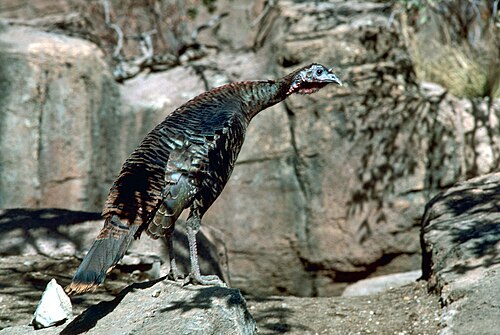
الرتبة: الدجاجيات، العائلة: التدرجية
تتألف فصيلة التدرجيات من طيور التدرج وما يرتبط بها من أنواع. وهي أنواع برية، تتفاوت في أحجامها، ولكنها عموماً ممتلئة الجسم ذات أجنحة عريضة وقصيرة نسبياً. العديد من أنواعها طيور صيد أو تم استئناسها كمصدر غذاء للبشر.
- تشوكار ، ألكتوريس تشوكار (I) إل سي
- طيهوج داكن ، Dendragapus obscurus LC
- الحجل الرمادي ، بيرديكس بيرديكس (I) LC
- دجاج البراري الكبير ، Tympanuchus cupido NT ( دجاج البراري أتووتر T. c. attwateri : E )
- طائر الطيهوج الكبير ، Centrocercus urophasianus NT
- Gunnison sage-grouse ، Centrocercus minimus EN
- طائر الثلج الهيمالايا ، Tetraogallus himalayensis (I) LC
- الطاووس الهندي ، Pavo cristatus (I) LC
- دجاج البراري الصغير ، Tympanuchus pallidicinctus VU
- الديك الرومي ذو العيون ، Meleagris ocellata NT
- دجاج الأدغال الأحمر ، Gallus gallus (I) LC
- طائر التدرج المطوق ، Phasianus colchicus (I) LC
- صخرة طائر الترمجان ، Lagopus Muta LC
- طائر الطيهوج المطوق ، بوناسا أومبيلوس إل سي
- طائر الطيهوج ذو الذيل الحاد ، Tympanuchus phasianellus LC
- طائر الطيهوج الأسود ، Dendragapus fuliginosus LC
- طائر الطيهوج الصنوبري ، Canachites canadensis LC
- طائر التدرج أبيض الذيل ، Lagopus leucura LC
- الديك الرومي البري ، Meleagris gallopavo LC
- طائر التدرج الصفصافي ، Lagopus lagopus LC
طيور الفلامنجو

الرتبة: طيور الفينيقيات، العائلة: طيور الفينيقيات
طيور الفلامنجو (جنس Phoenicopterus، أحادي النوع ضمن فصيلة Phoenicopteridae) هي طيور خوض اجتماعية، يتراوح طولها عادةً بين 0.9 و1.5 متر ، وتوجد في نصفي الكرة الأرضية الغربي والشرقي. تتغذى طيور الفلامنجو عن طريق ترشيح المحار والطحالب. تتميز مناقيرها ذات الشكل الغريب بتكيفها الخاص لفصل الطين والطمي عن الطعام الذي تتناوله، وتستخدمها بشكل فريد وهي مقلوبة.
- طائر الفلامنجو الأمريكي ، Phoenicopterus ruber LC
طيور الغطاس
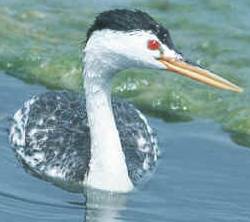
الرتبة: Podicipedidae العائلة: Podicipedidae
الغطاسات طيور غوص صغيرة إلى متوسطة الحجم. تتكاثر في المياه العذبة، لكنها تزور البحر غالبًا أثناء الهجرة وفي فصل الشتاء. تتميز بأصابع قدم مفصصة، وهي سباحة وغواصة ماهرة؛ إلا أن أقدامها تقع في الجزء الخلفي من جسمها، مما يجعلها غير رشيقة على اليابسة.
- Atitlan grebe , Podilymbus gigas (E) EX E
- غطاس ذو أذنين ، Podiceps nigricollis LC
- غطاس كلارك ، Aechmophorus clarkii LC
- غطاس مقرن ، Podiceps auritus ، معرض للخطر
- أقل غريبي ، Tachybaptus dominicus LC
- غطاس ذو منقار مرقط ، Podilymbus podiceps LC
- غطاس أحمر الرقبة ، Podiceps grisegena LC
- الغطاس الغربي ، Aechmophorus occidentalis LC
الحمام واليمام
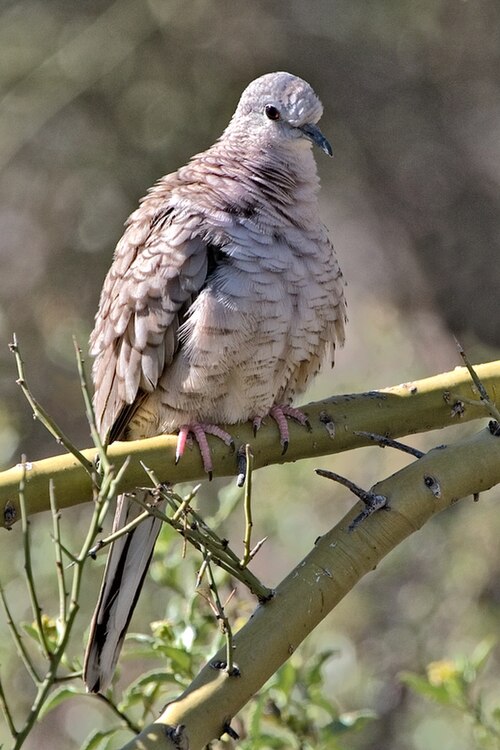
الرتبة: الحماميات الشكل، العائلة: الحماميات
الحمام واليمام طيور ذات أجسام قوية وأعناق قصيرة ومناقير قصيرة ونحيلة مع غشاء لحمي.
- حمامة مطوقة أفريقية ، Streptopelia roseogrisea (I) LC
- الحمامة ذات الذيل الشريطي ، Patagioenas fasciata LC
- الحمامة الأرضية الزرقاء ، Claravis pretiosa LC
- حمامة السمان ذات الرأس الأزرق ، Starnoenas cyanocephala EN
- حمامة السمان المقنعة ، Geotrygon mystacea LC
- حمامة السمان ذات الجبهة الصفراء ، Zentrygon costaricensis LC
- حمامة الكاريبي ، ليبتوتيلا جامايكينسيس إل سي
- حمامة السمان تشيريكي ، Zentrygon chiriquensis LC
- حمامة أرضية مشتركة ، كولومبينا باسرينا LC
- الحمام الخشبي الشائع ، كولومبا بالومبوس (أ) إل سي
- حمامة السمان المتوجة ، Geotrygon versicolor NT
- حمامة داكنة ، Patagioenas Goodoni LC
- حمامة ذات أذنين ، Zenaida auriculata LC
- حمامة اليمام الأوراسية ، Streptopelia decaocto (I) LC
- الحمامة السلحفاة الأوروبية ، Streptopelia turtur (A) VU
- حمامة رمادية الصدر ، Leptotila cassinii LC
- حمامة السمان ذات الجبهة الرمادية ، Geotrygon caniceps VU
- حمامة ذات جبهة رمادية ، Leptotila rufaxilla (A) LC [ 7 ]
- حمامة رمادية الرأس ، Leptotila plumbeiceps LC
- حمامة غرينادا ، Leptotila wellsi CR
- حمامة الإنكا ، كولومبينا إنكا إل سي
- حمامة السمان في كي ويست ، Geotrygon chrysia LC
- حمامة أرضية ذات صدر بني داكن ، Claravis mondetoura LC
- حمامة الحداد ، زنيدا ماكروورا إل سي
- حمامة السمان ذات الظهر الزيتوني ، Leptotrygon veraguensis LC
- يمامة شرقية ، Streptopelia orientalis (A) LC
- حمامة ذات بطن شاحب ، باتاجيويناس كايينينسيس إل سي
- حمامة مهاجرة ، Ectopistes migratorius (E) EX
- حمامة عادية ، Patagioenas inornata NT
- حمامة أرضية ذات صدر عادي ، كولومبينا مينوتا إل سي
- حمامة ريشية ، Patagioenaslumbea LC
- حمامة السمان ذات الظهر الأرجواني ، Zentrygon lawrencii LC
- حمامة حمراء المنقار ، Patagioenas flavirostris LC
- الحمام ذو الذيل الدائري ، Patagioenas caribaea VU
- حمامة الصخور ، كولومبا ليفيا (I) LC
- حمامة الأرض الحمراء ، كولومبينا تالباكوتي إل سي
- حمامة رودي ، Patagioenas subvinacea VU
- حمامة السمان الحمراء ، Geotrygon montana LC
- حمامة السمان ذات التاج البني المحمر ، Zentrygon goldmani NT
- حمامة حرشفية ، Patagioenas speciosa LC
- حمامة متقشرة القيلولة ، Patagioenas squamosa LC
- حمامة قصيرة المنقار ، باتاجيويناس نيغريروستريس إل سي
- حمامة سوكورو ، زينايدا جرايزوني إي دبليو
- حمامة مرقطة ، Streptopelia chinensis (I) LC
- توكستلا حمامة السمان ، Zentrygon carrikeri EN
- حمامة السمان البنفسجية ، Geotrygon violacea LC
- حمامة بيضاء التاج ، باتاجيويناس ليوكوسيفالا NT
- حمامة السمان ذات الوجه الأبيض ، Zentrygon albifacies LC
- حمامة السمان ذات الجبهة البيضاء ، Geotrygon leucometopia EN
- حمامة بيضاء الطرف ، ليبتوتيلا فيروكسي إل سي
- حمامة بيضاء الجناح ، زينيدا آسيوية إل سي
- حمامة زينايدا ، زينايدا أوريتا LC
طائر القطا الرملي
الرتبة: بتيروكليفورميس، العائلة: بتيروكليداي
يتميز طائر القطا برأس ورقبة صغيرين يشبهان رأس ورقبة الحمام، لكن جسمه قوي ومتماسك. وله أجنحة طويلة مدببة، وأحيانًا ذيل، ويطير بسرعة وبشكل مباشر. وتطير أسرابه إلى موارد المياه عند الفجر والغسق. وساقاه مغطاة بالريش حتى أصابع القدم.
- قطا ذو بطن كستنائي ، Pterocles exustus (I) LC
طيور الوقواق
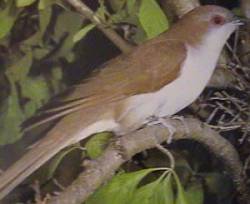
الرتبة: الوقواقيات الشكل، العائلة: الوقواقيات
تضم عائلة الوقواق (Cuculidae) طيور الوقواق، وطيور العداء، وطيور الأني. وتختلف أحجام هذه الطيور، وتتميز بأجسامها النحيلة، وذيولها الطويلة، وأرجلها القوية.
- الوقواق ذو الصدر الكستنائي ، Coccyzus rufigularis EN
- الوقواق ذو المنقار الأسود ، Coccyzus erythropthalmus LC
- الوقواق ذو البطن الكستنائي ، Coccyzus pluvialis LC
- طائر الوقواق (Cocos cuckoo )، Coccyzus ferrugineus ، مُعرّض للخطر
- الوقواق الشائع ، Cuculus canorus (A) LC
- الوقواق ذو المنقار الداكن ، Coccyzus melacoryphus LC
- الوقواق القزم ، Coccycua pumila (A) LC
- الوقواق ذو القبعة الرمادية ، Coccyzus lansbergi LC
- طائر الوقواق السحلية الكبير ، Coccyzus merlini LC
- الأني الكبير ، كروتوفاجا ماجور إل سي
- عداء الطريق الكبير ، Geococcyx californianus LC
- طائر الأني ذو المنقار الأخدودي ، Crotophaga sulcirostris LC
- وقواق السحلية الهسبانيولاني ، Coccyzus longirostris LC
- الوقواق السحلية الجامايكية ، Coccyzus vetula LC
- الوقواق الأرضي الصغير ، Morococcyx erythropygus LC
- عداء الطريق الصغير ، Geococcyx velox LC
- الوقواق الصغير ، Coccycua minuta LC
- طائر الوقواق المانجروف ، Coccyzus minor LC
- الوقواق الشرقي ، Cuculus optatus (A) LC
- الوقواق ذو الصدر اللؤلؤي ، Coccyzus euleri (A) LC
- طائر الوقواق التدرجي ، Dromococcyx phasianellus LC
- سحلية الوقواق البورتوريكية ، Coccyzus vieilloti LC
- الوقواق المطحون ذو اللون الأحمر ، Neomorphus Geoffroyi VU (ssp. dulcis : E )
- طائر الأني ذو المنقار الأملس ، Crotophaga ani LC
- الوقواق السنجاب ، Piaya cayana LC
- الوقواق المخطط ، Tapera naevia LC
- الوقواق ذو المنقار الأصفر ، Coccyzus americanus LC
طيور الليل وحلفاؤها

الرتبة: كابريمولجيفورميس، العائلة: كابريمولجيداي
طيور السبد هي طيور ليلية متوسطة الحجم، تعشش عادةً على الأرض. تتميز بأجنحة طويلة، وأرجل قصيرة، ومناقير قصيرة جدًا. معظمها ذو أقدام صغيرة، لا تُفيد كثيرًا في المشي، وأجنحة طويلة مدببة. ريشها الناعم ذو ألوان مموهة تُشبه لحاء الشجر أو أوراق الشجر.
- صقر جزر الأنتيل ، Chordiles gundlachii LC
- طائر السبد ذو الياقة الصفراء ، Antrostomus ridgwayi LC
- أرملة تشاك ويلز ، أنتروستوموس كارولينينسيس NT
- طائر الليل الشائع ، Chordeiles minor LC
- بوراك شائع ، Nyctidromus albicollis LC
- طائر الفالاينوبتيلوس نوتالي ( Phalaenoptilus nuttallii LC)
- طائر السبد الكوبي ، Antrostomus cubanensis LC
- طائر السبد الليلي ، Antrostomus saturatus LC
- طائر البورويل ذو الأذنين ، Nyctiphrynus mcleodii LC
- طائر السُّبُّول الشرقي ، Antrostomus vociferus NT
- نايجر رمادي ، Caprimulgus jotaka (A) LC
- نايجر هيسبانيولاني ، Antrostomus ekmani LC
- الجامايكي بوراكي ، Siphonorhis americana (E؟) CR
- أقل أنواع الطفيليات شيوعًا ، Siphonorhis brewsteri NT
- طائر الليل الصغير ، Chordeiles acutipennis LC
- طائر السُّبُّوم المكسيكي ، Antrostomus arizonae LC
- الناكوندا صقر الليل , الحبال الناكوندا LC [ 8 ]
- طائر البورويل ذو العيون ، Nyctiphrynus ocellatus LC
- السبد البورتوريكي ، Antrostomus noctitherus EN E
- طائر السبد الأحمر ، Antrostomus rufus LC
- طائر الليل قصير الذيل ، Lurocalis semitorquatus LC
- طائر السبد ذو الذيل المرقط ، Hydropsalis maculicaudus LC
- نايجار ذو ياقة أسمر مصفر ، Antrostomus salvini LC
- طائر السبد ذو الذيل الأبيض ، Hydropsalis cayennensis LC
- نايجر يوكاتان ، أنتروستوموس باديوس LC
- طائر اليوكاتان ذو الرأس الأبيض ، Nyctiphrynus yucatanicus LC
طائر الزيت
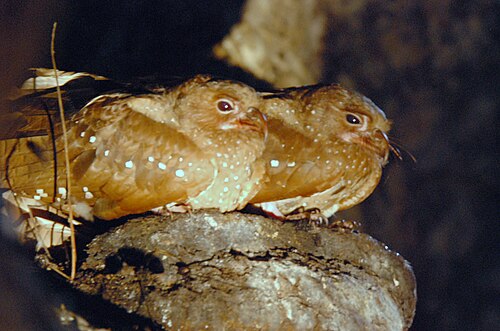
الرتبة: Steatornithiformes ، العائلة: Steatornithidae
طائر الزيت هو طائر نحيل ذو أجنحة طويلة، وهو قريب من طيور السبد. وهو طائر ليلي ويتغذى بشكل متخصص على ثمار نخيل الزيت .
- طائر الزيت ، Steatornis caripensis LC
بوتو

الرتبة: Nyctibiiformes العائلة: Nyctibiidae
طيور البوتو (وتُسمى أحيانًا بـ"الفقير") هي طيور كبيرة الحجم من رتبة العصفوريات، وهي قريبة من طيور السبد وطيور فم الضفدع. وهي طيور ليلية تتغذى على الحشرات، وتفتقر إلى الشعيرات الموجودة حول الفم والتي توجد في طيور السبد الحقيقية.
- طائر البوتو الشائع ، Nyctibius griseus LC
- طائر البوتو الكبير ، Nyctibius grandis LC
- طائر البوتو الشمالي ، Nyctibius jamaicensis LC
طيور السنونو

الرتبة: أبوديفوميرات، العائلة: أبوديداي
طيور السنونو طيور صغيرة تقضي معظم حياتها في الطيران. تتميز هذه الطيور بأرجل قصيرة جدًا، ولا تستقر على الأرض طواعيةً، بل تجثم فقط على الأسطح العمودية. ولدى العديد من طيور السنونو أجنحة طويلة مائلة للخلف تشبه الهلال أو البوميرانج.
- طائر السنونو الألبي ، Apus melba (A) LC
- السنونو الأسود ، Cypseloides niger VU
- طائر السنونو النّتيلاني ، Tachornis phoenicobia LC
- طائر السنونو ذو الردف المخطط ، Chaetura spinicaudus LC
- طائر تشابمان السريع ، Chaetura chapmani (A) LC
- طائر السنونو ذو الياقة الكستنائية ، Streptoprocne rutila LC
- طائر السنونو المدخني ، Chaetura pelagica، معرض للخطر
- السنونو الشائع ، Apus apus (A) LC
- كوستاريكا سويفت ، شيتورا فوموسا LC
- طائر السنونو ذو الذيل المتشعب ، Tachornis squamata LC [ 9 ]
- طائر السنونو ذو الردف الرمادي ، Chaetura cinereiventris LC
- طائر السنونو ذو الذيل المتشعب الكبير ، Panyptila sanctihieronymi LC
- سمامة جزر الأنتيل الصغرى ، Chaetura martinica LC
- طائر السنونو الصغير ذو الذيل المتشعب ، Panyptila cayennensis LC
- ليتل سويفت , Apus affinis (A) LC [ 10 ]
- طائر السنونو ذو الذيل المتشعب ، Apus pacificus (A) LC
- طائر السنونو قصير الذيل ، Chaetura brachyura LC
- طائر السنونو المريض ، Chaetura meridionalis (A) LC
- طائر السنونو ذو الجبهة المرقطة ، Cypseloides cherriei DD
- Vaux's swift , Chaetura vauxi LC
- طائر السنونو ذو الذقن الأبيض ، Cypseloides cryptus LC
- طائر السنونو ذو الياقة البيضاء ، Streptoprocne zonaris LC
- السنونو ذو الجبهة البيضاء ، Cypseloides storeri DD
- طائر السنونو ذو القفا الأبيض ، Streptoprocne semicollaris LC
- طائر الإبرة ذو الحلق الأبيض Hirundapus caudacutus (A) LC
- السنونو أبيض الحنجرة ، Aeronautes saxatalis LC
الطيور الطنانة
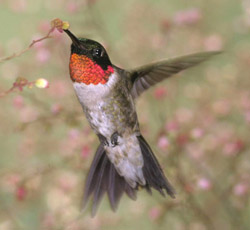
الرتبة: أبوديفورميس، العائلة: تروشيليداي
الطيور الطنانة طيور صغيرة قادرة على التحليق في الهواء بفضل رفرفة أجنحتها السريعة. وهي الطيور الوحيدة التي تستطيع الطيران إلى الخلف.
- طائر الطنان ألين ، Selasphorus sasin LC
- الطائر الطنان أمازيليا ، أمازيليس أمازيليا (A) LC
- الطائر الطنان ذو الحلق الأرجواني ، لامبورنيس أميثيستينوس إل سي
- Amethyst woodstar , Calliphlox amethystina (A) LC [ 11 ]
- طائر الطنان آنا ، كاليبت آنا إل سي
- طائر الطنان المتوج الأنتيلي ، Orthorhyncus cristatus LC
- طائر الطنان ذو التاج الأزرق ، Saucerottia cyanocephala LC
- باهاما وودستار ، نيسوفلوكس إيفيليناي إل سي
- سمكة باربثروت ذات الذيل المخطط ، Threnetes ruckeri LC
- طائر طنان جميل ، Calothorax pulcher LC
- طائر النحل الطنان ، Mellisuga helenae NT
- طائر الطنان البريليني ، Saucerottia beryllina LC
- الطائر الطنان ذو البطن الأسود ، Eupherusa nigriventris LC
- طائر ذيل الشريط ذو المنقار الأسود ، Trochilus scitulus LC
- طائر الطنان ذو الذقن السوداء ، Archilochus alexandri LC
- طائر الزقزاق ذو العرف الأسود ، لوفورنيس هيليناي إل سي
- مانجو أسود الحلق ، أنثراكوثوراكس نيغريكوليس إل سي
- الطائر الطنان ذو القبعة الزرقاء ، Eupherusa cyanophrys EN
- طائر الطنان ذو الصدر الأزرق ، بوليراتا أمابيليس إل سي
- الياقوت الأزرق الذقن ، Chlorestes notata LC [ 12 ]
- الطائر الطنان ذو الرأس الأزرق ، ريكورديا بيكولور إل سي
- طائر الطنان ذو الذيل الأزرق ، Saucerottia cyanura LC
- ذيل ذهبي أزرق الحلق ، Chlorestes eliciae LC
- الطائر الطنان ذو الحلق الأزرق ، Lampornis clemenciae LC
- طائر الطنان ذو البطن الأزرق ، Saucerottia hoffmanni
- زمرد بريس ، ريكورديا براسي (E) EX
- الطائر الطنان عريض المنقار ، Cynanthus latirostris LC
- الطائر الطنان عريض الذيل ، Selasphorus platycercus LC
- طائر الريش ذو الذيل البرونزي ، Chalybura urochrysia LC
- ناسك برونزي ، Glaucis aeneus LC
- أذن بنفسجية بنية ، كوليبيري دلفيني إل سي
- طائر الطنان ذو البطن البني ، أمازيليا يوكاتانينسيس إل سي
- الطائر الطنان النحلة الطنانة ، Selasphorus heloisa LC
- طائر الطنان كاليوبي ، سيلاسفوروس كاليوبي إل سي
- زمرد كانيفيتس ، Cynanthus canivetii LC
- طائر الطنان الساحر ، بوليراتا ديكورا إل سي
- طائر القرفة الطنان ، Amazilia rutila LC
- الزمرد ذو الرأس النحاسي ، Microchera cupreiceps LC
- طائر الطنان ذو الردف النحاسي ، Saucerottia tobaci LC [ 13 ]
- طائر الطنان كوستا ، Calypte costae LC
- زمرد كوزوميل ، Cynanthus forficatus LC
- حورية الغابة المتوجة ، ثالورانيا كولومبيكا إل سي
- الزمرد الكوبي ، Riccordia ricordii LC
- الطائر الطنان المعتم ، Phaeoptila sordida LC
- الطائر الطنان ذو الذقن الزمردي ، Abeillia abeillei LC
- طائر الطنان ذو الحلق الناري ، بانتربي إنسيغنيس إل سي
- زمرد الحديقة ، Chlorostilbon assimilis LC
- طائر الطنان ذو الحلق العقيقي ، لامبرولايما رهامي إل سي
- الطائر الطنان ذو الحلق المتوهج ، Selasphorus ardens EN
- زمرد ذو تاج ذهبي ، Cynanthus auriceps LC
- الناسك الأخضر ، رجل فايثورنيس LC
- المانجو الأخضر ، أنثراكوثوراكس فيريديس إل سي
- الذيل الشوكي الأخضر ، Discosura conversii LC
- مانجو ذو صدر أخضر ، أنثراكوثوراكس بريفوستي إل سي
- جوهرة الجبل ذات الصدر الأخضر ، لامبورنيس سيبيللاي إل سي
- لامع متوج باللون الأخضر ، Heliodoxa jacula LC
- الطائر الطنان ذو الجبهة الخضراء ، Ramosomyia viridifrons LC
- طائر أبو منجل ذو الجبهة الخضراء ، دوريفيرا لودوفيكاي إل سي
- الرجل المنتفخة الخضراء ، Haplophaedia aureliae LC
- سمكة الكاريب ذات الحلق الأخضر ، Eulampis holosericeus LC
- مانجو ذو الحلق الأخضر ، Anthracothorax viridigula LC [ 14 ]
- جوهرة الجبل ذات الحلق الأخضر ، لامبورنيس فيريديبالينس إل سي
- زمرد هيسبانيولا ، ريكورديا سوانسوني إل سي
- مانجو هيسبانيولا ، أنثراكوثوراكس دومينيكوس إل سي
- الزمرد الهندوراسي ، Amazilia luciae VU
- ياقوتة هومبولت ، Chrysuronia humboldtii LC
- إيناغوا وودستار ، نيسوفلوكس ليرورا إل سي
- مانجو جامايكي ، مانجو أنثراكوثوراكس إل سي
- البنفسجي الصغير ، Colibri cyanotus
- الناسك الصغير , Phaethornis longuemareus LC [ 15 ]
- ناسك طويل المنقار ، Phaethornis longirostris LC
- نجم الحلق طويل المنقار ، Heliomaster longirostris LC
- نسر ذو ذيل طويل ، بامبا إكسيلنس إن تي
- طائر الطنان لوسيفر ، Calothorax lucifer LC
- نجم الخشب ذو الحلق الأرجواني ، فيلوديس بريانتاي إل سي
- طائر المنغروف الطنان ، أمازيليا بوكاردي EN
- الناسك المكسيكي ، Phaethornis mexicanus LC
- ذيل القص المكسيكي ، دوريشا إليزا إن تي
- البنفسج المكسيكي ، كوليبيري ثالاسينوس إل سي
- حورية الغابة المكسيكية ، Eupherusa ridgwayi VU
- ناسك شاحب البطن ، فايثورنيس أنثوفيلوس إل سي
- الطائر الطنان ، جولدمانيا بيلا NT
- سمكة النجمة ذات القبعة البسيطة ، هيليومستر كونستانتي إل سي
- زمرد بورتوريكي ، ريكورديا موغيوس إل سي
- مانجو بورتوريكي ، أنثراكوثوراكس أورولينتوس إل سي
- الجنية ذات التاج الأرجواني ، هيليوثريكس باروتي إل سي
- سمكة الكاريب ذات الحلق الأرجواني ، Eulampis jugularis LC
- جوهرة الجبل ذات الحلق الأرجواني ، لامبورنيس كالوليموس إل سي
- طائر الزقزاق ذو الحلق الأرجواني ، فيلوديس ميتشيلي إل سي
- طائر ذيل الشريط أحمر المنقار ، Trochilus polytmus LC
- طائر ريفولي الطنان ، يوجين فولجنز إل سي
- طائر الطنان ذو الحلق الياقوتي ، Archilochus colubris LC
- طائر الطنان ذو اللون الياقوتي التوبازي ، Chrysolampis mosquitus LC
- طائر الطنان ذو اللون الأحمر ، Selasphorus rufus NT
- طائر أبو سيف أحمر ، بامبا روفا إل سي
- نجم الخشب ذو العمود الأحمر ، Chaetocercus jourdanii LC [ 16 ]
- الناسك ذو الصدر الأحمر ، Glaucis hirsutus LC
- طائر الزقزاق ذو العرف الأحمر ، لوفورنيس ديلاتري إل سي
- طائر الطنان ذو الذيل الأحمر ، أمازيليا تزاكاتل إل سي
- الطائر الطنان ذو الحلق الياقوتي ، Chrysuronia coeruleogularis LC
- الطائر الطنان ذو الصدر المتقشر ، Phaeochroa cuvierii LC
- الطائر الطنان المتألق ، Selasphorus scintilla LC
- طائر الزقزاق قصير العرف ، لوفورنيس براكيلوفوس سي آر
- سمكة ذيل القص النحيلة ، دوريشا إينيكورا إل سي
- قبعة الثلج ، ميكروشيرا ألبوكوروناتا إل سي
- طائر الطنان ذو البطن الثلجي ، Saucerottia edward LC
- طائر الطنان ذو الذيل المتلألئ ، تيلماتورا دوبونتي إل سي
- طائر الطنان ذو الذيل المخطط ، Eupherusa eximia LC
- الناسك ذو الحلق المخطط ، Phaethornis striigularis LC
- طائر تالامانكا الطنان ، يوجين سبيتابيليس
- طائر الطنان ذو المنقار المسنن ، Androdon aequatorialis LC
- كوكيت معنقدة , Lophornis ornatus LC [ 17 ]
- الطائر الطنان تريس مارياس ، Cynanthus lawrencei NT
- طائر الطنان ذو التاج الفيروزي ، Cynanthus doubledayi LC
- مانجو فيراجوان ، أنثراكوثوراكس فيراجوينسيس إل سي
- الطائر الطنان رعي الحمام ، Mellisuga minima LC
- نملة سيفية بنفسجية ، كامبيلوبتروس هيميليوكوروس إل سي
- طائر الطنان ذو البطن البنفسجي ، Chlorestes julie LC
- طائر الطنان ذو القبعة البنفسجية ، Goldmania violiceps NT
- الطائر الطنان ذو التاج البنفسجي ، Ramosomyia violiceps LC
- طائر الطنان ذو الرأس البنفسجي ، Klais guimeti LC
- طائر الطنان البركاني ، Selasphorus flammula LC
- طائر أبو سيف ذو الذيل الوتدي ، بامبا كيرفيبينيس إل سي
- الزمرد ذو البطن الأبيض ، Chlorestes candida LC
- جوهرة الجبل ذات البطن الأبيض ، لامبورنيس هيميليوكوس إل سي
- الزمرد ذو الصدر الأبيض ، Chrysuronia brevirostris LC [ 18 ]
- طائر الزقزاق ذو العرف الأبيض ، لوفورنيس أدورابيليس إل سي
- طائر الطنان ذو الأذن البيضاء ، Basilinna leucotis LC
- اليعقوب أبيض العنق ، فلوريسوجا ميليفورا إل سي
- الزمرد ذو الذيل الأبيض ، Microchera chionura LC
- طائر الحلق الذهبي ذو الذيل الأبيض ، Polytmus guainumbi LC [ 19 ]
- الطائر الطنان ذو الذيل الأبيض ، Eupherusa poliocerca، مُعرّض للخطر
- طائر أبو سيف أبيض الذيل ، Campylopterus ensipennis NT [ 20 ]
- جوهرة الجبل ذات الحلق الأبيض ، Lampornis castaneoventris LC
- طائر أبو منجل أبيض الطرف ، Eutoxeres aquila LC
- طائر الريش ذو الفتحة البيضاء ، Chalybura buffonii LC
- طائر الطنان ذو الحلق النبيذي ، Selasphorus ellioti LC
- طائر الطنان زانتوس ، Basilinna xantusii LC
طيور المرعى، والدجاجات المائية، والغطاسات
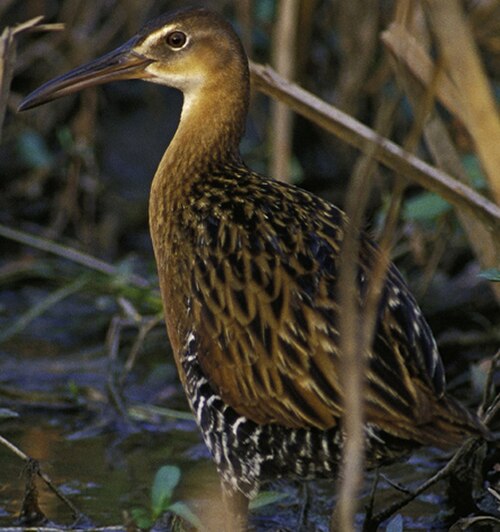
الرتبة: Gruiformes العائلة: Rallidae
تُعدّ الرّاليات عائلة كبيرة من الطيور الصغيرة والمتوسطة الحجم، وتشمل طيور المرعى، والكركي، والغطاس، والدجاجة المائية. تسكن معظم أفراد هذه العائلة النباتات الكثيفة في البيئات الرطبة قرب البحيرات والمستنقعات والأنهار. وهي عمومًا طيور خجولة ومنطوية، مما يجعل رصدها صعبًا. تمتلك معظم أنواعها أرجلًا قوية وأصابع طويلة مُتكيفة جيدًا مع الأسطح الرخوة غير المستوية. كما تميل إلى امتلاك أجنحة قصيرة مستديرة، وتكون ضعيفة الطيران.
- طائر الغرة الأمريكية ، Fulica americana LC
- الجالينول الأرجواني ، بورفيريو مارتينيكوس LC
- طائر الكركي ذو الحلق الرمادي ، Mustelirallus albicollis LC [ 21 ]
- سكة حديد الأزتك ، Rallus tenuirostris NT
- جالينول أزور ، بورفيريو فلافيروستريس (A) LC
- السكة السوداء ، Laterallus jamaicensis EN
- كلابر السكك الحديدية ، رالوس كريبيتانس LC
- مرعة كولومبيا ، Neocrex colombiana DD
- جالينول مشترك ، جالينولا جالياتا LC
- دجاجة الماء الشائعة ، Gallinula chloropus (A) LC
- طائر الكركي ، كريكس كريكس (أ) إل سي
- غرة أوراسية ، فوليكا أترا (أ) إل سي
- مرعة رمادية الصدر ، Laterallus exilis LC
- درابزين خشبي رمادي اللون ، أراميدس كاجانوس إل سي
- مرعة الملك ، Rallus elegans NT
- مرعة المانجروف ، Rallus longirostris LC
- مرعة مُرَقَّطة ، Micropygia schomburgkii (A) LC
- مرعة ذات منقار ملون ، Neocrex erythrops LC
- طائر ريدجواي ، Rallus obsoletus NT ( Rallus o. obsoletus R. o. obsoletus ، R. o. yumanensis و R. o. levipes : E )
- مرعة حمراء ، Laterallus ruber LC
- طائر الخشب ذو العنق الأحمر ، أراميدس أكسيلاريس إل سي
- درابزين خشبي ذو مؤخرة بنية محمرة ، أراميدس ألبيفينتريس إل سي
- سورا ، بورزانا كارولينا إل سي
- مرعة مرقطة ، بورزانا بورزانا (أ) إل سي
- مرعة مرقطة ، Pardirallus maculatus LC
- كريك موحد ، Amaurolimnas concolor LC
- سكة حديد فرجينيا ، Rallus limicola LC
- المستنقع الأرجواني ، بورفيريو بورفيريو (I)
- مرعة الماء الغربية ، Rallus aquaticus (A) LC
- طائر الكركي أبيض الحنجرة ، Laterallus albigularis LC
- طائر السكة الصفراء ، كوتورنيكوبس نوفيبوراكنسيس إل سي
- طائر الكركي ذو الصدر الأصفر ، هابالوكريكس فلافيفينتر إل سي
- السكك الحديدية زاباتا ، Cyanolimnas cerverai CR
فينفوتس

الرتبة: الكركيات، العائلة: الكركيات
عائلة Heliornithidae هي عائلة صغيرة من الطيور الاستوائية ذات فصوص مكففة على أقدامها تشبه تلك الموجودة لدى الغطاسات والغرات.
- سنجريبي ، هيليورنيس فوليكا إل سي
ليمبكين

الرتبة: الكركيات، العائلة: الأراميات
طائر الليمبكين طائر غريب يشبه طائر المرعة الكبير ، لكن هيكله العظمي أقرب إلى طيور الكركي . ويتواجد في المستنقعات التي تحتوي على بعض الأشجار أو الشجيرات في منطقة البحر الكاريبي وأمريكا الجنوبية وجنوب فلوريدا .
- ليمبكين ، أراموس غواراونا إل سي
الرافعات
الرتبة: الكركيات، العائلة: الكركيات

الكركي طيور كبيرة الحجم، طويلة الأرجل والأعناق. وعلى عكس طيور البلشون التي تشبهها في الشكل ولكنها لا تربطها بها صلة قرابة، فإن الكركي يطير وأعناقه ممدودة، وليست مشدودة للخلف. ولدى معظمها عروض تزاوج أو "رقصات" متقنة وصاخبة.
- الكركي الشائع ، Grus gros (A) LC
- الرافعة ذات القلنسوة ، Grus monacha (A) VU
- طائر الكركي الرملي ، Antigone canadensis LC (الأنواع الفرعية nesiotes و pulla : E )
- الكركي الأمريكي ، Grus americana EN E (و XN )
ركب سميكة
الرتبة: الزقزاقيات الشكل، العائلة: البورينيداي
تُعدّ طيور الركب السميكة مجموعة من الطيور الخواضة المنتشرة في جميع أنحاء العالم ضمن المناطق الاستوائية، وتتكاثر بعض أنواعها أيضًا في المناطق المعتدلة في أوروبا وأستراليا. وهي طيور خواضة متوسطة إلى كبيرة الحجم، تتميز بمنقار قوي أسود أو أصفر داكن، وعيون صفراء كبيرة، وريش مموه. وعلى الرغم من تصنيفها ضمن الطيور الخواضة، إلا أن معظم أنواعها تُفضّل الموائل القاحلة أو شبه القاحلة.
- طائر البورهانوس بيسترياتوس ذو الركبة السميكة المخططة المزدوجة
ركائز خشبية وطيور أبو المغازل
الرتبة: الزقزاقيات الشكل، العائلة: الزقزاقيات المنتصبة
فصيلة طيور الخوض الكبيرة (Recurvirostridae) تضم طيور الزقزاق والزقزاق الصغير. يتميز الزقزاق بأرجله الطويلة ومنقاره الطويل المنحني للأعلى، بينما يتميز الزقزاق الصغير بأرجله الطويلة للغاية ومنقاره الطويل الرفيع المستقيم.
- أمريكان أفوسيت ، ريكورفيروسترا أمريكانا إل سي
- زقزاق أسود الجناح ، هيمانتوبوس هيمانتوبوس (أ) LC
- طائر الزقزاق أسود الرقبة ، Himantopus mexicanus LC (طائر الزقزاق الهاواي H. m. knudseni : E )
طيور المحار

الرتبة: الزقزاقيات الشكل، العائلة: الزقزاقيات ذات الأقدام الحمراء
طيور صائد المحار هي طيور كبيرة وواضحة وصاخبة تشبه طيور الزقزاق ، ولها مناقير قوية تستخدم لتحطيم أو فتح الرخويات .
- صائد المحار الأمريكي ، Haematopus palliatus LC
- طائر المحار الأسود ، Haematopus bachmani LC
- صائد المحار الأوراسي ، Haematopus ostralegus (A) NT
طيور الزقزاق والزقزاق
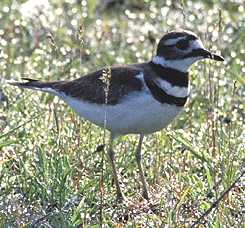
الرتبة: الزقزاقيات الشكل، العائلة: الزقزاقيات
تضم عائلة الزقزاق (Charadriidae) طيور الزقزاق والزقزاق المرقط والزقزاق المجنح. وهي طيور صغيرة إلى متوسطة الحجم ذات أجسام مدمجة، وأعناق قصيرة وسميكة، وأجنحة طويلة مدببة عادةً. وتوجد في المناطق المفتوحة حول العالم، وخاصة في الموائل القريبة من الماء.
- الزقزاق الذهبي الأمريكي ، Pluvialis dominica LC
- زقزاق أسود البطن ، Pluvialis squatarola LC
- زقزاق مطوق ، Charadrius collaris LC
- الزقزاق المطوق الشائع ، Charadrius hiaticula LC
- زقزاق أوراسي ، Charadrius morinellus (A) LC
- الزقزاق الذهبي الأوروبي ، Pluvialis apricaria (C) LC
- زقزاق الرمل الأكبر ، Charadrius leschenaultii (A) LC
- كيلدير ، شارادريوس vociferus LC
- زقزاق الرمل الصغير ، Charadrius mongolus (A) LC
- الزقزاق الحلقي الصغير ، Charadrius dubius (A) LC
- زقزاق الجبل ، Charadrius montanus NT
- الزقزاق الشمالي ، Vanellus vanellus (A) NT
- الزقزاق الشرقي ، Charadrius veredus (A) LC
- زقزاق المحيط الهادئ الذهبي ، Pluvialis fulva LC
- زقزاق الأنابيب ، Charadrius melodus NT T or E
- زقزاق نصف مكفف ، Charadrius semipalmatus LC
- الزقزاق الثلجي ( Charadrius nivosus NT )
- الزقزاق الجنوبي ، Vanellus chilensis (A) LC
- زقزاق ويلسون ، Charadrius wilsonia LC
جاكاناس
الرتبة: الزقزاقيات الشكل، العائلة: الجاكانيات
تُعدّ طيور الجاكانا مجموعة من الطيور الخواضة المنتشرة في جميع أنحاء العالم ضمن المناطق الاستوائية. ويمكن تمييزها من خلال أقدامها ومخالبها الضخمة التي تُمكّنها من المشي على النباتات الطافية في البحيرات الضحلة التي تُشكّل موطنها المُفضّل.
- جاكانا الشمالية ، جاكانا سبينوزا إل سي
- جاكانا متدلية ، جاكانا جاكانا إل سي
طيور الزقزاق وحلفاؤها

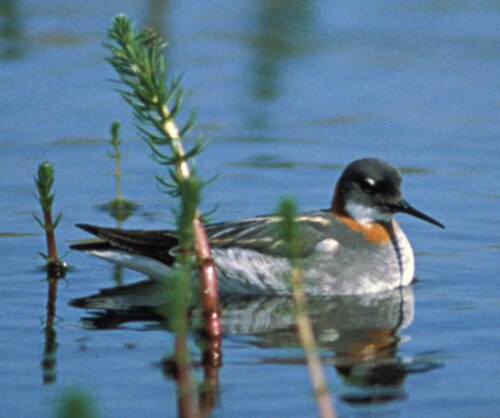
الرتبة: الزقزاقيات الشكل، العائلة: الزقزاقيات
تُعدّ فصيلة طيور الشاطئ (Scolopacidae) فصيلة كبيرة ومتنوعة من الطيور الشاطئية الصغيرة والمتوسطة الحجم، وتشمل طيور الزقزاق، والكركي، والقطقاط، والشنقب، والزقزاق الرملي، والشنقب الخشبي، والشنقب، والشنقب الرملي، والشنقب الرملي. تتغذى معظم هذه الأنواع على اللافقاريات الصغيرة التي تلتقطها من الطين أو التربة. وتُمكّن أطوال الأرجل والمناقير المختلفة أنواعًا متعددة من التغذية في الموطن نفسه، لا سيما على الساحل، دون منافسة مباشرة على الغذاء.
- طائر الشنقب الأمريكي ، Scolopax minor LC
- بيرد ساندبيبر ، كاليدريس بيردي LC
- godwit ذو الذيل الشريطي ، Limosa lapponica NT
- حجر الدوران الأسود ، أريناريا ميلانوسيفالا إل سي
- جودويت أسود الذيل ، ليموسا ليموزا (A) NT
- الكروان ذو الفخذ الخشن ، Numenius tahitiensis NT
- طائر الزقزاق عريض المنقار ، Calidris falcinellus (A) LC
- طائر الزقزاق ذو الصدر البني ، Calidris subruficollis NT
- طائر الزقزاق الأخضر الشائع ، Tringa nebularia (A) LC
- طائر الزقزاق الأحمر الشائع ، Tringa totanus (A) LC
- طائر الزقزاق الشائع ، Actitis hypoleucos (A) LC
- القناص المشترك ، غاليناغو غاليناغو إل سي
- طائر الكروان الرملي ، Calidris Ferruginea NT
- طائر الدنلين ، كاليدريس ألبينا إل سي
- كروان الإسكيمو ، نومينيوس بورياليس (E؟) CR E
- الكروان الأوراسي ، Numenius arquata (A) NT
- طائر الشنقب الأوراسي ، Scolopax rusticola (A) LC
- كروان الشرق الأقصى ، Numenius madagascariensis (A) EN
- عقدة عظيمة ، Calidris Tenuirostris (A) EN
- طائر الزقزاق الأصفر الكبير ، Tringa melanoleuca LC
- طائر الزقزاق الأخضر ، Tringa ochropus (A) LC
- طائر الثرثار ذو الذيل الرمادي ، Tringa brevipes (A) NT
- طائر الهدسون ، Limosa haemastica LC
- طائر الكروان ، Numenius phaeopus LC
- طائر القنص الصغير ، Lymnocryptes minimus (A) LC
- طائر الزقزاق الصغير ، Calidris minutilla LC
- طائر الزقزاق الأصفر الصغير ، Tringa flavipes LC
- الكروان الصغير ، Numenius minutus (A) LC
- فترة قصيرة ، كاليدريس مينوتا (أ) إل سي
- كروان طويل المنقار ، Numenius americanus LC
- طائر الدويتشر طويل المنقار ، Limnodromus scolopaceus LC
- طائر الزقزاق ذو الأصابع الطويلة ، Calidris subminuta (A) LC
- جودويت رخامي ، ليموسا فيدوا LC
- طائر الزقزاق المستنقعي ، Tringa stagnatilis (A) LC
- طائر الرمل الصدري ، Calidris melanotos LC
- طائر الشنقب ذو الذيل المدبب ، Gallinago stenura (A) LC
- طائر الزقزاق الأرجواني ، Calidris maritima LC
- عقدة حمراء ، Calidris canutus NT
- الفالاروب الأحمر ، Phalaropus fulicarius LC
- طائر الفالاروب أحمر الرقبة ، Phalaropus lobatus LC
- طائر الزقزاق أحمر الرقبة ، Calidris ruficollis NT
- طائر الزقزاق الصخري ، Calidris ptilocnemis LC
- رودي تيرنستون , اريناريا Interpres LC
- روف ، كاليدريس بوغناكس إل سي
- ساندرلينج ، كاليدريس ألبا إل سي
- طائر الطيطوي نصف الكف ، Calidris pusilla NT
- طائر الزقزاق ذو الذيل الحاد ، Calidris acuminata (A) LC
- طائر الدويتشير قصير المنقار ، Limnodromus griseus LC
- كروان رفيع المنقار ، Numenius Tenuirostris (E؟) CR E
- طائر الزقزاق المنعزل ، Tringa solitaria LC
- طائر الشنقب المنعزل ، Gallinago solitaria (A) LC
- طائر الزقزاق ذو المنقار الملعقي ، Calidris pygmea (A) CR
- طائر الزقزاق المرقط ، Tringa erythropus (A) LC
- طائر الزقزاق المرقط ، Actitis macularius LC
- الطيطوي طوالة ، كاليدريس هيمانتوبوس LC
- سيرف بيرد ، كاليدريس فيرجاتا إل سي
- فترة تيمينك ، Calidris temminckii (A) LC
- تيريك ساندبيبر ، زينوس سينيروس (A) LC
- طائر الزقزاق الجبلي ، Bartramia longicauda LC
- النمامة الجوالة ، Tringa incana LC
- طائر الزقزاق الغربي ، Calidris mauri LC
- طائر الزقزاق أبيض الردف ، Calidris fuscicollis LC
- ويلت ، ترينجا سيميبالماتا إل سي
- طائر الفالاروب ويلسون ، Phalaropus tricolor LC
- قنص ويلسون ، Gallinago delicata LC
- طائر الزقزاق الخشبي ، Tringa glareola LC
طيور الزقزاق والخيول
الرتبة: الزقزاقيات الشكل، العائلة: الزقزاقيات
تتميز طيور الزقزاق بأرجل قصيرة وأجنحة طويلة مدببة وذيل طويل متشعب. ولعلّ أبرز ما يميزها عن غيرها من الطيور الخواضة هو أنها تصطاد فرائسها من الحشرات عادةً أثناء الطيران، كما تفعل طيور السنونو ، مع أنها قادرة أيضاً على التغذي على الأرض. ومنقارها القصير يُعدّ تكيفاً للتغذية الجوية.
- طائر الزقزاق المطوق ، Glareola pratincola (A) LC
- طائر البراتينكول الشرقي ، Glareola maldivarum (A) LC
طيور الكركر والطيور الجرذية

الرتبة: الزقزاقيات الشكل، العائلة: ستيركوراريداي
طيور الكركر عموماً طيور متوسطة إلى كبيرة الحجم، ذات ريش رمادي أو بني في الغالب، وغالباً ما تحمل علامات بيضاء على أجنحتها. لها مناقير طويلة ذات أطراف معقوفة وأقدام مكففة بمخالب حادة. تشبه طيور النورس الكبيرة الداكنة، لكنها تمتلك غشاءً لحمياً فوق الفك العلوي. وهي طيور قوية وبارعة في الطيران.
- سكوا عظيم ، ستيركوراريوس سكوا LC
- طائر الياغر طويل الذيل ، Stercorarius longicaudus LC
- بومارين جايجر ، ستيركوراريوس بومارينوس إل سي
- طائر الخرشنة الطفيلي ، Stercorarius parasiticus LC
- طائر الكركر القطبي الجنوبي ، Stercorarius maccormicki LC
طيور الأوك، وطيور المور، وطيور البفن
الرتبة: Charadriiformes العائلة: Alcidae

تتشابه طيور الأوك ظاهريًا مع طيور البطريق من حيث لونها الأبيض والأسود، وقامتها المنتصبة، وبعض عاداتها، إلا أنها لا تربطها بالبطريق سوى صلة قرابة بعيدة، وهي قادرة على الطيران. تعيش طيور الأوك في عرض البحر، ولا تخرج إلى الشاطئ إلا عمدًا للتكاثر.
- مورليت القديمة ، Synthliboramphus antiquus LC
- البفن الأطلسي ، Fratercula arctica VU
- الغلموت الأسود ، سيفوس جريل LC
- أوكليت كاسين ، Ptychoramphus aleoticus NT
- المور الشائع ، أوريا ألجي إل سي
- مورليت كرافيري ، Synthliboramphus craveri VU
- طائر الأوكليت المتوج ، Aethia cristatella LC
- دوفكي ، ألي ألي إل سي
- عظيم الأوك ، Pinguinus impennis (E) EX
- غوادالوبي مورليت ، سينثليبورامفوس هيبوليوكوس إن
- البفن المقرن ، Fratercula corniculata LC
- طائر المورليت كيتليتز ، Brachyramphus brevirostris NT
- الأوكليت الأقل ، Aethia pusilla LC
- المورليت طويل المنقار ، Brachyramphus perdix NT
- طائر المورليت الرخامي ، Brachyramphus marmoratus EN T
- أوكليت الببغاء ، Aethia psittacula LC
- طائر الغلموت ، Cepphus columba LC
- طائر الأوك ، ألكا توردا NT
- وحيد القرن الأوكليت ، Cerorhinca monocerata LC
- طائر الموريلت سكريبس ، Synthliboramphus scrippsi VU
- طائر المور ذو المنقار السميك ، Uria lomvia LC
- البفن المتوج ، Fratercula cirrhata LC
- الأوكليت المخفوق ، Aethia pygmaea LC
طيور النورس، والخرشنة، والزقزاق

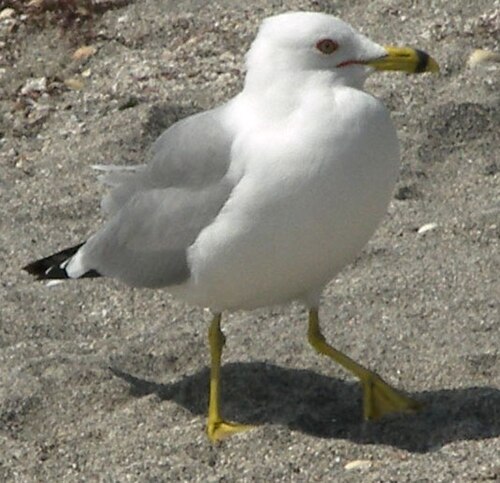
الرتبة: الزقزاقيات الشكل، العائلة: النورسيات
النورسيات عائلة من الطيور البحرية متوسطة إلى كبيرة الحجم، وتشمل النوارس والخرشنة والخطاف والسكيمر. عادةً ما يكون لون النوارس رماديًا أو أبيض، وغالبًا ما تحمل علامات سوداء على الرأس أو الأجنحة. ولها مناقير قوية وطويلة وأقدام مكففة. أما الخرشنات فهي مجموعة من الطيور البحرية متوسطة إلى كبيرة الحجم، وعادةً ما يكون ريشها رماديًا أو أبيض، وغالبًا ما تحمل علامات سوداء على الرأس. تصطاد معظم الخرشنات الأسماك بالغوص، بينما يلتقط بعضها الحشرات من سطح المياه العذبة. وتُعتبر الخرشنات عمومًا طيورًا طويلة العمر، حيث يُعرف أن العديد من أنواعها تعيش لأكثر من 30 عامًا. أما السكيمر فهي عائلة صغيرة من الطيور الاستوائية الشبيهة بالخرشنات. ولها فك سفلي طويل تستخدمه للتغذية عن طريق التحليق على ارتفاع منخفض فوق سطح الماء والتقاط الأسماك الصغيرة.
- الخرشنة الأليوتية ، Onychoprion aleuticus VU
- نورس الرنجة (Larus argentatus LC )
- الخرشنة القطبية ، ستيرنا باراديسيا إل سي
- نورس بيلشر ، Larus belcheri (A) LC
- العقدة السوداء ، Anous minutus LC
- نبات الخرشنة السوداء ، Rynchops niger LC
- الخرشنة السوداء ، Chlidonias niger LC
- نورس أسود الرأس ، Chroicocephalus ridibundus LC
- طائر النورس ذو الأرجل السوداء ، ريسا ترايداكتيلا، معرض للخطر
- نورس أسود الذيل ، Larus crassirostris (A) LC
- نورس بونابرت ، Chroicocephalus philadelphia LC
- الخرشنة الملجمة ، Onychoprion anaethetus LC
- الخرشنة البنية ، Anous stolidus LC
- نورس كاليفورنيا ، Larus californicus LC
- الخرشنة القزوينية ، Hydroprogne caspia LC
- النورس الشائع ، Larus canus LC
- الخرشنة المشتركة ، Sterna hirundo LC
- الخرشنة الأنيقة ، Thalasseus elegans NT
- خرشنة فورستر ، Sterna forsteri LC
- نورس فرانكلين ، Leucophaeus pipixcan LC
- نورس أزرق مخضر ، Larus hyperboreus LC
- نورس ذو جناح أزرق مزرق ، Larus glaucescens LC
- النورس الرمادي ، Leucophaeus متواضع (A) LC
- نورس أسود الظهر كبير ، Larus marinus LC
- نورس رمادي القلنسوة ، Chroicocephalus cirrocephalus (A) LC
- الخرشنة ذات المنقار الشبيه بمنقار النورس ، Gelochelidon nilotica LC
- نورس هيرمان ، لاروس هيرماني إن تي
- نورس أيسلندا ، Larus glaucoides LC
- إنكا الخرشنة ، لاروسترنا إنكا (أ) إن تي
- النورس العاجي ، Pagophila eburnea NT
- نورس عشب البحر ، Larus dominicanus LC
- الخرشنة كبيرة المنقار ، فايتوسا سيمبلكس (أ) إل سي
- نورس الضحك ، Leucophaeus atricilla LC
- الخرشنة الصغيرة ، Sternula antillarum LC E ( خرشنة كاليفورنيا الصغيرة S. a. browni : E )
- نورس أسود الظهر الصغير ، Larus fuscus LC
- النورس الصغير ، Hydrocoloeus minutus LC
- نورس بالاس ، Ichthyaetus ichthyaetus (A) LC
- كيتيواكي أحمر الأرجل ، ريسا brevirostris VU
- نورس ذو منقار حلقي ، لاروس ديلاويرينسيس إل سي
- الخرشنة الوردية , Sterna dougallii LC (ssp. dougallii : E أو T
- نورس روس ، Rhodostethia rosea LC
- الخرشنة الملكية ، Thalasseus maximus LC
- نورس سابين ، Xema sabini LC
- الخرشنة الساندويتشية ، Thalasseus sandvicensis LC
- نورس قصير المنقار ، لاروس براتشيرنخوس
- نورس ذو ظهر رمادي ، Larus schistisagus LC
- الخرشنة السوداء ، Onychoprion fuscatus LC
- نورس ذو ذيل متشعب ، Creagrus furcatus (A) LC
- النورس الغربي ، Larus occidentalis LC
- الخرشنة الملتحية ، Chlidonias hybridus (A) LC
- الخرشنة البيضاء ، Gygis alba LC
- الخرشنة بيضاء الجناح ، Chlidonias leucopterus (A) LC
- الخرشنة صفراء المنقار ، Sternula superciliaris LC
- نورس أصفر القدمين ، Larus livens LC
- نورس أصفر الساقين ، لاروس كاشينانز (أ) إل سي
طائر الشمس

الرتبة: Eurypygiformes ، العائلة: Eurypygidae
طائر الشمس هو طائر يشبه طائر البجع يعيش في المناطق الاستوائية في الأمريكتين وهو العضو الوحيد في عائلة Eurypygidae (التي تُكتب أحيانًا Eurypigidae) وجنس Eurypyga .
- صنبيتيرن ، يوروبيجا هيلياس LC
طيور استوائية

الرتبة: Phaethontiformes العائلة: Phaethontidae
طيور المناطق الاستوائية هي طيور بيضاء نحيلة تعيش في المحيطات الاستوائية، وتتميز بريش ذيل مركزي طويل بشكل استثنائي. رؤوسها وأجنحتها الطويلة تحمل علامات سوداء.
- طائر الفايتون أحمر المنقار ، Phaethon aethereus LC
- طائر استوائي أحمر الذيل ، Phaethon rubricauda LC
- طائر الفايتون ذو الذيل الأبيض ، Phaethon lepturus LC
البطاريق
الرتبة: البطريقيات، العائلة: البطريقيات
البطاريق هي مجموعة من الطيور المائية التي لا تطير، وتعيش بشكل شبه حصري في نصف الكرة الجنوبي. تتغذى معظم البطاريق على الكريل والأسماك والحبار وأنواع أخرى من الكائنات البحرية التي تصطادها أثناء السباحة تحت الماء.
- بطريق غالاباغوس ، Spheniscus Mendiculus (A) EN
- بطريق ماجلان ، Spheniscus magellanicus (A) LC
طيور الغاق
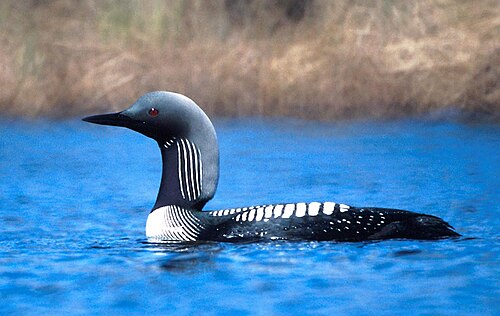
الرتبة: غافيفورميس، العائلة: غافيداي
الغواصات طيور مائية بحجم البط الكبير ، وهي لا تنتمي إليه. ريشها رمادي أو أسود في الغالب، ولها مناقير مدببة . تجيد الغواصات السباحة والطيران بشكل معقول، ولكن نظرًا لأن أرجلها تقع في الجزء الخلفي من جسمها، فإنها تكاد تكون عاجزة على اليابسة.
- غواص القطب الشمالي ، غافيا أركتيكا إل سي
- الغواص الشائع ، Gavia immer LC
- غواص المحيط الهادئ ، Gavia pacifica LC
- غواص أحمر الحنجرة ، Gavia stellata LC
- غواص أصفر المنقار ، غافيا أدامسي إن تي
طيور القطرس
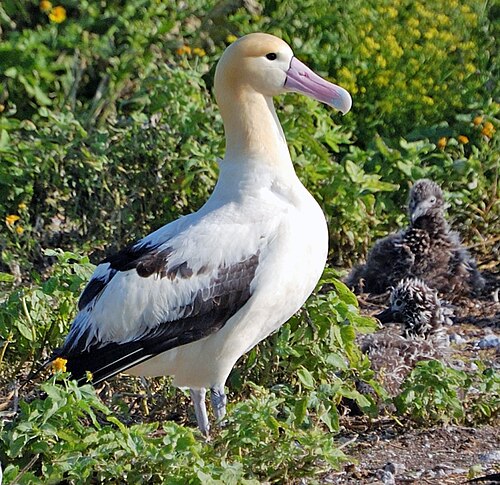
الرتبة: Procellariiformes العائلة: Diomedeidae
تُعد طيور القطرس من بين أكبر الطيور الطائرة، وتمتلك طيور القطرس الكبيرة من جنس ديوميديا أكبر امتداد للأجنحة بين جميع الطيور الموجودة حاليًا.
- القطرس أصفر الأنف ، Thalassarche chlororhynchos (C) EN
- قطرس أسود الحاجب ، Thalassarche melanophris (A) LC
- قطرس أسود القدمين ، Phoebastria nigripes NT
- تشاتام القطرس ، ثالاسارش إريميتا (A) VU
- طائر القطرس ليسان ، Phoebastria immutabilis NT
- قطرس فاتح اللون ، Phoebetria palpebrata (A) NT
- قطرس سالفين ، Thalassarche salvini (A) VU
- القطرس قصير الذيل ، Phoebastria albatrus، مُعرّض للخطر
- قطرس أبيض الرأس ، Thalassarche cauta NT
- طائر القطرس المتجول ، Diomedea exulans (A) VU
- طائر القطرس الملوّح ، Phoebastria irrorata (A) CR
طيور النوء الجنوبية

الرتبة: Procellariiformes العائلة: Oceanitidae
طيور النوء الجنوبية هي أصغر الطيور البحرية، وهي من أقارب طيور النوء ، وتتغذى على القشريات العوالقية والأسماك الصغيرة التي تلتقطها من السطح، وعادةً ما تحوم في الجو. طيرانها متقطع ومرفرف، وأحيانًا يشبه طيران الخفافيش . حتى عام 2018، كانت الأنواع الثلاثة لهذه العائلة تُصنف مع أنواع النوء الأخرى ضمن عائلة طيور النوء المائية (Hydrobatidae).
- طائر النوء أسود البطن ، Fregetta tropica (A) LC
- طائر النوء ذو الوجه الأبيض ، Pelagodroma marina LC
- طائر النوء ويلسون ، Oceanites oceanicus LC
طيور النوء الشمالية
الرتبة: Procellariiformes ، العائلة: Hydrobatidae

على الرغم من أن أفراد هذه العائلة متشابهون في كثير من النواحي مع طيور النوء الجنوبية، بما في ذلك مظهرهم العام وعاداتهم، إلا أن هناك اختلافات جينية كافية تبرر وضعهم في عائلة منفصلة.
- طائر النوء آينلي ، Hydrobates Cheimomnestes VU
- طائر النوء الرمادي ، Hydrobates homochroa EN
- طائر النوء ذو الردف المخطط ، Hydrobates castro LC
- طائر النوء الأسود ، Hydrobates melania LC
- طائر النوء الأوروبي ، Hydrobates pelagicus (A) LC
- طائر النوء ذو الذيل المتشعب ، Hydrobates furcatus LC
- طائر النوء غوادالوبي ، Hydrobates macrodactylus (E) CR
- طائر النوء ليتش ، Hydrobates leucorhous VU
- طائر النوء الصغير ، Hydrobates microsoma LC
- طائر النوء ماركهام ، هيدروباتس ماركامي (A) NT
- طائر النوء المطوق ، Hydrobates hornbyi (A) NT
- طائر النوء سوينهو ، Hydrobates monorhis (A) NT
- طائر النوء تاونسند ، Hydrobates socorroensis EN
- طائر النوء تريسترام ، Hydrobates tristrami (A) LC
- طائر النوء ذو الردف الوتدي ، Hydrobates tethys (C) LC
طيور القطرس وطيور النوء
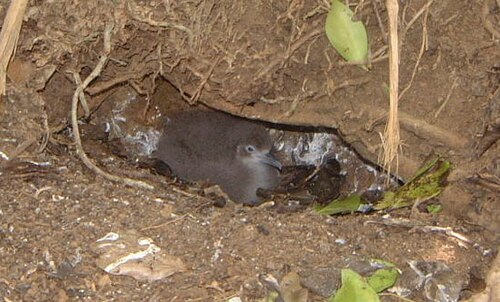
الرتبة: Procellariiformes العائلة: Procellariidae
تُعد طيور النوء المجموعة الرئيسية من طيور النوء الحقيقية متوسطة الحجم، والتي تتميز بفتحات أنف متصلة مع حاجز متوسط الحجم وريشة أنف أولية وظيفية خارجية طويلة.
- طائر القطرس سارجاسو ، Puffinus lherminieri LC
- طائر القطرس بارولو ، Puffinus baroli (A)
- طائر برمودا ، Pterodroma cahow EN E
- طائر النوء ذو القبعة السوداء ، Pterodroma hasitata EN
- قطرس أسود البطن ، Puffinus opisthomelas NT
- قطرس بولر ، Ardenna bulleri ، مُعرّض للخطر
- طائر النوء بولور ، Bulweria bulwerii (A) LC
- قطرس الرأس الأخضر ، Calonectris edwardsii (A) NT
- جلم الماء في عيد الميلاد ، Puffinus nativitatis (A) LC
- طائر النوء كوك ، Pterodroma cookii، مُعرّض للخطر
- قطرس كوري ، Calonectris diomedea LC
- طائر النوء Fea Pterodroma feae NT
- قطرس ذو قدم لحمية ، Ardenna carneipes NT
- طائر النوء غالاباغوس ، Pterodroma phaeopygia (A) CR
- جلم الماء في غالاباغوس ، Puffinus subalaris (A) LC
- طائر النوء ذو الوجه الرمادي ، Pterodroma gouldi (A) LC
- قطرس الماء الكبير ، Ardenna gravis LC
- طائر النوء هاواي Pterodroma Sandwichensis (C) EN
- هيرالد بترل ، بتيرودروما هيرالديكا (A) LC
- طائر النوء الجامايكي ، Pterodoma caribbea (E?) CR [ 22 ]
- خوان فرنانديز طائر النوء ، الزاحفة الخارجية (A) VU
- طائر النوء كيرماديك ، بتيرودروما إهمالغا (A) LC
- قطرس مانكس ، Puffinus puffinus LC
- طائر النوء المرقط ، Pterodroma inexpectata NT
- طائر النوء مورفي ، Pterodroma ultima LC
- قطرس نيويل (Puffinus newelli CR)
- طائر الفولمار الشمالي ، Fulmarus glacialis LC
- طائر النوء العملاق الشمالي ، Macronectes halli (A) LC
- طائر النوء باركنسون ، Procellaria parkinsoni VU
- طائر القطرس وردي القدمين ، Ardenna creatopus، معرض للخطر
- طائر النوء بروفيدانس ، Pterodroma solandri (A) VU
- قطرس قصير الذيل ، Ardenna tenuirostris LC
- قطرس أسود ، أردينا غريسيا، الإقليم الشمالي
- طائر النوء ستيجنجر ، Pterodroma longirostris (C) VU
- قطرس مخطط ، Calonectris leucomelas (C) NT
- طائر النوء التاهيتي ، Pseudobulweria rostrata (A) NT
- قطرس تاونسند ، Puffinus auricularis (A) CR
- طائر النوء ترينداد , Pterodromaarminjoniana VU
- طائر القطرس ذو الذيل الوتدي ، Ardenna pacifica (C) LC }
- طائر النوء أبيض الذقن ، Procellaria aequinoctialis (A) VU
- طائر النوء زينو ، Pterodroma madeira (A) EN
اللقلق

الرتبة: اللقلقيات الشكل، العائلة: اللقلقيات
اللقلق طائر كبير الحجم، ثقيل الوزن، طويل الأرجل والأعناق، ذو منقار طويل قوي وأجنحة عريضة. يفتقر إلى الزغب الناعم الذي تستخدمه طيور أخرى مثل البلشون والملعقة وأبو منجل لتنظيف نفسها من مخاط الأسماك. كما يفتقر اللقلق إلى البلعوم، وهو طائر أبكم.
- جابيرو ، جابيرو ميكتيريا إل سي
- اللقلق ماجواري ، سيكونيا ماجواري (A) LC
- اللقلق الأبيض ، Ciconia cionia (A) LC [ 23 ]
- اللقلق الخشبي ، فطر الميكتيريا الأمريكية LC E
طيور الفرقاطة
الرتبة: السوليفورميس، العائلة: الفريجاتيداي
طيور الفرقاطة طيور بحرية كبيرة توجد عادةً فوق المحيطات الاستوائية. وهي كبيرة الحجم، سوداء أو سوداء وبيضاء، ذات أجنحة طويلة وذيل متشعب بعمق. يمتلك الذكور أكياسًا حلقية ملونة قابلة للنفخ. لا تسبح ولا تمشي، ولا تستطيع الإقلاع من سطح مستوٍ. وبفضل امتلاكها لأكبر نسبة بين طول جناحيها ووزن جسمها بين جميع الطيور، فهي طيور جوية بامتياز، قادرة على البقاء محلقة في الجو لأكثر من أسبوع.
- طائر الفرقاطة الكبير ، Fregata minor LC
- الفرقاطة الصغيرة ، Fregata ariel (A) LC
- طائر الفرقاطة الرائع ، Fregata magnificens LC
طيور الأطيش وطيور الغاق
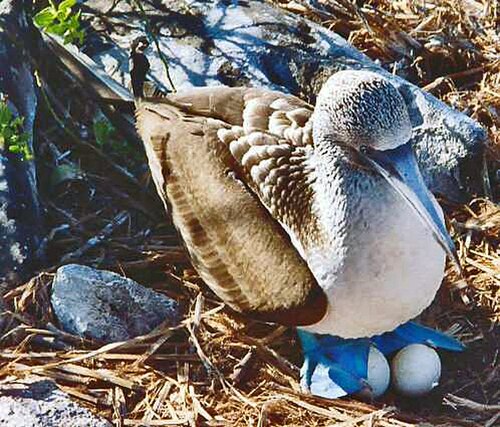
الرتبة: السوليفورميس، العائلة: السوليداي
تضم طيور السوليد طيور الغاق وطيور الأطيش . وكلا المجموعتين من الطيور البحرية الساحلية متوسطة إلى كبيرة الحجم التي تغوص بحثاً عن الأسماك.
- طائر الأطيش أزرق القدمين ، سولا نيبوكسي إل سي
- طائر الأطيش البني ، سولا ليوكوغاستر إل سي
- الأطيش المقنع ، سولا داكتيلاترا إل سي
- نازكا بوبي ، سولا غرانت إل سي
- الأطيش الشمالي , Morus bassanus LC
- الأطيش البيروفي ، Sula variegata (A) LC
- طائر الأطيش أحمر القدمين ، سولا سولا إل سي
رماة السهام
الرتبة: Suliformes العائلة: Anhingidae
طيور الغاق أو الأنهينغا هي طيور مائية تشبه الغاق، تتميز بأعناقها الطويلة ومناقيرها الطويلة المستقيمة. وهي تتغذى على الأسماك، وغالباً ما تسبح بحيث يكون عنقها فقط فوق سطح الماء.
- أنهينغا ، أنهينغا أنهينغا إل سي
الغاق والزقزاق

الرتبة: السوليفورميس، العائلة: الفالاكروكوراسيداي
الغاق طائر مائي متوسط إلى كبير الحجم، يتميز عادةً بريش داكن اللون في الغالب مع وجود مناطق ملونة على الوجه. منقاره طويل ورفيع ومعقوف بشدة. أقدامه رباعية الأصابع ومكففة.
- غاق براندت ، Urile penicillatus LC
- الغاق ذو العرف المزدوج ، نانوبتيروم أوريتوم إل سي
- الغاق الكبير ، Phalacrocorax carbo LC
- غراب غواناي ، Leucocarbo bougainvilliorum (A) LC
- الغاق نيوتروبيك ، Nannopterum brasilianum LC
- الغاق السطحي ، Urile pelagicus LC
- الغاق ذو الوجه الأحمر ، Urile urile LC
البجع
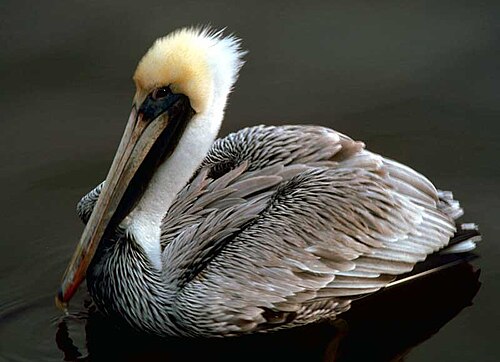
الرتبة: البجعيات الشكل، العائلة: البجعيات
البجع طيور مائية كبيرة الحجم، تتميز بوجود جراب مميز أسفل منقارها. ومثل غيرها من الطيور في رتبة البجعيات، تمتلك أربعة أصابع متصلة بأغشية بين أصابعها.
- البجع الأبيض الأمريكي ، Pelecanus erythrorhynchos LC
- البجع البني ، Pelecanus occidentalis LC
- البجع الأبيض الكبير ، Pelecanus onocrotalus (A) LC
- البجع البيروفي ، Pelecanus thagus (A) NT
البلشون، والبلشون الأبيض، والبلشون المرقط
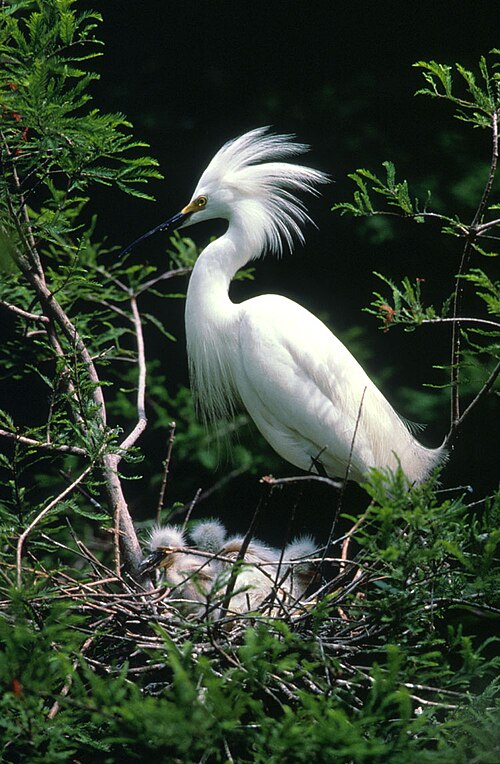
الرتبة: البجعيات (Pelecaniformes) العائلة: Ardeidae
تضم فصيلة البلشونيات (Ardeidae) طيور البلشون والبلشون الأبيض والبلشون المرقط. البلشون والبلشون الأبيض طيور خوض متوسطة إلى كبيرة الحجم ذات أعناق وأرجل طويلة. أما البلشون المرقط، فيميل إلى أن يكون أقصر عنقاً وأكثر انطواءً. تطير طيور البلشونيات وأعناقها مطوية، على عكس الطيور الأخرى طويلة العنق مثل اللقلق وأبو منجل والملعقة.
- مالك الحزين أغامي ، أغاميا أغامي VU
- البجع الأمريكي ، Botaurus lentiginosus LC
- مالك الحزين النمري ذو الحلق العاري ، Tigrisoma mexicanum LC
- مالك الحزين ذو التاج الأسود ، Nycticorax nycticorax LC
- مالك الحزين ذو المنقار العريض ، Cochlearius cochlearius LC
- مالك الحزين المتوج ، Pilherodius pileatus LC
- طائر البلشون الأبيض ، Bubulcus ibis LC
- طائر البلشون الصيني ، Egretta eulophotes (A) VU E
- مالك الحزين الصيني ، أرديولا باخوس (أ) LC
- مالك الحزين كوكوي ، Ardea cocoi LC
- مالك الحزين النمري المخطط ، Tigrisoma fasciatum LC
- مالك الحزين الرمادي ، Ardea cinerea LC
- مالك الحزين الأزرق الكبير ، Ardea herodias LC
- البلشون الأبيض الكبير ، Ardea alba LC
- مالك الحزين الأخضر ، Butorides virescens LC
- البلشون الأبيض المتوسط ، Ardea intermedia (A) LC
- الأقل مرارة ، Ixobrychus exilis LC
- المر الصغير ، Ixobrychus minutus (A) LC
- مالك الحزين الأزرق الصغير ، Egretta caerulea LC
- البلشون الأبيض الصغير ، Egretta garzetta (C) LC
- طائر البجع الريشي ، Botaurus pinnatus LC
- مالك الحزين الأرجواني ، Ardea purpurea (A) LC
- البلشون الأحمر ، Egretta rufescens NT
- مالك الحزين النمري المحمر ، Tigrisoma lineatum LC
- البلشون الأبيض الثلجي ، Egretta thula LC
- مالك الحزين ذو المنقار الطويل ، Ardeola ralloides (A) LC
- مالك الحزين المخطط ، Butorides striata LC
- المر ذو الظهر المخطط , Ixobrychus involucris LC [ 24 ]
- مالك الحزين ثلاثي الألوان ، Egretta tricolor LC
- مالك الحزين المرجاني الغربي ، Egretta gularis (A) LC
- مالك الحزين الصافر ، Syrigma sibilatrix (A) LC
- Yellow bittern, Ixobrychus sinensis (A) LC
- Yellow-crowned night-heron, Nyctanassa violaceaLC
Ibises and spoonbills

Order: Pelecaniformes Family: Threskiornithidae
Members of this family have long, broad wings, are strong fliers and, rather surprisingly, given their size and weight, very capable soarers. The body tends to be elongated, the neck more so, with rather long legs. The bill is also long, decurved in the case of the ibises, straight and distinctively flattened in the spoonbills.
- African sacred ibis, Threskiornis aethiopicus (I) LC
- White ibis, Eudocimus albusLC
- Bare-faced ibis, Phimosus infuscatus (A) LC
- Buff-necked ibis, Theristicus caudatus (A) LC
- Eurasian spoonbill, Platalea leucorodia (A) LC
- Glossy ibis, Plegadis falcinellusLC
- Green ibis, Mesembrinibis cayennensisLC
- Roseate spoonbill, Platalea ajajaLC
- Scarlet ibis, Eudocimus ruberLC
- White-faced ibis, Plegadis chihiLC
New World vultures

Order: Cathartiformes Family: Cathartidae
The New World vultures are not closely related to Old World vultures, but superficially resemble them because of convergent evolution. Like the Old World vultures, they are scavengers. However, unlike Old World vultures, which find carcasses by sight, New World vultures have a good sense of smell with which they locate carcasses.
- Black vulture, Coragyps atratusLC
- California condor, Gymnogyps californianusCRE (and XN)
- King vulture, Sarcoramphus papaLC
- Lesser yellow-headed vulture, Cathartes burrovianusLC
- Turkey vulture, Cathartes auraLC
Osprey
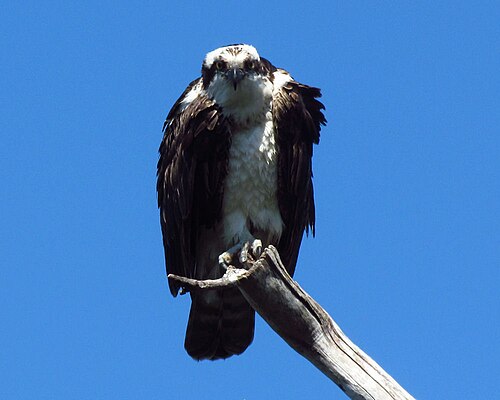
Order: Accipitriformes Family: Pandionidae
Pandionidae is a family of fish-eating birds of prey, possessing a very large, powerful hooked beak for tearing flesh from their prey, strong legs, powerful talons and keen eyesight. The family is monotypic.
- Osprey, Pandion haliaetusLC
Hawks, eagles, and kites

Order: Accipitriformes Family: Accipitridae
Accipitridae is a family of birds of prey, which includes hawks, eagles, kites, harriers and Old World vultures. These birds have very large powerful hooked beaks for tearing flesh from their prey, strong legs, powerful talons and keen eyesight.
- Bald eagle, Haliaeetus leucocephalusLC
- Barred hawk, Morphnarchus princepsLC
- Bicolored hawk, Accipiter bicolorLC
- Black hawk-eagle, Spizaetus tyrannusLC
- Black kite, Milvus migrans (A) LC
- Black-and-white hawk-eagle, Spizaetus melanoleucusLC
- Black-collared hawk, Busarellus nigricollisLC
- Booted eagle, Hieraaetus pennatus (A) LC
- Broad-winged hawk, Buteo platypterusLC (ssp. brunnescens: E)
- Chinese sparrowhawk, Accipiter soloensis (A) LC
- Common black hawk, Buteogallus anthracinusLC
- Cooper's hawk, Accipiter cooperiiLC
- Crane hawk, Geranospiza caerulescensLC
- Crested eagle, Morphnus guianensisNT
- Cuban black hawk, Buteogallus gundlachiiNT
- Cuban kite, Chondrohierax wilsoniiCR
- Double-toothed kite, Harpagus bidentatusLC
- Eurasian sparrowhawk, Accipiter nisus (A) LC
- Ferruginous hawk, Buteo regalisLC
- Golden eagle, Aquila chrysaetosLC
- Great black hawk, Buteogallus urubitingaLC
- Gray hawk, Buteo plagiatus (B. nitidus: LC)
- Gray-bellied hawk, Accipiter poliogaster (A) NT
- Gray-headed kite, Leptodon cayanensisLC
- Gray-lined hawk, Buteo nitidusLC
- Gundlach's hawk, Accipiter gundlachiEN
- Harpy eagle, Harpia harpyjaNTE
- Harris's hawk, Parabuteo unicinctusLC
- Hook-billed kite, Chondrohierax uncinatusLC
- Long-legged buzzard, Buteo rufinus (A) LC
- Long-winged harrier, Circus buffoniLC
- Mississippi kite, Ictinia mississippiensisLC
- Eurasian goshawk, Accipiter gentilis (A) LC
- American goshawk, Accipiter atricapillusLC
- Northern harrier, Circus hudsoniusLC
- Western marsh harrier, Circus aeruginosus (A) LC
- Ornate hawk-eagle, Spizaetus ornatusNT
- Pearl kite, Gampsonyx swainsoniiLC
- Plumbeous hawk, Cryptoleucopteryx plumbeaNT
- Plumbeous kite, Ictinia plumbeaLC
- Red-shouldered hawk, Buteo lineatusLC
- Red-tailed hawk, Buteo jamaicensisLC
- Ridgway's hawk, Buteo ridgwayiCR
- Roadside hawk, Rupornis magnirostrisLC
- Rough-legged hawk, Buteo lagopusLC
- Savanna hawk, Buteogallus meridionalisLC
- Semiplumbeous hawk, Leucopternis semiplumbeusLC
- Sharp-shinned hawk, Accipiter striatusLC (Accipiter striatus venatorA. s. venator: E
- Short-tailed hawk, Buteo brachyurusLC
- Slender-billed kite, Helicolestes hamatusLC
- Snail kite, Rostrhamus sociabilisLC (ssp. plumbeus: E)
- Solitary eagle, Buteogallus solitariusNT
- Steller's sea-eagle, Haliaeetus pelagicus (C) VU
- Swainson's hawk, Buteo swainsoniLC
- Swallow-tailed kite, Elanoides forficatusLC
- Tiny hawk, Accipiter superciliosusLC
- Western marsh harrier, Circus aeruginosus (A) LC
- White hawk, Pseudastur albicollisLC
- White-tailed eagle, Haliaeetus albicilla (C) LC (ssp. groenlandicus: E)
- White-tailed hawk, Geranoaetus albicaudatusLC
- White-tailed kite, Elanus leucurusLC
- Zone-tailed hawk, Buteo albonotatusLC
Barn owls

Order: Strigiformes Family: Tytonidae
Barn owls are medium to large owls with large heads and characteristic heart-shaped faces. They have long strong legs with powerful talons.
- American barn owl, Tyto furcataLC
- Ashy-faced owl, Tyto glaucopsLC
Owls
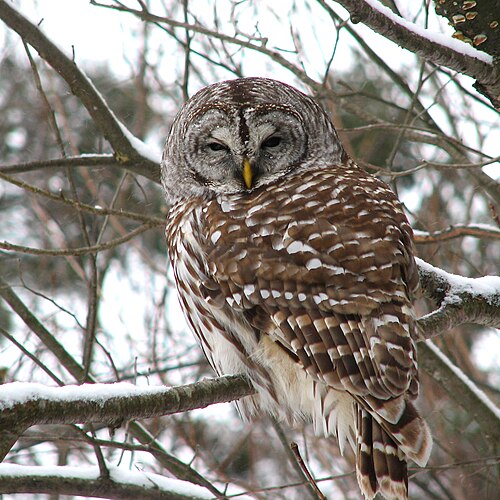
Order: Strigiformes Family: Strigidae
Typical owls are small to large solitary nocturnal birds of prey. They have large forward-facing eyes and ears, a hawk-like beak and a conspicuous circle of feathers around each eye called a facial disk.
- Balsas screech-owl, Megascops seductusLC
- Bare-legged owl, Margarobyas lawrenciiLC
- Bare-shanked screech-owl, Megascops clarkiiLC
- Barred owl, Strix variaLC
- Bearded screech-owl, Megascops barbarusLC
- Bermuda saw-whet owl, Aegolius gradyi (E) EX
- Black-and-white owl, Strix nigrolineataLC
- Boreal owl, Aegolius funereusLC
- Burrowing owl, Athene cuniculariaLC
- Central American pygmy-owl, Glaucidium griseicepsLC
- Choco screech-owl, Megascops centralis
- Cinereous owl, Strix sartorii
- Colima pygmy-owl, Glaucidium palmarumLC
- Costa Rican pygmy-owl, Glaucidium costaricanumLC
- Crested owl, Lophostrix cristataLC
- Cuban pygmy-owl, Glaucidium sijuLC
- Eastern screech-owl, Megascops asioLC
- Elf owl, Micrathene whitneyiLC
- Ferruginous pygmy-owl, Glaucidium brasilianumLC
- Flammulated owl, Psiloscops flammeolusLC
- Fulvous owl, Strix fulvescensLC
- Great gray owl, Strix nebulosaLC
- Great horned owl, Bubo virginianusLC
- Jamaican owl, Asio grammicusLC
- Long-eared owl, Asio otusLC
- Middle American screech-owl, Megascops guatemalaeLC
- Mottled owl, Strix virgataLC
- Northern boobook, Ninox japonica (A)
- Northern hawk owl, Surnia ululaLC
- Northern pygmy-owl, Glaucidium gnomaLC
- Northern saw-whet owl, Aegolius acadicusLC
- Oriental scops-owl, Otus sunia (A) LC
- Pacific screech-owl, Megascops cooperiLC
- Puerto Rican owl, Gymnasio nudipesLC
- Short-eared owl, Asio flammeusLC
- Snowy owl, Bubo scandiacusVU
- Spectacled owl, Pulsatrix perspicillataLC
- Spotted owl, Strix occidentalisNT (Mexican spotted owl S. o. lucida and northern spotted owlS. o. caurina: T)
- Striped owl, Asio clamatorLC
- Stygian owl, Asio stygiusLC
- Tamaulipas pygmy-owl, Glaucidium sancheziNT
- Tropical screech-owl, Megascops cholibaLC
- Unspotted saw-whet owl, Aegolius ridgwayiLC
- Western screech-owl, Megascops kennicottiiLC
- Whiskered screech-owl, Megascops trichopsisLC
Trogons

Order: Trogoniformes Family: Trogonidae
Trogons are residents of tropical forests worldwide and have soft, often colorful, feathers with distinctive male and female plumage. They have compact bodies with long tails and short necks.
- Baird's trogon, Trogon bairdiiNT
- Black-headed trogon, Trogon melanocephalusLC
- Black-tailed trogon, Trogon melanurusLC
- Black-throated trogon, Trogon rufusLC
- Citreoline trogon, Trogon citreolusLC
- Collared trogon, Trogon collarisLC
- Cuban trogon, Priotelus temnurusLC
- Eared quetzal, Euptilotis neoxenusLC
- Elegant trogon, Trogon elegansLC
- Gartered trogon, Trogon caligatusLC
- Golden-headed quetzal, Pharomachrus auricepsLC
- Green-backed trogon, Trogon viridisLC[25]
- Guianan trogon, Trogon violaceusLC[26]
- Hispaniolan trogon, Priotelus roseigasterLC
- Lattice-tailed trogon, Trogon clathratusLC
- Mountain trogon, Trogon mexicanusLC
- Resplendent quetzal, Pharomachrus mocinnoNTE
- Slaty-tailed trogon, Trogon massenaLC
- White-tailed trogon, Trogon chionurusLC
Hoopoes
Order: Upupiformes Family: Upupidae
This black, white and pink bird is quite unmistakable, especially in its erratic flight, which is like that of a giant butterfly. There are three members of its family. The song is a trisyllabic oop-oop-oop, which gives rise to its English and scientific names.
- Eurasian hoopoe, Upupa epops (A) LC
Todies

Order: Coraciiformes Family: Todidae
Todies are a group of small near passerine forest species endemic to the Caribbean. These birds have colorful plumage and resemble small kingfishers, but have flattened bills with serrated edges. They eat small prey such as insects and lizards.
- Cuban tody, Todus multicolorLC
- Broad-billed tody, Todus subulatusLC
- Jamaican tody, Todus todusLC
- Narrow-billed tody, Todus angustirostrisLC
- Puerto Rican tody, Todus mexicanusLC
Motmots
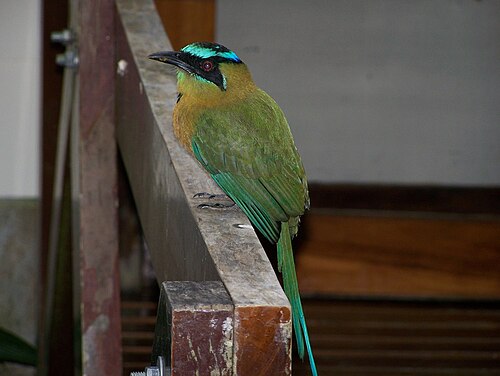
Order: Coraciiformes Family: Motmotidae
The motmots have colorful plumage and long, graduated tails which they display by waggling back and forth. In most of the species, the barbs near the ends of the two longest (central) tail feathers are weak and fall off, leaving a length of bare shaft and creating a racket-shaped tail.
- Blue-capped motmot, Momotus coerulicepsLC
- Blue-throated motmot, Aspatha gularisLC
- Broad-billed motmot, Electron platyrhynchumLC
- Keel-billed motmot, Electron carinatumVU
- Lesson's motmot, Momotus lessoniiLC
- Rufous motmot, Baryphthengus martiiLC
- Russet-crowned motmot, Momotus mexicanusLC
- Tody motmot, Hylomanes momotulaLC
- Trinidad motmot, Momotus bahamensisLC[27]
- Turquoise-browed motmot, Eumomota superciliosaLC
- Whooping motmot, Momotus subrufescensLC
Kingfishers

Order: Coraciiformes Family: Alcedinidae
Kingfishers are medium-sized birds with large heads, long pointed bills, short legs and stubby tails.
- Amazon kingfisher, Chloroceryle amazonaLC
- American pygmy kingfisher, Chloroceryle aeneaLC
- Belted kingfisher, Megaceryle alcyonLC
- Green kingfisher, Chloroceryle americanaLC
- Green-and-rufous kingfisher, Chloroceryle indaLC
- Ringed kingfisher, Megaceryle torquataLC
Bee-eaters
Order: Coraciiformes Family: Meropidae
The bee-eaters are a group of near passerine birds in the family Meropidae. They are characterized by richly colored plumage, slender bodies and usually elongated central tail feathers. All are colorful and have long downturned bills and pointed wings, which give them a swallow-like appearance when seen from afar.
- European bee-eater, Merops apiaster (A) LC
Puffbirds

Order: Piciformes Family: Bucconidae
The puffbirds are related to the jacamars and have the same range, but lack the iridescent colors of that family. They are mainly brown, rufous, or gray, with large heads and flattened bills with hooked tips. The loose abundant plumage and short tails makes them look stout and puffy, giving rise to the English common name of the family.
- Barred puffbird, Nystalus radiatusLC
- Black-breasted puffbird, Notharchus pectoralisLC
- Gray-cheeked nunlet, Nonnula frontalisLC
- Lanceolated monklet, Micromonacha lanceolataLC
- Pied puffbird, Notharchus tectusLC
- Russet-throated puffbird, Hypnelus ruficollisLC
- White-fronted nunbird, Monasa morphoeusLC
- White-necked puffbird, Notharchus hyperrhynchusLC
- White-whiskered puffbird, Malacoptila panamensisLC
Jacamars

Order: Piciformes Family: Galbulidae
The jacamars are near passerine birds from tropical South America, with a range that extends up to Mexico. They feed on insects caught on the wing, and are glossy, elegant birds with long bills and tails. In appearance and behavior they resemble the Old World bee-eaters, although they are more closely related to puffbirds.
- Dusky-backed jacamar, Brachygalba salmoniLC
- Great jacamar, Jacamerops aureusLC
- Rufous-tailed jacamar, Galbula ruficaudaLC
New World barbets
Order: Piciformes Family: Capitonidae
The barbets are plump birds, with short necks and large heads. They get their name from the bristles which fringe their heavy bills. Most species are brightly colored.
- Red-headed barbet, Eubucco bourcieriiLC
- Spot-crowned barbet, Capito maculicoronatusLC
Toucan-barbets
Order: Piciformes Family: Semnornithidae
The toucan-barbets are birds of montane forests in the Neotropics. They are highly social and non-migratory.
- Prong-billed barbet, Semnornis frantziiLC
Toucans

Order: Piciformes Family: Ramphastidae
Toucans are near passerine birds from the Neotropics. They are brightly marked and have enormous, colorful bills which in some species amount to half their body length.
- Channel-billed toucan, Ramphastos vitellinusVU
- Collared aracari, Pteroglossus torquatusLC
- Fiery-billed aracari, Pteroglossus frantziiLC
- Keel-billed toucan, Ramphastos sulfuratusLC
- Northern emerald-toucanet, Aulacorhynchus prasinusLC
- Yellow-eared toucanet, Selenidera spectabilisLC
- Yellow-throated toucan, Ramphastos ambiguusLC
Woodpeckers
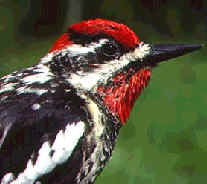
Order: Piciformes Family: Picidae
Woodpeckers are small to medium-sized birds with chisel-like beaks, short legs, stiff tails and long tongues used for capturing insects. Some species have feet with two toes pointing forward and two backward, while several species have only three toes. Many woodpeckers have the habit of tapping noisily on tree trunks with their beaks. (See Life histories ... (1939) by A. C. Bent.)
- Acorn woodpecker, Melanerpes formicivorusLC
- American three-toed woodpecker, Picoides dorsalisLC
- Antillean piculet, Nesoctites micromegasLC
- Arizona woodpecker, Dryobates arizonaeLC
- Black-backed woodpecker, Picoides arcticusLC
- Black-cheeked woodpecker, Melanerpes pucheraniLC
- Chestnut-colored woodpecker, Celeus castaneusLC
- Cinnamon woodpecker, Celeus loricatusLC
- Crimson-bellied woodpecker, Campephilus haematogasterLC
- Crimson-crested woodpecker, Campephilus melanoleucosLC
- Cuban green woodpecker, Xiphidiopicus percussusLC
- Downy woodpecker, Dryobates pubescensLC
- Eurasian wryneck, Jynx torquilla (A) LC
- Fernandina's flicker, Colaptes fernandinaeVU
- Gila woodpecker, Melanerpes uropygialisLC
- Gilded flicker, Colaptes chrysoidesLC
- Golden-cheeked woodpecker, Melanerpes chrysogenysLC
- Golden-fronted woodpecker, Melanerpes aurifronsLC
- Golden-green woodpecker, Piculus chrysochlorosLC
- Golden-naped woodpecker, Melanerpes chrysauchenLC
- Golden-olive woodpecker, Colaptes rubiginosusLC
- Gray-breasted woodpecker, Melanerpes hypopoliusLC
- Great spotted woodpecker, Dendrocopos major (A) LC
- Gray-crowned woodpecker, Colaptes auricularisLC
- Guadeloupe woodpecker, Melanerpes herminieriLC
- Hairy woodpecker, Dryobates villosusLC
- Hispaniolan woodpecker, Melanerpes striatusLC
- Hoffmann's woodpecker, Melanerpes hoffmanniiLC
- Imperial woodpecker, Campephilus imperialis (E?) CRE
- Ivory-billed woodpecker, Campephilus principalis (E?) CRE
- Jamaican woodpecker, Melanerpes radiolatusLC
- Ladder-backed woodpecker, Dryobates scalarisLC
- Lewis's woodpecker, Melanerpes lewisLC
- Lineated woodpecker, Dryocopus lineatusLC
- Northern flicker, Colaptes auratusLC
- Nuttall's woodpecker, Dryobates nuttalliiLC
- Olivaceous piculet, Picumnus olivaceusLC
- Pale-billed woodpecker, Campephilus guatemalensisLC
- Pileated woodpecker, Dryocopus pileatusLC
- Puerto Rican woodpecker, Melanerpes portoricensisLC
- Red-bellied woodpecker, Melanerpes carolinusLC
- Red-breasted sapsucker, Sphyrapicus ruberLC
- Red-cockaded woodpecker, Dryobates borealisNTE
- Red-crowned woodpecker, Melanerpes rubricapillusLC
- Red-headed woodpecker, Melanerpes erythrocephalusLC
- Red-naped sapsucker, Sphyrapicus nuchalisLC
- Red-rumped woodpecker, Dryobates kirkiiLC
- Rufous-winged woodpecker, Piculus simplexLC
- Smoky-brown woodpecker, Dryobates fumigatusLC
- Spot-breasted woodpecker, Colaptes punctigulaLC
- Strickland's woodpecker, Dryobates stricklandiLC
- Stripe-cheeked woodpecker, Piculus callopterusLC
- West Indian woodpecker, Melanerpes superciliarisLC
- White-headed woodpecker, Dryobates albolarvatusLC
- Williamson's sapsucker, Sphyrapicus thyroideusLC
- Yellow-bellied sapsucker, Sphyrapicus variusLC
- Yucatan woodpecker, Melanerpes pygmaeusLC
Falcons and caracaras
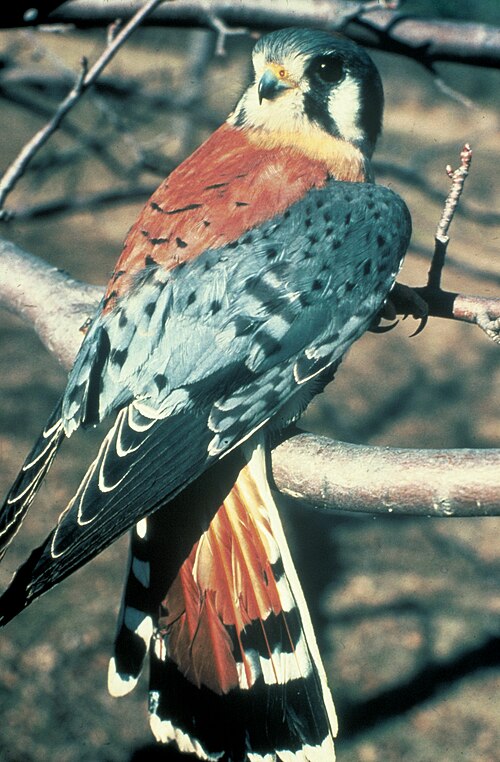
Order: Falconiformes Family: Falconidae
Falconidae is a family of diurnal birds of prey, notably the falcons and caracaras. They differ from hawks, eagles and kites in that they kill with their beaks instead of their talons.
- American kestrel, Falco sparveriusLC
- Aplomado falcon, Falco femoralisLC (ssp. septentrionalis: E and XN)
- Barred forest-falcon, Micrastur ruficollisLC
- Bat falcon, Falco rufigularisLC
- Collared forest-falcon, Micrastur semitorquatusLC
- Crested caracara, Caracara plancusLC
- Eurasian hobby, Falco subbuteo (A) LC
- Eurasian kestrel, Falco tinnunculus (C) LC
- Guadalupe caracara, Caracara lutosa (E) EX
- Gyrfalcon, Falco rusticolusLC
- Laughing falcon, Herpetotheres cachinnansLC
- Merlin, Falco columbariusLC
- Orange-breasted falcon, Falco deiroleucusNT
- Peregrine falcon, Falco peregrinusLC (ssp. peregrinus: E)
- Prairie falcon, Falco mexicanusLC
- Red-footed falcon, Falco vespertinus (A) NT
- Red-throated caracara, Ibycter americanusLC
- Slaty-backed forest-falcon, Micrastur mirandolleiLC
- Yellow-headed caracara, Milvago chimachimaLC
African and New World parrots

- Order: Psittaciformes Family: Psittacidae
Parrots are small to large birds with a characteristic curved beak. Their upper mandibles have slight mobility in the joint with the skull and they have a generally erect stance. All parrots are zygodactyl, having the four toes on each foot placed two at the front and two to the back.
- Barred parakeet, Bolborhynchus lineolaLC
- Black-billed parrot, Amazona agilisEN
- Blue-and-yellow macaw, Ara araraunaLC
- Blue-fronted parrotlet, Touit dilectissimusLC
- Blue-headed parrot, Pionus menstruusLC
- Brown-hooded parrot, Pyrilia haematotisLC
- Brown-throated parakeet, Eupsittula pertinaxLC
- Carolina parakeet, Conuropsis carolinensis (E) EX
- Chestnut-fronted macaw, Ara severusLC
- Crimson-fronted parakeet, Psittacara finschiLC
- Cuban macaw, Ara tricolor (E) EX
- Cuban parakeet, Psittacara euopsVU
- Cuban parrot, Amazona leucocephalaNTE
- Orange-fronted parakeet, Eupsittula canicularisVU
- Great green macaw, Ara ambiguusCR
- Green parakeet, Psittacara holochlorusLC
- Green-rumped parrotlet, Forpus passerinusLC
- Hispaniolan parakeet, Psittacara chloropterusVU
- Hispaniolan parrot, Amazona ventralisVU
- Imperial parrot, Amazona imperialisCRE
- Lilac-crowned parrot, Amazona finschiEN
- Lilac-tailed parrotlet, Touit batavicusLC
- Maroon-fronted parrot, Rhynchopsitta terrisiEN
- Mealy parrot, Amazona farinosaLC
- Mexican parrotlet, Forpus cyanopygiusNT
- Military macaw, Ara militarisVU
- Mitred parakeet, Psittacara mitratus (I) LC
- Monk parakeet, Myiopsitta monachus (I) LC
- Nanday parakeet, Aratinga nenday (I) LC
- Olive-throated parakeet, Eupsittula nanaNT
- Orange-chinned parakeet, Brotogeris jugularisLC
- Orange-winged parrot, Amazona amazonicaLC
- Pacific parakeet, Psittacara strenuus
- Painted parakeet, Pyrrhura pictaLC
- Puerto Rican parakeet, Psittacara maugei (E) EX
- Puerto Rican parrot, Amazona vittataCRE
- Red-and-green macaw, Ara chloropterusLC
- Red-bellied macaw, Orthopsittaca manilatusLC
- Red-crowned parrot, Amazona viridigenalisEN
- Red-fronted parrotlet, Touit costaricensisVU
- Red-lored parrot, Amazona autumnalisLC
- Red-necked parrot, Amazona arausiacaVUE
- Saffron-headed parrot, Pyrilia pyriliaNT
- Scarlet macaw, Ara macaoLC
- Scarlet-shouldered parrotlet, Touit huetiiVU
- Socorro parakeet, Psittacara brevipes
- Spectacled parrotlet, Forpus conspicillatusLC
- St. Lucia parrot, Amazona versicolorVUE
- St. Vincent parrot, Amazona guildingiiVUE
- Sulphur-winged parakeet, Pyrrhura hoffmanniLC
- Thick-billed parrot, Rhynchopsitta pachyrhynchaENE
- White-crowned parrot, Pionus senilisLC
- White-eyed parakeet, Psittacara leucophthalmusLC[28]
- White-fronted parrot, Amazona albifronsLC
- White-winged parakeet, Brotogeris versicolurus (I) LC
- Yellow-billed parrot, Amazona collariaVU
- Yellow-chevroned parakeet, Brotogeris chiriri (I) LC
- Yellow-crowned parrot, Amazona ochrocephalaLC
- Yellow-headed parrot, Amazona oratrixEN
- Yellow-lored parrot, Amazona xantholoraLC
- Yellow-naped parrot, Amazona auropalliataEN
Old World parrots
Order: Psittaciformes Family: Psittaculidae
Characteristic features of parrots include a strong curved bill, an upright stance, strong legs, and clawed zygodactyl feet. Many parrots are vividly colored, and some are multi-colored. In size they range from 8 cm (3.1 in) to 1 m (3.3 ft) in length. Old World parrots are found from Africa east across south and southeast Asia and Oceania to Australia and New Zealand.
- Rose-ringed parakeet, Psittacula krameri (I) LC
- Rosy-faced lovebird, Agapornis roseicollis (I) LC
Sapayoa
Order: Passeriformes Family: Sapayoidae
The sapayoa is the only member of its family, and is found in the lowland rainforests of Panama and north-western South America. It is usually seen in pairs or mixed-species flocks.
- Sapayoa, Sapayoa aenigmaLC
Typical antbirds

Order: Passeriformes Family: Thamnophilidae
The antbirds are a large family of small passerine birds of subtropical and tropical Central and South America. They are forest birds which tend to feed on insects at or near the ground. A sizable minority of them specialize in following columns of army ants to eat small invertebrates that leave their hiding places to flee from the ants. Many species lack bright color, with brown, black, and white being the dominant tones.
- Bare-crowned antbird, Gymnocichla nudicepsLC
- Barred antshrike, Thamnophilus doliatusLC
- Bicolored antbird, Gymnopithys leucaspisLC
- Black antshrike, Thamnophilus nigricepsLC
- Black-crested antshrike, Sakesphorus canadensisLC[29]
- Black-crowned antshrike, Thamnophilus atrinuchaLC
- Black-hooded antshrike, Thamnophilus bridgesiLC
- Checker-throated stipplethroat, Epinecrophylla fulviventrisLC
- Chestnut-backed antbird, Poliocrania exsulLC
- Dot-winged antwren, Microrhopias quixensisLC
- Dull-mantled antbird, Sipia laemostictaLC
- Dusky antbird, Cercomacroides tyranninaLC
- Fasciated antshrike, Cymbilaimus lineatusLC
- Great antshrike, Taraba majorLC
- Jet antbird, Cercomacra nigricansLC
- Moustached antwren, Myrmotherula ignotaLC
- Ocellated antbird, Phaenostictus mcleannaniLC
- Pacific antwren, Myrmotherula pacificaLC
- Plain antvireo, Dysithamnus mentalisLC
- Rufous-rumped antwren, Euchrepomis callinotaLC
- Rufous-winged antwren, Herpsilochmus rufimarginatusLC
- Russet antshrike, Thamnistes anabatinusLC
- Rusty-winged antwren, Herpsilochmus frater (A)
- Slaty antwren, Myrmotherula schisticolorLC
- Spiny-faced antshrike, Xenornis setifronsNT
- Spot-crowned antvireo, Dysithamnus puncticepsLC
- Spotted antbird, Hylophylax naevioidesLC
- Streak-crowned antvireo, Dysithamnus striaticepsLC
- White-bellied antbird, Myrmeciza longipesLC
- White-flanked antwren, Myrmotherula axillarisLC
- White-fringed antwren, Formicivora griseaLC
- Wing-banded antbird, Myrmornis torquataLC
- Zeledon's antbird, Hafferia zeledoniLC
Gnateaters
Order: Passeriformes Family: Conopophagidae
The members of this small family are found across northern South America and into Central America. They are forest birds, usually seen on the ground or in the low understory.
- Black-crowned antpitta, Pittasoma michleriLC
Antpittas
Order: Passeriformes Family: Grallariidae
Antpittas resemble the true pittas with strong, longish legs, very short tails, and stout bills.
- Ochre-breasted antpitta, Grallaricula flavirostrisNT
- Scaled antpitta, Grallaria guatimalensisLC
- Streak-chested antpitta, Hylopezus perspicillatusLC
- Thicket antpitta, Hylopezus divesLC
Tapaculos
Order: Passeriformes Family: Rhinocryptidae
The tapaculos are small suboscine passeriform birds with numerous species in South and Central America. They are terrestrial species that fly only poorly on their short wings. They have strong legs, well-suited to their habitat of grassland or forest undergrowth. The tail is cocked and pointed towards the head.
- Choco tapaculo, Scytalopus chocoensisLC
- Silvery-fronted tapaculo, Scytalopus argentifronsLC
- Tacarcuna tapaculo, Scytalopus panamensisVU
Antthrushes
Order: Passeriformes Family: Formicariidae
Antthrushes resemble small rails with strong, longish legs, very short tails, and stout bills.
- Black-faced antthrush, Formicarius analisLC
- Black-headed antthrush, Formicarius nigricapillusLC
- Mayan antthrush, Formicarius moniligerLC
- Rufous-breasted antthrush, Formicarius rufipectusLC
Ovenbirds and woodcreepers

Order: Passeriformes Family: Furnariidae
Ovenbirds comprise a large family of small sub-oscine passerine bird species found in Central and South America. They are a diverse group of insectivores which gets its name from the elaborate "oven-like" clay nests built by some species, although others build stick nests or nest in tunnels or clefts in rock. The woodcreepers are brownish birds which maintain an upright vertical posture supported by their stiff tail vanes. They feed mainly on insects taken from tree trunks.
- Beautiful treerunner, Margarornis bellulusNT
- Black-banded woodcreeper, Dendrocolaptes picumnusLC
- Black-striped woodcreeper, Xiphorhynchus lachrymosusLC
- Brown-billed scythebill, Campylorhamphus pusillusLC
- Buff-fronted foliage-gleaner, Dendroma rufaLC
- Buff-throated foliage-gleaner, Automolus ochrolaemusLC
- Buffy tuftedcheek, Pseudocolaptes lawrenciiLC
- Chiriqui foliage-gleaner, Automolus exsertus
- Cocoa woodcreeper, Xiphorhynchus susurransLC
- Coiba spinetail, Cranioleuca dissitaLC
- Double-banded graytail, Xenerpestes minlosiLC
- Gray-throated leaftosser, Sclerurus albigularisNT
- Ivory-billed woodcreeper, Xiphorhynchus flavigasterLC
- Lineated foliage-gleaner, Syndactyla subalarisLC
- Long-tailed woodcreeper, Deconychura longicaudaLC
- Northern barred-woodcreeper, Dendrocolaptes sanctithomaeLC
- Olivaceous woodcreeper, Sittasomus griseicapillusLC
- Pale-breasted spinetail, Synallaxis albescensLC
- Plain xenops, Xenops minutusLC
- Plain-brown woodcreeper, Dendrocincla fuliginosaLC
- Red-billed scythebill, Campylorhamphus trochilirostrisLC
- Red-faced spinetail, Cranioleuca erythropsLC
- Ruddy foliage-gleaner, Clibanornis rubiginosusLC
- Ruddy treerunner, Margarornis rubiginosusLC
- Ruddy woodcreeper, Dendrocincla homochroaLC
- Rufous-breasted spinetail, Synallaxis erythrothoraxLC
- Scaly-throated foliage-gleaner, Anabacerthia variegaticepsLC
- Scaly-throated leaftosser, Sclerurus guatemalensisLC
- Sharp-tailed streamcreeper, Lochmias nematuraLC
- Slaty spinetail, Synallaxis brachyuraLC
- Slaty-winged foliage-gleaner, Philydor fuscipenneLC
- Spot-crowned woodcreeper, Lepidocolaptes affinisLC
- Spotted barbtail, Premnoplex brunnescensLC
- Spotted woodcreeper, Xiphorhynchus erythropygiusLC
- Straight-billed woodcreeper, Dendroplex picusLC
- Streak-breasted treehunter, Thripadectes rufobrunneusLC
- Streaked xenops, Xenops rutilansLC
- Streak-headed woodcreeper, Lepidocolaptes souleyetiiLC
- Striped woodhaunter, Automolus subulatusLC
- Strong-billed woodcreeper, Xiphocolaptes promeropirhynchusLC
- Tawny-throated leaftosser, Sclerurus mexicanusLC
- Tawny-winged woodcreeper, Dendrocincla anabatinaLC
- Wedge-billed woodcreeper, Glyphorynchus spirurusLC
- White-striped woodcreeper, Lepidocolaptes leucogasterLC
Manakins
Order: Passeriformes Family: Pipridae
The manakins are a family of subtropical and tropical mainland Central and South America, and Trinidad and Tobago. They are compact forest birds, the males typically being brightly colored, although the females of most species are duller and usually green-plumaged. Manakins feed on small fruits, berries, and insects.
- Golden-collared manakin, Manacus vitellinusLC
- Golden-headed manakin, Ceratopipra erythrocephalaLC
- Green manakin, Cryptopipo holochloraLC
- Lance-tailed manakin, Chiroxiphia lanceolataLC
- Long-tailed manakin, Chiroxiphia linearisLC
- Orange-collared manakin, Manacus aurantiacusLC
- Red-capped manakin, Ceratopipra mentalisLC
- Blue-crowned manakin, Lepidothrix coronataLC
- White-collared manakin, Manacus candeiLC
- White-crowned manakin, Pseudopipra pipraLC
- White-ruffed manakin, Corapipo alteraLC
Cotingas
Order: Passeriformes Family: Cotingidae
The cotingas are birds of forests or forest edges in tropical Central and South America. Comparatively little is known about this diverse group, although all have broad bills with hooked tips, rounded wings, and strong legs. The males of many of the species are brightly colored or decorated with plumes or wattles.
- Bare-necked umbrellabird, Cephalopterus glabricollisEN
- Bearded bellbird, Procnias averanoLC[30]
- Black-tipped cotinga, Carpodectes hopkeiLC
- Blue cotinga, Cotinga nattereriiLC
- Lovely cotinga, Cotinga amabilisLC
- Purple-throated fruitcrow, Querula purpurataLC
- Rufous piha, Lipaugus unirufusLC
- Snowy cotinga, Carpodectes nitidusLC
- Three-wattled bellbird, Procnias tricarunculatusVU
- Turquoise cotinga, Cotinga ridgwayiVU
- White bellbird, Procnias albusLC[31]
- Yellow-billed cotinga, Carpodectes antoniaeEN
Tityras and allies
Order: Passeriformes Family: Tityridae
Tityridae are suboscine passerine birds found in forest and woodland in the Neotropics. The species in this family were formerly spread over the families Tyrannidae, Pipridae, and Cotingidae. They are small to medium-sized birds. They do not have the sophisticated vocal capabilities of the songbirds. Most, but not all, have plain coloring.
- Barred becard, Pachyramphus versicolorLC
- Black-and-white becard, Pachyramphus albogriseusLC
- Black-crowned tityra, Tityra inquisitorLC
- Black-tailed tityra, Tityra cayanaLC[32]
- Cinereous becard, Pachyramphus rufusLC
- Cinnamon becard, Pachyramphus cinnamomeusLC
- Gray-collared becard, Pachyramphus majorLC
- Jamaican becard, Pachyramphus nigerLC
- Masked tityra, Tityra semifasciataLC
- Northern schiffornis, Schiffornis veraepacisLC
- One-colored becard, Pachyramphus homochrousLC
- Rose-throated becard, Pachyramphus aglaiaeLC
- Russet-winged schiffornis, Schiffornis stenorhynchaLC
- Speckled mourner, Laniocera rufescensLC
- White-winged becard, Pachyramphus polychopterusLC
Sharpbill
Order: Passeriformes Family: Oxyruncidae
The sharpbill is a small bird of dense forests in Central and South America. It feeds mostly on fruit but also eats insects.
- Sharpbill, Oxyruncus cristatusLC
Royal flycatcher and allies
Order: Passeriformes Family: Onychorhynchidae
The members of this small family, created in 2018, were formerly considered to be tyrant flycatchers, family Tyrannidae.
- Black-tailed flycatcher, Myiobius atricaudusLC
- Royal flycatcher, Onychorhynchus coronatusLC
- Ruddy-tailed flycatcher, Terenotriccus erythrurusLC
- Sulphur-rumped flycatcher, Myiobius sulphureipygiusLC
- Tawny-breasted flycatcher, Myiobius villosusLC
Tyrant flycatchers

Order: Passeriformes Family: Tyrannidae
Tyrant flycatchers are Passerine birds which occur throughout North and South America. They superficially resemble the Old World flycatchers, but are more robust and have stronger bills. They do not have the sophisticated vocal capabilities of the songbirds. Most, but not all, are rather plain. As the name implies, most are insectivorous.
- Acadian flycatcher, Empidonax virescensLC
- Alder flycatcher, Empidonax alnorumLC
- Dusky flycatcher, Empidonax oberholseriLC
- Gray flycatcher, Empidonax wrightiiLC
- Ash-throated flycatcher, Myiarchus cinerascensLC
- Belted flycatcher, Xenotriccus callizonusLC
- Black phoebe, Sayornis nigricansLC
- Black-billed flycatcher, Aphanotriccus audaxNT
- Black-capped flycatcher, Empidonax atricepsLC
- Black-capped pygmy-tyrant, Myiornis atricapillusLC
- Black-headed tody-flycatcher, Todirostrum nigricepsLC
- Blue Mountain elaenia, Elaenia fallaxLC
- Boat-billed flycatcher, Megarynchus pitanguaLC
- Bran-colored flycatcher, Myiophobus fasciatusLC
- Bright-rumped attila, Attila spadiceusLC
- Bronze-olive pygmy-tyrant, Pseudotriccus pelzelniLC
- Brown-capped tyrannulet, Ornithion brunneicapillusLC
- Brown-crested flycatcher, Myiarchus tyrannulusLC
- Brownish twistwing, Cnipodectes subbrunneusLC
- Buff-breasted flycatcher, Empidonax fulvifronsLC
- Caribbean elaenia, Elaenia martinicaLC
- Cassin's kingbird, Tyrannus vociferansLC
- Cattle tyrant, Machetornis rixosaLC
- Choco sirystes, Sirystes albogriseusLC
- Cocos flycatcher, Nesotriccus ridgwayiVU
- Common tody-flycatcher, Todirostrum cinereumLC
- Couch's kingbird, Tyrannus couchiiLC
- Crowned slaty flycatcher, Empidonomus aurantioatrocristatus (A) LC
- Cuban pewee, Contopus caribaeusLC
- Dark pewee, Contopus lugubrisLC
- Dusky-capped flycatcher, Myiarchus tuberculiferLC
- Eastern kingbird, Tyrannus tyrannusLC
- Eastern phoebe, Sayornis phoebeLC
- Eastern wood-pewee, Contopus virensLC
- Euler's flycatcher, Lathrotriccus euleriLC (ssp. johnstonei: E)
- Eye-ringed flatbill, Rhynchocyclus brevirostrisLC
- Flammulated flycatcher, Ramphotrigon flammulatumLC
- Forest elaenia, Myiopagis gaimardiiLC
- Fork-tailed flycatcher, Tyrannus savanaLC
- Giant kingbird, Tyrannus cubensisEN
- Golden-bellied flycatcher, Myiodynastes hemichrysusLC
- Golden-crowned flycatcher, Myiodynastes chrysocephalusLC
- Golden-crowned spadebill, Platyrinchus coronatusLC
- Great crested flycatcher, Myiarchus crinitusLC
- Great kiskadee, Pitangus sulphuratusLC
- Greater pewee, Contopus pertinaxLC
- Greenish elaenia, Myiopagis viridicataLC
- Grenada flycatcher, Myiarchus nugatorLC
- Gray elaenia, Myiopagis canicepsLC
- Gray kingbird, Tyrannus dominicensisLC
- Gray-capped flycatcher, Myiozetetes granadensisLC
- Gray-headed piprites, Piprites griseicepsLC
- Guatemalan tyrannulet, Zimmerius vilissimusLC
- Hammond's flycatcher, Empidonax hammondiiLC
- Hispaniolan elaenia, Elaenia cherriei
- Hispaniolan pewee, Contopus hispaniolensisLC
- Jamaican elaenia, Myiopagis cottaLC
- Jamaican pewee, Contopus pallidusLC
- La Sagra's flycatcher, Myiarchus sagraeLC
- Least flycatcher, Empidonax minimusLC
- Lesser Antillean flycatcher, Myiarchus oberiLC
- Lesser Antillean pewee, Contopus latirostrisLC
- Lesser elaenia, Elaenia chiriquensisLC
- Lesser kiskadee, Philohydor lictorLC
- Loggerhead kingbird, Tyrannus caudifasciatusLC
- Long-tailed tyrant, Colonia colonusLC
- Mistletoe tyrannulet, Zimmerius parvusLC
- Mountain elaenia, Elaenia frantziiLC
- Mouse-colored tyrannulet, Nesotriccus murinusLC
- Northern beardless-tyrannulet, Camptostoma imberbeLC
- Northern bentbill, Oncostoma cinereigulareLC
- Northern scrub-flycatcher, Sublegatus arenarumLC
- Nutting's flycatcher, Myiarchus nuttingiLC
- Ochraceous pewee, Contopus ochraceusLC
- Ochre-bellied flycatcher, Mionectes oleagineusLC
- Olivaceous flatbill, Rhynchocyclus olivaceusLC
- Olive-sided flycatcher, Contopus cooperiNT
- Olive-striped flycatcher, Mionectes olivaceusLC
- Pale-eyed pygmy-tyrant, Lophotriccus pilarisLC
- Panama flycatcher, Myiarchus panamensisLC
- Pied water-tyrant, Fluvicola picaLC
- Pileated flycatcher, Xenotriccus mexicanusLC
- Pine flycatcher, Empidonax affinisLC
- Piratic flycatcher, Legatus leucophaiusLC
- Puerto Rican flycatcher, Myiarchus antillarumLC
- Rufous mourner, Rhytipterna holerythraLC
- Rufous-browed tyrannulet, Phylloscartes superciliarisLC
- Rufous-tailed flycatcher, Myiarchus validusLC
- Rusty-margined flycatcher, Myiozetetes cayanensisLC
- Sad flycatcher, Myiarchus barbirostrisLC
- Say's phoebe, Sayornis sayaLC
- Scale-crested pygmy-tyrant, Lophotriccus pileatusLC
- Scissor-tailed flycatcher, Tyrannus forficatusLC
- Sepia-capped flycatcher, Leptopogon amaurocephalusLC
- Slate-headed tody-flycatcher, Poecilotriccus sylviaLC
- Slaty-capped flycatcher, Leptopogon superciliarisLC
- Small-billed elaenia, Elaenia parvirostrisLC
- Social flycatcher, Myiozetetes similisLC
- Sooty-headed tyrannulet, Phyllomyias griseicepsLC
- Southern beardless-tyrannulet, Camptostoma obsoletumLC
- Southern bentbill, Oncostoma olivaceumLC
- Stolid flycatcher, Myiarchus stolidusLC
- Streaked flycatcher, Myiodynastes maculatusLC
- Stub-tailed spadebill, Platyrinchus cancrominusLC
- Sulphur-bellied flycatcher, Myiodynastes luteiventrisLC
- Tawny-chested flycatcher, Aphanotriccus capitalisVU
- Thick-billed kingbird, Tyrannus crassirostrisLC
- Torrent tyrannulet, Serpophaga cinereaLC
- Tropical kingbird, Tyrannus melancholicusLC
- Tropical pewee, Contopus cinereusLC
- Tufted flycatcher, Mitrephanes phaeocercusLC
- Variegated flycatcher, Empidonomus varius (A) LC
- Vermilion flycatcher, Pyrocephalus rubinusLC
- Western flycatcher, Empidonax difficilisLC
- Western kingbird, Tyrannus verticalisLC
- Western wood-pewee, Contopus sordidulusLC
- White-crested elaenia, Elaenia albiceps (A) LC
- Rough-legged tyrannulet, Phyllomyias burmeisteriLC
- White-ringed flycatcher, Conopias albovittatusLC
- White-throated flycatcher, Empidonax albigularisLC
- White-throated spadebill, Platyrinchus mystaceusLC
- Willow flycatcher, Empidonax trailliiLC (ssp. extimus: E)
- Yellow tyrannulet, Capsiempis flaveolaLC
- Yellow-bellied elaenia, Elaenia flavogasterLC
- Yellow-bellied flycatcher, Empidonax flaviventrisLC
- Yellow-bellied tyrannulet, Ornithion semiflavumLC
- Yellow-breasted flycatcher, Tolmomyias flaviventrisLC
- Yellow-crowned tyrannulet, Tyrannulus elatusLC
- Yellow-green tyrannulet, Phylloscartes flavovirensLC
- Yellowish flycatcher, Empidonax flavescensLC
- Yellow-margined flycatcher, Tolmomyias assimilisLC
- Yellow-olive flycatcher, Tolmomyias sulphurescensLC
- Yucatan flycatcher, Myiarchus yucatanensisLC
Shrikes

Order: Passeriformes Family: Laniidae
Shrikes are passerine birds known for their habit of catching other birds and small animals and impaling the uneaten portions of their bodies on thorns. A shrike's beak is hooked, like that of a typical bird of prey.
- Brown shrike, Lanius cristatus (A) LC
- Loggerhead shrike, Lanius ludovicianusNT (ssp. mearnsi: E)
- Northern shrike, Lanius excubitorLC
- Red-backed shrike, Lanius collurio (A) LC
Vireos, shrike-babblers, and erpornis

Order: Passeriformes Family: Vireonidae
The vireos are a group of small to medium-sized passerine birds. They are typically greenish in color and resemble wood warblers apart from their heavier bills.
- Bell's vireo, Vireo belliiLC (Least Bell's vireo V. b. pusillus: E)
- Black-capped vireo, Vireo atricapillaNTE
- Black-whiskered vireo, Vireo altiloquusLC
- Blue Mountain vireo, Vireo osburniNT
- Blue-headed vireo, Vireo solitariusLC
- Brown-capped vireo, Vireo leucophrysLC
- Cassin's vireo, Vireo cassiniiLC
- Chestnut-sided shrike-vireo, Vireolanius melitophrysLC
- Cozumel vireo, Vireo bairdiNT
- Cuban vireo, Vireo gundlachiiLC
- Dwarf vireo, Vireo nelsoniLC
- Flat-billed vireo, Vireo nanusLC
- Golden vireo, Vireo hypochryseusLC
- Golden-fronted greenlet, Pachysylvia aurantiifronsLC
- Gray vireo, Vireo viciniorLC
- Green shrike-vireo, Vireolanius pulchellusLC
- Hutton's vireo, Vireo huttoniLC
- Jamaican vireo, Vireo modestusLC
- Lesser greenlet, Pachysylvia decurtataLC
- Mangrove vireo, Vireo pallensLC
- Philadelphia vireo, Vireo philadelphicusLC
- Plumbeous vireo, Vireo plumbeusLC
- Puerto Rican vireo, Vireo latimeriLC
- Red-eyed vireo, Vireo olivaceusLC
- Rufous-browed peppershrike, Cyclarhis gujanensisLC
- San Andres vireo, Vireo caribaeusVU
- Scrub greenlet, Hylophilus flavipesLC
- Slaty vireo, Vireo brevipennisLC
- Tawny-crowned greenlet, Tunchiornis ochraceicepsLC
- Thick-billed vireo, Vireo crassirostrisLC
- Warbling vireo, Vireo gilvusLC
- White-eyed vireo, Vireo griseusLC
- Yellow-browed shrike-vireo, Vireolanius eximiusLC
- Yellow-green vireo, Vireo flavoviridisLC
- Yellow-throated vireo, Vireo flavifronsLC
- Yellow-winged vireo, Vireo carmioliLC
- Yucatan vireo, Vireo magisterLC
Crows, jays, and magpies
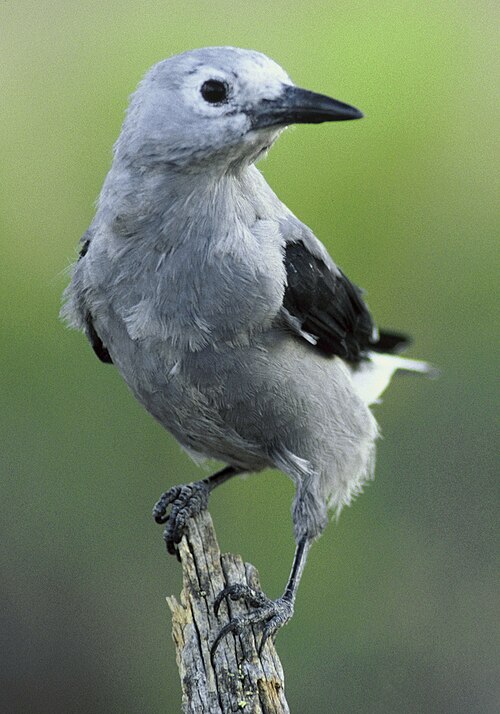
Order: Passeriformes Family: Corvidae
The family Corvidae includes crows, ravens, jays, choughs, magpies, treepies, nutcrackers and ground jays. Corvids are above average in size among the Passeriformes, and some of the larger species show high levels of intelligence.
- American crow, Corvus brachyrhynchosLC
- Azure-hooded jay, Cyanolyca cucullataLC
- Black-billed magpie, Pica hudsoniaLC
- Black-chested jay, Cyanocorax affinisLC
- Black-throated jay, Cyanolyca pumiloLC
- Black-throated magpie-jay, Calocitta collieiLC
- Blue jay, Cyanocitta cristataLC
- Brown jay, Psilorhinus morioLC
- Bushy-crested jay, Cyanocorax melanocyaneusLC
- California scrub-jay, Aphelocoma californicaLC
- Canada jay, Perisoreus canadensisLC
- Chihuahuan raven, Corvus cryptoleucusLC
- Clark's nutcracker, Nucifraga columbianaLC
- Common raven, Corvus coraxLC
- Cuban crow, Corvus nasicusLC
- Dwarf jay, Cyanolyca nanaNT
- Eurasian jackdaw, Corvus monedula (A) LC
- Fish crow, Corvus ossifragusLC
- Florida scrub-jay, Aphelocoma coerulescensVUT
- Green jay, Cyanocorax yncasLC
- Hooded crow, Corvus cornix (A)
- House crow, Corvus splendens (A) LC
- Island scrub-jay, Aphelocoma insularisVU
- Jamaican crow, Corvus jamaicensisNT
- Mexican jay, Aphelocoma wollweberiLC
- Palm crow, Corvus palmarumLC
- Pinyon jay, Gymnorhinus cyanocephalusVU
- Purplish-backed jay, Cyanocorax beecheiiLC
- Rook, Corvus frugilegus (A) LC
- San Blas jay, Cyanocorax sanblasianusLC
- Silvery-throated jay, Cyanolyca argentigulaLC
- Sinaloa crow, Corvus sinaloaeLC
- Steller's jay, Cyanocitta stelleriLC
- Tamaulipas crow, Corvus imparatusLC
- Transvolcanic jay, Aphelocoma ultramarinaLC
- Tufted jay, Cyanocorax dickeyiNT
- Unicolored jay, Aphelocoma unicolorLC
- White-necked crow, Corvus leucognaphalusVUE
- White-throated jay, Cyanolyca mirabilisVU
- White-throated magpie-jay, Calocitta formosaLC
- Woodhouse's scrub-jay, Aphelocoma woodhouseii
- Yellow-billed magpie, Pica nuttalliVU
- Yucatan jay, Cyanocorax yucatanicusLC
Larks
Order: Passeriformes Family: Alaudidae
Larks are small terrestrial birds with often extravagant songs and display flights. Most larks are fairly dull in appearance. Their food is insects and seeds.
- Eurasian skylark, Alauda arvensisLC
- Horned lark, Eremophila alpestrisLC (E. a. strigataT)
Swallows

Order: Passeriformes Family: Hirundinidae
The family Hirundinidae is adapted to aerial feeding. They have a slender streamlined body, long pointed wings and a short bill with a wide gape. The feet are adapted to perching rather than walking, and the front toes are partially joined at the base.
- Cliff swallow, Petrochelidon pyrrhonotaLC
- Bahama swallow, Tachycineta cyaneoviridisEN
- Bank swallow, Riparia ripariaLC
- Barn swallow, Hirundo rusticaLC
- Black-capped swallow, Atticora pileataLC
- Blue-and-white swallow, Pygochelidon cyanoleucaLC
- Brown-chested martin, Progne taperaLC
- Caribbean martin, Progne dominicensisLC
- Cave swallow, Petrochelidon fulvaLC
- Common house-martin, Delichon urbicum (A) LC
- Cuban martin, Progne cryptoleucaLC
- Golden swallow, Tachycineta euchryseaVU
- Gray-breasted martin, Progne chalybeaLC
- Mangrove swallow, Tachycineta albilineaLC
- Northern rough-winged swallow, Stelgidopteryx serripennisLC
- Purple martin, Progne subisLC
- Sinaloa martin, Progne sinaloaeVU
- Southern martin, Progne elegansLC
- Southern rough-winged swallow, Stelgidopteryx ruficollisLC
- Tree swallow, Tachycineta bicolorLC
- Violet-green swallow, Tachycineta thalassinaLC
- White-thighed swallow, Atticora tibialisLC
Tits, chickadees, and titmice
Order: Passeriformes Family: Paridae
The Paridae are mainly small stocky woodland species with short stout bills. Some have crests. They are adaptable birds, with a mixed diet including seeds and insects.
- Black-capped chickadee, Poecile atricapillusLC
- Black-crested titmouse, Baeolophus atricristatusLC
- Boreal chickadee, Poecile hudsonicusLC
- Bridled titmouse, Baeolophus wollweberiLC
- Carolina chickadee, Poecile carolinensisLC
- Chestnut-backed chickadee, Poecile rufescensLC
- Gray-headed chickadee, Poecile cinctusLC
- Juniper titmouse, Baeolophus ridgwayiLC
- Mexican chickadee, Poecile sclateriLC
- Mountain chickadee, Poecile gambeliLC
- Oak titmouse, Baeolophus inornatusLC
- Tufted titmouse, Baeolophus bicolorLC
Penduline-tits
Order: Passeriformes Family: Remizidae
The penduline-tits are a family of small passerine birds, related to the true tits. The verdin is the only North American representative of its family.
- Verdin, Auriparus flavicepsLC
Long-tailed tits
Order: Passeriformes Family: Aegithalidae
The long-tailed tits are a family of small passerine birds. Their plumage is typically dull gray or brown in color. There is only one North American representative of this primarily Palearctic family.
- Bushtit, Psaltriparus minimusLC
Nuthatches
Order: Passeriformes Family: Sittidae
Nuthatches are small woodland birds. They have the unusual ability to climb down trees head first, unlike other birds which can only go upwards. Nuthatches have big heads, short tails and powerful bills and feet.
- Bahama nuthatch, Sitta insularisCR
- Brown-headed nuthatch, Sitta pusillaLC
- Pygmy nuthatch, Sitta pygmaeaLC
- Red-breasted nuthatch, Sitta canadensisLC
- White-breasted nuthatch, Sitta carolinensisLC
Treecreepers
Order: Passeriformes Family: Certhiidae
Treecreepers are small woodland birds, brown above and white below. They have thin pointed down-curved bills, which they use to extricate insects from bark. They have stiff tail feathers, like woodpeckers, which they use to support themselves on vertical trees.
- Brown creeper, Certhia americanaLC
Wrens
Order: Passeriformes Family: Troglodytidae
Wrens are small and inconspicuous birds, except for their loud songs. They have short wings and thin down-turned bills. Several species often hold their tails upright. All are insectivorous.
- Band-backed wren, Campylorhynchus zonatusLC
- Banded wren, Thryophilus pleurostictusLC
- Bay wren, Cantorchilus nigricapillusLC
- Bewick's wren, Thryomanes bewickiiLC
- Bicolored wren, Campylorhynchus griseusLC
- Black-bellied wren, Pheugopedius fasciatoventrisLC
- Black-throated wren, Pheugopedius atrogularisLC
- Boucard's wren, Campylorhynchus jocosusLC
- Buff-breasted wren, Cantorchilus leucotisLC
- Cabanis's wren, Cantorchilus modestusLC
- Cactus wren, Campylorhynchus brunneicapillusLC
- Canebrake wren, Cantorchilus zeledoniLC
- Canyon wren, Catherpes mexicanusLC
- Carolina wren, Thryothorus ludovicianusLC
- Clarión wren, Troglodytes tanneriVU
- Giant wren, Campylorhynchus chiapensisLC
- Grass wren, Cistothorus platensisLC
- Gray-barred wren, Campylorhynchus megalopterusLC
- Gray-breasted wood-wren, Henicorhina leucophrysLC
- Happy wren, Pheugopedius felixLC
- House wren, Troglodytes aedonLC (Guadeloupe wren T. a. guadeloupensis and Saint Lucia wren T. a. mesoleucus: E)
- Isthmian wren, Cantorchilus elutus
- Marsh wren, Cistothorus palustrisLC
- Nava's wren, Hylorchilus navaiVU
- Nightingale wren, Microcerculus philomelaLC
- Ochraceous wren, Troglodytes ochraceusLC
- Pacific wren, Troglodytes pacificusLC
- Riverside wren, Cantorchilus semibadiusLC
- Rock wren, Salpinctes obsoletusLC
- Rufous-and-white wren, Thryophilus rufalbusLC
- Rufous-breasted wren, Pheugopedius rutilusLC
- Rufous-browed wren, Troglodytes rufociliatusLC
- Rufous-naped wren, Campylorhynchus rufinuchaLC
- Scaly-breasted wren, Microcerculus marginatusLC
- Sedge wren, Cistothorus stellarisLC
- Sinaloa wrenThryophilus sinaloaLC
- Socorro wren, Troglodytes sissoniiNT
- Song wren, Cyphorhinus phaeocephalusLC
- Sooty-headed wren, Pheugopedius spadixLC
- Spot-breasted wren, Pheugopedius maculipectusLC
- Spotted wren, Campylorhynchus gularisLC
- Stripe-breasted wren, Cantorchilus thoracicusLC
- Stripe-throated wren, Cantorchilus leucopogonLC
- Sumichrast's wren, Hylorchilus sumichrastiNT
- Timberline wren, Thryorchilus browniLC
- White-bellied wren, Uropsila leucogastraLC
- White-breasted wood-wren, Henicorhina leucostictaLC
- White-headed wren, Campylorhynchus albobrunneusLC
- Winter wren, Troglodytes hiemalisLC
- Yucatan wren, Campylorhynchus yucatanicusNT
- Zapata wren, Ferminia cerveraiEN
Gnatcatchers
Order: Passeriformes Family: Polioptilidae
These dainty birds resemble Old World warblers in their build and habits, moving restlessly through the foliage seeking insects. The gnatcatchers and gnatwrens are mainly soft bluish gray in color and have the typical insectivore's long sharp bill. They are birds of fairly open woodland or scrub, which nest in bushes or trees.
- Black-capped gnatcatcher, Polioptila nigricepsLC
- Black-tailed gnatcatcher, Polioptila melanuraLC
- Blue-gray gnatcatcher, Polioptila caeruleaLC
- California gnatcatcher, Polioptila californicaLC (ssp. californica: T)
- Cuban gnatcatcher, Polioptila lembeyeiLC
- Long-billed gnatwren, Ramphocaenus melanurusLC
- Slate-throated gnatcatcher, Polioptila schistaceigulaLC
- Tawny-faced gnatwren, Microbates cinereiventrisLC
- White-browed gnatcatcher, Polioptila bilineata
- White-lored gnatcatcher, Polioptila albilorisLC
- Yucatan gnatcatcher, Polioptila albiventris
Dippers
Order: Passeriformes Family: Cinclidae
They are named for their bobbing or dipping movements. They are unique among passerines for their ability to dive and swim underwater.
- American dipper, Cinclus mexicanusLC
Bulbuls
Order: Passeriformes Family: Pycnonotidae
The bulbuls are a family of medium-sized passerine songbirds native to Africa and tropical Asia. These are noisy and gregarious birds with often beautiful striking songs.
- Red-whiskered bulbulPycnonotus jocosus (I) LC
Kinglets
Order: Passeriformes Family: Regulidae
The kinglets are a small family of birds which resemble the titmice. They are very small insectivorous birds in the genus Regulus. The adults have colored crowns, giving rise to their name.
- Golden-crowned kinglet, Regulus satrapaLC
- Ruby-crowned kinglet, Corthylio calendulaLC
Leaf warblers
Order: Passeriformes Family: Phylloscopidae
Leaf warblers are a family of small insectivorous birds found mostly in Eurasia and ranging into Wallacea and Africa. The Arctic warbler breeds east into Alaska. The species are of various sizes, often green-plumaged above and yellow below, or more subdued with grayish-green to grayish-brown colors.
- Arctic warbler, Phylloscopus borealisLC
- Common chiffchaff, Phylloscopus collybita (A) LC
- Dusky warbler, Phylloscopus fuscatus (A) LC
- Kamchatka leaf warbler, Phylloscopus examinandus (A) LC
- Pallas's leaf warbler, Phylloscopus proregulus (A) LC
- Willow warbler, Phylloscopus trochilus (A) LC
- Wood warbler, Phylloscopus sibilatrix (A) LC
- Yellow-browed warbler, Phylloscopus inornatus (A) LC
Sylviid warblers, parrotbills, and allies
Order: Passeriformes Family: Sylviidae
The family Sylviidae is a group of small insectivorous passerine birds. They mainly occur as breeding species, as the common name implies, in Europe, Asia and, to a lesser extent, Africa. Most are of generally undistinguished appearance, but many have distinctive songs.
- Eurasian blackcap, Sylvia atricapilla (A) LC
- Lesser whitethroat, Sylvia curruca (A) LC
- Wrentit, Chamaea fasciataLC
Reed warblers and allies
Order: Passeriformes Family: Acrocephalidae
The members of this family are usually rather large for "warblers". Most are rather plain olivaceous brown above with much yellow to beige below. They are usually found in open woodland, reedbeds, or tall grass. The family occurs mostly in southern to western Eurasia and surroundings, but also ranges far into the Pacific, with some species in Africa.
- Blyth's reed warbler, Acrocephalus dumetorum (A) LC
- Sedge warbler, Acrocephalus schoenobaenus (A) LC
- Icterine warbler, Acrocephalus icterina (A) LC
- Thick-billed warbler, Arundinax aedon (A) LC
Donacobius
Order: Passeriformes Family: Donacobiidae
The black-capped donacobius is found in wet habitats from Panama across northern South America and east of the Andes to Argentina and Paraguay
- Black-capped donacobius, Donacobius atricapillaLC
Grassbirds and allies
Order: Passeriformes Family: Locustellidae
Locustellidae are a family of small insectivorous songbirds found mainly in Eurasia, Africa, and the Australian region. They are smallish birds with tails that are usually long and pointed, and tend to be drab brownish or buffy all over.
- Middendorff's grasshopper warbler, Helopsaltes ochotensis (A) LC
- Pallas's grasshopper warbler, Helopsaltes certhiola (A) LC
- Lanceolated warbler, Locustella lanceolata (A) LC
- River warbler, Locustella fluviatilis (A) LC
Old World flycatchers
Order: Passeriformes Family: Muscicapidae
This a large family of small passerine birds found mostly in the Old World. All but two of the species below occur in North America only as vagrants. The appearance of these birds is highly varied, but they mostly have weak songs and harsh calls.
- Asian brown flycatcher, Muscicapa dauurica (A) LC
- Bluethroat, Cyanecula svecicaLC
- Common redstart, Phoenicurus phoenicurus (A) LC
- Dark-sided flycatcher, Muscicapa sibirica (A) LC
- European robin, Erithacus rubecula (A) LC
- Gray-streaked flycatcher, Muscicapa griseisticta (A) LC
- Mugimaki flycatcher, Ficedula mugimaki (A) LC
- Narcissus flycatcher, Ficedula narcissina (A) LC
- Northern wheatear, Oenanthe oenantheLC
- Pied wheatear, Oenanthe pleschanka (A) LC
- Red-flanked bluetail, Tarsiger cyanurus (A) LC
- Rufous-tailed robin, Larvivora sibilans (A) LC
- Siberian blue robin, Larvivora cyane (A) LC
- Siberian rubythroat, Calliope calliope (A) LC
- Siberian stonechat, Saxicola maurus (A)
- Spotted flycatcher, Muscicapa striata (A) LC
- Taiga flycatcher, Ficedula albicilla (A) LC
Thrushes and allies
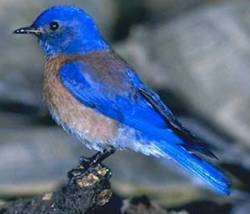
Order: Passeriformes Family: Turdidae
The thrushes are a group of passerine birds that occur mainly but not exclusively in the Old World. They are plump, soft plumaged, small to medium-sized insectivores or sometimes omnivores, often feeding on the ground. Many have attractive songs.
- American robin, Turdus migratoriusLC
- Aztec thrush, Ridgwayia pinicolaLC
- Bicknell's thrush, Catharus bicknelliVU
- Black thrush, Turdus infuscatusLC
- Black-billed nightingale-thrush, Catharus gracilirostrisLC
- Black-faced solitaire, Myadestes melanopsLC
- Black-headed nightingale-thrush, Catharus mexicanusLC
- Brown-backed solitaire, Myadestes occidentalisLC
- Clay-colored thrush, Turdus grayiLC
- Cocoa thrush, Turdus fumigatusLC
- Eurasian blackbird, Turdus merula (A) LC
- Cuban solitaire, Myadestes elisabethNT
- Dusky thrush, Turdus eunomus (A) LC
- Eastern bluebird, Sialia sialisLC
- Eyebrowed thrush, Turdus obscurusLC
- Fieldfare, Turdus pilarisLC
- Forest thrush, Cichlherminia lherminieriNT (ssp. sanctaeluciae: E)
- Grand Cayman thrush, Turdus ravidus (E) EX
- Gray-cheeked thrush, Catharus minimusLC
- Hermit thrush, Catharus guttatusLC
- La Selle thrush, Turdus swalesiVU
- Mistle Thrush, Turdus viscivorus (A) LC
- Mountain bluebird, Sialia currucoidesLC
- Mountain thrush, Turdus plebejusLC
- Naumann's thrush, Turdus naumanni (A) LC
- Orange-billed nightingale-thrush, Catharus aurantiirostrisLC
- Pale-vented thrush, Turdus obsoletusLC
- Western red-legged thrush, Turdus plumbeusLC
- Eastern red-legged thrush, Turdus ardosiaceus
- Redwing, Turdus iliacusNT
- Ruddy-capped nightingale-thrush, Catharus frantziiLC
- Rufous-backed robin, Turdus rufopalliatusLC
- Rufous-collared robin, Turdus rufitorquesLC
- Rufous-throated solitaire, Myadestes genibarbisLC
- Russet nightingale-thrush, Catharus occidentalisLC
- Slate-colored solitaire, Myadestes unicolorLC
- Slaty-backed nightingale-thrush, Catharus fuscaterLC
- Song thrush, Turdus philomelos (A) LC
- Sooty thrush, Turdus nigrescensLC
- Spectacled thrush, Turdus nudigenisLC
- Swainson's thrush, Catharus ustulatusLC
- Townsend's solitaire, Myadestes townsendiLC
- Varied solitaire, Myadestes coloratusLC
- Varied thrush, Ixoreus naeviusLC
- Veery, Catharus fuscescensLC
- Western bluebird, Sialia mexicanaLC
- White-chinned thrush, Turdus aurantiusLC
- White-eyed thrush, Turdus jamaicensisLC
- White's thrush, Zoothera aurea (A) LC
- White-throated thrush, Turdus assimilisLC
- Wood thrush, Hylocichla mustelinaLC
- Yellow-throated nightingale-thrush, Catharus dryasLC
Mockingbirds and thrashers
Order: Passeriformes Family: Mimidae
The mimids are a family of passerine birds which includes thrashers, mockingbirds, tremblers and the New World catbirds. These birds are notable for their vocalization, especially their remarkable ability to mimic a wide variety of birds and other sounds heard outdoors. The species tend towards dull grays and browns in their appearance.
- Bahama mockingbird, Mimus gundlachiiLC
- Bendire's thrasher, Toxostoma bendireiVU
- Black catbird, Melanoptila glabrirostrisNT
- Blue mockingbird, Melanotis caerulescensLC
- Blue-and-white mockingbird, Melanotis hypoleucusLC
- Brown thrasher, Toxostoma rufumLC
- Brown trembler, Cinclocerthia ruficaudaLC (ssp. gutturalis: E)
- California thrasher, Toxostoma redivivumLC
- Cozumel thrasher, Toxostoma guttatumCR
- Crissal thrasher, Toxostoma crissaleLC
- Curve-billed thrasher, Toxostoma curvirostreLC
- Gray catbird, Dumetella carolinensisLC
- Gray thrasher, Toxostoma cinereumLC
- Gray trembler, Cinclocerthia gutturalisLC
- LeConte's thrasher, Toxostoma leconteiLC
- Long-billed thrasher, Toxostoma longirostreLC
- Northern mockingbird, Mimus polyglottosLC
- Ocellated thrasher, Toxostoma ocellatumLC
- Pearly-eyed thrasher, Margarops fuscatusLC
- Sage thrasher, Oreoscoptes montanusLC
- Scaly-breasted thrasher, Allenia fuscaLC
- Socorro mockingbird, Mimus graysoniCRE
- Tropical mockingbird, Mimus gilvusLC
- White-breasted thrasher, Ramphocinclus brachyurusENE
Starlings
Order: Passeriformes Family: Sturnidae
Starlings and mynas are small to medium-sized Old World passerine birds with strong feet. Their flight is strong and direct and most are very gregarious. Their preferred habitat is fairly open country, and they eat insects and fruit. The plumage of several species is dark with a metallic sheen.
- European starling, Sturnus vulgaris (I) LC
- Common myna, Acridotheres tristis (I) LC
Waxwings
Order: Passeriformes Family: Bombycillidae
The waxwings are a group of birds with soft silky plumage and unique red tips to some of the wing feathers. In the Bohemian and cedar waxwings, these tips look like sealing wax and give the group its name. These are arboreal birds of northern forests. They live on insects in summer and berries in winter.
- Bohemian waxwing, Bombycilla garrulusLC
- Cedar waxwing, Bombycilla cedrorumLC
Silky-flycatchers
Order: Passeriformes Family: Ptiliogonatidae
The silky-flycatchers are a small family of passerine birds which occur mainly in Central America. They are related to waxwings, and like that group, have soft silky plumage, usually gray or pale-yellow.
- Black-and-yellow silky-flycatcher, Phainoptila melanoxanthaLC
- Gray silky-flycatcher, Ptiliogonys cinereusLC
- Long-tailed silky-flycatcher, Ptiliogonys caudatusLC
- Phainopepla, Phainopepla nitensLC
Palmchat
Order: Passeriformes Family: Dulidae
The palmchat is the only member of its family. Its name indicates its strong association with palms for feeding, roosting, and nesting.
- Palmchat, Dulus dominicusLC
Olive warbler
Order: Passeriformes Family: Peucedramidae
The olive warbler is the only representative of its family. It was formally classified with the Parulidae, but DNA studies warrant its classification in a distinct family.
- Olive warbler, Peucedramus taeniatusLC
Accentors
Order: Passeriformes Family: Prunellidae
The accentors are small, fairly drab birds with thin sharp bills superficially similar, but unrelated to, sparrows. They are endemic to the Palearctic and only appear in North America as a vagrant.
- Siberian accentor, Prunella montanella (A) LC
Weavers and allies
Order: Passeriformes Family: Ploceidae
The weavers are small passerine birds related to the finches. They are seed-eating birds with rounded conical bills. The males of many species are brightly colored, usually in red or yellow and black, though some species show variation in color only in the breeding season.
- Village weaver, Ploceus cucullatus (I) LC
- Northern red bishop, Euplectes franciscanus (I) LC
- Yellow-crowned bishop, Euplectes afer (I) LC
Indigobirds
Order: Passeriformes Family: Viduidae
The indigobirds are finch-like species which usually have black or indigo predominating in their plumage. All are brood parasites, which lay their eggs in the nests of estrildid finches
- Pin-tailed whydah, Vidua macroura (I) LC
Waxbills and allies
Order: Passeriformes Family: Estrildidae
The estrildid finches are small passerine birds native to the Old World tropics. They are gregarious and often colonial seed eaters with short thick but pointed bills. They are all similar in structure and habits, but have wide variation in plumage colors and patterns.
- African silverbill, Euodice cantans (I) LC
- Black-rumped waxbill, Estrilda troglodytes (I) LC
- Bronze mannikin, Spermestes cucullata (I) LC
- Chestnut munia, Lonchura atricapilla (I) LC
- Common waxbill, Estrilda astrild (I) LC
- Indian silverbill, Euodice malabarica (I) LC
- Java sparrow, Padda oryzivora (I) EN
- Orange-cheeked waxbill, Estrilda melpoda (I) LC
- Red avadavat, Amandava amandava (I) LC
- Scaly-breasted munia, Lonchura punctulata (I) LC
- Tricolored munia, Lonchura malacca (I) LC
Old World sparrows
Order: Passeriformes Family: Passeridae
Old World sparrows are small passerine birds. In general, sparrows tend to be small plump brownish or grayish birds with short tails and short powerful beaks. Sparrows are seed eaters, but they also consume small insects.
- Eurasian tree sparrow, Passer montanus (I) LC
- House sparrow, Passer domesticus (I) LC
Wagtails and pipits
Order: Passeriformes Family: Motacillidae
Motacillidae is a family of small passerine birds with medium to long tails. They include the wagtails, longclaws and pipits. They are slender, ground feeding insectivores of open country.
- American pipit, Anthus rubescensLC
- Citrine wagtail, Motacilla citreola (A) LC
- Eastern yellow wagtail, Motacilla tschutschensisLC
- Gray wagtail, Motacilla cinerea (A) LC
- Meadow pipit, Anthus pratensisNT
- Olive-backed pipit, Anthus hodgsoni (A) LC
- Pechora pipit, Anthus gustavi (A) LC
- Red-throated pipit, Anthus cervinusLC
- Sprague's pipit, Anthus spragueiiVU
- Tree pipit, Anthus trivialis (A) LC
- White wagtail, Motacilla albaLC
- Yellowish pipit, Anthus chiiLC
Finches, euphonias, and allies

Order: Passeriformes Family: Fringillidae
Finches are seed-eating passerine birds, that are small to moderately large and have a strong beak, usually conical and in some species very large. All have twelve tail feathers and nine primaries. These birds have a bouncing flight with alternating bouts of flapping and gliding on closed wings, and most sing well.
- American goldfinch, Spinus tristisLC
- Antillean siskin, Spinus dominicensisLC
- Asian rosy-finch, (A) Leucosticte arctoaLC
- Island canary, Serinus canaria (I) LC
- Black rosy-finch, Leucosticte atrataEN
- Black-capped siskin, Spinus atricepsLC
- Black-headed siskin, Spinus notataLC
- Blue-crowned chlorophonia, Chlorophonia occipitalisLC
- Brambling, Fringilla montifringillaLC
- Brown-capped rosy-finch, Leucosticte australisEN
- Cassia crossbill, Loxia sinesciuris
- Cassin's finch, Haemorhous cassiniiLC
- Common chaffinch, Fringilla coelebs (A) LC
- Common redpoll, Acanthis flammeaLC
- Common rosefinch, Carpodacus erythrinusLC
- Elegant euphonia, Chlorophonia elegantissimaLC
- Eurasian bullfinch, Pyrrhula pyrrhula (A) LC
- Eurasian siskin, Spinus spinus (A) LC
- European goldfinch, Carduelis carduelis (I) LC
- Evening grosbeak, Coccothraustes vespertinusVU
- Fulvous-vented euphonia, Euphonia fulvicrissaLC
- Golden-browed chlorophonia, Chlorophonia callophrysLC
- Gray-crowned rosy-finch, Leucosticte tephrocotisLC
- Hawfinch, Coccothraustes coccothraustes (A) LC
- Hispaniolan crossbill, Loxia megaplagaEN
- Hispaniolan euphonia, Chlorophonia musicaLC
- Hoary redpoll, Acanthis hornemanni
- Hooded grosbeak, Coccothraustes abeilleiLC
- House finch, Haemorhous mexicanusLC
- Jamaican euphonia, Euphonia jamaicaLC
- Lawrence's goldfinch, Spinus lawrenceiLC
- Lesser Antillean euphonia, Chlorophonia flavifrons }
- Lesser goldfinch, Spinus psaltriaLC
- Lesser redpoll, Acanthis cabaret (A)
- Olive-backed euphonia, Euphonia gouldiLC
- Orange-bellied euphonia, Euphonia xanthogasterLC
- Oriental greenfinch, Chloris sinica (A) LC
- Pallas's rosefinch, Carpodacus roseus (A) LC
- Pine grosbeak, Pinicola enucleatorLC
- Pine siskin, Spinus pinusLC
- Puerto Rican euphonia, Chlorophonia sclateri }
- Purple finch, Haemorhous purpureusLC
- Red crossbill, Loxia curvirostraLC
- Red siskin, Spinus cucullata (I) ENE
- Scrub euphonia, Euphonia affinisLC
- Spot-crowned euphonia, Euphonia imitansLC
- Tawny-capped euphonia, Euphonia anneaeLC
- Thick-billed euphonia, Euphonia laniirostrisLC
- West Mexican euphonia, Euphonia godmani
- White-vented euphonia, Euphonia minutaLC
- White-winged crossbill, Loxia leucopteraLC
- Yellow-bellied siskin, Spinus xanthogastraLC
- Yellow-collared chlorophonia, Chlorophonia flavirostris (A) LC
- Yellow-crowned euphonia, Euphonia luteicapillaLC
- Yellow-fronted canary, Crithagra mozambicus (I) LC
- Yellow-throated euphonia, Euphonia hirundinaceaLC
Longspurs and snow buntings
Order: Passeriformes Family: Calcariidae
The Calcariidae are a group of passerine birds that have been traditionally grouped with the Emberizeridae (New World sparrows), but differ in a number of respects and are usually found in open grassy areas.
- Chestnut-collared longspur, Calcarius ornatusVU
- Lapland longspur, Calcarius lapponicusLC
- McKay's bunting, Plectrophenax hyperboreusLC
- Smith's longspur, Calcarius pictusLC
- Snow bunting, Plectrophenax nivalisLC
- Thick-billed longspur, Rhynchophanes mccowniiLC
Thrush-tanager
Order: Passeriformes Family: Rhodinocichlidae
This species was historically placed in family Thraupidae. It was placed in its own family in 2017.
- Rosy thrush-tanager, Rhodinocichla roseaLC
Old World buntings
Order: Passeriformes Family: Emberizidae
Emberizidae is a family of passerine birds containing a single genus. Until 2017, the New World sparrows (Passerellidae) were also considered part of this family.
- Gray bunting, Emberiza variabilis (A) LC
- Little bunting, Emberiza pusilla (A) LC
- Pallas's bunting, Emberiza pallasi (A) LC
- Pine bunting, Emberiza leucocephalos (A) LC
- Reed bunting, Emberiza schoeniclus (A) LC
- Rustic bunting, Emberiza rusticaVU
- Yellow-breasted bunting, Emberiza aureola (A) CR
- Yellow-browed bunting, Emberiza chrysophrys (A) LC
- Yellow-throated bunting, Emberiza elegans (A) LC
New World sparrows

Order: Passeriformes Family: Passerellidae
Until 2017, these species were considered part of the family Emberizidae. Most of the species are known as sparrows, but these birds are not closely related to the Old World sparrows which are in the family Passeridae. Many of these have distinctive head patterns.
- Abert's towhee, Melozone abertiLC
- American tree sparrow, Spizelloides arboreaLC
- Ashy-throated chlorospingus, Chlorospingus canigularisLC
- Bachman's sparrow, Peucaea aestivalisNT
- Baird's junco, Junco bairdiNT
- Baird's sparrow, Centronyx bairdiiLC
- Bell's sparrow, Artemisiospiza belliLC (ssp. clementeae: T)
- Black-chested sparrow, Peucaea humeralisLC
- Black-chinned sparrow, Spizella atrogularisLC
- Black-headed brushfinch, Arremon atricapillusLC
- Black-striped sparrow, Arremonops conirostrisLC
- Black-throated sparrow, Amphispiza bilineataLC
- Botteri's sparrow, Peucaea botteriiLC
- Brewer's sparrow, Spizella breweriLC
- Bridled sparrow, Peucaea mystacalisLC
- Cabanis's ground-sparrow, Melozone cabanisi
- California towhee, Melozone crissalisLC (ssp. eremophilus: T)
- Canyon towhee, Melozone fuscaLC
- Cassin's sparrow, Peucaea cassiniiLC
- Chestnut-capped brushfinchArremon brunneinuchaLC
- Chipping sparrow, Spizella passerinaLC
- Cinnamon-tailed sparrow, Peucaea sumichrastiNT
- Clay-colored sparrow, Spizella pallidaLC
- Collared towhee, Pipilo ocaiLC
- Common chlorospingus, Chlorospingus flavopectusLC
- Costa Rican brushfinch, Arremon costaricensisLC
- Dark-eyed junco, Junco hyemalisLC
- Eastern towhee, Pipilo erythrophthalmusLC
- Field sparrow, Spizella pusillaLC
- Five-striped sparrow, Amphispizopsis quinquestriataLC
- Fox sparrow, Passerella iliacaLC
- Golden-crowned sparrow, Zonotrichia atricapillaLC
- Grasshopper sparrow, Ammodramus savannarumLC (ssp. floridanus: E)
- Green-backed sparrow, Arremonops chloronotusLC
- Green-striped brushfinch, Arremon virenticepsLC
- Green-tailed towhee, Pipilo chlorurusLC
- Guadalupe junco, Junco insularisEN
- Harris's sparrow, Zonotrichia querulaNT
- Henslow's sparrow, Centronyx henslowiiLC
- Large-footed finch, Pezopetes capitalisLC
- Lark bunting, Calamospiza melanocorysLC
- Lark sparrow, Chondestes grammacusLC
- Le Conte's sparrow, Ammospiza leconteiiLC
- Lincoln's sparrow, Melospiza lincolniiLC
- Nelson's sparrow, Ammospiza nelsoniLC
- Oaxaca sparrow, Aimophila notostictaLC
- Olive sparrow, Arremonops rufivirgatusLC
- Orange-billed sparrow, Arremon aurantiirostrisLC
- Pirre chlorospingus, Chlorospingus inornatusLC
- Rufous-capped brushfinch, Atlapetes pileatusLC
- Rufous-collared sparrow, Zonotrichia capensisLC
- Rufous-crowned sparrow, Aimophila ruficepsLC
- Rufous-winged sparrow, Peucaea carpalisLC
- Rusty sparrow, Aimophila rufescensLC
- Rusty-crowned ground-sparrow, Melozone kieneriLC
- Sagebrush sparrow, Artemisiospiza nevadensisLC
- Saltmarsh sparrow, Ammospiza caudacutaEN
- Savannah sparrow, Passerculus sandwichensisLC
- Seaside sparrow, Ammospiza maritimaLC (Cape Sable seaside sparrowA. m. mirabilis: E)
- Sierra Madre sparrow, Xenospiza baileyiEN
- Song sparrow, Melospiza melodiaLC
- Sooty-capped chlorospingus, Chlorospingus pileatusLC
- Sooty-faced finch, Arremon crassirostrisLC
- Spotted towhee, Pipilo maculatusLC
- Striped sparrow, Oriturus superciliosusLC
- Stripe-headed sparrow, Peucaea ruficaudaLC
- Swamp sparrow, Melospiza georgianaLC
- Tacarcuna chlorospingus, Chlorospingus tacarcunaeLC
- Vesper sparrow, Pooecetes gramineusLC
- Volcano junco, Junco vulcaniLC
- White-crowned sparrow, Zonotrichia leucophrysLC
- White-eared ground-sparrow, Melozone leucotisLC
- White-faced ground-sparrow, Melozone biarcuata
- White-naped brushfinch, Atlapetes albinuchaLC
- White-throated sparrow, Zonotrichia albicollisLC
- White-throated towhee, Melozone albicollisLC
- Worthen's sparrow, Spizella wortheniEN
- Yellow-eyed junco, Junco phaeonotusLC
- Yellow-green brushfinch, Atlapetes luteoviridisVU
- Yellow-thighed brushfinch, Atlapetes tibialisLC
- Yellow-throated chlorospingus, Chlorospingus flavigularisLC
- Zapata sparrow, Torreornis inexpectataVU
Chat-tanagers
Order: Passeriformes Family: Calyptophilidae
These two species were formerly classified as tanagers (family Thraupidae) but were placed in their own family in 2017.
- Eastern chat-tanager, Calyptophilus frugivorusNT
- Western chat-tanager, Calyptophilus tertiusVU
Hispaniolan tanagers
Order: Passeriformes Family: Phaenicophilidae
The members of this small family were formerly classified as tanagers and New World warblers (family Parulidae) but were placed in their own family in 2017.
- Black-crowned palm-tanager, Phaenicophilus palmarumLC
- Green-tailed warbler, Microligea palustrisLC
- Gray-crowned palm-tanager, Phaenicophilus poliocephalusNT
- White-winged warbler, Xenoligea montanaVU
Puerto Rican tanager
Order: Passeriformes Family: Nesospingidae
This species was formerly classified as a tanager (family Thraupidae) but was placed in its own family in 2017.
- Puerto Rican tanager, Nesospingus speculiferusLC
Spindalises
Order: Passeriformes Family: Spindalidae
The members of this small family are native to the Greater Antilles. They were formerly classified as tanagers but were placed in their own family in 2017.
- Hispaniolan spindalis, Spindalis dominicensisLC
- Jamaican spindalis, Spindalis nigricephalaLC
- Puerto Rican spindalis, Spindalis portoricensisLC
- Western spindalis, Spindalis zenaLC
Wrenthrush
Order: Passeriformes Family: Zeledoniidae
Despite its name, this species is neither a wren nor a thrush, and is not closely related to either family. It was moved from the wood-warblers (Parulidae) and placed in its own family in 2017.
- Wrenthrush, Zeledonia coronataLC
Cuban warblers

Order: Passeriformes Family: Teretistridae
These two species were formerly placed in the New World warblers (Parulidae) but were moved to their own family in 2017.
- Oriente warbler, Teretistris fornsiLC
- Yellow-headed warbler, Teretistris fernandinaeLC
Yellow-breasted chat
Order: Passeriformes Family: Icteriidae
This species was historically placed in the wood-warblers but nonetheless most authorities were unsure if it belonged there. It was placed in its own family in 2017.
- Yellow-breasted chat, Icteria virensLC
Troupials and allies

Order: Passeriformes Family: Icteridae
The icterids are a group of small to medium-sized, often colorful passerine birds restricted to the New World and include the grackles, New World blackbirds and New World orioles. Most species have black as a predominant plumage color, often enlivened by yellow, orange or red.
- Altamira oriole, Icterus gularisLC
- Audubon's oriole, Icterus graduacaudaLC
- Bahama oriole, Icterus northropiCR
- Baltimore oriole, Icterus galbulaLC
- Bar-winged oriole, Icterus maculialatusLC
- Black oropendola, Psarocolius guatimozinusLC
- Black-backed oriole, Icterus abeilleiLC
- Black-cowled oriole, Icterus prosthemelasLC
- Black-vented oriole, Icterus wagleriLC
- Boat-tailed grackle, Quiscalus majorLC
- Bobolink, Dolichonyx oryzivorusLC
- Brewer's blackbird, Euphagus cyanocephalusLC
- Bronzed cowbird, Molothrus aeneusLC
- Brown-headed cowbird, Molothrus aterLC
- Bullock's oriole, Icterus bullockiiLC
- Carib grackle, Quiscalus lugubrisLC}
- Chestnut-headed oropendola, Psarocolius wagleriLC
- Chihuahuan meadowlark, Sturnella lilianae
- Common grackle, Quiscalus quisculaNT
- Crested oropendola, Psarocolius decumanusLC
- Cuban blackbird, Ptiloxena atroviolaceaLC
- Cuban oriole, Icterus melanopsisLC
- Eastern meadowlark, Sturnella magnaNT
- Giant cowbird, Molothrus oryzivorusLC
- Greater Antillean grackle, Quiscalus nigerLC
- Great-tailed grackle, Quiscalus mexicanusLC
- Hispaniolan oriole, Icterus dominicensisLC
- Hooded oriole, Icterus cucullatusLC
- Jamaican blackbird, Nesopsar nigerrimusEN
- Jamaican oriole, Icterus leucopteryxLC
- Martinique oriole, Icterus bonanaVU
- Melodious blackbird, Dives divesLC
- Montezuma oropendola, Psarocolius montezumaLC
- Montserrat oriole, Icterus oberiVU
- Nicaraguan grackle, Quiscalus nicaraguensisLC
- Orange oriole, Icterus auratusLC
- Orange-crowned oriole, Icterus auricapillusLC
- Orchard oriole, Icterus spuriusLC
- Puerto Rican oriole, Icterus portoricensisLC
- Red-breasted meadowlark, Leistes militarisLC
- Red-shouldered blackbird, Agelaius assimilisLC
- Red-winged blackbird, Agelaius phoeniceusLC
- Rusty blackbird, Euphagus carolinusVU
- Scarlet-rumped cacique, Cacicus uropygialisLC
- Scott's oriole, Icterus parisorumLC
- Shiny cowbird, Molothrus bonariensisLC
- Slender-billed grackle, Quiscalus palustris (E) EXE
- Spot-breasted oriole, Icterus pectoralis (I) LC
- St. Lucia oriole, Icterus laudabilisEN
- Streak-backed oriole, Icterus pustulatusLC
- Tawny-shouldered blackbird, Agelaius humeralisLC
- Tricolored blackbird, Agelaius tricolorEN
- Venezuelan troupial, Icterus icterusLC (I)
- Western meadowlark, Sturnella neglectaLC
- Yellow-backed oriole, Icterus chrysaterLC
- Yellow-billed cacique, Amblycercus holosericeusLC
- Yellow-headed blackbird, Xanthocephalus xanthocephalusLC
- Yellow-hooded blackbird, Chrysomus icterocephalusLC
- Yellow-rumped cacique, Cacicus celaLC
- Yellow-shouldered blackbird, Agelaius xanthomusENE
- Yellow-tailed oriole, Icterus mesomelasLC
- Yellow-winged cacique, Cassiculus melanicterusLC
New World warblers
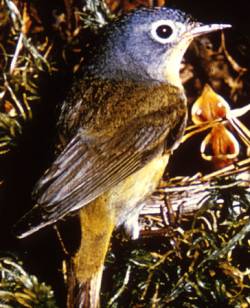
Order: Passeriformes Family: Parulidae
The wood warblers are a group of small often colorful passerine birds restricted to the New World. Most are arboreal, but some are more terrestrial. Most members of this family are insectivores. In August 2011, the North American Committee of the AOS changed their classification of many of the wood warblers. Since this list is based on the AOS classification, changes to scientific names are updated here.
- Adelaide's warbler, Setophaga adelaidaeLC
- Altamira yellowthroat, Geothlypis flavovelataVU
- American redstart, Setophaga ruticillaLC
- Arrowhead warbler, Setophaga pharetraLC
- Bachman's warbler, Vermivora bachmanii (E?) CRE
- Bahama warbler, Setophaga flavescensEN
- Bahama yellowthroat, Geothlypis rostrataLC
- Barbuda warbler, Setophaga subitaVU
- Bay-breasted warbler, Setophaga castaneaLC
- Belding's yellowthroat, Geothlypis beldingiVU
- Black-and-white warbler, Mniotilta variaLC
- Blackburnian warbler, Setophaga fuscaLC
- Black-cheeked warbler, Basileuterus melanogenysLC
- Blackpoll warbler, Setophaga striataNT
- Black-polled yellowthroat, Geothlypis speciosaVU
- Black-throated blue warbler, Setophaga caerulescensLC
- Black-throated gray warbler, Setophaga nigrescensLC
- Black-throated green warbler, Setophaga virensLC
- Blue-winged warbler, Vermivora cyanopteraLC
- Buff-rumped warbler, Myiothlypis fulvicaudaLC
- Canada warbler, Cardellina canadensisLC
- Cape May warbler, Setophaga tigrinaLC
- Cerulean warbler, Setophaga ceruleaNT
- Chestnut-capped warbler, Basileuterus delattrii
- Chestnut-sided warbler, Setophaga pensylvanicaLC
- Colima warbler, Leiothlypis crissalisLC
- Collared redstart, Myioborus torquatusLC
- Common yellowthroat, Geothlypis trichasLC
- Connecticut warbler, Oporornis agilisLC
- Costa Rican warbler, Basileuterus melanotis
- Crescent-chested warbler, Oreothlypis superciliosaLC
- Elfin-woods warbler, Setophaga angelaeEN
- Fan-tailed warbler, Basileuterus lachrymosusLC
- Flame-throated warbler, Oreothlypis gutturalisLC
- Golden-browed warbler, Basileuterus belliLC
- Golden-cheeked warbler, Setophaga chrysopariaENE
- Golden-crowned warbler, Basileuterus culicivorusLC
- Golden-winged warbler, Vermivora chrysopteraNT
- Grace's warbler, Setophaga graciaeLC
- Gray-crowned yellowthroat, Geothlypis poliocephalaLC
- Hermit warbler, Setophaga occidentalisLC
- Hooded warbler, Setophaga citrinaLC
- Hooded yellowthroat, Geothlypis nelsoniLC
- Kentucky warbler, Geothlypis formosaLC
- Kirtland's warbler, Setophaga kirtlandiiNTE
- Louisiana waterthrush, Parkesia motacillaLC
- Lucy's warbler, Leiothlypis luciaeLC
- MacGillivray's warbler, Geothlypis tolmieiLC
- Magnolia warbler, Setophaga magnoliaLC
- Mourning warbler, Geothlypis philadelphiaLC
- Nashville warbler, Leiothlypis ruficapillaLC
- Northern parula, Setophaga americanaLC
- Northern waterthrush, Parkesia noveboracensisLC
- Olive-capped warbler, Setophaga pityophilaLC
- Olive-crowned yellowthroat, Geothlypis semiflavaLC
- Orange-crowned warbler, Leiothlypis celataLC
- Ovenbird, Seiurus aurocapillaLC
- Painted redstart, Myioborus pictusLC
- Palm warbler, Setophaga palmarumLC
- Pine warbler, Setophaga pinusLC
- Pink-headed warbler, Cardellina versicolorLC
- Pirre warbler, Basileuterus ignotusVU
- Plumbeous warbler, Setophaga plumbeaLC
- Prairie warbler, Setophaga discolorLC
- Prothonotary warbler, Protonotaria citreaLC
- Red warbler, Cardellina rubraLC
- Red-faced warbler, Cardellina rubrifronsLC
- Rufous-capped warbler, Basileuterus rufifronsLC
- Semper's warbler, Leucopeza semperiCRE
- Slate-throated redstart, Myioborus miniatusLC
- St. Lucia warbler, Setophaga delicataLC
- Swainson's warbler, Limnothlypis swainsoniiLC
- Tacarcuna warbler, Basileuterus tacarcunae
- Tennessee warbler, Leiothlypis peregrinaLC
- Townsend's warbler, Setophaga townsendiLC
- Tropical parula, Setophaga pitiayumiLC
- Virginia's warbler, Leiothlypis virginiaeLC
- Vitelline warbler, Setophaga vitellinaNT
- Whistling warbler, Catharopeza bishopiEN
- Wilson's warbler, Cardellina pusillaLC
- Worm-eating warbler, Helmitheros vermivorusLC
- Yellow warbler, Setophaga petechiaLC (ssp. petechia: E)
- Yellow-rumped warbler, Setophaga coronataLC
- Yellow-throated warbler, Setophaga dominicaLC
Mitrospingid tanagers
Order: Passeriformes Family: Mitrospingidae
The members of this small family were previously included in Thraupidae ("true" tanagers). They were placed in this new family in 2017.
- Dusky-faced tanager, Mitrospingus cassiniiLC
Cardinals and allies

Order: Passeriformes Family: Cardinalidae
The cardinals are a family of robust, seed-eating birds with strong bills. They are typically associated with open woodland. The sexes usually have distinct plumages.
- Black-cheeked ant-tanager, Habia atrimaxillarisEN
- Black-faced grosbeak, Caryothraustes poliogasterLC
- Black-headed grosbeak, Pheucticus melanocephalusLC
- Black-thighed grosbeak, Pheucticus tibialisLC
- Blue bunting, Cyanocompsa parellinaLC
- Blue grosbeak, Passerina caeruleaLC
- Blue seedeater, Amaurospiza concolorLC
- Blue-black grosbeak, Cyanoloxia cyanoidesLC
- Carmiol's tanager, Chlorothraupis carmioli
- Crimson-collared grosbeak, Rhodothraupis celaenoLC
- Dickcissel, Spiza americanaLC
- Flame-colored tanager, Piranga bidentataLC
- Gray-throated chat, Granatellus sallaeiLC
- Hepatic tanager, Piranga flavaLC
- Indigo bunting, Passerina cyaneaLC
- Lazuli bunting, Passerina amoenaLC
- Lemon-spectacled tanager, Chlorothraupis olivaceaLC
- Northern cardinal, Cardinalis cardinalisLC
- Orange-breasted bunting, Passerina leclancheriiLC
- Painted bunting, Passerina cirisLC
- Pyrrhuloxia, Cardinalis sinuatusLC
- Red-breasted chat, Granatellus venustusLC
- Red-crowned ant-tanager, Habia rubicaLC
- Red-headed tanager, Piranga erythrocephalaLC
- Red-throated ant-tanager, Habia fuscicaudaLC
- Rose-bellied bunting, Passerina rositaeNT
- Rose-breasted grosbeak, Pheucticus ludovicianusLC
- Rose-throated tanager, Piranga roseogularisLC
- Scarlet tanager, Piranga olivaceaLC
- Summer tanager, Piranga rubraLC
- Varied bunting, Passerina versicolorLC
- Western tanager, Piranga ludovicianaLC
- White-winged tanager, Piranga leucopteraLC
- Yellow grosbeak, Pheucticus chrysopeplusLC
- Yellow-green grosbeak, Caryothraustes canadensisLC
Tanagers and allies
Order: Passeriformes Family: Thraupidae
The tanagers are a large group of small to medium-sized passerine birds restricted to the New World, mainly in the tropics. Many species are brightly colored. They are seed eaters, but their preference tends towards fruit and nectar. Most have short, rounded wings.
- Azure-rumped tanager, Poecilostreptus cabanisiVU
- Bananaquit, Coereba flaveolaLC
- Barbados bullfinch, Loxigilla barbadensisLC
- Bay-headed tanager, Tangara gyrolaLC
- Black-and-yellow tanager, Chrysothlypis chrysomelasLC
- Black-faced grassquit, Melanospiza bicolorLC
- Black-headed saltator, Saltator atricepsLC
- Black-throated shrike-tanager, Lanio aurantiusLC
- Blue dacnis, Dacnis cayanaLC
- Blue-and-gold tanager, Bangsia arcaeiNT
- Blue-black grassquit, Volatinia jacarinaLC
- Blue-gray tanager, Thraupis episcopusLC
- Buff-throated saltator, Saltator maximusLC
- Cinnamon-bellied flowerpiercer, Diglossa baritulaLC
- Cinnamon-bellied saltator, Saltator grandisLC
- Cinnamon-rumped seedeater, Sporophila torqueolaLC
- Cocos finch, Pinaroloxias inornataVU
- Crimson-backed tanager, Ramphocelus dimidiatusLC
- Crimson-collared tanager, Ramphocelus sanguinolentusLC
- Cuban bullfinch, Melopyrrha nigraLC
- Cuban grassquit, Phonipara canoraLC
- Emerald tanager, Tangara floridaLC
- Flame-rumped tanager, Ramphocelus flammigerusLC
- Golden-hooded tanager, Stilpnia larvataLC
- Grassland yellow-finch, Sicalis luteolaLC
- Greater Antillean bullfinch, Melopyrrha violaceaLC
- Green honeycreeper, Chlorophanes spizaLC
- Green-naped tanager, Tangara fucosaNT
- Gray-and-gold tanager, Poecilostreptus palmeriLC
- Gray-headed tanager, Eucometis penicillataLC
- Large-billed seed-finch, Sporophila crassirostrisLC
- Lesser Antillean bullfinch, Loxigilla noctisLC
- Lesser Antillean saltator, Saltator albicollisLC
- Lesser Antillean tanager, Stilpnia cucullataLC
- Lined seedeater, Sporophila lineolaLC
- Morelet's seedeater, Sporophila morelletiLC
- Nicaraguan seed-finch, Sporophila nuttingiLC
- Orangequit, Euneornis campestrisLC
- Palm tanagerThraupis palmarumLC
- Peg-billed finch, Acanthidops bairdiLC
- Plain-colored tanager, Tangara inornataLC
- Puerto Rican bullfinch, Melopyrrha portoricensisLC
- Purple honeycreeper, Cyanerpes caeruleusLC
- Red-legged honeycreeper, Cyanerpes cyaneusLC
- Ruddy-breasted seedeater, Sporophila minutaLC
- Rufous-winged tanager, Tangara laviniaLC
- Saffron finch, Sicalis flaveola (I) LC
- Scarlet-browed tanager, Heterospingus xanthopygiusLC
- Scarlet-rumped tanager, Ramphocelus passeriniiLC
- Scarlet-thighed dacnis, Dacnis venustaLC
- Shining honeycreeper, Cyanerpes lucidusLC
- Silver-throated tanager, Tangara icterocephalaLC
- Slate-colored grosbeak, Saltator grossusLC
- Slate-colored seedeater, Sporophila schistaceaLC
- Slaty finch, Haplospiza rusticaLC
- Slaty flowerpiercer, Diglossa plumbeaLC
- Spangle-cheeked tanager, Tangara dowiiLC
- Speckled tanager, Ixothraupis guttataLC
- St. Kitts bullfinch, Melopyrrha grandis
- St. Lucia black finch, Melanospiza richardsoniEN
- Streaked saltator, Saltator striatipectusLC
- Sulphur-rumped tanager, Heterospingus rubrifronsLC
- Swallow tanager, Tersina viridisLC
- Tawny-crested tanager, Tachyphonus delatriiLC
- Thick-billed seed-finch, Sporophila funereaLC
- Variable seedeater, Sporophila corvinaLC
- Viridian dacnis, Dacnis viguieriLC
- Wedge-tailed grass-finch, Emberizoides herbicolaLC
- White-eared conebill, Conirostrum leucogenysLC
- White-lined tanager, Tachyphonus rufusLC
- White-shouldered tanager, Loriotus luctuosusLC
- White-throated shrike-tanager, Lanio leucothoraxLC
- Yellow-backed tanager, Hemithraupis flavicollisLC
- Yellow-bellied seedeater, Sporophila nigricollisLC
- Yellow-faced grassquit, Tiaris olivaceusLC
- Yellow-shouldered grassquit, Loxipasser anoxanthusLC
- Yellow-winged tanager, Thraupis abbasLC
See also
References
- ↑"Check-list of North American Birds (online)". American Ornithological Society. 2019.
- ↑Lepage, Denis. "Bird Checklists of the World - North America". Avibase. Retrieved November 1, 2022.
- ↑Clements, James F. (2000). Birds of the World: A Checklist (fifth and supplements up to July, 2005 ed.). Vista, California: Ibis Publishing. ISBN 0-934797-16-1.
- ↑BirdLife International (2016). "Anhima cornuta". IUCN Red List of Threatened Species. 2016 e.T22679723A92826187. Retrieved 14 October 2023.
- ↑BirdLife International (2016). "Netta erythrophthalma". IUCN Red List of Threatened Species. 2016 e.T22680354A92857172. Retrieved 15 October 2023.
- ↑BirdLife International (2020). "Pipile pipile". IUCN Red List of Threatened Species. 2020 e.T22678401A177972653. Retrieved 15 October 2023.
- ↑BirdLife International (2018). "Leptotila rufaxilla". IUCN Red List of Threatened Species. 2018. Retrieved 15 October 2023.
- ↑BirdLife International (2016). "Chordeiles nacunda". IUCN Red List of Threatened Species. 2016 e.T22689723A93245296. Retrieved 15 October 2023.
- ↑BirdLife International (2016). "Tachornis squamata". IUCN Red List of Threatened Species. 2016 e.T22686751A93125297. Retrieved 15 October 2023.
- ↑Lepage, Denis. "Little Swift". Avibase. Retrieved 28 March 2024.
- ↑BirdLife International (2016). "Calliphlox amethystina". IUCN Red List of Threatened Species. 2016 e.T22688211A93187412. Retrieved 15 October 2023.
- ↑BirdLife International (2024). "Chlorestes notata". IUCN Red List of Threatened Species. 2024. Retrieved 23 June 2026.
- ↑BirdLife International (2016). "Amazilia tobaci". IUCN Red List of Threatened Species. 2016. Retrieved 15 October 2023.
- ↑BirdLife International (2016). "Anthracothorax viridigula". IUCN Red List of Threatened Species. 2016 e.T22687122A93141043. Retrieved 15 October 2023.
- ↑BirdLife International (2016). "Phaethornis longuemareus". IUCN Red List of Threatened Species. 2016 e.T22736557A95137406. Retrieved 15 October 2023.
- ↑BirdLife International (2016). "Chaetocercus jourdanii". IUCN Red List of Threatened Species. 2016 e.T22688290A93190560. Retrieved 15 October 2023.
- ↑BirdLife International (2018). "Lophornis ornatus". IUCN Red List of Threatened Species. 2018 e.T22687181A130119414. Retrieved 15 October 2023.
- ↑BirdLife International (2016). "Amazilia brevirostris". IUCN Red List of Threatened Species. 2016. Retrieved 15 October 2023.
- ↑BirdLife International (2016). "Polytmus guainumbi". IUCN Red List of Threatened Species. 2016 e.T22687482A93154067. Retrieved 15 October 2023.
- ↑BirdLife International (2020). "Campylopterus ensipennis". IUCN Red List of Threatened Species. 2020 e.T22687078A179214927. Retrieved 15 October 2023.
- ↑BirdLife International (2016). "Porzana albicollis". IUCN Red List of Threatened Species. 2016 e.T22692690A93364764. Retrieved 15 October 2023.
- ↑BirdLife International (2018). "Pterodroma caribbaea". IUCN Red List of Threatened Species. 2018 e.T22698097A132625182. doi:10.2305/IUCN.UK.2018-2.RLTS.T22698097A132625182.en.
- ↑BirdLife International (2016). "Ciconia ciconia". IUCN Red List of Threatened Species. 2016 e.T22697691A86248677. Retrieved 19 May 2020.
- ↑BirdLife International (2016). "Ixobrychus involucris". IUCN Red List of Threatened Species. 2016 e.T22697294A93606613. Retrieved 15 October 2023.
- ↑BirdLife International (2016). "Trogon viridis". IUCN Red List of Threatened Species. 2016 e.T22736238A95128440. Retrieved 15 October 2023.
- ↑BirdLife International (2016). "Trogon violaceus". IUCN Red List of Threatened Species. 2016 e.T61686959A95175649. Retrieved 15 October 2023.
- ↑BirdLife International (2016). "Momotus bahamensis". IUCN Red List of Threatened Species. 2016 e.T61634940A95173793. Retrieved 15 October 2023.
- ↑ منظمة بيردلايف الدولية (2016). " ببغاء أبيض الرأس " . القائمة الحمراء للأنواع المهددة بالانقراض الصادرة عن الاتحاد الدولي لحفظ الطبيعة . 2016 e.T22685682A93083034 . تاريخ الاطلاع: 15 أكتوبر 2023 .
- ↑ منظمة بيردلايف الدولية (2016). " ساكيسفوروس كانادينسيس " . القائمة الحمراء للأنواع المهددة بالانقراض التابعة للاتحاد الدولي لحفظ الطبيعة . 2016 e.T103657712A93819991 . تاريخ الاطلاع: 15 أكتوبر 2023 .
- ↑ منظمة بيردلايف الدولية (2016). " بروكنياس أفيرانو " . القائمة الحمراء للأنواع المهددة بالانقراض الصادرة عن الاتحاد الدولي لحفظ الطبيعة . 2016 e.T22700965A93806811 . تاريخ الاطلاع: 15 أكتوبر 2023 .
- ↑ منظمة بيردلايف الدولية (2016). " بروكنياس ألبوس " . القائمة الحمراء للأنواع المهددة بالانقراض التابعة للاتحاد الدولي لحفظ الطبيعة . 2016 e.T22700957A93806627 . تاريخ الاطلاع: 15 أكتوبر 2023 .
- ↑ منظمة بيردلايف الدولية (2016). " Tityra cayana " . القائمة الحمراء للأنواع المهددة بالانقراض الصادرة عن الاتحاد الدولي لحفظ الطبيعة . 2016 e.T103676987A93792271 . تاريخ الاطلاع: 15 أكتوبر 2023 .
روابط خارجية
- دليل طيور أمريكا الشمالية - الجمعية الوطنية لأودوبون
- تاريخ حياة بعض الطيور في أمريكا الشمالية بقلم آرثر كليفلاند بنت (1866-1954)
- قوائم طيور أمريكا الشمالية
- قوائم الطيور حسب القارة