
المحاذاة الإرجاتيفية-المطلقة
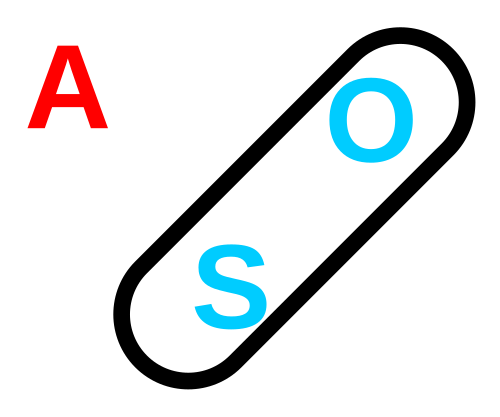
في التصنيف اللغوي ، يُعدّ التوافق الإرجاتيف-المطلق نوعًا من التوافق الصرفي النحوي، حيث يتصرف فاعل الفعل اللازم كفاعل الفعل المتعدي ، ويختلف عن فاعل الفعل المتعدي. [ ملاحظات 1 ] في اللغات الإرجاتيفية-المطلقة ذات الحالة النحوية ، تشير الحالة الإرجاتيفية إلى تحديد فاعل الأفعال المتعدية، مما يميزها عن مفهوم " فاعل" الفعل المتعدي أو اللازم في اللغة الإنجليزية. تُسمى الحالة التي يكون فيها مفعول الفعل اللازم هو الفاعل الوحيد، ومفعول الفعل المتعدي هو المفعول المطلق .
يتناقض التوافق بين الفاعل والمفعول به مع التوافق بين الفاعل والمفعول به ، والذي يُلاحظ في اللغة الإنجليزية ، حيث يتصرف الوسيط الوحيد للفعل اللازم نحويًا مثل فاعل الفعل المتعدي ولكنه يختلف عن مفعول الفعل المتعدي.
بحسب أحد المقاييس، تستخدم 17% من لغات العالم محاذاة إرجاتيفية في تحديد العبارات الاسمية . [ 2 ] ومن أمثلة اللغات الإرجاتيفية-المطلقة الباسكية والجورجية والمايا والتبتية والسومرية وبعض اللغات الهندية الأوروبية مثل البشتو واللغات الكردية وغيرها الكثير .
اللغات الإرجاتية مقابل اللغات المفعولية
تحافظ اللغة الإرجاتيفية على تكافؤ نحوي أو صرفي (مثل ترتيب الكلمات نفسه أو الحالة الإعرابية نفسها ) بين مفعول الفعل المتعدي والفاعل الأساسي للفعل اللازم، بينما تعامل فاعل الفعل المتعدي بشكل مختلف. ويُقال إن هذه اللغات تعمل بنظام محوري فاعل/مفعول .
يختلف هذا عن اللغات الاسمية-المفعولية كالإنجليزية ، حيث يُعامل كل من الفاعل والمفعول به في الفعل اللازم (وكلاهما يُسمى الفاعل ) على حد سواء، ويُفصلان عن مفعول الفعل المتعدي. ويُقال إن هذه اللغات تعمل بنظام محوري (نحوي) فاعل/مفعول به.

(المرجع للشكل: [ 3 ] )
تُرمز هذه الحجج المختلفة عادةً على النحو التالي:
- أ = فاعل الفعل المتعدي (" يرى الكلب القطة")
- O = مفعول به للفعل المتعدي، ويرمز إليه أيضًا بـ P للدلالة على "المريض" ("الكلب يرى القطة " ).
- S = الفاعل الأساسي (أي الموضوع ) للفعل اللازم (" يرى الكلب ")
يمكن تمثيل العلاقة بين الأنظمة الإرجاتيفية والأوكاسيفية بشكل تخطيطي على النحو التالي:
| الفاعلية المطلقة | الرفع - النصب | |
|---|---|---|
| أ | مجموعة موارد الطاقة | اسم |
| يا | أب | ACC |
| S | أب | اسم |
انظر إلى المحاذاة الصرفية النحوية للحصول على شرح تقني أكثر ومقارنة مع اللغات الاسمية-المفعولية .
إن كلمة "الفاعل" ، كما يتم تعريفها عادة في قواعد اللغات الاسمية-المفعولية، لها تطبيق مختلف عند الإشارة إلى اللغات الإرجاتيفية-المطلقة، أو عند مناقشة التوافق الصرفي النحوي بشكل عام.
تميل اللغات الإرجاتية إلى أن تكون إما ذات فعل نهائي أو فعل أولي؛ وهناك عدد قليل جدًا، إن وجد، من اللغات الإرجاتية ذات ترتيب الفاعل-المفعول-الفعل . [ 4 ]
مثال يقارن بين اللاتينية وديربال
تستخدم كل من اللاتينية والديربال علامات الإعراب . إلا أن اللاتينية تعتمد نظام الرفع والنصب ، بينما تعتمد الديربال نظام الفاعلية والانفعال. [ 5 ] : 9-10. وبمقارنة نمط علامات الإعراب في هاتين اللغتين، يتضح مفهوم الفاعلية.
لأن أنظمة الرفع والنصب تُطابق فاعل الفعل اللازم مع فاعل الفعل المتعدي، فإن الفاعل في اللغة اللاتينية يُشار إليه بعلامة الرفع "-us" لكل من الأفعال المتعدية واللازمة. وبالمثل، يُشار إلى المفعول به دائمًا بعلامة النصب "-um".
| الجمل اللاتينية اللازمة [5]:9–10 | |
|---|---|
| domin-us | venit |
| master-NOM | comes |
| "The master comes" | |
| serv-us | venit |
| slave-NOM | comes |
| "The slave comes" | |
| Transitive Latin Sentences[5]:9–10 | ||
|---|---|---|
| domin-us | serv-um | audit |
| master-NOM | slave-ACC | hears |
| "The master hears the slave" | ||
| serv-us | domin-um | audit |
| slave-NOM | master-ACC | hears |
| "The slave hears the master" | ||

Compare this to Dyirbal, which uses an ergative–absolutive system. In Dyirbal, a noun has no affixes when it is the sole subject of an intransitive verb as well as when it is the object of a transitive verb.[5]:9–10 Only transitive subjects have a case marking "-ŋgu". The fact that the case marking for the subject of an intransitive verb differs from the marking on subjects of a transitive verb is the key difference of ergative–absolutive languages.
| Intransitive Dyirbal Sentences[5]:9–10 | |
|---|---|
| ŋuma-∅ | banaganyu |
| father-ABS | returned |
| "father returned" | |
| yabu-∅ | banaganyu |
| mother-ABS | returned |
| "mother returned" | |
| Transitive Dyirbal Sentences[5]:9–10 | ||
|---|---|---|
| yabu-ŋgu | ŋuma-∅ | buran |
| mother-ERG | father-ABS | saw |
| "mother saw father" | ||
| ŋuma-ŋgu | yabu-∅ | buran |
| father-ERG | mother-ABS | saw |
| "father saw mother" | ||

With an intransitive verb, the subject does not get an affix in Dyirbal. While with a transitive verb, it is the object that does not get an affix.
Realization of ergativity
Ergativity can be found in both morphological and syntactic behavior.[6] All known ergative languages show ergativity in their morphology, and a small portion also show ergativity in their syntax.[5]:172
Morphological ergativity
If the language has morphological case, then the verb arguments are marked thus:
- The agent of a transitive verb (A) is marked as ergative case, or as a similar case such as oblique.
- The core argument of an intransitive verb (S) and the object of a transitive verb (O) are both marked with absolutive case.[3]
في حال عدم وجود علامات إعرابية، يمكن تحديد الإعرابية بوسائل أخرى، كما هو الحال في الصرف الفعلي. على سبيل المثال، لا تحتوي اللغة الأبخازية ومعظم لغات المايا على حالة إعرابية صرفية، لكنها تمتلك بنية توافق فعلي إعرابية. في اللغات ذات أنظمة التوافق الإعرابية-المطلقة، يكون الشكل المطلق عادةً هو الشكل الأقل تمييزًا للكلمة (باستثناء لغتي نياس وتلابانيك ) . [ 7 ]
الباسكية
توضح الأمثلة التالية من اللغة الباسكية نظام علامات الحالة الإرجاتيف-المطلق:
| اللغة الإرجاتيفية | ||||||
|---|---|---|---|---|---|---|
| جملة: | Martin etorri da. | Martinek Diego ikusi du. | ||||
| كلمة: | مارتن -Ø | إيتوري دا | مارتن -يك | دييغو -Ø | إيكوسي دو | |
| اللمعان: | مارتن - ABS | لقد وصل | مارتن - مجموعة الاستجابة للطوارئ | دييغو - ABS | لقد رأى | |
| وظيفة: | S | فعل لازم | أ | يا | فعل متعدٍ | |
| ترجمة: | "لقد وصل مارتن." | "لقد رأى مارتن دييغو." | ||||
هنا، يُمثل -Ø مورفيمًا صفريًا ، إذ لا تُحدد حالة الفاعل في اللغة الباسكية مع الأسماء العلمية (مثل: مارتن، دييغو، برلين...). أما صيغ حالة الفاعل فهي -k بعد حرف علة، و- ek بعد حرف ساكن. ومن قواعد اللغة الباسكية أيضًا أنه في معظم الحالات، يجب أن تُختتم العبارة الاسمية بأداة تعريف . أداة التعريف الافتراضية (التي تُسمى عادةً أداة التعريف ، وتُضاف إلى الأسماء الشائعة ، ويمكن ترجمتها عادةً بـ "the" في اللغة الإنجليزية) هي -a في المفرد و- ak في الجمع، حيث تُحدد صيغة الجمع على أداة التعريف فقط، وليس على الاسم نفسه. بالنسبة للأسماء الشائعة، تُدمج أداة التعريف الافتراضية هذه مع علامة حالة الفاعل. وبذلك نحصل على الصيغ التالية لكلمة gizon ("رجل"): gizon-a (رجل - المفرد المطلق)، gizon-ak (رجل - الجمع المطلق)، gizon-ak (رجل - المفرد المتعدي)، gizon-ek (رجل - الجمع المتعدي). عند دمجها مع أداة التعريف، يكون الجمع المطلق متجانسًا صوتيًا مع المفرد المتعدي. انظر قواعد اللغة الباسكية لمزيد من التفاصيل. [ 8 ]
الشركسي
يوضح المثال التالي نظام علامات الحالة الإعرابية-المطلقة مع استخدام نفس الفعل "break" في كل من الصيغ اللازمة والمتعدية:
| اللغة الإرجاتيفية | ||||||
|---|---|---|---|---|---|---|
| جملة: | ӏанэр мэкъутэ. | قروض طويلة الأجل. | ||||
| كلمة: | ӏанэ -р | ميكوتو | Лӏы -м | ӏанэ -р | екъутэ | |
| اللمعان: | الجدول - ABS | فترات راحة | الرجل - ERG | الجدول - ABS | فترات راحة | |
| وظيفة: | S | فعل لازم | أ | يا | فعل متعدٍ | |
| ترجمة: | "انكسرت الطاولة." | "The man breaks the table." | ||||
Here, "table" has the absolutive case mark -р /-r/ while "man" has the ergative case mark -м /-m/. The verb "break" is in the intransitive form "мэкъутэ" and the transitive form "екъутэ". The example above specifically shows SOV order, but Circassian allows any order.
Georgian
Georgian has an ergative alignment, but the agent is only marked with the ergative case in the perfective aspect (also known as the "aorist screeve"). Thus exhibiting a form of split ergativity. Compare:
- K'aci vašls č'ams. (კაცი ვაშლს ჭამს) "The man is eating an apple."
- K'acma vašli č'ama. (კაცმა ვაშლი ჭამა) "The man ate an apple."
K'ac- is the root of the word "man". In the first sentence (present continuous tense) the agent is in the nominative case (k'aci). In the second sentence, which shows ergative alignment, the root is marked with the ergative suffix -ma.
However, there are some intransitive verbs in Georgian that behave like transitive verbs, and therefore employ the ergative case in the past tense. Consider:
- K'acma daacemina. (კაცმა დააცემინა) "The man sneezed."
Although the verb "sneeze" is clearly intransitive, it is conjugated like a transitive verb. In Georgian there are a few verbs like these, and there has not been a clear-cut explanation as to why these verbs have evolved this way. One explanation is that verbs such as "sneeze" used to have a direct object (the object being "nose" in the case of "sneeze") and over time lost these objects, yet kept their transitive behavior.
Differing noun-pronoun alignment
In rare cases, such as the Australian Aboriginal languageNhanda, different nominal elements may follow a different case-alignment template. In Nhanda, common nouns have ergative–absolutive alignment—like in most Australian languages—but most pronouns instead follow a nominative–accusative template. In Nhanda, the absolutive case has a null suffix while ergative case is marked with some allomorph of the suffixes -nggu or -lu. See the common noun paradigm at play below:[9]
Intransitive Subject (ABS)
pundu
rain.ABS
yatka-yu
go-ABL.NFUT
pundu yatka-yu
rain.ABS go-ABL.NFUT
Rain is coming.
Transitive Subject-Object (ERG-ABS)
nyarlu-nggu
woman-ERG
yawarda
kangaroo.ABS
nha-'i
see-PAST
nyarlu-nggu yawarda nha-'i
woman-ERG kangaroo.ABS see-PAST
The woman saw the kangaroo
Compare the above examples with the case marking of pronouns in Nhanda below, wherein all subjects (regardless of verb transitivity) are marked (in this case with a null suffix) the same for case while transitive objects take the accusative suffix -nha.
Intransitive Pronoun Subject (NOM)
wandha-ra-nyja
Where-3.OBL-2SG.NOM
yatka-ndha?
go-NPAST
wandha-ra-nyja yatka-ndha?
Where-3.OBL-2SG.NOM go-NPAST
Where are you going?
Transitive Pronoun Subject-Object (NOM-ACC)
nyini
2.NOM
nha-'i
see-PST
ngayi-nha
1-ACC
nyini nha-'i ngayi-nha
2.NOM see-PST 1-ACC
You saw me
Syntactic ergativity
Ergativity may be manifested through syntax in addition to morphology. While all known ergative languages show ergativity in their morphology, only a small portion also show ergativity in their syntax.[5]:172 As with morphology, syntactic ergativity can be placed on a continuum, whereby certain syntactic operations may pattern accusatively and others ergatively. The degree of syntactic ergativity is then dependent on the number of syntactic operations that treat the subject like the object. Syntactic ergativity is also referred to as inter-clausal ergativity, as it typically appears in the relation of two clauses.
Syntactic ergativity may appear in:
- Word order (for example, the absolutive argument comes before the verb and the ergative argument comes after it)
- Syntactic pivots
- Relative clauses – determining which arguments are available for relativization
- Subordination
- Switch reference
Example
Example of syntactic ergativity in the "conjunction reduction" construction (coordinated clauses) in Dyirbal in contrast with English conjunction reduction. (The subscript (i) indicates coreference.)
- Father returned.
- Father saw mother.
- Mother saw father.
- Father(i) returned and father(i) saw mother.
- Father(i) returned and ____(i) saw mother.
- Father(i) returned and mother saw father(i).
- * Father(i) returned and mother saw ____(i). (ill-formed, because S and deleted O cannot be coreferential.)
- Ŋumabanagan y u. ( عاد الأب. )
- يابو ŋumaŋgu buṛan. (مضاءة. الأم الأب - ŋgu رأى ، أي رأى الأب الأم. )
- Ŋuma yabuŋgu buṛan. (حرفيًا: رأى الأب الأم - ŋgu ، أي رأت الأم الأب. )
- Ŋuma (i) banagan y u، yabu ŋumaŋgu (i) buṛan. (مضاء. الأب (i) عاد، الأم الأب - ŋgu (i) رأى ، أي عاد الأب، رأى الأب الأم. )
- * Ŋuma (i) banagan y u, yabu ____ (i) buṛan. (حرفيًا: * عاد الأب (i) ، رأت الأم (i) ؛ غير صحيح، لأن S و A المحذوفة لا يمكن أن تكونا مرجعيتين متطابقتين.)
- Ŋuma (i) banagan y u, ŋuma (i) yabuŋgu buṛan. (حرفيًا: عاد الأب (i) ، رأى الأب (i) الأم ŋgu ، أي عاد الأب، رأت الأم الأب. )
- Ŋuma (i) banagan y u, ____ (i) yabuŋgu buṛan. (حرفيًا: عاد الأب (i) ، ____ (i) رأت الأم ŋgu ، أي عاد الأب، ورأت الأم الأب. )
والأهم من ذلك، أن الجملة الخامسة تحتوي على محور فاعل/مفعول به، وبالتالي فهي غير صحيحة في لغة ديربال (من الناحية التركيبية ergative)؛ من ناحية أخرى، تحتوي الجملة السابعة على محور فاعل/مفعول به، وبالتالي فهي غير صحيحة في اللغة الإنجليزية (من الناحية التركيبية accusative).
| عاد الأب. | |
| أب | تم الإرجاع |
| S | فعل لازم |
| عاد الأب، ورأى الأب الأم. | |||||
| أب | تم الإرجاع | و | أب | رأى | الأم |
| S | فعل لازم | اقتران | أ | فعل متعدٍ | يا |
| عاد الأب ورأى الأم. | |||||
| أب | تم الإرجاع | و | ____ | رأى | الأم |
| S | فعل لازم | اقتران | أ | فعل متعدٍ | يا |
| Ŋuma banagan y u. | |
| ŋuma -∅ | بانجان يو |
| الأب - ABS | تم الإرجاع |
| S | فعل لازم |
| "عاد أبي." | |
| يابو ŋumaŋgu buṛan. | ||
| يابو -∅ | ŋuma -ŋgu | بوران |
| الأم - ABS | الأب - ERG | رأى |
| يا | أ | فعل متعدٍ |
| "رأى الأب الأم." | ||
| Ŋuma yabuŋgu buṛan. | ||
| ŋuma -∅ | يابو -ŋgu | بوران |
| الأب - ABS | الأم - ERG | رأى |
| يا | أ | فعل متعدٍ |
| "رأت الأم الأب." | ||
| Ŋumabanagan y u، ŋuma yabuŋgu buṛan. | ||||
| ŋuma -∅ | بانجان يو | ŋuma -∅ | يابو -ŋgu | بوران |
| الأب - ABS | تم الإرجاع | الأب - ABS | الأم - ERG | رأى |
| S | فعل لازم | يا | أ | فعل متعدٍ |
| "عاد الأب فرأت الأم الأب." | ||||
| Ŋumabanagan y u، yabuŋgu buṛan. | ||||
| ŋuma -∅ | بانجان يو | ____ | يابو -ŋgu | بوران |
| الأب - ABS | تم الإرجاع | (محذوف) | الأم - ERG | رأى |
| S | فعل لازم | يا | أ | فعل متعدٍ |
| "عاد الأب ورأته الأم." | ||||
النشاط المنقسم
قلة من اللغات الإرجاتية إرجاتية خالصة. فالعديد من الأنظمة الإرجاتية تحتوي على أجزاء من قواعدها لا تحافظ على نمط إرجاتي، وهي ظاهرة تُعرف باسم الإرجاتية المنقسمة. وقد زعم بعض اللغويين أن جميع اللغات الإرجاتية تحتوي على إرجاتية منقسمة. [ 10 ] المجالان الرئيسيان في القواعد اللذان يُظهران غالبًا انقسامًا في الإرجاتية هما الشخص النحوي والجانب النحوي . وفي كليهما، لوحظت أنماط مشتركة بين اللغات تجعل انقسام الإرجاتية أكثر قابلية للتنبؤ.
فيما يتعلق بالشخص النحوي، لوحظ تسلسل هرمي اتجاهي عبر اللغات، يُقيّد أنواع الأشخاص النحويين التي قد تُظهر خاصية الفاعلية في اللغة نفسها. [ 11 ] في اللغات التي تتبع هذا النمط من الفاعلية المنفصلة، توجد نقطة محددة في التسلسل الهرمي حيث يُظهر كل ما يقع على يسارها خاصية الفاعلية، بينما لا يُظهرها كل ما يقع على يمينها. على سبيل المثال، تُظهر لغة ديربال فاعلية منفصلة في الشخص النحوي، وتقسم التسلسل الهرمي عند نقطة ضمائر المتكلم والمخاطب. تستخدم ضمائر المتكلم والمخاطب نمط النصب، بينما يتبع كل ما يقع على يسارها في الطيف نمط الفاعلية.
| الفاعلية | الأسماء الشائعة | الأسماء العلمية | أسماء الإشارة ، ضمائر الغائب | ضمائر المتكلم/المخاطب | غير نشط |
وقد لوحظ المبدأ نفسه فيما يتعلق بالجانب النحوي. ويكون التسلسل الهرمي للاتجاه كما يلي:
| الفاعلية | متحسن | غير كامل | تقدمي | غير إرجاتيف |
باللغة الهندوستانية
في اللغة الهندوستانية ( الهندية والأردية )، يتم تمييز حالة الفاعل على الفاعلين في الجانب التام للأفعال المتعدية والمتعدية لمفعولين (وأيضًا للأفعال اللازمة عندما تكون إرادية )، [ 13 ] بينما في حالات أخرى يظهر الفاعلون في حالة الرفع .
لاركا
ولد: مذكر . مفرد . اسم مذكر
كتاب
كتاب: أنثى . مفرد - اسمي
xaridtā
شراء: HAB . MASC . SG
هاي.
be: 3P . SG . PRS
لاركا كتاب xarīdtā هاي.
ولد: مذكر.مفرد.اسم كتاب: أنثى.مفرد-اسم شراء: زوج.مذكر.مفرد يكون: 3P.مفرد.ع
«يشتري الصبي كتابًا»
laṛke-ne
ولد: مذكر . مفرد . ذكر
كتاب
كتاب: أنثى . مفرد - اسمي
xarīdī
شراء: PRF . FEM . SG
هاي.
be: 3P . SG . PRS
laṛke-ne kitāb xarīdī hai.
boy:MASC.SG.ERG book:FEM.SG-NOM buy:PRF.FEM.SG be:3P.SG.PRS
'The boy has bought a book'
laṛkā
boy:MASC.SG.NOM
khā̃sā.
cough:PRF.MASC.SG
laṛkā khā̃sā.
boy:MASC.SG.NOM cough:PRF.MASC.SG
'The boy coughed.'
laṛke-ne
boy:MASC.SG.ERG
khā̃sā.
cough:PRF.MASC.SG
laṛke-ne khā̃sā.
boy:MASC.SG.ERG cough:PRF.MASC.SG
'The boy coughed (intentionally).'
Optional ergativity
Many languages with ergative marking display what is known as optional ergativity, where the ergative marking is not always expressed in all situations. McGregor (2010) gives a range of contexts when we often see optional ergativity, and argues that the choice is often not truly optional but is affected by semantics and pragmatics. Unlike split ergativity, which occurs regularly but in limited locations, optional ergativity can occur in a range of environments, but may not be used in a way that appears regular or consistent.
Optional ergativity may be motivated by:
- The animacy of the subject, with more animate subjects more likely to be marked ergative
- The semantics of the verb, with more active or transitive verbs more likely to be marked ergative
- The grammatical structure or [tense-aspect-mood]
Languages from Australia, New Guinea and Tibet have been shown to have optional ergativity.[14]
Distribution of ergative languages

A World Atlas of Language Structures (WALS) sample of 190 languages found 32 (17%) of languages use an ergative alignment in the marking of noun phrases.[2] Prototypical ergative languages are, for the most part, restricted to specific regions of the world: Mesopotamia (Kurdish, and some extinct languages), the Caucasus, the Americas, the Tibetan Plateau, and Australia and parts of New Guinea.
Specific languages and language families include:
Americas
Africa
- Tedaga, a Nilo-Saharan language of Southern Libya and Northern Chad.
- Majang language, a Nilo-Saharan language of Ethiopia.
- Päri, although recent studies imply a nominative-accusative system.[16]
Asia
Australian
- Most Australian Aboriginal languages, such as Dyirbal
Certain Australian Aboriginal languages (e.g., Wangkumara) possess an intransitive case and an accusative case along with an ergative case, and lack an absolutive case; such languages are called tripartite languages or ergative–accusative languages.
Pacific
Papua
Europe
Caucasus and Near East
- Hurrian (extinct)
- Urartian (extinct)
- Sumerian (extinct)[20]
- South Caucasian: Georgian, Laz
- Northeast Caucasian: Chechen, Lezgian, Tsez, Archi (endangered)
- Northwest Caucasian: Abkhaz, Circassian, Ubykh (extinct)
- Kurdish: Sorani[21][22][23][24][25] and Kurmanji[26][27][28]
- Gorani language[29]
- Zaza language[30][31][32]
Several scholars have hypothesized that Proto-Indo-European was an ergative language, although this hypothesis is controversial.[33]
Languages with limited ergativity
- في اللغة الهندية ( الهندية الآرية )، يحدث التوافق الإرجاتي فقط عندما يكون الفعل في الجانب التام للأفعال المتعدية (وأيضًا للأفعال اللازمة ولكن فقط عندما تكون إرادية ).
- في لغة البشتو ، يحدث المحاذاة الإرجاتيفية فقط في زمن الماضي.
- في اللغة الجورجية ، لا يحدث الفاعلية إلا في صيغة الماضي التام.
- تُعتبر اللغات الفلبينية (مثل التاغالوغية ) أحيانًا لغات إرجاتيفية (شاختر 1976، 1977؛ كروجر 1993)؛ ومع ذلك، يُعتقد أيضًا أن لها محاذاة صرفية نحوية فريدة خاصة بها. انظر: الصيغة المتناظرة .
- في اللغات الآرامية الحديثة ، المصنفة عمومًا إلى أربع مجموعات، تُظهر مجموعتا شمال شرق آسيا (NENA) وطورويو فقط خاصية الفاعلية المنفصلة ، والتي تتشكل في صيغة التمام فقط، بينما تكون صيغة المضارع مرفوعة-مفعول بها. بعض اللهجات تُشير فقط إلى الفاعل غير المفعول به كفاعل. الآرامية الحديثة الآشورية، على وجه الخصوص، لديها نوع من بنية الفاعلية في صيغة الماضي التام ، حيث تُعبّر الأفعال السابقة عن طريق صيغة مبنية للمجهول مع اعتبار المفعول به هو الفاعل النحوي بدلًا من صيغة مبنية للمعلوم، مثل: baxta qtile ("قُتلت المرأة على يديه"). تم توسيع نطاق نوع الفاعلية في التصريف مع عبارة الفاعل قياسًا على الأفعال اللازمة، مثل: qim-le ("قام"). [ 34 ] تاريخيًا، كانت الآرامية لغة مرفوعة-مفعول بها. [ 35 ]
لغات الإشارة
Sign languages (for example, Nepali Sign Language) should also generally be considered ergative in the patterning of actant incorporation in verbs.[36] In sign languages that have been studied, classifier handshapes are incorporated into verbs, indicating the subject of intransitive verbs when incorporated, and the object of transitive verbs. (If we follow the "semantic phonology" model proposed by William Stokoe (1991)[37] this ergative–absolutive patterning also works at the level of the lexicon: thus in Nepali Sign Language the sign for TEA has the motion for the verb DRINK with a manual alphabet handshape च /ca/ (standing for the first letter of the Nepali word TEA चिया /chiya:/) being incorporated as the object.)
Approximations of ergativity in English
English has a number of so-called ergative verbs, for which the object of the verb when transitive is equivalent to the subject of the verb when intransitive.
When English nominalizes a clause, the underlying subject of an intransitive verb and the underlying object of a transitive verb are both marked with the possessive case or with the preposition "of". The underlying subject of a transitive is marked differently (typically with "by" as in a passive construction):
- "(a dentist) extracts a tooth" → "the extraction of a tooth (by a dentist)"
- "(I/The editor) revised the essay" → "(my/the editor's) revision of the essay"
- "(I was surprised that) the water boiled" → "(I was surprised at) the boiling of the water"
- "I departed on time (so I could catch the plane)" → "My timely departure (allowed me to catch the plane)"
Emergence of Ergativity
Many linguists have noted grammatical similarity between ergative patterns and passives in nominative-accusative systems. In both cases, transitive subjects are more grammatically marked than objects or intransitive subjects.
There is some evidence in Australian and Polynesian languages that their ergative patterns may have historically had a relationship to passives. Some linguists have argued that all ergative patterns originally emerged from passive constructions, while others argue that ergativity can emerge in multiple ways.[38]
In 2003 psycholinguist Goldin-Meadow found that deaf children of hearing parents have a tendency to invent ergative grammars when creating their own gesture systems to communicate. English speaking adults have a similar tendency to improvise ergative structures when asked to communicate using only their hands, despite being accustomed to an accusative pattern in spoken English. She has suggested that these tendencies may be a result of a psychological bias towards ergativity.[39] It is an open question why ergative grammatical structures are comparatively rare across the world's languages when it has been observed they are predictably improvised. Goldin-Meadow has suggested that while an ergative pattern is intuitive, other pressures on clarity, processibility, speed, ease, and expressiveness may drive most languages to develop a non-ergative structure.[40]
See also
- Active-stative language
- Ergative verb
- Symmetrical voice (aka Austronesian alignment)
- Unaccusative verb
- Unergative verb
Notes
- ↑This article uses the linguistic term "agent" to refer to the subject of transitive verbs, because the concept of a "subject" reflects the morphosyntactic alignment of English.
References
- ↑Comrie (1989), p. 110ff.
- 12Comrie, Bernard. "Alignment of Case Marking of Full Noun Phrases". The World Atlas of Language Structures Online. Retrieved 15 February 2026.
{{cite web}}: CS1 maint: url-status (link) - 12Friend, Some Syntactic and Morphological Features of Suleimaniye Kurdish, UCLA, 1985
- ↑"Archived copy"(PDF). Archived from the original(PDF) on 13 June 2011. Retrieved 29 October 2009.
{{cite web}}: CS1 maint: archived copy as title (link) - 12345678Dixon, Robert M. W. (1994). Ergativity. Great Britain: University of Cambridge. ISBN 0521444462.
- ↑For a kind of "phonological" ergativity, see Rude (1983), also Vydrin (2011) for a detailed critique.
- ↑Donohue, Mark (2008). "Semantic alignment systems: what's what, and what's not". In Donohue, Mark & Søren Wichmann, eds. (2008). The Typology of Semantic Alignment. Oxford: Oxford University Press.
- ↑King, Alan R. The Basque Language: A Practical Introduction. Reno: University of Nevada Press.
- ↑ لافرين، ماري؛ بليفنز، جولييت (يونيو 2003). "لغة ناندا: لغة أصلية في غرب أستراليا". اللغويات الأوقيانوسية . 42 (1): 259. doi : 10.2307/3623460 . JSTOR 3623460 .
- ↑ كون، جيسيكا (2017). دليل أكسفورد للإرجاتيفية . نيويورك، نيويورك: مطبعة جامعة أكسفورد. ص 226. ISBN 978-0-19-873937-1.
- ↑ ديكسون، روبرت م. و. (1994). الإرجاتيفية . جامعة كامبريدج. ص 84-85 . ISBN 0521444462.
- 1 2 كون، جيسيكا (2017). دليل أكسفورد للإرجاتيفية . نيويورك، نيويورك: مطبعة جامعة أكسفورد. ص 228. ISBN 978-0-19-873937-1.
- ↑ ويتزلاك-ماكاريفيتش، أ. التباين النمطي في العلاقات النحوية لايبزيغ: أطروحة دكتوراه من جامعة لايبزيغ (2011).
- ↑ ماكجريجور (2010) أنظمة علامات الحالة الإرجاتية الاختيارية من منظور تصنيفي-سيميائي. لينغوا 120: 1610-1636
- ↑ دوتي، كريستوفر (2012). إعادة تقييم التصنيف الجيني لـ Miluk Coos (أطروحة دكتوراه). جامعة أوريغون. hdl : 1794/12404 .
- ↑ الإرجاتيفية، بقلم آر إم دبليو ديكسون، دراسات كامبريدج في اللغويات، المجلد 69، 1994.
- ↑ غرونوبل، لوس أنجلوس (11 أبريل 2006). السياسة اللغوية في الاتحاد السوفيتي . سبرينغر. ISBN 9780306480836.
- ^ ووكر ، آلان ت. (1982). قواعد Sawu . الدراسات اللغوية في NUSA في اللغة الإندونيسية ولغات إندونيسيا، المجلد 13. جاكرتا: بادان بينيلنغارا سيري نوسا، جامعة أتما جايا. اتش دي ال : 1885/111434 . ردمك 0126-2874 .
- 1 2 3 ديكسون، روبرت م. و. (1994). الإرجاتيفية . جامعة كامبريدج. ص 4. ISBN 0521444462.
- ↑ ميخالوفسكي، ب. (1980). " السومرية كلغة إرجاتيفية 1". مجلة الدراسات المسمارية . 32 (2): 86-103 . doi : 10.2307/1359671 . JSTOR 1359671. S2CID 164022054 .
- ↑ جيرالدين والثر (1 يناير 2011). "تفسير اشتقاقي لصيغ المبني للمجهول في اللغة الكردية السورانية" . ResearchGate . تم الاطلاع عليه بتاريخ 10 مايو 2016 .
- ↑"What Sorani Kurdish Absolute Prepositions Tell Us about Cliticization - Kurdish Academy of Language". kurdishacademy.org. Retrieved 10 May 2016.
- ↑Walther, Géraldine (2012). "Fitting into morphological structure: accounting for Sorani Kurdish endoclitics". Mediterranean Morphology Meetings. 8: 299–321. doi:10.26220/mmm.2437.
- ↑Jügel, Thomas (2008). "Ergativität im Sorani-Kurdischen?". In Brunner, Rainer; Laut, Jens Peter; Reinkowski, Maurus (eds.). XXX. Deutscher Orientalistentag, Freiburg, 24.–28. September 2007: Ausgewählte Vorträge (in German). Deutsche Morgenländische Gesellschaft. doi:10.25673/112574. ISBN 978-1-002-74580-9. ISSN 1866-2943.
- ↑Chapter 5. Split ergativity(PDF), archived from the original(PDF) on 12 April 2013, retrieved 14 November 2012 (Sorani is ergative, page 255)
- ↑"Chapter 5. Split ergativity"(PDF). Archived from the original(PDF) on 12 April 2013. Retrieved 14 November 2012. (kurmanji is ergative)
- ↑Mahalingappa, Laura Jahnavi (2009). The acquisition of split-ergativity in Kurmanji Kurdish (Ph.D. thesis). The University of Texas at Austin.
- ↑Abstract. Laura J. Mahalingappa - University of Texas at Austin upenn.edu
- ↑Hoop, Helen de; Swart, Peter de (4 December 2007). Differential Subject Marking. Springer. ISBN 9781402064975.
- ↑"Archived copy"(PDF). Archived from the original(PDF) on 12 April 2013. Retrieved 14 November 2012.
{{cite web}}: CS1 maint: archived copy as title (link) (Aniko Csirmaz and Markéta Ceplová, Massachusetts Institute of Technology, Zazaki is an ergative language) - ↑https://roa.rutgers.edu/files/744-0605/744-ARKADIEV-0-0.PDF (Zazaki is an ergative language, page 17-18)
- ↑Hoop, Helen de; Swart, Peter de (4 December 2007). Differential Subject Marking. Springer. ISBN 978-1-4020-6497-5.
- ↑Bavant, Marc (2008). "Proto-Indo-European Ergativity... Still To Be Discussed". Poznań Studies in Contemporary Linguistics. 44 (4): 433–447. doi:10.2478/v10010-008-0022-y. hdl:10593/7433. S2CID 55922477.
- ↑A. Mengozzi, Neo-Aramaic and the So-called Decay of Ergativity in Kurdish, in: Proceedings of the 10th Meeting of Hamito-Semitic (Afroasiatic) Linguistics (Florence, 18–20 April 2005), Dipartamento di Linguistica Università di Firenze 2005, pp. 239–256.
- ↑Khan, Geoffrey. 1999. A Grammar of Neo-Aramaic: The Dialect of the Jews of Arbel. Leiden: Brill.
- ↑MW Morgan (2009) Cross-Linguistic Typology of Argument Encoding in Sign Language Verbal Morphology. Paper presented at Association of Linguistic Typology, Berkeley
- ↑William Stokoe (1991) Semantic Phonology. Sign Language Studies, 71 ,107–114.
- ↑Coon, Jessica; Abenina-Adar, Maayan (25 June 2013). Aronoff, Mark (ed.). "Ergativity". Oxford Bibliographies in Linguistics. Emergence of Ergativity.
- ↑Coon, Jessica; Abenina-Adar, Maayan (25 June 2013). Aronoff, Mark (ed.). "Ergativity". Oxford Bibliographies in Linguistics. Acquisition and Psychology.
- ↑Grentner, Dedre; Goldin-Meadow, Susan (2003). Language in Mind: Advances in the Study of Language and Thought. The MIT Press. p. 518. ISBN 9780262273664.
- Dixon, R. M. W. (2011). Searching for Aboriginal Languages: Memoirs of a Field Worker. Cambridge University Press. ISBN 978-1-108-02504-1.
Bibliography
- Aldridge, Edith. (2008). Generative Approaches to Ergativity. Language and Linguistics Compass, 2, 966–995.
- Aldridge, Edith. (2008). Minimalist analysis of ergativity. Sophia Linguistica, 55, 123–142.
- Aldridge, Edith. (2016). Ergativity from subjunctive in Austronesian languages. Language and Linguistics, 17(1), 27–62.
- Anderson, Stephen. (1976). On the notion of subject in ergative languages. In C. Li. (Ed.), Subject and topic (pp. 1–24). New York: Academic Press. ISBN 0-12-447350-4.
- Anderson, Stephen R. (1985). Inflectional morphology. In T. Shopen (Ed.), Language typology and syntactic description: Grammatical categories and the lexicon (Vol. 3, pp. 150–201). Cambridge: University of Cambridge Press. ISBN 0-521-58158-3.
- كومري، برنارد. (1978). الإرجاتيفية. في: دبليو بي ليمان (محرر)، التصنيف النحوي: دراسات في ظواهرية اللغة (ص 329-394). أوستن: مطبعة جامعة تكساس. ISBN 0-292-77545-8.
- كون، جيسيكا، وديان ماسام، وليزا دي مينا ترافيس. (محررون). (2017). دليل أكسفورد للنشاطية . مطبعة جامعة أكسفورد.
- كومري، برنارد (1989 [1981]). العموميات اللغوية والتصنيف اللغوي ، الطبعة الثانية. مطبعة جامعة شيكاغو.
- ديكسون، آر إم دبليو (1979). الإرجاتيفية. اللغة ، 55 (1)، 59-138. (تمت مراجعته كـ ديكسون 1994).
- ديكسون، آر إم دبليو (محرر) (1987). دراسات في الإرجاتيفية . أمستردام: نورث هولاند. ISBN 0-444-70275-X.
- ديكسون، آر إم دبليو (1994). الإرجاتيفية . مطبعة جامعة كامبريدج. رقم ISBN 0-521-44898-0.
- فولي، ويليام؛ وفان فالين، روبرت. (1984). النحو الوظيفي والقواعد النحوية العالمية . مطبعة جامعة كامبريدج. ISBN 0-521-25956-8.
- إيلييف، إيفان ج. (2007) حول طبيعة الحالة النحوية ... (الحالة والنداء)
- كروجر، بول. (1993). بنية العبارة والعلاقات النحوية في لغة التاغالوغ . ستانفورد: مركز دراسات اللغات والأدب. ISBN 0-937073-86-5.
- ليجيت، جولي آن. (2008). الحالة الصرفية والمجردة. البحث اللغوي 39.1: 55-101.
- مالينسون، غراهام؛ وبليك، باري ج. (1981). تحديد الفاعل والمفعول به. تصنيف اللغات: دراسات مقارنة في النحو (الفصل 2، ص 39-120). سلسلة شمال هولندا اللغوية. أمستردام: دار نشر شمال هولندا.
- ماكجريجور، ويليام ب. (2010). أنظمة علامات الحالة الإرجاتية الاختيارية من منظور تصنيفي-سيميائي. لينغوا 120: 1610-1636.
- بول، إيليانا وترافيس، ليزا. (2006). الإرجاتيفية في اللغات الأسترونيزية: ما يمكنها فعله، وما لا يمكنها فعله، ولكن ليس السبب. في أ. جونز، د. ماسام، وج. ندايراجيج (محررون)، الإرجاتيفية: قضايا ناشئة (ص 315-335). دوردريخت، هولندا: سبرينغر.
- بلانك، فرانس. (محرر). (1979). الإرجاتيفية: نحو نظرية للعلاقات النحوية . لندن: دار النشر الأكاديمية.
- رود، نويل. (1983). الإرجاتيفية والتصنيف النشط-الثابت في لغة لوما. دراسات في اللغويات الأفريقية 14 (3): 265-283.
- شاختر، بول. (1976). الفاعل في اللغات الفلبينية: الفاعل، الموضوع، الفاعل-الموضوع، أو لا شيء مما سبق. في: سي. لي (محرر)، الفاعل والموضوع (ص 491-518). نيويورك: أكاديميك برس.
- شاختر، بول. (1977). خصائص الفاعل المتعلقة بالمرجع والدور. في: كول، ب. وسادوك، ج. (محرران)، النحو والدلالة: العلاقات النحوية (المجلد 8، الصفحات 279-306). نيويورك: أكاديميك برس. ISBN 0-12-613508-8.
- سيلفرشتاين، مايكل. (1976). تسلسل السمات والفاعلية. في آر إم دبليو ديكسون (محرر)، الفئات النحوية في اللغات الأسترالية (ص 112-171). نيو جيرسي: دار النشر للعلوم الإنسانية. ISBN 0-391-00694-0. أعيد طبعه في بيتر مويسكين وهينك فان ريمسديك (محرران)، الميزات والإسقاطات (الصفحتان 163-232). دوردريخت: فوريس. رقم ISBN 90-6765-144-3.
- سودا، جونيتشي (2025). " نموذج كليموف المتأخر للتصنيف النمطي للغات النشطة، والفاعلة، والاسمية - إعادة تقييم نموذج الأدوار الخمسة الكبرى ، وآخرون". دراسات نمطية 7: 83-109.
- فيربيكي، سارتجي. 2013. المحاذاة والنشاط في اللغات الهندية الآرية الجديدة . برلين: دي جرويتر.
- فيدرين، فالنتين . (2011). محاذاة الفاعل/المطلق والفاعل/الحالة في غرب أفريقيا: حالة لغة الماندي الجنوبية الغربية. دراسات في اللغة 35 (2): 409-443.
روابط خارجية
- "درس تعليمي سريع عن الإرجاتيفية، من خلال الشخص ذي الرأس الشبيه بالحبار" ، في مدونة المعرفة المعاد تدويرها، بقلم جون كوان، 2005-05-05.
- لغة
- التصنيف اللغوي