
Foreign exchange market
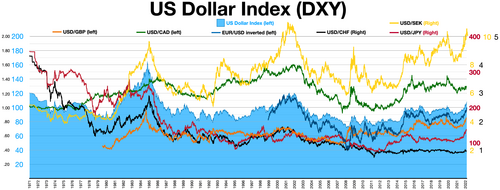
The foreign exchange market (forex, FX, or currency market) is a global decentralized or over-the-counter (OTC) market for the trading of currencies. This market determines foreign exchange rates for every currency. By trading volume, it is by far the largest market in the world, followed by the credit market.[1]
The main participants are the larger international banks. Financial centres function as anchors of trading between a range of multiple types of buyers and sellers around the clock, with the exception of weekends. As currencies are always traded in pairs, the market does not set a currency's absolute value, but rather determines its relative value by setting the market price of one currency if paid for with another. Example: 1 USD is worth 1.1 Euros or 1.2 Swiss Francs etc. The market works through financial institutions and operates on several levels. Behind the scenes, banks turn to a smaller number of financial firms known as "dealers", who are involved in large quantities of trading. Most foreign exchange dealers are banks, so this behind-the-scenes market is sometimes called the "interbank market". Trades between dealers can be very large, involving hundreds of millions of dollars. Because of the sovereignty issue when involving two currencies, Forex has little supervisory entity regulating its actions. In a typical foreign exchange transaction, a party purchases some quantity of one currency by paying with some quantity of another currency.
The foreign exchange market assists international trade and investments by enabling currency conversion. For example, it permits a business in the US to import goods from European Union member states, and pay Euros, even though its income is in United States dollars. It also supports direct speculation and evaluation relative to the value of currencies and the carry trade speculation, based on the differential interest rate between two currencies.[2]
The modern foreign exchange market began forming during the 1970s. This followed three decades of government restrictions on foreign exchange transactions under the Bretton Woods system of monetary management, which set out the rules for commercial and financial relations among major industrial states after World War II. Countries gradually switched to floating exchange rates from the previous exchange rate regime, which remained fixed per the Bretton Woods system. The foreign exchange market is unique because of the following characteristics:
- huge trading volume, representing the largest asset class in the world leading to high liquidity;
- geographical dispersion;
- continuous operation: 24 hours a day except weekends, i.e., trading from 22:00 UTC on Sunday (Sydney) until 22:00 UTC Friday (New York);
- variety of factors that affect exchange rates;
- low profit margins compared with other markets of fixed income; and
- use of leverage to enhance profit and loss margins and with respect to account size.
As such, it has been referred to as the market closest to the ideal of perfect competition, notwithstanding currency intervention by central banks.
Trading in foreign exchange markets averaged US$9.6 trillion per day in April 2025, up from US$7.5 trillion in 2022. Measured by value, foreign exchange swaps were traded more than any other instrument in 2025, at US$4 trillion per day, followed by spot trading at US$3 trillion.[3]
History
Ancient
Currency trading and exchange first occurred in ancient times.[4] Money-changers (people helping others to change money and also taking a commission or charging a fee) were living in the Holy Land in the times of the Talmudic writings (Biblical times). These people (sometimes called "kollybistẻs") used city stalls, and at feast times the Temple's Court of the Gentiles instead.[5] Money-changers were also the silversmiths and/or goldsmiths[6] of more recent ancient times.
During the 4th century AD, the Byzantine government kept a monopoly on the exchange of currency.[7]
Papyri PCZ I 59021 (c.259/8 BC), shows the occurrences of exchange of coinage in Ancient Egypt.[8]
كانت العملة والتبادل عنصرين أساسيين في التجارة في العالم القديم، إذ مكّنا الناس من شراء وبيع سلع مثل الطعام والفخار والمواد الخام. [ 9 ] إذا احتوت العملة اليونانية على كمية ذهب أكبر من العملة المصرية نظرًا لحجمها أو محتواها، فبإمكان التاجر مقايضة عدد أقل من العملات الذهبية اليونانية مقابل عدد أكبر من العملات المصرية، أو مقابل سلع مادية أكثر. ولهذا السبب، في مرحلة ما من تاريخها، كانت قيمة معظم العملات العالمية المتداولة اليوم مرتبطة بكمية محددة من معيار معترف به كالذهب والفضة.
العصور الوسطى وما بعدها
خلال القرن الخامس عشر، كان على عائلة ميديشي فتح فروع بنكية في الخارج لتبادل العملات نيابةً عن تجار المنسوجات . [ 10 ] [ 11 ] ولتسهيل التجارة، أنشأ البنك دفتر حسابات " نوسترو " (كلمة إيطالية تعني "لنا")، والذي احتوى على عمودين يوضحان مبالغ العملات الأجنبية والمحلية؛ وهي معلومات تتعلق بإدارة حساب لدى بنك أجنبي. [ 12 ] [ 13 ] [ 14 ] [ 15 ] وخلال القرن السابع عشر (أو الثامن عشر)، حافظت أمستردام على سوق صرف عملات أجنبية نشطة. [ 16 ] وفي عام 1704، جرى تبادل العملات الأجنبية بين وكلاء يعملون لصالح مملكة إنجلترا ومقاطعة هولندا . [ 17 ]
العصر الحديث المبكر
مارست شركة أليكس براون وأبناؤه تجارة العملات الأجنبية حوالي عام 1850، وكانت من الشركات الرائدة في تجارة العملات في الولايات المتحدة الأمريكية. [ 18 ] وفي عام 1880، تقدم بنك جيه إم دو إسبيريتو سانتو دي سيلفا ( بانكو إسبيريتو سانتو ) بطلب للحصول على ترخيص لمزاولة أعمال تجارة العملات الأجنبية، وحصل عليه. [ 19 ] [ 20 ]
يعتبر عام 1880، وفقًا لأحد المصادر على الأقل، بدايةً لنظام الصرف الأجنبي الحديث: فقد بدأ العمل بمعيار الذهب في ذلك العام. [ 21 ]
قبل الحرب العالمية الأولى، كانت السيطرة على التجارة الدولية محدودة للغاية . وبدافع اندلاع الحرب، تخلت الدول عن النظام النقدي القائم على معيار الذهب. [ 22 ]
من الحداثة إلى ما بعد الحداثة
في الفترة من 1899 إلى 1913، زادت حيازات الدول من العملات الأجنبية بمعدل سنوي قدره 10.8٪، بينما زادت حيازات الذهب بمعدل سنوي قدره 6.3٪ بين عامي 1903 و1913. [ 23 ]
At the end of 1913, nearly half of the world's foreign exchange was conducted using the pound sterling.[24] The number of foreign banks operating within the boundaries of London increased from 3 in 1860, to 71 in 1913. In 1902, there were just two London foreign exchange brokers.[25] At the start of the 20th century, trades in currencies was most active in Paris, New York City and Berlin; Britain remained largely uninvolved until 1914. Between 1919 and 1922, the number of foreign exchange brokers in London increased to 17; and in 1924, there were 40 firms operating for the purposes of exchange.[26]
During the 1920s, the Kleinwort family were known as the leaders of the foreign exchange market, while Japheth, Montagu & Co. and Seligman still warrant recognition as significant FX traders.[27] The trade in London began to resemble its modern manifestation. By 1928, Forex trade was integral to the financial functioning of the city. However, during the 1930s, London's pursuit of widespread trade prosperity was hindered by continental exchange controls and additional factors in Europe and Latin America.[28] Some of these additional factors include tariff rates and quota,[29] protectionist policies, trade barriers and taxes, economic depression and agricultural overproduction, and impact of protection on trade.
After World War II
In 1944, the Bretton Woods Accord was signed, allowing currencies to fluctuate within a range of ±1% from the currency's par exchange rate.[30] In Japan, the Foreign Exchange Bank Law was introduced in 1954. As a result, the Bank of Tokyo became a center of foreign exchange by September 1954. Between 1954 and 1959, Japanese law was changed to allow foreign exchange dealings in many more Western currencies.[31]
U.S. President Richard Nixon is credited with ending the Bretton Woods Accord and fixed rates of exchange, eventually resulting in a free-floating currency system. After the Accord ended in 1971,[32] the Smithsonian Agreement allowed rates to fluctuate by up to ±2%. In 1961–62, the volume of foreign operations by the U.S. Federal Reserve was relatively low.[33][34] Those responsible for managing exchange rates then found the boundaries of the Agreement unrealistic. As a result, it led to its discontinuation in March 1973. Afterwards, none of the major currencies (such as the US dollar, the British pound, or the Japanese yen) were maintained with a capacity for conversion to gold. Instead, organizations relied on reserves of currency to facilitate international trade and back the value of their own currency.[35][36] From 1970 to 1973, the volume of trading in the market increased three-fold.[37][38][39] At some time (according to Gandolfo during February–March 1973) some of the markets were "split", and a two-tier currency market was subsequently introduced, with dual currency rates. This was abolished in March 1974.[40][41][42]
Reuters introduced computer monitors during June 1973, replacing the telephones and telex used previously for trading quotes.[43]
Markets close
Due to the ultimate ineffectiveness of the Bretton Woods Accord and the European Joint Float, the forex markets were forced to close sometime during 1972 and March 1973.[44] This was a result of the collapse of the Bretton Woods System, as major currencies began to float against each other, ultimately leading to the abandonment of the fixed exchange rate system.[45][46] Meanwhile, the largest purchase of US dollars in the history of 1976[47] was when the West German government achieved an almost 3 billion dollar acquisition (a figure is given as 2.75 billion in total by The Statesman: Volume 18 1974). This event indicated the impossibility of balancing of exchange rates by the measures of control used at the time, and the monetary system and the foreign exchange markets in West Germany and other countries within Europe closed for two weeks (during February and, or, March 1973. Giersch, Paqué, & Schmieding state closed after purchase of "7.5 million Dmarks" Brawley states "... Exchange markets had to be closed. When they re-opened ... March 1 " that is a large purchase occurred after the close).[48][49][50][51]
After 1973
In developed nations, state control of foreign exchange trading ended in 1973 when complete floating and relatively free market conditions of modern times began.[52] Other sources claim that the first time a currency pair was traded by U.S. retail customers was during 1982, with additional currency pairs becoming available by the next year.[53][54]
On 1 January 1981, as part of changes beginning during 1978, the People's Bank of China allowed certain domestic "enterprises" to participate in foreign exchange trading.[55][56] Sometime during 1981, the South Korean government ended Forex controls and allowed free trade to occur for the first time. During 1988, the country's government accepted the IMF quota for international trade.[57]
Intervention by European banks (especially the Bundesbank) influenced the Forex market on 27 February 1985.[58] The greatest proportion of all trades worldwide during 1987 were within the United Kingdom (slightly over one quarter). The United States had the second highest involvement in trading.[59]
During 1991, Iran changed international agreements with some countries from oil-barter to foreign exchange.[60]
Market size and liquidity
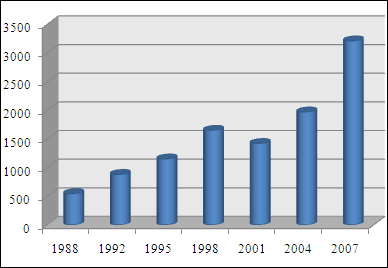
The foreign exchange market is the most liquid financial market in the world. Traders include governments and central banks, commercial banks, other institutional investors and financial institutions, currency speculators, other commercial corporations, and individuals. According to the 2025 Triennial Central Bank Survey, coordinated by the Bank for International Settlements, average daily turnover was $9.6 trillion in April 2025 (compared to $4 trillion in 2010).[3] Of this $9.6 trillion, $3 trillion was spot transactions and $6.6 trillion was traded in outright forwards, swaps, and other derivatives.
Foreign exchange is traded in an over-the-counter market where brokers/dealers negotiate directly with one another, so there is no central exchange or clearing house. The biggest geographic trading center is the United Kingdom, primarily London. In April 2025, trading in the United Kingdom accounted for 37.8% of the total, making it by far the most important center for foreign exchange trading in the world. Owing to London's dominance in the market, a particular currency's quoted price is usually the London market price. For instance, when the International Monetary Fund calculates the value of its special drawing rights every day, they use the London market prices at noon that day. Trading in the United States accounted for 18.6%, Singapore and Hong Kong account for 11.8% and 7.0%, respectively, and Japan accounted for 3.5%.[3]
شهدت تداولات العقود الآجلة والخيارات للعملات الأجنبية المتداولة في البورصة نموًا سريعًا خلال الفترة 2004-2013، حيث بلغت 145 مليار دولار أمريكي في أبريل 2013 (أي ضعف حجم التداول المسجل في أبريل 2007). [ 61 ] وبحلول أبريل 2025، ستمثل مشتقات العملات المتداولة في البورصة 2% من إجمالي تداولات العملات الأجنبية خارج البورصة. وقد طُرحت عقود العملات الأجنبية الآجلة في عام 1972 في بورصة شيكاغو التجارية، وهي تُتداول بكميات تفوق معظم العقود الآجلة الأخرى.
تسمح معظم الدول المتقدمة بتداول المشتقات المالية (مثل العقود الآجلة وخيارات العقود الآجلة) في بورصاتها. وتتمتع جميع هذه الدول المتقدمة بحسابات رأسمالية قابلة للتحويل بالكامل. في المقابل، لا تسمح بعض حكومات الأسواق الناشئة بتداول مشتقات العملات الأجنبية في بورصاتها بسبب قيود رأس المال المفروضة عليها . ويتزايد استخدام المشتقات المالية في العديد من الاقتصادات الناشئة. [ 62 ] وقد أنشأت دول مثل كوريا الجنوبية وجنوب أفريقيا والهند بورصات لتداول العقود الآجلة للعملات، على الرغم من وجود بعض القيود على رأس المال.
ارتفع حجم تداول العملات الأجنبية بنسبة 20% بين أبريل 2007 وأبريل 2010، وتضاعف أكثر من مرتين منذ عام 2004. [ 63 ] ويعود هذا الارتفاع في حجم التداول إلى عدة عوامل، منها: تزايد أهمية العملات الأجنبية كفئة أصول، وازدياد نشاط التداول لدى المتداولين ذوي التردد العالي ، وبروز المستثمرين الأفراد كشريحة سوقية مهمة. وقد ساهم نمو التنفيذ الإلكتروني وتنوع منصات التنفيذ في خفض تكاليف المعاملات، وزيادة سيولة السوق، وجذب مشاركة أوسع من مختلف فئات العملاء. وعلى وجه الخصوص، سهّل التداول الإلكتروني عبر البوابات الإلكترونية على المتداولين الأفراد التداول في سوق العملات الأجنبية. وبحلول عام 2010، قُدّر أن التداول للأفراد يمثل ما يصل إلى 10% من حجم التداول الفوري، أي ما يعادل 150 مليار دولار أمريكي يوميًا (انظر أدناه: متداولو العملات الأجنبية الأفراد ).
المشاركون في السوق
| رتبة | اسم | الحصة السوقية |
|---|---|---|
| 1 |  جي بي مورغان تشيس جي بي مورغان تشيس | 10.78% |
| 2 |  يو بي إس يو بي إس | 8.13% |
| 3 |  أسواق إكس تي إكس أسواق إكس تي إكس | 7.58% |
| 4 |  دويتشه بنك دويتشه بنك | 7.38% |
| 5 | سيتي | 5.50% |
| 6 | بنك إتش إس بي سي | 5.33% |
| 7 | قفز التداول | 5.23% |
| 8 | غولدمان ساكس | 4.62% |
| 9 | شركة ستيت ستريت | 4.61% |
| 10 | بنك أوف أمريكا ميريل لينش | 4.50% |
Unlike a stock market, the foreign exchange market is divided into levels of access. At the top is the interbank foreign exchange market, which is made up of the largest commercial banks and securities dealers. Within the interbank market, spreads represent the gap between the bid (the highest price a buyer is willing to pay) and ask (the lowest price a seller is willing to accept) prices in trading.[65] Relationships play a role in a bank's access to interbank market liquidity. Banks with reserve imbalances may prefer to borrow from banks with established relationships and can sometimes secure loans at more favorable interest rates compared to other sources.[65]
The difference between the bid and ask prices widens (for example from 0 to 1 pip to 1–2 pips for currencies such as the EUR) as you go down the levels of access. This is due to volume. If a trader can guarantee large numbers of transactions for large amounts, they can demand a smaller difference between the bid and ask price, which is referred to as a better spread. The levels of access that make up the foreign exchange market are determined by the size of the "line" (the amount of money with which they are trading). The top-tier interbank market accounts for 51% of all transactions.[66] After that, smaller banks, large multinational corporations (requiring risk hedging and cross-border payroll), major hedge funds, and even a few retail market makers come into play. According to Galati and Melvin, “Pension funds, insurance companies, mutual funds, and other institutional investors have played an increasingly important role in financial markets in general, and in FX markets in particular, since the early 2000s.” (2004) In addition, he notes, “Hedge funds have grown markedly over the 2001–2004 period in terms of both number and overall size”.[67] Central banks also participate in the foreign exchange market to align currencies to their economic needs.
Commercial companies
An important part of the foreign exchange market comes from the financial activities of companies seeking foreign exchange to pay for goods or services. Commercial companies often trade fairly small amounts compared to those of banks or speculators, and their trades often have a little short-term impact on market rates. Nevertheless, trade flows are an important factor in the long-term direction of a currency's exchange rate. Some multinational corporations (MNCs) can have an unpredictable impact when very large positions are covered due to exposures that are not widely known by other market participants.
البنوك المركزية
تؤدي البنوك المركزية الوطنية دورًا هامًا في أسواق الصرف الأجنبي. فهي تسعى للتحكم في المعروض النقدي والتضخم وأسعار الفائدة ، وغالبًا ما يكون لديها أسعار صرف مستهدفة رسمية أو غير رسمية لعملاتها. ويمكنها استخدام احتياطياتها الكبيرة من النقد الأجنبي لتحقيق استقرار السوق. ومع ذلك، فإن فعالية "المضاربة المُثبِّتة" التي تقوم بها البنوك المركزية محل شك، لأنها لا تُعلن إفلاسها في حال تكبدها خسائر فادحة كما هو الحال مع المتداولين الآخرين. كما لا يوجد دليل قاطع على أنها تحقق أرباحًا من التداول.
تثبيت أسعار صرف العملات الأجنبية
تحديد سعر الصرف هو سعر الصرف النقدي اليومي الذي يحدده البنك المركزي لكل دولة. وتتلخص الفكرة في أن البنوك المركزية تستخدم وقت تحديد سعر الصرف لتقييم أداء عملتها. ويعكس تحديد سعر الصرف القيمة الحقيقية للتوازن في السوق. وتستخدم البنوك والتجار أسعار الصرف كمؤشر لاتجاهات السوق .
إن مجرد التوقع أو مجرد شائعة تدخل البنك المركزي في سوق الصرف الأجنبي قد يكون كافياً لتحقيق استقرار العملة. مع ذلك، قد يلجأ البعض إلى التدخل المكثف عدة مرات سنوياً في الدول التي تعتمد نظام تعويم غير دقيق . لا تحقق البنوك المركزية أهدافها دائماً، إذ يمكن لموارد السوق مجتمعة أن تتفوق بسهولة على قدرة أي بنك مركزي. [ 68 ] وقد شهدنا سيناريوهات مماثلة في انهيار آلية سعر الصرف الأوروبية عامي 1992-1993 ، وفي الآونة الأخيرة في آسيا.
شركات إدارة الاستثمار
تستخدم شركات إدارة الاستثمار (التي تدير عادةً حسابات كبيرة نيابةً عن عملاء مثل صناديق التقاعد والأوقاف) سوق الصرف الأجنبي لتسهيل معاملات الأوراق المالية الأجنبية. فعلى سبيل المثال، يحتاج مدير استثمار يدير محفظة أسهم دولية إلى شراء وبيع عدة أزواج من العملات الأجنبية لدفع ثمن مشترياته من الأوراق المالية الأجنبية.
تُقدم بعض شركات إدارة الاستثمار عمليات متخصصة في إدارة مخاطر العملات ، والتي تهدف إلى تحقيق الأرباح والحد من المخاطر في آنٍ واحد. ورغم قلة عدد هذه الشركات المتخصصة، إلا أن العديد منها يمتلك أصولاً ضخمة تحت إدارتها ، ما يُتيح لها تنفيذ صفقات كبيرة.
تجار التجزئة في سوق الصرف الأجنبي
Individual retail speculative traders constitute a growing segment of this market. Currently, they participate indirectly through brokers or banks. Retail brokers, while largely controlled and regulated in the US by the Commodity Futures Trading Commission and National Futures Association, have previously been subjected to periodic foreign exchange fraud.[69][70] To deal with the issue, in 2010 the NFA required its members that deal in the Forex markets to register as such (i.e., Forex CTA instead of a CTA). Those NFA members that would traditionally be subject to minimum net capital requirements, FCMs and IBs, are subject to greater minimum net capital requirements if they deal in Forex. A number of the foreign exchange brokers operate from the UK under Financial Services Authority regulations where foreign exchange trading using margin is part of the wider over-the-counter derivatives trading industry that includes contracts for difference and financial spread betting.
There are two main types of retail FX brokers offering the opportunity for speculative currency trading: brokers and dealers or market makers. Brokers serve as an agent of the customer in the broader FX market, by seeking the best price in the market for a retail order and dealing on behalf of the retail customer. They charge a commission or "mark-up" in addition to the price obtained in the market. Dealers or market makers, by contrast, typically act as principals in the transaction versus the retail customer, and quote a price they are willing to deal at.
Non-bank foreign exchange companies
Non-bank foreign exchange companies offer currency exchange and international payments to private individuals and companies. These are also known as "foreign exchange brokers" but are distinct in that they do not offer speculative trading but rather currency exchange with payments (i.e., there is usually a physical delivery of currency to a bank account).
It is estimated that in the UK, 14% of currency transfers/payments are made via Foreign Exchange Companies.[71] These companies' selling point is usually that they will offer better exchange rates or cheaper payments than the customer's bank.[72] These companies differ from Money Transfer/Remittance Companies in that they generally offer higher-value services. The volume of transactions done through Foreign Exchange Companies in India amounts to about US$2 billion[73] per day. This does not compete favorably with any well developed foreign exchange market of international repute, but with the entry of online Foreign Exchange Companies the market is steadily growing. Around 25% of currency transfers/payments in India are made via non-bank Foreign Exchange Companies.[74] Most of these companies use the USP of better exchange rates than the banks. They are regulated by FEDAI and any transaction in foreign Exchange is governed by the Foreign Exchange Management Act, 1999 (FEMA).
Money transfer/remittance companies and bureaux de change
Money transfer companies/remittance companies perform high-volume low-value transfers generally by economic migrants back to their home country. In 2007, the Aite Group estimated that there were $369 billion of remittances (an increase of 8% on the previous year). The four largest foreign markets (India, China, Mexico, and the Philippines) receive $95 billion. The largest and best-known provider is Western Union with 345,000 agents globally, followed by UAE Exchange.[75]
Bureaux de change or currency transfer companies provide low-value foreign exchange services for travelers. These are typically located at airports and stations or at tourist locations and allow physical notes to be exchanged from one currency to another. They access foreign exchange markets via banks or non-bank foreign exchange companies.
Most traded currencies by value
| Currency | ISO 4217code | Proportion of daily volume | Change(2022–2025) | |
|---|---|---|---|---|
| April 2022 | April 2025 | |||
| U.S. dollar | USD | 88.4% | 89.2% |  0.8pp 0.8pp |
| Euro | EUR | 30.6% | 28.9% |  1.7pp 1.7pp |
| Japanese yen | JPY | 16.7% | 16.8% | 0.1pp |
| Pound sterling | GBP | 12.9% | 10.2% | 2.7pp |
| Renminbi | CNY | 7.0% | 8.5% | 1.5pp |
| Swiss franc | CHF | 5.2% | 6.4% | 1.2pp |
| Australian dollar | AUD | 6.4% | 6.1% | 0.3pp |
| Canadian dollar | CAD | 6.2% | 5.8% | 0.4pp |
| Hong Kong dollar | HKD | 2.6% | 3.8% | 1.2pp |
| Singapore dollar | SGD | 2.4% | 2.4% |  |
| Indian rupee | INR | 1.6% | 1.9% | 0.3pp |
| وون كوري جنوبي | وون كوري | 1.8% | 1.8% | |
| الكرونة السويدية | كرونة سويدية | 2.2% | 1.6% | 0.6 بنس |
| البيزو المكسيكي | بيزو مكسيكي | 1.5% | 1.6% | 0.1 نقطة |
| الدولار النيوزيلندي | دولار نيوزيلندي | 1.7% | 1.5% | 0.2 بنس |
| الكرونة النرويجية | كرونة نرويجية | 1.7% | 1.3% | 0.4 نقطة |
| الدولار التايواني الجديد | الموتى السائرون | 1.1% | 1.2% | 0.1 نقطة |
| الريال البرازيلي | ريال برازيلي | 0.9% | 0.9% | |
| الراند الجنوب أفريقي | الراند الجنوب أفريقي | 1.0% | 0.8% | 0.2 بنس |
| زلوتي بولندي | PLN | 0.7% | 0.8% | 0.1 نقطة |
| الكرونة الدنماركية | كرونة دانماركية | 0.7% | 0.7% | |
| الروبية الإندونيسية | بالروبية الإندونيسية | 0.4% | 0.7% | 0.3 بنس |
| الليرة التركية | يحاول | 0.4% | 0.5% | 0.1 نقطة |
| البات التايلندي | بات تايلاندي | 0.4% | 0.5% | 0.1 نقطة |
| الشيكل الإسرائيلي الجديد | ILS | 0.4% | 0.4% | |
| فورنت مجري | فورنت هنغاري | 0.3% | 0.4% | 0.1 نقطة |
| كورونا تشيكية | كرونة تشيكية | 0.4% | 0.4% | |
| البيزو التشيلي | CLP | 0.3% | 0.3% | |
| البيزو الفلبيني | PHP | 0.2% | 0.2% | |
| البيزو الكولومبي | شرطي | 0.2% | 0.2% | |
| رينغيت ماليزي | رينغيت ماليزي | 0.2% | 0.2% | |
| درهم إماراتي | جهاز مزيل الرجفان الخارجي الآلي | 0.4% | 0.1% | 0.3 بنس |
| الريال السعودي | سار | 0.2% | 0.1% | 0.1 نقطة |
| ليو الروماني | رون | 0.1% | 0.1% | |
| الشمس البيروفية | قلم | 0.1% | 0.1% | |
| عملات أخرى | 2.6% | 3.4% | 0.8 بنس | |
| المجموع [ أ ] | 200.0% | 200.0% | ||
لا يوجد سوق موحد أو مركزي لتسوية معظم عمليات التداول، كما أن التنظيم العابر للحدود محدود للغاية. ونظرًا لطبيعة أسواق العملات خارج البورصة، توجد العديد من الأسواق المترابطة التي يتم فيها تداول أدوات العملات المختلفة . وهذا يعني عدم وجود سعر صرف واحد ، بل عدة أسعار مختلفة، تبعًا للبنك أو صانع السوق الذي يتداول، وموقعه. عمليًا، تكون الأسعار متقاربة جدًا بسبب المراجحة . وبسبب هيمنة لندن على السوق، فإن سعر العملة المعلن عادةً ما يكون سعر سوق لندن. تشمل بورصات التداول الرئيسية خدمات الوساطة الإلكترونية (EBS) وتومسون رويترز للتداول، كما تقدم البنوك الكبرى أنظمة تداول. وقد تم افتتاح مشروع مشترك بين بورصة شيكاغو التجارية ورويترز ، يُسمى Fxmarketspace ، في عام 2007، وكان يطمح إلى أن يصبح آلية مركزية لتسوية السوق، ولكنه لم ينجح في ذلك . [ 77 ]
تُعدّ لندن ونيويورك المركزين الرئيسيين للتداول، مع أهمية طوكيو وهونغ كونغ وسنغافورة أيضاً. وتشارك بنوك من مختلف أنحاء العالم في هذا النشاط. ويستمر تداول العملات على مدار اليوم؛ فمع انتهاء جلسة التداول الآسيوية، تبدأ الجلسة الأوروبية، تليها جلسة أمريكا الشمالية، ثم تعود الجلسة الآسيوية.
تنتج تقلبات أسعار الصرف عادةً عن التدفقات النقدية الفعلية، بالإضافة إلى توقعات تغيراتها. وتتأثر هذه التقلبات بتغيرات نمو الناتج المحلي الإجمالي ، والتضخم ( نظرية تعادل القوة الشرائية )، وأسعار الفائدة (نظرية تعادل أسعار الفائدة ، وتأثير فيشر المحلي ، وتأثير فيشر الدولي )، وعجز أو فائض الميزانية والتجارة، وصفقات الاندماج والاستحواذ الكبيرة العابرة للحدود، وغيرها من الظروف الاقتصادية الكلية. تُنشر الأخبار الرئيسية علنًا، غالبًا في مواعيد محددة، ما يتيح لعدد كبير من الناس الاطلاع عليها في الوقت نفسه. مع ذلك، تتمتع البنوك الكبرى بميزة هامة، وهي قدرتها على تتبع تدفق طلبات عملائها .
تُتداول العملات مقابل بعضها البعض في أزواج. يُمثل كل زوج عملات منتجًا تجاريًا مستقلًا، ويُشار إليه تقليديًا بالرمز XXXYYY أو XXX/YYY، حيث يُمثل XXX وYYY الرمز الدولي المكون من ثلاثة أحرف وفقًا لمعيار ISO 4217 للعملات المعنية. العملة الأولى (XXX) هي العملة الأساسية التي يُحدد سعرها بالنسبة للعملة الثانية (YYY)، والتي تُسمى العملة المقابلة (أو عملة التسعير). على سبيل المثال، يُشير سعر صرف اليورو مقابل الدولار الأمريكي (EUR/USD) 1.5465 إلى سعر اليورو مُقاسًا بالدولار الأمريكي، أي أن 1 يورو = 1.5465 دولار. جرت العادة في السوق على تحديد أسعار الصرف مقابل الدولار الأمريكي، حيث يُعتبر الدولار الأمريكي العملة الأساسية (مثل USDJPY وUSDCAD وUSDCHF). أما الاستثناءات فهي الجنيه الإسترليني (GBP) والدولار الأسترالي (AUD) والدولار النيوزيلندي (NZD) واليورو (EUR)، حيث يُعتبر الدولار الأمريكي العملة المقابلة (مثل GBPUSD وAUDUSD وNZDUSD وEURUSD).
ستؤثر العوامل المؤثرة على XXX على كل من XXXYYY و XXXZZZ. وهذا يُسبب ارتباطًا إيجابيًا بين عملتي XXXYYY و XXXZZZ.
في السوق الفورية ، ووفقاً للمسح الثلاثي لعام 2025، كانت أزواج العملات الثنائية الأكثر تداولاً هي:
- نسبة اليورو مقابل الدولار الأمريكي: 21.2%
- نسبة الدولار الأمريكي إلى الين الياباني: 14.3%
- نسبة الدولار الأمريكي إلى اليوان الصيني: 8.1%
استُخدم الدولار الأمريكي في 89.2% من المعاملات، يليه اليورو (28.9%)، ثم الين (16.8%)، وأخيراً الجنيه الإسترليني (10.2%) (انظر الجدول ). يجب أن يصل مجموع النسب المئوية لحجم المعاملات لكل عملة على حدة إلى 200%، لأن كل معاملة تتضمن عملتين.
شهد تداول اليورو نموًا ملحوظًا منذ إطلاقه في يناير 1999، ولا يزال الجدل قائمًا حول مدى استمرار هيمنة الدولار على سوق الصرف الأجنبي. وحتى وقت قريب، كان تداول اليورو مقابل عملة غير أوروبية (ZZZ) يتطلب عادةً صفقتين: EURUSD وUSDZZZ. ويُستثنى من ذلك زوج العملات EURJPY، الذي يُعدّ زوج عملات متداولًا بكثرة في سوق الصرف الفوري بين البنوك.
محددات أسعار الصرف
In a fixed exchange rate regime, exchange rates are decided by the government, while a number of theories have been proposed to explain (and predict) the fluctuations in exchange rates in a floating exchange rate regime, including:
- International parity conditions: Relative purchasing power parity, interest rate parity, Domestic Fisher effect, International Fisher effect. To some extent the above theories provide logical explanation for the fluctuations in exchange rates, yet these theories falter as they are based on challengeable assumptions (e.g., free flow of goods, services, and capital) which seldom hold true in the real world.
- Balance of payments model: This model, however, focuses largely on tradable goods and services, ignoring the increasing role of global capital flows. It failed to provide any explanation for the continuous appreciation of the US dollar during the 1980s and most of the 1990s, despite the soaring US current account deficit.
- Asset market model: views currencies as an important asset class for constructing investment portfolios. Asset prices are influenced mostly by people's willingness to hold the existing quantities of assets, which in turn depends on their expectations on the future worth of these assets. The asset market model of exchange rate determination states that “the exchange rate between two currencies represents the price that just balances the relative supplies of, and demand for, assets denominated in those currencies.”
None of the models developed so far succeed to explain exchange rates and volatility in the longer time frames. For shorter time frames (less than a few days), algorithms can be devised to predict prices. It is understood from the above models that many macroeconomic factors affect the exchange rates and in the end currency prices are a result of dual forces of supply and demand. The world's currency markets can be viewed as a huge melting pot: in a large and ever-changing mix of current events, supply and demand factors are constantly shifting, and the price of one currency in relation to another shifts accordingly. No other market encompasses (and distills) as much of what is going on in the world at any given time as foreign exchange.[78]
Supply and demand for any given currency, and thus its value, are not influenced by any single element, but rather by several. These elements generally fall into three categories: economic factors, political conditions, and market psychology.
Economic factors
Economic factors include: (a) economic policy, disseminated by government agencies and central banks, (b) economic conditions, generally revealed through economic reports, and other economic indicators.
- تشمل السياسة الاقتصادية السياسة المالية الحكومية (ممارسات الميزانية/الإنفاق) والسياسة النقدية (الوسائل التي يؤثر بها البنك المركزي الحكومي على عرض و"تكلفة" النقود، والتي تنعكس في مستوى أسعار الفائدة ).
- عجز أو فائض الموازنة الحكومية: عادةً ما يتفاعل السوق سلبًا مع اتساع عجز الموازنة الحكومية ، وإيجابًا مع انخفاضه. وينعكس هذا التأثير على قيمة عملة الدولة.
- مستويات واتجاهات الميزان التجاري: يوضح التدفق التجاري بين الدول الطلب على السلع والخدمات، والذي بدوره يشير إلى الطلب على عملة الدولة لإجراء التجارة. وتعكس الفوائض والعجز في تجارة السلع والخدمات القدرة التنافسية لاقتصاد الدولة. فعلى سبيل المثال، قد يكون للعجز التجاري تأثير سلبي على عملة الدولة.
- مستويات التضخم واتجاهاته: عادةً ما تفقد العملة قيمتها إذا كان التضخم مرتفعًا في الدولة أو إذا كان يُنظر إلى مستويات التضخم على أنها في ازدياد. وذلك لأن التضخم يُضعف القوة الشرائية ، وبالتالي الطلب على تلك العملة. مع ذلك، قد ترتفع قيمة العملة أحيانًا عند ارتفاع التضخم، وذلك بسبب توقعات قيام البنك المركزي برفع أسعار الفائدة قصيرة الأجل لمكافحة التضخم المتزايد.
- النمو الاقتصادي والصحة الاقتصادية: تُفصّل تقارير مثل الناتج المحلي الإجمالي، ومستويات التوظيف، ومبيعات التجزئة، واستغلال الطاقة الإنتاجية ، وغيرها، مستويات النمو الاقتصادي والصحة الاقتصادية لأي بلد. وبشكل عام، كلما كان اقتصاد الدولة أكثر صحة وقوة، كان أداء عملتها أفضل، وزاد الطلب عليها.
- إنتاجية الاقتصاد: من المفترض أن يؤثر ارتفاع إنتاجية الاقتصاد إيجاباً على قيمة عملته. وتكون آثاره أكثر وضوحاً إذا كان الارتفاع في القطاع التجاري. [ 79 ]
الأوضاع السياسية
يمكن أن يكون للظروف والأحداث السياسية الداخلية والإقليمية والدولية تأثير عميق على أسواق العملات.
تتأثر جميع أسعار الصرف بالتقلبات السياسية والتوقعات بشأن الحزب الحاكم الجديد. ويمكن أن يكون للاضطرابات السياسية وعدم الاستقرار أثر سلبي على اقتصاد الدولة. فعلى سبيل المثال، قد يؤثر زعزعة استقرار الحكومات الائتلافية في باكستان وتايلاند سلبًا على قيمة عملتيهما. وبالمثل، في بلد يعاني من صعوبات مالية، قد يكون لصعود فصيل سياسي يُنظر إليه على أنه مسؤول ماليًا أثر معاكس. كما أن الأحداث في دولة ما في منطقة ما قد تُثير اهتمامًا إيجابيًا أو سلبيًا في دولة مجاورة، وبالتالي تؤثر على عملتها.
علم نفس السوق
Market psychology and trader perceptions influence the foreign exchange market in a variety of ways:
- Flights to quality: Unsettling international events can lead to a "flight-to-quality", a type of capital flight whereby investors move their assets to a perceived "safe haven". There will be a greater demand, thus a higher price, for currencies perceived as stronger over their relatively weaker counterparts. The US dollar, Swiss franc and gold have been traditional safe havens during times of political or economic uncertainty.[80]
- Long-term trends: Currency markets often move in visible long-term trends. Although currencies do not have an annual growing season like physical commodities, business cycles do make themselves felt. Cycle analysis looks at longer-term price trends that may rise from economic or political trends.[81]
- "Buy the rumor, sell the fact": This market truism can apply to many currency situations. It is the tendency for the price of a currency to reflect the impact of a particular action before it occurs and, when the anticipated event comes to pass, react in exactly the opposite direction. This may also be referred to as a market being "oversold" or "overbought". To buy the rumor or sell the fact can also be an example of the cognitive bias known as Anchoring, when investors focus too much on the relevance of outside events to currency prices.
- Economic numbers: While economic numbers can certainly reflect economic policy, some reports and numbers take on a talisman-like effect: the number itself becomes important to market psychology and may have an immediate impact on short-term market moves. "What to watch" can change over time. In recent years, for example, money supply, employment, trade balance figures and inflation numbers have all taken turns in the spotlight.
- Technical trading considerations: As in other markets, the accumulated price movements in a currency pair such as EUR/USD can form apparent patterns that traders may attempt to use. Many traders study price charts in order to identify such patterns.[82]
Financial instruments
Spot
تُعدّ الصفقة الفورية صفقة تسليم خلال يومين (باستثناء الصفقات بين الدولار الأمريكي والدولار الكندي والليرة التركية واليورو والروبل الروسي، والتي تُسوى في يوم العمل التالي)، على عكس عقود المشتقات الآجلة التي تمتد عادةً لثلاثة أشهر. تمثل هذه الصفقة "تبادلاً مباشراً" بين عملتين، وتتميز بأقصر مدة زمنية، وتعتمد على النقد بدلاً من العقد، ولا تشمل الفائدة. يُعدّ التداول الفوري أحد أكثر أنواع تداول العملات الأجنبية شيوعاً. غالباً ما يتقاضى وسيط الفوركس رسوماً رمزية من العميل لتمديد الصفقة المنتهية إلى صفقة جديدة مماثلة لاستمرار التداول. تُعرف هذه الرسوم برسوم "المبادلة".
إلى الأمام
إحدى طرق التعامل مع مخاطر تقلبات أسعار الصرف هي إبرام صفقة آجلة. في هذه الصفقة، لا يتم تبادل الأموال فعلياً إلا في تاريخ مستقبلي متفق عليه. يتفق البائع والمشتري على سعر صرف لأي تاريخ مستقبلي، وتتم الصفقة في ذلك التاريخ، بغض النظر عن أسعار السوق السائدة آنذاك. قد تكون مدة الصفقة يوماً واحداً، أو بضعة أيام، أو شهوراً، أو سنوات. عادةً ما يحدد الطرفان التاريخ، ثم يتم التفاوض على العقد الآجل والاتفاق عليه بينهما.
الشحنة الأمامية غير القابلة للتسليم (NDF)
تُقدّم بنوك الفوركس وشبكات الاتصال الإلكترونية (ECNs) والوسطاء الرئيسيون عقود NDF، وهي مشتقات مالية لا يُمكن تسليمها فعلياً. تحظى عقود NDF بشعبية كبيرة للعملات ذات القيود، مثل البيزو الأرجنتيني. في الواقع، لا يُمكن للمتداول التحوّط في سوق الفوركس التحوّط من هذه المخاطر إلا باستخدام عقود NDF، لأن عملات مثل البيزو الأرجنتيني لا يُمكن تداولها في الأسواق المفتوحة مثل العملات الرئيسية. [ 83 ]
تبديل
أكثر أنواع المعاملات الآجلة شيوعًا هي مقايضة العملات الأجنبية. في هذه المقايضة، يتبادل طرفان العملات لفترة زمنية محددة ويتفقان على عكس المعاملة لاحقًا. هذه ليست عقودًا موحدة ولا تُتداول عبر البورصة. غالبًا ما يُشترط إيداع مبلغ لحجز الصفقة حتى إتمامها.
العقود الآجلة
العقود الآجلة هي عقود مستقبلية موحدة، ويتم تداولها عادةً في بورصة مُخصصة لهذا الغرض. يبلغ متوسط مدة العقد حوالي ثلاثة أشهر. وتشمل هذه العقود عادةً أي فوائد مستحقة.
عقود العملات الآجلة هي عقود تحدد حجمًا قياسيًا من عملة معينة يتم تبادلها في تاريخ تسوية محدد. ولذلك، تتشابه عقود العملات الآجلة مع العقود الآجلة من حيث الالتزامات، ولكنها تختلف عنها في طريقة التداول. إضافةً إلى ذلك، تتم تسوية العقود الآجلة يوميًا، مما يلغي مخاطر الائتمان الموجودة في العقود الآجلة. [ 84 ] وتستخدمها الشركات متعددة الجنسيات عادةً للتحوط من مراكزها في سوق العملات. كما يتداولها المضاربون الذين يأملون في الاستفادة من توقعاتهم لتحركات أسعار الصرف.
خيار
خيار صرف العملات الأجنبية (يُختصر عادةً إلى خيار FX) هو أداة مالية مشتقة تمنح مالكها الحق، دون إلزام، في تحويل أموال مقومة بعملة معينة إلى عملة أخرى بسعر صرف متفق عليه مسبقًا في تاريخ محدد. ويُعد سوق خيارات صرف العملات الأجنبية أعمق وأكبر وأكثر أسواق الخيارات سيولة في العالم.
تكهنات
يتكرر الجدل حول المضاربين في سوق العملات وتأثيرهم على انخفاض قيمة العملات والاقتصادات الوطنية بشكل دوري. يرى اقتصاديون، مثل ميلتون فريدمان ، أن المضاربين يمثلون في نهاية المطاف عامل استقرار في السوق، وأن المضاربة المُستقرة تؤدي وظيفة مهمة تتمثل في توفير سوق للمتحوطين ونقل المخاطر من أولئك الذين لا يرغبون في تحملها إلى أولئك الذين يرغبون في ذلك. [ 85 ] بينما يرى اقتصاديون آخرون، مثل جوزيف ستيغليتز ، أن هذا الرأي يستند إلى السياسة وفلسفة السوق الحرة أكثر من استناده إلى الاقتصاد. [ 86 ]
تُعدّ صناديق التحوّط الكبيرة وغيرها من "متداولي المراكز" ذوي رؤوس الأموال الضخمة المضاربين المحترفين الرئيسيين. ووفقًا لبعض الاقتصاديين، قد يتصرف المتداولون الأفراد كـ" متداولين ضوضائيين " ويلعبون دورًا أكثر زعزعة للاستقرار من الجهات الفاعلة الأكبر حجمًا والأكثر اطلاعًا. [ 87 ]
Currency speculation is considered a highly suspect activity in many countries, such as Thailand.[88] While investment in traditional financial instruments like bonds or stocks often is considered to contribute positively to economic growth by providing capital, currency speculation does not; according to this view, it is simply gambling that often interferes with economic policy. For example, in 1992, currency speculation forced Sweden's central bank, the Riksbank, to raise interest rates for a few days to 500% per annum, and later to devalue the krona.[89]Mahathir Mohamad, one of the former Prime Ministers of Malaysia, is one well-known proponent of this view. He blamed the devaluation of the Malaysian ringgit in 1997 on George Soros and other speculators.
Gregory Millman reports on an opposing view, comparing speculators to "vigilantes" who simply help "enforce" international agreements and anticipate the effects of basic economic "laws" in order to profit.[90] In this view, countries may develop unsustainable economic bubbles or otherwise mishandle their national economies, and foreign exchange speculators made the inevitable collapse happen sooner. A relatively quick collapse might even be preferable to continued economic mishandling, followed by an eventual, larger, collapse. Mahathir Mohamad and other critics of speculation are viewed as trying to deflect the blame from themselves for having caused the unsustainable economic conditions.
Risk aversion
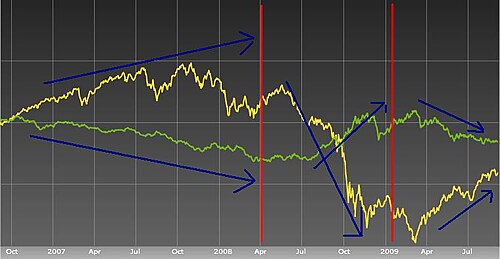
In order to mitigate risk, traders may liquidate their positions in various currencies to take up positions in safe-haven currencies, such as the US dollar.[91] Sometimes, the choice of a safe haven currency is more of a choice based on prevailing sentiments rather than one of economic statistics. An example would be the 2008 financial crisis, where value of equities across the world fell while the US dollar strengthened (see Fig.1). This happened despite the strong focus of the crisis in the US.[92]
Carry trade
Currency carry trade refers to the act of borrowing one currency that has a low interest rate in order to purchase another with a higher interest rate. A large difference in rates can be highly profitable for the trader, especially if high leverage is used. However, with all levered investments this is a double edged sword, and large exchange rate price fluctuations can suddenly swing trades into huge losses.
Further reading
- A user's guide to the Triennial Central Bank Survey of foreign exchange market activity – Bank for International Settlements
- National Futures Association (2010), Trading in the Retail Off-Exchange Foreign Currency Market. Chicago, Illinois.
| Current exchange rates | |
|---|---|
| From Google Finance: | AUDCADCHFCNYEURGBPHKDJPYUSD |
| From Yahoo! Finance: | AUDCADCHFCNYEURGBPHKDJPYUSD |
| From XE.com: | AUDCADCHFCNYEURGBPHKDJPYUSD |
| From OANDA: | AUDCADCHFCNYEURGBPHKDJPYUSD |
See also
- Balance of trade
- Currency codes
- Currency strength
- Dual exchange rate
- Effective exchange rate
- Foreign currency mortgage
- Foreign exchange controls
- Foreign exchange derivative
- Foreign exchange hedge
- Foreign exchange option
- Foreign exchange regulation
- Foreign-exchange reserves
- Foreign exchange risk
- Leads and lags
- List of electronic trading platforms
- List of countries by exchange rate regime
- Money market
- Nonfarm payrolls
- Tobin tax
- World currency
Notes
- ↑The total sum is 200% because each currency trade is counted twice: once for the currency being bought and once for the currency being sold. The percentages above represent the proportion of all trades involving a given currency, regardless of which side of the transaction it is on.
References
- ↑Record, Neil, Currency Overlay (Wiley Finance Series)
- ↑Global imbalances and destabilizing speculationArchived 17 October 2016 at the Wayback Machine (2007), UNCTAD Trade and development report 2007 (Chapter 1B).
- 123"Triennial Central Bank Survey of foreign exchange and OTC derivatives markets in 2025". 30 September 2025.
- ↑CR Geisst – Encyclopedia of American Business HistoryInfobase Publishing, 1 January 2009 Retrieved 14 July 2012 ISBN 1438109873
- ↑GW Bromiley – International Standard Bible Encyclopedia: A–DWilliam B. Eerdmans Publishing Company, 13 February 1995 Retrieved 14 July 2012 ISBN 0802837816
- ↑T Crump – The Phenomenon of Money (Routledge Revivals)Taylor & Francis US, 14 January 2011 Retrieved 14 July 2012 ISBN 0415611873
- ↑J Hasebroek – Trade and Politics in Ancient Greece Biblo & Tannen Publishers, 1 March 1933 Retrieved 14 July 2012 ISBN 0819601500
- ↑ إس فون ريدن (محاضر أول في التاريخ القديم والآثار الكلاسيكية بجامعة بريستول، المملكة المتحدة، 2007) - النقود في مصر البطلمية: من الفتح المقدوني إلى نهاية القرن الثالث قبل الميلاد (ص 48) مطبعة جامعة كامبريدج ، 6 ديسمبر 2007 ISBN 0521852641[تم الاطلاع عليه بتاريخ 25 مارس 2015]
- ↑ مارك كارترايت. "التجارة في اليونان القديمة" . موسوعة التاريخ العالمي .
- ↑ آر سي سميث، آي والتر، جي ديلونج - الخدمات المصرفية العالمية ، مطبعة جامعة أكسفورد ، ١٧ يناير ٢٠١٢، تاريخ الاطلاع ١٣ يوليو ٢٠١٢، رقم ISBN 0195335937
- ↑ (المستوى الثالث) – جي فاساري – حياة الفنانين ، تم الاطلاع عليه في 13 يوليو 2012، رقم ISBN 019283410X
- ↑ (الصفحة 130 من) ريموند دي روفر - صعود وسقوط بنك ميديشي: 1397-1394، دار بيرد للنشر، 1999. تاريخ الاطلاع: 14 يوليو 2012. رقم ISBN 1893122328
- ↑ آر. إيه. دي روفر – بنك ميديشي: تنظيمه وإدارته وعملياته وانحداره، مطبعة جامعة نيويورك ، 1948. تم الاطلاع عليه بتاريخ 14 يوليو 2012.
- ↑ قواميس كامبريدج على الإنترنت – "حساب نوسترو"
- ↑ قواميس أكسفورد على الإنترنت – "حساب نوسترو"
- ↑ إس هومر، ريتشارد إي سيلا، تاريخ أسعار الفائدة، جون وايلي وأولاده ، 29 أغسطس 2005، تم الاطلاع عليه في 14 يوليو 2012، رقم ISBN 0471732834
- ↑ تي ساوثكليف أشتون - تاريخ اقتصادي لإنجلترا: القرن الثامن عشر، المجلد 3، تايلور وفرانسيس، 1955. تم الاطلاع عليه في 13 يوليو 2012.
- ↑ (الصفحة 196 من) جيه دبليو ماركهام، التاريخ المالي للولايات المتحدة، المجلدان 1-2، إم إي شارب، 2002. تم الاطلاع عليه في 14 يوليو 2012. رقم ISBN 0765607301
- ↑ (الصفحة 847) من كتاب م. بول، الرابطة الأوروبية لتاريخ المصارف - دليل تاريخ المصارف الأوروبية، دار إدوارد إلجار للنشر ، 1994. تم الاطلاع عليه بتاريخ 14 يوليو 2012.
- ↑ هاباكوك، هـ. ج. (1987). تاريخ كامبريدج الاقتصادي لأوروبا: المجلد 2: التجارة والصناعة في العصور الوسطى . مطبعة جامعة كامبريدج. ISBN 978-0-521-08709-4.
- ↑ إس. شماه - مدخل إلى صرف العملات الأجنبية ["1880" ضمن نطاق 1.2 من حيث القيمة] جون وايلي وأولاده، 22 نوفمبر 2011. تم الاطلاع عليه في 27 يوليو 2012. رقم ISBN 1119994896
- ↑ تي هونغ - مراقبة الصرف الأجنبي في الصين: الطبعة الأولى (سلسلة قانون الأعمال الآسيوية، المجلد 4) كلوير لو إنترناشونال، 2004، رقم ISBN 9041124268 تم الاطلاع عليه بتاريخ 12 يناير 2013
- ↑P Mathias, S Pollard – The Cambridge Economic History of Europe: The industrial economies : the development of economic and social policies Cambridge University Press, 1989 Retrieved 13 July 2012 ISBN 0521225043
- ↑S Misra, PK Yadav International Business: Text And Cases PHI Learning Pvt. Ltd. 2009 Retrieved 27 July 2012 ISBN 8120336526
- ↑P. L. Cottrell – Centres and Peripheries in Banking: The Historical Development of Financial Markets Ashgate Publishing, Ltd., 2007 Retrieved 13 July 2012 ISBN 0754661210
- ↑P. L. Cottrell (p. 75)
- ↑J Wake – Kleinwort, Benson: The History of Two Families in Banking Oxford University Press, 27 February 1997 Retrieved 13 July 2012 ISBN 0198282990
- ↑J Atkin – The Foreign Exchange Market Of London: Development Since 1900 Psychology Press, 2005 Retrieved 13 July 2012 ISBN 041534901X
- ↑Miller, Siobhan (25 October 2018). "The impact of protection on trade: lessons from Britain's 1930s policy shift". Microeconomic Insights. Retrieved 4 July 2024.
- ↑Laurence S. Copeland – Exchange Rates and International Finance Pearson Education, 2008 Retrieved 15 July 2012 ISBN 0273710273
- ↑M Sumiya – A History of Japanese Trade and Industry Policy Oxford University Press, 2000 Retrieved 13 July 2012 ISBN 0198292511
- ↑RC Smith, I Walter, G DeLong (p.4)
- ↑AH Meltzer – A History of the Federal Reserve, Volume 2, Book 1; Books 1951–1969University of Chicago Press, 1 February 2010 Retrieved 14 July 2012 ISBN 0226520013
- ↑(page 7 "fixed exchange rates" of) DF DeRosa –Options on Foreign Exchange Retrieved 15 July 2012
- ↑K Butcher – Forex Made Simple: A Beginner's Guide to Foreign Exchange Success John Wiley and Sons, 18 February 2011 Retrieved 13 July 2012 ISBN 0730375250
- ↑J Madura – International Financial Management, Cengage Learning, 12 October 2011 Retrieved 14 July 2012 ISBN 0538482966
- ↑N DraKoln – Forex for Small Speculators Enlightened Financial Press, 1 April 2004 Retrieved 13 July 2012 ISBN 0966624580
- ↑ مجلة SFO ، بقلم آر آر واسندورف الابن (دولي) - تداول العملات الأجنبية ، بقلم بي إيه روزنسترايش - تطور تداول العملات الأجنبية والأسواق الناشئة ، دار نشر تريدرز برس، 30 يونيو 2009، تاريخ الاطلاع: 13 يوليو 2012، رقم ISBN 1934354104
- ↑ ج. جاغرسون، س. و. هانسن - كل شيء عن تداول العملات الأجنبية، ماكجرو هيل بروفيشنال، ١٧ يونيو ٢٠١١، تاريخ الاطلاع ١٣ يوليو ٢٠١٢، رقم ISBN 007176822X
- ↑ كتاب فرانز بيك السنوي للعملات لعام 1977 – تم الاطلاع عليه بتاريخ 15 يوليو 2012
- ↑ سووبودا، ألكسندر ك. (30 أبريل 1976). تحركات رأس المال والتحكم بها: وقائع المؤتمر الثاني للمركز الدولي للدراسات النقدية والمصرفية؛ حرره ألكسندر ك. سووبودا . بريل. ص 70. ISBN 9789028602953– عبر كتب جوجل.
- ↑ جي غاندولفو - التمويل الدولي والاقتصاد الكلي للاقتصاد المفتوح ، سبرينغر، 2002. تم الاطلاع عليه بتاريخ 15 يوليو 2012. رقم ISBN 3540434593
- ↑ مدينة لندن: التاريخ، دار راندوم هاوس ، 31 ديسمبر 2011، تاريخ الاطلاع: 15 يوليو 2012، رقم ISBN 1448114721
- ↑ «أُجهض يوم الخميس بسبب أنباء عن هجوم قياسي على الدولار أجبر معظم أسواق الصرف الأجنبي على الإغلاق.» في «التوقعات: المجلد 45»، الصادر عن مؤسسة ستاندرد آند بورز - 1972 - تم الاطلاع عليه في 15 يوليو 2012 →
- ↑ "1973: نهاية نظام بريتون وودز عندما تعلمت أسعار الصرف التعويم" . www.bundesbank.de . تاريخ الاطلاع: 4 يوليو 2024 .
- ↑ "نبذة عن صندوق النقد الدولي: التاريخ: نهاية نظام بريتون وودز (1972-1981)" . www.imf.org . تاريخ الاطلاع: 4 يوليو 2024 .
- ↑ الصندوق، صندوق النقد الدولي (1 سبتمبر 1976)، التقرير السنوي لصندوق النقد الدولي 1976 ، التقرير السنوي للمجلس التنفيذي، صندوق النقد الدولي، doi : 10.5089/9781616351885.011 ، ISBN 978-1-61635-188-5تم الاطلاع عليه بتاريخ 4 يوليو 2024
- ↑ هـ. جيرش، ك. هـ. باكيه، هـ. شميدينغ – المعجزة المتلاشية: أربعة عقود من اقتصاد السوق في ألمانيا، مطبعة جامعة كامبريدج، 10 نوفمبر 1994، تاريخ الاطلاع: 15 يوليو 2012، رقم ISBN 0521358698
- ↑ المركز الدولي للدراسات النقدية والمصرفية، أ. ك. سووبودا - تحركات رأس المال والتحكم بها: وقائع المؤتمر الثاني للمركز الدولي للدراسات النقدية والمصرفية ، بريل، 1976. تاريخ الاطلاع: 15 يوليو 2012. رقم ISBN 902860295X
- ↑ (ص 332 من) إم آر براولي - القوة والمال والتجارة: قرارات تُشكّل العلاقات الاقتصادية العالمية، مطبعة جامعة تورنتو ، 2005. تاريخ الاطلاع: 15 يوليو 2012. رقم ISBN 1551116839
- ↑ "... أُجبرت على الإغلاق لعدة أيام في منتصف عام 1972، ... وأُغلقت أسواق الصرف الأجنبي مرة أخرى في مناسبتين في بداية عام 1973،..." في كتاب هـ. ج. روستو، "مسارات جديدة نحو التوظيف الكامل: فشل النظرية الاقتصادية التقليدية" ، ماكميلان، 1991. تم الاطلاع عليه بتاريخ 15 يوليو 2012 →
- ↑ تشين، جيمس (2009). أساسيات تداول العملات الأجنبية . جون وايلي وأولاده. ISBN 978-0470464007تم الاطلاع عليه بتاريخ 15 نوفمبر 2016 .
- ↑ هيكس، آلان (2000). إدارة مخاطر العملة باستخدام خيارات صرف العملات الأجنبية . إلسيفير ساينس. ISBN 1855734915تم الاطلاع عليه بتاريخ 15 نوفمبر 2016 .
- ↑ جونسون، جي جي (1985). صياغة سياسات سعر الصرف في برامج التكيف . صندوق النقد الدولي. ISBN 0939934507تم الاطلاع عليه بتاريخ 15 نوفمبر 2016 .
- ↑ جيه إيه دورن - الصين في الألفية الجديدة: إصلاحات السوق والتنمية الاجتماعية ، معهد كاتو ، 1998. تاريخ الاطلاع: 14 يوليو 2012. رقم ISBN 1882577612
- ↑ ب. لورينز، هـ. مهران، م. كوينتين، ت. نوردمان - إصلاحات النظام النقدي ونظام الصرف في الصين: تجربة في التدرج، صندوق النقد الدولي، 26 سبتمبر 1996، تاريخ الاطلاع: 14 يوليو 2012، رقم ISBN 1452766126
- ↑ يي تشونغ – كوريا الجنوبية في المسار السريع: التنمية الاقتصادية وتكوين رأس المال، مطبعة جامعة أكسفورد، 20 يوليو 2007، تاريخ الاطلاع: 14 يوليو 2012، رقم ISBN 0195325451
- ↑ ك.م. دومينغيز، ج.أ. فرانكل - هل يُجدي التدخل في سوق الصرف الأجنبي؟ معهد بيترسون للاقتصاد الدولي ، 1993. تاريخ الاطلاع: 14 يوليو 2012. رقم ISBN 0881321044
- ↑ (صفحة ٢١١ – [المصدر: بنك التسويات الدولية ٢٠٠٧]) هـ. فان دن بيرغ – التمويل الدولي والاقتصاد الكلي للاقتصاد المفتوح: النظرية والتاريخ والسياسة، دار النشر العالمية ، ٣١ أغسطس ٢٠١٠، تاريخ الاطلاع: ١٤ يوليو ٢٠١٢، رقم ISBN 9814293512
- ↑ بي جيه كويرك، قضايا في أنظمة الصرف والدفع الدولية، صندوق النقد الدولي، 13 أبريل 1995، تاريخ الاطلاع: 14 يوليو 2012، رقم ISBN 1557754802
- ↑ "تقرير عن نشاط سوق الصرف الأجنبي العالمي في عام 2013" (ملف PDF) . المسح الثلاثي للبنوك المركزية . بازل ، سويسرا : بنك التسويات الدولية. سبتمبر 2013. ص 12. تاريخ الاطلاع: 22 أكتوبر 2013 .
- ↑ "المشتقات في الأسواق الناشئة" ، بنك التسويات الدولية، 13 ديسمبر 2010
- ↑ "سؤال بقيمة 4 تريليونات دولار: ما الذي يفسر نمو سوق الصرف الأجنبي منذ مسح عام 2007؟" ، بنك التسويات الدولية، 13 ديسمبر 2010
- ↑ ليلي، مارك (25 يونيو 2020). "استطلاع يوروموني لسوق الصرف الأجنبي لعام 2020 - تم إصدار النتائج" .
- 1 2 كوكو، جواو ف.؛ جوميز، فرانسيسكو J .؛ مارتينز، نونو سي. (1 يناير 2009). "علاقات الإقراض في سوق ما بين البنوك" . مجلة الوساطة المالية . 18 (1): 24-48 . دوى : 10.1016/j.jfi.2008.06.003 . ردمك 1042-9573 .
- ↑ "مسح البنوك المركزية الثلاثي السنوي لحجم تداول العملات الأجنبية في أبريل 2016" (ملف PDF) . مسح البنوك المركزية الثلاثي السنوي . بازل ، سويسرا : بنك التسويات الدولية. سبتمبر 2016. تاريخ الاطلاع: 1 سبتمبر 2016 .
- ↑ غابرييل غالاتي، مايكل ملفين (ديسمبر 2004). "لماذا ارتفع تداول العملات الأجنبية؟ شرح نتائج المسح الثلاثي لعام 2004" (ملف PDF) . بنك التسويات الدولية.
- ↑ آلان غرينسبان ، جذور أزمة الرهن العقاري: لا يمكن احتواء الفقاعات بشكل آمن عن طريق السياسة النقدية قبل أن تنفجر حمى المضاربة من تلقاء نفسها. ، صحيفة وول ستريت جورنال ، 12 ديسمبر 2007
- ↑ مكاي، بيتر أ. (26 يوليو 2005). "محتالون يعملون على هامش نطاق لجنة تداول السلع الآجلة يستدرجون صغار المستثمرين بوعود أرباح خيالية" . صحيفة وول ستريت جورنال . تاريخ الاسترجاع: 31 أكتوبر 2007 .
- ↑ إيغان، جاك (19 يونيو 2005). "تحقق من مخاطر العملة. ثم اضربها في 100" . صحيفة نيويورك تايمز . تم الاطلاع عليه في 30 أكتوبر 2007 .
- ↑ صحيفة صنداي تايمز (لندن)، 16 يوليو 2006
- ↑ أندي كولمورجن (16 أغسطس 2021). "التحويلات المالية الدولية" . choice.com.au .
- ↑ "معلومات" (ملف PDF) . www.pondiuni.edu.in .
- ↑ "البيانات" (ملف PDF) . nptel.ac.in . مؤرشف من النسخة الأصلية (ملف PDF) بتاريخ 12 سبتمبر 2014.
- ↑ "شركات تحويل الأموال/الحوالات ومكاتب الصرافة" . كتب تعليمية مفتوحة لهونغ كونغ . 29 أبريل 2015. مؤرشف من الأصل في 22 يونيو 2018. تم الاطلاع عليه في 4 يوليو 2024 .
- ↑ مسح البنوك المركزية الثلاثي السنوي لحجم تداول العملات الأجنبية في أبريل 2025 (ملف PDF) (تقرير). بنك التسويات الدولية . 30 سبتمبر 2025. ص 14. مؤرشف (ملف PDF) من الأصل في 12 أكتوبر 2025.
- ↑ "رويترز، بورصة شيكاغو التجارية تطلقان منصة عالمية لسوق الفوركس" . رويترز . 10 أغسطس 2007.
- ↑ نهج البنية الدقيقة لأسعار الصرف، ريتشارد ليونز، مطبعة معهد ماساتشوستس للتكنولوجيا، مؤرشف في 26 يونيو 2018 في آلة Wayback (الفصل 1 بصيغة PDF)
- ↑ تيل، سيدريك؛ ستوفلز، نيكولاس؛ غورباتشوف، أولغا (أغسطس 2001). "إلى أي مدى تؤثر الإنتاجية على الدولار؟" ( ملف PDF) . قضايا معاصرة في الاقتصاد والمالية . doi : 10.2139/ssrn.711362 . S2CID 6486487. SSRN 711362 .
- ↑ "عملة الملاذ الآمن" . معجم المصطلحات المالية . رويترز. مؤرشف من الأصل في 27 يونيو 2013. تم الاطلاع عليه في 22 أبريل 2013 .
- ↑ جون ج. مورفي، التحليل الفني للأسواق المالية ( معهد نيويورك للتمويل ، 1999)، ص 343-375.
- ↑ سام واي كروس، كل شيء عن سوق الصرف الأجنبي في الولايات المتحدة ، بنك الاحتياطي الفيدرالي في نيويورك (1998)، الفصل 11، الصفحات 113-115.
- ^ جيليت، جوزيف (2016). تقسيم البنسات. خدمات النخبة الإلكترونية. رقم ISBN 9781533331090.
- ↑ آرلي أو. بيترز؛ شياوينغ دونغ (17 يونيو 2016). مقدمة في التمويل الرياضي مع تطبيقات: فهم وبناء الحدس المالي . سبرينغر. ص 345 وما بعدها. ISBN 978-1-4939-3783-7.
- ↑ مايكل إيه إس جوث، " المضاربة المربحة المزعزعة للاستقرار " (مؤرشف في 28 يوليو 2013 على موقع Wayback Machine )، الفصل 1 في كتاب مايكل إيه إس جوث، السلوك المضاربي وعمل الأسواق التنافسية في ظل عدم اليقين، دار نشر أفيبوري أشجيت، ألدورشوت، إنجلترا (1994)، رقم ISBN 1-85628-985-0.
- ↑ ما تعلمته من الأزمة الاقتصادية العالمية، جوزيف ستيغليتز، مجلة نيو ريبابليك، 17 أبريل 2000، أعيد نشره على موقع GlobalPolicy.org
- ↑ لورانس سامرز وسامرز نائب الرئيس (1989) "عندما تعمل الأسواق المالية بشكل جيد للغاية: حالة حذرة لفرض ضريبة على معاملات الأوراق المالية" مجلة الخدمات المالية
- ↑ بلومفيلد، روبرت جيه؛ أوهارا، مورين؛ سار، جيديون (2007). "كيف يؤثر التداول الضوضائي على الأسواق: تحليل تجريبي" . المجلة الإلكترونية لشبكة أبحاث العلوم الاجتماعية . doi : 10.2139/ssrn.994379 . ISSN 1556-5068 .
- ↑ ريدبيرن، توم (17 سبتمبر 1992). "لكن لا تتسرعوا في شراء الكرونة: مقامرة السويد بنسبة 500%" . صحيفة نيويورك تايمز . تم الاطلاع عليه بتاريخ 18 أبريل 2015 .
- ↑ غريغوري ج. ميلمان، حول العالم بتريليون دولار في اليوم، دار بانتام للنشر ، نيويورك، 1995.
- ↑ مون، أنجيلا (5 فبراير 2010). "الأسواق العالمية - انتعاش الأسهم الأمريكية، وارتفاع الدولار بسبب النفور من المخاطرة" . رويترز . تم الاطلاع عليه بتاريخ 27 فبراير 2010 .
- ↑ ستيوارت، هيذر (9 أبريل 2008). "صندوق النقد الدولي يقول إن الأزمة الأمريكية هي "أكبر صدمة مالية منذ الكساد الكبير"" . صحيفة الغارديان . لندن . تم الاطلاع عليه بتاريخ 27 فبراير 2010 .
روابط خارجية
- لجنة الصرف الأجنبي في لندن، مع روابط (على اليمين) إلى لجان في نيويورك، وطوكيو، وكندا، وأستراليا، وهونغ كونغ، وسنغافورة على موقع بنك إنجلترا الإلكتروني.
- تحديث يومي لأسعار الصرف صادر عن الاحتياطي الفيدرالي الأمريكي
- محول العملات التاريخي (لعشر سنوات) وتنزيل البيانات مقدم من بنك كندا
- إحصاءات أسعار صرف العملات الصادرة عن منظمة التعاون الاقتصادي والتنمية (المتوسطات الشهرية) والمنشورة على موقع OECD.org
- سوق الصرف الأجنبي