
انقراضات أواخر العصر البليستوسيني

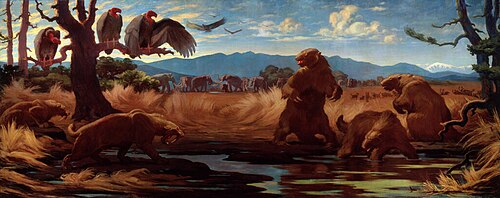
شهد العصر البليستوسيني المتأخر وبداية الهولوسين انقراض غالبية الحيوانات الضخمة في العالم ، والتي تُعرَّف عادةً بأنها أنواع حيوانية يزيد وزنها عن 45 كيلوغرامًا (99 رطلاً) ، [ 1 ] مما أدى إلى انهيار كثافة وتنوع الحيوانات في جميع أنحاء العالم. [ 2 ] وتتميز حالات الانقراض خلال العصر البليستوسيني المتأخر عن حالات الانقراض السابقة بانحيازها الشديد نحو الحيوانات الكبيرة (مع بقاء الحيوانات الصغيرة غير متأثرة إلى حد كبير)، والغياب الواسع النطاق للتعاقب البيئي لاستبدال هذه الأنواع المنقرضة من الحيوانات الضخمة، [ 3 ] والتحول في نظام العلاقات والموائل الحيوانية القائمة سابقًا نتيجة لذلك. وقد اختلف توقيت وشدة حالات الانقراض باختلاف المنطقة، ويُعتقد عمومًا أنها كانت مدفوعة بالبشر أو التغير المناخي أو كليهما. [ 3 ] ويُعتقد أن تأثير الإنسان على تجمعات الحيوانات الضخمة كان مدفوعًا بالصيد ("الإفراط في الصيد")، [ 4 ] [ 5 ] بالإضافة إلى التغيرات البيئية المحتملة. [ 6 ] لطالما كانت الأهمية النسبية للعوامل البشرية مقابل العوامل المناخية في الانقراضات موضوع جدل مستمر، [ 3 ] على الرغم من أن بعض المصادر تشير إلى أن معظم الباحثين يؤيدون على الأقل دورًا مساهمًا للبشر في الانقراضات. [ 7 ]
حدثت انقراضات كبرى في أستراليا وغينيا الجديدة ( ساحل ) بدءًا من حوالي 50,000 عام، وفي الأمريكتين قبل حوالي 13,000 عام، بالتزامن مع هجرة البشر المعاصرين إلى هذه المناطق. [ 8 ] توزعت الانقراضات في شمال أوراسيا على مدى عشرات الآلاف من السنين بين 50,000 و10,000 عام مضت، [ 2 ] بينما كانت الانقراضات في الأمريكتين متزامنة تقريبًا، وامتدت على مدى 3,000 عام كحد أقصى. [ 4 ] [ 9 ] عمومًا، خلال العصر البليستوسيني المتأخر، انقرضت حوالي 65% من جميع أنواع الحيوانات الضخمة في العالم، [ 10 ] وارتفعت هذه النسبة إلى 72% في أمريكا الشمالية، و83% في أمريكا الجنوبية، و88% في أستراليا، [ 11 ] حيث انقرضت جميع الثدييات التي يزيد وزنها عن 1000 كيلوغرام (2200 رطل) في أستراليا والأمريكتين، [ 1 ] ونحو 80% على مستوى العالم. [ 7 ] وشهدت أفريقيا وجنوب آسيا وجنوب شرق آسيا انقراضات أقل حدة من المناطق الأخرى. [ 11 ]
غالباً ما يُنظر إلى انقراضات الحيوانات الضخمة في أواخر العصر البليستوسيني وأوائل العصر الهولوسيني على أنها جزء من حدث انقراض واحد، مع اعتبار الانقراضات اللاحقة التي يُعتقد على نطاق واسع أنها ناجمة عن النشاط البشري في منتصف العصر الهولوسيني المتأخر، مثل تلك التي حدثت في مدغشقر ونيوزيلندا ، بمثابة حدث انقراض العصر الرباعي المتأخر . [ 7 ]
الانقراضات حسب النطاق الجغرافي الحيوي
ملخص
| النطاق الجغرافي الحيوي | العمالقة (أكثر من 1000 كجم) | كبير جداً (400-1000 كجم) | كبير (150-400 كجم) | متوسط الحجم (50-150 كجم) | متوسط (10-50 كجم) | المجموع | المناطق المشمولة | ||||||||||||
|---|---|---|---|---|---|---|---|---|---|---|---|---|---|---|---|---|---|---|---|
| يبدأ | خسارة | % | يبدأ | خسارة | % | يبدأ | خسارة | % | يبدأ | خسارة | % | يبدأ | خسارة | % | يبدأ | خسارة | % | ||
| أفروتروبيك | 6 | -1 | 16.6% | 4 | -1 | 25% | 25 | -3 | 12% | 32 | 0 | 0% | 69 | -2 | 2.9% | 136 | -7 | 5.1% | أفريقيا عبر الصحراء الكبرى وشبه الجزيرة العربية |
| الهندومالايا | 5 | -2 | 40% | 6 | -1 | 16.7% | 10 | -1 | 10% | 20 | -3 | 15% | 56 | -1 | 1.8% | 97 | -8 | 8.2% | شبه القارة الهندية ، وجنوب شرق آسيا ، وجنوب الصين |
| المنطقة القطبية الشمالية القديمة | 8 | -8 | 100% | 10 | -5 | 50% | 14 | -5 | 35.7% | 23 | -3 | 15% | 41 | -1 | 2.4% | 96 | -22 | 22.9% | أوراسيا وشمال أفريقيا |
| المنطقة القطبية الشمالية الجديدة | 5 | -5 | 100% | 10 | -8 | 80% | 26 | -22 | 84.6% | 20 | -13 | 65% | 25 | -9 | 36% | 86 | -57 | 66% | أمريكا الشمالية |
| نيوتروبيك | 9 | -9 | 100% | 12 | -12 | 100% | 17 | -14 | 82% | 20 | -11 | 55% | 35 | -5 | 14.3% | 93 | -51 | 54% | أمريكا الجنوبية ، وأمريكا الوسطى ، وجنوب فلوريدا ، ومنطقة البحر الكاريبي |
| أستراليا | 4 | -4 | 100% | 5 | -5 | 100% | 6 | -6 | 100% | 16 | -13 | 81.2% | 25 | -10 | 40% | 56 | -38 | 67% | أستراليا ، غينيا الجديدة ، نيوزيلندا ، والجزر المجاورة. |
| عالمي | 33 | -26 | 78.8% | 46 | -31 | 67.4% | 86 | -47 | 54.7% | 113 | -41 | 36.3% | 215 | -23 | 10.1% | 493 | -168 | 34% | |
مقدمة

شهد العصر البليستوسيني المتأخر انقراض العديد من الثدييات التي يزيد وزنها عن 40 كيلوغرامًا (88 رطلاً) ، بما في ذلك حوالي 80% من الثدييات التي يزيد وزنها عن طن واحد. وتزداد نسبة انقراض الحيوانات الضخمة كلما ابتعدت مسافة الهجرة البشرية عن أفريقيا، مع أعلى معدلات الانقراض في أستراليا وأمريكا الشمالية والجنوبية. [ 7 ]
يعكس النطاق المتزايد للانقراض نمط هجرة البشر المعاصرين: فكلما ابتعدنا عن أفريقيا، وكلما كان استيطان البشر للمنطقة أحدث، قل الوقت الذي أتيح لتلك البيئات (بما في ذلك حيواناتها الضخمة) للتكيف مع البشر (والعكس صحيح).
هناك فرضيتان رئيسيتان لتفسير هذا الانقراض:
- يؤدي تغير المناخ المرتبط بتقدم وانحسار القمم الجليدية أو الصفائح الجليدية الرئيسية إلى انخفاض في الموائل الملائمة.
- يؤدي الصيد البشري إلى تناقص أعداد الحيوانات الضخمة، وهو ما يُعرف عادةً باسم "الصيد المفرط". [ 13 ]
توجد بعض التناقضات بين البيانات المتاحة حاليًا وفرضية الصيد الجائر في عصور ما قبل التاريخ. فعلى سبيل المثال، ثمة غموض يكتنف توقيت انقراض الحيوانات الضخمة في أستراليا . [ 13 ] تشمل الأدلة الداعمة لفرضية الصيد الجائر في عصور ما قبل التاريخ استمرار وجود الحيوانات الضخمة في بعض الجزر لآلاف السنين بعد اختفاء نظيراتها في البر الرئيسي. فعلى سبيل المثال، نجا الكسلان الأرضي في جزر الأنتيل لفترة طويلة بعد انقراض الكسلان الأرضي في أمريكا الشمالية والجنوبية، وانقرض الماموث الصوفي في جزيرة رانجل النائية بعد 6000 عام من انقراضه في البر الرئيسي، واستمرت أبقار ستيلر البحرية في العيش قبالة جزر كوماندور المعزولة وغير المأهولة لآلاف السنين بعد اختفائها من سواحل شمال المحيط الهادئ. [ 14 ] ويتزامن اختفاء هذه الأنواع الجزرية لاحقًا مع استيطان البشر لهذه الجزر في وقت لاحق.

مع ذلك، توجد بعض الآراء التي تشير إلى أن الأنواع استجابت بشكل مختلف للتغيرات البيئية، ولا يوجد عامل واحد بمفرده يفسر التنوع الكبير في حالات الانقراض. قد تشمل الأسباب التفاعل بين تغير المناخ ، والتنافس بين الأنواع ، وعدم استقرار ديناميكيات السكان ، والصيد، فضلاً عن المنافسة من جانب البشر. [ 15 ]
استندت المناقشات الأصلية حول ما إذا كان وصول البشر أو تغير المناخ هو السبب الرئيسي لانقراض الحيوانات الضخمة بالضرورة إلى أدلة من علم الأحافير مقترنة بتقنيات التأريخ الجيولوجي. ومؤخراً، قدمت التحليلات الجينية لمجموعات الحيوانات الضخمة الباقية أدلة جديدة، مما أدى إلى الاستنتاج التالي: "إن عجز المناخ عن التنبؤ بالانخفاض الملحوظ في أعداد الحيوانات الضخمة، وخاصة خلال الـ 75000 سنة الماضية، يشير إلى أن التأثير البشري أصبح المحرك الرئيسي لديناميكيات الحيوانات الضخمة في ذلك الوقت تقريباً." [ 16 ]
أفريقيا
على الرغم من أن أفريقيا كانت من أقل المناطق تأثراً، إلا أنها شهدت انقراضات، لا سيما في الفترة الانتقالية بين أواخر العصر البليستوسيني والهولوسيني. ويُرجح أن هذه الانقراضات كانت مدفوعة بشكل أساسي بتغيرات مناخية في بيئات المراعي. [ 17 ]
- ذوات الحوافر
- ذوات الحوافر الزوجية الأصابع
- الخنازير ( Suidae )
- Metridiochoerus (ssp.)
- كولبوتشوروس (نوع فرعي)
- البقريات (الأبقار، الظباء)
- الجاموس العملاق ( Syncerus antiquus )
- ميغالوتراغوس
- روسينجوريكس
- ظبي الربيع الجنوبي ( Antidorcas australis )
- ظبي بوند ( Antidorcas bondi )
- داماليسكوس هيبسودون
- داماليسكوس نيرو
- غزال الأطلسي
- غزال تينجيتانا
- الماعز
- الأيائل ( Cervidae )
- ميغاسيرويدس ألجيريكوس (شمال أفريقيا)
- الخنازير ( Suidae )
- ذوات الحوافر الفردية الأصابع
- وحيد القرن (Rhinocerotidae).
- وحيد القرن ذو الأنف الضيق ( ستيفانورينوس هيميتويكوس ، شمال أفريقيا)
- سيراتوثيريوم موريتانيكوم
- أنواع الخيول البرية
- خيول الكابالين
- ايكوس ألجيريكوس (شمال أفريقيا)
- الجنس الفرعي Asinus (التقييمات)
- ايكوس ملكينسيس (شمال أفريقيا)
- Subgenis Hippotigris (الحمار الوحشي)
- حمار وحشي رأس الرجاء الصالح ( Equus capensis )
- ايكوس موريتانيكوس (شمال أفريقيا). [ 18 ]
- خيول الكابالين
- وحيد القرن (Rhinocerotidae).
- ذوات الحوافر الزوجية الأصابع
- الخراطيم
- الفيلة (Elephantidae)
- Palaeoloxodon jolensis ؟ (يشير مؤلفون آخرون إلى أن هذا النوع انقرض في أواخر العصر البليستوسيني الأوسط)
- الفيلة (Elephantidae)
- القوارض
- التماسيح
جنوب آسيا وجنوب شرق آسيا
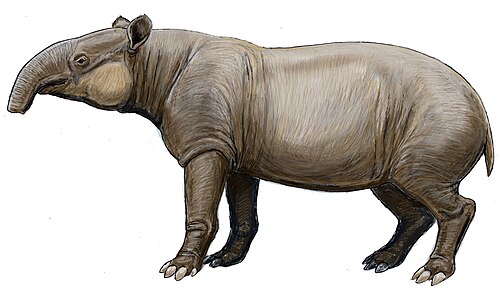
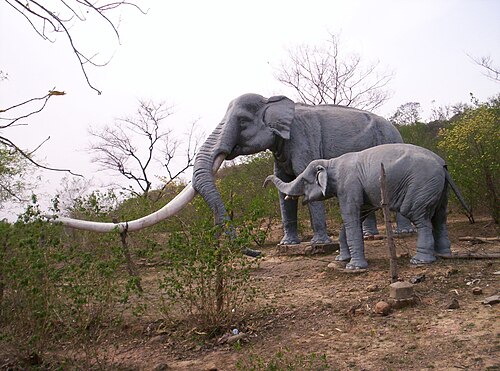


لا يزال توقيت الانقراضات في شبه القارة الهندية غير مؤكد بسبب نقص البيانات الموثوقة لتحديد التواريخ. [ 19 ] وقد سُجّلت مشكلات مماثلة في المواقع الصينية، على الرغم من عدم وجود دليل على بقاء أي من أنواع الحيوانات الضخمة حتى العصر الهولوسيني في تلك المنطقة. [ 20 ] ويُعتقد أن الانقراضات في جنوب شرق آسيا وجنوب الصين كانت نتيجة لتحول بيئي من بيئات حرجية مفتوحة إلى بيئات حرجية مغلقة. [ 21 ]
- ذوات الحوافر
- ذوات الحوافر الزوجية الأصابع
- العديد من أنواع فصيلة البقريات .
- بوس بالايسوندايكوس (سلف البانتينغ )
- سيبو تامارو ( Bubalus cebuensis )
- Bubalus grovesi [ 22 ]
- الجاموس المائي قصير القرون ( Bubalus mephistopheles )
- Bubalus palaeokerabau
- فرس النهر
- Hexaprotodon (شبه القارة الهندية وجنوب شرق آسيا) [ 23 ]
- العديد من أنواع فصيلة البقريات .
- ذوات الحوافر الفردية الأصابع
- أنواع الخيول (Equus spp.)
- ايكوس نماديكوس (شبه القارة الهندية)
- حصان يونان ( Equus yunanensis )
- التابير العملاق ( Tapirus augustus، جنوب شرق آسيا وجنوب الصين)
- أنواع الخيول (Equus spp.)
- ذوات الحوافر الزوجية الأصابع
- الفوليدوتا (البنغول)
- آكلات اللحوم
- الدببة ( Ursidae )
- Ailuropoda baconi (سلف الباندا العملاقة ، والذي غالباً ما يعتبر نوعاً فرعياً منه [ 24 ] وقد تم التنازع على تميزه عن الأنواع الحية [ 25 ] )
- الضباع ( Hyaenidae )
- الضبع الكهفي ( Crocuta ( Crocuta ) ultima شرق آسيا وجنوب شرق آسيا القارية)
- الدببة ( Ursidae )
- الأفروثيريا
- الخرطوميات
- عائلة ستيغودونتيداي
- Stegodon spp . (بما في ذلك Stegodon florensis في فلوريس، وStegodon orientalis في شرق وجنوب شرق آسيا، و Stegodon sp. في شبه القارة الهندية)
- عائلة الفيلة
- Palaeoloxodon spp.
- Palaeoloxodon namadicus (شبه القارة الهندية، وربما جنوب شرق آسيا أيضًا)
- Palaeoloxodon spp.
- عائلة ستيغودونتيداي
- الخرطوميات
- الطيور
- Shiriyanetta hasegawai (بطة لا تطير موطنها اليابان) [ 26 ]
- ليبتوبتيلوس روبوستوس
- النعام ( Struthio ) (شبه القارة الهندية)
- الزواحف
- الرئيسيات
- العديد من أنواع القردة (Simiiformes).
- البونغو ( إنسان الغاب )
- بونجو ويدنريشي (جنوب الصين)
- أنواع مختلفة من جنس الإنسان (البشر القدماء)
- الإنسان المنتصب سولوينسيس (جاوة)
- الإنسان الفلوريسي (فلوريس)
- الإنسان اللوزوني (لوزون، الفلبين)
- دينيسوفان ( هومو sp.)
- البونغو ( إنسان الغاب )
- العديد من أنواع القردة (Simiiformes).
أوروبا وشمال وشرق آسيا


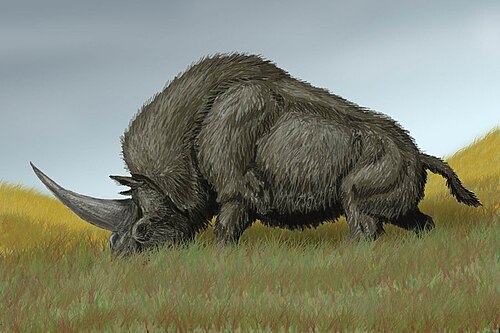


تمتد المنطقة القطبية الشمالية القديمة عبر القارة الأوروبية بأكملها ، وصولًا إلى شمال آسيا ، مرورًا بالقوقاز وآسيا الوسطى ، وانتهاءً بشمال الصين وسيبيريا وبيرينجيا . كانت الانقراضات أشد وطأة في شمال أوراسيا مقارنةً بأفريقيا أو جنوب وجنوب شرق آسيا. وقد توزعت هذه الانقراضات على مدى عشرات آلاف السنين، من حوالي 50,000 سنة قبل الحاضر إلى حوالي 10,000 سنة قبل الحاضر، حيث انقرضت الأنواع المتكيفة مع المناخ المعتدل، كالفيل ذي الأنياب المستقيمة ووحيد القرن ذي الأنف الضيق، في وقت أبكر عمومًا من الأنواع المتكيفة مع البرد، كالماموث الصوفي ووحيد القرن الصوفي . ويُعتقد أن تغير المناخ عامل رئيسي محتمل في هذه الانقراضات، ربما بالاشتراك مع الصيد البشري. [ 2 ]
- ذوات الحوافر
- الثدييات ذات الحوافر ذات الأصابع الزوجية
- أنواع مختلفة من فصيلة البقريات .
- بيسون السهوب ( بيسون بريسكوس )
- بايكال ياك ( بوس بايكالينسيس ) [ 27 ]
- الجاموس المائي الأوروبي ( Bubalus murrensis )
- Bubalus wansjocki (جاموس منقرض موطنه الأصلي شمال الصين)
- بوبالوس تيلهاردي
- الطهر الأوروبي ( Hemitragus cedrensis ) [ 28 ] [ 29 ]
- Praeovibos priscus [ 30 ]
- ظباء السايغا الشمالية ( Saiga borealis )، تميزها
- Spirocerus kiakhtensis [ 31 ] [ 32 ]
- بارابوباليس كابريكورنيس ) [ 31 ] [ 32 ]
- أنواع مختلفة من الأيائل (Cervidae) spp.
- الغزال العملاق / الأيائل الأيرلندية ( Megaloceros giganteus )
- أنواع كانديسيرفوس (كريت)
- Haploidoceros mediterraneus [ 33 ] [ 34 ]
- Sinomegaceros spp. (بما في ذلك Sinomegaceros yabei في اليابان، و Sinomegaceros ordosianus وربما Sinomegaceros pachyosteus في الصين). [ 35 ]
- سيرفوس أستيلودون (جزر ريوكيو)
- جميع أنواع فرس النهر الأصلية [ 36 ]
- فرس النهر البرمائي (المعروف باسم النطاق الأوروبي، ولا يزال موجودًا في أفريقيا)
- فرس النهر المالطي القزم ( Hippopotamus melitensis )
- فرس النهر القزم القبرصي ( Hippopotamus minor )
- فرس النهر القزم الصقلي ( Hippopotamus pentlandi )
- Camelus knoblochi [ 37 ] وأنواع أخرى من Camelus spp.
- أنواع مختلفة من فصيلة البقريات .
- الثدييات ذات الحوافر الفردية الأصابع
- أنواع مختلفة من جنس الخيل (Equus spp.) على سبيل المثال
- سلالات مختلفة من الخيول البرية ( مثل Equus c.gallicus , [ 38 ] [ 39 ] Equus c. latipes , [ 32 ] [ 38 ] [ 40 ] Equus c. uralensis [ 38 ] )
- إيكوس داليانينسيس (نوع من الخيول البرية المعروفة في شمال الصين)
- الحمار البري الأوروبي ( Equus hydruntinus ) (نجا في ملاجئ في الأناضول حتى أواخر العصر الهولوسيني)
- Equus ovodovi (بقي على قيد الحياة في ملاجئ في شمال الصين حتى أواخر العصر الهولوسيني)
- جميع أنواع وحيد القرن الأصلية (Rhinocerotidae) spp.
- Elasmotherium sibiricum
- وحيد القرن الصوفي ( Coelodonta antiquitatis )
- Stephanorhinus spp.
- وحيد القرن ميرك ( Stephanorhinus kirchbergensis )
- وحيد القرن ذو الأنف الضيق ( Stephanorhinus hemiotoechus )
- أنواع مختلفة من جنس الخيل (Equus spp.) على سبيل المثال
- الثدييات ذات الحوافر ذات الأصابع الزوجية
- آكلات اللحوم
- الكلبيات
- الكلبيات
- الكلبيات
- الذئاب
- ذئب الكهوف ( Canis lupus spelaeus )
- الذئب الرهيب ؟ ( إينوسيون ديروس ) [ 41 ]
- الكلاب البرية
- الكلب البري الأوروبي ( Cuon alpinus europaeus )
- الكلب البري السرديني ( Cynotherium sardous )
- الذئاب
- الكلبيات
- أركتويديا
- أنواع مختلفة من الدببة (Ursus spp.)
- أورسوس كانيفتز
- دب كهف غامسولزن ( Ursus ingressus ) [ 42 ]
- دب الكهوف الصغير من العصر البليستوسيني ( Ursus rossicus )
- دب الكهوف ( Ursus spelaeus )
- أورسوس كودارينسيس
- أورسوس إيريموس
- فصيلة العرسيات
- عائلة العرسيات
- أنواع عديدة من ثعالب الماء (Lutrinae).
- ألجارولوترا (سردينيا)
- Megalenhydris barbaricina (سردينيا، أكبر ثعلب ماء على الإطلاق)
- سردولترا (سردينيا)
- القضاعة الكريتية ( Lutrogale cretensis )
- أنواع عديدة من ثعالب الماء (Lutrinae).
- عائلة العرسيات
- أنواع مختلفة من الدببة (Ursus spp.)
- الكلبيات
- القطيات الشكل
- أنواع مختلفة من فصيلة القطط ( Felidae ).
- Homotherium latidens (يُطلق عليه أحيانًا اسم القط ذو الأسنان المعقوفة)
- الوشق الكهفي ( Lynx pardinus spelaeus )، صحة مثيرة للجدل [ 43 ]
- أنواع بانثيرا
- أسد الكهوف ( Panthera spelaea )
- النمر الأوروبي ( Panthera pardus spelaea )
- الضباع ( Hyaenidae )
- ضبع الكهف ( Crocuta spelaea و ultima )
- "الضبع" بريسكا
- أنواع مختلفة من فصيلة القطط ( Felidae ).
- الكلبيات
- جميع أنواع الفيلة الأصلية (Elephantidae) spp.
- الماموث
- الماموث الصوفي ( Mammuthus primigenius )
- الماموث السرديني ( Mammuthus lamarmorai )
- الفيل الأوراسي ذو الأنياب المستقيمة ( Palaeoloxodon antiquus ) (أوروبا)
- Palaeoloxodon naumanni (اليابان، وربما كوريا وشمال الصين أيضًا)
- فيل قزم
- Palaeoloxodon creutzburgi (كريت)
- الفيل القزم القبرصي ( Palaeoloxodon cypriotes )
- Palaeoloxodon mnaidriensis (صقلية ومالطا)
- الماموث
- القوارض
- Allocricetus bursae
- Cricetus major (أو Cricetus cricetus major )
- Dicrostonyx gulielmi (سلف حيوان الليمينغ القطبي )
- ليثيا النيابة. (الزغبة المالطية والصقلية العملاقة) [ 44 ]
- Marmota paleocaucasica
- ميكروتوس غرافي
- أنواع الميموميس
- M. pyrenaicus
- M. chandolensis
- بليوميس لينكي
- سبيرموفيلوس سيتيلويدس
- سبيرموفيلوس سيفيرسكينسيس
- Spermophilus superciliosus
- Trogontherium cuvieri (سمور كبير)
- الأرانب البرية
- الأرانب البرية ( Leporidae )
- Lepus tanaiticus (بدلاً من ذلك Lepus timidus tanaiticus )
- بيكا ( Ochotonidae ) spp.
- البيكا العملاقة ( أوتشوتونا وارتوني )
- Tonomochota spp.
- تي. خاسانينسيس
- T. sikhotana
- تي. ماجور
- الأرانب البرية ( Leporidae )
- الطيور
- أوزة ياقوتية ( Anser djuktaiensis )
- النعامة الآسيوية الشرقية ( Pachystruthio anderssoni )
- أنواع مختلفة من طيور الكركي الأوروبية (جنس Grus )
- Grus primigenia
- Grus melitensis
- البومة الكريتية ( أثينا كريتنسيس )
- الرئيسيات
- قرود العالم القديم ( Cercopithecidae )
- قرد المكاك البربري ( Macaca sylvanus ؛ عاش حتى 85000 - 40000 سنة مضت)
- هومو
- دينيسوفان ( هومو لونجي )
- إنسان نياندرتال ( Homo neanderthalensis ؛ عاش حتى حوالي 40000 سنة مضت في شبه الجزيرة الأيبيرية)
- قرود العالم القديم ( Cercopithecidae )
- الزواحف
- Solitudo sicula ; استمرت في صقلية حتى حوالي 12500 سنة مضت.
- لاسيرتا سيكوليميليتينسيس ; من مالطا .
أمريكا الشمالية
تركزت الانقراضات في أمريكا الشمالية في نهاية العصر البليستوسيني المتأخر، حوالي 13800-11400 سنة قبل الحاضر، والتي تزامنت مع بداية فترة التبريد المعروفة باسم "يونغر دراياس" ، بالإضافة إلى ظهور ثقافة كلوفيس التي تعتمد على الصيد وجمع الثمار. وقد أثارت الأهمية النسبية للعوامل البشرية والمناخية في انقراضات أمريكا الشمالية جدلاً واسعاً. وبلغ إجمالي الانقراضات حوالي 35 جنسًا. [ 4 ] ووُصف سجل الكربون المشع لأمريكا الشمالية جنوب منطقة ألاسكا-يوكون بأنه "غير كافٍ" لبناء تسلسل زمني موثوق. [ 45 ]

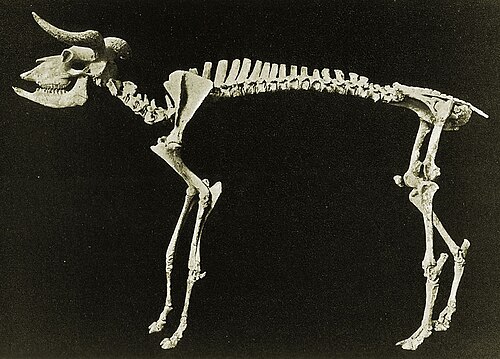


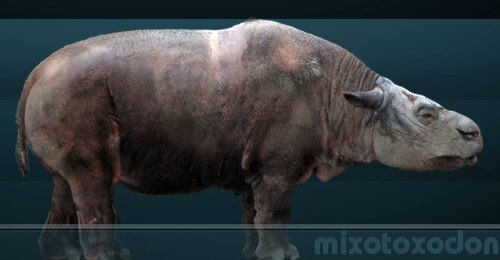


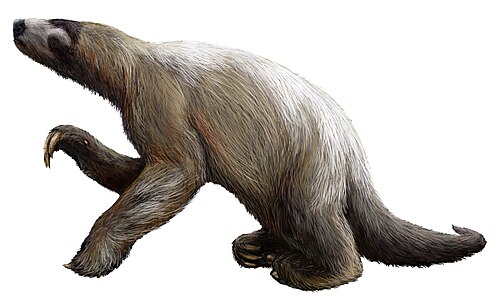
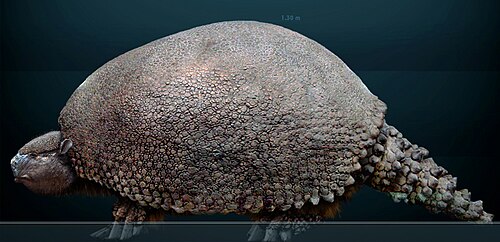
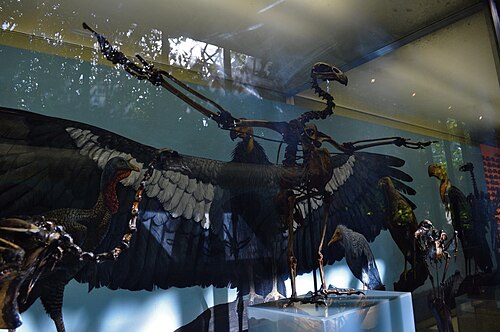


شملت الانقراضات في أمريكا الشمالية (المشار إليها باسم الحيوانات العاشبة ( H ) أو الحيوانات اللاحمة ( C )) ما يلي:
- ذوات الحوافر
- الثدييات ذات الحوافر ذات الأصابع الزوجية
- أنواع مختلفة من فصيلة البقريات .
- معظم أشكال البيسون في العصر البليستوسيني (نجا فقط البيسون البيسون في أمريكا الشمالية، والبيسون بوناسوس في أوراسيا)
- البيسون القديم ( H )
- البيسون ذو القرون الطويلة/العملاق ( Bison latifrons ) ( H )
- بيسون السهوب ( بيسون بريسكوس ) ( ح )
- نجا العديد من أفراد فصيلة الماعزيات (بما في ذلك ثور المسك ).
- ثور المسك العملاق ( برايوفيبوس بريسكوس ) ( ح )
- شجيرة الثعلب ( Euceratherium collinum ) ( H )
- ثور المسك هارلان ( Bootherium bombifrons ) ( H )
- ثور سورجل ( Soergelia mayfieldi ) ( H )
- نبات لوجان الأسترالي الشجيري ( Speleotherium logani ) ( H )
- الماعز الجبلي هارينغتون ( Oreamnos harringtoni ؛ أصغر حجماً وأكثر انتشاراً جنوباً من قريبه الباقي على قيد الحياة ) ( H )
- ظباء سايغا ( Saiga tatarica ; منقرض) ( H )
- معظم أشكال البيسون في العصر البليستوسيني (نجا فقط البيسون البيسون في أمريكا الشمالية، والبيسون بوناسوس في أوراسيا)
- عزيزي
- غزال الأيل ( سيرفالسيس سكوتي ) ( ح )
- غزال الجبل الأمريكي ( Odocoileus lucasi ) ( H )
- Torontoceros hypnogeos ( H ) (قد يكون مرادفًا لـ Odocoileus [ 46 ] )
- أجناس مختلفة من فصيلة الظباء الشوكية (نجا منها الظباء الشوكية )
- كابروميريكس ( H )
- ستوكوسيروس ( H )
- تيترا ميركس ( H )
- ظبي المحيط الهادئ ( Antilocapra pacifica ) ( H )
- العديد من البقري (Tayassuidae) spp.
- الخنزير البري ذو الرأس المسطح ( Platygonus ) ( H )
- الخنزير البري ذو الأنف الطويل ( Mylohyus ) ( H )
- الخنزير البري ذو الياقة ( Dicotyles tajacu ؛ تم استئصاله، وتم إعادة استعمار نطاقه جزئيًا) ( H ) ( Muknalia minimus هو مرادف ثانوي)
- أنواع مختلفة من فصيلة الجمليات
- الجمال الحقيقية (الجمال الكاميليني )
- Camelops hesternus (يُطلق عليه أحيانًا جمل الأمس أو الجمل الغربي) ( H )
- اللاميني (اللاما وأقاربها)
- Hemiauchenia ssp. ( H )
- Palaeolama ssp. ( H )
- الجمال الحقيقية (الجمال الكاميليني )
- أنواع مختلفة من فصيلة البقريات .
- الثدييات ذات الحوافر الفردية الأصابع
- جميع الأشكال الأصلية للخيول
- لطالما نُسبت الخيول الحقيقية من فصيلة كابالين ( Equus cf. ferus ) التي عاشت في أواخر العصر البليستوسيني في أمريكا الشمالية إلى العديد من الأنواع المختلفة، بما في ذلك Equus fraternus و Equus scotti و Equus lambei ، إلا أن تصنيف هذه الخيول غير واضح، وقد تكون العديد من هذه الأنواع مترادفة، وربما تمثل نوعًا واحدًا فقط. [ 47 ] [ 48 ] [ 49 ]
- حصان طويل الأرجل ( Haringtonhippus francisci / Equus francisci ; ( H )
- حيوانات التابير ( Tapirus ؛ ثلاثة أنواع)
- تابير كاليفورنيا ( Tapirus californicus ) ( H )
- تابير ميريام ( Tapirus merriami ) ( H )
- تابير فيرو ( Tapirus veroensis ) ( ح )
- جميع الأشكال الأصلية للخيول
- † اطلب نوتونغولاتا
- Mixotoxodon [ 50 ] [ 51 ] ( H )
- الثدييات ذات الحوافر ذات الأصابع الزوجية
- آكلات اللحوم
- القطيات الشكل
- العديد من أنواع القططيات
- القطط ذات الأسنان السيفية والقطط ذات الأسنان المعقوفة ( † Machairodontinae )
- سميلودون فاتاليس (قط ذو أسنان سيفية) ( C )
- مصل هوموثيريوم (القط ذو الأسنان المعقوفة) ( ج )
- الفهد الأمريكي ( Miracinonyx trumani ؛ ليس فهدًا حقيقيًا)
- الكوجر ( بوما كونكولور ؛ نمط بيئي ضخم انقرض من أمريكا الشمالية، وأعادت مجموعات أمريكا الجنوبية استيطان نطاقه السابق) ( ج )
- جاكواروندي ( Herpailurus yagouaroundi ؛ مستأصل، نطاق شبه مستعمر) ( C )
- مارجاي ( ليوباردوس ويدي ؛ منقرض) ( ج )
- القط البري ( Leopardus pardalis ؛ تم استئصاله، وأعيد استيطان نطاقه بشكل هامشي) ( ج )
- جاكوار
- النمر الأمريكي الشمالي في العصر البليستوسيني ( Panthera onca augusta ؛ تم إعادة استيطان نطاقه جزئيًا بواسطة النمر الحديث ( P. o. onca ) ( C )
- Panthera balamoides (مشكوك فيه، ويُقترح أنه مرادف ثانوي للدب قصير الوجه Arctotherium )
- الأسود
- الأسد الأمريكي ( بانثيرا أتروكس ) ( ج )
- أسد الكهوف ( Panthera spelaea ؛ موجود فقط في ألاسكا ويوكون) ( ج )
- القطط ذات الأسنان السيفية والقطط ذات الأسنان المعقوفة ( † Machairodontinae )
- العديد من أنواع القططيات
- الكلبيات
- الكلبيات
- الذئب الرهيب ( Aenocyon dirus ) ( C )
- ذئب البليستوسين ( Canis latrans orcutti ) ( C )
- الذئب، على سبيل المثال ، حيوان ضخم
- الذئب البرنجي ( Canis lupus ssp.) ( C )
- الكلب البري ( Cuon alpinus ؛ منقرض) ( C )
- Protocyon troglodytes [ 52 ] ( C )
- أركتويديا
- فصيلة العرسيات
- ميفيتيدي
- الظربان قصير الوجه ( Brachyprotoma obtusata ) [ 53 ] ( ج )
- عائلة العرسيات
- ميفيتيدي
- أنواع مختلفة من الدببة (Ursidae)
- فصيلة الدببة قصيرة الوجه ( Tremarctinae )
- أركتودوس سيموس (المعروف باسم الدب العملاق قصير الوجه) ( ج )
- تريماركتوس فلوريدانوس ( ج )
- أركتوثيريوم وينجى [ 55 ] [ 52 ] ( ج )
- الدب القطبي العملاق ( Ursus maritimus tyrannus ؛ من المحتمل أن يكون ساكنًا) ( C )
- فصيلة الدببة قصيرة الوجه ( Tremarctinae )
- فصيلة العرسيات
- الكلبيات
- القطيات الشكل
- الأفروثيريا
- باينونغولاتا
- تيثثيريا
- جميع الأنواع المحلية من الخرطوميات
- الماستودون
- الماموث الأمريكي ( Mammut americanum ) ( H )
- مستودون المحيط الهادئ ( Mammut pacificus ) ( H ) (صحة غير مؤكدة)
- أنواع عائلة Gomphotheriidae
- كوفيرونيوس [ 56 ] ( H )
- الماموث ( Mammuthus ) spp.
- الماموث الكولومبي ( Mammuthus columbi ) ( H )
- الماموث القزم ( الماموثوس المنفى ) ( ح )
- الماموث الصوفي ( Mammuthus primigenius ) ( H )
- الماستودون
- سيرينيا
- عائلة الأطوم
- بقرة ستيلر البحرية ( Hydrodamalis gigas ؛ انقرضت من أمريكا الشمالية، وبقيت في بيرينجيا حتى القرن الثامن عشر) ( H )
- عائلة الأطوم
- جميع الأنواع المحلية من الخرطوميات
- تيثثيريا
- باينونغولاتا
- Euarchontoglires
- الخفافيش
- خفاش مصاص الدماء ستوك ( Desmodus stocki ) ( C )
- الخفاش ذو الشارب البكر ( Pteronotus ( Phyllodia ) pristinus ) ( C )
- القوارض
- القندس العملاق ( Castoroides ) spp.
- Castoroides ohioensis ( H )
- Castoroides leiseyorum ( H )
- شيهم كلاين ( إريثيزون كليني ) [ 57 ] ( ح )
- فأر الغزلان العملاق ( Peromyscus nesodytes ) ( ج )
- أنواع Neochoerus على سبيل المثال
- كابيبارا بينكني ( Neochoerus pinckneyi ) ( H )
- Neochoerus aesopi ( H )
- نيوتوما فيندلي
- نيوتوما بيغميا
- Synaptomys australis
- جميع أنواع الهوتيا العملاقة (Heptaxodontidae).
- الهوتيا العملاقة ذات الأسنان الكليلة ( Amblyrhiza inundata ؛ يمكن أن تنمو بحجم الدب الأسود الأمريكي ) ( H )
- هوتيا عملاقة ذات أسنان صفيحة ( Elasmodontomys obliquus ) ( H )
- فأر ذو أسنان ملتوية ( Quemisia gravis ) ( H )
- فأر أوزبورن الرئيسي ( Clidomys osborn's ) ( H )
- Xaymaca fulvopulvis ( H )
- القندس العملاق ( Castoroides ) spp.
- الأرانب البرية
- أرنب أزتلان ( Aztlanolagus sp.) ( H )
- البيكا العملاقة ( أوتشوتونا وارتوني ) ( ح )
- الخفافيش
- Eulipotyphla
- زينارثرا
- بيلوسا
- آكل النمل العملاق ( Myrmecophaga tridactyla ؛ تم استئصاله، وتم إعادة استيطان نطاقه جزئيًا) [ 58 ] [ 59 ] ( ج )
- جميع أنواع الكسلان الأرضي المتبقية .
- إريموثيريوم (الكسلان الأرضي العملاق من فصيلة الميغاثيرييد ) ( H )
- نوثروثيريبس ( الكسلان الأرضي من فصيلة نوثروثيري ) ( H )
- أنواع الكسلان الأرضي من فصيلة ميغالونيكايد
- ميغالونيكس ( H )
- نوهوتشيتشاك [ 60 ] [ 61 ] ( H )
- Xibalbaonyx [ 62 ] [ 63 ] ( H )
- ميزونيكس
- أنواع الكسلان الأرضي من فصيلة ميلودونتيد .
- باراميلودون ( H )
- سنجولاتا
- جميع أفراد فصيلة جليبتودونتين
- جليبتوثيريوم [ 64 ] ( H )
- حيوان المدرع الجميل ( Dasypus bellus ) [ 65 ] ( H )
- باكيارماثيريوم
- جميع أنواع عائلة بامباثيريداي .
- هولمسينا ( H )
- بامباثيريوم ( H )
- جميع أفراد فصيلة جليبتودونتين
- بيلوسا
- الطيور
- الطيور المائية
- البط
- بطة برمودا عديمة الطيران ( أناس باكيسيلوس ) ( H )
- البط البحري الكاليفورني الذي لا يطير ( Chendytes lawi ) ( C )
- البط المكسيكي ذو الذيل الصلب ( Oxyura zapatima ) [ 55 ] ( H )
- نيوشين بارباديانا ( H )
- البط
- تركيا ( Meleagris ) spp.
- ديك رومي كاليفورني ( Meleagris californica ) ( H )
- ميليجريس كراسيبس [ 55 ] ( ح )
- أنواع مختلفة من رتبة الكركيات (Gruiformes spp.)
- جميع أنواع طيور السكة الكهفية ( Nesotrochis ) على سبيل المثال
- طائر المرعى الكهفي الأنتيلي ( Nesotrochis debooyi ) ( C )
- السكك الحديدية في بربادوس ( Incertae sedis ) ( C )
- Cuban flightless crane (Antigone cubensis) (H)
- La Brea crane (Grus pagei) (H)
- جميع أنواع طيور السكة الكهفية ( Nesotrochis ) على سبيل المثال
- Various flamingo (Phoenicopteridae) spp.
- Minute flamingo (Phoenicopterus minutus)[66] (C)
- Cope's flamingo (Phoenicopterus copei)[67] (C)
- Dow's puffin (Fratercula dowi) (C)
- Pleistocene Mexican diver spp.
- Storks
- La Brea/Asphalt stork (Ciconia maltha)[55] (C)
- Wetmore's stork (Mycteria wetmorei)[55] (C)
- Pleistocene Mexican cormorants spp. (genus Phalacrocorax)[55]
- Phalacrocorax goletensis (C)
- Phalacrocorax chapalensis (C)
- All remaining teratorn (Teratornithidae) spp.
- Several New World vultures (Cathartidae) spp.
- Pleistocene black vulture (Coragyps occidentalis ssp.) (C)
- Ancestral condor (Gymnogyps amplus) (C)
- Clark's condor (Breagyps clarki) (C)
- Cuban condor (Gymnogyps varonai) (C)
- Several Accipitridae spp.
- Gypaetinae (Old World vultures)
- Buteogallus (black hawks)
- Gigantohierax suarezi[69][70] (C)
- Spizaetus (hawk eagles)
- Titanohierax (C)
- Several owl (Strigiformes) spp.
- Asphaltoglaux) (C)
- Glaucidium kurochkini) (C)
- Oraristix brea) (C)
- Ornimegalonyx (a very large owl native to Cuba) (C)
- Bermuda flicker (Colaptes oceanicus) (C)
- Several caracara (Caracarinae) spp.
- Bahaman caracara (Caracara sp.) (C)
- Puerto Rican caracara (Caracara sp.) (C)
- Jamaican caracara (Carcara tellustris) (C)
- Cuban caracara (Daptrius sp.) (C)
- Hispaniolan caracara (Daptrius sp.) (C)
- Psittacopasserae
- Psittaciformes (parrots)
- الطيور المائية
- Several giant tortoise spp.
- Hesperotestudo (H)
- Gopherus spp.
- Chelonoidis spp.
إن الأنواع الناجية لا تقل أهمية عن الأنواع المفقودة من بعض النواحي: البيسون ( H )، والذئب الرمادي ( C )، والوشق ( C )، والدب الرمادي ( C )، والدب الأسود الأمريكي ( C )، والغزلان (مثل الكاريبو ، والموظ ، والوابيتي (الأيل) ، وأنواع Odocoileus ) ( H )، والظبي الشوكي ( H )، والخنزير البري ذو الشفة البيضاء ( H )، وثور المسك ( H )، وكبش الجبال ( H )، والماعز الجبلي ( H )؛ كما تشمل قائمة الأنواع الناجية الأنواع التي انقرضت خلال حدث الانقراض الرباعي، ولكنها أعادت استعمار جزء على الأقل من نطاقاتها خلال العصر الهولوسيني الأوسط من مجموعات متبقية من أمريكا الجنوبية، مثل الكوجر ( C )، واليغور ( C )، وآكل النمل العملاق ( C )، والخنزير البري ذو الياقة ( H )، والأوسيلوت ( C )، واليغورندي ( C ). جميع الحيوانات، باستثناء الظباء الشوكية وآكلات النمل العملاقة، تنحدر من أسلاف آسيوية تطورت بالتزامن مع الحيوانات المفترسة البشرية. [ 71 ] تُعد الظباء الشوكية ثاني أسرع الثدييات البرية (بعد الفهد )، وهو ما قد يكون ساعدها على الإفلات من الصيادين. أما بقاء البيسون، فيُعدّ أكثر صعوبة في تفسيره في سياق الصيد الجائر، إذ ظهرت هذه الحيوانات لأول مرة في أمريكا الشمالية منذ أقل من 240,000 عام، وبالتالي كانت معزولة جغرافيًا عن الحيوانات المفترسة البشرية لفترة طويلة. [ 72 ] [ 73 ] [ 74 ] ولأن البيسون القديم تطور إلى البيسون الحالي، [ 75 ] [ 76 ] لم يحدث انقراض شامل للبيسون في نهاية العصر البليستوسيني (على الرغم من انقراض هذا الجنس إقليميًا في العديد من المناطق). لذا، فإن بقاء البيسون حتى العصر الهولوسيني والعصور الحديثة لا يتوافق مع سيناريو الصيد الجائر.بحلول نهاية العصر البليستوسيني، عندما دخل البشر أمريكا الشمالية لأول مرة، كانت هذه الحيوانات الضخمة قد انفصلت جغرافياً عن الصيد البشري المكثف لأكثر من 200 ألف عام. ونظراً لهذه الفترة الجيولوجية الطويلة، فمن شبه المؤكد أن البيسون كان ساذجاً إلى حد كبير مثل الثدييات الكبيرة الأصلية في أمريكا الشمالية.
ترتبط ثقافة العصر الحجري القديم، وتحديدًا ثقافة شعب كلوفيس ( انظر ترجمتهم )، بموجة الانقراضات في أمريكا الشمالية، حيث يُعتقد أنهم استخدموا رماحًا لقتل الحيوانات الكبيرة. ويتمثل النقد الرئيسي لفرضية "الإفراط في الصيد في عصور ما قبل التاريخ" في أن عدد السكان آنذاك كان قليلًا جدًا، أو لم يكن منتشرًا جغرافيًا بشكل كافٍ، بحيث لم يكن قادرًا على إحداث مثل هذه التأثيرات البيئية الكبيرة. مع ذلك، لا يعني هذا النقد أن سيناريوهات تغير المناخ التي تفسر الانقراض هي الأنسب تلقائيًا، تمامًا كما لا يمكن اعتبار نقاط الضعف في حجج تغير المناخ دليلًا على الإفراط في الصيد. قد يكون مزيج من هذين العاملين واردًا، وسيكون الإفراط في الصيد أسهل بكثير لتحقيق انقراض واسع النطاق في ظل وجود سكان يعانون أصلًا من ضغوط تغير المناخ.
أمريكا الجنوبية
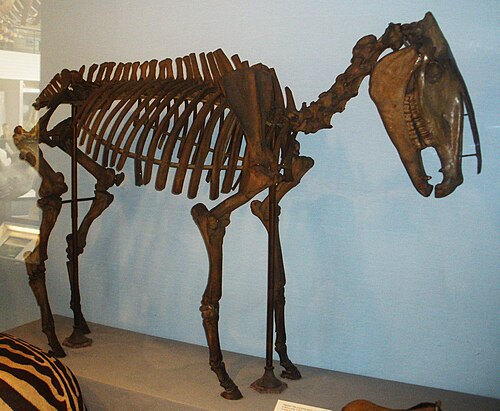


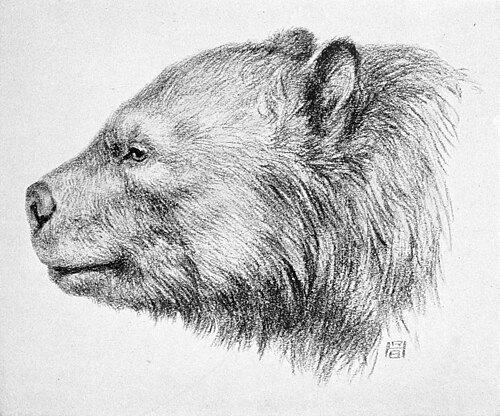
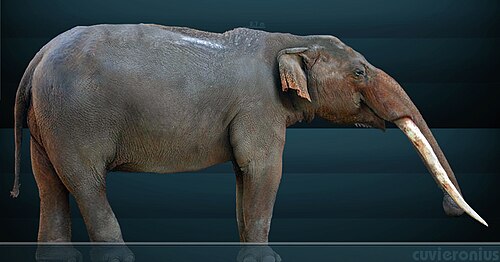
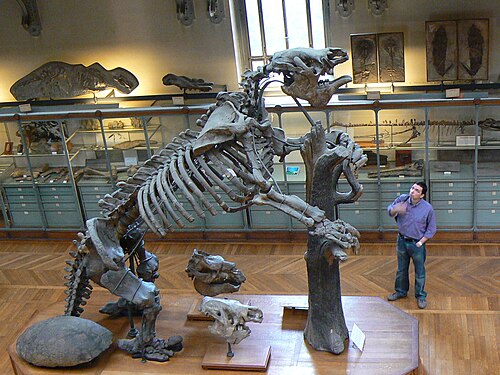
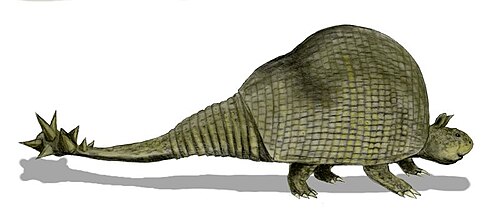


عانت أمريكا الجنوبية من أسوأ الخسائر بين القارات، حيث انقرضت حوالي 83% من حيواناتها الضخمة. [ 11 ] وقد حدثت هذه الانقراضات بعد وصول الإنسان الحديث إلى أمريكا الجنوبية قبل حوالي 15000 عام. وقد عزا باحثون مختلفون هذه الانقراضات إلى عوامل بشرية ومناخية على حد سواء. [ 77 ] وعلى الرغم من أن بعض الحيوانات الضخمة قد أشارت الدراسات التاريخية إلى أنها نجت حتى أوائل العصر الهولوسيني استنادًا إلى تواريخ الكربون المشع، إلا أن هذا قد يكون نتيجة أخطاء في التأريخ بسبب التلوث. [ 78 ] وتزامنت هذه الانقراضات مع نهاية فترة الانعكاس البارد في القطب الجنوبي (وهي فترة تبريد أبكر وأقل حدة من فترة يونغر دراياس في نصف الكرة الشمالي) وظهور رؤوس المقذوفات ذات الذيل السمكي ، التي انتشرت على نطاق واسع في جميع أنحاء أمريكا الجنوبية. ويُعتقد أن رؤوس المقذوفات ذات الذيل السمكي استُخدمت في صيد الطرائد الكبيرة، على الرغم من ندرة الأدلة المباشرة على استغلال البشر للحيوانات الضخمة المنقرضة، [ 77 ] مع أن استغلال الحيوانات الضخمة قد وُثِّق في عدد من المواقع. [ 78 ] [ 79 ] اختفت رؤوس السهام ذات الشكل الذيل السمكي بسرعة بعد انقراض الحيوانات الضخمة، وحلت محلها أنماط أخرى أكثر ملاءمة لصيد الفرائس الأصغر حجمًا. [ 77 ] اقترح بعض الباحثين نموذج "الزقزاق المكسور"، حيث كان الصيد البشري وتغير المناخ، الذي تسبب في انخفاض الموائل المفتوحة التي تفضلها الحيوانات الضخمة، عاملين متضافرين في انقراضها في أمريكا الجنوبية. [ 80 ]
- ذوات الحوافر
- الثدييات ذات الحوافر ذات الأصابع الزوجية
- العديد من أنواع الغزلان ( Cervidae ).
- مورينيلافوس
- أنتيفر
- Agalmaceros blicki [ 81 ] [ 82 ] (مرادف محتمل لغزال ذيل أبيض حديث )
- Odocoileus salinae [ 83 ] [ 84 ]
- أنواع مختلفة من فصيلة الجمليات .
- يولاماوبس
- هيمياوكينيا
- باليولاما
- Palaeolama mirifica
- Palaeolama major
- Palaeolama wedelli
- العديد من أنواع الغزلان ( Cervidae ).
- الثدييات ذات الحوافر الفردية الأصابع
- جميع أجناس Meridiungulata المتبقية
- اطلب ليتوبترنا
- Order Notoungulata
- Toxodontidae
- Piauhytherium (Some authors regard this taxon as synonym of Trigodonops)
- Mixotoxodon
- Toxodon
- Trigodonops
- Toxodontidae
- الثدييات ذات الحوافر ذات الأصابع الزوجية
- Primates
- Platyrrhini (New World monkeys)
- Carnivora
- Feliformia
- Several Felidae spp.
- Saber-toothed cat (Smilodon) spp.[91]
- Smilodon fatalis (northwestern South America)
- Smilodon populator (eastern and southern South America)
- Patagonian jaguar (Panthera onca mesembrina) (some authors have suggested that these remains actually belong to the American lion instead[92])
- Saber-toothed cat (Smilodon) spp.[91]
- Several Felidae spp.
- Caniformia
- Canidae
- Dire wolf (Aenocyon dirus)
- Nehring's wolf (Canis nehringi)
- Protocyon[93]
- Pleistocene bush dog (Speothos pacivorus)
- Ursidae (bears)
- South American short-faced bear (Arctotherium spp.)
- Canidae
- Feliformia
- Rodents
- Bats
- Giant vampire bat (Desmodus draculae)
- Proboscidea (elephants and relatives)
- Xenarthrans
- All remaining ground sloth genera
- All remaining Glyptodontinae spp.
- Several Dasypodidae spp.
- Beautiful armadillo (Dasypus bellus)
- Eutatus
- Pachyarmatherium
- بروباوبوس [ 36 ] [ 84 ]
- جميع أنواع عائلة بامباثيريداي .
- هولميسينا ( و'الكلاميثريوم الغربي ' ) [ 101 ] [ 102 ]
- بامباثيريوم [ 103 ]
- Tonnicinctus [ 103 ]
- الطيور
- أنواع مختلفة من فصيلة كاراكارينا .
- الكاراكارا الفنزويلية ( كاراكارا الكبرى ) [ 104 ]
- كاراكارا سيمور ( كاراكارا سيموري ) [ 105 ]
- كاراكارا بيرو ( ميلفاجو برودكوربي ) [ 106 ]
- أنواع مختلفة من عائلة Cathartidae
- بامباجيبس إمبيراتور
- جيرونوجيبس ريليكوس
- Wingegyps Cartellei
- Pleistovultur nevesi
- أنواع مختلفة من فصيلة تادورنينيا .
- طيور الرعب ( Phorusrhacidae )
- بسيلوبتريناي
- أنواع مختلفة من فصيلة كاراكارينا .
- الزواحف
- كروكس آند غيتورز
- السلاحف
- تشيلونويديس لوتزاي (الأرجنتين)
- تشيلونويديس بوكارا (الأرجنتين)
- بيلتوسيفالوس ماتورين [ 110 ]
ساهول (أستراليا - غينيا الجديدة) والمحيط الهادئ
Extinction of Australian megafauna appears to have taken place earlier than in the Americas or the extinction of the Eurasian mammoth steppe fauna, with an estimated peak of extinction of around 42,000 years ago.[111][112] The "prevailing view" is that in mainland Australia and Tasmania, its megafauna had gone extinct by 40,000 years ago.[113] Debate on megafaunal extinction in Australia has historically centred on whether the extinctions were caused by humans (which most sources estimate arrived in Australia at least 50,000 years ago, spreading to Tasmania later around 42-41,000 years ago[114]), or whether many megafauna species had already gone extinct prior to human arrival due to climatic change.[115] Resolution of this debate has been hampered by the rare and poorly dated nature of Australian megafauna remains. Studies from the late 2010s onward suggested that many megafauna species survived later than previously assumed by some authors, and were contemporaneous with humans in Australia, though some studies still argue that climate change was the primary cause of their extinction.[111] There is little evidence of human interaction with extinct Australian megafauna, with one notable exception being the burning of Genyornis (a type of giant dromornithid bird related to ducks) eggshells.[116] Megafauna species may have survived considerably later in New Guinea, until the Last Glacial Maximum,[117] or even into the mid Holocene for some taxa.[113]


- Marsupials
- All remaining members of Diprotodontidae
- Diprotodon (largest known marsupial)
- Hulitherium tomasetti
- Maokopia ronaldi
- Zygomaturus
- Palorchestes ("marsupial tapir")
- Various members of Vombatidae
- Lasiorhinus angustidens (giant wombat)
- Phascolonus (giant wombat)
- Ramasayia magna (giant wombat)
- Vombatus hacketti (Hackett's wombat)
- Warendja wakefieldi (dwarf wombat)
- Sedophascolomys (giant wombat)
- Phascolarctos stirtoni (giant koala)
- الأسد الجرابي ( Thylacoleo carnifex)
- بورونجابودي (الكنغر العملاق)
- أنواع مختلفة من فصيلة الكنغر (الكنغر، والولب، إلخ).
- بروكوبتودون (الكنغر قصير الوجه) على سبيل المثال
- ستينوروس (الكنغر العملاق)
- سيموستينوروس (الكنغر العملاق)
- أنواع مختلفة من جنس الماكروبوس ( الكنغر العملاق ) على سبيل المثال
- بروتمنودون (الكنغر العملاق)
- تروبوسودون ( الولب ) [ 118 ] [ 119 ] [ 120 ] [ 121 ] [ 122 ] [ 123 ]
- البهرة ( كنغر الشجر العملاق)
- بروبليوبوس أوسيلانس ( حيوان كنغر جرذي عملاق ذو رائحة مسكية، قارت )
- نومبي
- كونغروس
- أشكال مختلفة من شيطان تسمانيا ( Sarcophilus )
- Sarcophilus laniarius (أكبر بنسبة 25٪ من الأنواع الحديثة، ومن غير الواضح ما إذا كان في الواقع نوعًا متميزًا عن شيطان تسمانيا الحي [ 124 ] )
- ساركوفيلوس مورناينسيس
- All remaining members of Diprotodontidae
- الثدييات البيوضة : الثدييات التي تضع البيض.
- إيكيدنا
- مورايغلوسوس هاكيتي (آكل النمل الشوكي العملاق)
- ميغاليبجويليا رامساي
- إيكيدنا
- الطيور
- طائر الكاسواري القزم ( Casuarius lydekkeri )
- جينيورنيس (طائر درومورنيثيد يبلغ طوله مترين (6.6 قدم) )
- دجاج مالي العملاق ( Progura Gallinacea )
- فصيلة الصقور (الطيور الجارحة)
- العديد من أنواع طيور الفلامنجو ( Phoenicopteridae spp.)
- Xenorhynchopsis spp. (Australian flamingo) [ 125 ]
- زينورينشوبسيس مينور
- زينورينشوبسيس تيبياليس
- الزواحف

كوينكانا، وهو تمساح من فصيلة ميكوسوشين، ربما كان يعيش على اليابسة. - التماسيح
- عائلة الغافياليدي
- إيكانوغافياليس (آخر التماسيح البحرية بالكامل)
- † ميكوسوشيناي
- بالوديركس (تمساح المياه العذبة الأسترالي من فصيلة ميكوسوشين )
- كوينكانا (تمساح ميكوسوشين أسترالي بري، مفترس قمة السلسلة الغذائية )
- فوليا (تمساح من فصيلة ميكوسوشين يتراوح طوله بين مترين وثلاثة أمتار، وهو المفترس الرئيسي في فيجي خلال العصر البليستوسيني)
- ميكوسوشيس
- ميكوسوكس إينكسبكتاتوس (تمساح أرض كاليدونيا الجديدة)
- ميكوسوشيس كالبوكاسي (تمساح أرض فانواتو)
- عائلة الغافياليدي
- Varanus sp. (العصر البليستوسيني والهولوسيني في كاليدونيا الجديدة)
- ميغالانيا ( Varanus pricus ) (سحلية مراقبة عملاقة مفترسة تضاهي أو تفوق تنين كومودو حجماً)
- الثعابين
- عدة أنواع من فصيلة السلاحف المدرعة العملاقة ( Meiolaniidae )
- التماسيح
الأسباب
تاريخ البحث
لقد تم الاعتراف بانقراض الحيوانات الضخمة كظاهرة مميزة من قبل بعض العلماء في القرن التاسع عشر: [ 126 ] [ 127 ]
من المستحيل التفكير دون دهشة بالغة في حال أمريكا الجنوبية المتغيرة. ففي الماضي، لا بد أنها كانت تعجّ بالوحوش الضخمة، كما هو الحال في جنوب أفريقيا، أما الآن فلا نجد سوى حيوانات التابير، والجواناكو، والمدرع، والكابيبارا؛ مجرد حيوانات صغيرة مقارنة بالأجناس السابقة... منذ انقراضها، لا يمكن أن تكون قد طرأت تغييرات مادية كبيرة على طبيعة البلاد. فما الذي قضى إذن على هذا العدد الهائل من الكائنات الحية؟
— تشارلز داروين ، رحلة البيغل (1834)
يتضح إذن أننا نعيش الآن في حقبة استثنائية من تاريخ الأرض. فنحن نعيش في عالم فقير من الناحية الحيوانية، اختفت منه مؤخراً أضخم وأشرس وأغرب الكائنات؛ ولا شك أنه عالم أفضل لنا الآن بعد رحيلها. ومع ذلك، فمن المؤكد أنها حقيقة عجيبة، لم يُسلَّط عليها الضوء بما فيه الكفاية، هذا الانقراض المفاجئ لهذا العدد الكبير من الثدييات الضخمة، ليس في مكان واحد فحسب، بل في أكثر من نصف مساحة اليابسة على الكرة الأرضية. لا يسعنا إلا أن نعتقد أن هناك سبباً فيزيائياً وراء هذا التغير الكبير؛ ولا بد أنه سبب قادر على التأثير بشكل شبه متزامن على مساحات شاسعة من سطح الأرض، وهو سبب، فيما يتعلق بالعصر الثالث على الأقل، كان ذا طابع استثنائي.
— ألفريد راسل والاس ، التوزيع الجغرافي للحيوانات؛ مع دراسة للعلاقات بين الحيوانات الحية والمنقرضة لتوضيح التغيرات الماضية لسطح الأرض (1876)
بعد عدة عقود، في كتابه "عالم الحياة" الصادر عام 1911 (قبل وفاته بعامين)، عاد والاس إلى مسألة انقراض الحيوانات الضخمة في العصر البليستوسيني، وخلص إلى أن هذا الانقراض كان، جزئيًا على الأقل، نتيجة للنشاط البشري إلى جانب عوامل أخرى. [ 128 ] وازداد النقاش حول هذا الموضوع انتشارًا خلال القرن العشرين، لا سيما بعد طرح "فرضية الصيد الجائر" من قِبل بول شولتز مارتن في ستينيات القرن الماضي. وبحلول نهاية القرن العشرين، ظهر فريقان بحثيان حول هذا الموضوع، أحدهما يدعم تغير المناخ، والآخر يدعم الصيد البشري باعتباره السبب الرئيسي للانقراض. [ 127 ] وخلصت مراجعة نُشرت عام 2025 إلى أن الأدبيات العلمية لا تزال منقسمة بشدة حول هذه المسألة، على الرغم من أن الدعم للفرضيات المختلفة يتباين باختلاف التخصصات، حيث يُبدي علماء البيئة دعمًا أكبر للسبب البشري مقارنةً بالتخصصات الأخرى. بشكل عام، في الأدبيات المنشورة بين عامي 2020 و2024، أعرب عدد أقل من المؤلفين عن دعمهم لتغير المناخ وحده كسبب للمشكلة مقارنةً بالأسباب البشرية وحدها أو الأسباب المختلطة بين الإنسان والمناخ. [ 129 ]
الفرضيات السائدة
متعلق بالبشر
الصيد

تقترح فرضية الصيد أن البشر اصطادوا الحيوانات العاشبة الضخمة حتى انقرضت، مما أدى بدوره إلى انقراض الحيوانات اللاحمة والحيوانات الكانسة التي كانت تفترس تلك الحيوانات. [ 130 ] [ 131 ] [ 132 ] تُحمّل هذه الفرضية إنسان العصر البليستوسيني مسؤولية انقراض الحيوانات الضخمة. ويُصوّر أحد التفسيرات، المعروف باسم "الحرب الخاطفة" ، هذه العملية على أنها سريعة نسبيًا. وتشمل بعض الأدلة المباشرة على ذلك: أحافير بعض الحيوانات الضخمة التي عُثر عليها جنبًا إلى جنب مع بقايا بشرية، ووجود سهام مغروسة وآثار قطع أدوات في عظام الحيوانات الضخمة، ورسومات كهفية أوروبية تُصوّر هذا النوع من الصيد. كما تُشير الأدلة الجغرافية الحيوية إلى ذلك أيضًا: فالمناطق التي تطور فيها البشر في العالم حاليًا تضم تنوعًا أكبر من حيوانات العصر البليستوسيني الضخمة (مثل الأفيال ووحيد القرن في آسيا وأفريقيا ) مقارنةً بمناطق أخرى مثل أستراليا والأمريكتين ومدغشقر ونيوزيلندا التي لم يسكنها البشر الأوائل. تم اقتراح فرضية الإفراط في القتل، وهي شكل مختلف من فرضية الصيد، في عام 1966 من قبل بول إس. مارتن، [ 133 ] أستاذ علوم الأرض الفخري في مختبر الصحراء بجامعة أريزونا . [ 134 ]
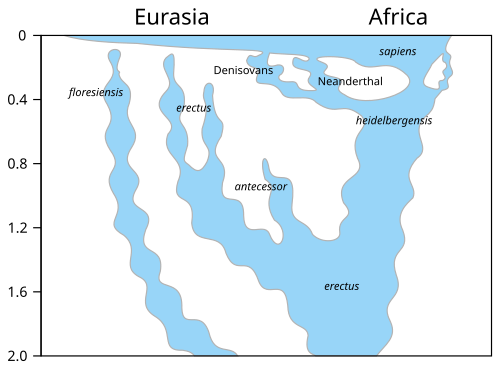
من الناحية الظرفية، يُعزز التزامن الزمني الوثيق بين ظهور البشر في منطقة ما وانقراضها فيها هذا السيناريو. [ 135 ] [ 10 ] [ 7 ] [ 16 ] وقد دعمت تقنية التأريخ بالكربون المشع فرضية أن هذا التزامن يعكس علاقة سببية. [ 136 ] غطت انقراضات الحيوانات الضخمة فترة زمنية طويلة وظروفًا مناخية شديدة التباين. اكتملت أقدم حالات الانقراض في أستراليا قبل حوالي 50,000 عام، أي قبل ذروة العصر الجليدي الأخير وقبل ارتفاع درجات الحرارة. أما أحدث حالة انقراض في نيوزيلندا، فقد اكتملت قبل 500 عام على الأقل، وخلال فترة تبريد. وبين هذين النقيضين، حدثت انقراضات تدريجية للحيوانات الضخمة في أماكن مثل أمريكا الشمالية وأمريكا الجنوبية ومدغشقر، دون وجود قاسم مناخي مشترك. العامل المشترك الوحيد الذي يمكن تحديده هو وصول البشر. [ 137 ] [ 138 ] وتظهر هذه الظاهرة حتى داخل المناطق نفسها. لم تتزامن موجة انقراض الثدييات في أستراليا قبل حوالي 50,000 عام مع تغيرات مناخية معروفة، بل مع وصول البشر. إضافةً إلى ذلك، يبدو أن أنواع الثدييات الكبيرة، مثل الكنغر العملاق (بروتمنودون)، قد انقرضت في وقت أبكر في البر الرئيسي الأسترالي مقارنةً بتسمانيا، التي استوطنها البشر بعد بضعة آلاف من السنين. [ 139 ] [ 140 ] وقد دعمت دراسة نُشرت عام 2015 هذه الفرضية من خلال إجراء آلاف السيناريوهات التي ربطت بين الفترات الزمنية المعروفة لانقراض كل نوع ووصول البشر إلى قارات أو جزر مختلفة. وقورنت هذه النتائج بإعادة بناء المناخ خلال التسعين ألف سنة الماضية. ووجد الباحثون ارتباطات بين انتشار البشر وانقراض الأنواع، مما يشير إلى أن التأثير البشري كان السبب الرئيسي للانقراض، بينما أدى تغير المناخ إلى تفاقم وتيرة الانقراض. ومع ذلك، وجدت الدراسة معدل انقراض منخفضًا ظاهريًا في السجل الأحفوري لبر آسيا الرئيسي. [ 141 ] [ 142 ]

أظهرت دراسة نُشرت عام 2020 في مجلة "ساينس أدفانسز" أن حجم السكان البشري و/أو أنشطة بشرية محددة، وليس تغير المناخ، هي السبب في الارتفاع السريع لمعدلات انقراض الثدييات عالميًا خلال الـ 126 ألف سنة الماضية. يُعزى حوالي 96% من جميع حالات انقراض الثدييات خلال هذه الفترة إلى التأثيرات البشرية. ووفقًا لتوبياس أندرمان، المؤلف الرئيسي للدراسة، "لم تحدث هذه الانقراضات بشكل مستمر وبوتيرة ثابتة. بل تم رصد موجات من الانقراض في مختلف القارات في أوقات وصول البشر إليها لأول مرة. ومؤخرًا، تسارعت وتيرة الانقراضات الناجمة عن الأنشطة البشرية مرة أخرى، وهذه المرة على نطاق عالمي." [ 143 ] [ 144 ] وفي سياق متصل، تبين أيضًا أن انخفاض أعداد الحيوانات الضخمة التي لا تزال موجودة خلال العصر البليستوسيني يرتبط بالتوسع البشري وليس بتغير المناخ. [ 16 ]
يُعزز التحيز الشديد للانقراض نحو الحيوانات الأكبر حجماً العلاقة بينه وبين النشاط البشري أكثر من تغير المناخ. [ 145 ] ثمة أدلة على انخفاض متوسط حجم الثدييات خلال العصر الرباعي، [ 146 ] وهي ظاهرة يُرجح ارتباطها بالصيد الجائر للحيوانات الكبيرة من قِبل البشر. [ 5 ]
وقد تم دعم نظرية الانقراض بسبب الصيد البشري من خلال الاكتشافات الأثرية لحيوانات الماموث التي عُثر على رؤوس سهام مغروسة في هياكلها العظمية، ومن خلال ملاحظات الحيوانات الحديثة الساذجة التي تسمح للصيادين بالاقتراب منها بسهولة [ 147 ] [ 148 ] [ 149 ] ، ومن خلال النماذج الحاسوبية التي وضعها موسيمان ومارتن [ 150 ] وويتنجتون ودايك [ 151 ] ، ومؤخراً من قبل ألروي [ 152 ] .

في عام 2024، نُشرت ورقة بحثية في مجلة "ساينس أدفانسز" عززت فرضية الصيد الجائر في أمريكا الشمالية، وذلك بتحليل جمجمة طفل يبلغ من العمر 18 شهرًا، يعود تاريخها إلى 12800 عام، بحثًا عن بصمات كيميائية تُعزى إلى كلٍ من حليب الأم والطعام الصلب. وقد تطابقت نظائر الكربون والنيتروجين بشكلٍ كبير مع تلك التي كان من الممكن العثور عليها في جنس الماموث، ثم في الأيائل أو البيسون. [ 153 ] [ 154 ]
A number of objections have been raised regarding the hunting hypothesis. Notable among them is the sparsity of evidence of human hunting of megafauna.[155][156][157] There is no archeological evidence that in North America megafauna other than mammoths, mastodons, gomphotheres and bison were hunted, despite the fact that, for example, camels and horses are very frequently reported in fossil history.[158] Overkill proponents, however, say this is due to the fast extinction process in North America and the low probability of animals with signs of butchery to be preserved.[159] The majority of North American taxa have too sparse a fossil record to accurately assess the frequency of human hunting of them.[11] A study by Surovell and Grund concluded "archaeological sites dating to the time of the coexistence of humans and extinct fauna are rare. Those that preserve bone are considerably more rare, and of those, only a very few show unambiguous evidence of human hunting of any type of prey whatsoever."[160]Eugene S. Hunn suggests that the birthrate in hunter-gatherer societies is generally too low, that too much effort is involved in the bringing down of a large animal by a hunting party, and that in order for hunter-gatherers to have brought about the extinction of megafauna simply by hunting them to death, an extraordinary amount of meat would have had to have been wasted.[161] Proponents of hunting as a cause of the extinctions argue that statistical modelling validates that relatively low-level hunting can have significant effect on megafauna populations due to their slow life cycles,[162] and that hunting can cause top-down forcing trophic cascade events that destabilize ecosystems.[163]
Second-order predation
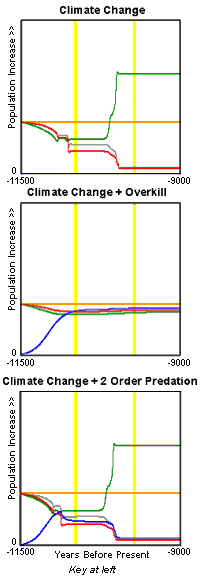
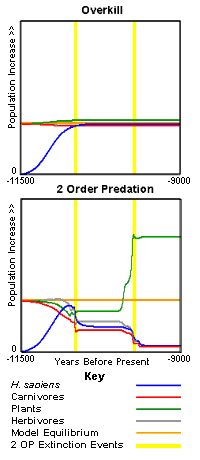
The Second-Order Predation Hypothesis says that as humans entered the New World they continued their policy of killing predators, which had been successful in the Old World but because they were more efficient and because the fauna, both herbivores and carnivores, were more naive, they killed off enough carnivores to upset the ecological balance of the continent, causing overpopulation, environmental exhaustion, and environmental collapse. The hypothesis accounts for changes in animal, plant, and human populations.
السيناريو كالتالي:
- بعد وصول الإنسان العاقل إلى العالم الجديد، بات على الحيوانات المفترسة الموجودة تقاسم فرائسها مع هذا المفترس الجديد. وبسبب هذه المنافسة، لا تجد أعداد الحيوانات المفترسة الأصلية، أو من الدرجة الأولى، ما يكفيها من الغذاء؛ فهي في منافسة مباشرة مع البشر.
- يبدأ الافتراس من الدرجة الثانية عندما يبدأ البشر بقتل الحيوانات المفترسة.
- لم تعد أعداد الفرائس خاضعة لسيطرة جيدة من خلال الافتراس. فقتل الإنسان العاقل للحيوانات المفترسة غير البشرية يقلل أعدادها إلى درجة لا يعود معها بإمكانية تنظيم حجم أعداد الفرائس.
- يؤدي غياب الرقابة من قِبَل المفترسات الرئيسية إلى دورات ازدهار وانهيار في أعداد الفرائس. تتزايد أعداد الفرائس، مما يؤدي إلى الرعي الجائر واستهلاك الأراضي بشكل مفرط. وسرعان ما يصبح النظام البيئي غير قادر على إعالتها. ونتيجة لذلك، يموت العديد من الحيوانات العاشبة جوعًا. وتنقرض الأنواع التي تعتمد على الغذاء الأبطأ نموًا، تليها الأنواع التي لا تستطيع الاستفادة القصوى من كل جزء من غذائها.
- تؤدي دورات الازدهار والانحسار في أعداد الحيوانات العاشبة إلى تغيير طبيعة البيئة النباتية، مما يترتب عليه آثار مناخية على الرطوبة النسبية والقارية. ومن خلال الرعي الجائر، تتحول الأراضي المختلطة إلى مراعي، وتزداد القارية المناخية .
لقد دعمت فرضية الافتراس من الدرجة الثانية نموذجًا حاسوبيًا، هو نموذج انقراض العصر البليستوسيني (PEM)، الذي يستخدم نفس الافتراضات والقيم لجميع المتغيرات (عدد الحيوانات العاشبة، ومعدلات تكاثرها، والغذاء اللازم لكل إنسان، ومعدلات صيدها، إلخ) باستثناء تلك المتعلقة بصيد المفترسات. يقارن هذا النموذج فرضية الصيد الجائر (صيد المفترسات = 0) مع فرضية الافتراس من الدرجة الثانية (تراوح صيد المفترسات بين 0.01 و0.05 في عمليات المحاكاة المختلفة). تشير النتائج إلى أن الافتراس من الدرجة الثانية أكثر اتساقًا مع الانقراض من الصيد الجائر [ 164 ] [ 165 ] (انظر الرسم البياني للنتائج على اليسار). يُعد نموذج انقراض العصر البليستوسيني الاختبار الوحيد لفرضيات متعددة، وهو النموذج الوحيد الذي يختبر تحديدًا فرضيات الجمع من خلال إدخال تغير مناخي كافٍ بشكل مصطنع لإحداث الانقراض. عند الجمع بين الصيد الجائر والتغير المناخي، يتوازنان. يُقلل التغير المناخي من عدد النباتات، بينما يُزيل الصيد الجائر الحيوانات، وبالتالي يقل استهلاك النباتات. يؤدي الافتراس من الدرجة الثانية، بالتزامن مع تغير المناخ، إلى تفاقم آثار تغير المناخ. [ 166 ] (الرسم البياني للنتائج على اليمين). وتدعم فرضية الافتراس من الدرجة الثانية الملاحظة المذكورة أعلاه، والتي تشير إلى الزيادة الهائلة في أعداد حيوانات البيسون. [ 167 ]

However, this hypothesis has been criticised on the grounds that the multispecies model produces a mass extinction through indirect competition between herbivore species: small species with high reproductive rates subsidize predation on large species with low reproductive rates.[152] All prey species are lumped in the Pleistocene extinction model. Also, the control of population sizes by predators is not fully supported by observations of modern ecosystems.[168] The hypothesis further assumes decreases in vegetation due to climate change, but deglaciation doubled the habitable area of North America. Any vegetational changes that did occur failed to cause almost any extinctions of small vertebrates, and they are more narrowly distributed on average, which detractors cite as evidence against the hypothesis.
Landscape alteration
One consequence of the colonisation by humans of lands previously uninhabited by them may have been the introduction of new fire regimes because of extensive fire use by humans.[8] There is evidence that anthropogenic fire use had major impacts on the local environments in both Australia[6] and North America.[169]
Competition for water
In southeastern Australia, the scarcity of water during the interval in which humans arrived in Australia suggests that human competition with megafauna for precious water sources may have played a role in the extinction of the latter.[170]
Climate change

At the end of the 19th and beginning of the 20th centuries, when scientists first realized that there had been glacial and interglacial ages, and that they were somehow associated with the prevalence or disappearance of certain animals, they surmised that the termination of the Pleistocene ice age might be an explanation for the extinctions.
يُعدّ ارتفاع درجة الحرارة أبرز التغيرات المصاحبة لانتهاء العصر الجليدي. فبين عامي 15000 و10000 قبل الميلاد، ارتفع متوسط درجات الحرارة السنوية العالمية بمقدار 6 درجات مئوية. وكان يُعتقد عمومًا أن هذا الارتفاع هو سبب الانقراضات. ووفقًا لهذه الفرضية، فإن ارتفاع درجة الحرارة الكافي لإذابة الغطاء الجليدي في ويسكونسن كان من الممكن أن يُسبب ضغطًا حراريًا شديدًا على الثدييات المُتكيفة مع البرد، ما أدى إلى نفوقها. ففراؤها الكثيف، الذي يُساعد على الاحتفاظ بحرارة الجسم في البرد الجليدي، ربما منعها من التخلص من الحرارة الزائدة، ما تسبب في نفوقها نتيجة الإنهاك الحراري. وكانت الثدييات الكبيرة، ذات نسبة مساحة السطح إلى الحجم المنخفضة ، أكثر عرضةً للخطر من الثدييات الصغيرة. وتشير دراسة تغطي الـ 56000 سنة الماضية إلى أن أحداث الاحترار السريع، التي وصلت فيها تغيرات درجات الحرارة إلى 16 درجة مئوية (29 درجة فهرنهايت)، كان لها تأثير كبير على انقراض الحيوانات الضخمة. تشير بيانات الحمض النووي القديم والكربون المشع إلى أن التجمعات الجينية المحلية استُبدلت بتجمعات أخرى من نفس النوع أو من نفس الجنس. وكان بقاء هذه التجمعات يعتمد على وجود ملاجئ وانتشار لمسافات طويلة، وهو ما ربما تعطل بسبب الصيد البشري. [ 171 ]
اقترح علماء آخرون أن ازدياد حدة الظواهر الجوية - صيف أكثر حرارة وشتاء أكثر برودة - والمعروفة باسم " القارية "، أو التغيرات المرتبطة بها في هطول الأمطار، هي التي تسببت في الانقراضات. وقد تبين أن الغطاء النباتي تغير من غابات مختلطة - أراضٍ حرجية - إلى سهول وغابات منفصلة . [ 172 ] [ 173 ] [ 174 ] وقد يكون لهذا تأثير على أنواع الغذاء المتاحة. ربما تسببت مواسم النمو الأقصر في انقراض الحيوانات العاشبة الكبيرة وتقزم العديد من الحيوانات الأخرى. في هذه الحالة، وكما لوحظ، كان وضع البيسون وغيره من المجترات الكبيرة أفضل من الخيول والفيلة وغيرها من الحيوانات أحادية المعدة ، لأن المجترات قادرة على استخلاص المزيد من العناصر الغذائية من كميات محدودة من الأطعمة الغنية بالألياف، كما أنها أكثر قدرة على التعامل مع السموم المضادة للرعي. [ 175 ] [ 176 ] [ 177 ] لذا، بشكل عام، عندما يصبح الغطاء النباتي أكثر تخصصًا، قد تجد الحيوانات العاشبة ذات النظام الغذائي الأقل مرونة صعوبةً في العثور على مزيج النباتات الذي تحتاجه للبقاء والتكاثر، ضمن منطقة معينة. وقد أدى ازدياد النزعة القارية إلى انخفاض هطول الأمطار وعدم القدرة على التنبؤ به، مما حدّ من توافر النباتات الضرورية للطاقة والتغذية. [ 178 ] [ 179 ] [ 180 ] وقد أشير إلى أن هذا التغير في هطول الأمطار قد قلل من الفترة الزمنية الملائمة للتكاثر. [ 181 ] [ 182 ] وقد يُلحق هذا ضررًا غير متناسب بالحيوانات الكبيرة، نظرًا لأن فترات التزاوج لديها أطول وأقل مرونة، وبالتالي ربما تكون قد أنجبت صغارًا في مواسم غير مواتية (أي عندما لم يكن الغذاء أو الماء أو المأوى الكافي متوفرًا بسبب تغيرات موسم النمو). في المقابل، ربما تكون الثدييات الصغيرة، ذات دورات الحياة الأقصر، ودورات التكاثر الأقصر ، وفترات الحمل الأقصر ، قد تكيفت مع ازدياد عدم القدرة على التنبؤ بالمناخ، سواء على مستوى الأفراد أو على مستوى الأنواع، مما سمح لها بمزامنة جهودها التكاثرية مع الظروف المواتية لبقاء النسل. وإذا كان الأمر كذلك، لكانت الثدييات الصغيرة قد فقدت عددًا أقل من النسل، ولكانت أكثر قدرة على تكرار الجهد التكاثري عندما تُصبح الظروف مواتية لبقاء النسل مرة أخرى. [ 183 ]أظهرت دراسة تناولت الظروف البيئية في أوروبا وسيبيريا والأمريكتين خلال الفترة من 25000 إلى 10000 سنة مضت، أن فترات الاحترار المطولة التي أدت إلى ذوبان الجليد وهطول أمطار غزيرة حدثت قبيل تحول المراعي التي كانت موطنًا للحيوانات العاشبة الضخمة إلى أراضٍ رطبة واسعة النطاق تدعم نباتات مقاومة للحيوانات العاشبة. وتقترح الدراسة أن التغيرات البيئية الناجمة عن الرطوبة أدت إلى انقراض الحيوانات الضخمة، وأن موقع أفريقيا الواقع بين خط الاستواء سمح باستمرار وجود المراعي بين الصحاري والغابات الوسطى، مما أدى إلى انخفاض عدد أنواع الحيوانات الضخمة التي انقرضت هناك. [ 171 ]
تشير الأدلة في جنوب شرق آسيا، على عكس أوروبا وأستراليا والأمريكتين، إلى أن تغير المناخ وارتفاع مستوى سطح البحر كانا من العوامل المهمة في انقراض العديد من الأنواع العاشبة. وقد ألحقت التغيرات في نمو الغطاء النباتي وظهور طرق وصول جديدة للبشر الأوائل والثدييات إلى النظم البيئية المعزولة والمحدودة سابقًا ضررًا بمجموعات مختارة من الحيوانات. [ 184 ]
تشير بعض الأدلة من أوروبا أيضاً إلى أن التغيرات المناخية كانت مسؤولة عن الانقراضات هناك، حيث أن انقراض الأفراد كان يميل إلى الحدوث خلال فترات التغير البيئي ولم يكن مرتبطاً بشكل خاص بالهجرات البشرية. [ 2 ]
في أستراليا، أشارت بعض الدراسات إلى أن انقراض الحيوانات الضخمة بدأ قبل استيطان القارة، مما يرجح أن يكون تغير المناخ هو المحرك الرئيسي. [ 185 ]
في بيرينجيا، ربما انقرضت الحيوانات الضخمة بسبب غمر المياه بشكل مكثف، ولأن الممر البري الذي يربط أوراسيا بأمريكا الشمالية قد غمرته المياه قبل أن يتراجع الغطاء الجليدي الكورديلي بما يكفي لإعادة فتح الممر بين بيرينجيا وبقية أمريكا الشمالية. [ 186 ] انقرضت الماموث الصوفية من بيرينجيا بسبب عوامل مناخية، على الرغم من أن النشاط البشري لعب دورًا إضافيًا في انخفاض أعدادها. [ 187 ] في أمريكا الشمالية، وجدت دراسة نمذجة باستخدام تعداد الأحداث المؤرخ بالكربون المشع (REC) أن انخفاض أعداد الحيوانات الضخمة في أمريكا الشمالية مرتبط بالتغيرات المناخية وليس بتوسع السكان. [ 188 ]
في منطقة البحيرات العظمى في أمريكا الشمالية، وُجد أن انخفاض أعداد الماستودون والماموث يرتبط بالتقلبات المناخية خلال العصر الجليدي الأصغر بدلاً من النشاط البشري. [ 189 ]
في منطقة بامباس الأرجنتينية، ربما لعب غمر مساحات شاسعة من مراعي بامباس التي كانت في السابق أكبر بكثير دوراً في انقراض مجموعات الحيوانات الضخمة فيها. [ 9 ]
Critics object that since there were multiple glacial advances and withdrawals in the evolutionary history of many of the megafauna, it is rather implausible that only after the last glacial maximum would there be such extinctions. Proponents of climate change as the extinction event's cause like David J. Meltzer suggest that the last deglaciation may have been markedly different from previous ones.[190] Also, one study suggests that the Pleistocene megafaunal composition may have differed markedly from that of earlier interglacials, making the Pleistocene populations particularly vulnerable to changes in their environment.[191]
Studies propose that the annual mean temperature of the current interglacial that we have seen for the last 10,000 years is no higher than that of previous interglacials, yet most of the same large mammals survived similar temperature increases.[192][193][194] In addition, numerous species such as mammoths on Wrangel Island and St. Paul Island survived in human-free refugia despite changes in climate.[195] This would not be expected if climate change were responsible (unless their maritime climates offered some protection against climate change not afforded to coastal populations on the mainland). Under normal ecological assumptions island populations should be more vulnerable to extinction due to climate change because of small populations and an inability to migrate to more favorable climes.
Critics have also identified a number of problems with the continentality hypotheses. Megaherbivores have prospered at other times of continental climate. For example, megaherbivores thrived in Pleistocene Siberia, which had and has a more continental climate than Pleistocene or modern (post-Pleistocene, interglacial) North America.[196][197][198] The animals that became extinct actually should have prospered during the shift from mixed woodland-parkland to prairie, because their primary food source, grass, was increasing rather than decreasing.[199][198][200] Although the vegetation did become more spatially specialized, the amount of prairie and grass available increased, which would have been good for horses and for mammoths, and yet they became extinct. This criticism ignores the increased abundance and broad geographic extent of Pleistocene bison at the end of the Pleistocene, which would have increased competition for these resources in a manner not seen in any earlier interglacials.[191] Although horses became extinct in the New World, they were successfully reintroduced by the Spanish in the 16th century—into a modern post-Pleistocene, interglacial climate. Today there are feral horses still living in those same environments. They find a sufficient mix of food to avoid toxins, they extract enough nutrition from forage to reproduce effectively and the timing of their gestation is not an issue. This criticism ignores the fact that present-day horses are not competing for resources with ground sloths, mammoths, mastodons, camels, llamas, and bison. Similarly, mammoths survived the Pleistocene Holocene transition on isolated, uninhabited islands in the Mediterranean Sea until 4,000 to 7,000 years ago,[201] as well as on Wrangel Island in the Siberian Arctic.[202] Additionally, large mammals should have been able to migrate, permanently or seasonally, if they found the temperature too extreme, the breeding season too short, or the rainfall too sparse or unpredictable.[203] Seasons vary geographically. By migrating away from the equator, herbivores could have found areas with growing seasons more favorable for finding food and breeding successfully. Modern-day African elephants migrate during periods of drought to places where there is apt to be water.[204] Large animals also store more fat in their bodies than do medium-sized animals and this should have allowed them to compensate for extreme seasonal fluctuations in food availability.[205]
Some evidence weighs against climate change as a valid hypothesis as applied to Australia. It has been shown that the prevailing climate at the time of extinction (40,000–50,000 BP) was similar to that of today, and that the extinct animals were strongly adapted to an arid climate. The evidence indicates that all of the extinctions took place in the same short time period, which was the time when humans entered the landscape. The main mechanism for extinction was probably fire (started by humans) in a then much less fire-adapted landscape. Isotopic evidence shows sudden changes in the diet of surviving species, which could correspond to the stress they experienced before extinction.[206][207][208]
Some evidence obtained from analysis of the tusks of mastodons from the American Great Lakes region appears inconsistent with the climate change hypothesis. Over a span of several thousand years prior to their extinction in the area, the mastodons show a trend of declining age at maturation. This is the opposite of what one would expect if they were experiencing stresses from deteriorating environmental conditions, but is consistent with a reduction in intraspecific competition that would result from a population being reduced by human hunting.[209]
It may be observed that neither the overkill nor the climate change hypotheses can fully explain events: browsers, mixed feeders and non-ruminant grazer species suffered most, while relatively more ruminant grazers survived.[210] However, a broader variation of the overkill hypothesis may predict this, because changes in vegetation wrought by either Second Order Predation (see below)[166][211] or anthropogenic fire preferentially selects against browse species.
Other hypotheses
Disease
The hyperdisease hypothesis, as advanced by Ross D. E. MacPhee and Preston A. Marx, attributes the extinction of large mammals during the late Pleistocene to indirect effects of the newly arrived aboriginal humans.[212][213][214] In more recent times, disease has driven many vulnerable species to extinction; the introduction of avian malaria and avipoxvirus, for example, has greatly decreased the populations of the endemic birds of Hawaii, with some going extinct.[215] The hyperdisease hypothesis proposes that humans or animals traveling with them (e.g., chickens or domestic dogs) introduced one or more highly virulent diseases into vulnerable populations of native mammals, eventually causing extinctions. The extinction was biased toward larger-sized species because smaller species have greater resilience because of their life history traits (e.g., shorter gestation time, greater population sizes, etc.). Humans are thought to be the cause because other earlier immigrations of mammals into North America from Eurasia did not cause extinctions.[212] A similar suggestion is that pathogens were transmitted by the expanding humans via the domesticated dogs they brought with them.[216] A related theory proposes that a highly contagious prion disease similar to chronic wasting disease or scrapie that was capable of infecting a large number of species was the culprit. Animals weakened by this "superprion" would also have easily become reservoirs of viral and bacterial diseases as they succumbed to neurological degeneration from the prion, causing a cascade of different diseases to spread among various mammal species. This theory could potentially explain the prevalence of heterozygosity at codon 129 of the prion protein gene in humans, which has been speculated to be the result of natural selection against homozygous genotypes that were more susceptible to prion disease and thus potentially a tell-tale of a major prion pandemic that affected humans of or younger than reproductive age far in the past and disproportionately killed before they could reproduce those with homozygous genotypes at codon 129.[217]
If a disease was indeed responsible for the end-Pleistocene extinctions, then there are several criteria it must satisfy (see Table 7.3 in MacPhee & Marx 1997). First, the pathogen must have a stable carrier state in a reservoir species. That is, it must be able to sustain itself in the environment when there are no susceptible hosts available to infect. Second, the pathogen must have a high infection rate, such that it is able to infect virtually all individuals of all ages and sexes encountered. Third, it must be extremely lethal, with a mortality rate of c. 50–75%. Finally, it must have the ability to infect multiple host species without posing a serious threat to humans. Humans may be infected, but the disease must not be highly lethal or able to cause an epidemic.
As with other hypotheses, a number of counterarguments to the hyperdisease hypothesis have been put forth. Generally speaking, disease has to be very virulent to kill off all the individuals in a genus or species. Even such a virulent disease as West Nile fever is unlikely to have caused extinction.[218] The disease would need to be implausibly selective while being simultaneously implausibly broad. Such a disease needs to be capable of killing off wolves such as Canis dirus or goats such as Oreamnos harringtoni while leaving other very similar species (Canis lupus and Oreamnos americanus, respectively) unaffected. It would need to be capable of killing off flightless birds while leaving closely related flighted species unaffected. Yet while remaining sufficiently selective to afflict only individual species within genera it must be capable of fatally infecting across such clades as birds, marsupials, placentals, testudines, and crocodilians. No disease with such a broad scope of fatal infectivity is known, much less one that remains simultaneously incapable of infecting numerous closely related species within those disparate clades. On the other hand, this objection does not account for the possibility of a variety of different diseases being introduced around the same era. Numerous species including wolves, mammoths, camelids, and horses had emigrated continually between Asia and North America over the past 100,000 years. For the disease hypothesis to be applicable there it would require that the population remain immunologically naive despite this constant transmission of genetic and pathogenic material. The dog-specific hypothesis in particular cannot account for several major extinction events, notably the Americas (for reasons already covered) and Australia. Dogs did not arrive in Australia until approximately 35,000 years after the first humans arrived there, and approximately 30,000 years after the Australian megafaunal extinction was complete.
Geomagnetic field weakening
Around 41,500 years ago, the Earth's magnetic field weakened in an event known as the Laschamp event. This weakening may have caused increased flux of UV-B radiation and has been suggested by a few authors as a cause of megafaunal extinctions in the Late Quaternary.[219] The full effects of such events on the biosphere are poorly understood, however these explanations have been criticized as they do not account for the population bottlenecks seen in many megafaunal species and nor is there evidence for extreme radio-isotopic changes during the event. Considering these factors, causation is unlikely.[220][221]
Effects
The extinction of the megafauna has been argued by some authors to have caused disappearance of the mammoth steppe rather than the other way around. Alaska now has low nutrient soil unable to support bison, mammoths, and horses. R. Dale Guthrie has claimed this as a cause of the extinction of the megafauna there; however, he may be interpreting it backwards. The loss of large herbivores to break up the permafrost allows the cold soils that are unable to support large herbivores today. Today, in the arctic, where trucks have broken the permafrost, grasses and diverse flora and fauna can be supported.[222][223] In addition, Chapin (Chapin 1980) showed that simply adding fertilizer to the soil in Alaska could make grasses grow again like they did in the era of the mammoth steppe. Possibly, the extinction of the megafauna and the corresponding loss of dung is what led to low nutrient levels in modern-day soil and therefore is why the landscape can no longer support megafauna.

However, more recent authors have viewed it as more likely that the collapse of the mammoth steppe was driven by climatic warming, which in turn impacted the megafauna, rather than the other way around.[224] On the other hand, Pleistocene Park, a reintroduction project in Sakha Republic, Siberia aiming at recreating the mammoth steppe locally, has shown that current large herbivores such as horses, muskoxen and bison can influence vegetation and maintain productive grassland ecosystems at a local scale under the current climate.[225]
Megafauna play a significant role in the lateral transport of mineral nutrients in an ecosystem, tending to translocate them from areas of high to those of lower abundance. They do so by their movement between the time they consume the nutrient and the time they release it through elimination (or, to a much lesser extent, through decomposition after death).[226] In South America's Amazon Basin, it is estimated that such lateral diffusion was reduced over 98% following the megafaunal extinctions that occurred roughly 12,500 years ago.[227][228] Given that phosphorus availability is thought to limit productivity in much of the region, the decrease in its transport from the western part of the basin and from floodplains (both of which derive their supply from the uplift of the Andes) to other areas is thought to have significantly impacted the region's ecology, and the effects may not yet have reached their limits.[228] The extinction of the mammoths allowed grasslands they had maintained through grazing habits to become birch forests.[229] The new forest and the resulting forest fires may have induced climate change.[229] Such disappearances might be the result of the proliferation of modern humans.[230][231]
Large populations of megaherbivores have the potential to contribute greatly to the atmospheric concentration of methane, which is an important greenhouse gas. Modern ruminantherbivores produce methane as a byproduct of foregut fermentation in digestion, and release it through belching or flatulence. Today, around 20% of annual methane emissions come from livestock methane release. In the Mesozoic, it has been estimated that sauropods could have emitted 520 million tons of methane to the atmosphere annually,[232] contributing to the warmer climate of the time (up to 10 °C warmer than at present).[232][233] This large emission follows from the enormous estimated biomass of sauropods, and because methane production of individual herbivores is believed to be almost proportional to their mass.[232]
Recent studies have indicated that the extinction of megafaunal herbivores may have caused a reduction in atmospheric methane. One study examined the methane emissions from the bison that occupied the Great Plains of North America before contact with European settlers. The study estimated that the removal of the bison caused a decrease of as much as 2.2 million tons per year.[234] Another study examined the change in the methane concentration in the atmosphere at the end of the Pleistocene epoch after the extinction of megafauna in the Americas. After early humans migrated to the Americas about 13,000 BP, their hunting and other associated ecological impacts led to the extinction of many megafaunal species there. Calculations suggest that this extinction decreased methane production by about 9.6 million tons per year. This suggests that the absence of megafaunal methane emissions may have contributed to the abrupt climatic cooling at the onset of the Younger Dryas. The decrease in atmospheric methane that occurred at that time, as recorded in ice cores, was 2–4 times more rapid than any other decrease in the last half million years, suggesting that an unusual mechanism was at work.[235]
The extermination of megafauna left many niches vacant, which has been cited as an explanation for the vulnerability and fragility of many ecosystems to destruction in the later Holocene extinction. The comparative lack of megafauna in modern ecosystems has reduced high-order interactions among surviving species, reducing ecological complexity.[236] This depauperate, post-megafaunal ecological state has been associated with diminished ecological resilience to stressors.[237] Many extant species of plants have adaptations that were advantageous in the presence of megafauna but are now useless in their absence.[238] The demise of megafaunal ecosystem engineers in the Arctic that maintained open grassland environments has been highly detrimental to shorebirds of the genus Numenius.[239]
Relationship to later extinctions
There is no general agreement on where the Quaternary extinction event ends, and the Holocene, or anthropogenic, extinction begins, or if they should be considered separate events at all.[240][241] Some authors have argued that the activities of earlier archaic humans have also resulted in extinctions, though the evidence for this is equivocal.[242]
This hypothesis is supported by rapid megafaunal extinction following recent human colonisation in Australia, New Zealand and Madagascar,[243] in a similar way that any large, adaptable predator moving into a new ecosystem would. In many cases, it is suggested even minimal hunting pressure was enough to wipe out large fauna, particularly on geographically isolated islands.[244][245] Only during the most recent parts of the extinction have plants also suffered large losses.[246]
See also
- Australian megafauna – Large animals in Australia, past and present era
- Holocene extinction – Ongoing extinction event caused by human activity
- Late Quaternary prehistoric birds – Extinct bird speciesPages displaying short descriptions of redirect targets
- List of Ice Age species preserved as permafrost mummies
- Megafauna – Large animals
- Pleistocene rewilding – Ecological practice
- Toba catastrophe theory – Volcanic supereruption 74,000 years ago in IndonesiaPages displaying short descriptions of redirect targets
References
- 12Pires MM (30 May 2024). "The Restructuring of Ecological Networks by the Pleistocene Extinction". Annual Review of Earth and Planetary Sciences. 52 (1): 133–158. Bibcode:2024AREPS..52..133P. doi:10.1146/annurev-earth-040722-104845. ISSN 0084-6597. S2CID 266133527.
- 1234Stuart AJ (1999), "Late Pleistocene Megafaunal Extinctions: A European Perspective", in MacPhee RD (ed.), Extinctions in Near Time, Boston, MA: Springer US, pp. 257–269, doi:10.1007/978-1-4757-5202-1_11, ISBN 978-1-4419-3315-7, retrieved 28 May 2023
- 123Sandom C, Faurby S, Sandel B, Svenning JC (22 July 2014). "Global late Quaternary megafauna extinctions linked to humans, not climate change". Proceedings of the Royal Society B: Biological Sciences. 281 (1787) 20133254. doi:10.1098/rspb.2013.3254. ISSN 0962-8452. PMC 4071532. PMID 24898370.
- 123Faith JT, Surovell TA (8 December 2009). "Synchronous extinction of North America's Pleistocene mammals". Proceedings of the National Academy of Sciences of the United States of America. 106 (49): 20641–20645. Bibcode:2009PNAS..10620641F. doi:10.1073/pnas.0908153106. ISSN 0027-8424. PMC 2791611. PMID 19934040.
- 12Dembitzer J, Barkai R, Ben-Dor M, Meiri S (15 January 2022). "Levantine overkill: 1.5 million years of hunting down the body size distribution". Quaternary Science Reviews. 276 107316. Bibcode:2022QSRv..27607316D. doi:10.1016/j.quascirev.2021.107316. S2CID 245236379.
- 12Bird MI, Hutley LB, Lawes MJ, Lloyd J, Luly JG, Ridd PV, Roberts RG, Ulm S, Wurster CM (July 2013). "Humans, megafauna and environmental change in tropical Australia"(PDF). Journal of Quaternary Science. 28 (5): 439–452. Bibcode:2013JQS....28..439B. doi:10.1002/jqs.2639. S2CID 129936890.
- 12345Svenning JC, Lemoine RT, Bergman J, Buitenwerf R, Le Roux E, Lundgren E, Mungi N, Pedersen RØ (2024). "The late-Quaternary megafauna extinctions: Patterns, causes, ecological consequences and implications for ecosystem management in the Anthropocene". Cambridge Prisms: Extinction. 2 e5. doi:10.1017/ext.2024.4. ISSN 2755-0958. PMC 11895740. PMID 40078803.
The debate on the cause or causes of the late-Quaternary extinctions has been ongoing for over 200 years, but with greater rigor and focus from the 1960s onward (Martin, 1967; Koch and Barnosky, 2006). Though most current work accepts at least a contributory role for modern humans, the topic remains controversial.
- 12Koch PL, Barnosky AD (1 January 2006). "Late Quaternary Extinctions: State of the Debate". Annual Review of Ecology, Evolution, and Systematics. 37 (1): 215–250. doi:10.1146/annurev.ecolsys.34.011802.132415. S2CID 16590668.
- 12Prado JL, Martinez-Maza C, Alberdi MT (May 2015). "Megafauna extinction in South America: A new chronology for the Argentine Pampas". Palaeogeography, Palaeoclimatology, Palaeoecology. 425: 41–49. Bibcode:2015PPP...425...41P. doi:10.1016/j.palaeo.2015.02.026.
- 12Frédérik Saltré, Marta Rodríguez-Rey, Barry W. Brook, Christopher N. Johnson (2016). "Climate change not to blame for late Quaternary megafauna extinctions in Australia". Nature Communications. 7 10511. Bibcode:2016NatCo...710511S. doi:10.1038/ncomms10511. PMC 4740174. PMID 26821754.
- 1234Anthony D. Barnosky, Paul L. Koch, Robert S. Feranec, Scott L. Wing, Alan B. Shabel (2004). "Assessing the Causes of Late Pleistocene Extinctions on the Continents". Science. 306 (5693): 70–75. Bibcode:2004Sci...306...70B. CiteSeerX 10.1.1.574.332. doi:10.1126/science.1101476. PMID 15459379. S2CID 36156087.
- ↑Putshkov PV (1997). "Were the Mammoths killed by the warming? (Testing of the climatic versions of the Wurm extinctions)". Vestnik Zoologii (Supplement No.4).
- 12Gillespie R (2008). "Updating Martin's global extinction model". Quaternary Science Reviews. 27 (27–28): 2522–2529. Bibcode:2008QSRv...27.2522G. doi:10.1016/j.quascirev.2008.09.007.
- ↑Anderson PK (July 1995). "Competition, Predation, and the Evolution and Extinction of Steller's Sea Cow, Hydrodamalis Gigas". Marine Mammal Science. 11 (3): 391–4. Bibcode:1995MMamS..11..391A. doi:10.1111/j.1748-7692.1995.tb00294.x.
- ↑Lan T, Lindqvist C (2018). "Paleogenomics: Genome-Scale Analysis of Ancient DNA and Population and Evolutionary Genomic Inferences". In Lindqvist C, Rajora O (eds.). Population Genomics. p. 394. doi:10.1007/13836_2017_7. ISBN 978-3-030-04587-6.
- 123Bergman J, Pedersen RØ, Lundgren EJ, Lemoine RT, Monsarrat S, Pearce EA, Schierup MH, Svenning JC (24 November 2023). "Worldwide Late Pleistocene and Early Holocene population declines in extant megafauna are associated with Homo sapiens expansion rather than climate change". Nature Communications. 14 (1): 7679. Bibcode:2023NatCo..14.7679B. doi:10.1038/s41467-023-43426-5. ISSN 2041-1723. PMC 10667484. PMID 37996436.
- ↑Faith JT (January 2014). "Late Pleistocene and Holocene mammal extinctions on continental Africa". Earth-Science Reviews. 128: 105–121. Bibcode:2014ESRv..128..105F. doi:10.1016/j.earscirev.2013.10.009.
- ↑Heinrich E (31 October 2013). "Ancient Nubia"(PDF). Cambridge Online Histories. Archived from the original(PDF) on 28 November 2020. Retrieved 27 May 2016.
- ↑Turvey ST, Sathe V, Crees JJ, Jukar AM, Chakraborty P, Lister AM (January 2021). "Late Quaternary megafaunal extinctions in India: How much do we know?"(PDF). Quaternary Science Reviews. 252 106740. Bibcode:2021QSRv..25206740T. doi:10.1016/j.quascirev.2020.106740. S2CID 234265221.
- ↑Turvey ST, Tong H, Stuart AJ, Lister AM (September 2013). "Holocene survival of Late Pleistocene megafauna in China: a critical review of the evidence". Quaternary Science Reviews. 76: 156–166. Bibcode:2013QSRv...76..156T. doi:10.1016/j.quascirev.2013.06.030.
- ↑Louys J, Roberts P (15 October 2020). "Environmental drivers of megafauna and hominin extinction in Southeast Asia". Nature. 586 (7829): 402–406. Bibcode:2020Natur.586..402L. doi:10.1038/s41586-020-2810-y. hdl:10072/402368. ISSN 0028-0836. PMID 33029012. S2CID 222217295.
- ↑Rozzi R (1 February 2017). "A new extinct dwarfed buffalo from Sulawesi and the evolution of the subgenus Anoa: An interdisciplinary perspective". Quaternary Science Reviews. 157: 188–205. Bibcode:2017QSRv..157..188R. doi:10.1016/j.quascirev.2016.12.011.
- ↑Jukar AM, Patnaik R, Chauhan PR, Li HC, Lin JP (10 September 2019). "The youngest occurrence of Hexaprotodon Falconer and Cautley, 1836 (Hippopotamidae, Mammalia) from South Asia with a discussion on its extinction". Quaternary International. AMS 14C Applications II. 528: 130–137. Bibcode:2019QuInt.528..130J. doi:10.1016/j.quaint.2019.01.005. ISSN 1040-6182. S2CID 133765385.
- ↑Hu H, Tong H, Shao Q, Wei G, Yu H, Shi J, Wang X, Xiong C, Lin Y, Li N, Wei Z, Wang P, Jiangzuo Q (March 2023). "New remains of Ailuropoda melanoleuca baconi from Yanjinggou, China: Throwing light on the evolution of giant pandas during the Pleistocene". Journal of Mammalian Evolution. 30 (1): 137–154. doi:10.1007/s10914-022-09637-1. ISSN 1064-7554.
- ↑Zhang H (2025), "Late Pleistocene of East Asia", Encyclopedia of Quaternary Science, Elsevier, pp. 479–500, doi:10.1016/b978-0-323-99931-1.00272-5, ISBN 978-0-443-29997-1, retrieved 26 April 2025
- ↑Watanabe J, Matsuoka H (2 November 2015). "Flightless diving duck (Aves, Anatidae) from the Pleistocene of Shiriya, northeast Japan". Journal of Vertebrate Paleontology. 35 (6) e994745. Bibcode:2015JVPal..35E4745W. doi:10.1080/02724634.2014.994745. S2CID 83689129.
- ↑Hoffecker JF, Elias SA (29 May 2012). Human Ecology of Beringia. Columbia University Press. ISBN 978-0-231-50388-4.
- ↑Rivals F (2006). "Découverte de Capra caucasica et d'Hemitragus cedrensis (Mammalia, Bovidae) dans les niveaux du Pléistocène supérieur de la Caune de l'Arago (Tautavel, France): Implication biochronologique dans le contexte du Bassin Méditerranéen". Geobios. 39 (1): 85–102. Bibcode:2006Geobi..39...85R. doi:10.1016/j.geobios.2004.08.004.
- ↑Creégut-Bonnoure E (12 March 2009). "Biochronologie et grands mammifères au Pléistocène moyen et supérieur en Europe occidentale: l'Apport des genres hemitragus et capra". Quaternaire (in French). 20: 481–508. doi:10.4000/quaternaire.5345.
- ↑Kurtén B (2008). Pleistocene mammals of Europe. Aldine Transaction. ISBN 978-0-202-30953-8. OCLC 751413776.
- 1234Hoffecker JF, Elias SA (29 May 2012). Human Ecology of Beringia. Columbia University Press. ISBN 978-0-231-50388-4.
- 123Vereshchagin NK, Baryshnikov GF (1 January 1991). "The ecological structure of the "Mammoth Fauna" in Eurasia". Annales Zoologici Fennici. 28 (3/4): 253–259. JSTOR 23735450.
- ↑Sanz M, Daura J, Brugal JP (1 January 2014). "First occurrence of the extinct deer Haploidoceros in the Iberian Peninsula in the Upper Pleistocene of the Cova del Rinoceront (Castelldefels, Barcelona)". Comptes Rendus Palevol. 13 (1): 27–40. Bibcode:2014CRPal..13...27S. doi:10.1016/j.crpv.2013.06.005.
- ↑Rivals F, Sanz M, Daura J (1 May 2016). "First reconstruction of the dietary traits of the Mediterranean deer (Haploidoceros mediterraneus) from the Cova del Rinoceront (NE Iberian Peninsula)". Palaeogeography, Palaeoclimatology, Palaeoecology. 449: 101–107. Bibcode:2016PPP...449..101R. doi:10.1016/j.palaeo.2016.02.014. hdl:10451/31478.
- ↑Geist V (1998). Deer of the World: Their Evolution, Behaviour, and Ecology. Stackpole Books. ISBN 978-0-8117-0496-0.
- 12Elias S, Mock C (25 March 2013). Encyclopedia of Quaternary Science. Newnes. ISBN 978-0-444-53642-6.
- ↑"Habitat conditions for Camelus knoblochi and factors in its extinction by Vadim V. Titov"(PDF).
- 123Foronova I (2006). "Late quaternary equids (genus Equus) of South-western and South-central Siberia". In M. Mashkour (ed.). Equids in time and space. Papers in honour of Véra Eisenmann. Proceedings of the 9th conference of the International Council of Archaeozoology, Durham, August 2002. Oxbow Books. pp. 20–30.
- ↑Chase PG (2009). The Cave of Fontéchevade: Recent Excavations and Their Paleoanthropological Implications. Cambridge University Press. ISBN 978-0-521-89844-7.
- ↑Yanko-Hombach V, Gilbert AS, Panin N, Dolukhanov PM (15 November 2006). The Black Sea Flood Question: Changes in Coastline, Climate and Human Settlement. Springer Science & Business Media. ISBN 978-1-4020-5302-3.
- ↑Lu D, Yang Y, Li Q, Ni X (30 July 2021). "A late Pleistocene fossil from Northeastern China is the first record of the dire wolf (Carnivora: Canis dirus) in Eurasia". Quaternary International. Cave Deposits from Luotuo Hill, Northeast China: A Geochronologically Calibrated Mammalian Biostratigraphic Standard for the Quaternary of Eastern Asia. 591: 87–92. Bibcode:2021QuInt.591...87L. doi:10.1016/j.quaint.2020.09.054. ISSN 1040-6182. S2CID 224877090.
- ↑Münzel SC, Rivals F, Pacher M, Döppes D, Rabeder G, Conard NJ, Bocherens H (7 August 2014). "Behavioural ecology of Late Pleistocene bears (Ursus spelaeus, Ursus ingressus): Insight from stable isotopes (C, N, O) and tooth microwear". Quaternary International. Fossil remains in karst and their role in reconstructing Quaternary paleoclimate and paleoenvironments. 339: 148–163. Bibcode:2014QuInt.339..148M. doi:10.1016/j.quaint.2013.10.020.
- ↑Ghezzo E, Boscaini A, Madurell-Malapeira J, Rook L (16 December 2014). "Lynx remains from the Pleistocene of Valdemino cave (Savona, Northwestern Italy), and the oldest occurrence of Lynx spelaeus (Carnivora, Felidae)". Rendiconti Lincei. 26 (2): 87–95. doi:10.1007/s12210-014-0363-4. hdl:11336/59435. S2CID 85194755.
- ↑"Search for images at Natural History Museum Picture Library". piclib.nhm.ac.uk. Archived from the original on 19 April 2016. Retrieved 20 April 2016.
- ↑Stuart AJ (May 2015). "Late Quaternary megafaunal extinctions on the continents: a short review: LATE QUATERNARY MEGAFAUNAL EXTINCTIONS". Geological Journal. 50 (3): 338–363. doi:10.1002/gj.2633. S2CID 128868400.
- ↑Kessler C, Haddrath O, Lim BK, Shafer AB (17 September 2025). "Ancient DNA of the Toronto Subway Deer Adds to the Extinction List of Ice Age Megafauna". bioRxiv 10.1101/2025.09.15.676284.
- ↑Vershinina AO, Heintzman PD, Froese DG, Zazula G, Cassatt-Johnstone M, Dalén L, Der Sarkissian C, Dunn SG, Ermini L, Gamba C, Groves P, Kapp JD, Mann DH, Seguin-Orlando A, Southon J (December 2021). "Ancient horse genomes reveal the timing and extent of dispersals across the Bering Land Bridge". Molecular Ecology. 30 (23): 6144–6161. Bibcode:2021MolEc..30.6144V. doi:10.1111/mec.15977. hdl:10995/118212. ISSN 0962-1083. PMID 33971056. S2CID 234360028.
- ↑Cirilli O, Machado H, Arroyo-Cabrales J, Barrón-Ortiz CI, Davis E, Jass CN, Jukar AM, Landry Z, Marín-Leyva AH, Pandolfi L, Pushkina D, Rook L, Saarinen J, Scott E, Semprebon G (24 August 2022). "Evolution of the Family Equidae, Subfamily Equinae, in North, Central and South America, Eurasia and Africa during the Plio-Pleistocene". Biology. 11 (9): 1258. doi:10.3390/biology11091258. ISSN 2079-7737. PMC 9495906. PMID 36138737.
- ↑Mitchell KJ, Bover P, Salis AT, Mudge C, Heiniger H, Thompson M, Hockett B, Weyrich LS, Cooper A, Meachen JA (20 February 2023). "Evidence for Pleistocene gene flow through the ice-free corridor from extinct horses and camels from Natural Trap Cave, Wyoming". Quaternary International. 647: 71–80. Bibcode:2023QuInt.647...71M. doi:10.1016/j.quaint.2021.11.017.
- ↑Lundelius EL, Bryant VM, Mandel R, Thies KJ, Thoms A (2013). "The First Occurrence of a Toxodont (Mammalia, Notoungulata) in the United States". Journal of Vertebrate Paleontology. 33 (1): 229–232. Bibcode:2013JVPal..33..229L. doi:10.1080/02724634.2012.711405. hdl:1808/13587. JSTOR 23361085. S2CID 53601518. Retrieved 23 January 2016.
- ↑Rodriguez-de la Rosa, Ruben A., Guzman Gutierrez, Jose Ruben, Mendoza, Carlos (December 2001). "A New Occurrence of Toxodonts in the Pleistocene of México". Current Research in the Pleistocene. 28: 29–30. Retrieved 23 January 2016.
- 12Schubert BW, Chatters JC, Arroyo-Cabrales J, Samuels JX, Soibelzon LH, Prevosti FJ, Widga C, Nava A, Rissolo D, Erreguerena PL (31 May 2019). "Yucatán carnivorans shed light on the Great American Biotic Interchange". Biology Letters. 15 (5) 20190148. doi:10.1098/rsbl.2019.0148. PMC 6548739. PMID 31039726.
- ↑Youngman PM (1 March 1986). "The extinct short-faced skunk Brachyprotoma obtusata (Mammalia, Carnivora): first records for Canada and Beringia". Canadian Journal of Earth Sciences. 23 (3): 419–424. Bibcode:1986CaJES..23..419Y. doi:10.1139/e86-043.
- ↑Anderson E (1973). "Ferrets from the pleistocene of central Alaska". J. Mammal. 54 (3): 778–779. doi:10.2307/1378982. JSTOR 1378982.
- 1234567891011Sanz N (31 December 2015). Human origin sites and the World Heritage Convention in Americas. Vol. 1. Paris: UNESCO. ISBN 978-92-3-100140-6. OCLC 1002234186.
- ↑Sanchez G, Holliday VT, Gaines EP, Arroyo-Cabrales J, Martínez-Tagüeña N, Kowler A, Lange T, Hodgins GW, Mentzer SM (29 July 2014). "Human (Clovis)–gomphothere (Cuvieronius sp.) association ~13,390 calibrated yBP in Sonora, Mexico". Proceedings of the National Academy of Sciences. 111 (30): 10972–10977. Bibcode:2014PNAS..11110972S. doi:10.1073/pnas.1404546111. PMC 4121807. PMID 25024193.
- ↑"Fossilworks: Erethizon kleini". fossilworks.org. Archived from the original on 13 December 2021. Retrieved 17 December 2021.
- ↑Ceballos G, Arroyo-Cabrales J, Ponce E (2010). "Effects of Pleistocene environmental changes on the distribution and community structure of the mammalian fauna of Mexico". Quaternary Research. 73 (3): 464–473. Bibcode:2010QuRes..73..464C. doi:10.1016/j.yqres.2010.02.006. S2CID 73620371.
- ↑Lucas SG, Morgan GS, Spielmann JA, Prothero DR (2008). Neogene Mammals: Bulletin 44. New Mexico Museum of Natural History and Science.
- ↑McDonald HG, Chatters JC, Gaudin TJ (4 May 2017). "A new genus of megalonychid ground sloth (Mammalia, Xenarthra) from the late Pleistocene of Quintana Roo, Mexico". Journal of Vertebrate Paleontology. 37 (3) e1307206. Bibcode:2017JVPal..37E7206M. doi:10.1080/02724634.2017.1307206. ISSN 0272-4634. S2CID 90414512.
- ↑"Ice Age Predators Found Alongside Oldest Human in Americas". 25 August 2017. Archived from the original on 25 August 2017. Retrieved 13 October 2017.
- ↑Stinnesbeck SR, Frey E, Olguín JA, Stinnesbeck W, Zell P, Mallison H, González AG, Núñez EA, Morlet AV (1 June 2017). "Xibalbaonyx oviceps, a new megalonychid ground sloth (Folivora, Xenarthra) from the Late Pleistocene of the Yucatán Peninsula, Mexico, and its paleobiogeographic significance". PalZ. 91 (2): 245–271. Bibcode:2017PalZ...91..245S. doi:10.1007/s12542-017-0349-5. ISSN 0031-0220. S2CID 134188352.
- ↑"Ancient Giant Sloth Fossil Found in Underwater Cave". 18 August 2017. Archived from the original on 19 August 2017. Retrieved 13 October 2017.
- ↑Debus A (June 2002). Dinosaur Memories. iUniverse. ISBN 978-0-595-22988-8.
- ↑McDonough CM, Loughry WJ (18 March 2013). The Nine-Banded Armadillo: A Natural History. University of Oklahoma Press. ISBN 978-0-8061-8921-5.
- ↑Zicha O. "BioLib: Biological library". www.biolib.cz. Retrieved 12 April 2016.
- ↑"Fossilworks: Phoenicopterus copei". fossilworks.org. Archived from the original on 12 December 2021. Retrieved 17 December 2021.
- ↑Feduccia A (1999). The Origin and Evolution of Birds. Yale University Press. ISBN 978-0-300-07861-9.
- ↑Gillespie RG, Clague DA (2009). Encyclopedia of Islands. University of California Press. ISBN 978-0-520-25649-1.
- ↑Turvey S (28 May 2009). Holocene Extinctions. Oxford: Oxford University Press. ISBN 978-0-19-953509-5.
- ↑MacPhee, R.D.E. (1999). Extinctions in Near Time: Causes, Contexts, and Consequences. Kluwer Academic Publishers. ISBN 978-0-306-46092-0.
- ↑Bell, C.J., et al. (2004). "The Blancan, Irvingtonian, and Rancholabrean mammal ages". In Woodburne, M.O. (ed.). Late Cretaceous and Cenozoic Mammals of North America: Biostratigraphy and Geochronology. New York: Columbia Univ. Press. pp. 232–314. ISBN 978-0-231-13040-0.
- ↑Scott, E., Cox, S.M. (2008). "Late Pleistocene distribution of Bison (Mammalia; Artiodactyla) in the Mojave Desert of Southern California and Nevada". In Wang, X., Barnes, L.G. (eds.). Geology and Vertebrate Paleontology of Western and Southern North America. Los Angeles: Natural History Museum of Los Angeles County. pp. 359–382.
- ↑Sanders, A.E., R.E. Weems, L.B. Albright III (2009). "Formalization of the mid-Pleistocene "Ten Mile Hill beds" in South Carolina with evidence for placement of the Irvingtonian–Rancholabrean boundary". In Albright III, L.B. (ed.). Papers on Geology, Vertebrate Paleontology, and Biostratigraphy in Honor of Michael O. Woodburne. Flagstaff: Museum of Northern Arizona. pp. 369–375.
- ↑Shapiro, B., et al. (2004). "Rise and Fall of the Beringian Steppe Bison". Science. 306 (5701): 1561–1565. Bibcode:2004Sci...306.1561S. doi:10.1126/science.1101074. PMID 15567864. S2CID 27134675.
- ↑Wilson, M.C., L.V. Hills, B. Shapiro (2008). "Late Pleistocene northward-dispersing Bos antiquus from the Bighill Creek Formation, Gallelli Gravel Pit, Alberta, Canada, and the fate of Bison occidentalis". Canadian Journal of Earth Sciences. 45 (7): 827–859. Bibcode:2008CaJES..45..827W. doi:10.1139/E08-027. S2CID 129131047.
- 123Prates L, Perez SI (12 April 2021). "Late Pleistocene South American megafaunal extinctions associated with rise of Fishtail points and human population". Nature Communications. 12 (1): 2175. Bibcode:2021NatCo..12.2175P. doi:10.1038/s41467-021-22506-4. ISSN 2041-1723. PMC 8041891. PMID 33846353.
- 12Politis GG, Messineo PG, Stafford TW, Lindsey EL (March 2019). "Campo Laborde: A Late Pleistocene giant ground sloth kill and butchering site in the Pampas". Science Advances. 5 (3) eaau4546. Bibcode:2019SciA....5.4546P. doi:10.1126/sciadv.aau4546. ISSN 2375-2548. PMC 6402857. PMID 30854426.
- ↑Bampi H, Barberi M, Lima-Ribeiro MS (December 2022). "Megafauna kill sites in South America: A critical review". Quaternary Science Reviews. 298 107851. Bibcode:2022QSRv..29807851B. doi:10.1016/j.quascirev.2022.107851. S2CID 253876769.
- ↑Cione A, Tonni E, Soilbenzon L (2003). "The Broken Zig-Zag: Late Cenozoic large mammal and tortoise extinction in South America"(PDF). Revista del Museo Argentino de Ciencias Naturales. 5: 1–19. doi:10.22179/REVMACN.5.26.
- ↑"Fossilworks: Agalmaceros". fossilworks.org. Archived from the original on 12 December 2021. Retrieved 17 December 2021.
- ↑"Fossilworks: Agalmaceros blicki". fossilworks.org. Retrieved 17 December 2021.
- ↑"Fossilworks: Odocoileus salinae". fossilworks.org. Archived from the original on 8 June 2023. Retrieved 17 December 2021.
- 12Turvey ST (28 May 2009). Holocene Extinctions. Oxford University Press. ISBN 978-0-19-157998-1.
- 12MacFadden BJ (20 March 2013). "Dispersal of Pleistocene Equus (Family Equidae) into South America and Calibration of GABI 3 Based on Evidence from Tarija, Bolivia". PLOS ONE. 8 (3) e59277. Bibcode:2013PLoSO...859277M. doi:10.1371/journal.pone.0059277. ISSN 1932-6203. PMC 3603859. PMID 23527150.
- ↑Pereira JC, Lopes RP, Kerber L (2012). "New remains of Late Pleistocene mammals from the Chuí Creek, Southern Brazil". Revista Brasileira de Paleontologia. 15 (2): 228–239. Bibcode:2012RvBrP..15..228P. doi:10.4072/rbp.2012.2.10.
- ↑Ransom JI, Kaczensky P (15 May 2016). Wild Equids: Ecology, Management, and Conservation. JHU Press. ISBN 978-1-4214-1910-7.
- ↑Kerber L, Pitana V, Ribeiro A, Hsiou A, Oliveira É (August 2014). "Late Pleistocene vertebrates from Touro Passo Creek (Touro Passo Formation), southern Brazil: A review". Revista Mexicana de Ciencias Geológicas. 31 (2): 248–259. Retrieved 2 September 2017.
- ↑"Fossilworks: Macraucheniopsis". fossilworks.org. Archived from the original on 13 December 2021. Retrieved 17 December 2021.
- ↑Gaudioso PJ, Gasparini GM, Herbst R, Barquez RM (16 March 2017). "First record of the Neolicaphrium recens Frenguelli, 1921 (Mammalia, Litopterna) in the Pleistocene of Santiago del Estero Province, Argentina". Papéis Avulsos de Zoologia. 57 (3): 23–29. doi:10.11606/0031-1049.2017.57.03. hdl:11336/56638. ISSN 1807-0205.
- ↑Kurtén B, Werdelin L (1990). "Relationships between North and South American Smilodon". Journal of Vertebrate Paleontology. 10 (2): 158–169. Bibcode:1990JVPal..10..158K. doi:10.1080/02724634.1990.10011804. JSTOR 4523312.
- ↑Chimento NR, Agnolin FL (November 2017). "The fossil American lion ( Panthera atrox ) in South America: Palaeobiogeographical implications". Comptes Rendus Palevol. 16 (8): 850–864. Bibcode:2017CRPal..16..850C. doi:10.1016/j.crpv.2017.06.009. hdl:11336/65990.
- ↑Prevosti FJ, Tonni EP, Bidegain JC (1 December 2009). "Stratigraphic range of the large canids (Carnivora, Canidae) in South America, and its relevance to quaternary biostratigraphy". Quaternary International. The Ensenadan Stage/Age in southern South America. 210 (1): 76–81. Bibcode:2009QuInt.210...76P. doi:10.1016/j.quaint.2009.06.034. hdl:11336/103725. ISSN 1040-6182.
- ↑Haynes G (23 December 2008). American Megafaunal Extinctions at the End of the Pleistocene. Springer Science & Business Media. ISBN 978-1-4020-8793-6.
- ↑Prothero DR (15 November 2016). The Princeton Field Guide to Prehistoric Mammals. Princeton University Press. ISBN 978-1-4008-8445-2.
- ↑Eisenberg JF, Redford KH (15 May 2000). Mammals of the Neotropics, Volume 3: Ecuador, Bolivia, Brazil. University of Chicago Press. ISBN 978-0-226-19542-1.
- ↑Fariña RA, Vizcaíno SF, Iuliis GD (22 May 2013). Megafauna: Giant Beasts of Pleistocene South America. Indiana University Press. ISBN 978-0-253-00719-3.
- 12Oliveira ÉV, Porpino KO, Barreto AF (2010). "On the presence of Glyptotherium in the Late Pleistocene of Northeastern Brazil, and the status of "Glyptodon" and "Chlamydotherium". Paleobiogeographic implications". Neues Jahrbuch für Geologie und Paläontologie - Abhandlungen. 258 (3): 353–363. Bibcode:2010NJGPA.258..353O. doi:10.1127/0077-7749/2010/0116.
- ↑"Fossilworks: Neuryurus". fossilworks.org. Archived from the original on 18 June 2022. Retrieved 17 December 2021.
- ↑Zamorano M, Brandoni D (December 2013). "Phylogenetic analysis of the Panochthini (Xenarthra, Glyptodontidae), with remarks on their temporal distribution". Alcheringa: An Australasian Journal of Palaeontology. 37 (4): 442–451. Bibcode:2013Alch...37..442Z. doi:10.1080/03115518.2013.770224. hdl:11336/18839. ISSN 0311-5518.
- ↑Martin RA, Martin RA, Barnosky AD (6 October 2005). Morphological Change in Quaternary Mammals of North America. Cambridge University Press. ISBN 978-0-521-02081-7.
- ↑Turvey S (28 May 2009). Holocene Extinctions. Oxford: Oxford University Press. ISBN 978-0-19-953509-5.
- 12Góis F, Ruiz LR, Scillato-Yané GJ, Soibelzon E (17 June 2015). "A Peculiar New Pampatheriidae (Mammalia: Xenarthra: Cingulata) from the Pleistocene of Argentina and Comments on Pampatheriidae Diversity". PLOS ONE. 10 (6) e0128296. Bibcode:2015PLoSO..1028296G. doi:10.1371/journal.pone.0128296. PMC 4470999. PMID 26083486.
- ↑Jones W, Rinderknecht A, Migotto R, Blanco RE (2013). "Body Mass Estimations and Paleobiological Inferences on a New Species of Large Caracara (Aves, Falconidae) from the Late Pleistocene of Uruguay". Journal of Paleontology. 87 (1): 151–158. Bibcode:2013JPal...87..151J. doi:10.1666/12-026R.1. JSTOR 23353814. S2CID 83648963.
- ↑Suárez W, Olson SL (1 September 2014). "A new fossil species of small crested caracara (Aves: Falconidae: Caracara) from the Pacific lowlands of western South America". Proceedings of the Biological Society of Washington. 127 (2): 299–310. doi:10.2988/0006-324X-127.2.299. ISSN 0006-324X. S2CID 130085421.
- ↑"Fossilworks: Milvago brodkorbi". fossilworks.org. Archived from the original on 12 December 2021. Retrieved 17 December 2021.
- 12Machado VH, de Vasconcelos MF, Santos LV, Dutra LP, Cartelle C, Câmara BG, Dantas MA, Degrange FJ (2026). "A new terror bird (Cariamiformes, Phorusrhacidae) from the Late Pleistocene of Brazil: insights into the last representatives of the family". Papers in Palaeontology. 12 (2) e70080. Bibcode:2026PPal...1270080M. doi:10.1002/spp2.70080.
- ↑Jones W, Rinderknecht A, Alvarenga H, Montenegro F, Ubilla M (30 December 2017). "The last terror birds (Aves, Phorusrhacidae): new evidence from the late Pleistocene of Uruguay". PalZ. 92 (2): 365–372. doi:10.1007/s12542-017-0388-y. ISSN 0031-0220. S2CID 134344096.
- ↑Alvarenga H, Jones W, Rinderknecht A (1 May 2010). "The youngest record of phorusrhacid birds (Aves, Phorusrhacidae) from the late Pleistocene of Uruguay". Neues Jahrbuch für Geologie und Paläontologie, Abhandlungen. 256 (2): 229–234. Bibcode:2010NJGPA.256..229A. doi:10.1127/0077-7749/2010/0052.
- ↑Ferreira GS, Nascimento ER, Cadena EA, Cozzuol MA, Farina BM, Pacheco ML, Rizzutto MA, Langer MC (March 2024). "The latest freshwater giants: a new Peltocephalus (Pleurodira: Podocnemididae) turtle from the Late Pleistocene of the Brazilian Amazon". Biology Letters. 20 (3) 20240010. doi:10.1098/rsbl.2024.0010. ISSN 1744-957X. PMC 10932709. PMID 38471564.
- 12Hocknull SA, Lewis R, Arnold LJ, Pietsch T, Joannes-Boyau R, Price GJ, Moss P, Wood R, Dosseto A, Louys J, Olley J, Lawrence RA (18 May 2020). "Extinction of eastern Sahul megafauna coincides with sustained environmental deterioration". Nature Communications. 11 (1): 2250. Bibcode:2020NatCo..11.2250H. doi:10.1038/s41467-020-15785-w. ISSN 2041-1723. PMC 7231803. PMID 32418985.
- ↑David B, Arnold LJ, Delannoy JJ, Fresløv J, Urwin C, Petchey F, McDowell MC, Mullett R, Mialanes J, Wood R, Crouch J, Berthet J, Wong VN, Green H, Hellstrom J (February 2021). "Late survival of megafauna refuted for Cloggs Cave, SE Australia: Implications for the Australian Late Pleistocene megafauna extinction debate". Quaternary Science Reviews. 253 106781. Bibcode:2021QSRv..25306781D. doi:10.1016/j.quascirev.2020.106781.
- 12Koungoulos LG, Kerr IA, O'Connor S (30 June 2026). "Middle Holocene survival of marsupial megafauna on the north coast of New Guinea". npj Biodiversity. 5 (1) 23. doi:10.1038/s44185-026-00146-5. ISSN 2731-4243. PMC 13350911. PMID 42380584.
- ↑Adeleye MA, Hopf F, Haberle SG, Stannard GL, Mcwethy DB, Harris S, Bowman DM (15 November 2024). "Landscape burning facilitated Aboriginal migration into Lutruwita/Tasmania 41,600 years ago". Science Advances. 10 (46) eadp6579. Bibcode:2024SciA...10P6579A. doi:10.1126/sciadv.adp6579. ISSN 2375-2548. PMC 11567000. PMID 39546600.
- ↑Wroe S, Field JH, Archer M, Grayson DK, Price GJ, Louys J, Faith JT, Webb GE, Davidson I, Mooney SD (28 May 2013). "Climate change frames debate over the extinction of megafauna in Sahul (Pleistocene Australia-New Guinea)". Proceedings of the National Academy of Sciences. 110 (22): 8777–8781. Bibcode:2013PNAS..110.8777W. doi:10.1073/pnas.1302698110. ISSN 0027-8424. PMC 3670326. PMID 23650401.
- ↑Demarchi B, Stiller J, Grealy A, Mackie M, Deng Y, Gilbert T, Clarke J, Legendre LJ, Boano R, Sicheritz-Pontén T, Magee J, Zhang G, Bunce M, Collins MJ, Miller G (25 October 2022). "Ancient proteins resolve controversy over the identity of Genyornis eggshell". Proceedings of the National Academy of Sciences. 119 (43) e2109326119. Bibcode:2022PNAS..11909326D. doi:10.1073/pnas.2109326119. ISSN 0027-8424. PMC 9995833. PMID 35609205.
- ↑Prideaux GJ, Kerr IA, van Zoelen JD, Grün R, van der Kaars S, Oertle A, Douka K, Grono E, Barron A, Mountain MJ, Westaway MC, Denham T (October 2022). "Re-evaluating the evidence for late-surviving megafauna at Nombe rockshelter in the New Guinea highlands". Archaeology in Oceania. 57 (3): 223–248. doi:10.1002/arco.5274. hdl:1885/311502. ISSN 0728-4896.
- ↑Lourandos H (28 February 1997). Continent of Hunter-Gatherers: New Perspectives in Australian Prehistory. Cambridge University Press. ISBN 978-0-521-35946-7.
- ↑MacPhee R (1999). Extinctions in Near Time: Causes, Contexts, and Consequences. Kluwer Academic Publishers. p. 251. ISBN 978-0-306-46092-0.
- ↑"Megafauna". austhrutime.com. Retrieved 20 April 2017.
- ↑"Anaspides.net". www.anaspides.net. Archived from the original on 20 July 2017. Retrieved 20 April 2017.
- ↑Webb S (27 February 2013). Corridors to Extinction and the Australian Megafauna. Newnes. ISBN 978-0-12-407840-6.
- ↑Long JA, Archer M (2002). Prehistoric Mammals of Australia and New Guinea: One Hundred Million Years of Evolution. UNSW Press. ISBN 978-0-86840-435-6.
- ↑White LC, Saltré F, Bradshaw CJ, Austin JJ (January 2018). "High-quality fossil dates support a synchronous, Late Holocene extinction of devils and thylacines in mainland Australia". Biology Letters. 14 (1) 20170642. doi:10.1098/rsbl.2017.0642. ISSN 1744-9561. PMC 5803592. PMID 29343562.
- ↑Bayly IA (1993). "The fauna of athalassic saline waters in Australia and the Altiplano of South America: Comparisons and historical perspectives". In Hurlbert SH (ed.). Saline Lakes V. Developments in Hydrobiology. Vol. 87. Springer Netherlands. pp. 225–231. doi:10.1007/978-94-011-2076-0_18. ISBN 978-94-010-4921-4.
- ↑S.F. Vizcaíno, R.A. Fariña, J.C. Fernicola Young Darwin and the ecology and extinction of Pleistocene South American fossil mammals Rev. Asoc. Geol. Argent., 64 (1) (2009), pp. 160-169
- 12Flannery TF (8 January 1999). "Debating Extinction". Science. 283 (5399): 182–183. doi:10.1126/science.283.5399.182. ISSN 0036-8075.
- ↑Wallace, Alfred Russel (1911). The World of Life. Moffat, Yard. p. 244-249
- ↑Stewart M, Peters C, Ziegler MJ, Carleton WC, Roberts P, Boivin N, Groucutt HS (16 October 2025). "The state of the late Quaternary megafauna extinction debate: a systematic review and analysis". Frontiers in Mammal Science. 4 1678231. doi:10.3389/fmamm.2025.1678231. ISSN 2813-4699.
- ↑Martin, P. S. (1963). The last 10,000 years: A fossil pollen record of the American Southwest. Tucson, AZ: Univ. Ariz. Press. ISBN 978-0-8165-1759-6.
{{cite book}}: ISBN / Date incompatibility (help) - ↑Martin, P. S. (1967). "Prehistoric overkill". In Martin, P. S., Wright, H. E. (eds.). Pleistocene extinctions: The search for a cause. New Haven: Yale Univ. Press. ISBN 978-0-300-00755-8.
- ↑Martin, P. S. (1989). "Prehistoric overkill: A global model". In Martin, P.S., Klein, R.G. (eds.). Quaternary extinctions: A prehistoric revolution. Tucson, AZ: Univ. Arizona Press. pp. 354–404. ISBN 978-0-8165-1100-6.
- ↑Weston P (25 November 2022). "Humans v nature: our long and destructive journey to the age of extinction". The Guardian. Retrieved 28 November 2022.
- ↑Martin PS (1966). "Africa and Pleistocene overkill"(PDF). Nature. 212 (5060): 339–342. Bibcode:1966Natur.212..339M. doi:10.1038/212339a0. S2CID 27013299. Archived from the original(PDF) on 29 November 2020. Retrieved 31 July 2019.
- ↑Barnosky AD, Lindsey EL (15 April 2010). "Timing of Quaternary megafaunal extinction in South America in relation to human arrival and climate change". Quaternary International. Faunal Dynamics and Extinction in the Quaternary: Studies in Honor of Ernest L. Lundelius, Jr. 217 (1): 10–29. Bibcode:2010QuInt.217...10B. doi:10.1016/j.quaint.2009.11.017. ISSN 1040-6182. Retrieved 2 January 2024– via Elsevier Science Direct.
- ↑Surovell TA, Pelton SR, Anderson-Sprecher R, Myers AD (26 January 2016). "Test of Martin's overkill hypothesis using radiocarbon dates on extinct megafauna". Proceedings of the National Academy of Sciences of the United States of America. 113 (4): 886–891. Bibcode:2016PNAS..113..886S. doi:10.1073/pnas.1504020112. ISSN 0027-8424. PMC 4743775. PMID 26504205.
- ↑Martin PS (2005). Twilight of the Mammoths: Ice Age Extinctions and the Rewilding of America. University of California Press. ISBN 978-0-520-23141-2.
- ↑Burney DA, Flannery, T. F. (July 2005). "Fifty millennia of catastrophic extinctions after human contact"(PDF). Trends in Ecology & Evolution. 20 (7): 395–401. doi:10.1016/j.tree.2005.04.022. PMID 16701402. Archived from the original(PDF) on 10 June 2010.
- ↑Diamond J (2008). "Palaeontology: The last giant kangaroo". Nature. 454 (7206): 835–6. Bibcode:2008Natur.454..835D. doi:10.1038/454835a. PMID 18704074. S2CID 36583693.
- ↑Turneya CS, Flannery TF, Roberts RG, Reid C, Fifield LK, Higham TF, Jacobs Z, Kemp N, Colhoun EA, Kalin RM, Ogle N (26 August 2008). "Late-surviving megafauna in Tasmania, Australia, implicate human involvement in their extinction". Proc. Natl. Acad. Sci. U.S.A. 105 (34): 12150–3. Bibcode:2008PNAS..10512150T. doi:10.1073/pnas.0801360105. PMC 2527880. PMID 18719103.
- ↑"Humans responsible for demise of gigantic ancient mammals". University of Exeter. 13 August 2015. Retrieved 14 August 2015.
- ↑Lewis J. Bartlett, David R. Williams, Graham W. Prescott, Andrew Balmford, Rhys E. Green, Anders Eriksson, Paul J. Valdes, Joy S. Singarayer, Andrea Manica (2016). "Robustness despite uncertainty: regional climate data reveal the dominant role of humans in explaining global extinctions of Late Quaternary megafauna". Ecography. 39 (2): 152–161. Bibcode:2016Ecogr..39..152B. doi:10.1111/ecog.01566. hdl:1983/94b9d1da-e339-47d9-803e-fa5a64cff28c.
- ↑"Humans, not climate, have driven rapidly rising mammal extinction rate". phys.org. Retrieved 9 October 2020.
- ↑Andermann T, Faurby S, Turvey ST, Antonelli A, Silvestro D (September 2020). "The past and future human impact on mammalian diversity". Science Advances. 6 (36). eabb2313. Bibcode:2020SciA....6.2313A. doi:10.1126/sciadv.abb2313. ISSN 2375-2548. PMC 7473673. PMID 32917612.
 Text and images are available under a Creative Commons Attribution 4.0 International License.
 - ↑Lemoine RT, Buitenwerf R, Svenning JC (1 December 2023). "Megafauna extinctions in the late-Quaternary are linked to human range expansion, not climate change". Anthropocene. 44 100403. Bibcode:2023Anthr..4400403L. doi:10.1016/j.ancene.2023.100403. ISSN 2213-3054.
- ↑Smith FA, et al. (20 April 2018). "Body size downgrading of mammals over the late Quaternary". Science. 360 (6386): 310–313. Bibcode:2018Sci...360..310S. doi:10.1126/science.aao5987. PMID 29674591.
- ↑Flannery T (16 October 2002). The future eaters: an ecological history of the Australasian lands and people. New York: Grove/Atlantic, Inc.ISBN 978-0-8021-3943-6. OCLC 32745413.
- ↑Diamond, J. (1984). "Historic extinctions: a Rosetta stone for understanding prehistoric extinctions". In Martin, P.S., Klein, R.G. (eds.). Quaternary extinctions: A prehistoric revolution. Tucson, AZ: Univ. Arizona Press. pp. 824–62. ISBN 978-0-8165-1100-6.
- ↑Diamond, J. (1997). Guns, germs, and steel; the fates of human societies. New York: Norton. ISBN 978-0-393-31755-8.
- ↑Mossiman, J. E., Martin, P. S. (1975). "Simulating Overkill by Paleoindians". American Scientist. 63 (3): 304–13. Bibcode:1975AmSci..63..304M.
- ↑Whittington, S. L., Dyke, B. (1984). "Simulating overkill: experiment with the Mossiman and Martin model". In Martin, P.S., Klein, R.G. (eds.). Quaternary extinctions: A prehistoric revolution. Tucson, AZ: Univ. Arizona Press. pp. 451–66. ISBN 978-0-8165-1100-6.
- 12Alroy, J. (2001). "A multispecies overkill simulation of the end-Pleistocene megafaunal mass extinction"(PDF). Science. 292 (5523): 1893–6. Bibcode:2001Sci...292.1893A. doi:10.1126/science.1059342. PMID 11397940. S2CID 35769639. Archived from the original(PDF) on 11 May 2008. Retrieved 9 August 2008.
- ↑Zimmer C (4 December 2024). "Mammoth: It's What Was for Dinner". The New York Times. New York Times.
- ↑James C C, et al. (4 December 2024). "Mammoth featured heavily in Western Clovis diet". Science Advances. 10 (49) eadr3814. Bibcode:2024SciA...10R3814C. doi:10.1126/sciadv.adr3814. PMC 11616702. PMID 39630905.
- ↑Grayson DK, Meltzer DJ (1 April 2015). "Revisiting Paleoindian exploitation of extinct North American mammals". Journal of Archaeological Science. Scoping the Future of Archaeological Science: Papers in Honour of Richard Klein. 56: 177–193. Bibcode:2015JArSc..56..177G. doi:10.1016/j.jas.2015.02.009. ISSN 0305-4403. Retrieved 2 January 2024– via Elsevier Science Direct.
- ↑Grayson DK, Meltzer DJ, Breslawski RP (1 April 2021). "Overkill and the North American archaeological record—not guilty by association? A comment on Wolfe and Broughton (2020)". Journal of Archaeological Science. 128 105312. Bibcode:2021JArSc.128j5312G. doi:10.1016/j.jas.2020.105312. ISSN 0305-4403. S2CID 233572352. Retrieved 2 January 2024– via Elsevier Science Direct.
- ↑Meltzer DJ (21 October 2015). "Pleistocene Overkill and North American Mammalian Extinctions". Annual Review of Anthropology. 44 (1): 33–53. Bibcode:2015ARAnt..44...33M. doi:10.1146/annurev-anthro-102214-013854. ISSN 0084-6570.
- ↑Grayson D, Meltzer D (2003). "A requiem for North American overkill". Journal of Archaeological Science. 30 (5): 585–593. Bibcode:2003JArSc..30..585G. CiteSeerX 10.1.1.399.1153. doi:10.1016/s0305-4403(02)00205-4.
- ↑Fiedel, S., Haynes, G. (2004). "A premature burial: comments on Grayson and Meltzer's Requiem for overkill". Journal of Archaeological Science. 31 (1): 121–131. Bibcode:2004JArSc..31..121F. doi:10.1016/j.jas.2003.06.004.
- ↑Surovell TA, Brigid S Grund (2012). "The associational critique of Quaternary overkill". American Antiquity. 77 (4): 673–688. doi:10.7183/0002-7316.77.4.672. S2CID 163726293.
- ↑Nadasdy, Paul (2006). "Transcending the Debate over the Ecologically Noble Indian: Indigenous Peoples and Environmentalism". Ethnohistory. 52 (2): 291–331. doi:10.1215/00141801-52-2-291. S2CID 52037849.
- ↑Fordham DA, Brown SC, Canteri E, Austin JJ, Lomolino MV, Haythorne S, Armstrong E, Bocherens H, Manica A, Rey-Iglesia A, Rahbek C, Nogués-Bravo D, Lorenzen ED (11 June 2024). "52,000 years of woolly rhinoceros population dynamics reveal extinction mechanisms". Proceedings of the National Academy of Sciences. 121 (24) e2316419121. Bibcode:2024PNAS..12116419F. doi:10.1073/pnas.2316419121. ISSN 0027-8424. PMC 11181021. PMID 38830089.
- ↑Ripple WJ, Van Valkenburgh B (1 August 2010). "Linking Top-down Forces to the Pleistocene Megafaunal Extinctions". BioScience. 60 (7): 516–526. Bibcode:2010BiSci..60..516R. doi:10.1525/bio.2010.60.7.7. ISSN 1525-3244.
- ↑Whitney-Smith, E. (2004). "Late Pleistocene extinctions through second-order predation". In Barton, C.M., Clark, G.A., Yesner, D.R. (eds.). Settlement of the American Continents: A Multidisciplinary Approach to Human Biogeography. Tucson, AZ: University of Arizona Press. ISBN 978-0-8165-2323-8.
- ↑Whitney-Smith, E. (2009). The Second-Order Predation Hypothesis of Pleistocene Extinctions: A System Dynamics Model. Saarbruken, Germany: VDM Verlag. ISBN 978-3-639-11579-6.
- 12Whitney-Smith, E. (2006). Clovis and Extinctions – Overkill, Second Order Predation, Environmental Degradation in a Non-equilibrium Ecosystem "Clovis Age Continent". University of New Mexico Press.
- ↑Scott, E. (2010). "Extinctions, scenarios, and assumptions: Changes in latest Pleistocene large herbivore abundance and distribution in western North America". Quat. Int.
- ↑Fløjgaard C, Pedersen PB, Sandom CJ, Svenning JC, Ejrnæs R (January 2022). "Exploring a natural baseline for large-herbivore biomass in ecological restoration". Journal of Applied Ecology. 59 (1): 18–24. Bibcode:2022JApEc..59...18F. doi:10.1111/1365-2664.14047. ISSN 0021-8901. S2CID 243489626.
- ↑O'Keefe FR, Dunn RE, Weitzel EM, Waters MR, Martinez LN, Binder WJ, Southon JR, Cohen JE, Meachen JA, DeSantis LR, Kirby ME, Ghezzo E, Coltrain JB, Fuller BT, Farrell AB, Takeuchi GT, MacDonald G, Davis EB, Lindsey EL (18 August 2023). "Pre–Younger Dryas megafaunal extirpation at Rancho La Brea linked to fire-driven state shift". Science. 381 (6659) eabo3594. Bibcode:2023Sci...381o3594O. doi:10.1126/science.abo3594. ISSN 0036-8075. PMID 37590347. S2CID 260956289. Retrieved 2 January 2024.
- ↑Saltré F, Chadoeuf J, Peters KJ, McDowell MC, Friedrich T, Timmermann A, Ulm S, Bradshaw CJ (22 November 2019). "Climate-human interaction associated with southeast Australian megafauna extinction patterns". Nature Communications. 10 (1): 5311. Bibcode:2019NatCo..10.5311S. doi:10.1038/s41467-019-13277-0. ISSN 2041-1723. PMC 6876570. PMID 31757942.
- 12Rabanus-Wallace MT, Wooller MJ, Zazula GD, Shute E, Jahren AH, Kosintsev P, Burns JA, Breen J, Llamas B, Cooper A (2017). "Megafaunal isotopes reveal role of increased moisture on rangeland during late Pleistocene extinctions". Nature Ecology & Evolution. 1 (5): 0125. Bibcode:2017NatEE...1..125R. doi:10.1038/s41559-017-0125. PMID 28812683. S2CID 4473573.
- ↑Birks, H.H. (1973). "Modern macrofossil assemblages in lake sediments in Minnesota". In Birks, H.J.B., West, R.G. (eds.). Quaternary plant ecology: the 14th symposium of the British Ecological Society, University of Cambridge, 28–30 March 1972. Oxford: Blackwell Scientific. ISBN 0-632-09120-7.
- ↑Birks, H.J.B., Birks, H.H. (1980). Quaternary paleoecology. Baltimore: Univ. Park Press. ISBN 978-1-930665-56-9.
- ↑Davis, M. B. (1976). "Pleistocene biogeography of temperate deciduous forests". Geoscience and man: Ecology of the Pleistocene. Vol. 13. Baton Rouge: School of Geoscience, Louisiana State Univ.
- ↑Guthrie, R. D. (1988). Frozen Fauna of the Mammoth Steppe: The Story of Blue Babe. University Of Chicago Press. ISBN 978-0-226-31122-7.
- ↑Guthrie, R. D. (1989). "Mosaics, allochemics, and nutrients: an ecological theory of Late Pleistocene megafaunal extinctions". In Martin, P.S., Klein, R.G. (eds.). Quaternary extinctions: A prehistoric revolution. Tucson, AZ: Univ. Arizona Press. pp. 259–99. ISBN 978-0-8165-1100-6.
- ↑Hoppe, P.P. (1978). "Rumen fermentation in African ruminants". Proceedings of the 13th Annual Congress of Game Biologists. Atlanta.
- ↑Bryson, R.A., Baerreis, D.A., Wendland, W.M. (1970). "The character of late-glacial and post-glacial climatic changes". In Dort Jr., W., Jones, Jr. J.K. (eds.). Pleistocene and recent environments of the central Great Plains. Lawrence: Univ. Press Kan. ISBN 978-0-7006-0063-2. Univ. Kan. Spec. Pub. 3.
- ↑Graham, R.W., Lundelius, E.L. (1989). "Coevolutionary disequilibrium and Pleistocene extinctions". In Martin, P.S., Klein, R.G. (eds.). Quaternary extinctions: A prehistoric revolution. Tucson, AZ: Univ. Arizona Press. pp. 354–404. ISBN 978-0-8165-1100-6.
- ↑King, J.E., Saunders, J.J. (1989). "Environmental insularity and the extinction of the American mastodont". In Martin, P.S., Klein R.G. (eds.). Quaternary extinctions: A prehistoric revolution. Tucson, AZ: Univ. Arizona Press. pp. 354–404. ISBN 978-0-8165-1100-6.
- ↑Axelrod, D. I. (1967). "Quaternary extinctions of large mammals". University of California Publications in Geological Sciences. 74: 1–42. ASIN B0006BX8LG.
- ↑Slaughter, B. H. (1967). "Animal ranges as a clue to late-Pleistocene extinction". In Martin, P.S., Wright H.E. (eds.). Pleistocene extinctions: The search for a cause. New Haven: Yale Univ. Press. ISBN 978-0-300-00755-8.
- ↑Kilti, R. A. (1988). "Seasonality, gestation time, and large mammal extinctions". In Martin, P.S., Klein R.G. (eds.). Quaternary extinctions: A prehistoric revolution. Tucson, AZ: Univ. Arizona Press. pp. 354–404. ISBN 978-0-8165-1100-6.
- ↑Louys J, Curnoe, D., Tong, H. (2007). "Characteristics of Pleistocene megafauna extinctions in Southeast Asia"(PDF). Palaeogeography, Palaeoclimatology, Palaeoecology. 243 (1–2): 152–173. Bibcode:2007PPP...243..152L. doi:10.1016/j.palaeo.2006.07.011.
- ↑Wroe S, Field JH, Archer M, Grayson DK, Price GJ, Louys J, Faith JT, Webb GE, Davidson I, Mooney SD (28 May 2013). "Climate change frames debate over the extinction of megafauna in Sahul (Pleistocene Australia-New Guinea)". Proceedings of the National Academy of Sciences of the United States of America. 110 (22): 8777–8781. Bibcode:2013PNAS..110.8777W. doi:10.1073/pnas.1302698110. ISSN 0027-8424. PMC 3670326. PMID 23650401.
- ↑Mann DH, Groves P, Reanier RE, Gaglioti BV, Kunz ML, Shapiro B (17 November 2015). "Life and extinction of megafauna in the ice-age Arctic". Proceedings of the National Academy of Sciences of the United States of America. 112 (46): 14301–14306. Bibcode:2015PNAS..11214301M. doi:10.1073/pnas.1516573112. ISSN 0027-8424. PMC 4655518. PMID 26578776.
- ↑MacDonald GM, Beilman DW, Kuzmin YV, Orlova LA, Kremenetski KV, Shapiro B, Wayne RK, Van Valkenburgh B (12 June 2012). "Pattern of extinction of the woolly mammoth in Beringia". Nature Communications. 3 (1): 893–. Bibcode:2012NatCo...3..893M. doi:10.1038/ncomms1881. ISSN 2041-1723. PMC 3621396. PMID 22692536.
- ↑Stewart M, Carleton WC, Groucutt HS (16 February 2021). "Climate change, not human population growth, correlates with Late Quaternary megafauna declines in North America". Nature Communications. 12 (1): 965. Bibcode:2021NatCo..12..965S. doi:10.1038/s41467-021-21201-8. hdl:21.11116/0000-0007-FE54-D. ISSN 2041-1723. PMC 7886903. PMID 33594059.
- ↑Broughton JM, Weitzel EM (21 December 2018). "Population reconstructions for humans and megafauna suggest mixed causes for North American Pleistocene extinctions". Nature Communications. 9 (1): 5441. Bibcode:2018NatCo...9.5441B. doi:10.1038/s41467-018-07897-1. ISSN 2041-1723. PMC 6303330. PMID 30575758.
- ↑Meltzer DJ (17 November 2020). "Overkill, glacial history, and the extinction of North America's Ice Age megafauna". Proceedings of the National Academy of Sciences of the United States of America. 117 (46): 28555–28563. Bibcode:2020PNAS..11728555M. doi:10.1073/pnas.2015032117. ISSN 0027-8424. PMC 7682371. PMID 33168739.
- 12Scott, E. (2010). "Extinctions, scenarios, and assumptions: Changes in latest Pleistocene large herbivore abundance and distribution in western North America". Quaternary International. 217 (1–2): 225–239. Bibcode:2010QuInt.217..225S. doi:10.1016/j.quaint.2009.11.003.
- ↑Andersen, S. T. (1973). "The differential pollen productivity of trees and its significance for the interpretation of a pollen diagram from a forested region". In Birks, H.J.B., West, R.G. (eds.). Quaternary plant ecology: the 14th symposium of the British Ecological society, University of Cambridge, 28–30 March 1972. Oxford: Blackwell Scientific. ISBN 0-632-09120-7.
- ↑Ashworth, C.A. (1980). "Environmental implications of a beetle assemblage from the Gervais formation (Early Wisconsinian?), Minnesota". Quat. Res. 13 (2): 200–12. Bibcode:1980QuRes..13..200A. doi:10.1016/0033-5894(80)90029-0. S2CID 130045540.
- ↑Bradley, R. S. (1985). Quaternary Paleoclimatology: Methods of Paleoclimatic Reconstruction. Winchester, MA: Allen & Unwin. ISBN 978-0-04-551068-9.
- ↑Vartanyan SL, Arslanov KA, Tertychnaya TV, Chernov SB (1995). "Radiocarbon dating evidence for mammoths on Wrangel Island, Arctic Ocean, until 2000 BC". Radiocarbon. 37 (1): 1–6. Bibcode:1995Radcb..37....1V. doi:10.1017/S0033822200014703.
- ↑Flereov, C.C. (1967). "On the origin of the mammalian fauna of Canada". In Hopkins, D.M. (ed.). The Bering Land Bridge. Palo Alto: Stanford Univ. Press. pp. 271–80. ISBN 978-0-8047-0272-0.
- ↑Frenzel, B. (1968). "The Pleistocene vegetation of northern Eurasia". Science. 161 (3842): 637–49. Bibcode:1968Sci...161..637F. doi:10.1126/science.161.3842.637. PMID 17801456.
- 12McDonald, J. (1989). "The reordered North American selection regime and late Quaternary megafaunal extinctions". In Martin, P.S., Klein, R.G. (eds.). Quaternary extinctions: A prehistoric revolution. Tucson, AZ: Univ. Arizona Press. pp. 354–404. ISBN 978-0-8165-1100-6.
- ↑Birks, H.J.B., West, R.G. (1973). "A Symposium of the British Ecological Society". Quaternary plant ecology: the 14th symposium of the British Ecological society, University of Cambridge, 28–30 March 1972. Oxford: Blackwell Scientific. ISBN 0-632-09120-7.
- ↑McDonald, J. (1981). North American Bison: Their classification and evolution. Berkeley: Univ. Calif. Press. ISBN 978-0-520-04002-1.
- ↑Burney, D. A. (1993). "Recent animal extinctions: recipes for disaster". American Scientist. 81 (6): 530–41. Bibcode:1993AmSci..81..530B.
- ↑Vartanyan, S.L., Garutt, V.E., Sher, A.V. (1993). "Holocene dwarf mammoths from Wangel Island in the Siberian Arctic". Nature. 362 (6418): 337–40. Bibcode:1993Natur.362..337V. doi:10.1038/362337a0. PMID 29633990. S2CID 4249191.
- ↑Pennycuick, C.J. (1979). "Energy costs of locomotion and the concept of "Foraging radius"". In Sinclair A.R.E., Norton-Griffiths M. (eds.). Serengetti: Dynamics of an Ecosystem. Chicago: Univ. Chicago Press. pp. 164–85. ISBN 978-0-226-76029-2.
- ↑Wing, L.D., Buss, I.O. (1970). "Elephants and Forests". Wildl. Mong. (19).
- ↑Owen-Smith, R.N. (1992). Megaherbivores: The influence of very large body size on ecology. Cambridge studies in ecology. Cambridge: Cambridge Univ. Press. ISBN 978-0-521-42637-4.
- ↑Presenter: Willis, Paul; Producer: Bryce, Clay; Producer: Searle, Mike (17 August 2006). "Thylacoleo "The Beast of the Nullarbor"". Catalyst. Australian Broadcasting Commission. Archived from the original on 30 September 2020.
- ↑Prideaux GJ, Long JA, Ayliffe LK, et al. (January 2007). "An arid-adapted middle Pleistocene vertebrate fauna from south-central Australia". Nature. 445 (7126): 422–425. Bibcode:2007Natur.445..422P. doi:10.1038/nature05471. PMID 17251978. S2CID 4429899.
- ↑Roberts RG, Flannery TF, Ayliffe LK, et al. (June 2001). "New ages for the last Australian megafauna: continent-wide extinction about 46,000 years ago". Science. 292 (5523): 1888–92. Bibcode:2001Sci...292.1888R. doi:10.1126/science.1060264. PMID 11397939. S2CID 45643228.
- ↑Fisher DC (2009). "Paleobiology and Extinction of Proboscideans in the Great Lakes Region of North America". In Haynes G (ed.). American Megafaunal Extinctions at the End of the Pleistocene. Vertebrate Paleobiology and Paleoanthropology. Springer. pp. 55–75. doi:10.1007/978-1-4020-8793-6_4. ISBN 978-1-4020-8792-9. S2CID 21544285.
- ↑Whitney-Smith E (2008). "The Evolution of an Ecosystem: Pleistocene Extinctions". In Minai AA, Bar-Yam Y (eds.). Unifying themes in complex systems IV proceedings of the Fourth International Conference on Complex Systems. Springer. ISBN 978-3-540-73849-7.
- ↑Whitney-Smith E (2012). "Creating the tiniest bison: A system dynamics model of ecological evolution". In Mendes RE (ed.). Ruminants: Anatomy, Behavior, and Diseases. Nova Biomedical. ISBN 978-1-62081-064-4.
- 12MacPhee RD, Marx PA (1997). "Humans, hyperdisease and first-contact extinctions". In Goodman S, Patterson BD (eds.). Natural Change and Human Impact in Madagascar. Washington DC: Smithsonian Press. pp. 169–217. ISBN 978-1-56098-683-6.
- ↑MacPhee RD, Marx PA (1998). "Lightning Strikes Twice: Blitzkrieg, Hyperdisease, and Global Explanations of the Late Quaternary Catastrophic Extinctions". American Museum of Natural History. Archived from the original on 3 September 2011.
- ↑MacPhee RD, Marx PA (1997). The 40,000-year Plague: Humans, Hyperdisease, and First-contact Extinctions. Natural Change and Human Impact in Madagascar. Washington DC: Smithsonian Institution Press. pp. 169–217.
- ↑Lapointe DA, Atkinson CT, Samuel MD (2012). "Ecology and conservation biology of avian malaria". Annals of the New York Academy of Sciences. 1249 (1): 211–26. Bibcode:2012NYASA1249..211L. doi:10.1111/j.1749-6632.2011.06431.x. PMID 22320256. S2CID 1885904.
- ↑Fiedel S (2005). "Man's best friend: mammoth's worst enemy?". World Archaeology. 37: 11–35. doi:10.1080/0043824042000329540. S2CID 161477134.
- ↑Nyström S, Hammarström P (7 January 2014). "Is the prevalent human prion protein 129M/V mutation a living fossil from a Paleolithic panzootic superprion pandemic?". Prion. 8 (1): 2–10. doi:10.4161/pri.27601. PMC 7030913. PMID 24398570.
- ↑Lyons K, Smith FA, Wagner PJ, White EP, Brown JH (2004). "Was a 'hyperdisease' responsible for the late Pleistocene megafaunal extinction?"(PDF). Ecology Letters. 7 (9): 859–68. Bibcode:2004EcolL...7..859K. doi:10.1111/j.1461-0248.2004.00643.x.
- ↑Channell JE, Vigliotti L (29 May 2019). "The Role of Geomagnetic Field Intensity in Late Quaternary Evolution of Humans and Large Mammals". Reviews of Geophysics. 57 (3): 709–738. Bibcode:2019RvGeo..57..709C. doi:10.1029/2018RG000629. ISSN 8755-1209.
- ↑Voosen P (19 February 2021). "Kauri trees mark magnetic flip 42,000 years ago". Science. 371 (6531): 766. Bibcode:2021Sci...371..766V. doi:10.1126/science.371.6531.766. ISSN 0036-8075. PMID 33602836.
- ↑Panovska S (7 March 2024). Long-term changes of the geomagnetic field: recent progress, challenges and applications (Report). Copernicus Meetings. doi:10.5194/egusphere-egu24-10977.
- ↑Kershaw, G.P. (1984). "Tundra plant communities of the Mackenzie mountains, Northwest Territories; floristic characteristics of long term surface disturbances". In Olson, R., Hastings, R., Geddes, F. (eds.). Northern Ecology and Resource Management: Memorial Essays honoring Don Gill. Edmonton, Canada: Univ. Alberta Press. pp. 239–311. ISBN 978-0-88864-047-5.
- ↑Webber, P.J., Miller, P.C., Chapin, F.S. III, MacCown, B.H. (1980). "The vegetation: pattern and succession". In Brown, J., Miller, P.C., Tieszen, L.L., Bunnell, F.L. (eds.). An Arctic ecosystem: the coastal tundra at Barrow, Alaska. US/IBP Synthesis. Stroudsburg, PA: Dowden Hutchinson & Ross. pp. 186–219. 12.
- ↑Dehasque M, Pečnerová P, Muller H, Tikhonov A, Nikolskiy P, Tsigankova VI, Danilov GK, Díez-del-Molino D, Vartanyan S, Dalén L, Lister AM (May 2021). "Combining Bayesian age models and genetics to investigate population dynamics and extinction of the last mammoths in northern Siberia". Quaternary Science Reviews. 259 106913. Bibcode:2021QSRv..25906913D. doi:10.1016/j.quascirev.2021.106913.
- ↑Popov I (1 October 2020). "The current state of Pleistocene Park, Russia (An experiment in the restoration of megafauna in a boreal environment)". The Holocene. 30 (10): 1471–1473. Bibcode:2020Holoc..30.1471P. doi:10.1177/0959683620932975. ISSN 0959-6836.
- ↑Wolf A, Doughty CE, Malhi Y (2013). "Lateral Diffusion of Nutrients by Mammalian Herbivores in Terrestrial Ecosystems". PLoS ONE. 8 (8) e71352. Bibcode:2013PLoSO...871352W. doi:10.1371/journal.pone.0071352. PMC 3739793. PMID 23951141.
- ↑Marshall M (11 August 2013). "Ecosystems still feel the pain of ancient extinctions". New Scientist. Retrieved 12 August 2013.
- 12Doughty CE, Wolf A, Malhi Y (2013). "The legacy of the Pleistocene megafauna extinctions on nutrient availability in Amazonia". Nature Geoscience. 6 (9): 761–764. Bibcode:2013NatGe...6..761D. doi:10.1038/ngeo1895.
- 12Doughty CE, Wolf A, Field CB (2010). "Biophysical feedbacks between the Pleistocene megafauna extinction and climate: The first human-induced global warming?". Geophysical Research Letters. 37 (15) 2010GL043985: n/a. Bibcode:2010GeoRL..3715703D. doi:10.1029/2010GL043985. S2CID 54849882.
- ↑Vignieri S (25 July 2014). "Vanishing fauna (Special issue)". Science. 345 (6195): 392–412. Bibcode:2014Sci...345..392V. doi:10.1126/science.345.6195.392. PMID 25061199.
- ↑Sandom C, Faurby S, Sandel B, Svenning JC (4 June 2014). "Global late Quaternary megafauna extinctions linked to humans, not climate change". Proceedings of the Royal Society B. 281 (1787) 20133254. doi:10.1098/rspb.2013.3254. PMC 4071532. PMID 24898370.
- 123Wilkinson DM, Nisbet EG, Ruxton GD (2012). "Could methane produced by sauropod dinosaurs have helped drive Mesozoic climate warmth?". Current Biology. 22 (9): R292–R293. Bibcode:2012CBio...22.R292W. doi:10.1016/j.cub.2012.03.042. PMID 22575462.
- ↑"Dinosaur gases 'warmed the Earth'". BBC Nature News. 7 May 2012. Archived from the original on 1 December 2015. Retrieved 8 May 2012.
- ↑Kelliher FM, Clark, H. (15 March 2010). "Methane emissions from bison—An historic herd estimate for the North American Great Plains". Agricultural and Forest Meteorology. 150 (3): 473–577. Bibcode:2010AgFM..150..473K. doi:10.1016/j.agrformet.2009.11.019.
- ↑Smith FA, Elliot, S. M., Lyons, S. K. (23 May 2010). "Methane emissions from extinct megafauna". Nature Geoscience. 3 (6): 374–375. Bibcode:2010NatGe...3..374S. doi:10.1038/ngeo877. S2CID 128832000.
- ↑Tóth AB, Lyons SK, Barr WA, Behrensmeyer AK, Blois JL, Bobe R, Davis M, Du A, Eronen JT, Faith JT, Fraser D, Gotelli NJ, Graves GR, Jukar AM, Miller JH (20 September 2019). "Reorganization of surviving mammal communities after the end-Pleistocene megafaunal extinction". Science. 365 (6459): 1305–1308. Bibcode:2019Sci...365.1305T. doi:10.1126/science.aaw1605. hdl:10138/327004. ISSN 0036-8075. PMID 31604240. Retrieved 2 January 2024.
- ↑Smith FA, Elliott Smith EA, Villaseñor A, Tomé CP, Lyons SK, Newsome SD (27 September 2022). "Late Pleistocene megafauna extinction leads to missing pieces of ecological space in a North American mammal community". Proceedings of the National Academy of Sciences of the United States of America. 119 (39) e2115015119. Bibcode:2022PNAS..11915015S. doi:10.1073/pnas.2115015119. ISSN 0027-8424. PMC 9522422. PMID 36122233.
- ↑Galetti M, Moleón M, Jordano P, Pires MM, Guimarães PR, Pape T, Nichols E, Hansen D, Olesen JM, Munk M, de Mattos JS, Schweiger AH, Owen-Smith N, Johnson CN, Marquis RJ (9 October 2017). "Ecological and evolutionary legacy of megafauna extinctions". Biological Reviews. 93 (2): 845–862. doi:10.1111/brv.12374. ISSN 1464-7931. PMID 28990321. S2CID 4762203. Retrieved 2 January 2024– via Wiley Online Library.
- ↑Tan HZ, Jansen JJ, Allport GA, Garg KM, Chattopadhyay B, Irestedt M, Pang SE, Chilton G, Gwee CY, Rheindt FE (7 August 2023). "Megafaunal extinctions, not climate change, may explain Holocene genetic diversity declines in Numenius shorebirds". eLife. 12 e85422. doi:10.7554/eLife.85422. ISSN 2050-084X. PMC 10406428. PMID 37549057.
- ↑Doughty CE, Wolf A, Field CB (2010). "Biophysical feedbacks between the Pleistocene megafauna extinction and climate: The first human-induced global warming?". Geophys. Res. Lett. 37 (15): L15703. Bibcode:2010GeoRL..3715703D. doi:10.1029/2010GL043985. S2CID 54849882.
- ↑Grayson DK, Meltzer DJ (December 2012). "Clovis Hunting and Large Mammal Extinction: A Critical Review of the Evidence". Journal of World Prehistory. 16 (4): 313–359. doi:10.1023/A:1022912030020. S2CID 162794300.
- ↑Faith JT, Rowan J, Du A, Barr WA (July 2020). "The uncertain case for human-driven extinctions prior to Homo sapiens". Quaternary Research. 96: 88–104. Bibcode:2020QuRes..96...88F. doi:10.1017/qua.2020.51. ISSN 0033-5894.
- ↑Kolbert E (2014). The Sixth Extinction: An Unnatural History. Bloomsbury Publishing. ISBN 978-1-4088-5121-0.
- ↑Perry GL, Wheeler AB, Wood JR, Wilmshurst JM (1 December 2014). "A high-precision chronology for the rapid extinction of New Zealand moa (Aves, Dinornithiformes)". Quaternary Science Reviews. 105: 126–135. Bibcode:2014QSRv..105..126P. doi:10.1016/j.quascirev.2014.09.025.
- ↑Crowley BE (1 September 2010). "A refined chronology of prehistoric Madagascar and the demise of the megafauna". Quaternary Science Reviews. Special Theme: Case Studies of Neodymium Isotopes in Paleoceanography. 29 (19–20): 2591–2603. Bibcode:2010QSRv...29.2591C. doi:10.1016/j.quascirev.2010.06.030.
- ↑Li S (20 September 2012). "Has Plant Life Reached Its Limits?". Green Blog. Retrieved 22 January 2016.
External links
Hyperdisease hypothesis
- ماكفي، آر دي، وماركس، بي إيه (1998). "البرق يضرب مرتين: الحرب الخاطفة، والأمراض المفرطة، والتفسيرات العالمية للانقراضات الكارثية في أواخر العصر الرباعي" . المتحف الأمريكي للتاريخ الطبيعي. مؤرشف من الأصل في 3 سبتمبر 2011.
- جيه إتش براون. "هل كان مرض مفرط هو السبب؟" (ملف PDF) . مؤرشف من الأصل (ملف PDF) بتاريخ 27 مايو 2006.
الافتراس من الدرجة الثانية
- إيلين ويتني سميث. "Quaternary.Net" . مؤرشف من الأصل في 3 ديسمبر 2020. تم الاطلاع عليه في 9 أغسطس 2008 .
روابط أخرى
- "منطقة خليج العصر الجليدي" . مؤرشف من الأصل في 26 ديسمبر 2008.
- "الثدييات المنقرضة في أواخر العصر البليستوسيني في أمريكا الشمالية" . PBS .
- بيتر تايسون. "نهاية الوحوش الكبيرة" . بي بي إس . تم الاطلاع عليه بتاريخ 3 سبتمبر 2017 .
{{cite web}}: CS1 maint: deprecated archiveal service ( link ) - إس. كاثلين ليونز، فيليسا أ. سميث، جيمس هـ. براون (2004). "عن الفئران، والماموث، والبشر: الانقراضات التي تسبب بها الإنسان في أربع قارات" (ملف PDF) . بحوث علم البيئة التطوري . 6 : 339-358 .
- "العودة إلى العصر الجليدي: دليل استكشاف لا بريا" . 11 فبراير 2002. مؤرشف من الأصل في 12 أغسطس 2011.
- أحداث الانقراض
- العصر البليستوسيني
- انقراضات العصر الرباعي
- الحيوانات الضخمة