
Martin of Tours
Martin of Tours (Latin: Martinus Turonensis; 316/336 –8 November 397) was the third bishop of Tours. He is the patron saint of many communities and organizations across Europe, including of the former French Third Republic. A native of Pannonia (present-day Hungary), he converted to Christianity at a young age. He served in the Roman cavalry in Gaul, but left military service prior to 361, when he became a disciple of Hilary of Poitiers, establishing the monastery at Ligugé. He was consecrated as Bishop of Caesarodunum (Tours) in 371. As bishop, he was active in the suppression of the remnants of Gallo-Roman religion.
The contemporary hagiographerSulpicius Severus wrote a Life of St. Martin. He is best known for the account of his using his sword to cut his cloak in two, to give half to a beggar clad only in rags in winter. His shrine in Tours became an often-frequented stop for pilgrims on the road to Santiago de Compostela in Spain.
Hagiography
Sulpicius Severus, a contemporary Christian writer who knew Martin personally, wrote a hagiography of the early life of the saint. It contains descriptions of supernatural events, such as interactions with the devil and various miracles: Martin casts out demons, heals a paralytic, and raises the dead.[2] Other miracles are: turning back the flames from a house while Martin was burning down the Roman temple it adjoined; deflecting the path of a felled sacred pine; the healing power of a letter written by Martin.
Life
Soldier

Martin was born in AD 316 or 336[a] in Savaria, in the Diocese of Pannonia (now Szombathely, Hungary). His father was a senior officer (tribune) in the Roman military. His father was then allowed veteran status and was given land on which to retire at Ticinum (now Pavia), in northern Italy, where Martin grew up.[3][4]
At the age of 10, he attended the Christian church against the wishes of his parents and became a catechumen. Christianity had been made a legal religion in the Roman Empire in 313. It had many more adherents in the Eastern Empire, whence it had sprung, and was concentrated in cities, brought along the trade routes by converted Jews and Greeks (the term "pagan" literally means "country-dweller"). Christianity was far from accepted among the higher echelons of society; among members of the army the worship of Mithras would have been stronger. Although the conversion of the Emperor Constantine and the subsequent programme of church-building gave a greater impetus to the spread of the religion, it was still a minority faith.
As the son of a veteran officer, Martin at 15 was required to join a cavalry ala. At the age of 18 (around 334 or 354), he was stationed at Ambianensium civitas or Samarobriva in Gaul (now Amiens, France). It is likely that he joined the Equites catafractarii Ambianenses, a heavy cavalry unit listed in the Notitia Dignitatum. As the unit was stationed at Milan and is also recorded at Trier, it is likely to have been part of the elite cavalry bodyguard of the Emperor, which accompanied him on his travels around the Empire.[3]

Martin's biographer, Sulpicius Severus, provided no dates in his chronology, so although he indicated that Martin served in the military "for nearly two years after his baptism", it is difficult for historians to pin down the exact date of Martin's exit from military service.[5] Still, historian Andre Mertens has concluded that "[h]e [Martin] served under the Roman emperorConstantine II (ruled 337–340) and afterwards under Julian (ruled 361–363)".[6]
Regardless of the difficulties in chronology, Sulpicius reports that just before a battle in the Gallic provinces at Borbetomagus (now Worms, Germany), Martin determined that his switch of allegiance to a new commanding officer (away from the pagan Julian and to Christ), along with his reluctance to receive a salary from Julian just as he was about to retire, prohibited his taking the money and continuing to submit to the emperor's commands, telling him, "I am the soldier of Christ: it is not lawful for me to fight."[7] He was charged with cowardice and jailed, but in response to the charge, he volunteered to go unarmed to the front of the troops. His superiors planned to take him up on the offer, but before they could, the invaders sued for peace, the battle never occurred, and Martin was released from military service.[8]
Monk and hermit

Martin declared his vocation, and made his way to the city of Caesarodunum (now Tours), where he became a disciple of Hilary of Poitiers' Christian orthodoxy.[9] He opposed the Arianism of the Imperial Court. When Hilary was forced into exile from Pictavium (now Poitiers), Martin returned to Italy. According to Sulpicius, he converted an Alpine brigand on the way, and confronted the Devil himself. Having heard in a dream a summons to revisit his home, Martin crossed the Alps, and from Milan went over to Pannonia. There he converted his mother and some other persons; his father he could not win over. While in Illyricum he took sides against the Arians with so much zeal that he was publicly whipped and forced to leave.[9] Returning from Illyria, he was confronted by Auxentius of Milan, the Arian Archbishop of Milan, who expelled him from the city. According to the early sources, Martin decided to seek shelter on the island then called Gallinaria, now Isola d'Albenga, in the Ligurian Sea, where he lived the solitary life of a hermit. Not entirely alone, since the chronicles indicate that he would have been in the company of a priest, a man of great virtues, and for a period with Hilary of Poitiers, on this island, where the wild hens lived. Martin lived on a diet of herbs and wild roots.[10]
مع عودة هيلاري إلى أبرشيته عام 361، انضم إليه مارتن وأسس صومعة في ما يُعرف اليوم ببلدة ليغوجيه جنوب بواتييه ، وسرعان ما اجتذب مهتدين وأتباعًا. يكشف سرداب كنيسة الرعية (وليس كنيسة الدير الحالية) عن آثار فيلا رومانية، يُرجح أنها جزء من مجمع الحمامات، والتي كانت مهجورة قبل أن يستقر مارتن هناك. أصبح الدير مركزًا لتبشير المناطق الريفية المحيطة ببواتييه، وتطور لاحقًا إلى دير ليغوجيه ، التابع لرهبنة القديس بنديكت ، والذي يُزعم أنه أقدم دير معروف في أوروبا الغربية. [ 11 ]
الأسقف

في عام 371، خلف مارتن ليتوريوس، ثاني أساقفة تور . وقد أثار إعجاب المدينة بسلوكه. استُدرج إلى تور من ليغوجي بحيلة - إذ حُثّ على القدوم لخدمة مريض - وأُحضر إلى الكنيسة، حيث سمح لنفسه على مضض أن يُرسم أسقفًا. [ 3 ] ووفقًا لإحدى الروايات، كان رافضًا بشدة أن يُنصّب أسقفًا لدرجة أنه اختبأ في حظيرة مليئة بالإوز، لكن ضحكات الإوز عند دخوله كشفت أمره للحشد؛ وقد يفسر ذلك شكاوى البعض من أن مظهره كان أشعثًا جدًا بحيث لا يتناسب مع منصب الأسقف، لكن المنتقدين كانوا أقلية كبيرة.
وبصفته أسقفاً، شرع مارتن بحماس في إصدار أوامر بتدمير المعابد والمذابح والتماثيل الوثنية:
[و]عندما قام في إحدى القرى بهدم معبد قديم جداً، وشرع في قطع شجرة صنوبر كانت تقف بالقرب من المعبد، بدأ كبير كهنة ذلك المكان وحشد من الوثنيين الآخرين في معارضته؛ وهؤلاء الناس، على الرغم من أنهم كانوا هادئين تحت تأثير الرب أثناء هدم المعبد، لم يستطيعوا أن يسمحوا بصبر بقطع الشجرة.
— سيفيروس 1894 ، الفصل الثالث عشر
يذكر سولبيكيوس أن مارتن انسحب من المدينة ليستقر في مارموتيه ( ماجيوس موناستيريوم )، وهو دير ريفي أسسه على مسافة قصيرة أعلى نهر اللوار من مدينة تور . وقد أدخل مارتن نظامًا بدائيًا للأبرشيات في أبرشيته. وكان الأسقف يزور كل رعية من رعاياه مرة في السنة، إما سيرًا على الأقدام أو على ظهر حمار أو قارب. وواصل إنشاء مجتمعات رهبانية، ووسع نفوذ أسقفيته من تورين إلى مناطق بعيدة مثل شارتر وباريس وأوتون وفيين.
In one instance, the pagans agreed to fell their sacred pine tree, if Martin would stand directly in its path. He did so, and it miraculously missed him. Sulpicius, a classically educated aristocrat, related this anecdote with dramatic details, as a set piece. Sulpicius could not have failed to know the incident the Roman poet Horace recalls in several Odes of his own narrow escape from a falling tree.[12]
On behalf of the Priscillianists

The churches of other parts of Gaul and in Spain were being disturbed by the Priscillianists, an ascetic sect, named after its leader, Priscillian. The First Council of Saragossa had forbidden several of Priscillian's practices (albeit without mentioning Priscillian by name), but Priscillian was elected bishop of Ávila shortly thereafter. Ithacius of Ossonoba appealed to the emperor Gratian, who issued a rescript against Priscillian and his followers. After failing to obtain the support of Ambrose of Milan and Pope Damasus I, Priscillian appealed to Magnus Maximus, who had usurped the throne from Gratian.[13]
Although greatly opposed to the Priscillianists, Martin traveled to the Imperial court of Trier to remove them from the secular jurisdiction of the emperor. With Ambrose, Martin rejected Bishop Ithacius's principle of putting heretics to death – as well as the intrusion of the emperor into such matters. He prevailed upon the emperor to spare the life of the heretic Priscillian. At first, Maximus acceded to his entreaty, but, when Martin had departed, yielded to Ithacius and ordered Priscillian and his followers to be beheaded (in 385). Martin then pleaded for a cessation of the persecution of Priscillian's followers in Spain.[14] Deeply grieved, Martin refused to communicate with Ithacius until pressured by the Emperor.
Death
توفي مارتن في كاند سان مارتان ، بلاد الغال (وسط فرنسا) عام 397. بعد وفاته، نشب خلاف بين سكان منطقة بواتو وسكان مدينة تور حول مكان دفنه. في إحدى الأمسيات، بعد حلول الظلام، حمل عدد من سكان تور جثمان مارتن إلى قارب كان ينتظره على نهر اللوار ، حيث نقلته فرق من المجذفين عبر النهر إلى تور، حيث احتشد جمع غفير على ضفاف النهر للقاء جثمانه وإلقاء النظرة الأخيرة عليه. يذكر أحد السجلات أن "ألفي راهب، وما يقارب هذا العدد من العذارى ذوات الرداء الأبيض، ساروا في الموكب" مرافقين الجثمان من النهر إلى بستان صغير غرب المدينة، حيث دُفن مارتن وأُقيم ضريحه . [ 15 ]
بازيليكا الضريح
تطورت كنيسة الضريح في تور لتصبح واحدة من أبرز المؤسسات وأكثرها نفوذاً في فرنسا في العصور الوسطى. منح شارلمان منصب رئيس الدير لصديقه ومستشاره ألكوين . في ذلك الوقت، كان بإمكان رئيس الدير التنقل بين تور وبلاط ترير في ألمانيا، والإقامة ليلاً في أحد ممتلكاته. في تور، طوّر ألكوين في غرفة نسخ المخطوطات (وهي غرفة في الأديرة مخصصة لنسخ المخطوطات على يد النساخ الرهبان ) الخط الكارولنجي الصغير ، وهو الخط الدائري الواضح الذي جعل المخطوطات أكثر قابلية للقراءة.

في العصور اللاحقة، دُمِّر الدير جراء الحرائق عدة مرات، ونُهِبَ على يد الفايكنج النورمانديين عامي 853 و903. ثم احترق مرة أخرى عام 994، وأعاد بناءه هيرفيه دي بوزانساي، أمين خزينة دير القديس مارتن، في عملية استغرقت عشرين عامًا. وبفضل التوسعة التي أُجريت لاستيعاب حشود الحجاج وجذبهم، أصبح ضريح القديس مارتن التوري محطةً رئيسيةً في رحلات الحج . وفي عام 1453، نُقِلَت رفات القديس مارتن إلى صندوق ذخائر جديد فخم تبرع به شارل السابع ملك فرنسا وأغنيس سوريل .
خلال حروب فرنسا الدينية ، نُهبت الكنيسة على يد البروتستانت الهوغونوتيين عام ١٥٦٢. وتم فصلها عن الدولة خلال الثورة الفرنسية . [ ١٦ ] جُرِّدت من طابعها الديني، واستُخدمت كإسطبل، ثم هُدمت بالكامل. وبيعت أحجارها المصقولة عام ١٨٠٢ بعد بناء شارعين عبر الموقع، لضمان عدم إعادة بناء الدير.
أسطورة القديس مارتن وهو يقسم عباءته

While Martin was a soldier in the Roman army and stationed in Gaul (modern-day France), he experienced a vision, which became the most-repeated story about his life. One day as he was approaching the gates of the city of Amiens, he met a scantily clad beggar. He impulsively cut his military cloak in half to share with the man. That night, Martin dreamed of Jesus wearing the half of the cloak he had given away. He heard Jesus say to some of the angels, "Martin, who is still but a catechumen, clothed me with this robe." (Sulpicius, ch 2). In another version, when Martin woke, he found his cloak restored to wholeness. The dream confirmed Martin in his piety, and he was baptised at the age of 18.[14]
The part kept by himself became the famous relic preserved in the oratory of the Merovingian kings of the Franks at the Marmoutier Abbey near Tours.[17] During the Middle Ages, the supposed relic of St. Martin's miraculous cloak (cappa Sancti Martini) was carried by the king even into battle, and used as a holy relic upon which oaths were sworn. The cloak is first attested to in the royal treasury in 679 when it was conserved at the palatium of Luzarches, a royal villa that was later ceded to the monks of Saint-Denis by Charlemagne, in 798/99.[18][19]
The priest who cared for the cloak in its reliquary was called a cappellanu, and ultimately all priests who served the military were called cappellani. The French translation is chapelains, from which the English word chaplain is derived.[20]
A similar linguistic development took place for the term referring to the small temporary churches built for the relic. People called them a "capella", the word for a little cloak. Eventually, such small churches lost their association with the cloak, and all small churches began to be referred to as "chapels".[21]
Veneration

كان تبجيل مارتن شائعًا على نطاق واسع في العصور الوسطى ، وخاصة في المنطقة الواقعة بين نهري اللوار والمارن ، حيث لاحظ لو روي لادوري وزيسبرغ تراكمًا كثيفًا لأسماء الأماكن التي تُخلّد ذكرى مارتن. [ 22 ] وكان فينانتيوس فورتوناتوس قد صرّح سابقًا: "حيثما يُعرف المسيح، يُكرّم مارتن". [ 23 ]
عندما تولى الأسقف بيربيتوس منصبه في تور عام 461، لم تعد الكنيسة الصغيرة فوق قبر مارتن، التي بناها خليفته المباشر بريسيوس في القرن السابق ، كافيةً لاستيعاب حشود الحجاج المتزايدة. فبنى بيربيتوس بازيليكا أكبر ، طولها 38 مترًا وعرضها 18 مترًا ، وتضم 120 عمودًا. [ 24 ] نُقل جثمان مارتن من الكنيسة البسيطة في صومعته في كاند سان مارتان إلى تور، وأُعيد دفن تابوته خلف المذبح الرئيسي للبازيليكا الجديدة. [ 25 ] وقد جعلت كتلة كبيرة من الرخام فوق القبر، هدية من الأسقف يوفرونيوس من أوتون (472-475)، القبر مرئيًا للمؤمنين المتجمعين خلف المذبح الرئيسي. يشير فيرنر جاكوبسن إلى أنه ربما كان مرئيًا أيضًا للحجاج الذين كانوا يخيمون في بهو الكنيسة. [ 26 ] وخلافًا للترتيب المعتاد، كان البهو يقع خلف الكنيسة، بالقرب من القبر في المحراب ، والذي ربما كان مرئيًا من خلال نافذة في جدار المحراب.
St. Martin's popularity can be partially attributed to his adoption by successive royal houses of France. Clovis, King of the Salian Franks, one of many warring tribes in sixth-century France, promised his Christian wife Clotilda that he would be baptised if he was victorious over the Alemanni. He credited the intervention of St Martin with his success, and with several following triumphs, including the defeat of Alaric II. Devotion to St Martin continued to be closely identified with the Merovingian monarchy: in the early seventh century Dagobert I commissioned the goldsmith Saint Eligius to make a work in gold and gems for the tomb-shrine.[c] The bishop Gregory of Tours wrote and distributed an influential Life of St. Martin. His popularity continued under the Merovingians' successors, the Carolingian dynasty.
Martin is honored in the Church of England and in the Episcopal Church on 11 November.[27][28]
Revival of the popular devotion to St. Martin in the Third Republic
Excavations and rediscovery of the tomb

In 1860 excavations by Leo Dupont (1797–1876) established the dimensions of the former abbey and recovered some fragments of architecture. The tomb of St. Martin was rediscovered on 14 December 1860, which aided in the nineteenth-century revival of the popular devotion to St. Martin.
After the radical Paris Commune of 1871, there was a resurgence of conservative Catholic piety. The architect Victor Laloux designed the Basilique Saint-Martin, erected on a portion of its former site. Started in 1886, the church was consecrated 4 July 1925.[29]
Franco-Prussian War

Martin's renewed popularity in France was related to his promotion as a military saint during the Franco-Prussian War of 1870–1871. In this era, Tours became the effective capital of France.[30] During the French Third Republic, he was seen as a patron saint of France.[31]
St Martin was promoted by the clerical right as the protector of the nation against the German threat. The ruined towers of the old royal basilica of St. Martin at Tours came to symbolize the decline of traditional Catholic France.[32]

With the government's relocation to Tours during the Franco-Prussian War, 1870, numerous pilgrims traveled to St. Martin's tomb. The banner read "Heart of Jesus Save France" and on the reverse side Carmelite nuns of Tours embroidered "Saint Martin Protect France".[33] As the French army was victorious in Patay, some attributed it to Martin's intercession. Popular hymns of the 1870s developed the theme of national protection under the cover of Martin's cloak, the "first flag of France."[32]
The Catholic right presented Martin as a masculine model of principled behavior, a brave fighter, a charitable man, and respectful of respected secular authority.[34]
St. Martin as a French Republican patron
Archbishop René François Renou (Archbishop of Tours, 1896–1913) described the cloak of St. Martin as the "first flag of France," not the French tricolor.[35] St. Martin's popularity was renewed during the First World War. Anticlericalism declined, and priests served in the French forces as chaplains; of the "more than twenty-three thousand parish priests and more than nine thousand members of religious orders"[36] who took part in the war, "3,101 were killed."[37] In 1916, Assumptionists organized a national pilgrimage to Tours that attracted people from all over France. The devotion to St. Martin was amplified in the dioceses of France, where special prayers were offered to the patron saint. When the armistice was signed on Saint Martin's Day, 11 November 1918, many French people saw it as a sign of his intercession in the affairs of France.[38]
Patronage

Saint Martin is the patron saint of beggars, wool-weavers, tailors, the United States Army Quartermaster Corps, geese, vintners, and innkeepers, and France.
Beyond his patronage of the French Third Republic, Saint Martin more recently has also been described in terms of "a spiritual bridge across Europe", due to his "international" background, being a native of Pannonia who spent his adult life in Gaul.[39]
In Poland, Saint Martin is the patron saint of the towns of Bydgoszcz and Opatów. His feast day is celebrated with a procession and festivities in the city of Poznań, where the main street (Święty Marcin) is named for him, along with a 13th-century church which is dedicated to him. As November 11 is also Polish Independence Day, it is a public holiday.[40]
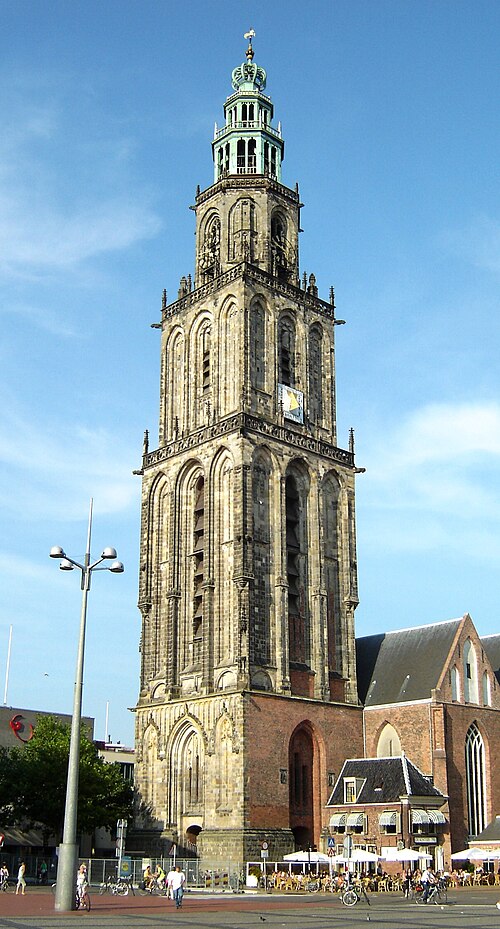
Saint Martin is the patron saint of the city of Szombathely, Hungary, which contains a church dedicated to him. He is the patron saint of Buenos Aires, Argentina. In the Netherlands, he is the patron of the cathedral and city of Utrecht. He is also the patron of the city of Groningen; its Martini tower and Martinikerk (Martin's Church) were named for him.
Saint Martin is also the patron of the church and town of Bocaue, in the Philippines.[41]
Saint Martin is the patron saint of the United States Army Quartermaster Corps, which also awards a medal in his name, the Order of St. Martin.[42]
Saint Martin is also patron saint of the Church Lads' and Church Girls' Brigade, an Anglican youth organisation; the youngest section of the brigade, comprising those aged 4 to 7, was renamed the "Martins" in his honour in 1998.
Iconography
Saint Martin is most generally portrayed on horseback dividing his cloak with the beggar. His emblem in English art is often that of a goose, whose annual migration is about late autumn.[43]
Influence

By the early 9th century, respect for Saint Martin was well-established in Ireland. His monastery at Marmoûtiers became the training ground for many Celtic missions and missionaries. Some believe that St. Patrick was his nephew and that Patrick was one of many Celtic notables who lived for a time at Marmoûtiers. St. Ninian definitely studied at Marmoûtiers and was profoundly influenced by Martin, to whom he dedicated a new church. The Book of Armagh contains, among other texts, almost the complete body of writings on Saint Martin by Sulpicius Severus.[44]
In Jonas of Bobbio's Vita Columbani, Jonas relates that Saint Columbanus, while travelling, requested to be allowed to pray at the tomb of St Martin. The Irish palimpsest sacramentary from the mid-7th century contains the text of a mass for St Martin. In the Life of Columba, Adamnan mentions in passing that St Martin was commemorated during Mass at Iona.[44]
In his Ireland and Her Neighbours in the Seventh Century,[45] Michael Richter attributes this to the mission of Palladius seen within the wider context of the mission of Germanus of Auxerre to Britain around 429. Thus, this could be the context in which the Life of St Martin was brought from Gaul to Ireland at an early date, and could explain how Columbanus was familiar with it before he ever left Ireland.[44]
Legacy
Ligugé Abbey
Founded by Martin of Tours in 360, Ligugé Abbey is one of the earliest monastic foundations in France. The reputation of the founder attracted a large number of disciples to the new monastery; the disciples initially living in locaciacum. or small huts, this name later evolved to Ligugé. Its reputation was soon eclipsed by Martin's later foundation at Marmoutier. As of 2013, the Benedictine community at Ligugé numbered 25.[46]
European folk traditions
From the late 4th century to the late Middle Ages, much of Western Europe, including Great Britain, engaged in a period of fasting beginning on the day after St. Martin's Day (also referred to as "Martinmas"), November 11. This fast period lasted 40 days (not including Saturdays and Sundays), and was, therefore, called Quadragesima Sancti Martini, meaning "the forty days of St. Martin" in Latin. On St. Martin's eve and on the feast day, people ate, drank and celebrated before they began to fast. This fasting time was later called "Advent" by the Church, and was considered a time for spiritual preparation for Christmas.
On St. Martin's Day, children in Flanders, the southern and northern parts of the Netherlands, and the Catholic areas of Germany and Austria participate in paper lantern processions. Often, a man dressed as St. Martin rides on a horse in front of the procession. The children sing songs about St. Martin and about their lanterns. The food traditionally eaten on the day is goose, a rich bird. According to legend, Martin was reluctant to become a bishop, and tried to hide in a stable filled with geese; however, the noise made by the geese betrayed his location to the people who were looking for him.
In the eastern part of the Belgian province of East Flanders (Aalst) and the western part of West Flanders (Ypres), traditionally children receive presents from St. Martin on November 11, instead of from Saint Nicholas on December 6 or Santa Claus on December 25. They also have lantern processions, for which children make lanterns out of beets. In recent years, the lantern processions have become widespread as a popular ritual, even in Protestant areas of Germany and the Netherlands, although most Protestant churches no longer officially recognize Saints.
In Portugal, where the saint's day is celebrated across the country, it is common for families and friends to gather around the fire in reunions called magustos, where they typically eat roasted chestnuts and drink wine, jeropiga (a drink made of grape must and aguardente) and aguapé (a sort of weak and watered-down wine). According to the most widespread variation of the cloak story, Saint Martin cut off half of his cloak in order to offer it to a beggar, and along the way, gave the remaining part to a second beggar. As he faced a long ride in a freezing weather, the dark clouds cleared away and the sun shone so intensely that the frost melted away. Such weather was rare for early November, so was credited to God's intervention. The phenomenon of a sunny break to the chilly weather on Saint Martin's Day (11 November) is called Verão de São Martinho (Saint Martin's Summer, veranillo de san Martín in Spanish) in honor of the cloak legend.

في مالطا ، في ليلة عيد القديس مارتن، يترك الأطفال كيساً فارغاً بجانب السرير. وعندما يستيقظون في اليوم التالي، من المفترض أن يجدوا الكيس مليئاً بالفاكهة.
تحمل العديد من الكنائس اسم القديس مارتن التوري. وترتبط كنيسة القديس مارتن في الحقول ، الواقعة في ميدان ترافالغار بوسط لندن، ارتباطًا وثيقًا بتاريخ مارتن ونبذه للحرب. وكان ديك شيبارد ، مؤسس اتحاد تعهد السلام ، قسيسًا للكنيسة من عام ١٩١٤ إلى عام ١٩٢٦، ويضم الموقع كنيسة تذكارية مُخصصة له. كما توجد لوحة تذكارية تُخلد ذكرى فيرا بريتين، الداعية الأنجليكانية البارزة للسلام. وكثيرًا ما تُستخدم درجات كنيسة القديس مارتن في الحقول لإقامة وقفات احتجاجية من أجل السلام.
كما أن كاتدرائية القديس مارتن في يبرس مخصصة له أيضاً.
تُعدّ كنيسة القديس مارتن في كايزرسلاوترن، ألمانيا ، معلماً بارزاً في المدينة. تقع في قلب وسط المدينة في ساحة القديس مارتن، وتحيط بها العديد من المطاعم والمتاجر. بُنيت الكنيسة في الأصل كدير فرنسيسكاني في القرن الرابع عشر، وتتميز بعدد من السمات المعمارية الفريدة. [ 47 ]
يُعد دير القديس مارتن دي كاستنيدا معلماً تاريخياً وطنياً منذ عام 1931. ويقع في غاليندي، سانابريا، مقاطعة زامورا، إسبانيا. ويُستخدم حالياً كمركز تفسيري. [ 48 ]
في أمريكا اللاتينية ، يحظى القديس مارتن بشعبية واسعة، ويُشار إليه غالبًا باسم " سان مارتن كاباليرو" نسبةً إلى تصويره الشائع على صهوة جواده. ويعتقد الفولكلور المكسيكي أنه قديسٌ نافعٌ لأصحاب الأعمال.
تُعدّ كنيسة سانت مارتن الأسقفية في هيوستن، تكساس، أكبر كنيسة أنجليكانية في أمريكا الشمالية. وكانت الكنيسة الأم للرئيس جورج بوش الأب وزوجته لسنوات عديدة، ولا تزال كذلك لوزير الخارجية والخزانة السابق جيمس بيكر وزوجته سوزان.
سان مارتين دي لوبا هو اسم بلدية في مقاطعة بوليفار في كولومبيا . القديس مارتن، المعروف أيضًا باسم سان مارتين دي لوبا، هو شفيع فاسكيز، وهي قرية صغيرة في كولومبيا.

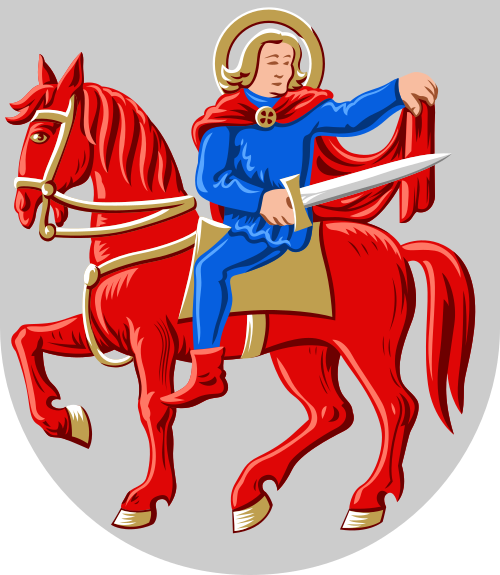
في فنلندا ، سميت مدينة وبلدية مارتيلا ( S:t Mårtens باللغة السويدية) على اسم القديس مارتن وتصوره على شعارها.
Though no mention of St. Martin's connection with viticulture is made by Gregory of Tours or other early hagiographers, he is now credited with a prominent role in spreading wine-making throughout the Touraine region and the planting of many vines. The Greek myth that Aristaeus first discovered the concept of pruning the vines, after watching a goat eat some of the foliage, has been adopted for Martin.[49] He is also credited with introducing the Chenin blanc grape varietal, from which most of the white wine of western Touraine and Anjou is made.
Martin Luther was named after St. Martin, as he was baptised on 11 November 1483 (St. Martin's Day), and many older Lutheran congregations are named after St. Martin.
In art and modern film
The Dutch film Flesh and Blood (1985) prominently features a statue of Saint Martin. A mercenary in Renaissance Italy, named Martin, finds a statue of Saint Martin cutting his cloak and takes it as a sign to desert and rogue around under the saint's protection.
- Saint Martin in art
 Death of Saint Martin of Tours, by workshop of Derick Baegert, 1490 (LWL-Museum für Kunst und Kultur)
 Saint Martin Healing the Possessed Man by Jacob Jordaens, 1630
 Saint Martin Dividing his Cloak by Pietro Bernini
 Kloster Wettingen Ost
Bay 20 in Chartres Cathedral portrays the life of St. Martin in a 40-panel stained glass window.[50]
Notes and references
Notes
- ↑Both dates are recorded in hagiographical tradition. The birth date in 336 is preferred as the more likely by Stancliffe 1983, pp. 119–133
- ↑"Hic aedificavit basilicam parvulam super corpus beati Martini, in qua et ipse sepultus est" (Gregory of Tours, Book X, Ch 31), quoted in Jacobsen 1997, p. 1108
- ↑Vita Eligii: "miro opificio exaure et gemmis contextuit sepulchrum"; quoted in Jacobsen 1997, p. 1109, note 11
References
- ↑Rodis-Lewis 1999, p. 26.
- ↑Sulpicius Severus recounts in which manner St Martin raised a dead man as follows: But, after the lapse only of a few days, the catechumen, seized with a languor, began to suffer from a violent fever. It so happened that Martin had then left home, and having remained away three days, he found on his return that life had departed from the catechumen; and so suddenly had death occurred, that he had left this world without receiving baptism. The body being laid out in public was being honored by the last sad offices on the part of the mourning brethren, when Martin hurries up to them with tears and lamentations. But then laying hold; as it were, of the Holy Spirit, with the whole powers of his mind, he orders the others to quit the cell in which the body was lying; and bolting the door, he stretches himself at full length on the dead limbs of the departed brother. Having given himself for some time to earnest prayer, and perceiving by means of the Spirit of God that power was present, he then rose up for a little, and gazing on the countenance of the deceased, he waited without misgiving for the result of his prayer and of the mercy of the Lord. And scarcely had the space of two hours elapsed, when he saw the dead man begin to move a little in all his members, and to tremble with his eyes opened for the practice of sight. Then indeed, turning to the Lord with a loud voice and giving thanks, he filled the cell with his ejaculations. Hearing the noise, those who had been standing at the door immediately rush inside. And truly a marvelous spectacle met them, for they beheld the man alive whom they had formerly left dead. Thus being restored to life, and having immediately obtained baptism, he lived for many years afterwards; and he was the first who offered himself to us both as a subject that had experienced the virtues of Martin, and as a witness to their existence
- 123Beck, H.G.J. (2003). "Martin of Tours, St.". In Catholic University of America (ed.). New Catholic Encyclopedia. Vol. 9 (2nd ed.). Detroit, New York, San Diego, Washington, D.C.: Thompson/Gale; Catholic University of America. pp. 220–221. ISBN 978-0-7876-4004-0.
- ↑Pernoud 2006, p. 20.
- ↑Pernoud 2006, p. 29.
- ↑The Old English Lives of St. Martin of Tours(PDF). Universitätsverlag Göttingen. 2017. p. 6. Retrieved 17 November 2022.
- ↑Severus 1894.
- ↑Kurlansky 2006, pp. 26–27.
- ١ ٢ "كراولي، جون ج.؛ سير القديسين ، جون ج. كراولي وشركاه" . كنيسة القديس مارتن التورسي الكاثوليكية . مؤرشف من الأصل في ٢٩ نوفمبر ٢٠١٤. تم الاطلاع عليه في ٤ يونيو ٢٠١٣ .
- ↑ هونز 1835 ، ص 1469-1470.
- ↑ «بنديكت السادس عشر - «شهادة سخية لإنجيل المحبة»، 11 نوفمبر 2007» . زينيت - العالم كما يُرى من روما . مؤرشف من الأصل في 29 نوفمبر 2014. تم الاطلاع عليه في 4 يونيو 2013 .
- ^ القصائد ii.13 و.17 وiii.4 ( me truncus elapsus cerebro sustulerat nisi faunus ictum dextra levasset )
- ↑ تشادويك 1976 ، ص 42-44.
- 1 2 "Foley OFM, Leonard. Saint of the Day, Lives, Lessons, and Face , (forserved by Pat McCloskey OFM)" .
- ↑ كيني 1914 .
- ↑ فارمر 1991 ، ص 78-96.
- ↑ كلوجنيت 1910 .
- ↑ برونترش 1988 ، ص 90-93.
- ^ التواتي 1998 ، ص. 216، الملاحظة 100.
- ↑ تشيشولم 1911 .
- ↑ ماكولوتش 2009 .
- ↑ Ladurie & Zysberg 1983 ، ص 1331 ، خريطة.
- ↑ نقلاً عن ريو 1955 ، ص 902
- ↑ غريغوريوس التوري ، الكتاب الثاني، الفصل 14.
- ^ May Viellard-Troiëkouroff، “La Basilique de Saint-Martin de Tours de Perpetuus (470) d'après les fouilles Archéologiques”، Actes du 22e Congrès International d'histoire d'art 1966. (Budapest 1972)، vol. 2: 839-846)؛ تشارلز ليلونج، La Basilique de Saint-Martin de Tours (شامبراي ليه تورز 1986).
- ^ جاكوبسن 1997 ، ص 1108–.
- ↑ "التقويم" . كنيسة إنجلترا . تم الاطلاع عليه بتاريخ 27-03-2021 .
- ↑ الأعياد والصيام الصغرى 2018. دار نشر الكنيسة، 2019. رقم ISBN 978-1-64065-235-4.
- ^ "تاريخية" . "باسيليك سان مارتن" (الموقع الرسمي) (بالفرنسية) . تم الاسترجاع 2008-09-16 .
- ^ "7 أكتوبر 1870 - Gambetta Quitte Paris en ballon - Herodote.net" . www.herodote.net . تم الاسترجاع 2026-03-14 .
- ↑ برينان 1997 .
- 12Brennan 1997, pp. 489–491.
- ↑Brennan 1997, p. 499.
- ↑Brennan 1997, pp. 491–492.
- ↑Brennan 1997, pp. 497–499.
- ↑May, Anita Marie Rasi (Fall 2017). "War, Memory, and Politics: The Case of the French Clergy in the First World War". Lingua Romana. 13 (1). Brigham Young University. Retrieved 25 October 2025.
- ↑Helm, J.E. (19 December 2018). "Clerics in the trenches: French priests in WWI". Archdiocese of Oklahoma City. Retrieved 25 October 2025.
- ↑Brennan 1997, pp. 499–501.
- ↑Lanzi 2004, p. 104.
- ↑Maqsood, Rana (2026-04-04). "On 11 November Poland celebrates National Independence Day".
- ↑"Bulacan, Philippines: Tourism: Feast of the Holy Cross of Wawa, Bocaue, Bulacan: Photo Gallery: pagoda01.jpg". Archived from the original on 2011-06-11. Retrieved 2009-07-08.
- ↑"Quartermaster Corps – The Order of Saint Martin". Archived from the original on 6 October 2007.
- ↑"'The Life of St. Martin of Tours', St. Martin's Anglican Church, Eynesford, Kent". Archived from the original on 2014-12-14. Retrieved 2013-06-04.
- 123Brigit (11 November 2010). ""Irish Devotion to Saint Martin of Tours", Saint Conleth's Catholic Heritage Association".
- ↑Richter 1999, pp. 225–230.
- ↑"L'Abbaye Saint-Martin de Ligugé". Archived from the original on 2011-05-12. Retrieved 2013-06-04.
- ↑"Stadtverwaltung Kaiserslautern".
- ↑"Monasterio de San Martín de Castañeda". Junta de Castilla y León – Consejería de Cultura y Turismo. Retrieved 13 July 2022.
- ↑For instance in Hugh Johnson, Vintage: The Story of Wine 1989, p. 97.
- ↑"Bay 20 – The Life of St Martin of Tours". medievalart.org.uk. Archived from the original on 17 May 2018.
See also
- St. Martin's Day
- جماعة القديس مارتن ، وهي رابطة من الكهنة الكاثوليك الرومان
- كنيسة القديس مارتن التورسي (توضيح)
- مارتن (الاسم)
- أرشيف القديس مارتن التورسي، شفيع المدينة
مصادر عامة وموثقة
- برينان، برايان (1997). " إحياء عبادة مارتن التوري في الجمهورية الثالثة". تاريخ الكنيسة . 66 (3): 489-501 . doi : 10.2307/3169453 . JSTOR 3169453. S2CID 162678372 .
- برونترتش، ج.-ب. (1988). جان كويزينير؛ ريمي غواداجنين (محرران). Un Village au temps de Charlemagne – Moines et paysans de l'abbaye de Saint-Denis، du VIIe siècle à l'an mil (بالفرنسية). باريس: المتحف الوطني للفنون والتقاليد. او سي ال سي 708304882 . سودوك 001398784 .
- تشادويك، هنري (1976). بريسيليان الأفيلاوي - الخوارق والكاريزماتية في الكنيسة الأولى . أكسفورد: كلارندون.
- تشيشولم، هيو ، محرر. (1911). . الموسوعة البريطانية . المجلد 5 ( الطبعة الحادية عشرة). مطبعة جامعة كامبريدج.
- كلوغنيه، ليون (1910). . في هيربرمان، تشارلز (محرر). الموسوعة الكاثوليكية . المجلد 9. نيويورك: شركة روبرت أبليتون.
- فارمر، شارون (1991). جماعات سانت مارتن - الأسطورة والطقوس في الجولات السياحية في العصور الوسطى . مطبعة جامعة كورنيل. ISBN 978-0-801-42391-8.
- فليتشر، ر.؛ فليتشر، ر.أ. (1999). التحول البربري - من الوثنية إلى المسيحية . مطبعة جامعة كاليفورنيا. ISBN 978-0-520-21859-8.
- غريغوري أوف تورز . مكتبة التاريخ .
- هونز، ويليام (1835). كتاب الحياة اليومية وكتاب الطاولة . المجلد 1. لندن: تي. تيج.
- جاكوبسن، فيرنر (1997). " مقابر القديسين في العمارة الكنسية الفرنجية". سبيكولوم . 72 (4). الأكاديمية الأمريكية للعصور الوسطى: 1107-1143 . doi : 10.2307/2865960 . JSTOR 2865960. S2CID 162427588 .
- كيني، لويز ماري ستاكبول (1914). "قصة القديس مارتن التوري - شفيع فرنسا" .
- كورلانسكي، مارك (2006). اللاعنف - خمسة وعشرون درسًا من تاريخ فكرة خطيرة . سلسلة وقائع المكتبة الحديثة. نيويورك: دار راندوم هاوس . ISBN 0-679-64335-4.
- Lanzi, Fernando (2004). Saints and Their Symbols – Recognizing Saints in Art and in Popular Images. Liturgical Press. ISBN 0-8146-2970-9.
- Ladurie, Emmanuel le Roy; Zysberg, André (1983). "Géographie des hagiotoponymes en France". Annales: Histoire, Sciences Sociales. 38 (6). Cambridge University Press: 1304–1335. doi:10.3406/ahess.1983.411022. ISSN 0395-2649. S2CID 162232272.
- MacCulloch, Daimaid (2009). A History of Christianity – The First Three Thousand Years. Penguin. ISBN 978-1-101-18945-0.
- Pernoud, Régine (2006). Martin of Tours – Soldier, Bishop, and Saint. Translated by Michael J. Miller. San Francisco: Ignatius Press. ISBN 1586170317.
- Réau, Louis (1955). Iconographie de l'art chrétien (in French). Paris: Presses Universitaires de France. OCLC 423468.
- Richter, M. (1999). Ireland and Her Neighbours in the Seventh Century. Four Courts Press. ISBN 978-1-85182-369-7.
- Rodis-Lewis, Geneviève (1999). Descartes – His Life and Thought. Cornell University Press. ISBN 080-1-48627-0.
- Severus, Sulpicius (1894). On the Life of St. Martin. A Select Library of Nicene and Post-Nicene Fathers of the Christian Church. Translated by Alexander Roberts. New York – via Christian Classics Ethereal Library.
{{cite book}}: CS1 maint: location missing publisher (link) - Stancliffe, Clare (1983). St Martin and his hagiographer – History and miracle in Sulpicius Severus. Oxford: Clarendon.
- Touati, François-Olivier (1998). Maladie et société au Moyen âge. Paris/Brussels.
{{cite book}}: CS1 maint: location missing publisher (link)
Further reading
- Eynsham, Ælfric of (1881). Ælfric's Lives of Saints. Early English Text Society.
- Maurey, Yossi (2014); Medieval Music, Legend, and the Cult of St Martin – The Local Foundations of a Universal Saint, Cambridge, Cambridge University Press, 2014.
External links
- "St. Martin, Bishop of Tours, Confessor", Butler's Lives of the Saints
- The Life and Miracles of Saint Martin of Tours, Bishop and Confessor of the Catholic Church
- The Community of St Martin
- St Martin's churches of the world
- Literature by and about Martin of Tours in the German National Library catalogue
- Joachim Schäfer: "Martin of Tours" in the Ecumenical Lexicon of Saints
- Erzbistum Köln: 1600 Jahre Verehrung des heiligen Martin von Tours
- Martin from a historian's viewpoint (German)
- Saint Martin Churches around the world
- Martin von Tours: Soldat, Eremit und Heiliger, film clips by Rüdiger Achenbach in the series Tag für Tag on Deutschlandfunk, Part 1 on 6 November 2014 and Part 2 on 7 November 2014
- 316 births
- 397 deaths
- 4th-century apocalypticists
- 4th-century archbishops
- 4th-century Christian saints
- 4th-century bishops in Gaul
- Anglican saints
- Bishops of Tours
- Conscientious objectors
- Dutch folklore
- Gallo-Roman saints
- Patron saints of France
- Romans from Pannonia
- Eastern Orthodox saints