
David Niven
James David Graham Niven (/ˈnɪvən/; 1 March 1910 – 29 July 1983[1][2]) was an English actor, soldier, raconteur, memoirist and novelist. Niven was known as a handsome and debonair leading man in classic Hollywood films. His accolades include an Academy Award and two Golden Globe Awards in addition to nominations for a BAFTA Award and two Emmy Awards.
Born in central London to an upper-middle-class family, Niven attended Heatherdown Preparatory School and Stowe School before gaining a place at the Royal Military College, Sandhurst. After Sandhurst, he was commissioned as a second lieutenant in the Highland Light Infantry. Upon developing an interest in acting, he found a role as an extra in the British film There Goes the Bride (1932). Bored with the peacetime army, he resigned his commission in 1933, relocated to New York, then travelled to Hollywood. There, he hired an agent and had several small parts in films through 1935, including a non-speaking role in Metro-Goldwyn-Mayer's Mutiny on the Bounty (1935). This helped him gain a contract with Samuel Goldwyn.
Parts, initially small, in major motion pictures followed, including Dodsworth (1936), The Charge of the Light Brigade (1936), and The Prisoner of Zenda (1937). By 1938, he was starring as a leading man in films such as Wuthering Heights (1939). Upon the outbreak of the Second World War, Niven returned to Britain and rejoined the army, being recommissioned as a lieutenant. In 1942, he co-starred in the morale-building film about the development of the renowned Supermarine Spitfire fighter plane, The First of the Few (1942).
حصل نيفن على جائزة الأوسكار لأفضل ممثل عن دوره في فيلم "طاولات منفصلة " (1958)، والذي يحمل فيه الرقم القياسي لأقصر أداء فائز في هذه الفئة (23 دقيقة و39 ثانية). ومن أبرز أفلامه الأخرى خلال تلك الفترة: " مسألة حياة أو موت" (1946)، و "زوجة الأسقف" (1947)، و "السحر" (1948)، و" الزهرة المراوغة " (1950) ، و" القمر أزرق" (1953)، و" حول العالم في 80 يومًا" (1956)، و "رجلي غودفري" (1957)، و "بنادق نافارون" (1961)، و "جريمة قتل " (1976)، و" موت على النيل" (1978). كما نال شهرة واسعة ونجاحًا كبيرًا بتجسيده شخصية السير تشارلز ليتون في فيلم "النمر الوردي" (1963) وشخصية جيمس بوند في فيلم "كازينو رويال" (1967).
الحياة المبكرة والأسرة
وُلد جيمس ديفيد غراهام نيفن في الأول من مارس عام 1910 في قصر بلجريف ، حدائق غروفينور ، لندن، لوالده ويليام إدوارد غراهام نيفن (1878-1915) ووالدته هنرييتا جوليا (ني ديغاشر) نيفن (1878-1932). [ 3 ] سُمّي ديفيد تيمّنًا بيوم ميلاده في عيد القديس ديفيد . ادّعى نيفن لاحقًا أنه وُلد في كيريموير ، في مقاطعة أنغوس الاسكتلندية عام 1909، لكن شهادة ميلاده تُفنّد هذا الادعاء. [ 4 ] كان لديه أختان أكبر منه وأخ: مارغريت جويس نيفن (1900-1981)، وهنري ديغاشر نيفن (1902-1953)، والنحاتة غريزل روزماري غراهام نيفن (1906-2007)، التي نحتت تمثال بيسي البرونزي الذي يُقدّم للفائزات بجائزة المرأة للرواية سنويًا .
كان والد نيفن، ويليام نيفن، من أصل اسكتلندي ؛ وقد قُتل في الحرب العالمية الأولى أثناء خدمته في فوج فرسان بيركشاير خلال حملة غاليبولي في 21 أغسطس 1915. دُفن في مقبرة غرين هيل ، تركيا، في القسم التذكاري الخاص في القطعة F. 10. [ 5 ] كان جد نيفن الأكبر من جهة الأب، والذي يحمل اسمه، ديفيد غراهام نيفن (1811-1884)، من سانت مارتينز ، وهي قرية في بيرثشاير . كان طبيباً، وتزوج في ووسترشاير ، وعاش في بيرشور .
وُلدت والدة نيفن، هنرييتا، في بريكون ، ويلز. كان والدها النقيب (الرائد الفخري) ويليام ديغاشر (1841-1879) من الكتيبة الأولى، الفوج الرابع والعشرين للمشاة ، والذي قُتل في معركة إيساندلوانا خلال الحرب الأنجلو-زولوية عام 1879. [ 6 ] على الرغم من أن اسمه الحقيقي كان ويليام هيتشكوك، المولود عام 1874، إلا أنه وشقيقه الأكبر المقدم هنري ديغاشر (1835-1902) سارا على خطى والدهما، والتر هنري هيتشكوك، في اتخاذ اسم عائلة والدتهما قبل الزواج، ديغاشر. [ 7 ] [ 8 ] كانت والدة هنرييتا هي جوليا كارولين سميث، ابنة الفريق جيمس ويبر سميث، الحائز على وسام رفيق الحمام .
بعد وفاة زوجها في تركيا عام ١٩١٥، تزوجت هنرييتا نيفن مرة أخرى في لندن عام ١٩١٧ من السياسي والدبلوماسي المحافظ السير توماس والتر كومين-بلات (١٨٦٩-١٩٦١). [ ٩ ] كان ديفيد وشقيقته غريزل مقربين، وكلاهما كان يكره كومين-بلات. انتقلت العائلة إلى روز كوتيدج في بيمبريدج بجزيرة وايت بعد بيع منزلهم في لندن. [ ١٠ ] في مذكراته التي نُشرت عام ١٩٧١ بعنوان "القمر بالون" ، كتب نيفن بحنين عن منزل طفولته:
أصبح بيع المنزل في لندن ضروريًا، وأصبح عنواننا الدائم كما هو مُعلن عنه - كوخٌ اشتهر بعدم استقراره. فعندما تهبّ الرياح الشرقية، يعلق الباب الأمامي، وعندما تهبّ الرياح الغربية، لا يُمكن فتح الباب الخلفي - ويبدو أن وزن العائلة مجتمعةً هو ما يُبقيه مُثبتًا في الأرض. كنتُ أعشقه، وكنتُ أسعد هناك مما كنتُ عليه في أي وقت مضى، خاصةً لأن والدتي، في ومضة عبقرية نادرة، قررت أن تقضي العطلات بمفردها مع أطفالها. مُنع العم تومي [كومين-بلات] - لا أعرف أين ذهب - من دخول نادي كارلتون على ما أظن. [ 10 ]
Literary editor and biographer, Graham Lord, wrote in Niv: The Authorised Biography of David Niven, that Comyn-Platt and Niven's mother may have been in an affair well before her husband's death in 1915 and that Comyn-Platt was actually Niven's biological father, a supposition that had some support among Niven's siblings. In a review of Lord's book, Hugh Massingberd from The Spectator stated photographic evidence did show a strong physical resemblance between Niven and Comyn-Platt that "would appear to confirm these theories, though photographs can often be misleading."[11] Niven is said to have revealed that he knew Comyn-Platt was his real father a year before his own death in 1983.[12]
After his mother remarried, Niven's stepfather had him sent away to boarding school. In The Moon's a Balloon, Niven described the bullying, isolation, and abuse he endured as a six-year-old. He said that older pupils would regularly assault younger boys, while the schoolmasters were not much better. Niven wrote of one sadistic teacher:
Mr Croome, when he tired of pulling ears halfway out of our heads (I still have one that sticks out almost at right-angles thanks to this son of a bitch) and delivering, for the smallest mistake in Latin declension, backhanded slaps that knocked one off one's bench, delighted in saying, 'Show me the hand that wrote this' — then bringing down the sharp edge of a heavy ruler across the offending wrist.[13]
Years later, after joining the British Army, a vengeful Niven decided to return to the boarding school to pay a call on Mr Croome but he found the place abandoned and empty.[13]
أثناء التحاقه بالمدرسة - كما كان شائعًا في ذلك الوقت - تعرض نيفن للعقاب البدني عدة مرات بسبب ميله للمقالب. وكان هذا السلوك هو ما أدى في النهاية إلى طرده من مدرسته التالية، مدرسة هيذرداون الإعدادية ، في سن العاشرة والنصف . أنهى هذا فرصه في الالتحاق بكلية إيتون ، مما شكل ضربة قوية لعائلته. بعد فشله في اجتياز امتحان القبول في البحرية بسبب صعوبته في الرياضيات، التحق نيفن بمدرسة ستو ، وهي مدرسة عامة حديثة التأسيس بقيادة المدير جيه إف روكسبورغ ، الذي كان مختلفًا عن جميع مديري المدارس السابقين الذين درسهم نيفن. كان حكيمًا ولطيفًا، ينادي الأولاد بأسمائهم الأولى، ويسمح لهم بركوب الدراجات، ويشجع اهتماماتهم الشخصية ويرعاها. كتب نيفن لاحقًا: "كيف فعل ذلك، لن أعرف أبدًا، لكنه جعل كل طالب في تلك المدرسة يشعر بأن ما يقوله ويفعله له أهمية بالغة بالنسبة للمدير." [ 13 ]
في عام ١٩٢٨، وأثناء قضائها عطلة في بيمبريدج ، أقامت مارغريت ويغام، البالغة من العمر ١٥ عامًا (والتي أصبحت فيما بعد سيدة مجتمع ودوقة أرغيل )، علاقة جنسية مع نيفن، البالغ من العمر ١٨ عامًا، نتج عنها حملها. غضب والدها بشدة، فأسرع بها إلى دار رعاية في لندن لإجراء عملية إجهاض سرية. تتذكر إليزابيث داكوورث، طاهية عائلة ويغام، قائلة: "انفجر الوضع تمامًا". كانت مارغريت ويغام تعشق نيفن حتى يوم وفاته؛ وكانت من بين كبار الشخصيات المدعوة إلى حفل تأبينه في لندن عام ١٩٨٣. [ ١٤ ]
حياة مهنية
الخدمة العسكرية
ابتداءً من عام ١٩٢٨، التحق نيفن بالكلية العسكرية الملكية في ساندهيرست . تفوق في دراسته هناك، مما أكسبه وقارًا يليق بضابط ورجل نبيل، والذي كان سمة مميزة له. طلب الانضمام إلى فوج أرغيل وسوذرلاند هايلاندرز أو فوج بلاك ووتش (فوج المرتفعات الملكي) ، ثم كتب مازحًا في الاستمارة، كخيار ثالث، "أي شيء عدا فوج مشاة المرتفعات الخفيف " (لأن هذا الفوج كان يرتدي سراويل منقوشة بدلًا من التنورة الاسكتلندية ). بعد إتمام تدريبه، رُقّي إلى رتبة ملازم ثانٍ في الجيش البريطاني في ٣٠ يناير ١٩٣٠، وعُيّن في فوج مشاة المرتفعات الخفيف. [ ١٥ ] خدم معهم لمدة عامين في مالطا ، ثم لبضعة أشهر في دوفر . في مالطا، توطدت صداقته مع مايكل تروبشو ، وخدم تحت قيادة روي أوركهارت ، القائد المستقبلي للفرقة البريطانية المحمولة جوًا الأولى . [ 16 ] في 21 أكتوبر 1956، وفي إحدى حلقات برنامج المسابقات " ما هو خطي؟" ، التقى نيفن، بصفته عضوًا في لجنة التحكيم من المشاهير، بأحد جنوده السابقين. كان ألكسندر ماكغيتشين ضيفًا، وعندما حان دوره في طرح الأسئلة، سأله نيفن: "هل كنتَ في فوج بريطاني شهير في مالطا؟" بعد أن أكد ماكغيتشين ذلك، مازحه نيفن قائلًا: "هل كان من سوء حظك أن أكون أنا ضابطك؟" عند هذه النقطة، جمع نيفن وماكغيتشين لقاءً قصيرًا ولكنه ودي. [ 17 ]
سئم نيفن من الجيش في زمن السلم. ورغم ترقيته إلى رتبة ملازم في الأول من يناير عام ١٩٣٣، [ ١٨ ] لم يرَ أي فرصة للترقية. وجاء قراره النهائي بالاستقالة بعد محاضرة مطولة عن الرشاشات، والتي كانت تتعارض مع خططه لتناول العشاء مع شابة جذابة. في نهاية المحاضرة، سأل المحاضر (وهو لواء) إن كانت هناك أي أسئلة. فأظهر نيفن، مبدياً نزعته التمردية المعهودة في شبابه، سأل: "هل يمكنك إخباري بالوقت يا سيدي؟ عليّ اللحاق بالقطار." [ ١٦ ]
استقال الملازم نيفن من منصبه في 6 سبتمبر 1933. [ 19 ]
مسيرة سينمائية
1935-1938: الأدوار المبكرة
When Niven presented himself at Central Casting, he learned that he needed a work permit to reside and work in the United States. Since this required leaving the US, he went to Mexico, where he worked as a "gun-man", cleaning and polishing the rifles of visiting American hunters. He received his resident alien visa from the American consulate when his birth certificate arrived from Britain. He returned to the US and was accepted by Central Casting as "Anglo-Saxon Type No. 2,008." Among the initial films in which he can be seen are Barbary Coast (1935) and Mutiny on the Bounty (1935). He secured a small role in A Feather in Her Hat (1935) at Columbia before returning to Metro-Goldwyn-Mayer for a bit role, billed as David Nivens, in Rose Marie (1936).
Niven's role in Mutiny on the Bounty brought him to the attention of independent film producer Samuel Goldwyn, who signed him to a contract and established his career. For Goldwyn, Niven again had a small role in Splendor (1935). He was lent to MGM for a minor part in Rose Marie (1936), then a larger one in Palm Springs (1936) for Paramount Pictures. His first sizable role for Goldwyn came in Dodsworth (1936). In that same year he was again loaned out, to 20th Century Fox to play Bertie Wooster in Thank You, Jeeves! (1936), before landing a significant role as a soldier in The Charge of the Light Brigade (1936) at Warner Brothers, an Imperial adventure film starring his housemate at the time, Errol Flynn. Niven was fourth billed in Beloved Enemy (1936) for Goldwyn, supporting Merle Oberon with whom he was romantically involved. Universal Pictures used him in We Have Our Moments (1937) and he had a good supporting role in David O. Selznick's The Prisoner of Zenda (1937).
1938–1939: Leading man

Fox Studios gave him the lead in a B picture, Dinner at the Ritz (1938), and he again had a supporting role in Bluebeard's Eighth Wife (1938) directed by Ernst Lubitsch at Paramount. Niven was one of the four heroes in John Ford's Four Men and a Prayer (1938), also with Fox. He remained with Fox to play the part of a fake love interest in Three Blind Mice (1938). Niven joined what became known as the Hollywood Raj, a group of British actors in Hollywood which included Gladys Cooper, Cedric Hardwicke, Boris Karloff, Stan Laurel, Basil Rathbone, Ronald Colman, Leslie Howard,[20] and C. Aubrey Smith.
Niven graduated to star parts in "A" films with The Dawn Patrol (1938) remake at Warners; although he was billed below Flynn and Rathbone, it was a leading role and the film did excellent business. Niven was reluctant to take part in Wuthering Heights (1939) for Goldwyn, but eventually relented and the film was a big success. RKO borrowed him to play Ginger Rogers's leading man in the romantic comedy Bachelor Mother (1939), which was another big hit. Goldwyn used him to support Gary Cooper in the adventure tale The Real Glory (1939), and Walter Wanger cast him opposite Loretta Young in Eternally Yours (1939). Finally, Goldwyn granted Niven a lead part in a major film, the title role as the eponymous gentleman safecracker in Raffles (1939).
1939–1945: Second World War
The day after Britain declared war on Germany in 1939, Niven returned home and rejoined the British Army. He was alone among British stars in Hollywood in doing so; the British Embassy advised most actors to stay.[21]
Niven was recommissioned as a lieutenant in the Rifle Brigade (Prince Consort's Own) on 25 February 1940,[22] and was assigned to a motor training battalion. He wanted something more exciting, however, and transferred to the Commandos. He was assigned to a training base at Inverailort House in the Western Highlands. Niven later claimed credit for bringing future Major GeneralSir Robert Laycock to the Commandos. Niven commanded "A" Squadron GHQ Liaison Regiment, better known as "Phantom". He was promoted to war-substantive captain on 18 August 1941.[23]


Niven also worked with the Army Film and Photographic Unit. His work included a small part in the deception operation that used minor actor M. E. Clifton James to impersonate GeneralSir Bernard Montgomery. During his work with the AFPU, Peter Ustinov, one of the scriptwriters, had to pose as Niven's batman. Niven explained in his autobiography that there was no military way that he, a lieutenant-colonel, and Ustinov, who was only a private, could associate, other than as an officer and his subordinate, hence their strange "act". In 1978, Niven and Ustinov starred together in a film adaptation of Agatha Christie's Death on the Nile.
He acted in two wartime films not formally associated with the AFPU, but both made with a firm view to winning support for the British war effort, especially in the United States. These were The First of the Few (1942), directed by Leslie Howard, and The Way Ahead (1944), directed by Carol Reed, the latter of which included a large supporting role for Ustinov.
Niven was also given a significant if largely unheralded role in the creation of SHAEF's military radio efforts conceived to provide entertainment to British, Canadian, and American forces in England and in Europe. In 1944 he worked extensively with the BBC and SHAEF to expand these broadcast efforts. He also worked extensively with Major Glenn Miller, whose Army Air Force big band, formed in the US, was performing and broadcasting for troops in England. Niven played a role in the operation to move the Miller band to France before Miller's December 1944 disappearance while flying over the English Channel.
On 14 March 1944, Niven was promoted war-substantive major (temporary lieutenant-colonel).[24] He took part in the Alliedinvasion of Normandy in June 1944, although he was sent to France several days after D-Day. He served in "Phantom", a secret reconnaissance and signals unit which located and reported enemy positions,[25] and kept rear commanders informed on changing battle lines. Niven was posted at one time to Chilham in Kent.

Niven had particular scorn for those newspaper columnists covering the war who typed out self-glorifying and excessively florid prose about their meagre wartime experiences. Niven stated, "Anyone who says a bullet sings past, hums past, flies, pings, or whines past, has never heard one –they go crack!" He gave a few details of his war experience in his autobiography, The Moon's a Balloon: his private conversations with Winston Churchill, the bombing of London, and what it was like entering Germany with the occupation forces. Niven first met Churchill at a dinner party in February 1940. Churchill singled him out from the crowd and stated, "Young man, you did a fine thing to give up your film career to fight for your country. Mark you, had you not done so it would have been despicable."[16]
A few stories have surfaced. About to lead his men into action, Niven eased their nervousness by telling them, "Look, you chaps only have to do this once. But I'll have to do it all over again in Hollywood with Errol Flynn!" Asked by suspicious American sentries during the Battle of the Bulge who had won the World Series in 1943, he answered, "Haven't the foggiest idea, but I did co-star with Ginger Rogers in Bachelor Mother!"[26]
Niven ended the war as a lieutenant-colonel. On his return to Hollywood after the war, he received the Legion of Merit, an American military decoration[27] in honour of Niven's work setting up the BBC Allied Expeditionary Forces Programme, a radio news and entertainment station for the Allied forces.[28][29]
1946–1950: Postwar career
Niven initially resumed his acting career in England, taking the lead in the classic, A Matter of Life and Death (1946), from the team of Powell and Pressburger. The film was critically acclaimed, popular in England, and selected as the first Royal Film Performance. Niven returned to Hollywood but soon encountered tragedy with the death of his wife after falling down a flight of stairs at a party, and it was around this time that his career began to suffer as well. Goldwyn lent him to Universal to play Aaron Burr in Magnificent Doll (1946) opposite Ginger Rogers, then lent him to Paramount for The Perfect Marriage (1947) with Loretta Young and loaned him out a third time for Enterprise Productions' The Other Love (1947) opposite Barbara Stanwyck. Finally he was cast in a top picture for Goldwyn when he joined Cary Grant and Loretta Young for The Bishop's Wife (1947).
Any prospects for career advancement were quickly dashed when Goldwyn lent him to Alexander Korda to return to the UK for the title role in Bonnie Prince Charlie (1948), a notorious flop. Back in Hollywood, Niven was in Goldwyn's well-regarded Enchantment (1948) with Teresa Wright. At Warner Bros he was in the comedy A Kiss in the Dark (1948) with Jane Wyman, then he appeared opposite Shirley Temple in the comedy A Kiss for Corliss (1949). None of these films was successful at the box office. Niven's career was markedly in decline.
He returned to Britain for the title role in The Elusive Pimpernel (1950) from Powell and Pressberger, which was to have been financed by Korda and Goldwyn. Goldwyn pulled out and the film did not appear in the US for three years. Niven had a long, complex relationship with Goldwyn, who gave him his start, but Niven's demands for more money and better roles led to a long estrangement.[30]
1951–1964: Renewed acclaim

في سنواته بعد انفصاله عن غولدوين، استغرق نيفن بعض الوقت للعودة إلى قمة هوليوود. بعد تعثره، شارك ماريو لانزا في فيلم موسيقي من إنتاج إم جي إم بعنوان " نخب نيو أورلينز " (1950). ثم سافر إلى إنجلترا ليؤدي دور البطولة في فيلم موسيقي مع فيرا إيلين بعنوان " هابي جو لافلي" (1951)؛ لم يحظَ الفيلم بانتشار واسع في الولايات المتحدة، لكنه حقق نجاحًا كبيرًا في بريطانيا. ثم اقتصر دوره على دور ثانوي في فيلم " جنود ثلاثة " (1951) من إنتاج إم جي إم، وهو دور مشابه لبعض أدواره في بداية مسيرته الفنية. حصل نيفن على دور أفضل بكثير في الفيلم الحربي البريطاني " موعد مع فينوس " (1952)، الذي لاقى رواجًا في إنجلترا. أما فيلم "السيدة تقول لا" (1952) فكان كوميديا أمريكية لم تلقَ استحسانًا. جرب نيفن حظه في برودواي، حيث شارك البطولة مع غلوريا سوانسون في مسرحية "نينا" (1951-1952). لم يُعرض الفيلم سوى 45 مرة، لكن أوتو بريمنغر شاهده ، فقرر إسناد دور البطولة فيه إلى نيفن في النسخة السينمائية من "القمر أزرق " (1953). وكجزء من التحضير، أصرّ بريمنغر، الذي أخرج المسرحية في نيويورك، على ظهور نيفن على خشبة المسرح خلال عروض الساحل الغربي. اكتسب فيلم "القمر أزرق" ، وهو فيلم كوميدي جنسي، شهرة واسعة بعد عرضه دون الحصول على موافقة هيئة الإنتاج؛ إلا أنه حقق نجاحًا كبيرًا، وفاز نيفن بجائزة غولدن غلوب عن دوره فيه.
بعد عودته إلى الأضواء، صُوّرت أفلام نيفن التالية في إنجلترا: "يانصيب الحب " (1954)، وهو فيلم كوميدي من إنتاج إيلينغ ؛ و"كارينغتون في سي" (1954)، وهو فيلم درامي رشّح نيفن لجائزة بافتا لأفضل ممثل؛ و" وعاشوا في سعادة أبدية" (1954)، وهو فيلم كوميدي من بطولة إيفون دي كارلو ، وحقق نجاحًا جماهيريًا كبيرًا في بريطانيا. في هوليوود، ظهر نيفن بدور الشرير في فيلم المغامرات " لص الملك" (1955) من إنتاج إم جي إم، أمام الممثل الشاب روجر مور . ثمّ حظي بدورٍ أفضل في فيلم "الطيور والنحل " (1956)، حيث جسّد شخصية محتال في نسخة جديدة من فيلم "السيدة إيف" (1941)، الذي لعب فيه نيفن دورًا ثانويًا إلى جانب الممثل الكوميدي التلفزيوني الأمريكي جورج غوبل والممثلة الرئيسية ميتزي غاينور . كما شارك نيفن في الفيلم الكوميدي الرومانسي البريطاني "قصة الحرير " (1956) مع جينيفيف باج في العام نفسه.
استعاد نيفن بريقه المهني بالكامل عندما لعب دور البطولة في فيلم " حول العالم في 80 يومًا " (1956) بشخصية فيلياس فوغ ، والذي حقق نجاحًا جماهيريًا هائلًا وأصبح فيلمه الأشهر، وفاز بجائزة الأوسكار لأفضل فيلم . ثم قدم أفلامًا أخرى مثل "يا رجال! يا نساء!" (1957)، و "الكوخ الصغير" (1957) من تأليف كاتب " القمر أزرق" والذي حقق نجاحًا جماهيريًا آخر، و" رجلي غودفري" (1957)، وهو فيلم كوميدي ساخر، و "صباح الخير يا حزن" (1958) من إخراج بريمنغر. كما عمل نيفن في التلفزيون، حيث ظهر عدة مرات في مسلسلات درامية قصيرة، وكان أحد "النجوم الأربعة" في سلسلة " مسرح النجوم الأربعة " الدرامية ، حيث شارك في 33 حلقة. أنتجت المسلسل شركة " فور ستار تيليفيجن "، التي أسسها نيفن وإيدا لوبينو وديك باول وتشارلز بوير . انتهى عرض المسلسل عام 1955، لكن "فور ستار" أصبحت شركة إنتاج تلفزيوني ناجحة للغاية.


كان نيفن الشخص الوحيد الذي فاز بجائزة الأوسكار في الحفل الذي كان يقدمه. [ 31 ] فاز بجائزة الأوسكار لأفضل ممثل عام 1959 عن دوره في فيلم " طاولات منفصلة" (Separate Tables ) بشخصية الرائد ديفيد أنغوس بولوك ، وهو ترشيحه الوحيد لجائزة الأوسكار. وبظهوره على الشاشة لمدة 23 دقيقة فقط في الفيلم، يُعد هذا أقصر أداء يفوز بجائزة الأوسكار لأفضل ممثل. كما شارك في تقديم حفلات توزيع جوائز الأوسكار الثلاثين والحادية والثلاثين والسادسة والأربعين. بعد فوز نيفن بجائزة الأوسكار، اتصل به غولدوين ودعاه إلى منزله. في غرفة جلوس غولدوين، لاحظ نيفن صورة له بالزي العسكري كان قد أرسلها إلى غولدوين من بريطانيا خلال الحرب العالمية الثانية. في أوقات أسعد مع غولدوين، كان قد رأى هذه الصورة نفسها موضوعة على بيانو غولدوين. والآن، بعد سنوات، لا تزال الصورة في نفس المكان تمامًا. وبينما كان ينظر إلى الصورة، قالت زوجة غولدوين، فرانسيس: "لم يقم سام بإزالتها أبدًا". [ 16 ]

With an Oscar to his credit, Niven's career continued to thrive. In 1959, he became the host of his own TV drama series, The David Niven Show, but he was still starring in major films. He led in Ask Any Girl (1959), with Shirley MacLaine; the Carl Reiner-scripted Happy Anniversary (1959) opposite Mitzi Gaynor; and Please Don't Eat the Daisies (1960) with Doris Day, a huge hit.
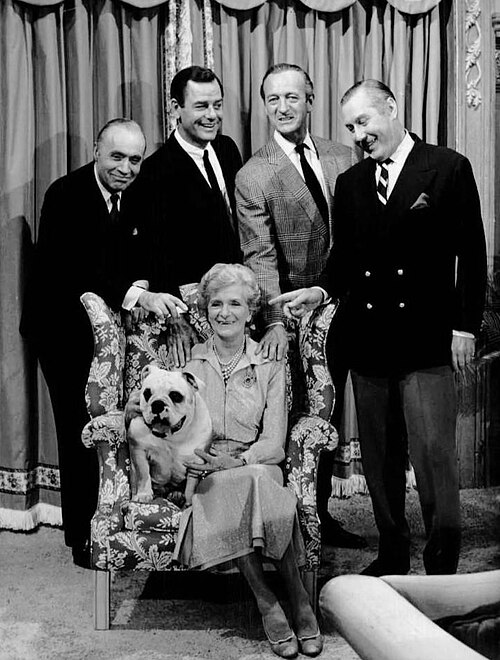
Even more popular was the action film The Guns of Navarone (1961) with Gregory Peck and Anthony Quinn. This role led to the ex-soldier being cast in further war and/or action films: The Captive City (1962); The Best of Enemies (1962); Guns of Darkness (1962); and 55 Days at Peking (1963) with Charlton Heston and Ava Gardner. Niven returned to comedy with The Pink Panther (1963), also starring Peter Sellers, another huge success at the box office. Less so was the comedy Bedtime Story (1964) with Marlon Brando, later remade with Michael Caine in a very Nivenish performance under the title Dirty Rotten Scoundrels. In 1964, Charles Boyer, Gig Young, and top-billed Niven appeared in the Four Star series The Rogues for NBC. Niven played Alexander 'Alec' Fleming, one of a family of retired con-artists who now fleece villains in the interests of justice. This was his only recurring role on television, and the series was originally set up to more or less revolve between the three leads in various combinations (one-lead, two-lead and three-lead episodes), although in the event, Gig Young, being the least busy, carried most of the series, with an assist from Larry Hagman. The Rogues ran for one season and won a Golden Globe.
1965–1983: Later films
في عام 1965، قدّم نيفن فيلمين لشركة مترو غولدوين ماير : فيلم "ليدي إل" من إخراج بيتر أوستينوف وبطولة بول نيومان وصوفيا لورين، وفيلم " أين الجواسيس" حيث لعب دور طبيب تحوّل إلى عميل سري. بعد فيلم الرعب " عين الشيطان " (1966)، عاد نيفن إلى أدوار العملاء السريين، فظهر بشخصية جيمس بوند في فيلم " كازينو رويال" الناجح عام 1967. ولا يزال، باستثناء شون كونري في فيلم " لا تقل أبداً لا" ، الممثل الوحيد الذي جسّد شخصية بوند في فيلم من إنتاج شركة غير إيون برودكشنز . وكان نيفن هو اختيار إيان فليمنغ ، مبتكر شخصية بوند، لتجسيد الشخصية في فيلم "دكتور نو ". وصرح تشارلز ك. فيلدمان، المنتج المشارك لفيلم "كازينو رويال" ، لاحقاً أن فليمنغ كتب الرواية وهو يفكر في نيفن، ولذلك أرسل نسخة منها إليه. [ 32 ] ونيفن هو الممثل الوحيد الذي جسّد شخصية جيمس بوند وذُكر اسمه صراحةً في نص رواية من روايات فليمنغ. في الفصل 14 من رواية " أنت تعيش مرتين فقط" ، تشير غواصة اللؤلؤ كيسي سوزوكي إلى نيفن على أنه "الرجل الوحيد الذي أحبته في هوليوود"، والشخص الوحيد الذي "عاملها باحترام" هناك.
أخرج نيفن فيلمين كوميديين حققا نجاحًا كبيرًا، هما " برودنس والحبة" (1968) و "السنوات المستحيلة " (1968). أما فيلمه "البحار الاستثنائي" ( 1969 ) الذي أخرجه لجون فرانكنهايمر، فكان أقل شهرة. وكان فيلم "الدماغ" (1969) ، وهو فيلم كوميدي فرنسي من بطولة بورفيل وجان بول بلموندو ، الفيلم الأكثر ربحًا في شباك التذاكر الفرنسي. ثم أخرج فيلمًا دراميًا حربيًا بعنوان " قبل حلول الشتاء " (1969)، قبل أن يعود إلى الكوميديا بفيلم " التمثال" (1971).
Buoyed by the massive success of his best-selling memoir, The Moon's a Balloon, Niven was in demand throughout the last decade of his life. King, Queen, Knave (1972) and Vampira (1974) were followed by one of the most enduring images of Niven. While hosting the 46th Annual Oscars ceremony, a naked man (Robert Opel) appeared behind Niven, "streaking" across the stage. In what instantly became a live-TV classic moment, a bemused Niven responded, "Isn't it fascinating to think that probably the only laugh that man will ever get in his life is by stripping off and showing his shortcomings?"[33] That same year, he hosted David Niven's World for LWT, which profiled contemporary adventurers such as hang gliders, motorcyclists, and mountain climbers: it ran for 21 episodes. In 1975, he narrated The Remarkable Rocket, a short animation based on a story by Oscar Wilde.
Continuing with his film career, he starred in the highly regarded drama Paper Tiger (1975) and a Disney comedy, No Deposit, No Return (1976), while at the same time appearing in lucrative TV commercials for cologne and coffee in Asia, setting a trend that carries on with major North American film stars today. The all-star mystery spoof Murder By Death (1976) followed, after which came a better Disney outing, Candleshoe (1977), alongside Jodie Foster and Helen Hayes, and then the first of the all-star Ustinov-as-Poirot films, Death on the Nile (1978). A Nightingale Sang in Berkeley Square (1979); Escape to Athena (1979), another all-star effort, this time with his son as producer; then the far-better-than-usual Burt Reynolds vehicle Rough Cut (1980), and finally The Sea Wolves (1980), a wartime adventure film, rounded out his peak years. By the last two, and his TV mini-series A Man Called Intrepid (1979), Niven's declining health was becoming evident.
Niven's last leading role was in Better Late Than Never (1983). In July 1982, Blake Edwards brought an ailing Niven back for cameos in two "Pink Panther" films shot at the same time (Trail of the Pink Panther and Curse of the Pink Panther), reprising his role as Sir Charles Lytton. By the time of filming, Niven was fully in the throes of amyotrophic lateral sclerosis and his voice was no longer usable. His lines were dubbed, however inadequately, on short notice, by Rich Little. Niven only learned of it from a newspaper report.
Writing

Niven wrote four books. The first, Round the Rugged Rocks, was a novel that appeared in 1951, when his film career was at its nadir, and was forgotten immediately. The plot was plainly autobiographical (although not recognised as such at the time of publication), involving a young soldier, John Hamilton, who leaves the British Army, becomes a liquor salesman in New York, is involved in indoor horse racing, goes to Hollywood, becomes a deckhand on a fishing boat, and finally ends up as a highly successful film star.
In 1971, he published his autobiography, The Moon's a Balloon, selling over five million copies. He followed this with Bring On the Empty Horses in 1975, a collection of entertaining reminiscences from the Golden Age of Hollywood in the 1930s and 1940s. As a raconteur rather than an accurate memoirist, Niven recounted some incidents from a first-person perspective that happened to other people, among them Cary Grant.[4] This borrowing and embroidering of his personal history was also said to be the reason why he persistently refused to appear on This Is Your Life.[34] Niven's penchant for exaggeration is particularly apparent when comparing his written descriptions of his early film appearances (especially Barbary Coast and A Feather in her Hat), and his Oscar acceptance speech, to the filmed evidence. In all three examples, the reality differs from Niven's accounts as presented in The Moon's a Balloon and related in various chat show appearances.
In 1981 Niven published a second and much more successful novel, Go Slowly, Come Back Quickly, which was set during and after the Second World War, and which drew on his experiences during the war and in Hollywood.
Personal life
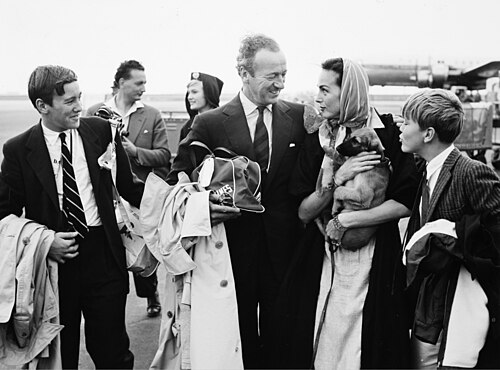

While on leave in 1940, Niven met Primula "Primmie" Susan Rollo (18 February 1918 – 21 May 1946), the daughter of London lawyer William H.C. Rollo. After a whirlwind romance, they married on 16 September 1940. A son, David Jr., was born in December 1942 and a second son, James Graham Niven, on 6 November 1945. Primmie died at the age of 28, six weeks after the family moved to the US. She fractured her skull in a fall in the Beverly Hills home of Tyrone Power and Annabella, while playing a game of sardines. She had walked through a door believing it to be a closet, but instead, it led to a stone staircase to the basement.[35][36]
In 1948, Niven met and married Hjördis Paulina Tersmeden (née Genberg, 1919–1997), a divorced Swedish fashion model. He recounted their meeting:
I had never seen anything so beautiful in my life –tall, slim, auburn hair, up-tilted nose, lovely mouth and the most enormous grey eyes I had ever seen. It really happened the way it does when written by the worst lady novelists ... I goggled. I had difficulty swallowing and had champagne in my knees.[16]
According to friends, the relationship between Niven and Hjördis was turbulent.[37][38]
In 1960, Niven bought a chalet in Château-d'Œx near Gstaad in Switzerland, living near expatriate friends including Deborah Kerr, Peter Ustinov, and Noël Coward.[39][40] It is believed that Niven's choice to become a tax exile may have been one reason why he never received a British honour.[41] However, Kerr, Ustinov, and Coward were honoured. A 2009 biography of Niven contained assertions that he had an affair with Princess Margaret, who was 20 years his junior.[42] He also became close friends with William F. Buckley Jr. and his wife Pat; Buckley wrote a memorial tribute to him in Miles Gone By (2004).
وفي النهاية قسم نيفن وقته بين شاليهه في شاتو دوكس [ 43 ] ومنزله في كاب فيرات على الريفييرا الفرنسية في جنوب فرنسا. [ 39 ]
الموت والإرث
في عام ١٩٧٨، بدأ نيفن يعاني من فقدان الوزن، وبحلول عام ١٩٨٠، ظهرت عليه أعراض الإرهاق العام وضعف العضلات وتلعثم الكلام . أثارت مقابلاته في البرامج الحوارية لمايكل باركنسون وميرف غريفين قلق عائلته وأصدقائه؛ وتساءل المشاهدون عما إذا كان نيفن قد تناول الكحول أو أصيب بجلطة دماغية. وعزا نيفن تلعثمه الطفيف في الصوت إلى ضغط جدول تصوير فيلمه "أن تأتي متأخراً خير من ألا تأتي أبداً" . شُخِّصَ نيفن بمرض التصلب الجانبي الضموري عام ١٩٨٠. وكان آخر ظهور له في هوليوود في حفل تكريم معهد الفيلم الأمريكي عام ١٩٨١ لصديقه الراحل فريد أستير .
في فبراير 1983، استخدم نيفن اسمًا مستعارًا لتجنب الأضواء، ودخل المستشفى لمدة عشرة أيام، ظاهريًا بسبب مشكلة في الجهاز الهضمي. بعد ذلك، عاد إلى شاليهه في شاتو دو. ورغم استمرار تدهور حالته، رفض العودة إلى المستشفى، وهو قرار أيدته عائلته. توفي في شاليهه في 29 يوليو 1983، عن عمر يناهز 73 عامًا. [ 44 ] [ 45 ] [ 46 ] دُفن نيفن في 2 أغسطس في مقبرة شاتو دو المحلية. [ 47 ]
أُقيمت صلاة شكر على روح نيفن في كنيسة سانت مارتن إن ذا فيلدز بلندن في 27 أكتوبر 1983. وضمّ الحضور، البالغ عددهم 1200 شخص ، الأمير مايكل أمير كينت ، ومارغريت كامبل دوقة أرغيل ، وجون ميلز ، وريتشارد أتينبورو ، وتريفور هوارد ، وديفيد فروست ، وجوانا لوملي ، ودوغلاس فيربانكس الابن ، ولورانس أوليفييه . [ 48 ] وكتب كاتب سيرته غراهام لورد: "تم تسليم أكبر إكليل من الزهور، يليق بجنازة زعيم مافيا، من قبل الحمالين في مطار هيثرو بلندن ، مصحوبًا ببطاقة كُتب عليها: "إلى أروع رجل سار في هذه القاعات. لقد جعل الحمال يشعر وكأنه ملك . " [ 49 ]
In 1985, Niven was included in a series of British postage stamps, along with Alfred Hitchcock, Charles Chaplin, Peter Sellers, and Vivien Leigh, to commemorate "British Film Year".[50] Niven's appearance was the inspiration for that of Commander Norman in the Thunderbirds franchise, as well as DC Comics villain Sinestro.[51]
Niven's Bonjour Tristesse co-star, Mylène Demongeot, declared about him in a 2015 filmed interview:
He was like a Lord, he was part of those great actors who were extraordinary like Dirk Bogarde, individuals with lots of class, elegance and humour. I only saw David get angry once. Preminger had discharged him for the day but eventually asked to get him. I said, sir, you had discharged him, he left for Deauville to gamble at the casino. So we rented a helicopter so they immediately went and grabbed him. Two hours later, he was back, full of rage. There I saw David lose his British phlegm, his politeness and class. It was royal. [Laughs].[52]
Acting credits and accolades
Awards and nominations
| Year | Association | Category | Nominated work | Result | Ref. |
|---|---|---|---|---|---|
| 1954 | BAFTA Award | Best British Actor | Carrington V.C. | Nominated | |
| 1955 | Emmy Awards | Best Actor in a Single Performance | Four Star Playhouse | Nominated | |
| 1957 | Nominated | ||||
| 1953 | Golden Globe Awards | Best Actor in a Musical or Comedy – Motion Picture | The Moon is Blue | Won | |
| 1957 | My Man Godfrey | Nominated | |||
| 1958 | Best Actor in a Drama – Motion Picture | Separate Tables | Won | ||
| 1958 | Academy Award | Best Actor | Won |
Bibliography
- Niven, David (1951). Round the Rugged Rocks. London: The Cresset Press.
- Niven, David (1971). The Moon's a Balloon. London: Hamish Hamilton. ISBN 0-340-15817-4.
- Niven, David (1975). Bring on the Empty Horses. Hamish Hamilton. ISBN 0-241-89273-2.
- Niven, David (1981). Go Slowly, Come Back Quickly. Hamish Hamilton. ISBN 0-241-10690-7.
Further reading
See also



References
- ↑"Niven, (James) David Graham (1910–1983), actor and author". Oxford Dictionary of National Biography (online ed.). Oxford University Press. 2004. doi:10.1093/ref:odnb/31503. Retrieved 8 April 2008.(Subscription, Wikipedia Library access or UK public library membership required.)
- ↑"Obituaries". The Times. 30 July 1983.
- ↑Morley, Sheridan (1997). David Niven, Brief Lives. Oxford: Oxford University Press. p. 413. ISBN 0198600879.
- 12Morley, Sheridan (1985). The Other Side of the Moon. London: Weidenfeld and Nicolson. ISBN 0-340-39643-1.
- ↑"Casualty details—Niven, William Edward Graham". Commonwealth War Graves Commission. Retrieved 4 September 2009.
- ↑"Marriages". The Times. 26 October 1888.
- ↑"Notices". The Times. 18 February 1874. p. 1.
- ↑"Henry James Degacher CB". www.britishempire.co.uk. Retrieved 14 August 2020.
- ↑"1917 – David Niven's mother marries Thomas Comyn Platt". hjordisniven.com. 17 December 2017. Retrieved 19 June 2021.
- 12"David Niven's idyllic childhood home comes up for sale: 'I adored it and was happier there than I had ever been'". Country Life. 23 January 2020.
Part of the reason that the young Niven enjoyed his school holidays in Bembridge so much is that his mother saw very clearly that her two teenage sons needed space and freedom to let their hair down — so much so, in fact, that she built an extension to the rear of the house which was quickly dubbed the 'Sin Wing'. [When] David and his brother used to come in rather noisily at night [...] his mother got a bit cross so she built two bedrooms and a bathroom at the back.
- ↑Massingberd, Hugh (15 November 2003). "It's being so cheerful that keeps me going". The Spectator. Retrieved 25 May 2009.
{{cite magazine}}: CS1 maint: url-status (link) - ↑"The flawed real life of the perfect movie gentleman". Irish Independent. 19 July 2009.
- 123Niven, David (1971). The Moon's a Balloon (Reprint (2005)). Penguin Books Limited. pp. 38–45. ISBN 9780140239249.
- ↑Lord, Graham (2004). Niv: The Authorised Biography of David Niven. Orion. p. 420.
- ↑"No. 33575". The London Gazette. 31 January 1930. pp. 651–652.
- 12345David Niven (1971). The Moon's a Balloon. London: Hamish Hamilton. ISBN 0-340-15817-4.
- ↑What's My Line? – Lerner & Loewe; Bishop Sheen; David Niven [panel] (21 October 1956) on YouTube
- ↑"No. 33907". The London Gazette. 31 January 1933. p. 674.
- ↑"No. 33975". The London Gazette. 5 September 1933. p. 5801.
- ↑Eforgan, E. (2010) Leslie Howard: The Lost Actor. London: Vallentine Mitchell; p. 94 ISBN 978-0-85303-971-6
- ↑Friedrich, Otto (1986). City of Nets: A Portrait of Hollywood in the 1940s. Berkeley and Los Angeles: University of California Press. p. 28. ISBN 0-520-20949-4.
- ↑"No. 34823". The London Gazette (Supplement). 5 September 1933. p. 1978.
- ↑The Quarterly Army List (October–December 1943: Part II). London: HM Stationery Office. 1943. p. 1368b.
- ↑The Quarterly Army List (April–June 1945: Part II). London: HM Stationery Office. 1945. p. 1368b.
- ↑"Five Film Stars' Wartime Roles". Imperial War Museums.
- ↑"David Niven was the only British star in Hollywood to enlist during WWII". 18 August 2016.
- ↑"No. 37340". The London Gazette (Supplement). 8 November 1945. p. 5461.
- ↑"Recommendation for Award for Niven, John David Rank: Lieutenant Colonel"(fee usually required to view full pdf of original recommendation). DocumentsOnline. The National Archives. Retrieved 7 April 2009.
- ↑"No. 37340". The London Gazette (Supplement). 6 November 1945. p. 5461.
- ↑"David Niven's Own Story". The Australian Women's Weekly. National Library of Australia. 15 September 1971. p. 15. Retrieved 7 July 2012.
- ↑Keegan, Rebecca (20 February 2019). "The Politics of Oscar: Inside the Academy's Long, Hard Road to a Hostless Show". The Hollywood Reporter. Archived from the original on 25 February 2019. Retrieved 25 February 2019.
- ↑"Ian Fleming, Author or Spy?". www.hmss.com. Archived from the original on 28 September 2007. Retrieved 24 August 2007.
- ↑"Oscar streaker". YouTube. 19 February 2008. Archived from the original on 11 December 2021. Retrieved 24 September 2010.
- ↑"Why David Niven and the amateurs behind Jamaica Inn will always be on Separate Tables". Borehamwood Times. Retrieved 27 May 2021.
- ↑Karin J. Fowler (1995) David Niven: a Bio-Biography, Greenwood Press. ISBN 978-0313280443
- ↑Sunday Times (Perth, WA: 1902–1954) "David Niven's wife in death crash" 26 May 1946, P.3 Retrieved 12 January 2016
- ↑"The flawed real life of the perfect movie gentleman". Irish Independent. Dublin. Retrieved 22 March 2024.
- ↑Bradley, Charley (27 February 2022). "David Niven wife: Roger Moore claimed Niven's partner 'was a b**** to him'". Daily Express. London. Retrieved 22 March 2024.
- 12Michael Munn (20 March 2014). David Niven: The Man Behind the Balloon. Aurum Press. pp. 197–. ISBN 978-1-78131-372-5.
- ↑Fowler, Karin J. (1 January 1995). David Niven: A Bio-bibliography. Greenwood Publishing Group. pp. 167–. ISBN 978-0-313-28044-3.
- ↑ غرينفيلد، جورج (1 يناير 1995). مجموعة من الوحوش: نوع من المذكرات . دار كامدن هاوس للنشر . ص 187 وما بعدها. ISBN 978-1-57113-071-6.
- ↑ مون، مايكل (24 مايو 2009). "يا إلهي، تمنيت موتها" . صحيفة صنداي تايمز . مؤرشف من الأصل في 6 يناير 2010. تم الاطلاع عليه في 29 مايو 2009 .
- ↑ "Ch. David Niven 7: Château-d'Oex" . map.search.ch . تم الاطلاع عليه بتاريخ 22 سبتمبر 2022 .
- ↑ دونيلي، بول (2003). تلاشي إلى الأسود: كتاب نعوات الأفلام . مجموعة مبيعات الموسيقى. ص 522. ISBN 0-711-99512-5.
- ↑ بيس، إريك (30 يوليو 1983). "وفاة ديفيد نيفن عن عمر يناهز 73 عامًا؛ الممثل البارع يفوز بجائزة الأوسكار" . صحيفة نيويورك تايمز . ص 1.
- ↑ بيس، إريك (30 يوليو 1983). "وفاة ديفيد نيفن عن عمر يناهز 73 عامًا؛ الممثل البارع يفوز بجائزة الأوسكار" . صحيفة نيويورك تايمز . ص 2.
- ↑ بروكس، باتريشيا؛ بروكس، جوناثان (2006). دفن الموتى في كاليفورنيا: دليل لمقابر ومواقع دفن الأثرياء والمشاهير . غلوب بيكوت. ص 522. ISBN 0-762-74101-5.
- ↑ ترجمة نيف بقلم غراهام لورد، أوريون، 2004، ص 420
- ↑ "في مديحٍ مسرحيٍّ لديفيد نيفن" . Paulburgin.blogspot.com. 25 يناير 2006. تم الاطلاع عليه بتاريخ 24 سبتمبر 2010 .
- ↑ ووكر، ألكسندر . فيفيان: حياة فيفيان لي ، ص 303، 304. دار غروف للنشر، 1987.
- ↑ براون، جيريمي (10 يونيو 2007). "من الداخل: سينسترو" مجلة الساحر. مؤرشف من الأصل في 11 أكتوبر 2007. تم الاطلاع عليه في 5 أكتوبر 2007 .
- ↑ مؤتمرات ماك ماهون المصورة، باريس (5 يوليو 2015). "لقاء مع ميلين ديمونجو" . يوتيوب. مؤرشف من الأصل في 11 ديسمبر 2021. تم الاطلاع عليه في 24 أكتوبر 2021 .
روابط خارجية
- ديفيد نيفن في موقع سكرين أونلاين التابع لمعهد الفيلم البريطاني
- ديفيد نيفن في معهد الفيلم البريطاني
- "مواد أرشيفية تتعلق بديفيد نيفن" . الأرشيف الوطني البريطاني .
- ديفيد نيفن في قاعدة بيانات برودواي على الإنترنت
- ديفيد نيفن على موقع IMDb
- ديفيد نيفن في قاعدة بيانات أفلام TCM (أرشيف)
- David Niven at Find a Grave
- 1910 births
- 1983 deaths
- 20th-century English male actors
- 20th-century English memoirists
- 20th-century English novelists
- Writers from the City of Westminster
- Best Actor Academy Award winners
- Best Drama Actor Golden Globe (film) winners
- Best Musical or Comedy Actor Golden Globe (film) winners
- British Army Commandos officers
- British Army personnel of World War II
- British expatriates in Switzerland
- British expatriate male actors in the United States
- Deaths from motor neuron disease in Switzerland
- English male film actors
- English male stage actors
- English male television actors
- English people of French descent
- English people of Scottish descent
- English people of Welsh descent
- Foreign recipients of the Legion of Merit
- Graduates of the Royal Military College, Sandhurst
- Highland Light Infantry officers
- Male actors from London
- People educated at Heatherdown School
- People educated at Stowe School
- People from Buckland, Oxfordshire
- People from Château-d'Œx
- Military personnel from the City of Westminster
- Rifle Brigade officers
- English autobiographers
- Actors from the City of Westminster
- People from Victoria, London
- Metro-Goldwyn-Mayer contract players
- Niven family