
كهوف كيزيل
كهوف كيزيل (تُكتب أيضًا Qizil أو Qyzyl ؛ بالأويغورية : قَزىل مىڭ ئۆي ، وتعني حرفيًا " الألف بيت أحمر " ؛ بالصينية :克孜尔千佛洞، وتعني حرفيًا " كهوف كيزيل لألف بوذا " ) هي مجموعة من الكهوف البوذية المنحوتة في الصخر، تقع بالقرب من بلدة كيزيل (克孜尔乡؛ Kèzī'ěr Xiāng ) في مقاطعة بايتشنغ ، محافظة أكسو، شينجيانغ، الصين. يقع الموقع على الضفة الشمالية لنهر مزات، على بُعد 65 كيلومترًا (40 ميلًا) (75 كيلومترًا؛ 50 ميلًا برًا) غرب كوتشا . [ 1 ] [ 2 ] كانت هذه المنطقة مركزًا تجاريًا هامًا على طريق الحرير . [ 3 ] تلعب الكهوف دورًا هامًا في فنون آسيا الوسطى وفي نقل البوذية عبر طريق الحرير ، ويُقال إنها أقدم مجمع كهوف بوذي رئيسي في الصين، حيث ازدهرت بين القرنين الثالث والثامن الميلاديين. [ 3 ] تُعد كهوف كيزيل الأقدم من نوعها في الصين، وقد اعتُمد نموذجها لاحقًا في بناء الكهوف البوذية الواقعة شرقًا. [ 4 ] يُعرف الموقع أيضًا باسم مينغ-أوي (明屋)، على الرغم من أن هذا المصطلح يُستخدم الآن بشكل أساسي لموقع شورتشوك الواقع شرقًا. [ 5 ]
تم إدراج كهوف كيزيل في عام 2014 على قائمة التراث العالمي لليونسكو كجزء من طرق الحرير: شبكة طرق ممر تشانغآن-تيانشان للتراث العالمي. [ 6 ]
الكهوف


يُعدّ مجمع كهوف كيزيل أكبر مواقع الكهوف البوذية القديمة المرتبطة بمملكة كوتشا التوخارية القديمة ، وأكبرها في شينجيانغ. ومن المواقع الشهيرة الأخرى القريبة كهوف كيزيلغاها ، وكهوف كومتورا ، ومعبد سوباشي ، وكهوف سيمسيم . [ 9 ] [ 10 ] تُعتبر كهوف كيزيل "أقدم الكهوف النموذجية في الصين". [ 11 ] عند إنشاء هذه الكهوف، كانت منطقة كوتشا تتبع مدرسة سارفستيفادا الأرثوذكسية من بوذية هينايانا ، على الرغم من وجود أقلية مبكرة من مدرسة دارماغوبتا . [ 12 ] يُرجّح أن تكون الكهوف المربعة البسيطة قد أُنشئت على يد دارماغوبتا في القرن الرابع الميلادي أو قبله، بينما تُنسب كهوف "العمود المركزي"، التي ازدهرت منذ منتصف القرن السادس الميلادي، إلى مدرسة سارفستيفادا . [ 12 ]
ملخص
يوجد في كيزيل 236 معبدًا كهفيًا منحوتًا في الجرف الممتد من الشرق إلى الغرب بطول كيلومترين (1.25 ميل). [ 1 ] من بينها، لا يزال 135 معبدًا سليمًا نسبيًا. [ 13 ] يعود تاريخ أقدم الكهوف، استنادًا جزئيًا إلى التأريخ بالكربون المشع، إلى حوالي عام 300 ميلادي. [ 14 ] يعتقد معظم الباحثين أن الكهوف هُجرت على الأرجح في وقت ما حوالي بداية القرن الثامن الميلادي، بعد وصول نفوذ سلالة تانغ إلى المنطقة. [ 15 ] عُثر في كيزيل على وثائق مكتوبة باللغات التخارية ، وتحتوي بعض الكهوف على نقوش تخارية وسنسكريتية تذكر أسماء بعض الحكام.
تتميز العديد من الكهوف بتصميم عمود مركزي، حيث يمكن للحجاج أن يطوفوا حول عمود مركزي يتضمن تجويفًا لتمثال بوذا، وهو تمثيل للستوبا .
توجد ثلاثة أنواع أخرى من الكهوف: الكهوف المربعة، والكهوف "ذات الصورة الضخمة"، والخلايا الرهبانية (كوتي). حوالي ثلثي الكهوف عبارة عن خلايا رهبانية تُستخدم كمساكن ومخازن، ولا تحتوي هذه الكهوف على لوحات جدارية. [ 10 ] ولا يزال التسلسل الزمني محل نقاش. [ 16 ] [ 10 ]
هيكل كهف "العمود المركزي"
في التصميم التقليدي ذي "العمود المركزي"، يستطيع الحجاج الطواف حول عمود مركزي يتضمن تجويفًا لتمثال بوذا، وهو رمز للستوبا . إن ما يُسمى "بالعمود المركزي" الظاهر في المخطط ليس عمودًا بالمعنى الحقيقي، بل هو مجرد صخرة في الجزء الخلفي من الكهف، حُفر فيها ممر دائري يسمح بالطواف . [ 17 ]
تقع أمام العمود المركزي حجرةٌ كبيرةٌ مقببة، وخلفها حجرةٌ خلفيةٌ أصغر، ويربط بينهما ممران جانبيان يشبهان الأنفاق. في الحجرة الأمامية، كان من المفترض أن تُوضع صورةٌ ثلاثية الأبعاد لبوذا في محرابٍ كبيرٍ يُشكّل محورَ التصميم الداخلي، إلا أنه لم يبقَ أيٌّ من هذه المنحوتات في كيزيل. [ 18 ] قد تحتوي الحجرة الخلفية على مشهد البارينيرفانا على شكل جداريةٍ أو منحوتةٍ كبيرة، وفي بعض الحالات، مزيجٌ من الاثنين. من المحتمل أن يكون تصميم العمود المركزي مُرتبطًا بالتصميم الهيكلي لكارا تيبي في شمال باكتريا . [ 19 ]
يتبع برنامج اللوحات في كهوف "العمود المركزي" ترتيبًا ثابتًا بشكل عام: تعرض جدران الحجرة الرئيسية خطب بوذا، ويحتوي السقف على رسومات معينية الشكل تلمح إلى حكايات الجاتاكا ، ويحتوي الكوة المركزية على مشهد من كهف إندراسالا . أما الغرفة الخلفية أو الممر فيحتوي على مشاهد تتعلق بالبارينيرفانا ، وأخيرًا ترتبط اللوحة الموجودة فوق المخرج بجنة توسيتا وبوذا مايتريا المستقبلي . [ 20 ]
استكشاف


تم اكتشاف كهوف كيزيل واستكشافها لأول مرة في الفترة ما بين عامي 1902 و1904 من قبل بعثة أوتاني ، وهي بعثة يابانية بقيادة تيشين واتانابي (渡辺哲信) وكينيو هوري (堀賢雄)، بتمويل من الكونت أوتاني ، إلا أن البعثة غادرت على عجل بعد أربعة أشهر من الاستكشاف في منطقة كوتشا، إثر زلزال محلي. [ 25 ] [ 26 ]
ثم استكشف ألبرت غرونفيدل ، رئيس البعثة الألمانية الثالثة إلى تورفان (ديسمبر 1905 - 6 يوليو 1907)، كهوف كيزيل. [ 27 ] وكان ألبرت فون لو كوك أيضًا جزءًا من البعثة الألمانية الثالثة، وكان تحت إشراف ألبرت غرونفيدل، لكنه لم يبقَ إلا حتى يونيو 1906، حين اضطر إلى المغادرة إلى الهند البريطانية بسبب مرض شديد. [ 28 ] تم تصوير الكهوف، ورُسمت رسومات، ونُقلت أجزاء كبيرة من الجداريات وأُرسلت إلى ألمانيا. [ 29 ] [ 28 ]
أزال غرونفيدل عددًا كبيرًا من اللوحات، لكنه حرص على توثيقها قبل ذلك للحفاظ على قيمتها الأثرية، كما قام بتصويرها أو رسمها قبل قصها، خشية تلفها أثناء الإزالة أو النقل. [ 30 ] استخدم غرونفيدل لوحة قماشية لتدوين ملاحظات دقيقة عن اللوحات. على سبيل المثال، يروي كيف اكتشف جدارية مثيرة للاهتمام تصور محاربين في كهف الرسامين (207) . وبنية إزالتها، رسمها بدقة أولًا. ولكن بمجرد الانتهاء من الرسم، تفتت الجدارية عند إزالتها وفُقدت، باستثناء بعض الأجزاء التي لا تزال في مكانها . [ 31 ] إجمالًا، أزالت البعثة الألمانية الثالثة العديد من اللوحات، وشحنت ما يقرب من 120 صندوقًا من الجداريات إلى برلين. [ 32 ] نشر غرونفيدل نتيجة استكشافاته في عام 1912 في Altbuddhistische Kultstätten في تركستان الصينية، Bericht über Archäologische Arbeiten von 1906 bis 1907 bei Kuča, Qaraşahr und in der Oase Turfan . [ 28 ]
اكتشف غرونفيدل أن كهوف كيزيل كانت أساسية في فهم تطور الفن البوذي ، واقترح أيضاً بعض أشكال التأثيرات الفنية الغربية:
لسنواتٍ طويلة، سعيتُ جاهدًا لإيجاد نظريةٍ موثوقةٍ لتطور الفن البوذي، وبالأخص لتتبع المسار القديم الذي وصل من خلاله فن الإمبراطورية الرومانية، وغيرها، إلى الشرق الأقصى. ما رأيته هنا يفوق توقعاتي. ليتني أملك القدرة على نسخ كل هذا، ففي كيزيل حوالي 300 كهف، بعضها يحوي جداريات، وكلها قديمةٌ وجميلةٌ للغاية.
— رسالة من غرونفيدل، 2 أبريل 1906. [ 33 ]
زار المستكشف الفرنسي بول بيليو ومصوره تشارلز نويت ، اللذان كانا في كوتشا منذ يناير 1907، كيزيل بعد فترة وجيزة من وصول البعثة الألمانية، وذلك في الأول من سبتمبر 1907، على مدى بضعة أيام، والتقط تشارلز نويت العديد من الصور الجميلة والغنية بالمعلومات . [ 34 ] [ 35 ] [ 36 ]
عاد ألبرت فون لو كوك إلى كيزيل والمناطق المحيطة بها في الفترة 1913-1914، مترأساً البعثة الألمانية الرابعة، حيث قام بإزالة العديد من اللوحات، بما في ذلك تلك التي تركها غرونفيدل في مكانها، ولكنه عموماً سجل بيانات أقل بكثير من سلفه. [ 32 ] [ 37 ]
مخططات التأريخ
ألبرت غرونفيدل والمدرسة الألمانية
| مخطط التأريخ وفقًا للمدرسة الألمانية [ 38 ] [ 39 ] | |||
| النمط الأول "غانداران" | النمط الثاني "الساساني" | ||
 |  |  |  |
| 500-600 م: الكهوف 207 ، 118 ، 76 ، 117، 77 ، 212 ، 83 ، 84 | ٦٠٠-٦٥٠ م: الكهوف ٦٧ ، ١٩٨ ، ١٩٩ ، ١١٠ ، ١٢٩ ، ١١٤ ، ٣٨ ، ٢٠٥ ، ٢٢٤ ، ٧، ٢٠٦ ، ١٣. حوالي ٦٥٠ م: الكهوف ٨ ، ٢١٩ ، ٣، ٤ ، ٦٣، ٥٨، ١٧٨ ، ١٧٥ ، ١٨١. بعد ٦٥٠ م: الكهوف ١٢٣ ، ١٨٥، ١٨٤ ، ١٨٨. | ||
في عام ١٩١٢، اقترح غرونفيدل مخططًا هيكليًا ظل مؤثرًا طوال القرن العشرين. وهو قائم أساسًا على تعريف مدرستين فنيتين، "الأسلوب الأول" و"الأسلوب الثاني". [ ٣٨ ] الأسلوب الأول، المصنف على أنه "هندي إيراني"، مستمد من فن غاندارا ، وتتميز جدارياته بخلفيات داكنة من الزنجفر مع تدرجات لونية خضراء وبرتقالية وتظليل طبيعي، ويميل طرازه المعماري إلى أن يكون عبارة عن كهوف مربعة الشكل ذات أسقف مقببة. [ ٣٨ ] [ ٣٩ ] أما الأسلوب الثاني، فهو مستمد من الفن الساساني ، ويتميز بتناقض قوي بين أصباغ خضراء زرقاء زاهية. [ ٣٨ ] من الناحية المعمارية، تحتوي كهوف الأسلوب الثاني على عمود ستوبا مركزي محاط بممر دائري للطواف . ووفقًا لغرونفيدل، كان الأسلوب الثاني موجودًا قبل القرن الثامن الميلادي. بعد غرونفيدل، اقترح ألبرت فون لو كوك وإرنست فالدشميدت تواريخًا استنادًا إلى النقوش الموجودة في الكهوف. واقترحا تأريخ النمط الأول بين عامي 500 و600 ميلادي، والنمط الثاني بين عامي 600 و650 ميلادي. وظلت هذه التوجيهات الزمنية مؤثرة للغاية طوال القرن العشرين، حتى ثمانينيات القرن العشرين. [ 38 ]
المحاولات الحديثة لتحديد العمر بالكربون 14
أُجريت محاولات عديدة لتحليل الكربون المشع على مر السنين، بدرجات متفاوتة من النجاح، ولكن كان الأثر الرئيسي هو إعادة تحديد تاريخ الكهوف الأولى إلى حوالي عام 300 ميلادي، وتحدي التصنيف الألماني وفقًا للأنماط ومخططات الألوان. [ 38 ]
في عام 1979، أنشأ معهد صيني (文物保护科学技术研究所، Wenwu baohu kexue jishu yanjiusuo ) كهوفًا تم اختبارها بالكربون 63، 47 ، 13. [ 40 ]
سو باي
| مخطط التأريخ وفقًا لسو باي (1981) [ 39 ] [ 38 ] | |||
| المرحلة الأولى "المرحلة الأولية" 310 م + -80 350 م + -60 | المرحلة الثانية "مرحلة الازدهار" 395 م ± 65 465 م ± 65 | المرحلة الثالثة "مرحلة التراجع" 545 م + -75 685 م + -65 | |
| الكهوف 38 ، 47 ، 6، 80 ، 13 | الكهوف 77 ، 17 ، 171 ، 104 ، 139، 119، 35، 36، 92، 118 ، 39، 49، 14 | الكهوف 201، 70، 148، 234، 187، 185، 182، 183، 181 ، 189، 190، 172، 8 ، 107ب، 107أ، 180، 197 | |
| هيو ووانغ (1993) [ 38 ] [ 39 ] | |||
| المرحلة الأولى 200-350 م | المرحلة الثانية 350-500 م | المرحلة الثالثة 500-700 م | |
| الكهوف 118 ، 92، 77 ، 47 ، 48 ، 117، 161، 196، 224 ، 17 ، 104 | الكهوف 38 ، 76 ، 83 ، 84 ، 114 ، 13، 32، 171 ، 172 | الكهوف 110 ، 57، 212 ، 81، 184 ، 188 ، 199 ، 207 ، 8 ، 205 ، 99، 4 ، 123 ، 206 ، 178 | |
في الفترة ما بين عامي 1979 و1981، قام سو باي (宿白) من جامعة بكين (北京大学历史系考古教研室, Beijing daxue lishi xi kaogu jiaoyanshi ) بحملة مؤثرة لاختبار الكربون المشع في الكهوف 47 ، 3، 38 ، 6 ، 171 ، 17 ، 190، 8. [ 40 ] واستنادًا إلى هذه التواريخ وتحليل بنية الكهوف (من الأبسط إلى الأكثر تعقيدًا)، اقترح سو باي مخططًا تاريخيًا مؤثرًا، مما أدى إلى تأريخ الكهوف الأولى إلى حوالي عام 300 ميلادي. [ 39 ]
هوه ووانغ
في 1989-1993، قام هيو ووانغ (中国社会科学院考古研究所، Zhongguo shehui kexueyuan kaogu yanjiusuo ) باختبار الكهوف التالية: 224 ، 76 ، 4 ، 8 ، 34، 68، 77 ، 98, 104 , 114 , 117, 118 , 119, 125 , 129 , 135, 162 , 171, 180, 189, 196 , 198, 206 , 212 , 219 , 227 , 27, 39, 48 , 60 ، 69 ، 84 ، 91، 92، 99، 123 ، 139، 161، 165، 178 ، 207. [ 40 ] اقترحوا تسلسلًا زمنيًا يختلف اختلافًا كبيرًا عن التسلسل الزمني الذي اقترحه سو باي سابقًا . [ 39 ]
قامت الفرق اليابانية من جامعة ناغويا (日本名古屋大学) باختبار الكهوف التالية في أعوام 1995 و1997 و1998 و2011: 8 ، 171 ، 224 ، 13، 67، 76 ، 77 ، 92، 205 . [ 40 ]
لا تزال العديد من النتائج غير حاسمة، بل ومتناقضة أحيانًا، كما أن الفترة التاريخية المعنية قصيرة جدًا مقارنةً بهامش عدم اليقين في تأريخ الكربون 14، ما يحول دون تقديم تقسيم ذي معنى للكهوف. [ 41 ] تشير معظم تواريخ الكربون الضيقة المُعطاة لكهوف كيزيل إلى مستوى احتمالية 68% (1σ)، وهو ما يعني مستوىً كبيرًا من عدم اليقين، وعندما يتم تعديل التواريخ إلى مستوى احتمالية 95% (2σ) كما تتطلب الممارسة الأثرية القياسية، [ 42 ] يصبح الفارق الزمني بين أقدم وأدنى التواريخ كبيرًا جدًا (حوالي 200 إلى 300 عام)، [ 43 ] لدرجة تجعل المقارنات الفردية بين الكهوف عديمة الجدوى. [ 44 ] يستخدم معظم الباحثين الآن منهجًا يجمع بين التحليل الفني والمعماري مع تأريخ الكربون، كوسيلة للوصول إلى تسمية موثوقة، كما اقترحت مارلين مارتن راي في عام 2001. [ 39 ]
الكهوف والجداريات والهندسة المعمارية

في عام ١٩٠٦، استكشف فريق البعثة الألمانية بقيادة ألبرت غرونفيدل كهوف كيزيل. اضطر ألبرت فون لو كوك ، الذي كان يعمل تحت إشراف غرونفيدل، إلى المغادرة في يونيو من العام نفسه لأسباب صحية. [ ٢٨ ] كان غرونفيدل يلتقط صورًا وينسخ اللوحات الجدارية، قبل أن يزيل ما اعتبره ضروريًا منها. [ ٢٨ ] معظم الأجزاء التي أُزيلت موجودة الآن في متحف الفن الآسيوي (متحف الفن الهندي سابقًا) في داهليم ، برلين. [ ٤٥ ] أزال مستكشفون آخرون بعض أجزاء اللوحات الجدارية، والتي يمكن العثور عليها الآن في متاحف في روسيا واليابان وكوريا والولايات المتحدة. على الرغم من تعرض الموقع للتلف والنهب، لا تزال حوالي ٥٠٠٠ متر مربع من اللوحات الجدارية قائمة. [ ٤٦ ] تصور هذه اللوحات الجدارية في معظمها قصص جاتاكا ، وأفادانا ، وأساطير بوذا، وهي تمثيل فني على نهج مدرسة هينايانا التابعة لسارفستيفاداس . [ 1 ]
ساعد اختبار الكربون والتحليل الأسلوبي في تحديد ثلاث فترات رئيسية في لوحات كيزيل، والتي تغطي الفترة من 300 إلى 650 ميلاديًا. [ 47 ] يتوافق الفن المبكر في كيزيل مع المدرسة الفنية الغربية في حوض تاريم ، ويُظهر بشكل رئيسي تأثيرات من غاندارا والعالم الإيراني، ولا سيما تأثير الهياطلة ، دون أي تأثير من شرق آسيا. [ 48 ] [ 49 ] [ 50 ] [ 51 ]
أطلق الألمان على كهوف كيزيل سلسلة من الأسماء، وقام الصينيون بترقيمها بشكل منفصل. وقد وضع ري مخططًا للمطابقة بينها. [ 52 ]
تم اكتشاف بعض الكهوف القديمة جداً، والتي تحمل الأرقام من 90-17 إلى 90-24، منذ تسعينيات القرن الماضي في الأجزاء السفلية من الجرف عند مدخل الوادي المركزي. كانت هذه الكهوف مربعة أو مستطيلة الشكل ذات أسقف مقببة أسطوانية، ولكنها خالية من أي زخارف. [ 53 ]
الخصائص العامة

من السمات البارزة للجداريات في كيزيل الاستخدام المكثف للأصباغ الزرقاء، بما في ذلك صبغة اللازورد الثمينة المستخرجة من حجر اللازورد الأفغاني. يُصنّف إرنست فالدشميت فنون المنطقة إلى ثلاث فترات متميزة: [ 1 ] تتميز جداريات المرحلة الأولى باستخدام الأصباغ الحمراء، بينما استخدمت جداريات المرحلة الثانية الأصباغ الزرقاء بكثرة. [ 15 ] تعكس اللوحات الأولى تأثيرات يونانية هندية أو غاندارية، بينما تُظهر الثانية تأثيرات إيرانية ( ساسانية ). [ 14 ] يبدو أن الكهوف اللاحقة تحتوي على عدد أقل من الأساطير و/أو الجاتاكا، حيث استُبدلت بتصاميم متكررة لبوذا صغيرة عديدة (ما يُعرف بزخرفة الألف بوذا)، أو بوذا جالسة بهالة. [ 1 ] أظهرت لوحات المرحلتين الأولى والثانية غيابًا للعناصر الصينية. [ 15 ] المرحلة الأخيرة، وهي الفترة التركية الصينية، تظهر بوضوح في منطقة تورفان ، ولكن في كيزيل لم يظهر سوى كهفين تأثير سلالة تانغ الصينية.
من السمات المميزة الأخرى لجداريات كيزيل تقسيم أسقف الغرف الرئيسية في العديد من الكهوف إلى كتل على شكل معينات. وتُصوَّر مشاهد بوذية داخل هذه الأشكال المعينية في طبقات متعددة فوق بعضها البعض لإظهار التسلسل السردي للمشاهد. [ 1 ]
أصباغ ملونة
تم تحليل الأصباغ المستخدمة في رسومات كهوف كيزيل باستخدام تقنية حيود الأشعة السينية . تتكون الألوان الحمراء بشكل أساسي من الزنجفر والرصاص الأحمر ، وهما اليوم باهتان اللون بشكل كبير، بالإضافة إلى المغرة الحمراء . أما الأصباغ الزرقاء فهي من اللازورد . بينما تُستخرج الأصباغ الخضراء من معادن هيدروكسي كلوريد النحاس مثل الأتاكاميت . أما الأصباغ البنية الداكنة فهي ثاني أكسيد الرصاص (PbO₂ ) ، الناتج عن أكسدة الرصاص الأحمر. في حين أن الأصباغ البيضاء كانت تُستخرج بشكل رئيسي من الجبس . [ 11 ]
فترات الأسلوب
وقد تم قبول تصنيف واسع النطاق للأنماط، والذي قام لو كوك وفالدشميدت بصياغته في عام 1933، [ 54 ] بشكل عام. [ 55 ]
يُطلق على النمط الأول اسم "النمط الهندي الإيراني الأول"، وهو يغطي جميع الكهوف المبكرة بلوحات دقيقة متناسقة الألوان، باستخدام درجات البني والبرتقالي والأخضر. يشير مصطلح "الهندي الإيراني" عمومًا إلى التأثير الفني الهندي، ممزوجًا بعناصر من الفن الإيراني، والذي ساد عملية إنشاء أولى لوحات الكهوف في كيزيل. [ 54 ] من أبرز الكهوف التي تُمثل هذا النمط: كهف فرس البحر (الكهف 118)، وكهف الرسامين (الكهف 207)، وكهف الطاووس (الكهف 76)، والكهف المُغطى بالرسومات (الكهف 117)، وكهف التماثيل (الكهف 77)، وكهف البحارة (الكهف 112). أما مجموعة كهوف الكنز الصغيرة (الكهف 83، 84) فتُعتبر معاصرة، ولكن بأسلوب شخصي نوعًا ما، يُطلق عليه أحيانًا "النمط الخاص" ( Sonderstil ). [ 54 ] لا يوجد النمط الأول إلا في كيزيل، باستثناء كهف واحد في كومتورا القريبة : الكهف ذو القبة . [ 54 ]
يُطلق على النمط الثاني اسم "النمط الهندي الإيراني الثاني"، ويشمل معظم كهوف كيزيل الأخرى، حيث يستخدم ألوانًا متناقضة بشدة وخطوطًا قوية، مع استخدام درجات البني والبرتقالي والأخضر، وخاصةً الأزرق اللازوردي الزاهي. ويشير مصطلح "الهندي الإيراني" بشكل عام إلى التأثير الفني من الهند، بالإضافة إلى تأثيرات مهمة من آسيا الوسطى والعالم الإيراني. [ 54 ] وينقسم هذا النمط إلى ثلاث فترات رئيسية. [ 54 ]
وأخيراً، يظهر نمط ثالث من الأنماط الأويغورية الصينية في كهفين فقط في كيزيل.
الأسلوب الهندي الإيراني الأول: لوحات رقيقة "برتقالية وخضراء"


احتلت مملكة كوتشا ، وهي الواحة الأكثر اكتظاظًا بالسكان في حوض تاريم، موقعًا استراتيجيًا على طريق الحرير الشمالي، مما جلب لها الازدهار وجعلها مركزًا تجاريًا وثقافيًا ثريًا. [ 61 ] كانت كوتشا جزءًا من اقتصاد طريق الحرير ، وكانت على اتصال ببقية آسيا الوسطى، بما في ذلك سغديانا وباكتريا ، وبالتالي أيضًا بثقافات الهند وإيران والمناطق الساحلية للصين. [ 62 ] عُرف زوارٌ أوائل، مثل مايس تيتيانوس . [ 63 ] منذ القرن الثاني الميلادي، وتحت رعاية سلالة هان وإمبراطورية كوشان ، مرّ العديد من المبشرين البوذيين العظماء عبر حوض تاريم في طريقهم إلى الصين، مثل البارثي آن شيغاو ، واليويتشي لوكاكسيما وتشي تشيان ، أو الهندي تشو شو فو (竺朔佛). [ 64 ] ازدهرت الثقافة، وكان الراهب والمترجم الكوتشي كوماراجيفا (344-413 م) يترجم النصوص السنسكريتية الهندية ، وهو نفسه ابن رجل بوذي من كشمير وأميرة كوتشي، شقيقة الملك. [ 64 ] [ 61 ]
يُغطي الأسلوب الأول، الذي يُطلق عليه أحيانًا "الأسلوب الهندي الإيراني الأول" للدلالة على التأثيرات الهندية والآسيوية الوسطى، الفترة من 300 إلى 500 ميلادي، ويتميز بمواضيع غاندارية وألوان برتقالية وخضراء، مع نكهة هندية قوية: غالبًا ما تظهر الراقصات والموسيقيات عاريات أو شبه عاريات بصدور ممتلئة. [ 65 ] [ 66 ] يتميز فن هذه اللوحات بالرقي، ويُشكل الفترة "الكلاسيكية" لفن كهوف كيزيل: فالظلال رقيقة، والخطوط دقيقة وأنيقة، وتتداخل الألوان تدريجيًا لإضفاء إحساس بالملمس والحجم. [ 67 ] تُعتبر لوحات باميان في شمال أفغانستان عمومًا بمثابة البذرة الأولى لفن كهوف كيزيل. [ 68 ] مع اقتراب نهاية تلك الفترة، يُعزى تأثير فن غاندارا إلى التوحيد السياسي للمنطقة الواقعة بين باكتريا وكوتشا تحت حكم الهياطلة ، والذي استمر من عام 480 إلى 560 ميلادي، أو بعد ذلك ببضعة عقود. [ 69 ]
الفترة 1: النمط المبكر "الكلاسيكي" (حوالي 300-400 م)
تنتمي أقدم اللوحات في كيزيل إلى المرحلة "الكلاسيكية". يتميز أسلوبها بالأناقة والجمال التصويري، مع تظليل متقن للأجسام لإبراز الحجم النحتي. الخطوط دقيقة وناعمة، والألوان تمتزج بسلاسة. [ 70 ] هذا الأسلوب هندي بامتياز، وقد يكون مرتبطًا بغاندارا أو كشمير . [ 70 ] يتجلى هذا الأسلوب المبكر في كهف فرس البحر (الكهف 118)، وقد يشكل مدرسة فنية مميزة. يتناقض هذا مع أسلوب المرحلة اللاحقة، كما هو واضح في اللوحات الموجودة في قدس أقداس كهف التماثيل ، مثل لوحة " راعي البقر ناندا "، التي تتسم بجرأة أكبر، باستخدام ألوان زاهية (لكنها لا تزال تقتصر على البني والأخضر والبرتقالي)، وخطوط أكثر سمكًا، وأنماط أبسط. [ 70 ]
لوحات مبكرة
استُخدمت نقوش مبكرة باللغة التخارية ، وهي لغة هندية أوروبية تستخدم مشتقًا من الخط الهندي البراهمي، في العديد من اللوحات المبكرة على الألواح، كما هو الحال في الكهف الموجود فوق كهف السقف المقبب (الكهف 171) ، [ 56 ] أو كهف الكوة (الكهف 27). [ 71 ]
 فترة كيزيل الأولى 300-395 م
 كيزيل - الفترة الأولى 300-395 م (تفاصيل عن أحد المتعبدين)
 كيزيل، الفترة الأولى، 300-395 م. نقش توخاري: "رُسم بوذا بيد راتنا (...)". [ 72 ]
أقدم الكهوف المرسومة

بحسب السجلات الصينية لسلالة جين (265-316 م)، كان هناك بالفعل ألف معبد وستوبا بوذية في كوتشا بحلول القرن الثالث الميلادي. [ 76 ] [ 77 ]
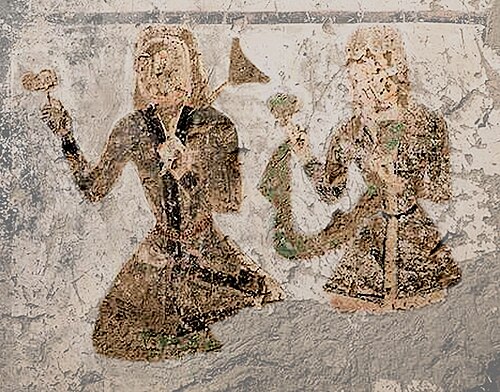
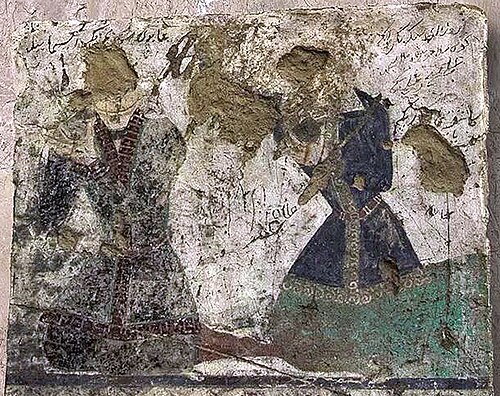
يُعتقد أن أقدم الكهوف المزخرفة في كيزيل هي كهف فرس البحر (الكهف 118) وكهفا الكنز ج وب (الكهفان 83 و84 على التوالي). [ 74 ] يقع الكهف 118، الذي يُحتمل أن يكون الأقدم بين الكهوف الثلاثة، في عمق الوادي الأوسط. [ 78 ] يقع الكهفان 83 و84 عند مدخل الوادي نفسه. تتميز هذه الكهوف ببنية معمارية بسيطة، إلى جانب رسومات ذات أسلوب واضح، تعكس التأثيرات الهندية. [ 74 ] يظهر أحيانًا متبرعون نبلاء أو أثرياء من التخاريين من كوتشا ، يرتدون أثوابًا تقليدية، راكعين بجانب لوحات دينية. [ 73 ]
"كهف فرس البحر" (الكهف 118، 300-350 م)
زارت البعثة الألمانية الثالثة في الفترة 1906-1907 ، والبعثة الفرنسية بقيادة بول بيليو في عام 1907 ، كهف فرس البحر (الكهف 118) والتقطت فيه صور. [ 27 ] نُقلت أجزاء كبيرة من اللوحات الجدارية وأُرسلت إلى ألمانيا، وخاصةً على يد فون لو كوك في عام 1914، الذي أزال الأقواس وجوانب القبو. [ 29 ]
يتألف الكهف من غرفة مستطيلة (3.6 × 4.8 متر؛ 12 × 15 قدمًا)، مدخلها على الجانب الطويل، وسقفها على شكل قبو أسطواني عرضي. [ 74 ] أمام الكهف، الذي يمكن الوصول إليه عبر باب، كانت توجد مساحة مفتوحة واسعة مماثلة، ربما كانت مزينة برسومات، مع بقايا سقف هرمي. [ 74 ] يفصل بين الغرفتين جدار سمكه متر واحد (3 أقدام). [ 29 ] يمكن العثور على نموذج لهذا النوع من الكهوف المقببة في باكتريا في كارا تبه ، ويعود تاريخه إلى القرنين الثاني والثالث الميلاديين. [ 74 ]
في منتصف الجدار الخلفي للقاعة الرئيسية، توجد لوحة كبيرة (عرضها 3.42 مترًا؛ 135 بوصة، وارتفاعها 2.16 مترًا؛ 85 بوصة)، تصور مشهدًا غير محدد لملك مع حاشيته، ربما بعنوان "المهارة والموسيقى في القصر السماوي" (天宫伎乐). [ 74 ] تُذكّر وضعيات الشخصيات وحركاتها بنقوش ناجارجوناكوندا التي تعود إلى القرنين الثالث والرابع الميلاديين . [ 74 ] يجلس الملك في المنتصف، ويحيط به العديد من الحاشيات، ولا سيما امرأة شبه عارية تجلس على يساره. [ 29 ] يرتدين أقراطًا دائرية ثقيلة بتصميم وردة مركزية. [ 29 ] يُذكّر نحت الوجوه بتماثيل هادا في غاندارا . [ 29 ] اللوحة مؤطرة بإتقان بخمسة إطارات زخرفية متتالية بنقوش طبيعية لأغصان الكرمة ، تُوحي بالفن الروماني. [ 74 ]
تتدرج ألوان الجداريات بين درجات البني المختلفة، مع لمسات من الأخضر الفاتح، دون وجود الأزرق، مما يُحدد ما يُعرف بأسلوب "البرتقالي والأخضر". [ 74 ] يتوسط السقف زخارف الشمس والقمر، وراهبان، وطائر يحلق حاملاً شكلاً بشرياً بين مخالبه. [ 74 ] أما جوانب السقف فتتكون من جبال على شكل معينات، تحيط بها زخارف طبيعية لبشر وحيوانات وبحيرات وأشجار، وهو تصميم يُحتمل أن يكون من الشرق الأدنى، وقد شاع استخدامه في كهوف لاحقة في كيزيل. [ 74 ] يفصل شريط من الحيوانات الخيالية السقف عن الجدران الجانبية. [ 74 ] يبدو الأسلوب العام مبكراً، وربما يكون مستوحى من كشمير والكهف رقم 24 في باميان . [ 74 ]
تُزيّن الأقواس الهلالية المُحيطة بالسقف مشاهد بوذية مُزخرفة. [ 29 ] يصعب تحديد القوس الهلالي الأيمن، ولكنه يبدو أنه يُمثل ملكًا أو بوديساتفا ينحني نحو شخصية محارب. [ 29 ] يُظهر الجزء السفلي مشهدًا فخمًا، مع شخصية على أريكة مُحاطة بآلهة . [ 29 ] يُظهر القوس الهلالي الأيسر بوذا المستقبل مايتريا في سماء توسيتا . [ 29 ] أسفل ذلك، يوجد تصوير لجبل سوميرو مُحاطًا بالعديد من الناغا، وشخصيات من المُتعبدين، وحيوانات. [ 29 ]
تظهر تماثيل صغيرة لمصلين راكعين يرتدون أثوابًا ، يبلغ طول كل منهم حوالي 40 سنتيمترًا (15 بوصة)، بعضهم مسلح بخنجر، بجوار الزاويتين اليمنى واليسرى من الجدارية الخلفية: يُرجح أنهم من نبلاء وأثرياء من متبرعي كوتشي في القرن الرابع الميلادي. [ 73 ] يحمل أحد المتبرعين ثلاثة مخاريط بخور مشتعلة. وهو يرتدي ثوبًا بلا ياقة مطوي الأطراف، ذو أكمام ضيقة. [ 73 ] يصل طول الثوب إلى ما فوق الركبة بقليل، وهو مربوط بحزام. أما البنطال فهو من نفس اللون وله نفس الحافة. [ 73 ] ويرتدي حذاءً رماديًا من جلد العجل مزودًا بأربطة متقاطعة تمتد أسفل النعل. [ 73 ] أما الشخصية التي خلفه فتحمل إكليلًا ونوعًا من المبخرة، وهي ترتدي سترة سوداء قصيرة ذات حزام وأكمام ضيقة، مزينة بحافة حمراء من جميع الجهات، بالإضافة إلى ثوب أخضر واسع. [ 73 ] شعرهم مقصوصٌ حتى الرقبة، وهي تسريحة شعر ذُكرت أيضًا لسكان كوتشا في سجلات جين شو الصينية المعاصرة . [ 73 ] [ 79 ] ظهر راهبٌ راكعٌ بجوار الزاوية العلوية اليسرى من الجدارية الرئيسية، يرتدي رداءً أحمر وشعره قصيرٌ بلون المغرة، منهمكًا في تشكيل جرةٍ احتفاليةٍ بمطرقة، بينما ظهر خلفه رسامٌ يرتدي سترةً مشابهةً لتلك التي كان يرتديها المتبرعون على الجانب الآخر، ولكن لم يتبقَّ منه سوى رأسه. [ 80 ]
 إعادة بناء جدارية الجدار الخلفي
 كهف فرس البحر ، تفاصيل السقف
 الجزء الأيمن من الكهف، كما صوره تشارلز نويت عام 1907
"كهف الكنز ج" (الكهف 83، 300-350 م)


الكهف 83 (كهف الكنز ج) هو جزء من مجموعة الكهوف الأربعة "كهوف الكنز" (82، 83، 84، 85) المتراصة، والواقعة عند مدخل الوادي المركزي. وهو كهف مربع صغير نسبيًا (3.6 × 3.6 متر)، يتوسطه منصة، ربما كانت مخصصة لتمثال أو ستوبا . [ 74 ] انهار سقف هذا الكهف، لكنه على الأرجح شكّل قبة . [ 74 ] [ 81 ]
كان الجدار الخلفي يحوي مشهدًا محفوظًا جيدًا من قصة جاتاكا ، أسطورة رودرايانا من ديفيافادانا ، حيث يراقب الملك رودرايانا رقصة ملكته تشاندرا برابها، التي تظهر عارية باستثناء حجاب رقيق ومجوهرات. أثناء الرقص، انتاب الملك شعور بأن زوجته ستموت قريبًا، فطلبت أن تصبح راهبة بوذية. [ 82 ] [ 83 ] [ 74 ] أسلوب وحركات الشخصيات هندية عمومًا، مثل وضعية تريبهاغا للراقصة، وطريقة جلوس الملك. أما أشرطة التاج المتدلية التي يرتديها الملك، فقد استُوحيت من الرموز الملكية الإيرانية. [ 81 ]
في هذا الكهف، يُرجّح أن تكون إطارات اللوحات، ولا سيما زخارف الكروم، مستوحاة من الفن الروماني في القرن الأول الميلادي. [ 74 ] وقد يكون هذا الكهف أقدم قليلاً من الكهف 84. [ 74 ] أُرسلت اللوحة الجدارية إلى برلين بواسطة غرونفيدل (المرجع: MIK III 8443). [ 74 ]
تتميز هذه اللوحات بنعومتها ورقتها: فالأحجام تتحدد بتدرجات الظلال والألوان، لا بالحدود الحادة للخط. وبشكل عام، "للفرشاة الأولوية على الرسم". [ 81 ]
 كهف الكنز ج مع جدارية مرئية على الجدار الخلفي، اعتبارًا من عام 1912.
 الجدارية، "رقصة الأميرة تشاندرا برابها"، بإطارات يُحتمل أنها مستوحاة من الفن الروماني في القرن الأول الميلادي. [ 74 ] كهف الكنز ج (الكهف 83). MIK III 8443.
 كهف الكنز 83، المرافقون، مع تاج مزخرف في الخلفية (تفصيل)
"كهف الكنز ب" (الكهف 84، 300-350 م)
كان الكهف 84 (كهف الكنز ب) كهفًا مربعًا، ربما مقببًا (4×4 أمتار، وقد انهار سقفه أيضًا)، وهو مثال على بنية كهفية أبسط وأقدم في كيزيل، والتي عُرفت أيضًا من باميان (الكهف 24). [ 74 ] يبدو أن أصل اللوحات في الكهف 84 هندي، وربما من كشمير . [ 74 ] تُظهر اللوحات مجموعات من الناس يقفون حول تماثيل بوذا، إما جالسًا أو واقفًا. [ 74 ] عمق الرسم ضحل نسبيًا، والتماثيل رشيقة ذات جذوع منحنية. الوجوه مستديرة وممتلئة. [ 74 ] يقترح رايس تاريخًا للكهف 84 في النصف الأول من القرن الرابع. [ 74 ] أُرسلت جميع اللوحات إلى برلين بواسطة غرونفيدل. [ 74 ]
تتصل هاتان الكهفان بالكهف رقم 82، وهو فيهارا غير مزخرف يعود تاريخه أيضًا إلى الفترة ما بين 300 و350 ميلاديًا، [ 74 ] والكهف رقم 85، وهو كهف صغير مهدم. [ 74 ]
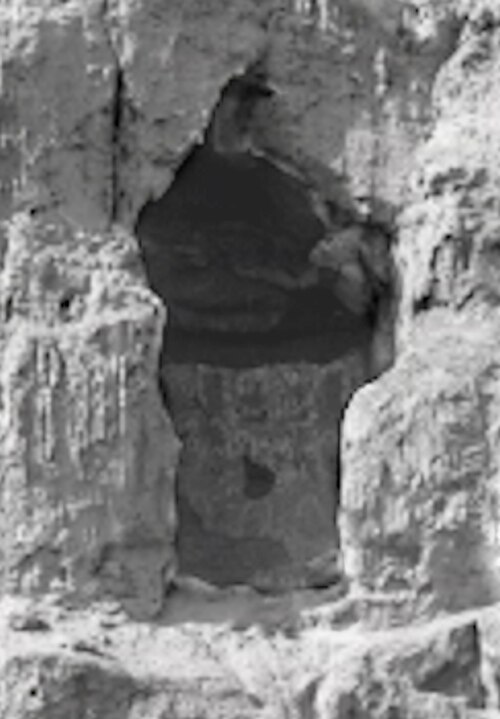 كهف الكنز ب (الكهف 84)، مع وجود جداريات مرئية على الجدار الخلفي اعتبارًا من عام 1912.
 الهيكل المعروف والتصميم الزخرفي لكهف الكنز ب (الكهف 84)
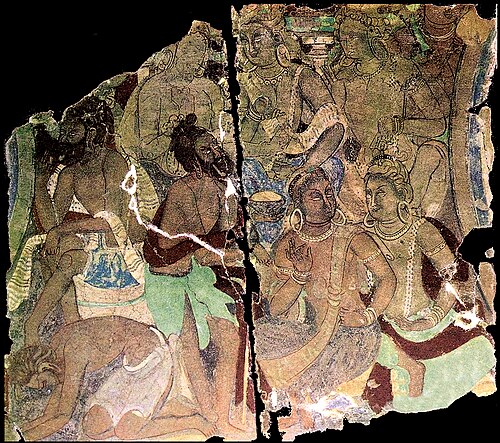 الناس حول تمثال بوذا، الكهف رقم 84
 الموظف المسؤول عن الكهف رقم 84
"كهف الطاووس" (الكهف 76، حوالي عام 400 ميلادي)


يُعدّ " كهف الطاووس " ( Pfauenhöhle بالألمانية) [ 88 ] كهفًا قديمًا أيضًا، وإن كان تاريخه لاحقًا بقليل، حوالي عام 400 ميلادي، ويليه "كهف التماثيل" (الكهف 77)، في النتوء الصخري الثاني خارج الوادي المركزي مباشرةً. [ 89 ] وقد تم تأريخه بالكربون المشع إلى منتصف القرن الرابع أو أواخر القرن الخامس الميلادي. [ 90 ] ويُقال إنه "الكهف الأكثر تميزًا بالطابع الهندي في دورة كيزيل بأكملها". [ 91 ] وتُحاكي الرسومات فيه فن غاندارا والجداريات في كهوف أجانتا . [ 91 ]
كانت تسبق الغرفة الرئيسية ردهة مستطيلة الشكل، انهار سقفها المقبب الآن. [ 84 ] تتميز الغرفة الرئيسية بسقف مقبب، وهو ابتكار ظهر لأول مرة في كهوف باميان القديمة ، وفي الكهفين 83 و84 في كيزيل. [ 84 ] [ 92 ] عُثر في ردهة الكهف على العديد من التماثيل الصغيرة لبوذا، بالإضافة إلى مقاعد خشبية مزخرفة وطاولات عرض منخفضة. [ 93 ]
في وسط الحجرة الرئيسية، توجد منصة كبيرة، يُرجح أنها كانت تضم بعض التماثيل الرئيسية المرتبطة ببوذا. [ 84 ] يُظهر تصميم الكهف تطورًا ملحوظًا مقارنةً بالكهوف السابقة، ولكنه يسبق تصميم كهف "العمود المركزي". [ 84 ] [ 92 ] تُصوّر العديد من اللوحات حياة بوذا. لم يبقَ سليمًا إلى حد كبير سوى الجدار الأيسر من الحجرة الرئيسية عند زيارة غرونفيدل. يُظهر الجزء العلوي من الجدار أربع لحظات مهمة من حياة بوذا، بينما يقف مراقبون سماويون على شرفة في الأعلى: 1) ولادة سيدهارتا والخطوات الثلاث الأولى التي يظهر فيها بوذا عاريًا وطويل القامة، 2) اللقاءات الأربعة خارج القصر، 3) إغواء بنات مارا ، اللتين تتحولان إلى عجائز، و4) اعتداء مارا . [ 84 ] [ 94 ] [ 95 ] تضرر الصف الأوسط بالكامل تقريبًا، على الرغم من إمكانية تمييز مشاهد بوذا الواعظ. [ 96 ] يمكن ترقيم اللوحات من 5 إلى 9، مع العلم أن اللوحتين 5 و9 عبارة عن نصف لوحات تمتد فوق الجدران المجاورة. [ 96 ] تظهر في إحدى اللوحات جنود يشبهون جنود كهف الرسامين . [ 96 ] احتوى الجزء السفلي من الجدار على أجزاء من لوحات تُظهر: 10) البارينيرفانا ، 11) أتباع بوذا ينظرون إلى بوذا وهو يُوضع في نعش، 12) بوذا في نعشه، و13) ما كان يُفترض أنه حرق جثمان بوذا. [ 96 ] [ 84 ] [ 95 ] قام غرونفيدل بإزالة الجزء العلوي من الجدارية، وأرسله إلى ألمانيا على شكل لوحات، حيث لا يزال بعضها محفوظًا في متحف الفن الهندي . [ 84 ]
يُذكّر هذا العرض لأحداث حياة بوذا المختلفة في لوحات متتالية بأمثلة من غاندارا ، مثل ستوبا سيكري ، على الرغم من أن لوحات كهف الطاووس تتميز بترتيبها الزمني الدقيق. [ 20 ] وقد عُثر على أنواع مماثلة من اللوحات السردية في أندرا أيضًا . [ 20 ]
تتألف القبة فوق قدس الأقداس من ثمانية أزواج من الأجزاء، مزينة بحورية طائرة بين ريش الطاووس. وتُزين القبة برسومات عديدة لآلهة وبوذا من الماضي. [ 84 ]
بحسب المؤرخ الفني بنيامين رولاند، معلقاً على إحدى القطع المتبقية، فإن " مجموعة الشخصيات التي تحمل السيوف هي نماذج عرقية هندية يمكن التعرف عليها". [ 91 ]
ظهرت على جدار الباب صورٌ لرهبانٍ ومتبرعٍ من كوتشي يحمل سلة زهور، جميعها تحمل نقوشًا براهمية. [ 97 ] [ 98 ] في فن كيزيل، كانت تُضاف غالبًا لوحاتٌ توضيحية إلى صور المتبرعين. [ 99 ] على النقيض من ذلك، لم تُستخدم هذه اللوحات أبدًا في التمثيلات السردية. [ 99 ]
 إغواء بنات مارا (يسار)، واللاتي يتحولن إلى عجائز (يمين).
 هجوم مارا
 تفاصيل عن الموسيقي، الكهف 76
 أحد أزواج الأجزاء الثمانية من القبة المزينة بريش الطاووس.
 الجزء العلوي من اثنين من أجزاء "الطاووس".
 الجدار الأيسر من الحجرة الرئيسية ("2" في المخطط)، والذي يُظهر أحداث الحياة المبكرة لبوذا، والآلهة السماوية في الأعلى. [ 85 ]
 الصف السفلي من الألواح في الجدار الأيسر.
 قاعدة مركزية في كهف الطاووس (عرضها الإجمالي 2.18 متر؛ 7 أقدام)
"كهف البحارة" (الكهف رقم 212، حوالي عام 400 ميلادي)


يُؤرَّخ كهف البحارة ( Höhle der Seereise ) من قِبَل رايس إلى أوائل القرن الخامس الميلادي، استنادًا إلى التحليل الأسلوبي. [ 100 ] أما تواريخ الكربون المشع فهي أحدث بكثير، حوالي 561-637 ميلادي. [ 101 ] احتوى الكهف على سرديات طويلة حول مسارات مختلفة نحو التنوير. [ 100 ] معظم اللوحات موجودة الآن في متحف داهليم . [ 100 ] من الواضح أن محتوى اللوحات في كهف البحارة مُستمد من نماذج غاندارية . [ 102 ]
يظهر اسم الرسام "روماكاما" ( 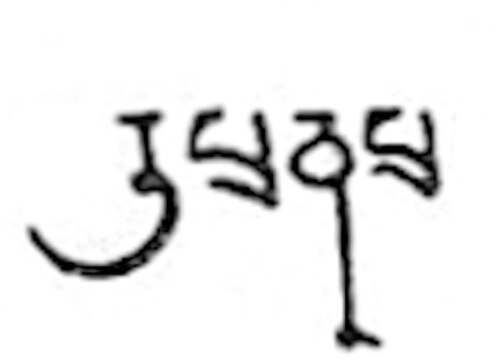 أي "القادم من روما")، [ 103 ] في نقش سنسكريتي داخل الكهف. [ 101 ] ويقول النقش، المكتوب بخط اليد على الجانب الأيمن من الجدارية:
بعد الانتهاء من هذه اللوحة، قام الرسام مانيبادرا، القادم من روماكاما ( سوريا )، برسم هذه الدوائر أدناه. [ 104 ] [ 105 ]

بحسب غرونفيدل، "تشير الدوائر (ماندالاني) بلا شك إلى الحواف المصنوعة من أوراق الشجر وجماجم بشرية"، أي الحدود الكلاسيكية لأوراق الأقنثوس والجماجم البوذية المرسومة على طول الحافة السفلية للجدارية. [ 106 ]
تظهر كلمة روماكاما، أو روماكام، في لوحات كيزيل وكذلك في الوثيقة التبتية اللاحقة، ويُعتقد أنها تشير إلى رسام جاء من الإمبراطورية الرومانية أو الإمبراطورية البيزنطية . [ 107 ]

الفترة الثانية: "المدرسة الجديدة" بأسلوب أكثر جرأة (حوالي 400-500 م)

بعد الأسلوب "الكلاسيكي" المبكر للوحات في كيزيل، والذي تميز بأناقته وأسلوبه التصويري، مع تظليل متقن للأجسام لإبراز الحجم النحتي، [ 70 ] ظهرت مدرسة جديدة مع كهف التماثيل ، بأعمال مثل " راعي البقر ناندا "، التي تميزت بجرأة أكبر، باستخدام ألوان زاهية (لكنها لا تزال محصورة في درجات البني والأخضر والبرتقالي)، وخطوط أكثر سمكًا وأنماطًا أبسط، أشبه ما تكون بـ"الرسومات الملونة". [ 70 ] [ 108 ] يُعتقد أن هذا الأسلوب مستمد من تلاقي التأثيرات الهلنستية والإيرانية والهندية في عهد الكوشانيين ، وكان مركز إبداعه الرئيسي في باميان ، التي أصبحت بمثابة "دير رئيسي لاستيطان الرهبان في آسيا الوسطى". [ 109 ]
يصاحب هذا التطور في الأسلوب تغيير في المواضيع الرئيسية التي يتم تصويرها. ففي العصر الكلاسيكي، احتلت قصة حياة بوذا والعديد من حكايات الجاتاكا مكانة مركزية. أما الآن، فينصب التركيز الرئيسي على خطب بوذا، التي تغطي عادةً جدران القاعة الرئيسية، إلى جانب ظهور ممرات جانبية وخلفية تُصوّر فيها أحداث وفاة بوذا، أي البارينيرفانا . [ 110 ] [ 111 ]
يعزو ري التغيرات المفاجئة في الأساليب الفنية في كيزيل، دون وجود مؤشرات واضحة على تطور داخلي (خاصة في المراحل المبكرة)، إلى وصول مفاجئ لمجموعات جديدة من الفنانين من مناطق أخرى، حاملين معهم أساليبهم وتقنياتهم الفنية الخاصة. [ 112 ] وتتميز هذه الفترة أيضًا بظهور صور ذاتية للرسامين يرتدون أثوابًا طويلة وأحذية عالية ويحملون خناجر قصيرة، مثل رسام كهف التماثيل أو العديد من رسامي "كهف الرسامين" ، وغالبًا ما تحمل أعمالهم ملصقات تعريفية خاصة بهم باللغة السنسكريتية. [ 113 ] [ 114 ] غالبًا ما وُصِفَ أسلوب ملابس هؤلاء الرسامين ونوعها بأنه ساساني ، [ 63 ] ولكن اقتُرِحَ مؤخرًا أنها أقرب إلى الهياطلة ، نظرًا لأوجه التشابه مع تماثيل الهياطلة في ديلبرجين تيبي ، وبالاليك تيبي، وباميان ، ولأن الهياطلة سيطروا على حوض تاريم لما يقرب من قرن من الزمان في تلك الفترة الزمنية. [ 51 ] [ 115 ]
"كهف التماثيل" (الكهف 77، 375-400 م)


كان " كهف التماثيل " [ 70 ] ( Statutenhöhle ) كهفًا رائعًا، يقع بجوار "كهف الطاووس" (الكهف 76). وهو "كهف صور ضخم"، لا يحتوي على محراب في الحجرة الرئيسية، بل على منصة يُرجح أنها كانت تضم تمثالًا ضخمًا لبوذا واقفًا. [ 70 ] وفي تصميم غير مألوف، يتميز الممر الخلفي باتساعه الكبير وعرضه الأوسع من الحجرة الرئيسية، حيث يبلغ عرضه 8.70 مترًا (342 بوصة)، وارتفاعه 5.10 مترًا (200 بوصة). [ 70 ] لا يُعرف في كيزيل سوى سبعة كهوف أخرى تحمل اسم "كهوف الصور العملاقة"، وهي الكهوف 47 و 48 و70 و136 و139 و146. [ 4 ] وتتميز هذه الكهوف بوجود قاعة رئيسية شاهقة الارتفاع مصممة لاستيعاب تمثال ضخم لبوذا، حيث يصل ارتفاعها إلى حوالي 5 أمتار (16 قدمًا) وأحيانًا إلى 16.5 مترًا (650 بوصة) (كما هو الحال في الكهف 47)، بالإضافة إلى غرفة خلفية مرتفعة نسبيًا (يبلغ ارتفاعها عادةً حوالي 5-6 أمتار؛ أي حوالي 200 بوصة). [ 4 ]
صُنعت التماثيل العديدة في الكهف من الطين والقش، مع استخدام الألياف أو الشعر لتقويتها، وغالبًا ما يُؤرَّخ تاريخها إلى القرن السادس الميلادي، [ 120 ] ولكن يُرجَّح الآن أنها تعود إلى الفترة ما بين 375 و400 ميلادي بالاقتران مع نتائج التأريخ بالكربون المشع. [ 101 ] [ 121 ] [ 7 ] [ 90 ] صُنعت العديد من التماثيل باستخدام قوالب تحمل أسماءً سنسكريتية ، يُحتمل أنها أسماء الحرفيين أو أصحاب الكهف. [ 120 ]
الكهف عبارة عن كهف ذي "عمود مركزي"، لكن سقف الحجرة الرئيسية، الذي كان يشكل قبوًا يبلغ ارتفاعه حوالي 6 أمتار (20 قدمًا)، قد انهار تمامًا. بقيت بعض اللوحات على جدران الحجرة الرئيسية: كانت عبارة عن خطب بوذا مُرتبة في عدة صفوف، يبلغ عرض كل منها 1.34 متر (52 بوصة) وارتفاعها 96 سم (38 بوصة). كانت صور الخطب "على طراز غاندارا الخالص". [ 122 ] كان أسلوبها قريبًا جدًا من أسلوب "كهف الرسامين (الكهف 207)"، ووفقًا لغرونفيدل، "يبدو أنها رُسمت بيد واحدة". [ 122 ] [ 123 ] نسب ألبرت غرونفيدل كلا الكهفين إلى نفس الفترة "المرحلة الأولى" (500-600 م). [ 38 ] [ 39 ]
وصلت إلينا عدة شظايا رائعة من لوحات فنية بديعة، تُنسب إلى كهف التماثيل. [ 124 ] أوضح غرونفيدل أنه لم يتبق سوى ثلاث لوحات في الكهف، جميعها مشاهد من خطبة بوذا:
1) على الجدار الأيمن من قدس الأقداس، وصف غرونفيدل صورة موعظة، يظهر فيها "شاب يرتدي ملابس داخلية خفيفة يصلي أمام بوذا"، وهي الصورة التي تُعرف الآن باسم " راعي البقر ناندا "، والمعروف أنها من كهف التماثيل. [ 122 ] 2) في الموقع المقابل، على الجدار الأيسر، وصف غرونفيدل مشهد موعظة لم يتبق فيه من بوذا سوى قدميه، وهو ما يتوافق مع اللوحة التي صورها تشارلز نويت في موقعها عام 1907. [ 122 ] 3) وأخيرًا، وصف غرونفيدل مشهد موعظة لم يتبق فيه سوى "عابد راكع"، وهو ما يتوافق مع تمثال فاجراباني الراكع ، والمعروف أنه من كهف التماثيل. [ 122 ]
يختلف أسلوب هذه اللوحات في القاعة الرئيسية اختلافًا ملحوظًا عن الأسلوب الكلاسيكي الراقي لأقبية الممر الجانبي والممر الخلفي. ويشير هذا الاختلاف إلى رسامين مختلفين ومدارس فنية متباينة. ففي القاعة الرئيسية، تتسم اللوحات بجرأة أكبر، إذ تستخدم ألوانًا زاهية وخطوطًا أكثر سمكًا وأنماطًا أبسط، كما في لوحة " راعي البقر ناندا ". [ 70 ] ورغم أن ألوان اللوحات في القاعة الرئيسية أكثر كثافة، إلا أنها لا تزال محصورة في درجات البني والأخضر والبرتقالي. [ 70 ] وتُذكّر العيون الكبيرة والجفون الواسعة بأعمال كوشانا المتأخرة . [ 70 ] وتُشير هذه الأنواع الجديدة من اللوحات إلى ظهور أسلوب جديد جريء في كوتشا في ذلك الوقت تقريبًا. [ 70 ]
يظهر في إحدى جداريات كهف الرسامين رسامٌ يحمل كوبًا من الطلاء ، وملابسه "تطابق تمامًا" ملابس الرسامين في "كهف الرسامين" (قفطان، حذاء...). [ 113 ] [ 114 ] كانت اللوحة في الأصل في الطرف الأمامي من الممر الأيسر، خلف التمثال الأول ، وهي الآن موجودة في متحف الإرميتاج . [ 125 ] كما عُثر على تمثالين آخرين لشخصين متعبدين يرتديان الملابس نفسها في الممر الخلفي. [ 122 ]
أحد التماثيل هو لرجل يرتدي نوعًا خاصًا من الدروع ذات الأجزاء المقسمة ، وكان يقف كحامٍ (ربما فاجراباني ) على الجانب الأيسر من تمثال بوذا الضخم في الحجرة الرئيسية. [ 70 ] كان هذا النوع من الدروع مستخدمًا لعدة قرون في فنون الجزء الشمالي من طريق الحرير، ثم انتشر لاحقًا في الصين. [ 126 ] الرأس إضافة محتملة. [ 127 ] ذكر لو غوانغ ، وهو جنرال صيني أرسله الإمبراطور فو جيان (حكم من 357 إلى 385) من سلالة تشين السابقة (351-394)، والذي غزا كوتشا مؤقتًا في 383-385 م، الدروع القوية لجنود كوتشاين، وهي نوع من الدروع السلسلية والصفائحية المستوحاة من الحضارة الساسانية، والتي يمكن رؤيتها أيضًا في رسومات كهوف كيزيل: [ 61 ]
كانوا بارعين في استخدام السهام والخيول، ومتقنين للرماح القصيرة والطويلة. وكانت دروعهم أشبه بسلسلة حديدية؛ حتى لو أُطلق عليها سهم، فلن يخترقها.
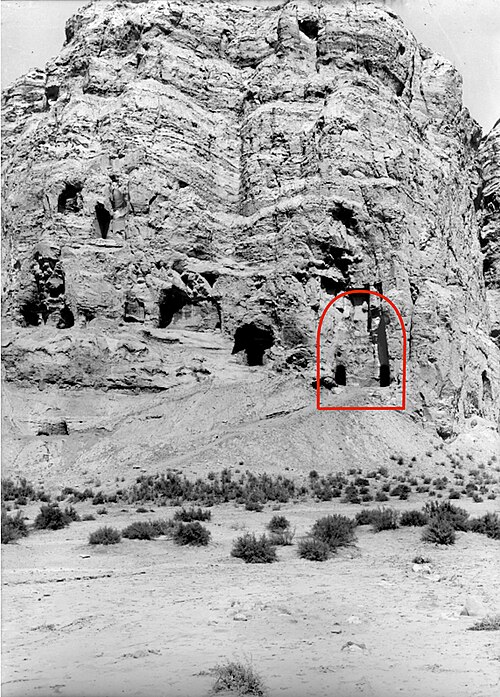 واجهة الكهف. انهارت القاعة الرئيسية، التي يبلغ ارتفاعها حوالي 6 أمتار (20 قدمًا)، وأصبحت مداخل الممرين الجانبيين مكشوفة بشكل مباشر.
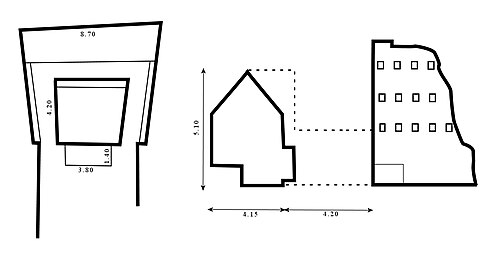 مخطط جانبي لمغارة التماثيل. تحتوي الغرفة الأمامية، التي يبلغ ارتفاعها حوالي 6 أمتار (20 قدمًا)، على منصة ضخمة (3.8 × 1.4 متر؛ 12 × 5 أقدام) لتمثال بوذا العملاق. أما الغرفة الخلفية الكبيرة فتتميز بسقف جملوني نادر .
 مشهد الخطبة قبل مدخل الممر الأيسر مباشرة، تم تصويره في الموقع بواسطة تشارلز نويت عام 1907
 فاجراباني الجالس، كهف التماثيل، كهوف كيزيل. تاريخ القرن الرابع عشر : 406-425 م. [ 101 ]
تتميز الممرات الجانبية بتصميمها المعماري المتطور للغاية، ولا تزال آثارها واضحة حتى يومنا هذا. يمتد على طول الجدار الخارجي لكل ممر منصة منخفضة، عُرضت عليها صفوف من التماثيل، وخلفها جداريات تتضمن صورة الرسام مرتديًا رداءً وحذاءً . وفوقها، يشكل سقف كل ممر قبوًا عاليًا، مزودًا بهلال صغير على الجانب الجنوبي، ومزينًا على امتداده بصفوف من التماثيل الإلهية خلف درابزين ، تحيط بتمثال بوذا مايتريا ، وفوقها مناظر طبيعية بتصاميم معينية الشكل تضم رهبانًا وحيوانات وأشجارًا وبركًا ، على غرار ما هو موجود في قبو كهف فرس البحر (الكهف 118). [ 70 ] [ 128 ] [ 129 ]

يُعدّ الممر الخلفي، الذي لا يزال مرئيًا حتى اليوم، غير مألوف، إذ يتميز بقبته ذات العوارض الخشبية، والمكونة من ثلاثة أسطح طولية مسطحة، تصطف عليها تماثيل الآلهة (ديفاتاس) كأوراق اللعب. [ 70 ] [ 129 ] وعلى المقعد المحاذي للجدار الخلفي، كان يقف تمثال ضخم لبوذا مستلقيًا في مشهد من مشاهد البارينيرفانا ، مع آلهة (ديفاتاس) أنيقة تحلق فوقه. [ 70 ] [ 128 ] كما كانت بقايا تماثيل نسائية جالسة على المقعد الخلفي ظاهرة، وعند أقدامها تمثال نصفي لرجل-فيل . [ 128 ]
يتميز أسلوب اللوحات في هذا الكهف، وخاصة في الممرات الجانبية والخلفية، بالأناقة والأسلوب التصويري، مع تظليل متقن للأجسام لإبراز الحجم النحتي. [ 70 ] وهو مشابه إلى حد كبير لأسلوب كهف فرس البحر (الكهف 118)، وقد ينتمي إلى المدرسة نفسها. [ 70 ] يتناقض هذا الأسلوب الراقي مع أسلوب اللوحات في قاع الكهف، "راعي البقر ناندا "، الذي يتميز بجرأة أكبر، حيث يستخدم ألوانًا زاهية (البني والأخضر والبرتقالي)، وخطوطًا أكثر سمكًا، وأنماطًا أبسط. [ 70 ] يشير هذا التباين إلى أن "كهف التماثيل" قد يكون مرحلة انتقالية بين هذين الأسلوبين المبكرين. [ 70 ] تشير كهوف لاحقة، مثل كهف الموسيقيين، إلى أسلوب أكثر اختلافًا، حيث يستخدم ألوانًا زاهية وخطوطًا حادة لتحديد أشكال الجسم، إلى جانب الاستخدام الوفير للأصباغ الزرقاء القوية، مع جذور مختلفة مستوحاة من الفن الغربي في القرن الرابع الميلادي. [ 70 ]
 بقايا تماثيل في الممر الأيسر (رقم 2 في الخريطة). الرسام الذي يرتدي قفطانًا موجود في الزاوية خلف التمثال الأول من اليسار . [ 130 ] كانت التماثيل مطلية أيضًا.
 كهف التماثيل، جدارية الغرفة الخلفية، فوق تمثال مستلقٍ لبوذا بارينيرفانا . [ 131 ]
 الممر الأيسر، تماثيل الآلهة واقفة على شرفة (تفصيل).
 سقف الممر الخلفي (تفصيل)
"كهف الرسامين" (الكهف 207، مؤرخ بين عامي 478 و536 ميلادي)


يُعدّ " كهف الرسامين " ( ماليرهول ، 画家窟، الكهف رقم 207) [ 134 ] أحد أقدم كهوف كيزيل، وأحد أجملها. [ 135 ] احتوى الكهف على تمثال لبوذا مُثبّت على الجدار الخلفي للقبو، وكان يحيط به ممرّ ذو سقف مقبب. [ 135 ] احتوى القبو الرئيسي على تسع جداريات لبوذا وهو يُلقي المواعظ على كل جدار جانبي. [ 135 ]
يُستمد اسم الكهف من الصور الذاتية العديدة للرسامين الواقفين على جانب الجداريات، حاملين أكواب الطلاء والفرش. [ 135 ] يحمل العديد من الرسامين بطاقة تعريفية، مثل البطاقة المكتوبة باللغة السنسكريتية ( خط غوبتا ): "لوحة توتوكا" ( Citrakara Tutukasya ) بجوار اسم الرسام المعني . [ 136 ] كلمة "Citrakara" ليست من لغة توخاريا ، بل هي كلمة سنسكريتية (ثم هندية لاحقة ، चित्रकला ) وتعني "رسام/ لوحة". [ 137 ] [ 138 ] [ 139 ] [ 140 ] في فن كيزيل، كانت تُضاف بطاقات تعريفية غالبًا إلى صور المتبرعين، ولكن ليس إلى المشاهد السردية. [ 99 ]
تُشير دراسة علم الخطوط القديمة، والتحليل الأسلوبي، والتأريخ بالكربون المشع إلى أن تاريخ هذه اللوحات يعود إلى حوالي عام 500 ميلادي. [ 135 ] تتميز بعض العناصر الأسلوبية بلمسة كلاسيكية واضحة، مثل الزخارف الرومانية في أعلى الجدران، فوق مشاهد بوذا. [ 132 ]
تُصوّر مغارة الرسامين، كغيرها من مغارات كيزيل، رجالًا يرتدون قفطانات ذات ياقة مثلثة على الجانب الأيمن، وبتسريحة شعر فريدة. ومن العلامات المميزة الأخرى نظام تعليق السيوف بنقطتين، والذي يبدو أنه ابتكار من ابتكارات الهياطلة ، وقد أدخلوه في المناطق التي سيطروا عليها. [ 51 ] ويبدو أن هذه اللوحات قد رُسمت خلال حكم الهياطلة في المنطقة، حوالي 480-550 ميلادي. [ 51 ] [ 115 ] ويُعزى تأثير فن غاندارا في بعض اللوحات في مغارات كيزيل، التي يعود تاريخها إلى حوالي 500 ميلادي، إلى التوحيد السياسي للمنطقة بين باكتريا وكوتشا تحت حكم الهياطلة. [ 69 ]
تم تأريخ لوحات كهوف الرسامين بالكربون المشع إلى الفترة ما بين 478 و536 ميلاديًا. [ 101 ] وفي عام 1912، اعتبر ألبرت غرونفيدل أن جداريات "كهف التماثيل" قد رُسمت على يد نفس الفنانين الذين رسموا جداريات كهف الرسامين، وأنها كانت على "أسلوب غاندارا الأصيل". [ 141 ] كما أن رسامًا رسم صورة ذاتية لنفسه في كهوف التماثيل، وهو يحمل كوبًا من الطلاء، يرتدي ملابس "تطابق تمامًا" ملابس الرسامين في "كهف الرسامين" (قفطان، حذاء...). [ 113 ] [ 114 ] لطالما وُصف أسلوب ملابس الرسامين في كيزيل بأنه ساساني ، [ 142 ] ولكنه يُعتبر الآن أقرب إلى الهياطلة نظرًا لأوجه التشابه مع الشخصيات في باميان ، وديلبرجين تيبي ، وبالاليك تيبي . [ 51 ] [ 115 ] نسب غرونفيدل كلا الكهفين إلى نفس فترة "المرحلة الأولى" (500-600 م). [ 38 ] [ 39 ]
تحتوي القاعة الرئيسية على 18 مشهدًا لبوذا وهو يعظ. [ 143 ] لا بد أن المحراب كان يحتوي على تمثال ضخم لبوذا، ولوحات فنية تتعلق برواية كهف إندراسالا . [ 143 ] السقف منشوري الشكل ، يحاكي نمطًا معماريًا معروفًا من باميان . [ 143 ] احتوى الممر الأيمن على جداريات تتعلق بحرب الآثار المقدسة وتقاسم آثار بوذا، إحداها تُظهر محاربين مدرعين على خيول. [ 143 ] اختفت جداريات الممر الخلفي بالكامل تقريبًا بحلول عام 1912. لم يتبق منها سوى آثار قليلة، تشير إلى مشاهد من بارينيرفانا . [ 143 ] احتوى الممر الأيسر على جدارية جميلة تُظهر راهبًا ينقل تعاليم بوذا إلى عائلة ملكية راكعة، بينما اختفت الجدارية التي أمامها على الجدار الخارجي بالكامل. [ 143 ]
وقد لوحظت أوجه تشابه بين لوحات كهف الرسامين ولوحات ديلبرجين تيبي وبينجيكنت التي تعود إلى القرنين الخامس والسادس الميلاديين. [ 144 ]
 كهف الرسامين، مخطط
 صور شخصية للرسامين في كيزيل. العناوين مكتوبة باللغة السنسكريتية ( خط غوبتا ): "لوحة لـ + (الاسم)"
 جدارية في كهف الرسامين، يظهر فيها رسام يرتدي قفطانًا في الزاوية اليمنى السفلى، حوالي عام 500 ميلادي. [ 145 ] [ 146 ] يوجد بجانبه لوحة مكتوبة باللغة السنسكريتية ( خط غوبتا ): "الرسام توتوكا" ( Citrakara Tutukasya ). [ 136 ] "Citrakara" ( चित्रकला ) كلمة سنسكريتية وهندية تعني " رسام/رسم". [ 137 ] [ 138 ] [ 139 ] [ 140 ] صورة فوتوغرافية ورسم من عام 1912، والحالة الحالية في الموقع. [ 147 ]
 جدارية تصور محاربين في الممر الأيمن، على الجدار الخارجي: حرب آثار بوذا . [ 143 ] يرتدون خوذات صفائحية ، وواقيات سيوفهم تحمل تصاميم هونية نموذجية على شكل مستطيلات أو بيضاويات مزينة بتقنية المينا : [ 47 ]
 يمكن تأريخ الأسلحة إلى القرن الخامس الميلادي. [ 47 ] كانت الجدارية واضحة للغاية، لكنها تفتتت عند إزالتها على يد غرونفيدل: لم يتبق منها سوى بضع شظايا في مكانها .
 مشاركة البراهمي درونا لآثار بوذا مع ثمانية ملوك (أربعة منهم ظاهرون). نقش بارز من الممر الأيمن، داخل الجدار. [ 143 ]
 تفاصيل ديفاتا (الجدار الأيمن، الطبقة العلوية، المشهد الأيسر)
الكهف رقم 60: "أكبر كهف"
الكهف 60 ، المعروف أيضًا باسم "الكهف الأكبر"، هو كهف تم توسيعه على مدى عدة فترات، ولا يزال يحتوي على بعض اللوحات التي تنتمي إلى الأسلوب الراقي للفترة الكلاسيكية الأولى، بينما تعود معظم اللوحات إلى الفترة الثانية اللاحقة. [ 148 ] يشتهر الكهف بصور المتبرعين الملكيين، والتي عادةً ما تكون مصحوبة بلوحة مكتوبة بالخط البراهمي . [ 148 ] هذه هي الحالة الوحيدة المعروفة لصورة متبرع ملكي في لوحة من الأسلوب الأول، بينما تكثر هذه الصور خلال الفترة الثانية. [ 148 ] يشبه أسلوب الرسم إلى حد كبير الأسلوب الموجود في كهف الرسامين (الكهف 207). [ 148 ] تشبه تسريحة شعر المتبرع الذكر إلى حد كبير تسريحة شعر الرسام الشهير في كهف الرسامين. [ 148 ]
يتميز الكهف أيضاً بوجود بط على الطراز الساساني داخل إطارات دائرية من الخرز، وهو نقش معروف انتشر في جميع أنحاء آسيا الوسطى، ويُعرف من زي سفير من آسيا الوسطى من أفراسياب . [ 149 ] من المرجح أن هذا النقش رُسم في وقت لاحق لرسم صور المتبرعين الملكيين. [ 148 ]
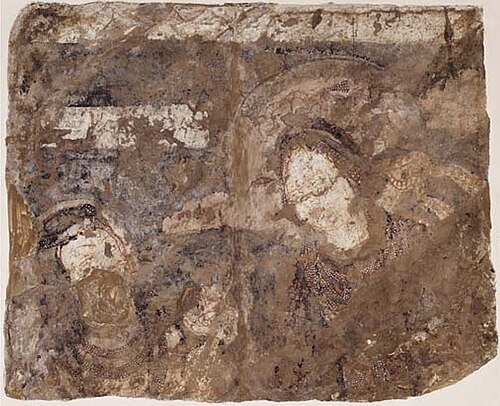


الأسلوب الهندي الإيراني الثاني: لوحات "أزرق وأخضر" ذات تباين قوي

تطور "النمط الهندو-إيراني الثاني" عبر عدة مراحل وسيطة، معبراً عن تأثير مستمر من الهند، إلى جانب تأثير من منطقة شرق إيران، التي كانت آنذاك تحت سيطرة الإمبراطورية الساسانية والهياطلة ، مع عناصر ثقافية سغدية قوية. [ 48 ] فقد الهياطلة نفوذهم السياسي حوالي عام 550 ميلادي بعد هزيمتهم على يد الساسانيين والأتراك الغربيين ، لكنهم ظلوا مؤثرين لفترة طويلة، بعد أن تفككوا إلى إمارات شبه مستقلة. [ 150 ] [ 151 ] وازدهرت سغد ، الواقعة في قلب طريق الحرير الجديد بين الصين والإمبراطورية الساسانية والإمبراطورية البيزنطية ، ازدهاراً بالغاً في ذلك الوقت. [ 152 ]
عناصر أسلوبية من آسيا الوسطى
يتميز هذا النمط بعناصر إيرانية- سغدية قوية ، يُرجح أنها نُقلت مع التجارة السغدية-التخارية المكثفة خلال تلك الفترة، ويتجلى تأثيرها بوضوح في القفاطين الآسيوية الوسطى ذات التصاميم النسيجية السغدية، بالإضافة إلى السيوف الطويلة السغدية التي تحملها العديد من الشخصيات. [ 66 ] ومن التصاميم السغدية المميزة الأخرى الحيوانات، كالبط، داخل ميداليات من اللؤلؤ. [ 66 ] كما يظهر التأثير الهندو-إيراني في الشخصيات الأسطورية، مثل طائر جارودا ذي الثعابين في منقاره، وإله الرياح فايو ، وإله الشمس أديتيا ، وإله القمر تشاندرا . [ 66 ]
يُعدّ استخدام الألوان الزرقاء والخضراء المتناقضة بشدة، والذي أصبح ممكنًا بفضل استيراد أصباغ اللازورد الأزرق من آسيا الوسطى، ورسم الخطوط لتحديد المحيط، من السمات المميزة لهذا الأسلوب. [ 48 ] [ 67 ] ويبدو أن هذا الأسلوب، الذي تجسّده لوحة "كهف الموسيقيين " ، والذي يستخدم ألوانًا زاهية وخطوطًا حادة لرسم أشكال الجسم، مستوحى من الفن الغربي في القرن الرابع الميلادي، ويختلف اختلافًا كبيرًا عن أسلوب كهوف كيزيل في الفترة السابقة، والذي يتميز على النقيض من ذلك بالأناقة والأسلوب التصويري، مع ألوان دقيقة وتظليل متقن للأجسام للتعبير عن الحجم النحتي، مما يشير على الأرجح إلى جذور فنية مختلفة. [ 70 ] ومع ذلك، لا يزال التأثير الشرقي الآسيوي غير واضح في هذه اللوحات. [ 48 ]
 ميداليات على الطراز الساساني في الكهف رقم 60 ، كهوف كيزيل.
 جيفاجيفاكا، طائر ذو رأسين، بأسلوب أزرق وأخضر. كهف كيزيل 38.
 الإله أديتيا إله الشمس على مركبته، الكهف 171
 الكهف رقم 38، رمز القمر
الفترة 1: الأسلوب الانتقالي الأولي
تتألف الفترة الأولى من فترة انتقالية قصيرة، تميزت بأسلوب فني انتقالي، حيث ظلت اللوحات دقيقة وهادئة، مع ظهور الأصباغ الزرقاء. وتُعتبر كهوف الشيطان ج (الكهف 198) وكهوف الشيطان أ (الكهف 199) ، بالإضافة إلى كهف الدرج (الكهف 110) ، وأحيانًا كهف القبة الحمراء أ (الكهف 67) ، من أوائل أعمال هذا الأسلوب الجديد. [ 48 ]
 مشهد القبة. الكهف 198
 جدارية، الكهف 198
 الرهبان والمتعبدون، الكهف 199
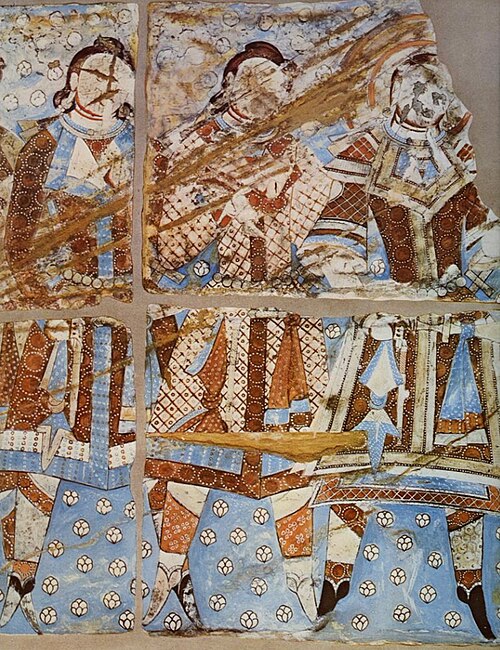 جداريات الأمراء، الكهف 199
 أحد المتعبدين (على اليمين) يقدم قرباناً لبوذا، الكهف 110
الفترة الثانية: الفترة الأسلوبية الرئيسية
"كهف الموسيقيين" (الكهف 38)


بحسب ري، يُرجّح أن يكون " كهف الموسيقيين " [ 153 ] أقدم كهوف "العمود المركزي" في كيزيل، ويعود تاريخه إلى منتصف القرن الرابع الميلادي، كما تُعدّ أيقوناته من بين الأقدم. [ 154 ] وقد أعطت اختبارات الكربون التي أجراها سو باي تواريخ تتراوح بين 310 ± 80 ميلاديًا و350 ± 60 ميلاديًا (أي بحد أقصى 230-410 ميلاديًا). [ 17 ] [ 47 ] [ 65 ] ونسب هو ووانغ الكهف إلى الفترة الثانية، وقدّرا تاريخه بين منتصف القرن الرابع وأواخر القرن الخامس الميلادي (حوالي 350-499 ميلاديًا). [ 17 ] وقدّر التأريخ الألماني التقليدي أن الكهف يعود إلى الفترة 600-650 ميلاديًا، وقدّمه كمثال على "الأسلوب الأزرق المخضر" اللاحق، الذي يُقال إنه خلف زمنيًا مجموعة "الأسلوب البرتقالي المخضر". [ 17 ]
إن ما يُسمى بـ"العمود المركزي" الظاهر في المخطط ليس في الواقع عمودًا، بل هو مجرد صخرة في الجزء الخلفي من الكهف، حُفر فيها ممر دائري يسمح بالطواف حوله . [ 17 ] يوجد في "العمود المركزي" تجويف مُصمم لإيواء تمثال بوذا، وتجويفان آخران على جانبي المدخل الرئيسي، بالإضافة إلى تجاويف في الممر الخلفي. [ 17 ] من المحتمل أن يكون التجويف المركزي قد صوّر بوذا وهو يتأمل في كهف إندراسالا ، مع خلفية مزخرفة لجبل، وهو موضوع مركزي متكرر في كيزيل. [ 17 ] يظهر مايتريا ، بوذا المستقبل، في جنة توسيتا ، في جدارية جميلة فوق باب الخروج. [ 17 ] من الناحية الهيكلية، يظل الكهف بسيطًا نسبيًا، إذ لا يحتوي على غرفة انتظار أو ردهة. [ 17 ]
يستمد أسلوب اللوحات من فنون غاندارا وكشمير ، وفن ماثورا ، وفن غوبتا المبكر ، مع تأثيرات واضحة من الفن الروماني وفن تدمر . [ 17 ] [ 154 ] من المعروف أن كوماراجيفا كان يسافر مرارًا وتكرارًا بين كوتشا وكشمير في ذلك الوقت، وربما كان له دورٌ بارز، من بين آخرين، في نقل هذا الفن. [ 17 ] قد يكون النموذج الهيكلي للكهف هو كارا تيبي في باكتريا . [ 154 ] تُذكّر الأسطح المسطحة والواضحة للوحات بتقنية أوبوس سيكتايل الرومانية، التي ازدهرت حوالي عام 331-359 ميلادي. [ 17 ]
 مدخل الكهف رقم 38
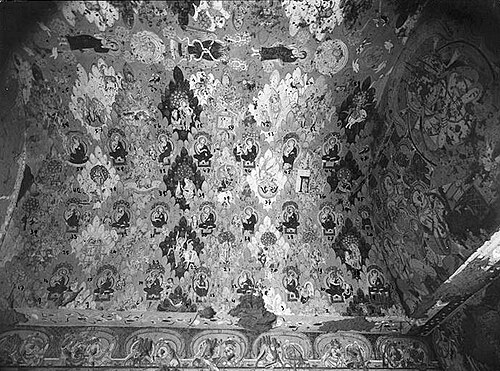 السقف، صورة التقطها تشارلز نويت عام 1907

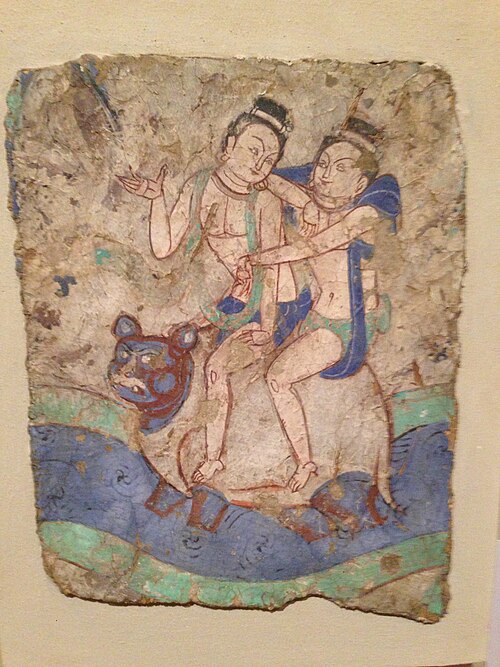 "ملك السلاحف الرحيم" من حكايات جاتاكا البوذية . متحف الإرميتاج، سانت بطرسبرغ.
 محارب يرتدي درعاً، سقف الكهف رقم 38. [ 156 ]
- تاجر يقدم إهداءً لبوذا، الكهف 38. [ 157 ]
 مشهد من حكاية جاتاكا على السقف: سابو يقود طريق التجار، كهف كيزيل 38 "كهف الموسيقيين"
 كهف كيزيل 38، السقف.
الكهف 14: تجار آسيا الوسطى

يُعتبر الكهف رقم 14، وهو غرفة صغيرة مربعة الشكل تقريبًا ذات سقف مقبب (2.17 × 2.17 متر؛ 7 × 7 أقدام)، أحدث من " كهف الموسيقيين "، ويعود تاريخه إلى أواخر القرن الرابع الميلادي وبداية القرن الخامس الميلادي، أي حوالي عام 400 ميلادي، وفقًا لري. [ 89 ] [ 158 ] يحتوي الكهف على العديد من الرسومات التي تُظهر تجارًا من آسيا الوسطى يواجهون مخاطر مختلفة في طريقهم، مثل الضياع في الظلام، وإنقاذهم على يد ملك التنين مابي. [ 159 ] يُعتبر الكهف رقم 14 علامة تاريخية مهمة لأنماط الملابس أو أنواع الدروع التي ارتدتها بعض الشخصيات. [ 158 ]
 كيزيل، رجل يرتدي درعًا، الكهف 14. 智马舍身救王命故事 "قصة الحصان الذكي الذي يضحي بنفسه من أجل الملك".
 التنين الملك مابي ينقذ التجار، الكهف 14
 إله على فيل، الكهف رقم 14
 سقف الكهف رقم 14، تجار يمتطون خيولهم في الظلام (أسفل)، من بين مشاهد تلمح إلى حكايات جاتاكا .
الكهف 17: العائلة المالكة التوخارية (حوالي 500 م)

الكهف رقم 17 ( كهف قبو البوديساتفا ) هو كهف كبير ذو "عمود مركزي" يقع بالقرب من الكهف رقم 14، وعلى ارتفاع شاهق على الصخرة إلى يمين الكهف رقم 8. [ 164 ] ويُرجح أنه كان الكهف الرئيسي ضمن مجموعة الكهوف من 14 إلى 19، والتي تضم أيضًا العديد من أماكن السكن غير المزخرفة أو الفيهارات ، وكان مخصصًا للطقوس الدينية. يؤرخ سو باي الكهف رقم 17 إلى المرحلة الثانية (395-465 م)، إلى جانب الكهف رقم 14. ويؤرخه لو ووانغ إلى عام 465 م. [ 7 ] وينسب ري الكهف رقم 17 إلى حوالي عام 500 م، استنادًا إلى اعتبارات أسلوبية. [ 165 ] هو كهف ذو "عمود مركزي"، يحتوي على قاعة صغيرة مربعة الشكل (3.80 × 3.90 متر؛ 12 × 13 قدمًا) ذات ألوان زاهية وسقف مقبب، وعمود مركزي مع ممرين جانبيين، وغرفة خلفية. [ 164 ] ربما كانت هذه الكهوف مصليات صغيرة تابعة لمعابد فيهارا القريبة . [ 89 ]
في الكهف رقم ١٧، [ ١٦٦ ] على اللوحة السفلية اليسرى من جدار المدخل، ظهرت عائلة ملكية، تتألف من الملك والملكة وأميرين صغيرين. ويرافقهم رهبان ورجال يرتدون قفطانًا. هذا النقش موجود الآن في متحف الإرميتاج . [ ١٦٠ ] يرتدي الملك تاجًا وهالة ثلاثية، مع أشرطة ملكية على الطراز الساساني. [ ١٦٣ ] يرتدي قفطانًا أبيض طويلًا مزينًا بتصاميم ماسية صغيرة، وحذاءً طويلًا. يده اليمنى أمام صدره، تحمل مصباح بخور، [ ١٦٣ ] ويحمل في يده اليسرى سيفًا من نوع أكيناكيس وحقيبة حمراء. [ ١٦٣ ] [ ١٦٧ ] يظهر طرف سيف فارس طويل خلف الحذاء الأول. [ ١٦٣ ] يمكن التعرف على الملك على أنه ملك توخاري من كوتشا. [ 162 ] ترتدي ملكته رداءً طويلاً، ويرتدي ابناه الأميران قفطاناً مزخرفاً وهما أشقران الشعر. [ 163 ]
بحسب مؤرخ الفن بنيامين رولاند، تُظهر الصور الشخصية في كيزيل أن "التخاريين كانوا أوروبيين في مظهرهم لا منغوليين، ببشرة فاتحة وعيون زرقاء وشعر أشقر أو أحمر، وأزياء الفرسان وسيداتهم تُوحي بوضوح بعصر الفروسية في الغرب". [ 168 ] أطلق الصينيون على ملوك كوتشيا لقب "أبيض" (白)، ربما إشارةً إلى بشرتهم الفاتحة. [ 169 ] لاحظ الراهب الصيني شوانزانغ عام 645 ميلاديًا أنهم "كانوا يرتدون ملابس مزخرفة من الحرير والتطريز". [ 170 ]
يُظهر هذا الكهف أيضًا تجارًا من آسيا الوسطى يواجهون مخاطر مختلفة في طريقهم، مثل الضياع في الظلام، وإنقاذهم على يد ملك التنانين مابي. ومن القصص الأخرى قصة التاجر الطيب سابو (萨缚)، الذي أشعل النار في ذراعيه ليُرشد مجموعة من 500 تاجر تاهوا في الظلام، ونجح في إنقاذهم. تظهر هذه القصة في العديد من اللوحات، حيث يرتدي التجار أزياء آسيا الوسطى ويرافقهم الجمال، ويظهر سابو بصفات البوديساتفا . [ 159 ]
يُعدّ الكهف رقم 17 معاصرًا لأقدم كهوف موغاو المزخرفة بالقرب من دونهوانغ (الكهوف 268 و 272 و 275 )، والتي بناها وزينها سلالة ليانغ الشمالية بين عامي 419 و439 ميلاديًا، قبل غزو سلالة وي الشمالية . وتتشابه هذه الكهوف في العديد من الخصائص الأسلوبية. [ 171 ] [ 172 ]
 مخطط الكهف رقم 17
 تنين برأسين يأسر التجار، الكهف 17
 ساب يقود الطريق لـ 500 تاجر، كهف كيزيل 17.
 مرافقو الملك، الكهف 17، كيزيل
 بوذا فيروتشانا ، الممر الأيمن، الكهف رقم 17
"كهف حاملي السيوف الستة عشر" (الكهف رقم 8، 432-538 م)


كهف " حاملو السيوف الستة عشر " ("Höhle der Schwertträger", 十六带剑者窟) هو كهف شهير يضم سلسلة من الجداريات التي تُظهر مبارزين يرتدون قفاطين ويحملون سيوفًا طويلة وخناجر. وقد تم تأريخ هذه الجداريات بالكربون المشع إلى الفترة ما بين 432 و538 ميلاديًا. [ 174 ] [ 60 ] كما يُطلق على هؤلاء المبارزين لقب " المتبرعين التوخاريين ".
تباينت تفسيرات جنسية أو عرق المتبرعين. يزعم بعض الباحثين أن المتبرعين هم بالفعل من التخاريين ، وهم شعب غامض من حوض تاريم، كانوا يتحدثون اللغة التخارية الموثقة جيدًا ، وهي أقصى اللغات الهندو-أوروبية شرقًا . [ 175 ] ووفقًا لهذه الفرضية، فإن المتبرعين في الجداريات ينتمون إلى النمط الهندو-أوروبي، ويرتدون ملابس على الطراز الإيراني، وشعرهم أحمر. [ 175 ]
ثمة تفسير أحدث مفاده أن حاملي السيوف هم في الواقع الهياطلة ، الذين عُرف عنهم أنهم سكنوا حوض تاريم بين عامي 490 و560 ميلادي، وهو نفس الوقت الذي رُسمت فيه اللوحات. [ 51 ] [ 173 ] وكانت كوتشا تحديدًا جزءًا من سيطرتهم بين عامي 502 و556 ميلادي. [ 176 ] ويُقال إن أسلوب الملابس والرموز وملامح المتبرعين قريبة جدًا من تلك المصورة في لوحات توخارستان ( باكتريا )، مركز قوة الهياطلة، في مواقع مثل بالاليك تيبي أو ديلبرجين تيبي . [ 51 ] [ 173 ] وعلى وجه الخصوص، يُعتبر المعطف ذو الطية الواحدة نتيجة لتأثير الهياطلة، بينما كانت المعاطف الكوتشية التقليدية ذات طيتين. [ 177 ] في الوقت الحاضر، يبدو أن الرأي الأكثر شيوعًا بين الأكاديميين هو أن الهياطلة كانوا في الأصل من أصل تركي. [ 178 ]
ويمكن رؤية متبرعين مماثلين في كهوف كومتورا .
في "كهف حاملي السيوف الستة عشر"، تقع جداريات حاملي السيوف الستة عشر في الممرات الجانبية اليمنى واليسرى المحيطة بالعمود المركزي، محاكيةً موكبًا من المُريدين. [ 179 ] أما جوانب الغرفة الرئيسية فتُزيّنها لوحات تُظهر مجموعات حول تماثيل بوذا جالسة، بينما يُزيّن القبو بعدد لا يُحصى من تماثيل بوذا الصغيرة التي تنبعث منها ألسنة اللهب. [ 179 ]
 كهف حاملي السيوف الستة عشر، في الطرف الغربي من مجمع كهوف كيزيل
 كهف حاملي السيوف الستة عشر (مخطط)
 أحد حاملي السيوف، يرتدي قفطاناً ذا طية صدرية على الجانب الأيمن.
 الكهف رقم 8، تفاصيل حامل السيف
 حامل السيف والخادم
 رجل يرتدي عمامة، من الجدار الجانبي للقاعة الرئيسية.
The rear corridor, forming a back-room behind the central pillar, is a barrel-vaulted rectangular room with the two corridors for side access. It was decorated by many spectacular murals, including a large mural showing the sharing of the relics, with soldiers in armour riding horses and elephants (β on the plan).[179][180] The vault was lavishly decorated with flying asparas holding musical instruments. The back wall had a depiction of the Parinirvana with a reclining image of the Buddha, and asparas flying over. The murals were photographed in black and white in-situ by Charles Nouette in September 1907, but all of them were later taken to Germany by Von Le Coq. A reconstruction of the rear corridor was recently built in the Museum für Asiatische Kunst.
 Back corridor room of the Cave of the Sixteen Swordbearers, looking towards the main cella (reconstitution).
 Vault decoration over the mural of "The War of the Relics": on-site photograph in 1907 by Charles Nouette, and removed color panels at the Dalhem Museum.
 Mural on the inside wall of the rear corridor (β on the plan). The kings around the BrahmanaDrona, and below, soldiers on elephants and horses. War of the relics.
 Armoured men on horses and elephants, in the rear corridor, War of the Relics scene (details)
Cave 181: Cave of the High Place in the Small Valley
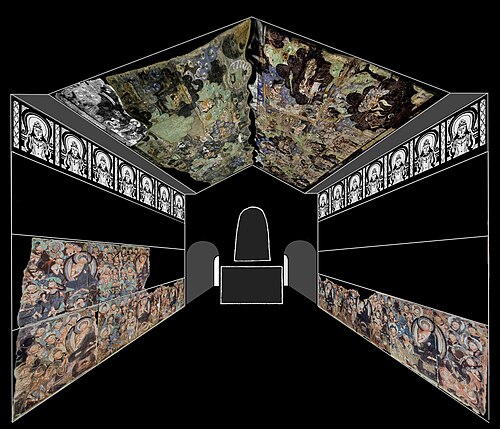


The Cave of the High Place in the Small Valley (Cave 181), also called the "Highest Cave",[181] is described extensively by Albert Grünwedel, as a particularly interesting cave of the small ravine.[182] He explains that the cave is located high up on the right side of the ravine, which accounts for the fact that its murals have been preserved from the usual iconoclastic vandalism: the faces in particular are well preserved.[182] Also, the murals did not use gold foils for decoration, which reduced the incentive for theft.[182] In his plates, Grünwedel illustrates the murals of the cave, where he names the cave by its official name: Hochliegende Höhle der 2. Schlucht ("Cave of the High Place in the 2nd Valley"),[183] which is the German name for cave 181.[184]
Grünwedel explains that the structure of the cave is extremely rare, as it is not a barrel-vaulted cave: instead, the ceiling has the shape of a tent.[185] The flatness of the sides of the tent-like ceiling is the reason why Grünwedel was able to remove easily most of the ceiling paintings in large panels, something which is impossible with the strongly curved surface of a barrel-vaulted ceiling.[182] The tent-like ceiling is bordered by a row of seven bejewelled princes on each side.[182]
The side wall depict rather tumultuous scenes of the sermon of the Buddha, no fewer than eight of them, with a multitude of attendants in various attitudes and clothing.[186] The entrance wall had paintings of Tocharian donors and monks on both side.[182] Above the entrance was the usual painting of Maitreya with surrounding Devaputras.[182] The side corridors had paintings of Jataka stories, while the back corridor behind the niche had a bench or pedestal along the back wall for the display of the Parinirvana of the Buddha, with deities flying over.[182] On the opposite wall was a scene of the Cremation of the Buddha.[182] Grünwedel sent most of the murals to Germany.[182]
A headless wooden statue of a Dhyanasana Buddha, about 164 cm (65 inches) tall, was found in the cave.[187]
The murals and the paintings of the ceiling are generally attributed to Cave 181,[188][189] but some authors attribute them to Cave 178 instead.[190] To add to the confusion, von Le Coq wrote in 1924 that the paintings of the ceiling actually came from barrel-vaulted Cave 184, and he claimed that Grünwedel, who accomplished the removal of the murals in 1906–1907, wrongly described the vault as being "tent-like".[191] Access to cave 181 has remained difficult, and it has also been claimed that it was never painted.[192][193]
 Flat mural of the right half of the ceiling. It is about 4 cm (1½ inches) thick, and weight around 400 kg. Dahlem Museum.[194]
 Sab leading the way to a trader with a camel.
 The Buddha and attendants
Period 2 (later phase, 500–700 CE)


The 3rd phase covers a period from the mid-6th century CE to the early 7th century CE. Carbon testing from this period gave dates ranging from 545 +/-75 CE to 685 +/-65 CE (i.e. a maximum range of 470–750 CE).[65] Maya Cave (n.224) is one of the famous caves from this period. Historically, the paintings of this period seem to correspond to the Turk expansion, following their uprising against the Rouran Khaganate in 552 and their subsequent territorial expansion.[47] This can also be seen the style of armour of some of the soldiers in the murals, especially with their pear-shaped helmets.[47]
Vivid colors are used, with great contrast, sometimes quite unnaturally and in a garish manner. A lot of lapis lazuli blue is incorporated in the palette of this artist.[48] Skin color or hair color are often quite unnatural.[48] Backgrounds often have plenty of flowers, fruits or leaves. Ornaments are often extravagant.[48] Again, no East-Asian influence is visible in these paintings.[48]
Māyā Cave (Third complex, cave 224, c.550–600 CE)
Maya Cave (Cave 224) of "III Anlage" is one of the most famous caves of the Third Period. It is dated to circa 550–600 CE, and possibly follows the events of the Turk uprising against the Rouran Khaganate in 552 CE and the subsequent Turk expansion.[195] The helmets of the Knights depicted in some of the murals have been said to be characteristic pear-shaped segmented helmets of the Turkic type.[195][196]
A famous mural of the Mourning of the Buddha at his Cremation appears in Maya Cave (224), from the rear passage of the cave, with various figures in ethnic costumes.[197] Three of the men among the mourners cut their forehead skin or chest with their knives, a practice of self-mutilation practiced by the Scythians.[197] One of the mourners if is thought to be a Turk.[198][199]

 King Ajatasaru, His Queen, and His Minister Varshakara, Kizil, Maya Cave, (Cave 224).
 Drona the Brahmin with Relics of the Buddha, Cave 224, Kizil
 The War of the Relics, back corridor of Maya Cave (224).[195]
 Knights in Kucha, following the events of 552 CE Turk uprising and the subsequent Turk expansion. 2nd half of the 6th century CE. The helmet is a characteristic pear-shaped segmented helmet of the Turkic type.[195][196]
 Tocharian Prince mourning the Buddha.
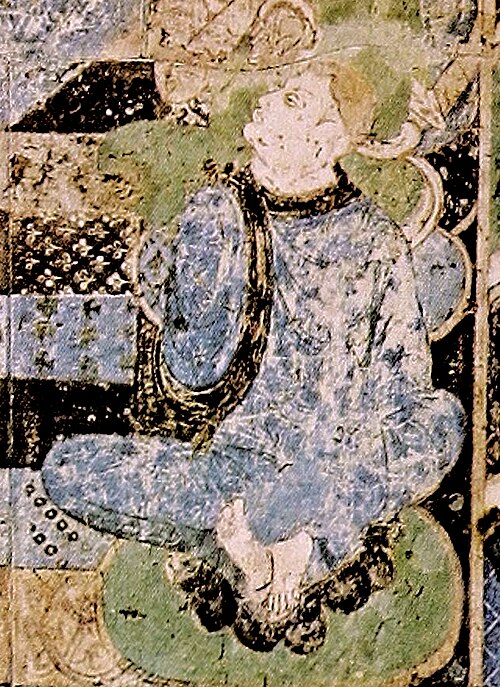 A monk from "The First Sermon", right corridor painting.
Māyā Cave (Second complex, Cave 205, end 6th century CE)


Maya Cave of "II Anlage" (Cave 205) has been carbon-dated to the 6th–7th century CE.[90] The cave has an inscriptions in Sanskrit mentioning the King of Kucha Anantavarma. He is shown accompanied by two armed attendants.[201]
"When Anantavarma, the great king (maharaja?) of Kucha, saw the letter of Ilmonis, the dedication and the little container of musk, he had honor done to the Buddha."
—Albert Grünwedel translation.[201]
A Prince appears with his wife in the adjacent frescoes, mentioned in a nearby inscription as the future king Tottika and his princess Swayamprabha.[202]
This cave has been rather precisely dated to the end of the 6th century CE, based on the names of the rulers found in the inscriptions, particularly King Tottika and his wife Svayamprabha (a Sanskrit name), who also appear together with Suvarnapushpa (known to have ruled 600–625 CE) and his son Suvarnadeva in the inscriptions on the walls of the Red-dome Cave.[203] The epigraphy also suggest dates later than the Cave of the Painters, with its more ancient inscription about the "painter Tutuka".[204]
 Presentation of the Parinirvana, Cave 205
 The Monk Ajnatakaundinya, Maya Cave, Site 2, (Cave 205)
 Cremation of the Buddha
 Medidating Mahakasyapa in his patched robe, ceiling detail, Cave 205.[207]
 The inscription in Sanskrit mentioning Anandavarman
Red-dome Cave 67: more royal dedications
Another nearby cave, the Red-domed Cave A (Cave 67) also has inscriptions mentioning a list of donors including a queen and six kings, among them Suvarnapuspa (ruled 600–625 CE) and his son Suvarnadeva (ruled 625–648 CE).[202][208][209] Also included in the inscriptions are the names of King Tottika and his wife Svayamprabha (a Sanskrit name), who also appear in the Maya Cave of the Second Group (Cave 205), suggesting proximity in time of these two caves.[203] The epigraphy also suggest dates later than the Cave of the Painters, with its more ancient inscription about the "painter Tutuka".[204]
The Red-dome cave contained a library in which were found very old manuscripts, including one of the oldest known manuscripts in Sanskrit.[33]
 Plan of the Red-domed Cave A (cave 67)
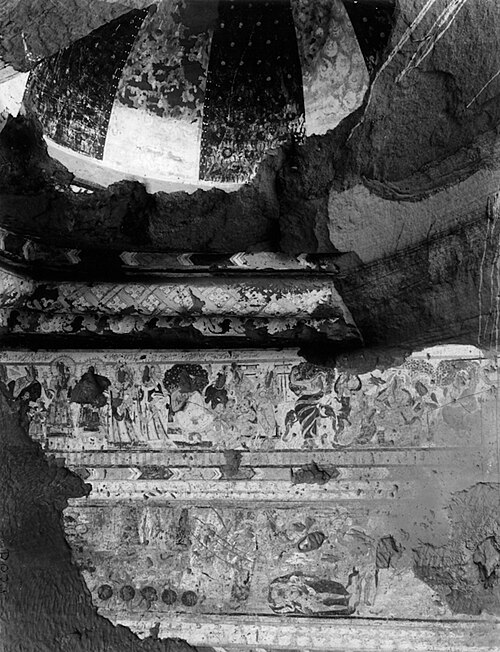 View of the dome and paintings.
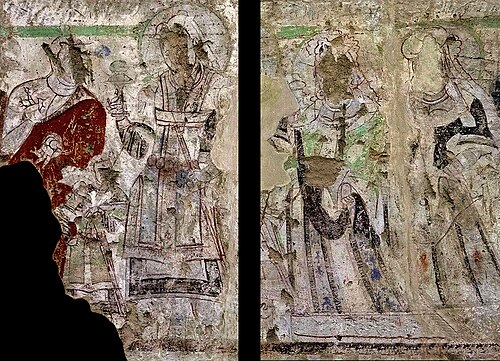 Princes and Princesses in the Red-domed cave
Cave 69: portrait and dedication of the king of Kucha (securely dated to 600–647 CE)

This period has the only known secure dating in the Kizil Caves: Cave 69 has a painting of a royal Kuchean couple with an inscription in the halo of the King: "Temple Constructed for the Benefit of Suvarnapushpa by His Son", Suvarnapuspa having ruled between 600 and 625, and his three sons died before 647 CE according to Chinese sources.[210][211][212]
When he visited Kucha in 630 CE, the Chinese monk Xuanzang received the favours of Suvarnadeva, the son and successor of Suvarna-puspa, and Hinayana king of Kucha.[213]
Xuanzang described in many details the characteristics of Kucha (屈支国 qūzhīguó, in "大唐西域记" "Tang Dynasty Account of the Western Regions"), and probably visited Kizil:[214][215] 1) "The style of writing is Indian, with some differences" 2) "They clothe themselves with ornamental garments of silk and embroidery. They cut their hair and wear a flowing covering (over their heads)" 3) "The king is of Kuchean ("屈支" qūzhī) race"[216] 4) "There are about one hundred convents (saṅghārāmas) in this country, with five thousand and more disciples. These belong to the Little Vehicle of the school of the Sarvāstivādas (Shwo-yih-tsai-yu-po). Their doctrine (teaching of Sūtras) and their rules of discipline (principles of the Vinaya) are like those of India, and those who read them use the same (originals)." 5) "About 40 li to the north of this desert city there are two convents close together on the slope of a mountain".[101]
These events were soon before the Tang campaign against Kucha in 648 CE.[213]
 A painting in the left corridor, Cave 69
 Kuchean devotees, Cave 69, Kizil
 King Suvarnapuspa and his Queen (龟兹国王与王后供养像) in Cave 69 (dated 600-647 CE per Chinese sources).[217]
Period 3: final narrative evolution
The final stage at Kizil is Period 3 of the Second Indo-Iranian Style.[54] Towards the end of its florescence, Kizil saw the emergence of the domed central pillar cave, a type of "central pillar" structure, with niche and circumambulating corridor, but with a very uncharacteristic near-cubic main cella crowned by a magnificent cupola decorated with divinities.[218] The style of painting is very refined, and can also be seen in some other caves in the region such as in Kumtura. The iconography too has evolved, with a cosmological Buddha becoming omnipresent and majestic, often surrounded by myriads of emanations of smaller Buddhas.[218] This exceptional and very refined type of cave is exemplified by Cave 123, the "Cave with the Ring-Bearing Doves".[219] It represents a final narrative evolution, in which the figures of the cosmological Buddha predominate, while secondary figures and stories take an ever-smaller role.[220]
"Cave with the Ring-Bearing Doves" (Cave 123)


The "Cave with the Ring-Bearing Doves" (Cave 123) had a type of "central pillar" structure, with niche and circumambulating corridor, but with a very uncharacteristic cubic main cella crowned by a magnificent dome decorated with divinities.[218][221] The main cella forms a square vestibule or main hall (3.42 x 3.42 meters; 12 x 12 feet) in front of the pillar forming the back wall, the vestibule being surmounted by a decorated dome. The prototype for the dome decorated with standing Buddhist deities is to be found in Group C of the caves at Bamiyan.[222] It can also be seen in some other caves in the region, such as in Kumtura.
The cave is named after a pattern of "flying geese holding a wreath" (or ring). This pattern is also known from Cave 69, which is dated to 625–647 CE because of the depiction and inscription of a historically identified king. Because of this marker, Cave 123 may be dated to the same period.[223]
Two monumental Buddha images occupy the sides of the main cella. They have full-body "mandorla" halos filled with a multitude of sitting or standing Buddhas.[224] These monumental images represent the second Great Miracle of the Sakyamuni Buddha at Shravasti.[219] The myriads of Buddhas emanating from him, each standing on a lotus, are a result of his deep meditation at Shravasti, as recounted in the Divyavadana.[219] This understanding of the Great Miracle is most prominent among the Sarvastivadin and the Mulasarvastivadin.[219] The two monumental Buddhas are surrounded by attendants, some light-skinned and some dark-skinned, and a Vajrapani.[219]
The side corridors also have similar Buddha images, but this time with a supplementary decorated band around the Buddha, which is filled with a row of ring-bearing doves, hence the name given to the cave.[224] All Buddha images are surrounded with numerous attendants, Devatas and Vajrapanis.[224]

The paintings were in great part brought to Europe by the fourth Royal prussian expedition to Central Asia of 1913–1914 led by Albert von Le Coq.[225] The cave was reconstructed in Berlin around 1928, but suffered damage during the war.[226] It has been reconstructed again recently in the Museum für Asiatische Kunst. The painting of the left side wall remains in-situ, quite damaged.[227][228]
 Cave 123, with collapsed front antechamber.[229]
 Cave 123, as recorded by Charles Nouette in September 1907 (composite)
 Decorative dome over the niche. "Cave with the Ring-Bearing Doves". Ethnological Museum of Berlin
The cave is quite outstanding and refined, either in terms of architecture and decoration, and departs from the mainstream of other caves at Kizil. Marianne Yaldiz has called it "One of Xinjiang's Mysteries".[230] Untypically, the narrative scenes are placed over the entrance, taking second position to the monumental standing Buddhas of the side wall. This is a layout which became popular farther east in Gansu.[220] In a final narrative evolution, the cave magnifies the figure of the Buddha, and gives an ever smaller role to secondary figures and stories.[220]
 The Buddha with his thousand emanations
 Entrance wall, Sermon of the Buddha.
 Bodhisattava over the niche.
 Cave 123, Dome detail.
 Cave 123, Dome detail.
Other caves of the third period
The Center Cave (Cave 186), the Third to Last Cave (Cave 184) and the Third Cave from the Front (Cave 187) are also considered as representatives of this third period.[54]
 Monks and donors, Cave 186
 Cave 186, group.
 Cave 186
 Monks and devotees, Cave 184
 Devotees, Cave 184
Uighur-Chinese Style (8th–9th century CE)
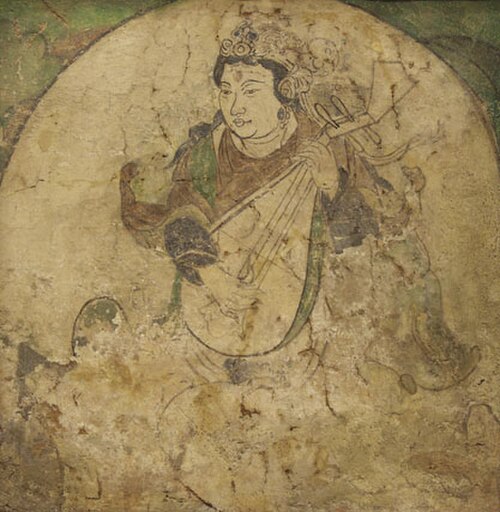
A 4th period, also described as "The third style" receives strong influence from Chinese painting, a result of the artistic activity and expansion of the Tang dynasty.[231] The civilization of Kucha, with the whole Tarim Basin from Turfan to Khotan, fell to the Chinese punitive invasion of 648 CE, putting an end to the Indo-Iranian styles of Kucha.[232] Ashina She'er, the East Turkic general leading the Tang dynasty expeditionary corps, ordered the execution of eleven thousand Kuchean inhabitants by decapitation. It was recorded that "he destroyed five great towns and with them many myriads of men and women... the lands of the west were seized with terror."[233]
Two caves at Kizil have art of the Tang period: cave 43 and cave 229.[234] In nearby Kumtura and in Turfan, Chinese styles now prevailed.[232]
In 670 CE, the Tibetan Empire conquered most of the Tarim Basin, including Khotan, Kucha, Karashahr and Kashgar, which they kept until the Chinese took back the control of the area in 692.[235]
In 753 CE, the northern part of the Tarim Basin was taken over by the Turks of the Uyghur Khaganate, based in Turfan.[235][236] A new Tibetan conquest took place in 790 CE.[235] By 900 CE, the area was under Muslim domination.[235]
Texts and inscriptions
Love poem
Most of the texts known from the Tocharians are religious, except for one known love poem in Tocharian B, found in Kizil and dated circa 600 CE (manuscript B-496):[237]
| Translation(English) | Transliteration | Inscription(Tocharian script) |
|---|---|---|
|
|  |
"Kyzil library"
The Kyzil library had some of "the oldest copies of the Indian theatre known today" written in Sanskrit or in Tokharian B: these Indian plays, called Nāṭaka in Sanskrit literature, alternate prose and verse, music and pantomime, and also provide scenic indications so that a single performer can enact a complete play by changing attitudes and voices. These plays are at the origin of the "chantefables" or Chinese "transformation texts" called Bianwen.[242]
13th century Tibetan document about Kizil

Albert Grünwedel, one of the German discovers of the Kizil Caves, found in Saint-Peterburg a 13th-century Tibetan text related to Kucha and the Kizil Caves, including a map, which describes the caves from the perspective of Tantric Buddhism.[243] According to the Tibetan text, the paintings in some of the caves were commissioned by a Tokharian (Thogar) king called "Mendre" (probably Māndhātṛ) with the advice of Anandavarman, a high-ranking monk. The king ordered an Indian artist, Naravahanadatta, and a Syrian artist, Priyaratna, with their disciples to paint the caves.[1] The neighbouring Khotanese kings Vijayavardhana and Murlimin also assisted with the painting of another cave by sending artists to the site.
The king of Thogar, called Mendre, or "the Persian" (Po-lo-si), or Anandavarma, had images painted in these caves for the followers of Buddha, by the artist and painter Mitradatta, also by Naravahanadatta, who came from a place of worship (Kultort) of the Niganthas, finally by Priyaratna who came from Syria also with their apprentices (Werkschüler). Mendre, the king, received an image of Amitabha from the emperor of China, and went into the land of blessedness (Sukhavati). A son of the emperor of China came to the castle of Mir-li, killed, according to an oath that he had made, all Jaina-Niganthas and all followers of Kalachakra and restored all the caves for the worship of Buddha (Buddha-Kultus).
—Albert Grünwedel translation of the Tibetan text.[244]
The Japanese Buddhist scholar Teramoto Enga gave a rather different translation:

King Mendre, or the King of Persia (Polosi) or Anandavarma the kings of Tukhara (覩货罗, Tokharistan)[245] had images painted in these caves for all the followers of the Buddha, by the artist and painter Mitradatta, also by Naravahanadatta, who came from a place of worship of the Niganthas, finally by Priyaratna who came from Syria (Rumakama, "Roman Empire") also with their apprentices. King Mendre and the King of Tukhara received the relics of Amitabha and went into the land of blessedness (Sukhavati). The son of the King of Tukhara called Dahuangfa (大黄发王) came to the city of Mir-li, preached the Kalachakra to all the Jaina-Niganthas and restored all the caves for the worship of Buddha.
—Teramoto Enga translation of the Tibetan text (fragment).[246]
According to a recent translation by Sam van Schaik, the text should be:
Among the Buddhists there was a Tocharian (Tho-gar) king called Men-dre, or Polosi, or Ānandavarmā. He had the caves painted by restorers and painters: Mitradatta; Naravāhanadatta from the lands of the "naked ones" (Niganthas); Priyaratna from Romakam (Byzantine Empire); and other experts in restoration. The king of the Rgya-ser and King Men-dre's bodies were taken by Amitābha and he went to the land of bliss. When the son of the great king of Rgya-ser came to the fort of Mir-li, thanks to the power of prayer, all the "naked ones" (Niganthas) were killed by the followers of Kālacakra, and all of the Buddhist caves were restored.
—Translation by Sam van Schaik.[103]
According to Sam van Schaik, "Mendre" could be the Indo-Greek king Menander, or the mythical king Manadhatṛ of Buddhist sources;[247] "Polosi" could be a Chinese abbreviation for king Prasenajit; "Romakam" may be the Byzantine Empire; the "naked ones" would be the Niganthas.[103]
In Tibetan, the country named "Tho-gar" "Thod-kar" corresponds to Tokharistan (ancient Bactria).[248][249][250]
Influences


The Kizil Caves are "the earliest representative grottoes in China".[11] The art of the Kizil Caves is thought to have influenced cave art at Dunhuang, in the Mogao Caves, as early as during the Northern Liang dynasty (421–439 CE), and pictorial arts in China thereafter.[253]
According to historian Daniel C. Waugh:
Given the importance of the Kucha region in the transmission of Buddhism into China and the evidence we have about the movement of translators such as Kumarajiva, it is reasonable to suggest that the art (and possibly the artists) of Kizil influenced the early art of the Mogao Cave complex near Dunhuang, further east along the Silk Road. The earliest of the extant Dunhuang caves (dating from the beginning of the fifth century) show distinctly "Central Asian" features in their painting, stylistically similar to what we find at Kizil. Among the subjects depicted at Kizil and Mogao in strikingly similar fashion is that of the "Cosmological Buddha", whose robe displays images connected with the phenomenal world.[101]
Decay, vandalism, dismantlement, and tourism

Since their construction and decoration between the 4th and 8th centuries CE, the Kizil Caves have suffered numerous periods of religious vandalism and decay.[254]
Western archaeologists orchestrated the massive sampling on the best remaining works of art in the early 20th century.[254] Aside from their colonial outlook, one of their alleged motivations was to protect these works of arts from vandalism due to Islamic iconoclasm and the depredations of treasure hunters.[255] Most of the dismantled panels were sent to the Museum für Indische Kunst, Berlin, Germany, but many were destroyed in World War II, with only photographs or drawings remaining in the best cases.[256][84][86] A significant number of the murals were also captured by the Soviets in Berlin, and turned up recently in the Hermitage Museum.[257][161][162][163]
In more recent times, the Red Guards also contributed to the destruction of the site, and last but not least, the transformation of the site for touristic purposes since 2005 has led to the disfigurement of many caves and the irretrievable loss of archaeological knowledge.[254] Today, none of the caves can be said to have remained entirely intact, although many remain quite impressive.[258][255]

Major Kizil caves
The caves were first named in German by Albert Grünwedel based on various individual characteristics. Many of these names have remained in English. More recently, a numbering system was adopted by the Chinese, generally based on the geographical position of the caves from West to East.

| Chinesenumber/name | German name[259] | English name | Comments/ stylistic period(Rhie, 2019)[89] | C14 date(Su Bai, 1983) | C14 date(Huo and Wang, 1993) | Location | Cave | Paintings | Plan |
|---|---|---|---|---|---|---|---|---|---|
"Group West of the Valley" (谷西 Guxi, Caves 1–80) | |||||||||
| 1 |  | ||||||||
| 2"克孜尔石窟第2窟"壁炉窟C, D, E | Höhlengruppe mit der Kamin C, D, E[260] | Cave Group with the Chimney C, D, E |  | ||||||
| 3壁炉窟B | Höhlengruppe mit der Kamin B[260] | Cave Group with the Chimney B | |||||||
| 4壁炉窟A | Höhlengruppe mit der Kamin A[260] | Cave Group with the Chimney A | 570 CE +-65[90] |  |  | ||||
| 7绘画地坪窟 | Höhle mit dem Freskoboden | Cave with the Fresco floor |  |  |  | ||||
| 8十六带剑者窟 | Höhle der sechzehn Schwertträgger[261] | Cave of the Sixteen Swordbearers | 432–538 CE[174][60] | 640 CE +38-50[90] | 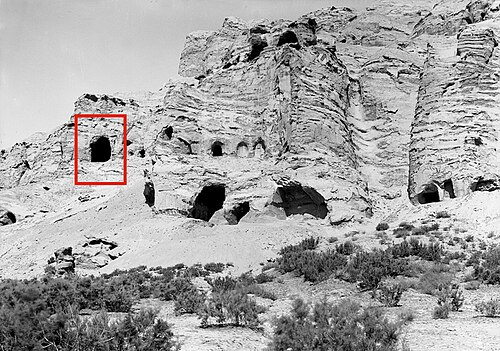 | |  | | |
| 13 | Cave 13 | |  | ||||||
| 14 | Cave 14[89] | Mid to late 4th century.[158] | 395 CE +-65 to 465 CE +-65.[7] | | | | |||
| 17菩萨顶窟 | Höhle mit dem Bodhisattvagewölbe[262]Also: Höhle mit dem Bodhisattva-Plafond | Cave of the Bodhisattva Vault | 395 CE +-65 to 465 CE +-65.[7] | 465 CE +-65[90] | 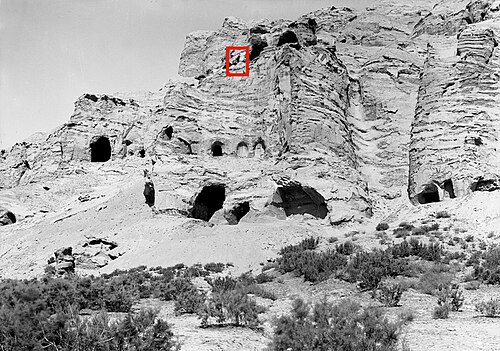 |  | | ||
| 25, 25A, 25B, 25C 龛窟 | Niche caves | Small early caves, roughly cubic in shape, and about 1x1x1 meters (3 x 3 x 3 feet) in size |  |  | |||||
| 27壁龛窟 | Nischenhöhle[263] | Cave of the Niche |  |  |  |  | |||
| 30 | Cave 30 | | |||||||
| 33 | Cave 33 |  | |||||||
| 34思惟日神窟 | Höhle mit dem meditierenden sonnengott | Cave with meditating Sun God[158] | Circa 400 CE.[165] |  |  |  | |||
| 36, 37禅房B, D | Das Sogenannte Kloster[264]/Kloster mit der Treppe, B und A.[184] | The So-called Cloister Cave | 395 CE +-65 to 465 CE +-65.[7] | |  |  | |||
| 38伎乐窟 | Höhle mit dem Musikerchor[265] | Cave of the Musicians | Mid 4th century CE. Possibly the earliest "central pillar" cave.[154] | 310 CE +-80[47][65][75] | mid 4th-end 5th century.[90] |  |  | | |
| 39 | Cave 39, a square cave | 395 CE +-65 to 465 CE +-65.[7] | 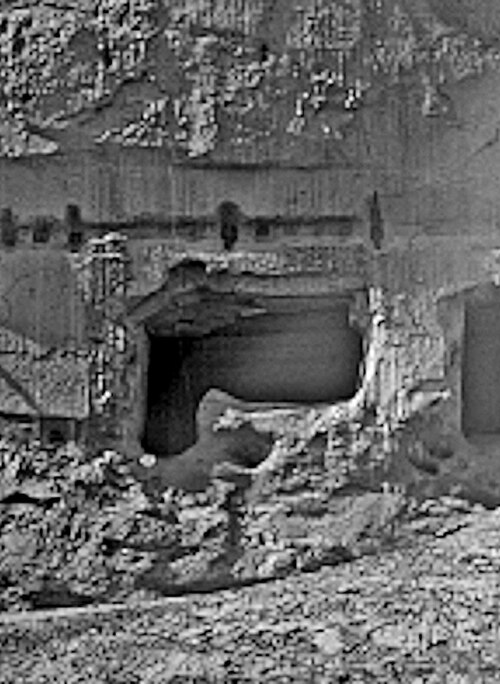 | ||||||
| 40 | Cave 40, a vihara cave, without decoration | 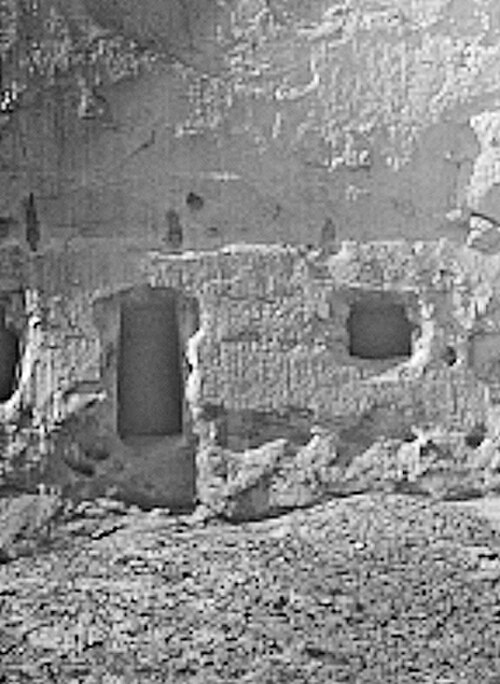 | |||||||
| 41, 42, 43 |  | ||||||||
| 44, 45, 46, 46a | Storage caves.[266] |  | |||||||
| 47 | Kultstatten | Colossal Image Cave (Cave 47)[154] | A colossal standing Buddha, about 10 meters (30 feet) tall, used to stand in front of the "central pillar".[267] Six storeys of decorations adorned the side walls (the first storey with stucco statues, and the other storeys with paintings).[267] The cave has a large backroom with a Parinirvana scene.[267] Probably the oldest "colossal image cave" at Kizil.[267] 310 CE +-80 to 350 CE +-60.[7] | 350 CE +/-60.[90] |  | 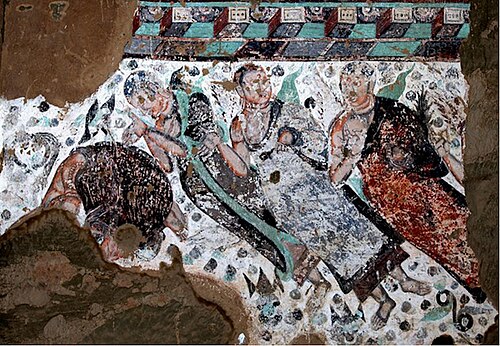 | |||
| 48 | Cave 48[268] | Another early "colossal image cave", but smaller than Cave 47. 350-400 CE.[269] | 350 CE +/-60.[90] |  |  |  | |||
| ? | Bibliothek | Library |  |  | |||||
| 58戴盔者窟 | Höhle der Behelmten | Cave of the Helmetted Man |  |  |  | 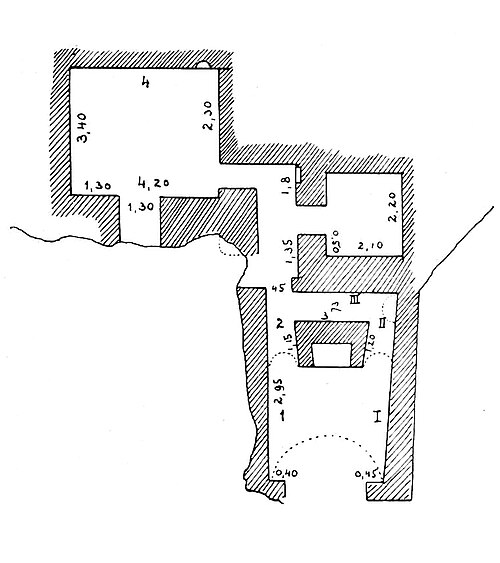 | |||
| 60最大窟 | Grösste Höhle | Largest Cave (Cave 60) | 422–529 CE[101] |  | |  | |||
| 最大窟上方的窟 | Cave above the largest cave | ![center]Mahakasyapa, carbon dated to 422–529 CE](https://file.arabipedia.wiki/wikipedia/commons/thumb/8/8f/Kizil_Caves_Mahakasyapa%2C_carbon_dated_to_422-529_CE.jpg/500px-Kizil_Caves_Mahakasyapa%2C_carbon_dated_to_422-529_CE.jpg) | |||||||
| 63迦叶窟 | Kāśiapa Höhle[270] | Kāśiapa Cave | |  | 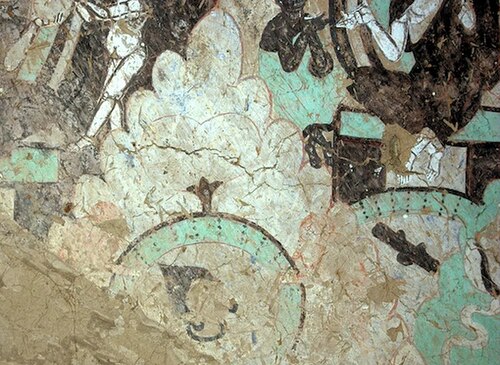 |  | |||
| 66红穹窿顶窟B | Rotkuppelhöhle B[271] | Red-domed Cave B | Vihara living space |   |  | | |||
| 67红色穹窿顶窟A | Rotkuppelhöhle A[271] | Red-domed Cave A | Inscriptions mentioning a list of donors including a queen and six kings including Suvarnapuspa (ruled 600–625 CE) and his son Suvarnadeva.[202] |  | |||||
| 新 1(克孜尔石窟新1窟) | New cave 1 (between caves 68 and 69).[272] |  |  | ||||||
| 69 | Cave 69 | Mural of King Suvarnapusa and his Queen, with inscription "Temple Constructed for the Benefit of Suvarnapousa by His Son", datable to 600–647 CE since the king is known and dated by Chinese sources.[273] |  | ||||||
| 70 | Cave 70 | A "Colossal image cave" |  | ||||||
| 76孔雀窟 | Pfauenhöhle[88] | Peacock Cave | Circa 400 CE.[89] | mid 4th-end 5th century CE.[90] |  |  | |  | |
| 77塑像群窟 | Höhle der Statuen[274]alsoFiguren Höhle[275] | Cave of the Statues[276] | 375-400 CE.[121] | 395 CE +-65 to 465 CE +-65.[7] | 3rd-mid 4th century.[90] |  |  |  | |
| 80地狱油锅窟 | Höllentopfthöhle | Hell's Pot Cave | 310 CE +-80 to 350 CE +-60.[7] |  |  |  |  | ||
"Group Inside the Valley" (谷内 Gunei, Caves 81–135) | |||||||||
| 81 | Cave 81 | 6th–7th century CE.[90] |  |  | |||||
| 82宝藏窟D, E | Schatzhöhle D, E | Treasure Caves D, E | 300–350 CE. An undecorated vihara.[74] |  | | ||||
| 83财宝窟C | Schatzhöhle C | Cave 83 (Treasure Cave C) | 300–350 CE. One of the oldest decorated caves at Kizil.[277] | mid 4th-end 5th century CE.[90] | | |  | ||
| 84财宝窟B | Schatzhöhle B | Cave 84 (Treasure Cave B) | 300–350 CE. One of the oldest decorated caves at Kizil.[277] | mid 4th-end 5th century CE.[90] | | | |||
| 85宝藏窟A | Schatzhöhle A | Treasure Cave A | 300–350 CE.[74] Small barrel-vaulted cave of the 2nd period.[278] |  |  | ||||
| 92雌猴窟 | Höhle mit der Äffin | Cave of the Female Ape | 395 CE +-65 to 465 CE +-65.[7] | 3rd-mid 4th century.[90] |  | 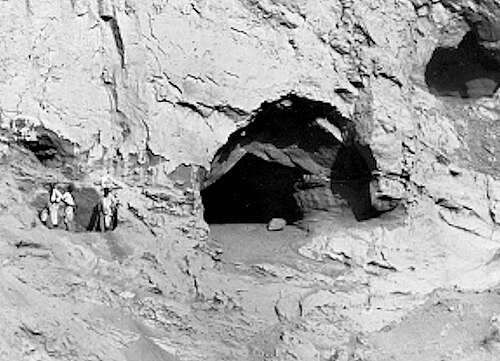 |  |  | |
| 99 | 99 |  |  | ||||||
| 100 | 100 | 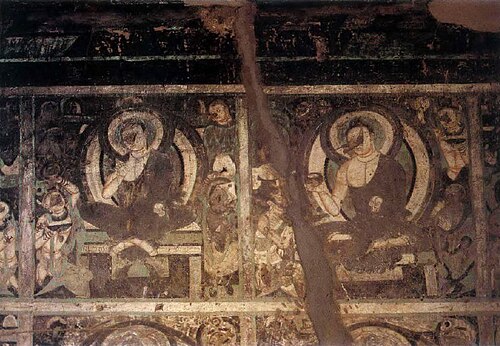 | |||||||
| 104 | Cave 104 |  |  | ||||||
| 110阶梯窟 | Treppenhöhle | Cave with the Steps (Cave 110) | The most complete set of murals about the life of the Buddha.[279] | 6th–7th century CE.[90] |  |  | | ||
| 114法轮窟 | Höhle mit dem Gebetmühle[280] | Cave with the Prayer Wheel (Cave 114)[165] | Circa 400 CE.[281] | 355 CE (+50/-100)[281] |  |  |  | ||
| 116壁画重层窟旁小窟 | Kleine Höhle neben der übermalten Höhle | Small Cave near the Overpainted Cave |  |  | |||||
| 117壁画重层窟 | Übermalte Höhle | Overpainted Cave | 3rd-mid 4th century.[90] |  |  | ||||
| 118海马窟 | Hippokampen Höhle[73] | Cave of the Hippocampi[282] | 300-350 CE.[277] | 395 CE +-65 to 465 CE +-65.[7] | 3rd-mid 4th century CE. One of the oldest decorated caves at Kizil.[90] |  |  | | |
| 123衔环飞鸽窟 | Höhle mit dem ringtragenden Tauben (Höhle 24)[283] | Cave of the Ring-bearing Doves | 5th–6th century per Dahlem Museum.[221] | 620 CE +60-80[90] | | |  | | |
| 129小穹窿顶窟 | Kleine Kuppelhöhle (Höhle 23) | Small Domed Cave |  |  | 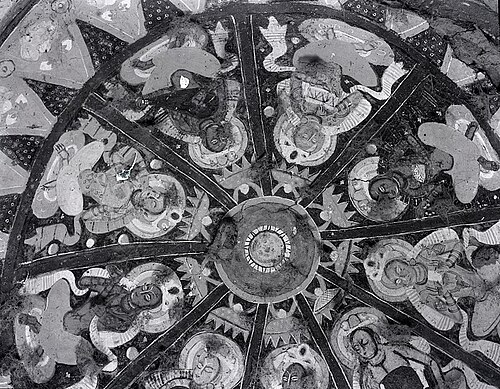 |  | |||
| 135 | 135 | Cave with cupola. Half of the dome has now crumbled away.[284] |  | ||||||
"Group East of the Valley" (谷东 Gudong, Caves 136–201) | |||||||||
| 136 | Cave 136 | A "colossal image cave" |   |  | |||||
| 139 | Cave 139 | A "colossal image cave" similar to Cave 77.[285][286] |  | ||||||
| 146 | Cave 146 | A "colossal image cave".[4] |   |  | |||||
| 149 A印度瘤牛车窟 | Höhle mit dem Zebuwagen[287] | Cave of the Zebu Cart (149 A, now lost)[288] |  |  |  | ||||
| 154 | 154 | A "colossal image cave", similar to cave 139.[286] |  |  | |||||
| 163 | 163 |  |  | ||||||
| 165–168套头顶窟5, 4, 3, 2 | Casetten Höhle 5, 4, 3, 2 | Corbelled Ceiling [Laternendecke ceiling] Caves 5, 4, 3, 2 | 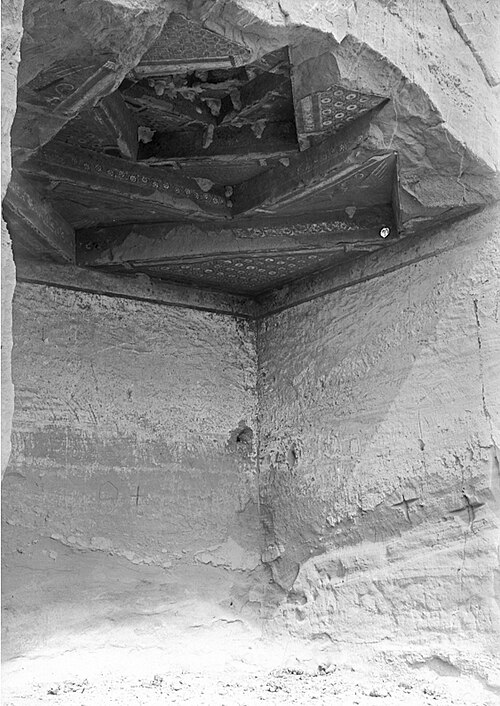 |  | |||||
| 171 | Höhle über Kassettenhöhlen[8] | Cave over the Cave with Corbelled Ceiling (171) | Barrel-vaulted central pillar cave, with many remaining paintings. | 395 CE +-65 to 465 CE +-65.[7] | mid 4th-end 5th century CE.[90] |   |  |  |  |
| 172 |  | 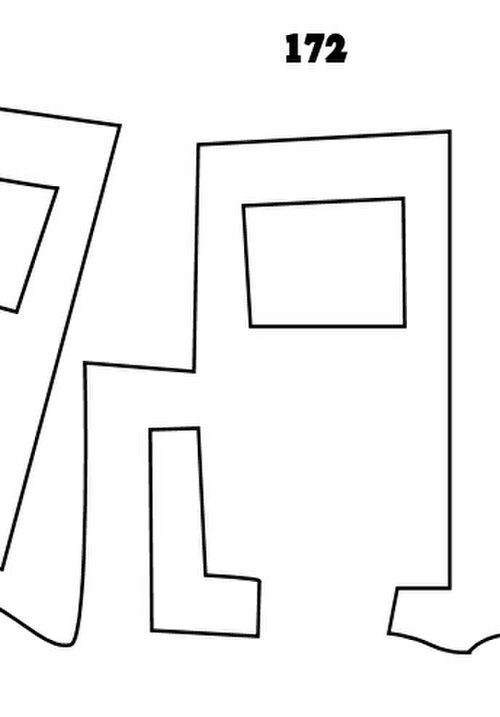 | |||||||
Small Ravine (Caves 175–191) Kleine Schlucht | |||||||||
| 175诱惑窟 | Versuchungs Höhle | Cave of the Temptation (175) | Barrel-vaulted central-pillar cave. |    |  |  |  | ||
| 176倒数第2窟 | Zweirletzte Höhle | Second Cave from the Left |  |  | |||||
| 177第4窟 | Höhle 4 | Cave 4 | A minuscule corridor-like cave with a side passage to Cave 178 |  |  | ||||
| 178峡谷窟 | Schlucht Höhle (3. Höhle) | Ravine Cave (Cave 178) | Barrel-vaulted central-pillar cave with antechamber. By far the largest cave of the group. This cave is often mistakenly attributed the paintings of cave 181.[289] | 695 CE +110-95[90] | 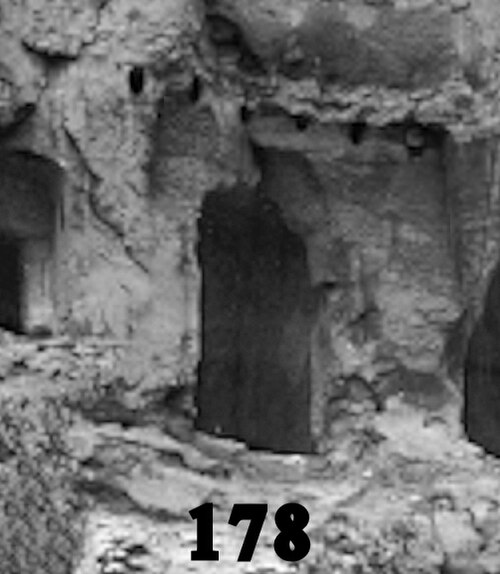 |  | |||
| 179日本人窟/第2窟 | Japaner Höhle (2. Höhle) | Japanese Cave (Cave 179) | Barrel-vaulted central-pillar cave.So named by Grünwedel because the exploration team of Count Otani worked in this cave. |  |  | ||||
| 180 |  |  | |||||||
| 181[290]高位窟 | Hochliegende Höhle [der 2. Schlucht][259] | Cave of the High Place [in the small valley] | "Tent"-vaulted central pillar cave: "The ceiling of the cella is of a very rare type: it is not barrel-vaulted, but rising like a tent."[291] The paintings of this cave, removed to Germany by Grünwedel, are often mistakenly attributed to Cave 178.[289] | 545 CE +-75 to 685 CE +-65.[7] |  | | | | |
| 182 |  | ||||||||
| 183 | Small 1x1 meters (3 x 3 feet) niche cave. |  | |||||||
| 184倒数第3窟 | Drittletzte Höhle | Third to Last Cave (Cave 184) | 6th–7th century CE.[90] |  | |  | |||
| 185附属小窟 | Kleiner Temple nebenan | Small temple next door | A small 1x1 meters (3 x 3 feet) niche cave. |  |  | ||||
| 186中心窟 | Mittlere Höhle | Center Cave (Middle Cave) |  | |  | ||||
| 187 | Small 1x1 meter (3 x 3 feet) meditation hole | ||||||||
| 188正数第3窟/十二立佛窟 | 12 Buddha Höhle (3. Höhle von vorn)[259] | Buddha Cave (Third Cave from the Front, Cave 188). | Barrel-vaulted square cave with rows of standing Buddhas. |  |  |  | |||
| 189正数第2窟 | 2. Höhle von vorn | Second Cave from the Front | 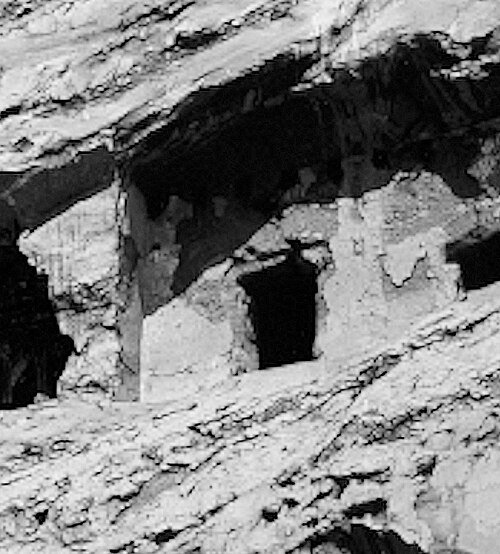 |  | |||||
| 190 |  | ||||||||
| 191 | |||||||||
| 193龙王窟 | Nāgarāja Höhle | Nāgarāja Cave |  |  |  |  | |||
| 198魔鬼窟C | Teufelshöhle mit Annexen C[292] | Cave of the Devil with Annex C (Cave 198) | 6th–7th century CE.[90] |  |  |  |  | ||
| 198 側廊妖魔窟B | Teufelshöhle mit Annexen B[292] | Cave of the Devil with Annex B (198 side corridor) |  | ||||||
| 199魔鬼窟B | Teufelshöhle mit Annexen A[293] | Cave of the Devil with Annex A (Cave 199) | | ||||||
"Group at the Back of the Mountain" (后山 Houshan, Caves 202–231) | |||||||||
| 203 | 2.Anlage Höhle 21 | 203 | Living quarter, with fireplace. | 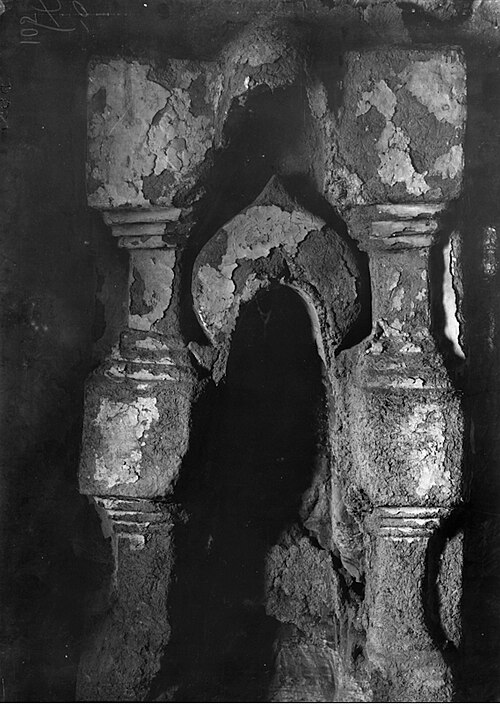 |  | ||||
| 204 | 2.Anlage Höhle 20 | 204 |  | ||||||
| 2052区佛母窟 | Höhle mit der Maya, 2. Anlage (Höhle 19)[294] | Maya Cave of 2nd Anlage (Cave 205) | 6th–7th century CE.[90] | | | ||||
| 206洗足窟 | Höhle mit der Fusswaschung (Höhle 18)[295] | Foot-washing Cave (Cave 206) | 640 CE +55-45[90] |  |  | ||||
| 207画家窟 | Höhle der Maler (Höhle 17)[296] | Cave of the Painters (Cave 207) | 480–550 CE.[51][115] | 630 CE +65-75[90] |  | |  | | |
| 212航海窟 | Höhle der Seereise (Höhle 11) | Cave of the Seafarers (Cave 212) | Early 5th century CE.[89] | 561–637 CE | 6th–7th century CE.[90] |  | | | |
| 216 |  | ||||||||
| 219未生怨窟 | Ajātaśatru-Höhle (Höhle 1) | Ajātaśatru Cave (Cave 219) |  |  |  | ||||
| 222 | Schakalshöhle (Höhle 7) | Cave of the Jackals (Cave 7) | |||||||
| 223 | Höhle 6[297][199] | Cave 6[198] | |||||||
| 2243区佛母窟 | Höhle mit der Maya, 3. Anlage (Höhle 5)[298] | Maya Cave of 3rd Anlage (Cave 224) | 440 CE +95-60.[90] | | | | |||
| 225第4窟 | Höhle 4 | Cave 4 |  | ||||||
| 227饿鬼窟 | Pretahöhle (Höhle 3) | Preta Cave (Cave 3) | Cave with corbelled ceiling, 7th century CE.[299] |  |  | 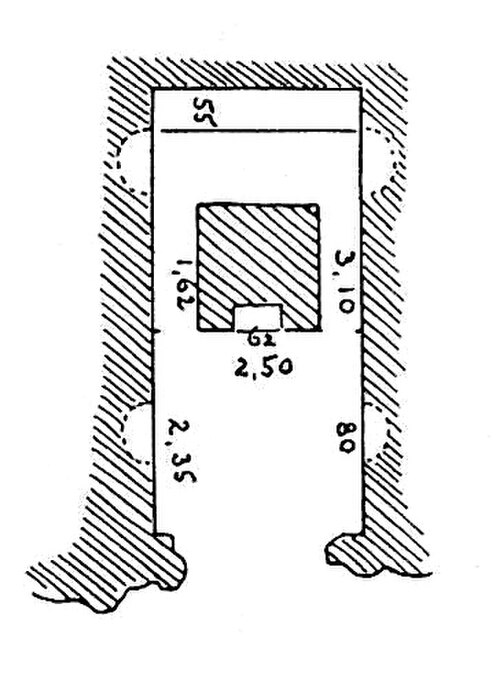 | |||
"Group East of the Valley (2nd part)" (谷东 Gudong, Caves 232–235) | |||||||||
| 232–235 | 232–235 | A few later caves at the extreme east of the main mountain face (containing caves 1–201) |  | ||||||
| Source: Rhie, Marylin Martin (15 July 2019). Early Buddhist Art of China and Central Asia, Volume 2 The Eastern Chin and Sixteen Kingdoms Period in China and Tumshuk, Kucha and Karashahr in Central Asia (2 vols). BRILL. p. 649. ISBN 978-90-04-39186-4. | |||||||||
See also
Footnotes
- 1234567Manko Namba Walter (October 1998). "Tokharian Buddhism in Kucha: Buddhism of Indo-European Centum Speakers in Chinese Turkestan before the 10th Century C.E"(PDF). Sino-Platonic Papers (85).
- ↑"Kezil Thousand-Buddha Grottoes". xinjiang.gov. Archived from the original on 2007-09-30. Retrieved 2007-08-05.
- 12"Kizil Thousand-Buddha Cave". Archived from the original on 2006-04-27. Retrieved 2007-08-05.
- 1234阮, 荣春 (May 2015). 佛教艺术经典第三卷佛教建筑的演进 (in Chinese). Beijing Book Co. Inc. p. 184. ISBN 978-7-5314-6376-4.
- 12Rowland, Benjamin (1975). The art of Central Asia. New York, Crown. p. 154.
- ↑"Silk Roads: the Routes Network of Chang'an-Tianshan Corridor". UNESCO World Heritage Centre. United Nations Educational, Scientific, and Cultural Organization. Retrieved 17 Apr 2021.
- 1234567891011121314Rhie, Marylin Martin (15 July 2019). Early Buddhist Art of China and Central Asia, Volume 2 The Eastern Chin and Sixteen Kingdoms Period in China and Tumshuk, Kucha and Karashahr in Central Asia (2 vols). BRILL. p. 645. ISBN 978-90-04-39186-4.
- 12"SMB-digital Höhlenansicht mit Wandmalerei". www.smb-digital.de.
- ↑(Other than Kizil)... "The nearby site of Kumtura contains over a hundred caves, forty of which contain painted murals or inscriptions. Other cave sites near Kucha include Subashi, Kizilgaha, and Simsim." in Buswell, Robert E.; Lopez, Donald S. (24 November 2013). The Princeton Dictionary of Buddhism. Princeton University Press. p. 438. ISBN 978-1-4008-4805-8.
- 1234Vignato, Giuseppe (2006). "Archaeological Survey of Kizil: Its Groups of Caves, Districts, Chronology and Buddhist Schools". East and West. 56 (4): 359–416. ISSN 0012-8376. JSTOR 29757697.
- 123Li, Zuixiong (2010). "Deterioration and Treatment of Wall Paintings in Grottoes along the Silk Road in China and Related Conservation Efforts" in Conservation of Ancient Sites on the Silk Road(PDF). Los Angeles: The Getty Conservation Institute. p. 49.
- 12Vignato, Giuseppe (2006). "Archaeological Survey of Kizil: Its Groups of Caves, Districts, Chronology and Buddhist Schools". East and West. 56 (4): 411. ISSN 0012-8376. JSTOR 29757697.
- ↑"Caves as Canvas: Hidden Images of Worship Along the Ancient Silk Road". Sackler Gallery. Smithsonian Institution. Archived from the original on 2003-01-03. Retrieved 2012-08-11.
- 12Daniel C. Waugh. "Kucha and the Kizil Caves". Silk Road Seattle. University of Washington.
- 123Makiko Onishi, Asanobu Kitamoto. "The Transmission of Buddhist Culture: The Kizil Grottoes and the Great Translator Kumārajīva". Archived from the original on 2009-09-21. Retrieved 2012-06-10.
- ↑Howard, Angela F. (1991). "In Support of a New Chronology for the Kizil Mural Paintings". Archives of Asian Art. 44: 68–83. ISSN 0066-6637. JSTOR 20111218.
- 1234567891011121314Rhie, Marylin Martin (15 July 2019). Early Buddhist Art of China and Central Asia, Volume 2 The Eastern Chin and Sixteen Kingdoms Period in China and Tumshuk, Kucha and Karashahr in Central Asia (2 vols). BRILL. pp. 658 ff. ISBN 978-90-04-39186-4.
- ↑"Caves as Canvas: Hidden Images of Worship Along the Ancient Silk Road – Architecture, Decoration, and Function". Sackler Gallery. Smithsonian Institution. Archived from the original on 2003-01-03. Retrieved 2012-08-11.
- ↑Rhie, Marylin Martin (15 July 2019). Early Buddhist Art of China and Central Asia, Volume 2 The Eastern Chin and Sixteen Kingdoms Period in China and Tumshuk, Kucha and Karashahr in Central Asia (2 vols). BRILL. p. 707. ISBN 978-90-04-39186-4.
- 123Zin, Monika (2013). "Buddhist Narrative Depictions in Andhra, Gandhara and Kucha – Similarities and Differences that Favour a Theory about a Lost a Gandharan School of Painting" in "Buddhism and Art in Gandhara and Kucha"(PDF). Ryokoku University. Archived from the original(PDF) on 2021-08-31. Retrieved 2021-01-02.
- ↑Härtel, Herbert; Yaldiz, Marianne (1982). Along the Ancient Silk Routes: Central Asian Art from the West Berlin State Museums : an Exhibition Lent by the Museum Für Indische Kunst, Staatliche Museen Preussischer Kulturbesitz, Berlin, Federal Republic of Germany. Metropolitan Museum of Art. p. 40. ISBN 978-0-87099-300-8.
- ↑Footprints of Foreign Explorers on the Silk Road. 五洲传播出版社. 2005. p. 86. ISBN 978-7-5085-0706-4.
- ↑"SMB-digital Höhlenansicht mit Wandmalereien". www.smb-digital.de.
- ↑"俄立艾爾米塔什博物館藏克孜爾石窟壁畫俄国". www.sohu.com.
- ↑"It is the merit of Kenyu Hori and Tesshin Watanabe to have discovered and first examined the cave complex of Kizil. Unfortunately, the efforts and findings of this examination have been destroyed by an earthquake that scared away the Japanese scholars, which enabled the Germans to uncover, carry away and come out with the treasures of this site a short while afterwards (Klimkeit, 1988, 38)" in Fellner, Hannes A., University of Vienna. The Expeditions to Tocharistan(PDF). p. 25, note 39.
{{cite book}}: CS1 maint: multiple names: authors list (link) - ↑"IDP JAPANESE COLLECTIONS". idp.bl.uk. Archived from the original on 2021-10-25. Retrieved 2021-01-28.
- 12Hiyama, Satomi (2020). "Transmission of the "World": Sumeru Cosmology as Seen in Central Asian Buddhist Paintings Around 500 AD (Wanderung der "Welt": Sumeru-Kosmologie in zentralasiatischen buddhistischen Wandmalereien um 500 n. Chr.)". NTM Zeitschrift für Geschichte der Wissenschaften, Technik und Medizin. 28 (3): 411–429. doi:10.1007/s00048-020-00245-9. PMID 32504177. S2CID 219398072.
- 12345Turfan Expedition. Encyclopedia Iranica.
- 1234567891011Rhie, Marylin Martin (15 July 2019). Early Buddhist Art of China and Central Asia, Volume 2 The Eastern Chin and Sixteen Kingdoms Period in China and Tumshuk, Kucha and Karashahr in Central Asia (2 vols). BRILL. pp. 655–658. ISBN 978-90-04-39186-4.
- ↑Grünwedel, Albert. Altbuddhistische Kultstätten in Chinesisch-Turkistan : vol.1 / Page 8 (Color Image). p. 2. Archived from the original on 2024-05-22. Retrieved 2021-01-28.
- ↑Grünwedel, Albert (1912). Altbuddhistische Kultstätten in Chinesisch-Turkistan : vol.1 / Page 163 (Color Image). pp. 156–157. Archived from the original on 2024-04-12. Retrieved 2021-01-29.
- 12Fellner, Hannes A., University of Vienna. The Expeditions to Tocharistan(PDF). p. 28.
{{cite book}}: CS1 maint: multiple names: authors list (link) - 12Härtel, Herbert; Yaldiz, Marianne (1982). Along the Ancient Silk Routes: Central Asian Art from the West Berlin State Museums : an Exhibition Lent by the Museum Für Indische Kunst, Staatliche Museen Preussischer Kulturbesitz, Berlin, Federal Republic of Germany. Metropolitan Museum of Art. p. 41. ISBN 978-0-87099-300-8.
- ↑Pelliot, Paul Emile (1909). Trois Ans dans la haute Asie : vol.1 / Page 13 (Color Image). pp. 7–8. Archived from the original on 2024-04-19. Retrieved 2021-01-28.
- ↑"Mission Paul Pelliot 1906–1908. Entre le 1/9/1907 et le 3/9/1907" in "Réunion des Musées Nationaux-Grand Palais – Search Result". www.photo.rmn.fr.
- ↑Pelliot, Paul. Trois Ans dans la haute Asie. p. 10. Archived from the original on 2021-02-04. Retrieved 2021-01-31.
- ↑Von Le Coq, Albert. Die Buddhistische Spätantike in Mittelasien : vol.4. Archived from the original on 2019-09-10. Retrieved 2021-01-29.
- 12345678910Howard, Angela F. (1991). "In Support of a New Chronology for the Kizil Mural Paintings". Archives of Asian Art. 44: 68–69. ISSN 0066-6637. JSTOR 20111218.
- 123456789Rhie, Marylin Martin (15 July 2019). Early Buddhist Art of China and Central Asia, Volume 2 The Eastern Chin and Sixteen Kingdoms Period in China and Tumshuk, Kucha and Karashahr in Central Asia (2 vols). BRILL. pp. 645 ff. ISBN 978-90-04-39186-4.
- 1234Casalini, Alice (2015). Towards a new approach to the study of the Buddhist rock monasteries of Kuča (Xinjiang)(PDF). p. 69. Archived from the original(PDF) on 2021-07-25. Retrieved 2020-12-24.
- ↑Vignato, Giuseppe (2006). "Archaeological Survey of Kizil: Its Groups of Caves, Districts, Chronology and Buddhist Schools". East and West. 56 (4): 406–407. ISSN 0012-8376. JSTOR 29757697.
- ↑Vignato, Giuseppe (2006). "Archaeological Survey of Kizil: Its Groups of Caves, Districts, Chronology and Buddhist Schools". East and West. 56 (4): 406, note 76. ISSN 0012-8376. JSTOR 29757697.
- ↑Vignato, Giuseppe (2006). "Archaeological Survey of Kizil: Its Groups of Caves, Districts, Chronology and Buddhist Schools". East and West. 56 (4): 407, note 76. ISSN 0012-8376. JSTOR 29757697.
- ↑Ghose, Rajeshwari (2008). Kizil on the Silk Road: Crossroads of Commerce & Meeting of Minds. Marg Publications. p. 39. ISBN 978-81-85026-85-5.
- ↑"Caves as Canvas: Hidden Images of Worship Along the Ancient Silk Road – The Rediscovery of Qizil". Smithsonian Institution. Archived from the original on 2003-01-03. Retrieved 2012-08-11.
- ↑Kizil Thousand-Buddha Caves: Valuable Record of Buddhism Culture in XinjiangArchived 2012-07-28 at the Wayback Machine
- 1234567Kubik, Adam (2008). "The Kizil Caves as an terminus post quem of the Central and Western Asiatic pear-shape spangenhelm type helmets The David Collection helmet and its place in the evolution of multisegmented dome helmets, Historia i Świat nr 7/2018, 141–156". Histïria I Swiat. 7: 143–144.
- 123456789Hertel, Herbert (1982). Along the Ancient Silk Routes: Central Asian Art from the West Berlin State Museums. pp. 48–49.
- ↑Ilyasov, Jangar (2001). "The Hephthalite Terracotta // Silk Road Art and Archaeology. Vol. 7. Kamakura, 2001, 187–200". Silk Road Art and Archaeology: 187–197.
- ↑"CHINESE-IRANIAN RELATIONS xiv. E. Iranian Art – Encyclopaedia Iranica". www.iranicaonline.org.
- 123456789Kageyama, Etsuko (2016). "Change of suspension systems of daggers and swords in eastern Eurasia: Its relation to the Hephthalite occupation of Central Asia"(PDF). ZINBUN. 46: 200–202.
- ↑Rhie, Marylin Martin (15 July 2019). Early Buddhist Art of China and Central Asia, Volume 2 The Eastern Chin and Sixteen Kingdoms Period in China and Tumshuk, Kucha and Karashahr in Central Asia (2 vols). BRILL. p. 649. ISBN 978-90-04-39186-4.
- ↑Vignato, Giuseppe (2006). "Archaeological Survey of Kizil: Its Groups of Caves, Districts, Chronology and Buddhist Schools". East and West. 56 (4): 395–396. ISSN 0012-8376. JSTOR 29757697.
- 12345678Le Coq, Albert von; Waldschmidt, Ernst (1922). Die buddhistische spätantike in Mittelasien, VII. Berlin, D. Reimer [etc.] pp. 24–29.
- ↑"For generally accepted styles of Kucha paintings, cf. WALDSCHMIDT in LE COQ/WALDSCHMIDT 1933: 24–31." in Zin, Monika (2015). "The Case of the "Repainted Cave" (Kizil, Cave 117)"(PDF). Indo-Asiatische Zeitschrift. 19: 19, note 4. Archived from the original(PDF) on 2021-08-31. Retrieved 2021-02-08.
- 123Härtel, Herbert; Yaldiz, Marianne; Kunst (Germany), Museum für Indische; N.Y.), Metropolitan Museum of Art (New York (1982). Along the Ancient Silk Routes: Central Asian Art from the West Berlin State Museums : an Exhibition Lent by the Museum Für Indische Kunst, Staatliche Museen Preussischer Kulturbesitz, Berlin, Federal Republic of Germany. Metropolitan Museum of Art. p. 107. ISBN 978-0-87099-300-8.
- ↑Le Coq, Albert von. Die Buddhistische Spätantike in Mittelasien : vol.5. p. 10.
- ↑"A dictionary of Tocharian B". www.win.tue.nl.
- ↑In Ashokan Brahmi: 𑀲𑁂𑀧𑀜𑀓𑁆𑀢𑁂 𑀲𑀡𑁆𑀓𑁂𑀢𑀯𑀝𑁆𑀲𑁂 𑀱𑀭𑁆𑀲 𑀧𑀧𑁃𑀬𑁆𑀓𑁅
- 1234Waugh (Historian, University of Washington), Daniel C. "MIA Berlin: Turfan Collection: Kizil". depts.washington.edu.
- 1234Baumer, Christoph (18 April 2018). History of Central Asia, The: 4-volume set. Bloomsbury Publishing. pp. 158 ff. ISBN 978-1-83860-868-2.
- ↑Beckwith 2009, p. xix ff.
- 12Grousset 1970, p. 48.
- 12Grousset 1970, p. 49.
- 1234Howard, Angela F. (1991). "In Support of a New Chronology for the Kizil Mural Paintings". Archives of Asian Art. 44: 72. ISSN 0066-6637. JSTOR 20111218.
- 1234Baumer, Christoph (18 April 2018). History of Central Asia, The: 4-volume set. Bloomsbury Publishing. p. 165. ISBN 978-1-83860-868-2.
- 12Härtel, Herbert; Yaldiz, Marianne (1982). Along the Ancient Silk Routes: Central Asian Art from the West Berlin State Museums : an Exhibition Lent by the Museum Für Indische Kunst, Staatliche Museen Preussischer Kulturbesitz, Berlin, Federal Republic of Germany. Metropolitan Museum of Art. p. 48. ISBN 978-0-87099-300-8.
- ↑"It was to the Bamian frescoes that the early style of the frescoes of Kizil -somewhat west of Kucha- was related" in Grousset 1970, p. 51
- 12Kageyama quoting the research of S. Hiyama, “Study on the first-style murals of Kucha: analysis of some motifs related to the Hephthalite's period”, in Kageyama, Etsuko (2016). "Change of suspension systems of daggers and swords in eastern Eurasia: Its relation to the Hephthalite occupation of Central Asia"(PDF). ZINBUN. 46: 200.
- 1234567891011121314151617181920212223Rhie, Marylin Martin (15 July 2019). Early Buddhist Art of China and Central Asia, Volume 2 The Eastern Chin and Sixteen Kingdoms Period in China and Tumshuk, Kucha and Karashahr in Central Asia (2 vols). BRILL. pp. 670–675. ISBN 978-90-04-39186-4.
- ↑Encyclopedia of Buddhist Art. Archived from the original on 2021-10-25. Retrieved 2021-01-29.
- ↑Härtel, Herbert; Yaldiz, Marianne; Kunst (Germany), Museum für Indische; N.Y.), Metropolitan Museum of Art (New York (1982). Along the Ancient Silk Routes: Central Asian Art from the West Berlin State Museums : an Exhibition Lent by the Museum Für Indische Kunst, Staatliche Museen Preussischer Kulturbesitz, Berlin, Federal Republic of Germany. Metropolitan Museum of Art. p. 108. ISBN 978-0-87099-300-8.
- 12345678910Grünwedel, Albert. Altbuddhistische Kultstätten in Chinesisch-Turkistan : vol.1 / Page 108 (Color Image). pp. 102 ff. Archived from the original on 2021-01-28. Retrieved 2020-12-21.
- 1234567891011121314151617181920212223242526272829303132Rhie, Marylin Martin (15 July 2019). Early Buddhist Art of China and Central Asia, Volume 2 The Eastern Chin and Sixteen Kingdoms Period in China and Tumshuk, Kucha and Karashahr in Central Asia (2 vols). BRILL. pp. 651 ff. ISBN 978-90-04-39186-4.
- 12Rhie, Marylin Martin (15 July 2019). Early Buddhist Art of China and Central Asia, Volume 2 The Eastern Chin and Sixteen Kingdoms Period in China and Tumshuk, Kucha and Karashahr in Central Asia (2 vols). BRILL. p. 658. ISBN 978-90-04-39186-4.
- ↑Puri, Baij Nath (1987). Buddhism in Central Asia. Motilal Banarsidass Publ. p. 80. ISBN 978-81-208-0372-5.
- ↑"俗有城郭,其城三重,中有佛塔廟千所" in the account of Kucha (龜茲國) in "晉書/卷097". zh.wikisource.org.
- ↑Rhie, Marylin Martin (15 July 2019). Early Buddhist Art of China and Central Asia, Volume 2 The Eastern Chin and Sixteen Kingdoms Period in China and Tumshuk, Kucha and Karashahr in Central Asia (2 vols). BRILL. p. 654. ISBN 978-90-04-39186-4.
- ↑"男女皆翦發垂項" "Men and women all cut their hair straight to the nuque" in the account of Kucha (龜茲國) in "晉書/卷097". zh.wikisource.org.
- ↑"The front figurine is a kneeling monk (Fig. 233) in a red, green-folded robe with short black shoes, of white, ocher-yellow-shaded body color and ocher-shorn hair. In front of him is a green vessel in the shape of a lotâ. With the left hand the monk has stuck a thick stick, a little more than arm's length, into the vessel from above and hits the stick with a small black-painted hammer to knock the vessel round. It seems that this shows that the monk pictured made and donated the sacrificial tools for our cave. Behind this monk was a kneeling painter in the same costume as the donor figures on the other side. Only remains of his head have survived." Grünwedel, Albert. Altbuddhistische Kultstätten in Chinesisch-Turkistan : vol.1 / Page 108 (Color Image). pp. 102 ff. Archived from the original on 2021-01-28. Retrieved 2020-12-21.
- 123Rao, Heimo and Upadhyaya (1976). Reflections On Indian Art. pp. 142–143.
- ↑Bell, Alexander Peter (2000). Didactic Narration: Jataka Iconography in Dunhuang with a Catalogue of Jataka Representations in China. LIT Verlag Münster. p. 147. ISBN 978-3-8258-5134-7.
- ↑In Chinese, 优陀羡王姻缘故事 "Story of the wedding of king Youtuoxian". The story appears in the Miscellaneous Treasures Sutra 杂宝藏经 (一一六) in "杂宝藏经卷第10优陀羡王缘(116)". sutra.foz.cn. Archived from the original on 2021-02-05. Retrieved 2021-01-27.
- 1234567891011Altbuddhistische Kultstätten in Chinesisch-Turkistan : vol.1 / Page 93 (Color Image). pp. 87 ff. Archived from the original on 2024-05-23. Retrieved 2020-12-28.
- 12Reconstitution in Grünwedel, Albert (1920). Alt-Kutscha. pp. 251 ff. Archived from the original on 2024-05-27. Retrieved 2020-12-28., also black and white 1912 photograph.
- 12Zin, Monika. "INDO-ASIATISCHE ZEITSCHRIFT – PDF Kostenfreier Download". docplayer.org: 23. Archived from the original on 2021-09-12. Retrieved 2020-12-29.
- ↑For a broadly similar rendering of the volume of the cave, see Miyaji, Akira (2011). "New Research on the Expeditions of Count Otani". Research Center for Buddhist Cultures in Asia: 49, image 1.
- 12Altbuddhistische Kultstätten in Chinesisch-Turkistan : vol.1. p. 87. Archived from the original on 2021-07-25. Retrieved 2020-12-21.
- 1234567Rhie, Marylin Martin (15 July 2019). Early Buddhist Art of China and Central Asia, Volume 2 The Eastern Chin and Sixteen Kingdoms Period in China and Tumshuk, Kucha and Karashahr in Central Asia (2 vols). BRILL. p. 683. ISBN 978-90-04-39186-4.
- 12345678910111213141516171819202122232425262728Rhie, Marylin Martin (15 July 2019). Early Buddhist Art of China and Central Asia, Volume 2 The Eastern Chin and Sixteen Kingdoms Period in China and Tumshuk, Kucha and Karashahr in Central Asia (2 vols). BRILL. pp. 646–647. ISBN 978-90-04-39186-4.
- 123Rowland, Benjamin (1975). The art of Central Asia. New York, Crown. p. 156.
- 12Rhie, Marylin Martin (15 July 2019). Early Buddhist Art of China and Central Asia, Volume 2 The Eastern Chin and Sixteen Kingdoms Period in China and Tumshuk, Kucha and Karashahr in Central Asia (2 vols). BRILL. pp. 678 ff. ISBN 978-90-04-39186-4.
- ↑Vignato, Giuseppe (2016). "Monastic Fingerprints – Tracing Ritual Practice in the Rock Monastery of Qizil through Archaeological Evidence"(PDF). Indo-Asiatische Zeitschrif: 22–38.
- ↑Reconstitution in Grünwedel, Albert (1920). Alt-Kutscha. pp. 251 ff. Archived from the original on 2024-05-27. Retrieved 2020-12-28.
- 12Rhie, Marylin Martin (15 July 2019). Early Buddhist Art of China and Central Asia, Volume 2 The Eastern Chin and Sixteen Kingdoms Period in China and Tumshuk, Kucha and Karashahr in Central Asia (2 vols). BRILL. pp. 679 ff. ISBN 978-90-04-39186-4.
- 1234Grünwedel, Albert (1920). Alt-Kutscha. pp. II 10 – II 13. Archived from the original on 2021-12-08. Retrieved 2021-01-14.
- ↑"Door wall. At the bottom of W. 4 (R.) you can see three praying monks, who were inscribed with Brâhmî inscriptions, on the corresponding point of the wall section L. also three monks and one kneeling in front of them. Donor, who holds out a basket of flowers, also here were small labels with Brahmî inscriptions." in Grünwedel, Albert. Altbuddhistische Kultstätten in Chinesisch-Turkistan : vol.1 / Page 97 (Color Image). p. 91. Archived from the original on 2021-01-21. Retrieved 2021-01-30.
- ↑Hiyama, Satomi (January 2017). "Portrait of the Royal Patronage in Kizil Cave 60 (Größte Höhle)". Indo-Asiatische Zeitschrift: 40, note 7.
- 123"In Kuchean iconographical convention, cartouches do not appear in narrative representations, but are most typically appended to the portraits of actual donors." in Hiyama, Satomi (January 2017). "Portrait of the Royal Patronage in Kizil Cave 60 (Größte Höhle)". Indo-Asiatische Zeitschrift: 39.
- 123Rhie, Marylin Martin (15 July 2019). Early Buddhist Art of China and Central Asia, Volume 2 The Eastern Chin and Sixteen Kingdoms Period in China and Tumshuk, Kucha and Karashahr in Central Asia (2 vols). BRILL. pp. 681 ff. ISBN 978-90-04-39186-4.
- 12345678910Waugh, Daniel (Historian, University of Washington). "Kizil". depts.washington.edu. Washington University. Retrieved 30 December 2020.
{{cite web}}: CS1 maint: multiple names: authors list (link) - ↑Zin, Monika. "Sanskrit literature and the Indian pictorial tradition in the paintings of Kucha"(PDF): 288. Archived from the original(PDF) on 2021-07-25. Retrieved 2020-12-16.
{{cite journal}}: Cite journal requires|journal=(help) - 123Schaik, Sam van (2020). "Fakes, Delusions, or the Real Thing? Albert Grünwedel's Maps of Shambhala". Journal of the American Oriental Society. 140 (2): 278–280. doi:10.7817/jameroriesoci.140.2.0273. ISSN 0003-0279. JSTOR 10.7817/jameroriesoci.140.2.0273. S2CID 226673648.
- ↑CHANG, YUAN ZANG. THE EVOLUTION OF EARLY CHINESE BUDDHA FIGURES(PDF). p. 70, Note 70 referencing Li Ruizhe, Cave Temple in Kucha (《龟兹石窟寺》), China Social Sciences Press, December 2015, p. 11.
- ↑"scribbled on the right side: "after this painting was done, the one who came from Rumakama (Syria), the painter Manibhadra, did these circles below" in South Asian Archaeology 1985: Papers from the Eighth International Conference of South Asian Archaeologists in Western Europe, Held at Moesgaard Museum, Denmark, 1–5 July 1985. Curzon Press. 1989. p. 382. ISBN 9780913215500.
- ↑Grunwedel, Albert. Alt-Kutscha : vol.1. p. II.31. Archived from the original on 2022-01-21. Retrieved 2020-12-22.
- ↑Schaik, Sam van (2020). "Fakes, Delusions, or the Real Thing? Albert Grünwedel's Maps of Shambhala". Journal of the American Oriental Society. 140 (2): 279. doi:10.7817/jameroriesoci.140.2.0273. ISSN 0003-0279. JSTOR 10.7817/jameroriesoci.140.2.0273. S2CID 226673648.
- ↑Rao, Heimo and Upadhyaya (1976). Reflections On Indian Art. p. 44.
- ↑Rao, Heimo and Upadhyaya (1976). Reflections On Indian Art. pp. 144 ff.
- ↑Rhie, Marylin Martin (15 July 2019). Early Buddhist Art of China and Central Asia, Volume 2 The Eastern Chin and Sixteen Kingdoms Period in China and Tumshuk, Kucha and Karashahr in Central Asia (2 vols). BRILL. pp. 645–680. ISBN 978-90-04-39186-4.
- ↑Hiyama, Satomi (2018). "Untangling the textiles in the murals"(PDF). Journal of World Buddhist Cultures: 65, note 4. Archived from the original(PDF) on 2020-10-19. Retrieved 2021-02-15.
- ↑Rhie, Marylin Martin (15 July 2019). Early Buddhist Art of China and Central Asia, Volume 2 The Eastern Chin and Sixteen Kingdoms Period in China and Tumshuk, Kucha and Karashahr in Central Asia (2 vols). BRILL. p. 668. ISBN 978-90-04-39186-4.
- 1234Rhie, Marylin Martin (15 July 2019). Early Buddhist Art of China and Central Asia, Volume 2 The Eastern Chin and Sixteen Kingdoms Period in China and Tumshuk, Kucha and Karashahr in Central Asia (2 vols). BRILL. p. 671, note 166. ISBN 978-90-04-39186-4.
- 123"In the corner of the outside between the first statue and doorway, you can see the picture of a painter without a head, who is holding a bowl of paint. He wears a costume that exactly matches that of the painter pictures in the "Cave of the Painters"." in Altbuddhistische Kultstätten in Chinesisch-Turkistan : vol.1 / Page 99 (Color Image). p. 93. Archived from the original on 2020-11-29. Retrieved 2020-12-21.
- 1234Kurbanov, Aydogdy (2014). "THE HEPHTHALITES: ICONOGRAPHICAL MATERIALS"(PDF). Tyragetia. 8: 329.
- ↑For a similar reconstruction of a Shorchuk temple see Rhie, Marylin M. (2002). Early Buddhist art of China and Central Asia. Leiden: Brill. p. Fig. 5.16e, Fig. 5. 72d. ISBN 978-90-04-11499-9.
- ↑Grünwedel, Albert. Altbuddhistische Kultstätten in Chinesisch-Turkistan : vol.1 / Page 97 (Color Image). pp. 91–92. Archived from the original on 2021-01-21. Retrieved 2021-01-30.
- ↑Rhie, Marylin Martin (15 July 2019). Early Buddhist Art of China and Central Asia, Volume 2 The Eastern Chin and Sixteen Kingdoms Period in China and Tumshuk, Kucha and Karashahr in Central Asia (2 vols). BRILL. p. 671. ISBN 978-90-04-39186-4.
- ↑"俄立艾爾米塔什博物館藏克孜爾石窟壁畫". www.sohu.com.
- 12Hertel, Herbert (1982). Along the Ancient Silk Routes: Central Asian Art from the West Berlin State Museums. pp. 70–72.
- 12Rhie, Marylin Martin (15 July 2019). Early Buddhist Art of China and Central Asia, Volume 2 The Eastern Chin and Sixteen Kingdoms Period in China and Tumshuk, Kucha and Karashahr in Central Asia (2 vols). BRILL. p. 678. ISBN 978-90-04-39186-4.
- 123456Grünwedel, Albert (1912). Altbuddhistische Kultstätten in Chinesisch-Turkistan : vol.1 / Page 98 (Color Image). pp. 92–93. Archived from the original on 2021-01-28. Retrieved 2020-12-25.
- ↑"These sermon images are of pure Gandhara style. In their design and in their details they are closely related to the pictures to be treated below in Hohle der Maler; indeed, they seem to have been executed by the same hand." Grünwedel, Albert. Altbuddhistische Kultstätten in Chinesisch-Turkistan : vol.1 / Page 98 (Color Image). pp. 92–93. Archived from the original on 2021-01-28. Retrieved 2020-12-25.
- ↑Rhie, Marylin Martin (15 July 2019). Early Buddhist Art of China and Central Asia, Volume 2 The Eastern Chin and Sixteen Kingdoms Period in China and Tumshuk, Kucha and Karashahr in Central Asia (2 vols). BRILL. p. 673. ISBN 978-90-04-39186-4.
- ↑References BDce-695, MIK III 9044 "俄立艾爾米塔什博物館藏克孜爾石窟壁畫". www.sohu.com.
- ↑Rhie, Marylin Martin (15 July 2019). Early Buddhist Art of China and Central Asia, Volume 2 The Eastern Chin and Sixteen Kingdoms Period in China and Tumshuk, Kucha and Karashahr in Central Asia (2 vols). BRILL. p. 677. ISBN 978-90-04-39186-4.
- ↑Die Buddhistische Spätantike in Mittelasien : vol.1 / Page 29 (Color Image). p. 25. Archived from the original on 2021-07-25. Retrieved 2020-12-15.
- 123Grünwedel, Albert (1912). Altbuddhistische Kultstätten in Chinesisch-Turkistan : vol.1 / Page 97 (Color Image). pp. 91–95. Archived from the original on 2021-01-21. Retrieved 2021-01-30.
- 12世界佛教美術圖說大辭典. Archived from the original on 2021-10-25. Retrieved 2021-01-30.
- ↑Altbuddhistische Kultstätten in Chinesisch-Turkistan : vol.1 / Page 99 (Color Image). p. 93. Archived from the original on 2020-11-29. Retrieved 2020-12-21.
- ↑"世界佛教美術圖說大辭典". arts.fgs.org.tw. Archived from the original on 2021-10-25. Retrieved 2021-01-29.
- 12"A scene with the Buddha is crowned with a frieze of perspective dentils, scrolls, and a classical leaf-fascia which might easily have graced a Roman wall" in Boardman, John (1994). The Diffusion of Classical Art in Antiquity. Princeton University Press. pp. 150–151. ISBN 978-0-691-03680-9.
- ↑For photographs of the destructions see: "西方探险队揭取了哪些克孜尔壁画——海外克孜尔壁画现状调查_古代艺术_澎湃新闻-The Paper". www.thepaper.cn.
- ↑Howard, Angela; Vignato, Giuseppe (14 November 2014). Archaeological and Visual Sources of Meditation in the Ancient Monasteries of Kuča. BRILL. p. 119, note 35. ISBN 978-90-04-27939-1.
- 12345Hertel, Herbert (1982). Along the Ancient Silk Routes: Central Asian Art from the West Berlin State Museums. pp. 72–74.
- 12Härtel, Herbert; Yaldiz, Marianne; Kunst (Germany), Museum für Indische; N.Y.), Metropolitan Museum of Art (New York (1982). Along the Ancient Silk Routes: Central Asian Art from the West Berlin State Museums : an Exhibition Lent by the Museum Für Indische Kunst, Staatliche Museen Preussischer Kulturbesitz, Berlin, Federal Republic of Germany. Metropolitan Museum of Art. p. 74. ISBN 978-0-87099-300-8.
- 12Turner, R. L. (1999). A Comparative Dictionary of the Indo-Aryan Languages. Motilal Banarsidass Publishers. p. 261, entry for "Citrakara", Sanskrit and Hindu word चित्रकला. ISBN 978-81-208-1665-7.
- 12The Tocharian equivalent would be of the form te Puñakāme paiyka "Puñakāme painted this" in "A dictionary of Tocharian B, "pik-" entry". www.win.tue.nl.
- 12Schopen, Gregory (31 July 2014). Buddhist Nuns, Monks, and Other Worldly Matters: Recent Papers on Monastic Buddhism in India. University of Hawaii Press. p. 264. ISBN 978-0-8248-7392-9.
- 12Kramrisch, Stella (30 April 1994). Exploring India's Sacred Art. Motilal Banarsidass Publishers. p. 140. ISBN 978-81-208-1208-6.
- ↑About the painting in the Cave of the Statues: "These sermon images are of pure Gandhara style. In their design and in their details they are closely related to the pictures to be treated below in Hohle der Maler; indeed, they seem to have been executed by the same hand." Grunwedel, Albert. Altbuddhistische Kultstätten in Chinesisch-Turkistan : vol.1 / Page 98 (Color Image). pp. 92–93. Archived from the original on 2021-01-28. Retrieved 2020-12-25.
- ↑Grousset 1970, p. 51.
- 12345678Altbuddhistische Kultstätten in Chinesisch-Turkistan : vol.1 / Page 162 (Color Image). pp. 156 ff. Archived from the original on 2021-01-29. Retrieved 2020-12-29.
- ↑Azarpay, Guitty (1981). Sogdian Painting. p. 50.
- ↑Hertel, Herbert (1982). Along the Ancient Silk Routes: Central Asian Art from the West Berlin State Museums. pp. 55–56.
- ↑Rowland, Benjamin (1970). The Art of Central Asia. p. 104. Archived from the original on 2023-01-15. Retrieved 2020-11-15.
- ↑Altbuddhistische Kultstätten in Chinesisch-Turkistan : vol.1 / Page 162 (Color Image). p. 156. Archived from the original on 2021-01-29. Retrieved 2020-12-29.
- 123456789Hiyama, Satomi (2016). "Portrait of the Royal Patronage in Kizil Cave 60 (Größte Höhle)". Indo-Asiatische Zeitschrift. 20/21: 39–50.
- ↑Gasparini, Mariachiara (30 November 2019). Transcending Patterns: Silk Road Cultural and Artistic Interactions through Central Asian Textile Images. University of Hawaii Press. p. 55. ISBN 978-0-8248-7798-9.
- ↑Baumer, Christoph (18 April 2018). History of Central Asia, The: 4-volume set. Bloomsbury Publishing. p. 99. ISBN 978-1-83860-868-2.
- ↑Baumer, Christoph (18 April 2018). History of Central Asia, The: 4-volume set. Bloomsbury Publishing. p. 484. ISBN 978-1-83860-868-2.
- ↑"Sogdiana under its nomadic elites became the principal center of agricultural wealth and population in Central Asia." and paragraph on "The Shift of the Trade Routes" in Vaissière, Etienne de la (212). "Oxford Handbook of Late Antiquity: 5 Central Asia and the Silk Road". In S. Johnson (Ed.), Oxford Handbook of Late Antiquity, Oxford University Press, P. 142-169. Oxford University Press: 144–160.
- ↑Rhie, Marylin Martin (15 July 2019). Early Buddhist Art of China and Central Asia, Volume 2 The Eastern Chin and Sixteen Kingdoms Period in China and Tumshuk, Kucha and Karashahr in Central Asia (2 vols). BRILL. pp. 658–665. ISBN 978-90-04-39186-4.
- 12345Rhie, Marylin Martin (15 July 2019). Early Buddhist Art of China and Central Asia, Volume 2 The Eastern Chin and Sixteen Kingdoms Period in China and Tumshuk, Kucha and Karashahr in Central Asia (2 vols). BRILL. p. 666. ISBN 978-90-04-39186-4.
- ↑Howard, Angela F. (1991). "In Support of a New Chronology for the Kizil Mural Paintings". Archives of Asian Art. 44: 75. ISSN 0066-6637. JSTOR 20111218.
- ↑Morita, Miki (January 2015). "The Kizil Paintings in the Metropolitan Museum". Metropolitan Museum Journal. 50: 114–135. doi:10.1086/685676. ISSN 0077-8958. S2CID 192452454.
- ↑Lesbre, Emmanuelle (2001). "An Attempt to Identify and Classify Scenes with a Central Buddha Depicted on Ceilings of the Kyzil Caves (Former Kingdom of Kutcha, Central Asia)"(PDF). Artibus Asiae. 61 (2): 305–352. doi:10.2307/3249912. JSTOR 3249912.
- 1234Rhie, Marylin Martin (15 July 2019). Early Buddhist Art of China and Central Asia, Volume 2 The Eastern Chin and Sixteen Kingdoms Period in China and Tumshuk, Kucha and Karashahr in Central Asia (2 vols). BRILL. p. 691. ISBN 978-90-04-39186-4.
- 12"鉴赏|龟兹石窟壁画中的善与爱:看燃臂引路、杀生济众等故事_古代艺术_澎湃新闻-The Paper". www.thepaper.cn (新疆龟兹研究院). 2020.
- 12References BDce-888、889, MIK III 8875, now in the Hermitage Museum."俄立艾爾米塔什博物館藏克孜爾石窟壁畫". www.sohu.com (in Chinese).
- 12Image 16 in Yaldiz, Marianne (1987). Archèaologie und Kunstgeschichte Chinesisch-Zentralasiens (Xinjiang) (in German). BRILL. p. xv. ISBN 978-90-04-07877-2.
- 123"The images of donors in Cave 17 are seen in two fragments with numbers MIK 8875 and MIK 8876. One of them with halo may be identified as king of Kucha." in Ghose, Rajeshwari (2008). Kizil on the Silk Road: Crossroads of Commerce & Meeting of Minds. Marg Publications. p. 127, note 22. ISBN 978-81-85026-85-5. "The panel of Tocharian donors and Buddhist monks, which was at the MIK (MIK 8875) disappeared during World War II and was discovered by Yaldiz in 2002 in the Hermitage Museum" page 65, note 30
- 1234567Le Coq, Albert von; Waldschmidt, Ernst (1922). Die buddhistische spätantike in Mittelasien, VI. Berlin, D. Reimer [etc.] pp. 68–70.
- 12Grunwedel, Albert. Altbuddhistische Kultstätten in Chinesisch-Turkistan : vol.1 / Page 65 (Color Image). p. 59. Archived from the original on 2020-11-28. Retrieved 2020-12-24.
- 123Rhie, Marylin Martin (15 July 2019). Early Buddhist Art of China and Central Asia, Volume 2 The Eastern Chin and Sixteen Kingdoms Period in China and Tumshuk, Kucha and Karashahr in Central Asia (2 vols). BRILL. p. 692. ISBN 978-90-04-39186-4.
- ↑Original descriptions only say the mural came from "the 5th cave east of the Cave of the Sixteen Swordbearers" in Le Coq, Albert von; Waldschmidt, Ernst (1922). Die buddhistische spätantike in Mittelasien, VI. Berlin, D. Reimer [etc.] p. 68., which could technically be Cave 13, but now generally thought to be Cave 17
- ↑Encyclopedia of Buddhist Art. Kaohsiung: Fo Guang Shan Board. Archived from the original on 2021-07-25. Retrieved 2021-01-02.
- ↑Rowland, Benjamin (1975). The art of Central Asia. New York, Crown. p. 155.
- ↑Puri, Baij Nath (1987). Buddhism in Central Asia. Motilal Banarsidass Publ. p. 79. ISBN 978-81-208-0372-5.
- ↑Rowland, Benjamin (1975). The art of Central Asia. New York, Crown. p. 151.
- ↑Bell, Alexander Peter (2000). Didactic Narration: Jataka Iconography in Dunhuang with a Catalogue of Jataka Representations in China. LIT Verlag Münster. p. 107. ISBN 978-3-8258-5134-7.
- ↑Whitfield, Roderick; Whitfield, Susan; Agnew, Neville (15 September 2015). Cave Temples of Mogao at Dunhuang: Art History on the Silk Road: Second Edition. Getty Publications. p. 55. ISBN 978-1-60606-445-0.
- 123Kurbanov, Aydogdy (2014). "THE HEPHTHALITES: ICONOGRAPHICAL MATERIALS"(PDF). Tyragetia. 8: 324.
- 123MUZIO, CIRO LO (2008). "Remarks on the Paintings from the Buddhist Monastery of Fayaz Tepe (Southern Uzbekistan)". Bulletin of the Asia Institute. 22: 202, note 45. ISSN 0890-4464. JSTOR 24049243.
- 12Härtel, Herbert; Yaldiz, Marianne; Kunst (Germany), Museum für Indische; N.Y.), Metropolitan Museum of Art (New York (1982). Along the Ancient Silk Routes: Central Asian Art from the West Berlin State Museums : an Exhibition Lent by the Museum Für Indische Kunst, Staatliche Museen Preussischer Kulturbesitz, Berlin, Federal Republic of Germany. Metropolitan Museum of Art. p. 168. ISBN 978-0-87099-300-8.
- ↑"The Hephthalites had already established their sway over the people in the valley of the Oxus in the middle of the 5th century A.D. They had attained the apogic of their power in the period 502–556 A.D. when they carried their victorious armies not only to Persia but also to Kapisa, Karasahr, Kucha, Kashgar, Bai, Khoten, etc. Their territory comprised also Tash-Kourgane, Wakhan, Zebak, the valley of Chitral and Gandhara and their capital was situated at Bamian" in Wang, Bangwei; Sen, Tansen (2012). "India and China: Interactions through Buddhism and Diplomacy: A Collection of Essays by Professor Prabodh Chandra Bagchi": 105. doi:10.7135/UPO9780857288219.013.
{{cite journal}}: Cite journal requires|journal=(help) - ↑"The coat generally had two lapels, but in Kucha region it is also depicted with only one lapel; this type was related to the influence of the Hephthalites, who settled north of the Tian Shan range in the 5th and 6th centuries" in Maillard, Monique (1996). The dictionary of art. New York : Grove's Dictionaries. p. 310. ISBN 978-1-884446-00-9.
- ↑"The suggestion that the Hephthalites were originally of Turkic origin and only later adopted Bactrian as their administrative, and possibly native, language (de la Vaissière 2007: 122) seems to be most prominent at present." in Rezakhani, Khodadad (2017). ReOrienting the Sasanians: East Iran in Late Antiquity. Edinburgh University Press. p. 135. ISBN 9781474400305.
- 123Grünwedel, Albert. Altbuddhistische Kultstätten in Chinesisch-Turkistan : vol.1 / Page 56 (Color Image). pp. 50–58. Archived from the original on 2021-01-28. Retrieved 2020-12-17.
- ↑For a recent photograph of the cave :第8窟 in "公众教育". www.sinowh.org.cn. and "丝绸之路上的克孜尔石窟_洞窟". www.sohu.com.
- ↑Rhie, Marylin M. (1999). Early Buddhist Art of China and Central Asia. BRILL. p. xl. ISBN 978-90-04-12848-4.
- 12345678910Grünwedel, Albert (1920). Alt-Kutscha : vol.1 / Page 167 (Color Image). pp. 167 ff. Archived from the original on 2021-07-26. Retrieved 2021-01-26.
- ↑Grünwedel, Albert (1920). Alt-Kutscha : vol.1 / Page 263 (Color Image). Archived from the original on 2021-07-25. Retrieved 2021-01-26.
- 12Yaldiz, Marianne (1987). Archèaologie und Kunstgeschichte Chinesisch-Zentralasiens (Xinjiang) (in German). BRILL. p. 26. ISBN 978-90-04-07877-2.
- ↑"Die Decke ist nämlich kein Tonnengewölbe, sondern zeltförmig ansteigend" ie "The ceiling is not a barrel vault, but rather rising like a tent" in Grünwedel, Albert. Alt-Kutscha : vol.1 / Page 167 (Color Image). p. 167. Archived from the original on 2021-07-26. Retrieved 2021-01-26.
- ↑Zin, Monika (2006). "Two Rocks in the Buddha's Life Story"(PDF). East and West. 56 (4): 356. Archived from the original(PDF) on 2021-08-31. Retrieved 2021-02-09.
- ↑Rhie, Marylin Martin (15 July 2019). Early Buddhist Art of China and Central Asia, Volume 2 The Eastern Chin and Sixteen Kingdoms Period in China and Tumshuk, Kucha and Karashahr in Central Asia (2 vols). BRILL. p. 704. ISBN 978-90-04-39186-4.
- ↑Zin, Monika (2006). "About Two Rocks in the Buddha's Life Story"(PDF). East and West. 56 (4): 336. Archived from the original(PDF) on 2021-08-31. Retrieved 2021-02-09.
- ↑世界佛教美術圖說大辭典, Cave 181. Archived from the original on 2021-07-25. Retrieved 2021-02-12.
- ↑赵 (Zhao), 莉 (2009). "克孜尔石窟部分流失壁画原位考证与复原_参考网". 中国文化遗产.
- ↑Von Le Coq, Albert. Die Buddhistische Spätantike in Mittelasien : vol.4 / Page 51 (Color Image). pp. 17–18. Archived from the original on 2021-07-25. Retrieved 2021-02-12.
- ↑"將出自第178窟主室側壁的"説法圔"被定在第181窟。這幅壁畫出自德國所擬窟名"小峽谷高位窟"。"小峽谷"即指第 175 — 180 和 181 — 190 兩排洞窟之間的峽谷, 峽谷内位置最高的洞窟是第 181 窟。於是將 178 窟的壁畫定在了第 181 窟。在 1994 克孜爾谷東區岩體加固工程實施之前,第 181 窟是無法攀登的,在工程進行時我們借助工程的脚手架才進人該窟看個究竟,原來第 181 窟是個從未作過壁晝的洞窟。" in "TBD". 華林 (in Chinese (Taiwan)). 中華書局: 230. 2002. ISBN 9787101032017.
- ↑Vignato, Giuseppe (2006). "Archaeological Survey of Kizil: Its Groups of Caves, Districts, Chronology and Buddhist Schools"(PDF). East and West. 56 (4): 408, note 80. ISSN 0012-8376. JSTOR 29757697.
- ↑Weight and thickness given for the other side, by the Dahlem Museum "SMB-digital Vorgeburtenszenen (Jatakas) Buddhas". www.smb-digital.de.
- 1234Kubik, Adam (2018). "The Kizil Caves as an terminus post quem of the Central and Western Asiatic pear-shape spangenhelm type helmets The David Collection helmet and its place in the evolution of multisegmented dome helmets, Historia i Świat nr 7/2018, 141–156". Historia i Swiat. 7: 145–148.
- 12G, Reza Karamian; Farrokh, Kaveh; Syvänne, Ilkka; Kubik, Adam; Czerwieniec-Ivasyk, Marta; Maksymiuk, Katarzyna. Crowns, hats, turbans and helmets The headgear in Iranian history volume I: Pre-Islamic Period Edited by Katarzyna Maksymiuk & Gholamreza Karamian Siedlce-Tehran 2017. pp. 1157–1163, 1247.
- 12Le Coq, Albert von; Waldschmidt, Ernst (1922). Die buddhistische spätantike in Mittelasien, VI. Berlin, D. Reimer [etc.] pp. 80–81.
- 123Yatsenko, Sergey A. (2009). "Early Turks: Male Costume in the Chinese Art Second half of the 6th – first half of the 8th cc. (Images of 'Others')". Transoxiana. 14: Fig.16.
- 123Grünwedel, Albert (1912). Altbuddhistische Kultstätten Chinesisch Turkistan. p. 180.
- ↑Yatsenko, Sergey (2013). "Some Observations on Depictions of Early Turkic Costume (The Silk Road, 11, 2013)". The Silk Road. 11: 72, image 7.3.
- 12Grünwedel translates it "When Anantavarma, the great king of Kucha, saw the letter of Ilmonis, the dedication and the little container of musk, he had honor done to the Buddha." in German in Grünwedel, Albert. Alt-Kutscha archäologische und religionsgeschichtliche Forschungen an Tempera-Gemälden aus buddhistischen Höhlen der ersten acht Jahrhunderte nach Christi Geburt. p. 41. Archived from the original on 2021-01-12. Retrieved 2020-11-18.
- 123Lesbre, Emmanuelle (2001). "An Attempt to Identify and Classify Scenes with a Central Buddha Depicted on Ceilings of the Kyzil Caves (Former Kingdom of Kutcha, Central Asia)"(PDF). Artibus Asiae. 61 (2): 308, note 9. doi:10.2307/3249912. ISSN 0004-3648. JSTOR 3249912.
- 12Vignato, Giuseppe (2006). "Archaeological Survey of Kizil: Its Groups of Caves, Districts, Chronology and Buddhist Schools". East and West. 56 (4): 405, note 72. JSTOR 29757697.
- 12Le Coq, Albert von; Waldschmidt, Ernst (1922). Die buddhistische spätantike in Mittelasien, VII. Berlin, D. Reimer [etc.] pp. 28–33.
- ↑Grünwedel, Albert. Alt-Kutscha. p. 41 (I29). Archived from the original on 2021-01-12. Retrieved 2020-11-18.
- ↑国王名为托提卡,王后名斯瓦扬普拉芭 in 霍, 旭初 (2014). 克孜尔石窟艺术模式及其对外影响, in English in Turfan revisited: the first century of research into the arts and cultures of the Silk Road. Berlin: Reimer.
- ↑Hiyama, Satomi (2018). "Untangling the textiles in the murals"(PDF). Journal of World Buddhist Cultures: 64, note 3. Archived from the original(PDF) on 2020-10-19. Retrieved 2021-02-15.
- ↑Karetzky, Patricia Eichenbaum (2000). Early Buddhist Narrative Art: Illustrations of the Life of the Buddha from Central Asia to China, Korea, and Japan. University Press of America. p. 54. ISBN 978-0-7618-1671-3.
- ↑Le Coq, Albert von; Waldschmidt, Ernst (1922). Die buddhistische spätantike in Mittelasien, VII. Berlin, D. Reimer [etc.] p. 27.
- ↑"On the lunette of the front wall is painted a scene of the preaching of the Buddha in the Deer Park. On the left of the Buddha are painted the king and his wife; on the halo of the king is inscribed the dedication, which was interpreted by Pinault in his paper of 1994, 'Temple Constructed for the Benefit of Suvarnapousa by His Son' (this material is referred to in Kezier shiku neirong zonglu p. 2). From Chinese historical records it is known that this king reigned between the years 600 and 625, and his three sons died before 647: to date, this is the most accurate dating for the cave" in Vignato, Giuseppe (2006). "Archaeological Survey of Kizil: Its Groups of Caves, Districts, Chronology and Buddhist Schools". East and West. 56 (4): 405, note 71. ISSN 0012-8376. JSTOR 29757697.
- ↑The inscription is translated in Chinese “儿子为苏伐那·勃驶功德造寺” in 霍, 旭初 (2014). 克孜尔石窟艺术模式及其对外影响, in English in Turfan revisited: the first century of research into the arts and cultures of the Silk Road. Berlin: Reimer.
- ↑Zhu, Tianshu (2007). BUDDHAS AND BODHISATTVAS: EMANATORS AND EMANATED BEINGS IN THE BUDDHIST ART OF GANDHĀRA, CENTRAL ASIA, AND CHINA. p. 399. Archived from the original on 2021-07-25. Retrieved 2020-12-24.
- 12Grousset 1970, p. 99.
- ↑Beal, Samuel (2000). Si-yu-ki: Buddhist Records of the Western World : Translated from the Chinese of Hiuen Tsiang (A.D. 629). Psychology Press. p. 19. ISBN 978-0-415-24469-5., also available in: "Kingdom of K'iu-chi (Kucha or Kuche) [Chapter 2]". www.wisdomlib.org. 27 June 2018. Retrieved 30 December 2020.
- ↑""屈支国" in 大唐西域记/01 – 维基文库,自由的图书馆". zh.m.wikisource.org. Wikisource.
- ↑"王屈支种也" in ""屈支国" in 大唐西域记/01 – 维基文库,自由的图书馆". zh.m.wikisource.org. Wikisource.
- ↑Zhu, Tianshu (2007). BUDDHAS AND BODHISATTVAS: EMANATORS AND EMANATED BEINGS IN THE BUDDHIST ART OF GANDHĀRA, CENTRAL ASIA, AND CHINA. p. 439. Archived from the original on 2021-07-25. Retrieved 2020-12-24.
- 123Howard, Angela; Vignato, Giuseppe (14 November 2014). Archaeological and Visual Sources of Meditation in the Ancient Monasteries of Kuča. BRILL. pp. 128–130. ISBN 978-90-04-27939-1.
- 12345Howard, Angela; Vignato, Giuseppe (14 November 2014). Archaeological and Visual Sources of Meditation in the Ancient Monasteries of Kuča. BRILL. pp. 126 ff. ISBN 978-90-04-27939-1.
- 123Karetzky, Patricia E. (26 April 2000). Early Buddhist Narrative Art: Illustrations of the Life of the Buddha from Central Asia to China, Korea and Japan. University Press of America. pp. 38 ff. ISBN 978-1-4617-4027-8.
- 12"Dalhem Museum Notice". 12 April 2011.
- ↑Rowland, Benjamin (1975). The art of Central Asia. New York, Crown. p. 167.
- ↑Zhu, Tianshu (2007). "BUDDHAS AND BODHISATTVAS: EMANATORS AND EMANATED BEINGS IN THE BUDDHIST ART OF GANDHĀRA, CENTRAL ASIA, AND CHINA". Archived from the original on 2021-07-25. Retrieved 2020-12-24.
{{cite journal}}: Cite journal requires|journal=(help) - 123Howard, Angela; Vignato, Giuseppe (14 November 2014). Archaeological and Visual Sources of Meditation in the Ancient Monasteries of Kuča. BRILL. p. 129. ISBN 978-90-04-27939-1.
- ↑"Dalhem Museum Notice". 12 April 2011.
- ↑"Images of reconstructed Cave 123 in 1928".
- ↑世界佛教美術圖說大辭典. Archived from the original on 2021-02-03. Retrieved 2021-01-29.
- ↑世界佛教美術圖說大辭典. Archived from the original on 2021-02-09. Retrieved 2021-01-29.
- ↑Reference: Fig 7 ("Cave 24") and text in the note of the previous page Le Coq, Albert von; Waldschmidt, Ernst (1922). Die buddhistische spätantike in Mittelasien, VII. Berlin, D. Reimer [etc.] pp. 17–18.
- ↑"One of Xinjiang's Mysteries: Cave 123 in Kizil, the Cave with the Ring-Bearing Doves." by Marianne Yaldiz in Silk Road Art and Archaeology, 6, 1999/2000, 245–251
- ↑Morita, Miki (January 2015). "The Kizil Paintings in the Metropolitan Museum". Metropolitan Museum Journal. 50: 117. doi:10.1086/685676. ISSN 0077-8958. S2CID 192452454.
- 12Rowland, Benjamin (1975). The art of Central Asia. New York, Crown. p. 169.
- ↑Grousset 1970, p. 100.
- ↑Vignato, Giuseppe (2006). "Archaeological Survey of Kizil: Its Groups of Caves, Districts, Chronology and Buddhist Schools". East and West. 56 (4): 406. ISSN 0012-8376. JSTOR 29757697.
- 1234Rowland, Benjamin (1975). The art of Central Asia. New York, Crown. p. 221.
- ↑Grousset 1970, p. 52.
- ↑Carling, Gerd (Georg-August-Universität, Göttingen). "Tocharian (p.16)"(PDF).
{{cite web}}: CS1 maint: multiple names: authors list (link) - 12Adams, Douglas Q.; Peyrot, Michaël; Pinault, Georges-Jean; Olander, Thomas; Rasmussen, Jens Elmegård (2013). "More Thoughts on Tocharian B Prosody" in "Tocharian and Indo-European Studies vol.14". Museum Tusculanum Press. pp. 26–28. ISBN 978-87-635-4066-7.
- 12Chrestomathie tokharienne: Textes et grammaire, Georges-Jean Pinault. Peeters, 2008.
- ↑"Language Log » Tocharian love poem".
- ↑World Atlas of Poetic Traditions: Tocharian
- ↑Lesbre, Emmanuelle (2001). "An Attempt to Identify and Classify Scenes with a Central Buddha Depicted on Ceilings of the Kyzil Caves (Former Kingdom of Kutcha, Central Asia)"(PDF). Artibus Asiae. 61 (2): 310, note 19. doi:10.2307/3249912. JSTOR 3249912.
- ↑Schaik, Sam Van (1 April 2020). "Fakes, Delusions, or the Real Thing? Albert Grunwedel's Maps of Shambhala". The Journal of the American Oriental Society. 140 (2): Online article excerpt. doi:10.7817/jameroriesoci.140.2.0273. ISSN 0003-0279. S2CID 226673648.
- ↑Grünwedel, Albert (1920). Alt-Kutscha. p. I10. Archived from the original on 2021-07-25. Retrieved 2020-11-20.
- ↑For 覩货罗 as "Tokharistan" see 冯承钧学术著作集中 (in Chinese). Beijing Book Co. Inc. June 2015. p. 175. ISBN 978-7-999099-49-9.
- ↑Approximate translation (expertise welcome) from Teramoto, Enga (1921). "The Buddhism of the Country of Shambhala according to the inscriptions in the caves of Old Kucha "古龟兹国洞窟壁文とシャンバラ国佛教""(PDF). Buddhist Studies "佛教研究". Buddhist research center of Otani University 大谷大學佛教研究會.
- ↑Hirayama, Satomi (2010). "The wall painting of Kizil Cave 118: the story of king Mandhatr as a new identification". Journal of the Japan Art History Society. 59.
- ↑"The population was called by the Greeks Tokharoi, Thaguroi; by the Romans Tochar; or Thogarii (in Sanskrit, Tukhara; in Tibetan, Thod-kar or Tho-gar; in Khotanese, Ttaugara; in Uigurian, Twghry; in Armenian, T'ukri-k'" in Diringer, David (1948). Alphabet A Key To The History Of Mankind. p. 348.
- ↑Religions and Trade: Religious Formation, Transformation and Cross-Cultural Exchange between East and West. BRILL. 2 December 2013. p. 81. ISBN 978-90-04-25530-2.
- ↑"For the period of the fourth to eighth centuries A.D. only one region (...) was recognized to have the name toγara. (...) It was therefore the old Bactria." in Bailey, H. W. (1937). "Ttaugara". Bulletin of the School of Oriental Studies, University of London. 8 (4): 887. ISSN 1356-1898. JSTOR 3488482.
- 12Abe, Stanleyk (1990). "Art and Practice in a Fifth-Century Chinese Buddhist Cave Temple". Ars Orientalis. 20: 1–31. ISSN 0571-1371. JSTOR 4629399.
- ↑"Mogao Cave 254 莫高第254号窟 · A. Stories Behind The Dunhuang Caves 敦煌石窟背后的故事 · UW Dunhuang Project: Exhibitions". dunhuang.ds.lib.uw.edu. University of Washington.
- ↑Howard, Angela F. (1991). "In Support of a New Chronology for the Kizil Mural Paintings". Archives of Asian Art. 44: 69. ISSN 0066-6637. JSTOR 20111218.
- 123"The Kizil caves, says a modern critic, have “withstood vandalism by religious zealots, the sampling of large sections of murals by early 20th century European explorers, most notably Von le Coq, and desultory defacement by Red Guards..." Ghose, Rajeshwari (2008). Kizil on the Silk Road: Crossroads of Commerce & Meeting of Minds. Marg Publications. pp. 63–65. ISBN 978-81-85026-85-5.
- 12Lopez, Donald S. (15 August 1995). Curators of the Buddha: The Study of Buddhism Under Colonialism. University of Chicago Press. pp. 88–89. ISBN 978-0-226-49308-4.
- ↑"Cave of the Ring-Bearing Doves". Humboldt Forum. Retrieved 2024-10-29.
- ↑"俄立艾爾米塔什博物館藏克孜爾石窟壁畫". www.sohu.com (in Chinese).
- ↑Lee, Sonya S. (March 2010). Surviving Nirvana: Death of the Buddha in Chinese Visual Culture. Hong Kong University Press. p. 148. ISBN 978-962-209-125-2.
- 123Yaldiz, Marianne (1987). Archèaologie und Kunstgeschichte Chinesisch-Zentralasiens (Xinjiang) (in German). BRILL. pp. 26–27. ISBN 978-90-04-07877-2.
- 123Altbuddhistische Kultstätten in Chinesisch-Turkistan : vol.1. p. 43. Archived from the original on 2021-07-25. Retrieved 2020-12-21.
- ↑Altbuddhistische Kultstätten in Chinesisch-Turkistan : vol.1. p. 50. Archived from the original on 2021-07-25. Retrieved 2020-12-21.
- ↑Altbuddhistische Kultstätten in Chinesisch-Turkistan : vol.1. p. 59. Archived from the original on 2021-07-25. Retrieved 2020-12-21.
- ↑Altbuddhistische Kultstätten in Chinesisch-Turkistan : vol.1 / Page 66 (Color Image). pp. 60 ff. Archived from the original on 2021-01-28. Retrieved 2020-12-22.
- ↑Altbuddhistische Kultstätten in Chinesisch-Turkistan : vol.1 / Page 68 (Color Image). p. 62. Archived from the original on 2020-11-29. Retrieved 2020-12-22.
- ↑Altbuddhistische Kultstätten in Chinesisch-Turkistan : vol.1. p. 63. Archived from the original on 2021-07-25. Retrieved 2020-12-21.
- ↑Vignato, Giuseppe (2006). "Archaeological Survey of Kizil: Its Groups of Caves, Districts, Chronology and Buddhist Schools". East and West. 56 (4): 386. ISSN 0012-8376. JSTOR 29757697.
- 1234Rhie, Marylin Martin (15 July 2019). Early Buddhist Art of China and Central Asia, Volume 2 The Eastern Chin and Sixteen Kingdoms Period in China and Tumshuk, Kucha and Karashahr in Central Asia (2 vols). BRILL. pp. 666–669. ISBN 978-90-04-39186-4.
- ↑Rhie, Marylin Martin (15 July 2019). Early Buddhist Art of China and Central Asia, Volume 2 The Eastern Chin and Sixteen Kingdoms Period in China and Tumshuk, Kucha and Karashahr in Central Asia (2 vols). BRILL. p. 669. ISBN 978-90-04-39186-4.
- ↑Rhie, Marylin Martin (15 July 2019). Early Buddhist Art of China and Central Asia, Volume 2 The Eastern Chin and Sixteen Kingdoms Period in China and Tumshuk, Kucha and Karashahr in Central Asia (2 vols). BRILL. pp. 669–670. ISBN 978-90-04-39186-4.
- ↑Altbuddhistische Kultstätten in Chinesisch-Turkistan : vol.1 / Page 85 (Color Image). pp. 79 ff. Archived from the original on 2021-01-28. Retrieved 2020-12-22.
- 12Altbuddhistische Kultstätten in Chinesisch-Turkistan : vol.1. p. 82. Archived from the original on 2021-07-25. Retrieved 2020-12-21.
- ↑Vignato, Giuseppe (2006). "Archaeological Survey of Kizil: Its Groups of Caves, Districts, Chronology and Buddhist Schools"(PDF). East and West. 56 (4): 385. ISSN 0012-8376. JSTOR 29757697.
- ↑Vignato, Giuseppe (2006). "Archaeological Survey of Kizil: Its Groups of Caves, Districts, Chronology and Buddhist Schools". East and West. 56 (4): 405, note 71. ISSN 0012-8376. JSTOR 29757697.
- ↑Altbuddhistische Kultstätten in Chinesisch-Turkistan : vol.1. p. 91. Archived from the original on 2021-07-25. Retrieved 2020-12-21.
- ↑Von Le Coq, Albert. Auf Hellas Spuren in Ostturkistan : vol.1 / Page 175 (Color Image). p. Plate 39. Archived from the original on 2021-02-04. Retrieved 2021-01-30.
- ↑Rhie, Marylin Martin (15 July 2019). Early Buddhist Art of China and Central Asia, Volume 2 The Eastern Chin and Sixteen Kingdoms Period in China and Tumshuk, Kucha and Karashahr in Central Asia (2 vols). BRILL. p. 670. ISBN 978-90-04-39186-4.
- 123Rhie, Marylin Martin (15 July 2019). Early Buddhist Art of China and Central Asia, Volume 2 The Eastern Chin and Sixteen Kingdoms Period in China and Tumshuk, Kucha and Karashahr in Central Asia (2 vols). BRILL. p. 651. ISBN 978-90-04-39186-4.
- ↑"中国佛教协会官方网-克孜尔石窟第85窟 主室券顶及东壁 壁画局部". www.chinabuddhism.com.cn. Archived from the original on 2021-07-25. Retrieved 2021-02-13.
- ↑Santoro, Arcangela (2003). "Gandhāra and Kizil: The Buddha's Life in the Stairs Cave". Rivista degli studi orientali. 77 (1/4): 115–133. ISSN 0392-4866. JSTOR 41913238.
- ↑Altbuddhistische Kultstätten in Chinesisch-Turkistan : vol.1 / Page 118 (Color Image). p. 112. Archived from the original on 2021-01-28. Retrieved 2020-12-22.
- 12Rhie, Marylin Martin (15 July 2019). Early Buddhist Art of China and Central Asia, Volume 2 The Eastern Chin and Sixteen Kingdoms Period in China and Tumshuk, Kucha and Karashahr in Central Asia (2 vols). BRILL. p. 694. ISBN 978-90-04-39186-4.
- ↑Rhie, Marylin Martin (15 July 2019). Early Buddhist Art of China and Central Asia, Volume 2 The Eastern Chin and Sixteen Kingdoms Period in China and Tumshuk, Kucha and Karashahr in Central Asia (2 vols). BRILL. p. 655. ISBN 978-90-04-39186-4.
- ↑Altbuddhistische Kultstätten in Chinesisch-Turkistan : vol.1 / Page 125 (Color Image). pp. 119 ff. Archived from the original on 2020-11-29. Retrieved 2020-12-22.
- ↑Cave 135. Archived from the original on 2021-07-25. Retrieved 2021-02-13.
- ↑Rhie, Marylin Martin (15 July 2019). Early Buddhist Art of China and Central Asia, Volume 2. BRILL. p. 670, note 59. ISBN 9789004391864.
- 12Vignato, Giuseppe (2006). "Archaeological Survey of Kizil: Its Groups of Caves, Districts, Chronology and Buddhist Schools". East and West. 56 (4): 388. ISSN 0012-8376. JSTOR 29757697.
- ↑Altbuddhistische Kultstätten in Chinesisch-Turkistan : vol.1 / Page 130 (Color Image). p. 124. Archived from the original on 2021-07-25. Retrieved 2020-12-22.
- ↑"Kizil Caves – 149 A Database for Buddhist Cave Temples in China". dsr.nii.ac.jp. Archived from the original on 2021-07-25. Retrieved 2021-02-15.
- 12Cave 181 is described extensively by Grünwedel (1920)Archived 2021-07-26 at the Wayback Machine. He initially describes it as a "Cave in the Ravine", which has been interpreted sometimes as the cave of the same name (Schluchthöhle, "Cave of the Ravine") on the left of the small ravine and numbered 178. However, Grunwedel's description makes it clear that the cave is high up on the right side of the ravine (together with a mapArchived 2021-07-26 at the Wayback Machine), which excludes cave 178. Further, in his plates (XXIV-XXVII), Grünwedel labels the murals of the cave as belonging to Hochliegende Höhle der 2. Schlucht (Archived 2021-07-25 at the Wayback Machine, "Cave of the High Place in the small valley"), which is the official German name he gave to cave 181 (for the German nomenclature, see ), which indeed is the highest cave of the area, and explains why most of the murals were intact when Grünwedel discovered them Archived 2021-07-26 at the Wayback Machine. This association is properly summarized by East and West (Volume 56, page 350): "Cave 181 (Hochliegende Höhle der 2. Schlucht), left side – wall, Berlin, Museum für Indische Kunst, publ .: Grünwedel 1920 : pls. 26–27"
- ↑Vignato, Giuseppe (2006). "Archaeological Survey of Kizil: Its Groups of Caves, Districts, Chronology and Buddhist Schools"(PDF). East and West. 56 (4): 382. ISSN 0012-8376. JSTOR 29757697.
- ↑"Die Decke ist nämlich kein Tonnengewölbe, sondern zeltförmig ansteigend." in Grünwedel, Albert. Alt-Kutscha : vol.1 / Page 167 (Color Image). p. II56. Archived from the original on 2021-07-26. Retrieved 2021-01-26.
- 12Altbuddhistische Kultstätten in Chinesisch-Turkistan : vol.1. p. 136. Archived from the original on 2021-07-25. Retrieved 2020-12-21.
- ↑Altbuddhistische Kultstätten in Chinesisch-Turkistan : vol.1. p. 133.
- ↑Altbuddhistische Kultstätten in Chinesisch-Turkistan : vol.1. p. 162. Archived from the original on 2021-07-25. Retrieved 2020-12-21.
- ↑Altbuddhistische Kultstätten in Chinesisch-Turkistan : vol.1. p. 158. Archived from the original on 2021-07-25. Retrieved 2020-12-21.
- ↑Altbuddhistische Kultstätten in Chinesisch-Turkistan : vol.1. p. 148. Archived from the original on 2021-07-25. Retrieved 2020-12-21.
- ↑Altbuddhistische Kultstätten in Chinesisch-Turkistan : vol.1. p. 180. Archived from the original on 2021-01-28. Retrieved 2020-12-20.
- ↑Altbuddhistische Kultstätten in Chinesisch-Turkistan : vol.1. p. 171.
- ↑Turner, Jane, ed. (1996). The dictionary of art. New York : Grove's Dictionaries. p. 295. ISBN 978-1-884446-00-9.
Bibliography
- Alt-Kutscha : vol.1Archived 2020-01-27 at the Wayback Machine
- Arlt, Robert; Hiyama, Satomi (2013). "Fruits of Research on the History of Central Asian Art in Berlin: The Identification of Two Sermon Scenes from Kizil Cave 206 (Fußwaschungs- höhle)". Indo-Asiatische Zeitschrift (Berlin) 17: 16–26.
- Beckwith, Christopher (1993). The Tibetan Empire in Central Asia: A History of the Struggle for Great Power Among Tibetans, Turks, Arabs, and Chinese During the Early Middle Ages. Princeton University Press. ISBN 0-691-02469-3.
- Beckwith, Christopher I. (2009). Empires of the Silk Road: A History of Central Eurasia from the Bronze Age to the Present. Princeton University Press. ISBN 978-0-691-13589-2.
- Grousset, René (1970). The Empire of the Steppes: A History of Central Asia. Rutgers University Press. ISBN 978-0-8135-1304-1.
- Grünwedel, Albert (1912). Altbuddhistische Kultstätten in Chinesisch-Turkistan:Bericht über archäologische Arbeiten von 1906 bis 1907 bei Kuča, Qarašahr und in der Oase Turfan. Berlin: Arthur-Baessler-Institut. Doi:10.20676/00000191.
- Hopkirk, Peter (1984). Foreign devils on the silk road : the search for the lost cities and treasures of Chinese Central Asia. Amherst: University of Massachusetts Press. ISBN 9780870234354.
- Hiyama, Satomi 檜山智美 (2013) Study on the first-style murals of Kucha: Analysis of some motifs related to the Hephthalite's period クチャの第一樣式壁畫に見られるエフタル期のモチーフについて (“Kucha no daiichi yōshiki hekiga ni mirareru Efutaru ki no mochīfu ni tsuite”). In Buddhism and Art in Gandhāra and Kucha: Buddhist Culture along the Silk Road; Gandhāra, Kucha, and Turfan, Section I, edited by Miyaji Akira, pp. 125–63. Kyoto: Ryukoku University.
- Howard, Angela Falco; Vignato, Giuseppe (2015). Archaeological and Visual Sources of Meditation in the Ancient Monasteries of Kuca. Leiden: Brill. ISBN 9789004278578.
- Le Coq, Albert von (1913). Chotscho: Facsimile-Wiedergaben der wichtigsten Funde der 1. Kgl. Preuss. Expedition nach Turfan in Ostturkistan. Berlin.
- (1982). Along the ancient silk routes: Central Asian art from the West Berlin State Museums. Exhibition from the Museum für Indische Kunst, Staatliche Museen Preussischer Kulturbesitz, Berlin and Federal Republic of Germany at the Metropolitan Museum of Art, New York.
- Morita, Miki (2015). "The Kizil Paintings in the Metropolitan Museum" in The Metropolitan Museum Journal, vol. 50, pp. 115–136.
- Vignato, Giuseppe (2006). "Archaeological Survey of Kizil, Its Groups of Caves, Districts, Chronology and Buddhist Schools" in East and West (Rome) 56/4: 359–416.
- Zin, Monika (2007). "The Identification of the Kizil Paintings II [3. Sudåya, 4. Brhaddyuti]" in Indo-Asiatische Zeitschrift (Berlin) 11: 43–52.
- Encyclopedia of Buddhist Art 世界佛教美術圖說大辭典. FGS. Archived from the original on 2021-01-21. Retrieved 2021-01-27.
External links
- Along the ancient silk routes: Central Asian art from the West Berlin State Museums, an exhibition catalog from The Metropolitan Museum of Art (fully available online as PDF), which contains material from Kizil Caves
- The Oases of the Northern Tarim Basin
- Revealing the Beauty of the Kizil Caves
- "Sackler Gallery exhibition in 2002– Caves as Canvas: Hidden Images of Worship Along the Ancient Silk Road". Smithsonian Institution. Archived from the original on 2003-01-03. Retrieved 2012-08-11.
- Kizil Paintings in the Hermitage Museum
- Kizil Paintings in the Dahlem MuseumArchived 2024-12-06 at the Wayback Machine
- Buddhist caves in Xinjiang
- Archaeological sites in Xinjiang
- Chinese architectural history
- Buddhist sites in Central Asia
- Buddhist grottoes in China
- Sites along the Silk Road
- Major National Historical and Cultural Sites in Xinjiang
- Religion in Xinjiang
- العمارة البوذية
- المعابد البوذية في محافظة أكسو
- كوتشا