
العلاقات الخارجية للولايات المتحدة

تُقيم الولايات المتحدة الأمريكية علاقات دبلوماسية رسمية مع جميع الدول الأعضاء في الأمم المتحدة باستثناء بوتان وإيران وكوريا الشمالية . ومن بين الدولتين المراقبتين في الأمم المتحدة ، تُقيم الولايات المتحدة علاقات رسمية فقط مع الكرسي الرسولي ؛ ورغم أنها لا تعترف بفلسطين ، إلا أنها انخرطت في جهود دبلوماسية مع السلطة الفلسطينية من خلال مبادرات مُخصصة ضمن سفارتها في إسرائيل بالقدس . كما تربط الولايات المتحدة علاقة وثيقة، وإن كانت غير رسمية، مع تايوان ، التي لم تحصل على أي صفة في الأمم المتحدة منذ عام 1971. إضافةً إلى ذلك، اعترفت الولايات المتحدة بكوسوفو عام 2008، وحافظت منذ ذلك الحين على علاقات رسمية معها على الرغم من عدم حصولها على أي صفة في الأمم المتحدة .
يمكن الاطلاع على القوانين الفيدرالية الأمريكية المتعلقة بالعلاقات الخارجية في الباب 22 من قانون الولايات المتحدة . وتحتل الولايات المتحدة المرتبة الثانية عالميًا من حيث عدد البعثات الدبلوماسية بعد الصين . [ 1 ]
تاريخ
قائمة التكريم
قائمة الدول التي أقامت معها الولايات المتحدة علاقات دبلوماسية: [ 2 ] [ 3 ] [ 4 ] [ 5 ] [ 6 ]
| 8 | دولة | تاريخ |
|---|---|---|
| 1 |  فرنسا فرنسا | 6 أغسطس 1778 |
| 2 |  هولندا هولندا | 19 أبريل 1782 |
| 3 |  إسبانيا إسبانيا | 20 فبراير 1783 |
| 4 |  المملكة المتحدة المملكة المتحدة | 1 يونيو 1785 |
| 5 |  البرتغال البرتغال | 13 مايو 1791 |
| 6 |  الدنمارك الدنمارك | 12 أكتوبر 1801 |
| 7 |  روسيا روسيا | 14 يوليو 1809 |
| 8 |  السويد السويد | 29 أبريل 1818 |
| 9 |  كولومبيا كولومبيا | 19 يونيو 1822 |
| 10 |  المكسيك المكسيك | 12 ديسمبر 1822 |
| 11 |  الأرجنتين الأرجنتين | 27 ديسمبر 1823 |
| 12 |  تشيلي تشيلي | 23 أبريل 1824 |
| 13 |  البرازيل البرازيل | 26 مايو 1824 |
| 14 |  غواتيمالا غواتيمالا | 4 أغسطس 1824 |
| 15 |  بيرو بيرو | 21 مايو 1827 |
| 16 |  بلجيكا بلجيكا | 18 يونيو 1832 |
| 17 |  فنزويلا فنزويلا | 30 يونيو 1835 |
| 18 |  الإكوادور الإكوادور | 12 أغسطس 1848 |
| 19 |  بوليفيا بوليفيا | 3 يناير 1849 |
| 20 |  نيكاراغوا نيكاراغوا | 24 ديسمبر 1849 |
| 21 |  كوستاريكا كوستاريكا | 24 مارس 1851 |
| 22 |  هندوراس هندوراس | 19 أبريل 1853 |
| 23 |  سويسرا سويسرا | 29 يونيو 1853 |
| 24 |  اليابان اليابان | 29 يوليو 1858 |
| 25 |  إيطاليا إيطاليا | 11 أبريل 1861 |
| 26 |  باراغواي باراغواي | 26 نوفمبر 1861 |
| 27 |  هايتي هايتي | 1 أكتوبر 1862 |
| 28 |  السلفادور السلفادور | 15 يونيو 1863 |
| 29 |  ليبيريا ليبيريا | 23 فبراير 1864 |
| 30 |  أوروغواي أوروغواي | 2 أكتوبر 1867 |
| 31 |  اليونان اليونان | 16 يونيو 1868 |
| 32 |  رومانيا رومانيا | 14 يونيو 1880 |
| 33 |  تايلاند تايلاند | 23 أكتوبر 1882 |
| 34 |  صربيا صربيا | 10 نوفمبر 1882 |
| — |  إيران (مفصولة) إيران (مفصولة) | 11 يونيو 1883 |
| 35 |  جمهورية الدومينيكان جمهورية الدومينيكان | 26 مارس 1884 |
| 36 |  كوبنهاغن كوبنهاغن | 27 مايو 1902 |
| 37 |  لوكسمبورغ لوكسمبورغ | 17 يوليو 1903 |
| 38 |  بلغاريا بلغاريا | 19 سبتمبر 1903 |
| 39 |  بنما بنما | 13 نوفمبر 1903 |
| 40 |  أثيوبيا أثيوبيا | 27 ديسمبر 1903 |
| 41 |  النرويج النرويج | 30 أكتوبر 1905 |
| 42 |  بولندا بولندا | 2 مايو 1919 |
| 43 |  فنلندا فنلندا | 27 مايو 1919 |
| 44 |  الجمهورية التشيكية الجمهورية التشيكية | 11 يونيو 1919 |
| 45 |  النمسا النمسا | 8 نوفمبر 1921 |
| 46 |  هنغاريا هنغاريا | 17 ديسمبر 1921 |
| 47 |  مصر مصر | 26 أبريل 1922 |
| 48 |  ألبانيا ألبانيا | 4 ديسمبر 1922 |
| 49 |  أيرلندا أيرلندا | 7 أكتوبر 1924 |
| 50 |  ديك رومى ديك رومى | 17 فبراير 1927 |
| 51 |  كندا كندا | 18 فبراير 1927 |
| 52 |  جنوب أفريقيا جنوب أفريقيا | 5 نوفمبر 1929 |
| 53 |  العراق العراق | 30 مارس 1931 |
| 54 |  أفغانستان أفغانستان | 4 مايو 1935 |
| 55 |  أستراليا أستراليا | 8 يناير 1940 |
| 56 |  المملكة العربية السعودية المملكة العربية السعودية | 4 فبراير 1940 |
| 57 |  أيسلندا أيسلندا | 30 سبتمبر 1941 |
| 58 |  نيوزيلندا نيوزيلندا | 16 فبراير 1942 |
| 59 |  لبنان لبنان | 16 نوفمبر 1944 |
| 60 |  سوريا سوريا | 17 نوفمبر 1944 |
| 61 |  اليمن اليمن | 4 مارس 1946 |
| 62 |  فيلبيني فيلبيني | 4 يوليو 1946 |
| 63 |  الهند الهند | 1 نوفمبر 1946 |
| 64 |  باكستان باكستان | 15 أغسطس 1947 |
| 65 |  ميانمار ميانمار | 18 سبتمبر 1947 |
| 66 |  نيبال نيبال | 16 فبراير 1948 |
| 67 |  سريلانكا سريلانكا | 29 أكتوبر 1948 |
| 68 |  الأردن الأردن | 18 فبراير 1949 |
| 69 |  كوريا الجنوبية كوريا الجنوبية | 25 مارس 1949 |
| 70 |  إسرائيل إسرائيل | 28 مارس 1949 |
| 71 |  أندونيسيا أندونيسيا | 28 ديسمبر 1949 |
| 72 |  كمبوديا كمبوديا | 11 يوليو 1950 |
| 73 |  لاوس لاوس | 29 يوليو 1950 |
| 74 |  ألمانيا ألمانيا | 2 يوليو 1951 |
| 75 |  ليبيا ليبيا | 24 ديسمبر 1951 |
| 76 |  السودان السودان | 15 فبراير 1956 |
| 77 |  تونس تونس | 6 يونيو 1956 |
| 78 |  المغرب المغرب | 11 يونيو 1956 |
| 79 |  غانا غانا | 6 مارس 1957 |
| 80 |  ماليزيا ماليزيا | 31 أغسطس 1957 |
| 81 |  غينيا غينيا | 13 فبراير 1959 |
| 82 |  الكاميرون الكاميرون | 1 يناير 1960 |
| 83 |  توغو توغو | 27 أبريل 1960 |
| 84 |  مالي مالي | 20 يونيو 1960 |
| 85 |  مدغشقر مدغشقر | 25 يونيو 1960 |
| 86 |  جمهورية الكونغو الديمقراطية جمهورية الكونغو الديمقراطية | 30 يونيو 1960 |
| 87 |  الصومال الصومال | 1 يوليو 1960 |
| 88 |  بنين بنين | 1 أغسطس 1960 |
| 89 |  النيجر النيجر | 3 أغسطس 1960 |
| 90 |  بوركينا فاسو بوركينا فاسو | 5 أغسطس 1960 |
| 91 |  ساحل العاج ساحل العاج | 7 أغسطس 1960 |
| 92 |  تشاد تشاد | 11 أغسطس 1960 |
| 93 |  جمهورية أفريقيا الوسطى جمهورية أفريقيا الوسطى | 13 أغسطس 1960 |
| 94 |  جمهورية الكونغو جمهورية الكونغو | 15 أغسطس 1960 |
| 95 |  قبرص قبرص | 16 أغسطس 1960 |
| 96 |  الغابون الغابون | 17 أغسطس 1960 |
| 97 |  السنغال السنغال | 24 سبتمبر 1960 |
| 98 |  نيجيريا نيجيريا | 1 أكتوبر 1960 |
| 99 |  موريتانيا موريتانيا | 28 نوفمبر 1960 |
| 100 |  سيراليون سيراليون | 27 أبريل 1961 |
| 101 |  الكويت الكويت | 22 سبتمبر 1961 |
| 102 |  تنزانيا تنزانيا | 9 ديسمبر 1961 |
| 103 |  بوروندي بوروندي | 1 يوليو 1962 |
| 104 |  رواندا رواندا | 1 يوليو 1962 |
| 105 |  جامايكا جامايكا | 16 أغسطس 1962 |
| 106 |  ترينيداد وتوباغو ترينيداد وتوباغو | 31 أغسطس 1962 |
| 107 |  الجزائر الجزائر | 29 سبتمبر 1962 |
| 108 |  أوغندا أوغندا | 9 أكتوبر 1962 |
| 109 |  كينيا كينيا | 2 مارس 1964 |
| 110 |  مالاوي مالاوي | 6 يوليو 1964 |
| 111 |  مالطا مالطا | 21 سبتمبر 1964 |
| 112 |  زامبيا زامبيا | 24 أكتوبر 1964 |
| 113 |  غامبيا غامبيا | 9 أغسطس 1965 |
| 114 |  سنغافورة سنغافورة | 4 أبريل 1966 |
| 115 |  جزر المالديف جزر المالديف | 9 أبريل 1966 |
| 116 |  غيانا غيانا | 26 مايو 1966 |
| 117 |  بوتسوانا بوتسوانا | 30 سبتمبر 1966 |
| 118 |  ليسوتو ليسوتو | 4 أكتوبر 1966 |
| 119 |  بربادوس بربادوس | 30 نوفمبر 1966 |
| 120 |  موريشيوس موريشيوس | 12 مارس 1968 |
| 121 |  إسواتيني إسواتيني | 6 سبتمبر 1968 |
| 122 |  غينيا الاستوائية غينيا الاستوائية | 21 نوفمبر 1968 |
| 123 |  ساموا ساموا | 14 يوليو 1971 |
| 124 |  فيجي فيجي | 22 يوليو 1971 |
| 125 |  البحرين البحرين | 21 سبتمبر 1971 |
| 126 |  قطر قطر | 19 مارس 1972 |
| 127 |  الإمارات العربية المتحدة الإمارات العربية المتحدة | 20 مارس 1972 |
| 128 |  سلطنة عمان سلطنة عمان | 17 أبريل 1972 |
| 129 |  بنغلاديش بنغلاديش | 18 مايو 1972 |
| 130 |  تونغا تونغا | 6 نوفمبر 1972 |
| 131 |  جزر البهاما جزر البهاما | 10 يوليو 1973 |
| 132 |  غرينادا غرينادا | 29 نوفمبر 1974 |
| 133 |  الرأس الأخضر الرأس الأخضر | 19 يوليو 1975 |
| 134 |  غينيا بيساو غينيا بيساو | 3 سبتمبر 1975 |
| 135 |  بابوا غينيا الجديدة بابوا غينيا الجديدة | 16 سبتمبر 1975 |
| 136 |  موزمبيق موزمبيق | 23 سبتمبر 1975 |
| 137 |  ساو تومي وبرينسيبي ساو تومي وبرينسيبي | 10 أكتوبر 1975 |
| 138 |  سورينام سورينام | 25 نوفمبر 1975 |
| 139 |  سيشل سيشل | 1 يوليو 1976 |
| 140 |  ناورو ناورو | 24 أكتوبر 1976 |
| 141 |  جيبوتي جيبوتي | 27 يونيو 1977 |
| 142 |  جزر القمر جزر القمر | 15 أغسطس 1977 |
| 143 |  جزر سليمان جزر سليمان | 9 أكتوبر 1978 |
| 144 |  الصين الصين | 1 يناير 1979 |
| 145 |  توفالو توفالو | 10 مايو 1979 |
| 146 |  سانت لوسيا سانت لوسيا | 11 يونيو 1979 |
| 147 |  دومينيكا دومينيكا | 18 يوليو 1979 |
| 148 |  زيمبابوي زيمبابوي | 18 أبريل 1980 |
| 149 |  كيريباتي كيريباتي | 12 أغسطس 1980 |
| 150 |  بليز بليز | 29 أكتوبر 1981 |
| 151 |  أنتيغوا وبربودا أنتيغوا وبربودا | 1 نوفمبر 1981 |
| 152 |  سانت فنسنت وجزر غرينادين سانت فنسنت وجزر غرينادين | 8 ديسمبر 1981 |
| 153 |  سانت كيتس ونيفيس سانت كيتس ونيفيس | 20 سبتمبر 1983 |
| — |  الكرسي الرسولي الكرسي الرسولي | 10 يناير 1984 |
| 154 |  بروناي بروناي | 10 مارس 1984 |
| 155 |  فانواتو فانواتو | 30 سبتمبر 1986 |
| 156 |  ولايات ميكرونيزيا الموحدة ولايات ميكرونيزيا الموحدة | 3 نوفمبر 1986 |
| 157 |  منغوليا منغوليا | 27 يناير 1987 |
| 158 |  جزر مارشال جزر مارشال | 26 يوليو 1989 |
| 159 |  ناميبيا ناميبيا | 21 مارس 1990 |
| 160 |  إستونيا إستونيا | 4 سبتمبر 1991 |
| 161 |  لاتفيا لاتفيا | 5 سبتمبر 1991 |
| 162 |  ليتوانيا ليتوانيا | 6 سبتمبر 1991 |
| 163 |  كازاخستان كازاخستان | 26 ديسمبر 1991 [ 7 ] |
| 164 |  قيرغيزستان قيرغيزستان | 27 ديسمبر 1991 [ 8 ] |
| 165 |  بيلاروسيا بيلاروسيا | 28 ديسمبر 1991 [ 9 ] |
| 166 |  أوكرانيا أوكرانيا | 3 يناير 1992 [ 10 ] |
| 167 |  أرمينيا أرمينيا | 7 يناير 1992 [ 11 ] |
| 168 |  مولدوفا مولدوفا | 18 فبراير 1992 |
| 169 |  طاجيكستان طاجيكستان | 19 فبراير 1992 |
| 170 |  أوزبكستان أوزبكستان | 19 فبراير 1992 |
| 171 |  أذربيجان أذربيجان | 28 فبراير 1992 [ 12 ] |
| 172 |  جورجيا جورجيا | 24 مارس 1992 |
| 173 |  تركمانستان تركمانستان | 10 أبريل 1992 [ 13 ] |
| 174 |  البوسنة والهرسك البوسنة والهرسك | 6 أغسطس 1992 |
| 175 |  كرواتيا كرواتيا | 6 أغسطس 1992 |
| 176 |  سلوفينيا سلوفينيا | 6 أغسطس 1992 |
| 177 |  سلوفاكيا سلوفاكيا | 4 يناير 1993 |
| 178 |  إريتريا إريتريا | 11 يونيو 1993 |
| 179 |  أنغولا أنغولا | 14 يوليو 1994 |
| 180 |  أندورا أندورا | 21 فبراير 1995 |
| 181 |  فيتنام فيتنام | 11 يوليو 1995 |
| 182 |  مقدونيا الشمالية مقدونيا الشمالية | 13 سبتمبر 1995 |
| 183 |  بالاو بالاو | 6 ديسمبر 1996 |
| 184 |  ليختنشتاين ليختنشتاين | 10 فبراير 1997 |
| 185 |  تيمور الشرقية تيمور الشرقية | 20 مايو 2002 |
| 186 |  الجبل الأسود الجبل الأسود | 15 أغسطس 2006 |
| 187 |  سان مارينو سان مارينو | 22 نوفمبر 2006 |
| 188 |  موناكو موناكو | 8 ديسمبر 2006 |
| — |  كوسوفو كوسوفو | 18 فبراير 2008 |
| 189 |  جنوب السودان جنوب السودان | 9 يوليو 2011 |
| — |  جزر كوك جزر كوك | 25 سبتمبر 2023 |
| — |  نيوي نيوي | 25 سبتمبر 2023 |
العلاقات الثنائية
الأمريكتين
| دولة | بدأت العلاقات الرسمية | ملحوظات |
|---|---|---|
| الأرجنتين | 1823 [ 14 ] | انظر العلاقات الأرجنتينية الأمريكية |
| بليز | 1981 [ 15 ] | انظر العلاقات بين بليز والولايات المتحدة لطالما اتسمت العلاقات بين بليز والولايات المتحدة بالتقارب والود. تُعدّ الولايات المتحدة الشريك التجاري الرئيسي لبليز ومصدرًا هامًا للاستثمارات . كما أنها موطن لأكبر جالية بليزية خارج بليز، ويُقدّر تعدادها بنحو 70 ألف نسمة. ونظرًا لأهمية النمو الاقتصادي والاستقرار السياسي الديمقراطي لبليز كأهداف أمريكية، تستفيد بليز من مبادرة حوض الكاريبي الأمريكية . ورغم عدم استقبال بليز زيارة مباشرة من رئيس أمريكي ، فقد التقت قيادتها بالعديد من الرؤساء الأمريكيين خلال اجتماعات مشتركة مع الجماعة الكاريبية، مثل قمة عام 1997 مع بيل كلينتون في بربادوس. |
 بوليفيا بوليفيا | 1849 [ 16 ] | انظر العلاقات بين بوليفيا والولايات المتحدةلطالما جمعت الولايات المتحدة وبوليفيا علاقات ودية وتعاونية متينة. ويعود تاريخ المساعدات التنموية الأمريكية لبوليفيا إلى أربعينيات القرن الماضي، ولا تزال الولايات المتحدة شريكًا رئيسيًا في التنمية الاقتصادية، وتحسين الصحة، وتعزيز الديمقراطية، وحماية البيئة. وفي عام ١٩٩١، أسقطت الحكومة الأمريكية كامل ديون بوليفيا المستحقة للوكالة الأمريكية للتنمية الدولية (USAID) والبالغة ٣٤١ مليون دولار، بالإضافة إلى ٨٠٪ (٣١ مليون دولار) من المبلغ المستحق لوزارة الزراعة الأمريكية مقابل المساعدات الغذائية. كما كانت الولايات المتحدة من أشد الداعمين لإسقاط ديون بوليفيا المتعددة الأطراف في إطار مبادرات البلدان الفقيرة المثقلة بالديون. |
| البرازيل | 1824 [ 17 ] | انظر العلاقات بين البرازيل والولايات المتحدة |
| كندا | 1926 [ 20 ] | انظر العلاقات الكندية الأمريكية |
| تشيلي | 1824 [ 24 ] | انظر العلاقات بين تشيلي والولايات المتحدة |
| كولومبيا | 1822 [ 25 ] | انظر العلاقات الكولومبية الأمريكية |
 كوستاريكا كوستاريكا | 1851 [ 29 ] | انظر العلاقات بين كوستاريكا والولايات المتحدة |
| الإكوادور | 1832 [ 30 ] | انظر العلاقات بين الإكوادور والولايات المتحدة |
| السلفادور | 1824؛ 1849 [ 31 ] | انظر العلاقات بين السلفادور والولايات المتحدة |
| غواتيمالا | 1824؛ 1844 [ 32 ] | انظر العلاقات بين غواتيمالا والولايات المتحدة |
| غيانا | 1966 [ 33 ] | انظر العلاقات بين غيانا والولايات المتحدة |
| هندوراس | 1824؛ 1853 [ 34 ] | انظر العلاقات بين هندوراس والولايات المتحدةتربط هندوراس والولايات المتحدة علاقات رسمية منذ عام 1830. وهناك تعاون وثيق بين البلدين، لا سيما في مجالات الحرب على المخدرات ، في حين أن هيئة الميناء الوطني في بويرتو كورتيس هي جزء من مبادرة أمن الحاويات التابعة لمكتب الجمارك وحماية الحدود الأمريكي . |
| المكسيك | 1822 [ 35 ] | انظر العلاقات المكسيكية الأمريكية |
| نيكاراغوا | 1824؛ 1849 [ 38 ] | انظر العلاقات بين نيكاراغوا والولايات المتحدةأقامت نيكاراغوا والولايات المتحدة علاقات دبلوماسية منذ عام 1824. وبين عامي 1912 و1933، احتلت الولايات المتحدة نيكاراغوا (انظر: احتلال الولايات المتحدة لنيكاراغوا ). وعقب الاحتلال، في عام 1933، وصلت سلالة سوموزا السياسية إلى السلطة، وحكمت نيكاراغوا حتى الإطاحة بها في 19 يوليو/تموز 1979، خلال الثورة النيكاراغوية . اتسم عهد حكم عائلة سوموزا بتفاقم عدم المساواة والفساد السياسي، والدعم الأمريكي القوي للحكومة وجيشها، فضلاً عن الاعتماد على الشركات متعددة الجنسيات الأمريكية. وقد أدى ذلك إلى إدانة دولية للنظام، وفي عام 1977، قطعت إدارة كارتر المساعدات عن نظام سوموزا بسبب انتهاكاته لحقوق الإنسان.ثم خلال إدارة ريغان، تصاعدت العلاقات الدبلوماسية على خلفية فضيحة إيران-كونترا والحصار الأمريكي المفروض على نيكاراغوا . وفي عام 1990، وبعد فوز فيوليتا تشامورو في الانتخابات العامة النيكاراغوية ، بدأت العلاقات الدبلوماسية بالتحسن بشكل ملحوظ. وقد شجعت الولايات المتحدة المصالحة الوطنية، وحثت النيكاراغويين على حل مشاكلهم عبر الحوار والتسوية. وفي صيف عام 2003، أرسلت نيكاراغوا نحو 370 جنديًا إلى حرب العراق ضمن تحالف الدول المشاركة في الحرب هناك. وبعد أبريل/نيسان 2004 مباشرة، سحب الرئيس إنريكي بولانوس هذه القوات . وعلى الرغم من انتقاد الرئيس دانيال أورتيغا العلني للسياسات الأمريكية ، إلا أن الولايات المتحدة ونيكاراغوا تتمتعان بعلاقات دبلوماسية طبيعية. |
| بنما | 1903 [ 39 ] | انظر العلاقات البنمية الأمريكيةنالت بنما استقلالها عام ١٩٠١، ويعود ذلك جزئياً إلى اهتمام الولايات المتحدة ببناء قناة بنما . وقد اتسمت العلاقات بين البلدين عموماً بالمتانة، حيث يتواجد ٢٥ ألف مواطن أمريكي في بنما، بالإضافة إلى برنامج رعاية صحية مشترك. وفي عام ١٩٨٩، غزت الولايات المتحدة بنما لإزاحة رئيسها آنذاك، مانويل نورييغا. |
| باراغواي | 1852 [ 40 ] | انظر العلاقات بين باراغواي والولايات المتحدة |
 بيرو بيرو | 1826 [ 41 ] | انظر العلاقات بين بيرو والولايات المتحدة |
| سورينام | 1975 [ 42 ] | انظر العلاقات بين سورينام والولايات المتحدة |
| أوروغواي | 1836 [ 43 ] | انظر العلاقات بين أوروغواي والولايات المتحدة |
 فنزويلا فنزويلا | 1835 [ 44 ] | انظر العلاقات بين فنزويلا والولايات المتحدة والأزمة الرئاسية الفنزويليةحافظ البلدان على علاقات دبلوماسية متبادلة منذ أوائل القرن التاسع عشر، تميزت تقليديًا بعلاقات تجارية واستثمارية هامة، وتعاون في مكافحة إنتاج ونقل المخدرات غير المشروعة . كانت العلاقات قوية في ظل الحكومات الديمقراطية في فنزويلا، مثل حكومتي كارلوس أندريس بيريز ورافائيل كالديرا . بعد انتخاب الرئيس الفنزويلي هوغو تشافيز والرئيس الأمريكي جورج دبليو بوش ، تصاعدت التوترات بين البلدين، وبلغت ذروتها في سبتمبر/أيلول 2008 عندما قطعت فنزويلا علاقاتها الدبلوماسية مع الولايات المتحدة. في يناير/كانون الثاني 2019، وبعد اعتراف الرئيس الأمريكي دونالد ترامب بخوان غوايدو رئيسًا مؤقتًا لفنزويلا، قطع الرئيس نيكولاس مادورو جميع العلاقات الدبلوماسية مع الولايات المتحدة. ثم استؤنفت هذه العلاقات في عام 2026 بعد تدخل عسكري واعتقال مادورو. [ 45 ] بعد الاعتقال، أصبحت فنزويلا دولة تابعة بحكم الأمر الواقع . [ 46 ] [ 47 ] |
منطقة البحر الكاريبي




أوروبا
تتأثر العلاقات الأمريكية مع أوروبا الشرقية بإرث الحرب الباردة . فمنذ انهيار الاتحاد السوفيتي ، شهدت دول الكتلة الشيوعية السابقة في أوروبا تحولاً تدريجياً نحو الديمقراطية والرأسمالية. وانضمت العديد منها إلى الاتحاد الأوروبي وحلف شمال الأطلسي (الناتو) ، مما عزز الروابط الاقتصادية مع العالم الغربي الأوسع، وحصلت على الحماية العسكرية للولايات المتحدة عبر معاهدة شمال الأطلسي .
| دولة | بدأت العلاقات الرسمية | ملحوظات |
|---|---|---|
| ألبانيا | 1922 [ 63 ] | انظر العلاقات بين ألبانيا والولايات المتحدة |
| أندورا | 1995 [ 64 ] | انظر العلاقات بين أندورا والولايات المتحدة |
| النمسا | 1921 [ 65 ] | انظر العلاقات النمساوية الأمريكية |
| بيلاروسيا | 1991 [ 66 ] | انظر العلاقات بين بيلاروسيا والولايات المتحدة. تتسم العلاقات بين الولايات المتحدة وبيلاروسيا بالتوتر فيما يتعلق بسجل بيلاروسيا في مجال حقوق الإنسان والمخالفات الانتخابية. |
| بلجيكا | 1832 [ 67 ] | انظر العلاقات بين بلجيكا والولايات المتحدة |
| البوسنة والهرسك | 1992 [ 68 ] | انظر العلاقات بين البوسنة والهرسك والولايات المتحدة |
| بلغاريا | 1903 [ 69 ] | انظر العلاقات البلغارية الأمريكية |
| كرواتيا | 1992 [ 70 ] | انظر العلاقات بين كرواتيا والولايات المتحدة |
| قبرص | 1960 [ 71 ] | انظر العلاقات القبرصية الأمريكية |
| الجمهورية التشيكية | 1993 [ 72 ] | انظر العلاقات بين جمهورية التشيك والولايات المتحدة |
| الدنمارك | 1801 [ 73 ] | انظر العلاقات بين الدنمارك والولايات المتحدة |
| إستونيا | 1922؛ 1991 [ 74 ] | انظر العلاقات بين إستونيا والولايات المتحدة |
| فنلندا | 1919 [ 75 ] | انظر العلاقات الفنلندية الأمريكية
|
| فرنسا | 1778 [ 76 ] | انظر العلاقات الفرنسية الأمريكية كانت فرنسا أول دولة أجنبية تقيم علاقات دبلوماسية مع الولايات المتحدة. |
| جورجيا | 1992 [ 77 ] | انظر العلاقات بين جورجيا والولايات المتحدة |
| ألمانيا | 1797 [ 78 ] | انظر العلاقات الألمانية الأمريكية على الصعيد السياسي، تحتل ألمانيا مكانة مركزية في شؤون الاتحاد الأوروبي، وتضطلع بدور قيادي محوري بصفتها عضواً في مجموعة الدول السبع، ومجموعة العشرين، وحلف شمال الأطلسي (الناتو)، ومنظمة الأمن والتعاون في أوروبا. وتُقرّ الولايات المتحدة بأن أمنها وازدهارها، إلى جانب ألمانيا، يعتمدان بشكل كبير على بعضهما البعض. [ 79 ] |
| اليونان | 1868 [ 80 ] | انظر العلاقات بين اليونان والولايات المتحدة |
| الكرسي الرسولي | 1984 [ 81 ] | انظر العلاقات بين الكرسي الرسولي والولايات المتحدة |
| هنغاريا | 1921 [ 82 ] | انظر العلاقات بين المجر والولايات المتحدة |
| أيسلندا | 1944 [ 83 ] | انظر العلاقات بين أيسلندا والولايات المتحدة |
| أيرلندا | 1924 [ 84 ] | انظر العلاقات بين أيرلندا والولايات المتحدة |
| إيطاليا | 1861 [ 85 ] | انظر العلاقات الإيطالية الأمريكية |
| كازاخستان | 1991 [ 86 ] | انظر العلاقات الكازاخستانية الأمريكية |
| كوسوفو | 1999 [ 87 ] | انظر العلاقات بين كوسوفو والولايات المتحدة. كانت الولايات المتحدة من أوائل الدول التي اعترفت بكوسوفو. انقسم مجلس الأمن الدولي حول مسألة إعلان كوسوفو استقلالها . أعلنت كوسوفو استقلالها في 17 فبراير/شباط 2008، بينما اعترضت صربيا معتبرةً كوسوفو جزءًا من أراضيها. من بين الدول الخمس الأعضاء التي تتمتع بحق النقض (الفيتو) في مجلس الأمن الدولي، اعترفت الولايات المتحدة والمملكة المتحدة وفرنسا بإعلان الاستقلال، بينما أعربت الصين عن قلقها، في حين تعتبره روسيا غير قانوني . قال الرئيس جورج دبليو بوش في 19 فبراير/شباط 2008: "في إعلان استقلالها، التزمت كوسوفو بأعلى معايير الديمقراطية، بما في ذلك الحرية والتسامح والعدالة لجميع المواطنين من مختلف الخلفيات العرقية". [ 88 ] [ 89 ] يتمتع البلدان بعلاقات ممتازة. |
| لاتفيا | 1922؛ 1991 [ 90 ] | انظر العلاقات بين لاتفيا والولايات المتحدة |
| ليختنشتاين | 1997 [ 91 ] | انظر العلاقات بين ليختنشتاين والولايات المتحدة |
| ليتوانيا | 1922؛ 1991 [ 92 ] | انظر العلاقات بين ليتوانيا والولايات المتحدة |
| لوكسمبورغ | 1903 [ 93 ] | انظر العلاقات بين لوكسمبورغ والولايات المتحدة |
| مالطا | 1964 [ 94 ] | انظر العلاقات بين مالطا والولايات المتحدة |
| مولدوفا | 1992 [ 95 ] | انظر العلاقات بين مولدوفا والولايات المتحدة |
| موناكو | 2006 [ 96 ] | انظر العلاقات بين موناكو والولايات المتحدة |
| الجبل الأسود | 1905؛ 2006 [ 97 ] | انظر العلاقات بين الجبل الأسود والولايات المتحدة |
| هولندا | 1781 [ 98 ] | انظر العلاقات بين هولندا والولايات المتحدة
|
| مقدونيا الشمالية | 1995 [ 99 ] | انظر العلاقات بين مقدونيا الشمالية والولايات المتحدة |
| النرويج | 1905 [ 100 ] | انظر العلاقات النرويجية الأمريكية |
| بولندا | 1919 [ 101 ] | انظر العلاقات البولندية الأمريكية |
| البرتغال | 1791 [ 102 ] | انظر العلاقات البرتغالية الأمريكية |
| رومانيا | 1880 [ 103 ] | انظر العلاقات الرومانية الأمريكية |
| روسيا | 1809؛ 1991 [ 104 ] | انظر العلاقات الروسية الأمريكية |
| سان مارينو | 1861 [ 105 ] | انظر العلاقات بين سان مارينو والولايات المتحدة |
| صربيا | 1882؛ 2002 [ 106 ] | انظر العلاقات الصربية الأمريكية |
| سلوفاكيا | 1993 [ 107 ] | انظر العلاقات السلوفاكية الأمريكية |
| سلوفينيا | 1992 [ 108 ] | انظر العلاقات السلوفينية الأمريكية |
| إسبانيا | 1783 [ 109 ] | انظر العلاقات الإسبانية الأمريكية |
| السويد | 1783 [ 110 ] | انظر العلاقات بين السويد والولايات المتحدة
|
| سويسرا | 1853 [ 111 ] | انظر العلاقات السويسرية الأمريكية |
| ديك رومى | 1831 [ 112 ] | انظر العلاقات التركية الأمريكية
|
| أوكرانيا | 1991 [ 113 ] | انظر العلاقات الأوكرانية الأمريكية |
| المملكة المتحدة | 1783 [ 114 ] | انظر العلاقات بين المملكة المتحدة والولايات المتحدة أقامت الولايات المتحدة الأمريكية علاقات دبلوماسية مع المملكة المتحدة في 1 يونيو 1785. [ 115 ] توصف العلاقات الدبلوماسية بين المملكة المتحدة والولايات المتحدة عادةً بأنها " علاقة خاصة ".
حكمت المملكة المتحدة الولايات المتحدة من عام 1585 إلى عام 1783، عندما نالت الولايات المتحدة استقلالها الكامل. تشترك الدولتان في عضوية مشتركة في ميثاق التعاون الأطلسي، [ 117 ] وتحالف الدول المتحدة والولايات المتحدة ، وتحالف العيون الخمس ، ومجموعة الدول السبع ، ومجموعة العشرين ، وحلف شمال الأطلسي ، ومنظمة التعاون الاقتصادي والتنمية ، ومنظمة الأمن والتعاون في أوروبا ، واتفاقية المملكة المتحدة والولايات المتحدة ، ومجلس الأمن التابع للأمم المتحدة ، والأمم المتحدة ، ومنظمة التجارة العالمية . كما تربط الدولتين اتفاقيات ثنائية لتجنب الازدواج الضريبي، [ 118 ] واتفاقية الازدهار الاقتصادي، [ 119 ] واتفاقية الدفاع المشترك . منذ الحرب العالمية الثانية ، تربط البلدين علاقة خاصة ضمن العالم الناطق بالإنجليزية . وبينما تحافظ كل من الولايات المتحدة والمملكة المتحدة على علاقات وثيقة مع العديد من الدول الأخرى حول العالم، فقد وُصف مستوى التعاون بينهما في التخطيط العسكري، وتنفيذ العمليات العسكرية، وتكنولوجيا الأسلحة النووية، وتبادل المعلومات الاستخباراتية بأنه "لا مثيل له" بين القوى الكبرى طوال القرن العشرين وأوائل القرن الحادي والعشرين. [ 120 ] وتتشارك الولايات المتحدة وبريطانيا أكبر شراكة في العالم للاستثمار الأجنبي المباشر. فقد بلغ الاستثمار الأمريكي في المملكة المتحدة 255.4 مليار دولار في عام 2002، بينما بلغ إجمالي الاستثمار البريطاني المباشر في الولايات المتحدة 283.3 مليار دولار. [ 121 ] |
 الاتحاد الأوروبي الاتحاد الأوروبي | انظر العلاقات بين الولايات المتحدة والاتحاد الأوروبي يتمتع الاتحاد الأوروبي والولايات المتحدة بأكبر علاقات تجارية واستثمارية ثنائية، ويتمتعان بأكثر العلاقات الاقتصادية تكاملاً في العالم. ورغم تفوق الصين على الولايات المتحدة في عام 2021 كأكبر مصدر لواردات السلع إلى الاتحاد الأوروبي، إلا أن الولايات المتحدة لا تزال الشريك التجاري والاستثماري الأكبر للاتحاد الأوروبي، حتى بدون الشراكة عبر الأطلسي للتجارة والاستثمار . [ 122 ] |
أفريقيا
شمال أفريقيا
| دولة | بدأت العلاقات الرسمية | ملحوظات |
|---|---|---|
| الجزائر | 1962 [ 123 ] | انظر العلاقات الجزائرية الأمريكية يتوسع الوجود الأمريكي الرسمي في الجزائر بعد أكثر من عقد من التواجد المحدود للموظفين، مما يعكس التحسن العام في الوضع الأمني. وخلال السنوات الثلاث الماضية، اتجهت السفارة الأمريكية نحو عمليات أكثر اعتيادية، وتقدم الآن معظم خدمات السفارة للجالية الأمريكية والجزائرية. |
| مصر | 1922 [ 124 ] | انظر العلاقات المصرية الأمريكية بعد حرب 1973، شهدت السياسة الخارجية المصرية تحولاً ملحوظاً نتيجةً لتغير القيادة في مصر من الرئيس جمال عبد الناصر إلى أنور السادات، وظهور عملية السلام بين مصر وإسرائيل. أدرك السادات أن التوصل إلى تسوية للصراع العربي الإسرائيلي شرط أساسي للتنمية المصرية. ولتحقيق هذا الهدف، سعى السادات إلى تعزيز العلاقات المصرية الأمريكية لدعم عملية السلام مع إسرائيل. |
| ليبيا | 1951 [ 125 ] | انظر العلاقات الليبية الأمريكية في عام 2011، قطعت الولايات المتحدة علاقاتها الدبلوماسية مع نظام القذافي . واعترفت الولايات المتحدة بالمجلس الوطني الانتقالي كحكومة شرعية لليبيا في 15 يوليو/تموز 2011. [ 126 ] |
| المغرب | 1786 [ 127 ] | انظر العلاقات المغربية الأمريكية كان المغرب أول دولة ذات سيادة تعترف بالولايات المتحدة في عام 1777. وقد تم إضفاء الطابع الرسمي على العلاقات الأمريكية المغربية في معاهدة عام 1786 ، والتي لا تزال سارية المفعول وهي أقدم معاهدة ثنائية لم تنتهك في التاريخ الأمريكي. |
| السودان | 1956 [ 128 ] | انظر العلاقات السودانية الأمريكية |
| تونس | 1795 [ 129 ] | انظر العلاقات التونسية الأمريكية |
 جامعة الدول العربية جامعة الدول العربية | انظر العلاقات العربية الأمريكية يوجد للجامعة العربية مقر تمثيلي وعدة مكاتب في الولايات المتحدة. |
أفريقيا جنوب الصحراء


آسيا
غرب آسيا والشرق الأوسط
للولايات المتحدة العديد من الحلفاء المهمين في منطقة الشرق الأوسط الكبير ، وهم: تركيا ، والمملكة العربية السعودية ، والمغرب ، والأردن ، وأفغانستان (سابقاً)، وإسرائيل ، ومصر ، والكويت ، والبحرين ، وقطر . وتُعدّ إسرائيل ومصر من أبرز الدول المتلقية للمساعدات الخارجية الأمريكية، حيث تلقتا 2.775 مليار دولار [ 181 ] و1.75 مليار دولار [ 182 ] على التوالي في عام 2010. وتُعتبر تركيا حليفاً للولايات المتحدة من خلال عضويتها في حلف شمال الأطلسي (الناتو) ، بينما تُصنّف جميع الدول الأخرى، باستثناء المملكة العربية السعودية وقطر، كحلفاء رئيسيين من خارج الناتو .
أطاحت الولايات المتحدة بحكومة صدام حسين خلال غزو العراق عام 2003. [ 183 ] وتستضيف تركيا ما يقارب 90 قنبلة نووية من طراز B61 في قاعدة إنجرليك الجوية . [ 184 ] ومن بين الحلفاء الآخرين قطر ، حيث يتمركز 3500 جندي أمريكي، [ 185 ] والبحرين ، حيث تحتفظ البحرية الأمريكية بمركز الأمن القومي البحريني ، مقر القيادة المركزية للقوات البحرية الأمريكية والأسطول الخامس .
| دولة | بدأت العلاقات الرسمية | ملحوظات |
|---|---|---|
| أرمينيا | 1920؛ 1991 [ 186 ] | انظر العلاقات بين أرمينيا والولايات المتحدة
|
| أذربيجان | 1918-1928، 1991 [ 187 ] | انظر العلاقات بين أذربيجان والولايات المتحدة
|
| البحرين | 1971 [ 188 ] | انظر العلاقات بين البحرين والولايات المتحدة |
| قبرص | 1960 [ 71 ] | انظر العلاقات القبرصية الأمريكية |
| جورجيا | 1992 [ 77 ] | انظر العلاقات بين جورجيا والولايات المتحدة |
| إيران | انقطعت العلاقات الدبلوماسية في عام 1980 [ 189 ] | انظر العلاقات الإيرانية الأمريكية اعترفت الولايات المتحدة ودولة إيران السامية ببعضهما البعض في عام 1850. وأقيمت العلاقات الدبلوماسية في عام 1883 وانقطعت في عام 1980. |
| العراق | 1931؛ 1984؛ 2004 [ 190 ] | انظر العلاقات العراقية الأمريكية |
| إسرائيل | 1949 [ 191 ] | انظر العلاقات الإسرائيلية الأمريكية |
| الأردن | 1949 [ 192 ] | انظر العلاقات الأردنية الأمريكية |
| الكويت | 1961 [ 193 ] | انظر العلاقات الكويتية الأمريكية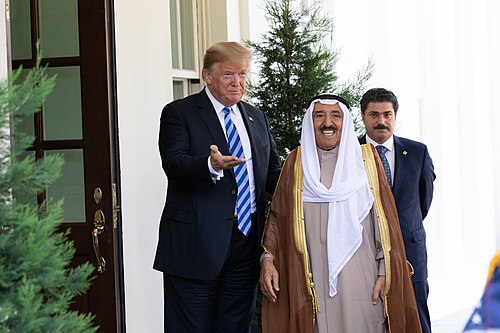 |
| لبنان | 1944 [ 194 ] | انظر العلاقات اللبنانية الأمريكية |
| سلطنة عمان | 1972 [ 195 ] | انظر العلاقات العمانية الأمريكية |
| قطر | 1972 [ 196 ] | انظر العلاقات القطرية الأمريكية |
| المملكة العربية السعودية | 1940 [ 197 ] | انظر العلاقات السعودية الأمريكية |
| سوريا | 1944 [ 198 ] | انظر العلاقات السورية الأمريكية |
| ديك رومى | 1831 [ 112 ] | انظر العلاقات التركية الأمريكية
|
| الإمارات العربية المتحدة | 1972 [ 199 ] | انظر العلاقات بين الإمارات العربية المتحدة والولايات المتحدة كانت الولايات المتحدة ثالث دولة تقيم علاقات دبلوماسية رسمية مع الإمارات العربية المتحدة، ولها سفير مقيم في الإمارات منذ عام 1974. وقد تمتعت الدولتان بعلاقات ودية ، وتطورت هذه العلاقات إلى علاقات حكومية ودية تشمل التعاون الأمني . كما ربطت الإمارات والولايات المتحدة علاقات تجارية خاصة، لا سيما في قطاع النفط . وشهدت العلاقات الإماراتية الأمريكية تحسناً ملحوظاً نتيجة لحملة التحالف الذي قادته الولايات المتحدة لإنهاء الاحتلال العراقي للكويت . وتستضيف موانئ الإمارات عدداً من سفن البحرية الأمريكية يفوق أي ميناء آخر خارج الولايات المتحدة. |
| اليمن | 1946 [ 200 ] | انظر العلاقات بين الولايات المتحدة واليمن لطالما اتسمت العلاقات الأمريكية اليمنية بالفتور، إذ أعاق غياب العلاقات العسكرية والتجارية القوية، فضلاً عن دعم الرئيس اليمني علي عبد الله صالح ، تطوير علاقات ثنائية متينة. وخلال السنوات الأولى من إدارة جورج دبليو بوش ، تحسنت العلاقات في ظل الحرب على الإرهاب ، إلا أن افتقار اليمن لسياسات واضحة تجاه الإرهابيين المطلوبين حال دون تقديم المزيد من الدعم الأمريكي. [ 201 ] |
آسيا الوسطى
| دولة | بدأت العلاقات الرسمية | ملحوظات |
|---|---|---|
| كازاخستان | 1991 [ 86 ] | انظر العلاقات الكازاخستانية الأمريكية |
| قيرغيزستان | 1993 [ 202 ] | انظر العلاقات بين قيرغيزستان والولايات المتحدة |
| طاجيكستان | 1991 [ 203 ] | انظر العلاقات بين طاجيكستان والولايات المتحدة |
| تركمانستان | 1991 [ 204 ] | انظر العلاقات بين تركمانستان والولايات المتحدة تقع السفارة الأمريكية، والوكالة الأمريكية للتنمية الدولية، وفيلق السلام في عشق آباد ، عاصمة تركمانستان. ولا تزال الولايات المتحدة وتركمانستان على خلاف حول مسار البلاد نحو الإصلاح الديمقراطي والاقتصادي. وقد دعت الولايات المتحدة علنًا إلى خصخصة الصناعة ، وتحرير الأسواق، والإصلاح المالي، فضلًا عن الإصلاحات القانونية والتنظيمية لفتح الاقتصاد أمام التجارة والاستثمار الأجنبيين، باعتبارها أفضل السبل لتحقيق الازدهار والاستقلال والسيادة الحقيقيين. |
| أوزبكستان | 1991 [ 205 ] | انظر العلاقات بين الولايات المتحدة وأوزبكستان شهدت العلاقات تحسناً طفيفاً في النصف الثاني من عام ٢٠٠٧، إلا أن الولايات المتحدة لا تزال تطالب أوزبكستان بالوفاء بجميع التزاماتها بموجب إعلان الشراكة الاستراتيجية الموقع بين البلدين في مارس ٢٠٠٢. ولا يقتصر الإعلان على العلاقات الأمنية والاقتصادية فحسب، بل يشمل أيضاً الإصلاح السياسي والاقتصادي وحقوق الإنسان. وتُعد أوزبكستان الدولة الأكبر من حيث عدد السكان في آسيا الوسطى ، ولها دور حيوي في الجهود الأمريكية والإقليمية والدولية الرامية إلى تعزيز الاستقرار والأمن. |
جنوب آسيا
| دولة | بدأت العلاقات الرسمية | ملحوظات |
|---|---|---|
 أفغانستان أفغانستان | 1935 [ 206 ] | انظر العلاقات الأفغانية الأمريكية في عام 2021، أطاحت حركة طالبان بالجمهورية الإسلامية الأفغانية المدعومة من الولايات المتحدة، بالتزامن مع انسحاب القوات الأمريكية ، مما أدى إلى نقل السفارة الأمريكية في كابول إلى الدوحة ، قطر . [ 207 ] وفي 12 نوفمبر/تشرين الثاني 2021، أعلنت الولايات المتحدة عن افتتاح قسم لرعاية المصالح في سفارة قطر بكابول في 31 ديسمبر/كانون الأول، ليكون بمثابة الجهة الراعية للولايات المتحدة في أفغانستان. [ 208 ] عملت البعثات الدبلوماسية للجمهورية الإسلامية في الولايات المتحدة بشكل مستقل لعدة أشهر قبل أن توقف عملياتها وتسلم ممتلكاتها إلى وزارة الخارجية الأمريكية في 16 مارس/آذار 2022. لم تعد أفغانستان تتمتع بأي سلطة راعية في الولايات المتحدة. [ 209 ] [ 210 ] [ 211 ] |
| بنغلاديش | 1972 [ 212 ] | انظر العلاقات بين بنغلاديش والولايات المتحدة اليوم، تقوم العلاقة بين البلدين على ما يُطلق عليه الدبلوماسيون الأمريكيون "الركائز الثلاث"، وهي الديمقراطية والتنمية ومنع الإرهاب. وتعمل الولايات المتحدة بشكل وثيق مع بنغلاديش في مكافحة التطرف الإسلامي والإرهاب، وتقدم لها مئات الملايين من الدولارات سنوياً كمساعدات اقتصادية. |
 بوتان بوتان | لا توجد علاقات رسمية، فقط علاقات غير رسمية [ 213 ] | انظر العلاقات بين بوتان والولايات المتحدة رغم عدم وجود علاقات دبلوماسية رسمية بين الولايات المتحدة وبوتان، إلا أنها تحافظ على تواصل غير رسمي عبر سفارتها في نيودلهي بالهند. وقد عرضت الولايات المتحدة إعادة توطين 60 ألف لاجئ من أصل نيبالي من أصل 107 آلاف لاجئ بوتاني يقيمون حالياً في سبعة مخيمات للاجئين تابعة للأمم المتحدة في جنوب شرق نيبال. |
| الهند | 1947 [ 214 ] | انظر العلاقات بين الهند والولايات المتحدة كانت العلاقات بين الهند والولايات المتحدة في عهد الحكم البريطاني ضعيفة. [ 215 ] روّج سوامي فيفيكاناندا لليوغا والفيدانتا في أمريكا خلال مؤتمر الأديان العالمي في شيكاغو، أثناء المعرض العالمي عام 1893. زار مارك توين الهند عام 1896 [ 216 ] ووصفها في كتابه " على خط الاستواء" بمزيج من النفور والانجذاب، قبل أن يخلص إلى أن الهند هي البلد الأجنبي الوحيد الذي حلم به أو اشتاق لرؤيته مجددًا. [ 217 ] فيما يتعلق بالهند، استقى الأمريكيون معلوماتهم من الكاتب الإنجليزي روديارد كيبلينج . [ 218 ] كان لغاندي تأثير كبير على فلسفة اللاعنف التي روّج لها مارتن لوثر كينغ جونيور في خمسينيات القرن العشرين. في الوقت الحاضر، تشترك الهند والولايات المتحدة في علاقة ثقافية واستراتيجية وعسكرية واقتصادية واسعة ومتنامية [ 219 ] [ 220 ] [ 221 ] [ 222 ] [ 223 ] وهي في مرحلة تنفيذ تدابير بناء الثقة للتغلب على إرث عجز الثقة - الناجم عن السياسات الخارجية الأمريكية العدائية [ 224 ] [ 225 ] [ 226 ] [ 227 ] وحالات متعددة من إنكار التكنولوجيا [ 228 ] [ 229 ] [ 230 ] [ 231 ] [ 232 ] - والتي ابتليت بها العلاقة على مدى عدة عقود. [ 233 ] [ 234 ] لقد أفسحت التوقعات غير الواقعية التي أعقبت إبرام اتفاقية الهند والولايات المتحدة النووية المدنية لعام 2008 (والتي قللت من شأن الرأي العام السلبي بشأن الجدوى طويلة الأجل لتوليد الطاقة النووية وتأييد المجتمع المدني للضمانات التعاقدية بشأن الضمانات والمسؤولية) المجال للواقعية العملية وإعادة التركيز على مجالات التعاون التي تحظى بتوافق سياسي وانتخابي إيجابي. |
| جزر المالديف | 1965 [ 235 ] | انظر العلاقات بين جزر المالديف والولايات المتحدة |
| نيبال | 1947 [ 236 ] | انظر العلاقات بين نيبال والولايات المتحدة |
| باكستان | 1947 [ 237 ] | See Pakistan–United States relations |
| Sri Lanka | 1947[240] | See Sri Lanka–United States relations |
East Asia
| Country | Formal relations began | Notes |
|---|---|---|
| People's Republic of China | 1844 (Qing)[241]1979 (PRC) | See China–United States relations and East Asia island arcs The United States and the People's Republic of China have extensive yet complex economic relationships and partnerships. A great amount of trade between the two countries necessitates positive economic relations, although occasional disagreements over tariffs, currency exchange rates, intellectual property theft, and the political status of Taiwan occurs. The United States has criticized China on such human rights issues as the 1989 Tiananmen Square protests, the persecution of Falun Gong, and more recently the mass detaining of Uyghurs, Kazakhs, and other ethnic and religious minorities in Xinjiang, as well the forced sinicization of Mongols and Tibetans. China has criticized the United States on human rights issues in response and accused the latter of "interfering in China's internal affairs". The United States acknowledges the PRC's One-China policy. The relations deteriorated sharply under Chinese Communist Party general secretary Xi Jinping, with issues such as China's militarization of the South China Sea and Chinese espionage in the United States arising. U.S. president Donald Trump launched a trade war against China, banned U.S. companies from selling equipment to Huawei, increased visa restrictions on Chinese students and scholars, and designated China as a "currency manipulator".[242][243][244][245][246] The more confrontational policy has endured during the Biden administration, which focuses on China's treatment of Hong Kong, the threats against Taiwan, the persecution of Uyghurs in China, and Chinese cyberwarfare. In response, China has adopted "wolf warrior diplomacy" to counter allegations they see as incorrect and damaging to the American-Chinese dialogue. |
 Republic of China (Taiwan) Republic of China (Taiwan) | 1844 (Qing)[241]1911 (ended in 1979)1979 (Taiwan Relations Act - unofficial) 2018 (Taiwan Travel Act) - high-level working partnership | See Taiwan–United States relations The United States recognized the Nationalist Government as the legitimate government of all of China throughout the Chinese Civil War. The U.S. continued to recognize the Republic of China until 1979, when it shifted its recognition to the People's Republic of China in accordance with the One China policy, where the U.S. 'acknowledge', or take note of, the Chinese position on Taiwan but not 'recognizing' or accepting it, which allows the U.S. flexibility to pursue unofficial but robust relations with Taipei. The U.S. continued to provide Taiwan with military aid after 1979, and continued informal relations through the American Institute in Taiwan, and Taiwan is considered to be a strong Asian ally and supporter of the United States.[247] The U.S. Congress passed the Taiwan Travel Act on February 28, 2018, and the bill was subsequently signed into federal law by President Donald Trump, formalizing high-level communications between Washington and Taipei as well as permitting intergovernmental contact at the highest level.[248] |
 Hong Kong Hong Kong | 1992[249] | See Hong Kong–United States relations U.S. foreign policy toward Hong Kong, grounded in a determination to promote Hong Kong's prosperity, autonomy, and way of life, is stated in the U.S.–Hong Kong Policy Act of 1992. It rules that the U.S. would continue to treat Hong Kong apart from the People's Republic of China even after the 1997 transfer of sovereignty marking the end of British rule. The United States maintains substantial economic and political interests in Hong Kong. The United States supports Hong Kong's autonomy by concluding and implementing bilateral agreements; promoting trade and investment; arranging high-level visits; broadening law enforcement cooperation; bolstering educational, academic, and cultural links; and supporting the large community of U.S. citizens and visitors. |
 Macau Macau | 1999[250] | See Macau–United States relations In recognition of Macau's high degree of autonomy, the United States continues to treat Macau as a "special area" distinct from the People's Republic of China. Macau's clothes and textiles continued to enter the United States under quotas separated from those of China. Under the terms of a September 2000 bilateral memorandum of understanding, Macau and the U.S. government cooperate in enforcing textile quotas and preventing illegal trans-shipment. The United States continued periodic visits by U.S. Customs Textile Production Verification Teams to ensure compliance with Macau bilateral textile commitments. |
| Japan | 1854, 1952[251] | See Japan–United States relations The relationship began in the 1850s, as the United States was a major factor in forcing Japan to resume contacts with the outer world beyond a very restricted role. In the late 19th century, the Japanese sent many delegations to Europe, and some to the U.S., to discover and copy the latest technology and thereby modernize Japan very rapidly and allow it to build its own empire. There was some friction over control of Hawaii and the Philippines, but Japan stood aside as the U.S. annexed those lands in 1898. Likewise, the U.S. did not object when Japan took control of Korea. The two nations cooperated with the European powers in suppressing the Boxer Rebellion in China in 1900, but the U.S. was increasingly troubled about Japan's denial of the Open Door Policy that would ensure that all nations could do business with China on an equal basis.[252] President Theodore Roosevelt admired Japan's strength as it defeated a major European power, Russia. He brokered an end to the war between Russia and Japan in 1905–6. Anti-Japanese sentiment (especially on the West Coast) soured relations in the 1907–24 era. In the 1930s, the U.S. protested vehemently against Japan's seizure of Manchuria (1931), its war against China (1937–45), and its seizure of Indochina (Vietnam) 1940–41. American sympathies were with China and Japan rejected increasingly angry American demands that Japan pull out of China. The two nations fought an all-out war 1941–45; the U.S. won a total victory, with heavy bombing (including two atomic bombs on Hiroshima and Nagasaki) that devastated Japan's 50 largest industrial cities. The U.S. Army under Douglas MacArthur occupied and ruled Japan, 1945–51, with the successful goal of sponsoring a peaceful, prosperous and democratic nation.[253] In 1951, the United States and Japan signed Treaty of San Francisco and Security Treaty Between the United States and Japan, subsequently revised as Treaty of Mutual Cooperation and Security between the United States and Japan in 1960, relations since then have been excellent. The United States considers Japan to be one of its closest allies, and it is both a major non-NATO ally and NATO contact country. The United States has several military bases in Japan including Yokosuka, which harbors the US 7th Fleet. The JSDF, or Japanese Self Defense Force, cross-train with the U.S. military, often providing auxiliary security and conducting war games. |
| Mongolia | 1987[254] | See Mongolia–United States relations |
 North Korea North Korea | 1882 (Joseon);[255] Only Informal Relations with the DPRK[256] | See North Korea–United States relationsDiplomatic relations severed in 2018[257] |
| South Korea | 1882 (Joseon);[255] 1949 (Republic)[258] | See South Korea–United States relations South Korea–United States relations have been most extensive since 1945, when the United States helped establish capitalism in South Korea and led the UN-sponsored Korean War against North Korea and China (1950–53).[259] South Korea's rapid economic growth, democratization and modernization greatly reduced its U.S. dependency. Large numbers of U.S. forces remain in South Korea. On September 24, 2018, U.S. president Donald Trump signed a renegotiated trade agreement with South Korean President Moon Jae-in.[260] |
Southeast Asia
Many countries in the Association of Southeast Asian Nations (ASEAN) are important partners for United States in both economic and geostrategic aspects. ASEAN's geostrategic importance stems from many factors, including: the strategic location of member countries, the large shares of global trade that pass through regional waters, and the alliances and partnerships which the United States shares with ASEAN member states. In July 2009, the United States signed ASEAN's Treaty of Amity and Cooperation, which establishes guiding principles intended to build confidence among its signatories with the aim of maintaining regional peace and stability.[261] Trade flows are robust and increasing between America and the ASEAN region.
| Country | Formal relations began | Notes |
|---|---|---|
| Brunei | 1984[262] | See Brunei–United States relations The United States welcomed Brunei Darussalam's full independence from the United Kingdom on January 1, 1984, and opened an embassy in Bandar Seri Begawan on that date. Brunei opened its embassy in Washington, D.C. in March 1984. Brunei's armed forces engage in joint exercises, training programs, and other military cooperation with the US. A memorandum of understanding on defense cooperation was signed on November 29, 1994. The Sultan of Brunei visited Washington in December 2002. |
| Cambodia | 1950[263] | See Cambodia–United States relations |
| Indonesia | 1949[264] | See Indonesia–United States relations As the largest ASEAN member, Indonesia has played an active and prominent role in developing the organization.[265] For United States, Indonesia is important for dealing with certain issues; such as terrorism,[266] democracy, and how United States project its relations with Islamic world, since Indonesia has the world's largest Islamic population, and one that honors and respects religious diversity.[267] The United States views Indonesia as a potential strategic ally in Southeast Asia.[268] During his stately visit to Indonesia, US president Barack Obama has held up Indonesia as an example of how a developing nation can embrace democracy and diversity.[269][270] |
| Laos | 1950[271] | See Laos–United States relations |
| Malaysia | 1957[271] | See Malaysia–United States relations Despite increasingly strained relations under the Mahathir Mohamad government, ties have been thawed under Najib Razak's administration. Economic ties are particularly robust, with the United States being Malaysia's largest trading partner and Malaysia is the tenth-largest trading partner of the US. Annual bilateral trade amounts to $50 billion. The United States and Malaysia launched negotiations for a bilateral free trade agreement (FTA) in June 2006. The United States and Malaysia enjoy strong security cooperation. Malaysia hosts the Southeast Asia Regional Center for Counterterrorism (SEARCCT), where over 2000 officials from various countries have received training. The United States is among the foreign countries that has collaborated with the center in conducting capacity building programmes. The United States and Malaysia share a strong military-to-military relationship with numerous exchanges, training, joint exercises, and visits. |
| Myanmar | 1948[272] | See Myanmar–United States relationsBilateral ties have generally been strained but are slowly improving. The United States has placed broad sanctions on Burma because of the military crackdown in 1988 and the military regime's refusal to honour the election results of the 1990 People's Assembly election. Similarly, the European Union has placed embargoes on Burma, including an arms embargo, cessation of trade preferences, and suspension of all aid with the exception of humanitarian aid.[273] US and European government sanctions against the military government, alongside boycotts and other types direct pressure on corporations by western supporters of the Burmese democracy movement, have resulted in the withdrawal from Burma of most United States and many European companies. However, several Western companies remain due to loopholes in the sanctions.[274] Asian corporations have generally remained willing to continue investing in Myanmar and to initiate new investments, particularly in natural resource extraction. Ongoing reforms have improved relations between Burma and the United States. However the Rohingya Crisis has been deteriorating ties.[275] |
| Philippines | 1946[276] | See Philippines–United States relations The Philippines and the United States have an extremely strong relationship with each other due to their long-standing alliance. The Philippine-USA links stretch back in time. The first Asians in the Americas were the Filipinos.[277] The first recorded advent of Filipinos in what is now the United States date to October 1587 around Morro Bay, California,[278] with the first permanent settlement in Louisiana in 1763,[279] they were named "Manilamen" and they served in the Battle of New Orleans during the closing stages of the War of 1812, when the British Empire and American Republic once again went to war against each other as Filipinos in Saint Malo supported the American side against the British Empire. One American state, due to it being a former Spanish territory, Texas, was even once called "The New Philippines", so named since the Spanish wanted to replicate the prosperity they achieved in the Philippines, in that territory in the Americas.[280] The Spanish government ceded the Philippines to the United States in the 1898 Treaty of Paris that ended the Spanish–American War and led to the Philippine–American War. The Philippines was a United States colony from 1898 to 1946. The United States finally recognized Philippine independence on July 4, 1946, in the Treaty of Manila.[281] July 4 was observed in the Philippines as Independence Day until August 4, 1964, when, upon the advice of historians and the urging of nationalists, President Diosdado Macapagal signed into law Republic Act No. 4166 designating June 12 as the country's Independence Day.[282] The United States and the Philippines have fought together in many conflicts such as World War I, World War II, the Korean War, Vietnam War, Islamic insurgency in the Philippines, Gulf War and the war on terror. The Philippines and the United States still maintain close, friendly, diplomatic, political and military relations with more than 100,000 US citizens and nationals living in the Philippines and more than 4 million Filipinos living in the United States. Both countries actively cooperate in the trade, investment and financial sectors. The US is also the largest investor in the Philippine economy with an estimated total worth of $63 billion. The United States and the Philippines conduct joint military exercises called the Balikatan that take place once a year to boost relations between the two countries. The US military also conducts humanitarian and aid missions in the Philippines. The Philippines is one out of two major US allies in South East Asia. Since 2003 the US has designated the Philippines as a major non-NATO ally. However, relations between the United States and the Philippines began to deteriorate in 2016 with Philippines president Rodrigo Duterte wanting to form an alliance with China and Russia and separating the country from all connections and ties with the United States, both economically and socially. |
| Singapore | 1965[283] | See Singapore–United States relations |
| Thailand | 1833[284] | See Thailand–United States relations |
| Timor-Leste | 2002[285] | See Timor-Leste–United States relations |
| Vietnam | 1950[286] | See United States–Vietnam relations After a 20-year hiatus of severed ties, PresidentBill Clinton announced the formal normalization of diplomatic relations with Vietnam on July 11, 1995. Subsequent to President Clinton's normalization announcement, in August 1995, both nations upgraded their Liaison Offices opened during January 1995 to embassy status. As diplomatic ties between the nations grew, the United States opened a consulate general in Ho Chi Minh City, and Vietnam opened a consulate in San Francisco. Today, the United States views Vietnam as a potential strategic ally in Southeast Asia.[268] |
Oceania
| Country | Formal relations began | Notes |
|---|---|---|
| Australia | 1940[287] | See Australia–United States relations Australia and the United States have long been close and strategic allies and have traditionally been aligned with the Commonwealth of Nations. The two countries have a shared history, both have previously been British Colonies and many Americans flocked to the Australian goldfields in the 19th century. At the strategic level, the relationship really came to prominence in the Second World War, when the two nations worked extremely closely in the Pacific War against Japan, with General Douglas MacArthur undertaking his role as Supreme Allied Commander based in Australia, effectively having Australian troops and resources under his command. During this period, the cultural interaction between Australia and the United States were elevated to a higher level as over 1 million US military personnel moved through Australia during the course of the war. The relationship continued to evolve throughout the second half of the 20th century, and today now involves strong relationships at the executive and mid levels of government and the military, leading Assistant Secretary of State for East Asian and Pacific Affairs, Kurt M. Campbell to declare that "in the last ten years, [Australia] has ascended to one of the closest one or two allies [of the US] on the planet".[288] It was also strengthened its relationship with the United States as Britain's influence in Asia declined. At the governmental level, United States-Australia relations are formalized by the ANZUS treaty and the Australia–United States Free Trade Agreement. |
| Cook Islands | 1995 | See Cook Islands–United States relations The Cook Islands are an Associated State of New Zealand and has consular relations with the United States, in addition as early as 1980, the two sides signed the Cook Islands-United States Maritime Boundary Treaty. On September 25, 2023, the two sides established diplomatic relations.[289] |
| Fiji | 1971[290] | See Fiji–United States relations Relations are currently steady since Fiji's elections in September 2014. The United States had opposed Fiji's unelected government, which came to power through a military coup in December 2006. The United States suspended $2.5 million in aid money pending a review of the situation, following the 2006 coup.[291] |
| Kiribati | 1980[292] | See Kiribati–United States relations Relations between Kiribati and the United States are excellent. Kiribati signed a treaty of friendship with the United States after independence in 1979. The United States has no consular or diplomatic facilities in the country. Officers of the American Embassy in Suva, Fiji, are concurrently accredited to Kiribati and make periodic visits. The US Peace Corps maintained a program in Kiribati from 1974 to 2008. |
| Marshall Islands | 1986 | See Marshall Islands–United States relations The Marshall Islands is a sovereign nation in "free association" with the United States. The Marshall Islands and the United States maintain excellent relations. After more than a decade of negotiation, the Marshall Islands and the United States signed the Compact of Free Association on June 25, 1983. The Compact gives the US full authority and responsibility over defense of the Marshall Islands. The Marshall Islands and the United States both lay claim to Wake Island. The Compact that binds the Marshall Islands and the United States is the same one that binds the United States and the Federated States of Micronesia and Palau. |
| Federated States of Micronesia | 1986[293] | See Federated States of Micronesia–United States relations Reflecting a strong legacy of Trusteeship cooperation, over 25 US federal agencies continue to maintain programs in the FSM. The United States and the FSM share very strong relations. Under the Amended Compact, the US has full authority and responsibility for the defense of the FSM. This security relationship can be changed or terminated by mutual agreement. The Compact that binds the US and the FSM is the same one that binds the United States to the Marshall Islands and to Palau. |
| Nauru | 1976[294] | See Nauru–United States relations Relations between Nauru and the United States are complicated. While the new US ambassador to Fiji has promised Nauru assistance in economic development, there have been disagreements about Cuba and Foreign policy of the United States, and the United States does not have an embassy in Nauru; instead, the US embassy staff in Suva, Fiji make periodical visits. |
| New Zealand | 1942[295] | See New Zealand–United States relations United States-New Zealand relations are strong, but complex. The United States has historically assisted New Zealand in times of turmoil; for instance, during World War II, US bombingHiroshima and Nagasaki, and with the September 2010 Canterbury earthquake and the February 2011 Christchurch earthquake. New Zealand has reciprocated; for example, by participating in the Korean War and the Vietnam War. However, the United States suspended its mutual defense obligations to New Zealand because of the state's non-nuclear policies. In 1996, the United States under President Bill Clinton reinstated New Zealand's status from a 'friend' to an 'ally' by designating New Zealand as a major non-NATO ally. Despite disagreements between the two countries, the bilateral trade, security, and cultural relationship continued to flourish. New Zealand continued to play a supportive role in international conflicts in Somalia, Bosnia, and the Persian Gulf. New Zealand and the United States are close collaborators in the international intelligence alliance, Five Eyes, which is one of the most comprehensive known espionage alliances in history. Following the 9/11 attacks on the United States in 2001, New Zealand supported international counter-terrorism efforts and assisted the United States throughout the war in Afghanistan. Throughout the 2000s, the United States has remained New Zealand's fourth-largest trading partner and third-largest source of visitors. |
| Niue | 25 September 2023[296] | Niue is an Associated State of New Zealand. In 1997, the United States and Niue signed a maritime boundary treaty that included the following statement: "Prior to signing the treaty, the political status of Niue was addressed. Niue is in free association with New Zealand. On internal matters it is self-governing. Niue conducts its foreign affairs in conjunction with New Zealand. Niue has declared and does manage its exclusive economic zone. The United States requested, and received, confirmation from New Zealand that the Government of Niue had the competence to enter into this agreement with the United States." On September 25, 2023, the two sides established diplomatic relations.[289][296] |
| Palau | 1996[297] | See Palau–United States relations On October 1, 1994, after five decades of US administration, the country of Palau became the last component of the Trust Territory of the Pacific Islands to gain its independence. In 1978, Palau decided not to join the Federated States of Micronesia, due to culture and language differences, and instead sought independence. In 1986, the Compact of Free Association agreement between Palau and the United States was approved, paving the way for Palau's independence. |
| Papua New Guinea | 1975[298] | See Papua New Guinea–United States relations |
| Samoa | 1962[299] | |
| Solomon Islands | 1978[300] | |
| Tonga | 1886; 1972[301] | See Tonga–United States relations |
| Tuvalu | 1978[301] | See Tuvalu–United States relations Relations between the two countries are generally amicable, or neutral, but there have been notable disagreements regarding the issues of climate change and the Kyoto Protocol. |
| Vanuatu | 1986[302] | See United States–Vanuatu relations The United States and Vanuatu established diplomatic relations on September 30, 1986 - three months to the day after Vanuatu had established diplomatic relations with the Soviet Union.[303] Relations were often tense in the 1980s, under the prime ministership of Father Walter Lini in Vanuatu, but eased after that. At present, bilateral relations consist primarily in United States aid to Vanuatu. |
Countries with strained relations with the United States
Current
Formerly
- Afghanistan (1978–1992, 1996–2001) (Again currently)
 Albania (1946–1976)
- Algeria (1967–1974)
- Angola (1976–1993)
 Benin (1975–1990)
- Bolivia (2006–2019)
 Bulgaria (1946–1990)
- Burundi (2015–2021) (Again currently)[307]
- Cambodia (1965–1969, 1975–1994)
- Chile (1970–1973)
- China (1949–1972, 1989–2001) (Again currently)
 Republic of the Congo (1965–1977)
- Czechoslovakia (1948–1990)
 East Germany (1949–1990)
- Ecuador (2012–2017)
- Equatorial Guinea (1976–1979)
 Egypt (1965–1974)
 Ethiopia (1980–1992)
 Germany (1941–1945)
- Grenada (1979–1983)
- Haiti (1986, 1993–1994)
- Hungary (1949–1989)
 Iraq (1990–2003)
 Italy (1941–1943)
 Japan (1931–1945)
- Kyrgyzstan (2006)
- Laos (1975–1993)
- Liberia (1971–1980)
 Libya (1969–2011) (Again currently)
 Mongolia (1940s-1987)
- Mozambique (1977–1983)
 Myanmar (1988–2011) (Again currently)
- Nicaragua (1978, 1981–1990, 2016–2018) (Again currently)
- Nigeria (1969–1977, 1993–1998)
- Pakistan (1990–1998)
- Panama (1988–1989)
 Poland (1947–1989)
- Philippines (2016-2022)
 Rhodesia (1965–1979)
- Saudi Arabia (1973-1974, 2001-2003, 2021-2022)
 Serbia and Montenegro (1990–2003)
 South Yemen (1970–1990)
 Soviet Union (1950–1991)
- Sudan (1974–1976, 1989–2019) (Again Currently)
 Syria[d] (1979–2024)
- Uganda (1972–1979)
- Venezuela (1999–2026)
- Vietnam (1975–1994)
Countries with visa services suspended
Former countries
- Grand Duchy of Baden
- Kingdom of Bavaria
- Duchy of Brunswick-Lüneburg
- Federal Republic of Central America
- Greater Republic of Central America
- Congo Free State
- Czechoslovakia
- East Germany
- West Germany
- Republic of Genoa
- German Empire
- Kingdom of Hanover
- Hanseatic Republics
- Hawaiian Kingdom
- Grand Duchy of Hesse
- Mecklenburg-Schwerin
- Mecklenburg-Strelitz
- Duchy of Nassau
- North German Confederation
- Grand Duchy of Oldenburg
- Orange Free State
- Ottoman Empire
- Papal States
- Duchy of Parma
- Prussia
- Russian Empire
- Ryukyu Kingdom
- Kingdom of Sardinia
- Principality of Schaumburg-Lippe
- Soviet Union
- Republic of Texas
- Grand Duchy of Tuscany
- Kingdom of the Two Sicilies
- Kingdom of Württemberg
- Yugoslavia
- Republic of Artsakh
See also
- Criticism of United States foreign policy
- East Asia–United States relations
- Emigration from the United States
- Foreign policy of the United States
- History of United States foreign policy
- Immigration to the United States
- List of diplomatic missions in the United States
- List of diplomatic missions of the United States
- Major non-NATO ally
- United States foreign aid
- Visa policy of the United States
- State Sponsors of Terrorism (U.S. list)
- United States foreign adversaries
Notes
References
 This article incorporates public domain material from U.S. Bilateral Relations Fact Sheets. United States Department of State.
- ↑"China beats United States to top 2024 Global Diplomacy Index | Lowy Institute". www.lowyinstitute.org. Retrieved February 25, 2024.
- ↑"All Countries". Office of the Historian. Retrieved November 12, 2021.
- ↑"Prime Minister Ludovic Orban's message on the occasion of the 140th anniversary of diplomatic relations between Romania and the United States of America". Government of Romania. June 14, 2020. Retrieved March 27, 2026.
- ↑"USA: Steckbrief". Auswärtiges Amt (in German). Retrieved January 22, 2025.
- ↑"United States of America". Ministry of Foreign Affairs Brunei Darussalam. Retrieved April 24, 2023.
- ↑"Chronology of Vietnam-US relations". Embassy of Vietnam in the United States. Retrieved February 5, 2025.
- ↑Government of Kazakhstan (December 10, 2013). "Страны, установившие дипломатические отношения с Республикой Казахстан". Ministry of Foreign Affairs of Kazakhstan (in Russian). Archived from the original on February 20, 2020. Retrieved April 30, 2022.
- ↑"Erlan Abdyldaev: It is time to work out optimal model of relations between Kyrgyzstan and the United States". 24.KG. October 31, 2015. Retrieved April 23, 2026.
- ↑"Belarus and United States". Ministry of Foreign Affairs of the Republic of Belarus. Retrieved April 23, 2026.
- ↑"Political Issues". Embassy of Ukraine in the United States of America. Retrieved April 23, 2026.
- ↑"USA - Bilateral Relations". Ministry of Foreign Affairs of the Republic of Armenia. Retrieved April 23, 2026.
- ↑"The United States of America". Republic of Azerbaijan Ministry of Foreign Affairs. Retrieved April 23, 2026.
- ↑"Turkmenistan and the USA: 32 years of dynamic cooperation". Turkmenportal. July 4, 2024. Retrieved April 23, 2026.
- ↑"Argentina - Countries - Office of the Historian". Retrieved February 19, 2015.
- ↑"Belize - Countries - Office of the Historian". Retrieved February 19, 2015.
- ↑"Bolivia - Countries - Office of the Historian". Retrieved February 19, 2015.
- ↑"Brazil - Countries - Office of the Historian". Retrieved February 19, 2015.
- ↑Developing a partnership with Brazil - An emerging power Bassoli, Douglas. US Army War College. April 3, 2004.
- 12"US Congress Report on Brazil-US Relations"(PDF). www.wilsoncenter.org. Archived from the original(PDF) on July 10, 2009.
- ↑"Canada - Countries - Office of the Historian". Retrieved February 19, 2015.
- ↑John Herd Thompson, and Stephen J. Randall, Canada and the United States: Ambivalent Allies (4th ed. McGill-Queen's University Press, 2008) is the standard scholarly survey
- ↑"5. Report for Selected Countries and Subjects". International Monetary Fund. November 9, 2011. Retrieved November 9, 2011.
15,064 billions (figure for 2011) 313 million persons
- ↑"Canada". International Monetary Fund. Retrieved November 5, 2011.
- ↑"Chile - Countries - Office of the Historian". Retrieved February 19, 2015.
- ↑"Colombia - Countries - Office of the Historian". Retrieved February 19, 2015.
- ↑"Colombia - Relations with the United States". countrystudies.us. Retrieved November 9, 2022.
- ↑John Barry, From Drug War to Dirty War: Plan Colombia and the U.S. Role in Human Rights Violations in Colombia, 12 Transnat'l L. & Contemp. Probs. 161, 164 (Spring, 2002).
- ↑Marc Grossman. Subsecretario de Estado para Asuntos Políticos. Universidad de Georgetown. Conferencia Uniendo esfuerzos por Colombia. US Embassy of Colombia (September 2, 2002). Available at "Uniendo esfuerzos por Colombia / Joining Efforts for Colombia". Archived from the original on April 11, 2005. Retrieved March 27, 2006.. Retrieved on March 27, 2006. (Spanish) (English version available)
- ↑"Costa Rica - Countries - Office of the Historian". Retrieved February 19, 2015.
- ↑"Ecuador - Countries - Office of the Historian". Retrieved February 19, 2015.
- ↑"El Salvador - Countries - Office of the Historian". Retrieved February 19, 2015.
- ↑"Guatemala - Countries - Office of the Historian". Retrieved February 19, 2015.
- ↑"Guyana - Countries - Office of the Historian". Retrieved February 19, 2015.
- ↑"Honduras - Countries - Office of the Historian". Retrieved February 19, 2015.
- ↑"Mexico - Countries - Office of the Historian". Retrieved February 19, 2015.
- ↑Padgett, Tim (May 19, 2010). "Mexico's Calderón Needs to Listen, Not Just Lecture U.S."Time. Archived from the original on May 20, 2010.
- ↑Burton Kirkwood, The History of Mexico (2010) pp 97–99, 138–52, 216
- ↑"Nicaragua - Countries - Office of the Historian". Retrieved February 19, 2015.
- ↑"Panama - Countries - Office of the Historian". Retrieved February 19, 2015.
- ↑"Paraguay - Countries - Office of the Historian". Retrieved February 19, 2015.
- ↑"Peru - Countries - Office of the Historian". Retrieved February 19, 2015.
- ↑"Suriname - Countries - Office of the Historian". Retrieved February 19, 2015.
- ↑"Uruguay - Countries - Office of the Historian". Retrieved February 19, 2015.
- ↑"Venezuela - Countries - Office of the Historian". Retrieved February 19, 2015.
- ↑"US and Venezuela agree to resume diplomatic ties after Maduro capture". www.bbc.com. March 6, 2026. Retrieved March 15, 2026.
- ↑Pager, Tyler; Kurmanaev, Anatoly (July 11, 2026). "How Marco Rubio Is Running Venezuela From Afar". The New York Times. ISSN 0362-4331. Retrieved July 12, 2026.
The secretary of state effectively controls Venezuela's finances, the distribution of its natural resources and its government. His grip on the country is a vivid manifestation of American power in the Trump era.
- ↑Callaghan, Louise (January 4, 2026). "Who leads Venezuela now? Trump has picked his grudging puppet". The Times. Retrieved July 12, 2026.
After a life spent working to advance socialism and fighting US imperialism, Rodríguez, a former lawyer and diplomat, now appears to be being strong-armed by Trump into leading her country as an American puppet state, with the threat of full-scale military invasion if she does not co-operate.
- ↑"Antigua and Barbuda - Countries - Office of the Historian". Retrieved February 19, 2015.
- ↑"The Bahamas - Countries - Office of the Historian". Retrieved February 19, 2015.
- ↑"Barbados - Countries - Office of the Historian". Retrieved February 19, 2015.
- ↑"Cuba - Countries - Office of the Historian". Retrieved February 19, 2015.
- ↑"Cuban Democracy Act of 1992". State Department.
- ↑Scott, Eugene (July 2015). "Obama announces re-establishment of U.S.-Cuba diplomatic ties". CNN. Retrieved July 7, 2015.
- ↑"Dominican Republic - Countries - Office of the Historian". Retrieved February 19, 2015.
- ↑"Dominica - Countries - Office of the Historian". Retrieved February 19, 2015.
- ↑"Grenada - Countries - Office of the Historian". Retrieved February 19, 2015.
- ↑"Haiti - Countries - Office of the Historian". Retrieved February 19, 2015.
- ↑"Jamaica - Countries - Office of the Historian". Retrieved February 19, 2015.
- ↑"Saint Kitts and Nevis - Countries - Office of the Historian". Retrieved February 19, 2015.
- ↑"Saint Lucia - Countries - Office of the Historian". Retrieved February 19, 2015.
- ↑"Saint Vincent and the Grenadines - Countries - Office of the Historian". Retrieved February 19, 2015.
- ↑"Trinidad and Tobago - Countries - Office of the Historian". Retrieved February 19, 2015.
- ↑"Albania - Countries - Office of the Historian". Retrieved February 19, 2015.
- ↑"Andorra - Countries - Office of the Historian". Retrieved February 19, 2015.
- ↑"Austria - Countries - Office of the Historian". Retrieved February 19, 2015.
- ↑"Belarus - Countries - Office of the Historian". Retrieved February 19, 2015.
- ↑"Belgium - Countries - Office of the Historian". Retrieved February 19, 2015.
- ↑"Bosnia-Herzegovina - Countries - Office of the Historian". Retrieved February 19, 2015.
- ↑"Bulgaria - Countries - Office of the Historian". Retrieved February 19, 2015.
- ↑"Croatia - Countries - Office of the Historian". Retrieved February 19, 2015.
- 12"Cyprus - Countries - Office of the Historian". Retrieved February 19, 2015.
- ↑"Czechia - Countries - Office of the Historian". Retrieved August 16, 2021.
- ↑"Denmark - Countries - Office of the Historian". Retrieved February 19, 2015.
- ↑"Estonia - Countries - Office of the Historian". Retrieved February 19, 2015.
- ↑"Finland - Countries - Office of the Historian". Retrieved February 19, 2015.
- ↑"France - Countries - Office of the Historian". Retrieved February 19, 2015.
- 12"Georgia - Countries - Office of the Historian". Retrieved February 19, 2015.
- ↑"Germany - Countries - Office of the Historian". Retrieved February 19, 2015.
- ↑"U.S. Relations With Germany". United States Department of State. Retrieved October 2, 2021. This article incorporates text from this source, which is in the public domain.
- ↑"Greece - Countries - Office of the Historian". Retrieved February 19, 2015.
- ↑"Holy See - Countries - Office of the Historian". Retrieved February 19, 2015.
- ↑"Hungary - Countries - Office of the Historian". Retrieved February 19, 2015.
- ↑"Iceland - Countries - Office of the Historian". Retrieved February 19, 2015.
- ↑"Ireland - Countries - Office of the Historian". Retrieved February 19, 2015.
- ↑"Italy - Countries - Office of the Historian". Retrieved February 19, 2015.
- 12"Kazakhstan - Countries - Office of the Historian". Retrieved February 19, 2015.
- ↑"Kosovo - Countries - Office of the Historian". Retrieved February 19, 2015.
- ↑Bush Hails Kosovo IndependenceArchived August 21, 2008, at the Wayback Machine, US Department of State's Bureau of International Information Programs
- ↑Bush insists Kosovo must be independent and receives hero's welcome in Albania, The Guardian
- ↑"Latvia - Countries - Office of the Historian". Retrieved February 19, 2015.
- ↑"Liechtenstein - Countries - Office of the Historian". Retrieved February 19, 2015.
- ↑"Lithuania - Countries - Office of the Historian". Retrieved February 19, 2015.
- ↑"Luxembourg - Countries - Office of the Historian". Retrieved February 19, 2015.
- ↑"Malta - Countries - Office of the Historian". Retrieved February 19, 2015.
- ↑"Moldova - Countries - Office of the Historian". Retrieved February 19, 2015.
- ↑"Monaco - Countries - Office of the Historian". Retrieved February 19, 2015.
- ↑"Montenegro - Countries - Office of the Historian". Retrieved February 19, 2015.
- ↑"The Netherlands - Countries - Office of the Historian". Retrieved February 19, 2015.
- ↑"North Macedonia - Countries - Office of the Historian". Retrieved August 16, 2021.
- ↑"Norway - Countries - Office of the Historian". Retrieved February 19, 2015.
- ↑"Poland - Countries - Office of the Historian". Retrieved February 19, 2015.
- ↑"Portugal - Countries - Office of the Historian". Retrieved February 19, 2015.
- ↑"Romania - Countries - Office of the Historian". Retrieved February 19, 2015.
- ↑"Russia - Countries - Office of the Historian". Retrieved February 19, 2015.
- ↑"San Marino - Countries - Office of the Historian". Retrieved February 19, 2015.
- ↑"Serbia - Countries - Office of the Historian". Retrieved February 19, 2015.
- ↑"Slovakia - Countries - Office of the Historian". Retrieved February 19, 2015.
- ↑"Slovenia - Countries - Office of the Historian". Retrieved February 19, 2015.
- ↑"Spain - Countries - Office of the Historian". Retrieved February 19, 2015.
- ↑"Sweden - Countries - Office of the Historian". Retrieved February 19, 2015.
- ↑"Switzerland - Countries - Office of the Historian". Retrieved February 19, 2015.
- 12"Turkey - Countries - Office of the Historian". history.state.gov. Retrieved March 12, 2023.
- ↑"Ukraine - Countries - Office of the Historian". Retrieved February 19, 2015.
- ↑"The United Kingdom - Countries - Office of the Historian". Retrieved February 19, 2015.
- ↑"A Guide to the United States' History of Recognition, Diplomatic, and Consular Relations, by Country, since 1776: The United Kingdom". Office of the Historian. Archived from the original on March 21, 2024. Retrieved April 4, 2024.
- ↑"British High Embassy Washington". GOV.UK. Retrieved January 19, 2024.
- ↑Politi, James (September 19, 2023). "US unveils Atlantic co-operation pact". Financial Times. Washington, D.C.Archived from the original on January 19, 2024. Retrieved January 19, 2024.
- ↑HM Revenue and Customs (July 1, 2005). "USA: tax treaties". GOV.UK. Archived from the original on June 23, 2025. Retrieved July 10, 2025.
- ↑HM Revenue and Customs (May 8, 2025). "UK-US Economic Prosperity Deal (EPD)". GOV.UK. Archived from the original on June 28, 2025. Retrieved July 10, 2025.
- ↑James, Wither (March 2006). "An Endangered Partnership: The Anglo-American Defence Relationship in the Early Twenty-first Century". European Security. 15 (1): 47–65. doi:10.1080/09662830600776694. ISSN 0966-2839. S2CID 154879821.
- ↑US Department of State, Background Note on the United Kingdom
- ↑"United States - Trade - European Commission". ec.europa.eu. Retrieved October 2, 2021.
 Text was copied from this source, which is available under a Creative Commons Attribution 4.0 International License.
 - ↑"Algeria - Countries - Office of the Historian". Retrieved February 19, 2015.
- ↑"Egypt - Countries - Office of the Historian". Retrieved February 19, 2015.
- ↑"Libya - Countries - Office of the Historian". Retrieved February 19, 2015.
- ↑"U.S. formally recognizes Libyan rebels as legitimate government". Kansas City star. July 15, 2011. Retrieved July 16, 2011.
- ↑"Morocco - Countries - Office of the Historian". Retrieved February 19, 2015.
- ↑"Sudan - Countries - Office of the Historian". Retrieved February 19, 2015.
- ↑"Tunisia - Countries - Office of the Historian". Retrieved February 19, 2015.
- ↑"Angola - Countries - Office of the Historian". Retrieved February 19, 2015.
- ↑"Benin (Dahomey) - Countries - Office of the Historian". Retrieved February 19, 2015.
- ↑"Background Note: Benin". US Department of State (June 2008). This article incorporates text from this source, which is in the public domain.
- ↑"Botswana - Countries - Office of the Historian". Retrieved February 19, 2015.
- ↑"Burkina Faso (Upper Volta) - Countries - Office of the Historian". Retrieved February 19, 2015.
- ↑"Burundi - Countries - Office of the Historian". Retrieved February 19, 2015.
- ↑"Cameroon - Countries - Office of the Historian". Retrieved February 19, 2015.
- ↑"Cape Verde - Countries - Office of the Historian". Retrieved February 19, 2015.
- ↑"Central African Republic - Countries - Office of the Historian". Retrieved February 19, 2015.
- ↑"Chad - Countries - Office of the Historian". Retrieved February 19, 2015.
- ↑"Comoros - Countries - Office of the Historian". Retrieved February 19, 2015.
- ↑"Cote D'Ivoire (Ivory Coast) - Countries - Office of the Historian". Retrieved February 19, 2015.
- ↑"Democratic Republic of the Congo - Countries - Office of the Historian". Retrieved February 19, 2015.
- ↑"Djibouti - Countries - Office of the Historian". Retrieved February 19, 2015.
- ↑"Equatorial Guinea - Countries - Office of the Historian". Retrieved February 19, 2015.
- ↑"Eritrea - Countries - Office of the Historian". Retrieved February 19, 2015.
- ↑"Eswatini - Countries - Office of the Historian". Retrieved February 19, 2015.
- ↑"Ethiopia - Countries - Office of the Historian". Retrieved February 19, 2015.
- ↑"Gabon - Countries - Office of the Historian". Retrieved February 19, 2015.
- ↑"Ghana - Countries - Office of the Historian". Retrieved February 19, 2015.
- ↑"Guinea - Countries - Office of the Historian". Retrieved February 19, 2015.
- ↑"Guinea-Bissau - Countries - Office of the Historian". Retrieved February 19, 2015.
- ↑"Kenya - Countries - Office of the Historian". Retrieved February 19, 2015.
- ↑"Lesotho - Countries - Office of the Historian". Retrieved February 19, 2015.
- ↑"Liberia - Countries - Office of the Historian". Retrieved February 19, 2015.
- ↑"Madagascar - Countries - Office of the Historian". Retrieved February 19, 2015.
- ↑"Malawi - Countries - Office of the Historian". Retrieved February 19, 2015.
- ↑"Mali - Countries - Office of the Historian". Retrieved February 19, 2015.
- ↑"Mauritania - Countries - Office of the Historian". Retrieved February 19, 2015.
- ↑"Mauritius - Countries - Office of the Historian". Retrieved February 19, 2015.
- ↑"Mozambique - Countries - Office of the Historian". Retrieved February 19, 2015.
- ↑"Namibia - Countries - Office of the Historian". Retrieved February 19, 2015.
- ↑"Niger - Countries - Office of the Historian". Retrieved February 19, 2015.
- ↑"Nigeria - Countries - Office of the Historian". Retrieved February 19, 2015.
- ↑"Republic of the Congo - Countries - Office of the Historian". Retrieved February 19, 2015.
- ↑"Rwanda - Countries - Office of the Historian". Retrieved February 19, 2015.
- ↑"Sao Tome and Principe - Countries - Office of the Historian". Retrieved February 19, 2015.
- ↑"Senegal - Countries - Office of the Historian". Retrieved February 19, 2015.
- ↑"Seychelles - Countries - Office of the Historian". Retrieved February 19, 2015.
- ↑"Sierra Leone - Countries - Office of the Historian". Retrieved February 19, 2015.
- ↑"Somalia - Countries - Office of the Historian". Retrieved February 19, 2015.
- ↑"South Africa - Countries - Office of the Historian". Retrieved February 19, 2015.
- ↑"South Sudan - Countries - Office of the Historian". Retrieved February 19, 2015.
- ↑"Tanzania - Countries - Office of the Historian". Retrieved February 19, 2015.
- ↑"The Gambia - Countries - Office of the Historian". Retrieved February 19, 2015.
- ↑"Togo - Countries - Office of the Historian". Retrieved February 19, 2015.
- ↑"Uganda - Countries - Office of the Historian". Retrieved February 19, 2015.
- ↑"Zambia - Countries - Office of the Historian". Retrieved February 19, 2015.
- ↑"Zimbabwe - Countries - Office of the Historian". Retrieved February 19, 2015.
- ↑"Obama congratulates Tsvangirai". NewsToday.co.za. February 13, 2009. Archived from the original on August 6, 2009.
- ↑AFP 2009.
- ↑"Congress Approves FY2010 Aid to Israel". Jewish Virtual Library.org. Archived from the original on May 1, 2016. Retrieved October 14, 2017.
- ↑Anne Davies (January 2, 2010). "US aid tied to purchase of arms". The Sydney Morning Herald. Retrieved October 14, 2017.
- ↑Amy Belasco. "The Cost of Iraq, Afghanistan, and Other Global War on Terror Operations Since 9/11"(PDF). Fas.org. Retrieved October 14, 2017.
- ↑"Report: US considers withdrawing nuclear bombs from Turkey". Todayszaman.com. April 3, 2010. Archived from the original on October 15, 2014. Retrieved August 18, 2014.
- ↑Sciutto, Jim. "U.S. Troops Preparing for War in Qatar - ABC News". Abcnews.go.com. Retrieved August 18, 2014.
- ↑"Armenia - Countries - Office of the Historian". Retrieved February 19, 2015.
- ↑"Azerbaijan - Countries - Office of the Historian". Retrieved February 19, 2015.
- ↑"Bahrain - Countries - Office of the Historian". Retrieved February 19, 2015.
- ↑"Iran - Countries - Office of the Historian". Retrieved February 19, 2015.
- ↑"Iraq - Countries - Office of the Historian". Retrieved February 19, 2015.
- ↑"Israel - Countries - Office of the Historian". Retrieved February 19, 2015.
- ↑"Jordan - Countries - Office of the Historian". Retrieved February 19, 2015.
- ↑"Kuwait - Countries - Office of the Historian". Retrieved February 19, 2015.
- ↑"Lebanon - Countries - Office of the Historian". Retrieved February 19, 2015.
- ↑"Oman - Countries - Office of the Historian". Retrieved February 19, 2015.
- ↑"Qatar - Countries - Office of the Historian". Retrieved February 19, 2015.
- ↑"Saudi Arabia - Countries - Office of the Historian". Retrieved February 19, 2015.
- ↑"Syria - Countries - Office of the Historian". Retrieved February 19, 2015.
- ↑"The United Arab Emirates - Countries - Office of the Historian". Retrieved February 19, 2015.
- ↑"Yemen - Countries - Office of the Historian". Retrieved February 19, 2015.
- ↑Sharp, Jeremy M. Yemen: Background and U.S. Relations (RL34170) (PDF). Congressional Research Service (January 22, 2009). This article incorporates text from this source, which is in the public domain.
- ↑"Kyrgyzstan - Countries - Office of the Historian". Retrieved February 19, 2015.
- ↑"Tajikistan - Countries - Office of the Historian". Retrieved February 19, 2015.
- ↑"Turkmenistan - Countries - Office of the Historian". Retrieved February 19, 2015.
- ↑"Uzbekistan - Countries - Office of the Historian". Retrieved February 19, 2015.
- ↑"Afghanistan - Countries - Office of the Historian". Retrieved February 19, 2015.
- ↑Jakes, Lara (August 30, 2021). "In a final blow of the 20-year war, U.S. envoys close their embassy and exit Kabul". The New York Times. ISSN 0362-4331. Retrieved April 23, 2022.
- ↑Beitsch, Rebecca; Rai, Sarakshi (November 12, 2021). "Qatar to formally represent US interests in Afghanistan". The Hill. Retrieved April 3, 2022.
- ↑Jakes, Lara (March 11, 2022). "Afghan Embassy, Now Out of Money, Will Shut Down, U.S. Says". The New York Times. Retrieved April 2, 2022.
- ↑Detsch, Jack; Gramer, Robbie (March 15, 2022). "'Nowhere to Turn to': U.S. Forces Closure of Afghan Embassy". Foreign Policy. Retrieved April 2, 2022.
- ↑Iqbal, Anwar (March 27, 2022). "Afghan embassy, consulates in US shut their doors". Dawn. Retrieved April 2, 2022.
- ↑"Bangladesh - Countries - Office of the Historian". Retrieved February 19, 2015.
- ↑"Bhutan". US Department of State. Retrieved February 19, 2015.
- ↑"India - Countries - Office of the Historian". Retrieved February 19, 2015.
- ↑Holden Furber, "Historical and Cultural Aspects of Indo-American Relations", Journal of the University of Bombay (1965), Vol. 34 Issue 67/68, pp 95-116.
- ↑Barbara Schmidt. "Chronology of Known Mark Twain Speeches, Public Readings, and Lectures". marktwainquotes.com. Retrieved January 1, 2013.
- ↑Gupta, Vipin; Saran, Pankaj (2007). David Leninson; Karen Christensen (eds.). Global Perspectives on the United States: A Nation by Nation Survey, Volume 1. Great Barrington, MA: Berkshire Publishing Group. pp. 294–300. ISBN 978-1-933782-06-5.
- ↑Isaacs, Scratches on Our Minds: American Views of China and India (1980) p 241
- ↑Teresita C. Schaffer, India and the United States in the 21st Century: Reinventing Partnership (2010)
- ↑"India-U.S. Economic and Trade Relations"(PDF). Federation of American Scientists. Retrieved March 25, 2018.
- ↑"The Evolving India-U.S. Strategic Relationship: A Compendium of Articles and Analyses". Retrieved April 2, 2016.
- ↑"Indo-U.S. Relations: Moving Beyond the Plateau". Foreign Policy. July 30, 2015.
- ↑"21st Century is India's Century: IBM Chief Virginia Rometty". NDTV. July 14, 2015.
- ↑"Beyond the immediate present". The Hindu. January 26, 2015.
- ↑"Collateral Damage". The New York Times. September 27, 2013.
- ↑"Nixon's dislike of 'witch' Indira". BBC World Service. June 29, 2005.
- ↑"Clinton Imposes Full Sanctions On India". Business Standard. May 14, 1998.
- ↑"India overcame US sanctions to develop cryogenic engine". The Times of India. January 6, 2014.
- ↑"How Kargil spurred India to design own GPS". The Times of India. April 5, 2014.
- ↑"India working on building fastest supercomputer". Deccan Herald. November 13, 2014.
- ↑"Indian scientists thwart Western embargo on manufacture of carbon composites". Centre for Science and Environment. August 30, 1992. Archived from the original on August 1, 2022. Retrieved September 7, 2018.
- ↑"The Wassenaar effect". Hindu Business Line. September 3, 2015.
- ↑"The geopolitical context of India-US ties". Zee News. September 23, 2015.
- ↑"The geopolitical context of India-US ties". Zee News. September 23, 2014.
- ↑"Maldives - Countries - Office of the Historian". Retrieved February 19, 2015.
- ↑"Nepal - Countries - Office of the Historian". Retrieved February 19, 2015.
- ↑"Pakistan - Countries - Office of the Historian". Retrieved February 19, 2015.
- ↑"US 'clearly distanced' itself from Pakistan, says former military chief Mike Mullen". DAWN. April 2, 2022. Retrieved April 2, 2022.
- ↑"Pakistan declines US democracy summit invitation". The Express Tribune. December 8, 2021.
- ↑"Sri Lanka - Countries - Office of the Historian". Retrieved February 19, 2015.
- 12"China - Countries - Office of the Historian". Retrieved February 19, 2015.
- ↑Meredith, Sam (August 6, 2019). "China responds to US after Treasury designates Beijing a 'currency manipulator'". CNBC. Retrieved August 6, 2019.
- ↑Sevastopulo, Demetri; Smith, Colby (August 6, 2019). "US Treasury officially labels China a currency manipulator". Financial Times. Retrieved August 6, 2019.
- ↑"China-US trade war: Sino-American ties being torn down brick by brick". www.aljazeera.com. Archived from the original on September 4, 2019. Retrieved August 18, 2019.
- ↑"For the U.S. and China, it's not a trade war anymore — it's something worse". Los Angeles Times. May 31, 2019. Retrieved August 18, 2019.
- ↑"NDR 2019: Singapore will be 'principled' in approach to China-US trade dispute; ready to help workers". CNA. Archived from the original on May 15, 2021. Retrieved August 18, 2019.
- ↑Nancy Bernkopf Tucker, ed., Dangerous Strait: The U.S.-Taiwan-China Crisis (2005)
- ↑Chabot, Steve (March 16, 2018). "Text - H.R.535 - 115th Congress (2017-2018): Taiwan Travel Act". www.congress.gov. Retrieved October 25, 2019.
- ↑"U.S. Relations With Hong Kong". US Department of State. Retrieved June 26, 2017.
- ↑"U.S. Relations With Macau". US Department of State. Retrieved June 26, 2017.
- ↑"Japan - Countries - Office of the Historian". Retrieved February 19, 2015.
- ↑Foster Rhea Dulles, Yankees and Samurai: America's Role in the Emergence of Modern Japan, 1791–1900 (1965)
- ↑Walter LaFeber, The Clash: A History of US–Japan Relations (W.W. Norton, 1997)
- ↑"Mongolia - Countries - Office of the Historian". Retrieved February 19, 2015.
- 12"Korea - Countries - Office of the Historian". Retrieved February 19, 2015.
- ↑2018 North Korea–United States summit
- ↑"North Korea". U.S. Department of State. Retrieved November 28, 2016.
- ↑"Republic of Korea (South Korea) - Countries - Office of the Historian". Retrieved February 19, 2015.
- ↑Jae Ho Chung, Between Ally and Partner: Korea-China Relations and the United States (2008) excerpt and text search
- ↑"Trump and South Korean President Moon Jae-in sign trade deal | CNN Politics". CNN. September 24, 2018.
- ↑Daniel Seah, "The Treaty of Amity and Cooperation in Southeast Asia: The Issue of Non-Intervention and its Accession by Australia and the USA", Chinese Journal of International Law (2012) 11#4 pp. 785–822 online
- ↑"Brunei - Countries - Office of the Historian". Retrieved February 19, 2015.
- ↑"Cambodia - Countries - Office of the Historian". Retrieved February 19, 2015.
- ↑"Indonesia - Countries - Office of the Historian". Retrieved February 19, 2015.
- ↑See "Editorial: The ASEAN cage Jakarta Post7 July 2011".
- ↑"U.S.-Indonesia Military Relations in The Anti-Terror War". www.cdi.org. Archived from the original on October 12, 2006.
- ↑"Truman Project". Trumanproject.org. Archived from the original on April 21, 2012. Retrieved October 14, 2017.
- 12"US Eyes Indonesia, Vietnam as Potential Strategic Allies in Southeast Asia". AFP. May 1, 2005. Archived from the original on March 31, 2012. Retrieved February 18, 2015.
- ↑"BBC News – Obama hails Indonesia as example for world". BBC News. November 10, 2010. Retrieved February 18, 2015.
- ↑Obama delivers a speech in the University of IndonesiaArchived November 4, 2011, at the Wayback Machine
- 12"Laos - Countries - Office of the Historian". Retrieved February 19, 2015.
- ↑"Burma - Countries - Office of the Historian". Retrieved February 19, 2015.
- ↑"The EU's relations with Burma / Myanmar". European Union. Archived from the original on July 25, 2006. Retrieved July 13, 2006.
- ↑The List: Burma's Economic LifelinesArchived January 6, 2009, at the Wayback Machine. Foreign Policy. October 2007
- ↑"U.S. Pulls Military Assistance to Myanmar over Rohingya Abuses". October 24, 2017.
- ↑"Philippines - Countries - Office of the Historian". Retrieved February 19, 2015.
- ↑Loni Ding (2001). "Part 1. COOLIES, SAILORS AND SETTLERS". NAATA. PBS. Archived from the original on May 16, 2012. Retrieved August 20, 2011.
Most people think of Asians as recent immigrants to the Americas, but the first Asians—Filipino sailors—settled in the bayous of Louisiana a decade before the Revolutionary War.
- ↑Bonus, Rick (2000). Locating Filipino Americans: Ethnicity and the Cultural Politics of Space. Temple University Press. p. 191. ISBN 978-1-56639-779-7. Archived from the original on January 26, 2021. Retrieved May 19, 2017."Historic Site". Michael L. Baird. Archived from the original on June 24, 2011. Retrieved April 5, 2009.
- ↑Eloisa Gomez Borah (1997). "Chronology of Filipinos in America Pre-1989"(PDF). Anderson School of Management. University of California, Los Angeles. Archived from the original(PDF) on February 8, 2012. Retrieved February 25, 2012.
- ↑Guadalupe Curiel Defossé (2016). "Tierra incógnita, tierra de misiones y presidios - El noreste novohispano según fray Juan Agustín Morfi, 1673-1779"(PDF). Históricas Digital. Historia Novohispana (in Spanish). 98. Instituto de Investigaciones Históricas - Universidad Nacional Autónoma de México: 110. Retrieved September 2, 2021.
Se trata de Juan Antonio de la Peña, Derrotero de la expedición en la provincia de los Texas, Nuevo Reino de Filipinas
- ↑Treaty of General Relations Between the United States of America and the Republic of the Philippines. Signed at Manila, On 4 July 1946(PDF), United Nations, archived from the original(PDF) on July 23, 2011, retrieved December 10, 2007
- ↑Republic Act No. 4166 – An Act Changing the Date of Philippine Independence Day from July Four to June Twelve, and Declaring July Four As Philippine Republic Day, Further Amending for the Purpose Section Twenty-Nine of the Revised Administrative Code, Chanrobles law library, August 4, 1964, retrieved June 11, 2008
- ↑"Singapore - Countries - Office of the Historian". Retrieved February 19, 2015.
- ↑"Thailand - Countries - Office of the Historian". Retrieved February 19, 2015.
- ↑"Timor-Leste - Countries - Office of the Historian". Retrieved February 19, 2015.
- ↑"Vietnam - Countries - Office of the Historian". Retrieved February 19, 2015.
- ↑"A Guide to the United States' History of Recognition, Diplomatic, and Consular Relations, by Country, since 1776: Australia".
The United States recognized Australia on January 8, 1940, when the Governments of the United States and Australia announced the establishment of bilateral diplomatic relations.
- ↑"Q+A: Guyon Espiner interviews Kurt Campbell". Television New Zealand. October 11, 2009. Retrieved September 30, 2011.
- 12"US recognizes Cook Islands and Niue as independent states | CNN Politics". CNN. September 25, 2023.
- ↑"Fiji - Countries - Office of the Historian". state.gov.
- ↑"Fiji military stages coup, U.S. suspends aid". Reuters. December 5, 2006. Archived from the original on December 17, 2006.
- ↑"Kiribati - Countries - Office of the Historian". state.gov.
- ↑"Micronesia - Countries - Office of the Historian". state.gov.
- ↑"Nauru - Countries - Office of the Historian". Retrieved February 19, 2015.
- ↑"New Zealand - Countries - Office of the Historian". Retrieved February 19, 2015.
- 12"On the Establishment of Diplomatic Relations Between the United States and Niue". September 25, 2023. Retrieved September 25, 2023.
- ↑"Palau - Countries - Office of the Historian". Retrieved February 19, 2015.
- ↑"Papua New Guinea - Countries - Office of the Historian". Retrieved February 19, 2015.
- ↑"Samoa - Countries - Office of the Historian". Retrieved February 19, 2015.
- ↑"The Solomon Islands - Countries - Office of the Historian". Retrieved February 19, 2015.
- 12"Tonga - Countries - Office of the Historian". Retrieved February 19, 2015.
- ↑"Vanuatu - Countries - Office of the Historian". Retrieved February 19, 2015.
- ↑HUFFER, Elise, Grands hommes et petites îles: La politique extérieure de Fidji, de Tonga et du Vanuatu, Paris: Orstom, 1993, ISBN 978-2-7099-1125-2, p.278
- 12345Carothers, Thomas; Feldman, Benjamin (December 13, 2023). "Examining U.S. Relations With Authoritarian Countries". Carnegie Endowment for International Peace. Retrieved May 7, 2024.
- ↑ "لماذا تُعدّ العلاقات الأمريكية الروسية معقدة للغاية؟" . معهد بروكينغز . تم الاطلاع عليه بتاريخ 10 أكتوبر 2023 .
- ↑ "يتعمق الخلاف الدبلوماسي بين الولايات المتحدة وجنوب السودان بشأن حظر التأشيرات" . دويتشه فيله .
- ↑ "إنهاء برنامج العقوبات المفروضة على بوروندي" .
- ↑ «بوركينا فاسو ترفض استقبال المرحّلين بعد توقف الولايات المتحدة عن إصدار التأشيرات» . بي بي سي نيوز . ١٠ أكتوبر ٢٠٢٥.
- ↑ "الدول ذات خدمات تأشيرات الولايات المتحدة المحدودة أو المعدومة" . مؤرشف من الأصل في 23 فبراير 2018. تم الاطلاع عليه في 21 فبراير 2018 .
للمزيد من القراءة
- فيليبس، توم (14 أغسطس/آب 2024). "رفض نيكولاس مادورو التنحي يثير تساؤلاً مقلقاً لفنزويلا: ما الخطوة التالية؟" . صحيفة الغارديان . تاريخ الاطلاع: 16 أغسطس/آب 2024 .
روابط خارجية
- العلاقات الخارجية للولايات المتحدة