
الترتان
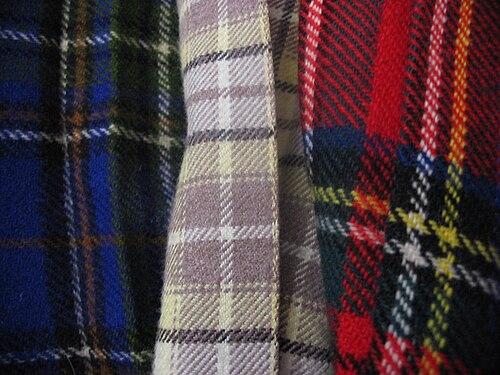
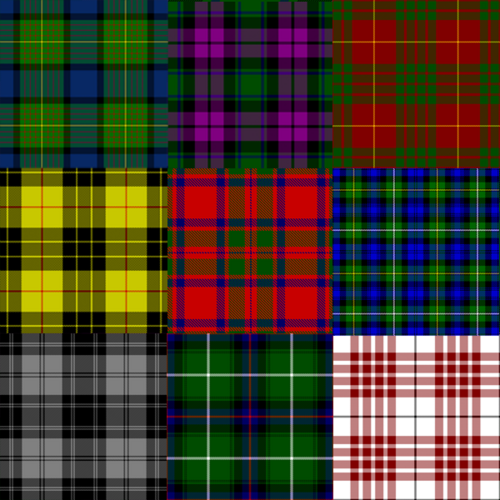

الترتان ( بالغيلية الاسكتلندية : breacan [ ˈpɾʲɛxkən ] )، المعروف أيضاً، خاصة في الإنجليزية الأمريكية ، باسم " بلايد" (/plæd / ) ، هو قماش منقوش يتكون من أشرطة أفقية ورأسية متقاطعة بألوان متعددة، تشكل أنماطاً متناظرة متكررة تُعرف باسم "السيت" . تتفاوت أنماط الترتان في تعقيدها، من تصاميم بسيطة بلونين إلى زخارف معقدة بأكثر من عشرين لوناً. نشأ الترتان في الصوف المنسوج، ويرتبط ارتباطاً وثيقاً باسكتلندا ، حيث استُخدم لقرون في الملابس التقليدية مثل الكيلت . ترتبط أنواع محددة من الترتان بعشائر أو عائلات أو مناطق اسكتلندية ، حيث استُمدت أنماطها وألوانها تاريخياً من أصباغ طبيعية محلية (استُبدلت الآن بأصباغ صناعية). كما يؤدي الترتان أدواراً مؤسسية، بما في ذلك الزي العسكري والهوية المؤسسية.
أصبح الترتان رمزًا للهوية الاسكتلندية ، لا سيما منذ القرن السابع عشر فصاعدًا، على الرغم من حظره بموجب قانون اللباس لعام ١٧٤٦ الذي استمر لجيلين تقريبًا بعد انتفاضة اليعاقبة عام ١٧٤٥. وقد ساهمت حركة إحياء التراث الاسكتلندي في القرن التاسع عشر في نشر الترتان عالميًا من خلال ربطه بزيّ المرتفعات والشتات الاسكتلندي . واليوم، يُستخدم الترتان في جميع أنحاء العالم في الملابس والإكسسوارات والتصميم، متجاوزًا بذلك جذوره التقليدية. تُسجّل أنواع الترتان الحديثة للمنظمات والأفراد ولأغراض تذكارية، مع وجود آلاف التصاميم في السجل الاسكتلندي للترتان .
على الرغم من ارتباطها غالباً بالتراث الاسكتلندي، إلا أن الأقمشة المخططة موجودة في ثقافات أخرى، مثل أفريقيا وشرق وجنوب آسيا وشرق أوروبا. وتعود أقدم نماذج باقية من الأقمشة المخططة إلى حوالي 3000 عام، وقد اكتُشفت في شينجيانغ بالصين.
أصل الكلمات والمصطلحات
يُحتمل أن تكون كلمة " tartan" الإنجليزية والاسكتلندية مشتقة من الكلمة الفرنسية " tiretaine " التي تعني " قماش صوف لينسي ". [ 1 ] [ 2 ] [ 3 ] وتشير فرضيات أخرى إلى أنها مشتقة من الكلمة الغيلية الاسكتلندية " tarsainn " أو " tarsuinn" ، والتي تعني "عبر" أو "العبور"؛ [ 2 ] [ 3 ] أو من الكلمة الفرنسية "tartarin " أو "tartaryn" (التي ظهرت عام 1454 مكتوبة "tartyn ") [ 4 ] والتي تعني " قماش التتار ". [ 1 ] وهي لا تمت بصلة إلى كلمة "tarlatan" المشابهة لها ظاهريًا، والتي تشير إلى قماش موسلين ذي نسيج مفتوح يشبه قماش الجبن . وتُستخدم كلمة "tartan" كاسم غير معدود ("12 مترًا من قماش الترتان") واسم معدود ("12 نوعًا مختلفًا من الترتان").
يشير مصطلح "التارتان" اليوم إلى الأنماط الملونة، مع أنه لم يكن بالضرورة أن يكون ذا نمط محدد في الأصل، إذ كان يشير إلى نوع النسيج؛ ففي عشرينيات القرن التاسع عشر، وُصفت بعض أقمشة التارتان بأنها "لون سادة ... بدون نمط". [ 5 ] [ 6 ] أما القماش المنقوش من المرتفعات الاسكتلندية الناطقة باللغة الغيلية فكان يُسمى "بريكان" ، أي "متعدد الألوان". ومع مرور الوقت، جُمعت معاني "التارتان" و "بريكان" لوصف نوع معين من الأنماط على نوع معين من القماش. [ 6 ]
سيت
يُطلق على نمط الترتان المُحدد اسم "السيت" . يتكون السيت من سلسلة من الخطوط ذات عروض مُحددة تتقاطع بزوايا قائمة وتندمج مع بعضها البعض؛ [ 6 ] ويُستخدم أحيانًا مصطلح " الترتيب" الأطول . [ 7 ] يُمكن أن يُشير مصطلح "السيت" إما إلى العرض المرئي المُبسط لنمط الترتان الكامل أو إلى تمثيله النصي (بوحدة عدد الخيوط ). [ 6 ]
المصطلحات الحديثة
يُستخدم مصطلح "التارتان" اليوم بشكل أعم لوصف النمط، الذي لا يقتصر على المنسوجات، بل يظهر على مواد أخرى مثل الورق والبلاستيك والتغليف وأغطية الجدران. [ 8 ] [ 6 ] [ 9 ] [ 10 ]
كاروهات
في أمريكا الشمالية، يُستخدم مصطلح "بلايد" عادةً للإشارة إلى قماش الترتان. [ 11 ] [ 12 ] [ 13 ] [ أ ] كلمة "بلايد" مشتقة من الكلمة الغيلية الاسكتلندية " بلايد " التي تعني "بطانية"، [ 16 ] [ ب ] وقد استُخدمت في البداية لوصف أي قطعة ملابس مستطيلة الشكل، مصنوعة أحيانًا من قماش الترتان، [ ج ] والتي يمكن ارتداؤها بعدة طرق: البلايد المربوط ( بريكان فيلي ) أو "التنورة الكبيرة" التي سبقت التنورة الاسكتلندية الحديثة ؛ والأريسايد ( إيراسايد )، وهو شال كبير يمكن لفه على شكل فستان؛ وأنواع عديدة من أغطية الكتف، مثل البلايد الكامل والبلايد المفتوح . مع مرور الوقت، استُخدم مصطلح "بلايد" لوصف البطانيات نفسها. [ 12 ] في الماضي، كان يُستخدم مصطلح "بلايدينغ" [ 19 ] أو "بْلادينغ" [ 20 ] أحيانًا للإشارة إلى قماش الترتان.
النسيج والتصميم
بناء النسيج

يقدم السجل الاسكتلندي للتارتان التعريف الموجز التالي للتارتان: [ 21 ]
التارتان (التصميم) هو نمط يتألف من خطين أو أكثر من الخطوط ذات اللون الواحد، والتي قد تكون متشابهة ولكنها عادةً ما تكون بنسب مختلفة، وتتكرر بتسلسل محدد. يتكرر تسلسل ألوان خيوط السدى (الخيوط الطولية) بنفس الترتيب والحجم في خيوط اللحمة (الخيوط العرضية). معظم هذه الأنماط (أو المجموعات) متناظرة، أي أن النمط يتكرر بنفس ترتيب الألوان والنسب في كل اتجاه من نقطتي الارتكاز. في الأنماط غير المتناظرة الأقل شيوعًا، يتكرر تسلسل الألوان في كتل بدلًا من التكرار حول نقاط ارتكاز متبادلة، ولكن يظل حجم وتسلسل ألوان خيوط السدى واللحمة كما هو.

بتفصيلٍ أكثر، يُصنع قماش الترتان التقليدي من نسيج قطني مائل محكم ومتداخل من الصوف الممشط (2/2): يُنسج اللحمة الأفقية (وتُسمى أيضًا اللحمة أو الحشوة ) بترتيب بسيط من خيطين فوق خيطين تحت خيوط السدى الرأسية الثابتة ، مع تقدم خيط واحد في كل تمريرة. [ 15 ] وبما أن كل خيط في اللحمة يتقاطع مع خيوط في السدى، فإن التداخل بمقدار خيط واحد يعني أن كل خيط من خيوط السدى سيتقاطع أيضًا مع خيطين من اللحمة. والنتيجة، عند فحص القماش عن كثب، هي نمط قطري مميز بزاوية 45 درجة من "الأضلاع" حيث تتقاطع الألوان المختلفة. [ 6 ] [ 22 ] عندما يتقاطع خيط في اللحمة مع خيوط من نفس اللون في السدى، ينتج عن ذلك لون موحد على الترتان، بينما ينتج عن تقاطع خيط اللحمة مع خيوط سدى من لون مختلف مزيج متساوٍ من اللونين بالتناوب، مما يُعطي مظهر لون ثالث - مزيج أو خليط نصف لوني - عند النظر إليه من مسافة أبعد. [ 23 ] [ 6 ] [ 21 ] (يشبه هذا التأثير الطباعة النصفية متعددة الألوان ، أو التظليل المتقاطع في فن الرسم بأقلام الرصاص الملونة). [ 6 ] وبالتالي، ينتج عن استخدام لونين أساسيين ثلاثة ألوان مختلفة، بما في ذلك مزيج واحد، ويزداد هذا العدد تربيعيًا مع عدد الألوان الأساسية؛ لذا فإن استخدام ستة ألوان أساسية ينتج عنه خمسة عشر مزيجًا، أي ما مجموعه واحد وعشرون لونًا مختلفًا يمكن إدراكها. [ 6 ] [ 24 ] [ د ] وهذا يعني أنه كلما زاد عدد الخطوط والألوان المستخدمة، كلما أصبح نمط الترتان أكثر ضبابية وبهتانًا. [ 6 ] [ 23 ] على عكس أنماط المربعات البسيطة أو أنماط النرد (مثل رقعة الشطرنج)، لا يظهر أي لون موحد في الترتان بجوار لون موحد آخر، بل يظهر مزيج فقط [ 6 ] (قد تتلامس الألوان الموحدة عند زواياها). [ 25 ]
قدم جيمس دي سكارليت (2008) تعريفًا لنمط الترتان المعتاد (بعض أنواع الترتان تنحرف عن تفاصيل هذا التعريف ): [ 6 ]
وحدة نمط الترتان، أو ما يُعرف بالـ"سيت" ، هي مربع يتكون من عدد من المستطيلات، المربعة والمستطيلة، مرتبة بشكل متناظر حول مربع مركزي. يتكرر كل عنصر من هذه العناصر أربع مرات، بمسافات متساوية قدرها 90 درجة، ويدور كل عنصر بزاوية 90 درجة بالنسبة للعناصر المجاورة له. وتُحدد نسب العناصر من خلال العرض النسبي للخطوط التي تُشكلها.
يبدأ تسلسل ألوان الخيوط في النسيج المتراص (التصميم الأساسي للنسيج المتراص، المراد تكراره [ 6 ] - "الجوهر الأساسي للنسيج المتراص") [ 26 ] من الحافة، ثم ينعكس أو (نادرًا) يتكرر عند ما يُسمى بنقاط الارتكاز . [ 27 ] في الرسم التوضيحي (أ)، يبدأ النسيج المتراص عند نقطة الارتكاز الأولى، وينعكس عند نقطة الارتكاز الثانية، ثم يستمر، ثم ينعكس مرة أخرى عند نقطة الارتكاز التالية، ويستمر بهذه الطريقة أفقيًا. في الرسم التوضيحي (ب)، يسير النسيج المتراص بنفس طريقة النسيج السداة ولكن رأسيًا. توضح الرسوم التوضيحية طريقة بناء نسيج متراص متناظر نموذجي [ 28 ] ( أو متناظر ، [ 26 ] عاكس ، [ 26 ] معكوس ، [ 29 ] أو متطابق ) [ 30 ] . مع ذلك، في نوع نادر من الترتان غير المتماثل [ 32 ] ( غير متماثل ، [ 26 ] أو غير قابل للانعكاس ) [ 32 ] [ و ] ، لا ينعكس نمط الخيوط عند نقاط الارتكاز، بل يتكرر عندها فقط. [ ز ] يُطلق على هذا النوع الأخير اسم "نمط الخد" أو "نمط الخد" . [ 34 ] كذلك، لا تحتوي بعض أنواع الترتان (وهي قليلة جدًا بين أنواع الترتان الاسكتلندية التقليدية) على نفس نمط الخيوط تمامًا للسدى واللحمة. وهذا يعني أن عدد خيوط السدى واللحمة سيكون مختلفًا . [ ح ] تُعد أنماط عدم التماثل واختلاف عدد خيوط السدى واللحمة أكثر شيوعًا في قماش مدراس وبعض تقاليد النسيج الأخرى مقارنةً بالترتان الاسكتلندي.
 الرسم التخطيطي أ، الالتواء
 الرسم التخطيطي ب، اللحمة
 الرسم التخطيطي ج، النقش الاسكتلندي. دمج خيوط السدى واللحمة.
يُسجّل نسيج الترتان بحساب عدد خيوط كل لون يظهر في النسيج. [ i ] لا يصف عدد الخيوط ( أو عدد الخيوط ) عرض الخطوط في النسيج فحسب، بل يصف أيضًا الألوان المستخدمة (عادةً ما تكون مختصرة). [ 26 ] عادةً ما يكون كل رقم في عدد الخيوط عددًا زوجيًا [ 41 ] للمساعدة في التصنيع. يُعتبر الخيطان الأول والأخير في عدد الخيوط بمثابة نقاط ارتكاز. [ 27 ] يُشار إلى عدد الخيوط المُدمج مع معلومات دقيقة عن اللون وتفاصيل النسيج الأخرى باسم ختم التذكرة [ 42 ] أو ببساطة التذكرة . [ 43 ]

لا توجد طريقة موحدة عالميًا لكتابة عدد الخيوط، [ 36 ] ولكن من السهل التمييز بين الأنظمة المختلفة. كمثال بسيط:
- عدد الخيوط "/K4 R24 K24 Y4/" يُشير إلى نمط معكوس يتكون من 4 خيوط سوداء، و24 خيطًا أحمر، و24 خيطًا أسود، و4 خيوط صفراء، حيث لا تتكرر نقطة البداية السوداء ونقطة النهاية الصفراء (بعد Y4/، تنعكس الألوان، أولًا K24 ثم R24)؛ وهذا هو عدد الخيوط " الكامل عند نقاط الارتكاز". [ 27 ]
- يتم وضع رمز مكافئ بخط غامق بجانب اختصارات المحور: K 4 R24 K24 Y 4.
- يمكن تمثيل نفس النمط الاسكتلندي أيضًا بالصيغة "K/2 R24 K24 Y/2"، وهي صيغة تشير إلى تكرار اللون الأسود في البداية واللون الأصفر في النهاية قبل المتابعة من نقاط الارتكاز هذه (بعد Y/2، تنعكس الألوان لتصبح Y/2 مرة أخرى، ثم K24، ثم R24)؛ وهذا ما يُعرف بـ "العد النصفي عند نقاط الارتكاز". [ 26 ]
- في أسلوب عدّ الخيوط القديم، والذي قد يكون غامضًا، وبدون استخدام علامة "/" (أو الكتابة بخط غامق)، يُفترض أن عدد الخيوط مثل "K4 R24 K24 Y4" هو العدد الكامل عند نقاط الارتكاز، ما لم يُشر المؤلف بوضوح إلى خلاف ذلك. [ 27 ] [ 36 ] [ j ]
في جميع هذه الحالات، تكون النتيجة عدد خيوط نصف المجموعة ، والذي يمثل عملية التطريز قبل أن ينعكس النمط ويكتمل؛ أما عدد خيوط المجموعة الكاملة في حالة الترتان المتناظر (المنعكس) فهو غير ضروري. [ 36 ] يمكن أيضًا استخدام الرمز "/" بين رمزين لونيين (مثل "W/Y24" للدلالة على "أبيض/أصفر 24") لإنشاء عدد خيوط مختصر أكثر للترتان البسيط الذي يختلف فيه نصف نمط نصف المجموعة عن النصف الآخر فقط من حيث تبديل اللون؛ [ 44 ] ولكن هذه ليست طريقة شائعة لحساب عدد الخيوط.
- يُمثَّل النمط الترتاني غير المتماثل، الذي لا ينعكس، بعدد خيوط المجموعة الكاملة باستخدام علامة "..."، على النحو التالي: "...K4 R24 K24 Y4..." (بعد Y4، يبدأ النمط بأكمله من جديد من K4). [ 26 ]
لا تستخدم قواعد بيانات الأقمشة الاسكتلندية المختلفة مجموعة موحدة من أسماء الألوان واختصاراتها، [ 45 ] لذا قد لا يكون عدد الخيوط مفهومًا عالميًا بدون مفتاح/دليل للألوان . يفضل بعض المسجلين بدء عد الخيوط من نقطة الارتكاز باسم اللون (أو اختصاره) الذي يأتي أولًا في الترتيب الأبجدي (على سبيل المثال، إذا كانت هناك نقطة ارتكاز بيضاء وأخرى زرقاء، فابدأ باللون الأزرق)، [ 26 ] ولكن هذا في الواقع أمر اعتباطي.
على الرغم من أن عدد الخيوط محدد بدقة، إلا أنه يمكن تعديله حسب الحجم المطلوب للنسيج الاسكتلندي. على سبيل المثال، قد يكون حجم نقشة الترتان (مثلاً، 6 بوصات مربعة - وهو حجم شائع للتنانير الاسكتلندية) [ 26 ] كبيرًا جدًا بحيث لا يتسع لربطة العنق . في هذه الحالة، يتم تقليل عدد الخيوط بنسبة متناسبة (مثلاً إلى 3 بوصات لكل ضلع). [ 36 ] في بعض الأعمال، يتم تقليل عدد الخيوط إلى أصغر عدد زوجي من الخيوط (غالبًا إلى 2) اللازم لإعادة إنتاج التصميم بدقة؛ [ 27 ] في مثل هذه الحالة، غالبًا ما يكون من الضروري زيادة عدد الخيوط بنسبة متناسبة للاستخدام الشائع في التنانير الاسكتلندية والأقمشة المخططة.
قبل القرن التاسع عشر، كان نسيج الترتان يُنسج غالبًا بخيوط لحمة أسمك بمقدار يصل إلى الثلث من خيوط السدى الدقيقة، [ 6 ] مما ينتج عنه نقش مستطيل بدلًا من مربع؛ وكان الحل هو تعديل عدد خيوط اللحمة لإعادة النقش إلى شكل مربع، [ 22 ] أو جعله غير مربع عمدًا، كما هو الحال في عدد قليل من أنواع الترتان التقليدية. [ ح ] كما أن عدم انتظام سمك خيوط السدى واللحمة قد يُسهم في ظهور مظهر مُخطط بدلًا من مُربّع في بعض عينات الترتان. [ 46 ]
تُسمى الألوان السائدة في نسيج الترتان (الأشرطة الأعرض) بالخطوط السفلية (أو الخطوط السفلية المربعة ، أو الخطوط السفلية المربعة ، أو الخطوط السفلية المربعة )؛ [ 47 ] ويُستخدم أحيانًا مصطلح "الأرضية " [ k ] أو "الخلفية" [ 49 ] أو "الأساس " [ 49 ] بدلاً من ذلك، خاصةً إذا كان هناك لون سائد واحد فقط. تُسمى الخطوط الرفيعة المتباينة بالخطوط العلوية [ 50 ] [ 49 ] (وتُسمى أيضًا "الخطوط العلوية المخططة" أو "الخطوط العلوية المخططة "). [ 51 ] يُشار أحيانًا إلى الخطوط العلوية المربعة المزدوجة بخطوط الترام ، أو خطوط الترام ، أو مسارات الترام . [ 52 ] تُحاط الخطوط العلوية المربعة الزاهية أحيانًا من كلا الجانبين (عادةً كليهما)، لمزيد من التباين، بخطوط رفيعة إضافية، غالبًا ما تكون سوداء، تُسمى خطوط الحماية أو الحواجز . [ 52 ] تاريخيًا، كان النساج ويليام ويلسون وابنه من بانوكبيرن ينسجون أحيانًا نقوشًا مربعة زاهية من الحرير، لإضفاء مزيد من اللمعان [ 53 ] [ 54 ] (تجاريًا حوالي 1820-1830، ولكن في أغطية ضباط الأفواج يعود تاريخها إلى عام 1794 على الأقل). [ 55 ] غالبًا ما يكون للتارتان المستخدم في الأغطية (وليس الغطاء المربوط بحزام) شرابة مقلوبة . [ 56 ]
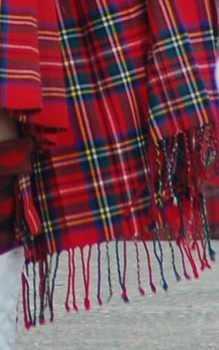
كان من الممارسات القديمة، حتى القرن الثامن عشر، إضافة لمسة مميزة على الأقمشة المخططة أو التنانير الاسكتلندية أحيانًا، وذلك بإضافة حافة منسوجة بنمط متعرج ، بعرض يتراوح بين 2.5 و7.6 سم، مع الحفاظ على تناسقها مع نمط ألوان النسيج الأساسي؛ [ 56 ] [ 57 ] ولا يزال بعض النساجين المعاصرين ينتجون بعض الأقمشة المخططة بهذا النمط. وفي بعض الأحيان، كانت تُستخدم حواف أكثر زخرفة: علامات الحافة عبارة عن حدود (عادةً على جانب واحد فقط) تتكون من تكرار لون من النسيج الأساسي في شريط عريض (غالبًا بنمط متعرج)، وأحيانًا تُحاط بشريط رفيع من لون آخر من النسيج الأساسي أو تُزين في منتصف الحافة بشريطين رفيعين؛ وكانت هذه تُستخدم عادةً في أسفل الأقمشة المخططة والتنانير الاسكتلندية ذات الأحزمة، [ 56 ] [ 58 ] وكانت عادةً سوداء في الأقمشة المخططة العسكرية، ولكنها قد تكون أكثر ألوانًا في الأقمشة المخططة المدنية. [ 59 ] كانت أنماط الحواف الأكثر تفصيلاً عبارة عن سلسلة أعرض من الخطوط الضيقة باستخدام بعض أو كل ألوان النسيج الأساسي؛ وقد استُخدمت هذه الأنماط بشكل حصري تقريبًا على أقمشة الترتان المنزلية (البطانيات، والستائر، وما إلى ذلك)، وعلى جانبين متقابلين من القماش. [ 59 ] [ 56 ] أما الحافة الكاملة النادرة جدًا فهي حافة تغطي الجوانب الأربعة جميعها بنسيج أساسي مختلف تمامًا؛ وقد وصفها بيتر إسليا ماكدونالد (2019) بأنها "ميزة صعبة للغاية في النسيج ويمكن اعتبارها ذروة فن نسج الترتان"، [ 56 ] وهي لا تزال موجودة فقط في الترتان ذي الطراز الاسكتلندي كعينات قليلة من القرن الثامن عشر (في اسكتلندا [ 60 ] ونوفا سكوتيا ، كندا، ولكن من المحتمل أن تكون جميعها في الأصل من اسكتلندا). [ 61 ] كما استُخدم هذا النمط في إستونيا في نسج شالات/أغطية سورات .
 قماش الترتان من القرن الثامن عشر بحافة متعرجة في الأسفل
 قماش الترتان الأسود مع علامة حافة في الأسفل (وأيضًا بنمط متعرج)
 بطانية ويلسونز 1819 بنقشة الترتان مع حافة مميزة على اليمين
 الزاوية السفلية اليمنى من البطانية بحافة كاملة ؛ تقدير تقريبي بناءً على صورة لبطانية حقيقية عُثر عليها في نوفا سكوتيا، ولكنها على الأرجح اسكتلندية، حوالي ثمانينيات القرن الثامن عشر .
يُنسج الترتان عادةً بنسيج متوازن السدى (أو متوازن فقط )، حيث يتكرر النمط بانتظام من نقطة ارتكاز في المنتصف إلى الخارج، وينتهي بنمط كامل عند الحافة الخارجية؛ [ 7 ] [ 62 ] [ 63 ] على سبيل المثال، قد تكون قطعة الترتان المستخدمة في صناعة بطانية مربعة بطول 24 نمطًا وعرض 4 أنماط. أما النسيج غير المتوازن ، أو المتداخل، فهو الذي ينتهي فيه النمط عند الحافة في منتصف لون الارتكاز؛ وكان يُستخدم هذا النوع عادةً مع القطع المُخصصة للوصل (مثل بطانية مربعة بحزام أو بطانية عادية) لتكوين مساحات قماش أكبر مع استمرار النمط عبر خط الوصل؛ [ 7 ] [ 63 ] إذا كان للترتان علامة أو نمط حافة، فإنه يكون على الجانب الآخر من السدى. [ 64 ]
يشير مصطلح "التارتان الصلب" إلى نوع من القماش يُنسج بخيوط ملفوفة بإحكام شديد وخالية من الوبر، مما ينتج عنه نسيج أكثر خشونة وكثافة (وإن كان أرق) من النسيج المستخدم حاليًا في صناعة التنانير الاسكتلندية. [ 65 ] [ 66 ] وقد شاع استخدامه حتى ثلاثينيات القرن التاسع عشر. [ 46 ] وتوجد نماذج نادرة من التارتان الصلب تعود إلى أوائل القرن الثامن عشر، تستخدم نسيج متعرج أكثر تعقيدًا بدلًا من نسيج التويل في كامل القماش. [ 67 ]
بينما يُعدّ النسيج الاسكتلندي الحديث مشروعًا تجاريًا في المقام الأول على أنوال آلية ضخمة ، إلا أنه كان في الأصل من صنع النساجين الريفيين في عصر ما قبل الصناعة، ويمكن إنتاجه بواسطة هاوٍ متفانٍ يمتلك نولًا يدويًا قويًا وثابتًا . [ 68 ] [ 69 ] [ 70 ] منذ حوالي عام 1808، أصبح الحجم التقليدي لمشط السدى المستخدم في النسيج الاسكتلندي 37 بوصة (94 سم) ، وهو طول الذراع الاسكتلندي (كانت الأحجام السابقة أحيانًا 34 و40 بوصة). [ 71 ] يصف تيلفر دنبار (1979) الإعداد على النحو التالي: [ 71 ]
يختلف سمك المشط تبعًا لنسيج القماش المراد نسجه. يُقسّم مشط الثلاثين (الذي يحتوي على 20 شقًا من المشط) أو مشط الـ 600، إلى 600 فتحة بعرض 37 بوصة. تُسمى 20 فتحة منها "مشطًا"، ويُمرر في كل فتحة خيطان، مما يُنتج 1200 خيط سدى ومثلها من خيوط اللحمة في ياردة مربعة من قماش الترتان عبر مشط الثلاثين.
يُشار إلى الانقسامات أيضًا باسم الخدوش ، ويُطلق على الحمالين أيضًا اسم العصابات . [ 72 ]
الأساليب ومبادئ التصميم
يمكن تقسيم أنماط الترتان التقليدية إلى عدة فئات. أبسطها هو نمط مربعات ثنائي اللون بسيط ذو خطوط سميكة (مع أو بدون مربعات رفيعة فوقها بلون أو أكثر). وهناك نمط آخر يقسم أحد الخطوط أو أكثر، ليشكل مربعات من مربعات أصغر بدلاً من مربعات كبيرة متصلة؛ وهو نمط شائع في كتاب Vestiarium Scoticum . أما النمط الأكثر تعقيدًا فهو المربعات المتراكبة، حيث يُوضع لون ثالث في المنتصف "فوق" أو "داخل" (محاطًا) بأحد ألوان المربعات الأساسية، مما يُشكل نمطًا من المربعات المتداخلة، والتي قد تُضاف إليها مربعات رفيعة زاهية أو سوداء فوقها. وهناك مجموعة أخرى هي المربعات المتعددة، وعادةً ما تتكون من خطين عريضين من اللون على خلفية واحدة سائدة (مثل الأحمر والأزرق والأخضر، وربما مع مربعات رفيعة فوقها بلون متباين). ويمكن دمج الأنواع المذكورة لتكوين أنماط ترتان أكثر تعقيدًا. في أيٍّ من هذه الأنماط، لا يُمثّل المربع العلوي أحيانًا لونًا جديدًا، بل أحد ألوان المربع السفلي "فوق" لون المربع السفلي الآخر. وهناك نمط نادر، كان يُستخدم تقليديًا في أقمشة الترتان من نوع أريسايد ( أو إيراسايد )، ولكنه لم يعد شائع الاستخدام في اسكتلندا، وهو نمط يتألف بالكامل من مربعات علوية رفيعة، مُجمّعة أحيانًا، "على" لون أساسي واحد، عادةً ما يكون أبيض. [ 73 ] ذكر م. مارتن (1703) أن ألوان الخطوط كانت عادةً الأزرق والأسود والأحمر. [ 74 ] لم يبقَ من هذا النمط أيّ أثر، [ 75 ] على الأقل ليس في قواعد بيانات الترتان (قد توجد قطع متحفية محفوظة تحمل مثل هذه الأنماط). [ م ] بعض أنماط الترتان أكثر تجريدًا ولا تندرج ضمن أيٍّ من هذه الأنماط، [ 77 ] خاصةً في قماش مدراس .
 أبسط أنواع الفحص - فحص ماكجريجور الأحمر والأسود (روب روي)، وهو في غاية البساطة: نسب متساوية من لونين.
 تم تعديل المربعات الأساسية - لون أحمر/أسود من والاس ، أسود على خلفية حمراء أكبر قليلاً، مزينة بمربعات صفراء وسوداء.
 مربعات مقسمة - ماكجريجور أحمر وأخضر مع شريط أخضر عريض مقسم إلى ثلاثة أجزاء لتشكيل "مربع من المربعات"، ثم مزين بمربعات بيضاء.
 مربعات متراكبة - روثفن ، أرضية حمراء مع شريط أخضر كبير "داخل" شريط أزرق أكبر، ثم مربعات بيضاء وخضراء فوقها.
 مربعات متعددة - ديفيدسون ، أرضية خضراء مع أشرطة زرقاء وسوداء متساوية، ثم مربعات حمراء وزرقاء وسوداء فوقها.
 مثال معقد - روس ، يجمع بين أنماط علامة الاختيار المنقسمة وعلامات الاختيار المتعددة، مع علامة اختيار زرقاء واحدة وعلامتي اختيار خضراء منقسمة على اللون الأحمر، مع علامات اختيار زرقاء وخضراء فوق بعضها البعض.
لا توجد قواعد أو مبادئ مُقننة لتصميم الترتان، لكن بعض الكُتّاب قدّموا آراءً مُتأنية في هذا الشأن. لخص بانكس ودي لا شابيل (2007)، في سياق الاستخدام العام للترتان، بما في ذلك في مجال الأزياء، ما يلي: "يُعدّ اللون - وكيفية استخدامه - عنصرًا أساسيًا في تصميم الترتان... لذا، ينبغي أن يتكون الترتان من ألوان واضحة زاهية، ولكن بألوان ناعمة بما يكفي لتندمج جيدًا وتُنتج درجات لونية جديدة." وأشار جيمس د. سكارليت (2008) إلى أنه: "كلما زاد عدد الألوان في البداية، كلما كان التأثير النهائي أكثر هدوءًا"، [ 49 ] أو بتعبير أدق، "كلما زاد عدد الخطوط في النسيج وزاد عدد الألوان المُستخدمة، كلما أصبح النمط أكثر انتشارًا و"ضبابية". [ 6 ] لكن هذا لا يعني بالضرورة دقةً في التفاصيل؛ فقد يبدو الترتان ذو الألوان والخطوط الكثيرة "مزدحمًا". [ 78 ]
اقترحت سكارليت (2008)، بعد بحث مكثف في أنماط المرتفعات التاريخية (التي كانت تهيمن عليها درجات اللون الأحمر الغني والأخضر المتوسط بوزن متساو تقريبًا مع اللون الأزرق الداكن كلون مزج مميز - دون الأخذ في الاعتبار الخطوط السوداء الشائعة)، أنه من أجل أسلوب متوازن وتقليدي : [ 6 ]
أي تصميم أساسي بنمط الترتان يجب أن يتضمن لونًا رئيسيًا بارزًا، ولونين آخرين، أحدهما مكمل للأول والآخر أغمق وأكثر حيادية. أما الألوان الأخرى، التي تُستخدم لكسر النمط أو لإبرازه، فهي مسألة ذوق. من المهم ألا يطغى أي لون على الآخر، وإلا سيتأثر مزج الألوان عند نقاط التقاطع سلبًا. ... الترتان فن تجريدي معقد ذو طابع رياضي قوي، يختلف تمامًا عن مجرد مربعات بسيطة بخطوط قليلة من ألوان متباينة.
قدمت سكارليت (1990) تفسيراً أكثر عمومية، بصرف النظر عن الأساليب التقليدية: [ 79 ]
تتطلب ألوان أعمال الترتان أن تكون واضحة لا لبس فيها ومشرقة ولكن ناعمة، لإعطاء تباين جيد بين اللون والسطوع، وأن تمتزج جيدًا بحيث تعطي ظلالًا جديدة مميزة عند تقاطع لونين دون أن يطغى أحدهما على الآخر.
علاوة على ذلك، رأى سكارليت (1990) أن "الخلفيات ستُظهر تباينًا واضحًا ولكن ليس حادًا، وأن التظليلات العلوية ستكون واضحة" على ألوان الخلفية (أو الخلفية). [ 49 ] ولخص النتيجة النهائية المرجوة بأنها "مزيج متناغم من اللون والنمط جدير بأن يُنظر إليه كشكل فني قائم بذاته". [ 80 ]
يُضفي حذف الخطوط السوداء التقليدية تأثيرًا قويًا في تلطيف الألوان، كما هو الحال في مجموعة أزياء ميسوني في سبعينيات القرن العشرين، وفي العديد من أنماط المدراس . يعود تصميم اسكتلندي خالٍ من اللون الأسود (يُعرف الآن باسم تارتان فستان مار ) إلى القرن الثامن عشر؛ [ 81 ] ومن الأمثلة الأخرى تصميم روثفن (1842 )، والعديد من تارتان روس (مثل 1886 )، بالإضافة إلى العديد من تصاميم ماكدوغال الفيكتورية والإدواردية ، [ 82 ] وهي أمثلة أخرى. تستخدم العديد من أنواع التارتان الحديثة هذا التأثير أيضًا، مثل ورقة القيقب الكندية (1964 ). يمكن للاستخدام الذكي للون الأسود أو أي لون داكن آخر أن يُنتج إحساسًا بصريًا بالعمق. [ 83 ]
الألوان، واللوحات، والمعنى

لا توجد معايير لونية محددة لألوان الترتان؛ إذ يختلف لون الخيط من نساج لآخر حتى بالنسبة للون "نفسه". [ 84 ] ومع ذلك، هناك مجموعة معينة من الألوان العامة تُعتبر تقليدية في الترتان الاسكتلندي. وتشمل هذه الألوان الأزرق (الداكن)، والقرمزي (الوردي أو الأحمر الداكن)، والأخضر (المتوسط الداكن)، والأسود، والرمادي (المتوسط الداكن)، والبنفسجي، والأحمر (القرمزي أو الفاتح)، والبني الفاتح، والأبيض (وهو في الواقع صوف طبيعي غير مصبوغ، يُسمى lachdann باللغة الغيلية)، [ 85 ] [ n ] والأصفر. [ 44 ] [ 6 ] [ o ] ومن الألوان الإضافية التي استُخدمت بشكل أقل شيوعًا: الأزرق السماوي (الفاتح أو الأزرق السماوي)، والماروني، والأخضر الفاتح (الفاتح أو الأخضر العشبي)، [ 44 ] بالإضافة إلى الرمادي الفاتح (كما هو الحال في ترتان بالمورال، على الرغم من أنه يُشار إليه أحيانًا باسم الخزامى). [ ٨٨ ] منذ فتح قواعد بيانات الترتان لتسجيل تصاميم الترتان الجديدة، بما في ذلك العديد منها لأغراض تنظيمية وأزياء، تم استخدام نطاق أوسع من الألوان، مثل البرتقالي [ ٨٩ ] والوردي [ ٩٠ ] ، والتي لم تكن شائعة الاستخدام (كألوان مستقلة وليست مجرد درجات من الأحمر) في الترتان التقليدي القديم. [ ص ] يستخدم السجل الاسكتلندي للترتان قائمة طويلة من الألوان مرتبطة بنظام ألوان الويب السداسي العشري ، حيث يتم تصنيف مجموعات الألوان إلى مجموعة محدودة من الرموز الأساسية (مع توسيع القائمة التقليدية المذكورة أعلاه، بإضافة خيارات أخرى مثل البرتقالي الداكن والأصفر الداكن والبنفسجي الفاتح، إلخ). [ ٩١ ] يساعد هذا المصممين على دمج تصميم الترتان الإبداعي الخاص بهم في نظام ترميز، بينما يسمح للنسّاجين بإنتاج نسخة تقريبية من هذا التصميم باستخدام خيوط متوفرة بسهولة.
في منتصف القرن التاسع عشر، بدأت الأصباغ الطبيعية التي كانت تُستخدم تقليديًا في المرتفعات الاسكتلندية [ 23 ] [ 92 ] [ 93 ] [ q ] (مثل أنواع مختلفة من الأشنات ، ولحاء شجرة الألدر ، والتوت البري ، والقرمز ، والخلنج ، والنيلة ، والوسمة ، ونبات الفراش الأصفر ) تُستبدل بالأصباغ الاصطناعية ، التي كانت أسهل استخدامًا وأكثر اقتصادية لصناعة الترتان المزدهرة، [ 94 ] وإن كانت أقل دقة. [ 95 ] على الرغم من أن ويليام موريس حاول في حركة الفنون والحرف في أواخر القرن التاسع عشر إحياء استخدام الأصباغ الطبيعية البريطانية، إلا أن معظمها كان منخفض الإنتاجية وغير متناسق من منطقة إلى أخرى (وهو جزء من سبب التباين التاريخي في الترتان حسب المنطقة) مما أدى إلى عدم وجود إمكانية كبيرة لإنتاجها بكميات كبيرة، على الرغم من بعض الجهود التجارية لصبغة البنفسج ( كودبير ) في غلاسكو في القرن الثامن عشر. [ 94 ] كان الصوف الناعم ذو اللفّ الصلب المستخدم في نسج الترتان مقاومًا للأصباغ الطبيعية، وقد استغرقت بعض أحواض الصباغة أيامًا أو حتى أسابيع. [ 94 ] كما تطلّب الصباغة استخدام مواد مُثبِّتة لتثبيت الألوان بشكل دائم، وعادةً ما تكون أملاحًا معدنية مثل الشبّ ؛ وهناك سجلات من عام 1491 تُشير إلى استيراد الشبّ إلى ليث ، وإن لم يكن بالضرورة خصيصًا لإنتاج الترتان. [ 96 ] كانت بعض ألوان الصبغة تُستورد عادةً، وخاصةً القرمز الأحمر، وإلى حدٍّ ما النيلي الأزرق (وكلاهما باهظ الثمن ويُستخدم لتعميق الأصباغ المحلية)، من البلدان المنخفضة ، التي كانت تربطها باسكتلندا علاقات تجارية واسعة منذ القرن الخامس عشر. [ 97 ] كما استُخدم بول الإنسان المُعتّق (يُسمى الفوال أو الجريث ) كمُعمِّق للون، ومُذيب للصبغة، ومُخمِّر للأشنات ، ومعالجة نهائية لثبات اللون. [ 98 ] جميع أنواع الترتان المصنعة تجارياً اليوم تُلوّن باستخدام أصباغ صناعية وليست طبيعية، حتى في لوحات الألوان الأقل تشبعاً. [ 99 ] [ 100 ]
يمكن تعديل درجات الألوان في أي نقشة تارتان معروفة لإنتاج تنويعات منها. ويعود تاريخ هذا التعديل في الدرجات اللونية حسب الرغبة إلى كتاب أنماط عام 1788 على الأقل، الصادر عن شركة ويليام ويلسون وأبنائه في بانوكبيرن. [ 101 ] أما اليوم، فتُقسم أنظمة الألوان أو لوحاتها شبه القياسية (ما قد يُطلق عليه المسوقون " مجموعات الألوان ") [ 102 ] عمومًا إلى حديثة ، وقديمة ، وهادئة ، ومُعتّقة (وأحيانًا بأسماء أخرى، حسب النساج). وتشير هذه المصطلحات فقط إلى مستويات تشبع الصبغة النسبية ، ولا تُمثل نقشات تارتان مُحددة. [ 103 ] [ 104 ]
- حديث
- يُعرف أيضًا باسم "العادي" ؛ ويشير إلى قماش الترتان الداكن ذي الألوان المشبعة تمامًا. [ 100 ] [ 104 ] في لوحة الألوان الحديثة ، تميل المربعات المكونة من الأزرق والأسود والأخضر إلى أن تكون غير واضحة بسبب قتامة الألوان في هذا التصميم. [ 100 ]
- عتيق
- يُعرف أيضًا بالألوان القديمة (OC)؛ ويشير إلى مجموعة ألوان أفتح من قماش الترتان. يُفترض أن هذه الألوان تُمثل الألوان التي تنتج عن تقادم الأقمشة المصبوغة بأصباغ طبيعية مع مرور الوقت. ومع ذلك، فإن النتائج ليست دقيقة (على سبيل المثال، في نماذج حقيقية من الترتان القديم جدًا، غالبًا ما يتلاشى اللون الأسود ليتحول إلى الكاكي [ 100 ] أو الأخضر [ 105 ] بينما يبقى اللون الأزرق داكنًا؛ [ 100 ] والأصباغ الطبيعية قادرة على إنتاج بعض الألوان الزاهية جدًا في المقام الأول، وإن لم يكن ذلك بشكل متسق). [ 104 ] [ 79 ] [ 106 ] نشأ هذا النمط في النصف الأول من القرن العشرين. [ 107 ] [ 104 ] يجب عدم الخلط بين هذا المصطلح القديم والكلمة نفسها في بعض أسماء أنواع الترتان مثل "كامبل القديم".
- متأثر بالعوامل الجوية
- يُطلق عليه أيضًا اسم "النقش الباهت "؛ ويشير إلى نقش الترتان الذي يكون أفتح لونًا (أقل تشبعًا) من النقش القديم ، كما لو كان قد تعرض للعوامل الجوية لفترة طويلة جدًا. [ 104 ] وقد تم ابتكار هذا النمط في أواخر الأربعينيات. [ 107 ]
- مكتوم
- يشير هذا المصطلح إلى قماش الترتان الذي يتميز بحيوية تتراوح بين الحديثة والقديمة . ورغم أن هذا النوع من التلوين حديث نسبياً، إذ يعود تاريخه إلى أوائل سبعينيات القرن العشرين، إلا أن هذه الألوان تُعتبر الأقرب إلى الألوان التي كانت تُحصل عليها الأصباغ الطبيعية المستخدمة قبل منتصف القرن التاسع عشر. [ 104 ]
أدخلت بعض مصانع النسيج الاسكتلندي (التارتان) أنظمة ألوان أخرى خاصة بكل نساج، ولا تتوفر إلا في أنواع معينة من التارتان. ومن الأمثلة على ذلك تارتان " أنتيك" من إنتاج شركة "لوك كارون" [ 104 ] ، الذي يجمع بين الطابعين الحديث والقديم ؛ وتارتان "ريبلودد" من إنتاج شركة "دي. سي. دالغليش" ، وهو نسخة معدلة قليلاً من تارتان " ويذرد " [ 103 ] ، ويعود تاريخه إلى أربعينيات القرن العشرين، ويُزعم أنه مستوحى من عينات تعود إلى القرن الثامن عشر. [ 108 ]
من الملاحظات العامة حول الألوان القديمة/العتيقة ، والباهتة/المتأثرة بالعوامل الجوية ، والخافتة ، أنها تُقلل بشكل متجانس من تشبع جميع الألوان، بينما تُظهر عينات الترتان المصبوغة بأصباغ طبيعية أن الممارسة التاريخية كانت عادةً ما تتم بمزج لون أو أكثر من الألوان المشبعة مع لون أو أكثر من الألوان الباهتة، لتحقيق مزيد من الوضوح والعمق، أي "توازن متناغم". [ 109 ] [ 104 ] [ 103 ] ووفقًا لسكارليت (1990): "كانت الألوان واضحة ومشرقة وناعمة، على عكس اللمعان المُبهر أو البهتان المُرهق للعين في الترتان الحديث". [ 80 ]
لن يتطابق نفس النقش الاسكتلندي بنفس الألوان من شركتين مصنعتين تمامًا؛ فهناك قدر كبير من الحرية الفنية في تحديد درجة تشبع اللون. [ 100 ]
يمكن لبرامج تصميم الأقمشة الاسكتلندية أن تُحاكي مظهر القماش الاسكتلندي في أي من هذه الألوان. جميع الأمثلة أدناه هي أقمشة اسكتلندية تحمل اسم "الأمير تشارلز إدوارد ستيوارت": [ 110 ]
 لوحة ألوان عصرية
 لوحة ألوان قديمة أو عتيقة
 لوحة ألوان باهتة أو متآكلة
 لوحة ألوان هادئة
 لوحة عتيقة على طراز Lochcarron
 لوحة إعادة إنتاج على طراز D. C. Dalgliesh
تُعدّ الأقمشة الاسكتلندية المخططة التي تستخدم لونين أو أكثر من نفس اللون الأساسي نادرة إلى حد ما. وأشهرها قماش بالمورال الخاص بالعائلة المالكة البريطانية [ 111 ] (1853، لونان رماديان، كلاهما بنقشة مربعات سفلية ). ومن بينها: أكينز [ 112 ] (1850، اثنان باللون الأحمر، أحدهما كعلامة فوقية وأحيانًا يُرسم باللون الأرجواني)، ماك بين [ 113 ] (1872، اثنان باللون الأحمر، أحدهما كعلامة فوقية وأحيانًا يُرسم باللون الأرجواني)، فوج تشيلدرز العالمي [ 114 ] (1907، اثنان باللون الأخضر، كلاهما كعلامة تحتية)، غوردون الأحمر [ 115 ] (سُجِّل بين عامي 1930 و1950، ولكنه على الأرجح أقدم بكثير؛ اثنان باللون الأزرق واثنان باللون الأحمر، استُخدم واحد من كل منهما كعلامة فوقية تقريبًا)، صيد/أخضر مقاطعة غالاوي [ 116 ] [ 117 ] (1939/1950، اثنان باللون الأخضر، كلاهما كعلامة تحتية)، فرقة مزمار احتياطي القوات الجوية الأمريكية [ 118 ] (1988، اثنان باللون الأزرق، كلاهما كعلامة تحتية)، ماكاندليش [ 119 ] [ 120 ] [ 121 ] (1992، ثلاثة تتضمن هذه الأنماط: نمط الترتان [ 122 ] ( 1992، ثلاثة ألوان خضراء، جميعها على الأرجح مربعات سفلية، متداخلة)، ونمط تشيشولم الاستعماري [ 123 ] (2008، لونان أزرقان، أحدهما مربعات علوية، والآخر يكاد يندمج مع الأخضر). وتُعد هذه الممارسة أكثر شيوعًا في أنماط الترتان التجارية الحديثة جدًا التي لا ترتبط بعائلات أو مناطق اسكتلندية، مثل نمط الترتان الخاص بعلامة الأزياء لوفربوي [ 124 ] (2018، ثلاثة ألوان زرقاء، أحدها مربعات علوية).
إن فكرة أن للألوان المختلفة المستخدمة في الترتان معنىً محددًا هي فكرة حديثة تمامًا، [ 125 ] على الرغم من وجود أسطورة تقول إن الترتان الأحمر كان "ترتان المعارك"، مصممًا بحيث لا يظهر عليه الدم. فقط الترتان الذي تم ابتكاره مؤخرًا، مثل ترتان المقاطعات والأقاليم الكندية (بداية الخمسينيات) وترتان الولايات الأمريكية (بداية الثمانينيات)، هو الذي يُذكر أنه مصمم بمعنى رمزي معين للألوان المستخدمة. على سبيل المثال، يمثل اللون الأخضر أحيانًا البراري أو الغابات، ويمكن أن يمثل اللون الأزرق البحيرات والأنهار، وقد يرمز اللون الأصفر إلى محاصيل مختلفة. [ 126 ] في السجل الاسكتلندي للترتان (وقواعد البيانات السابقة له)، غالبًا ما يسجل مصمم الترتان ملاحظات حول إلهام الألوان. ومع ذلك، لا توجد مجموعة مشتركة من ألوان أو أنماط الترتان ذات المعاني الضمنية التي يتشاركها المصممون. [ r ]
بصورة أكثر تجريدًا، ومن منظور نقدي فني ، كتب مؤرخ التصميم ريتشارد مارتن (1988) عن الأقمشة المخططة (التارتان) كتصاميم، وعن التارتان كنوع من المنسوجات لا يحمل معاني جوهرية أو موضوعية، بل هو فن "يتمتع بخاصية كونه وعاءً أو حاويةً للمعنى، وشكلاً تصميميًا لا يقتصر وجوده على التاريخ فحسب، بل يتجاوزه"، قادرًا على نقل معانٍ سياقية مختلفة جذريًا، بل ومتناقضة، "متغيرة ومتطورة باستمرار" من خلال التحولات الاجتماعية والثقافية لاستخدام النسيج. وهكذا، يمكن أن يتحول التارتان من رمز لتمرد المرتفعات اليعقوبية المناهض للنقابات إلى شعار للولاء البريطاني الشامل للإمبراطورية في غضون جيلين، أو أن يخدم أسواق أزياء مختلفة في العقود الأخيرة نفسها كرمز للمكانة الاجتماعية للقيم التقليدية، وراية للتمرد في موسيقى البانك والجرونج. [ 129 ]
التاريخ المبكر
أصول ما قبل العصور الوسطى
يرتبط قماش الترتان اليوم في الغالب باسكتلندا؛ ومع ذلك، فإن أقدم قطعة قماش مائلة بنقشة الترتان [ 130 ] تم اكتشافها على الإطلاق تعود إلى ثقافة متنوعة في حوض تاريم ، حوالي 2100 قبل الميلاد وحتى القرون الأولى الميلادية [ 130 ] [ 131 ] [ 132 ] في ما يُعرف اليوم بشينجيانغ ، الصين، جنوب شرق كازاخستان. وقد تم العثور على قماش الترتان (إلى جانب أنواع أخرى من الأقمشة البسيطة والمزخرفة) في حفريات بدأت عام 1978، مع مقتنيات جنائزية أخرى لمومياوات تاريم أو أورومتشي [ 133 ] - وهي مجموعة من الجثث التي غالباً ما تكون من أصل قوقازي (شعر فاتح، عيون مستديرة) [ 134 ] [ 135 ] والتي حفظتها الطبيعة بفعل الصحراء القاحلة بدلاً من تحنيطها عمداً . أشهرها رجل تشارشان ، الذي دُفن حوالي عام 1000 قبل الميلاد مرتديًا سروالًا يشبه نسيج الترتان في صحراء تاكلامكان . [ 136 ] [ 133 ] كما عُثر على عينات أخرى من نسيج الترتان المائل (بخيوط سدى ولحمة مختلفة) في المنطقة من موقع قيزيلتشوكا عام 1979، ويعود تاريخها إلى حوالي عام 1200 قبل الميلاد؛ وقد نُسج هذا النسيج بما يصل إلى ستة ألوان، وتطلب نولًا متطورًا [ 130 ] [ 137 ] (من نوع يبدو أنه نشأ في الغرب). [ 133 ] [ s ] كتب فيكتور هـ. ماير ، عالم الآثار واللغوي الذي شارك في الحفريات: " لا شك أن السكان القدماء ... كانت لهم تفاعلات حيوية مع شعوب غرب آسيا الوسطى، بل وحتى أبعد من ذلك غربًا، إذ تتميز منسوجاتهم الرائعة بزخارف وأصباغ وأنماط نسيج مميزة لثقافات تلك المنطقة." [ 130 ]
أظهر تحليل نسيج هذا القماش تشابهه مع نسيج أوروبا القديمة. [ 138 ] ووفقًا لمؤرخة النسيج إليزابيث ج. وايلاند باربر ، فإن سكان أوروبا الوسطى في أواخر العصر البرونزي وبداية العصر الحديدي ، وتحديدًا حضارة هالشتات المرتبطة بالشعوب السلتية القديمة والتي ازدهرت بين القرنين الثامن والسادس قبل الميلاد، أنتجوا منسوجات شبيهة بالتارتان. وقد اكتُشف بعضها عام 2004، وهي محفوظة بشكل رائع، في مناجم ملح هالشتات بالقرب من سالزبورغ ، النمسا؛ وتتميز بمزيج من الصوف الطبيعي والمصبوغ. [ 2 ] [ t ] ويعود تاريخ بعضها إلى عام 1200 قبل الميلاد، وتقول وايلاند باربر عنها: "إن أوجه التشابه العامة بين أقمشة هالشتات المخططة والأقمشة الاسكتلندية الحديثة، وصولًا إلى الوزن النموذجي للقماش، تشير بقوة إلى استمرارية التقاليد. والفرق الرئيسي هو أن أقمشة هالشتات المخططة لا تحتوي على أكثر من لونين". [ 139 ] وقد تم العثور على اكتشافات مماثلة في أماكن أخرى في أوروبا الوسطى واسكندنافيا. [ 6 ]
أشار كتّاب الرومان الكلاسيكيون في مواضع عديدة إلى الغاليين في القارة الأوروبية ، جنوب بريطانيا، الذين كانوا يرتدون ملابس مخططة أو متعددة الألوان؛ ويبدو أن اللغة اللاتينية كانت تفتقر إلى كلمة دقيقة تعني "مُقَلَّم". فعلى سبيل المثال، وصف فرجيل الغاليين في الإنيادة (29-19 قبل الميلاد، الكتاب الثامن، السطر 660) بأنهم virgatis lucent sagulis (أو sagalis )، أي ما معناه "إنهم يتألقون في عباءات مخططة" أو "عباءاتهم مخططة بألوان زاهية". [ 140 ] [ 141 ] [ 142 ] استخدم كتّاب آخرون كلمات مثل pictae و virgatae [ 143 ] مع ترجمات مثل "مُرَقَّط" و"مُتَنَوِّع" و"مُتَبَطِّن"، إلخ. يحذر سكارليت (1990): "ما ليس معقولًا هو الافتراض السريع من قِبل العديد من المؤلفين المعاصرين بأنه في كل مرة تُستخدم فيها إحدى هذه الكلمات، أو ما شابهها، كان المقصود هو الترتان." [ 144 ] ربما كان المقصود ذلك أحيانًا، أو ربما كان الكاتب يقصد ببساطة الخطوط الطولية مثل قماش السيرسَكَر . يستنكر كل من سكارليت وتومسون (1992) الافتراض غير المُبرَّر من قِبل عدد قليل من الكتّاب المعاصرين السابقين (مثل جيمس غرانت، 1886) بأن الغاليين كانوا يرتدون الترتان الخاص بعشائرهم. [ 144 ] [ 140 ] كتب الرومان تحديدًا عن الغاليين وهم يرتدون سراويل مخططة (braccae). افترض إي. جي. كودي، في ملاحظاته الواردة في طبعة عام 1885 من كتاب جون ليزلي " تاريخ اسكتلندا" ، أن هذه الكلمة في الواقع كلمة غالية دخيلة ، وأنها مشتقة من الكلمة الغيلية " breacan " . [ 143 ] هذه إحدى "الأساطير" العديدة حول "التارتان" التي لا تحظى بقبول واسع؛ بل يعتبر اللغويون المعاصرون أن كلمة "braccae " مشتقة من الكلمات الإنجليزية " breeches " والغيلية " briogais " (أي "سراويل")، وما إلى ذلك. [ 145 ]
أقدم قطعة قماش موثقة تشبه قماش الترتان في بريطانيا، والمعروفة باسم "ترتان فالكيرك"، [ 146 ] يعود تاريخها إلى القرن الثالث الميلادي. [ 147 ] وقد عُثر عليها في فالكيرك ، ستيرلينغشاير، اسكتلندا، بالقرب من سور أنطونين . وُجدت هذه القطعة، المحفوظة في المتحف الوطني الاسكتلندي ، محشوة في فوهة إناء فخاري يحتوي على ما يقرب من 2000 قطعة نقدية رومانية . [ 148 ] يتميز ترتان فالكيرك بتصميم بسيط يُعرف باسم "مربعات الحدود" ، مصنوع من صوف فاتح وداكن غير مصبوغ. [ u ] ومن الأدلة الأخرى من هذه الفترة، الجزء المتبقي من تمثال الإمبراطور الروماني كاراكلا ، الذي كان جزءًا من قوس النصر في فولوبيليس الذي اكتمل بناؤه عام 217 ميلادي. يصور التمثال سجينًا من البيكتيين الكاليدونيين يرتدي سروالًا من الترتان (مُمثلًا بنحت تصميم مربعات ثم ترصيعه بسبائك البرونز والفضة لإضفاء مظهر متنوع). [ 149 ] [ v ] استنادًا إلى هذه الأدلة، يعتقد الباحث في مجال الترتان، جيمس د. سكارليت (1990)، أن الترتان الاسكتلندي "من أصل بيكتي أو أقدم"، [ 150 ] على الرغم من أن براون (2012) يشير إلى أنه لا توجد طريقة لإثبات ذلك أو دحضه. [ 151 ]
يُعتقد أن الأشكال المبكرة من الترتان مثل هذا قد تم اختراعها في عصور ما قبل الرومان، وكانت شائعة بين سكان المقاطعات الرومانية الشمالية [ 152 ] [ 153 ] وكذلك في أجزاء أخرى من شمال أوروبا مثل يوتلاند ، حيث كان النمط نفسه سائداً، [ 154 ] [ 155 ] [ 156 ] والسويد في العصر البرونزي . [ 157 ]
إن اختيار نسيج التويل ، حتى في العصور القديمة، ليس من قبيل الصدفة على الأرجح؛ "ينتج نسيج التويل البسيط (2/2) لخيط معين، قماشًا أثقل بنسبة 50% [أكثر كثافة] - وبالتالي أكثر مقاومة للعوامل الجوية - من نسيج 1/1 البسيط ." [ 6 ] وفقًا لسكارليت (2008): [ 6 ]
هناك أسباب وجيهة لتطور هذا النوع من المنسوجات المزخرفة بشكل شبه تلقائي في المجتمعات المعزولة والمكتفية ذاتيًا. من غير المرجح أن تمتلك هذه المجتمعات أحواض صباغة كبيرة، وبالتالي لا يمكنها صباغة الأقمشة المنسوجة قطعة قطعة؛ كما أن عمليات مثل الباتيك والصباغة العقدية غير متاحة. تُعدّ الخطوط الحل العملي، لأنها تستخدم كميات صغيرة من اللون في كل مرة وتتخللها ألوان أخرى، لكن نطاقها محدود . تُضفي الخطوط المتقاطعة إشراقًا على الألوان وتُتيح إمكانية دمج العديد من الألوان. من هنا فصاعدًا، يصبح الأمر مجرد مسألة تنظيم؛ إذ يتقلص النمط الهندسي إلى وحدة صغيرة، يسهل تذكرها ومتابعتها في عالم لم يُدوّن فيه الكثير. كما يُبسّط أكثر بتقسيمه إلى نصفين متساويين، وباستخدام اللحمة كسدى، يمكن تتبع نمط اللحمة من السدى.
العصور الوسطى

لا توجد أدلة مكتوبة أو مصورة كثيرة حول قماش الترتان (ناهيك عن وجود أقمشة ترتان باقية) من العصور الوسطى . ولا يزال استخدام الترتان في بريطانيا بين ترتان فالكيرك في القرن الثالث ونماذج وكتابات وفنون القرن السادس عشر غير واضح. [ 158 ] [ 159 ] كتب كوزمو إينيس (1860) أنه وفقًا لسير القديسين في العصور الوسطى ، كان الاسكتلنديون في القرنين السابع والثامن "يستخدمون عباءات متعددة الألوان، ويبدو أنها من صنعهم المحلي". [ 160 ] واستنادًا إلى أوجه التشابه بين أنواع الترتان التي استخدمتها عشائر مختلفة، بما في ذلك عائلات موراي وسوذرلاند وغوردون ، وتاريخ تفاعلاتهم العائلية على مر القرون، قدّر توماس إينيس من ليرني أن نمطًا "أصليًا" إقليميًا، ذو أسلوب أكثر عمومية، قد يعود تاريخه إلى القرنين الثاني عشر أو الثالث عشر، [ 161 ] لكن هذا يبقى مجرد تخمين. منعت قوانين أبردين في القرن الثالث عشر رجال الدين من ارتداء الملابس "المخططة"، والتي ربما كانت تشير إلى الترتان . [ 162 ]
في عام ١٣٣٣، أنتج الفنانان القوطيان الإيطاليان سيمون مارتيني وليبو ميمي لوحة "البشارة مع القديسة مارغريت والقديس أنسانوس" ، وهي لوحة خشبية بتقنية التمبرا وورق الذهب . تُظهر اللوحة رئيس الملائكة جبرائيل مرتديًا عباءة منقوشة بنمط الترتان ، مع لمسات فاتحة عند التقاء الخطوط الداكنة، ربما تُمثل جواهر أو تطريزًا أو نسيجًا إضافيًا . يعتبرها مؤرخو الفن مثالًا على تأثير النسيج "التتري" (المغولي) ؛ ومن المرجح أنها لا تمت بصلة إلى الترتان الاسكتلندي. كان قماش "التتار" متوفرًا بتشكيلة واسعة من الأنماط، العديد منها أكثر تعقيدًا من الترتان (مثل التفاصيل الدقيقة في رداء جبرائيل في اللوحة نفسها)؛ وقد كان لهذا النوع من الأنماط تأثير كبير، خاصة على الفن الإيطالي في القرن الرابع عشر.
توجد العديد من اللوحات الأوروبية الأخرى التي تُصوّر ملابس شبيهة بالتارتان من تلك الحقبة (حتى تلك التي تعود إلى القرن الثالث عشر)، لكن معظمها يُظهر أنماطًا مربعة بسيطة ثنائية اللون ، أو (كما في مثال لوحة مارتيني وميمي للبشارة ) مربعات عريضة مُشكّلة بخطوط رفيعة من لون واحد على خلفية من لون آخر. قد يُمثّل أيٌّ منها تطريزًا أو ترقيعًا بدلًا من نسيج التارتان. لا يبدو أن هناك ما يُشير في السجلات الباقية إلى استيراد مواد التارتان من اسكتلندا في تلك الفترة. في النصف الثاني من القرن الرابع عشر، رسم الفنان المعروف باسم "سيد إستاماريو " (في كاتالونيا، إسبانيا) لوحة مذبح للقديس فنسنت، ومن تفاصيلها رجل يرتدي رداءً أحمر اللون من جهة، ونقشة تارتان معقدة ثلاثية الألوان من الجهة الأخرى، وهي تُشبه إلى حد كبير نقشات التارتان الاسكتلندية التي تم توثيقها لاحقًا.
أشار السير فرانسيس جيمس جرانت ، اللورد ليون ملك الأسلحة في منتصف القرن العشرين ، إلى أن السجلات أظهرت ارتداء الترتان في اسكتلندا يعود تاريخه إلى عام 1440. [ 163 ] ومع ذلك، فمن غير الواضح إلى أي سجلات كان يشير، ولم يتطابق باحثون آخرون لاحقون مع هذا التاريخ المبكر.
القرن السادس عشر


أظهرت دراسة التأريخ بالكربون المشع أن أقدم عينة باقية من نسيج الترتان الصوفي المصبوغ والمعقد (وليس مجرد نقش مربعات بسيط) في اسكتلندا تعود إلى القرن السادس عشر؛ والمعروفة باسم "ترتان غلين أفريك"، اكتُشفت في أوائل ثمانينيات القرن العشرين في مستنقع خث بالقرب من غلين أفريك في المرتفعات الاسكتلندية؛ وتتضمن ألوانها الباهتة الأخضر والبني والأحمر والأصفر. عُرضت هذه القطعة الأثرية ، التي يبلغ حجمها 55 سم × 42 سم (22 بوصة × 17 بوصة) ، على سبيل الإعارة من هيئة الترتان الاسكتلندية ، في متحف فيكتوريا وألبرت دندي في أبريل 2023. [ 147 ] [ 164 ] [ 165 ] [ 166 ] [ x ]
أقدم إشارة مكتوبة مؤكدة إلى الترتان بالاسم وردت في سجلات أمين خزينة اسكتلندا للفترة 1532-1533 : " Ane uthir tartane galcoit gevin to the king be the Maister Forbes " ("معطف ترتان آخر أهداه السيد فوربس للملك")، [ 4 ] وتلا ذلك بعد فترة وجيزة سجلٌ يعود لعام 1538 عن ملابس صنعها توماس آرثر للملك جيمس الخامس ملك اسكتلندا ، والذي يتضمن " heland tertane to be hoiss " ("ترتان المرتفعات ليكون سروالًا "). [ 167 ] [ 168 ] [ 169 ] [ y ] وقد ظهرت الأقمشة المخططة (البلايد) قبل ذلك بقليل؛ إذ ذكر الشاعر ويليام دنبار (حوالي 1459 - حوالي 1530) " خمسة آلاف إليس ... من أقمشة هايلاند المخططة ". [ 170 ] أقدم صورة باقية لرجل من المرتفعات الاسكتلندية، يُرجّح أنها تُمثّل الزي الاسكتلندي التقليدي (التارتان)، هي لوحة مائية رسمها لوكاس دي هير بين عامي 1567 و1580 ، تُظهر رجلاً يرتدي سترة صفراء مطوية بحزام ونقشة مربعات رفيعة، وعباءة حمراء فاتحة، وسروالاً قصيراً أزرق ضيقاً (من نوعٍ شوهد أيضاً في الفن الأيرلندي في تلك الفترة)، ويحمل سيفاً وخنجراً . [ 171 ] تُشبه هذه اللوحة إلى حد كبير الرسوم التوضيحية التي تعود للعصور الوسطى لأقمشة "التتار"، وبالتالي لا يُمكن الجزم بأنها تُمثّل الزي الاسكتلندي التقليدي الحقيقي. وبحلول أواخر القرن السادس عشر، ظهرت العديد من الإشارات إلى الأقمشة المخططة أو المربعة. يُزعم أن أقدم نمط لا يزال يُنتج حتى اليوم (وإن لم يكن قيد الاستخدام المستمر) هو نمط الترتان الخاص بمنطقة لينوكس، [ 172 ] (والذي اعتُمد أيضًا كنمط الترتان الخاص بعشيرة لينوكس ) [ 173 ] ويُقال إن د. و. ستيوارت أعاد إنتاجه عام 1893 من صورة لمارغريت دوغلاس ، كونتيسة لينوكس، والتي يعود تاريخها إلى حوالي عام 1575. [ 174 ] ومع ذلك، يبدو أن هذا مجرد أسطورة، إذ لم يعثر أي باحث حديث في مجال الترتان أو مؤرخو الفن على مثل هذه الصورة، كما أن أقدم صورة واقعية معروفة لامرأة ترتدي الترتان تعود إلى فترة لاحقة بكثير، إلى حوالي عام 1700. [ 175 ] وتُظهر الصور الموجودة لمارغريت وهي ترتدي المخمل والديباج . [ 176 ]
يُقال إن الزي الاسكتلندي التقليدي، وخاصةً الترتان، في العصر الإليزابيثي أصبح في جوهره غير طبقي ، إذ كان يرتديه جميع سكان المرتفعات، من النبلاء إلى عامة المزارعين ، على الأقل بحلول أواخر القرن السادس عشر. كتب المؤرخ جون ميجور عام ١٥٢١ أن الطبقة العليا، بما في ذلك المحاربين، هي من كانت ترتدي الترتان، بينما كان عامة الناس يرتدون الكتان، مما يشير إلى أن القماش الصوفي كان يُعتبر نوعًا من الرفاهية. ولكن بحلول عام ١٥٧٨ ، كتب الأسقف جون ليزلي من روس أن الترتان ذو الحزام كان الزي الاسكتلندي العام للأغنياء والفقراء على حد سواء، حيث كانت الطبقة النبيلة قادرة ببساطة على شراء ترتانات أكبر حجمًا بألوان أكثر. ( لاحقًا ، كتب بيرت (١٧٢٦) أيضًا عن أن السادة كانوا يرتدون ترتانات أكبر حجمًا من عامة الناس). وإذا كانت الألوان تُشير إلى التميّز، فقد كان ذلك التميّز طبقيًا وليس عشائريًا . [ 184 ] عزا د. و. ستيوارت (1893) هذا التحول، من الكتان، إلى التوسع في صناعة الأقمشة الصوفية و"ازدياد رخاء الناس". [ 180 ]
عقد العديد من كتّاب تلك الفترة مقارنات بين الزي الأيرلندي وزي المرتفعات الاسكتلندية، لا سيما ارتداء قميص طويل مصبوغ باللون الأصفر يُسمى "لين" أو قميص الزعفران (مع أنه من غير المرجح أن يكون مصبوغًا بزعفران مستورد باهظ الثمن )، [ 185 ] وكان يُرتدى فوقه عباءة، وأحيانًا مع سروال . [ 186 ] ليس من المؤكد تمامًا متى صُنعت هذه العباءات لأول مرة من قماش الترتان في المرتفعات، ولكن يبدو أن هذا القماش المميز ذُكر لأول مرة في القرن السادس عشر، بدءًا من كتابات ماجور (1521). في عام 1556، ميّز جان دي بوجيه ، وهو شاهد فرنسي على القوات الاسكتلندية في حصار هادينغتون عام 1548 ، بين سكان الأراضي المنخفضة و"متوحشيي" المرتفعات، وكتب عن هؤلاء الأخيرين بأنهم يرتدون قمصانًا مصبوغة "وغطاءً خفيفًا مصنوعًا من الصوف بألوان مختلفة". [ 187 ] [ 188 ] [ 189 ] كتب جورج بوكانان عام 1582 أن "الأقمشة المخططة متعددة الألوان" لها تاريخ طويل، لكن أزياء المرتفعات في عصره تحولت في الغالب إلى مظهر أكثر بساطة، وخاصة درجات اللون البني، كمسألة عملية للتمويه. [ 190 ] [ aa ] كتب فاينز موريسون عام 1598 (نُشر عام 1617) عن نساء المرتفعات العاديات اللواتي يرتدين " بلودان "، وهو " قماش خشن، بلونين أو ثلاثة ألوان بنمط مربعات ". [ 193 ]

بسبب كثافة نسيجها التي تتطلب مهارات ومعدات متخصصة، لم يكن نسج الترتان في الغالب عملاً فردياً، بل كان أشبه بصناعة منزلية مبكرة في المرتفعات الاسكتلندية - نشاط جماعي يُعرف باسم "كالاناس" ، ويتضمن بعض تقاليد الغناء الشعبي المرتبطة به - مع العديد من التخصصات المهنية ذات الصلة (مثل تمشيط الصوف، والصباغة، ونسج الخيوط ، ولفّ خيوط السدى ، والنسيج) بين سكان القرية، بدوام جزئي أو كامل، [ 195 ] وخاصة النساء. [ 196 ] [ ac ] كانت عجلة الغزل من التقنيات التي وصلت متأخرة إلى المرتفعات، وكان الترتان في تلك الحقبة يُنسج من خيوط دقيقة (لكنها غير متناسقة إلى حد ما) مغزولة يدويًا على مغازل يدوية . [ 6 ] تركزت تجارة الترتان في تلك الحقبة في مدينة إنفرنيس ، حيث تزخر سجلاتها التجارية المبكرة بالعديد من الإشارات إلى منتجات الترتان. [ 199 ] ارتبطت أنماط الترتان بشكل غير مباشر بنساجي مناطق محددة، ويعود ذلك جزئيًا إلى اختلاف توافر الأصباغ الطبيعية، [ 94 ] [ 200 ] [ 92 ] [ 201 ] وكان من الشائع أن يرتدي سكان المرتفعات أي شيء متاح لهم، [ 9 ] وغالبًا ما كانوا يرتدون عددًا من أنماط الترتان المختلفة في الوقت نفسه. [ 202 ] [ ad ] استخدمت أنماط الترتان المبكرة الموجودة في الساحل الشرقي لاسكتلندا اللون الأحمر بشكل متكرر، ربما بسبب سهولة التجارة الأوروبية القارية في صبغة القرمز الحمراء ، بينما كانت أنماط الترتان الغربية أكثر شيوعًا باللونين الأزرق والأخضر، نظرًا لتوافر الأصباغ محليًا. [ 174 ] ربما جعلت التكلفة الباهظة للصبغة الحمراء منها رمزًا للمكانة الاجتماعية . [ 204 ] انتشر الترتان إلى حد ما خارج المرتفعات، لكنه لم يلقَ قبولًا عالميًا. حظرت الجمعية العامة لكنيسة اسكتلندا عام 1575 على القساوسة وقراء الكنيسة (وزوجاتهم) ارتداء الأقمشة المخططة وغيرها من الملابس " الفاخرة "، [ 205 ] [ 206 ] بينما حظر مجلس أبردين، "وهي منطقة لا تُعتبر بأي حال من الأحوال منطقة مرتفعات"، عام 1576 ارتداء الأقمشة المخططة (ربما كان المقصود الأقمشة المخططة ذات الأحزمة). [ 207 ]
يصف لوغايد أو كليريغ ، في روايته الأيرلندية عام 1594، المرتزقة الاسكتلنديين من جماعة غالوغلاس في أيرلندا، بوضوح، الرداء المخطط بحزام، وهو "رداء منقط بألوان متعددة يتدلى في طيات حتى ربلة الساق، مع حزام يلفّ الخصر فوقه". [ 208 ] جلبت " المزارع " (المستعمرات) المبكرة، التي نُظمت بشكل خاص ، ثم لاحقًا مستعمرة أولستر الحكومية ، نسيج الترتان إلى أيرلندا الشمالية في أواخر القرن السادس عشر وأوائل القرن السابع عشر. [ 209 ] كان العديد من المستوطنين الجدد من الاسكتلنديين، وانضموا إلى السكان الذين استقروا هناك بالفعل على مر القرون بفضل وجود جماعة غالوغلاس وغيرهم من المهاجرين. في عام 1956، اكتُشفت أقدم قطعة باقية من قماش الترتان الأيرلندي في تربة طينية خثية خارج دونغيفن في أيرلندا الشمالية ، على شكل سروال ترتان ، إلى جانب قطع ملابس أخرى غير الترتان. [ 210 ] أُطلق عليه اسم "تارتان دونجيفن" أو "تارتان أولستر". [ 211 ] تم تأريخ العينة باستخدام علم حبوب اللقاح إلى حوالي 1590-1650 [ 212 ] [ 213 ] (كانت التربة المحيطة بالقماش مشبعة بحبوب لقاح من الصنوبر الاسكتلندي ، وهو نوع تم استيراده إلى أولستر من اسكتلندا بواسطة المستوطنين). [ 214 ] [ 18 ] وفقًا لخبير المنسوجات الأثرية أودري هينشال ، من المحتمل أن يكون القماش قد نُسج في مقاطعة دونيغال ، أيرلندا، ولكن تم تفصيل السراويل في المرتفعات الاسكتلندية [ 214 ] [ 215 ] بتكلفة باهظة، مما يشير إلى شخص ذي مكانة، [ 216 ] ربما من طبقة المحاربين القدامى. [ 212 ] أعادت هينشال إنتاج التارتان لمعرض عام 1958؛ [ 214 ] [ 18 ] اكتسب هذا النمط شعبية واسعة (وتم الترويج له بكثافة) كنمط تارتان خاص بمنطقة أولستر [ 18 ] (سواءً بشكله الباهت، كما وُجد، [ 217 ] أو بألوان زاهية حاولت محاكاة شكله الأصلي)، [ 218 ] ويبدو أنه ألهم ابتكار المزيد من أنماط التارتان الأيرلندية اللاحقة. [ 18 ] [ 219 ]لا يوجد تقريبًا أي دليل في المصادر التاريخية يشير إلى أن الأيرلنديين كانوا يرتدون الترتان بشكل معتاد؛ ومن المصادر القليلة التي يمكن تفسيرها لدعم هذه الفكرة ما كتبه ويليام كامدن في كتابه "بريتانيا " (منذ طبعة 1607 على الأقل) حيث ذكر أن "رجال المرتفعات ... يرتدون عباءات مخططة على الطريقة الأيرلندية". [ 220 ] [ 221 ] [ ae ]
القرن السابع عشر

أقدم صورة باقية لا لبس فيها لسكان المرتفعات الاسكتلندية بنمط يشبه الترتان هي لوحة مائية، يعود تاريخها إلى حوالي 1603-1616، وأُعيد اكتشافها في أواخر القرن العشرين على يد هيرونيموس تيلش أو تيلش. تُظهر اللوحة وشاحًا رجاليًا بحزام، ووشاحًا نسائيًا (يُسمى أيضًا arisaid أو earasaid ) يُرتدى كشال أو عباءة فوق فستان، كما تُصوّر جوارب قصيرة مُقسّمة وقبعة زرقاء . [ 194 ] [ 222 ] [ ab ] لطالما شكّلت العشائر ميليشيات بشكل مستقل ، وبدءًا من عام 1603، قامت الحكومة البريطانية نفسها بتجنيد وحدات ميليشيا غير نظامية في المرتفعات، تُعرف باسم شركات المرتفعات المستقلة (IHCs). [ 223 ] نظرًا لكونهم من سكان المرتفعات، فمن المحتمل أنهم كانوا يرتدون الترتان (كان مرتزقة المرتفعات يرتدونه بالتأكيد عام 1631، وكان جنود المرتفعات الإسكتلنديون يرتدون الترتان عام 1709 [ 223 ] ، وظهرت أزياء رسمية كاملة من الترتان بحلول عام 1725). [ 224 ] [ 225 ] [ 226 ] استُخدم الترتان كقماش للمفروشات ، بما في ذلك أغطية الأسرة في قلعة أردستينشار عام 1605. [ 227 ] بعد ذكر "العباءات المخططة" لسكان المرتفعات في كتاب كامدن "بريتانيا" عام 1607، [ 220 ] كتب الشاعر جون تايلور عام 1618 في كتابه "الحج بلا بنس " عن زي المرتفعات "الترتاني" بالتفصيل (بمصطلحات تتطابق عمومًا مع ما وُصف ورُسم حتى بعد قرنين من الزمان)؛ وأشار إلى أنه لم يكن يرتديه السكان المحليون فحسب، بل كان يرتديه أيضًا السادة البريطانيون الزائرون. [ af ] [ ag ] شنّ مجلس أبردين حملةً جديدةً ضدّ الأغطية الصوفية المخططة عام 1621، وهذه المرة ضدّ استخدامها كغطاء رأس للنساء، [ 207 ] وكانت كنيسة غلاسكو قد حظرت سابقًا، عام 1604، ارتدائها أثناء الصلوات؛ [ 229 ] وظهرت قرارات مماثلة من جلسات الكنيسة في إلجين عام 1624، وفي كينغهورن عامي 1642 و1644، وفي مونيفيث عام 1643، مع توجيه انتقادات أكثر أدبية للأغطية الصوفية النسائية المخططة في إدنبرة عام 1633 من قِبل ويليام ليثغو . [ 230 ] وفي عام 1622، محاكم بارونات بريدالبينتحديد أسعار ثابتة لمختلف درجات تعقيد القماش المخطط والقماش العادي. [ 231 ]
في عام 1627، خدمت فرقة من رماة المرتفعات الاسكتلندية، يرتدون الزي الاسكتلندي التقليدي (التارتان)، تحت قيادة إيرل مورتون . [ 232 ] وتم تشكيل المزيد من السرايا المستقلة في عام 1667. [ 223 ] وأقدم صورة معروفة للجنود الاسكتلنديين بالزي الاسكتلندي التقليدي هي نقش على لوحة نحاسية يعود لعام 1631 للفنان جورج كولر (1600-1638)؛ وتُظهر مرتزقة المرتفعات الاسكتلندية في حرب الثلاثين عامًا ضمن قوات غوستافوس أدولف ملك السويد. [ 233 ] [ 234 ] وبعد ذلك بوقت قصير، كتب جيمس غوردون، قس روثيماي ، في كتابه "تاريخ الشؤون الاسكتلندية من عام 1637 إلى عام 1641 " عن الوشاح المبطن بحزام قائلاً: "إنه عبارة عن رداء فضفاض مكون من عدة أكمام ، مخطط وملون بألوان مختلفة، يشدونه عرضيًا بحزام جلدي ... ". كما وصف أيضًا الجوارب القصيرة والسراويل ("trowzes"). [ 235 ] تُظهر خريطة "سكوتيا أنتيكا" التي رسمها جوان بلاو عام 1653 ، خرطوشةً تُصوّر رجالًا يرتدون سراويل قصيرة وأقمشة منقوشة بأحزمة؛ وقد رُسمت النقشة بشكلٍ بدائيّ على هيئة خطوط رفيعة على خلفية بسيطة، [ 236 ] وتختلف النسخ الموجودة في ألوانها اليدوية. كتب دانيال ديفو ، في مذكراته "مذكرات فارس " (حوالي 1720)، مستخدمًا موادًا يُرجّح أنها تعود إلى الحرب الأهلية الإنجليزية ، عن غزو المرتفعات لشمال إنجلترا عام 1639، أنهم كانوا يرتدون "سترة قصيرة وسراويل وجوارب من قماش أطلقوا عليه اسم "بلايد"، مُخطّط باللونين الأحمر والأصفر، مع عباءات قصيرة من نفس القماش". [ 237 ]
إلى جانب ارتداء أغطية الرأس المنقوشة في الكنيسة، والذي كان يُستنكر في السابق، لم يُوصف لباس النساء كثيرًا (إلا في العصور القديمة حين كان يُشبه لباس الرجال). [ آه ] كان ما يُعادل غطاء الرأس المنقوش بحزام لدى نساء المرتفعات والجزر هو " الأريسايد" ( أو "الإيراسايد ")، وهو غطاء يُمكن ارتداؤه كشال كبير أو لفه كفستان. وقد كتب السير ويليام بريرتون في الفترة 1634-1635 (نُشرت عام 1844) عن نساء الأراضي المنخفضة في إدنبرة: "ترتدي الكثيرات (وخاصة من النوع الرخيص) أغطية رأس منقوشة ... تُلقى على رؤوسهن وتُغطي وجوههن من الجانبين، وتكاد تصل إلى الأرض، لكنهن يرفعنها ويضعنها تحت أذرعهن." وذكر أيضاً أن النساء هناك كن يرتدين "ستة أو سبعة أزياء مختلفة، بعضها لتمييز الأرامل والزوجات والخادمات"، بما في ذلك الفساتين والعباءات/الأردية والقبعات ذات الحجاب المزخرف وأطواق الياقات، على الرغم من أنه لم يتطرق إلى أنماط الترتان على وجه الخصوص في هذه الملابس. [ 239 ]
بينما كان النسيج الاسكتلندي يُصنع في المرتفعات الاسكتلندية كصناعة منزلية، بحلول عام 1655، تركز الإنتاج في أبردين ، حيث كان يُصنع هناك "بكميات أكبر من أي مكان آخر في البلاد على الإطلاق"، [ 20 ] على الرغم من أنه كان يُصنع أيضًا في غلاسكو ومونتروز ودندي ، وكان معظمه مُعدًا للتصدير. [ 20 ] في غلاسكو على الأقل، كانت بعض التجارة في النسيج الاسكتلندي المُصنّع في المرتفعات الاسكتلندية وجزر هبريدس، والذي كان يُجلب إلى هناك للبيع مع الجلود وغيرها من البضائع. [ 20 ] وقد أعجب ريتشارد فرانك بالتجارة في غلاسكو، فكتب في مذكراته الشمالية عام 1658 أن هذا القماش كان "الركيزة الأساسية لهذا البلد". [ 240 ] في عام 1662، كتب عالم الطبيعة جون راي عن "البطانية متعددة الألوان التي يسميها [الاسكتلنديون] "بلاد"، والتي تُلبس على الرأس والكتفين"، وعلق قائلاً إن الاسكتلندي حتى من الطبقة الدنيا كان "يرتدي ملابس أنيقة" لأن العادة في ذلك الوقت كانت الإنفاق ببذخ على الملابس، [ 241 ] وهي عادة يبدو أنها تعود إلى أواخر القرن السادس عشر. [ 242 ] علق توماس كيرك من يوركشاير على السراويل والبلاد، وربما التنانير الاسكتلندية ذات "اللون المخطط" في عام 1677؛ [ 243 ] نُشرت المزيد من المواد لكيرك في كتاب " المسافرون الأوائل في اسكتلندا " الصادر عام 1891 والذي حرره بيتر هيوم براون ، مسجلاً "ملابس البلاد" على شكل بلادات ذات أحزمة وسراويل وجوارب. [ 244 ] في قصيدةٍ كتبها ويليام كليلاند عام 1678، ظهر الضباط الاسكتلنديون يرتدون سراويل قصيرة وشالات كتف، والجنود يرتدون شالات مربوطة بأحزمة. [ 245 ] وفي عام 1689، وصف توماس مورر، وهو رجل دين إنجليزي يخدم في أفواج اسكتلندية، نساء الأراضي المنخفضة بأنهن يرتدين الشالات في كثير من الأحيان، على الرغم من أن ملابسهن الأخرى تشبه إلى حد كبير ملابس الإنجليز. [ 246 ]

أقدم صورة واقعية معروفة لرجل يرتدي زيّ المرتفعات الاسكتلندية التقليدي (التارتان) هي لوحة (توجد بثلاث نسخ) للفنان جون مايكل رايت ، تُظهر تارتانًا معقدًا للغاية من البني والأسود ولونين من الأحمر؛ [ 247 ] ويعود تاريخها إلى حوالي عام 1683، وهي لمونغو موراي، ابن جون موراي، ماركيز أثول . [ 248 ] [ ai ]
في عام 1688، كتب ويليام ساتشيفيريل ، نائب حاكم جزيرة مان ، عن أقمشة الترتان التي ترتديها نساء مول في جزر هبريدس الداخلية، واصفًا إياها بأنها "أكثر دقة، وألوانها أكثر حيوية، ومربعاتها أكبر من تلك التي يرتديها الرجال ... وهذا ما يجعلها بمثابة حجاب، يغطي الرأس والجسم معًا." [ 250 ] وفي قصيدة "الجراميد" التي نُشرت عام 1691 ، [ 251 ] وصف جيمس فيليب من ألميريكلوز معركة كيليكراكي عام 1689 بعبارات توحي بأن بعض ميليشيات العشائر كانت ترتدي أزياءً موحدة من الترتان ، وقد فسرها بعض المؤرخين على هذا النحو. [ 252 ] [ 253 ]
القرن الثامن عشر
لم يُذكر وجود توحيد إقليمي في تصميم الترتان، يكفي لتحديد منطقة المنشأ، إلا في أوائل القرن الثامن عشر. [ 158 ] كتب مارتن مارتن ، في كتابه "وصف الجزر الغربية لاسكتلندا" ، المنشور عام 1703، بعد وصفه للسراويل والأوشحة المخططة " بألوان متنوعة ... تُرضي أذواقًا رفيعة "، أن الترتان يُمكن استخدامه لتمييز سكان الأماكن المختلفة. [ aj ] لم يذكر مارتن أي شيء عن استخدام نمط خاص من قِبل كل عائلة.
في عام ١٧٠٩، كانت سرايا المرتفعات المستقلة ترتدي الزي الاسكتلندي التقليدي اليومي، وليس زيًا موحدًا بنقشة الترتان، وذلك للاندماج بشكل أفضل مع المدنيين وكشف خيانة اليعاقبة . [ ٢٢٣ ] وفي عام ١٧١٣، أصبحت السرية الملكية للرماة (وحدة حرس ملكي شُكّلت لأول مرة عام ١٦٧٦) [ ٢٥٦ ] أول وحدة في خدمة التاج البريطاني تتبنى نقشة ترتان محددة كجزء من زيها الرسمي. ويُحتمل أن يكون جميع رجال ميليشيا عشيرة غرانت يرتدون نقشة الترتان الخضراء والحمراء (التفاصيل غير محددة) في وقت مبكر من عامي ١٧٠٣-١٧٠٤ [ ٢٥٧ ] [ ١٧٤ ] ، وكانوا يرتدون زيًا موحدًا بنقشة الترتان بحلول عام ١٧١٥. [ ٢٥٨ ] إلا أن هذا النمط لم يعد موجودًا، ونقشات الترتان الحديثة لعشيرة غرانت تعود إلى فترة لاحقة بكثير. [ ٢٥٩ ]
ذكر تقرير عن رجال المرتفعات في عام 1711 أنهم جميعًا، بمن فيهم "أولئك من الطبقة الراقية"، كانوا يرتدون الزي المخطط بحزام. [ 260 ] وأشار تقرير آخر يعود لعام 1723 إلى أن السادة، على الأقل عند اختلاطهم بالإنجليز، كانوا أكثر ميلًا لارتداء سراويل وجوارب منقوشة بنقشة الترتان، بينما كان مرافقوهم يرتدون الزي المخطط بحزام، [ 260 ] وهو ما لاحظه بيرت أيضًا؛ [ 261 ] كما كانت السراويل أكثر عملية لركوب الخيل. [ 262 ] وفي حوالي عام 1723 أيضًا، ظهرت السترات القصيرة المنقوشة بنقشة الترتان، والتي تُسمى باللغة الغيلية còta-goirid ، والتي كانت أحيانًا بأكمام مشقوقة وتُرتدى مع صدرية متناسقة، وبدأت تحل محل السترات ذات اللون الواحد الشائعة في جميع أنحاء الزي الأوروبي في تلك الحقبة في زي المرتفعات. كان يُرتدى الكوتا -غويريد غالبًا مع سروال مطابق ووشاح كتف قد يكون مطابقًا أو غير مطابق، ولكن يمكن أيضًا ارتداؤه مع وشاح مربوط بحزام. [ 263 ] [ ak ]

كتب م. مارتن (1703) أن نساء هبريدس "العاديات" كنّ لا يزلن يرتدين الرداء/الثوب الأريسايد ، [ 264 ] واصفًا إياه بأنه "وشاح أبيض، عليه بضعة خطوط صغيرة سوداء وزرقاء وحمراء؛ يمتد من الرقبة إلى الكعبين، ويُربط من الأمام على الصدر بإبزيم من الفضة أو النحاس"، وبعضها مزخرف للغاية. وقال إنهن كنّ يرتدين أيضًا حزامًا مزخرفًا، وأكمامًا قرمزية، وأغطية رأس من الكتان. [ 265 ] لم يكن مارتن المصدر الوحيد في تلك الفترة الذي أشار إلى أنه كان في المقام الأول لباسًا للنساء العاديات، حيث كانت سيدات المرتفعات من الطبقة العليا في القرن الثامن عشر أكثر ميلًا لارتداء الفساتين والعباءات المصممة خصيصًا، وملابس ركوب الخيل ، وغالبًا ما كانت مصنوعة من مواد مستوردة، كما فعلت نساء الأراضي المنخفضة ونساء إنجلترا. [ 175 ] [ 266 ] كما كان لباس نساء المرتفعات أحيانًا عبارة عن خطوط مستقيمة بسيطة بدلًا من الترتان، وهو قماش يُسمى إيومايرت ( دروغيت ). [ 175 ] منذ أواخر القرن الثامن عشر، ومع تراجع استخدام الأريسايد لصالح ملابس النساء المعاصرة، بينما استمر رجال المرتفعات في ارتداء الشال المخطط ذي الحزام، [ 267 ] تقلصت شالات السيدات إلى "شاشات" أصغر حجمًا - شالات مزينة بشراشيب تُستخدم كأغطية للرأس وإكسسوارات للملابس، [ 266 ] "تحديثًا للأريسايد". [ 175 ] (استمرت شركة ويلسونز في إنتاج هذه الشالات في النصف الأول من القرن التاسع عشر). [ 175 ] كتب جون ماكي في كتابه "رحلة عبر اسكتلندا " (1723) عن النساء الاسكتلنديات اللواتي كن يرتدين، عند خروجهن، مثل هذه الشالات المخططة على رؤوسهن وأجسادهن، فوق الملابس ذات الطراز الإنجليزي، وشبه هذه العادة بارتداء النساء الأوروبيات أغطية سوداء للكنيسة والسوق وغيرها من المناسبات. [ 246 ] كتب إدموند بيرت ، وهو إنجليزي قضى سنوات في إنفرنيس وما حولها، في الفترة ما بين 1727 و1737 (نُشر عام 1754) أن النساء هناك كنّ يرتدين أيضًا أغطية رأس من الصوف الناعم أو حتى الحرير ، لدرجة أنهن كنّ يستخدمنها أحيانًا لتغطية الرأس، وكانت تُلبس طويلة حتى الكاحل من جانب واحد. وأضاف أنه في إدنبرة (الواقعة في أقصى الجنوب الشرقي) كنّ يرتدينها أيضًا، حيث كانت السيدات يُشرن إلى انتمائهن السياسي (الويغ أو التوري) من خلال الجانب الذي يرتدينه طويلًا (مع أنه لم يتذكر أي جانب كان). [ 268 ] في إدنبرة، كان هناك استنكار دائم لـ" الزي البربري ".ظهرت صور النساء اللواتي يرتدين أغطية الرأس المخططة في كتابات ويليام ميتلاند عام 1753. ظهرت النساء لأول مرة في لوحات بورتريه معروفة مرتديات قماش الترتان حوالي عام 1700، مع لوحة راشيل جوردون من أبيرجيلدي ؛ كما عُثر على أمثلة مبكرة أخرى في لوحات ويليام موسمان عامي 1742 و1749 . تُظهر هذه اللوحات أغطية الرأس المخططة (بأنماط ترتان لم تعد موجودة كأنماط حديثة) مرتدية بشكل فضفاض حول أكتاف النساء اللواتي يرتدين فساتين أوروبية تقليدية. [ 269 ] تظهر بعض الفساتين الكاملة المصنوعة من الترتان في لوحات بورتريه من منتصف القرن الثامن عشر، لكنها غير شائعة. [ 175 ] في العصر اليعقوبي، استُخدم الترتان أحيانًا كزينة، مثلاً على القبعات. كما كانت تُرتدى أغطية الرأس المخططة كجزء من ملابس الزفاف. كانت الطبقة الثرية تمتلك أحيانًا فساتين زفاف كاملة من الترتان، بعضها من الحرير، بل وابتكرت أنماط ترتان خاصة لحفلات الزفاف، عادةً ما تكون مبنية على أنماط موجودة مع تغيير الألوان. [ 266 ]

ازدادت شعبية الصور الشخصية بين نخبة المرتفعات الاسكتلندية بدءًا من أوائل القرن الثامن عشر. [ 271 ] يظهر قماش مشابه لذلك المستخدم في صورة مونغو موراي التي تعود إلى حوالي عام 1683 في صورة جون كامبل الشاب من غلينورتشي عام 1708 ، المنسوبة إلى تشارلز جيرفاس ؛ وصورة كينيث ساذرلاند، لورد دوفوس ، التي تعود إلى حوالي عام 1712 ، بريشة ريتشارد وايت . [ 272 ] يبدو أن هذا النمط من الترتان "المزدحم" للغاية، والذي يهيمن عليه اللون البني، كان شائعًا إلى حد ما خلال أوائل القرن الثامن عشر، وهو يختلف تمامًا عن الأنماط اللاحقة. [ 273 ] مع مرور القرن، هيمنت أنماط أكثر جرأة، استنادًا إلى الصور الشخصية اللاحقة وعينات الأقمشة والملابس المتبقية. بحلول أوائل القرن الثامن عشر، تركزت صناعة الترتان (والنسيج بشكل عام) في بانوكبيرن ، ستيرلنغ؛ حيث أسس ويليام ويلسون وابنه، نساج الترتان الذي هيمن لاحقًا، حوالي عام 1712. تأسست عام 1765. [ 274 ] [ صباحًا ]
استنادًا إلى العينات النادرة المتبقية، كانت ألوان الترتان المدنية السائدة في تلك الفترة، بالإضافة إلى الأبيض (الصوف غير المصبوغ) والأسود، هي درجات الأحمر والأخضر الغنية والأزرق الداكن، والتي لم تكن متسقة من منطقة إلى أخرى؛ فحيثما توفر اللون الأسود الجيد، كان استخدام الأزرق الداكن أقل شيوعًا. [ 6 ] كان نمط الترتان الاسكتلندي النموذجي لتلك الحقبة، كما يظهر في الصور الشخصية، أحمر اللون مع أشرطة عريضة من الأخضر و/أو الأزرق، وأحيانًا مع مربعات دقيقة متداخلة. [ 6 ] كانت الصور الشخصية الزيتية حكرًا على الطبقة الميسورة، وكان ارتداء الترتان ذي الخلفية الحمراء، المعروف بـ" أفضل ملابس يوم الأحد "، شائعًا فيها كرمز للمكانة الاجتماعية ، منذ أوائل القرن الثامن عشر، حيث كان الصبغ يُصنع عادةً من القرمز المستورد باهظ الثمن . [ 175 ] [ 276 ] ساد اللونان الأخضر والأزرق عمومًا نظرًا لسهولة إنتاجهما نسبيًا باستخدام الأصباغ المحلية المتوفرة، بينما كانت الأصباغ الصفراء [ ao ] والحمراء الأكثر صعوبة تُستخدم عادةً لخطوط المربعات الرفيعة [ 278 ] (وهي ممارسة استمرت، على سبيل المثال في الأقمشة العسكرية، وبالتالي في العديد من أقمشة الترتان العشائرية، حتى القرن التاسع عشر ). ومع ذلك، حتى اللون الأزرق المصنوع من الأصباغ المحلية كان يُصبغ غالبًا بكمية من النيلة المستوردة للحصول على لون أكثر ثراءً. [ 48 ]
احتجاج النقابات وتمرد اليعاقبة
أدت معاهدة وقوانين الاتحاد في عامي 1706-1707، التي ألغت برلمان اسكتلندا المنفصل ، إلى تبني سكان الأراضي المنخفضة الاسكتلندية للزي الاسكتلندي التقليدي (التارتان) بأعداد كبيرة لأول مرة، كرمز للاحتجاج على الاتحاد. [ 279 ] [ 280 ] لم يقتصر ارتداؤه على الرجال (بغض النظر عن الطبقة الاجتماعية)، [ 281 ] بل ارتدته أيضاً سيدات إدنبرة ذوات النفوذ، [ 279 ] [ 282 ] حتى تسعينيات القرن الثامن عشر. [ 283 ] وبحلول بداية القرن الثامن عشر، كان هناك أيضاً طلب على الترتان في إنجلترا، لاستخدامه في الستائر وأغطية الأسرة وقمصان النوم، وما إلى ذلك، وكان النساجون في نورويتش ونورفولك وبعض المدن الإنجليزية الأخرى يحاولون محاكاة المنتج الاسكتلندي، لكن منتجاتهم اعتُبرت أقل جودة. [ 260 ]

كانت العشائر الاسكتلندية الداعمة لليعقوبية من أكثر المقاتلين فعالية ، مما أدى إلى ربط الزي الاسكتلندي التقليدي (التارتان) بقضية اليعاقبة الرامية إلى إعادة سلالة ستيوارت الكاثوليكية إلى عرش إنجلترا واسكتلندا وأيرلندا. وشمل ذلك التنانير الاسكتلندية الطويلة ( الكلت) والسراويل مع المعاطف الطويلة، وكلها مصنوعة عادةً من قماش الترتان، بالإضافة إلى القبعة الزرقاء . وقد نظر البرلمان البريطاني في حظر الزي الاسكتلندي التقليدي (التارتان) بعد انتفاضة اليعاقبة عام 1715 ، لكنه لم يفعل. [ 284 ] وأصبح الزي الاسكتلندي التقليدي أشبه بزي موحد لليعاقبة، [ 283 ] [ 285 ] حتى أن الأمير تشارلز إدوارد ستيوارت ("الأمير تشارلي الوسيم") نفسه ارتداه بحلول منتصف القرن الثامن عشر، [ 286 ] [ ap ] في الغالب في صور دعائية (بأقمشة ترتان غير متناسقة) ولكن أيضًا من خلال شهادات شهود عيان في معركة كولودين . [ 292 ] في هذه الفترة، كان يُرتدى أحيانًا وشاح منقوش بحزام فوق سروال وسترة منقوشة (بأنماط لا يشترط أن تكون متطابقة). [ 293 ]

وافق بيرت، حوالي عام 1728، وكذلك فعل محرره روبرت جاميسون عام 1818 ، على ملاحظة بوكانان السابقة عام 1582 بأن الأقمشة المخططة كانت غالبًا بألوان تهدف إلى الاندماج مع نبات الخلنج وغيره من البيئات الطبيعية. [ 294 ] ومع ذلك، قد يعكس هذا مجرد تحيزات لدى الكتاب الإنجليز في تلك الفترة، على الأقل بحلول منتصف القرن الثامن عشر. تتميز بعض نماذج أقمشة عصر كولودين الموجودة بألوانها الزاهية. ومن الأمثلة على ذلك نقش وُجد على معطف (يُحتمل أنه يعقوبي) معروف أنه يعود إلى حوالي انتفاضة عام 1745؛ ورغم أنه قد بهت إلى درجات الزيتوني والكحلي، إلا أن النقش جريء بألوان الأخضر والأزرق والأسود والأحمر والأصفر والأبيض والأزرق الفاتح (بنسب متناقصة). وبينما نُشرت نسخة تقريبية من النقش لأول مرة في كتاب د. و. ستيوارت (1893)، إلا أن الألوان والنسب كانت خاطئة. أُعيد اكتشاف المعطف الأصلي وفحصه مرة أخرى في عام 2007. [ 295 ] [ 296 ] وتتكون عينة أخرى باقية من كولودين، ذات لون أحمر في الغالب مع أشرطة عريضة من الأزرق والأخضر والأسود، وبعض الخطوط الرفيعة فوق المربعات، من نقشة مربعات كاملة سليمة إلى حد كبير كانت تخص جون موير؛ وقد تم التبرع بها إلى المتحف الوطني لاسكتلندا في عام 2019. [ 297 ]
هناك أسطورة تقول إن نوعًا معينًا من الترتان، لا يزال موجودًا حتى اليوم، كان يستخدمه اليعاقبة كعلامة مميزة حتى قبل ثورة 15. ويمكن تتبع هذه القصة إلى كتاب دبليو. وإيه . سميث (1850) بعنوان " الترتانات الموثقة لعشائر وعائلات اسكتلندا " ، حيث زعما أن نمطًا نشراه قد وصل إليهما من امرأة مجهولة الهوية كانت لا تزال على قيد الحياة آنذاك، والتي بدورها ادعت وجود تقليد عائلي بأن الترتان يعود تاريخه إلى عام 1712، أي قبل ولادتها بزمن طويل، ولكن لا يوجد دليل على ذلك. [ 31 ] وقد تكررت هذه الحكاية الشفهية لاحقًا كما لو كانت حقيقة مؤكدة في كتب أخرى، مثل كتاب آدم فرانك " ما هو الترتان الخاص بي؟" عام 1896، [ 298 ] ومراجعة مارغريت ماكدوجال عام 1974 لكتاب روبرت بين " عشائر وتراتانات اسكتلندا" الصادر عام 1938. [ aq ] حتى إينيس أوف ليرني (1938)، المعروف بتصديقه السريع، لم يصدقها. [ 301 ] يعود تاريخ النمط المذكور إلى ما لا يقل عن 1815-1826، لأنه جُمع من قِبل جمعية هايلاند في لندن خلال تلك الفترة. [ 31 ] ولكن لا يوجد دليل مؤكد على استخدام اليعاقبة لنمط تارتان ثابت، ناهيك عن وجود نمط تارتان باقٍ حتى يومنا هذا.
أُعيد تشكيل سرايا المرتفعات المستقلة من العشائر الاسكتلندية الموالية لملكية هانوفر خلال الفترة 1725-1729. [ 302 ] [ ar ] [ 303 ] في هذه المرة، ارتدوا أزياءً موحدة من الترتان الأزرق والأسود والأخضر، يُفترض أنها كانت تحمل خطوطًا متداخلة مميزة. [ 304 ] [ 303 ] [ 224 ] تم توحيد زيهم جميعًا على نمط ترتان واحد خلال الفترة 1725-1733 [ 224 ] [ 226 ] [ 225 ] [ 305 ] (وهو نمط ربما لم يعد مستخدمًا حتى يومنا هذا). [ 174 ] يبدو أن نمط الترتان الموحد قد تغير إلى نمط جديد، يُعرف اليوم باسم "بلاك ووتش" أو "الحكومة"، عندما اندمجت السرايا لتشكل الفوج 42 (بلاك ووتش) في عام 1739.
الحظر وتداعياته
بعد فشل الانتفاضة اليعقوبية عام 1745 ، أدت الجهود المبذولة لتهدئة المرتفعات وإضعاف النفوذ الثقافي والسياسي للقبائل [ 306 ] [ 307 ] إلى صدور قانون اللباس لعام 1746 ، الذي كان جزءًا من قانون الحظر لنزع سلاح سكان المرتفعات. ولأن الزي الاسكتلندي التقليدي (التارتان) كان مرتبطًا رمزيًا ارتباطًا وثيقًا بالقضية اليعقوبية المسلحة، [ 308 ] فقد حظر القانون - الذي يُعد عودة سياسية قوية إلى قوانين الإنفاق المهملة منذ زمن طويل [ 308 ] - ارتداء الزي الاسكتلندي التقليدي من قبل الرجال والفتيان في اسكتلندا شمال نهر فورث (أي في المرتفعات)، [ كما ] باستثناء طبقة النبلاء [ في ] وأفواج المرتفعات التابعة للجيش البريطاني. [ 310 ] وقد استند القانون إلى حظر صدر في القرن السادس عشر على ارتداء الملابس الأيرلندية التقليدية في مملكة أيرلندا من قبل إدارة قلعة دبلن . [ 311 ] كتب السير والتر سكوت عن قانون اللباس: "كان هناك معرفة بالبشرية في الحظر، لأنه جرد سكان المرتفعات من لباس كان مرتبطًا ارتباطًا وثيقًا بعاداتهم القبلية والحرب." [ 312 ]
تُظهر أنماط الترتان المسجلة بعد فترة وجيزة من صدور القانون (والتي يُرجح أنها كانت أنماطًا مستخدمة في الفترة التي سبقت الحظر) أن نمطًا عامًا كان يُستخدم على نطاق واسع، مع إدخال تعديلات طفيفة من قِبل النساجين الأفراد وفقًا لأذواقهم. [ 233 ] على سبيل المثال، وُجد نمط الترتان المستخدم اليوم كنمط الترتان الرئيسي (الأحمر) لعشيرة ماكنتوش ، [ 313 ] والذي سجلته جمعية هايلاند في لندن حوالي عام 1815، بأشكال مختلفة من بيرثشاير وبادينوش على طول غريت غلين إلى بحيرة موي . [ 233 ] ويمكن العثور على مجموعات أخرى مماثلة، مثل مجموعة موراي / ساذرلاند / غوردون التي تتمركز حول هانتلي ، والتي حللها إينيس من ليرني (1938) [ 161 ] على أنها مرتبطة ارتباطًا وثيقًا - وهي مجموعة مختلفة من هانتلي/ ماكراي / روس / غرانت حددها السجل الاسكتلندي للتارتان وباحث الترتان بيتر إسليا ماكدونالد من هيئة الترتان الاسكتلندية . [ 314 ] [ 315 ] لكن سكارليت (1990) تقول إن "النماذج القديمة المتوفرة قليلة جدًا بحيث لا تسمح بدراسة تفصيلية لتوزيع هذه النماذج" في جميع أنحاء المرتفعات الاسكتلندية. [ 233 ] كما تُظهر صور تلك الحقبة أن قماش الترتان كان يُصنع بشكل متزايد بأنماط سدى ولحمة متطابقة أو شبه متطابقة ، وهو ما لم يكن الحال دائمًا في السابق، وأن قماش الترتان المستخدم كان من نوع التويل الناعم، ذي سماكة متساوية للسدى واللحمة، والذي لا يزال يُستخدم حتى اليوم في صناعة التنانير الاسكتلندية. [ 253 ] [ 271 ]
على الرغم من أن قانون اللباس، خلافًا للاعتقاد السائد لاحقًا، لم يحظر جميع أنواع الترتان [ 316 ] (أو المزامير، أو اللغة الغيلية)، واستمرت النساء والنبلاء والجنود في ارتدائه، [ 317 ] إلا أنه قطع فعليًا التقاليد اليومية لسكان المرتفعات الذين كانوا يرتدون الترتان بشكل أساسي، إذ فرض ارتداء ملابس غير خاصة بالمرتفعات شائعة في بقية أوروبا لجيلين. [ 310 ] [ 318 ] (بينما تحدى بعض سكان المرتفعات القانون، [ 319 ] [ 320 ] كانت هناك عقوبات جنائية صارمة.) [ 321 ] كان له أثر محبط، [ au ] وقد نجح إلى حد كبير هدف هذا القانون والإجراءات ذات الصلة المتمثلة في دمج سكان المرتفعات في مجتمع الأراضي المنخفضة والمجتمع البريطاني الأوسع [ 311 ] . [ 308 ] [ 323 ] وبحلول سبعينيات القرن الثامن عشر، بدا أن لباس المرتفعات قد انقرض تمامًا. [ 324 ] ومع ذلك، ربما يكون هذا الفعل قد ساعد بشكل ساخر على "تحفيز الوعي القبلي" في ظل هذا القمع؛ [ 325 ] كانت العشائر الاسكتلندية، بشكل رومانسي، ستعود بقوة في فترة "الأقمشة الاسكتلندية التقليدية" من العصر الجورجي المتأخر إلى العصر الفيكتوري .
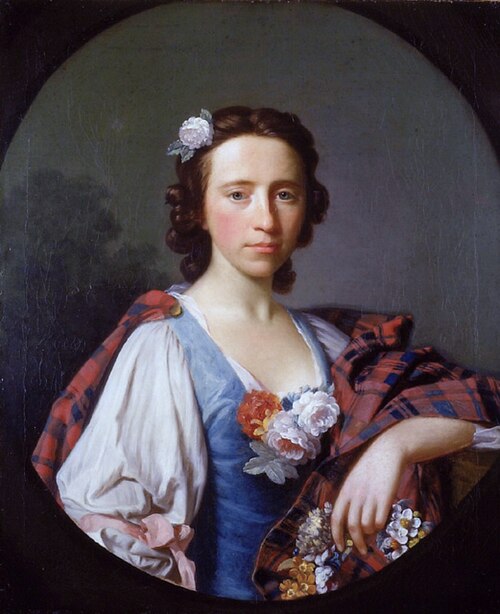
في هذه الأثناء، واصلت نساء اليعاقبة استخدام قماش الترتان بكثرة في الملابس (من الفساتين إلى الأحذية) والستائر والأدوات اليومية. [ 327 ] [ 317 ] وبينما كانت صور النبلاء من العشائر في القرن الثامن عشر، المتأثرة بالأسلوب الكلاسيكي (والتي رُسمت غالبًا خارج اسكتلندا)، تُظهرهم عادةً وهم يرتدون الترتان وملابس "المرتفعات"، إلا أن الكثير منها كان عبارة عن أزياء عسكرية موالية، نقيضًا للرسائل اليعقوبية؛ [ 328 ] فقد نذرت بتحول كبير في دلالات الترتان السياسية . ومع ذلك، يمكن اعتبار هذا الاستخدام المكثف للترتان بمثابة تمرد إلى حد ما، حيث أصبح سكان المرتفعات رمزًا "بطوليًا وكلاسيكيًا، وريثًا للفضائل البدائية". [ 329 ] وبحلول ستينيات القرن الثامن عشر، أصبح الترتان مرتبطًا بشكل متزايد باسكتلندا بشكل عام، وليس فقط بالمرتفعات، وخاصة في الوعي الإنجليزي. [ 330 ]

بعد احتجاجات واسعة (إذ شمل الحظر اليعاقبة والموالين على حد سواء)، أُلغي قانون اللباس عام ١٧٨٢، بفضل جهود جمعية هايلاند في لندن بالدرجة الأولى؛ [ ٣٣٢ ] وقدّم مشروع قانون الإلغاء جيمس غراهام، ماركيز غراهام (دوق مونتروز لاحقًا). [ ٣٣٣ ] استعاد بعض سكان المرتفعات زيهم التقليدي، [ ٣٣٤ ] لكن عمومًا، كان الفلاحون قد تخلوا عنه، واعتمدته الطبقتان العليا والمتوسطة كموضة. [ ٣٣٥ ] أُعيد توظيف الترتان ثقافيًا كزيٍّ أنيق أو كلباس قوة قتالية قوية وفعّالة" تابعة للتاج، وليس كرمز للتمرد المباشر. [ 336 ] يصف ر. مارتن (1988) هذا التحول بأنه " الانقسام الكبير في زي الترتان"، [ 337 ] حيث تخلى سكان المرتفعات الأصليون عن هذا القماش (قسرًا) ثم تبناه الجيش، وبالتالي المدنيون من غير سكان المرتفعات. خلال فترة الحظر، تراجعت تقنيات المرتفعات التقليدية في غزل الصوف وصبغه، ونسج الترتان، بشكل حاد. [ 94 ] [ 309 ] [ 103 ] ثم عاد الإنتاج التجاري للترتان إلى التمركز في الأراضي المنخفضة، في قرى المصانع على أطراف المرتفعات، [ 338 ] بين شركات مثل ويلسونز أوف بانوكبيرن (التي كانت آنذاك الشركة المصنعة المهيمنة)، [ 339 ] مع ازدياد الطلب على الترتان لزي الأفواج العسكرية . [ 340 ] استمر نسج الترتان في المرتفعات الاسكتلندية، [ 341 ] [ 342 ] بل وشهد ازدهارًا في أواخر العصر الجورجي. [ 341 ] وبحلول هذه الحقبة، أصبح الترتان شائعًا أيضًا في مناطق الأراضي المنخفضة، بما في ذلك فايف ولوثيان، والمراكز الحضرية في إدنبرة وستيرلنغ . [ 316 ] من عام 1797 إلى عام 1830 ، [ 274 ] كانت شركة ويلسون تصدر كميات كبيرة من الترتان (لملابس الرجال والنساء على حد سواء)، أولًا إلى المستعمرات البريطانية في غرينادا وجامايكا ( حيث كانت هذه المادة الرخيصة والمتينة والزاهية شائعة في ملابس المستعبدين ) .[338 ] وكان لديهم عملاء في إنجلترا وشمال ووسط أوروبا، وبعد ذلك بقليل في أمريكا الشمالية والجنوبية ومنطقة البحر الأبيض المتوسط. [ 343 ] [ 344 ] ومع ذلك، بحلول نهاية القرن الثامن عشر، واجهت شركة ويلسون منافسة شديدة (في مجال النسيج الاسكتلندي المدني) من النساجين الإنجليز فينورويتش. [ 345 ]
ولأن قانون اللباس لم يكن ينطبق على العسكريين أو النبلاء، فقد ارتبط الترتان تدريجياً بالأثرياء، بدلاً من سكان المرتفعات " النبلاء المتوحشين "، [ 346 ] [ 347 ] [ 348 ] منذ أواخر القرن الثامن عشر وحتى القرن التاسع عشر، [ 349 ] إلى جانب أنماط الملابس الوطنية المتأثرة بالجيش بشكل عام؛ [ 350 ] وقد تم إحياء الترتان والزي العسكري للمرتفعات بين المهتمين بالموضة في جميع أنحاء بريطانيا، حتى بين النساء اللواتي لديهن أقارب عسكريون. [ 351 ] أصبحت العشائر واليعقوبية ومعاداة الاتحاد (التي لم تعد تشكل تهديدًا فعليًا للاضطرابات المدنية) تُنظر إليها بشكل متزايد بنوع من الحنين إلى الماضي، [ 182 ] [ 352 ] [ 353 ] [ 348 ] خاصة بعد وفاة الأمير تشارلز إدوارد ستيوارت عام 1788، [ 354 ] حتى مع إثبات أفواج المرتفعات ولاءها وجدارتها. [ 348 ] وقد وفر تبني مظاهر " المرتفعات " ذات الطابع المحافظ [ 355 ] شعورًا بالتميز الوطني (والعسكري النخبوي) عن بقية بريطانيا بعد الاتحاد، دون تهديد الإمبراطورية . [ 356 ] حتى الملك جورج الرابع المستقبلي ارتدى الزي الملكي الاسكتلندي التقليدي في حفل تنكري عام 1789. [ 357 ] وبحلول تسعينيات القرن الثامن عشر، كان بعض النبلاء يساعدون في تصميم أقمشة الترتان لاستخدامهم الشخصي، وفقًا للسجلات المتبقية من ويلسونز. [ 182 ] ويُقال إن جين (ماكسويل) غوردون، دوقة غوردون ، "أدخلت الترتان إلى البلاط الملكي ... مرتديةً وشاحًا من حرس بلاك ووتش، الذي عُيّن ابنها فيه حديثًا"، عام 1792؛ وقد أطلقت موضة ارتداء الترتان في لندن وباريس، على الرغم من أنها لم تكن بمنأى عن السخرية من قبل المنتقدين. [ 358 ]
كتب ر. مارتن (1988)، من منظور تاريخي ، أنه بعد قانون اللباس: [ 337 ]
كانت فكرة الزي الاسكتلندي التقليدي مخزنة في الذاكرة التاريخية الجماعية؛ وعندما أُعيد إحياؤها في السنوات التي سبقت عام 1822، كانت قد طواها النسيان لجيلين أو ثلاثة أجيال في الزي المدني، وكان من الممكن تذكرها، وإن كان ذلك بشكل خادع وساذج، على أنها الزي القديم للاسكتلنديين، وليس الزي الذي كان يُرتدى حديثًا مثل الزي الفلاحي القياسي قبل عام 1746. كان حظر الترتان ناجحًا للغاية، ولكنه كان معاديًا جدًا لعملية تاريخية طبيعية، لدرجة أنه شجع على إعادة تأكيد الترتان بشكل عنيف، بموافقة إحساس زائف بالتاريخ، في القرن التالي.
أدت الأحداث المضطربة التي شهدتها اسكتلندا في القرن الثامن عشر ليس فقط إلى استخدام أوسع لأقمشة الترتان بين عامة الناس، ولكن أيضًا إلى ظهور فئتين دائمتين من الترتان: الترتان الخاص بالفوج والترتان الخاص بالعشائر في نهاية المطاف.
نقوش الترتان الخاصة بالفوج

بعد فترة ميليشيات العشائر المبكرة وكتائب المرتفعات المستقلة ، تم تشكيل أكثر من 100 كتيبة من أفواج المشاة النظامية، وأفواج الاحتياط، وأفواج الميليشيا، وأفواج المتطوعين، بين عام 1739 تقريبًا ونهاية الحروب النابليونية عام 1815، في المرتفعات أو في معظمها، [ 359 ] وكان جزء كبير منها يرتدي الزي الاسكتلندي التقليدي. ومن بين هذه الوحدات، لم يكن لدى سوى عدد قليل منها أزياء موحدة مميزة بنقوش الترتان، ولم يُسجل منها سوى عدد قليل حتى يومنا هذا.

تم دمج كتائب المشاة الاسكتلندية (IHCs) عام 1739 لتشكيل الفوج 43 (لاحقًا 42) للمشاة ، [ 360 ] والذي عُرف باسم "الحرس الأسود". [ 361 ] كان هذا الفوج أول فوج اسكتلندي حكومي رسمي ، جزءًا من الجيش البريطاني ، وكان أفراده يرتدون التنورة الاسكتلندية الكبيرة ذات الحزام كزي رسمي، والتنورة الاسكتلندية الصغيرة المصممة خصيصًا كزي غير رسمي. [ 362 ] [ 303 ] [ 363 ] أما بالنسبة للزي الرسمي، [ 364 ] فقد استخدموا نقشًا مميزًا من الترتان، صُمم خصيصًا لهذه الوحدة. [ 365 ] كان يُطلق عليه في الأصل اسم "النقش الترتاني الثاني والأربعون"، [ 365 ] لذا فمن المرجح أنه لم يُعتمد إلا بعد إعادة ترقيم الوحدة إلى الفوج الثاني والأربعين عام 1749. [ 224 ] ويبدو أن النقش الترتاني كان مبنيًا على تلك التي استخدمتها كتائب المشاة الهندية سابقًا، ولكن مع إضافة مربعات سوداء مزدوجة على شكل خطوط الترام. [ 224 ] [ 366 ] استُخدم نمط بلاك ووتش من قِبل العديد من الأفواج الأخرى، وتشير التقديرات إلى أنه لتكسية جميع هذه الأفواج، كان لا بد من نسج ما بين 48 و64 كيلومترًا من النقش الترتاني قبل عام 1750 وحده. [ 58 ] وأصبح هذا النقش أساسًا للعديد من النقوش الترتانية اللاحقة للأفواج (وفي النهاية للعشائر). [ 224 ] لا يزال هذا الزي شائع الاستخدام بين عامة الناس تحت مسميات "بلاك ووتش" و"غافرمنت" وأي من "أولد كامبل " أو "هانتينغ غرانت " أو "هانتينغ مونرو "، [ 224 ] ولكنه يُطلق عليه رسميًا اليوم اسم "غافرمنت رقم 1" من قِبل الجيش. كان للفوج 42 أنماط تارتان منفصلة لتنورته الصغيرة حتى حوالي عام 1814 [ 364 ] [ 367 ] (استُخدمت أيضًا لأغطية الكتف ذات الأحزمة الخاصة بقوات غرينادير )، [ 364 ] ولعازفي المزمار ، [ 368 ] [ 369 ] ولعازفي الطبول. [ 370 ]
بعد الانتفاضات اليعقوبية ، كان تشكيل فوجٍ لخدمة الملك، بالنسبة للعديد من ملاك الأراضي الاسكتلنديين ، وسيلةً لإعادة الاعتبار لاسم العائلة، وضمان الولاء المُستجد للتاج الهانوفري ، وكسب رضا الملك (بل واستعادة العقارات المصادرة). [ 371 ] وباعتبارهم مُستثنين من قانون اللباس ، مُنح رجال هذه الأفواج المرتفعاتية التابعة للإمبراطورية الزي المرتفعاتي، وأصبحت "التنانير والغليونات التي كانت تُعتبر بربرية في السابق تُنظر إليها الآن على أنها قومية "آمنة" داخل الجيش. [ 372 ] منذ حوالي عام 1770 وحتى القرن التاسع عشر، أنتجت شركة ويليام ويلسون وأبناؤه في بانوكبيرن ، وهي الشركة الرائدة في نسج الترتان، جميع أقمشة الترتان الخاصة بالأفواج تقريبًا. [ 339 ] أما زيّ الأفواج، بما في ذلك الترتان، فقد تُرك - عادةً ضمن نظام الألوان العام المُستوحى من فوج بلاك ووتش، وهو الأسود والأزرق والأخضر - لقادتها. [ 373 ] [ 374 ]

تتضمن بعض الأقمشة الاسكتلندية القديمة المتبقية ما يلي:
- استخدمت فرقة لاودون هايلاندرز (الفوج 64، الذي تم تشكيله عام 1745) زيًا منقوشًا مشابهًا لزي فرقة بلاك ووتش، ولكن مع مربعات حمراء وصفراء متداخلة، وبدون خطي الترام الأسودين الموجودين في زي بلاك ووتش. [ 375 ] [ 376 ]
- استخدمت الكتيبة 78 (المرتفعات) أو كتيبة روس-شاير بافس (التي تأسست عام 1793)، وكتيبة ماكلويد للمرتفعات (الكتيبة 73، ثم الكتيبة 71، التي تأسست بين عامي 1777 و1778)، وفوج سي فورث هايلاند الأصلي (الكتيبة 78، ثم الكتيبة 72، التي تأسست عام 1778) [ av ] في البداية نقش بلاك ووتش، ثم اعتمدت في عام 1787 نسخة معدلة منه بخطوط رفيعة حمراء وبيضاء. [ 377 ] [ 378 ] [ 379 ] وأصبح هذا النقش في النهاية نقش عشيرة ماكنزي ، [ 378 ] ولا يزال يُستخدم كنقش عسكري بريطاني رسمي، ويُعرف باسم "الحكومة رقم 5A". وأصبح نقش مختلف قليلاً، باستبدال اللون الأبيض باللون الأصفر، أحد نقوش عشيرة ماكلويد . [ 380 ]
- استخدم فوج المشاة الرابع والسبعون (المرتفعات) ( الذي تأسس عام ١٧٨٧) [ aw ] نسخة أخرى من نقش الترتان الخاص بـ"بلاك ووتش" مع مربعات بيضاء مزخرفة بخطوط سوداء. [ ٣٨١ ] وفي عام ١٧٨٧ أيضًا، استخدم فوج المشاة الخامس والسبعون (المرتفعات) ، والذي أصبح لاحقًا الفوج الخامس والسبعون (ستيرلينغشاير)، على الأرجح نقش ترتان أكثر تميزًا، غير مستوحى من "بلاك ووتش"، باللونين الأرجواني والأسود على خلفية خضراء، مع مربعات بيضاء وسوداء رفيعة؛ وقد أطلق عليه ويلسون لاحقًا اسم "رقم ٦٤ أو أبيركرومبي"، وعلى الرغم من أنه لم يُعتمد كنقش ترتان لعشيرة أبيركرومبي ، إلا أن نسخًا مختلفة منه أصبحت نمطين مختلفين للعشيرة. [ ٣٨٢ ]
- ارتدى فوج غوردون هايلاندرز (الفوج 100، ثم الفوج 92، الذي تأسس عام 1794) نسخة معدلة من زي بلاك ووتش ، هذه المرة بنقشة مربعات صفراء رفيعة. [ 383 ] [ 384 ] وفي بادرة نادرة للمنافسة مع ويلسونز، صُمم هذا النمط عام 1793 وقدمه النساج ويليام فورسيث من هنتلي ، أبردين. [ 385 ] وأصبح هذا النمط هو الزي الترتاني الرئيسي لعشيرة غوردون . [ 386 ] [ 387 ] كما استخدم فوج فينسيبيلز الثامن (روثساي وكايثنيس) زيًا مشابهًا تقريبًا (ربما بنقشة مربعات صفراء بعرض مختلف) . [ 388 ]
- استخدم متطوعو كاميرون (الكتيبة 79، التي أصبحت لاحقًا كتيبة كاميرون هايلاندرز الملكية، والتي تأسست عام 1793) نقشًا مميزًا نسبيًا ، أصبح فيما بعد نقش عائلة كاميرون أوف إيراخت، فرع عشيرة كاميرون . [ 55 ] [ 389 ] [ 390 ] وهو يشبه في بنيته نقش بلاك ووتش، لكنه يفتقر إلى المربعات السوداء المتداخلة، ويحتوي على عدد من المربعات الصفراء والحمراء المتداخلة. ويُقال إنه صُمم من قِبل قائد الوحدة أو أحد أفراد العائلة. [ 55 ] [ 391 ]
- استخدمت فرقة فريزر فينسيبلز (التي تم تشكيلها في الفترة 1794-1795) زيًا منقوشًا بخلفية حمراء وأشرطة خضراء وزرقاء، لا علاقة له بأسلوب بلاك ووتش. [ 392 ] [ 393 ]
- ربما ارتدى فوج ساذرلاند هايلاندرز (93) الذي تم تشكيله عام 1799، ولاحقًا فوج أرجيل وساذرلاند هايلاندرز (برينسيس لويز، الذي تم تشكيله عام 1881 من خلال دمج الفوج 93 مع فوج أرجيلشاير هايلاندرز 91 )، نسخة أخف من بلاك ووتش، [ 394 ] [ 395 ] والذي يستخدم الآن أحيانًا كواحد من أنماط الترتان الخاصة بعشيرة ساذرلاند ؛ [ 396 ] [ 397 ] كما أنه لا يزال يستخدم عسكريًا كطقم "الحكومة رقم 1A".
- كان لدى متطوعي عشيرة دوناتشي المخلصين (الذين تم تشكيلهم عام 1803) زيهم الموحد الخاص، والذي تم اعتماده لاحقًا كزي صيد لعشيرة روبرتسون/دوناتشي/دنكان . [ 398 ] [ 399 ]
- ارتدى فوج المرتفعات التابع لدوق ألباني (المعروف سابقًا باسم فوج سي فورث الثاني والسبعين)، خلال فترة ارتداء السراويل العسكرية (1823-1881)، نقشًا منقوشًا يُعرف باسم "نقش الأمير تشارلز إدوارد ستيوارت" ، وهو مشابه لنقش ستيوارت الملكي ، [ 110 ] كما هو موضح في لوحة فنية من تلك الفترة . وقد تم التعرف عليه من خلال عينات قماش باقية من منتصف القرن الثامن عشر [ 62 ] (قبل تأسيس الفوج)، وهو أحد أقدم النقوش التي لا تزال تُنتج باستمرار. [ 62 ]

مع مطلع القرنين الثامن عشر والتاسع عشر، كانت النساء في اسكتلندا حريصات بشكل خاص على ارتداء الأقمشة المخططة الموحدة لأزواجهن، المصنوعة من أجود أنواع الأقمشة، وفقًا لسجلات عائلة ويلسون من بانوكبيرن. [ 358 ] بعد أن أثبتت أفواج المرتفعات شجاعتها وفعاليتها في العديد من الحملات العسكرية، ساهم المجد المرتبط بها بشكل كبير في الحفاظ على الاهتمام بالأقمشة المخططة والتنانير الاسكتلندية، في البداية بين طبقة النبلاء ثم بين عامة الناس، وهو اهتمام كان من الممكن أن يندثر لولا ذلك بسبب حظر قانون اللباس. [ 400 ] تم التخلي عن الوشاح المخطط ذي الحزام لصالح التنورة القصيرة، حوالي عام 1814. [ 347 ] [ 364 ] بعد موجة "التارتان العشيري" في أوائل ومنتصف القرن التاسع عشر ، تبنت العديد من أفواج المرتفعات الاسكتلندية اللاحقة بعضًا من أنماط التارتان العشائرية التي تم سكها حديثًا لزيّها الرسمي (عكسًا للتدفق الأصلي من التارتان العشيري إلى التارتان الخاص بالفوج). ولا يزال بعض هذه الأنماط مستخدمًا في الأفواج حتى اليوم.
تم تجهيز أفواج الأراضي المنخفضة (التي يعود تاريخها بشكل أو بآخر إلى عام 1633، ولم ترتدِ قط زي المرتفعات الاسكتلندية، بل زيًا مشابهًا لزي الجيش النظامي) بسراويل منقوشة بنقشة الترتان عام 1881. وقد ربط هذا الزي بينها وبين أفواج المرتفعات الاسكتلندية التي كانت ترتدي التنورة المنقوشة، وفي الوقت نفسه ميّزها عنها . [ 401 ] وكان يُستخدم عادةً نقش الترتان الخاص بـ"الحكومة" (بلاك ووتش)، على الرغم من أن بعض الوحدات قامت بتنويع أزيائها لاحقًا. وفي أوائل القرن العشرين، تم تخصيص نقوش ترتان جديدة لعدة أفواج من المرتفعات الاسكتلندية، وكانت هذه النقوش خاصة بالعشائر وليست خاصة بالوحدات. [ 302 ]
اليوم، يُستخدم نحو اثني عشر نوعًا من الترتان رسميًا (ونصف آخر بشكل غير رسمي) بين جميع الأفواج الاسكتلندية التاريخية المتبقية ، والتي دُمجت إلى حد كبير منذ عام 2006 ككتائب في الفوج الملكي الاسكتلندي ، التابع للفرقة الاسكتلندية والويلزية والأيرلندية . [ 402 ] لا تُرتدى هذه الأنواع من الترتان إلا في الزي الرسمي وزي فرق المزامير، بعد التغييرات العملية التي طرأت على الزي الرسمي في بداية الحرب العالمية الثانية، والتي ألغت التنانير والسراويل المصنوعة من الترتان في الزي غير الرسمي. كما أن لبعض الوحدات العسكرية في بلدان أخرى أنواعها الخاصة من الترتان. إجمالًا، هناك ما لا يقل عن 38 نوعًا موثقًا من الترتان ارتبطت في وقت أو آخر بالأفواج، على الرغم من أن العديد منها ارتبط أيضًا بالعشائر. [ ax ]
نقوش العشائر
باستثناء حالة واحدة تعود إلى عام 1618 [ 404 ] وأخرى إلى حوالي 1703-1715 [ 258 ] (والتي يبدو أن كلتيهما لم تنجُ)، يُعتقد عمومًا أن الأقمشة المخططة المرتبطة بالأسماء بالعشائر الاسكتلندية تعود في الغالب إلى أوائل ومنتصف القرن التاسع عشر، [ 9 ] [ 405 ] [ 406 ] [ 407 ] [ 140 ] [ 408 ] [ 409 ] وبعضها يعود إلى أواخر القرن الثامن عشر على أقرب تقدير، [ 92 ] [ 410 ] [ 348 ] وذلك بحسب تعريف "قماش العشيرة المخطط". إن الاعتقاد بأن أقمشة العشائر المخططة نظام "قديم" للتمييز الرمزي بين أفراد العائلة شائع، بل ومتحمس، ولكنه يفتقر إلى أدلة جوهرية رغم كثرة الأدلة المضادة له. هو ما أطلق عليه ج. س. طومسون (1992) اسم "أسطورة الترتان العظيمة"، [ 140 ] وجيمس د. سكارليت (1990) اسم "عبادة الترتان". [ 255 ] ووصفه المقدم م. م. هالدين (1931) بأنه افتراض "اكتسب ثقلاً هائلاً من مجرد التكرار" دون "فحص نقدي للأدلة". [ 411 ] ولاحظ بارنز وآلن (1956): [ 92 ]
لا شك أن العديد من "المجموعات" كانت تقليدية لبعض المناطق لقرون، لكن النظرية القائلة بأنها كانت نوعًا من الزي الرسمي للقبيلة يبدو أنها فقدت مصداقيتها تمامًا الآن.
ردًا على الادعاء بأن نقوش الترتان العشائرية لها "دلالة سياسية قديمة"، كتب ريتشارد مارتن ، أمين متحف معهد الأزياء للتكنولوجيا ، ولاحقًا معهد الأزياء في متحف متروبوليتان للفنون ، (1988): "هذا الادعاء التاريخي خاطئ، ويمكن إثبات خطئه الفادح". [ 412 ] ووفقًا لأمين المعارض الوطنية في اسكتلندا ، إيه إي هاسويل ميلر (1956): [ 408 ]
باختصار، لا يوجد أي دليل موثق يدعم الدلالة المفترضة للشعارات أو "شارة العائلة" للنقش الاسكتلندي، ويمكن تفسير نشأة هذه الأسطورة بمصادفة سعيدة بين رغبة العملاء المحتملين والصانع والبائع. ورغم المبالغة في تقدير قدم "نقشات العشائر"، إلا أن ما يمكن تسميته بتسجيلها غير الرسمي حدث خلال القرن التاسع عشر، وإذا ما اعتبرنا أن مئة وخمسين عامًا كافية لخلق "تقليد"، فقد يكون من المقبول قبول الأمر الواقع كنوع من التباهي الوطني اللطيف - وربما ليس عديم الفائدة تمامًا .
وأضاف الباحث والقيّم على الأزياء الاسكتلندية جون تيلفر دنبار: [ 413 ]
إن الرغبة في إضفاء عراقة أكبر على الآثار بمختلف أنواعها تفوق حقيقتها أمرٌ متعدد الجوانب. ومن المؤسف أن تُشوّه التقاليد بهذه الطريقة، وقد شكّل قبول هذه الادعاءات من قِبل الباحثين اللاحقين عائقًا دائمًا أمام البحث. وكثيرًا ما يتم التغاضي عن المهمة الأصعب المتمثلة في الرجوع إلى المصادر الأصلية لصالح القبول السهل.
أجرى بيتر إسليا ماكدونالد من هيئة الترتان الاسكتلندية بحثًا من هذا القبيل ، حيث قام - باستخدام كل سجل وعينة متاحة من سجلات الشركة - بإعادة بناء وتتبع تاريخ أنماط الترتان بدءًا من النساجين الرائدين في أواخر العصر الجورجي وحتى العصر الإدواردي، وهي شركة كان لها دور فعال في التصميم الفعلي لأنماط الترتان العشائرية ونشرها وقبولها. وكانت خلاصة بحثه: [ 409 ]
اليوم، تُركز الكتب والمتاجر المتخصصة في أزياء المرتفعات الاسكتلندية بشكل رئيسي، إن لم يكن حصريًا، على أقمشة الترتان العشائرية. وقد تُوحي بأن هذه هي الأنماط الفعلية التي ارتدتها العشائر الاسكتلندية عبر التاريخ، وصولًا إلى معركة كولودين عام 1746. لكن هذا غير صحيح. فمعظم الأنماط التي تحمل أسماء العشائر والتي تعود إلى ما قبل عام 1850 لا يُمكن تتبعها إلا إلى أوائل القرن التاسع عشر، وإلى شركة النسيج الشهيرة ويليام ويلسون وأبنائه في بانوكبيرن، بالقرب من ستيرلنغ.
وُصفت فكرة أقمشة الترتان العشائرية بأنها "قصة تسويقية ناجحة بشكل مذهل" [ 405 ] ومثال على تقليد مُخترع ، [ 414 ] على الرغم من أنها لاقت قبولاً واسعاً من العشائر التي تنتمي إليها ومن صناعة النسيج بدءاً من عام 1815، وكذلك من عامة الناس منذ حوالي عام 1822 - "تبناها بحماس كل من مرتديها وبائعيها على حد سواء". [ 415 ]
كانت أسلاف الأقمشة العشائرية عبارة عن أقمشة مميزة إقليميًا (منذ أوائل القرن الثامن عشر على الأقل، وربما حتى القرن السادس عشر)، وأقمشة الزي العسكري (من عام 1725 فصاعدًا)، وأقمشة شخصية للنبلاء (يعود تاريخها إلى منتصف القرن الثامن عشر إن لم يكن قبل ذلك).
تُعدّ أقمشة الترتان العشائرية اليوم جانبًا مهمًا من جوانب العشائر الاسكتلندية، ولكل عشيرة على الأقل نقش ترتان واحد يُنسب إليها (بعضها رسمي، وبعضها غير رسمي، وفي حالات قليلة يتشارك عدة عشائر نقش ترتان واحد). قد لا تكون أقمشة الترتان العشائرية تقليدية في الأصل، لكنها أصبحت شائعة.
نقاش طويل الأمد

أيد أو عارض العديد من الكتّاب المتخصصين في الأقمشة الاسكتلندية (التارتان ) فكرة استخدام العشائر لأقمشة تارتان مميزة كعلامة تعريفية، مُفسرين الأدلة الشحيحة بما يتناسب مع وجهة نظرهم. فبينما رأى أحدهم زيًا عسكريًا أو وشاحًا نبيلًا، رأى آخر علامة تعريفية للعشيرة. وكان الباحث السلتي جون فرانسيس كامبل من جزيرة إيسلاي، الذي عاش في القرن التاسع عشر ، على يقين من أنه على الرغم من أن الأقمشة الاسكتلندية عمومًا قديمة جدًا، فإن "أقمشة التارتان الموحدة للعشائر ليست أقدم من أفواج العشائر"، وهو رأي أيده هالدين (1931) في سلسلة مقالات في مجلة "ذا سكوتس ماغازين " ، [ 418 ] وتبعه العديد من الكتّاب المتخصصين في الأقمشة الاسكتلندية لاحقًا.
قد تكون أقدم الأدلة المُلخّصة أدناه أقرب إلى زيّ الميليشيا منها إلى زيّ العشيرة ككل؛ ويصعب اليوم الجزم بهذا التمييز في تلك الحقبة، لأن القوات آنذاك كانت بقيادة النبلاء ملاك الأراضي، وكانت الوحدة تُشكّل في الغالب على أرض قائدها من أفراد عشيرته. [ az ] وينطبق هذا الغموض التعريفي أيضًا على قصيدة غراميد لعام 1691 ؛ [ 251 ] التي تصف ما يبدو أنه بعض أنماط الترتان الخاصة بالزيّ العسكري، [ ba ] ويمكن إعادة تفسيرها على أنها تدعم فكرة مبكرة عن أنماط الترتان العشائرية، إذا أراد المرء تعريفها بأنها "ما كان يرتديه معظم رجال العشيرة في المعركة"؛ وتؤكد سكارليت (1990) وجود "جدل حاد" لصالح تفسير أنماط الترتان العشائرية. [ 253 ] مع ذلك، ذكر روبرت جاميسون (1818) أن أقمشة الترتان الخاصة برجال المرتفعات الاسكتلندية ، والمخصصة للحرب والصيد، كانت مختلفة عن ملابسهم اليومية؛ إذ كانت مصنوعة من قماش أكثر خشونة، وتستخدم أنماطًا مصممة لتندمج مع البيئة الطبيعية، وهي ما يُعرف باسم "كاث داث " أو "كاث دا" (لون الحرب). [ 93 ] [ bb ] وهذا يُثير بعض الشكوك حول تفسير أقمشة الترتان الخاصة بالميليشيات على أنها أقمشة ترتان عامة للعشائر. معظم أقمشة الترتان الخاصة بالزي العسكري في الفوج لاحقًا (والتي لم تُعتمد كأقمشة ترتان للعشائر إلا في أوائل القرن التاسع عشر تقريبًا، أو في أواخر القرن الثامن عشر في حالات قليلة، إن اعتُمدت أصلًا) كانت عبارة عن تنويعات على ترتان "بلاك ووتش" الداكن ذي القاعدة الخضراء، كما هو موضح أعلاه.
لاحظ ج. س. طومسون (1992) "ميلًا فيكتوريًا نموذجيًا للاستشهاد بمؤلفين سابقين دون محاولة تُذكر لتقييم أقوالهم ... لا يمكن للتحليل الحديث أن يكون غير نقدي إلى هذا الحد." [ 420 ] ولاحظت سكارليت (1990) في سياق متصل: [ 421 ]
تُوجد أدلةٌ مُحتملةٌ بكثرةٍ في أدبيات الترتان، القديمة منها والمتأخرة، وتتمثل في عرض رأيٍ ما كحقيقةٍ وإضافة مرجعٍ تاريخيٍّ ذي صلةٍ أو غير ذات صلةٍ لدعمه، سواءً بالتلميح أو بالتصريح بأن هذا يُثبت وجهة النظر. ولا يُهمّ إن لم يُثبت هذا شيئًا على الإطلاق، طالما أن طريقة العرض تتمتع بقدرٍ كافٍ من المصداقية؛ فبهذا الأسلوب، تُقبل أكثر النظريات غرابةً، وتُنسخ من كتابٍ إلى آخر، لتُصبح جزءًا من تراث الترتان. ومن البديهي تقريبًا أنه كلما كانت النظرية أكثر غرابةً، كلما زاد قبولها .
حتى دي دبليو ستيوارت (1893)، الذي كان متعاطفًا في بعض الأحيان مع فكرة وجود أنماط الترتان العشائرية قبل القرن التاسع عشر، كتب: [ 422 ]
يؤكد البعض أن ما يُسمى بأنماط العشائر قديمٌ جدًا، ويزعم العديد من الكُتّاب عمومًا أن هذه التصاميم استُخدمت كتمييزٍ للعشائر منذ أقدم العصور. ... وقد دفع هالة الرومانسية التي أحاطت بالنضال اليعقوبي الكثيرين، ولا تزال تدفع آخرين، إلى قبول أقوالٍ كانت ستخضع لتدقيقٍ أكبر في ظروفٍ أخرى، باعتبارها أصيلة وموثوقة. وهكذا، حظيت الأقمشة المخططة بشعبيةٍ واسعة، ومن يجد منها ما يحمل اسمه يقبله كنمطٍ قديمٍ لعشيرته دون عناء البحث أو طرح أي أسئلةٍ محرجة.
انخرط الفيكتوريون أيضًا في بعض الاختراعات الخيالية. فإلى جانب التزوير الصريح لـ" آل ستيوارت سوبيسكي " ، هناك حالة متطرفة أخرى هي حالة تشارلز روجرز ، الذي ادعى في كتابه " الحياة الاجتماعية في اسكتلندا " (1884-1886) بشكل غريب أن التصاميم التصويرية للبيكتيين القدماء - التي كانت تُرسَم أو تُوشَم على أجسادهم، وكانوا يخوضون المعارك عراة [ 423 ] - لا بد أنها كانت "ترمز إلى العائلات أو القبائل التي ينتمون إليها"، وبالتالي "نشأت من هذه الممارسة نقشة الترتان الخاصة بالقبائل السلتية". [ 424 ] وزعم آخر أن نقشة الترتان ابتكرتها القديسة مارغريت الاسكتلندية قبل حوالي ألف عام . [ 424 ]
بغض النظر عن عدم موثوقية الكتّاب الأوائل (والناسخين اللاحقين لهم)، فإن جزءًا من الالتباس والجدل حول أنماط الترتان العشائري يعود إلى التعريفات. كان السير توماس إينيس من ليرني ، الذي كتب عام 1938 ووُصف بأنه "مُتحمس للغاية لتقنين [الترتان] وأهميته"، [ 425 ] أحد أشد المؤيدين لفكرة أنماط الترتان العشائرية القديمة جدًا (بالمعنى المحدد لـ "الأنماط التي استخدمتها عشائر معينة باستمرار لفترة من الزمن"، وليس "الأنماط التي سُميت بأسماء عشائر معينة وادّعت ملكيتها حتى الوقت الحاضر"). [ قبل الميلاد ] ورأى أن بعض الأنماط ارتبطت تدريجيًا بعائلات معينة (عشائر وفروعها) بمرور الوقت؛ [ 426 ] وأن أراضي العشائر أصبحت مستقرة في الغالب بحلول القرن السادس عشر. [ 427 ] يُشير مرجع دي دبليو ستيوارت لعام 1893 إلى حالاتٍ عديدةٍ لربط أنماط الترتان القديمة للمناطق، والتي ارتبطت لاحقًا، لفترةٍ من الزمن، بعائلاتٍ مُحددةٍ قبل أن تتبنى هذه العائلات في القرن التاسع عشر أنماط ترتانٍ خاصةٍ بها (عادةً ما تكون مُختلفة). [ bd ] كتب إينيس من ليرني عن أنماط الترتان العشائرية أنه (بغض النظر عن حالة عام 1618 غير العادية التي سيتم تناولها لاحقًا) "كان الميل هو التركيز على تشابه اللون العام أكثر من تشابه التفاصيل"، [ 430 ] وهو شعورٌ غامضٌ لا يُشير إليه مصطلح "نمط الترتان العشيري" عادةً. كما استنتج أنه "لم تُصبح أنماط الترتان العشائرية علاماتٍ واعيةً ومعترفًا بها للتعريف إلا في القرن الثامن عشر تقريبًا". [ 431 ] ومع ذلك، فإن المواد المصدرية المتبقية من تلك الفترة تفتقر إلى هذا "الاعتراف" ولا تشير في الواقع إلى اعتماد واسع النطاق لأنماط الترتان الرسمية للعشائر (مع أسماء العشائر، وخصوصية التفاصيل، والغرض الرمزي والتعريفي) حتى أوائل القرن التاسع عشر.
أقدم الأدلة
أثار كتاب " سوبيسكي ستيوارت " (1842)، ولاحقًا كتاب "دي دبليو ستيوارت" (1893)، اهتمامًا كبيرًا ببعض التغييرات التي طرأت على ضريبة الأقمشة المنسوجة التي كان يدفعها سكان نورابول في جزيرة إيلا لأسيادهم. ففي عام 1587، في عهد آل ماكلين ، كان من المقرر أن يكون القماش أبيض وأسود وأخضر؛ وفي عام 1617، في عهد آل ماكنزي ، تغيرت ضريبة القماش المطلوبة إلى أبيض وأسود ورمادي. وقد رجّح هذان الكاتبان، دون أي دليل إضافي، أن هذا التغيير يُمثل تغييرًا في ألوان الترتان الخاصة بالعشائر. [ 432 ] [ be ]
إن المثال الواضح الوحيد على وجود نمط تارتان خاص بعشائر معينة، يعود إلى فترة مبكرة، بدلاً من مجرد توحيد إقليمي ولاحق على مستوى الأفواج، وُجد في رسالة مؤرخة عام 1618 من السير روبرت جوردون من جوردونستون (الذي كان يعمل لدى إيرل ساذرلاند ) إلى موراي من بولروسي ، رئيس فرع موراي في ساذرلاند ، ولكنه كان تابعًا لإيرل ساذرلاند، رئيس عشيرة ساذرلاند (الذي أصبح بدوره تابعًا لإيرلات جوردون مؤخرًا ). طلبت الرسالة (التي أُعيد اكتشافها عام 1909) من بولروسي "إزالة الخطوط الحمراء والبيضاء من أردية رجاله لجعل زيهم متناسقًا مع زي العشائر الأخرى" في ساذرلاند. [ 404 ] لم تُحدد الرسالة نمط التارتان المطلوب؛ وقد وُجدت تفسيرات متضاربة بشدة، بل إنه ليس من المؤكد حتى ما إذا كان هذا النمط هو الذي وصل إلينا. [ bf ]
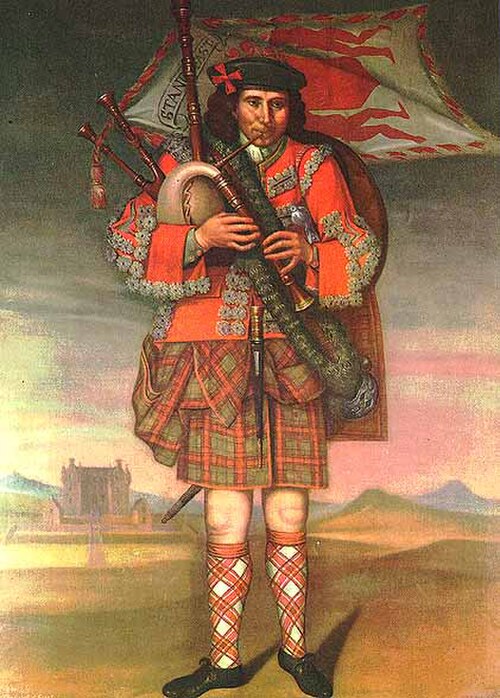
مثال على مطابقة الألوان العامة: في عامي 1703-1704، أمر رئيس عشيرة غرانت رجاله " المدافعين " بالحصول على ملابس من قماش الترتان الأحمر والأخضر [ 257 ] (وُصف بشكل غامض بأنه "واسع" [ 257 ] ولكن لم يُحدد بالتفصيل). [ 174 ] يبدو أن غرانت لم يُوفر القماش لهم بطريقة مركزية، بل ترك لكل رجل مهمة توفيره بوسائله الخاصة (تحت طائلة غرامة). [ 257 ] "لم يأمرهم بارتداء "ترتان عشيرة غرانت"، كما هو متوقع إذا كان مثل هذا الترتان موجودًا في ذلك الوقت." [ 440 ] تستخدم بعض أنواع ترتان غرانت الحديثة أيضًا اللونين الأحمر والأخضر؛ صمم أحدها ويلسونز من بانوكبيرن في عام 1819 باسم "نيو بروس" وسرعان ما اعتمده كل من غرانت من ريدكاسل [ 441 ] وعشيرة دروموند ؛ [ 442 ] أُعيد بناء إحداها من صورة تعود لعام 1838؛ [ 443 ] وظهرت أخرى لأول مرة في كتاب Vestiarium Scoticum المشكوك في مصداقيته الصادر عام 1842 [ 444 ] [ 445 ] ؛ وهكذا دواليك – لا يوجد أي منها له تاريخ يعود لما قبل القرن التاسع عشر. ومع ذلك، أعلن د. و. ستيوارت (1893) استنادًا إلى هذه المادة الضئيلة أن هناك "سلسلة كاملة من الأدلة ... على وجود نمط عشائري موحد في بداية القرن الثامن عشر" – على الرغم من ملاحظته الخاصة بأن صور كبار أفراد عائلة غرانت في تلك الحقبة لا تُظهرهم وهم يرتدون أقمشة الترتان المتناسقة، [ 257 ] [ 253 ] ناهيك عن تلك التي تتفق مع أقمشة الترتان "الرسمية" الحديثة لعائلة غرانت. [ 406 ] [ 446 ] [ bh ] على الرغم من اعتقاد سكارليت (1990) أن هذا ينبئ بـ"فكرة الترتان العشيري"، إلا أنه يشير إلى أنه "لو كان رجال ستراثسبي معتادين على ارتداء الترتان الموحد، لما كان من الضروري إصدار أوامر لهم بذلك" [ 253 ] (مرتين). ويلاحظ أيضًا أن ملاك غرانت في تلك الفترة كانوا حريصين بشكل غير عادي على التوحيد، حتى أن أحدهم أصدر لوائح خاصة بالشارب لأفراد العشيرة؛ [ 253 ] لا يمكن اعتبار الزي الأحمر والأخضر الذي ارتداه غرانت نموذجًا للممارسة اليومية في المرتفعات الاسكتلندية. يشير تيلفر دنبار (1979) إلى أن الانضباط العسكري في المرتفعات كان شبه معدوم: "بالنسبة لهؤلاء الزعماء المستقلين في المرتفعات، كان أي نوع من القيود مزعجًا ولا يُطاق، وكان فرض أي انضباط عسكري صارم على أتباعهم أمرًا مستحيلًا." [ 447 ] ومع ذلك، يؤكد ماكاي (1924) أن ميليشيا غرانت كانت ترتدي زيًا موحدًا من الترتان في عام 1715. [ 258 ]
في عام ١٧١٨، نشر آلان رامزي (الكاتب، والد الفنان الذي يحمل الاسم نفسه) قصيدة "تارتانا" ، التي جمعت بين الألوان وأسماء العائلات اللاتينية: "... إذا كانت وجنتا كامبيلا الحمراوان المتألقتان تزينان .... إذا كانت مبطنة بريش ستيوارت الأخضر الذي نراه ... أو رامسيا خاصتك ، محاطة باللون الأزرق ....". وقد اعتُبر هذا أحيانًا دليلًا على وجود أقمشة الترتان العشائرية المبكرة، على الرغم من أنه ربما كان يشير فقط إلى حواف وبطانات الملابس (كانت الحواف الملونة شائعة على السترات في ذلك الوقت). [ ٤٤٨ ] [ bi ] ومما يزيد الأمر سوءًا بالنسبة لهذه الفرضية، أن أقمشة الترتان الخاصة بعائلة كامبل خضراء في الغالب، وعائلة ستيوارت حمراء، وعائلة رامزي حمراء وخضراء. أما أقمشة الترتان الحمراء الموجودة من عائلة كامبل فهي جميعها إعادة بناء حديثة لأنماط (مختلفة عن بعضها البعض) من صور شخصية؛ [ 450 ] [ 451 ] [ 452 ] يعود تاريخ أقمشة الترتان ستيوارت/ستيوارت ذات اللون الأخضر البارز إلى أوائل القرن التاسع عشر [ 453 ] [ 454 ] [ 455 ] [ 456 ] [ 457 ] أو إلى فترة لاحقة بكثير؛ [ 458 ] [ 459 ] [ 460 ] ويعود تاريخ نسيج الصيد الأزرق رامزي إلى عام 1950. [ 461 ]
ذكر كتابٌ من العصر الفيكتوري، بعنوان "إدنبرة القديمة والجديدة " (1884) لجيمس غرانت ، [ 462 ] أن القس جوزيف روبرتسون ماكغريغور "ارتدى بدلة كاملة من قماش الترتان الخاص بعشيرته" عام 1782، بعد إلغاء قانون اللباس. إلا أن هذا الكتاب نقل المصدر الأصلي بشكل خاطئ (واحتوي على أخطاء أخرى). فالمصدر الأصلي، " سلسلة من الصور الشخصية الأصلية ونقوش الكاريكاتير " (1842) لجون كاي ، جاء فيه: "ارتدى الزي الاسكتلندي التقليدي الخاص بعشيرته"، ولم يذكر شيئًا عن الترتان، فضلًا عن بدلة من قماش الترتان الخاص بالعشيرة. [ 463 ] مع أن عام 1782 يقع ضمن النطاق الزمني لأواخر القرن الثامن عشر الذي يقبله بعض الباحثين لبعض أنواع الترتان غير الرسمية المبكرة الخاصة بالعشائر، إلا أن هذا لا يُعد دليلًا قاطعًا على وجود أحدها.
عدم وجود أدلة إضافية على التبني المبكر
كتب جون ليسلي ، أسقف روس، عام 1578، الكثير عن عادات المرتفعات الاسكتلندية، بما في ذلك اللباس، لكنه لم يذكر أنماط الترتان العشائرية (على الرغم من ادعائه لاحقًا بأنه كان الحافظ الأصلي لمخطوطة Vestiarium Scoticum الخاصة بأنماط الترتان العشائرية، والتي ثبت الآن أنها مزورة من القرن التاسع عشر). [ 464 ] وفي عام 1688، وصف ويليام ساتشيفيريل، وهو سياسي من جزيرة مان ، سكان هبريدس في جزيرة مول وهم يرتدون جميعًا أقمشة الترتان، لكن النساء كن يرتدينها بألوان وأنماط مختلفة - لم يكن هناك نمط ترتان "عشائري" موحد. [ 250 ] وفي عام 1689، وصف القس توماس مورر زي المرتفعات الاسكتلندية بتفصيل ما، بما في ذلك أقمشة الترتان والجوارب (المصنوعة من نفس القماش)، لكنه لم يذكر أي أنماط عشائرية. [ 465 ] كتب دانيال ديفو (حوالي 1720) بتفصيل كبير عن محاربي المرتفعات في القرن السابق، ولاحظ أن الرجال كانوا منظمين في "سرايا، تحمل كل منها اسمًا واحدًا"، يقود كل منها "أحد أفراد عشيرتهم أو عائلتهم"، ومع ذلك لم يذكر أي تمييز بين أنماط الترتان لهذه المجموعات المختلفة، بل وصفهم جميعًا بأنهم يرتدون الترتان مع مربعات حمراء وصفراء متداخلة، [ 237 ] مما يوحي بقوة بأسلوب إقليمي. هذا النمط من كتابات القرنين السابع عشر والثامن عشر، التي تقدم تفاصيل عن الترتان وملابس المرتفعات، ولكن لا شيء عن أنماط الترتان العشائرية، متسق.
تُظهر الصور الشخصية المعاصرة أنه على الرغم من أن الترتان يعود إلى فترة مبكرة، إلا أن النمط المُستخدم لم يكن يعتمد على عشيرة الشخص، بل على الأسلوب الإقليمي والذوق الشخصي. وكثيرًا ما تُصوّر هذه الصور أشخاصًا يرتدون عدة أنماط من الترتان في آن واحد. [ 431 ] كما أن أنماط الترتان المعروضة لا تتطابق مع أنماط الترتان العشائرية الحالية. [ 466 ] [ 467 ] فعلى سبيل المثال، تُظهر اللوحة الشهيرة "أولاد ماكدونالد يلعبون الغولف " (أربعينيات القرن الثامن عشر)، المنسوبة عادةً إلى ويليام موسمان وأحيانًا إلى جيريميا دافيسون ، أفرادًا يرتدون خمسة أنماط مختلفة من الترتان، وهي ليست أنماطًا باقية (باستثناء عمليات إعادة بناء لاحقة من اللوحة). [ bj ] كما كانت أنماط الترتان في تلك الفترة غالبًا ما تتميز بخيوط سدى ولحمة مختلفة (مما يُعطي مظهرًا مُخططًا أكثر من كونه مُربّعًا)، على عكس الأنماط المتناظرة الحديثة. [ 469 ] وفي بعض الأحيان، كانت الصور الشخصية تُنسخ، ولكن بأنماط ترتان غير متطابقة، كما لو كانت التصاميم خاضعة لنزوة فنية. [ 470 ] كما قالت سكارليت (1990): [ 471 ]
«تشترك هذه الصور في أمر واحد: لا يوجد في أي منها ما يشبه إلى حد كبير نقش الترتان الحديث المعروف باسم "نقش العشائر". ... هناك نقص كبير في الأدلة التي تُظهر أن نمط الترتان كان له أي أهمية مهمة في أوائل القرن الثامن عشر.»
أشار د. و. ستيوارت (1893) إلى هذا الأمر أيضًا، فيما يتعلق بأقمشة الترتان المستخدمة في الصور الشخصية و"أمثلة على أقمشة الترتان التي يمكن إثبات أنها تعود إلى انتفاضتي 1715 و1745". [ 422 ] تُظهر العديد من صور آلان رامزي الابن نفس قماش الترتان على الكتف، ولكن بألوان مختلفة، مما يوحي بأنه كان قطعة من أدوات الفنان الشخصية في الاستوديو، ويستخدمه عملاؤه لأغراض العرض، والذين على ما يبدو لم يهتموا بنمط الترتان. [ 25 ] [ 175 ] [ 326 ] ووفقًا لأمين المعرض الوطني الاسكتلندي للصور الشخصية، أ. إ. هاسويل ميلر (1956): [ 408 ]
إن التوثيق الأصيل للنسيج الاسكتلندي قبل القرن التاسع عشر يقتصر على عدد قليل نسبياً من الصور المعاصرة، وهو سلبي بقدر ما يقدم أي إشارة إلى الأهمية الشعارية أو نية "شارة العشيرة".

بحسب تريفور روبر (1983): [ 472 ]
إن الأدلة المعاصرة المتعلقة بتمرد عام 1745 - سواء كانت مصورة أو متعلقة بالملابس أو أدبية - لا تظهر أي تمايز بين العشائر، ولا استمرارية للمجموعات... كانت الأقمشة الاسكتلندية مسألة ذوق شخصي أو ضرورة فقط.
تُظهر لوحة ديفيد مورييه الشهيرة من منتصف القرن الثامن عشر، والتي تُصوّر هجوم المرتفعات في معركة كولودين عام 1745 ، ثمانية من سكان المرتفعات يرتدون أكثر من عشرين نوعًا مختلفًا من الأقمشة الاسكتلندية (التارتان)، والتي خضعت لتحليل دقيق؛ [ 473 ] وقليلٌ جدًا من الأنماط المرسومة يُشبه أقمشة العشائر الاسكتلندية الحالية، [ 304 ] [ 312 ] على الرغم من أنها تُشبه عينات موجودة من قماش التارتان من تلك الحقبة. [ 474 ] [ bk ] لم تكن طريقة التمييز بين صديق المرتفعات وعدوه تتم من خلال التارتان، بل من خلال لون شارة أو شريط القبعة ، أو ربما من خلال أغصان النباتات المختلفة التي تُزيّن شارة القبعة. [ 184 ] [ 140 ] [ bl ] [ bm ] وعلى وجه الخصوص، كانت قوات ميليشيا المرتفعات الحكومية ترتدي شارة على شكل شارة سوداء عليها صليب أحمر . بحسب ماكاي سكوبي (1946)، "كان كل فرد يرتدي زيه الاسكتلندي الخاص به بنقشات متنوعة، وكان الجزء الموحد الوحيد هو الشارة الهانوفيرية والصليب الملون الكبير على القبعة." [ 481 ] وتصف رسالة من عام 1745 بشأن القوات اليعقوبية في كولودين " جميع القوات، سواءً كانت فرسانًا أو مشاة، كانت ترتدي الزي الاسكتلندي باستثناء الحرس الشخصي الذي كان يرتدي زيًا أزرق اللون مربوطًا بالأحمر "؛ أي أن الحرس الشخصي فقط كان يرتدي زيًا موحدًا، ولم يكن زيًا اسكتلنديًا. [ 482 ]
تقول إحدى الأساطير العديدة حول الترتان إن حظر الزي الاسكتلندي في قانون اللباس سُنّ لأن الترتان كان يُستخدم كرموز أو زيّ موحد لتحديد العشائر، لكن لا يوجد أي أثر لهذه الفكرة في المصادر التاريخية. على العكس من ذلك، أوضح بيرت (1727-1737) أن اعتراض الإنجليز على الزي الاسكتلندي (منذ حوالي 1703-1704) [ 338 ] كان عامًا ، لأن هذا الزي كان يُستخدم لتمييز سكان المرتفعات كشعب منفصل عن سكان الأراضي المنخفضة وبقية البريطانيين (وليس لتمييز سكان المرتفعات فيما بينهم). [ 483 ] [ bn ] وبالمثل، سخر ديفو (حوالي 1720) من الزي الاسكتلندي ووصفه بأنه زيّ مهرج يميز سكان المرتفعات عن غيرهم، وليس عن بعضهم البعض. [ 237 ] وبالمثل، في سرد لمحاكمات اليعاقبة، طُرح سؤال عما إذا كان المتهمون قد ارتدوا " ملابس اسكتلندية " بشكل عام، دون أي ذكر لأنماط تُحدد العشائر. [ 484 ] لا تتطابق شظايا نسيج الترتان المتبقية من معركة كولودين مع بعضها البعض أو مع أي نسيج ترتان عشائري حالي يحمل اسم ماكدونالد. [ 480 ] كتب اللورد الرئيس دنكان فوربس من كولودين ، الذي كان حريصًا على معاقبة اليعاقبة بنزع السلاح وفرض عقوبات أخرى، رسالة مفصلة توضح نقاط التأييد والمعارضة (معظمها معارضة ) بشأن الحظر المقترح على الزي الاسكتلندي التقليدي قبل أن يقرّه البرلمان، ولكنه لم يشر أبدًا إلى أي شيء يتعلق بنسيج الترتان العشائري، وهو أمر كان سيمثل حجة رئيسية يجب معالجتها. [ 485 ]
أثار سي. سي. بي. لوسون (1967) نقطة منطقية: "بالنظر إلى العداوات القبلية المستمرة وما ترتب عليها من حالة عداء شبه دائم، فإن ارتداء زيّ قبلي مميز كان سيشكل خطرًا حقيقيًا على من يرتديه خارج منطقته." [ 486 ] قد يفسر هذا سبب كون الأمثلة القليلة المبكرة الظاهرة لمجموعات من الرجال يرتدون زيًا مشابهًا من الترتان تبدو وكأنها زيّ ميليشيا، ويتم ذكرها في سياق هيئات " مدافعة " أو معركة مباشرة (ربما باستثناء حالة عام 1618). [ bo ] ويذكر لوسون أيضًا: " لا يقدم تاريخ عام 1745 أي دليل على استخدام الترتان كشعار قبلي ... إن بقايا تلك الترتان التي تم ارتداؤها في كولودين أو من فترة ما قبل عام 1745 لا تشبه أي ترتان حديث معروف." [ 486 ] كتب اللورد ليون، ملك الأسلحة ، عام 1948، السير فرانسيس جيمس غرانت ، أن الأقمشة المخططة التي تعود لما قبل عام 1745 كانت تختلف نوعيًا عن تلك التي تعود إلى القرن التاسع عشر وما بعده. [ 487 ] ويشير أمين متحف الخدمات المتحدة الاسكتلندية، دنبار (1979)، إلى هذا الأمر أيضًا. [ 488 ]
كتب شعراء اليعاقبة الكثير عن جاذبية عشائر المرتفعات وملابسها، وحتى عن قماش الترتان تحديدًا، لكنهم لم يذكروا أبدًا أقمشة الترتان العشائرية. [ 489 ] وبالمثل، جُمعت ونُشرت مجلدات كبيرة متعددة من الفولكلور التقليدي للمرتفعات بواسطة جون فرانسيس كامبل في الفترة 1860-1862 (نُقحت في الفترة 1890-1893)، وألكسندر كارمايكل (الذي جمع أيضًا عينات من الترتان) في عام 1900، لكن المواد التي تعود لتلك الفترة خالية من أي إشارات مسجلة إلى أقمشة الترتان العشائرية [ 489 ] (على الرغم من أنها جاءت بعد انتشار الفكرة بين سكان المدن والطبقة العليا).
يُعتقد أن فكرة ارتداء مجموعات من الرجال نفس النمط الاسكتلندي كعلامة تعريفية تعود أصولها (باستثناء حالة نادرة تعود لعام 1618) إلى وحدات فوج المرتفعات الاسكتلندية في القرن الثامن عشر، بدءًا من فوج بلاك ووتش في عامي 1739/1749. [ 304 ] [ 224 ] وفقًا لتريفور-روبر (1983): [ 490 ]
[I]ربما كان استخدامهم له هو الذي أدى إلى ظهور فكرة التمييز بين الترتان حسب العشائر؛ لأنه مع تزايد أفواج المرتفعات ... تم تمييز زيهم الترتاني؛ وعندما استؤنف ارتداء الترتان من قبل المدنيين، وشجعت الحركة الرومانسية عبادة العشيرة، تم نقل نفس مبدأ التمييز بسهولة من فوج إلى عشيرة.
كانت بعض الأفواج العسكرية غالبًا ما يهيمن عليها رجالٌ من أبناء العشائر نفسها، مما قد يكون قد طمس الخط الفاصل بين الزي العسكري الرسمي ونقشة الترتان التي تُعرّف بالعشائر. (ولا تزال بعض نقوش الترتان الخاصة بأفواج منقرضة موجودة حتى اليوم كنقوشٍ للعشائر). يكتب نيوسوم (2006): "ربما كانت عادة العشائر في ارتداء هذه النقوش العسكرية الرسمية مصدر إلهام لنظام "نقشة الترتان العشائرية" كما نعرفه اليوم." [ 224 ] ويعلق تيلفر دنبار (1979) على فكرة استخدام سرايا المرتفعات المستقلة المبكرة لنقوش ترتان موحدة مميزة: "أنا على يقين من أننا نجد هنا الكثير من أصول "نقشة الترتان العشائرية". [ 491 ] شهدت أواخر القرن الثامن عشر وبداية القرن التاسع عشر مستوىً غير مسبوق من تأثير أنماط الملابس العسكرية، بما في ذلك زي أفواج المرتفعات، على الملابس المدنية (حتى للنساء)، وخاصة بين النخبة الاجتماعية المرتبطة بالأفواج. [ 350 ] يبدو أن بعض أقمشة الترتان الخاصة بالأفواج العسكرية قد سُميت بأسماء قادتها، وربما كان هذا هو سبب ارتباطها بأسماء العائلات/القبائل بمرور الوقت. [ 492 ] [ 378 ] بانكس ودي لا شابيل (2007): [ 333 ]
ربما نشأت فكرة تمييز القبائل للزي الاسكتلندي التقليدي (التارتان) من الرغبة في تمييز زي فوج من أفواج المرتفعات عن غيره. ولا شك أن تصنيفه للاستخدام العسكري قد وضع الأساس للعديد من التصاميم اللاحقة والتوجه نحو التوحيد.
لاحظت سكارليت (1990) أيضًا العلاقة بالأقمشة الاسكتلندية الإقليمية أو "المقاطعية": [ 255 ]
سادت أنماط أساسية على نطاق واسع، وقام النساجون المحليون بتعديلها لأغراضهم الخاصة. من الواضح أن نمطًا محليًا من هذا النوع، صُمم لزبائن من الأسرى، ربما ارتبط بسكان تلك المنطقة، الذين كانوا ينتمون في الغالب إلى عشيرة أو عائلة واحدة وأتباعها، وعندما ترسخ الاعتقاد بأن أقمشة الترتان العشائرية كانت تُرتدى منذ القدم، أصبحت، بالنظر إلى الماضي، نقش الترتان الخاص بتلك المجموعة. مع ذلك، لا يوجد دليل على أن سكان المرتفعات أنفسهم نظروا إلى الترتان بهذه النظرة ...

أشار هاسويل ميلر (1956) بالمثل: "يمكننا ... أن نقبل بسهولة أن بعض الأصباغ ستسود في مناطق مختلفة، وأن أنماطًا تقليدية قد تُتبع في أجزاء مختلفة." [ 408 ] وصف مارتن مارتن في عام 1703 الأقمشة المخططة بأنها خاصة بمناطق معينة، ولكن ليس بالعشائر. [ 254 ] هناك العديد من الحالات التي ارتبطت فيها الأقمشة المخططة بشكل غير مباشر بمناطق معينة، ثم أصبحت فيما بعد أقمشة مخططة خاصة بالعشائر. أفضل حالة موثقة [ 7 ] هي نمط توليباردين ، وهو أحد الأقمشة المخططة الحديثة القليلة الخاصة بالعشائر التي يمكن تتبعها (على الإطلاق، وليس كقماش مخطط خاص بعشيرة) إلى فترة ما قبل الحظر. [ 326 ] [ 7 ] ارتبط هذا النمط لفترة طويلة ببيرثشاير ، ثم اعتُمد لاحقًا كقماش مخطط لعشيرة موراي من توليباردين، ولكن باعته شركة ويلسونز ببساطة باسم "توليباردين" حتى حوالي عام 1703. في الفترة ما بين عامي 1830 و1840، عُثر عليه معروضًا للبيع في أحد الأسواق من قِبل دبليو. وإيه . سميث حوالي عام 1850، والذين ذكروا أيضًا أنه كان يرتديه آنذاك تشارلز موراي، إيرل دنمور ؛ [ 326 ] أول سجل للنمط باسم "موراي من توليباردين" موجود في كتابهم الصادر عام 1850. [ 7 ] يظهر في خمس صور شخصية مبكرة على الأقل؛ أربع منها تعود إلى حوالي عام 1740-1750، أولها لامرأة مجهولة تُنسب إلى كوزمو ألكسندر ، [ bp ] وثلاث من رسم آلان رامزي (مع إكمال رسم القماش بواسطة جوزيف فان آكن ) وهي ليست لأي من عائلة موراي المعروفة (بل لعائلة كامبل ، وماكلويد ، وماكدونالد ). [ 326 ] لم يُرسم أحد أفراد عائلة موراي المعروفين وهو يرتديه إلا في عام 1770 ( جون موراي، إيرل دنمور ، بريشة جوشوا رينولدز )، [ 326 ] وهو ما لا يجعله بالضرورة "زيًا عشائريًا" في ذلك التاريخ المبكر ("الأدلة على استخدامه التاريخي من قبل ذلك الفرع [من عشيرة موراي] ظرفية في أحسن الأحوال"). [ 7 ] تختلف أقدم نسخة منه اختلافًا طفيفًا من حيث الألوان والتصميم عن النسخة العشيرية الحديثة. [ 7 ] [ bq ]
وبالمثل، وفقًا للسجل الاسكتلندي للتارتان ، فإن تارتان مقاطعة هانتلي ، [ 314 ] الذي نشأ في شكل أكثر تعقيدًا كتارتان شخصي لماركيزة هانتلي [ 494 ] (ربما هنريتا موردونت )، كان مستخدمًا كتارتان إقليمي منذ عام 1845 على الأقل، وارتداه أفراد عشائر برودي ، وفوربس ، وغوردون ، وماكراي ، ومونرو ، وروس في معركة كولودين ، "مما يعطي مؤشرًا قويًا على قدم أنماط "المقاطعة" مقارنة بتارتان العشائر". [ 494 ]
من بين السجلات المبكرة الباقية لصناعة الترتان، سجلات مصنع مستشفى الأيتام ومصنع بول في إدنبرة، للفترة 1734-1737 و1751-1752؛ لم تُسمَّ أنواع الترتان، بل أُعطيت رموزًا رقمية مثل "رقم 2". [ 168 ] في عام 1745، نشرت صحيفة كاليدونيان ميركوري في إدنبرة إعلانًا عن "مجموعة كبيرة من الترتان، أحدث التصاميم" - لم تكن ترتان عشائرية أو حتى إقليمية، بل ترتان مُبتكرة حديثًا، مما يشير إلى سوق أزياء مدفوع بالحداثة وليس بالتقاليد "الشعارية" المفترضة. حتى دي دبليو ستيوارت (1893)، أحد أبرز الداعمين لأقمشة الترتان العشائرية، أقرّ قائلاً: "قد يُقال إن هذا الإعلان يُشكّل عقبةً أمام من يُجادلون بقِدم أنماط العشائر؛ إذ يبدو غريباً أنه في حين كانت المدينة تعجّ بسكان المرتفعات من جميع الرتب والعشائر، لم تُعرض عليهم أنماطهم القديمة ...". [ 495 ] لم تُشر إعلانات أخرى للترتان، من عام 1745 وحتى أوائل القرن التاسع عشر، إلى العشائر، أو تُركّز على الأنماط إطلاقاً، بل على طرق طلب القماش. [ 496 ] حتى بعد إلغاء قانون اللباس مباشرةً عام 1782، كان الطلب مُنصبّاً على "أحدث الأنماط والألوان الزاهية"، [ 497 ] دون أي إشارة إلى أي جانب يتعلق بشعارات العائلات.
كانت شركة ويليام ويلسون وأبناؤه في بانوكبيرن، جنوب خط التقسيم بين المرتفعات والسهول الاسكتلندية، [ 498 ] أول منتجين تجاريين واسعي النطاق للأقمشة الاسكتلندية المخططة (التارتان)؛ [ 104 ] تأسست حوالي عام 1765، [ 9 ] وأصبحت المورد الرئيسي للتارتان للجيش بحلول عام 1770 تقريبًا، والشركة الرائدة في نسج التارتان بشكل عام. [ 339 ] وقد تطلب هذا المسعى إدخال نظام تسجيل التارتان، وتوحيد أنماط الخيوط والأصباغ، وضمان الاتساق ومراقبة الجودة. [ 9 ] [ 499 ] [ 498 ] تواصلت شركة ويلسون مع وكلائها (وخاصة الابن، جيمس ويلسون) [ 101 ] في المرتفعات الاسكتلندية للحصول على معلومات وعينات من الأقمشة من مختلف المناطق لتمكينهم من إعادة إنتاج "أنماط أصلية تمامًا". سجلت شركة ويلسون أكثر من 200 نمط نقش، بالإضافة إلى تلك التي صممتها داخليًا، والتي جُمعت في كتاب أنماطها الرئيسية لعام 1819 الذي يضم حوالي 250 نمطًا [ 9 ] (من بين مجلدات داخلية سابقة تعود إلى سبعينيات القرن الثامن عشر). رُقّمت هذه الأنماط، وسُميت بأسماء أماكن، أو أُطلقت عليها أسماء خيالية مثل " روب روي "، وفي وقت لاحق أحيانًا أسماء عائلية (نسبةً إلى أفراد بارزين)، وأحيانًا أسماء أجنبية مثل "كوبورغ"، ولكن عادةً لم تكن أسماء عشائر [ 274 ] [ 398 ] [ 500 ] [ 140 ] ، وعندما كانت كذلك، غالبًا ما كانت تتطابق مع أنماط العشائر الحالية [ 501 ] . [ br ] ومع ذلك، يمكن تتبع نسبة كبيرة من أنماط العشائر الحديثة إلى هذا العمل - ولكن غالبًا ما كانت في الأصل تحمل أرقامًا أو أسماءً غير ذات صلة [ 398 ] . إن الأدلة على التبني المباشر من ويلسون، والذي يحدث بشكل متكرر، يطغى تمامًا على فكرة "أنماط العشائر القديمة" [ bs ] .
يُقدّم القاموس الوطني الاسكتلندي تعريفًا مُسهبًا وغير مألوف لكلمة " تارتان "، حيث يقول: "في أواخر القرن الثامن عشر، وبفضل جهود شركة ويلسون، وهي شركة نسيج في بانوكبيرن، تم ابتكار سلسلة من أنماط الترتان، يُنسب كل منها إلى عشيرة معينة، وهي الآن تُعتبر مرجعًا موثوقًا، على الرغم من أنها غير تاريخية إلى حد كبير." [ 514 ] وبتحليل التأثير المباشر والقوي لكتاب أنماط ويلسون الرئيسية ( KPB ) على اعتماد أنماط الترتان العشائرية لاحقًا ، خلصت إسليا ماكدونالد (2012) إلى ما يلي: [ 515 ]
لم تعد بعض أنماط نقش KPB لعام 1819 تحتفظ بأسمائها الأصلية، بينما عُدّلت أنماط أخرى أو شكّلت أساسًا لعدد من التباينات التي سُمّيت أو رُقّمت ببساطة ... ومهما كانت أصولها، فقد أدت هذه الأنماط إلى ظهور فكرة نقش الترتان العشائري كما نعرفه اليوم. وفي حالات نادرة جدًا، قد تكون أصول النمط أقدم بكثير من نقش KPB لعام 1819 ، لكن أسماءها المعاصرة كانت دائمًا تقريبًا من عمل ويلسون أو كُتّاب لاحقين.
جُمعت مجموعة كوكبيرن، التي تضم 56 عينة من نسيج الترتان (بعضها مكرر)، بين عامي 1810 و 1825 تقريبًا (على الأرجح بين عامي 1816 و1825) [ 516 ] [ 398 ] على يد الفريق السير ويليام كوكبيرن، وهي محفوظة الآن في مكتبة ميتشل في غلاسكو . [ 398 ] [ 517 ] تُنسب هذه المجموعة أسماء عائلات معينة إلى العديد من هذه الأنماط (ربما سُميت تيمنًا بشخصيات بارزة)، [ 516 ] ولكن هذا لا يتوافق دائمًا مع ارتباطات الترتان الحالية بالعشائر (في الواقع، بعض الأنماط المرتبطة اليوم بعشائر معينة أُعطيت أسماءً متعددة مختلفة في مجموعة كوكبيرن). [ bt ] ثمة تضارب كبير في ربط الأسماء بالأنماط بين هذه المجموعة ومجموعة جمعية هايلاند في لندن في نفس الفترة تقريبًا. [ 516 ]
حتى ديفيد ستيوارت من غارث ، الذي أصبح فيما بعد أحد أبرز المؤيدين لفكرة أقمشة الترتان العشائرية، لاحظ في عام 1814 أن رؤساء العائلات المختلفة يبدو أنهم اختاروا أقمشة ترتان شخصية، وأن هناك أيضًا أقمشة ترتان خاصة بالمناطق. [ 519 ] عندما طلب غارث وجمعية المرتفعات في لندن أقمشة الترتان العشائرية من الرؤساء في عام 1815 ، ردّ العقيد ألكسندر روبرتسون من ستروان ، رئيس عشيرة روبرتسون/دوناتشاي/دنكان ، بما يلي: [ 520 ]
لا يبدو أن هناك ما يؤكد، سواء من خلال التقاليد أو التاريخ الموثق، أن العشائر المختلفة في مرتفعات اسكتلندا كانت ترتدي أي نمط أو نقش مميز. من المعروف أن لكل منها ألوانًا أو رايات خاصة بها ، ترمز إلى بعض أسمى انتماءاتها، ولكن على حد علمي، لم تكن ترتدي زيًا موحدًا.
في مطلع القرن التاسع عشر، طلب خياط من إنفرنيس في رسالة إلى عائلة ويلسون في بانوكبيرن قماش الترتان الفاخر لاستخدامه في ملابس النساء، إذ كانت الموضة آنذاك ارتداء الترتان الخاص بأفواج الأزواج (وليس ترتان العشائر). [ 358 ] وفي عام 1829، ردًا على فكرة ارتداء "عشائر" الأراضي المنخفضة والحدود لترتان خاص بها، كتب السير والتر سكوت - الذي كان له دورٌ بارز في إشعال حماس ترتان العشائر في المقام الأول - قائلًا: "أين كانت هذه العادة العالمية التي لم نسمع بها في أي مكان، إلا في هذه المخطوطة [مسودة كتاب Vestiarium Scoticum ، التي نُشرت في النهاية عام 1842]؟ ... أرجح أن مؤلفها كان نساج ترتان شغوفًا بحرفته، يرغب في نشر استخدام الترتان في جميع أنحاء المملكة." [ 521 ] وفي العام نفسه كتب أيضاً: "إن فكرة تمييز العشائر من خلال أزيائها الاسكتلندية ليست سوى موضة حديثة في المرتفعات الاسكتلندية نفسها". [ 522 ]
تقول إحدى أساطير الترتان إن ألكسندر غوردون، الدوق الرابع لغوردون ، كلف بتصميم ترتان خاص بالعشيرة مستوحى من بلاك ووتش عام ١٧٩٣، واحتفظ بواحد من ثلاثة تصاميم، ثم سلم التصميمين الآخرين إلى فروع ثانوية من العائلة. [ ٥٢٣ ] ويمكن تتبع هذه الرواية، بصورة غير منقحة، إلى سجلات عام ١٧٩٣ الخاصة بالنساج ويليام فورسيث من هنتلي، والتي لا تذكر هذا الأمر إطلاقًا، بل تذكر فقط أن فورسيث قدم ثلاثة تصاميم محتملة لترتان خاص بالفوج ، مع مربعات صفراء متداخلة بأشكال مختلفة، اختار الدوق منها التصميم رقم ٢ لوحدته، فوج غوردون هايلاندرز الثاني والتسعين . [ ٣٨٥ ]
تُرجّح سكارليت (1990) وجود بعض أنماط الترتان العشائرية غير الرسمية - وهي عبارة عن مزيج من أنماط الترتان المحلية التي ارتبطت بعائلات مُحددة، بالإضافة إلى تبني هذه العائلات لأنماط الترتان الخاصة بالزي العسكري - بحلول أواخر القرن الثامن عشر، وإلا فلا يوجد تفسير لمصدر فكرة ستيوارت من غارث. [ 524 ] كما ركّز كلٌّ من الرائد آي. إتش. ماكاي سكوبي (1942)، [ 410 ] وهاسويل ميلر (1947)، [ 525 ] وبارنز وآلن (1956)، [ 92 ] على هذه الفترة الزمنية. فعلى سبيل المثال، تُشير إسليا ماكدونالد (2010-2011) إلى استخدام عائلة موراي لنمط توليباردين الإقليمي الشائع في الصور الشخصية وستائر الأسرة في مقر عشيرتهم، قلعة بلير ، بين عامي 1770 و 1780 تقريبًا، وربما قبل ذلك. [ 326 ] يشير تيلفر دنبار (1979)، عند النظر في إعلان غرانت 1703-1704 والأفواج المبكرة، إلى أن "أي توحيد في الترتان لم يكن موجودًا إلا في هيئة منظمة من القوات، أو "ذيل" أو أتباع الزعيم". [ 440 ] هذه الترتانات العشائرية غير الرسمية المبكرة نسبيًا في أواخر القرن الثامن عشر لا يمكن عادةً تحديدها (عندما نجت) حتى أوائل القرن التاسع عشر.
التبني الواسع في القرن التاسع عشر
اقترح أحد رؤساء عشيرة كامبل المعاصرين وأحد مسؤوليها التنفيذيين أن العشيرة تبنت بشكل غير رسمي ما يُعرف الآن باسم تارتان كامبل القديم أو بلاك ووتش بحلول أوائل القرن التاسع عشر، نظرًا لأن العديد من رجالها كانوا يرتدونه بالفعل كجزء من الزي العسكري [ 416 ] (ثلاث من سرايا المرتفعات المستقلة التي اندمجت في فوج بلاك ووتش في الفترة 1739-1751 كانت وحدات تابعة لكامبل). [ 491 ] في وقت ما في عام 1806 أو بعده، عندما أصبح السياسي جورج كامبل، دوق أرغيل السادس، رئيسًا للعشيرة ، ابتكر تارتانًا شخصيًا خاصًا به، وهو تارتان بلاك ووتش مع إضافة مربعات رفيعة بيضاء وصفراء، [ 526 ] "لتمييز نفسه عن بقية أفراد عشيرة كامبل"، أي لأنهم كانوا يرتدون تارتان بلاك ووتش بكثرة. [ 416 ] ربما كان هذا أحد أقدم أنواع الترتان العشائرية الباقية الموثقة (وكان نوع الدوق ترتانًا شخصيًا معلنًا مبكرًا لأحد النبلاء). [ bu ]

نشأت الفكرة بين المغتربين الاسكتلنديين (وخاصةً في الجمعيات السلتية التي شجعت أعضاءها على ارتداء الترتان "المناسب")، [ 527 ] الذين كانوا حريصين على "الحفاظ" على ثقافة المرتفعات الاسكتلندية، [ 9 ] [ 527 ] [ 528 ] على أن الترتان كان يُطلق عليه تقليديًا أسماء، وأن هذه الأسماء تُمثل انتماءات العشائر. [ 9 ] وكان من بينهم اللواء ديفيد ستيوارت من غارث ، وهو جندي سابق في فوج بلاك ووتش ونائب رئيس جمعية المرتفعات الاسكتلندية في لندن [ 529 ] (التي تأسست عام 1778). [ 398 ] وكان هو وزميلاه السير جون سنكلير وأندرو روبرتسون من أوائل المؤيدين لفكرة تحديد العشائر من خلال الترتان، على الرغم من عدم وجود أدلة كافية. [ 529 ] [ 530 ] [ 531 ] [ 516 ] [ bv ] ضمت الجمعية أيضًا بين أعضائها أمير ويلز [ 533 ] (الملك جورج الرابع المستقبلي ، الذي أصبح له دور فعال في "التارتانية" العشائرية عام 1822) ودوقين ، من بين العديد من الاسكتلنديين المتجولين [ 534 ] - بما في ذلك جيمس ماكفيرسون صاحب شهرة (أو سمعة سيئة) " أوسيان ". [ 535 ]

في 8 أبريل 1815، قررت الجمعية أن يُطلب من رؤساء العشائر، باحترام، تزويد الجمعية بأكبر قدر ممكن من قماش الترتان الخاص بعشيرتهم، بما يكفي لإظهار النمط وتوثيقه بإرفاق بطاقة تحمل شعار النبالة الخاص بهم. [ 536 ] لم يكن لدى الكثيرين أي فكرة عن نوع الترتان الخاص بهم أو ما إذا كان لديهم واحد، [ 537 ] وقدّم البعض وصفًا غامضًا فقط، وادعى البعض الآخر أنهم لا يملكون أي ترتان. [ 533 ] لكن الكثيرين كانوا حريصين على الامتثال وتقديم عينات أصلية موقعة ومختومة ؛ [ 536 ] [ 533 ] [ 538 ] لجأ الكثيرون (وربما معظمهم) إلى ويلسونز أوف بانوكبيرن للحصول على تصميم، [ 527 ] [ 503 ] بينما اعتمد البعض الآخر مباشرةً نقشًا عسكريًا خاصًا بهم، [ 398 ] [ 9 ] [ bw ] وقام آخرون بتعديل تصاميم من صور قديمة لنبلاء العشائر. [ 533 ] [ bx ] كتب ألكسندر وينتورث ماكدونالد ، بارون ماكدونالد ، إلى الجمعية: "بما أنني أجهل تمامًا ماهية نقش ماكدونالد، فأرجو منكم التكرم ببذل كل ما في وسعكم للحصول على نموذج أصلي تمامًا، بحيث أتمكن من توثيقه بشعاري." [ 536 ] لعدم وجود اتفاق داخل عشيرته على نمط معين، اعتمد روبرتسون من ستروان في نهاية المطاف النمط العسكري لفوج متطوعي عشيرة دوناتشي (روبرتسون) المخلصين؛ ولأنه مستوحى من نمط بلاك ووتش، فلا يمكن أن يكون أقدم من أواخر القرن الثامن عشر. [ 541 ] من جهة أخرى، كان السير جون ماكجريجور موراي من عشيرة جريجور ، الذي قضى معظم حياته في إنجلترا والهند، يكتب تعليمات حول استخدام نمط عشيرته بحلول ديسمبر 1818. [ 542 ] في عام 1819، انخرطت عائلة ويلسون في مراسلات "لإرسال ... عينات من جميع أنماط الترتان الملونة التي تستخدمها هذه العشائر ... والتي يُقال إن عددها يتجاوز الثلاثين"، إلى كاتب في إيطاليا كان يُعد كتابًا عن أنماط الترتان العشائرية؛ [ 543 ] وفي العام نفسه، أصدروا أيضًا كتابهم الرئيسي للأنماطمن بين أكثر من 200 نوع من الترتان (تمثل جزءًا صغيرًا فقط من إجمالي إنتاجهم من الترتان، ومن المفترض أنها التصاميم الأكثر رواجًا، وليست دائمًا تحت نفس الأسماء الموجودة في المجموعات المعاصرة لعينات الترتان الخاصة بشركة ويلسون مثل مجموعة كوكبيرن ومجموعة جمعية المرتفعات). [ 544 ]
بحسب تريفور-روبر (1983)، كانت شركة ويلسون في "تحالف" مباشر مع جمعية هايلاند في لندن بحلول عام 1819؛ إذ رأت الأولى فرصة تسويقية عظيمة، بينما وفرت الثانية مظهرًا من الاحترام حيث ساعدت ويلسون الجمعية في ربط نقوش الترتان بأسماء العشائر. [ 545 ] [ 546 ] ويتفق بانكس ودي لا شابيل (2007) مع هذا الرأي: "عملت شركة ويلسون جنبًا إلى جنب مع جمعية هايلاند، حيث أعدت عينات من نقوش الترتان لتعتمدها الأخيرة على انتمائها إلى عشيرة معينة." [ 501 ] ويبدو أن نبلاء العشائر (الذين كانوا أحيانًا يتناقضون فيما بينهم، داخل العشيرة نفسها، حول ماهية نقش الترتان الخاص بهم أو ما ينبغي أن يكون عليه) [ 547 ] كانوا أيضًا "مستعدين لتبني تغييرات بناءً على مجرد نزوة" لتحسين التصاميم. [ 548 ] انطلاقًا من "التوثيقات" التي حصلوا عليها بين عامي 1815 و1826، أنشأت الجمعية مجموعة من أقمشة الترتان العشائرية (موجودة الآن في المتحف الوطني الاسكتلندي )، تضم 34 نموذجًا موثقًا ونحو 40 نموذجًا آخر. [ 533 ] [ 549 ] [ بواسطة ] وقد أثارت جمعيات أخرى مماثلة اهتمامًا أكبر، وزادت من ثقتهم بها، ورفعت من طلبهم عليها. [ 550 ] ووفقًا لتحليل إسليا ماكدونالد (2012)، "كانت معظم القطع المختومة [من قبل رؤساء العشائر] والمودعة لدى الجمعية في ذلك الوقت عبارة عن أنماط منسوجة، وفي أغلب الحالات يبدو أنها من تصميم ويلسون. وهذا يعني بوضوح أنها لم تكن موجودة قبل عام 1765 تقريبًا ، وهو العام الذي بدأ فيه ويليام ويلسون عمله." [ 541 ] نظرًا لإعادة تسمية العديد من أقمشة الترتان الجاهزة من إنتاج ويلسون، والواردة في كتاب أنماطها الرئيسية لعام 1819، بأسماء العشائر ، كتب ج. س. طومسون (1992): "من الواضح أن تسمية أقمشة الترتان كانت في بداياتها عام 1819"، [ 140 ] و"لم يكن هناك ما يرغب فيه الناس أكثر من نظام ترتان قديم للعشائر، وكانوا مصممين على امتلاكه". [ 551 ] وبحلول عام 1821، تحولت إعلانات أقمشة الترتان لتشمل عبارات مثل "حقيقي" و"مضمون" و"أصلي"، وبدأت تُركز على القدم والروابط العائلية. [ 552 ]
كان لزيارة الملك جورج الرابع إلى اسكتلندا عام ١٨٢٢ ، مرتدياً الزي الاسكتلندي التقليدي، وبمراسم عامة مهيبة مزينة بالتارتان (بتنظيم من ستيوارت من غارث والكاتب الرومانسي السير والتر سكوت من الجمعية السلتية في إدنبرة )، أثرٌ بالغٌ في تعزيز استخدام التارتان، بما في ذلك ابتكار أنواع جديدة من التارتان خاصة بكل عشيرة [ ٥٥٣ ] [ ٣٩٨ ] [ ٥٥٤ ] (أو إعادة تسمية أنواع التارتان القديمة بأسماء العشائر)، [ ٩ ] [ ٥٥٥ ] حيث طُلب من رؤساء العشائر الحضور مرتدين أزياء التارتان الخاصة بعشائرهم. [ ٩ ] وقد أدى ذلك إلى ازدهار تجارة نسج التارتان، [ ٥٠٢ ] وظهور فكرة عامة أوسع مفادها أنه ينبغي تسمية أنواع التارتان بأسماء العائلات. [ 398 ] [ 9 ] "عندما رتب هذان الشخصان [سكوت وستيوارت من غارث] زيارة الملك ... رسخا فكرة نسيج الترتان العشائري في أذهان العامة." [ 555 ] توسع كتاب أنماط ويلسون في عام 1822 بشكل ملحوظ، حيث أُضيفت إليه أنماط الترتان المسماة بأسماء العشائر، بالإضافة إلى جميع مجموعاتها المرقمة. [ 513 ] وفقًا لـ ر. مارتن (1988)، أُبلغ ويلسون وغيرهم من النساجين بزيارة الملك المخطط لها قبل ثلاث أو أربع سنوات، وكان لديهم كل هذا الوقت لإثراء كتالوجاتهم بتصاميم إضافية، وتخصيص أسماء العشائر للأنماط التي غالبًا ما "اختيرت عشوائيًا تمامًا". [ 556 ] وأضاف أن "أي شخص يطلع على كتب أنماط الترتان من عام 1819 إلى عام 1822 سيدرك تضارب الأسماء المختلفة لنفس النمط، وفوضى نسب العشائر، والتقلب التام لهذا الربط." [ 557 ] رسالة دالة من خياط، محفوظة ضمن أوراق ويلسون، إلى الشركة في عام 1822، جاء فيها: "أرجو إرسال قطعة من قماش الترتان الوردي ، وإذا لم يكن هناك قطعة، فأرجو إرسال نمط مختلف وتسميته وردي." [ 504 ]
بحلول عام 1824، أوضحت دعوة لحضور تجمع أثول ، أحد أقدم مهرجانات ألعاب المرتفعات الحديثة، أنه ينبغي على المشاركين الحضور "مرتديين الأقمشة المخططة أو الترتان الخاصة بعشائرهم". [ 558 ] وفي عام 1829، اشتكى السير توماس ديك لودر إلى والتر سكوت من جميع "الأقمشة المخططة الحديثة والمزيفة وغير المهذبة التي تُصنع يوميًا، وتُسمى بأسماء معينة، وتُلبس على أنها أصلية"، [ 559 ] وكذلك من "العشائر ... التي تتنازع في هذه اللحظة عن جهل على الحق في نفس الأقمشة المخططة التي لا تنتمي في الواقع إلى أي منها، بل هي مجرد اختراعات حديثة لملابس جنود المرتفعات". [ 560 ] كان سكوت نفسه يتراجع عما ساعد في إنشائه، وكان يشك في الادعاءات الأخيرة حول أقمشة الترتان "القديمة" للعشائر: "لقد كان من آفات الأدب الاسكتلندي وعار آثارها القديمة أننا أظهرنا ميلاً شديداً للتصديق دون بحث ونشر الأخطاء التي نتبناها بأنفسنا على عجل." [ 561 ]

انتشرت موجة من الكتب المشكوك في صحتها، زعمت جميعها كشف تاريخ العشائر وأنماطها النسيجية؛ لم تقدم هذه الكتب أدلة كافية، لكنها أدت إلى تبني أنماط العشائر النسيجية بحماس. كان أول هذه الكتب، الصادر عام 1831، كتاب " العادات الاسكتلندية الغيلية أو السلتية، كما حُفظت بين سكان المرتفعات" لجيمس لوغان ، والذي احتوى على 54 نمطًا نسيجيًا (استنادًا إلى مجموعة ويلسون، ومجموعة جمعية المرتفعات في لندن، ومصادر أخرى زعمها دون ذكرها، بالإضافة إلى بعض الأنماط التي جمعها أو ابتكرها بنفسه)؛ تجاهل المؤلف نصائح ويلسون بشأن الأنماط النسيجية القديمة، وأدرج بعض الأنماط الخاطئة والوهمية وغير المكتملة. [ 563 ] [ 564 ] [ bz ] كما أدرج مزاعم لا أساس لها حول قدم التصاميم؛ "اتخذ لوغان موقفًا مفاده أن كل ما يتعلق بالمرتفعات متجذر في الماضي البعيد بشكل لا يُصدق"، وقد سخرت منه صحيفة "بال مول غازيت" بسبب ذلك. [ 555 ] في هذه الأثناء، تبنى ويلسونز وغيره من النساجين بعض الأنماط من كتابه استجابةً للطلب، [ 565 ] [ 502 ] [ 566 ] كما شرعوا في ابتكار "أقمشة الترتان العشائرية" الجديدة كليًا لمواكبة السوق المتنامية للأنماط المرتبطة بالأسماء. [ 567 ] تُظهر المراسلات المؤرشفة لويلسونز في ثلاثينيات القرن التاسع عشر أن الشركة كانت تتعرض لضغوط متكررة من التجار للحصول على أنماط العشائر "الأصيلة" و"الحقيقية". [ 568 ] لاحظ لوغان، على الرغم من تورطه في أقمشة الترتان العشائرية المزيفة، أن "أنواعًا خيالية من الترتان ... كانت تُسوَّق على أنها أصلية" من قِبل ويلسونز وغيرهم من النساجين. [ 504 ]
تبع كتاب لوغان في عام 1842 كتاب Vestiarium Scoticum ، الذي يُعرف باسم Sobieski Stuarts ، والذي زُعم أنه يحتوي على 75 تصميمًا من أقمشة الترتان العشائرية التي يعود تاريخها إلى قرون، مُصوَّرة بتفاصيل دقيقة ولكن استنادًا إلى أوصاف نصية غامضة. [ 569 ] على الرغم من أنه من المعروف الآن أنه كان مزورًا إلى حد كبير، [ 570 ] [ 571 ] [ حوالي ] فقد تم اعتماد العديد من تصميمات الترتان المرئية في هذا "التقنين النهائي - والخيالي -" [ 571 ] لأقمشة الترتان العشائرية، ولا تزال موجودة حتى الآن كأقمشة ترتان مقبولة للعشائر، [ 575 ] [ 576 ] وخاصة لأسماء عشائر الأراضي المنخفضة (التي لم تكن مرتبطة حتى ذلك الحين بالترتان أو ملابس المرتفعات على الإطلاق). [ 398 ] [ 182 ] [ 577 ] [ 578 ] ابتداءً من عام 1822، أعادت عائلات الحدود تعريف نفسها كعشائر، وشجع الكتاب المزيد منها على تبني أنماط الترتان العشائرية وتأسيس جمعيات عشائرية مفتوحة. [ 579 ] حتى أن النقاد المعاصرين أشادوا بالإنجاز الاجتماعي والثقافي الدائم لأعمال سوبيسكي-ستيوارت في المساعدة على ترسيخ أسطورة منهجية لأنماط الترتان العشائرية، مع إدراكهم في الوقت نفسه لطبيعة مادتهم الزائفة. [ cb ]
اعتقد تريفور-روبر (1983) أن عائلة سوبيسكي ستيوارت كانت على اتصال مباشر مع مصنّعين مثل ويلسونز، وأنهم كانوا يقدمون المشورة لرؤساء العشائر بشأن اختيار الأقمشة المخططة، منذ عام 1819؛ [ 581 ] ووافقه الرأي ج . س. طومسون (1992). [ 551 ] وأكد ديك لاودر أنهم كانوا يفعلون ذلك بحلول عام 1829، وأن ويلسونز كانت تنسج بالفعل العديد من عينات سوبيسكي ستيوارت بحلول ذلك العام؛ [ 582 ] وتؤكد سجلات الشركة نفسها في العام نفسه طلبات تصميم من عائلة سوبيسكي ستيوارت. [ 583 ] وبعد ذلك بوقت قصير، صدر كتاب "أزياء العشائر" الذي نشرته عائلة سوبيسكي ستيوارت عام 1845؛ [ 565 ] وقد ثبت أن الرسوم التوضيحية التي قدمها، والتي يُزعم أنها تستند إلى صور شخصية، هي مزيج من الخطأ والاختراع إلى حد كبير. [ 584 ] بحلول عام 1849، كان جون سوبيسكي ستيوارت يتفاوض مع ناشر لإصدار طبعة جديدة أرخص من كتاب "فيستياريوم " في سلسلة من المجلدات الصغيرة "بحيث يكون متاحًا قدر الإمكان للمصنعين والتجار المعنيين بالتارتان ... وكان ذلك لمصلحتهم واستخدامهم ... فوافقت على النشر". كما اقترحت الرسالة نفسها إلزام المصنعين بموجب عقد بإنتاج أقمشة تارتان مطابقة تمامًا لمواصفات سوبيسكي ستيوارت. [ 585 ]
كان النساجون، مثل عائلة ويلسون، متواطئين، لا سلبيين، في ازدهار صناعة الترتان. فقد خسروا جزءًا كبيرًا من أسواقهم العسكرية والتصديرية بعد انتهاء الحروب الكبرى، وازدهار الاكتفاء الذاتي للمستعمرات في الأمريكتين وغيرها. [ 508 ] "تم تقنين وتطوير مفهوم الترتان العشائري المتباين، الذي شاع حديثًا، من قبل مصنّعين أذكياء ... منذ إلغاء [قانون اللباس]، رأى صانعو الترتان هؤلاء فرصةً لسوق جديدة واسعة." [ 275 ] وفقًا لأليستر كامبل من شركة إيردز : [ 415 ]
كان أحد العوامل الحاسمة على مر تاريخ تطور النظام الحديث [لأقمشة الترتان العشائرية] هو تأثير مصنعي الترتان .... وكما هو الحال مع أي منظمة تسويقية، كان من المهم الحفاظ على تدفق مستمر من "المنتجات الجديدة"، وفي كل عام كانت تُنتج أنماط جديدة .... كانت فكرة أن يوفر الترتان الفردي هوية عشيرة أو عائلة فكرة جذابة للغاية، وقد تم تبنيها بحماس من قبل كل من مرتدي الترتان وبائعه على حد سواء.

وُصِفَ هذا الترويج المكثف لفكرة أقمشة الترتان العشائرية على مدى عقود بأنه "أثار اندفاعًا للمطالبة بالترتان الذي "تستحقه " عائلة المرء " . [ 586 ] وتلتها أعمال أخرى عن أقمشة الترتان العشائرية في القرن التاسع عشر. [ 575 ] عاد لوغان (الذي كان آنذاك رئيسًا لجمعية المرتفعات في لندن) [ 581 ] ، برفقة الرسام روبرت رانالد ماك إيان ، بكتاب "عشائر المرتفعات الاسكتلندية " في عدة مجلدات بين عامي 1843 و1849، والذي تضمن صورًا ملونة يدويًا بشكل غير متناسق لرؤساء العشائر مرتدين أقمشة الترتان العشائرية، والتي ذكر أنها "معترف بها من قبل الرؤساء والعشائر الحاليين". [ 398 ] واعتمد كتاب "عشائر مرتفعات اسكتلندا " الذي ألفه توماس سميبرت عام 1850 بشكل كبير على أنماط ويلسون وعلى أعمال لوغان. [ 587 ] في العام نفسه، استند كتاب " الأقمشة الاسكتلندية الموثقة للعشائر والعائلات في اسكتلندا" لويليام وأندرو سميث إلى مصادر تجارية مثل ويلسونز، ومصنع رومانز وباترسون المنافس في إدنبرة، ومجموعة أقمشة جورج هنتر العسكرية التي تعود لما قبل عام 1822 (بالإضافة إلى بعض المشاورات مع المؤرخ دبليو إف سكين ). [ 587 ] [ 420 ] وفي عام 1850 أيضًا، نشر الجنرال جيمس براون كتاب "تاريخ المرتفعات وعشائرها" ، وهو نسخة مقلدة أخرى من كتاب "فيستياريوم" . [ 581 ]
في عام 1871، كتب جون فرانسيس كامبل من جزيرة إيسلاي، وهو عالم فولكلور غالي ومحب للأزياء الاسكتلندية، في كتابه "Clan Tartans" : [ 588 ]
لقد توصلت إلى استنتاج مفاده أن السير والتر سكوت وأصدقائي محرري مجلة Vestiarium Scoticum ومصنعي الأقمشة الاسكتلندية (التارتان) مسؤولون معًا عن الازدهار الحالي والوفرة في إنتاج أقمشة العشائر الرائعة ... لا أعتقد أن التمييزات القائمة الآن فيما يتعلق بأقمشة العشائر كانت سائدة على الإطلاق، حتى أصبح التارتان صناعة مهمة في اسكتلندا في عهد الملك جورج الرابع.
أصدر ج. كلود كتاب عينات أنماط الترتان "Clans Originaux" في باريس حوالي عام 1880، وقد تم اقتباس بعض أنماط الترتان منه، [ cc ] على الرغم من أن معظم عينات الكتاب البالغ عددها 185 كانت لأنماط ترتان معروفة مسبقًا. [ 18 ] ونُشرت طبعة ثانية من كتاب "أزياء العشائر" عام 1892. [ 591 ] وكان من الكتب المؤثرة الأخرى كتاب دونالد و. ستيوارت " الترتان الاسكتلندي القديم والنادر" (1893)، والذي تضمن عينات من القماش؛ ويعود تاريخ العديد من أنماط الترتان العشائرية المعتمدة إلى هذا العمل. [ 592 ]
قدمت كتب تلك الحقبة قوائم بأسماء عائلات يُزعم انتماؤها لعشائر معينة ، وهي عائلات تحمل ألقابًا مختلفة (غالبًا ما تكون إنجليزية أو نورماندية أو من أصول غير غيلية) يُفترض ارتباطها بعشائر محددة باعتبارها "عائلة ممتدة". كانت هذه القوائم وسيلة لزيادة مبيعات الترتان بشكل كبير من خلال ربط المزيد من الأسماء بتصاميم الترتان الموجودة، ولكنها لم تكن تستند إلى أي أساس تاريخي. [ 593 ] [ 594 ] [ 411 ] ومن بين هذه الأعمال، كتابان نشرتهما دار دبليو. وإيه . كيه . جونستون: " ترتان عشائر وقبائل اسكتلندا" لجيمس غرانت عام 1886، والذي نقحه هنري وايت عام 1906 بأسلوب أقرب إلى كتب الصور (ظهرت ثلاثة أنواع من الترتان لأول مرة في طبعة 1886، [ 595 ] وأنواع أخرى في طبعة 1906، دون ذكر مصدرها)؛ [ 596 ] وكتاب "ما هو الترتان الخاص بي؟". أو، عشائر اسكتلندا، مع فروعها وأتباعها بقلم آدم فرانك في عام 1896. [ 398 ]
ترسخت فكرة الترتان العشائري الرومانسية في المخيلة الاسكتلندية وخارجها. [ 182 ] [ 597 ] «اختلطت الأمور في أذهان العامة، وترسخت أسطورة الترتان كنوع من الشعارات ، ليس فقط في نظر الغرباء، بل حتى أبناء العشائر أنفسهم آمنوا بها». [ 598 ] على أعتاب عصر النهضة الاسكتلندية وإحياء اللغة الغيلية ، كانت معظم العشائر (بما في ذلك العائلات الكبيرة في الأراضي المنخفضة) قد خُصصت لها ترتان واحد أو أكثر، وقبلتها عمومًا بحلول أواخر القرن التاسع عشر.
توحيد القرن العشرين

كان أول كتاب صدر في العصر الإدواردي حول هذا الموضوع (باستثناء طبعة مكتبة أكبر صدرت عام 1906 من كتاب وايت بعنوان " العشائر الاسكتلندية وأقمشة الترتان الخاصة بها مع ملاحظات " )، [ 596 ] هو كتاب فرانك آدم الصادر عام 1908 بعنوان "العشائر والقبائل والأفواج في المرتفعات الاسكتلندية" ، والذي لا يزال يُطبع حتى اليوم (وإن كان بصيغة منقحة بشكل كبير، من قِبل السير توماس إينيس من ليرني ). [ 398 ] [ 599 ] وبحلول منتصف القرن العشرين، نُشرت مجموعة متنوعة من الكتب، مزودة بلوحات ملونة، بأسعار معقولة وعلى نطاق واسع حول أقمشة الترتان العشائرية. ومن بين الكتب الثلاثة الأكثر شيوعًا كتاب " العشائر وأقمشة الترتان في اسكتلندا" لروبرت بين، الصادر عام 1938 (وهو أول كتاب يستخدم مطبوعات نصفية فوتوغرافية ؛ وقد نُقّح وحُدّث عدة مرات حتى عام 1983)؛ [ 600 ] كتاب "التارتان الخاص بالعشائر والعائلات في اسكتلندا" من تأليف إينيس أوف ليرني (الذي أصبح لاحقًا اللورد ليون ملك الأسلحة وأحد مؤسسي جمعية التارتان الاسكتلندية )، [ 601 ] عام 1938، والذي طرح فيه بعض أفكار التارتان العشائرية التي اعتبرها سلفه اللورد ليون، السير فرانسيس جيمس غرانت ، "هراءً"؛ [ 599 ] وكتاب "العشائر الاسكتلندية وتارتانها" الذي نشرته دار دبليو. وإيه . كيه . جونستون عام 1945 (أُعيدت تسمية الطبعات اللاحقة إلى "التارتان الاسكتلندي مع نبذات تاريخية" ، بتحرير إينيس أوف ليرني)، والمستند إلى أعمال سابقة لغرانت ووايت. وتلت ذلك العديد من الكتب الأخرى في العقود اللاحقة. [ 398 ]

ساهمت الكتب الرائجة (التي احتوى بعضها على أكثر من 200 رسم توضيحي لأنماط الترتان) بشكل كبير في ترسيخ فكرة أنماط الترتان العشائرية في الوعي العام، فضلاً عن ربط أنماط الترتان بعشائر محددة. وكانت هذه الأعمال أكثر توافقًا فيما بينها من "المراجع" الفيكتورية. [ cd ] كما ساهمت في الوقت نفسه في زيادة عدد العشائر التي تحمل أنماط ترتان خاصة بها، وخفض عدد أنماط الترتان المنسوبة إلى عشائر معينة إلى عدد أكثر قابلية للإدارة، ربما بعد التشاور مع رؤساء العشائر ومسؤولي جمعياتها. إلا أنها كانت تتضمن عادةً قوائم العشائر الفرعية، والتي تُعتبر اليوم على نطاق واسع مزيفة [ 593 ] (مع أن العديد من جمعيات العشائر الحالية لا تزال تستخدمها كوسيلة لجذب المزيد من الأعضاء).
في ذلك العصر، كان لكل عشيرة قائمة تقريبًا (سواء كان لها زعيم أم لا) نقشة تارتان واحدة على الأقل مرتبطة بها. ولدى العديد من العشائر عدة نقوش تارتان معترف بها على نطاق واسع. أحيانًا تمثل هذه النقوش فروعًا مختلفة من العائلة؛ على سبيل المثال، هناك نقوش تارتان خاصة بعشيرة كامبل من بريدالبين، وكامبل من كودور، وكامبل من لاودون، بالإضافة إلى نقشة كامبل "القديمة" العامة. وفي حالات أخرى، تُستخدم هذه النقوش (ظاهريًا على الأقل) لأغراض محددة مثل الصيد، والحداد، والمناسبات الرسمية، أو مسابقات الرقص الاسكتلندي؛ على سبيل المثال، يختلف نقش تارتان ماكفارلين [ 603 ] عن نقش تارتان الصيد [ 604 ] .
من الأعمال المهمة والأكاديمية كتاب " أنماط الترتان الاسكتلندي" الصادر في خمسينيات القرن العشرين، من تأليف دونالد سي. ستيوارت [ 605 ] [ ce ] (نجل دي دبليو ستيوارت المذكور آنفًا). [ 398 ] وقد أُشيد بستيوارت الابن باعتباره "مؤسس البحث الجاد في الترتان"؛ إذ ابتكر أساليب معيارية لفهرسة الترتان؛ وساهم لاحقًا في فضح زيف كتاب "Vestiarium Scoticum" في كتابه "Scotland's Forged Tartans" الذي شارك في تأليفه مع جيه. تشارلز طومسون عام 1980. [ 398 ] [ 607 ]
في أواخر القرن العشرين وحتى الآن، تم فهرسة أنماط الترتان الخاصة بالعشائر وغيرها في قواعد البيانات . وفي القرن الحادي والعشرين، تم تسجيل عدد قليل من أنماط الترتان الرسمية الجديدة الخاصة بالعشائر (معظمها أنماط "جانبية" ذات أغراض محددة، مثل أنماط الترتان الخاصة بالرقص) في قواعد بيانات الترتان. [ انظر ]
فيما يتعلق بالتشويهات الحديثة لأنماط الترتان الخاصة بالعشائر على الشخصيات التاريخية في الأفلام وحتى المتاحف، كتبت سكارليت (1990): "انتشرت خرافات الترتان على نطاق واسع لدرجة أن أي كاتب سيناريو أو دليل سيكتب، عن جهل تام، أكثر الهراء سخافة دون أن يفكر أبدًا في احتمال عدم صحته. ... بمجرد نشر معلومات خاطئة من قبل جهة يُفترض أنها موثوقة، يصبح من المستحيل تقريبًا تصحيحها." [ 609 ]
تقدير من قبل رؤساء القبائل
تفاوتت "رسمية" نقوش العشائر بشكل كبير، ولا تزال كذلك حتى اليوم. فعلى الرغم من أنه بإمكان أي شخص تصميم نقش وتسميته بأي اسم يرغب فيه، إلا أن الشخص الوحيد المخوّل بجعل نقش العشيرة "رسميًا" هو رئيس العشيرة. [ 398 ]
بعض العشائر لم يكن لها رؤساء لفترة من الزمن، بينما قامت أغلبية العشائر التي لا يزال رؤساؤها على قيد الحياة في العصر الحديث بإعلان رسمي عن نقوشها العشائرية وتسجيلها لدى اللورد ليون . [ cg ] بعد فترة من إطلاق السجل الاسكتلندي للنقوش (SRT) في عام 2009، توقف اللورد ليون عن تسجيل نقوش العشائر، تاركًا هذا الأمر للسجل الاسكتلندي للنقوش. بعض نقوش العشائر اعتُمد ببساطة بحكم العادة، [ ch ] وظلت ثابتة إلى حد كبير حتى القرن الحادي والعشرين. من المرجح أن يعرض جناح أي عشيرة في فعاليات ألعاب المرتفعات بفخر على الأقل نقشها العشائري الأكثر شهرة، بغض النظر عما إذا كان أحد رؤسائها قد أعلنه رسميًا أم لا.
مع ذلك، كان بعض الزعماء مُصرّين على تحديد أنماط الترتان الرسمية لعشائرهم. يُقال إنه قبل عام ١٨٩٠، حدّد جورج كامبل، الدوق الثامن لأرغيل ، زعيم عشيرة كامبل ، نمط الترتان الرئيسي لعشيرة كامبل، تمييزًا له عن نمط كامبل كودور ، وذلك بعد أن رُسمت له لوحة وهو يرتدي الأخير، ويُفترض أيضًا أن ذلك كان بناءً على طلب من وزارة الحرب، ربما فيما يتعلق بزيّ فوج أرغيل وسوذرلاند هايلاندرز . [ ٦١٢ ] وانتقد إيان كامبل، الدوق الثاني عشر لأرغيل ، زعيم عشيرة كامبل في أواخر القرن العشرين، بشدة أي محاولة للادعاء بوجود أنماط ترتان أخرى غير الأنماط الأربعة المذكورة سابقًا لعشيرة كامبل (ورفض تحديدًا نمط الترتان الشخصي للدوق السادس). [ 416 ] وبالمثل، كتب السير مالكولم ماكجريجور ، رئيس عشيرة جريجور ، في عام 2012 أن أربعة أنماط من الترتان الخاصة بماكجريجور فقط (بالإضافة إلى نمط رقص أحدث) هي أنماط شرعية، من بين 10 أنماط أو أكثر مزعومة موجودة في قاعدة بيانات الترتان، وعزا ذلك إلى "التسويق العشوائي... المخادع والمؤدي إلى الارتباك". [ 613 ]
في حالة واحدة على الأقل، يظهر نقش عشيرة في شعار نبالة رئيس العشيرة، ويعتبره اللورد ليون النقش "الرسمي" للعشيرة: شعار رئيس عشيرة ماكلينان هو عازف مزمار صغير يرتدي النقش الرسمي لعشيرة ماكلينان . [ 614 ] [ ci ]
بعض أنماط الترتان الخاصة بالعشائر، والتي تم اعتمادها من قبل الرؤساء، ظهرت في وقت متأخر. ففي عام 1961، تم استبدال نمط الترتان الرئيسي لعشيرة ديفيدسون (وسُجّل لدى اللورد ليون) بنمط أحد الرؤساء المتنازع عليهم، وهو السير ديفيد ديفيدسون من ألت ديني، بتصميم يعود تاريخه إلى عام 1893، بدلاً من نسخة أقدم ذات خطوط بيضاء. [ 615 ] وفي عام 1971، استبدل الرئيس تشارلز شو من تورداروش نمط الترتان القديم لشو (وهو نوع من بلاك ووتش مبني على صورة مطبوعة بشكل خاطئ في كتاب لوجان وماك إيان (1847)) [ 616 ] بنمطين جديدين (للزي الرسمي [ 617 ] وللصيد) [ 618 ] صممهما دي. سي. ستيوارت في عام 1969 استنادًا إلى مصادر تاريخية أكثر. [ 619 ] ولم يكن لعشيرة مار نمط ترتان معتمد حتى قامت الرئيسة مارغريت من مار بتسجيل نمط في عام 1978 (من تصميم قد يعود تاريخه إلى ما قبل عام 1850). [ 620 ] لم يُعتمد زيهم/النقش الأحمر حتى عام 1992 (من تصميم يعود إلى القرن الثامن عشر). [ 81 ] وافق رئيس عشيرة ماكلويد، جون ماكلويد، على النقش الأحمر عام 1982، لينضم إلى النقشين الأصفر والأزرق الأقدم للعشيرة؛ وقد استند بشكل فضفاض إلى ما يظهر في صورة رئيس العشيرة نورمان ماكلويد عام 1748 بريشة آلان رامزي وجوزيف فان آكن . [ 621 ] وافق البارون ديفيد لومسدن من كوشني-لومسدن عام 1996 على زي الصيد الخاص بعشيرة لومسدن من تصميم بيتر إسليا ماكدونالد [ 622 ] (مع أن البارون كان من الناحية الفنية رئيس فرع كوشني-لومسدن فقط). وفي عام 1998، وافق الرئيس دوغالد ماكتافيش من دوناردري على تصميم يعود لعام 1958 ليكون نقش زي عشيرة ماكتافيش . [ 623 ] في عام 2005، سجّل رئيس قبيلة لومسدن، جيليم لومسدن، نقشًا رئيسيًا جديدًا لقبيلة لومسدن لدى اللورد ليون، [ 624 ] مستوحى بشكل كبير من نقش صدرية عائلة لومسدن التي تعود إلى حوالي عام 1790. [ 625 ] وفي عام 2005 أيضًا، وافق رئيس قبيلة دنكان من سكيتراو، جون دنكان، على تصميم لقبيلة دنكان من سكيتراو، استنادًا إلى تصميم يعود إلى ثلاثينيات القرن العشرين. [ 626 ] وفي عام 2007، صمّم رئيس قبيلة فيرغوس دي إتش ماكدويل من غارثلاند نقش عشيرة ماكدويل (كانت العشيرة تستخدم سابقًا نقش ماكدوغال أومقاطعة غالاوي )؛ وقد سجله لدى هيئة اللورد ليون والتارتان الاسكتلندية في عام 2008. [ 627 ] [ 628 ] صُمم تارتان الصيد الخاص بكوكرين شخصيًا من قبل الرئيس إيان أ . د. ب. كوكرين، إيرل دوندونالد ، في عام 2008. [ 629 ] تمت الموافقة على تارتان عشيرة كاروثرز من قبل الرئيس سيمون بيتر كاروثرز من هولمينز في عام 2017. [ 630 ]
الاستخدام العام الحديث
إلى جانب استخدامها في الكتائب والقبائل، شهدت أقمشة الترتان استخدامًا واسعًا (وأحيانًا ذا طابع سياسي) من قبل عامة الناس في العصر الحديث. وبحلول القرن التاسع عشر، أدى إحياء الرومانسية في المرتفعات الاسكتلندية ، المستوحى من قصائد جيمس ماكفيرسون " أوسيان " وكتابات السير والتر سكوت ، إلى اهتمام أوسع بأقمشة الترتان وغيرها من العناصر التي تُعتبر غيلية وسلتية . ورحبت نوادي مثل الجمعيات السلتية بسكان الأراضي المنخفضة ، وسرعان ما تم تبني الترتان [ 556 ] كجزء من الهوية الوطنية الاسكتلندية [ 631 ] [ 632 ] (وجزء من الزي البريطاني الأوسع نطاقًا كنوع من الغرابة المألوفة ). [ 633 ] [ 634 ]
أواخر العصر الجورجي

أُطلق على فترة ازدياد الاهتمام الشعبي بالزي الاسكتلندي التقليدي (التارتان) والزي الاسكتلندي التقليدي (الهايلاند) بعد إلغاء قانون اللباس عام 1782 اسم " إحياء هايلاند" . [ 31 ] [ cj ] وبينما كان استخدام الترتان شائعًا على مستوى البلاد منذ عام 1707، كرمز للقومية الاسكتلندية ضد الاتحاد مع إنجلترا ، [ 280 ] فقد انقلب رأساً على عقب ليصبح رمزًا رومانسيًا للولاء للاتحاد في أوائل القرن التاسع عشر، [ 182 ] [ 636 ] وهي حقبة تسببت فيها الصراعات البارزة في تأثير وطني للأسلوب العسكري (بما في ذلك أسلوب هايلاند) على الملابس المدنية، [ ck ] حتى بين النساء [ 350 ] [ 639 ] على الرغم من تركيزه الواضح على الذكورة. [ 640 ] [ 641 ] [ 175 ] في البداية، بين طبقة النبلاء الشمالية، ثم لاحقًا بين عامة الشعب، تجدد الاهتمام بالزي الاسكتلندي التقليدي (التارتان) والزي الاسكتلندي التقليدي، على الرغم من فترة الحظر الطويلة ، ويعود ذلك في معظمه إلى المجد المرتبط بالخدمة المتميزة التي قدمتها أفواج المرتفعات في مختلف الحملات العسكرية. [ 400 ] أصبحت "الهيلاندية" [ 642 ] ملاذًا رومانسيًا، أسطوريًا (بل وخياليًا) وملونًا [ 643 ] [ 348 ] حتى في الوقت الذي كانت فيه الأراضي المنخفضة في اسكتلندا نفسها تُصبح واحدة من أكثر الأماكن تصنيعًا على وجه الأرض، وكانت الأمة بأكملها تشهد اضطرابات اجتماعية نتيجة للاتحاد والإمبراطورية ، والحروب واسعة النطاق، والتوسع الحضري، والتحديث خلال عصر التنوير الاسكتلندي . [ 644 ] كما ساهمت الثورة الفرنسية الدامية (1789-1799) في إلهام البريطانيين لتجاوز التنافس القديم بين آل ستيوارت وآل هانوفر . [ 645 ]
قبل أن تبدأ موجة رواج أقمشة الترتان العشائرية عام ١٨١٥، كان الترتان يُسوَّق بقوة للجمهور العام كقماش فاخر يحمل أسماءً تُخلِّد أحداثًا وشخصياتٍ شهيرة، حتى شخصياتٍ خيالية من الكتب والأغاني، مثل " واترلو " و" فلورا ماكدونالد " و"السير والتر سكوت" و" ويلينغتون " و" ماغي لودر " و" ميغ ميريلز ". وقد ألهم هذا فكرةً جديدةً مفادها ضرورة تسمية أقمشة الترتان. [ ٦٤٦ ] وكانت بعض تصاميم النساجين البارزين من عائلة ويلسون في بانوكبيرن في تلك الفترة تُعتبر معروفةً بمجرد النظر إليها. [ ٦٤٧ ]
في عام 1822، نشر اللواء ديفيد ستيوارت من غارث ، الذي كان عضواً في كل من جمعية هايلاند في لندن والجمعية السلتية في إدنبرة ، [ 648 ] [ 531 ] كتاب "رسومات عن شخصية وعادات وحالة سكان المرتفعات الاسكتلندية الحالية" ، وهو أول كتاب من سلسلة كتب صدرت في القرن التاسع عشر تمجد سكان المرتفعات والقبائل والأفواج التي ترتدي الترتان. [ 640 ] [ 538 ] وكانت الجمعيات السلتية/المرتفعاتية المختلفة في جميع أنحاء بريطانيا قد ساهمت بالفعل في زيادة الطلب على الترتان منذ أواخر القرن الثامن عشر. [ 649 ] [ 374 ] وقد أحبت هذه الجمعيات ارتداء الزي المرتفعي - بأسلوبها الحضري المستوعب، [ cl ] مثل معاطف الترتان الطويلة [ 354 ] - وابتكار أنواع جديدة من الترتان؛ وقد أشير إلى أنهم كانوا يمارسون نوعًا من "الاستعمار الداخلي"، حيث فرضوا ما أرادوا رؤيته بدلًا من مجرد توثيق ما هو تقليديًا في المرتفعات الاسكتلندية. [ 650 ] وبصرف النظر عن الاستخدام المتزايد لنسيج الترتان في أنماط الملابس غير الاسكتلندية، فقد أصبح الزي الاسكتلندي نفسه منمقًا للغاية، بعيدًا كل البعد عن بساطة أصوله الفلاحية؛ [ 651 ] وكان هذا اتجاهًا سيستمر طوال العصر الفيكتوري المتأخر.
جولة الملك بالزي الاسكتلندي

ازدادت شعبية قماش الترتان بشكل كبير مع الزيارة الملكية للملك جورج الرابع ملك المملكة المتحدة إلى إدنبرة عام 1822، برفقة نبلاء آخرين من بينهم عمدة لندن السير ويليام كورتيس ، [ 653 ] مرتدين الزي الاسكتلندي التقليدي. كان جورج أول ملك حاكم يزور اسكتلندا منذ 171 عامًا. [ 553 ] أدت الاحتفالات الباذخة التي أُقيمت خصيصًا لهذه المناسبة، والتي لُقّبت بـ"جولة الملك"، إلى زيادة مفاجئة في الطلب على قماش الترتان [ 502 ] ، مما جعله الزي الوطني لاسكتلندا بأكملها. [ 553 ] [ 654 ] [ 631 ] [ 655 ] نُظّمت الاحتفالات التي استمرت 21 يومًا من قِبل والتر سكوت، الذي كان من أشدّ المؤيدين للوحدة مع بريطانيا، ولكنه كان يميل إلى الرومانسية تجاه اليعقوبية [ 182 ] ، وكان أيضًا أحد مؤسسي الجمعية السلتية في إدنبرة، والضابط العسكري ديفيد ستيوارت من غارث . [ 529 ] حثّوا الاسكتلنديين (ومعظمهم من سكان الأراضي المنخفضة) على الحضور "مرتديين جميعاً أزياءهم الاسكتلندية التقليدية المزينة بالريش" [ 656 ] و"بكامل زيهم الوطني". [ 654 ] وصف أحد الكتّاب المعاصرين، بسخرية، مظاهر البذخ التي أحاطت بالاحتفالات بأنها "استعراضات السير والتر السلتية"، [ 656 ] [ 657 ] ووصفها آخر بأنها "مشهد بانورامي مزين بالريش". [ 654 ] لم يكن أمام رؤساء العشائر، الذين كان من المتوقع أن يرتدوا التنانير الاسكتلندية، خيارٌ سوى أخذ الحدث على محمل الجد، فوصلوا لإظهار ولائهم في حالة من الذعر، برفقة مواكب من التارتان تتراوح أعدادها بين ستة [ 275 ] إلى خمسين شخصًا لكل عشيرة [ 658 ] (مجهزة بتكاليف باهظة، وبإشعار رسمي قبل شهر تقريبًا)، في مدينة تعجّ بسكان المرتفعات والسهول والمتفرجين الإنجليز المتزينين بالتارتان، [ 659 ] [ 503 ] وهو مشهد وصفه صهر سكوت وكاتب سيرته جون جيبسون لوكهارت بأنه "هلوسة سلتية". [ 501 ] حضر آلاف المتفرجين الفعاليات العديدة التي نُظمت للزيارة. [ 275 ] تطلّب الحفل الرسمي، المخصص للنبلاء، ارتداء الزي الاسكتلندي التقليدي للدخول، وتم توظيف نحو 300 خياط لتوفيره. [ 658 ]
ساهم الدعم الملكي للزي الاسكتلندي التقليدي (التارتان) في محو أي ارتباط متبقٍ بينهما وبين طبقة الفلاحين الخدم في المرتفعات [ 660 ] (أو حتى عصابات قطاع الطرق الجبلية في المنطقة). [ 658 ] ولأن سكوت أصبح "الحافظ المُعترف به لتاريخ اسكتلندا" من خلال رواياته التاريخية، فقد لاقت الأسطورة التي ساهم في خلقها عن الزي الاسكتلندي التقليدي (التارتان) كتقليد اسكتلندي عريق قبولًا واسعًا وسريعًا، على الرغم من تجاهلها ومحوها للتنوع الثقافي داخل البلاد [ 651 ] (من الغيل، والغيل النورسيين ، والنورمان الاسكتلنديين ، وسكان الأراضي المنخفضة ذوي الأصول الأنجلوسكسونية في الغالب ). "لقد رُسمت صورة كاريكاتورية زائفة للزي الاسكتلندي التقليدي (التارتان) وقُبلت، حتى من قبل أولئك الذين سخروا منها، وستتطور هذه الصورة مع مرور الوقت." [ 661 ] وصف أنجوس كالدر (1994) زيارة جورج الرابع - التي لم تكن مجرد استعراضية بل سياسية بامتياز، إذ جمعت بين قوة هانوفر وولائها وبين أيديولوجية ستيوارت وكبريائها [ 662 ] - بأنها المحفز الذي حوّل "اتحادًا قائمًا على المصلحة العملية إلى اتحاد قائم على الحب غير العقلاني والمخاوف، والذي تجلّى في النزعة العسكرية، والتقليد الاسكتلندي، والملكية، وفي نهاية المطاف الإمبريالية". [ 663 ] وأضاف ر. مارتن (1988): "يبدو أن هذه الزيارة تنبئ بأعمال الدعاية السياسية المنظمة التي بتنا نعرفها جيدًا في القرن العشرين". [ 556 ]

عقب الزيارة الملكية، ازدهرت صناعة الترتان، [ 664 ] وتضاعف عدد أنواع الترتان المتاحة عشر مرات؛ [ 665 ] ففي عام 1822، ضمّ كتاب أنماط ويلسون مئات الأنماط، وقدّم العديد منها بأسماء خاصة. [ 513 ] وكتبت سكارليت (1990) أن "الترتان لم يعد لباسًا للبرابرة الشماليين أو المعارضين السياسيين؛ بل أصبح زيًا محترمًا ولباسًا للرعايا المخلصين". [ 666 ] وبدأت الكتب التي توثّق الترتان بالظهور، مما زاد من رواج " الترتانية ". وكان كتاب جيمس لوغان الرومانسي [ 566 ] "الغيل الاسكتلندي " (1831) أول منشور من هذا النوع، وقد دفع صناعة النسيج إلى تبني أنماط جديدة، حتى تلك التي ابتكرها لوغان أو كانت خاطئة. [ 565 ]
وُصفت نتيجة هذه الموجات من الاهتمام بأنها "هوس مذهل من الإثارة دفع سكان إدنبرة ومعظم أنحاء اسكتلندا إلى رعاية الزي الاسكتلندي التقليدي". [ 667 ]
انتشار المدنيين
From the 1820s, Georgian and then Victorian portraiture of clan nobles continued the earlier theme of regimentally re-styled Highland dress, with jewels, gold, and other symbols of aristocracy – a "synthetic Gaelicism".[668] The funerals of Sir John Macgregor Murray and Alasdair Ranaldson Macdonell of Glengarry, in 1822 and 1823 respectively, were marked by tartan, bagpipes, and "wailing" of clansmen – "a feudal sight in an increasingly industrial age".[669] A large public tartan affair was the 1824 Atholl Gathering[558] (an annual event that, after a period of abeyance, continues to the present). From the end of proscription through the Georgian promotion, "distrust of the Highlands became fascination",[670] and tartan and Highland garb "moved from the periphery to the very center, accompanied by all the processes of forgetting and imaginative re-creation".[671] Tartan, no longer the everyday traditional dress of Highland "barbarians", had become, in altered form, all the rage among the Scottish upper and even middle classes as formal attire.[672] This popularisation of tartan increased its marketability in the Lowlands, in England, and in the colonies, and provided a boost to the Scottish textile industry.[341]

Tartan had begun making appearances in civilian Georgian fashion throughout Britain and into continental Europe, as illustrated in publications such as London's Gallery of Fashion (1787) and La Belle Assemblée (1808), and (after Paris was famously occupied by Highland regiments during the Waterloo campaign and the fall of Napoleon in 1815)[673][640][674] in the French periodicals Le Prétexte (1815)[675] and Costumes Parisiens (1826); tartan was in vogue in Paris in particular in this period,[676][677] and approximations of Highland soldiers even appeared in Parisian plays at the time.[678] Tartans associated with family names became popular, but there was also a brisk trade in new tartans commissioned for societies, to commemorate events, in honour of famous persons, and designed simply to personal aesthetic taste.[679] Manufacturers struggled to keep up with demand.[680][631] By 1819, dominant tartan weaver Wilsons of Bannockburn[339] (also a carpet and ribbon weaver)[681] was keenly interested in exploiting the civilian market, due to a reduction in regimental demand, and introduced many more patterns, providing cloth in various grades.[682] By 1820, the company had access to 132 looms;[683] they experienced a four-fold increase in output in 1821, leading up to George IV's visit,[654] after which they acquired 40 more looms[504][665] in an add-on building,[680] named the Royal George after the king,[504] and expanded into a new mill in 1822, mechanising more and more to keep up with demand.[683] They stopped weaving muslin to focus on tartan,[680] and produced it in a range of qualities from finest merino wool to cheap linsey-woolsey blends, demonstrating that whatever high-class associations tartan had taken on, there was significant working-class demand.[684] In 1829, a merchant wrote to Wilsons that "We are like to be torn to pieces for tartan; the demand is so great we cannot supply our customers", and there was great demand for the newest patterns.[568]

Georgian and later Victorian entrepreneurs not only created new tartans, but new tartan objects called tartanware, starting as far back as the proscription period in the form of wine glasses decorated with tartan and enamel Jacobite portraits.[312] Tartan decorated an assortment of common household objects, such as snuffboxes, jewellery cases, tableware, sewing accessories, desk items, and even doorknobs and furniture – a tartan knick-knack market for tourists that continues through the present in the Highlands.[685] Visitors to the Highlands went home with tartanware, and Scotland-based businesses sent tartanware out as gifts to customers. Some of the more popular tartans used were the Stewart, MacDonald, MacGregor, MacDuff, MacBeth, and one fancifully named "Prince Charlie".[686][687][688] Today, tartanware is widely collected in England and Scotland.[689] There was a symbiotic relationship between tartanware production and interest in tartans generated by books on the subject: a tartanware manufacturer from 1820 onward was W. & A. Smith, of Mauchline, also incidentally the publishers of Authenticated Tartans of the Clans and Families of Scotland (1850).;[690] tartanware was sometimes more specifically called Mauchlinware.[691]
Victorian
Leading up to the beginning of Queen Victoria's reign in 1837, tartan was a brisk trade in London, Manchester, and other English cities and towns.[692] In 1839, the Eglinton Tournament, a medieval re-enactment featuring jousting and a ball, was organised in North Ayrshire by Archibald Montgomerie, Earl of Eglinton; it drew some 100,000 spectators, who had been asked to attend in plaids, and included George Murray, Duke of Atholl, arriving with an entire regiment in tartan, his newly re-formed Atholl Highlanders[693] (which still exists as Europe's last remaining private military force).

Vestiarium Scoticum
The first publication showing colour plates of an array of tartans was the Vestiarium Scoticum (meaning 'wardrobe of the Scots'), published in 1842,[575] and it included a first: tartans for Lowland families. It was the work of two brothers: John Carter Allen and Charles Manning Allen, from Surrey, England, who used a variety of assumed names. The two implied they were grandsons of Prince Charles Edward Stuart and Princess Louise of Stolberg-Gedern, and consequently later became known as the "Sobieski Stuarts". They claimed further that the Vestiarium was based on a 1571 manuscript on clan tartans – a manuscript which they never managed to produce. It was not known at the time, but many of the tartans were simply invented by the brothers, and others were taken from early-19th-century sources like the Cockburn and Wilson collections.[694][398] The brothers heavily favoured basic checks, or crudely divided checks, with thin over-checks added; they had an identifiable style of tartans, assessment of which has varied from "few can be called inspired"[49] to "quite novel and singularly gorgeous".[695] The Vestiarium was followed by their equally dubious The Costume of the Clans in 1845.[565] The books, which "added mystery, romance and some spurious historical documentation to the subject",[571] triggered another wave of interest in tartans, and the enthusiasm generated by these publications led the way for numerous tartan books in the later 19th century.[656][575][cn]
The sudden availability (and almost unquestioning acceptance) of Lowland tartans helped spread tartan further in popularity. "The [tartan] cult was gathering strength and tartan was no longer 'Highland', it had become 'Scottish'."[598]
The Queen and "Balmorality"

Twenty years after her uncle's royal visit to Scotland, Victoria and her husband Prince Albert made their first trip to the Scottish Highlands in 1842; she was the first monarch to set foot in the Highlands since Mary, Queen of Scots, in the 16th century.[696] The visit involved her large royal party being met with several theatrical tartan-kilted welcomes by Highland nobility and their retinues, with much sycophantic newspaper fanfare (while the common people were experiencing considerable misery); the Queen wrote: "It seemed as if a great chieftain in olden feudal times was receiving his sovereign".[697] The monarch's early trips to Scotland were seen as a royal endorsement and had a transformative effect on the image of the country, as a now-loyal land of tartan, pipers, and kilted martial display.[698]
Victoria and Albert leased Balmoral Castle, in Aberdeenshire, in 1848 (and bought it in 1852)[699] as a private royal demesne and hired a local architect to re-model the estate in feudalised Scots baronial style, starting a "sham-castles" trend.[700] Prince Albert personally took care of the interior design, where he made great use of tartan. He used the royal Stewart (red) and the hunting Stewart (green) tartans for carpets, while using the dress Stewart (red and white) for curtains and upholstery.[576] Prince Albert (who often wore the kilt at Balmoral) is said to have created the Balmoral tartan, still used as a royal tartan today.[701] They even decorated their carriage with tartan.[702][703] Their adoption of a showy form of Highland dress inspired adoption by subject "who would have previously left Highland dress to the festivals of the Scots."[691]
The royal couple spent a considerable amount of time at their Scottish estate (nearly 7 years in total),[704][co] and in doing so hosted "Highland" activities. Victoria was attended by pipers,[706] and her children were attired in Highland dress.[707] Prince Albert himself loved watching the Highland games[708] and the pair became patrons of the Braemar Gathering.[709] (Support from and attendance by various nobles may have helped preserve such events to the present, but it also "tartanised" them permanently, all the way into the 21st century.)[710] The royal enthusiasm for and patronage of Highland things generated more early tourism to the Highlands,[586][711][cp] and a boost to business in the region as far as Perth and Edinburgh.[713] It also spread tartan-wearing to other northern British lords and ladies, who began to invent complicated etiquette rules of dress for Highland garb, which had the effect of increasing the sense that it was upper-class attire.[182][714][598] Adoption of tartan continued to spread into England; Thomas Osborne, Duke of Leeds, in West Yorkshire, devised a livery tartan for his men in 1848.[715] Tartan, though a "pseudo-Caledonian masquerade",[716] had become "the stuff of loyalty to the crown",[717] with "a spurious royal and aristocratic cachet".[718] This royal promotion was also noted abroad, with the effect that tartan became one of the widest-recognised cultural-identity symbols for the entire British country.[719]
Despite their considerable devotion to charity (up to 20% of their Privy Purse income),[720] Victoria and Albert, along with their friends in the northern gentry, have been accused of using their "Balmorality" – a term coined by George Scott-Moncrieff (1932) to refer to upper-class appropriation of Highland cultural trappings, marked by "hypocrisy" and "false sentiment" – to trivialise and even fictionalise history.[721] According to Fiona K. Armstrong (2017), they engaged in long-term, tartan-blanketed escapism from the uncertainties of modernising, industrialised society and from pressing British societal problems, while worsening those problems in the actual Highlands.[721] The queen's Balmoral residency also had another detrimental effect on the Scottish Highlands; inspired by her residency, aristocrats who lived outside the Highlands began purchasing estates in the region, resulting in land-ownership disparities that persist into the present day.[722] The Highlands during Victoria's reign also became more accessible by road, rail, and boat.[708]

As the tartan and "romantic Highlands" craze swept over Scotland, the real Highland population suffered grievously from the Hungry Forties as well as the Highland Clearances, when thousands of Gaelic-speaking Scots from the Highlands and Isles were evicted by landlords (often the very men who would have been their clan chiefs) to make way for sheep[656][723] and for expansive deer-hunting preserves.[724] Scots were also largely disenfranchised from voting, and the Highlands were running out of young men, in great regimental demand to fight and die in foreign wars for the empire, and many emigrating otherwise,[725] with Victoria and Albert directly patronising emigration societies.[726] Nearly 2 million Scots moved to non-European destinations during the Victorian era (more than half the native-born Scottish people of the period), and took a measure of Highlandism with them[727] – "many of the generally understood images of the Highlands were held to be 'real' by people at the time".[728] This would have strong tartan-promoting results among the Scottish diaspora later;[729] Scarlett (1990) calls it a "tartan hunger that has been abroad from late Victorian times to the present day".[730]
Ripple effects
Thomas Babington Macaulay wrote in 1848 of the romantic reinvention of Highland customs as somehow generally Scottish: "Soon the vulgar imagination was so completely occupied by plaids, targets, and claymores, that, by most Englishmen, Scotchman and Highlander were regarded as synonymous words."[731] In 1849, Sir John Graham Dalyell asserted that "forty years ago no reputable gentleman would have appeared in a kilt in the streets of Edinburgh."[732] Scott-Moncrieff (1932) likewise wrote of tartans being "misconceived" and worn all over Scotland (and even England) in the Victorian era as a part of the Queen's influence.[733] Increasingly urban Scotland was putting on a "rural face"[734] (a trend that would continue with "kailyard" literature). Tartanry and Highlandism were popular in part as a counter to a sense (especially among the aristocracy) that Scotland was losing its separate national identity in the Georgian to Victorian era, being ever more Anglicised as just "North Britain" amid empire-wide modernisation.[735]

In an 1849 letter to a publisher about a planned second edition of Vestiarium Scoticum, John Sobieski Stuart noted that tartan had become "extensively worn and manufactured" on the continent, as far away as France, Germany, Bohemia, and Hungary; he also expressed an interest in working directly with tartanware and tartan book makers W. & A. Smith of Mauchline.[736] The same year, the Duke and Duchess of Atholl (whose entire estate was prescribed tartan livery)[737] hosted a Highland-dress affair in London, the Royal Caledonian Ball, the first known charity ball (still a sold-out annual event today).[738] The 1859 opening of the massive Loch Katrine waterworks (to pump fresh water to Glasgow, running out of well water) was attended by Queen Victoria, with the Atholl Highlanders (cannon in tow), the Celtic Society of Glasgow, and an honour-guard unit called the Glasgow Volunteers putting on a tartan- and piper-laden display for the newspapers; it was a confluence of modern engineering and romantic–patriotic tartanry.[739] When the Prince Consort died in 1861, Victoria commissioned a tartan-kilted statue of Albert at Balmoral by William Theed.[740]
According to Jonathan Faiers (2008), Victoria had actually intentionally made tartan more popular for the benefit of the British textile industry.[741] By the 1860s, tartan was not only as popular in London as in Scotland,[742] leading weaver Wilsons of Bannockburn produced £80,000 of product per year, and employed 500–600 people. (It amalgamated with another of the family businesses, a carpet-weaving operation, in 1867, which continued to 1924.)[274] Around 1860, new synthetic aniline dyes allowed for production of tartans in vivid colours at more affordable prices, and their lower cost translated into more consumption of tartan by the middle class.[706]

As modernisation marched on, the world's first permanent colour photograph, taken by Thomas Sutton (using the three-colour process developed by Scottish physicist James Clerk Maxwell) in 1861, was of a tartan ribbon.[743] It was created by using red, blue, and yellow filters to create three photographs which were then combined into a composite. R. Martin (1988) notes that there was a confluence of unrelated technological "junctions and serendipities" in the mid-19th century that together broadly promoted tartan, including photography, consistently bright and more economical artificial dyes, affordable colour book printing, mass-production of soft but durable fine textiles, and applicability of printed patterns to middle-class products like tartanware – all "far-removed from the true peasant history of tartan."[744] Ian Brown (2012), a professor with a focus on Scottish literature and culture, has written that while George IV and Victoria (not to mention business interests in their wake, like the Wilsons of Bannockburn and the Smiths of Mauchline) seemed to have been "the winner taking over the loser's tokens", the renewed public interest in tartan within and beyond Scotland was not entirely owing to them, especially given the international interest in Highland-romantic works of Walter Scott and "Ossian". The acceptance of and even enthusiasm for tartan among the post-proscription upper class can be seen as a necessary attempt at reconciliation within a culturally diverse country, and the influence ran both ways, with old Scottish nationalism transmuting into a new unionism that demanded recognition of Scottish interests and institutions. "In short, it is an open question whether George IV in a kilt and Victoria and Albert at Balmoral are appropriating and subverting a set of values, or whether they are being appropriated and subverted."[745] Even the 1822 "King's Jaunt" had been stage-managed by two Scots with a keen interest in romanticising and promoting Gaelic and broader Scottish culture (historico-traditional accuracy notwithstanding),[651] and the Atholls' deep and tartan-arrayed involvement in Victoria's activities in the north can be viewed in the same light.[746] Both George IV[747][748][749] and Victoria,[750] primarily of German House of Hanover stock, came to identify strongly with their quite thin Scottish House of Stuart genealogy.

The 1864 funeral of the Sixth Duke of Atholl was another anachronistically feudal, tartan-and-pipers pageant.[751] In 1866–1870, Victoria and the Duchess of Atholl commissioned artist Kenneth MacLeay in Edinburgh to produce a series of watercolours of statuesque men in tartan Highland gear, representing common people from ghillies to shepherds and fishermen, "as they now are". Prints were published in 1870 as Highlanders of Scotland: Portraits Illustrative of the Principal Clans and Followings, and the Retainers of the Royal Household at Balmoral, with text by Amelia (Emily) Murray MacGregor, an attendant of Victoria as well as a Clan Gregor historian and the first female Gaelic lecturer. A tartanistical fantasy, as well as another exercise in "Highlander as noble savage", the art book necessitated canvassing Scottish aristocrats for outfits and suitable models ("specimens"), as the everyday people did not look the hyper-masculine part, were not able to afford such Highland-dress extravagances as were to be illustrated, and were more likely to be wearing trousers than kilts.[752] The resulting book is the most detailed record of the "proper", codified Victorian-era Highland dress and accessories, which "removed tartan from its blustery nonchalance to an ordered set of adornments"[742] – most of which survive to the present, Highland dress being remarkably resistant to further major stylistic changes, Victorian styles having become "traditional". Tartan had also become more established throughout the 1850s and 1860s as a textile for European-fashionable rather than Highland women's clothing, from bodices and dresses to sashes and shawls (the never-extinguished ladies' plaids).[742] The tartan sash in particular was a favourite of the Queen,[742] and remains a common womenswear option, worn several different ways in modern Highland dress,[753] though it has little to do with original Highland clothing before the 19th century; it is an adaptation of the plaid to a style of the European nobility.
In 1871, at the Waverley Ball, a fancy dress affair in London, the Prince of Wales (the future King Edward VII) and his brother Prince Arthur, long accustomed to Highland dress, arrived tartaned out as an old-time Lord of the Isles and as Bonnie Prince Charlie, respectively.[754] In 1872, ethnologist Jacob Falke wrote that "In Scotland indeed the plaid has still some importance, but it is an object of manufacture, and ... its motives have long ago become the common property of fashion, and indeed have become so permeated by it that what is genuine and old in it is scarcely to be recognised".[755] Since its 1880 re-opening, the Gaelic Society of Perth in the Lowlands held festivities that involved much piping and tartan-wear, into the early 20th century, despite the language-preservation organisation having nothing to do with Highland dress or pibroch; being swathed in tartan had somehow become vital to such events.[756] By 1883, Highland dress as proper courtly attire had become highly regulated, aristocratic, and formal, but "inclusive" in one sense – the tartan-wear was permitted at court for essentially anyone claiming Highland origins or land-ownership (even if natively English), not just the gentles of the well-established clans.[757]
In the Victorian era, tartan garments for women as well as men continued to be featured in fashion catalogues, in styles not derived from Highland costume, such as everyday suits and dresses.[586] Tartan had also become popular for children's clothing in continental Europe,[758] inspired by the royal children of Victoria.[759] In the United States, tartan was similarly worked into school uniforms, especially at Catholic schools.[760] The late 19th century saw tartan (sometimes in silk) in fashion throughout Europe, including in France (e.g. Paris, Lyon, and Alsace) and Italy,[761] and as far from Britain as Russia.[762] Founded in 1898, Walker's Shortbread has long been sold in royal Stewart tartan packaging around the world (especially for Christmas and Hogmanay).[763]
20th century to present

In the Edwardian era, tartan had become less a component of men's clothing (with the decline in kilt-wearing) but more an important part of women's fashion,[75] including fanciful haute couture designs from Paris that had no connection to Highland style,[586] and many accessories such as petticoats, stockings, and blouses; masculine accessories included braces (suspenders), neckties, cummerbunds, and socks.[75]
Edward VII himself had grown up wearing Highland dress frequently.[707] There was also in this period into the 1920s a market for Highland-dress etiquette booklets, which tied into the era's "dress sense" of decorum and class[425]. Because of its associations with the British aristocracy, Scottish clans, and Highland military, tartan had developed an air of dignity and exclusivity.[764] Because of this, tartan was to make periodic resurgences in the world of fashion. The tartan uniforms of the Scottish Regiments were an important recruiting tool during World War I; as Archibald Primrose, Lord Rosebery, put it: "there is nothing so magnificent in our army as the swing of a kilted regiment".[765] Tartan's Georgian re-orientation as a symbol representing unionism and empire continued well into the first half of the 20th century,[766] though outright tartanry and Highlandism on the part of the upper class waned, especially after about 1920.[767] Nevertheless, Edward VIII, later Duke of Windsor, was a life-long devotee of tartan, often wearing more than one at a time.[586]
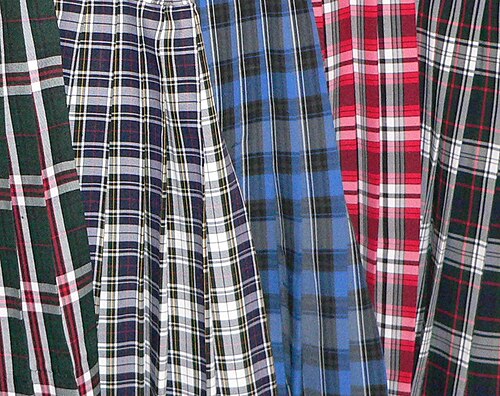
Tartan patterns (often simple, unnamed ones) remained commonly used for skirts and pinafore dresses (jumper dresses) in Catholic and other private school uniform codes in North America and also in public and private schools in New Zealand. The style spread to many other places, including South America, Japan[684] (which sometimes imports tartan directly from Scotland),[768] and Hong Kong.
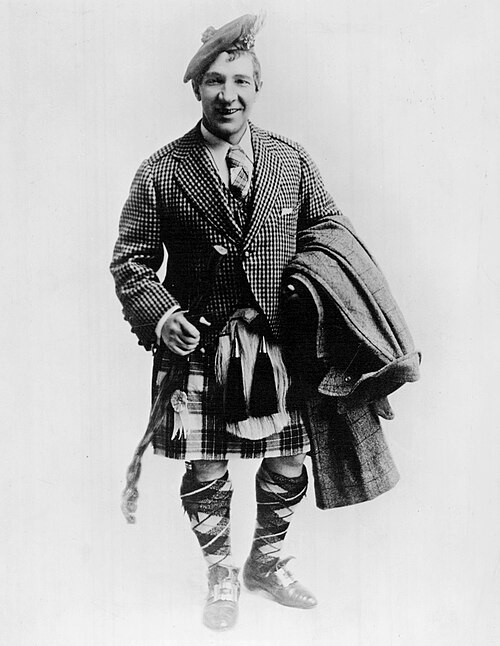
Harry Lauder (properly Sir Henry – he was knighted for his war-effort fundraising during World War I) became world-famous in the 1910s and 1920s, on a dance hall and vaudeville entertainment platform of tartan Highland dress, a thick Scots accent, and folksy songs about an idealised, rural Scotland, like his hit "Roamin' in the Gloamin'". At one point, he was the highest-paid performer in the world, and toured the United States, Australia, South Africa, and of course the UK to sold-out audiences. A Lowlander himself, Lauder has been credited with (and blamed for) keeping alive a tartanry-and-Highlandism image of Scotland, with critics calling him a "kilted clown" who promoted the idea of Scotsmen "clothed like the chieftain of Clan McCrazy".[769]
Diaspora and globalisation
By the mid-20th century,[770] annual Highland games events, modelled on the traditional events in Scotland, had been established not just in Scotland but throughout the United States, Canada, Australia, New Zealand, and South Africa, among other places with a notable Scottish diaspora, which totals about 50 million people worldwide.[771] There are dozens of such events in Scotland,[772] and at least 260 annual Highland games events worldwide as of 2000,[773] more than 100 of them in the US alone, and dozens more in Canada.[772] They are closely intertwined with bagpipe band competitions (which date to 1781), a lasting source of tartan imagery in their regiment-inspired Highland uniforms.[774]
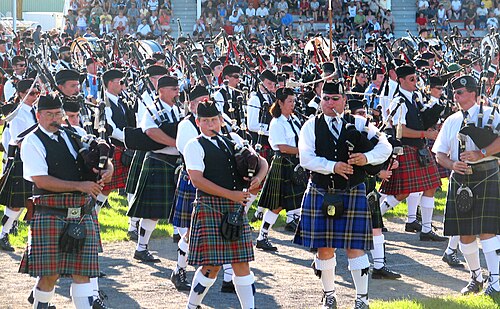
The games' rather flamboyantly[775] tartaned subculture is sustained outside Scotland primarily by multi-generational Scottish descendants rather than by direct Scottish expatriates.[776][777]

Tartan Day, an annual symbolic ethnicity holiday among the Scottish diaspora, is a growing affair celebrated on 6 April, the date on which the Declaration of Arbroath was signed in 1320. Tartan Day was first declared in Nova Scotia in 1987, and was essentially nation-wide in Canada by the 1990s. It has since spread to Australia (with varying levels of official recognition, 1989–1996), the US (1998), and other places including New Zealand,[778] and even Argentina[779] and Paris, France.[780] In New York City, it has turned into an entire Tartan Week since 1999, with honorary "grand marshals" that are usually Scottish celebrities.[781]
The term tartanism (as distinct from tartanry) has been coined by Ian Brown (2012) for this international tokenisation of tartan as an ethnic-identity symbol, evolving to some degree independently to suit diasporic cultural needs and unrestrained by the views of the originating Scottish "home" culture.[782] According to Ian Maitland Hume (2001), tartan and the kilt are powerful symbols that "encapsulate many facets of a heritage which people aspire to access ... a part-mythical family origin for those seeking roots".[783]
The Scottish Tartans Museum and Heritage Center was opened by the Scottish Tartans Society in 1988 in Highlands, North Carolina; in 1994, it moved to nearby Franklin. The museum, which runs independently of STS, features over 600 tartans on display, including specimens dating to c. 1725, and Highland dress examples to ca. 1800.[784] (STS also operated a Scottish Tartans Museum in Edinburgh,[785] but it closed when STS did in 2000.) A major exhibition on tartan was produced by the Fashion Institute of Technology in New York 1988–89, and another was created for the Edinburgh Festival in 1989.[786] Others followed in Italy in 2003, and Japan in 2018.[787] In April 2023, the Victoria and Albert Museum of Dundee (V&A Dundee) opened a design exhibit (running until January 2024) about tartan and its "shifting context", with goals of "challenging preconceptions of what tartan is, whether that be from a historical sense or fashion sense".[788][789]
D. Gordon Teall of Teallach, of the Scottish Tartans Society, observed in 1994:[790]
Tartans have always formed part of Scotland's historic heritage and it is a compliment to their country that they have become so widespread throughout the English and Gaelic speaking world. They are probably more popular now than they have ever been because they have come to symbolise the spirit of families, clans and districts and, more recently, corporate institutions.
Even as tartan has been bent to the cultural needs of the diaspora, as "the most straightforward and outward sign of ... affinity with Scottishness", and bent to the commercial intents of fashion, tourism, entertainment, and other industries, tartan's reception by native Scots in Scotland has been less favourable for decades, even the last century or so. Reasons include a feeling that it is not really a symbol of broad Scottish national identity because of its specifically Gaelic and Highland origin; the "Highlandist" and imperialist foisting of it on the entire country as national costume in the late Georgian through Victorian eras; distorted views of Scottish people promulgated by Lauder and other tartaned entertainers of a century ago; an academic view of tartary and Lowland kailyard literature as two halves of a low-brow, romanticising vulgarity (reinforced in recent decades by the "Tartan Army" fandom of the Scotland national football team reinvigorating a working-class attachment to kilts and tartan); and historically inaccurate portrayal of Scotland by tartan-heavy Hollywood productions like Brigadoon (1954) and Braveheart (1995).[791] Brancaz (2016) argues that "looking at tartan through the lens of the intelligentsia fails to account for its enduring appeal and resilience. ... [T]he wearing of kilts and tartans at weddings, funerals, and cèilidhs in Scotland has increasingly been interpreted as a form of cultural reappropriation."[792]
Industry and politics
In 2006, the British Ministry of Defence sparked controversy when it allowed foreign woollen mills to bid for the government contracts to provide the tartans used by the Scottish troops (newly amalgamated as battalions into the Royal Regiment of Scotland), and lowered the formerly very high standards for the cloth.[224]
Following a bill submitted in the Scottish Parliament in February 2007,[793] Scotland's enterprise minister announced in July 2007 that the National Archives of Scotland would set up a national register of tartans.[794] The announcement stated that "Tartan's importance to Scotland cannot be overestimated. It is deeply embedded in Scottish culture and is an internationally recognised symbol of Scotland."[794] This was later reiterated in 2013 through the BBC.[795] The ministry cited an industry report indicating that "the tartan industry is a significant contributor to the overall Scottish economy; and larger ... than suggested by previous industry estimates", and is the basis for some 200 businesses, 4,000 jobs, and £350 million in annual GDP in Scotland.[794] The bill passed in October 2008, and the Scottish Register of Tartans launched in February 2009.[793]

The Observer reported in 2010 that tartan clothing had become more popular than ever before, crossing subcultural, social-class, and age-group lines, and showing in that year a 540% sales increase in Britain from only two years earlier.[796] Around the same time, there began a resurgence in tartan kilt wearing among Scottish young people "as a mark of a vibrant, modern Scotland".[797][798][799][800] This has interrupted a generations-long trend of native Scottish disaffection toward tartan as stereotyping kitsch.[801][802] An online survey by BBC in 2012 found that 52% of respondents strongly or very strongly disagreed with the premise "Walter Scott's re-branding of all Scots as tartan-wearing Highlanders has been a hindrance to Scotland's cultural development", and only a third agreed.[803] Tartan in mainstream, international fashion experienced another resurgence starting in 2019.[804]
Contemporary Scottish nationalism has been said to be "fed, in part, by tartan and Jacobite nostalgia".[805] After avoidance of tartan since the 1970s (especially by Scottish liberals),[806] the cloth has been politicised again as a nationalist symbol (as it was in the early 18th century), especially during the 2014 Scottish independence referendum and in the Scottish National Party's 2015 campaign.[799] (Perhaps owing to this messaging shift, the VisitScotland agency around the same time changed its tourism advertising to minimise, though not eliminate, tartan imagery.)[807]Murray Pittock (2002) writes that the neo-Jacobitism is "both irritating kitsch and a language of identity" for modern Scots.[808] After several decades of intellectual hostility toward tartan (e.g. in Tom Nairn's 1977 The Break-up of Britain: Crisis and Neo-nationalism, and Hugh Trevor-Roper's posthumous 2008 The Invention of Scotland), an "academic re-assessment of tartan" began in the early 21st century, relying on a wider range of early and modern source material,[809] in historiographical, multidisciplinary edited volumes including Scottish History: The Power of the Past (eds. Edward J. Cowan and Richard J. Finlay, 2002) and From Tartan to Tartany (ed. Ian Brown, 2010).
Major commercial weavers (tartan mills) of traditional tartan cloth that are operating today include Lochcarron of Scotland[810][811] in Lochcarron and Selkirk; Ingles Buchan in Glasgow;[398][811] House of Edgar (also a Highland dress vendor, and a subsidiary of Macnaughton Holdings) in Perth;[398] Johnstons of Elgin (also a wool clothing maker),[398] Strathmore Woollen in Forfar,[398] and D. C. Dalgliesh in Selkirk,[104] all three of which are now part of the Edinburgh-based Scotweb, under the trade name Clan;[812] Prickly Thistle (also a women's clothing maker) in Evanton and Edinburgh;[813] The Tartan Weaving Mill (also a weaving museum, and a subsidiary of Gold Brothers) in Edinburgh;[814] Andrew Elliot Ltd in Selkirk; Stevens & Graham (specialising mostly in tartan rugs and carpet) in Rutherglen; Marton Mills in West Yorkshire, England; Cambrian Woollen Mill, in Powys, Wales; West Coast Woollen Mills in Vancouver, British Columbia, Canada;[815] GK Textiles in Port Moody, BC (formerly Fraser & Kirkbright, Vancouver);[816] and Pendleton Woolen Mills in Portland, Oregon, US.[215] The modern trade in wool tartan fabric has three principal markets: Highland dress, high fashion (with significant business from France and Italy), and furnishing.[817][18]
Popular tartans (including for kilts and other Highland dress, as well as for school uniforms) have increasingly been manufactured, primarily in the UK, in poly-viscose (PV),[818] a blend of the artificial materials polyester and viscose (rayon), typically in a 65% polyester to 35% viscose ratio.[819][820] PV is promoted as washable, durable, crease-resistant but heat-settable for permanent pleating, shrinkage-resistant, stain-resistant, colour-fast, low-pilling, hypoallergenic, not attractive to clothes moths, more "breatheable" than polyester (thus good for athletics), lower cost than wool, and lighter weight than wool, but said to have a wool-like texture.[821][822][823][824][825] It also does not rely on animal industry, so it appeals to vegans.[821][822] Large-scale global manufacturers of tartan-patterned cloth in a variety of cotton, polyester, viscose, nylon, etc., materials and blends include Başkan Tekstil in Istanbul and Bursa, Turkey; and Jeen Wei Enterprises in Taichung, Taiwan; while a leading maker of tartan ribbon is Satab in Saint-Just-Malmont, France.[826] Tartan designs have long been produced in low-cost cotton in large quantities in China.[815]
Carol Craig (2003) writes: "Like it or not, tartan is a very sophisticated branding and marketing tool for Scotland."[827] In a tartan-as-marketing analysis, Paterson (2001) observed that continued internationalisation of tartan manufacture, design, and consumption has diluted the associative "Scottishness" of tartan and its value as a national identifier. He blames this in part on Scottish weavers' failure to adapt to market demands for a wider range of fabric applications, as well as the businesses' own complicity in broadening tartan's perceived cultural identity, e.g. in creating tartans for non-Scottish families, places, and organisations.[828]
In popular culture

In 1947, the tartan-laden Broadway musical Brigadoon (followed by a film version in 1954 and a television adaptation in 1966) renewed an excessively romanticised notion of the Highlands and Highland dress. A critical review called it a "whimsical dream-world" that was "overloaded with Hollywood-Scottish trappings".[829] (The production is generally not well received by actual Scots.)[830][831]
Tartan suits were popular in the mod subculture of Great Britain of the early to mid-1960s and its late 1970s revival.

Since the 1970s, the fandom of the Scotland men's national football (soccer) team have been collectively referred to by the nickname "Tartan Army", with fans often sporting tartan clothing (including kilts) at matches.

Popular in the mid-1970s, Scottish teeny-bopper band the Bay City Rollers were described by the British Hit Singles & Albums reference book as "tartan teen sensations from Edinburgh".[832]

Tartan became a common element of punk subculture starting in the late 1970s. Punk music was a way for youth in the British Isles to voice their discontent with the ruling class and with modern society. The unorthodox use of tartan (especially the royal Stewart), which had long been associated with authority and gentility, was then seen as an expression of that discontent. In this way, tartan – worn unconventionally – became an anti-establishment symbol. This was entirely on purpose according to Vivienne Westwood, a designer deeply involved in early punk fashion;[764][833] the idea was "to seize the very fabric of the Establishment in order to reverse its meaning and perhaps to challenge society's design."[834] American punks often wore tartan skirts, a "subversion" of the Catholic school-girl uniform, and kilts have also been worn in the punk scene since the late 1970s, especially in the UK.[800] Baggy tartan pants later proved popular among pop-punks and skate punks, and tartan-lined jackets among ska punks. From the late 1990s, kilts (mostly modernised "utility kilts" but sometimes traditional ones) have become relatively popular even in North American post-punk subculture (e.g. the goth–industrial, emo, and steampunk scenes), though often in black rather than tartan.
After the 1970s, Westwood, who continued to work extenstively with tartan, was joined by other big-name couturiers. These included Ralph Lauren and Laura Ashley, whose designs promoted tartan as a mainstream modern clothing option "with traditional grace and style" for both women and men;[810][834]Stephen Sprouse,[834] credited with a 1980s combination of "uptown sophistication in clothing with a downtown punk and pop sensibility";[835] and later Alexander McQueen,[836] who was "consciously repoliticising the cloth".[318] Others have included Jean Paul Gaultier, Tommy Hilfiger (who made tartan central to his fall 2000 collection), Christian Lacroix, Yves Saint Laurent, Giorgio Armani, and Gianfranco Ferré.[837][834] A tartan outfit designed by Westwood featured on a commemorative UK postage stamp issued by the Royal Mail in 2012 celebrating "Great British Fashion".[838]
Tartan/plaid flannel shirts, emblematic of the working class, re-entered mainstream fashion through a series of subcultural adoptions, originating primarily in the western United States. First, the style became a staple of cholo style in and around Los Angeles, from the 1970s. From there, the style later became adopted by hip hop fashion in the 1990s, especially the West Coast hip hop lifestyle.[839] Tartan flannel shirts also became quintessentially part of (and androgynous within) the grunge scene (starting in Seattle) of the late 1980s to 2000s.[840] There was fashion cross-pollination between these youth-culture movements,[841] and the fashion industry has found this confluence very marketable.[842]
A resurgence of interest in tartan and kilts (and even Scottish tourism)[831][843] has been generated in recent times by major Hollywood productions[844] like the Highlander franchise (1986–2007),[845][844]Four Weddings and a Funeral (1994),[846]Braveheart (1995),[847][848][849]Rob Roy (1995),[847][849][850]Brave (2012),[851] and the television series Outlander (2014–, with a follow-on travelogue documentary series, Men in Kilts).[852] Many of these featured custom-designed tartans.[845][853]
Tartan clothing has appeared frequently in Doctor Who. The Fourth Doctor (Tom Baker) wore a Wallace tartan scarf on Terror of the Zygons,[854] and his robot-dog companion K9 had a tartan collar.[853] The Sixth Doctor (Colin Baker) had a signature patchwork frock coat that included segments in three different tartans, and also typically wore a tartan waistcoat in a fourth sett under it.[855] The Seventh Doctor (Sylvester McCoy) wore a crimson and black tartan scarf on Time and the Rani. Clara Oswald (Jenna Coleman), the companion of the Eleventh Doctor (Matt Smith) and the Twelfth Doctor (Peter Capaldi), wore a Campbell tartan dress on "The Name of the Doctor" and a Wallace skirt on "The Time of the Doctor" and "Deep Breath".[856]Annabel Scholey as Claire Brown, in the Thirteenth Doctor (Jodie Whittaker) serial Flux, wears a 1960s-style muted tartan dress.[857] The Fourteenth Doctor (David Tennant) wore a brown tartan suit in the 60th anniversary specials.[858]
 1980s Doctor Who patchwork costume of the Sixth Doctor, with at least three tartans involved
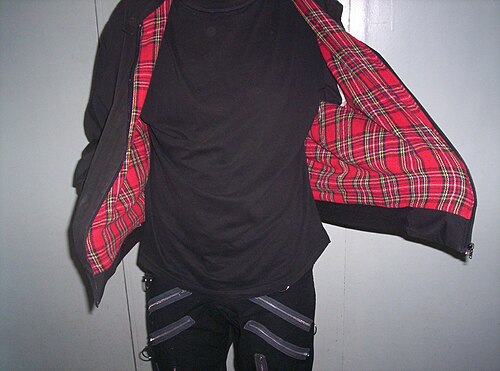 Royal Stewart again, as a mod/ska-punk jacket lining, 2007
 Rita Ora performing in Glasgow in 2018, wearing a tartan trench coat made of at least five different setts
 Grunge fashion still alive and well in 2019, featuring a lot of tartan/plaid shirts
 A rather impractical tartan gown by Christopher John Rogers, 2020–21, on display at the Metropolitan Museum of Art Costume Institute's exhibit In America: A Lexicon of Fashion
Popular designs
One of the most popular tartans is the royal Stewart, ostensibly the personal tartan of the British monarch, since George IV declared it his own (though it was probably designed by the Sobieski Stuarts,[699] albeit based on mid-18th-century pattern called "Prince Charles Edward Stuart").[110][62] The "royal" sett was first published in 1831 in the book The Scottish Gaël by James Logan. In addition to its use in clothing, such as skirts and scarves, royal Stewart tartan has also appeared on biscuit tins for Scottish shortbread,[859] and it has also long been favoured by the British punk scene.
Another tartan in very common use by the general public is Black Watch (also known as old Campbell, Grant hunting, and Government).[126] This tartan, a dark variant (and ancestor) of the main Clan Campbell tartan, has long been used by military units in the British Army and other Commonwealth forces.
Early manufacturer Wilsons of Bannockburn made many "fashion", "fancy", or "national" tartans with catalogue numbers or fanciful names, without any association with particular families, districts, or organisations; two popular ones still in use are both usually called "Caledonia". Wilsons No. 3 is found in their 1819 Key Pattern Book and is comparatively simple,[860] while No. 144 is more complex, though of a similar colour scheme, and seems to date to the late 18th century.[861] (The numbering suggests the other does as well.) Some other tartans in this "Caledonia" group were later claimed by clans; e.g. Caledonia No. 43 or "Kidd" became one of the MacPherson tartans.[862][860]
 Royal Stewart tartan
 Black Watch tartan
 Wilsons' No. 3 tartan, named Caledonia
 Wilsons' No. 155, also often called Caledonia
In the general fashion industry, various patterns are technically tartan but are not treated as tartans in the clan or district sense. The very basic red-and-black Rob Roy or Robert Roy MacGregor pattern, the oldest of the Clan Gregor setts (though named after Rob Roy in the Victorian period),[863] is also in broad use (often with changed colours) as one of the most common patterns used in flannel cloth for clothing and bedding; in the US, it is often called "buffalo plaid",[864] a term of uncertain derivation.[865] When the Rob Roy sett is changed to a white ground with any other colour this forms the most common gingham cloth style. Gingham is often given a wider setting, to form a lattice appearance (sometimes called "windowpane plaid" or "windowpane check").[866] When that pattern is given one or more additional over-check colours, the result is the pattern known as tattersall.[866]
 One of the most common flannel patterns, "buffalo plaid" is just Rob Roy MacGregor tartan (originally red and black) rendered in any of various colours
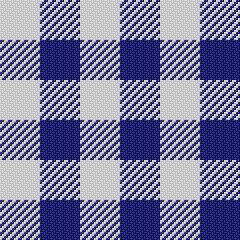 Rob Roy changed to white and any other colour becomes gingham
 Windowpane gingham
 Windowpane gingham with two or more over-checks becomes tattersall
Tartans for specific purposes

In addition to clan tartans, many tartan patterns have been developed for individuals, families, districts and towns, institutions, corporations, and events.[9] They have even been created for particular religious and ethnic groups,[cq] and for sociological groups like the LGBT community.[798][872] Tartan has had a long history with the military, and today some military units – particularly those within the Commonwealth – have tartan dress uniforms.[873]
Regional
Many districts, cities, and towns in Scotland have their own tartans, mostly dating to the 20th century (though some few district tartans are quite old),[cr] and not always official; many were just created for marketing to tourists,[874] and some are copyrighted works tied to specific vendors.[875] They are intended primarily for those to whom a clan tartan does not seem to apply . At least two local government councils in Scotland have official tartans.[876]
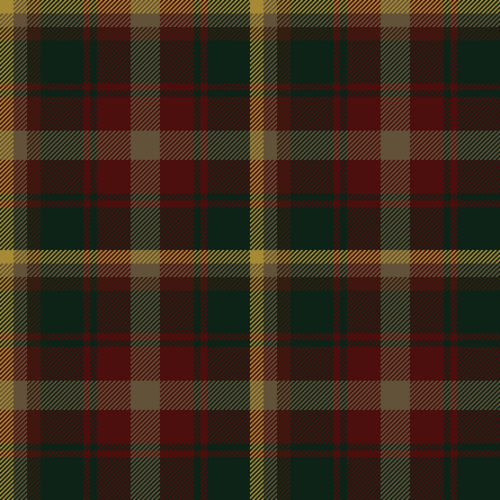
In addition to the traditional district and modern geographic tartans of Scotland, new designs have been created for places in other countries. Only some regional tartans are officially recognised by the government bodies of the places the designs represent.
The pan-Celticism movement has inspired the creation of "national" (in the sense of Celtic nations) and sometimes regional tartans "to emphasise the ... bonds with other Celtic countries"[879] outside of Scotland; none of these appear to have any official recognition. There are tartans of Cornwall, long a part of Devonshire in England (the designs date from 1963 to the 1980s);[cs]Wales (from 1967 onward[ct] – sometimes with false claims of antiquity by marketers);[890] the Isle of Man (from 1946, many by D. G. Teall of the Scottish Tartans Society, and several asymmetric);[cu]Brittany in France (from 2002);[cv]Galicia in Spain (from 1990);[cw] and especially Ireland (from 1956).
After the discovery of the "Dungiven tartan" and its marketing as a district tartan for Ulster, Scottish weavers (and in two cases English, and in another American) decided to tap an Irish and especially Irish-American market by introducing a profusion of national, province, and county tartans for Ireland and Northern Ireland, generally based on established Scottish tartans with some colour changes.[18][215] These geographical tartans, which (aside from the Dungiven/Ulster reconstruction of 1956) date to 1970 and later,[219] do not have any official recognition, and are purely a product of the industry.[18][213] One weaver even introduced a competing set of Irish national and county tartans in 1996, different from the previous offerings.[213] "The influence of native Irish people, either as suppliers or consumers of Irish tartans, would appear to be minimal."[18]
Further afield, all but two Canadian provinces and territories have official tartans, with the first dating from 1956. Neither Quebec nor Nunavut, Canada's newest territory, have formally adopted patterns. Alberta, meanwhile, has two official tartans, including a dress one. All but Quebec's were registered with the Court of the Lord Lyon in Scotland.[907] Canada has an official national tartan that was originally designed to commemorate the introduction of its new maple leaf flag, and was made an official national emblem in 2011.[878] Various Canadian regions (like Labrador and Cape Breton Island), counties, municipalities, and institutions also have official tartans.[cx]
Tartans have been created for Australia; its capital city, Canberra; each of its states; and some of its local government areas; but only some of those tartans have been officially adopted or recognised by the relevant governments in Australia. US states have official tartans, with the first dating from 1988.
Hunting, mourning, dress, and dance

A tartan is sometimes differentiated from another with the same name by a label: hunting, mourning, dress, or dance. The first three of these ideas are the result of Victorian fondness for dress etiquette and show[910] (and weaver marketing);[65] the last is more recent.
Hunting tartans tend to be made up of subdued colours, such as dark blues, greens, and browns.[911] Although there is some evidence of early tartans with camouflage colours going back to the 16th century, hunting tartans, despite the name, have very little to do with actual hunting.[12]
Mourning tartans, though quite rare, are associated with death and funerals. They are usually designed using combinations of black and white, or by replacing bright colours such as reds and yellows in a traditional tartan with black, white, or grey.[912]
Dress tartans are usually special tartans for formal-dress occasions[913] (e.g. dress Stewart[914] is distinct from both the main royal Stewart tartan and the hunting Stewart,[915] among several other tartans attributed to Stewart/Stuart). In a few cases, a dress tartan is simply the main tartan of the clan.[cy] Dress tartans that do differ from main clan tartans are sometimes entirely different (e.g. MacMillan[35] and MacMillan dress[920] are unrelated designs), while in most cases they are based on the main tartan but with colour differences (e.g. Stewart). Some dress tartans are very modern,[81][623] but some date back to the era of the Vestiarium Scoticum.[921]
Dance tartans, intended for Highland dance outfits, for either sex, are inspired (like most dress tartans before them) by the arisaid (earasaid tartans thought to have been worn by Highland women in the 17th and 18th centuries, which often featured white as a major colour, as do typical dance tartans today (most or all of which date to the 20th century or later). Some dance tartans are named "arisaid" rather than "dance", e.g. Fraser arisaid.[922][cz]
There has been some confusion between dress and dance tartans, especially since the idea of the latter developed from the former.[da] Most dress tartans, including some of the oldest, also have white in them, and have been used for dance competition in lieu of a dance-specific tartan, so are easy to mistake for dance tartans, which almost invariably have white in them.[925][db]
Family and individual
A large proportion of non-clan tartans in all of the modern tartan databases have always been family tartans, promulgated mostly from the late 20th century for family names that are not clans or listed as septs of clans. These are usually Scottish surnames, but the Scottish Register of Tartans (SRT) database increasingly includes new family tartans for names that are not Scottish or even British. Most family tartans have no copyright claim, since they are intended for use by anyone with the surname or an extended-family connection. The SRT classifies them together with clan tartans in a "clan/family" category if they have history that pre-dates SRT or if they are newer and are approved by a legally recognized clan chief or family head, but in a "name" category if they are newer and lack such imprimatur.

A few non-clan family tartans have an older pedigree. The best known is Balmoral tartan, reserved for the British royal family and personal pipers thereof, since its creation by Prince Albert c. 1852.[dc] Some clans recognise tartans for specific family branches and septs that are not themselves generally regarded as clans. For example, Clan Robertson/Donnachaidh/Duncan acknowledges separate, established tartans (some of them quite old) for Inches, MacGlashan, MacInroy, MacLagan, MacPhee, MacWilliam, Reid, and Robinson,[927] and they are all registered in the SRT.
Since the late 1960s, various weavers have marketed (primarily to Irish Americans) some tartans with Irish family names, without any involvement by family members.[215] There had also been a legend that the rare Clans Originaux (1880) contained Irish family tartans, but this was finally disproven in 2003.[18][dd] There is one case of a formal Irish clan/family tartan, however: The Clan Cian Society commissioned a tartan for Cian of Ely, and registered it with the Chief Herald of Ireland in 1983.[18][215] (Even this has an Irish-American connection, as the chief resided in California, and the society is US-headquartered.)[929] Similarly, a commercial operation in Cardiff named Wales Tartan Centre (supplied by Cambrian Woollen Mill) has since the early 2000s promoted a long series of tartans named for common or prominent Welsh family names; they are unusual in often having odd-numbered thread counts, and having a different warp and weft (producing rectangular rather than square patterns), probably to distinguish them from the Scottish style.[890][930]
For the much narrower sense of family, the SRT registers also as "name" tartans those that are created by individuals for only themselves and their immediate-family members, often for weddings; these usually have a copyright claim. One of the earliest tartans named for a specific person[de] is the "Janet Wilson sett", entered into the late 1770s records of Wilsons of Bannockburn and believed to refer to the company founder's wife or daughter-in-law, though made as one of their publicly available patterns.[316][df]
Corporate and commercial
Numerous Scottish brands use tartan, and some have unique tartans. Various not-for-profit organisations also have corporate tartans. Probably the earliest case was that of the Ancient Caledonian Society of London (founded in 1786 and defunct since 1837), which used what is believed to have been a consistent tartan[933] for its members' frock coats (which, unusually, featured brocade woven into the tartan, of Jacobite white roses – it may be what 1767 advertisements called "flowered tartan"); only one known example of the coat survives.[354][934]

As an example of a modern commercial tartan, Irn-Bru (introduced in 1901), the best-selling soft drink in Scotland,[935] has its own tartan.[936] Scottish regional airline Loganair uses tartan livery, including on the tails of its planes, and has two registered corporate tartans.[937] "Racing Stewart"[938] is a pattern created in 1995 for the Jackie Stewart Formula One car-racing team.[939]

The "corporate" category is one of the fastest-growing in the official Scottish Register of Tartans (SRT) database, with a large number of Scottish (and American and other) companies and societies registering organisational tartans. These are generally protected by copyright and sometimes trademark law. These tartans vary in purpose from general corporate livery, to special event tartans, to tartans for fictional characters.
Two examples of the latter are Sanrio's 2004 creation of a predominantly pink tartan for Hello Kitty;[90] and the 2011 creation by Disney/Pixar of the DunBroch tartan for the family of the main character, Mérida, of the animated Highland fantasy/adventure film Brave.[940]
Fashion

An early example of a tartan created by and for the fashion industry, and surely the most famous, is "Burberry check". It was introduced in the 1920s for the lining of trench coats made by Burberry of London, but has been used for all manner of clothing and accessories since 1967[941] (with another major marketing push in 2001) and is emblematic of the company and its upscale product line.[942]
A fast-growing category in the SRT is that of "fashion" tartans, created by companies and individual designers simply for aesthetic reasons, without any association with a particular clan, family, region, etc. Like organisational tartans, most of these have a copyright claim attached to them.
A prominent example: In 2017, Scottish fashion designer Charles Jeffrey designed a signature tartan for his Loverboy label, registering it in the SRT.[124]
Regulation
Manufacture and use of tartan (at least in the Scottish context) is regulated, formally and informally, in three ways: registration (recording of a tartan and its association, if any, with a particular family, organisation, person, event, etc.); legal protection of a tartan as intellectual property (trademark, copyright); and etiquette (socio-cultural norms regarding the use of tartan and Highland dress).
Registration

The naming and registration of "official" clan tartans began in 1815, when the Highland Society of London solicited clan tartans from clan chiefs.
Following recognition by a clan chief of a tartan as a clan tartan, the chief was formerly able to petition the Lord Lyon King of Arms, the Scottish heraldic authority, to register it as a formal clan tartan.[dg] Once approved by the Lord Lyon, after recommendation by the Advisory Committee on Tartan, the clan tartan was then recorded in the Lyon Court Books.[304] However, leading up to the launch of the Scottish Register of Tartans in 2009 , the office of the Lord Lyon stopped providing this tartan-recording process (though its statutory authority was not changed by the Tartans Bill).
Modern-day tartans can be created and registered by anyone, with the Scottish Register of Tartans. Modern registered tartans include ones for Scottish and other districts, cities, and towns; for Irish counties (devised since the 1990s)[104] and families (for example, the surname Fitzpatrick has two registered tartans[943]); for organisations and companies; and even for specific events or individuals. Tartans are also being created in record numbers among the Scottish diaspora in the United States, Canada, Australia, New Zealand, etc., especially for places, military divisions, pipe bands, and individuals and their immediate families.
Until the late 20th century, instead of a central official tartan registry, independent organisations located in Scotland, Canada, and the United States documented and recorded tartans.[944] In 1963, an organisation called the Scottish Tartans Society (now defunct, and originally named Scottish Tartans Information Centre)[601] was created to record and preserve every known tartan design.[945] The society's Register of All Publicly Known Tartans (RAPKT) contained about 2,700 different designs of tartan.[946] Registration of new designs was not free of charge. The society, however, ran into financial troubles in 2000, and folded.[947][398]
Former members of that society formed two new Scotland-based entities – the Scottish Tartans Authority (STA, 1996 – before STS closed) and the Scottish Tartans World Register (STWR, 2000 – the trade name of a private company, Tartan Registration Ltd).[398] Both of these organisations initially based their databases on the RAPKT. STA's database, the International Tartan Index (ITI) consisted of about 3,500 different tartans (with over 7,000, counting variants) as of 2004.[946] The online ITI was later rebranded The Tartan Ferret. STWR's self-titled Scottish Tartans World Register database was made up of about 3,000 different designs as of 2004.[946] Both organisations were registered as Scottish charities and recorded new tartans (free in the case of STA and for a fee in the case of STWR) on request.[948][949]
In the interim, a jointly Scotland- and US-based organisation, International Association of Tartan Studies and Tartan Educational & Cultural Association (IATS/TECA) emerged in 1984[398] and published its own TartanArt database in the early 1990s as Microsoft Windows software which was much used in the North American kilt-making trade. IATS/TECA was absorbed by STA by 2005.[398]
The Scottish Register of Tartans (SRT) is Scotland's official tartan register, and was established in 2009.[950] SRT is maintained and administered by the National Archives of Scotland (NAS), a statutory body based in Edinburgh.[951] The aim of the register is to provide a definitive and accessible resource to promote and preserve tartans. It is also intended to be the definitive source for the registration of new tartans (if they pass criteria for inclusion and a registration fee is paid). The database itself – also named simply Scottish Register of Tartans, and sometimes called TartanRegister from its domain name – is made up of the pre-existing registers of STA and STWR as they were at the time of SRT's launch (preserving the STA's and STWR's registration numbers, dates, and other details in the SRT data), plus new registrations from 5 February 2009 onward. On the register's website, users can register new tartans, search for existing tartans and request their thread counts, and receive notifications of newly registered tartans.[950][952]
STWR became defunct some time after 2008. STA later closed the ITI/Tartan Ferret to new registrations, and in late 2022 removed the search feature from the STA website (pending a site redesign), deferring to the Scottish Register of Tartans, which now appears to be the only operating tartan registry. STA continues offline work on the ITI database, correcting errors, importing new SRT additions, and recording historical patterns newly discovered in museum holdings, etc.
Legal protection
Some modern tartans are protected by trademark law, and the trademark proprietor can, in certain circumstances, prevent others from selling that tartan.[126] An example is the "Burberry check" of the English fashion house, an instantly recognisable tartan that is very well known around the world.[953][dh]
Unlike trademark registration and copyright registration, the Scottish Register of Tartans (SRT) and its authorising Tartans Bill do not create any new or enhanced intellectual property rights through the act of registration (nor provide any enforcement mechanism other than removal of infringing entries from the registry).[957]
SRT, however, permits registrants optionally to assert and record copyright and/or trademark claims over their new tartans, for designs that are eligible for such protection under other established law[958] (such as the Copyright, Designs and Patents Act 1988; and the Scotland Act 1998, which took over copyright and trademark registration and enforcement in Scotland)[959] and lists such tartans as restricted. An SRT registration "provides evidence of the existence and date of [the] design",[960] which helps establish the copyright date under the Berne Copyright Convention. Such legal protections apply only to comparatively recently created tartans; old clan, regimental, and district tartans are outside the protection periods of such intellectual property laws.[42]
SRT also permits the listing of intended use and manufacture restriction preferences, but has no enforcement capability,[961] and also includes a statement that "No other rights can be conferred."[960] British tartan weavers, such as Lochcarron and D. C. Dalgliesh, generally will not produce material in an SRT "restricted" tartan without written evidence of permission from the copyright/trademark claimant. In additional furtherance of intellectual property concerns, the SRT also refuses to register a new tartan that is confusingly similar to any existing one (as determined by an SRT review process).[962]
The application of copyright law to tartans is not well tested. The leading British legal case on textile copyright, concerned with designs printed on fabric, is Designer Guild Ltd v Russell Williams (Textiles) Ltd (2000), finding for fairly broad copyright protection in textile works that involve creative originality.[963] In 2008, two tartan pattern copyright holders, Rosemary Nicolson Samios and weaver Lochcarron of Scotland, took legal action for infringement of an Isle of Skye district sett (designed 1993) and the Princess Diana Memorial sett (designed 1997), respectively, against the Gold Brothers firm of Surinder, Galab, Malap, and Dildar Singh, who operate dozens of stores in Scotland and online that sell primarily Chinese-made tartan objects or "tartan-tat", including cheap Highland-dress outfits, for the tourist market.[875] The Isle of Skye tartan was considerably profitable for Samios, after the pattern was popularised by Queen Elizabeth II wearing it in 1999. The Princess Diana sett was designed by Alistair Buchan of Lochcanrron and of the Scottish Tartans Authority as a charity fundraiser. A British court on 2 July 2008 issued an interim interdict (preliminary injunction) against Gold Brothers' sale of Isle of Skye goods, after a police search found hundreds of metres of the pattern in Chinese-made cloth in the company's warehouse.[875][964][965][966] Both cases may have been settled out-of-court because published news regarding them ceases in 2008. A more recent case, Abraham Moon & Sons Ltd v. Thornber & Others (2012), actually involved tartan. It held that the textual ticket stamp (a detailed set of weaving instructions, i.e. a thread count with additional information on precise colours, etc.) used to produce a tartan designed in-house by the claimant had been infringed, was protected as a literary work, and also constituted a "recording" of the graphical work of the tartan and thus was independently protected as a work of artistic craftsmanship.[42][967]As of 2020, the decision was being appealed, as it conflicted with previous caselaw, e.g. Hensher v Restawile (1976), holding such instructions to be uncopyrightable.[968][42]
While tartan arguably could be classified as a form of intangible cultural heritage,[969] and its value to identifying Scottish products both in Scotland and internationally has been recognised and exploited for a long time,[939] tartan is not protected by either geographical indication (protected designation of origin) law, nor sui generis legislation specific to that kind of product.[970]Harris tweed, another textile associated more narrowly with Scotland, does have such protection. In 1998, Keith Lumsden, research officer of the Scottish Tartans Society, proposed that the word tartan be prohibited for use to market a textile, unless the design was accepted in an official governmental tartan registry (which did not then exist).[939] When the Scottish Parliament finally authorised the Scottish Register of Tartans in 2008, it did not include anything like this sort of trade protection. According to Michael B. Paterson (2001): "No mechanism exists to protect [traditional Scottish] tartan from 'misuse' by interests having nothing to do with Scotland or Scotland's interests", though the tartan registries "play an important, if weak, role in asserting Scotland's cultural rights in relation to tartan."[971]
Etiquette
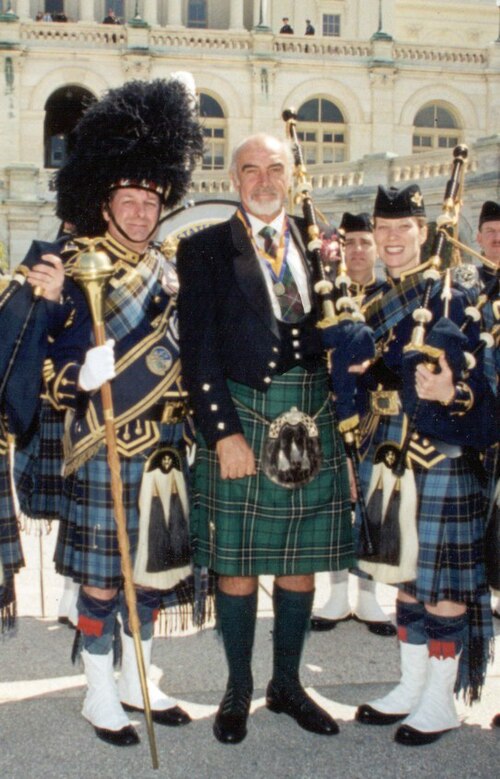
Since the Victorian era, authorities on tartan have claimed that there is an etiquette to wearing tartan, specifically tartan attributed to clans or families. In the same line of opinion, some tartans attributed to the British royal family have been claimed to be "off limits" to non-royalty.[972][973] Even so, there are no laws or universally accepted rules on who can or cannot wear a particular tartan. (Some writers have nevertheless asserted their existence anyway, e.g. Alexander Campbell in 1890, regarding different Campbell tartans.)[974] The concept of the entitlement to certain tartans has led to the term universal tartan, or free tartan, which describes tartan which can be worn by anyone without controversy. Traditional examples of such are the Black Watch, Caledonia, hunting Stewart, and Jacobite tartans, shepherds' check, and district tartans.[975][798][976] The published marketing of tartans for simple fashion purposes without any association to a place or body dates back to at least 1745,[495] and much of Wilsons' output through the 19th century consisted of "fancy" patterns for the general public.[977] Some recently created designs intended for everyone (though some are exclusive to particular weavers or Highland-dress outfitters) have names including Braveheart, Clansman, European Union, Highlander, Independence, Pride of Scotland, Rainbow, Scotland 2000, Scotland the Brave, Scottish National, Scottish Parliament, Spirit of Scotland, Stone of Destiny, and Twenty First Century.[978]
Books on Scottish clans list guidelines,[126] but are not always in agreement. One such opinion is that people not bearing a clan surname, or surname claimed as a sept of a clan, should not wear the tartan of their mother's clan.[979] This opinion is reinforced by the fact that in the Scottish clan system, the Lord Lyon states that membership to a clan technically passes through the surname. This means that children who bear their father's surname belong to the father's clan (if any), and that children who bear their mother's surname (her maiden name) belong to their mother's clan (if any).[980] Also, the Lord Lyon states that a clan tartan should only be worn by those who profess allegiance to that clan's chief.[981]
Some clan societies even claim that certain tartans are the personal property of a chief or chieftain, and in some cases they allow or deny their clansfolk "permission" to wear that tartan.[di] According to the Scottish Tartans Authority – which is an establishment of the Scottish tartan industry – the Balmoral tartan should not be worn by anyone who is not part of the British royal family. Even so, some weavers outside of the United Kingdom ignore the "longstanding convention" of the British royal family's "right" to this tartan. The society also claims that non-royals who wear this tartan are treated with "great disdain" by the Scottish tartan industry.[983][dj]
Generally, a more liberal attitude had been taken by those in the business of selling tartan, holding that anyone may wear any tartan they like. Under the liberal view, claimed "rules" are mere conventions (some of which are recent creations), with different levels of importance depending on the symbolic meaning of the tartan on some particular occasion.
The Standing Council of Scottish Chiefs has also taken a fairly flexible position (organisationally; some specific individual chiefs may have a narrower or looser take, and not all chiefs are members). Aside from opposing the creation of a new tartan using a clan's name without the chief's permission, their website states (adopting more loosely some ideas from the Lord Lyon view):[986]
There are no strict rules on who has the right to wear a particular tartan. People normally wear only the tartan (if any) of their surname, or a "district tartan" connected with where they live or where their family come from. Wearing a particular clan tartan indicates that the wearer bears an allegiance to the chief of that clan.
Some Highland-dress historians have taken a dim view of regulatory intents and proclamations with regard to tartans; Scottish National Portrait Gallery curator A. E. Haswell Miller wrote that "to claim special entitlement to a tartan in the same manner as heraldic arms is certainly absurd", because evidence suggests that the idea was just invented by writers of the late 18th to mid-19th centuries.[987] Sir Thomas Dick Lauder expressed similar views as far back as 1829, right in the middle of the "clan tartanry" rush, dismissing both the then-new adoption of "official" clan tartans and attempts by clans to claim regimental ones.[560]
In other cultures
While tartan has been most closely associated with Scotland, and dating back to the Roman period was perhaps associated with Northwestern Europe in general, it is likely that the idea of using patterns of rectangles and lines has independently occurred many times, in any cultures with weaving.[988] Basic tartan "is almost as primitive a weave as it is possible to make ... probably the earliest form of patterened fabric anywhere."[2] Surviving pre-modern historical examples seem sparse, however.
Modern tartan-style cloth in a wide variety of materials and patterns from simple to complex is available and used today around the world, often simply as a style of cloth and without any association with Scotland.
Africa
Maasai shúkà

Among the Maasai people of Kenya and Tanzania, the shúkà is a cotton blanket-like garment (what Scots would call a plaid) worn as a wrap, and very commonly in a tartan pattern, though sometimes linearly striped or of one colour.[989]Shúkà are predominantly red, though sometimes seen in blue and other colours.

Shúkà were originally of painted (typically red) leather, but Maasai have had access to plain-weave cotton fabric for some time, imported to the region by Americans since the 1860s.[989]Joseph Thomas Last, a British missionary, in 1883 described the Maasai as particularly fond of red and white cloth, to be worn by higher-status men (though he did not mention tartan in particular);[990] a 1903 report also had them typically wearing red blanket-like garments, after a time of favouring blue.[989] The Maasai were loosely allied with the British, 1895–1904,[991] and the latter made heavy use of Scottish regiments in African conflicts, bringing tartan with them. However, "Guinea cloth" (mostly produced in India), sometimes red and blue checked, was a common commodity in 18th-century western Africa, pre-dating British West Africa; whether it relates at all to shúkà is unknown.[992]Shúkà patterns usually lack the thin black lines common in Scottish tartans.
A nomadic cattle-pastoralist culture, without their own weaving tradition, the Maasai have been described as unusually culturally conservative and resistant to modernisation.[993] Nevertheless, they have always engaged in trade to get goods they do not make themselves,[990] and have made local traditional use of modern materials.[994] The Maasai approach has been to resist yet assimilate colonial and post-colonial influences.[995]
Although there is evidence of tartan usage among the Maasai to at least the period 1906–1918, when Walther Dobbertin photographed a tartan shúkà in what was then German East Africa, the current bright tartan and striped style of shúkà appears to have been adopted primarily in the 1960s[992][996] (partly in response to national-level clothing modernisation pressure), supplanting leather but keeping the same form-factor.[995] The shift in outward form without affecting function led one writer to quip that Maasai dress "has undergone dramatic changes while not changing at all".[997] Tartan-patterned cloth is not typically used for other Maasai garments besides shúkà.
The shúkà has become so emblematic of the Maasai that there is some discussion (driven by the Maasai themselves) at the national and regional level about protecting it as a form of cultural property.[998] While it has been claimed that shúkà patterns, at least at one time, conveyed particular meanings,[dk] and there historically have long been weaving operations in various African areas,[999] most shúkà today that are not mass-manufactured in Dar es Salaam or Mombasa actually come from China, not Africa.[992]
East and South Asia
The earliest-discovered tartan fabric in the world was discovered in Western China, in the context of the Tarim mummies, dated to c. 2100 BC through the first centuries BC . Today, tartan is still woven in China, both as a traditional fabric and in large commercial quantities for export.[815]
 Chinese man in traditional hat of silk tartan with wool pompons, 2008
 Historical brocade of the Zhuang people in Yunnan, China (photo 2011). It is often very complex material, but sometimes simple tartan like this.
 Tartan and other textiles for sale in bulk at Yen Chow Street Hawker Bazaar, Hong Kong, 2022
 A simple three-colour tartan pattern being woven on a hand loom in Pilikula heritage village, India, 2016
 Indian sari in a two-colour tartan pattern with highlights at the crossings of the black lines, which may be embroidery or supplementary weaving
 A modern, elaborate kōshijima dress from Japan's lolita fashion subculture, 2018
Bhutanese mathra

In Bhutan, traditional men's robes (gho)[1000] and knee-stockings (omso, similar to argyle socks),[1001] and women's dresses (kira)[1002] are traditional national costume styles that are largely mandatory for public dress since 1963.[1003][dl] Tartan (generally called mathra or, after the district of its primary production, Bumthang mathra,[1005][dm] among other names for specific patterns) is among the many common textile styles for these garments, some much more elaborate (generally called yathra)[1007] than tartan. The tartan cloths are woven traditionally in yak and sheep wool, but today also in cotton and raw silk.[1008]

Mathra is woven primarily with a red ground. Some specific tartan/plaid styles of Bhutan are: broad-checked thra bom; narrow-checked thra charuru; sethra ('golden pattern'), an orange or rust ground with yellow and sometimes black checks (with black, it is more specifically called sethra dokhana, and without, dalapgi sethra); red, blue, and black patterns on a white ground, in at least four varieties called pangtsi (specifically red and black on white),[1009]Decheling kamtham, and other names;[1010] and another style is named burai mathra.[1011] Some of these fabrics feature supplementary weft decorative patterns (flowers, etc.) added to the tartan, with an embroidered or brocaded appearance, generally called pesar ('new pattern'); one such style is more specifically called sethra metho chen, the yellow-orange pattern with flowers added. There are also patterns of simple linear stripes that do not cross each other (generally called adha[ng] mathra or aikapur), with various names for specific styles.[1012]
Indian madras

Madras is a patterned, light-weight, breatheable, cotton cloth named for the Madras (now Chennai) area of India.[1013] Traditional madras is hand-woven from lumpy, carded-cotton thread, and coloured with natural dyes which may bleed together upon washing to create a more muted pattern than typical tartan, as well as a rougher texture.[1014] Madras also has a "softer" look because it typically lacks the black lines found in most Scottish tartans. Madras cloth dates to at least the 16th century, produced in a variety of patterns, including religious designs and floral prints.[1014] It is unclear if tartan patterns were among the original designs, though they became very popular later. Weaving, primarily for export, in Madras/Chennai became a large-scale commercial enterprise after the British East India Company came to control the area in the mid-17th century.[1015] Major production of this style of cloth also took place in Cambay State (present-day Gujarat).[1016]
Madras, ideal for warm-weather wear, became popular in the Philippines (where it is known as cambaya)[1016] and the Caribbean;[1014] mainly in undyed form, it was also exported to Europe.[1014] Tartan madras reached America by 1718, and appeared in the 1897 Sears catalogue.[1014] It was popular in the United States in the 1930s and again in the 1960s, often associated with preppy style.[1014] Substantial export of the cloth to South Africa began in 1958.[1014]
Modern madras cloth is commonly in tartan patterns, but also simply striped (seersucker). Unlike Scottish-style tartan, madras is not woven in 2/2 twill pattern, but is a muslin of plain weave;[1014] it thus, when viewed up close, features a "pepper and salt" colour mixture where colours cross[6] (a dot matrix, technically), not staggered diagonal lines . It also usually lacks black lines.
Japanese kōshi

In Japan, tartan patterns called kōshi格子 (also koushi or goushi, literally 'lattice') or kōshijima格子縞 date back to at least the 18th century,[408] possibly the 17th[1017] in the Edo period (1603–1867), and were popular for kabuki theatrical costuming, which inspired general public use by both sexes, for the kosode (precursor of the kimono), the obi, and other garments.[1018] The name is a reference to the details of shoji room dividers, the grid pattern said to stand for strength, with larger stripes representing more power.[1018]Kōshi range from simple checked patterns to complex multi-colour weaves. Ikat thread-dyeing techniques were sometimes employed before the weaving, such that a colour in the pattern was mottled,[1018] and parts of the design may sometimes have been embroidered, supplementary-woven, or dyed-over for additional highlight or contrast.[1018] Some styles have particular names, such as misuji-kōshi ('three-striped lattice')[1018] and futasuji-kōshi ('forked lattice').[1019] A pattern with larger squares is more generally called ogoshi or with smaller squares kogoshi.[1020]
It is unclear whether there was a Scottish tartan influence on the development of kōshi. The Edo period pre-dates the Perry Expedition of 1853–1854 and its opening of Japan to general Western trade, but mostly post-dates early European contact from 1543 to the closure of Japan to outsiders in 1639 under the sakoku isolationist policy.
Nothing suggests that particular patterns have been associated with specific families or Japanese clans.
Today, kōshijima is the general Japanese word for 'tartan/plaid, checked pattern'.[1021] Tartan is popular in present-day Japan, both for high fashion and for streetwear,[318] as well as school uniforms.[684] Since the 1960s, the Japanese department store chain Isetan has used an emblematic tartan as a marketing tool (e.g. on all its shopping bags); the pattern is based on some MacMillan tartans.[1022] Japan hosted a major museum exhibit about tartan in 2018.[1023]
Eastern Europe to Western Asia
Tartan-style patterns are common throughout Southeastern Europe.
John Francis Campbell (1862) described the native weaving of the Sámi (Lapps) of northern Europe as being hand-loom tartan.[988]
Considerably to the southeast, the Tatars[dn] and Chuvash, Turkic peoples of Tatarstan and Chuvashia, respectively, in the Russian Federation, have worn tartan, striped, and other patterns since at least the 19th century.

 Tartan patterns used in a Bulgarian folk costume
 Simple shepherd's check tartan being woven by Pomaks in Greece, 2007
 Silk tartan cloth of white, grey, and golden thread from Lithuania
 Estonian woman wearing a tartan suurrätt (plaid/shawl)
 Another Estonian suurrätt, with a total-border pattern of more complexity than the simple central pattern
 Chuvashian example, c. 1870
Russian shotlandka
Robert Jamieson, writing in 1818 as editor of Edmund Burt's 1727–1737 Letters of a Gentleman in the North of Scotland, said that in his era, married women of the north-western provinces of Russia wore tartan plaids "of massy silk, richly varied, with broad cross-bars of gold and silver tissue".[93] This seems quite distinct from Scottish-style construction.

The Russian poet Alexander Pushkin (1799–1837), who was influenced by the romantic-Highlands writings of Walter Scott,[1024][1025] posed for one of the most famous paintings in Russia, the 1827 portrait by Orest Kiprensky. Pushkin wears what looks at first like a Scottish-style tartan shoulder plaid, but is more probably a sleeveless "Almaviva" cape/cloak, a style in fashion at the time and known to have been worn by Pushkin.[762]
Tartan was commented on in the Moscow Telegraph in 1826 as being in broad fashion in the city for all sorts of garments (often as a decorative accent).[762] Scottish-style plaids apparently did come into some fashion in Russia as women's wear for a space during the mid-to-late 19th century, a style picked up from stage productions; some 19th-century Russian paintings illustrate use of plaids as shawls.[762] Tartan (and plain-striped) shawls were also common among the Volga Germans and Bessarabia Germans in Russia; a mixture of hand-woven (originally as bedclothes and other household goods) and mass-produced in Russia, the shawls became emblematic of the German-from-Russia diaspora in North and South America from the nineteenth century to the mid-20th.[1026][1027]
Around the end of the 19th century, the Russian equivalent of Regency and Victorian British tartanware objects, such as decorative Fedoskino boxes with tartan accents in a style called ShotlandkaШотландка (literally 'Scotlandish'), were produced by companies like the Lukutin Manufactory on the outskirts of Moscow.[1028]
Today, shotlandka or shotlandkiшотландки are simply Russian words for 'tartan/plaid' generally.[1029]
 1839 portrait of Maria Arkadievna Bek by Pimen Orlov may illustrate one of the Russian plaids with silver thread
 Posthumous portrait of Alexander Pushkin by Carl Peter Mazer, 1839, shows him in a red and green tartan dressing gown[762]
 Tatyana Petrovna Musina-Pushkina, Princess Kropotkina (1800–1865), portrait c. 1840s by unknown artist
Oceania
Adoption by the Māori
Pōtatau Te Wherowhero, the first Māoriking, adopted a particular house tartan with design elements symbolizing his ancestry, such as inner stripes representing migration canoes that first arrived in Aotearoa New Zealand; this tartan was presented by his descendant Tūheitia Paki to Charles III in the former's visit to Buckingham Palace in May 2023.[1030] His following tribes concentrated around Northland have also adopted green tartans.[1031]
See also
- Drugget, a coarse and often linearly striped cloth that was common in the Scottish Western Isles
- Flannel, a type of fuzzy cloth often produced in a tartan pattern
- Hodden, a non-tartan cloth of undyed wool, sometimes also used for kilts, especially for non-Scottish pipe bands
- List of tartans
- Mackinaw cloth, a dense woollen cloth often produced in tartan patterns
- Madras (cloth), cotton cloth of India often woven in tartan patterns
- Tartan Day, a day of celebration, in Canada, Australia, the US, and some other countries, recognising the influence of Scottish immigration
- Tartanry
Patterns
- Argyle (pattern)
- Battenburg markings, a check (dicing) pattern used on UK emergency vehicles
- Border tartan
- Check (pattern) or chequer
- Gingham (Vichy check)
- Glen plaid
- Harlequin print
- Herringbone (cloth)
- Houndstooth
- Sillitoe tartan, a check (dicing, not actually tartan) pattern commonly used on police headgear
- Tattersall (cloth)
Notes
- ↑The use of plaid to mean 'tartan' has not been exclusively North American; in 1808, the London publication La Belle Assemblée referred to "plaid scarfs".[14] Also, it has sometimes been claimed that plaid refers to all such patterns generally, and tartan only to patterns of Scottish clans,[15] but there is no support for this idea in works of tartan scholarship.
- ↑MacBain (1911), p. 277. Cognate words in other languages are the Luwianpldtmn and later Latinpaludamentum for 'cloak'. The paludamentum was a cloak put on by Roman officers in time of war.[17]
- ↑Solid-colour, non-tartan kilts were often thought to be an Irish invention of the late 19th century, but an example of a belted plaid or "great kilt" from Scotland was found in a 1635 portrait of Sir Duncan Campbell of Loch Awe,[18] among other Scottish examples.
- ↑The two Scarlett sources provide two exact formulas which seem at first to be contradictory, but one is for number of blends and the other for number of colours total.
- ↑The term mirroring can be ambiguous, because the longer phrase mirror pattern may refer to "one in which ... two alternating ground motifs are the same size and arrangement but in different colours."[31]
- ↑The term repeating[26] has also been used, as distinct from mirroring, but is so ambiguous that sometimes the same patterns are referred to as non-repeating.[32] Neither term will be used further in this article.
- ↑A well-known example is the main Buchanan tartan.[33]
- 12An example is the most popular MacMillan tartan, in which the warp and weft are different, though similar; the largest blocks of colour are green rectangles instead of squares.[35]
- ↑Early collectors of tartan, like Logan in 1831, recorded setts by measuring the width of each stripe in eighths of an inch.[36][37] A persistent legend that tartans were originally recorded on little "pattern sticks" has been dispelled as a "telephone game"–style progressive, willful misunderstanding of an early description of the warp as wrapped on a warp beam/roller for the loom. It was poorly described by Martin Martin in 1703 as "an exact Pattern of the Plad on a piece of Wood", which Logan (1831) misunderstood as a small stick used as a perpetual "record" of the tartan pattern on it, after which the "Sobieski Stuarts" in 1842 blatantly falsified a supposed 16th-century description of "pattern sticks", and Archibald Campbell (1890) repeated the story again as factual. No such artefact has ever been found by modern researchers, and the idea has been described as impractical because the threads would not stay put indefinitely, and it would make much more sense to simply write or draw the pattern on paper, or keep a strip of the woven material.[38][39] Mackay (1924) claimed he had seen some examples and appeared to describe warp beams, but then claimed they were used as a long-term record of "clan tartans" of the area.[40] Eslea MacDonald (2015) points out that Mackay had a tendency toward "manipulating the evidence" when advancing his ideas about very old clan tartans, and that he made up a fake-Gaelic name for the alleged pattern sticks.[39]
- ↑For example, Stewart, D. C. (1974), Scarlett (1990), and Scottish Register of Tartans (2009–) all use full-count-at-pivots "bare" thread counts, without slash or bold notation, while Eslea MacDonald (2012) uses them to represent half-count-at-pivots, but states this explicitly.
- ↑Ground in this sense dates to at least 1895. Telfer Dunbar (1979), pp. 112–113, quoting 1895 letter: "... dress Stuart tartan on a white instead of on a red ground .... the 'Stuart hunting-tartan' on a green ground". However, ground has a different meaning at the thread-dyeing stage, where it refers to a first layer of colour which is then over-dyed with another, either to deepen the hue or make a new ones, e.g. purple from blue over red.[48]
- ↑Wilsons, the near-exclusive producer of Georgian through Victorian regimental tartan, produced different grades of cloth for officers, sergeants, and enlisted.[55]
- ↑Scarlett (1990) provided a reconstruction of what 17th- to early 18th-century arisaid tartans probably basically looked like, based on the appearance of later wider-banded "bar blanket" tartans which evolved from the arisaid setts. His sample is modernised in being simplified, symmetrical, mirroring, and not having a decorative selvedge.[76]
- ↑The French term écru has also been applied,[86] but is ambiguous, as it technically refers to the colour of undyed linen not wool, and has been taken to indicate a richer, sandy range of hues in English usage than in French.[87]
- ↑The Lord Lyon's colour-coding system actually had three reds: "gules/scarlet", "red" (a dull red), and "crimson".[44] But it is not entirely clear what the difference between them is.
- ↑Multiple hues of pink appear in Wilsons' colour lists around the early 19th century, which included colours for wool and other weaving, but orange does not.[86]
- ↑For lists of such natural dye materials and their preparation, see: Kok, Annette (1979) [1962]. "Appendix: Early Scottish Highland Dyes"". In Dunbar, John Telfer (ed.). History of Highland Dress. London: B. T. Batsford Ltd. pp. 222–240. Some additional such information is available in: Mackay (1924), pp. 59–64; and Eslea MacDonald (2012), pp. 76–77. See also: Campbell, J. F. (1893), p. 335.
- ↑A romantic legend about such a thing goes back quite a way, however. According to Innes of Learney (1971): "The late J. G. Mackay, like Lord Archibald Campbell, claimed that clan tartans were not only deliberately arranged, but formed an elaborate system of identification by dress, as technical as armorial bearings .... [T]artans were never intended to, and did not, have the precise distinctions and ready recognisability of armorial bearings. Mr Mackay gives much interesting information ...; he does not, however, succeed in adducing evidence that there was a scientific system of arrangement, and circumstances are against the existence of a science."[127] In summary, Mackay believed that lines of various colours formed a heraldic system of cadency (differencing) between related family branches.[128] The argument depends on the Victorian-era clan tartans having been used in the 17th–18th centuries, but all modern tartan scholarship shows this idea to be broadly false.
- ↑For a photograph of one of the Tarim cloth fragments and a reproduction of what the fabric may have originally looked like, see: Spada (2019).[137]
- ↑For a photograph of one of the Salzburg cloth fragments, see: Belfrage, Anna (30 April 2016). "Of mummies in tartan". AnnaBelfrage.com. Retrieved 10 June 2023.
- ↑For a photograph of the Falkirk cloth fragment, see: "Record: Cloth (Fragment) – found at Falkirk Stirlingshire". NMS.Scran.ac.uk. National Museums Scotland. 2015. Retrieved 3 June 2023.
- ↑For a photograph of the Caracalla statue fragment, see (about 1/3 down the page): Lamley, Hamish (21 February 2022). "Pictish Fashion". PictaviaLeather.co.uk. Retrieved 10 June 2023.
- ↑Nor any relation to the modern Tatar people.
- ↑This historic Glen Affric tartan is not to be confused with various competing modern district tartans named "Glen Affic" available from some vendors such as Clan/Scotweb, Stevens & Graham, and Spoonflower.
- ↑There are possible mentions earlier, to the 14th century, in both Early Scots and Middle English using the French-borrowed terms tiretain and tartarin in various spellings, but they do not clearly refer to tartan, either the cloth or the pattern, but rather seem to refer to valued cloth in general.[4]
- ↑There is a legend that during some period there was a "caste" system by which chiefs were entitled to up to seven colours in a tartan, fewer colours were allowed for clansmen according to position in the social hierarchy, and just single-coloured cloth for servants. Barnes & Allen (1956)[92] attributed the idea to Frank Adam (1908). He did indeed write that "it is said" there was such a system, but cited no evidence.[142] The fancy is from Logan (1831), who cites nothing but an ancient "Achy Edgathach" of Ireland.[177] That was a legendary ancient Irish king in the Lebor Gabála Érenn, said to have passed a sumptuary law limiting clothing colours by social status, during his very short reign of only four years (some time between 1537 and 1155 BC).[178] It is old Irish folklore and nothing to do with history of Scottish tartan. Scarlett (1990): "it is difficult to allow such a tale any credibility".[144] No modern Highland-dress scholars repeat it seriously (the last one to do so seems to have been Mackay (1924) who said it applied to "Druidical times"),[179] and the idea is contradicted by existence of old regional tartans of complexity, and by chiefs adopting tartans of marked simplicity. Practically, the extra dye and weaving-labour expenses of complicated tartans meant that they cost more and so were more often worn by monied persons,[144] as clearly reported by John Lesley (1578)[180] and Robert Heron (1799).[181]
- ↑Buchanan (1582): "They delight in marbled cloths, especially that have stripes of sundrie colours; they love chiefly purple and blue; their predecessors used short mantles or plaids of divers colours, sundrie ways divided, and among some the same custom is observed to this day, but for the most part they are brown, most near to the colour of the hadder [heather], to the effect, when they lie among the hadders, the bright colour of their plaids shall not bewray them."[191] (Buchanan's wording was recycled in 1603, in the anonymous Certayn Mattere Concerning Scotland.)[192]
- 12The attempt to depict tartan is fairly crude, done as divided stripes, instead of a staggered pattern of blending rectangles, though it is possible it represents a weave with differing warp and weft, which could produce more of a striped pattern. The exact details shown in the image are open to other question, because the artist illustrated an imaginative sword that is a combination of a Scottish claymore hilt with the blade and quillions of a German Landsknecht sword of a type more familiar to the German (Silesian) artist. Also, Telfer Dunbar (1979) called the colours yellow, blue, and red (not green, blue, and red), so the palette accuracy of the photo could be in doubt.[194] The original art is in Huntington Library MSS: HM 25863, f. 28r.
- ↑There is a recurrent legend running through Victorian works on tartan that the tartan cloth for each Highland man was usually made at home singly by his wife or mother,[197] but this proves to be an impractical idea,[198] for which there is no evidence, and considerable evidence against, including rich folk tradition of (mostly women's) group labour.
- ↑Innes of Learney (1938/1971) believed that Highlanders wore multiple tartans because some were personal (perhaps inherited), some geographical, and some clan-specific,[203] but presented no real evidence for this hypothesis. The idea can be traced to Lord Archibald Campbell (1890), who asserted (with no evidence at all) that a Highlander wearing multiple tartans at once could be explained by him donning the pattern of his commander, his own paternal clan, and maternal clan.[197]
- ↑Even this, however, is ambiguous, and could mean that the Highlanders wore striped mantles, and worse their mantles in the same fashion that the Irish wore their own mantles, striped or not. And "striped" does not necessarily mean tartan. The Camden material is also contemporaneous with the Plantation of Ulster.
- ↑Taylor: " ... all and every man in generall in one habit .... For once in the yeere, ... many of the nobility and gentry of the kingdome (for their pleasure) doe come into these Highland countries to hunt, where they doe conforme themselves to the habite of the Highlandmen, who for the most part speake nothing but Irish [i.e. Gaelic] .... Their habite is shooes, with but one sole apiece; stockings (which they call short hose) made of a warm stuff of divers colours, which they call tartane; as for breeches, many of them, nor their forefathers, never wore any, but a jerkin of the same stuff that their hose is of; their garters being bands, or wreathes of hay or straw; with a plaed about their shoulders, which is a mantle of divers colours, much finer and lighter stuffe than their hose; with blue flat caps on their heads ...."[228]
- ↑Adam (1908/1970) makes the surprising claim that in Taylor's time, "any one who assumed the tartan of the clan was considered as being under the special protection of that clan" and implies that Taylor said this.[189] Adam invented it, as nothing like this is in Taylor's original material. Taylor simply said that visitors wearing Highland dress would be "conquered with kindnesse, and the sport will be plentifull".
- ↑E.g. in the revised 1707 edition of Rev. James Brome's Travels over England, Scotland and Wales, is material partly adapted from Buchanan (1582): "They go habited in Mantles striped, or streaked with divers colours about the Shoulders, which they call Plodden, with a Coat girt close to their Bodies, and commonly are naked up their Legs, but wear Sandals upon the Soles of their Feet, and their Women go clad much after the same Fashion."[238] This suggests a span of at least 1582–1707 of Highland fashion being rather consistent and unisex.
- ↑The same artist earlier painted a three-in-one portrait of actor-playwright John Lacy, in 1675, which featured trews and belted plaid,[249] but the tartan there is very casually represented as simple red and blue lines on white.
- ↑Martin Martin (1703) wrote: "each Isle differs from the other in their fancy of making Plaids, as to the Stripes in Breadth and Colours. This Humour is as different thro the main Land of the Highlands, in-so-far that they who have seen these Places are able, at the first view of a Man's Plaid to guess the Place of his Residence ...."[254] Scarlett (1990) says some earlier writers used this to just assume "a fully organised system of District tartans at that time" though Martin said nothing of the sort.[255] Scarlett considered Martin's account to have "a rather sweeping style that suggests some exaggeration", but generally plausible on other evidence of particular patterns, with minor variations, being common across wide areas.[255]
- ↑These tartan jackets are not to be confused with the later short regimental Highland doublet styles, borrowed directly from the military Highland regiments starting in the late 18th century; these are also of plain colour, not tartan.
- ↑Sources conflict sharply on the date. Telfer Dunbar (1979), relying on Mackay Scobie, says 1717-1739;[270] while Eslea MacDonald (2016), relying on R. W. Munro's Highland Clans & Tartans (1977), says 1754.[175]
- ↑Banks & de La Chapelle (2007) give an implausible 1724 date for the founding of Wilsons,[275] which does not agree with other scholarship, and they cite no source for the assertion.
- ↑Scarlett (2008): "Red, blue and green have been recorded as the first colours to appear in all primitive art, so there may be some deep physiological or psychological reason for the predominance of these colours."[6]
- ↑Britain has many native plants that can produce at least a thin yellow, but they seem not to have been favoured, except as a ground-colour for over-dyeing with blue to create green.[277]
- ↑A small piece of tartan believed to be from a plaid of Bonnie Prince Charlie, given in 1746 to Lady Anne Mackintosh of Clan Farquharson, survives in the National Records of Scotland.[168] The prince apparently had a habit of giving out plaids as thanks for hospitality, and several recorded (but quite different) tartans are said to have come from these plaids, e.g. SRT 4220,[287] 4421,[288] 4422,[289] and 4423.[290] According to Telfer Dunbar (1979), various museums and other collections hold at least 40 pieces of tartan claimed to have been worn by "the Young Pretender", eight at the Battle of Culloden, and they cannot all be genuine.[291] One sample in particular is more likely than the others to be legitimate.[63]
- ↑There are several other tartans called "Jacobite". One dates to c. 1850,[66] or might be a bit older and is probably a Wilsons design,[31] and the others are more recent commercial inventions of c. 1930[299] and the late 20th century.[300]
- ↑Telfer Dunbar (1979) says the correct year is 1725 and that 1729 was an error introduced by Stewart of Garth (1822) and copied by later authors.[223]
- ↑Specifically, as defined in an earlier act of Parliament, north of the "Highland line" running from Perth in the east to Dumbarton in the west.[309]
- ↑The Dress Act per se did not enumerate exceptions for the nobility, but the enclosing Act of Proscription did.
- ↑Lt.-Col. Sir John MacGregor Murray, newly chief of Clan Gregor and later vice-president of the Highland Society of London, wrote of the difficulty of raising a new regiment, in 1803: "It will require much to rekindle the martial spirit of our ancestors, which has, unfortunately, been systematically broken down – we were so long degraded by the privation of our arms and dress, and so much unmanned by being converted into manufacturers".[322]
- ↑Not to be confused with the second Seaforth's Highlanders, also raised as the 78th, in 1793. The original Seaforth's Highlanders were amalgamated with other units under the Childers Reforms to become the 1881 Seaforth Highlanders.
- ↑Not to be confused with the earlier 74th Regiment of (Highland) Foot, raised 1777.
- ↑The commercial tartan weaver D. C. Dalgliesh provides a list of those that they supply, and it includes a mix of obscure tartans from defunct regiments, ones still used today for surviving regiments, tartans of overseas units that were "Highland" only in name, some that are now only associated with clans, and a number that are/were reserved for military pipe-band use and were not used in regular dress or undress uniforms.[403]
- ↑As one example, in The Lockhart Papers, first published in 1714, is a passage describing how opposing battatlions of MacDonalds from different places could only tell each other apart by colour of bonnet cockade. D. W. Stewart (1893) leapt to the conclusion they must have worn the same tartan, despite the material saying nothing of the sort[417] (they could have been wearing whatever tartans they happened to have, not uniforms, making tartan meaningless for distinguishing units of men).[140]
- ↑D. W. Stewart (1893) sometimes leaned toward the uniform interpretation: "It appears from the regulations issued to the retainers of the Clan Grantanent the wearing of a uniform tartan that distinctive patterns were in use, at least for military purpose, or on occasion of great gatherings".[260] The Grant case is covered in detail later.
- ↑D. W. Stewart (1893) again came down on the "uniform" side, despite otherwise being a booster of the idea of early clan tartans;[252] so did Scarlett (1990).[253]
- ↑Adam (1908/1970) confirmed that there were two different grades of tartan worn,[189] as did Logan (1831), but both are sources of dubious quality. Scarlett (1990, 2008) also observes that there were once at least two kinds of tartan weave, a coarse, dense sort in which the weft threads were thicker than the warp,[6] and a finer equal-twill weave, seen often in portraits, that is more like the kilt cloth produced today.[271] (But he does not describe one as being specially intended for war.) Such a fineness split seems to have continued for a long time; Wilsons of Bannockburn manufactured regimental tartan in both coarse ("hard tartan") and fine qualities as late as 1819,[419] perhaps as an undress and dress distinction, or enlisted and officer.
- ↑Innes of Learney's motte-and-bailey tactic when it comes to what "clan tartan" means is exemplified by his supposition that similar tartans used in lands of Murray, Murray of Athol, and Sutherland must mean they went back to a common tribal tartan "from the twelfth century" (which is not attested), and that: "It was no doubt 'the Murrays' tartan' without being 'The Murray tartan'".[161]
- ↑E.g., the district tartan of Huntly[314] was sometimes called Brodie, sometimes associated instead with Forbes or Gordon, while Forbes did not have a distinct clan tartan until the key date of 1822, nor Brodie until the beginning of the 19th century.[428] The several tartans named Gordon all date to 1798 or later (and that earliest one was adopted from a 1793 regimental tartan).[429]
- ↑However, not only is it not certain that a single cloth of mixed colours was intended, rather than three cloths of distinct colours, Stewart contradicted himself: When the lands in question were restored to the MacLeans in 1630, the grey did not revert to green but remained gras, i.e. grey. Nevertheless, Stewart asserted: "The explanation is simple enough. White and black and green are the only colours in the oldest authenticated Mac Lean tartan."[433] But that design dates only to the fraudulent 1842 Vestiarium Scoticum and is not "authenticated" by anything;[434] several other (red-based) MacLean tartans date to at least 1819 (STR reference nos. 2603, 2605, and 2606).
- ↑The Scottish Tartans Society seemed to think it was something very similar to Black Watch, with the red-and-white-striped Murray of Pulrossie version somehow, despite its 1618 prohibition, eventually becoming the primary Sutherland tartan.[435] Innes of Learney also supported the interpretation that it was a dark Black Watch-style tartan, related to others used in the region.[404] On the other hand, House of Gordon USA, a clan society, proclaims: "It was a Red Gordon!",[436] referring to a primarily red and teal tartan, also known as old Huntly, recorded in 1819,[437] and appearing in a "stripey" variant, with differing warp and weft, in the 1766 painting of William Gordon. The society does not publish any basis for their assertion.
- ↑The piper's name was William Cumming. Telfer Dunbar (1979) describes this tartan, and that of a companion portrait of Alastair Grant Mòr "the Champion", as also showing thin yellow over-checks which are not really visible in this photo. He also describes the green as "grey".[439]
- ↑This problem of no consistent tartans in old family portraits recurs in other clans, such as Murray and MacDonald, going back to the 18th century.[406] Trevor-Roper (1983) also notes this inconsistency among Highland portraits,[184] as does Haswell Miller (1956).[408]
- ↑Willie Scobie, in 2012, railed against "an influential and determined body of opinion set against the idea of clan tartans having existed prior to the late 18th century", analysed the Tartana lines in light of known clan tartans, found no correspondences aside from the Royal Company of Archers (supposedly using a Stuart tartan, which in reality they did not,[256] and not being a clan anyway) having green edging on their jackets, and nevertheless decided: "we have in this piece of literature strong (one is almost tempted to say irrefutable) evidence of the existence of clan tartans in the year 1718."[449]
- ↑Thompson (1992)[140] said none of them survive; but the coat of the older boy is in what is now known as "MacDonald, Lord of the Isles", though the sett was reconstructed from the painting.[468]
- ↑A legend started by Lord Archibald Campbell (1890), who was working from a copy of the painting not the original, is that in his words: "No more conclusive proof of distinctive clan colours has been exhibited and it silences all dispute on the question at once and for all time."[475] Modern researchers do not take this seriously. E.g., J. Telfer Dunbar's evaluation: "This is an extraordinary claim as the tartans are clearly and accurately shown and not one of them agree with any clan tartans as known when Lord Archibald was writing or even to-day."[197] Scarlett (1990) pointed out that Campbell himself claimed, later in 1899, that the models for the painting were Jacobite prisoners.[476] If that were the case, they could be wearing whatever they were told to put on, even material supplied by the painter; i.e. the tartans depicted would be accurate representations of the cloth of the period but could not signify anything, even if they did match. The Jacobite Relics and Rare Scottish Antiquities Exhibition of 1946 agreed that the models were prisoners.[477]
- ↑James Ray, who served in the government forces at the Battle of Culloden, wrote in 1752: "In their flight I came up with a pretty young Highlander, who called out to me, Hold your Hand, I'm a Cambell. On which I asked him, Where's your Bonnet? He reply'd, Somebody have snatched it off my Head. I only mention this to shew how we distinguished our loyal Clans from the Rebels; they being dress'd and equip'd all in one Way, except the Bonnet; ours having a red or yellow Cross of Cloath or Ribbon; theirs a white Cockade".[478] Telfer Dunbar (1979): "If it had been possible to distinguish a Campbell by a 'Clan Campbell' tartan, either Ray would have done so or else remarked on the fact that the man was not wearing an identifiable tartan."[479]
- ↑A Journal of the Expedition of Prince Charles Edward in 1745, by a Highland Officer provides this account: "We M'Donalds were much preplex'd, in the event of ane ingagement, how to distinguish ourselves from our bretheren and nighbours the M'Donalds of Sky, seeing we were both Highlanders and both wore heather in our bonnets, only our white cockades made some distinction".[417] Telfer Dunbar (1979): "If all the MacDonalds wore the same tartan, surely the writer would have mentioned this rather than the heather which they wore in their bonnets. A common tartan would have been much more confusing than a sprig of heather."[480] Also, this particular case does not demonstrate that all the clans had different emblematic plants. Clan plants, like clan tartans, were solicited from chiefs in the early 19th century by the Highland Society of London, and there is no evidence of widespread assignment before then – only this single-clan mention in one period source.
- ↑And because the belted plaid in particular, as very practical for outdoor wear but not as work clothing, was believed to be conducive to a life of idle shirking and outright banditry.[483]
- ↑Even the Sutherland/Pulrossie letter of 1618 referred specifically to "the plaides of his men",[404] which is suggestive of his militia, not his entire clan.
- ↑Sometimes said to be Jean "Jenny" Cameron, without conclusive evidence; there are five other identity candidates.[493]
- ↑Another legend, started by James Grant (1886), has it that the tartan goes back to "Charles, first Earl of Dunmore, second son of the first Marquis of Tullibardine", but this was just a bad mis-reading of the Smith brothers (1850), from whom Grant plagiarised, referring to the then-current Earl of Dunmore.[326][7]
- ↑E.g., Telfer Dunbar (1979) provides this example: Wilsons' popular "Gordon" was green, purple, and black with over-checks of seven colours, and "unlike the present clan pattern".[441]
- ↑One example is today's Macpherson, adopted in 1817, which was originally "Caledonia" then "No. 43", "No. 155", or "Kidd" in Wilsons' pattern books.[398][502] (There is no "Clan Kidd"; the Kidd in question was a bulk orderer who used the tartan to clothe slaves in the West Indies.[503] Confusion seems to have arisen when Wilson also assigned the pattern the name "Macpherson" after another West Indies customer by that name.[504] Another is Campbell of Cawdor, originally "No. 230" or "Argyll", after the county.[505][506] A complex example is the case of Abercrombie or Abercromby.[507] Logan (1831) first published the tartan usually used for this name, but he modified it[508] from an 1805 Wilsons tartan record for "No. 64" or "Abercrombie", named for Sir Ralph Abercrombie not an entire family.[509] The design first popular for "Abercrombie" in the early 18th century changed names somehow[508] to Graham then later became today's Graham of Montrose tartan.[510] Wilsons' "Abercromby with yellow"[508] is today's Campbell of Breadalbane[511] after also being used by a fencible regiment.[512] The main Buchanan tartan, famous for being asymmetric, originated as a Wilsons fashion tartan around 1800 and was not adopted as a clan tartan until the 1830s.[33] "Logan" was invented by Wilsons, named after a merchant, and changed several times until it sold well.[513] "Drummond" was originally Wilsons' "Perth".[513] Wilson's 1819 pattern "Regent" turned into the MacLaren clan tartan by 1830, with a shift from purple to blue.[95] Scarlett (1990) and the Scottish Register of Tartans provide numerous other examples of modern "clan" tartans actually just being renamed generic/fashion/fancy, regimental, and famous-individual tartans from Wilsons, when they were not taken from the later forgery Vestiarium Scoticum.
- ↑A prime example is the Black Watch tartan, which Cockburn collected four times and assigned the names "Campbell Argyll", "Grant", "Munro" and "Sutherland".[518][516]
- ↑According to a documentary, Clan Gregor, the Gordons, and a MacDonald branch might also have had early informal clan tartans around this period.[182] However, the chief of the MacDonalds indicated not knowing of a clan tartan in 1815, and the tartan that was the subject of the 1618 Gordon/Murray/Sutherland letter is uncertain.
- ↑Stewart of Garth may have had financial motivations for promoting an aristocratic "tartanry" or "Highlandism" and attaching his name to it prominently – like many other Scottish lairds, he was in dire fiscal shape.[532]
- ↑At least six at once claimed the Black Watch regimental tartan,[516][533] and "Several chiefs were asked to resubmit a different tartan in order to be seen to be different and thus support the idea of historical clan tartans."[516] In some cases, minor alterations were made, e.g. Forbes was devised in 1822 by adding a white over-check to Black Watch.[539]
- ↑There are numerous examples, but a prominent case is that two of the Lord of the Isles tartan variants were taken from portraits dating to the third quarter of the 18th century.[540] This practice, incidentally, has contributed to confusion about the age of clan tartans; a tartan adopted officially by a clan in 1850 from a painting dating to 1750 might misleadingly be said to be "a clan tartan dating to 1750".
- ↑The authenticated samples bore seals of clan chiefs, while submissions received without such authentications were sealed by society secretary George Wedderburn.[55] The society collected tartans in general as well, and amassed 586 by 1987.[533]
- ↑Some faulty (according to Wilsons) clan patterns included in Logan (1831) were those for Abercrombie, Douglas, and Graham, but there were more.[563]
- ↑In fairness, only most of the tartans in Vestiarium were made up; almost a dozen had previously appeared in collections like those of Cockburn and Wilson.[572] Telfer Dunbar (1979) also considered that the Sobieski Stuarts' more general material on the history and then-present of Highland dress was of considerable value, at least when its sources could be traced.[573] Of the tartans material, Walter Scott fairly charitably wrote that the brothers had "an exaggerating imagination, which possibly deceives even themselves".[574]
- ↑R. Martin (1988): "I would like to excuse the prevarications of the Sobieski-Stuart brothers with a nod to Baudrillard; they lied and they cheated, but they did something quite extraordinary in ascribing a meaning to textile design that has more or less stuck: false as it is, the Sobieski-Stuarts fostered a myth of textile identification and implication that has served a continuing and compelling social need for well over a hundred years. They may have been factually wrong, but culturally very right."[580]
- ↑E.g., the usual tartan of Clan Home dates to Clans Originaux.[589] Another is Brodie hunting;[590] it was also later included in Old & Rare Scottish Tartans. A third is MacBean.[113]
- ↑See Scarlett (1990), chapter "The Setts of the Tartans", for numerous examples of names with 5 or even 10 "clan tartans", most of them traceable to Wilsons, Logan, or the Sobieski Stewarts.[602] For a quick visual example of conflicting claimed clan tartans, many of them dating to the Victorian to Edwardian periods, see the "MacDougal" search results in the Scottish Register of Tartans;[82] the list for that name is not much polluted by recent individual and "fashion" entries.
- ↑Revised in 1974, D. C. Stewart's The Setts of the Scottish Tartans has been further updated and expanded by James D. Scarlett in 1990 as Tartan: The Highland Textile,[606] perhaps the most definitive work on tartan published so far (though by no means the largest in terms of number of tartans illustrated; it is a book of research not of pictures).
- ↑E.g. the red variant of the 1975 MacGregor dance tartan dates to 2005.[608]
- ↑Electric Scotland published an annotated list of clans and their tartans' Lord Lyon registration status. The list is much shorter than some other clan lists, because it omits clans that have not applied to the Lord Lyon for tartan registry at all; it lists only those with Lyon-recorded tartans or those then in process of such registration.[610]
- ↑Example: The Clan Watson tartan dates to c. 1932 and appears to have been created by one of two ministers (sources disagree), based on the MacRae hunting and Gordon tartans.[611]
- ↑The Highland MacLennans use the same tartan as the Lowland Logans. Clan Logan is without a chief.
- ↑Eslea MacDonald (2022) defines this "Highland Revival" period as the 1782 end of the Dress Act to the beginning of Victoria's reign in 1837.[31] The utility and accuracy of this term when constratined to Victoria's accession is questionable, because revivalism of Highland cultural trappings did not abate during her reign but actually intensified markedly. Also, the term tartan revival has been used, with essentially the same meaning, though without closely prescribed dates.[635]
- ↑In this era, soldiering, especially as an officer, was the "aristocratic profession par excellence",[637] and this had a strong effect on fashion. In Highland dress of the period, sometimes civilian and military styles were commingled.[638]
- ↑Not to universal approval. The chief of Clan MacDonell of Glengarry wrote of a Celtic Society of Edinburgh gathering: "I never saw so much tartan before in my life, with so little Highland material ... they have no right to burlesque the national character or dress of the Highlands."[538]
- ↑David Wilkie's portrait of George IV depicts the king as being much slimmer than he actually was. Wilkie covered up the fact that the king's kilt was too short – sitting well above the knees – and also left out the pink tights the king wore to hide his bare legs.[652]
- ↑A detailed summary of the 19th-century tartan books can be found in D. W. Stewart (1893), pp. 57–61.
- ↑Queen Victoria wrote of her time in Scotland: "... I feel a sort of reverence in going over these scenes in this most beautiful country, which I am proud to call my own, where there was such devoted loyalty to the family of my ancestors – for Stuart blood is in my veins, and I am now their representative, and the people are as devoted and loyal to me as they were to that unhappy race".[705]
- ↑There were "tartanitis"-infused travel books of the era to go along with the tourism, e.g. A Tour in Tartan-land by Rev. Edward "Cuthbert Bede" Bradley (1863).[712]
- ↑As examples, modern tartans have been created for Chinese, Jewish,[868]Muslim,[869] and Sikh[870] communities, as well as Italian Scots.[871]
- ↑Wilsons of Bannockburn created several of the comparatively old ones – Aberdeen, Crieff, Dundee, Glasgow, and Perth – simply by naming patterns after the places in which they were the most popular.[441]
- ↑Cornish "national" examples:[880][881][882][883][884][885]
- ↑Welsh national examples:[879][886][887][888][889]
- ↑Manx national examples:[891][892][893][894][895][896][897][898][899][900][901] The last of these is inexplicably assigned a date of 1863 in SRT, but with a note that seems to indicate it was designed by D. G. Teall of STS in 1981.
- ↑Breton "national" examples:[780][902][903]
- ↑Galician "national" examples:,[904][905][906]
- ↑For example, Bruce County has an official tartan.[908] An example of a Canadian municipality with an official tartan is Beauport, Quebec City.[909]
- ↑E.g., Matheson dress[916] is also known simply as Matheson, and is distinguished from a Matheson hunting tartan.[917] As with many Scottish names, there are an accumulation of other fashion and individual tartan designs named "Matheson",[918] but the only two recognised by the Clan Matheson Society are Matheson [dress] and Matheson hunting.[919] Similarly, Shaw of Tordarroch dress[617] is the main tartan, and is distinguished from a hunting variant,[618] with the old, erroneous "Shaw" tartan being retained only as a memorial tartan for a particular family figure.[616]
- ↑A photo in Adam (1908/1970) confirms that tartans with white stripes were used for Highland dance outfits at least as far back as the Edwardian period, though the style of female dance-competition dress has notably changed toward kilt-length instead of mid-calf skirts since then.[923]
- ↑Some writers have confused them as late as the 1980s (which suggests that dance tartans as a conventional category unto themselves may date to the 1990s and later, though some specific dance tartans date to at least the mid-1970s).[924] E.g., J. C. Thompson (1989) conflates dance and dress tartans and treats all dress tartans as if they were white-bearing,[100] despite the clear fact that some dress tartans of considerable age do not have white in them, e.g. Matheson dress from c. 1850.[916]
- ↑The white-heavy MacGregor dance tartan (in three colour variants dating to 1975–2005) is confusingly listed in the Scottish Register of Tartans as both dance and dress,[924] but the chief of Clan Gregor insists it is for dancers only,[613] so it is demonstrably not a general dress-wear tartan. Several other dance tartans are listed also as dress tartans in the SRT, but most appear to be "fashion" inventions by individuals or by woollen mills and are not associated with clans or districts.[925]
- ↑Possibly as early as 1850, and based on the Hay Stewart tartan or on royal Stewart, both probably by the Sobieski Stuarts.[699] It is often misdated to 1853.[926]
- ↑An example of a writer uncritically perpetuating the story can be found in M. B. Paterson (2001).[928]
- ↑As noted above, an early regimental tartan of 1787 was for a while called "Mackenzie–MacLeod" after two commanders, but this was a troop uniform tartan, not one for the named individuals.
- ↑The sett actually survives in two variants in the SRT, created for an 1880 wedding; they are now sometimes used as Wilson family tartans.[931][932]
- ↑The Lord Lyon would only accept formal clan tartan registrations from clan chiefs; this excluded chiefless armigerous clans from tartan registration with the Lord Lyon, whether or not they had latter-day clan associations/societies. However, many now-armigerous clans were able to register tartans with the Lord Lyon before they became chiefless, and these registrations remain in the Lyon Court Books. The Lord Lyon seemed to consider a clan that has had a chief to remain a clan and not just a family/surname (the Lord Lyon did not do any registration of family tartans, i.e. those for non-clan surnames), though a statement by the Lord Lyon on this matter in 2002 is not as clearly worded as it could have been.[610]
- ↑In 2003, Burberry demanded members of the tartan industry to stop trading a certain Thomson Camel tartan.[954] Burberry claimed this tartan was confusingly similar to their Burberry check and that it thus infringed their registered trademark.[955] Burberry took legal action again in 2013 to protect its tartan trademark in China.[956]
- ↑For example, the Clan Cameron Association website states that the Cameron of Lochiel tartan "is the personal tartan of the Chief and his immediate family; as a rule it should not be worn by clansfolk".[982]
- ↑Since 1937, the only non-royals permitted by the British royal family to wear the Balmoral tartan are the monarch's own personal piper and pipers at the royal Balmoral estate. Even royal family members only wear it with the permission of the monarch.[699] The official website of the monarchy of the United Kingdom claims the tartan is not available for purchase.[984][985]
- ↑Oyange-Ngando (2018): "the intentional and specific arrangement of colour where each bears a certain meaning, for example a colour arrangement could represent age, clan or marital status of an individual". Oyange-Ngando's paper cites many sources, but cites none at all for this claim. Modern photos of Maasai show members of the same tribe/clan wearing a wide variety of shúkà patterns, seemingly to taste.
- ↑They are prescribed dress in at least in the more populous places. Remote areas, inhabited largely by ethnic minorities, still exhibit local traditional dress norms that differ from area to area.[1004]
- ↑Just Bumthang by itself is a term for a type of woolen cloth, regardless of pattern.[1006]
- ↑Not to be confused with the Mongols, who were called "Ta[r]tars" by medieval Europeans, and supplied patterned cloth among other trade goods .
References
Citations
- 12Harper, Douglas. "tartan (n.)". Online Etymology Dictionary. Archived from the original on 5 August 2017. Retrieved 4 March 2018.
- 1234Banks & de La Chapelle (2007), p. 57.
- 12Scarlett (1990), p. 3.
- 123"Tartan(e), Tertan(e), n. Also: (tartain)". A Dictionary of the Older Scottish Tongue (up to 1700). Dictionaries of the Scots Language SCIO / University of Glasgow. 2001. Archived from the original on 15 July 2023. Retrieved 14 July 2023.
- ↑Scarlett (1990), p. 11
- 1234567891011121314151617181920212223242526Scarlett, James D. (2008). "Submission from James D. Scarlett"(PDF). Scottish Parliament. Archived from the original(PDF) on 19 December 2008. Retrieved 12 October 2008.
- 123456789Eslea MacDonald, Peter (November 2010). "The Murray of Tullibardine Tartan – A Re-appraisal"(PDF). ScottishTartans.co.uk. Archived(PDF) from the original on 25 June 2023. Retrieved 25 June 2023.
- ↑Tuckett (2016), p. 2, citing: Scarlett, James D. (1997). "Tartan: The Highland cloth and Highland art form". In Butt, John; Ponting, Kenneth (eds.). Scottish Textile History. Aberdeen University Press. p. 71.
- 12345678910111213Newsome, Matthew Allan C. (1994). "Introduction to Tartan". Franklin, North Carolina: Scottish Tartans Museum. Archived from the original on 10 February 2006. Retrieved 31 May 2010.
- ↑Cheape (2012), pp. 15–16.
- ↑Griest, Terry L. (1986). Scottish Tartans and Family Names. Harp & Lion Press. p. 2.
The words tartan and plaid have come to be used synonymously, particularly in North America. This usage is incorrect when referring to Scottish tartan
- 123"Frequently Asked Questions". ScottishTartans.org. Archived from the original on 17 April 2000. Retrieved 16 October 2008.
- ↑Cheape (2012), p. 15.
- ↑Tuckett (2016), p. 10.
- 12Black (1959), p. 3.
- ↑Telfer Dunbar (1979), p. 2.
- ↑Ramsay, William (1875). "Paludamentum". In Smith, William (ed.). A Dictionary of Greek and Roman Antiquities. London: John Murray. pp. 853–854. Retrieved 28 May 2023– via University of Chicago.
- 123456789101112Newsome, Matthew; Wilkinson, Todd (2010). "Hibernean Dress, Caledonian Custom: A brief history of Irish kilts and tartan". ScottishTartans.org. Scottish Tartans Museum. Archived from the original on 30 May 2023. Retrieved 30 May 2023.
- 12See, e.g., Mackay (1924), p. 94, quoting: Burt (1726).
- 1234Telfer Dunbar (1979), p. 40, quoting: Tucker, Thomas (1824) [1655]. Murray, John Archibald (ed.). Report upon the Settlement of the Revenues of Excise and Customs in Scotland. Bannatyne Club Press. Archived from the original on 15 July 2023. Retrieved 8 July 2023– via Google Books.
- 12"Frequently Asked Questions". TartanRegister.gov.uk. Scottish Register of Tartans. 2017. Archived from the original on 1 July 2023. Retrieved 20 June 2023.
- 12Scarlett (1990), p. 55.
- 123Banks & de La Chapelle (2007), p. 61.
- ↑Scarlett (1990), p. 46.
- 12Scarlett (1990), p. 23.
- 12345678910"Threadcount". TartanRegister.gov.uk. Scottish Register of Tartans. 2020. Archived from the original on 3 April 2019. Retrieved 10 June 2023.
- 12345Scarlett (1990), p. 62
- ↑"Berwick-upon-Tweed (symmetric)". TartanRegister.gov.uk. Scottish Register of Tartans. 2009. Archived from the original on 21 June 2023. Retrieved 20 June 2023.
- ↑"Tartan Details - Campbell of Lochnell Dress)". TartanRegister.gov.uk. Scottish Register of Tartans. 2009. Archived from the original on 21 June 2023. Retrieved 20 June 2023.
- ↑"Tartan Details - Unnamed C18th - Cf 4445". TartanRegister.gov.uk. Scottish Register of Tartans. 2009. Archived from the original on 21 June 2023. Retrieved 20 June 2023.
- 123456Eslea MacDonald, Peter (April 2022). "The Jacobite Tartan"(PDF). ScottishTartans.co.uk. Archived(PDF) from the original on 23 June 2023. Retrieved 23 April 2023.
- 123Eslea MacDonald, Peter (October 2018). "Tartan from Isabella Fraser's Wedding Dress 1785"(PDF). ScottishTartans.co.uk. Archived(PDF) from the original on 30 November 2023. Retrieved 20 June 2023.
- 12"Tartan Details - Buchanan – 1800". TartanRegister.gov.uk. Scottish Register of Tartans. 2009. Archived from the original on 10 June 2023. Retrieved 10 June 2023.
- ↑Scarlett (1990), p. 53.
- 12"Tartan Details - MacMillan Anc (Clans Originaux)". TartanRegister.gov.uk. Scottish Register of Tartans. 2009. Archived from the original on 10 June 2023. Retrieved 10 June 2023.
- 12345"What's a Threadcount". TartansAuthority.com. Scottish Tartans Authority. Archived from the original on 4 June 2004. Retrieved 16 October 2008.
- ↑Scarlett (1990), p. 17.
- ↑Scarlett (1990), pp. 6–7.
- 12Eslea MacDonald, Peter (2015). "Pattern Sticks – Fact or Fiction?"(PDF). ScottishTartans.co.uk. Archived(PDF) from the original on 24 June 2023. Retrieved 23 June 2023.
- ↑Mackay (1924), p. 46.
- ↑Scarlett (1990), p. 51.
- 1234Blakely (2015), p. 13.
- ↑Urquhart, Blair; Cruickshank, Kris (2006). Textile32 (Windows software) (v3.2 ed.). Comrie, Perthshire: Tartan Software / Scottish Tartans Authority International Tartan Index. "Ticket" menu.
- 1234Scarlett (1990), p. 63.
- ↑See "complaint" about this in: Scarlett (1990), pp. 55–56.
- 12Telfer Dunbar (1979), p. 88.
- ↑See usage at, e.g.: "Tartan Details - Edmonton Scottish Society". TartanRegister.gov.uk. Scottish Register of Tartans. 2021. Archived from the original on 10 June 2023. Retrieved 10 June 2023.
- 12Telfer Dunbar (1979), p. 227.
- 123456Scarlett (1990), p. 47.
- ↑Banks & de La Chapelle (2007), p. 65.
- ↑Usage example: Scarlett (1990), p. 33, footnote 6.
- 12See usage at, e.g.: "Tartan Details - Rankin (Dalgleish) #2". TartanRegister.gov.uk. Scottish Register of Tartans. 2009. Archived from the original on 10 June 2023. Retrieved 10 June 2023.
- ↑Scarlett (1990), p. 52.
- ↑Telfer Dunbar (1979), pp. 145, 151.
- 12345Eslea MacDonald, Peter (January 2012). "The Original Cameron of Erracht Cloth?"(PDF). ScottishTartans.co.uk. Archived(PDF) from the original on 25 June 2023. Retrieved 24 June 2023.
- 12345Eslea MacDonald, Peter (February 2019). "Traditional selvedge decoration on tartan cloth"(PDF). ScottishTartans.co.uk. Retrieved 23 June 2023.
- ↑Scarlett (1990), pp. 52–53.
- 12Eslea MacDonald, Peter (April 2020). "The Use of a Selvedge Mark on Early Military Tartan"(PDF). ScottishTartans.co.uk. Archived(PDF) from the original on 3 July 2023. Retrieved 3 July 2023.
- 12Eslea MacDonald (2012), p. 18.
- ↑Eslea MacDonald, Peter (September 2018). "An 18th Century Plaid belonging to the Maclaines of Lochbuie"(PDF). ScottishTartans.co.uk. Archived(PDF) from the original on 19 January 2023. Retrieved 23 June 2023.
- ↑Eslea MacDonald, Peter (2004). "Two Tartan Plaids from Antigonish County, Nova Scotia"(PDF). ScottishTartans.co.uk. Archived(PDF) from the original on 19 January 2023. Retrieved 23 June 2023.
- 1234Eslea MacDonald, Peter (January 2016). "A portion of joined plaiding at Glamis Castle – Prince Charles Edward tartan"(PDF). ScottishTartans.co.uk. Archived(PDF) from the original on 29 June 2023. Retrieved 28 June 2023.
- 123Eslea MacDonald, Peter (November 2014). "An Unnamed 18th Century Jacobite Era Plaid – Carlisle Museum"(PDF). ScottishTartans.co.uk. Archived(PDF) from the original on 30 November 2023. Retrieved 28 June 2023.
- ↑Eslea MacDonald (2012), p. 17.
- 12Scarlett (1990), p. 42.
- 12See usage at, e.g.: "Tartan Details - Jacobite, Old". TartanRegister.gov.uk. Scottish Register of Tartans. 2009. Archived from the original on 30 May 2023. Retrieved 10 June 2023.
- ↑Telfer Dunbar (1979), pp. 49–50.
- ↑Scarlett (1990), pp. 49–53, 181–183.
- ↑Tilson Davis, Linda (2018). Weaving Tartans: A Guide for Contemporary Handweavers. Amazon Digital Services LLC - Kdp. ISBN 9781723818028.
- ↑Black (1959).
- 12Telfer Dunbar (1979), pp. 146–147.
- ↑Eslea MacDonald (2012), pp. 16–17.
- ↑Scarlett (1990), pp. 46–48.
- ↑Mackay (1924), p. 49.
- 123Scarlett (1990), p. 40.
- ↑Scarlett (1990), p. 40, plate 5(b).
- ↑Scarlett (1990), p. 185.
- ↑For example: "Tartan Details - Dundee Wallace". TartanRegister.gov.uk. Scottish Register of Tartans. 2009. Archived from the original on 12 June 2023. Retrieved 11 June 2023.
- 12Scarlett (1990), p. 45.
- 12Scarlett (1990), p. 7.
- 123"Tartan Details - Mar Dress". TartanRegister.gov.uk. Scottish Register of Tartans. 2009. Retrieved 10 June 2023.
- 12"Search Results [MacDougal]". TartanRegister.gov.uk. 2023. Retrieved 13 June 2023.
- ↑"Tartan Details - Innes of Learney Hunting (Personal)". TartanRegister.gov.uk. Scottish Register of Tartans. 2009. Archived from the original on 10 June 2023. Retrieved 10 June 2023.
- ↑Scarlett (1990), p. viii.
- ↑"Women's Dress". TartansAuthority.com. Scottish Tartans Authority. 2010. Archived from the original on 6 July 2022. Retrieved 9 July 2023. Quoting: Logan, James; McIan, Robert Ronald (1845–1847). Clans of the Scottish Highlands. London: Ackermann & Co.
- 12Eslea MacDonald (2012), p. 10.
- ↑Maerz, Aloys John; Paul, Morris Rea (1930). A Dictionary of Color. New York: McGraw-Hill. p. 149. LCCN 30016563. OCLC 1150631– via Internet Archive. There is a newer 1950 2nd edition, but both versions are collector's items that are difficult to find except via inter-library loan.
- ↑Scarlett (1990), pp. 67–68.
- ↑"Tartan Details - Prince of Orange". TartanRegister.gov.uk. Scottish Register of Tartans. 2009. Archived from the original on 9 June 2023. Retrieved 9 June 2023.
- 12"Tartan Details - Hello Kitty". TartanRegister.gov.uk. Scottish Register of Tartans. 2009. Archived from the original on 1 June 2023. Retrieved 9 June 2023.
- ↑"Tartan Register colours"(PDF). TartanRegister.gov.uk. Scottish Register of Tartans. 2022. Archived(PDF) from the original on 23 December 2022. Retrieved 9 June 2023.
- 123456Barnes & Allen (1956): p. 266.
- 123Stewart, D. W. (1893), p. 33.
- 12345Telfer Dunbar (1979), pp. 222–224.
- 12Eslea MacDonald (2012), p. 9.
- ↑Telfer Dunbar (1979), p. 225.
- ↑Telfer Dunbar (1979), pp. 227–229.
- ↑Telfer Dunbar (1979), pp. 226, 228, 231, 239–240.
- ↑Eslea MacDonald, Peter. "The Use of Colour in Tartan". TartansAuthority.com. Scottish Tartans Authority. Archived from the original on 4 June 2004. Retrieved 22 October 2008.
- 1234567Thompson, J. Charles (1989). "Color Schemes". So You're Going to Wear the Kilt (3rd revised ed.). Arlington, Virginia: Heraldic Art. pp. 34–37. ISBN 0862280176.
- 12Telfer Dunbar (1979), p. 145.
- ↑Actually, this term has been used in this specific context: Urquhart, Blair; Cruickshank, Kris (2006). Textile32 (Windows software) (v3.2 ed.). Comrie, Perthshire: Tartan Software / Scottish Tartans Authority International Tartan Index. "Select Colours for Pattern" menu.
Select a colourway...
- 1234Eslea MacDonald, Peter (2014). "The Use of Colour in Tartan". ScottishTartans.co.uk. Retrieved 16 May 2023.
- 1234567891011Newsome, Matthew Allan C. (2006). "Tartan Colors — A Photo Essay". Albanach. Retrieved 16 May 2023.
- ↑Telfer Dunbar (1979), p. 238.
- ↑Telfer Dunbar (1979), p. 50.
- 12Scarlett (1990), p. 43. Scarlett says "toward the end of the Great War" (WWI), while Newsome (2006) says "some time after World War II".
- ↑The Story of Reproduction Tartans (brochure). Selkirk, Scotland: D. C. Dalgliesh Ltd. c. 1990s.
- ↑Eslea MacDonald (2012), p. 8.
- 123"Tartan Details - Stewart, Prince Charles Edward". TartanRegister.gov.uk. Scottish Register of Tartans. 2009. Retrieved 25 June 2023. SRT's entry on this tartan attempts to illustrate it in the original regimental version with azure and olive green, but mis-renders it in tones that are nearly grey and do not agree with SRT's own colour codes.
- ↑"Tartan Details - Balmoral (Original)". TartanRegister.gov.uk. Scottish Register of Tartans. 2009. Archived from the original on 1 April 2017. Retrieved 8 June 2023.
- ↑"Tartan Details - Akins Clan (Personal)". TartanRegister.gov.uk. Scottish Register of Tartans. 2009. Archived from the original on 12 June 2023. Retrieved 11 June 2023.
- 12"Tartan Details - MacBean (Clan)". TartanRegister.gov.uk. Scottish Register of Tartans. 2009. Retrieved 8 June 2023.
- ↑Illustrated, but with an incorrect "Childers (Gurkha Rifles)" name, here: "Tartan Details - Childers (Gurkha Rifles)". TartanRegister.gov.uk. Scottish Register of Tartans. 2009. Archived from the original on 20 June 2023. Retrieved 14 June 2023. On the naming confusion, see: Scarlett (1990), pp. 32–33.
- ↑"Tartan Details - Gordon Red". TartanRegister.gov.uk. Scottish Register of Tartans. 2009. Archived from the original on 13 June 2023. Retrieved 19 June 2023.
- ↑"Tartan Details - Galloway Hunting". TartanRegister.gov.uk. Scottish Register of Tartans. 2009. Archived from the original on 13 June 2023. Retrieved 8 June 2023.
- ↑"Tartan Details - Galloway Green (yellow line)". TartanRegister.gov.uk. Scottish Register of Tartans. 2009. Archived from the original on 13 June 2023. Retrieved 8 June 2023.
- ↑"Tartan Details - US Air Force Reserve Pipe Band". TartanRegister.gov.uk. Scottish Register of Tartans. 2009. Archived from the original on 13 June 2023. Retrieved 8 June 2023.
- ↑"Tartan Details - McCandlish Red". TartanRegister.gov.uk. Scottish Register of Tartans. 2009. Archived from the original on 15 May 2023. Retrieved 9 June 2023.
- ↑"Tartan Details - Hunting Green". TartanRegister.gov.uk. Scottish Register of Tartans. 2009. Archived from the original on 10 June 2023. Retrieved 9 June 2023.
- ↑"Tartan Details - McCandlish Dress Grey". TartanRegister.gov.uk. Scottish Register of Tartans. 2009. Archived from the original on 10 June 2023. Retrieved 9 June 2023.
- ↑"Tartan Details - Isle of Skye". TartanRegister.gov.uk. Scottish Register of Tartans. 2009. Archived from the original on 13 June 2023. Retrieved 8 June 2023.
- ↑"Tartan Details - Chisholm Colonial". TartanRegister.gov.uk. Scottish Register of Tartans. 2009. Archived from the original on 13 June 2023. Retrieved 8 June 2023.
- 12"Tartan details - LOVERBOY". TartanRegister.gov.uk. Scottish Register of Tartans. 2018. Archived from the original on 30 December 2021. Retrieved 1 January 2022.
- ↑Scarlett (1990), p. 48.
- 1234MacDonald, M. (1995) p. 48.
- ↑Innes of Learney (1971), p. 6. Citing: Mackay (1924); and: Campbell, A. (1890).
- ↑Mackay (1924), pp. 37–38, 40–41, 45–46.
- ↑Martin, R. (1988), pp. 60–61 and throughout.
- 1234Mair, Victor H. (2016). "Ancient Mummies of the Tarim Basin: Discovering Early Inhabitants of Eastern Central Asia". Expedition Magazine. Vol. 58, no. 2. Philadelphia: Penn Museum. Archived from the original on 28 September 2023. Retrieved 10 June 2023.
- ↑Mallory, J. P.; Mair, Victor H. (2000). The Tarim Mummies: Ancient China and the Mystery of the Earliest Peoples from the West. London: Thames & Hudson. p. 237. ISBN 9780500051016.
- ↑"The genomic origins of the Bronze Age Tarim Basin mummies". European Nucleotide Archive. School of Life Sciences, Jilin University. 20 August 2021. Archived from the original on 16 February 2022. Retrieved 10 June 2023.
- 123Seenan, Gerard (24 January 1999). "Preserved with the mummies, clues to an ancient mystery: Tattered fabric that could hold the key to early history". The Guardian. Retrieved 10 June 2023.
- ↑Mallory & Mair (2000), p. 191.
- ↑Shuicheng, Li (2003). "Ancient Interactions in Eurasia and Northwest China: Revisiting J. G. Andersson's Legacy". Bulletin of the Museum of Far Eastern Antiquities. 75. Stockholm: Fälth & Hässler: 13.
- ↑Coonan, Clifford (28 August 2006). "A meeting of civilisations: The mystery of China's Celtic mummies". The Independent. Archived from the original on 3 April 2008. Retrieved 11 October 2008.
- 12Spada, Gianfranco (31 October 2019). "Qizilchoqa Tartan Tissue – Anonymous". Geometricae. Valencia / London: Center for International Research on Concrete Art. ISSN 2605-5309. Archived from the original on 10 June 2023. Retrieved 10 June 2023.
- ↑Fortson, Benjamin W. (2004). Indo-European Language and Culture: An Introduction. Blackwell Publishing. p. 352. ISBN 1405103167.
- ↑Newsome, Matthew Allan C. (2005). "Who Says Tartan Is Just for Scots?". Albanach.org. Retrieved 14 July 2023. Quoting: Wayland Barber, Elizabeth J. (2000) [1999]. The Mummies of Ürümchi. London: W. W. Norton & Co. ISBN 9780393320190.
- 123456789Thompson (1992), p. iv.
- ↑Scarlett (1990), pp. 9–10.
- 12Adam (1908/1970), p. 385.
- 12Stewart (1893), p. 8, citing: Lesley, John (1885) [1571]. Cody, E. G. (ed.). The Historie of Scotland. Vol. 1. Edinburgh: Scottish Text Society.
- 1234Scarlett (1990), p. 10.
- ↑Delamarre, Xavier (2008). Dictionnaire de la langue gauloise: Une approche linguistique du vieux-celtique continental (in French). Errance. ISBN 9782877723695.
- ↑"Tartan Details - Falkirk". TartaRegister.gov.uk. Scottish Register of Tartans. 2009. Archived from the original on 1 February 2024. Retrieved 2 February 2024.
- 12Chen, Min (7 April 2023). "A Tattered Scrap of Fabric, Unearthed From a Peat Bog in the Scottish Highlands, Is the World's Oldest Piece of Tartan". Artnet News. Archived from the original on 18 May 2023. Retrieved 18 May 2023.
- ↑"Who wore Scotland's oldest piece of tartan?". The Scotsman. Retrieved 11 February 2020.
- ↑"Earliest depiction of Scottish tartan discovered on Roman statue". The Scotsman. 4 December 2012. Archived from the original on 8 June 2023. Retrieved 8 June 2023. A newswire story, essentially the same article is repeated at The HeraldArchived 8 June 2023 at the Wayback Machine and in shorter form at BBC NewsArchived 8 June 2023 at the Wayback Machine.
- ↑Scarlett (1990), pp. ix–x.
- ↑Brown (2012), p. 2.
- ↑"Tartan – Shepherd / Falkirk". Scottish Tartans World Register. Archived from the original on 4 October 2011. Retrieved 8 October 2008.
- ↑"Falkirk tartan". Search Results. National Museums Scotland. Archived from the original on 23 August 2017. Retrieved 8 October 2008.
- ↑Wild, J. P. (2002). "The Textile Industries of Roman Britain". Britannia. 33: 1–42. doi:10.2307/1558851. JSTOR 1558851.
- ↑Wild, J. P. (1964). "The Textile Term Scutulatus". The Classical Quarterly. New Series. 14 (2): 263–266. doi:10.1017/S0009838800023818. JSTOR 637730. S2CID 170603077.
- ↑Harrison, Mark (1993). Anglo-Saxon Thegn, 449–1066 A.D. Osprey Publishing. p. 17. ISBN 1855323494.
- ↑Telfer Dunbar (1979), p. 48.
- 12Banks & de La Chapelle (2007), pp. 66, 68.
- ↑Stewart, D. W. (1893), p. 1 [A].
- ↑Innes, Cosmo (1860). Scotland in the Middle Ages: Sketches of Early Scottish History and Social Progress. Edinburgh: Edmonston and Douglas. p. 227 – via Google Books. Also cited in: Campbell, J. F. (1893), p. 335.
- 123Innes of Learney (1971), p. 10.
- ↑Stewart, D. W. (1893), p. 2.
- ↑Telfer Dunbar (1979), p. 14; quoting an article in The Scotsman, 7 December 1948, summarizing a Grant presentation the night before at the Celtic Union of Edinburgh.
- ↑Richardson, Alan (27 March 2023). "Oldest tartan found to date back to 16th Century". BBC. Archived from the original on 28 March 2023. Retrieved 28 March 2023.
- ↑"Scotland's oldest tartan discovered by Scottish Tartans Authority". V&A Dundee. Archived from the original on 23 May 2024. Retrieved 22 May 2023.
- ↑Killgrove, Kristina (1 April 2023). "Oldest Scottish tartan ever found was preserved in a bog for over 400 years". Live Science. Future US. Archived from the original on 22 May 2023. Retrieved 22 May 2023.
- ↑Maria Hayward, Stuart Style: Monarchy, Dress and the Scottish Male Elite (Yale, 2020), p. 39 citing National Records of Scotland E21/34 f.63v: Rosalind K. Marshall, "To be the Kingis Grace ane Dowblett: The Costume of James V, King of Scots", Costume, 28:1 (2014), p. 16: James Balfour Paul, Accounts of the Treasurer, 6 (Edinburgh, 1905), pp. 79–80, 436–437.
- 123"Sources in the National Records of Scotland". TartanRegister.gov.uk. Scottish Register of Tartans. 2020. Archived from the original on 19 May 2023. Retrieved 28 May 2023.
- ↑Stewart, D. W. (1893), pp. 4–5.
- ↑Dunbar, William (1834). Laing, David (ed.). The Poems of William Dunbar(PDF). Vol. II. Edinburgh: Laing & Forbes. p. 38. Archived(PDF) from the original on 6 June 2023. Retrieved 6 June 2023. Also quoted in: Mackay (1924), p. 53.
- ↑Telfer Dunbar (1979), pp. 51–52, and plate 7.
- ↑"Tartan Details - Lennox". TartanRegister.gov.uk. Scottish Register of Tartans. 2009. Archived from the original on 30 May 2023. Retrieved 30 May 2023.
- ↑"Tartan & Symbols". ClanLennox.org. Clan Lennox Council of Commissioners. 2019. Archived from the original on 22 June 2023. Retrieved 22 June 2023.
- 12345Smith, Philip D. Jr. (2020). "History of Tartan". ClanChiefs.org.uk. Standing Council of Scottish Chiefs. Archived from the original on 30 May 2023. Retrieved 30 May 2023. (Article first published on PanAlba.)
- 12345678910Eslea MacDonald, Peter (2016). "Musings on the Arisaid and Other Female Dress"(PDF). ScottishTartans.org.uk. Archived(PDF) from the original on 22 June 2023. Retrieved 21 June 2023.
- ↑See gallery at Douglas Archives, which also does not repeat the 1575 tartan story: "Margaret, Countess of Lennox". The Douglas Archives: A collection of historical and genealogical research. Clan Douglas Society. 30 September 2021. Archived from the original on 22 June 2023. Retrieved 22 June 2023.
- ↑Logan, James (1831). The Scottish Gaël; Or, Celtic Manners, as Preserved Among the Highlanders: Being an Historical and Descriptive Account of the Inhabitants, Antiquities and National Peculiarities of Scotland. Cornhill, Aberdeen: Smith, Elder & Co. p. 231. Archived from the original on 8 September 2023. Retrieved 19 August 2023– via Google Books.
- ↑Macalister, R. A. Stewart; Murphy, Michael, eds. (2008). Lebor Gabála Érenn: The Book of the Taking of Ireland(PDF). Vol. Part VI: Index D–F. University College Cork. "Eochu Édgathach" entry. Archived(PDF) from the original on 11 June 2023. Retrieved 10 June 2023– via CELT: Corpus of Electronic Texts.
- ↑Mackay (1924), p. 35.
- 123Stewart, D. W. (1893), p. 7.
- ↑Adam (1908/1970), p. 385, citing: Heron, Robert (1799). History of Scotland. Edinburgh/London: T. Cadell Jun. & W. Davies.
- 123456789Neil, Tim (dir.) (2013). Spinning a Yarn: The Dubious History of Scottish Tartan (Television production). BBC Television. Archived from the original on 18 May 2023. Retrieved 17 May 2023– via YouTube.
- ↑Stewart, D. W. (1893), pp. 3–4.
- 123Trevor-Roper (1983), p. 23.
- ↑Telfer Dunbar (1979), p. 234.
- ↑Telfer Dunbar (1979), pp. 27–33, 35; quotes numerous period sources.
- ↑Caldwell, David; Oleksy, Vicky; Rhodes, Bess (2023). The Battle of Pinkie, 1547: The Last Battle Between the Independent Kingdoms of Scotland and England. Oxford: Oxbow Books. p. 85. ISBN 9781789259735.
- ↑Telfer Dunbar (1979), p. 27.
- 123Adam (1908/1970), p. 387.
- ↑Stewart, D. W. (1893), p. 9.
- ↑Stewart, D. W. (1893), p. 9. It also appears in Banks & de La Chapelle (2007) p. 68, citing: Grant, I. F.; Cheape, Hugh (1997). Periods in Highland History. New York: Barnes & Noble. p. 8. ISBN 9780760717158.; and (in the original Early Modern English) in Mackay (1923), p. 67.
- ↑Campbell, J. F. (1893), p. 336.
- ↑Telfer Dunbar (1979), pp. 32–33, 92. This excerpt was left out of later republications, and is found only in Dunbar, among the later writers; he tracked down the original 1617 book.
- 12Telfer Dunbar (1979), p. 53, and plate 8.
- ↑Scarlett (1990), pp. 4, 6–7.
- ↑Telfer Dunbar (1979), pp. 224, 229, 239.
- 123Telfer Dunbar (1979), p. 72, quoting: Campbell, A. (1890).
- ↑Scarlett (1990), pp. 5, 239.
- ↑Banks & de La Chapelle (2007), pp. 68, 70.
- ↑Banks & de La Chapelle (2007), pp. 65–66.
- ↑Campbell, J. F. (1893), p. 336: "tartan was anciently worn, and ... particular patterns were worn in certain districts." See also p. 335, on natural dyes.
- ↑Hinderks (2014), p. 2, citing: Nicholson, Robin (November 2005). "From Ramsay's Flora MacDonald to Raeburn's MacNab: The Use of Tartan as a Symbol of Identity". Textile History. 36 (2): 149. doi:10.1179/004049605x61546. S2CID 192109063.
- ↑Innes of Learney (1971), pp. 8–9.
- ↑Hinderks (2014), p. 3.
- ↑Stewart, D. W. (1893), pp. 9–10.
- ↑Telfer Dunbar (1979), p. 91.
- 12Stewart, D. W. (1893), pp. 10–11.
- ↑Stewart, D. W. (1893), p. 14. Also quoted with a slightly different translation in Telfer Dunbar (1979), p. 32.
- ↑Stewart, D. W. (1893), p. 15.
- ↑Henshall, Audrey S.; Seaby, Wilfred A. (1961–1962). "The Dungiven Costume". Ulster Journal of Archaeology. 3rd series. 24–25. Ulster Archaeological Society: 119–142. JSTOR 20627382.
- ↑"Irish Tartan and the Irish Kilt". Donaldsons.scot. Donaldsons of Scotland. 2023. "The Origins of Irish Tartans" section. Archived from the original on 21 May 2023. Retrieved 30 May 2023.
- 12Wilton, Brian (1 August 2019). "The history of district tartans". History Scotland. Warners Group Publications. Archived from the original on 30 May 2023. Retrieved 30 May 2023.
- 123Paterson, M. B. (2001), p. 182.
- 123Smith, Clifford (2004). "Tartan and Kilts". UlsterScotsAgency.com. Ulster-Scots Agency. Archived from the original on 14 August 2009. Retrieved 30 May 2023.
- 12345Newsome, Matthew (18 November 2005). "Irish Tartans: Scottish tartans in disguise?". Albanach. Archived from the original on 23 May 2024. Retrieved 30 May 2023.
- ↑Dickson, Leslie (1995). "Ulster Tartan". Ullans: The Magazine for Ulster-Scots (3). Ulster-Scots Academy. Archived from the original on 30 May 2023. Retrieved 30 May 2023.
- ↑"Tartan Details - Ulster (Original)". TartanRegister.gov.uk. Scottish Register of Tartans. 2009. Archived from the original on 30 May 2023. Retrieved 30 May 2023.
- ↑"Tartan Details - Ulster (Red (Reconstruction))". TartanRegister.gov.uk. Scottish Register of Tartans. 2009. Archived from the original on 30 May 2023. Retrieved 30 May 2023.
- 12Newsome, Matthew (16 March 2008). "Rethinking Irish Tartans". Albanach. Archived from the original on 23 May 2024. Retrieved 30 May 2023.
- 12Stewart, D. W. (1893), p. 15. Stewart was reading the 1607 Latin edition.
- ↑Telfer Dunbar (1979), p. 33. Dunbar was reading the abridged English edition of 1617.
- ↑Working, Laura (25 October 2016). "Humanism in the Desert: Transculturality at the Huntington Library". TIDE: Travel, Transculturality, and Identity in England, c. 1500–1700. University of Oxford. Archived from the original on 17 June 2023. Retrieved 16 June 2023.
- 12345Telfer Dunbar (1979), p. 155.
- 12345678910Newsome, Matthew Allan C. (17 July 2016). "The Original Military Tartan – the Black Watch". Albanach. Archived from the original on 23 May 2024. Retrieved 10 June 2023. Citing: Scarlett, James D. (2003). The Origins and Development of Military Tartans: A Re-Appraisal. Partizan Press. ISBN 1858185009.
- 12Anderson, Donald (Spring 1939). "The Earliest Appearance of the Black Watch". Journal of the Society for Army Historical Research. 18 (69): 16–20. JSTOR 44219779.
- 12Scarlett (1990), pp. 26–27. The period material is also quoted at length in: Telfer Dunbar (1979), p. 157.
- ↑Paterson, James (1847). History of the County of Ayr. Vol. 1. pp. 380–382.
- ↑Telfer Dunbar (1979), pp. 33–34. Also quoted in: Banks & de La Chapelle (2007), p. 70. And: Stewart, D. W. (1893), pp. 15–16.
- ↑Telfer Dunbar (1979), p. 93.
- ↑Telfer Dunbar (1979), pp. 94–95.
- ↑Telfer Dunbar (1979), p. 37.
- ↑Campbell, J. F. (1893), pp. 369–370.
- 1234Scarlett (1990), p. 12.
- ↑Banks & de La Chapelle (2007), p. 63.
- ↑Telfer Dunbar (1979), p. 35.
- ↑Telfer Dunbar (1979), p. 53 and title page. Dunbar incorrectly dates the map to 1643, though it is clearly marked 1653 in Roman numerals.
- 123Telfer Dunbar (1979), pp. 38–39.
- ↑Telfer Dunbar (1979), pp. 39–40.
- ↑Telfer Dunbar (1979), pp. 37–38.
- ↑Telfer Dunbar (1979), p. 41, quoting: Franck, Richard (1821) [1658]. Northern Memoirs. Edinburgh/London: Archibald Constable & Co. / Hurst, Robinson & Co. Dunbar gives a date of 1656, but the book was written and first published in 1658.
- ↑Telfer Dunbar (1979), p. 41, quoting: Ray, John (1846) [1662]. Memorials of John Ray. London: Ray Society.
- ↑Telfer Dunbar (1979), pp. 91–92.
- ↑Telfer Dunbar (1979), pp. 41–42.
- ↑Telfer Dunbar (1979), p. 42, quoting: Hume Brown, Peter, ed. (1891). Early Travellers in Scotland, 1295–1689. Edinburgh: David Douglas – via Internet Archive.
- ↑Telfer Dunbar (1979), pp. 43–44.
- 12Telfer Dunbar (1979), p. 97.
- ↑Telfer Dunbar (1979), pp. 55–56, and plate 9. When Dunbar was writing, the portrait was thought to date to c. 1660 and to depict either an unknown Highland chieftain or the actor-playwright John Lacy.
- ↑Wright, John Michael. "Lord Mungo Murray [Am Morair Mungo Moireach], 1668–1700. Son of 1st Marquess of Atholl". NationalGalleries.org. National Galleries of Scotland. Archived from the original on 29 January 2023. Retrieved 16 June 2023.
- ↑Telfer Dunbar (1979), p. 56.
- 12Stewart, D. W. (1893), p. 24. Also quoted in: Telfer Dunbar (1979), pp. 44, 96.
- 12Philip of Almerieclose, James (1888) [1691]. The Grameid: An Heroic Poem Descriptive of the Campaign of Viscount Dundee in 1689. Translated by Murdoch, Alexander D. Edinburgh: Scottish Historical Society. Retrieved 8 June 2023– via Internet Archive.
- 12Stewart, D. W. (1893), pp. 22–23: "The Grameid, written in 1691, contains many references to the clothing and uniforms of the Highland army serving under Viscount Dundee."
- 1234567Scarlett (1990), p. 13.
- 12Scarlett (1990), p. 12. Also quoted in: Stewart, D. W. (1893), p. 25; and: Telfer Dunbar (1979), p. 45.
- 1234Scarlett (1990), p. 34.
- 12Eslea MacDonald, Peter (19 January 2012). "Tartans of the Royal Company of Archers"(PDF). ScottishTartans.co.uk. Archived(PDF) from the original on 24 June 2023. Retrieved 23 June 2023.
- 12345Stewart, D. W. (1893), pp. 26–28.
- 123Mackay (1924), p. 50, at footnote.
- ↑See sources cited in the § Clan tartans section.
- 1234Stewart, D. W. (1893), p. 29.
- ↑Stewart, D. W. (1893), pp. 31–32.
- ↑Campbell, J. F. (1893), p. 347.
- ↑Telfer Dunbar (1979), pp. 62–66, plates 16–19, 23–24, 28–29, 30, 33–35, 44.
- ↑MacBain (1911), p. 151. Also quoted in: Telfer Dunbar (1979), pp. 92–93.
- ↑Stewart, D. W. (1893), p. 25–26.
- 123Scarlett (1990), pp. 39–40.
- ↑Brown (2012), p. 6; citing: Stiùbhart, Domnhall Uilleam (2009). "Highland rogues and roots of Highland romanticism". In MacLachlan, Christopher (ed.). Crossing the Highland Line. Glasgow: Association for Scottish Literary Studies.
- ↑Stewart, D. W. (1893), pp. 30–31. Also quoted in: Telfer Dunbar (1979), p. 99.
- ↑Telfer Dunbar (1979), p. 100.
- ↑Telfer Dunbar (1979), p. 172.
- 123Scarlett (1990), p. 22
- ↑Telfer Dunbar (1979), pp. 57–58.
- ↑Telfer Dunbar (1979), pp. 55–58.
- 1234Telfer Dunbar (1979), p. 144.
- 1234Banks & de La Chapelle (2007), p. 100.
- ↑Telfer Dunbar (1979), p. 229.
- ↑Telfer Dunbar (1979), pp. 231–234.
- ↑Telfer Dunbar (1979), pp. 39, 49.
- 12Innes of Learney (1971), pp. 10–11.
- 12Banks & de La Chapelle (2007) p. 75.
- ↑Stewart, D. W. (1893), p. 35.
- ↑Banks & de La Chapelle (2007) pp. 17, 24.
- 12Armstrong (2017), p. 17.
- ↑Trevor-Roper (1983), pp. 20–21.
- ↑Hinderks (2014), p. 5, citing (among others): MacInnes, Allan (2007). "Jacobitism in Scotland: Episodic Cause of National Movement?". The Scottish Historical Review. 86 (2): 229–251. doi:10.3366/shr.2007.86.2.225. S2CID 154561509.
- ↑Banks & de La Chapelle (2007) pp. 24, 78.
- ↑"Tartan Details - Unnamed C18th - Prince Charles Edward". TartanRegister.gov.uk. Scottish Register of Tartans. 2009. Archived from the original on 28 May 2023. Retrieved 28 May 2023.
- ↑"Tartan Details - Unnamed C18th - Prince Charles Edward #2". TartanRegister.gov.uk. Scottish Register of Tartans. 2009. Archived from the original on 28 May 2023. Retrieved 28 May 2023.
- ↑"Tartan Details - Prince Charles Edward (Edinburgh)". TartanRegister.gov.uk. Scottish Register of Tartans. 2009. Archived from the original on 28 May 2023. Retrieved 28 May 2023.
- ↑"Tartan Details - Unnamed C18th - Prince Charles Edward #4". TartanRegister.gov.uk. Scottish Register of Tartans. 2009. Archived from the original on 28 May 2023. Retrieved 28 May 2023.
- ↑Telfer Dunbar (1979), pp. 87–89.
- ↑Telfer Dunbar (1979), pp. 82–86, 90.
- ↑Telfer Dunbar (1979), p. 76, plates 25, 27.
- ↑Stewart, D. W. (1893), pp. 32–33.
- ↑Eslea MacDonald, Peter (September 2021). "Culloden Tartan"(PDF). ScottishTartans.co.uk. Archived(PDF) from the original on 19 January 2023. Retrieved 26 June 2023.
- ↑"Tartan Details - Culloden 1746 - Original". TartanRegister.gov.uk. Scottish Register of Tartans. 2009. Archived from the original on 27 June 2023. Retrieved 26 June 2023.
- ↑Drysdale, Neil (13 November 2019). "Valuable Culloden plaid donated to the National Museum of Scotland". The Press and Journal. Archived from the original on 15 July 2023. Retrieved 15 July 2023.
- ↑"Tartan Details - Jacobite - 1850". TartanRegister.gov.uk. Scottish Register of Tartans. 2009. Archived from the original on 30 May 2023. Retrieved 10 June 2023.
- ↑"Tartan Details - Jacobite #2". TartanRegister.gov.uk. Scottish Register of Tartans. 2009. Archived from the original on 23 May 2024. Retrieved 10 June 2023.
- ↑"Tartan Details - Jacobite Dress #1". TartanRegister.gov.uk. Scottish Register of Tartans. 2009. Archived from the original on 10 June 2023. Retrieved 10 June 2023.
- ↑Innes of Learney (1971), pp. 10–11: "No doubt the 'Jacobite' (political) tartan and a number of older Lowland tartans were invented at this time [1840s]".
- 12Cowan, Paul (2021). "Quick Guide to the Scottish Regiments". Scottish Military Disasters. Archived from the original on 23 May 2024. Retrieved 18 May 2023. This is the updated website version of the book: Cowan, Paul (2008). Scottish Military Disasters. Neil Wilson Publishing.
- 123Groves (1893): p. 2.
- 1234Campbell of Airds, Alastair (2000). A History of Clan Campbell; Volume 1, From Origins to the Battle of Flodden. Edinburgh: Edinburgh University Press. pp. 259–261. ISBN 1902930177.
- ↑Telfer Dunbar (1979), p. 158.
- ↑Armstrong (2017), p. 196.
- ↑Hinderks (2014), p. 5.
- 123Hinderks (2014), pp. 5–7, citing (among others): Cheape, Hugh (2012) [2010]. "Gheibhte breacain charnaid". In Brown, Ian (ed.). From Tartan to Tartanry: Scottish Culture, History and Myth. Edinburgh University Press. ISBN 9780748664641.
- 12Eslea MacDonald (2012), p. 3.
- 12Eslea MacDonald, Peter (March 2021). "Act of Proscription 1746: The Tartan Ban – Fact or Myth?"(PDF). ScottishTartans.co.uk. Archived(PDF) from the original on 23 May 2024. Retrieved 13 May 2023.
- 12Telfer Dunbar (1979), p. 3.
- 123Banks & de La Chapelle (2007) p. 84.
- ↑"Tartan Details - MacKintosh". TartanRegister.gov.uk. Scottish Register of Tartans. 2009. Archived from the original on 11 June 2023. Retrieved 11 June 2023.
- 123"Tartan Details - Marchioness of Huntly's". TartanRegister.gov.uk. Scottish Register of Tartans. 2009. Archived from the original on 19 June 2023. Retrieved 20 June 2023. SRT's record is mistitled "Marchioness of Huntly's" instead of "Huntly". At the separate record for the Marchioness tartanArchived 19 June 2023 at the Wayback Machine they correctly identify it as such. SRT also incorrectly states this tartan was published in Wilsons' Key Pattern Book of 1819; that again applies to the Marchioness entry.
- ↑"Tartan Details - Gordon, Red (1819)". TartanRegister.gov.uk. Scottish Register of Tartans. 2009. Archived from the original on 3 July 2023. Retrieved 19 June 2023.
- 123Tuckett (2016), p. 6.
- 12Banks & de La Chapelle (2007) pp. 84–85.
- 123Gardiner, Karen (29 March 2023). "The real history of tartan, from the Scottish Highlands to the streets of Tokyo". National Geographic. Archived from the original on 29 March 2023.
- ↑Scarlett (1990), p. 15, footnote 9.
- ↑Hinderks (2014), p. 10, citing: Cheape, Hugh (1991). Tartan: The Highland Habit. Edinburgh: National Museums Scotland. p. 49.
- ↑Hinderks (2014), pp. 6–7, citing: Faiers, Jonathan (2008). Tartan. Oxford: Berg / Victoria & Albert Museum. pp. 107–108.
- ↑Armstrong (2017), pp. 34, 36–37.
- ↑Telfer Dunbar (1979), p. 9.
- ↑Trevor-Roper (1983), p. 24.
- ↑Banks & de La Chapelle (2007), p. 24.
- 12345678Eslea MacDonald, Peter (November 2010). "The early use of the Murray of Tullibardine Tartan"(PDF). ScottishTartans.co.uk. Retrieved 24 June 2023.
- ↑Hinderks (2014), p. 9, citing: Tuckett, Sally J. S. (2009). "National Dress, Gender and Scotland: 1745–1822". Textile History. 40 (2: Researching the Garment Industry): 22. doi:10.1179/004049609x12504376351308. S2CID 161283151.
- ↑Hinderks (2014), p. 9, citing: Coltman, Viccy (2010). "Party-coloured Plaid? Portraits of Eighteenth-century Scots in Tartan". Textile History. 41 (2: Researching the Garment Industry): 189. doi:10.1179/174329510X12798919710635. S2CID 154382977.
- ↑Banks & de La Chapelle (2007), p. 85; quoting: Cheape, Hugh (2005). The Changing Image of the Highlands After 1745. Benjamin West in Focus. National Gallieries of Scotland.
- ↑Brown (2012), p. 3.
- ↑Eslea MacDonald, Peter (May 2014). "Murray of Ochtertyre"(PDF). ScottishTartans.co.uk. Retrieved 21 June 2023.
- ↑Armstrong (2017), p. 22, citing Collins Encyclopaedia.
- 12Banks & de La Chapelle (2007), p. 87.
- ↑Stewart, D. W. (1893), pp. 40, 42.
- ↑Trevor-Roper (1983), pp. 24–25.
- ↑Hinderks (2014), p. 9, quoting: Nicholson (2005), p. 158.
- 12Martin, R. (1988), p. 53.
- 123Scarlett (1990), p. 14.
- 1234Tuckett (2016), p. 19.
- ↑Tuckett (2016), pp. 4–5, 7.
- 123Hinderks (2014), p. 10, citing: Dziennik (2012), pp. 127–129.
- ↑Campbell, J. F. (1893), p. 172.
- ↑Telfer Dunbar (1979), pp. 149–150.
- ↑Tuckett (2016), pp. 6–7, 12–13.
- ↑Telfer Dunbar (1979), pp. 145–146.
- ↑Armstrong (2017), pp. 5, 19, 24.
- 12Trevor-Roper (1983), p. 25.
- 12345Scarlett (1990), p. 35.
- ↑Banks & de La Chapelle (2007) p. 85.
- 123Tuckett (2016), pp. 10–11.
- ↑Telfer Dunbar (1979), pp. 8–10.
- ↑Tuckett (2016), pp. 18–19.
- ↑Armstrong (2017), pp. 10, 14, 17, 55–56.
- 123Eslea MacDonald, Peter (October 2020). "An 18th century Tartan Dress Coat of the Ancient Caledonian Society"(PDF). ScottishTartans.co.uk. Retrieved 30 June 2023.
- ↑Armstrong (2017), p. 32; credits the term "Tory Highlandism" to: Cookson, J. E. (1999). "The Napoleonic Wars, military Scotland and Tory Highlandism in the early nineteenth century". Scottish Historical Review. 78 (1): 60–75. doi:10.3366/shr.1999.78.1.60.
- ↑Armstrong (2017), pp. 14, 18, 44, 55–56, 196–197.
- ↑Brown (2012), p. 5; citing: Pittock, Murray (2009). "To see ourselves as other see us". European Journal of English Studies. 13 (3): 298..
- 123Telfer Dunbar (1979), p. 102.
- ↑Telfer Dunbar (1979), p. 10.
- ↑Simpson, Peter (1996). The Independent Highland Companies, 1603–1760. Edinburgh: J. Donald. pp. 116–117. ISBN 9780859764322.
- ↑"Empire: 1815–1915". TheBlackWatch.co.uk. Archived from the original on 17 May 2016. Retrieved 8 May 2016.
- ↑Telfer Dunbar (1979), pp. 180–181, citing: Sumner, Percy (1948). "[title unspecified by source]". Journal of the Society for Army Historical Research. XXVI (106). Citing in turn the regiment's own order books, originally reproduced in The Red Hackle in October 1935.
- ↑Campbell, J. F. (1893), p. 343.
- 1234Telfer Dunbar (1979), p. 178, relying on Mackay Scobie.
- 12Groves (1893): p. 3.
- ↑Scarlett (1990), pp. 29–30.
- ↑Scarlett (1990), pp. 26–28.
- ↑Eslea MacDonald, Peter (October 2015). "42nd Regiment Band or Musicians' Tartan"(PDF). ScottishTartans.co.uk. Retrieved 24 June 2023.
- ↑"Tartan Details - 42nd Regiment (Musicians)". TartanRegister.gov.uk. Scottish Register of Tartans. 2009. Retrieved 8 June 2023.
- ↑"Tartan Details - 42nd Regt - Drummers' Plaid". TartanRegister.gov.uk. Scottish Register of Tartans. 2009. Retrieved 26 June 2023.
- ↑Armstrong (2017), p. 112.
- ↑Armstrong (2017), p. 20.
- ↑Tuckett (2016), pp. 9–10.
- 12Hinderks (2014), p. 8, citing: Dziennik, Matthew P. (2012). "Whig Tartan: Material Culture and Its Use in the Scottish Highlands, 1746–1815". Past & Present (217): 125, 136. doi:10.1093/pastj/gts025.
- ↑"Tartan Details - Loudoun's Highlanders". TartanRegister.gov.uk. Scottish Register of Tartans. 2009. Retrieved 20 June 2023.
- ↑Described and illustrated in: Scarlett (1990), pp. 27, 29, plate 2(a).
- ↑Telfer Dunbar (1979), pp. 159, 184. Telfer Dunbar refers to them by their amalgamated, post-Childers Reforms names, but they are the same original regiments, 71st MacLeod's and 72nd Seaforth's.
- 123Barnes & Allen (1956): pp. 84–86.
- ↑"Tartan Details - 78th Highlanders Regiment". TartanRegister.gov.uk. Scottish Register of Tartans. 2009. Retrieved 20 June 2023.
- ↑"Tartan Details - MacLeod, Green". TartanRegister.gov.uk. Scottish Register of Tartans. 2009. Retrieved 6 August 2023.
- ↑"Tartan Details - 74th Regiment of Foot". TartanRegister.gov.uk. Scottish Register of Tartans. 2009. Retrieved 19 May 2023.
- ↑Eslea MacDonald (2012), p. 20.
- ↑Barnes & Allen (1956): pp. 86–87.
- ↑"Tartan Details - 92nd Regiment (Gordon)". TartanRegister.gov.uk. Scottish Register of Tartans. 2009. Retrieved 19 June 2023.
- 12Telfer Dunbar (1979), pp. 159–160.
- ↑"Tartan Details - Gordon Clan". TartanRegister.gov.uk. Scottish Register of Tartans. 2009. Retrieved 19 June 2023.
- ↑"Tartans". HouseOfGordonUSA.org. House of Gordon USA. 2020. Retrieved 24 June 2023.
- ↑Telfer Dunbar (1979), pp. 185–186.
- ↑"Tartan Details - Cameron of Erracht". TartanRegister.gov.uk. Scottish Register of Tartans. 2009. Retrieved 7 June 2023.
- ↑"Tartan Details - 79th Regiment". TartanRegister.gov.uk. Scottish Register of Tartans. 2009. Retrieved 21 June 2023. This version is a slightly different setting as to hues, going a bit darker, but is clearly the same tartan as Cameron of Earracht.
- ↑Barnes & Allen (1956): p. 86.
- ↑Browne, James (1854). History of the Highlands and of the Highland Clans: With an Extensive Selection from the Hitherto Inedited Stuart Papers. Vol. 4. A. Fullarton & Co. p. 377 – via Google Books.
- ↑"Tartan Details - Inverness Fencibles". TartanRegister.gov.uk. Scottish Register of Tartans. 2009. Retrieved 1 July 2023. This source incorrectly lists this as the Inverness Fencibles tartan and conflates the two units; the Inverness-shire Fencibles, as they were properly named, was a completely different unit, raised the same year, and their tartan is unknown.
- ↑"Tartan Details - 42nd Regiment". Scottish Register of Tartans. Retrieved 8 June 2023.
- ↑Scarlett (1990), p. 31, says that Robert Bain's The Clans and Tartans of Scotland (1953 ed.) confirms this lightened Black Watch for the 93rd.
- ↑"Tartan Details - Sutherland #2". TartanRegister.gov.uk. Scottish Register of Tartans. Retrieved 8 June 2023.
- ↑"Tartan Details - Sutherland 42nd". TartanRegister.gov.uk. Scottish Register of Tartans. Retrieved 22 June 2023.
- 123456789101112131415161718192021222324252627Newsome, Matthew Allan C. (2005). "Sources of the Tartans". Albanach. Retrieved 16 May 2023.
- ↑Moncreiffe of That Ilk, Iain (1962) [1954]. The Robertsons (Clan Donnachaidh of Atholl). Edinburgh: W. & A. K. Johnston & G. W. Bacon Ltd. p. 9 (fig. opposite).
- 12Banks & de La Chapelle (2007), p. 87; citing: Stewart, D. C. (1974), p. 2.
- ↑Carman, W. Y. (1957). British Military Uniforms from Contemporary Pictures. London: Leonard Hill. pp. 146, 152.
- ↑"Militaria Dictionary and Beginner's Guide". KellyBadge.co.uk. Ellesmere, Shropshire: Ian G. Kelly (Militaria). 2000. "Tartan Numbering System" section. Retrieved 8 June 2023.
- ↑"Regimental Tartans". DCDalgliesh.co.uk. D. C. Dalgliesh Ltd. 2023. Retrieved 19 May 2023.
- 1234Innes of Learney (1971), pp. 9–10.
- 12Paterson, M. B. (2001), p. 155.
- 123Ward, Philip; Edwards, Julia (2012) [1978]. The Book of Common Fallacies. Skyhorse Publishing. p. 422. ISBN 9781616083366. Retrieved 29 May 2023.
- ↑Trevor-Roper (1983), pp. 28–30.
- 123456Haswell Miller, A. E. (1956). Donaldson, Gordon (ed.). Common Errors in Scottish History. London: Historical Association / George Philip & Son. Quoted at length in: Telfer Dunbar (1979), pp. 17–18; also quoted in: McGann, Kass (2003). "The Question of Clan Tartans". ReconstructingHistory.com. "The Evolution of the Kilt" series. Archived from the original on 22 April 2008. Retrieved 10 June 2023.
- 12Eslea MacDonald (2012), p. 2.
- 12Mackay Scobie, Iain Hamilton (June 1942). "Tartan and Clan Tartan". Chambers Journal. Quoted in: Telfer Dunbar (1979), pp. 14–15; and McGann (2003).
- 12Telfer Dunbar (1979), pp. 15–16, quoting: Haldane, M. M. (1931). "The Great Clan Tartan Myth". The Scots Magazine. 16 (1): 44–51. (Haldane is also cited, as a debate opponent, in Innes of Learney (1971).)
- ↑Martin, R. (1988), p. 51; responding to claims in: Lurie, Alison (1981). The Language of Clothes. Random House. ISBN 9780394513027.
- ↑Telfer Dunbar (1979), p. 57.
- ↑Trevor-Roper (1983), pp. 28 ff.
- 12Paterson, M. B. (2001), p. 161, quoting: Campbell of Airds, Alastair (1998) [1994]. "Tartan and the Highland dress". In Way of Plean, George; Squire, Romily (eds.). Collins Scottish Clan & Family Encyclopedia. HarperCollins / Standing Council of Scottish Chiefs. pp. 37–38. ISBN 9780760711200– via Internet Archive.
- 1234"Official Position on Clan Campbell Tartans". CCSNA.org. Clan Campbell Society (North America). 2018. Retrieved 13 May 2023. Quoting letter of Chief Ian Campbell in considerable detail.
- 12Stewart, D. W. (1893), p. 36, quoting: Lockhart, George (1817). "A Journal of the Expedition of Prince Charles Edward in 1745, by a Highland Officer". In Aufrère, Anthony (ed.). Lockhart Papers. Vol. II. p. 505.
- ↑Armstrong (2017), p. 23, citing the following, source of both the Campbell of Islay and Haldane statements: Haldane (1931).
- ↑Scarlett (1990), pp. 27–28.
- 12Thompson (1992), p. iii.
- ↑Scarlett (1990), p. 9
- 12Telfer Dunbar (1979), p. 57, quoting: Stewart, Donald William (August 1892). "Tartans in Family Portraits". The Scottish Antiquary, or, Northern Notes and Queries. note 455.
- ↑Wagner, Paul; Reynolds, Wayne (2002). Pictish Warrior: AD 297–841. "Warrior" series. Vol. 50. Osprey. p. 28.
- 12Telfer Dunbar (1979), p. 23.
- 12Paterson, M. B. (2001), p. 162, quoting Hugh Cheape, from a 1999 interview.
- ↑Innes of Learney (1971), pp. 8, 10.
- ↑Innes of Learney (1971), p. 8, citing: Fraser of Reelig, Charles Ian (1930). Some Notes on Highland Tartans. Inverness: The Northern Chronicle Office.
- ↑Stewart, D. W. (1893), at "Brodie" and "Huntley".
- ↑"Search Results [Gordon]". TartanRegister.gov.uk. Scottish Register of Tartans. 2023. Retrieved 24 May 2023.
- ↑Innes of Learney (1971), p. 8.
- 12Innes of Learney (1971), p. 9.
- ↑Stewart, D. W. (1893), pp. 12–13.
- ↑Stewart, D. W. (1893), p. 13.
- ↑"Tartan Details - MacLean of Duart Hunting". TartanRegister.gov.uk. Scottish Register of Tartans. 2009. Retrieved 11 June 2023.
- ↑"Tartan Details - Sutherland". TartanRegister.gov.uk. Scottish Register of Tartans. 2009. Retrieved 20 May 2023.
- ↑"Tartans". HouseOfGordonUSA.org. House of Gordon USA. 2020. Retrieved 20 May 2023.
- ↑"Tartan Details - Gordon, Red (1819)". TartanRegister.gov.uk. Scottish Register of Tartans. 2009. Retrieved 20 May 2023.
- ↑Telfer Dunbar (1979), plate 13.
- ↑Telfer Dunbar (1979), pp. 58–60.
- 12Telfer Dunbar (1979), p. 62.
- 123Telfer Dunbar (1979), p. 146.
- ↑"Tartan Details - Grant (1819 #1)". TartanRegister.gov.uk. Scottish Register of Tartans. 2009. Retrieved 22 May 2023.
- ↑"Tartan Details - Grant (1838)". TartanRegister.gov.uk. Scottish Register of Tartans. 2009. Retrieved 22 May 2023.
- ↑Zaczek & Phillips (2013), p. 153.
- ↑"Tartan Details - Grant (Vestiarium Scoticum)". TartanRegister.gov.uk. Scottish Register of Tartans. 2009. Retrieved 22 May 2023.
- ↑Telfer Dunbar (1979), pp. 58–62.
- ↑Telfer Dunbar (1979), pp. 191–192; quoting: Drummond-Norie, William (1898). Loyal Lochaber and Its Associations Historical, Genealogical, and Traditionary. Glasgow: Morison Bros.
- ↑See, e.g.: Telfer Dunbar (1979), p. 173.
- ↑Scobie, Willie (2012). "A Case for Clan Tartans". TartansAuthority.com. Scottish Tartans Authority. Archived from the original on 23 June 2021. Retrieved 24 May 2023.
- ↑"Tartan Details - Campbell of Armaddie". TartanRegister.gov.uk. Scottish Register of Tartans. 2009. Retrieved 5 July 2023.
- ↑"Tartan Details - Campbell of Lochlane". TartanRegister.gov.uk. Scottish Register of Tartans. 2009. Retrieved 5 July 2023.
- ↑"Tartan Details - Campbell, Red". TartanRegister.gov.uk. Scottish Register of Tartans. 2009. Retrieved 5 July 2023.
- ↑"Tartan Details - Stewart of Ardshiel". TartanRegister.gov.uk. Scottish Register of Tartans. 2009. Retrieved 5 July 2023.
- ↑"Tartan Details - Stewart of Atholl". TartanRegister.gov.uk. Scottish Register of Tartans. 2009. Retrieved 5 July 2023.
- ↑"Tartan Details - Stewart, Hunting #1". TartanRegister.gov.uk. Scottish Register of Tartans. 2009. Retrieved 5 July 2023.
- ↑"Tartan Details - Stewart, Old". TartanRegister.gov.uk. Scottish Register of Tartans. 2009. Retrieved 5 July 2023.
- ↑"Tartan Details -Stewart of Appin Hunting". TartanRegister.gov.uk. Scottish Register of Tartans. 2009. Retrieved 5 July 2023.
- ↑"Tartan Details - Stewart, Hunting #1". TartanRegister.gov.uk. Scottish Register of Tartans. 2009. Retrieved 5 July 2023.
- ↑"Tartan Details - Stewart, Hunting #3". TartanRegister.gov.uk. Scottish Register of Tartans. 2009. Retrieved 5 July 2023.
- ↑"Tartan Details - Stewart, Green". TartanRegister.gov.uk. Scottish Register of Tartans. 2009. Retrieved 5 July 2023.
- ↑"Tartan Details - Ramsay Blue Hunting". TartanRegister.gov.uk. Scottish Register of Tartans. 2009. Retrieved 5 July 2023.
- ↑Grant, James (1884). Cassell's Old and New Edinburgh. Vol. II. London: Cassell & Co. p. 235 – via Google Books.
- ↑Kay, John; Paton, Hugh (1842). "No. LXIV: The Rev. Joseph Robertson MacGregor, First Minister of the Edinburgh Gaelic Chapel". A Series of Original Portraits and Caricature Etchings. Vol. I, part I. Edinburgh: Hugh Paton. pp. 152–153. Retrieved 29 May 2023– via Google Books.
- ↑Telfer Dunbar (1979), p. 130.
- ↑Telfer Dunbar (1979), p. 44.
- ↑Stewart, D. W. (1893), pp. 28–29.
- ↑Telfer Dunbar (1979), p. 17.
- ↑"Tartan Details - MacDonald, Lord of The Isles". TartanRegister.gov.uk. Scottish Register of Tartans. 2009. Retrieved 24 June 2023.
- ↑Telfer Dunbar (1979), pp. 61, 64, 71, 75, 88 plates 11–12, 35. "The tartan is of a typical pre-clan tartan style."
- ↑Telfer Dunbar (1979), pp. 57–60, 69, 71.
- ↑Scarlett (1990), pp. 13, 22.
- ↑Trevor-Roper (1983), p. 23, citing also: McClintock, H. F. (1943). Old Highland Dress and Tartans (2nd ed.). Dundalk: Dundalgan Press. And: Telfer Dunbar (1979).
- ↑Telfer Dunbar (1979), pp. 73–75.
- ↑Telfer Dunbar (1979), p. 75.
- ↑Campbell, A. (1890), p. vi.
- ↑Scarlett (1990), p. 23, quoting: Campbell, Archibald (1899). Highland Dress, Arms and Ornament. Westminster: Constable & Co. – via Internet Archive.
- ↑Telfer Dunbar (1979), p. 73.
- ↑Ray, James (1752). Compleat History of the Rebellion, From Its First Rise, in 1745, to Its Total Suppression at the Glorious Battle of Culloden, in April 1746. p. 344 – via Google Books.
- ↑Telfer Dunbar (1979), p. 19.
- 12Telfer Dunbar (1979), p. 20.
- ↑Telfer Dunbar (1979), pp. 19, 163–164, quoting two articles (untitled by Dunbar) by I. H. Mackay Scobie in the Journal of the Society for Army Historical Research, 1941 and 1946.
- ↑Telfer Dunbar (1979), p. 90.
- 12Telfer Dunbar (1979), p. 4; Quotes the entire passage from Burt (1727–37, published 1754).
- ↑Telfer Dunbar (1979), pp. 19–20.
- ↑Telfer Dunbar (1979), pp. 4–6; quotes the entire letter from Forbes of Culloden to the Lord Lyon (1746).
- 12Lawson, Cecil C. P. (1967) [1941]. A History of the Uniforms of the British Army. Vol. II. London: Norman Military Publications. p. 61. Quoted in: Telfer Dunbar (1979), p. 15.
- ↑Telfer Dunbar (1979), p. 15.
- ↑Telfer Dunbar (1979), pp. 47, 50: "fine specimens of pre-nineteenth-century tartans with their lovely colour combinations and interesting weaves are far removed from the 'clan' tartans of later times. ... [A] number of old hard-spun splaid genuinely pre-1745 [are] unlike any modern 'clan' tartan patterns."
- 12Telfer Dunbar (1979), pp. 16–17.
- ↑Trevor-Roper (1983), pp. 25–26.
- 12Telfer Dunbar (1979), p. 159.
- ↑Hinderks (2014), p. 8, citing: Bolton, Andrew (2003). Bravehearts: Men in Skirts. Victoria & Albert Museum. p. 99. ISBN 9780810965584.
- ↑Eslea MacDonald, Peter (November 2010). "A Jacobite Lady Reveals Her True Colours"(PDF). ScottishTartans.co.uk. Retrieved 25 June 2023.
- 12"Tartan Details - Huntly". TartanRegister.gov.uk. Scottish Register of Tartans. 2009. Retrieved 19 June 2023. Citing previously unpublished research of James D. Scarlett (2005). The SRT record is confusingly named "Huntly" (which can refer to multiple tartans) rather than the more precise name "Marchioness of Huntly's", which SRT misapplied to a different tartan.
- 12Stewart, D. W. (1893), p. 36. Also [mis-]quoted in: Trevor-Roper (1983), p. 23.
- ↑Tuckett (2016), p. 16.
- ↑Telfer Dunbar (1979), p. 14.
- 12Eslea MacDonald (2012), pp. 3–4.
- ↑Tuckett (2016), p. 9.
- ↑Mills, N. J.; Carswell, A. L. (1998). "Wilson of Bannockburn and the Clothing of the Highland Regiments". Journal of the Society for Army Historical Research. 76 (307): 177. JSTOR 44230132.
- 123Banks & de La Chapelle (2007) p. 104.
- 1234Tuckett (2016), p. 17.
- 123Trevor-Roper (1983), p. 30.
- 12345Eslea MacDonald (2012), p. 5.
- ↑Tuckett (2016), p. 29, footnote 92.
- ↑"Tartan Details - Campbell of Cawdor". TartanRegister.gov.uk. Scottish Register of Tartans. Retrieved 6 June 2023.
- ↑"Tartan Details - Abercrombie (Wilsons' No.2/64)". TartanRegister.gov.uk. Scottish Register of Tartans. 2009. Retrieved 9 June 2023.
- 1234Scarlett (1990), p. 64.
- ↑"Tartan Details - Abercrombie". TartanRegister.gov.uk. Scottish Register of Tartans. 2009. Retrieved 9 June 2023.
- ↑"Tartan Details - Graham of Montrose #2". TartanRegister.gov.uk. Scottish Register of Tartans. 2009. Retrieved 9 June 2023.
- ↑"Tartan Details - Campbell of Breadalbane #2". TartanRegister.gov.uk. Scottish Register of Tartans. 2009. Retrieved 9 June 2023.
- ↑"Tartan Details - Campbell of Breadalbane". TartanRegister.gov.uk. Scottish Register of Tartans. 2009. Retrieved 9 June 2023.
- 1234Telfer Dunbar (1979), p. 149.
- ↑"Tartan". Scottish National Dictionary (1700–). Dictionaries of the Scots Language SCIO / University of Glasgow. 2005 [1974]. Retrieved 10 July 2023.
- ↑Eslea MacDonald (2012), pp. 5–6.
- 1234567Eslea MacDonald, Peter (February 2023). "The Cockburn Collection"(PDF). ScottishTartans.co.uk. Retrieved 24 June 2023.
- ↑Cockburn, William (c. 1820). A collection of old hard tartans made by William Cockburn of Cockburn, Bart. between the years 1810–1820.
- ↑"Tartan Details - Black Watch (Government)". TartanRegister.gov.uk. Scottish Register of Tartans. 2009. Retrieved 19 May 2023.
- ↑Paterson, M. B. (2001), p. 157, quoting Stewart of Garth letter to Andrew Robertson, from biography: Robert, James Ervine (1998). The First Highlander: Major-General David Stewart of Garth CB, 1768–1829. East Linton: Tuckwell. ISBN 1862320500.
- ↑Paterson, M. B. (2001), p. 158, quoting from letters in J. I. Robertson's The First Highlander (1998) again.
- ↑Telfer Dunbar (1979), p. 119.
- ↑Telfer Dunbar (1979), p. 124.
- ↑This is reported as fact by the US-based House of Gordon society, which also makes other unsupportable assertions: "Tartans". HouseOfGordonUSA.org. House of Gordon USA. 2020. Retrieved 11 July 2023.
- ↑Scarlett (1990), p. 35. For "confluence of district ... and ... regimental", see entire chapters running pp. 9–36; wherein the arguments are made in stages.
- ↑Haswell Miller, A. E. (November 1947). "[title not given in source]". Scotland's Magazine. Cited in: Telfer Dunbar (1979), p. 17.
- ↑"Tartan Details - Campbell of Argyll". TartanRegister.gov.uk. Scottish Register of Tartans. 2009. Retrieved 19 May 2023.
- 123Tuckett (2016), p. 15.
- ↑Armstrong (2017), pp. 36, 283–284.
- 123"Major-General David Stewart of Garth". TheBlackWatch.org. Perth: Black Watch Museum / Scottish Tourist Board. 27 November 2019. Retrieved 21 May 2023.
- ↑Tuckett (2016), p. 28, footnote 88.
- 12Trevor-Roper (1983), pp. 28–29.
- ↑Armstrong (2017), pp. 107, 172.
- 1234567Paterson, M. B. (2001), pp. 158–159.
- ↑Armstrong (2017), p. 21.
- ↑Trevor-Roper (1983), p. 26.
- 123Urquhart (1994), p. 18.
- ↑Scarlett (1990), p. 19: "the Clan Chiefs of the time appear to have been singularly lacking in knowledge of the tartans that they and their forbears should have been wearing since the Celtic mists parted – at least in what was fast becoming the popular imagination", as late as the 1850s.
- 123Armstrong (2017), p. 37.
- ↑Telfer Dunbar (1979), p. 160.
- ↑Eslea MacDonald, Peter (March 2020). "The Lord of the Isles Tartans"(PDF). ScottishTartans.co.uk. Retrieved 24 May 2023.
- 12Eslea MacDonald (2012), p. 4.
- ↑Armstrong (2017), p. 40.
- ↑Telfer Dunbar (1979), p. 139.
- ↑Eslea MacDonald (2012), p. 7.
- ↑Trevor-Roper (1983), pp. 30, 32.
- ↑Banks & de La Chapelle (2007) p. 104; citing: Prebble (2000), p. 105.
- ↑Scarlett (1990), pp. 19–20, citing archived correspondence between Stewart of Garth and Robertson of Struan.
- ↑Scarlett (1990), p. 19, quoting: Smibert, Thomas (1850). The Clans of the Highlands of Scotland. J. Hogg.
- ↑"Tartan Details - Murray of Atholl". TartanRegister.gov.uk. Scottish Register of Tartans. 2009. Retrieved 19 May 2023.
- ↑Tuckett (2016), pp. 15–17.
- 12Thompson (1992), p. v.
- ↑Tuckett (2016), pp. 16–17.
- 123Moncreiffe of that Ilk 1967: p. 24.
- ↑Armstrong (2017), p. 57.
- 123Scarlett (1990), p. 36.
- 123Martin, R. (1988), p. 54.
- ↑Martin, R. (1988), p. 55.
- 12Armstrong (2017), p. 148, citing quotation from: Webster, David (2011). The World History of Highland Games. Edinburgh: Luath. p. 65.
- ↑Trevor-Roper (1983), p. 33. Also quoted with different punctuation in: Telfer Dunbar (1979), p. 116.
- 12Telfer Dunbar (1979), p. 116.
- ↑Telfer Dunbar (1979), p. 118.
- ↑"Tartan Details - Scott". TartanRegister.gov.uk. The Scottish Register of Tartans. 16 April 2010. Retrieved 7 June 2023.
- 12Telfer Dunbar (1979), p. 153.
- ↑Scarlett (1990), pp. 64, 188–193.
- 1234Banks & de La Chapelle (2007) pp. 106–108. They actually get publication date of The Costume of the Clans off by one year; it was 1845 as confirmed in all other sources, like Telfer Dunbar (1979).
- 12Armstrong (2017), pp. 60–61.
- ↑Banks & de La Chapelle (2007) p. 107.
- 12Telfer Dunbar (1979), p. 151.
- ↑Telfer Dunbar (1979), p. 142.
- ↑Stewart, Donald Calder; Thompson, J. Charles (1980). Scarlett, James (ed.). Scotland's Forged Tartans: An Analytical Study of the Vestiarium Scoticum. Edinburgh: Paul Harris Publishing. ISBN 0904505677.
- 123Armstrong (2017), p. 61.
- ↑Scarlett (1990), p. 195, quoting: Stewart, D. C. (1974).
- ↑Telfer Dunbar (1979), pp. 103, 107, 111.
- ↑Telfer Dunbar (1979), p. 131.
- 1234Eslea MacDonald, Peter. "A Short History of Tartan". ScottishTartans.co.uk. Retrieved 7 October 2008.
- 12Banks & de La Chapelle (2007) p. 108.
- ↑Armstrong (2017), pp. 11, 61–62.
- ↑Scarlett (1990), p. 18.
- ↑Armstrong (2017), pp. 4, 11, 49, 57, 157, 236.
- ↑Martin, R. (1988), p. 56.
- 123Trevor-Roper (1983), p. 39.
- ↑Telfer Dunbar (1979), pp. 116–117.
- ↑Telfer Dunbar (1979), pp. 138–139.
- ↑Scarlett (1990), pp. 195–196, quoting: Stewart, D. C. (1974).
- ↑Telfer Dunbar (1979), pp. 140–141.
- 12345Banks & de La Chapelle (2007) p. 26.
- 12Scarlett (1990), p. 196, quoting: Stewart, D. C. (1974).
- ↑Telfer Dunbar (1979), p. 129.
- ↑"Tartan Details - Home (Clans Originaux)". TartanRegister.gov.uk. Scottish Register of Tartans. 2009. Retrieved 13 May 2023.
- ↑"Tartan Details - Brodie Hunting". TartanRegister.gov.uk. Scottish Register of Tartans. 2009. Retrieved 10 June 2023.
- ↑Telfer Dunbar (1979), p. 103.
- ↑Scarlett (1990), p. 197, quoting: Stewart, D. C. (1974).
- 12Duncan of Sketraw, John A. (4 April 2009). "The Romantic Myth of Scottish Clan Septs". ScotsHistoryOnline.co.uk. Archived from the original on 12 March 2022. Retrieved 13 May 2023.
- ↑Scarlett (1990), pp. 37–38.
- ↑Scarlett (1990), pp. 196–197, quoting: Stewart, D. C. (1974).
- 12Scarlett (1990), pp. 20, 197–198, quoting: Stewart, D. C. (1974).
- ↑Scarlett (1990), p. 19: "what was fast becoming the popular imagination" by about 1850.
- 123Scarlett (1990), p. 37.
- 12Scarlett (1990), p. 198, quoting: Stewart, D. C. (1974).
- ↑Scarlett (1990), pp. 198–199, quoting: Stewart, D. C. (1974).
- 12Scarlett (1990), p. ix.
- ↑Scarlett (1990), pp. 64–180.
- ↑"Tartan Details - MacFarlane Dress". TartanRegister.gov.uk. Scottish Register of Tartans. 2009. Retrieved 10 June 2023.
- ↑"Tartan Details - MacFarlane Hunting". TartanRegister.gov.uk. Scottish Register of Tartans. 2009. Retrieved 10 June 2023.
- ↑Stewart, D. C. (1974).
- ↑Scarlett (1990).
- ↑Scarlett (1990), p. 21.
- ↑"Tartan Details - MacGregor Dress Red (Dance)". TartanRegister.gov.uk. Scottish Register of Tartans. 2005. Retrieved 13 May 2023.
- ↑Scarlett (1990), p. 24.
- 12McIntyre, Alastair, ed. (2023) [2002]. "Official Scottish Clans and Families". ElectricScotland.com. Retrieved 15 May 2023. This list appears to be regularly maintained, at least as of 2023.
- ↑"Tartan Details - Watson". TartanRegister.gov.uk. Scottish Register of Tartans. 2009. Retrieved 19 June 2023.
- ↑Campbell, A. (1890), p. 55.
- 12MacGregor of MacGregor, Malcolm (28 April 2012). "Our Tartan". ACGSUS.org. American Clan Gregor Society. Retrieved 13 May 2023.
- ↑Way of Plean; Squire (2000), p. 214.
- ↑"Tartan Details - Davidson". TartanRegister.gov.uk. Scottish Register of Tartans. 2009. Retrieved 18 June 2023.
- 12"Tartan Details - Shaw". TartanRegister.gov.uk. Scottish Register of Tartans. 2009. Retrieved 11 June 2023.
- 12"Tartan Details - Shaw of Tordarroch Red (Dress)". TartanRegister.gov.uk. Scottish Register of Tartans. 2009. Retrieved 11 June 2023.
- 12"Tartan Details - Shaw of Tordarroch Green (Hunting)". TartanRegister.gov.uk. Scottish Register of Tartans. 2009. Retrieved 11 June 2023.
- ↑Scarlett (1990), p. 19.
- ↑"Tartan Details - Mar Tribe". TartanRegister.gov.uk. Scottish Register of Tartans. 2009. Retrieved 10 June 2023.
- ↑"Tartan Details - MacLeod Red". TartanRegister.gov.uk. Scottish Register of Tartans. 2009. Retrieved 30 May 2023.
- ↑"Tartan Details: Lumsden Hunting". TartanRegister.gov.uk. Scottish Register of Tartans. 2009. Retrieved 3 October 2023.
- 12"Tartan Details - MacTavish Dress". TartanRegister.gov.uk. Scottish Register of Tartans. 2009. Retrieved 10 June 2023.
- ↑"Tartan Details - Lumsden". TartanRegister.gov.uk. Scottish Register of Tartans. 2013. Retrieved 19 June 2023.
- ↑"Tartan Details - Lumsden (Waistcoat)". TartanRegister.gov.uk. Scottish Register of Tartans. 2009. Retrieved 19 June 2023.
- ↑"Tartan Details: Duncan of Sketraw". TartanRegister.gov.uk. Scottish Register of Tartans. 2009. Retrieved 2 October 2023.
- ↑"Tartan Details - MacDowall". TartanRegister.gov.uk. Scottish Register of Tartans. 2008. Retrieved 13 June 2023.
- ↑"Clan MacDowall Tartans". MacDowall.wixsite.com. Clan MacDowall Society. 2013. Retrieved 13 June 2023.
- ↑"Tartan Details - Cochrane Hunting". TartanRegister.gov.uk. Scottish Register of Tartans. 2015. Retrieved 10 June 2023.
- ↑"Tartan Details: Carruthers". TartanRegister.gov.uk. Scottish Register of Tartans. 2017. Retrieved 2 October 2023.
- 123Milne, N. C. (2010). Scottish Culture and Traditions. Paragon Publishing. p. 138. ISBN 9781899820795. Retrieved 28 May 2023– via Google Books.
- ↑Armstrong (2017), pp. 15–16.
- ↑Tuckett (2016), p. 8.
- ↑Armstrong (2017), p. 32.
- ↑Banks & de La Chapelle (2007), p. 92.
- ↑Armstrong (2017), p. 147.
- ↑Armstrong (2017), p. 31, quoting: Burke, John Bernard (1914). A Genealogical and Heraldic Dictionary of the Peerage and Baronetage of the British Empire (106th ed.). London: Harrison. p. 1803.
- ↑Telfer Dunbar (1979), p. 80.
- ↑Armstrong (2017), pp. 14, 20.
- 123McNeil, Kenneth (2007). "Britain's 'imperial man': Walter Scott, David Stewart, and Highland Masculinity". Scotland, Britain, Empire. Ohio State University Press. pp. 83–84. Retrieved 29 May 2023.
- ↑Armstrong (2017), p. 117, 155.
- ↑Armstrong (2017), pp. 1, 3–5, ff.
- ↑Armstrong (2017), p. 56.
- ↑Armstrong (2017), pp. 5, 14–16, 18–19, 24–26, 56.
- ↑Armstrong (2017), pp. 110–111, 150, 197.
- ↑Scarlett (1990), pp. 36–37.
- ↑Telfer Dunbar (1979), p. 147.
- ↑Armstrong (2017), pp. 36–37.
- ↑Paterson, M. B. (2001), p. 160.
- ↑Hinderks (2014), pp. 8–9, citing: Dziennik (2012), p. 136. And: Nicholson (2005), p. 160. And: Harvie, Christopher (1977). Scotland and Nationalism: Scottish Society and Politics 1707 to the Present. London: Routledge. pp. 13–14.
- 123Banks & de La Chapelle (2007), pp. 99–100; quoting: Clyde, Robert (1995). From Rebel to Hero: The Changing Image of the Highlander, 1745–1830. Tuckwell Press. p. 129. ISBN 9781862320277.
- ↑"An incident during the visit of George IV to Edinburgh, 1822". National Galleries Scotland. Retrieved 9 January 2017.
- ↑Telfer Dunbar (1979), pp. 12, 18.
- 1234Tuckett (2016), p. 18.
- ↑Telfer Dunbar (1979), pp. 3, 9.
- 1234Magnusson, Magnus (2003). Scotland: The Story of a Nation. Grove Press. pp. 653–654. ISBN 0802139329.
- ↑Duncan, Ian (2007). Scott's Shadow: The Novel in Romantic Edinburgh. Princeton University Press. pp. 7–8. ISBN 9780691043838.
- 123Brown, Angie (13 August 2022). "How the king's visit saw kilts become Scotland's national dress". BBC News. Retrieved 7 July 2023.
- ↑Armstrong (2017), pp. 48–52.
- ↑Banks & de La Chapelle (2007) p. 105.
- ↑Armstrong (2017), p. 54, quoting: Prebble, John (1988). The King's Jaunt: George IV in Scotland, August 1822, "One and Twenty Daft Days". London: Collins. p. 364.
- ↑Armstrong (2017), pp. 52–53, 57, 283.
- ↑Calder, Angus (1994). Revolving Culture: Notes from the Scottish Republic. London & New York: I.B. Tauris. p. 103. Quoted in: Porter (1998), p. 2.
- ↑Trevor-Roper (1983), p. 31.
- 12Armstrong (2017), p. 54.
- ↑Scarlett (1990), p. 15.
- ↑Paterson, M. B. (2001), p. 159, footnote 13.
- ↑Armstrong (2017), pp. 43–44. The term "synthetic Gaelicism" is attributed to: Morton, H. V. (1937) [1929]. In Search of Scotland. New York: Dodd, Mead and Company. p. 132.
- ↑Armstrong (2017), p. 42.
- ↑Hinderks (2014), p. 9, quoting: Cheape (1991), p. 49.
- ↑Hinderks (2014), p. 9, quoting: Bolton (2003), p. 100.
- ↑Hinderks (2014), p. 10. Citing: Hobsbawm & Ranger (1983), p. 24. And: Thorburn, W. A. (1976). "Military Origins of Scottish National Dress". Costume. 10 (1): 29, 33. doi:10.1179/cos.1976.10.1.29.
- ↑Paterson, M. B. (2001), pp. 78, 160–161
- ↑Trevor-Roper (1983), p. 28.
- ↑Tuckett (2016), p. 11.
- ↑Armstrong (2017), p. 126.
- ↑Telfer Dunbar (1979), p. 11.
- ↑Telfer Dunbar (1979), p. 175.
- ↑Tuckett (2016), pp. 17–18.
- 123Telfer Dunbar (1979), p. 150.
- ↑Telfer Dunbar (1979), p. 117.
- ↑Telfer Dunbar (1979), pp. 147–149.
- 12Tuckett (2016), pp. 7–9.
- 123Tuckett (2016), p. 20.
- ↑Banks & de La Chapelle (2007) p. 109; citing: Zacek & Phillips (2013), p. 74.
- ↑See extensive treatment in: von Fürstenberg, Princess Ira; Nicolls, Andrew (1996). Tartanware: Souvenirs from Scotland. Trafalgar Square Press. ISBN 9781857935141.
- ↑Banks & de La Chapelle (2007) pp. 21–22.
- ↑Armstrong (2017), p. 84.
- ↑"19th-century Scottish kitch is today's collectible". CoastalAntiques.com. Collecting tartanware. Archived from the original on 16 September 2004. Retrieved 25 October 2008.
- ↑Paterson, M. B. (2001), p. 168, footnote 30.
- 12Martin, R. (1988), p. 57.
- ↑Armstrong (2017), pp. 83–84.
- ↑Armstrong (2017), pp. 112–113.
- ↑Wilton, Brian. "History of Tartan". TartansAuthority.com. Crieff, Scotland: Scottish Tartans Authority. Archived from the original on 22 March 2004. Retrieved 6 October 2008.
- ↑Telfer Dunbar (1979), p. 127, quoting an 1847 review.
- ↑Armstrong (2017), pp. 67, 198.
- ↑Armstrong (2017), pp. 68–70, 88–89.
- ↑Armstrong (2017), pp. 74, 98, 102.
- 1234Eslea MacDonald, Peter (June 2019). "The Balmoral Tartan"(PDF). ScottishTartans.co.uk. Retrieved 30 June 2023.
- ↑Armstrong (2017), pp. 74–76, 85, 95.
- ↑"Tartan in Royal Dress". Royal Collection Trust. Retrieved 3 February 2020.
- ↑Banks & de La Chapelle (2007), pp. 34, 108.
- ↑Armstrong (2017), pp. 83–84, 99.
- ↑Armstrong (2017), p. 62.
- ↑Queen Victoria (1885). More leaves from the journal of a life in the Highlands, from 1862 to 1882 (New ed.). London: Smith, Elder & Co. p. 173.
- 12Armstrong (2017), p. 207.
- 12Armstrong (2017), p. 101.
- 12Banks & de La Chapelle (2007), pp. 108–109.
- ↑Armstrong (2017), pp. 93, 205.
- ↑Armstrong (2017), pp. 93–94, 104, 107, 148–150, 236.
- ↑Armstrong (2017), pp. 19, 59, 65, 87–88, 192.
- ↑Paterson, M. B. (2001), p. 161.
- ↑Armstrong (2017), pp. 6, 57, 87.
- ↑Armstrong (2017), pp. 12, 272.
- ↑Armstrong (2017), p. 93.
- ↑Armstrong (2017), p. 87, quoting: Brown, Ivor J. C. (1955). Balmoral: The History of a Home. London: Collins. p. 15.
- ↑Armstrong (2017), p. 84, quoting: Monod, Paul; Pittock, Murray G. H.; Szechi, Daniel, eds. (2010). Loyalty and Identity: Jacobites at Home and Abroad. Basingstoke: Palgrave Macmillan. p. 43.
- ↑Armstrong (2017), p. 84, quoting: Thompson, Dorothy (1990). Queen Victoria: The Woman, the Monarch and the People. London: Virago. p. 54.
- ↑Armstrong (2017), p. 88, citing: Devine, T. M. (2000). The Scottish Nation, 1700–2000. London: Allen Lane. p. 231.
- ↑Armstrong (2017), pp. 82, 87, 91.
- 12Armstrong (2017), pp. 6, 16, 58, 72, 77–79, 81, 92, 150, 167, 204–206, 271–272. The term "Balmorality" is attributed to: Scott-Moncrieff, George (1932). "Balmorality". In Thomson, David Cleghorn (ed.). Scotland in Quest of Her Youth: A Scrutiny. London: Oliver & Boyd. pp. 69–86.
- ↑Armstrong (2017), pp. 58, 65, 85, 95, 99–100, 103, 109, 237, 262.
- ↑Armstrong (2017), pp. 6, 11, 59, 78, 204, 241.
- ↑Armstrong (2017), pp. 99–100, 119–121, 237, 262.
- ↑Armstrong (2017), pp. 95–96, 103, 167, 176, 212–213, 245.
- ↑Armstrong (2017), pp. 6, 59, 78, 103, 285.
- ↑Armstrong (2017), pp. 167, 254.
- ↑Armstrong (2017), p. 259, quoting: Withers, C. W. J. (1992). "The historical creation of the Scottish Highlands". In Donnachie, Ian; Whatley, Christopher (eds.). The Manufacture of Scottish History. Edinburgh: Polygon. p. 155.
- ↑Armstrong (2017), pp. 254, 259.
- ↑Scarlett (1990), p. 16.
- ↑Macaulay, Thomas Babington (1848). "Chapter XIII". . § 284–285.
- ↑Armstrong (2017), p. 272.
- ↑Armstrong (2017), pp. 251–252, quoting: Scott-Moncrieff (1932), p. 75.
- ↑Armstrong (2017), p. 81, quoting: Devine (2000), p. 231.
- ↑Armstrong (2017), pp. 108–109, 125, 275.
- ↑Telfer Dunbar (1979), p. 141.
- ↑Armstrong (2017), p. 243.
- ↑Armstrong (2017), pp. 124–125, 237, 254, 262.
- ↑Armstrong (2017), pp. 178–184.
- ↑Martin, R. (1988), pp. 57–58.
- ↑Armstrong (2017), p. 84, citing: Faiers (2008), p. 193.
- 1234Martin, R. (1988), p. 58.
- ↑Jacobson, Ralph E; Ray, Sidney F.; Attridge, Geoffrey G.; Axford, Norman R. (2000). The Manual of Photography: Photographic and Digital Imaging. Focal Press. p. 228. ISBN 0240515749.
- ↑Martin, R. (1988), pp. 56–57.
- ↑Brown (2012), pp. 6–7.
- ↑Armstrong (2017), passim; much of this work is an analysis of the "symbiotic" Highlandism relationship between Victoria and the Atholls.
- ↑Dorrian, Mark (2006). "The King and the City: On the Iconology of George IV in Edinburgh"(PDF). Edinburgh Architecture Research. 30: 32. ISSN 0140-5039. Retrieved 10 July 2023.
- ↑"King George IV". Undiscovered Scotland. 2007. Retrieved 10 July 2023.
- ↑Campbell, Jeannie (17 June 2022). "Royal visit to Edinburgh 1822 – The Background, Part One". Bagpipe News. Retrieved 10 July 2023.
- ↑Armstrong (2017), p. 63; see especially footnote 33.
- ↑Armstrong (2017), p. 185.
- ↑Armstrong (2017), pp. 209–221. The "as they now are" quote is on p. 219.
- ↑"Wearing of Sashes by Ladies in Evening Dress"(PDF). Court of the Lord Lyon. 2009 – via Society of Scottish Armigers. SSA indicates this was originally published by the Lord Lyon, and the text seems to indicate this, but the LL website no longer provides such a document.
- ↑Armstrong (2017), p. 198.
- ↑Falke, Jacob (1872). "National Domestic Industry"(PDF). The Workshop. 5 (3): 33–36. doi:10.2307/25586655. JSTOR 25586655. Retrieved 13 July 2023.
- ↑Armstrong (2017), pp. 239, 242, 279.
- ↑Armstrong (2017), pp. 190–191.
- ↑Armstrong (2017), p. 125.
- ↑Martin, R. (1988), pp. 58, 60.
- ↑See detailed treatment in: Dwyer-McNulty, Sally (2014). Common Threads: A Cultural History of Clothing in American Catholicism. University of North Carolina Press. ISBN 9781469614106.
- ↑Paterson, M. B. (2001), pp. 174–175.
- 12345Kirsanova, Raisa (September 2016). "Scottish tartans and Russian Romanticism". Clothing Cultures. 3 (3): 237–245. doi:10.1386/cc.3.3.237_1. Retrieved 26 May 2023.
- ↑"All you need to know about Walkers Shortbread". The Scotsman. Retrieved 18 October 2021.
- 12Banks & de La Chapelle (2007), pp. 26–27.
- ↑Mackay (1924), p. 21.
- ↑Paterson, M. B. (2001), pp. 81–82, 130.
- ↑Armstrong (2017), pp. 236, 256.
- ↑Paterson, M. B. (2001), p. 27, footnote 24.
- ↑Armstrong (2017), pp. 3, 277.
- ↑Armstrong (2017), p. 256.
- ↑Armstrong (2017), p. 283.
- 12Armstrong (2017), p. 264.
- ↑Paterson, M. B. (2001), p. 190.
- ↑Armstrong (2017), pp. 260, 273.
- ↑Paterson, M. B. (2001), p. 218.
- ↑Paterson, M. B. (2001), pp. 195, 218.
- ↑Armstrong (2017), pp. 253–254, 280.
- ↑"National Tartan Day". Channel 39 Southern Television. 1 July 2008. Retrieved 9 April 2023.
- ↑Gilchrist, Jim (15 December 2008). "Stories of Homecoming: We're on the march with Argentina's Scots". The Scotsman. p. 18.
- 12"Tartan Details - Brittany National". TartanRegister.gov.uk. Scottish Register of Tartans. 2009. Retrieved 13 June 2023.
- ↑"About Us". NYCTartanWeek.org. National Tartan Day New York Committee. 2023. Retrieved 3 June 2023.
- ↑Brown (2012), p. 7.
- ↑Armstrong (2017), p. 256, quoting: Maitland Hume, Ian (2001). The contemporary role of the kilt and tartan in the construction and expression of Scottish American identity (PhD). University of Edinburgh.
- ↑"About Us". ScottishTartansMuseum.org. Franklin, North Carolina: Scottish Tartans Museum and Heritage Center. 2020. Retrieved 28 May 2023.
- ↑Paterson, M. B. (2001), p. 180.
- ↑Paterson, M. B. (2001), p. 131.
- ↑Wylie, James (2022). "The People's Tartan: Ba part of reinventing tartan". VAM.ac.uk. V&A Dundee. Retrieved 29 May 2023.
- ↑"Exhibition: Tartan – on until Sunday 14 January 2024". VAM.ac.uk. V&A Dundee. 2023. Retrieved 26 May 2023.
- ↑Bamford, Abbey (3 April 2023). "Plaid weaves grid concept into V&A Dundee Tartan exhibition space". Design Week. Retrieved 26 May 2023.
- ↑Paterson, M. B. (2001), p. 154, quoting Teall of Teallach's foreword in Blair Urquhart's Identifying Tartans.
- ↑Brancaz (2016), paras. 9–10, 12, 14–15. Citing: Ray, Celeste (May 2010). Ancestral Clanscapes and Transatlantic Tartaneers. Symposium on Return Migration. Edinburgh: Scottish Centre for Diaspora Studies. pp. 6–7. Republished as: Ray, Celeste (2012). "Ancestral clanscapes and transatlantic tartaneers". In Varricchio, Mario (ed.). Back to Caledonia: Scottish Homecomings from the Seventeenth Century to the Present. Birlinn. pp. 168–188. ISBN 9781906566449. Also citing: McArthur, Colin (2003). Brigadoon, Braveheart and the Scots: Distortions of Scotland in Hollywood Cinema. "Cinema and Society" series. London: I. B. Tauris. ISBN 9781860649271.
- ↑Brancaz (2016), para. 15.
- 12"What's New". TartanRegister.gov.uk. Scottish Register of Tartans. 2009. Archived from the original on 12 April 2009. Retrieved 13 March 2020.
- 123Mather, Jim; MacKenzie, George (9 July 2007). "National Tartan Register to be set up". Gov.scot. Government of Scotland. Archived from the original on 16 November 2020. Retrieved 27 May 2023.
- ↑Armstrong (2017), p. 2275.
- ↑Fisher, Alice (10 April 2010). "Why the world has gone mad for plaid". "Fashion" department. The Observer. Retrieved 28 May 2020.
- ↑Pittock, M. G. H. (2013) [2008]. The Road to Independence? Scotland in the Balance (2nd ed.). London: Reaktion Books. p. 150.
- 123Paterson, M. B. (2001), p. 172.
- 12Armstrong (2017), p. 274.
- 12Cheape (2012), p. 14.
- ↑This is much of the theme of Paterson, M. B. (2001), "Chapter 5: Tartan (Case Study 1)", pp. 152–188.
- ↑Armstrong (2017), pp. 238, 268.
- ↑Armstrong (2017), p. 268.
- ↑Watson, Nicola (8 March 2019). "Tartan Is the Next Big Thing: 5 Standout Fall/Winter 2019 Trends That You Need to Know of". Her World. SPH Magazines. Retrieved 10 July 2023.
- ↑Armstrong (2017), pp. 12, 280–281.
- ↑Armstrong (2017), pp. 12, 269, 291.
- ↑Armstrong (2017), p. 276.
- ↑Armstrong (2017), p. 278, quoting: Pittock, Murray G. H. (2002). "The Jacobite Cult". In Cowan, Edward J.; Finlay, Richard J. (eds.). Scottish History: The Power of the Past. Edinburgh University Press. p. 208.
- ↑Brancaz (2016), paras. 17–21.
- 12Banks & de La Chapelle (2007), p. 33.
- 12Armstrong (2017), p. 259.
- ↑"Our Brands". Clan.com. Scotweb Marketing Ltd. 2023. Retrieved 15 July 2023.
- ↑Johnston, Kevin (dir.) (4 April 2021). "Clans and Tartans". Men in Kilts: A Roadtrip with Sam and Graham. Season 1. Episode 7. Starz.
- ↑"Tartan Weaving Mill & Exhibition". Gazetteer for Scotland. University of Edinburgh / Royal Scottish Geographical Society. 2022. Retrieved 12 July 2023.
- 123Paterson, M. B. (2001), p. 175.
- ↑"Tartans". MacDougall.org. Clan MacDougall Society of North America. 2021. Retrieved 13 June 2023.
- ↑Paterson, M. B. (2001), p. 153.
- ↑Paterson, M. B. (2001), p. 174. (PV was imprecisely referred to as "vinyl viscose" here.)
- ↑Example manufacturer specs: "Polyviscose Plaid Fabric Made to Order in 91 Tartans". ScotlandShop.com. 2021. Retrieved 30 May 2023.
- ↑Example manufacturer specs: "Poly Viscose Tartan Swatches". Kilts-n-Stuff.com. Celtic Croft. Retrieved 30 May 2023.
- 12Example marketing: Moloney, Eve (22 December 2021). "What Is Polyviscose Fabric?". TheScotlandKiltCompany.co.uk. Retrieved 30 May 2023.
- 12Example marketing: Fiddes, Nick (2020). "Spotlight on Poly-viscose fabric – its uses, nature, benefits and drawbacks". Clan.com. Retrieved 30 May 2023.
- ↑Example marketing: "Everything You Need to Know About Poly-Viscose Fabric". Kils-n-Stuff.com. Celtic Croft. 20 October 2020. Retrieved 30 May 2023.
- ↑Example marketing: "11 – 12 oz. Poly Viscose Tartan Cloth". USAKilts.com. 2020. Retrieved 30 May 2023.
- ↑Example marketing: "Poly-Viscose". AtlantaKilts.com. 2022. Retrieved 30 May 2023.
- ↑Paterson, M. B. (2001), pp. 176–177.
- ↑Armstrong (2017), p. 269, quoting: Craig, Carol (2003). The Scots' Crisis of Confidence. Edinburgh: Big Thinking. p. 27.
- ↑Paterson, M. B. (2001), pp. 184–186.
- ↑"Brigadoon". The Monthly Film Bulletin. 22 (258): 99. July 1955.
- ↑Beatty, John (Summer 2003). "Scotland and Its Image: The Brigadoon Syndrome". The Scotia News. 2 (3 [total issue no. 7]). Saltire Society of New York. Retrieved 29 May 2023– via City University of New York.
- 12"Kilt movies pay off Hollywood lift for Scottish tourism". The Herald. Glasgow. 25 August 1996. Retrieved 29 May 2023.
- ↑Roberts, David (2006). British Hit Singles & Albums (19th ed.). London: Guinness World Records. p. 45. ISBN 1904994105.
- ↑Ash, Juliet; Wright, Lee (1988). Components of Dress: Design, Manufacturing, and Image-making in the Fashion Industry. Routledge. p. 63. ISBN 0415006473.
- 1234Martin, R. (1988), p. 59.
- ↑Norwich, William (5 March 2004). "Stephen Sprouse, Design Pioneer, Dies at 50". The New York Times. Retrieved 6 July 2023.
- ↑Several examples of McQueen's bold tartan designs are illustrated about half-way through this long article: Truong, Alain (3 May 2011). "Alexander McQueen's Iconic Designs in Costume Institute Retrospective at Metropolitan Museum". Eloge de l'Art. Retrieved 23 June 2023.
- ↑Paterson, M. B. (2001), pp. 152–153.
- ↑Milligans, Lauren (15 May 2012). "Designer Stamps - Great British Fashion Stamps". British Vogue. Retrieved 24 September 2022.
- ↑"Checkerboard and Tartan: How Two Patterns Changed Connotation Through Centuries". One Block Down. 2021. Retrieved 12 July 2023.
- ↑Komar, Marlen (30 March 2016). "The Evolution of Androgynous Fashion Throughout the 20th Century". Bustle. Retrieved 28 May 2023.
- ↑Elan, Priya (13 April 2016). "How A$AP Rocky, Rihanna and Kanye West reinvented grunge style". The Guardian. Retrieved 28 May 2023.
- ↑Kobel, Peter (2 April 1993). "Smells Like Big Bucks". Entertainment Weekly. Archived from the original on 14 October 2007. Retrieved 28 May 2023.
- ↑Paterson, M. B. (2001), pp. 285, 289.
- 12Armstrong (2017), p. 262.
- 12Doran, Tom (May 2015). "Tartans Made for the Movies". The Scotia News. 9 (5 [total issue 50]). Saltire Society of New York. Archived from the original on 25 January 2022. Retrieved 29 May 2023– via City University of New York.
- ↑Paterson, M. B. (2001), pp. 64, 287.
- 12Paterson, M. B. (2001), pp. 285–287, 304.
- ↑Greig, Finlay (4 September 2020). "10 Braveheart inaccuracies: historical blunders in the Mel Gibson film about the Wars of Scottish Independence". The Scotsman. Retrieved 29 May 2023.
- 12Shattuck, Kathryn (21 May 1995). "If That's His Wallace Kilt, Who Stole The Yellow Stripes?". "Film" section. The New York Times. Retrieved 29 May 2023.
- ↑Armstrong (2017), p. 30.
- ↑Butson, Mackenzi (6 May 2020). "Disney/Pixar's Brave: 10 Aspects of Scottish Culture Explored in the Film". Screen Rant. Retrieved 29 May 2023.
- ↑Armstrong (2017), pp. 11, 237, 259, 262, 280, 290.
- 12Martin, Carol A. L. (2020). "Film & Television: When authenticity is important, some costumers go as far as designing a special tartan". CuriousAndUnusualTartans.com. Retrieved 29 May 2023.
- ↑Nicol, Danny (2018). Doctor Who: A British Alien?. Springer. p. 93.
- ↑Delgado, Gabriela (11 September 2021). "Doctor Who: Every Doctor's Signature Outfit, Ranked from Worst to Best". Comic Book Resources. Retrieved 10 July 2023.
- ↑Behind The Lens - The Time of the Doctor - Doctor Who: Christmas Special 2013 - BBC – YouTube, official BBC channel, 26 December 2013. Received 14 July 2018.
- ↑"Claire Brown". Doctor Who World. 2021. Retrieved 18 June 2023.
- ↑"Doctor Who: Jodie Whittaker's regeneration reveals a new Doctor". BBC News. 23 October 2022. Retrieved 26 October 2022.
- ↑"The stories behind 7 of Scotland's most popular tartans". The Scotsman. 8 February 2018. Retrieved 8 June 2023.
- 12"Tartan Details - Caledonia No 3". TartanRegister.gov.uk. Scottish Register of Tartans. 2009. Retrieved 3 July 2023.
- ↑"Tartan Details - Caledonia". TartanRegister.gov.uk. Scottish Register of Tartans. 2009. Retrieved 3 July 2023.
- ↑"Tartan Details - MacPherson #5". TartanRegister.gov.uk. Scottish Register of Tartans. 2009. Retrieved 16 July 2023.
- ↑"Tartan Details - Rob Roy Macgregor". TartanRegister.gov.uk. Scottish Register of Tartans. 2009. Retrieved 3 July 2023.
- ↑"buffalo plaid in American English". CollinsDictionary.com. HarperCollins. 2023. Retrieved 12 July 2023.
- ↑Garton, Christine (16 December 2019). "A Brief History of Buffalo Plaid". PieceWork Magazine. Long Thread Media. Retrieved 12 July 2023.
- 12Schlueter, Preston (12 January 2020). "Grids, Plaids, and Windowpanes: Checked Patterns in Menswear and How to Wear Them". Gentleman's Gazette.
- ↑"Tartan Details - Pride, The Tartan of". TartanRegister.gov.uk. Scottish Register of Tartans. 2009. Retrieved 30 May 2023.
- ↑Schwartzapfel, Beth (17 July 2008). "Scots design Jewish tartan". The Jewish Daily Forward. Sound the Bagpipes. Retrieved 10 May 2009.
- ↑"Tartan Details - Scottish Islamic". TartanRegister.gov.uk. Scottish Register of Tartans. 2012. Retrieved 13 November 2023.
- ↑"Tartan Details - Sikh". TartanRegister.gov.uk. Scottish Register of Tartans. 2009. Retrieved 13 November 2023.
- ↑Paterson, M. B. (2001), p 127.
- ↑"Search Results [rainbow]". TartanRegister.gov.uk. Scottish Register of Tartans. 2023. Retrieved 18 June 2023. More can be found with keyword searches "LGBT" and "pride" (though most of the latter are false-positives).
- ↑Hutcheson, Colin W. "Regimental Tartans". TartansAuthority.com. Scottish Tartans Authority. Retrieved 1 May 2010.
- ↑Scarlett (1990), pp. 43–44.
- 123Newsome, Matthew Allan C. (2008). "Purveyors of 'Tartan Tat' Taken to Task". Albanach.org. Retrieved 14 July 2023. Originally published in The Scottish Banner, September 2008.
- ↑"Check out our new tartan". The Scotsman. 17 September 2008. Retrieved 24 September 2008.
- ↑"Tartan Details - Maple Leaf". TartanRegister.gov.uk. Scottish Register of Tartans. 2009. Retrieved 7 June 2023.
- 12"Tartans". Department of Canadian Heritage. Archived from the original on 16 August 2002. Retrieved 24 September 2008.
- 12"Tartan Details - Welsh National". TartanRegister.gov.uk. Scottish Register of Tartans. 2009. Retrieved 13 June 2023.
- ↑"Tartan Details - Cornish National". TartanRegister.gov.uk. Scottish Register of Tartans. 2009. Retrieved 13 June 2023.
- ↑"Tartan Details - Cornish National #2". TartanRegister.gov.uk. Scottish Register of Tartans. 2009. Retrieved 13 June 2023.
- ↑"Tartan Details - Cornish Hunting". TartanRegister.gov.uk. Scottish Register of Tartans. 2009. Retrieved 13 June 2023.
- ↑"Tartan Details - Cornish National Day". TartanRegister.gov.uk. Scottish Register of Tartans. 2009. Retrieved 13 June 2023.
- ↑"Tartan Details - St. Piran Cornish Flag". TartanRegister.gov.uk. Scottish Register of Tartans. 2009. Retrieved 13 June 2023.
- ↑"Tartan Details - St. Piran Dress". TartanRegister.gov.uk. Scottish Register of Tartans. 2009. Retrieved 13 June 2023.
- ↑"Tartan Details - Welsh National #2". TartanRegister.gov.uk. Scottish Register of Tartans. 2009. Retrieved 13 June 2023.
- ↑"Tartan Details - Welsh National #3". TartanRegister.gov.uk. Scottish Register of Tartans. 2009. Retrieved 13 June 2023.
- ↑"Tartan Details - Welsh Assembly". TartanRegister.gov.uk. Scottish Register of Tartans. 2009. Retrieved 13 June 2023.
- ↑"Tartan Details - Spirit of Wales". TartanRegister.gov.uk. Scottish Register of Tartans. 2009. Retrieved 13 June 2023.
- 12Newsome, Matthew Allan C. (15 April 2005). "Welsh Tartans". Albanach.org. Retrieved 13 June 2023.
- ↑"Tartan Details - Manx National". TartanRegister.gov.uk. Scottish Register of Tartans. 2009. Retrieved 14 June 2023.
- ↑"Tartan Details - Manx National #2". TartanRegister.gov.uk. Scottish Register of Tartans. 2009. Retrieved 14 June 2023.
- ↑"Tartan Details - Manx Centenary". TartanRegister.gov.uk. Scottish Register of Tartans. 2009. Retrieved 14 June 2023.
- ↑"Tartan Details - Ellan Vannin". TartanRegister.gov.uk. Scottish Register of Tartans. 2009. Retrieved 14 June 2023.
- ↑"Tartan Details - Ellan Vannin (1958)". TartanRegister.gov.uk. Scottish Register of Tartans. 2009. Retrieved 14 June 2023.
- ↑"Tartan Details - Manx Dress". TartanRegister.gov.uk. Scottish Register of Tartans. 2009. Retrieved 14 June 2023.
- ↑"Tartan Details - Manx Ellan Vannin". TartanRegister.gov.uk. Scottish Register of Tartans. 2009. Retrieved 14 June 2023.
- ↑"Tartan Details - Manx Heritage". TartanRegister.gov.uk. Scottish Register of Tartans. 2009. Retrieved 14 June 2023.
- ↑"Tartan Details - Manx Hunting". TartanRegister.gov.uk. Scottish Register of Tartans. 2009. Retrieved 14 June 2023.
- ↑"Tartan Details - Isle of Man". TartanRegister.gov.uk. Scottish Register of Tartans. 2009. Retrieved 14 June 2023.
- ↑"Tartan Details - Manx Mannin Plaid". TartanRegister.gov.uk. Scottish Register of Tartans. 2009. Retrieved 14 June 2023.
- ↑"Tartan Details - Brittany National Walking". TartanRegister.gov.uk. Scottish Register of Tartans. 2009. Retrieved 13 June 2023.
- ↑"Tartan Details - Grey Breton". TartanRegister.gov.uk. Scottish Register of Tartans. 2009. Retrieved 13 June 2023.
- ↑"Tartan Details - Galicia". TartanRegister.gov.uk. Scottish Register of Tartans. 2009. Retrieved 13 June 2023.
- ↑"Tartan Details - Gallaecia - Galicia National". TartanRegister.gov.uk. Scottish Register of Tartans. 2009. Retrieved 13 June 2023.
- ↑"Tartan Details - Gallaecia (Unofficial)". TartanRegister.gov.uk. Scottish Register of Tartans. 2009. Retrieved 13 June 2023.
- ↑"The Government of Canada Invites Canadians to Celebrate Tartan Day". Department of Canadian Heritage. 5 April 2008. Archived from the original on 8 June 2011. Retrieved 24 September 2008.
- ↑"Tartan Details – Bruce County". The Scottish Register of Tartans. Retrieved 9 January 2017.
- ↑"Tartan Details – Ville de Beauport". The Scottish Register of Tartans. Retrieved 9 January 2017.
- ↑Scarlett (1990), p. 38.
- ↑"Hunting Tartans". Tartans.Scotland.net. Archived from the original on 17 April 2020. Retrieved 12 June 2023.
- ↑"Mourning Tartans". Tartans.Scotland.net. Archived from the original on 7 August 2020. Retrieved 20 October 2008.
- ↑Innes of Learney (1971), p. 69.
- ↑"Tartan Details - Stewart, Dress #1". TartanRegister.gov.uk. Scottish Register of Tartans. 2009. Retrieved 13 May 2023. Stuart dress exists in two other variants in the same database.
- ↑"Hunting Stewart". StewartSociety.org. Stewart Society. 2016. Retrieved 13 May 2023.
- 12"Tartan Details - Matheson Dress". TartanRegister.gov.uk. Scottish Register of Tartans. 2009. Retrieved 10 June 2023.
- ↑"Tartan Details - Matheson Hunting". TartanRegister.gov.uk. Scottish Register of Tartans. 2009. Retrieved 10 June 2023.
- ↑"Search Results [Matheson]". TartanRegister.gov.uk. Scottish Register of Tartans. 2023. Retrieved 10 June 2023.
- ↑"Information". ClanMatheson.org. Clan Matheson Society. 2022. "Heraldry" pop-up. Retrieved 10 June 2023.
- ↑"Tartan Details - MacMillan Dress". TartanRegister.gov.uk. Scottish Register of Tartans. 2009. Retrieved 10 June 2023.
- ↑E.g.: "Tartan Details - Wallace Dress". TartanRegister.gov.uk. Scottish Register of Tartans. 2009. Retrieved 10 June 2023.
- ↑"Tartan Details - Fraser Arisaid". TartanRegister.gov.uk. Scottish Register of Tartans. 2009. Retrieved 10 June 2023.
- ↑Adam (1908/1970), plate XIV, after p. 384.
- 12"Tartan Details - MacGregor Dress Burgundy (Dance)". TartanRegister.gov.uk. Scottish Register of Tartans. 2009. Retrieved 13 May 2023."Tartan Details - MacGregor Dress Green (Dance)". TartanRegister.gov.uk. Scottish Register of Tartans. 2009. Retrieved 13 May 2023."Tartan Details - MacGregor Dress Red (Dance)". TartanRegister.gov.uk. Scottish Register of Tartans. 2009. Retrieved 13 May 2023.
- 12See: "Search Results [dance]". TartanRegister.gov.uk. Scottish Register of Tartans. 2023. Retrieved 13 May 2023. Nearly all dance tartans that have a clan or district association (i.e. are not recent creations by individuals or commercial weavers for fashion purposes) use white as a major colour.
- ↑"The Queen's Tartans". MacGregorAndMacDuff.co.uk. 13 September 2022. Retrieved 14 May 2023.
- ↑"Tartans of Clan Donnachaidh". Donnachaidh.com. Pitlochry, Scotland: Clan Donnachaidh Society. 2018. Archived from the original on 20 May 2023. Retrieved 19 May 2023.
- ↑Paterson, M. B. (2001), pp. 182–183.
- ↑"Tartan Details - Cian of Ely". TartanRegister.gov.uk. Scottish Register of Tartans. 2009. Retrieved 30 May 2023.
- ↑"Tartan Details - Thomas of Wales". TartanRegister.gov.uk. Scottish Register of Tartans. 2009. Retrieved 13 June 2023.
- ↑"Tartan Details - Wilson (Janet)". TartanRegister.gov.uk. Scottish Register of Tartans. 2009. Retrieved 22 May 2023.
- ↑"Tartan Details - Wilson (Janet) #2". TartanRegister.gov.uk. Scottish Register of Tartans. 2009. Retrieved 22 May 2023.
- ↑"Tartan Details - Ancient Caledonian Society". TartanRegister.gov.uk. Scottish Register of Tartans. 2009. Retrieved 14 May 2023.
- ↑"Ancient Caledonian Society Dress Coat (Circa 1786)"(PDF). HighlandSocietyOfLondon.org. Highland Society of London. 2020. Retrieved 14 May 2023.
- ↑"How this brand has outsold Coke in Scotland for over a century". CBC.ca. Canadian Broadcasting Company. Retrieved 18 October 2021.
- ↑"Tartan Details - Irn Bru". TartanRegister.gov.uk. Scottish Register of Tartans. 2009. Retrieved 30 June 2023.
- ↑"Search Results [Loganair]". TartanRegister.gov.uk. Scottish Register of Tartans. 2017. Retrieved 14 May 2023.
- ↑"Tartan Details - Racing Stewart". TartanRegister.gov.uk. Scottish Register of Tartans. 2009. Retrieved 30 June 2023.
- 123Paterson, M. B. (2001), p. 168.
- ↑Martin, Carol A. L. (2012). "Jun 22: The Premiere of the Film Brave". CuriousAndUnusualTartans.com. Retrieved 14 May 2023.
- ↑"Burberry Check". BurberryPLC.com. Burberry. 2022. Archived from the original on 14 May 2023. Retrieved 14 May 2023.
- ↑Banks & de La Chapelle (2007), pp. 33–34.
- ↑"Heraldry & Tartan – The Fitzpatrick – Mac Giolla Phádraig Clan Society". FitzpatrickSociety.com. Retrieved 9 November 2021.
- ↑"Consultation on the Creation of a Register of Tartan"(PDF). Scottish-Parliament.uk. Scottish Parliament. Archived from the original(PDF) on 27 October 2005. Retrieved 9 September 2008.
- ↑"Scottish Tartans Society". Scottish Tartans World Register. Archived from the original on 4 October 2011. Retrieved 15 July 2023.
- 123Newsome, Matthew A. C. (2004). "What's the 'Official' Word on Tartans?". Albanach.org. Retrieved 15 July 2023. Originally published in The Scottish Banner, December 2004.
- ↑"Scottish Register of Tartans Bill"(PDF). Scottish-Parliament.uk. Scottish Parliament. Archived from the original(PDF) on 19 December 2008. Retrieved 8 September 2008.
- ↑"About us". TartansAuthority.com. Scottish Tartans Authority. Archived from the original on 24 March 2004. Retrieved 12 September 2008.
- ↑"About the Scottish Tartan World Register". Scottish Tartans World Register. Retrieved 7 September 2008.
- 12"[Homepage]". TartanRegister.gov.uk. Scottish Register of Tartans. 2009. Retrieved 4 November 2020.
- ↑"About Us". TartanRegister.gov.uk. Scottish Register of Tartans. Retrieved 8 February 2009.
- ↑"Guidance". TartanRegister.gov.uk. Scottish Register of Tartans. 2009. Retrieved 8 February 2009.
- ↑Haig, Matt (2004). Brand Royalty: How the World's Top 100 Brands Thrive and Survive. Kogan Page Publishers. p. 143. ISBN 0749442573.
- ↑"Tartan Details - Thomson Camel". TartanRegister.gov.uk. Scottish Register of Tartans. 2009. Retrieved 31 May 2023.
- ↑McDougall, Liam (18 May 2003). "Fashion giant Burberry tries to kill off traditional tartan rival". Sunday Herald. Archived from the original on 10 March 2007. Retrieved 7 May 2009– via FindArticles.com.
- ↑"Burberry moves to protect iconic tartan in China". Reuters.com. 28 November 2013. Retrieved 13 July 2023.
- ↑Blakely (2015), pp. 9, 11.
- ↑Blakely (2015), pp. 12–13.
- ↑"Scotland Act 1998 – Section C4: Intellectual Property". Legislation.gov.uk. The National Archives (United Kingdom). 1998. Retrieved 28 May 2023.
- 12"Guidance – Copyright and design right". TartanRegister.gov.uk. Scottish Register of Tartans. 2020. Retrieved 28 May 2023.
- ↑"Guidance – Restrictions". TartanRegister.gov.uk. Scottish Register of Tartans. 2020. Retrieved 28 May 2023.
- ↑"Guidance – Unique and 'sufficiently different' designs". TartanRegister.gov.uk. Scottish Register of Tartans. 2020. Retrieved 15 May 2023.
- ↑"United Kingdom – House of Lords Gives Expansive View of Copyright Protection". Ladas.com. Ladas & Parry LLP. February 2002. Archived from the original on 16 June 2013. Retrieved 28 May 2023.
- ↑MacQueen, H. (5 July 2008). "Pass off in the Royal Mile?". Scots Law News. University of Edinburgh School of Law.
- ↑Boag-Thomson, Jonanna; Carlyle, Paul (13 August 2008). "Tartan possibly from over the sea by certain not from Skye ends up in court". Lexology.com. Retrieved 15 July 2023.
- ↑Robertson, John (3 July 2008). "Ban on 'Queen's tartan' sales over breach of copyright law". The Scotsman– via TapaTalk Kilt Forum.
- ↑Swan, Charles (20 November 2012). "Fabric Ticket Stamps are Copyright Artistic Works: Abraham Moon & Sons Ltd v Thornber and Others". SwanTurton.com. London: Swan Turton LLP. Retrieved 28 May 2023.
- ↑Clark, Simon; Sefton, Sara; Linsner, Marc (November 2020). "A Fabric Design Has Been Found to be a Work of Artistic Craftsmanship: Will Response Clothing Cause a Shift in How UK Copyright is Assessed?"(PDF). European Intellectual Property Review (9). Reuters: 617–618. Retrieved 28 May 2023.
- ↑Blakely (2015), pp. 1–3, 13.
- ↑Blakely (2015), pp. 13–16.
- ↑Paterson, M. B. (2001), p. 186.
- ↑"Royal Tartans". Tartans.Scotland.net. Archived from the original on 7 August 2020. Retrieved 18 October 2008.
- ↑Hutcheson, Colin W. "Royal Tartans". TartansAuthority.com. Scottish Tartans Authority. Retrieved 9 January 2017.
- ↑Campbell, A. (1890), p. 55: "No [Campbell of] Argyll has any right to the red stripe or the light blue as worn by this [Campbell of Cawdor] branch of the Campbell Clan."
- ↑"Universal Tartans". Tartans.Scotland.net. Archived from the original on 4 January 2018. Retrieved 18 October 2008.
- ↑Scarlett 1990, pp. 38, 44
- ↑Telfer Dunbar (1979), pp. 144–154.
- ↑Paterson, M. B. (2001), pp. 172–173.
- ↑The Scottish Clans and Their Tartans (2005) p. 14.
- ↑"Information Leaflet No.2 – Scottish Crest Badges"(PDF). ScotArmigers.net. Court of the Lord Lyon. Retrieved 27 December 2011.
- ↑"Tartans". Court of the Lord Lyon. Archived from the original on 14 January 2008. Retrieved 16 October 2008.
- ↑"The 'Basics' of Clan Cameron". Clan-Cameron.org. Retrieved 18 October 2008.
- ↑"Tartan – FAQ". TartansAuthority.com. Scottish Tartans Authority. Archived from the original on 4 June 2004. Retrieved 18 October 2008.
- ↑"Piping in the Balmoral Tartan". Royal.gov.uk. Archived from the original on 4 December 2008. Retrieved 20 October 2008.
- ↑"Royals 'banned' public from wearing official Balmoral tartan". The Scotsman. 25 August 2016. Retrieved 15 July 2023.
- ↑"Tartans". ClanChiefs.org. Standing Council of Scottish Chiefs. 2016. Retrieved 30 May 2023.
- ↑Telfer Dunbar (1979), pp. 17–18, quoting Haswell Miller's "The Truth About Tartan", Scotland's Magazine (November 1947), and summarising his material in Common Errors in Scottish History (1956).
- 12Campbell, J. F. (1893), pp. 333–334.
- 123Oyange-Ngando (2018), p. 5
- 12Last, Joseph Thomas (1883). "A visit to the Masai people living beyond the borders of the Nguru country". Proceedings of the Royal Geographical Society. 5 (9): 530–531. Retrieved 27 May 2023.
- ↑Waller, Richard (October 1976). "The Maasai and the British 1895–1905: The Origins of an Alliance". The Journal of African History. 17 (4). Cambridge University Press: 529–553. doi:10.1017/S002185370001505X. S2CID 154867998. Retrieved 27 May 2023.
- 123Huang, Nellie (8 September 2016). "Cultural Fabric: The Maasai's Shuka". GAdventures.com. Retrieved 27 May 2023.
- ↑Oyange-Ngando (2018), p. 4
- ↑Oyange-Ngando (2018), p. 12.
- 12Mastamet-Mason, Anne; Müller, Karla; van der Merwe, Nicolette (2017). History of African indigenous costumes and textiles: Towards decolonising a fashion design curriculum(PDF). 14th National Design Education Conference. Tshwane University of Technology: Design Education Forum of South Africa. p. 147. Retrieved 27 May 2023.
- ↑"Maasai". Junior Worldmark Encyclopedia of World Cultures. 1999.
{{cite encyclopedia}}: CS1 maint: deprecated archival service (link) - ↑Klumpp, Donna Rey (18 July 2013). "An Historical Overview of Maasai Dress". The Journal of the Costume Society of America. 7 (1): 95. doi:10.1179/036121181803657846. Retrieved 27 May 2023.
- ↑Oyange-Ngando (2018), pp. 1, 2, 4, 7 ff.
- ↑Spring, Chris (2020). "Textiles of Eastern and Southern Africa". In Harris, Jennifer (ed.). A Companion to Textile Culture. Wiley. pp. 145–163. doi:10.1002/9781118768730.ch8. ISBN 9781118768907. S2CID 225574795. Retrieved 27 May 2023.
- ↑Altmann (2015), pp. 21–22, 27–28.
- ↑Altmann (2015), pp. 22–23.
- ↑Altmann (2015), pp. 21–22, 29–30, 35–36.
- ↑Altmann (2015), p. 19.
- ↑Altmann (2015), pp. 47–83 ff.
- ↑Altmann (2015), pp. 63, 67, 257 ff.
- ↑Altmann (2015), p. 63.
- ↑Altmann (2015), p. 332.
- ↑Altmann (2015), p. 257.
- ↑Altmann (2015), pp. 258, 380.
- ↑Altmann (2015), pp. 257–258, 337, 380.
- ↑Altmann (2015), p. 349.
- ↑Altmann (2015), pp. 139, 257–258, 337, 349.
- ↑Lynch, Anette; Mitchell D., Strauss (2014). Ethnic Dress in the United States: A Cultural Encyclopedia. Rowman and Littlefield. p. 189. ISBN 9780759121508.
- 12345678German, Deb (9 June 2015). "Checkered Past: A Brief History of the Madras Plaid Shirt". Orvis News. Archived from the original on 3 December 2020. Retrieved 26 May 2023.
- ↑Schneider, Sven Raphael (21 June 2019). "Madras Guide – How the Shirt, Pants & Jackets Became Popular". Gentleman's Gazette. Archived from the original on 2 June 2017. Retrieved 26 May 2022.
- 12Coo, Stéphanie Marie R. (3 October 2014). Clothing and the colonial culture of appearances in nineteenth century Spanish Philippines (1820-1896) (PhD). Université Nice Sophia Antipolis. Archived from the original on 26 October 2022. Retrieved 26 May 2023.
- ↑Paterson, M. B. (2001), p. 171, footnote 36.
- 12345"Utagawa Kunisada (Toyokuni III)". Scholten Japanese Art. 2022. Cites "Waseda University Theatre Museum, ref. no. 002-1384" as its own source.
- ↑"Japanese checkered fabric by the yard, Futasuji-koushi (forked grid)". Bansyo-Fabric.com. 2023. Retrieved 15 May 2023.
- ↑"Koshi (Plaid)". Japanese Futon Glossary. Futon Tokyo. 2019. Retrieved 15 May 2023.
- ↑"Meaning of 格子縞 in Japanese". Japanese Dictionary. Nihongo Master. 2023. Retrieved 15 May 2023.
- ↑"Tartan Details - MacMillan/Isetan". TartanRegister.gov.uk. Scottish Register of Tartans. 2012. Retrieved 7 June 2023.
- ↑Wylie, James (2022). "The People's Tartan: Be part of reinventing tartan". VAM.ac.uk. V&A Dundee. Retrieved 29 May 2023.
- ↑Greene, Militsa (July 1965). "Pushkin and Sir Walter Scott". Forum for Modern Language Studies. I (3): 207–215. doi:10.1093/fmls/I.3.207.
- ↑Hoisington, Sona Stephan (1981). "Pushkin's Belkin and the Mystifications of Sir Walter Scott". Comparative Literature. 33 (4): 342–357. doi:10.2307/1770468. JSTOR 1770468.
- ↑Braaten, Ann Wiley; DeLong, Marilyn R. (3 December 2013). "Shawls of the Germans from Russia". Textile History. 44 (2): 197–213. doi:10.1179/0040496913Z.00000000028. S2CID 161759277.
- ↑Braaten, Ann Wiley (November 2005). German from Russia Immigrants' Shawls Brought to the U.S.A.: A Material Culture Study (PhD). University of Minnesota. Retrieved 13 July 2023. This URL provides a partial preview without subscription, which contains the text for which it is cited here.
- ↑Example: "233: An Exceptional Russian Red Tartan Ground Lacquer Casket after Geftler's Sphinxes on the Neva Embankment". Philadelphia: Freeman's Auctioneers & Appraisers. 29 November 2018. Retrieved 26 May 2023.
- ↑Seitova, F. Z. (2022). "Peculiarities of Teaching the Terminology of the Textile Industry in English". In Muldagalieva, A. A.; Kulzhanbekova, G. K.; Baymuratova, I. A.; Tleulinova, M. B. (eds.). Materials of Scientific and Methodological Articles: Current Trends in Interdisciplinary Issues. Almaty: Al-Farabi Kazakh National University. p. 364. ISBN 9786010459557. Retrieved 13 July 2023.
- ↑Symons, Todd (6 May 2023). "Māori King presents King Charles III with coronation gifts, will join royals in royal box for coronation concert". Newshub. Archived from the original on 6 May 2023. Retrieved 11 December 2023.
- ↑Muru-Lanning, Charlotte (9 December 2020). "From fedoras to fascinators: A history of Māori and hats". The Spinoff. Retrieved 3 September 2023.
Sources
- The Scottish Clans and Their Tartans. Kessinger Publishing. 2005. ISBN 141796815X. (Originally published by W. & A. K. Johnston & G. W. Bacon Ltd, Edinburgh and London, 1939.)
- Adam, Frank (1970) [1908]. Innes of Learney, Thomas (ed.). The Clans, Septs, and Regiments of the Scottish Highlands (8th ed.). Clearfield. ISBN 9780717945009– via Internet Archive.
- Altmann, Karin (2015). Fabric of Life: Textile Arts in Bhutan – Culture, Tradition and Transformation. Berlin / Boston: De Gruyter. ISBN 9783110428612– via Google Books.
- Armstrong, Fiona Kathryne (31 August 2017). Highlandism: Its value to Scotland and how a queen and two aristocratic women promoted the phenomenon in the Victorian age (PhD). University of Strathclyde. doi:10.48730/2m47-md74. Retrieved 28 May 2023.
- Banks, Jeffrey; de La Chapelle, Doria (2007). Tartan: Romancing the Plaid. New York: Rizzoli. ISBN 9780847829828. Retrieved 4 June 2023– via Internet Archive.
- Barnes, R. Money; Allen, C. Kennedy (1956). The Uniforms & History of the Scottish Regiments. Seeley, Service & Co.
- Black, Mary E. (1959). "Tartan Study". The Sett and Weaving of Tartans(PDF). Shelby, North Carolina: Shelby Mills. Retrieved 14 May 2023. This source appears to be reliable on weaving technique, but not on history of tartan.
- Blakely, Megan Rae (November 2015). "Pattern Recognition: Governmental Regulation of Tartan and Commodification of Culture"(PDF). International Journal of Cultural Property. 22 (4): 487–504. doi:10.1017/s0940739115000284. S2CID 152102254. Retrieved 28 May 2023. (URL is to full-text pre-print copy; page numbers cited refer to this copy.) For a more detailed treatment of ICH and trade-regulation issues, see also: Blakely, Megan Rae (2018). Intellectual property and intangible cultural heritage in Celtic-derived countries(PDF) (PhD). University of Glasgow. pp. 3, 78–103. Retrieved 28 May 2023.
- Brancaz, Lauren Ann-Killian (2016). "The Homecoming of Tartan: How Scotland and North America Collaborate in Shaping Tartan". Études écossaises. 18 (18): 69–87. doi:10.4000/etudesecossaises.1074. S2CID 131473903.
- Brown, Ian (2012). "Introduction: Tartan, Tartanry and Hybridity". From Tartan to Tartany: Scottish Culture, History and Myth. Edinburgh University Press. ISBN 9780748664641.
- Campbell, Archibald (1890). The Children of the Mist: Or, the Scottish Clansmen in Peace and War. Edinburgh/London: W. & A. K. Johnston – via Internet Archive.
- Campbell, John Francis (1893) [1862]. Popular Tales of the West Highlands. Vol. IV (new [2nd] ed.). Paisley / London: Alexander Gardner – via Internet Archive.
- Cheape, Hugh (2012). "Gheibhte Breacain Charnaid ('Scarlet Tartans Would Be Got ...'): The Re-invention of Tradition". In Brown, Ian (ed.). From Tartan to Tartanry: Scottish Culture, History and Myth. Edinburgh University Press. ISBN 9780748664641.
- Cheape, Hugh (2006) [1991]. Tartan: The Highland Habit (3rd ed.). Edinburgh: National Museums of Scotland. ISBN 9781905267026.
- Eslea MacDonald, Peter, ed. (2012) [1997]. The 1819 Key Pattern Book: One Hundred Original Tartans (2nd ed.). J. J. Munro Trust. ISBN 9780957186507.
- Groves, John Percy (1893). History of the 42nd Royal Highlanders – "The Black Watch" now the first battalion "The Black Watch" (Royal Highlanders) 1729–1893. Edinburgh: W. & A. K. Johnston– via Internet Archive.
- Hinderks, Victoria (2014). "The Politicization of Scottish Dress: A Study of Highland Garb". Constellations. 5 (2). University of Alberta. doi:10.29173/cons22033. Retrieved 3 June 2023.
- Innes of Learney, Thomas (1971) [1938]. The Tartans of the Clans and Families of Scotland (8th ed.). Edinburgh: Johnston and Bacon. ISBN 9780717945016– via Internet Archive.
- MacBain, Alexander (1911). An Etymological Dictionary of the Gaelic language. Stirling: Eneas Mackay – via Internet Archive.
- MacDonald, Micheil (1995). The Clans of Scotland: The History and Landscape of the Scottish Clans. London: Grange Books. ISBN 1856277496.
- Mackay, J. G. (1924). The Romantic Story of the Highland Garb and the Tartan. Stirling: Eneas Mackay – via Internet Archive.
- Martin, Richard (16–18 September 1988). "Transmutations of the Tartan: Attributed Meanings to Tartan Design". Textiles as Primary Sources: Proceedings. First Textile Society of America Symposium. Textile Society of America / Minneapolis Institute of Art. No. 646. Archived from the original on 19 May 2022. Retrieved 6 July 2023.
- Moncreiffe of that Ilk, Iain (1967). The Highland Clans. London: Barrie & Rocklif.
- Oyange-Ngando, Elizabeth (2018). "Fashion as property in traditional culture: A Maasai case study". Journal of Intellectual Property Law & Practice. 13 (11): 878–883. doi:10.1093/jiplp/jpy119. Retrieved 27 May 2023. The PDF available here has different page numbering (starting 1, not 878); page numbers cited here refer to this PDF version.
- Paterson, Michael Bennis (2001). Selling Scotland: Towards an intercultural approach to export marketing involving differentiation on the basis of 'Scottishness'(PDF) (PhD). University of Glasgow. Retrieved 29 May 2023.
- Porter, James (1998). "The Folklore of Northern Scotland: Five Discourses on Cultural Representation". Folklore. 109 (1–2). Taylor & Francis: 1–14. doi:10.1080/0015587X.1998.9715956. Archived from the original on 29 May 2023.
- Scarlett, James D. (1990). Tartan: The Highland Textile. London: Shepheard-Walwyn. ISBN 9780856831201.
- Stewart, Donald C. (1974) [1950]. The Setts of the Scottish Tartans with Descriptive and Historical Notes (revised ed.). London: Shepheard-Walwyn. ISBN 9780442278854.
- Stewart, Donald William (1893). Old & Rare Scottish Tartans. Edinburgh: George P. Johnson.
- Telfer Dunbar, John (1979) [1962]. History of Highland Dress (2nd ed.). London: B. T. Batsford. ISBN 071341894X. The original edition is actually superior; it has the same text but more colour plates; it is available online: Telfer Dunbar, John (1962). History of Highland Dress (1st ed.). Philadelphia: Doufour Editions – via Internet Archive.
- Thompson, J. Charles (1992). "Introduction". Scottish Tartans in Full Color. New York: Dover. ISBN 9780486270463– via Google Books. A collection of illustrations from James Grant's The Tartans of the Clans of Scotland (1886), without Grant's dubious text.
- Trevor-Roper, Hugh (1983). "The Highland Tradition of Scotland". In Hobsbawm, Eric; Ranger, Terence (eds.). The Invention of Tradition. Cambridge University Press. ISBN 0521246458– via Internet Archive.
- Tuckett, Sally J. S. (2016). "Reassessing the romance: Tartan as a popular commodity, c. 1770–1830"(PDF). Scottish Historical Review. 95 (2): 182–202. doi:10.3366/shr.2016.0295. (URL is to full-text pre-print copy; page numbers cited refer to this copy.)
- Urquhart, Blair, ed. (1994). Identifying Tartans. London: The Apple Press/Book Sales. ISBN 1850764999– via Internet Archive. (Also known by the title Tartans: The New Compact Study Guide and Identifier.)
- Way of Plean, George; Squire, Romilly (2000) [1995]. Clans & Tartans. Collins Pocket Reference. Glasgow: HarperCollins. ISBN 0004725018– via Internet Archive.
- Zaczek, Iain; Phillips, Charles (2013) [2004]. The Illustrated Encyclopedia of Tartan. Wigston, Leicestershire: Southwater/Anness. ISBN 9781780192758.
- Merriam-Webster's collegiate dictionary: America's best-selling dictionary; new ways to find the words you need today. Springfield, Mass: Merriam-Webster. 2014. ISBN 0-87779-809-5.
External links
- ماكيان، روبرت رانالد (2013) [1843]. " لوحات أزياء عشائر المرتفعات الاسكتلندية " . مكتبات متحف متروبوليتان للفنون – عبر OCLC .org.مجموعة من الرسوم التوضيحية من كتاب جيمس لوجان " عشائر المرتفعات الاسكتلندية " (1843) بدون نص لوجان المشكوك فيه.
- "السجل الاسكتلندي للأقمشة الاسكتلندية" . TartanRegister.gov.uk .– السجل الرسمي للأقمشة الاسكتلندية التقليدية (التارتان) التابع للحكومة الاسكتلندية
- الترتان
- الزي الاسكتلندي التقليدي
- الثقافة البصرية والمادية في اسكتلندا