
الحرب العالمية الثانية حسب البلد

الحلفاء الذين انضموا بعد الهجوم على بيرل هاربور أو بعد عام 1942 دول المحور (باستثناء الأراضي المحتلة) |
شاركت جميع دول العالم تقريبًا في الحرب العالمية الثانية . كانت معظمها محايدة في البداية، لكن قلة منها حافظت على حيادها حتى النهاية. وقد وضعت الحرب العالمية الثانية تحالفين من الدول في مواجهة بعضهما البعض، وهما الحلفاء ودول المحور . وتشير التقديرات إلى أن 85 مليون شخص لقوا حتفهم، مع تراوح التقديرات بين 40 و90 مليون قتيل (بما في ذلك ضحايا الإبادة الجماعية ). [ 1 ] وكانت دول المحور الرئيسية هي ألمانيا النازية ، وإمبراطورية اليابان ، ومملكة إيطاليا ؛ بينما شكلت المملكة المتحدة والولايات المتحدة والاتحاد السوفيتي والصين القوى الأربع الكبرى للحلفاء. [ 2 ]
تم إدراج الدول التي شاركت في الحرب العالمية الثانية أو تأثرت بها أبجديًا، إلى جانب وصف للدور الذي لعبته في الصراع.
المشاركون وغير المشاركين خلال الحرب العالمية الثانية
القوى المحايدة
 شمال اليمن
 سويسرا
 التبت
التبت إسبانيا
 أفغانستان
 السويد
 مدينة الفاتيكان
 بوتان
بوتان أيرلندا
 البرتغال
 إستونيا (من 1939 إلى 1941)
 ليتوانيا (من 1939 إلى 1941)
 لاتفيا (من 1939 إلى 1941)
 ليختنشتاين
 الأرجنتين (حتى عام 1945)
 بيرو (حتى عام 1945)
 فنزويلا (حتى عام 1945)
 الإكوادور (حتى عام 1945)
 أوروغواي (حتى عام 1945)
 باراغواي (حتى عام 1945)
دول المحور
المصدر: [ 3 ]
 ألمانيا (من 1940 إلى 1945)
 إيطاليا (من 1940 إلى 1943)
 اليابان (من 1940 إلى 1945)
 المجر (من 1940 إلى 1945)
 رومانيا (من 1940 إلى 1944)
 بلغاريا (من 1940 إلى 1944)
 سلوفاكيا
 كرواتيا (منذ عام 1941)
 الفلبين (منذ عام 1943)
 شمال إيطاليا (منذ عام 1943)
 تايلاند (منذ عام 1941)
 العراق (1941) [ 4 ]
 بوهيميا ومورافيا
 ألبانيا الإيطالية (من 1940 إلى 1943)
 فنلندا (من 1941 إلى 1944)
 فرنسا فيشي (محايدة اسمياً، وتُعرف رسمياً باسم "الدولة الفرنسية") (من 1940 إلى 1944)
- الهند الصينية الفرنسية (الاحتلال الياباني الفعلي بعد عام 1944)
- الهند الصينية الفرنسية في اليابان (1945)
- جزر الهند الشرقية الهولندية في اليابان (من 1942 إلى 1945)
 صربيا (المعروفة رسميًا باسم "حكومة الإنقاذ الوطني") (من 1941 إلى 1944)
 حكم لوكوت الذاتي (من 1941–1944)
 الجبل الأسود (من 1941 إلى 1944)
 بيلاروسيا (من 1941 إلى 1944)
 ألبانيا الألمانية (من 1943 إلى 1944)
 الدولة اليونانية (من 1941 إلى 1944)
 الدولة النرويجية (من 1942 إلى 1945)
 يوغوسلافيا (1941) (يومان)
 تشيتنيكس (1941–1945)
 بورما (من 1942 إلى 1945)
 مقدونيا (1944) (دولة دمية مقترحة لألمانيا في مقدونيا)
 آزاد هند (منذ عام 1943)
 مانشوكو
 منغجيانغ
 نظام وانغ جينغوي (من 1940)
 إيران (حليف في الحرب)
 مفوضية الرايخ في أوكرانيا (من 1941)
- مفوضية الرايخ أوستلاند (من 1941-1943)
 مفوضية الرايخ نيدرلاند (من 1940-1944)
 الاتحاد السوفيتي (من 1939 إلى 1941)


القوى المتحالفة
 المملكة المتحدة (منذ عام 1939)
 الولايات المتحدة (منذ عام 1941)
- الاتحاد السوفيتي (منذ عام 1941)
- الصين
- فرنسا (حتى عام 1940)
 بولندا
 منغوليا (1945)
 تشيكوسلوفاكيا (منذ عام 1939)
- تشيتنيكس (1941)
 نيبال
نيبال المملكة العربية السعودية (1945)
 الفلبين (منذ عام 1941)
 كندا (منذ عام 1939)
 نيوفاوندلاند
 الهند
الهند أستراليا
 بولندا (منذ عام 1939)
 فرنسا الحرة (من 1940 إلى 1944)
 نيوزيلندا
 سان مارينو (1944)
 روديسيا الجنوبية
 المكسيك (منذ عام 1942)
 جمهورية الدومينيكان (منذ عام 1941)
 بلجيكا (منذ عام 1940)
- هولندا (منذ عام 1940)
 لوكسمبورغ (منذ عام 1940)
- النرويج (منذ عام 1940)
 البرازيل (منذ عام 1942)
 ليبيريا (منذ عام 1944)
 كوريا
كوريا مصر
مصر هايتي (منذ عام 1941)
 جنوب أفريقيا
- فنلندا (منذ عام 1944)
- العراق (منذ عام 1943)
- إيطاليا (منذ عام 1943)
 حركة المقاومة الإيطالية (1943-1945)
- رومانيا (منذ عام 1944)
- بلغاريا (منذ عام 1944)
- يوغوسلافيا (1941)
 تركيا (1945)
 اليونان (منذ عام 1940)
 سوريا (1945)
 لبنان (1945)
- إيران (منذ عام 1941)
 إثيوبيا (منذ عام 1941)
 الدنمارك (1940)
 لانش (1942-1945)
 كوبا (منذ عام 1941)
 بنما (منذ عام 1941)
 كوستاريكا (منذ عام 1941)
 توفا (من 1941 إلى 1944)
 فيت مين (منذ عام 1941)
 يوغوسلافيا (منذ عام 1941)
 السودان الأنجلو-مصري
 الحكومة المؤقتة للجمهورية الفرنسية (منذ عام 1944)
 الكونغو البلجيكية (منذ عام 1940)
أفغانستان
في عهد رئيس الوزراء محمد هاشم خان ، التزمت أفغانستان الحياد. [ 5 ] ورغم الضغوط البريطانية، حافظت أفغانستان على علاقات ودية مع دول المحور خلال الحرب، على أمل أن تساعد هذه الدول في وقف النفوذ البريطاني في المنطقة، والذي كان متأصلاً من الراج البريطاني وبلاد ما بين النهرين . [ 6 ] في عام 1940، استفسرت البعثة الأفغانية في برلين عما إذا كانت ألمانيا ستتنازل عن أراضٍ في الراج البريطاني لأفغانستان في حال انتصارها في الحرب؛ وتحديداً، أراد الملك والوزير الاستحواذ على جميع أراضي البشتون الواقعة بين خط ديوراند ونهر السند . [ 7 ] ورغم هذا الهدف المعلن، بقيت أفغانستان خارج الحرب، فلم تتعرض لهجوم ولم تشن هجوماً على أي دولة أخرى.
في عام ١٩٤١، أفادت الصحافة الغربية أن أمان الله خان ، الملك السابق الذي فقد عرشه في حرب أهلية في عشرينيات القرن العشرين ، كان يعمل عميلاً لألمانيا النازية في برلين. [ ٨ ] ويُعتقد أنه كان متورطاً في خطط لاستعادة عرشه بمساعدة دول المحور . [ ٩ ] بعد هزيمة المحور في ستالينغراد عام ١٩٤٣، خفتت حدة هذه الخطط ولم تُنفذ قط. [ ١٠ ]
ألبانيا

بعد الغزو الإيطالي لألبانيا في أبريل/نيسان 1939، استقر في البلاد 100 ألف جندي إيطالي و11 ألف مستوطن إيطالي كانوا يطمحون لضم ألبانيا إلى الإمبراطورية الإيطالية . في البداية، حظي الحزب الفاشي الألباني بدعم شعبي، ويعود ذلك أساسًا إلى توحيد كوسوفو وغيرها من الأراضي ذات الأغلبية الألبانية مع ألبانيا نفسها بعد احتلال دول المحور ليوغوسلافيا واليونان في ربيع عام 1941. وفي مايو/أيار 1941، تباهى بينيتو موسوليني أمام مجموعة من الفاشيين الألبان بتحقيقه مشروع ألبانيا الكبرى الذي طالما سعى إليه القوميون في تيرانا. وفي 22 يونيو/حزيران 1941، شنت ألمانيا عملية بارباروسا، وفي 28 يونيو/حزيران أعلنت ألبانيا الحرب على الاتحاد السوفيتي.
في أكتوبر/تشرين الأول 1941، أسست جماعات شيوعية ألبانية صغيرة حزبًا شيوعيًا ألبانيًا في تيرانا ضم 130 عضوًا بقيادة أنور خوجة . وفي منتصف عام 1942، زادت شعبية قادة الحزب بدعوة الشباب إلى النضال من أجل تحرير بلادهم من إيطاليا. وفي سبتمبر/أيلول من العام نفسه، نظم الحزب الجبهة الوطنية الألبانية المناهضة للفاشية ، من عدد من جماعات المقاومة، بما فيها جماعات مناهضة للشيوعية بشدة. وشكّلت هذه الجماعات جيش التحرير الوطني.
احتلت ألمانيا ألبانيا في سبتمبر/أيلول 1943، وأنزلَت قوات مظلية في تيرانا قبل أن يتمكن الثوار الألبان من الاستيلاء على العاصمة، وسرعان ما دفعت الثوار إلى التلال وجنوبًا. وأعلنت برلين لاحقًا اعترافها باستقلال ألبانيا المحايدة، وشكّلت حكومة وشرطة وجيشًا ألبانيًا. وتعاونت العديد من وحدات وقادة "بالي كومبيتار" مع هذه الجهود. وحرر الثوار ألبانيا بالكامل من الاحتلال الألماني في 29 نوفمبر/تشرين الثاني 1944. كما ساهم الثوار الألبان في تحرير كوسوفو وأجزاء من يوغوسلافيا.
الجزائر

بعد سقوط فرنسا ، أصبحت الجزائر ، إلى جانب ممتلكات فرنسا الأخرى في أفريقيا ، تحت سيطرة ألمانيا النازية وفرنسا الفيشية . ثم أرسلت الإمبراطورية البريطانية سربًا من البحرية الملكية لمهاجمة ميناء المرسى الكبير ، قرب وهران، نظرًا لوجود عدد كبير من السفن الحربية الفرنسية فيه. وفي 8 نوفمبر 1942، شنّ الحلفاء هجومًا واسع النطاق أُطلق عليه اسم عملية الشعلة . بعد ذلك، قصفت القوات الإيطالية الجزائر العاصمة . ثم حاول الحلفاء الاستيلاء على مدينتي وهران والجزائر العاصمة عن طريق الإنزال البحري، لكن القوات والبحرية الفرنسية كانت متفوقة عدديًا. لذا، استولوا أولًا على المغرب ، ثم الجزائر في طريقهم، مُعلنين بذلك تحرير شمال أفريقيا.
خلال الحرب، خدم عدد كبير من الجزائريين المسلمين والأوروبيين في الجيش الفرنسي. وقد برزت القوات الجزائرية بشكل خاص في فيلق المشاة الفرنسي بقيادة الجنرال جوان خلال الحملة الإيطالية عام 1943، وفي عملية دراغون ، وهي غزو الحلفاء لجنوب فرنسا عام 1944.
أندورا
ظلت أندورا محايدة سياسياً طوال فترة الحرب، لكنها استخدمت كطريق تهريب من قبل أفراد قوات فيشي الفرنسية التابعة للمحور وأفراد القوات الإسبانية المتحالفة مع المحور .
السودان الأنجلو-مصري

كان السودان ، الخاضع للحكم الثنائي البريطاني المصري، في حالة حرب منذ إعلان المملكة المتحدة الحرب عام 1939. ووصلت المعارك إلى السودان عام 1940 مع دخول إيطاليا الحرب. ونظرًا لحدود السودان الطويلة مع شرق أفريقيا الإيطالية ، أصبح السودان الجبهة الشمالية في حملة شرق أفريقيا . استولت القوات الإيطالية على مفترق السكك الحديدية في كسلا ومدن أخرى، وشنت غارات شمالًا حتى بورتسودان . [ 11 ] تم دمج وحدات من قوات الدفاع السودانية مع الفوج الأول من سلاح الفرسان الهندي لتشكيل قوة غزال ، التي ساهمت في طرد القوات الإيطالية من الأراضي السودانية في يناير 1941. [ 12 ]
كانت كتيبة أخرى من قوات سوريا الديمقراطية جزءًا من قوة جدعون التي غزت إثيوبيا ، بينما شاركت كتائب أخرى في غزو إريتريا . وشاركت قوات سوريا الديمقراطية في حملة الصحراء الغربية على طول الحدود السودانية الشمالية مع ليبيا، حيث قامت بتزويد القوات الفرنسية الحرة ثم مجموعة الصحراء بعيدة المدى المتمركزة هناك. [ 13 ]
أنتاركتيكا

امتد التنافس الدولي إلى قارة أنتاركتيكا خلال الحرب العالمية الثانية، رغم أن المنطقة لم تشهد أي قتال. ففي الفترة التي سبقت الحرب، نظمت ألمانيا النازية البعثة الألمانية الثالثة إلى أنتاركتيكا عام 1938 لاستباق مطالبة النرويج بأرض الملكة مود . [ 14 ] شكلت هذه البعثة أساسًا لمطالبة ألمانية جديدة، أُطلق عليها اسم " شوابيا الجديدة" . [ 15 ] وبعد عام، أنشأت بعثة الخدمة الأمريكية لأنتاركتيكا قاعدتين، عملتا لمدة عامين قبل إغلاقهما. [ 16 ] ردًا على هذه التجاوزات، واستغلالًا لاضطرابات الحرب في أوروبا، قدمت دولتا تشيلي والأرجنتين المجاورتان مطالباتهما الخاصة. ففي عام 1940، أعلنت تشيلي " إقليم أنتاركتيكا التشيلي" في مناطق كانت بريطانيا قد طالبت بها بالفعل، بينما أعلنت الأرجنتين (التي كان لديها بالفعل مقر دائم منذ عام 1904 ) "أنتاركتيكا الأرجنتينية" عام 1943 في منطقة متداخلة.
ردًا على أنشطة ألمانيا وتشيلي والأرجنتين والولايات المتحدة، أطلقت بريطانيا عملية تابارين عام 1943. كان هدفها ترسيخ وجود دائم وتأكيد مطالبة بريطانيا بجزر فوكلاند التابعة لها ، [ 17 ] بالإضافة إلى منع البحرية الألمانية (كريغسمارين) من استخدام المنطقة ، إذ كانت معروفة باستخدامها الجزر النائية كنقاط التقاء. كما كان هناك تخوف من محاولة اليابان الاستيلاء على جزر فوكلاند . [ 18 ] غادرت البعثة بقيادة الملازم جيمس مار [ 19 ] جزر فوكلاند في 29 يناير 1944. وأُنشئت قواعد في جزيرة ديسبشن ، وساحل غراهام لاند ، وخليج هوب . واستمرت الأبحاث التي بدأتها عملية تابارين في السنوات اللاحقة، لتصبح في نهاية المطاف هيئة المسح البريطانية لأنتاركتيكا . [ 20 ]
في فترة ما بعد الحرب، استمر التنافس بين الدول المطالبة بالسيادة على القارة القطبية الجنوبية، وكذلك بين الولايات المتحدة والاتحاد السوفيتي . وفي أواخر الخمسينيات من القرن العشرين، أفسح هذا التنافس المجال أمام إطار تعاون دولي تمثل في السنة الجيوفيزيائية الدولية ومعاهدة أنتاركتيكا .
أنتيغوا وبربودا
الأرجنتين
قبل اندلاع الحرب العالمية الثانية عام 1939، حافظت الأرجنتين على تقليد طويل من الحياد تجاه الحروب الأوروبية، وهو تقليد دافعت عنه جميع الأحزاب السياسية الرئيسية منذ القرن التاسع عشر. ويُعزى أحد الأسباب الرئيسية لهذه السياسة إلى مكانة الأرجنتين الاقتصادية كإحدى الدول الرائدة عالميًا في تصدير المواد الغذائية والمنتجات الزراعية إلى أوروبا عمومًا وإلى المملكة المتحدة خصوصًا. [ 21 ] وبالتالي، في البداية، ورغم تعاطف حكومة الأرجنتين مع الحلفاء [ 22 ] وتقديمها مساعدات اقتصادية للمملكة المتحدة ، [ 23 ] إلا أن تقليد الحياد السياسي في البلاد ظلّ سائدًا. وبعد الهجوم الياباني على بيرل هاربر وإعلان الولايات المتحدة الحرب على اليابان ، تزايد الضغط الأمريكي على الأرجنتين لدخول الحرب. [ 22 ] وتفاقمت العلاقات أكثر بعد انقلاب عسكري عام 1943، حيث اتُهم المتآمرون بالتعاطف مع دول المحور . [ 23 ] بسبب الانقسامات الحادة والخلافات الداخلية بين أفراد الجيش الأرجنتيني ، استمرت البلاد في التزام الحياد ، حتى بعد العقوبات الأمريكية. [ 23 ] إلا أن الأرجنتين رضخت في نهاية المطاف لضغوط الحلفاء، وقطعت علاقاتها مع دول المحور في 26 يناير 1944، [ 23 ] وأعلنت الحرب في 27 مارس 1945. [ 23 ] قاتل أكثر من 4000 متطوع أرجنتيني في صفوف الحلفاء . [ 24 ] منذ المراحل الأخيرة للحرب، واستمرت لسنوات بعدها، شكلت "خطوط الهروب" شبكة من طرق الفرار للنازيين الألمان وغيرهم من الفاشيين الفارين من أوروبا. وكانت الأرجنتين، بدعم وتشجيع سريين من خوان بيرون وحكومته، الوجهة الرئيسية لهذه الطرق، وملاذاً لآلاف الأشخاص المرتبطين بنظام هتلر. [ 25 ]
أستراليا

كانت أستراليا من أوائل الدول التي أعلنت دخولها الحرب مع ألمانيا في 3 سبتمبر 1939. ورأى رئيس الوزراء آنذاك ، روبرت مينزيس ، أن الإعلان البريطاني يُلزم أستراليا قانونياً، فأعلن حالة الحرب بين أستراليا وألمانيا كنتيجة مباشرة لهذا الإعلان. [ 26 ]
خدم أكثر من مليون رجل أسترالي في الحرب من إجمالي عدد السكان البالغ حوالي سبعة ملايين نسمة. ورغم عدم استعدادها الكافي للحرب، سارعت الحكومة الأسترالية إلى إرسال أسراب وأفراد للخدمة في سلاح الجو الملكي البريطاني . وبدأت البحرية الملكية الأسترالية عملياتها ضد إيطاليا في يونيو 1940. وفي وقت لاحق من ذلك العام ، دخل الجيش الأسترالي حملة شمال إفريقيا وخاض معارك في اليونان. وعملت الغواصات الألمانية وسفن الغارات في المياه الأسترالية طوال فترة الحرب. وبعد اندلاع الأعمال العدائية مع اليابان في أواخر عام 1941، شنت الطائرات اليابانية هجومًا بالقنابل على داروين في فبراير ، وغارات جوية أصغر على أستراليا في الفترة 1942-1943 .
خلال الفترة المتبقية من الحرب، تركزت الجهود الحربية الأسترالية في جنوب شرق آسيا ومنطقة جنوب غرب المحيط الهادئ ، حيث شاركت منذ يناير 1942 في مالايا وجزر الهند الشرقية الهولندية ومنطقة غينيا الجديدة الأسترالية . وفي منتصف عام 1942، خاضت قوات الميليشيا حملة كوكودا تراك ، واستحوذت حملة غينيا الجديدة على اهتمام معظم القوات المسلحة الأسترالية حتى عام 1945.
بابوا وغينيا الجديدة

كانت بابوا غينيا الجديدة الحالية تتألف من إقليمين تحت الإدارة الأسترالية، وهما إقليم بابوا وإقليم غينيا الجديدة . عند اندلاع الحرب العالمية الثانية، تم تنظيم كتيبة بنادق غينيا الجديدة التطوعية كوحدة ميليشيا من المغتربين البيض في إقليم غينيا الجديدة، بينما تم نشر الجزء الأكبر من الجيش الأسترالي في البحر الأبيض المتوسط. غزت القوات اليابانية المنطقة بدءًا من يناير 1942 بمعركة رابول ؛ وفي الأشهر التالية، احتلت اليابان معظم إقليم غينيا الجديدة. من أواخر عام 1942 وحتى استسلام اليابان، قامت قوات الحلفاء ، ومعظمها من القوات الأسترالية والأمريكية، بطرد اليابانيين أولًا من بابوا، ثم إقليم غينيا الجديدة، وأخيرًا من غرب غينيا الجديدة الهولندية . أسفرت الحملة عن خسائر فادحة لليابان. حصد المرض والمجاعة أرواحًا يابانية أكثر من القتال. حاصرت قوات الحلفاء حاميات العدو بفعالية، قاطعةً عنها الإمدادات الغذائية والطبية. [ 27 ]
خلال الحرب، توقفت الإدارة المدنية في كلا الإقليمين، وخضعت المنطقة بأكملها للأحكام العرفية. لم يتم تجنيد سوى كتيبة واحدة من السكان الأصليين في بابوا، وهي كتيبة مشاة بابوا. وتم تجنيد العديد من الأشخاص الآخرين لنقل الإمدادات إلى الجبهة وحمل الجنود الأستراليين الجرحى، والذين عُرفوا باسم " ملائكة فوزي ووزي" . أُعيدت الحكومة المدنية بعد الحرب، وفي عام 1949، اتحد الإقليميان تحت اسم إقليم بابوا وغينيا الجديدة .
جزر البهاما
كجزء من اتفاقية المدمرات مقابل القواعد لعام 1940، أنشأت البحرية الأمريكية قاعدة ومهبط طائرات في جورج تاون في جزيرة إكسوما الكبرى . [ 28 ] انضم بعض البهاميّين إلى فوج الكاريبي ووحدات بريطانية أخرى.
تولى دوق وندسور، الملك إدوارد الثامن سابقًا، منصب حاكم جزر البهاما في أغسطس 1940. ويُعتقد على نطاق واسع أن الدوق والدوقة كانا متعاطفين مع الفاشية قبل الحرب وأثناءها، وأنهما نُقلا إلى جزر البهاما للحد من فرصهما في التعبير عن تلك المشاعر. [ 29 ] وقد أُشيد بالدوق لجهوده في مكافحة الفقر في الجزر، على الرغم من أنه كان يحتقر البهاميّين كما كان يحتقر معظم الشعوب غير البيضاء في الإمبراطورية. [ 30 ] كما أُشيد به لحله الاضطرابات المدنية الناجمة عن تدني الأجور في ناساو في يونيو 1942، عندما اندلعت أعمال شغب واسعة النطاق، [ 31 ] على الرغم من أنه ألقى باللوم في المشكلة على "مثيري الشغب - الشيوعيين" و"رجال من أصول يهودية من أوروبا الوسطى". [ 32 ] استقال الدوق من منصبه في 16 مارس 1945. [ 33 ] في أبريل 1942، طلبت المملكة المتحدة من كندا تقديم دعم عسكري في ناساو، جزئيًا لحماية الدوق. خدمت سرية من الحرس الكندي للمحاربين القدامى في جزر البهاما، تلتها سرية من فوج بيكتو هايلاندرز . غادرت الحامية الكندية ناساو عام 1946. [ 34 ]
البحرين
أعلن شيخ البحرين الحرب على ألمانيا في 10 سبتمبر 1939. وفي 19 أكتوبر 1940، قصفت أربع طائرات إيطالية البحرين لتدمير مصافي النفط التي تزود الحلفاء. [ 35 ] لم تُلحق الغارة أضرارًا تُذكر بمصافي النفط، لكنها دفعت الحلفاء إلى تعزيز دفاعاتهم حول البحرين (التي كانت آنذاك محمية بريطانية ).
بلجيكا

في عام ١٩٣٦، أعلنت بلجيكا حيادها في حال نشوب حرب في أوروبا. [ ٣٦ ] ومع ذلك، في مايو ١٩٤٠، شنت ألمانيا هجومًا مفاجئًا خلال حربها الخاطفة الأوسع نطاقًا ضد فرنسا. [ ٣٧ ] قاومت القوات البلجيكية الغزو في معركة بلجيكا لمدة ١٨ يومًا، لكن الجيش البلجيكي وقائده، الملك ليوبولد الثالث ، استسلما في ٢٨ مايو ١٩٤٠. [ ٣٨ ] تمكن عدد قليل من الجنود البلجيكيين من الفرار عبر دونكيرك ، لكن الملك ومعظم الجيش وقعوا أسرى حرب. وبقي الكثيرون في الأسر حتى نهاية الحرب العالمية الثانية. [ ٣٩ ]
احتلت ألمانيا بلجيكا وأقامت حكومة عسكرية. وفرض المحتلون ضرائب باهظة وتقنينًا صارمًا للموارد. [ 40 ] عمل مئات الآلاف من البلجيكيين في ألمانيا خلال الحرب، معظمهم ضمن برنامج العمل القسري الألماني . [ 41 ] رُحِّل حوالي 25,000 يهودي وغجري خلال المحرقة في بلجيكا ، ومرّ معظمهم عبر معسكر ميشيلين . وفقد جميعهم تقريبًا حياتهم في معسكرات الموت النازية. [ 42 ] نشطت عدة جماعات متعاونة مع النازيين في فلاندرز ووالونيا ؛ [ 43 ] وتعاون بلجيكيون آخرون من خلال الإدارة الوطنية [ 44 ] وفيلقَي فلاندرز ووالونيا التابعين لقوات فافن إس إس . [ 45 ] في المقابل، ضمت المقاومة البلجيكية العديد من الجماعات التي حاربت الاحتلال بشتى الطرق. شنت المجموعة "ج" حملة تخريب ناجحة ضد خطوط السكك الحديدية، بينما عملت جماعات أخرى على حماية اليهود من الترحيل أو مساعدة الطيارين الحلفاء الذين أُسقطت طائراتهم على الفرار من البلاد. [ 46 ]
فرّت الحكومة البلجيكية المنتخبة من الاحتلال، وانتقلت إلى فرنسا ثم إلى لندن، حيث أسست الحكومة البلجيكية في المنفى بقيادة هوبير بيرلو ، وقوات بلجيكا الحرة بقيادة فيكتور فان ستريدونك دي بوركل . [ 47 ] شاركت القوات البلجيكية في حملة يوم النصر ، والحملة الإيطالية ، وإنزال القوات في جزيرة والشرن ، ومعركة الأطلسي . [ 48 ] [ 49 ] استهدفت بريطانيا والولايات المتحدة بلجيكا المحتلة بقصف استراتيجي ، مما تسبب في سقوط العديد من الضحايا المدنيين. [ 50 ] بدأ تحرير بلجيكا في سبتمبر 1944 عندما دخلت قوات الحلفاء، بما في ذلك قوات بلجيكا الحرة، البلاد. [ 51 ] شنت القوات الألمانية هجومًا مضادًا في ديسمبر بهجوم آردين ؛ وأدى فشل هذا الهجوم إلى إجبار جميع القوات الألمانية على الخروج من بلجيكا بحلول فبراير 1945. [ 52 ] استمرت هجمات القنابل الألمانية من طراز V حتى نهاية الحرب. [ 53 ]
انضمت بلجيكا بعد الحرب إلى حلف شمال الأطلسي والاتحاد الجمركي لدول البنلوكس ، في حين أدت اتهامات الملك ليوبولد بالتعاون إلى اندلاع الأزمة السياسية التي تسمى المسألة الملكية . [ 54 ]
الكونغو البلجيكية

حافظت الإمبراطورية الاستعمارية البلجيكية على ولائها للحلفاء: فبعد استسلام بلجيكا، بقيت كل من الكونغو البلجيكية ورواندا -أوروندي تحت سلطة الحكومة البلجيكية في المنفى والقوات البلجيكية الحرة . ولعبت الكونغو دورًا هامًا كمورد اقتصادي، إذ أنتجت كميات كبيرة من المواد الخام للحلفاء، ولا سيما الذهب واليورانيوم. وصُنعت القنابل النووية التي أُلقيت على هيروشيما وناغازاكي من اليورانيوم المستخرج من مناجم الكونغو. كما قاتلت القوات الكونغولية ضمن القوات العامة ، التي خاضت معارك ضد القوات الإيطالية في حملة شرق أفريقيا . وتم أيضًا إرسال فرق طبية إلى جبهة شرق آسيا.
أثارت مطالب الحكومة الاستعمارية من السكان الكونغوليين إضرابات وأعمال شغب وأشكالاً أخرى من المقاومة، والتي قمعتها السلطات الاستعمارية بعنف في كثير من الأحيان. أدى الازدهار النسبي الذي شهدته الكونغو خلال فترة النزاع إلى موجة هجرة ما بعد الحرب من بلجيكا، ليصل عدد السكان البيض إلى 100 ألف نسمة بحلول عام 1950، فضلاً عن فترة من التصنيع والتوسع الحضري استمرت طوال خمسينيات القرن العشرين.
رواندا-أوروندي
شملت منطقة الانتداب البلجيكي على رواندا-أوروندي دولتي رواندا وبوروندي الحاليتين . وشهدت تلك المنطقة خلال سنوات الحرب مجاعة روزاجايورا . ورغم أن سببها الأولي كان الجفاف، إلا أن آثارها تفاقمت بسبب المجهود الحربي البلجيكي، حيث سعت السلطات إلى إرسال المنتجات الزراعية إلى الكونغو لدعم الحلفاء. وأودت المجاعة بحياة ما بين خُمس وثلث سكان المستعمرة، وشردت آلافًا آخرين. [ 55 ]
بوتان
على الرغم من خضوع بوتان للسيادة البريطانية ، إلا أنها حافظت على استقلالها؛ وظلت تحت حكم جيغمي وانغتشوك، وظلت المملكة معزولة تمامًا تقريبًا عن العالم الخارجي، ولم تربطها سوى علاقات محدودة مع الراج البريطاني في الهند. وعلى الرغم من سياسته الحيادية، أرسل الملك، عند اندلاع الحرب، هديةً إلى حكومة الهند قدرها 100 ألف روبية كبادرة صداقة. [ 56 ]
بوليفيا
كانت بوليفيا واحدة من دول أمريكا الجنوبية العديدة التي أعلنت الحرب على ألمانيا لاحقًا خلال الحرب، وانضمت إلى الحلفاء في 7 أبريل 1943. وكانت من بين الدول الثلاث التي أعلنت الحرب في عام 1943، إلى جانب تشيلي وكولومبيا. بعد وقت قصير من إعلان الحرب، أُطيح برئيس بوليفيا ، إنريكي بيناراندا ، في انقلاب. وكان الحاكم الجديد، غوالبرتو فيلارويل ، ذا ميول فاشية ومعادية للسامية ، لكن الضغوط الخارجية أجبرته على التزام السلم وقمع مؤيديه الأكثر تطرفًا من النازيين. وقد زودت مناجم بوليفيا الحلفاء بالقصدير الذي كانوا في أمس الحاجة إليه، ولكن نظرًا لعدم وجود سواحل، لم ترسل الدولة غير الساحلية قوات أو طائرات حربية إلى الخارج. [ 57 ]
البرازيل


كانت البرازيل آنذاك تحت حكم دكتاتورية مدنية عسكرية ثانية بقيادة جيتوليو فارغاس ، وحافظت على حيادها الرسمي حتى عام 1941، حين سمحت للقوات الأمريكية باستخدام قواعدها لتسيير دوريات في جنوب المحيط الأطلسي . وقد شيدت الولايات المتحدة عدة مطارات على الأراضي البرازيلية على أن تُسلّم إلى البرازيل بعد انتهاء الحرب بفترة وجيزة. [ 58 ] في أعقاب الهجوم الياباني على بيرل هاربر وإعلان ألمانيا النازية وإيطاليا الفاشية الحرب على الولايات المتحدة، في يناير 1942، وخلال المؤتمر التاسع لعموم أمريكا الذي عُقد في ريو دي جانيرو ، ساهمت البرازيل في التأثير على دول أمريكية أخرى لقطع العلاقات الدبلوماسية مع دول المحور. وردًا على ذلك، وسّعت ألمانيا وإيطاليا نطاق حرب الغواصات ضدها. ففي النصف الأول من عام 1942، أغرقت غواصات المحور سفنًا تجارية برازيلية، وقامت القوات البحرية البرازيلية بمطاردة هذه الغواصات ومهاجمتها. وعندما أغرقت الغواصة الألمانية يو-507 سبع سفن تجارية ، قرر فارغاس إعلان حالة الحرب رسميًا ضد ألمانيا وإيطاليا. [ 59 ]
استضافت منطقة شمال شرق البرازيل في ناتال أكبر قاعدة جوية أمريكية منفردة خارج أراضيها، وفي ريسيفي مقر قيادة الأسطول الرابع الأمريكي تحت قيادة الأدميرال إنجرام . وقدّمت القاعدة الجوية في ناتال الدعم لحملة شمال إفريقيا ، وشكّلت مسارًا لطائرات القوات الجوية الأمريكية للوصول إلى الهند والصين . [ 60 ] [ 61 ]
ساعدت القوات البحرية البرازيلية في معركة الأطلسي البحرية الأمريكية والبريطانية على تسيير دوريات في جنوب ووسط المحيط الأطلسي، ومكافحة غواصات المحور وسفنها الهجومية. في عام 1943، أغرقت القوات البحرية للحلفاء معظم غواصات المحور التي كانت نشطة في غرب جنوب المحيط الأطلسي، بما في ذلك الغواصة يو -199 . بعد هذه الحملة الشرسة، أصبح جنوب المحيط الأطلسي معركة خاسرة لألمانيا. [ 62 ] [ 63 ] [ 64 ]
بعد عامين من التحضير، أُرسلت فرقة مشاة كاملة (حوالي 25,000 جندي، تُعرف باسم قوة المشاة البرازيلية ) في يوليو 1944 للقتال في الحملة الإيطالية . وقد خاضت هذه الفرقة معارك في المرحلتين الأخيرتين من الحملة الإيطالية: الانهيار التدريجي لخط غوتيك والهجوم النهائي للحلفاء على تلك الجبهة . [ 65 ] [ 66 ]
بورنيو البريطانية

تم تقسيم بورنيو إلى خمسة أقاليم: أربعة في الشمال تحت الحكم البريطاني - ساراواك ، وبروناي ، وجزيرة لابوان ، وشمال بورنيو البريطانية - والجزء المتبقي والجزء الأكبر من الجزيرة في الجنوب تحت ولاية جزر الهند الشرقية الهولندية ( إندونيسيا الآن ).
نصّت خطة الغزو الياباني على استيلاء الجيش الإمبراطوري الياباني على الأراضي البريطانية وسيطرته عليها، بينما تستولي البحرية الإمبراطورية اليابانية على الأراضي الهولندية الجنوبية وسيطرتها عليها. [ 67 ] في 8 ديسمبر 1941، أصدرت حكومة بروك تعليمات بتدمير حقول النفط في ميري وسيريا ومصفاة لوتونغ بسرعة. فجر يوم 16 ديسمبر، سيطرت وحدتان إنزال يابانيتان على ميري وسيريا بمقاومة ضئيلة من القوات البريطانية. وبعد ساعات قليلة، سقطت لوتونغ في أيدي اليابانيين .
بلغاريا

تخلّت بلغاريا عن حيادها وانضمت إلى ألمانيا، ووقّعت على الاتفاق الثلاثي في الأول من مارس عام 1941. وكان إسهامها الرئيسي هو منحها حقوق المرور للوحدات الألمانية المشاركة في الحرب ضد يوغوسلافيا واليونان. احتلت بلغاريا أجزاءً من اليونان ويوغوسلافيا لإعادة رسم حدود بلغاريا الكبرى التي كانت سائدة في القرن التاسع عشر ، لكنها لم تشارك في غزو الاتحاد السوفيتي .
بعد انقلاب 9 سبتمبر 1944 الذي قاده الشيوعيون في بلغاريا ، أعلنت الحكومة البلغارية الحرب على ألمانيا. وهاجمت الجيوش البلغارية المواقع الألمانية في يوغوسلافيا. وُقِّعت هدنة مع الحلفاء في موسكو في 28 أكتوبر 1944. وبعد فرار النازيين من الأراضي اليوغوسلافية، واصل الجيش البلغاري هجومه في المجر والنمسا. وانتهت مشاركة بلغاريا في الحرب العالمية الثانية عندما التقى جنودها بالقوات البريطانية في كلاغنفورت ، النمسا، في مايو 1945.
بورما (ميانمار)

انفصلت بورما عن الهند البريطانية عام ١٩٣٧ لتصبح مستعمرة تابعة للتاج البريطاني ذات حكومة دستورية. وكانت المستعمرة ذات أهمية بالغة في إيصال الإمدادات إلى الصين عبر طريق بورما ، الذي اكتمل بناؤه عام ١٩٣٨. ومع ذلك، لم تكن دفاعاتها قوية عند اندلاع الحرب العالمية الثانية، إذ اعتبرها البريطانيون منطقة نائية وهدفًا غير مرجح للهجوم. [ ٦٨ ] بدأت اليابان غزوها لبورما بغارات صغيرة في ديسمبر ١٩٤١، ثم شنت غزوًا شاملًا في يناير التالي. وبحلول أبريل، سيطرت اليابان على معظم البلاد، وتنازلت عن ولايات شان لحليفتها تايلاند .
كان العديد من البورميين يأملون في الحصول على دعم اليابانيين لطرد البريطانيين، حتى تتمكن بورما من نيل استقلالها. [ 69 ] [ 70 ] وكانت اليابان قد درّبت بالفعل " الرفاق الثلاثين" ، الذين شكّلوا نواة جيش استقلال بورما . أعلنت اليابان استقلال المستعمرة باسم دولة بورما في 1 أغسطس 1943. وتم تنصيب حكومة عميلة بقيادة با ماو . ومع ذلك، بدأ العديد من البورميين يعتقدون أن اليابانيين لا ينوون منحهم استقلالًا حقيقيًا. [ 69 ] [ 70 ] شكّل أونغ سان وقادة وطنيون آخرون " المنظمة المناهضة للفاشية" في أغسطس 1944، والتي طالبت المملكة المتحدة بتشكيل تحالف مع الحلفاء الآخرين ضد اليابانيين.
شنت قوات الحلفاء هجمات على بورما ابتداءً من أواخر عام 1944. واستولت على رانغون عقب معركة إيليفانت بوينت في مايو 1945. وبعد ذلك، بدأت مفاوضات بين البورميين والبريطانيين من أجل الاستقلال. وخلال الاحتلال الياباني، لقي ما بين 170,000 و250,000 مدني حتفهم. [ 69 ] [ 70 ]
كندا
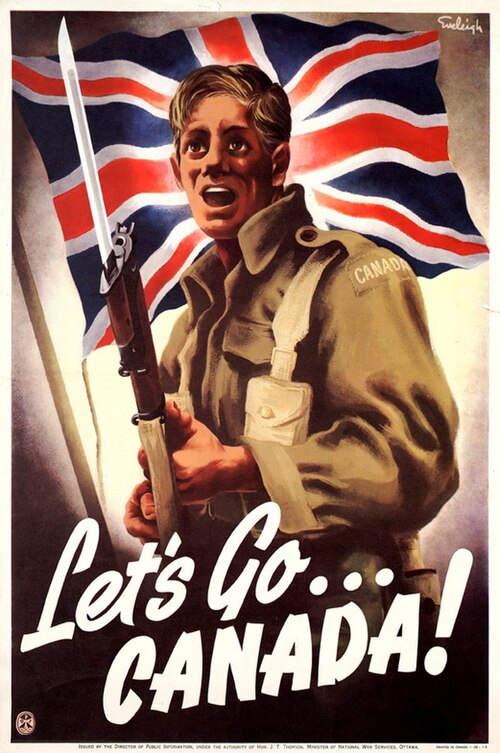
في العاشر من سبتمبر عام ١٩٣٩، أعلنت كندا الحرب على ألمانيا أيضاً، [ ٧١ ] وكانت هذه بداية مشاركة كندا في أكبر جهد وطني مشترك في تاريخها. وكان الجيش الكندي نشطاً بشكل رئيسي في إيطاليا ، [ ٧٢ ] وشمال غرب أوروبا، [ ٧٣ ] وشمال المحيط الأطلسي.
خلال الحرب، خدم 1.1 مليون كندي في الجيش والبحرية والقوات الجوية . من بين هؤلاء، فقد أكثر من 45,000 حياتهم ، وأصيب 54,000 آخرون. [ 74 ] بلغت التكلفة المالية 21,786,077,519.13 دولارًا أمريكيًا ، بين عامي 1939 و1950 . [ 75 ] بنهاية الحرب، امتلكت كندا رابع أكبر قوة جوية في العالم، [ 76 ] وثالث أكبر قوة بحرية. [ 77 ] كما أكملت البحرية التجارية الكندية أكثر من 25,000 رحلة عبر المحيط الأطلسي. [ 78 ] تدرب العديد من طياري الحلفاء في كندا خلال الحرب. كما خدم كنديون في جيوش دول حليفة مختلفة .
انتشرت القوات الكندية في المملكة المتحدة عام ١٩٣٩. شارك فيلق واحد في الحملة الإيطالية، بينما قاتل فيلق آخر في شمال غرب أوروبا بدءًا من إنزال نورماندي في ٦ يونيو ١٩٤٤، بغزو شاطئ جونو. أنهى الجيش الكندي الأول الحرب على الأراضي الألمانية بخمس فرق كندية وعدد كبير من التشكيلات المتحالفة تحت قيادته المباشرة.
خلال الحرب، تعرضت كندا لهجوم مباشر في معركة سانت لورانس ، وفي قصف منارة في إستيفان بوينت في كولومبيا البريطانية.
كان للحرب آثار ثقافية وسياسية واقتصادية كبيرة على كندا، بما في ذلك أزمة التجنيد الإجباري . ومع ذلك، لم تُعزز المجهودات الحربية الاقتصاد الكندي فحسب ، بل رسّخت مكانة كندا كفاعل رئيسي على الساحة الدولية. [ 79 ]
جزيرة كاريبية

خلال الحرب العالمية الثانية، تولت الولايات المتحدة مسؤوليات الدفاع البريطانية في منطقة الكاريبي. وفي سبتمبر/أيلول 1940، اتفق البلدان على اتفاقية الإعارة والتأجير (المعروفة أيضًا باتفاقية المدمرات مقابل القواعد ). وتضمنت الاتفاقية إعارة مدمرات أمريكية مقابل تأجير إحدى عشرة قاعدة بحرية وجوية على الأراضي البريطانية، بما في ذلك جزر البهاما، وجامايكا، وأنتيغوا، وسانت لوسيا، وترينيداد وتوباغو، وغيانا البريطانية، وبرمودا، بالإضافة إلى نيوفاوندلاند، وذلك لمدة تسعة وتسعين عامًا دون أي مقابل. وأصبحت منطقة شرق الكاريبي بمثابة خط المواجهة للاستراتيجية الدفاعية الأمريكية، التي تم إضفاء الطابع الرسمي عليها في إعلان بنما عام 1939. وقد وصف الاستراتيجيون الأمريكيون جزر الهند الغربية بأنها "الحصن الذي نراقبه". [ 80 ]
أكثر من 50% من الإمدادات التي أرسلتها الولايات المتحدة إلى أوروبا وأفريقيا شُحنت من موانئ خليج المكسيك، مرورًا بالبحر الكاريبي. بعد عام من هجوم بيرل هاربر ، بلغ قوام قيادة الدفاع الأمريكية في منطقة الكاريبي 119 ألف فرد، نصفهم متمركز في بنما لحماية القناة من هجوم ياباني مُحتمل. في غضون ذلك، ألحقت البحرية الألمانية (كريغسمارين) أضرارًا جسيمة بالشحن في منطقة الكاريبي عام 1942. وبحلول نهاية ذلك العام، أغرقت غواصات يو العاملة في الكاريبي 336 سفينة، نصفها على الأقل ناقلات نفط. [ 80 ]
كانت أجزاء من منطقة الكاريبي مستعمرة من قبل دول أصبحت فيما بعد تحت احتلال دول المحور. حافظت أروبا وكوراساو على ولائهما للحكومة الهولندية في المنفى ، ولكن نظرًا لاحتوائهما على مصافي نفط قيّمة تُعالج النفط الفنزويلي، وُضعتا تحت الحماية البريطانية. تعرضت الجزيرتان لهجمات ألمانية في عملية نيولاند . وفي عام 1942، نُقلتا إلى الولايات المتحدة، التي كانت قد نشرت قوات في سورينام عام 1941 لتأمين مناجم البوكسيت التابعة لها. [ 81 ] خضعت مارتينيك وغوادلوب لسيطرة فرنسا الفيشية . ضمن الضغط الأمريكي والبريطاني بقاء العديد من السفن الفرنسية، بما في ذلك حاملة الطائرات الوحيدة الفرنسية، بيارن ، محتجزة في مارتينيك. [ 82 ] فرّ آلاف اللاجئين، وتوجه الكثير منهم إلى دومينيكا ، بينما نمت حركة مقاومة مناهضة لحكومة فيشي . [ 81 ] انضمت الجزر، إلى جانب غويانا الفرنسية ، إلى فرنسا الحرة عام 1943.
سيلان (سريلانكا)
كانت سيلان (المعروفة الآن باسم سريلانكا ) مستعمرة بريطانية وقاعدة بحرية رئيسية للحلفاء. في 5 أبريل 1942، قصفت أكثر من 300 طائرة من حاملات طائرات يابانية الجزيرة . وصفها ونستون تشرشل بأنها "أخطر لحظة" في الحرب العالمية الثانية ، لأن اليابانيين كانوا يطمحون إلى تكرار نجاح أكبر لهجوم بيرل هاربر. مع ذلك، نُقلت السفن البريطانية إلى أتول أدو في جزر المالديف . على الرغم من ذلك، خسر البريطانيون حاملة طائرات وطرادين ومدمرتين ، بينما تكبدت أسراب سلاح الجو الملكي البريطاني في سيلان خسائر فادحة.
تمركز فوج مدفعية حامية سيلان في جزيرة هورسبرغ بجزر كوكوس ، للدفاع عنها ضد الهجوم الياباني. إلا أن الفوج تمرد ليلة 8 مايو 1942، بنية تسليم الجزر لليابانيين. تم قمع التمرد وأُعدم ثلاثة من الجنود السيلانيين.
عقب تمرد جزر كوكوس، لم تُنشر أي وحدة قتالية سيلانية في الخطوط الأمامية، على الرغم من استخدام قوات فيلق الإمداد والنقل في المناطق الخلفية في الشرق الأوسط. وتم تعزيز دفاعات سريلانكا بثلاث فرق من جيوش الحلفاء نظرًا لأهميتها الاستراتيجية كمصدر للمطاط . أما السيلانيون في مالايا وسنغافورة الخاضعتين للاحتلال الياباني، فقد جندهم اليابانيون في فوج لانكا التابع للجيش الوطني الهندي للقتال ضد الحلفاء، لكنهم لم يشاركوا في أي معركة.
تشيلي

أعلنت تشيلي حيادها عند اندلاع الحرب في أوروبا، نظرًا لعلاقاتها التجارية الوثيقة مع ألمانيا. إلا أنه في وقت لاحق من الحرب، نأت تشيلي بنفسها بنشاط عن دول المحور، واتخذت الحكومة التشيلية خطوات لعزل الضباط العسكريين الموالين لألمانيا. وفي سبتمبر 1938، أدت محاولة انقلاب مدعومة من النازيين إلى تحول غالبية الشعب التشيلي ضد الجالية الألمانية في تشيلي. وبعد غرق سفينة تولتين على يد غواصة نازية قبالة سواحل نيوجيرسي ، والمظاهرات المناهضة لألمانيا في تشيلي، [ 83 ] قُطعت العلاقات مع دول المحور في 20 يناير 1943. وطوال فترة الحرب، تم تعزيز الوجود البحري التشيلي حول جزيرة إيستر لصد هجوم ياباني مُحتمل (إذ كانت اليابان تطمح إلى ضم جميع جزر بولينيزيا إلى أراضيها )، كما تم تعزيز القدرات الدفاعية في الموانئ الحيوية في أنتوفاغاستا ، وكوكيمبو ، وفالبارايسو ، وتالكاهوانو . ساعدت السفن التجارية البحرية التشيلية السفن البيروفية والكولومبية والكوبية في تسيير دوريات حول منطقة قناة بنما خلال معركة الكاريبي . وفي الفترة من عام 1943 إلى عام 1945، تحول معسكر بيساغوا التشيلي إلى موقع اعتقال خلال الحرب لمواطني الدول المعادية. وأعلنت تشيلي الحرب على اليابان في 13 أبريل/نيسان 1945، لتصبح بذلك آخر دولة في أمريكا الجنوبية تفعل ذلك. [ 84 ] وفي منتصف عام 2017، كشفت وثائق رُفعت عنها السرية حديثًا أن وحدات الشرطة الاستقصائية التشيلية أحبطت مخططًا لشبكة تجسس نازية لتفجير مناجم النحاس في شمال تشيلي وتفجير قناة بنما. [ 85 ]
الصين

كانت جمهورية الصين تخوض حربًا متقطعة ضد اليابان منذ حادثة موكدين عام 1931 ، حين ضمت اليابان منشوريا . وفي 7 يوليو/تموز 1937، أدت حادثة جسر ماركو بولو إلى اندلاع حرب شاملة بين البلدين. ومع هذا، بالإضافة إلى الصراع الأهلي بين الكومينتانغ (الحزب الوطني الصيني) والحزب الشيوعي الصيني ، انصبّ اهتمام الحكومة الوطنية الصينية بالكامل على داخل حدودها. ومع ذلك، تمكن الجنرال تشانغ كاي شيك من إرسال قوات لمساعدة بريطانيا في بورما مطلع عام 1942. وقد علق أكثر من 1.5 مليون جندي ياباني في الصين، وقُدّرت الخسائر البشرية بين 1.1 و1.9 مليون قتيل وجريح. في بداية الحرب، بلغ قوام الجيش الصيني 2.6 مليون جندي، وبحلول نهايتها ارتفع إلى 5.7 مليون جندي (باستثناء الجنود الشيوعيين).
أدت الحرب إلى فتور العلاقات الودية السابقة بين الصين وألمانيا (انظر التعاون الصيني الألماني )، وبعد الهجوم الياباني على بيرل هاربور، انضمت الصين رسمياً إلى الحلفاء وأعلنت الحرب على ألمانيا في 9 ديسمبر 1941.
احتلت اليابان معظم المراكز الحضرية والموارد الصناعية والمناطق الساحلية في الصين خلال معظم فترة الحرب. تكبدت الصين خسائر فادحة في الأرواح جراء الحرب، عسكريين ومدنيين على حد سواء. فقد تكبد الجيش القومي الصيني نحو 3.2 مليون ضحية، ولقي 17 مليون مدني حتفهم في تبادل إطلاق النار. بعد الحرب، حصلت الصين على أحد المقاعد الدائمة في مجلس الأمن التابع للأمم المتحدة . [ 86 ]
رغم تعاون القوميين والشيوعيين في مواجهة اليابانيين، اندلعت الحرب الأهلية الصينية مجدداً بعد انتهاء الحرب. هُزمت الحكومة القومية على يد الشيوعيين عام ١٩٤٩ وتراجعت إلى تايوان ، بينما تأسست جمهورية الصين الشعبية الشيوعية في البر الرئيسي.
كولومبيا

بعد الهجوم على بيرل هاربر ، قطعت كولومبيا علاقاتها الدبلوماسية مع دول المحور . وكانت كولومبيا تزود الحلفاء بالمنتجات البترولية . وفي عام 1943، دمرت الغواصة الألمانية يو-505 سفينة شراعية كولومبية ، مما دفع كولومبيا إلى إعلان حالة الحرب ضد ألمانيا في 26 نوفمبر 1943. [ 87 ]
غادر السفير الألماني البلاد، وطُبقت إجراءات رقابية، شملت احتجاز مواطنين ألمان في مناطق محددة. كما سُلمت إلى الولايات المتحدة صور وطائرات استطلاع تابعة لشركة " سكادتا " الكولومبية الألمانية ، التي كانت تلتقط صورًا جوية للمدن الكولومبية والألمانية. وساعدت البحرية الكولومبية في تسيير دوريات في المياه القريبة من منطقة قناة بنما ، وشاركت في معركة الكاريبي . وكانت المواجهة البارزة الوحيدة في عام 1944، حيث هاجمت المدمرة "إيه آر سي كالداس " الغواصة الألمانية "يو-154" ، التي زورت تدميرها للفرار. [ 88 ]
جزر القمر
كوستاريكا
كان الرئيس الإصلاحي اليساري رافائيل أنخيل كالديرون غوارديا حليفًا لفرانكلين روزفلت ومعاديًا للنازية. في عام 1940، أفادت التقارير أن كالديرون وروزفلت اتفقا على بناء قاعدة أمريكية في جزيرة كوكوس ، التابعة لكوستاريكا في المحيط الهادئ؛ إلا أن الولايات المتحدة قررت في نهاية المطاف بناء قاعدة في جزر غالاباغوس . انضمت كوستاريكا إلى الحلفاء في 8 ديسمبر 1941، معلنةً الحرب على اليابان في اليوم التالي للهجوم على بيرل هاربر ، وعلى ألمانيا وإيطاليا بعد ذلك بوقت قصير. كانت كوستاريكا أول دولة في أمريكا تعلن الحرب على الإمبراطورية اليابانية، تضامنًا مع الشعب الأمريكي. [ 89 ] ورغم أن جيش كوستاريكا الصغير، المؤلف من 500 رجل، لم يتمكن من المشاركة المباشرة في القتال، إلا أن إدارة كالديرون فرضت إجراءات حربية ضد مواطني دول المحور في البلاد، شملت مصادرة الممتلكات والاعتقال. وشملت الأهداف الألمان والإيطاليين والإسبان، الذين كان يُنظر إلى الأخيرين على أنهم فرانكويون متعاطفون مع الفاشية. [ 90 ]
كوبنهاغن

تولى الرئيس فيديريكو لاردو برو قيادة كوبا عند اندلاع الحرب في أوروبا، مع أن السلطة الفعلية كانت بيد فولغينسيو باتيستا بصفته رئيس أركان الجيش. [ 91 ] في عام 1940، منع لاردو برو دخول 900 لاجئ يهودي وصلوا إلى هافانا على متن السفينة الألمانية "إم إس سانت لويس" . وبعد أن رفضت كل من الولايات المتحدة وكندا استقبال اللاجئين، عادوا إلى أوروبا، حيث قُتل العديد منهم في نهاية المطاف في المحرقة. [ 92 ] أصبح باتيستا رئيسًا رسميًا بعد انتخابات عام 1940. وتعاون مع الولايات المتحدة مع اقترابها من الحرب ضد دول المحور. أعلنت كوبا الحرب على اليابان في 8 ديسمبر 1941، وعلى ألمانيا وإيطاليا في 11 ديسمبر. [ 93 ]
كانت كوبا طرفًا مهمًا في معركة الكاريبي ، واكتسبت بحريتها سمعةً طيبةً بفضل مهارتها وكفاءتها. رافقت البحرية مئات السفن الحليفة عبر المياه المعادية، وحلقت لآلاف الساعات في مهام مرافقة القوافل والدوريات، وأنقذت أكثر من 200 ضحية من ضحايا هجمات الغواصات الألمانية من البحر. أغرقت الغواصات الألمانية ست سفن تجارية كوبية، مما أسفر عن مقتل نحو ثمانين بحارًا. في 15 مايو 1943، أغرق سرب من سفن مطاردة الغواصات الكوبية الغواصة الألمانية يو-176 بالقرب من كايو بلانكيزال . [ 94 ] تلقت كوبا ملايين الدولارات من المساعدات العسكرية الأمريكية من خلال برنامج الإعارة والتأجير ، والذي شمل قواعد جوية وطائرات وأسلحة وتدريبًا. [ 93 ] كما كانت محطة غوانتانامو البحرية الأمريكية بمثابة قاعدة للقوافل التي تعبر بين الولايات المتحدة وقناة بنما أو نقاط أخرى في منطقة الكاريبي. [ 95 ]
قبرص
تأسس فوج قبرص في 12 أبريل 1940، وانضم إلى هيكل الجيش البريطاني . كان معظم أعضائه من المتطوعين من سكان قبرص اليونانيين والأتراك، بالإضافة إلى جنسيات أخرى من دول الكومنولث. خدم حوالي 30,000 قبرصي في الفوج، الذي ضمّ سرايا المشاة والميكانيكا والنقل والنقل بالحمولة. كان سائقو البغال القبارصة أول القوات الاستعمارية التي أُرسلت إلى الجبهة الغربية، حيث خدموا في فرنسا وإثيوبيا وإيطاليا، ناقلين المعدات إلى مناطق وعرة يصعب الوصول إليها بالمركبات. شارك الفوج في معركة دونكيرك، والحملة اليونانية ( معركة اليونان )، وشمال إفريقيا ( عملية البوصلة )، وفرنسا، والشرق الأوسط، وإيطاليا. في سنوات ما بعد الحرب وقبل حله، خدم الفوج في قبرص والشرق الأوسط، بما في ذلك فلسطين في الفترة 1945-1948. تم حل الفوج في 31 مارس 1950.
تشيكوسلوفاكيا

قُسّمت تشيكوسلوفاكيا بدءًا من اتفاقية ميونيخ وجائزة فيينا الأولى عام ١٩٣٨. ونتيجةً لذلك، أصبحت منطقة السوديت جزءًا من ألمانيا، وضُمّت منطقة ترانس-أولزا إلى بولندا، وأصبح جنوب تشيكوسلوفاكيا جزءًا من المجر. وفي وقت لاحق، أُنشئت جمهورية سلوفاكيا المنفصلة حديثًا ، وهي نظام دمية تابع للنازيين بقيادة الكاهن الكاثوليكي جوزيف تيسو، بينما احتُلت بقية منطقة روثينيا الكارباتية وضُمّت إلى المجر . وفي اليوم التالي، أصبح الجزء التشيكي من البلاد محمية بوهيميا ومورافيا تحت قيادة رئيس الدولة إميل هاشا .
منذ عام 1940، تم الاعتراف بحكومة المنفى في لندن برئاسة الرئيس التشيكوسلوفاكي السابق إدوارد بينيش كقوة حليفة.
محمية بوهيميا ومورافيا

أنشأ الزعيم الألماني أدولف هتلر المحمية في 16 مارس 1939، وأصدر إعلانًا بذلك من قلعة براغ . [ 96 ] وقد انتهك إنشاء المحمية اتفاقية ميونيخ. [ 97 ]
بقيت المحمية تتمتع بحكم ذاتي اسمي، وكان لديها نظام حكم مزدوج، حيث كان القانون الألماني يُطبق على الألمان العرقيين، بينما كان باقي السكان يتمتعون بالوضع القانوني لرعايا المحمية، ويخضعون لحكم إدارة تشيكية عميلة. خلال الحرب العالمية الثانية، اضطرت القوى العاملة التشيكية المدربة تدريباً عالياً والصناعة المتطورة إلى تقديم مساهمة كبيرة في الاقتصاد الحربي الألماني . ولأن المحمية كانت خارج نطاق قصف قاذفات الحلفاء المتمركزة في بريطانيا، فقد تمكن الاقتصاد التشيكي من العمل دون انقطاع تقريباً حتى نهاية الحرب. تورطت إدارة المحمية بشكل كبير في المحرقة النازية في بوهيميا ومورافيا . [ 98 ] [ 99 ] انتهى وجود الدولة باستسلام ألمانيا للحلفاء في مايو 1945 .
جمهورية سلوفاكيا (سلوفاكيا)

أُعلنت الجمهورية السلوفاكية حديثة التأسيس بقيادة جوزيف تيسو في 14 مارس 1939، متحالفةً مع ألمانيا النازية، وشاركت قواتها المسلحة في الحرب ضد بولندا والاتحاد السوفيتي . وفي 24 نوفمبر 1940، انضمت سلوفاكيا إلى دول المحور عندما وقّع قادتها على الاتفاق الثلاثي .
تعرض السكان اليهود المحليون لاضطهاد شديد. [ 100 ] وكجزء من المحرقة في سلوفاكيا ، تم ترحيل 75,000 يهودي من أصل 80,000 في سلوفاكيا إلى معسكرات الموت الألمانية . [ 101 ] [ 102 ]
بدأت الانتفاضة الوطنية السلوفاكية في أغسطس 1944، وقمعتها القوات الألمانية في نهاية أكتوبر؛ إلا أن المقاومة استمرت في القتال في الجبال حتى نهاية الحرب. وفي أبريل 1945، هزم الجيش الأحمر الألمان وأطاح بحكومة تيسو، وأعاد قيام الدولة التشيكوسلوفاكية. [ 87 ]
دانزيغ
كانت مدينة دانزيغ الحرة ، وهي دولة مدينة شبه مستقلة تحت حماية عصبة الأمم ، ذات أغلبية ألمانية، وخضعت لحكم نازي بحلول عام 1936. [ 103 ] في 30 أغسطس 1939، وجهت ألمانيا إنذارًا نهائيًا لبولندا تطالبه فيه بالسيطرة على المدينة، مما أدى إلى أزمة دانزيغ وغزو بولندا في 1 سبتمبر. قدمت دولة المدينة المساعدة لألمانيا النازية خلال الغزو، ثم ضُمت إلى ألمانيا وفقدت دورها المستقل.
الدنمارك

التزمت الدنمارك رسمياً الحياد منذ اندلاع الحرب. غزت ألمانيا الدنمارك دون إعلان حرب كجزء من عملية فيزروبونغ في 9 أبريل 1940، وسحقتها في غضون ساعات قليلة من القتال.
بقيت الحكومة الدنماركية في كوبنهاغن حتى عام ١٩٤٣، ووقّعت على ميثاق مناهضة الشيوعية . وفي ٢٩ أغسطس/آب ١٩٤٣، استقالت الحكومة وحُلّت استجابةً لمطالب ألمانيا بتقديم المزيد من التنازلات. وأصبحت الدنمارك آنذاك تحت الاحتلال العسكري الألماني، وتولى الجنرال فيرنر بيست ، قائد قوات الأمن الخاصة، إدارة الشؤون المدنية .
في الرابع من مايو عام ١٩٤٥، استسلمت القوات الألمانية في الدنمارك للجيش البريطاني. ولأن القائد الألماني لجزيرة بورنهولم الشرقية رفض الاستسلام للاتحاد السوفيتي، فقد قُصفت مدينتان محليتان وأُجبرت الحامية على الاستسلام. وبقيت بورنهولم تحت السيطرة السوفيتية حتى عام ١٩٤٦.
جزر فارو وغرينلاند
في العاشر من مايو عام 1940، غزت القوات البريطانية أيسلندا وجزر فارو الدنماركية . واحتلت الولايات المتحدة غرينلاند ، وهو موقف أيده لاحقًا المبعوث الدنماركي في واشنطن ، هنريك كوفمان . وأعلنت أيسلندا، التي نُقلت لاحقًا من السيطرة البريطانية إلى الأمريكية، استقلالها عام 1944.
جمهورية الدومينيكان
أعلنت جمهورية الدومينيكان الحرب على ألمانيا واليابان عقب هجمات بيرل هاربر وإعلان النازيين الحرب على الولايات المتحدة. لم تُسهم جمهورية الدومينيكان بشكل مباشر بقوات أو طائرات أو سفن، إلا أن 112 دومينيكانيًا انضموا إلى الجيش الأمريكي وشاركوا في الحرب. إضافةً إلى ذلك، قُتل 27 دومينيكانيًا عندما أغرقت غواصات ألمانية أربع سفن على متنها طواقم دومينيكانية في منطقة البحر الكاريبي. [ 104 ]
جزر الهند الشرقية الهولندية (إندونيسيا)

كانت موارد النفط الغنية في جزر الهند الشرقية الهولندية هدفًا رئيسيًا للجيش الياباني في هجومه على الحلفاء بدءًا من 7 ديسمبر 1941. كانت البحرية الملكية الهولندية وجيش جزر الهند الشرقية الملكية الهولندية جزءًا من القيادة الأمريكية البريطانية الهولندية الأسترالية ، ولكن نظرًا لاحتلال ألمانيا لهولندا عام 1940 ، لم تكن البلاد قادرة على الدفاع عن مستعمرتها. اجتاحت البحرية والجيش اليابانيان القوات الهولندية وقوات الحلفاء في أقل من ثلاثة أشهر، وأكملا الاحتلال في مارس 1942. [ 105 ] فرّ بعض الأفراد والسفن الهولندية إلى أستراليا، حيث واصلوا القتال ضد اليابانيين.
كانت فترة الاحتلال الياباني من أهم الفترات في تاريخ إندونيسيا . في البداية، رحّب كثير من الإندونيسيين باليابانيين بحفاوة باعتبارهم مُحرِّرين من الاستعمار الهولندي. إلا أن هذا الشعور تغيّر عندما أدرك الإندونيسيون أن عليهم تحمّل المشاقّ في سبيل المجهود الحربي الياباني. ففي جاوة وسومطرة ، قام اليابانيون بتعليم وتدريب وتسليح العديد من الشباب الإندونيسي ، ومنحوا القادة الوطنيين صوتاً سياسياً. وبهذا، هيّأ الاحتلال الياباني الظروف لاستقلال إندونيسيا. [ 106 ]
في الفترة ما بين عامي 1944 و1945، تجنبت قوات الحلفاء إلى حد كبير دخول إندونيسيا. ولذلك، كانت معظم أراضي المستعمرة لا تزال تحت الاحتلال الياباني وقت استسلامها في أغسطس/آب 1945. وقد أُعلن استقلال إندونيسيا بعد أيام من استسلام اليابان في المحيط الهادئ. وأعقب ذلك الثورة الوطنية الإندونيسية ، التي نالت البلاد استقلالها عام 1949. وذكر تقرير لاحق للأمم المتحدة أن أربعة ملايين شخص لقوا حتفهم في إندونيسيا نتيجة للاحتلال الياباني. [ 107 ] كما توفي نحو 2.4 مليون شخص في جاوة جراء المجاعة خلال الفترة نفسها. [ 108 ]
الإكوادور
كانت الإكوادور واحدة من عدة دول في أمريكا الجنوبية انضمت إلى الحلفاء في أواخر الحرب (انضمت ضد ألمانيا في 2 فبراير 1945)، مما سمح للولايات المتحدة باستخدام جزيرة بالترا كقاعدة بحرية. [ 109 ]
مصر

اعترفت بريطانيا من جانب واحد باستقلال مصر عام 1922، لكنها استمرت في احتلال البلاد عسكرياً والسيطرة عليها. وبموجب المعاهدة الأنجلو-مصرية لعام 1936، اقتصر الاحتلال البريطاني على منطقة قناة السويس ، لكنها سمحت للقوات البريطانية بإعادة احتلال بقية البلاد في حالة الحرب.
كانت مصر ذات أهمية استراتيجية بالغة نظرًا لوجود قناة السويس وموقعها الجغرافي المركزي. وقد زودت الحكومة المصرية القوات البريطانية، لكن بعض أفرادها انخرطوا في مفاوضات سرية مع ألمانيا حول إمكانية انضمام مصر إلى دول المحور في حال هزيمة البريطانيين في معركة الصحراء الغربية . وسعى العديد من السياسيين والضباط المصريين إلى الحصول على دعم دول المحور لإخراج القوات البريطانية المحتلة من البلاد.
بعد أن هزمت القوات البريطانية الغزو الإيطالي الأولي، دخلت ألمانيا مسرح عمليات شمال أفريقيا لإنقاذ ليبيا الإيطالية . وأدت سلسلة من الانتصارات الألمانية إلى تقريب قوات المحور من القاهرة لمسافة 160 كيلومترًا (99 ميلًا) ، مما أثار آمالًا كبيرة لدى القوميين المصريين. إلا أن انتصار بريطانيا في العلمين بشّر بنهاية تقدم المحور في مصر، وهزيمتهم النهائية في شمال أفريقيا. ورغم أن مصر كانت تُقاتل معظم قواتها ضد المحور في حملة الصحراء الغربية، إلا أن الملك فاروق ظل يقاوم الضغوط البريطانية لإعلان الحرب على ألمانيا حتى عام 1945.
السلفادور

من عام ١٩٣١ إلى عام ١٩٤٤، حكم السلفادور الديكتاتور العسكري ماكسيميليانو هيرنانديز مارتينيز ، المُعجب بهتلر وموسوليني. ورغم إعجابه الشخصي بهما، أعلن هيرنانديز مارتينيز الحرب على كلٍ من اليابان (٨ ديسمبر ١٩٤١) وألمانيا (١٢ ديسمبر ١٩٤١) بعد وقتٍ قصير من الهجوم على بيرل هاربر، وذلك بسبب العلاقات الاقتصادية القوية التي تربط السلفادور بالولايات المتحدة. وأقال الألمان من الحكومة، واعتقل مواطنين يابانيين وألمان وإيطاليين. أدت الحرب العالمية الثانية إلى سخط السلفادوريين من ديكتاتوريتهم، وأجبر إضرابٌ وطني عام في عام ١٩٤٤ هيرنانديز مارتينيز على الاستقالة والفرار إلى غواتيمالا . وبعد الحرب، قُتل في هندوراس على يد مواطن سلفادوري ثأري. [ ١١٠ ]
كان خوسيه كاستيلانوس كونتريراس عقيدًا في الجيش السلفادوري ودبلوماسيًا ، وخلال عمله كقنصل عام للسلفادور في جنيف خلال الحرب العالمية الثانية ، ساعد مع رجل أعمال يهودي مجري يُدعى جيورجي ماندل ، في إنقاذ ما يصل إلى 40 ألف يهودي ومواطن من أوروبا الوسطى من الاضطهاد النازي من خلال تزويدهم بوثائق مزورة للجنسية السلفادورية . [ 111 ]
كان خوسيه غوستافو غيريرو قاضياً سلفادورياً تصدى للنازيين خلال غزو هتلر لأوروبا. عاش هذا الفقيه السلفادوري المرموق في أوروبا لسنوات عديدة خلال مسيرته المهنية كدبلوماسي ورئيساً للمحكمة الدائمة للعدل الدولي ، ومقرها لاهاي ، هولندا .
في عام ١٩٣٧، خلال صعود النازية في أوروبا، تولى الدكتور غيريرو رئاسة المحكمة الدولية الدائمة، إلى أن أجبره النازيون على التنحي عام ١٩٤٠. وبعد سقوط هولندا مباشرةً ، في ١٧ مايو ١٩٤٠، حاول النازيون الاستيلاء على قصر السلام التابع للمحكمة الدولية الدائمة في لاهاي، لكنهم واجهوا هناك القاضي السلفادوري، القاضي الوحيد الذي بقي مع مجموعة من الضباط الهولنديين. وعندما اقترب جنرال ألماني، قال له القاضي: "المحكمة وموظفوها مصونة. لا يمكنهم دخول القصر إلا بجسدي". لهذا الموقف ولشجاعته في الدفاع عن القانون الدولي، رُشِّح غيريرو مرتين لجائزة نوبل للسلام .
وبمجرد استقراره في جنيف ، زار غيريرو القنصل العام للسلفادور في سويسرا، العقيد خوسيه كاستيلانوس كونتريراس ، الذي فر من ألمانيا، حيث عمل قنصلاً حتى قطعت السلفادور علاقاتها مع نظام هتلر.
كان كاستيلانوس قد منح بالفعل عدة تأشيرات لأشخاص من أصل يهودي تعرضوا للاضطهاد النازي. إلا أن الأمر أصبح الآن جزءًا من مشروع أكبر: تسليم وثائق مزورة لجنسية سلفادورية لأشخاص من أصل يهودي. استشار كاستيلانوس حينها غيريرو، الذي وافق على الفور على الخطة التي أنقذت حياة آلاف اليهود. ووفقًا للتحقيقات، يُعتقد أن غيريرو ساهم في كتابة نص الوثيقة التي مُنحت لهم لاحقًا لإنقاذ حياتهم.
إستونيا
أدى اتفاق مولوتوف-ريبنتروب، الموقع في أغسطس/آب 1939 بين ألمانيا النازية والاتحاد السوفيتي، إلى وضع إستونيا ضمن النفوذ السوفيتي. هدد الاتحاد السوفيتي إستونيا بالحرب إن لم توافق على "اتفاقية مساعدة متبادلة"، تسمح للقوات السوفيتية باستخدام عدة قواعد عسكرية في إستونيا لمدة عشر سنوات. وافقت الحكومة الإستونية، التي كانت مقتنعة بأن الحرب ضد الاتحاد السوفيتي محكوم عليها بالهزيمة، في 28 سبتمبر/أيلول 1939. نفذ السوفيت انقلابًا عسكريًا ، وبدأ الاحتلال السوفيتي الكامل لإستونيا من قبل الجيش الأحمر في يونيو/حزيران 1940، وأُجريت انتخابات صورية تحت سيطرة السوفيت. تولت الحكومة الجديدة السلطة، وأُعلن قيام جمهورية إستونيا الاشتراكية السوفيتية في 21 يوليو/تموز 1940. قُبلت الدولة العميلة رسميًا في الاتحاد السوفيتي في 6 أغسطس/آب. لم تعترف معظم الدول الغربية بشرعية الضم، واستمرت دول البلطيق في الوجود رسميًا كدول مستقلة حتى استعادت استقلالها في عام 1991. [ 87 ]
احتلت ألمانيا إستونيا عام 1941 بعد اندلاع الحرب بين ألمانيا والاتحاد السوفيتي. ومع عودة القوات المسلحة السوفيتية ، انضم 70 ألف إستوني إلى الجانب الألماني أو جُندوا من قبله لمحاربة السوفيت. فشلت اللجنة الوطنية في إعادة تشكيل الحكومة الوطنية في سبتمبر 1944 بسبب إعادة الاحتلال السوفيتي . في نهاية الحرب، اندلعت انتفاضة إخوة الغابة المسلحة ضد السلطات السوفيتية، والتي استمرت في دول البلطيق حتى منتصف الخمسينيات. وظلت إستونيا جزءًا بحكم الأمر الواقع من الاتحاد السوفيتي حتى عام 1991. [ 87 ]
أثيوبيا
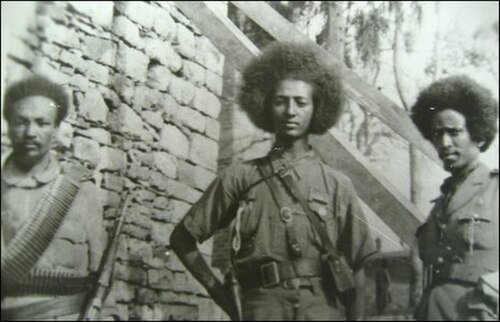
مع اندلاع الحرب، كانت إثيوبيا تحت الاحتلال الإيطالي ، وكان الإمبراطور هيلا سيلاسي في المنفى بإنجلترا ، ساعيًا عبثًا لحشد دعم الحلفاء لقضية بلاده. بدأت حركة أربينوخ حرب عصابات ضد القوات الإيطالية المحتلة يوم سقوط أديس أبابا في مايو 1936. وبعد فرار الإمبراطور إلى المنفى، تحولت فلول الجيش الإمبراطوري الإثيوبي المنحل إلى وحدات حرب عصابات. وشكّل سكان المدن في جميع أنحاء البلاد حركات سرية لمساعدة الوطنيين، بينما قاد السكان عمومًا حملة مقاومة سلمية تهدف إلى عرقلة أجندة موسوليني الاقتصادية للمنطقة. وطوال فترة الاحتلال وحتى بداية الحرب العالمية الثانية، أدى التضييق المستمر على الأرتال الإيطالية وخطوط اتصالاتها وإمداداتها إلى إضعاف قدراتهم القتالية ومعنوياتهم. وسادت حالة من الشك والريبة بين القوات الإيطالية والمدنيين على حد سواء، مع ازدياد عزلتهم عن روما . كان رد الفعل الفاشي على هجمات الوطنيين وحشيًا، وغالبًا ما استهدف السكان المدنيين، مما أدى إلى زيادة أعداد الوطنيين وخلق حلقة مفرغة أدت في النهاية إلى زوال شرق أفريقيا الإيطالية بقيادة موسوليني . [ 112 ]
أدى إعلان بريطانيا الحرب على إيطاليا إلى إعادة إحياء حركة الوطنيين ومهّد الطريق لطرد الإيطاليين نهائيًا من إثيوبيا والقرن الأفريقي . بدأت حملة تحرير إثيوبيا بقيادة الحلفاء شتاء عام 1940. نُقل الإمبراطور هيلا سيلاسي ، بدعم وتعاون من البريطانيين، إلى السودان للعمل جنبًا إلى جنب مع الرائد أورد وينجيت لتنظيم وقيادة فرق الوطنيين الإثيوبيين الرئيسية التي فرّت من إثيوبيا الخاضعة للسيطرة الفاشية فور سماعها نبأ إعلان بريطانيا الحرب. قادت حملة شرق أفريقيا قوة أفريقية متعددة الجنسيات ، ضمت قوات إثيوبية وإريترية وبريطانية وسودانية وكينية وروديسية وجنوب أفريقية وهندية ونيجيرية وغانية وقوات فرنسية حرة . في غضون أشهر ، تحقق تحرير إثيوبيا، وفي 5 مايو 1941، بعد خمس سنوات بالضبط من فرار الإمبراطور من عاصمته، عاد هيلا سيلاسي إلى عرشه. مثّلت هزيمة الفاشيين في إثيوبيا أول انتصار للحلفاء في الحرب العالمية الثانية، وسمحت بنقل القوات المتبقية بسرعة إلى مصر لمواجهة تقدم دول المحور نحو القاهرة. [ 112 ]
فيجي
كانت فيجي مستعمرة بريطانية خلال الحرب العالمية الثانية. خدمت قوات الدفاع الفيجيّة مع تشكيلات الجيش النيوزيلندي ، تحت قيادة قوات الحلفاء في منطقة المحيط الهادئ . شارك فوج المشاة الفيجي في حملة جزر سليمان ضد اليابانيين. أصبحت فيجي ميناءً بحريًا عسكريًا رئيسيًا لحركة القوافل بين الولايات المتحدة وأستراليا. كانت أقرب طريق آمن نسبيًا حول جزر سليمان المحاصرة، ونقطة توقف للقوات والإمدادات المتجهة إلى جزر سليمان، الواقعة شمالًا، وأقرب ميناء محمي متاح للسفن المتضررة حول غوادالكانال. كما أنشأت فيجي العديد من المرافق مثل المطارات لغارات القصف الجوي للحلفاء، والثكنات، وميادين التدريب. [ 113 ]
فنلندا

أُخضعت فنلندا لنفوذ الاتحاد السوفيتي بموجب اتفاقية مولوتوف-ريبنتروب ، وعندما رفضت السماح للاتحاد السوفيتي ببناء قواعد عسكرية على أراضيها، تعرضت لهجوم من القوات السوفيتية خلال حرب الشتاء (30 نوفمبر 1939 - 13 مارس 1940). بعد الحرب، سعت فنلندا دون جدوى للحصول على الحماية من المملكة المتحدة والسويد لمواجهة الضغط السوفيتي المتواصل، قبل أن تتجه إلى تحسين علاقاتها مع ألمانيا النازية. أسفر ذلك عن تعاون بين البلدين، والذي أدى بعد ثلاثة أيام من بدء عملية بارباروسا إلى هجوم جوي استباقي سوفيتي على فنلندا، مما أشعل فتيل حرب الاستمرار (25 يونيو 1941 - 4 سبتمبر 1944)، التي شاركت فيها فنلندا كحليف لألمانيا. أعلنت المملكة المتحدة الحرب على فنلندا في 6 ديسمبر 1941. [ 114 ] وأعلنت كندا ونيوزيلندا الحرب على فنلندا في 7 ديسمبر، وكذلك فعلت أستراليا وجنوب إفريقيا في اليوم التالي.
لضمان الدعم العسكري اللازم لوقف هجوم فيبورغ-بيتروزافودسك المنسق مع يوم النصر ، وُقّعت اتفاقية ريتي-ريبنتروب في 26 يونيو 1944، والتي شهدت توطيد العلاقات بين فنلندا وألمانيا النازية، لتصبح أقرب ما يكون إلى التحالف. وُقّعت هدنة بعد توقف الهجوم السوفيتي ، وانسحاب الفيرماخت من دول البلطيق . نصّت المعاهدة على طرد فنلندا لجميع القوات الألمانية، مما أدى إلى حرب لابلاند (15 سبتمبر 1944 - 25 أبريل 1945). جاء ذلك قبيل استسلام القوات النازية بالكامل في جميع أنحاء أوروبا في 7-8 مايو 1945 ( يوم النصر في أوروبا ). أُبرمت معاهدة سلام شاملة مع المملكة المتحدة والاتحاد السوفيتي بموجب معاهدات باريس للسلام عام 1947 .
فرنسا

كانت فرنسا من أوائل الدول الضامنة لأمن بولندا، ولذا كانت من أوائل الدول التي أعلنت الحرب على ألمانيا. ولعدة أشهر، لم تشهد الحرب الزائفة أو " الحرب المضحكة" سوى قتالٍ طفيف. وفي 10 مايو/أيار 1940، بدأت ألمانيا هجومها على فرنسا . وبعد ستة أسابيع من القتال الضاري، وقّعت الحكومة الفرنسية هدنة 22 يونيو/حزيران 1940. [ 115 ]
بعد الهدنة، انقسمت فرنسا إلى قسمين: قطاع محتل وقطاع غير محتل . في فرنسا المحتلة ، قاد أوتو فون ستولبناغل وابن عمه وخليفته كارل هاينريش إدارة عسكرية. وخضع المواطنون لخدمة العمل الإلزامي ، وهو برنامج للعمل القسري في ألمانيا. وواجه اليهود والغجر اضطهاد المحرقة في فرنسا . وقاومت مقاومة نشطة قوات الاحتلال طوال فترة الحرب. أما جنوب فرنسا، فقد أدارته حكومة عميلة بقيادة فيليب بيتان في فيشي ، ولذلك عُرفت باسم فرنسا فيشي . وفي المقابل، قاد شارل ديغول فرنسا الحرة ، وهي حكومة في المنفى في لندن سيطرت على الأراضي الفرنسية غير المحتلة في الخارج والقوات التي قاتلت إلى جانب الحلفاء.
بدأ تحرير فرنسا بغزوات الحلفاء عام 1944، عملية أوفرلورد في نورماندي شمالاً وعملية دراغون جنوباً. وحققت قوات الحلفاء تحرير باريس في أغسطس. وأسس ديغول الحكومة المؤقتة للجمهورية الفرنسية ، وعادت البلاد بأكملها إلى الحلفاء. ودارت معارك أخرى في فرنسا خلال التقدم نحو نهر الراين في الفترة 1944-1945. وبعد الحرب، أصبحت فرنسا عضواً مؤسساً في حلف شمال الأطلسي (الناتو) [ 116 ] وعضواً دائماً في مجلس الأمن التابع للأمم المتحدة [ 117 ] .
فرنسا فيشي
حافظ نظام فيشي على حياد رسمي خلال الحرب، لكنه تعاون مع ألمانيا. وسعى رئيس الوزراء بيير لافال مرارًا وتكرارًا إلى تقريب فرنسا من دول المحور، إلا أن بيتان استخدم حق النقض ضده. وفي عدة مناسبات، تعرضت قوات فيشي لهجمات من القوات البريطانية وقوات فرنسا الحرة، لا سيما في أفريقيا الفرنسية . ونتيجة لانتهاك فيشي شمال أفريقيا لشروط هدنة عام 1940 بإعلانها وقف إطلاق النار عقب عملية الشعلة ، احتل الألمان كامل فرنسا القارية في خريف عام 1942، لكنهم سمحوا لحكومة فيشي بمواصلة العمل. وانضمت حكومة فيشي شمال أفريقيا وجيشها بقيادة فرانسوا دارلان إلى الحلفاء. وبعد اغتيال دارلان، تولى ديغول السلطة إلى جانب هنري جيرو . وأُعدم لافال بتهمة الخيانة العظمى بعد الحرب. وحُكم على بيتان بالإعدام، لكن تم تخفيف الحكم.
فرنسا الحرة
تأسست قوات فرنسا الحرة التابعة للجنة التحرير الوطني الفرنسية ، وهي جماعة منفيّة مقرها لندن بقيادة شارل ديغول ، عام 1940 للحفاظ على التزام فرنسا تجاه الحلفاء وتحرير الأراضي الفرنسية التي احتلتها ألمانيا. وبالتعاون مع المقاومة الفرنسية ، لعبت هذه القوات دورًا في مسرح عمليات البحر الأبيض المتوسط وتحرير أوروبا الغربية ، بما في ذلك فرنسا عام 1944. وبحلول عام 1943، كانت فرنسا الحرة تسيطر على مساحات شاسعة من الأراضي، لكنها كانت تفتقر إلى الصناعات الحربية، وظلت تعتمد على المساعدات الأمريكية. ثم أعادت تنظيم صفوفها مع سلطة فيشي التي انضمت إليها ومع المقاومة الداخلية لمحاربة فرنسا. وسيطرت لجنة التحرير الوطني الفرنسية على فرنسا في أغسطس وسبتمبر 1944.
في عام 1944، بلغ عدد جنود قوات المقاومة الفرنسية حوالي 560 ألف جندي، وفي عام 1945، تجاوز عددهم 1.3 مليون جندي. ووفقًا لتصريحات دي أيزنهاور، لعبت المقاومة (قوات الداخل) دورًا يعادل 15 فرقة قتالية. وقد اضطلعت قوات المقاومة الفرنسية والمقاومة بدور محوري خلال تحرير فرنسا.
أفريقيا الاستوائية الفرنسية

انضمت الاتحادات الاستعمارية إلى قوات فرنسا الحرة بقيادة فيليكس إيبويه في أغسطس 1940، باستثناء الغابون التي كانت تحت حكم حكومة فيشي الفرنسية حتى 12 نوفمبر 1940، حين استسلمت حكومة فيشي للقوات الفرنسية الحرة الغازية في معركة الغابون . بعد ذلك، أصبح الاتحاد مركزًا استراتيجيًا لأنشطة فرنسا الحرة في أفريقيا، حيث اتخذت مدينة برازافيل عاصمةً لفرنسا الحرة من عام 1940 إلى عام 1943. [ 118 ] في عام 1944، استضافت برازافيل اجتماعًا لقوات المقاومة الفرنسية وممثلي المستعمرات الفرنسية في أفريقيا. ومثّل إعلان برازافيل الناتج محاولةً لإعادة تعريف العلاقة بين فرنسا ومستعمراتها الأفريقية. [ 119 ]
الصومال الفرنسي
كانت أرض الصومال الفرنسية ، وعاصمتها جيبوتي ، مسرحًا للمناوشات والحصار خلال حملة شرق أفريقيا في الحرب العالمية الثانية. بعد أن أعلنت إيطاليا الحرب على فرنسا في 10 يونيو 1940، دارت بعض المعارك بين قواتهما في أرض الصومال حتى سقوط فرنسا وتوقيع الهدنة الفرنسية الإيطالية في 25 يونيو. أعلن مجلس الإدارة المحلي ولاءه لحكومة فيشي في 19 يوليو. [ 120 ] احتلت إيطاليا الحصن الفرنسي في لويادا واستخدمته قاعدةً لغزوها أرض الصومال البريطانية في أغسطس. [ 121 ] فرضت بريطانيا حصارًا بحريًا وقصفت جيبوتي في سبتمبر. ردًا على ذلك، فرض حاكم فيشي الجديد، بيير نويلهيتاس ، حكمًا وحشيًا من الإرهاب ضد الأوروبيين والسكان المحليين على حد سواء. [ 120 ] تم استدعاؤه وإجباره على التقاعد في عام 1942. مع اشتداد الحصار، انشقت العديد من القوات الفرنسية وفرت إلى أرض الصومال البريطانية . دفع هذا الأمر الحاكم في نهاية المطاف إلى الاستسلام لقوات فرنسا الحرة في 26 ديسمبر 1942، لتكون بذلك آخر معاقل فرنسا في أفريقيا التي ظلت موالية لحكومة فيشي. [ 122 ] بعد تحرير الإقليم، تعاقب على حكم الصومال الفرنسي حكامٌ بسرعة، ولم يبدأ التعافي من الحرمان الذي عانته البلاد بين عامي 1940 و1942 إلا بعد انتهاء الحرب.
غرب أفريقيا الفرنسية
لم تشهد غرب أفريقيا الفرنسية معارك كبيرة، إذ اقتصرت على معركة واحدة واسعة النطاق: معركة داكار (23-25 سبتمبر 1940). وبقيت المنطقة تحت سيطرة حكومة فيشي الفرنسية بعد سقوط فرنسا (25 يونيو 1940) وحتى غزو الحلفاء لشمال أفريقيا (8-16 نوفمبر 1942). أما الغابون الفرنسية ، المستعمرة الوحيدة في أفريقيا الاستوائية الفرنسية التي لم تنضم إلى فرنسا الحرة بعد الهدنة، فقد سقطت في يد القوات الفرنسية الحرة الغازية القادمة من المستعمرات المجاورة بعد معركة الغابون (8-12 نوفمبر 1940)، مما زاد من عزلة غرب أفريقيا. وعلى عكس فرنسا الأم، لم يتم تقليص القوات الاستعمارية الفرنسية في غرب أفريقيا بعد هدنة عام 1940، ولم تتعرض المنطقة لتدخل يُذكر من دول المحور ، مما شكل إضافة قيّمة لقوات فرنسا الحرة بعد تحريرها.
مستعمرة ومحمية غامبيا

كانت مستعمرة غامبيا ومحميتها تحت الحكم البريطاني. في عام 1939، تم توسيع جيشها، المعروف باسم سرية غامبيا، ليصبح فوج غامبيا ، الذي بلغ قوامه كتيبتين بدءًا من عام 1941. وقد شارك الفوج في حملة بورما . كما شكلت المستعمرة شرطة مساعدة، ساهمت، من بين أمور أخرى، في فرض التعتيم في باثورست. وكانت غامبيا موطنًا لقاعدة باثورست التابعة لسلاح الجو الملكي البريطاني، وهي قاعدة للطائرات المائية، وقاعدة يوندوم التابعة لسلاح الجو الملكي البريطاني ، والتي أصبحت أول مطار في البلاد. [ 123 ] وتمركزت قاعدة ميلامبوس الساحلية في باثورست خلال جزء من الحرب، وفي عام 1942، تم تدشين طراد خفيف باسم غامبيا ، والذي حافظ على علاقاته بالمستعمرة حتى تم إخراجه من الخدمة في عام 1960. [ 124 ] كما ضمت غامبيا سلسلة من المستشفيات العامة البريطانية التي أُنشئت خلال الحرب. [ 125 ] في عام 1943، توقف فرانكلين د. روزفلت ليلةً في باثورست في طريقه من وإلى مؤتمر الدار البيضاء . وكانت هذه أول زيارة يقوم بها رئيس أمريكي في منصبه إلى القارة الأفريقية . [ 126 ] بعد الحرب، اتجه الاهتمام نحو الإصلاح الاقتصادي والسياسي في المستعمرة، مثل تقليل اعتمادها على الفول السوداني ، الذي كان يشكل ما يقرب من 100% من صادراتها. [ 127 ]
ألمانيا

كانت ألمانيا النازية ، بقيادة أدولف هتلر ، القوة المحورية الرئيسية في المسرح الأوروبي. أشعلت القوات الألمانية فتيل الحرب في سبتمبر 1939 بغزو بولندا، التي كانت مقسمة آنذاك مع الاتحاد السوفيتي. اندلعت الحرب الزائفة ، وفي ربيع عام 1940، غزت القوات الألمانية الدنمارك والنرويج وفرنسا وبلجيكا ولوكسمبورغ وهولندا واحتلتها. فشلت محاولات إخضاع المملكة المتحدة جوًا في صيف عام 1940، وأُلغي الغزو المخطط له. في صيف عام 1941، وجّهت ألمانيا قواتها شرقًا بغزو الاتحاد السوفيتي، فأصبحت الجبهة الشرقية مسرح الحرب الرئيسي للألمان. تأخر غزو الاتحاد السوفيتي بسبب حملات في اليونان ويوغوسلافيا، بهدف مساعدة القوات الإيطالية المتعثرة. وبالمثل، أُرسل فيلق أفريقيا إلى الصحراء الغربية لمساعدة القوات الإيطالية هناك، ونمت القوات الألمانية لتصبح مجموعة جيوش كاملة. يُعتقد عمومًا أن الهزائم الكبرى في ستالينغراد في فبراير 1943 وتدمير قوات المحور في شمال إفريقيا بعد ذلك بوقت قصير كانتا نقطتي تحول في الحرب. خاضت القوات الألمانية معارك في صقلية، وعندما انضمت إيطاليا إلى الحلفاء، سيطرت القوات الألمانية على السلطة، ونجحت في الانسحاب، وحوّلت قوات الحلفاء عن شمال غرب أوروبا. أدت الخسائر الفادحة في كورسك صيف عام 1943 وخلال الهجمات الصيفية السوفيتية عام 1944 إلى تحطيم القدرة القتالية الألمانية، وأجبرت عمليات إنزال الحلفاء في نورماندي وجنوب فرنسا الألمان على القتال على عدة جبهات في وقت واحد. شكّل استسلام القوات الألمانية بين 4 و8 مايو 1945 إشارة إلى نهاية الحرب في أوروبا.
كانت القوات الألمانية نشطة للغاية في البحر، لا سيما من خلال أسطول غواصاتها. وقدّم سلاح الجو الألماني دعمًا تكتيكيًا ولوجستيًا فعالًا إلى أن تحققت الغلبة الجوية للحلفاء بحلول منتصف عام 1944. وقد فشل الاستخدام الاستراتيجي للقوة الجوية، وعلى الرغم من القصف الجوي المكثف (وما تلاه من صواريخ V-1 وV-2) من جانب المملكة المتحدة، إلا أنه لم يحقق نتائج دائمة.
تضمنت أهداف هتلر الحربية تدمير يهود أوروبا، وفي مؤتمر فانسي في أوائل عام 1942، تم وضع اللمسات الأخيرة على نظام الإبادة الذي أدى إلى المحرقة .
النمسا
انضمت النمسا بالكامل إلى ألمانيا النازية عام 1938 وسط ترحيب شعبي واسع النطاق خلال عملية الضم . خدم حوالي 1.2 مليون نمساوي في جميع فروع القوات المسلحة الألمانية خلال الحرب العالمية الثانية. بعد هزيمة دول المحور، احتل الحلفاء النمسا في أربع مناطق احتلال أُنشئت في نهاية الحرب العالمية الثانية حتى عام 1955، حين أصبحت البلاد جمهورية مستقلة تمامًا بشرط التزامها الحياد. كانت مناطق الاحتلال الأربع فرنسية وأمريكية وبريطانية وسوفيتية، وقُسّمت فيينا أيضًا بين هذه القوى الأربع. وقد تشابه هذا الوضع مع الوضع في ألمانيا ما بعد الحرب.
جبل طارق
لطالما شكّلت جبل طارق، وهي إقليم بريطاني ما وراء البحار ، حصنًا وحصنًا بريطانيًا لأكثر من 300 عام. فمنذ الأيام الأولى للحرب العالمية الثانية، أصبحت الصخرة محورًا رئيسيًا في البحر الأبيض المتوسط؛ حيث نُسّقت عملية الشعلة ، غزو شمال إفريقيا، من جبل طارق. كما نُفّذت عملية التعقب ، وهي مهمة سرية للغاية كان من المقرر أن يختبئ فيها ستة رجال داخل مخبأ سري في جبل طارق لمراقبة تحركات العدو في حال سقوط الصخرة، عبر جبل طارق. [ 128 ]
جولد كوست (غانا)
لعبت القوات الاستعمارية من مستعمرة ساحل الذهب دورًا هامًا في حملة شرق أفريقيا ، لا سيما في مهاجمة إثيوبيا الخاضعة للسيطرة الإيطالية . واستضافت أكرا ، العاصمة، طائرات الحلفاء أثناء تحليقها بين الولايات المتحدة وأوروبا والمحيط الهادئ. كما استفادت ساحل الذهب ماليًا من الحرب. فبحلول عام 1945، أدى ازدياد الإنفاق الحكومي البريطاني وفرض ضريبة الدخل إلى زيادة الإيرادات المحلية. وغيرت الحرب التركيبة السكانية للمستعمرة، حيث تركز العمال في عدد قليل من المدن والبلدات الكبيرة. وأطلقت الحكومة الاستعمارية برنامجًا لمعالجة أزمة السكن من خلال بناء مساكن باستخدام مواد بناء محلية رخيصة الثمن ولكنها متينة (إذ تسبب زلزال عام 1939 في أضرار جسيمة للبنية التحتية في العديد من المدن). [ 129 ]
اليونان

قاومت اليونان في البداية الغزو الإيطالي في 28 أكتوبر 1940، ودفعت قوات موسوليني إلى التراجع داخل ألبانيا. أرسل هتلر، على مضض، قوات لإنقاذ حليفه وإخضاع اليونان ( عملية ماريتا ). أدت معركة اليونان التي تلت ذلك في أبريل 1941 إلى تأخير غزو الاتحاد السوفيتي ، كما أن الخسائر الفادحة التي تكبدتها قوات المظليين الألمان فوق جزيرة كريت أوقفت فعلياً العمليات الجوية الألمانية واسعة النطاق.
فرّت الحكومة والملك من البلاد إلى مصر، حيث واصلوا القتال. نصّبت قوات الاحتلال سلسلة من الحكومات العميلة التي لم تحظَ بولاء يُذكر. ونشأت حركة مقاومة قوية منذ عام ١٩٤٢، هيمنت عليها إلى حد كبير جبهة التحرير الوطني (EAM) بقيادة الشيوعيين، والرابطة الوطنية الجمهورية اليونانية (EDES) غير الشيوعية .
خلال عام ١٩٤٣، حررت المقاومة معظم المناطق الجبلية الداخلية للبلاد، وأسست منطقة حرة سُميت " اليونان الحرة ". بعد استسلام إيطاليا في سبتمبر ١٩٤٣، سيطر الألمان على المنطقة الإيطالية، وغالبًا ما ترافق ذلك مع إراقة دماء، حيث حاول الإيطاليون مقاومة كل من الألمان والحلفاء الذين كانوا يحاولون احتلال المناطق التي تسيطر عليها إيطاليا ( حملة دوديكانيس ). ومع اقتراب التحرير، انقسمت المقاومة على أسس سياسية، ونشبت اضطرابات أهلية. وفي مؤتمر لبنان في مايو ١٩٤٤، تم التوصل إلى اتفاق لتشكيل حكومة وحدة وطنية ، مما خفف التوتر إلى حد ما.
مع تقدم الجيش الأحمر عبر أوروبا الشرقية في صيف عام 1944، انسحبت القوات الألمانية من البر الرئيسي اليوناني في أكتوبر/نوفمبر 1944، على الرغم من أن العديد من الحاميات الجزرية تُركت واستسلمت بعد الاستسلام غير المشروط في 8 مايو 1945. وسرعان ما اشتبكت الحكومة العائدة في المنفى، المدعومة من القوات البريطانية، مع قوات جبهة التحرير الوطنية في أثينا، مما أدى إلى اندلاع الحرب الأهلية اليونانية ؛ وهو صراع استمر حتى عام 1949 وترك إرثًا مثيرًا للانقسام.
غواتيمالا
في البداية، التزمت غواتيمالا الحياد في الحرب العالمية الثانية، حيث أعلن الرئيس خورخي أوبيكو حياد البلاد في 4 سبتمبر 1941. وتم تأكيد هذا الإعلان بعد خمسة أيام بإعلان آخر. فرض أوبيكو حظرًا صارمًا على الدعاية النازية في غواتيمالا، التي كانت تضم إحدى أكبر جاليات المهاجرين الألمان في أمريكا الوسطى. لاحقًا، انضمت غواتيمالا إلى صفوف الحلفاء، ففي 9 ديسمبر 1941، أعلنت الحرب على اليابان، وبعد ثلاثة أيام، أعلنت الحرب على ألمانيا وإيطاليا. وسمح أوبيكو للولايات المتحدة ببناء قاعدة جوية في البلاد. [ 130 ]
تصاعدت الاضطرابات في غواتيمالا خلال سنوات الحرب، وبلغت ذروتها باندلاع الثورة الغواتيمالية في يونيو 1944. استقال أوبيكو في يونيو عقب إضراب عام، وسقط الديكتاتور الجديد الذي خلفه في ثورة شعبية ديمقراطية في أكتوبر. فاز الفيلسوف خوان خوسيه أريفالو في الانتخابات الرئاسية التي جرت في ديسمبر من ذلك العام، وقاد غواتيمالا طوال الفترة المتبقية من الحرب.
هايتي
حافظت هايتي على حيادها خلال الحرب العالمية الثانية حتى قصف بيرل هاربر. وبناءً على ذلك، أعلنت هايتي الحرب على اليابان (8 ديسمبر)، وألمانيا (12 ديسمبر)، وإيطاليا (12 ديسمبر)، وبلغاريا (24 ديسمبر)، والمجر (24 ديسمبر)، ورومانيا (24 ديسمبر) في أواخر عام 1941. [ 131 ] ومن بين دول المحور الست ، ردّت رومانيا بالمثل، معلنةً الحرب على هايتي في اليوم نفسه (24 ديسمبر 1941). [ 132 ] وقدّمت هايتي إمدادات غذائية لقوات الحلفاء، واستضافت مفرزة من خفر السواحل الأمريكي ، لكنها لم تُرسل قوات عسكرية، إلا أن خمسة هايتيين من القوات الجوية الهايتية انضموا إلى الجيش الأمريكي ( فرقة طياري توسكيجي ) وشاركوا في الحرب. [ 133 ] [ 134 ] وقد اتخذ رئيس هايتي ، إيلي ليسكوت ، عدة إجراءات طارئة غير شعبية خلال الحرب، زعم منتقدوه أنها تهدف إلى تعزيز سلطته. وأُطيح بليسكوت في العام التالي لانتهاء الحرب.
هندوراس
كانت هندوراس محايدة في البداية خلال الحرب، لكنها انضمت إلى جانب الحلفاء بعد الهجوم على بيرل هاربر. أعلنت الحرب على اليابان في 8 ديسمبر 1941، وعلى ألمانيا وإيطاليا بعد أربعة أيام. ساهمت هندوراس بالغذاء والمواد الخام لدعم المجهود الحربي للحلفاء، وأرسلت قوات، استشهد منها 150 جنديًا. ونتيجة لذلك، بدأت البلاد سلسلة من الدوريات الجوية باستخدام طائرات من طراز NA-16 ابتداءً من عام 1942. كما أغرقت الغواصات الألمانية ثلاث سفن هندوراسية خلال الحرب، واستولت البحرية اليابانية على إحداها. بالإضافة إلى تسيير دوريات في الأراضي الهندوراسية، حلّق الطيارون الهندوراسيون أيضًا في محيط خليج المكسيك في دعم مشترك مع دول أمريكا اللاتينية الأخرى لمنع غرق المزيد من السفن المتجهة إلى الولايات المتحدة [ 135 ]. ونظرًا لكونها منتجًا رئيسيًا للموز، فقد أرسلت أيضًا آلافًا من الموز إلى قوات الحلفاء.
هونغ كونغ

كانت هونغ كونغ مستعمرة بريطانية لمدة قرن. احتلت اليابان المدينة بعد معركة هونغ كونغ الضارية ، التي انتهت في عيد الميلاد عام 1941. حوّل اليابانيون العديد من المرافق الصحية إلى مستشفيات ميدانية لمساعدة الجنود الجرحى العائدين من مسرح عمليات المحيط الهادئ. [ 136 ] كما فُرضت حصص غذائية صارمة، وللحفاظ على انخفاضها، رُحِّل العديد من المواطنين إلى الصين. وبحلول نهاية الحرب، انخفض عدد سكان هونغ كونغ من 1,500,000 إلى 600,000 نسمة فقط. [ 137 ] شنّت البحرية الأمريكية غارات جوية على هونغ كونغ لمدة ثلاث سنوات، بينما زرعت البحرية الملكية الأسترالية ألغامًا في مكان قريب، لكن المدينة ظلت تحت السيطرة اليابانية حتى بعد استسلام اليابان عام 1945. وصلت مجموعة من الطرادات بقيادة السفينة الحربية البريطانية " سويفتشور" إلى هونغ كونغ في 30 أغسطس لاستعادتها لصالح بريطانيا؛ واستسلم اليابانيون رسميًا في 16 سبتمبر. [ 138 ]
هنغاريا

كانت المجر حليفًا مهمًا لألمانيا. فقد وقّعت على الاتفاق الثلاثي في 20 نوفمبر 1940، وانضمت إلى غزو الاتحاد السوفيتي في العام التالي. وعندما رغبت حكومة الوصي ميكلوس هورثي ، عام 1944، في توقيع اتفاقية وقف إطلاق النار مع الحلفاء، أطاح به النازيون وحلّ محله حكومة تابعة لحركة الصليب السهمي المجرية ، التي حكمت البلاد حتى اجتاحها السوفيت عام 1945.
أيسلندا
كانت أيسلندا دولة حرة عند اندلاع الحرب، تربطها علاقة شخصية مع ملك الدنمارك الذي كان رئيسًا للدولة. بعد الغزو الألماني للدنمارك عام 1940 ، انقطعت أيسلندا عن الملك تمامًا. غزت القوات البريطانية أيسلندا في 10 مايو 1940، لتأمين قواعد لها ومنع ألمانيا من امتلاك قواعد مماثلة. تواجدت قوة مسلحة صغيرة، لكنها امتثلت للأوامر بعدم مقاومة البريطانيين. شرع البريطانيون في اعتقال عدد من المواطنين الألمان، بمن فيهم القنصل الألماني ، فيرنر غيرلاخ ، وصادروا خدمات الراديو والهاتف.
احتجت حكومة أيسلندا رسميًا على الاحتلال، لكنها قدمت تعاونًا فعليًا للبريطانيين . خلال ذروة الاحتلال، تمركز 25 ألف جندي بريطاني في أيسلندا، مقارنةً بنحو 40 ألف نسمة في ريكيافيك. في 7 يوليو 1941، نُقلت السيطرة على أيسلندا من بريطانيا إلى الولايات المتحدة الأمريكية. لم تكن الولايات المتحدة قد دخلت الحرب بعد، لكن كان لا بد من منع الألمان من الاستيلاء على أيسلندا.
شهدت أيسلندا ازدهارًا اقتصاديًا خلال فترة الاحتلال، إذ عمل العديد من الأيسلنديين لدى الأجانب، ويُعزى جزء من نجاحات الاقتصاد الأيسلندي بعد الحرب إلى ما يُعرف بـ" الوظائف البريطانية". في 17 يونيو 1944، وبتشجيع من الولايات المتحدة، أصبحت أيسلندا جمهورية مستقلة بشكل دائم، وقطعت جميع علاقاتها مع الدنمارك. وعلى الرغم من احتلالها، حافظت أيسلندا على حيادها الرسمي طوال فترة الحرب العالمية الثانية. ولعبت القواعد الجوية الأيسلندية، مثل قاعدة كيفلافيك، دورًا هامًا في معركة الحلفاء ضد الغواصات الألمانية في معركة الأطلسي .
بسبب صغر عدد سكانها، لم تكن آيسلندا قادرة على إنشاء أي قوات مسلحة. أدى التعاون الوثيق بين الأمريكيين والآيسلنديين إلى تخلي آيسلندا عن حيادها وانضمامها كعضو مؤسس في حلف شمال الأطلسي (الناتو) عام 1949. لم تمتلك آيسلندا أي قوات مسلحة (انظر حروب سمك القد )، لكن مساهمتها تمثلت في قواعد لحلفائها: قاعدة القوات الجوية الأمريكية ومحطة كيفلافيك الجوية البحرية .
الهند

تألفت الإمبراطورية الهندية من أراضي الهند وباكستان وبنغلاديش الحالية ؛ وأصبحت بورما مستعمرة مستقلة عام 1937، مع أن منطقة الخليج العربي كانت تُعتبر جزءًا منها بشكل غير رسمي. وباعتبارها جزءًا من الإمبراطورية البريطانية، خضعت الهند لإعلان بريطانيا الحرب. قاتل مليونان ونصف المليون جندي هندي تحت القيادة البريطانية في صفوف الجيش الهندي والقوات الجوية الملكية الهندية والبحرية الملكية الهندية ، مُشكلين بذلك أكبر جيش تم تجنيده عن طريق التجنيد التطوعي. قُتل حوالي 87,000 جندي هندي في المعارك، [ 139 ] وأُصيب 64,000 آخرون. [ 140 ] حصل العديد من الأفراد الهنود على أوسمة للشجاعة، بما في ذلك 30 وسام صليب فيكتوريا خلال أربعينيات القرن العشرين. [ 141 ]
ساهمت جهود ملايين الهنود في دعم المجهود الحربي للحلفاء. إلا أن ظروف العمل السيئة والحوادث، مثل انفجار بومباي عام 1944، أودت بحياة الكثيرين. [ 141 ] ومن الناحية الاستراتيجية، شكلت الهند قاعدةً للعمليات الأمريكية الداعمة للصين في مسرح عمليات الصين وبورما والهند . وتدفقت الإمدادات من الهند إلى الصين براً عبر طريق ليدو وجواً فوق جبال الهيمالايا . وتعرضت مدن الساحل الشرقي للهند لغارات جوية يابانية متكررة؛ [ 141 ] فعلى سبيل المثال، تعرضت كلكتا وشيتاغونغ [ 142 ] للقصف عدة مرات. [ 143 ] وفي عام 1944 ، غزت القوات اليابانية شرق الهند ، متكبدةً خسائر فادحة جراء الأمراض وسوء التغذية والإرهاق. [ 144 ]
تشير التقديرات إلى أن ما بين 2.1 و3 ملايين شخص، من أصل 60.3 مليون نسمة، لقوا حتفهم جوعاً وملاريا وأمراض أخرى تفاقمت بسبب سوء التغذية، ونزوح السكان، والظروف غير الصحية، وانعدام الرعاية الصحية. وقد وصف المؤرخون المجاعة مراراً بأنها "من صنع الإنسان"، مؤكدين أن السياسات الاستعمارية في زمن الحرب هي التي خلقت الأزمة ثم فاقمت من حدتها. [ 145 ]
رغم تأييد قطاعات واسعة من المجتمع الهندي للحرب، بما في ذلك الرابطة الإسلامية ، إلا أن تأييد الهنود لم يكن موحدًا. فقد فشلت مهمة كريبس عام ١٩٤٢ في كسب تأييد المؤتمر الوطني الهندي للمجهود الحربي ومنح الهند وضع السيادة. وبدلًا من ذلك، طالب المؤتمر، بقيادة موهانداس غاندي ، بالاستقلال في حركة "اتركوا الهند" . وردًا على ذلك، اعتُقل غاندي ومعظم قيادة المؤتمر. في غضون ذلك، قاد سوبهاس تشاندرا بوس حركة قومية سعت إلى استغلال الحرب العالمية الثانية كفرصة لمحاربة البريطانيين. وأسفرت حركة بوس عن تشكيل حكومة في المنفى، سُميت " آزاد هند" ، ووحدات عسكرية قاتلت إلى جانب دول المحور: الجيش الوطني الهندي في جنوب شرق آسيا والفيلق الهندي في أوروبا.
جزر أندامان ونيكوبار
في 23 مارس 1942، غزت القوات اليابانية جزر أندامان ونيكوبار . وفي ديسمبر 1943، تأسست حركة الهند الحرة ( أزاد هند ) برعاية يابانية. أُعيد تسمية جزر أندامان إلى جزر الشهداء، وجزر نيكوبار إلى جزر سواراج. قاتل سكان جزر أندامان ونيكوبار إلى جانب اليابانيين خلال هذه الفترة. ولم تستعد بريطانيا احتلال الجزر إلا في 6 أكتوبر 1945.
الهند الصينية

بعد معركة فرنسا وسقوط الجمهورية الفرنسية الثالثة ، انتقلت الإدارة الاستعمارية للهند الصينية ( فيتنام ولاوس وكمبوديا الحالية ) إلى حكومة فيشي الفرنسية . في سبتمبر 1940، دخلت القوات اليابانية أجزاءً من الهند الصينية ؛ وفي يوليو 1941، احتلت اليابان كامل المنطقة. انتهزت تايلاند هذه الفرصة لاستعادة أراضٍ كانت قد خسرتها سابقًا، مما أدى إلى الحرب الفرنسية التايلاندية بين أكتوبر 1940 ومايو 1941. استخدمت اليابان الهند الصينية لشن جزء من غزوها لمالايا ؛ هذا، بالإضافة إلى الهجمات على بيرل هاربر وغيرها من الأراضي البريطانية والأمريكية، أشعل فتيل حرب المحيط الهادئ ، التي جلبت الحرب العالمية الثانية إلى الهند الصينية. [ 146 ]
خلال الاحتلال الياباني، أنشأ الشيوعيون في الهند الصينية قاعدةً لهم في مقاطعة كاو بانغ ، لكن معظم المقاومة ضد اليابان وفرنسا الفيشية، بما في ذلك الجماعات الشيوعية وغير الشيوعية، ظلت متمركزةً عبر الحدود في جمهورية الصين . أطلقت الصين سراح هو تشي منه من السجن عام 1941؛ وبمساعدة أجهزة الاستخبارات الغربية، أعاد إحياء حركة فيت مين لمحاربة الاحتلال الياباني. [ 147 ]
أنهى تحرير باريس عام 1944 نظام فيشي. وانضمت الحكومة المؤقتة الجديدة للجمهورية الفرنسية إلى الحلفاء ، وبدأت إدارتها في الهند الصينية بتقديم دعم سري لعمليات الحلفاء في المحيط الهادئ. [ 148 ] ولذلك، في 9 مارس 1945، شنت اليابان انقلابًا للإطاحة بالإدارة الفرنسية . وأصبحت فيتنام وكمبوديا ولاوس أعضاءً مستقلين اسميًا في مجال الازدهار المشترك لشرق آسيا الكبرى التابع لليابان : إمبراطورية فيتنام ، ومملكة كمبوتشيا ، ومملكة لاوس . في الواقع، كان اليابانيون يسيطرون على الهند الصينية حتى وردت أنباء استسلام حكومتهم في أغسطس. وأدى التفكك العام في الهند الصينية، إلى جانب العديد من الكوارث الطبيعية، إلى مجاعة فيتنام عام 1945. ونظمت حركة فيت مين ثورة أغسطس وأصدرت إعلان الاستقلال في نهاية الحرب. استعاد الفرنسيون السيطرة على البلاد في الفترة 1945-1946، لكن حرب الهند الصينية الأولى التي بدأت في ديسمبر من ذلك العام ستضع حداً للحكم الفرنسي.
لاوس
في أبريل من عام ١٩٤٥، احتلت اليابان فينتيان. سُمح للملك سيسافانغفونغ بالبقاء على عرشه، لكن ابنه ولي العهد سافانغفاتانا دعا جميع اللاوسيين إلى مقاومة المحتلين. عارض الأمير فيتكسارات هذا الموقف، ورأى أن استقلال لاوس ممكنٌ بالتحالف مع اليابانيين، الذين عيّنوه رئيسًا لوزراء لوانغ فرابانغ، لا رئيسًا لوزراء لاوس ككل. عمليًا، كانت البلاد تعيش حالة من الفوضى، ولم تكن لحكومة فيتكسارات أي سلطة حقيقية. تلقت جماعة لاوية أخرى، هي لاو إيسارا (لاو الحرة)، دعمًا غير رسمي من حركة تايلاند الحرة في منطقة إيسان. أعادت تايلاند ضم جزء صغير من لاوس بعد انتهاء الحرب الفرنسية التايلاندية عام ١٩٤١. ولم تُعاد هذه الأراضي إلى السيادة الفرنسية إلا في أكتوبر ١٩٤٦.
إيران

خلال بداية الحرب، طالب الحلفاء إيران بإخراج المواطنين الألمان من أراضيها، خوفاً من أن يكونوا جواسيس نازيين أو أن يضروا بالمنشآت النفطية المملوكة للبريطانيين، لكن رضا شاه رفض ذلك، مصرحاً بأنه لا علاقة لهم بالنازيين.
انتاب الحلفاء قلقٌ من أن تتجه ألمانيا إلى إيران المحايدة للحصول على النفط. وسرعان ما شكك الحلفاء في حياد إيران، فوجهوا إنذارًا نهائيًا لرضا شاه لإخراج العمال الألمان، لكنه رفض مجددًا. في أغسطس/آب 1941، غزت القوات البريطانية والسوفيتية إيران ( عملية كونتينانس )، وفي سبتمبر/أيلول من العام نفسه، أجبروا رضا شاه بهلوي على التنازل عن العرش. وخلفه ابنه محمد رضا شاه بهلوي ، الذي كان مستعدًا لدخول الحرب إلى جانب الحلفاء. وأصبحت إيران تُعرف باسم "جسر النصر".
وفرت إيران طريق إمداد بحري إلى الاتحاد السوفيتي عبر ميناء بندر عباس وخط سكة حديد تم إنشاؤه خصيصًا لهذا الغرض. عُرفت طرق الإمداد مجتمعة باسم الممر الفارسي . تسلل عملاء سياسيون سوفييت يُعرفون باسم " الدعاية السياسية " إلى إيران وساعدوا في تأسيس حزب توده، التابع للكومنترن ، في أوائل عام 1942.
في سبتمبر 1943، أعلنت إيران الحرب على ألمانيا، مما أهلها لعضوية الأمم المتحدة (UN).
حرض الاتحاد السوفيتي على ثورات بين الشعبين الأذربيجاني والكردي في إيران، وسرعان ما أسس جمهورية أذربيجان الشعبية في ديسمبر/كانون الأول 1945، ثم جمهورية كردستان الشعبية بعد ذلك بفترة وجيزة. وكانت كلتاهما تحت قيادة حكام خاضعين للسيطرة السوفيتية. وبقيت القوات السوفيتية في إيران بعد انتهاء معاهدة زمن الحرب في يناير/كانون الثاني 1946، والتي كانت تسمح بوجود القوات الأمريكية والبريطانية والسوفيتية.
العراق

كان العراق ذا أهمية بالغة لبريطانيا لموقعه الاستراتيجي على طريق الهند ، ولما يوفره من إمدادات نفطية استراتيجية. ومنذ نهاية الحرب العالمية الأولى ، حظيت هذه الإمدادات بحماية قاعدة جوية ملكية هامة في الحبانية، وبدعم من حكومات موالية. ونظرًا لضعف المملكة المتحدة في بداية الحرب، انسحب العراق من التحالف الأنجلو-عراقي . وعندما طلبت القيادة العليا البريطانية إرسال تعزيزات إلى العراق، سمح رئيس الوزراء، نوري السعيد ، لقوة بريطانية صغيرة بالنزول. ونتيجة لذلك، أُجبر على الاستقالة بعد انقلاب موالٍ للمحور بقيادة رشيد علي في أبريل/نيسان 1941. وفي وقت لاحق، رفضت القيادة الجديدة طلبات بريطانيا بتعزيز العراق.
بدأ النظام الجديد مفاوضات سرية مع دول المحور . استجاب الألمان والإيطاليون سريعًا وأرسلوا مساعدات عسكرية بواسطة طائرات سلاح الجو الألماني (لوفتفافه) إلى بغداد عبر سوريا. ونتيجة لذلك، غزت القوات الهندية العراق في أواخر أبريل/نيسان 1941 ووصلت إلى بغداد وقاعدة الحبانية الجوية التابعة لسلاح الجو الملكي البريطاني في مايو/أيار. هاجم الجيش العراقي الحبانية لكنه استسلم سريعًا وفرّ رشيد علي من البلاد. حثت المملكة المتحدة العراق على إعلان الحرب على دول المحور عام 1942. وبقيت القوات البريطانية لحماية إمدادات النفط الحيوية. أعلن العراق الحرب على دول المحور عام 1943 بعد قطع العلاقات الدبلوماسية. رفضت ألمانيا في البداية قبول الإعلان، لأنها كانت لا تزال تعترف برشيد علي حكومة شرعية. [ 149 ] لعب الجيش العراقي دورًا في حماية طرق الإمداد اللوجستية للحلفاء، وخاصة المساعدات العسكرية إلى الاتحاد السوفيتي التي كانت تصل من البصرة وبغداد وكركوك . ينبغي النظر إلى العمليات البريطانية والهندية في العراق في سياق الأحداث في سوريا وبلاد فارس المجاورتين.
أيرلندا

حافظت أيرلندا على حيادها طوال فترة الحرب. وكان بإمكان المواطنين الأيرلنديين العمل في الخارج والانضمام إلى جيوش أجنبية. وبحلول نهاية الحرب، تشير الإحصاءات إلى أن 70,000 رجل وامرأة من مواليد الدولة خدموا في القوات المسلحة البريطانية، [ 150 ] على الرغم من أن هذا التقدير قد ارتفع بشكل ملحوظ على مر السنين. [ 151 ] وقد حقق أحد الأيرلنديين، بادي فينكان ، أصغر قائد جناح وبطل مقاتل في تاريخ سلاح الجو الملكي ، [ 152 ] قبل بلوغه الثانية والعشرين من عمره، أحد أعلى معدلات إسقاط الطائرات في معركة بريطانيا وفي العمليات الهجومية فوق فرنسا. [ 153 ]
قُتل بعض المدنيين في قصف دبلن خلال الحرب العالمية الثانية ، وفي مقاطعة كارلو في غارات جوية يُعتقد أنها عرضية شنّها سلاح الجو الألماني (لوفتفافه) . [ 154 ] وقد نُسبت هذه الغارات إما إلى هجمات متعمدة، أو أخطاء في الملاحة، أو إجراءات إلكترونية مضادة بريطانية ضد سلاح الجو الألماني. وثبت لاحقًا أن سلاح الجو الألماني قصف منطقة نورث ستراند في دبلن ضمن عملية "الخوذة الرومانية"، وهي عملية نُفذت ردًا على انتهاكات أيرلندا للحياد، والتي تضمنت قرار إيمون دي فاليرا إرسال سيارات إطفاء عبر الحدود للمساعدة في إخماد الحرائق خلال غارات بلفاست الجوية. [ 155 ]
في يونيو 1940، كُلِّف اللواء البريطاني برنارد مونتغمري بوضع خطط لغزو أيرلندا بهدف الاستيلاء على كورك وكوب. [ 156 ] كما وضع ونستون تشرشل خططًا لغزو أيرلندا والاستيلاء على الموانئ الثلاثة التي كانت جزءًا من معاهدة الحرب . [ 157 ] وقد حُدِّد قرار المضي قدمًا في إنزال النورماندي بناءً على تقرير الأرصاد الجوية للمحيط الأطلسي الصادر من منارة بلاكسود في مقاطعة مايو بأيرلندا. [ 158 ]
إيطاليا

أكملت إيطاليا الفاشية غزواتها ( إثيوبيا وألبانيا ) قبل دخولها الحرب العالمية الثانية. بعد الحملات الناجحة في البداية لألمانيا النازية، انضمت إيطاليا إلى الحرب في يونيو 1940، وكانت تخطط للحصول على حصة من أراضي الحلفاء مع هزيمة فرنسا .
قصفت القوات الإيطالية فلسطين الانتدابية ، وغزت مصر ، واحتلت الصومال البريطاني بنجاح مبدئي. أُقيم نظام فاشي موالٍ في إسبانيا ، ونظام عميل في كرواتيا عقب غزو يوغوسلافيا . ضُمت ألبانيا ، وليوبليانا ، وساحل دالماسيا، والجبل الأسود مباشرةً إلى الدولة الإيطالية. احتلت إيطاليا معظم اليونان (رغم الهزيمة الأولية)، وكذلك الأراضي الفرنسية كورسيكا وتونس بعد انهيار حكومة فيشي الفرنسية وعملية أنطون . إلا أنه بعد الهزيمة الألمانية الإيطالية في أفريقيا والجبهة الشرقية، بدأ الحلفاء غزو إيطاليا صيف عام ١٩٤٣، وانهارت حكومة موسوليني.
وقّعت الحكومة الملكية الجديدة بقيادة المارشال بيترو بادوليو هدنة مع الحلفاء، لكن سرعان ما احتل الألمان معظم البلاد، وأسسوا حكومة عميلة بقيادة موسوليني في الشمال، وهي الجمهورية الاجتماعية الإيطالية (المعروفة أيضًا باسم جمهورية سالو ، نسبةً إلى مقرها). هرب بادوليو والملك فيكتور إيمانويل الثالث إلى برينديزي دون إصدار أي أوامر للجيش، الذي تُرك في حالة من الفوضى وبلا قيادة: استسلمت بعض الفرق للألمان، بينما قاتلت فرق أخرى بمفردها.
بقيت الحكومة الملكية مسيطرة على الجنوب وأعلنت الحرب على ألمانيا؛ وانضمت القوات العسكرية التي كانت لا تزال تحت سيطرتها إلى الحلفاء في موقف المحاربين المشتركين . وفي نهاية المطاف، أُعيد تأسيسها كحكومة لإيطاليا بأكملها قبيل نهاية الحرب في ربيع عام 1945، عندما حررت انتفاضات المقاومة شمال إيطاليا. أصبحت إيطاليا عضوًا في حلف شمال الأطلسي ( الناتو) بعد الحرب، لكنها خسرت منطقة إستريا ومدينة زادار الدلماسية لصالح يوغوسلافيا، وجميع مستعمراتها باستثناء الصومال . [ 87 ]
شرق أفريقيا الإيطالية

شكّل بينيتو موسوليني شرق أفريقيا الإيطالية عام 1936 بضم إثيوبيا التي تم احتلالها حديثًا إلى مستعمرتي إريتريا والصومال القديمتين . [ 160 ] وفي 10 يونيو 1940، أعلن موسوليني الحرب على بريطانيا وفرنسا ، مما جعل القوات العسكرية الإيطالية في شرق أفريقيا تشكل خطرًا على المستعمرتين البريطانية والفرنسية المجاورتين. وكانت قيادة الأركان العامة الإيطالية ( كوماندو سوبريمو ) قد خططت لحرب بعد عام 1942؛ وفي صيف عام 1940، لم تكن إيطاليا مستعدة لحرب طويلة أو لاحتلال مساحات شاسعة من أفريقيا. [ 161 ]
بدأت حملة شرق أفريقيا في 13 يونيو 1940 بغارة جوية إيطالية على قاعدة جوية بريطانية في واجير بكينيا . ولشنّ هجوم مضاد، حشد الحلفاء قوة متعددة الجنسيات تضمّ جنودًا إثيوبيين وإريتريين وجنودًا من المستعمرات الأفريقية البريطانية ومن الهند، بالإضافة إلى جنود من القوات العامة الكونغولية الذين كانوا يقاتلون من أجل بلجيكا الحرة . استمرت الحملة حتى تمّ دحر القوات الإيطالية من كينيا والسودان، مرورًا بالصومال وإريتريا وإثيوبيا في عام 1940 وأوائل عام 1941. استسلمت غالبية القوات الإيطالية التي كانت لا تزال في المستعمرة بعد معركة غوندار في نوفمبر 1941، لكن مجموعات صغيرة واصلت خوض حرب عصابات في إثيوبيا حتى هدنة كاسيبيل في سبتمبر 1943. [ 162 ] كانت حملة شرق أفريقيا أول انتصار استراتيجي للحلفاء في الحرب.
بعد انتهاء الحملة، فكّكت قوات الحلفاء المنتصرة شرق أفريقيا الإيطالية. وأعادت الاتفاقية الأنجلو-إثيوبية هيلا سيلاسي إلى عرش إثيوبيا (انظر قسم إثيوبيا ). وُضعت أرض الصومال وإريتريا تحت الإدارة العسكرية البريطانية. في عام ١٩٤٥، وخلال مؤتمر بوتسدام ، منحت الأمم المتحدة إيطاليا وصاية على أرض الصومال الإيطالية تحت إشراف دقيق، بشرط أن تنال الصومال استقلالها في غضون عشر سنوات. [ ١٦٣ ] في عام ١٩٥٠، سُلّمت إريتريا إلى إثيوبيا. ونالت كل من أرض الصومال البريطانية والإيطالية استقلالها في عام ١٩٦٠، وبعد ذلك بوقت قصير اتحدتا تحت اسم الجمهورية الصومالية . [ ١٦٤ ]
جامايكا
اليابان

كانت الإمبراطورية اليابانية قائدة دول المحور في مسرح عمليات المحيط الهادئ. ويعتبر بعض الباحثين اندلاع الحرب الصينية اليابانية الثانية ، التي بدأت بغزو اليابان للصين عقب حادثة جسر ماركو بولو عام 1937، البداية الحقيقية للحرب العالمية الثانية. [ 165 ] اندمج هذا الصراع مع الحرب العالمية الثانية بعد هجوم اليابان على بيرل هاربر في ديسمبر 1941، والذي أعقبه مباشرة سلسلة من الهجمات المنسقة على الفلبين وغوام وجزيرة ويك التي كانت تحت سيطرة الولايات المتحدة؛ وعلى المستعمرات البريطانية في مالايا وسنغافورة وهونغ كونغ ؛ وعلى مملكة تايلاند . [ 166 ] خلال عام 1942، شنت اليابان هجمات في مسارح عمليات الصين وجنوب شرق آسيا والمحيط الهادئ. وبحلول أواخر عام 1942 ، أصبحت اليابان في موقف دفاعي بعد أن استعاد الحلفاء مكاسبها السابقة. أقنعت القنابل الذرية التي قصفتها الولايات المتحدة هيروشيما وناغازاكي الحكومة اليابانية بالاستسلام غير المشروط في 2 سبتمبر 1945. [ 167 ] وقد أدين العديد من القادة السياسيين والعسكريين اليابانيين بارتكاب جرائم حرب أمام محكمة طوكيو ومحاكم الحلفاء الأخرى في آسيا. [ 168 ]
كينيا
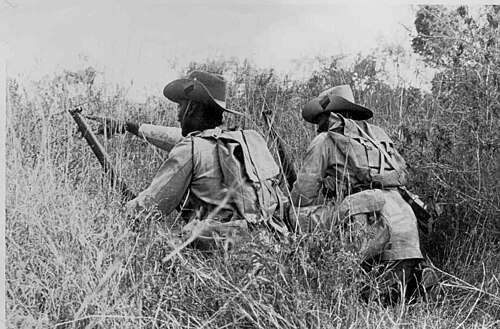
خلال الحرب، كانت كينيا من أهم مناطق التجنيد للجيش البريطاني في أفريقيا. فقد جُنّد 98,240 كينيًا كجنود مشاة (أسكاري) في كتيبة بنادق الملك الأفريقية (KAR)، ما يمثل 30% من إجمالي قوام الوحدة. [ 169 ] وكان معظم الجنود الكينيين، الذين جُندوا قسرًا، [ 170 ] من الأفارقة، ونظرًا لسياسة الفصل العنصري في الجيش البريطاني، كان يقودهم ضباط وضباط صف بيض . ولم يكن بإمكان السود الترقّي إلى رتبة أعلى من ضابط صف . خدم الجنود الكينيون في حملة شرق أفريقيا الناجحة ضد الإيطاليين، وكذلك في غزو مدغشقر التي كانت تحت سيطرة حكومة فيشي، وحملة بورما ضد اليابانيين ، إلى جانب قوات من غرب أفريقيا. كما خدم كينيون أفراد في البحرية الملكية وسلاح الجو الملكي .
دارت معارك في شمال كينيا ضمن الجبهة الجنوبية لحملة شرق أفريقيا. في يوليو/تموز 1940، تقدمت القوات الإيطالية حتى بونا ، على بعد حوالي 100 كيلومتر جنوب الحدود مع إثيوبيا. وبحلول أوائل عام 1941، انسحب الإيطاليون إلى الحدود. وفي يناير/كانون الثاني وفبراير/شباط 1941، شنت القوات البريطانية هجومًا عبر الحدود إلى جنوب إثيوبيا. [ 171 ]
كوريا

كانت كوريا تحت الحكم الياباني كجزء من التوسع الإمبريالي الياباني الذي استمر خمسين عامًا (من 22 أغسطس 1910 إلى 15 أغسطس 1945). وخلال الحرب العالمية الثانية ، تم تجنيد أكثر من 100,000 كوري [ 172 ] قسرًا في الجيش الإمبراطوري الياباني . [ 173 ]
شملت حركات الاستقلال خلال الحقبة الاستعمارية حركة الأول من مارس . أنشأ الكوريون حكومة رسمية تمهيدًا للاستقلال. تأسست الحكومة المؤقتة لجمهورية كوريا عام ١٩١٩، ثم أنشأت جيش التحرير الكوري في ١٧ سبتمبر ١٩٤٠، وأعلنت الحرب على الإمبراطورية اليابانية في ١٠ ديسمبر ١٩٤١.
فشل جيش التحرير الكوري في إطلاق عملية النسر، وهي خطة لتحرير شبه الجزيرة الكورية عبر مهاجمة العاصمة ( سيول وإنتشون ) أولاً، في 18 أغسطس/آب 1945. وقد وعد مكتب الخدمات الاستراتيجية الأمريكي بتقديم الدعم لجيش التحرير الكوري بالطائرات الحربية والغواصات والقوات المحمولة جواً خلال العملية. إلا أن الخطة فشلت بسبب استسلام اليابان المبكر في 15 أغسطس/آب 1945. كما واجهت الحكومة المؤقتة معارضة شديدة من الحكومة العسكرية الأمريكية في كوريا بعد الحرب العالمية الثانية . تأسست حكومة جمهورية كوريا في 15 أغسطس/آب 1948، وتم حل الحكومة المؤقتة رسمياً.
انتهى الحكم الياباني رسميًا في 2 سبتمبر 1945 بعد هزيمة اليابان في الحرب العالمية الثانية عام 1945. وبعد الحرب، احتلت القوات السوفيتية والأمريكية كوريا بشكل مشترك، وأدت الخلافات السياسية إلى انفصال شبه الجزيرة إلى دولتين مستقلتين. وتصاعد هذا الوضع لاحقًا إلى الحرب الكورية .
لاتفيا

عندما اندلعت الحرب في الأول من سبتمبر عام 1939، أعلنت لاتفيا حيادها. [ 174 ] بعد إبرام اتفاقية مولوتوف-ريبنتروب ، أُجبرت لاتفيا ، تحت وطأة إنذار سوفيتي، على قبول حاميات الجيش الأحمر على أراضيها عام 1939. [ 175 ] في 16 يونيو عام 1940، أصدر الاتحاد السوفيتي إنذارًا يطالب باستبدال الحكومة والسماح بدخول عدد غير محدود من القوات السوفيتية. [ 176 ] استجابت الحكومة للمطالب، واحتلت القوات السوفيتية البلاد في 17 يونيو. في 5 أغسطس عام 1940، ضُمت لاتفيا إلى الاتحاد السوفيتي . في العام التالي، قامت أجهزة الأمن السوفيتية بـ" أسلمة " لاتفيا، مما أسفر عن مقتل ما بين 35,000 و50,000 من سكانها. [ ملاحظة 2 ] لم تعترف معظم الدول الغربية بشرعية الضم، واستمرت دول البلطيق في الوجود كدول مستقلة رسمياً حتى عام 1991.
بعد اندلاع الأعمال العدائية الألمانية السوفيتية ، تمكنت القوات الألمانية من طرد القوات السوفيتية بسرعة. في البداية، لاقت القوات الألمانية ترحيبًا واسعًا باعتبارها محررة، لكن سياسات الاحتلال النازية غيرت هذا الموقف تدريجيًا. استعادت القوات السوفيتية مدينة ريغا في 13 أكتوبر 1944، وانقطع جزء كبير من مجموعة جيوش الشمال الألمانية (Heersgruppe Nord) في كورزيم ، شبه الجزيرة التي تشكل الجزء الشمالي الغربي من لاتفيا. هناك، شكلت هذه القوات، إلى جانب وحدات لاتفية محلية، " حصن كورلاند "، الذي صمد بنجاح حتى نهاية الحرب في مايو 1945.
شُكّلت أولى كتائب الشرطة اللاتفية في أوائل عام 1943، وفيلق المتطوعين التابع لقوات الأمن الخاصة (فافن إس إس) في 16 مارس 1943. وسرعان ما لجأت حكومة الاحتلال الألماني إلى التجنيد الإجباري، فأصبحت لاتفيا إحدى دولتين (الأخرى إستونيا ) تُجنّد منهما قوات الأمن الخاصة. وبحلول 1 يوليو 1944، كان أكثر من 110,000 رجل مُسلّحين في وحدات تحت السيطرة الألمانية. تألف الفيلق اللاتفي من 87,550 رجلاً، منهم 31,446 يخدمون في فرقتي فافن غرينادير 15 و 19 ، و12,118 في أفواج حرس الحدود، و42,386 في قوات الشرطة المختلفة، و1,600 في وحدات أخرى. كما خدم 22,744 رجلاً في وحدات خارج الفيلق، مثل وحدات مساعدة الفيرماخت ووحدات مساعدة سلاح الجو الألماني (لوفتفافهيلفر ). [ 177 ]
تم تجنيد ما يقارب 70,000 لاتفي (من لاتفيا وجمهورية روسيا الاتحادية الاشتراكية السوفيتية ) في وحدات وطنية تابعة للجيش الأحمر ( فرق الرماة اللاتفية السوفيتية )، معظمهم عن طريق التجنيد الإجباري. كما انضم أسطول صغير من السفن اللاتفية ، التي لم تعد إلى وطنها بعد بدء الاحتلال السوفيتي، إلى الأسطول التجاري للحلفاء رافعًا العلم اللاتفي. [ 178 ]
شارك بعض الأفراد اللاتفيين بنشاط خلال المحرقة ، حيث عملوا ضمن حكومتي الاحتلال السوفيتي والنازي. [ 179 ] وقد بذلت حركات مختلفة محاولات لإعادة لاتفيا مستقلة وديمقراطية ذات علاقات مع الحلفاء الغربيين ، مثل المجلس المركزي اللاتفي ، إلا أن هذه الجهود أُحبطت من قبل النظامين النازي والسوفيتي. وفي نهاية الحرب، استمرت انتفاضة "إخوة الغابة" المسلحة ضد السلطات السوفيتية في دول البلطيق حتى منتصف خمسينيات القرن العشرين.
لبنان
كان لبنان ، الذي كان آنذاك تحت الحكم الفرنسي ، خاضعًا لسيطرة حكومة فيشي بعد سقوط الجمهورية الفرنسية الثالثة. لم يتقبل معظم اللبنانيين حكومة فيشي وأسلوب حكمها، بل سخر الكثيرون منهم وانتقدوا الجنود الفرنسيين لتحالفهم مع ألمانيا النازية . غزا الحلفاء لبنان واحتلوه من فلسطين خلال حملة سوريا ولبنان . أعلن ديغول استقلال لبنان في 22 نوفمبر 1943. وفي عام 1945، أعلن لبنان الحرب على ألمانيا واليابان. [ 87 ]
ليبيريا
سمحت ليبيريا لقوات الحلفاء بالدخول إلى أراضيها في بداية الحرب. وقد استُخدمت كنقطة عبور للقوات والموارد المتجهة إلى شمال إفريقيا، ولا سيما الإمدادات الحربية التي نُقلت جوًا من بارنامريم (بالقرب من ناتال ) في البرازيل . ولعل الأهم من ذلك، أنها كانت أحد المصادر القليلة للحلفاء للمطاط خلال الحرب، حين كانت مزارع المطاط في جنوب شرق آسيا قد سقطت في أيدي اليابانيين.
أدت أهمية هذا المورد إلى تحسين كبير في البنية التحتية للنقل في ليبيريا وتحديث اقتصادها. وقد برزت الأهمية الاستراتيجية لليبيريا عندما زارها فرانكلين روزفلت بعد حضوره مؤتمر الدار البيضاء ، والتقى بالرئيس إدوين باركلي . وعلى الرغم من مساعدتها للحلفاء، ترددت ليبيريا في إنهاء حيادها الرسمي، ولم تعلن الحرب على ألمانيا إلا في 27 يناير 1944. [ 87 ]
ليبيا

أصبحت المناطق الساحلية من ليبيا الإيطالية جزءًا لا يتجزأ من إيطاليا بموجب قانون صدر في 9 يناير 1939، وأصبحت ليبيا تُعرف باسم "الشاطئ الرابع لإيطاليا" ( Quarta Sponda ). [ 180 ] مُنح الليبيون " جنسية إيطالية خاصة " كانت سارية المفعول داخل ليبيا فقط. [ 181 ] سُمح للليبيين بالانضمام إلى الرابطة الإسلامية لليكتور ، وهي فرع من الحزب الوطني الفاشي . وقد أتاح ذلك إنشاء وحدات عسكرية ليبية ضمن الجيش الإيطالي: الفوج الأول من سيبيلي والفوج الثاني من بيسكاتوري. [ 182 ] ضمت هذه الوحدات ضباطًا إيطاليين إلى جانب ضباط صف وجنود ليبيين. كانت الفرق الليبية موالية لإيطاليا وأبلت بلاءً حسنًا في القتال. [ 183 ] خدمت أسراب من فرسان سباهي الليبيين كسلاح فرسان خفيف. أدت هذه الإجراءات إلى تقليل جاذبية حركة المقاومة الليبية وحصرها في الغالب في فزان ، وحتى هناك ظلت ضعيفة قبل وصول قوات فرنسا الحرة إلى المنطقة. ابتداءً من أواخر الثلاثينيات، واجه اليهود الليبيون اضطهاد المحرقة في ليبيا . [ 184 ]
شهدت ليبيا بعضًا من أعنف المعارك في حملة شمال أفريقيا . في بداية الحرب، سعت إيطاليا إلى توسيع حدود ليبيا جنوبًا وضم جسر بري يربطها بشرق أفريقيا الإيطالية . [ 185 ] في سبتمبر 1940، شنت إيطاليا حملة الصحراء الغربية بغزوها لمصر . وفي ديسمبر من العام نفسه، شن البريطانيون هجومًا مضادًا بعملية البوصلة ، التي دفعت القوات الإيطالية إلى ما وراء الحدود، واحتلت برقة بأكملها ، وأسرت معظم الجيش العاشر . وبدعم ألماني، استُعيدت هذه الأراضي خلال عملية زهرة الشمس ، على الرغم من نجاح الحلفاء في فك حصار طبرق . وفي عام 1942، أجبرت معركة غزالة الحلفاء أخيرًا على الانسحاب من طبرق والعودة إلى مصر. أما معركة العلمين الثانية في مصر، فقد مثّلت نهاية قوات المحور في ليبيا ونهاية حملة الصحراء الغربية.
في فبراير 1943، انسحبت القوات الألمانية والإيطالية من ليبيا إلى تونس، منهيةً بذلك الحكم الإيطالي نهائياً. واحتلت فرنسا الحرة مدينة فزان في العام نفسه. ومع نهاية الحرب العالمية الثانية، تعاونت بريطانيا وفرنسا مع المقاومة المحلية في إدارة الحلفاء لليبيا . وفي عام 1951، تنازل الحلفاء عن السلطة لإدريس ، الذي أصبح ملكاً لليبيا المستقلة. [ 186 ]
ليختنشتاين
بعد انتهاء الحرب العالمية الأولى ، أبرمت ليختنشتاين اتفاقية جمركية ونقدية مع سويسرا ، وأوكلت علاقاتها الخارجية إلى جارتها الأكبر. عقب ضم النمسا (الأنشلوس) في مارس 1938، تنازل الأمير فرانز عن العرش لصالح ابن عمه الثالث، فرانز جوزيف الثاني . كانت زوجة فرانز، إليزابيث فون غوتمان ، يهودية، وكان هناك تخوف من أن يُثير نسبها غضب ألمانيا النازية. [ 187 ] مع الاحتلال الألماني لتشيكوسلوفاكيا ، صودرت الأراضي الشاسعة التي كانت تملكها أسرة ليختنشتاين هناك، مما أجبر الأمير فرانز جوزيف على الانتقال إلى ليختنشتاين نفسها، ليصبح أول أمير يقيم داخل الإمارة. [ 188 ]
عند اندلاع الحرب، أبقى فرانز جوزيف الإمارة خارجها، معتمدًا على علاقاتها الوثيقة مع سويسرا لحمايتها. [ 189 ] لم تُنتهك حيادية البلاد قط، لكن آل ليختنشتاين لم يستعيدوا ممتلكاتهم خارج الإمارة، بما في ذلك مقرهم السابق في ليدنيس-فالتيس . [ 188 ] استقبلت البلاد نحو 400 لاجئ يهودي من أوروبا المحتلة، ومنحت الجنسية لآخرين، معظمهم من الميسورين القادرين على الدفع. [ 189 ] تم توظيف عمال يهود من معسكر اعتقال في ستراسهوف للعمل في ممتلكات العائلة الأميرية. [ 189 ] في عام 1945، منحت ليختنشتاين اللجوء لما يقرب من 500 روسي من الجيش الوطني الروسي الأول الموالي للمحور . رفضت ليختنشتاين المطالب السوفيتية بإعادتهم، واستقر معظمهم في الأرجنتين. [ 190 ]
كانت الحركة القومية الاشتراكية الألمانية في ليختنشتاين نشطة ولكنها صغيرة. دعت إلى التوحيد مع ألمانيا وطرد يهود ليختنشتاين. [ 191 ] في مارس 1939، حاول الحزب القيام بانقلاب باء بالفشل الذريع، حيث فرّ قادته أو أُلقي القبض عليهم. [ 191 ] أُعيد تشكيل المنظمة في عام 1940 لكنها لم تكتسب أي سلطة. حُظرت صحيفتها "أومبروخ" في عام 1943، وأُدين زعيمها بتهمة الخيانة العظمى بعد الحرب. [ 191 ]
ليتوانيا

نتيجةً لاتفاقية مولوتوف-ريبنتروب بين ألمانيا النازية والاتحاد السوفيتي، احتل الجيش الأحمر ليتوانيا وضمها قسرًا إلى الاتحاد السوفيتي مع لاتفيا وإستونيا ، دون أي مقاومة عسكرية. لم تعترف معظم الدول الغربية بشرعية هذا الضم، واستمرت دول البلطيق في الوجود كدول مستقلة رسميًا حتى عام ١٩٩١.
انحاز بعض الليتوانيين إلى جانب ألمانيا بعد غزو هتلر للاتحاد السوفيتي، أملاً في استعادة استقلال ليتوانيا. وتورط بعض المتعاونين مع ألمانيا في المحرقة النازية وجرائم أخرى ضد الإنسانية. وشُكّلت فرقة ليتوانية ( فرقة البنادق السادسة عشرة ) ووحدات أخرى ( الفيلق التاسع والعشرون للبنادق ) في الجيش الأحمر. وعلى عكس لاتفيا، فشلت محاولة السلطات الألمانية لتشكيل "فيلق ليتواني"، وكانت أبرز الوحدات التي شُكّلت هي قوات الدفاع الإقليمي الليتوانية .
في نهاية الحرب، بدأت انتفاضة الإخوة الغابيين المسلحة اللاحقة ضد السلطات السوفيتية، والتي استمرت في دول البلطيق حتى منتصف الخمسينيات.
لوكسمبورغ

عندما غزت ألمانيا فرنسا عبر البلدان المنخفضة في ربيع عام 1940، غزت أيضًا لوكسمبورغ ، على الرغم من حيادها. وسرعان ما احتلت البلاد: حاولت الحكومة إبطاء تقدم القوات الألمانية، لكن القوات المحلية لم تبدِ مقاومة تُذكر واستسلمت قبل نهاية اليوم الأول. [ 192 ] خلال الاحتلال الألماني ، قاد الإدارة غوستاف سيمون ، الذي انتهج سياسة التَأْمُرْمِنة ونفّذ المحرقة في لوكسمبورغ . [ 193 ] في أغسطس 1942، ضمت ألمانيا لوكسمبورغ بالكامل وألحقتها بمقاطعة موزيلاند . [ 194 ]
في غضون ذلك، فرّت حكومة لوكسمبورغ المنفية إلى فرنسا ثم إلى البرتغال قبل أن تستقر في لندن لبقية الحرب، بينما استقرت الدوقة الكبرى شارلوت في مونتريال . [ 195 ] وقد كرّست الحكومة المنفية مواردها المحدودة للغاية لدعم المجهود الحربي للحلفاء، ووقّعت على إعلان قصر سانت جيمس وإعلان الأمم المتحدة . كما أبرمت الاتفاقية التي أنشأت الاتحاد الجمركي لدول البنلوكس مع حكومتي بلجيكا وهولندا المنفيتين. [ 196 ]
تعاون بعض اللوكسمبورغيين مع ألمانيا النازية أو جُندوا في القوات المسلحة الألمانية. خدم ما مجموعه 12,000 لوكسمبورغي في الجيش الألماني، توفي منهم نحو 3,000 خلال الحرب. [ 197 ] وانضم آخرون إلى المقاومة اللوكسمبورغية . كان الإضراب العام عام 1942 عملاً من أعمال المقاومة السلمية التي حشدت شريحة واسعة من السكان وأدت إلى إعدام 21 من قادتها. [ 197 ] حررت القوات الأمريكية العاصمة في سبتمبر 1944، لكن البلاد استمرت في خوض المعارك. خاضت المقاومة اللوكسمبورغية معركة فياندن ضد القوات الألمانية في نوفمبر، ودارت معركة الثغرة في البلاد بين ديسمبر ويناير. [ 198 ]
مدغشقر

لعبت مدغشقر الفرنسية دورًا هامًا في الحرب نظرًا لوجود موانئ بالغة الأهمية ومساهمة القوات الملغاشية. بعد سقوط فرنسا عام 1940، أصبحت مدغشقر بؤرة توتر حاسمة في الصراع بين حركة فرنسا الحرة وفرنسا الفيشية . وكانت للجزيرة أهمية بالغة في مسرح عمليات المحيط الهادئ ، حيث عملت القوات البحرية الإمبراطورية اليابانية قبالة سواحلها دون مقاومة لفترة من الزمن. كما نُظر إلى مدغشقر لفترة وجيزة كحل للمسألة اليهودية من قبل حكومة ألمانيا النازية ، التي طرحت فكرة ترحيل سكان أوروبا اليهود إلى الجزيرة عام 1940. إلا أن هذه الخطة، المعروفة باسم " خطة مدغشقر" ، لم تُنفذ لأسباب عديدة.
في مايو/أيار 1942، شنّت القوات البريطانية وقوات الحلفاء الأخرى غزوًا على مدغشقر ، سعيًا لحماية موقعها المحوري في شبكة الملاحة البحرية للحلفاء ومنع دول المحور من استخدامها . وسرعان ما استسلمت القاعدة البحرية الشمالية في دييغو سواريز . وفي سبتمبر/أيلول من العام نفسه، شنّت قوات وصلت حديثًا من شرق أفريقيا وجنوب أفريقيا وروديسيا الشمالية هجومًا للاستيلاء على ما تبقى من الجزيرة. واستولت القوات البريطانية على العاصمة تاناناريف في أواخر سبتمبر/أيلول؛ وفي 8 نوفمبر/تشرين الثاني، استسلمت آخر قوات حكومة فيشي. وسلّم البريطانيون الجزيرة إلى فرنسا الحرة عام 1943، التي بقيت تحت سيطرتها طوال فترة الحرب.
مالايا
كانت مالايا خاضعة للحكم البريطاني قبل اندلاع الحرب. واحتلتها اليابان من عام ١٩٤٢ إلى عام ١٩٤٥. وأصبح الحزب الشيوعي المالايوي عماد جيش الشعب المالايوي المناهض لليابان . فرّت القوات البريطانية في مالايا إلى سنغافورة ، حيث مُنيت بالهزيمة في نهاية المطاف. وبعد الحرب، تولت الإدارة العسكرية البريطانية في مالايا زمام الأمور في البلاد.
ضمت تايلاند، التي كانت آنذاك تحت حكم نظام فاشي ومتحالفة مع دول المحور، الولايات الماليزية الأربع: كيدا، وبرليس، وكيلانتان، وترينغانو. وكانت اليابان قد منحت هذه الأراضي لمالايا بعد احتلالها لها قبل ذلك بنحو عامين. وقد أُعيدت الولايات الأربع إلى مالايا بعد استسلام اليابان .
جزر المالديف
خلال الحرب العالمية الثانية، كانت جزر المالديف دولة محمية من قبل بريطانيا، يحكمها سلسلة من السلاطين . لم تتأثر الجزر بالحرب إلا بشكل طفيف. أنشأت بريطانيا قاعدة غان التابعة لسلاح الجو الملكي البريطاني على جزيرة أدو المرجانية في الطرف الجنوبي من البلاد، والتي أعيد تطويرها لاحقًا لتصبح مطار غان الدولي . [ 199 ] وقعت عملية 27 فبراير 1941 بالقرب من جزر المالديف. نجت الطرادة الإيطالية المساعدة رامب 1 من تدمير أسطول البحر الأحمر ، وأبحرت نحو الأراضي التي تسيطر عليها اليابان. اشتبكت المدمرة البريطانية لياندر مع رامب 1 وأغرقتها ؛ وتم إنقاذ معظم أفراد الطاقم ونقلهم إلى غان . [ 200 ] أنشأت قوات سلاح الجو الملكي البريطاني "ميناء تي". كانت جزر المالديف ، وإقليم المحيط الهندي البريطاني ، وسيلان ، وقواعد بحرية ومناطق أخرى في المحيط الهندي، ضحايا غارات عيد الفصح عام 1941.
عانت جزر المالديف أيضاً من نقص حاد في الموارد، لا سيما على الصعيدين الاقتصادي والغذائي. فقد كان معظم الغذاء يُستورد إلى البلاد عن طريق البحر خلال الحرب، واعتمدت الدولة على الصيد المحلي في الجزر. وقد عُرفت هذه الفترة بالمجاعة الكبرى في جزر المالديف . [ 201 ]
مالطا
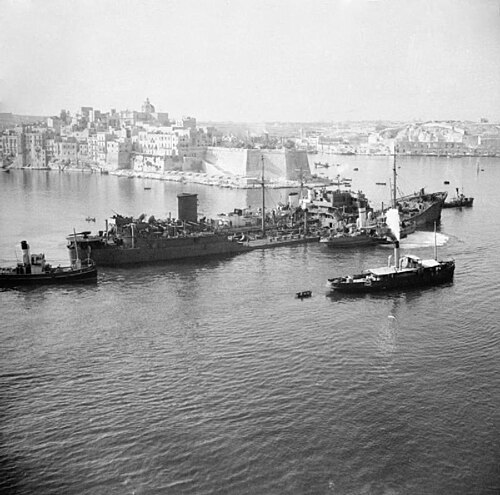
كانت مالطا مستعمرة بريطانية خلال الحرب العالمية الثانية. وقد أكد المجلس التشريعي المالطي مجددًا ولاء الشعب لبريطانيا في 6 سبتمبر 1939. وبين يونيو 1940 وديسمبر 1942، أصبحت مالطا ساحة محاصرة ومُدمّرة لواحدة من أكثر المعارك حسمًا في الحرب العالمية الثانية. وكانت مالطا أكثر المناطق تعرضًا للقصف خلال الحرب، ولعبت دورًا حاسمًا في جهود الحلفاء لإحباط مناورات دول المحور في أفريقيا. ومنحت بريطانيا وسام صليب جورج لجزيرة مالطا في رسالة مؤرخة في 15 أبريل 1942، من الملك جورج السادس إلى الحاكم ويليام دوبي : "تكريمًا لشعبها الشجاع، أمنح وسام صليب جورج لقلعة جزيرة مالطا، شاهدةً على بطولة وتفانٍ سيخلد ذكرهما في التاريخ". [ 202 ]
حظي صمود السكان في وجه الغارات الجوية المتواصلة والحصار البحري، الذي كاد أن يؤدي إلى استسلامهم جوعاً، بإعجاب واسع النطاق، حتى أن بعض المؤرخين أطلقوا عليه اسم " ستالينغراد البحر الأبيض المتوسط ". ويُدمج صليب جورج في علم مالطا الحديث . [ 203 ]
مانشوكو
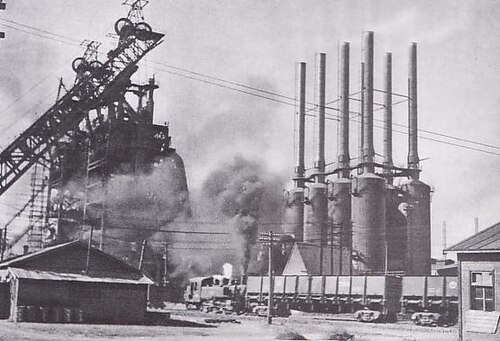
تأسست إمبراطورية مانشوكو عام 1931 كدولة تابعة لليابان، وكان يقودها بو يي ، آخر أباطرة الصين، الذي حكم باسم الإمبراطور كانغ دي. وظلت الدولة حليفًا وفيًا لليابان حتى عام 1945. في ذلك العام، أعلن الاتحاد السوفيتي الحرب على اليابان، فغزاها وألغى مانشوكو، ثم عادت الدولة التابعة إلى الصين.
موريشيوس
خلال الحرب العالمية الثانية، تم توسيع قوة موريشيوس الإقليمية لتضم كتيبتين، وأُعيد تسميتها بفوج موريشيوس. [ 204 ] توجهت الكتيبة الأولى إلى دييغو سواريز ، مدغشقر، في ديسمبر 1943 لنجدة القوات الإمبراطورية التي استولت على الجزيرة في معركة مدغشقر . بعد وقت قصير من وصولها، تمرّدت الكتيبة بسبب سوء الأوضاع ولأنهم أُبلغوا بأنهم لن يغادروا موريشيوس. بعد أن جرّدتهم كتيبة بنادق الملك الأفريقية من أسلحتهم ، أُلقي القبض على 300 جندي، لكن لم يبقَ منهم في السجن سوى 6 جنود بحلول عام 1946. [ 205 ] كان لدى موريشيوس أيضًا قوة حرس وطني، هي قوة دفاع موريشيوس التي تضم 2000 رجل، وقوة دفاع ساحلية بحرية. [ 206 ]
منغجيانغ
تأسست منغجيانغ في منغوليا الداخلية كدولة تابعة لليابان، وساهمت بقوات قاتلت إلى جانب اليابانيين في الصين. وانتهى وجودها بعد الغزو السوفيتي عام 1945.
المكسيك
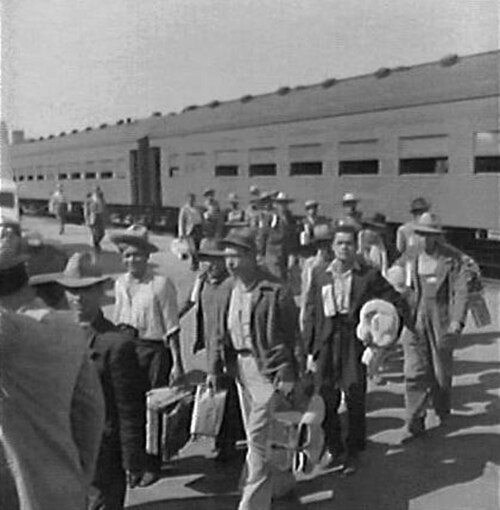
دخلت المكسيك الحرب العالمية الثانية ردًا على الهجمات الألمانية على سفنها. كانت ناقلة النفط "بوتريرو ديل يانو" ، وهي في الأصل ناقلة إيطالية، قد استولت عليها الحكومة المكسيكية في الميناء في أبريل 1941، وأعادت تسميتها تكريمًا لمنطقة في فيراكروز. وفي 13 مايو 1942، هاجمتها الغواصة الألمانية يو-564 وألحقت بها أضرارًا بالغة، ما أسفر عن مقتل 13 من أصل 35 من أفراد طاقمها. [ 207 ] وفي 20 مايو 1942، تعرضت ناقلة نفط ثانية، هي " فاجا دي أورو" ، وهي أيضًا سفينة إيطالية تم الاستيلاء عليها، لهجوم من الغواصة الألمانية يو-160 ، ما أدى إلى غرقها ومقتل 10 من أصل 37 من أفراد طاقمها. ردًا على ذلك، أعلن الرئيس مانويل أفيلا كاماتشو والحكومة المكسيكية الحرب على دول المحور في 22 مايو 1942.
A large part of Mexico's contribution to the war came through an agreement January 1942 that allowed Mexican nationals living in the United States to join the American armed forces. As many as 250,000 Mexicans served in this way.[208] In the final year of the war, Mexico sent one air squadron to serve under the Mexican flag: the Mexican Air Force's Escuadrón Aéreo de Pelea 201 (201st Fighter Squadron), which saw combat in the Philippines in the war against Imperial Japan.[209] In addition to those in the armed forces, tens of thousands of Mexican men were hired as farm workers in the United States during the war years through the Bracero program, which continued and expanded in the decades after the war.[210]
World War II helped spark an era of rapid industrialization known as the Mexican Miracle.[211] Mexico supplied the United States with more strategic raw materials than any other country, and American aid spurred the growth of industry.[212] President Ávila was able to use the increased revenue to improve the country's credit, invest in infrastructure, subsidize food, and raise wages.[213]
Monaco
While Prince Louis II's sympathies were strongly pro-French, he tried to keep Monaco neutral during World War II, and he supported the Vichy France government of his old army colleague, Philippe Pétain. In 1943, the Italian army invaded and occupied Monaco, setting up a fascist government administration. Shortly thereafter, following Mussolini's collapse in Italy, the German army occupied Monaco and began the deportation of the Jewish population. Among them was René Blum, founder of the Ballet de l'Opera, who died in a Nazi extermination camp.[214] In August 1944, the Germans executed three Resistance leaders. Under Prince Louis's secret orders, the Monaco police, often at great risk to themselves, warned in advance those people whom the Gestapo planned to arrest. The country was liberated, as German troops retreated, on 3 September 1944.
Mongolia

During the war, Mongolia—officially the Mongolian People's Republic—was ruled by the communist government of Khorloogiin Choibalsan and was closely linked to the Soviet Union. Mongolia was considered a breakaway province of the Republic of China by most nations. In August 1937, as part of their effort to support China, the Soviets decided to station troops along Mongolia's southern and southeastern frontiers. The arrival of the Soviet army coincided with a series of intensified terrors and purges (the "Great Terror").[215]
The Soviet–Japanese Neutrality Pact of 13 April 1941 recognized the neutrality of Mongolia and its place with the Soviet sphere of influence. Its geographical situation made it a buffer state between Japanese forces and the Soviet Union. In addition to keeping around 10% of the population under arms, Mongolia provided supplies and raw materials to the Soviet military and financed several units, and half million military trained horses.
Mongolian troops took part in the Battle of Khalkhin Gol in the summer of 1939 and in the Soviet invasion of Manchuria in August 1945, both times as small part in Soviet-led operations. On 10 August 1945, the Little Khural, the Mongolian parliament, issued a formal declaration of war against Japan.[216]
For Mongolia, the most important result of World War II was the recognition of its independence by China, American consent having been given with the Yalta agreement.
Morocco
Most of Morocco was a protectorate of France during World War II, and entered on France's side at the beginning. When France was defeated, Morocco came under the control of the Vichy regime, and therefore was nominally on the side of the Axis powers, although an active resistance movement operated. In November 1942, it was invaded by the Allies as part of Operation Torch. From that point, Moroccan forces (especially the Goumier's) fought on the side of the Allies.
A small area in northern Morocco, Spanish Morocco, was a Spanish protectorate and remained neutral throughout the war, as did the international city of Tangier.
Nauru
Nauru was administered by Australia under a League of Nations mandate. Nauru was shelled by a German surface raider in December 1940, aiming to incapacitate its phosphate mining operations (this action was probably the most distant military activity carried out by Germany during the entire war). Phosphates are important for making ammunition and fertilizers.
Nauru was occupied by Japan from 1942 to 1945, and was the target of shelling by American battleships and cruisers, and aerial bombing by the Allies. For example, Nauru was bombarded by the American battleships North Carolina, Washington, South Dakota, Indiana, Massachusetts, and the Alabama, on 8 December 1943, and also bombed by U.S. Navy carrier airplanes on the same day. See the article on the Washington.
Nepal
The Kingdom of Nepal declared war on Germany on September 4, 1939. Once Japan entered the conflict, sixteen battalions of the Royal Nepalese Army fought in the Burma campaign. In addition to military support, Nepal contributed guns, equipment, and hundreds of thousands of pounds of tea, sugar and raw materials such as timber to the Allied war effort.
Besides RNA troops, Nepalese fought in the British Indian Gurkha units and were engaged in combat all over the world. A total of 250,280[217] Gurkhas served in 40 battalions during the war,[218] in almost all theatres. In addition to keeping peace in India, Gurkhas fought in Syria, North Africa, Italy, Greece and against the Japanese in Burma, northeast India and Singapore.[219] They did so with considerable distinction, earning 2,734 bravery awards[217] and suffering around 32,000 casualties in all theatres.[220] After the war, Gurkha troops formed part of the Allied occupation force in Japan.
Netherlands

Like the Belgians, the Netherlands declared neutrality in 1939. In May 1940, the Netherlands was invaded after fierce resistance against the Nazis. Rotterdam and Middelburg were heavily bombed. The Dutch joined the Allies and contributed their surviving naval and armed forces to the defense of East Asia, in particular, the Netherlands East Indies. Until their liberation in 1945, the Dutch fought alongside the Allies around the globe, from the battles in the Pacific to the Battle of Britain. On the islands of Aruba and Curaçao (Netherlands West Indies) a large oil refinery was of major importance for the war effort in Europe, especially after D-day. As a protection, a considerable U.S. military force was stationed on the island.
New Zealand

New Zealand declared war on 3 September 1939, backdating the date to the time of Britain's declaration.
With gratitude for the past and confidence in the future, we range ourselves without fear beside Britain. Where she goes, we go; where she stands, we stand. We are only a small and young nation, but we march with a union of hearts and souls to a common destiny.[221]
New Zealand sent one Army division that served in Greece, North Africa, and Italy, and it offered a fair number of pilots and aircrew to the Royal Air Force in England. Royal New Zealand Navy (RNZN) warships fought in the South Atlantic, including in the Battle of Rio de la Plata in 1939, before being called back to defend the homeland.
New Zealand fought in the Pacific War through warships of the Royal New Zealand Navy, the Royal New Zealand Air Force (RNZAF), and independent army brigades, such as on Vella Lavella. While New Zealand's home islands were not attacked, the casualty rate suffered by the military was the worst per capita of all Commonwealth nations, except for Great Britain.
In the South West Pacific theater, the RNZAF participated in a unique force, AirSols, in the Solomon Islands, consisting of squadrons from the U.S. Marine Corps, U.S. Navy, USAAF, and RNZAF, with occasional help from the Royal Australian Air Force.
Newfoundland

During World War II the Dominion of Newfoundland was governed directly by the United Kingdom. It joined the war on 4 September 1939, declaring war on Germany. The defenses of Newfoundland, and the Newfoundland Home Guard forces were integrated with the Canadian military, and both governments agreed to form a joint coastal defense organization. As part of the Anglo-American Destroyers for Bases Agreement, the United States was granted Air Force and U.S. Navy bases on Newfoundland's territory. The influx of American money and personnel had significant social, economic, and political effects on the island.[222]
Newfoundlanders were encouraged to enlist in the large armed forces of the United Kingdom and of Canada. Over 3,200 Newfoundlanders enlisted in the Royal Navy. On 14 September 1939, The Royal Navy requested 625 experienced fishermen or seamen for special service in the Northern Patrol, guarding the Atlantic shipping lanes.[223] The Royal Artillery raised the 166th Newfoundland Field Artillery Regiment, which fought in North Africa and Italy, and the 59th Newfoundland Heavy Artillery, which fought in Normandy and northwestern Europe. Another 700 Newfoundlanders served in the Royal Air Force, most notably with the 125th Newfoundland Squadron. In all, some 15,000 Newfoundlanders saw active service, and thousands more were engaged in the hazardous duty of the Merchant Navy. Some 900 Newfoundlanders (including at least 257 Merchant Mariners) lost their lives in the conflict.
Newfoundland was directly attacked by German forces when U-boats attacked four Allied ore carriers and the loading pier at Bell Island. The cargo ships S.S. Saganaga and S.S. Lord Strathcona were sunk by the German submarine U-513 on 5 September 1942, and the S.S. Rosecastle and P.L.M. 27 were sunk by the German submarine U-518 on 2 November 1942. German troops were landed in Labrador to establish weather stations.
Nicaragua
During the war, Nicaragua was ruled by Anastasio Somoza García, who had assumed the presidency after a military coup in 1937. Somoza was an ally of the United States, and Nicaragua declared war on Japan immediately after the attack on Pearl Harbor. Three days later, on 11 December, Nicaragua declared war on Germany and Italy, and, on 19 December, on Bulgaria, Romania, and Hungary. Out of these six Axis countries, only Romania reciprocated, declaring war on Nicaragua on the same day (19 December 1941).[132]
Nigeria

During World War II, three battalions of the Nigeria Regiment fought in the East Africa campaign. Nigerian units also contributed to two divisions serving with British forces in Palestine, Morocco, Sicily and Burma. Wartime experiences provided a new frame of reference for many soldiers, who interacted across ethnic boundaries in ways that were unusual in Nigeria. Inside Nigeria, union membership increased sixfold during the war to 30,000. This rapid growth of organised labour brought new political forces into play. The war also made the British reappraise Nigeria's political future. In 1944, Herbert Macaulay and Nnamdi Azikiwe founded the National Council of Nigeria and the Cameroons, a nationalist and pro-labour political party advocating Nigerian independence.[224]
Northern Rhodesia (Zambia)
Northern Rhodesia (now Zambia) was a British colony. As such, it was covered by the British declaration of war. Northern Rhodesian units served in East Africa, Madagascar and Burma.[225]
Norway

Norway was strategically important as a route for the transport of iron ore from Sweden to Germany, via Narvik. Both sides had designs on Scandinavia. Norwegian neutrality was compromised in the Altmark incident.
Norway remained neutral until it was invaded by Germany on 9 April 1940, as part of Operation Weserübung. The Norwegian government fled the capital and after two months of fighting went to Britain and continued the fight in exile.
The Norwegian Shipping and Trade Mission (Nortraship) was established in London in April 1940 to administer the merchant fleet outside German-controlled areas. Nortraship operated some 1,000 vessels and was the largest shipping company in the world. British politician, Philip Noel-Baker, Baron Noel-Baker commented after the war that "Without the Norwegian merchant fleet, Britain and the allies would have lost the war."[226]
After the occupation, the Germans began producing heavy water in Norway. After commando raids and bomber attacks, the Germans decided to move heavy water supplies to Germany. The Allies maintained a deception of a planned invasion of Norway. As a result, additional German forces were held there to repel any attempts. In 1944, Finnmark was liberated by the Soviet Union, and (together with the northern parts of Troms) totally destroyed by the retreating Nazis. German forces surrendered on 8 May 1945.
Norway declared war on Japan on 6 July 1945, with reciprocal effect dating back to 7 December 1941.[227] The delay was because it had been impossible for the parliament to convene during the German occupation.[228] Several hundred Norwegian sailors died when their ships were sunk by Japanese forces or during subsequent captivity.[228] After the war, Norway became one of the founding members of NATO.
Nyasaland (Malawi)
Throughout the war, the Nyasaland Protectorate was an economic asset for the Allies and contributed a significant number of soldiers to fight in the British Army. At the outbreak of war, the Acting Governor requested aid, fearful that the German settlers might organize a pro-Nazi uprising. In response, 50 soldiers from Southern Rhodesia arrived in Nyasaland by air. They returned to Salisbury after only a month, having found no risk of a possible rebellion.[229] A number of camps were constructed in Nyasaland intended to house Polish war refugees. Additionally, perceived "enemy aliens" – primarily members of the German community, but also Italian settlers[230] – were brought to Southern Rhodesia for internment during the war.[231]
Many Nyasas fought for the British, primarily as askaris of the King's African Rifles (KAR). Others were recruited into the Artillery, Engineers, Service Corps and Medical Corps, placing the total number of enlisted Nyasas at around 27,000. Nyasas fought in a number of theatres, including the East African campaign, the Italian invasion of British Somaliland, the Battle of Madagascar, and the Burma campaign. Nyasaland's economy benefited from the end of the war as returning soldiers came home with useful skills, such as the 3,000 who had been trained as lorry drivers.[232]
Oman
The Sultan of Oman declared war on Germany on September 10, 1939, as it was then part of the British Empire as a protectorate. During the Second World War, Great Britain recognized the strategic importance of Oman's geographical location by expanding facilities throughout the country. A new airfield was built on Masirah Island, which, from 1943 onwards, housed No. 33 Staging Post. In 1943, both Masirah and Ras Al-Hadd became Royal Air Force stations in their own right. Units of No. 2925 Squadron of the RAF Regiment guarded these bases while the marine craft was based in Oman to perform air-sea rescue duties.[233]
Ostland
The Reichskommissariat Ostland (RKO; lit. 'Reich Commissariat of Eastland')[a] was an administrative entity of the Reich Ministry for the Occupied Eastern Territories of Nazi Germany from 1941 to 1945. It served as the German civilian occupation regime in Lithuania, Latvia, Estonia, and the western part of the Byelorussian SSR during the Eastern Front of World War II.
Ostland was established after the success of the Wehrmacht's Baltic operation and an initial period of military administration by Army Group North Rear Area based on the equivalent Reichskommissariat Baltenland in German planning documents.[1] It was divided into Generalbezirk Estland (Estonia), Generalbezirk Lettland (Latvia), Generalbezirk Litauen (Lithuania), and Generalbezirk Weißruthenien (Belarus) each with its own Nazi collaborationist government and Auxiliary Police under the control of a German Generalkommissar. Hinrich Lohse served as the Reichskommissar from 1941 to 1944 and Erich Koch from 1944 to 1945.
Pacific Islands

The population, culture and infrastructure of Melanesia, Micronesia and Polynesia (the Pacific Islands) were completely changed between 1941 and 1945 due to the logistical requirements of the Allies in their war against Japan.[234][235] At the start of the war the islands had experienced 200 years of colonialism from Europe and its colonies; some islands were on the verge of being fully annexed while others were close to independence. The early Japanese expansion through the western Pacific then introduced a new colonial system to many islands. The Japanese occupation subjected the indigenous people of Guam and other Islands to forced labor, family separation, incarceration, execution, concentration camps, and forced prostitution, but also created opportunities for advanced education.[236][237]
The Pacific Islands then experienced military action, massive troop movements, and resource extraction and building projects as the Allies pushed the Japanese back to their home islands.[238] The juxtaposition of all these cultures led to a new understanding among the indigenous Pacific Islanders of their relationship with the colonial powers. In communities that had very little contact with Europeans before the war, the sudden arrival and rapid departure of men and machines spurred the growth of so-called "cargo cults" in parts of Melanesia,[239][240] such as the cult of John Frum that emerged in the New Hebrides (modern Vanuatu).
Palestine

Mandatory Palestine remained under British rule via the League of Nations mandate system. During the war, Palestine was a location of hostilities, a staging area for the British and a source of troops. In July 1940, Italy began a bombing campaign against Palestine. German and Vichy French aircraft also attacked Palestine. The attacks mainly targeted the city of Haifa with its strategic port and oil refineries, although Tel Aviv was also hit, with the deadliest raid of the war taking place there, along with some other locations.[241]
The Yishuv, or Jewish community of Palestine, rallied to the British war effort in spite of its grievances against the British due to the White Paper of 1939, which greatly restricted Jewish immigration, as Nazi Germany was seen as a greater threat. The Yishuv's primary leader and future Prime Minister of Israel David Ben-Gurion declared that the Jews of Palestine would "support the British as if there is no White Paper and oppose the White Paper as if there is no war". The right-wing Irgun underground movement also felt this way and many of its leaders were released from prison. The more radical branch of the Irgun disagreed and, on 17 July 1940, it split under the leadership of Avraham Stern and became known as "The National Military Organization in Israel" as opposed to Irgun's official name, "The National Military Organization in the Land of Israel". It would later change its name to Lehi, referred to by the British as the "Stern Gang", as a completely separated militia.[242]
In 1941, the main Jewish underground paramilitary group in Palestine, the Haganah, established the Palmach as an elite strike force. It initially received British training and support, although the British later attempted to disarm it. During the Syria–Lebanon campaign, Palmach fighters participated in combat alongside Allied troops. It was during this campaign that Moshe Dayan, attached to the Australian 7th Division, lost an eye, requiring him to wear what would become his trademark eye-patch.[243]
In 1942, after the Germans advanced into Egypt and until they were stopped at the Second Battle of El Alamein, there was widespread fear in the Yishuv that the Germans would reach Palestine, a period that became known as the 200 days of dread. According to historical research, an Einsatzgruppen unit, Einsatzkommando Egypt, was prepared to carry out the mass murder of the Jews of Palestine after German occupation.[244] The British prepared a defensive plan called Palestine Final Fortress. The Yishuv's leaders also prepared for a potential last stand by the Haganah.
About 30,000 Jews from Palestine served in the British Armed Forces during the war.[245] Most served in logistical, engineering, guard, and other support roles, although some did see combat. According to research by historian Mustafa Abbasi, about 12,000 Palestinian Arabs also served in the British military during the war.[246] This figure is also cited by Rashid Khalidi. According to Benny Morris, this estimate was probably double the true figure, with most serving as service personnel on bases inside Palestine.[247]
Of the Jewish soldiers from Palestine, large numbers served in the Royal Pioneer Corps and were deployed in the North African campaign, Battle of France, and German invasion of Greece. While engaged mainly in logistical tasks, they were also armed and participated in combat when the situation demanded.[248][249] The British Army also recruited local volunteers into commando units, forming the Special Interrogation Group, which was composed mainly of German-speaking Jews from Palestine, and No. 51 Commando, composed of 240 and 120 Arab volunteers from Palestine.[250][251]
A total of 2,031 Palestinian Jews served in the Royal Air Force during World War II. Most served in support roles, including hundreds who served as aircraft mechanics. In addition, 37 became accomplished aircrews, including 20 pilots.[252] Some Palestinian Jews also served in the Royal Navy.
Following a particularly deadly Italian air raid in Tel Aviv in September 1940, the British recruited Haganah men to serve as anti-aircraft gunners defending Palestine. The 1st Palestine Light Anti-Aircraft Battery was formally established in October 1940 and became operational in early 1941. Its gunners defended Palestine from Axis air raids and also served elsewhere throughout the Mediterranean theater with British forces.[241][253]
In 1942, the British Army formed the Palestine Regiment for volunteers from Palestine. In order to maintain the status quo ante bellum between the Jews and the Arabs, the British instated a policy of equal recruitment from both groups to the Palestine Regiment. However, due to the events of the 1936–1939 Arab revolt in Palestine and the alliance of exiled former Grand Mufti of JerusalemHajjMohammad Amin al-Husayni with Adolf Hitler, only one Arab volunteered for every three Jewish volunteers. On August 6, 1942, the policy was relinquished and the regiment was formed, containing three Jewish battalions and one Arab. The regiment was assigned mostly to guard duty in Egypt and North Africa.[254]
On 3 July 1944, Britain agreed to form a special Jewish combat unit. Thus the three Jewish battalions of the Palestine Regiment together with the 200th Field Regiment were reorganized under the aegis of the Jewish Brigade, which would see action in Italy. The Jewish Brigade participated in the Spring 1945 offensive in Italy.[248][255]
At the start of the war, approximately a thousand German nationals residing in Palestine known as Templers were deported by Britain to Australia, where they were held in internment camps until 1946–47. Although some had been registered members of the Nazi party and Nazi marches had taken place in their settlements, no evidence had been presented until 2007 that the majority supported Hitler. Although their property had been confiscated by the British authorities, the State of Israel chose to compensate them in 1962.[256]
Panama
The small Panama Canal Zone was United States territory, and American forces from the U.S. Navy, U.S. Army, the USAAF (at Howard Air Force Base), and Colombian forces helped inside the Canal Zone, guarded the Panama Canal from both ends. This Canal provided the United States and its Allies with the ability to move warships and troops rapidly between the Atlantic Ocean and the Pacific Ocean. Since most of the American shipbuilding capability was on the East Coast and the Gulf of Mexico, the Canal was vital for moving new warships to the Pacific to fight the Imperial Japanese Navy.
Paraguay
Paraguay's authoritarian government under Higinio Morínigo was sympathetic to the Axis powers early in the war; the country's large German community, in particular, were supporters of Nazism, as well as most of the Paraguayan population.[257] Serious thought was given to joining the war on Germany's side, but United States President Franklin D. Roosevelt avoided this by providing aid and military hardware in 1942. Paraguay declared war on Germany on February 2, 1945, by which time the war was almost over and many Paraguayans joined the Brazilian air force for fighting the Axis Powers.[258]
Peru
Peru broke off relations with the Axis on 24 January 1942. Because of its ability to produce aviation fuel and its proximity to the Panama Canal, the oil refinery and port city of Talara, in northwest Peru, became an American air base. Although Peru did not declare war on Germany and Japan until February 1945 (Peru declared a "state of belligerency"), the Peruvian Navy patrolled the Panama Canal area. As many as 2,000 Peruvian citizens of Japanese descent were detained and sent to the United States under American orders as part of the Japanese American internment policy.
Philippines

In 1941, the Philippine Commonwealth was a semi-independent commonwealth of the United States, with full Independence scheduled for 4 July 1946.[259] The Philippine Commonwealth Army was commanded by American General Douglas MacArthur, and the Philippines was one of the first countries invaded by the Empire of Japan; combined Filipino and American forces maintained a stubborn resistance against the invasion. General MacArthur was ordered by the President to withdraw his headquarters to Australia, where he made his famous statement "I came out of Bataan, and I shall return". The Americans in the Philippines surrendered at Corregidor, on 6 May 1942.[260]
Despite the official surrender, there was a significant local resistance movement to the Japanese Occupation. Elements of the Philippine Army continued their activity and were able to free all but twelve of the then-fifty Provinces of the Philippines, whilst other groups such as the Hukbalahap were also involved. While in exile, PresidentManuel L. Quezon continued to represent the Philippines until his death from tuberculosis in 1944. American forces under General MacArthur made their return in October 1944, beginning with amphibious landing on Leyte.[261][260]
Poland

The Second World War started in September 1939, as Poland suffered an attack by Nazi Germany and later by the USSR. Many Polish troops and other servicemen escaped the occupied country. They reorganized in France and took part in the Battle of France. Later Poles organized troops in the United Kingdom and were integrated into the forces of Britain with Polish pilots serving with distinction in the Battle of Britain. Polish soldiers also played an important role in the Battle of Monte Cassino in 1944. Poland was the only German-occupied country that never had any official collaboration with the Nazis. The Polish Resistance Movement was the largest anti-Nazi resistance in the whole Nazi-occupied Europe and the only non-Communist resistance among the Slavic countries. It is remembered for its daring and brave methods of resisting occupation, often facing German forces in a pitched battle. Polish armies also reformed in Soviet territory. The Polish-Jewish community was mostly exterminated in the Holocaust in Nazi-occupied Poland, while Poles themselves were considered to be a threat to the "German race", and were classified as "subhumans". Millions of Poles were sent to concentration camps or were killed in other fashions in occupied Poland. German-occupied Poland was the only territory where any kind of help for Jews was punishable by death for the helper and his whole family. However, many Polish civilians risked their lives, and the lives of their families, to save the Jews from the Nazis. Moreover, Poles created "Żegota" – the only organization in occupied Europe, entirely focused on helping the Jews.[262]
Portugal
For the duration of World War II, Portugal was under the control of the dictator António de Oliveira Salazar. Early in September 1939, Portugal proclaimed neutrality to avoid a military operation in Portuguese territory. This action was welcomed by Great Britain. Germany's invasion of France brought the Nazis to the Pyrenees, which increased the ability of Hitler to bring pressures on Portugal and Spain.
Following the Nazi invasion of the Soviet Union, which cut off their supply of tungsten metal, Germany sought tungsten from Portugal. Salazar attempted to limit their purchases, and in late 1941, German U-boats attacked Portuguese ships. In January 1942 Salazar signed an agreement to sell tungsten to Germany. In June 1943, Britain invoked the long-standing Anglo-Portuguese Alliance requesting the use of the Azores, to establish an air force and naval air base. Salazar complied at once. The Allies promised all possible aid in the event of a German attack and guaranteed the integrity of Portugal's territorial possessions. In 1944, Portugal declared a total embargo of tungsten shipments to Germany. Germany protested but did not retaliate.
Lisbon became a safe-haven to a scattering of Jews from all over Europe. Jewish refugees from Central Europe were granted resident status. After the German invasion of France, Portugal allowed thousands of Jewish refugees to enter the country. As the war progressed, Portugal gave entry visas to people coming via rescue operations, on the condition that Portugal would only be used as a transit point. More than 100,000 Jews and other refugees were able to flee Nazi Germany into freedom via Lisbon. By the early 1940s, there were thousands of Jews arriving in Lisbon and leaving weeks later to other countries.
Macau
Although the Japanese military invaded and occupied the neighboring British colony of Hong Kong in 1941, they initially avoided direct interference in the affairs of Macau. It remained a neutral territory, belonging to Portugal, but Portuguese authorities lacked the ability to prevent Japanese activities in and around Macau. In 1943, Japan ordered the government of Macau to accept Japanese advisors. The limited Portuguese military forces at Macau were disarmed, although Macau was never occupied.
Portuguese Timor (East Timor)
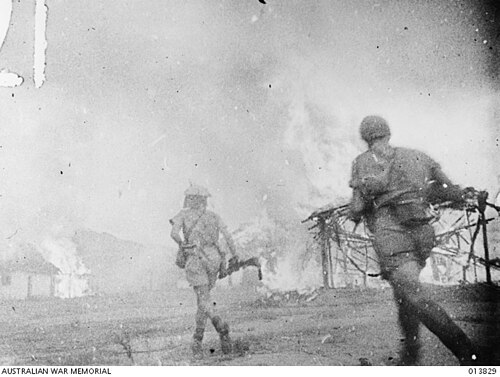
In early 1942, Portuguese authorities maintained their neutrality, in spite of warnings from the Australian and Dutch East Indies governments that Japan would invade. To protect their own positions in neighboring Dutch Timor, Australian and Dutch forces landed in Portuguese Timor and occupied the territory. There was no armed opposition from Portuguese forces or the civilian population. However, within a matter of weeks, Japanese forces landed but were unable to subdue substantial resistance, in the form of a guerrilla campaign launched by Allied commandos and continued by the local population. It is estimated that 40,000–70,000 Timorese civilians were killed by Japanese forces during 1942–1945.[263]
Qatar
Qatar was a British protected state under the Persian Gulf Residency of the British Indian Empire. The country's first oil strike occurred at Dukhan in 1939, but the outbreak of war halted production. The petroleum industry that was to transform the country did not resume until after the war.[264] The war also disrupted food supplies, prolonging a period of economic hardship going back to the 1920s with the collapse of the pearl trade, continuing through the Great Depression and a Bahraini embargo in 1937. Entire families and tribes moved to other parts of the Persian Gulf, leaving many Qatari villages deserted. Emir Abdullah bin Jassim Al Thani abdicated in 1940 in favor of his second son, Hamad bin Abdullah Al Thani.[265]
Romania

Romania had its first involvement in the war in providing transit rights for members of the Polish government, its treasury, and many Polish troops in 1939. During 1940, threatened with Soviet invasion, Romania ceded territory to the Soviet Union, Hungary, and Bulgaria, and following an internal political upheaval, Romania joined the Axis. Subsequently, the Romanian army participated with over 600,000 men in the German-led invasion of the Soviet Union, with its forces taking part in the capture of Odessa, Sevastopol and ultimately suffering irrecoverable losses at Stalingrad. Romania was also a major source of oil for Nazi Germany via the Ploiești oil fields.
With the entry of Soviet troops into Romania and a royal coup in August 1944, a pro-Allied government was installed, and after Germany and Hungary declared war on Romania, the country joined the Allies as a co-belligerent for the remainder of the war. The total number of troops deployed against the Axis was 567,000 men in 38 army divisions. The Romanian Army was involved in the siege of Budapest and reached as far as Czechoslovakia and Austria.
After the war, Romania forcibly became a people's republic as the country fell under the Soviet sphere of influence and joined the Warsaw Pact.
Samoa
Samoa declared war on Germany along with New Zealand, which administered all of Western Samoa under a League of Nations mandate. Prior to World War I, Samoa had been a German colony and was occupied by New Zealand in 1914. Under the Treaty of Versailles, Germany relinquished its claims to the islands.
Samoa sent many troops to fight with the New Zealand armed forces in the war. After the sinking of a Samoan food ship by a Japanese gunboat in 1940, the Samoan government was forced to dispatch a light-gunned ship. HMS Fa'i was in action and sank seven ships, including the attacking gunboat.
When the American armed forces entered Samoa, using it as a port, four midget submarines were spotted entering the capital Apia's port. The Samoan home guard reacted by firing a fair number of rounds, resulting in the sinking of the Hirojimi and the Shijomiki.
San Marino
Ever since the times of Giuseppe Garibaldi, San Marino has maintained strong ties with the Italian state. Throughout the war, San Marino maintained its neutrality, although it did not remain unscathed from both sides. Germany invaded San Marino on 13 September,[266] and on 17–20 September 1944 retreating German troops of the 278th Infantry Division fought the Battle of San Marino within the country against units of the 4th Indian Division. Allied victory was followed by a short occupation.
Saudi Arabia
Saudi Arabia severed diplomatic contacts with Germany on 11 September 1939, and with Japan in October 1941. Although officially neutral, the Saudis provided the Allies with large supplies of oil. Dhahran was bombed by Italian planes in October 1940, targeting the oil refineries. Diplomatic relations with the United States were established in 1943. King Abdul Aziz Al-Saud was a personal friend of Franklin D. Roosevelt. The Americans were then allowed to build an air force base near Dhahran. On 28 February 1945, Saudi Arabia declared war on Germany and Japan, but no military actions resulted from the declaration.
Sierra Leone
Freetown served as a critical convoy station for the Allies.
Singapore
Singapore was part of the Straits Settlements, a British Crown colony, and is in a strategic location for shipping routes connecting Asia to Europe. For these reasons, Japan invaded Singapore in the Battle of Singapore from 7 February to 14 February 1942. The city was renamed Syonan and kept under Japanese occupation until the end of the war in September 1945.
Slovakia
Slovakia was part of Czechoslovakia during World War II. See this article's section on Czechoslovakia in general, and its subsection on the Slovak Republic in particular.
Solomon Islands
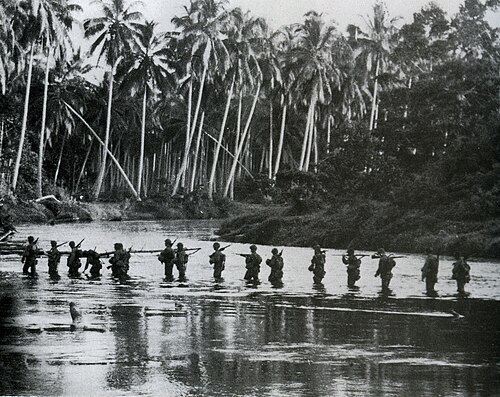
Japan occupied several areas in the British Solomon Islands during the first six months of 1942. The Japanese began to build naval and air bases to protect the flank of their offensive in New Guinea. The Allies, led by the United States, launched a counterattack with the Guadalcanal campaign beginning 7 August 1942. These landings initiated a series of battles in the central and northern Solomons, on and around New Georgia Island, and on Bougainville Island. In a campaign of attrition fought by land, sea, and air, the Allies wore the Japanese down, inflicting irreplaceable losses. The Allies retook parts of the Solomon Islands, but Japanese resistance continued until the end of the war.[267]
The impact of the war on islanders was profound. The destruction, together with the introduction of modern materials, machinery and Western material culture, transformed traditional ways of life. Some 680 islanders enlisted in the British Solomon Islands Protectorate Defence Force, while another 3,000 worked as labourers in the Solomon Islands Labour Corps.[268] The experiences of Corps members affected the development of the Pijin language and helped spark the postwar political movement Maasina Ruru.[269][270] During the war, the capital of Tulagi was damaged, while the Americans did much to develop the infrastructure around Henderson Field on Guadalcanal. After the war, this evolved into the new capital, Honiara.[271]
South Africa

As a member of the British Commonwealth, the Union of South Africa declared war on Germany shortly after the United Kingdom, on 6 September 1939. Three South African infantry divisions and one armored division fought under Allied commands in Europe and elsewhere, most notably in the North African campaign and the Italian campaign. Most of the South African 2nd Division was taken prisoner with the fall of Tobruk on 21 June 1942. Under the Joint Air Training Scheme, part of the British Commonwealth Air Training Plan, South Africa trained 33,347 aircrews for the British Royal Air Force, South African Air Force and other Allied air forces. Only Canada trained more.[272]
Southern Africa (Botswana, Lesotho, and Eswatini)
The so-called High Commission Territories of Bechuanaland, Basutoland, and Swaziland (modern Botswana, Lesotho, and Eswatini) had autonomous governments under the supervision of the British High Commissioner for Southern Africa. In July 1941, the paramount chiefs of these territories convinced the colonial authorities to create an independent force consisting of their subjects: the African Auxiliary Pioneer Corps. During its service the corps provided crucial logistical support to the Allied war effort during the North African and Italian campaigns. Initially a labor battalion, AAPC's duties were gradually expanded to include anti-aircraft artillery operation and other combat duties. Unequal treatment of the African soldiers compared to their white counterparts led to resentment and unrest, including mutinies and riots when the unit's return home was delayed after the end of the war.[273]
Southern Rhodesia (Zimbabwe)
Southern Rhodesia (modern-day Zimbabwe) had been a self-governing British colony since 1923. It was covered by the British declaration of war, but its colonial government issued a symbolic declaration of war anyway.[274] Southern Rhodesia's white troops did not serve in a composite unit (unlike their Australian, Canadian, or South African counterparts) because they constituted a significant part of the settler population; it was feared that the colony's future might be placed in jeopardy if an all-Southern Rhodesian unit went into the field and suffered heavy casualties. Southern Rhodesians served in East Africa, Europe, North Africa, the Middle East, and the Burma campaign. A significant number of Southern Rhodesian troops, especially in the Rhodesian African Rifles, were black or mixed race. Their service has never been recognised by the ZANU–PF government in Harare. Ian Smith, the future Prime Minister, like many of his white contemporaries, served under British command as a fighter pilot in the Royal Air Force.[275]
Soviet Union

The Soviet Union's participation in World War II began with the Battles of Khalkhin Gol against Japan, in Mongolia between May and August 1939. Later that year, by agreement with Germany, it invaded eastern Poland about three weeks after the Germans invaded the west of the country. During the next eleven months the Soviets occupied and annexed the Baltic states. The Soviet Union supported Germany in the war effort against Western Europe through the 1939 German–Soviet Commercial Agreement and larger 1940 German–Soviet Commercial Agreement with supplies of raw materials that were otherwise blocked by the British naval blockade. After Finland rebuffed Moscow's demands for military bases and a territorial swap, the Soviet Union invaded on 30 November 1939, in the Winter War. The Soviet Union also annexed Bessarabia, leading Romania to ally with Germany.
On June 22, 1941, Nazi Germany launched a massive surprise attack on the Soviet Union. Soviet forces took heavy losses, but this Eastern Front fighting would inflict on German forces about half of their military casualties over the course of the war.[276][277] After an initial devastating advance, the Wehrmacht suffered its first defeat in war at Moscow. The Germans and their allies tried in 1942 to advance southward, to the Caucasus. After six months of fighting, they suffered a pivotal defeat at Stalingrad. In late 1943, in the wake of Battle of Kursk, the Soviet Red Army gained the initiative with a series of major victories. After the Allies opened a second European front with the June 1944 landings in France, the USSR was able to push the Germans back.[278][279][280][281] Soviet forces advanced into Eastern Europe during 1944 and into Germany in 1945, concluding with the Battle of Berlin. The war against the USSR inflicted loss of lives (both civilian and military), on a scale greater than any countries in the war. Following the end of the war in Europe and the American atomic bombing of Hiroshima, the USSR joined the war against Japan. The Soviet Union, as one of the main victors, gained one of the permanent seats in the United Nations Security Council. After the war, the Soviet sphere of influence was widened to cover most of Eastern Europe, formalized in the Warsaw Pact. The Soviet Union came to be considered one of the two superpowers of the Cold War.[282]
Armenian SSR (Armenia)
Armenia participated in the Second World War on the side of the Allies under the Soviet Union. Armenia was spared the devastation and destruction that wrought most of the western Soviet Union during the Great Patriotic War of World War II. The Nazis never reached the South Caucasus, which they intended to do in order to capture the oil fields in Azerbaijan. Still, Armenia played a valuable role in aiding the Allies both through industry and agriculture. An estimated 300–500,000 Armenians served in the war, almost half of whom did not return.[283] Armenia thus had one of the highest death tolls, per capita, among the other Soviet republics.
One hundred and nineteen Armenians were awarded with the rank of Hero of the Soviet Union.[284] Many Armenians who were living in the areas occupied regions of the Soviet Union also formed partisan groups to combat the Germans.[285] Over sixty Armenians were promoted to the rank of general, and with an additional four eventually achieving the rank of Marshal of the Soviet Union.[285] The 89th Tamanyan Division, composed of ethnic Armenians, distinguished itself during the war. It fought in the Battle of Berlin and entered Berlin.[286]
Azerbaijan SSR (Azerbaijan)
Azerbaijan played a crucial role in the strategic energy policy of the Soviet Union since much of the petroleum needed on the Eastern Front was supplied by Baku. Mobilization affected all spheres of life in Azerbaijan. The oil workers extended their work to 12-hour shifts, with no days off, no holidays, and no vacations until the end of the war. By decree of the Supreme Soviet of the USSR in February 1942, more than 500 workers and employees of the oil industry of Azerbaijan were awarded orders and medals. In addition to this labor, some 800,000 Azerbaijanis fought in the ranks of the Soviet Army, of which 400,000 died. Azeri Major-General Hazi Aslanov was twice awarded Hero of the Soviet Union. Like the other people of the Caucasus, some Azerbaijanis joined the side of Germany.
Baku was the primary strategic goal of the right flank of Germany's 1942 Fall Blau offensive. In this attack, labelled Operation Edelweiss, the German Wehrmacht targeted Baku's oil fields.[287] The German army was at first stalled in the mountains of the Caucasus, then decisively defeated at the Battle of Stalingrad and forced to retreat.
Byelorussian SSR (Belarus)

During WWII, Belarus was part of the Soviet Union as the Byelorussian SSR. Byelorussia's borders were expanded in the invasion of Poland of 1939 under the terms of the Molotov–Ribbentrop Pact, which divided Poland's territory into German and Soviet spheres. Despite the pact, Nazi Germany invaded on June 22, 1941; Germany occupied all of Belarus by August. The Jewish inhabitants were rounded up by Einsatzgruppen and slaughtered. In 1943 the Germans established the Belarusian Central Council, a collaborationist government. Meanwhile, the Belarusian resistance fought against the occupiers. Soviet forces took back Belarus during Operation Bagration on August 1, 1944.
Georgian SSR (Georgia)

Although the Axis powers never penetrated the Georgian Soviet Socialist Republic, Soviet Georgia contributed to the war effort almost 700,000 officers and soldiers (about 20% of the total 3.2–3.4 million citizens mobilized), of which approximately 300,000 were killed. 137 Georgians were awarded Hero of the Soviet Union, the most numerous recipients of this award in the Caucasus.[288][289] The country was also a vital source of textiles as well as an important manufacturer of warplanes.
Around 30,000 Georgians, both captives and volunteers, fought for the Germans in units such as the Bergmann Battalion. One such Axis unit, the Georgian Legion, staged the Georgian Uprising of Texel in the Netherlands, often described as Europe's last battle of World War II.[290] When it became clear that the Germans were losing, the Georgians of the "Queen Tamar" Battalion,[291][292] led by Shalva Loladze, decided to switch sides. On 6 April 1945, they attempted to capture the island's heavily fortified coastal batteries. A German counterattack led to fierce fighting and the failure of the uprising.[290][292]
Ukrainian SSR (Ukraine)

Before the German invasion, Ukraine was a constituent republic of the Soviet Union, inhabited by Ukrainians with Russian, Polish, Jewish, Belarusian, German, Romani and Crimean Tatar minorities. It was a key subject of Nazi planning for the post-war expansion of the German state. Upon the beginning of Operation Barbarossa, modern-day Ukraine fell under their occupation. The Nazi occupation of Ukraine ended the lives of millions of civilians in the Holocaust and other Nazi mass killings: it is estimated 900,000 to 1.6 million Jews and 3[293] to 4[294] million non-Jewish Ukrainians were killed during the occupation. Under the Reichskommissariat Ukraine, many Ukrainians fled east to aid the Soviet Red Army in resisting the German advance, while others stayed behind and formed the Ukrainian Insurgent Army (UPA) (Ukrainian: Українська Повстанська Армія), which waged military campaign against Germans and later Soviet forces as well against Polish civilians.[295]
Those Ukrainians who remained at times welcomed the Germans as liberators. Those who collaborated with the German occupiers did so in various ways including participating in the local administration, in the Ukrainian Auxiliary Police, the Schutzmannschaft, in the German military, and serving as concentration camp guards. An entire Ukrainian volunteer SS division was created. Nationalists in western Ukraine were among the most enthusiastic and hoped that their efforts would enable them to re-establish an independent state later on. For example, on the eve of Operation' Barbarossa, as many as 4000 Ukrainians, operating under Wehrmacht orders, sought to cause disruption behind Soviet lines, and some groups aided the German Army in the invasion, including theton Nachtigall and Roland battalions.
Spain

Italian and German intervention had aided the Franco government in the recent Spanish Civil War, but Franco and Hitler did not achieve an agreement about Spanish participation in the new war. Galicia became an alternate source of tungsten for the Reich. Despite its non-belligerency, Spain sent volunteers to fight against the Soviet Union in the form of the Blue Division. As the Allies emerged as possible victors, the regime declared neutrality in July 1943. Removal of Spanish troops from the Eastern Front was completed in March 1944.
Spain did make plans for defense of the country. Initially, the mass of the Spanish army was stationed in southern Spain in case of Allied attack from Gibraltar during 1940 and 1941. However, Franco ordered the divisions to gradually redeploy in the Pyrenees as Axis interest in Gibraltar grew. By the time it became clear that the Allies were gaining the upper hand, Franco had amassed all his troops on the French border and was assured that the Allies did not wish to invade Spain.
St. Lucia
Suriname
In 1940, Suriname was a colony of the Netherlands. At the start of the Battle of the Netherlands, it was defended by 200 soldiers of the Royal Netherlands East Indies Army and 180 local volunteers of the Schutterij.[296]
Suriname was a major producer of bauxite which is used to make aluminium, a vital resource for the aircraft industry. Between 1940 and 1943, Suriname supplied 65% of American imports of bauxite. On 1 September 1941, three months before Pearl Harbor, President Franklin D. Roosevelt made an offer to Queen Wilhelmina to station 3,000 soldiers in Suriname.[297] The number of troops was later revised to 2,000 soldiers who started to arrive from November 1941 onwards.[296] In December 1941, the American troops started to transform Airstrip Zanderij into the largest airport of South America at the time.[298]
The border with French Guiana, part of Vichy France, was a major concern, and was defended by the Schutterij.[296] On 16 March 1943,[299] French Guiana sided with Free France.[300] In 1943, the American troops were replaced by Puerto Ricans.[296]
Swaziland (Eswatini)
In exchange for greater Swazi autonomy from the British, King Sobhuza II gathered a few thousand Swazi volunteers to fight with the Allies in the war. Swazi soldiers served in the Western Desert campaign and the Invasion of Italy.
Sweden
Sweden maintained neutrality throughout the war, though some Swedish volunteers participated in Finland's Winter War and Continuation War against the Soviet Union. Also, Sweden secretly supported both the Norwegian and Danish resistance against Germany, providing military training to thousands of Norwegian and Danish refugees.
After Denmark and Norway were invaded on 9 April 1940, Sweden and the other remaining Baltic Sea countries became enclosed by Nazi Germany and the Soviet Union, then on friendly terms with each other as formalized in the Molotov–Ribbentrop Pact. The lengthy fighting in Norway resulted in intensified German demands for indirect support from Sweden, demands that Swedish diplomats were able to fend off by reminding the Germans of the Swedes' feeling of closeness to their Norwegian brethren. With the conclusion of hostilities in Norway, the Swedish Cabinet gave in to German pressure and allowed railroad transports through Sweden of unarmed German soldiers on leave between Norway and Germany. Throughout the war, Sweden continued to supply Germany with iron ore through Narvik in Norway and secretly sent Britain vital shipments of ball bearings.
Switzerland
Switzerland intended to be a neutral power during the war, but Axis threats and military mobilizations towards its borders prompted the Swiss military to prepare for war. Following the German invasion of Poland on 1 September 1939, the country was completely mobilized within three days. An invasion of Switzerland, codenamed Operation Tannenbaum, was planned for 1940, but Hitler decided it would be a waste of resources. Unlike the Netherlands, Belgium, and other western European nations that had easily fallen under German maneuver warfare, Switzerland had a strong military and mountainous terrain offering defenders the traditional advantage of high ground in mountain warfare.
Despite its neutrality, Switzerland was not free from hostilities. Early in the war, Swiss fighters shot down German aircraft for violating Swiss air space. Counting both sides, hundreds of aircraft, such as those with battle damage, landed in Switzerland and were interned at Swiss airports and their crews held until the end of the war. Allied airmen were interned, in some cases contrary to Swiss law, and some were reportedly subjected to abuse in internment camps. Both sides accidentally bombed Swiss cities. Because of its defensive and hostile nature toward both sides, Switzerland eventually and unofficially proclaimed itself on its own side in the war. Although the Swiss government was anti-Nazi, Swiss troops did not directly participate in the war. After the war, controversies arose over assets of the victims and perpetrators of the Holocaust in Swiss banks.
Syria
Syria was under French control throughout the war. Following the French surrender in 1940, this was the Vichy government, a puppet of the Nazi regime. Winston Churchill feared that Germany could use Syria to threaten Britain's Iraqi oil supplies. These appeared to be substantiated when Luftwaffe supply flights to the new pro-German Iraqi regime (under Rashid Ali) refuelled in Damascus.
In June 1941, British and Free French forces invaded Syria, and after giving effective opposition, the Vichy forces surrendered in July 1941. British occupation lasted until the end of the war. During the occupation, Syria gradually went on the path towards independence. The proclamation of independence took place in 1944; October 1945 Syrian Republic was recognized by the United Nations; it became a de facto sovereign state on 17 April 1946 with the withdrawal of French troops.
Tanganyika (Tanzania)
After the United Kingdom declared war, the British forces in Tanganyika were ordered to intern the German males living in the territory out of fear that they would try to help the Axis. Some of the Germans living in Dar es Salaam attempted to flee the country, but they were stopped and later interned by a small group of Tanganyikan soldiers and British officers that included Roald Dahl.[301]
During the war about 100,000 people from Tanganyika joined the Allies.[302] Tanganyikans with the King's African Rifles fought in the East African campaign against the Italians, in the Madagascar campaign against the Vichy French, and in the Burma campaign against the Japanese.[303] Tanganyika became an important source of food and Tanganyika's export income greatly increased from the pre-war years of the Great Depression;[302] however, this led to a rise in inflation.[304]
Tibet
Tibet was a de facto independent state that lacked international recognition.[305] It remained neutral throughout the war. The 14th Dalai Lama, Tenzin Gyatso, was enthroned by the Ganden Phodrang government at the Potala Palace in 1939. Tibet established a Foreign Office in 1942, and in 1946 it sent congratulatory missions to China and India related to the end of the war.[306] Its era of independence ended after the Nationalist government of China lost the Chinese Civil War and the People's Liberation Army entered Tibet in 1950.
Thailand
Thailand was nominally an ally of Japan at the beginning of the war. Field Marshal Plaek Phibunsongkhram, a military dictator with nationalist leanings, ruled the country under the nominal rule of King Ananda Mahidol, who was just fourteen years old in 1939 and remained in Switzerland until the war ended. Thailand remained uninvolved when war broke out in Europe, but it took the opportunity of France's defeat to settle claims to parts of French Indochina, in the Franco-Thai War. The December 1941 Japanese invasion of Thailand brought five hours of war after which Phibun surrendered and acquiesced, making the country a stepping-stone to open the Burma campaign.
Japanese victory in the Malayan campaign made the Premier more enthusiastic about co-operation, and on 21 December, a formal "alliance" was concluded. On 25 January 1942, Thailand declared war on the United States and the United Kingdom. Some Thais disapproved, and formed the Free Thai Movement to resist. Eventually, when the war turned against the Japanese, Phibun was forced to resign, and Thailand renounced its alliance with Japan.
Tonga
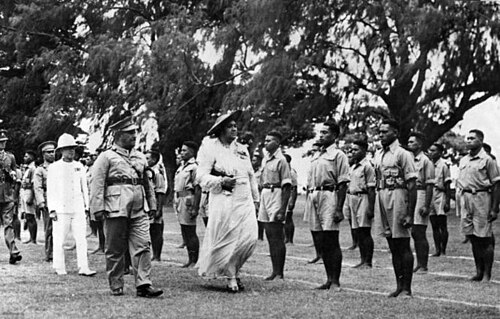
By 1939, Tonga was a protected state of the British Empire and Commonwealth (through the United Kingdom) respectively, Britain had sovereignty over its foreign affairs and defence, thus declaring war on Germany in 1939 and Japan in 1941 following the attack on Pearl Harbor.[307] The Queen of Tonga, Salote Tupou III accepted the outcome and put her island country's resources at the disposal of Britain and supported the Allied cause throughout the war. The Tonga Defense Service (TDS) came into existence in 1939. New Zealand trained two Tongan contingents of about 2,000 troops, who saw action in the Solomon Islands and Guadalcanal.[308][309] In addition, New Zealand and US troops were stationed on Tongatapu, which became a staging point for shipping.
Transjordan
The Emirate of Transjordan was a British mandate territory, and the Transjordanian forces were under British command during the war. The Transjordanian forces numbered 1,600 soldiers during the war and they took part and fought in Iraq, Iran, Syria and Lebanon during the Middle Eastern Campaign.
Trinidad and Tobago
Tunisia

Tunisia was a French protectorate and many Tunisians took satisfaction in France's defeat by Germany,[310] but the nationalist parties were unable to derive any benefit from it. The Vichy French Resident-General, Admiral Jean-Pierre Esteva, repressed political activity and arrested leaders of the independence party Neo Destour.[311] The Bey Muhammad VII al-Munsif (Moncef Bey) declared neutrality and attempted to protect Tunisian Jews from persecution.[312][313]
Allied forces landed in Algeria with Operation Torch on 8 November 1942. Beginning on 10 November, the British First Army under Kenneth Anderson began to advance toward Tunis. For the next six months, Tunisia was a battlefield as Axis and Allied forces fought on northern and southern fronts. In February 1943 the Axis won a victory at the Battle of Kasserine Pass, the first major engagement involving American troops, but the Operation Ochsenkopf offensive at the end of the month failed to stop the Allied advance. The Battle of Longstop Hill cleared the road to Tunis, which fell on 7 May. All Axis forces in Tunisia surrendered in the following days.
Following the recapture of Tunis, Free France took control of the country. Charles Mast served as the Resident General for the remainder of the war. The Free French accused Moncef Bey of collaborating with the Vichy Government and deposed him.[314] From Tunisia, the Allies launched Operation Husky, the invasion of Sicily, in July 1943.
Turkey
Turkey was neutral until several months before the end of the war, at which point it joined the Allied powers. Prior to the outbreak of war, Turkey signed a Mutual Aid Pact with France and Britain in 1939. After the German invasion of France, however, Turkey remained neutral, relying on a clause excusing them if military action might bring conflict with the USSR, which, after the division of Poland, Turkey feared, as East Thrace including Istanbul and the Caucasian borderlands were especially vulnerable to a potential Soviet attack. Then, in June 1941, after neighboring Bulgaria joined the Axis and allowed Germany to move troops through to invade Yugoslavia and Greece, Turkey signed a treaty of friendship with Germany.
Turkey was an important producer of chromite, which is a key ingredient in the manufacture of stainless steel and refractory brick, and Germany had limited access to it. The key issue in Turkey's negotiations with both sides was the sale of chromite to Germany or to the Allies. The Allies had access to other sources and mainly bought the chromite in order to preclude its sale to Germany. Turkey halted its sales to Germany in April 1944 and broke off relations in August. Turkey declared war on the Axis powers in February 1945, after the Allies made its invitation to the inaugural meeting of the United Nations (along with the invitations of several other nations) conditional on full belligerency. There is no record that Turkish troops ever saw combat.
The main theme of Eric Ambler's 1940 spy thrillerJourney Into Fear is the efforts of Britain and Germany to get Turkey to join them – or at least prevent it from joining the other. At the time of writing, it was far from clear what Turkey's role in the war would be.
In her March 18, 1943, entry in The Diary of Anne Frank, Frank recorded the jubilation she and her family felt at the news that Turkey had joined the war on the side of the Allies, replaced on the following day by disappointment upon hearing that in fact Turkey had not actually joined the war, only that a Turkish minister said that Turkey might end its neutrality at some future time.[315]
Tuva
The Tuvan People's Republic was a partially recognized Soviet puppet state.[316] Tuva volunteer forces took part in the battles on the eastern front as part of the formations of the Workers and Peasants Red Army. On October 14, 1944, the Tuva People's Republic became part of the Soviet Union, becoming the Tuva Autonomous Oblast. From that moment on, the Tuvans participated in hostilities until the end of the war as citizens of the Soviet Union.
United Kingdom

The United Kingdom, along with most of its Dominions, all of its Crown colonies, and eventually its protectorates declared war on Nazi Germany in September 1939 to honour its commitments to Poland after the German invasion. At the time, Britain was still the world's major superpower, having the largest navy in the world, its influence and presence in each continent, although its power and stature is not of equal standing in contrast to before the First World War. As a result of the declaration of war, a National Service Act was passed immediately after declaring war, but conscription was never implemented in Northern Ireland, despite urgings from the Stormont government, due to Irish nationalist opposition.[317] After the fall of France, Britain was the only major Allied nation left in Europe. In the early war, the Royal Navy engaged Axis ships in the Battles of the Atlantic and the Mediterranean. The British Army fought the Axis in the Mediterranean and Middle East including the Balkans, the East African and Western Desert campaigns.
While Nazi Germany never attacked Britain with ground forces, it subjected the country to heavy air attacks in the Battle of Britain of 1940, which was won by the Royal Air Force. Nightly attacks of the Blitz continued until mid-1941, which killed 40,000 people[318] and prompted evacuations of major urban centres, but achieved none of Germany's strategic objectives.[319] The economy of Britain was re-oriented to military production.[320] Initiatives such as the Women's Land Army boosted food production, while a rationing program regulated consumption.
Britain entered the Pacific Ocean theater when Japan seized many British colonies in Asia in 1941–1942.[321] After the Soviet Union and United States joined the Allies in 1941, the U.K., U.S. and other Allied countries launched major offensives in North Africa, Italy, Normandy and Burma. As a member of the Big Three, Prime Minister Winston Churchill participated in conferences with the United States and the Soviet Union to plan the war and the postwar world. After the war, Britain became one of the Permanent members of the United Nations Security Council.
Channel Islands
The Channel Islands are self-governing Crown dependencies off the coast of France, and were the only British territory to be occupied by Germany during the War. The islands are dependent on the United Kingdom for their defence and foreign relations. In 1940, the British government demilitarised the islands, and they were subsequently occupied by German forces. Strong German defences were set up, but the Islands were not assaulted except by occasional hit-and-run commando raids. German forces surrendered at the end of the war. Almost all the Jewish people fled the islands before the German occupation; some who remained were deported to extermination camps.[322]
Isle of Man
The Isle of Man is a self-governing Crown dependency external to the United Kingdom. Its foreign relations and defence, however, are the responsibility of the government of the UK. During the Second World War, the Isle of Man had a detention camp for Axis citizens and suspected sympathisers, including members of the British Union of Fascists and the Irish Republican Army. A naval base, radar network and training stations were also established on the island.
The Captain, a 1967 WWII novel by Dutch writer Jan de Hartog, features a Royal Navy captain originating from the Isle of Man who takes great pride in his island, and who eventually goes down, heroically defending a naval convoy under his charge against an overwhelming attack by a U-boat "wolf pack".
United States

A sense of having been tricked into World War I led Congress, with strong public opinion backing, to pass the Neutrality Acts of the 1930s. After 1939 the Roosevelt Administration made support of Britain, China and France a priority and tried to revoke or avoid the neutrality laws. This new policy included trade with the British under terms that the Axis could not meet. The U.S. passed a Lend-Lease act in March 1941. After the Japanese attack on Pearl Harbor on December 7, the debates on neutrality ended and the nation upon joining the Allies was unified in support and commitment to fighting in the war. President Roosevelt declared war on Imperial Japan on December 8 and three days later declared war on Germany and Italy.[323] Washington and the other Allied governments made German defeat the top priority, dubbing it the "Europe First Policy", coordinating with London in most major operations against Nazi Germany and Fascist Italy in the European Theater[nb 3]. The United States along with Great Britain, France and the Soviet Union were the main Allied powers in Europe. However, the U.S. also maintained a strong effort in the war against Japan, being the primary Allied power in the Pacific Theater. Like many of the other Allied forces the U.S. military deployed to both Europe and the Pacific Theatres, participating in many prominent and large-scale battles and operations such as the North African, Italian and Solomon Islands campaigns as well as the Normandy landings, the Western Allied invasion of Germany along with the battles of Iwo Jima, Okinawa and the Battle of the Bulge. The United States played a crucial role in the Allied victory over the Axis powers.
The U.S. led the Manhattan Project to develop atomic weapons, which it deployed in August 1945 in the atomic bombings of Hiroshima and Nagasaki. This attack led to the surrender of Japan and the end of World War II.
Inside the United States, every aspect of life from politics to personal savings was put on a wartime footing. The country directed its massive industrial production to the war effort as what President Roosevelt called "the Arsenal of Democracy." Civilians engaged in volunteer efforts and submitted to government-managed rationing and price controls. The Hollywood film industry produced wartime propaganda. Between 110,000 and 120,000 Japanese Americans were forcibly moved to internment camps. After the war, the United States retained military commitments to European security while providing economic investment to rebuild nations devastated during the war. Politically, the U.S. abandoned its neutrality and became a founding member of NATO,[116] and hosts the United Nations[324] in which it gained one of the permanent chairs on the Security Council.[117]
American Samoa
American Samoa is an American territory and a U.S. Navy base, and was used during the war. See also Pacific Islands.
Native American nations
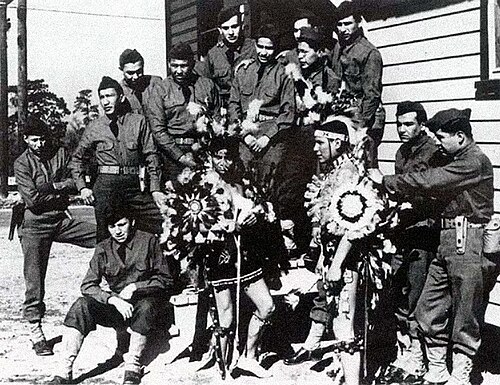
25,000 Native Americans in World War II fought actively: 21,767 in the Army, 1,910 in the Navy, 874 in the Marines, 121 in the Coast Guard, and several hundred Native American women as nurses. As sovereign nations, the tribes joined the war alongside the United States with their citizens enlisting in the U.S. Armed Forces.[325]
The Iroquois Confederacy was the only Native American nation to have officially declared war on the Axis powers separately from the United States. The Iroquois representative to the U.S. stated: "We represent the oldest, though smallest, democracy in the world today. It is the unanimous sentiment among Indian people that the atrocities of the Axis nations are violently repulsive to all sense of righteousness of our people, and that this merciless slaughter of mankind can no longer be tolerated. Now we do resolve that it is the sentiment of this council that the Six Nations of Indians declare that a state of war exists between our Confederacy of Six Nations on the one part and Germany, Italy, Japan and their allies against whom the United States has declared war, on the other part."[326][327]
Puerto Rico
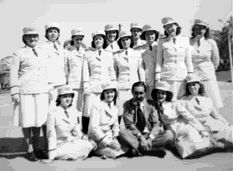
More than 65,000 Puerto Ricans served in the United States armed forces during World War II. Some guarded American installations in the Caribbean, while others served in combat in the European and Pacific theatres. Many of the soldiers from the island served in the 65th Infantry Regiment or the Puerto Rico National Guard. As recruitment increased many were assigned to units in the Panama Canal Zone and the British West Indies to replace the continental troops serving in regular Army units. Puerto Ricans residing on the mainland were assigned to regular units of the military. They were often subject to the racial discrimination that was widespread in the United States at the time.[328]
Borinquen Army Airfield (Ramey Air Force Base), was established in Puerto Rico in 1939.[329] In 1940, President Roosevelt ordered the construction of a major naval base to serve as "the Pearl Harbor of the Atlantic". Roosevelt Roads Naval Station grew into a major facility but was scaled back after the defeat of Germany. The naval station remained in use until 2003, when it was shut down.[330][331]
Uruguay

Uruguay was neutral for most of World War II but eventually joined the Allies. It declared its neutrality on September 4, 1939, although PresidentAlfredo Baldomir was poorly disposed towards the Axis powers. Uruguay's neutrality included a 500-kilometre (310 mi) exclusion zone extending from its coast, established as part of the Declaration of Panama.[332]
Neither side of the conflict acknowledged the exclusion zone, and in December, British warships and the German warship Admiral Graf Spee fought the Battle of the River Plate in the zone. This prompted a joint protest from several Latin American nations to both sides. (Admiral Graf Spee took refuge in Uruguay's capital, Montevideo, claiming sanctuary in a neutral port, but was later ordered out.) In early 1942, President Baldomir broke off diplomatic relations with the Axis Powers. On 15 February 1945, near the end of the war, Uruguay dropped its neutrality and joined the Allies, and declaring war on Germany and Japan.
Reichsommissariat Ukraine
The Reichskommissariat Ukraine (RKU; lit.'ReichCommissariat of Ukraine') was an administrative entity of the Reich Ministry for the Occupied Eastern Territories of Nazi Germany from 1941 to 1944. It served as the German civilian occupation regime in the Ukrainian SSR and parts of the Byelorussian SSR, Russian SFSR, and eastern Poland during the Eastern Front of World War II.
Reichskommissariat Ukraine was established after the early success of the Wehrmacht's Operation Barbarossa for territory under the military administration of Army Group South Rear Area. The German civil administration was based in Rovno (Rivne) with Erich Koch serving as the only Reichskommissar during its existence.
Vatican City

Vatican City, the smallest autonomous country in the world at 0.44 km2 (0.16 sq mi, little more than 100 acres), remained unoccupied throughout the war and its small military did not engage in combat. Pope Pius XII allegedly supported resistance efforts in secret, issued public statements against racism, and attempted to broker peace before the outbreak of total war. However, as Cardinal Eugenio Pacelli, he signed the very first treaty negotiated by Nazi Germany when it came to power in 1933, the Reichskonkordat, on behalf of Pope Pius XI (a treaty that remains in force). The Vatican City was also bound by the Lateran Treaty with Italy, requiring the Vatican and the Holy See to remain politically neutral, which Pius XII successfully maintained throughout the war.
Venezuela
After the attack on Pearl Harbor, Venezuela severed diplomatic relations with Italy, Germany, and Japan, and produced vast oil supplies for the Allies. It maintained a relative neutrality until the last years of war, when it finally declared war on Germany and the rest of the Axis countries.
Yemen
The Mutawakkilite Kingdom of Yemen, which occupied the northern portion of modern Yemen, followed an isolationist foreign policy under King Yahya Muhammad Hamid ed-Din. It formed an alliance with Italy in 1936, an obvious precaution following the Italian Conquest of Ethiopia, directly across the Red Sea from Yemen. Yet Yemen had no intention of actually involving itself in Italy's wars, and it remained neutral for the duration of the war. The southern portion of modern Yemen, known as the Aden Protectorate, was under British control.
Yugoslavia

The Axis Powers occupied Yugoslavia in 1941 and created several puppet states and client states including the Independent State of Croatia, Nedić's Serbia, and the Kingdom of Montenegro. Other parts of Yugoslavia were occupied directly. Yugoslavs opposing the Nazis soon started to organize resistance movements, the Partisans, led by Josip Broz Tito and the Communist Party of Yugoslavia, and the monarchist Chetniks, led by Draža Mihailović. The Sisak People's Liberation Partisan Detachment of the Yugoslav Partisans established in Sisak, Croatia, was the first Partisan armed anti-Fascist movement to take place in occupied Yugoslavia and primarily consisted of Croats. By the end of 1941, of the roughly 7,000 members of Partisans in Croatia, 5,400 were Serbs. By May 1944, the ethnic composition of the Yugoslav Partisans on a national level was made up of 44% Serbs, 30% Croats, and 10% Slovenes.[333] The two resistance movements had conflicting goals, and the Chetniks began collaborating in the middle of the war with the Axis powers to fight against the Partisans. The Chetniks also engaged in a campaign of ethnic cleansing of non-Serbs in the territory of the former Kingdom of Yugoslavia during the war.[334] This was in accordance with Mihailović's directive of 20 December 1941 which called for the cleansing of Croats and Bosniaks living in areas intended to be part of Greater Serbia. Communist Anti-Fascist Council of National Liberation of Yugoslavia was convened on in Bihać in 1942 and in Jajce. Near the end of the war, Western governments attempted to reconcile the various sides, which led to the Tito-Šubašić Agreement in June 1944. However, the Communist Party ruled the post-war state. After heavy bloodshed in a complex war, Yugoslavia was reestablished in 1945, including areas previously ruled by Kingdom of Italy (Istria and parts of Dalmatia). General Mihailović and many other royalists were rounded-up and executed by the Partisans. Mihailović was posthumously awarded the Legion of Merit by President Harry S. Truman for his resistance efforts throughout the war and for his role in Operation Halyard.[335]
Independent State of Croatia
The Independent State of Croatia (Nezavisna Država Hrvatska, or NDH) was a Nazi-puppet state that became a member of the Axis on 10 April 1941 and joined the Tripartite Pact on 15 June 1941. The state was nominally a monarchy and a de facto Italian-German quasi-protectorate until the Italian capitulation on 8 September 1943, after which it remained a de facto German quasi-protectorate until the German withdrawal near the end of the war. It had a government controlled by the fascist Ustaše movement who were put in power by Germany. During the war, the Ustaše regime committed genocide against Serbs as well as Jews and Roma in the NDH. They also had their own separate concentration camps, such as the Jasenovac extermination camp.[336] Its military fought alongside Axis troops; mainly on anti-Partisan operations within the NDH. Volunteers from the NDH fought in Wehrmacht formations on the Eastern Front as the 'Croatian Legion' for some time. The Armed Forces of the Independent State of Croatia remained engaged in battle a week after the capitulation of Germany on 8 May 1945 in an attempt to surrender to Allied forces rather than the Yugoslav Partisans.
Nedić's Serbia
Nedic's Serbia was a puppet regime installed by Nazi Germany. Unlike the puppet state Independent State of Croatia, the regime in the occupied Yugoslavia was never accorded status in international law and did not enjoy formal diplomatic recognition on the part of the Axis powers.[337] The regime enjoyed some support.[338] Serbia became the second country in Europe, following Estonia,[339][340] to be proclaimed Judenfrei (free of Jews).[341][342][343][344][345]
Kingdom of Montenegro
The Kingdom of Montenegro was an occupied territory under military government of Fascist Italy during World War II. Although the Italians had intended to establish a quasi-independent Montenegrin kingdom, these plans were permanently shelved after a popular uprising in July 1941.[346][347][348] Following the Italian surrender in September 1943, the territory of Montenegro was occupied by German forces which withdrew in December 1944.
See also
Notes
- ↑"The cavalry of the Gruppo Bande were recruited for all over Ethiopia and were Amharic speaking, hence the name. But the NCOs were Eritrean, and the officers were Italians, hand-picked by Amedeo himself"[159] Along with this, the unit contained Yemeni infantry
- ↑The exact figures are not known since Russia has not made the relevant documents public.
- ↑The other main theatre of operations was the Pacific War.
References
- ↑Bartiromo, Maria; Freeman, James (27 October 2020). The Cost: Trump, China, and American Revival. Simon and Schuster. ISBN 9781982164003.
- ↑Sainsbury, Keith (1986). The Turning Point: Roosevelt, Stalin, Churchill, and Chiang Kai-Shek, 1943: The Moscow, Cairo, and Teheran Conferences. Oxford: Oxford University Press.
- ↑"Axis powers | Countries & History | Britannica". Encyclopedia Britannica. Archived from the original on 2025-12-31. Retrieved 2026-04-27.
- ↑Wilbur, Eric (12 August 2024). "The Iraqi Coup of 1941: How Ir aqi Coup of 1941: How Iraq Fell Willingly Int ell Willingly Into Fascism". digitalcommons.bridgewater.edu. Retrieved 2026-04-27.
- ↑Dupree, Louis: Afghanistan, pages 477–478. Princeton University Press, 1980
- ↑What Did Afghanistan Do In World War 2? | Central Asian Neutrality? 1939-1947. 22 July 2022. Retrieved 2024-01-06.
- ↑Ali, Tariq (30 November 2001). "The king of Greater Afghanistan; A German dispatch from 1940 shows Zahir Shah's true colours". Irish Independent. Retrieved 2016-11-29.
- ↑"EX-KING AMANULLAH NOW WORKS FOR HITLER". Argus (Melbourne, Vic. : 1848 – 1957). 1941-05-24. p. 4. Retrieved 2019-08-29.
- ↑Times, Paul Hofmann Special to The New York (1979-04-29). "Afghan King, In Rome Exile, Tightens Belt". The New York Times. ISSN 0362-4331. Retrieved 2019-08-29.
- ↑Crews, Robert D. (2015-09-14). Afghan Modern: The History of a Global Nation. Harvard University Press. ISBN 9780674286092.
- ↑Cernuschi, Enrico. La resistenza sconosciuta in Africa Orientale
- ↑Playfair, Major-General I. S. O.; et al. (1954). Butler, J. R. M. (ed.). The Mediterranean and Middle East: The Early Successes Against Italy (to May 1941). History of the Second World War, United Kingdom Military Series. Vol. I. HMSO. pp. 397, 399. OCLC 494123451. Retrieved 7 September 2017.
- ↑Kelly, Saul (2002). The Lost Oasis: The Desert War and the Hunt for Zerzura. Westview Press. pp. 156, 193. ISBN 0-7195-6162-0.
- ↑Widerøe, Turi (2008). "Annekteringen av Dronning Maud Land". Norsk Polarhistorie (in Norwegian). Archived from the original on 24 September 2015. Retrieved 15 July 2011.
- ↑D. T. Murphy, German exploration of the polar world. A history, 1870–1940 (Nebraska 2002), p. 204.
- ↑Bertrand, Kenneth J. (1971). Americans in Antarctica 1775–1948. New York: American Geographical Society.
- ↑"About – British Antarctic Survey". www.antarctica.ac.uk. Retrieved 25 March 2018.
- ↑"Churchill sent troops to the Falklands in 1942 fearing a Japan-Argentina entente". MercoPress. December 10, 2014. Retrieved October 16, 2025.
- ↑"Scott Polar Research Institute, Cambridge » Picture Library catalogue". www.spri.cam.ac.uk. Retrieved 25 March 2018.
- ↑"Operation Tabarin overview". British Antarctic Survey – Polar Science for Planet Earth. British Antarctic Survey. 2015. Retrieved 31 May 2019.
- ↑Allén Lascano, Luís C. (1977). Argentina y la gran guerra, Cuaderno 12. «La Soberanía», Todo es Historia, Buenos Aires
- 12Carlos Escudé: Un enigma: la "irracionalidad" argentina frente a la Segunda Guerra Mundial, Estudios Interdisciplinarios de América Latina y el Caribe, Vol. 6 Nº 2, jul-dic 1995, Universidad de Tel Aviv
- 12345Galasso, Norberto (2006). Perón: Formación, ascenso y caída (1893-1955), Colihue, ISBN 950-581-399-6
- ↑"Wings of Thunder – Wartime RAF Veterans Flying in From Argentina". PR Newswire. 6 April 2005. Retrieved 8 January 2008.
- ↑Eloy Martínez, Tomás (1984). "Peron and the Nazi War Criminals". Latin American Program Working Papers (144). Woodrow Wilson International Center for Scholars. Retrieved 29 June 2024.
- ↑"Department of Foreign Affairs and Trade, Australia". Info.dfat.gov.au. Retrieved 2010-07-22.
- ↑Stevens, The Naval Campaigns for New Guinea paragraph 30 Retrieved 10 March 2016.
- ↑Smith, Larry (12 July 2011). "Planning to Protect our Bahamian Islands". Bahama Pundit. Archived from the original on July 18, 2011. Retrieved 28 May 2019.
- ↑Bloch, Michael (1982). The Duke of Windsor's War. London: Weidenfeld and Nicolson. ISBN 0-297-77947-8, pp. 79–80
- ↑Ziegler, Philip (1991). King Edward VIII: The official biography. New York: Alfred A. Knopf. ISBN 0-394-57730-2.
- ↑Higham, Charles (1988). The Duchess of Windsor: The Secret Life. McGraw Hill. pp. 331–332. ISBN 9780070288010.
- ↑Ziegler, pp. 471–472
- ↑Matthew, H. C. G. (September 2004; online edition January 2008) "Edward VIII, later Prince Edward, duke of Windsor (1894–1972)", Oxford Dictionary of National Biography, Oxford University Press, doi:10.1093/ref:odnb/31061, retrieved 1 May 2010 (Subscription required)
- ↑STACEY, C. P. (1955). "Official History of the Canadian Army in the Second World War- Volume I -Six Years of War"(PDF). National Defence and the Canadian Forces. Government of Canada. p. 181. Archived from the original(PDF) on August 2, 2016. Retrieved July 31, 2016.
- ↑"Saudi Aramco World: Air Raid! A Sequel". archive.aramcoworld.com. Retrieved 2018-04-27.
- ↑Polsson, Ken. "October 1936". 2timeline.info. Archived from the original on 29 January 2013. Retrieved 31 December 2012.
- ↑Lucas, James (1988). Storming Eagles: German Airborne Forces in World War Two. London: Arms and Armour. pp. 21–22. ISBN 0-85368-879-6.
- ↑Various authors (1941). Belgium: The Official Account of What Happened, 1939–40. London: Belgian Ministry of Foreign Affairs. pp. 41–5.
- ↑Gege6220 (7 May 2006). "Les prisonniers de guerre belges". Skyrock. Retrieved 17 January 2013.
{{cite web}}: CS1 maint: numeric names: authors list (link) - ↑Office of United States Chief of Counsel for Prosecution of Axis Criminality (1946). "Germanization and Spoliation §4. The Western Occupied Countries"(PDF). Nazi Conspiracy and Aggression. Vol. I. Washington, DC: US Government Printing Office. p. 1064.
- ↑"Freiwillige Zwangsarbeit? Die Expansion nach Westen". German Federal Archives. Retrieved 23 May 2013.
- ↑"Belgium". European Holocaust Research Infrastructure Project. enhri-project.eu. Archived from the original on 21 September 2013. Retrieved 4 April 2013.
- ↑Witte, Els; Craeybeckx, Jan; Meynen, Alain (2010). Political History of Belgium: From 1830 Onwards. Asp. pp. 203–4. ISBN 978-90-5487-517-8.
- ↑"La Belgique docile" report summarised in Baes, Ruben. "'La Belgique docile': Les autorités belges et la persécution des Juifs". CEGES-SOMA. Archived from the original on 28 September 2011. Retrieved 18 January 2013.
- ↑Estes, Kenneth W. (2007). A European Anabasis: Western European Volunteers in the German Army and SS, 1940–1945. Columbia: Project Gutenburg. ISBN 978-0-231-13030-1.
- ↑Conway, Martin (12 January 2012). The Sorrows of Belgium: Liberation and Political Reconstruction, 1944–1947. Oxford: Oxford University Press. pp. 21–23. ISBN 978-0-19-969434-1.
- ↑Shirer, William L. (1990). The Rise and Fall of the Third Reich: A History of Nazi Germany (Rev. ed.). New York [u.a.]: Simon & Schuster. p. 729. ISBN 0-671-72868-7.
- ↑Baete, Hubert, ed. (1994). Belgian Forces in United Kingdom. Ostend: Defence. pp. 31–7.
- ↑Thomas, Nigel (1991). Foreign Volunteers of the Allied Forces: 1939–45. London: Osprey. p. 17. ISBN 978-1-85532-136-6.
- ↑"April 5, 1943: Belgium tragedy in USAAF daylight bombing raid". Ww2today.com. Archived from the original on 17 April 2021. Retrieved 15 April 2013.
- ↑"1944: The liberation of Brussels". Brussels.be. Retrieved 2013-01-09.
{{cite web}}: CS1 maint: deprecated archival service (link) - ↑"Battle of the Bulge: December 16, 1944 – January 28, 1945". History Channel. 14 October 2009. Retrieved 12 May 2013.
- ↑"V-Bomb Damage in Belgium Extensive". Canberra Times. 17 May 1945. Retrieved 15 April 2013.
- ↑Langworth, Richard M. "Feeding the Crocodile: Was Leopold Guilty?". Churchill Centre. Archived from the original on 21 May 2013. Retrieved 17 January 2013.
- ↑Singiza, Dantès (7 September 2012). "Ruzagayura, une famine au Rwanda au cœur du Second Conflit mondial"(PDF). L'Institut d'Histoire Ouvrière, économique et Sociale.
- ↑Dorji, Lham (2008). The Wangchuk Dynasty: 100 Years of Enlightened Monarchy in Bhutan. The Centre for Bhutan Studies. pp. 35–37. doi:10.13140/RG.2.1.3780.4889.
- ↑I. C. B. Dear and M. R. D. Foot, eds. The Oxford Companion to World War II (1995).
- ↑Wesley F. Craven & James L. Cate; The Army Air Forces in the World War II; Office of US Air Force History 1983; page 69
- ↑Maximiano, C.C.; Bonalume N., R. (2011), Brazilian Expeditionary Force in World War II, Long Island City: Osprey Publishing, ISBN 9781849084833 Page 6.
- ↑World Affairs; American Peace Society; Indiana University 1951; Volume 114
- ↑Wesley F. Craven & James L. Cate; 1983 Ibidem
- ↑Helgason, Guðmundur. "Loss listings" of WWII German U-boats.
- ↑Barone, João (2013) 1942: O Brasil e a Guerra quasi desconhecida (1942: Brazil and its almost forgotten war)(in Portuguese) Rio de Janeiro, ISBN 8520933947 Chapter 2
- ↑Carey, Alan C. (2004) Galloping Ghosts of the Brazilian Coast. Lincoln, NE USA: iUniverse, Inc., ISBN 0595315275 Page 100.
- ↑Wesley F. Craven & James L. Cate; 1983 Ibidem Page 695
- ↑Lochery, Neill. Brazil: The Fortunes of War, War II and the Making of Modern Brazil. Basic Books, 2014 ISBN 9780465039982Parts 4 & 5.
- ↑The Japanese Occupation of Borneo 1941–1945, Ooi Keat Gin, page 36
- ↑Jackson, Ashley (2006). The British Empire and the Second World War. London: Hambledon Continuum. pp. 387–388. ISBN 978-1-85285-517-8.
- 123Micheal Clodfelter. Warfare and Armed Conflicts: A Statistical Reference to Casualty and Other Figures, 1500–2000. 2nd Ed. 2002 ISBN 0-7864-1204-6. p. 556
- 123Werner Gruhl, Imperial Japan's World War Two, 1931–1945 Transaction 2007 ISBN 978-0-7658-0352-8 (Werner Gruhl is former chief of NASA's Cost and Economic Analysis Branch with a lifetime interest in the study of the First and Second World Wars.)
- ↑CBC Archives, On This Day, Sept. 10, 1939
- ↑Canadian War Museum "The Italian Campaign"Archived 2008-02-22 at the Wayback Machine. Retrieved on: 5 August 2007.
- ↑Canadian War Museum "Liberating Northwest Europe"Archived 2008-02-15 at the Wayback Machine. Retrieved on: 5 August 2007.
- ↑Canadian War Museum "Counting the Cost"Archived 2008-06-15 at the Wayback Machine. Retrieved on: 5 August 2007.
- ↑"World War II". The Canadian Encyclopedia. Archived from the original on March 19, 2005. Retrieved 2010-08-19.
- ↑Canadian Air Force Journal, Vol. 3, No. 1, "World's Fourth Largest Air Force?"Archived 2013-06-14 at the Wayback Machine
- ↑World War – Willmott, H.P. et al.; Dorling Kindersley Limited, London, 2004, Page 168 Retrieved on 17 May 2010.
- ↑Veterans Affairs Canada "The Historic Contribution of Canada's Merchant Navy"Archived 2007-11-17 at the Wayback Machine. Retrieved on: 5 August 2007.
- ↑Stacey, C. "World War II: Cost and Significance". The Canadian Encyclopedia online (Historica). Revised by N. Hillmer. Retrieved on: 5 August 2007.
- 12"Caribbean Islands – World War II". www.country-data.com. Retrieved 27 August 2017.
- 12Gibson, Carrie (2014). Empire's Crossroads: A History of the Caribbean from Columbus to the Present Day. Grove Press. pp. 258–263. ISBN 978-0-8021-2431-9.
- ↑Hastings, Max, p. 74., All Hell Let Loose, The World at War 1939–45, Harper Press, London (2011)
- ↑"Tolten". uboat.net. 1995. Retrieved 1 July 2020.
- ↑Ministerio de Relaciones Exteriores de Chile (13 April 1945). "LEY 8109 - AUTORIZA AL PRESIDENTE DE LA REPUBLICA PARA RECONOCER LA EXISTENCIA DEL ESTADO DE GUERRA ENTRE CHILE Y EL JAPÓN". www.leychile.cl. Retrieved 16 September 2021.
- ↑"Documents Show Chile Foiled Nazi Plot to Attack Panama Canal". Retrieved June 28, 2017.
- ↑China and the United Nations
- 1234567Dear and Foot, The Oxford Companion to World War II (1995).
- ↑"CLAVE 1944 RC CALDAS HUNDE SUBMARINO NAZI - eltiempo.com". 22 October 1991. Retrieved May 6, 2013.
- ↑Rojas Suarez, Juan Francisco (1943). Costa Rica en la Segunda Guerra Mundial[Costa Rica during WWII] (in Spanish). Costa Rica: Imprenta Nacional de Costa Rica. p. 3.
- ↑Zamora, Alberto (9 December 2017). "The "FDR" of Costa Rica: The Life and Times of Dr. Calderón Guardia". TribunaMag. Retrieved 19 May 2019.
- ↑Frank Argote-Freyre. Fulgencio Batista: Volume 1, From Revolutionary to Strongman. Rutgers University Press, New Jersey.
- ↑"U.S. Policy During the Holocaust: The Tragedy of S.S. St. Louis". Retrieved 12 June 2013.
- 12"Second World War and the Cuban Air Force". Cuban Aviation • Rubén Urribarres. Retrieved 6 February 2013.
- ↑Polmar, Norman; Thomas B. Allen. World War II: The Encyclopedia of the War Years 1941–1945. p. 230.
- ↑Hague, Arnold The Allied Convoy System 1939–1945 Naval Institute Press 2000 ISBN 1-55750-019-3 p.111
- ↑Decree of 16 March 1939 establishing the Protectorate of Bohemia and Moravia (in German)
- ↑Crowhurst, Patrick (2013). Hitler and Czechoslovakia in World War II: Domination and Retaliation. New York: Macmillan. p. 96. ISBN 978-1-78076-110-7.C
- ↑Gruner, Wolf (2019). The Holocaust in Bohemia and Moravia: Czech Initiatives, German Policies, Jewish Responses. Berghahn Books. p. 381. ISBN 978-1-78920-285-4.
- ↑Láníček, Jan (2021). "Between Resistance and Collaboration: The Ambiguity of the Protectorate Gendarmes' Service in the Theresienstadt Ghetto (1941-1945)". S: I.M.O.N. Shoah: Intervention. Methods. Documentation. 8 (2): 13–37. doi:10.23777/SN.0221/ART_JLAN01. hdl:1959.4/unsworks_79243. ISSN 2408-9192.
- ↑"Slovaks condemn WWII deportations of Jews to Nazi death camps". PBS NewsHour. 25 May 2022. Archived from the original on 31 December 2023. Retrieved 31 December 2023.
- ↑"Obžaloba pri Národnom súde v Bratislave". Spis Onľud 17/46. 20 May 1946.
- ↑Daxner, Igor (25 July 1946). "Rozsudok Národného súdu v Bratislave". Spis Tnľud 17/1946.
- ↑Levine, Herbert S., Hitler🇩🇪's 3 City: A History of the Nazi Party in Danzig, 1925–39 (University of Chicago Press, 1970), p. 102.
- ↑"112 dominicanos lucharon en la Segunda Guerra Mundial". hoy.com.do. Archived from the original on 2012-03-08. Retrieved 2010-12-02.
- ↑Klemen, L. (1999–2000). "The conquer of Borneo Island, 1941–1942". Dutch East Indies Campaign website. Archived from the original on 2019-07-11. Retrieved 2019-09-19.
- ↑Ricklefs, Merle Calvin (1991). A History of Modern Indonesia Since c. 1300 (Second ed.). MacMillan. p. 199.
- ↑Cited in: Dower, John W. War Without Mercy: Race and Power in the Pacific War (1986; Pantheon; ISBN 0-394-75172-8).
- ↑Van der Eng, Pierre (2008). "Food Supply in Java during War and Decolonisation, 1940–1950". Munich Personal RePEc Archive. pp. 35–38.
- ↑"Pictures from the Galápagos Islands in Ecuador". Travel.mongabay.com. Retrieved 2010-07-22.
- ↑"CU People has been decommissioned". People.cornell.edu. Retrieved 2010-07-22.
- ↑Call to honour El Salvador's rescuer of Jews after war role rediscovered, Rory Carroll, June 2008, The Guardian, retrieved 8 April 2015
- 12Leonard Mosley, Haile Selassie: the conquering lion (1964)
- ↑Chen, C. Peter. "Fiji in World War II". WW2DB. Retrieved 2018-04-27.
- ↑Polvinen (1964) Suomi suurvaltojen politiikassa 1941–1944 p. 271
- ↑"BBC – History – World Wars: The Fall of France". Retrieved 2018-04-27.
- 12"A short history of NATO". North Atlantic Treaty Organization. Archived from the original on 2016-03-10. Retrieved 2013-06-29.
- 12"Charter of the United Nations: Chapter V: The Security Council". United Nations Security Council. Retrieved 2013-06-29.
- ↑Jean-Jacques Youlou & Scholastique Dianzinga, "Une capitale dans l'histoire"; Chapter 1 in Ziavoula (2006).
- ↑Thomas, Dominic (2005). Encyclopedia of Twentieth-Century African History. Routledge.
- 12Thompson, Virginia McLean; Adloff, Richard (1968). Djibouti and the Horn of Africa. Stanford University Press. pp. 16–17.
- ↑Picone Chiodo, Marco (1990). In nome della resa: l'Italia nella guerra 1940–1945. Mursia. p. 86.
- ↑Thompson, Virginia McLean; Adloff, Richard (1968). Djibouti and the Horn of Africa. Stanford University Press. p. 21.
- ↑"Yundum". Britannica Online encyclopedia. Retrieved 10 August 2012.
- ↑"In the run-up to the duration of World War II, The Gambia direct". The Point. 5 January 2010. Retrieved 1 April 2017.
- ↑"Locations of British General Hospitals during WW2". Scarlet Finders. Retrieved 1 April 2017.
- ↑Meredith, Martin (2005). The State of Africa: A History of Fifty Years of Independence. London: Free Press. p. 9.
- ↑"Hansard HC Deb 25 March 1959, vol 602, cols 1405–1458". Parliamentary Debates (Hansard). 25 March 1959. Archived from the original on 10 November 2017. Retrieved 28 May 2019.
- ↑"Operation Tracer – Stay Behind Cave". www.aboutourrock.com. Archived from the original on May 19, 2012. Retrieved 10 September 2012.
- ↑Lawler, Nancy Ellen (2002). Soldiers, Airmen, Spies, and Whisperers: the Gold Coast in World War II. Athens, Ohio: Ohio University Press. ISBN 9780821414309.
- ↑Immerman, Richard H. (1982). The CIA in Guatemala: The Foreign Policy of Intervention. Austin, Texas, USA: University of Texas Press. p. 37. ISBN 978-0-292-71083-2.
- ↑Dr Erik Goldstein, Routledge, 2005, Wars and Peace Treaties: 1816 to 1991, p. 217
- 12Dr Erik Goldstein, Routledge, 2005, Wars and Peace Treaties: 1816 to 1991, p. 218
- ↑"Tuskegee Airmen Pilot Listing". Archived from the original on 3 December 2013. Retrieved 13 May 2014.
- ↑Francis, Charles E (1997). The Tuskegee Airmen: The Men who Changed a Nation. Branden Books. p. 438. ISBN 9780828320290. Retrieved 13 May 2014.
- ↑"Honduras participó activamente en la Segunda Guerra Mundial – Diario La Tribuna". www.latribuna.hn (in Spanish). Archived from the original on 2018-07-20. Retrieved 2018-07-20.
- ↑Chen, C. Peter. "Hong Kong in World War II". WW2DB. Retrieved 2018-04-27.
- ↑Keith Bradsher (18 April 2005). "Thousands March in Anti-Japan Protest in Hong Kong". NY Times. Archived from the original on 2006-02-14. Retrieved 11 April 2006.
- ↑Roland, Charles G. (2001). Long Night's Journey into Day: Prisoners of War in Hong Kong and Japan, 1941–1945. Wilfrid Laurier University Press. pp. xxviii, 1, 321. ISBN 0889203628.
- ↑"Commonwealth War Graves Commission Annual Report 2014-2015 p. 38". Commonwealth War Graves Commission. Archived from the original on 25 June 2016. Retrieved 24 May 2016. Figures include identified burials and those commemorated by name on memorials.
- ↑Clodfelter, Micheal (2002). Warfare and Armed Conflicts – A Statistical Reference to Casualty and Other Figures, 1500–2000. McFarland & Co. p. 582.
- 123Khan, Yasmin (17 June 2015). "Has India's contribution to WW2 been ignored?". BBC News. BBC. Retrieved 20 May 2019.
- ↑"JAPANESE RAID CHITTAGONG". Sydney Morning Herald. 1942-12-14. Retrieved 2024-02-09.
- ↑Randhawa, K. (15 September 2005). "The bombing of Calcutta by the Japanese". BBC. Archived from the original on 4 February 2012. Retrieved 26 April 2006.
- ↑Despatch "Operations in Assam and Burma from 23RD June 1944 to 12TH November 1944" Supplement to the London Gazette, 3 March 1951 pg 1711
- ↑Famine Inquiry Commission (May 1945). Report on Bengal(PDF). New Delhi: Manager of Publications, Government of India Press. p. 103.
- ↑"World War II (1939–1945)". www2.gwu.edu. Retrieved 2017-05-30.
- ↑Patti, Archimedes L. A. (1980). Why Viet Nam? Prelude to America's Albatross. University of California Press. p. 47. ISBN 0520041569.7
- ↑Marr, David G. (1995). Vietnam 1945: The Quest for Power. University of California Press. p. 43.
- ↑Desplat, Juliette. "Archaeology and the Second World War in Iraq". blog.nationalarchives.gov.uk. Archived from the original on 12 March 2019. Retrieved 18 March 2019.
- ↑"History Ireland". historyireland.com. Retrieved 27 August 2017.
- ↑Doherty, Richard (1999). "Chapter I". Irish Men and Women in the Second World War. Dublin: Four Courts Press.
- ↑Stokes, Doug (1992) [1983]. Paddy Finucane, Fighter Ace: A Biography of Wing Commander Brendan E. Finucane, D.S.O., D.F.C. and Two Bars. Somerton, Somerset, UK: Crécy Publishing. pp. 193–194. ISBN 0-947554-22-X.
- ↑ "An Irishman who became one of the most decorated Spitfire Ace's. With the highest number of 'kills' (32), Finucane was the youngest Wing Commander in the RAF all before his 22nd birthday. Paddy was both the leader of his Squadron, and an inspirational leader to his pilots and ground crew. With his Shamrock crested Spitfire emblazoned with his initials, Paddy achieved one of the highest kill rates in RAF history."
- ↑See The War Room website for a listing of bombing attacks on Irish soil, available hereArchived 2021-01-28 at the Wayback Machine
- ↑"Nazi bombing of Dublin was "not accidental"". The Irish Times. 19 June 1997. Retrieved 20 May 2022.
- ↑Fisk, Robert (1996) [1983]. In Time of War: Ireland, Ulster and the Price of Neutrality, 1939–1945. London: Gill & Macmillan. p. 241. ISBN 0-7171-2411-8. Cobh was to be attacked by the British 3rd Infantry Division so that the Cork Harbour could be used as a naval base for the anti-submarine war in the Atlantic, the plan was eventually dropped as one division was not considered enough of a force to reoccupy this part of the State.
- ↑Fisk, Robert (1983). In Time of War. Gill and Macmillan. p. 242. ISBN 0-7171-2411-8.
- ↑Duggan, John P. (2003). Herr Hempel at the German Legation in Dublin 1937–1945. Irish Academic Press. p. 180. ISBN 0-7165-2746-4.
- ↑WW2 in Africa, Sebastion O'kelly, http://www.amedeoguillet.com/ww2-in-africa/
- ↑Playfair, Major-General I. S. O.; et al. (1954). Butler, J. R. M. (ed.). The Mediterranean and Middle East: The Early Successes Against Italy (to May 1941). History of the Second World War, United Kingdom Military Series. Vol. I. HMSO. p. 2. OCLC 494123451. Retrieved 3 September 2015.
- ↑Playfair, pp. 38–40.
- ↑Cernuschi, Enrico (December 1994). "La resistenza sconosciuta in Africa Orientale" [The Unknown Resistance in East Africa]. Rivista storica (in Italian). Roma: Coop. giornalisti storici: 5, 36. OCLC 30747124.
- ↑Zolberg, Aristide R.; Aguayo, Sergio; Suhrke, Astri (1992). Escape from Violence: Conflict and the Refugee Crisis in the Developing World. New York: Oxford University Press. p. 106. ISBN 978-0-19-507916-6.
- ↑The New Encyclopædia Britannica (15th ed.). Chicago: Encyclopædia Britannica. 2002. p. 835. ISBN 978-0-85229-787-2.
- ↑Ferris, John; Mawdsley, Evan (2015). The Cambridge History of the Second World War, Volume I: Fighting the War. Cambridge: Cambridge University Press.
- ↑Gill, G. Hermon (1957). Royal Australian Navy 1939–1942. Australia in the War of 1939–1945. Series 2 – Navy. Vol. 1. Canberra: Australian War Memorial. p. 485. LCCN 58037940. Archived from the original on May 25, 2009. Retrieved June 16, 2015.
- ↑Butow, Robert Joseph Charles (1956). Japan's decision to surrender. Stanford University Press. LCCN 54008145.
- ↑Blumenthal, Ralph (March 7, 1999). "The World: Revisiting World War II Atrocities; Comparing the Unspeakable to the Unthinkable". The New York Times. Retrieved 2008-07-26.
- ↑Killingray, David (2010). Fighting for Britain: African Soldiers in the Second World War. Woodbridge, Suffolk: James Currey. p. 44. ISBN 978-1-84701-015-5.
- ↑Gregory, Robert (1993). Quest for Equality: Asian Politics in East Africa, 1900-1967. New Delhi: Orient Longman Limited. pp. 50 to 52. ISBN 0-86311-208-0.
- ↑Playfair, Major-General I. S. O.; et al. (1954). Butler, J. R. M. (ed.). The Mediterranean and Middle East: The Early Successes Against Italy (to May 1941). History of the Second World War, United Kingdom Military Series. Vol. I. HMSO. OCLC 494123451. Retrieved 3 September 2015.
- ↑"Koreans in the Japanese Imperial Army". Archived from the original on 22 May 2012. Retrieved 5 August 2009.
- ↑"Over 2,000 Koreans forced into labor camp in Siberia" (in Korean). Koreaherald.com. 2010-12-27. Archived from the original on 2011-09-16. Retrieved 2011-08-06.
- ↑"Soviet Occupation and Annexation of Latvia 1939–1940". Ministry of Foreign Affairs of the Republic of Latvia. 2004-08-16. Retrieved 2020-02-14.
- ↑"Latvia". Encyclopædia Britannica (Encyclopædia Britannica Online ed.). 2006.
- ↑See text of ultimatum; text in Latvian: I. Grava-Kreituse; I. Feldmanis; J. Goldmanis; A. Stranga (1995). Latvijas okupācija un aneksija 1939–1940: Dokumenti un materiāli (The Occupation and Annexation of Latvia: 1939–1940. Documents and Materials). Preses nams. pp. 340–342.
- ↑"Report of General Inspectorate of the Latvian Legion on Latvian nationals in German armed forces". Archived from the original on 2007-02-27. Retrieved 2006-12-12.
- ↑"The Story of the Last Latvian Ships in 1940". Latvia.eu. 2017-01-19. Retrieved 2020-02-14.
- ↑Andrew Ezergailis estimates the number of criminally guilty working for the German side, to be between 500 and 600, with 1,000 being the high estimate. Ezergailis, Andrew. "Introduction to "The Holocaust in Latvia, 1941–1944: The Missing Center"". Archived from the original on 2007-05-04. Retrieved 2006-12-12.
- ↑Rodogno, D. (2006). Fascism's European empire: Italian occupation during the Second World War. p. 61.
- ↑Jon Wright. History of Libya. P. 165.
- ↑Sarti, Roland. The Ax Within: Italian Fascism in Action. Modern Viewpoints. New York, 1974, p. 196.
- ↑"Libyan colonial Troops: pp. 3031". Archived from the original on 2020-04-07. Retrieved 2019-05-28.
- ↑"The Holocaust in Libya (1938–43)". Retrieved 21 September 2013.
- ↑Stegemann, Bernd; Vogel, Detlef (1995). Germany and the Second World War: The Mediterranean, South-East Europe, and North Africa, 1939–1941. Oxford University Press. p. 176. ISBN 0-19-822884-8.
- ↑Boddy-Evans, Alistair. "A Timeline of African Countries' Independence". ThoughtCo.
- ↑"LIECHTENSTEIN: Nazi Pressure?". TIME. 1938-04-11. Archived from the original on March 9, 2007. Retrieved 2010-05-26.
- 12"The former Liechtenstein possessions of Lednice-Valtice". Minor Sights. September 2014. Retrieved 4 October 2014.
- 123"Nazi crimes taint Liechtenstein". BBC News. BBC. 14 April 2005. Retrieved 18 June 2019.
- ↑ARGENTINA: Last of the Wehrmacht – Monday, Apr. 13, 1953
- 123"Volksdeutsche Bewegung in Liechtenstein". e-archiv.li (in German). Liechtenstein National Archives. Retrieved 18 February 2014.
- ↑May, Ernest R. (2015). Strange Victory: Hitler's Conquest of France. Hill and Wang. pp. 3–4. ISBN 9781466894280.
- ↑Fletcher, Jean Tucker (2012). Fletcher, Willard Allen (ed.). Defiant Diplomat: George Platt Waller, American consul in Nazi-occupied Luxembourg 1939–1941. Newark: University of Delaware Press. p. 102. ISBN 978-1-61149-398-6.
- ↑"Luxembourg". United States Holocaust Memorial Museum. Retrieved 29 September 2020.
- ↑Various (2011). Les Gouvernements du Grand-Duché de Luxembourg depuis 1848(PDF). Luxembourg: Government of Luxembourg. pp. 110–1. ISBN 978-2-87999-212-9. Archived from the original(PDF) on 2011-10-16. Retrieved 29 September 2020.
- ↑Yapou, Eliezer (1998). "Luxembourg: The Smallest Ally". Governments in Exile, 1939–1945. Jerusalem.
{{cite book}}: CS1 maint: location missing publisher (link) - 12"World War II". Allo Expat: Luxembourg. Retrieved 29 September 2020.
{{cite web}}: CS1 maint: deprecated archival service (link) - ↑Raths, A. (2008). Unheilvolle Jahre für Luxemburg: années néfastes pour le Grand-Duché. Luxemburg: Rappel. OCLC 845663699.
- ↑Jefford, C.G. RAF Squadrons, a Comprehensive Record of the Movement and Equipment of all RAF Squadrons and their Antecedents since 1912. Shrewsbury, Shropshire, UK: Airlife Publishing, 1988. ISBN 1-84037-141-2.
- ↑Waters, S. D. (1956). The Royal New Zealand Navy. Official History of New Zealand in the Second World War 1939–45 (New Zealand Electronic Text Centre ed.). Wellington, NZ: War History Branch, Dept. of Internal Affairs. pp. 96–98. OCLC 11085179. Retrieved 23 February 2016.
- ↑"Ameen Didi and the Great Famine". themaldivesjournal.com. Retrieved 2023-05-30.
- ↑"1942: Malta gets George Cross for bravery". BBC News. 15 April 1942. Retrieved 4 October 2014.
- ↑"Constitution of Malta, Article 3". Government of Malta. Retrieved 4 October 2014.
- ↑p. 325 Jackson, Ashley The British Empire and the Second World War, A&C Black, 9 Mar 2006
- ↑pp. 121–122 Killingray, David & Plaut, Martin Fighting for Britain: African Soldiers in the Second World War Boydell & Brewer Ltd, 2012
- ↑p.325 Jackson
- ↑Helgason, Guðmundur. "Potrero del Llano (steam tanker)". German U-boats of WWII - uboat.net. Retrieved 29 May 2019.
- ↑Lars Schoultz (2014). National Security and United States Policy Toward Latin America. Princeton University Press. p. 175. ISBN 9781400858491.
- ↑Klemen, L. "201st Mexican Fighter Squadron". The Netherlands East Indies 1941–1942. Archived from the original on 2022-10-28. Retrieved 2021-03-30.
- ↑Navarro, Armando, Mexicano political experience in occupied Aztlán (2005)
- ↑Howard F. Cline, The United States and Mexico, revised edition. New York: Atheneum Press, 1962, p. 184.
- ↑Pruitt, Sarah (24 September 2018). "The Surprising Role Mexico Played in World War II". History.com. A&E Television Networks. Retrieved 30 May 2019.
- ↑Howard F. Cline, The United States and Mexico, revised edition. New York: Atheneum Press, 1962, p. 286.
- ↑Abramovici P. Un rocher been occupé : Monaco pendant la Guerre 1939–1945 Editions Seuil, Paris 2001, ISBN 2-02-037211-8
- ↑Tsedendambyn Batbayar (2003), "The Japanese Threat and Stalin's Policies Towards Outer Mongolia", Imperial Japan and National Identities in Asia, 1895–1945, Li Narangoa and Robert B. Cribb, eds. (London: Routledge Curzon), 188.
- ↑Christopher P. Atwood (1999), "Sino-Soviet Diplomacy and the Second Partition of Mongolia, 1945–1946", Mongolia in the Twentieth Century: Landlocked Cosmopolitan, Bruce A. Elleman and Stephen Kotkin, eds. (Armonk, NY: M. E. Sharpe), 147.
- 12Cross, J.P & Buddhiman Gurung (2002) Gurkhas at War: Eyewitness Accounts from World War II to Iraq. Greenhill Books, p. 32 ISBN 978-1-85367-727-4
- ↑Osprey Military Elite Series #49 The Gurkhas by Mike Chappell 1993 ISBN 1-85532-357-5
- ↑"Participants from the Indian subcontinent in the Second World War". Retrieved 27 February 2007.
- ↑Parker, John (2005). The Gurkhas: The Inside Story of the World's Most Feared Soldiers. Headline Book Publishing, p. xvii. ISBN 978-0-7553-1415-7.
- ↑McGibbon., Ian. "Second World War – New Zealand's involvement'". Te Ara – the Encyclopedia of New Zealand. Retrieved 4 January 2015.
- ↑Earle, Karl McNeil (Winter 1998). "Cousins of a Kind: The Newfoundland and Labrador Relationship with the United States". American Review of Canadian Studies. 28 (4): 387–411. doi:10.1080/02722019809481611.
- ↑Jenny Williams. "Newfoundlanders in the War: Royal Navy". Newfoundland and Labrador Heritage Web Site. Retrieved 2008-12-16.
- ↑O. E. Udofia, Nigerian Political Parties: Their Role in Modernizing the Political System, 1920–1966, Journal of Black Studies Vol. 11, No. 4 (Jun., 1981), pp. 435–447.
- ↑"Rhodesian Army". Spartacus.schoolnet.co.uk. Archived from the original on 2011-10-24. Retrieved 2011-08-06.
- ↑"NRK TV – Se I krig og kjærleik". nrk.no. 10 January 2010. Retrieved 18 October 2016.
- ↑Eriksen, Knut Einar; Terje Halvorsen (1990). Norge i krig – Frigjøring (in Norwegian). Oslo: Aschehoug. p. 190. ISBN 82-03-11423-7.
- 12Greve, Tim (1990). Norge i krig III – Verdenskrig (in Norwegian). Oslo: Aschehoug. p. 272. ISBN 82-03-11418-0.
- ↑Macdonald, J. (1945). Lion with Tusk Guardant(PDF). Salisbury: Rhodesian Printing and Publishing Company. OCLC 85997210.
- ↑McCracken, J. (2012). A History of Malawi, 1859–1966. Woodbridge: Boydell & Brewer. ISBN 9781847010506.
- ↑Rupiah, M. (1995). "The History of the Establishment of Internment Camps and Refugee Settlements in Southern Rhodesia, 1938–1952". Zambezia. 22 (2). University of Zimbabwe: 137–152. hdl:10520/AJA03790622_444. ISSN 0379-0622.
- ↑McCracken 2012, pp. 238–240.
- ↑"Oman and the Second World War". rafmuseum.org. Royal Air Force Museum. Retrieved 24 April 2021.
- ↑Williamson Murray, Allan R. Millett, A War to be Won: Fighting the Second World War, Harvard University Press, 2001, p. 143
- ↑White, Geoffrey Miles; Lindstrom, Lamont (1989). The Pacific Theater: Island Representations of World War II. University of Hawaii Press. p. 3. ISBN 9780824811464.
- ↑Werner Gruhl, Imperial Japan's World War Two, 1931–1945Archived January 1, 2016, at the Wayback Machine, Transaction Publishers, 2007 ISBN 978-0-7658-0352-8
- ↑Lindstrom, Lamont; White, Geoffrey Miles; Center, East-West (September 17, 1990). Island Encounters: Black and White Memories of the Pacific War. Smithsonian Institution Press. p. 33. ISBN 9780874744576.
- ↑Bennett, Judith A. (2009). Natives and Exotics: World War II and Environment in the Southern Pacific. University of Hawaii Press. p. 179. ISBN 9780824832650.
- ↑Lindstrom, Lamont (1993). Cargo Cult: Strange Stories of desire from Melanesia and beyond. Honolulu: University of Hawaii Press.
- ↑Lawrence, Peter (1971). Road Belong Cargo: A Study of the Cargo Movement in the Southern Madang District, New Guinea. Manchester University Press. ISBN 9780719004575.
Cargo cult new guinea.
- 12‘Haifa is still Burning’: Italian, German and French Air Raids on Palestine during the Second World War
- ↑Nachman Ben-Yehuda. The Masada Myth: Collective Memory and Mythmaking in Israel. Madison, Wisconsin, USA: Wisconsin University Press, 1995. Pp. 322.
- ↑"Letters describing Dayan losing his eye to be auctioned". The Times of Israel. 27 July 2015.
- ↑ Mallmann, Klaus-Michael; Cüppers, Martin (2006), Jürgen Matthäus, Klaus-Michael Mallmann (Hrsg.) (ed.), "'Beseitigung der jüdisch-nationalen Heimstätte in Palästina.' Das Einsatzkommando bei der Panzerarmee Afrika 1942", Deutsche, Juden, Völkermord. Der Holocaust als Geschichte und Gegenwart, Darmstadt: Wissenschaftliche Buchgesellschaft
- ↑Jewish Soldiers in the Allied Armies
- ↑When Palestinian Arabs and Jews fought the Nazis side by side
- ↑The War on History
- 12Beckman, Morris: The Jewish Brigade: An Army With Two Masters
- ↑Jewish Volunteer Units in the British Army
- ↑Sugarman, Martin (1996). "The SIG: Behind the Lines with Jewish Commandos". Jewish Historical Studies. 35: 287–307. JSTOR 29779991.
- ↑קומנדו המזרח התיכון 51
- ↑Hartoch, Noam:A History of the Syrian Air Force 1947-1967, p. 26
- ↑Rocca, Samuele: The Fighting Experience of the Jewish Brigade Group and Its Influence on the Creation of the IDF, p. 453-454
- ↑Frank, Benis M. (July 4, 1997). "The Jewish Company of the Shanghai Volunteer Corps Compared With Other Jewish Diaspora Fighting Units".
- ↑Paraszczuk, Joanna (March 12, 2010). "'We proved to the world that we can fight'. Veterans attend a special showing in Tel Aviv of Chuck Olin's award-winning documentary about the outstanding all-Jewish Brigade that helped defeat Hitler". Jerusalem Post. Retrieved September 12, 2023.
- ↑Schwartz, Adi (2007-03-17). "The nine lives of the Lorenz Cafe – Haaretz Daily Newspaper | Israel News". Haaretz.com. Archived from the original on May 23, 2011. Retrieved 2011-08-06.
- ↑Seiferheld, Alfredo. "Nazism y Fascismo en el Paraguay" (in Spanish).
- ↑"Los Pilotos paraguayos en la Segunda Guerra Mundial". Diario Última Hora (in Spanish). 29 November 2009. Retrieved 20 May 2022.
- ↑"Tydings-McDuffie Act". Britannica.com. Encyclopedia Britannica. Retrieved 30 May 2018.
- 12"What Happened During the Battle of Corregidor?". U.S. Army Airborne & Special Operations Museum. 18 January 2022. Retrieved 28 July 2024.
- ↑Vergun, David. "U.S. Forces Began Main Battle For Philippines 75 Years Ago". U.S. Department of Defense. Retrieved 28 July 2024.
- ↑Andrzej Sławiński, Those who helped Polish Jews during WWIIArchived 2019-10-20 at the Wayback Machine. Translated from Polish by Antoni Bohdanowicz. Article on the pages of the London Branch of the Polish Home Army Ex-Servicemen Association. Last accessed on March 14, 2008.
- ↑Archived February 11, 2005, at the Wayback Machine
- ↑"The Qatar Oil Discoveries" by Rasoul Sorkhabi". GEO ExPro. geoxpro.com. 2010. Archived from the original on 5 December 2020. Retrieved 1 February 2015.
- ↑Toth, Anthony. "Qatar: Historical Background." A Country Study: Qatar (Helen Chapin Metz, editor). Library of CongressFederal Research Division (January 1993).
- ↑Packard, Reynolds (September 14, 1944). "Nazis Invade San Marino". The Philadelphia Inquirer. p. 2.
- ↑Spector, Ronald H. (1985). Eagle Against the Sun. The MacMillan Wars of the United States. New York: MacMillan, Inc. ISBN 0-02-930360-5.
- ↑"Pacific Memories: Island Encounters of World War II". Retrieved 2007-06-12.
- ↑"Solomon Islands Pijin – History". Archived from the original on May 13, 2007. Retrieved 2007-06-12.
- ↑Brij V. Lal, Edward D. Beechert, and Doug Munro. Plantation Workers: Resistance and Accommodation, Honolulu: University of Hawaii Press, 1993. Page 162-3.
- ↑Stanley, David (3 December 2004). Moon Handbooks South Pacific. David Stanley. p. 999. ISBN 978-1-56691-411-6.
- ↑Becker, Captain Dave (1989). Yellow Wings – The Story of the Joint Air Training Scheme in World War 2. Pretoria: The SAAF Museum. p. 102.
- ↑Jackson, Ashley (1999). "African Soldiers and Imperial Authorities: Tensions and Unrest During the Service of High Commission Territories Soldiers in the British Army, 1941–46". Journal of Southern African Studies. 25 (4): 645–665. doi:10.1080/030570799108515.
- ↑Wood, J. R. T. (June 2005). So Far And No Further! Rhodesia's Bid For Independence During the Retreat From Empire 1959–1965. Victoria, British Columbia: Trafford Publishing. pp. 8–9. ISBN 978-1-4120-4952-8.
- ↑Jackson, Ashley (2006). The British Empire and the Second World War (First ed.). London & New York: Continuum International Publishing Group. p. 173. ISBN 978-0-8264-4049-5.; MacDonald, John Forrest (1947). The War History of Southern Rhodesia 1939–1945. Salisbury: S R G Stationery Office. p. 39. OCLC 568041576.
- ↑ Article at The New York Times Feb. 21, 2004.
- ↑ Article at Der Spiegel, July 31, 2013.
- ↑Churchill memoirs, Molotov requests for second front.
- ↑"The United States is well aware of the fact that the Soviet Union bears the weight of the fight."— F. D. Roosevelt. Source: Correspondence of the Council of Ministers of the USSR with the U.S. Presidents and Prime Ministers of Great Britain during the Great Patriotic War of 1941–1945, V. 2. M., 1976, pp. 204
- ↑"Red Army decided the fate of German militarism". – W. Churchill. Source: Correspondence of the Council of Ministers of the USSR with the U.S. Presidents and Prime Ministers of Great Britain during the Great Patriotic War of 1941–1945., V. 2. M., 1976, pp. 204
- ↑"he attack on the Third Reich was a joint effort. But it was not a joint effort of two equal parts. The lion's share of victory in Europe can be awarded only to Stalin's forces." – N. Davis, Sunday Times, 5 November 2006.
- ↑David M. Glantz, Jonathan M. House, When Titans Clashed: How the Red Army Stopped Hitler, University Press of Kansas, ISBN 0700621210
- ↑Walker, Christopher J. (1980). Armenia The Survival of a Nation. New York: St. Martin's Press. pp. 355–356. ISBN 0-7099-0210-7.
- ↑"V-Day: Armenian leader attends WW II allies’ parade in Red SquareArchived 2010-05-12 at the Wayback Machine." ArmeniaNow. May 9, 2010.
- 12(in Armenian)Khudaverdyan, Konstantine. «Սովետական Միության Հայրենական Մեծ Պատերազմ, 1941–1945» ("The Soviet Union's Great Patriotic War, 1941–1945"). Armenian Soviet Encyclopedia. Yerevan: Armenian Academy of Sciences, 1984, pp. 542–547.
- ↑Participants in World War II#Armenia
- ↑Swietochowski, Tadeusz(1995) Russia and Azerbaijan: A Borderland in Transition, Columbia University, p. 133.
- ↑"Georgia: Past, Present, Future..."tripod.com. Retrieved 18 October 2016.
- ↑Gachava, Nino (28 December 2009). "Georgian President Blasted Over Monument's Demolition – Radio Free Europe/Radio Liberty © 2010". Radio Free Europe/Radio Liberty. Rferl.org. Retrieved 2010-07-22.
- 12Zaloga, Steven J (2011). The Atlantic Wall (2): Belgium, The Netherlands, Denmark and Norway. Osprey Publishing. p. 57. ISBN 978-1-78096-145-3.
- ↑Georgian Legion (1941–1945)
- 12Luchtvaart en Oorlogsmuseum. "The uprising of the Georgians – VVV Texel". Texel.net. Archived from the original on 2011-07-24. Retrieved 2011-08-06.
- ↑Magocsi, Paul Robert (1996). A History of Ukraine. University of Toronto Press. p. 633. ISBN 9780802078209.
- ↑Michael Berenbaum (ed.), A Mosaic of Victims: Non-Jews Persecuted and Murdered by the Nazis, New York University Press, 1990; ISBN 1-85043-251-1
- ↑Wilson, Andrew. Ukrainian Nationalism in the 1990s: A Minority Faith. Cambridge University Press. London: 1997. 47–51.
- 1234"Tweede wereldoorlog". TRIS Online (in Dutch). Retrieved 6 January 2022.
- ↑"Het Prinses Irene detachement in Suriname". Parbode (in Dutch). 22 February 2021. Retrieved 6 January 2022.
- ↑"Aanleg vliegveld in Suriname". Algemeen Handelsblad (in Dutch). 2 December 1941. Retrieved 6 January 2022.
- ↑Donet-Vincent, Danielle (2001). "Les "bagnes" des Indochinois en Guyane (1931-1963)". Persée. Outre-Mers. Revue d'histoire (in French). p. 220.
- ↑Thabouillot, Gérard (2011). "Être chef de poste en Inini (1930-1969)". Persée. Outre-Mers. Revue d'histoire (in French). p. 48. ISSN 2275-4954.
- ↑Going Solo, By Roald Dahl, Publisher: Puffin Books (September 4, 2008), ISBN 978-0141322742
- 12Jay Heale, Winnie Wong, 2009, Cultures of the World, Second (Book 16), Tanzania, Publisher: Cavendish Square Publishing (March 1, 2009), ISBN 978-0761434177
- ↑Memorial Gates Trust, African participants in the Second World War, http://www.mgtrust.org/afr2.htm
- ↑Tanzania: British rule between the Wars (1916–1945), Updated September 2005, Electoral Institute for Sustainable Democracy in Africa, http://www.content.eisa.org.za/old-page/tanzania-british-rule-between-wars-1916-1945
- ↑Anand, R. P. (2004). Studies in International Law and History: An Asian Perspective. Springer-Science+Business Media, B.V. ISBN 978-90-04-13859-9.
- ↑Smith, Daniel, "Self-Determination in Tibet: The Politics of Remedies".
- ↑Com, Pacificwrecks. "The United States Invasion of Tonga In 1942". Archived from the original on 25 February 2005. Retrieved 23 July 2021.
- ↑"Name Change". Pacific Politics. Archived from the original on 4 September 2014. Retrieved 4 September 2014.
- ↑Garamone, Jim (9 November 2010). "Mullen Thanks Tonga for Steadfast Support". U.S. Navy. Archived from the original on 23 October 2016. Retrieved 9 January 2018.
- ↑Perkins, Kenneth J. (2004). A History of Modern Tunisia. Cambridge University Press. ISBN 0-521-81124-4.
- ↑Perkins, Kenneth J. (1986). Tunisia. Crossroads of the Islamic and European World. Westview Press. ISBN 0-7099-4050-5.
- ↑Adnan et Saadeddine Zmerli, "Moncef Bey, protecteur des Juifs", Jeune Afrique, 19 April 2009, p. 87
- ↑Henri Grimal, La décolonisation de 1919 à nos jours, éd. Complexe, Bruxelles, 1985, p. 100
- ↑Barrouhi, Abdelaziz (13 August 2006). "Moncef Bey, les juifs, l'Axe et les Alliés". jeuneafrique.com (in French). Archived from the original on 5 October 2008.
- ↑The Diary of Anne Frank, entries for March 8 and 9.
- ↑Toomas Alatalu (1992). "Tuva: a State Reawakens". Soviet Studies. 44 (5): 881–895. doi:10.1080/09668139208412051. JSTOR 152275.
- ↑"Northern Ireland at War". Theirpast-yourfuture.org.uk. Archived from the original on 2013-10-29. Retrieved 2010-07-22.
- ↑Richards, Denis (1974) [1953]. Royal Air Force 1939–1945: The Fight At Odds. Vol. I (paperback ed.). London: HMSO. pp. 38, 217. ISBN 978-0-11-771592-9. Retrieved 22 December 2015.
- ↑Hooton, E. R. (1997). Eagle in Flames: The Fall of the Luftwaffe. Arms & Armour Press. ISBN 978-1-85409-343-1.
- ↑Edgerton, David (2012). Britain's War Machine. Penguin. ISBN 9780141026107. Retrieved 2020-05-10; "Britain's War Machine: Weapons, Resources and Experts in the Second World War". Reviews in History. Retrieved 2020-05-10.
- ↑David White, The Everything World War II Book: People, Places, Battles, and All the Key Events, Adams Media, 2010, p. 331
- ↑Sanders, Paul (2005). The British Channel Islands under German Occupation 1940–1945. Jersey: Jersey Heritage Trust / Société Jersiaise. ISBN 0953885836.
- ↑"Germany declares war on the United States | 11 December 1941". HISTORY. 16 November 2009. Retrieved 9 October 2024.
- ↑Hamilton, Thomas J. (October 10, 1952). "WORK COMPLETED ON U. N. BUILDINGS; $68,000,000 Plant Finished – Lie Announces a Plan to Reorganize Top Staff". The New York Times. Retrieved 2013-06-29.
- ↑Morgan, Thomas D. (Fall 1995). "Native Americans in World War II". Army History: The Professional Bulletin of Army History (35): 22–27. Archived from the original on 2017-03-27. Retrieved 2013-04-17– via www.shsu.edu.
- ↑Treuer, David (22 January 2019). The Heartbeat of Wounded Knee: Native America from 1890 to the Present. Riverhead Books.
- ↑Thomas D. Morgan (1995). "Native Americans in World War II". Army History (35): 22–27. JSTOR 26304400. Retrieved 2022-01-29.
- ↑"Donan bandera nazi a la Guardia Nacional de Puerto Rico". NotiCel (in Spanish). January 7, 2014. Archived from the original on January 11, 2014. Retrieved January 11, 2014.
- ↑Ravenstein, Charles A. Air Force Combat Wings Lineage and Honors Histories 1947–1977. Maxwell Air Force Base, Alabama: Office of Air Force History 1984. ISBN 0-912799-12-9.
- ↑Puerto Rico Herald May 1, 2003Archived October 22, 2007, at the Wayback Machine
- ↑Navy Closes Major Base in Wake of Protests
- ↑Martin Henry John Finch, A political economy of Uruguay since 1870 (Springer, 1981).
- ↑Jovanović, Nenad (3 September 2019). "Krive brojke Kolinde Grabar Kitarović". Novosti.
- ↑Tomasevich 1975, p. 259.
- ↑Dobroslav Pavlović, and Stevan K. Pavlowitch, Hitler's new disorder: the Second World War in Yugoslavia (Columbia University Press, 2008).
- ↑Robert McCormick, Croatia Under Ante Pavelic: America, the Ustase and Croatian Genocide (IB Tauris), 2014.
- ↑Tomasevich (2001), p. 78.
- ↑MacDonald, David Bruce (2002). Balkan holocausts?: Serbian and Croatian victim-centred propaganda and the war in Yugoslavia. Manchester: Manchester University Press. p. 142. ISBN 0719064678.
- ↑Byfield 2012, p. 304.
- ↑Weitz 2009, p. 128.
- ↑Cohen 1996, p. 83.
- ↑Tasovac 1999, p. 161.
- ↑Manoschek 1995, p. 166.
- ↑Cox 2002, p. 93.
- ↑Benz 1999, p. 86.
- ↑Rodogno 2006, pp. 134–136.
- ↑Tomasevich 1975, p. 103.
- ↑Lemkin 2008, p. 590.
Sources
- Benz, Wolfgang (1999). The Holocaust: A German Historian Examines the Genocide. New York: Columbia University Press. ISBN 978-0-231-11215-4.
- Byfield, Judith A. (2012). "Beyond Impact: Toward a New Historiography of Africa and World War II.". In Zeiler, Thomas W. (ed.). A Companion to World War II. Vol. 2. pp. 652–665.
- Cohen, Philip J. (1996). Serbia's Secret War: Propaganda and the Deceit of History. Texas A&M University Press. ISBN 978-0-89096-760-7.
- Cox, John (2002). The History of Serbia. The Greenwood Histories of the Modern Nations. Westport: Greenwood Publishing Group. ISBN 978-0-313-31290-8.
- Lemkin, Raphael (2008). Axis Rule in Occupied Europe. Clark, New Jersey: The Lawbook Exchange. ISBN 978-1-58477-901-8. Archived from the original on 2023-01-14. Retrieved 2016-10-15.
- Manoschek, Walter (1995). "Serbien ist judenfrei": Militarische Besatzungspolitik und Judenvernichtung in Serbien 1941/42 (in German) (2nd ed.). Munich: Oldenbourg Verlag. ISBN 9783486561371.
- Rodogno, Davide (2006). Fascism's European Empire: Italian Occupation During the Second World War. Cambridge: Cambridge University Press. ISBN 978-0-521-84515-1. Archived from the original on 2023-02-15. Retrieved 2020-09-19.
- Tasovac, Ivo (1999). American Foreign Policy and Yugoslavia, 1939–1941. College Station, Texas: Texas A&M University Press. ISBN 978-0-89096-897-0.
- Tomasevich, Jozo (1975). War and Revolution in Yugoslavia 1941–1945: The Chetniks, Volume 1. Stanford University Press. ISBN 978-0-8047-0857-9.
- Weitz, Eric D. (2009). A Century of Genocide: Utopias of Race and Nation. Princeton, New Jersey: Princeton University Press. ISBN 978-1-40082-550-9.
Further reading
- Bahar, I. Izzet (2012). Turkey and the Rescue of Jews During the Nazi Era: A Reappraisal of Two Cases; German-Jewish Scientists in Turkey & Turkish Jews in Occupied France(PDF) (PhD). University of Pittsburgh.
- Dear, I. C. B. and M. R. D. Foot, eds. The Oxford Companion to World War II (1995)
- Higham, Robin, Loyd E. Lee, Mark A. Stoler, eds. World War II in Europe, Africa, and the Americas, with General Sources: A Handbook of Literature and Research (1997)
- Lee, Loyd E. ed. World War II in Asia and the Pacific and the War's Aftermath, with General Themes: A Handbook of Literature and Research (1998)
- Leitz, Christian. Nazi Germany and Neutral Europe During the Second World War
- Packard, Jerrold M. Neither Friend Nor Foe: The European Neutrals in World War II
- Tomasevich, Jozo (2001). War and Revolution in Yugoslavia 1941-1945: Occupation and Collaboration. Stanford University Press. ISBN 0-8047-3615-4.
- World War II by country
- World War II military history by country