
قائمة المدن ذات الأسوار الدفاعية
المدن التالية لديها، أو كان لديها تاريخياً، أسوار دفاعية .
أفريقيا
الجزائر
مصر
أثيوبيا
ليبيا
مالي

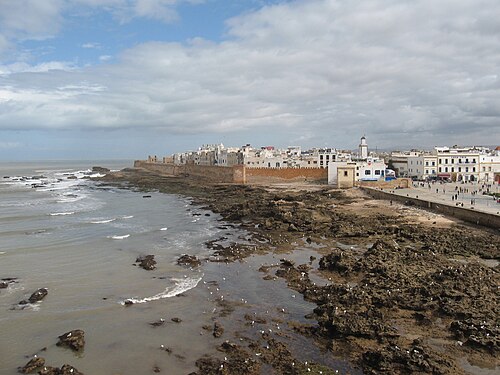
المغرب
النيجر
- كانت مدينة زيندر في النيجر مشهورة بسورها، الذي لا تزال بقاياه ظاهرة حتى اليوم .
نيجيريا
تونس
الأمريكتين
كندا
| مكان | حالة | صورة | ملحوظات |
|---|---|---|---|
| هاليفاكس، نوفا سكوتيا | تم هدمه |  | بُنيت أسوار دفاعية عام 1750 لحماية مستوطنة هاليفاكس ( وسط مدينة هاليفاكس حاليًا ). كما بُنيت خمسة حصون حول أسوار المدينة الدفاعية، بما في ذلك الحصن الذي سبق حصن جورج . [ 2 ] هُدمت الأسوار في ستينيات القرن الثامن عشر. [ 2 ] |
| لويسبورغ، نوفا سكوتيا | هُدمت (1760) وأُعيد بناؤها جزئياً (الستينيات) |  | كانت لويسبورغ مستوطنة مسورة تقع جنوب مدينة لويسبورغ الحالية. وكانت عاصمة المستعمرة الفرنسية إيل رويال من عام 1713 إلى عام 1758. بعد استيلاء البريطانيين على لويسبورغ ، دُمرت تحصيناتها الدفاعية. وخلال ستينيات وسبعينيات القرن العشرين، أعادت الحكومة الكندية بناء ربع المستوطنة التاريخية ضمن مشروع إعادة إعمار ، بما في ذلك أجزاء من أسوارها الدفاعية. |
| مونتريال | تم هدمه؛ ولا يزال جزء منه مدفوناً تحت الأرض. | 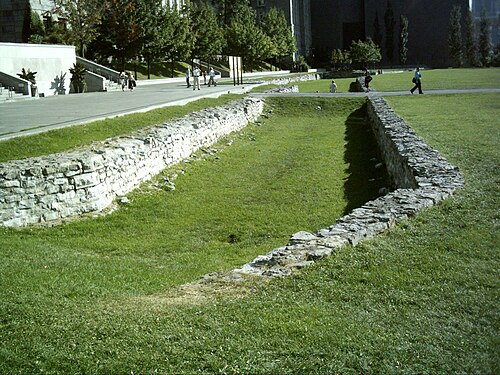 | اكتمل بناء الأسوار عام ١٧٤٤، وكانت تُحيط بمعظم مدينة مونتريال القديمة . هُدمت الأسوار في بداية القرن التاسع عشر، مع الإبقاء على بعض أساساتها التي دُفنت لاحقًا. وقد تم الكشف عن هذه الأساسات فيما بعد في ساحة شامب دي مارس ، وفي متحف بوانت-آ-كاليير . |
| مدينة كيبيك ، كيبيك | متصل |  | بدأ بناء السور المحيط بمعظم المدينة العليا في مدينة كيبيك القديمة في تسعينيات القرن السابع عشر، مع إجراء تحسينات وترميمات إضافية في القرون اللاحقة. يشكل الجزء الجنوبي من السور جزءًا من قلعة كيبيك ، وهي منشأة عسكرية تستخدمها القوات المسلحة الكندية ومقر إقامة رسمي للملك والحاكم العام لكندا . |
| تروا ريفيير ، كيبيك | تم هدمه | 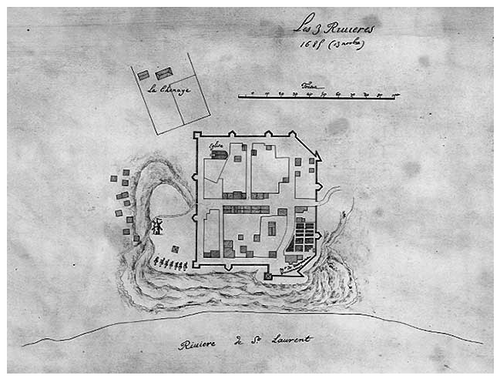 | كانت أول مستوطنة دائمة في منطقة تروا ريفيير ، وثاني مستوطنة في فرنسا الجديدة ، محاطة في الأصل بسور خشبي ذي عدة حصون . واليوم، توجد لوحة تذكارية تشير إلى موقع الحصن، على الرغم من عدم وجود أي آثار أخرى. [ 3 ] |
| فيريلاند ، نيوفاوندلاند ولابرادور | تم هدمه؛ ولا يزال جزء منه مدفوناً تحت الأرض. |  | كانت فيريلاند ، التي أسسها إدوارد وين عام 1623 ، في وقت من الأوقات المستوطنة الرئيسية في مقاطعة أفالون . خلال فترة وجودها، كانت المدينة محاطة من جانبين على الأقل بخندق وسور وسور خشبي، مع حصون في الزوايا. إلا أن المدينة دُمرت في نهاية المطاف على يد الفرنسيين خلال حملة شبه جزيرة أفالون . في أواخر ثمانينيات القرن العشرين، بدأت أعمال تنقيب أثرية في الموقع، وكشفت منذ ذلك الحين عن بقايا العديد من المباني والخندق وشارع مرصوف بالحصى والعديد من المعالم الأخرى. [ 4 ] |
| كاناواكي ، كيبيك | تم هدمه |  | شُيّد حصن في كاناواكي عام ١٧٢٥ على يد مبشرين يسوعيين لحماية بعثتهم وقرية الإيروكوا المجاورة . كان حصن البعثة، حصن دو سولت سانت لويس ، يتألف من أربعة أبراج حجرية ذات قمم مدببة . كانت القرية محاطة من جميع الجهات بسور خشبي (أُعيد بناؤه بالحجر عام ١٧٤٧)، يتكون من ستة أبراج وبرج نصفي. كانت ثلاثة أبواب كبيرة تخترق أسوار القرية، بالإضافة إلى بوابة صغيرة وثلاث بوابات خلفية. تشغل بعثة القديس فرنسيس كسافيير الآن موقع الحصن، ولا تزال أجزاء من الأسوار قائمة في تلك المنطقة. |
تشيلي
كولومبيا

كوبنهاغن
جمهورية الدومينيكان
- كانت سانتو دومينغو مدينة محصنة من القرن السادس عشر وحتى أوائل القرن العشرين. ولا تزال أجزاء من سورها ظاهرة في المنطقة الاستعمارية . إحدى بواباتها الرئيسية محفوظة بشكل جيد للغاية، وكانت تُعرف منذ قرون باسم "بوابة الكونت" نسبةً إلى كونت بينالبا، الذي أوقف غزو ويليام بن وروبرت فينابلز خلال حصار سانتو دومينغو .
المكسيك
- كامبيتشي – لا تزال غالبية الأسوار المحيطة بالمدينة القديمة قائمة
- مايابان (أطلال المايا)
- ميريدا، يوكاتان (تم هدم معظمها في أواخر القرن التاسع عشر، ولكن لا تزال بعض الأجزاء والبوابات المقوسة قائمة)
- مدينة مكسيكو (كانت مدينة الأزتك تمتلك نظام تحصينات تم تدميره لاحقًا خلال الاستعمار الإسباني)
- تولوم (آثار حضارة المايا)
- فيراكروز (تم هدم الجدران في القرن التاسع عشر، ولكن لا يزال هناك حصن) [ 5 ]
بنما
- الحي القديم لمدينة بنما (لا يزال جزء من السور موجودًا) [ 6 ]
بيرو
بورتوريكو
- سان خوان القديمة - تغطي المنطقة التاريخية لسان خوان القديمة كامل مساحة مدينة سان خوان باوتيستا المسورة، والمعروفة أيضًا باسم "مفتاح جزر الهند " ، وهي العاصمة الاستعمارية لبورتوريكو . تضم المنطقة قلعة سان فيليبي ديل مورو ، وقلعة سان كريستوبال ، وحصن لا فورتاليزا ، وحصن إل كانويلو ، وغيرها من الحصون التي تُعد جزءًا من أسوار سان خوان القديمة ، والتي لا تزال تُحيط بخمسة وسبعين بالمائة من المدينة الاستعمارية.
الولايات المتحدة

- حافظت مدينة بوسطن بولاية ماساتشوستس على سور دفاعي وبوابة عبر بوسطن نيك ، وهي النقطة الوحيدة التي كانت المدينة متصلة بها بالبر الرئيسي، من عام 1631 حتى نهاية القرن الثامن عشر.
- كانت مدينة تشارلستون بولاية كارولاينا الجنوبية مدينة مسورة من تسعينيات القرن السابع عشر حتى عشرينيات القرن الثامن عشر. ولا يزال جزء من السور، يُسمى بطارية نصف القمر، مرئيًا في زنزانة بروفوست بمبنى البورصة القديم.
- في مدينة سانت أوغسطين بولاية فلوريدا ، بدأ الإسبان عام 1704 ببناء خط كوبو ، الذي يربط قلعة سان ماركوس ويحيط بالمدينة. وتُظهر خرائط القرن الثامن عشر تفاصيل الأسوار التي تُحيط بمدينة سانت أوغسطين بأكملها [ 7 ].
- نيو أورليانز ، التي خُطط لها عام 1718 كمدينة مُسوّرة. كان السور موجودًا أثناء معركة نيو أورليانز ، ولكن وُجد أنه في حالة فوضى شديدة بحيث لم يكن بالإمكان استخدامه. [ 8 ] [ 9 ]
- في القرن السابع عشر، كانت مدينة نيويورك، وتحديداً منطقة نيو أمستردام، تضم جداراً دفاعياً يمتد عبر مانهاتن . وقد سُميت وول ستريت تيمناً بهذا الجدار. [ 10 ]
أوروغواي
آسيا
أفغانستان
- بلخ ، المدينة القديمة
الصين

- بكين ، انظر سور مدينة بكين . هُدمت أجزاء كثيرة من أسوار بكين خلال ستينيات القرن الماضي لفتح شوارع واسعة حول المدينة. كما يمر خط مترو الأنفاق بموقع أسوار المدينة القديمة.
- شيانغيانغ
- قوانغتشو
- دالي
- شانغكيو
- جيانشوي
- تشانغجياكو ، انظر منطقة وانكوان
- تشاوكينغ
- مدينة غوانغفو القديمة
- شينغتشنغ
- ياوتشنغ
- كايفنغ
- (تشيانسو في هولوداو).
- داتونغ
- مقاطعة دامينغ
- قلعة يونغتاي
- جينغتشو
- مدينة كولون المسوّرة ، وهي جيب سابق من هونغ كونغ
- نانجينغ ، انظر سور مدينة نانجينغ
- لينهاي
- كوفو
- تاييوان ، انظر منطقة جينيوان
- بينغياو
- شنغهاي ( المدينة القديمة (شنغهاي) ) – دُمّرت إلى حد كبير عام 1912، ولم يتبق منها سوى أجزاء متفرقة
- سونجبان
- شيآن - تتميز مدينة شيآن بأسوارها المحفوظة جيداً مع خندق مائي يُعد معلماً سياحياً يضم حدائق صغيرة تحيط بمنطقة حديثة وحيوية من المدينة.
- تشنغدينغ
- (منطقة يوانتشو في قويوان).
- لا تزال القرى المسورة موجودة في البر الرئيسي للصين وهونغ كونغ.
الهند

- أغرا
- أحمد آباد
- أمرافاتي
- أمريتسار
- داتيا
- دلهي
- حيدر أباد
- جايبور
- جايسالمر
- جودبور
- لكناو
- مومباي (المدينة القديمة في بومباي)
- رايغاد
- أودايبور
- وارانغال
- تشيناي
- ماو
- بادامي
- أيهول
- كانشيبورام
- مادوراي
- بيلور
- هاليبيدو
- تيروفانامالاي
- سريرانغاباتنام
- كولهابور
- سورات
- بارودا
- سورات
- إندور
- جواليور
- غودا
- مرشد أباد
- كارناسوبارنا
- نابادويب
- تامراليبتي
- بوبانيشوار
- بوري
- خاجوراهو
- فاراناسي
- جانسي
- فيض آباد
- جايا
- باتليبوترا
- كانجرا
- شارايديو
- جامو
- لوديانا
- باتيالا
- سرهند
- شامباوات
- بيثوراغار
- بيلاسبور
- شيملا
أندونيسيا
كانت باكوان باجاجاران ، عاصمة مملكة سوندا ، محاطة بخنادق وأسوار دفاعية. أما الآن، فتُعدّ المنطقة جزءًا من مدينة بوغور الحديثة.
سور يعود تاريخه إلى القرن الثامن عشر، بناه هامينغكوبوونو الأول من مملكة نغايوجياكارتا هادينينغرات لحماية العاصمة الداخلية من الهولنديين وغيرهم من الأعداء خلال فترة مملكة ماتارام. واليوم، لا يزال 96% من السور قائماً، ويُعدّ معلماً محلياً بارزاً.
في 17 فبراير 1745، انتقلت مملكة سوراكارتا إلى غابة مفتوحة جديدة تُسمى قرية سالا، وشيّدت قصرها الملكي ومنطقتها الحضرية، وأحاطتها بسور "بيتينغ كراتون" أو سور القصر، الذي يبلغ طوله 15 كيلومترًا. وحتى عام 2022، لا يزال 90% من أسوار المدينة قائمًا.
تشتهر المدينة بكونها عاصمة مملكة بانتين . دمر الهولنديون سورها خلال فترة استعمارهم لها، في محاولة لإنهاء حكم بانتين. لم يتبق من سور المدينة سوى حوالي 10% من شكله الأصلي.
كانت تروولان عاصمة إمبراطورية ماجاباهيت السابقة . خلال عصرها الذهبي، كانت العاصمة أول مدينة قديمة منظمة على الطراز الأوروبي في إندونيسيا (بشبكة قنوات مائية للمواصلات، بالإضافة إلى ممرات وطرق رئيسية واسعة للمواصلات العامة)، وذلك لأن تروولان تطورت خلال فترة ازدهار ماجاباهيت في القرنين الثالث عشر والخامس عشر. كان السور يحمي "الكراتون" الداخلي، أو القصر الملكي، وبعض المواقع المهمة. أما اليوم، فلا يمكن رؤية السور بمظهره الأصلي.
إيران
العراق
إسرائيل
لبنان
- بعلبك : لا تزال أجزاء من التحصينات العربية (المبنية بأحجار من المباني الرومانية) مرئية حول الأكروبوليس والمدينة القديمة
- البترون : تشتهر المدينة بسورها البحري الفينيقي الذي يبلغ طوله 225 مترًا. كما كان يوجد بها قلعة من القرن التاسع قبل الميلاد، ولا تزال أجزاء منها ظاهرة حتى اليوم.
- بيروت : تم الكشف عن أجزاء من التحصينات الفينيقية والرومانية والقلعة العثمانية في المنطقة المركزية من المدينة . أما الأسوار الشهيرة التي بناها الأمير فخر الدين الثاني، فلا تزال مفقودة.
- جبيل : المدينة القديمة محاطة بأسوار من القرون الوسطى، وتقع قلعة على حافتها الجنوبية.
- صيدا : لم يتبق اليوم سوى القليل من تحصينات المدينة التي تعود إلى العصور الوسطى، باستثناء قلعة سانت لويس .
ماليزيا
باكستان
كانت معظم المدن القديمة في باكستان محاطة بسور دفاعي. وقد دمر البريطانيون معظم هذه الأسوار لإعادة تحصين المدن. ومن المدن التي تم تحصينها:
فلسطين
فيلبيني
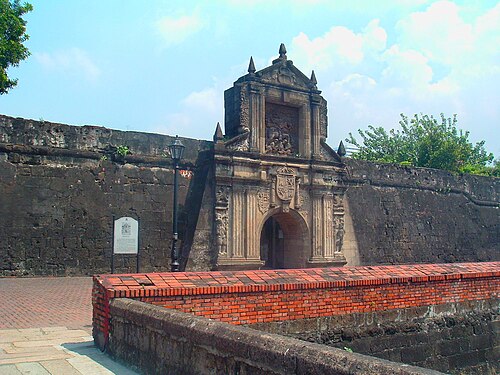
- سيبو (انظر حصن سان بيدرو )
- مانيلا ( إنترا موروس ) - تم الحفاظ عليها جزئياً، وتم ترميمها جزئياً بعد الحرب العالمية الثانية. ولا تزال الجدران الأصلية محفوظة بشكل جيد.
- أولونجابو (البوابة الإسبانية)
- أوزاميز (Fuerte de la Concepción y del Triunfo)
- زامبوانجا (انظر حصن بيلار )
كوريا الجنوبية
- دونغناي (التي أصبحت الآن جزءًا من بوسان ) (انظر دونغنايوبسيونغ )
- سيول (انظر سور قلعة سيول )
- سوون (انظر قلعة هواسونغ )
- غوانغجو، جيونجي (انظر نامهانسانسيونج )
- غويانغ (انظر بوخانسانسونغ )
سريلانكا
- جالي (انظر قلعة جالي ).
- ماتارا (انظر قلعة ماتارا ).
سوريا
تايوان
- تشانغهوا
- شياي
- فونغشان (التي أصبحت الآن جزءاً من كاوهسيونغ )
- هينغتشون (انظر مدينة هينغتشون القديمة )
- هسينشو
- ماجونج
- بولي
- كيموي
- تاينان
- تايبيه (انظر أسوار تايبيه )
- زويينغ (التي أصبحت الآن جزءاً من كاوهسيونغ ، انظر مدينة زويينغ القديمة )
تم تحصين بعض المدن الأخرى بالخيزران الشائك في عهد أسرة تشينغ . [ 11 ]
تايلاند
- أيوثايا
- بانكوك – شاهد تحصينات بانكوك
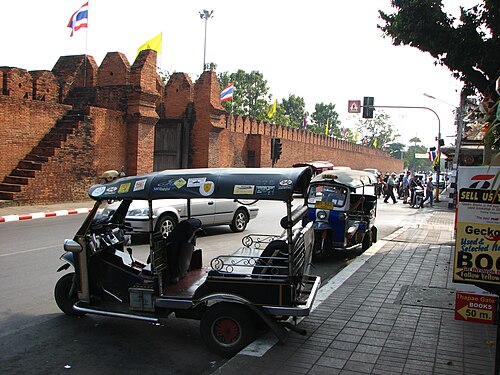
- كانت مدينة شيانغ ماي محاطة بخندق وأسوار عندما أسسها الملك مانغراي العظيم عام 1296. وقد أعيد بناؤها على نطاق واسع في أوائل القرن التاسع عشر. ولا تزال أجزاء كبيرة من أسوار المدينة وبواباتها قائمة حتى يومنا هذا.
- شيانغ راي
- شيانغ ساين
- كامفينغ فيت
- لامبانغ
- لامفون
- لوبوري
- ناخون راتشاسيما
- ناخون سي ثامارات
- نان، تايلاند
- فيتشاي
- فاياو
- فيماي
- فيتسانولوك
- فراي
- سي ساتشانالاي
- سونغكلا
- سوخوثاي
- سوفانبوري
- ثونبوري
- وينغ كوم كام
أوزبكستان
فيتنام
اليمن

أوروبا
ألبانيا
النمسا
- ألينشتايغ
- أمستيتن ليست محاطة بسور، بل بخندق وسور مع أبراج بوابات.
- بلايبورغ
- بلودنز
- براوناو آم إن
- بريغنز
- بروك آن دير ليثا – محفوظة جزئياً
- بروك آن دير مور
- دونرسكيرشن .
- دروسندورف
- دورنشتاين
- إيبينفورث
- إفردينغ
- إيجنبرج
- أيزنشتات
- إينز
- فيرينغ
- فيلدكيرش
- فريدبيرغ
- فريشتات - محفوظة بالكامل تقريبًا
- فريساخ
- فروهنلايتن
- فورستنفيلد
- غموند
- غموند-إن-كارنتن
- غموندن
- غراتس
- غروس-إنترسدورف
- جوسينغ
- هاينبورغ آن دير دوناو - محفوظة بالكامل تقريبًا (2.5 كم، 3 بوابات، 15 برجًا)
- هاليين
- قاعة في تيرول – محفوظة جزئياً
- هاردج
- هارتبرغ
- هاسلاش آن دير مول
- هايدنرايخستين
- هيرتسوغنبورغ
- بوق
- يودنبرغ
- كيتزبوهيل
- كلاغنفورت
- كلوسترنويبورغ
- نيتلفيلد
- كورنيوبورغ
- كريمس
- كوفشتاين
- Laa an der Thaya
- ليوبين
- ليونفيلدن
- ليوبين
- لينز
- لينز
- ليتشاو
- مايسو
- مارشيج – بعض الأجزاء محفوظة
- ماوتيرن - يمكن العثور على بقايا الحصن الروماني "فافياناي" في الجانب الغربي من المدينة القديمة.
- حليب
- موراو
- Mürzzuschlag
- نيوماركت آم واليرسي
- نيوماركت
- أوبداخ
- أوبرفولز
- أوغاو آم نويزيدلر سي
- أوتينسهايم
- بيورباخ
- بوخلارن
- بورباخ آم نويزيدلر سي
- Raabs an der Thaya
- رادفيلد
- رادكيرسبيرغ
- رادشتات – سور محفوظ بالكامل تقريبًا (من القرن الثالث عشر إلى القرن السادس عشر)؛ 3 أبراج دائرية (ثلاثينيات القرن السادس عشر)؛ بوابة واحدة
- راتنبرغ
- ريتز
- ريد إم إنكرايس
- روتنمان
- الصدأ
- سانت أندرا
- Sankt Veit an der Glan
- سانت بولتن
- سالزبورغ
- شاردينغ
- شيبس
- شلادمينغ
- شراتينثال
- شوانينشتات هي مستوطنة محاطة بسور، يعلوه سياج خشبي، مع جزء قصير فقط من الجدار المجاور لبرج المدينة .
- شتادتشلاينينغ
- ستيناش
- شتاين
- ستراسبورغ
- شتاير
- ستيريج
- ترايسمور
- تولن آن دير دوناو
- فيينا – دُمّرت وأصبحت شارع رينغشتراس
- فيلاخ
- فيلس
- فوكلابروك
- سوق الشعوب
- فويتسبيرغ
- وايدهوفن آن دير تايا
- وايدهوفن آن دير يبس
- ويترا
- ويلز
- فينر نويشتات
- فيلهلمسبورغ
- وولفسبيرغ
- يبس آن دير دوناو
- زايزلمور . أعاد آل بابنبرغ تحصين الحصن الروماني المساعد في القرن العاشر، لكن لم يتم منحه سوقًا أو ميثاقًا.
- زيسترسدورف
- زفيتل
أذربيجان
- تحتفظ باكو بمعظم أسوار المدينة التي تفصل المدينة الداخلية التاريخية عن الأجزاء الأحدث من المدينة التي تم تطويرها بعد القرن التاسع عشر.
- شاكي
- شوشة
بلجيكا
| مكان | مقاطعة | متاح للجميع | حالة | صورة | ملحوظات |
|---|---|---|---|---|---|
| آرشوت | برابانت الفلمنكية | نعم | لا تزال هناك بنية واحدة أو أكثر (حصون، بوابات، أبراج، إلخ). | إن أهم ما تبقى من التحصينات التي تعود للعصور الوسطى والتي كانت تحيط بمدينة آرسخوت هو برج يقع على قمة تل جنوب المدينة القديمة مباشرة، ويسمى أورليانوستورن أو أورليانستورن. | |
| أث | هينو | نعم | لا تزال هناك بنية واحدة أو أكثر (حصون، بوابات، أبراج، إلخ). | 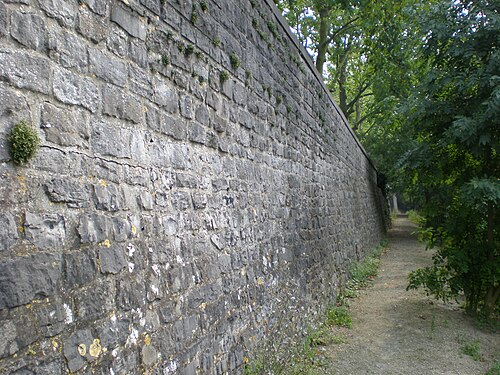 | حُصّنت مدينة آث عدة مرات. ومن أقدم التحصينات، لا تزال القلعة القديمة، بما فيها برج بوربان، قائمة. أما الشوارع المتعرجة المحيطة بالمدينة القديمة فهي بقايا الأسوار المحصنة التي تعود إلى ما بعد العصور الوسطى. ولا تزال بعض آثار هذه التحصينات باقية شمال المدينة القديمة، بالقرب من شارع ألفونس دينوبورغ. |
| أرلون | لوكسمبورغ | نعم | لا تزال هناك بنية واحدة أو أكثر (حصون، بوابات، أبراج، إلخ). |  | تقع قلعة صغيرة نسبياً في وسط المدينة القديمة، في موقع قلعة من القرون الوسطى مدمرة. |
| بومونت | هينو | نعم | لا تزال هناك بنية واحدة أو أكثر (حصون، بوابات، أبراج، إلخ). | 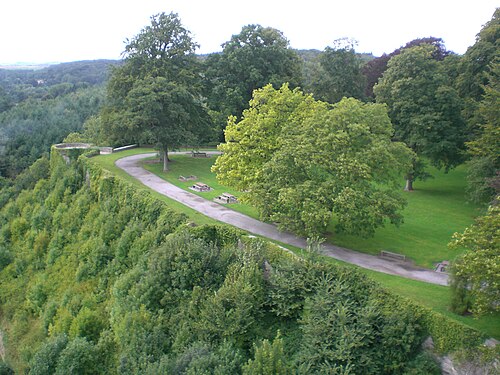 | لا يزال جزء كبير من سور المدينة القديمة قائماً شرق البلدة القديمة. وأبرز ما فيه برج سالاماندر القديم، وهو برج حصين قديم. |
| بينش | هينو | نعم | لا تزال أجزاء كبيرة من التحصينات سليمة. |  | تضم مدينة بينش أكثر أسوار المدن سلامةً في بلجيكا. بُنيت هذه الأسوار عام 1230 ميلادي، ويبلغ طولها 2.1 كيلومتر، وتضم حوالي 30 برجًا. كانت المدينة تحوي ست بوابات، لكنها هُدمت في القرن التاسع عشر. |
| مرق اللحم | لوكسمبورغ | نعم | لا تزال هناك بنية واحدة أو أكثر (حصون، بوابات، أبراج، إلخ). | 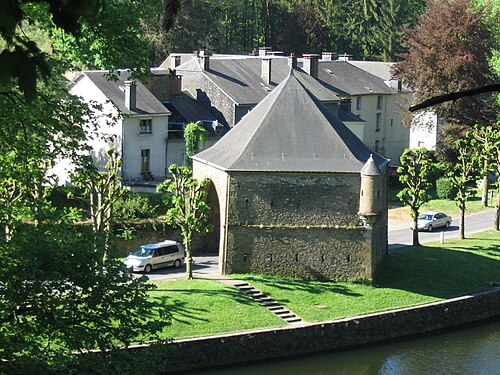 | وبصرف النظر عن القلعة التي تعود للعصور الوسطى والمثيرة للإعجاب، لا تزال ثلاثة حصون صغيرة تشبه الأبراج، بالإضافة إلى عدة أجزاء صغيرة من الجدار الساتر، باقية من الجدار الذي بناه المهندس العسكري الفرنسي فوبان حول المدينة في القرن السابع عشر. |
| بروج | فلاندرز الغربية | نعم | لا تزال هناك بنية واحدة أو أكثر (حصون، بوابات، أبراج، إلخ). |  | من بين البوابات التسع لأسوار القرن الرابع عشر، لا تزال أربع منها قائمة حتى اليوم. كما لا تزال أجزاء عديدة من السور الترابي المحيط بالمدينة قائمة. وباستثناء برج واحد، لم يبقَ أثر للجدار الحجري الذي كان يعلو بعض أجزاء الأسوار الترابية. ويمكن رؤية برج واحد من سور المدينة الأول على الجانب الآخر من القناة عند شارع بوتنمايكرز. |
| بروكسل | منطقة بروكسل العاصمة | لا تزال هناك بنية واحدة أو أكثر (حصون، بوابات، أبراج، إلخ). |  | من سور المدينة الأول، الذي بُني في القرن الثالث عشر، لا يزال جزء صغير من الجدار الساتر وعدة أبراج متفرقة قائماً. أما من السور الثاني، فلم يبقَ منه سوى بوابة هالي. ويشغل الطريق الدائري الداخلي لبروكسل الآن موقع هذا السور الثاني. | |
| شيفر | هينو | نعم | لا تزال هناك بنية واحدة أو أكثر (حصون، بوابات، أبراج، إلخ). | لا يزال جزء كبير من أسوار المدينة التي تعود للعصور الوسطى قائماً خلف كنيسة القديس مارتن وكنيسة السيدة العذراء (نوتردام) والمنازل الواقعة على طول شارع هوش. كما لا يزال برج السور، المعروف باسم برج غافر، قائماً بجوار الكنيسة. | |
| شيماي | هينو | لا تزال هناك بنية واحدة أو أكثر (حصون، بوابات، أبراج، إلخ). | لا يزال برج منعزل قائماً في شارع نوي | ||
| دالم | والونيا | لا تزال هناك بنية واحدة أو أكثر (حصون، بوابات، أبراج، إلخ). | توجد العديد من بقايا تحصينات المدينة والقلعة خلف المنازل على طول شارع الجنرال تيس. كما تقع أطلال القلعة نفسها في شارع الجنرال تيس. | ||
| دام | فلاندرز الغربية | نعم | لا تزال هناك بنية واحدة أو أكثر (حصون، بوابات، أبراج، إلخ). |  | لا يزال بالإمكان رؤية موقع السور الدائري ذي الأضلاع السبعة الذي يعود للقرن السادس عشر على شكل تلال منخفضة في الحقول والحدائق المحيطة بالمدينة القديمة. وقد أُعيد بناء جزء صغير من السور الداخلي والخارجي في عام ٢٠٠١. |
| ديندرموند | فلاندرز الشرقية | نعم | لا تزال هناك بنية واحدة أو أكثر (حصون، بوابات، أبراج، إلخ). |  | حصلت مدينة ديندرموند على مجموعة جديدة من الأسوار في القرن التاسع عشر، لتكون جزءاً مهماً من سور ويلينغتون. ولا تزال العديد من المباني قائمة حالياً، بما في ذلك مستودع الأسلحة، والثكنات، وبوابتان، وأجزاء من الأسوار (التي تحولت إلى حديقة). |
| ديست | برابانت الفلمنكية | نعم | لا تزال أجزاء كبيرة من التحصينات سليمة. |  | إلى الشمال من مركز المدينة، لا يزال بالإمكان رؤية واجهتين متعددتي الأضلاع، تضم كل منهما بوابة برية، وبوابة مائية، وحصنًا . ويوجد جدار خارجي أمام هذا الجزء المتبقي من الجدار، يضم حصنين متداعيين. وإلى الشرق، لا تزال أشكال العديد من الحصون قائمة. أما التحصينات الخارجية، الواقعة شرق التحصينات، فقد دُمجت في مجمع مسبح. ولا تزال القلعة سليمة إلى حد كبير، على الرغم من هدم الجانب المواجه للمدينة لإفساح المجال أمام بناء ثكنات عسكرية. ويوجد حصن صغير إلى الشمال من مركز المدينة. |
| هيرينتالز | أنتويرب | لا تزال هناك بنية واحدة أو أكثر (حصون، بوابات، أبراج، إلخ). |  | لا يزال من الممكن العثور على بوابتين، تم تغييرهما بشكل كبير، من تحصينات العصور الوسطى لمدينة هيرنتالز في طرفي مركز المدينة. | |
| هوي | لييج | لا تزال أجزاء كبيرة من التحصينات سليمة. |  | توجد أجزاء كبيرة من سور المدينة الذي يعود للعصور الوسطى جنوب وشرق البلدة القديمة. وفي أوائل القرن التاسع عشر، بنى الهولنديون حصنًا كبيرًا في الموقع الذي كانت تقف فيه قلعة قبل عدة قرون. | |
| كورتريك | فلاندرز الغربية | لا تزال هناك بنية واحدة أو أكثر (حصون، بوابات، أبراج، إلخ). |  | هُدمت التحصينات الواسعة لمدينة كورتراي خلال منتصف القرن الثامن عشر. ولم يتبق منها سوى أبراج برويل التي تعود للعصور الوسطى، والواقعة على ضفتي نهر ليس. أما آخر ما تبقى من قلعة كورتراي الأولى، فهو أساس جدار دفاعي وبرج مدفعية متعدد الزوايا، وكلاهما يقع بجوار كنيسة السيدة العذراء. | |
| لوفين | برابانت الفلمنكية | لا تزال هناك بنية واحدة أو أكثر (حصون، بوابات، أبراج، إلخ). |  | تنتشر في مركز مدينة لوفين عدة أبراج متداعية وبقايا من السور الأول الروماني الذي يعود للقرن الثاني عشر، على الرغم من انهيار جزء كبير منه نتيجة الإهمال في فبراير 2011. أما السور الثاني، فلم يتبق منه سوى الطابق الأرضي لبرج مراقبة وقاعدة بوابة مائية فوق نهر ديجل. وقد حُوِّل السور الثاني إلى حديقة في القرن التاسع عشر، ثم دُمِّرت هذه الحديقة بشكل كبير واستُبدلت بطريق دائري في القرن العشرين. | |
| لييج | لييج | لا تزال هناك بنية واحدة أو أكثر (حصون، بوابات، أبراج، إلخ). |  | لا تزال عدة أبراج وأجزاء من سور المدينة الذي يعود للعصور الوسطى قائمة على المنحدرات شمال المدينة القديمة. أما الجانب الجنوبي من القلعة، الذي يضم ثلاثة حصون وحصنين، فما زال سليماً. وقد هُدمت بقية القلعة، ويضم الموقع الآن مستشفى كبيرًا. ولا تزال سلسلة من الحصون المنفصلة تُحيط بالمدينة. في القرن التاسع عشر، بنى الهولنديون حصنًا ضخمًا يُعرف باسم مرتفعات شارتروز شرق المدينة. ورغم هدم الحصون الشرقية، فإن معظم هذا الحصن لا يزال قائمًا، وإن كان في حالة خراب بعد إهماله منذ ثمانينيات القرن الماضي. | |
| ليمبورغ | لييج | لا تزال أجزاء كبيرة من التحصينات سليمة. |  | رغم هدم أجزاء منه، لا تزال بقايا كبيرة من سور المدينة ظاهرة، تحيط بالمدينة العليا في ليمبورغ. وتقع أفضل الأجزاء المحفوظة على الجانب الشرقي من المدينة القديمة. | |
| لو-رينينج | فلاندرز الغربية | لا تزال هناك بنية واحدة أو أكثر (حصون، بوابات، أبراج، إلخ). | 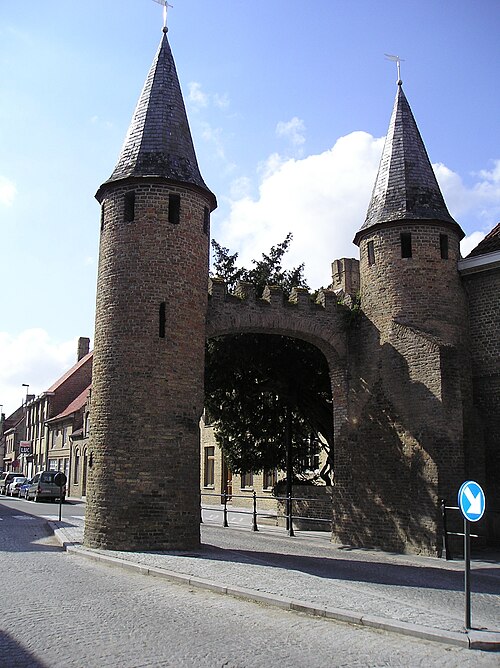 | لم يتبق سوى بوابة ويستبورت، التي بنيت حوالي عام 1250 ميلادي، وتتكون من برجين صغيرين متصلين بقوس. | |
| ميدلبيرغ | فلاندرز الغربية | تظهر آثار التحصينات في المشهد الطبيعي. | لم يتبق شيء فوق الأرض من الحصون الترابية التي كانت تحيط بهذه القرية الصغيرة (والتي لا ينبغي الخلط بينها وبين نظيرتها الهولندية الأكبر حجماً والقريبة منها)، ولكن لا يزال من الممكن التعرف على موقع ومسار الدفاعات من الجو. | ||
| ميشيلين | أنتويرب | لا تزال هناك بنية واحدة أو أكثر (حصون، بوابات، أبراج، إلخ). |  | لم يتبق من التحصينات القديمة لمدينة ميشيلين سوى بوابة بروكسل (Brusselsepoort). | |
| مينين | فلاندرز الغربية | نعم | لا تزال هناك بنية واحدة أو أكثر (حصون، بوابات، أبراج، إلخ). |  | لا تزال بعض أجزاء السور المحصن، الذي بناه الفرنسيون في القرن السابع عشر، ثم أعاد الهولنديون بناءه على نطاق واسع، قائمة. ولا يزال حصنان قائمين بالقرب من شارع سلويزنكاي وشارع زويمكومسترات، على الرغم من وجود العديد من المنازل المبنية حولهما. ولا تزال حصون أحد الحصنين سليمة ويمكن زيارتها. |
| مونس | هينو | لا تزال هناك بنية واحدة أو أكثر (حصون، بوابات، أبراج، إلخ). |  | تم الحفاظ على عدة أجزاء من سور المدينة الأول. أما من التحصينات اللاحقة، فلم يتبق سوى هيكلين يشبهان الحصنين جنوب مركز المدينة، ولكن لا يزال من الممكن رؤية موقع التحصينات في نمط الشوارع المتعرج على الجانب الشرقي من المدينة. | |
| نامور | نامور | نعم | لا تزال هناك بنية واحدة أو أكثر (حصون، بوابات، أبراج، إلخ). |  | من بين تحصينات المدينة نفسها، يُعدّ مبنى الترسانة الضخم أبرز ما تبقى منها. ويمكن العثور على بعض بقايا التحصينات المحصنة في حديقة لويز ماري، وكذلك عند سفح القلعة. ولم يتبقَّ من سور المدينة الذي يعود للعصور الوسطى سوى أجزاء صغيرة، أبرزها برج دائري قوي، دُمج الآن في مبنى البلدية ليصبح برج أجراس المدينة. أما القلعة العظيمة التي نشأت من قلعة الكونت في العصور الوسطى، فلا تزال سليمة إلى حد كبير ويمكن زيارتها. |
| نينوف | فلاندرز الشرقية | لا تزال هناك بنية واحدة أو أكثر (حصون، بوابات، أبراج، إلخ). |  | لم يتبق من أسوار مدينة نينوف القديمة سوى بوابة كوبورت (بوابة البقرة). | |
| أوستند | فلاندرز الغربية | لا تزال هناك بنية واحدة أو أكثر (حصون، بوابات، أبراج، إلخ). |  | لا يزال جزء من سور المدينة المحصن قائماً جنوب مركز المدينة، وقد تحول إلى حديقة. وإلى الشرق من الميناء، يقع حصن قديم متطور يُعرف باسم "هالف مان" (الهلال). وعلى مسافة قصيرة إلى الشرق، يقع حصن نابليون الذي يعود إلى القرن التاسع عشر، وهو الآن متحف. | |
| فيليبفيل | نامور | نعم | تظهر آثار التحصينات في المشهد الطبيعي. | رغم هدم الأسوار نفسها عام 1860، إلا أن نظاماً واسعاً من الممرات تحت الأرض يعود للقرن السابع عشر لا يزال قائماً. وجزء من هذه التحصينات مفتوح للجمهور. | |
| ثوين | هينو | لا تزال هناك بنية واحدة أو أكثر (حصون، بوابات، أبراج، إلخ). |  | لا تزال العديد من الأبراج وأجزاء من السور قائمة حول مدينة ثوين القديمة المحصنة، وخاصة تلك الموجودة جنوب المدينة القديمة، فوق الحدائق المعلقة. | |
| تونغيرين | ليمبورغ | نعم | لا تزال هناك بنية واحدة أو أكثر (حصون، بوابات، أبراج، إلخ). |  | لا تزال أجزاء مهمة من سور القرن الثالث عشر قائمة، بما في ذلك عدة أبراج وبوابة. خارج المدينة التي تعود للعصور الوسطى، لا يزال بالإمكان العثور على بقايا السور الروماني الأول، الذي كان يحيط بمساحة أكبر بكثير من سور العصور الوسطى. أما السور الروماني الثاني، الأصغر حجماً بكثير، فلم يبقَ منه أي أثر فوق سطح الأرض. |
| تورناي | هينو | لا تزال هناك بنية واحدة أو أكثر (حصون، بوابات، أبراج، إلخ). |  | تنتشر بقايا التحصينات في أرجاء المدينة القديمة. من التحصينات الأولى، لا تزال عدة أبراج وبوابة قائمة. أما من السور الثاني الذي يعود للعصور الوسطى، فلا يزال جزء كبير منه قائماً في الجنوب الشرقي من المدينة القديمة، بينما لا يزال جسر بونت دي تروس، رغم التغييرات الكبيرة التي طرأت عليه، مثالاً رائعاً على البوابات المائية في العصور الوسطى. أما البرج الدائري الكبير فهو كل ما تبقى من القلعة التي بناها الملك الإنجليزي هنري الثامن. ومن القلعة نفسها، لم يبقَ سوى المباني الداخلية، بالإضافة إلى عدة ممرات تحت الأرض كانت تمتد أسفل حصون القلعة. | |
| فيرن | فلاندرز الغربية | تظهر آثار التحصينات في المشهد الطبيعي. |  | يشير المسار المتعرج للقناة بالإضافة إلى مخطط الشوارع حول مركز المدينة بوضوح إلى موقع الحصون الترابية التي كانت تحيط بالمدينة. | |
| يبرس | فلاندرز الغربية | نعم | لا تزال أجزاء كبيرة من التحصينات سليمة. | 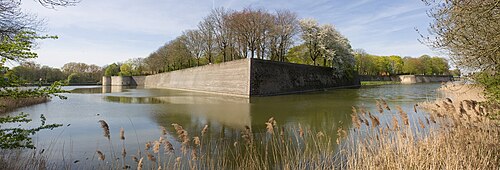 | يحمي سورٌ ذو ثلاثة أبراج مسطحة بشكلٍ غير معتاد الجانب الشرقي من المدينة. وإلى الجنوب، توجد بوابة من العصور الوسطى والأجزاء السفلية من برجين من العصور الوسطى، وكلاهما محميٌّ بسورٍ حصين. وتضم حديقةٌ شرق المدينة عددًا من الممرات تحت الأرض التي تعود إلى تحصيناتٍ خارجية بناها الهولنديون. |
| زاندفليت | أنتويرب | تظهر آثار التحصينات في المشهد الطبيعي. | يتبع طريق "كونترشيرب" مسار التحصينات السابقة التي تعود إلى القرن السابع عشر حول المدينة، مما يمنح مركز المدينة مظهرًا على شكل نجمة من الجو. | ||
| زيكيم | برابانت الفلمنكية | لا تزال هناك بنية واحدة أو أكثر (حصون، بوابات، أبراج، إلخ). | برج العذراء (Maagdentoren) هو ما تبقى من أسوار المدينة التي تعود للعصور الوسطى. ويشير طريق دائري إلى أثر التحصينات التي هُدمت الآن. | ||
| زوتليو | برابانت الفلمنكية | لا تزال هناك بنية واحدة أو أكثر (حصون، بوابات، أبراج، إلخ). | يمكن العثور على بقايا سور المدينة الأول الذي يعود للقرن الثاني عشر وبوابة مدمجة في مبنى البلدية القديم والمنزل المجاور. خارج المدينة، يضم جسر فوق نهر خيتي جزءًا مُعاد بناؤه من بوابة مائية تعود للقرن الرابع عشر كانت تابعة للسور الثاني. إلى الجنوب من المدينة، تشير عدة تلال منخفضة في المشهد إلى موقع قلعة بناها الإسبان . وإلى الشرق من المدينة القديمة يقع برج "هيكسينكوت"، وهو برج من سور المدينة القديم. |
البوسنة والهرسك
| مكان | منطقة | متاح للجميع | حالة | صورة | ملحوظات |
|---|---|---|---|---|---|
| كاستل | بانيا لوكا | نعم | محفوظ |  | |
| بيهاك | مقاطعة أونا سانا | نعم | لا تزال بعض المباني قائمة |  | |
| بوبوفاك | كانتون وسط البوسنة | نعم | كنيسة ملكية مدمرة تم ترميمها |  | المقر الملكي لمملكة البوسنة في العصور الوسطى |
| داورسون | كانتون الهرسك-نيريتفا | نعم | لا تزال الجدران العملاقة قائمة |  | بُنيت حول مستوطنة مركزية محصنة أو أكروبوليس من عصور ما قبل التاريخ (حوالي القرنين 17-16 قبل الميلاد - نهاية العصر البرونزي ، حوالي القرنين 9-8 قبل الميلاد)، محاطة بأسوار ضخمة (مشابهة لميسينيا ) يعود تاريخها إلى القرن 4 قبل الميلاد. [ 12 ] [ 13 ] |
| مدينة يايتسي المسورة | كانتون وسط البوسنة | نعم | جيد |  | |
| مدينة بوتشيتيلي المسورة | كانتون الهرسك-نيريتفا | نعم | جيد |  | |
| مدينة تريبينيه المسورة | تريبينجي | نعم | جيد |  | المدينة المسورة هي جزء من ستاري غراد تريبينيه |
| مدينة فيدوشكي المسورة | ستولاك | نعم | محفوظ |  | |
| مدينة فراتنيك المسورة | كانتون سراييفو | نعم | جيد | 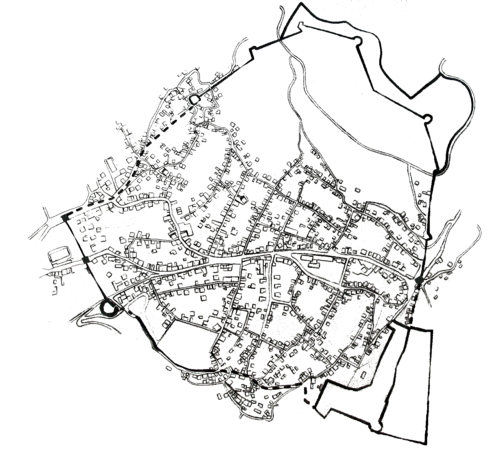 | فراتنيك هو أحد أقدم أحياء سراييفو |
بلغاريا
- هيساريا - المدينة الرومانية القديمة لا تزال محاطة بالكامل تقريبًا بأطلال أسوارها الدفاعية المحفوظة جيدًا.

- نيسيبار - مدينة جزيرة محصنة
- مدينة نيكوبوليس أد إستروم الرومانية، نيكيوب ، فيليكو تارنوفو
- مدينة نيكوبوليس أد نيستوم الرومانية، جارمن ، جوتسي ديلتشيف، مقاطعة بلاجويفغراد
- مدينة نوفاي الرومانية ، سفيشتوف
- بليسكا كأول عاصمة لبلغاريا الدانوبية
- تحصينات وأسوار بلوفديف – البوابة الشرقية لمدينة فيليبوبوليس ، وحصار كابيا ، ونيبت تبه
- بريسلاف عاصمة بلغاريا
- سيليسترا
- سوزوبول
- صوفيا – أسسها الإمبراطور الروماني تراجان كمدينة مسورة باسم أولبيا سيرديكا
- فارنا
- فيليكو ترنوفو – ثلاثة تلال محصنة – قلعة ترابيزيتسا وقلعة تساريفيتس وسفيتا غورا تشكل مدينة واحدة عاصمة لبلغاريا
- فيدين

كرواتيا
| مكان | مقاطعة | متاح للجميع | حالة | صورة | ملحوظات |
|---|---|---|---|---|---|
| بوجي | مقاطعة إستريا |  | |||
| دوبروفنيك | مقاطعة دوبروفنيك-نيريتفا | نعم | جيد |  | تتمتع دوبروفنيك بتحصينات مدينة محفوظة جيداً ، تشمل أبراجاً وبوابة وممشى على السور وقلعتين تحرسان الأحواض. وتُعد أسوار دوبروفنيك من بين أجمل وأكمل الأسوار في أوروبا. |
| قصر دقلديانوس | مقاطعة سبليت-دالماتيا | نعم | جيد |  | لا يزال جزء كبير من أسوار قصر دقلديانوس قائماً حتى يومنا هذا، بما في ذلك ثلاث بوابات وأجزاء طويلة من الأسوار الرومانية الدفاعية المحصنة. وقد هُدمت معظم الأبراج، باستثناء ثلاثة أبراج مربعة الشكل، يقع كل منها في زاوية من زوايا القصر. وإلى الشمال من مركز المدينة، توجد بقايا حصن، يضم أجزاءً من الأسوار وحصناً يقع في حديقة. |
| غروجنيان | مقاطعة إستريا |  | |||
| هفار | مقاطعة سبليت-دالماتيا | نعم | جيد |  | |
| كوركولا | مقاطعة دوبروفنيك-نيريتفا | نعم | جيد |  | بوابة المدينة |
| كرك | مقاطعة بريموريه-غورسكي كوتار | نعم |  | أسوار مدينة كرك التي اكتسبت مظهرها الحالي بين القرنين الثاني عشر والخامس عشر، لكن المدينة نفسها كانت محصنة منذ العصر الروماني. | |
| كارلوفاتش | مقاطعة كارلوفاتش |  | أسوار مدينة كارلوفاتش، التي بنيت عام 1579 على شكل نجمة سداسية مع حصون. | ||
| أوميشال | مقاطعة بريموريه-غورسكي كوتار | ||||
| أوبرتالج | مقاطعة إستريا |  | |||
| موتوفون | مقاطعة إستريا | نعم | جيد |  | |
| نين | مقاطعة زادار | نعم |  | ||
| نوفغراد | مقاطعة زادار |  | |||
| نوفغراد | مقاطعة إستريا |  | |||
| صفحة | مقاطعة زادار | 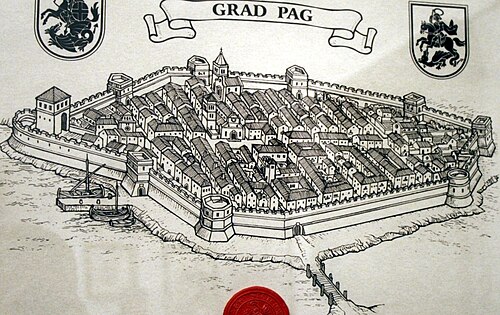 | |||
| بوريتش | مقاطعة إستريا | نعم | 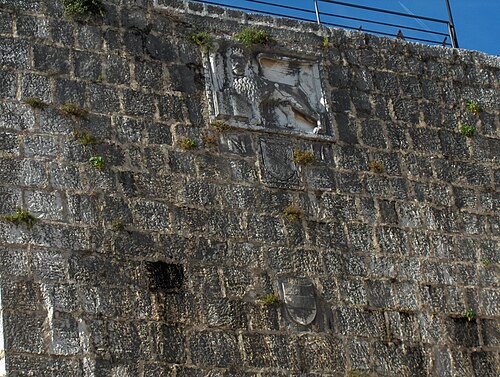 | ||
| بريموستين | مقاطعة شيبينيك-كنين |  | |||
| روك | مقاطعة إستريا |  | |||
| روفينج | مقاطعة إستريا | نعم |  | ||
| سينج | مقاطعة ليكا-سينج |  | بوابة المدينة | ||
| جدران من الحجر | مقاطعة دوبروفنيك-نيريتفا | نعم | جيد |  | تم بناء أسوار التحصين بين مالي ستون وستون في القرنين الرابع عشر والخامس عشر، عند برزخ شبه جزيرة بيليشاتس ، شمال دوبروفنيك؛ سور المدينة بطول 890 مترًا وسور الصين العظيم بطول 5 كيلومترات خارج مدينة ستون. |
| شيبينيك | مقاطعة شيبينيك-كنين | نعم | |||
| تروغير | مقاطعة سبليت-دالماتيا | نعم | جيد |  | بوابة المدينة |
| زادار | مقاطعة زادار | نعم | جيد |  | لا تزال مدينة زادار تحتفظ بنحو نصف سورها. |
قبرص
| مكان | حالة | صورة | ملحوظات |
|---|---|---|---|
| فاماغوستا | متصل | 
| كان برج أوثيلو أول تحصين رئيسي في فاماغوستا ، وقد بناه آل لوزينيان في القرن الرابع عشر، ثم عدّله الفينيسيون لاحقًا. كما بنى الفينيسيون أسوارًا للمدينة في القرنين الخامس عشر والسادس عشر، ولا تزال قائمة حتى اليوم. |
| نيقوسيا | متصل | 
| شُيِّدت أولى التحصينات في نيقوسيا في القرنين الثالث عشر والرابع عشر. هدم البنادقة التحصينات التي تعود للعصور الوسطى واستبدلوها بسور دائري ذي حصون في أواخر ستينيات القرن السادس عشر. ولا تزال الأسوار سليمة إلى حد كبير باستثناء بعض الثغرات. |
| كيرينيا | تشمل البقايا أجزاءً من السور، وثلاثة أبراج، وبوابة المدينة. أما القلعة فهي سليمة. | كانت قلعة كيرينيا أول حصن رئيسي في المدينة ، وقد شُيّدت في العصر البيزنطي. في القرن الرابع عشر، قام اللوزينيون بتعديل القلعة وبناء أسوار المدينة. هُدم معظم الأسوار عام ١٥٧٠ بعد استسلام المدينة للأتراك إثر سقوط نيقوسيا. ولأن فاماغوستا كانت لا تزال تُقاوم، هدم الأتراك جزءًا كبيرًا من الأسوار خوفًا من ثورة أو هجوم من البنادقة والأسطول المسيحي الكبير. واكتفوا بالإبقاء على أبراج الأسوار لتوفير حماية أفضل، بالإضافة إلى القلعة. |


الجمهورية التشيكية


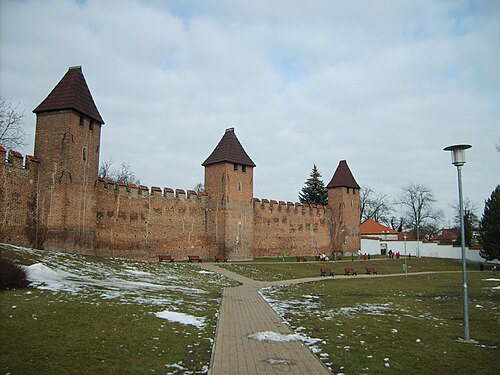
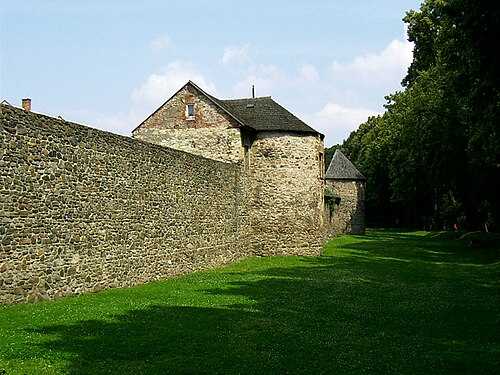
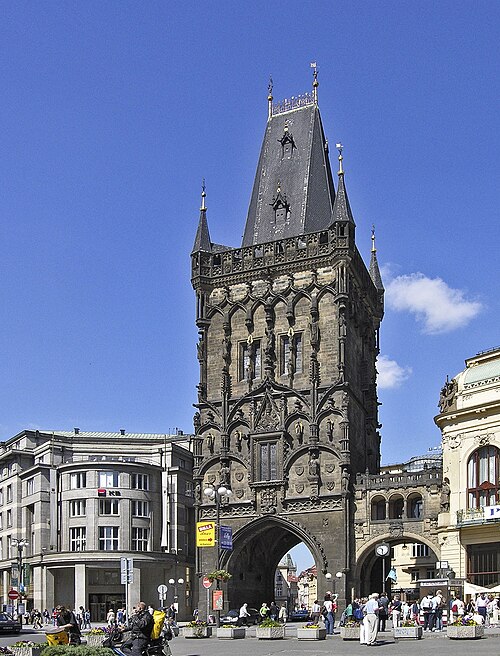
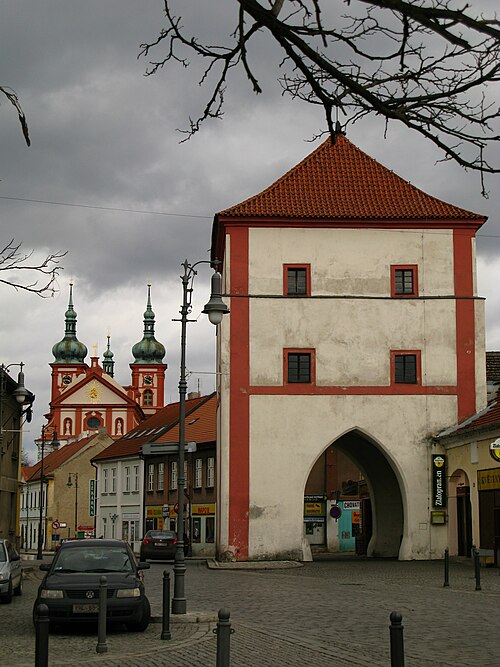

- بيتشينيه
- بيلا بود بيزديزيم
- بيناتكي ناد جيزيرو
- بيرون
- بوتشوف
- بور
- برنو
- بروموف
- برونتال
- تشاسلاف
- تشيسكا ليبا
- تشيسكي بوديوفيتسه
- تشيسكي برود
- Český Dub
- تشيسكي كروملوف
- شاب
- خروديم
- Chyše
- داتشيتشي
- دوماجليتسه
- Dvůr Kralove nad Labem
- فريدلانت
- فولنيك
- هافليتشكوف برود
- هلوتشين
- هوراجوفيتسه
- هورشوفسكي تين
- هوستينيه
- هراديك كرالوفيه
- هرانيس
- Jablonné v Podještědí
- جارومير
- جيفيكو
- جيتشين
- جيهلافا – لا تزال أجزاء كبيرة من أسوار المدينة قائمة في الجهات الجنوبية والغربية والشرقية من المدينة التي تعود للعصور الوسطى. كما لا تزال بعض الأجزاء باقية في الجهة الشمالية. وتُعد التحصينات مثالاً جيداً على طراز زوينجر .
- جيندريتشوف هراديك
- جوزيفوف
- كادان
- كلاتوفي
- كولين
- كوستيليك ناد لابم
- كوريم
- كرنوف
- كوتنا هورا
- كروميريز
- لانسكرون
- ليبنيك ناد بيتشفو
- ليتوميشل
- ليتوفيل
- لوكيت
- لوني
- ميلنيك
- ملادا بوليسلاف
- موهلنيس
- ناتشود
- نوفيه ميستو ناد ميتوجي
- نوفى بيدزوف
- نوفى جيتشين
- نيمبورك
- أودري
- أولوموك
- أوبوتشنو
- أوبافا
- أوسوبلاها
- أوسترافا
- أوستروف
- باردوبيتسه
- بيسيك
- بلانا
- بلزن
- بلوملوف
- بوليتشكا – ما يقرب من 80% من أسوار مدينة بوليتشكا لا تزال قائمة حتى اليوم، وهي محفوظة بشكل ممتاز.
- الممارسة
- براغ
- بريلوتش
- بريروف
- بروستيوف
- رابشتين ناد ستريلو
- راكوفنيك
- Rataje nad Sázavou
- روكي كاني
- Rožmitál pod Třemšínem
- سلاني
- سوبيسلاف
- سوبوتكا
- ستارا بوليسلاف
- شترنبرك
- شترامبرك
- ستراجنيس
- ستريبرو
- سفيتافي
- Šumperk
- سوسيتسه
- تابور
- تاشوف
- تيبلا
- توفاكوف
- تريبون
- تروتنوف
- توزيم
- أوهيرسكي برود
- يونيكوف
- أوستي ناد أورليسي
- فالتيس
- مخملي
- فيدنافا
- فودنياني
- فراني
- Vysoké Mýto
- زابريه
- زاكوبي
- زاتيك
- Žlutice
- زنويمو – تم الحفاظ على أكثر من نصف الجدران، مع بقاء أجزاء كبيرة من الزفينجر .
الدنمارك
- فريدريكيا ، أسوار واسعة من عصر النهضة إلى الشمال والغرب من المدينة وأسوار مواجهة للبحر.
- كوبنهاغن ، أسوار واسعة من عصر النهضة في الجنوب والشرق، وآثار قديمة في الشمال والغرب، وحصن جميل عند مدخل الميناء، وثلاث حصون صغيرة على الجزر خارج مدخل الميناء.
- نيبورغ - تشمل البقايا ثلاثة حصون محفوظة، وبوابة المدينة، ولا تزال المدينة القديمة محاطة في الغالب بخندق يشير إلى مواقع الحصون الأخرى (التي تم هدمها الآن).
- لا تزال بوابة المدينة، المعروفة باسم "موليبورتن" ، قائمة . كما لا تزال معظم السور الترابي والخندق الجاف المحيط بمركز المدينة قائمة.
إستونيا

- لا يزال سور بارنو ، الذي يضم برجين وحصنًا وبوابة للمدينة، قائمًا غرب المدينة القديمة. وقد تحول الآن إلى حديقة، وهي حديقة فالي.
- تالين ( وتومبيا )، انظر أسوار مدينة تالين ، حيث لا تزال معظم الأسوار والأبراج قائمة
- تارتو ، لم يتبق منها سوى أجزاء قليلة
- نارفا ، انظر حصون نارفا ، تسعة حصون والقلعة، مع ترميم قلعة هيرمان وحصن فيكتوريا بالكامل
فنلندا

- هامينيا محاطة بتحصينات على شكل نجمة يبلغ طولها حوالي 4-5 كيلومترات
- لابينرانتا: يقع المركز القديم للمدينة داخل قلعة
- كان من المخطط بناء حصن كامل حول مدينة لوفيسا ، ولكن لم يكتمل سوى حصنين فقط.
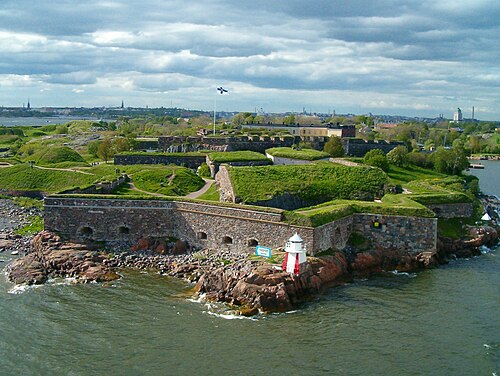
- Suomenlinna قلعة بحرية مأهولة قبالة ساحل هلسنكي
فرنسا

- أكويني
- أغد
- أيغ مورت
- أينيه لو شاتو
- آير سور لا ليس
- إيكس أون بروفانس
- ألينسون، أورن
- أمانس، هوت ساون
- أمبواز، إندر ولوار
- أميرشفيير
- أنجيه، ماين ولوار
- أنغوليم
- مضادات حيوية
- شقة
- أردريس
- آرل
- أراس
- أوبيني سور نير
- أوتش
- أوتون
- أوفيه إيه لا شابيلوت
- أفالون
- أفين سور هيلب
- أفينيون
- أفرانش
- أيهير
- باجيه لو شاتيل
- بارجيم
- بو دو بروفانس
- بافاي
- بايون
- بازاس
- جمال
- بون
- بوفيه
- بيغيوس
- بيليمي
- بيرغهايم، هوت رين
- بيرغ
- بيزانسون
- بلوا، لوار إي شير
- بورش
- بويسرون
- بونيفال، أور-إي-لوار
- بوغ
- بوربون لانسي
- بورج
- بورغ لو روا
- بريانسون
- برينيون
- بريود
- بروش، لوت إي غارون
- كاديلاك، جيروند
- كاين
- كاهور
- كامبل
- كابديناك
- كاركاسون
- كاريجنان، أردين
- كودبيك-أون-كو
- سيرناي، هوت رين
- شالون سور ساون
- شامبديو
- شامبينيول
- شامبليت
- شارلفيل-ميزيير
- شاتو تييري، أيسن
- شاتيليه
- شاتيون سور ساون
- شيراوت
- كليرمون فيران
- كلوني
- كولونج لا روج
- كولمار
- كولمارز
- كومبيين
- كومبرينياك
- كونكارنو
- كوندي سور ليسكو
- كوربيني
- كورد سور سييل
- كورميري
- كوسن كور سور لوار
- كوسي لو شاتو أوفريك – لا تزال أجزاء كبيرة من الأسوار قائمة، وإن كانت بعضها في حالة خراب. وتشمل البقايا عدة أبراج، وأجزاء من الجدار الساتر، وثلاث بوابات هي: بوابة لاون، وبوابة سواسون، وبوابة شوني.
- كورتيزون
- كريسي لا شابيل – بقايا مجزأة
- كريكي
- كوكورون
- كويزو
- كوسيت
- داشتاين، باس راين
- دامباخ لا فيل
- داكس، لانديس
- قرر
- مت يا دروم
- ديميرينجن
- دييب، سين-ماريتيم
- دينان
- دول، جورا
- دومفرونت، أورن
- دوم، دوردوني
- دون-سير-أورون
- إسباليون
- Eu، سين ماريتيم
- إيفرو
- فاليز، كالفادوس
- فوكوجني إيه لا مير
- فورز
- فيجياك
- فوس سور مير
- فوجير
- فريجوس، فار
- مُعطى
- جرانفيل، مانش
- غرونوبل
- غيمار، هوت رين
- غويراند
- هينيبونت
- هيرليشيم-بري-كولمار
- هيسدين
- هيرس-برواج
- هونفلور
- إيل دايكس
- إيلفورث
- إيسودون، إندري
- إيستوريتس
- جويني
- لا كافاليري
- لا شاريتيه سور لوار
- لا شاساني
- لا كوفيرتواريد
- لا غروت
- الشهيد
- لا روش دو غلون
- لاروشيل
- لاروش بوزيه
- لا سوفيتا، بوي دي دوم
- لا توربي
- لانغريس
- لانيري
- لانتابات
- لاون
- لارسيفو-أروس-سيبتس
- لاريسينجل
- لافال، ماين
- لو كاستيليه، فار
- لو كروزيه
- مدينة لو مالزيو
- مون سان ميشيل
- لو باليه
- لو بويه لافال
- لو كيسنوي
- لي ثور
- ليه أندليس
- Les Cluses
- ليفينز
- لا تزال أجزاء كبيرة من مدينة لوش سليمة. بُنيت المدينة العليا وقلعة لوش على تلة تُوفر موقعًا استراتيجيًا يُطل على الريف المحيط ونهر الإندر . لا تزال أسوار المدينة العليا سليمة إلى حد كبير، وتشمل أطلال بوابة سان أورس، والبوابة الملكية المحفوظة جيدًا، وأجزاء طويلة من السور، والعديد من الأبراج والحصون. أما أسوار المدينة السفلى فقد هُدمت جزئيًا، لكن أربعة أبراج، وعدد قليل من الأبراج الصغيرة التي أُضيفت لاحقًا، وجزء طويل من السور، وبوابة كوردولييه وبوابة بيكو (التي تُستخدم الآن كمبنى بلدية) لا تزال سليمة.
- لودون، فيينا
- لوسيرام
- مايسود
- مانس
- ماركوليس
- مارسال، موزيل
- مارفيل، ميوز
- موبيج
- ميندي، لوزير
- مينيتو سور شير
- ميتز
- مورساك
- مولشيم
- مونسو سور دوردوني
- موندوبلو
- مونبازييه
- مونتارشر
- مونتبريسون، لوار
- مون دو مارسان
- مونتو
- مونتفورت-سور-ميو
- مونتيفيلييه
- مونت لويس
- مونتريال، يون
- مونتروي، با دو كاليه
- مونتروي-بيلاي
- مونتفردان
- موريه سور لوين
- مورلايكس
- موجان
- موزون، أردين
- ناباس، بيرينيه أتلانتيك
- ناجيس-إي-سولورج
- نانت
- ناربون
- نافارينكس
- نيوبوا
- نوف-بريساخ
- نيفرز
- نيس، ألب ماريتيم
- نيول سور لوتيس
- نيم
- نوتردام دي غرافنشون
- أوبرهاسلاش
- أوبيرناي
- أورادور سور جلان، هوت فيين
- أورانج، فوكلوز
- أورغون
- أوستابات-أسمي
- باريس
- بارثيناي
- بيروج
- بيرتوي
- بيسميس
- بلاسي
- بلويرميل
- Poitiers, Vienne
- Poligny, Jura
- Pommiers, Loire
- Pont-de-l'Arche
- Pontgibaud
- Pont-l'Abbé-d'Arnoult
- Pontoise
- Pouilly-lès-Feurs
- Prades-le-Lez
- Prats-de-Mollo-la-Preste
- Provins
- Puycelsi
- Quimper, Finistère
- Quintin
- Rânes
- Rauzan
- La Réole
- Revest-des-Brousses
- Ribeauvillé
- Richelieu, Indre-et-Loire
- Rions
- Riquewihr
- Rocamadour
- Rochefort, Charente-Maritime
- Rocroi
- Rodemack
- Romenay
- Rosheim
- Rouffach
- Roye, Somme
- Ruoms
- Saint-Bertrand-de-Comminges
- Saint-Dyé-sur-Loire
- Sainte-Croix-sur-Buchy
- Saint-Émilion, Gironde
- Saintes, Charente-Maritime
- Sainte-Eulalie-de-Cernon
- Sainte-Suzanne-et-Chammes
- Saint-Étienne-de-Baïgorry
- Saint-Félix-Lauragais
- Saint-Gence
- Saint-Hippolyte, Haut-Rhin
- Saint-Jean-Pied-de-Port
- Saint-Junien – A tower and remains of the curtain wall remain behind houses at the junction of the Boulevard de la République and the Rue de Brèche.
- Saint-Laurent-des-Arbres
- Saint-Léger-Magnazeix
- Saint-Lô
- Saint-Macaire
- Saint-Marcouf, Manche
- Saint-Martin-d'Arrossa
- Saint-Mitre-les-Remparts
- Saint-Omer
- Saint-Pastour
- Saint-Paul-de-Vence
- Saint-Pompont
- Saint-Suliac
- Saint-Sulpice-de-Favières
- Saint-Trivier-sur-Moignans
- Saint-Valery-sur-Somme – Large parts remain, including the Porte de Nevers, the Porte Jeanne d'Arc, stretches of curtain wall and some towers. A hill named Cap Hornu arises above the town which is the most likely and possible location of the Roman Saxon Shore fort and harbour named Locus Quartensis sive Hornensis.
- Saint-Vérain
- Saissac
- Sarralbe
- Sarrebourg
- Saumur, Maine-et-Loire
- Sauvain
- Sélestat
- Semur-en-Auxois
- Senlis, Oise
- Sens, Yonne
- Septème
- Sisteron
- Soissons
- Sorel-Moussel
- Strasbourg
- Suèvres
- Thann, Haut-Rhin
- Thionville, Moselle
- Thouars
- Tillac
- Tincry
- Toul, Meurthe-et-Moselle
- Toulouse
- Tours, Indre-et-Loire
- Trôo
- Turckheim
- Uzès
- Vabre
- Vannes
- Vaucouleurs, Meuse
- Venasque
- Vence
- Verdun, Meuse
- Vervins
- Vézelay
- Vianne
- Vienne, Isère
- Viens, Vaucluse
- Vievy-le-Rayé
- Villefranche-de-Conflent
- Villeneuve-sur-Yonne
- Vitré, Ille-et-Vilaine
- Vouvant
- Wangen, Bas-Rhin
- Wattwiller
- Westhoffen
- Wissembourg
- Zellenberg
Germany
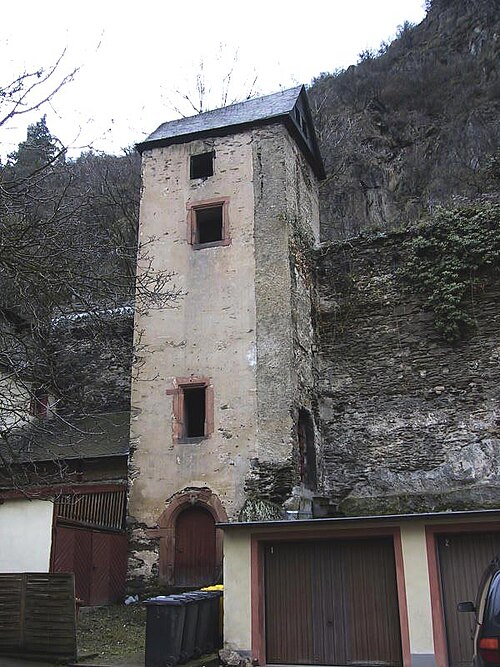


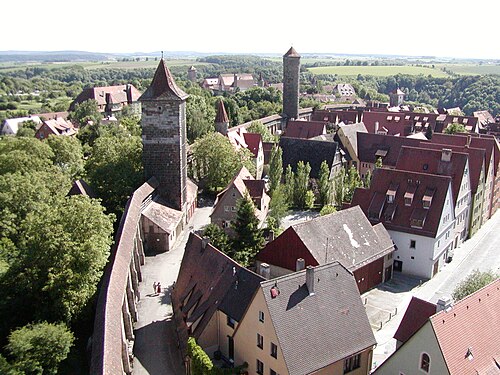


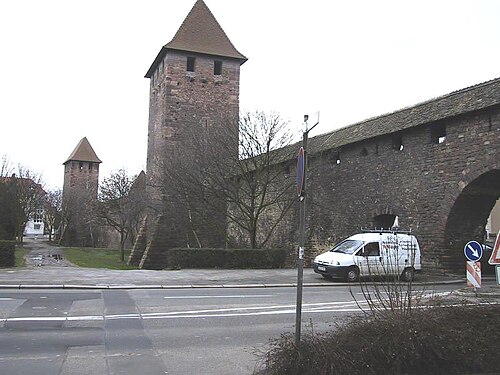
- Aachen, some parts of the inner walls still remain alongside Tempelgraben (at the corner with the Eilfschornsteinstraße and the corner with the Pontstraße), and at the back of the houses alongside Seilgraben. Of the outer walls three towers, the Langer Turm, Pfaffenturm and the Marienturm, still stand today. The two remaining city gates, Ponttor and Marschiertor, are among the best preserved gates in Germany.
- Aach
- Abensberg
- Ahrweiler
- Aichach
- Altentreptow – the remains include some stretches of wall, a tower and two town gates, the Brandenburger Tor and the Demminer Tor.
- Annaberg-Buchholz
- Amberg
- Amöneburg
- Andernach
- Arberg – only one town gate remains.
- Arnstadt
- Aschaffenburg
- Aub – large sections of the walls remain, including some towers. One town gate remains, the Zentturm.
- Babenhausen
- Bad Colberg-Heldburg
- Bad Frankenhausen
- Bad Hersfeld
- Bad Langensalza – large parts of the walls still remain today, including 12 wall towers and one city gate, the Klagetor.
- Bad Münstereifel
- Bad Neustadt an der Saale
- Bad Orb
- Bad Rodach
- Bad Sooden-Allendorf
- Bad Waldsee
- Bad Wimpfen
- Bacharach
- Ballenstedt
- Barby
- Bautzen
- Beilngries
- Berching
- Berlin had a defensive wall around the city from about 1250 until the mid-17th century, and a Customs Wall from the mid-18th to the mid-19th centuries. The Berlin Wall that existed from 1961 to 1989 was claimed by the authorities of East Germany to be defensive, but in fact it was rather intended to prevent unauthorized emigration. Parts of Berlin's medieval wall still remain alongside the Littenstraße.
- Bernau bei Berlin
- Bernkastel – one town gate, the Graacher Tor, remains.
- Besigheim
- Blankenburg (Harz)
- Bodenwerder
- Boizenburg
- Boppard
- Bönnigheim – some parts of the walls and a town gate remain.
- Brandenburg
- Buchen
- Burgau
- Burg bei Magdeburg
- Burghausen
- Butzbach
- Büdingen
- Calbe
- Chemnitz – only one tower remains, the Roter Turm (Red Tower).
- Coburg
- Cologne
- Crailsheim – some remains are located north of the Ringgasse, including a wall tower. Another tower remains alongside the Grabenstraße.
- Darmstadt
- Dausenau – the walls remain almost intact. One town gate still remains, the Torturm.
- Delitzsch
- Demmin large parts of the city walls still remain alongside Nordmauer, Bauhofstraße and Südmauer. One town gate still remains, the Luisentor.
- Dettelbach
- Dillenburg
- Dillingen
- Dilsberg
- Dinkelsbühl – the medieval town walls remain fully intact, including 4 gates and 19 towers.
- Dollnstein
- Dömitz
- Donauwörth
- Dresden – Dresden's defensive walls were some of the first in Germany, inspired by the earlier Italian model. The walls surrounded both the ‘Old City’ south of the Elbe, and the ‘New City’ to the north. The walls, gates and moats were largely removed c. 1815, following the Napoleonic Wars, being deemed outmoded for modern warfare. Some small sections have been rediscovered and established as the Museum Festung Dresden https://web.archive.org/web/20160509160153/http://www.festung-dresden.de/de/festung_dresden/museum/ below the more famous Brühl Terrace.
- Duderstadt
- Duisburg
- Ebern
- Eberbach (Baden)
- Eibelstadt
- Eichstätt
- Einbeck
- Eisenheim
- Ellwangen
- Eltville am Rhein
- Emden
- Erding
- Erlangen – some stretches of wall still remain alongside Nördliche Stadtmauerstraße, Wöhrstraße and Schulstraße.
- Feuchtwangen
- Fladungen
- Forchheim
- Freiberg
- Freiburg im Breisgau – only the wall gates remain, although they have been rebuilt several times.
- Freyburg, Germany
- Freystadt
- Friedberg, Bavaria
- Freinsheim
- Frickenhausen am Main
- Fritzlar
- Gangelt
- Gardelegen – there are several remains of the old town wall, including the impressive Salzwedeler Tor, the remains of the Stendaler Tor, and some stretches of wall.
- Gartz (Oder) – The remains of the walls around the medieval town include some sizable stretches of walls, towers and one town gate, the Stettiner Tor.
- Geisa
- Gelnhausen
- Germersheim
- Gerolzhofen
- Göllheim – two town gates are preserved, the Kerzenheimer Tor and the Dreisener Tor. One tower remains, the Ulrichsturm.
- Gräfenberg – the remains include three well-preserved town gates, the Egloffsteiner Tor, the Hiltpoltsteiner Tor and the Gesteiger Tor. Some parts of the walls still remain adjacent to the Gesteiger Tor and at the back of the houses alongside Am Gesteiger and Schulgasse.
- Grebenstein – most of the medieval walls are still surrounding the old town. One town gate remains, the Burgtor.
- Greding
- Grimma
- Grimmen one tower still remains, the Wasserturm. All three of the original town gates also remain, the Stralsunder Tor, Greifswalder Tor and the Mühlentor.
- Großostheim
- Gundelfingen an der Donau
- Gundelsheim
- Gunzenhausen
- Güstrow – remains of the walls remain south of the cathedral and alongside the Gelviner Mauer. The town
- Haldensleben
- Hannoversch Münden
- Hattingen
- Heidelsheim – one town gate and a wall tower still remain today.
- Heidingsfeld, today part of Würzburg
- Heilbad Heiligenstadt
- Herborn
- Herrieden
- Hildburghausen
- Hirschhorn
- Haldensleben
- Hammelburg
- Hardgesen
- Hollfeld – the remains include one town gate, the Obere Tor, and some parts of the walls to the south of the old town.
- Homberg, Efze
- Horn
- Höchstadt an der Aisch
- Höchstädt an der Donau
- Horb am Neckar – large sections of the walls still remain. One town gate, the Ihlinger Tor, still remains, and some towers still remain, most notably the Schurkenturm and the Schütteturm.
- Höxter
- Hünfeld
- Ingelheim am Rhein – sizable remains, including stretches of wall, the Malakoffturm, the Bismarckturm, Ohrenbrückertor, Uffhubtor and the ruined Heidesheimer Tor. The medieval town centre also houses the ruins of the Ingelheimer Kaiserpfalz.
- Ingolstadt
- Iphofen
- Jena
- Kallenhardt
- Karlstadt am Main
- Alt Kaster – The old medieval town of Kaster now forms part of Bedburg. The town walls remain largely intact, including 2 town gates and several towers.
- Kaub
- Kaufbeuren
- Kemnath – several sections and towers of the walls remain around the medieval town. The eastern town gate was later converted into a church tower.
- Kempen – some parts of the walls still remain. They include the Kuhtor, a well-preserved town gate, the Mühlenturm and the remains of another town gate, the Peterstor.
- Kindelbrück
- Kirchberg an der Jagst
- Kirchhain
- Kirchheim unter Teck
- Kitzingen
- Kroppenstedt
- Korbach
- Kranenburg
- Kronach
- Kulmbach
- Kuppenheim
- Kyritz
- Ladenburg
- Landsberg am Lech
- Landshut
- Langenzenn
- Laucha an der Unstrut
- Lauchheim
- Lauingen
- Lauf an der Pegnitz
- Laufen
- Lauffen am Neckar – the old town consists of three parts. While the town is divided by the river Neckar, the castle stands on a small island circled by the river. On the left bank there is a sizable stretch of wall is located next to the church. On the right bank, some towers, stretches of wall and the Neues Heilbronner Tor still remain.
- Leipheim
- Leipzig – remains include the Moritzbastei bastion.
- Leonberg
- Leutershausen
- Löbejün
- Lohr am Main
- Lübben
- Luckau
- Magdeburg
- Mainbernheim
- Maintal – large sections of the walls still remain, notably to the north of the medieval town.
- Mainz – the remains include the well-preserved square-shaped citadel, the medieval Alexanderturm, and the remains of a bastion alongside the Augustusstraße.
- Malchin two town gates still remain, the Kalensches Tor and the Steintor. Some parts of the walls to the south and east of the town still remain.
- Marbach am Neckar
- Markt Einersheim – two town gates still remain.
- Marktbreit
- Mayen
- Meisenheim
- Mellrichstadt
- Memmingen
- Meppen – the remains include a star shaped moat around the medieval town.
- Merkendorf
- Meyenburg
- Michelstadt
- Miltenberg
- Mindelheim
- Möckmühl
- Monheim – two town gates remain, the Oberes Tor and the Unteres Tor.
- Mühlhausen
- Müncheberg
- Munich has some of its former city gates still standing, and a section of its late 13th-century defensive wall.
- Münnerstadt
- Münzenberg – fragments of the walls remain, including two towers.
- Monheim – some stretches of wall still remain and both town gates, the Oberes Tor and the Unteres Tor, are preserved.
- Nabburg
- Naumburg
- Neckarsulm
- Neubrandenburg
- Neubrunn
- Neuburg an der Donau – some parts of the medieval walls still remain, including the Unteres Tor. The trace of the later bastion earthworks, the so-called Untere Schanze, Elias Holl Schanze and Oberer Schanze, is still recognizable in the fields and from the air.
- Neudenau
- Neuenstadt am Kocher
- Neuenstein
- Neuleiningen
- Neumarkt in der Oberpfalz
- Neunkirchen am Brand – three town gates still remain, the Forchheimer Tor, the Erleinhofer Tor and the Erlanger Tor.
- Neuss
- Neustadt (Hessen)
- Neustadt an der Aisch – substantial parts of the walls still remain, including some towers and a well-preserved town gate, te Nürnberger Tor.
- Neustadt in Holstein – one town gate remains, the Kremper Tor.
- Niedernberg – several stretches of the walls remain. One wall tower remains at the riverside end of the Turmgasse
- Niedernhall – most of the town walls remain intact.
- Nordhausen
- Nördlingen
- Nürnberg
- Obernburg am Main
- Oberwesel
- Ochsenfurt
- Oebisfelde
- Oettingen
- Öhringen
- Oldenburg
- Oppenheim – some stretches of the town walls remain near the ruins of Landskron castle. One town gate and two towers remain, the Gautor, the Ruprechtsturm and the Uhrturm.
- Ornbau
- Orsoy
- Ortenberg
- Oschatz
- Ostheim
- Paderborn
- Pappenheim
- Pasewalk
- Tribsees – two town gates remain, the Steintor and the Mühlentor
- Trier-Pfalzel
- Pfullendorf
- Pößneck
- Potsdam
- Prenzlau there are some good remains of the walls, especially North, East and South of the town. 4 gates still remain, the Steintor, Wasserpforte, Mitteltor and the Blindower Tor. The walls also include 25 towers.
- Prenzlin
- Prichsenstadt
- Querfurt
- Radolfzell am Bodensee
- Ratingen
- Ravensburg – three town gates still remain, the Frauentor, Obertor and the Untertor. Nine of the original ten wall towers still remain, most notably a tower named Mehlsack.
- Recklinghausen two defensive towers and some portions of wall still remain today, north west of the old city.
- Reichelsheim – three towers remain.
- Rodach
- Rees – large parts of the town walls still remain intact, mainly located at the riverside of the town and in the parks at the north-east and west side of the medieval town.
- Rheinbach
- Rheinberg
- Rhens – the town walls remain largely intact. Three town gates still remain, the Rheintor, the Josephstor and the ruins of the Viehtor.
- Rostock
- Röttingen
- Roth
- Rothenburg ob der Tauber
- Rottweil
- Rüthen
- Salzkotten
- Salzwedel
- Schleusingen
- Schlüsselfeld
- Schmalkalden
- Schongau, Bavaria
- Schrobenhausen
- Schwaigern
- Schwalmstadt – the remains of a town gate still survive, the medieval Lüdertor. The earthworks are mostly demolished, leaving a moat of which the course indicates the location of four round bastions.
- Schweinfurt
- Seehausen – the moat still surrounds most of the medieval town. Fragments of the walls are to be found at the southern side of the old town. One town gate still remains, the Beustertor.
- Seßlach
- Seligenstadt – the remains include the Steinheimer Torturm, the Pulverturm and a tower at the Friedhofsmauer.
- Segnitz
- Soest – 2.5 km of the town walls (1180) are still intact, also a town gate ("Osthofentor", with the world largest collection of crossbow bolts) and a defense tower ("Kattenturm").
- Sommerach
- Sömmerda
- Sommerhausen
- Spalt
- Spangenberg
- Stade
- Staßfurt
- Stadt Blankenberg
- Steinheim
- Steinau an der Straße
- Stendal – two town gates still remain.
- Sternberg
- Stadtsteinach
- Stralsund
- Sulzbach – sizable parts of the walls and towers still remain. One town gate is preserved, the Rosenberger Tor.
- Sulzfeld am Main
- Tangermünde – most of the town walls still remain, including some towers.
- Templin
- Themar
- Treysa – the remains are located mainly South, East and North of the old town.
- Trier, portions of the city walls still exist, but the size of the Roman gate, the "Porta Nigra", gives evidence of the importance of the city. Other Roman remains include the baths, the Constantine Basilica, an amphitheater, and a 2nd-century AD Roman bridge.
- Torgau
- Überlingen
- Uffenheim
- Ulm an der Donau
- Villach
- Villingen
- Vilseck
- Vilshofen an der Donau
- Vellberg
- Volkach
- Waiblingen
- Waldenburg
- Waldfeucht
- Wangen im Allgäu
- Warburg (Westfalia)
- Wassertrüdingen
- Wemding
- Weikersheim
- Weil der Stadt
- Weilrod – the only town gate still remains.
- Weißenburg (Bavaria)
- Werben – one town gate still remains to the north east of the medieval town, the Elbtor. A tower with adjacent portion of the town wall remains to the west of the medieval town.
- Wertheim
- Wettenberg
- Windsbach
- Winterhausen
- Wittstock
- Witzenhausen
- Woldegk
- Wolframs-Eschenbach
- Worms, Germany
- Wörth am Main
- Wunsiedel 3 towers, small portions of the walls and a town gate (Koppetentor) still remain.
- Würzburg
- Xanten
- Zeil am Main
- Zerbst
- Zons
- Zülpich
- Zwickau
Gibraltar
Greece
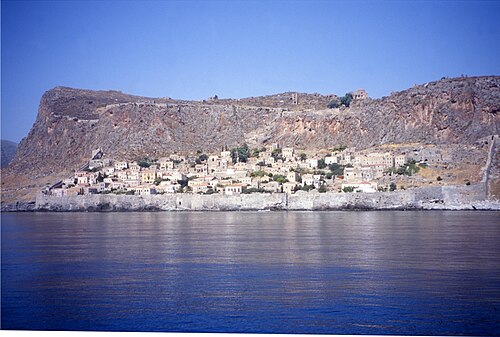

Many towns and cities still retain at least parts of their defensive walls, including:
- Arta
- Athens – mostly demolished, see city walls of Athens
- Chania – see Fortifications of Chania
- Chios
- Corfu (city)
- Drama, Greece – sizable parts of the town walls remain to the north and east side of the old town. Including 2 towers and stretches of wall.
- Heraklion Candia Khandak – see Fortifications of Heraklion see siege of Candia – Arab and Byzantine walls still remain, about 20%, Venetian 7.5 km long walls, 95% still remain, 30.000 people live now inside the Venecian walls. Two gates, one castle in the sea (Koules)
- Ioannina – see Ioannina Castle
- Kastoria – fragmentary remains.
- Kavala (a significant part of the seaside walls survive)
- Kissamos
- Komotini
- Koroni – preserved fortifications of the castle and upper town.
- Missolonghi
- Monemvassia
- Mystras
- Nafplion
- Naupactus
- Preveza
- Rethymno – see Fortezza of Rethymno
- Rhodes – see Fortifications of Rhodes
- Thessaloniki – see Walls of Thessaloniki
- Veria (about 170 m of the Byzantine walls survive)
Hungary
- Buda – the Castle Hill is surrounded by preserved medieval and early modern fortifications. Only a short section survived from the walls of the Víziváros neighbourhood.
- Pest – segments of the 15th-century city walls are preserved inside the courtyards of later houses.
- Eger – some segments preserved, mostly demolished
- Győr – the walls were demolished in the 19th century but segments are preserved
- Komárom
- Kőszeg
- Mosonmagyaróvár – the walls were demolished in the 1820s
- Pécs – long sections of the medieval walls are preserved and freed to later intrusions.
- Sárospatak
- Sopron – medieval circle of walls partly built on ancient Roman foundations
- Szécsény – some segments of the city walls preserved
- Székesfehérvár – long sections of the medieval walls are preserved
- Vác – some segments and one tower preserved
- Veszprém – walled old town on Castle Hill
Republic of Ireland
| Place | County | Condition | Image | Notes |
|---|---|---|---|---|
| Ardee | County Louth | |||
| Athenry | County Galway |  | ||
| Athlone | County Westmeath | |||
| Bandon | County Cork | |||
| Carlingford | County Louth | 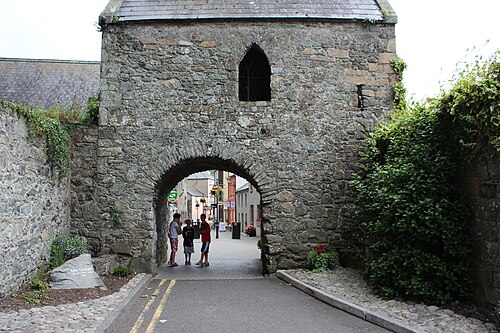 | ||
| Cashel | County Tipperary | |||
| Clonmel | County Tipperary |  | ||
| Cork | County Cork | |||
| Drogheda | County Louth |  | Saint Laurence Gate, Drogheda is an original barbican dating from the 13th century. Another town gate survives in Drogheda, the Buttergate. It is thought to have been used as a pedestrian entrance to the town as no road ran to or from it. | |
| Fethard | County Tipperary |  | Still retains over a kilometer of medieval town wall – 90% of the circuit. Some sections survive to a height of over 8 meters (26 feet). | |
| Dublin | County Dublin |  | ||
| Galway | County Galway | 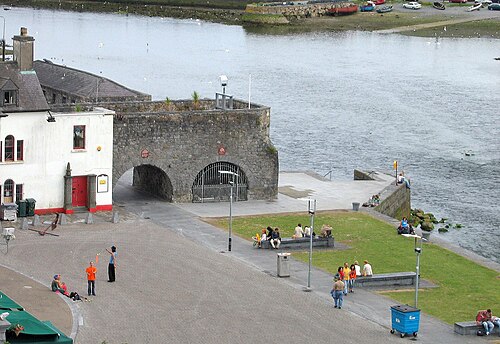 | ||
| Kilkenny | County Kilkenny |  | ||
| Kilmallock |  | |||
| Limerick | County Limerick | |||
| New Ross | County Wexford | |||
| Rindoon / Lecarrow | County Roscommon | The best preserved abandoned medieval town in Ireland | ||
| Trim | County Meath | |||
| Waterford | County Waterford | 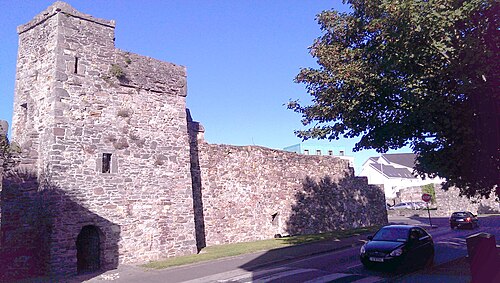 | ||
| Wexford | County Wexford |  | ||
| Youghal | County Cork |  |
Italy

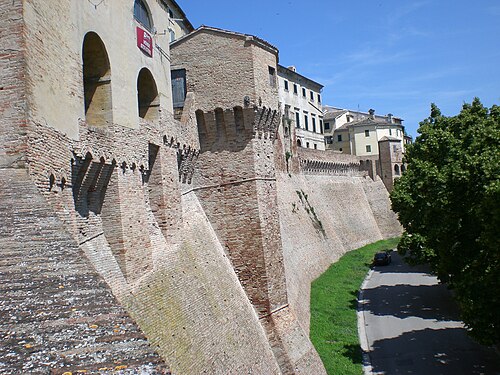
- Acqui Terme – three town gates and remains of walls.
- Acuto
- Albenga – fragmentary remains, including stretches of wall and 3 town gates.
- Alghero
- Altamura – some remains; two gates are still visible, namely Porta Bari and Porta dei Martiri
- Ancona
- Anghiari
- Aosta's Roman walls are still preserved almost in their entirety
- Appignano
- Aquasparta
- Arcevia
- Asolo
- Assisi
- Arezzo – Large parts of the town walls still survive, including several stretches of curtain wall, 6 bastions, 4 town gates and the well preserved citadel Fortezza Medicea.
- Bagnacavallo – two town gates remain.
- Bari – historically a walled port city on a promontory but only two bastions and a short section of the sea walls survived
- Bassano del Grappa
- Bastia Umbra
- Belvedere Ostrense
- Belluno
- Bergamo – surrounding hill of the old city
- Bisceglie
- Bologna
- Bosco Marengo – a large part of the north-western walls with towers are preserved.
- Bozzolo
- Brescia – the castle hill (called Cidneo Hill) is surrounded by preserved medieval and Renaissance fortifications. Segments of Roman and venetian walls are partially survived
- Brindisi – several parts of the walls are preserved, including 5 bastions and two town gates, the Porta Lecce and the Porta Mesagne.
- Brixen – the western gate remains as well as the north side where the houses serves as walls
- Bruneck – three gates remain, the western, northern and eastern ones.
- Busseto
- Cagli
- Cagliari
- Caltagirone
- Camerino
- Capua
- Castel Bolognese – three wall towers still remain.
- Castel del Monte
- Castel Goffredo – tiny fraction of the walls and a tower remain
- Castelfranco Veneto – the old town is completely surrounded by medieval walls and a moat
- Castelvetro di Modena
- Castelsardo
- Castiglion Fiorentino
- Castiglione di Garfagnana
- Castiglione del Lago's old town has fully preserved walls
- Cesena
- Cingoli
- Cittadella – one of the best preserved walled towns in Italy, there's a small breach on the northwestern part (the walls are fully walkable)
- Città della Pieve
- Città di Castello
- Cividale del Friuli – small part of the walls remain on the north east
- Colmurano
- Cologna Veneta – minor part of the walls remaining on the western side
- Como – about 70% is remaining with a few towers
- Cordovado – two town gates remain
- Corinaldo
- Corridonia
- Cortona
- Crema (Venetian walls of Crema)
- Crotone
- Domodossola – a tiny fraction remains behind the church
- Este, Veneto – parts of walls still remaining
- Fabriano
- Faenza
- Falerone
- Fano – large sections of the Roman walls and towers are preserved. One town gate still remains, the Roman Arco di Augusto.
- Felizzano
- Ferrara – originally 13 km now 9 km remain
- Firenzuola
- Fiuggi
- Florence
- Foligno
- Fossano – a minor part remains, particularly a bastion at the north end
- Forlì – remains include the ruins of the Porta Schiavona. The foundations of a tower can be found in the roundabout at the Piazza Santa Chiara.
- Gallipoli
- Gemona
- Genoa has partial fortifications still standing
- Glurns Glorenza in Italian, the medieval stone walls fully encapsulate the old town
- Gradara
- Gradisca d'Isonzo – large part of the walls and towers still intact
- Grosseto's star shaped town walls are almost completely intact.
- Guardiagrele
- Guastalla – a star-shaped road around the town indicates the trace of the fortifications. A wall tower still stands at the corner Via Giuseppe Verdi/Via Volturno.
- Iglesias
- Isernia
- Ivrea
- Jesi
- Lanciano
- Lazise – part of the northern and southern walls still intact, including several towers and 3 town gates.
- Lecce
- Lecco – small part of the walls remains on the north east
- Leonessa
- Livorno
- Loano
- Loro Piceno
- Lucca
- Macerata
- Marostica – The defensive walls around the old town are fully intact. The walls are among the best preserved medieval defensive structures in Italy. Including 3 town gates, 20 towers and two castles, the Castello Superiore and the Castello Inferiore.
- Marsala
- Marta
- Massa Martana
- Massa Fermana
- Matera
- Melfi
- Messina – see Fortifications of Messina
- Mignano Monte Lungo – the Porta Fratte town gate is the only remain of the medieval town walls.
- Mineo
- Mondolfo
- Monopoli
- Montefalco
- Montegiorgio
- Monteriggioni
- Montagnana – perfectly preserved medieval walls and one of the most impressive in Europe
- Montappone – small fortified town. The town directly borders the walled town of Massa Fermana
- Montecassiano
- Montecatini Terme
- Monte San Giusto – fragmentary remains, including an impressive town gate and a tower.
- Monte San Pietrangeli
- Monte San Savino
- Monte Vidon Corrado
- Muggia – remains include two towers, two stone bastions, two town gates and large stretches of the walls.
- Naples
- Nardò – several fragments of the walls still stand around the town, including many towers which are incorporated in houses.
- Narni
- Nettuno
- Noale
- Norcia
- Novi Ligure
- Orbetello
- Orvieto
- Ostra
- Ostuni
- Otranto
- Padua
- Palmanova has fortress plan and structure, called a star fort it is a nine pointed citadel
- Pavia
- Perugia
- Pesaro – the remains include two bastions, a curtain wall and a town gate, the Porta Rimini.
- Peschiera del Garda – fortified town surrounded by water
- Peschici
- Petriolo
- Piacenza has large sections of its Renaissance walls still standing
- Piglio
- Piombino
- Pisa
- Pistoia
- Pizzighettone – nearly completely surrounded by walls apart from a few breaches
- Pollenza
- Pontremoli
- Portobuffolé – little town with a gate remaining
- Portoferraio
- Pozzuoli
- Prato
- Procida
- Rapagnano
- Rapolano Terme
- Ravenna
- Reggio Emilia – very little remains of the medieval town walls. One town gate remains, the impressive Porta Santa Croce. A stretch of wall is located at the Viale Monte Grappa.
- Ricetto di Candelo – small town completely surrounded by walls
- Rieti
- Rimini
- Riva del Garda – parts of the walls and two gates remain
- Rome has walls, including the Aurelian Walls since the Roman Empire
- Rovereto – a part of the medieval stone walls remains on the eastern side
- Sabbioneta – surrounded by a star fort
- Salò – two gates remaining
- San Costanzo – one of the smallest fortified towns in Italy
- San Gemini
- San Gimignano
- San Severino Marche
- San Vito al Tagliamento – part of the walls remain and three gates
- Santarcangelo di Romagna – most of the medieval town wall remains around the old town, including long stretches of wall, a gate and several towers.
- Sansepolcro
- Sant'Angelo in Pontano
- Sassari fragmentary remains, mainly at the north side of the old town.
- Sciacca
- Senigallia
- Sesto al Reghena – two gates remain
- Siena
- Syracuse
- Soave – town surrounded by medieval walls and three gates (Porta Bassano, Porta Vicentina and Porta Verona)
- Soncino – nearly completely surrounded by walls and a moat
- Spilamberto – one town gate still remains.
- Spilimbergo
- Spoleto
- Staffolo
- Sterzing – a tower gate remains
- Sulmona
- Susa – fragmentary remains of Roman walls. The cathedral is built against the side of the Roman town gate Porta Savoia. Several parts of the walls and three lowered towers can be found alongside the Corso Unione Sovietica.
- Talamone
- Tarquinia
- Termoli
- Terra del Sole almost all town walls remain, with four bastion and two gate (Porta Romana and Fiorentina). Ideal-town of renaissance
- Todi
- Torre San Patrizio
- Torri del Benaco – minor part of the wall remaining on the south side
- Trapani
- Treia
- Trevi
- Treviso
- Turin – the remains include the impressive Roman town gate Porta Palatina and 3 bastions with turrets and curtain walls in the park nearby the Porta Palatina.
- Tuscania
- Udine – fraction of the walls remain and two gates
- Urbino
- Urbisaglia
- Verona
- Venzone – medieval stone walls surrounding the town, partly rebuilt after the 1976 earthquake
- Vicenza large sections of the town walls still remain, mainly alongside the Viale Giuseppe Mazzini, Via Goivanni Cecciarini and the Via Legione Gallieno. Four town gates remain, the Porta San Bortolo, Porta Santa Lucia, Porta Castello and the Porta Santa Croce.
- Villafranca di Verona – completely intact walls part of the castle
- Viterbo – completely intact walls
- Volterra
Latvia
- Riga – the best preserved part of the old town walls is the Powder Tower. Just north west of the Powder Tower remains a stretch of wall with a square tower. Foundations of the wall can be seen at Kalēju iela street, and there are fragments of a ruined wall at the site of a demolished building at Minsterejas iela street. The only remains of the earthen ramparts around the old town is a star shaped moat, now transformed into a park.
- Cēsis
- Daugavpils fortress (Not a true walled city, but a huge fortress with buildings)
- Limbaži
- Valmiera
Lithuania
Luxembourg

North Macedonia
Malta
| Place | Region | Condition | Image | Notes |
|---|---|---|---|---|
| Birgu | South Eastern Region | Mostly intact |  | An ancient Castrum Maris stood in Birgu since the 13th century. This was rebuilt as Fort St Angelo in the 16th and 17th centuries, when walls surrounding the entire city were built. Most of the fortifications are intact, except for a small part which was destroyed in a magazine explosion in 1806. |
| Cospicua | South Eastern Region | Mostly intact |  | The fortifications were built by the Order of Saint John in the 17th and 18th centuries. The city was heavily bombed in the Second World War, but its fortifications remain largely intact although they are in need of restoration. |
| Floriana | South Eastern Region | Mostly intact |  | The area was fortified in the 17th century when the Floriana Lines were built. The walls remain largely intact, although in a rather dilapidated state. |
| Mdina | Northern Region | Intact |  | The town was first fortified by the Phoenicians, and the current fortifications are based on those built by the Arabs in the 9th to 11th centuries. The fortifications were extensively modified in the Middle Ages, and then by the Order of Saint John until the 18th century. The walls were recently restored, and they are some of the best preserved fortifications in Malta. |
| Senglea | South Eastern Region | Partly intact |  | The town was fortified in the 1550s by the Order of Saint John. Most of its fortifications including Fort Saint Michael were dismantled in the 19th and 20th centuries, and the walls sustained damage in World War II. However, some still survive to this day, including the impressive seaward bastions and part of the land front. |
| Valletta | South Eastern Region | Mostly intact |  | The fortifications of Valletta were built by the Order of Saint John between 1566 and 1571, and continued to be modified several times in the following centuries. The City Gate was rebuilt five times, the latest one being completed in 2014. The fortifications of Valletta remain intact, except for a lunette that was demolished in the 19th century and some breaches in the walls. |
| Victoria | Gozo Region | Intact (Cittadella)Demolished (city walls) |  | The area was first fortified in the Bronze Age, and was one of the earliest settlements on the Maltese islands. It became the administrative centre of Gozo during Punic-Roman rule. The city of Rabat (now also known as Victoria) was fortified during the Middle Ages, with the acropolis of the Roman city being converted into a castle known as the Cittadella. The city walls were demolished in the 17th century, and at this point the Cittadella was rebuilt by the Order of Saint John. No remains of the city walls survive, but the Cittadella survives intact. |
Monaco
Montenegro

- Kotor
- Bar
- Budva
- Herceg Novi
- Kotor – built by Illyrian tribes in the 9th century and enlarged many times from the 13th century until the 19th century.
- Podgorica
- Sveti Stefan
- Ulcinj
Netherlands
| Place | Province | Accessible | Condition | Image | Notes |
|---|---|---|---|---|---|
| 's-Hertogenbosch | North Brabant | Yes | Sizable parts of the fortifications remain intact. |  | Of the first city wall, built in the 13th century, one tower, belonging to one of the city gates, remains incorporated in a house on the Hinthamerstraat. Another remnant of the first city wall is formed by a gate over one of the arms of the Binnendieze River near the Korte Waterstraat. Sizable sections of the second, 13th-century city walls, and 17th- and 18th-century bastions remain intact as they serve as flood prevention measures. Of special note is the 17th-century pentagonal citadel. |
| Aardenburg | Zeeland | Vestiges of the fortifications are visible in the landscape. |  | In 1625 AD, a new trace of earthen ramparts was built. These defenses were demolished between 1688 and 1701 AD. One city gate, the Westpoort, survives. Additionally, remnants of bastions, ravelins, and other outworks are clearly distinguishable in the fields surrounding the town. The foundations of a Roman gatehouse with 2 towers can be found at the Burchtstraat. The foundations of a Roman tower are now incorporated in the playground of a local school. | |
| Amersfoort | Utrecht | Yes | Sizable parts of the fortifications remain intact. |  | Of the first 13th-century city wall, one tower and the barbican of one gate, the Kamperbinnenpoort, remain. After the enlargement of the city in 1450 AD, houses were built on the location of the first wall, and occasionally incorporating fragments of that wall in their structure. Of the 15th-century wall, several stretches remain to the north-east of the old town, while the foundations of the wall have been made visible on the south-eastern side. Two 15th-century gates remain as well; the koppelpoort, a combined land and water gate, and the Monnickendam, a water gate. |
| Amsterdam | North Holland | One or more individual structures (Bastions, gates, towers, etc.) remain. |  | Of the medieval walls, the Sint Antoniuspoort is the most important remnant. Other remnants of the same wall are the Schreierstoren and the lower part of one of the towers of the former Regulierspoort. Of the later Baroque defenses, only the Muiderpoort remains intact, while some of the bastions can still be recognizable in the bendy course of the outer moat that still surrounds the old town. The most recent defensive structure around the city is the Stelling van Amsterdam, a 135 km long ring of fortifications around Amsterdam, consisting of 42 forts and other works. | |
| Arnhem | Gelderland | One or more individual structures (Bastions, gates, towers, etc.) remain. | 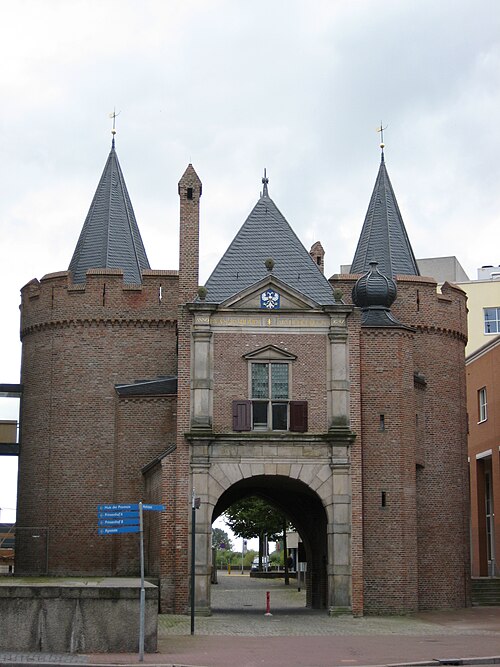 | Only the 14th-century Sabelspoort remains. | |
| Asperen | Gelderland | One or more individual structures (Bastions, gates, towers, etc.) remain. | 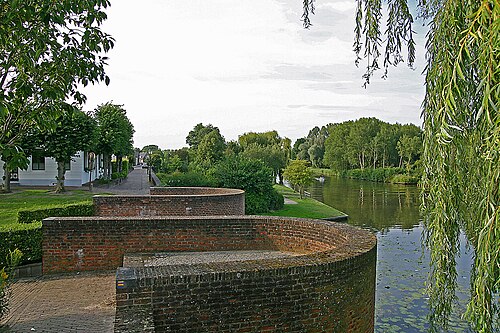 | On the side of the Linge River, a stone wall, incorporating the bases of several towers, remains. The water gate, giving access to the old harbor, is partially reconstructed. On the land side, parts of earthen ramparts and moats remain. | |
| Bad Nieuweschans | Groningen | Vestiges of the fortifications are visible in the landscape. |  | The walls of the tiny fortified village have been partially demolished, although a small section remains. | |
| Bergen op Zoom | North Brabant | Yes | One or more individual structures (Bastions, gates, towers, etc.) remain. |  | Of the medieval fortifications, only the 14th-century Gevangenpoort remains. Of the extensive 17th-century fortifications, only one single ravelin remains. |
| Bolsward | Friesland | Yes | One or more individual structures (Bastions, gates, towers, etc.) remain. |  | A moat still encloses the town center. |
| Bourtange | Groningen | Yes | The fortifications were recently reconstructed. |  | The original fortifications were demolished in the 19th century, but have been reconstructed from 1960 onwards, in a successful effort to revitalize the village. |
| Breda | North Brabant | One or more individual structures (Bastions, gates, towers, etc.) remain. |  | The only notable remnant of the city walls is the Spanjaardsgat gate; a water gate defended by two multiangular towers. It forms part of the defenses around Breda Castle, which in turn formed an integral part of the city walls. | |
| Bredevoort | Gelderland | Yes | One or more individual structures (Bastions, gates, towers, etc.) remain. |  | Part of the ramparts, located on the north-east of the town, have been reshaped into a park. To the south-west, a windmill stands on top of a remnant of one of the bastions. |
| Brielle | South Holland | Yes | The city wall remains intact. |  | The old town is completely enclosed by earth ramparts, featuring nine bastions, as well as multiple outer works. |
| Brouwershaven | Zeeland | Yes | One or more individual structures (Bastions, gates, towers, etc.) remain. | 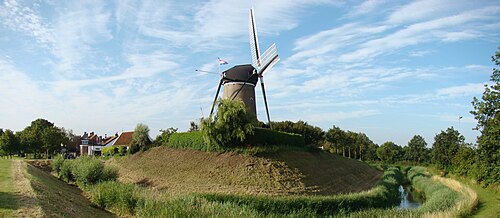 | Part of the ramparts, located on the east and north of the town, remain intact. |
| Buren | Gelderland | Yes | Sizable parts of the fortifications remain intact. | 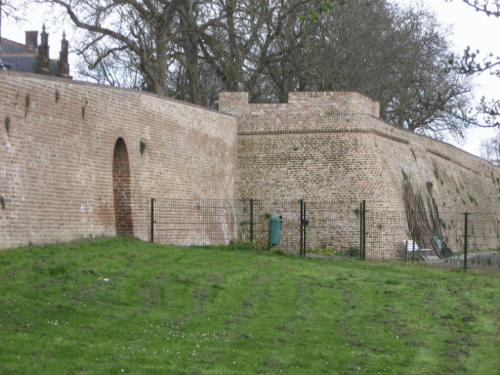 | On the east side of town, facing the river, an impressive wall remains. On the north-west side of the town, a city gate remains, flanked by a row of houses built against the old town wall. |
| Culemborg | Gelderland | One or more individual structures (Bastions, gates, towers, etc.) remain. | 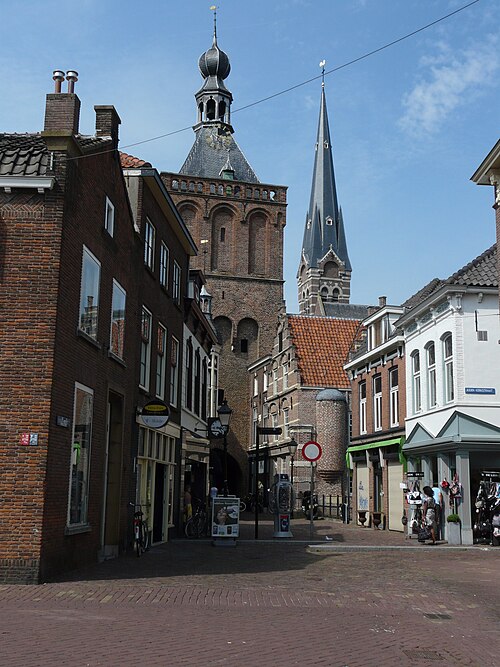 | The old town, its medieval extensions, and the site of the old castle, are still surrounded by a moat. Of the oldest, the 14th-century city wall, one city gate remains, while several fragments of the city wall stand on the south and east sides of the old town. | |
| Delft | South Holland | One or more individual structures (Bastions, gates, towers, etc.) remain. |  | The old town is for the most part still surrounded by a moat. Along this moat stand two towers belonging to the medieval wall. On the eastern end of the old town stands the Oostpoort, a 15th-century combined land and water gate. | |
| Doesburg | Gelderland | Yes | Sizable parts of the fortifications remain intact. | The fortifications around the old city have been demolished, but the advanced line of defenses to the east of the city remains intact as part of a nature reserve. | |
| Dokkum | Friesland | Yes | The city wall remains intact. |  | The old city is completely enclosed by a line of earth ramparts, featuring five bastions. |
| Dordrecht | South Holland | One or more individual structures (Bastions, gates, towers, etc.) remain. |  | The old city is completely enclosed by a moat, while the old harbor is guarded by the Groothoofdspoort, a late medieval city gate, later rebuilt in a Renaissance style. | |
| Elburg | Gelderland | Yes | Sizable parts of the fortifications remain intact. | 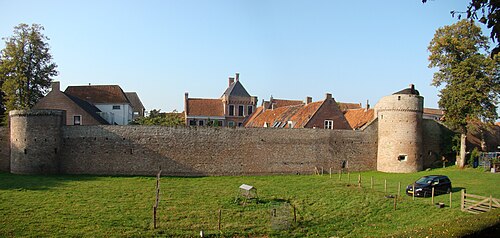 | The old city is completely enclosed by a moat and a 16th-century rectangular earthen rampart with a bastion at each corner. The rampart was changed into a park in the 19th century, but the defenses are still easily recognizable. Several of the old gates were defended by a barbican, the lower parts of which have been excavated and the casemates of one of the barbicans can be visited. Several sections of the medieval city wall still stand behind the 16th-century rampart. One tower of the medieval wall had been changed into a gate in the 16th century. This structure forms the last remaining city gate of the old town. |
| Enkhuizen | North Holland | Yes | Sizable parts of the fortifications remain intact. |  | The landward side of the old town is still completely surrounded by an earthen rampart with five bastions. The last remaining gate facing the landward side of the city is the 17th-century Koepoort. The most impressive remnant of the fortifications is the 16th-century 'Drommedaris' gate, which stands near the harbor. |
| Franeker | Friesland | One or more individual structures (Bastions, gates, towers, etc.) remain. |  | The old city is completely enclosed by a moat. The locations of the old bastions and bulwarks are still recognizable in the shape of the moat. | |
| Gennep | Limburg | Sizable parts of the fortifications remain intact. |  | Lowered remnants of the old city walls surround the west and north sides of the old town. | |
| Geertruidenberg | North Brabant | Yes | Sizable parts of the fortifications remain intact. |  | Most of the fortifications were demolished, but restored sections of the bastioned trace remains to the north and east sides of the old town. |
| Goes | Zeeland | One or more individual structures (Bastions, gates, towers, etc.) remain. |  | The old city is completely enclosed by a moat. The locations of the old bastions and bulwarks are still recognizable in the shape of the moat. | |
| Gorinchem | South Holland | Yes | The city wall remains intact. |  | The old city is completely enclosed by an intact city wall. To the west of the city, the bastioned trace was demolished in order to accommodate the construction of a canal. The defences on that side were subsequently replaced by a Caponier. |
| Gouda | South Holland | One or more individual structures (Bastions, gates, towers, etc.) remain. |  | The old city is completely enclosed by a moat. The remains of a town gate are located near a street named Bogen, meaning 'Arcs', named after the arcs built in the medieval town wall which its trace once ran alongside the Turfsingel side of the street. A part of the town wall is located at the corner Oosthaven with Nieuwe Veerstal. This part of the walls itself once was a part of Gouda castle. Other remains of the castle include subterraneans, cellars and fundaments of walls and towers located in the Houtmanplantsoen, behind the nearby windmill. The lower part of this windmill is a remnant of one of the castle's towers. | |
| Grave | North Brabant | One or more individual structures (Bastions, gates, towers, etc.) remain. |  | Fragments of the double system of moats remain, as well as one city gate. The lower portions of several round medieval towers can be seen at the old harbor. The water gate, leading down to the river Maas, is a recent reconstruction. | |
| Groenlo | Gelderland | Yes | One or more individual structures (Bastions, gates, towers, etc.) remain. |  | The old town is partially surrounded by an old moat, which clearly shows the locations of the old bastions. Part of the bastion trace has been reconstructed. |
| Groningen | Groningen | One or more individual structures (Bastions, gates, towers, etc.) remain. |  | The old town is surrounded by a moat. | |
| Haarlem | North Holland | One or more individual structures (Bastions, gates, towers, etc.) remain. |  | The old city centre is still partially surrounded by a moat. To the north of the city, the moat clearly shows the locations of the old bastions, which have been changed into a park. One city gate remains; the 14th-century Amsterdamse Poort. | |
| Hardenberg | Overijssel | Vestiges. | The only remnant of the medieval town walls is a small lower part of a wall at the western end of the Wilhelminaplein, next to an old water pump. | ||
| Harderwijk | Gelderland | One or more individual structures (Bastions, gates, towers, etc.) remain. |  | Several sections of the old medieval wall remains, the most sizable parts being located to the north of the old city, facing the former Zuiderzee. Two gates, the Vischpoort and the Smeepoort, still remain. The Vischpoort has a lighthouse installed on the roof. | |
| Harlingen | Friesland | One or more individual structures (Bastions, gates, towers, etc.) remain. | Several sections of the moat, indicating the presence of three of the old bastions, remain on the east side of the city. | ||
| Hasselt | Overijssel | One or more individual structures (Bastions, gates, towers, etc.) remain. | On the landside of the city, remnants of the ramparts, featuring four sizable bastions, remain incorporated in a park. | ||
| Hattem | Gelderland | One or more individual structures (Bastions, gates, towers, etc.) remain. |  | On the landside of the old town center some remnants of the city walls remain. On the side of the old town facing the river IJssel, the Dijkpoort can be found. | |
| Hellevoetsluis | South Holland | Yes | The city wall remains intact. |  | The old navy harbor is still entirely surrounded by a bastion trace, which is outfitted with a brick revetment on the side of the walls facing the river. |
| Heukelum | Gelderland | One or more individual structures (Bastions, gates, towers, etc.) remain. | The town is still enclosed by a moat on the three sides facing away from the river Linge. | ||
| Heusden | North Brabant | The fortifications were recently reconstructed. |  | The city walls had been slighted in the 19th century, but have been extensively reconstructed during the middle of the 20th century. | |
| Hoorn | North Holland | One or more individual structures (Bastions, gates, towers, etc.) remain. |  | The old town is still surrounded by a moat. One city gate remains, the 16th-century Oosterpoort. The most notable remnant of the city defenses, however, is the Hoofdtoren, an impressive 16th-century tower, built to defend the harbor. | |
| Hulst | Zeeland | Yes | The city wall remains intact. | 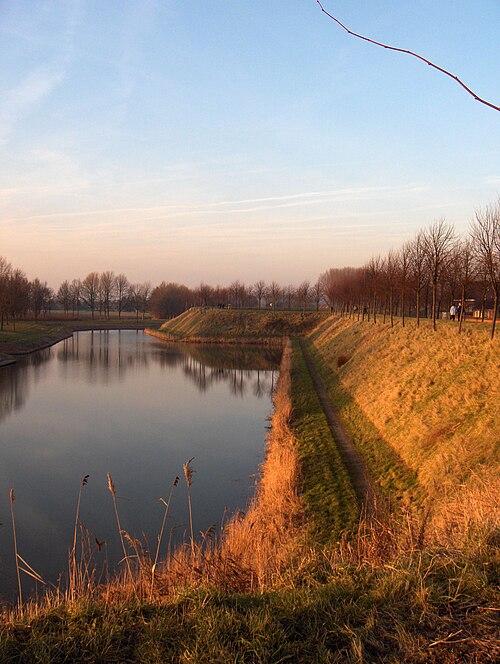 | The old town is still surrounded by a rampart and a moat. Several remnants of outer works, such as ravelins and an outer wall, remain. |
| IJzendijke | Zeeland | One or more individual structures (Bastions, gates, towers, etc.) remain. | 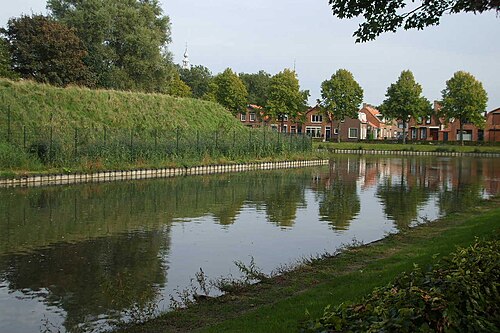 | Some fragments of the old moat remain. One ravelin belonging to the old fortifications has been restored | |
| IJsselstein | Utrecht | One or more individual structures (Bastions, gates, towers, etc.) remain. |  | The old moat remains, while some remnants of the town wall remain on the south and east side of the old town. | |
| Kampen | Overijssel | One or more individual structures (Bastions, gates, towers, etc.) remain. |  | The old moat remains, while the old earthen ramparts remain incorporated in a park. Three medieval city gates remain, two of which have been rebuilt in a renaissance style. The largest gate, the Kroonmarktpoort, retained its medieval appearance. | |
| Klundert | North Brabant | Yes | One or more individual structures (Bastions, gates, towers, etc.) remain. | 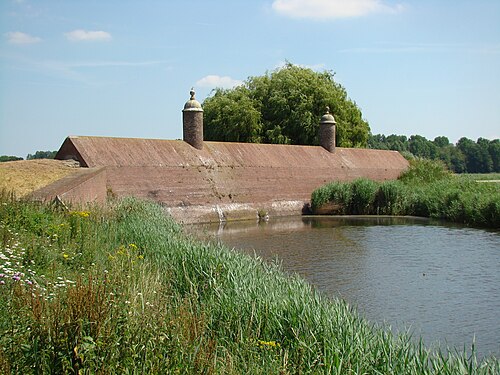 | Several sections of the ramparts and bastions remain intact to the north and south of the old town. |
| Leerdam | Utrecht | Yes | One or more individual structures (Bastions, gates, towers, etc.) remain. |  | The city wall remains intact on the side of the town facing the river Linge. |
| Leeuwarden | Friesland | One or more individual structures (Bastions, gates, towers, etc.) remain. |  | The old town is still entirely surrounded by a moat. Several bastions to the north of the old town have been changed into a park. | |
| Leiden | South Holland | One or more individual structures (Bastions, gates, towers, etc.) remain. |  | The old city is still surrounded by a moat. Of the city defenses, two city gates remain and one medieval tower stand to the south of the old town. Part of a bastion on the east side of the city has been reconstructed. | |
| Maastricht | Limburg | Yes | Sizable parts of the fortifications remain intact. |  | Important parts of all major fortification systems remain intact. Of the first city wall, the Helpoort gate remains, as well as several important sections of the oldest 13th-century city wall. Important parts of the second medieval city wall remain on the east side of the old town, while extensive remnants of the complicated system of baroque fortifications can be found to the north. Additionally, a large network of communication tunnels, casemates, and countermines remain underneath the present outskirts of the city, which were built on top of the old city walls. |
| Megen | North Brabant | One or more individual structures (Bastions, gates, towers, etc.) remain. |  | Only a single 14th-century tower, known as the Gevangenpoort, remains. | |
| Middelburg | Zeeland | Yes | One or more individual structures (Bastions, gates, towers, etc.) remain. |  | The bastioned trace of the city wall has been changed into a park and is still surrounded by a moat. Only one city gate remains, the 18th-century Koepoort. |
| Montfoort | Utrecht | One or more individual structures (Bastions, gates, towers, etc.) remain. |  | One of the medieval city gates has been incorporated into the town hall. Another remaining portion of the town wall remains to the south west of the old town. | |
| Muiden | North Holland | Yes | Sizable parts of the fortifications remain intact. | 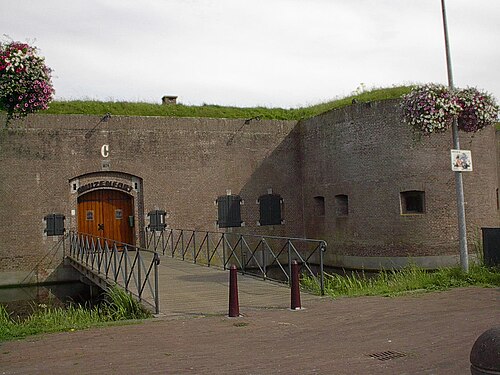 | The 16th-century town walls were greatly adapted in the 19th century, when the town became part of the advanced defenses of Amsterdam. The city walls located to the west of the river Vecht remain intact, as do the walls around the Muiderslot castle. |
| Naarden | North Holland | Yes | The city wall remains intact. |  | Naarden is one of the best preserved fortified cities in Europe, featuring a double system of moats and walls, built in the 17th century. The inner wall features numerous tunnels, casemates, and barracks. |
| Nieuwpoort, South Holland | South Holland | Yes | The city wall remains intact. |  | The tiny town is entirely surrounded by an earth rampart featuring six bastions and a false bray in front of the curtain walls. The town hall is built over a canal running through the center of town and defends a system of locks with which the land surrounding the fortress could be inundated. |
| Nijmegen | Gelderland | Sizable parts of the fortifications remain intact. | 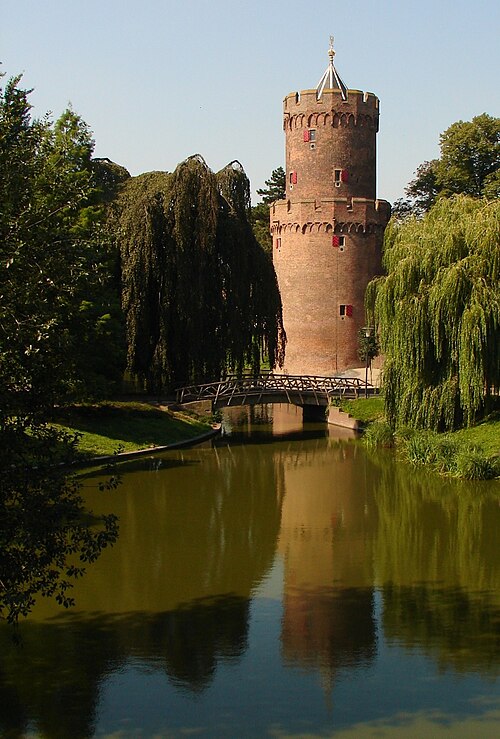 | Sizable parts of the medieval city walls remain to the west and east of the old city. The most notable remnant is the wall, and three towers, located in the Kronenburger park. Of the three towers, the Kronenburger tower is arguable one of the most impressive medieval towers in the Netherlands. | |
| Ootmarsum | Overijssel | Vestiges. | The old town is still fully enclosed bij two ringroads, called the Westwal (Western wall) and the Oostwal (Eastern wall), indicating the trace of the medieval walls. | ||
| Oudeschans | Groningen | Yes | Sizable parts of the fortifications remain intact. |  | The walls of the tiny fortified village have been partially demolished, but remain very recognizable. Part of the city walls have subsequently been reconstructed in the 20th century. |
| Oudewater | Utrecht | One or more individual structures (Bastions, gates, towers, etc.) remain. |  | The old city is enclosed by a moat. The locations of some of the old bastions and bulwarks are still recognizable in the shape of the moat. | |
| Philippine, Netherlands | Zeeland | Vestiges of the fortifications are visible in the landscape. |  | Remnants of bastions, ravelins, and other outworks are clearly distinguishable in the fields surrounding the town. | |
| Ravenstein | North Brabant | One or more individual structures (Bastions, gates, towers, etc.) remain. |  | A moat surrounds much of the old town, clearly showing the location of bastions and ravelins. The remnants of two hornworks are visible to the north and south of the old town. The side of the town facing the river Maas features the remnants of two bastions, excavated from the body of the dyke, as well as the single remaining city gate. | |
| Retranchement | Zeeland | Yes | The city wall remains intact. | 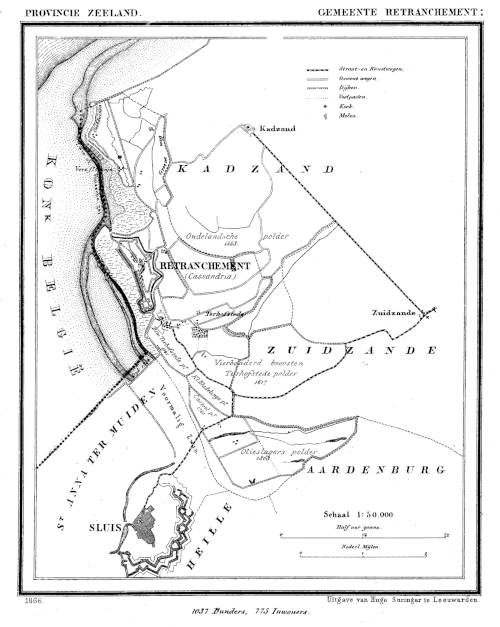 | Retranchement was built in 1604 AD as an entrenched camp, consisting of two small, square forts, connected by a wall with three bastions. The northern fort no longer exists as it was destroyed in a flood in 1682 AD. |
| Rhenen | Utrecht | One or more individual structures (Bastions, gates, towers, etc.) remain. | 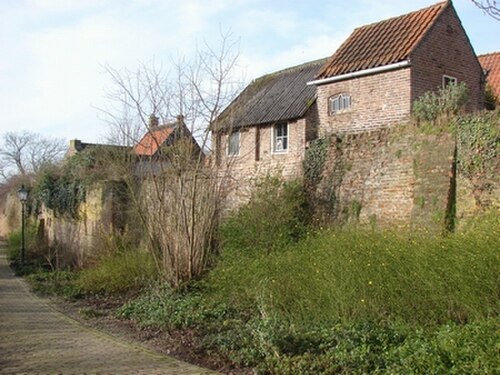 | Lowered fragments of the 14th-century city wall can be found to the south of the old town. To the north, a windmill stands on top of a remnant of the wall. On the eastern entrance of the old town, the remnants of a sizable barracane can be found. | |
| Roermond | Limburg | One or more individual structures (Bastions, gates, towers, etc.) remain. |  | Several fragments of the medieval city wall remain. The most notable and best preserved remnant is the Rattentoren, a 14th-century round tower standing on the north side of the old town. | |
| Sas van Gent | Zeeland | One or more individual structures (Bastions, gates, towers, etc.) remain. |  | Of the once powerful and strategic fortress, very little remains. Most of the fortifications were demolished in 1930. What remains are the remnants of one bastion, upon which the base of an old windmill stands, and the remnants of an old late 17th-century tidal mill, which was built into the fortifications. | |
| Schiedam | South Holland | One or more individual structures (Bastions, gates, towers, etc.) remain. | Parts of the moat remain, including the northern and western part. The famous Schiedam windmills are built on top of the bases of wall towers. | ||
| Schoonhoven | South Holland | Yes | One or more individual structures (Bastions, gates, towers, etc.) remain. |  | Only a fragment of the old moat remains on the landward side of the town. On the riverside stands the Waterpoort, the last remaining city gate, with some adjacent stretches of the old town walls. |
| Sittard | Limburg | Yes | Sizable parts of the fortifications remain intact. | 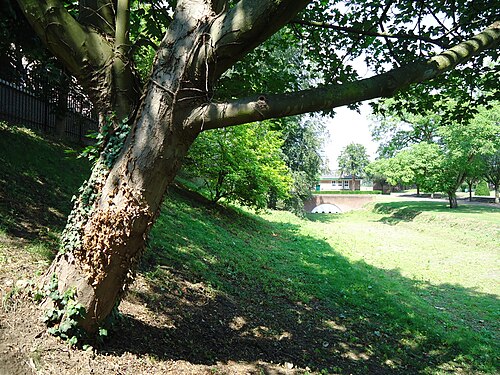 | The powerful fortress town was destroyed by French forces in 1677 AD. Sizable remnants of the medieval city wall remain, buried underneath a later earthen rampart which still surrounds most of the old town. |
| Sluis | Zeeland | Yes | The city wall remains intact. |  | The old town of Sluis was completely destroyed in the second world war, but the extensive fortification system remained intact and can still be visited today. |
| Sloten | Friesland | Yes | Sizable parts of the fortifications remain intact. | 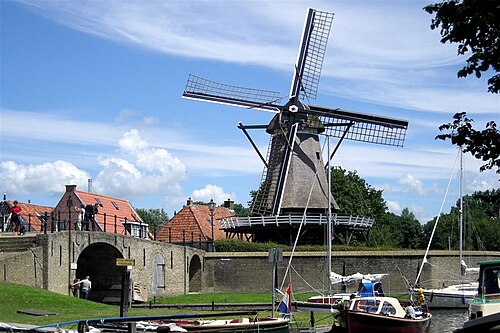 | The tiny fortress town of Sloten is still mostly surrounded by its ramparts, while the moat still completely encircles the town. Two water gates remain intact at the places where an old canal dissects the town. |
| Steenbergen | North Brabant | Vestiges of the fortifications are visible in the landscape. |  | Some fragments of the old moat remain. The locations of the old bastions can be recognized by the course of the moat and the street pattern. Remnants of the outer works are distinguishable in the surrounding landscape. | |
| Steenwijk | Overijssel | Yes | Sizable parts of the fortifications remain intact. | 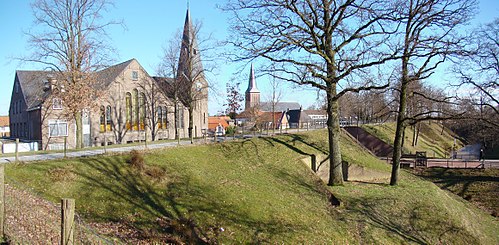 | Sizable parts of the moats and ramparts remain. |
| Stevensweert | Limburg | Vestiges of the fortifications are visible in the landscape. |  | Although the walls themselves have been demolished, the town was built as an ideal fortress, and features the characteristic spider web street pattern that many such towns were built with. Part of the city walls have been reconstructed from 2007 AD onwards. | |
| Tholen | Zeeland | Yes | One or more individual structures (Bastions, gates, towers, etc.) remain. |  | The ramparts were changed into a park, but the moat is still present and four bastions are still recognizable. |
| Tiel | Gelderland | One or more individual structures (Bastions, gates, towers, etc.) remain. | 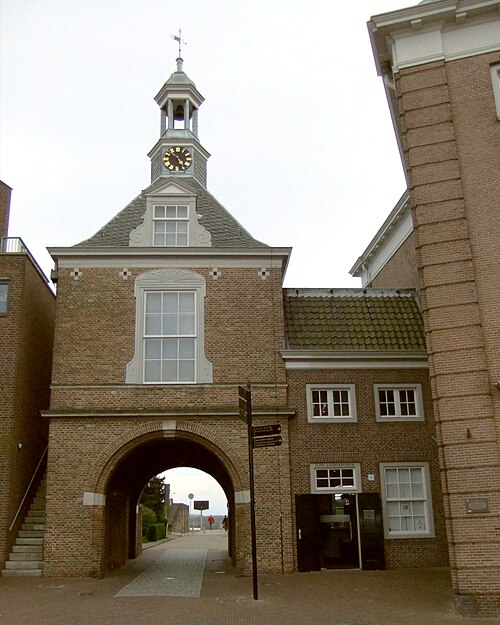 | Fragments of the moat remain, as well as one city gate. | |
| Utrecht | Utrecht | Yes | One or more individual structures (Bastions, gates, towers, etc.) remain. |  | The medieval city wall has been completely demolished. Remnants of three of the 16th-century Italian style bastions remain. The most complete bastion is Sonnenborgh. Most of the old city fortifications were changed into an English style landscape park in the 19th century. The Dutch Water Line forms a double ring of fortresses where it passes east of the city. |
| Valkenburg aan de Geul | Limburg | One or more individual structures (Bastions, gates, towers, etc.) remain. |  | Two city gates remain at the foot of the ruined castle. Part of the city wall remains to the west side of the old town. The small Den Halder castle was built around an old tower of the city wall. | |
| Veere | Zeeland | Yes | Sizable parts of the fortifications remain intact. |  | The Campveerse toren is a large medieval tower that still guards the entrance to the old harbor today. The later earth ramparts remain mostly intact, especially the enlargements built by order of Napoleon |
| Venlo | Limburg | One or more individual structures (Bastions, gates, towers, etc.) remain. |  | Nearly nothing remains of the once extensive fortifications of Venlo. The most extensive remnant being a stretch of 14th-century wall known as the "Luif" | |
| Vianen | Utrecht | One or more individual structures (Bastions, gates, towers, etc.) remain. |  | The Lekpoort is the last remaining city gate of the little town of Vianen. Apart from the gate, a large part of the town is still enclosed by a moat, while a sizable length of (lowered) city wall still stands on the south side of the town. | |
| Vlissingen | Zeeland | Yes | One or more individual structures (Bastions, gates, towers, etc.) remain. |  | Several remnants of bastions, curtain walls and a tower of a medieval city gate, still stand on the waterside. The landward facing defenses have all been demolished. |
| Wageningen | Gelderland | One or more individual structures (Bastions, gates, towers, etc.) remain. |  | The foundations of a small stretch of the medieval city wall have been unearthed and restored. Of the later ramparts, the moat remains, its trace clearly showing the locations of the old bastions. | |
| Weesp | North Holland | Yes | The city wall remains intact. |  | Only four of the planned eight bastions were constructed. All four remain intact and surrounded by a moat. In the 19th century, a circular fort was constructed on an island in the river Vecht. |
| Willemstad | North Brabant | Yes | The city wall remains intact. |  | In 1583 AD, prince William of Orange orders the construction of a fortified city on the location of the village of Ruigenhil. The city, called Willemstad, is still entirely surrounded by its seven sided city wall. |
| Wijk bij Duurstede | Utrecht | One or more individual structures (Bastions, gates, towers, etc.) remain. |  | A portion of the moat remains, as do several fragments of the city wall facing the riverside. One city gate still stands as a windmill has been built on top of it. The ramparts that surround the ruins of Duurstede castle have been reshaped into a landscape style park. | |
| Woerden | Utrecht | Yes | One or more individual structures (Bastions, gates, towers, etc.) remain. |  | Sizable sections of the inner and outer moats still remain and several of the bastions are still recognizable as such. The medieval castle still stands on the south eastern side of the old town. |
| Woudrichem | North Brabant | Yes | The city wall remains intact. |  | The city received a set of strong ramparts with seven bastions in 1580 AD. Only one of the gates, the Gevangenpoort, now remains |
| Zaltbommel | Gelderland | Yes | Sizable parts of the fortifications remain intact. |  | The earthen ramparts and its bastions were made into an English landscape park in the 19th century, but the structures remain intact up to a significant height and are easily recognizable. The outer moat still encloses the landward side of the city. Behind the earthen ramparts stand several sizable fragments of the medieval city wall. |
| Zierikzee | Zeeland | Yes | One or more individual structures (Bastions, gates, towers, etc.) remain. |  | A moat still surrounds the old town. While the walls have been demolished, three medieval gates remain. Of these gates, the ensemble of the Noordhavenpoort and Zuidhavenpoort, which guard the entrance to the old harbor, form one of the most impressive remaining medieval defensive structures in the Netherlands |
| Zutphen | Gelderland | One or more individual structures (Bastions, gates, towers, etc.) remain. |  | Remnants of moats from the medieval and post-medieval fortifications are still visible around the old town. The remnants of the medieval fortifications include several towers, the impressive Drogenapstoren gate, the Bourgonjetoren bastion, a water gate named Berkel gate, and a sizable stretch of the old city wall to the south of the old town. | |
| Zwolle | Overijssel | One or more individual structures (Bastions, gates, towers, etc.) remain. |  | The moat, still clearly showing the remnants of the old bastions, still encloses the old town. The Sassenpoort is the sole remaining city gate, but is one of the largest and most impressive gates of the Netherlands. A number of fragments of the medieval city wall, including two strong towers, still stand along the waterside of the Thorbeckegracht |
Norway
- Fredrikstad
- Gamlebyen
- Oslo (Akershus Fortress)
Poland

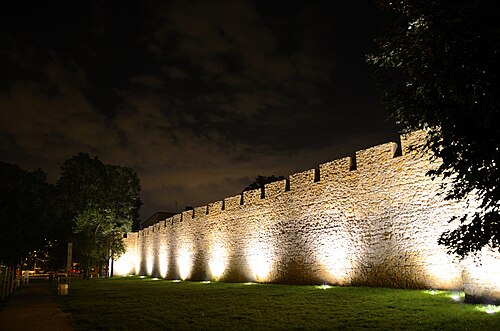


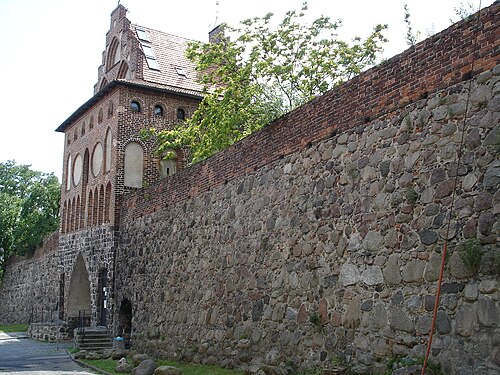
- Barczewo – remnants.
- Będzin – partially preserved.
- Biała
- Białogard – partially preserved with a medieval gate.
- Bierutów – largely preserved.
- Biskupiec – partially preserved.
- Bolesławiec – the old town has fragmentary remains of the old town wall, including several towers and stretches of wall.
- Bolków – remnants.
- Braniewo
- Brodnica – partially preserved.
- Brzeg – a star-shaped park around the old town is what remains of the renaissance fortifications. Some parts of the moat still remain. The shape of seven bastions is recognizable from the air.
- Byczyna – partially preserved.
- Bystrzyca Kłodzka – largely preserved with a medieval gate and two towers.
- Chełmno – almost whole length of walls (2.2 km), with 17 watch towers and city gate, 13th and 14th centuries.
- Chojna – partially preserved with two medieval gates.
- Chojnice
- Chojnów – partially preserved with a tower.
- Darłowo – partially preserved with a medieval gate.
- Dąbrówno – partially preserved.
- Debrzno – partially preserved.
- Dobre Miasto – partially preserved with a medieval tower.
- Drawsko Pomorskie – remnants.
- Dzierżoniów – mostly preserved.
- Gdańsk – partly preserved defensive walls, listed with the historic city center as a Historic Monument of Poland.[14]
- Głogów
- Głubczyce – partially preserved.
- Gniew
- Goleniów
- Golub-Dobrzyń
- Gorzów Wielkopolski
- Góra – partially preserved.
- Grodków
- Grudziądz
- Gryfice
- Gryfino
- Gryfów Śląski – partially preserved.
- Gubin – partially preserved.
- Iława – partially preserved.
- Ińsko – remnants.
- Jawor – partially preserved with two medieval towers.
- Jelenia Góra – partially preserved with medieval towers.
- Jeziorany – remnants.
- Kalisz – partially preserved with a tower.
- Kamienna Góra – partially preserved.
- Kamień Pomorski – partially preserved with a medieval gate.
- Kąty Wrocławskie – partially preserved.
- Kętrzyn – partially preserved.
- Kluczbork – partially preserved.
- Kłodzko – the remains include the impressive citadel located on a hill north of the medieval town.
- Kołobrzeg – a round basion and a part of the moat still remain.
- Kostrzyn nad Odrą – the medieval town was entirely destroyed during World War II, only remaining some ruins of houses, the ruins of a church and the riverside fortified walls. The fortified walls include three bastions and a land gate. The remaining moat of an outer work is located north west of the ruined medieval town.
- Koszalin – remnants.
- Kościan – partially preserved.
- Kowalewo Pomorskie
- Kożuchów
- Kraków – only the barbican, Floriańska Gate, two watch towers and some traces preserved. Along with the historic city center listed as a UNESCO World Heritage Site and Historic Monument of Poland.[15][16]
- Krapkowice
- Kwidzyn
- Legnica – partially preserved with a medieval gate.
- Lębork – partially preserved
- Lidzbark Warmiński
- Lipiany – partially preserved with two medieval gates.
- Lubań – partially preserved with a medieval gate.
- Lubawa – partially preserved.
- Lubin – partially preserved with a gate and towers.
- Lublin
- Lubomierz – partially preserved.
- Lwówek Śląski – largely preserved.
- Malbork – one gate and a round bastion still remain. Stretches of the walls still remain alongside the river in the direction of the famous Malbork Castle
- Maszewo – the town walls are nearly complete, apart from two breaches made for the increasing traffic. The two original town gates are demolished, and an adjacent tower of one of the gates still remains.
- Mieszkowice
- Miłakowo – partially preserved.
- Morąg – partially preserved.
- Moryń
- Myślibórz
- Namysłów
- Nidzica – partially preserved.
- Niemcza – partially preserved.
- Nowe – sizable parts of the walls remain.
- Nowe Miasto Lubawskie – partially preserved with two medieval town gates.
- Nowogard – partially preserved.
- Nowogrodziec – largely preserved.
- Nysa – there are large remains of the renaissance fortifications, notably to the east of the old town and to the north of the Nysa Klodzka river. There are several forts around Nysa. The remains of the medieval town walls include two land gates, the remains of a water gate, some towers and stretches of wall.
- Oleśnica – largely preserved.
- Olkusz
- Olsztyn – partially preserved with a medieval gate.
- Opole – the remaining walls are located in the north east corner of the medieval town.
- Orneta – partially preserved.
- Ostróda – remnants.
- Ośno Lubuskie – largely preserved medieval town walls with several gates and towers.
- Paczków – very well preserved walls with 19 towers and 3 gates; listed with the Old Town as a Historic Monument of Poland.[17]
- Pasłęk – large stretches of the walls remain intact, including two city gates
- Pasym – partially preserved.
- Piotrków Trybunalski – partially preserved.
- Płock – remnants with medieval tower.
- Poznań – city walls existed until the early 19th century (fragments remain); Prussian fortifications were built in the 19th century. Remaining parts are listed along with the Old Town as a Historic Monument of Poland.[18]
- Prabuty
- Prochowice – remnants.
- Prudnik – three watch towers
- Przemyśl – partially preserved ruins
- Przeworsk – partially preserved.
- Pyrzyce – largely preserved with several gates and towers; until World War II best preserved city walls in Pomerania region, from the 14th century
- Radków – partially preserved.
- Recz – partially preserved with two medieval towers.
- Reszel – partially preserved with a medieval tower.
- Sandomierz
- Sępopol – partially preserved with a medieval tower.
- Skarszewy – partially preserved.
- Słupsk – partially preserved.
- Stargard – significant parts survived with 3 gates (including a unique water gate – Brama Młyńska); one of the most interesting city walls in Poland; listed as a Historic Monument of Poland[19]
- Starogard Gdański
- Strzegom – partially preserved with a medieval tower.

- Strzelce Krajeńskie
- Strzelce Opolskie – partially preserved.
- Strzelin – partially preserved.
- Sulechów
- Susz – partially preserved.
- Syców – partially preserved with a tower.
- Szczecin – to the east of the castle remains a well-preserved wall tower. Two town gates still remain.
- Szprotawa

- Szydłów – city walls with Krakowska Gate and watch towers built in the 14th century
- Ścinawa – partially preserved.
- Środa Śląska
- Świdnica – partially preserved with a medieval gate and tower.
- Świdwin – partially preserved with a medieval gate.
- Świebodzice – partially preserved.
- Świebodzin
- Świecie
- Tarnów
- Tczew – partially preserved.
- Tolkmicko – preserved tower.

- Toruń – several watch towers, three city gates and some sections (the longest and most impressive from Vistula) from the 13th to 15th centuries. Along with the historic city center listed as a UNESCO World Heritage Site and Historic Monument of Poland.[20][21]
- Trzcińsko-Zdrój
- Trzebiatów

- Warsaw – partially preserved, partially restored after World War II, barbican restored. Along with the historic city center listed as a UNESCO World Heritage Site and Historic Monument of Poland.[22][23]
- Wieluń
- Wińsko – partially preserved.
- Wolin – only one bastion remains to the south of the town.
- Wołów – partially preserved.
- Wrocław – partially preserved with a medieval tower.
- Zalewo – partially preserved with a medieval tower.
- Zamość – complete renaissance and 19th-century walls preserved
- Ząbkowice Śląskie
- Ziębice – partially preserved with a medieval gate.
- Złotoryja – partially preserved with a medieval tower.
- Żagań
- Żary – partially preserved.
- Żory – partially preserved.
Portugal

- Almeida Vauban style fortress town.
- Avis (or Aviz)
- Beja
- Borba - The medieval castle is in the centre of the present town. Most of the walls are still visible (in some parts integrated on actual houses); the main gate is a main presence in the central square.
- Bragança – the old town is still completely surrounded with medieval walls, including all 12 towers and two gates.
- Caminha
- Castelo Branco
- Castelo de Vide
- Chaves
- Coimbra
- Elvas – Elvas is among the finest examples of intensive usage of the trace italienne (star fort) in military architecture.
- Estremoz
- Évora
- Guarda
- Guimarães
- Lagos
- Lisbon – There are fragments of a Fernandin Wall since the 13th century.
- Marvão
- Monção
- Monsaraz
- Monforte
- Óbidos
- Olivenza
- Peniche
- Santarém
- Setúbal – the remains of 5 bastions can be found around town.
- Valença
- Vide e Cabeça
- Vila Viçosa
Romania
Russia


- City walls
- Derbent (a World Heritage site)
- Izborsk
- Moscow (the walls of the Bely Gorod have been dismantled, the Kitay-gorod wall for the most part too)
- Pskov
- Smolensk
- Vyborg (two towers of the medieval wall remain, while one bastion on one side and a full set on the other remains from the bastioned fortifications)
- Yaroslavl (only several towers still stand)
- Novokuznetsk
- Gorodets
- Kremlins (citadels)
- Ladoga
- Swiyazhsk
- Astrakhan
- Ivangorod
- Kazan
- Kolomna
- Moscow
- Nizhny Novgorod
- Novgorod
- Porkhov
- Tobolsk
- Tula
- Zaraysk
- Korela
- Rostov
- Beloozyorsk
- Suzdal
- Dmitrov
- Mozhaysk
- Gdov
- Uglich
- Yuriev-Polski
- Velikie Luki
- Yam
- Verkhoturie
- Serpukhov
- Alexandrov
- Suzran
- Vyazma
- Vologda
- Volokamsk
- Vladimir
- Zvenigorod-Moskovski
- Ryazan
- Pereyaslavl-Zalesski
- Bryansk
- Irkutsk
Serbia


Slovakia
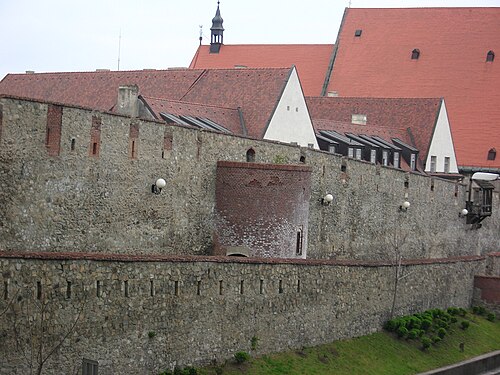

- Banská Bystrica
- Banská Štiavnica – only one city gate left
- Bardejov – walls almost completely preserved, with bastions and barbican
- Beckov
- Bojnice – large parts of the wall preserved, together with one of the city gates
- Bratislava – only few structures have survived from original fortifications.
- Brezno
- Fiľakovo
- Komárno – baroque fortifications almost completely preserved
- Košice
- Kežmarok
- Kremnica – about two-thirds of the defensive walls around the town preserved, with several bastions and the city gate with barbican.
- Krupina
- Levice – parts of the defensive walls were found during an archaeological survey
- Levoča – almost completely preserved
- Modra – about two-thirds of the walls still standing, one bastion and one of the city gates
- Nové Zámky
- Pezinok – parts of the defensive walls visible on several locations of the town
- Podolínec
- Pukanec
- Prešov – parts of the defensive walls were found during an archaeological survey
- Sabinov
- Skalica – large parts preserved
- Spišská Kapitula
- Svätý Jur
- Trenčín – parts of the defensive walls were found during an archaeological survey
- Trnava – mostly preserved, with several bastions and one city gate
- Zvolen
- Žilina
Slovenia
- Celje
- Koper
- Kranj – evidence of the 1st-century fortifications and parts of the medieval fortifications, with four of the original eight towers preserved
- Ljubljana – In the 1st century AD, a Roman settlement called Emona, on the site of the present-day Ljubljana, was fortified with strong walls. A small section of the southern wall is still preserved to this day. Ljubljana got its medieval walls, like many other towns in Slovenia, in the 13th century
- Maribor – Originally 13th-century fortifications, rebuilt several times until the 17th century; some segments, including three towers and two bastions, are still preserved. Withstood sieges by Matthias Corvinus in 1480/1481 and by the Ottoman Empire in 1532.
- Novo Mesto
- Piran – 7th-century fortification, expanded between 1470 and 1533
- Ptuj – 13th-century fortification
- Slovenj Gradec
- Škofja Loka
- Vipavski Križ
Spain
- A Coruña – fragmentary remains and 3 gates
- Aínsa
- Alarcón
- Albarracín
- Alburquerque
- Alcalá de Henares – has preserved 1,200 metres of walls dotted with 19 towers
- Alcántara, Cáceres
- Alcúdia
- Almazán
- Alquézar
- Artajona
- Astorga
- Atienza
- Ávila – has the most complete medieval walls in Spain, half of which is navigable on foot
- Badajoz – has medieval walls and most of its renaissance fortress
- Balaguer
- Barcelona – has portions of a Roman wall
- Béjar
- Berlanga
- Berlanga de Duero
- Besalú
- Brihuega
- Buitrago del Lozoya – has complete medieval walls.
- Burgos – has some sizable remaining parts of the town walls alongside the Paseo Cubos and to the north east of the castle, including 10 wall towers. There are also remaining towers at the Calle Trinidad and the Calle San Lesmes. Five gates still remain intact, the Arco de Santa Maria, the Arco San Martin, the Arco de San Esteban, the Arco de San Gil and the Arco de San Juan
- Burgo de Osma-Ciudad de Osma
- Cáceres
- Campo Maior
- Cartagena
- Castellar de la Frontera
- Cedeira – fragmentary remains[24]
- Ceuta
- Ciudad Real
- Ciudad Rodrigo – suffered several sieges in Napoleonic wars, walls remain intact
- Ciutadella de Menorca
- Coca, Segovia
- Córdoba
- Coria – the old town is still completely surrounded by medieval and Roman walls
- Covarrubias, Province of Burgos
- Cuéllar
- Cuenca
- Daroca
- Frías, Province of Burgos
- Galisteo – the town walls are completely preserved
- Gijón
- Girona
- Granada
- Zarza de Granadilla
- Haza, Province of Burgos
- Hondarribia
- Huesca – fragmentary remains
- Ibiza
- Jerez de los Caballeros
- Laguardia
- Laredo – two town gates still remain, the Puerta de Merenillo and the Puerta de Bilbao
- Llanes
- León – has an almost complete set of Roman walls dating back to the 3rd century AD, besides some parts built during the Middle Ages
- Loarre
- Lugo – has completely intact Roman walls. It is protected by UNESCO as a World Heritage Site
- Maderuelo
- Walls of Madrid – five walls
- Maderuelo
- Madrigal de las Altas Torres
- Málaga
- Mansilla de las Mulas
- Manzaneda – Part of the medieval wall still remains, including one of the 3 gates[25]
- Mataró
- Medina del Campo – fragmentary remains
- Melilla – the old town is still fully enclosed by its impressive medieval walls
- Mirambel
- Molina de Aragón
- Monforte de Lemos – most of the 13th century city walls have been preserved, including two gates.
- Montblanc
- Montfalco Murallat
- Mora de Rubielos
- Morella
- Niebla, Huelva
- Olivenza – the oldest part of the town, the area adjacent to the medieval castle of Olivenza, still has well-preserved stretches of walls and towers, including two original town gates. Large parts of the later star-shaped Renaissance fortifications are also preserved, including 9 bastions and 1 town gate, the Puerta del Calvario
- Olmedo
- Oviedo – has preserved parts of its medieval walls
- Palazuelos
- Palma, Majorca
- Pamplona
- Pedraza, Segovia
- Peñíscola
- Plasencia
- Portillo, Valladolid – fragmentary remains
- Rada
- Rello
- Requena
- Ronda – has almost complete walls (not counting the gorge which defends it on one side)
- Salamanca
- San Vicente de la Barquera – the old town has preserved the walls along with the castle
- Santander – the old town had medieval defensive walls. A stretch of wall alongside Calle de Cádiz is all that remains
- Santiago de Compostela – only a gate (Arco de Mazarelos) remains
- Santillana del Mar – there are fragmentary remains of the medieval walls, including a stretch of wall alongside a car park southeast of the old town and a tower at the Plaza las Arenas facing to the north
- Sasamón
- Segovia – preserves parts of the wall plus three gates
- Sigüenza
- Talavera de la Reina
- Tarifa
- Tarragona
- Tiedra – vestiges
- Toledo
- Tortosa – large parts of the extensively fortified medieval town remain intact
- Tossa de Mar
- Tui – a large part of both the 12th century wall and the 17/18th century fortifications has been preserved.[26]
- Urueña
- Valencia – preserves portions of a Muslim wall and towers from Christian medieval age
- Valladolid – vestiges
- Vitoria-Gasteiz – fragmentary remains
- Viveiro – fragmentary remains and 3 gates of the original 6[27]
- Xàtiva
- Zamora – the old town walls remain largely intact, especially at the north, west and riverside of the old town.
- Zaragoza
Sweden
- City wall of Visby
- Gothenburg has a part of the western city wall left, the bastionCarolus Rex at Esperantoplatsen (Esperanto square) and most of the city moat is still left.
- Halmstad had renaissance ramparts. To the north of the old town a bastion with adjacent town gate remains, the Norre Port. To the south of the old town a bastion with a remnant of the moat remains.
- Kalmar substantial remains of the walls. Sizable stretches of walls and a bastion remain to the south of the old town. To the east remain two bastions. To the north remain portions of wall near Fiskaregatan. To the west the shape of two bastions is clearly recognizable, with a ravelin in front of the remaining town gate Westport (Westgate). Two other town gates still remain, an unmanned gate of later date at the Skeppsbrogatan, and a gate at Skeppsbron.
- Stockholm has a small remainder of the medieval city wall preserved.
- Bohus Fortress
Switzerland

- Aarau – the remains of the medieval town walls include two town gates (the Haldertor and the Oberer Turm) and a tower (the Pulverturm) with an adjacent stretch of wall.
- Altstätten
- Arbon – the remains include some fragments of wall and a tower converted into a house.
- Avenches
- Baden, Switzerland
- Basel
- Bellinzona (Dominated by its three castles: Castelgrande, Castello di Montebello and Castello di Sasso Corbaro)
- Biel
- Bremgarten
- Brugg
- Bülach
- Chur
- Delémont
- Diessenhofen
- Frauenfeld
- Fribourg
- Geneva
- Greifensee
- Grüningen
- Gruyères
- Ilanz
- Laufen
- Lausanne
- Lenzburg
- Liestal – one town gate remains.
- Lucerne – the wall on the northern bank of the Reuss is well preserved and among the principal landmarks of the city. It is called Museggmauer and Stadtmauer.
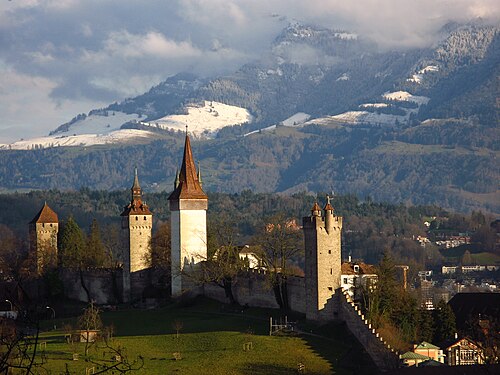
The late medieval walls of Lucerne, called Museggmauer or Stadtmauer. - Maienfeld
- Meienberg, Sins, Aargau
- Morges
- Münchenstein
- Murten: Medieval walls
- Neuchâtel
- Nyon
- Olten
- Orbe
- Rapperswil
- Regensberg
- Rheinfelden
- Romont
- Schaffhausen
- Sempach
- Solothurn – large parts still remain, including several walls, towers and a bastion. Two town gates remain, the impressive Baseltor and the Bieltor.
- Steckborn
- Sursee
- Thun
- Uznach
- Wangen an der Aare
- Werdenberg
- Wiedlisbach
- Willisau
- Winterthur
- Yverdon-les-Bains
- Zofingen
- Zug – the only remainder of the inner town walls is the Zeitturm (Clocktower), a medieval town gate. The remains of the outer town walls include four towers (the Kapuzinerturm, Knopfliturm, Huwilerturm and the Pulverturm), and some stretches of wall.
- Zürich – the main remains are the Schanzengraben, and the shapes of several bastions are recognizable through the course of the moat. One bastions remains largely intact, and it now houses the Alter Botanischer Garten.
Turkey

- Troy. The ancient city of Troy was famous for its defensive walls. There is archaeological evidence that Troy VII, generally identified as the stage of the legendary Trojan War of Homer's Iliad, usually dated between 1194 BC – 1184 BC, had walls with a carefully built stone base over four meters thick and some nine meters high in places, which was surmounted by a larger superstructure with towers in mudbrick. The walls in Homer's epic are so mighty that the siege of Troy by Achaeans lasts more than nine years, and only could be finished with the trickery of the Trojan Horse. Sections of the stone base of Trojan walls still survive on the archaeological site in present-day Hisarlık, in Çanakkale Province.
- Istanbul. The system of walls around (as it was then known) Constantinople built in 412 by the Roman emperor Theodosius II was a complex stone barrier that stretched 6.5 kilometers and is often called the Wall of Theodosius. This barrier stood impregnable for ten centuries and resisted several violent sieges until 1453 when the Ottomans succeeded in breaching the walls. There was a new element in the battlefield: the Ottoman army had powdercannon and the walls offered limited resistance to them.

- Diyarbakır. Diyarbakır is surrounded by an almost intact, dramatic set of high walls of black basalt forming a 5.5 km (3.4 mi) circle around the old city. There are four gates into the old city and 82 watch-towers on the walls, which were built in antiquity, restored and extended by the Roman emperor Constantius in 349.
- Ankara
- Çanakkale
- İznik
- Antalya
- Sinop
- Rize
- Amasya
- Bodrum
- Alanya
- Ani
- Kuşadası
- Pergamon
- Assos
- Bozcaada
- Edirne
- Trabzon. Most of the city walls are still standing and are among the city's oldest buildings. Their oldest part can be dated back to the 1st century AD during the Roman Empire era. Historical sources provide information about older stages of their construction. Xenophon, who visited the city in the 5th century BC also mentioned the existence of city walls
- Enez
- Bursa
- Sığacık
- Notion (ancient city)
- Ephesus
- Foça
- Alaşehir
Ukraine
- City walls
- Bilhorod-Dnistrovskyi (see Akkerman Fortress)
- Chernihiv (only ruins remain underground)
- Kropyvnytskyi (small parts of St. Elizabeth Fortress survived)
- Kyiv (see Golden Gate)
- Lviv (see Hlyniany Gate and Lviv High Castle)
- Citadels and castles
- Lutsk (see Lubart's Castle)
- Kamianets-Podilskyi (see Kamianets-Podilskyi Castle)
- Kremenets (see Kremenets Castle)
- Khotyn (see Khotyn Fortress)
- Khust (see Khust Castle)
- Mangup
- Medzhybizh (see Medzhybizh Fortress)
- Mukachevo (see Palanok Castle)
- Stare Selo (see Stare Selo Castle)
- Sudak
- Uzhhorod (see Uzhhorod Castle)
- Yeni-Kale
United Kingdom
England
| Place | County | Condition | Image | Notes |
|---|---|---|---|---|
| Alnwick | Northumberland | Grade I listed Bondgate (Hotspur Gateway) and section of wall remain of medieval defences, Pottergate Tower is C18 rebuild of medieval gate and may incorporate some medieval fabric. |  | |
| Bath | Somerset | Several fragments of the medieval wall still survive. The East Gate is the only remaining gateway. |  | The length of wall opposite the Mineral Water Hospital is largely a reconstruction of the medieval wall. By far the best length, over 160 ft, could until 1963 be seen on the site cleared by an air-raid in 1940. This was the SE corner of the medieval city. The remains of this wall now lie buried below the shops of Stall Street. |
| Berwick-upon-Tweed | Northumberland | The Elizabethan ramparts with their bastions, gateways and earthworks survive. |  | Spades Mire is an earthwork linear ditches, possibly forming an outer line of defence for medieval Berwick. Situated on the south side of the ditch are traces of an accompanying rampart, now much spread and up to 13m wide. The Lord's Mount is a massive curved stone bulwark which was built in the 1540s to protect the town walls at their weakest point. |
| Bridgnorth | Shropshire | The North Gate is still present, the site of the former Postern Gate still very visible; and parts of the wall now form garden walls in various parts of the town. |  | Bridgnorth's town walls were initially constructed in timber between 1216 and 1223; murage grants allowed them to be upgraded to stone between the 13th and 15th centuries.[28] |
| Bristol | Bristol | Most of the walls were demolished in 1760, although traces and one city gate remain. |  | The walls were initially raised by Geoffrey de Montbray, a Norman nobleman who built Bristol Castle. |
| Canterbury | Kent | Over half of the original circuit survives, including Westgate, the largest surviving city gate in England. |  | Originally fortified by the Romans. |
| Carlisle | Cumbria | The castle and western walls largely survive. |  | |
| Chester | Cheshire | Mostly intact | 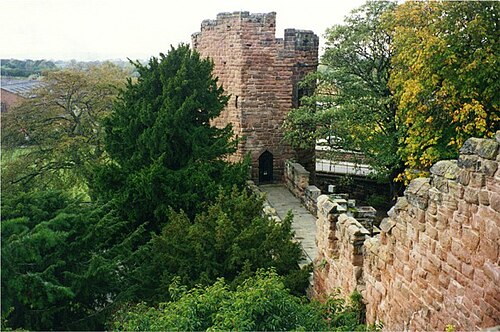 | The city walls are one of the city's biggest tourist attractions. They were originally built by the Romans and continue to form a complete ring around much of the present-day city centre. |
| Chichester | West Sussex |  | The original Roman city wall was over 6 1⁄2 foot (2.0 m) thick with a steep ditch (which was later used to divert the River Lavant). It survived for over one and a half thousand years but was then replaced by a thinner Georgian wall. | |
| Colchester | Essex | Approximately half of the walls remain. |  | The town was surrounded by a wall built by the Romans after Boudica had sacked the town. |
| Coventry | West Midlands | Two gates survive, connected by a section of wall that runs through Lady Herbert's Garden. Other small fragments dotted around the city centre, mainly hidden by modern buildings, include the remains of a bastion near Upper Well Street. Several fragments have been incorporated into newer buildings, including the Town Wall Tavern.[29] |  | The walls were mostly demolished in 1662. |
| Durham | County Durham | The Castle formed the largest part of Durham's defences, with the neighbouring "Backgate", demolished in the 1760s, which sat across Sadler Street. This was accompanied by a Gaol, which survived until the 1840s, remains of which are present in an alley off Sadler Street. Other walls surrounding the centre of Durham survive between the River Wear, and the houses lining a number of thoroughfares: Sadler Street, North Bailey, South Bailey, and Palace Green. The street names North Bailey and South Bailey are testament to this fact. | It is debatable just how defensive these walls were, and some parts have since become garden walls. The archway of a Water Gate survives where South Bailey meets Prebends' Bridge. | |
| Exeter | Devon | The walls comprise Roman, Anglo-Saxon and medieval elements. 72% of the circuit survives. |  | |
| Great Yarmouth | Norfolk | About two-thirds of the wall remains. Of the original eighteen towers, eleven survive. |  | The walls date back to the Middle Ages. |
| Hartlepool | County Durham |  | Dating from the late 14th century, the limestone wall once enclosed the whole of the medieval town. | |
| Hereford | Herefordshire |  | ||
| Kingston upon Hull | East Riding of Yorkshire |  | ||
| Leicester | Leicestershire | Mostly demolished in the 16th century. | The city walls were originally built by the Romans and most of them still remained by the 15th century, however archaeological evidence suggests that they were partially destroyed and rebuilt a number of times, including after the 1173 rebellion.[30] | |
| Lincoln | Lincolnshire | Fragmentary remains. |  | |
| London | Greater London | Fragments of London's Wall, the wall that once surrounded the Roman town of Londinium, are still visible just outside the Museum of London and at Tower Hill in the City of London. |  | |
| Ludlow | Shropshire | Good lengths of the wall remain and a number of the gates too |  | |
| Newcastle upon Tyne | Tyne and Wear | Much of the town wall was demolished during the late 18th and early 19th centuries but several sections still remain. |  | |
| Norwich | Norfolk |  | ||
| Oxford | Oxfordshire | Major fragments are preserved in the gardens of New College and Merton College and as part of the exterior wall of Pembroke College on Brewer Street. |  | |
| Rochester | Kent | 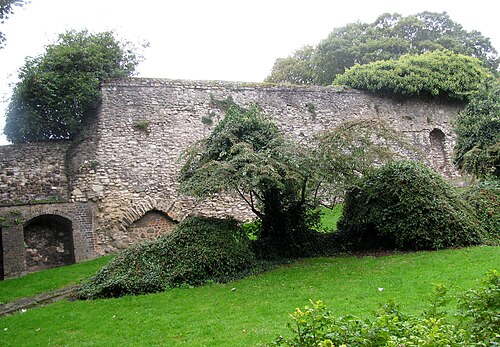 | The city walls were first built by the Romans. | |
| Rye | East Sussex | 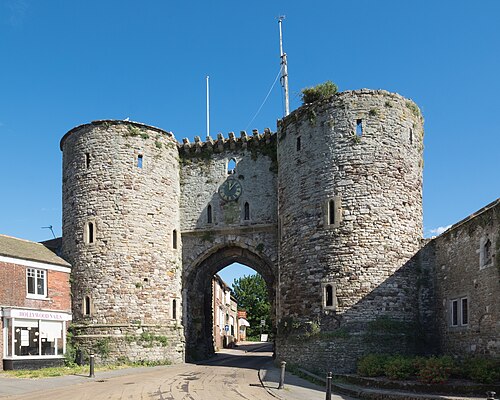 | In 1377 the town was sacked by the French, after which the city walls were completed as a defence against foreign raiders. | |
| Salisbury | Wiltshire | Around the original medieval city, including the cathedral and the close. | ||
| Shrewsbury | Shropshire | One long section remains along the 'Town Walls' road; other shorter sections exist, such as behind Newport House on Dogpole, and near Shrewsbury Castle. |  | |
| Southampton | Hampshire | Lengthy sections of Southampton town walls remain, especially to the south and west. |  | |
| Wareham | Dorset | Wareham town defences consist of an earthen rampart and ditch. | 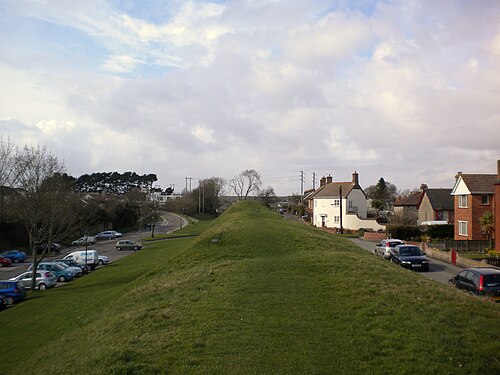 | The best preserved Saxon town walls in England. |
| Warwick | Warwickshire | Two of the three main gates of the Norman town wall survive. |  | |
| Winchelsea | East Sussex | Three of four gateways survive from the walls built c. 1415; Strand Gate (late 13th century), Pipewell or Land Gate (rebuilt, early 15th century) and New Gate (late 13th century). |  | |
| Winchester | Hampshire | Walls fragmentary, but traceable throughout their length. Repaired in 14th and 15th centuries. Limestone rubble. South east corner of full height complete with battlements. Walls shared by the city, Wolvesey Palace, Cathedral Close and Wolvesey Castle. Two gates remain. Wall ran along line of Roman Wall." |  | |
| Worcester | Worcestershire | Remains of the Worcester city walls can still be seen |  | |
| York | North Yorkshire | the extensive city walls are the longest and most complete in England, lacking only a few short sections and most of the posterns. |  |
Northern Ireland
| Place | County | Condition | Image | Notes |
|---|---|---|---|---|
| Bangor | County Down | |||
| Carrickfergus | County Antrim | Only a few fragments of the walls remain | ||
| Derry | County Londonderry | Completely intact |  | The city walls were completed in 1619, it was the last walled city to be built in Europe the walls are entirely intact (the only city on the island of Ireland to hold this distinction). The walls withstood several sieges, including the Siege of Derry in 1689. As the walls were never breached the city gained its nickname as "the maiden city". |
Scotland
| Place | Condition | Image | Notes |
|---|---|---|---|
| Dundee | Only one section of the city walls remain |  | First constructed in 1545, the Wishart Arch. |
| Edinburgh | Fragments of the 16th-century Flodden Wall and 17th-century Telfer Wall remain. |  | Walls were first constructed in the 12th century, although none of these remain today. |
| Stirling | 5 significant segments of the 16th century town wall remain, including two defensive bastions. |  | The irregular 7m high and 1.8m thick wall was constructed to defend the southern and western approaches to the town, and today is bordered by the public walkway "the back walk" |
| St Andrews | Only two city gates remain. |  |
Wales
Vatican City
See also
References
- ↑"12 Impressive Walled Cities in the World". Retrieved 9 December 2012.
- 12"Discovering the secret city from the 1700s under Halifax". CTV Atlantic. BellMedia. 30 April 2019. Retrieved 9 July 2020.
- ↑"Le Bourg des Trois-Rivières".
- ↑"Defenses – History – Colony of Avalon". www.heritage.nf.ca.
- ↑"Baluarte de Santiago". Fodor's. Retrieved 30 October 2009.
- ↑Castillero, Alfredo (2004). UNESCO Guides: Panamá la Vieja and Casco Viejo. UNESCO Publishing. ISBN 92-3-103923-7.
- ↑"St. Augustine Town Plan Historic District-American Latino Heritage: A Discover Our Shared Heritage Travel Itinerary". Nps.gov. Archived from the original on April 6, 2015. Retrieved 2018-09-16.
- ↑"New Orleans before the battle The Battle of New Orleans December 1814 – January 8, 1815". battleofneworleans.org. Retrieved 2016-09-04.
- ↑Administration, Works Progress (2011-08-15). New Orleans City Guide. Garrett County Press. ISBN 9781891053405.
- ↑"The Dutch & the English, Part 2: A Wall by Any Other Name". NYC Department of Records & Information Services. February 23, 2017. Retrieved January 17, 2023.
- ↑Institute of Taiwanese History, Academica Sinica. "清代臺灣城郭". 台灣歷史文化地圖.
- ↑Seka Brkljača (1996). Urbano biće Bosne i Hercegovine (in Serbo-Croatian). Sarajevo: Međunarodni centar za mir, Institut za istoriju. p. 27. Retrieved 28 October 2021.
- ↑"The natural and architectural ensemble of Stolac". UNESCO World Heritage Centre. Retrieved 28 October 2021.
- ↑Zarządzenie Prezydenta Rzeczypospolitej Polskiej z dnia 8 września 1994 r. w sprawie uznania za pomnik historii., M.P., 1994, vol. 50, No. 415
- ↑"Historic Centre of Kraków". Retrieved 5 April 2026.
- ↑Zarządzenie Prezydenta Rzeczypospolitej Polskiej z dnia 8 września 1994 r. w sprawie uznania za pomnik historii., M.P., 1994, vol. 50, No. 418
- ↑Rozporządzenie Prezydenta Rzeczypospolitej Polskiej z dnia 22 października 2012 r. w sprawie uznania za pomnik historii "Paczków - zespół staromiejski ze średniowiecznym systemem fortyfikacji", Dz. U., 2012, No. 1240
- ↑Rozporządzenie Prezydenta Rzeczypospolitej Polskiej z dnia 28 listopada 2008 r. w sprawie uznania za pomnik historii "Poznań - historyczny zespół miasta", Dz. U., 2008, vol. 219, No. 1401
- ↑Rozporządzenie Prezydenta Rzeczypospolitej Polskiej z dnia 17 września 2010 r. w sprawie uznania za pomnik historii "Stargard Szczeciński - zespół kościoła pod wezwaniem Najświętszej Marii Panny Królowej Świata oraz średniowieczne mury obronne miasta", Dz. U., 2010, vol. 184, No. 1236
- ↑"Medieval Town of Toruń". Retrieved 5 April 2026.
- ↑Zarządzenie Prezydenta Rzeczypospolitej Polskiej z dnia 8 września 1994 r. w sprawie uznania za pomnik historii., M.P., 1994, vol. 50, No. 422
- ↑"Historic Centre of Warsaw". Retrieved 5 April 2026.
- ↑Zarządzenie Prezydenta Rzeczypospolitej Polskiej z dnia 8 września 1994 r. w sprawie uznania za pomnik historii., M.P., 1994, vol. 50, No. 423
- ↑Muralla urbana de Cedeira
- ↑"Manzaneda | Asociación española de amigos de los Castillos, Castillos de España, Castillos medievales". www.castillosdeespaña.es.
- ↑Muralla de Tui – Asociación Española de Amigos de los Castillos.
- ↑Muralla urbana de Viveiro.
- ↑"Fragment of Town Walls (listed section), rear of 93 Cartway (E and N side), SMRNO00374". Discovering Shropshire's History. Retrieved 22 October 2011.
- ↑"The Town Wall Tavern". realalerambles.co.uk. Retrieved 23 April 2018.
- ↑"Leceister Walls and Gates". University of Leceister. Retrieved 22 May 2019.
- City walls
- قوائم المباني والمنشآت
- المستوطنات المحصنة
- قوائم المدن