
تاريخ الرسم


يمتد تاريخ الرسم عبر الزمن إلى القطع الأثرية والأعمال الفنية التي أبدعها فنانو ما قبل التاريخ، ويشمل جميع الثقافات. إنه يمثل تقليدًا متواصلًا، وإن كان متقطعًا دوريًا، منذ العصور القديمة. وعبر الثقافات والقارات والآلاف من السنين، يتألف تاريخ الرسم من نهر متدفق من الإبداع يستمر حتى القرن الحادي والعشرين. [ 1 ] وحتى أوائل القرن العشرين، اعتمد الرسم بشكل أساسي على الزخارف التمثيلية والدينية والكلاسيكية ، وبعد ذلك اكتسبت المناهج التجريدية والمفاهيمية البحتة رواجًا .
تتوازى التطورات في الرسم الشرقي تاريخياً مع تلك التي شهدتها الرسم الغربي عموماً، قبل بضعة قرون. [ 2 ] كان للفن الأفريقي ، والفن اليهودي ، والفن الإسلامي ، والفن الإندونيسي ، والفن الهندي ، [ 3 ] والفن الصيني ، والفن الياباني [ 4 ] تأثير كبير على الفن الغربي، والعكس صحيح. [ 5 ]
في البداية، خدمت اللوحات الشرقية والغربية أغراضًا نفعية، ثم حظيت برعاية إمبراطورية وخاصة ومدنية ودينية، قبل أن تجد جمهورًا لها لاحقًا بين طبقة النبلاء والطبقة الوسطى. فمنذ العصر الحديث، مرورًا بالعصور الوسطى وحتى عصر النهضة ، عمل الرسامون لصالح الكنيسة وطبقة النبلاء الثرية. [ 6 ] وبدايةً من عصر الباروك ، تلقى الفنانون طلبات خاصة من طبقة وسطى أكثر تعليمًا وثراءً. [ 7 ] وأخيرًا، في الغرب، بدأت فكرة " الفن للفن " [ 8 ] تتجلى في أعمال الرسامين الرومانسيين مثل فرانسيسكو دي غويا ، وجون كونستابل ، وجون مالورد ويليام تيرنر . [ 9 ] وشهد القرن التاسع عشر ظهور معارض الفنون التجارية ، التي وفرت الرعاية الفنية في القرن العشرين. [ 10 ]
ما قبل التاريخ


أقدم اللوحات المعروفة يعود تاريخها إلى ما بين 40,000 و60,000 عام ( فن العصر الحجري القديم الأعلى )، وقد عُثر عليها في كهوف منطقة ماروس ( سولاويزي ، إندونيسيا ). وهي مرسومة باستخدام قوالب يدوية وأشكال هندسية بسيطة. [ 11 ] [ أ ]

في نوفمبر/تشرين الثاني 2018، أعلن العلماء عن اكتشاف أقدم لوحة فنية تصويرية معروفة آنذاك، يزيد عمرها عن 40,000 عام (وربما يصل إلى 52,000 عام)، لحيوان غير معروف، في كهف لوبانغ جيريجي صالح في جزيرة بورنيو الإندونيسية . [ 13 ] [ 14 ] وفي ديسمبر/كانون الأول 2019، اكتُشفت لوحات كهفية تُصوّر صيد الخنازير في منطقة ماروس-بانكيب الكارستية في سولاويزي ، وهي أقدم من ذلك بكثير، إذ يُقدّر عمرها بما لا يقل عن 43,900 عام. وقد اعتُبر هذا الاكتشاف "أقدم تصوير معروف لسرد القصص وأقدم مثال على الفن التصويري في تاريخ البشرية". [ 15 ] [ 16 ] وفي عام 2021، أُعلن عن اكتشاف رسم كهفي لخنزير في سولاويزي ، إندونيسيا، يعود تاريخه إلى أكثر من 45,500 عام. [ 17 ] [ 18 ] في 3 يوليو 2024، نشرت مجلة Nature نتائج بحثية تشير إلى أن الرسومات الكهفية التي تصور شخصيات بشرية تتفاعل مع خنزير، والتي يبلغ قياسها 91 × 38 سم (36 × 15 بوصة ) في ليانغ كارامبوانغ، يبلغ عمرها حوالي 51200 عام، مما يجعلها أقدم الرسومات المعروفة في العالم. [ 19 ] [ 20 ]
توجد أمثلة على الرسومات الكهفية في جميع أنحاء العالم - في إندونيسيا وفرنسا والهند وإسبانيا وجنوب إفريقيا والصين وأستراليا وغيرها.
تعددت التكهنات حول المعنى الذي حملته هذه اللوحات لأصحابها. فربما رسم فنانو ما قبل التاريخ الحيوانات "لصيد" أرواحها أو أرواحها ليسهل عليهم اصطيادها، أو ربما مثّلت اللوحات رؤية روحانية وتكريمًا للطبيعة المحيطة . وقد تكون نتاجًا لحاجة أساسية للتعبير متأصلة في الإنسان، أو ربما كانت وسيلة لنقل معلومات عملية.
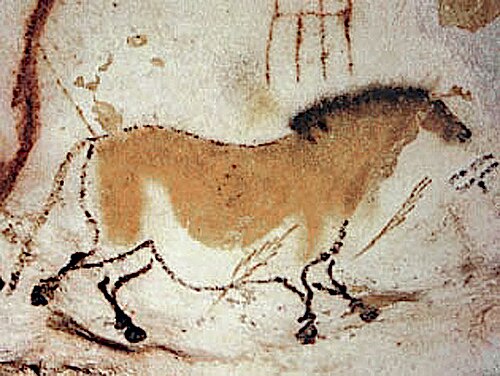 لاسكو ، حصان
 لاسكو ، الثيران والخيول
 لوحة كهفية إسبانية تصور الثيران
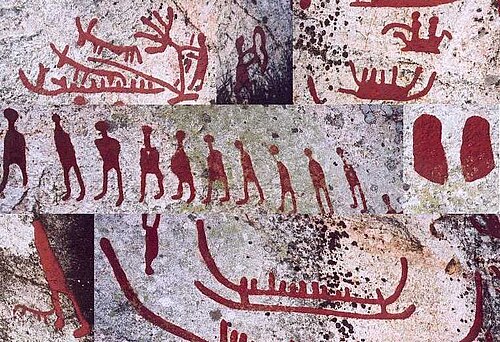 نقوش صخرية ، من السويد، العصر البرونزي الشمالي (مُلوّنة)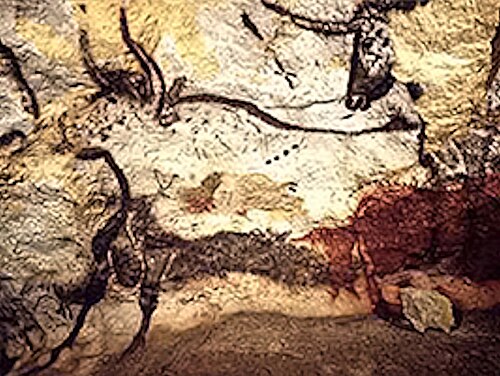
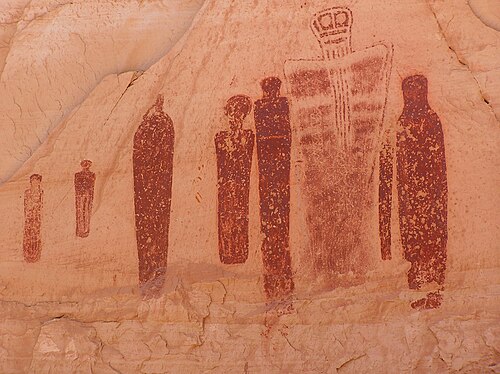
 كويفا دي لاس مانوس (تعني بالإسبانية كهف الأيدي) في مقاطعة سانتا كروز في الأرجنتين، ج. 7300 قبل الميلاد
 تم العثور على رسومات صخرية في منطقة كيمبرلي الشمالية الغربية في غرب أستراليا حوالي 15000 قبل الميلاد [ 21 ]
في العصر الحجري القديم ، كان تمثيل البشر في رسومات الكهوف نادرًا. في الغالب، كانت الحيوانات هي التي تُرسَم، ليس فقط الحيوانات التي كانت تُستخدم كغذاء، بل أيضًا الحيوانات التي تُمثل القوة مثل وحيد القرن أو السنوريات الكبيرة ، كما هو الحال في كهف شوفيه. أحيانًا كانت تُرسَم علامات مثل النقاط. تشمل التمثيلات البشرية النادرة بصمات الأيدي والرسومات الاستنسلية، وأشكالًا تُصوِّر هجائن بين الإنسان والحيوان . يحتوي كهف شوفيه في مقاطعة أرديش الفرنسية على أهم رسومات الكهوف المحفوظة من العصر الحجري القديم، والتي رُسمت حوالي 31000 قبل الميلاد. أما رسومات كهف ألتاميرا في إسبانيا، والتي رُسمت بين 14000 و12000 قبل الميلاد، فتُظهر، من بين أمور أخرى، حيوانات البيسون . تُعد قاعة الثيران في لاسكو ، دوردوني، فرنسا، واحدة من أشهر رسومات الكهوف، ويعود تاريخها إلى ما بين 15000 و10000 قبل الميلاد.
إن كان لهذه الرسومات معنى، فهو لا يزال مجهولاً. لم تكن الكهوف تقع في منطقة مأهولة، لذا يُحتمل أنها استُخدمت في طقوس موسمية. تُصاحب الحيوانات علامات تُشير إلى استخدام سحري مُحتمل. تُفسَّر الرموز الشبيهة بالأسهم في لاسكو أحيانًا على أنها تُستخدم كتقاويم أو جداول ، لكن الأدلة لا تزال غير قاطعة. [ 22 ] يُعدّ رسم المحاربين السائرين ، وهو رسم صخري في سينجل دي لا مولا، كاستيلون ، إسبانيا، ويعود تاريخه إلى ما بين 7000 و4000 قبل الميلاد، أهم أعمال العصر الحجري الوسيط . يُرجَّح أن التقنية المُستخدمة كانت بصق أو نفخ الأصباغ على الصخر. تتميز الرسومات بواقعيتها، وإن كانت مُنمَّقة. لا تظهر الأشكال ثلاثية الأبعاد، على الرغم من تداخلها.
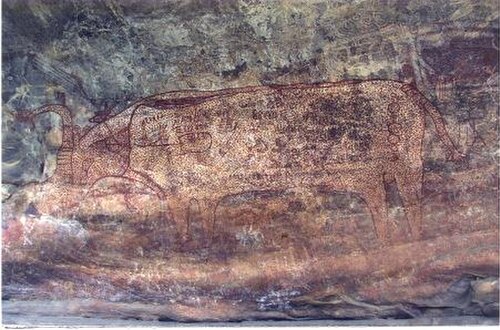
تُعدّ الرسومات الصخرية التي تعود إلى عصور ما قبل التاريخ ، والنقوش الصخرية الموجودة في أماكن مثل ملاجئ بهيمبيتكا الصخرية ، أقدم الرسومات الهندية المعروفة ، ويعود تاريخ بعضها إلى ما قبل 5500 قبل الميلاد. استمرّ هذا الفنّ، وبعد آلاف السنين، في القرن السابع الميلادي، تُقدّم الأعمدة المنحوتة في أجانتا بولاية ماهاراشترا مثالًا رائعًا على فنّ الرسم الهندي. استُخدمت الألوان، ومعظمها درجات مختلفة من الأحمر والبرتقالي، مُستخرجة من المعادن.
شرقي


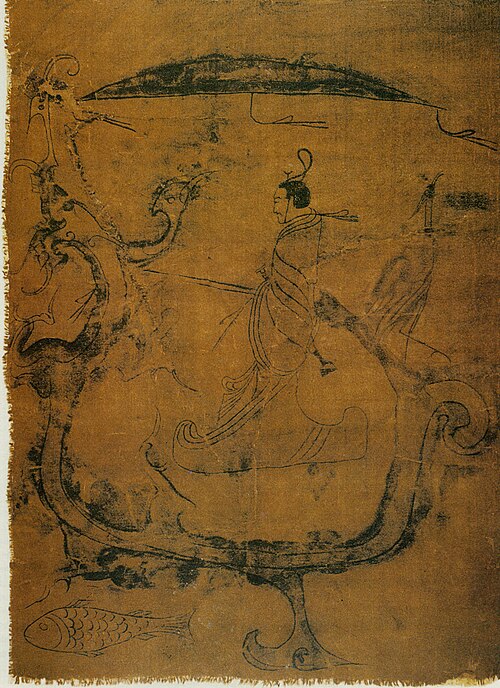
يشمل تاريخ الرسم الشرقي نطاقًا واسعًا من التأثيرات من مختلف الثقافات والأديان. وتتوازى تطورات الرسم الشرقي تاريخيًا مع تطورات الرسم الغربي ، بشكل عام قبل بضعة قرون. [ 2 ] كان للفن الأفريقي ، والفن اليهودي ، والفن الإسلامي ، والفن الإندونيسي ، والفن الهندي ، [ 23 ] والفن الصيني ، والفن الكوري ، والفن الياباني [ 4 ] تأثير كبير على الفن الغربي، والعكس صحيح. [ 5 ]
يُعدّ الرسم الصيني من أقدم التقاليد الفنية المستمرة في العالم. لم تكن اللوحات الأولى تمثيلية، بل زخرفية؛ إذ كانت تتألف من أنماط وتصاميم بدلًا من الصور. رُسمت الأواني الفخارية القديمة بأشكال حلزونية ومتعرجة ونقاط وحيوانات. ولم يبدأ الفنانون في تمثيل العالم المحيط بهم إلا خلال فترة الممالك المتحاربة (403-221 قبل الميلاد). أما الرسم الياباني ، فهو من أقدم الفنون اليابانية وأكثرها رقيًا ، ويشمل طيفًا واسعًا من الأنواع والأساليب. تاريخ الرسم الياباني هو تاريخ طويل من التوليف والتنافس بين الجماليات اليابانية الأصيلة واستيعاب الأفكار المستوردة. بدأ الرسم الكوري، كشكل فني مستقل، حوالي عام 108 قبل الميلاد، مع سقوط مملكة غوجوسون ، مما يجعله من أقدم الفنون في العالم. تطورت الأعمال الفنية في تلك الفترة إلى الأساليب المتنوعة التي ميزت فترة الممالك الثلاث في كوريا ، وأبرزها اللوحات الجدارية التي تزين مقابر ملوك مملكة غوغوريو . خلال فترة الممالك الثلاث وطوال عهد مملكة غوريو ، تميز الرسم الكوري في المقام الأول بمزيج من المناظر الطبيعية ذات الطراز الكوري، وملامح الوجه، والمواضيع التي تتمحور حول البوذية، والتركيز على المراقبة السماوية التي سهلها التطور السريع لعلم الفلك الكوري.
شرق آسيا
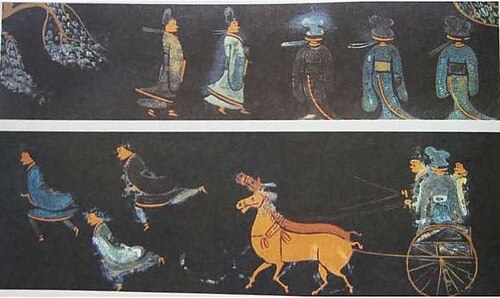 لوحة من الخزف المطلي بالورنيش من ولاية تشو (704-223 قبل الميلاد)
 جدارية لامرأة صينية، من سلالة هان الغربية (202 قبل الميلاد - 9 ميلادي)
 لوحات للأرواح الحامية، سلالة هان (202 قبل الميلاد - 220 ميلادي)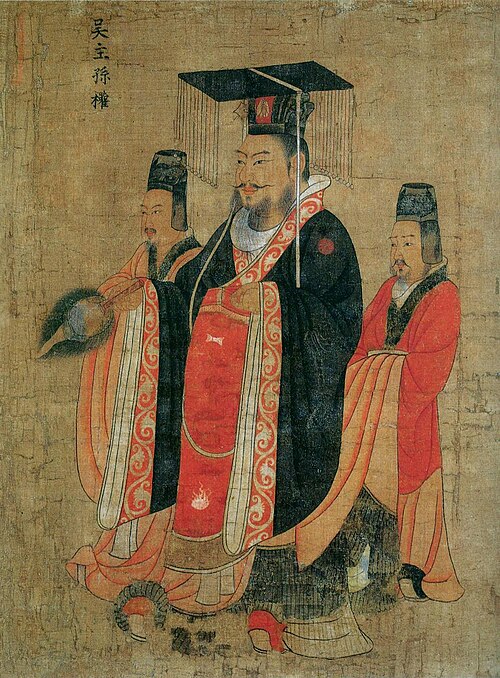
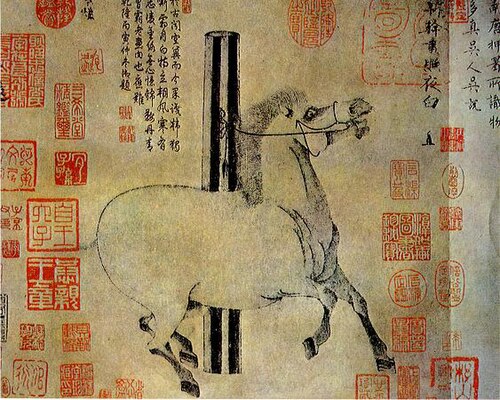 لوحة "الأبيض المتلألئ ليلاً" للفنان هان غان (القرن الثامن)، من سلالة تانغ
 لوحة "طائر التدرج الذهبي وزهرة القطن" ، للإمبراطور هويزونغ من سلالة سونغ (1100-1126 م)، سلالة سونغ
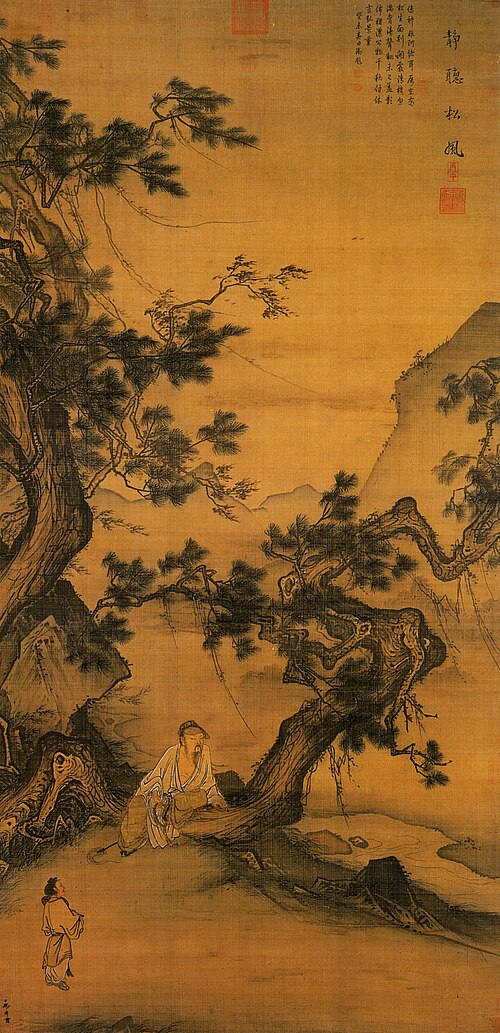 رجل وحصانه في مهب الريح ، بريشة تشاو منغفو (1254-1322 م)، فنان صيني
 شوكاي سانسوي (منظر الخريف)، سيشو تويو (1420–1506)، ياباني
 حاجز من أشجار الصنوبر من تصميم هاسيغاوا توهاكو (1539-1610)، ياباني
 قطة وفراشة ، بريشة كيم هونغ دو (1745–؟)، القرن الثامن عشر، كورية
 لفافة معلقة من تصميم كانو تانيو (1602-1674)، ياباني
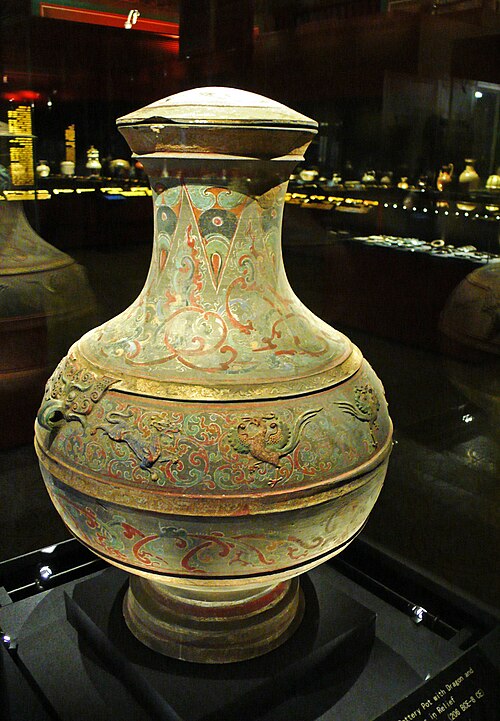
تتمتع الصين واليابان وكوريا بتقاليد عريقة في الرسم ، ترتبط ارتباطًا وثيقًا بفن الخط والطباعة (حتى أنها تُعتبر في كثير من الأحيان جزءًا من فن الرسم). يتميز الرسم التقليدي في الشرق الأقصى بتقنياته المائية، وقلة واقعيته، ومواضيعه "الأنيقة" والمنمقة، ونهجه التصويري، وأهمية المساحة البيضاء (أو المساحة السلبية )، وتفضيله للمناظر الطبيعية (بدلًا من الشخصيات البشرية) كموضوع. وإلى جانب الحبر والألوان على لفائف الحرير أو الورق، كان الذهب على اللك أيضًا وسيلة شائعة في الأعمال الفنية المرسومة في شرق آسيا. ورغم أن الحرير كان وسيلة مكلفة نسبيًا للرسم عليه في الماضي، إلا أن اختراع الورق في القرن الأول الميلادي على يد الخصي تساي لون من بلاط أسرة هان لم يوفر فقط وسيلة رخيصة ومنتشرة للكتابة، بل وفر أيضًا وسيلة رخيصة ومنتشرة للرسم (مما جعله في متناول عامة الناس).
لعبت أيديولوجيات الكونفوشيوسية والطاوية والبوذية أدوارًا مهمة في فنون شرق آسيا. ويُعدّ رسامو أسرة سونغ في العصور الوسطى ، مثل لين تينغوي ولوحته "لوهان يغسل " [ 24 ] (الموجودة في معرض سميثسونيان فرير للفنون ) التي تعود إلى القرن الثاني عشر، أمثلةً رائعةً على دمج الأفكار البوذية في الفن الصيني الكلاسيكي. في هذه اللوحة الأخيرة المرسومة على الحرير (الصورة والوصف متوفران في الرابط)، يُصوَّر رهبان لوهان بوذيون صلعاء في مشهد عملي وهم يغسلون الملابس على ضفاف نهر. ومع ذلك، فإن اللوحة بحد ذاتها مذهلة بصريًا، حيث يُصوَّر رهبان لوهان بتفاصيل دقيقة وألوان زاهية معتمة في تناقض مع بيئة غابية ضبابية بنية اللون. كما أن قمم الأشجار مُغطاة بضباب كثيف، مما يُوفر "المساحة السلبية" الشائعة المذكورة سابقًا في فنون شرق آسيا.
في حركة "اليابانية" ، أعجب فنانو ما بعد الانطباعية في أواخر القرن التاسع عشر مثل فان جوخ وهنري دي تولوز لوتريك ، والفنانون التوناليون مثل جيمس ماكنيل ويسلر ، بفناني أوكيو-إي اليابانيين في أوائل القرن التاسع عشر مثل هوكوساي (1760-1849) وهيروشيغي (1797-1858) وتأثروا بهم.

الصينية

تعود أقدم الأمثلة الباقية للفن الصيني المرسوم إلى فترة الممالك المتحاربة (481-221 قبل الميلاد)، وتشمل لوحات على الحرير أو جداريات مقابر على الصخور أو الطوب أو الحجر. كانت هذه الأعمال الفنية غالبًا ذات طابع بسيط ومنمق، وأنماط هندسية بدائية إلى حد ما. وكثيرًا ما صورت مخلوقات أسطورية، ومشاهد منزلية، ومشاهد عمل، أو مشاهد قصور تعج بالمسؤولين في البلاط. لم يُصنع الفن خلال هذه الفترة، وفترة أسرة تشين اللاحقة (221-207 قبل الميلاد) وأسرة هان اللاحقة (202 قبل الميلاد - 220 ميلادي)، كوسيلة في حد ذاتها أو للتعبير الشخصي الراقي؛ بل كان يُصنع لترمز إلى طقوس الجنازة وتكرمها، أو لتمثيل الآلهة الأسطورية أو أرواح الأجداد، وما إلى ذلك. ويمكن العثور على لوحات على الحرير لمسؤولي البلاط ومشاهد منزلية خلال عهد أسرة هان، إلى جانب مشاهد لرجال يصطادون على ظهور الخيل أو يشاركون في استعراض عسكري. كما شاع الرسم على الأعمال الفنية ثلاثية الأبعاد كالتماثيل والمنحوتات، مثل الألوان الأصلية التي غطت تماثيل الجنود والخيول في جيش التيراكوتا . خلال المناخ الاجتماعي والثقافي لسلالة جين الشرقية القديمة (316-420 ميلادي) التي اتخذت من نانجينغ جنوبًا مقرًا لها، أصبح الرسم أحد الهوايات الرسمية للموظفين الحكوميين والأرستقراطيين الذين تلقوا تعاليم الكونفوشيوسية ( إلى جانب الموسيقى التي تُعزف على آلة الغوتشين ، وكتابة الخط العربي ، وكتابة الشعر وإلقائه). وأصبح الرسم شكلًا شائعًا من أشكال التعبير الفني عن الذات، وخلال هذه الفترة، كان الرسامون في البلاط أو بين النخب الاجتماعية يُقيّمون ويُصنّفون من قِبل أقرانهم.

يُعزى الفضل في تأسيس فن الرسم الكلاسيكي للمناظر الطبيعية الصينية إلى حد كبير إلى الفنان غو كاي تشي (344-406 م)، أحد أشهر فناني التاريخ الصيني، من أسرة جين الشرقية . وكما في مشاهد اللفائف الطويلة لكاي تشي، رسم فنانون صينيون من أسرة تانغ (618-907 م)، مثل وو داوزي، أعمالًا فنية نابضة بالحياة وغنية بالتفاصيل على لفائف أفقية طويلة (كانت شائعة جدًا خلال عهد تانغ)، مثل لوحته " السبعة والثمانون من الآلهة السماوية" . تميزت الأعمال الفنية المرسومة خلال عهد تانغ بتأثيرات بيئة طبيعية مثالية، مع عدد قليل من الأشياء أو الأشخاص أو النشاط، بالإضافة إلى طابعها أحادي اللون (مثال: جداريات قبر الأمير ييدي في ضريح تشيانلينغ). كما برزت شخصيات أخرى، مثل الرسام تشان زي تشيان ، من أوائل فناني عصر تانغ ، الذي رسم لوحات مناظر طبيعية رائعة سبقت عصره في تصوير الواقعية. مع ذلك، لم يبلغ فن المناظر الطبيعية مستوىً أعلى من النضج والواقعية عمومًا إلا في عهد الممالك الخمس والعشر (907-960 ميلادي). خلال هذه الفترة، برز رسامون استثنائيون للمناظر الطبيعية مثل دونغ يوان (راجع هذه المقالة للاطلاع على مثال من أعماله)، وآخرون رسموا مشاهد منزلية أكثر حيوية وواقعية، مثل غو هونغ تشونغ ولوحته " سهرات هان شي زاي الليلية" .

خلال عهد أسرة سونغ الصينية (960-1279 م)، لم يقتصر التطور على فن المناظر الطبيعية فحسب، بل شهد فن رسم البورتريه تطورًا ملحوظًا، حيث أصبح أكثر دقةً وتطورًا من ذي قبل (انظر على سبيل المثال الإمبراطور هويزونغ من أسرة سونغ )، وبلغ ذروة نضجه الفني خلال عهد أسرة مينغ (1368-1644 م). وفي أواخر القرن الثالث عشر والنصف الأول من القرن الرابع عشر، مُنع الصينيون الخاضعون لحكم أسرة يوان المغولية من تولي مناصب حكومية عليا (كانت حكرًا على المغول أو غيرهم من الجماعات العرقية في آسيا الوسطى)، كما توقف الامتحان الإمبراطوري مؤقتًا. واتجه العديد من الصينيين المتعلمين على المذهب الكونفوشيوسي، والذين لم يعد لديهم وظائف، إلى فنون الرسم والمسرح، إذ أصبح عهد يوان من أكثر العصور ازدهارًا وثراءً في تاريخ الفن الصيني. من الأمثلة على ذلك تشيان شوان (1235-1305م)، الذي كان مسؤولاً في عهد أسرة سونغ، لكنه رفض، بدافع وطني، خدمة بلاط يوان وكرّس نفسه للرسم. ومن الأمثلة على الفنون الرائعة من هذه الفترة اللوحات الجدارية الغنية والمفصلة في قصر يونغلي، [ 26 ] [ 27 ] أو "قصر داتشونيانغ لطول العمر"، الذي يعود تاريخه إلى عام 1262م، وهو موقع مدرج ضمن قائمة اليونسكو للتراث العالمي. داخل القصر، تغطي اللوحات مساحة تزيد عن 1000 متر مربع، وتحمل في معظمها مواضيع طاوية. خلال عهد أسرة سونغ، كان الرسامون يجتمعون في نوادٍ أو اجتماعات اجتماعية لمناقشة فنهم أو أعمال الآخرين، وغالبًا ما كان الثناء يؤدي إلى إقناعهم بتبادل وبيع الأعمال الفنية الثمينة. ومع ذلك، كان هناك أيضًا العديد من النقاد اللاذعين لفن الآخرين، مما يدل على اختلاف الأسلوب والذوق بين الرسامين. في عام 1088 ميلادي، كتب العالم الموسوعي ورجل الدولة شين كو ذات مرة عن أعمال الفنان لي تشنغ ، الذي انتقده على النحو التالي:
ثم كان هناك لي تشنغ، الذي كان عندما يرسم الأجنحة والنُزُل وسط الجبال، والمباني متعددة الطوابق، والمعابد البوذية وما شابهها، يرسم دائمًا حواف الأسطح كما تُرى من الأسفل. كانت فكرته أنه "ينبغي للمرء أن ينظر إلى الأعلى من الأسفل، تمامًا كما يستطيع الرجل الواقف على أرض مستوية والناظر إلى حواف معبد بوذي أن يرى عوارضه وعوارضه الناتئة". هذا كله خطأ. بشكل عام، الطريقة الصحيحة لرسم المناظر الطبيعية هي رؤية الصغير من منظور الكبير... تمامًا كما ينظر المرء إلى الجبال الاصطناعية في الحدائق (أثناء تجوله). إذا طبقنا (طريقة لي) على رسم الجبال الحقيقية، ناظرين إليها من الأسفل، فلن نرى سوى جانب واحد في كل مرة، وليس ثراء منحدراتها وجوانبها المتعددة، ناهيك عن كل ما يحدث في الوديان والأخاديد ، وفي الأزقة والساحات بمساكنها ومنازلها. إذا وقفنا شرق جبل، لوجدنا أجزاءه الغربية على حدود التلاشي البعيدة، والعكس صحيح. أليس من الممكن وصف هذه اللوحة بالناجحة؟ لم يفهم السيد لي مبدأ "رؤية الصغير من منظور الكبير". صحيح أنه كان بارعًا في تقليص الارتفاعات والمسافات بدقة، ولكن هل ينبغي إيلاء كل هذه الأهمية لزوايا المباني؟ [ 28 ]

على الرغم من أن الأسلوبية العالية والجاذبية الصوفية والأناقة السريالية كانت تُفضّل غالبًا على الواقعية (كما هو الحال في أسلوب شان شوي )، فقد ظهر العديد من الرسامين الصينيين، بدءًا من عهد أسرة سونغ في العصور الوسطى، والذين صوروا مشاهد طبيعية نابضة بالحياة. وقد حذا فنانو أسرة مينغ اللاحقة حذو أسرة سونغ في التركيز على التفاصيل الدقيقة والواقعية في تصوير عناصر الطبيعة، لا سيما الحيوانات (مثل البط والبجع والعصافير والنمور، وما إلى ذلك) وسط بقع من الزهور ذات الألوان الزاهية وأحراش الأشجار (ومن الأمثلة الجيدة على ذلك لوحة " الطيور وأزهار البرقوق" المجهولة من عهد أسرة مينغ ، [ 29 ] والموجودة في معرض فرير بمتحف سميثسونيان في واشنطن العاصمة). وقد برز العديد من فناني أسرة مينغ المشهورين. يُعدّ تشيو يينغ مثالاً بارزاً على رسامي عصر مينغ البارزين (الذين اشتهروا حتى في عصرهم)، حيث وظّف في أعماله مشاهدَ منزلية، ومشاهدَ قصورٍ نابضةٍ بالحياة، ومشاهدَ طبيعيةً لوديان الأنهار والجبال الشاهقة التي يلفّها الضباب والسحب المتصاعدة. وخلال عهد أسرة مينغ، ظهرت أيضاً مدارس فنية مختلفة ومتنافسة في مجال الرسم، مثل مدرسة وو ومدرسة تشي .
استمر فن الرسم الصيني الكلاسيكي حتى أوائل العصر الحديث في عهد أسرة تشينغ ، حيث برزت لوحات بورتريه واقعية للغاية، كما هو الحال في أواخر عهد أسرة مينغ في أوائل القرن السابع عشر. وتُعدّ بورتريهات الأباطرة كانغشي ويونغ تشنغ وتشيان لونغ أمثلةً رائعةً على فن البورتريه الصيني الواقعي. خلال فترة حكم تشيان لونغ وما بعدها في القرن التاسع عشر، كان لأسلوب الباروك الأوروبي تأثيرٌ ملحوظٌ على لوحات البورتريه الصينية، لا سيما في المؤثرات البصرية للإضاءة والظلال. وبالمثل، حظيت لوحات شرق آسيا وغيرها من الأعمال الفنية (مثل الخزف والأواني المطلية بالورنيش) بتقديرٍ كبيرٍ في أوروبا منذ أول اتصالٍ بها في القرن السادس عشر.
لوحات زيتية صينية
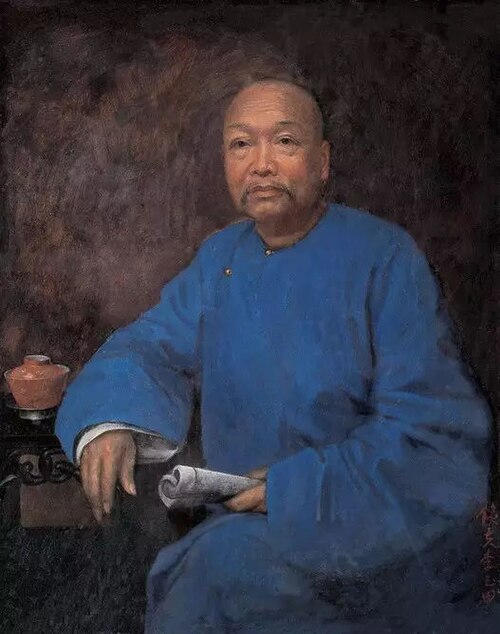
بدأت تقنيات الرسم الزيتي الغربية بالدخول إلى الصين في القرن التاسع عشر، وانتشرت بين الفنانين وطلاب الفنون الصينيين في أوائل القرن العشرين، بالتزامن مع تزايد انفتاح الصين على الغرب. سافر فنانون مثل لي تيفو ، وهونغ يي ، وشو بيهونغ ، ويان وينليانغ ، ولين فنغميان ، وفانغ غانمين ، وبانغ يوليانغ إلى الخارج، وخاصةً إلى باريس وطوكيو، لتعلم الفن الغربي. وبفضلهم، نمت وازدهرت حركات فنية مثل الانطباعية ، والتكعيبية ، والوحشية ، وما بعد الانطباعية في الصين، ولم يتوقف هذا الازدهار إلا مع اندلاع الحرب العالمية الثانية وولادة جمهورية الصين الشعبية، حين اعتُبرت الأساليب الفنية الحديثة غير متوافقة مع المُثل السياسية السائدة، وأصبح الواقعية الشكل الفني الوحيد المقبول. ومع ذلك، فقد استمر إرث الانفتاح الوثيق على الفن الغربي في أوائل القرن العشرين. وظلت اللوحات الزيتية وسيلةً مهمةً في المشهد الفني الصيني، كما طرأت تغييرات على لوحات الحبر الصينية التقليدية نتيجةً لذلك.


اليابانية
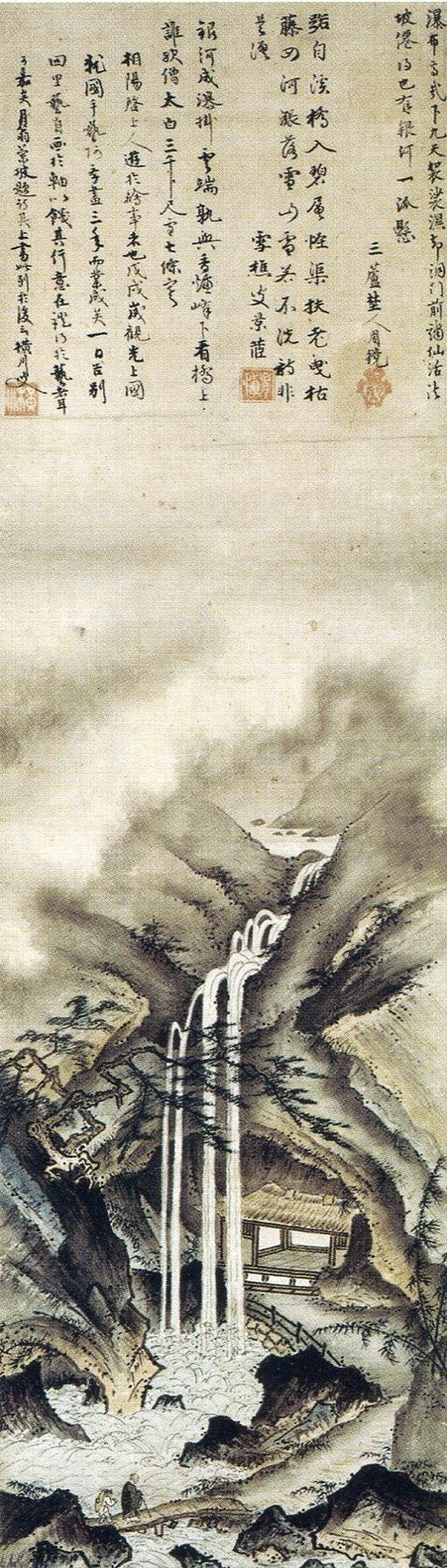
الرسم الياباني (絵画) من أقدم الفنون اليابانية وأكثرها رقيًا، ويشمل طيفًا واسعًا من الأنواع والأساليب. وكما هو الحال مع الفنون اليابانية عمومًا، فقد تطور الرسم الياباني عبر تاريخ طويل من التوليف والتنافس بين الجماليات اليابانية الأصيلة واستيعاب الأفكار المستوردة. يُعدّ فن أوكيو-إي ، أو "صور العالم العائم"، نوعًا من المطبوعات الخشبية اليابانية (أو " النقوش الخشبية ") واللوحات التي أُنتجت بين القرنين السابع عشر والعشرين، وتتميز بزخارف المناظر الطبيعية والمسرح وأحياء المحظيات. وهو النوع الفني الرئيسي للطباعة الخشبية اليابانية . وقد مارست الطباعة اليابانية، وخاصةً منذ عصر إيدو ، تأثيرًا هائلًا على الرسم الفرنسي خلال القرن التاسع عشر. وفي حين طوّر الرسامون اليابانيون في القرن التاسع عشر أسلوبًا جديدًا في الرسم يُسمى يوغا ، استعار بشكل كبير من تقنيات ومواد الرسم الغربية، ومن أبرز هؤلاء الفنانين هارادا ناوجيرو ، وفوجيشيما تاكيجي ، وكورودا سيكي .
كوري
بدأ الرسم الكوري، كشكل فني مستقل، حوالي عام 108 قبل الميلاد، مع سقوط مملكة جوجوسون ، مما يجعله من أقدم الفنون في العالم. تطورت أعمال تلك الحقبة الفنية إلى أنماط متنوعة ميزت فترة الممالك الثلاث في كوريا ، ولا سيما اللوحات الجدارية التي تزين مقابر ملوك جوجوريو . خلال فترة الممالك الثلاث وطوال عهد مملكة جوريو ، تميز الرسم الكوري بشكل أساسي بمزيج من المناظر الطبيعية الكورية، وملامح الوجه، والمواضيع البوذية، والتركيز على رصد الأجرام السماوية الذي ساهم فيه التطور السريع لعلم الفلك الكوري. لم تبدأ المواضيع الكونفوشيوسية بالظهور في اللوحات الكورية إلا في عهد مملكة جوسون ، حيث استُخدمت بتناغم مع العناصر المحلية.
يتميز تاريخ الرسم الكوري باستخدام أعمال أحادية اللون بضربات فرشاة سوداء، غالباً على ورق التوت أو الحرير. ويتجلى هذا الأسلوب في فن "مين هوا" (الفن الشعبي الملون)، ورسومات المقابر، وفنون الطقوس والاحتفالات، والتي تضمنت جميعها استخداماً مكثفاً للألوان.
جنوب آسيوي
 لوحة جدارية بعنوان "شخصيات عائمة ترقص" ، تعود إلى حوالي عام 850.
 لوحة من منطقة الدكن ؛ إبراهيم عادل شاه الثاني الشاب وهو يصطاد بالصقور، حوالي عام 1590

 الإمبراطور شاه جهان وأبناؤه، حوالي عام 1628 أو بعد ذلك. عادةً ما تستخدم صور المغول لقطات جانبية.
 سيدة تستمع إلى الموسيقى، حوالي عام 1750.
 لوحة باهسولي التي تصور رادها وكريشنا في نقاش، حوالي عام 1730.
 لوحة من منطقة الدكن ، السلطان إبراهيم عادل شاه الثاني من بيجابور ، حوالي عام 1590. منظر من ثلاثة أرباع يعطي انطباعًا قويًا وحيويًا عن الشخص المرسوم، على الرغم من افتقاره إلى الدقة المغولية، والنمذجة المتماسكة للغاية للأسطح.
 صورة مغولية لراجا جاغات سينغ من نوربور (حكم من 1618 إلى 1646)، ربما عام 1619
 لوحة باهاري ، شامبا ، حوالي عام 1665، محارب يمتطي حصانه
 صورة لجوفاردهان تشاند، أسلوب الرسم باهاري ، ج. 1750.
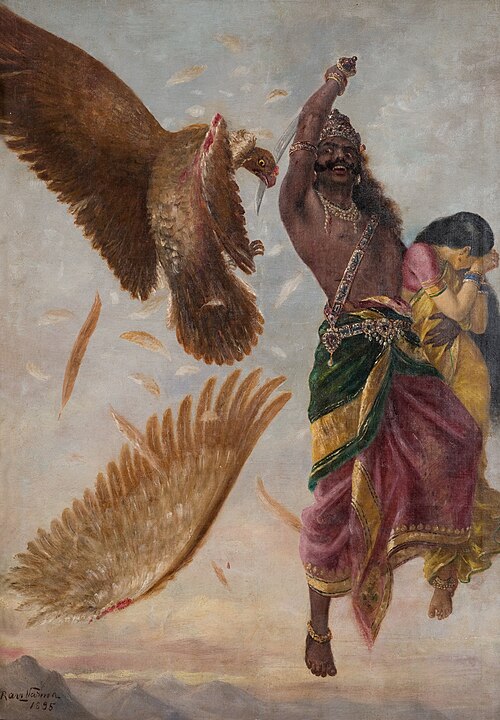 رافانا يقتل جاثايو. الأسيرة سيتا يائسة، بقلم رجا رافي فارما
 أكبر وتانسن يزوران هاريداس في فريندافان ، على طراز راجستان ، ج. 1750.
 كريشنا يستدعي الأبقار، لوحة باهاري ، بيلاسبور ، القرن الثامن عشر
 رجل مع أطفاله، على طراز الرسم الباهاري ، 1760.
 نمط الشركة ، سبعينيات القرن الثامن عشر، طائر التدرج ذو القرون القرمزية ( ساتير تراجابان )
 رادها تعتقل كريشنا ، بأسلوب رسم باهاري ، 1770.
 راما وسيتا في الغابة ، على طراز الرسم الباهاري ، 1780.
 لوحة راجبوتية متأخرة ، كوتا ، حوالي ثلاثينيات القرن التاسع عشر، رام سينغ الثاني يصطاد النمر
هندي
لطالما تمحورت اللوحات الهندية تاريخيًا حول الآلهة والملوك. والفن الهندي مصطلح جامع لعدة مدارس فنية مختلفة ازدهرت في شبه القارة الهندية . وتنوعت هذه اللوحات من جداريات أجانتا الضخمة إلى المنمنمات المغولية المتقنة، وصولًا إلى الأعمال المعدنية المزخرفة من مدرسة تانجوري . أما لوحات غاندهار - تاكسيلا ، فقد تأثرت بالأعمال الفارسية الغربية. وتطور أسلوب الرسم الشرقي في معظمه حول مدرسة نالاندا الفنية، حيث استُلهمت أعماله في الغالب من مشاهد متنوعة من الأساطير الهندية .
تاريخ

كانت أقدم اللوحات الهندية هي الرسومات الصخرية التي تعود إلى عصور ما قبل التاريخ ، والنقوش الصخرية الموجودة في أماكن مثل ملاجئ بهيمبيتكا الصخرية ، وبعضها أقدم من 5500 قبل الميلاد. استمرت هذه الأعمال، وبعد عدة آلاف من السنين، في القرن السابع الميلادي، تقدم الأعمدة المنحوتة في أجانتا بولاية ماهاراشترا مثالاً رائعاً على اللوحات الهندية، وقد استُخرجت الألوان، ومعظمها درجات مختلفة من الأحمر والبرتقالي، من المعادن.
تُعد كهوف أجانتا في ولاية ماهاراشترا بالهند آثاراً منحوتة في الصخر يعود تاريخها إلى القرن الثاني قبل الميلاد، وتحتوي على لوحات ومنحوتات تُعتبر روائع فنية دينية بوذية [ 31 ] وفن تصويري عالمي. [ 32 ]
- لوحة مادوباني
فن مادوباني هو أسلوب من أساليب الرسم الهندي، يُمارس في منطقة ميثيلا بولاية بيهار في الهند. وتكتنف أصول فن مادوباني غموضٌ يعود إلى العصور القديمة.
الإغريق
الرسم المغولي هو أسلوب معين من الرسم الهندي ، يقتصر عمومًا على الرسوم التوضيحية في الكتب ويتم تنفيذه في المنمنمات، والذي ظهر وتطور وتشكل خلال فترة الإمبراطورية المغولية من القرن السادس عشر إلى القرن التاسع عشر.
راجبوت
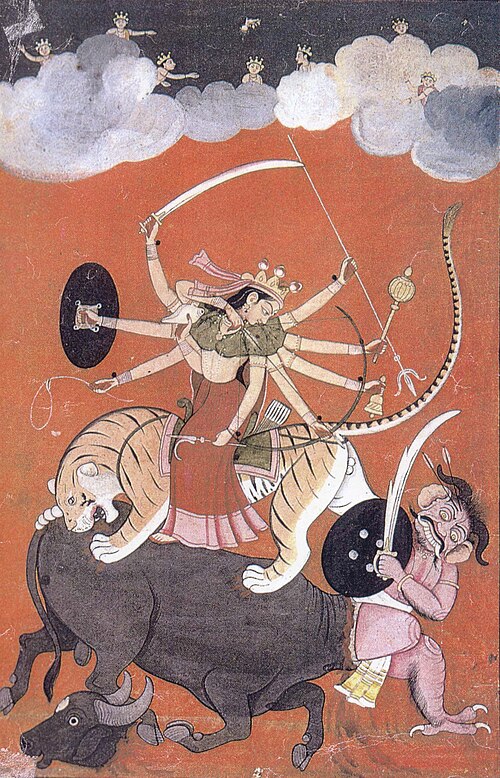
تطورت فنون الرسم الراجبوتية وازدهرت خلال القرن الثامن عشر في البلاط الملكي لراجبوتانا بالهند. وقد طورت كل مملكة راجبوتية أسلوبًا مميزًا، مع وجود بعض السمات المشتركة. تُصوّر لوحات الراجبوت مواضيع متنوعة، منها أحداث الملاحم مثل رامايانا وماهابهاراتا، وحياة كريشنا، والمناظر الطبيعية الخلابة، والبشر. كانت المنمنمات الوسيلة المفضلة للرسم الراجبوتي، ولكن العديد من المخطوطات تحتوي أيضًا على لوحات راجبوتية، بل ورُسمت اللوحات على جدران القصور، والغرف الداخلية للحصون، والبيوت الهافيلية، وخاصة بيوت شيخاوات.
استُخدمت ألوانٌ مُستخلصة من معادن مُعينة، ومصادر نباتية، وأصداف بحرية، بل وحتى من معالجة الأحجار الكريمة والذهب والفضة. وكان تحضير الألوان المطلوبة عمليةً طويلة، تستغرق أحيانًا أسابيع. وكانت الفُرش المُستخدمة دقيقةً للغاية.
تانجوري
تُعدّ لوحات تانجوري شكلاً هاماً من أشكال الرسم الكلاسيكي في جنوب الهند ، وتشتهر بها مدينة تانجوري في ولاية تاميل نادو. يعود تاريخ هذا الفن إلى أوائل القرن التاسع الميلادي، في فترة حكم سلالة تشولا التي شجعت الفنون والآداب. تتميز هذه اللوحات بأناقتها وألوانها الزاهية ودقتها المتناهية. وتتمحور معظم مواضيعها حول الآلهة الهندوسية ومشاهد من الأساطير الهندوسية . وفي العصر الحديث، أصبحت هذه اللوحات تذكاراً مرغوباً فيه بشدة خلال المناسبات الاحتفالية في جنوب الهند.
تتضمن عملية صنع لوحة تانجوري عدة مراحل. تبدأ المرحلة الأولى برسم تخطيط أولي للصورة على قاعدة خشبية. تتكون القاعدة من قطعة قماش ملصقة على قاعدة خشبية. ثم يُخلط مسحوق الطباشير أو أكسيد الزنك مع مادة لاصقة قابلة للذوبان في الماء، ويُوضع المزيج على القاعدة. ولجعل القاعدة أكثر نعومة، يُستخدم أحيانًا مادة كاشطة خفيفة . بعد الانتهاء من الرسم، تُزين المجوهرات والملابس في الصورة بالأحجار شبه الكريمة. كما تُستخدم الأربطة أو الخيوط لتزيين المجوهرات. وفوق كل ذلك، تُلصق رقائق الذهب. وأخيرًا، تُستخدم الأصباغ لإضافة الألوان إلى الشخصيات في اللوحات.
مدرسة مدراس
خلال الحكم البريطاني للهند، اكتشف التاج البريطاني أن مدينة مدراس تضم بعضًا من ألمع العقول الفنية وأكثرها ذكاءً في العالم. ونظرًا لأن البريطانيين أسسوا مستوطنة ضخمة في مدراس وما حولها، فقد وقع الاختيار على جورج تاون لإنشاء معهد يلبي التطلعات الفنية للعائلة المالكة في لندن. عُرف هذا المعهد فيما بعد باسم مدرسة مدراس للفنون . في البداية، تم توظيف فنانين تقليديين لإنتاج تشكيلة رائعة من الأثاث والأعمال المعدنية والتحف، وكانت أعمالهم تُرسل إلى القصور الملكية للملكة.
بخلاف مدرسة البنغال حيث يعتبر "التقليد" هو القاعدة في التدريس، تزدهر مدرسة مدراس على "ابتكار" أساليب وحجج واتجاهات جديدة.
مدرسة البنغال

كانت مدرسة البنغال للفنون أسلوباً فنياً مؤثراً ازدهر في الهند خلال فترة الحكم البريطاني في أوائل القرن العشرين. وقد ارتبطت هذه المدرسة بالقومية الهندية، ولكنها حظيت أيضاً بدعم وترويج العديد من المسؤولين البريطانيين عن الفنون.
نشأت مدرسة البنغال كحركة طليعية وقومية، كرد فعل على الأساليب الفنية الأكاديمية التي كانت رائجة في الهند، سواء من قبل فنانين هنود مثل راجا رافي فارما أو في مدارس الفنون البريطانية. وبعد الانتشار الواسع للأفكار الروحية الهندية في الغرب، حاول مدرس الفنون البريطاني إرنست بينفيلد هافيل إصلاح أساليب التدريس في مدرسة كلكتا للفنون، وذلك بتشجيع الطلاب على محاكاة المنمنمات المغولية . أثار هذا الأمر جدلاً واسعاً، ما أدى إلى إضراب الطلاب وانتقادات من الصحافة المحلية، بما في ذلك من القوميين الذين اعتبروه خطوة رجعية. حظي هافيل بدعم الفنان أبانيندراناث طاغور ، ابن شقيق الشاعر رابيندراناث طاغور . رسم طاغور عدداً من الأعمال المتأثرة بالفن المغولي، وهو أسلوب اعتقد هو وهافيل أنه يعبر عن الصفات الروحية المميزة للهند، في مقابل "المادية" الغربية. تُصوّر لوحة طاغور الأشهر، "بهارات ماتا" (أم الهند)، امرأة شابة بأربعة أذرع على غرار الآلهة الهندوسية، تحمل رموزًا تُعبّر عن تطلعات الهند الوطنية. وفي وقت لاحق، سعى طاغور إلى بناء علاقات مع فنانين يابانيين في إطار طموحه لإنشاء نموذج فني آسيوي شامل .
تراجع نفوذ مدرسة البنغال في الهند مع انتشار الأفكار الحداثية في عشرينيات القرن العشرين. وفي فترة ما بعد الاستقلال، أظهر الفنانون الهنود قدرة أكبر على التكيف، إذ استلهموا بحرية من الأساليب الأوروبية ودمجوها بسلاسة مع الزخارف الهندية لابتكار أشكال فنية جديدة. وبينما كان فنانون مثل فرانسيس نيوتن سوزا وتايب ميهتا أكثر ميلاً إلى النهج الغربي، برز آخرون مثل غانيش باين ومقبول فدا حسين الذين طوروا أساليب فنية محلية أصيلة. واليوم، وبعد تحرير السوق في الهند، بات الفنانون أكثر انفتاحاً على الساحة الفنية العالمية، مما ساعدهم على ابتكار أشكال فنية جديدة لم تكن معروفة في الهند من قبل. وقد حقق جيتيش كالات شهرة واسعة في أواخر التسعينيات بلوحاته التي جمعت بين الحداثة وتجاوزت التصنيفات الفنية التقليدية. ومع ذلك، فبينما يجرب الفنانون في الهند في القرن الجديد أساليب ومواضيع واستعارات جديدة، لم يكن من الممكن الحصول على مثل هذا التقدير السريع لولا مساعدة الشركات التجارية التي تدخل الآن مجال الفن كما لم تفعل من قبل.
هندي معاصر
كانت أمريتا شير جيل رسامة هندية، تُعرف أحيانًا باسم فريدا كاهلو الهند ، [ 33 ] وتُعتبر اليوم من أهم الرسامات في القرن العشرين في الهند، ويُضاهي إرثها إرث أساتذة عصر النهضة البنغالية ؛ [ 34 ] [ 35 ] كما أنها تُعتبر أغلى رسامة في الهند. [ 36 ]
واليوم، هي من بين تسعة أساتذة ، الذين أعلنت هيئة المسح الأثري للهند أعمالهم ككنوز فنية في عامي 1976 و1979، [ 37 ] ويتم عرض أكثر من 100 من لوحاتها الآن في المعرض الوطني للفن الحديث في نيودلهي. [ 38 ]
خلال الحقبة الاستعمارية، بدأت التأثيرات الغربية تُلقي بظلالها على الفن الهندي. فقد طوّر بعض الفنانين أسلوباً فنياً استعان بمفاهيم غربية في التكوين والمنظور والواقعية لتجسيد مواضيع هندية. بينما استلهم آخرون، مثل جاميني روي ، إلهامهم بوعي من الفن الشعبي.
بحلول استقلال الهند عام ١٩٤٧، أتاحت العديد من مدارس الفنون فيها الوصول إلى التقنيات والأفكار الحديثة. وأُنشئت معارض لعرض أعمال هؤلاء الفنانين. يُظهر الفن الهندي الحديث عادةً تأثراً بالأساليب الغربية، ولكنه غالباً ما يستلهم من المواضيع والصور الهندية. بدأ كبار الفنانين يحظون باعتراف دولي، بدايةً بين أبناء الجالية الهندية في الخارج، ثم بين الجماهير غير الهندية أيضاً.
تأسست جماعة الفنانين التقدميين بعد فترة وجيزة من استقلال الهند عام 1947، بهدف إرساء أساليب جديدة للتعبير عن الهند في حقبة ما بعد الاستعمار. كان مؤسسوها ستة فنانين بارزين هم: كي إتش آرا ، إس كي باكري ، إتش إيه غاد ، إم إف حسين ، إس إتش رضا ، وإف إن سوزا . ورغم حلّ الجماعة عام 1956، إلا أنها تركت أثراً بالغاً في تغيير لغة الفن الهندي. وارتبط بها تقريباً جميع كبار فناني الهند في خمسينيات القرن العشرين. ومن أبرزهم اليوم: بال تشابدا، مانيشي دي ، موكول دي ، في إس غايتوندي ، رام كومار ، طيب ميهتا ، وأكبر بادامسي . كما أثرى فنانون مشهورون آخرون، مثل: جاهار داسغوبتا ، بروكاش كارماكار، جون ويلكينز ، نارايانان راماتشاندران، وبيجون تشودري، المشهد الفني في الهند. لقد أصبحوا رموزًا للفن الهندي الحديث. وقد أشار مؤرخو الفن، مثل البروفيسور راي أناند كريشنا، إلى أعمال الفنانين المعاصرين التي تعكس الروح الهندية. وقد نالت جيتا فادهيرا شهرة واسعة في ترجمة المواضيع الروحية الهندية المعقدة إلى لوحات فنية، مثل الفكر الصوفي، والأوبانيشاد، والباغواد غيتا.
شهد الفن الهندي انتعاشاً ملحوظاً مع التحرير الاقتصادي الذي شهدته البلاد منذ أوائل التسعينيات. وبدأ فنانون من مختلف المجالات بتقديم أعمال فنية متنوعة الأساليب. وفي الهند ما بعد التحرير، برز العديد من الفنانين في سوق الفن العالمي، مثل الرسام التجريدي ناتوار بهافسار ، والفنان التشكيلي ديفاجيوتي راي، والنحات أنيش كابور، الذين حظيت أعمالهم الضخمة ذات الطابع ما بعد التبسيطي باهتمام واسع نظراً لحجمها الهائل. كما افتُتحت العديد من دور العرض والمعارض الفنية في الولايات المتحدة الأمريكية وأوروبا لعرض الأعمال الفنية الهندية.
جنوب شرق آسيا
إندونيسيا

يعود تاريخ أقدم الرسومات الكهفية المعروفة إلى ما بين 44000 و50000 عام، وقد عُثر عليها في كهوف منطقة ماروس ( سولاويزي ، إندونيسيا). وتُعدّ رسومات اليد والأشكال الهندسية البسيطة أقدم أنواع هذه الرسومات، بينما تُعتبر أقدم الأمثلة المؤكدة للرسومات الكهفية التصويرية أحدث عهداً، إذ يبلغ عمرها حوالي 35000 عام. [ 11 ]
اكتُشفت أقدم لوحة فنية تصويرية معروفة آنذاك، يزيد عمرها عن 40,000 عام (وربما يصل إلى 52,000 عام)، تُصوّر حيوانًا مجهولًا، في كهف لوبانغ جيريجي صالح في جزيرة بورنيو الإندونيسية . وفي ديسمبر 2019، قُدِّرت لوحات كهفية تصويرية تُصوّر صيد الخنازير في كارست ماروس-بانكيب في سولاويزي بأنها أقدم من ذلك، إذ يبلغ عمرها 43,900 عام على الأقل. ووُصف هذا الاكتشاف بأنه "أقدم سجل تصويري لسرد القصص وأقدم عمل فني تصويري في العالم". [ 39 ] [ 16 ]
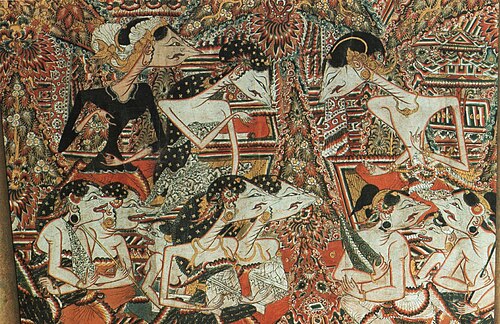
من الأمثلة الأخرى على اللوحات الإندونيسية فن كينياه الزخرفي، المستوحى من زخارف طبيعية محلية كالسراخس وأبو قرن، والذي يزين جدران بيوت كينياه الطويلة. ومن الفنون التقليدية البارزة الأخرى منحوتات توراجا الخشبية الهندسية. أما اللوحات البالية، فهي في الأصل صور سردية تصور مشاهد من الأساطير البالية والنصوص الدينية. وغالبًا ما تزين اللوحات البالية الكلاسيكية مخطوطات لونتار وأسقف أجنحة المعابد . ومن أبرز الرسامين الإندونيسيين المعاصرين الذين يتبعون التقاليد الأوروبية: رادين صالح ، وجان توروب ، وباسكي عبد الله، وعبد الله سوريوسوبروتو ، وتستكشف أعمالهم موضوعات رسم المناظر الطبيعية والبورتريه.
 لوحة بالية تقليدية تصور مصارعة الديوك .
 أسر الأمير ديبونيغورو ، 1857.
 منظر طبيعي جاوي، مع نمور تستمع إلى صوت مجموعة مسافرة ، 1849.
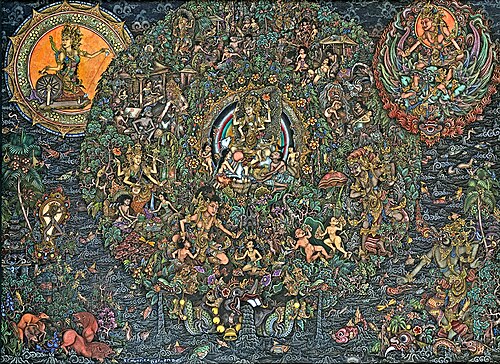 عجلة الحياة ، إي كيتوت مورتيكا (مواليد 1952)، غواش على قماش
 تفاصيل لوحة كاماسان باليندون التي تعود إلى ما قبل عام 1920 ، وهي مثال على الرسم الكلاسيكي على طراز كاماسان.
 راقصة القناع (بواسطة AA Gde Anom Sukawati) في متحف بوري لوكيسان.
 رسم المعابد الإندونيسية .
فلبيني

يمكن اعتبار الرسم الفلبيني ككل مزيجاً من العديد من التأثيرات الثقافية، على الرغم من أنه يميل إلى أن يكون غربياً أكثر في شكله الحالي مع جذور شرقية.
يمكن العثور على رسومات فلبينية مبكرة في تصاميم الطين الأحمر (الطين الممزوج بالماء) المزخرفة على الأواني الفخارية الطقسية في الفلبين، مثل جرة مانونغول . وقد عُثر على أدلة على صناعة الفخار الفلبينية تعود إلى 6000 قبل الميلاد في كهف سانغا سانغا، سولو، وكهف لورينتي، كاغايان. وبحلول 5000 قبل الميلاد، كانت صناعة الفخار منتشرة في جميع أنحاء البلاد. بدأ الفلبينيون الأوائل بصناعة الفخار قبل جيرانهم الكمبوديين، وفي نفس الوقت تقريبًا مع التايلانديين، كجزء مما يبدو أنه تطور واسع النطاق لتقنية صناعة الفخار خلال العصر الجليدي. وتتجلى أدلة أخرى على الرسم في تقليد الوشم لدى الفلبينيين الأوائل، وخاصة سكان فيساياس، الذين أطلق عليهم المستكشفون الإسبان اسم بينتادوس أو "الشعب الملون". [ 40 ] كانوا يزينون أجسادهم بأصباغ ملونة متنوعة بتصاميم مستوحاة من النباتات والحيوانات والأجرام السماوية. تتجلى بعض أكثر اللوحات تفصيلاً التي رسمها الفلبينيون الأوائل والتي لا تزال باقية حتى يومنا هذا في فنون وعمارة شعب ماراناو ، المعروفين بتماثيل تنانين ناغا وساريمانوك المنحوتة والمطلية في بانولونغ الجميلة في منزل توروغان أو منزل الملك.

بدأ الفلبينيون في ابتكار لوحات فنية على الطراز الأوروبي خلال فترة الحكم الإسباني في القرن السابع عشر. [ 41 ] وكانت أقدم هذه اللوحات عبارة عن جداريات كنسية وصور دينية مستوحاة من مصادر الكتاب المقدس، بالإضافة إلى نقوش ومنحوتات ومطبوعات حجرية تُصوّر أيقونات مسيحية وشخصيات نبيلة أوروبية. وشكّلت معظم اللوحات والمنحوتات بين القرنين التاسع عشر والعشرين مزيجًا من الأعمال الفنية الدينية والسياسية والمناظر الطبيعية، اتسمت بمزيج من الرقة والظلام والنور. وارتبط فنانون حداثيون أوائل ، مثل داميان دومينغو، باللوحات الدينية والعلمانية. وأظهر فن خوان لونا وفيليكس هيدالغو نزعة نحو التعبير السياسي. واستخدم فنانون مثل فرناندو أمورسولو ما بعد الحداثة لإنتاج لوحات تُجسّد الثقافة الفلبينية وطبيعتها وانسجامها. بينما استخدم فنانون آخرون، مثل فرناندو زوبيل، الواقعية والتجريد في أعمالهم.


 لوحة سقف كنيسة ليلا
 لورنزو دي لا روشا إيكازا، سيدة فلبينية ، 1895
 فابيان دي لا روزا ، النساء العاملات في حقل الأرز ، 1902
 خوسيه أونوراتو لوزانو، إنديوس ، 1847
الغربي
مصر واليونان وروما

كانت مصر القديمة حضارة عريقة ذات تقاليد معمارية ونحتية راسخة (كلاهما كان يُرسم بألوان زاهية في الأصل)، كما امتلكت العديد من اللوحات الجدارية في المعابد والمباني، بالإضافة إلى الرسوم التوضيحية على مخطوطات البردي . غالبًا ما تتسم اللوحات الجدارية والزخرفية المصرية بطابعها التصويري، وأحيانًا بالرمزية أكثر من الواقعية. تُصوّر اللوحات المصرية الشخصيات بخطوط عريضة وظلال مسطحة ، حيث يُعد التناظر سمة ثابتة. ترتبط اللوحات المصرية ارتباطًا وثيقًا بلغتها المكتوبة - المعروفة بالهيروغليفية المصرية . وتُعد الرموز المرسومة من بين أقدم أشكال الكتابة. كما رسم المصريون على الكتان ، ولا تزال بعض آثارهم باقية حتى اليوم. وقد نجت اللوحات المصرية القديمة بفضل المناخ الجاف للغاية. ابتكر المصريون القدماء هذه اللوحات لجعل الحياة الآخرة للمتوفى مكانًا مريحًا. وشملت مواضيعها رحلة عبر العالم الآخر أو تقديم آلهتهم الحامية للمتوفى إلى آلهة العالم السفلي. ومن أمثلة هذه اللوحات لوحات الآلهة رع ، وحورس ، وأنوبيس ، ونوت ، وأوزيريس ، وإيزيس . تُظهر بعض الرسومات الجدارية على القبور أنشطةً كان المتوفى يمارسها في حياته، وكان يرغب في الاستمرار بها إلى الأبد. في عصر الدولة الحديثة وما بعده، كان يُدفن كتاب الموتى مع المتوفى، إذ كان يُعتبر مرجعًا هامًا للتعريف بالحياة الآخرة.
 سنيدجم يحرث حقوله بزوج من الثيران ، حوالي 1200 قبل الميلاد

 مصر القديمة، ورق البردي


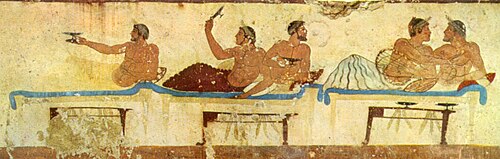
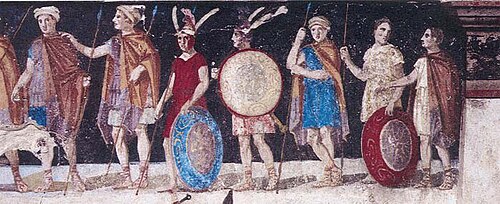

 جدارية لجندي مقدوني قديم ( ثوراكيتاي ) يرتدي درعًا من حلقات معدنية ويحمل درعًا من نوع ثوريوس ، القرن الثالث قبل الميلاد
 جدارية تصور تضحية إيفيجينيا

 فن روماني يصور عقاب ديرسي
 الفن الروماني، بومبي ، فيلا الأسرار ، حوالي 60-50 قبل الميلاد
 الفن الروماني، اللوحات الجدارية لفيلا بوسكوريال ، ج. 40 قبل الميلاد
 الفن الروماني، بومبي
 الحوريات الثلاث ، لوحة جدارية من بومبي
 سقوط إيكاروس ، لوحة جدارية من بومبي، 40-79 ميلادي
 الفن الروماني، بومبي
 الفن الروماني، صور المومياوات من الفيوم في مصر الرومانية
 فن روماني من منزل فيتي ، بومبي، القرن الأول الميلادي
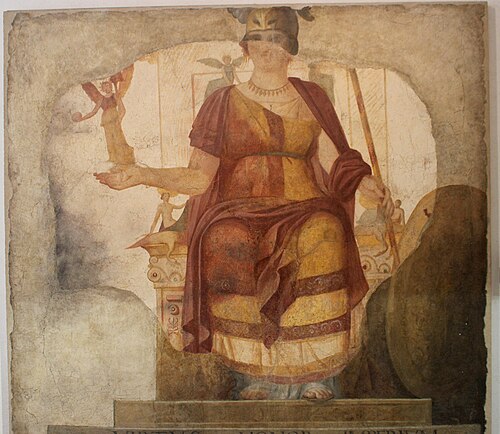 لوحة جدارية رومانية تصور فينوس جالسة ، تُعرف باسم "ديا باربيريني"، القرن الرابع الميلادي
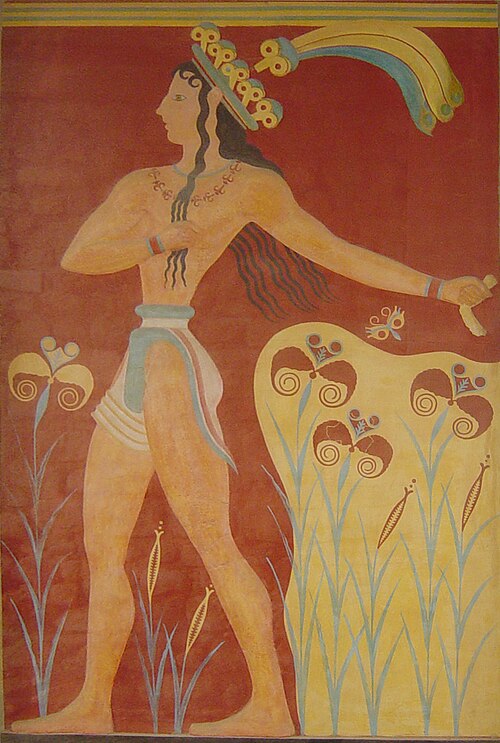
إلى الشمال من مصر، ازدهرت الحضارة المينوية التي تمركزت في جزيرة كريت . تشبه اللوحات الجدارية الموجودة في قصر كنوسوس تلك الموجودة لدى المصريين القدماء ، لكنها تتميز بأسلوب أكثر حرية. أنتجت اليونان الميسينية ، التي بدأت حوالي عام 1600 قبل الميلاد، فنًا مشابهًا لفن كريت المينوية. أصبح الفن اليوناني القديم خلال العصر المظلم اليوناني أقل تعقيدًا، لكن تجدد الحضارة اليونانية في جميع أنحاء البحر الأبيض المتوسط خلال العصر العتيق لليونان أدى إلى ظهور أشكال جديدة من الفن اليوناني بأسلوب شرقي .

كان لدى اليونان القديمة رسامين ونحاتين مهرة (مع أن كلا المهنتين كانتا تُعتبران مجرد عمل يدوي في ذلك الوقت)، ومهندسين معماريين. يُعد البارثينون مثالًا على فنهم المعماري الذي صمد حتى يومنا هذا. غالبًا ما يُوصف النحت الرخامي اليوناني بأنه أرقى أشكال الفن الكلاسيكي . تُقدم الرسومات على الفخار والخزف اليوناني القديم لمحةً قيّمةً عن كيفية عمل المجتمع في اليونان القديمة. تُقدم رسومات المزهريات ذات الأشكال السوداء والحمراء العديد من الأمثلة الباقية على فن الرسم اليوناني. من بين الرسامين اليونانيين المشهورين الذين رسموا على الألواح الخشبية ، والذين ذُكروا في النصوص ، أبيليس وزيوكسيس وباراسيوس ، إلا أن القليل من الأمثلة على الرسم على الألواح اليونانية القديمة قد نجت، ومعظمها مجرد أوصاف مكتوبة من قِبل معاصريهم أو الرومان اللاحقين. عاش زيوكسيس في الفترة ما بين 5 و6 قبل الميلاد، ويُقال إنه أول من استخدم تقنية التظليل التدريجي (سفوماتو) . ووفقًا لبلينيوس الأكبر ، كانت واقعية لوحاته لدرجة أن الطيور حاولت أكل العنب المرسوم عليها. يوصف أبيليس بأنه أعظم رسام في العصور القديمة لتقنيته المثالية في الرسم، وألوانه الرائعة، وتجسيده المتقن.
تأثر الفن الروماني بالفن اليوناني، ويمكن اعتباره جزئيًا امتدادًا للرسم اليوناني القديم. ومع ذلك، يتميز الرسم الروماني بخصائص فريدة وهامة. تشمل اللوحات الرومانية الباقية لوحات جدارية ورسومًا جدارية ، العديد منها من فيلات كامبانيا ، في جنوب إيطاليا ، في مواقع مثل بومبي وهيركولانيوم . يمكن تصنيف هذا النوع من الرسم إلى أربعة "أساليب" أو فترات رئيسية [ 42 ] ، وقد يحتوي على أولى الأمثلة على الخداع البصري ، والمنظور الزائف، والمناظر الطبيعية الخالصة. [ 43 ] أما الصور الشخصية المرسومة التي نجت تقريبًا من العالم القديم فهي عدد كبير من صور النعوش النصفية التي عُثر عليها في مقبرة الفيوم التي تعود إلى أواخر العصور القديمة . على الرغم من أنها لم تكن من أفضل فترات الفن أو من أعلى مستويات الجودة، إلا أنها مثيرة للإعجاب في حد ذاتها، وتعطي فكرة عن الجودة التي كان يجب أن تتمتع بها أروع الأعمال الفنية القديمة. كما نجا عدد قليل جدًا من المنمنمات من الكتب المصورة التي تعود إلى أواخر العصور القديمة، وعدد أكبر من نسخها من أوائل العصور الوسطى.
العصور الوسطى
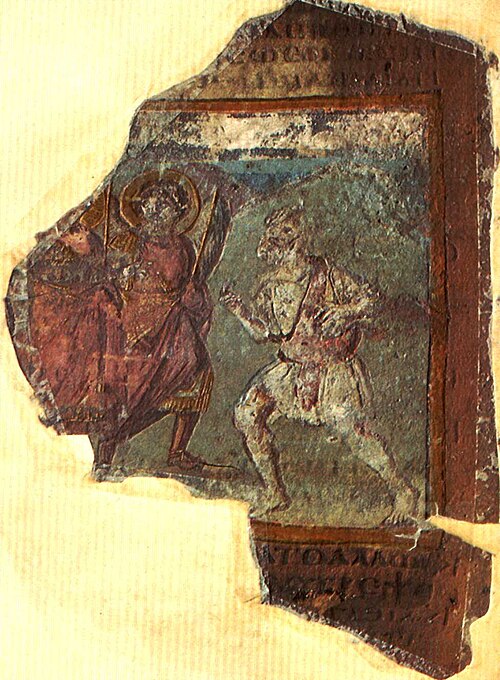
 أيقونة بيزنطية ، القرن السادس
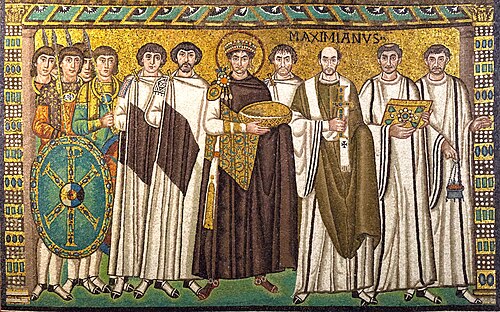 فسيفساء الفن البيزنطي في رافينا
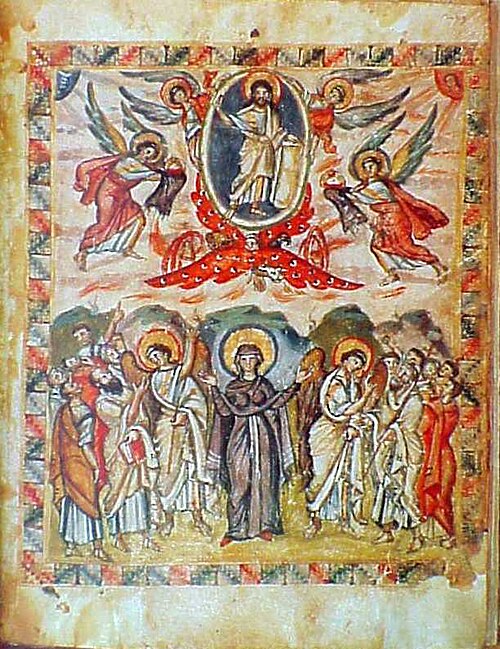 بيزنطي، القرن السادس


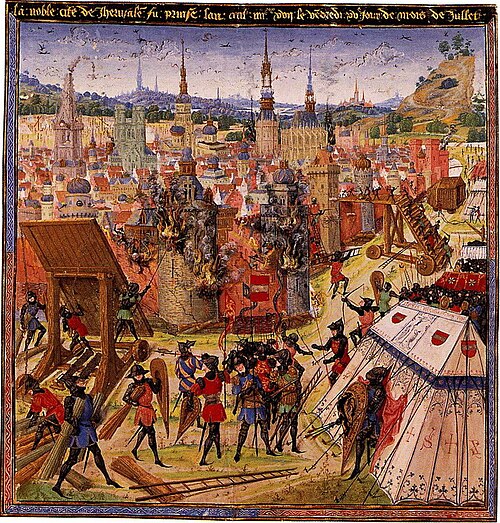 الاستيلاء على القدس خلال الحملة الصليبية الأولى ، حوالي عام 1099
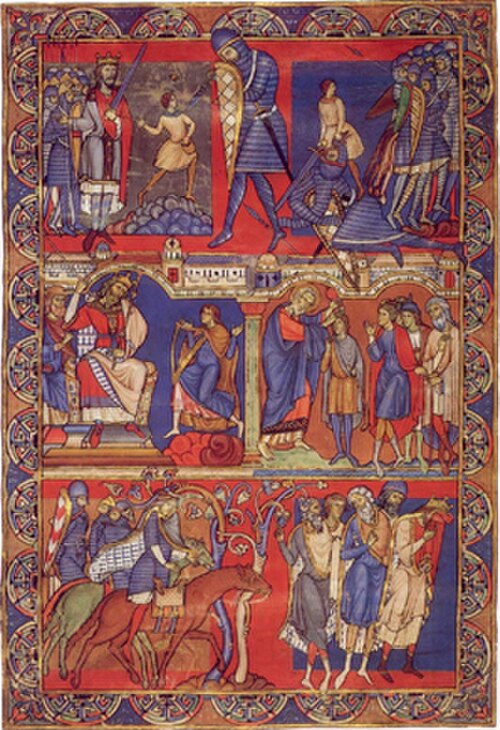 ورقة مورغان ، من إنجيل وينشستر 1160-1175، مشاهد من حياة داود
 أناجيل ياروسلافل حوالي عام ١٢٢٠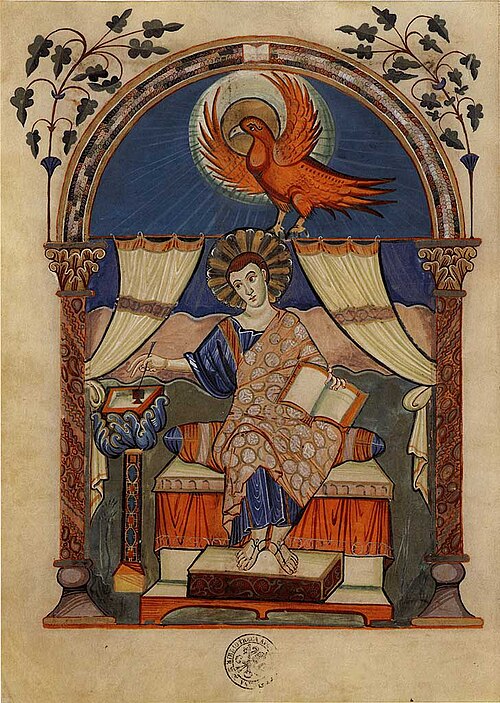
 القديس مرقس الكارولنجي


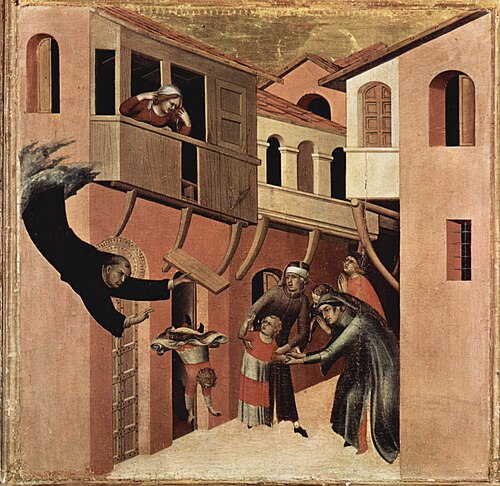


 بونافنتورا بيرلينغيري ، القديس فرنسيس الأسيزي ، 1235

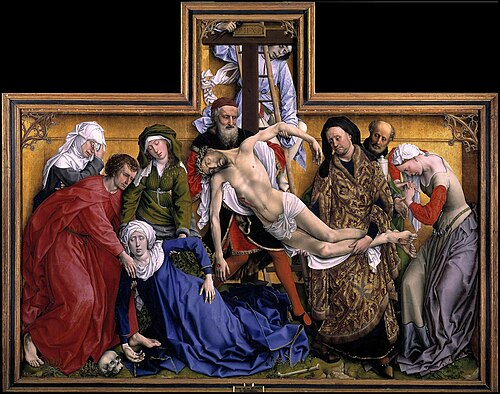 روجير فان دير وايدن (ج. 1435)
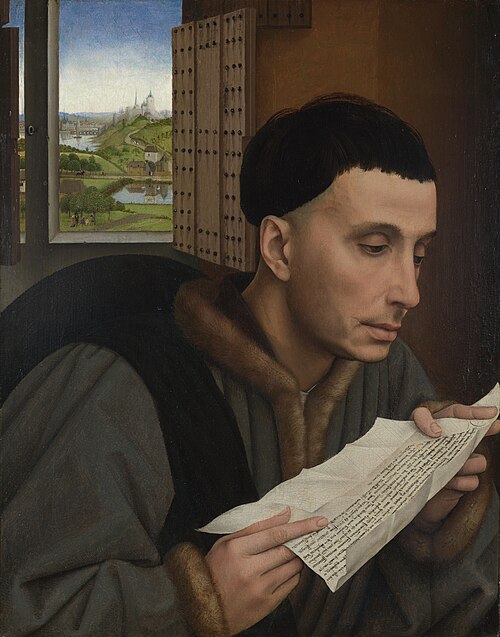 روجير فان دير وايدن ، سانت إيفو (حوالي 1450)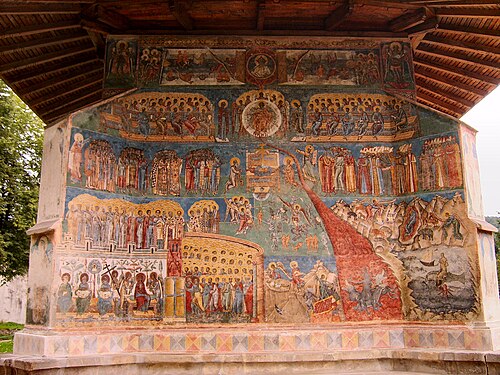
أضفى ظهور المسيحية روحًا وهدفًا مختلفين على أساليب الرسم. ركز الفن البيزنطي ، بعد أن ترسخ أسلوبه في القرن السادس، على الحفاظ على الأيقونات والأسلوب التقليديين، وتطور تدريجيًا خلال ألف عام من الإمبراطورية البيزنطية ، متأثرًا بتقاليد رسم الأيقونات الأرثوذكسية اليونانية والروسية . يتميز الرسم البيزنطي بطابعه الكهنوتي، وكانت الأيقونات ولا تزال تُعتبر تمثيلًا للوحي الإلهي. كانت هناك العديد من اللوحات الجدارية ، لكن لم يبقَ منها إلا القليل مقارنةً بالفسيفساء . وقد شُبّه الفن البيزنطي بالتجريد المعاصر ، في سطحيته وتصويره المُنمّق للشخصيات والمناظر الطبيعية. بعض فترات الفن البيزنطي، وخاصة ما يُعرف بالفن المقدوني في القرن العاشر تقريبًا، كانت أكثر مرونة في النهج. لا تزال اللوحات الجدارية لعصر النهضة الباليولوجي في أوائل القرن الرابع عشر موجودة في كنيسة خورا في إسطنبول.
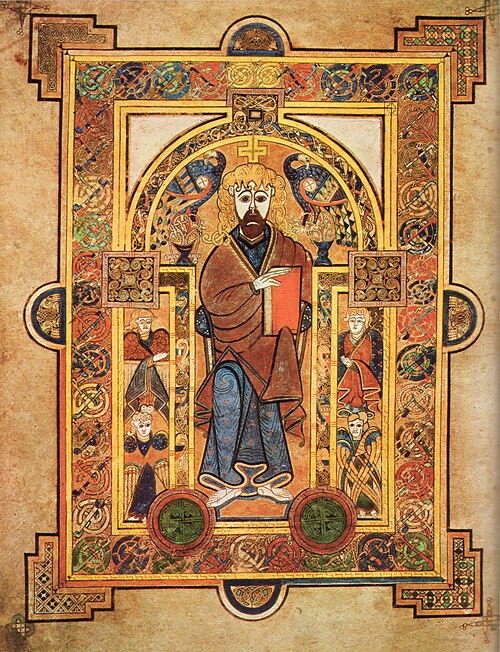
في أوروبا الكاثوليكية ما بعد العصور القديمة، كان أول أسلوب فني مميز يظهر، يشمل الرسم، هو فن الجزر البريطانية، حيث تُعدّ المنمنمات في المخطوطات المزخرفة، مثل كتاب كيلز ، الأمثلة الوحيدة الباقية . [ 44 ] وتشتهر هذه المنمنمات بزخارفها التجريدية، على الرغم من تصويرها للشخصيات، وأحيانًا للمشاهد، لا سيما في صور الإنجيليين . كما بقي فن العصرين الكارولنجي والأوتوني في الغالب في المخطوطات، مع بقاء بعض اللوحات الجدارية، وتوثيق المزيد منها. يجمع فن هذه الفترة بين التأثيرات الجزرية و"البربرية" مع تأثير بيزنطي قوي، ورغبة في استعادة عظمة وجمال الفن الكلاسيكي.
زُيّنت جدران الكنائس الرومانية والقوطية بلوحات جدارية ومنحوتات، وتتميز العديد من اللوحات الجدارية القليلة المتبقية بكثافة ألوانها ، إذ تجمع بين الحيوية الزخرفية للفن الجزيري وطابع ضخم جديد في تصوير الشخصيات. وقد نجا عدد أكبر بكثير من المنمنمات في المخطوطات المزخرفة من تلك الفترة، والتي تُظهر الخصائص نفسها، والتي استمرت حتى العصر القوطي .
أصبح الرسم على الألواح أكثر شيوعًا خلال العصر الرومانسكي ، متأثرًا بشدة بالأيقونات البيزنطية. وبحلول منتصف القرن الثالث عشر، اتسم فن العصور الوسطى والرسم القوطي بطابع أكثر واقعية، مع ظهور الاهتمام بتصوير الحجم والمنظور في إيطاليا على يد شيمابوي ثم تلميذه جوتو . ومنذ جوتو، أصبح أسلوب أفضل الرسامين في معالجة التكوين أكثر حرية وابتكارًا. ويُعتبران من أعظم فناني العصور الوسطى في الثقافة الغربية. استخدم شيمابوي، ضمن التقاليد البيزنطية، نهجًا أكثر واقعية ودرامية في فنه. أما تلميذه جوتو، فقد ارتقى بهذه الابتكارات إلى مستوى أعلى، مما وضع بدوره أسس تقاليد الرسم الغربي. وكان كلا الفنانين رائدين في التحول نحو الواقعية.
شُيّدت الكنائس بنوافذ أكثر فأكثر، وأصبح استخدام الزجاج الملون عنصرًا أساسيًا في الزخرفة. ومن أشهر الأمثلة على ذلك كاتدرائية نوتردام في باريس . وبحلول القرن الرابع عشر، كانت المجتمعات الغربية أكثر ثراءً وتحضرًا، ووجد الرسامون رعاة جددًا من طبقة النبلاء وحتى البرجوازية . واكتسبت المخطوطات المزخرفة طابعًا جديدًا، وظهرت نساء البلاط الرشيقات الأنيقات في مناظرها الطبيعية. وسرعان ما عُرف هذا الأسلوب بالأسلوب الدولي، واكتسبت لوحات التمبرا على الألواح ولوحات المذابح أهمية بالغة.
عصر النهضة والأسلوبية
 روبرت كامبين ، حوالي عام 1425
 يان فان إيك ، 1434
- روجير فان دير وايدن ، ج. 1435
 هوغو فان دير غوس ، حوالي عام 1470
 ديريك بوتس ، 1464-1467
 هانز ميملينغ ، حوالي 1466-1473
 بيتروس كريستوس ، حوالي عام 1470
 هيرونيموس بوش ، حوالي 1480-1505
 فرا أنجيليكو ، 1425-1428
 باولو أوتشيلو ، حوالي عام 1470
 ماساتشيو ، 1426-1427
 جان فوكيه ، 1450
 أندريا مانتينيا ، حوالي 1458-1460
 بييرو ديلا فرانشيسكا ، 1463-1465
 ساندرو بوتيتشيلي ، 1483–1485
 ليوناردو دافنشي ، 1503-1506
 Raphael, 1505–1506
 Michelangelo, c. 1511
 Lucas Cranach the Elder, c. 1530
 Albrecht Dürer, 1500
 Matthias Grünewald, 1512–1516
 Giovanni Bellini, c. 1480
 Giorgione, c. 1505
 Titian, 1520–1523
 École de Fontainebleau, 1530
 Bronzino, 1540–1545
 Pieter Bruegel, 1565
 Hans Holbein the Younger, 1527
 Jacopo Tintoretto, 1582
 Paolo Veronese, 1562–1563
 Joachim Wtewael, 1595
 El Greco, 1596–1600
The Renaissance (French for 'rebirth'), a cultural movement roughly spanning the 14th through the mid-17th century, heralded the study of classical sources, as well as advances in science which profoundly influenced European intellectual and artistic life. In the Low Countries, especially in modern day Flanders, a new way of painting was established in the beginning of the 15th century. In the footsteps of the developments made in the illumination of manuscripts, especially by the Limbourg Brothers, artists became fascinated by the tangible in the visible world and began representing objects in an extremely naturalistic way.[45] The adoption of oil painting whose invention was traditionally, but erroneously, credited to Jan van Eyck, made possible a new verisimilitude in depicting this naturalism. The medium of oil paint was already present in the work of Melchior Broederlam, but painters like Jan van Eyck and Robert Campin brought its use to new heights and employed it to represent the naturalism they were aiming for. With this new medium the painters of this period were capable of creating richer colors with a deep intense tonality. The illusion of glowing light with a porcelain-like finish characterized Early Netherlandish painting and was a major difference to the matte surface of tempera paint used in Italy.[45] Unlike the Italians, whose work drew heavily from the art of Ancient Greece and Rome, the northerners retained a stylistic residue of the sculpture and illuminated manuscripts of the Middle Ages (especially its naturalism). The most important artist of this time was Jan van Eyck, whose work ranks among the finest made by artists who are now known as Early Netherlandish painters or Flemish Primitives (since most artists were active in cities in modern day Flanders). The first painter of this period was the Master of Flémalle, nowadays identified as Robert Campin, whose work follows the art of the International Gothic. Another important painter of this period was Rogier van der Weyden, whose compositions stressed human emotion and drama, demonstrated for instance in his Descent from the Cross, which ranks among the most famous works of the 15th century and was the most influential Netherlandish painting of Christ's crucifixion. Other important artists from this period are Hugo van der Goes (whose work was highly influential in Italy), Dieric Bouts (who was among the first northern painters to demonstrate the use of a single vanishing point),[45]Petrus Christus, Hans Memling and Gerard David.
In Italy, the art of Classical antiquity inspired a style of painting that emphasized the ideal. Artists such as Paolo Uccello, Masaccio, Fra Angelico, Piero della Francesca, Andrea Mantegna, Filippo Lippi, Sandro Botticelli, Leonardo da Vinci, Michelangelo Buonarroti, and Raphael took painting to a higher level through the use of perspective, the study of human anatomy and proportion, and through their development of an unprecedented refinement in drawing and painting techniques. A somewhat more naturalistic style emerged in Venice. Painters of the Venetian school, such as Giovanni Bellini, Giorgione, Titian, Tintoretto, and Veronese, were less concerned with precision in their drawing than with the richness of color and unity of effect that could be achieved by a more spontaneous approach to painting.
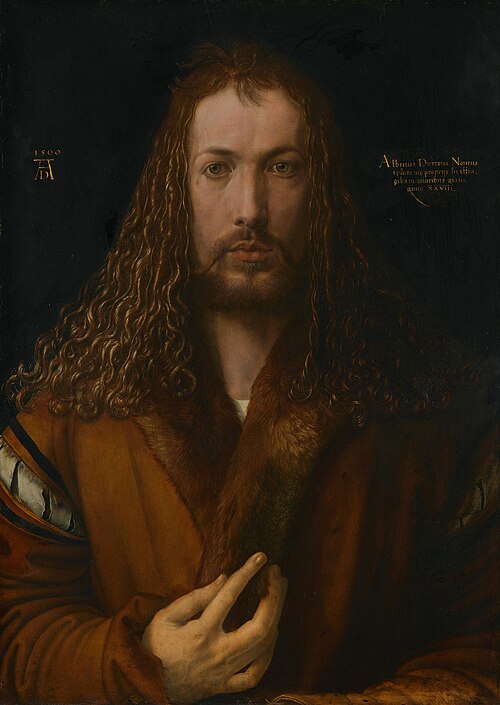
Flemish, Dutch and German painters of the Renaissance such as Hans Holbein the Younger, Albrecht Dürer, Lucas Cranach, Matthias Grünewald, Hieronymus Bosch, and Pieter Bruegel represent a different approach from their Italian colleagues, one that is more realistic and less idealized. Genre painting became a popular idiom amongst the Northern painters like Pieter Bruegel.
The French tradition of International Gothic, will develop a new style by integrating the strong chromatic tones of Gothic with the Italian perspective and volumes of the Quattrocento, as well as the naturalistic innovations of the Flemish primitives, called the École de Tours. Its main representatives are Jean Fouquet, Barthélemy d'Eyck from the Netherlands, Jean and François Clouet, Jean Perreal, Nicolas Froment and the École de Fontainebleau.
Renaissance painting reflects the revolution of ideas and science (astronomy, geography) that occurred in this period, the Reformation, and the invention of the printing press. Dürer, considered one of the greatest of printmakers, states that painters are not mere artisans but thinkers as well. With the development of easel painting in the Renaissance, painting gained independence from architecture. Easel paintings—movable pictures which could be hung easily on walls—became a popular alternative to paintings fixed to furniture, walls or other structures. Following centuries dominated by religious imagery, secular subject matter slowly returned to Western painting. Artists included visions of the world around them, or the products of their own imaginations in their paintings. Those who could afford the expense could become patrons and commission portraits of themselves or their family.
The High Renaissance gave rise to a stylized art known as Mannerism. In place of the balanced compositions and rational approach to perspective that characterized art at the dawn of the 16th century, the Mannerists sought instability, artifice, and doubt. The unperturbed faces and gestures of Piero della Francesca and the calm Virgins of Raphael are replaced by the troubled expressions of Pontormo and the emotional intensity of El Greco. Restless and unstable compositions, often extreme or disjunctive effects of perspective, and stylized poses are characteristic of Italian Mannerists such as Tintoretto, Pontormo, and Bronzino, and appeared later in the work of Northern Mannerists such as Hendrick Goltzius, Bartholomeus Spranger, and Joachim Wtewael.
Baroque and Rococo
 Caravaggio, 1595–1597
 Artemisia Gentileschi, 1614–1620
 Peter Paul Rubens, 1632–1635
 Frans Hals, 1624
 Judith Leyster, 1630
 Rembrandt van Rijn, 1642
 Pieter de Hooch, 1658
- Johannes Vermeer, c. 1660
 Jan Steen, c. 1665
 Jacob van Ruisdael, 1670
 Willem Claesz. Heda, 1631
 Diego Velázquez, 1656–1657
 Jusepe de Ribera, 1620–1624
 Nicolas Poussin, c. 1637–1638
 Georges de La Tour, 1640s
 Guido Reni, 1625
 Salvator Rosa, c. 1645
 Bartolomé Esteban Murillo, c. 1650–1655
 Claude Lorrain, 1648
 Anthony van Dyck, 1635–1636
 Canaletto, 1723
 Giovanni Battista Tiepolo, c. 1752–1753
 Antoine Watteau, c. 1720
 Jean-Honoré Fragonard, c. 1767–1768
 François Boucher, 1751
 Élisabeth Louise Vigée-Le Brun, after 1782
 Maurice Quentin de La Tour, c. 1761
 Thomas Gainsborough, c. 1770
 Joshua Reynolds, 1769
 Jean-Baptiste-Siméon Chardin, c. 1728
 William Hogarth, c. 1757
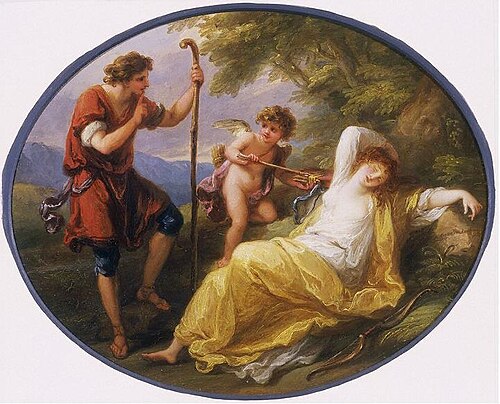 Angelica Kauffman, c. 1780
Baroque painting is associated with the Baroquecultural movement, a movement often identified with Absolutism and the Counter Reformation or Catholic Revival;[46][47] the existence of important Baroque painting in non-absolutist and Protestant states also, however, underscores its popularity, as the style spread throughout Western Europe.[48]
Baroque painting is characterized by great drama, rich, deep color, and intense light and dark shadows. Baroque art was meant to evoke emotion and passion instead of the calm rationality that had been prized during the Renaissance. During the period beginning around 1600 and continuing throughout the 17th century, painting is characterized as Baroque. Among the greatest painters of the Baroque are Caravaggio, Rembrandt, Frans Hals, Rubens, Velázquez, Poussin, and Johannes Vermeer. Caravaggio is an heir of the humanist painting of the High Renaissance. His realistic approach to the human figure, painted directly from life and dramatically spotlit against a dark background, shocked his contemporaries and opened a new chapter in the history of painting. Baroque painting often dramatizes scenes using light effects; this can be seen in works by Rembrandt, Vermeer, Le Nain, La Tour, and Jusepe de Ribera.

In Italy, the Baroque style is epitomized by religious and mythological paintings in the Grand Manner by artists such as the Carracci, Guido Reni, and Luca Giordano. Illusionistic church ceiling frescoes by Pietro da Cortona seemed to open to the sky. A much quieter type of Baroque emerged in the Dutch Republic, where easel paintings of everyday subjects were popular with middle-class collectors, and many painters became specialists in genre, others in landscape or seascape or still life. Vermeer, Gerard ter Borch, and Pieter de Hooch brought great technical refinement to the painting of domestic scenes, as did Willem Claesz. Heda to still life. In contrast, Rembrandt excelled in painting every type of subject, and developed an individual painterly style in which the chiaroscuro and dark backgrounds derived from Caravaggio and the Utrecht Caravaggists lose their theatrical quality.
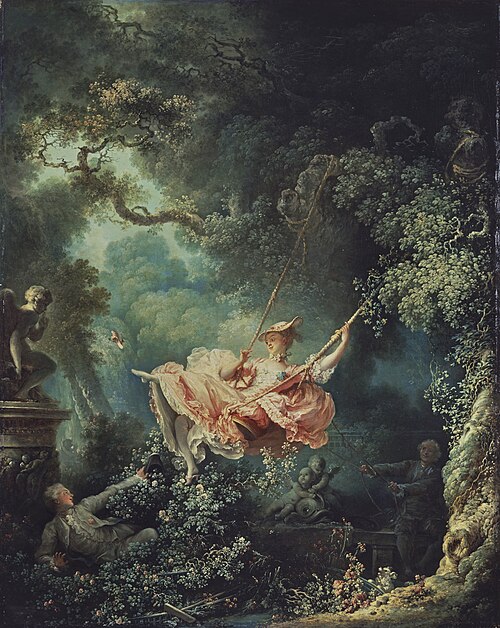
During the 18th century, Rococo followed as a lighter extension of Baroque, often frivolous and erotic. Rococo developed first in the decorative arts and interior design in France. Louis XV's succession brought a change in the court artists and general artistic fashion. The 1730s represented the height of Rococo development in France exemplified by the works of Antoine Watteau and François Boucher. Rococo still maintained the Baroque taste for complex forms and intricate patterns, but by this point, it had begun to integrate a variety of diverse characteristics, including a taste for Oriental designs and asymmetric compositions.
The Rococo style spread with French artists and engraved publications. It was readily received in the Catholic parts of Germany, Bohemia, and Austria, where it was merged with the lively German Baroque traditions. German Rococo was applied with enthusiasm to churches and palaces, particularly in the south, while Frederician Rococo developed in the Kingdom of Prussia.
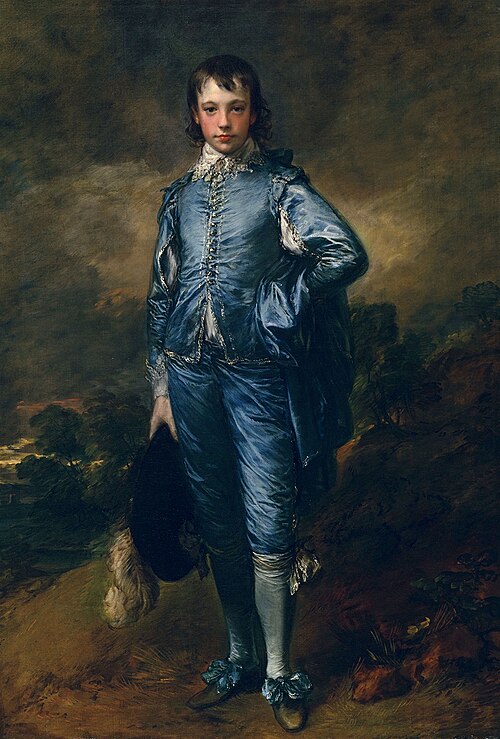
The French masters Watteau, Boucher and Fragonard represent the style, as do Giovanni Battista Tiepolo and Jean-Baptiste-Siméon Chardin who was considered by some as the best French painter of the 18th century – the Anti-Rococo. Portraiture was an important component of painting in all countries, but especially in England, where the leaders were William Hogarth, in a blunt realist style, and Francis Hayman, Angelica Kauffman (who was Swiss), Thomas Gainsborough and Joshua Reynolds in more flattering styles influenced by Anthony van Dyck. In France during the Rococo era Jean-Baptiste Greuze (the favorite painter of Denis Diderot),[49] excelled in portraits and history paintings, and Maurice Quentin de La Tour and Élisabeth Vigée-Lebrun were highly accomplished portrait painters. La Tour specialized in pastel painting, which became a popular medium during this period.
William Hogarth helped develop a theoretical foundation for Rococo beauty. Though not intentionally referencing the movement, he argued in his Analysis of Beauty (1753) that the undulating lines and S-curves prominent in Rococo were the basis for grace and beauty in art or nature (unlike the straight line or the circle in Classicism). The beginning of the end for Rococo came in the early 1760s as figures like Voltaire and Jacques-François Blondel began to voice their criticism of the superficiality and degeneracy of the art. Blondel decried the "ridiculous jumble of shells, dragons, reeds, palm-trees and plants" in contemporary interiors.[50]
By 1785, Rococo had passed out of fashion in France, replaced by the order and seriousness of Neoclassical artists like Jacques-Louis David.
19th century: Neo-classicism, History painting, Romanticism, Impressionism, Post-Impressionism, Symbolism
 Jacques-Louis David 1787
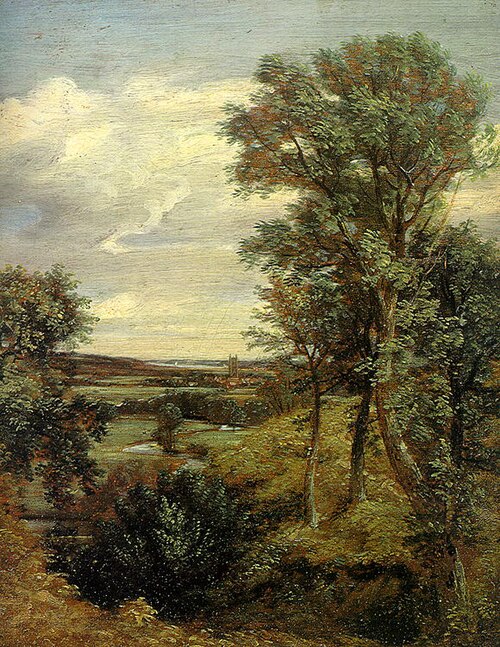 Dedham Vale, John Constable 1802
 Antoine-Jean Gros, 1804
 Francisco de Goya 1814
 Théodore Géricault 1819
 Caspar David Friedrich c.1822
 Eugène Delacroix 1830
 J. M. W. Turner 1838
 Gustave Courbet 1849–1850
 Ivan Aivazovsky 1850
 Albert Bierstadt 1866
 Camille Corot c.1867
 Ilya Repin 1870–1873
 Camille Pissarro 1872
 Claude Monet 1872
 Edgar Degas 1876
 Édouard Manet 1882
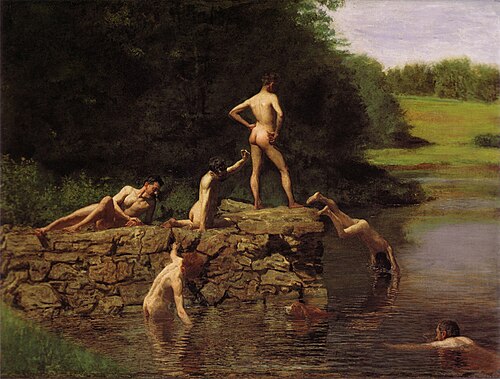 Thomas Eakins 1884–1885
 Georges Seurat 1884–1886
 Valentin Serov 1887
 Vincent van Gogh 1889
 Albert Pinkham Ryder 1890
 Paul Gauguin 1897–1898
 Winslow Homer 1899
 Paul Cézanne 1906
After Rococo there arose in the late 18th century, in architecture, and then in painting severe neo-classicism, best represented by such artists as David and his heir Ingres. Ingres' work already contains much of the sensuality, but none of the spontaneity, that was to characterize Romanticism. This movement turned its attention toward landscape and nature as well as the human figure and the supremacy of natural order above mankind's will. There is opposition to Enlightenment ideals, as humanity is seen being at the whim of nature's chaos. The idea that human beings are not above the forces of Nature is in contradiction to Ancient Greek and Renaissance ideals where mankind was above all things and owned his fate. This thinking led romantic artists to depict the sublime, ruined churches, shipwrecks, massacres and madness.
By the mid-19th-century painters became liberated from the demands of their patronage to only depict scenes from religion, mythology, portraiture or history. The idea "art for art's sake" began to find expression in the work of painters like Francisco de Goya, John Constable, and J.M.W. Turner. Romantic painters saw landscape painting as an important genre to express the vanity of mankind in opposition to the grandeur of nature. Until then, landscape painting wasn't considered the most important genre for painters (like portraiture or history painting). But painters like J.M.W. Turner and Caspar David Friedrich managed to elevate landscape painting to an eminence rivalling history painting. Some of the major painters of this period are Eugène Delacroix, Théodore Géricault, J. M. W. Turner, Caspar David Friedrich and John Constable. Francisco de Goya's late work demonstrates the Romantic interest in the irrational, while the work of Arnold Böcklin evokes mystery and the paintings of Aesthetic movement artist James McNeill Whistler evoke both sophistication and decadence. In the United States the Romantic tradition of landscape painting was known as the Hudson River School:[51] exponents include Thomas Cole, Frederic Edwin Church, Albert Bierstadt, Thomas Moran, and John Frederick Kensett. Luminism was a movement in American landscape painting related to the Hudson River School.

The leading Barbizon School painter Camille Corot painted in both a romantic and a realistic vein; his work prefigures Impressionism, as does the paintings of Eugène Boudin who was one of the first French landscape painters to paint outdoors. Boudin was also an important influence on the young Claude Monet, whom in 1857 he introduced to Plein air painting. A major force in the turn towards Realism at mid-century was Gustave Courbet. In the latter third of the century Impressionists like Édouard Manet, Claude Monet, Pierre-Auguste Renoir, Camille Pissarro, Alfred Sisley, Berthe Morisot, Mary Cassatt, and Edgar Degas worked in a more direct approach than had previously been exhibited publicly. They eschewed allegory and narrative in favor of individualized responses to the modern world, sometimes painted with little or no preparatory study, relying on deftness of drawing and a highly chromatic pallette. Manet, Degas, Renoir, Morisot, and Cassatt concentrated primarily on the human subject. Both Manet and Degas reinterpreted classical figurative canons within contemporary situations; in Manet's case the re-imaginings met with hostile public reception. Renoir, Morisot, and Cassatt turned to domestic life for inspiration, with Renoir focusing on the female nude. Monet, Pissarro, and Sisley used the landscape as their primary motif, the transience of light and weather playing a major role in their work. While Sisley most closely adhered to the original principals of the Impressionist perception of the landscape, Monet sought challenges in increasingly chromatic and changeable conditions, culminating in his series of monumental works of Water Lilies painted in Giverny.
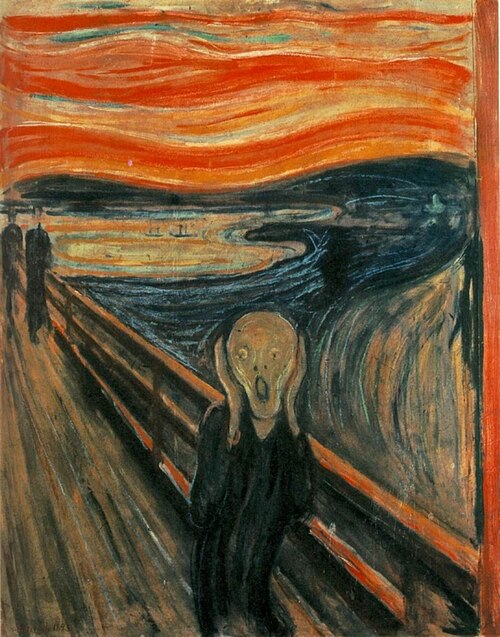
Pissarro adopted some of the experiments of Post-Impressionism. Slightly younger Post-Impressionists like Vincent van Gogh, Paul Gauguin, and Georges Seurat, along with Paul Cézanne led art to the edge of modernism; for Gauguin Impressionism gave way to a personal symbolism; Seurat transformed Impressionism's broken color into a scientific optical study, structured on frieze-like compositions; Van Gogh's turbulent method of paint application, coupled with a sonorous use of color, predicted Expressionism and Fauvism, and Cézanne, desiring to unite classical composition with a revolutionary abstraction of natural forms, would come to be seen as a precursor of 20th-century art. The spell of Impressionism was felt throughout the world, including in the United States, where it became integral to the painting of American Impressionists such as Childe Hassam, John Twachtman, and Theodore Robinson; and in Australia where painters of the Heidelberg School such as Arthur Streeton, Frederick McCubbin and Charles Conder painted en plein air and were particularly interested in the Australian landscape and light. It also exerted influence on painters who were not primarily Impressionistic in theory, like the portrait and landscape painter John Singer Sargent. At the same time in America at the turn of the 20th century there existed a native and nearly insular realism, as richly embodied in the figurative work of Thomas Eakins, the Ashcan School, and the landscapes and seascapes of Winslow Homer, all of whose paintings were deeply invested in the solidity of natural forms. The visionary landscape, a motive largely dependent on the ambiguity of the nocturne, found its advocates in Albert Pinkham Ryder and Ralph Albert Blakelock.
In the late 19th century there also were several, rather dissimilar, groups of Symbolist painters whose works resonated with younger artists of the 20th century, especially with the Fauvists and the Surrealists. Among them were Gustave Moreau, Odilon Redon, Pierre Puvis de Chavannes, Henri Fantin-Latour, Arnold Böcklin, Edvard Munch, Félicien Rops, and Jan Toorop, and Gustav Klimt amongst others including the Russian Symbolists like Mikhail Vrubel.
Symbolist painters mined mythology and dream imagery for a visual language of the soul, seeking evocative paintings that brought to mind a static world of silence. The symbols used in Symbolism are not the familiar emblems of mainstream iconography but intensely personal, private, obscure and ambiguous references. More a philosophy than an actual style of art, the Symbolist painters influenced the contemporary Art Nouveau movement and Les Nabis. In their exploration of dreamlike subjects, symbolist painters are found across centuries and cultures, as they are still today; Bernard Delvaille has described René Magritte's surrealism as "Symbolism plus Freud".[52]
20th-century modern and contemporary
The heritage of painters like Van Gogh, Cézanne, Gauguin, and Seurat was essential for the development of modern art. At the beginning of the 20th century Henri Matisse and several other young artists revolutionized the Paris art world with "wild", multi-colored, expressive, landscapes and figure paintings that the critics called Fauvism. Pablo Picasso made his first cubist paintings based on Cézanne's idea that all depiction of nature can be reduced to three solids: cube, sphere and cone.
Pioneers of the 20th century
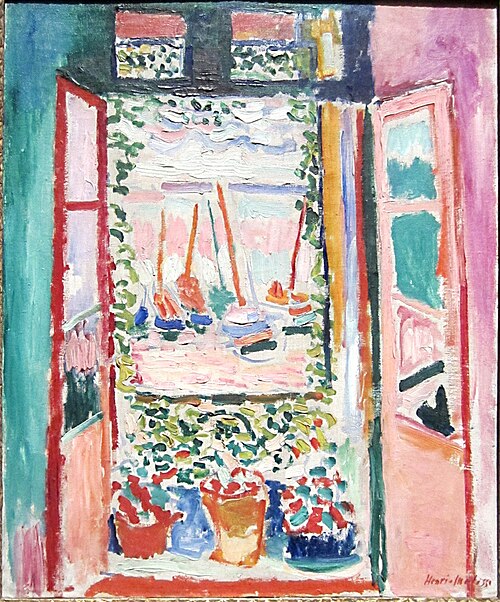 Henri Matisse 1905, Fauvism
 Pablo Picasso 1907, Proto-Cubism

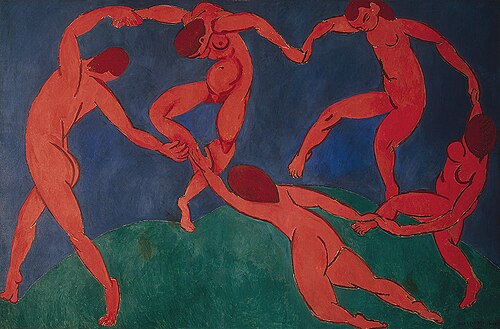
The heritage of painters like Van Gogh, Cézanne, Gauguin, and Seurat was essential for the development of modern art. At the beginning of the 20th century Henri Matisse and several other young artists including the pre-cubist Georges Braque, André Derain, Raoul Dufy and Maurice de Vlaminck revolutionized the Paris art world with "wild", multi-colored, expressive, landscapes and figure paintings that the critics called Fauvism. Henri Matisse's second version of The Dance signifies a key point in his career and in the development of modern painting.[53] It reflects Matisse's incipient fascination with primitive art: the intense warm colors against the cool blue-green background and the rhythmical succession of dancing nudes convey the feelings of emotional liberation and hedonism. Pablo Picasso made his first cubist paintings based on Cézanne's idea that all depiction of nature can be reduced to three solids: cube, sphere and cone. With the painting Les Demoiselles d'Avignon 1907, Picasso dramatically created a new and radical picture depicting a raw and primitive brothel scene with five prostitutes, violently painted women, reminiscent of African tribal masks and his own new Cubist inventions. analytic Cubism was jointly developed by Pablo Picasso and Georges Braque, exemplified by Violin and Candlestick, Paris, from about 1908 through 1912. Analytic cubism, the first clear manifestation of cubism, was followed by synthetic cubism, practised by Braque, Picasso, Fernand Léger, Juan Gris, Albert Gleizes, Marcel Duchamp and countless other artists into the 1920s. Synthetic cubism is characterized by the introduction of different textures, surfaces, collage elements, papier collé and a large variety of merged subject matter.

Les Fauves (French for The Wild Beasts) were early-20th-century painters, experimenting with freedom of expression through color. The name was given, humorously and not as a compliment, to the group by art critic Louis Vauxcelles. Fauvism was a short-lived and loose grouping of early-20th-century artists whose works emphasized painterly qualities, and the imaginative use of deep color over the representational values. Fauvists made the subject of the painting easy to read, exaggerated perspectives and an interesting prescient prediction of the Fauves was expressed in 1888 by Paul Gauguin to Paul Sérusier,
How do you see these trees? They are yellow. So, put in yellow; this shadow, rather blue, paint it with pure ultramarine; these red leaves? Put in vermilion.
The leaders of the movement were Henri Matisse and André Derain – friendly rivals of a sort, each with his own followers. Ultimately Matisse became the yang to Picasso's yin in the 20th century. Fauvist painters included Albert Marquet, Charles Camoin, Maurice de Vlaminck, Raoul Dufy, Othon Friesz, the Dutch painter Kees van Dongen, and Picasso's partner in Cubism, Georges Braque amongst others.[54]

Fauvism, as a movement, had no concrete theories, and was short lived, beginning in 1905 and ending in 1907, they only had three exhibitions. Matisse was seen as the leader of the movement, due to his seniority in age and prior self-establishment in the academic art world. His 1905 portrait of Mme. Matisse The Green Line, (above), caused a sensation in Paris when it was first exhibited. He said he wanted to create art to delight; art as a decoration was his purpose and it can be said that his use of bright colors tries to maintain serenity of composition. In 1906 at the suggestion of his dealer Ambroise Vollard, André Derain went to London and produced a series of paintings like Charing Cross Bridge, London (above) in the Fauvist style, paraphrasing the famous series by the Impressionist painter Claude Monet. Masters like Henri Matisse and Pierre Bonnard continued developing their narrative styles independent of any movement throughout the 20th century.
By 1907 Fauvism no longer was a shocking new movement, soon it was replaced by Cubism on the critics' radar screen as the latest new development in Contemporary Art of the time. In 1907 Apollinaire, commenting about Matisse in an article published in La Falange, said, "We are not here in the presence of an extravagant or an extremist undertaking: Matisse's art is eminently reasonable."[55]Analytic cubism was jointly developed by Pablo Picasso and Georges Braque from about 1908 through 1912. Analytic cubism, the first clear manifestation of cubism, was followed by Synthetic cubism, practised by Braque, Picasso, Fernand Léger, Juan Gris, Albert Gleizes, Marcel Duchamp and countless other artists into the 1920s. Synthetic cubism is characterized by the introduction of different textures, surfaces, collage elements, papier collé and a large variety of merged subject matter.
During the years between 1910 and the end of World War I and after the heyday of cubism, several movements emerged in Paris. Giorgio de Chirico moved to Paris in July 1911, where he joined his brother Andrea (the poet and painter known as Alberto Savinio). Through his brother he met Pierre Laprade a member of the jury at the Salon d'Automne, where he exhibited three of his dreamlike works: Enigma of the Oracle, Enigma of an Afternoon and Self-Portrait. During 1913 he exhibited his work at the Salon des Indépendants and Salon d'Automne, his work was noticed by Pablo Picasso and Guillaume Apollinaire and several others. His compelling and mysterious paintings are considered instrumental to the early beginnings of Surrealism. During the first half of the 20th century in Europe masters like Georges Braque, André Derain, and Giorgio de Chirico continued painting independent of any movement.
Pioneers of Modern art
 André Derain, 1905, Le séchage des voiles (The Drying Sails), Fauvism
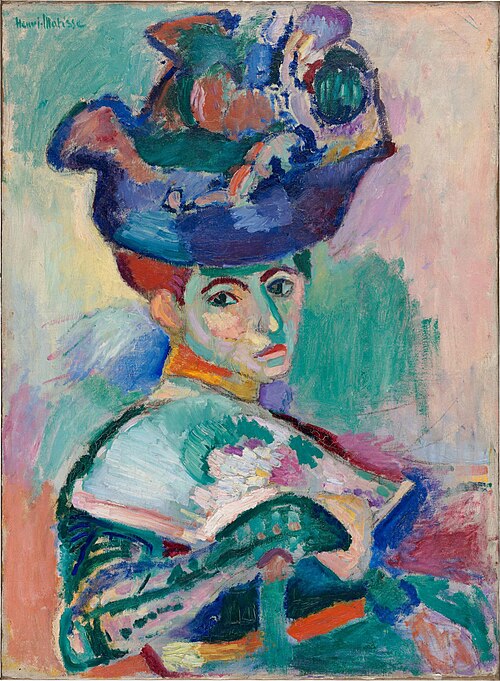 Henri Matisse, 1905, Woman with a Hat, Fauvism
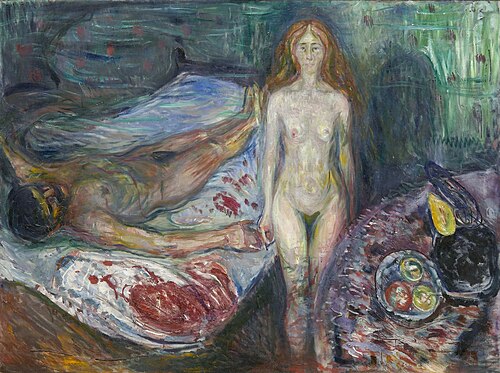 Edvard Munch, Death of Marat I (1907), an example of Expressionism
 Gustav Klimt, expressionism, 1907–1908
 Pablo Picasso, 1908, Dryad, Proto-Cubism


 Franz Marc 1912, Der Blaue Reiter
 Robert Delaunay, 1911, Orphism
 Wassily Kandinsky 1913, birth of abstract art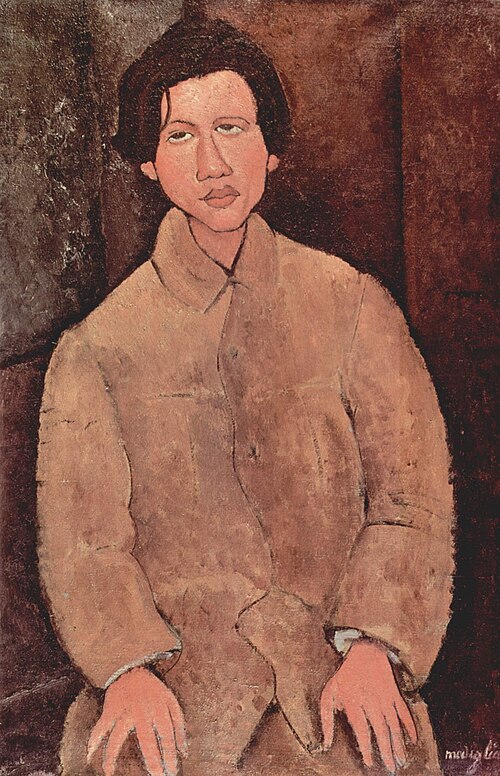

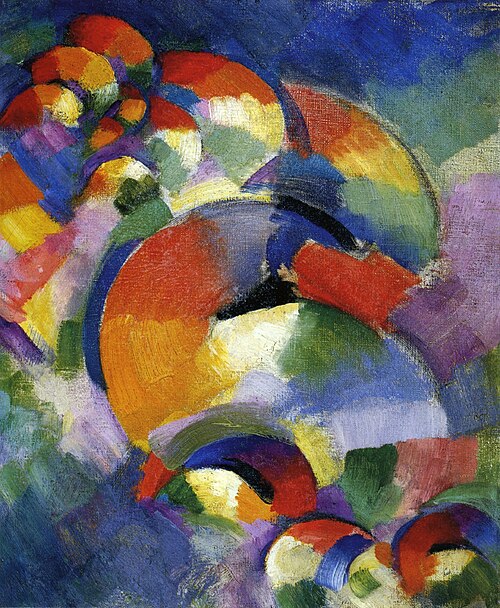
In the first two decades of the 20th century and after Cubism, several other important movements emerged; futurism (Balla), abstract art (Kandinsky), Der Blaue Reiter), Bauhaus, (Kandinsky) and (Klee), Orphism, (Robert Delaunay and František Kupka), Synchromism (Morgan Russell), De Stijl (Mondrian), Suprematism (Malevich), Constructivism (Tatlin), Dadaism (Duchamp, Picabia, Arp) and Surrealism (De Chirico, André Breton, Miró, Magritte, Dalí, Ernst). Modern painting influenced all the visual arts, from Modernist architecture and design, to avant-garde film, theatre and modern dance and became an experimental laboratory for the expression of visual experience, from photography and concrete poetry to advertising art and fashion. Van Gogh's painting exerted great influence upon 20th-century Expressionism, as can be seen in the work of the Fauves, Die Brücke (a group led by German painter Ernst Kirchner), and the Expressionism of Edvard Munch, Egon Schiele, Marc Chagall, Amedeo Modigliani, Chaïm Soutine and others..
Wassily Kandinsky a Russian painter, printmaker and art theorist, one of the most famous 20th-century artists is generally considered the first important painter of modern abstract art. As an early Modernist, in search of new modes of visual expression, and spiritual expression, he theorized as did contemporary occultists and theosophists, that pure visual abstraction had corollary vibrations with sound and music. They posited that pure abstraction could express pure spirituality. His earliest abstractions were generally titled as the example in the (above gallery) Composition VII, making connection to the work of the composers of music. Kandinsky included many of his theories about abstract art in his book Concerning the Spiritual in Art.Robert Delaunay was a French artist who is associated with Orphism, (reminiscent of a link between pure abstraction and cubism). His later works were more abstract, reminiscent of Paul Klee. His key contributions to abstract painting refer to his bold use of color, and a clear love of experimentation of both depth and tone. At the invitation of Wassily Kandinsky, Delaunay and his wife the artist Sonia Delaunay, joined The Blue Rider (Der Blaue Reiter), a Munich-based group of abstract artists, in 1911, and his art took a turn to the abstract.[56]
Other major pioneers of early abstraction include Russian painter Kasimir Malevich, who after the Russian Revolution in 1917, and after pressure from the Stalinist regime in 1924 returned to painting imagery and Peasants and Workers in the field, and Swiss painter Paul Klee whose masterful color experiments made him an important pioneer of abstract painting at the Bauhaus. Still other important pioneers of abstract painting include the Swedish artist Hilma af Klint, Czech painter František Kupka as well as American artists Stanton Macdonald-Wright and Morgan Russell who, in 1912, founded Synchromism, an art movement that closely resembles Orphism.
Expressionism and Symbolism are broad rubrics that involve several important and related movements in 20th-century painting that dominated much of the avant-garde art being made in Western, Eastern and Northern Europe. Expressionist works were painted largely between World War I and World War II, mostly in France, Germany, Norway, Russia, Belgium, and Austria. Expressionist artists are related to both Surrealism and Symbolism and are each uniquely and somewhat eccentrically personal. Fauvism, Die Brücke, and Der Blaue Reiter are three of the best known groups of Expressionist and Symbolist painters.
Artists as interesting and diverse as Marc Chagall, whose painting I and the Village, (above) tells an autobiographical story that examines the relationship between the artist and his origins, with a lexicon of artistic Symbolism. Gustav Klimt, Egon Schiele, Edvard Munch, Emil Nolde, Chaïm Soutine, James Ensor, Oskar Kokoschka, Ernst Ludwig Kirchner, Max Beckmann, Franz Marc, Käthe Schmidt Kollwitz, Georges Rouault, Amedeo Modigliani and some of the Americans abroad like Marsden Hartley, and Stuart Davis, were considered influential expressionist painters. Although Alberto Giacometti is primarily thought of as an intense Surrealist sculptor, he made intense expressionist paintings as well.
Pioneers of abstraction
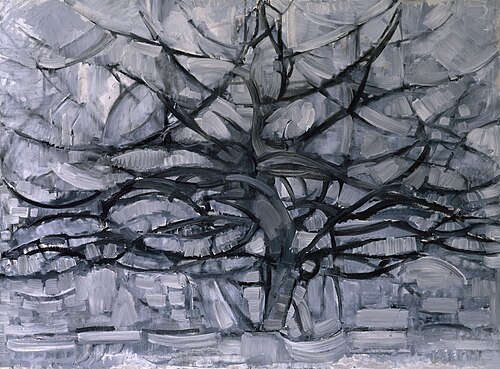 Piet Mondrian, 1912, early De Stijl
 Kasimir Malevich 1916, Suprematism

Piet Mondrian's art was also related to his spiritual and philosophical studies. In 1908 he became interested in the theosophical movement launched by Helena Petrovna Blavatsky in the late 19th century. Blavatsky believed that it was possible to attain a knowledge of nature more profound than that provided by empirical means, and much of Mondrian's work for the rest of his life was inspired by his search for that spiritual knowledge.

De Stijl also known as neoplasticism, was a Dutch artistic movement founded in 1917. The term De Stijl is used to refer to a body of work from 1917 to 1931 founded in the Netherlands.[57][58]
De Stijl is also the name of a journal that was published by the Dutch painter, designer, writer, and critic Theo van Doesburg propagating the group's theories. Next to van Doesburg, the group's principal members were the painters Piet Mondrian, Vilmos Huszár, and Bart van der Leck, and the architects Gerrit Rietveld, Robert van 't Hoff, and J. J. P. Oud. The artistic philosophy that formed a basis for the group's work is known as neoplasticism – the new plastic art (or Nieuwe Beelding in Dutch).
Proponents of De Stijl sought to express a new utopian ideal of spiritual harmony and order. They advocated pure abstraction and universality by a reduction to the essentials of form and colour; they simplified visual compositions to the vertical and horizontal directions, and used only primary colors along with black and white. Indeed, according to the Tate Gallery's online article on neoplasticism, Mondrian himself sets forth these delimitations in his essay "Neo-Plasticism in Pictorial Art". He writes, "... this new plastic idea will ignore the particulars of appearance, that is to say, natural form and colour. On the contrary, it should find its expression in the abstraction of form and colour, that is to say, in the straight line and the clearly defined primary colour." The Tate article further summarizes that this art allows "only primary colours and non-colours, only squares and rectangles, only straight and horizontal or vertical line."[59] The Guggenheim Museum's online article on De Stijl summarizes these traits in similar terms: "It [De Stijl] was posited on the fundamental principle of the geometry of the straight line, the square, and the rectangle, combined with a strong asymmetricality; the predominant use of pure primary colors with black and white; and the relationship between positive and negative elements in an arrangement of non-objective forms and lines."[60]
De Stijl movement was influenced by Cubist painting as well as by the mysticism and the ideas about "ideal" geometric forms (such as the "perfect straight line") in the neoplatonic philosophy of mathematicianM. H. J. Schoenmaekers. The works of De Stijl would influence the Bauhaus style and the international style of architecture as well as clothing and interior design. However, it did not follow the general guidelines of an "ism" (Cubism, Futurism, Surrealism), nor did it adhere to the principles of art schools like Bauhaus; it was a collective project, a joint enterprise.
Dada and Surrealism
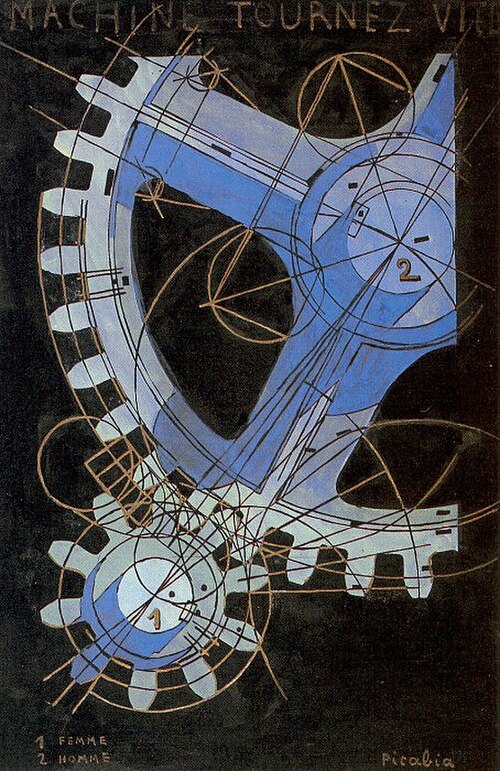 Francis Picabia 1916, Dada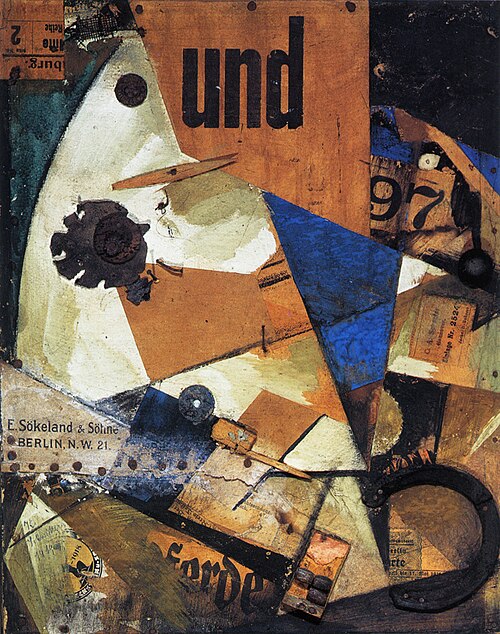
 Max Ernst, 1921, Surrealism
 André Masson, 1922, early Surrealism


Marcel Duchamp, came to international prominence in the wake of his notorious success at the New York City Armory Show in 1913, (soon after he denounced artmaking for chess). After Duchamp's Nude Descending a Staircase became the international cause celebre at the 1913 Armory show in New York he created The Bride Stripped Bare by Her Bachelors, Even, Large Glass. The Large Glass pushed the art of painting to radical new limits being part painting, part collage, part construction. Duchamp became closely associated with the Dada movement that began in neutral Zürich, Switzerland, during World War I and peaked from 1916 to 1920. The movement primarily involved visual arts, literature (poetry, art manifestoes, art theory), theatre, and graphic design, and concentrated its anti war politic through a rejection of the prevailing standards in art through anti-art cultural works. Francis Picabia, Man Ray, Kurt Schwitters, Tristan Tzara, Hans Richter, Jean Arp, Sophie Taeuber-Arp, along with Duchamp and many others are associated with the Dadaist movement. Duchamp and several Dadaists are also associated with Surrealism, the movement that dominated European painting in the 1920s and 1930s.
In 1924 André Breton published the Surrealist Manifesto. The Surrealist movement in painting became synonymous with the avant-garde and which featured artists whose works varied from the abstract to the super-realist. With works on paper like Machine Turn Quickly, (above) Francis Picabia continued his involvement in the Dada movement through 1919 in Zürich and Paris, before breaking away from it after developing an interest in Surrealist art. Yves Tanguy, René Magritte and Salvador Dalí are particularly known for their realistic depictions of dream imagery and fantastic manifestations of the imagination. Joan Miró's The Tilled Field of 1923–1924 verges on abstraction, this early painting of a complex of objects and figures, and arrangements of sexually active characters; was Miró's first Surrealist masterpiece.[61] Miró's The Tilled Field also contains several parallels to Bosch's Garden of Earthly Delights: similar flocks of birds; pools from which living creatures emerge; and oversize disembodied ears all echo the Dutch master's work that Miró saw as a young painter in The Prado. The more abstract Joan Miró, Jean Arp, André Masson, and Max Ernst were very influential, especially in the United States during the 1940s. Throughout the 1930s, Surrealism continued to become more visible to the public at large. A Surrealist group developed in Britain and, according to Breton, their 1936 London International Surrealist Exhibition was a high water mark of the period and became the model for international exhibitions. Surrealist groups in Japan, and especially in Latin America, the Caribbean and in Mexico produced innovative and original works.
Dalí and Magritte created some of the most widely recognized images of the movement. The 1928/1929 painting This Is Not A Pipe, by Magritte is the subject of a Michel Foucault 1973 book, This is not a Pipe (English edition, 1991), that discusses the painting and its paradox. Dalí joined the group in 1929, and participated in the rapid establishment of the visual style between 1930 and 1935.
Surrealism as a visual movement had found a method: to expose psychological truth by stripping ordinary objects of their normal significance, in order to create a compelling image that was beyond ordinary formal organization, and perception, sometimes evoking empathy from the viewer, sometimes laughter and sometimes outrage and bewilderment.
1931 marked a year when several Surrealist painters produced works which marked turning points in their stylistic evolution: in one example, liquid shapes become the trademark of Dalí, particularly in his The Persistence of Memory, which features the image of watches that sag as if they are melting. Evocations of time and its compelling mystery and absurdity.[62]
The characteristics of this style – a combination of the depictive, the abstract, and the psychological – came to stand for the alienation which many people felt in the modernist period, combined with the sense of reaching more deeply into the psyche, to be "made whole with one's individuality."

Max Ernst whose 1920 painting Murdering Airplane, studied philosophy and psychology in Bonn and was interested in the alternative realities experienced by the insane. His paintings may have been inspired by the psychoanalystSigmund Freud's study of the delusions of a paranoiac, Daniel Paul Schreber. Freud identified Schreber's fantasy of becoming a woman as a castration complex. The central image of two pairs of legs refers to Schreber's hermaphroditic desires. Ernst's inscription on the back of the painting reads: The picture is curious because of its symmetry. The two sexes balance one another.[63]
During the 1920s André Masson's work was enormously influential in helping the newly arrived in Paris and young artist Joan Miró find his roots in the new Surrealist painting. Miró acknowledged in letters to his dealer Pierre Matisse the importance of Masson as an example to him in his early years in Paris.
Long after personal, political and professional tensions have fragmented the Surrealist group into thin air and ether, Magritte, Miró, Dalí and the other Surrealists continue to define a visual program in the arts. Other prominent surrealist artists include Giorgio de Chirico, Méret Oppenheim, Toyen, Grégoire Michonze, Roberto Matta, Kay Sage, Leonora Carrington, Dorothea Tanning, and Leonor Fini among others.
Before and after the war

 Ernst Kirchner, Die Brücke 1913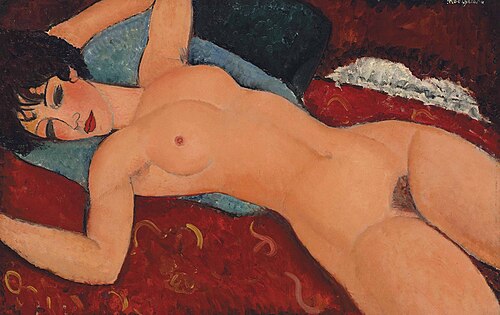

 Stuart Davis, American Modernism 1922
 Chaïm Soutine, Expressionism, c. 1920

Der Blaue Reiter was a German movement lasting from 1911 to 1914, fundamental to Expressionism, along with Die Brücke which was founded the previous decade in 1905 and was a group of German expressionist artists formed in Dresden in 1905. Founding members of Die Brücke were Fritz Bleyl, Erich Heckel, Ernst Ludwig Kirchner and Karl Schmidt-Rottluff. Later members included Max Pechstein, Otto Mueller and others. The group was one of the seminal ones, which in due course had a major impact on the evolution of modern art in the 20th century and created the style of Expressionism.[64]
Wassily Kandinsky, Franz Marc, August Macke, Alexej von Jawlensky, whose psychically expressive painting of the Russian dancer Portrait of Alexander Sakharoff, 1909 is in the gallery above, Marianne von Werefkin, Lyonel Feininger and others founded the Der Blaue Reiter group in response to the rejection of Kandinsky's painting Last Judgement from an exhibition. Der Blaue Reiter lacked a central artistic manifesto, but was centered around Kandinsky and Marc. Artists Gabriele Münter and Paul Klee were also involved.

The name of the movement comes from a painting by Kandinsky created in 1903. It is also claimed that the name could have derived from Marc's enthusiasm for horses and Kandinsky's love of the colour blue. For Kandinsky, blue is the colour of spirituality: the darker the blue, the more it awakens human desire for the eternal.
In the USA during the period between World War I and World War II painters tended to go to Europe for recognition. Artists like Marsden Hartley, Patrick Henry Bruce, Gerald Murphy and Stuart Davis, created reputations abroad. In New York City, Albert Pinkham Ryder and Ralph Blakelock were influential and important figures in advanced American painting between 1900 and 1920. During the 1920s photographer Alfred Stieglitz exhibited Georgia O'Keeffe, Arthur Dove, Alfred Henry Maurer, Charles Demuth, John Marin and other artists including European Masters Henri Matisse, Auguste Rodin, Henri Rousseau, Paul Cézanne, and Pablo Picasso, at his gallery the 291.
Social consciousness
 George Grosz, 1920, Neue Sachlichkeit
 George Bellows, 1924, American realism

During the 1920s and the 1930s and the Great Depression, Surrealism, late Cubism, the Bauhaus, De Stijl, Dada, German Expressionism, Expressionism, and modernist and masterful color painters like Henri Matisse and Pierre Bonnard characterized the European art scene. In Germany Max Beckmann, Otto Dix, George Grosz and others politicized their paintings, foreshadowing the coming of World War II. While in America American Scene painting and the social realism and regionalism movements that contained both political and social commentary dominated the art world. Artists like Ben Shahn, Thomas Hart Benton, Grant Wood, George Tooker, John Steuart Curry, Reginald Marsh, and others became prominent. In Latin America besides the Uruguayan painter Joaquín Torres García and Rufino Tamayo from Mexico, the muralist movement with Diego Rivera, David Siqueiros, José Orozco, Pedro Nel Gómez and Santiago Martinez Delgado and the Symbolist paintings by Frida Kahlo began a renaissance of the arts for the region, with a use of color and historic, and political messages. Frida Kahlo's Symbolist works also relate strongly to Surrealism and to the Magic Realism movement in literature. The psychological drama in many of Kahlo's self portraits (above) underscore the vitality and relevance of her paintings to artists in the 21st century.

American Gothic is a painting by Grant Wood from 1930. Portraying a pitchfork-holding farmer and a younger woman in front of a house of Carpenter Gothic style, it is one of the most familiar images in 20th-century American art. Art critics had favorable opinions about the painting, like Gertrude Stein and Christopher Morley, they assumed the painting was meant to be a satire of rural small-town life. It was thus seen as part of the trend towards increasingly critical depictions of rural America, along the lines of Sherwood Anderson's 1919 Winesburg, Ohio, Sinclair Lewis' 1920 Main Street, and Carl Van Vechten's The Tattooed Countess in literature.[65] However, with the onset of the Great Depression, the painting came to be seen as a depiction of steadfast American pioneer spirit.
Diego Rivera is perhaps best known by the public world for his 1933 mural, "Man at the Crossroads", in the lobby of the RCA Building at Rockefeller Center. When his patron Nelson Rockefeller discovered that the mural included a portrait of Vladimir Lenin and other communist imagery, he fired Rivera, and the unfinished work was eventually destroyed by Rockefeller's staff. The film Cradle Will Rock includes a dramatization of the controversy. Frida Kahlo (Rivera's wife's) works are often characterized by their stark portrayals of pain. Of her 143 paintings 55 are self-portraits, which frequently incorporate symbolic portrayals of her physical and psychological wounds. Kahlo was deeply influenced by indigenous Mexican culture, which is apparent in her paintings' bright colors and dramatic symbolism. Christian and Jewish themes are often depicted in her work as well; she combined elements of the classic religious Mexican tradition—which were often bloody and violent—with surrealist renderings. While her paintings are not overtly Christian they certainly contain elements of the macabre Mexican Christian style of religious paintings.
Political activism was an important piece of David Siqueiros' life, and frequently inspired him to set aside his artistic career. His art was deeply rooted in the Mexican Revolution, a violent and chaotic period in Mexican history in which various social and political factions fought for recognition and power. The period from the 1920s to the 1950s is known as the Mexican Renaissance, and Siqueiros was active in the attempt to create an art that was at once Mexican and universal. He briefly gave up painting to focus on organizing miners in Jalisco.
World conflict
 Ernst Ludwig Kirchner, 1935–1937, German Expressionism
 Wassily KandinskyComposition X 1939, Geometric abstraction
During the 1930s radical leftist politics characterized many of the artists connected to Surrealism, including Pablo Picasso.[66] On 26 April 1937, during the Spanish Civil War, the Basque town of Gernika was the scene of the "Bombing of Gernika" by the Condor Legion of Nazi Germany's Luftwaffe. The Germans were attacking to support the efforts of Francisco Franco to overthrow the Basque Government and the Spanish Republican government. The town was devastated, though the Biscayan assembly and the Oak of Gernika survived. Pablo Picasso painted his mural sized Guernica to commemorate the horrors of the bombing.
In its final form, Guernica is an immense black and white, 3.5 metres (11 feet) tall and 7.8 metres (26 feet) wide mural painted in oil. The mural presents a scene of death, violence, brutality, suffering, and helplessness without portraying their immediate causes. The choice to paint in black and white contrasts with the intensity of the scene depicted and invokes the immediacy of a newspaper photograph.[67] Picasso painted the mural sized painting called Guernica in protest of the bombing. The painting was first exhibited in Paris in 1937, then Scandinavia, then London in 1938 and finally in 1939 at Picasso's request the painting was sent to the United States in an extended loan (for safekeeping) at MoMA. The painting went on a tour of museums throughout the USA until its final return to the Museum of Modern Art in New York City where it was exhibited for nearly thirty years. Finally in accord with Pablo Picasso's wish to give the painting to the people of Spain as a gift, it was sent to Spain in 1981.

During the Great Depression of the 1930s, through the years of World War II American art was characterized by Social Realism and American Scene Painting in the work of Grant Wood, Edward Hopper, Ben Shahn, Thomas Hart Benton, and several others. Nighthawks (1942) is a painting by Edward Hopper that portrays people sitting in a downtown diner late at night. It is not only Hopper's most famous painting, but one of the most recognizable in American art. It is currently in the collection of the Art Institute of Chicago. The scene was inspired by a diner (since demolished) in Greenwich Village, Hopper's home neighborhood in Manhattan. Hopper began painting it immediately after the attack on Pearl Harbor. After this event there was a large feeling of gloominess over the country, a feeling that is portrayed in the painting. The urban street is empty outside the diner, and inside none of the three patrons is apparently looking or talking to the others but instead is lost in their own thoughts. This portrayal of modern urban life as empty or lonely is a common theme throughout Hopper's work.
The Dynamic for artists in Europe during the 1930s deteriorated rapidly as the Nazi's power in Germany and across Eastern Europe increased. The climate became so hostile for artists and art associated with Modernism and abstraction that many left for the Americas. Degenerate art was a term adopted by the Nazi regime in Germany for virtually all modern art. Such art was banned on the grounds that it was un-German or Jewish Bolshevist in nature, and those identified as degenerate artists were subjected to sanctions. These included being dismissed from teaching positions, being forbidden to exhibit or to sell their art, and in some cases being forbidden to produce art entirely.
Degenerate Art was also the title of an exhibition, mounted by the Nazis in Munich in 1937, consisting of modernist artworks chaotically hung and accompanied by text labels deriding the art. Designed to inflame public opinion against modernism, the exhibition subsequently traveled to several other cities in Germany and Austria. German artist Max Beckmann and scores of others fled Europe for New York. In New York City a new generation of young and exciting Modernist painters led by Arshile Gorky, Willem de Kooning, and others were just beginning to come of age.
Arshile Gorky's portrait of someone who might be Willem de Kooning (above) is an example of the evolution of abstract expressionism from the context of figure painting, cubism and surrealism. Along with his friends de Kooning and John D. Graham Gorky created bio-morphically shaped and abstracted figurative compositions that by the 1940s evolved into totally abstract paintings. Gorky's work seems to be a careful analysis of memory, emotion and shape, using line and color to express feeling and nature.
Towards mid-century

The 1940s in New York City heralded the triumph of American abstract expressionism, a modernist movement that combined lessons learned from Henri Matisse, Pablo Picasso, Surrealism, Joan Miró, Cubism, Fauvism, and early Modernism via great teachers in America like Hans Hofmann and John D. Graham. American artists benefited from the presence of Piet Mondrian, Fernand Léger, Max Ernst and the André Breton group, Pierre Matisse's gallery, and Peggy Guggenheim's gallery The Art of This Century, as well as other factors. The figurative work of Francis Bacon, Frida Kahlo, Edward Hopper, Lucian Freud, Andrew Wyeth and others served as a kind of alternative to abstract expressionism.
Post-Second World War American painting called Abstract expressionism included artists like Jackson Pollock, Willem de Kooning, Arshile Gorky, Mark Rothko, Hans Hofmann, Clyfford Still, Franz Kline, Adolph Gottlieb, Mark Tobey, Barnett Newman, James Brooks, Philip Guston, Robert Motherwell, Conrad Marca-Relli, Jack Tworkov, William Baziotes, Richard Pousette-Dart, Ad Reinhardt, Hedda Sterne, Jimmy Ernst, Esteban Vicente, Bradley Walker Tomlin, and Theodoros Stamos, among others. American Abstract expressionism got its name in 1946 from the art critic Robert Coates. It is seen as combining the emotional intensity and self-denial of the German Expressionists with the anti-figurative aesthetic of the European abstract schools such as futurism, the Bauhaus and synthetic cubism. Abstract expressionism, action painting, and Color Field painting are synonymous with the New York School.
Technically Surrealism was an important predecessor for abstract expressionism with its emphasis on spontaneous, automatic or subconscious creation. Jackson Pollock's dripping paint onto a canvas laid on the floor is a technique that has its roots in the work of André Masson. Another important early manifestation of what came to be abstract expressionism is the work of American Northwest artist Mark Tobey, especially his "white writing" canvases, which, though generally not large in scale, anticipate the "all over" look of Pollock's drip paintings.
Abstract expressionism
Additionally, Abstract expressionism has an image of being rebellious, anarchic, highly idiosyncratic and, some feel, rather nihilistic. In practice, the term is applied to any number of artists working (mostly) in New York who had quite different styles, and even applied to work which is not especially abstract nor expressionist. Pollock's energetic "action paintings", with their "busy" feel, are different both technically and aesthetically, to the violent and grotesque Women series of Willem de Kooning. As seen above in the gallery Woman V is one of a series of six paintings made by de Kooning between 1950 and 1953 that depict a three-quarter-length female figure. He began the first of these paintings, Woman I collection: The Museum of Modern Art, New York City, in June 1950, repeatedly changing and painting out the image until January or February 1952, when the painting was abandoned unfinished. The art historian Meyer Schapiro saw the painting in de Kooning's studio soon afterwards and encouraged the artist to persist. De Kooning's response was to begin three other paintings on the same theme; Woman II collection: The Museum of Modern Art, New York City, Woman III, Tehran Museum of Contemporary Art, Woman IV, Nelson-Atkins Museum of Art, Kansas City, Missouri. During the summer of 1952, spent at East Hampton, de Kooning further explored the theme through drawings and pastels. He may have finished work on Woman I by the end of June, or possibly as late as November 1952, and probably the other three women pictures were concluded at much the same time.[68] The Woman series are decidedly figurative paintings. Another important artist is Franz Kline, as demonstrated by his painting High Street, 1950 as with Jackson Pollock and other Abstract Expressionists, was labelled an "action painter" because of his seemingly spontaneous and intense style, focusing less, or not at all, on figures or imagery, but on the actual brush strokes and use of canvas.[69][70][71][72]
Clyfford Still, Barnett Newman, Adolph Gottlieb, and the serenely shimmering blocks of color in Mark Rothko's work (which is not what would usually be called expressionist and which Rothko denied was abstract), are classified as abstract expressionists, albeit from what Clement Greenberg termed the Color Field direction of abstract expressionism. Both Hans Hofmann and Robert Motherwell (gallery) can be comfortably described as practitioners of action painting and Color Field painting.
Abstract expressionism has many stylistic similarities to the Russian artists of the early 20th century such as Wassily Kandinsky. Although it is true that spontaneity or of the impression of spontaneity characterized many of the abstract expressionists works, most of these paintings involved careful planning, especially since their large size demanded it. An exception might be the drip paintings of Pollock.
Why this style gained mainstream acceptance in the 1950s is a matter of debate. American Social realism had been the mainstream in the 1930s. It had been influenced not only by the Great Depression but also by the Social Realists of Mexico such as David Alfaro Siqueiros and Diego Rivera. The political climate after World War II did not long tolerate the social protests of those painters. Abstract expressionism arose during World War II and began to be showcased during the early 1940s at galleries in New York like The Art of This Century Gallery. The late 1940s through the mid-1950s ushered in the McCarthy era. It was after World War II and a time of political conservatism and extreme artistic censorship in the United States. Some people have conjectured that since the subject matter was often totally abstract, Abstract expressionism became a safe strategy for artists to pursue this style. Abstract art could be seen as apolitical. Or if the art was political, the message was largely for the insiders. However, those theorists are in the minority. As the first truly original school of painting in America, Abstract expressionism demonstrated the vitality and creativity of the country in the post-war years, as well as its ability (or need) to develop an aesthetic sense that was not constrained by the European standards of beauty.
Although Abstract expressionism spread quickly throughout the United States, the major centers of this style were New York City and California, especially in the New York School, and the San Francisco Bay area. Abstract expressionist paintings share certain characteristics, including the use of large canvases, an "all-over" approach, in which the whole canvas is treated with equal importance (as opposed to the center being of more interest than the edges). The canvas as the arena became a credo of action painting, while the integrity of the picture plane became a credo of the Color Field painters. Many other artists began exhibiting their abstract expressionist related paintings during the 1950s including Alfred Leslie, Sam Francis, Joan Mitchell, Helen Frankenthaler, Cy Twombly, Milton Resnick, Michael Goldberg, Norman Bluhm, Ray Parker, Nicolas Carone, Grace Hartigan, Friedel Dzubas, and Robert Goodnough among others.
During the 1950s Color Field painting initially referred to a particular type of abstract expressionism, especially the work of Mark Rothko, Clyfford Still, Barnett Newman, Robert Motherwell and Adolph Gottlieb. It essentially involved abstract paintings with large, flat expanses of color that expressed the sensual, and visual feelings and properties of large areas of nuanced surface. Art critic Clement Greenberg perceived Color Field painting as related to but different from Action painting. The overall expanse and gestalt of the work of the early color field painters speaks of an almost religious experience, awestruck in the face of an expanding universe of sensuality, color and surface. During the early-to-mid-1960s, Color Field painting came to refer to the styles of artists like Jules Olitski, Kenneth Noland, and Helen Frankenthaler, whose works were related to second-generation abstract expressionism, and to younger artists like Larry Zox, and Frank Stella, – all moving in a new direction. Artists like Clyfford Still, Mark Rothko, Hans Hofmann, Morris Louis, Jules Olitski, Kenneth Noland, Helen Frankenthaler, Larry Zox, and others often used greatly reduced references to nature, and they painted with a highly articulated and psychological use of color. In general these artists eliminated recognizable imagery. In Mountains and Sea, from 1952, a seminal work of Color Field painting by Helen Frankenthaler the artist used the stain technique for the first time.
In Europe there was the continuation of Surrealism, Cubism, Dada and the works of Matisse. Also in Europe, Tachisme (the European equivalent to Abstract expressionism) took hold of the newest generation. Serge Poliakoff, Nicolas de Staël, Georges Mathieu, Vieira da Silva, Jean Dubuffet, Yves Klein and Pierre Soulages among others are considered important figures in post-war European painting.
Eventually abstract painting in America evolved into movements such as Neo-Dada, Color Field painting, Post painterly abstraction, Op art, hard-edge painting, Minimal art, shaped canvas painting, lyrical abstraction, Neo-expressionism and the continuation of Abstract expressionism. As a response to the tendency toward abstraction imagery emerged through various new movements, notably Pop art.
Pop art
Earlier in England in 1956 the term Pop Art was used by Lawrence Alloway for paintings that celebrated consumerism of the post World War II era. This movement rejected abstract expressionism and its focus on the hermeneutic and psychological interior, in favor of art which depicted, and often celebrated material consumer culture, advertising, and iconography of the mass production age.[73] The early works of David Hockney and the works of Richard HamiltonPeter Blake and Eduardo Paolozzi were considered seminal examples in the movement.
Pop art in America was to a large degree initially inspired by the works of Jasper Johns, Larry Rivers, and Robert Rauschenberg. Although the paintings of Gerald Murphy, Stuart Davis and Charles Demuth during the 1920s and 1930s set the table for pop art in America. In New York City during the mid-1950s Robert Rauschenberg and Jasper Johns created works of art that at first seemed to be continuations of Abstract expressionist painting. Actually their works and the work of Larry Rivers, were radical departures from abstract expressionism especially in the use of banal and literal imagery and the inclusion and the combining of mundane materials into their work. The innovations of Johns' specific use of various images and objects like chairs, numbers, targets, beer cans and the American flag; Rivers paintings of subjects drawn from popular culture such as George Washington crossing the Delaware, and his inclusions of images from advertisements like the camel from Camel cigarettes, and Rauschenberg's surprising constructions using inclusions of objects and pictures taken from popular culture, hardware stores, junkyards, the city streets, and taxidermy gave rise to a radical new movement in American art. Eventually by 1963 the movement came to be known worldwide as pop art.
American pop art is exemplified by artists: Andy Warhol, Claes Oldenburg, Wayne Thiebaud, James Rosenquist, Jim Dine, Tom Wesselmann and Roy Lichtenstein among others. Lichtenstein's most important work is arguably Whaam! (1963, Tate Modern, London[74]), one of the earliest known examples of pop art, adapted a comic-book panel from a 1962 issue of DC Comics' All-American Men of War.[75] The painting depicts a fighter aircraft firing a rocket into an enemy plane, with a red-and-yellow explosion. The cartoon style is heightened by the use of the onomatopoeic lettering "Whaam!" and the boxed caption "I pressed the fire control... and ahead of me rockets blazed through the sky..."[74] Pop art merges popular and mass culture with fine art, while injecting humor, irony, and recognizable imagery and content into the mix. In October 1962 the Sidney Janis Gallery mounted The New Realists the first major pop art group exhibition in an uptown art gallery in New York City. Sidney Janis mounted the exhibition in a 57th Street storefront near his gallery at 15 E. 57th Street. The show sent shockwaves through the New York School and reverberated worldwide. Earlier in the fall of 1962 an historically important and ground-breaking New Painting of Common Objects exhibition of pop art, curated by Walter Hopps at the Pasadena Art Museum sent shock waves across the Western United States.
While in the downtown scene in New York City's East Village10th Street galleries artists were formulating an American version of Pop Art. Claes Oldenburg had his storefront and made painted objects, and the Green Gallery on 57th Street began to show Tom Wesselmann and James Rosenquist. Later Leo Castelli exhibited other American artists including the bulk of the careers of Andy Warhol and Roy Lichtenstein and his use of Benday dots, a technique used in commercial reproduction. There is a connection between the radical works of Duchamp, and Man Ray, the rebellious Dadaists – with a sense of humor; and pop artists like Alex Katz (who became known for his parodies of portrait photography and suburban life), Claes Oldenburg, Andy Warhol, Roy Lichtenstein and the others.
While throughout the 20th century many painters continued to practice landscape and figurative painting with contemporary subjects and solid technique, like Milton Avery, John D. Graham, Fairfield Porter, Edward Hopper, Balthus, Francis Bacon, Nicolas de Staël, Andrew Wyeth, Lucian Freud, Frank Auerbach, Philip Pearlstein, David Park, Nathan Oliveira, David Hockney, Malcolm Morley, Richard Estes, Ralph Goings, Audrey Flack, Chuck Close, Susan Rothenberg, Eric Fischl, Vija Celmins and Richard Diebenkorn.
Figurative, landscape, still-Life, seascape, and Realism
During the 1930s through the 1960s abstract painting in America and Europe evolved into movements such as abstract expressionism, Color Field painting, Post painterly abstraction, Op art, hard-edge painting, Minimal art, shaped canvas painting, and lyrical abstraction. Other artists reacted as a response to the tendency toward abstraction, allowing figurative imagery to continue through various new contexts like the Bay Area Figurative Movement in the 1950s and new forms of expressionism from the 1940s through the 1960s. In Italy during this time, Giorgio Morandi was the foremost still life painter, exploring a wide variety of approaches to depicting everyday bottles and kitchen implements.[76] Throughout the 20th century many painters practiced Realism and used expressive imagery; practicing landscape and figurative painting with contemporary subjects and solid technique, and unique expressivity like still-life painter Giorgio Morandi, Milton Avery, John D. Graham, Fairfield Porter, Edward Hopper, Andrew Wyeth, Balthus, Francis Bacon, Leon Kossoff, Frank Auerbach, Lucian Freud, Philip Pearlstein, Willem de Kooning, Arshile Gorky, Grace Hartigan, Robert De Niro, Sr., Elaine de Kooning and others. Along with Henri Matisse, Pablo Picasso, Pierre Bonnard, Georges Braque, and other 20th-century masters. In particular Milton Avery through his use of color and his interest in seascape and landscape paintings connected with the Color field aspect of Abstract expressionism as manifested by Adolph Gottlieb and Mark Rothko as well as the lessons American painters took from the work of Henri Matisse.[77][78]
Head VI, 1949 is a painting by the Irish born artist Francis Bacon and is an example of Post World War II European Expressionism. The work shows a distorted version of the Portrait of Innocent X painted by the Spanish artist Diego Velázquez in 1650. The work is one of a series of variants of the Velázquez painting which Bacon executed throughout the 1950s and early 1960s, over a total of forty-five works.[79] When asked why he was compelled to revisit the subject so often, Bacon replied that he had nothing against the Popes, that he merely "wanted an excuse to use these colours, and you can't give ordinary clothes that purple colour without getting into a sort of false fauve manner."[80] The Pope in this version seethes with anger and aggression, and the dark colors give the image a grotesque and nightmarish appearance.[81] The pleated curtains of the backdrop are rendered transparent, and seem to fall through the Pope's face.[82] Italian painter Giorgio Morandi was an important 20th-century early pioneer of Minimalism. Born in Bologna, Italy, in 1890, throughout his career, Morandi concentrated almost exclusively on still lifes and landscapes, except for a few self-portraits. With great sensitivity to tone, color, and compositional balance, he would depict the same familiar bottles and vases again and again in paintings notable for their simplicity of execution. Morandi executed 133 etchings, a significant body of work in its own right, and his drawings and watercolors often approach abstraction in their economy of means. Through his simple and repetitive motifs and economical use of color, value and surface, Morandi became a prescient and important forerunner of Minimalism. He died in Bologna in 1964.
After World War II the term School of Paris often referred to Tachisme, the European equivalent of American Abstract expressionism and those artists are also related to Cobra. Important proponents being Jean Dubuffet, Pierre Soulages, Nicolas de Staël, Hans Hartung, Serge Poliakoff, and Georges Mathieu, among several others. During the early 1950s Dubuffet (who was always a figurative artist), and de Staël, abandoned abstraction, and returned to imagery via figuration and landscape. De Staël 's work was quickly recognised within the post-war art world, and he became one of the most influential artists of the 1950s. His return to representation (seascapes, footballers, jazz musicians, seagulls) during the early 1950s can be seen as an influential precedent for the American Bay Area Figurative Movement, as many of those abstract painters like Richard Diebenkorn, David Park, Elmer Bischoff, Wayne Thiebaud, Nathan Oliveira, Joan Brown and others made a similar move; returning to imagery during the mid-1950s. Much of de Staël 's late work – in particular his thinned, and diluted oil on canvas abstract landscapes of the mid-1950s predicts Color Field painting and Lyrical Abstraction of the 1960s and 1970s. Nicolas de Staël's bold and intensely vivid color in his last paintings predict the direction of much of contemporary painting that came after him including Pop art of the 1960s.
Art brut, New Realism, Bay Area Figurative Movement, neo-Dada, photorealism

During the 1950s and 1960s as abstract painting in America and Europe evolved into movements such as Color Field painting, post-painterly abstraction, op art, hard-edge painting, minimal art, shaped canvas painting, lyrical abstraction, and the continuation of Abstract expressionism. Other artists reacted as a response to the tendency toward abstraction with art brut,[83] as seen in Court les rues, 1962, by Jean Dubuffet, fluxus, neo-Dada, New Realism, allowing imagery to re-emerge through various new contexts like pop art, the Bay Area Figurative Movement (a prime example is Diebenkorn's Cityscape I, (Landscape No. 1), 1963, Oil on canvas, 60 1/4 x 50 1/2 inches, collection: San Francisco Museum of Modern Art) and later in the 1970s Neo-expressionism. The Bay Area Figurative Movement of whom David Park, Elmer Bischoff, Nathan Oliveira and Richard Diebenkorn whose painting Cityscape 1, 1963 is a typical example were influential members flourished during the 1950s and 1960s in California. Although throughout the 20th century painters continued to practice Realism and use imagery, practicing landscape and figurative painting with contemporary subjects and solid technique, and unique expressivity like Milton Avery, Edward Hopper, Jean Dubuffet, Francis Bacon, Frank Auerbach, Lucian Freud, Philip Pearlstein, and others. Younger painters practiced the use of imagery in new and radical ways. Yves Klein, Martial Raysse, Niki de Saint Phalle, Wolf Vostell, David Hockney, Alex Katz, Malcolm Morley, Ralph Goings, Audrey Flack, Richard Estes, Chuck Close, Susan Rothenberg, Eric Fischl, John Baeder and Vija Celmins were a few who became prominent between the 1960s and the 1980s. Fairfield Porter was largely self-taught, and produced representational work in the midst of the Abstract Expressionist movement. His subjects were primarily landscapes, domestic interiors and portraits of family, friends and fellow artists, many of them affiliated with the New York School of writers, including John Ashbery, Frank O'Hara, and James Schuyler. Many of his paintings were set in or around the family summer house on Great Spruce Head Island, Maine.
Also during the 1960s and 1970s, there was a reaction against painting. Critics like Douglas Crimp viewed the work of artists like Ad Reinhardt, and declared the "death of painting". Artists began to practice new ways of making art. New movements gained prominence some of which are: Fluxus, Happening, Video art, Installation artMail art, the situationists, Conceptual art, Postminimalism, Earth art, arte povera, performance art and body art among others.[84][85]
Neo-Dada is also a movement that started in the 1950s and 1960s and was related to Abstract expressionism only with imagery. Featuring the emergence of combined manufactured items, with artist materials, moving away from previous conventions of painting. This trend in art is exemplified by the work of Jasper Johns and Robert Rauschenberg, whose "combines" in the 1950s were forerunners of Pop Art and Installation art, and made use of the assemblage of large physical objects, including stuffed animals, birds and commercial photography. Robert Rauschenberg, Jasper Johns, Larry Rivers, John Chamberlain, Claes Oldenburg, George Segal, Jim Dine, and Edward Kienholz among others were important pioneers of both abstraction and Pop Art; creating new conventions of art-making; they made acceptable in serious contemporary art circles the radical inclusion of unlikely materials as parts of their works of art.
New abstraction from the 1950s through the 1980s
 Yves Klein, 1962, Monochrome painting
Color Field painting clearly pointed toward a new direction in American painting, away from abstract expressionism. Color Field painting is related to post-painterly abstraction, suprematism, abstract expressionism, hard-edge painting and Lyrical Abstraction. During the 1960s and 1970s abstract painting continued to develop in America through varied styles. Geometric abstraction, Op art, hard-edge painting, Color Field painting and minimal painting, were some interrelated directions for advanced abstract painting as well as some other new movements. Morris Louis was an important pioneer in advanced Color Field painting, his work can serve as a bridge between abstract expressionism, Color Field painting, and minimal art. Two influential teachers Josef Albers and Hans Hofmann introduced a new generation of American artists to their advanced theories of color and space. Josef Albers is best remembered for his work as a Geometric abstractionist painter and theorist. Most famous of all are the hundreds of paintings and prints that make up the series Homage to the Square. In this rigorous series, begun in 1949, Albers explored chromatic interactions with flat colored squares arranged concentrically on the canvas. Albers' theories on art and education were formative for the next generation of artists. His own paintings form the foundation of both hard-edge painting and Op art.
Josef Albers, Hans Hofmann, Ilya Bolotowsky, Burgoyne Diller, Victor Vasarely, Bridget Riley, Richard Anuszkiewicz, Frank Stella, Morris Louis, Kenneth Noland,[86]Ellsworth Kelly, Barnett Newman, Larry Poons, Ronald Davis, Larry Zox, Al Held and some others like Mino Argento,[87] are artists closely associated with Geometric abstraction, Op art, Color Field painting, and in the case of Hofmann and Newman Abstract expressionism as well.
In 1965, an exhibition called The Responsive Eye, curated by William C. Seitz, was held at the Museum of Modern Art, in New York City. The works shown were wide-ranging, encompassing the Minimalism of Frank Stella, the Op art of Larry Poons, the work of Alexander Liberman, alongside the masters of the Op Art movement: Victor Vasarely, Richard Anuszkiewicz, Bridget Riley and others. The exhibition focused on the perceptual aspects of art, which result both from the illusion of movement and the interaction of color relationships. Op art, also known as optical art, is a style present in some paintings and other works of art that use optical illusions. Op art is also closely akin to geometric abstraction and hard-edge painting. Although sometimes the term used for it is perceptual abstraction.
Op art is a method of painting concerning the interaction between illusion and picture plane, between understanding and seeing.[88] Op art works are abstract, with many of the better known pieces made in only black and white. When the viewer looks at them, the impression is given of movement, hidden images, flashing and vibration, patterns, or alternatively, of swelling or warping.
Color Field painting sought to rid art of superfluous rhetoric. Artists like Clyfford Still, Mark Rothko, Hans Hofmann, Morris Louis, Jules Olitski, Kenneth Noland, Helen Frankenthaler, John Hoyland, Larry Zox, and others often used greatly reduced references to nature, and they painted with a highly articulated and psychological use of color. In general these artists eliminated recognizable imagery. Certain artists quoted references to past or present art, but in general color field painting presents abstraction as an end in itself. In pursuing this direction of modern art, artists wanted to present each painting as one unified, cohesive, monolithic image.
Washington Color School, Shaped canvas, Abstract illusionism, Lyrical abstraction
The Washington Color School, was an art movement starting during the 1950s–1970s in Washington, D.C., in the United States, built of abstract expressionist artists. The movement emerged during a time when society, the arts, and people were changing quickly. The founders of this movement are Morris Louis and Kenneth Noland,[89][90] however four more artists were part of the initial art exhibition in 1965.[91]
Frank Stella, Kenneth Noland, Ellsworth Kelly, Barnett Newman, Ronald Davis, Neil Williams, Robert Mangold, Charles Hinman, Richard Tuttle, David Novros, and Alvin Loving are examples of artists associated with the use of the shaped canvas during the period beginning in the early 1960s. Many Geometric abstract artists, minimalists, and Hard-edge painters elected to use the edges of the image to define the shape of the painting rather than accepting the rectangular format. In fact, the use of the shaped canvas is primarily associated with paintings of the 1960s and 1970s that are coolly abstract, formalistic, geometrical, objective, rationalistic, clean-lined, brashly sharp-edged, or minimalist in character. The Andre Emmerich Gallery, the Leo Castelli Gallery, the Richard Feigen Gallery, and the Park Place Gallery were important showcases for Color Field painting, shaped canvas painting and Lyrical Abstraction in New York City during the 1960s. There is a connection with post-painterly abstraction, which reacted against abstract expressionisms' mysticism, hyper-subjectivity, and emphasis on making the act of painting itself dramatically visible – as well as the solemn acceptance of the flat rectangle as an almost ritual prerequisite for serious painting. During the 1960s Color Field painting and Minimal art were often closely associated with each other. In actuality by the early 1970s both movements became decidedly diverse.
Another related movement of the late 1960s, Lyrical Abstraction (the term being coined by Larry Aldrich, the founder of the Aldrich Contemporary Art Museum, Ridgefield Connecticut), encompassed what Aldrich said he saw in the studios of many artists at that time.[92] It is also the name of an exhibition that originated in the Aldrich Museum and traveled to the Whitney Museum of American Art and other museums throughout the United States between 1969 and 1971.[93]
Lyrical Abstraction in the late 1960s is characterized by the paintings of Dan Christensen, Ronnie Landfield, Peter Young and others, and along with the fluxus movement and postminimalism (a term first coined by Robert Pincus-Witten in the pages of Artforum in 1969)[94] sought to expand the boundaries of abstract painting and minimalism by focusing on process, new materials and new ways of expression. Postminimalism often incorporating industrial materials, raw materials, fabrications, found objects, installation, serial repetition, and often with references to Dada and Surrealism is best exemplified in the sculptures of Eva Hesse.[94] Lyrical Abstraction, conceptual art, postminimalism, Earth art, video, performance art, installation art, along with the continuation of fluxus, abstract expressionism, Color Field painting, hard-edge painting, minimal art, op art, pop art, photorealism and New Realism extended the boundaries of contemporary art in the mid-1960s through the 1970s.[95] Lyrical Abstraction is a type of freewheeling abstract painting that emerged in the mid-1960s when abstract painters returned to various forms of painterly, pictorial, expressionism with a predominate focus on process, gestalt and repetitive compositional strategies in general.
Lyrical Abstraction shares similarities with color field painting and abstract expressionism, Lyrical Abstraction as exemplified by the 1968 Ronnie Landfield painting For William Blake, (above) especially in the freewheeling usage of paint – texture and surface. Direct drawing, calligraphic use of line, the effects of brushed, splattered, stained, squeegeed, poured, and splashed paint superficially resemble the effects seen in abstract expressionism and color field painting. However, the styles are markedly different. Setting it apart from abstract expressionism and action painting of the 1940s and 1950s is the approach to composition and drama. As seen in action painting there is an emphasis on brushstrokes, high compositional drama, dynamic compositional tension. While in Lyrical Abstraction there is a sense of compositional randomness, all over composition, low key and relaxed compositional drama and an emphasis on process, repetition, and an all over sensibility.,[96][97]
Hard-edge painting, minimalism, postminimalism, monochrome painting

Agnes Martin, Robert Mangold, Brice Marden, Jo Baer, Robert Ryman, Richard Tuttle, Neil Williams, David Novros, Paul Mogenson, Charles Hinman are examples of artists associated with Minimalism and (exceptions of Martin, Baer and Marden) the use of the shaped canvas also during the period beginning in the early 1960s. Many Geometric abstract artists, minimalists, and hard-edge painters elected to use the edges of the image to define the shape of the painting rather than accepting the rectangular format. In fact, the use of the shaped canvas is primarily associated with paintings of the 1960s and 1970s that are coolly abstract, formalistic, geometrical, objective, rationalistic, clean-lined, brashly sharp-edged, or minimalist in character. The Bykert Gallery, and the Park Place Gallery were important showcases for Minimalism and shaped canvas painting in New York City during the 1960s.
During the 1960s and 1970s artists such as Robert Motherwell, Adolph Gottlieb, Phillip Guston, Lee Krasner, Cy Twombly, Robert Rauschenberg, Jasper Johns, Richard Diebenkorn, Josef Albers, Elmer Bischoff, Agnes Martin, Al Held, Sam Francis, Ellsworth Kelly, Morris Louis, Helen Frankenthaler, Gene Davis, Frank Stella, Kenneth Noland, Joan Mitchell, Friedel Dzubas, and younger artists like Brice Marden, Robert Mangold, Sam Gilliam,[98]John Hoyland, Sean Scully, Pat Steir, Elizabeth Murray, Larry Poons, Walter Darby Bannard, Larry Zox, Ronnie Landfield, Ronald Davis, Dan Christensen, Joan Snyder, Ross Bleckner, Archie Rand, Susan Crile, and dozens of others produced a wide variety of paintings.

During the 1960s and 1970s, there was a reaction against abstract painting. Some critics viewed the work of artists like Ad Reinhardt, and declared the 'death of painting'. Artists began to practice new ways of making art. New movements gained prominence some of which are: postminimalism, Earth art, video art, installation art, arte povera, performance art, body art, fluxus, happening, mail art, the situationists and conceptual art among others.
However still other important innovations in abstract painting took place during the 1960s and the 1970s characterized by monochrome painting and hard-edge painting inspired by Ad Reinhardt, Barnett Newman, Milton Resnick, and Ellsworth Kelly. Artists as diverse as Agnes Martin, Al Held, Larry Zox, Frank Stella, Larry Poons, Brice Marden and others explored the power of simplification. The convergence of Color Field painting, minimal art, hard-edge painting, Lyrical Abstraction, and postminimalism blurred the distinction between movements that became more apparent in the 1980s and 1990s. The neo-expressionism movement is related to earlier developments in abstract expressionism, neo-Dada, Lyrical Abstraction and postminimal painting.
Neo Expressionism
In the late 1960s an abstract expressionist painter Philip Guston helped to lead a transition from abstract expressionism to Neo-expressionism in painting, abandoning the so-called "pure abstraction" of abstract expressionism in favor of more cartoonish renderings of various personal symbols and objects. These works were inspirational to a new generation of painters interested in a revival of expressive imagery. His painting Painting, Smoking, Eating 1973, seen above in the gallery is an example of Guston's final and conclusive return to representation.
In the late 1970s and early 1980s, there was also a return to painting that occurred almost simultaneously in Italy, Germany, France and Britain. These movements were called Transavantguardia, Neue Wilde, Figuration Libre,[99]Neo-expressionism, the school of London, and in the late 1980s the Stuckists respectively. These paintings were characterized by large formats, free expressive mark making, figuration, myth and imagination. All work in this genre came to be labeled neo-expressionism. Critical reaction was divided. Some critics regarded it as driven by profit motivations by large commercial galleries. This type of art continues in popularity into the 21st century, even after the art crash of the late 1980s. Anselm Kiefer is a leading figure in European Neo-expressionism by the 1980s, Kiefer's themes widened from a focus on Germany's role in civilization to the fate of art and culture in general. His work became more sculptural and involves not only national identity and collective memory, but also occultsymbolism, theology and mysticism. The theme of all the work is the trauma experienced by entire societies, and the continual rebirth and renewal in life.
During the late 1970s in the United States painters who began working with invigorated surfaces and who returned to imagery like Susan Rothenberg gained in popularity, especially as seen above in paintings like Horse 2, 1979. During the 1980s American artists like Eric Fischl, David Salle, Jean-Michel Basquiat (who began as a graffiti artist), Julian Schnabel, and Keith Haring, and Italian painters like Mimmo Paladino, Sandro Chia, and Enzo Cucchi, among others defined the idea of Neo-expressionism in America.
Neo-expressionism was a style of modern painting that became popular in the late 1970s and dominated the art market until the mid-1980s. It developed in Europe as a reaction against the conceptual and minimalistic art of the 1960s and 1970s. Neo-expressionists returned to portraying recognizable objects, such as the human body (although sometimes in a virtually abstract manner), in a rough and violently emotional way using vivid colours and banal colour harmonies. The veteran painters Philip Guston, Frank Auerbach, Leon Kossoff, Gerhard Richter, A. R. Penck and Georg Baselitz, along with slightly younger artists like Anselm Kiefer, Eric Fischl, Susan Rothenberg, Francesco Clemente, Jean-Michel Basquiat, Julian Schnabel, Keith Haring, and many others became known for working in this intense expressionist vein of painting.
Painting still holds a respected position in contemporary art. Art is an open field no longer divided by the objective versus non-objective dichotomy. Artists can achieve critical success whether their images are representational or abstract. What has currency is content, exploring the boundaries of the medium, and a refusal to recapitulate the works of the past as an end goal.
Contemporary painting into the 21st century
At the beginning of the 21st century Contemporary painting and Contemporary art in general continues in several contiguous modes, characterized by the idea of pluralism. The "crisis" in painting and current art and current art criticism today is brought about by pluralism. There is no consensus, nor need there be, as to a representative style of the age. There is an anything goes attitude that prevails; an "everything going on", and consequently "nothing going on" syndrome; this creates an aesthetic traffic jam with no firm and clear direction and with every lane on the artistic superhighway filled to capacity. Consequently magnificent and important works of art continue to be made albeit in a wide variety of styles and aesthetic temperaments, the marketplace being left to judge merit.
Hard-edge painting, geometric abstraction, appropriation, hyperrealism, photorealism, expressionism, minimalism, Lyrical Abstraction, pop art, op art, abstract expressionism, Color Field painting, monochrome painting, neo-expressionism, collage, intermedia painting, assemblage painting, digital painting, postmodern painting, neo-Dada painting, shaped canvas painting, environmental mural painting, traditional figure painting, landscape painting, portrait painting, are a few continuing and current directions in painting at the beginning of the 21st century.
Americas

During the period before and after European exploration and settlement of the Americas, including North America, Central America, South America and the Islands of the Caribbean, the Antilles, the Lesser Antilles and other island groups, indigenous native cultures produced creative works including architecture, pottery, ceramics, weaving, carving, sculpture, painting and murals as well as other religious and utilitarian objects. Each continent of the Americas hosted societies that were unique and individually developed cultures; that produced totems, works of religious symbolism, and decorative and expressive painted works. African influence was especially strong in the art of the Caribbean and South America. The arts of the indigenous people of the Americas had an enormous impact and influence on European art and vice versa during and after the Age of Exploration. Spain, Portugal, France, The Netherlands, and England were all powerful and influential colonial powers in the Americas during and after the 15th century. By the 19th century cultural influence began to flow both ways across the Atlantic
Mexico and Central America
 Great Goddess of Teotihuacan mural from the site at Tetitla, Mexico
 Mural from the Complex of Tepantitla in Teotihuacan, a reproduction in the National Museum of Anthropology in Mexico City
 A portion of the mural from the Complex of Tepantitla, represent the Tlalocan one of the levels in the Underworld, Mexico
 Mural of the Jaguars compound in Teotihuacan.
 Portic A from Cacaxtla, represent the Man-jaguar
 Detail from the Red Temple, c.600–700, Cacaxtla, Mexico
 Reconstruction of the Tomb 105 from Monte Alban.
 A Mayan mural from Bonampak, Mexico, 580–800 AD.
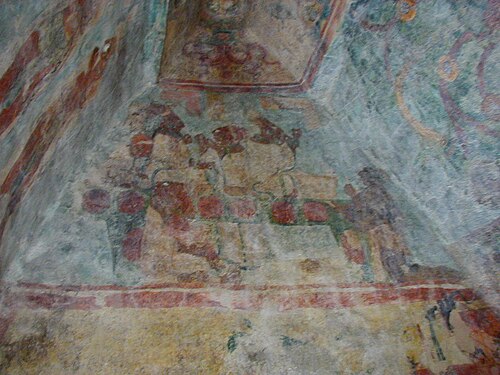 A Mayan mural from Bonampak, 580–800 AD
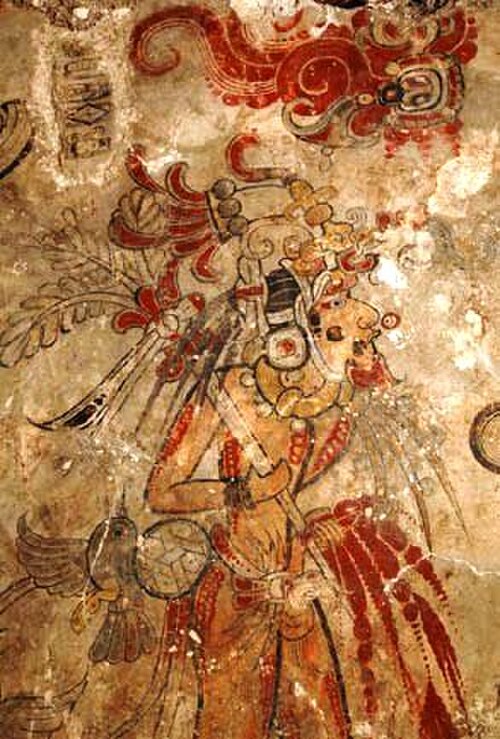 A Mayan mural from San Bartolo, Pre-Classical period (1–250 AD)
 Painting on the Lord of the jaguar pelt throne vase, a scene of the Maya court, 700–800 AD.
 Painting on a Maya vase from the Late Classical Period (600–900)
 Painted pottery figurine of a King from the burial site at Jaina Island, Mayan art, 400–800 AD
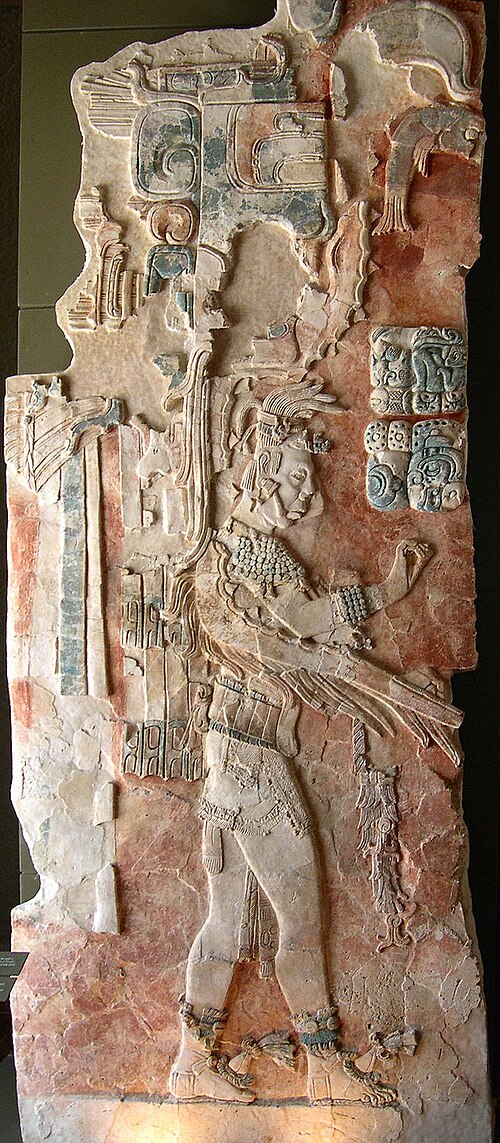 Painted relief of the Maya site Palenque, featuring the son of K'inich Ahkal Mo' Naab' III (678–730s?, r. 722–729).
 Painting from a Dresden Codex.
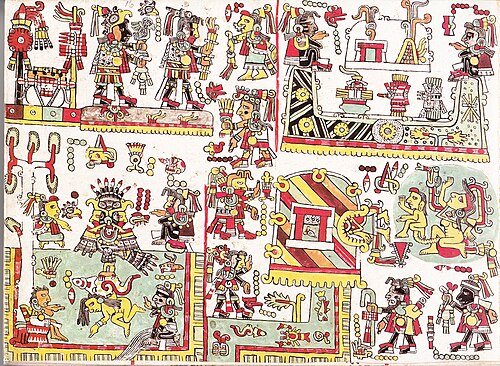 A Mixtec painting from the Codex Zouche-Nuttall.

 A painting from Matrícula de Tributos showing the Ichcahuipilli, Mexico.
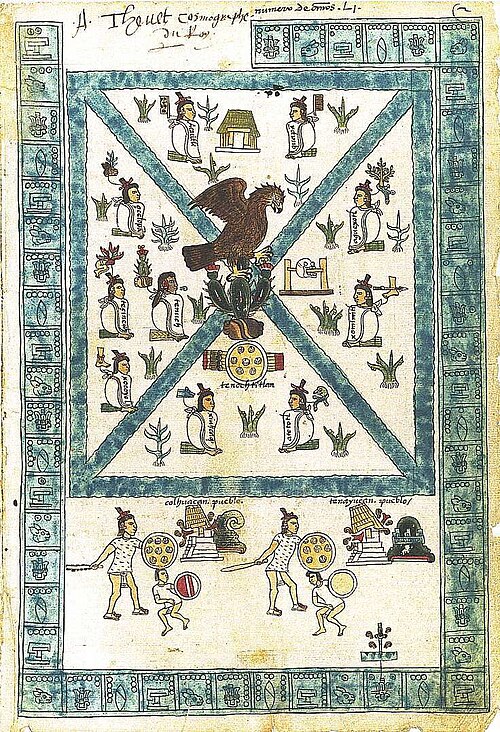 A painting from Codex Mendoza showing the Aztec legend of the foundation of Tenochtitlán, c.1553
South America


 Mural in Huaca Cao Viejo, Peru
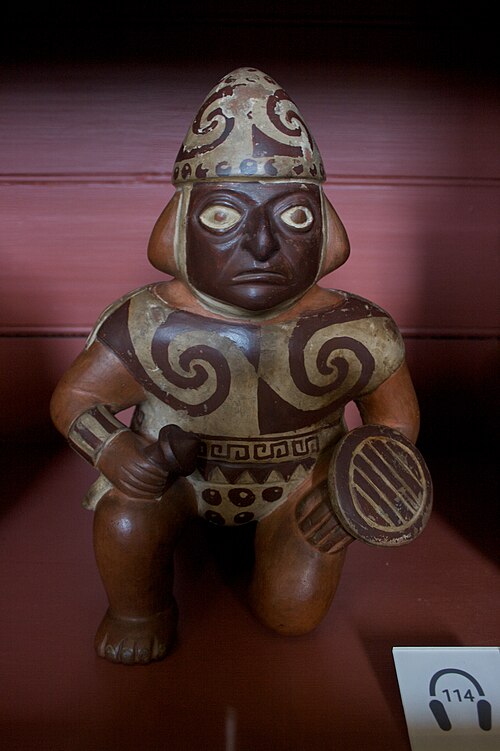 Painted pottery from the Moche culture of Peru
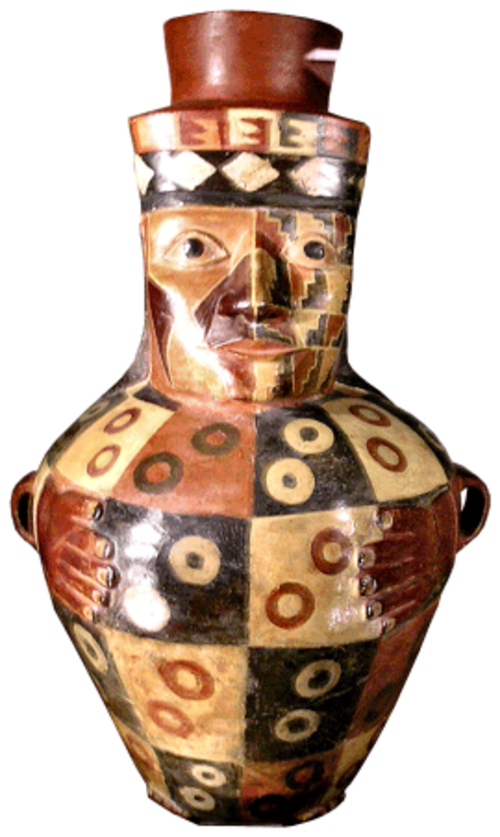 Painted pottery from the Huari culture of Peru, 500–1200 AD
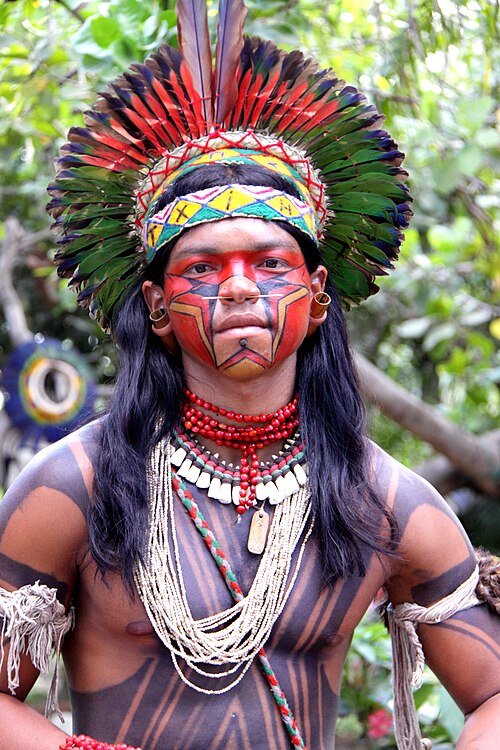 Body painting, Indigenous peoples in Brazil, Pataxo tribe.
North America
United States
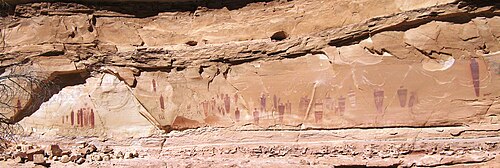 The Great Gallery, Pictographs, Canyonlands National Park, Horseshoe Canyon, Utah, 15 by 200 feet (4.6 by 61.0 m), c. 1500 BCE
 Painted pottery, Anasazi, North America: A canteen (pot) excavated from the ruins in Chaco Canyon, New Mexico, c. 700 AD–1100 AD
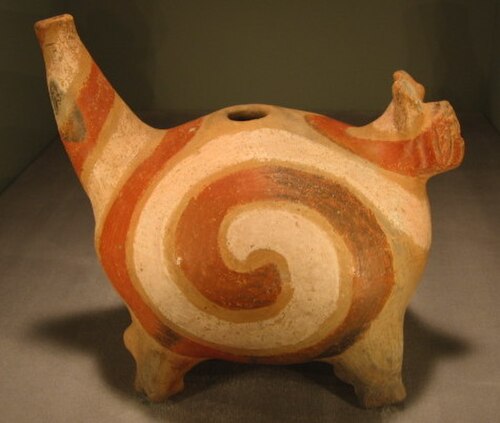 Painted ceramic jug showing the underwater panther from the Mississippian culture, found at Rose Mound in Cross County, Arkansas, c. 1400–1600.
 A Haida wolf mask, 1880.
 A girl from the Zuni tribe of New Mexico with a painted pottery jar, photographed in c. 1903.
 Navajo man in ceremonial dress with mask and body paint, c. 1904
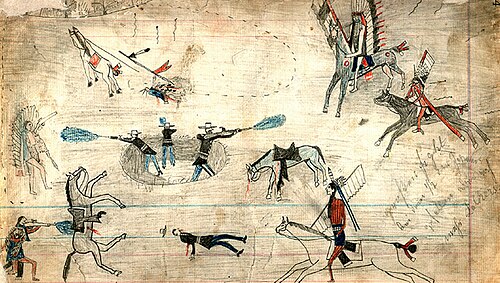 Kiowa ledger art, possibly of the 1874 Buffalo Wallow battle, Red River War.
 Detail of ledger painting on muslin by Silver Horn (1860–1940), ca. 1880, Oklahoma History Center
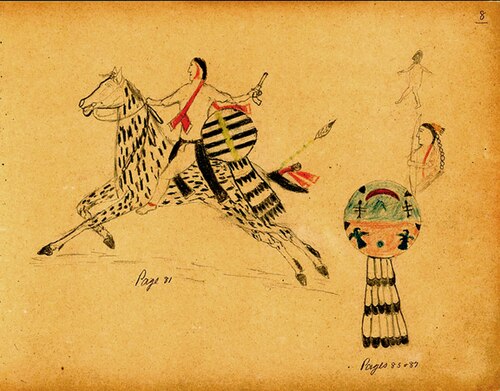 Work on Paper, by Arapaho painter, Carl Sweezy (1881–1953), 1904
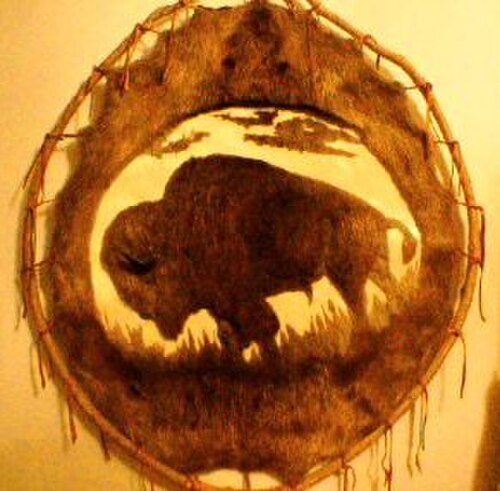 An Uncompaghre Ute, Shaved Beaver Hide Painting. The Northern Ute would trap beavers, shave images into the animals' stretched and cured hides, and use them to decorate their personal and ceremonial dwellings, c. 19th century.
 Tlingit totem pole in Ketchikan, Alaska, circa 1901.
 The K'alyaan Totem Pole of the Tlingit Kiks.ádi Clan, erected at Sitka National Historical Park to commemorate the lives lost in the 1804 Battle of Sitka.
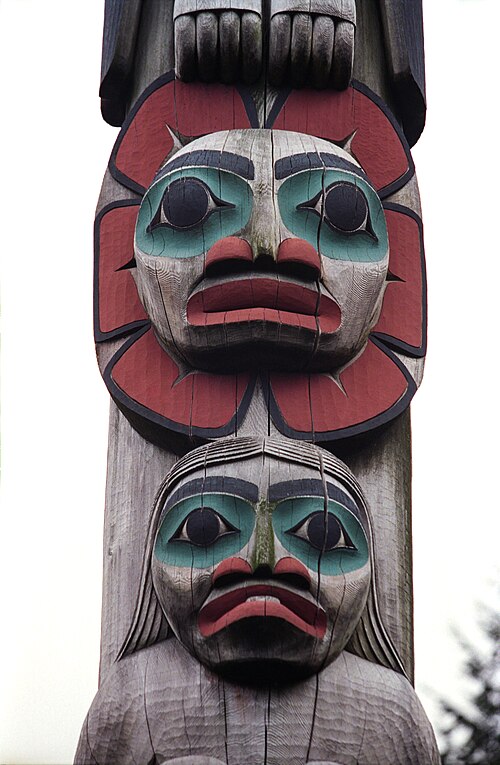
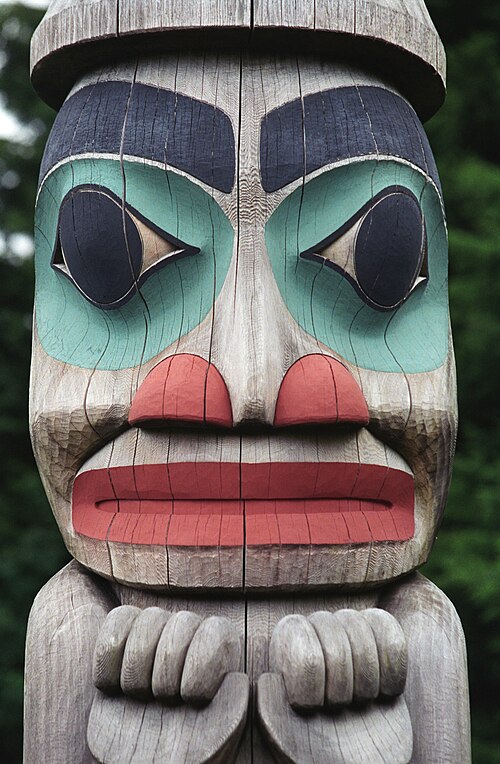
Canada
 A totem pole in Totem Park, Victoria, British Columbia.
 From Totem Park, Victoria, British Columbia.
Caribbean
 Rock petroglyph overlaid with chalk, Caguana Indigenous Ceremonial Center. Utuado, Puerto Rico.
Islamic
 Yahyâ ibn Mahmûd al-Wâsitî, Iraq, 1237
 Yahyâ ibn Mahmûd al-Wâsitî, Iraq, 1237
 Syrian painter, 1315 Metropolitan Museum of Art
 Ilkhanid Shahnameh, ca. 1330–1340, Smithsonian
 Kamal-ud-din Bihzad (c. 1450 – c. 1535), The construction of castle Khavarnaq (الخورنق) in al-Hira, c. 1494–1495 C.E. British Museum
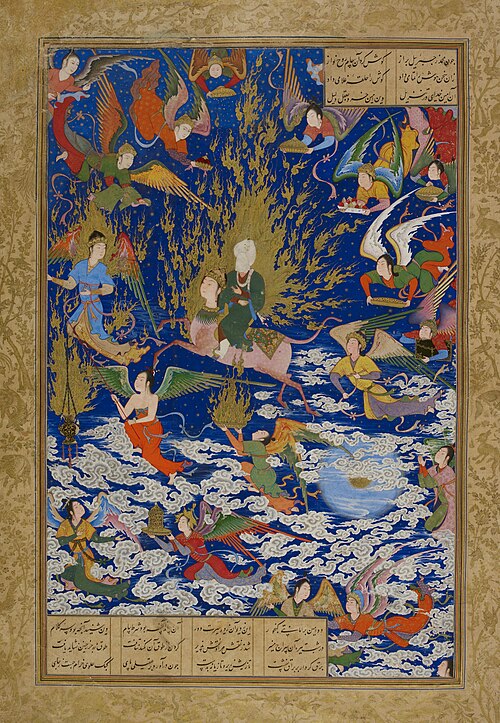 Persian miniature painting, CE 1550
 Reza Abbasi, 1609
 Razmnama, 1616, British Museum
 Two Lovers by Reza Abbasi, 1630
 Reza Abbasi (1565–1635), Prince Muhammad-Beik of Georgia, 1620
 A painting depicting Abû Zayd, 1335 AD.
 A scene from the book of Ahmad ibn al-Husayn ibn al-Ahnaf, showing two galloping horsemen, 1210 AD.
 The angel Isrâfîl, Iraq, 1280 AD.
 The Clerk, Iraq, 1287.
 An ornamental Qur'an, by al-Bawwâb, 11th century AD.
 Maiden in a fur cap, by Muhammad 'Alî, Isfahan, Iran, mid-17th century
 Youth and Suitors, Mashhad, Iran, 1556–1565 AD
The depiction of humans, animals or any other figurative subjects is forbidden within Islam to prevent believers from idolatry so there is no religiously motivated painting (or sculpture) tradition within Muslim culture. Pictorial activity was reduced to Arabesque, mainly abstract, with geometrical configuration or floral and plant-like patterns. Strongly connected to architecture and calligraphy, it can be widely seen as used for the painting of tiles in mosques or in illuminations around the text of the Koran and other books. In fact, abstract art is not an invention of modern art but it is present in pre-classical, barbarian and non-western cultures many centuries before it and is essentially a decorative or applied art. Notable illustrator M. C. Escher was influenced by this geometrical and pattern-based art. Art Nouveau (Aubrey Beardsley and the architect Antonio Gaudí) re-introduced abstract floral patterns into western art.
Note that despite the taboo of figurative visualization, some Muslim countries did cultivate a rich tradition in painting, though not in its own right, but as a companion to the written word. Iranian or Persian art, widely known as Persian miniature, concentrates on the illustration of epic or romantic works of literature. Persian illustrators deliberately avoided the use of shading and perspective, though familiar with it in their pre-Islamic history, in order to abide by the rule of not creating any lifelike illusion of the real world. Their aim was not to depict the world as it is, but to create images of an ideal world of timeless beauty and perfect order.
Iran
Oriental historian Basil Gray believes "Iran has offered a particularly unique [sic] art to the world which is excellent in its kind". Caves in Iran's Lorestan province exhibit painted imagery of animals and hunting scenes. Some such as those in Fars Province and Sialk are at least 5,000 years old. Painting in Iran is thought to have reached a climax during the Tamerlane era, when outstanding masters such as Kamaleddin Behzad gave birth to a new style of painting.
Paintings of the Qajar period are a combination of European influences and Safavid miniature schools of painting such as those introduced by Reza Abbasi and classical works by Mihr 'Ali. Masters such as Kamal-ol-molk further pushed forward the European influence in Iran. It was during the Qajar era when "Coffee House painting" emerged. Subjects of this style were often religious in nature depicting scenes from Shia epics and the like.

 Mihr 'Ali (fl. 1795–1830), Fat'h Ali Shah Qajar (1813–14)
 Kamal-ol-molk (1847–1940), Predictor of the Future, 1892, Museum of Sadabad, Tehran
Pakistan
 Lubna Agha, Star – a painting inspired by the artisans of Morocco
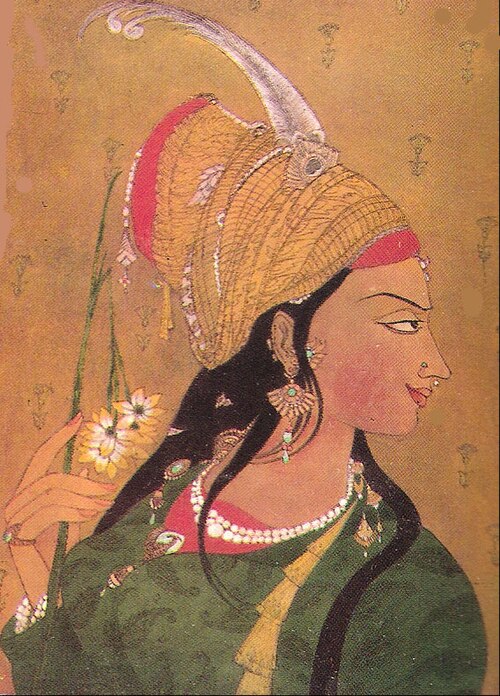 AR Chughtai, Anarkali
Oceania
Australia
New Zealand
Africa
 Himba woman covered with traditional red ochrepigment. Traditional body paint symbolic of the earth and of blood, and also worn for protection from the sun.
 A Kĩkũyũ woman in traditional dress. Ceremonial face painting.
 Young Maasai Warrior, with head-dress and face painting.
African traditional culture and tribes do not seem to have great interest in two-dimensional representations in favour of sculpture and relief. However, decorative painting in African culture is often abstract and geometrical. Another pictorial manifestation is body painting, and face painting present for example in Maasai and Kĩkũyũ culture in their ceremony rituals. Ceremonial cave painting in certain villages can be found to be still in use. Note that Pablo Picasso and other modern artists were influenced by African sculpture and masks in their varied styles. Contemporary African artists follow western art movements and their paintings have little difference from occidental art works.
Sudanese

The Kingdom of Kush in ancient Nubia (i.e. modern Sudan), bordering Ancient Egypt, produced a wide variety of arts, including wall paintings and painted objects. At the Sudanese site of Kerma, center of the Kerma culture that predated the Kingdom of Kush, a circa 1700 BC fragmentary painting from a royal tomb depicts a sailing ship and houses with ladders that are similar to scenes in reliefs from the reign of Egyptian queenHatshepsut (c. 1479–1458 BC).[100][101] The ancient tradition of wall paintings, first described by Abu Salih during the 12th century AD, continued into the period of medieval Nubia.[102]
Ethiopian

The Christian tradition of painting in Ethiopia dates back to the 4th century AD, during the ancient Kingdom of Aksum.[103] During their exile to Axum, the 7th-century followers of Muhammad described paintings decorating the Church of Our Lady Mary of Zion.[104] However, the earliest surviving examples of church paintings in Ethiopia come from the church of Debre Selam Mikael in the Tigray Region, dated to the 11th century AD.[104] Ethiopian paintings in illuminated manuscripts predate the earliest surviving church paintings. For instance, the Ethiopian Garima Gospels of the 4th-6th centuries AD contain illuminated scenes imitating the contemporary Byzantine illuminated style.[105]

 A 15th-century Ethiopian painting of the Solomonic dynasty depicting the Zagwe dynasty ruler Gebre Mesqel Lalibela (r. 1181–1221 AD)
 A 17th-century Gondarene-style Ethiopian painting depicting Saint Mercurius, originally from Lalibela, now housed in the National Museum of Ethiopia in Addis Ababa
 A 1748 portrait of the Ethiopian EmpressMentewab, an important figure of the Zemene Mesafint, prostrating herself before Mary and Jesus, from the Narga Selassie church.
Influence on Western art
At the start of the 20th century, artists like Picasso, Matisse, Paul Gauguin and Modigliani became aware of, and were inspired by, African art.[106] In a situation where the established avant garde was straining against the constraints imposed by serving the world of appearances, African Art demonstrated the power of supremely well organised forms; produced not only by responding to the faculty of sight, but also and often primarily, the faculty of imagination, emotion and mystical and religious experience. These artists saw in African art a formal perfection and sophistication unified with phenomenal expressive power.[107][108][109][110][111]
See also
- 20th-century Western painting
- Art periods
- Hierarchy of genres
- List of painters
- Lives of the Most Excellent Painters, Sculptors, and Architects
- Timeline of Italian artists to 1800
Notes
References
- ↑Bruce Cole; Adelheid M. Gealt (15 December 1991). Art of the Western World: From Ancient Greece to Post Modernism. Simon and Schuster. ISBN 978-0-671-74728-2. Retrieved 8 September 2011.
- 12The Meeting of Eastern and Western Art, Revised and Expanded edition (Hardcover) by Michael Sullivan.
- ↑"Art View; Eastern Art Through Western Eyes". The New York Times. 10 July 1994. Retrieved 30 November 2010.
- 12Wichmann, Siegfried (1999). Japonisme: The Japanese Influence on Western Art Since 1858. Thames & Hudson. ISBN 978-0-500-28163-5.
- 12Sullivan, Michael (1989). The Meeting of Eastern and Western Art. University of California Press. ISBN 978-0-520-05902-3.
- ↑Discussion of the role of patrons in the Renaissance. Retrieved 11 November 2008.
- ↑History 1450–1789: Artistic Patronage. Retrieved 11 November 2008.
- ↑Britannica.com. Retrieved 11 November 2008.
- ↑Victorianweb.org, Aesthetes, Decadents, and the Idea of Art for Art's Sake George P. Landow, Professor of English and the History of Art, Brown University. Retrieved 11 November 2008.
- ↑Cézanne to Picasso: Ambroise Vollard, Patron of the Avant-Garde, Chicago Art Institute. Retrieved 11 November 2008Archived 12 October 2008 at the Wayback Machine.
- 12M. Aubert et al., "Pleistocene cave art from Sulawesi, Indonesia", Nature vol. 514, pp. 223–227 (9 October 2014). "using uranium-series dating of coralloid speleothems directly associated with 12 human hand stencils and two figurative animal depictions from seven cave sites in the Maros karsts of Sulawesi, we show that rock art traditions on this Indonesian island are at least compatible in age with the oldest European art. The earliest dated image from Maros, with a minimum age of 39.9 kyr, is now the oldest known hand stencil in the world. In addition, a painting of a babirusa ('pig-deer') made at least 35.4 kyr ago is among the earliest dated figurative depictions worldwide, if not the earliest one. Among the implications, it can now be demonstrated that humans were producing rock art by ~40 kyr ago at opposite ends of the Pleistocene Eurasian world."
- ↑Bob McDonald (24 September 2021). "200,000-year-old handprints may be the world's oldest artwork, scientists say". cbc.ca. CBC Radio. Retrieved 9 May 2024.
- ↑Zimmer, Carl (7 November 2018). "In Cave in Borneo Jungle, Scientists Find Oldest Figurative Painting in the World – A cave drawing in Borneo is at least 40,000 years old, raising intriguing questions about creativity in ancient societies". The New York Times. Retrieved 8 November 2018.
- ↑Aubert, M.; et al. (7 November 2018). "Palaeolithic cave art in Borneo". Nature. 564 (7735): 254–257. Bibcode:2018Natur.564..254A. doi:10.1038/s41586-018-0679-9. PMID 30405242. S2CID 53208538.
- ↑Aubert, M.; et al. (11 December 2019). "Earliest hunting scene in prehistoric art". Nature. 576 (7787): 442–445. Bibcode:2019Natur.576..442A. doi:10.1038/s41586-019-1806-y. hdl:10072/397337. PMID 31827284. S2CID 209311825.
- 12Ferreira, Becky (11 December 2019). "Mythical Beings May Be Earliest Imaginative Cave Art by Humans – The paintings on an Indonesian island are at least 43,900 years old and depict humanoid figures with animal-like features in a hunting scene". The New York Times. Retrieved 12 December 2019.
- ↑Brumm, Adam; Oktaviana, Adhi Agus; Burhan, Basran; Hakim, Budianto; Lebe, Rustan; Zhao, Jian-xin; Sulistyarto, Priyatno Hadi; Ririmasse, Marlon; Adhityatama, Shinatria; Sumantri, Iwan; Aubert, Maxime (1 January 2021). "Oldest cave art found in Sulawesi". Science Advances. 7 (3) eabd4648. Bibcode:2021SciA....7.4648B. doi:10.1126/sciadv.abd4648. ISSN 2375-2548. PMC 7806210. PMID 33523879.
- ↑Ferreira, Becky (13 January 2021). "Pig Painting May Be World's Oldest Cave Art Yet, Archaeologists Say – The depiction of the animal on an Indonesian island is at least 45,500 years old, the researchers say". The New York Times. Retrieved 14 January 2021.
- ↑Oktaviana, Adhi Agus; Joannes-Boyau, Renaud; Hakim, Budianto; Burhan, Basran; Sardi, Ratno; Adhityatama, Shinatria; Hamrullah; Sumantri, Iwan; Tang, M.; Lebe, Rustan; Ilyas, Imran; Abbas, Abdullah; Jusdi, Andi; Mahardian, Dewangga Eka; Noerwidi, Sofwan (3 July 2024). "Narrative cave art in Indonesia by 51,200 years ago". Nature. 631 (8022): 814–818. Bibcode:2024Natur.631..814O. doi:10.1038/s41586-024-07541-7. ISSN 0028-0836. PMC 11269172. PMID 38961284.
- ↑Harris, Garreth (4 July 2024). "Oldest example of figurative art found in Indonesian cave". The Art Newspaper. Retrieved 5 July 2024.
- ↑Tacon, Paul; Mulvaney, Ken; Fullagar, Richard; Head, Lesley (1999), "Bradshaws' – an eastern province?", Rock Art Research, 16 (2): 127–129
- ↑M. Hoover, "Art of the Paleolithic and Neolithic Eras", from Art History Survey 1, San Antonio College (July 2001; accessed 11 June 2005).
- ↑"Holland Cotter". NY Times. Archived from the original on 9 August 2014. Retrieved 27 October 2007.
- ↑"Open F-S: Sketch after Cecil Lawson's Swan and Iris". Freer – Sackler. Archived from the original on 11 June 2007.
- ↑Seno, Alexandra A. (2 November 2010). "'River of Wisdom' is Hong Kong's hottest ticket". The Wall Street Journal.
- ↑"Yongle Palace Mural". Archived from the original on 5 April 2007. Retrieved 23 March 2007.
- ↑"Chinastudies – bacheloropleiding – Geesteswetenschappen – Humanities – Universiteit Leiden". www.tcc.leidenuniv.nl. 19 September 2002. Archived from the original on 19 May 2007. Retrieved 23 March 2007.
- ↑Needham, Joseph (1986). Science and Civilization in China: Volume 4, Part 3. Taipei: Caves Books, Ltd. Page 115.
- ↑"Chinese Art | Birds and plum-blossoms | F1909.246j". www.asia.si.edu. Archived from the original on 4 July 2007.
- ↑"観瀑図". Archived from the original on 27 September 2007. Retrieved 8 June 2007.
- ↑UNESCO World Heritage Site. Ajanta Caves, India: Brief Description. Retrieved 27 October 2006.
- ↑UNESCO International Council on Monuments and Sites. 1982. Ajanta Caves: Advisory Body Evaluation. Retrieved 27 October 2006.
- ↑"Amrita Sher-Gill". mapsofindia.com. February 2018.
- ↑"First Lady of the Modern Canvas". The Indian Express. 17 October 1999. Archived from the original on 5 March 2011.
- ↑"Women painters". 21stcenturyindianart.com. Archived from the original on 20 December 2007.
- ↑"Most expensive Indian artists". us.rediff.com.
- ↑"Nine Masters". Government Museum and Art Gallery, Chandigarh Official website. Archived from the original on 4 December 2010.
- ↑"Showcase: Amrita Sher-Gil". National Gallery of Modern Art.
- ↑Aubert, M.; et al. (11 December 2019). "Earliest hunting scene in prehistoric art". Nature. 576 (7787): 442–445. Bibcode:2019Natur.576..442A. doi:10.1038/s41586-019-1806-y. hdl:10072/397337. PMID 31827284. S2CID 209311825.
- ↑"Islas de los Pintados: The Visayan Islands". Archived from the original on 27 September 2011.
- ↑"Filipino Cultured: The Best of Filipino Art: Part 1". 20 September 2007.
- ↑"Roman Painting". art-and-archaeology.com.
- ↑"Roman Wall Painting". accd.edu. Archived from the original on 19 March 2007.
- ↑Putnam A.M., Geo. Haven. Books and Their Makers During The Middle Ages. Vol. 1. New York: Hillary House, 1962. Print.
- 123Gardner, H., Kleiner, F. S., & Mamiya, C. J. (2006). Gardner's art through the ages: the Western perspective. Belmont, CA, Thomson Wadsworth: 430–437
- ↑Counter Reformation, from Encyclopædia Britannica Online, latest edition, full-article.
- ↑Counter ReformationArchived 11 December 2008 at the Wayback Machine, from The Columbia Encyclopedia, Sixth Edition. 2001–05.
- ↑Helen Gardner, Fred S. Kleiner, and Christin J. Mamiya, "Gardner's Art Through the Ages" (Belmont, CA: Thomson/Wadsworth, 2005)
- ↑Edmond and Jules de Goncourt, French Eighteenth-Century Painters. Cornell Paperbacks, 1981, pp. 222–225. ISBN 0-8014-9218-1
- ↑"Uni-Heidelberg.de".
- ↑Novack, Barbara (2002). "American Sublime Artforum". ArtForum. Retrieved 30 October 2008.
{{cite news}}: CS1 maint: deprecated archival service (link) - ↑Delvaille, Bernard (1971). La poésie symboliste: [anthologie]. Seghers. ISBN 978-2-221-50161-0.
- ↑Russell T. Clement. Four French Symbolists. Greenwood Press, 1996. Page 114.
- ↑John Elderfield; Stephen Andrew Roberts (1991). European Co-operation on Social Science Information and Documentation (ECSSID) Technical Meeting, University of Kent at Canterbury, 25th–26th March 1991: Report to British Library Research & Development Department. Museum of Modern Art. ISBN 978-0-87070-638-7.
- ↑William Stanley Rubin; Judith Cousins; Museum of Modern Art New York (1989). Picasso and Braque: pioneering cubism. Museum of Modern Art. p. 348. ISBN 0-87070-676-4.
- ↑"Der Blaue Reiter". Tate Glossary. Archived from the original on 2 August 2011. Retrieved 10 August 2009.
- ↑"De Stijl". Tate Glossary. The Tate. Archived from the original on 4 September 2004. Retrieved 31 July 2006.
- ↑Curl, James Stevens (2006). A Dictionary of Architecture and Landscape Architecture (Paperback) (Second ed.). Oxford University Press. ISBN 0-19-860678-8.
- ↑"Neo-Plasticism". tate.org.uk. Archived from the original on 10 September 2008. Retrieved 3 September 2008.
- ↑"The style; Holland, 1917". guggenheimcollection.org. Archived from the original on 21 August 2008. Retrieved 30 November 2010.
- ↑Spector, Nancy. "The Tilled Field, 1923–1924Archived 25 September 2008 at the Wayback Machine". Guggenheim display caption. Retrieved on 30 May 2008.
- ↑"The Persistence of Memory". MoMA Online Collection.
- ↑"Max Ernst (1891–1976). Men Shall Know Nothing of This 1923 / Les Hommes n'en sauront rien". tate.org.uk. Retrieved 30 November 2010.
- ↑"The Artists' Association Brücke". Brücke Museum. Retrieved 7 September 2007.
- ↑Fineman, Mia, The Most Famous Farm Couple in the World: Why American Gothic still fascinates., Slate, 8 June 2005
- ↑Lewis, Helena. Dada Turns Red. 1990. University of Edinburgh Press. A history of the uneasy relations between Surrealists and Communists from the 1920s through the 1950s.
- ↑"Pablo Picasso – Biography, Quotes & Paintings". arthistoryarchive.com. Retrieved 14 June 2007.
- ↑"Willem De Kooning: Woman V 1952–53". National Gallery of Australia. Retrieved 30 November 2010.
- ↑"Painting at the Speed of Sight: Franz Kline's Rapid Transit". Hyperallergic. 16 March 2013.
- ↑"Art History Definition: Action Painting". ThoughtCo. Retrieved 4 May 2018.
- ↑"Franz Kline. Painting Number 2. 1954 | MoMA". www.moma.org.
- ↑Rudolf Arnheim, The Power of the Center: A Study of Composition in the Visual Arts, University of California Press, 1983, pp. 71–72, ISBN 0520050150
- ↑Alloway, Lawrence (1975). Topics in American art: since 1945. W. W. Norton. pp. 119–122. ISBN 978-0-393-04401-0.
- 12Lichtenstein, Roy. "Whaam!". Tate Collection. Retrieved 27 January 2008.
- ↑Lichtenstein, Roy. "Whaam!". Roy Lichtenstein Foundation website. Retrieved 12 September 2009.
- ↑David Piper, p. 635
- ↑Glueck, Grace (7 January 2005). "Art in Review; Milton Avery – 'Onrushing Waves'". The New York Times.
- ↑"The Summer of '57 With Milton Avery, Gottlieb, Rothko". The New York Observer. 13 May 2002.
- ↑Schmied, Wieland (1996). Francis Bacon: commitment and conflict. Prestel Pub. p. 17. ISBN 3-7913-1664-8.
- ↑Peppiatt, Michael (1998). เรื่องเก่าเล่าใหม่: รวมข้อคิดจากพงศาวดารและตํานานเก่า. Westview Press. p. 147. ISBN 978-0-8133-3520-9.
- ↑Schmied (1996), p20
- ↑Peppiatt (1996), p148
- ↑Jean Dubuffet: L'Art brut préféré aux arts culturels [1949] (in English: Art brut. Madness and Marginalia, special issue of Art & Text, No. 27, 1987, p. 31-33)
- ↑Douglas Crimp, The End of Painting, October, Vol. 16, Spring, 1981, pp. 69–86
- ↑Douglas Crimp, On the Museum's Ruins, Cambridge, Mass., 1993
- ↑Fenton, Terry. "Online essay about Kenneth Noland, and acrylic paint". Archived from the original on 21 January 2021. Retrieved 30 April 2007.
- ↑Noel, Frackman "Mino Argento create. These canvases in which geometric forms, squares, arcs, and lines", Arts Magazine p.19 December 1979
- ↑John Lancaster. Introducing Op Art, London: BT Batsford Ltd, 1973, p. 28.
- ↑"Washington Color School – Art Term". Tate. Retrieved 31 August 2021.
- ↑Capps, Kriston (2 June 2017). "Color, Full: A Timeline of the Washington Color School". Washington City Paper. Retrieved 31 August 2021.
- ↑Rodney, Seph (11 October 2016). "A Black Woman Stands Out Among the Washington Color School Artists". Hyperallergic. Retrieved 2 September 2021.
- ↑Aldrich, Larry. Young Lyrical Painters, Art in America, v.57, n6, November–December 1969, pp.104–113.
- ↑Lyrical Abstraction, Exhibition Catalogue, the Aldrich Museum of Contemporary Art, Ridgefield, Conn. 1970.
- 12Movers and Shakers, New York, "Leaving C&M", by Sarah Douglas, Art and Auction, March 2007, V.XXXNo7.
- ↑Martin, Ann Ray, and Howard Junker. "The New Art: It's Way, Way Out", Newsweek 29 July 1968: pp.3,55–63.
- ↑The Aldrich Museum of Contemporary Art, Lyrical Abstraction, exhibition: 5 April through 7 June 1970
- ↑Lyrical Abstraction Whitney Museum of American Art, New York, 25 May – 6 July 1971
- ↑"Colorscope: Abstract Painting 1960–1979". Archived from the original on 3 July 2010. Retrieved 30 November 2010.
- ↑"Art Terms". Tate.
- ↑Hatke, George (2013). Aksum and Nubia: Warfare, Commerce, and Political Fictions in Ancient Northeast Africa. New York University Libraries: Ancient World Digital Library. Accessed 12 May 2018.
- ↑Boivin, N. and Fuller, D. Q. (2009). "Shell Middens, Ships, and Seeds: Exploring Coastal Subsistence, Maritime Trade and the Dispersal of Domesticates in and Around the Arabian Peninsula." Journal of World Prehistory 22: 113–80 [p. 140].
- ↑Nadig, Peter C. (3 April 2009) [16 January 2003]. "Derek A. Welsby, The Medieval Kingdoms of Nubia. Pagans, Christians and Muslims along the Middle Nile. London: The British Museum Press, 2002." Bryn Mawr Classical Review. Accessed 12 May 2018.
- ↑"Christian Ethiopian art". Smarthistory. 22 December 2016. Retrieved 27 July 2017.
- 12Teferi, Dawit (2015) [1995], "A Short History of Ethiopian Church Art", in Briggs, Philip (ed.), Ethiopia, Chalfont St Peter: Bradt Travel Guides, p. 242, ISBN 978-1-84162-922-3.
- ↑De Lorenzi, James (2015), Guardians of the Tradition: Historians and Historical Writing in Ethiopia and Eritrea, Rochester: University of Rochester Press, pp. 15–16, ISBN 978-1-58046-519-9.
- ↑Murrell, Denise. "African Influences in Modern Art", The Metropolitan Museum of Art, April 2008. Retrieved on 31 January 2013.
- ↑Johnson, Picasso's Demoiselles d'Avignon and the Theater of the Absurd. 102–113
- ↑Richardson, J. Picasso's Apocalyptic Whorehouse. 40–47
- ↑Release: Tête – Amedeo ModiglianiArchived 4 March 2016 at the Wayback Machine. Press Release, Christie's Paris. 26 May 2010. Accessed 20 October 2011.
- ↑Matisse may have purchased this piece from Emile Heymenn's shop of non-western artworks in Paris, see PabloPicasso.org.
- ↑Miller, Arthur I. (2001). "Einstein, Picasso: Space, Time, and the Beauty That Causes Havoc". The New York Times. Retrieved 10 June 2010.
Les Demoiselles contains vestiges of Cézanne, El Greco, Gauguin and Ingres, among others, with the addition of conceptual aspects of primitive art properly represented with geometry.
Further reading
- كليمنت غرينبيرغ ، الفن والثقافة ، دار بيكون للنشر، 1961
- التجريد الغنائي ، كتالوج المعرض، متحف ويتني للفن الأمريكي ، مدينة نيويورك، 1971.
- أوكونور، فرانسيس ف. كتالوج معرض جاكسون بولوك ، (نيويورك، متحف الفن الحديث ، [1967]) OCLC 165852
- صور من العدم: الفن التجريدي منذ بولوك (محاضرات إيه دبليو ميلون في الفنون الجميلة)، كيرك فارنيدو ، 2003
- انتصار الحداثة : عالم الفن، 1985-2005، هيلتون كرامر ، 2006، رقم ISBN 0-15-666370-8
- بايبر، ديفيد (1986). المكتبة المصورة للفنون: التاريخ والتقدير والتقاليد . دار بورتلاند. رقم ISBN 978-0-517-62336-7.
روابط خارجية
- تاريخ الفن: من العصر الحجري القديم إلى الفن المعاصر ( مؤرشف في ١٩ نوفمبر ٢٠٢٠ على موقع Wayback Machine)
- كاندينسكي (ترجمة مايكل تي إتش سادلر)، فاسيلي. "حول الروحانية في الفن" . mnstate.edu. مؤرشف من الأصل في 28 مايو 2010. تم الاطلاع عليه في 30 نوفمبر 2010 .
- متحف متروبوليتان للفنون - التسلسل الزمني لتاريخ الفن
- الرسم الجداري الروماني القديم
- تاريخ الفن حسب الوسيط
- تلوين
- التاريخ حسب الموضوع