
الرسم الغربي


| History of art |
|---|
يمثل تاريخ الرسم الغربي تقليدًا مستمرًا، وإن كان متقطعًا، منذ العصور القديمة وحتى الوقت الحاضر. [1] حتى منتصف القرن التاسع عشر كان يهتم في المقام الأول بأنماط الإنتاج التمثيلية والتقليدية، وبعد ذلك الوقت اكتسبت الأشكال الأكثر حداثة وتجريدية ومفاهيمية شعبية . [2]
في البداية، كانت اللوحات الغربية تخدم الرعاية الإمبراطورية والخاصة والمدنية والدينية، ثم وجدت جمهورًا في الطبقة الأرستقراطية والطبقة المتوسطة. من العصور الوسطى وحتى عصر النهضة ، عمل الرسامون لصالح الكنيسة والأرستقراطية الثرية. [3] بدءًا من عصر الباروك ، تلقى الفنانون عمولات خاصة من الطبقة المتوسطة الأكثر تعليماً وازدهارًا. [4] بدأت فكرة " الفن من أجل الفن " [5] في إيجاد تعبير لها في أعمال الرسامين الرومانسيين مثل فرانسيسكو دي جويا وجون كونستابل وجون مارتن ويل تيرنر . [6] خلال القرن التاسع عشر، تأسست المعارض التجارية واستمرت في توفير الرعاية في القرن العشرين. [7] [8]
بلغ الرسم الغربي ذروته في أوروبا خلال عصر النهضة، بالتزامن مع تحسين الرسم، واستخدام المنظور ، والهندسة المعمارية الطموحة، والنسيج ، والزجاج الملون ، والنحت، والفترة التي سبقت وبعد ظهور المطبعة . [ 9] وبعد عمق الاكتشاف وتعقيد ابتكارات عصر النهضة، استمر التراث الغني للرسم الغربي من فترة الباروك إلى الفن المعاصر . [10]
ما قبل التاريخ
-

-
 لاسكو، حصان
 -
 لاسكو، الثيران والخيول
 -
 نقوش صخرية من السويد، العصر البرونزي الشمالي (مرسومة)

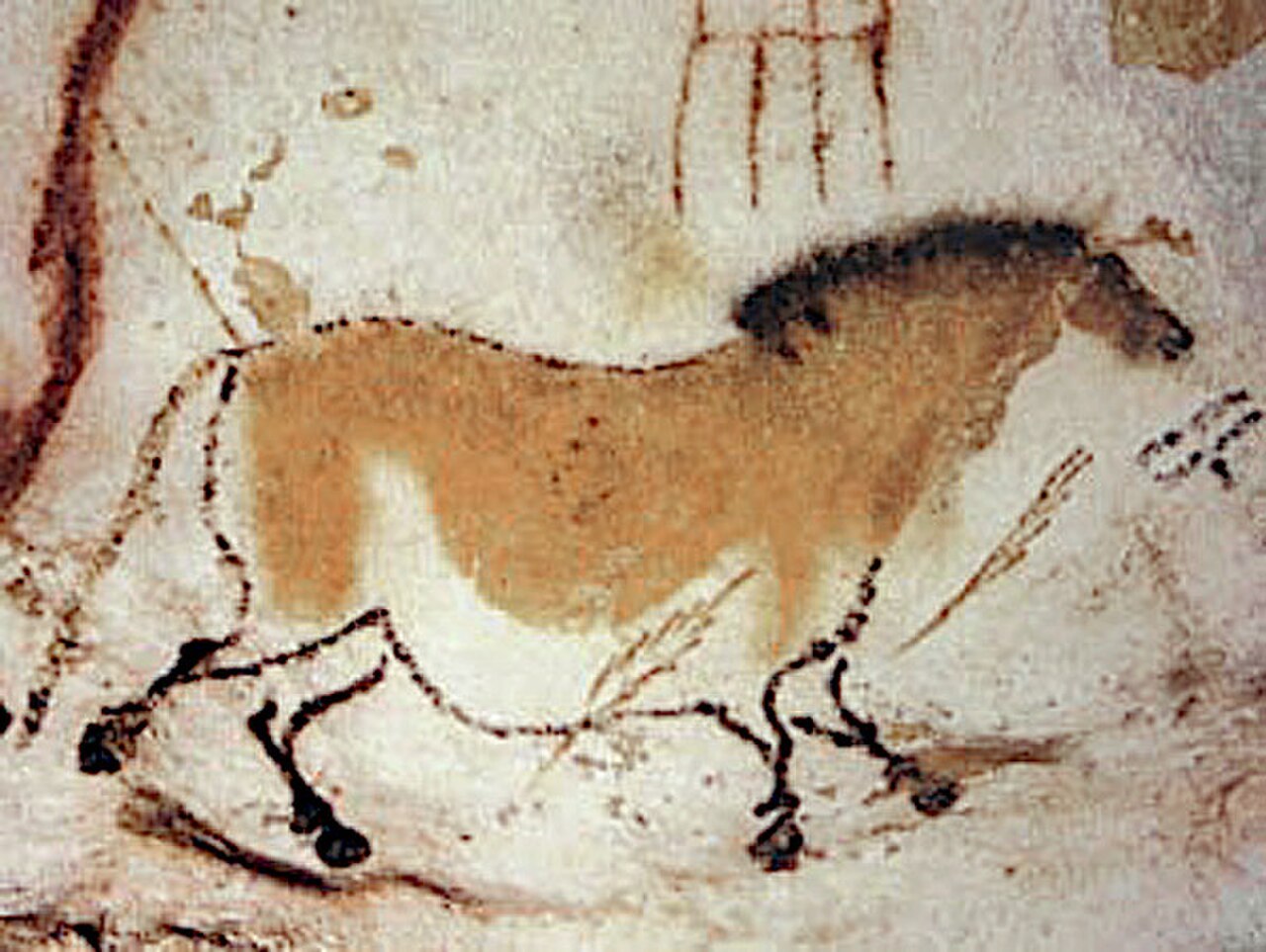

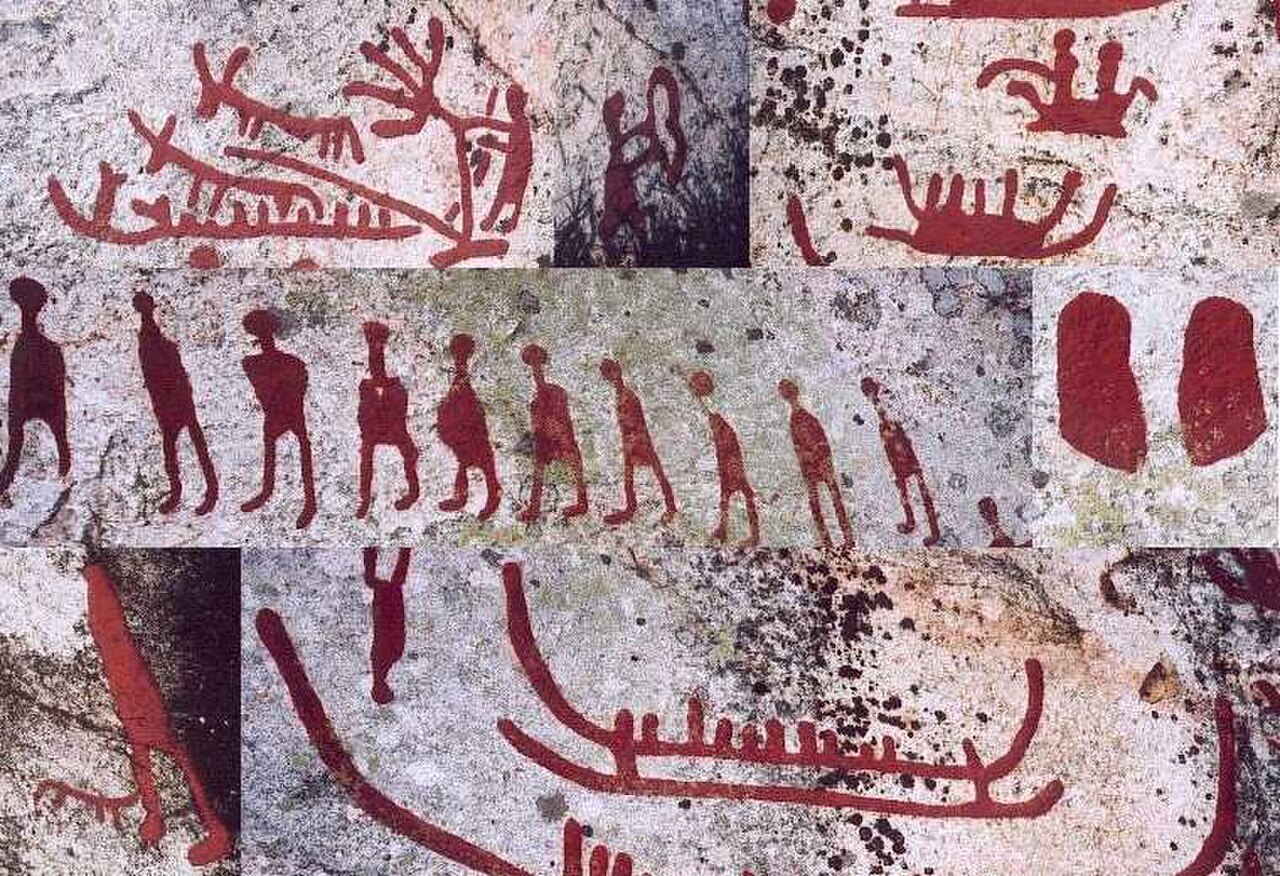
يعود تاريخ الرسم إلى العصور القديمة، حيث يعود تاريخه إلى التحف الفنية التي صنعها فنانون ما قبل التاريخ، ويمتد عبر كل الثقافات. أقدم اللوحات المعروفة موجودة في كهف شوفيه في فرنسا، ويزعم بعض المؤرخين أن عمرها حوالي 32000 عام. وهي منقوشة ومرسومة باستخدام المغرة الحمراء والصبغة السوداء، وتصور الخيول ووحيد القرن والأسود والجاموس والماموث أو البشر وهم يصطادون في كثير من الأحيان.
تشترك رسوم الكهوف الأوروبية ما قبل التاريخ في موضوعات مشتركة مع رسوم ما قبل التاريخ الأخرى التي تم العثور عليها في جميع أنحاء العالم؛ مما يعني عالمية الغرض وتشابه الدوافع التي ربما ألهمت الفنانين لإنشاء الصور. [ بحاجة لمصدر ] تم إجراء تخمينات مختلفة حول المعنى الذي كانت تحمله هذه اللوحات للفنانين الذين صنعوها. ربما رسم رجال ما قبل التاريخ الحيوانات "لصيد" أرواحهم أو أرواحهم من أجل اصطيادهم بسهولة أكبر، أو قد تمثل اللوحات رؤية روحية وتكريمًا للطبيعة المحيطة ، أو قد تكون نتيجة لحاجة أساسية للتعبير فطرية لدى البشر، أو قد تكون تسجيلات لتجارب حياة الفنانين والقصص ذات الصلة من أعضاء دائرتهم.
اليونان وروما
-

-
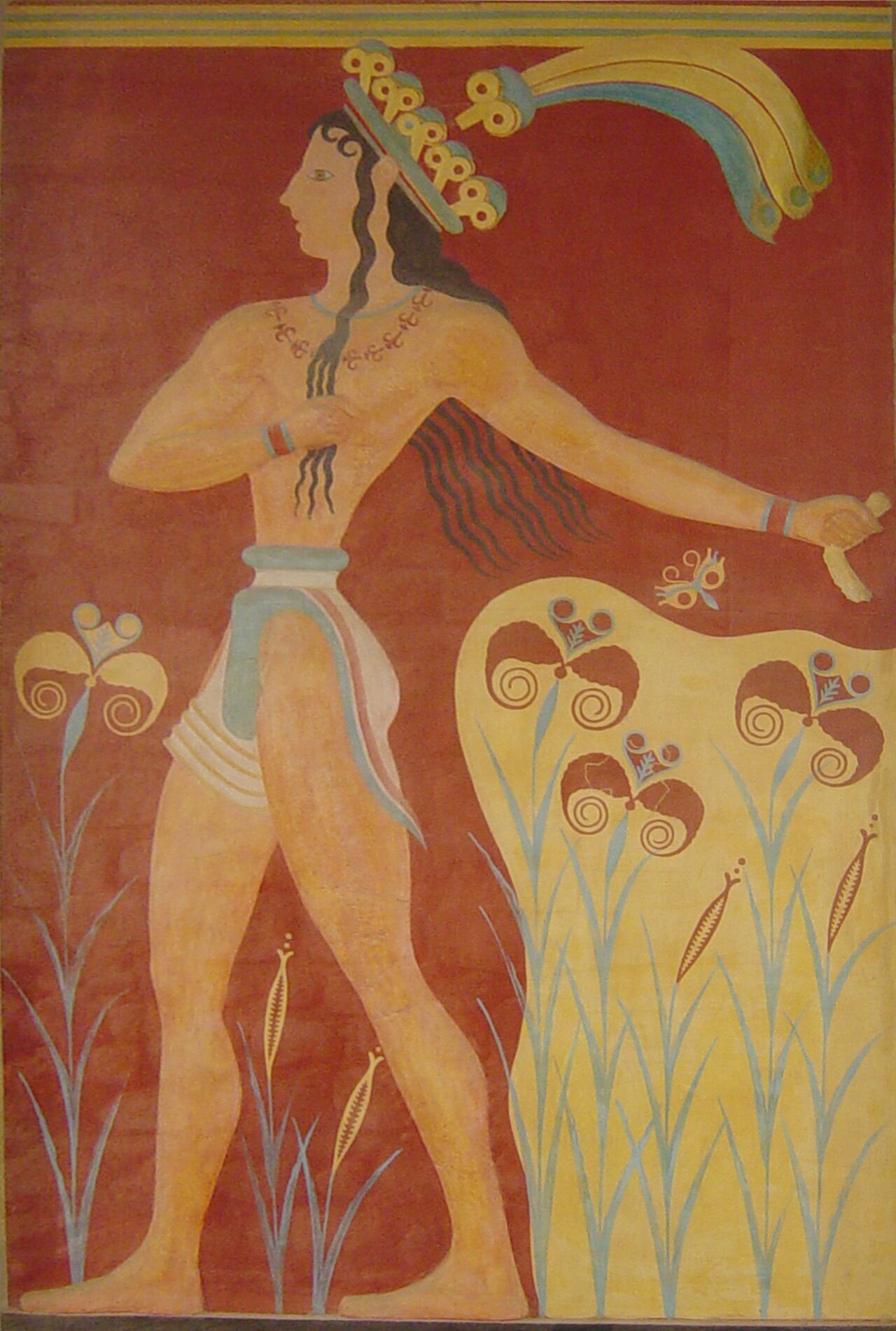
 لوحة جدارية لامرأة ميسينية
 -

-

-

-
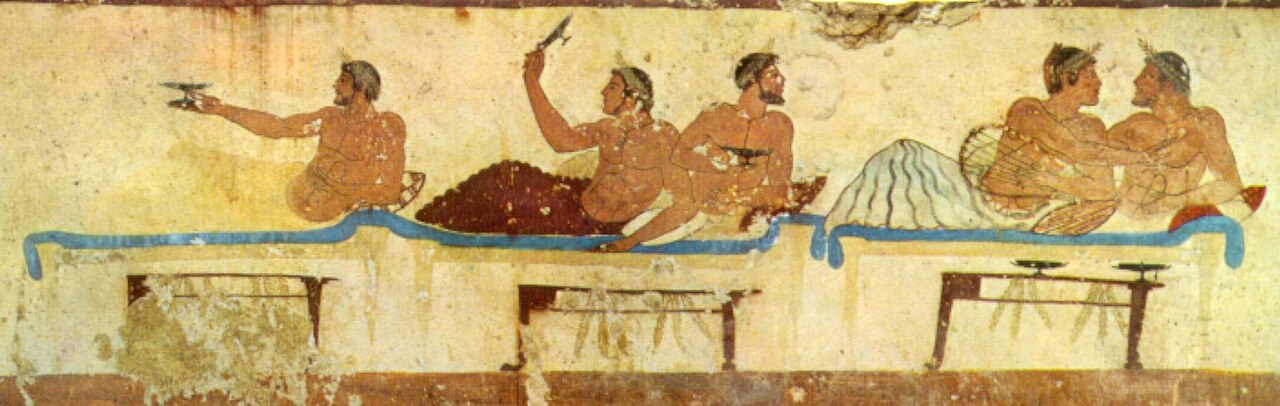
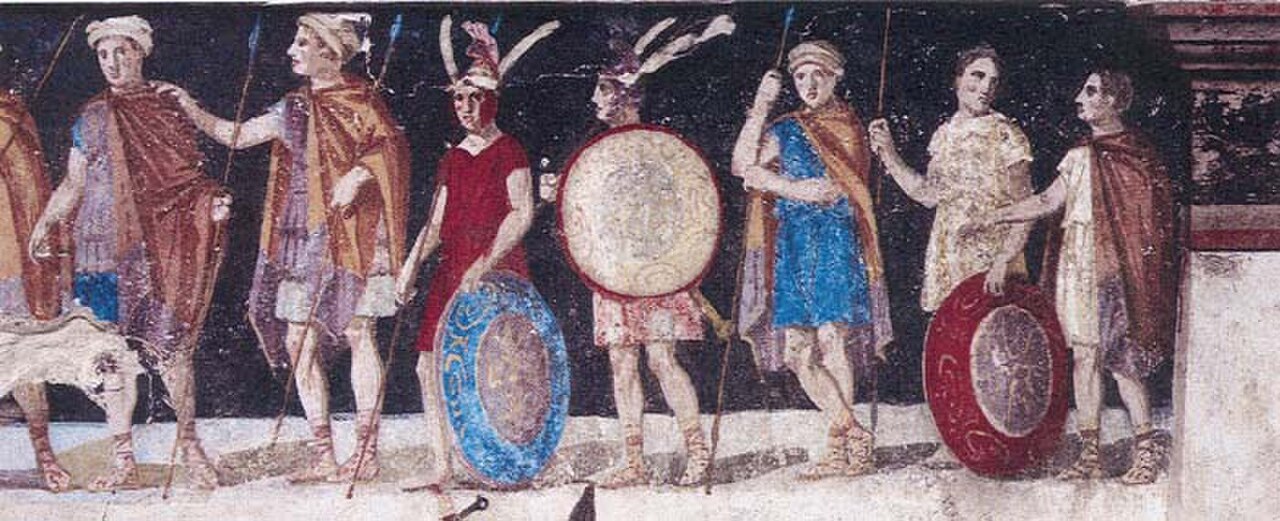
 تفاصيل لوحة جدارية لحفلة من قبر القديس أثناسيوس، سالونيك ، اليونان، القرن الرابع قبل الميلاد
 -

-
 لوحة جدارية لجندي مقدوني قديم ( ثوراكيتاي ) يرتدي درعًا بريديًا ويحمل درعًا من نوع ثوريوس ، القرن الثالث قبل الميلاد
 -

-

-
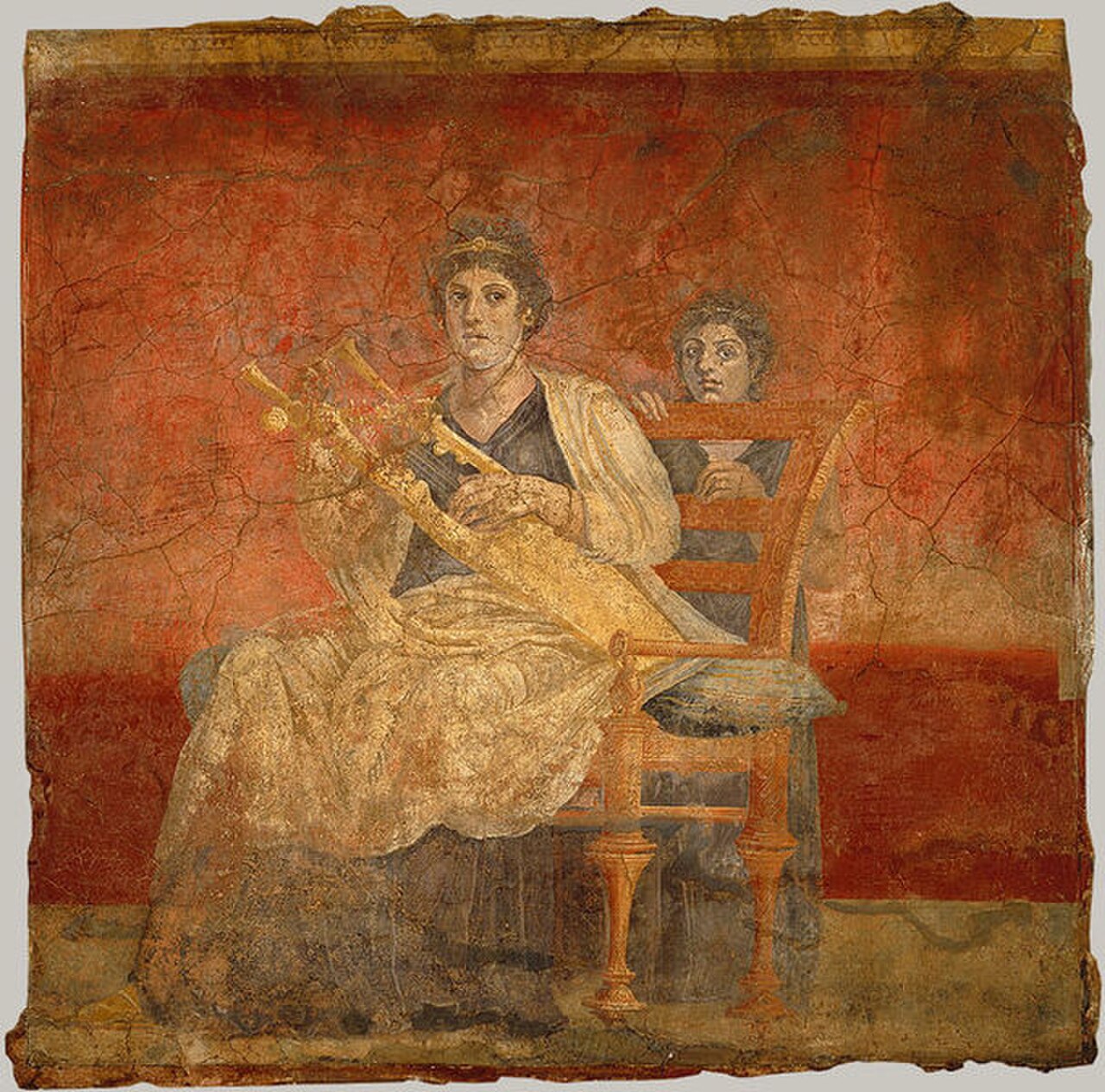
 الفن الروماني، اللوحات الجدارية لفيلا بوسكوريال ، ج. 40 قبل الميلاد
 -
 الفن الروماني، بومبيي
 -
 الفن الروماني، بومبيي
 -
 مشهد مأدبة، لوحة جدارية ، هيركولانيوم ، إيطاليا، حوالي عام 50 قبل الميلاد
 -
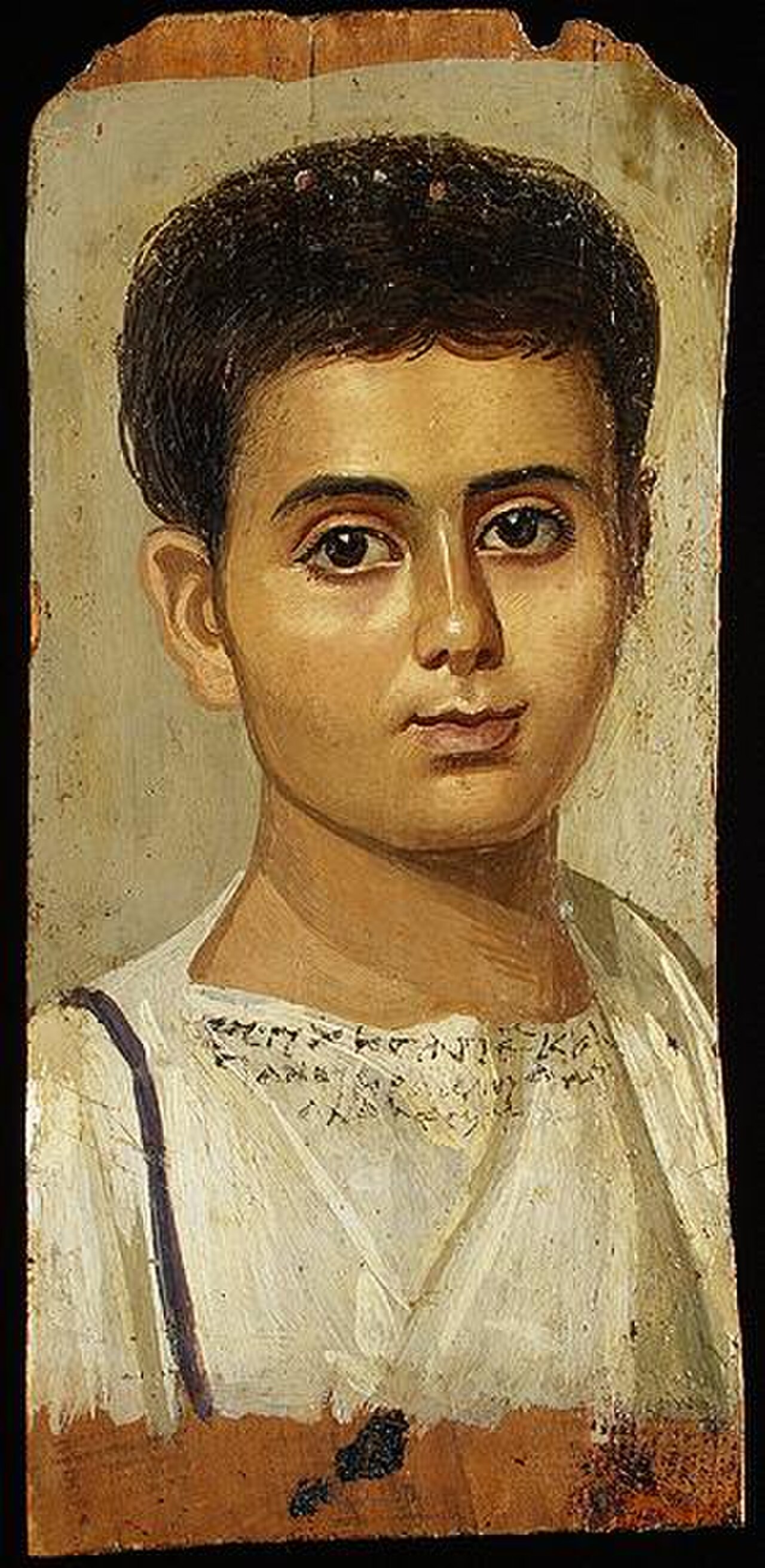
 الفن الروماني، صور مومياء الفيوم من مصر الرومانية ، حوالي 120-130 م
 -
 الفن الروماني من بيت فيتي ، بومبي، القرن الأول الميلادي
 -

-
 لوحة جدارية رومانية تصور فينوس جالسة ، ما يسمى "ديا باربيريني"، القرن الرابع الميلادي
 -

-

-
![زجاج روماني عليه رسم مرسوم لمصارع، عُثر عليه في بيغرام، أفغانستان (كانت ذات يوم جزءًا من مملكة اليونان البخترية، ثم تحت إمبراطورية كوشان)، 52-125 م[11]](https://file.arabipedia.wiki/wikipedia/commons/thumb/d/df/Gladiateur_Begram_Guimet_18117.jpg/97px-Gladiateur_Begram_Guimet_18117.jpg) زجاج روماني عليه رسم مرسوم لمصارع ، عُثر عليه في بيغرام ، أفغانستان (كانت ذات يوم جزءًا من مملكة الإغريق البختريين ، ثم تحت إمبراطورية كوشان )، 52-125 م [11]
زجاج روماني عليه رسم مرسوم لمصارع ، عُثر عليه في بيغرام ، أفغانستان (كانت ذات يوم جزءًا من مملكة الإغريق البختريين ، ثم تحت إمبراطورية كوشان )، 52-125 م [11] -
 كنيس دورا أوروبوس ، سوريا الرومانية ، لوحة جدارية تصور داود ممسوحًا على يد صموئيل ، القرن الثالث الميلادي




_being_suckled_by_a_doe_in_the_tem_Wellcome_V0015047.jpg/1280px-Telephus_(son_of_Hercules)_being_suckled_by_a_doe_in_the_tem_Wellcome_V0015047.jpg)



![زجاج روماني عليه رسم مرسوم لمصارع، عُثر عليه في بيغرام، أفغانستان (كانت ذات يوم جزءًا من مملكة اليونان البخترية، ثم تحت إمبراطورية كوشان)، 52-125 م[11]](https://file.arabipedia.wiki/wikipedia/commons/thumb/d/df/Gladiateur_Begram_Guimet_18117.jpg/1280px-Gladiateur_Begram_Guimet_18117.jpg)

حضارات بحر إيجة في العصر البرونزي
الرسم المينوي هو الفن الذي أنتجته الحضارة المينوية في العصر البرونزي في بحر إيجة من حوالي 3000 إلى 1100 قبل الميلاد، على الرغم من أن أكثر البقايا شمولاً وجمالاً تأتي من حوالي 2300 إلى 1400 قبل الميلاد. وهو يشكل جزءًا من المجموعة الأوسع للفن الإيجي ، وفي فترات لاحقة أصبح له تأثير مهيمن على الفن السيكلادي لفترة من الوقت . نظرًا لتحلل الخشب والمنسوجات، فإن أفضل الأمثلة المحفوظة (والأكثر إفادة) الباقية من الفن المينوي هي الفخار والهندسة المعمارية للقصور (مع اللوحات الجدارية التي تشمل "أقدم المناظر الطبيعية النقية في أي مكان")، [12] والمنحوتات الصغيرة المصنوعة من مواد مختلفة والمجوهرات والأوعية المعدنية والأختام المنحوتة بدقة .
لقد تأثرت بالثقافات المجاورة لمصر القديمة والشرق الأدنى القديم ، والتي أنتجت فنًا حضريًا متطورًا لفترة أطول بكثير، لكن طابع المدن المينوية التجارية الصغيرة ولكن الغنية كان مختلفًا تمامًا، مع وجود القليل من الأدلة على الدين الكبير القائم على المعابد، أو الملوك، أو الحرب، و"كل القوة الخيالية ونضارة الطفولة لثقافة شابة جدًا". [13] تظل كل هذه الجوانب من الثقافة المينوية غامضة إلى حد ما. وصف سنكلير هود "الجودة الأساسية لأفضل الفنون المينوية، والقدرة على خلق جو من الحركة والحياة على الرغم من اتباع مجموعة من الاتفاقيات الرسمية للغاية". [14]
توجد أكبر وأفضل مجموعة من الفن المينوي في متحف هيراكليون للآثار ("AMH") بالقرب من كنوسوس ، على الساحل الشمالي لجزيرة كريت. وقد استخدم علماء الآثار الفن المينوي وبقايا أخرى من الثقافة المادية ، وخاصة تسلسل الأنماط الخزفية، لتحديد المراحل الثلاث الرئيسية للثقافة المينوية (EM وMM وLM)، والعديد من مراحلها الفرعية. لا تزال التواريخ المرتبطة بهذه المراحل محل نقاش كبير، وإن كانت ضمن نطاقات ضيقة. [15]
لقد نوقشت كثيرًا العلاقة بين الفن المينوي والثقافات المعاصرة الأخرى والفن اليوناني القديم في وقت لاحق. لقد هيمن الفن المينوي بوضوح على الفن الميسيني والفن السيكلادي في نفس الفترات، [16] حتى بعد احتلال الميسينيين لجزيرة كريت، ولكن بعض جوانب التقليد فقط نجت من العصور المظلمة اليونانية بعد انهيار اليونان الميسينية . [17]
العصور القديمة الكلاسيكية

حوالي عام 1100 قبل الميلاد، غزت قبائل من شمال اليونان اليونان واتخذ فنها اتجاهًا جديدًا. تتميز ثقافة اليونان القديمة بمساهماتها البارزة في الفنون البصرية. يمنح الرسم على الفخار والخزف في اليونان القديمة لمحة مفيدة بشكل خاص عن الطريقة التي كان يعمل بها المجتمع في اليونان القديمة. لا تزال العديد من الأمثلة الرائعة لرسم المزهريات ذات الأشكال السوداء والحمراء موجودة.
بعض الرسامين اليونانيين المشهورين الذين عملوا على الألواح الخشبية والذين تم ذكرهم في النصوص هم Apelles و Zeuxis و Parrhasius ؛ ومع ذلك، باستثناء واحد لألواح Pitsa ، لا توجد أمثلة على لوحات اليونانية القديمة الباقية، فقط الأوصاف المكتوبة من قبل معاصريهم أو الرومان في وقت لاحق. عاش Zeuxis في القرن الخامس قبل الميلاد ويقال أنه كان أول من استخدم sfumato . وفقًا لبلينيوس الأكبر ، كانت واقعية لوحاته بحيث حاولت الطيور أكل العنب المرسوم. يوصف Apelles بأنه أعظم رسام في العصور القديمة ، ويشتهر بتقنية مثالية في الرسم والألوان الرائعة والنمذجة.
تأثر الفن الروماني باليونان ويمكن اعتباره جزئيًا سليلًا للرسم اليوناني القديم. ومع ذلك، فإن الرسم الروماني يتمتع بخصائص فريدة مهمة. تشمل اللوحات الرومانية الباقية اللوحات الجدارية واللوحات الجدارية ، والعديد منها من الفيلات في كامبانيا ، في جنوب إيطاليا في مواقع مثل بومبي وهيركولانيوم . يمكن تصنيف مثل هذه اللوحات إلى 4 "أنماط" أو فترات رئيسية [ 18] وقد تحتوي على الأمثلة الأولى لـ trompe-l'œil ، وشبه المنظور، والمناظر الطبيعية الخالصة. [19]
إن الصور المرسومة الوحيدة التي نجت من العالم القديم هي عدد كبير من صور التوابيت ذات الشكل النصفي التي عُثر عليها في المقابر المصرية بالفيوم . ورغم أن هذه الصور لم تكن من أفضل الفترات أو أعلى جودة، إلا أنها مثيرة للإعجاب في حد ذاتها، وتعطي فكرة عن الجودة التي لابد وأن يتمتع بها أرقى الأعمال القديمة. كما نجا عدد صغير جدًا من المنمنمات من الكتب المصورة التي تعود إلى أواخر العصور القديمة، وعدد أكبر إلى حد ما من نسخها من فترة العصور الوسطى المبكرة.
العصور الوسطى
-
 أيقونة بيزنطية ، القرن السادس
 -
 البيزنطيون، القرن السادس
 -

-

-

-
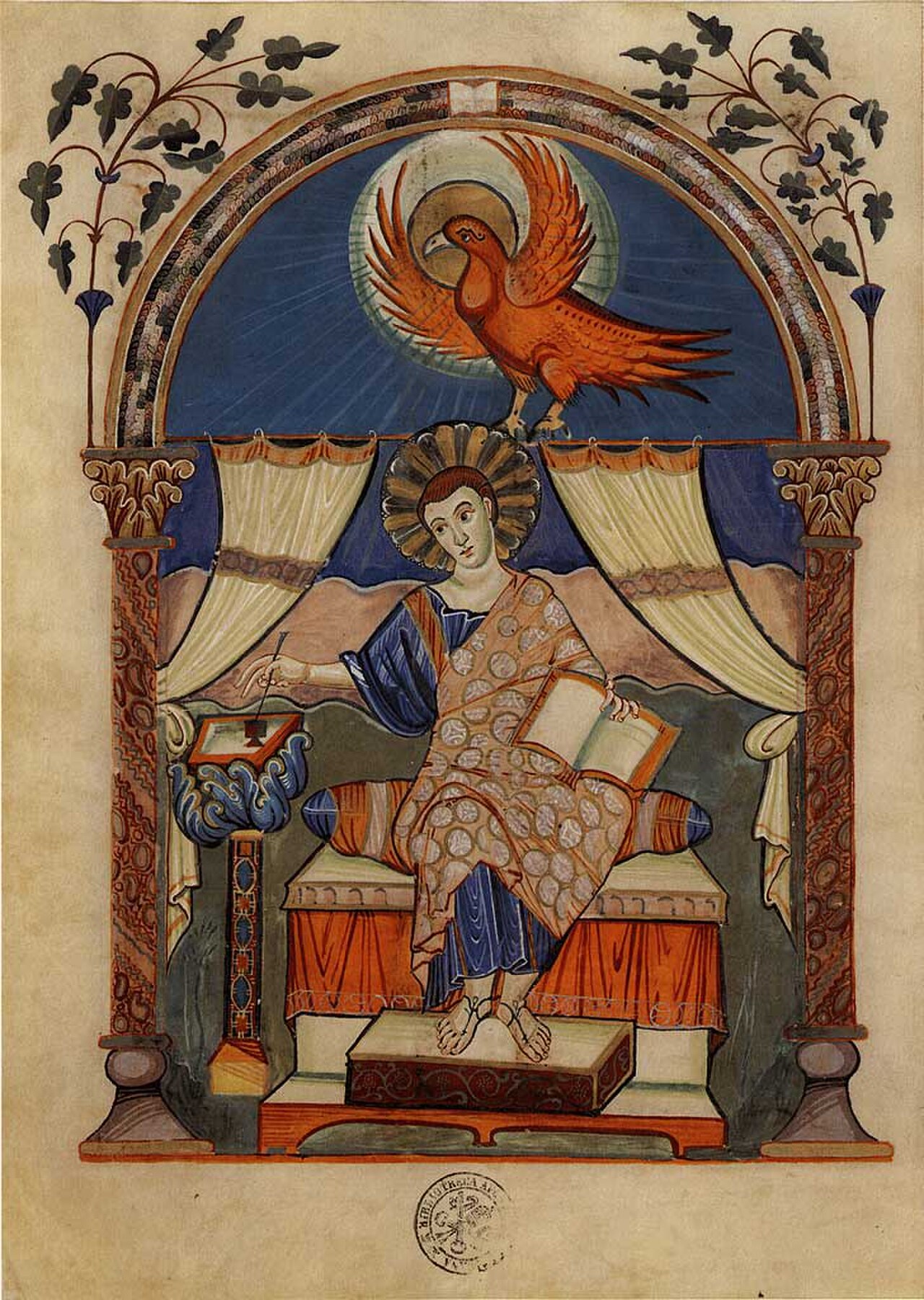
 القديس مرقس الكارولنجي
 -
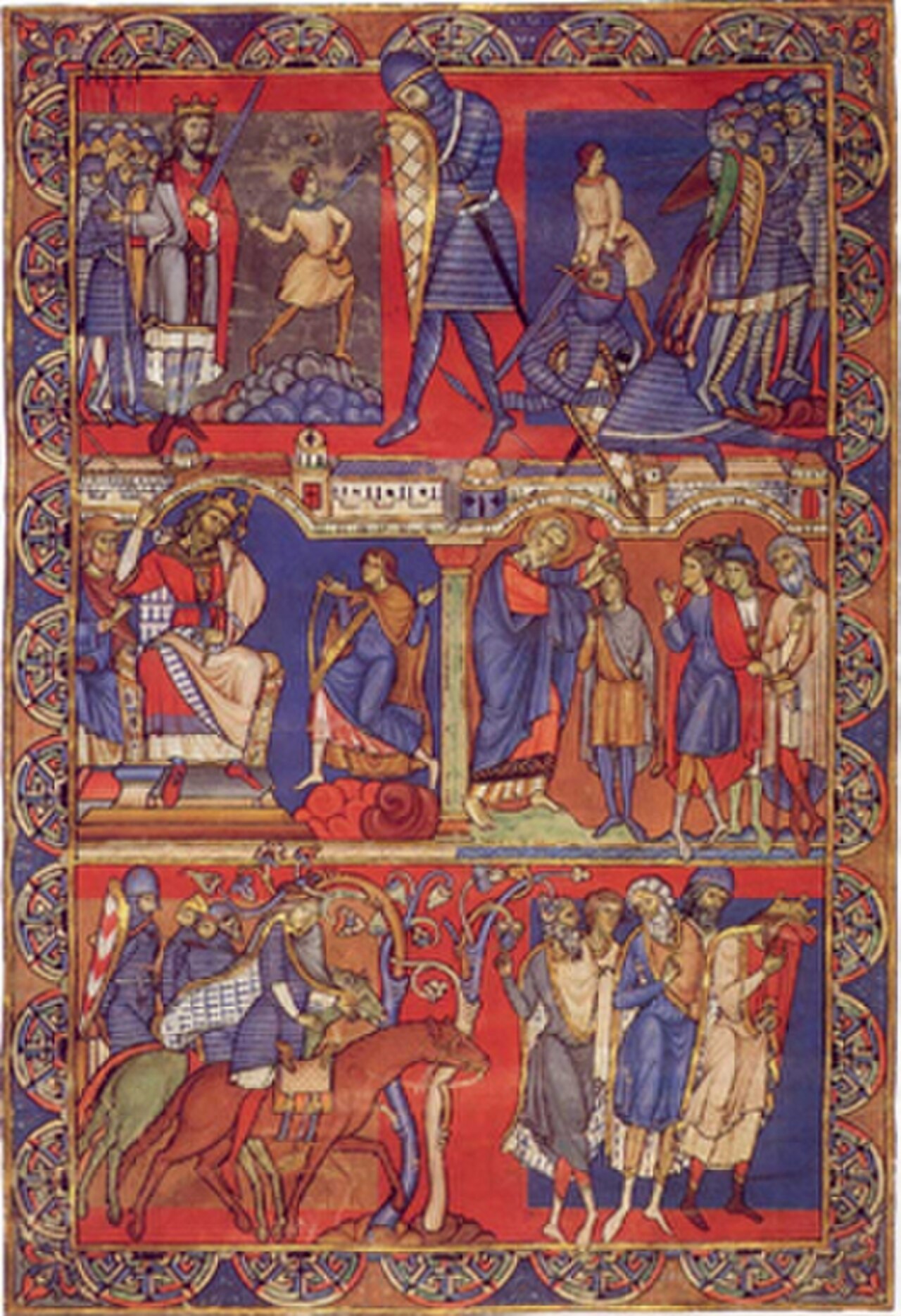
 ورقة مورجان ، من نسخة وينشستر للكتاب المقدس 1160-1175، مشاهد من حياة داود
 -
 أناجيل ياروسلافل حوالي عام 1220
 -

-
 بونافنتورا بيرلينغيري ، القديس فرنسيس الأسيزي ، 1235
 -

-

-

-

-

-

-

-

-






.jpg/1280px-Ascension_from_Vasilyevskiy_chin_(15th_c.,_GTG).jpg)


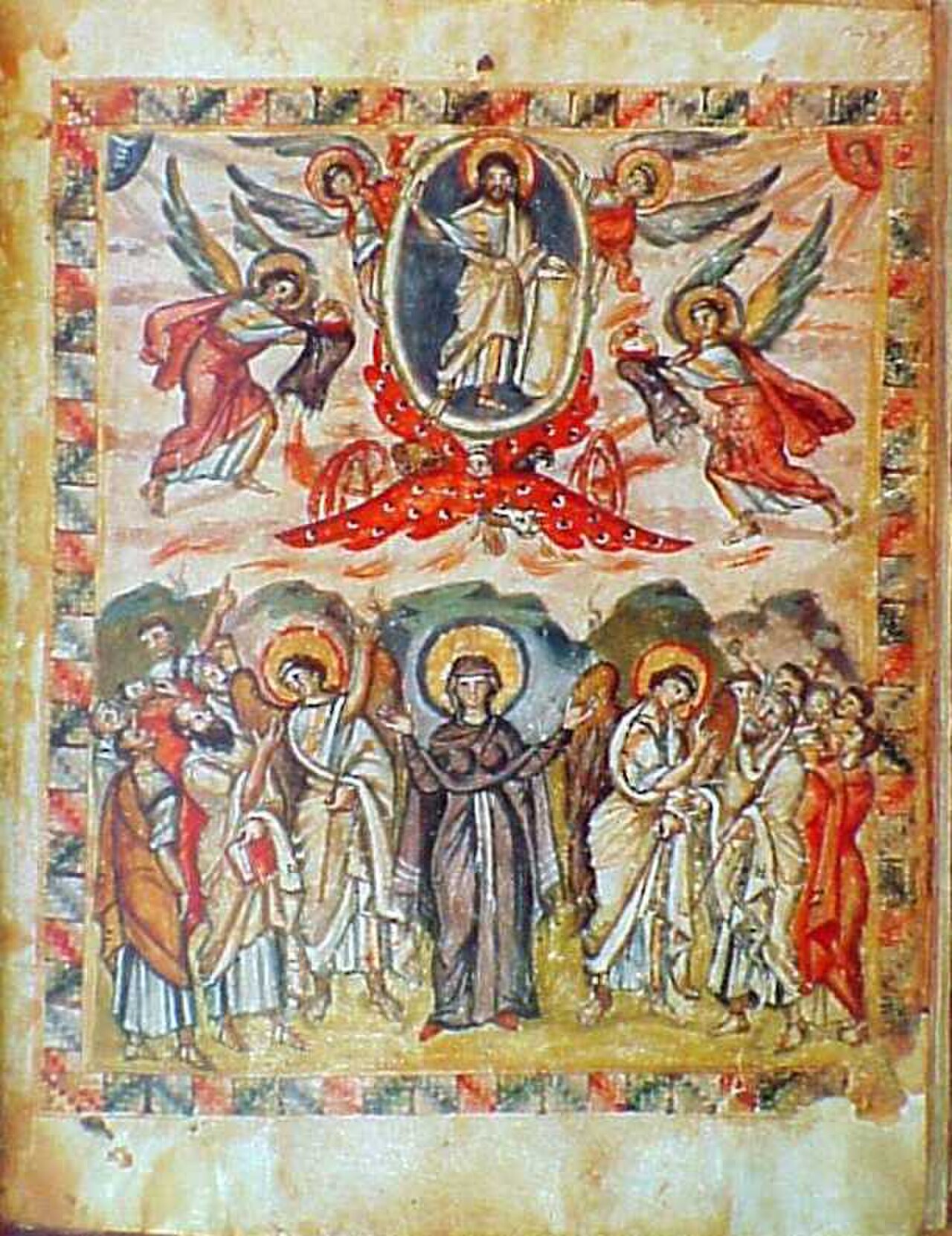
لقد أضفى ظهور المسيحية روحًا وهدفًا مختلفين على أساليب الرسم. لقد ركز الفن البيزنطي ، بمجرد تأسيس أسلوبه في القرن السادس، بشكل كبير على الاحتفاظ بالأيقونات والأسلوب التقليديين، وتطور تدريجيًا خلال ألف عام من الإمبراطورية البيزنطية والتقاليد الحية لرسم الأيقونات الأرثوذكسية اليونانية والروسية . يتمتع الرسم البيزنطي بشعور هيراطيقي وكانت الأيقونات ولا تزال تُرى على أنها تمثيل للوحي الإلهي. كان هناك العديد من اللوحات الجدارية ، لكن القليل منها نجا من الفسيفساء . تمت مقارنة الفن البيزنطي بالتجريد المعاصر ، في تسطيحه وتصويره شديد الأسلوبية للشخصيات والمناظر الطبيعية. بعض فترات الفن البيزنطي، وخاصة ما يسمى بالفن المقدوني في حوالي القرن العاشر، أكثر مرونة في النهج. اللوحات الجدارية من عصر النهضة الباليولوجية في أوائل القرن الرابع عشر نجت في كنيسة خورا في اسطنبول.

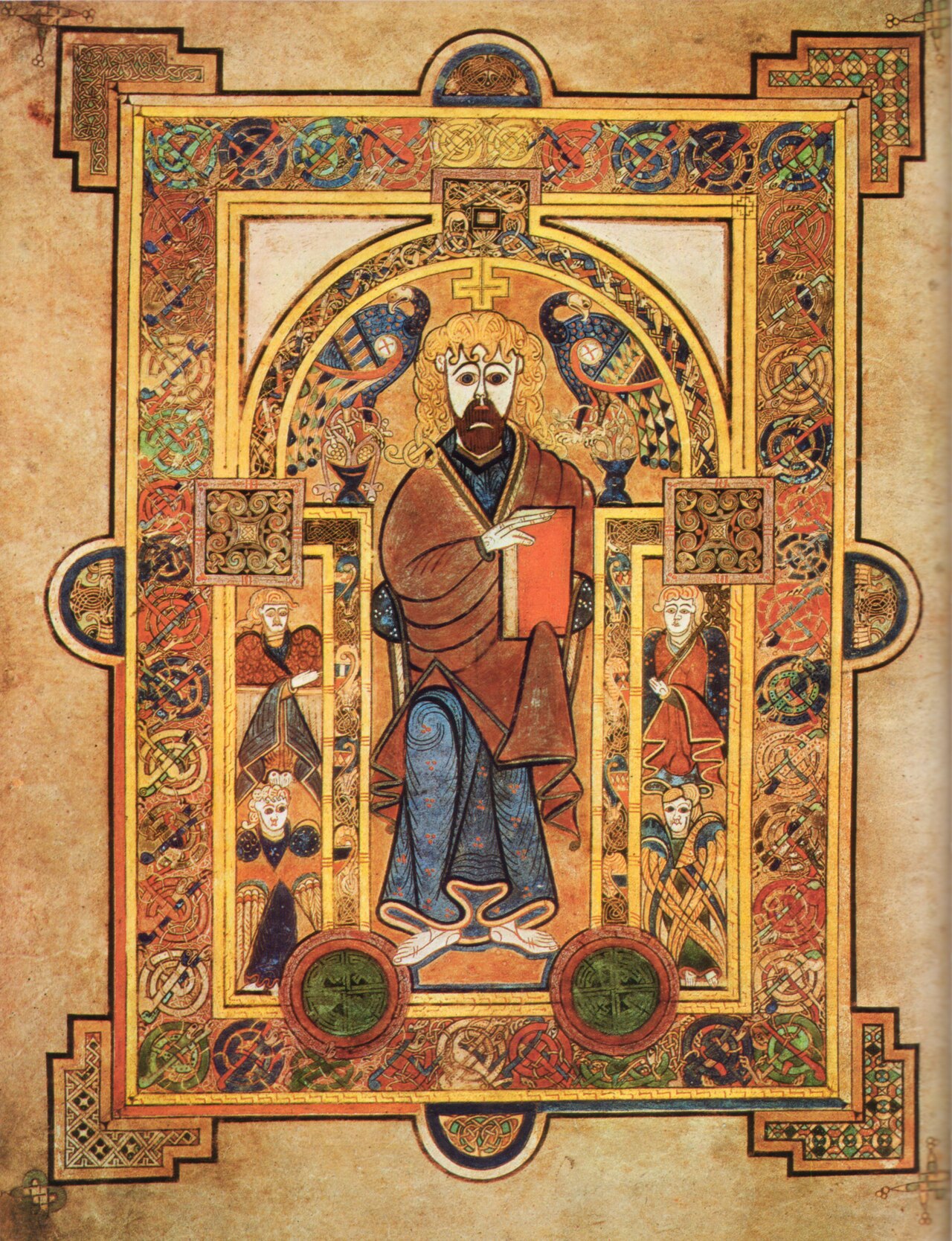
في أوروبا الكاثوليكية ما بعد العصور القديمة، كان أول أسلوب فني مميز ظهر والذي شمل الرسم هو الفن الجزري في الجزر البريطانية، حيث الأمثلة الوحيدة الباقية هي المنمنمات في المخطوطات المزخرفة مثل كتاب كيلز . [20] تشتهر هذه بزخارفها المجردة، على الرغم من تصوير الشخصيات، وأحيانًا المشاهد، أيضًا، وخاصة في صور الإنجيليين . كما نجا الفن الكارولينجي والأوتوني في الغالب في المخطوطات، على الرغم من بقاء بعض اللوحات الجدارية، وتم توثيق المزيد. يجمع فن هذه الفترة بين التأثيرات الجزرية و"البربرية" مع التأثير البيزنطي القوي والطموح لاستعادة الضخامة الكلاسيكية والاتزان.
وقد زُينت جدران الكنائس الرومانية والقوطية باللوحات الجدارية وكذلك المنحوتات، كما أن العديد من الجداريات القليلة المتبقية تتميز بكثافة كبيرة، وتجمع بين الطاقة الزخرفية للفن الجزيري مع الضخامة الجديدة في معالجة الشخصيات. وقد نجت العديد من المنمنمات في المخطوطات المزخرفة من تلك الفترة، والتي تظهر نفس الخصائص، والتي استمرت في العصر القوطي .
أصبح الرسم على الألواح أكثر شيوعًا خلال الفترة الرومانية ، تحت التأثير الثقيل للأيقونات البيزنطية. نحو منتصف القرن الثالث عشر، أصبح الفن في العصور الوسطى والرسم القوطي أكثر واقعية، مع بداية الاهتمام بتصوير الحجم والمنظور في إيطاليا مع تشيمابوي ثم تلميذه جيوتو . ومنذ جيوتو فصاعدًا، أصبح معالجة التكوين من قبل أفضل الرسامين أيضًا أكثر حرية وإبداعًا. يُعتبران أعظم سيدين للرسم في العصور الوسطى في الثقافة الغربية. استخدم تشيمابوي، ضمن التقليد البيزنطي، نهجًا أكثر واقعية ودراماتيكية لفنه. أخذ تلميذه جيوتو هذه الابتكارات إلى مستوى أعلى مما وضع بدوره أسس تقليد الرسم الغربي. كان كلا الفنانين رائدين في التحرك نحو الطبيعية.
تم بناء الكنائس بنوافذ أكثر فأكثر وأصبح استخدام الزجاج الملون الملون عنصرًا أساسيًا في الزخرفة. يوجد أحد أشهر الأمثلة على ذلك في كاتدرائية نوتردام دي باريس . بحلول القرن الرابع عشر، أصبحت المجتمعات الغربية أكثر ثراءً وثقافة ووجد الرسامون رعاة جدد في النبلاء وحتى البرجوازية . اكتسبت المخطوطات المزخرفة طابعًا جديدًا وتم عرض نساء البلاط النحيفات المرتديات ملابس عصرية في مناظرهم الطبيعية. سرعان ما أصبح هذا الأسلوب معروفًا باسم الطراز القوطي الدولي وكان مهيمنًا من عام 1375 إلى عام 1425 مع اكتساب لوحات التمبرا والمذابح أهمية.
الفترة الحديثة المبكرة
النهضة والنزعة السلوكية
-
 يان فان إيك ، 1434
 -
 روجير فان دير وايدن ، ج. 1435
 -
 هوغو فان دير جوس ، حوالي عام 1470
 -
 دييريك بوتس ، 1464–1467
 -
 هانز ميملينج ، حوالي 1466-1473
 -
 بطرس كريستوس ، حوالي عام 1470
 -
 هيرونيموس بوش ، حوالي 1480-1505
 -
 باولو أوتشيلو ، حوالي عام 1470
 -
 ماساتشو ، 1426-1427
 -
 فيليبو ليبي ، 1440-1445
 -
 أندريا مانتيجنا ، حوالي 1458-1460
 -
 بييرو ديلا فرانشيسكا ، 1463-1465
 -
 ساندرو بوتيتشيلي ، 1483–1485
 -
 ليوناردو دافنشي ، 1503-1506
 -
 رافائيل ، 1505-1506
 -
 مايكل أنجلو ، حوالي عام 1511
 -
 لوكاس كراناخ الأكبر ، ج. 1530
 -
 ألبرشت دورر ، 1500
 -
 ماتياس جرونوالد ، 1512-1516
 -
 جيوفاني بيليني ، حوالي عام 1480
 -
 جيورجوني ، حوالي عام 1505
 -
 بونتورمو ، 1526–1528
 -
 برونزينو ، 1540-1545
 -
 بيتر بروغل ، 1565
 -
 هانز هولباين الأصغر ، 1527
 -
 جاكوبو تينتوريتو ، 1582
 -
 باولو فيرونيزي ، 1562-1563
 -
 يواكيم وتيفال ، 1595
 -
 إل جريكو ، 1596–1600

_Altare_Monforte_-_Adorazione_dei_Magi_(1470_circa)_-_Tecnica_olio_su_tavola_Dimensioni_147%C3%97242_cm_-_Gem%C3%A4ldegalerie,_Berlin.jpg/1280px-thumbnail.jpg)

.jpg/1280px-Das_J%C3%BCngste_Gericht_(Memling).jpg)


.jpg/1280px-Madonna_and_Child_(Filippo_Lippi).jpg)
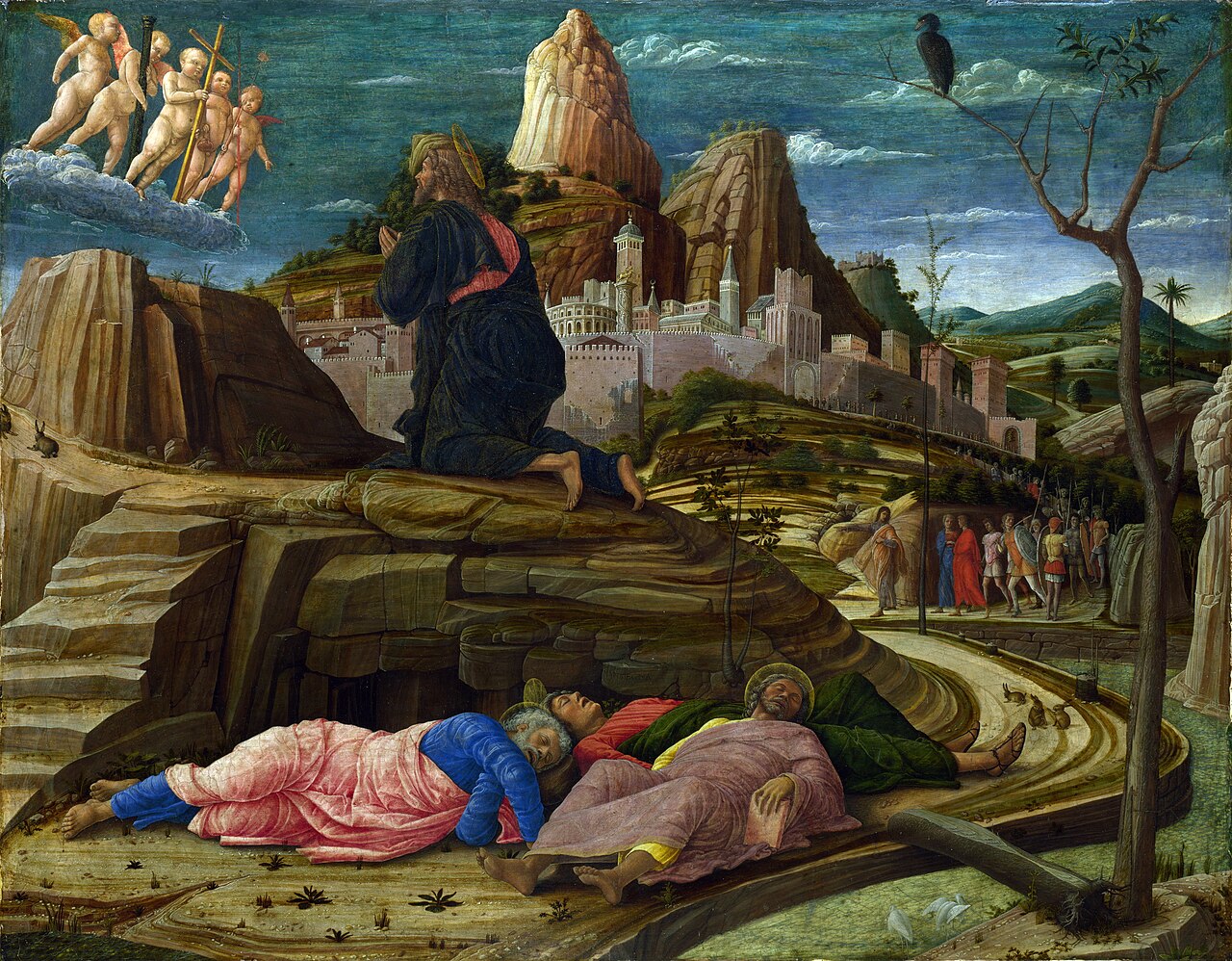




كانت النهضة (بالفرنسية تعني "الولادة الجديدة")، وهي حركة ثقافية امتدت تقريبًا من القرن الرابع عشر حتى منتصف القرن السابع عشر، مدفوعة بإنسانية عصر النهضة ودراسة المصادر الكلاسيكية. في الرسم، في عشرينيات وثلاثينيات القرن الخامس عشر، طور الرسامون الرائدون في إيطاليا والبلدان المنخفضة بشكل منفصل طرقًا جديدة للرسم سمحت للوحات بالظهور بشكل أكثر واقعية من أعمال الرسامين الراسخين، الذين يشار إلى أسلوبهم باسم القوطية الدولية ، أو في بعض الحالات باسم عصر النهضة المبكر (خاصة في إيطاليا). أصبحت هذه الفترة، التي استمرت حتى حوالي عام 1495، تُعرف باسم عصر النهضة المبكر .
في منطقة فلاندرز في البلدان المنخفضة، وبعد التطورات التي طرأت على زخرفة المخطوطات ، وخاصة من قبل الأخوين ليمبورغ ، الذين توفوا عام 1416، أصبح الفنانون مفتونين بالملموس في العالم المرئي وبدأوا في تصوير الأشياء بطريقة طبيعية للغاية. [21] إن اعتماد الرسم الزيتي الذي كان أول استخدام له على اللوحات الزيتية يُنسب تقليديًا، ولكن بشكل خاطئ، إلى جان فان آيك ، جعل من الممكن تحقيق مصداقية جديدة في تصوير هذه الطبيعية. كانت وسيلة الطلاء الزيتي موجودة بالفعل في أعمال ميلكيور برويدرلام (الذي توفي عام 1409)، لكن روبرت كامبين (المعروف سابقًا باسم سيد فليمال ) وفان آيك رفعوا استخدامها إلى مستويات جديدة واستخدموها لتمثيل الطبيعية التي كانوا يهدفون إليها. باستخدام هذه الوسيلة الجديدة، أصبح رسامو هذه الفترة قادرين على إنشاء ألوان أكثر ثراءً مع نغمة عميقة مكثفة. تميز الرسم الهولندي المبكر بوهم الضوء المتوهج مع لمسة نهائية تشبه البورسلين، وكان يشكل فارقًا كبيرًا عن السطح غير اللامع لطلاء التيمبيرا المستخدم في إيطاليا. [21]

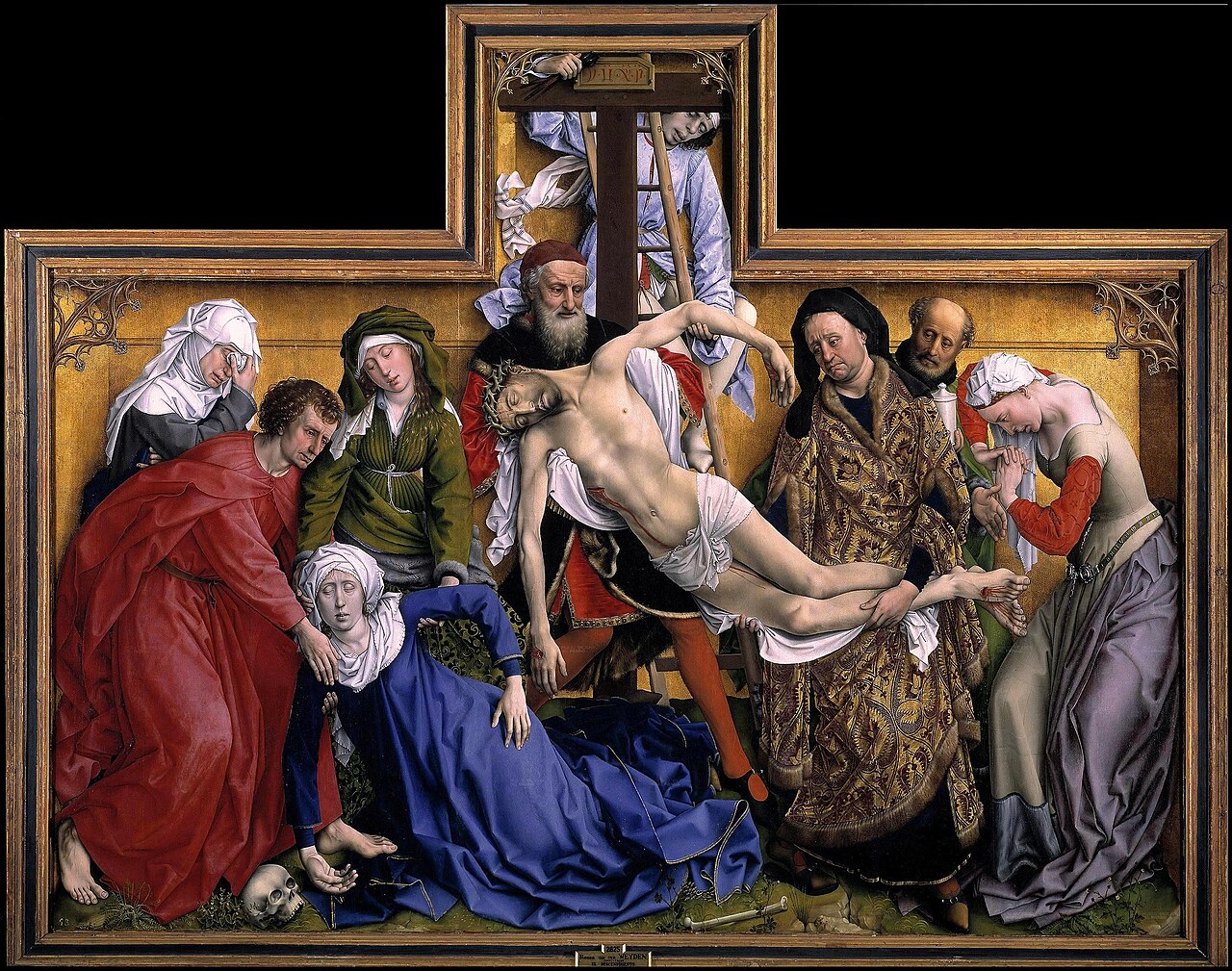
على عكس الإيطاليين، الذين استمدت أعمالهم بشكل كبير من فن روما القديمة، احتفظ الشماليون ببقايا أسلوبية من النحت والمخطوطات المزخرفة في العصور الوسطى (خاصة طبيعيتها). كان روجير فان دير وايدن ، أحد تلاميذ كامبين، رسامًا هولنديًا مهمًا آخر في هذه الفترة، حيث أكدت مؤلفاته على المشاعر الإنسانية والدراما، كما يتضح على سبيل المثال في لوحة " النزول من الصليب" ، والتي تعد من بين أشهر أعمال القرن الخامس عشر وكانت اللوحة الهولندية الأكثر تأثيرًا لصلب المسيح. وكان من بين الفنانين المهمين الآخرين هوجو فان دير جوس (الذي كان لعمله تأثير كبير في إيطاليا)، ودييريك بوتس (الذي كان من بين أوائل الرسامين الشماليين الذين أظهروا استخدام نقطة اختفاء واحدة)، [21] وبيتروس كريستوس وهانز ميملينج وجيرارد ديفيد . وبشكل جماعي، تُعرف التطورات في الرسم في أوروبا شمال جبال الألب باسم عصر النهضة الشمالي .
في الرسم الإيطالي في عصر النهضة ، ألهم فن العصور القديمة الكلاسيكية أسلوبًا للرسم يؤكد على المثالية. يُنسب إلى مازاتشو إحراز تقدم في المنظور الخطي، وتصوير الحجم في شخصياته، وفي تصوير المشاعر على وجوه شخصياته في عشرينيات القرن الخامس عشر. بعد ذلك، أخذ فنانون مثل باولو أوشيلو ، وفرا أنجيليكو ، وبييرو ديلا فرانشيسكا ، وأندريا مانتيجنا ، وفيليبو ليبي ، وساندرو بوتيتشيلي ، في فترة عصر النهضة المبكر التي استمرت حتى حوالي عام 1495، ثم ليوناردو دافنشي ، ومايكل أنجلو بوناروتي ، ورافائيل خلال عصر النهضة العالي من حوالي عام 1495 إلى عام 1520، الرسم إلى مستوى أعلى من خلال استخدام المنظور ، ودراسة التشريح البشري والتناسب، ومن خلال تطويرهم لتطور غير مسبوق في تقنيات الرسم والتصوير. ظهر أسلوب عصر النهضة العالي الأكثر طبيعية إلى حد ما في البندقية . كان رسامو المدرسة الفينيسية ، مثل جيوفاني بيليني ، وجورجونيه ، وتيتيان ، وفيرونيزي ، أقل اهتمامًا بالدقة في رسوماتهم من اهتمامهم بثراء اللون ووحدة التأثير الذي يمكن تحقيقه من خلال نهج أكثر عفوية في الرسم.
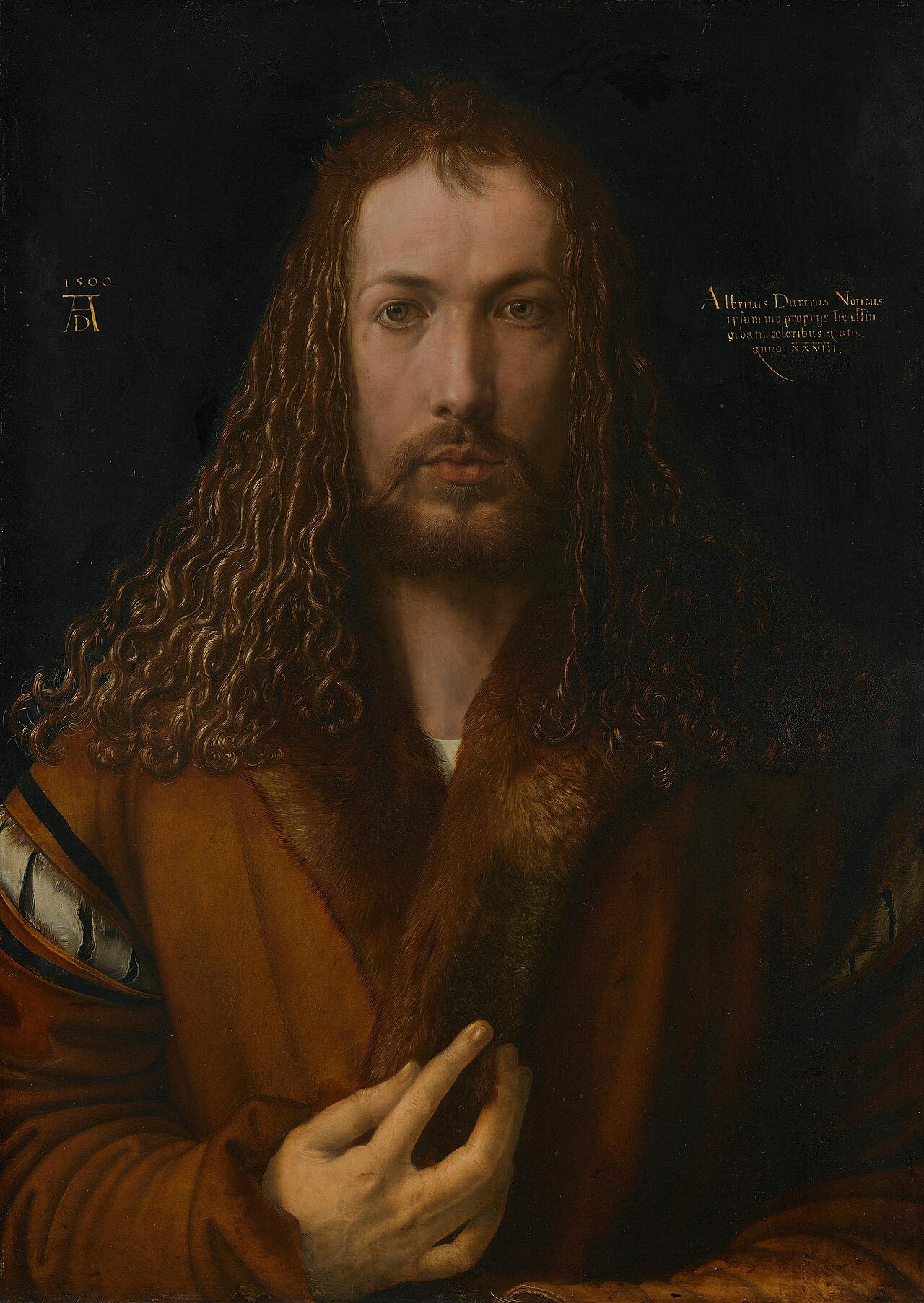
كان للرسامين الفلمنكيين والهولنديين والألمان في عصر النهضة العالي الشمالي مثل ألبرشت دورر ولوكاس كراناخ وماتياس جرونفالد وهانز هولباين الأصغر نهج مختلف عن نظرائهم الإيطاليين، وهو نهج أكثر واقعية وأقل مثالية. سافر بعض الرسامين الشماليين، بدءًا من دورر في تسعينيات القرن الخامس عشر، إلى إيطاليا لرؤية أعمال عصر النهضة العالي الإيطالي ودمجوا سمات الفن الإيطالي في أعمالهم بدرجات متفاوتة. بعد جيل، بدأت بداية الرسم النوعي كموضوع للأعمال الكبيرة مع بيتر أرتسن وبيتر بروغل . أصبح الجيل اللاحق من رسامي عصر النهضة الشمالي الذين سافروا إلى روما واعتمدوا الكثير من النهج المثالي لعصر النهضة الإيطالي معروفين باسم الرومان .

تعكس لوحات عصر النهضة ثورة الأفكار والعلوم ( علم الفلك والجغرافيا ) التي حدثت في هذه الفترة، والإصلاح الديني ، واختراع المطبعة . أصبحت صناعة الطباعة مهمة بشكل متزايد، ومارسها العديد من الرسامين. يذكر دورر، الذي يُعتبر أحد أعظم صانعي الطباعات، أن الرسامين ليسوا مجرد حرفيين بل مفكرين أيضًا . مع تطور الرسم على الحامل في عصر النهضة، اكتسب الرسم استقلاله عن الهندسة المعمارية. أصبحت لوحات الحامل - الصور المتحركة التي يمكن تعليقها بسهولة على الجدران - بديلاً شائعًا للوحات المثبتة على الأثاث أو الجدران أو الهياكل الأخرى. بعد قرون هيمنت عليها الصور الدينية، عادت الموضوعات العلمانية ببطء إلى الرسم الغربي. أدرج الفنانون رؤى للعالم من حولهم، أو منتجات خيالهم في لوحاتهم. يمكن لأولئك الذين يستطيعون تحمل النفقات أن يصبحوا رعاة ويطلبون صورًا لأنفسهم أو لعائلاتهم.
أدى عصر النهضة العالي في إيطاليا إلى ظهور فن منمق يُعرف باسم Mannerism بعد عام 1520، على الرغم من أن بعض الرسامين، مثل تيتيان وباولو فيرونيزي ، واصلوا الرسم بأسلوب عصر النهضة العالي في أواخر القرن. وبدلاً من التراكيب المتوازنة والنهج العقلاني للمنظور الذي ميز الفن في فجر القرن السادس عشر، سعى المانيريون إلى عدم الاستقرار والحيلة والشك. تم استبدال عذارى رافائيل الهادئة وتعبيرات ليوناردو الهادئة بتعبيرات مضطربة لبونتورمو والشدة العاطفية لإل جريكو . التراكيب المضطربة وغير المستقرة، والتأثيرات المتطرفة أو المنفصلة للمنظور، والوضعيات المنمقة هي سمة من سمات المانيريين الإيطاليين مثل تينتوريتو وبونتورمو وبرونزينو ، وظهرت لاحقًا في أعمال المانيريين الشماليين مثل هندريك جولتزيوس وبارثولوميوس سبرينجر ويواكيم وتيفال .
الباروك والروكوكو
-
 كارافاجيو ، 1595–1597
 -
 أرتميسيا جنتيليسكي ، 1614-1620
 -
 بيتر بول روبنز ، 1632-1635
 -
 فرانس هالس ، 1624
 -
 جوديث ليستر ، 1630
 -
 رامبرانت فان راين ، 1642
 -
 بيتر دي هوتش ، 1658
 -
 يوهانس فيرمير ، حوالي عام 1660
 -
 جان ستين ، حوالي عام 1665
 -
 جاكوب فان رويسديل ، 1670
 -
 ويليم كلايسز، هيدا ، 1631
 -
 دييغو فيلاسكيز ، 1656-1657
 -
 جوزيبي دي ريبيرا ، 1620-1624
 -
 نيكولا بوسين ، ج. 1637-1638
 -
 جورج دو لا تور ، أربعينيات القرن السابع عشر
 -
 جويدو ريني ، 1625
 -
 سالفاتور روزا ، حوالي عام 1645
 -
 بارتولومي إستيبان موريللو ، ج. 1650-1655
 -
 كلود لورين ، 1648
 -
 أنتوني فان دايك ، 1635-1636
 -
 كاناليتو ، 1723
 -
 جيوفاني باتيستا تيبولو ، ج. 1752-1753
 -
 أنطوان واتو ، حوالي عام 1720
 -
 جان أونوريه فراجونارد ، ج. 1767-1768
 -
 فرانسوا بوشيه ، 1751
 -
 إليزابيث لويز فيجي لو برون ، بعد عام 1782
 -
 موريس كوينتين دي لا تور ، ج. 1761
 -
 توماس جينسبورو ، حوالي عام 1770
 -
 جوشوا رينولدز ، 1769
 -
 جان بابتيست سيمون شاردان ، ج. 1728
 -
 ويليام هوغارث ، حوالي عام 1757
 -
 أنجليكا كوفمان ، حوالي عام 1780


_-_Google_Art_Project.jpg/1280px-Sir_Anthony_Van_Dyck_-_Charles_I_(1600-49)_-_Google_Art_Project.jpg)

_-_Museo_Nacional_Thyssen-Bornemisza_Madrid.jpg/1280px-Giambattista_Tiepolo_-_La_morte_di_Giacinto_(1752-53)_-_Museo_Nacional_Thyssen-Bornemisza_Madrid.jpg)


.jpg/1280px-Fran%C3%A7ois_Boucher,_Ruhendes_M%C3%A4dchen_(1751,_Wallraf-Richartz_Museum).jpg)


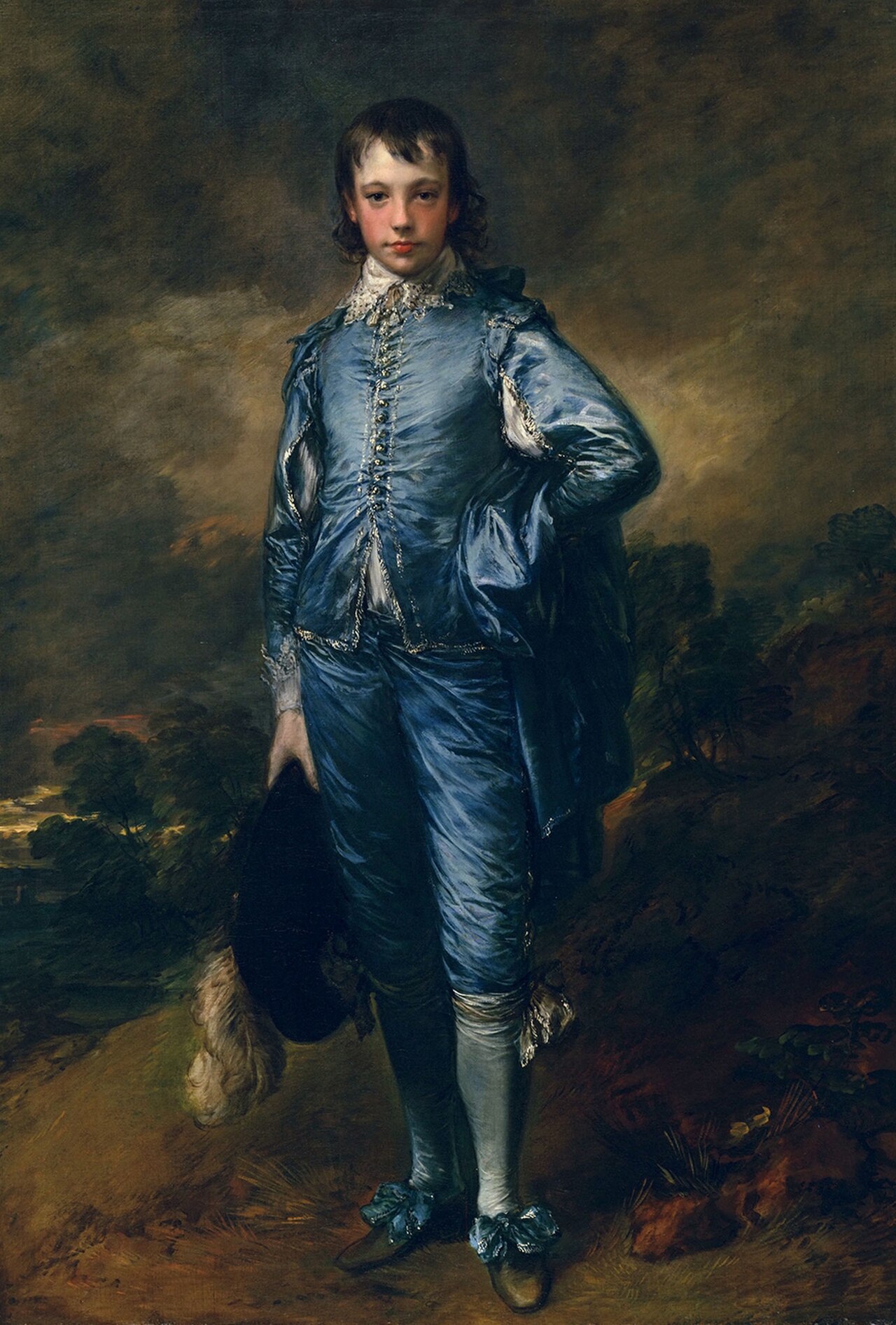


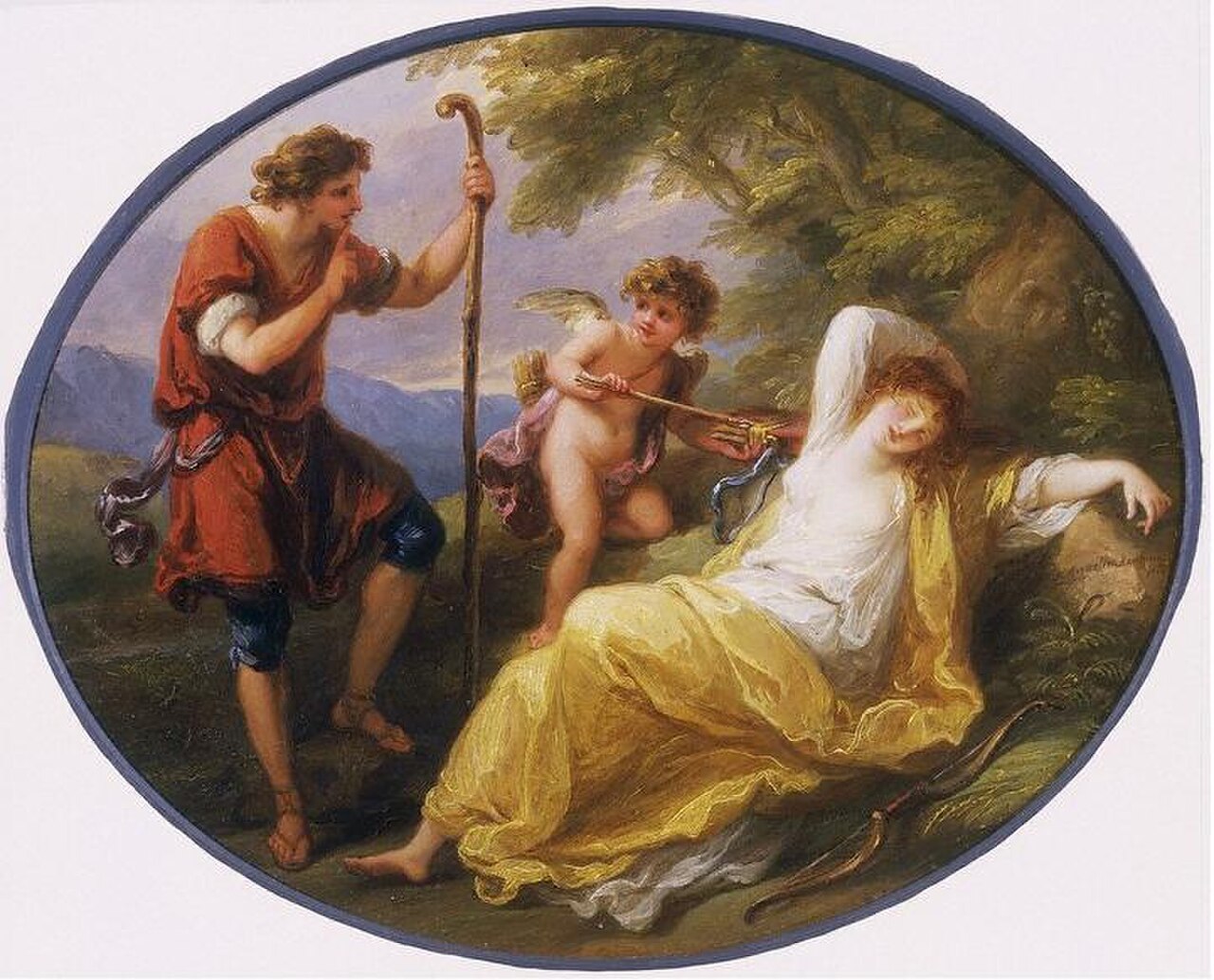
يرتبط الرسم الباروكي بالحركة الثقافية الباروكية ، وهي الحركة التي غالبًا ما يتم التعرف عليها مع الحكم المطلق والإصلاح المضاد أو الإحياء الكاثوليكي؛ [22] [23] ومع ذلك، فإن وجود لوحات باروكية مهمة في الدول غير المطلقة والبروتستانتية يؤكد أيضًا على شعبيتها، حيث انتشر الأسلوب في جميع أنحاء أوروبا الغربية. [24]
يتميز الرسم الباروكي بالدراما العظيمة والألوان الغنية والعميقة والضوء الشديد والظلال الداكنة والغرض من الفن هو استحضار المشاعر والعاطفة بدلاً من العقلانية الهادئة التي كانت موضع تقدير خلال عصر النهضة. شمل أوائل رسامي الباروك الأخوين كاراتشي وأنيبالي وأغوستينو ، في أواخر القرن السادس عشر ، وكارافاجيو في العقد الأخير من القرن. يُعرف كارافاجيو بأنه أحد أعظم رسامي الباروك ووريث الرسم الإنساني في عصر النهضة العالي . صدم نهجه الواقعي للشخصية البشرية ، المرسوم مباشرة من الحياة ومضاء بشكل درامي على خلفية داكنة ، معاصريه وفتح فصلاً جديدًا في تاريخ الرسم. كان الباروك هو الأسلوب السائد في الرسم بدءًا من حوالي عام 1600 واستمر طوال القرن السابع عشر. من بين أعظم رسامي عصر الباروك روبنز ، فيلاسكيز ، رامبرانت ، فرانس هالس ، يوهانس فيرمير ، لو نين ، جوزيبي دي ريبيرا ، بوسان ، تور ، وكلود لورين ، الذين ركزوا على رسم المناظر الطبيعية. تبنى بوسان وكلود ولا تور، وهم جميعًا فرنسيون، أسلوب الباروك "الكلاسيكي" مع التركيز بشكل أقل على العاطفة والاهتمام الأكبر بالخطوط الخارجية للأشكال في اللوحة من اللون. سافر معظم هؤلاء الرسامين إلى إيطاليا كجزء من تدريبهم ثم أخذوا أسلوب الباروك إلى أوطانهم، على الرغم من أنهم في بعض الحالات بقوا في إيطاليا لأجزاء كبيرة من حياتهم المهنية (كلود وبوسان). في إيطاليا، يتجسد أسلوب الباروك في اللوحات الدينية والأسطورية بأسلوب جراند مان من قبل فنانين مثل كاراتشي ، غيدو ريني ، ولوكا جيوردانو . بدت اللوحات الجدارية الخيالية لسقف الكنيسة التي رسمها بييترو دا كورتونا وكأنها مفتوحة على السماء.

ظهر نوع أكثر هدوءًا من الباروك في الجمهورية الهولندية ، حيث كانت لوحات الحامل للموضوعات اليومية شائعة بين جامعي الطبقة المتوسطة، وأصبح العديد من الرسامين متخصصين في النوع ، والبعض الآخر في المناظر الطبيعية أو المناظر البحرية أو الطبيعة الصامتة. جلب فيرمير وجيرارد تير بورش وبيتر دي هوتش صقلًا تقنيًا كبيرًا إلى رسم المشاهد المنزلية، كما فعل ويليم كلايس. هيدا إلى الطبيعة الصامتة. على النقيض من ذلك، برع رامبرانت في رسم كل نوع من الموضوعات، وطور أسلوبًا فرديًا للرسم حيث فقدت الخلفيات المظلمة والضوء المستمدة من كارافاجيو وكارافاج أوتريخت جودتها المسرحية. غالبًا ما يشار إلى الرسم الباروكي الهولندي باسم رسم العصر الذهبي الهولندي .
خلال القرن الثامن عشر، تبع ذلك الرسم الروكوكو باعتباره امتدادًا أخف للباروك، وغالبًا ما كان تافهًا وإيروتيكيًا ويستخدم ألوان الباستيل الفاتحة. تطور الروكوكو أولاً في الفنون الزخرفية والتصميم الداخلي في فرنسا. جلبت خلافة لويس الخامس عشر تغييرًا في فناني البلاط والأزياء الفنية العامة. مثلت ثلاثينيات القرن الثامن عشر ذروة تطور الروكوكو في فرنسا المتمثلة في أعمال أنطوان واتو وفرانسوا بوشيه . لا يزال الروكوكو يحافظ على ذوق الباروك للأشكال المعقدة والأنماط المعقدة، ولكن بحلول هذه المرحلة، بدأ في دمج مجموعة متنوعة من الخصائص المتنوعة، بما في ذلك ذوق التصاميم الشرقية والتراكيب غير المتماثلة.
انتشر أسلوب الروكوكو مع الفنانين الفرنسيين والمطبوعات المنقوشة. وقد لاقى استحسانًا واسعًا في الأجزاء الكاثوليكية من ألمانيا وبوهيميا والنمسا، حيث اندمج مع تقاليد الباروك الألمانية النابضة بالحياة. وقد تم تطبيق أسلوب الروكوكو الألماني بحماس في الكنائس والقصور، وخاصة في الجنوب، بينما تطور أسلوب الروكوكو الفريدريكي في مملكة بروسيا .
يمثل الأساتذة الفرنسيون واتو وبوتشر وفراجونارد هذا الأسلوب، وكذلك يفعل جيوفاني باتيستا تييبولو وجان بابتيست سيميون شاردان الذي اعتبره البعض أفضل رسام فرنسي في القرن الثامن عشر - مناهض الروكوكو . كانت البورتريه عنصرًا مهمًا في الرسم في جميع البلدان، ولكن بشكل خاص في إنجلترا، حيث كان القادة هم ويليام هوغارث ، بأسلوب واقعي صريح، وفرانسيس هايمان وأنجليكا كوفمان (التي كانت سويسرية) وتوماس جينسبورو وجوشوا رينولدز في أنماط أكثر إطراءً متأثرة بأنطوني فان دايك . في فرنسا خلال عصر الروكوكو، برع جان بابتيست جروز (الرسام المفضل لدى دينيس ديدرو )، [25] في البورتريه ولوحات التاريخ ، وكان موريس كوينتين دي لا تور وإليزابيث فيجيه ليبرون رسامين بورتريه بارعين للغاية . تخصص لا تور في الرسم بالباستيل ، والذي أصبح وسيلة شعبية خلال هذه الفترة.
ساعد ويليام هوغارث في تطوير الأساس النظري لجمال الروكوكو. ورغم أنه لم يقصد الإشارة إلى الحركة، فقد زعم في كتابه تحليل الجمال (1753) أن الخطوط المتموجة والمنحنيات على شكل حرف S البارزة في الروكوكو كانت الأساس للنعمة والجمال في الفن أو الطبيعة (على عكس الخط المستقيم أو الدائرة في الكلاسيكية ). جاءت بداية النهاية للروكوكو في أوائل ستينيات القرن الثامن عشر عندما بدأت شخصيات مثل فولتير وجاك فرانسوا بلونديل في التعبير عن انتقاداتهم لسطحية وانحطاط الفن. ندد بلونديل "بالمزيج السخيف من الأصداف والتنين والقصب وأشجار النخيل والنباتات" في التصميمات الداخلية المعاصرة. [26]
بحلول عام 1785، اختفى أسلوب الروكوكو من الموضة في فرنسا، وحل محله النظام والجدية التي اتسم بها فنانو المدرسة الكلاسيكية الجديدة مثل جاك لوي ديفيد ، الذي جسدت لوحاته التاريخية المهيبة التي تصور الأحداث التاريخية والمعاصرة المثل العليا للثورة الفرنسية .
القرن التاسع عشر
-
 جاك لويس ديفيد ، 1787
 -
 جون سينجلتون كوبلي ، 1778
 -
 أنطوان جان جروس ، 1804
 -
 جون كونستابل ، 1802
 -
 جان أوغست دومينيك إنجرس ، 1808
 -
 فرانسيسكو غويا ، 1814
 -
 ثيودور جيريكولت ، 1819
 -
 كاسبر ديفيد فريدريش ، حوالي عام 1822
 -
 كارل برولوف ، 1827
 -
 يوجين ديلاكروا ، 1830
 -
 جيه إم دبليو تيرنر ، 1838
 -
 إيفان آيفازوفسكي ، 1850
 -
 غوستاف كوربيه ، 1849-1850
 -
 ألبرت بيرستادت ، 1866
 -
 كاميل كورو ، حوالي عام 1867
 -
 كاميل بيسارو 1872
 -
 كلود مونيه ، 1872
 -
 بيير أوغست رينوار ، 1876
 -
 إدغار ديغا ، 1876
 -
 إدوارد مانيه ، 1882
 -
 ماري كاسات ، 1893-1894
 -
 فالنتين سيروف ، 1887
 -
 فنسنت فان جوخ ، 1888
 -
 أرنولد بوكلين ، 1883
 -
 إيليا ريبين ، 1891
 -
 بول غوغان ، 1897-1898
 -
 جورج بيير سورات ، 1884-1886
 -
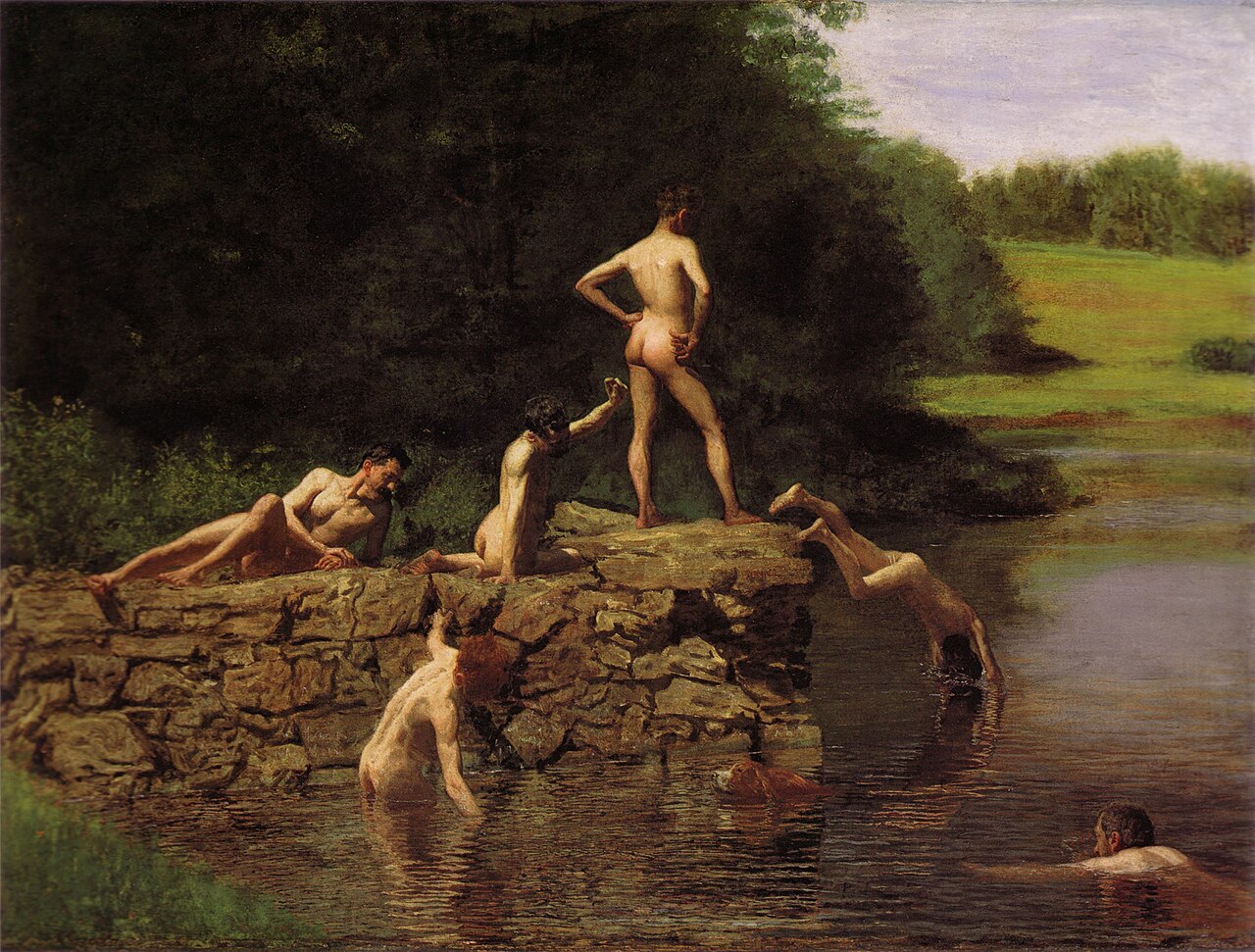
 توماس إيكنز ، 1884-1885
 -
 ألبرت بينكهام رايدر ، 1890
 -
 وينسلو هومر ، 1899
 -
 فرديناند هودلر ، 1906
 -
 بول سيزان ، 1906


.jpg/1280px-JEAN_LOUIS_TH%C3%89ODORE_G%C3%89RICAULT_-_La_Balsa_de_la_Medusa_(Museo_del_Louvre,_1818-19).jpg)




بعد الروكوكو، ظهرت في أواخر القرن الثامن عشر، في العمارة، ثم في الرسم، الكلاسيكية الجديدة الصارمة ، والتي مثلها أفضل فنانين مثل ديفيد ووريثه إنجرس . تحتوي أعمال إنجرس بالفعل على قدر كبير من الحسية، ولكن لا تحتوي على أي من العفوية، التي كانت تميز الرومانسية .
بحلول منتصف القرن التاسع عشر، تحرر الرسامون من مطالب رعيتهم بتصوير مشاهد من الدين أو الأساطير أو التصوير الفوتوغرافي أو التاريخ فقط. أصبح الفن أكثر نقاءً كوسيلة للتعبير الشخصي في أعمال رسامين مثل فرانسيسكو دي غويا وجون كونستابل وجون مارتن ولترنر . حول الرسامون الرومانسيون رسم المناظر الطبيعية إلى نوع رئيسي ، كان يُعتبر حتى ذلك الحين نوعًا ثانويًا أو خلفية زخرفية لتركيبات الشخصيات. بعض الرسامين الرئيسيين في هذه الفترة هم يوجين ديلاكروا وثيودور جيريكو وجون مارتن ولترنر وكاسبار ديفيد فريدريش وجون كونستابل. تُظهر أعمال فرانسيسكو غويا المتأخرة الاهتمام الرومانسي باللاعقلاني، وتثير أعمال أرنولد بوكلين الغموض، وتجمع أعمال جماعة ما قبل الرفائيلية في إنجلترا بين التفاني الدؤوب للطبيعة والحنين إلى الثقافة في العصور الوسطى، وتثير لوحات فنان الحركة الجمالية جيمس أبوت ماكنيل ويسلر الرقي والانحطاط وفلسفة "الفن من أجل الفن". في الولايات المتحدة، عُرف التقليد الرومانسي لرسم المناظر الطبيعية باسم مدرسة نهر هدسون : [27] ومن بين روادها توماس كول وفريدريك إدوين تشيرش وألبرت بيرستادت وتوماس موران وجون فريدريك كينسيت . كانت الإضاءة حركة في رسم المناظر الطبيعية الأمريكية مرتبطة بمدرسة نهر هدسون .

كان غوستاف كوربيه القوة الرئيسية في التحول نحو الواقعية في منتصف القرن ، حيث أساءت لوحاته غير المثالية للناس العاديين إلى المشاهدين الذين اعتادوا على الموضوعات التقليدية ولعقوا النهاية للفن الأكاديمي ، لكنها ألهمت العديد من الفنانين الأصغر سنًا. كما رسم الرسام الرائد في مدرسة باربيزون جان فرانسوا ميليه المناظر الطبيعية ومشاهد حياة الفلاحين. كان كاميل كورو مرتبطًا بشكل فضفاض بمدرسة باربيزون ، حيث رسم بأسلوب رومانسي وواقعي ؛ تنبئ أعماله بالانطباعية ، كما فعلت لوحات يوهان جونجكيند ويوجين بودان (الذي كان أحد أوائل رسامي المناظر الطبيعية الفرنسيين الذين رسموا في الهواء الطلق). كان بودان مؤثرًا مهمًا على الشاب كلود مونيه ، الذي قدم له في عام 1857 الرسم في الهواء الطلق .
في الثلث الأخير من القرن العشرين، عمل الانطباعيون مثل إدوارد مانيه ، وكلود مونيه، وبيير أوغست رينوار ، وكاميل بيسارو ، وألفريد سيسلي ، وبيرث موريسو ، وماري كاسات ، وإدغار ديغا بنهج أكثر مباشرة مما عُرض سابقًا للجمهور. لقد تجنبوا الاستعارة والسرد لصالح الاستجابات الفردية للعالم الحديث، ورسموا أحيانًا بقليل من الدراسة التحضيرية أو بدونها، معتمدين على براعة الرسم ولوحة ألوان عالية اللون. استخدم مونيه وبيسارو وسيسلي المناظر الطبيعية كعنصر أساسي لهم، ولعبت زوال الضوء والطقس دورًا رئيسيًا في عملهم. باتباع ممارسة أصبحت شائعة بشكل متزايد بحلول منتصف القرن، غالبًا ما كانوا يغامرون بالذهاب إلى الريف معًا للرسم في الهواء الطلق، ولكن ليس للغرض التقليدي المتمثل في عمل رسومات يتم تطويرها إلى أعمال منتهية بعناية في الاستوديو. [28] من خلال الرسم في ضوء الشمس مباشرة من الطبيعة، والاستخدام الجريء للأصباغ الاصطناعية الزاهية التي أصبحت متاحة منذ بداية القرن، فقد طوروا أسلوبًا أخف وأكثر إشراقًا للرسم.
ركز مانيه وديغا ورينوار وموريسو وكاسات بشكل أساسي على الموضوع البشري. أعاد كل من مانيه وديغا تفسير القواعد التصويرية الكلاسيكية في المواقف المعاصرة؛ وفي حالة مانيه، قوبلت إعادة التصورات باستقبال عام عدائي. لجأ رينوار وموريسو وكاسات إلى الحياة المنزلية للإلهام، مع تركيز رينوار على العري الأنثوي. بينما التزم سيسلي بشكل وثيق بالمبادئ الأصلية للإدراك الانطباعي للمناظر الطبيعية، سعى مونيه إلى التحديات في ظروف متغيرة ومتغيرة بشكل متزايد، وبلغت ذروتها في سلسلة أعماله الضخمة من زنابق الماء المرسومة في جيفرني .
قاد ما بعد الانطباعيين مثل بول سيزان وفينسنت فان جوخ الأصغر سنًا قليلاً وبول غوغان وجورج بيير سورات الفن إلى حافة الحداثة . بالنسبة لغوغان، أفسحت الانطباعية الطريق للرمزية الشخصية. حول سورات اللون المكسور للانطباعية إلى دراسة بصرية علمية، مبنية على تركيبات تشبه الإفريز. جذبت تقنية الرسم التي طورها، والتي تسمى الانقسامية ، العديد من المتابعين مثل بول سينياك ، ولعدة سنوات في أواخر ثمانينيات القرن التاسع عشر تبنى بيسارو بعض أساليبه. تنبأت طريقة فان جوخ المضطربة في تطبيق الطلاء، إلى جانب الاستخدام الرنان للألوان، بالتعبيرية والوحشية ، وسيزان ، الذي رغب في توحيد التكوين الكلاسيكي مع التجريد الثوري للأشكال الطبيعية، سيُنظر إليه على أنه رائد فن القرن العشرين.
كان تأثير الانطباعية محسوسًا في جميع أنحاء العالم، بما في ذلك الولايات المتحدة، حيث أصبحت جزءًا لا يتجزأ من لوحات الانطباعيين الأمريكيين مثل تشايلد هاسام وجون هنري تواتشتمان وثيودور روبنسون . كما أثرت أيضًا على الرسامين الذين لم يكونوا انطباعيين في المقام الأول من الناحية النظرية، مثل رسام البورتريه والمناظر الطبيعية جون سينجر سارجنت . في الوقت نفسه، كانت هناك في أمريكا عند مطلع القرن العشرين واقعية أصلية ومنعزلة تقريبًا، كما تجسدت بشكل غني في العمل التصويري لتوماس إيكنز ومدرسة آشكان والمناظر الطبيعية والمناظر البحرية لوينسلو هومر ، حيث استثمرت جميع لوحاتهم بعمق في صلابة الأشكال الطبيعية. وجد المشهد الطبيعي الرؤيوي، وهو دافع يعتمد إلى حد كبير على غموض الليل، مناصريها في ألبرت بينكهام رايدر ورالف ألبرت بلاكلوك .
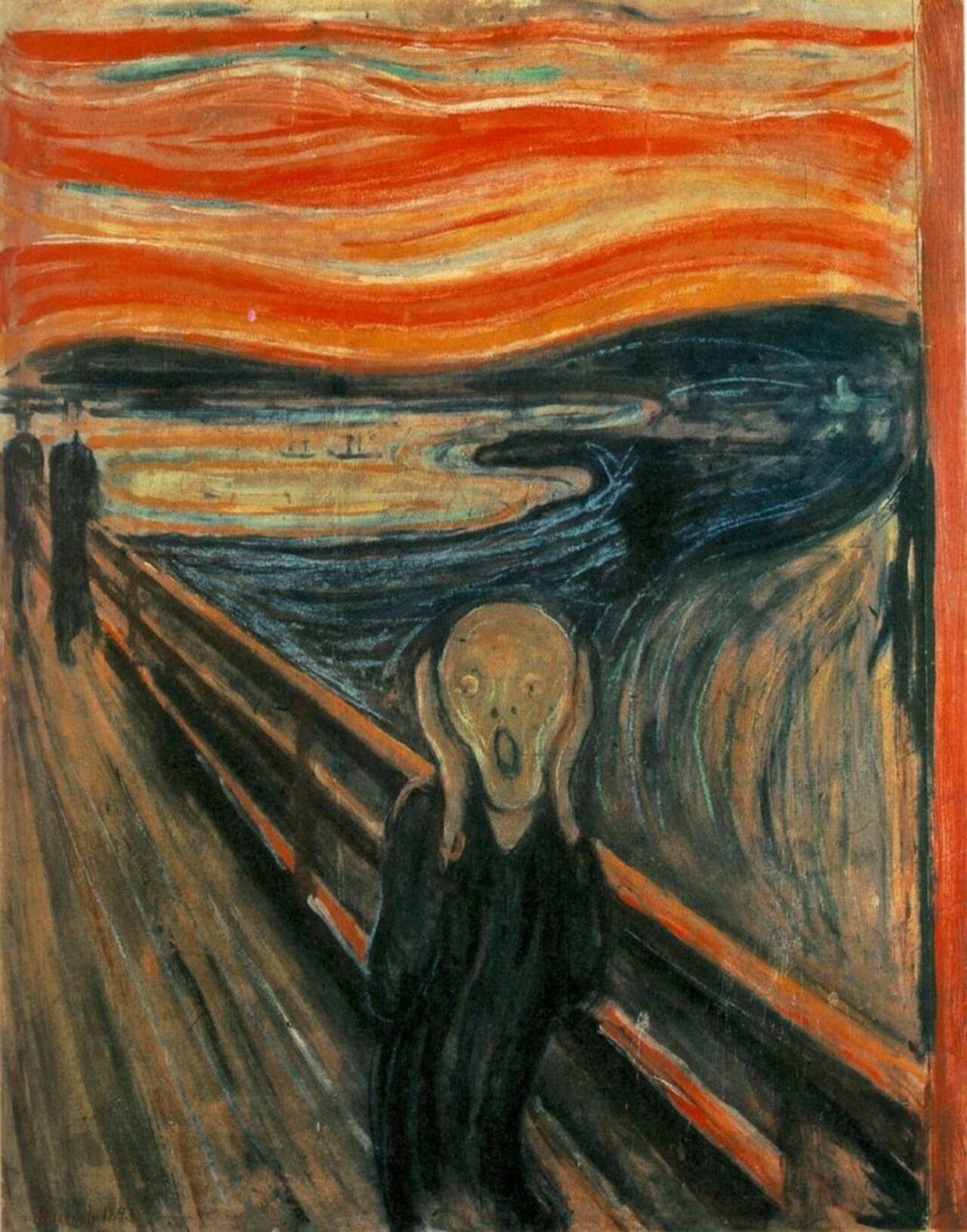
في أواخر القرن التاسع عشر، كانت هناك أيضًا عدة مجموعات مختلفة إلى حد ما من الرسامين الرمزيين الذين تردد صدى أعمالهم لدى الفنانين الأصغر سنًا في القرن العشرين، وخاصةً مع الفوفيين والسرياليين . ومن بينهم غوستاف مورو ، وأوديلون ريدون ، وبيير بوفيس دي شافان ، وهنري فانتين لاتور ، وأرنولد بوكلين ، وفرديناند هودلر ، وإدفارد مونش ، وفيليسيان روبس ، ويان توروب ، وغوستاف كليمت ، والرمزيين الروس مثل ميخائيل فروبيل .
استخرج الرسامون الرمزيون الأساطير وصور الأحلام من أجل لغة بصرية للروح، باحثين عن لوحات مثيرة تذكرنا بعالم ساكن من الصمت. الرموز المستخدمة في الرمزية ليست الشعارات المألوفة للأيقونات السائدة ولكنها مراجع شخصية وخاصة وغامضة وغامضة للغاية. أكثر من كونها فلسفة من أسلوب فني حقيقي، أثر الرسامون الرمزيون على حركة فن الآرت نوفو المعاصرة و Les Nabis . في استكشافهم للموضوعات الشبيهة بالأحلام، نجد الرسامين الرمزيين عبر القرون والثقافات، كما هم حتى اليوم؛ وصف برنارد ديلفيل السريالية لرينيه ماغريت بأنها "رمزية بالإضافة إلى فرويد ". [29]
القرن العشرين
-
 هنري ماتيس ، 1905، الوحشية
 -
![هنري روسو، 1905، سبب مصطلح الوحشية] و"الوحش البري" الأصلي](https://file.arabipedia.wiki/wikipedia/commons/thumb/2/25/Rousseau-Hungry-Lion.jpg/140px-Rousseau-Hungry-Lion.jpg) هنري روسو ، 1905، سبب مصطلح الوحشية] و"الوحش البري" الأصلي
هنري روسو ، 1905، سبب مصطلح الوحشية] و"الوحش البري" الأصلي -
 هنري ماتيس ، 1909، الوحشية المتأخرة
 -
 بابلو بيكاسو ، 1907، التكعيبية المبكرة
 -
 جورج براك ، 1910، التكعيبية التحليلية
 -
 خوان جريس ، 1912، التكعيبية
 -
 جورجيو دي شيريكو ، 1914، ما قبل السريالية

![هنري روسو، 1905، سبب مصطلح الوحشية] و"الوحش البري" الأصلي](https://file.arabipedia.wiki/wikipedia/commons/thumb/2/25/Rousseau-Hungry-Lion.jpg/1280px-Rousseau-Hungry-Lion.jpg)


كان تراث الرسامين مثل فان جوخ وسيزان وغوغان وسورات ضروريًا لتطوير الفن الحديث. في بداية القرن العشرين، أحدث هنري ماتيس والعديد من الفنانين الشباب الآخرين بما في ذلك جورج براك وأندريه ديرين وراؤول دوفي وموريس دي فلامينك ثورة في عالم الفن الباريسي من خلال المناظر الطبيعية واللوحات الشخصية "البرية" متعددة الألوان والمعبرة التي أطلق عليها النقاد اسم الوحشية . تشير النسخة الثانية لهنري ماتيس من الرقص إلى نقطة رئيسية في حياته المهنية وفي تطوير الرسم الحديث. [30] إنها تعكس افتتان ماتيس الناشئ بالفن البدائي : الألوان الدافئة المكثفة على الخلفية الزرقاء الخضراء الباردة والتتابع الإيقاعي للعراة الراقصين ينقلان مشاعر التحرر العاطفي والمتعة . رسم بابلو بيكاسو أولى لوحاته التكعيبية بناءً على فكرة سيزان القائلة بأن كل تصوير للطبيعة يمكن اختزاله إلى ثلاثة أشكال صلبة: المكعب والكرة والمخروط . من خلال لوحة فتيات أفينيون (1907)، ابتكر بيكاسو صورة جديدة وجذرية تصور مشهد بيت دعارة مع خمس عاهرات، ونساء مرسومة بعنف، تذكرنا بأقنعة القبائل الأفريقية واختراعاته التكعيبية. تم تطوير التكعيبية بشكل مشترك من حوالي عام 1908 حتى عام 1912 من قبل بابلو بيكاسو وجورج براك ، الذي يظهر هنا الكمان والشمعدان، باريس (1910). تم ممارسة أول مظهر واضح للتكعيبية من قبل براك وبيكاسو وجان ميتزينجر وألبرت جليز وفرناند ليجيه وهنري لو فوكونييه وروبرت ديلوناي . سرعان ما انضم خوان جريس ومارسيل دوشامب وألكسندر أرشيبينكو وجوزيف ساكي وآخرون. [31] تتميز التكعيبية التركيبية ، التي مارسها براك وبيكاسو، بتقديم مواد وأسطح وعناصر مجمعة وورق كولاج ومجموعة كبيرة ومتنوعة من الموضوعات المندمجة. [31]
جلب صالون الخريف لعام 1905 شهرة واهتمامًا لأعمال هنري ماتيس والوحشية . اكتسبت المجموعة اسمها بعد أن وصف الناقد لويس فوكسيليس أعمالهم بعبارة " دوناتيلو بين الوحوش" ("دوناتيلو بين الوحوش")، [32] مما أدى إلى تباين اللوحات مع منحوتة من نوع عصر النهضة كانت تشارك الغرفة معهم. [33] تم تعليق مشهد الغابة الأسد الجائع يلقي بنفسه على الظباء لهنري روسو (الذي لم يكن وحشيًا) بالقرب من أعمال ماتيس وربما ألهم المصطلح الساخر المستخدم في الصحافة. [34] تم طباعة تعليق فوكسيليس في 17 أكتوبر 1905 في الصحيفة اليومية جيل بلاس ، وانتقل إلى الاستخدام الشعبي. [33] [35]
في العقدين الأولين من القرن العشرين وبعد التكعيبية، ظهرت العديد من الحركات الهامة الأخرى؛ المستقبلية ( بالا )، الفن التجريدي ( كاندنسكي ) Der Blaue Reiter (كاندنسكي وفرانز مارك )، باوهاوس (كاندنسكي وكلي )، الأورفية ( ديلوناي وكوبكا)، التزامن ( راسل ) ، دي ستايل ( فان دوسبرغ وموندريان ) ، التفوقية ( ماليفيتش ) ، البنائية ( تاتلين )، الدادائية (دوشامب وبيكابيا وأرب)، والسريالية (دي كيريكو وأندريه بريتون وميرو وماغريت ودالي وإرنست ) . أثر الرسم الحديث على جميع الفنون البصرية ، من العمارة والتصميم الحداثيين ، إلى السينما الطليعية والمسرح والرقص الحديث وأصبح مختبرًا تجريبيًا للتعبير عن التجربة البصرية، من التصوير الفوتوغرافي والشعر الملموس إلى فن الإعلان والأزياء.
الحوشية، دير بلو رايتر، دي بروك
-
 فاسيلي كاندينسكي ، دير بلو رايتر ، 1903
 -

-
 أندريه ديرين ، الوحشية ، 1906
 -
 موريس دي فلامينك ، الحوشية ، 1906
 -
 أليكسي فون جولينسكي ، دير بلو رايتر ، 1909
,_oil_on_canvas,_52.1_x_54.6_cm,_Stiftung_Sammlung_E.G._B%C3%BChrle,_Zurich.jpg/1280px-Wassily_Kandinsky,_1903,_The_Blue_Rider_(Der_Blaue_Reiter),_oil_on_canvas,_52.1_x_54.6_cm,_Stiftung_Sammlung_E.G._B%C3%BChrle,_Zurich.jpg)


كانت الوحشية عبارة عن مجموعة فضفاضة من فناني أوائل القرن العشرين الذين أكدت أعمالهم على الصفات التصويرية والاستخدام الخيالي للألوان العميقة على القيم التمثيلية. كان قادة الحركة هنري ماتيس وأندريه ديرين - منافسين ودودين من نوع ما، ولكل منهما أتباعه. في النهاية أصبح ماتيس يانج ليين بيكاسو في القرن العشرين . شمل الرسامون الوحشيون ألبرت ماركيه وتشارلز كاموين وموريس دي فلامينك وراؤول دوفي وأوثون فريز والرسام الهولندي كيس فان دونجن وشريك بيكاسو في التكعيبية جورج براك وغيرهم. [ 36]
لم تكن للوحشية نظريات ملموسة، وكانت قصيرة العمر، بدأت في عام 1905 وانتهت في عام 1907. لم يكن لديهم سوى ثلاثة معارض. كان يُنظر إلى ماتيس على أنه زعيم الحركة، نظرًا لأقدميته في السن وتأسيسه الذاتي السابق في عالم الفن الأكاديمي. تسببت صورة السيدة ماتيس التي رسمها عام 1905، The Green Stripe ، في إحداث ضجة في باريس عندما عُرضت لأول مرة. قال إنه أراد إنشاء فن لإسعاد، ويمكن القول إن استخدامه للألوان الزاهية يحاول الحفاظ على صفاء التكوين. في عام 1906 بناءً على اقتراح من تاجره أمبرواز فولارد ، ذهب أندريه ديرين إلى لندن وأنتج سلسلة من اللوحات بما في ذلك جسر تشارينج كروس، لندن على الطراز الوحشي ، معادًا صياغة السلسلة الشهيرة للرسام الانطباعي كلود مونيه .
بحلول عام 1907 لم تعد الوحشية حركة جديدة صادمة، وقال أبولينير عن ماتيس في مقال نُشر في مجلة لا فالانج : "نحن لسنا هنا في حضور مشروع باهظ أو متطرف: فن ماتيس معقول إلى حد كبير". [37]
كانت مجموعة الجسر مجموعة من الفنانين التعبيريين الألمان تشكلت في دريسدن عام 1905. وكان الأعضاء المؤسسون هم فريتز بايل وإيريش هيكل وإرنست لودفيج كيرشنر وكارل شميدت روتلوف . ومن بين الأعضاء اللاحقين ماكس بيتششتاين وأوتو مولر . كان لهذه المجموعة الرائدة تأثير كبير على تطور الفن الحديث في القرن العشرين وخلق أسلوب التعبيرية . [38]
كانت حركة الفارس الأزرق حركة ألمانية استمرت من عام 1911 إلى عام 1914، وكانت أساسية للتعبيرية. أسس فاسيلي كاندنسكي وفرانز مارك وأوغست ماكي وأليكسي فون جولنسكي ، الذي تظهر هنا لوحته المعبرة نفسياً للراقص الروسي صورة ألكسندر ساخاروف (1909) ، وماريان فون ويرفكين وليونيل فينينجر وآخرون مجموعة الفارس الأزرق ردًا على رفض لوحة كاندنسكي يوم القيامة من أحد المعارض. افتقرت حركة الفارس الأزرق إلى بيان فني مركزي، لكنها كانت تتمحور حول كاندنسكي ومارك. كما شارك الفنانان غابرييل مونتر وبول كلي . يأتي اسم الحركة من لوحة رسمها كاندنسكي عام 1903. بالنسبة لكاندنسكي، فإن اللون الأزرق هو لون الروحانية: فكلما كان اللون الأزرق أغمق، زاد إيقاظه للرغبة البشرية في الأبدية. [39]
التعبيرية، الرمزية، الحداثة الأمريكية، الباوهاوس
-
 غوستاف كليمت ، التعبيرية ، 1907-1908
 -

-
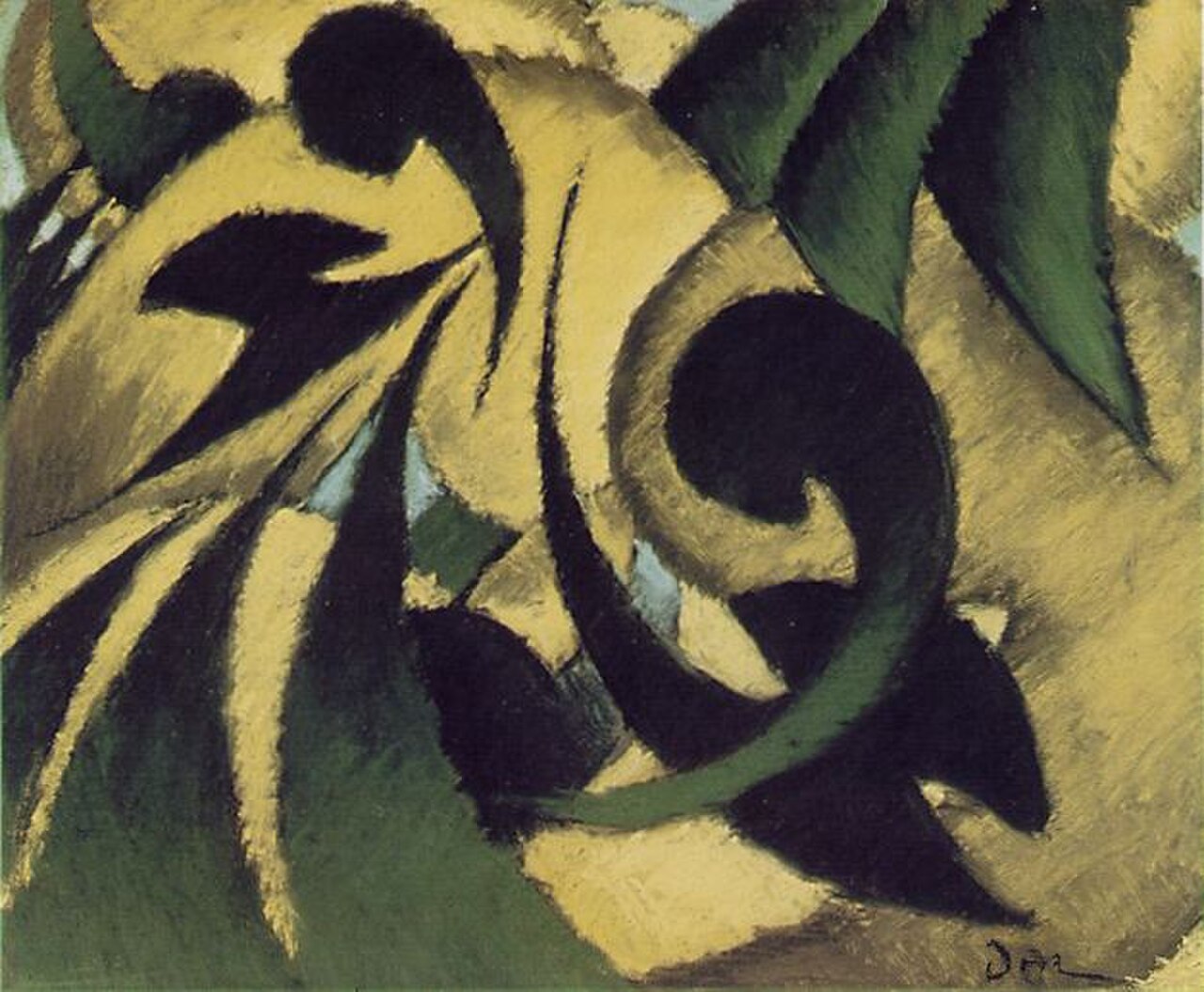
 آرثر دوف ، الحداثة الأمريكية المبكرة ، 1911
 -

-
 بيير بونارد ، 1913، لوحة سردية حداثية أوروبية
 -

-
 مارسدن هارتلي ، الحداثة الأمريكية ، 1914
 -

-
 ستيوارت ديفيس ، الحداثة الأمريكية ، 1921
 -
 باتريك هنري بروس ، الحداثة الأمريكية ، 1929-1930



.jpg/1280px-The_dining_room_in_the_country_by_Pierre_Bonnard_(1913).jpg)
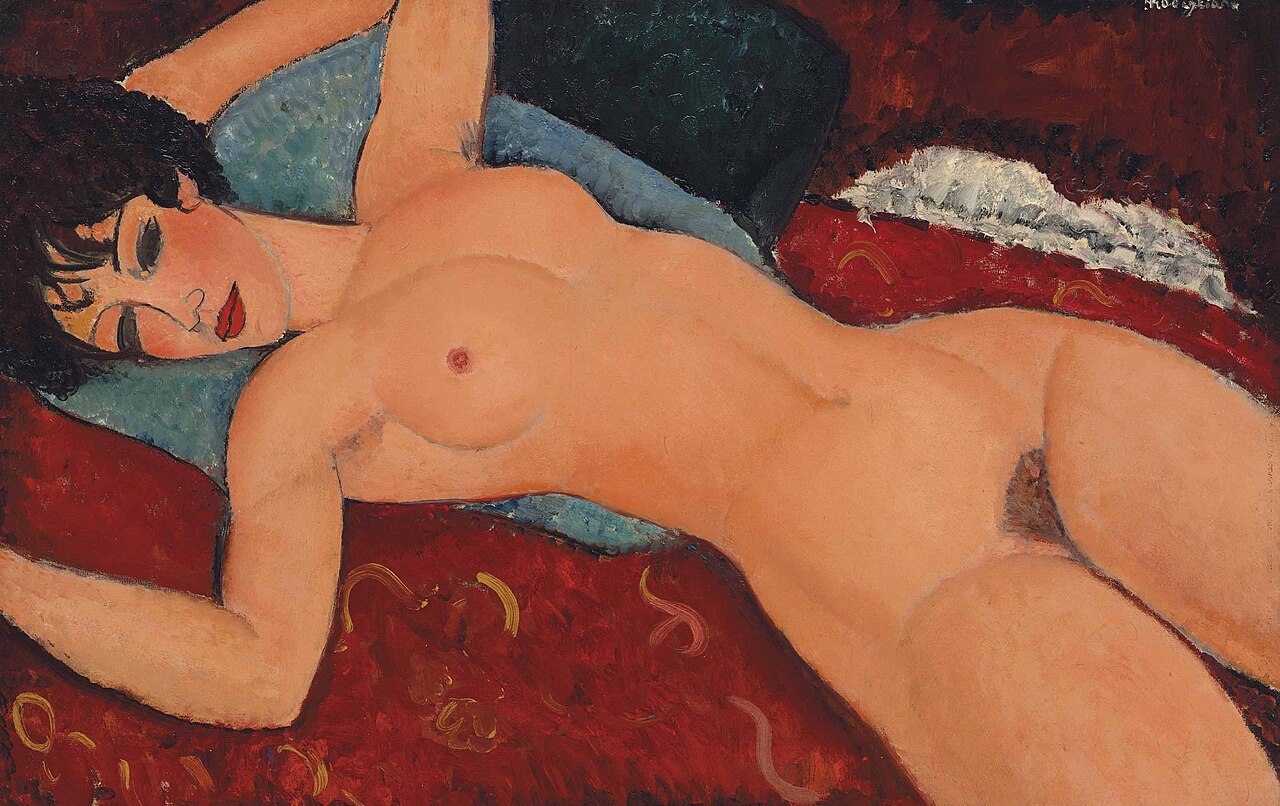


التعبيرية والرمزية هما فرعان عريضان يشملان عدة حركات ذات صلة في الرسم في القرن العشرين والتي هيمنت على الكثير من الفن الطليعي الذي تم صنعه في غرب وشرق وشمال أوروبا. تم رسم الأعمال التعبيرية إلى حد كبير بين الحرب العالمية الأولى والحرب العالمية الثانية، ومعظمها في فرنسا وألمانيا والنرويج وروسيا وبلجيكا والنمسا. الوحشية والجسر والفارس الأزرق هي ثلاث من أشهر مجموعات الرسامين التعبيريين والرمزيين. تحكي لوحة مارك شاغال أنا والقرية قصة سيرة ذاتية تدرس العلاقة بين الفنان وأصوله، مع معجم للرمزية الفنية. كان غوستاف كليمت ، وإيجون شيلي ، وإدفارد مونش ، وإميل نولد ، وشايم سوتين ، وجيمس إنسور ، وأوسكار كوكوشكا ، وإرنست لودفيج كيرشنر ، وماكس بيكمان ، وفرانز مارك ، وجورج روولت ، وأميديو موديلياني ، وبعض الأمريكيين في الخارج مثل مارسدن هارتلي وستيوارت ديفيس ، يُعتبرون رسامين تعبيريين مؤثرين. على الرغم من أن ألبرتو جياكوميتي يُعتبر في المقام الأول نحاتًا سرياليًا، إلا أنه صنع لوحات تعبيرية مكثفة أيضًا.
كان الرسامون الأمريكيون خلال الفترة بين الحرب العالمية الأولى والحرب العالمية الثانية يميلون إلى الذهاب إلى أوروبا للحصول على التقدير. اكتسب الفنانون الحداثيون مثل مارسدن هارتلي وباتريك هنري بروس وجيرالد مورفي وستيوارت ديفيس سمعة طيبة في الخارج. بينما ابتكر باتريك هنري بروس [40] لوحات ذات صلة بالتكعيبية في أوروبا، صنع كل من ستيوارت ديفيس وجيرالد مورفي لوحات كانت مصدر إلهام مبكر لفن البوب الأمريكي [41] [42] [43] وجرب مارسدن هارتلي التعبيرية. خلال عشرينيات القرن العشرين، عرض المصور ألفريد ستيجليتز جورجيا أوكيف وآرثر دوف وألفريد هنري مورير وتشارلز ديموث وجون مارين وفنانين آخرين بما في ذلك الأساتذة الأوروبيون هنري ماتيس وأوغست رودين وهنري روسو وبول سيزان وبيكاسو ، في معرضه في مدينة نيويورك 291. [44] في أوروبا، واصل أساتذة مثل هنري ماتيس وبيير بونارد تطوير أساليبهم السردية بشكل مستقل عن أي حركة.
رواد التجريد

-
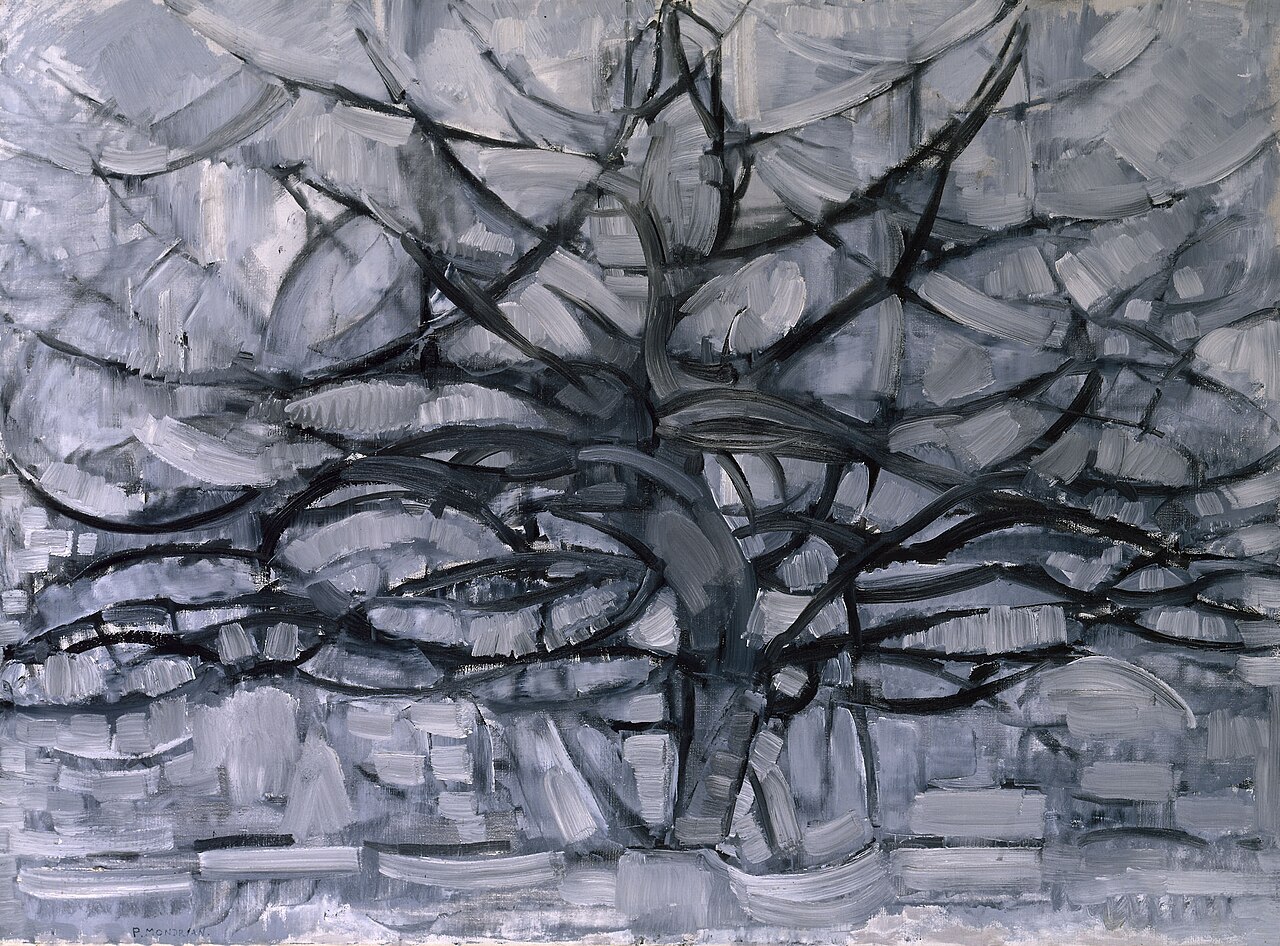
 بيت موندريان ، 1911، أوائل دي ستيجل
 -

-
 فاسيلي كاندنسكي ، 1913، ميلاد الفن التجريدي
,_40_x_46_cm,_Kunsthalle_Hamburg.jpg/1280px-Robert_Delaunay,_1912,_Les_Fen%C3%AAtres_simultan%C3%A9e_sur_la_ville_(Simultaneous_Windows_on_the_City),_40_x_46_cm,_Kunsthalle_Hamburg.jpg)

يُعتبر فاسيلي كاندنسكي عمومًا أحد أوائل الرسامين المهمين في الفن التجريدي الحديث . بصفته من علماء الحداثة الأوائل ، فقد وضع نظريات كما فعل علماء السحر والصوفية المعاصرون ، مفادها أن التجريد البصري الخالص له اهتزازات تكميلية مع الصوت والموسيقى. لقد افترضوا أن التجريد الخالص يمكن أن يعبر عن الروحانية الخالصة. كانت تجريداته الأولى تحمل عنوان المثال في التكوين السابع ، مما يربطها بعمل مؤلفي الموسيقى. أدرج كاندنسكي العديد من نظرياته حول الفن التجريدي في كتابه " حول الروحانية في الفن" . ومن بين رواد التجريد الأوائل الرئيسيين الآخرين الرسام السويدي هيلما أف كلينت والرسام الروسي كازيمير ماليفيتش والرسام السويسري بول كلي . كان روبرت ديلوناي فنانًا فرنسيًا مرتبطًا بالأورفية (تذكرنا بالرابط بين التجريد الخالص والتكعيبية). تشير مساهماته الرئيسية في الرسم التجريدي إلى استخدامه الجريء للألوان وتجربته لكل من العمق والنغمة.
دادا والسريالية
-
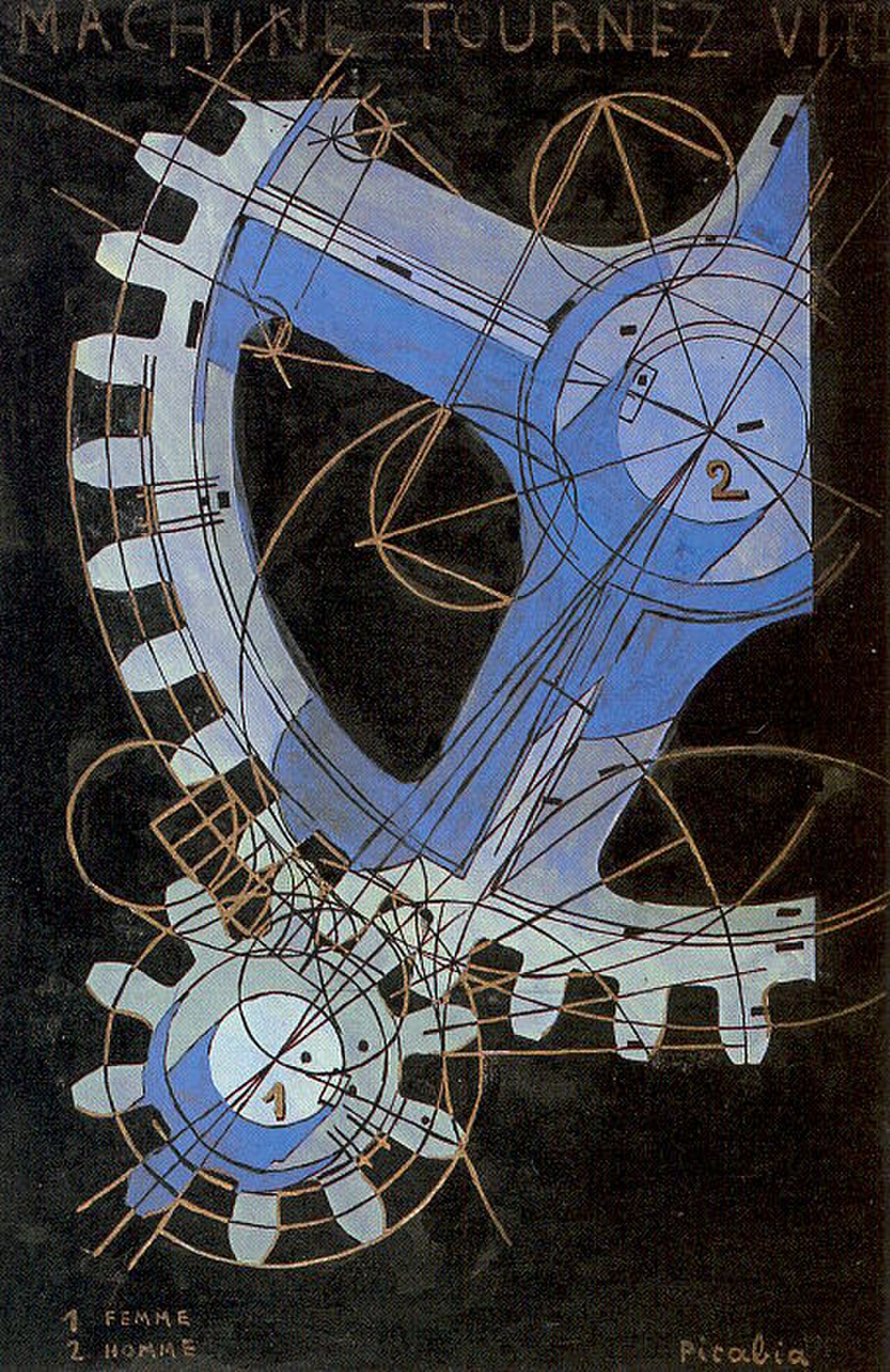
 فرانسيس بيكابيا ، 1916، دادا
 -
 ماكس إيرنست ، 1921، السريالية
 -
 أندريه ماسون ، 1922، السريالية المبكرة
 -
 كيرت شويترز ، 1919، رسم الكولاج ، دادا
 -
 هانا هوتش ، كولاج، 1919، دادا
 -
 ماكس إيرنست ، 1920، السريالية المبكرة
 -
 خوان ميرو ، الحصان والغليون والزهرة الحمراء ، 1920، السريالية المبكرة


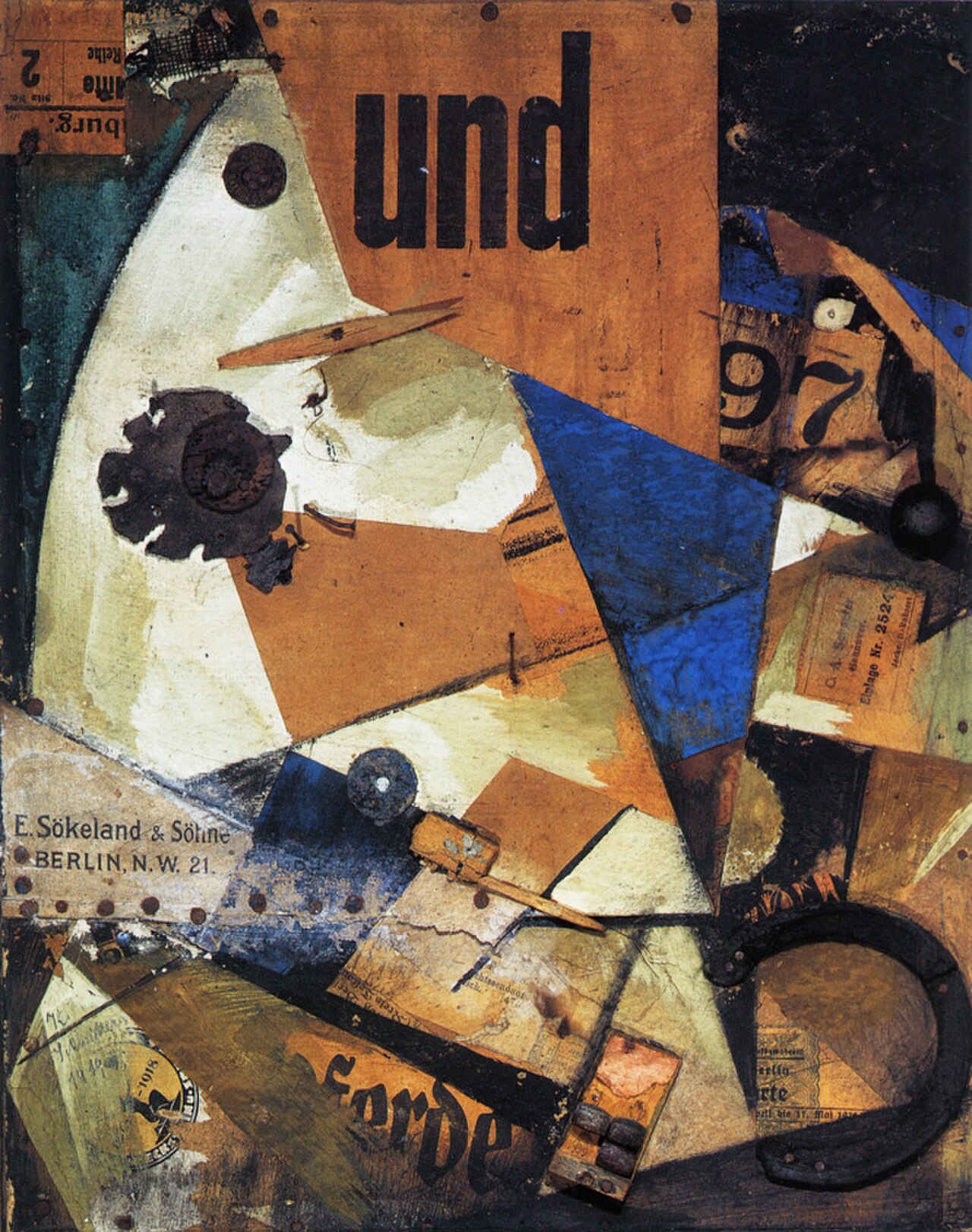


اكتسب مارسيل دوشامب شهرة دولية في أعقاب معرض نيويورك سيتي أرموري عام 1913 حيث أصبحت لوحته "عارية تنزل من الدرج، رقم 2" قضية شهيرة. ثم أنشأ لاحقًا لوحة "العروس عارية من قبل عزابها" "Even ، زجاج كبير" . دفعت اللوحة "الزجاج الكبير" فن الرسم إلى حدود جديدة جذرية كونه جزءًا من الرسم وجزءًا من الكولاج وجزءًا من البناء. أصبح دوشامب (الذي سرعان ما تخلى عن صناعة الفن من أجل الشطرنج) مرتبطًا ارتباطًا وثيقًا بحركة دادا التي بدأت في زيورخ المحايدة بسويسرا خلال الحرب العالمية الأولى وبلغت ذروتها من عام 1916 إلى عام 1920. شملت الحركة في المقام الأول الفنون البصرية والأدب (الشعر والبيانات الفنية ونظرية الفن) والمسرح والتصميم الجرافيكي لتعزيز سياستها المناهضة للحرب ورفض المعايير السائدة في الفن من خلال الأعمال الثقافية المناهضة للفن . ومن الفنانين الآخرين المرتبطين بحركة الدادا فرانسيس بيكابيا ، ومان راي ، وكورت شويترز ، وهانا هوش ، وتريستان تزارا ، وهانز ريختر ، وجان أرب ، وصوفي تايوبر أرب . كما يرتبط دوشامب والعديد من الدادائيين بالسريالية، الحركة التي سيطرت على الرسم الأوروبي في عشرينيات وثلاثينيات القرن العشرين.

في عام 1924 نشر أندريه بريتون بيان السريالية . أصبحت الحركة السريالية في الرسم مرادفة للطليعة وضمت فنانين تنوعت أعمالهم من التجريدية إلى الواقعية الفائقة. مع أعمال على الورق مثل Machine Turn Quickly ، واصل فرانسيس بيكابيا مشاركته في حركة دادا حتى عام 1919 في زيورخ وباريس، قبل أن ينفصل عنها بعد تطوير اهتمام بالفن السريالي. اشتهر إيف تانجوي ورينيه ماغريت وسلفادور دالي بشكل خاص بتصويرهم الواقعي لصور الأحلام والمظاهر الرائعة للخيال. خلال عشرينيات القرن العشرين، كان عمل أندريه ماسون حاسمًا في مساعدة الفنان الشاب جوان ميرو في العثور على جذوره في الرسم السريالي. تقترب لوحة ميرو The Tilled Field (1923-1924) من التجريد بينما تشير إلى مجموعة معقدة من الأشياء والأشكال وترتيبات الشخصيات النشطة جنسياً؛ كانت أول تحفة سريالية لميرو . [45] كان لجوان ميرو، وجان أرب، وأندريه ماسون، وماكس إيرنست تأثير كبير، وخاصة في الولايات المتحدة خلال الأربعينيات.
درس ماكس إرنست، الذي تظهر هنا لوحته "طائرة القتل" التي رسمها عام 1920، الفلسفة وعلم النفس في بون وكان مهتمًا بالحقائق البديلة التي يعيشها المجانين. ربما استوحى لوحاته من دراسة المحلل النفسي سيجموند فرويد لأوهام دانييل بول شرايبر المصاب بجنون العظمة. حدد فرويد خيال شرايبر في التحول إلى امرأة على أنه عقدة إخصاء . تشير الصورة المركزية لزوجين من الأرجل إلى رغبات شرايبر الخنثوية. يقول نقش إرنست على ظهر اللوحة: الصورة غريبة بسبب تناسقها. يتوازن الجنسان مع بعضهما البعض. [46]
Throughout the 1930s, Surrealism continued to become more visible to the public at large. A Surrealist group developed in Britain and, according to Breton, their 1936 London International Surrealist Exhibition was a high-water mark of the period and became the model for international exhibitions. Surrealist groups in Japan, and especially in Latin America, the Caribbean and in Mexico produced innovative and original works. Other prominent surrealist artists include Giorgio de Chirico, Méret Oppenheim, Toyen, Grégoire Michonze, Roberto Matta, Kay Sage, Leonora Carrington, Dorothea Tanning, and Leonor Fini.
Neue Sachlichkeit, Social realism, regionalism, American Scene painting, Symbolism
-
 George Grosz, 1920, Neue Sachlichkeit
 -
 Thomas Hart Benton, 1920, Regionalism
 -
 George Bellows, 1924, American realism
 -

-
 Charles Demuth, 1931, Precisionism
 -

-

-
 Diego Rivera, Recreation of Man at the Crossroads (renamed Man, Controller of the Universe), originally created in 1934
 -


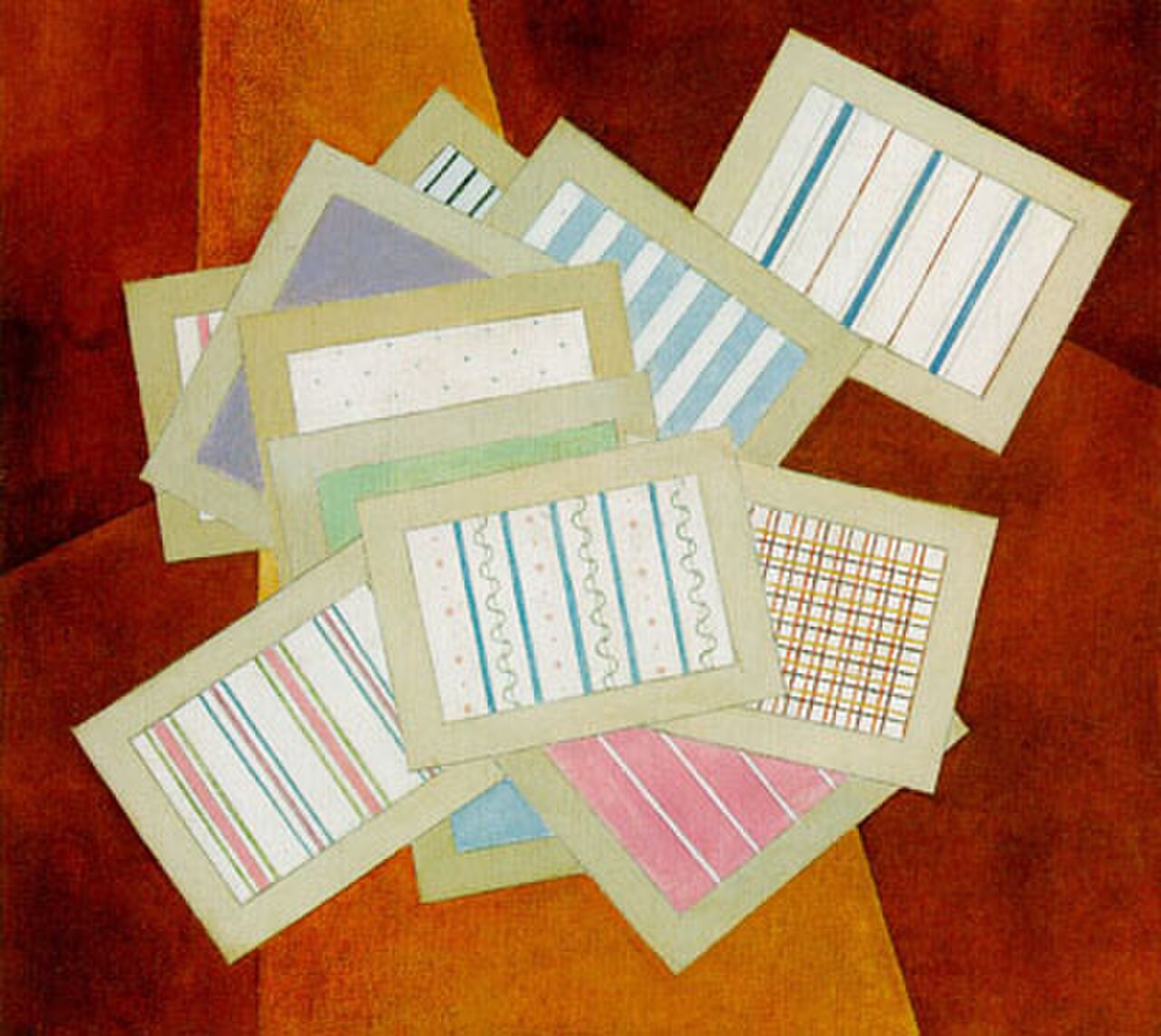


During the 1920s and the 1930s and the Great Depression, the European art scene was characterized by Surrealism, late Cubism, the Bauhaus, De Stijl, Dada, Neue Sachlichkeit, and Expressionism; and was occupied by masterful modernist color painters like Henri Matisse and Pierre Bonnard.
,_oil_on_canvas,_133_x_154_cm,_Kunstsammlung_Nordrhein-Westfalen,_D%C3%BCsseldorf.jpg/1280px-Max_Beckmann,_1918-19,_The_Night_(Die_Nacht),_oil_on_canvas,_133_x_154_cm,_Kunstsammlung_Nordrhein-Westfalen,_D%C3%BCsseldorf.jpg)
In Germany Neue Sachlichkeit ("New Objectivity") emerged as Max Beckmann, Otto Dix, George Grosz and others politicized their paintings. The work of these artists grew out of expressionism, and was a response to the political tensions of the Weimar Republic, and was often sharply satirical.
During the 1930s radical leftist politics characterized many of the artists connected to Surrealism, including Pablo Picasso.[47] On 26 April 1937, during the Spanish Civil War, the Basque town of Gernika was the scene of the "Bombing of Gernika" by the Condor Legion of Nazi Germany's Luftwaffe. The Germans were attacking to support the efforts of Francisco Franco to overthrow the Basque Government and the Spanish Republican government. Pablo Picasso painted his mural sized Guernica to commemorate the horrors of the bombing.

Guernica is an immense black-and-white, 3.5-metre (11 ft) tall and 7.8-metre (23 ft) wide mural painted in oil. The mural presents a scene of death, violence, brutality, suffering, and helplessness without portraying their immediate causes. The choice to paint in black and white invokes the immediacy of a newspaper photograph.[48] The painting was first exhibited in Paris in 1937, then Scandinavia and London, and in 1939 at Picasso's request the painting was sent to the United States in an extended loan (for safekeeping) at MoMA. Finally in accord with Picasso's wish to give the painting to the people of Spain as a gift, it was sent to Spain in 1981.
From the Great Depression of the 1930s through the years of World War II, American art was characterized by Social Realism and American Scene Painting. Regionalism movements that contained both political and social commentary dominated the art world in the USA. Artists such as Ben Shahn, Thomas Hart Benton, Grant Wood, George Tooker, John Steuart Curry, Reginald Marsh, and others became prominent.
American Gothic is a painting by Grant Wood from 1930. Portraying a pitchfork-holding farmer and a younger woman in front of a house of Carpenter Gothic style, it is one of the most familiar images in 20th-century American art. Art critics assumed it was satirical in intent; it was thought to be part of the trend towards increasingly critical depictions of rural America exemplified by Sherwood Anderson's 1919 Winesburg, Ohio, Sinclair Lewis' 1920 Main Street, and Carl Van Vechten's The Tattooed Countess in literature.[49] However, with the onset of the Great Depression, the painting came to be seen as a depiction of steadfast American pioneer spirit.
A renaissance of the arts in Latin America included the Uruguayan painter Joaquín Torres García, the Mexican painter Rufino Tamayo, artists of the Mexican muralist movement such as Diego Rivera, David Siqueiros, José Orozco, Pedro Nel Gómez and Santiago Martinez Delgado, and the Symbolist painter Frida Kahlo. The muralists conveyed historic and political messages. Diego Rivera is perhaps best known by the public world for his 1933 mural, Man at the Crossroads, in the lobby of the RCA Building at Rockefeller Center. When his patron Nelson Rockefeller discovered that the mural included a portrait of Lenin and other communist imagery, he fired Rivera, and the unfinished work was eventually destroyed by Rockefeller's staff.
Frida Kahlo's works relate to Surrealism and to the Magic Realism movement in literature. Her works are often characterized by their stark portrayals of pain. Of her 143 paintings 55 are self-portraits, which frequently incorporate symbolic portrayals of her physical and psychological wounds.[50]
Abstract expressionism
The 1940s in New York City heralded the triumph of American abstract expressionism, a movement that combined lessons learned from European Modernists via great teachers in America like Hans Hofmann and John D. Graham. American artists benefited from the presence of Piet Mondrian, Fernand Léger, Max Ernst and the André Breton group, Pierre Matisse's gallery, and Peggy Guggenheim's gallery The Art of This Century, as well as other factors.

Post-Second World War American painting called Abstract expressionism included artists like Jackson Pollock, Willem de Kooning, Arshile Gorky, Mark Rothko, Hans Hofmann, Clyfford Still, Franz Kline, Adolph Gottlieb, Barnett Newman, Mark Tobey, James Brooks, Philip Guston, Robert Motherwell, Conrad Marca-Relli, Jack Tworkov, Esteban Vicente, William Baziotes, Richard Pousette-Dart, Ad Reinhardt, Hedda Sterne, Jimmy Ernst, Bradley Walker Tomlin, and Theodoros Stamos, among others. American Abstract expressionism got its name in 1946 from the art critic Robert Coates.[51][52] Abstract expressionism, Action painting, and Color Field painting are synonymous with the New York School.[53]
Technically Surrealism was an important predecessor for Abstract expressionism with its emphasis on spontaneous, automatic or subconscious creation. Jackson Pollock's dripping paint onto a canvas laid on the floor is a technique that has its roots in the work of André Masson. Another important early manifestation of what came to be abstract expressionism is the work of American Northwest artist Mark Tobey, especially his "white writing" canvases, which, though generally not large in scale, anticipate the "all over" look of Pollock's drip paintings.
Additionally, Abstract expressionism has an image of being rebellious, anarchic, highly idiosyncratic and, some feel, rather nihilistic. In practice, the term is applied to any number of artists working (mostly) in New York who had quite different styles, and even applied to work which is not especially abstract nor expressionist. Pollock's energetic "action paintings", with their "busy" feel, are different both technically and aesthetically, to the violent and grotesque Women series of Willem de Kooning. Woman V is one of a series of six paintings made by de Kooning between 1950 and 1953 that depict a three-quarter-length female figure. He began the first of these paintings, Woman I, in June 1950, repeatedly changing and painting out the image until January or February 1952, when the painting was abandoned unfinished. The art historian Meyer Schapiro saw the painting in de Kooning's studio and encouraged the artist to persist. De Kooning's response was to begin three other paintings on the same theme; Woman II, Woman III, and Woman IV. During the summer of 1952, spent at East Hampton, de Kooning further explored the theme through drawings and pastels. He finished work on Woman I by November 1952, and probably the other three women pictures were concluded at much the same time.[54] The Woman series are decidedly figurative paintings. Another important artist is Franz Kline, as demonstrated by his painting High Street (1950), who was labelled an action painter because of his seemingly spontaneous and intense style, focusing less, or not at all, on figures or imagery, but on the actual brush strokes and use of canvas.
Clyfford Still, Barnett Newman, Adolph Gottlieb, and the serenely shimmering blocks of color in Mark Rothko's work (which is not what would usually be called expressionist and which Rothko denied was abstract), are classified as abstract expressionists, albeit from what Clement Greenberg termed the Color field direction of abstract expressionism. Both Hans Hofmann and Robert Motherwell can be described as practitioners of action painting and Color field painting.
During the 1950s Color Field painting initially referred to a particular type of abstract expressionism, especially the work of Mark Rothko, Clyfford Still, Barnett Newman, Robert Motherwell and Adolph Gottlieb. It essentially involved abstract paintings with large, flat expanses of color that expressed the sensual, and visual feelings and properties of large areas of nuanced surface. Art critic Clement Greenberg perceived Color Field painting as related to but different from Action painting. The overall expanse and gestalt of the work of the early color field painters speaks of an almost religious experience, awestruck in the face of an expanding universe of sensuality, color and surface. During the early-to-mid-1960s Color Field painting came to refer to the styles of artists like Jules Olitski, Kenneth Noland, and Helen Frankenthaler, whose works were related to second-generation abstract expressionism, and to younger artists like Larry Zox, and Frank Stella – all moving in a new direction.
Realism, Landscape, Seascape, Figuration, Still-Life, Cityscape
-
George Bellows, 1924, American realism
-
During the 1930s through the 1960s as abstract painting in America and Europe evolved into movements such as abstract expressionism, Color Field painting, Post-painterly Abstraction, Op art, hard-edge painting, Minimal art, shaped canvas painting, and Lyrical Abstraction. Other artists reacted as a response to the tendency toward abstraction allowing imagery to continue through various new contexts like the Bay Area Figurative Movement in the 1950s and new forms of expressionism from the 1940s through the 1960s. Throughout the 20th century many painters practiced Realism and used expressive imagery in landscape and figurative painting with contemporary subjects. They include artists as varied as Milton Avery, John D. Graham, Fairfield Porter, Edward Hopper, Andrew Wyeth, Balthus, Francis Bacon, Frank Auerbach, Lucian Freud, Leon Kossoff, Philip Pearlstein, Willem de Kooning, Arshile Gorky, Grace Hartigan, Robert De Niro, Sr., and Elaine de Kooning.
In Italy during this time, Giorgio Morandi was the foremost still-life painter, exploring a wide variety of approaches to depicting everyday bottles and kitchen implements.[55]
.jpg/1280px-Frida_Kahlo_(self_portrait).jpg)
Arshile Gorky's portrait of Willem de Kooning is an example of the evolution of abstract expressionism from the context of figure painting, cubism and surrealism. Along with his friends de Kooning and John D. Graham Gorky created bio-morphically shaped and abstracted figurative compositions that by the 1940s evolved into totally abstract paintings. Gorky's work seems to be a careful analysis of memory, emotion and shape, using line and color to express feeling and nature.[56][57]
Study after Velázquez's Portrait of Pope Innocent X, 1953 is a painting by the Irish-born artist Francis Bacon and is an example of Post World War II European Expressionism. The work shows a distorted version of the Portrait of Innocent X painted by the Spanish artist Diego Velázquez in 1650. The work is one of a series of variants of the Velázquez painting which Bacon executed throughout the 1950s and early 1960s, over a total of forty-five works.[58] When asked why he was compelled to revisit the subject so often, Bacon replied that he had nothing against the Popes, that he merely "wanted an excuse to use these colours, and you can't give ordinary clothes that purple colour without getting into a sort of false fauve manner."[59] The Pope in this version seethes with anger and aggression, and the dark colors give the image a grotesque and nightmarish appearance.[60] The pleated curtains of the backdrop are rendered transparent, and seem to fall through the Pope's face.[61]
The figurative work of Francis Bacon, Frida Kahlo, Edward Hopper, Lucian Freud, Andrew Wyeth and others served as a kind of alternative to abstract expressionism. Nighthawks (1942) is a realist painting by Edward Hopper that portrays people sitting in a downtown diner late at night. It is not only Hopper's most famous painting, but one of the most recognizable in American art. The urban street is empty outside the diner, and inside none of the three patrons is apparently looking or talking to the others but instead is lost in their own thoughts. This portrayal of modern urban life as empty or lonely is a common theme throughout Hopper's work. One of the most well-known images in 20th-century American art is Wyeth's tempera painting, Christina's World, in the collection of the Museum of Modern Art in New York City. It depicts a woman lying on the ground in a treeless, mostly tawny field, looking up at and crawling towards a gray house on the horizon; a barn and various other small outbuildings are adjacent to the house.[62]
After World War II the term School of Paris often referred to Tachisme, the European equivalent of American Abstract expressionism and those artists are also related to Cobra. Important proponents being Jean Dubuffet, Pierre Soulages, Nicolas de Staël, Hans Hartung, Serge Poliakoff, and Georges Mathieu, among several others. During the early 1950s Dubuffet (who was always a figurative artist) and de Staël abandoned abstraction, and returned to imagery via figuration and landscape. De Staël's return to representation (seascapes, footballers, jazz musicians, seagulls) during the early 1950s can be seen as an influential precedent for the American Bay Area Figurative Movement, as many of those abstract painters like Richard Diebenkorn, David Park, Elmer Bischoff, Wayne Thiebaud, Nathan Oliveira, Joan Brown and others made a similar move; returning to imagery during the mid-1950s. Much of de Staël's late work – in particular his abstract landscapes of the mid-1950s – predicts Color Field painting and Lyrical Abstraction of the 1960s and 1970s. Milton Avery as well through his use of color and his interest in seascape and landscape paintings connected with the Color field aspect of Abstract expressionism as manifested by Adolph Gottlieb and Mark Rothko as well as the lessons American painters took from the work of Henri Matisse.[63][64]
Pop art
Pop art in America was to a large degree initially inspired by the works of Jasper Johns, Larry Rivers, and Robert Rauschenberg, although the paintings of Gerald Murphy, Stuart Davis and Charles Demuth during the 1920s and 1930s foreshadow the style and subject matter of Pop art.
In New York City during the mid-1950s, Rauschenberg and Johns created works of art that at first seemed to be continuations of Abstract expressionist painting. Actually their works, and the work of Larry Rivers, were radical departures from abstract expressionism especially in the use of banal and literal imagery and the inclusion of mundane materials into their work. Johns' use of various images and objects like chairs, numbers, targets, beer cans and the American Flag; Rivers' paintings of subjects drawn from popular culture such as George Washington crossing the Delaware, and his inclusions of images from advertisements like the camel from Camel cigarettes; and Rauschenberg's surprising constructions using inclusions of objects and pictures taken from popular culture, hardware stores, junkyards, the city streets, and taxidermy, gave rise to a radical new movement in American art. Eventually by 1963 the movement came to be known worldwide as Pop art.
Pop art is exemplified by the artists Andy Warhol, Claes Oldenburg, Wayne Thiebaud, James Rosenquist, Jim Dine, Tom Wesselmann and Roy Lichtenstein among others. Lichtenstein used oil and Magna paint in works such as Drowning Girl (1963; Museum of Modern Art, New York), which was appropriated from the lead story in DC Comics' Secret Hearts #83.[65]) Thick outlines, bold colors and Ben-Day dots reproduce the appearance of commercial printing. Lichtenstein would say of his own work: Abstract Expressionists "put things down on the canvas and responded to what they had done, to the color positions and sizes. My style looks completely different, but the nature of putting down lines pretty much is the same; mine just don't come out looking calligraphic, like Pollock's or Kline's."[66] Pop art merges popular and mass culture with fine art, while injecting humor, irony, and recognizable imagery and content into the mix. In October 1962 the Sidney Janis Gallery mounted The New Realists, the first major Pop art group exhibition in an uptown art gallery in New York City. The show sent shockwaves through the New York School and reverberated worldwide. Campbell's Soup Cans (sometimes referred to as 32 Campbell's Soup Cans) is the title of an Andy Warhol work of art that was produced in 1962. It consists of thirty-two canvases of equal size, each consisting of a painting of a Campbell's Soup can—one of each canned soup variety the company offered at the time. The individual paintings were produced with a semi-mechanised silkscreen process, using a non-painterly style. They helped usher in Pop art as a major art movement that relied on themes from popular culture.
Earlier in England in 1956 the term Pop Art was used by Lawrence Alloway for paintings that celebrated consumerism of the post World War II era. This movement rejected Abstract expressionism and its focus on the hermeneutic and psychological interior, in favor of art which depicted material consumer culture, advertising, and iconography of the mass production age.[67] The early works of English artist David Hockney, such as A Bigger Splash, and the works of Richard Hamilton, Peter Blake, and Eduardo Paolozzi, are considered seminal examples in the movement. In New York's East Village 10th Street galleries artists were formulating an American version of Pop art. Claes Oldenburg had his storefront, and the Green Gallery on 57th Street began to show Tom Wesselmann and James Rosenquist. There is a connection between the radical works of Duchamp, and Man Ray, the rebellious Dadaists – with a sense of humor; and Pop Artists like Alex Katz, Claes Oldenburg, Andy Warhol, Roy Lichtenstein and the others.
Art Brut, New Realism, Bay Area Figurative Movement, Neo-Dada, Photorealism
During the 1950s and 1960s as abstract painting in America and Europe evolved into movements such as Color Field painting, Post painterly abstraction, Op art, hard-edge painting, Minimal art, shaped canvas painting, Lyrical Abstraction, and the continuation of Abstract expressionism. Other artists reacted as a response to the tendency toward abstraction with Art brut,[68] as seen in Court les rues, 1962, by Jean Dubuffet, Fluxus, Neo-Dada, New Realism, Photorealism, allowing imagery to re-emerge through various new contexts like Pop art, the Bay Area Figurative Movement (a prime example is Diebenkorn's Cityscape I,(Landscape No. 1) (1963), and later in the 1970s Neo-expressionism. The Bay Area Figurative Movement of whom David Park, Elmer Bischoff, Nathan Oliveira and Richard Diebenkorn whose painting Cityscape 1 (1963) is a typical example, were influential members flourished during the 1950s and 1960s in California. Younger painters practiced the use of imagery in new and radical ways. Yves Klein, Arman, Martial Raysse, Christo, Niki de Saint Phalle, David Hockney, Alex Katz, Malcolm Morley, Ralph Goings, Audrey Flack, Richard Estes, Chuck Close, Susan Rothenberg, Eric Fischl, and Vija Celmins were a few who became prominent between the 1960s and the 1980s. Fairfield Porter was largely self-taught, and produced representational work in the midst of the Abstract Expressionist movement. His subjects were primarily landscapes, domestic interiors and portraits of family, friends and fellow artists.
Also during the 1960s and 1970s, there was a reaction against painting. Critics like Douglas Crimp viewed the work of artists like Ad Reinhardt, and declared the "death of painting". Artists began to practice new ways of making art. New movements gained prominence some of which are: Fluxus, Happening, Video art, Installation art Mail art, the situationists, Conceptual art, Postminimalism, Earth art, arte povera, performance art and body art among others.[69][70]
Neo-Dada is also a movement that started in the 1950s and 1960s and was related to Abstract expressionism only with imagery. This trend, in which manufactured items are combined with artist materials, is exemplified by the work of Jasper Johns and Robert Rauschenberg. Rauschenberg's "combines" in the 1950s were forerunners of Pop Art and Installation art, and made use of the assemblage of large physical objects, including stuffed animals, birds and commercial photography. Rauschenberg, Johns, Larry Rivers, John Chamberlain, Claes Oldenburg, George Segal, Jim Dine, and Edward Kienholz among others created new conventions of art-making; they made acceptable in serious contemporary art circles the radical inclusion of unlikely materials as parts of their works of art.[71][72]
Geometric abstraction, Op Art, Hard-Edge, Color field, Minimal Art, New Realism
-
 Yves Klein, 1962, New Realism
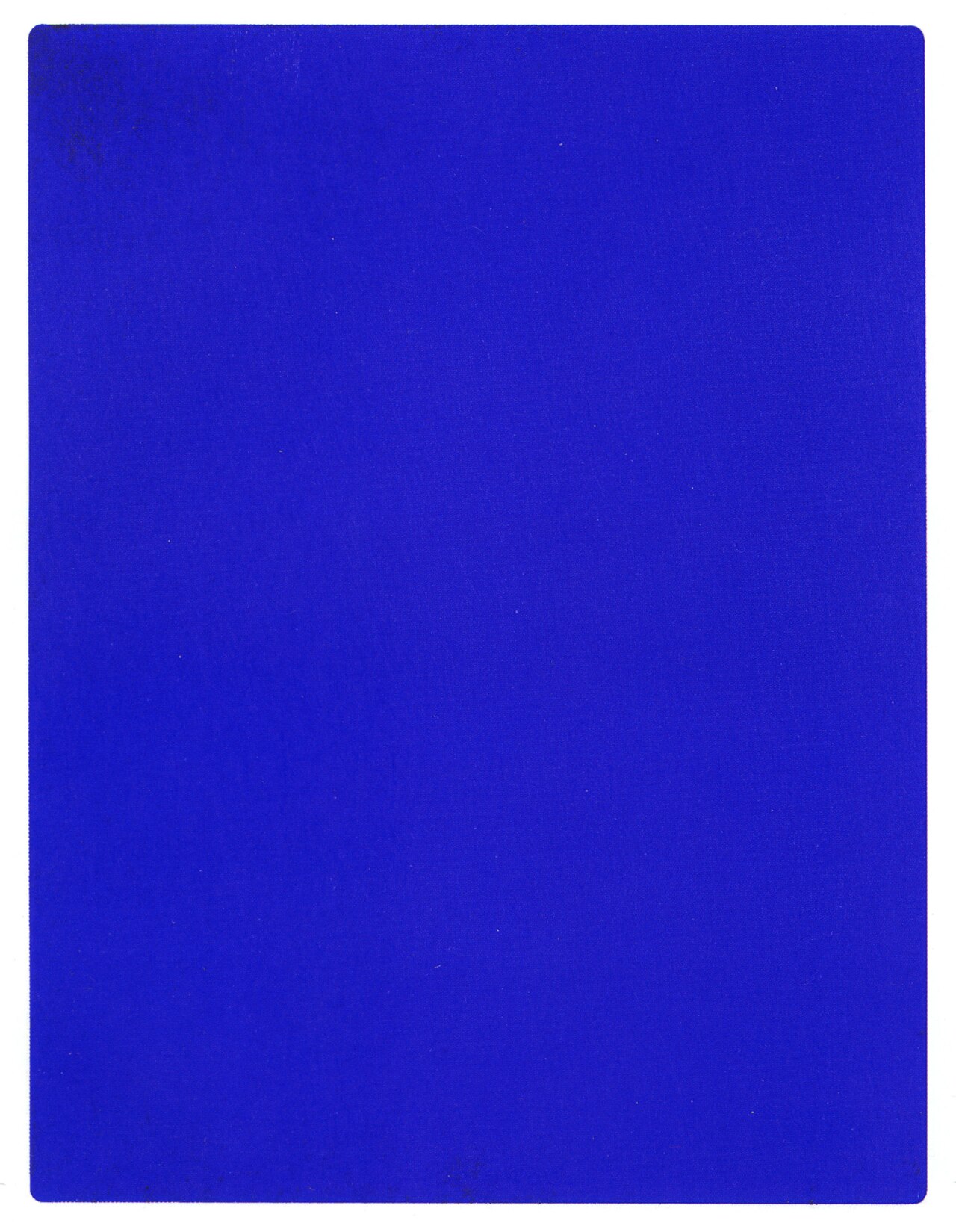
During the 1960s and 1970s abstract painting continued to develop in America through varied styles. Geometric abstraction, Op art, hard-edge painting, Color Field painting and minimal painting, were some interrelated directions for advanced abstract painting as well as some other new movements. Morris Louis was an important pioneer in advanced Colorfield painting, his work can serve as a bridge between Abstract expressionism, Colorfield painting, and Minimal Art. Two influential teachers, Josef Albers and Hans Hofmann, introduced a new generation of American artists to their advanced theories of color and space. Albers is best remembered for his work as a Geometric abstractionist painter and theorist. Most famous of all are the hundreds of paintings and prints that make up the series Homage to the Square. In this rigorous series, begun in 1949, Albers explored chromatic interactions with flat colored squares arranged concentrically on the canvas. Albers' theories on art and education were formative for the next generation of artists. His own paintings form the foundation of both hard-edge painting and Op art.
Josef Albers, Hans Hofmann, Ilya Bolotowsky, Burgoyne Diller, Victor Vasarely, Bridget Riley, Richard Anuszkiewicz, Frank Stella, Morris Louis, Kenneth Noland,[73] Ellsworth Kelly, John McLaughlin, Barnett Newman, Larry Poons, Ronald Davis, John Hoyland, Larry Zox, Al Held, Mino Argento[74] are artists closely associated with Geometric abstraction, Op art, Color Field painting, and in the case of Hofmann and Newman Abstract expressionism as well. Agnes Martin, Robert Mangold, Brice Marden, Jo Baer, Robert Ryman, Richard Tuttle, Neil Williams, David Novros, Paul Mogenson, are examples of artists associated with Minimalism and (exceptions of Martin, Baer and Marden) the use of the shaped canvas also during the period beginning in the early 1960s. Many Geometric abstract artists, minimalists, and Hard-edge painters elected to use the edges of the image to define the shape of the painting rather than accepting the rectangular format. In fact, the use of the shaped canvas is primarily associated with paintings of the 1960s and 1970s that are coolly abstract, formalistic, geometrical, objective, rationalistic, clean-lined, brashly sharp-edged, or minimalist in character. The Bykert Gallery, and the Park Place Gallery were important showcases for Minimalism and shaped canvas painting in New York City during the 1960s.
Shaped canvas, Washington Color School, Abstract Illusionism, Lyrical Abstraction

Color Field painting pointed toward a new direction in American painting, away from abstract expressionism. Related to Post-painterly abstraction, Suprematism, Abstract Expressionism, Hard-edge painting and Lyrical Abstraction,[75] Color Field painting sought to rid art of superfluous rhetoric. Artists like Clyfford Still, Mark Rothko, Hans Hofmann, Morris Louis, Jules Olitski, Kenneth Noland, Helen Frankenthaler, Larry Zox, and others painted with a highly articulated and psychological use of color. In general these artists eliminated recognizable imagery. Certain artists made references to past or present art, but in general color field painting presents abstraction as an end in itself. In pursuing this direction of modern art, artists wanted to present each painting as one cohesive, monolithic image. Gene Davis along with Kenneth Noland, Morris Louis and several others was a member of the Washington Color School painters who began to create Color Field paintings in Washington, D.C. during the 1950s and 1960s, Black, Grey, Beat is a large vertical stripe painting and typical of Gene Davis's work. Frank Stella, Kenneth Noland, Ellsworth Kelly, Barnett Newman, Ronald Davis, Neil Williams, Robert Mangold, Charles Hinman, Richard Tuttle, David Novros, and Al Loving are examples of artists associated with the use of the shaped canvas during the period beginning in the early 1960s.
From 1960 Frank Stella produced paintings in aluminum and copper paint and his first works using shaped canvases (canvases in a shape other than the traditional rectangle or square), often being in L, N, U or T-shapes. These later developed into more elaborate designs, in the Irregular Polygon series (1967), for example. Later he began his Protractor Series (1971) of paintings, in which arcs, sometimes overlapping, within square borders are arranged side by side to produce full and half circles painted in rings of concentric color. Harran II, 1967, is an example of the Protractor Series.
The Andre Emmerich Gallery, the Leo Castelli Gallery, the Richard Feigen Gallery, and the Park Place Gallery were important showcases for Color Field painting, shaped canvas painting and Lyrical Abstraction in New York City during the 1960s. There is a connection with post-painterly abstraction, which reacted against abstract expressionisms' mysticism, hyper-subjectivity, and emphasis on making the act of painting itself dramatically visible – as well as the solemn acceptance of the flat rectangle as an almost ritual prerequisite for serious painting. During the 1960s Color Field painting and Minimal art were often closely associated with each other. In actuality by the early 1970s both movements became decidedly diverse.
Lyrical Abstraction (the term being coined by Larry Aldrich, the founder of the Aldrich Contemporary Art Museum, Ridgefield Connecticut), encompassed what Aldrich said he saw in the studios of many artists at that time.[76] It is also the name of an exhibition that originated in the Aldrich Museum and traveled to the Whitney Museum of American Art and other museums throughout the United States between 1969 and 1971.[77] Lyrical Abstraction is a type of freewheeling abstract painting that emerged in the mid-1960s when abstract painters returned to various forms of painterly, pictorial, expressionism with a predominate focus on process, gestalt and repetitive compositional strategies in general.[78][79] In contrast to Action Painting, where emphasis is on brushstrokes and high compositional drama, in Lyrical Abstraction—as exemplified by the 1971 Ronnie Landfield painting Garden of Delight—there is a sense of compositional randomness, relaxed compositional drama and an emphasis on process, repetition, and an all over sensibility. Lyrical Abstraction in the late 1960s is characterized by the paintings of Dan Christensen, Ronnie Landfield, Peter Young and others, and along with the Fluxus movement and Postminimalism (a term first coined by Robert Pincus-Witten in the pages of Artforum in 1969)[80] sought to expand the boundaries of abstract painting and Minimalism by focusing on process, new materials and new ways of expression. Postminimalism often incorporating industrial materials, raw materials, fabrications, found objects, installation, serial repetition, and often with references to Dada and Surrealism is best exemplified in the sculptures of Eva Hesse.[80] Lyrical Abstraction, Conceptual Art, Postminimalism, Earth Art, Video, Performance art, Installation art, along with the continuation of Fluxus, Abstract Expressionism, Color Field painting, Hard-edge painting, Minimal Art, Op art, Pop art, Photorealism and New Realism extended the boundaries of Contemporary Art in the mid-1960s through the 1970s.[81]
Abstract Illusionism, Monochrome, Minimalism, Postminimalism

One of the first artists specifically associated with Minimalism was Frank Stella, whose early "stripe" paintings were highlighted in the 1959 show, "16 Americans", organized by Dorothy Miller at the Museum of Modern Art in New York. The widths of the stripes in Stella's stripe paintings were not entirely subjective, but were determined by the dimensions of the lumber used to construct the supportive chassis upon which the canvas was stretched. In the show catalog, Carl Andre noted, "Art excludes the unnecessary. Frank Stella has found it necessary to paint stripes. There is nothing else in his painting." These reductive works were in sharp contrast to the energy-filled and apparently emotionally charged paintings of Willem de Kooning or Franz Kline and leaned more toward less gestural coloristic field paintings of Barnett Newman and Mark Rothko.
Artists such as Larry Poons—whose work related to Op Art with his emphasis on dots, ovals and after-images bouncing across color fields—Kenneth Noland, Ralph Humphrey, Robert Motherwell and Robert Ryman had also begun to explore stripes, monochromatic and Hard-edge formats from the late 1950s through the 1960s.[82]
Because of a tendency in Minimalism to exclude the pictorial, illusionistic and fictive in favor of the literal—as demonstrated by Robert Mangold, who understood the concept of the shape of the canvas and its relationship to objecthood—there was a movement away from painterly and toward sculptural concerns. Donald Judd had started as a painter, and ended as a creator of objects. His seminal essay, "Specific Objects" (published in Arts Yearbook 8, 1965), was a touchstone of theory for the formation of Minimalist aesthetics. In this essay, Judd found a starting point for a new territory for American art, and a simultaneous rejection of residual inherited European artistic values. He pointed to evidence of this development in the works of an array of artists active in New York at the time, including Jasper Johns, Dan Flavin and Lee Bontecou. Of "preliminary" importance for Judd was the work of George Earl Ortman [2], who had concretized and distilled painting's forms into blunt, tough, philosophically charged geometries. These Specific Objects inhabited a space not then comfortably classifiable as either painting or sculpture. That the categorical identity of such objects was itself in question, and that they avoided easy association with well-worn and over-familiar conventions, was a part of their value for Judd.
In a much more general sense, one might find European roots of Minimalism in the geometric abstractions painters in the Bauhaus, in the works of Piet Mondrian and other artists associated with the movement DeStijl, in Russian Constructivists and in the work of the Romanian sculptor Constantin Brâncuși. American painters such as Brice Marden and Cy Twombly show a clear European influence in their pure abstraction, minimalist painting of the 1960s. Ronald Davis polyurethane works from the late 1960s pay homage to the Broken Glass of Marcel Duchamp. This movement was heavily criticised by high modernist formalist art critics and historians. Some anxious critics thought Minimalist art represented a misunderstanding of the modern dialectic of painting and sculpture as defined by critic Clement Greenberg, arguably the dominant American critic of painting in the period leading up to the 1960s. The most notable critique of Minimalism was produced by Michael Fried, a Greenbergian critic, who objected to the work on the basis of its "theatricality". In Art and Objecthood (published in Artforum in June 1967) he declared that the Minimalist work of art, particularly Minimalist sculpture, was based on an engagement with the physicality of the spectator. He argued that work like Robert Morris's transformed the act of viewing into a type of spectacle, in which the artifice of the act observation and the viewer's participation in the work were unveiled. Fried saw this displacement of the viewer's experience from an aesthetic engagement within, to an event outside of the artwork as a failure of Minimal art.
Ad Reinhardt, actually an artist of the Abstract Expressionist generation, but one whose reductive all-black paintings seemed to anticipate minimalism, had this to say about the value of a reductive approach to art: "The more stuff in it, the busier the work of art, the worse it is. More is less. Less is more. The eye is a menace to clear sight. The laying bare of oneself is obscene. Art begins with the getting rid of nature."[83]
During the 1960s and 1970s artists as powerful and influential as Adolph Gottlieb, Phillip Guston, Lee Krasner, Richard Diebenkorn, Elmer Bischoff, Agnes Martin, Sam Francis, Gene Davis, Joan Mitchell, Friedel Dzubas, and younger artists like Sam Gilliam, Sean Scully, Pat Steir, Elizabeth Murray, Walter Darby Bannard, Dan Christensen, Joan Snyder, Richard Tuttle, Ross Bleckner, Archie Rand, Susan Crile, and dozens of others produced vital and influential paintings.
Still other important innovations in abstract painting took place during the 1960s and the 1970s characterized by Monochrome painting and Hard-edge painting inspired by Ad Reinhardt, Barnett Newman, Milton Resnick, and Ellsworth Kelly. Artists as diversified as Al Held, Larry Zox, Frank Stella, Larry Poons, Brice Marden and others explored the power of simplification. The convergence of Color Field painting, Minimal art, Hard-edge painting, Lyrical Abstraction, and Postminimalism blurred the distinction between movements that became more apparent in the 1980s and 1990s. The Neo-expressionism movement is related to earlier developments in Abstract expressionism, Neo-Dada, Lyrical Abstraction and Postminimal painting.
Neo-expressionism
In the late 1960s the abstract expressionist painter Philip Guston helped to lead a transition from abstract expressionism to Neo-expressionism in painting, abandoning the so-called "pure abstraction" of abstract expressionism in favor of more cartoonish renderings of various personal symbols and objects. These works were inspirational to a new generation of painters interested in a revival of expressive imagery.[84] His painting Painting, Smoking, Eating is an example of Guston's return to representation.
In the late 1970s and early 1980s, there was also a return to painting that occurred almost simultaneously in Italy, Germany, France and Britain. These movements were called Transavantguardia, Neue Wilde, Figuration Libre,[85] Neo-expressionism, the school of London, and in the late 80s the Stuckists respectively. These painting were characterized by large formats, free expressive mark making, figuration, myth and imagination. All work in this genre came to be labeled neo-expressionism.
Neo-expressionism was a style of modern painting that became popular in the late 1970s and dominated the art market until the mid-1980s. It developed in Europe as a reaction against the conceptual and minimalistic art of the 1960s and 1970s. Neo-expressionists returned to portraying recognizable objects, such as the human body (although sometimes in a virtually abstract manner) in a rough and violently emotional way using vivid colors and banal color harmonies. The veteran painters Philip Guston, Frank Auerbach, Leon Kossoff, Gerhard Richter, A. R. Penck and Georg Baselitz, along with the slightly younger artists Damien Hirst, Anselm Kiefer, the Americans Eric Fischl, Susan Rothenberg, David Salle, Jean-Michel Basquiat, Julian Schnabel, and Keith Haring, the Italians Francesco Clemente, Mimmo Paladino, Sandro Chia, and Enzo Cucchi, and many others became known for working in this intense expressionist vein of painting. Critical reaction was divided. Some critics regarded it as driven by profit motivations by large commercial galleries.[84]
Anselm Kiefer is a leading figure in European Neo-expressionism.[86] By the 1980s, Kiefer's themes widened from a focus on Germany's role in civilization to the fate of art and culture in general. His work became more sculptural and involves not only national identity and collective memory, but also occult symbolism, theology and mysticism.[87] The theme of all the work is the trauma experienced by entire societies, and the continual rebirth and renewal in life.
Painting still holds a respected position in contemporary art. Art is an open field no longer divided by the objective versus non-objective dichotomy. Artists can achieve critical success whether their images are representational or abstract. What has currency is content, exploring the boundaries of the medium, and a refusal to recapitulate the works of the past as an end goal.[88][89][90]

Contemporary Painting
Throughout the 20th century and into the 21st century, with the advent of Modern and Postmodern art forms, distinctions between what is generally regarded as the fine arts and the low arts have started to fade,[91] as contemporary high art continues to challenge these concepts by mixing with popular culture.[92]
Mainstream painting has been rejected by artists of the postmodern era in favor of artistic pluralism.[93] According to art critic Arthur Danto there is an anything goes attitude that prevails; an "everything going on", and consequently "nothing going on" syndrome; this creates an aesthetic traffic jam with no firm and clear direction and with every lane on the artistic superhighway filled to capacity.[94]
See also
- Art periods
- Hierarchy of genres
- History of art
- History painting
- List of painters
- Lives of the Most Excellent Painters, Sculptors, and Architects
- Self portrait
- Timeline of Italian artists to 1800
- Visual arts of Australia
- Visual arts of the United States
- Gothic book illustration
References
- ^ Cole, Bruce Art of the Western World: From Ancient Greece to Post Modernism. Simon and Schuster, 1981, Simonsays.com Archived 7 April 2020 at the Wayback Machine accessed 27 October 2007
- ^ "Explaining Modernism W. Stephen Croddy, retrieved 11 November 2008". Bu.edu. 25 October 1962. Retrieved 8 August 2014.
- ^ Discussion of the role of patrons in the Renaissance, retrieved 11 November 2008
- ^ History 1450–1789: Artistic Patronage Archived 1 April 2019 at the Wayback Machine, retrieved 11 November 2008
- ^ Britannica.com Archived 7 August 2008 at the Wayback Machine, retrieved 11 November 2008
- ^ Victorianweb.org Archived 3 December 2008 at the Wayback Machine, Aesthetes, Decadents, and the Idea of Art for Art's Sake; George P. Landow, Professor of English and the History of Art, Brown University, retrieved 11 November 2008
- ^ National Gallery of Art, retrieved 11 November 2008 Archived 6 November 2007 at the Wayback Machine
- ^ "Cézanne to Picasso: Ambroise Vollard, Patron of the Avant-Garde, Chicago Art Institute, retrieved 11 November 2008". Artic.edu. Archived from the original on 12 October 2008. Retrieved 8 August 2014.
- ^ Meggs, Philip B. A History of Graphic Design. John Wiley & Sons, Inc. 1998; (pp. 58–69) ISBN 0-471-29198-6
- ^ Cole, Bruce & Gealt, Adelheid M. Art of the Western World: from Ancient Greece to Post-Modernism Archived 22 November 2022 at the Wayback Machine, retrieved 11 November 2008
- ^ Warwick Ball (2016), Rome in the East: Transformation of an Empire, 2nd edition, London & New York: Routledge, ISBN 978-0-415-72078-6, p. 153.
- ^ Honour & Fleming, 53
- ^ Castleden, 4
- ^ Hood, 56
- ^ Hood, 18
- ^ Hood, 17–18, 23–24
- ^ Hood, 240–241
- ^ "Roman Painting". art-and-archaeology.com.
- ^ "Roman Wall Painting". accd.edu. Archived from the original on 19 March 2007.
- ^ Putnam A.M., Geo. Haven. Books and Their Makers During The Middle Ages. Vol. 1. New York: Hillary House, 1962. Print.
- ^ a b c Gardner, H., Kleiner, F. S., & Mamiya, C. J. (2006). Gardner's art through the ages: the Western perspective. Belmont, CA, Thomson Wadsworth: 430–437
- ^ Counter Reformation Archived 18 November 2008 at the Wayback Machine, from Encyclopædia Britannica Online, latest edition, full-article.
- ^ Counter Reformation Archived 11 December 2008 at the Wayback Machine, from The Columbia Encyclopedia, Sixth Edition. 2001–05.
- ^ Helen Gardner, Fred S. Kleiner, and Christin J. Mamiya, "Gardner's Art Through the Ages" (Belmont, CA: Thomson/Wadsworth, 2005)
- ^ Edmond and Jules de Goncourt, French Eighteenth-Century Painters. Cornell Paperbacks, 1981, pp. 222–225. ISBN 0-8014-9218-1
- ^ "Uni-Heidelberg.de". Archived from the original on 17 March 2020. Retrieved 5 February 2009.
- ^ "Novack, Barbara American Sublime Artforum, 2002, retrieved 30 October 2008". Findarticles.com. Retrieved 8 August 2014.
- ^ Bomford, David, Jo Kirby, John Leighton, Ashok Roy, and Raymond White (1990). Impressionism. London: National Gallery. pp. 21–27. ISBN 0-300-05035-6.
- ^ Delvaille, Bernard, La poésie symboliste: anthologie, introduction. ISBN 2-221-50161-6
- ^ Russell T. Clement. Four French Symbolists. Greenwood Press, 1996. Page 114.
- ^ a b "Christopher Green, 2009, Cubism, MoMA, Grove Art Online, Oxford University Press". Moma.org. Retrieved 8 August 2014.
- ^ Louis Vauxcelles, Le Salon d'Automne, Gil Blas, 17 October 1905. Screen 5 and 6. Gallica, Bibliothèque nationale de France Archived 21 October 2020 at the Wayback Machine, ISSN 1149-9397
- ^ a b Chilver, Ian (Ed.). "Fauvism" Archived 9 November 2011 at the Wayback Machine, The Oxford Dictionary of Art, Oxford University Press, 2004. 26 December 2007.
- ^ Smith, Roberta. "Henri Rousseau: In imaginary jungles, a terrible beauty lurks Archived 12 June 2022 at the Wayback Machine". The New York Times, 14 July 2006. Retrieved on 29 December 2007.
- ^ Elderfield, 43
- ^ The "Wild Beasts" Fauvism and its Affinities, John Elderfield, Museum of Modern Art 1976, ISBN 0-87070-638-1
- ^ Picasso and Braque pioneering cubism William Rubin, published by the Museum of Modern Art, New York, copyright 1989, ISBN 0-87070-676-4 p. 348.
- ^ "The Artists' Association 'Brücke'" Archived 11 May 2012 at the Wayback Machine, Brücke Museum. Retrieved 7 September 2007.
- ^ Der Blaue Reiter, Tate Glossary Archived 2 August 2011 at the Wayback Machine retrieved 10 August 2009
- ^ Agee and Rose, 1979, p. 8.
- ^ "New Yorker article, accessed online 11 November 2008". Newyorker.com. 6 August 2007. Retrieved 8 August 2014.
- ^ Wayne Craven, American Art: History and Culture, p. 464.
- ^ Jasonkaufman.com Archived 17 October 2008 at the Wayback Machine, accessed online 28 August 2007
- ^ "National Gallery of Art, retrieved 11 November 2008". Nga.gov. Retrieved 8 August 2014.
- ^ Spector, Nancy. "The Tilled Field, 1923–1924 Archived 25 September 2008 at the Wayback Machine". Guggenheim display caption. Retrieved 30 May 2008.
- ^ "From the Tate Modern". Tate.org.uk. Retrieved 8 August 2014.
- ^ Lewis, Helena. Dada Turns Red. 1990. Edinburgh University Press. A history of the uneasy relations between Surrealists and Communists from the 1920s through the 1950s.
- ^ Brandon, Laura (2012). Art and War Archived 22 November 2022 at the Wayback Machine. I.B. Tauris. ISBN 0857732811.
- ^ Fineman, Mia, The Most Famous Farm Couple in the World: Why American Gothic still fascinates. Archived 7 September 2011 at the Wayback Machine, Slate, 8 June 2005
- ^ Herrera, Hayden. "Frida Kahlo". Oxford Art Online. Oxford University Press
- ^ "Abstract Expressionism, NY, MoMA". Archived from the original on 18 June 2018. Retrieved 20 April 2018.
- ^ Clement Greenberg, Art and Culture Critical essays, ("American-Type Painting"), Beacon Press, 1961 pp.:208–229, ISBN 978-0807066812
- ^ "Post Painterly Abstraction". www.sharecom.ca. Retrieved 8 April 2018.
- ^ NGA.gov.au Archived 21 December 2016 at the Wayback Machine, National Gallery of Australia
- ^ David Piper, p. 635
- ^ Kerr, Melissa (2009). "Chronology", in: Michael R. Taylor (ed.), Arshile Gorky: A Retrospective. Philadelphia, Pa.: Philadelphia Museum of Art. ISBN 9780876332139
- ^ Barnes, Rachel (2003). Abstract Expressionists. Chicago: Heinemann Library. ISBN 9781588106445
- ^ Schmied, Wieland (1996). Francis Bacon: Commitment and Conflict. (Munich) Prestel. ISBN 3-7913-1664-8, p. 17
- ^ Peppiatt, Michael, Anatomy of an Enigma. Westview Press. ISBN 0-8133-3520-5 (1996), p. 147
- ^ Schmied (1996), p. 20
- ^ Peppiatt (1996), p. 148
- ^ Christina's World Archived 17 September 2006 at the Wayback Machine in the MoMA Online Collection
- ^ Glueck, Grace (7 January 2005). "NY Times, Grace Glueck, Art in Review; Milton Avery – Onrushing Waves". The New York Times. Retrieved 8 August 2014.
- ^ Hilton Kramer (13 May 2002). "Hilton Kramer, NY Observer, Summer of 57 with Avery, Gottlieb, Rothko". Observer.com. Retrieved 8 August 2014.
- ^ Hendrickson 1988, p. 31
- ^ Kimmelman, Michael (30 September 1997). "Roy Lichtenstein, Pop Master, Dies at 73". The New York Times. Retrieved 12 November 2007.
- ^ Topics in American Art since 1945, Pop art the words, pp. 119–122, by Lawrence Alloway, copyright 1975 by W. W. Norton and Company, NYC ISBN 0-393-04401-7
- ^ Jean Dubuffet: L’Art brut préféré aux arts culturels [1949] (in English) Art brut. Madness and Marginalia, special issue of Art & Text, No. 27, 1987, pp. 31–33)
- ^ Douglas Crimp, The End of Painting, October, Vol. 16, Spring, 1981, pp. 69–86
- ^ Douglas Crimp, On the Museum's Ruins, Cambridge, Mass., 1993
- ^ Catherine Craft, An Audience of Artists: Dada, Neo-Dada, and the Emergence of Abstract Expressionism, University of Chicago, 2012
- ^ Susan Hapgood, Neo-Dada: Redefining Art, 1958–62, Universe Books and American Federation of Arts, 1994
- ^ Terry Fenton, online essay about Kenneth Noland, and acrylic paint, Sharecom.ca Archived 21 January 2021 at the Wayback Machine, accessed 30 April 2007
- ^ Curtis, Cathy (22 January 1988). "Wilshire Center". Los Angeles Times.
- ^ "SBMA: Exhibitions > current > Colorscope: Abstract Painting 1960-1979". Archived from the original on 3 July 2010. Retrieved 2 June 2010.
- ^ Aldrich, Larry. Young Lyrical Painters, Art in America, v.57, n6, November–December 1969, pp. 104–113.
- ^ Lyrical Abstraction, Exhibition Catalogue, the Aldrich Museum of Contemporary Art, Ridgefield, Connecticut 1970.
- ^ The Aldrich Museum of Contemporary Art, Lyrical Abstraction, exhibition: 5 April through 7 June 1970
- ^ Lyrical Abstraction Whitney Museum of American Art, New York, 25 May – 6 July 1971
- ^ a b Movers and Shakers, New York, "Leaving C&M", by Sarah Douglas, Art and Auction, March 2007, V.XXXNo7.
- ^ Martin, Ann Ray, and Howard Junker. The New Art: It's Way, Way Out, Newsweek 29 July 1968: pp. 3, 55–63.
- ^ Britannica.com Archived 14 May 2009 at the Wayback Machine, "Minimalism"
- ^ Less Is More: Ad Reinhardt's 12 Rules for Pure Art Archived 7 July 2018 at the Wayback Machine, The Editors of ARTnews, 24 January 2015 (based on a paper read at the 45th annual meeting of the College Art Association at the Detroit Institute of Art, 26 January 1957)
- ^ a b "Neo-Expressionism, The Art Story". Archived from the original on 30 April 2016. Retrieved 20 April 2018.
- ^ "Tate online glossary". Tate.org.uk. Archived from the original on 2 August 2011. Retrieved 8 August 2014.
- ^ "The Art Story, Artist Anselm Kiefer". Archived from the original on 16 April 2018. Retrieved 20 April 2018.
- ^ "Fiefer, Tate". Archived from the original on 21 April 2018. Retrieved 20 April 2018.
- ^ Jan Esmann, F. Scott Hess, 21st Century Figurative Art: The Resurrection of Art, BookBaby Print, 5 Nov 2016, ISBN 1483582590
- ^ Timothy Hyman, The World New Made: Figurative Painting in the Twentieth Century, Thames & Hudson, 2016, ISBN 0500239452
- ^ Ronald Paulson, Figure and abstraction in contemporary painting, Rutgers University Press, 1990
- ^ Desmond, Kathleen K. (2011). Ideas About Art. John Wiley & Sons. p. 148. ISBN 9781444396003.
- ^ Bertens, Hans (1997). International postmodernism: theory and literary practice. Routledge. p. 236. ISBN 9027234450.
- ^ "About Contemporary Art, Getty Museum". Archived from the original on 9 August 2016. Retrieved 25 February 2018.
- ^ Danto, Arthur Coleman (1998). After the End of Art: Contemporary Art and the Pale of History. Princeton University Press. p. 47. ISBN 0-691-00299-1. As quoted by Professor David W. Cloweny on his website. [1] Archived 27 December 2009 at the Wayback Machine
Sources
- Clement Greenberg, Art and Culture, Beacon Press, 1961
- Hendrickson, Janis (1988). Roy Lichtenstein. Cologne, Germany: Benedikt Taschen. ISBN 3-8228-0281-6.
- The Triumph of Modernism: The Art World, 1985–2005, Hilton Kramer, 2006, ISBN 0-15-666370-8
- Pictures of Nothing: Abstract Art since Pollock (A.W. Mellon Lectures in the Fine Arts), Kirk Varnedoe, 2003
- O'Connor, Francis V. Jackson Pollock Exhibition Catalogue, (New York, Museum of Modern Art, [1967]) OCLC 165852
- Lyrical Abstraction, Exhibition Catalogue, Whitney Museum of American Art, NYC, 1971.
- David Piper, The Illustrated Library of Art, Portland House, New York, 1986, ISBN 0-517-62336-6
- Agee, William C.; Rose, Barbara, 1979, Patrick Henry Bruce: American Modernist (exhibition catalogue), Houston: Museum of Fine Arts
On the effects of Gutenberg's printing
- Elizabeth L. Eisenstein, The Printing Press as an Agent of Change, Cambridge University Press, September 1980, Paperback, 832 pages, ISBN 0-521-29955-1
- More recent, abridged version: Elizabeth L. Eisenstein, The Printing Revolution in Early Modern Europe, Cambridge University Press, 2Rev ed, 12 September 2005, Paperback, ISBN 0-521-60774-4
- Marshall McLuhan, The Gutenberg Galaxy: The Making of Typographic Man (1962) University of Toronto Press (1st ed.); reissued by Routledge & Kegan Paul ISBN 0-7100-1818-5.
- Briggs & Burke, A Social History of the Media: The Print Revolution in Context (2002)
External links
- History of Painting
- History of Art: From Paleolithic Age to Contemporary Art
- Robert Hughes from Artchive
- MNstate.edu Archived 28 May 2010 at the Wayback Machine, Kandinsky Concerning the Spiritual in Art, accessed online 28 May 2007

